
Research on Control Factors and Parameter Optimization of Surfactant Flooding in Low-Permeability Reservoirs Using Random Forest Algorithm


Abstract
1. Introduction
2. Experiment and Simulation
2.1. Experimental Materials
2.2. Interfacial Tension Measurement
2.3. Contact Angle Measurement
2.4. Static Oil Washing Experiment
2.5. Dynamic Washing Oil Experiment
2.6. Emulsification Migration/Retention Index Experiment
3. Model Construction
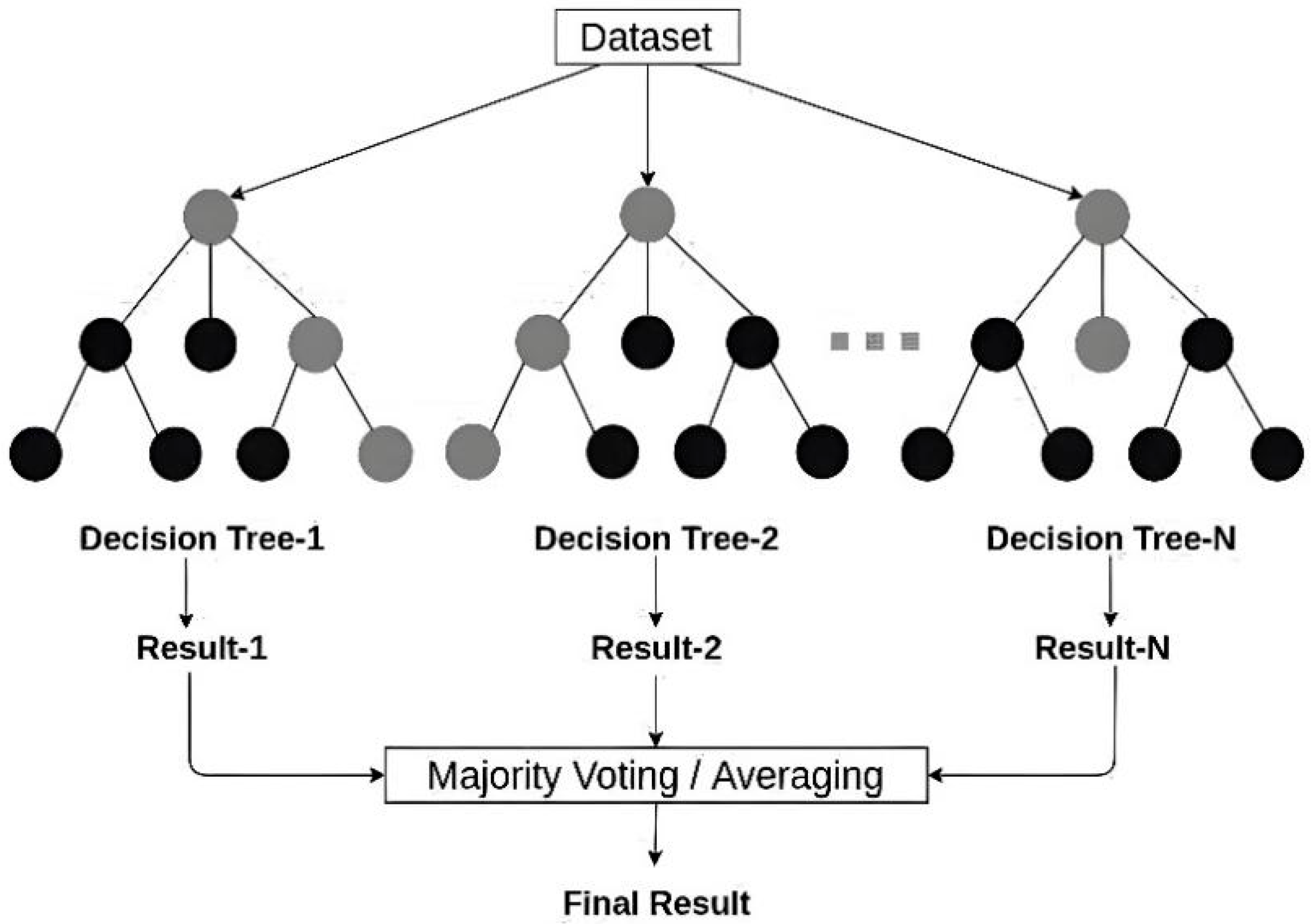
3.1. Construction of Machine Learning Model Framework
3.2. Feature Importance Analysis Based on SHAP Algorithm
4. Results and Discussion
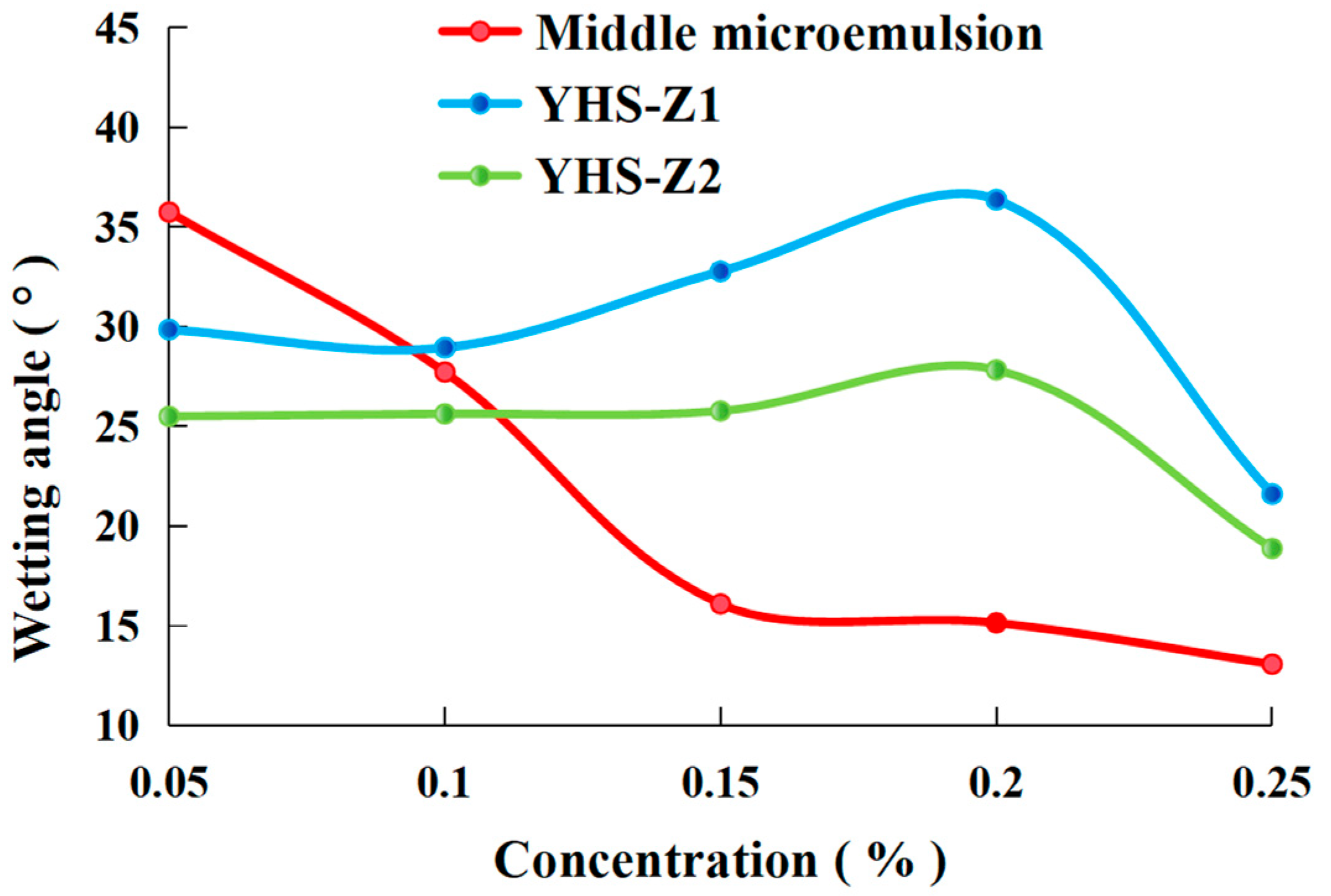
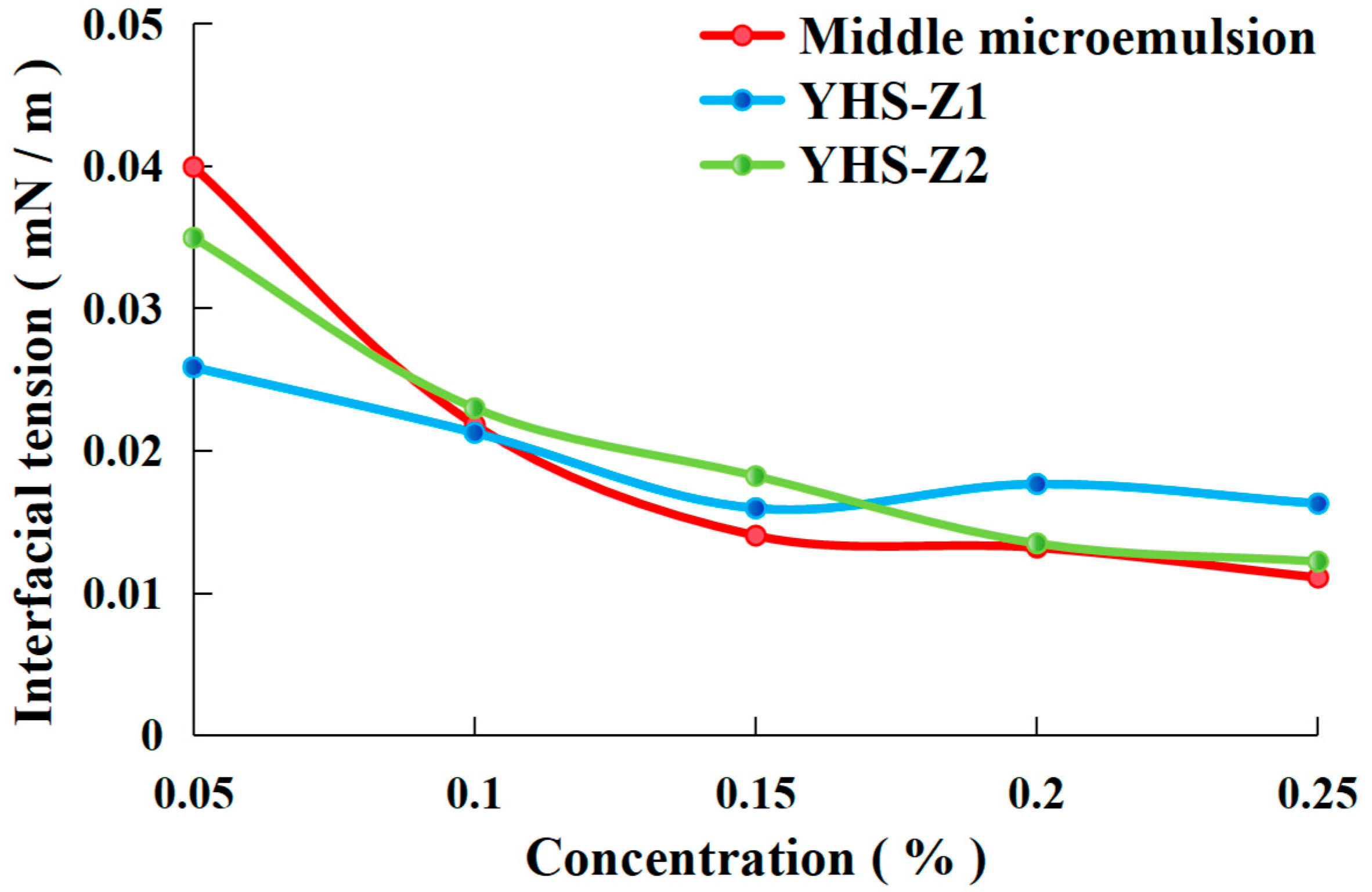
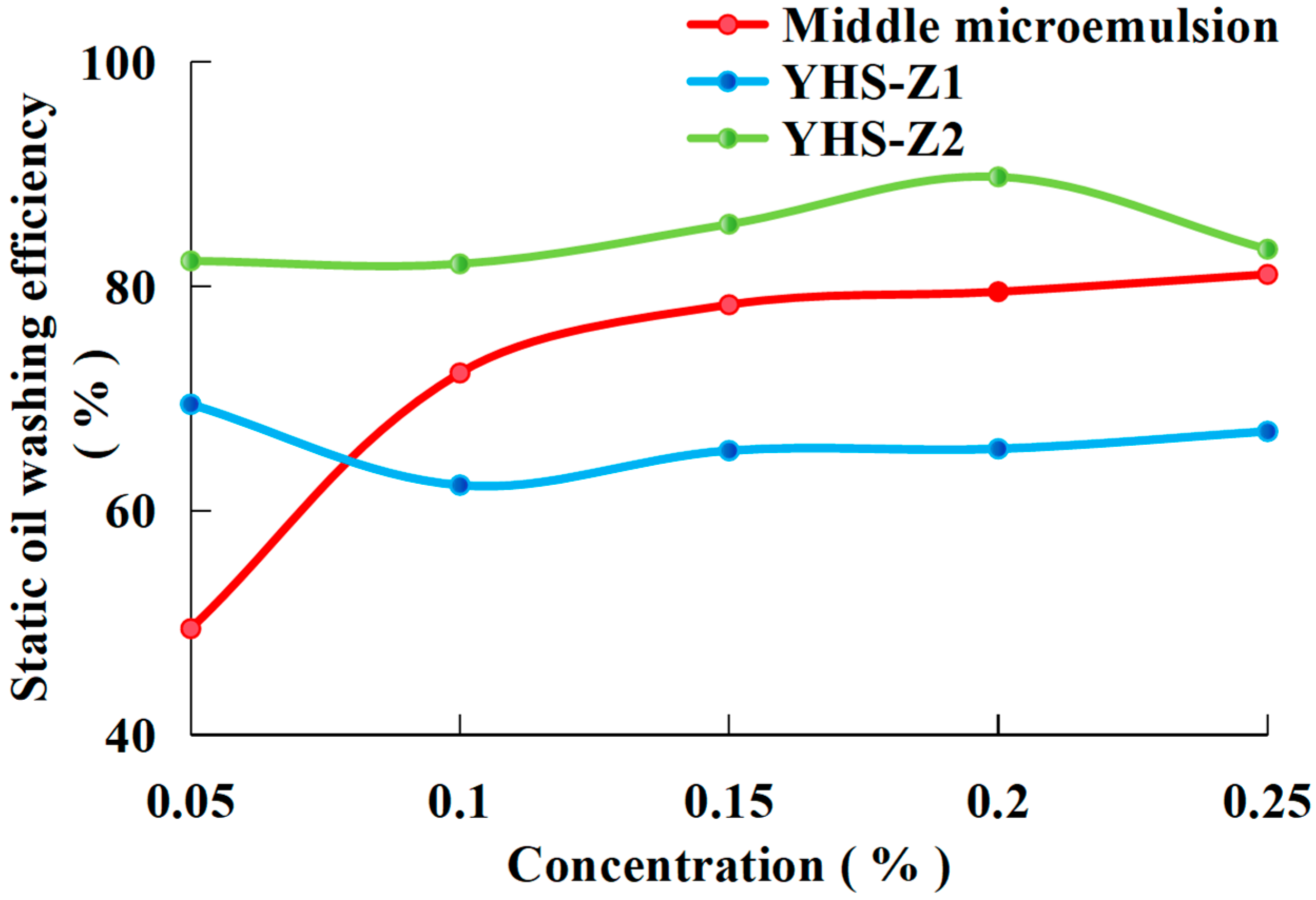
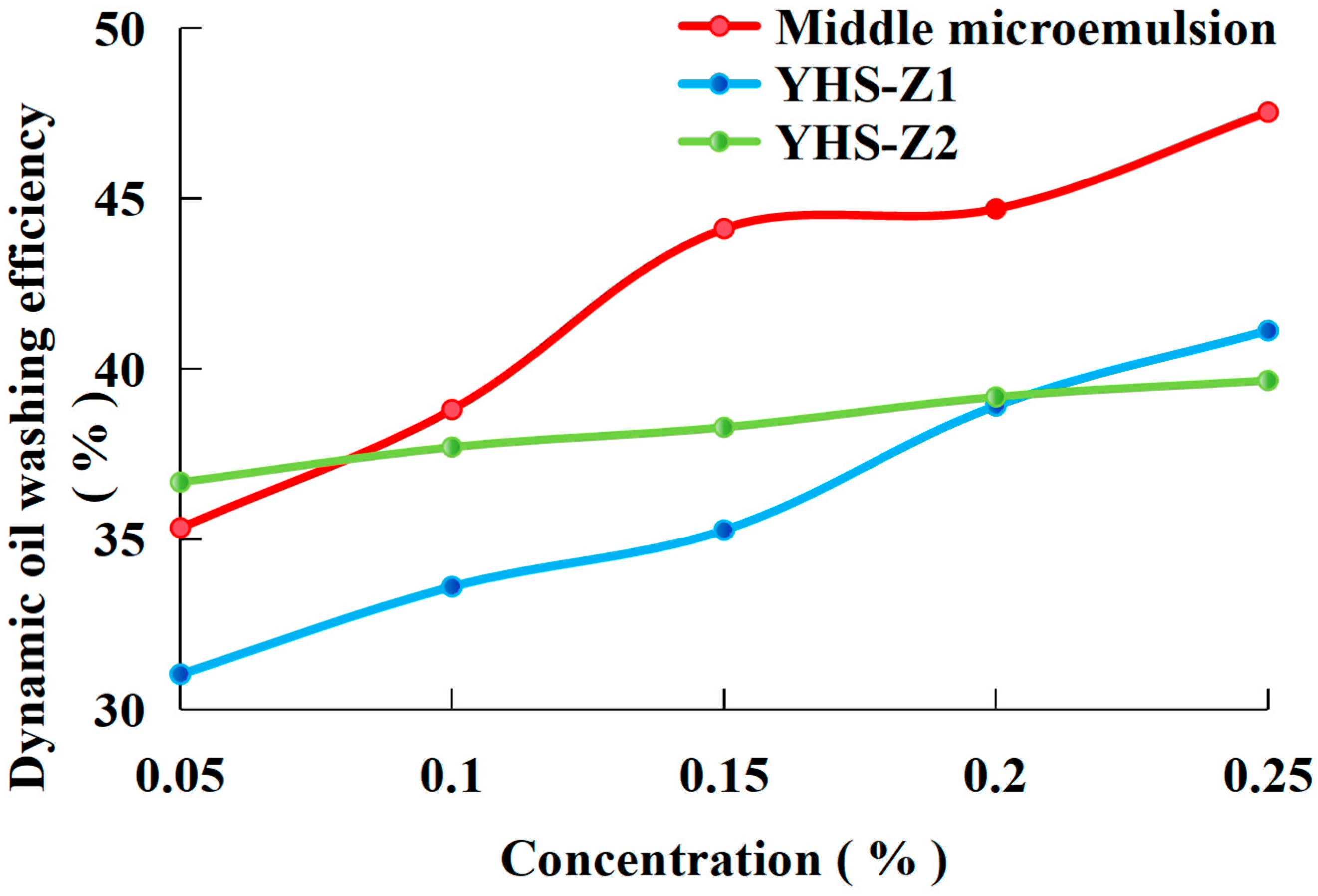
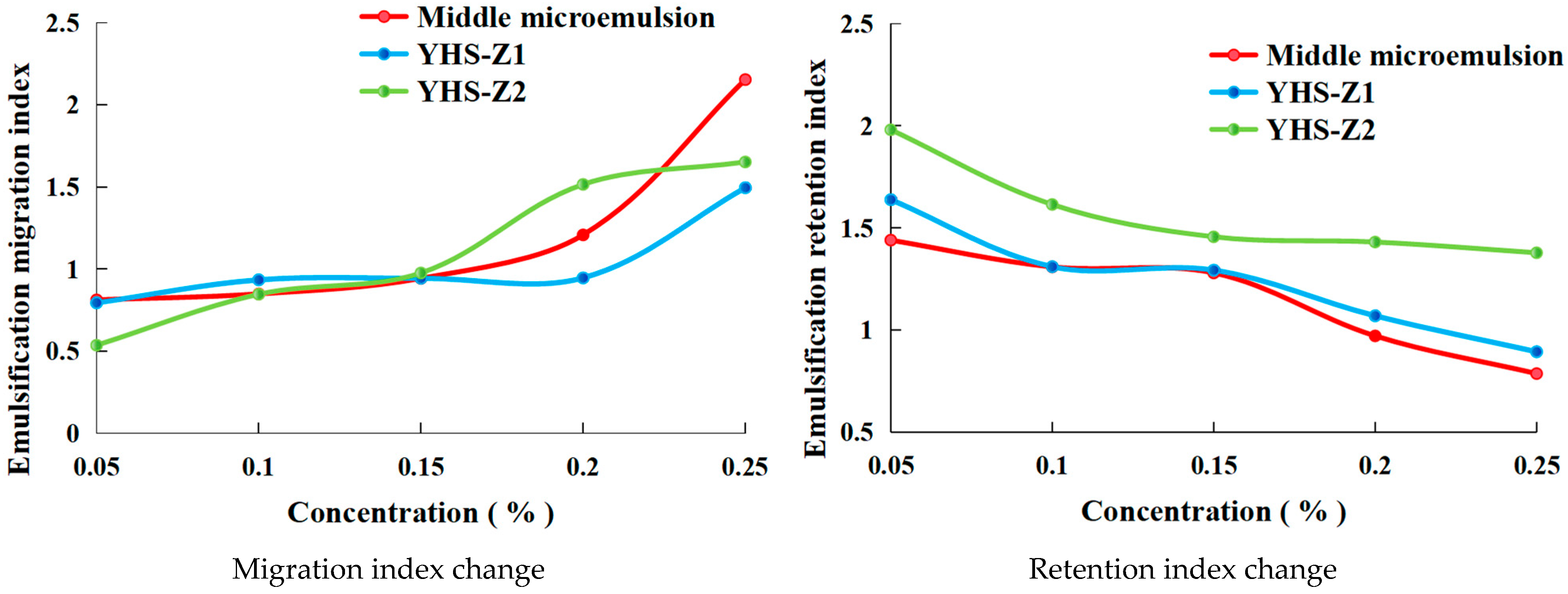
4.1. Study on Surfactant Flooding Characteristic Parameters of Low Permeability Reservoir
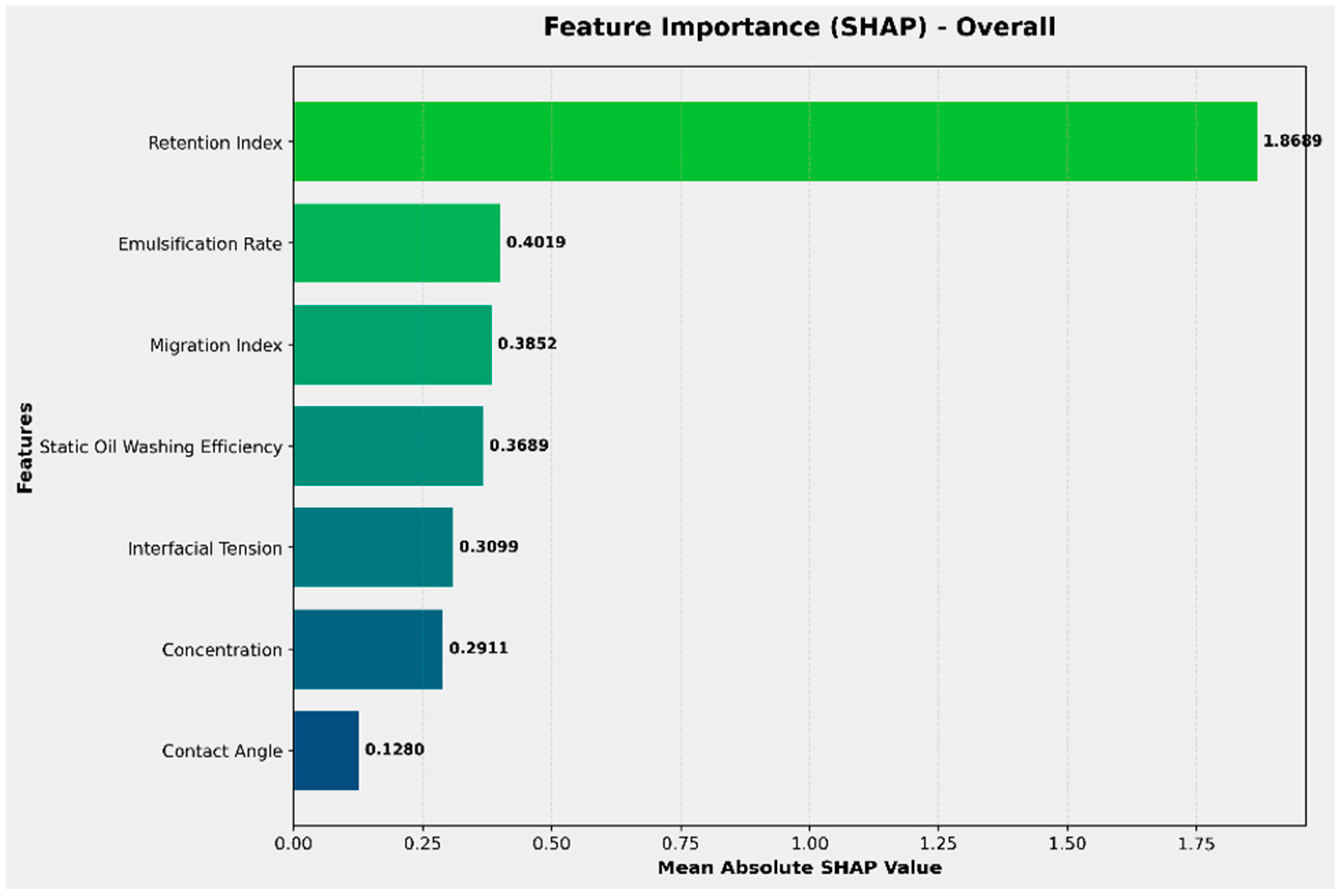
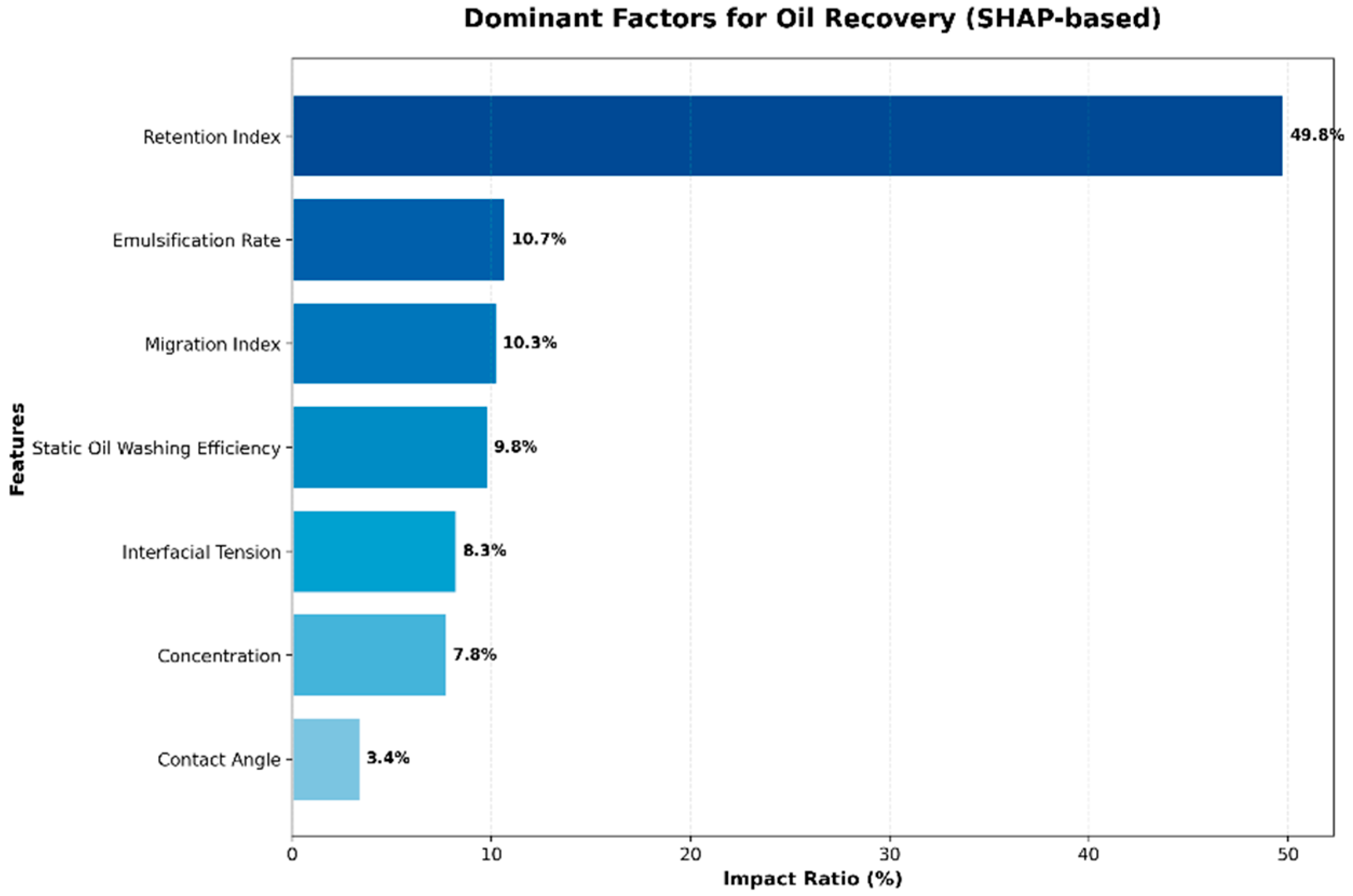
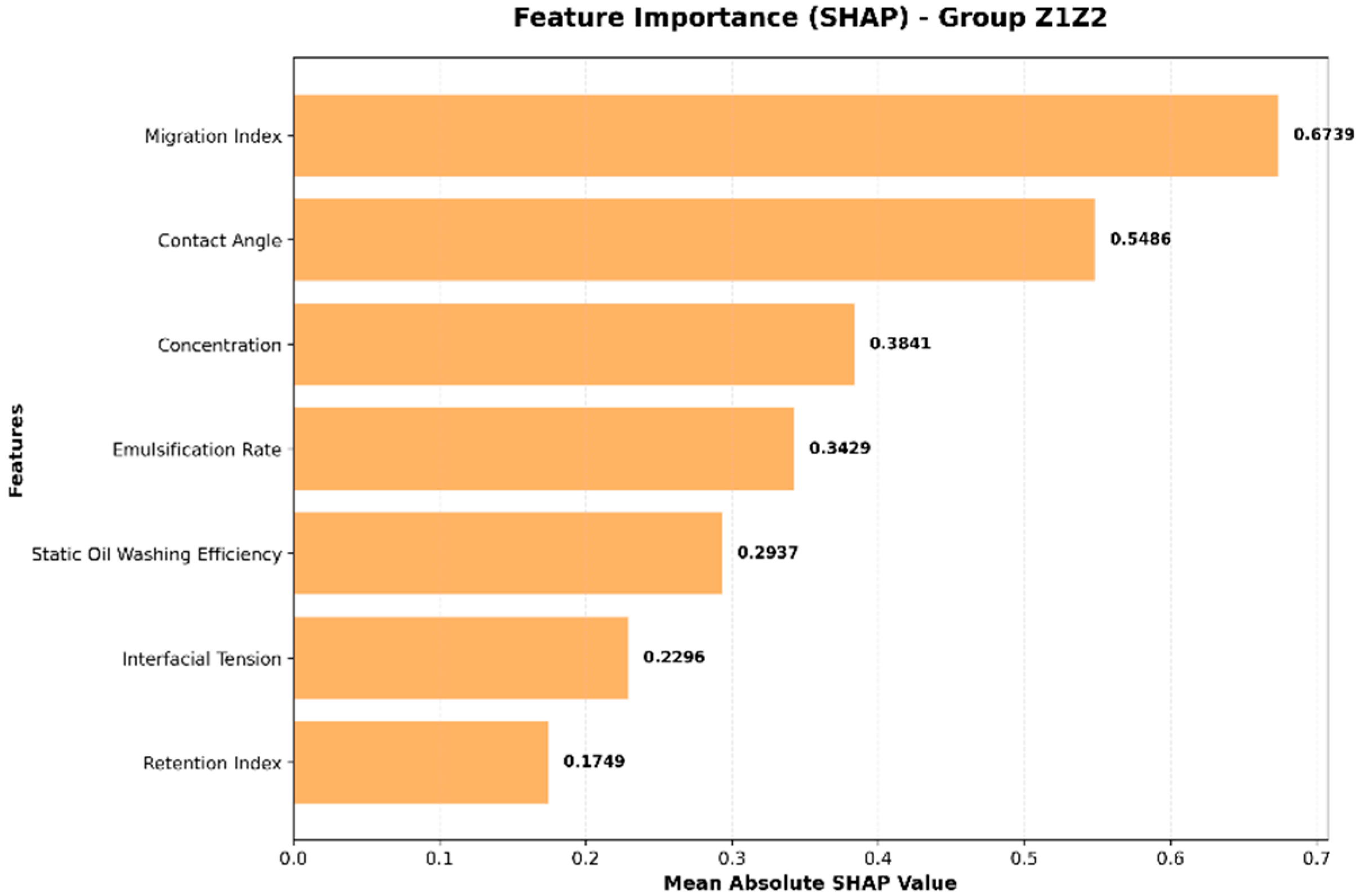
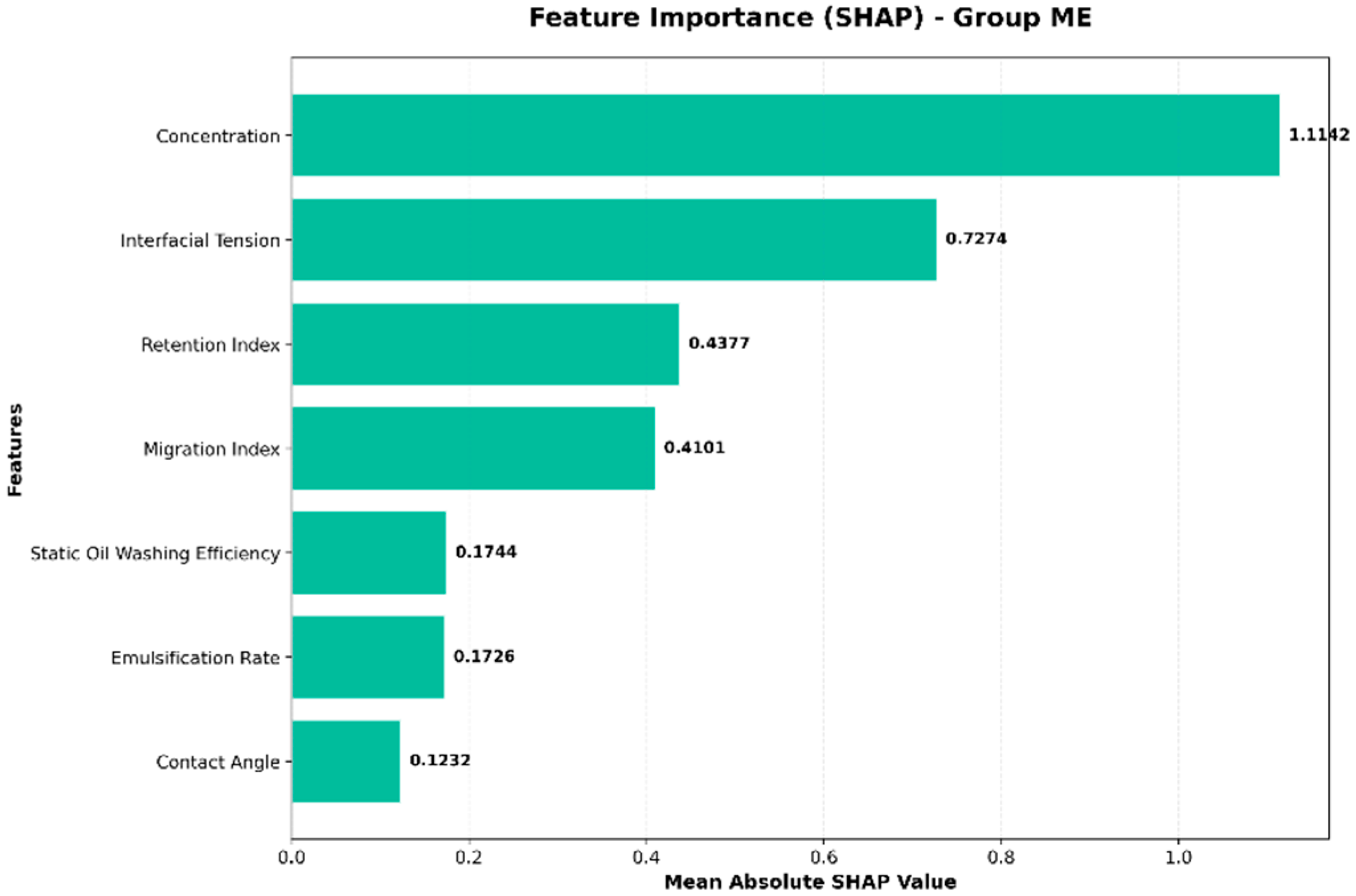
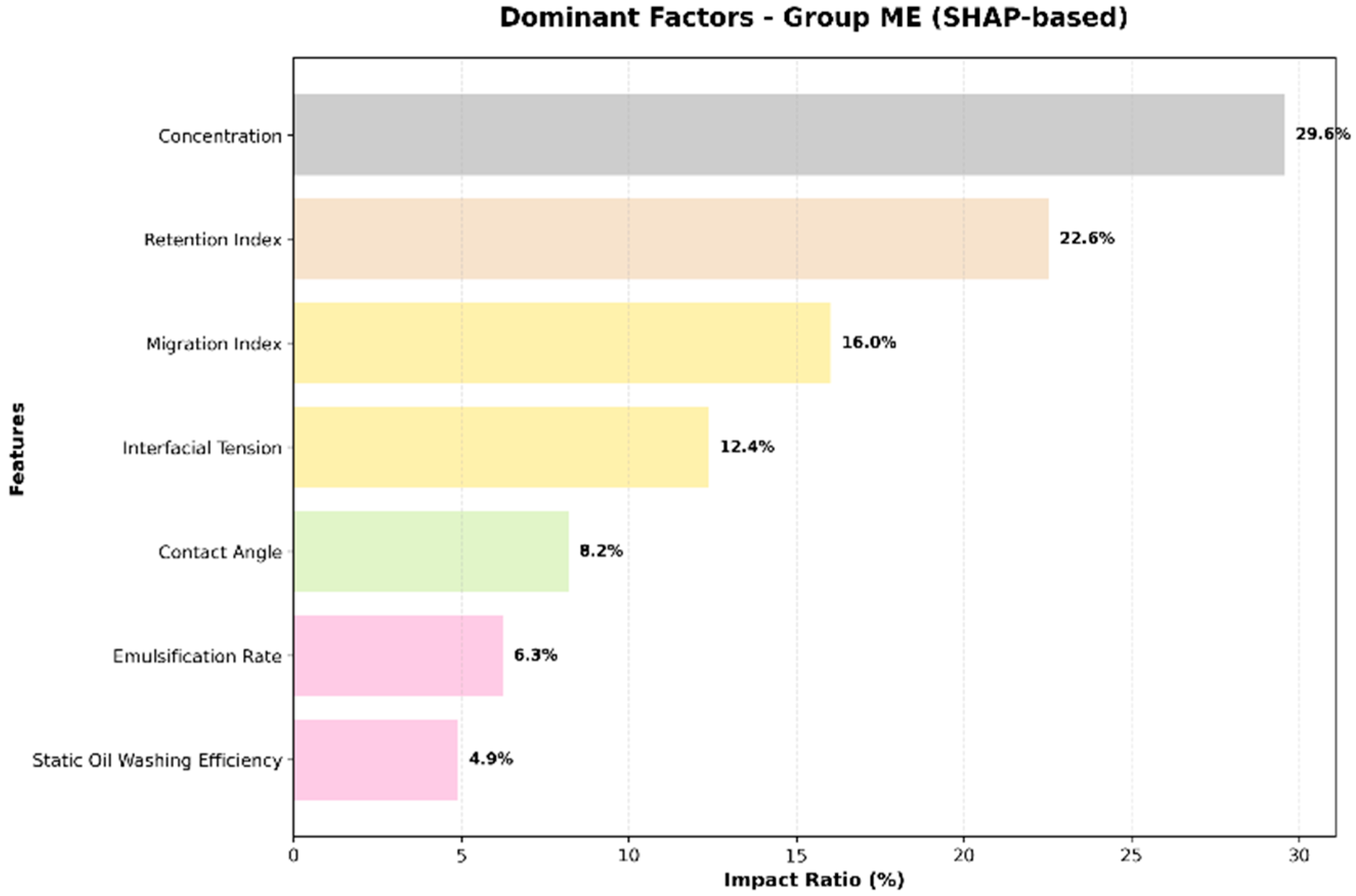
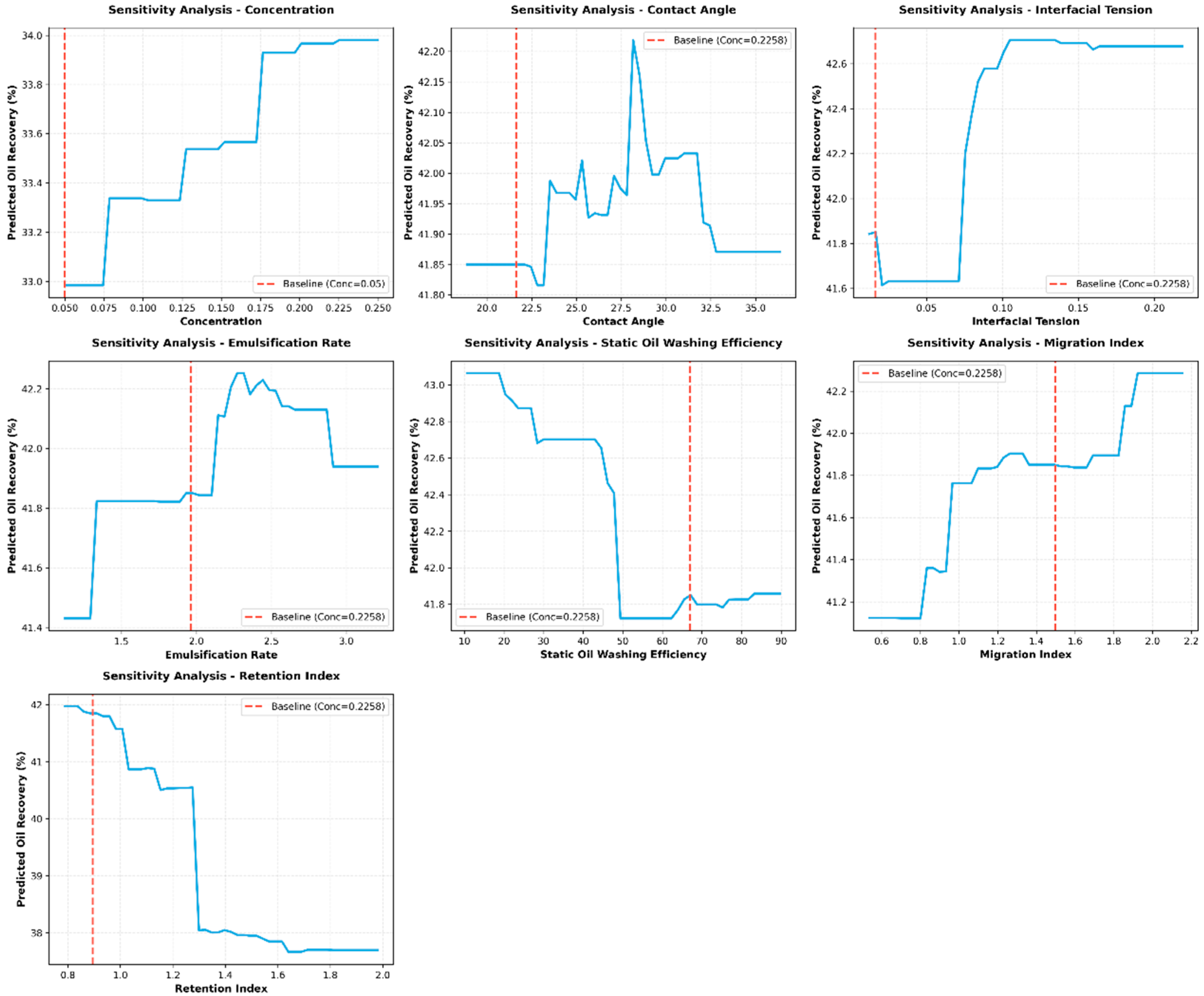
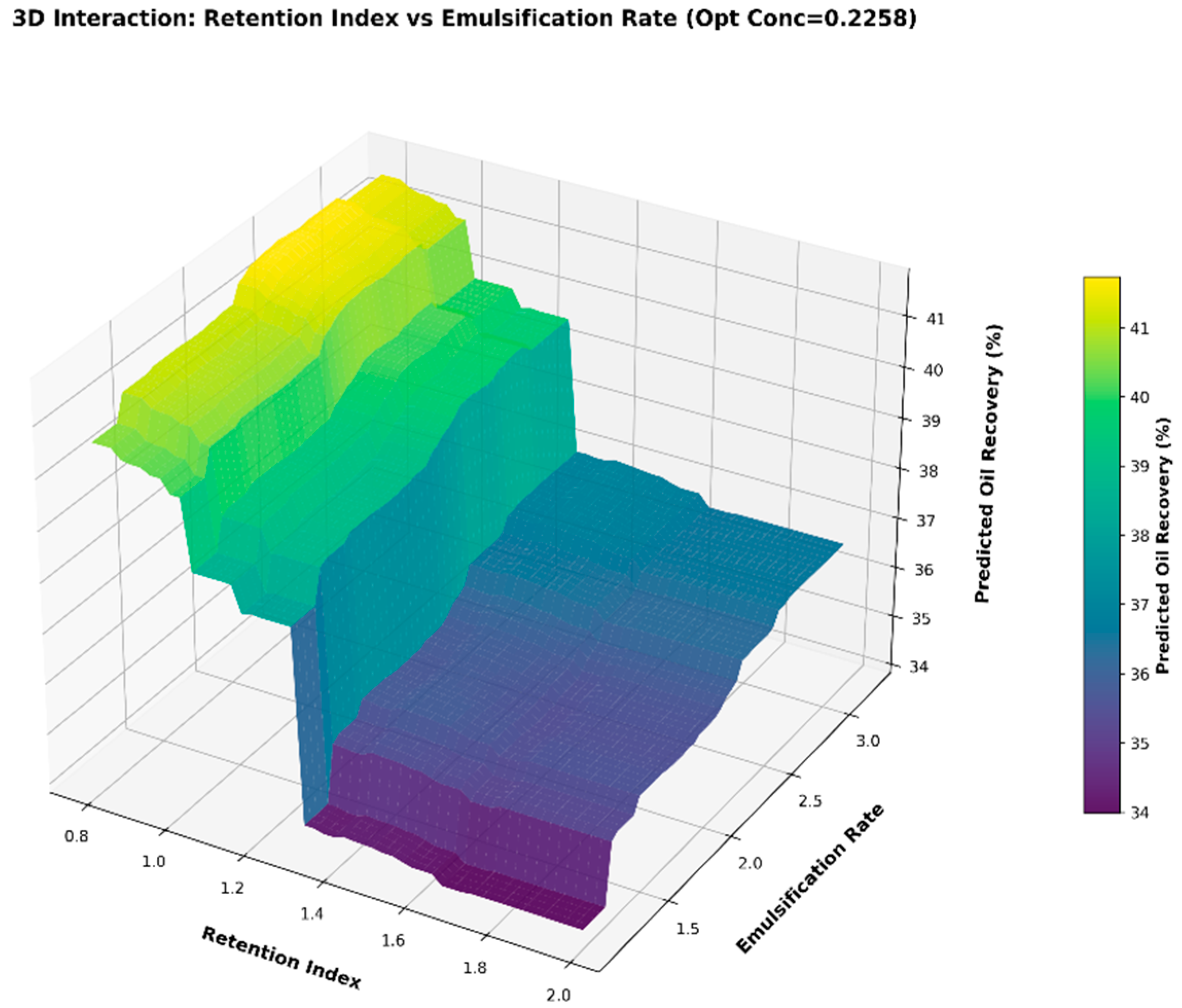
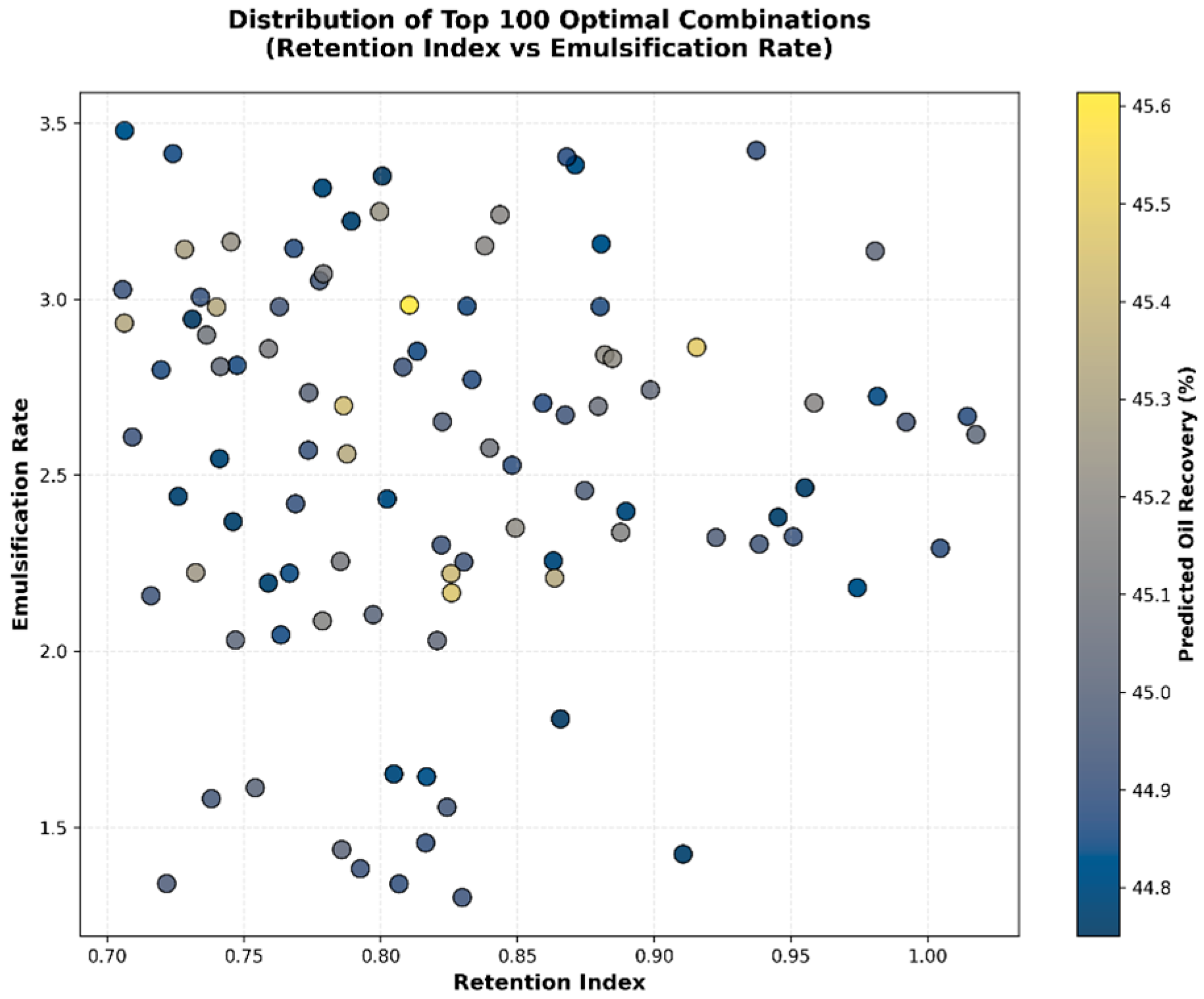
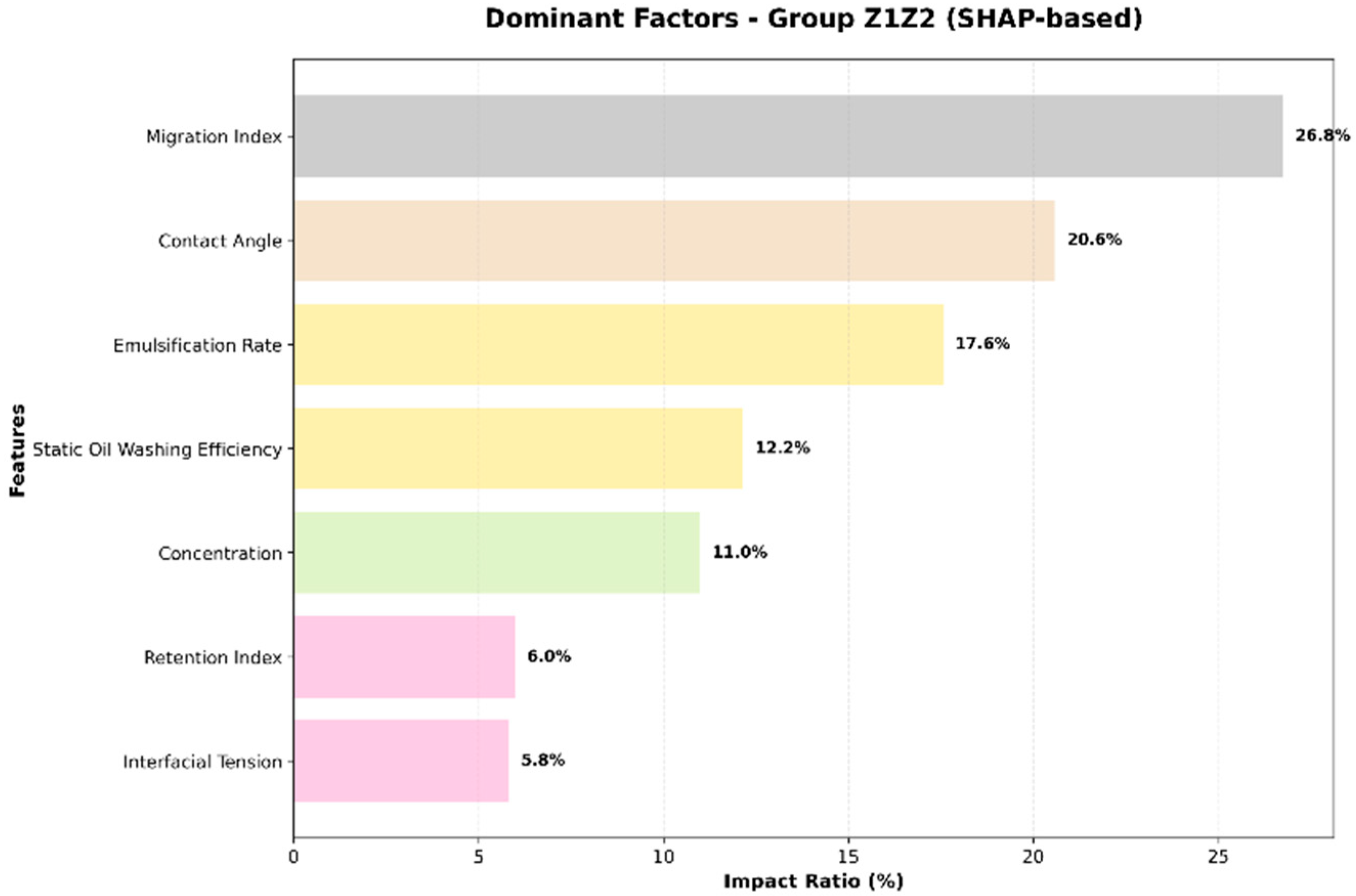
4.2. Study on the Main Controlling Factors of Surfactant Flooding in Low Permeability Reservoirs Based on Random Forest Algorithm
5. Conclusions
Author Contributions
Funding
Data Availability Statement
Conflicts of Interest
References
- Jia, C.; Zou, C.; Li, J.; Li, D.; Zheng, M. Evaluation criteria, major types, characteristics and resource prospects of tight oil in China. Pet. Res. 2016, 1, 1–9. [Google Scholar] [CrossRef]
- Lake, L.W.; Johns, R.T.; Rossen, W.R.; Pope, G.A. Fundamentals of Enhanced Oil Recovery; Society of Petroleum Engineers: Richardson, TX, USA, 2014. [Google Scholar]
- Sheng, J.J. Status of surfactant EOR technology. Petroleum 2015, 1, 97–105. [Google Scholar] [CrossRef]
- Liu, X.; Li, C.; Zhang, Y.; Liu, Y.; Yao, Q.; Wang, K.; Sheng, X.; Han, T. Research on Surfactant Flooding Technology for Ultra-Low Permeability Reservoirs, Ordos Basin. In Proceedings of the International Field Exploration and Development Conference; Springer Nature: Singapore, 2024; pp. 1345–1363. [Google Scholar]
- Pal, N.; Saxena, N.; Mandal, A. Studies on the physicochemical properties of synthesized tailor-made gemini surfactants for application in enhanced oil recovery. J. Mol. Liq. 2018, 258, 211–224. [Google Scholar] [CrossRef]
- Shaikhah, D.; Loise, V.; Angelico, R.; Porto, M.; Calandra, P.; Abe, A.A.; Testa, F.; Bartucca, C.; Rossi, C.O.; Caputo, P. New trends in biosurfactants: From renewable origin to green enhanced oil recovery applications. Molecules 2024, 29, 301. [Google Scholar] [CrossRef]
- Kamal, M.S.; Hussein, I.A.; Sultan, A.S. Review on surfactant flooding: Phase behavior, retention, IFT, and field applications. Energy Fuels 2017, 31, 7701–7720. [Google Scholar] [CrossRef]
- Standnes, D.C.; Austad, T. Wettability alteration in chalk: 2. Mechanism for wettability alteration from oil-wet to water-wet using surfactants. J. Pet. Sci. Eng. 2000, 28, 123–143. [Google Scholar] [CrossRef]
- Ahmadi, M.A.; Bahadori, A.; Shadizadeh, S.R. A rigorous model to predict the amount of surfactant required for desired recovery in surfactant flooding process. Fuel 2015, 139, 421–428. [Google Scholar]
- Zhang, J.; Zhang, G.; Ge, J.; Feng, A.; Jiang, P.; Li, R.; Zhang, Y.; Fu, X. Laboratory studies of depressurization with a high concentration of surfactant in low-permeability reservoirs. J. Dispers. Sci. Technol. 2012, 33, 1589–1595. [Google Scholar] [CrossRef]
- Hou, J.; Liu, Z.; Zhang, S.; Yue, X.; Yang, J. The role of viscoelasticity of alkali/surfactant/polymer solutions in enhanced oil recovery. J. Pet. Sci. Eng. 2005, 47, 219–235. [Google Scholar] [CrossRef]
- Hirasaki, G.J.; Miller, C.A.; Puerto, M. Recent advances in surfactant EOR. SPE J. 2011, 16, 889–907. [Google Scholar] [CrossRef]
- Ahmadi, M.A.; Shadizadeh, S.R. Implementation of a high-performance surfactant for enhanced oil recovery from carbonate reservoirs. J. Pet. Sci. Eng. 2013, 110, 66–73. [Google Scholar] [CrossRef]
- Ramatou, I.I.; Liu, Z.; Li, Y.; Wang, W.; Cao, J. Pore-scale Mechanisms of Microemulsion Driven Residual Oil in surfactant flooding systems: Phase behavior, Micromodel Visualization, and oil recovery. SSRN 2025, 1–22. [Google Scholar] [CrossRef]
- Taber, J.J.; Martin, F.D.; Seright, R.S. EOR screening criteria revisited-Part 1: Introduction to screening criteria and enhanced recovery field projects. SPE Reserv. Eng. 1997, 12, 189–198. [Google Scholar] [CrossRef]
- Wang, D.; Han, P.; Shao, Z.; Chen, J.; Seright, R.S. Sweep improvement options for the Daqing oil field. SPE Reserv. Eval. Eng. 2009, 12, 25–34. [Google Scholar]
- Tariq, Z.; Aljawad, M.S.; Hasan, A.; Murtaza, M.; Mohammed, E.; El-Husseiny, A.; Alarifi, S.A.; Mahmoud, M.; Abdulraheem, A. A systematic review of data science and machine learning applications to the oil and gas industry. J. Pet. Explor. Prod. Technol. 2021, 11, 4339–4374. [Google Scholar] [CrossRef]
- Mohaghegh, S.D. Recent developments in application of artificial intelligence in petroleum engineering. J. Pet. Technol. 2005, 57, 86–91. [Google Scholar] [CrossRef]
- Teixeira, A.F.; Secchi, A.R. Machine learning models to support reservoir production optimization. IFAC-Pap. 2019, 52, 498–501. [Google Scholar] [CrossRef]
- Wu, D.; Xue, X.; Zhou, L. Improving the robustness of tree-based prediction model of oil/water relative permeability through hyperparameter optimization and re-ensemble algorithm. Fuel 2025, 385, 134146. [Google Scholar] [CrossRef]
- Cheraghi, Y.; Kord, S.; Mashayekhizadeh, V. Application of machine learning techniques for selecting the most suitable enhanced oil recovery method; challenges and opportunities. J. Pet. Sci. Eng. 2021, 205, 108761. [Google Scholar] [CrossRef]
- Bian, X.Q.; Han, B.; Du, Z.M.; Jaubert, J.-N.; Li, M.J. Integrating support vector regression with genetic algorithm for CO2-oil minimum miscibility pressure (MMP) in pure and impure CO2 streams. Fuel 2016, 182, 550–557. [Google Scholar] [CrossRef]
- Meng, S.; Fu, Q.; Tao, J.; Liang, L.; Xu, J. Predicting CO2-EOR and storage in low-permeability reservoirs with deep learning-based surrogate flow models. Geoenergy Sci. Eng. 2024, 233, 212467. [Google Scholar] [CrossRef]
- Chaikine, I.A.; Gates, I.D. A machine learning model for predicting multi-stage horizontal well production. J. Pet. Sci. Eng. 2021, 198, 108133. [Google Scholar] [CrossRef]
- Alvarado, V.; Manrique, E. Enhanced oil recovery: An update review. Energies 2010, 3, 1529–1575. [Google Scholar] [CrossRef]
- Talebian, S.H.; Masoudi, R.; Tan, I.M.; Zitha, P.L.J. Foam assisted CO2-EOR: A review of concept, challenges, and future prospects. J. Pet. Sci. Eng. 2014, 120, 202–215. [Google Scholar] [CrossRef]
- Sheng, J.J. Modern Chemical Enhanced Oil Recovery: Theory and Practice; Elsevier: Amsterdam, The Netherlands, 2010. [Google Scholar]





| Project | Value |
|---|---|
| viscosity (63 °C, mPa·s) | 4.97 |
| original gas oil ratio (m3/t) | 8.2 |
| density (20 °C, g/cm3) | 0.923 |
| saturated hydrocarbon (%) | 67.41 |
| aromatic hydrocarbon (%) | 17.02 |
| the resin constituent in the crude oil (%) | 8.77 |
| asphaltene (%) | 6.8 |
| Water Source | Na+ + K+ (mg/L) | Ca2+ (mg/L) | Mg2+ (mg/L) | Cl− (mg/L) | SO42− (mg/L) | HCO3− (mg/L) | Mineralization (g/L) | Water Type |
|---|---|---|---|---|---|---|---|---|
| original formation water | 7465 | 566 | 266 | 7077 | 7120 | 1638 | 24.6 | Na2SO4 |
| Surfactant System | Main Surfactant | Auxiliary Agent | Mass Ratio (Main:Auxiliary) | System Type | State at Room Temperature | Tested Concentration Range |
|---|---|---|---|---|---|---|
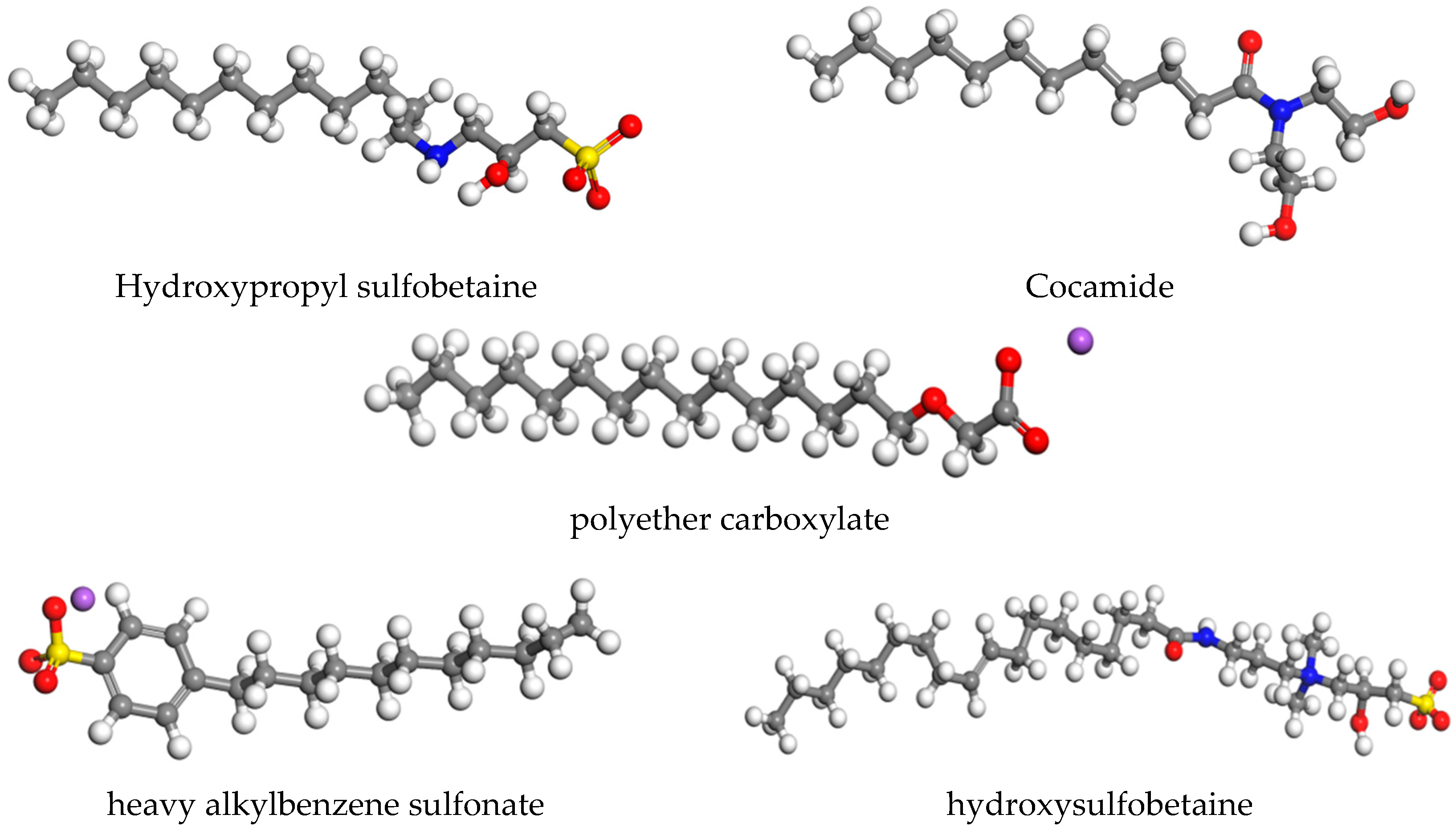
| YHS-Z1 | Hydroxypropyl sulfobetaine | Cocamide | 7:3 | Amphoteric-ionic + nonionic composite | — | 0.05%, 0.1%, 0.15%, 0.2%, 0.25% |
| YHS-Z2 | Polyether carboxylate | — | — | Nonionic-anionic composite | — | 0.05%, 0.1%, 0.15%, 0.2%, 0.25% |
| Middle-phase microemulsion | Heavy alkylbenzene sulfonate | Hydroxysulfobetaine | 7:3 | Water-surfactant-adjuvant stable system | Oily liquid | 0.05%, 0.1%, 0.15%, 0.2%, 0.25% |
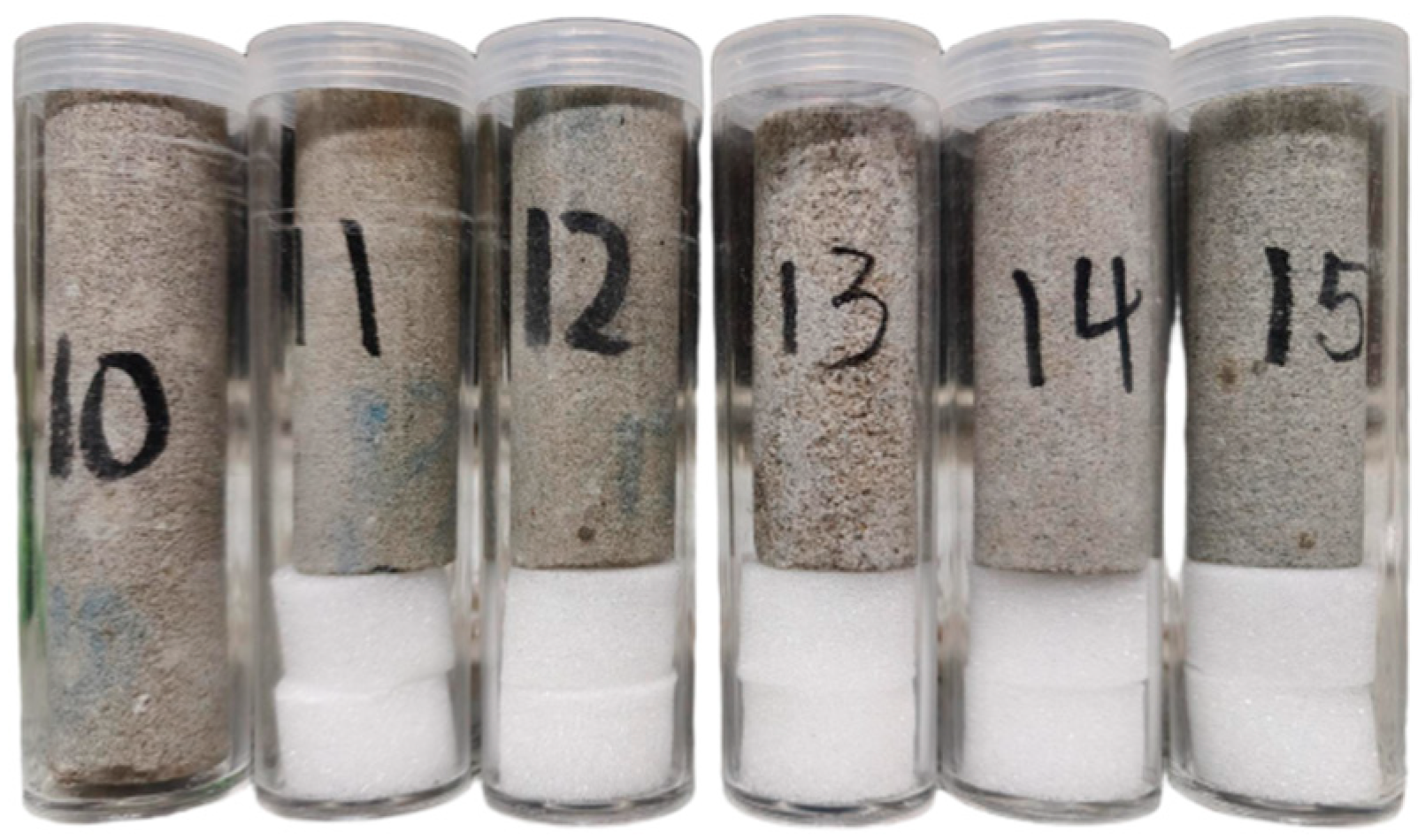
| Core ID | Dimensions | Permeability (×10−3 μm2) | Porosity (%) |
|---|---|---|---|
| 10 | ɸ 25 mm × 98 mm | 9.29 | 12.92 |
| 11 | ɸ 25 mm × 75 mm | 11.967 | 13.69 |
| 12 | ɸ 25 mm × 72 mm | 13.275 | 12.58 |
| 13 | ɸ 25 mm × 65 mm | 14.293 | 10.10 |
| 14 | ɸ 25 mm × 66 mm | 14.071 | 8.41 |
| 15 | ɸ 25 mm × 67 mm | 8.227 | 11.275 |
| Model | MAE | MAPE (%) | RMSE | Training-Set R2 |
|---|---|---|---|---|
| Ridge Regression (Ridge) | 3.2157 | 7.65 | 3.8942 | 0.8154 |
| Random Forest (RF) | 1.8245 | 4.78 | 2.3158 | 0.9428 |
| Gradient Boosting Regression (GBR) | 2.1589 | 5.32 | 2.6781 | 0.9215 |
| Support Vector Regression (SVR) | 2.8976 | 6.89 | 3.4521 | 0.8579 |
| Factors | Importance of SHAP | Proportion of Impact (%) |
|---|---|---|
| Retention Index | 1.8689 | 49.79 |
| Emulsification Rate | 0.4019 | 10.71 |
| Transport Index | 0.3852 | 10.26 |
| Static Oil Displacement Efficiency (%) | 0.3689 | 9.83 |
| Interfacial Tension (mN/m) | 0.3099 | 8.26 |
| Concentration (%) | 0.2911 | 7.76 |
| Contact Angle (°) | 0.1280 | 3.41 |
| Factor | Value |
|---|---|
| Concentration (%) | 0.2925 |
| Contact Angle (°) | 28.2338 |
| Interfacial Tension (mN/m) | 0.1140 |
| Static Oil Displacement Efficiency (%) | 16.4859 |
| Emulsification Rate | 2.9834 |
| Transport Index | 2.4314 |
| Retention Index | 0.8105 |
| Predicted Recovery Factor (%) | 45.61% |
| Block No. | Injection Rate (m3/d) | Oil Production Rate (t/d) | Cumulative Injection Volume (×104 m3) | Original Oil Production Rate (t/d) | Average Stimulation Duration (d) | Statistical Period | Cumulative Additional Oil Production (t) |
|---|---|---|---|---|---|---|---|
| X-1 | 120 | 22.1 | 131.4 | 15.0 | 1095 | 2022–2025 | 7774.5 |
| X-2 | 115 | 21.3 | 125.9 | 14.8 | 1095 | 2022–2025 | 7168.5 |
| X-3 | 125 | 23.2 | 138.1 | 15.2 | 1095 | 2022–2025 | 8551.0 |
| X-4 | 118 | 21.7 | 129.2 | 14.9 | 1095 | 2022–2025 | 7456.5 |
| X-5 | 122 | 22.5 | 133.6 | 15.1 | 1095 | 2022–2025 | 7996.5 |
| Average | 120 | 21.96 | 131.6 | 15.0 | 1095 | 2022–2025 | 7789.4 |
Disclaimer/Publisher’s Note: The statements, opinions and data contained in all publications are solely those of the individual author(s) and contributor(s) and not of MDPI and/or the editor(s). MDPI and/or the editor(s) disclaim responsibility for any injury to people or property resulting from any ideas, methods, instructions or products referred to in the content. |
© 2026 by the authors. Licensee MDPI, Basel, Switzerland. This article is an open access article distributed under the terms and conditions of the Creative Commons Attribution (CC BY) license.
Share and Cite
Shangguan, Y.; Gao, C.; Jia, J.; Wang, J.; Yuan, G.; Wang, H.; Wu, J.; Wu, K.; Bai, Y.; Liu, H.; et al. Research on Control Factors and Parameter Optimization of Surfactant Flooding in Low-Permeability Reservoirs Using Random Forest Algorithm. Processes 2026, 14, 1108. https://doi.org/10.3390/pr14071108
Shangguan Y, Gao C, Jia J, Wang J, Yuan G, Wang H, Wu J, Wu K, Bai Y, Liu H, et al. Research on Control Factors and Parameter Optimization of Surfactant Flooding in Low-Permeability Reservoirs Using Random Forest Algorithm. Processes. 2026; 14(7):1108. https://doi.org/10.3390/pr14071108
Chicago/Turabian StyleShangguan, Yangnan, Chunning Gao, Junhong Jia, Jinghua Wang, Guowei Yuan, Huilin Wang, Jiangping Wu, Ke Wu, Yun Bai, Hengye Liu, and et al. 2026. "Research on Control Factors and Parameter Optimization of Surfactant Flooding in Low-Permeability Reservoirs Using Random Forest Algorithm" Processes 14, no. 7: 1108. https://doi.org/10.3390/pr14071108
APA StyleShangguan, Y., Gao, C., Jia, J., Wang, J., Yuan, G., Wang, H., Wu, J., Wu, K., Bai, Y., Liu, H., & Bai, Y. (2026). Research on Control Factors and Parameter Optimization of Surfactant Flooding in Low-Permeability Reservoirs Using Random Forest Algorithm. Processes, 14(7), 1108. https://doi.org/10.3390/pr14071108