1. Introduction
To accelerate growth in the hydrocarbon economy, the scientific community is actively exploring innovative methods to convert carbon dioxide (CO
2) into valuable hydrocarbons. Among various carbon utilization strategies, the carbon dioxide methanation process (the Sabatier reaction) emerges as a promising route for producing hydrocarbons and effectively storing energy in chemical form. This route has recently gained attention due to its compatibility with the increasing availability of hydrogen. According to the Ragone plot, synthetic natural gas produced via the Sabatier process exhibits the highest energy storage capacity and longest discharge duration compared to other available technologies. A recent review [
1] emphasizes synthetic natural gas as a cost-effective and reliable long-term energy storage solution with significant potential for large-scale deployment. Current research efforts are concentrated on enhancing CO
2 conversion efficiency, increasing methane yields, and lowering the energy costs associated with this catalytic process, further supporting the growth of the hydrocarbon-based economy.
Even though CO
2 methanation (Sabatier reaction) is exothermic [
2] the reaction kinetics are significantly limited, requiring catalytic intervention to achieve acceptable levels of conversion, selectivity, and yield. Thermodynamic analysis suggests that the Sabatier process is favored at temperatures below 300 °C to achieve CO
2 conversion and CH
4 selectivity exceeding 90% under ambient pressure [
3]. Gao et al. demonstrated that a hydrogen-to-CO
2 ratio of 4:1 is optimal, maximizing methane production while preventing carbon deposition [
4]. Catalytic materials widely explored for the Sabatier reaction include noble and transition metals such as Ru [
5,
6,
7,
8,
9,
10,
11,
12,
13,
14], Rh [
6,
15], Ni [
6,
7,
16], and Co [
6], supported on oxides like TiO
2 [
10,
15], SiO
2 [
13,
15], MgO [
7,
13,
16], CeO
2 [
11,
12,
13,
14], and Al
2O
3 [
5,
6,
8,
9,
10,
13,
15]. Among these, Ru and Rh catalysts exhibit superior catalytic activity. Nickel-based catalysts, while highly active and selective, are sensitive to sulfur contaminants, requiring careful purification of feed gases to prevent catalyst deactivation. Alumina (Al
2O
3) is frequently employed as catalyst support despite its insulating nature, whereas semiconductor supports like CeO
2 and TiO
2 offer enhanced metal-support interactions and improved catalytic properties. Further improvements in reaction performance can be achieved through innovative catalyst design strategies aimed at optimizing metal dispersion, enhancing metal–support interactions, and increasing interfacial active sites, as well as by externally perturbing the reaction environment and surface state of the catalyst. Applying an electric field offers a promising strategy to overcome kinetic limitations, significantly boosting reaction efficiency and enhancing hydrocarbon yield in the Sabatier process.
Several approaches for enhancing catalytic reactions through the application of electric fields have been reported, including plasma catalysis, microwave-enhanced catalysis, and direct electric-field-assisted catalysis [
17,
18,
19,
20,
21,
22]. While plasma-based methods (such as dielectric barrier discharge) and microwave-assisted catalysis demonstrate promising methane yields and CO
2 conversions at relatively low temperatures, they typically require high voltages, leading to substantial energy costs. A more attractive and efficient alternative is the direct application of electric fields to catalytic materials, particularly semiconductive catalysts, which enables conduction at significantly lower voltages. This approach enhances gas–solid interactions via protonic conduction, effectively improving reaction efficiency, CO
2 conversion rates, and hydrocarbon yields. Such non-Faradaic enhancements, referred to as Non-Faradaic Electrochemical Modification of Catalytic Activity (NEMCA), ref. [
23] have demonstrated notable catalytic performance. Yamada et al. [
24] reported CO
2 conversion of 17.4% and CH
4 selectivity of 96% under modest electrical conditions. Furthermore, the principle of dynamic heterogeneous catalysis, involving periodic modulation of electric fields, can strategically vary surface coverage and binding energies, enhancing the turnover frequency. Simulation studies by Ardagh et al. [
25] have indicated the effectiveness of dynamically varied electric fields, particularly square-wave modulation, in significantly increasing catalytic performance. Collectively, electric-field-assisted catalysis emerges as a compelling strategy for efficient hydrocarbon production and enhanced chemical energy storage.
Recent studies suggest that applying a low-intensity electric field (~10
5 V·m
−1) to semiconducting catalysts can significantly enhance their catalytic efficiency [
26]. Due to ceria’s unique oxygen-storage capacity and robust Ru/CeO
2 interactions, an electric field effectively promotes proton migration across the catalyst surface and at the metal-support interfaces [
26]. This electrically driven proton conduction decreases the apparent activation energy, facilitating improved reactant activation. For instance, ref. [
27] demonstrated a substantial reduction in apparent activation energy from 54 to 14 kJ mol
−1 for methane steam reforming over Pd/CeO
2 under similar electric-field conditions. Given ceria’s semiconductive properties (band gap ~3.19 eV, [
28] and its capability to sustain protonic currents, Ru/CeO
2 catalysts are expected to achieve significantly improved CO
2 methanation performance under electric-field-enhanced conditions.
This article focuses on the use of a dynamic electric field to perturb surface states and enhance the CO2 methanation reaction. The square waveforms have been applied to Ru/CeO2 catalysts at different reaction temperatures, such as 350 °C and 400 °C. The energy costs of CO2 conversion and CH4 formation have also been studied in an effort to understand the potential for commercialization of this technology.
2. Materials and Methods
2.1. Catalyst Preparation
The catalyst used in this study is 1 wt.% ruthenium (Ru) supported on cerium oxide (CeO2). High-purity cerium (IV) oxide powder (99.99% trace metals basis, particle size < 5 µm, Sigma-Aldrich, Waltham, MA, USA) was used as the support material. To prepare the catalyst, 9.9 g of ceria powder was slowly stirred for 20 h in an aqueous solution containing 0.1 g of ruthenium (Ruthenium hexamine chloride (99.9% trace metal basis) obtained from Sigma-Aldrich was used as the precursor). The resulting slurry was dried in air at 150 °C, pelletized, and sieved to obtain particles between 250 and 300 microns in size. Subsequently, the pelletized catalyst was reduced at 500 °C under a gas flow consisting of 40 sccm hydrogen and 60 sccm argon. For each CO2 methanation experiment, 150 mg of this pre-reduced catalyst was utilized.
2.2. Material Characterization
X-Ray Diffraction Analysis:
X-ray diffraction (XRD) was performed using a multipurpose X-ray diffractometer (Rigaku Smartlab, Irvine, CA, USA) to determine the crystal structure of Ru/CeO2 as prepared, and after CO2 methanation experiments without applying an electric field and after applying an electric field. CuKα radiation was used, operated at a voltage of 40 kV, a current of 44 mA, and filtered with a Ni-crystal monochromator. A parallel beam with a divergence of 0.02° is formed. The reflected intensity of the beam was measured using a position-sensitive detector (angular resolution of 0.015°). Indexing of the reflections was performed with the SmartLab Studio II software Version 4.3.
N2 Physisorption:
The textural properties of the Ru/CeO2 samples were evaluated by N2 physisorption tests at 77 K on a Micromeritics ASAP 2020 instrument. Prior to the measurements, the samples were degassed under vacuum for 2 h at 100 °C. The Brunauer–Emmett–Teller (BET) and Barrett–Joyner–Halenda (BJH) methods were used to estimate the surface area and pore size distribution (PSD), respectively.
2.3. Experimental Setup
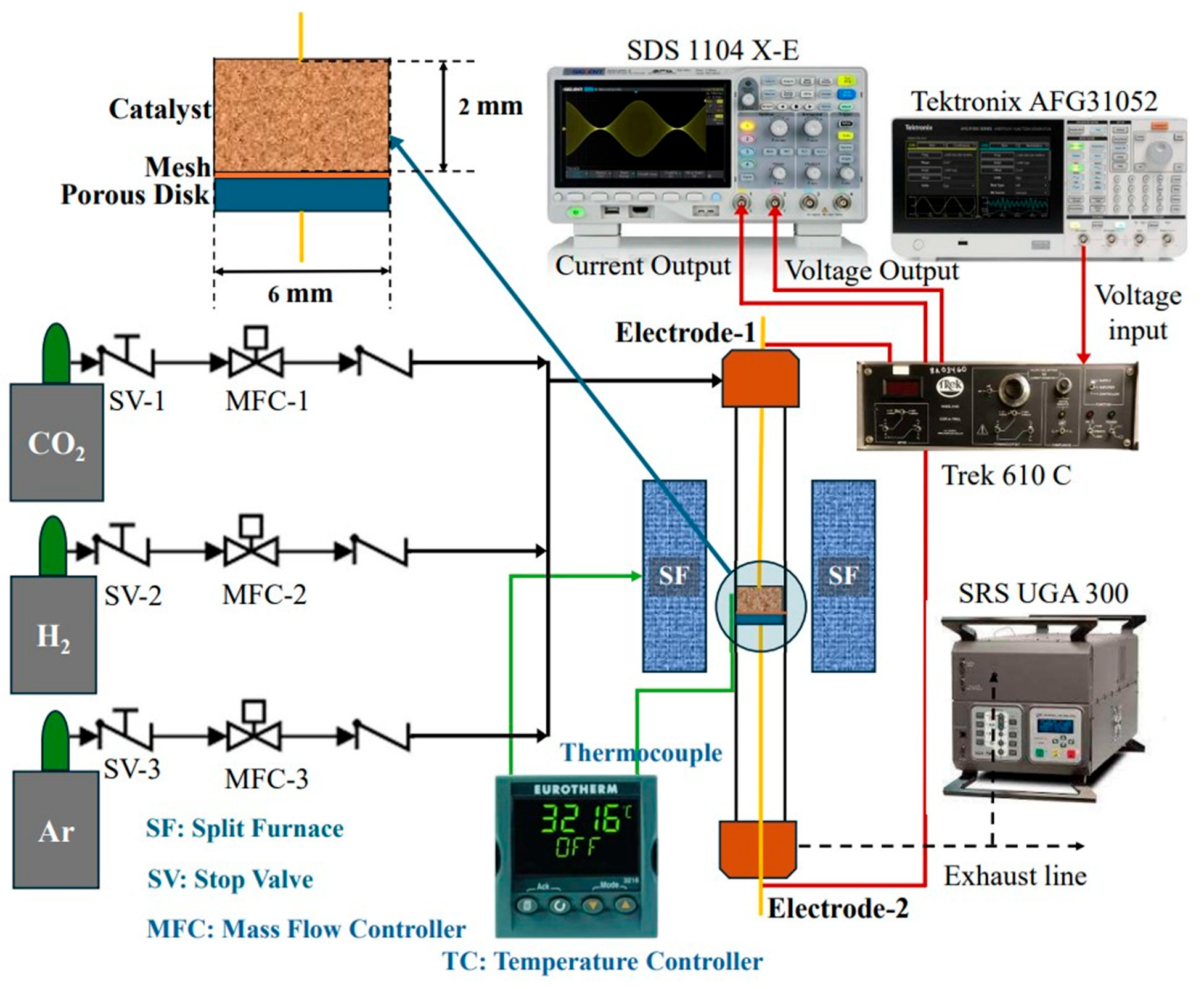
The experimental setup, as illustrated in
Figure 1, comprises a packed-bed quartz reactor with an internal diameter of 6 mm and an outer diameter of 12 mm. The reactor is equipped with top and bottom electrodes designed to apply an electric field directly to the catalyst bed. The bottom electrode consists of a stainless-steel frit (diameter: 6 mm) mounted onto a copper rod, with a steel mesh placed on top to prevent sample loss between the frit and the reactor wall. The top electrode is a copper rod positioned directly in contact with the catalyst. The gap between the electrodes is precisely maintained at 2.0 ± 0.05 mm. Heating of the quartz tube reactor is provided by line AC voltage, and reactor temperature is monitored using a K-type thermocouple inserted within the reactor chamber.
Reactant gases (CO2, H2, and Ar) are precisely controlled and delivered using mass flow controllers. The reactor outlet is connected to a Residual Gas Analyzer (RGA) mass spectrometer (Stanford Research Systems, SRS, Sunnyvale, CA, USA) for real-time quantification of product and reactant species, including argon, methane, carbon dioxide, carbon monoxide, water, and hydrogen. Electric fields are applied via a TREK 610E instrument (USA) capable of operating as a high-voltage power supply, amplifier, or controller. The TREK device provides selectable voltage and current ranges: 0 to ±1 kV or 0 to ±10 kV, and 0 to ±200 µA or 0 to ±2000 µA. A Tektronix AFG31052 series arbitrary function generator is used in combination with the high-voltage power supply (TREK 610E in amplifier mode) to apply various electric field waveforms. Voltage and current outputs from the reactor are monitored using an oscilloscope (Siglent SDS1104X-E, Siglent, Shenzhen, China) coupled with an output probe provided by the TREK 610C instrument.
CO
2 methanation experiments were conducted at reactor temperatures of 350 °C and 400 °C, both with and without electric-field application on 150 mg of catalyst. Initially, the effect of a constant (time-invariant) electric field was evaluated by applying a steady current of 2 mA. Subsequently, varying electric field conditions were studied by applying square-wave current modulation between 0 and 2 mA at frequencies of 1 Hz, 10 Hz, 100 Hz, 1000 Hz, 10 kHz, and 20 kHz, as detailed in
Table 1.
The operating frequency range was constrained by the limitations of the Trek 610E high-voltage power supply. At frequencies exceeding 20 kHz, significant waveform distortion was observed, compromising signal integrity. Therefore, consistent with the methodology reported by Ardagh et al. [
25], square-wave excitation frequencies in the range of 1 Hz to 20 kHz were selected for this study. To minimize the impact of catalyst batch variability, tests were run with variation between the applied and non-applied field to provide comparison to the baseline case for each catalyst.
Prior to each CO2 methanation experiment, the catalyst was activated by reduction under hydrogen flow for 30 min.
2.4. Parameters for Reaction Performance Measurement
Total conversion of the reactant (X
total) is calculated using conversions of the individual reactants (
) using the following equations [
29,
30]. This is important because the equations take dilution of gases into account. The molar flow rate of the reactant is defined as
, where
and
are the inlet and outlet molar flow rates of the reactant, respectively.
Specific energy input (SEI) is defined in Equation (4) as the ratio of energy supplied by applying an electric field (P) to the total flow rate of gas molecules (
) supplied to the reactor. The unit of specific energy input is kJ/dm
3 or eV/molecule (Equation (5)), where
is molar volume (22.4 L/mol at NTP) and
is Avogadro number. The total conversion (
) is further used to calculate energy cost (EC). The EC is a measure of energy consumed by the process to increase the conversion of one molecule of the feed stream.
Yield of methane (
is defined as the number of moles of methane output (
to the number of moles of carbon dioxide input (
to the reaction.
3. Results and Discussions
3.1. Role of Static Electric Field
The effect of an electric field (EF) on CO
2 methanation over Ru/CeO
2 catalysts was initially evaluated under a constant current (CC) mode (2 mA).
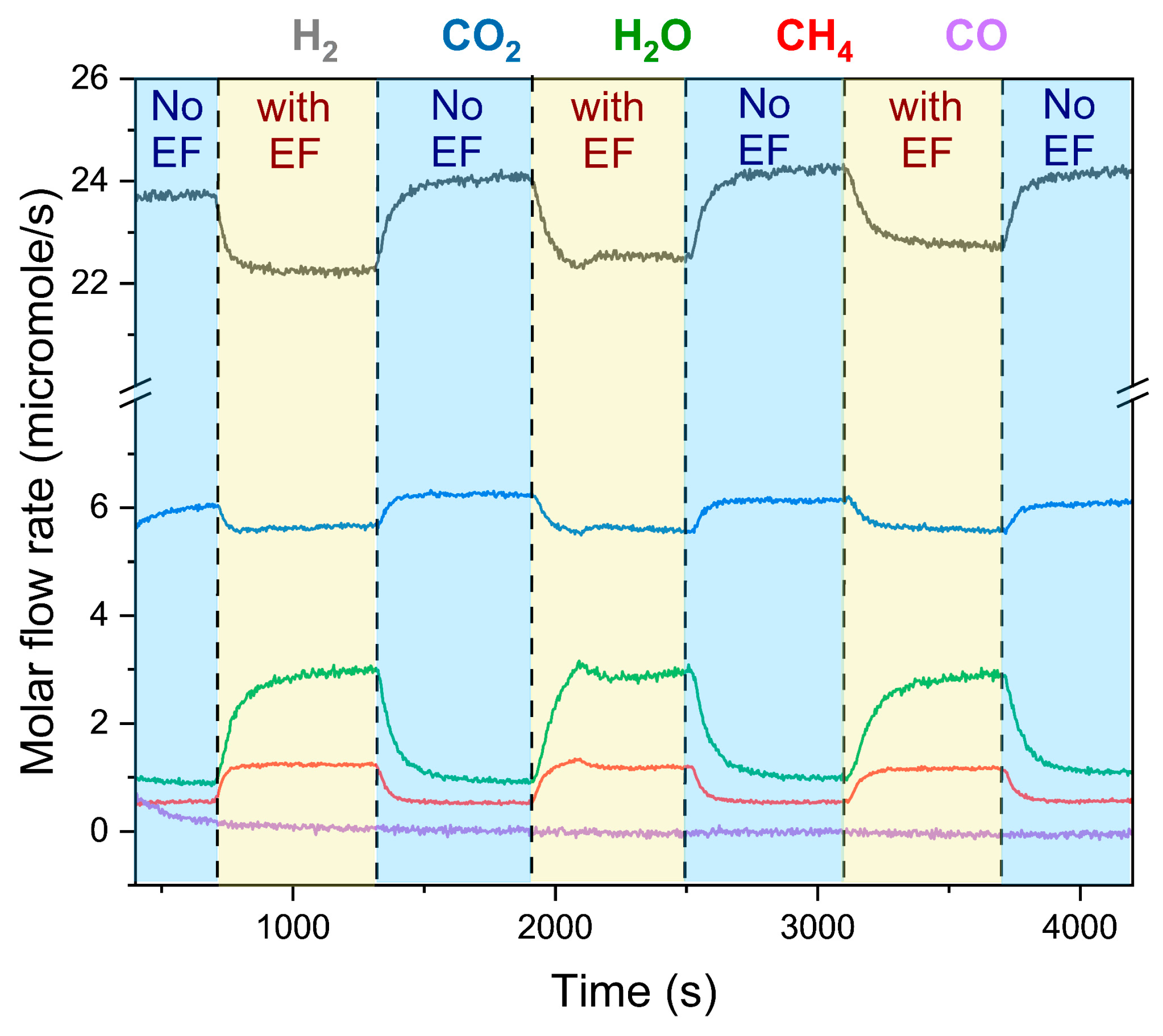
Figure 2 presents the results from three consecutive experimental cycles, clearly showing significant improvements in reaction performance with the application of EF. Upon applying EF, noticeable reductions in the molar flow rates of CO
2 and H
2 were observed, directly indicating enhanced consumption of both reactants. Specifically, the average CO
2 conversion (X
CO2) increased markedly from 11.6% to 18.9%, accompanied by an increase in methane yield (Y
CH4) from 7.9% to 17.2% (
Table 2). A corresponding improvement in hydrogen conversion from 13.4% to 18.8% was also observed (
Table 2). The disproportionately higher increase in methane yields relative to their respective reactant uptakes strongly indicates that the electric field not only facilitates enhanced adsorption and conversion of reactants but also accelerates the conversion of any adsorbed reaction intermediates to desired products.
Previous spectroscopic studies on the Sabatier reaction using Ru catalysts (e.g., Ru/Al
2O
3, Ru/TiO
2) have hypothesized the formation of stable surface intermediates (SSI) derived from adsorbed CO
2 at undercoordinated Ru sites localized at the metal-support interface (MSI). Additionally, computational studies [
31] confirm preferential adsorption of CO
2 and H
2 onto Ru clusters, further validating the significance of the MSI in catalytic activity. According to the recent literature, applying an electric field across catalysts supported by semiconducting materials (TiO
2, CeO
2) induces proton migration on the catalyst surface. Such protonic movement can dynamically interact with adsorbed intermediates at the MSI, potentially destabilizing SSI and accelerating their conversion into methane and water [
32].
Based on the observed results and the reported literature, it is hypothesized that the electric field may enhance reaction efficiency through proton migration on the ceria support, which significantly accelerates the interaction of mobile protons with stable surface intermediates at the Ru/CeO2 interface. This enhanced interaction of surface intermediates and protons likely promotes faster transformation of intermediates into methane and water. Additionally, proton mobility may alter surface coverage of adsorbed species on Ru clusters, thereby enabling accelerated adsorption of CO2 and H2, further enhancing their conversion into products.
Thus, the Sabatier reaction in the presence of EF may be assumed to proceed via the following steps: (i) adsorption and activation of CO2 and H2 on Ru active sites, (ii) migration of activated intermediates to the MSI, and (iii) competitive formation of methane, water, and stable surface intermediates both at the MSI and oxide support. Each step involves characteristic time scales, the interplay of which ultimately dictates the reaction kinetics. Introducing EF perturbs the system by altering the proton flux at the Ru/CeO2 interface, potentially influencing reaction kinetics and improving performance. While constant-current EF conditions clearly demonstrate enhanced catalytic activity, dynamically pulsed electric fields at varied frequencies (1 Hz to 20 kHz) were explored next to identify optimal conditions that may further maximize reactant conversion and methane yield.
3.2. Role of Dynamic Electric Field
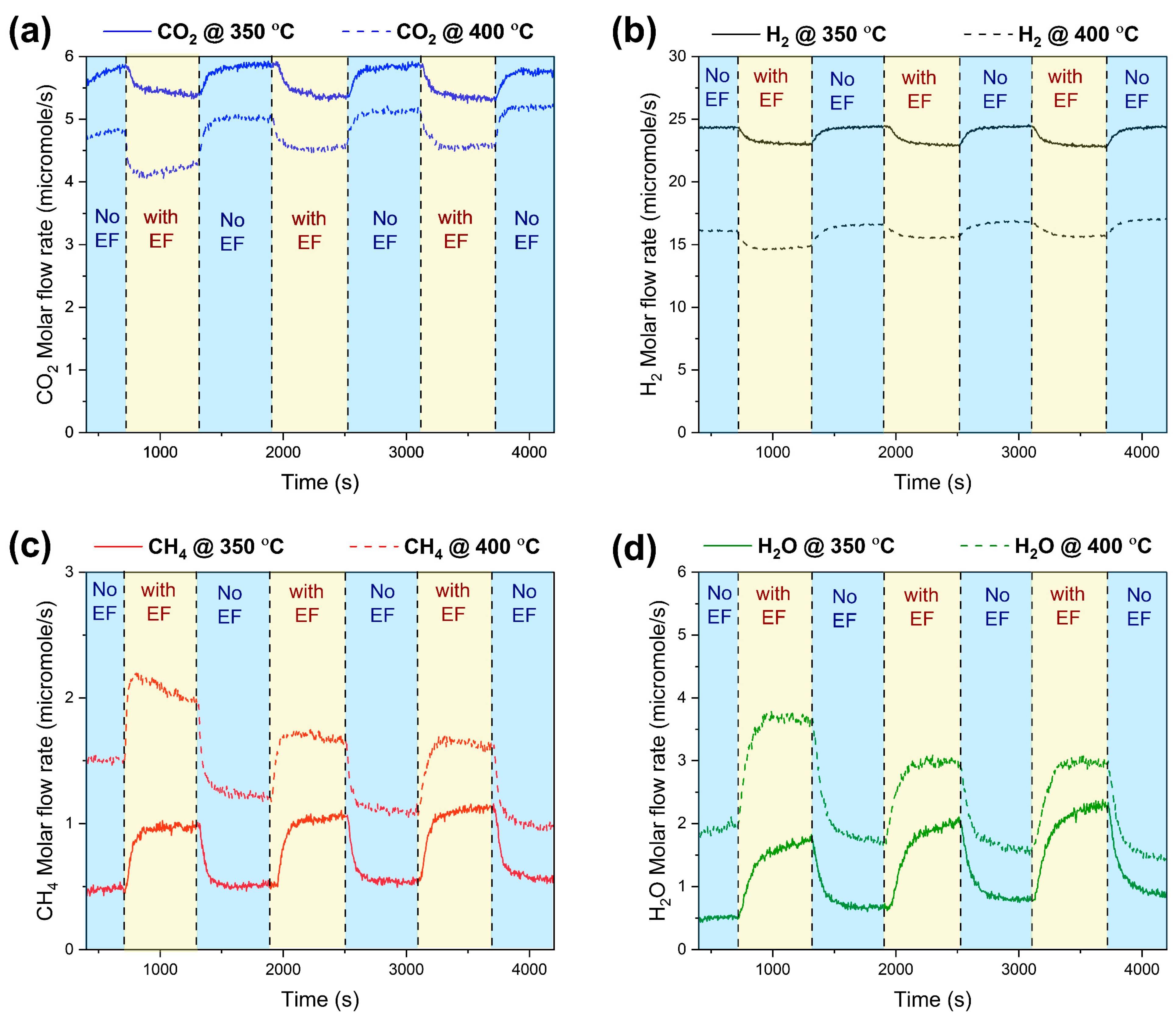
Figure 3 presents the effects of applying a periodic electric field (EF), with a pulsed current of 2.0 mA amplitude with a 50% duty cycle at 100 Hz, on the performance of the CO
2 methanation reaction. The observed voltage at these conditions was 800 V, with some per cycle variance (320–400 V). For the 2 mm gap this corresponds to an applied electric field of 2 × 10
5 V/m. At 350 °C, the pulsed EF condition resulted in a slight decrease in average methane yield (14.9%) and CO
2 conversion (22.3%) compared to constant-current EF (CO
2 conversion: 18.9%, CH
4 yield: 17.2%). In contrast, at 400 °C, the pulsed EF significantly improved CO
2 conversion from the baseline (without EF) level of 27.3% to 36%, nearly equal to the performance of constant-current EF, which achieved 36.4%. The values of CO
2 conversion, H
2 conversion, and methane yield of pulsed electric field are listed in
Table 3. Interestingly, despite this enhanced CO
2 conversion at the higher temperature, the methane yield under dynamic EF with a 50% duty cycle at 100 Hz was marginally lower than that under constant-current conditions.
These observations highlight the complex interplay among reactant adsorption, intermediate formation, and product selectivity under varying electric field (EF) conditions. The differing effects observed at 350 °C and 400 °C suggest that the application of EF at 100 Hz influences the elementary reaction steps differently at distinct temperatures. Specifically, the performance of CO2 methanation under pulsed EF depends on how the EF individually affects multiple concurrent processes, including CO2 and H2 adsorption and activation, formation of surface intermediates, proton migration across the oxide support and metal–support interface (MSI), and the dynamic interactions between migrating protons and stable surface intermediates (SSI) leading to methane and water formation. Consequently, the optimal EF parameters likely result from a carefully balanced combination of these elementary reaction steps.
Given these nuanced and temperature-dependent outcomes, it is evident that pulsed EF conditions at specific frequencies may not uniformly outperform constant-current EF. Consequently, a systematic evaluation over a broader frequency range (1 Hz to 20 kHz) is essential to identify optimal conditions that consistently maximize both CO2 conversion and methane production.
Influence of Frequency
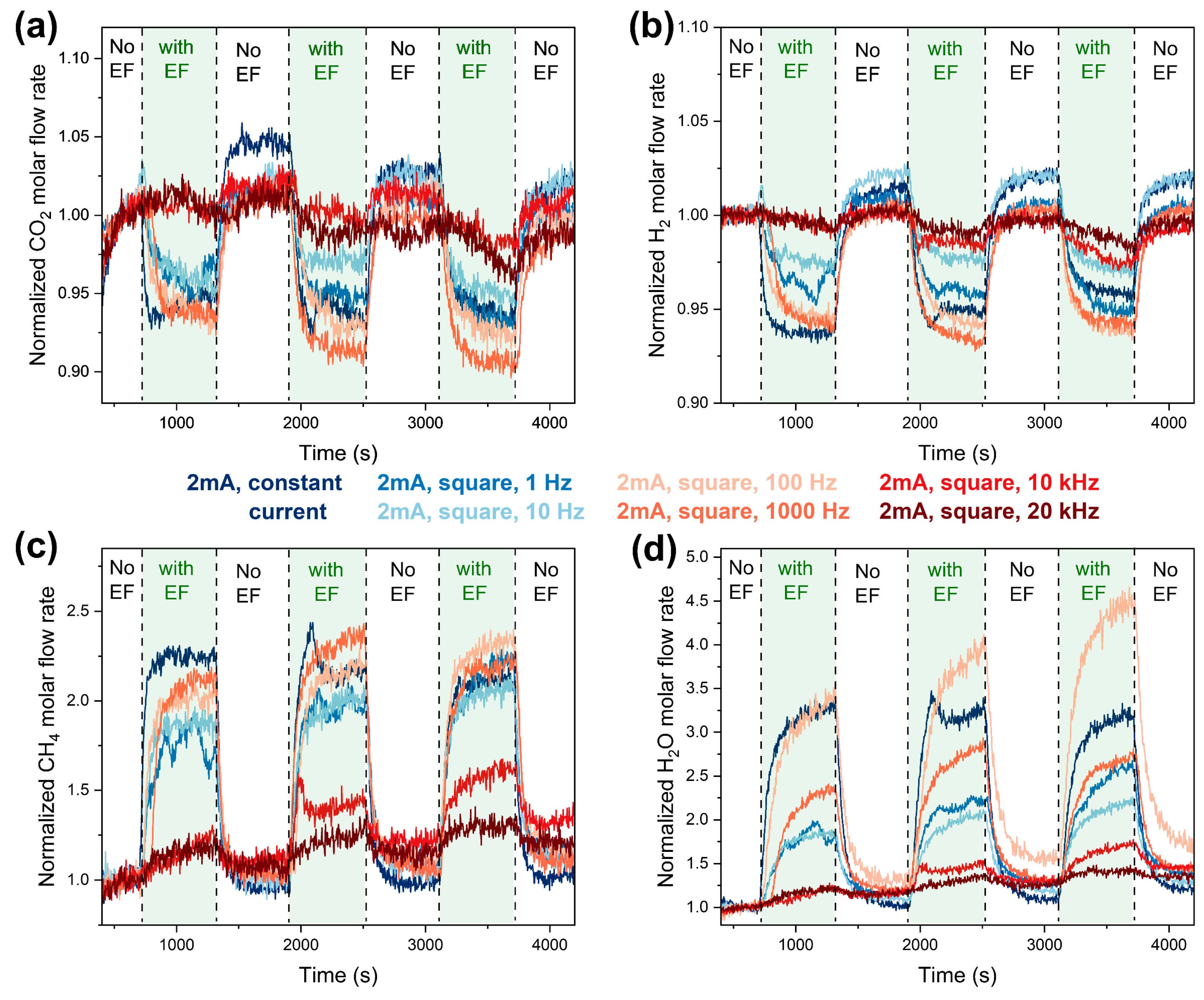
Figure 4 presents the transient profiles of normalized flow rates (H
2, CO
2, CH
4, and H
2O) during three consecutive reaction cycles at 350 °C, both with and without the application of electric field (EF) at various frequencies. To enable explicit comparison among different EF conditions, the gas flow rates were normalized by their respective initial baseline values measured during the first 10 min without EF. The overall trend in CO
2 consumption across the tested EF frequencies was found to be: constant current ≈ 1000 Hz > 100 Hz > 1.0 Hz > 10 Hz > 10 kHz ≈ 20 kHz (
Figure 4a). Dynamic EF conditions did not generate a significant advantage over constant-current EF regarding enhanced CO
2 consumption, a trend closely mirrored in methane formation (
Figure 4c). Notably, both constant-current EF and dynamic EF at 1000 Hz demonstrated more than twofold increase in methane formation rates compared to baseline conditions. Similar trends were observed for hydrogen consumption (
Figure 4b) and water production (
Figure 4d), supporting the hypothesis of an optimal EF frequency window between approximately 1.0 and 1000 Hz. In contrast, higher-frequency EFs (10 and 20 kHz) produced performances comparable to baseline experiments, likely because rapid oscillations between 0 and 2.0 mA current pulses failed to effectively stimulate proton migration across the ceria support.
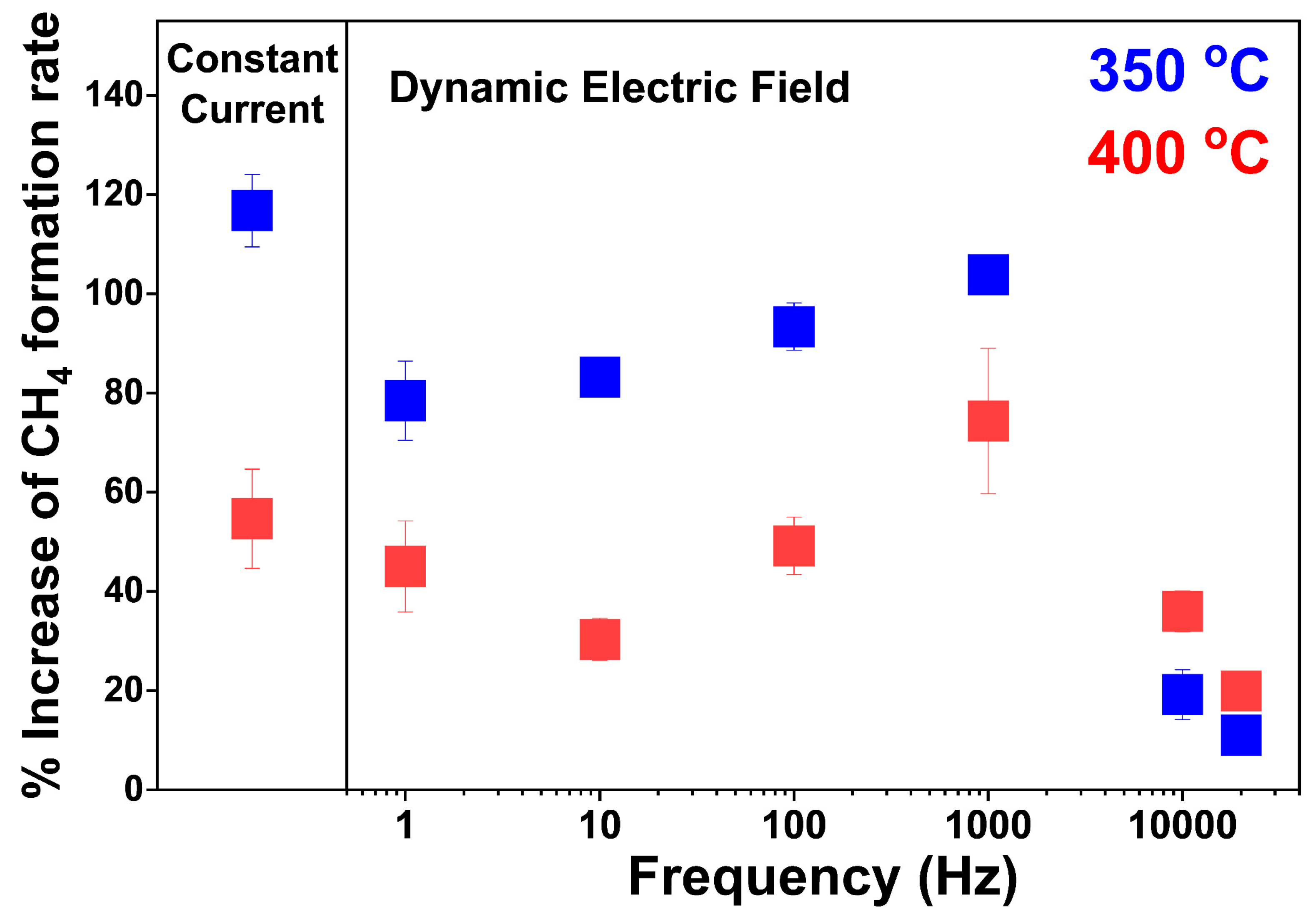
Figure 5 illustrates the average percentage enhancements in methane formation rates under constant-current and dynamic EF conditions at reaction temperatures of 350 and 400 °C. The observed trends differ distinctly between these temperatures. At 350 °C, the constant-current EF yielded the maximum enhancement (over 100%), closely followed by dynamic EF at 1000 Hz. Conversely, at 400 °C, dynamic EF application at 1000 Hz exhibited a clear advantage relative to constant-current conditions. At both temperatures, maximum methane formation rates under dynamic EF were consistently achieved at 1000 Hz, suggesting a favorable synergy between the frequency of proton migration waves and the intrinsic kinetics of the Sabatier reaction on Ru/CeO
2 catalysts.
The pronounced performance observed at 1000 Hz implies that the periodic proton flux under dynamic EF conditions aligns closely with the characteristic reaction rate of surface interactions at the Ru/CeO
2 interface. According to a recent kinetic study by [
33] on Ru-CeO
2/Al
2O
3 catalysts, the initial reaction rates for the Sabatier reaction range approximately between (2.19–4.36) × 10
−3 mol·s
−1 at temperatures of 350–400 °C, indicating a possible resonance between the proton-migration frequency at 1000 Hz and the elementary reaction steps. Consequently, EF-driven periodic proton–intermediate interactions at this specific frequency likely play a critical role in enhancing the kinetics and overall performance of CO
2 methanation.
3.3. Discussion on Material Characterization
The structural stability of Ru/CeO
2 catalysts following CO
2 methanation experiments, both with and without electric field (EF), was analyzed using X-ray diffraction (XRD,
Figure 6) and nitrogen physisorption (
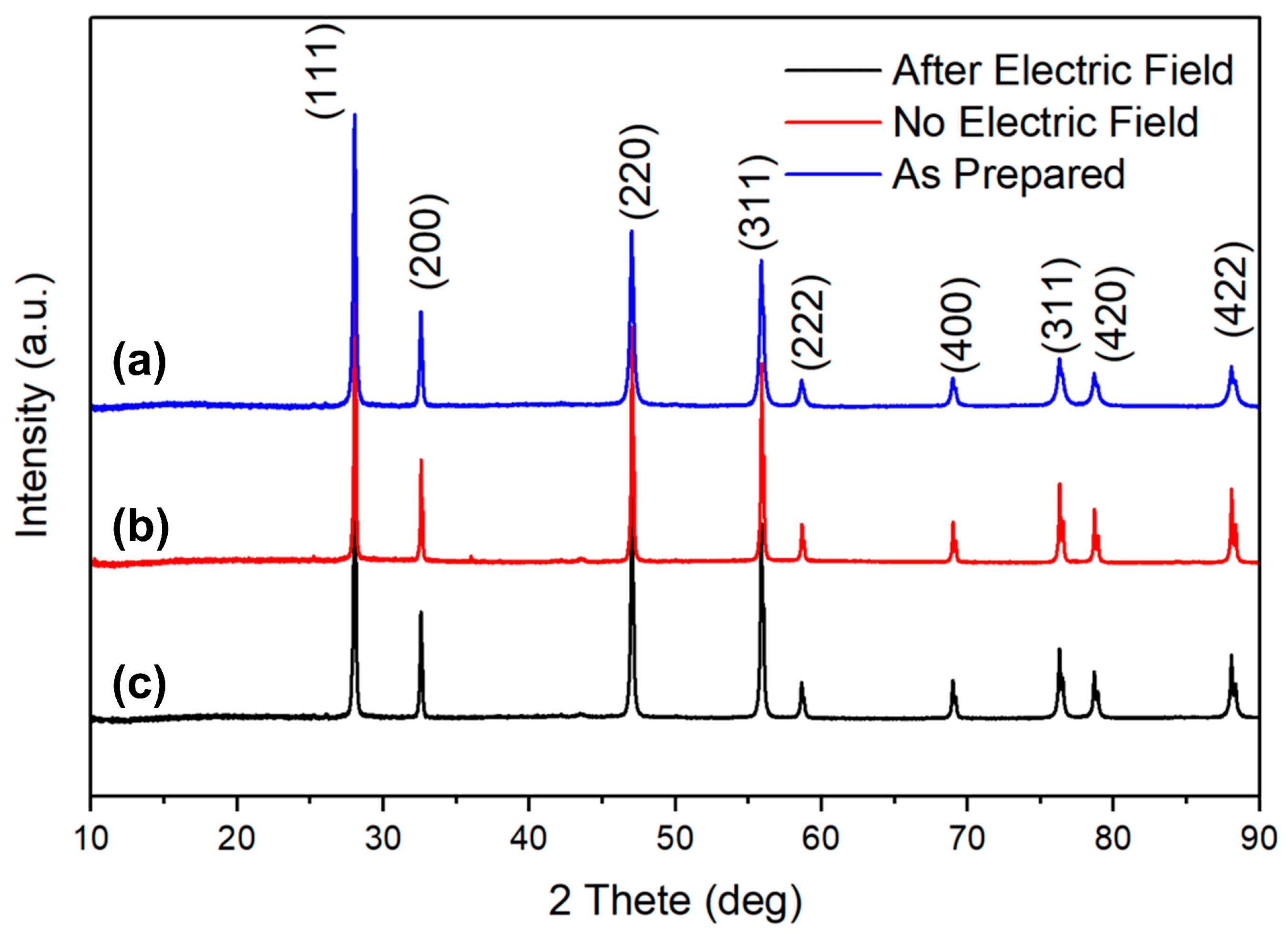
Table 2). The EF effect was evaluated exclusively under constant-current mode conditions. The XRD patterns of (a) the freshly prepared catalyst, and those after reaction at 400 °C (b) without EF and (c) with EF, all exhibited characteristic fluorite-structure peaks of CeO
2 at approximately 28.5°, 33.1°, 47.6°, and 56.5° in
Figure 6. The absence of distinct peaks corresponding to Ru metal phases suggests either a high dispersion of ruthenium on the ceria support or the presence of very small Ru clusters below XRD detection limits. Importantly, no significant differences in the crystal structure of the catalyst were observed before and after reaction, irrespective of EF application. This demonstrates that both reaction conditions and EF application do not compromise the structural stability of the Ru/CeO
2 catalyst.
Specific surface area, total pore volume, and pore size of the catalysts were evaluated using N
2 adsorption–desorption isotherms given in
Table 4. All three parameters decreased following the reaction. However, the observed reductions under electric field (EF) conditions were smaller than those from baseline experiments without EF. The decline in this measurement is likely due to thermal stress (350–400 °C) and coke deposition formed during the reaction. The relatively higher surface area and pore volume retained under EF conditions can be explained by two possible phenomena. Firstly, the EF application might suppress stable intermediate formation, subsequently reducing coke deposition and associated pore blockage. Secondly, the interaction of EF with dielectric materials, such as ceria, generates mechanical stress known as Maxwell stress [
34]. It is therefore plausible that the Maxwell stress induced by EF partially counterbalances thermal stress effects, resulting in a comparatively higher surface area and pore volume compared to reactions performed without EF.
3.4. Comparison of the Specific Energy Input for Ef
Application of an electric field (EF) to enhance the Sabatier reaction inherently introduces additional operational costs. To determine the optimal EF strategy (constant-current vs. dynamic EF, and optimal frequency in the dynamic case), an evaluation of the additional electrical energy cost (EC) was performed using Equation (6). The power consumed by the EF, required for the EC calculation, was determined from transient voltage (V) and current (i) profiles obtained using an oscilloscope (Tektronix AFG31052) connected to the power supply (Trek 610C), as given by
where
is the time interval of one cycle with EF. In Equation 8, the time taken (T) for the electric field application is 600 s (
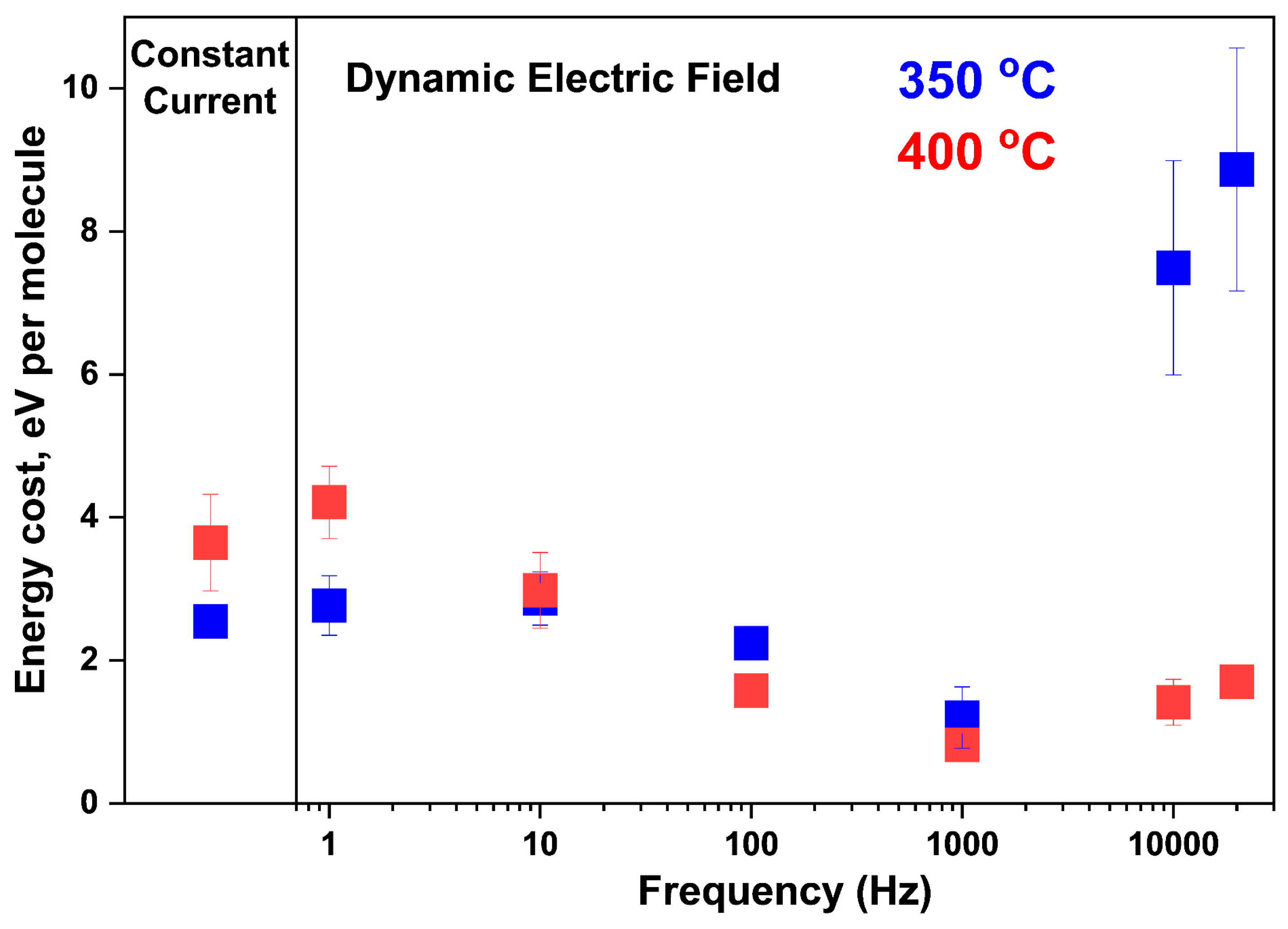
Figure 5). The EC profiles for constant-current and dynamic EF conditions at 350 and 400 °C are presented in
Figure 7. Notably, dynamic EF at 1000 Hz consistently emerges as the most energy-efficient operating condition at both temperatures. At a frequency of 1000 Hz dynamic EF, the EC ranged from 0.82 to 1.19 eV per converted molecule (79 to 114 kJ/mol)within the temperature range of 350–400 °C, significantly lower compared to constant-current EF (2.54–3.65 eV per converted molecule). Importantly, dynamic EF at 1000 Hz demonstrated the maximum percentage enhancement in methane formation rate.
4. Conclusions
This study investigates CO2 methanation under externally applied electric fields, comparing constant current and pulsed (square wave) current modes. The electric field significantly enhances CH4 formation while reducing the energy input compared to plasma-assisted catalysis. At 350 °C, reaction under 2 mA constant current application yields a 116.8% increase in CH4 formation rate from baseline reaction performance under no external field effects, while a 1000 Hz square wave results in a 103.8% increase. The corresponding energy costs are 2.54 eV/molecule (245 kJ/mol) and 1.19 eV/molecule (115 kJ/mol), respectively, which are substantially lower than typical plasma-based systems. At 400 °C, CH4 formation increases by 74% under 1000 Hz pulsed current condition, outperforming the 55% increase observed under constant 2 mA current. Energy costs at this temperature are 3.6 eV/molecule (347 kJ/mol) for constant current and just 0.82 eV/molecule (79 kJ/mol) for 1000 Hz operation. These findings demonstrate that electric-field-enhanced CO2 methanation, especially under dynamic current modulation, offers a promising route to boost catalytic performance while substantially lowering the energetic cost of CH4 production.
At the atomic level, the electric field can exert force on surface atoms of the catalyst and adsorbates, leading to reconstruction of the surface, electromigration of metals, and step reshaping. Also, the electric field can affect the crystal structure through lattice distortion and phase transitions. Also, this can affect the electronic structure by modifying the surface charge, modifying metal-adsorbate bonding, and shifting the work function and Fermi energy. Previous studies have demonstrated that electric fields can significantly alter adsorption behavior on catalyst surfaces by stabilizing polar intermediates and charged transition states. In particular, electric-field-assisted adsorption of CO2-derived species has been reported to facilitate subsequent hydrogenation steps. In the present work, the application of an electric field leads to a pronounced enhancement in CO2 methanation activity over Ru-based catalysts, which is consistent with these literature findings. The observed increase in reaction rate and decrease in apparent activation energy support the hypothesis that electric-field-induced modification of adsorption and hydrogenation behavior contributes to the enhanced catalytic performance.
On Ru-based catalysts, CO2 methanation proceeds via rapid H2 dissociation followed by hydrogenation of CO2-derived intermediates. Although direct evidence of proton transfer is not available, the pronounced rate enhancement under an electric field suggests that the field accelerates proton-transfer-assisted hydrogenation steps, thereby promoting overall methanation kinetics. Future studies employing isotope labeling or operando spectroscopic techniques would be conducted to directly verify the role of electric-field-enhanced proton transfer.




 ,
,