3.1. Physicochemical Properties of the Samples
The CaO content reported was obtained from bulk chemical analysis by X-ray fluorescence (XRF). Briefly, the dried and finely ground samples were analyzed by XRF, and the results were reported as oxide-equivalent mass fractions (ω, %) using the instrument’s standard quantification and matrix correction; thus, CaO corresponds to total Ca expressed as CaO (stoichiometric conversion). Regarding Cl, it was identified and quantified simultaneously by XRF and is reported as elemental chlorine (Cl, wt%).
Table 1 compares the chemical compositions of white mud and limestone. Both materials are predominantly composed of CaO, accounting for 92% and 96.8%, respectively, confirming that white mud possesses the fundamental characteristics of a calcium-based sorbent. Distinctly, white mud exhibits higher contents of Na
2O, MgO, SiO
2, and K
2O, which can improve slurry alkalinity, increase specific surface area, and enhance reactivity. Among them, MgO can directly participate in SO
2 capture, while SiO
2 and Al
2O
3 contribute to structural stability. Notably, the Cl content in white mud is markedly higher than in limestone, suggesting that part of the calcium may exist as CaCl
2, thereby facilitating calcium dissolution and accelerating SO
2 absorption. Overall, white mud not only supplies abundant reactive calcium species but also benefits from the synergistic effects of Mg, Si, and Al components, highlighting its technical feasibility and superior potential over limestone in flue gas desulfurization as well as resource utilization.
In addition to chemical composition, particle size distribution plays a crucial role in determining sorbent reactivity. As shown in
Table 2, white mud exhibits significantly finer particles (D
10 = 2.35 μm, D
50 = 11.90 μm, D
90 = 32.50 μm) compared with limestone (D
10 = 4.50 μm, D
50 = 70.20 μm, D
90 = 450.00 μm). The narrow distribution of white mud particles results in a higher specific surface area and more uniform slurry dispersion, which facilitates rapid SO
2 dissolution and gas–solid contact during the reaction. By contrast, the coarse and broad particle size distribution of limestone limits surface availability and mass transfer efficiency, thereby reducing its intrinsic reactivity unless subjected to extensive grinding.
Taken together, the combined advantages of chemical composition and particle size distribution highlight the technical feasibility of using white mud as a desulfurization sorbent. The presence of reactive calcium species, auxiliary metal oxides, and fine particle size distribution not only enhances SO2 capture efficiency but also provides a cost-effective pathway for the resource utilization of industrial solid waste. Therefore, white mud demonstrates substantial potential as a sustainable substitute for conventional limestone in flue gas desulfurization applications.
3.6. Effect of Flue Gas Components on Desulfurization Efficiency
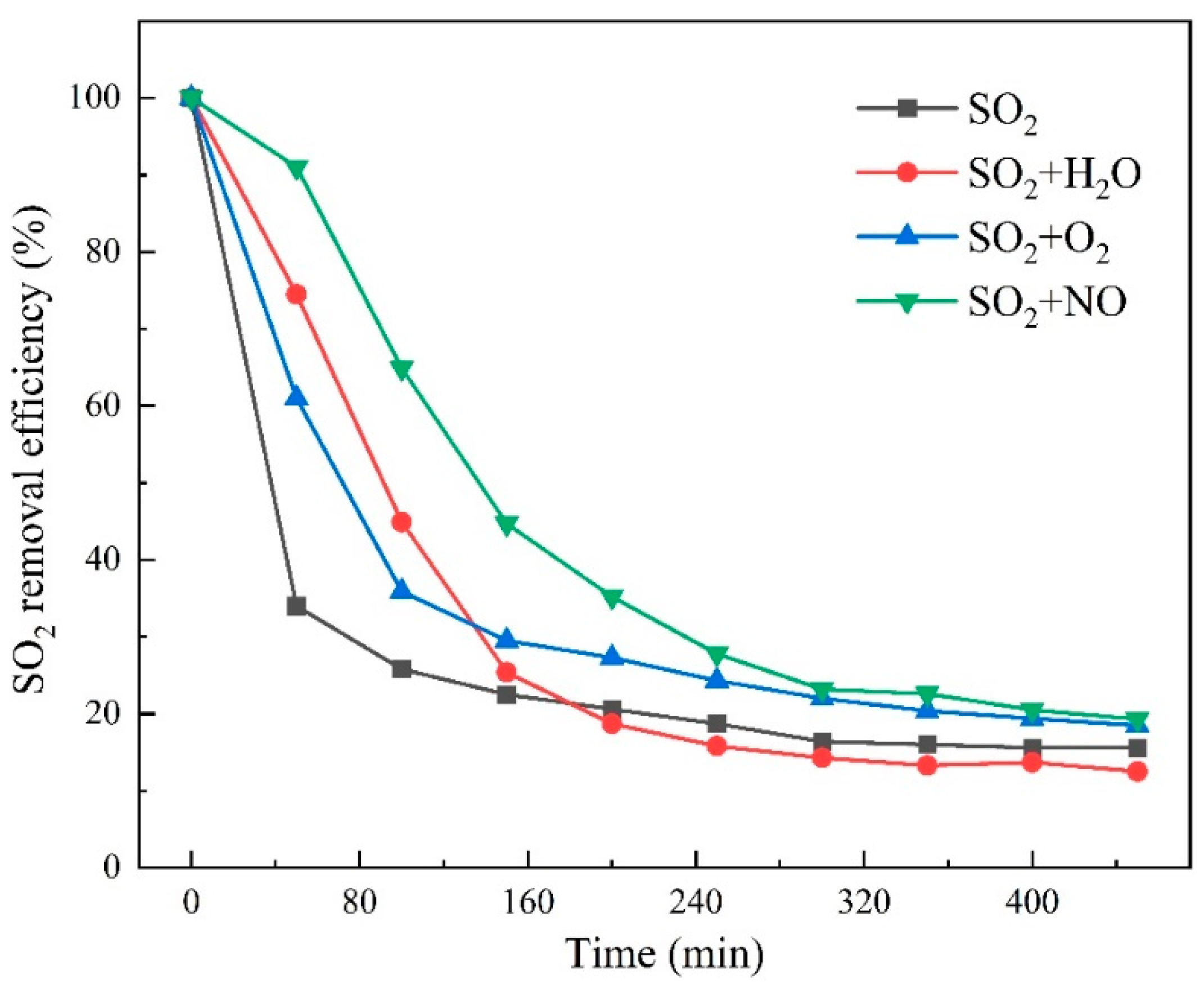
The influence of flue gas components on the desulfurization performance of Ca(OH)
2-modified white mud sorbents under optimized modification conditions is illustrated in
Figure 5. All systems initially exhibited nearly 100% SO
2 removal efficiency, followed by different deactivation rates. In the SO
2-only atmosphere, the sorbent showed the fastest decline, dropping below 40% within 90 min and stabilizing at ~15–20% after 400 min, indicating rapid pore blockage and insufficient utilization of active calcium. The addition of water vapor slightly improved the initial reaction but significantly accelerated deactivation in the later stage, with efficiency declining to ~10–15%. This negative effect can be ascribed to the competitive adsorption of H
2O and the formation of hydrated sulfite/sulfate layers (e.g., CaSO
3·½H
2O), which block pores and restrict SO
2 diffusion.
In contrast, the presence of O
2 effectively enhanced desulfurization stability. The oxidation of sulfite to sulfate is thermodynamically favorable:
This pathway reduces the accumulation of CaSO3, alleviates pore clogging, and prolongs sorbent lifetime. Consequently, SO2 + O2 maintained efficiencies of ~25–30% after 200 min and stabilized at ~18–20% in the long term.
The most pronounced improvement was observed in the SO
2 + NO atmosphere. The superior performance can be attributed to the redox cycling between NO and NO
2, which accelerates the oxidation of sulfite/bisulfite species to sulfate:
This catalytic cycle regenerates NO and sustains continuous sulfite oxidation, thereby suppressing the formation of diffusion-limiting sulfite layers and significantly extending the sorbent lifetime. A comparison of t50 (time required for efficiency to drop to 50%) further illustrates the differences: SO2 ≈ 60–80 min; SO2 + H2O ≈ 100–140 min; SO2 + O2 ≈ 180–240 min; SO2 + NO ≈ 220–300 min. Here, t50 is reported to compare deactivation rates among gas atmospheres, while breakthrough/saturation times are defined based on outlet concentration criteria (e.g., C/C0 = 0.1 for breakthrough and C/C0 = 0.95 for saturation) to facilitate scale-up estimation; under the optimized condition, breakthrough was not reached within 10 h. These findings clearly demonstrate that while excess H2O accelerates sorbent deactivation, the presence of O2 and especially NO in flue gas promotes the formation of stable CaSO4 and prolongs sorbent durability. Therefore, moderate O2 and NO contents in flue gas are beneficial for maintaining high SO2 removal efficiency, providing crucial guidance for the practical application of Ca(OH)2-modified white mud sorbents in industrial flue gas desulfurization systems.
3.7. Desulfurization Mechanism of Ca(OH)2-Modified White Mud
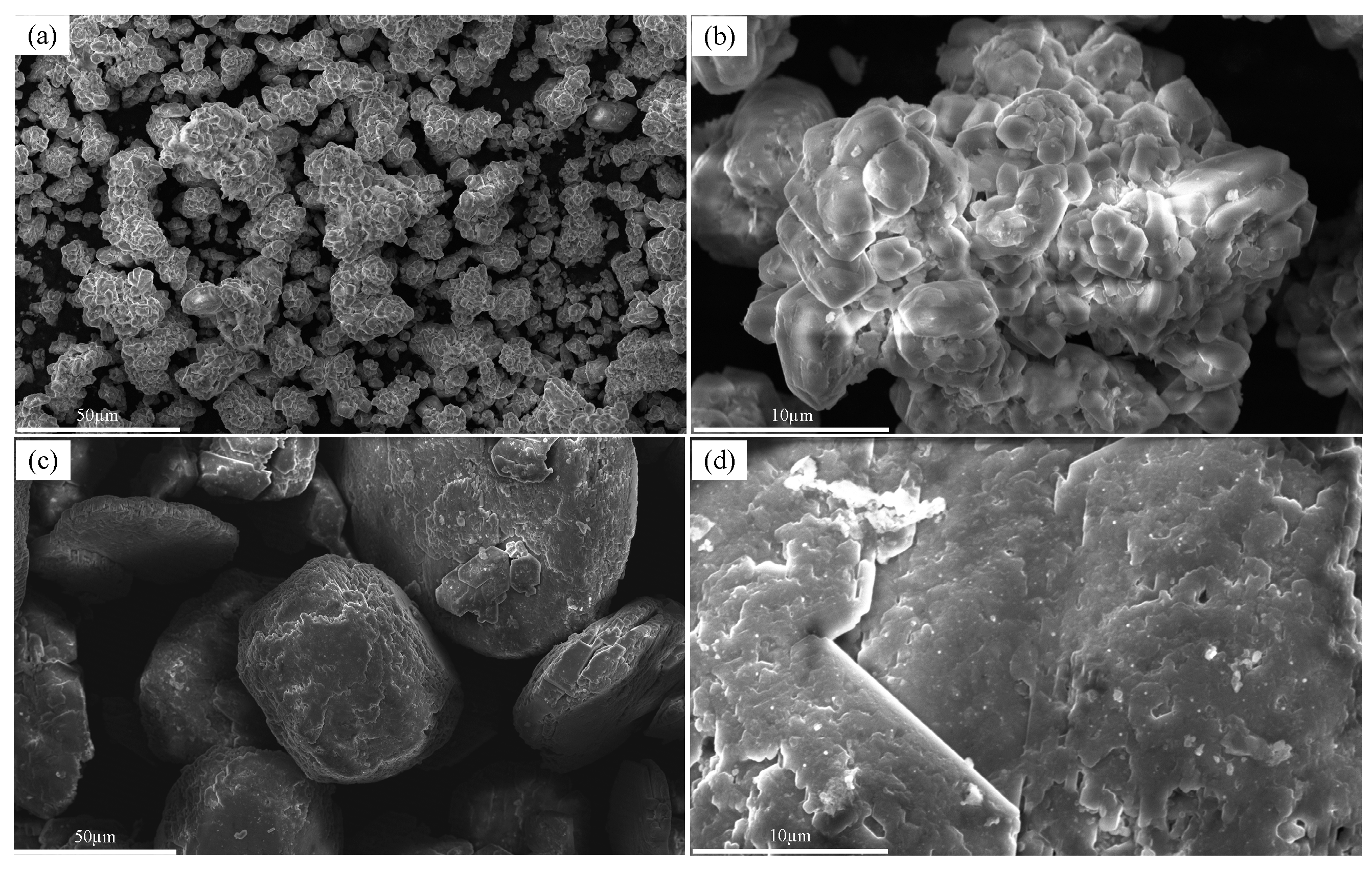
Figure 6 provides SEM evidence for the microstructural evolution of the Ca(OH)
2-modified white-mud sorbent during SO
2 capture. Fresh sorbents (
Figure 6a,b) exhibit cauliflower-like aggregates built from sub-micrometer plates/grains with abundant inter-aggregate meso-/macropores. Such hierarchical porosity (macropores > 50 nm for bulk transport, mesopores 2–50 nm for diffusion/product accommodation, and micropores < 2 nm for high-energy adsorption), together with dense basic surface sites, enables rapid SO
2 uptake. After desulfurization (
Figure 6c,d), pore mouths are progressively filled/bridged by reaction products and the surface becomes densified into a continuous product layer, occasionally with plate-like crystallites and micro-cracks, indicating a “formation–oxidation–densification” sequence. These features are fully consistent with the reaction pathway: initial chemisorption/neutralization of SO
2 on basic hydroxyls to form calcium sulfite, followed by oxidation to sulfate in the presence of O
2 and via the NO/NO
2 redox cycle. At non-negligible humidity, hydrated phases (e.g., CaSO
3·½H
2O/CaSO
4·2H
2O) may precipitate preferentially, first blocking micro/mesopores and then forming a continuous shell that raises intraparticle diffusion resistance, accounting for the observed decay in SO
2-removal efficiency from initially ~100%. In short, the Ca(OH)
2-modified white mud owes its high initial activity to hierarchical pore channels and basic sites, whereas the progressive accumulation and densification of (hydrated) sulfite/sulfate phases govern later-stage deactivation. In terms of kinetics, the sulphur mineralization rate on the sorbent surface is inherently time-dependent. At the initial stage, abundant basic sites and open pore mouths enable rapid neutralization/mineralization of SO
2, giving a high apparent rate. As Ca–S products accumulate, a porous product layer develops and gradually densifies, increasing intraparticle diffusion resistance; consequently, the mineralization rate decreases with time and progressively shifts from surface-reaction-dominated to mass-transfer-limited behavior, consistent with the porous product-layer shrinking-core mechanism evidenced by SEM densification and the later-stage decay in SO
2-removal efficiency. Practically, maintaining moderate O
2/NO (to accelerate
and yield a more permeable sulfate layer), controlling humidity (to avoid rapid hydrate-induced densification), and preserving mesoporosity via particle-size refinement and pore-stabilizing modification (e.g., SiO
2 scaffolding/templating, optimized thermal treatment) are effective to balance high initial efficiency with long service life.
Table 3 summarizes the BET results of fresh and used samples. Fresh white mud exhibits a very low specific surface area (6.7 m
2·g
−1), pore volume (0.032 cm
3·g
−1), and average pore diameter (19.1 nm), indicating limited adsorption capacity and explaining its poor desulfurization performance. By contrast, fresh Ca(OH)
2 shows higher values (16.0 m
2·g
−1, 0.090 cm
3·g
−1, 22.5 nm), leading to stronger SO
2 uptake. Notably, fresh Ca(OH)
2-modified white mud displays a markedly improved surface structure, with a specific surface area of 24.8 m
2·g
−1, pore volume of 0.160 cm
3·g
−1, and pore diameter of 25.8 nm. These results demonstrate that thermal modification effectively increases porosity and creates a hierarchical pore system, enhancing both SO
2 adsorption and product accommodation/diffusion. After desulfurization, both white mud and Ca(OH)
2 showed significant reductions in surface area (to 5.8 and 15.3 m
2·g
−1, respectively), accompanied by decreased pore volume and pore size, suggesting pore blocking by reaction products and reduced accessibility of active sites. In contrast, the used Ca(OH)
2-modified white mud maintained almost the same surface area (24.3 m
2·g
−1) and pore volume (0.150 cm
3·g
−1) as before the reaction, with only a slight reduction in pore size (25.5 nm). This remarkable structural stability indicates that the modified sorbent can effectively resist pore clogging, sustain gas diffusion into reactive regions, and thereby achieve higher Ca utilization and prolonged sorbent lifetime. In summary, BET analysis confirms that the superior desulfurization performance of Ca(OH)
2-modified white mud originates from its enhanced and stable pore structure, which simultaneously provides abundant adsorption sites and facilitates mass transfer throughout the desulfurization process.
Notably, the spent sorbent is expected to contain a mixture of residual Ca-bearing species (e.g., CaCO
3/Ca(OH)
2/CaO) and sulfur-containing products (CaSO
3 and CaSO
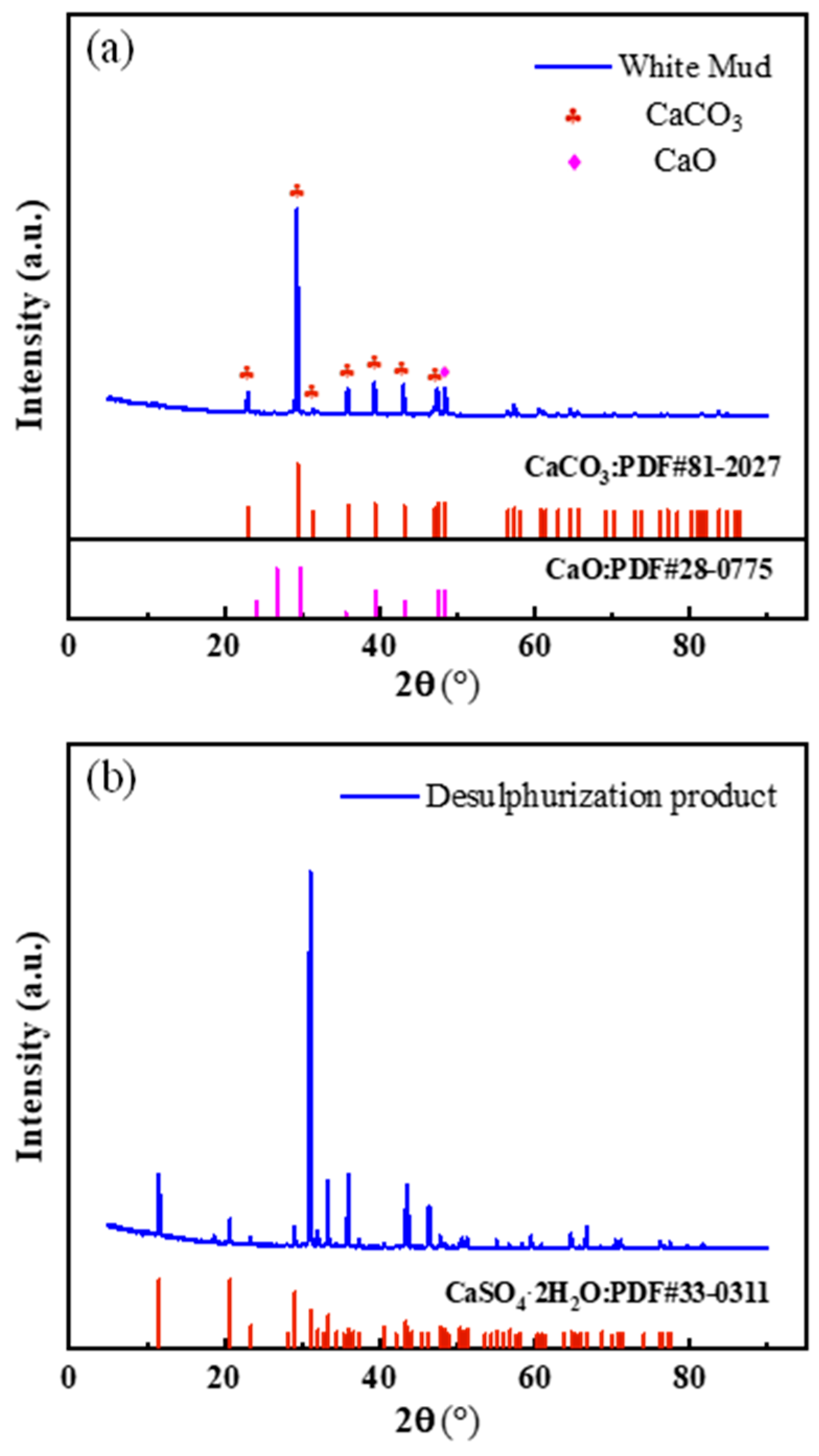
4). XRD is primarily used here to identify the dominant crystalline phases; however, it may not fully resolve poorly crystalline/amorphous or surface-enriched sulfite/sulfate species. As shown in
Figure 7a, the fresh white mud is dominated by calcite CaCO
3 (PDF#81-2027) with minor CaO (PDF#28-0775). The slightly undulated background suggests the presence of amorphous silico-aluminate phases, consistent with the chemical analysis, yet their low content precludes resolvable peaks. This indicates that thermal modification primarily optimizes pore architecture and dispersion rather than creating new bulk phases—fully consistent with the BET (increased surface area and pore volume) and SEM (hierarchical porosity) results. After desulfurization (
Figure 7b), the diffraction pattern matches gypsum CaSO
4·2H
2O (PDF#33-0311), implying that surface sulfite formed during SO
2 capture was subsequently oxidized and hydrated to sulfate under O
2/NO-containing flue gas and during post-exposure to moisture. Besides gypsum, a few weak reflections likely originate from residual CaCO
3 and trace CaO/Ca(OH)
2 remaining from incomplete conversion of the Ca-based sorbent. Therefore, the conclusion on sulfate-dominated mineralization is supported by the combined evidence from XRD (phase identification), in situ FTIR (sulfite-to-sulfate evolution), and SEM/BET (product-layer formation and mass-transfer limitation), rather than relying on XRD alone. The absence (or weakness) of crystalline CaSO
3 reflections can be rationalized by (i) rapid oxidation/hydration driving sulfate as the thermodynamically favored end phase, and/or (ii) low crystallinity/low abundance of sulfite with peak overlap by gypsum. If a faint CaCO
3 peak around 2θ ≈ 29–30° is still discernible, it evidences a shrinking-core/product-layer scenario: a sulfate shell forms outside while a calcite core remains, with further conversion limited by intraparticle diffusion. Taken together, XRD, SEM, and BET converge to a coherent mechanism: the high performance of Ca(OH)
2-modified white mud stems from basic active sites combined with a stable hierarchical pore network, whereas deactivation arises from the progressive deposition and densification of (hydrated) sulfate layers at pore mouths and surfaces. Accordingly, process control should mitigate rapid hydrate-induced densification (humidity management), exploit moderate O
2/NO to promote sulfite→sulfate conversion with more permeable layers, and preserve mesoporosity via modification to balance high initial activity and durability. Quantitative differentiation of surface vs. bulk sulfur speciation (e.g., sulfite versus sulfate fractions) would benefit from complementary techniques such as XPS and bulk elemental analysis (e.g., ICP-OES/ICP-MS), which will be incorporated in future work. As regeneration and end-of-life considerations, unlike regenerable sorbents governed by reversible adsorption, the present Ca-based sorbent captures SO
2 predominantly through mineralization into sparingly soluble and thermodynamically stable sulfate/hydrated sulfate (mainly CaSO
4·2H
2O, as evidenced by XRD together with the sulfate-band growth in in situ FTIR). Therefore, full chemical regeneration back to Ca(OH)
2/CaCO
3 is not expected to be energy- or cost-effective under typical FGD conditions. From a practical perspective, the sustainability of this sorbent is better realized by: (i) maximizing Ca utilization enabled by the stable hierarchical pore structure (BET retention after reaction), (ii) partial physical reactivation (e.g., attrition/milling) to expose unreacted cores if a shrinking-core structure remains, and (iii) valorization of the spent sorbent as a gypsum-rich byproduct (e.g., for cement set regulation or gypsum-based materials), thereby closing the material loop. Systematic cyclic-use tests and byproduct-quality evaluation will be addressed in future work.
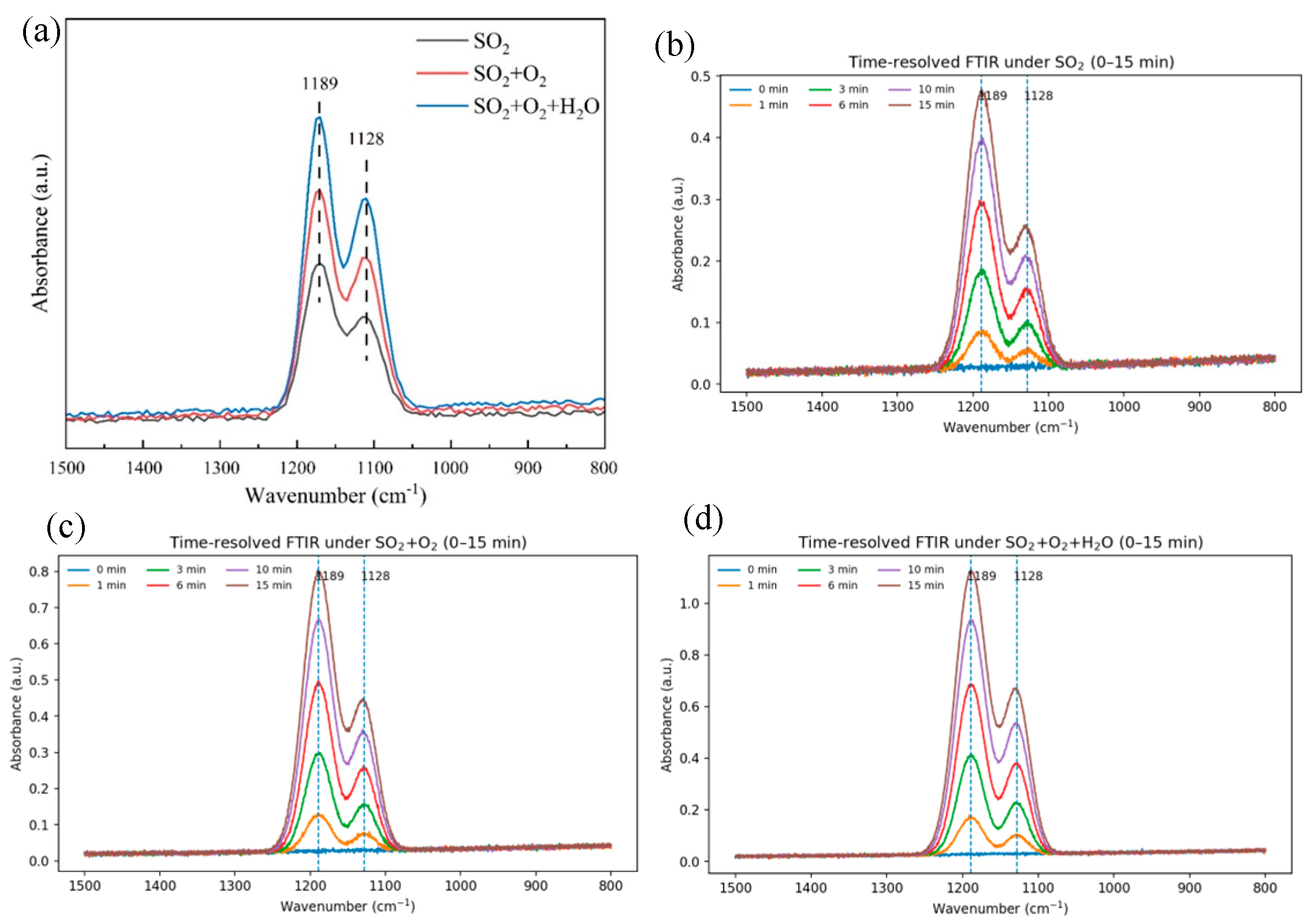
To further investigate the effects of H
2O and O
2 on the desulfurization products and reaction mechanism, in situ infrared experiments were conducted under three different atmospheres: SO
2 alone, SO
2 + O
2, and SO
2 + O
2 + H
2O. The resulting steady-state spectra are shown in
Figure 8a. Two atmosphere-dependent bands emerge in the 1200–1100 cm
−1 region with maxima at 1189 cm
−1 and 1128 cm
−1. The former is assigned to the asymmetric stretching ν
3(
) of surface sulfate species, while the latter likely reflects either splitting due to different coordination/hydration states (e.g., CaSO
4 vs. CaSO
4·2H
2O) or a minor contribution from surface sulfite/bisulfite complexes (
/
). Band intensities follow the order SO
2 + O
2 + H
2O > SO
2 + O
2 > SO
2, indicating that O
2 promotes the oxidation of sulfite to sulfate, and H
2O further amplifies sulfate—particularly hydrated sulfate—formation. To directly visualize the temporal evolution of sulfur-containing surface species, we further provide time-dependent in situ FTIR spectra as new panels (
Figure 8b–d). As shown in
Figure 8b–d, the sulfate-related bands (around 1189 and 1128 cm
−1) increase progressively with exposure time (0–15 min) and eventually approach a quasi-plateau, suggesting gradual accumulation of surface sulfate species followed by a slowing net formation rate as surface coverage and/or product-layer thickness increases. The growth is markedly accelerated in the presence of O
2 and is further enhanced by H
2O, consistent with promoted oxidation and hydrated-sulfate build-up under humid conditions. This time-dependent build-up provides molecular-level evidence supporting the faster transition toward mass-transfer limitation under SO
2 + O
2 + H
2O. From the time-resolved FTIR perspective, the progressive increase in the sulfate-related bands in the 1200–1100 cm
−1 region (assigned to SO
42− species) reflects the ongoing sulphur mineralization on the external surface and near-surface region; the approach to a steady signal indicates that the net mineralization rate slows and tends toward a quasi-plateau as surface coverage/product-layer thickness increases. The presence of O
2 increases the mineralization rate by accelerating sulfite-to-sulfate conversion, whereas H
2O further promotes the formation of hydrated sulfate (e.g., CaSO
4·2H
2O), leading to faster sulfate-band growth but also a more rapid buildup of diffusion-limiting deposits at pore mouths. In contrast, NO can sustain the effective mineralization rate for a longer period via NO/NO
2 redox cycling that continuously catalyzes sulfite oxidation, which is consistent with the extended durability observed in the fixed-bed tests. In the time domain, the sulfate-related bands (around 1189 and 1128 cm
−1) increase progressively with exposure time and eventually approach a plateau, indicating the gradual accumulation of surface sulfate species. The growth is markedly accelerated in the presence of O
2 and further enhanced by H
2O, consistent with promoted sulfite oxidation and the formation of hydrated sulfate. This time-dependent buildup also explains the faster transition to mass-transfer limitation under humid conditions due to accelerated product-layer coverage/densification. Importantly, the stronger sulfate bands under humid conditions reconcile with the previously observed shorter sorbent lifetime: water accelerates product formation and surface coverage (hence stronger FTIR signals and the gypsum phase in XRD), yet simultaneously speeds up pore-mouth deposition and layer densification, increasing diffusion resistance and causing faster efficiency decay (consistent with SEM evidence). The carbonate region (≈1470–1420 cm
−1) shows no pronounced changes, suggesting that sulfate species dominate the surface chemistry under these atmospheres and temperatures. Overall, the in situ FTIR confirms at the molecular level that O
2 enhances the surface oxidation pathway while H
2O enhances hydrated-sulfate coverage; their combined effect yields stronger sulfate signatures but also aligns with faster mass-transfer limitation and deactivation, coherently supporting the XRD/SEM/BET and kinetic findings.