1. Introduction
The wettability of nanopores in shale reservoirs is a key factor that affects the phase behavior and flow characteristics of oil and gas fluids, directly determining the storage capacity and production efficiency of tight hydrocarbons. In real reservoirs, organic nanopores are typically oil–wet, and their nanoscale geometric confinement significantly alters the fluid phase behavior inside the pores [
1,
2]. To accurately mimic this oil–wet environment under laboratory conditions, researchers commonly modify silica-based materials using silane coupling agents to make their surfaces hydrophobic [
3]. Silane coupling agents contain both organic functional groups and alkoxy groups. They can be grafted onto silica surfaces to form a monolayer of organic molecules, which effectively reduces particle agglomeration and changes surface properties from hydrophilic to hydrophobic [
4,
5,
6]. This modification strategy has already been widely used in fields such as nanoparticle synthesis, ligand immobilization, dye attachment, and interfacial reinforcement of organic polymers [
7,
8,
9,
10]. However, the modification effect of current silane coupling agents is difficult to control precisely, and there is no reliable quantitative method to evaluate the degree of surface modification. As a result, the reliability and reproducibility of related studies on fluid phase behavior are seriously compromised.
In recent years, the modification mechanism of silane coupling agents on inorganic surfaces and strategies to control this process have become a research focus. Zhang et al. used KH570 to modify biochar, which greatly improved the hydrophobicity and waterproofing ability of landfill soil cover layers, achieving a water contact angle of 143.99° [
11]. Shi et al. combined graphene oxide with KH570 to treat cotton fabric, achieving a contact angle of 138.1° [
12]. Wang et al. systematically studied the grafting mechanism of vinyltriethoxysilane on macroporous silica gel using multiple characterization techniques. They identified two types of chemical bonds formed on the surface and their relative proportions, and they achieved a high grafting efficiency of 91.03% [
13]. Cheng et al. grafted titanium nitride nanoparticles with KH570 and confirmed the formation of Ti-O-Si covalent bonds, which enhanced particle dispersion [
14]. Zhang et al. used hexadecyltrimethoxysilane to make carbon fibers moisture-resistant, significantly improving the stability of electrical resistivity and increasing the water contact angle from 135.6° to 152.2° [
15]. Overall, chlorosilanes such as trimethylchlorosilane hydrolyze very quickly and tend to undergo homogeneous self-condensation, so the amount of water must be tightly controlled during modification. In contrast, dialkoxysilanes like KH570 hydrolyze more slowly and can be tuned using acid or base catalysts, making selective surface grafting easier to achieve [
16,
17]. These studies reveal a common principle: silane molecules react with surface hydroxyl groups to form stable chemical bonds, providing a theoretical basis for understanding grafting mechanisms. In terms of controlled modification, Yan et al. adjusted the amount of dichlorodimethylsilane and continuously tuned the contact angle of nano-SiO
2 from 34.7° to 155°, demonstrating a linear relationship between grafting density and contact angle [
18]. Wang et al. regulated the grafting density of
-aminopropyltriethoxysilane on silica particles, increasing the contact angle at the wax–water interface from 22° to 70° and enabling precise control of interfacial wettability [
19]. Shayesteh et al. modified magnetic nickel nanowires with octadecyltrichlorosilane and obtained a superhydrophobic surface with a contact angle as high as 167.3° [
20]. Xu et al. combined silane grafting with plasma etching to modify polyvinylidene fluoride membranes, raising the contact angle from 70.1° to 121.0° [
21]. Together, these findings indicate that by adjusting silane concentration, reaction duration, and grafting density, wettability can be precisely regulated across a wide range of material systems.
The geometry and surface structure of a material also strongly affect how efficiently silane coupling agents modify it and how hydrophobic the surface becomes. Vukovic et al. systematically studied how dichlorooctamethyltetrasiloxane adjusts wettability on glass surfaces and found that surface roughness and topography significantly influence contact angle measurements [
22]. Yue et al. used a dry modification method with titanate and silane coupling agents on quartz sand, raising the surface contact angle from 40.1° to 82.9° and forming a stable coating [
23]. Wang et al. developed a two-step organic modification strategy that greatly increased both the density of surface hydroxyl groups and the hydrophobicity of zeolite powder, increasing the contact angle from 124° to 142° [
24]. In addition, Okuno et al. prepared silica-coated eicosane microcapsules using a sol-gel process and tuned their surface wettability with different types of silane coupling agents [
25]. These studies show that surface structure, roughness, porosity, and geometric shape are closely linked to the chemical modification process and play a key role in determining how effective the treatment is and how hydrophobic the final surface becomes.
Despite the current understanding in the mechanisms and influencing parameters on the hydrophobic modification across various materials, most studies focus on specific materials or single modification factors, and systematic investigations into how surface properties of silica affect the degree of modification are still limited. In particular, it remains unclear how silane grafting behavior changes with different surface characteristics and how these changes influence wettability. Such knowledge would enable highly controllable hydrophobic treatments and improve the relevance of laboratory model systems to actual reservoir conditions.
In this study, substrate materials with varying particle sizes and specific surface areas were employed to systematically investigate the effects of silane coupling agent type, modification temperature, concentration, and reaction duration on surface wettability. Optimal modification conditions were identified through this parametric screening. The hydrophobic modification performance was subsequently evaluated on substrates with different surface roughness and specific surface areas, thereby elucidating the influence mechanism of surface physical characteristics on silane grafting efficiency. This work provides both theoretical insights and experimental support for achieving controllable hydrophobic modification of silica-based materials.
3. Results and Discussion
3.1. Verification of Surface Grafting by KH570 and TMCS
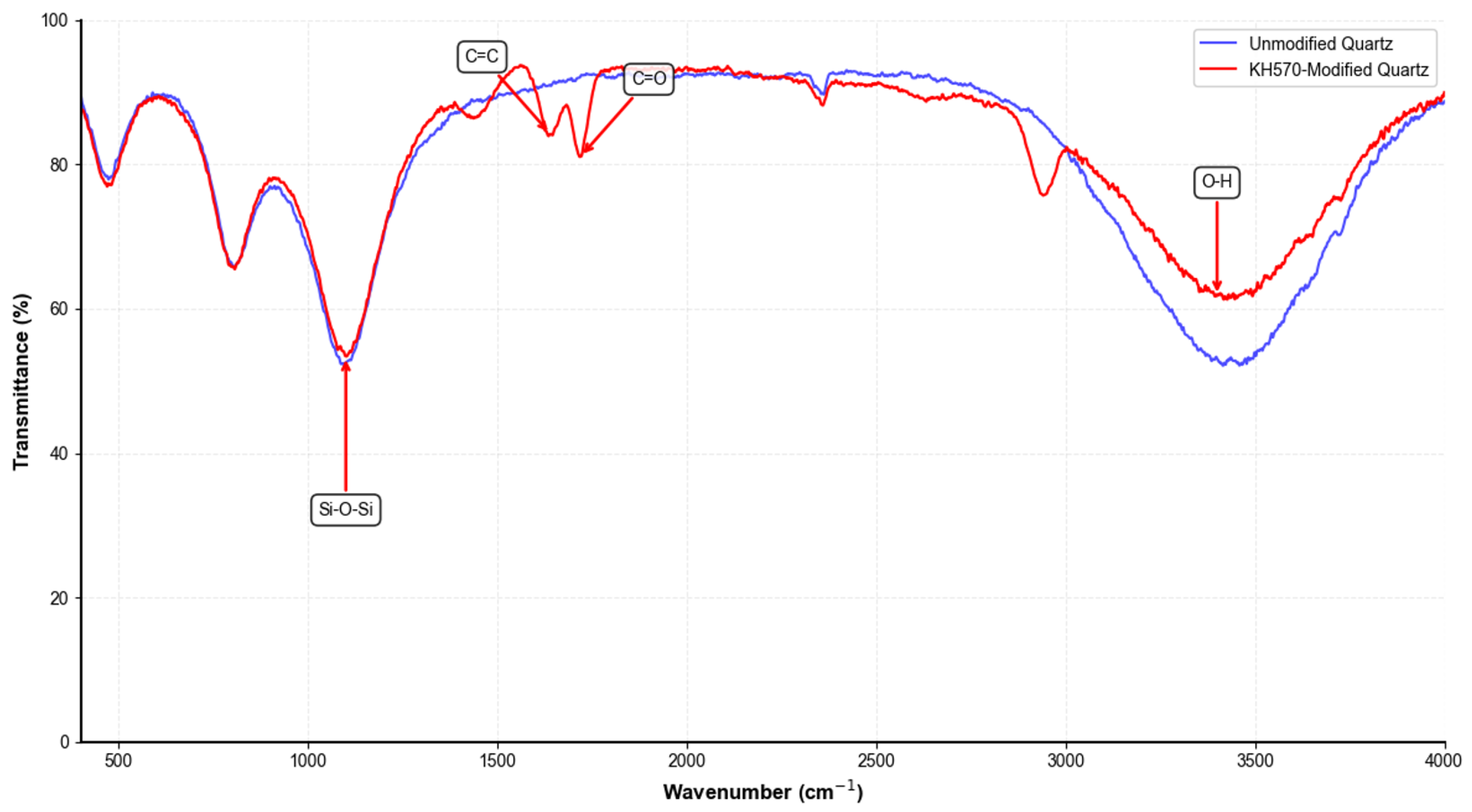
As shown in
Figure 4, the modified samples exhibited two distinct new absorption peaks at 1720 cm
−1 and 1640 cm
−1, which were absent in the unmodified samples. The peak at 1720 cm
−1 is attributed to the C=O stretching vibration of the ester carbonyl group, while the peak at 1640 cm
−1 corresponds to the characteristic absorption of the C=C double bond in the methacryloyl group. The simultaneous appearance of these two peaks indicates that the functional groups of the KH570 molecule were grafted on the quartz surface. Another notable change was the significant reduction in the intensity of the broad band around 3400 cm
−1, which corresponds to the O-H stretching vibration of surface silanol groups. This attenuation of the hydroxyl peak provides direct evidence of the silanization reaction, wherein surface Si-OH groups condensed with the silane molecules, consuming hydroxyl groups and forming covalent Si-O-Si bonds. The strong absorption peak at 1100 cm
−1, characteristic of the Si-O-Si on the quartz matrix, was present both before and after modification; however, careful observation reveals a slight alteration in the shoulder of this peak post-modification, likely associated with the newly formed Si-O-Si bonds.
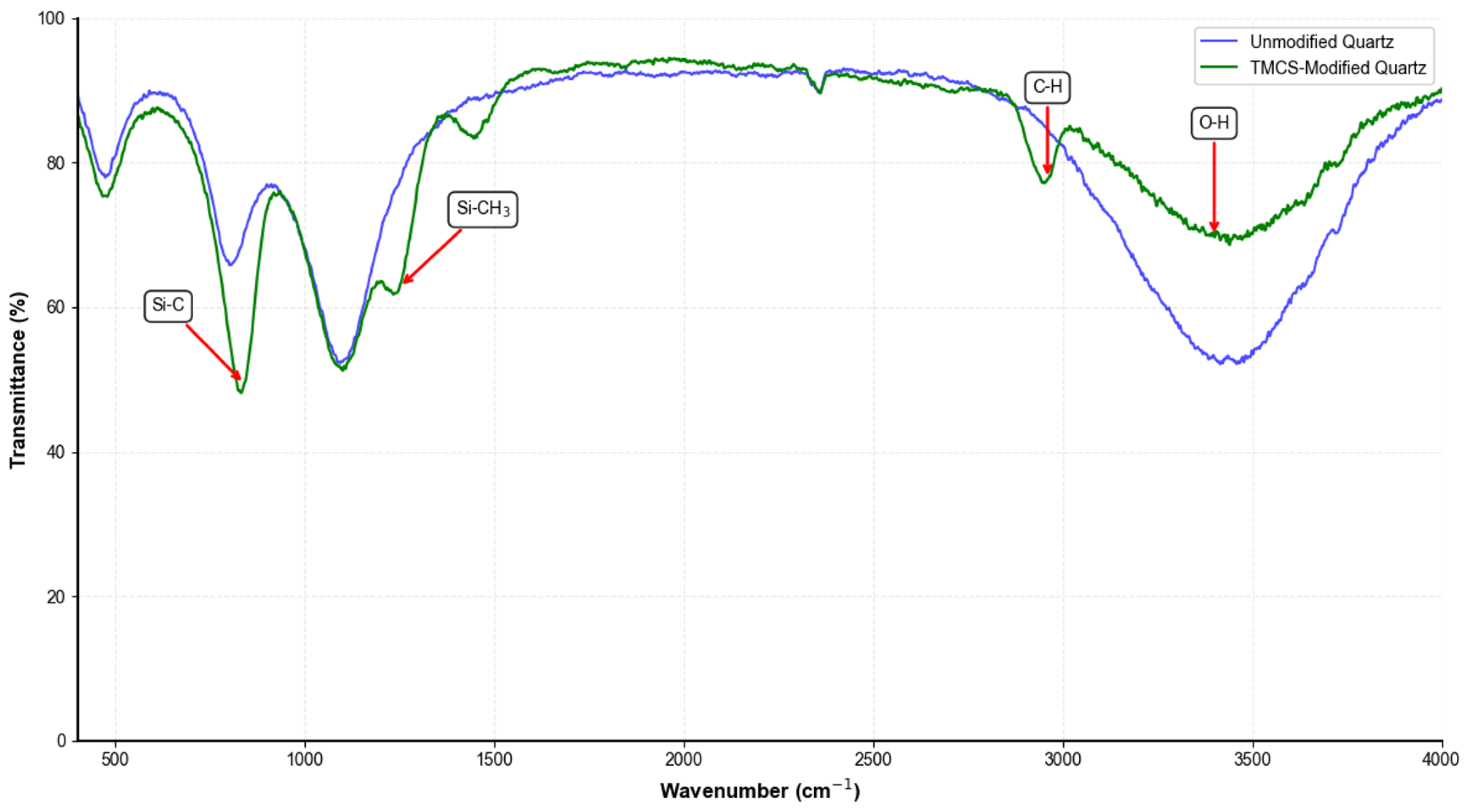
Figure 5 presents the FTIR spectral comparison of quartz powder with and without modification with TMCS. In contrast to KH570, the characteristic peaks emerging after TMCS treatment are predominantly located in the lower wavenumber region. The new absorption peak appearing at 1250 cm
−1 is attributed to the symmetric deformation vibration of methyl groups in Si-CH
3 bonds, proving the successful incorporation of trimethylsilyl groups. The peak observed near 840 cm
−1 corresponds to the stretching vibration of Si-C bonds, further corroborating the formation of silicon–carbon linkages. Additionally, an enhancement in absorption intensity at 2960 cm
−1, assigned to C-H stretching vibrations, is consistent with the introduction of surface methyl groups.
The above analysis provides clear evidence that the applied surface modification procedures successfully grafted the silane coupling agents onto the silica material. This, in combination with the significantly increased contact angles presented in the subsequent sections, is a strong indication that the change in contact angle is a exhibition of the chemical grafting.
3.2. Influencing Factors of the Surface Modification Efficiency by KH570
For KH570, based on the preliminary experimental results, the modification temperature levels were set at 80, 100, and 120 °C; the mass fractions of the silane coupling agent were set at 0.05%, 0.10%, and 0.15%; and the reaction time levels were set at 20, 40, and 60 min. The specific factor levels for the orthogonal experiment are listed in
Table 2.
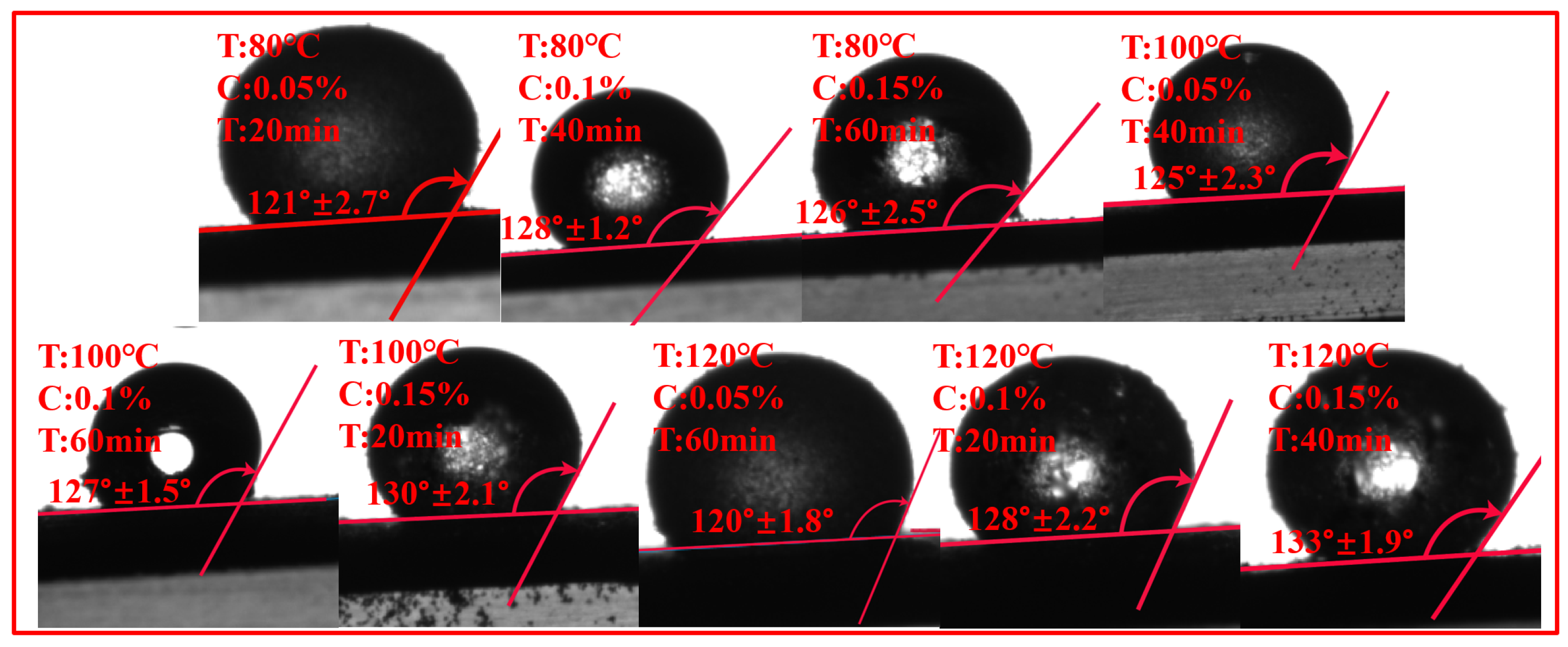
As shown in
Figure 6, all modified quartz powder samples exhibited excellent hydrophobicity, with water contact angles exceeding 120°, confirming that KH570 silane coupling agent was successfully grafted onto the quartz surface. The contact angles varied noticeably under different conditions, ranging from 120° to 133°, which indicates that modification temperature, silane concentration, and reaction time all influence the surface modification outcome. The best hydrophobic performance was achieved at a modification temperature of 120 °C, a silane concentration of 0.15%, and a reaction time of 40 min, yielding a contact angle of 133° (strongly oil–wet). Under the same temperature, when the silane concentration was reduced to 0.05% and the reaction time extended to 60 min, the contact angle dropped to 120° (weakly oil–wet), indicating a weaker modification effect.
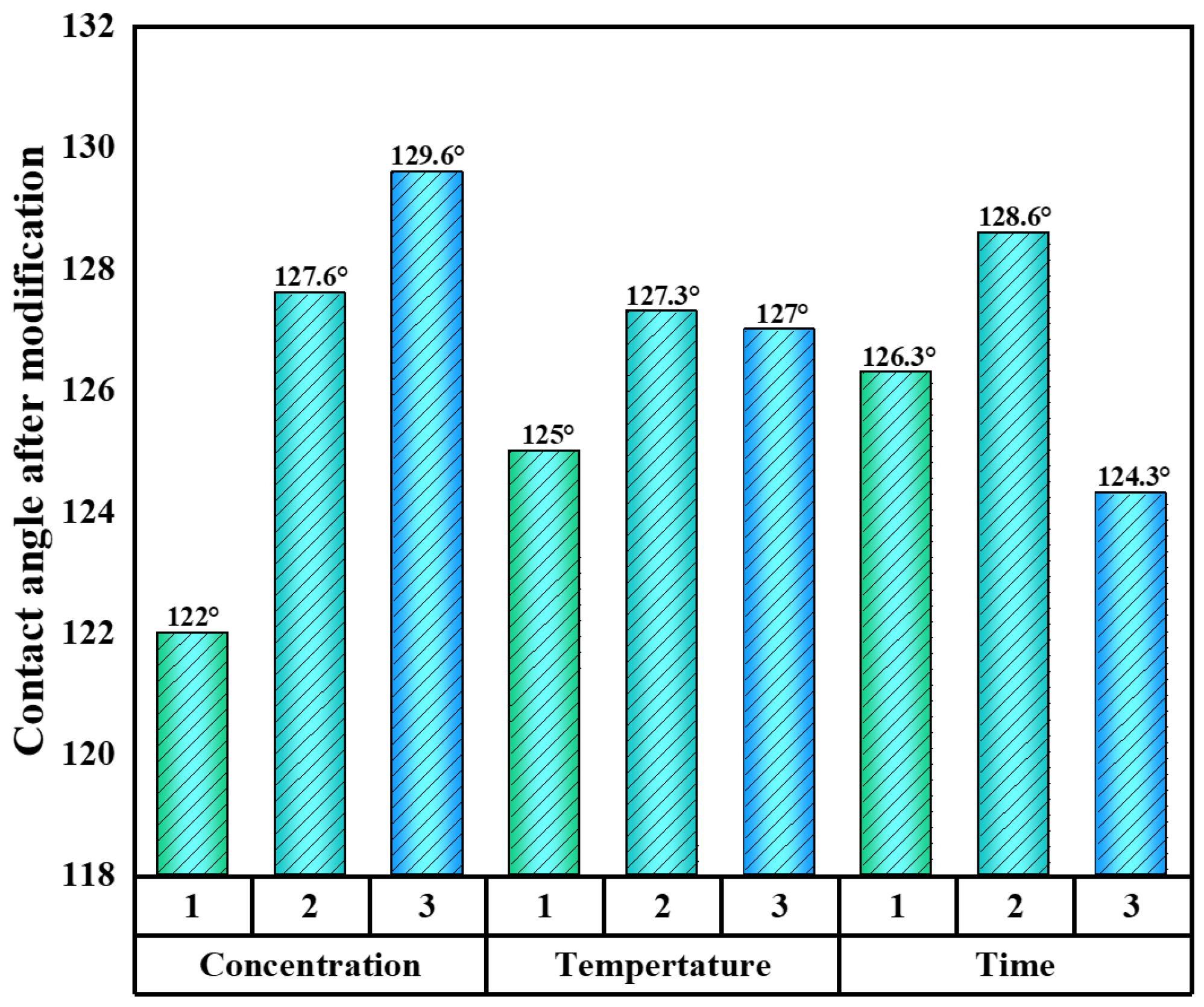
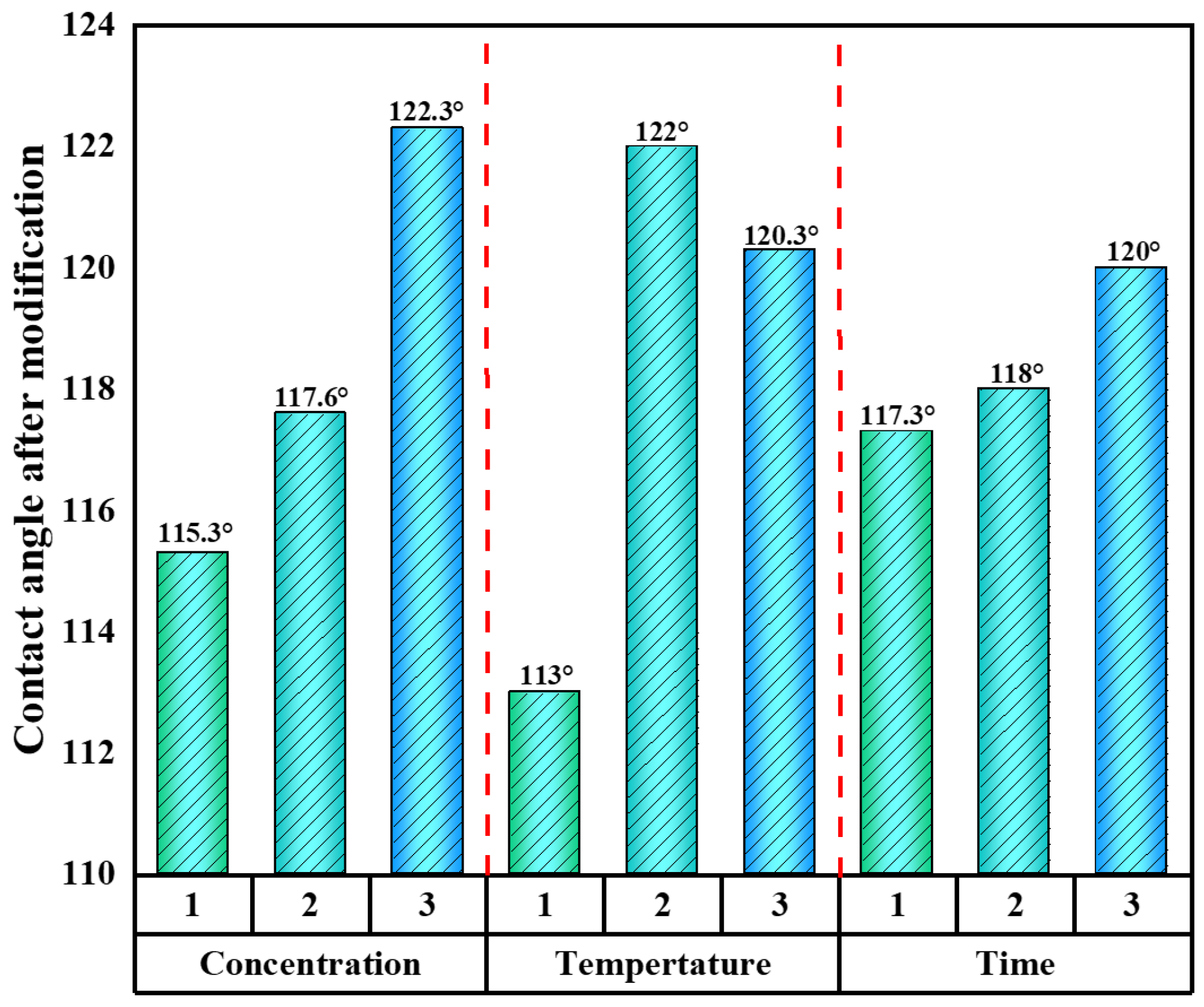
To further quantify the relative influence of each factor on modification efficacy, range analysis was performed on the experimental data. As shown in
Figure 7, the range analysis reveals that the three factors affect the hydrophobic modification of quartz powder in the following order of significance: silane coupling agent concentration > reaction time > modification temperature. Silane concentration is the dominant factor, exhibiting a range value (the difference between the maximum and minimum values) substantially larger than those of the other two factors, indicating that variations in concentration exert the most pronounced effect on the contact angle. In contrast, within the investigated ranges, the effects of reaction time and modification temperature on modification performance are comparatively minor.
3.3. Impact of Concentration on the Surface Modification Efficiency of KH570
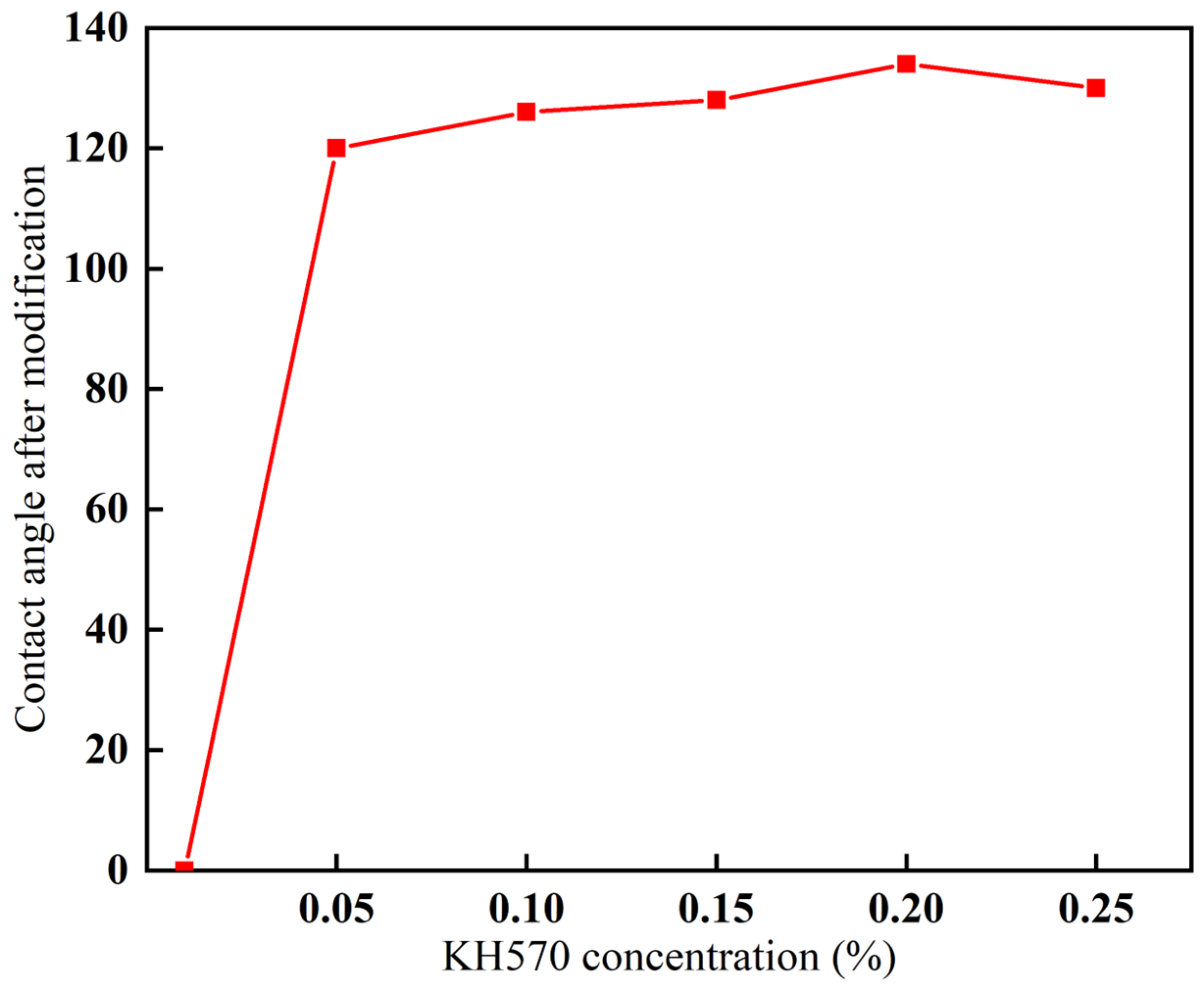
Based on the range analysis described above, concentration of silane coupling agent KH570 was identified as the primary controlling factor influencing the surface modification efficacy of quartz powder. To further investigate the effect of concentration on hydrophobic performance, a single-factor optimization experiment was designed under the previously determined optimal conditions, with a fixed modification temperature of 120 °C and reaction time of 40 min. The mass fraction of KH570 was varied across six levels at 0.01%, 0.05%, 0.10%, 0.15%, 0.20%, and 0.25% to elucidate the influence of silane concentration on the surface wettability of quartz powder. The results are presented in
Figure 8.
Results from the single-factor concentration experiments show that the effect of silane coupling agent concentration on quartz surface modification follows a nonlinear trend. At a KH570 concentration of 0.01%, the contact angle of quartz powder was 0°, indicating that the amount of silane molecules was far too low to form an effective hydrophobic layer on the surface. When the concentration increased to 0.05%, the contact angle rose to 120°, reaching hydrophobicity, which suggests efficient chemical grafting of the silane onto the quartz surface. Further increasing the concentration to 0.15% and 0.20% raised the contact angles to 128° and 134°, respectively, showing a gradual improvement in hydrophobic performance. This indicates that higher silane concentrations promote more complete grafting of silane molecules, leading to a denser and more uniform hydrophobic monolayer. However, when the concentration was raised further to 0.25%, instead of an increase, the contact angle slightly dropped to 130°. This is likely due to excess silane in the solution leading to rapid hydrolysis and subsequent homogeneous condensation of silanol species in the bulk liquid, forming soluble oligomers. These oligomers deposit onto the quartz surface through physical adsorption rather than covalent bonding, creating a loose, multilayered structure that is prone to detachment and exposes the underlying hydrophilic SiO2.Therefore, achieving an ideal monolayer requires that silane molecules preferentially undergo heterogeneous condensation with surface Si-OH groups. This process depends on matching the silane hydrolysis rate to the density of surface hydroxyl groups.
3.4. Influencing Factors of the Surface Modification Efficiency by TMCS
For TMCS, based on preliminary experimental results, the modification temperature levels were set at 60, 80, and 100 °C; the concentrations were set at 1%, 3%, and 5%; and the reaction time levels were set at 2, 3, and 4 h. The specific factor levels for the orthogonal experiment are listed in
Table 3.
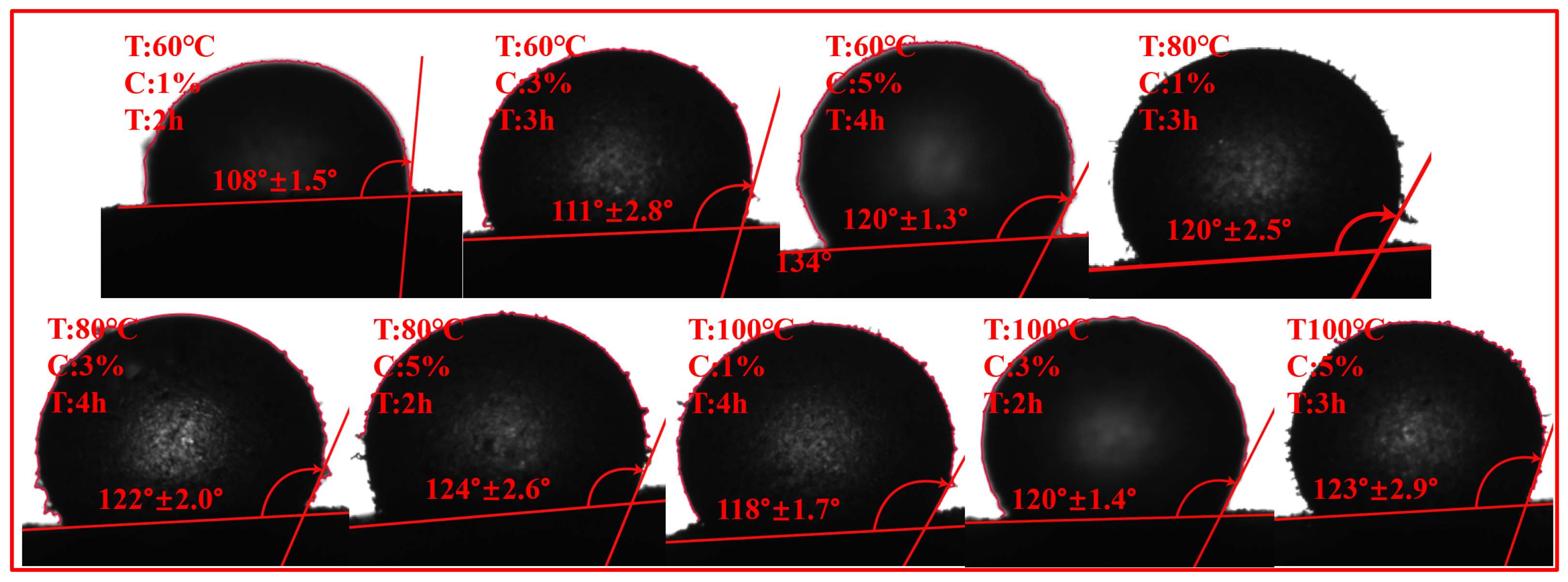
The orthogonal experimental results shown in
Figure 9 present that quartz powder samples modified with TMCS all exhibited hydrophobic behavior, with contact angles ranging from 108° to 124°, confirming the successful grafting of TMCS molecules onto the quartz surface and the formation of an effective hydrophobic layer. Although the contact angles of these samples were less sensitive to silane concentration compared to those modified with KH570 (as discussed previously), a variation of up to 16° was still observed, indicating that modification temperature, silane concentration, and reaction time all exerted measurable influences on surface hydrophobicity. The optimal hydrophobic performance was achieved under the condition of 80°, 5% silane concentration, and 2 h reaction time, yielding a maximum contact angle of 124°. In contrast, the least effective modification occurred at 60 °C, 1% concentration, and 1 h reaction time, resulting in a contact angle of only 108°.
To further quantify the relative influence of each factor on modification efficacy, range analysis was performed on the experimental data. The results shown in
Figure 10 indicate that, for TMCS-based modification, the three factors affect hydrophobic performance in the following order of significance: modification temperature > silane concentration > reaction time. Both modification temperature and silane concentration exhibited substantially larger range values than reaction time, with temperature showing the most pronounced effect. This suggests that, in practical applications, highly efficient surface modification can be achieved by optimizing temperature and concentration, without the need for excessively prolonging the reaction time.
3.5. Impact of Temperature and Concentration on the Surface Modification Efficiency of Trimethylchlorosilane
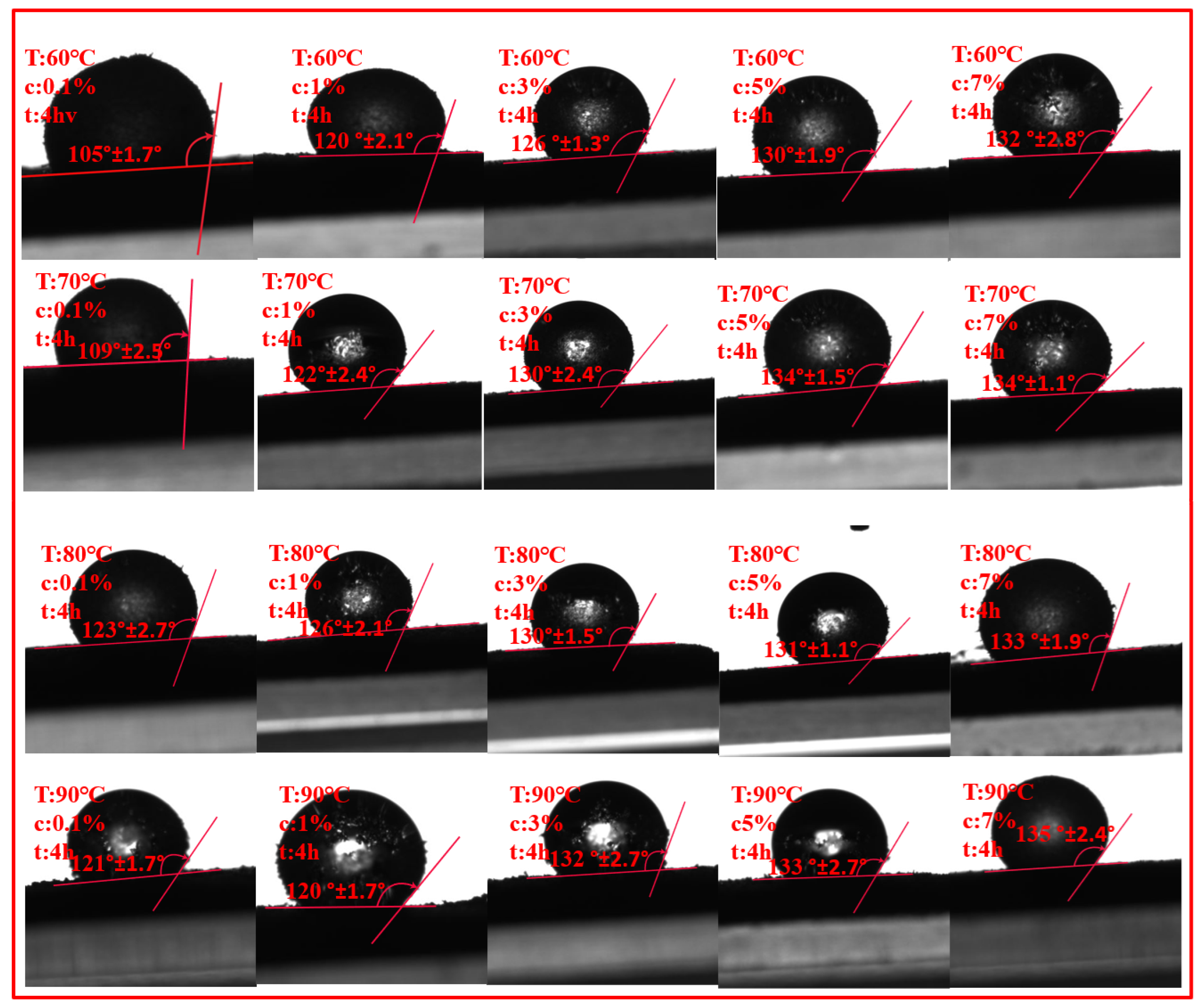
To further investigate the effects of concentration and temperature on the modification performance, a two-factor optimization experiment was designed under a fixed optimal reaction time of 4 h. The mass fraction of trimethylchlorosilane was varied across five levels, 0.1%, 1%, 3%, 5%, and 7%, while the modification temperature was set at five levels, 60 °C, 70 °C, 80 °C, 90 °C, and 100 °C. This experimental matrix was used to evaluate the combined influence of silane concentration and temperature on the surface wettability of quartz powder. Selected results are presented in
Figure 11 below.
The contact angles of modified quartz powder across different combinations of temperature and concentration ranged from 105° to 135°, exhibiting clear and systematic trends. In terms of concentration effects, the contact angle consistently increased as the TMCS concentration rose from 0.1% to 7%. At low concentrations, the surface density of silane molecules was insufficient to fully react with the available surface hydroxyl groups on quartz, resulting in an incomplete hydrophobic layer. As the concentration increased, a greater number of silane molecules reacted with surface Si-OH groups, enabling the formation of a more complete and densely packed monolayer. For example, at 60 °C, the contact angle increased from 105° to 132°, demonstrating that higher silane concentration plays a decisive role in enhancing hydrophobicity. Similarly, at 70 °C, the contact angle rose from 109° to 134°. At 80 °C and 90 °C, analogous increasing trends were observed, with contact angle increments of approximately 10° and 14°, respectively, over the same concentration range. These results collectively confirm that silane concentration is a critical parameter governing the quality and coverage of the grafted hydrophobic layer.
3.6. Analysis of Silane Modification Effects and Contact Angle on Different Substrate Materials
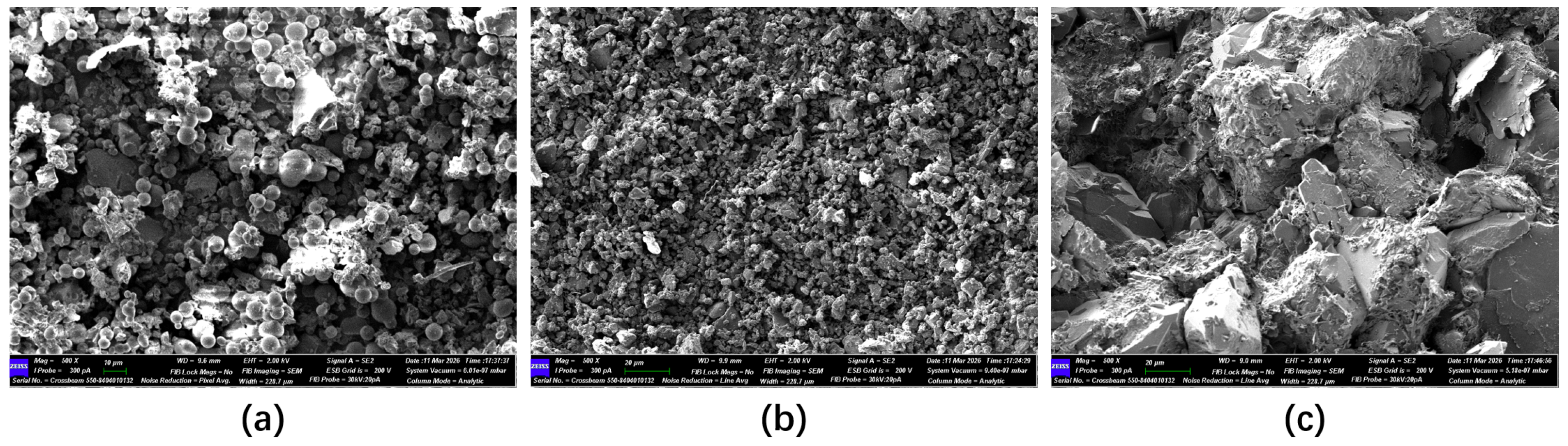
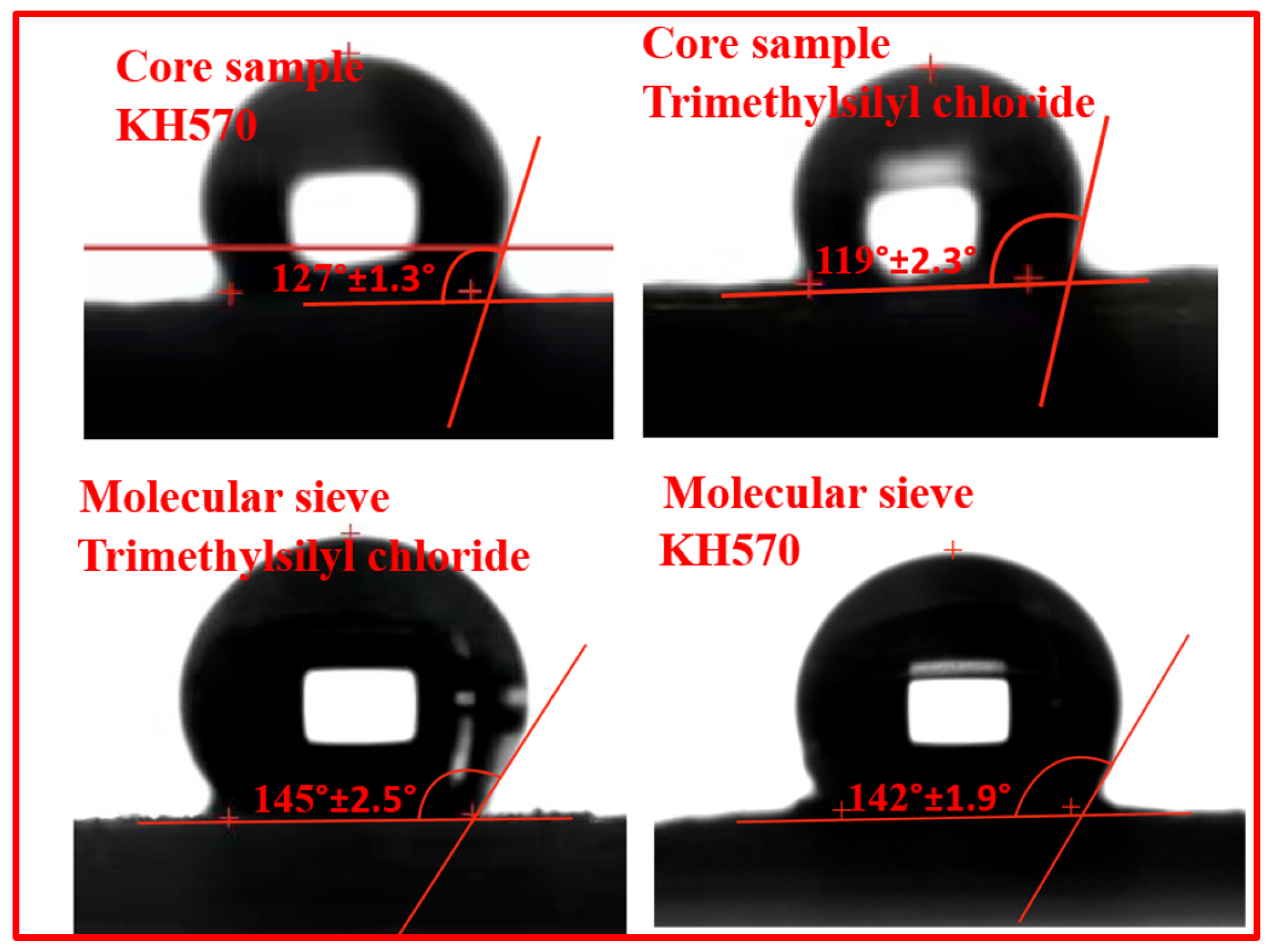
To investigate the influence of substrate properties on the efficacy of silane coupling agent modification, three representative quartz materials, including SBA-15, quartz powder, and sandstone core slices, were selected and treated separately with KH570 and TMCS under the optimized modification conditions identified in previous experiments. The contact angles of the modified samples were subsequently measured. As shown in
Figure 12, SBA-15 exhibited the highest hydrophobicity after modification, with contact angles reaching 142° and 145° following treatment with KH570 and TMCS, respectively. This superior performance is directly attributed to its exceptionally high specific surface area and well-ordered microporous structure, which provide abundant accessible surface hydroxyl groups as reactive sites for silanization. The high density of these active sites facilitates the formation of a uniform and densely packed silane monolayer across the extensive internal and external surfaces.
Quartz powder, which possess a lower specific surface area than SBA-15, achieved high contact angles of 135° with both silane coupling agents. Although their hydrophobic performance is excellent, the total density of available reactive sites is lower compared to SBA-15, which likely accounts for the slightly reduced maximum achievable hydrophobicity. In contrast, core slices exhibited the lowest hydrophobicity, with contact angles of 127° and 119° after modification with KH570 and TMCS, respectively. The specific surface area of core slices is substantially lower than that of both quartz powder and SBA-15, resulting in a significantly smaller total number of hydroxyl groups available for reaction per unit mass. This limited availability of reactive sites restricts the overall grafting density of silane molecules, leading to a sparser and potentially discontinuous hydrophobic layer. Consequently, incomplete surface coverage leaves portions of the inherently hydrophilic substrate exposed, thereby limiting the achievable hydrophobic performance.
Overall, a positive correlation was observed between the specific surface area of the substrate and the modification efficacy: larger specific surface area (small particle size) provides more hydroxyl groups as reactive sites, facilitating greater silane grafting density and enabling the formation of a denser, more continuous hydrophobic layer. Conversely, lower specific surface area (larger particle size) with fewer reactive sites yield weaker modification outcomes. Additionally, surface roughness influences the uniformity of modification. Moderate surface roughness can enhance hydrophobicity by amplifying surface topography effects; however, excessive complexity may lead to localized insufficient modification, thereby reducing overall hydrophobic performance. These experimental results demonstrate that both surface roughness and specific surface area jointly govern the reaction efficiency of silane coupling agents and the structural integrity of the resulting modified layer.
3.7. Compatibility Between the Molecular Structure of Silane Modifiers and the Substrate Properties
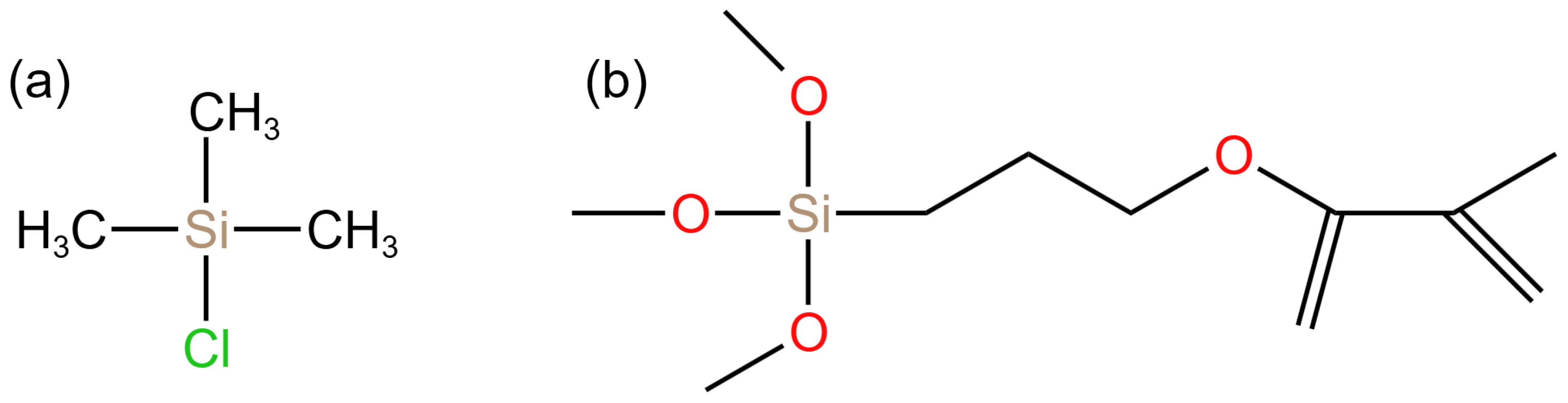
The modification performance of KH570 and TMCS exhibits strong dependence on substrate properties. On the sandstone slices characterized by low specific surface area and spatially heterogeneous hydroxyl group distribution, the long-chain, trifunctional structure of KH570 demonstrates a clear advantage. Its flexible alkyl chain can effectively bridge gaps between isolated hydroxyl sites, promoting more uniform surface coverage. In contrast, the short-chain, monofunctional TMCS limits its ability to achieve complete surface coverage on such substrates, resulting in relatively inferior modification efficacy.
With increased specific surface area and hydroxyl group density, quartz powder provides sufficient reactive sites for TMCS to form a relatively dense monolayer, thereby mitigating the coverage limitation due to its short-chain structure. However, on SBA-15, which has the highest specific surface area and microporous architecture, TMCS benefits from its smaller molecular size, enabling deeper penetration into the narrow internal pores and facilitating extensive reaction with the vast internal surface area. In contrast, the bulkier KH570 molecule experiences steric hindrance within these confined micropores, restricting its grafting primarily to the external surface and pore entrances. Consequently, its overall modification efficiency for SBA-15 is lower than that of TMCS, consistent with the findings reported by Zhao et al. [
37].
The performance of KH570 and TMCS reflects the interplay between their molecular structures and the physicochemical properties of the substrate surface. Therefore, the key to optimizing silane-based hydrophobic modification lies in achieving a precise match between the molecular characteristics of the coupling agent and the surface properties of the substrate, thereby enabling the construction of a highly efficient and uniform hydrophobic interface with controlled hydrophobicity.
4. Conclusions
This study systematically investigated the effects of silane coupling agent type, modification temperature, concentration, and reaction time on the wettability of quartz-based materials with varying particle sizes and specific surface areas, elucidating the influence mechanisms of surface physical characteristics on the efficiency of silane-based modification. The following conclusions can be drawn.
For KH570, the concentration of the silane solution has the strongest effect on wettability, more than temperature or time. The highest hydrophobicity on quartz powder with a contact angle of 133° was obtained at 120 °C, 0.15% concentration, and 40 min reaction time. By comparison, the effectiveness of TMCS is most sensitive to temperature, and a maximum contact angle of 124° is reached under milder conditions (80 °C, 5% concentration, 2 h).
The surface area and porosity of the substrate play a decisive role. Materials like SBA-15 with high specific surface area and large numbers of surface hydroxyl groups allow dense and uniform silane grafting, leading to strong hydrophobicity (up to 145°). In contrast, materials with lower specific surface area, such as sandstone slices, show limited improvement because there are fewer sites available for the silane to attach onto. This limitation is especially clear with TMCS, which relies heavily on available -OH groups, whereas KH570 performs better on rough or sparsely functionalized surfaces because its molecular structure supports cross-linking and film formation. These differences highlight that the selection of silane coupling agent must involve both chemical reactivity and physical architecture.
By linking silane type, reaction parameters, and substrate characteristics, this study provides a practical framework for designing reproducible oil–wet model systems. Such control is essential for improving the accuracy of laboratory experiments that simulate fluid behavior in shale reservoirs, where surface wettability directly affects oil recovery and transport at the nano scale.