Article

Reservoir Characteristics and Main Controlling Factors of Tight Sandstone in the First Sub-Member of the First Member of Shaximiao Formation in the Zhongjiang Block of Tianfu Gas Field, Sichuan Basin

1
PetroChina Southwest Oil & Gasfield Company, Chengdu 610041, China
2
School of Geoscience and Technology, Southwest Petroleum University, Chengdu 610500, China
*
Authors to whom correspondence should be addressed.
Processes 2026, 14(6), 994; https://doi.org/10.3390/pr14060994
Submission received: 6 February 2026 / Revised: 13 March 2026 / Accepted: 17 March 2026 / Published: 20 March 2026

Abstract

The Tianfu Gas Field in the Sichuan Basin is a core block for the large-scale, economic development of Jurassic tight gas in China. The first sub-member of the first member of the Shaximiao Formation in the Zhongjiang Block hosts typical low-porosity and low-permeability tight sandstone reservoirs. Based on detailed field geological surveys and core observations, this study employed multiple technical methods, including cast thin sections, scanning electron microscopy, computed tomography (CT) scanning, and nuclear magnetic resonance (NMR) to investigate sedimentary microfacies’ characteristics, analyze key reservoir properties (e.g., reservoir space types and pore structure), and clarify the main controlling factors of reservoir development. The results indicate the following: (1) The sedimentary period of the first sub-member of the first member of the Shaximiao formation (Es11) was controlled by a subtropical humid climate, with widespread gray mudstones and bedding-parallel plant fossil fragments. The main sedimentary environment was a shallow-water delta front, where the underwater distributary channel microfacies was the dominant facies belt. (2) Reservoir lithology is dominated by lithic arkose and feldspathic litharenite, with low compositional and structural maturity. Residual primary intergranular pores are the dominant reservoir space type, followed by intragranular dissolved pores in feldspar and lithic fragments. (3) The pore structure is characterized by a small pore-throat radius, poor sorting, and strong heterogeneity. Reservoirs can be subdivided into three categories, with Types II and III being the main types developed in this block. (4) Underwater distributary channels of the shallow-water delta are the main occurrence of reservoir sand bodies. During the burial diagenetic stage, calcite and laumontite cementation and filling led to reservoir densification. Meanwhile, early-formed chlorite rim cement effectively protected primary pores by inhibiting grain compaction and quartz overgrowth. Superimposed with the dissolution and alteration of feldspar, lithic fragments, and other components by late acidic fluids, effective pores were further expanded. The synergistic coupling of these sand-controlling factors and the “densification–protection–alteration” diagenetic process jointly constitutes the formation mechanism of high-quality reservoirs. This mechanism can provide a reliable theoretical basis for the accurate prediction of reservoir “sweet spots” and the optimal selection of horizontal well targets in the Zhongjiang Block of the Tianfu Gas Field.

1. Introduction

Tight sandstone gas, a core sector for the exploration and development of unconventional oil and gas resources in China, has been commercially developed on a large scale in major basins, including the Sichuan, Tarim, Ordos, and Songliao Basins [1]. Statistical data show that China’s tight sandstone gas output exceeded 60 billion cubic meters in 2023, accounting for 25% of the national total natural gas production. The Sichuan Basin contributed 38% of this output, thus becoming the core production area for tight gas development in China [2,3]. The natural gas exploration of the Middle Jurassic Shaximiao Formation in the Sichuan Basin began in the 1970s, with structural traps as the core exploration targets in the early stage. This led to the successive discovery of medium and small gas reservoirs, such as Pingluoba and Datachang. Since 2019, driven by theoretical innovations and technological breakthroughs, trillion-cubic-meter-scale gas fields—including Jinqiu and Jianyang—have been discovered in the second and first members of the Shaximiao Formation, respectively. Among them, the Tianfu Gas Field had a proven reserve of 1.349 × 10⁸ m3 in 2022, with an annual gas output exceeding 4.5 billion cubic meters, making it a paradigm for the development of continental tight gas in China [4].
Previous studies have yielded a series of insights into the sedimentary, reservoir, and hydrocarbon accumulation characteristics of the Shaximiao Formation in blocks such as the northwestern and central Sichuan Basin [5,6,7,8,9,10]. Sedimentary facies research indicates that the first member of the Shaximiao Formation developed large-scale shallow-water delta deposits, among which the subaqueous distributary channel sandbodies serve as the key facies belts for high-quality reservoir development, providing preferred targets for tight gas exploration [11,12]. Reservoir and accumulation studies have revealed that the first member of the Shaximiao Formation has undergone multi-stage diagenetic modifications including “compaction–cementation–dissolution”, with late chlorite coating and laumontite cementation being the main controlling factors for reservoir densification [13,14]; in terms of gas source, it exhibits the characteristics of “dual-source and multi-stage charging”, mainly adopting a dual hydrocarbon supply model from the coal-bearing source rocks of the Xujiahe Formation and the lacustrine shales of the Ziliujing Formation [15,16]. However, most existing studies have focused on the overall sedimentary and basic reservoir characteristics of the first member of the Shaximiao Formation, and research on the main controlling factors of high-quality tight sandstone reservoirs in the first sub-member of the first member of the Shaximiao Formation in the Zhongjiang Block remains relatively insufficient, which restricts the further improvement of exploration and development benefits in this area.
Aiming at the tight sandstone reservoirs in the first sub-member of the first member of the Shaximiao Formation in the Zhongjiang Block of the Tianfu Gas Field, this study comprehensively uses experimental data from core observation, cast thin section analysis, X-ray diffraction whole-rock/clay mineral quantification, scanning electron microscopy, and nuclear magnetic resonance. It systematically investigates the characteristics of sedimentary microfacies, conducts an in-depth analysis of key reservoir properties, and clarifies the main controlling factors for the development of high-quality reservoirs. The research results provide a theoretical basis for the exploration and development of Jurassic tight gas reservoirs.

2. Experiments and Methods

2.1. Experimental Samples

This study focuses on the first sub-member of the first member of the Shaximiao Formation in the Tianfu Gas Field, Sichuan Basin. A total of 30 core plugs and 25 crushed samples were collected from conventional drill cores, dominated by gray fine- to medium-grained sandstone. All core plugs were prepared into standard cylindrical samples of 2.5 cm in diameter and approximately 3 cm in length. Crushed samples were processed to meet the requirements of different tests. After drying, a series of experiments were conducted. All tests were performed in the State Key Laboratory of Oil and Gas Reservoir Geology and Exploitation, Southwest Petroleum University, following industrial standards for experimental conditions and procedures.

2.2. Experimental Methods

Nuclear magnetic resonance measurements were performed using a RecCore-04 analyzer (RecCore Analytical Instruments, Chengdu, China). The T2 spectra of each sample were obtained under water-saturated and centrifuged conditions. The NMR parameters were set as follows: waiting time 6 s, echo spacing 0.2 ms, number of scans 128, and number of echoes 4096. The mobile water saturation of each sample was calculated by comparing the NMR T2 spectra before and after centrifugation.
High-pressure mercury intrusion tests were conducted using an AutoPore IV-9500 automated mercury porosimeter (Micromeritics Instrument Corp., Norcross, GA, USA). The pore size measurement range was 10 nm–600 μm, and the maximum mercury intrusion pressure was set to 200 MPa in this study. The mercury intrusion experiments included both mercury intrusion under increasing pressure and mercury extrusion under decreasing pressure. By continuously changing the injection pressure, the pore size distribution curve and capillary pressure curve can be obtained. The calculation formula is as follows:
P c = 2 σ cos θ r
In Equation (1): r: pore-throat radius; Pc: mercury intrusion pressure; δ: surface tension of mercury, taken as 0.480 N/m; θ: wetting angle.
Cast thin sections were observed using a Leica polarizing microscope (Leica Microsystems GmbH, Wetzlar, Germany) with a maximum magnification of 600×. Blue epoxy was used for pore casting. Scanning electron microscopy was performed with a magnification range of 7–100,000× and an image resolution of ≤3.5 nm. X-ray diffraction tests were carried out on an Ultima IV diffractometer (Rigaku Corporation, Tokyo, Japan) for qualitative and quantitative analysis of mineral compositions.

3. Study Area Overview

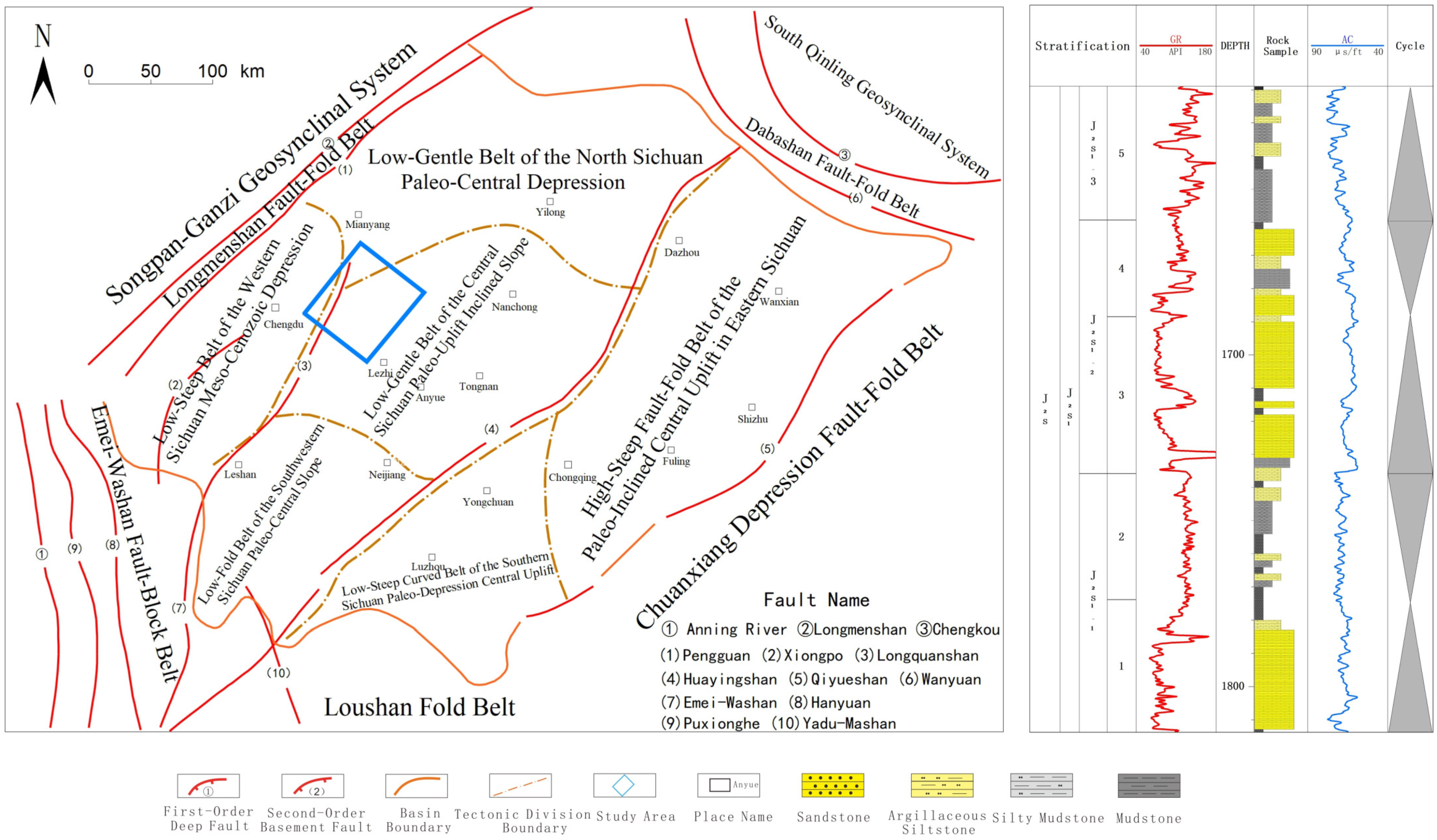
The Zhongjiang Block of the Tianfu Gas Field is located in the central Sichuan Basin, spanning the administrative regions of Zhongjiang County, Santai County, Shehong City, and Jintang County (Figure 1). Tectonically, it belongs to the gentle structural belt on the northern slope of the Central Sichuan Paleo-uplift, presenting an overall monoclinal structural pattern striking northwestward. Since the Late Mesozoic, continental sedimentation in the Sichuan Basin has undergone multiple stages of tectonic evolution: an NE-trending uplift-sag pattern formed during the Late Indosinian. During the Yanshanian, intensified tectonic activities of the Micangshan–Dabashan orogen caused the basin’s subsidence center to migrate from the northeast to the southwest. The Zhongjiang Block remained in a relatively stable subsidence setting, which facilitated the deposition of a thick sequence of continental clastic rocks. After the deposition of the Jurassic Shaximiao Formation, differential uplift during the Late Yanshanian and tectonic compression during the Himalayan led to the development of a set of NE-trending gentle structures and secondary fault systems [17].
In the study area, the Jurassic System is composed of the Lianggaoshan Formation, Shaximiao Formation, and Suining Formation in ascending order. The Shaximiao Formation, with a total thickness of approximately 800 m, is dominated by purplish-red mudstones intercalated with grayish-green and gray fine-to-medium-grained lithic arkoses. Its base is bounded from the underlying Lianggaoshan Formation by the Estheria shale as a marker bed. Based on lithologic associations, logging curve morphologies, and seismic facies characteristics, the Shaximiao Formation is divided into the Lower Shaximiao Member and Upper Shaximiao Member. The Lower Shaximiao Member is dominated by a shallow-water delta–lake sedimentary system, developing underwater distributary channels, front sheet sands, and lacustrine mudstones. High-resolution sequence stratigraphic analysis subdivides the Lower Shaximiao Member into three third-order sequences, bounded by two episodes of maximum flooding surfaces. These sequences are further divided into the first, second, and third sub-members of the Lower Shaximiao Member in ascending order. Among them, the first sub-member of the Lower Shaximiao Member develops multi-stage narrow channel sand bodies and serves as the main research target of this study (Figure 1).

4. Characteristics of Sedimentary Facies and Microfacies

The sedimentary evolution of the Shaximiao Formation is jointly controlled by climate, provenance, and lacustrine basin dynamics, exhibiting a distinct ascending evolutionary sequence characterized by climatic aridification, weakened provenance supply, and lacustrine basin shrinkage [18]. The Lower Shaximiao Member (J2s1) was deposited under a semi-arid climate, dominated by the NE-trending Dabashan–Micangshan provenance system, and developed a composite fluvial–shallow-water delta–lacustrine sedimentary system. During relatively humid periods, sufficient fluvial sediment supply from the basin margins formed deeper lakes in confluence areas; the intermittent fluvial flooding led to unsteady channels and planar mutual truncation of multi-stage channel sand bodies. The climate became more arid during the Upper Shaximiao Member deposition, and continuous lacustrine basin contraction transformed the sedimentary system into a fluvial–lacustrine delta association with weaker fluvial processes. Terrigenous clastics were transported over long distances to form dendritic distributary channels, with underwater distributary channels as the main microfacies; the corresponding sand bodies are narrow and strip-shaped, gradually pinching out toward the lake center [19,20].
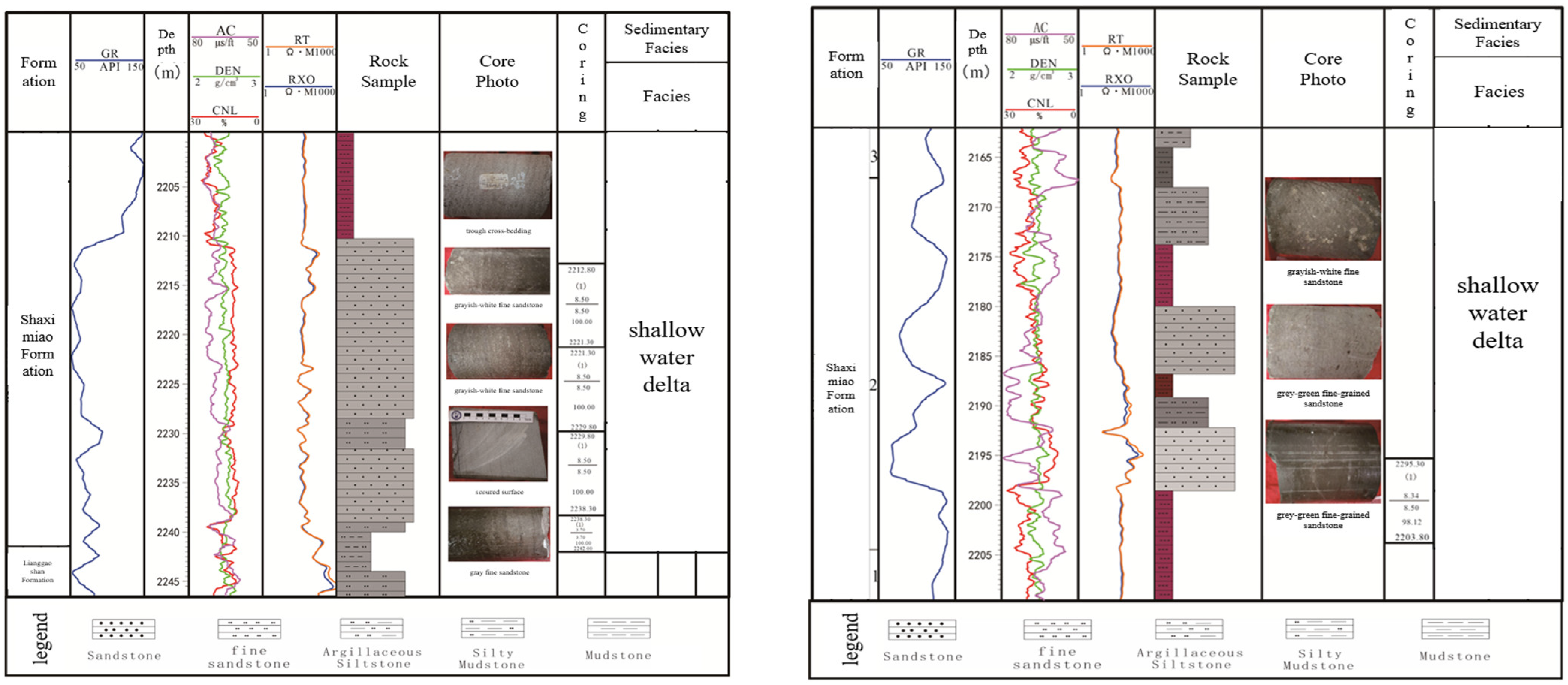
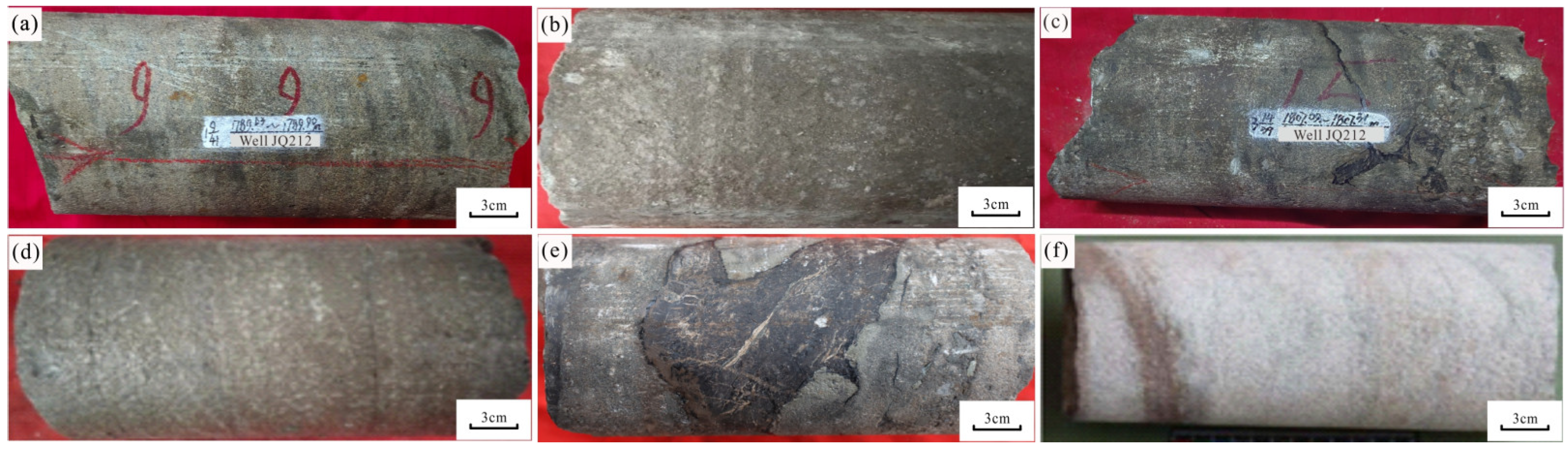
The sedimentary characteristics of the Lower Shaximiao Member were clearly characterized through multi-dimensional analysis of core facies, logging facies, and seismic facies (Figure 2 and Figure 3). In terms of core facies, the main reservoir sand bodies are the underwater distributary channel sand bodies of the shallow-water delta front, a typical high-energy hydrodynamic environment with well-sorted sediments and low matrix content. Sedimentary structures are dominated by trough cross-bedding, tabular cross-bedding, and parallel bedding; mouth bar deposits with reverse grading are locally observed, while bidirectional ripple cross-bedding and bioturbation structures reflect modification by lacustrine waves. Mudstones are characterized by horizontal bedding, and trough cross-bedding composed of mud gravels and fine conglomerates at the channel base indicates the high energy and strong erosional processes of underwater distributary channels (Figure 2a–f). Logging facies are mainly represented by four curve types (Figure 3): medium-high amplitude box-shaped curves corresponding to large-scale underwater distributary channels, with local serration caused by multi-stage superposition and lateral accretion; medium amplitude bell-shaped curves reflecting small-scale underwater distributary channels and natural levees, with significantly low amplitude and serration due to weakened sedimentary dynamics and increased matrix content; finger-shaped and low-amplitude serrated curves responding to sheet sands and interdistributary bays, characterized by distinct sand-mud interbedding against a muddy sedimentary background.
Single-well analysis further reveals the vertical evolutionary characteristics of the Lower Shaximiao Member deposits, illustrated with the first and second sand sets of the first sub-member of the Lower Shaximiao Member in Well JQ209 (Figure 3).

5. Reservoir Characteristics

5.1. Petrological and Reservoir Space Characteristics of the Reservoir

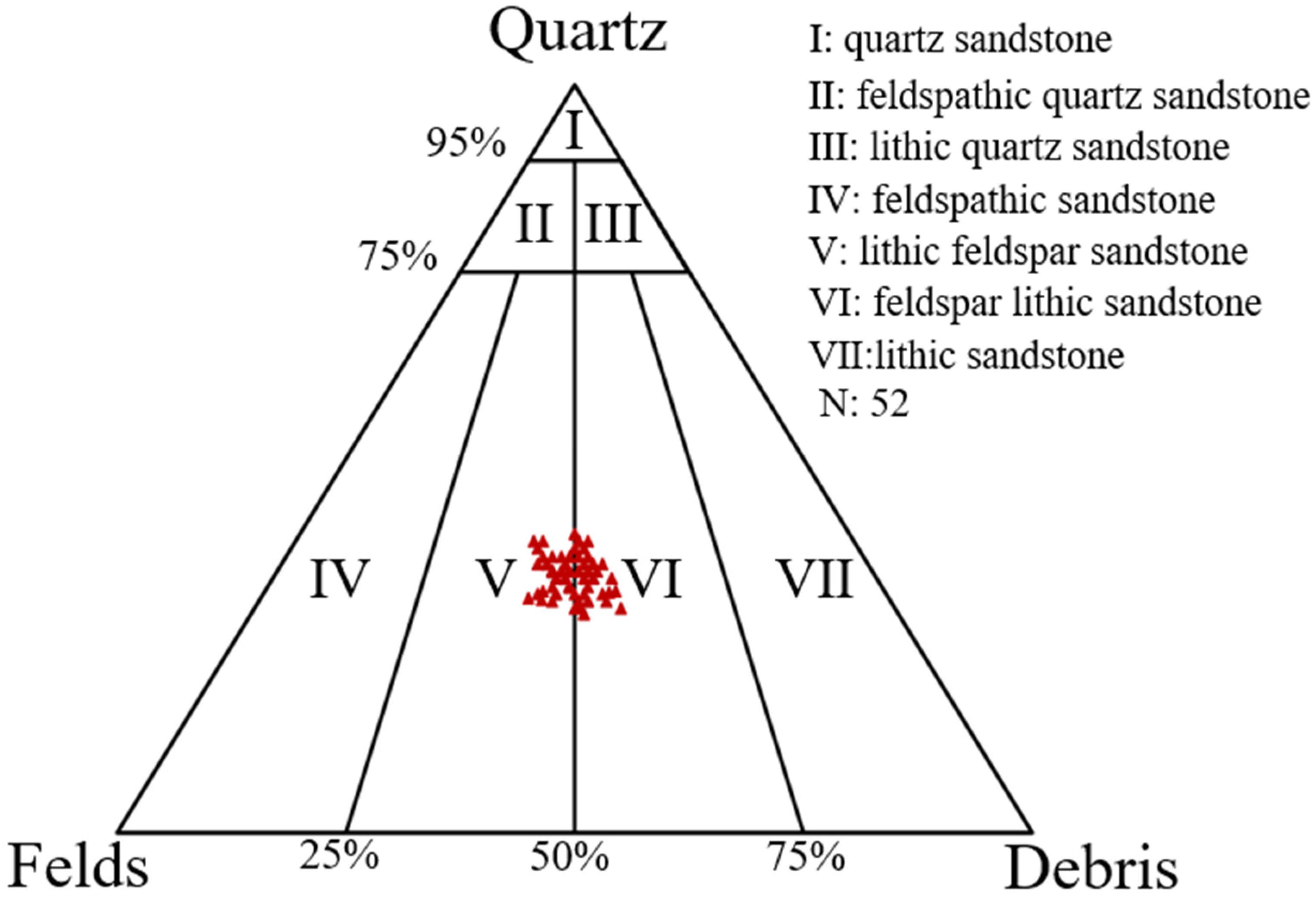
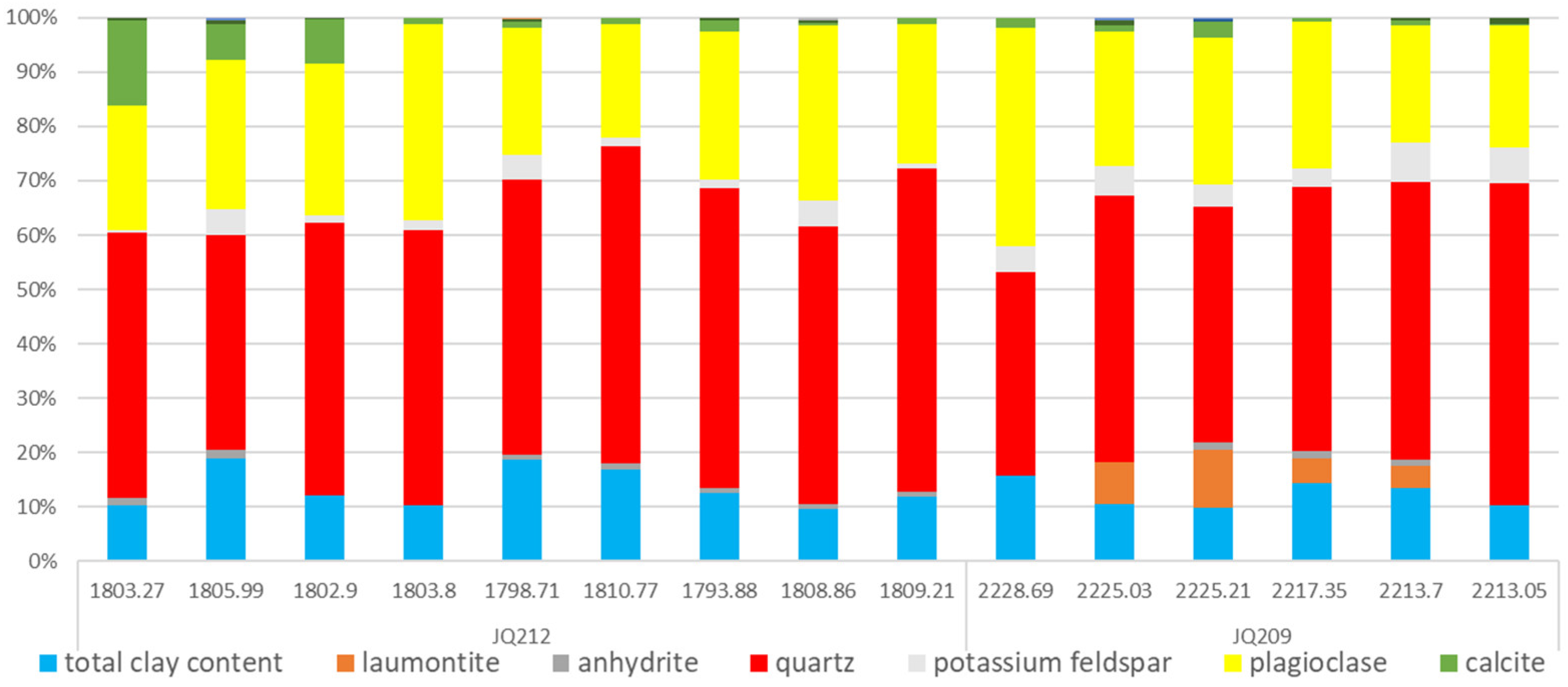
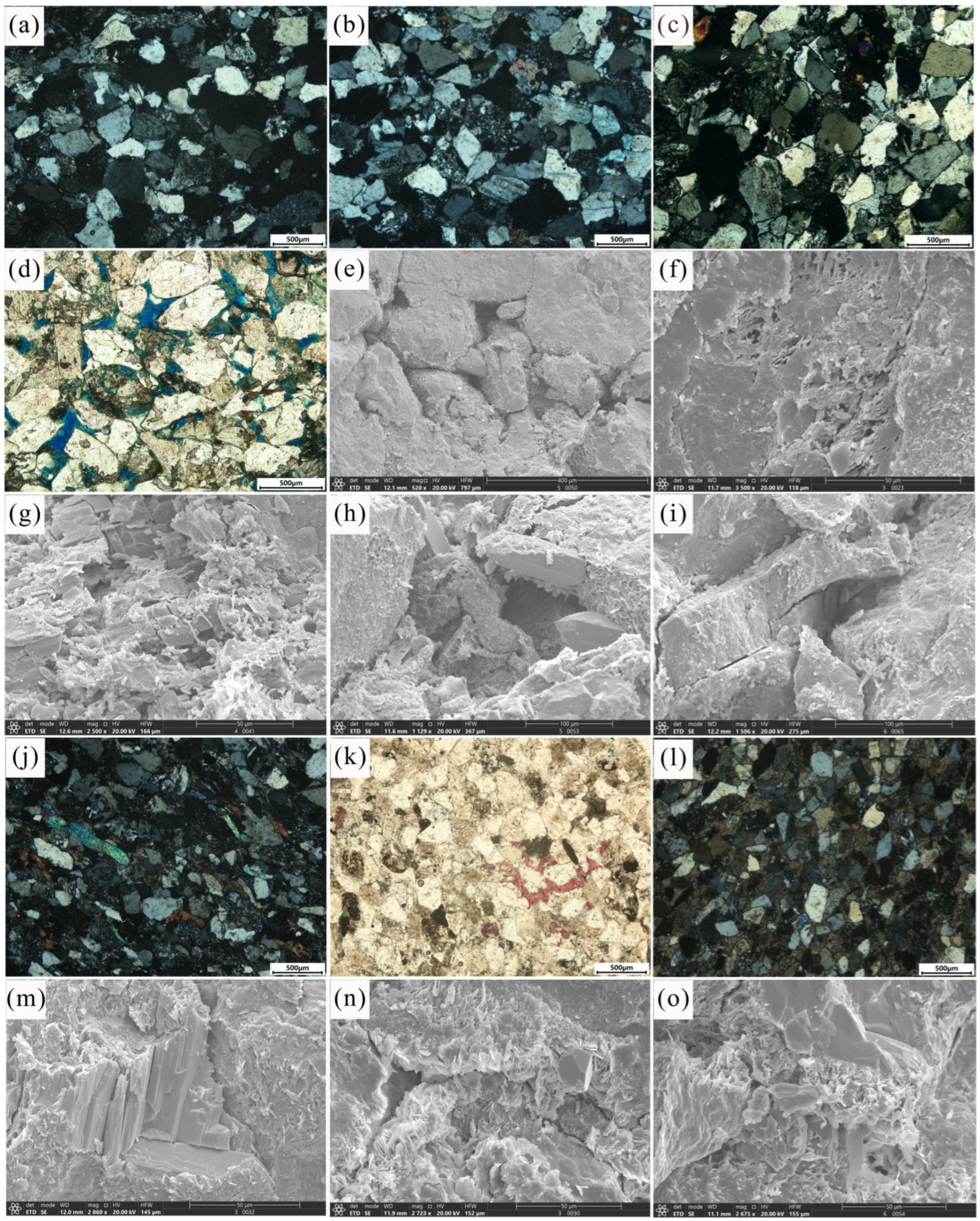
In the Zhongjiang Block of the Tianfu Gas Field, the lithologic association of the first sub-member of the Lower Shaximiao Member is dominated by dark purplish-red and gray mudstones, intercalated with gray medium-thick bedded medium-fine grained sandstones. Reservoir lithology consists of feldspathic litharenite and lithic arkose, with medium-fine grain size as the main type, sorting ranging from fair to moderate, and roundness from subangular to subrounded. Particles exhibit a contact cementation pattern, dominated by point or line contacts, with moderate compaction intensity. Overall, reservoir rocks are characterized by low compositional and structural maturity, and interstitial materials mainly include clay mineral cementation, calcite cementation, and quartz overgrowth cementation. Whole-rock X-ray diffraction analysis shows that quartz is the dominant rock component, followed by plagioclase, K-feldspar and clay minerals, with a small amount of calcite/laumontite present (Figure 4, Figure 5 and Figure 6).
Reservoir pores are dominated by residual intergranular pores and intergranular dissolved pores, followed by intragranular dissolved pores (Figure 6d,e). Residual intergranular pores are mainly developed in medium-fine grained lithic arkose and feldspathic litharenite with low matrix content, and chlorite rim cementation is commonly observed at grain edges, forming a typical point-line contact pore structure; their pore radii are mostly concentrated in the range of 0.10–0.25 mm, which constitute the main seepage channels of high-quality reservoirs. Secondary intergranular dissolved pores are mostly formed by dissolution and expansion along the edges of primary intergranular pores, developing irregular embayment-shaped pores with diameters of 0.05–0.10 mm; these pores are often connected with constricted throats, featuring good connectivity but low contribution to permeability. Feldspar intragranular dissolved pores are well developed (Figure 6f,g); dissolution occurs in a sieve-like distribution along cleavage planes, and intense dissolution forms skeletal or honeycomb-like residual structures with diameters of 0.10–0.20 mm, which together with lithic intragranular dissolved pores serve as an effective supplement to the reservoir space. Scanning electron microscopy analysis (Figure 6h,i) indicates that reservoir throats are dominated by necked throats and lamellar throats: necked throats are formed by early cementation at the point contact positions of grains, with throat radii mostly less than 0.05 mm; lamellar throats originate from the edges of linear/planar contacts formed by compaction. Due to their narrow channels and high tortuosity, these two types of throats jointly form a complex micro-seepage network, which is the fundamental reason for the ultra-low reservoir permeability in the study area.

5.2. Diagenetic Characteristics of the Reservoir

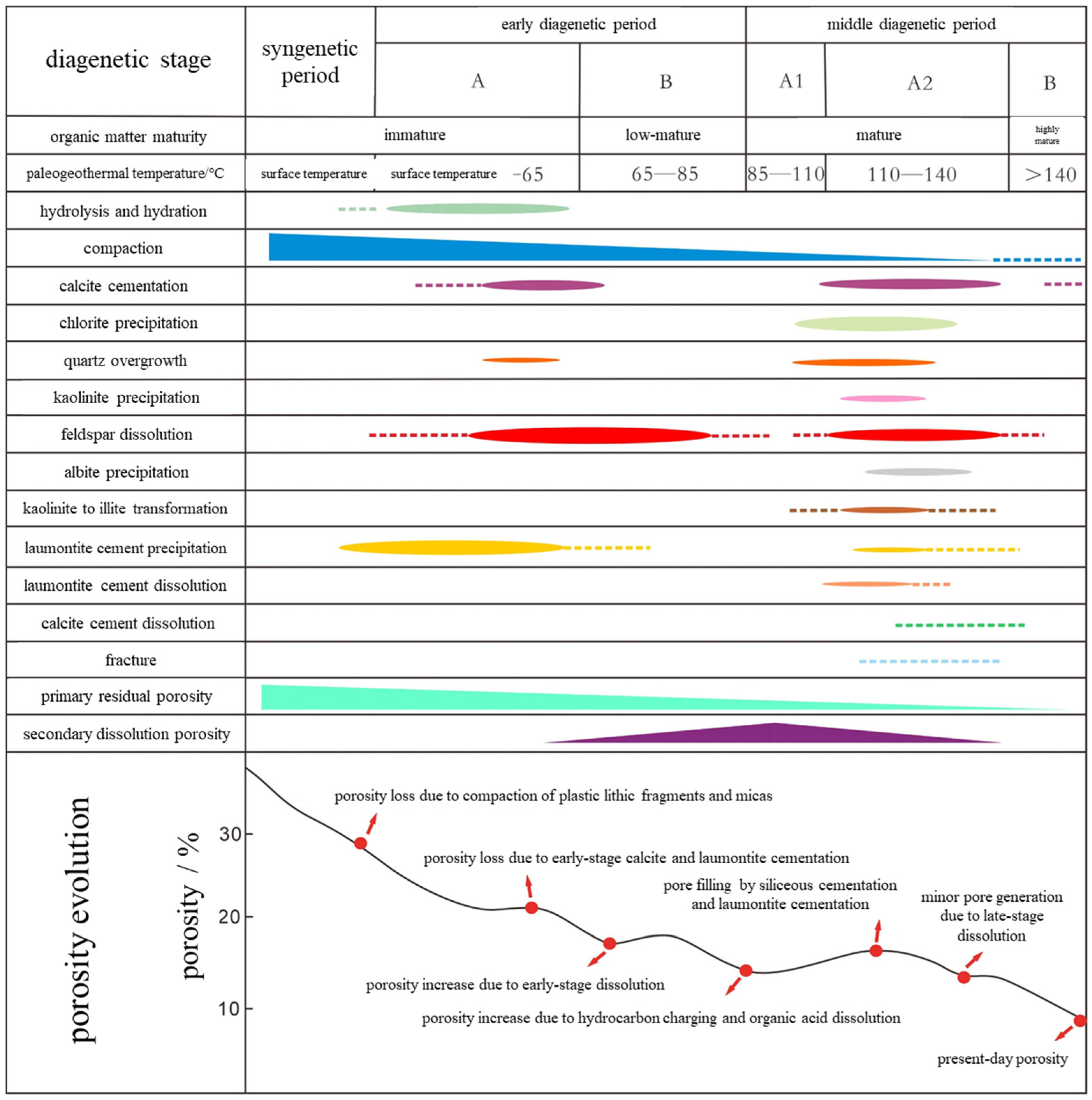
Diagenetic processes in the study area are dominated by compaction, intragranular/intergranular dissolution, and cementation (chlorite, calcite, and laumontite) (Figure 6j–o). Thin-section observations reveal intense compaction, characterized by concave–convex grain contacts and frequent deformation/bending of plastic lithic fragments and micas (Figure 6j); in mica-rich intervals, mineral grains exhibit oriented alignment, and some plastic grains were compacted into pseudomatrix, which significantly contributed to reservoir densification and limited the development of high-quality reservoirs. Feldspar dissolution is pervasive, commonly forming grid-like or honeycomb-shaped intragranular pores; complete dissolution of some feldspar grains even produced moldic pores. In contrast, lithic dissolution is relatively limited, occurring primarily in intermediate-acidic extrusive lithic fragments with low intensity, and the secondary pores generated by feldspar and lithic dissolution collectively effectively enhanced the reservoir storage capacity. Early calcite cementation led to the near-total loss of primary pores in localized reservoir intervals (porosity reduced to 5–8%), severely impairing physical properties (Figure 6k,l). Laumontite is widely precipitated as microcrystalline aggregates or interlocking overgrowths, extensively filling primary intergranular pores and secondary feldspar-dissolved pores, which drastically reduced rock porosity (Figure 6m). However, authigenic chlorite rims effectively inhibited late-stage quartz overgrowth, thereby preserving the primary porosity of sandstones, and this protective effect makes chlorite rim formation one of the key controlling factors for the development of high-quality reservoirs in the first sub-member of the Lower Shaximiao Formation.

5.3. Reservoir Physical Properties and Pore Structure Classification

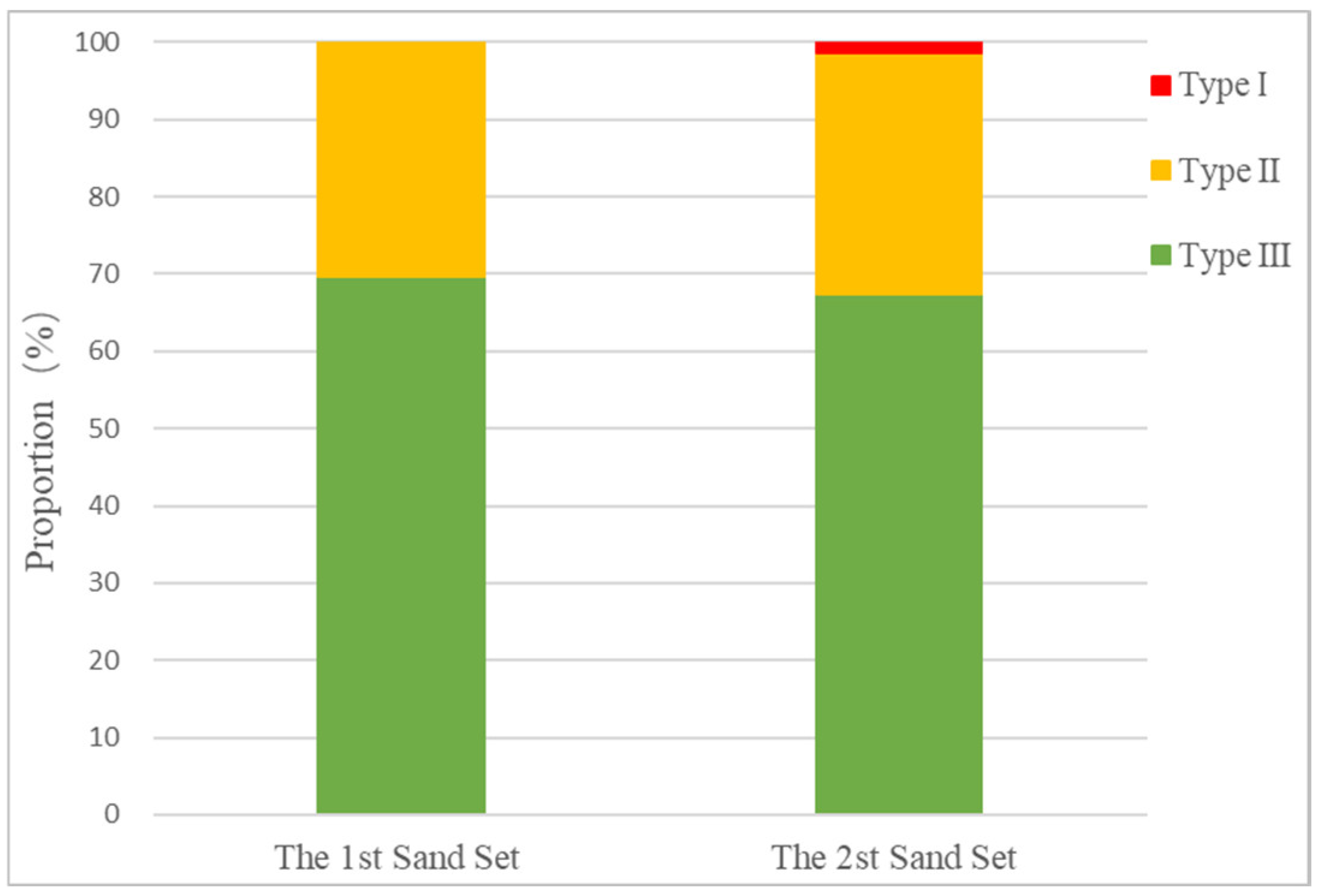
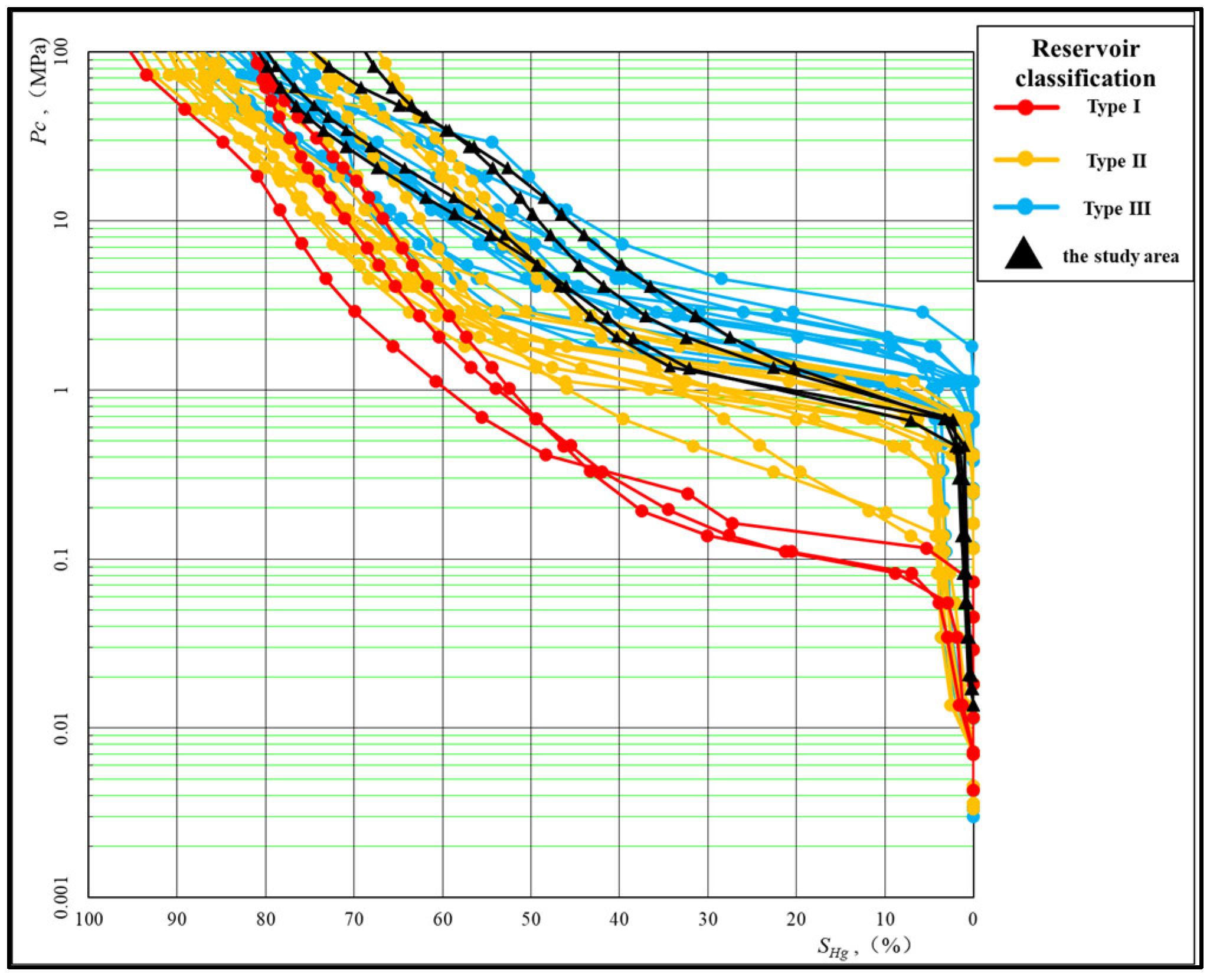
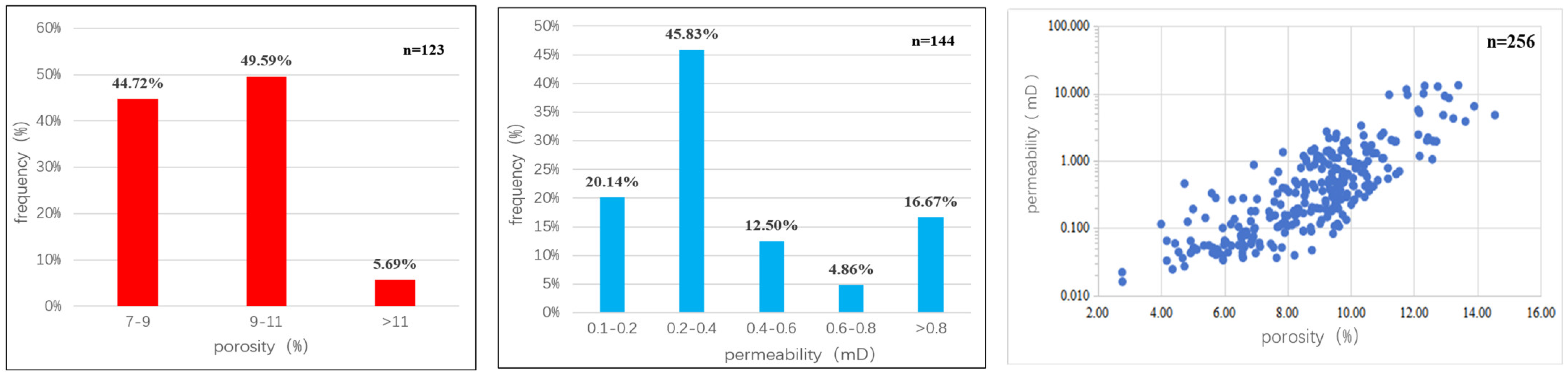
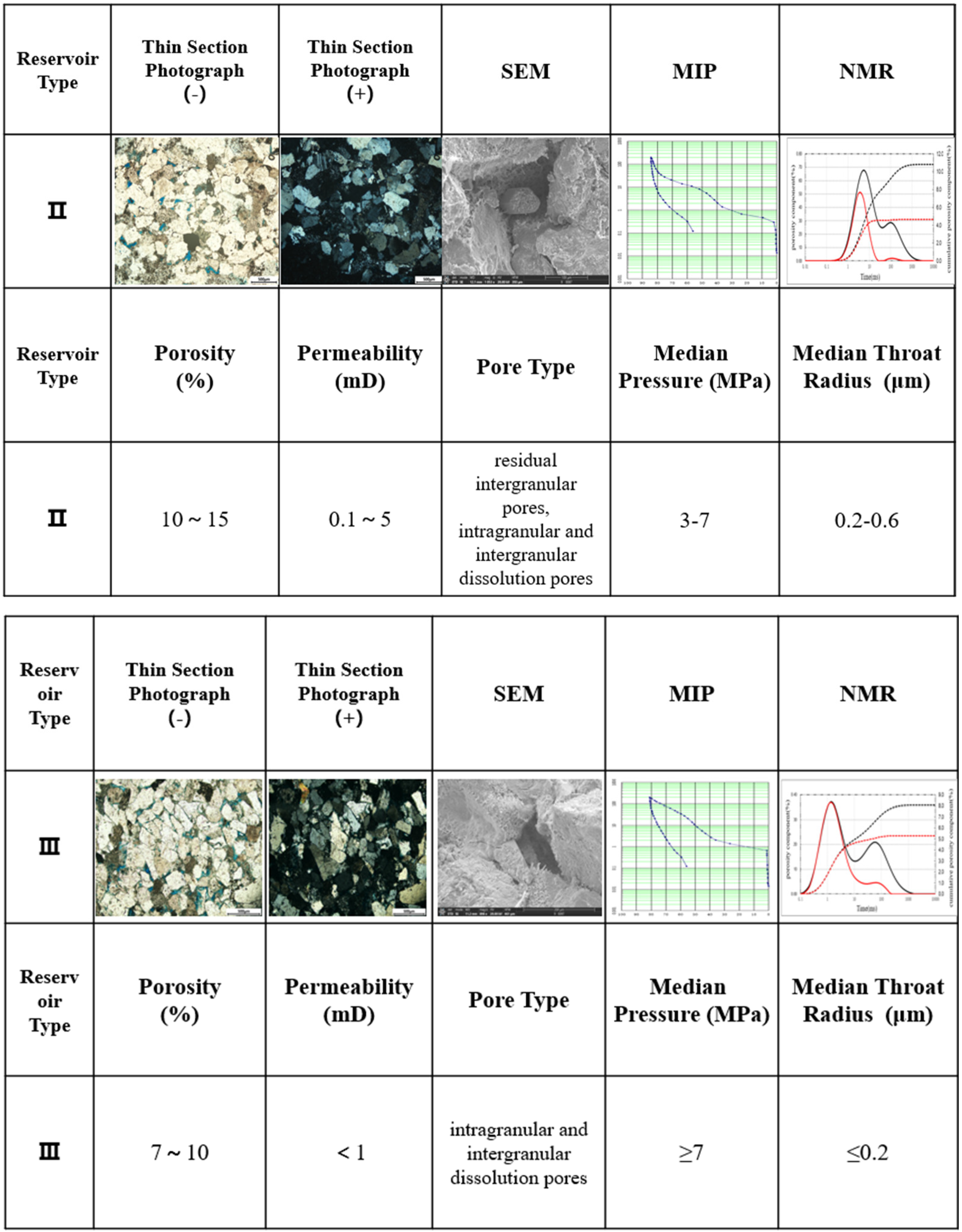
Conventional core physical property statistics of the first sub-member of the Lower Shaximiao Member in the Zhongjiang Block of the Tianfu Gas Field show that reservoir porosity ranges from 7.04% to 12.13% (average: 9.15%; median: 9.21%), and permeability ranges from 0.1 to 2.44 mD (average: 0.420 mD; median: 0.262 mD), indicating an overall ultra-low porosity and ultra-low permeability reservoir. Combined with physical property data analysis and porosity–permeability cross-plot, porous reservoirs dominate the study area. Based on differences in capillary pressure curves and reservoir physical property characteristics, reservoirs in the Tianfu Gas Field are divided into three types, with the first sub-member of the Lower Shaximiao Member in the Zhongjiang Block dominated by Type II and Type III reservoirs. Type II reservoirs have a porosity range of 10–15% and a permeability range of 0.1–5.0 mD; statistical parameters of capillary pressure curves show an average median pressure of 4.01 MPa, corresponding to an average median throat radius of 0.28 μm. Mercury injection curves of this type exhibit moderate displacement pressure, with the plateau section pressure mainly distributed between 0.2 and 2.0 MPa, reflecting a moderate level of pore-throat sorting. Residual intergranular pores are the dominant reservoir space, supplemented by intragranular and intergranular dissolved pores; pore size distribution curves from high-pressure mercury injection experiments indicate that Type II reservoirs have a wide pore-throat size distribution, with coexistent micron-scale and nanometer-scale pore-throat systems, and pore-throat radii are mainly concentrated in the range of 0.1–10 μm, presenting an overall pore-throat structure dominated by micron-scale pore-throats and supplemented by nanometer-scale ones (Figure 7, Figure 8, Figure 9 and Figure 10 and Table 1).
Type III reservoirs have generally inferior physical properties compared to Type II reservoirs, with a porosity range of 7–10% and permeability generally lower than 1.0 mD; statistical results of capillary pressure parameters show an average median pressure as high as 8.20 MPa, corresponding to an average median throat radius of only 0.13 μm. Mercury injection curves are characterized by relatively high displacement pressure, with the plateau section pressure mainly distributed between 2 and 5 MPa. Reservoir space is jointly dominated by residual intergranular pores, intragranular dissolved pores, and intergranular dissolved pores, and relatively intense cementation and compaction are the key controlling factors for its poor physical properties. A comparison of the pore-throat structure characteristics of the three reservoir types shows that the development degree and spatial distribution of nanometer-scale pore-throats are highly similar, and the core cause of physical property differences is concentrated in the development scale and connectivity of micron-scale pore-throats. Pore size distribution curves present a multi-peak superposition pattern with good connectivity between each characteristic peak, and the main peak is stably distributed in the range of 0.1–10 μm; this characteristic not only reflects the relatively strong overall homogeneity of the reservoirs in the study area, but also confirms that this pore size range is the dominant interval with the highest degree of pore-throat development.

6. Main Controlling Factors of High-Quality Reservoirs

The development of tight sandstone reservoirs is the result of the coupled control of multiple factors including sedimentation, diagenesis and tectonism. Sedimentation lays the inherent material foundation for reservoir development and determines the initial development characteristics of primary pores, while diagenesis dominates the evolution of reservoir physical properties through reformation during the burial process.

6.1. Dominant Sedimentary Microfacies of Delta Front: Material Foundation of Reservoir Formation

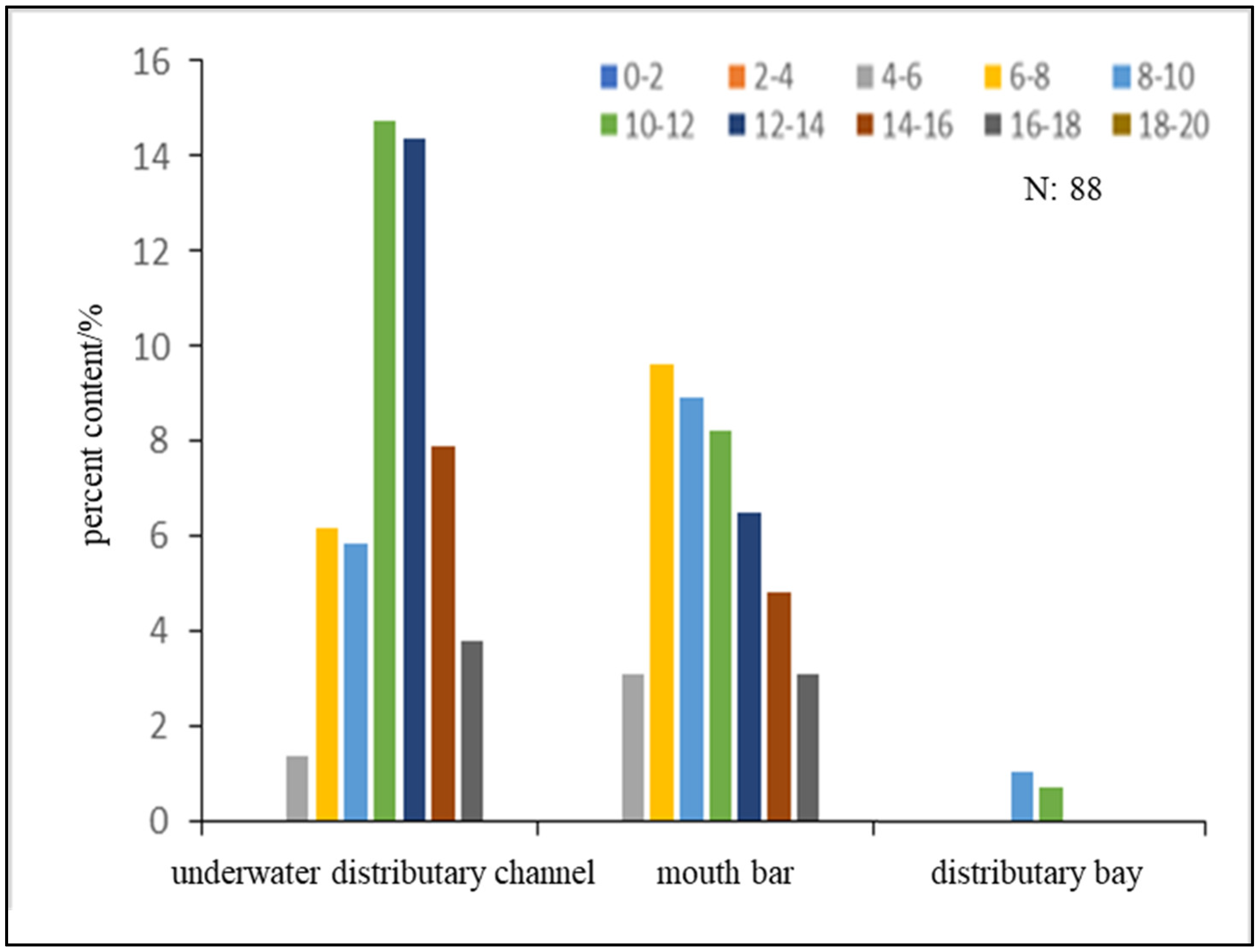
Reservoir development in the first sub-member of the Lower Shaximiao Member in the Zhongjiang Block of the Tianfu Gas Field is closely related to the distribution of sedimentary microfacies in the delta front. As the dominant sedimentary microfacies, underwater distributary channels and mouth bars form the core material foundation for high-quality reservoir formation. As illustrated in Figure 9, the underwater distributary channel microfacies exhibits the most favorable overall porosity distribution. Approximately 15% of the samples have porosity values ranging from 10% to 15%, while about 14% have porosity between 0% and 2%. Distinct peaks in porosity frequency are also observed in the 6–8% and 18–20% intervals. The mouth bar microfacies ranks second, with relatively prominent porosity percentages in the 6–8% and 8–10% ranges, peaking at nearly 10%. In contrast, all porosity range percentages in the interdistributary bay microfacies are extremely low. This distribution indicates that underwater distributary channels and mouth bars—high-energy sedimentary environments in the delta front—are characterized by coarser sediment grain size, better sorting, and more developed primary pores. These features not only provide favorable material conditions for the preservation and evolution of pores in later stages but also directly determine reservoir quality and distribution range, thus forming the key material foundation for high-quality reservoir formation in this area (Figure 11).

6.2. Calcite and Laumontite Cementation: Key Restricting Factor for Reservoir Densification

Early cementation is the core driving force for reservoir densification in the study area, with calcite and laumontite cementation exerting the most prominent destructive effects.
Early calcite cementation, which forms in early diagenetic stage A, is closely linked to the compaction and water expulsion of interdistributary bay mudstones in the delta front. This cement occurs as micritic base cementation, extensively filling intergranular pores, intragranular pores, and early microfractures. It not only directly engulfs primary reservoir space, leading to a sharp decrease in porosity, but also blocks pore-throat channels, resulting in a drastic decline in permeability. As a result, the porosity of some reservoirs is reduced to 5–8%, making early calcite cementation the primary factor controlling early reservoir densification (Figure 6k,l and Figure 12).
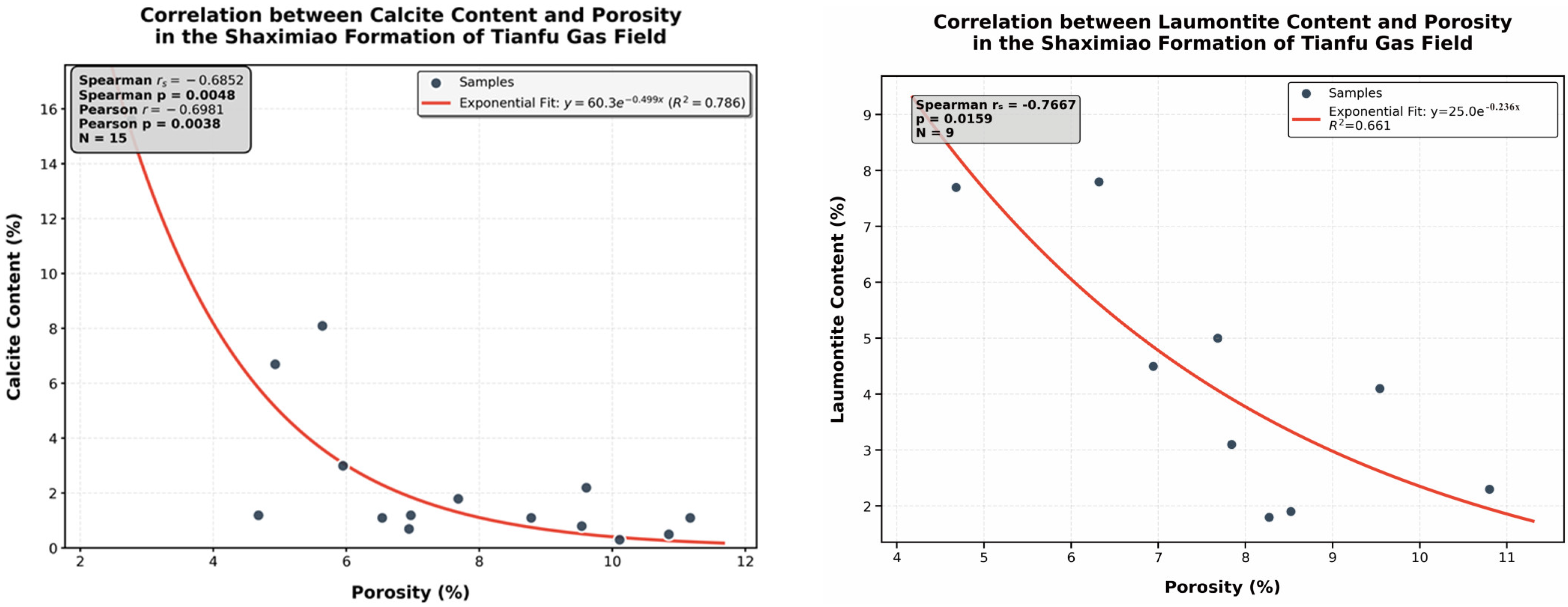
For the Shaximiao Formation in the Tianfu Gas Field, a significant exponential negative correlation between calcite content and porosity is confirmed by 15 valid samples. The Spearman rank correlation test yields rs = −0.6852, and the Pearson linear correlation test gives r = −0.6981, both indicating a statistically highly significant negative correlation. The exponential fitting equation is y = 60.3e−0.499x with a determination coefficient R2 = 0.786, demonstrating excellent fit quality. As porosity increases from 2.77% to 11.17%, calcite content decreases exponentially from 15.60% to 0.30%, further confirming that calcite cementation is a key diagenetic factor deteriorating reservoir physical properties (Figure 13).
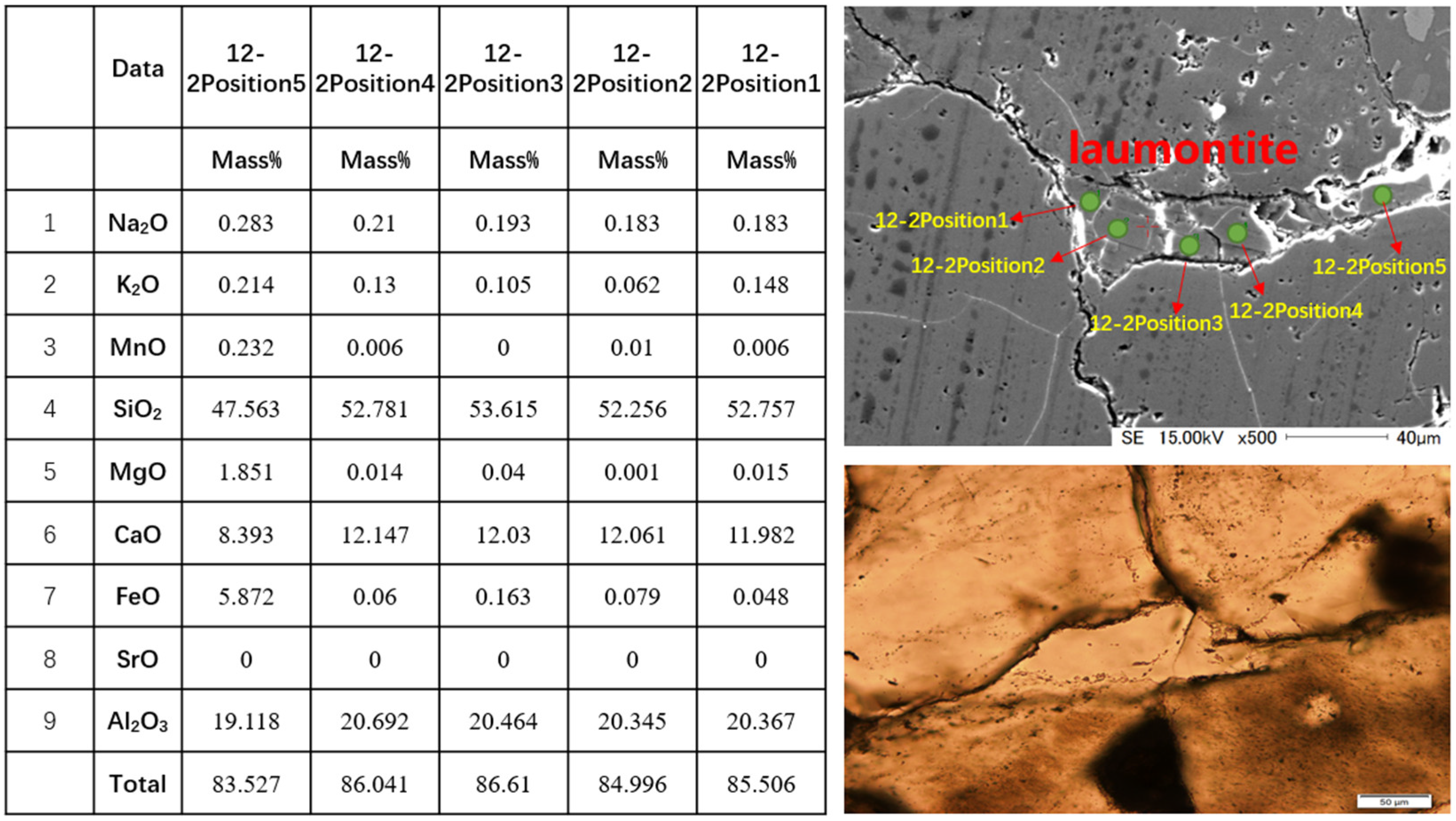
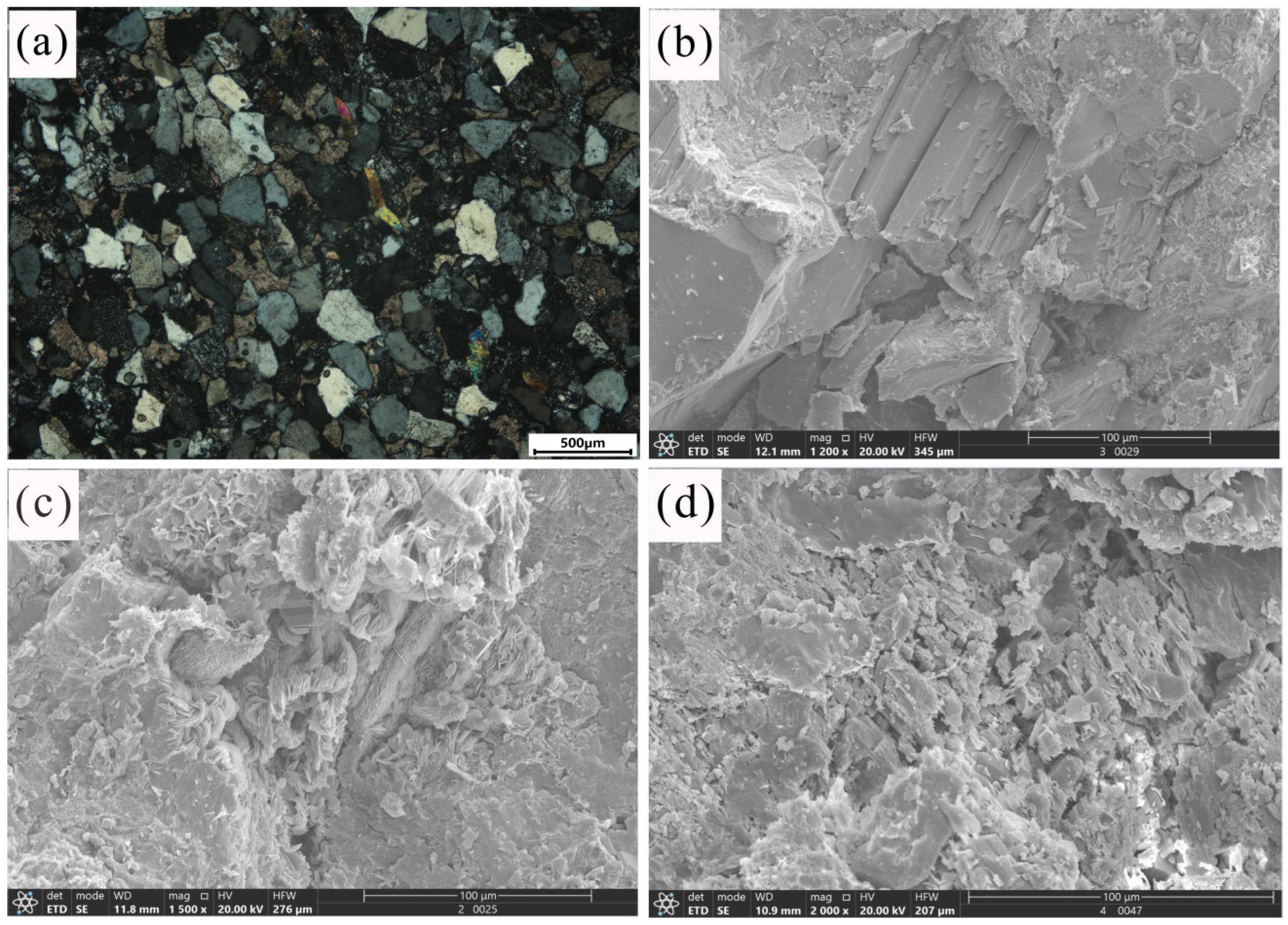
Laumontite cementation, which mainly develops from early diagenetic stage B to early middle diagenetic stage, has a dual material source: calcium-rich and sodium-rich alkaline pore water released during hydrocarbon generation from the Xujiahe Formation source rocks in western Sichuan, and silicon and aluminum components released by the alteration of aluminosilicate minerals in sandstones. Direct evidence for this mechanism is provided by electron probe microanalysis of laumontite at 1935.8 m in Well JT1, which shows high calcium and sodium contents, moderate silicon and aluminum contents (12–15% Al2O3, 8–10% CaO, and 3–5% Na2O), consistent with the chemical properties of calcium-rich alkaline pore water from regional source rock generation. This laumontite is concentrated in dominant reservoir spaces such as feldspar dissolved pores and primary intergranular pores, filling them as microcrystalline aggregates or interlocking overgrowths and directly causing an 8–12% decrease in porosity. Physical property analysis further shows a significant negative correlation between laumontite content and high-quality reservoir development, confirming that laumontite cementation is a key factor exacerbating reservoir densification and restricting high-quality reservoir formation (Figure 6m, Figure 12, Figure 13 and Figure 14b).

6.3. Chlorite Rim Preservation and Feldspar Dissolution Alteration: Core Mechanisms for High-Quality Reservoir Formation

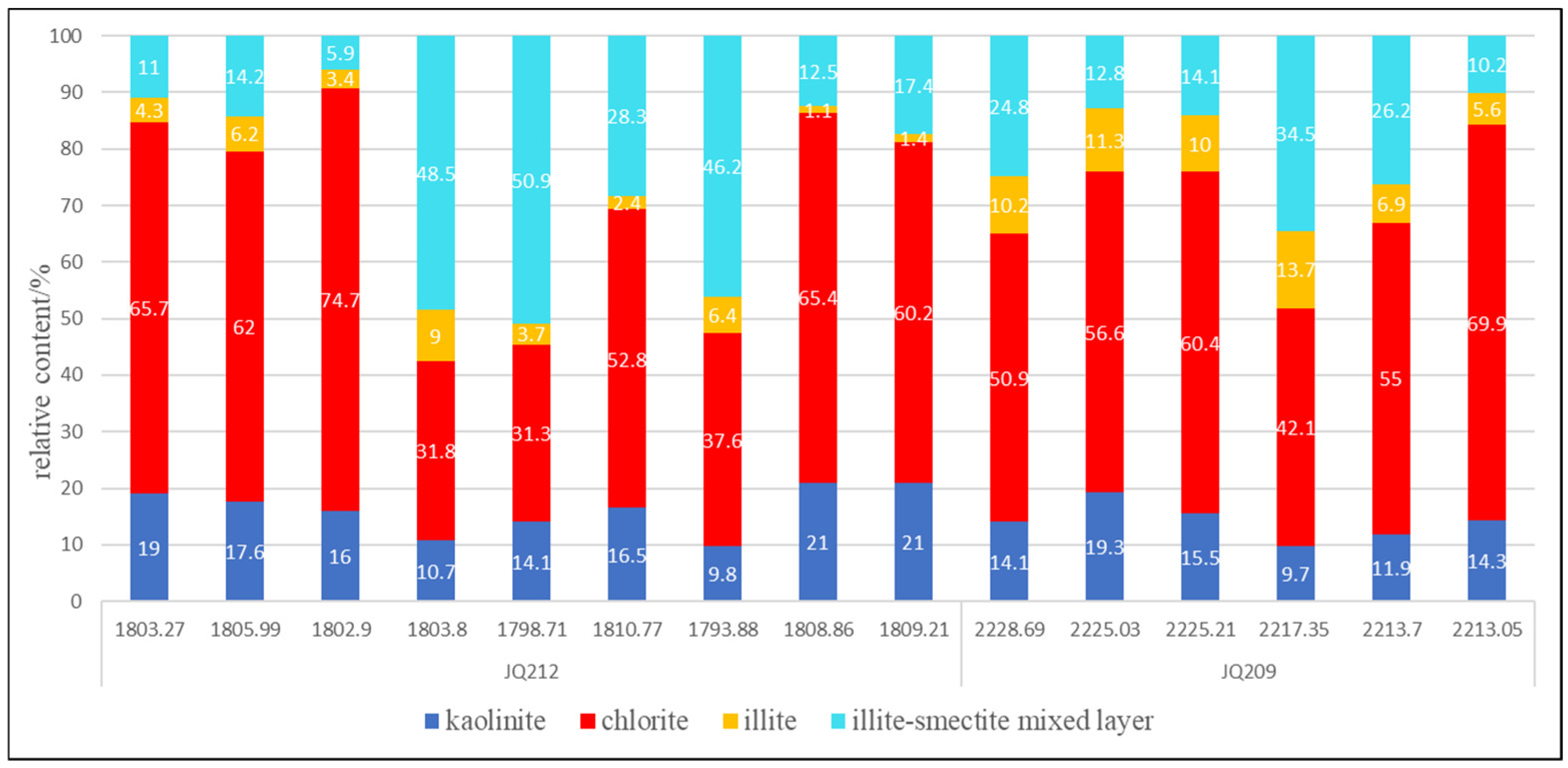
Against the background of early reservoir densification, the superposition of constructive diagenesis is the key for high-quality reservoirs to overcome densification constraints and improve physical properties. This effect is mainly reflected in the pore preservation by authigenic chlorite rims and the pore enhancement by feldspar dissolution. The coupling of these two processes constitutes the critical mechanism for the development of high-quality reservoirs. Authigenic chlorite rims represent an important protective factor for deep high-quality reservoirs. Chlorite is well developed in the study area, generally accounting for more than 30% of total clay minerals. It occurs as fibrous-flaky microcrystals oriented vertically along grain edges, with a thickness of 0.001–0.02 mm. By forming a continuous coating on grain surfaces, chlorite rims effectively inhibit late-stage quartz overgrowth from occupying pore space, thus maximizing the preservation of primary pores. Despite having a minor negative impact on permeability, chlorite rims remain one of the core controlling factors for the formation of deep tight sandstone high-quality reservoirs (Figure 13). Dissolution is dominated by the selective dissolution of feldspar. Organic acids released during hydrocarbon generation in the middle diagenetic stage provide the main driving force for feldspar dissolution. Cast thin sections and SEM observations show that feldspar grains commonly undergo grid-like and honeycomb-like selective dissolution, generating abundant intragranular dissolved pores; some feldspar grains are even completely dissolved to form moldic pores. By creating abundant new secondary pore space, this dissolution significantly improves reservoir storage capacity and acts as a key process to offset early densification (Figure 14d and Figure 15).

6.4. Pore Evolution Process and Coupling Mechanism of High-Quality Reservoirs

The pore evolution of reservoirs in the first sub-member of the Lower Shaximiao Member is a product of in-depth coupling between the sedimentary material foundation and diagenetic stages. During the sedimentary period, underwater distributary channel microfacies of the shallow-water delta developed, accumulating medium-fine grained feldspathic lithic sandstones. The enrichment of rigid grains ensured the good preservation of primary pores, laying a material foundation for subsequent diagenetic reformation. The early diagenetic stage was constrained by a dual destruction mechanism. On the one hand, soft components (e.g., plastic lithic fragments and micas) were deformed, bent, and transformed into pseudomatrix, corresponding to the evolutionary path of strong compaction and densification in plastic-rich sandstones. On the other hand, calcareous-rich fluids drove early calcite to fill intergranular pores and microfractures in an intercrystalline form, resulting in intercrystalline cementation and densification that significantly compressed reservoir development space.
In the middle diagenetic stage, the reservoir underwent dynamic adjustment and finalization under the combined action of constructive dissolution and destructive cementation. Driven by siliceous-rich fluids, feldspar experienced intense dissolution, with synchronous kaolinite generation that effectively improved reservoir storage performance. Controlled by sodium-rich fluids, laumontite filled various pores in the form of microcrystalline aggregates. Meanwhile, authigenic chlorite rims—formed by clay mineral supply during the sedimentary period—grew vertically along pore edges in a fibrous flake form, corresponding to the pore preservation path of chlorite rim development. This path effectively inhibited late-stage quartz overgrowth and strong cementation driven by siliceous-rich fluids, thereby protecting the remaining primary and secondary dissolved pores. Ultimately, the reservoir evolved along the favorable model of chlorite cementation + dissolution + weak cementation, with a low degree of densification that facilitated high-quality reservoir formation. In summary, the pore evolution of these reservoirs is deeply coupled with sedimentary lithology, diagenetic stages, fluid chemistry, and the duality of diagenesis, fully reflecting the logical framework: sedimentation controls the foundation, diagenesis controls the reservoir, and coupling determines the final state. This evolution law is highly consistent with diagenetic regularity and provides theoretical support for sweet spot prediction and development optimization (Figure 16).

7. Conclusions

  • A fluvial–shallow-water delta–lacustrine sedimentary system is developed in the first sub-member of the Shaximiao Formation in the Zhongjiang Block of the Tianfu Gas Field. Within this system, underwater distributary channel and mouth bar sedimentary microfacies are well developed in the delta front subfacies. The sand bodies of these two microfacies have relatively good porosity, making them the main intervals where reservoirs are developed. Reservoir lithologies are dominated by lithic feldspathic sandstone and feldspathic lithic sandstone, with intergranular cements mainly including clay mineral cementation, calcite cementation, and quartz overgrowth cementation.
  • Reservoir space of the sand sets in the first sub-member of the Shaximiao Formation in the Zhongjiang Block is dominated by residual primary intergranular pores, followed by intragranular dissolved pores and intergranular dissolved pores. The pore structure is characterized by small pore-throat size, poor sorting, and strong heterogeneity.
  • The reservoir quality of the sand bodies in the first sub-member of the Shaximiao Formation in the Zhongjiang Block is jointly controlled by sedimentary microfacies and diagenesis. Horizontally, underwater distributary channels in the delta front have high hydrodynamic energy, coarse grain size, high structural maturity, and underdeveloped matrix, which are conducive to forming a good primary pore-permeability network. Vertically, the main parts of thick sand bodies have a high volume fraction of rigid minerals and strong anti-compaction ability, with underdeveloped early intercrystalline calcite cementation and extensive development of chlorite rims. Combined with the late dissolution and alteration of feldspar and lithic fragments, these three factors jointly promote the formation of high-quality reservoirs.
  • The “densification–protection–alteration” coupling mechanism for high-quality tight sandstone reservoir formation identified in the Zhongjiang Block has certain reference applicability to the western and central Sichuan blocks (Jinqiu, Jianyang, Jinhua) with the same Shaximiao Formation shallow-water delta sedimentary background and regional tectonic–diagenetic evolution sequence. For continental tight sandstone reservoirs in Mesozoic central China with similar sedimentary and diagenetic characteristics, the core logic of this mechanism is universally applicable, while it is limited in reservoirs with special sedimentary facies or diagenetic processes. The effective expression of this mechanism relies on three core geological prerequisites: high-quality sedimentary material basis of delta front high-energy sand bodies, a clear diagenetic evolution sequence of early densification–middle preservation–alteration, and a stable regional tectonic setting with moderate diagenetic fluid intensity. Due to the differences in provenance composition, fluid intensity and burial depth among different blocks, the degree of mechanism expression varies, and its quantitative applicability still needs to be supported by more follow-up research data.

Author Contributions

The contributions of each author are as follows: X.Z. was responsible for conceptualization, methodology, resources, and writing the original draft; R.Z. participated in investigation, data curation, and writing the original draft; X.W. undertook investigation, project administration, and resources; L.Q. handled methodology, formal analysis, and data curation; H.L. engaged in formal analysis, investigation, data curation, as well as writing the original draft and reviewing and editing the manuscript; X.P. was in charge of conceptualization, methodology, and validation; H.M. participated in methodology, software, and visualization; X.G. managed methodology, software, and formal analysis; S.C. undertook formal analysis, investigation, and resources; J.H. was responsible for conceptualization, methodology, project administration, and supervision. All authors have read and agreed to the published version of the manuscript.

Funding

This research received no external funding.

Data Availability Statement

The original contributions presented in this study are included in the article. Further inquiries can be directed to the corresponding author.

Conflicts of Interest

Authors Xiaoli Zhang, Rongrong Zhao, Xiaojuan Wang, Lin Qiao, Xiaoting Pang, Hualing Ma, Xu Guan and Shuangling Chen were employed by PetroChina Southwest Oil & Gasfield Company. The remaining authors declare that the research was conducted in the absence of any commercial or financial relationships that could be construed as a potential conflict of interest.

References

  1. Zou, C.N.; Tao, S.Z.; Wu, S.T.; Yang, Y.; Liu, H.; Chen, Y.; Liu, X.; Guan, C. Construction Achievements of “Gas Daqing” in Sichuan Basin and Development Strategy of 100 Billion Cubic Meter Natural Gas Production Capacity Base. Nat. Gas Ind. 2025, 45, 26–39. [Google Scholar] [CrossRef]
  2. He, X. Major Progress in the Construction of the National 100 Billion Cubic Meter Oil and Gas Production Base in Sichuan-Chongqing: Review and Prospect of the 50 Billion Cubic Meter Production Increase in Southwest Oil & Gas Field. Nat. Gas Ind. 2025, 45, 1–12. [Google Scholar] [CrossRef]
  3. Hu, W.R.; Ji, L.D.; Cao, Z.L.; Bao, J.; Wang, F. Leapfrog Development Path of China’s Natural Gas Industrial Bases: Breakthroughs and Innovations. Nat. Gas Ind. 2025, 45, 215–227. [Google Scholar] [CrossRef]
  4. Yang, D. Gas accumulation characteristics and favorable area distribution of the Shaximiao Formation in Hechuan Block, Sichuan Basin. Pet. Geol. Oilfield Dev. Daqing, 2025; online first. [Google Scholar] [CrossRef]
  5. Zhang, X.H.; Zhang, C.M.; Yang, W.; Zhu, R.; Fu, W. Sedimentary characteristics and models of distributary fluvial systems: A case study of the Jurassic Shaximiao Formation in the northwestern Sichuan Basin. Acta Sedimentol. Sin. 2025; online first. [Google Scholar] [CrossRef]
  6. Jia, C.Z.; Zhao, W.; Song, Y.; Jiang, L.; Fu, X.; Cheng, L. Geological Characteristics and Accumulation Mechanism of Conventional-Tight Transitional Sandstone Gas—A Case Study of Xujiahe Formation-Shaximiao Formation in Sichuan Basin. Nat. Gas Ind. 2025, 45, 53–65. [Google Scholar] [CrossRef]
  7. Sun, Z.Y.; Yang, X.; Wang, X.L.; Liu, B.; Huang, Q.; Tang, X.; Fan, S.H.; Liu, S.B.; Li, J.Q. Genesis of Formation Water and Water-Rock Interaction of Middle Jurassic Shaximiao Formation in Western Sichuan Foreland Basin. J. Chengdu Univ. Technol. (Sci. Technol. Ed.) 2025, 1–19. [Google Scholar] [CrossRef]
  8. Liu, M.J.; Liu, H.Y.; Xiao, Y.; Song, L.; Cao, J.; Li, T.; Wang, J.; Liang, C. Influence of Fault-Sandbody Configuration Evolution Model on Differential Enrichment of Distal Tight Sandstone Gas—A Case Study of Jurassic Shaximiao Formation in Central Sichuan Area. Oil Gas Geol. 2025, 46, 1630–1645. Available online: https://oversea.cnki.net/kcms2/article/abstract?v=zO3wb1M9ekzA0hifs7tYi3kvU7DpRG_N2J0OiIL2JSmOP_NMle0pGjk-H4eg6Wy1dtq2qHy2JmBwBvmXJsATPDpXoH_ZnNb9u14jDrBgsI1D8KeLxJyqTKIxXV21WrIdt9mVrlhU32fNgYw_7jpNQKH42O6HUXK0eEG2yaLHil5OrpTz-ACvgg==&uniplatform=OVERSEA&language=en (accessed on 1 March 2026).
  9. Wu, X.T.; Liu, L.; Ge, J.W.; Feng, X.; Hu, C.; Xiao, Y.; Song, L. Control of Paleogeomorphology on Channel Sandbody Development in the 1st Member of Second Shaximiao Formation, Central Sichuan Area. Spec. Oil Gas Reserv. 2024, 31, 57–66. [Google Scholar] [CrossRef]
  10. Deng, W.L.; Heng, Y.; Ran, X. Microscopic Occurrence State and Production Characteristics of Formation Water in Tight Sandstone Gas Reservoirs of Shaximiao Formation, Zhongjiang Gas Field. J. Southwest Pet. Univ. (Sci. Technol. Ed.) 2024, 46, 19–28. [Google Scholar] [CrossRef]
  11. Yu, W.Q.; Yang, T.; Cai, L.X.; Li, X.; He, Q. Paleoenvironment and Paleoclimate Evolution During the Deposition of Middle Jurassic Shaximiao Formation in Central Sichuan Basin—A Case Study of Yongqian 1 Well. Acta Geol. Sin. 2024, 98, 1211–1228. [Google Scholar] [CrossRef]
  12. Song, L.K.; Liu, S.B.; Zeng, Q.G.; Tang, D.; Wang, J. Genetic Mechanism of Relatively High-Quality Tight Sandstone Reservoirs of Middle Jurassic Shaximiao Formation in Central-Western Sichuan Transition Zone, Sichuan Basin. J. Jilin Univ. (Earth Sci. Ed.) 2024, 54, 371–388. [Google Scholar] [CrossRef]
  13. Heng, Y.; Duan, X.G.; Wang, Y.F.; Gao, W.; Liu, C. Internal Structure of Distributary Channel Sandbodies in Shallow Water Delta and Its Influence on Gas-Water Distribution—A Case Study of Shaximiao Formation in Zhongjiang Gas Field, Sichuan Basin. J. Chengdu Univ. Technol. (Sci. Technol. Ed.) 2022, 49, 1–11. Available online: https://oversea.cnki.net/kcms2/article/abstract?v=zO3wb1M9ekyZDZ9XeV_atTjHCalh2VGxjqaPmNYfWIJSegSgDEJ9K_rM-_mTTHE_70SgSwZGqSz21JJpMnzSUYkmvjF5jfA_urymrd3QCer6YDxOWwsaKR3pepX3P7nxq13rYOa4GJLwds8KzZul4_oUsotI2jMoKmPiVokv2Qkx8HrdZYt6og==&uniplatform=OVERSEA&language=en (accessed on 1 March 2026).
  14. Yang, H.; Tian, Y.Y.; Sun, Z.Y.; Liu, B.; Liu, S.B.; Yin, H.; Pei, S.Q.; Yang, T.; Tang, X.; Xie, G.Y.; et al. Diagenetic Characteristics of the 1st Member of Middle Jurassic Shaximiao Formation in Zitong Area, Sichuan Basin and Its Influence on Reservoir Density. Mineral. Petrol. 2025, 1–15. Available online: https://link.cnki.net/urlid/51.1143.TD.20250910.1332.002 (accessed on 1 March 2026).
  15. Yang, C.L.; Xie, Z.Y.; Li, J.; Guo, J.; Zhang, L.; Jin, H.; Hao, C.; Wang, X.; Li, Z.; Li, J.; et al. Geochemical Characteristics and Genesis of Natural Gas in Middle Jurassic Shaximiao Formation, Sichuan Basin. Nat. Gas Geosci. 2021, 32, 1117–1126. [Google Scholar] [CrossRef]
  16. Wu, G.H.; Liu, H.; Song, L.K.; Zeng, Q.; Yang, T. Sedimentary Characteristics and Favorable Reservoir Prediction of Jurassic Shaximiao Formation in Dongguachang Area, Southwest Sichuan Basin. Lithol. Reserv. 2025, 37, 92–102. [Google Scholar] [CrossRef]
  17. He, J.; Yang, Y.; Chen, W.; Xia, M.L.; Jia, S.; He, K.L.; Zhang, Y.C.; Liu, Y.C. Characteristics and main controlling factors of narrow channel-type tight sandstone reservoirs: A case study of the Shaximiao Formation in Jinhua Block, Tianfu Gas Field. Fault-Block Oil Gas Field 2024, 31, 1–10. Available online: https://oversea.cnki.net/kcms2/article/abstract?v=zO3wb1M9ekyrLVFQEv0rWeijdiOf8GoULZ-EQOquMCdpcVK011fvv1vKNbXbY-0JoyKA9J9YVeifQ3voXWDyyQ1zkuoEprF1Ldc7r_WrFt7wKgjE-dlsPryrmotQGVjGdMk0A1TDX0IzL4JZUMi31q2LU0CJd2NMcq8uV355bjjL-FVEXDmnNg==&uniplatform=OVERSEA&language=en (accessed on 1 March 2026).
  18. Zhao, X.M.; Hu, C.J.; Xiao, Y.; Ge, J.; Yang, C.; Feng, X.; Song, L.; Xiao, H.; Wu, X. Provenance System Pattern and Spatiotemporal Evolution of Middle Jurassic in Central Sichuan Basin. Nat. Gas Ind. 2024, 44, 72–86. [Google Scholar] [CrossRef]
  19. Yang, T.; Tang, H.; Hou, Y.; He, Y.; Liu, B.; Wang, P.; Peng, X.; Zhang, M.; Wang, Z.; Wang, M. Pore Structure Evolution in Long-Term Water-Flooding Unconsolidated Sandstone Reservoirs. Energy Fuels 2025, 39, 12860–12874. [Google Scholar] [CrossRef]
  20. Cao, J.X.; Xu, W.L.; Cao, J.X.; Guo, P.; Wen, H. Provenance Analysis of the 1st Member of Middle Jurassic Shaximiao Formation in Central Sichuan Area. Acta Sedimentol. Sin. 2025, 43, 2237–2248. [Google Scholar] [CrossRef]
Figure 1. Tectonic location and comprehensive stratigraphic column of the study area.
Processes 14 00994 g001
Figure 2. Core facies of the first sub-member of the Lower Shaximiao Member in the Zhongjiang Block of Tianfu Gas Field, Sichuan Basin. (a) Well JQ212, 1789.63 m, the first sub-member of the Lower Shaximiao Member, carbonaceous laminae; (b) Well JQ209, 2218.38 m, the first sub-member of the Lower Shaximiao Member, trough cross-bedding; (c) Well JQ212, 1807.09 m, the first Sub-member of the Lower Shaximiao Member, mud gravels at the base; (d) Well JQ209, 2223.67 m, the first sub-member of the Lower Shaximiao Member, muddy streaks in gray fine sandstone; (e) Well JQ212, 1807.33 m, the first sub-member of the Lower Shaximiao Member, gray mud gravels; (f) Well JQ228, 1600.6 m, the first sub-member of the Lower Shaximiao Member.
Processes 14 00994 g002
Figure 3. Comprehensive sedimentary facies column of the first (left) and second (right) sand sets of the first sub-member of the Lower Shaximiao Member in Well JQ209, Tianfu Gas Field.
Processes 14 00994 g003
Figure 4. Ternary classification plot of rock types of the first sub-member of the Lower Shaximiao Member in Well JQ209, Tianfu Gas Field.
Processes 14 00994 g004
Figure 5. Whole-rock XRD histogram of the first sub-member of the Lower Shaximiao Member in Well JQ209, Tianfu Gas Field.
Processes 14 00994 g005
Figure 6. Plates of lithologic types, reservoir space types and diagenetic types of the first sub-member of the Lower Shaximiao Member in the Zhongjiang Block of Tianfu Gas Field. (a) Well JQ212, 1789.63 m, the first sub-member of the Lower Shaximiao Member, fine-medium grained lithic arkose, Φ = 10.95%, k = 2.34 mD, ×40+; (b) Well JQ212, 1809.21 m, the first sub-member of the Lower Shaximiao Member, fine-medium grained lithic arkose, Φ = 10.7%, k = 0.78 mD, ×40+; (c) Well JQ209, 2197.01 m, the first sub-member of the Lower Shaximiao Member, fine-medium grained lithic arkose, Φ = 6.3%, k = 0.14 mD, ×40+; (d) Well JQ209, 2213.7 m, the first sub-member of the Lower Shaximiao Member, residual primary intergranular pores, intergranular dissolved pores, ×40−; (e) Well JQ209, 2213.05 m, the first sub-member of the Lower Shaximiao Member, residual primary intergranular pores, intergranular dissolved pores, ×40−; (f) Well JQ212, 1802.9 m, the first sub-member of the Lower Shaximiao Member, feldspar dissolved pores, ×3500; (g) Well JQ209, 2217.35 m, the first sub-member of the Lower Shaximiao Member, feldspar dissolved pores, ×2500; (h) Well JQ209, 2196.23 m, the first sub-member of the Lower Shaximiao Member, necked throats, lamellar throats, ×2063; (i) Well JQ209, 2196.49 m, the first sub-member of the Lower Shaximiao Member, lamellar throats, necked throats, ×1506; (j) Well JQ212, 1798.71 m, the first sub-member of the Lower Shaximiao Member, strong compaction densification of plastic-rich sandstone, intense mica deformation, ×40+; (k) Well JQ212, 1795.29 m, the first sub-member of the Lower Shaximiao Member, early calcite cementation filling pores, ×40−; (l) Well JQ212, 1803.27 m, the first sub-member of the Lower Shaximiao Member, early calcite cementation filling pores, ×40−; (m) Well JQ209, 2197.01 m, the first sub-member of the Lower Shaximiao Member, tabular-columnar laumontite filling intergranular pores, intergranular microfractures visible, ×40−; (n) Well JQ212, 1802.9 m, the first sub-member of the Lower Shaximiao Member, foliate chlorite aggregates adhering to clastic grain surfaces, grain-attached microfractures visible, ×2723; (o) Well JQ212, 1810.77 m, the first sub-member of the Lower Shaximiao Member, secondary quartz crystals, halite crystals and filiform illite aggregates filling intergranular pores, ×2675.
Processes 14 00994 g006
Figure 7. Typical mercury injection curves for reservoir classification.
Processes 14 00994 g007
Figure 8. Histogram of relative proportion of reservoir classification for the Shaximiao Formation in the Tianfu Gas Field.
Processes 14 00994 g008
Figure 9. Porosity–permeability cross-plot (left), and porosity–permeability histograms (middle, right) of the first sub-member of the Lower Shaximiao Member in the Zhongjiang Block of Tianfu Gas Field.
Processes 14 00994 g009
Figure 10. Reservoir classification plates of the 1st sub-member of the Lower Shaximiao Member in the Zhongjiang Block of Tianfu Gas Field.
Processes 14 00994 g010
Figure 11. Cross-plot of reservoir porosity and sedimentary microfacies of the first sub-member of the Lower Shaximiao Member in the Zhongjiang Block of Tianfu Gas Field.
Processes 14 00994 g011
Figure 12. Cross-plots of reservoir physical properties vs. calcite (left)/laumontite (right) contents of the 1st sub-member of the Lower Shaximiao Member in the Zhongjiang Block of Tianfu Gas Field.
Processes 14 00994 g012
Figure 13. Electron probe microanalysis data table and spot measurement positions of laumontite at 1935.8 m in Well JT1.
Processes 14 00994 g013
Figure 14. Calcite cementation (a), laumontite cementation (b), chlorite rim preservation (c) and feldspar dissolution alteration (d) in the 1st sub-member of the Lower Shaximiao Member, Zhongjiang Block, Tianfu Gas Field. (a) Well JQ212, 1802.9 m, the 1st sub-member of the Lower Shaximiao Member, early calcite cementation, ×40+; (b) Well JQ209, 2197.01 m, the 1st sub-member of the Lower Shaximiao Member, tabular-columnar laumontite filling between clastic grains and in intergranular pores, intercrystalline pores and fractures visible, ×1200; (c) Well JQ209, 2225.03 m, the 1st sub-member of the Lower Shaximiao Member, foliate chlorite aggregates filling in intergranular pores with intergrown secondary albite crystals, ×1500; (d) Well JQ212, 1798.71 m, the 1st sub-member of the Lower Shaximiao Member, feldspar grains dissolved and fractured along cleavage planes to form pseudomatrix, with secondary micro-pores and fractures developed.
Processes 14 00994 g014
Figure 15. Proportion of clay mineral contents in the 1st sub-member of the Lower Shaximiao Member, Zhongjiang Block, Tianfu Gas Field.
Processes 14 00994 g015
Figure 16. Diagenetic pore evolution process of high-quality reservoirs in the 1st sub-member of the Shaximiao Formation, Zhongjiang Block, Tianfu Gas Field, Sichuan Basin (Modified from Yang Yi, 2024 [17]).
Processes 14 00994 g016
Table 1. Reservoir Classification of the Shaximiao Formation in the Tianfu Gas Field.
CategoryPore TypeDominant Throat TypePorosity (%)Permeability (mD)Median Pressure (MPa)Median Throat Radius (μm)Reservoir Evaluation
IIntergranular poresNeck-like≥15≥5≤30.6–1.6Good, medium-high porosity and permeability
IIIntergranular pores, intragranular dissolved poresNeck-like, sheet-like10–150.1–53–70.2–0.6Fair, medium-low porosity and permeability
IIIIntragranular dissolved poresSheet-like, tubular7–10<1≥7≤0.2Fair, low porosity and low permeability
Disclaimer/Publisher’s Note: The statements, opinions and data contained in all publications are solely those of the individual author(s) and contributor(s) and not of MDPI and/or the editor(s). MDPI and/or the editor(s) disclaim responsibility for any injury to people or property resulting from any ideas, methods, instructions or products referred to in the content.