Review

Advances in Thermoelectric Generators Modules (TEGs): Applications, Performance, and Global Trends in Renewable Energy Systems

by
J. D. Gámez-Avilez
*,
S. Islas-Pereda
*,
N. Velázquez-Limón
,
J. A. Aguilar-Jiménez
and
L. A. López-Martínez
Centro de Estudios de las Energías Renovables (CEENER), Instituto de Ingeniería, Universidad Autónoma de Baja California, Calle Normal s/n Blvd. Benito Juárez, Col. Insurgentes Este, Parcela 44, Mexicali 21100, Baja California, Mexico
*
Authors to whom correspondence should be addressed.
Processes 2026, 14(6), 901; https://doi.org/10.3390/pr14060901
Submission received: 31 January 2026 / Revised: 28 February 2026 / Accepted: 3 March 2026 / Published: 12 March 2026
(This article belongs to the Special Issue Advances in Renewable Energy Systems (2nd Edition))

Abstract

The integration of thermoelectric modules (TEMs) into renewable energy systems represents a critical technological frontier for global energy efficiency. This review systematically analyzes the scientific output in the field, which has experienced accelerated growth over the last decade, reaching a historical peak in publications between 2023 and 2024. Geographically, research is led by China, Iran, Turkey, and India. Regarding sectoral distribution, the analysis reveals that solar energy dominates applications, divided into solar thermal (25.53%) and photovoltaics (23.40%), followed by biomass (21.28%) and geothermal energy (17.02%), while ocean energy (12.77%) remains the least developed area. Despite the surge in scientific interest, the results confirm a significant methodological gap: 72.34% of the literature relies exclusively on pure simulations and numerical modeling, whereas only 27.66% incorporates experimental validation. This theoretical dependence translates into a lack of data regarding long-term operational reliability; consequently, mechanical analysis indicates that performance degradation becomes critical after the first 4000 cycles of operation, resulting in an 18% power loss. It is concluded that closing the gap toward commercial scale requires a transition from idealized modeling toward polygeneration schemes and thermal coupling designs that mitigate cyclic mechanical stress. This work provides a synthesis that serves as a roadmap for future engineering implementations at the energy-thermal management nexus.

1. Introduction

The global energy paradigm is characterized by growing demand and the imperative need for a transition toward sustainable generation systems, driven by international commitments such as the Paris Agreement to limit global warming to 1.5 °C [1]. This transition depends not only on the scaling of renewable sources but also on the radical optimization of supporting technologies, including proton exchange membrane fuel cells (PEMFCs), high-density battery storage systems, and advanced thermal management strategies [2]. In this scenario, waste heat recovery and efficient thermal management persist as critical challenges for consolidating a low-carbon energy matrix [3].
In this context, thermoelectric modules (TEMs) emerge as a fundamental solid-state energy conversion technology. Based on the Seebeck and Peltier effects [4,5], these devices can be implemented for energy recovery from waste heat in industrial processes and, crucially, in renewable energy (RE) systems. TEMs enhance overall efficiency through cogeneration from low and medium enthalpy heat (100–500 °C), being vital in geothermal plants, biomass engines, and the thermal management of cylindrical battery modules [6], using microchannels to prevent thermal runaway [7,8]. Furthermore, their lack of moving parts makes them ideal for distributed generation in remote areas [9].
The commercial viability of TEMs is linked to their figure of merit (ZT), a parameter that governs energy conversion efficiency. Although commercial materials such as bismuth telluride ( B i 2 T e 3 ) have maintained values of Z T     1 , recent advances in nanostructure engineering and doping in silicon–germanium (SiGe) alloys have pushed this value up to 2.5 at the laboratory level [10,11]. These developments have enabled the creation of prototypes with electrical conversion efficiencies of 10–15% in hybrid systems [12].

2. Fundamentals of Thermoelectricity

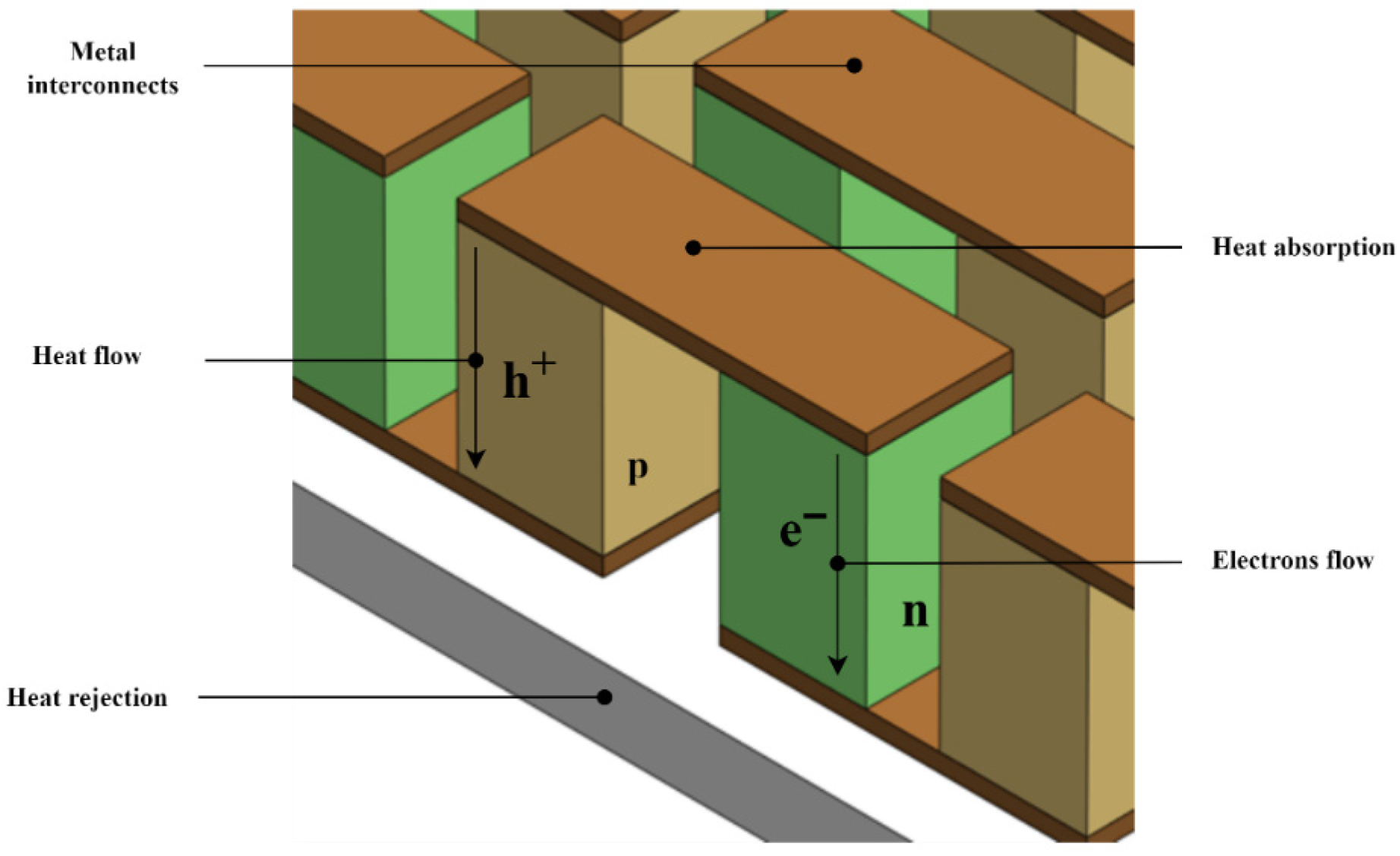
Thermoelectric modules (TEMs) are solid-state devices based on semiconductor materials designed to perform the direct conversion between thermal and electrical energy through two primary phenomena: the Seebeck effect and the Peltier effect. Structurally, a TEM consists of multiple thermocouples composed of p-type and n-type elements, which are electrically interconnected in series and thermally in parallel (Figure 1) [7]. The elements are bonded to ceramic plates that ensure efficient heat transfer and the mechanical integrity of the module [11].

2.1. Seebeck Effect

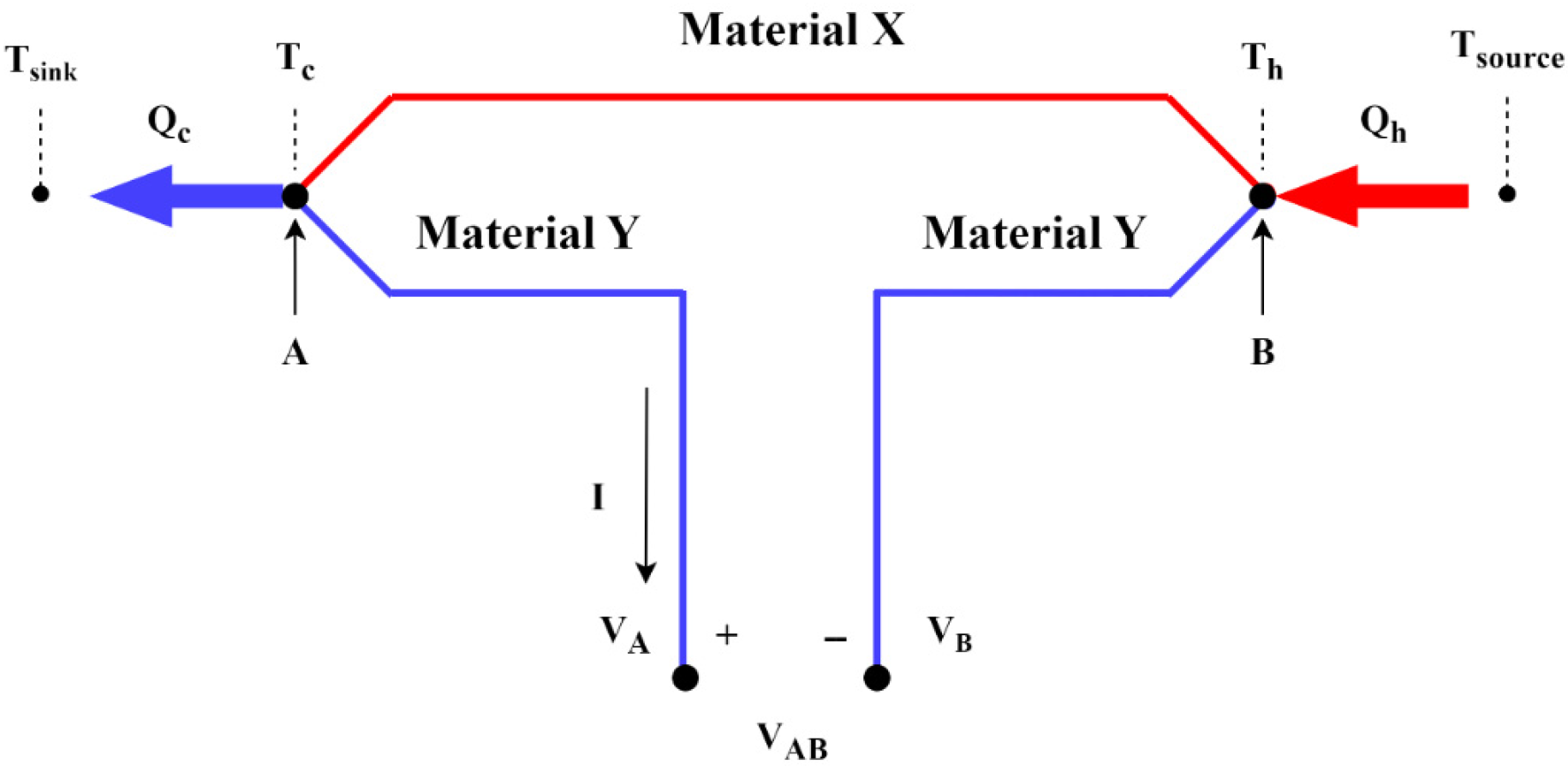
Discovered in 1821, this phenomenon serves as the operational principle for thermoelectric generators (TEGs). It manifests when a temperature difference ( T   =   T H     T C ) between the junctions of dissimilar materials induces an electromotive force (EMF) (Figure 2) [11]. The generated voltage ( V ) is directly proportional to the thermal gradient:
V = α · T
where α is the Seebeck coefficient. For the analytical purposes of this review, this parameter is critical, as it determines the capacity of the material to convert low-enthalpy waste heat into useful electrical energy. Therefore, the selection of the appropriate thermoelectric material is crucial for optimizing device performance and maximizing energy conversion efficiency [13]. Table 1 presents a consolidation of the most commonly used semiconductor materials in commercial TEMs, along with their respective typical Seebeck coefficient values.

2.2. Peltier Effect

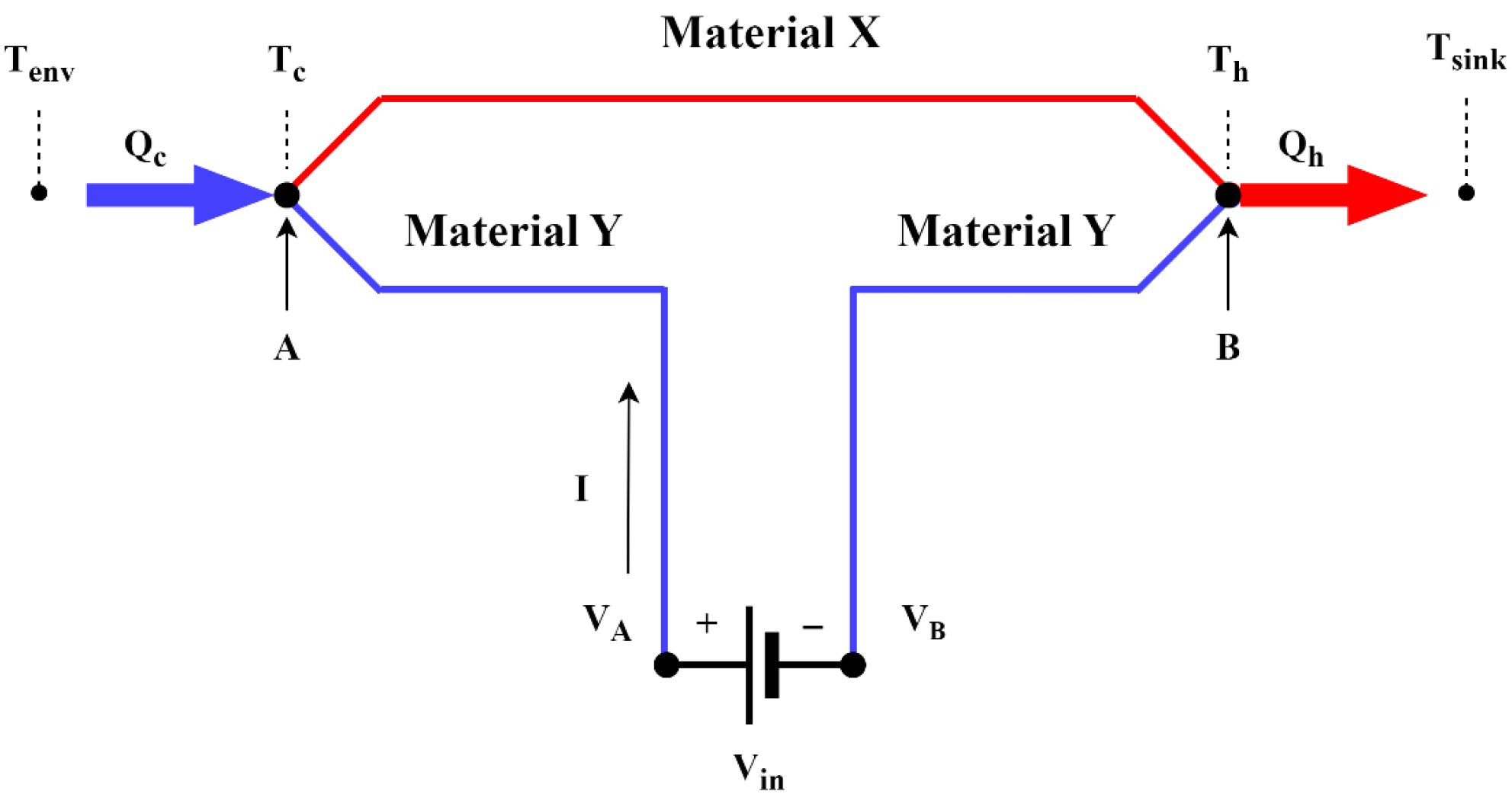
The Peltier effect is the inverse phenomenon of the Seebeck effect and constitutes the basis for thermoelectric coolers (TECs). When an electric current ( I ) is applied, a temperature differential is generated between the faces of the modules, enabling heat transport ( Q ) (Figure 3):
Q P = π I
Q P = ( α T ) I
where π is the Peltier coefficient. In various hybrid system integrations, such as PV-TEG, this effect is fundamental for the active thermal management of solar cells, enabling the stabilization of their operating temperature and preventing a decrease in their efficiency [14,15,16].

2.3. Mathematical Modeling of Performance

To conduct a quantitative synthesis of the applications discussed in this work, it is necessary to define the performance metrics that link material properties to energy conversion.

2.3.1. Output Power and Conversion Efficiency

The electrical power generated ( P ) by a thermoelectric module depends on the thermal gradient between the hot side ( T H ) and the cold side ( T C ), as well as the internal resistance of the device ( R i n ) and the external load resistance ( R L ). It is expressed as:
P = I 2 R L
P = α · T R i n + R L 2 R L
where α is the Seebeck coefficient of the module, and T = T H T L . The maximum power is achieved under the impedance matching condition ( R L = R i n ).

2.3.2. Maximum Thermal Efficiency

The efficiency ( η ) relates the generated electrical power to the heat absorbed at the hot side ( Q H ). It is limited by the Carnot efficiency and the figure of merit ( Z T ) of the material:
η = T H T c T H 1 + Z T a v g 1 1 + Z T a v g + T c T H
where T a v g is the average temperature of the system, T a v g = ( T H + T C ) / 2 . This equation is fundamental for determining whether the values reported in the literature approach theoretical limits, or if significant thermal losses exist due to contact resistance.

2.4. Heat Flow Model

The net heat flow at the hot side ( Q H ) and the cold side ( Q C ) accounts for thermal conduction ( K ), charge carrier transport, and the heat dissipated by the Joule effect ( R i n I 2 ):
Q H = α I T H + K T H T C 1 2 I 2 R i n
Q C = α I T H + K T H T C + 1 2 I 2 R i n
where K ( T H T C ) represents the heat from thermal conduction and where K is the total thermal conductance of the module ( W / K   ). This term follows the law of Fourier and represents the energy loss that passes through the material without being converted into electricity.
The term 1 2 I 2 R i n represents the dissipation due to Joule heating. It is a critical point in the analysis since it is based on the assumption that the heat generated by the internal electrical resistance ( R i n ) is distributed equally (50%) toward both faces of the module.

3. Applications of Thermoelectric Modules (TEMs)

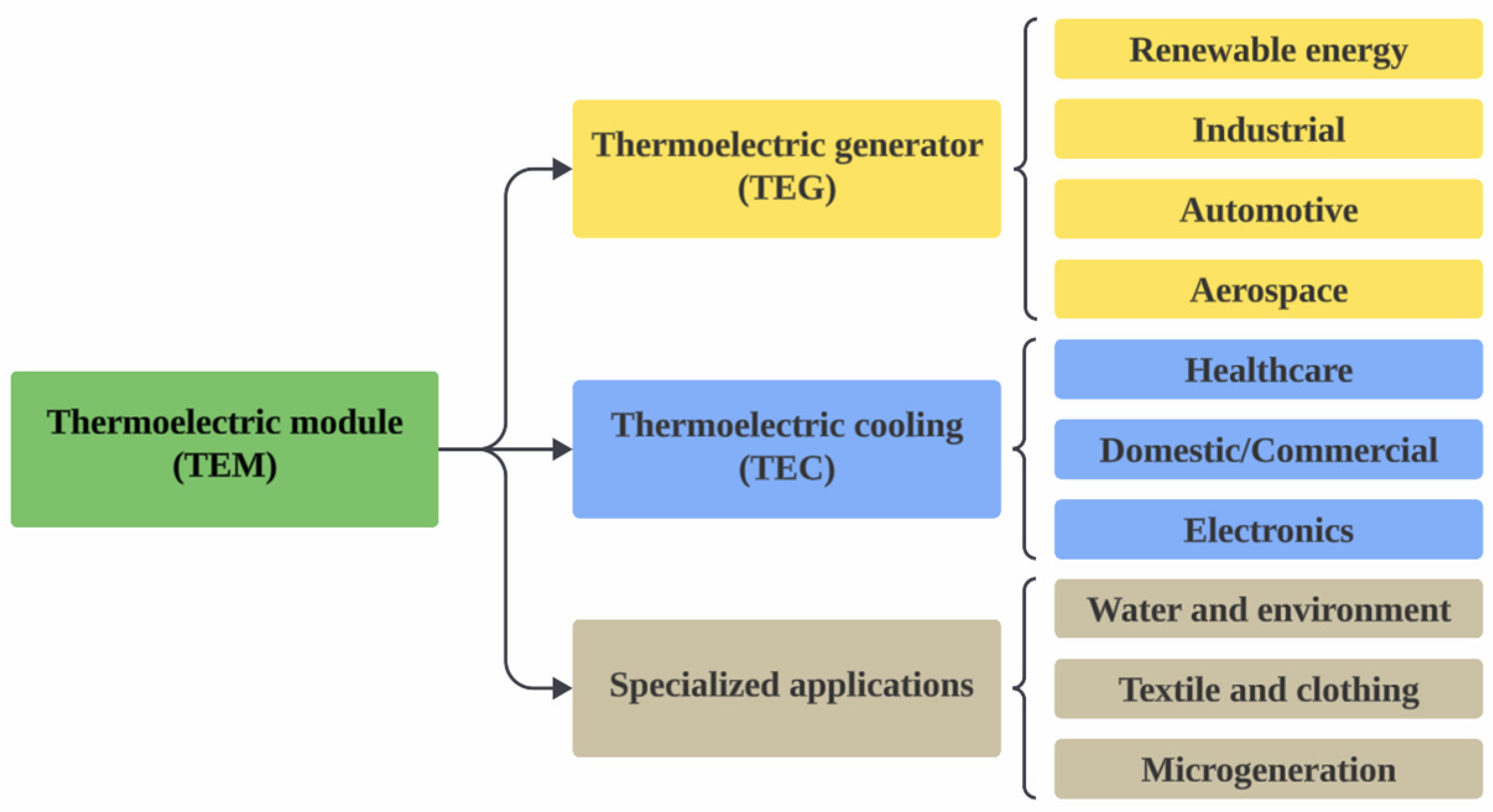
Thermoelectric modules (TEMs) play an essential role in various applications through their two configurations: thermoelectric generators (TEGs) and thermoelectric coolers (TECs) [17,18]. These technologies adapt to multiple scenarios, ranging from waste heat recovery in industries to critical cooling in electronics and medicine and even space applications, as shown in Figure 4.
TEGs enable the valorization of waste heat through its direct conversion into electrical energy, optimizing the efficiency of both conventional and renewable thermal systems. Meanwhile, TECs provide high-precision temperature control, which is critical for the stability of electronic and electrochemical components under variable load conditions [19]. The following section details the technical contribution of TEGs to operational sustainability in industrial and experimental configurations.

3.1. Thermoelectric Generators (TEGs or Seebeck)

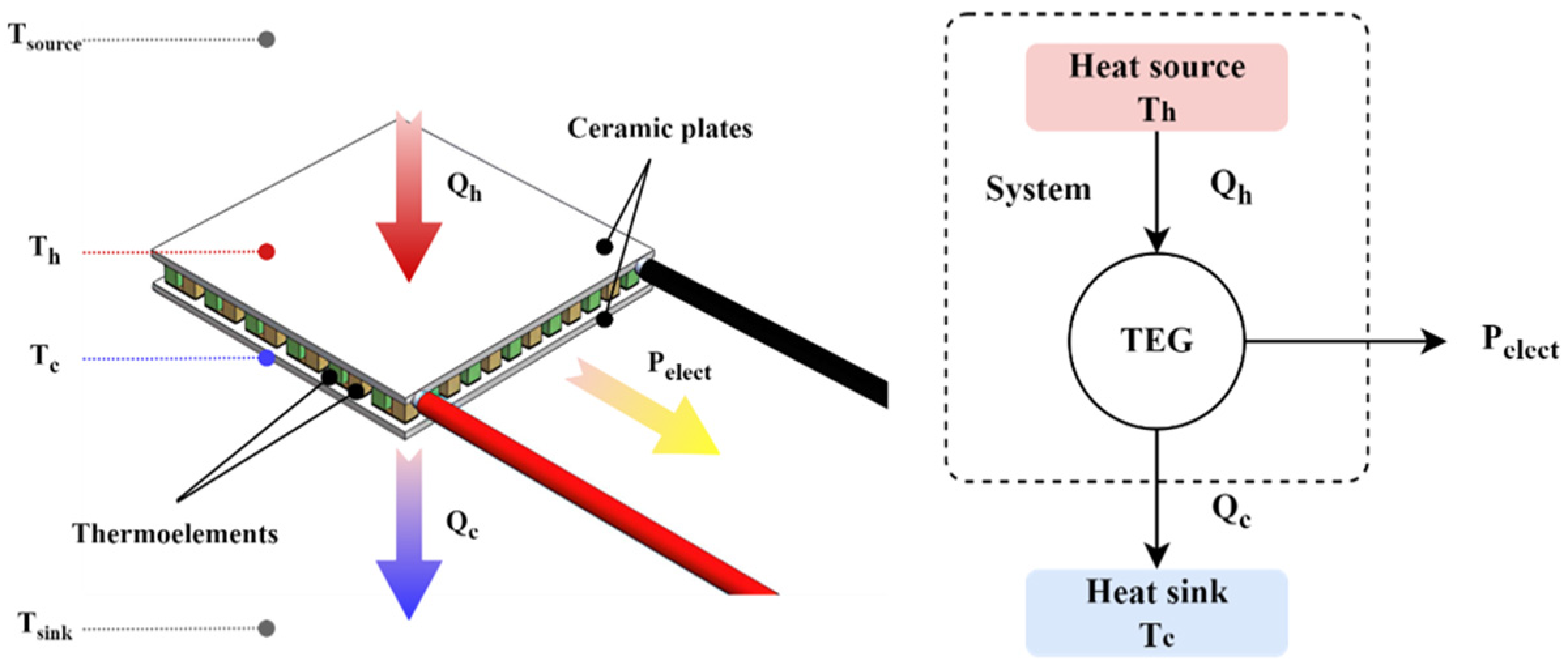
Thermoelectric generators (TEGs) operate as solid-state thermal machines that convert a heat flow directly into electrical power through the Seebeck effect, eliminating the intermediate stages of mechanical energy and the use of working fluids typical of Rankine cycles or combustion engines. Unlike rotating machinery, TEGs harness the flow of charge carriers (electrons and holes) through semiconductor materials to transport thermal energy and transform it into an electrical potential (Figure 5). These devices are thermodynamically conceptualized as engines operating between two reservoirs, which facilitates their integration into heat exchange surfaces for waste energy recovery. This capability positions them as a strategic complementary technology in industrial applications where the scale or mechanical complexity of conventional turbines is unfeasible, allowing for an incremental improvement in the overall efficiency of thermal systems.
In the aerospace sector, TEGs are employed in radioisotope thermoelectric generators (RTGs), where the absence of moving parts and high operational reliability are critical for missions in vacuum environments and low solar radiation [20]. In the industrial field, these devices facilitate distributed electrical generation through waste heat recovery in internal combustion engines and thermal processes, allowing the powering of auxiliary systems and reducing fuel consumption by optimizing the energy balance [21,22]. Likewise, in sustainable architecture, TEGs are integrated into building thermal management systems to capture residual heat flows, contributing to nearly zero-energy building (nZEB) standards. These applications demonstrate the capability of TEGs to improve systemic efficiency by converting thermal gradients into useful electrical energy under diverse operating conditions [23].

3.2. Thermoelectric Coolers (TECs or Peltier)

Thermoelectric coolers (TECs) are solid-state devices that operate under the Peltier effect for active heat transfer. By applying an electric current, charge carriers transport thermal energy from one side of the module to the other, enabling the cooling of specific surfaces or volumes without the use of chemical refrigerants or moving parts [24,25].
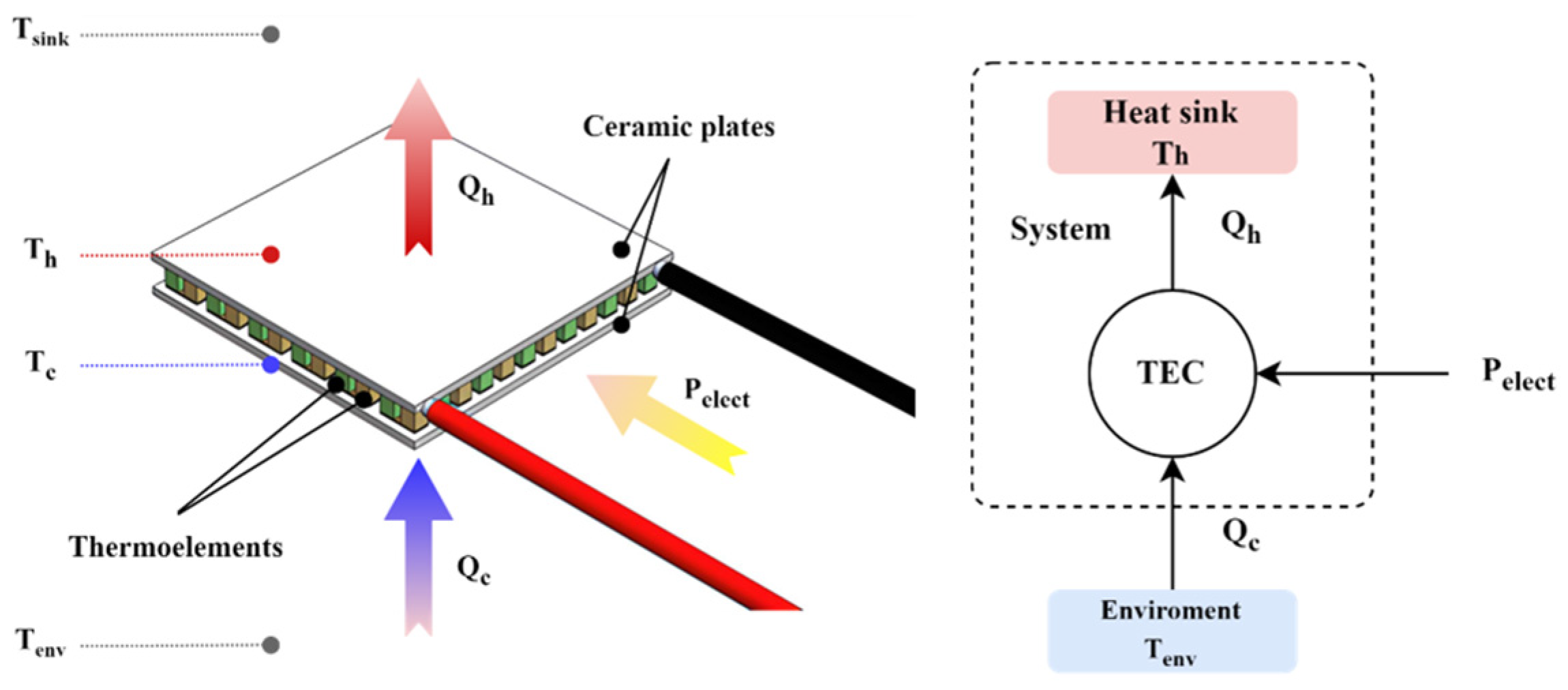
From a thermodynamic perspective, TECs behave as heat pumps (Figure 6). Their performance is quantified by the coefficient of performance ( C O P ), which relates the heat extracted from the cold side ( Q C ) to the supplied electrical power ( W ):
C O P = Q C W
The maximum C O P is limited by the operating temperatures ( T H and T C ) and the figure of merit ( Z T ) of the material [26]. The dependence on Z T is critical, because a high value not only reduces losses from reverse thermal conduction ( κ ) but also minimizes Joule heating, allowing for increased temperature differentials ( T ). Therefore, the optimization of materials with high Z T is the central axis for improving the competitiveness of TECs against conventional vapor compression cycles in precision thermal management applications [27].

4. Global Analysis and Trends of TEMs in Renewable Energy

The decarbonization of the global energy matrix has driven the integration of thermoelectric generators (TEGs) as a solid-state solution for energy conversion. Due to the Seebeck effect, these devices are technically ideal for waste heat recovery (WHR) and integration into low-to-medium enthalpy systems (<500 °C) [28]. In these ranges, conventional thermodynamic cycle technologies, such as the organic Rankine cycle (ORC), lose economic and operational viability due to mechanical complexity and maintenance costs.
The implementation of TEGs has shown a growing trend in two critical areas: solar thermoelectric generators (STEGs) and low-enthalpy geothermal exploitation. Unlike turbines, the modular nature of TEGs allows for linear scalability and passive operation—factors that compensate for their lower conversion efficiency (typically <10%) compared to rotating systems in small-scale or distributed generation applications.
However, global trend analysis reveals that although the literature highlights their “maintenance-free” nature, the durability of thermoelectric materials under extreme thermal cycling and the degradation of metallic contacts remain critical barriers to mass industrial adoption. This study evaluates these trends through a comparison of performance metrics ( α , P m a x ) and the technology readiness level of each integration.
The literature identification was based on a structured systematic review, primarily focused on publications from the last 10 years to ensure technological currency. However, foundational literature was selectively included due to its critical theoretical relevance. The search strategy was conducted across MDPI, Springer, Elsevier, and IEEE databases, utilizing Boolean operators and specific keywords: ‘TEG’, ‘experimental’, ‘renewable energy’, and ‘application’. This methodology ensured the inclusion of studies with practical validation and quantitative data, enabling a precise synthesis between classical foundations and the contemporary state of the art.

4.1. Ocean Thermal Energy Conversion (OTEC)

One of the most promising applications for thermoelectric generators (TEGs) in marine environments is ocean thermal energy conversion (OTEC). The OTEC principle is based on harnessing the natural thermal gradient that exists between the warm surface layer and the cold deep waters of the ocean. Given the low temperature differential (typically T   20–25 °C), thermoelectric generation (TEG) systems emerge as an attractive technological solution.
This section presents a chronological and detailed review of the current state of TEG–OTEC technology, its global research trends, and the evolution of its implementation.
The exploration of thermoelectricity in ocean environments dates back to 1979, when Jayadev et al. (USA) proposed a preliminary design for a power module based on a plate-and-fin heat exchanger using B i 2 T e 3   [29]. This pioneering design operated in the low-temperature range typical of OTEC (278 to 298 K, equivalent to 5 a 25 °C), marking the first integration of TEMs into an ocean energy system.
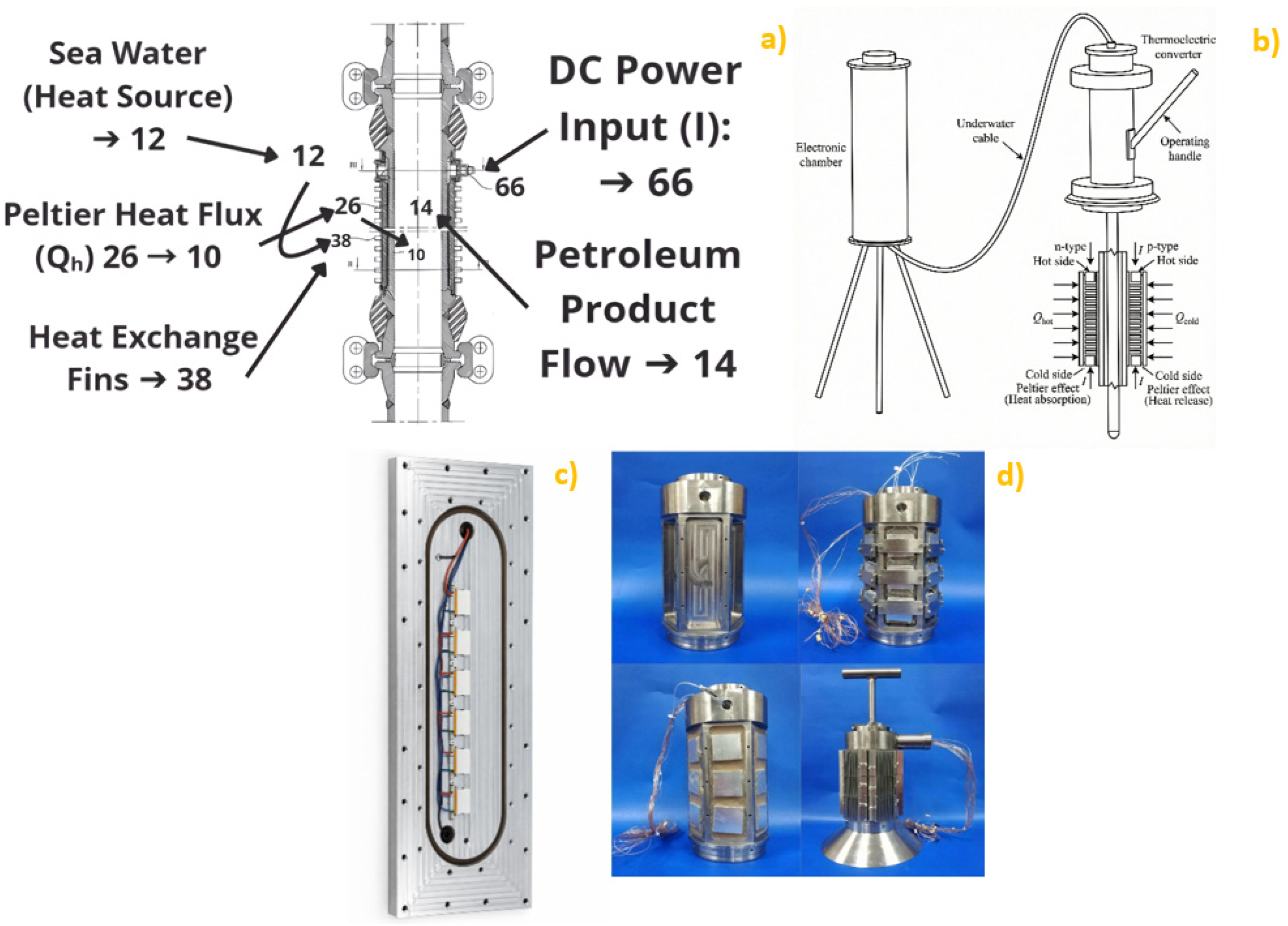
Subsequently, in 1997, Dubourdieu et al. (France) conducted crucial tests for the selection and assembly of underwater modules (Figure 7a). Their prototype, a MELCOR generator, demonstrated a capacity of 100 W with a 70 V output using a 12 × 20 module array operating at higher temperatures (50 to 120 °C). This work represented a significant advancement toward the design of higher-power subsea systems [30].
In 2002, Von Der Weid et al. (Brazil) contributed with laboratory tests focused on the scalability and performance of Peltier cells (used as generators) connected in parallel. Their results showed the generation of 1 W with eight cells and 10 W with 100 cells under a T of 50 °C. This information was key to validating the efficiency of arrays with a larger number of thermocouples [34].
A decade later, research diversified toward the analysis of high-enthalpy sources; in 2016, Y. Xie et al. (China) designed a thermoelectric converter activated by hydrothermal vents to power underwater lamps (Figure 7b). This system, based on B i 2 T e 3 generated between 2.6 and 3.9 W, operating in the range of 95 to 222 °C [31].
During that same year, hybridization and scaling activities were observed, consolidating with the conceptual proposal by Ekber Özdemir et al. (Turkey), who combined solar and marine energy. Their predictive design, which employed seawater cooling, estimated a generation capacity of up to 500 kW [35], exploring the synergy between oceanic and solar thermal sources.
In the same line of operational challenges, in 2016, Gongyue Tang et al. (Singapore) investigated the impact of biofouling on TEG performance. Using ( B i 0.5 S b 0.5 ) 2 T e 3   modules in the 5 to 25 °C range, their study was crucial for understanding durability and maintenance requirements in oceanic environments [36]. Advancing in robustness, Keren Xie et al. (China) built a prototype in 2018 to test performance under variable environmental conditions (Figure 7c), generating 0.92 W with B i 2 T e 3 modules and operating across a wide range of 5 to 200 °C [32]. The effort to achieve stable, higher-power systems continued in 2020, where Xie et al. (China) developed a hydrothermal device with waterproof B i 2 T e 3 EG HZ-2 modules that stably generated 5.5 W in harsh environments (Figure 7d) [33].
Complementing the hybridization trend, in 2020, Khanmohammadi et al. (Vietnam) proposed an OTEC system combined with solar collectors, achieving a 6.27% improvement in exergetic efficiency and generating an additional 12.64 kW [37]. Finally, recent optimization (Chung and Wu, 2024) has focused on the design of optimized heat exchangers and B i 2 T e 3 modules. Their system, operating at low T (4 to 25 °C), demonstrated a 22.92% increase in output power and an overall efficiency improvement of 38.2% [38].
These recent results are compiled in Table 2, which shows the evolution of system designs to exploit the potential of TEG–OTEC. Table 2 synthesizes and quantitatively compares the reported performance of thermoelectric modules (TEG) proposed for OTEC-type applications, including module material/technology, thermal differential (ΔT), efficiency (η), power, and the study focus (simulation/experimental).

4.2. Biomass and Waste Heat Recovery

Waste heat recovery (WHR) and energy conversion from biomass represent cutting-edge strategies for driving efficiency and energy sustainability. Unlike the small thermal gradient’s characteristic of OTEC, biomass conversion processes (combustion and gasification) and associated industrial effluents typically generate a high temperature differential, which can exceed 600 °C. This allows TEGs to generate significantly higher power (x–y W).
Biofuels, derived from crops such as soybean, corn, sugarcane, or organic waste, represent a key sustainable alternative. According to the International Renewable Energy Agency (IRENA), biomass contributes approximately 8% of the global primary energy supply, with the potential to reduce GHG emissions by up to 60% compared to coal [39]. The United Nations Environment Program (UNEP) highlights that biogas can mitigate methane emissions by up to 70% when captured and utilized. For instance, biodiesel can decrease carbon dioxide emissions by 78% compared to conventional diesel [40].
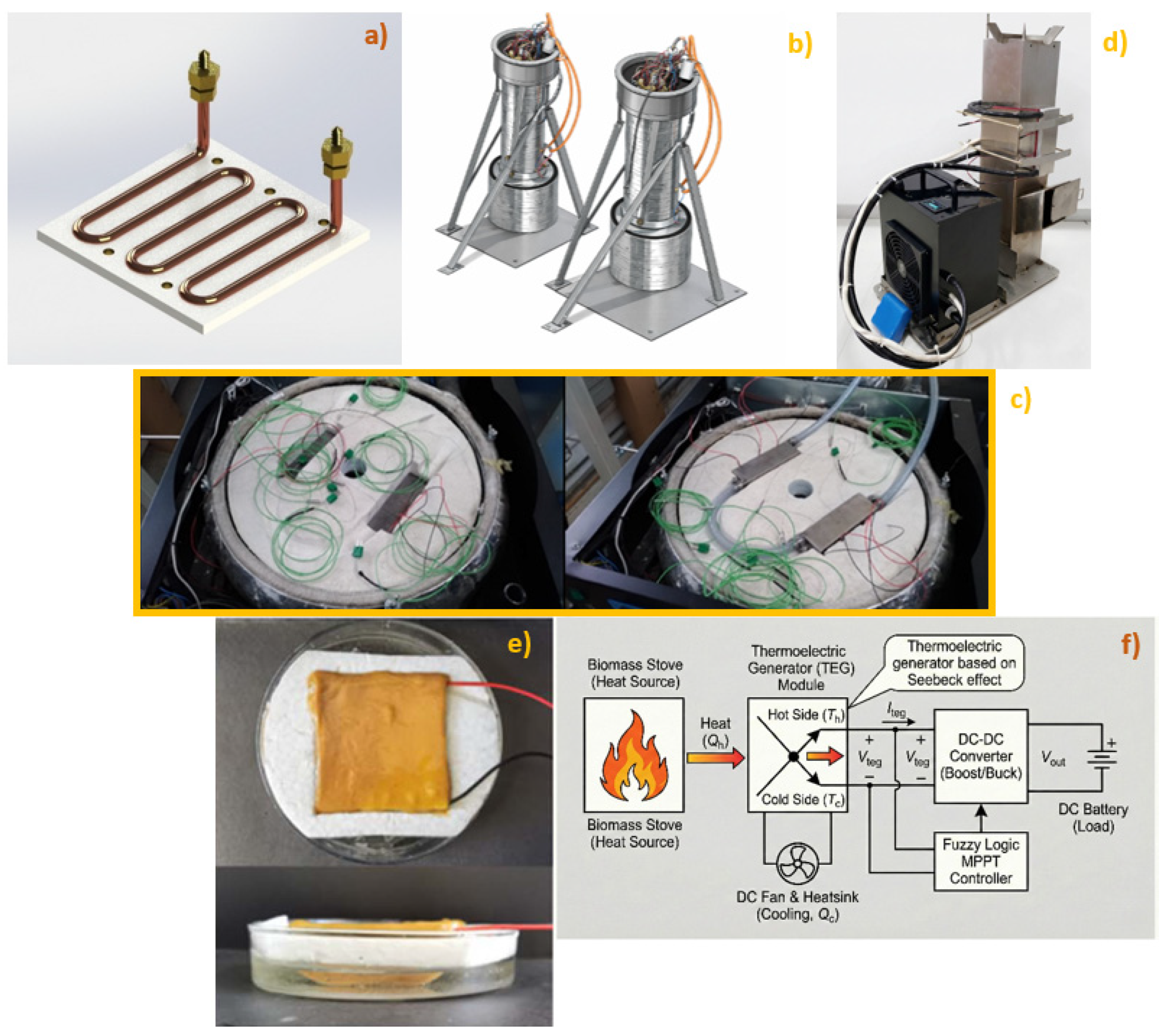
To capitalize on the high-enthalpy waste heat generated during the combustion or gasification of these biofuels, thermoelectric generators (TEGs) have been successfully integrated to improve overall cogeneration efficiency. For example, Li et al. [41] demonstrated that a portable biomass-based system (BCP-TEG) reached a maximum electrical power of 23.4 W with a load resistance of 14 Ω, significantly surpassing the performance of other similar devices (5.0–2.9 W), which underscores the potential of this technology in distributed generation (Figure 8d).
The integration of TEGs into biomass systems is an evolving technology that has demonstrated growing potential for electricity generation from waste heat. Experimental studies have focused on optimizing the thermal interface and materials for high-temperature environments, as detailed below.
In 2007, Lertsatitthanakorn (Thailand) conducted one of the pioneering studies, implementing B i 2 T e 3 modules on the side wall of a biomass stove. Operating in the range of 150 to 240 °C, the system achieved a power output of 2.4 W and a conversion efficiency of 3.2% [47]. Later, in 2010, Champier et al. (France) developed a TEG system focused on distributed generation (DG) for rural areas. The system operated between 22 and 200 °C, reaching 6 W with an efficiency of 2% under controlled conditions [48]. With this background, in 2015, Barma et al. (Bangladesh) investigated energy recovery in a medium-enthalpy biomass system (250 to 300 °C) using HZ-2 modules [28]. In parallel, Ma et al. (China) advanced process optimization by adding a catalytic reactor to a biomass gasifier (Figure 8a). This high-temperature design (350 to 500 °C) achieved 6.1 W with a remarkable power density of 193.1 W / m 2 [42].
During 2017, Angeline et al. (India) demonstrated modular scalability by implementing hybrid TEGs ( B i 2 T e 3 P b T e ) in remote gas pipelines. Operating between 250 and 350 °C, the system achieved an efficiency of 2.5%, generating 8.94 W per module and 27.38 W with a three-module array [49]. In 2020, Goswami and Das (India) focused on heat recovery from biomass engines (Figure 8b), a crucial application environment, achieving an efficiency of 2.218% and a power output of 1.033 W [43]. By 2023, Usón et al. (Spain) demonstrated a significant advance in power at the boiler scale (Figure 8c), using pine pellets and agropellets. This system, featuring six TEG1-PB-12611-6.0 modules, reported high efficiency (4% to 7%) and a power output of 60 W, with an estimated capacity of 345 W for the complete system [44], reinforcing the viability of distributed generation (DG).
Only a year later, Wang et al. (China) developed an evaporation system driven by solar energy and biomass (Figure 8e), operating within a low-temperature range (3.8 to 14.9 °C) with a high evaporation rate (1.07 k g m 2 / h ) [45]. In parallel, Pandit et al. (India) consolidated designs for rural stoves (Figure 8f), achieving 6.25 W with an efficiency of 2.67% within a range of 38 to 250 °C [46].
The chronological overview highlights the sustained evolution of TEG–biomass systems, moving from low-power designs (2.4 W in 2007) to high-capacity modular systems (estimated 345 W in 2023) and integrated solutions that maximize exergetic efficiency. This trajectory underscores the potential of TEGs to significantly improve energy efficiency and promote sustainable distributed generation; the data are compiled in Table 3.

4.3. Geothermal Energy

Geothermal energy harnesses the internal heat of Earth to generate electricity and provide heating by extracting steam or hot water from underground reservoirs. This renewable resource relies on the temperature gradient found within geothermal fields. For power generation applications, a gradient exceeding 150 °C is required [50]. Underground areas with high heat accumulation, known as thermal pits, are especially valuable in volcanic or tectonically active zones, as they provide ideal conditions for efficient and sustainable geothermal energy generation. Below, the research works of various authors are mentioned in chronological order, highlighting significant advances in the coupling of thermoelectric modules with systems utilizing geothermal energy.
Beginning in 2012, Suter et al. (Switzerland) developed a geothermal heat conversion system using thermoelectric stacks with Bi–Te modules and A l 2 O 3 for the heat transfer. The system operated with hot water at temperatures of 40–140 °C and cold water at 20–25 °C, achieving a maximum efficiency of 4.2% and ranging from 0.5% to 4.2% in heat-to-electricity conversion. Geothermal power generation reached 1 kW [51]. Later, during 2018, Zare and Palideh (Iran) utilized low- and medium-temperature geothermal energy sources, integrating bismuth telluride ( B i 2 T e 3 ) TEG modules to implement them into the Kalina cycle [52].
By 2019, Rostamnejad Takleh and Zare developed a geothermal-driven system featuring a booster compressor and improvements to the thermoelectric generator. The system, with a generator operating at 122 °C, achieved an exergetic efficiency 18.7% higher than conventional systems, with a 49.1% improvement in energy efficiency compared to the conventional cycle [53]. In 2020, Liu et al. studied the conversion of thermal and mechanical energy in oil wells using kinetic, vibrational, and thermal energy sources. The system operated within a temperature range of 20 °C to 125 °C, generating 800 W of total system power and reaching a heat-to-electricity conversion efficiency of 1.2% [54]. During the same year, Catalán et al. (Spain) implemented TEGs in hot dry rock reservoirs (500 °C) in Timanfaya. Using a validated model (error < 8%), an annual generation of 681.53 MWh was projected. The system stands out for its scalability and zero maintenance, as it dispenses with moving parts and auxiliary consumption (Figure 9d) [55].
In 2021, Hadjiat et al. presented a system, as shown in Figure 9a, that utilizes TEC1-12706 and TMH400302055 modules to convert thermal energy from a low-enthalpy geothermal source into electricity, instead of using organic Rankine cycles (ORCs). Designed for the Hammam Righa spa in Algeria, with water at 70 °C, the system generates electricity to power an electrolysis process for hydrogen production (alkaline electrolyzer). Simulations with TRNSYS indicate a production of 0.5652 kg of hydrogen per square meter of TEG per year, highlighting the efficiency of TEGs in producing hydrogen from low-temperature geothermal sources [56].
In 2022, Alegria et al. (Spain) took advantage of shallow hot dry rock (HDR) fields with geothermal anomalies to generate energy using a two-phase closed thermosyphon for heat absorption. The system operated in a range of 108 °C to 160 °C, achieving an efficiency of 4.06% and generating a maximum power of 36 W; this system is shown in Figure 9b [57]. Later, in 2023, H. Xie et al. (China) designed a modular TEG system for medium-to-low temperature geothermal energy applications, as shown in Figure 9c. It consists of 32 TEG units, each containing 24 B i 2 T e 3 based thermoelectric modules. The system operated with hot water at 91 °C and cold water at 15 °C, reaching a generation efficiency of 1.81% and a maximum power of 3188.6 W, as the water temperature increased [58]. During 2024, Qiao et al. developed an innovative geothermal well technology for power generation. Using B i 2 T e 3 modules, they achieved a net power of 228.06 kW with an efficiency ranging from 6% to 12% depending on the configuration [59]. Finally, in 2024, Cetin et al. (Turkey) proposed a hybrid geothermal-thermoelectric system, as shown in Figure 9d, using intelligent models to optimize energy production. The TEG modules operated at temperatures between 20 and 100 °C, improving the accuracy of energy predictions by 98.7% and reducing inaccurate predictions by 46–96% [60]. Table 4 shows data for geothermal systems integrated with thermoelectric modules.

4.4. Hybrid Photovoltaic-Thermoelectric (PV-TEG) Systems

Solar photovoltaic (PV) energy constitutes the leading technology for the direct conversion of solar radiation into electricity. However, its efficiency is penalized by the increase in the operating temperature of the cells. The integration of thermoelectric modules (TEMs), whether in the generator mode (TEG) to recover waste heat or in the cooling mode (TEC) via the Peltier effect, offers an active thermal management strategy that promises to optimize the overall system performance [61]. Recently, the use of spray cooling technologies has proven effective in solar thermoelectric concentration (STEG) systems, optimizing the refrigerant mass flow and the concentration ratio to maximize power density [62].
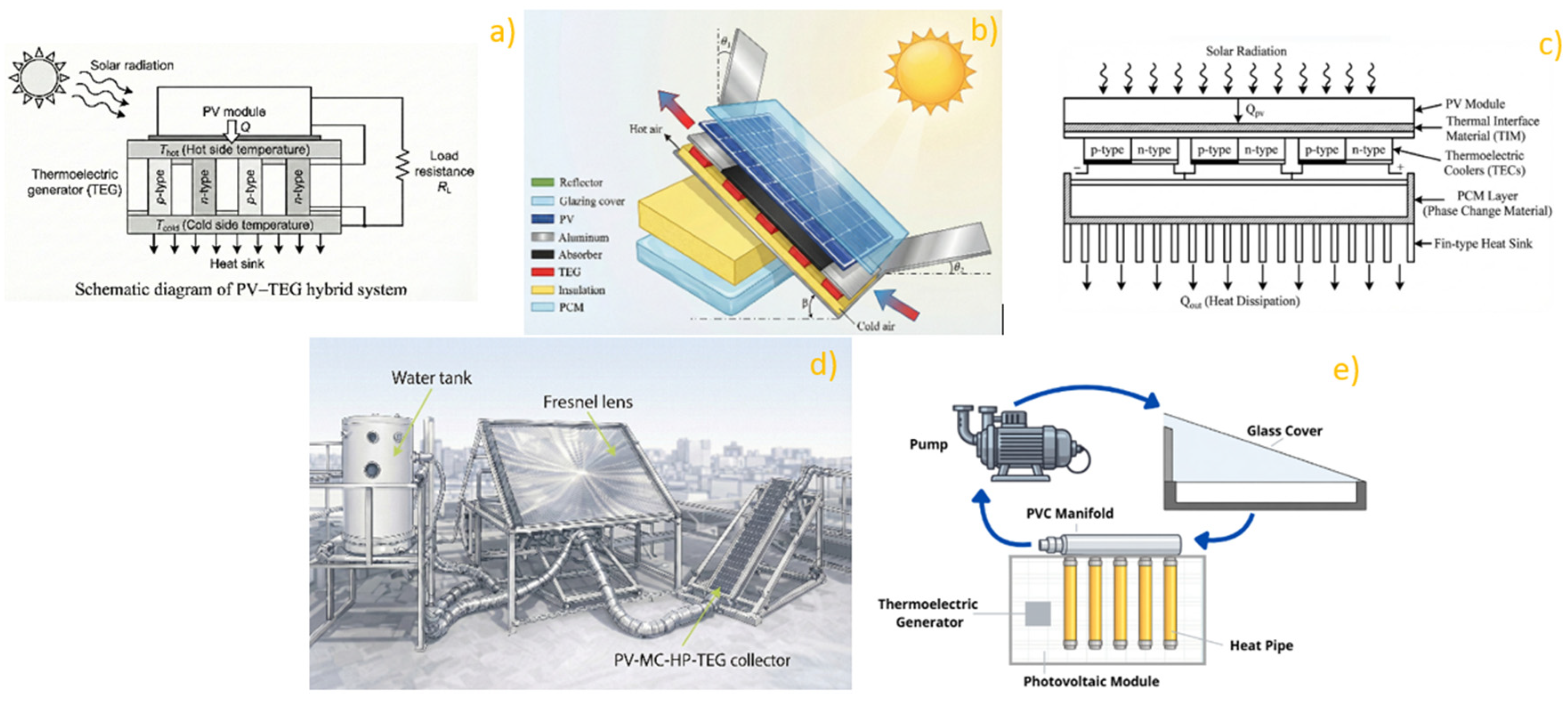
In 2018, Dimri et al. (India) investigated the integration of TEC modules at the base of opaque photovoltaic collectors (PV-TEC) (Figure 10a). By comparing partial and full coverage configurations, they determined that the fully covered design increases electrical efficiency by 4.46% to 6.23% through optimized thermal management of the panel [63].
In 2021, Tiwari et al. (Saudi Arabia) proposed a thermal model for flat-plate collectors (PV-TE-FPC) using semi-transparent PET cells coupled to water flow tubes (Figure 10b) [64]. Simultaneously, Naderi et al. (Iran) developed a PV-PCM-TEG system. Although the inclusion of phase change materials (PCMs) increased solar cell efficiency by 1.38%, the TEG efficiency decreased drastically (from 4.32% to 0.61%), highlighting the complexity of thermal coupling between components.
In 2022, Farhani et al. (Morocco) evaluated a B i 2 T e 3 prototype operating at 52 °C with cell efficiency varying between 5% and 20%. Continuing these advances in India, Singh et al. integrated TEC-PCM systems with heat sinks (Figure 10c), achieving a 5.73% increase in panel efficiency due to the thermal stabilization provided by the PCMs [68].
Continuing with these advances in India, Singh et al. integrated the TEC-PCM systems with heat sinks (Figure 10c), achieving a 5.73% increase in panel efficiency due to the thermal stabilization provided by the PCMs [65]. In 2023, working on cogeneration and distillation, Wen et al. (China) presented a PV-MCHP-TEG experimental platform (Figure 10d) that reached a peak thermal efficiency of 93.26% and an electrical generation of 8.33 W. For their part, Shoeibi et al. (Figure 10e) integrated TEGs into a modified solar still. The system not only generated a maximum power of 75 W but also achieved a distilled water productivity of 1162 mL / m 2 , with competitive costs of 0.147 $/kWh, validating the viability of polygeneration [67]. Additionally, in the same year, Lv et al. (China) employed hybrid high-concentration photovoltaic (HCPV) systems, successfully maintaining the cell temperature below 329 K (56 °C) with an experimental efficiency near 40% [69]. In Iran, Fallah Kohan et al. performed a comparative numerical analysis between various modules (TEG71, 127, 49), identifying that the C-49 CPV-TEG system offers the best relative performance, achieving net improvements of 0.57% in terms of total system generation [70].
Finally, Mahmoud Al Shurafa et al. developed a thermal resistance-based model for B i 2 T e 3 modules, obtaining an efficiency of 1.82% through forced water cooling [71]. The data for these applications are compiled in Table 5.

4.5. Solar Thermal Systems

Solar thermal systems transform solar radiation into thermal energy for heating fluids, direct use, or electricity generation in concentrating plants. The integration of thermoelectric modules into these systems presents itself as a promising hybrid solution to mitigate the intermittency of renewable sources.
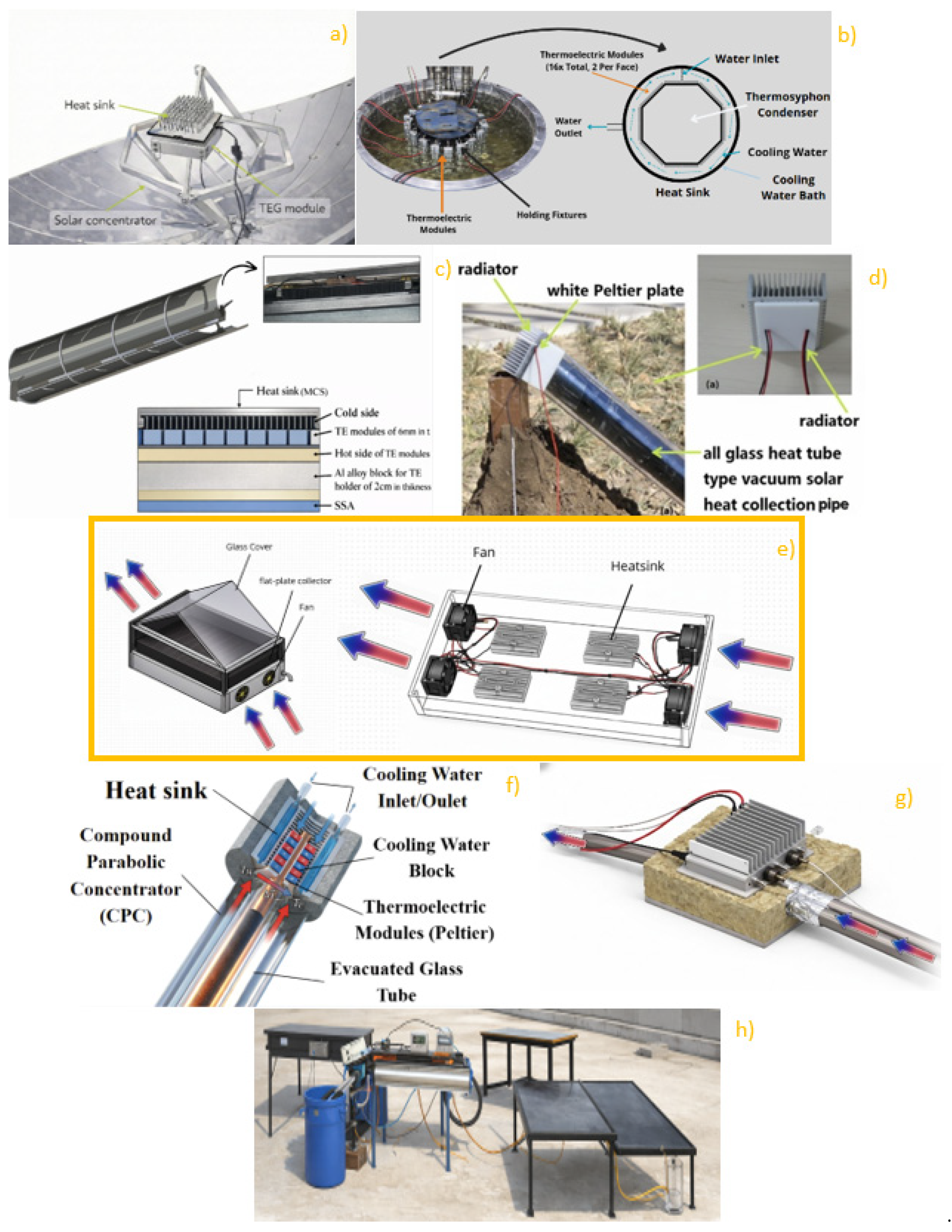
A significant breakthrough is the development of bidirectional thermoelectric generators that employ thermal storage to ensure energy production during nighttime periods, leveraging the thermal gradient between the stored heat and the environment [73]. Fundamental research, such as that by Freire et al. (2021), underscores that the efficiency of devices based on the Peltier effect increases proportionally to the thermal gradient, reporting efficiencies of 2% with T   of 55 °C. These findings emphasize the need to optimize heat management to maximize performance in photothermal applications [74]. The most prominent advances in the integration of thermoelectric modules in solar thermal systems are described below. Starting in 2010, Amatya et al. analyzed solar thermoelectric generators (STGs) (Figure 11a) using bismuth telluride ( B i 2 T e 3 ) modules and advanced materials such as ErAs:(InGaAs). Under a concentration of 669 suns, commercial modules reached a conversion efficiency of 3% (1.8 W), while next-generation materials were projected to reach efficiencies of up to 5.6% at 1209 suns [75].
Subsequently, in 2011, Singh et al. proposed a system that combines a gravity-assisted thermosyphon with thermoelectric modules (Figure 11b) to extract heat from solar ponds. By taking advantage of temperature differentials of 40–60 °C, the system demonstrated the ability to generate electricity continuously, even in the absence of direct solar radiation, thanks to the thermal inertia of the pond [76].
In later years, specifically in 2015 within the field of cogeneration, Miao et al. developed a prototype (Figure 11c) with B i 2 T e 3 modules integrated into a solar absorber. The system operated at a hot-side temperature of 152 °C, reaching a solar-to-electric efficiency of 1.14% (18 W) while simultaneously producing hot water at a rate of 2 L/min [77].
Simultaneously, Zhang et al. designed a device (Figure 11d) to power low-power sensors (4.7 mW, 4.41 V) by recycling solar radiation and ambient cooling in vacuum tubes [78].
Just two years later, in 2017, Rahbar et al. integrated thermoelectric modules into a double-slope solar still (Figure 11e) to maintain distilled water production during the night, achieving a maximum exergetic efficiency of 25% [79]. Meanwhile, Lv et al. optimized the contact thermal resistance in an STEG system (Figure 11f), reaching an efficiency of 1.956% and an instantaneous power of 0.659 W under irradiation exceeding 700 W / m 2 [80].
During 2018, Atalay et al. evaluated the performance of the TEG1-12611-6.0 module under different inclination angles (Figure 11g) [81]. In 2021, Montero et al. reported a significant advance in desert environments in Chile, where using a differential of 120 °C they reached an efficiency of 7% with an estimated annual production of 5735 Wh [82]. In 2022, Al-Tahaineh and AlEssa validated the use of flexible TEGs coupled to heat exchangers, generating 1.03 W under steady-state conditions of 60 °C [83].
With these advances, in 2023, Patel et al. in India optimized a solar still (Figure 11h) using TEG modules, increasing energy efficiency by 23.73% and doubling productivity during hours without sun [84]. Finally, Jiang in China applied TEC1-12706 modules in a thermoelectric distiller for alcohol production, achieving a rate of 15.8 g/min whit a T   of just 20 °C [85]. Table 6 summarizes the data for the PV systems discussed.
Figure 11. Projects developed with thermoelectric modules and solar thermal technology. (a) Solar thermoelectric micro-generator: Rendering of the structural design for micropower applications through solar harvesting. Based on Amatya and Ram., 2010 [75]. (b) Solar pond power generation: Representation of a system utilizing a combined thermosyphon and thermoelectric modules to extract energy from a solar pond. Based on Singh et al., 2011 [76]. (c) Parabolic trough concentrator co-generator: Rendering of the experimental setup featuring a parabolic trough concentrator without an evacuated tube integrated with TEG modules. Based on Miao et al., 2015 [77]. (d) Surface-to-air thermal gradient device: Rendering of the system performance based on the temperature difference between solar-irradiated surfaces and ambient air. Based on Zhang et al., 2015 [78]. (e) Double-slope solar still: Representation of a solar distiller equipped with thermoelectric heating modules for performance enhancement. Based on Rahbar et al., 2017 [79]. (f) Combined heat and power (CHP) solar system: Rendering of a high-performance solar thermoelectric system designed for simultaneous thermal and electrical energy production. Based on Lv et al., 2017 [80]. (g) System with thermosyphon and nanofluids: Rendering of a TEG configuration employing two-phase thermosyphon heat pipes and nanoparticle-enhanced fluids. Based on Atalay et al., 2018 [81]. (h) Modified solar distiller with external condenser: Representation of a single-basin solar distiller performance improved by augmenting a thermoelectric cooler as an external condenser. Based on Patel et al., 2023 [84].
Processes 14 00901 g011
Table 6. Performance of TEMs in solar thermal applications.
Author, YearCountryMaterial or TEMΔT (°C)Efficiency (η)Power (W)Type of Study
Al-Tahaineh y AlEssa, 2022 [83]JordanTEC1-1270660 °C 0.06%1.03 W (50 mod.)Simulation
Tashtoush et al., 2021 [86]Jordan-70 °C2.4–4.2%196 W (200 mod.)Simulation
Montero et al., 2023 [73]ChileTE-MOD-5W5V-40S
B i 2 T e 3
120 °C Approx4.4–5%1.75 WSimulation and experimental
Miao et al., 2015 [77]ChinaTEHP1-12656-0.3
B i 2 T e 3
122 °C1.14%18 W (6 mod.)Simulation and experimental
Amatya y Ram, 2010 [75]United StatesTG12-4
B i 2 T e 3
180 °C3%.1.8 W (2 mod.)Simulation and experimental
Lv et al., 2017 [80]ChinaTGM-199-1.4-0.8
B i 2 T e 3
24 °C1.956%.0.659 W (20 mod,)Simulation and experimental
Atalay et al., 2022 [87]TurkeyTEG1-12611-8.0
B i 2 T e 3
36.1 °C0.37%0.177 W Simulation and experimental
Atalay et al., 2018 [81]TurkeyTEG1-12611-6.0-0.85%1.425 W (4 mod.)Simulation and experimental
Zhang Zhe et al., 2015 [78] China GM-200-127-14-16 14.40 °C. 0.23% 20.43 mW Simulation and experimental
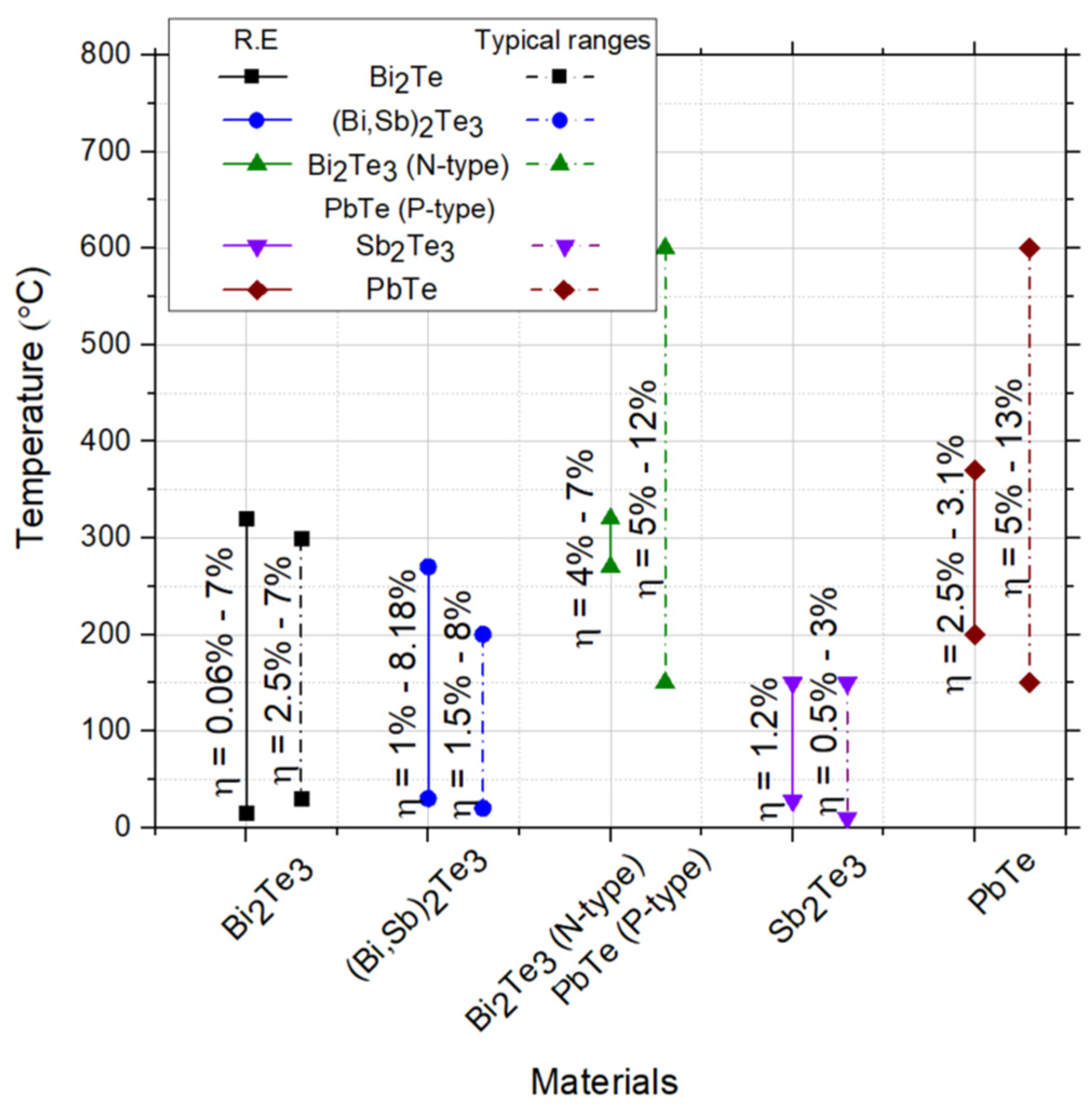
The quantitative synthesis of the literature, presented in Figure 12, reveals a direct correlation between the composition of thermoelectric materials and the technical viability of the analyzed renewable applications. Bismuth and antimony-based alloys ( B i 2 T e 3 , B i , S b 2 T e 3 , and S b 2 T e 3 ) operate predominantly within the low-temperature regime ( Δ T < 300 °C), positioning themselves as the only viable alternatives for ocean thermal energy conversion (OTEC) systems and flat-plate solar collectors (PV-TEG). However, the reported experimental data exhibit significant dispersion in efficiency ( η ), with minimum values as low as 0.06% in non-optimized conditions; such low experimental performance justifies the prevalence of studies based exclusively on numerical modeling in these sectors.
In contrast, lead telluride ( P b T e ) and hybrid configurations (e.g., B i 2 T e 3 N-type/ P b T e P-type segmentation) extend the operational range into the mid-temperature regime (up to 600 °C). This transition increases conversion efficiency to a range of 12% to 13%, reaching the critical threshold for the economic competitiveness of high-enthalpy geothermal energy and concentrated solar power (CSP) systems.
It is noteworthy that for the B i , S b 2 T e 3 family, the temperatures recorded in this review exceed the typical operational ranges found in standard literature. This discrepancy is attributed to variability in the placement of thermal sensors, as readings obtained at the heat source interface differ substantially from those taken within the cooling flow.
Finally, while bismuth alloys constitute the commercial standard for reduced gradients, P b T e acts as the necessary catalyst for high-energy-density applications, mitigating the gap between theoretical performance and experimental results in large-scale power systems.

5. Comparative Performance Analysis and Future Perspectives

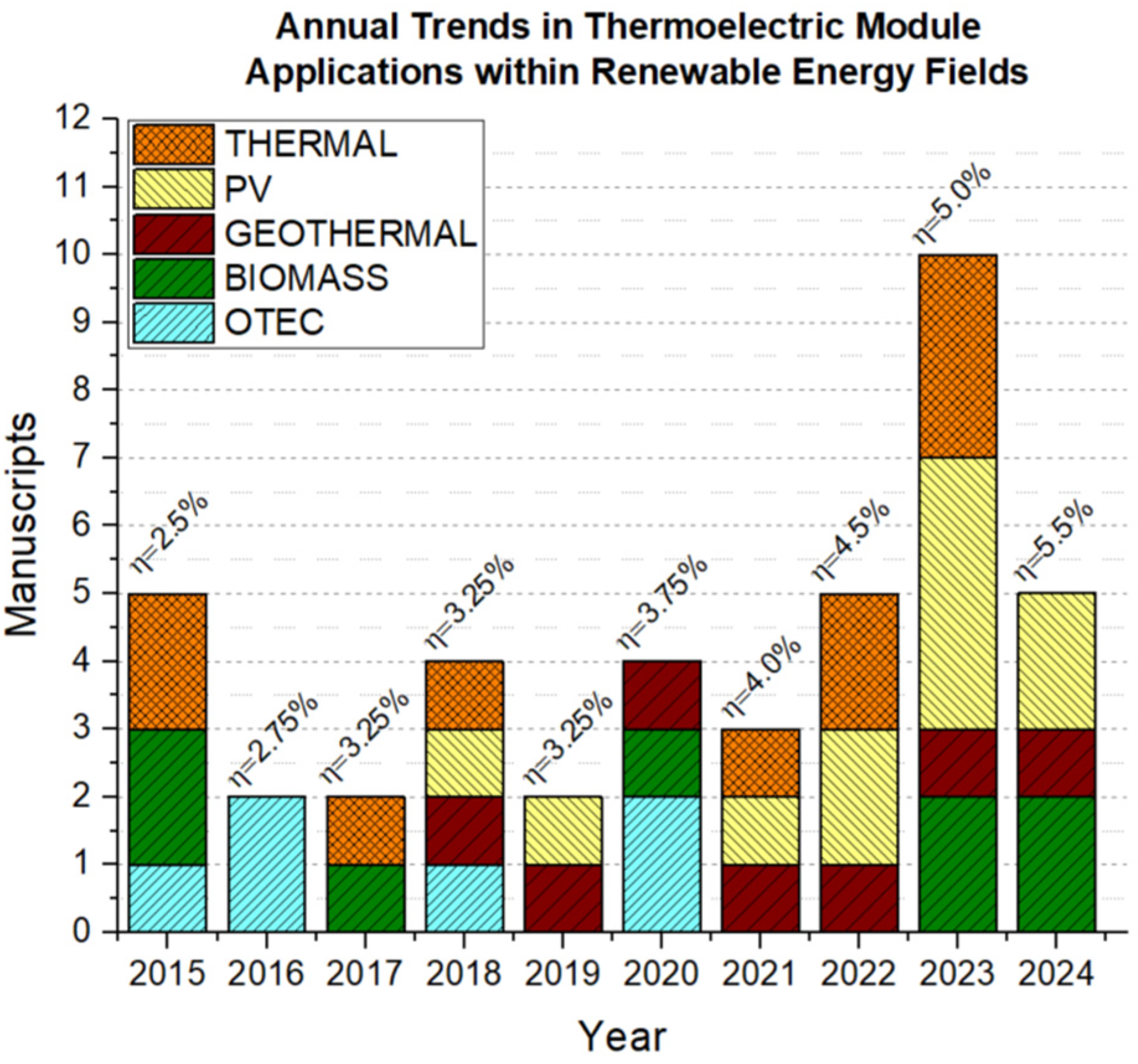
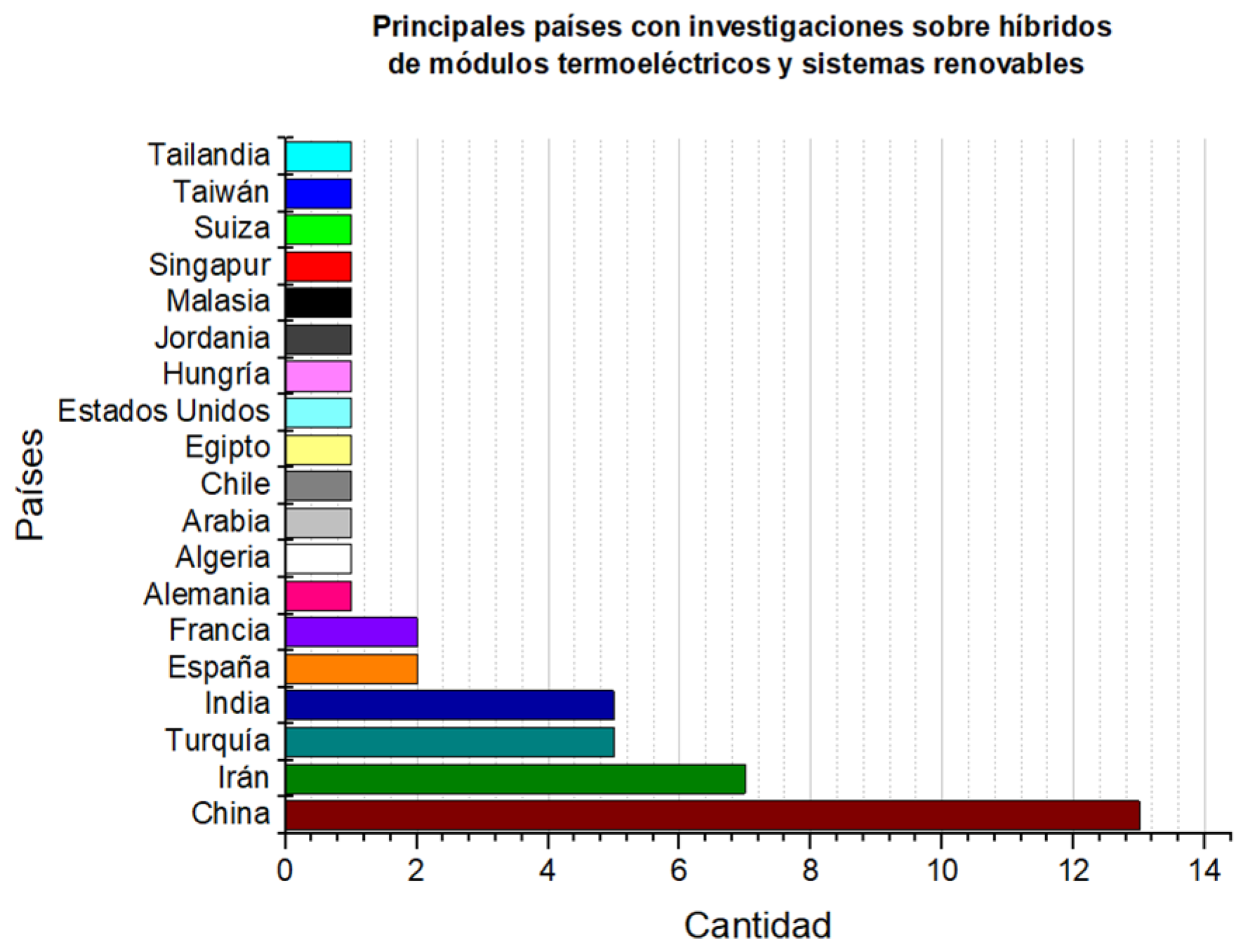
Global analysis of thermoelectric module (TEM) integration reveals exponential growth in scientific production over the last decade, reaching a maximum peak in publications between 2023 and 2024 (Figure 13). This dynamism reflects a strategic geographic concentration where China leads the research with 13 identified publications, followed by Iran (7), Turkey, and India (5 each), while the European contribution (Spain, France, and Germany) remains at moderate levels (Figure 14).

5.1. Technological Readiness and Sectoral Distribution

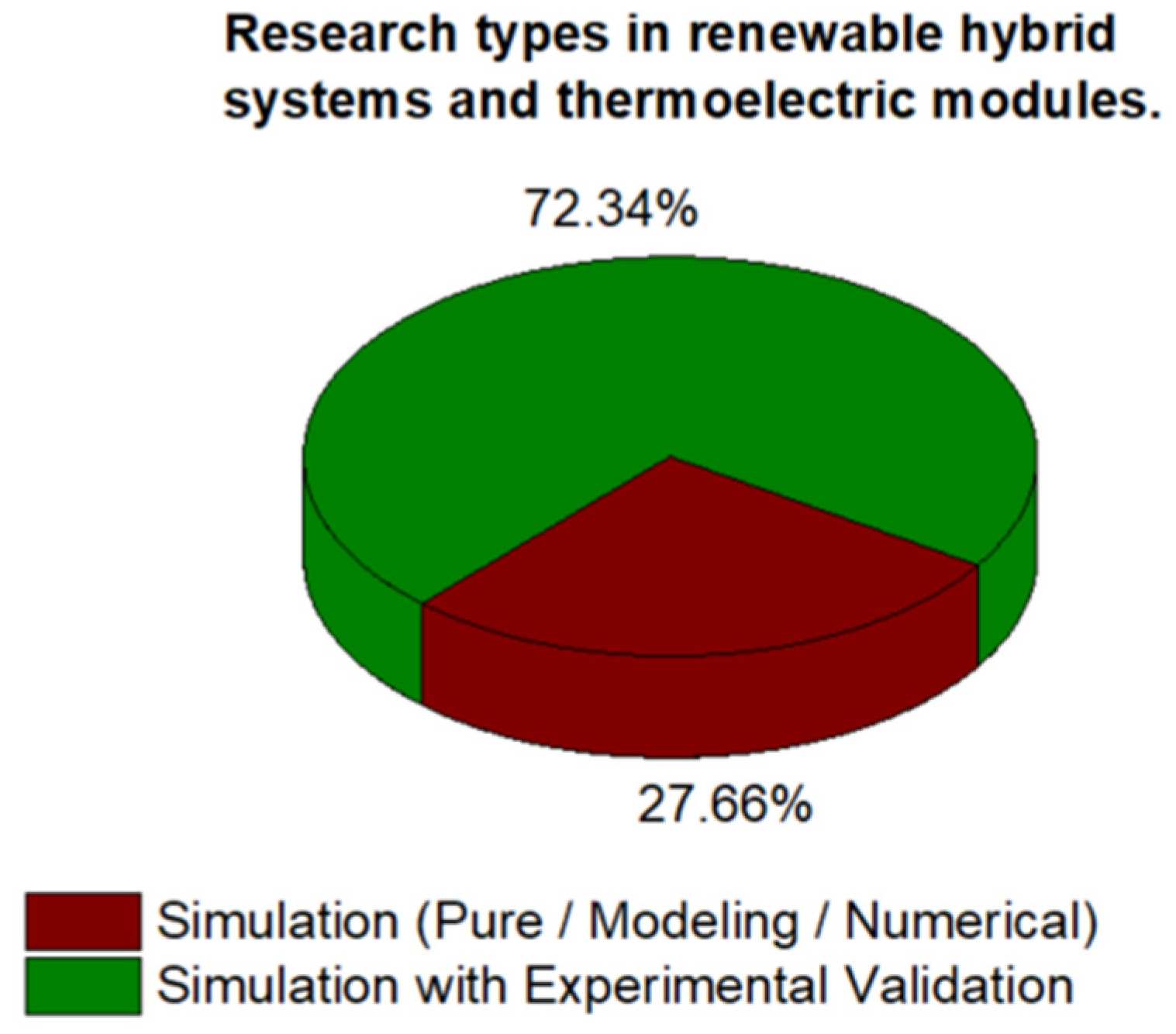
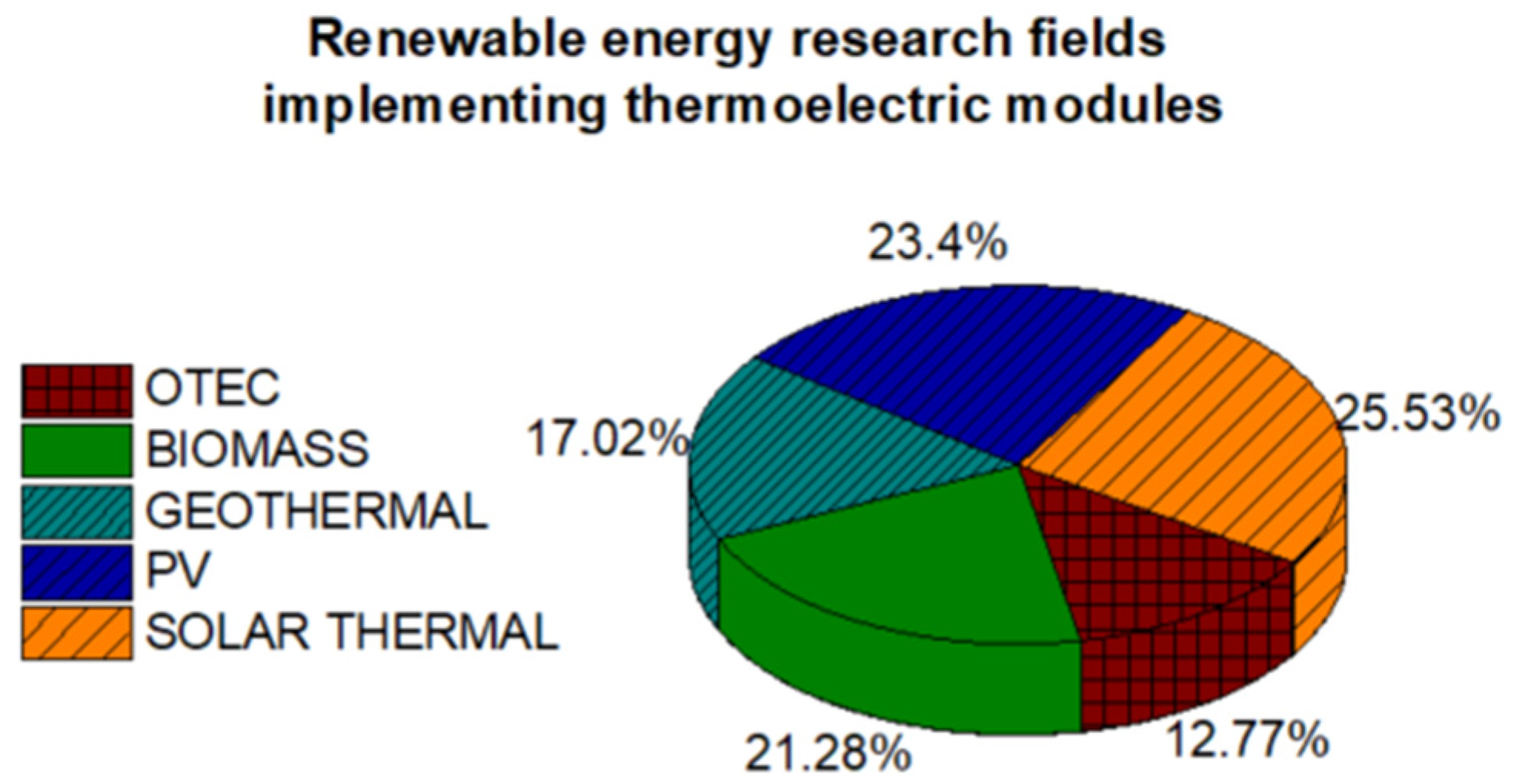
The maturity of the field is still at an intermediate stage and presents a critical methodological imbalance: 72.34% of the literature is based on simulations and numerical modeling, while only 27.66% includes experimental validation or purely experimental systems (Figure 15). Sector-wise, research is uneven (Figure 16), showing that solar energy (48.93%) is the most dynamic axis, divided into solar thermal (25.53%) and photovoltaics (23.40%). The current trend in PV-TEG systems focuses on active thermal management using nanofluids and phase change materials (PCMs) to stabilize generation.
Biomass (21.28%) shows higher maturity due to wide thermal gradients (200–360 °C), achieving efficiencies close to 4%. The trend points toward combined heat and power (CHP) in domestic stoves, facing challenges such as thermal biofouling from ash. Furthermore, geothermal energy (17.02%) focuses on heat recovery from low-enthalpy fluids and petroleum by-products, seeking power outputs in the kilowatt (kW) range through modular systems.
Finally, ocean energy (12.77%) appears as the least developed field. Limitations due to low thermal potential ( T < 25   ° C ) result in efficiencies below 0.1%. The exclusive use of B i 2 T e 3 highlights a stagnation in material innovation for this niche. This stagnation is due to the fact that commercial B i 2 T e 3 is optimized for much higher thermal gradients. When operating under the minimum ocean differential (20–25 °C), the material works far from its peak figure of merit (ZT) value, drastically reducing conversion efficiency.

5.2. Challenges and Barriers to Widespread Adoption

The mass adoption of thermoelectric generators (TEGs) in heat recovery and renewable energy faces structural barriers that limit their competitiveness against mature alternatives. The primary obstacle is the low conversion efficiency, determined by the figure of merit (ZT), which typically ranges between 5% and 8% in commercial modules. Additionally, the high cost of high-performance materials such as bismuth telluride and its alloys, along with the complexity of mass production, results in a high levelized cost of energy (LCOE) per watt generated, hindering competition with consolidated technologies like photovoltaics (PV).
Long-term reliability and durability constitute another critical challenge; operation under high gradients and thermal cycles induces joint degradation, fatigue, and mechanical stress, reducing the lifespan of the equipment, especially in high-temperature or solar concentration environments. In the B i 2 T e 3 modules operating under a cold-side temperature ( T C ) of 303 K and a differential ( T ) of 120 K—placing the hot side ( T H ) at 423 K—the estimated total lifespan until structural failure is approximately 42,510 cycles. However, performance degradation becomes critical much earlier; after 4000 cycles, the output power decreases by 18% and efficiency drops by nearly 10% [88]. Although the duration of each cycle varies by application, the accumulation of these thermal transitions is the determining factor in the loss of integrity of the interfaces of the device.
Beyond the material, practical implementation in hybrid systems, such as solar thermoelectric generators (STEGs), requires sophisticated thermal management to maintain an adequate temperature differential across the modules. This demands robust heat exchangers and complex optical–thermal design, which increases complexity and scaling costs. Another essential problem is the low power density, which, to reach usable electrical output levels (kW), requires the massive integration of dozens or hundreds of modules.

6. Conclusions

The integration of thermoelectric modules (TEMs) into renewable energy systems represents a technological frontier with disruptive potential for global energy efficiency. This analysis confirms that the solar sector leads scientific production with 48.93% of applications, while biomass and waste heat recovery (WHR) demonstrate superior maturity owing to favorable thermal gradients between 200 °C and 360 °C. However, a critical dependence on numerical modeling (72.34%) persists compared to experimental validation (27.66%). This disparity is particularly evident in the OTEC sector, where theoretical projections of 500 kW contrast with experimental results of barely 0.92 W, highlighting the need to transition toward validations under real-world conditions.
The success of mass TEG adoption depends on overcoming thermoeconomic limitations and structural durability issues. The low efficiency of commercial materials (5–8%) and the high cost per watt generated are exacerbated by reliability challenges; under standard operating conditions ( T = 120   K ), B i 2 T e 3 modules face critical performance degradation after 4000 cycles, with power losses of 18%, even though total structural failure is estimated at 42,510 cycles.
The future of the field demands a paradigm shift toward polygeneration. By integrating TEGs into combined heat and power (CHP) schemes and hybrid PV-TEG-PCM systems, global efficiency can exceed 70%, transforming waste heat into a valuable resource. Ultimately, the robustness and modularity of thermoelectric technology position it as an essential component for the energy transition, especially in niche applications and industrial processes were reliability offsets current limitations in lifespan and efficiency.

Author Contributions

Conceptualization, J.D.G.-A. and S.I.-P.; methodology, J.D.G.-A. and S.I.-P.; validation, J.D.G.-A. and S.I.-P.; formal analysis, J.D.G.-A. and S.I.-P.; investigation, J.D.G.-A. and S.I.-P.; resources, N.V.-L. and J.A.A.-J.; data curation, J.D.G.-A. and S.I.-P.; writing—original draft preparation, J.D.G.-A. and S.I.-P.; writing—review and editing, J.D.G.-A., S.I.-P., J.A.A.-J. and L.A.L.-M.; visualization, N.V.-L. and J.A.A.-J.; supervision, N.V.-L. and J.A.A.-J.; project administration, N.V.-L. All authors have read and agreed to the published version of the manuscript.

Funding

This research received no external funding.

Data Availability Statement

No new data were created or analyzed in this study.

Conflicts of Interest

The authors declare no conflicts of interest.

References

  1. Chávez-Urbiola, E.A.; Vorobiev, Y.V.; Bulat, L.P. Solar hybrid systems with thermoelectric generators. Sol. Energy 2012, 86, 369–378. [Google Scholar] [CrossRef]
  2. Ortiz, Y.; Arévalo, P.; Peña, D.; Jurado, Y.F. Recent Advances in Thermal Management Strategies for Lithium-Ion Batteries: A Comprehensive Review. Batteries 2024, 10, 83. [Google Scholar] [CrossRef]
  3. Baldus, H.-P.; Pasing, G.; Sporn, D.; Jansen, M.; Göring, J.; Jüngermann, H.; Bayer, K.A.R.; Weide, B.; DiSalvo, F.J. Thermoelectric Cooling and Power Generation. Ceram. Eng. Sci. Proc. 1997, 391, 127–131. [Google Scholar]
  4. Champier, D. Thermoelectric generators: A review of applications. Energy Convers. Manag. 2017, 140, 167–181. [Google Scholar] [CrossRef]
  5. Al-Nimr, M.A.; Tashtoush, B.M.; Jaradat, A.A. Modeling and simulation of thermoelectric device working as a heat pump and an electric generator under Mediterranean climate. Energy 2015, 90, 1239–1250. [Google Scholar] [CrossRef]
  6. Lei, S.; Bojun, T.; Huaiyu, L.; Chunfeng, Z.; Xiaojun, Z. Static method of liquid-immersed thermal regulation for a household energy-storing with lithium-ion batteries. Energy Build. 2025, 347, 116325. [Google Scholar] [CrossRef]
  7. Pourkiaei, S.M.; Ahmadi, M.H.; Sadeghzadeh, M.; Moosavi, S.; Pourfayaz, F.; Chen, L.; Yazdi, M.A.P.; Kumar, R. Thermoelectric cooler and thermoelectric generator devices: A review of present and potential applications, modeling and materials. Energy 2019, 186, 115849. [Google Scholar] [CrossRef]
  8. Qi, W.; Yu, J.; Wang, X.; Zhang, R.; Wu, X.; Xue, S.; Yang, J.; Ge, S.; Zhang, Y.; He, Z. Thermal management performance enhancement of cylindrical power battery modules via cooling strips with reflux microchannel structure. Energy 2026, 346, 140312. [Google Scholar] [CrossRef]
  9. Olsen, M.L.; Warren, E.L.; Parilla, P.A.; Toberer, E.S.; Kennedy, C.E.; Snyder, G.J.; Firdosy, S.A.; Nesmith, B.; Zakutayev, A.; Goodrich, A.; et al. A high-temperature, high-efficiency solar thermoelectric generator prototype. In Proceedings of Energy Procedia, Las Vegas, NV, USA, 17–20 September 2013; Elsevier Ltd.: Amsterdam, The Netherlands, 2013; pp. 1460–1469. [Google Scholar]
  10. Castañeda, M.; Gutiérrez-Velásquez, E.I.; Aguilar, C.E.; Monteiro, S.N.; Amell, A.A.; Colorado, H.A. Sustainability and Circular Economy Perspectives of Materials for Thermoelectric Modules. Sustainability 2022, 14, 5987. [Google Scholar] [CrossRef]
  11. Zhao, D.; Tan, Y.G. A review of thermoelectric cooling: Materials, modeling and applications. Appl. Therm. Eng. 2014, 66, 15–24. [Google Scholar] [CrossRef]
  12. Gayner, C.; Kar, Y.K.K. Recent advances in thermoelectric materials. Prog. Mater. Sci. 2016, 83, 330–382. [Google Scholar] [CrossRef]
  13. Clemens, J.M. The Seebeck Coefficient; Electronics Cooling: Plymouth Meeting, PA, USA, 2019; Available online: https://www.electronics-cooling.com/2006/11/the-seebeck-coefficient/ (accessed on 7 May 2025).
  14. Gurevich, Y.G.; Velazquez-Perez, J.E. Peltier Effect in Semiconductors; Wiley: Hoboken, NJ, USA, 2014. [Google Scholar]
  15. Zebarjadi, M.; Esfarjani, K.; Dresselhaus, M.S.; Ren, Z.F.; Chen, G. Perspectives on thermoelectrics: From fundamentals to device applications. Energy Environ. Sci. 2012, 5, 5147–5162. [Google Scholar] [CrossRef]
  16. Galffy, M.; Hohn, C.; Freimuth, A. Annalen der Physik Peltier-effect in the mixed state of (Bi, Pb),Sr, Ca, Cu, OB. Ann. Phvsik 1994, 3, 215–224. [Google Scholar] [CrossRef]
  17. Jarman, J.T.; Khalil, E.E.; Khalaf, E. Energy Analyses of Thermoelectric Renewable Energy Sources. Open J. Energy Effic. 2013, 2, 143–153. [Google Scholar] [CrossRef]
  18. Jaziri, N.; Boughamoura, A.; Müller, J.; Mezghani, B.; Tounsi, F.; Ismail, M. A comprehensive review of Thermoelectric Generators: Technologies and common applications. Energy Rep. 2020, 6, 264–287. [Google Scholar] [CrossRef]
  19. Memon, S.A.; Patel, Y.R.N. An overview of optimization techniques used for sizing of hybrid renewable energy systems. Renew. Energy Focus 2021, 39, 1–26. [Google Scholar] [CrossRef]
  20. Rowe, D.M. Review Thermoelectric Waste Heat Recovery as a Renewable Energy Source. Int. J. Innov. Energy Syst. Power 2006, 1, 13–23. [Google Scholar]
  21. Crane, D.T.; Lagrandeur, J.W. Progress report on BSST-led US Department of Energy Automotive Waste Heat Recovery Program. J. Electron. Mater. 2010, 39, 2142–2148. [Google Scholar] [CrossRef]
  22. Bhakta, S.; Kundu, B. A Review of Thermoelectric Generators in Automobile Waste Heat Recovery Systems for Improving Energy Utilization. Energies 2024, 17, 1016. [Google Scholar] [CrossRef]
  23. Shen, L.; Pu, X.; Sun, Y.; Chen, J. A study on thermoelectric technology application in net zero energy buildings. Energy 2016, 113, 9–24. [Google Scholar] [CrossRef]
  24. Patterson, G.-S. Efecto Peltier; University of Buenos Aires: Buenos Aires, Argentina, 2007. [Google Scholar]
  25. Shakouri, A. Recent developments in semiconductor thermoelectric physics and materials. Annu. Rev. Mater. Res. 2011, 41, 399–431. [Google Scholar] [CrossRef]
  26. Awasthi, M.; Mali, Y.K.V. Design and Development of Thermoelectric Refrigerator. Int. J. Mech. Eng. Rob. Res. 2012, 1, 2970–2974. [Google Scholar]
  27. Goldsmid, H.J. Introduction to Thermoelectricity; Springer Series in Materials Science; Springer: Berlin/Heidelberg, Germany, 2010; Volume 121. [Google Scholar]
  28. Barma, M.C.; Riaz, M.; Saidur, R.; Long, B.D. Estimation of thermoelectric power generation by recovering waste heat from Biomass fired thermal oil heater. Energy Convers. Manag. 2015, 98, 303–313. [Google Scholar] [CrossRef]
  29. Bohn, M.S.; Benson, D.K.; Jayadev, T.S. Thermoelectric Ocean Thermal Energy Conversion. J. Sol. Energy Eng. 1980, 102, 119–127. [Google Scholar] [CrossRef]
  30. Dubourdieu, P.; Tribou, G.; Byrne, S. Thermoelectric generator for underwater wellhead “-Hotwater”. In Proceedings of the Proceedings ICT’97. 16th International Conference on Thermoelectrics, Dresden, Germany, 26–29 August 1997; IEEE: New York, NY, USA, 1997. [Google Scholar]
  31. Xie, Y.; Wu, S.J.; Yang, C.J. Generation of electricity from deep-sea hydrothermal vents with a thermoelectric converter. Appl. Energy 2016, 164, 620–627. [Google Scholar] [CrossRef]
  32. Xie, K.; Wu, S.; Yang, C.; Zhou, P.; Zhang, B. A Novel Plate-type Thermoelectric Power Generation Module for Seafloor Hydrothermal Fluids. In Proceedings of the OCEANS 2018 MTS/IEEE Charleston, Charleston, SC, USA, 22–25 October 2018; IEEE: New York, NY, USA, 2018. [Google Scholar]
  33. Xie, K.; Wu, S.; Yang, C.; Ruan, Y.; Hong, Y. A new seafloor hydrothermal power generation device based on waterproof thermoelectric modules. IEEE Access 2020, 8, 70762–70772. [Google Scholar] [CrossRef]
  34. Weid, J.P.V.D.; Silva, J.A.P.D.; Gama, A.L.; Sant’anna, A.C. Subsea Electric Generator. In Proceedings of the OCEANS’93, Victoria, BC, Canada, 18–21 October 1993; IEEE: New York, NY, USA, 2002. [Google Scholar]
  35. Özdemir, A.E.; Köysal, Y.; Atalay, T.; Özbaş, E. Conceptual Design of Solar and Sea Based Renewable Energy Production with Thermoelectric Generator. In Proceedings of the 2015 9th International Conference on Electrical and Electronics Engineering (ELECO), Bursa, Turkey, 26–28 November 2015; IEEE: New York, NY, USA, 2016. [Google Scholar]
  36. Tang, G.; Rabeek, S.M.; Arasu, M.A. Thermal Design and Temperature Gradient Analysis for a Thermoelectric Energy Harvest Device in Off-shore and Marine Application. In Proceedings of the 2016 IEEE 18th Electronics Packaging Technology Conference (EPTC), Singapore, 30 November 2016–3 December 2016; IEEE: New York, NY, USA, 2016. [Google Scholar]
  37. Khanmohammadi, S.; Baseri, M.M.; Ahmadi, P.; Al-Rashed, A.A.A.; Afrand, M. Proposal of a novel integrated ocean thermal energy conversion system with flat plate solar collectors and thermoelectric generators: Energy, exergy and environmental analyses. J. Clean. Prod. 2020, 256, 120600. [Google Scholar] [CrossRef]
  38. Chung, Y.C.; Wu, C.I. Efficiency Enhancement in Ocean Thermal Energy Conversion: A Comparative Study of Heat Exchanger Designs for Bi2Te3-Based Thermoelectric Generators. Materials 2024, 17, 714. [Google Scholar] [CrossRef]
  39. International Renewable Energy Agency. International Renewable Energy Agency IRENA. Global Bioenergy Supply and Demand Projections: A Working Paper for REmap 2030; International Renewable Energy Agency IRENA: Abu Dhabi, United Arab Emirates, 2014; Available online: www.irena.org/remap (accessed on 7 May 2025).
  40. International Renewable Energy Agency. Recycle: Bioenergy (Circular Carbon Economy, 05); International Renewable Energy Agency: Abu Dhabi, United Arab Emirates, 2020. [Google Scholar]
  41. Li, G.; Ying, J.; Yi, M.; Zheng, Y.; Tang, Y.; Guo, W. Development of a High-Capacity Portable Biomass-Combustion-Powered Thermoelectric Generator. Engineering 2023, 24, 192–201. [Google Scholar] [CrossRef]
  42. Ma, H.K.; Lin, C.P.; Wu, H.P.; Peng, C.H.; Hsu, C.C. Waste heat recovery using a thermoelectric power generation system in a biomass gasifier. Appl. Therm. Eng. 2015, 88, 274–279. [Google Scholar] [CrossRef]
  43. Goswami, R.; Das, R. Waste heat recovery from a biomass heat engine for thermoelectric power generation using two-phase thermosyphons. Renew. Energy 2020, 148, 1280–1291. [Google Scholar] [CrossRef]
  44. Usón, S.; Royo, J.; Canalís, P. Integration of thermoelectric generators in a biomass boiler: Experimental tests and study of ash deposition effect. Renew. Energy 2023, 214, 395–406. [Google Scholar] [CrossRef]
  45. Wang, Z.; Han, L.; Xi, G.; Jia, T.; Liu, Y.; He, X.; Wang, H.; Li, B. A biomass hydrogel solar evaporator based on low-grade tobacco leaves for water evaporation and thermoelectric conversion applications. RSC Sustain. 2024, 2, 1081–1087. [Google Scholar] [CrossRef]
  46. Pandit, S.; Mal, R.; Purwar, A.; Kumari, K. Waste heat regeneration from thermoelectric generator based improved biomass cookstove (TIBC): Modelling of TEG system utilizing DC-DC converter with fuzzy logic MPPT. Energy Convers. Manag. 2024, 300, 117977. [Google Scholar] [CrossRef]
  47. Lertsatitthanakorn, C. Electrical performance analysis and economic evaluation of combined biomass cook stove thermoelectric (BITE) generator. Bioresour. Technol. 2007, 98, 1670–1674. [Google Scholar] [CrossRef]
  48. Champier, D.; Bedecarrats, J.P.; Rivaletto, M.; Strub, F. Thermoelectric power generation from biomass cook stoves. Energy 2010, 35, 935–942. [Google Scholar] [CrossRef]
  49. Angeline, A.A.; Jayakumar, J.; Asirvatham, L.G.; Marshal, J.J.; Wongwises, S. Power generation enhancement with hybrid thermoelectric generator using biomass waste heat energy. Exp. Therm. Fluid Sci. 2017, 85, 1–12. [Google Scholar] [CrossRef]
  50. Ahiska, R.; Mamur, H. Development and application of a new power analysis system for testing of geothermal thermoelectric generators. Int. J. Green Energy 2016, 13, 672–681. [Google Scholar] [CrossRef]
  51. Suter, C.; Jovanovic, Z.R.; Steinfeld, A. A 1 kWe thermoelectric stack for geothermal power generation—Modeling and geometrical optimization. Appl. Energy 2012, 99, 379–385. [Google Scholar] [CrossRef]
  52. Zare, V.; Palideh, V. Employing thermoelectric generator for power generation enhancement in a Kalina cycle driven by low-grade geothermal energy. Appl. Therm. Eng. 2018, 130, 418–428. [Google Scholar] [CrossRef]
  53. Rostamnejad Takleh, H.; Zare, V. Employing thermoelectric generator and booster compressor for performance improvement of a geothermal driven combined power and ejector-refrigeration cycle. Energy Convers. Manag. 2019, 186, 120–130. [Google Scholar] [CrossRef]
  54. Liu, J.; Wang, Z.; Shi, K.; Li, Y.; Liu, L.; Wu, X. Analysis and modeling of thermoelectric power generation in oil wells: A potential power supply for downhole instruments using in-situ geothermal energy. Renew. Energy 2020, 150, 561–569. [Google Scholar] [CrossRef]
  55. Catalan, L.; Araiz, M.; Aranguren, P.; Astrain, D. Computational study of geothermal thermoelectric generators with phase change heat exchangers. Energy Convers. Manag. 2020, 221, 113120. [Google Scholar] [CrossRef]
  56. Hadjiat, M.M.; Mraoui, A.; Ouali, S.; Kuzgunkaya, E.H.; Salhi, K.; Ouali, A.A.; Benaouda, N.; Imessad, K. Assessment of geothermal energy use with thermoelectric generator for hydrogen production. Int. J. Hydrogen Energy 2021, 46, 37545–37555. [Google Scholar] [CrossRef]
  57. Alegria, P.; Catalan, L.; Araiz, M.; Rodriguez, A.; Astrain, D. Experimental development of a novel thermoelectric generator without moving parts to harness shallow hot dry rock fields. Appl. Therm. Eng. 2022, 200, 117619. [Google Scholar] [CrossRef]
  58. Xie, H.; Gao, T.; Long, X.; Sun, L.; Wang, J.; Xia, E.; Li, S.; Li, B.; Li, C.; Gao, M.; et al. Design and performance of a modular 1 kilowatt-level thermoelectric generator for geothermal application at medium-low temperature. Energy Convers. Manag. 2023, 298, 117782. [Google Scholar] [CrossRef]
  59. Qiao, Y.; Shi, K.; Liu, J. Analytical study of integrating downhole thermoelectric power generation with a coaxial borehole heat exchanger in geothermal wells. Sci. Rep. 2024, 14, 505. [Google Scholar] [CrossRef]
  60. Cetin, M.; Urkan, O.D.; Hekim, M.; Cetin, E. Power generation prediction of a geothermal-thermoelectric hybrid system using intelligent models. Geothermics 2024, 118, 102911. [Google Scholar] [CrossRef]
  61. Seyednezhad, M.; Najafi, H. Solar-powered thermoelectric-based cooling and heating system for building applications: A parametric study. Energies 2021, 14, 5573. [Google Scholar] [CrossRef]
  62. Ge, M.; Wang, Z.; Liu, L.; Zhao, J.; Zhao, Y. Performance analysis of a solar thermoelectric generation (STEG) system with spray cooling. Energy Convers. Manag. 2018, 177, 661–670. [Google Scholar] [CrossRef]
  63. Dimri, N.; Tiwari, A.; Tiwari, G.N. Effect of thermoelectric cooler (TEC) integrated at the base of opaque photovoltaic (PV) module to enhance an overall electrical efficiency. Sol. Energy 2018, 166, 159–170. [Google Scholar] [CrossRef]
  64. Naderi, M.; Ziapour, B.M.; Gendeshmin, M.Y. Improvement of photocells by the integration of phase change materials and thermoelectric generators (PV-PCM-TEG) and study on the ability to generate electricity around the clock. J. Energy Storage 2021, 36, 102384. [Google Scholar] [CrossRef]
  65. Singh, D.; Chaubey, H.; Parvez, Y.; Monga, A.; Srivastava, S. Performance improvement of solar PV module through hybrid cooling system with thermoelectric coolers and phase change material. Sol. Energy 2022, 241, 538–552. [Google Scholar] [CrossRef]
  66. Wen, X.; Ji, J.; Li, Z.; Song, Z.; Yao, T. Performance characterization of a PV/T system employing micro-channel heat pipes and thermoelectric generators: An experimental and numerical study. Energy 2023, 264, 126182. [Google Scholar] [CrossRef]
  67. Shoeibi, S.; Saemian, M.; Khiadani, M.; Kargarsharifabad, H.; Mirjalily, S.A.A. Influence of PV/T waste heat on water productivity and electricity generation of solar stills using heat pipes and thermoelectric generator: An experimental study and environmental analysis. Energy Convers. Manag. 2023, 276, 116504. [Google Scholar] [CrossRef]
  68. Farhani, R.; Ennawaoui, C.; Hajjaji, A.; Boughaleb, Y.; Rivenq, A.; Hillali, Y.E. Photovoltaic-thermoelectric (PV-TE) hybrid system for thermal energy harvesting in low-power sensors. In Proceedings of the Materials Today: Proceedings, Rome, Italy, 19–21 July 2022; Elsevier Ltd.: Amsterdam, The Netherlands, 2022; Volume 66, pp. 223–228. [Google Scholar]
  69. Lv, Y.; Han, X.; Chen, X.; Yao, Y. Maximizing energy output of a vapor chamber-based high concentrated PV-thermoelectric generator hybrid system. Energy 2023, 282, 128882. [Google Scholar] [CrossRef]
  70. Fallah Kohan, H.R.; Eslami, M.; Jafarpur, K. Thermal influence of thermoelectric modules on performance of hybrid PV-TEG systems: Effects of TEG type, arrangement and working condition. Int. Commun. Heat Mass Transf. 2023, 147, 106969. [Google Scholar] [CrossRef]
  71. Mahmoud Al Shurafa, S.; Basim Ismail, F.; Kazem, H.A.; Ee Sann, T.; Abdel Hameed Almajali, T. Enhancing Photovoltaic-Thermoelectric Generator (PV-TEG) system performance via mathematical modeling and advanced thermal interface material: An emphasis on Pyrolytic graphite Sheet (PGS). Sol. Energy 2024, 273, 112514. [Google Scholar] [CrossRef]
  72. Selimefendigil, F.; Okulu, D.; Oztop, H.F. Three dimensional numerical study of PV module cooling by using thermoelectric effects and nano-enhanced confined multiple slot jet impingement. Int. J. Heat Mass Transf. 2024, 221, 125093. [Google Scholar] [CrossRef]
  73. Montero, F.J.; Lamba, R.; Ortega, A.; Jahn, W.; Chen, W.H.; Guzmán, A.M. A bidirectional solar thermoelectric generator combining heat storage for daytime and nighttime power generation. Appl. Therm. Eng. 2023, 224, 119997. [Google Scholar] [CrossRef]
  74. Freire, L.O.; Navarrete, L.M.; Corrales, B.P.; Castillo, J.N. Efficiency in thermoelectric generators based on Peltier cells. Energy Rep. 2021, 7, 355–361. [Google Scholar] [CrossRef]
  75. Amatya, R.; Ram, R.J. Solar thermoelectric generator for micropower applications. J. Electron. Mater. 2010, 39, 1735–1740. [Google Scholar] [CrossRef]
  76. Singh, R.; Tundee, S.; Akbarzadeh, A. Electric power generation from solar pond using combined thermosyphon and thermoelectric modules. Sol. Energy 2011, 85, 371–378. [Google Scholar] [CrossRef]
  77. Miao, L.; Kang, Y.P.; Li, C.; Tanemura, S.; Wan, C.L.; Iwamoto, Y.; Shen, Y.; Lin, H. Experimental Performance of a Solar Thermoelectric Cogenerator Comprising Thermoelectric Modules and Parabolic Trough Concentrator without Evacuated Tube. J. Electron. Mater. 2015, 44, 1972–1983. [Google Scholar] [CrossRef]
  78. Zhang, Z.; Li, W.; Kan, J. Behavior of a thermoelectric power generation device based on solar irradiation and the earth’s surface-air temperature difference. Energy Convers. Manag. 2015, 97, 178–187. [Google Scholar] [CrossRef]
  79. Rahbar, N.; Gharaiian, A.; Rashidi, S. Exergy and economic analysis for a double slope solar still equipped by thermoelectric heating modules—An experimental investigation. Desalination 2017, 420, 106–113. [Google Scholar] [CrossRef]
  80. Lv, S.; He, W.; Hu, D.; Zhu, J.; Li, G.; Chen, H.; Liu, M. Study on a high-performance solar thermoelectric system for combined heat and power. Energy Convers. Manag. 2017, 143, 459–469. [Google Scholar] [CrossRef]
  81. Atalay, T.; Köysal, Y.; Özdemir, A.E.; Özbaş, E. Evaluation of energy efficiency of thermoelectric generator with two-phase thermo-syphon heat pipes and nano-particle fluids. Int. J. Precis. Eng. Manuf.-Green Technol. 2018, 5, 5–12. [Google Scholar] [CrossRef]
  82. Montero, F.J.; Lamba, R.; Ortega, A.; Jahn, W.; Guzmán, A.M. A novel 24-h day-night operational solar thermoelectric generator using phase change materials. J. Clean. Prod. 2021, 296, 126553. [Google Scholar] [CrossRef]
  83. Al-Tahaineh, H.; AlEssa, A.H.M. A hybrid TEG/evacuated tube solar collectors for electric power generation and space heating. J. Eng. Appl. Sci. 2022, 69, 10. [Google Scholar] [CrossRef]
  84. Patel, V.; Kaushik, L.K.; Khimsuriya, Y.D.; Mehta, P.; Kabeel, A.E. Performance investigation of a modified single-basin solar distiller by augmenting thermoelectric cooler as an external condenser. Environ. Sci. Pollut. Res. 2023, 30, 61829–61841. [Google Scholar] [CrossRef]
  85. Jiang, H.; Fang, Q.; Xavier, T.F.; Hu, G.; Wang, H.; Suo, Y.; Ye, Y.; Li, G.; Zheng, Y.; Zhang, Z. A novel thermoelectric distiller integrated with water cooling circulation for alcohol distillation. Appl. Therm. Eng. 2023, 219, 119392. [Google Scholar] [CrossRef]
  86. Tashtoush, B.; Qaseem, H. An integrated absorption cooling technology with thermoelectric generator powered by solar energy. J. Therm. Anal. Calorim. 2022, 147, 1547–1559. [Google Scholar] [CrossRef]
  87. Atalay, T.; Yakut, Y.; Köysal, Y.; Özbektaş, S.; Bülbül, H.; Topaloğlu, B. Experimental and Thermal Analysis of Solar Thermoelectric System Performance Incorporated with Solar Tracker. Int. J. Precis. Eng. Manuf.-Green Technol. 2022, 9, 587–602. [Google Scholar] [CrossRef]
  88. Wang, P.; Li, J.E.; Wang, B.L.; Shimada, T.; Hirakata, H.; Zhang, C. Lifetime prediction of thermoelectric devices under thermal cycling. J. Power Sources 2019, 437, 226861. [Google Scholar] [CrossRef]
Figure 1. Internal structure of a thermoelectric generator.
Processes 14 00901 g001
Figure 2. Operation of the Seebeck effect.
Processes 14 00901 g002
Figure 3. Operation of the Peltier effect.
Processes 14 00901 g003
Figure 4. Applications of thermoelectric modules.
Processes 14 00901 g004
Figure 5. General schematic of a thermoelectric generator (left). Analysis as a thermal machine (right).
Processes 14 00901 g005
Figure 6. General schematic of a thermoelectric cooler (left). Analysis as a heat engine (right).
Processes 14 00901 g006
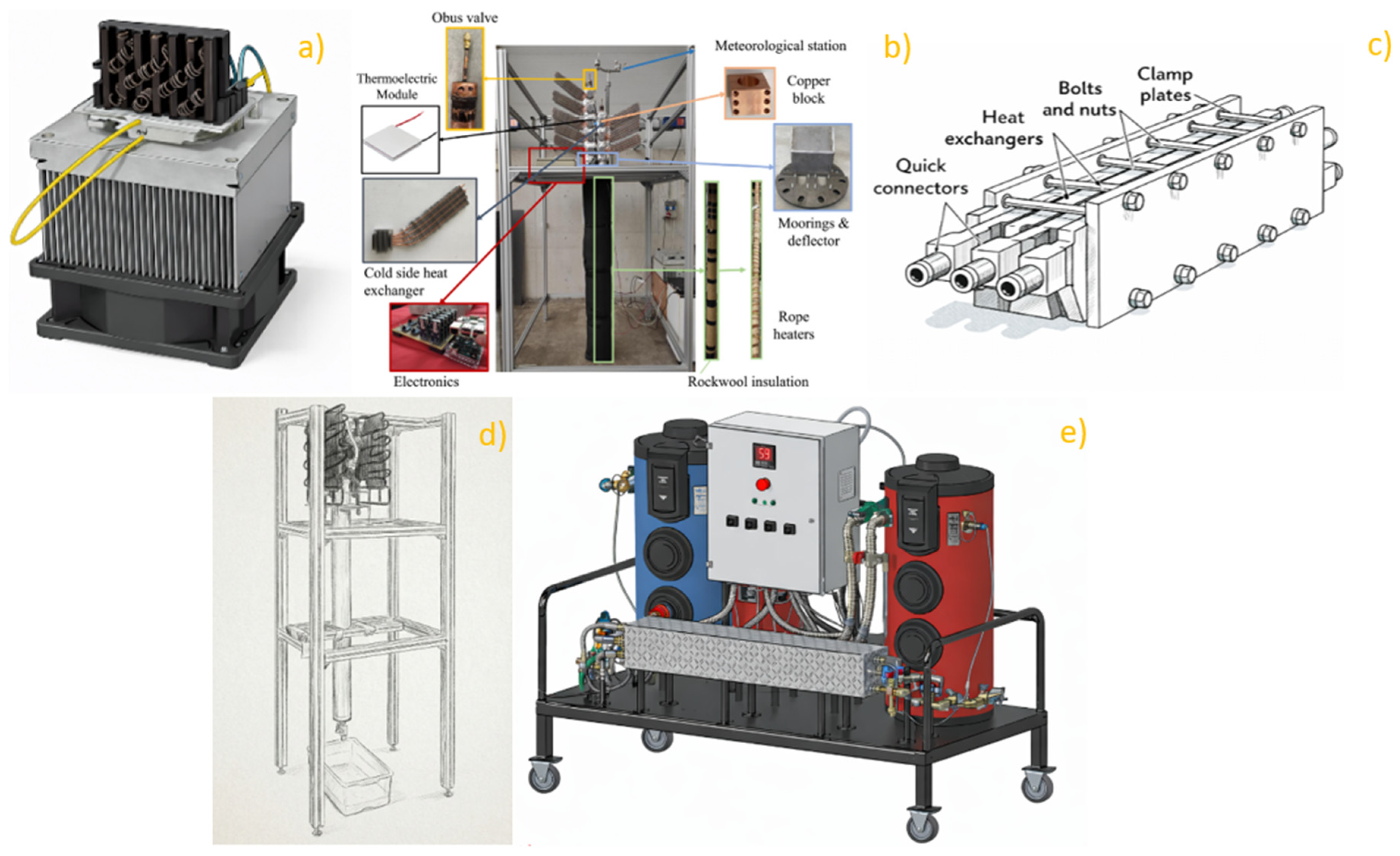
Figure 7. Projects developed with thermoelectric modules in ocean environments. (a) Patent design diagram: Structural configuration of a thermoelectric generator for underwater wellheads (Hotwater). Based on the original patent design by Dubourdieu et al., 1997 [30]. (b) Conceptual rendering of converter: Three-dimensional representation of the original proposal for energy conversion in deep-sea hydrothermal vents. Adapted from Xie et al., 2016 [31]. (c) Plate-type heat exchanger rendering: Visualization of a heat exchange plate integrated with thermoelectric modules for seafloor fluids. Based on the design by Xie et al., 2018 [32]. (d) Heat exchanger system with lateral Peltier modules: Configuration of a seafloor hydrothermal power device featuring heat exchangers with side-mounted thermoelectric modules. Image reproduced from Xie et al., 2020 [33].
Processes 14 00901 g007
Figure 8. Projects developed with thermoelectric modules powered by biomass-generated heat. (a) Heat recovery in biomass gasifier: Rendering of the thermoelectric power generation system designed for waste heat recovery in a gasifier unit. Based on Ma et al., 2015 [42]. (b) Two-phase thermosyphon system: Representation of a biomass heat engine integrated with two-phase thermosyphons for optimized heat transfer to TEG modules. Based on Goswami and Das., 2020 [43]. (c) Biomass boiler integration: Rendering of the experimental setup for evaluating the impact of ash deposition on the performance of integrated thermoelectric generators. Based on Usón et al., 2023 [44]. (d) High-capacity portable generator: Compact biomass-combustion-powered device developed for portable energy applications. Image reproduced from Li et al., 2023 [41]. (e) Biomass hydrogel solar evaporator: System based on low-grade tobacco leaves for simultaneous water evaporation and thermoelectric conversion. Image reproduced from Wang et al., 2024 [45]. (f) Improved biomass cookstove (TIBC): Schematic of the waste heat regeneration system utilizing a DC-DC converter with fuzzy logic MPPT control. Based on Pandit et al., 2024 [46].
Processes 14 00901 g008
Figure 9. Projects developed with thermoelectric modules activated by geothermal energy. (a) Hydrogen production via geothermal energy: Rendering of an integrated geothermal energy evaluation system with thermoelectric generators for hydrogen production. Based on Hadjiat et al., 2021 [56]. (b) Generator for hot dry rock reservoirs: Representation of a thermoelectric generator with no moving parts, designed for the exploitation of shallow geothermal fields. Based on Alegria et al., 2022 [57]. (c) Modular generator architecture (1 kW): Technical schematic of a kilowatt-level modular thermoelectric generator for medium-low temperature geothermal applications. Based on Xie et al., 2023 [58]. (d) Phase-change heat exchangers: Rendering of the computational study of thermoelectric generators integrated with phase-change material (PCM) heat exchangers. Based on Catalan et al., 2020 [55]. (e) Internal configuration of the modular system: Detailed schematic of the performance and modular design for thermal transfer optimization in geothermal wells. Based on Xie et al., 2023 [58].
Processes 14 00901 g009
Figure 10. Projects developed with thermoelectric modules and photovoltaic technology. (a) PV module with integrated thermoelectric cooler (TEC): Schematic of a TEC unit integrated at the base of an opaque photovoltaic module to enhance overall electrical efficiency. Based on Dimri et al., 2018 [63]. (b) Integrated PV-PCM-TEG system: Rendering of a hybrid configuration employing phase change materials and thermoelectric generators for round-the-clock power generation. Based on Naderi et al., 2021 [64]. (c) Hybrid cooling configuration: Schematic representation of a solar PV module performance improvement through a combined cooling system with TECs and PCM. Based on Singh et al., 2022 [65]. (d) PV/T system with micro-channel heat pipes: Rendering of a photovoltaic/thermal system employing micro-channel heat pipes and thermoelectric generators for enhanced energy harvesting. Based on Wen et al., 2023 [66]. (e) PV/T-assisted solar still: Representation of the influence of PV/T waste heat on water productivity and electricity generation using heat pipes and TEGs. Based on Shoeibi et al., 2023 [67].
Processes 14 00901 g010
Figure 12. Comparative analysis of operating temperature gradients ( Δ T ) and conversion efficiencies ( η ) across different thermoelectric materials.
Processes 14 00901 g012
Figure 13. Annual trends in thermoelectric module applications in energy fields.
Processes 14 00901 g013
Figure 14. Leading countries with research on thermoelectric module hybrids and renewable systems.
Processes 14 00901 g014
Figure 15. Research developed with thermoelectric modules through simulation and experimental methods.
Processes 14 00901 g015
Figure 16. Renewable energy fields of study where thermoelectric modules are implemented.
Processes 14 00901 g016
Table 1. Seebeck coefficients of different semiconductor materials [13].
MaterialSeebeck Coefficient (µV/K)
Se900
Te500
Si440
Ge300
n-type Bi2Te3−230
p-type Bi2−xSbxTe3300
p-type Sb2Te3185
PbTe−180
Pb03Ge39Se581670
Pb06Ge0.36Se581410
Pb09Ge33Se58−1360
Pb13Ge29Se58−1710
Pb15Ge37Se58−1990
SnSb4Te725
SnBi4Te7120
SnBi3Sb1Te7151
SnBi2.5Sb1.5Te7110
SnBi2Sb2Te790
PbBi4Te7−53
Table 2. Performance of TEMs in oceanic applications (OTEC).
Author, YearCountryMaterial or TEMΔT (°C)Efficiency (η)Power (W)Type de Study
Özdemir, 2015 [35]TurkeyTEG1-12611-6.0270 Max-500 KW (Estimated)Simulation
Xie et al., 2016 [31]China B i 2 T e 3 127 Approx1.96–2.94%4.8–7.2 W (4 mod.)Simulation and experimental
Tang et al., 2016 [36] Singapore B i 0.5 S b 0.5 2 T e 3 25--simulation
Xie et al., 2018 [32]ChinaSP1848-27145 ( B i 2 T e 3 )
TG12-4 ( B i 2 T e 3 )
25-0.92 W (5 mod.)Simulation and experimental
Xie et al., 2020 [33]ChinaHi-Z-2110 Approx-5.6 WSimulation and experimental
Khanmohammadi, 2020 [37]IranHZ-2020–262.90%12.64 kW (system)Simulation
Table 3. Performance of TEMs in biomass applications.
Author, YearCountryMaterial or TEMΔT (°C)Efficiency (η)Power (W)Type of Study
Lertsatitthanakorn, 2007 [47]ThailandTEP1-1264-3.4 ( B i 2 T e 3 )150 Approx3.20%2.4 WSimulation and experimental
Champier et al., 2010 [48]FranceTEP1-12656-0.8160Approx. 2%7.0 (4 mod.)Simulation and experimental
Barma et al., 2015 [28]MalaysiaHZ-2 ( B i 2 T e 3 )
B i , S b 2 T e 3
270 Aprox8.18%3.7 W
4.4 W
Simulation
Ma et al., 2015 [42] Taiwan B i 2 T e 3 231 Approx10.9% (Max Lab)6.1 WSimulation and experimental
Anitha Angeline, 2017 [49]India B i 2 T e 3
PbTe
TEG1-PB-12611-6.0
2002.5–3.127.38 (3 mod. series)Simulation and experimental
Goswami and Das, 2020 [43]India B i 2 T e 3
SP1848-27145
48 modules
392.22%1.033Simulation and experimental
Li et al., 2023 [41]ChinaTEG1-12708
B i 2 T e 3
-2.87% (TE)23.4 W (6 mod.)Simulation and experimental
Usón et al., 2023 [44]SpainTEG1-PB-12611-6.0
TEG1-24111-6.0
TEG1-12601-6.0
270–3204–7%59.6 W (6 mod.)Simulation and experimental
Pandit et al., 2024 [46]IndiaTG12-8-01L1822.67% (TEG)6.25 W (1 mod.)Simulation and experimental
Wang et al., 2024 [45]China-1 sun-3.8
2 sun-7.1
3 sol-14.9
-38.7 mV
45.4 mV
97.4 mV
Simulation and experimental
Table 4. Performance of TEMs in geothermal applications.
Author, YearCountryMaterial or TEMΔT (°C)Efficiency (η)Power (W)Type of Study
Cetin et al., 2024 [60]Turkey-80 °C2.642.6 W (48 mod.)Simulation and experimental
Xie et al., 2023 [58]ChinaTEG1-19913
B i 2 T e 3
76.0 °C1.811043.9 W (768 mod.)Simulation and experimental
Alegria et al. (2022) [57]SpainMarlow TG12-8L 160 °CProt. A-4.06%
Prot. B-3.72%
36 W (16 mod.)Simulation and experimental
Hadjiat et al. (2021) [56]AlgeriaTEC1-1270620–50 °C4% Approx0.25 W (1 mod.)Simulation and experimental
Liu et al. (2020) [54]China B i 2 T e 3 105 °C1.20%Approx 800 W (system)Simulation
Rostamnejad Takleh et al. (2019) [53]Iran-55–65 °C1.2–3%14.8 kW (Net Power of the combined CPER-TEG systemSimulation
Zare et al. (2018) [52]Iran B i 2 T e 3
S b 2 T e 3
21.9 °C1.20%664 W (power generated by the TEG system)Simulation
Suter et al. (2012) [51]Switzerland(Stack) 120 °C4.2% (Max. modeled efficiency) 1000 W (system)Simulation
Table 5. Performance of TEMs in PV applications.
Author, YearCountryMaterial or TEMΔT (°C)Efficiency (η)Power (W)Type of Study
Selimefendigil et al., 2024 [72]Saudi Arabia B i 2 T e 3 20–30 °C-0.33 VSimulation
Fallah Kohan et al., 2023 [70]IranGM200-71-14-16
GM200-127-14-16
GM200-49-45-25
3 °C0.57%<0.08 WSimulation
Lv et al., 2023 [69]China-22 °C0.60%PCP V max: 30.61 W. PTEG max: 0.30 W.Simulation
Shoeibi et al., 2023 [67]IranTEG1-12611-6--0.19–0.21 W (2 mod.)Simulation and experimental
Wen et al., 2023 [66]ChinaTEG1-1991350 °C approx0.97%Average TEG power: 8.33 W (6 mod.).Simulation and experimental
Singh et al., 2022 [65]Germany B i 2 T e 3 25 °C --Simulation and experimental
Farhani et al., 2022 [68]France B i 2 T e 3 27 °C-7 mW (2 mod.)Simulation and experimental
Naderi et al., 2021 [64]Iran-Tsc reduction: approx. 20.7 °C (from 74.43 °C to 53.72 °C).approx 4.32% -Simulation
Tiwari et al., 2018 [63]India-32 °C-0.44–1.07 W (36 mod.)Simulation and experimental
Disclaimer/Publisher’s Note: The statements, opinions and data contained in all publications are solely those of the individual author(s) and contributor(s) and not of MDPI and/or the editor(s). MDPI and/or the editor(s) disclaim responsibility for any injury to people or property resulting from any ideas, methods, instructions or products referred to in the content.