Integrated CFD Modeling of Combustion, Heat Transfer, and Oxide Scale Growth in Steel Slab Reheating

 , , , and
Abstract
1. Introduction
2. Methodology
2.1. Governing Equations
2.2. Radiation Model
2.3. Oxidation Model
2.4. Dynamic Mesh Model
3. Results
4. Conclusions
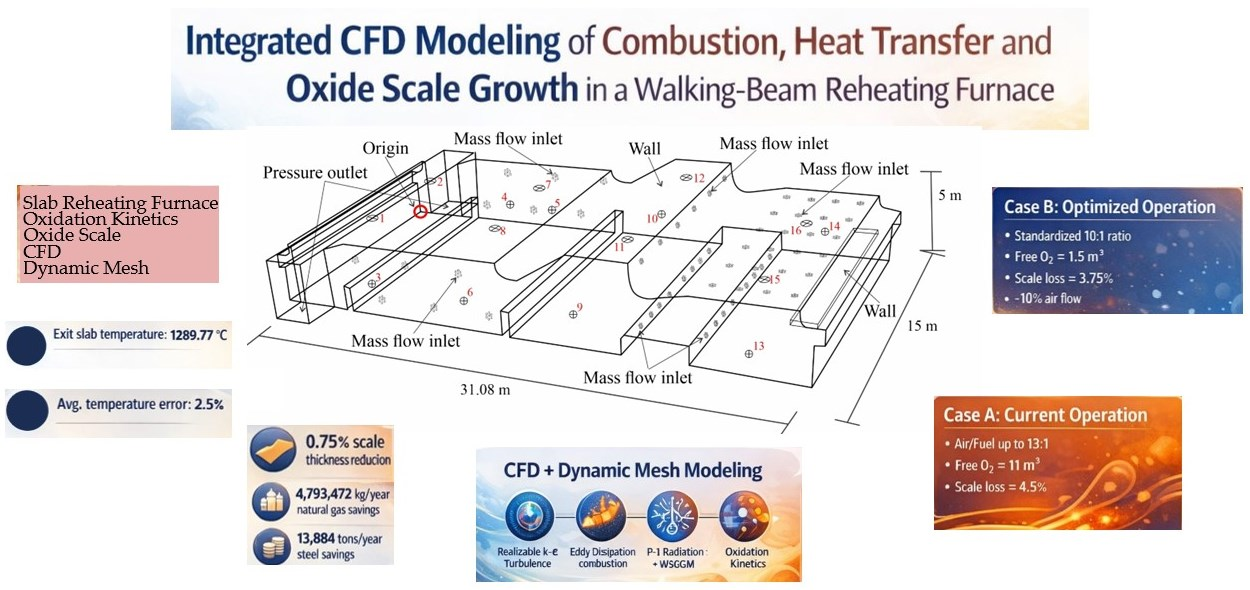
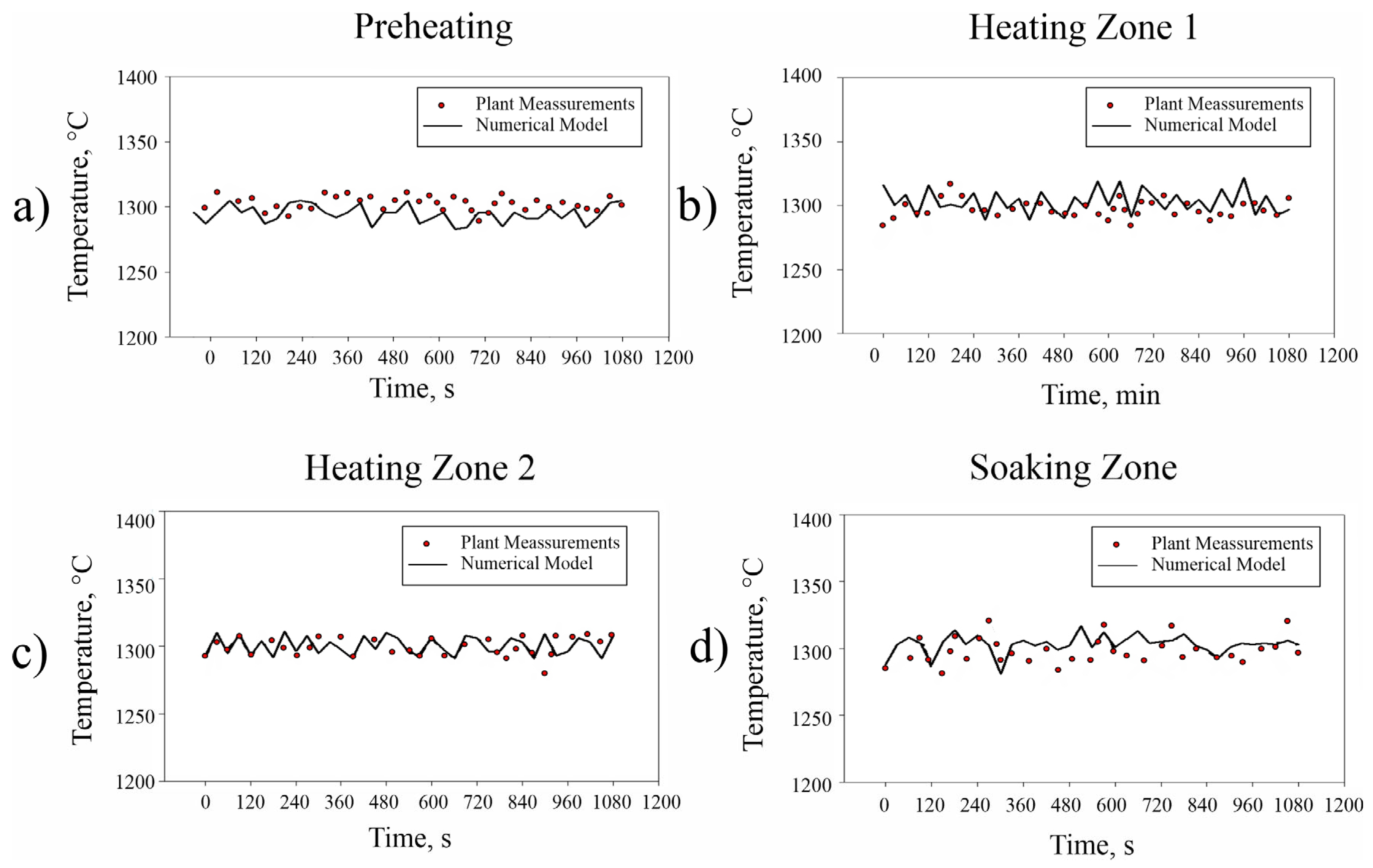
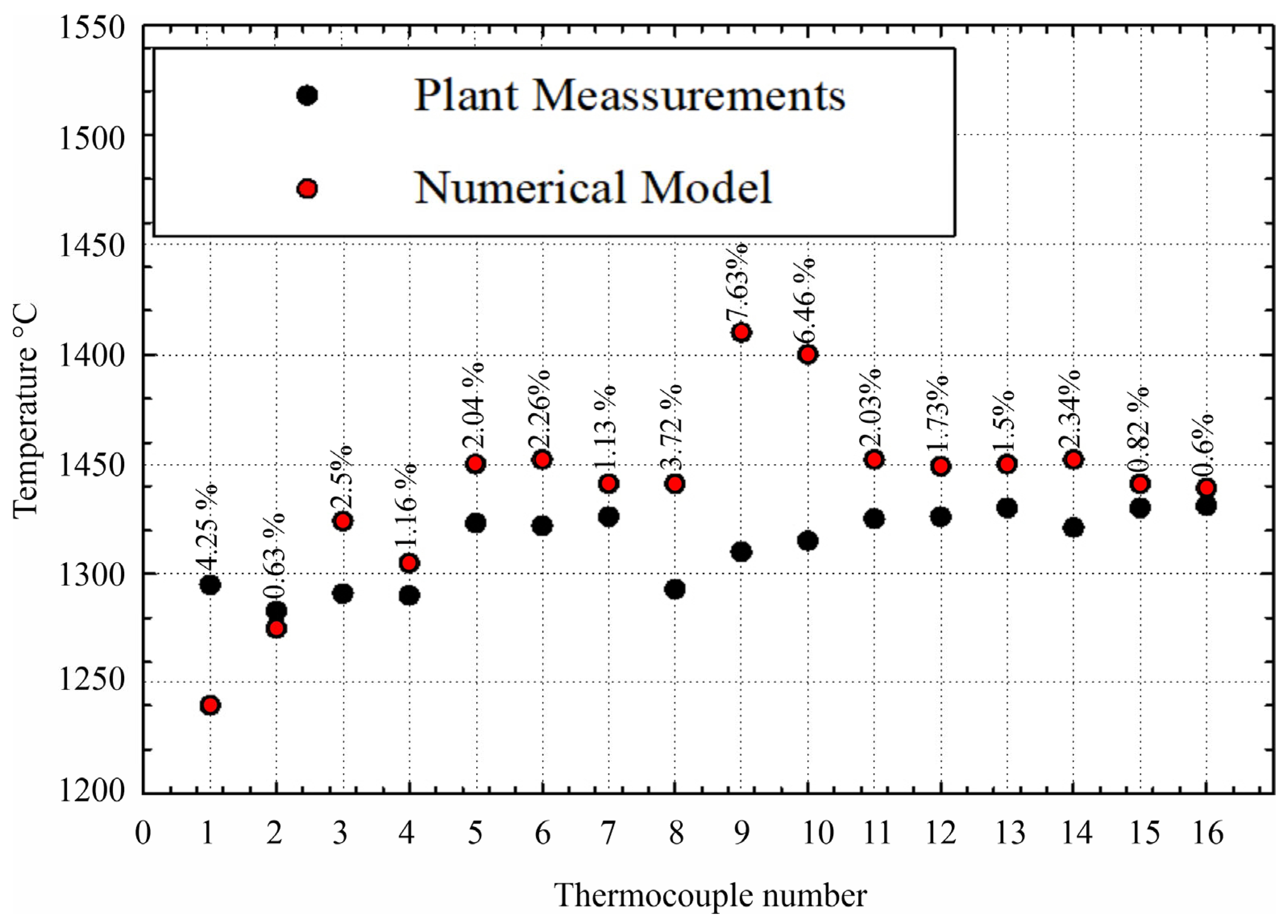
- The implementation of the CFD model, integrating the realizable turbulence model, P-1 radiation model, and Eddy-Dissipation combustion model, enabled the validation of the simulation with high accuracy, achieving an average error below 2.5% in the measured temperatures. This low deviation supports the robustness and reliability of the model, making it applicable for the optimization of thermal processes in industrial furnaces.
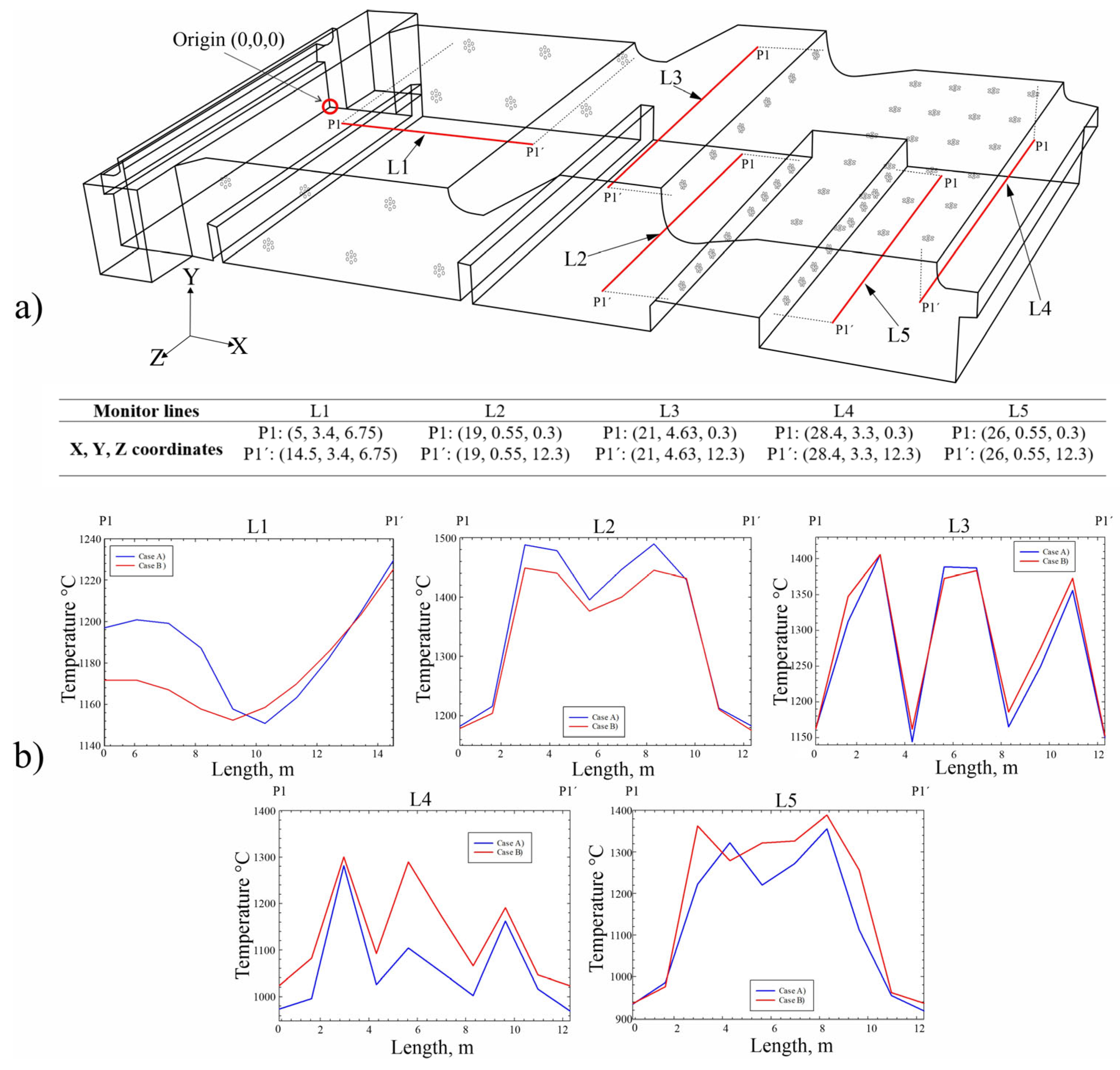
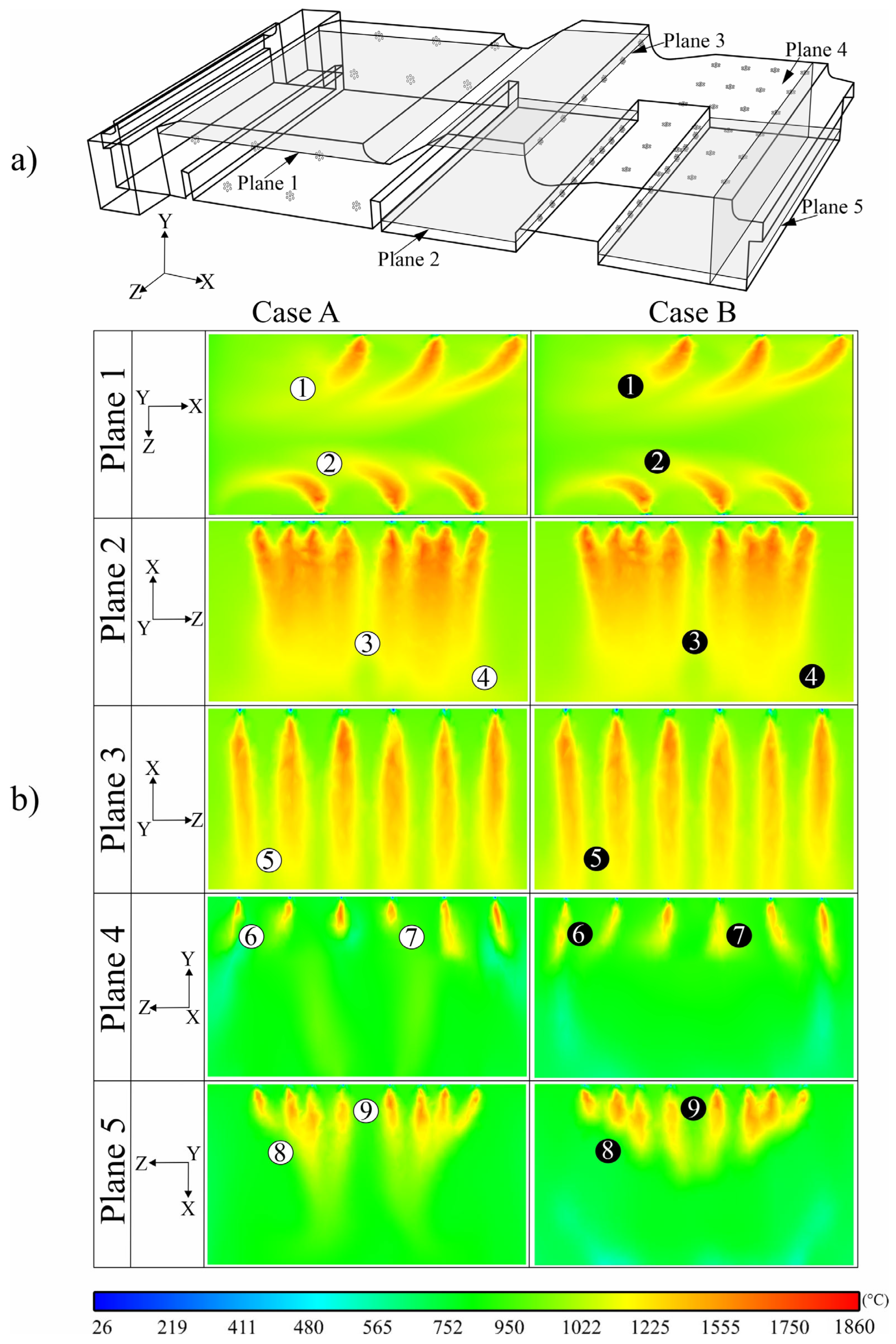
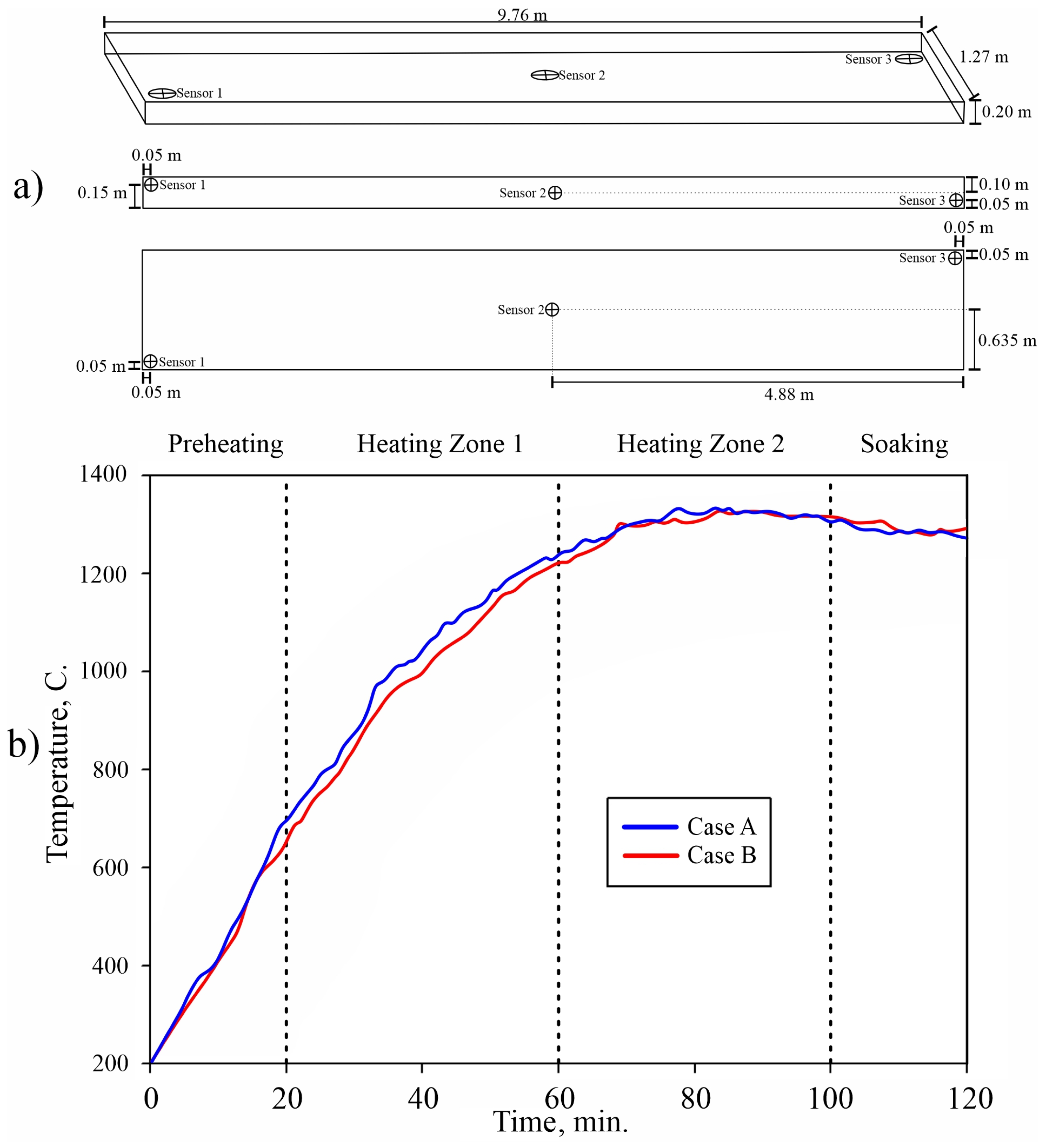
- Under the optimized conditions (Case B), the thermal gradient across the slab width decreased by up to 12–18 °C compared with Case A. This is critical for ensuring steel quality, as a homogeneous temperature distribution minimizes defects and microstructural variations in the steel. The average exit temperature improved to 1289.77 °C, 16 °C above the current case but still within the target range (1250 ± 50 °C).
- The simulation reproduced the plant-measured temperatures with an average error of 2.5%. Adjusting the air–fuel ratio by reducing the air flow rate by 10% and standardizing the mixture at a 10:1 ratio resulted in more efficient combustion. Under these conditions, the target temperature was achieved without altering the production time, yielding significant energy savings and improved fuel consumption management.
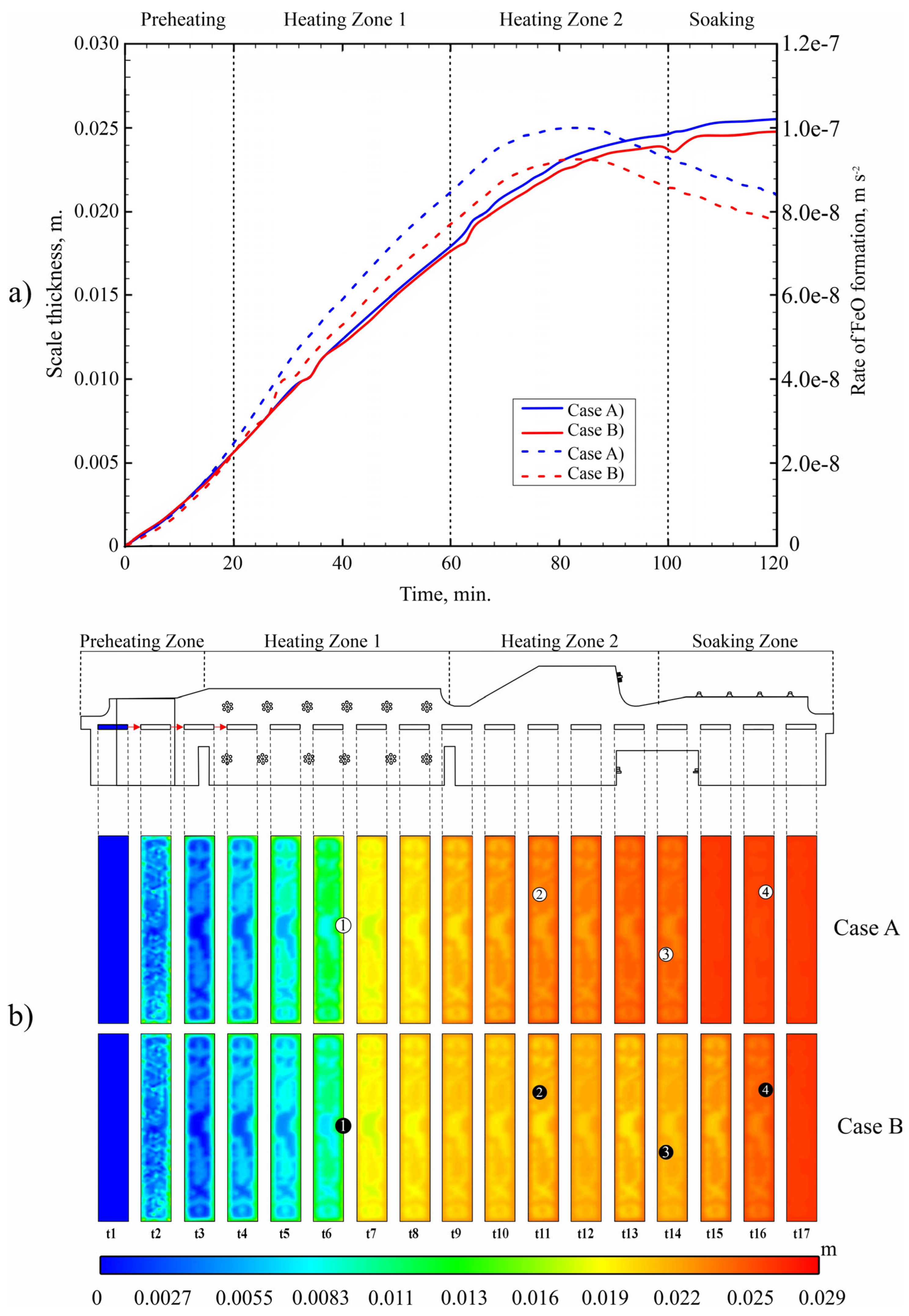
- The optimized conditions enabled a considerable reduction in scale formation on the steel surface. Specifically, a 0.75% decrease in the oxide layer thickness was observed, representing a reduction in the material losses from 4.5% to 3.75%. This benefit enhances the final product quality and reduces additional slag removal processes.
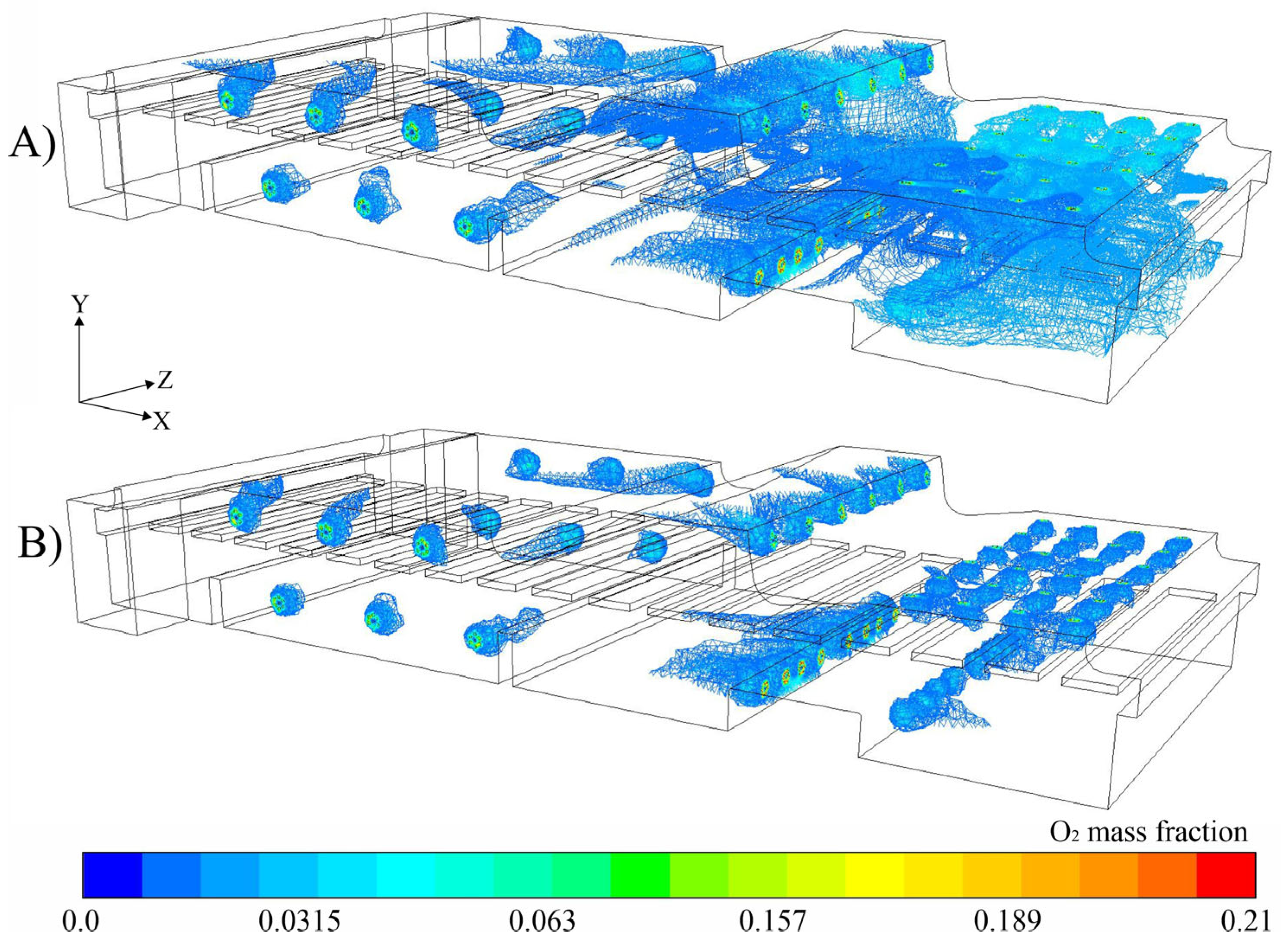
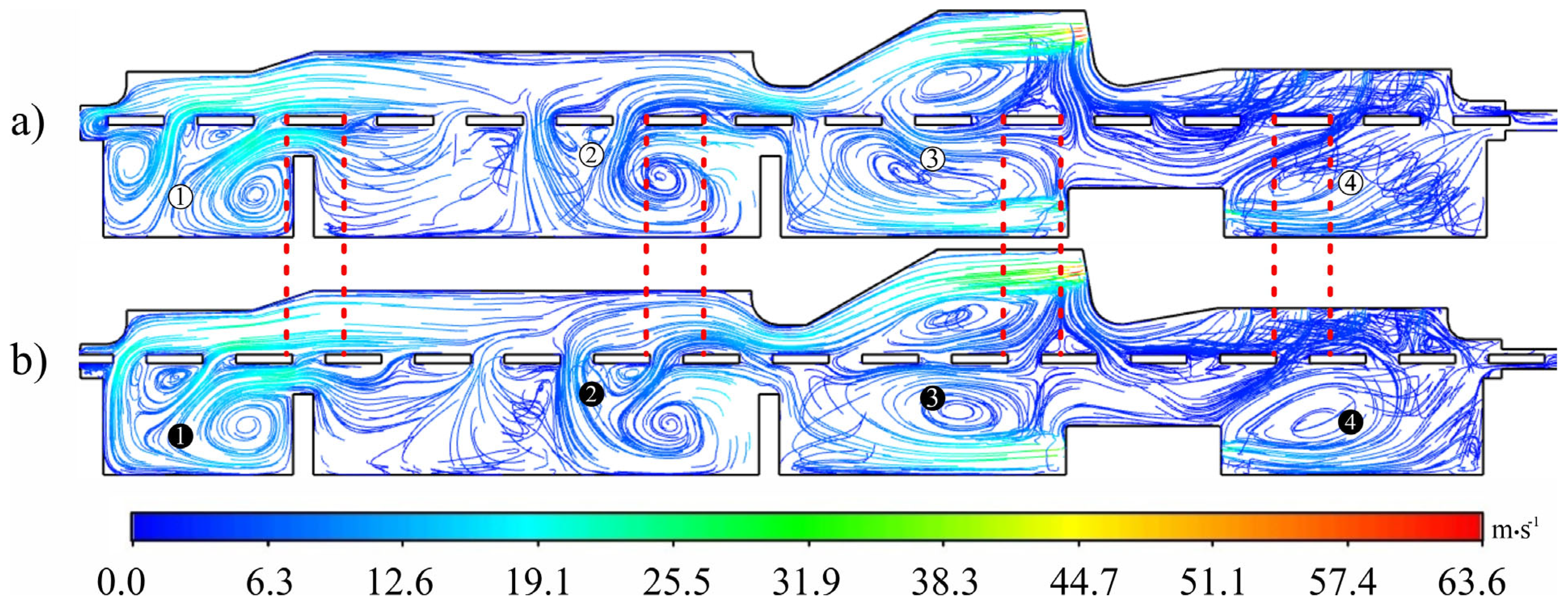
- The reduction in excess oxygen in the furnace atmosphere contributed to decreased surface oxidation. Even with a lower airflow rate, the required homogenization temperature was achieved in a less oxidizing environment, favoring slab surface integrity and minimizing defects. The excess free oxygen decreased from 4.9 × 10² mol to 6.7 × 101 mol, reducing the oxidative intensity and stabilizing the convective heat transfer.
Model Limitations
Author Contributions
Funding
Data Availability Statement
Acknowledgments
Conflicts of Interest
References
- Han, S.H.; Chang, D. Radiative slab heating analysis for various fuel gas compositions in an axial-fired reheating furnace. Int. J. Heat Mass Transf. 2012, 55, 4029–4036. [Google Scholar] [CrossRef]
- Vögele, S.; Grajewski, M.; Govorukha, K.; Rübbelke, D. Challenges for the European steel industry: Analysis, possible consequences and impacts on sustainable development. Appl. Energy 2020, 264, 114633. [Google Scholar] [CrossRef]
- Arreola-Villa, S.A.; Solorio-Díaz, G.; Vergara-Hernandez, H.J. Simulación numérica de un horno tipo empujador para palanquillas con formación de óxido. Ingenius Rev. Cienc. Tecnol. 2015, 13, 30–37. [Google Scholar] [CrossRef]
- Han, S.H.; Baek, S.W.; Kim, M.Y. Transient radiative heating characteristics of slabs in a walking beam type reheating furnace. Int. J. Heat Mass Transf. 2009, 52, 1005–1011. [Google Scholar] [CrossRef]
- Lindholm, D. A finite element method for solution of the three-dimensional time-dependent heat-conduction equation with application for heating of steels in reheating furnaces. Numer. Heat Transf. Part A 1999, 35, 155–172. [Google Scholar] [CrossRef]
- Tateno, T.; Hiruta, T.; Sodani, Y.; Maruyama, T.; Murata, S. Influence of heat pattern in reheating furnace on hot workability of 36%Ni-Fe slab. ISIJ Int. 2012, 52, 2260–2265. [Google Scholar] [CrossRef]
- Han, S.H.; Chang, D.; Kim, C.Y. A numerical analysis of slab heating characteristics in a walking beam type reheating furnace. Int. J. Heat Mass Transf. 2010, 53, 3855–3861. [Google Scholar] [CrossRef]
- Ahmed, Z.Y.; Lecompte, S.; De Raad, T.; De Paepe, M. Steady State model of a Reheating Furnace for determining slab boundary conditions. Energy Procedia 2019, 158, 5844–5849. [Google Scholar] [CrossRef]
- Chang, J.H.; Oh, J.; Lee, H. Development of a roller hearth furnace simulation model and performance investigation. Int. J. Heat Mass Transf. 2020, 160, 120222. [Google Scholar] [CrossRef]
- Li, B.; Zhao, Z.; Li, Y.; Wu, W.; Cang, D. Numerical simulation of fluid flow in a reheating furnace with multi-swirling-burners. J. Univ. Sci. Technol. Beijing 2003, 10, 20–23. [Google Scholar]
- Hsieh, C.T.; Huang, M.J.; Lee, S.T.; Wang, C.H. Numerical modeling of a walking-beam-type slab reheating furnace. Numer. Heat Transf. Part A 2008, 53, 966–981. [Google Scholar] [CrossRef]
- Hsieh, C.T.; Huang, M.J.; Lee, S.T.; Wang, C.H. A numerical study of skid marks on the slabs in a walking-beam type slab reheating furnace. Numer. Heat Transf. Part A 2010, 57, 1–17. [Google Scholar] [CrossRef]
- Gu, M.; Chen, G.; Liu, X.; Wu, C.; Chu, H. Numerical simulation of slab heating process in a regenerative walking beam reheating furnace. Int. J. Heat Mass Transf. 2014, 76, 405–410. [Google Scholar] [CrossRef]
- Casal, J.M.; Porteiro, J.; Míguez, J.L.; Vázquez, A. New methodology for CFD three-dimensional simulation of a walking beam type reheating furnace in steady state. Appl. Therm. Eng. 2015, 86, 69–80. [Google Scholar] [CrossRef]
- Lin, C.N.; Luo, Y.P.; Jang, J.Y.; Wang, C.H. Novel Approach to Estimate the Optimum Zone Fuel Mass Flow Rates for a Walking Beam Type Reheating Furnace. Heat Transf. Eng. 2017, 39, 586–597. [Google Scholar] [CrossRef]
- Wang, J.; Liu, Y.; Sundén, B.; Yang, R.; Baleta, J.; Vujanovic, M. Analysis of slab heating characteristics in a reheating furnace. Energy Convers. Manag. 2017, 149, 928–936. [Google Scholar] [CrossRef]
- Chen, Y.; Liu, X.; Silaen, A.K.; Johnson, K.; Zhou, C.Q. Investigation of combustion and heat transfer in an industrial reheating furnace using CFD. In CFD Modeling and Simulation in Materials Processing 2018; Springer: Cham, Switzerland, 2018. [Google Scholar] [CrossRef]
- Liu, X.; Worl, B.; Tang, G.; Silaen, A.K.; Cox, J.; Johnson, K.; Bodnar, R.; Zhou, C.Q. Numerical Simulation of Heat Transfer and Scale Formation in a Reheat Furnace. Steel Res. Int. 2018, 90, 1800385. [Google Scholar] [CrossRef]
- Calderón-Rojas, M.U.; Hernandez-Bocanegra, C.A.; Ramos-Banderas, J.A.; Lopez-Granados, N.M.; Solorio-Diaz, G.; Mondoza-de la Rosa, L.A. Analysis of the thermal-kinetic-fluid-dynamic profile of a slab reheating furnace using cfd-dynamic mesh. DYNA 2025, 100, 23–29. [Google Scholar] [CrossRef]
- Calderón-Rojas, M.U.; Hernandez-Bocanegra, C.A.; Ramos-Banderas, J.A.; Solorio-Diaz, G.; López-Soria, J.J. Comparative Study of Two Methodologies for the Analysis of the Thermal Evolution of Steel Slabs in a Reheating Furnace. In Materials Processing Fundamentals 2025; Anderson, A., Sabau, A.S., Iloeje, C., Lazou, A., Molnar, K.M., Eds.; Springer: Cham, Switzerland, 2025; pp. 141–152. [Google Scholar] [CrossRef]
- Lemus-Ávalos, L.; Ramos-Banderas, J.Á.; Hernández-Bocanegra, C.A.; Calderón-Rojas, M.U.; Solorio-Díaz, G. Energy optimization of a steel slab reheating furnace through the use of swirl and diffusion burners using a new mathematical simulation methodology. Numer. Heat Transf. Part B Fundam. 2024, 86, 4094–4111. [Google Scholar] [CrossRef]
- Calderón-Rojas, M.U.; Hernández-Bocanegra, C.A.; Ramos-Banderas, J.A.; Lopez-Granados, N.M.; Solorio-Diaz, G. Thermal improvement of a slab reheating furnace with reduced fuel consumption and its effect on scale generation through mathematical simulation. Combust. Theory Model. 2025, 29, 507–525. [Google Scholar] [CrossRef]
- Li, C.; Huang, Y.; Sun, J.; Ni, Y.; Lu, L. Numerical simulation of pressure distribution in a walking-beam type reheating furnace. IOP Conf. Ser. Earth Environ. Sci. 2020, 467, 012025. [Google Scholar] [CrossRef]
- Lee, D.E.; Jang, J.H.; Kim, M.Y. A numerical study on the slab heating characteristics in a reheating furnace with the formation and growth of scale on the slab surface. In Proceedings of the ASME 2009 Heat Transfer Summer Conference collocated with the InterPACK09 and 3rd Energy Sustainability Conferences; ASME: New York, NY, USA, 2010. [Google Scholar] [CrossRef]
- Jaklič, A.; Kolenko, T.; Zupančič, B. The influence of the space between the billets on the productivity of a continuous walking-beam furnace. Appl. Therm. Eng. 2005, 25, 783–795. [Google Scholar] [CrossRef]
- Jang, J.H.; Lee, D.E.; Kim, C.; Kim, M.Y. Prediction of Furnace Heat Transfer and Its Influence on the Steel Slab Heating and Skid Mark Formation in a Reheating Furnace. ISIJ Int. 2008, 48, 1325–1330. [Google Scholar] [CrossRef]
- Lee, D.E.; Kim, M.Y. Optimum residence time for steel productivity and energy saving in a hot rolled reheating furnace. J. Mech. Sci. Technol. 2013, 27, 2869–2877. [Google Scholar] [CrossRef]
- Sapra, G.; Chander, S. Effect of operating and geometrical parameters of tangential entry type dual swirling flame burner on impingement heat transfer. Appl. Therm. Eng. 2020, 181, 115936. [Google Scholar] [CrossRef]
- Ji, W.; Li, G.; Wei, L.; Yi, Z. Modeling and Determination of Total Heat Exchange Factor of Regenerative Reheating Furnace Based on Instrumented Slab Trials. Case Stud. Therm. Eng. 2021, 24, 100838. [Google Scholar] [CrossRef]
- Chakchak, S.; Hidoiri, A.; Zaidaoui, H.; Chrigui, M.; Boushaki, T. Experimental and Numerical Study of Swirling Diffusion Flame Provided by a Coaxial Burner: Effect of Inlet Velocity Ratio. Fluids 2021, 6, 159. [Google Scholar] [CrossRef]
- Jang, J.Y.; Huang, J.B. Optimization of a slab heating pattern for minimum energy consumption in a walking-beam type reheating furnace. Appl. Therm. Eng. 2015, 85, 313–321. [Google Scholar] [CrossRef]
- Singh, V.K.; Talukdar, P.; Coelho, P.J. Performance evaluation of two heat transfer models of a walking beam type reheat furnace. Heat Transf. Eng. 2014, 36, 91–101. [Google Scholar] [CrossRef]
- Feng, M.; Mao, C.; Guo, Y.; Feng, Y. Numerical Simulation on the Slab Heat Transfer Behavior with Growth of Oxide Scale in a Pusher Type Reheating Furnace. In Mechanisms and Machine Science; Springer: Cham, Switzerland, 2021. [Google Scholar] [CrossRef]
- Mayr, B.; Prieler, R.; Demuth, M.; Potesser, M.; Hochenauer, C. Computational analysis of a semi-industrial furnace fired by a flat flame burner under different O2/N2 ratios using the steady laminar flamelet approach. J. Energy Inst. 2017, 90, 602–612. [Google Scholar] [CrossRef]
- Prieler, R.; Mayr, B.; Demuth, M.; Holleis, B.; Hochenauer, C. Prediction of the heating characteristic of billets in a walking hearth type reheating furnace using CFD. Int. J. Heat Mass Transf. 2016, 92, 675–688. [Google Scholar] [CrossRef]
- Mayr, B.; Prieler, R.; Demuth, M.; Moderer, L.; Hochenauer, C. CFD analysis of a pusher type reheating furnace and the billet heating characteristic. Appl. Therm. Eng. 2017, 115, 986–994. [Google Scholar] [CrossRef]
- Mayr, B.; Prieler, R.; Demuth, M.; Moderer, L.; Hochenauer, C. CFD modelling and performance increase of a pusher type reheating furnace using oxy-fuel burners. Energy Procedia 2017, 120, 462–468. [Google Scholar] [CrossRef]
- Landfahrer, M.; Prieler, R.; Mayr, B.; Gerhardter, H.; Schongrundner, R.; Klarner, J.; Hochenauer, C. Development of a numerically efficient CFD model to predict transient temperature distribution of mother tubes moving translative and rotative through a gas fired furnace. Appl. Therm. Eng. 2017, 123, 290–300. [Google Scholar] [CrossRef]
- Kim, J.G.; Huh, K.Y.; Kim, I.T. Three-dimensional analysis of the walking-beam-type slab reheating furnace in hot strip mills. Numer. Heat Transf. Part A 2000, 38, 589–591. [Google Scholar] [CrossRef]
- ANSYS Fluent. Ansys Fluent User’s Guide; ANSYS: Canonsburg, PA, USA, 2020; pp. 500–509. [Google Scholar]
- Hottel, H.C.; Sarofim, A.F. Models of radiative transfer in furnaces. J. Eng. Phys. 1970, 19, 1102–1114. [Google Scholar] [CrossRef]
- Launder, B.E.; Spalding, D.B. The numerical computation of turbulent flows. Comput. Methods Appl. Mech. Eng. 1974, 3, 269–289. [Google Scholar] [CrossRef]
- Huang, M.J.; Hsieh, C.T.; Lee, S.T.; Wang, C.H. A coupled numerical study of slab temperature and gas temperature in the walking-beam-type slab reheating furnace. Numer. Heat Transf. Part A 2008, 54, 625–646. [Google Scholar] [CrossRef]
- Arreola-Villa, S.A.; Vergara-Hernandez, H.J.; Solorio-Diaz, G.; Perez-Alvarado, A.; Vazquez-Gómez, O.; Chávez-Campos, G.M. Kinetic study of oxide growth at high temperature in low carbon steel. Metals 2022, 12, 147. [Google Scholar] [CrossRef]
- Incropera, F.P.; Dewitt, D.P. Fundamentals of Heat and Mass Transfer; John Wiley & Sons: Hoboken, NJ, USA, 1996; p. 827. [Google Scholar]
- Potter, M.C.; Wiggert, D.C.; Ramadan, B.H. Mechanics of Fluids; Cengage Learning: Boston, MA, USA, 2012; pp. 102–108. [Google Scholar]
- Ghannam, B.; Nemer, M.; El Khoury, K.; Yuen, W. An efficient CPU-GPU implementation of the multiple absorption coefficient zonal method (MACZM). Numer. Heat Transf. Part B 2012, 62, 439–461. [Google Scholar] [CrossRef]
- Sayah, H.; Nemer, M.; Nehmé, W.; Clodic, D. Computational fluid dynamics modeling of a self-recuperative burner and development of a simplified equivalent radiative model. J. Heat Transf. 2012, 134, 121201. [Google Scholar] [CrossRef]
- Tang, G.; Wu, B.; Bai, D.; Wang, Y.; Bodnar, R.; Zhou, C.Q. Modeling of the slab heating process in a walking beam reheating furnace for process optimization. Int. J. Heat Mass Transf. 2017, 113, 1142–1151. [Google Scholar] [CrossRef]
- Tang, G.; Wu, B.; Bai, D.; Wang, Y.; Bodnar, R.; Zhou, C.Q. CFD modeling and validation of a dynamic slab heating process in an industrial walking beam reheating furnace. Appl. Therm. Eng. 2018, 132, 779–789. [Google Scholar] [CrossRef]
- Dianyu, E.; Yifeng, Y.; Lingyi, W.; Yingxin, Y.; Yonggang, L.; Chao, C.; Jiaxin, C.; Linglin, L. Numerical investigation into the impact of oxy-fuel combustion on the thermochemical state and slab heating behaviour inside a metallurgical heating furnace. Int. Commun. Heat Mass Transf. 2024, 159, 108263. [Google Scholar] [CrossRef]
- ASTM A36/A36M-19; Standard Specification for Carbon Structural Steel. ASTM International: West Conshohocken, PA, USA, 2019.

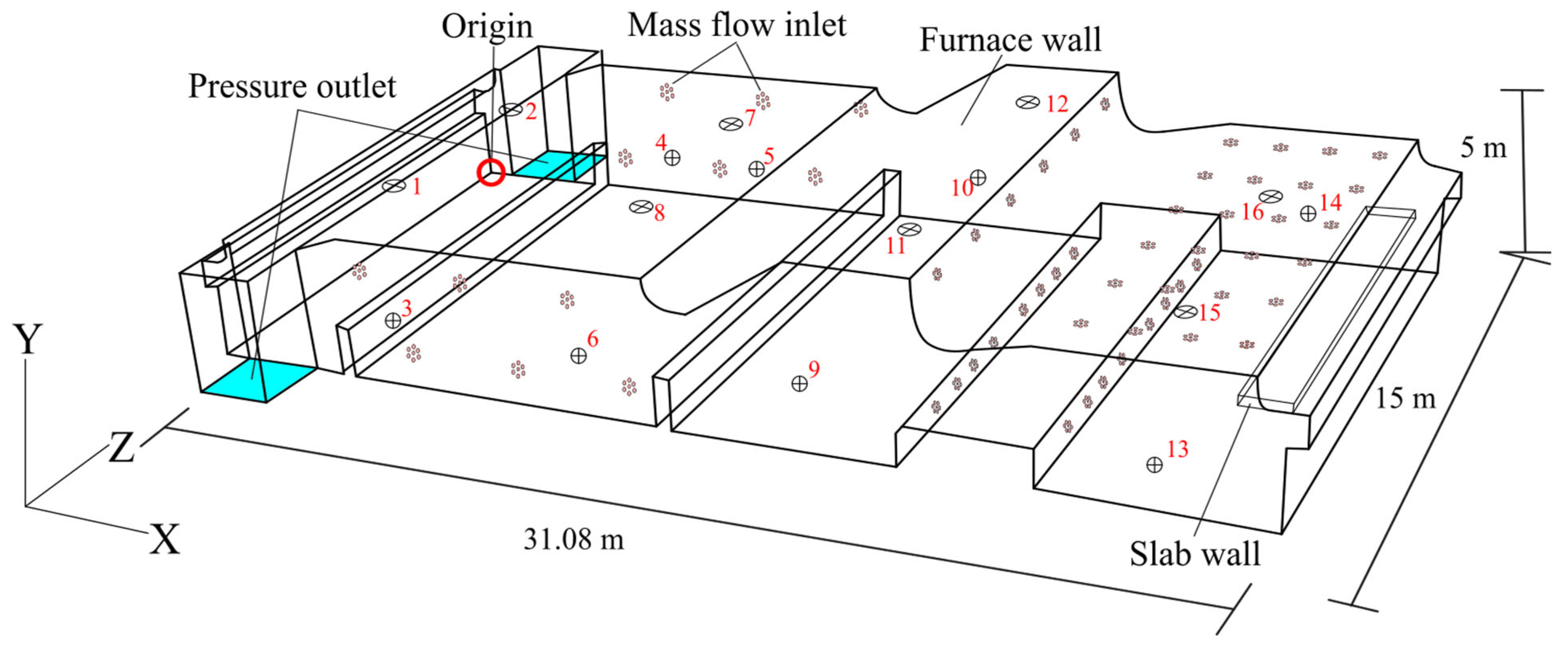






| Location | Boundary Condition | Value |
|---|---|---|
| Wall furnace | Temperature | 1200 °C |
| Extractor hoods | Constant pressure output | 94,859.94 Pa |
| Wall slab | Couple | - |
| Burners | Mass flow inlet | See Table 2 |
| Current Conditions (Case A) | Proposed Conditions (Case B) | |||||
|---|---|---|---|---|---|---|
| Burner’s Location | Air, kg·s1 | Methane, kg·s−1 | Ratio A:M | Air, kg·s−1 | Methane, kg·s−1 | Ratio A:M |
| North side burners | 8.699 | 0.473 | 10:1 | 7.829 | 0.426 | 10:1 |
| South side burners | 8.699 | 0.473 | 10:1 | 7.829 | 0.426 | 10:1 |
| Top burners | 5.353 | 0.291 | 10:1 | 4.818 | 0.262 | 10:1 |
| Rear burners | 5.687 | 0.309 | 10:1 | 5.119 | 0.278 | 10:1 |
| North front lower burners | 1.172 | 0.053 | 12:1 | 0.976 | 0.053 | 10:1 |
| South front lower burners | 1.184 | 0.053 | 12:1 | 0.987 | 0.053 | 10:1 |
| North soaking burners | 0.917 | 0.038 | 13:1 | 0.705 | 0.038 | 10:1 |
| South soaking burners | 0.943 | 0.042 | 12:1 | 0.786 | 0.042 | 10:1 |
| Property | Units | Air–Methane Mix | Steel | Alumina |
|---|---|---|---|---|
| Specific heat | J·kg−1·K−1 | 1000 | 480 | 880 |
| Density | kg·m−3 | 0.657 | 7850 | 3950 |
| Thermal conductivity | W·m−1·K−1 | 0.0454 | Polynomial * | 18 |
| Emissivity | - | WSGGM | 0.6 | 0.75 |
| Viscosity | kg·m−1·s−1 | 1.72 × 10⁻⁵ | - | - |
| Diffusivity | m2·s−1 | 2.879 × 10⁻⁵ | - | - |
| Scattering coefficient | 1·m−1 | 0 | - | - |
| Refractive index | - | 1 | - | - |
| Governing Equations | Equation |
| Continuity Equation [19,22] | |
| Momentum Equation [19,20] | |
| Energy Equation [19,20] | |
| Numerical Models | Equation |
| realizable model [19,20] | For : |
| For : | |
| Species Transport Model [19,20] | |
| P-1 Radiation Model [19,20] | |
| WSGGM [19,20] |
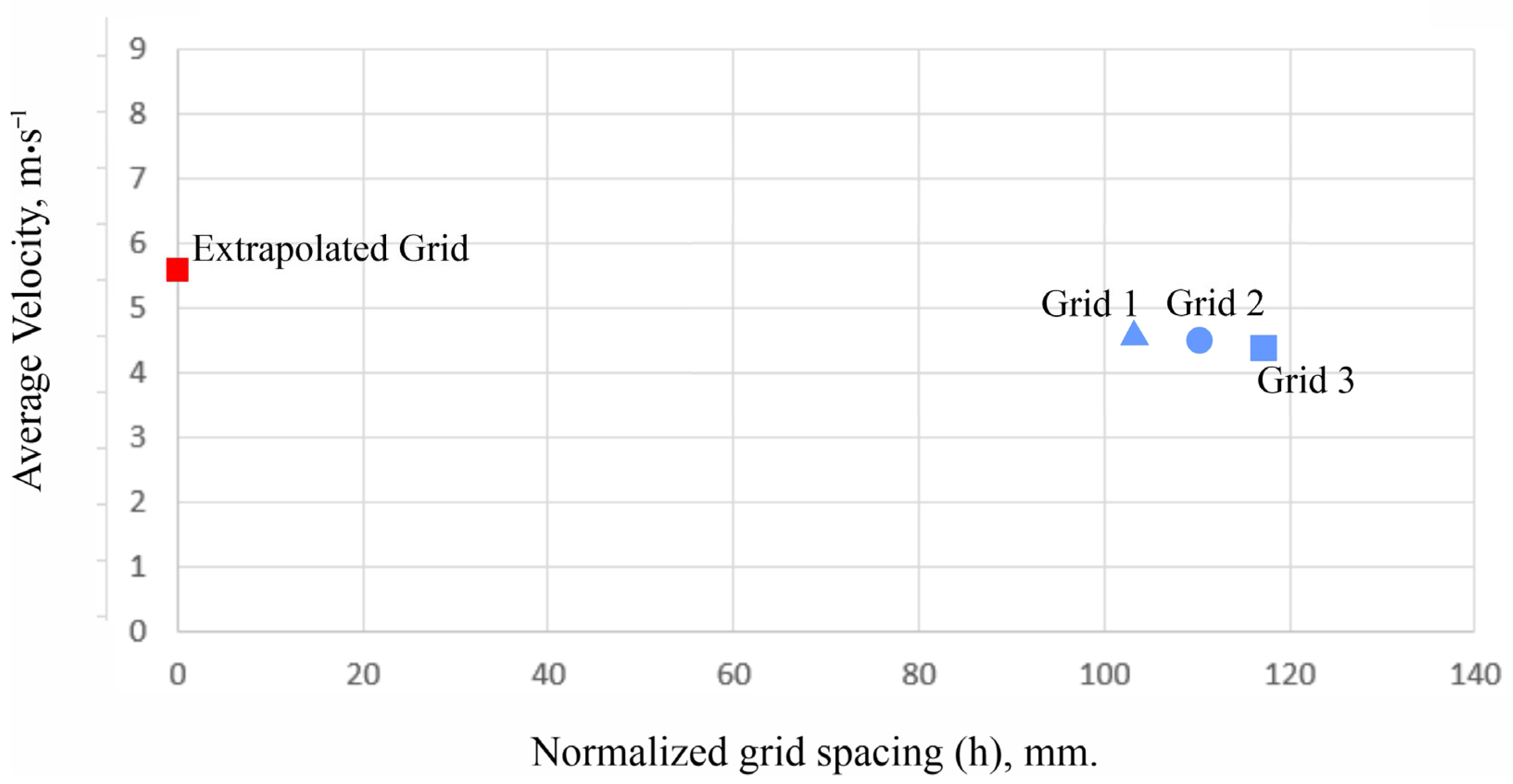
| Number of Elements | Size of Elements (mm) | Variable Velocity (m·s−1) | Geometry Volume m3 |
|---|---|---|---|
| 1,550,349 | 102 | 4.85 | 1750 |
| 1,250,000 | 113 | 4.75 | 1750 |
| 1,100,000 | 117 | 4.69 | 1750 |
Disclaimer/Publisher’s Note: The statements, opinions and data contained in all publications are solely those of the individual author(s) and contributor(s) and not of MDPI and/or the editor(s). MDPI and/or the editor(s) disclaim responsibility for any injury to people or property resulting from any ideas, methods, instructions or products referred to in the content. |
© 2026 by the authors. Licensee MDPI, Basel, Switzerland. This article is an open access article distributed under the terms and conditions of the Creative Commons Attribution (CC BY) license.
Share and Cite
Rojas, M.U.C.; Bocanegra, C.A.H.; Banderas, J.Á.R.; Granados, N.M.L.; Sandoval, N.D.H.; Bocanegra, J.C.H. Integrated CFD Modeling of Combustion, Heat Transfer, and Oxide Scale Growth in Steel Slab Reheating. Processes 2026, 14, 1011. https://doi.org/10.3390/pr14061011
Rojas MUC, Bocanegra CAH, Banderas JÁR, Granados NML, Sandoval NDH, Bocanegra JCH. Integrated CFD Modeling of Combustion, Heat Transfer, and Oxide Scale Growth in Steel Slab Reheating. Processes. 2026; 14(6):1011. https://doi.org/10.3390/pr14061011
Chicago/Turabian StyleRojas, Mario Ulises Calderón, Constantin Alberto Hernández Bocanegra, José Ángel Ramos Banderas, Nancy Margarita López Granados, Nicolás David Herrera Sandoval, and Juan Carlos Hernández Bocanegra. 2026. "Integrated CFD Modeling of Combustion, Heat Transfer, and Oxide Scale Growth in Steel Slab Reheating" Processes 14, no. 6: 1011. https://doi.org/10.3390/pr14061011
APA StyleRojas, M. U. C., Bocanegra, C. A. H., Banderas, J. Á. R., Granados, N. M. L., Sandoval, N. D. H., & Bocanegra, J. C. H. (2026). Integrated CFD Modeling of Combustion, Heat Transfer, and Oxide Scale Growth in Steel Slab Reheating. Processes, 14(6), 1011. https://doi.org/10.3390/pr14061011