Article

From Synergistic Preservation to Shelf-Life Prediction: Optimizing Storage Conditions for Kyoho Grapes with Subzero Temperature and Modified Atmosphere

1
College of Food Science and Technology, Shanghai Ocean University, Shanghai 201306, China
2
Marine Biomedical Science and Technology Innovation Platform of Lin-gang Special Area, Shanghai 201306, China
*
Author to whom correspondence should be addressed.
Processes 2026, 14(6), 1008; https://doi.org/10.3390/pr14061008
Submission received: 28 February 2026 / Revised: 16 March 2026 / Accepted: 20 March 2026 / Published: 21 March 2026
(This article belongs to the Special Issue Development of Innovative Processes in Food Engineering)

Abstract

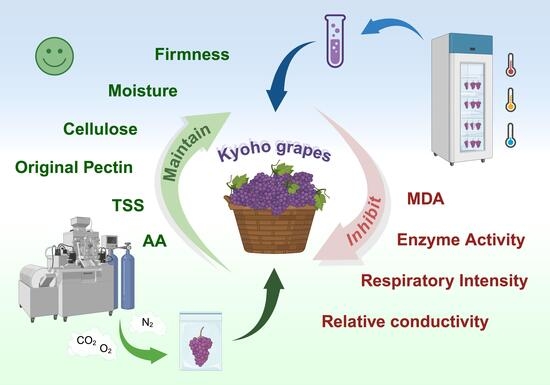
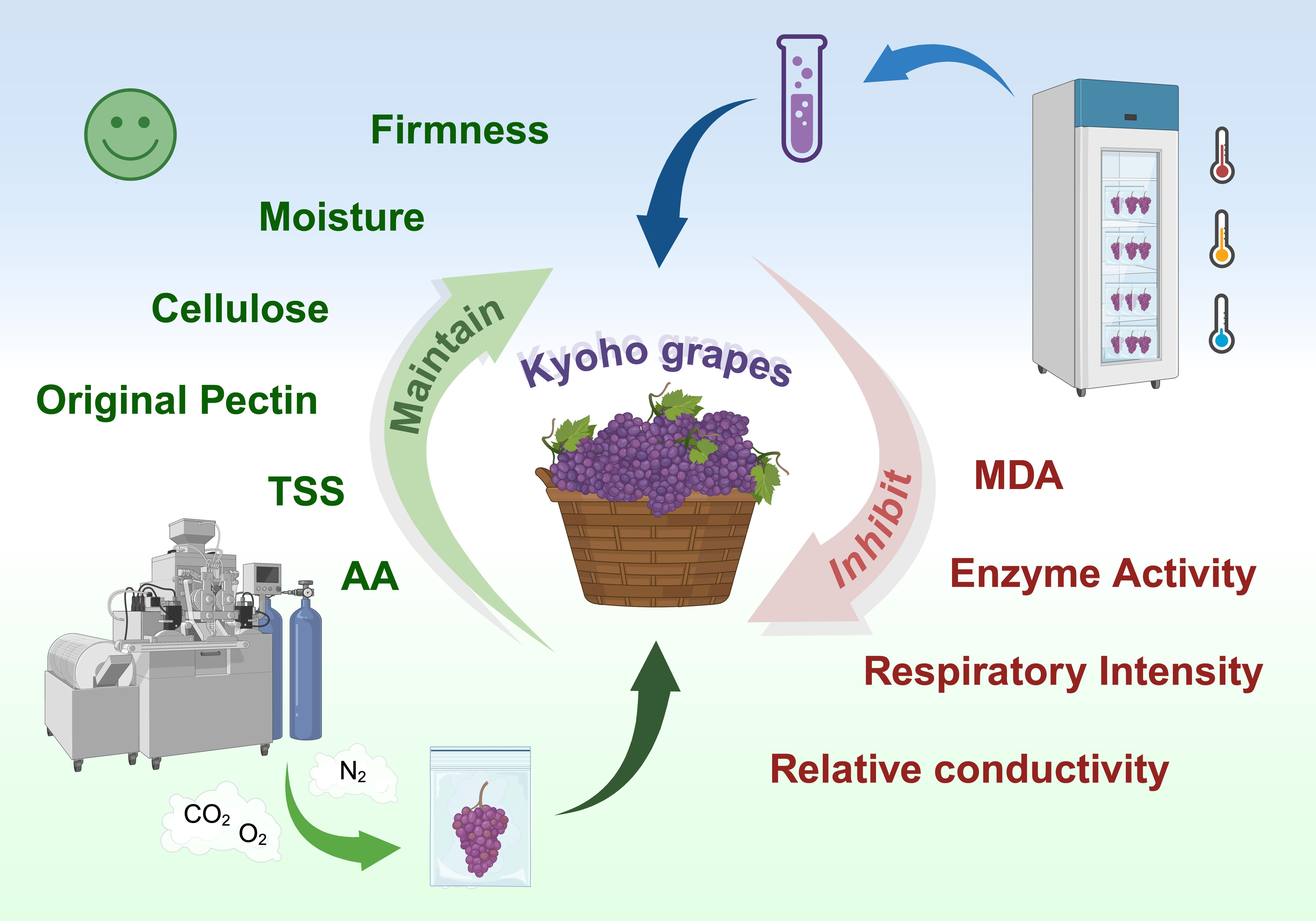
Kyoho grape, a leading table grape variety in China, is prone to rapid postharvest deterioration due to its soft texture and high respiration rate. Despite the use of low-temperature storage and modified atmosphere packaging (MAP), systematic studies defining the optimal combination of subzero temperature and gas composition for Kyoho grapes remain lacking. This study aimed to fill this gap by evaluating the synergistic effects of subzero temperature and MAP on quality preservation. Results demonstrated that storage at −1 °C most effectively maintained fruit firmness, stem freshness, and key biochemical components. Based on this temperature, a gas composition of 3% O2, 15% CO2, and 82% N2 was identified as the most effective, extending postharvest shelf life to 54 days. Additionally, a kinetic shelf-life prediction model based on firmness changes was developed with relative errors below 10%, demonstrating high accuracy. This study establishes an integrated preservation strategy combining subzero temperature (−1 °C) and optimized MAP (3% O2, 15% CO2, 82% N2) that significantly extends the shelf life of Kyoho grapes, providing a practical solution for enhancing postharvest quality.

Graphical Abstract

1. Introduction

The grape (Vitis vinifera L.) is a deciduous vine belonging to the family Vitaceae. As one of the earliest cultivated and most widely distributed fruit crops globally, it holds significant agricultural importance. Kyoho grape (Vitis labrusca × vinifera ‘Kyoho’), a Japanese hybrid cultivar developed in 1937, was introduced to China from Japan in 1959 and has since been extensively cultivated. It has become the leading table grape variety in the country [1]. In 2023, the planting area of Kyoho grapes accounted for about one-third of the total grape planting area in China, with a production of over 3.2 million tons. This variety is favored by consumers for its delicious taste and nutritional value [2].
However, Kyoho grapes have a soft texture, high moisture content, and a high respiratory rate. Inadequate postharvest storage and packaging often lead to problems such as wilting, softening, decay, berry shatter, and postharvest diseases [3]. Currently, common grape packaging in the market includes plastic baskets, cartons, and mesh bags. These packaging types generally offer limited protective functions, resulting in a short shelf life of typically 1–2 weeks. Therefore, appropriate packaging methods are essential for maintaining the postharvest quality of Kyoho grapes. Furthermore, with the rapid development of emerging distribution channels and consumption patterns such as e-commerce and supermarkets, there is a growing need for safe, environmentally friendly, simple, practical, and effective preservation methods for storage and transportation.
To address postharvest losses, two complementary core technologies are widely employed: precise temperature management and modified atmosphere packaging (MAP). Low-temperature storage is fundamental for slowing fruit metabolism and delaying senescence. First, low-temperature storage is fundamental for slowing fruit metabolism. It is widely accepted that low temperatures can maintain grape appearance and delay senescence [4]. Specifically, subzero temperatures, which are above the freezing point of grapes, represent a more advanced and precise low-temperature strategy. By further retarding fruit metabolism and nutrient consumption without causing freeze damage, subzero temperatures can more successfully delay ripening and softening while maintaining freshness. By retarding fruit metabolism and nutrient consumption, low postharvest temperatures can successfully delay ripening and softening while maintaining freshness [5,6]. Second, MAP technology works by altering the gas composition around the product [7]. It is used to prevent water loss, reduce metabolic activity, delay browning, lower respiration rate, and inhibit microbial growth. Research has shown its efficacy in maintaining berry firmness and inhibiting microorganisms in table grapes [8]. In addition, understanding the molecular mechanisms of microbial decay and the impact of environmental factors on metabolic pathways can also provide a deeper understanding of how MAP conditions affect post-harvest decay [9,10].
Despite the established benefits of low temperature and MAP, their optimal application for Kyoho grapes remains underexplored and requires precise calibration. Current research on fruits often focuses on either hypoxia or high-oxygen MAP, and findings from other commodities may not directly translate. In practice, low-oxygen MAP has been widely adopted for high-value fruits such as apricot fruit [11]. For strawberries, studies have shown that initial high-oxygen atmospheres can effectively retard mold growth [12]. Crucially, there is a lack of systematic research defining the synergistic effect between the most effective subzero storage temperature and the optimal MAP gas composition specifically for Kyoho grapes. This gap hinders the development of a tailored, maximally effective preservation protocol for this economically vital cultivar.
Therefore, this study aims to fill this knowledge gap by systematically developing an integrated preservation strategy for Kyoho grapes. This work seeks to first identify the optimal storage temperature by evaluating quality retention across a controlled temperature gradient. Building upon this foundation, it will then determine the most effective MAP gas formulation specifically tailored for this cultivar. Furthermore, the study intends to develop a shelf-life prediction model based on key quality metrics, thereby providing direct technical support to enhance supply chain resilience and reduce postharvest losses for the industry.

2. Materials and Methods

2.1. Preparation of Grape Samples

Fresh Kyoho grapes were harvested from Pudong Orchard in Shanghai, China. Grape clusters were selected based on a comprehensive evaluation to ensure sample homogeneity and consistent maturity: appearance (uniform purple-black color with <2% green berries), texture (firmness > 10 N), total soluble solids (TSS > 15%), and microbial safety (total aerobic plate count < 104 CFUg−1). Only clusters with uniform size and no visible disease were selected. The initial mass of each cluster was approximately 450 ± 10 g, with individual fruit mass about 10 ± 1 g. To remove surface impurities, the grapes were gently rinsed under cold running water. After rinsing, they were drained and then carefully blotted dry with paper towels to remove residual moisture. Finally, the grapes were placed in a single layer without touching to avoid compression.

2.2. Storage Conditions and Sampling

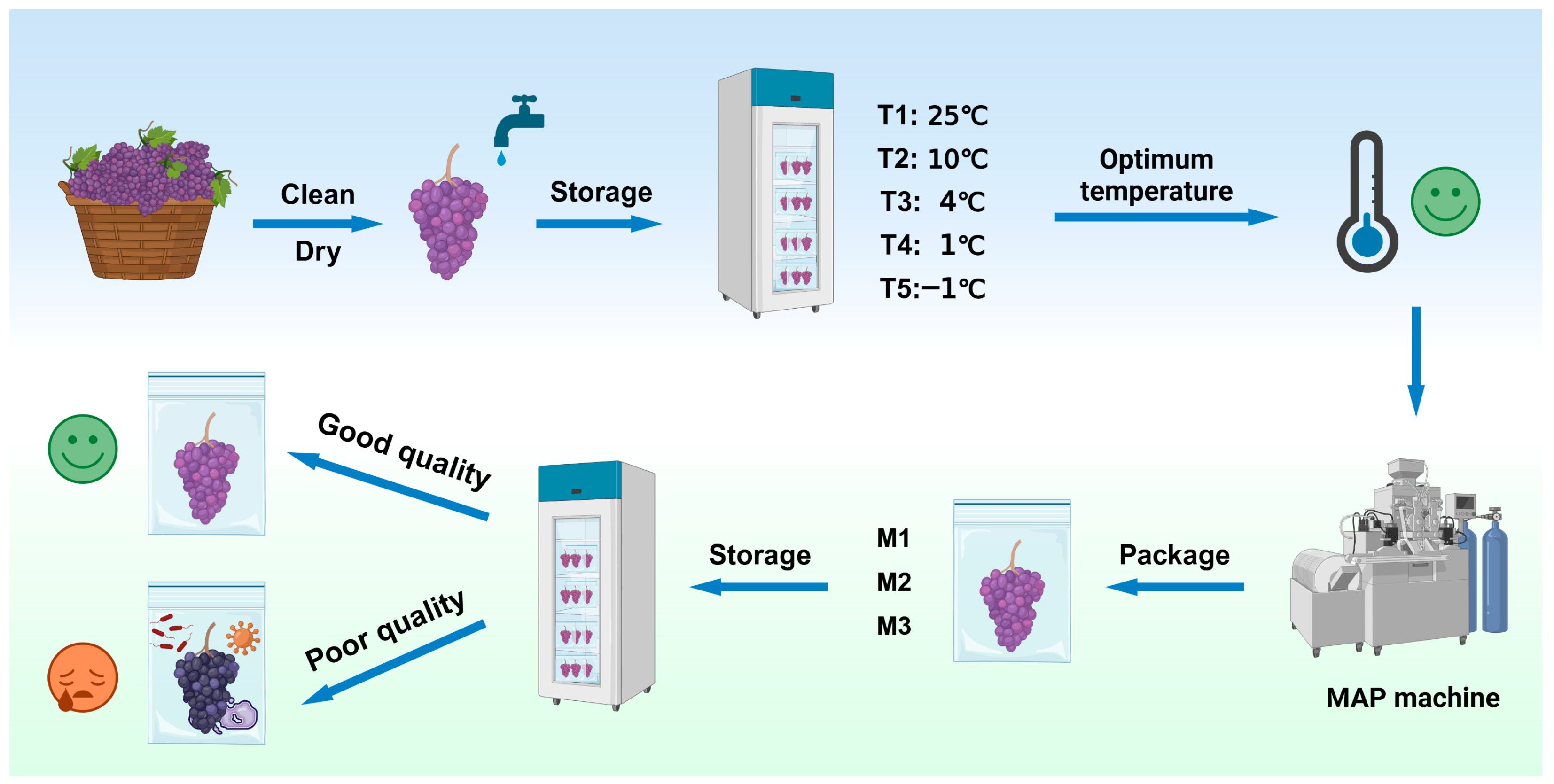
Temperature: The treated grapes were stored in food-grade polypropylene (PP) MAP boxes (34 × 18 × 45.5 cm) at five constant temperatures: 25 °C (T1), 10 °C (T2), 4 °C (T3), 1 °C (T4), and −1 °C (T5) (Figure 1). The total storage duration was 42 days. Quality measurements and photographs were taken every 2 days for groups T1 and T2, and every 7 days for groups T3, T4, and T5. Each indicator was measured in triplicate to ensure consistency and reliability.
MAP: Grapes were packaged in food-grade PP MAP boxes (34 × 18 × 45.5 cm) with three different gas mixtures: M1 (3% O2 + 10% CO2 + 87% N2), M2 (3% O2 + 15% CO2 + 82% N2), and M3 (80% O2 + 10% CO2 + 10% N2) (Figure 1). The gas mixtures were filled, and the boxes were sealed using a semi-automatic box-type modified atmosphere packaging machine (Model MAP-JY420, Shanghai Jiyi Machinery Co., Ltd., Shanghai, China). All packages were stored at the optimal postharvest temperature for 54 days. At each sampling interval (every 9 days), grapes were removed from each treatment group for analysis. Relevant quality indicators were measured and documented photographically. Each indicator was measured in triplicate to ensure consistency and reliability.

2.3. Determination of Texture Analysis (Firmness)

For texture analysis, grape berries were placed under a 2 cm stainless steel probe using a texture analyzer (TA.XT Plus, Stable Micro System Ltd., Surrey, UK) with the following settings: fruit extrusion mode, a trigger force of 0.038 N, 30% deformation, a test speed of 30 mm s−1, and a return distance of 15 mm. This test helps assess how firmness changes throughout storage time [13].

2.4. Determination of Respiration Rate

The respiration rate was measured using the static method [14]. After placing the grape berries in a dryer (Huanyi Glass Instrument Co., Ltd., Taizhou, China), 20 mL of 0.4 mol L−1 NaOH was added to the bottom. The CO2 released by grape respiration was absorbed by the alkaline solution for 1 h. After a period of time, the lye was taken out, and two drops of phenolphthalein were added to 25 mL of saturated BaCl2. The respiration rate of the sample was then ascertained by titrating it with 0.1 mol L−1 oxalic acid.

2.5. Determination of Relative Conductivity

The relative conductivity was determined after slight modification with reference to the method proposed by Shuai et al. [15]. A puncher was used to remove round pulp grape slices that weighed 2 g and had a diameter of 5 mm. Thirty milliliters of distilled water were added to a test tube along with the sample. A digital conductivity meter (DDS-307A, INESA Co., Ltd., Shanghai, China) was used to test the initial conductivity. To find the ultimate conductivity, it was boiled once more for 20 min after standing for two hours and then allowed to cool to room temperature.

2.6. Determination of Moisture Content and Color of Fruit Stem

Moisture content: Grape stems (approximately 1 g) were cut into uniform lengths using a sterile blade and placed in a moisture analyzer (HX-Q10, Hutong Enterprise Group Co., Ltd., Shanghai, China). The samples were dried to constant weight, and the moisture content was recorded directly from the analyzer. Moisture content was expressed as a percentage of fresh weight.
Stem color: Stem color was measured using a colorimeter (YS6010, Sanen Times Technology Co., Ltd., Shenzhen, China). Parameters including lightness (L*), red–green (a*), and yellow–blue (b*) values were recorded, and the total color difference was calculated. The calculation equation for color difference (ΔE) is as follows.
Δ E = Δ L * 2 + Δ a * 2 + Δ b * 2

2.7. Determination of Total Soluble Solids (TSS) Content

A hand-held Abbe refractometer (HT119ATC, Yuanhengtong Technology Co., Ltd., Shenzhen, China) was used to determine TSS. Keep the temperature stable during the measurement, add 2–3 drops of the grape berry juice to be measured, and aim at the light source. Then record the refractometer readings.

2.8. Determination of Protopectin and Cellulose Content

Protopectin content: In this study, the protopectin kit was used for determination. The kits used in this study were purchased from Beijing Soleibao Technology Co., Ltd. (Beijing, China). All kits were stored and used according to the manufacturer’s instructions. The grape berries were treated under alkaline conditions to hydrolyze the protopectin into soluble pectin and further converted into galacturonic acid. Then, under strong acid conditions, the product was condensed with carbazole to form a purplish–red compound. Finally, quantitative analysis was performed by measuring the characteristic absorption peak at 530 nm using a U-1900i ultraviolet–visible (UV-Vis) spectrophotometer (SHIMADZU Corporation, Kyoto, Japan).
Cellulose content: The cellulose content was determined using a cellulose kit. The cellulose in the grape berries was broken down into β-D-glucose by heating it in an acidic environment. Subsequently, under the action of strong acid, it was reacted with the onion ketone chromogenic agent to determine its content.

2.9. Determination of Ascorbic Acid (AA) Content

Ascorbic acid (AA) content was determined by 2,6-dichloroindophenol titration [16]. Approximately 10 g of grape berries were weighed into a mortar and homogenized with 50 mL of 2% oxalic acid solution. The homogenate was then transferred to a 100 mL volumetric flask, rinsed with 1% oxalic acid solution, and diluted to volume. After shaking and allowing to stand for 10 min, the mixture was filtered. A 10 mL aliquot of the filtrate was titrated with calibrated 2,6-dichloroindophenol solution until a pink color persisted for 15 s. A blank titration was performed simultaneously.

2.10. Determination of Malonaldehyde (MDA) Content

MDA content was measured by the MDA kit. MDA reacts with thiobarbituric acid (TBA) under acidic and high-temperature conditions to form a reddish-brown trimethyl complex with a characteristic absorption peak at 532 nm. MDA content was calculated based on the absorbance of the sample measured using a UV-Vis spectrophotometer (SHIMADZU Corporation, Kyoto, Japan).

2.11. Determination of Enzyme Activity

Superoxide Dismutase (SOD) Activity: The SOD kit was used to measure SOD activity. The WST-1 method was used to measure the SOD activity. According to the instructions, the reagent was added and mixed thoroughly, then incubated in a 37 °C water bath for 30 min. Finally, the absorbance of the reaction solution at 450 nm was measured using a UV-Vis spectrophotometer. Ug−1 was used to express SOD activity.
Polyphenol Oxidase (PPO) Activity: The PPO kit was used to measure PPO activity. PPO catalyzes catechol to produce o-benzoquinone. The latter has characteristic light absorption at 410 nm. Absorbance was measured using a UV-Vis spectrophotometer. PPO activity was expressed as Ug−1.
Phenylalanine Ammonia-Lyase (PAL) Activity: The PAL kit was used to measure PAL activity. PAL cleaved L-phenylalanine to create trans-cinnamic acid and ammonia. At 290 nm, trans-cinnamic acid showed the highest absorption. The absorbance was measured using a UV-Vis spectrophotometer. PAL activity was calculated using the rate at which absorbance rose. PAL activity was expressed as Ug−1.

2.12. Construction and Verification of Shelf-Life Prediction Model

Sensory Score: Ten trained sensory panelists (aged 18–45) were randomly selected to participate in the evaluation. The appearance, color, odor, and texture of Kyoho grapes were assessed using a 10-point scale (Table S1). A score below 4 indicates that the sample is considered commercially unacceptable. To ensure objectivity, panelists evaluated the samples with their eyes closed. Three repetitions were performed for each test, and the average scores were calculated [17].
Correlation between Sensory Score and Indicators: Through the correlation analysis of each index and sensory score, the index with the highest correlation with sensory score was found, and the endpoint of shelf life was determined based on the change in the index, and then the corresponding shelf-life prediction model was established.
Determination of Kinetic Shelf-Life Prediction Model Parameters: Linear and nonlinear fitting of the selected quality index over storage time was performed to obtain fitting curves and calculate the zero-order and first-order reaction rate constants (k) [18,19]. The zero-order rate constant was derived from the slope of the linear fitting, and the first-order rate constant was obtained from the slope of the relationship between the logarithm of the quality index and time. The kinetic model with better fitting performance was selected according to the determination coefficient (R2). The parameters A and Ea in the model equation can be determined by Equation (2). By substituting these parameters into Equations (3) and (4), a suitable shelf-life prediction model was established.
Arrhenius equation:
k = A   exp E a R T
Zero-order kinetic shelf-life prediction model:
S L = | Q 0 Q | A   exp E a R T
First-order kinetic shelf-life prediction model:
S L = l n   ( Q / Q 0 ) A   exp E a R T
In the above formula, k is the rate constant; A is the pre-factor; Ea is the activation energy (kJ mol−1); R is the gas constant, 8.3144 J (mol·K)−1; T is the absolute temperature, K; SL is the shelf life, d.
Validation of Shelf-Life Prediction Model: According to the established shelf-life prediction model, the predicted shelf life of the Kyoho grape was calculated and compared with the measured data. The accuracy of the model in practical application is verified by analyzing the relative error.

2.13. Data Processing

All experiments were performed in triplicate. Data were analyzed using SPSS25.0 software, and graphs were plotted using Origin 2024.

3. Results and Discussion

3.1. Visual Quality

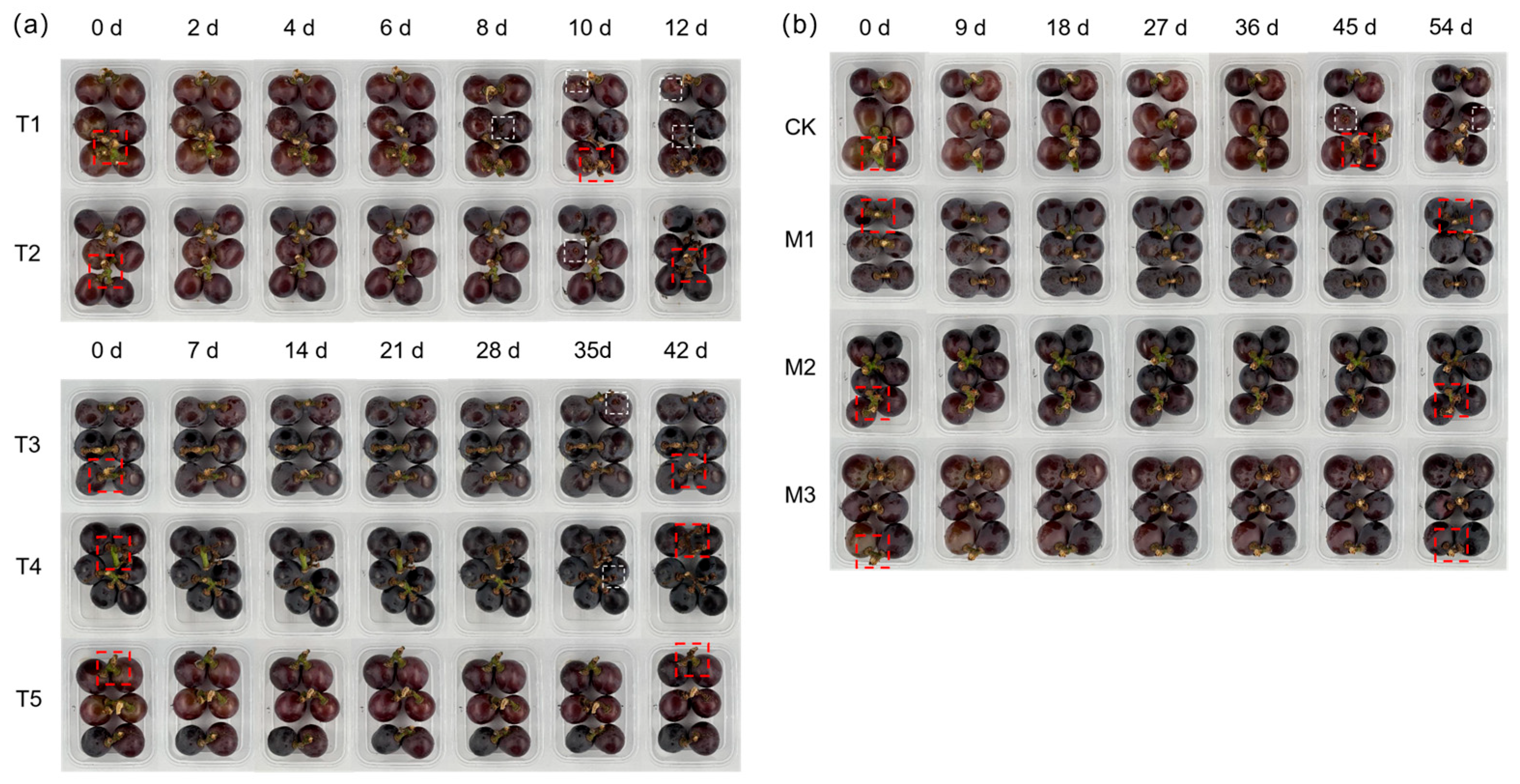
Consumers always prefer to choose grapes with fresh stems, because green and full stems are a symbol of freshness. As shown in Figure 2a and Figure S4, the color of the T1 stem had completely turned brown on the 10th day. Compared with the initial storage period, there was a significant color difference. At −1 °C, the fruit stem still retained some green on the 42nd day. This could be because low temperatures hinder the physiological and biochemical processes that lead to and facilitate stem browning. Low temperatures will slow down the oxidation of phenolic compounds into quinones and inhibit PPO activity. In the low temperature treatment group, T2 and T4 showed fruit abscission on the 35th day. This phenomenon did not appear in T5 during the 42 days of storage. This may be because low temperature hinders the signal transduction of abscission-related hormones (such as ethylene) and inhibits the activity of cell wall-degrading enzymes [20]. In addition, the grapes of T1 showed local mildew on the 10th day and obvious surface depression on the 12th day. Low-temperature treatment preserved the postharvest quality of grapes, extended their shelf life, and postponed the appearance of these occurrences during storage.
As shown in Figure 2b, adding MAP on the basis of the optimal storage temperature can effectively inhibit the local mildew and fruit shedding of grapes during storage. This may be because MAP and low temperature synergistically inhibited the activity of cellulase and pectinase, and delayed the decomposition of the cell wall in the abscission zone. In addition, MAP was also beneficial in inhibiting stem browning. This may be because it inhibits respiration rate and reduces ethylene production. In addition, it inhibits the activity of PPO [21].

3.2. Texture Analysis (Firmness)

One of the most important factors in determining the quality of a fruit is its firmness, as softer fruits are more prone to rot and degradation [22]. Fruit softening affects fruit taste, transportability, storage period, and economic value, so maintaining good firmness is an important part of postharvest preservation.
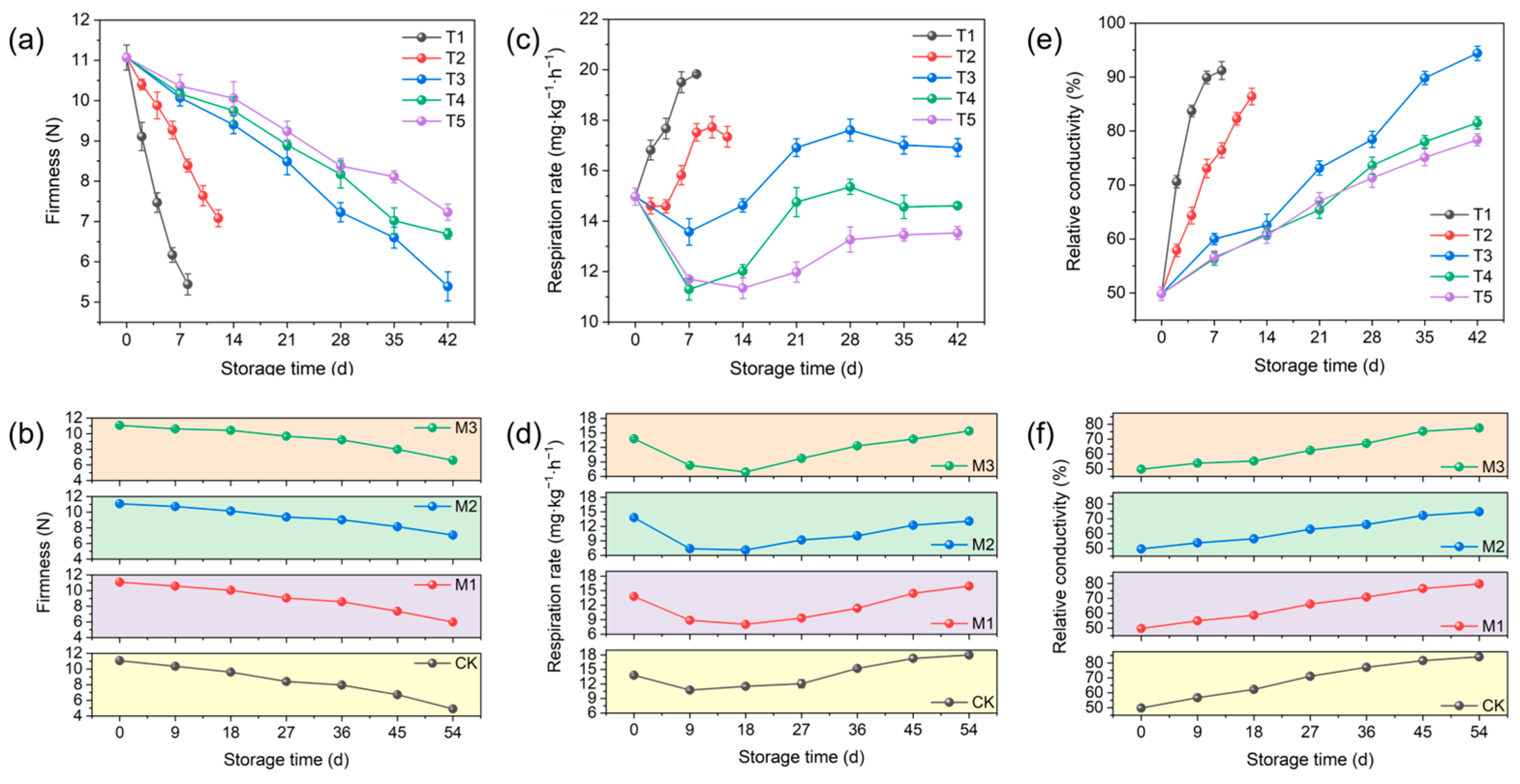
It can be seen from Figure 3a,b that the firmness of each group of grapes continued to decrease during storage under different storage conditions. As shown in Figure 3a, under all temperature conditions, the firmness of T1 and T2 grapes decreased rapidly, and T5 decreased most slowly. After 42 days of storage, the firmness of T5 was significantly higher than that of the other groups (p < 0.05). This could be due to the fact that low temperatures can slow down respiration and decrease enzyme activity. This reduces the loss rate of pectin and water in grapes. Thus, the higher firmness was maintained [23].
The firmness of grapes in the control group decreased most rapidly, as illustrated in Figure 3b. After 54 days of storage, the firmness value reached 4.9 N, representing a 55.9% reduction compared to the initial value. Throughout the storage period, grapes subjected to MAP treatments consistently exhibited higher firmness levels than those in the control group. Between day 18 and day 36, the firmness of M3 was slightly higher than that of M2. After 45 days of storage, both M2 and M3 resulted in significantly higher firmness compared to CK and M1 (p < 0.05). At the end of the storage period (54 days), all MAP groups maintained substantially higher firmness than the control group (p < 0.05). This shows that MAP can effectively delay the decline of grape fruit firmness value. This may be because MAP can inhibit the respiration and ethylene production of grapes and delay the degradation of grape protopectin and cellulose [24]. The M2 therapy group was the most effective at postponing the decline in grape fruit firmness. Similarly, Li et al. found that 10% and 20% CO2 treatment can also effectively maintain the firmness of strawberry fruit [25].

3.3. Respiration Rate

Fruit respiration is one of the main factors leading to postharvest quality loss [26]. Respiration directly reflects the metabolic activity and senescence rate of grapes. It significantly affects quality maintenance, storage life, and preservation effect [27]. In general, fruit metabolism is stronger at higher respiration rates.
As shown in Figure 3c, the respiration rate increases with storage temperature. Among them, the respiration rate of T1 and T2 increased rapidly during storage. This may be related to the high metabolic level and microbial activity of grapes caused by high temperature. After 21 days of storage, the respiration rate of grapes stored at −1 °C was significantly lower than that of other groups (p < 0.05). This indicates that −1 °C has the best effect on inhibiting the respiration rate of grapes. This proves that low temperature storage can inhibit the postharvest metabolism of fruits by inhibiting respiration rate, thus delaying fruit senescence.
As shown in Figure 3d, it was evident that under MAP, the respiration rate of the grapes in each group altered more slowly. In the midst of them, the small decrease in the early stage of storage may be due to the inhibition of respiration rate by low temperature and pre-cooling treatment [28]. During storage, the respiration rate of CK was continuously higher than that of MAP, indicating that MAP may be effective in preventing the respiration rate of grapes from increasing. After 36 days of storage, the respiration rate of M1 and M3 was higher than that of M2. This phenomenon was most obvious at 54 days of storage (p < 0.05). This showed that the gas ratio of 3% O2 + 15% CO2 + 82% N2 had the best inhibition effect on the respiration rate of grapes in the late storage period. A similar phenomenon also appeared in the preservation process of honeysuckle berries [29].

3.4. Relative Conductivity

The relative conductivity can also be quantified by quantifying the degree of leakage of cell contents (especially electrolytes). It indirectly reflected the damage of the cell membrane system caused by senescence, chilling injury, disease, or mechanical damage during storage [30]. As shown in Figure 3e, the relative conductivity of grapes stored at higher temperatures (T1 and T2) increased rapidly, followed by T3 and T4, while T5 exhibited the slowest increase and remained significantly lower than the other groups throughout storage (p < 0.05). These results indicate that higher storage temperatures accelerate the loss of cell membrane integrity, leading to increased electrolyte leakage and accelerated grape senescence. Storage at low temperatures can effectively postpone grape membrane degradation, slow the rise in relative conductivity, and preserve the integrity of the grape cell membrane [31].
CK showed the most increase in relative conductivity during storage, which was substantially higher than that of the other treatment groups (p < 0.05), as shown in Figure 3f. CK even increased by 34.3% after 54 days of storage. After 54 days of storage, the relative conductivity of M2 was 74.7%, significantly lower than that of the other treatment groups (p < 0.05). The lower relative conductivity in M2 indicates better preservation of cell membrane integrity. Elevated CO2 (15%) has been shown to reduce membrane lipid peroxidation by suppressing reactive oxygen species (ROS) accumulation and maintaining higher unsaturated fatty acid ratios in membrane lipids. In contrast, the high O2 concentration (80%) in M3 may promote ROS generation, accelerating membrane damage despite its CO2 content [32].

3.5. Moisture Content of Fruit Stem

During the storage of grapes, water loss and browning often occur in the stems. These phenomena can lead to fruit abscission and decay, thereby reducing the postharvest quality and commodity value of grapes [33]. High moisture content can maintain the elasticity and toughness of the fruit stem and reduce wilting and browning. It can extend the shelf life and reduce fruit loss and damage. Therefore, stem moisture content is one of the important indicators of grape quality and freshness. As the length of storage grew, the water content of grape stems decreased, as seen in Figure 4a,b.
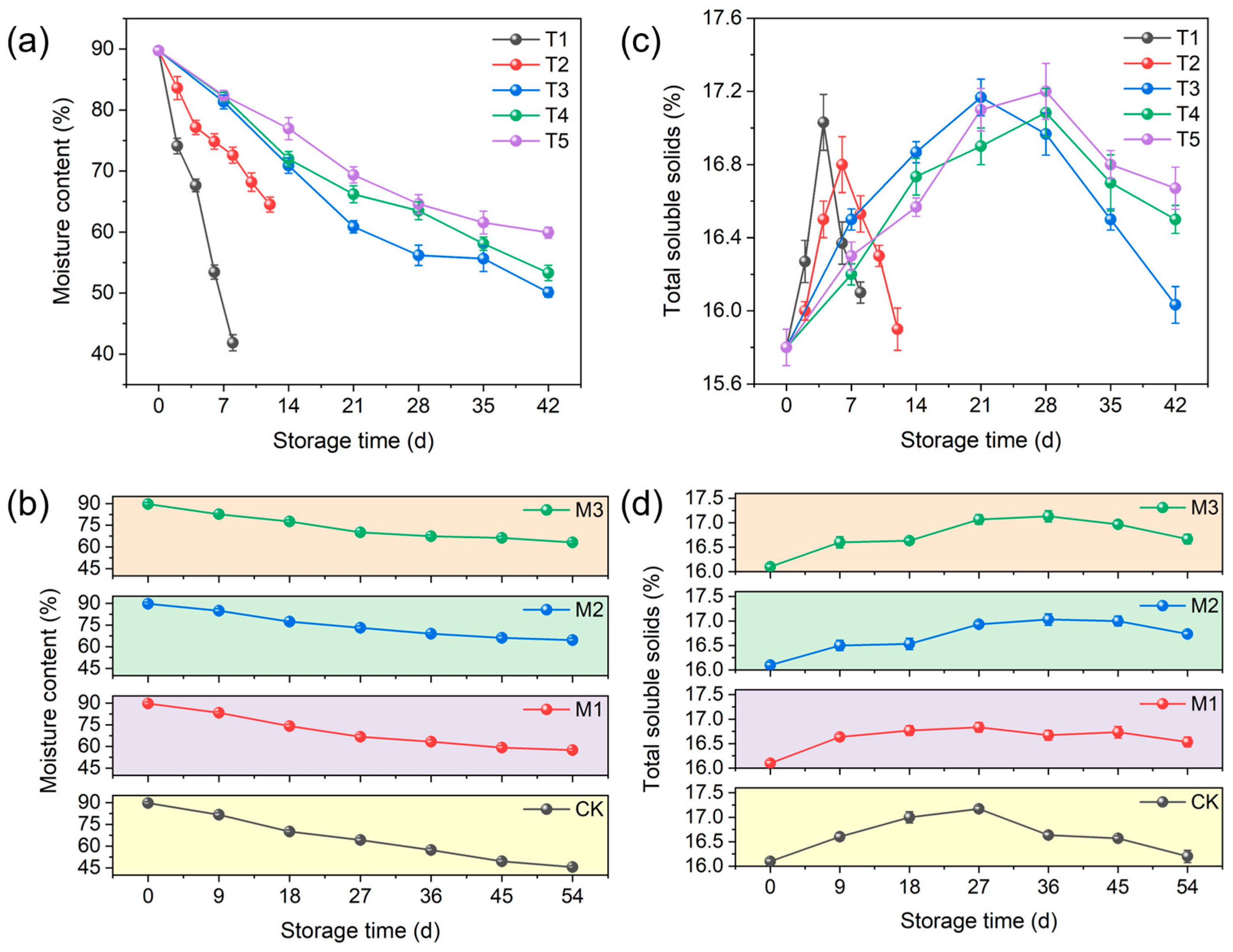
As Figure 4a illustrates, the water content decreases more noticeably at higher storage temperatures. After 42 days, the moisture content of the fruit stem of T5 decreased by only 33.24% compared with the initial stage of storage. Compared to the other groups, the water content of the fruit stem was substantially higher (p < 0.05). This shows that −1 °C storage can effectively delay the water loss and dry browning of the fruit stem. This could be due storage at low temperatures hinders transpiration and decreases the flow of water molecules [34].
The stem moisture content of CK dropped the highest, as seen in Figure 4b. On the 54th day of storage, the stem’s water content was only 45.5%, significantly lower than that of the MAP group (p < 0.05). The stem moisture content of M2 was substantially higher than that of M1 and CK after 18 days of storage (p < 0.05). This may be because the low O2 and high CO2 environment of M2 can effectively inhibit the respiration rate of grapes and delay the formation of ethylene, thereby reducing water loss.

3.6. TSS Content

TSS content is an important quality attribute of grapes [35]. The dynamic changes in grape quality can be intuitively reflected by measuring TSS content. The decrease in TSS content may lead to the deterioration of grape taste, the weakening of flavor, and the loss of nutrition.
As shown in Figure 4c, the TSS content of all treatment groups exhibited an initial increase followed by a subsequent decline during storage. Grapes stored at higher temperatures (T1 and T2) demonstrated more pronounced fluctuations, with a sharper initial increase and a more rapid subsequent decrease compared to those stored at lower temperatures. The increase in TSS content may be due to the fact that the amount of organic acids, pectin, and other substances converted into sugar was higher than the amount of respiratory consumption. In addition, high-temperature dehydration can lead to the enrichment of soluble solids. The ongoing consumption of TSS by respiratory metabolism in the later stages of storage may be the reason for the decrease in TSS content. At 42 days of storage, T5 had a considerably greater TSS content than T3 (p < 0.05). This may be because the low temperature affected the respiration rate of the fruit after harvest, thus affecting the change in TSS content.
As shown in Figure 4d, the TSS content of CK increased to a peak of 17.2% on the 27th day of storage. This may be due to the softening of grape pulp leading to the gradual decomposition of polysaccharides in the fruit into TSS [36]. In the subsequent storage stage, the TSS level of air-packaged grapes decreased to 16.2%, which was significantly lower than that of other groups (p < 0.05). This may be due to the consumption of sugar or due to respiration. With the increase in storage time, the consumption of sugar increased, and the quality of grapes deteriorated. MAP can effectively alleviate this phenomenon.

3.7. Protopectin and Cellulose Content

Protopectin Content: The essential component for preserving the firmness, texture, and general postharvest quality of grape berries is pectin. The degradation of protopectin is an important factor leading to the softening and deterioration of fruits. Therefore, the quality status of fruits can be reflected by measuring the content of protopectin [37].
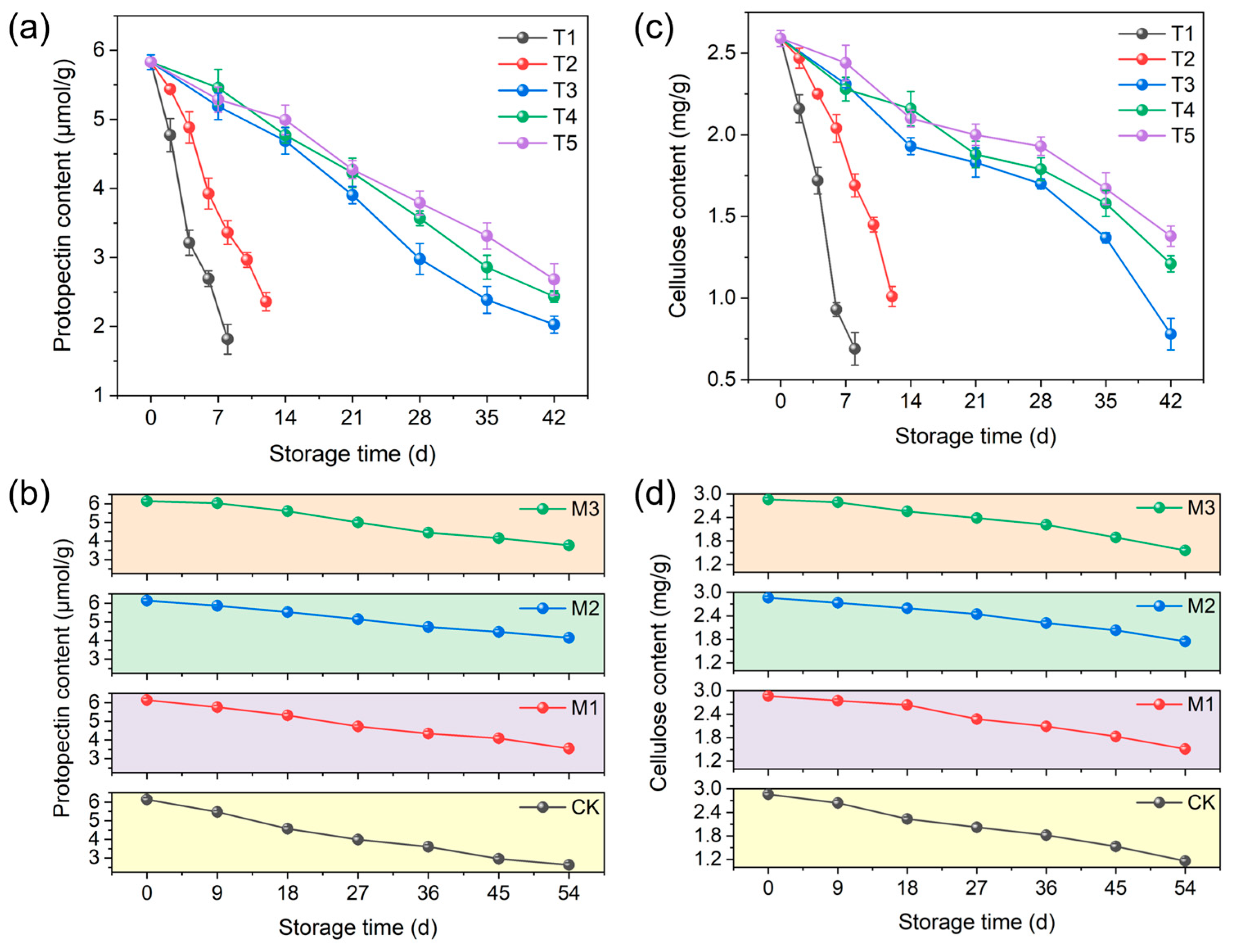
The protopectin content steadily dropped over storage, as seen in Figure 5a. T1 and T2 protopectin exhibited a sharp decline, falling to just 31.2% and 40.8% of their starting values, respectively. The decrease in T5 was the smallest, but the difference with T4 was not significant. This could be because low temperatures slow down the breakdown of protopectin by inhibiting the activity of related enzymes that break down cell walls. This shows that T5 can successfully prevent the decrease in protopectin content and delay the softening of fruit, which is in line with the findings of the firmness testing.
The protopectin content of CK dropped the quickest, as seen in Figure 5b, and it was considerably lower than that of the MAP group (p < 0.05). The protopectin content of M2 was considerably higher than that of the other treatment groups after 45 days of storage (p < 0.05). This could be attributed to the inhibitory effect of elevated CO2 in M2 treatment on cell wall-degrading enzymes. Studies have shown that high CO2 downregulates the expression of genes encoding pectin methylesterase (PME), polygalacturonase (PG), and pectate lyase (PEL) in strawberry and peach, thereby maintaining pectin content and firmness [38,39]. These findings suggest that the high CO2 concentration in M2 treatment may similarly inhibit key cell wall-degrading enzymes in Kyoho grapes, thereby slowing protopectin degradation and preserving fruit firmness during prolonged storage [11]. This was consistent with the firmness results, indicating that M2 treatment had the best effect on delaying the decrease in protopectin content and maintaining good fruit quality.
Cellulose Content: Cellulose is the main component of the plant cell wall, and its stability directly affects the mechanical strength, damage resistance, and storage life of fruit [40]. After harvest, cellulase activity increased easily, resulting in decreased cellulose content and loose cell wall structure, resulting in surface depression. Therefore, cellulose is an important index during grape storage.
The cellulose content of grapes in each group declined as storage time increased, as seen in Figure 5b. Additionally, the rate of deterioration increases with temperature. There were statistically significant differences across the various treatment groups (p < 0.05). The results showed that T5 could most effectively inhibit the loss of cellulose content. It also delayed fruit softening and maintained high firmness. This may be due to the low metabolic rate of grapes caused by low temperature, intracellular enzyme activity, including the activity of cellulose-degrading enzymes, also decreased [41].
As indicated in Figure 5c, the cellulose content of CK reduced most rapidly. It dropped by 22% on the 18th day of storage, which was less than that of the other treatment groups (p < 0.05). In the MAP group, the cellulose content of M2 was significantly higher than that of M1 and M3 at the later stage of storage (p < 0.05), which was consistent with the results of firmness. These findings demonstrated that all three MAP therapies may successfully postpone the decline in grape cellulose content, with M2 (3% O2 + 15% CO2 + 82% N2) having the greatest impact.

3.8. AA Content

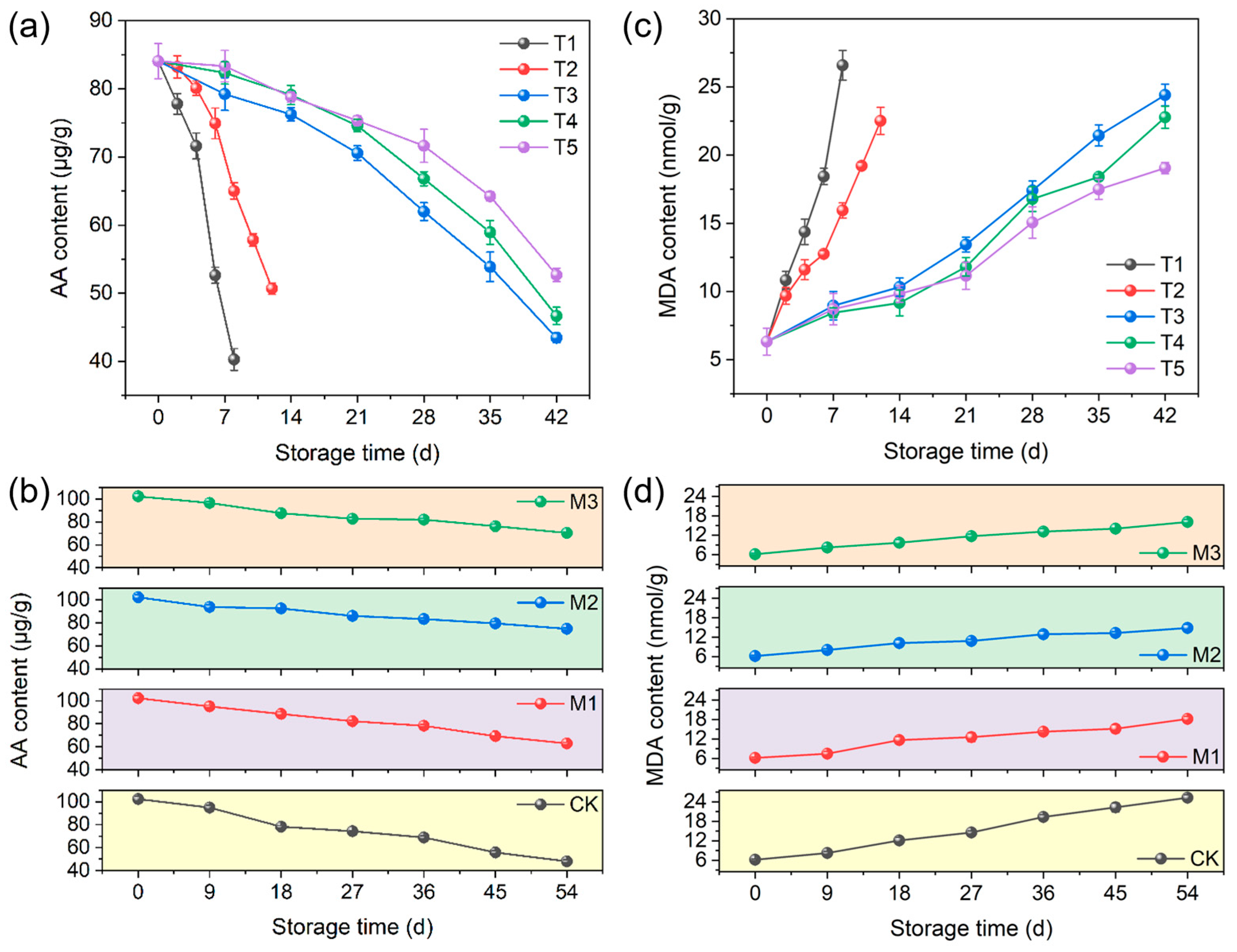
AA is an important nutrient in grape fruits and has significant antioxidant activity in biological systems. Its concentration will be affected by grape varieties and fruit maturity. One important criterion for assessing the quality of fruits is their AA content. It can be seen from Figure 6a,b that the AA content of grapes showed a gradual downward trend during storage. This is consistent with previous findings in broccoli [32]. This is because AA was involved in the oxidation reaction throughout the storage process and was gradually consumed.
The Kyoho grape’s AA content was positively impacted by T5, as seen in Figure 6a. After 28 days of storage, the AA concentration of T5 was 12.9% greater than that of T4 and significantly higher than that of the other groups (p < 0.05). Furthermore, T5 could most successfully postpone the AA content decline until the end of storage. This may be due to the low temperature of T5, the metabolic activity of grapes slowed down, and the enzyme activity and oxidation reaction rate decreased. Thus, the degradation process of AA was effectively delayed, and the AA content of grapes was maintained. Other studies also suggest that low temperature is conducive to the maintenance of fruit AA content [42].
As demonstrated in Figure 6b, the AA content of CK reduced rapidly after 18 days, which was considerably lower than that of the MAP group (p < 0.05). In the MAP group, M2 could most effectively delay the decrease in AA content, and it had a substantially higher AA content than the other groups (p < 0.05). This may be because O2 is one of the key factors for AA degradation. M2 inhibited the respiration of grapes and reduced the occurrence of oxidation reactions by reducing the concentration of O2 in the packaging. In addition, MAP also reduced the water evaporation of grapes and maintained the humidity in the packaging. This helps to maintain the stability of AA.

3.9. MDA Content

When plants are exposed to oxidative stress, lipid peroxidation produces MDA, which is typically employed as a gauge of the extent of membrane damage brought on by lipid peroxidation [43]. Figure 6b,c shows that during storage, the MDA content of the grapes in each group gradually increased.
The MDA content of grapes in T1 and T2 rose quickly, as seen in Figure 6c. The MDA concentration of T1 was 66.7% more than that of T2 on the eighth day of storage. On the other hand, the MDA concentration of T5 increased the least and was considerably lower than that of the other groups after 42 days of storage (p < 0.05). This is in line with the relative conductivity findings. It demonstrates that low temperatures can postpone grape senescence and lessen damage to the cell membrane [44].
As shown in Figure 6d, the MDA content of CK increased most rapidly, reaching 19.3 μmol g−1 on the 36th day. It was much higher (p < 0.05) than the MAP group. MDA contents were significantly lower in M2 and M3 than in M1 after 54 days of storage (p < 0.05). The lower MDA accumulation in M2 reflects reduced lipid peroxidation and oxidative stress. Elevated CO2 (15%) has been reported to enhance antioxidant enzyme activities (SOD, CAT) and maintain higher reduced/oxidized glutathione ratios, thereby mitigating oxidative damage. The 3% O2 in M2 minimizes substrate availability for ROS generation, whereas the 80% O2 in M3 promotes oxidative stress, explaining its higher MDA levels despite similar CO2 content to M1 [45].

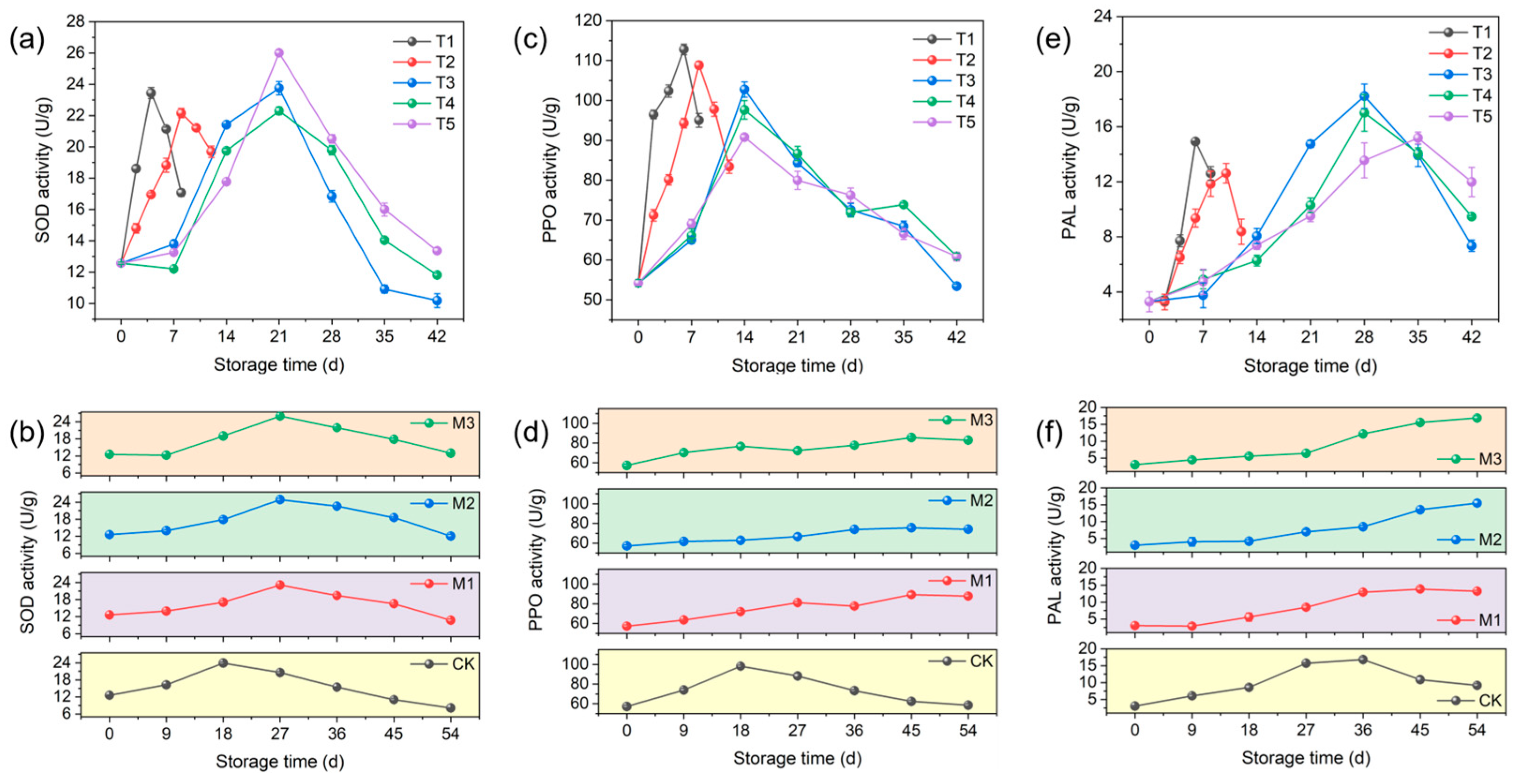
3.10. Enzyme Activity Analysis

SOD Activity: Lipid peroxidation is catalyzed by elevated ROS levels, which damage membranes and cause spoiling. Because ROS will oxidize and damage the integrity of the plasma membrane, thereby accelerating the aging of the cell process [46]. SOD is one of the key antioxidant enzymes that scavenge ROS. Delaying fruit senescence and preventing lipid peroxidation are two benefits of increased SOD activity.
As shown in Figure 7a, the SOD activity of T5 increased rapidly in the first 4 days and then decreased. This may be related to the increase in ROS and the stimulation of SOD activity. When T5 was stored for 21 days, its SOD activity was substantially higher than T3 (p < 0.05). This indicates that grapes at −1 °C can maintain cell membrane integrity by increasing SOD activity. Thereby reducing the oxidative damage of postharvest fruits and prolonging the freshness of fruits [45,47].
The SOD activity in each group exhibited a trend of first growing and then decreasing, as seen in Figure 7b. On the 18th day of storage, the SOD activity of CK rapidly increased to a peak of 23.9 U g−1 and then gradually decreased. When compared to CK, the time to reach the peak of CK in the MAP group was prolonged by 9 days. Furthermore, at a later stage of storage, the MAP group’s SOD activity could continue to be rather high. This could be because MAP can increase the transcription level of coding genes linked to ROS scavenging enzymes [48].
PPO Activity: The primary enzyme that causes enzymatic browning is PPO. Damage to cell membranes will promote postharvest browning by exposing PPO to phenolic chemicals [49]. The browning degree of the grape stem may also be related to PPO activity. The PPO activity of each group first rose and then fell during storage, as seen in Figure 7c,d.
The PPO activity of T1 and T2 peaked on days 6 and 8, respectively, as illustrated in Figure 7c. The low-temperature treatment group reached the peak on the 14th day. This indicated that low temperature treatment could effectively inhibit the increase in PPO activity in the early stage of storage. It can delay the occurrence of grape browning, thus ensuring the quality of grapes.
The PPO activity of CK grew quickly in the early stages of storage, as illustrated in Figure 7d. In the latter stages of storage, it was substantially higher than that of the MAP group (p < 0.05). MAP can effectively avoid such drastic changes. The investigation of Lentinula edodes likewise came to a similar conclusion. To preserve high quality, MAP can dramatically lower PPO enzyme activity and Lentinula edodes browning.
PAL Activity: PAL is one of the key enzymes in the phenylpropanoid metabolic pathway. It can participate in the regulation of its disease resistance response when plants are subjected to inducing factors, and enhance their disease resistance. At the same time, PAL enzyme is also one of the defense mechanisms initiated by plants under physiological or pathological pressure [50].
In the early stage of storage, the PAL activity of grapes at 25 °C and 10 °C increased rapidly, as seen in Figure 7e. This may be related to the stimulation of PAL activity by microbial reproduction. In contrast, the PAL enzyme activity of the low temperature treatment group increased more slowly. This may be due to the slow metabolism of grapes at low temperatures. The PAL activity of T3 and T4 was higher when stored for 28 days. This may be caused by stress such as pathogen invasion or physical damage, which leads to the early expression and activity of PAL enzyme, and helps grapes to defend against diseases.
When compared to CK, the PAL activity of the MAP group increased gradually in the early stages of storage, as seen in Figure 7f. This may be due to the lower oxidative stress level and lighter aging of grapes after MAP. Therefore, it is not necessary to increase PAL activity to cope with senescence or disease in the early stage of storage.

3.11. Shelf-Life Prediction Model

Correlation between Sensory Scores and Indicators: It can be seen from Figure S1 and Table S2 that firmness and sensory score were the most significant under different storage conditions, and ∑|r| value was the largest, 4.943. Therefore, firmness, as the most relevant indicator of sensory score, can be used to predict the shelf life of Kyoho grapes.
Establishment of the End Point Value of Shelf Life: It can be seen from Figure S3 that there is a linear regression relationship between sensory evaluation and firmness, and the regression equation is y = 0.6591x + 4.123. When the sensory score was 4 points, the firmness was calculated to be 6.76. That is, when the shelf life reaches the endpoint, firmness is 6.76.
Establishment of Shelf-Life Prediction Model: According to the results of firmness change during storage, the rate constant k and determination coefficient R2 of the zero-order and first-order kinetic regression equations of firmness change were calculated by linear and nonlinear fitting. It can be seen from Table S3 that the determination coefficient of the zero-order kinetic model of firmness was 4.9242, which was greater than that of the first-order mechanical regression equation. Therefore, the zero-order kinetic model of firmness with storage time was established. According to the Arrhenius equation, the rate constants k of the five zero-order regression equations of firmness in Table S3 were taken as logarithms and plotted with the reciprocal of their corresponding Kelvin temperatures to obtain the relationship between firmness and temperature. As shown in Figure S4, the regression equation is y = −6180.6x + 20.388, and the correlation coefficient is 0.9327, indicating that the zero-order kinetic model selected in the experiment fits well with the Arrhenius equation. During storage, Ea of Kyoho grape firmness was 5.14 × 10⁴ J mol−1, and A was 7.15 × 10⁸.
According to the kinetic regression equation fitted under different storage conditions and the calculated k, A, and Ea, the final prediction model equation, Equation (5) of Kyoho grape firmness, can be established. Substituting the end value of the shelf life into Equation (5), the shelf-life prediction model equation of Kyoho grape in circulation can be derived as Equation (6).
y = y 0 7.15 × 10 8 × e x p ( 6180.6 / T ) t
S L = y 0     6.76 7.15 × 10 8 e x p ( 6180.6 / T )
In the formula, SL is the shelf life, days; y0 is the initial value of Kyoho grape firmness; T is the storage temperature, K.
Validation of Shelf-Life Prediction Model: According to Equation (6), the predicted shelf life of Kyoho grapes at different storage temperatures in the validation group was calculated and compared with the measured values. Table S4 shows that the relative error between the predicted value and the measured value of the shelf life acquired by the prediction model is within ±10%, indicating the viability of the Kyoho grape shelf-life prediction model based on the change in firmness value. The shelf life of Kyoho grapes under various storage conditions can therefore be predicted using this model.

4. Conclusions

This study represents the first systematic investigation into the synergistic effects of subzero temperature and modified atmosphere packaging specifically tailored for Kyoho grapes. The results demonstrated that −1 °C was identified as the optimal storage temperature, effectively maintaining fruit firmness, stem freshness, AA content, and delaying the degradation of protopectin and cellulose. Based on this temperature, the gas composition of 3% O2, 15% CO2, and 82% N2 (M2) was determined to be the most effective combination for delaying senescence and preserving overall quality, extending the commercial shelf life to 54 days. Furthermore, a kinetic shelf-life prediction model based on firmness changes was established and validated, providing a practical tool for quality forecasting under varying storage conditions. By systematically optimizing both temperature and gas composition, this study fills a critical knowledge gap regarding cultivar-specific preservation protocols for Kyoho grapes. The integrated preservation strategy developed herein offers a science-based solution for extending the postharvest life of Kyoho grapes, with direct implications for reducing postharvest losses and supporting sustainable supply chain management in the grape industry.

Supplementary Materials

The following supporting information can be downloaded at: https://www.mdpi.com/article/10.3390/pr14061008/s1, Table S1: Sensory score of Kyoho grapes during storage; Table S2: Pearson correlation coefficient between sensory score and each indicator; Table S3: Zero-and first-order kinetic regression rate constants (k) and coefficients of determination (R2) forfirmness; Table S4: Predicted and measured shelf life of Kyoho grapes stored at 6 °C, 8 °C, and 12 °C; Figure S1: The changes of sensory score of Kyoho grapes under different storage conditions; Figure S2: The changes of ΔE of Kyoho grapes; Figure S3: Regression analysis between firmness and sensory score; Figure S4: Arrhenius curve of firmness for Kyoho grapes.

Author Contributions

A.J.: writing—review and editing; writing—original draft preparation; methodology; data curation. S.T.: writing—review and editing; writing—original draft preparation; methodology; data curation. Z.D.: writing—review and editing; supervision; methodology; conceptualization; funding acquisition. J.X.: writing—review and editing; methodology; supervision; project administration. All authors have read and agreed to the published version of the manuscript.

Funding

This work was supported by the Key Project in the Field of Agriculture by the Shanghai Municipal Commission of Science and Technology (23N31900100) and the Shanghai Professional Technology Service Platform on Cold Chain Equipment Performance and Energy Saving Evaluation (19DZ2284000).

Institutional Review Board Statement

This research project conducted a human sensory evaluation of Kyoho grapes under different storage conditions. The study protocol strictly adhered to all applicable national guidelines and best practices for sensory evaluation in China, prioritizing participant well-being and informed consent. Under Article 32 of China’s Ethical Review Measures for Life Sciences and Medicine Involving Humans, this work posed no harm to participants, did not collect sensitive personal or commercial data, and fully complied with national regulations. It therefore qualified for exemption from formal ethical review.

Informed Consent Statement

Informed consent was obtained from all subjects involved in the study.

Data Availability Statement

All data and materials are the result of research and are available from the corresponding authors upon reasonable request and are appropriately cited in the manuscript.

Acknowledgments

We would like to express our sincere gratitude to Jiahua Wang and Jian Li for their supervision and project administration throughout this study. We also extend our thanks to the Ningbo Fotile Kitchen Ware Company and the Key Laboratory of Healthy & Intelligent Kitchen System Integration for their support in facilities and research coordination.

Conflicts of Interest

The authors declare that they have no known competing financial interests or personal relationships that could have appeared to influence the work reported in this paper.

References

  1. Fu, W.; Zhang, M.; Zhang, P.; Liu, Z.; Dong, T.; Zhang, S.; Ren, Y.; Jia, H.; Fang, J. Transcriptional and Metabolite Analysis Reveal a Shift in Fruit Quality in Response to Calcium Chloride Treatment on “Kyoho” Grapevine. J. Food Sci. Technol. 2021, 58, 2246–2257. [Google Scholar] [CrossRef]
  2. Yuan, Y.; Wei, J.; Xing, S.; Zhang, Z.; Wu, B.; Guan, J. Sulfur Dioxide (SO2) Accumulation in Postharvest Grape: The Role of Pedicels of Four Different Varieties. Postharvest Biol. Technol. 2022, 190, 111953. [Google Scholar] [CrossRef]
  3. Zhao, K.; Tao, S.; Ding, Z.; Xie, J. Impact of Combined Light and Modified Atmosphere Packaging on Postharvest Quality and Carbohydrate Fluctuations of Kyoho Grapes. Foods 2025, 14, 3308. [Google Scholar] [CrossRef]
  4. Jiang, Z.; Li, X.; Peng, S.; Li, X.; Zhou, C.; Zhao, X. Effects of Temperature on the Physicochemical Properties and Volatile Profiles of ‘Shine Muscat’ Grape during Postharvest Storage. Food Chem. 2025, 469, 142546. [Google Scholar] [CrossRef]
  5. Gu, S.; Jing, M.; Li, D.; Ma, Z.; Duan, Y.; Wang, L.; Dai, X.; Chen, Z.; Zhang, X.; Chen, J. The Effects of Different Temperature and Humidity Conditions on the Ripening and Cracking of Annona Atemoya Fruit during Storage by Regulating the Conversion of Starch into Soluble Sugars. LWT 2024, 208, 116703. [Google Scholar] [CrossRef]
  6. Nateras-Ramírez, O.; Fitch-Vargas, P.R.; del Martínez-Macias, M.R.; Sánchez-Cárdenas, R.; Choza-Farías, S.; Fernandez-Jaramillo, A.A. Fish Preservation Techniques: An Overview of Principles, Methods, and Quality Implications. Processes 2026, 14, 723. [Google Scholar] [CrossRef]
  7. Adiletta, G.; Di Matteo, M.; De Filippis, G.; Di Grazia, A.; Ciambelli, P.; Petriccione, M. Sustainable Bamboo-Based Packaging and Passive Modified Atmosphere: A Strategy to Preserve Strawberry Quality During Cold Storage. Processes 2025, 13, 2262. [Google Scholar] [CrossRef]
  8. Matera, A.; Altieri, G.; Genovese, F.; Scarano, L.; Genovese, G.; Pinto, P.; Rashvand, M.; Elshafie, H.S.; Ippolito, A.; Mincuzzi, A.; et al. Impact of the Pre-Harvest Biocontrol Agent and Post-Harvest Massive Modified Atmosphere Packaging Application on Organic Table Grape (Cv. ‘Allison’) Quality during Storage. Appl. Sci. 2024, 14, 2871. [Google Scholar] [CrossRef]
  9. Wang, F.; Chen, S.; Zhou, J.; Zhu, R.; Chen, J.; Wang, Y. ARTP Mutagenesis for Genome-Wide Identification of Genes Important for Biofilm Regulation in Spoilage Bacterium Pseudomonas fluorescens PF08. Appl. Environ. Microbiol. 2025, 91, e00218-25. [Google Scholar] [CrossRef]
  10. Wang, J.; Sun, H.; Mou, H.; Yang, S. Protein and Lysine Improvement Harnessed by a Signal Chain of Red Light-Emitting Diode Light in Chlorella pyrenoidosa. Bioresour. Technol. 2024, 414, 131620. [Google Scholar] [CrossRef]
  11. Liu, M.; Zhang, L.; Zhang, L.; Ge, Z.; Li, G.; Wang, L.; Zong, W. Combination of Intense Pulsed Light and Modified Atmosphere Packaging Delays the Texture Softening of Apricot Fruit by Inhibiting the Degradation of Pectin Components. Sci. Hortic. 2025, 340, 113918. [Google Scholar] [CrossRef]
  12. Lu, H.; Wang, K.; Wang, L.; Li, D.; Yan, J.; Ban, Z.; Luo, Z.; Li, L.; Yang, D. Effect of Superatmospheric Oxygen Exposure on Strawberry (Fragaria × ananassa Fuch.) Volatiles, Sensory and Chemical Attributes. Postharvest Biol. Technol. 2018, 142, 60–71. [Google Scholar] [CrossRef]
  13. Ren, G.; Liu, L.; Wang, M.; Pan, J.; Wang, Z.; Hu, R.; Zhou, J.; Song, X.; Cheng, K.; Cheng, W. Nature’s Preservative: Epigallocatechin Gallate-Loaded Edible Film Extends Mango Shelf Life. Foods 2025, 14, 3609. [Google Scholar] [CrossRef]
  14. Shi, H.; Zhou, W.H.; Xu, Y.Y.; He, X.E.; He, F.Y.; Wang, Y. Effect of Calcium Spray at Flowering Combined with Post-Harvest 1-MCP Treatment on the Preservation of Grapes. Heliyon 2023, 9, e19918. [Google Scholar] [CrossRef]
  15. Shuai, L.; Xue, P.; Liao, L.; Liu, Y.; Song, M.; Shang, F.; Cai, W.; Yin, F.; Cai, J. Methyl Jasmonate Suppressed the Pericarp Browning in Postharvest Longan Fruit by Modulating Membrane Lipid and Energy Metabolisms. Postharvest Biol. Technol. 2024, 209, 112681. [Google Scholar] [CrossRef]
  16. Yıldız, G.; Yildiz, G. Insights into Ultrasound-Assisted Postharvest Preservation: Metabolic, Structural, and Quality Changes in Strawberries During Storage. Food Bioprocess Technol. 2025, 18, 7899–7914. [Google Scholar] [CrossRef]
  17. Lu, H.; Ma, G.; Wan, F.; Zang, Z.; Xu, Y.; Wu, B.; Li, L.; Liu, Z.; Huang, X.; Dai, F. Enhancing the Ultrasound-Assisted Hot Air Drying of Cherry through Different Pretreatments: Effect on Drying Characteristics, Physicochemical Quality, Microstructure, Texture and Sensory Evaluation. Ultrason. Sonochem. 2025, 122, 107578. [Google Scholar] [CrossRef]
  18. Jomnong, P.; Funsueb, S.; Thanavanich, C.; Theanjumpol, P.; Muenmanee, N.; Luengwilai, K.; Saengrayap, R.; Arwatchananukul, S.; Chaiwong, S.; Mahajan, P.; et al. Non-Destructive Shelf-Life Prediction Models for Sweet Corn via NIR Spectroscopy and Integrated Postharvest Quality Parameters. Postharvest Biol. Technol. 2025, 227, 113567. [Google Scholar] [CrossRef]
  19. Basbasan, A.J.; Ananphadung, T.; Hararak, B.; Winotapun, C.; Leelaphiwat, P.; Boonruang, K.; Wadaugsorn, K.; Nuamduang, P.; Mahajan, P.; Chonhenchob, V. Data-Informed Design of Active Biodegradable Packaging for Mangoes: Modelling, Microperforation, and Shelf Life Performance. Food Packag. Shelf Life 2025, 52, 101628. [Google Scholar] [CrossRef]
  20. Li, J.; Wu, Z.; Zhu, Z.; Xu, L.; Wu, B.; Li, J. Botrytis cinerea Mediated Cell Wall Degradation Accelerates Spike Stalk Browning in Munage Grape. J. Food Biochem. 2022, 46, e14271. [Google Scholar] [CrossRef]
  21. Ali, S.; Sattar Khan, A.; Ullah Malik, A.; Anjum, M.A.; Nawaz, A.; Shoaib Shah, H.M. Modified Atmosphere Packaging Delays Enzymatic Browning and Maintains Quality of Harvested Litchi Fruit during Low Temperature Storage. Sci. Hortic. 2019, 254, 14–20. [Google Scholar] [CrossRef]
  22. Yildiz, G. The Efficacy of Power Ultrasound Treatment in Preserving Quality of Fresh-Cut Cucumbers. Lat. Am. Appl. Res.-Int. J. 2024, 54, 485–490. [Google Scholar] [CrossRef]
  23. Wang, H.; Wang, X.; Yan, A.; Liu, Z.; Ren, J.; Xu, H.; Sun, L. Metabolomic and Transcriptomic Integrated Analysis Revealed the Decrease of Monoterpenes Accumulation in Table Grapes during Long Time Low Temperature Storage. Food Res. Int. 2023, 174, 113601. [Google Scholar] [CrossRef]
  24. Fan, X.; Jiang, W.; Gong, H.; Yang, Y.; Zhang, A.; Liu, H.; Cao, J.; Guo, F.; Cui, K. Cell Wall Polysaccharides Degradation and Ultrastructure Modification of Apricot during Storage at a near Freezing Temperature. Food Chem. 2019, 300, 125194. [Google Scholar] [CrossRef]
  25. Li, D.; Li, L.; Xiao, G.; Limwachiranon, J.; Xu, Y.; Lu, H.; Yang, D.; Luo, Z. Effects of Elevated CO2 on Energy Metabolism and γ-Aminobutyric Acid Shunt Pathway in Postharvest Strawberry Fruit. Food Chem. 2018, 265, 281–289. [Google Scholar] [CrossRef]
  26. Zhang, B.; Huang, C.; Zhang, L.; Wang, J.; Huang, X.; Zhao, Y.; Liu, Y.; Li, C. Application of Chlorine Dioxide Microcapsule Sustained-Release Antibacterial Films for Preservation of Mangos. J. Food Sci. Technol. 2019, 56, 1095–1103. [Google Scholar] [CrossRef]
  27. Silva-Sanzana, C.; Balic, I.; Sepúlveda, P.; Olmedo, P.; León, G.; Defilippi, B.G.; Blanco-Herrera, F.; Campos-Vargas, R. Effect of Modified Atmosphere Packaging (MAP) on Rachis Quality of ‘Red Globe’ Table Grape Variety. Postharvest Biol. Technol. 2016, 119, 33–40. [Google Scholar] [CrossRef]
  28. Tao, S.; Wang, J.; Xie, J. Influence of Different Pre-Cooling Methods on the Postharvest Storage of ‘Kyoho’ Grapes (Vitis labrusca × vinifera ‘Kyoho’). Food Qual. Saf. 2024, 8, fyae033. [Google Scholar] [CrossRef]
  29. Dziedzic, E.; Błaszczyk, J.; Bieniasz, M.; Dziadek, K.; Kopeć, A. Effect of Modified (MAP) and Controlled Atmosphere (CA) Storage on the Quality and Bioactive Compounds of Blue Honeysuckle Fruits (Lonicera caerulea L.). Sci. Hortic. 2020, 265, 109226. [Google Scholar] [CrossRef]
  30. Zheng, Y.; Jiang, Y.; Yang, X.; Fu, Z.; Zhao, Z.; Li, X.; Yang, K.; Jia, X. Automatic Periodical Negative Air Ions Reduce Postharvest Decay and Maintain Texture and Flavor Quality of ‘Fuji’ Apple during Long-Term Cold Storage. Food Chem. X 2024, 24, 101972. [Google Scholar] [CrossRef]
  31. Patil, M.; Sharma, S.; Sridhar, K.; Anurag, R.K.; Grover, K.; Dharni, K.; Mahajan, S.; Sharma, M. Effect of Postharvest Treatments and Storage Temperature on the Physiological, Nutritional, and Shelf-Life of Broccoli (Brassica oleracea) Microgreens. Sci. Hortic. 2024, 327, 112805. [Google Scholar] [CrossRef]
  32. Wang, L.-X.; Choi, I.-L.; Kang, H.-M. Effect of High CO2 Treatment and MA Packaging on Sensory Quality and Physiological-Biochemical Characteristics of Green Asparagus (Asparagus officinalis L.) during Postharvest Storage. Horticulturae 2020, 6, 84. [Google Scholar] [CrossRef]
  33. Ngcobo, M.E.K.; Opara, U.L.; Thiart, G.D. Effects of Packaging Liners on Cooling Rate and Quality Attributes of Table Grape (Cv. Regal Seedless). Packag. Technol. Sci. 2012, 25, 73–84. [Google Scholar] [CrossRef]
  34. Ngcobo, M.E.K.; Pathare, P.B.; Delele, M.A.; Chen, L.; Opara, U.L. Moisture Diffusivity of Table Grape Stems during Low Temperature Storage Conditions. Biosyst. Eng. 2013, 115, 346–353. [Google Scholar] [CrossRef]
  35. Ahmadi Soleimanie, S.; Vafaee, Y. Storability and Postharvest Quality of Five Iranian Grape Cultivars during Cold Storage. Plant Physiol. Rep. 2023, 28, 320–331. [Google Scholar] [CrossRef]
  36. Sun, L.; Sun, D.-W.; Xu, L.; Tian, Y.; Zhu, Z. Tunable Thermoresponsive Hydrogels for Temperature Regulation and Warning in Fruit and Vegetables Preservation. Food Chem. 2024, 456, 139962. [Google Scholar] [CrossRef]
  37. Zeng, Y.; Zhang, J.; Su, H.; Xie, L.; Zhao, Y.; Xiong, Y.; Wenhua, Z. Cell Wall and Reactive Oxygen Metabolism Responses of Stored Shine Muscat Grapes to Combined Melatonin and 24-Epibrassinolide Treatment. Postharvest Biol. Technol. 2025, 219, 113192. [Google Scholar] [CrossRef]
  38. Eum, H.-L.; Han, S.-H.; Lee, E.-J. High-CO2 Treatment Prolongs the Postharvest Shelf Life of Strawberry Fruits by Reducing Decay and Cell Wall Degradation. Foods 2021, 10, 1649. [Google Scholar] [CrossRef]
  39. Lee, J.G.; Lee, J.-H.; Chang, M.-S.; Baek, D.-R.; Yang, H.; Eum, H.L. Exploring Ripening Suppression in Peach Fruit during Controlled Atmosphere Storage with Transcriptome Insights. Sci. Rep. 2025, 15, 14178. [Google Scholar] [CrossRef]
  40. Hu, L.; Zheng, Q.; Chen, Z.; Qin, Y.; Si, H.; Ji, J.; Li, Q.; Yang, Z.; Wu, Y. Pre-Harvest Treatment with Gibberellin (GA3) and Nitric Oxide Donor (SNP) Enhances Post-Harvest Firmness of Grape Berries. Food Chem. Mol. Sci. 2025, 10, 100235. [Google Scholar] [CrossRef]
  41. Zheng, Y.; Zhang, S.; Miao, S.; Su, Z.; Wang, P. Temperature Sensitivity of Cellulase Adsorption on Lignin and Its Impact on Enzymatic Hydrolysis of Lignocellulosic Biomass. J. Biotechnol. 2013, 166, 135–143. [Google Scholar] [CrossRef]
  42. Tsaniklidis, G.; Delis, C.; Nikoloudakis, N.; Katinakis, P.; Aivalakis, G. Low Temperature Storage Affects the Ascorbic Acid Metabolism of Cherry Tomato Fruits. Plant Physiol. Biochem. 2014, 84, 149–157. [Google Scholar] [CrossRef]
  43. Wang, H.; Wu, Y.; Yu, R.; Wu, C.; Fan, G.; Li, T. Effects of Postharvest Application of Methyl Jasmonate on Physicochemical Characteristics and Antioxidant System of the Blueberry Fruit. Sci. Hortic. 2019, 258, 108785. [Google Scholar] [CrossRef]
  44. Wan, C.; Tan, P.; Zeng, C.; Liu, Z. Arachidonic Acid Treatment Combined with Low Temperature Conditioning Mitigates Chilling Injury in Cold-stored Banana Fruit. Int. J. Food Sci. Technol. 2022, 57, 210–223. [Google Scholar] [CrossRef]
  45. Xing, Y.; Li, X.; Xu, Q.; Jiang, Y.; Yun, J.; Li, W. Effects of Chitosan-Based Coating and Modified Atmosphere Packaging (MAP) on Browning and Shelf Life of Fresh-Cut Lotus Root (Nelumbo nucifera Gaerth). Innov. Food Sci. Emerg. Technol. 2010, 11, 684–689. [Google Scholar] [CrossRef]
  46. Qin, Y.; Yu, H.; Chen, K.; Cui, R.; Cao, J.; Wang, Z.; Zhang, Z.-H.; Soteyome, T. Effects of Chitosan/Eugenol-Loaded IRMOF-3 Nanoparticles Composite Films on Reactive Oxygen Species Metabolism and Microbial Community Dynamics in Postharvest Strawberries. Food Biosci. 2025, 63, 105652. [Google Scholar] [CrossRef]
  47. Menga, V.; Beleggia, R.; Prencipe, D.P.; Russo, M.; Fares, C. The Post-Harvest Application of UV-C Rays: Effects on the Shelf Life and Antioxidants of Fresh Green Asparagus (Asparagus officinalis L.). Appl. Sci. 2025, 15, 8533. [Google Scholar] [CrossRef]
  48. Mou, Z.; Wang, C.; Wei, W.; Zhao, Y.; Wang, L.; Ji, S.; Shan, W.; Kuang, J.; Lu, W.; Chen, Y.; et al. Modified Atmosphere Packaging Delays Postharvest Leaf Senescence of Chinese Flowering Cabbage via Suppressing Chloroplast Dismantling and Alleviating Mitochondrial Oxidative Damage. Food Packag. Shelf Life 2023, 39, 101136. [Google Scholar] [CrossRef]
  49. Lei, M.; Guo, L.; Zhang, Y.; Yan, X.; Jiang, F.; Sun, B. Effectiveness of Anaerobic Treatment Combined with Microperforated Film Packaging in Reducing Agaricus Bisporus Postharvest Browning. Postharvest Biol. Technol. 2024, 211, 112833. [Google Scholar] [CrossRef]
  50. Gouda, M.; Nassarawa, S.S.; Gupta, S.D.; Sanusi, N.I.; Nasiru, M.M. Evaluation of Carbon Dioxide Elevation on Phenolic Compounds and Antioxidant Activity of Red Onion (Allium cepa L.) during Postharvest Storage. Plant Physiol. Biochem. 2023, 200, 107752. [Google Scholar] [CrossRef] [PubMed]
Figure 1. Schematic illustration of different temperatures and modified atmosphere packaging for the preservation of Kyoho grapes.
Processes 14 01008 g001
Figure 2. Sensory photos of Kyoho grapes stored (a) at different temperatures (b) under different MAP conditions. T1: 25 °C, T2: 10 °C, T3: 4 °C, T4: 1 °C, T5: −1 °C. CK: air, M1: 3% O2 + 10% CO2 + 87% N2, M2: 3% O2 + 15% CO2 + 82% N2, M3: 80% O2 + 10% CO2 + 10% N2. White dashed box: deterioration of fruit, red dashed box: deterioration of fruit stem.
Processes 14 01008 g002
Figure 3. The changes in (a,b) firmness; (c,d) respiration rate; (e,f) relative conductivity of Kyoho grapes under different storage conditions. T1: 25 °C, T2: 10 °C, T3: 4 °C, T4: 1 °C, T5: −1 °C. CK: air, M1: 3% O2 + 10% CO2 + 87% N2, M2: 3% O2 + 15% CO2 + 82% N2, M3: 80% O2 + 10% CO2 + 10% N2.
Processes 14 01008 g003
Figure 4. The changes in (a,b) moisture content of fruit stem; (c,d) TSS content of Kyoho grapes under different storage conditions. T1: 25 °C, T2: 10 °C, T3: 4 °C, T4: 1 °C, T5: −1 °C. CK: air, M1: 3% O2 + 10% CO2 + 87% N2, M2: 3% O2 + 15% CO2 + 82% N2, M3: 80% O2 + 10% CO2 + 10% N2.
Processes 14 01008 g004
Figure 5. The changes in (a,b) protopectin content; (c,d) cellulose content of Kyoho grapes under different storage conditions. T1: 25 °C, T2: 10 °C, T3: 4 °C, T4: 1 °C, T5: −1 °C. CK: air, M1: 3% O2 + 10% CO2 + 87% N2, M2: 3% O2 + 15% CO2 + 82% N2, M3: 80% O2 + 10% CO2 + 10% N2.
Processes 14 01008 g005
Figure 6. The changes in (a,b) AA content; (c,d) MDA content of Kyoho grapes under different storage conditions. T1: 25 °C, T2: 10 °C, T3: 4 °C, T4: 1 °C, T5: −1 °C. CK: air, M1: 3% O2 + 10% CO2 + 87% N2, M2: 3% O2 + 15% CO2 + 82% N2, M3: 80% O2 + 10% CO2 + 10% N2.
Processes 14 01008 g006
Figure 7. The changes in (a,b) SOD activity; (c,d) PPO activity; (e,f) PAL activity of Kyoho grapes. T1: 25 °C, T2: 10 °C, T3: 4 °C, T4: 1 °C, T5: −1 °C. CK: air, M1: 3% O2 + 10% CO2 + 87% N2, M2: 3% O2 + 15% CO2 + 82% N2, M3: 80% O2 + 10% CO2 + 10% N2.
Processes 14 01008 g007
Disclaimer/Publisher’s Note: The statements, opinions and data contained in all publications are solely those of the individual author(s) and contributor(s) and not of MDPI and/or the editor(s). MDPI and/or the editor(s) disclaim responsibility for any injury to people or property resulting from any ideas, methods, instructions or products referred to in the content.