Comprehensive Early Alert and Adaptive Local Response Framework for Wildfire Risk in Transmission Line Corridors Using Coupled Global Factors in Power System


Abstract
1. Introduction
- (1)
- to develop a machine-learning-based global wildfire risk screening model that integrates multi-source remote sensing, meteorological, topographic, and anthropogenic data for large-scale assessment of wildfire threats along power transmission corridors;
- (2)
- to introduce a geographically weighted regression–based local refinement strategy that explicitly captures spatial heterogeneity and corridor-specific characteristics at the tower level, thereby enhancing spatial precision beyond conventional kilometer-scale warning systems; and
- (3)
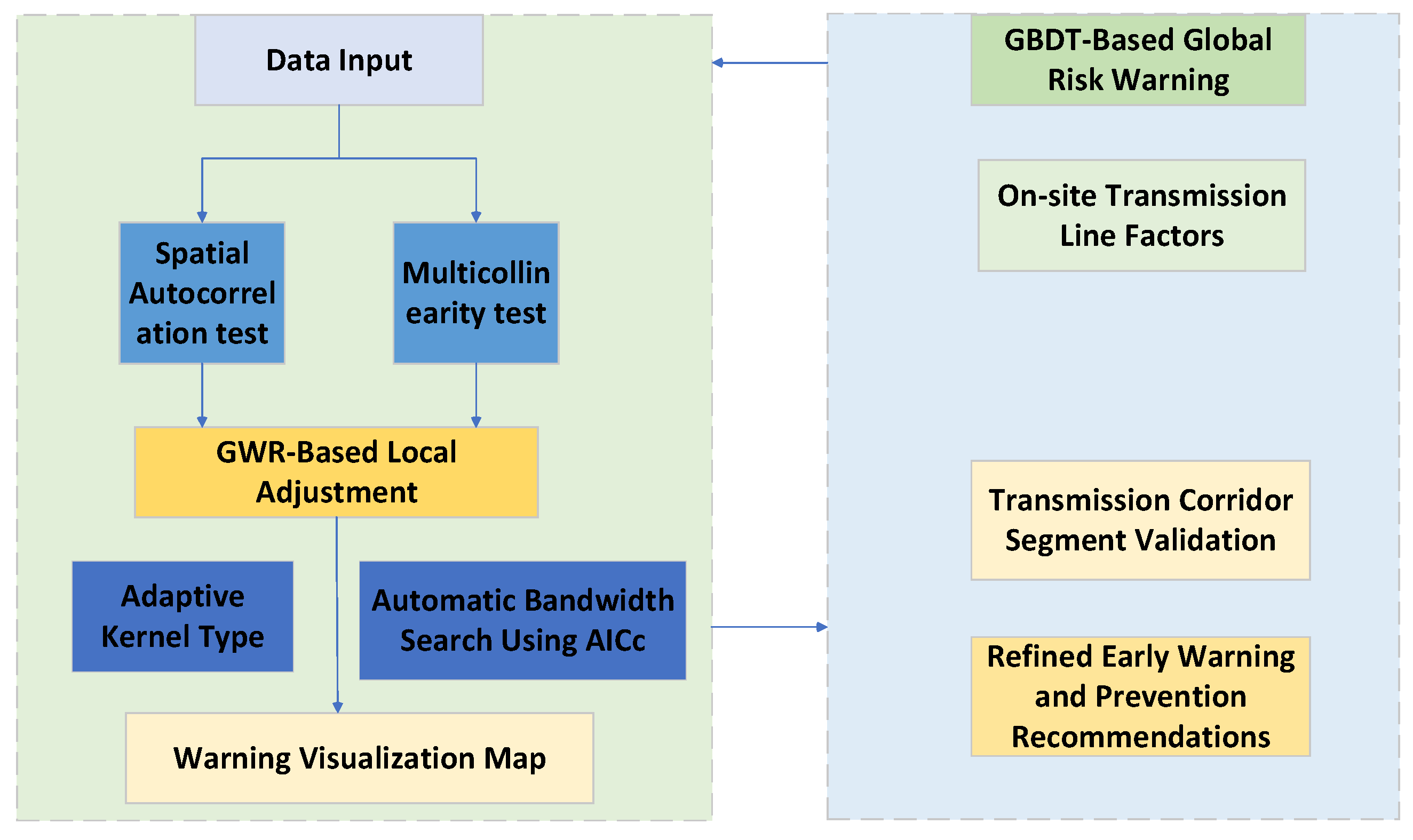
- to establish a collaborative global–local wildfire early warning framework that supports refined tower-level risk characterization, improves predictive accuracy, and reduces unnecessary inspection efforts in low-risk corridor sections.
2. Data Source and Processing
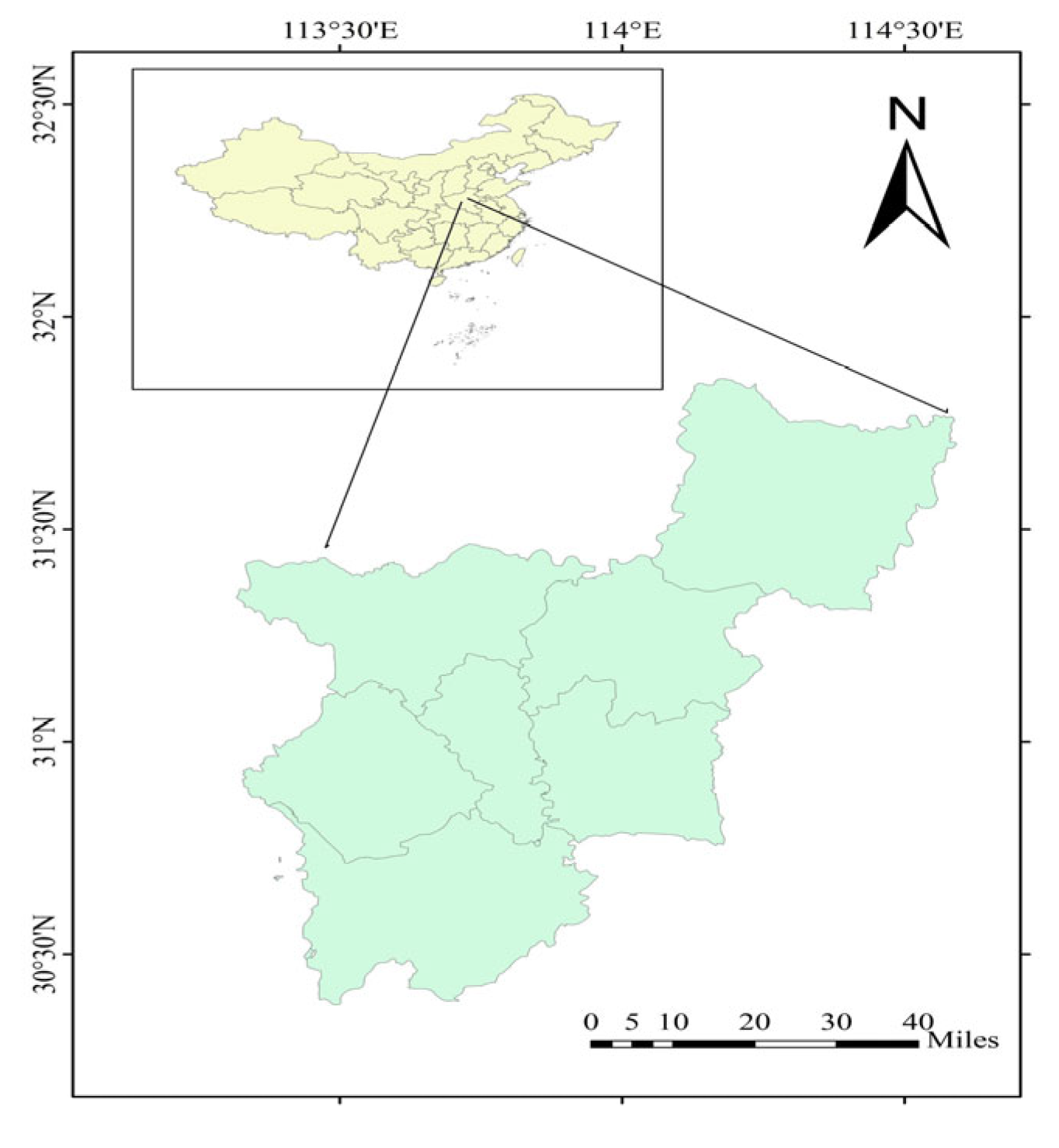
2.1. Overview of the Study Area
2.2. Fire Risk Factor Screening for Transmission Corridors
- Meteorological Factors
- Soil moisture content has an enormous effect on plant growth as it is one of the most important factors affecting the growth of vegetation on the land surface. In addition to affecting plant growth, soil moisture also influences how much heat will be transferred through the ground and how quickly water will evaporate from burning materials. When soil moisture levels are low, water vapour escapes from the materials being burned, which lowers the temperature at which they are likely to ignite and increases their chance of igniting [24].
- Fires are directly influenced by temperature, and their location, time, and weather conditions at the time of ignition will affect how a fire spreads. For example, warmer weather causes both direct and indirect effects in many ways, both through influences on atmospheric moisture and indirectly through drying out the area’s fuel sources. If high temperatures are combined with overall low humidity and drought conditions, it can create what is called “dry heat” conditions and will greatly enhance the chance for fires to start and spread rapidly, creating an extremely high probability for wildfires to start or spread even faster [25].
- Wind increases the rate at which moisture evaporates from plants and soil and promotes fast spreading of wildfires due to the increased flow of fresh air into the fire. Wind also carries smoke further away from the fire, impeding the function of transmission lines [26].
- Vegetation Ecological Factors
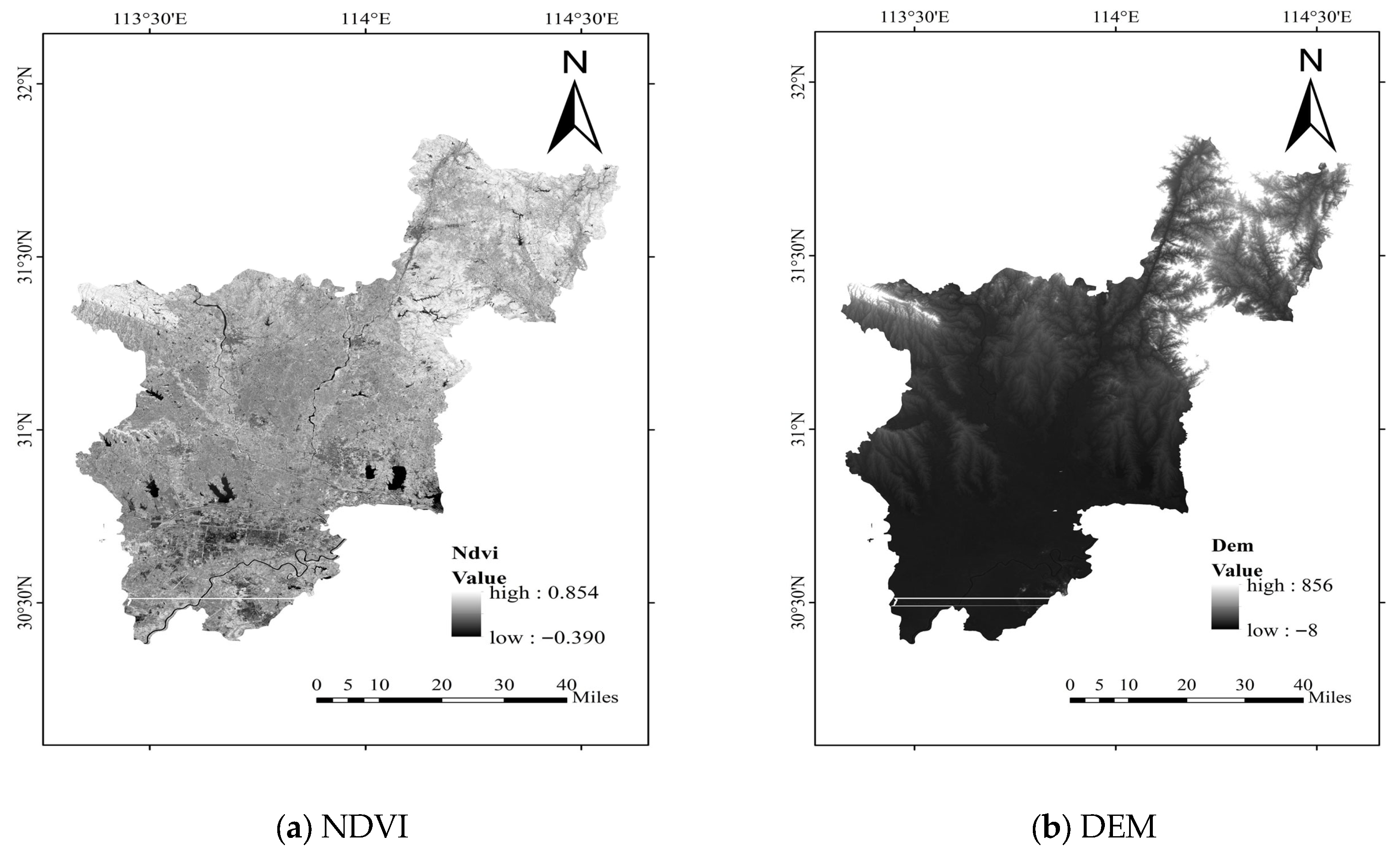
- The NDVI is a measure of the relative amount of photosynthetically active vegetation in a pixel. It is calculated using the Near-infrared (B8) and Red (B4) bands of satellite surface reflectance data. The NDVI provides a quantitative measure of the biophysical and biochemical properties of vegetation, including vegetation biomass, cover, and chlorophyll [27].
- The Fractional Vegetation Cover (FVC) is a measure of how much vegetative cover is on the surface of the land, represented as a percentage of how much vegetative cover exists on a given piece of land. FVC is derived from remotely sensed data using a linear mixing model to combine the pixel reflectances from vegetation and soil that have been observed on that site. The resulting image characterises regional vegetation distributions as well as the ecological status of the pixel being analysed [28].
- Terrain-Related Factors
- Elevation (DEM, Digital Elevation Model) is a digital representation of the surface elevation, which stores the height values of each location on the Earth’s surface in a gridded format.
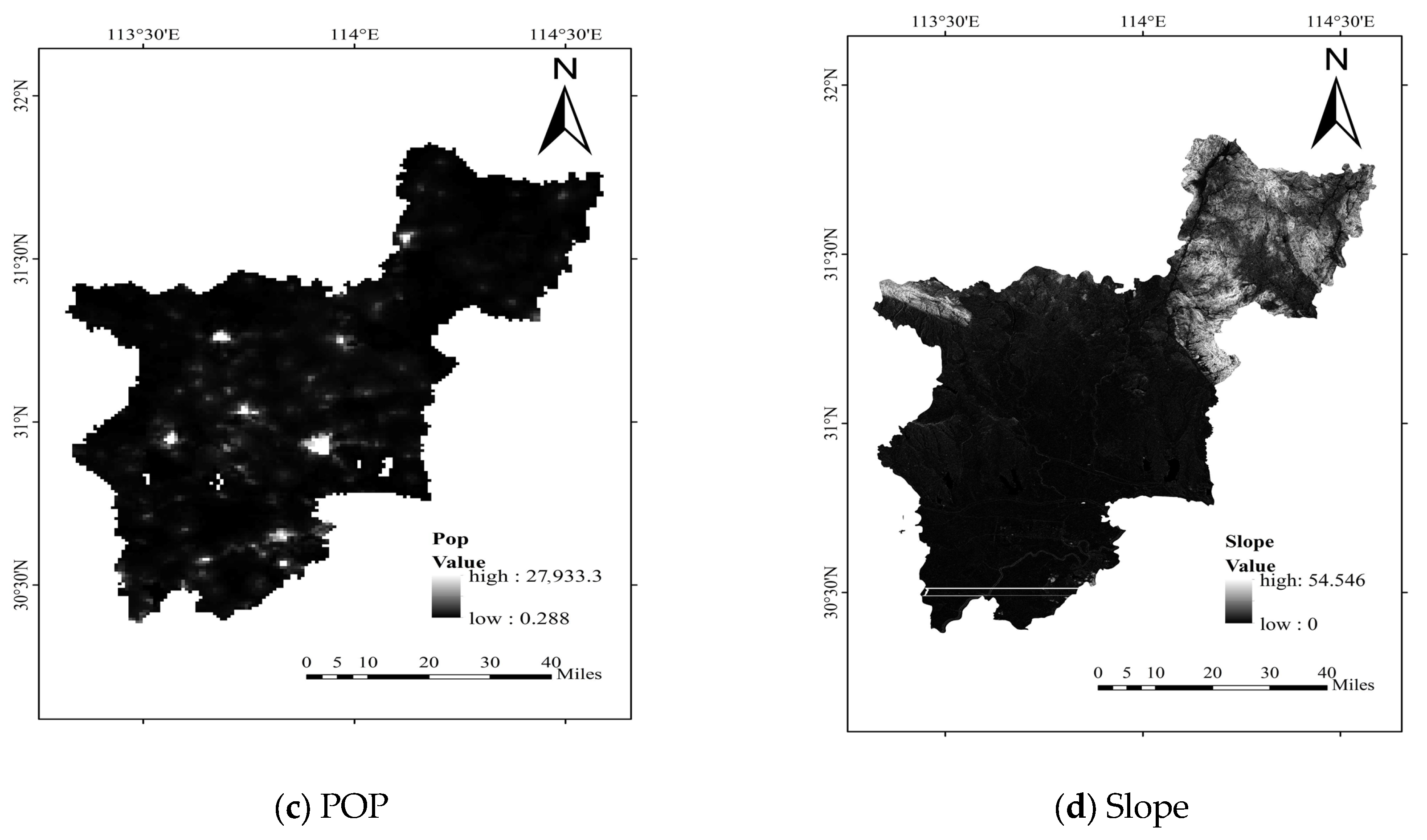
- The slope indicates the steepness or incline of a particular slope. Understanding the slope can help identify the types of landforms that may form, predict water flow patterns when precipitation reaches the slope, assess erosion potential, and determine suitable locations for vegetation.
- Aspect refers to the direction in which a slope points with respect to the four cardinal directions (North, South, East, West). It is measured as an angle from 0° (toward true North) to 360°, with the slope considered to have a clockwise orientation on Earth. The aspect of a slope determines the amount and direction of solar radiation received, affecting the local microclimate, vegetation growth, and soil moisture.
- Land cover has a substantial influence on the probability and spread rate of wildfires, as well as on the types of fuels available. Different land cover types contribute different levels and types of fire risk; these include forests, grasslands, bare ground, farmland, wetlands, and urban areas.
2.3. GIS Data Integration and Archiving
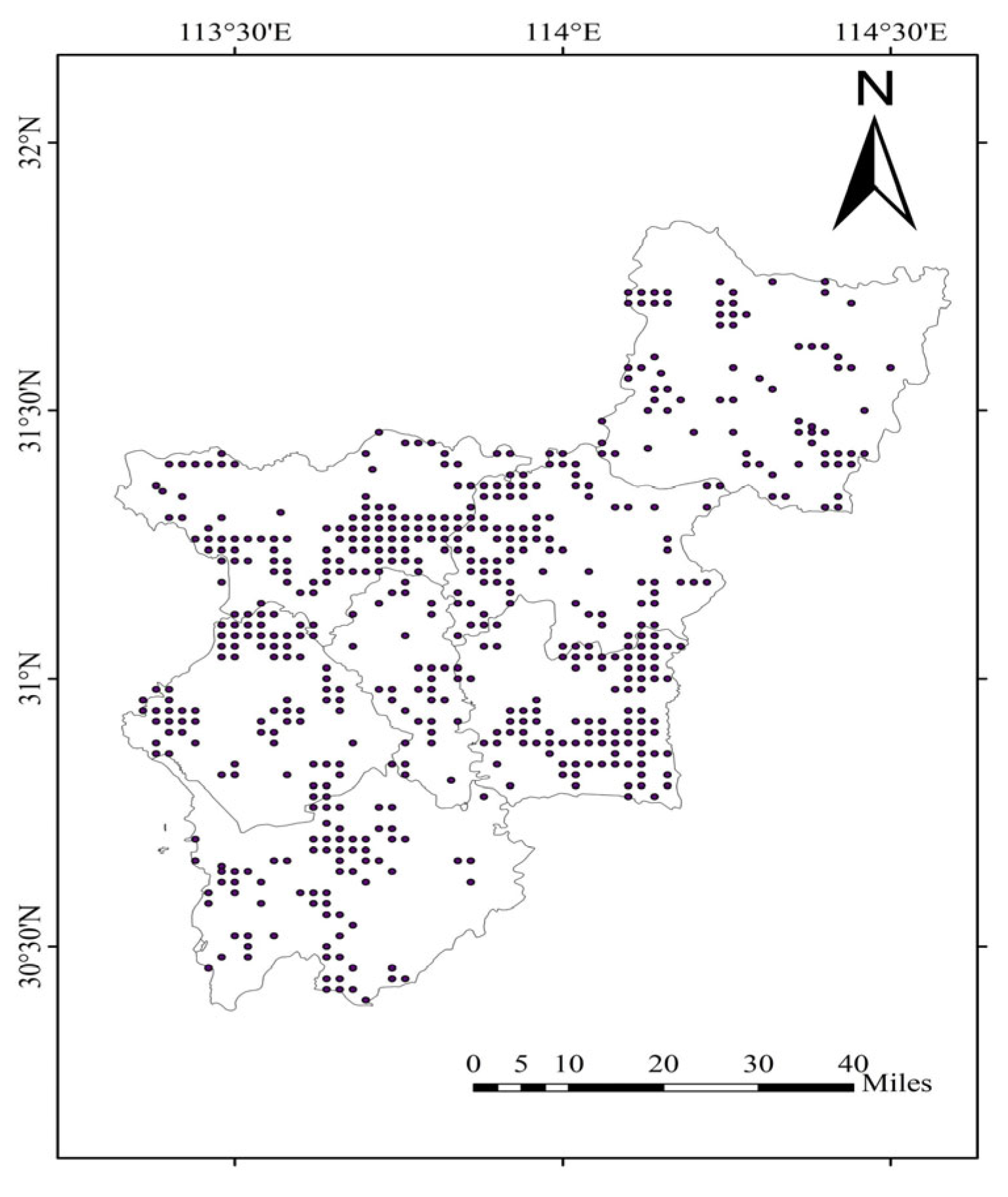
2.4. Himawari Wildfire Data
3. Fire Risk Early Warning Model for Transmission Corridors
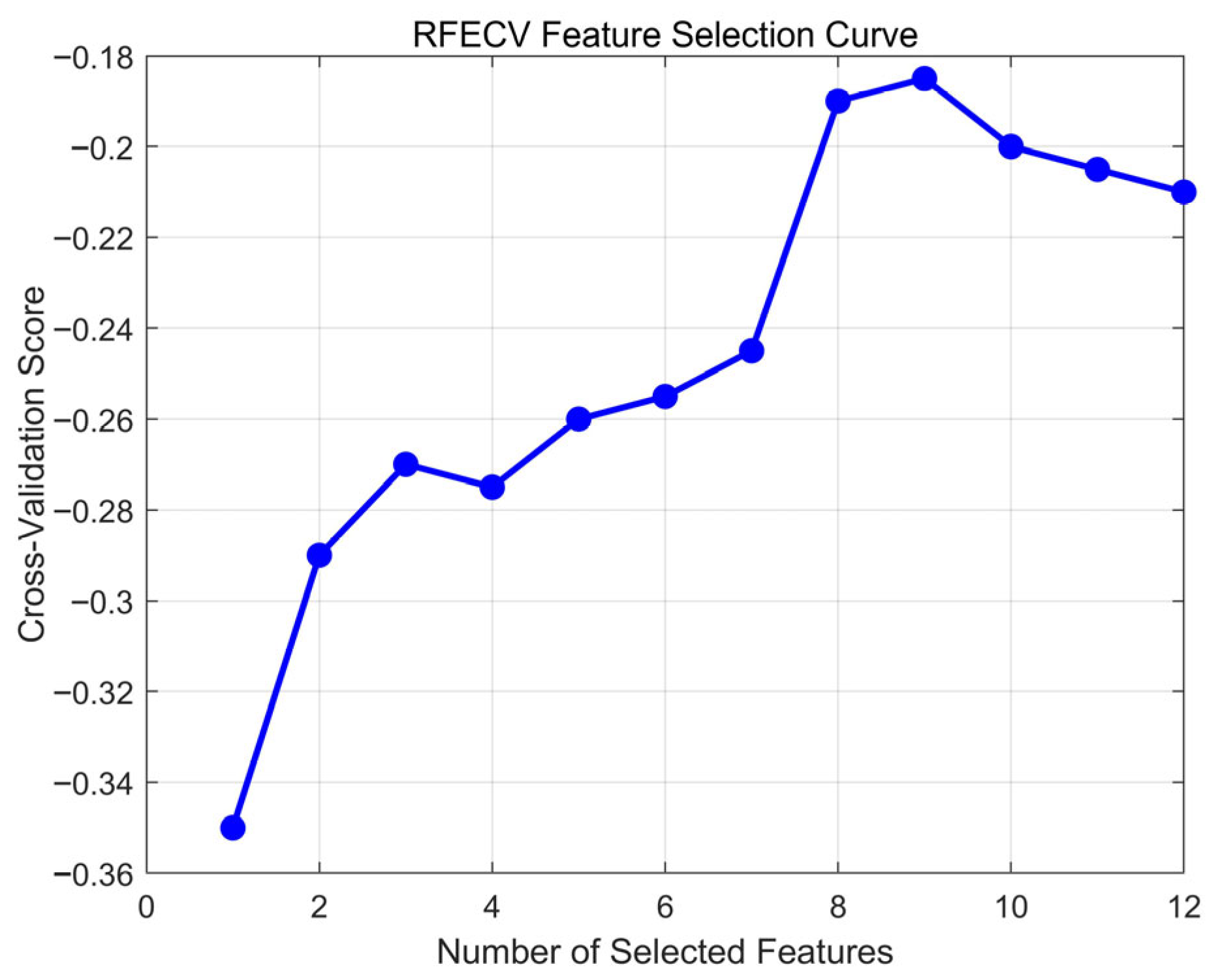
3.1. Selection of Early Warning Indicators
3.2. Early Warning Indicator Grading
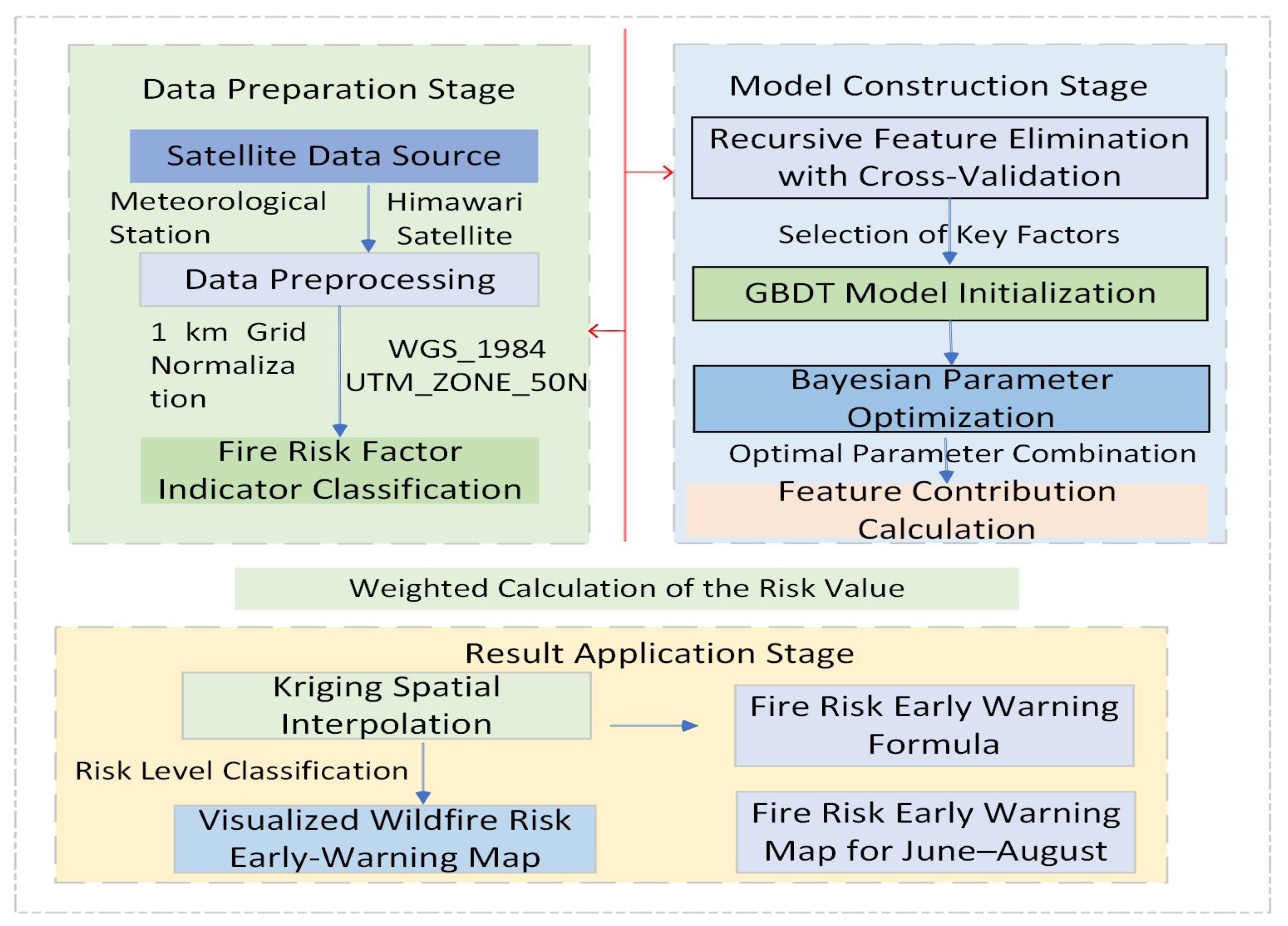
3.3. Gradient Boosting Decision Tree (GBDT) Model
- Initialization: The mean value of the target variable (fire point count) in the training dataset is used as the initial prediction .
- 2.
- Iterative training process: At the -th iteration, the residual (negative gradient) between the current model prediction and the true value is calculated.
- 3.
- The residual is used as a pseudo-target to train a new learner , which fits the current residual distribution. Based on the prediction results of the current learner, the model prediction is then updated.
3.4. Bayesian Parameter Optimization
3.5. Model Evaluation Criteria
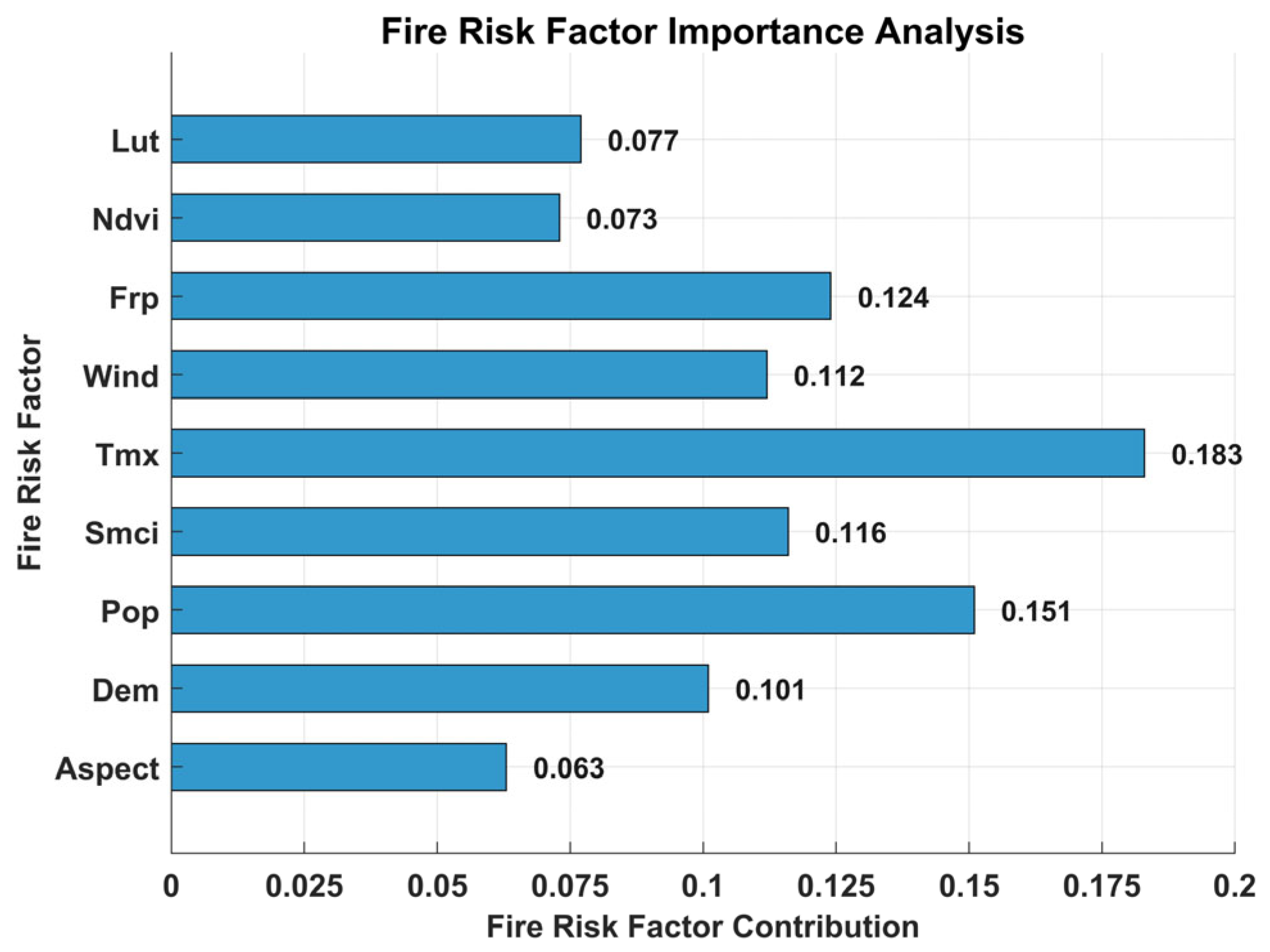
3.6. Feature Importance Analysis and Global Wildfire Risk Index Construction
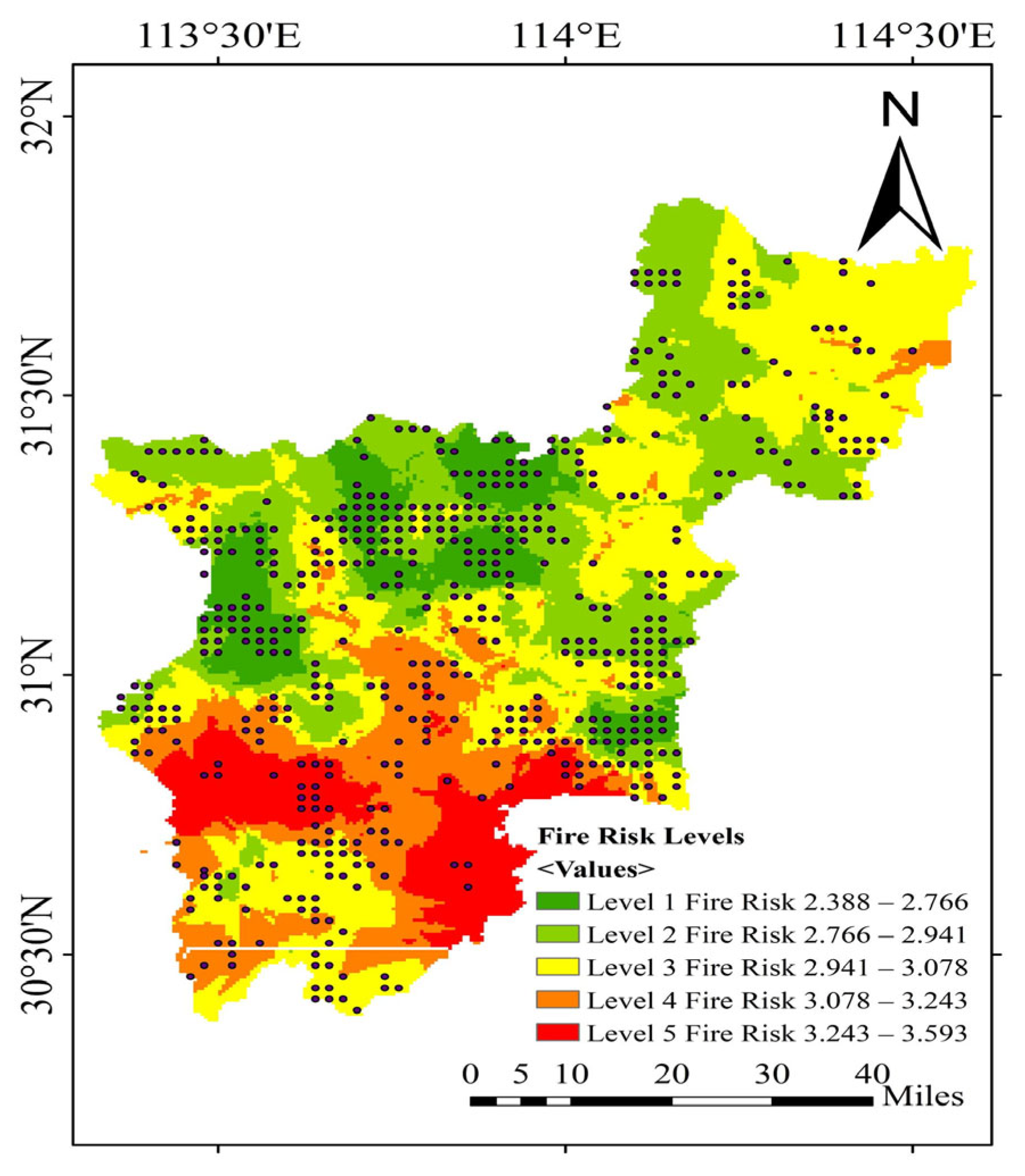
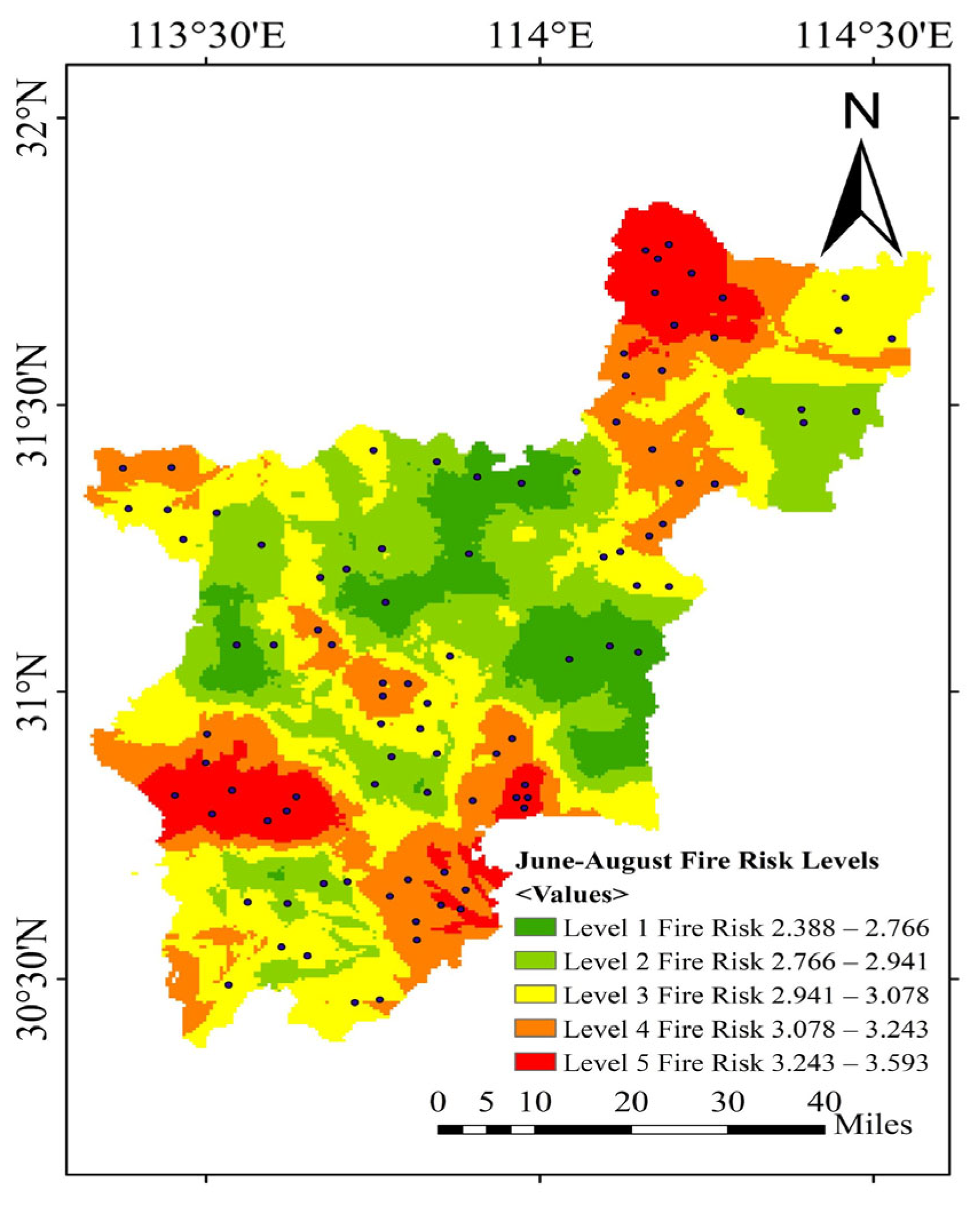
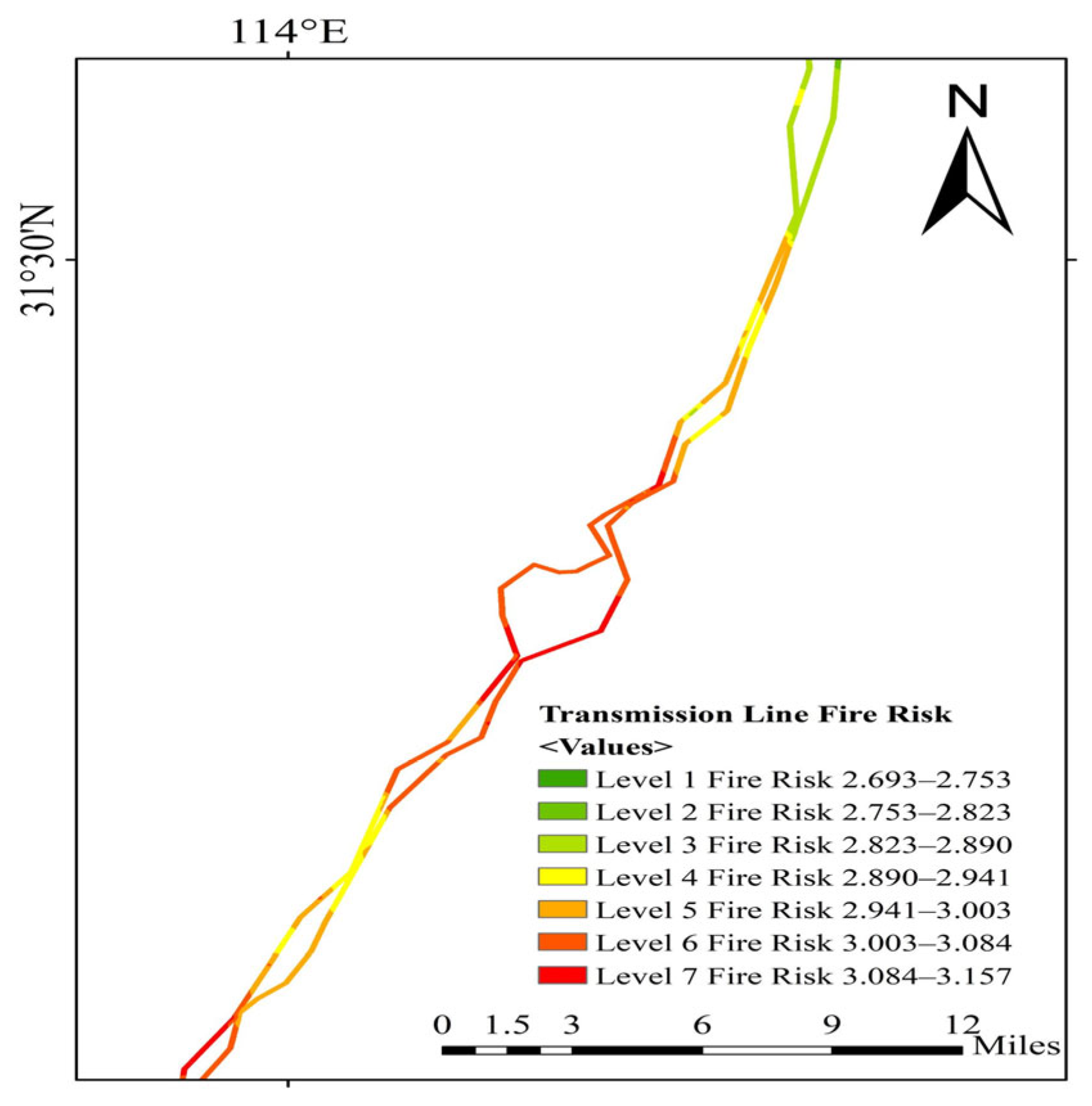
3.7. Visualization and Analysis of Early Warning Results
- The spatial resolution cannot meet the requirements for tower-level early warning. Although the preliminary model uses a grid scale suitable for regional wildfire risk assessment, it is difficult to accurately capture the local microenvironmental differences along transmission lines. As a result, it cannot directly guide tower-level inspections and risk management, and multiple adjacent towers may be assigned the same warning level.
- Spatial data features exhibit spatial autocorrelation, meaning that features located close to each other are often more similar than those farther apart. Using only traditional regression methods to obtain global coefficients for wildfire risk indicators ignores the spatial heterogeneity among variables, which affects the model’s reliability at local sections. In addition, the wildfire risk factors are mostly limited to natural factors such as meteorology and topography, without accounting for on-site factors of transmission lines, such as microtopography along the corridor.
4. Refined Adjustment of Transmission Line Corridor Sections
4.1. Geographically Weighted Regression (GWR)
4.2. On-Site Factors Affecting Transmission Lines
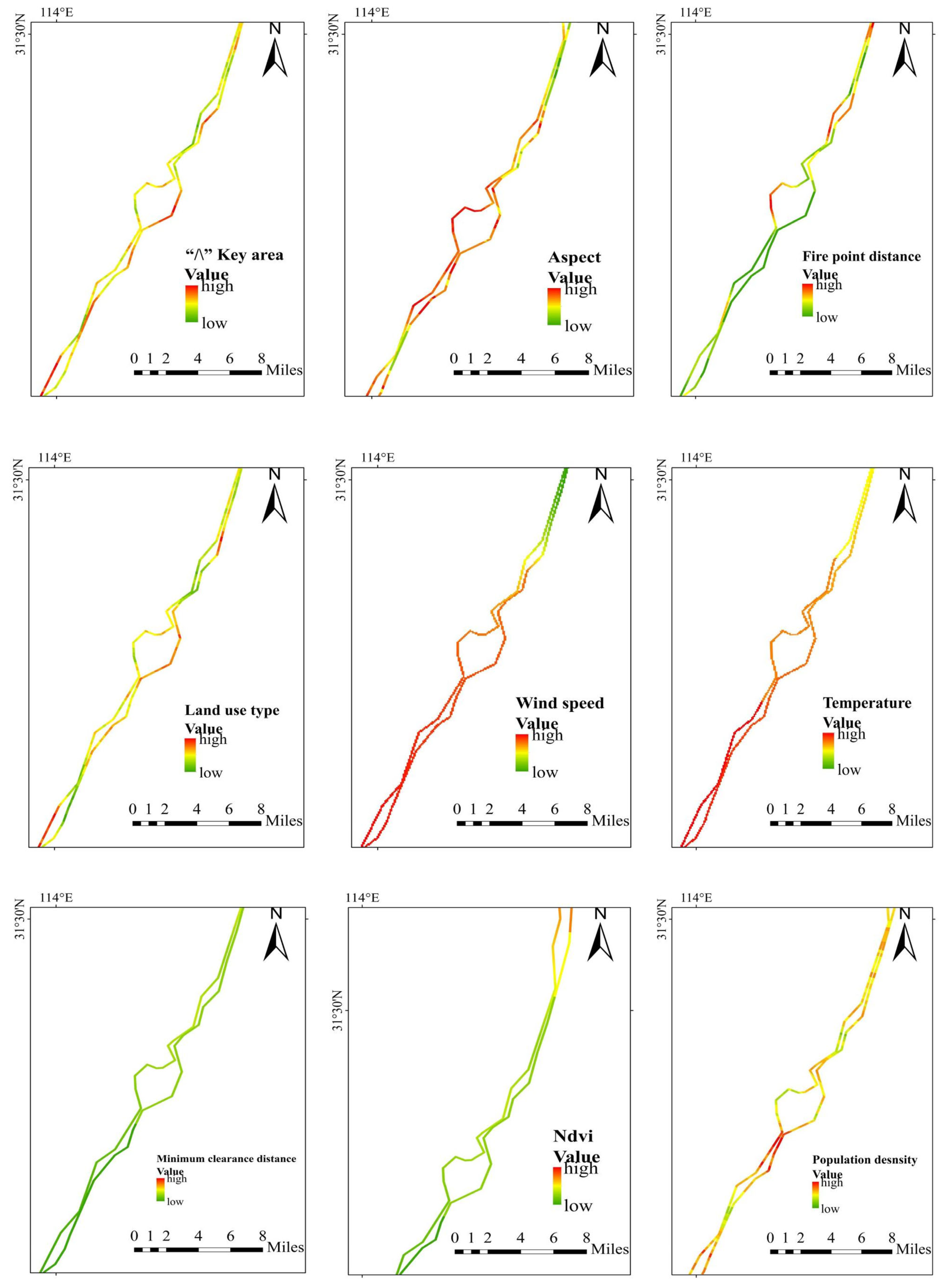
- Minimum clearance distance of transmission line towers: This reflects the smallest vertical distance between the towers and the ground. If this clearance is too small, it significantly reduces the safety buffer, making it easier for ground vegetation to grow close to the towers and causing combustible materials such as fallen branches and leaves to accumulate near the tower bases. This directly increases the risk of vegetation or debris coming into contact with live conductors under adverse weather conditions.
- A fire in a key management area that is controlled by the “/\”-shaped area creates a boundary for fire control. When a fire burns in proximity to a transmission power line, the heat generated by the flames will produce a strong updraft. Because of this, very quickly, as a result of the updraft, an area of disturbance (or turbulence) will form. A fire under these conditions in a key management area would burn much hotter than a normal wood fire, and can cause numerous electrical malfunctions and faults in the transmission lines due to the extreme heat generated by the fire.
- The distance from each tower to the closest historical fire points is calculated by measuring the distance to each historical fire point using the nearest neighbor tool within the GIS program (ArcGIS). The results will depend on the location of the fire points relative to the towers, as well as how quickly the fires spread and the speed of the tower’s construction. A practical wildfire risk warning strategy for transmission line corridors is based on the distance between fire points and the lines, with the warning levels defined in kilometers: distances less than 1 km correspond to Level 1 risk, 1–2 km to Level 2 risk, and 2–3 km to Level 3 risk.
4.3. Spatial Autocorrelation Analysis
4.4. Multicollinearity Diagnosis of Fire Risk Factors
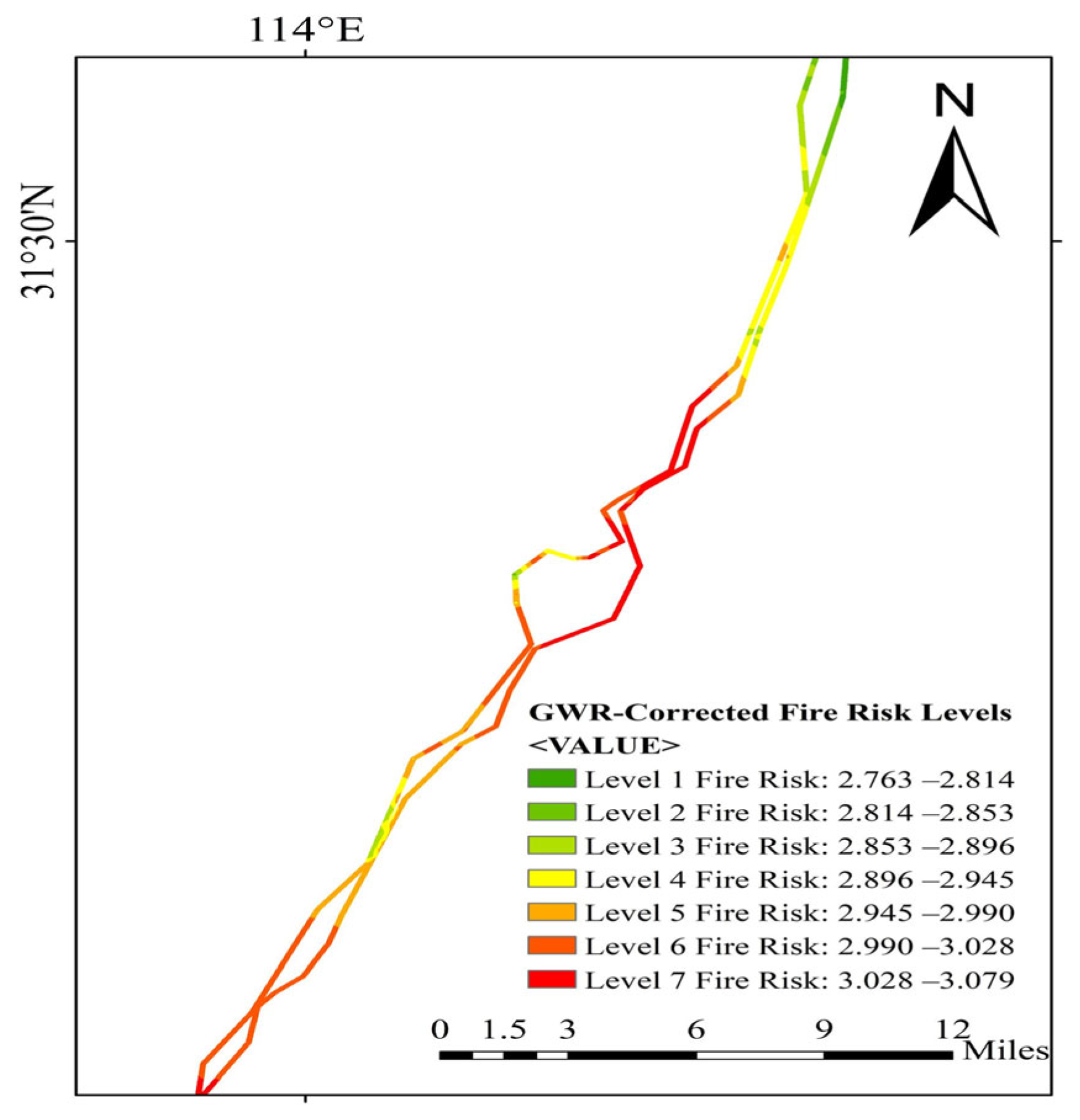
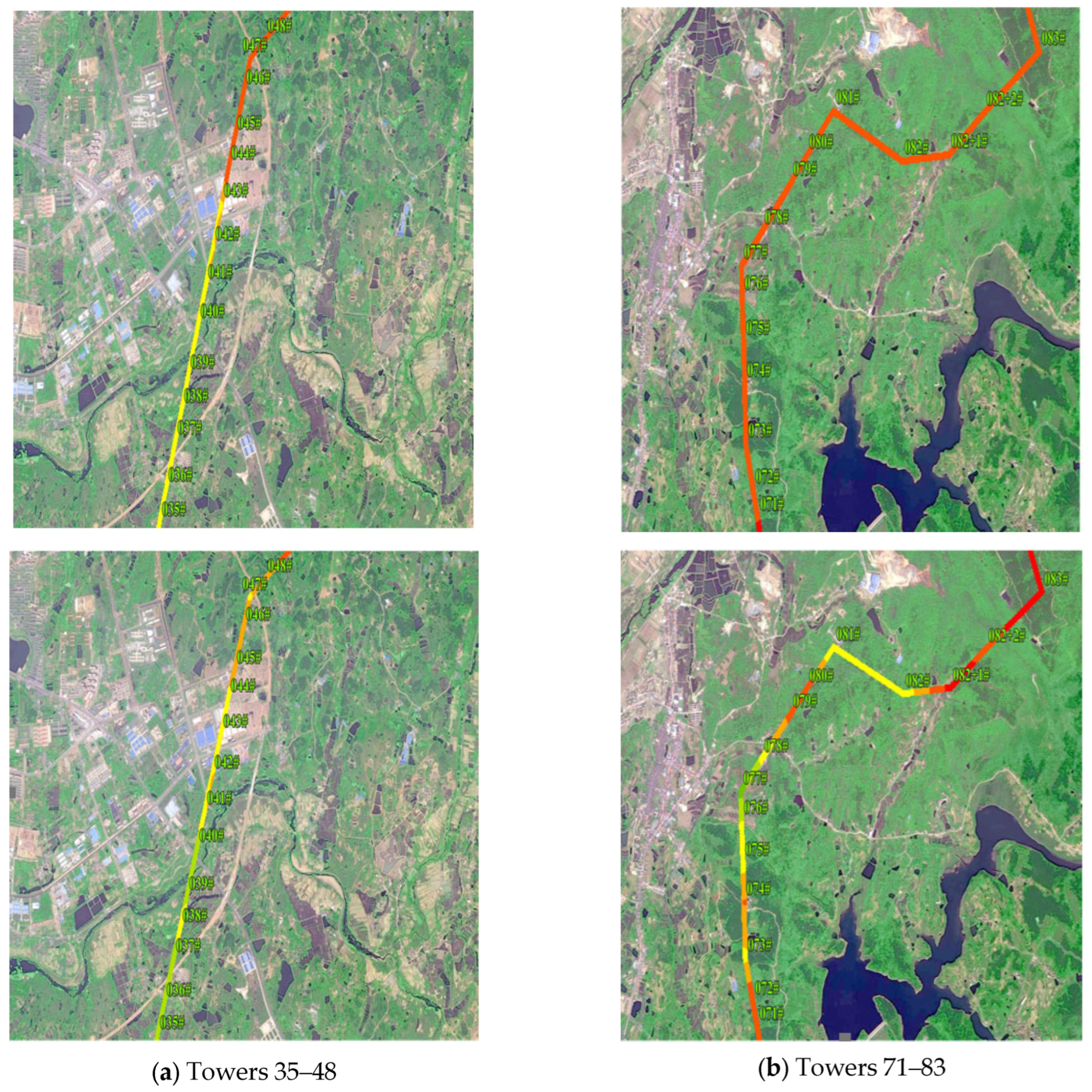
4.5. Results and Analysis
5. Discussion
- This study presents a method to provide early warning of wildfire threats along power transmission corridors. Our study involved 412 transmission lines along two Xiao–Shi circuit lines and utilized GBDT and the GWR approach to integrate meteorological, remote sensing, on-site, and GIS data into a GIS-based model, offering a better estimation of potential wildfire threats compared to previous modeling methods. By monitoring fires on a broad scale, we then implement a local response to fire threats based on the location of reference fire points within the study area. The ability to continuously adjust the level of risk along transmission lines, down to the tower level, helps address the challenge of assessing wildfire threats across diverse terrain, as the determination of fire risk is based on global fire risk factor weights calculated for all sections of the corridor. The combination of GBDT’s global fire risk prediction with GWR’s local area fire risk prediction provides a comprehensive understanding of fire risk trends and insights into how risk factors vary locally. This approach allows for identification of the highest-risk areas, maximizing resources dedicated to monitoring and managing wildfires, and thereby improving the effectiveness and accuracy of wildfire prevention along power transmission lines. It should be noted that this study focuses on wildfire risk early warning along transmission corridors rather than the direct estimation of transmission line outage probability. The derived wildfire risk information is intended to serve as an upstream risk indicator that can support outage risk assessment, preventive inspection planning, and operational decision-making, rather than a replacement for detailed reliability- or protection-based outage probability models. It should be emphasized that this study focuses on wildfire risk early warning as an external hazard to transmission lines, aiming to support transmission line breakdown prevention, preventive inspection, and operational decision-making, rather than to directly predict specific transmission line breakdown events. Importantly, the local GWR refinement is applied to the global GBDT-derived risk outputs rather than by refitting the original wildfire observations, thereby avoiding in-sample overfitting.
- GBDT-GWR, a flexible, coupled model, has demonstrated its utility across different transmission line corridors. The model is effective because it integrates multiple sources of meteorological and remote sensing data along with GIS information to create a dynamic wildfire risk assessment at the tower level, identifying both high-risk locations along the line and the underlying causes of these risks. By providing both tower-based and corridor-wide risk assessments, companies can monitor and manage high-risk areas using a more accurate method, improving preparedness for potential fire events. This methodological framework can be extended to other corridors with similar environmental and structural characteristics, offering a scalable and adaptable solution for proactive wildfire prevention in power transmission networks.
6. Conclusions
- Despite the encouraging results, several limitations of this study should be acknowledged. First, the analysis is based on wildfire and environmental data covering a limited temporal period, which may not fully capture long-term seasonal variability or interannual extremes. Second, the case study focuses on specific transmission corridors within a particular geographical and climatic setting, and regional characteristics may influence the relative importance and spatial behavior of wildfire risk factors. Third, the global wildfire risk screening stage relies on satellite-based fire point products, which are subject to inherent uncertainties related to sensor spatial resolution, detection thresholds, cloud cover, and viewing conditions. Although these limitations are partially mitigated through spatial aggregation and the subsequent local refinement using GWR, they should be considered when interpreting the results.
- Future research could further enhance the proposed global–local wildfire early warning framework in several directions. Incorporating longer time-series datasets spanning multiple fire seasons would improve model robustness and enable the analysis of long-term wildfire dynamics. In addition, integrating real-time or near-real-time data streams, such as UAV-based observations, ground sensor networks, or high-frequency meteorological data, could support more responsive and adaptive wildfire early warning capabilities. These extensions would further strengthen the operational applicability of the framework and support proactive wildfire risk management for power transmission corridors under evolving environmental conditions.
Author Contributions
Funding
Data Availability Statement
Conflicts of Interest
References
- Bahadori, N.; Razavi-Termeh, S.V.; Sadeghi-Niaraki, A.; Al-Kindi, K.M.; Abuhmed, T.; Nazeri, B.; Choi, S.-M. Wildfire susceptibility mapping using deep learning algorithms in two satellite imagery datasets. Forests 2023, 14, 1325. [Google Scholar] [CrossRef]
- Moghim, S.; Mehrabi, M. Wildfire assessment using machine learning algorithms in different regions. Fire Ecol. 2024, 20, 104. [Google Scholar] [CrossRef]
- Alizadeh, M.R.; Abatzoglou, J.T.; Adamowski, J.; Modaresi Rad, A.; AghaKouchak, A.; Pausata, F.S.R.; Sadegh, M. Elevation-dependent intensification of fire danger in the western United States. Nat. Commun. 2023, 14, 1773. [Google Scholar] [CrossRef] [PubMed]
- Klimas, K.B.; Yocom, L.L.; Murphy, B.P.; David, S.R.; Belmont, P.; Lutz, J.A.; DeRose, R.J.; Wall, S.A. A machine learning model to predict wildfire burn severity for pre-fire risk assessments, Utah, USA. Fire Ecol. 2025, 21, 8. [Google Scholar] [CrossRef]
- Diaz-Vazquez, D.; Casillas-García, L.F.; Garcia-Gonzalez, A.; Graf Montero, S.H.; Márquez Rubio, J.I.; Llamas Llamas, J.J.; Gradilla Hernandez, M.S. Integrating remote sensing and machine learning for dynamic burn probability mapping in data-limited contexts. Remote Sens. Appl. Soc. Environ. 2025, 38, 101554. [Google Scholar] [CrossRef]
- Yu, S.; Singh, M. Deep learning-based remote sensing image analysis for wildfire risk evaluation and monitoring. Fire 2025, 8, 19. [Google Scholar] [CrossRef]
- Torres-Vázquez, M.Á.; Herrera, S.; Gincheva, A.; Halifa-Marín, A.; Cavicchia, L.; Di Giuseppe, F.; Montávez, J.P.; Turco, M. Enhancing seasonal fire predictions with hybrid dynamical and random forest models. Npj Nat. Hazards 2025, 2, 20. [Google Scholar] [CrossRef]
- Thies, B. Machine learning wildfire susceptibility mapping for Germany. Nat. Hazards 2025, 121, 12517–12530. [Google Scholar] [CrossRef]
- Singh, H.; Ang, L.-M.; Srivastava, S. Active wildfire detection via satellite imagery and machine learning: An empirical investigation of Australian wildfires. Nat. Hazards 2025, 121, 9777–9800. [Google Scholar] [CrossRef]
- Feizizadeh, B.; Omarzadeh, D.; Mohammadnejad, V.; Khallaghi, H.; Sharifi, A.; Golmohmadzadeh Karkarg, B. An integrated approach of artificial intelligence and geoinformation techniques applied to forest fire risk modeling in Gachsaran, Iran. J. Environ. Plan. Manag. 2023, 66, 1369–1391. [Google Scholar] [CrossRef]
- Tian, G.; Chen, H.; Xu, X. Research on forest fire risk prediction based on fuzzy comprehensive evaluation. Disaster Sci. 2013, 28, 117–122. [Google Scholar]
- Yang, X.; Yu, Q.; Ye, Q.; Nie, R.; Wu, R.; Luo, R. Research on transmission corridor vegetation wildfire early-warning platform based on remote sensing technology. J. Nat. Disasters 2021, 30, 67–76. [Google Scholar] [CrossRef]
- Ma, W.; Feng, Z.; Cheng, Z.; Wang, F. Study on forest fire driving factors and distribution patterns in Shanxi Province. J. Cent. South Univ. For. Technol. 2020, 40, 57–69. [Google Scholar] [CrossRef]
- Xiao, Y.; Ji, P. Forest fire occurrence prediction based on a Bayesian zero-inflated negative binomial model. J. Cent. South Univ. For. Technol. 2021, 41, 49–56. [Google Scholar] [CrossRef]
- Zhang, K.; Wu, X.; Zhao, J.; Liu, L.; Qin, P.; Wang, H.; Zhan, T. Real-time wildfire risk assessment model for transmission corridors based on feature engineering, ensemble learning, and model fusion. Power Syst. Technol. 2023, 47, 4727–4738. [Google Scholar] [CrossRef]
- Ouyang, F.; She, X.; Xu, B.; Zeng, J.; Yu, K.; Zang, X.; He, S. Classification of wildfire risk levels for grounding faults in distribution networks based on multi-indicator comprehensive evaluation. Power Syst. Prot. Control 2024, 52, 10–19. [Google Scholar] [CrossRef]
- Dian, S.; Cheng, P.; Ye, Q.; Wu, J.; Luo, R.; Wang, C.; Hui, D.; Zhou, N.; Zou, D.; Yu, Q.; et al. Integrating wildfire propagation prediction into early warning of electrical transmission line outages. IEEE Access 2019, 7, 27586–27603. [Google Scholar] [CrossRef]
- Yang, C.; Ning, X.; Xu, H.; Chen, T.; Zeng, C.; Yang, S. A review of power grid wildfire monitoring and risk early warning technologies. Power Syst. Technol. 2023, 47, 4765–4777. [Google Scholar] [CrossRef]
- Zhang, R. Safety Assessment of Power Transmission Corridors in Forestry Area Based on Multi-Source Data. Ph.D. Dissertation, Wuhan University, Wuhan, China, 2020. [Google Scholar]
- Zhang, B.; Ou, G.; Sun, X.; Xu, T.; Xu, H. Application of spatial effects and regression models in forestry. J. Southwest For. Univ. 2016, 36, 144–152. [Google Scholar]
- Rodrigues, M.; De la, R.; Fotheringham, S. Modeling the spatial variation of the explanatory factors of human-caused wildfires in Spain using geographically weighted logistic regression. Appl. Geogr. 2014, 48, 52–63. [Google Scholar] [CrossRef]
- Lu, J.; Liu, Y.; Yang, L.; Xu, X.; Wu, C. Analysis of wildfire occurrence patterns along transmission lines. Fire Sci. Technol. 2014, 33, 1447–1451. [Google Scholar]
- Chen, X. A Risk Level Prediction and Assessment Method for Transmission Line Tripping Caused by Wildfires; State Grid Hubei Electric Power Research Institute: Wuhan, China, 2017. [Google Scholar]
- Wang, S.; Zhang, G.; Tan, S.; Wang, P.; Wu, X. Forest fire risk assessment in Hunan Province based on spatial logistic regression. J. Cent. South Univ. For. Technol. 2020, 40, 88–95. [Google Scholar] [CrossRef]
- Li, X. Synergy of Multi-Factors for Forest Fire Prediction and Detection Based on MODIS Data. Ph.D. Dissertation, University of Science and Technology of China, Hefei, China, 2016. [Google Scholar]
- Xie, Q. Wildfire Danger Assessment and Early Warning from Multi-Source Spatio-Temporal Big Data. Master’s Thesis, University of Electronic Science and Technology of China, Chengdu, China, 2022. [Google Scholar]
- Zhang, C.; Wei, S.T.; Liu, X.Y.; Zhang, S.H.; Tang, C.H.; Zhou, Y. Spatiotemporal evolution characteristics and driving factors of vegetation in the southwest arid-hot valley based on the Google Earth Engine platform. Acta Ecol. Sin. 2025, 45, 5398–5412. [Google Scholar] [CrossRef]
- Tian, Y.; Ji, Z.; Wang, D.; Xie, Y. Vegetation coverage and ecological water requirement in the Yellow River Delta. Res. Soil Water Conserv. 2025, 32, 168–175+188. [Google Scholar] [CrossRef]
- Lu, J.; Wu, C.; Yang, L.; Zhang, H.; Liu, Y.; Xu, X. Research and application of wildfire monitoring and early warning system for transmission lines. Power Syst. Prot. Control 2014, 42, 89–95. [Google Scholar]
- Wu, T.; Ruan, J.; Hu, Y.; Liu, B.; Chen, C. Characteristics and mechanisms of wildfire-induced flashover on 500 kV transmission lines. Proc. CSEE 2011, 31, 163–170. [Google Scholar] [CrossRef]
- Wu, T.; Ruan, J.; Zhang, Y.; Chen, C.; Pu, Z.; Wang, G. Statistical characteristics and identification analysis of wildfire-induced tripping accidents on transmission lines. Power Syst. Prot. Control 2012, 40, 138–148. [Google Scholar] [CrossRef]
- Tu, D. Study on the Influence of Asymmetric V-Shaped Tunnel Structure on Smoke Propagation Characteristics and Flame Characteristics. Master Thesis, Beijing University of Technology, Beijing, China, 2022. [Google Scholar]
- Zheng, Z.; Gao, Y.; Yang, Q.; Tang, Y.; Xu, Y.; Chen, Y. Study on the comprehensive forest fire risk forecast model in the southwestern mountainous area: A case study of Chongqing. J. Nat. Disasters 2020, 29, 152–161. [Google Scholar] [CrossRef]
- Liu, Z.; Jiang, Y.; Shen, Z.; Li, S.; Zhao, X. Discussion on improving China’s forest fire monitoring capability using satellite systems. Spacecr. Eng. 2019, 28, 96–100. [Google Scholar]
- Liu, S.; Lu, J.; Zhou, E.; Huang, Y.; Wei, R.; Chen, W. Refined wildfire monitoring and alarming technology for overhead transmission lines. Guangdong Electr. Power 2022, 35, 99–106. [Google Scholar]
- Zhang, P.; Guo, Q.; Chen, B.; Feng, X. Comparative analysis of China’s Fengyun-4 meteorological satellite and Japan’s Himawari-8/9 satellites. Adv. Meteorol. Sci. Technol. 2016, 6, 72–75. [Google Scholar]





| NO. | Aspect | DEM | POP | Tmx | NDVI | Wind | Smci | Lut | FRP | Fire Points |
|---|---|---|---|---|---|---|---|---|---|---|
| 1 | 5 | 5 | 5 | 5 | 5 | 5 | 5 | 6 | 5 | 9 |
| 2 | 5 | 1 | 1 | 5 | 5 | 4 | 4 | 6 | 2 | 3 |
| 3 | 5 | 3 | 4 | 3 | 2 | 1 | 4 | 2 | 1 | 3 |
| 4 | 5 | 5 | 2 | 2 | 1 | 1 | 5 | 2 | 5 | 3 |
| … | 5 | 4 | 2 | 2 | 1 | 1 | 5 | 2 | 4 | 3 |
| 836 | 3 | 1 | 3 | 1 | 4 | 5 | 2 | 5 | 4 | 1 |
| 837 | 2 | 2 | 1 | 1 | 2 | 5 | 3 | 4 | 5 | 1 |
| Hyperparameter | Search Range | Optimal Value | Description |
|---|---|---|---|
| n_estimators | [50, 500] | 98 | Number of trees in the ensemble |
| learning_rate | [0.01, 0.3] | 0.0976 | Step size shrinkage to prevent overfitting. |
| max_depth | [3, 15] | 9 | Maximum depth of each decision tree. |
| min_samples_split | [2, 20] | 15 | Minimum number of samples required to split an internal node. |
| min_samples_leaf | [1, 10] | 4 | Minimum number of samples required to be at a leaf node. |
| subsample | [0.6, 1.0] | 0.8028 | Fraction of samples used for training each tree. |
| Model | Sample Size | R2 | MSE |
|---|---|---|---|
| GBDT | 837 | 0.468 | 0.252 |
| Linear Regression | 837 | 0.302 | 0.291 |
| Proposed Mode | 837 | 0.626 | 0.178 |
| Moran’s I | Expected Index | Z-Score | p-Value |
|---|---|---|---|
| 0.881 | −0.0048 | 14.89 | 0.002 |
| No. | Variable | VIF |
|---|---|---|
| 1 | Fire point distance | 1.49 |
| 2 | “/\”shaped key area | 1.19 |
| 3 | NDVI | 1.55 |
| 4 | Tmx | 3.25 |
| 5 | Aspect | 1.27 |
| 6 | Population density | 1.29 |
| 7 | Land use type | 1.28 |
| 8 | Minimum clearance distance | 1.09 |
| 9 | Wind speed | 1.52 |
| Tower No. | Level (Before) | Level (After) | O&M Classification |
|---|---|---|---|
| I 35–37# | Level 4 | Level 3 | AA |
| I 39–40# | Level 4 | Level 3 | AA |
| I 43–44# | Level 6 | Level 4 | AAA |
| I 45–48# | Level 6 | Level 5 | AAA |
| I 73–74# | Level 6 | Level 5 | AAA |
| I 75# | Level 6 | Level 4 | AA |
| I 76–77# | Level 6 | Level 2 | A |
| I 78# | Level 6 | Level 3 | AA |
| I 81–82# | Level 6 | Level 4 | AA |
| I 82#1# | Level 6 | Level 7 | AAA |
| I 83# | Level 6 | Level 7 | AAA |
Disclaimer/Publisher’s Note: The statements, opinions and data contained in all publications are solely those of the individual author(s) and contributor(s) and not of MDPI and/or the editor(s). MDPI and/or the editor(s) disclaim responsibility for any injury to people or property resulting from any ideas, methods, instructions or products referred to in the content. |
© 2026 by the authors. Licensee MDPI, Basel, Switzerland. This article is an open access article distributed under the terms and conditions of the Creative Commons Attribution (CC BY) license.
Share and Cite
Xue, T.; Xiang, C.; Chen, X.; Zhang, L. Comprehensive Early Alert and Adaptive Local Response Framework for Wildfire Risk in Transmission Line Corridors Using Coupled Global Factors in Power System. Processes 2026, 14, 752. https://doi.org/10.3390/pr14050752
Xue T, Xiang C, Chen X, Zhang L. Comprehensive Early Alert and Adaptive Local Response Framework for Wildfire Risk in Transmission Line Corridors Using Coupled Global Factors in Power System. Processes. 2026; 14(5):752. https://doi.org/10.3390/pr14050752
Chicago/Turabian StyleXue, Tianliang, Chengsi Xiang, Xi Chen, and Lei Zhang. 2026. "Comprehensive Early Alert and Adaptive Local Response Framework for Wildfire Risk in Transmission Line Corridors Using Coupled Global Factors in Power System" Processes 14, no. 5: 752. https://doi.org/10.3390/pr14050752
APA StyleXue, T., Xiang, C., Chen, X., & Zhang, L. (2026). Comprehensive Early Alert and Adaptive Local Response Framework for Wildfire Risk in Transmission Line Corridors Using Coupled Global Factors in Power System. Processes, 14(5), 752. https://doi.org/10.3390/pr14050752