Towards Sustainable Industry 5.0: An LLM-Based Co-Pilot for Energy-Efficient Factory Scheduling

Abstract
1. Introduction
- We present a system architecture for an LLM Co-Pilot that integrates energy-aware heuristics with GPT-4 reasoning for production scheduling.
- We develop and evaluate the Co-Pilot on three diverse datasets (synthetic, industrial, and benchmark), enabling cross-domain comparison against classical scheduling baselines.
- We provide a comprehensive experimental study demonstrating when LLMs provide tangible benefits, when heuristics remain sufficient, and how hybrid LLM-heuristic approaches align with the principles of Industry 5.0.
2. Brief Literature Review
2.1. Energy-Aware Production Scheduling
2.2. Industry 5.0 and Human-Centric Scheduling
2.3. Large Language Models in Industrial Applications
2.4. Research Gap
3. System Architecture
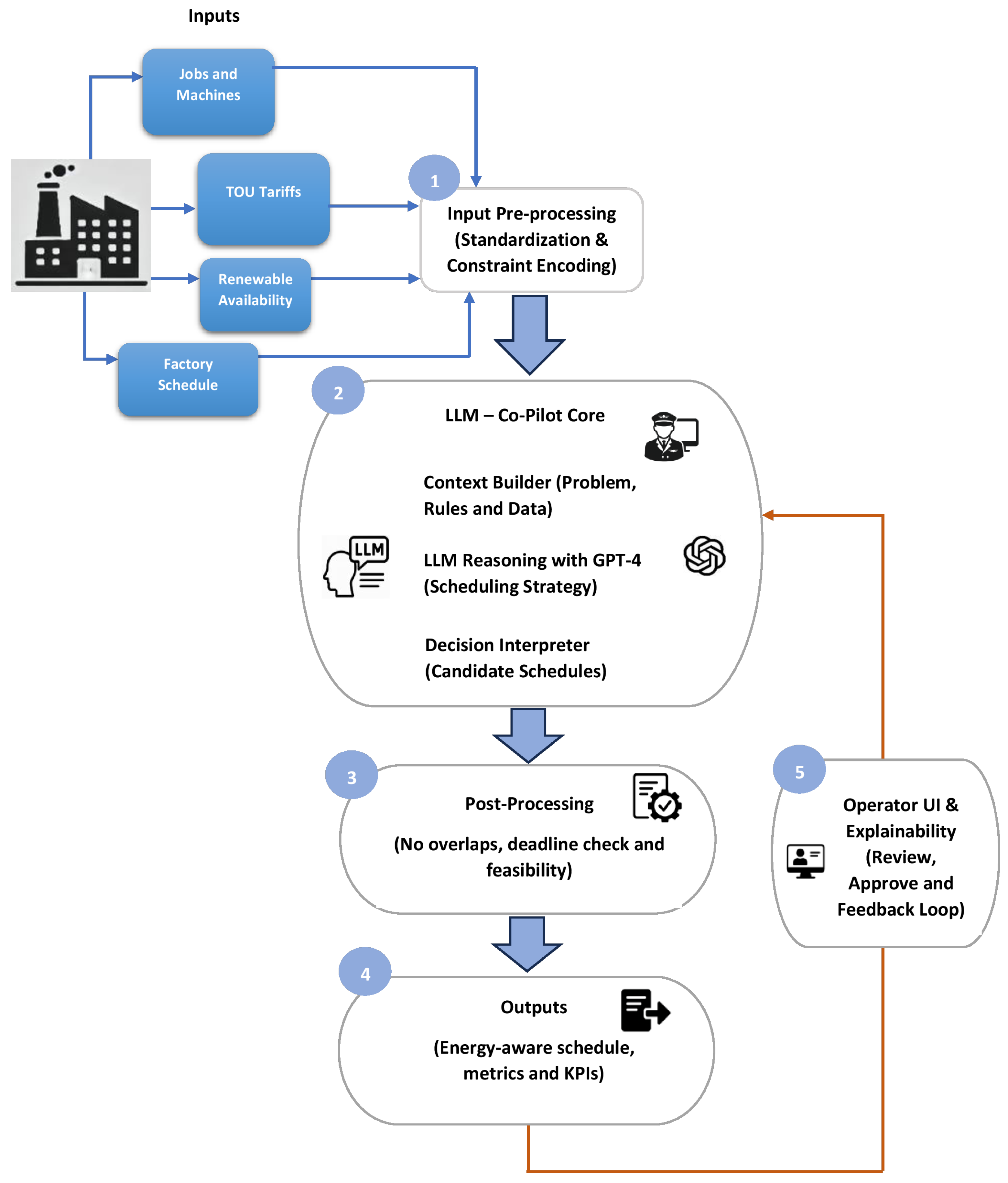
3.1. Inputs and Pre-Processing
3.2. Scheduling Core
3.3. Validation and Outputs
3.4. Operator Interaction and Explainability
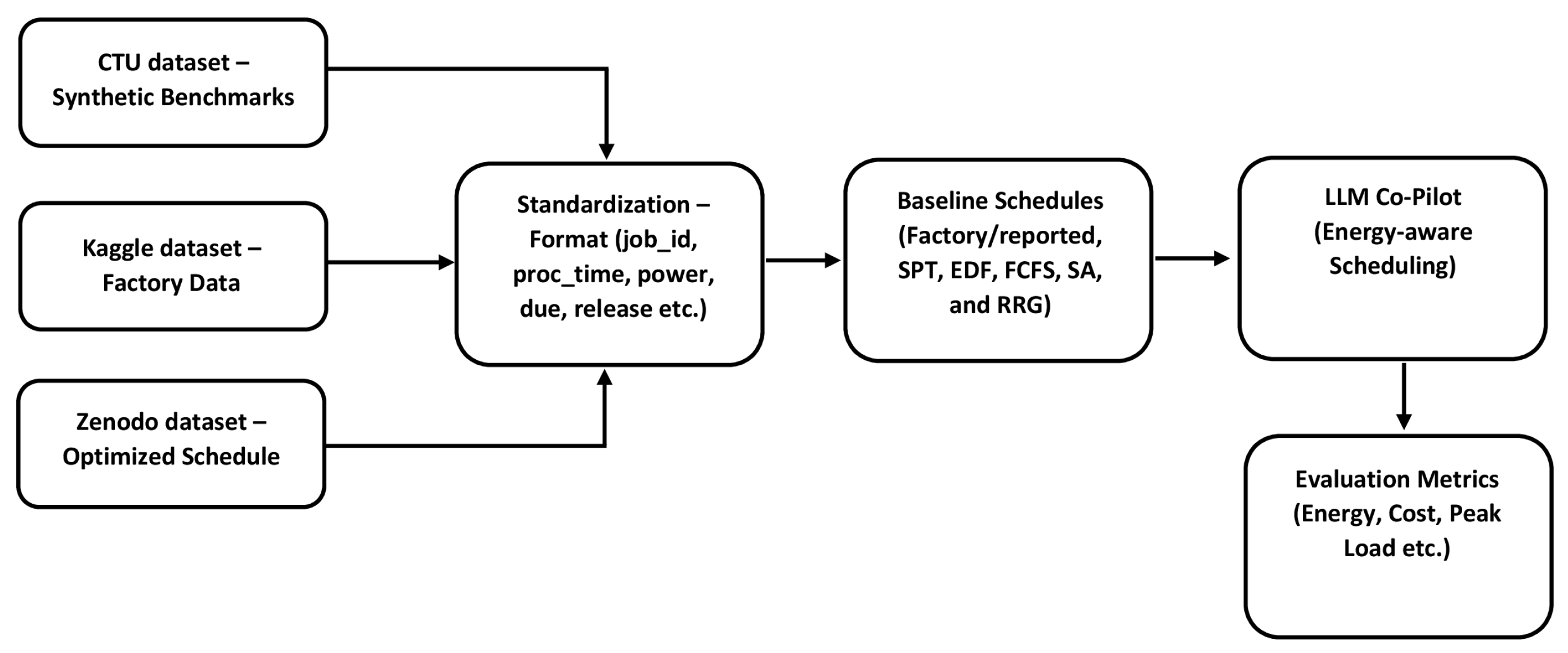
3.5. Scheduling Workflow
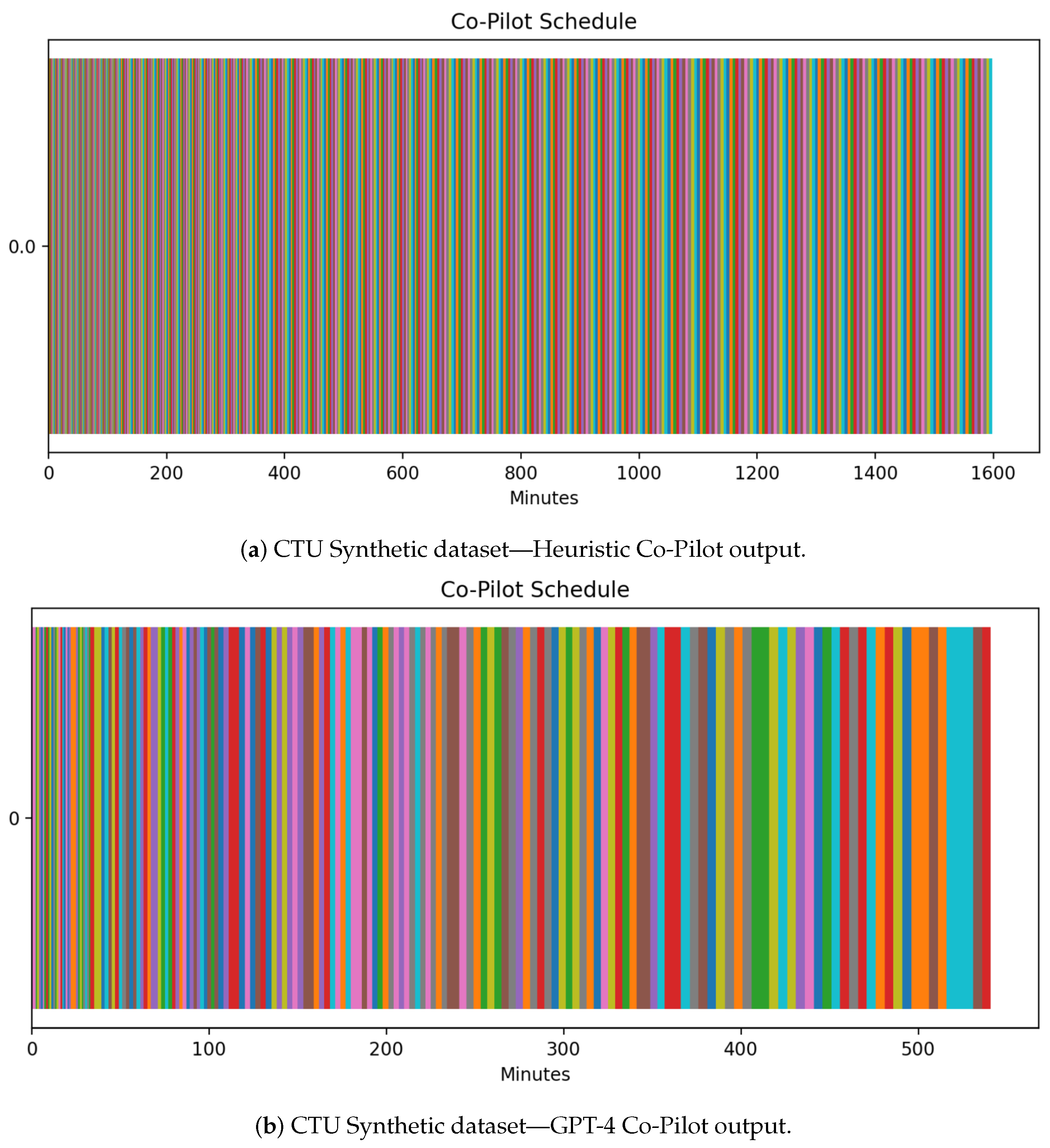
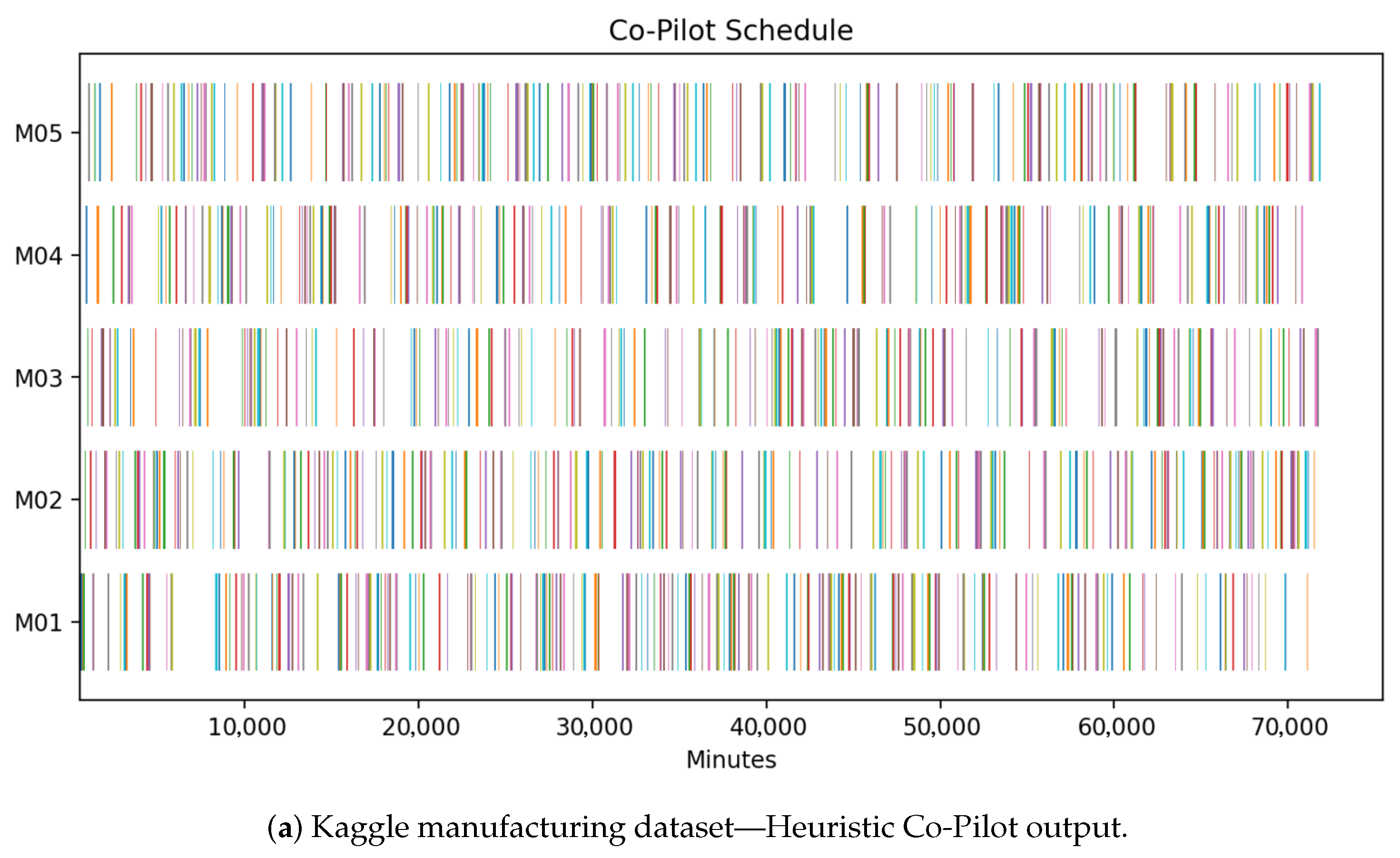
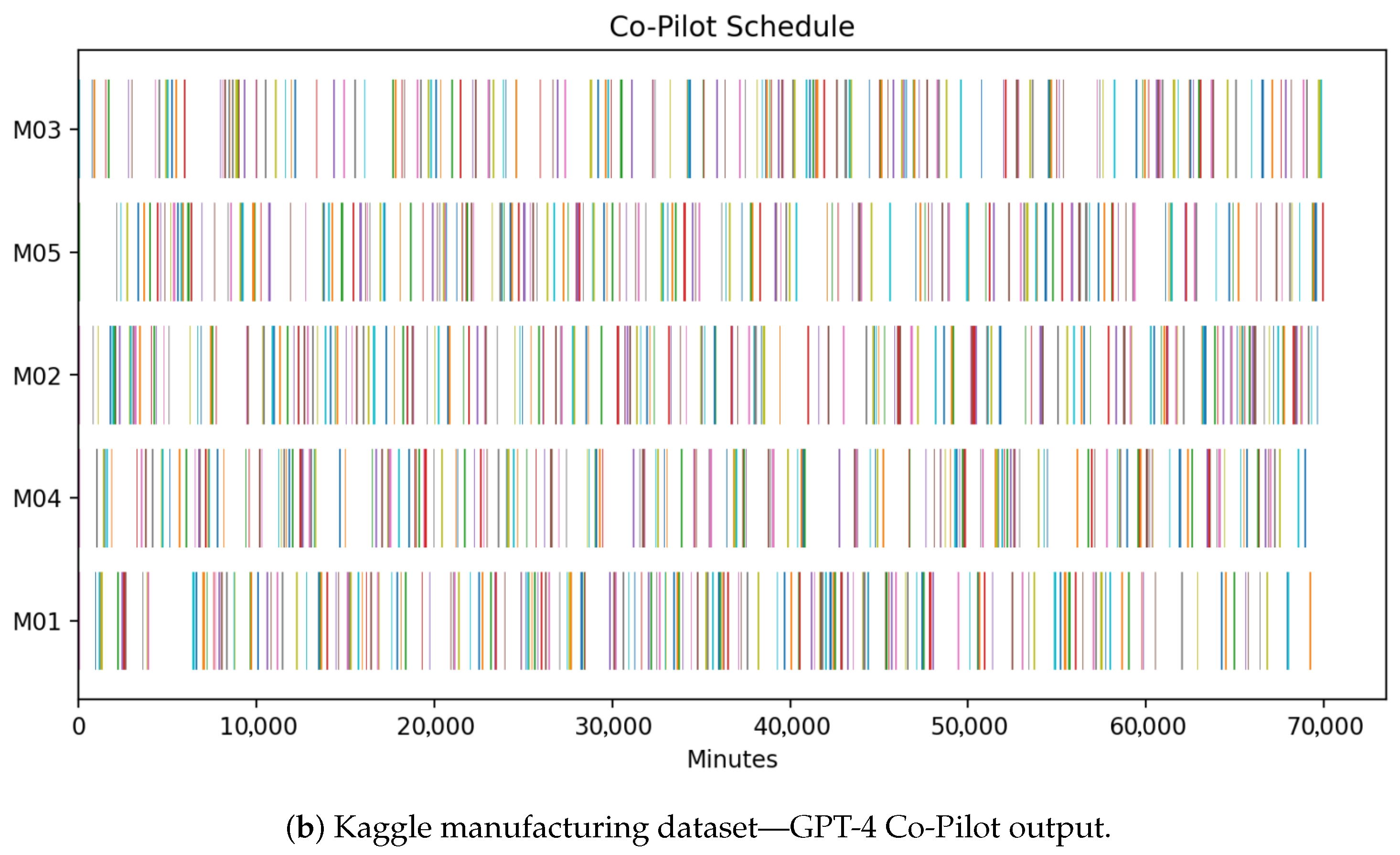
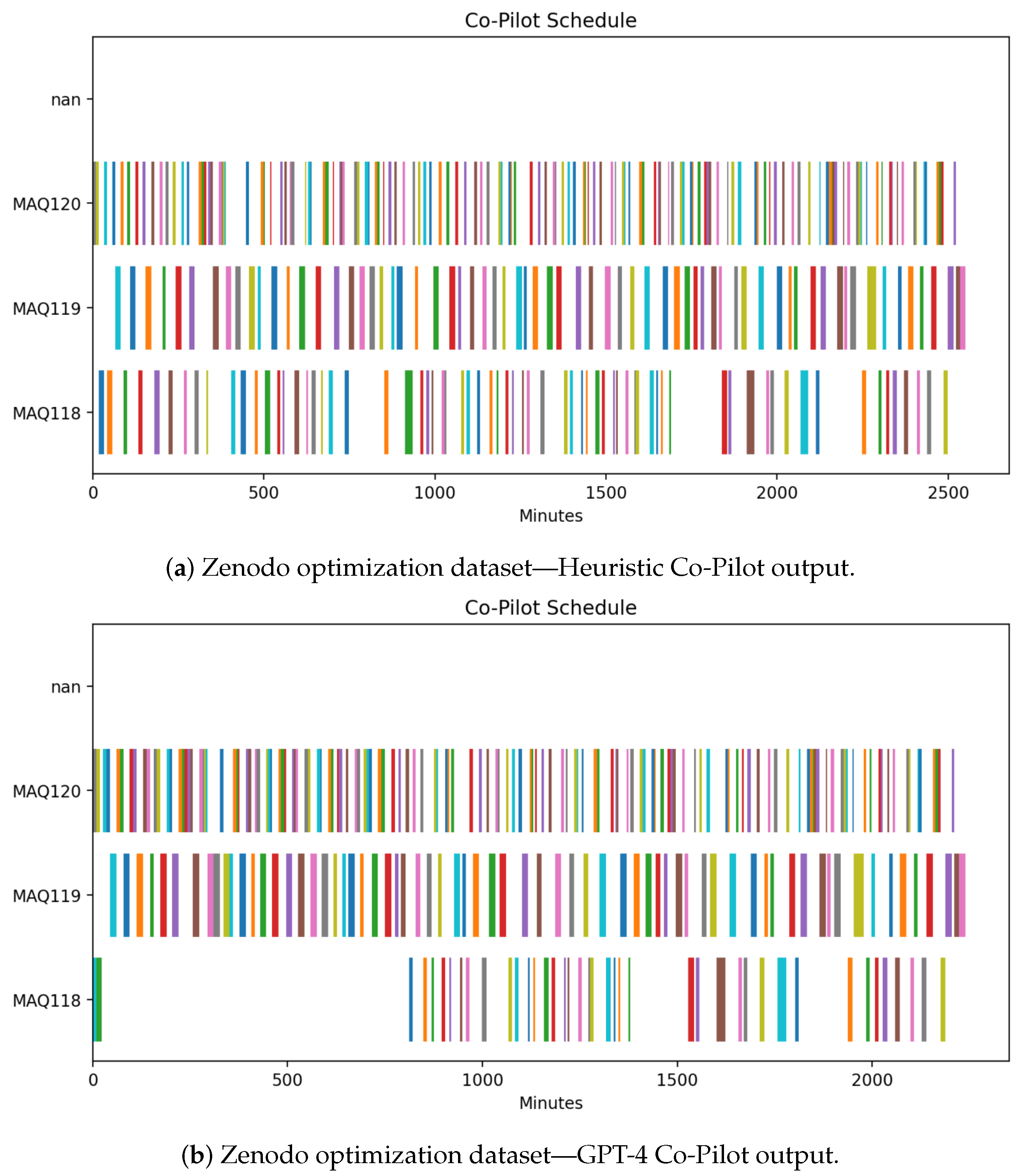
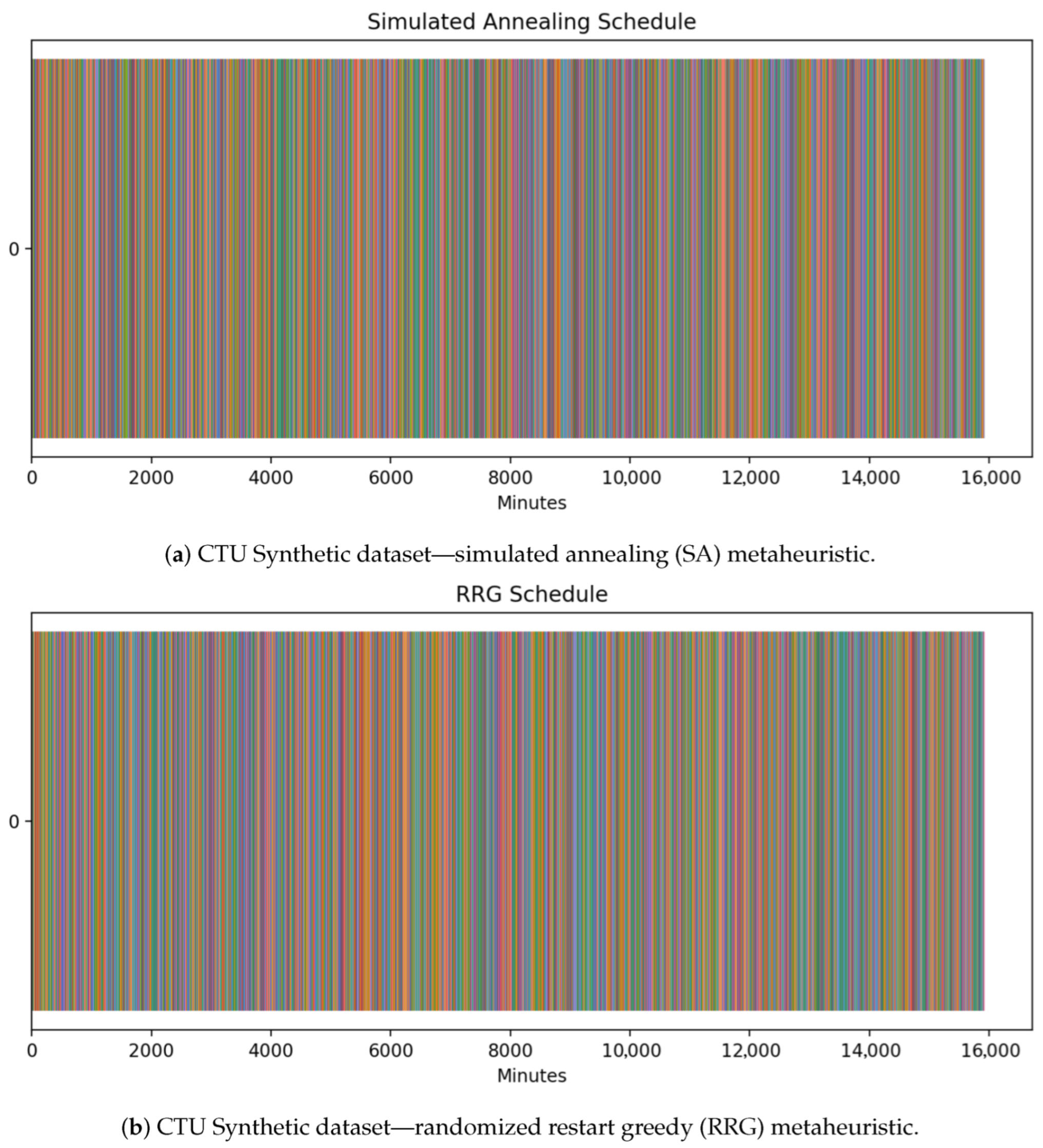
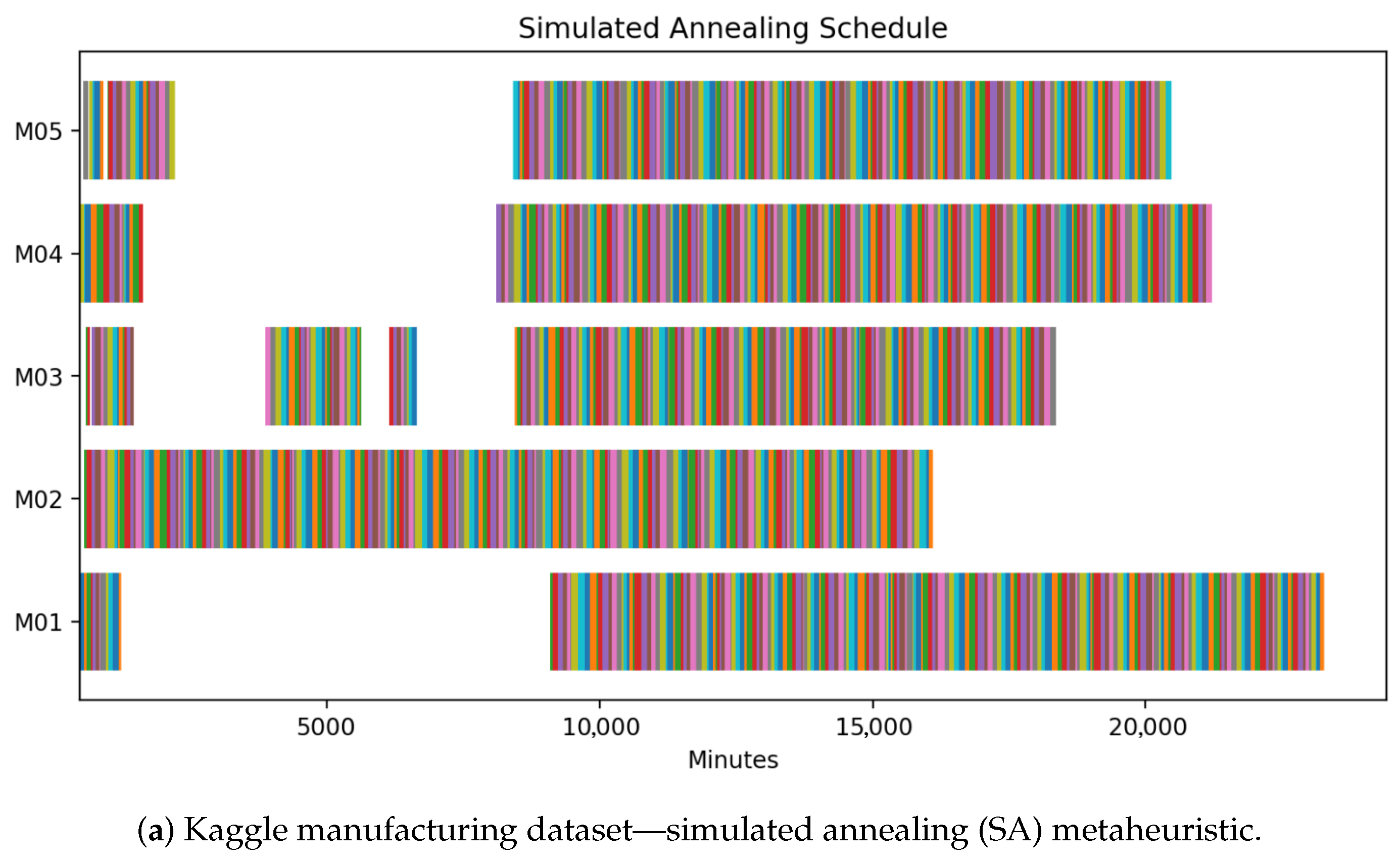
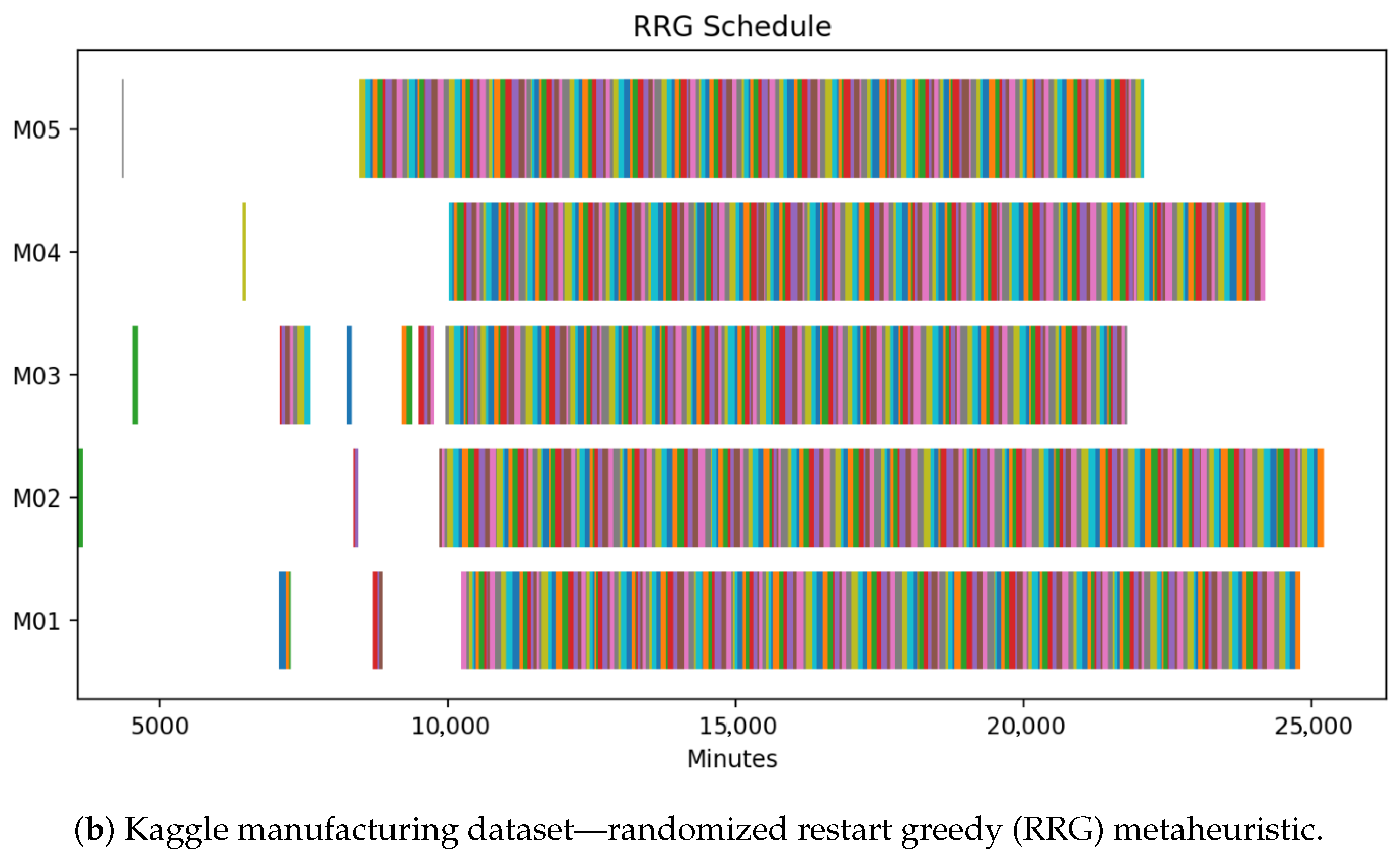
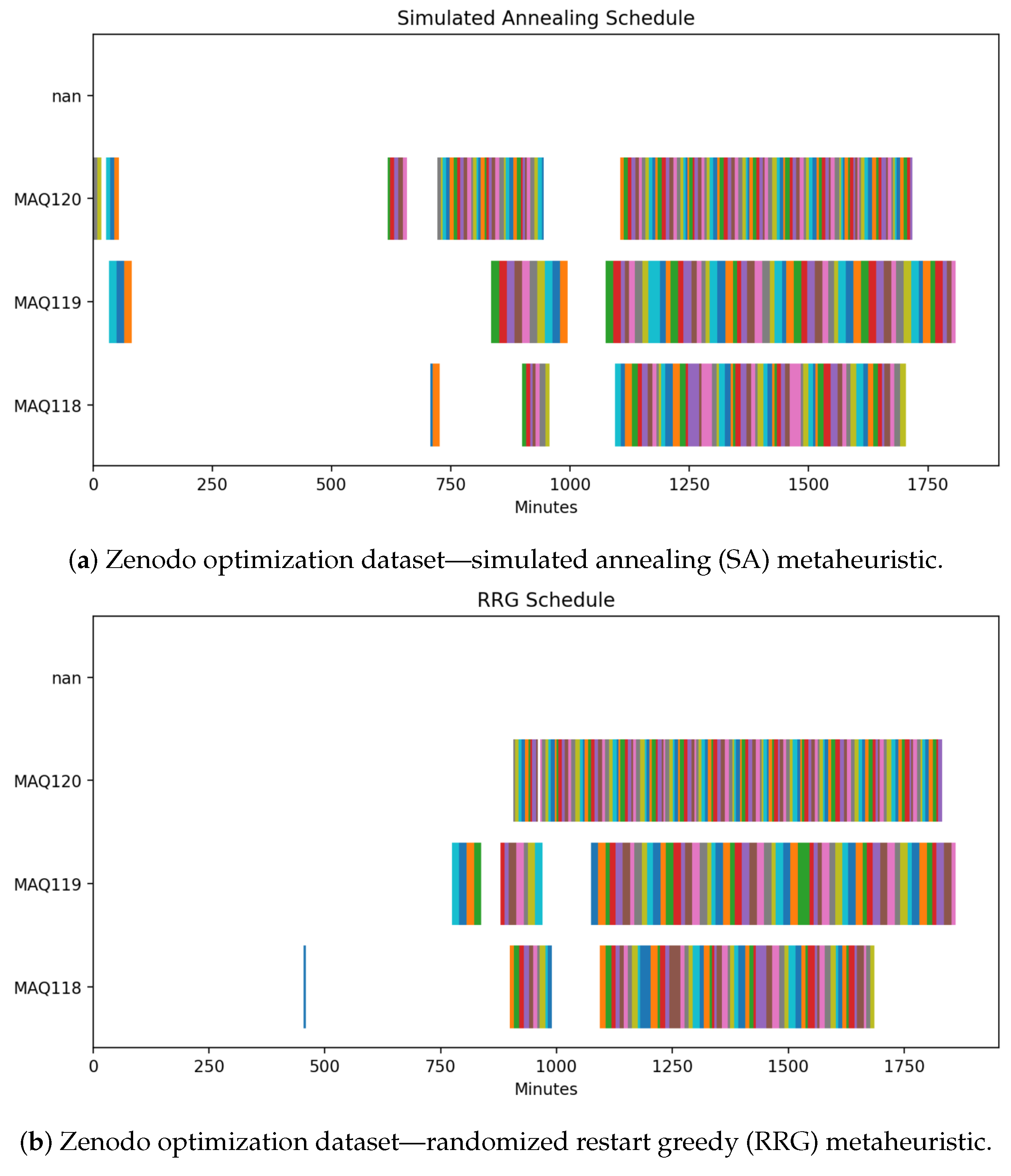
- Datasets: We evaluate our system using three open-source datasets namely CTU synthetic benchmarks [45], Kaggle factory data [46], and Zenodo optimization schedules [47]. Each dataset has a different scale, structure, and realism. We use these differences to achieve a comprehensive evaluation of both the heuristic and LLM Co-Pilot under heterogeneous conditions. CTU Synthetic Dataset: This dataset comes from academic benchmarking of energy-aware scheduling algorithms. In the original dataset there are approximately 1200 synthetic jobs distributed across 10 machines with simplified power profiles and constant processing rates. Each job has release and due times uniformly sampled within an 8-h horizon. The CTU data is noise-free but somewhat lacks realism. They are ideal for controlled stress-testing of heuristic and GPT-4 reasoning stability. Kaggle Manufacturing Dataset: The Kaggle dataset provides realistic production records from an industrial manufacturing process. The Kaggle dataset has about 2500 job entries with five machines (M01–M05). Each job includes processing time, due date, and power consumption ranging from 2–10 kW. During the preprocessing phase we removed incomplete records, standardized timestamps to minutes, and normalized job IDs and machine IDs to a consistent schema due to the dataset’s heterogeneity. Zenodo Optimization Dataset: The Zenodo dataset has been generated from a prior optimization study where approximately 1000 tasks were mapped to three machines (MAQ118–MAQ120). In the Zenodo dataset we have attributes such as complete factory schedules with start and finish times, energy cost coefficients, and TOU tariff windows. This dataset served as the most realistic benchmark for evaluating the Co-Pilot under near-industrial conditions. To ensure comparability across datasets we standardized all variables to a unified schema with attributes job_id, machine_id, proc_time_min, release_time, due_time, and power_kw. We also normalized power and time attributes to kW and minutes, respectively, and job release and due times were rescaled to a 0–1440 min daily window. We present in Table 2 a summary of datasets used for evaluation and important preprocessing details.
- Standardization: As previously mentioned, the standardization process consists of mapping all datasets to a unified format containing job, machine, power, release, and due attributes.
- Baseline Scheduling: generation of factory schedules (when available), rule-based baselines (SPT, EDF, FCFS), and AI-based metaheuristic approaches (Simulated Annealing (SA) and Randomized Restart Greedy (RRG)).
- LLM Co-Pilot Scheduling: GPT-4 and the heuristic Co-Pilot produce energy-aware schedules.
- Evaluation: all schedules are benchmarked on energy, cost, and peak-load metrics.
4. Methodology and Experimental Design
4.1. Scheduling Strategies
- Factory Schedule: When available (for example in the Zenodo dataset), the reported schedule serves as a baseline reflecting practical constraints.
- Shortest Processing Time (SPT): Jobs are ordered by ascending processing time, prioritizing short tasks to minimize average flow time.
- Earliest Due First (EDF): Jobs are sorted by due time, ensuring that time-critical tasks are prioritized.
- First Come First Served (FCFS): Jobs are scheduled according to release order, which is a common factory practice.
- Heuristic Co-Pilot: A modification of EDF that shifts tasks with slack out of peak tariff windows, subject to a capped delay (≤60 min). This provides a deterministic baseline for energy-aware scheduling.
- LLM Co-Pilot (GPT-4): Integrates natural language reasoning to directly generate start-finish times while optimizing for TOU tariffs and deadline compliance.
- Simulated Annealing (SA, Metaheuristic): A stochastic optimization approach that iteratively refines job sequences by probabilistically accepting swaps that increase cost during early iterations, enabling exploration of the search space and gradual convergence to lower-cost energy schedules.
- Randomized Restart Greedy (RRG, Metaheuristic): A population-based heuristic that generates multiple randomized job orders and retains the best-performing sequence according to total cost and energy criteria. This strategy balances exploration and exploitation through multiple greedy restarts.
4.2. Heuristic Co-Pilot Design
| Algorithm 1 Heuristic Co-Pilot. |
|
4.3. LLM Co-Pilot Design
- [{"job_id": "J001", "machine_id": "M1", "proc_time_min": 45,"release_time": "08:00", "due_time": "12:00", "power_kw": 5.0}]
- You are an energy-aware factory scheduler. Using the list of jobs below,generate a feasible production schedule that:(1) Minimizes total energy cost under the given time-of-use (TOU) tariffs,(2) Avoids overlapping jobs on the same machine,(3) Ensures all jobs finish before their due_time,(4) Uses the following tariff periods:peak = 09:00--17:00 ($0.25/kWh),off-peak = 17:00--09:00 ($0.12/kWh).Output a JSON list of jobs with their proposed start and end times.
- [{"job_id": "J001", "machine_id": "M1","start_time": "07:15", "end_time": "08:00"},{"job_id": "J002", "machine_id": "M2","start_time": "08:10", "end_time": "09:50"}]
| Algorithm 2 LLM Co-Pilot (GPT-4 Scheduler). |
|
4.4. Evaluation Metrics
- Total Energy (kWh): Sum of energy consumed by all jobs.
- Cost ($): Computed under TOU tariffs, with higher prices in peak hours.
- Peak Load Share (%): Percentage of scheduled minutes falling within peak tariff windows.
4.5. Implementation Details
5. Results and Discussion
5.1. CTU Synthetic Dataset-SPT, EDF, FCFS and Co-Pilots
5.2. Kaggle Manufacturing Dataset-SPT, EDF, FCFS and Co-Pilots
5.3. Zenodo Optimization Dataset-SPT, EDF, FCFS, and Co-Pilots
5.4. Comparative Discussion
6. Conclusions
7. Future Works
Author Contributions
Funding
Data Availability Statement
Acknowledgments
Conflicts of Interest
Abbreviations
| LLM | Large Language Model |
| GPT | Generative Pre-trained Transformer |
| SPT | Shortest Processing Time |
| EDF | Earliest Due First |
| FCFS | First Come First Served |
| TOU | Time-of-Use (tariffs) |
| KPI | Key Performance Indicator |
| MIP | Mixed-Integer Programming |
| CP | Constraint Programming |
| RL | Reinforcement Learning |
| GUI | Graphical User Interface |
| API | Application Programming Interface |
| JSON | JavaScript Object Notation |
| IIoT | Industrial Internet of Things |
| AI | Artificial Intelligence |
| ML | Machine Learning |
| SA | Simulated Annealing |
| RRG | Randomized Restart Greedy |
References
- López, A.; Estévez, E.; Casquero, O.; Marcos, M. A Methodological Approach for Integrating Physical Assets in Industry 4.0. IEEE Trans. Ind. Inform. 2023, 19, 9546–9554. [Google Scholar] [CrossRef]
- Kiangala, K.S.; Wang, Z. An Effective Communication Prototype for Time-Critical IIoT Manufacturing Factories Using Zero-Loss Redundancy Protocols, Time-Sensitive Networking, and Edge-Computing in an Industry 4.0 Environment. Processes 2021, 9, 2084. [Google Scholar] [CrossRef]
- Tortorella, G.; Kurnia, S.; Trentin, M.; Oliveira, G.A.; Setti, D. Industry 4.0: What is the relationship between manufacturing strategies, critical success factors and technology adoption? J. Manuf. Technol. Manag. 2022, 33, 1407–1428. [Google Scholar] [CrossRef]
- Martini, B.; Bellisario, D.; Coletti, P. Human-Centered and Sustainable Artificial Intelligence in Industry 5.0: Challenges and Perspectives. Sustainability 2024, 16, 5448. [Google Scholar] [CrossRef]
- Kiangala, K.; Wang, Z. A generative pre-trained transformer industrial bot to improve operators’ working experience in a small Industry 5.0 factory. Int. J. Adv. Manuf. Technol. 2025, 136, 3525–3541. [Google Scholar] [CrossRef]
- Alojaiman, B. Technological Modernizations in the Industry 5.0 Era: A Descriptive Analysis and Future Research Directions. Processes 2023, 11, 1318. [Google Scholar] [CrossRef]
- Karimi, S.; Kwon, S.; Ning, F. Energy-aware production scheduling for additive manufacturing. J. Clean. Prod. 2021, 278, 123183. [Google Scholar] [CrossRef]
- Ciepliński, P.; Golak, S.; Blachnik, M.; Gawryś, K.; Kachel, A. Production Scheduling Methodology, Taking into Account the Influence of the Selection of Production Resources. Appl. Sci. 2022, 12, 5367. [Google Scholar] [CrossRef]
- Nicolson, M.L.; Fell, M.J.; Huebner, G.M. Consumer demand for time of use electricity tariffs: A systematized review of the empirical evidence. Renew. Sustain. Energy Rev. 2018, 97, 276–289. [Google Scholar] [CrossRef]
- Muresan, V.; Wang, X.; Muresan, V.; Vladutiu, M. A comparison of classical scheduling approaches in power-constrained block-test scheduling. In Proceedings of the Proceedings International Test Conference 2000 (IEEE Cat. No.00CH37159), Atlantic City, NJ, USA, 3–5 October 2000; pp. 882–891. [Google Scholar] [CrossRef]
- Wang, S.; Li, X.; Sheng, Q.Z.; Beheshti, A. Performance Analysis and Optimization on Scheduling Stochastic Cloud Service Requests: A Survey. IEEE Trans. Netw. Serv. Manag. 2022, 19, 3587–3602. [Google Scholar] [CrossRef]
- Saleh, M.; Dong, L. Comparing FCFS and EDF scheduling algorithms for real-time packet switching networks. In Proceedings of the 2010 International Conference on Networking, Sensing and Control (ICNSC), Chicago, IL, USA, 10–12 April 2010; pp. 698–703. [Google Scholar] [CrossRef]
- Para, J.; Del Ser, J.; Nebro, A.J. Energy-Aware Multi-Objective Job Shop Scheduling Optimization with Metaheuristics in Manufacturing Industries: A Critical Survey, Results, and Perspectives. Appl. Sci. 2022, 12, 1491. [Google Scholar] [CrossRef]
- Khoo, T.L.; Lee, T.S.; Bee, S.T.; Ma, C.; Zhang, Y.Y. A Comparative Review of Large Language Models in Engineering with Emphasis on Chemical Engineering Applications. Processes 2025, 13, 2680. [Google Scholar] [CrossRef]
- Wang, T.; Fan, J.; Zheng, P. An LLM-based vision and language cobot navigation approach for Human-centric Smart Manufacturing. J. Manuf. Syst. 2024, 75, 299–305. [Google Scholar] [CrossRef]
- Bubeck, S.; Chandrasekaran, V.; Eldan, R.; Gehrke, J.; Horvitz, E.; Kamar, E.; Lee, P.; Lee, Y.T.; Li, Y.; Lundberg, S.; et al. Sparks of Artificial General Intelligence: Early experiments with GPT-4. arXiv 2023, arXiv:2303.12712. [Google Scholar] [CrossRef]
- Bansal, G.; Chamola, V.; Hussain, A.; Guizani, M.; Niyato, D. Transforming Conversations with AI—A Comprehensive Study of ChatGPT. Cogn. Comput. 2024, 16, 2487–2510. [Google Scholar] [CrossRef]
- Olsson, A.K.; Eriksson, K.M.; Carlsson, L. Management toward Industry 5.0: A co-workership approach on digital transformation for future innovative manufacturing. Eur. J. Innov. Manag. 2024, 28, 65–84. [Google Scholar] [CrossRef]
- Bänsch, K.; Busse, J.; Meisel, F.; Rieck, J.; Scholz, S.; Volling, T.; Wichmann, M.G. Energy-aware decision support models in production environments: A systematic literature review. Comput. Ind. Eng. 2021, 159, 107456. [Google Scholar] [CrossRef]
- Burmeister, S.C.; Rogalski, T.N.; Schryen, G. Comparative Analysis of Evolutionary Algorithms for Energy-Aware Production Scheduling. arXiv 2025, arXiv:2504.15672. [Google Scholar] [CrossRef]
- Bruzzone, A.; Anghinolfi, D.; Paolucci, M.; Tonelli, F. Energy-aware scheduling for improving manufacturing process sustainability: A mathematical model for flexible flow shops. CIRP Ann. 2012, 61, 459–462. [Google Scholar] [CrossRef]
- Fang, K.T.; Lin, B.M. Parallel-machine scheduling to minimize tardiness penalty and power cost. Comput. Ind. Eng. 2013, 64, 224–234. [Google Scholar] [CrossRef]
- Shao, Z.; Li, W.; Tan, Y.; Otto, K. A systematic energy-aware scheduling framework for manufacturing factories integrated with renewables. Int. J. Prod. Res. 2024, 62, 7644–7659. [Google Scholar] [CrossRef]
- Mouzon, G.; Yildirim, M.B. A framework to minimise total energy consumption and total tardiness on a single machine. Int. J. Sustain. Eng. 2008, 1, 105–116. [Google Scholar] [CrossRef]
- Fang, K.; Uhan, N.; Zhao, F.; Sutherland, J.W. A new approach to scheduling in manufacturing for power consumption and carbon footprint reduction. J. Manuf. Syst. 2011, 30, 234–240. [Google Scholar] [CrossRef]
- Georgiadis, G.P.; Dimitriadis, C.N.; Georgiadis, M.C. Decarbonizing the Industry Sector: Current Status and Future Opportunities of Energy-Aware Production Scheduling. Processes 2025, 13, 1941. [Google Scholar] [CrossRef]
- Dai, M.; Tang, D.; Giret, A.; Salido, M.A.; Li, W. Energy-efficient scheduling for a flexible flow shop using an improved genetic-simulated annealing algorithm. Robot. Comput.-Integr. Manuf. 2013, 29, 418–429. [Google Scholar] [CrossRef]
- Duan, J.; Wang, J. Energy-efficient scheduling for a flexible job shop with machine breakdowns considering machine idle time arrangement and machine speed level selection. Comput. Ind. Eng. 2021, 161, 107677. [Google Scholar] [CrossRef]
- Terbrack, H.; Claus, T.; Herrmann, F. Energy-Oriented Production Planning in Industry: A Systematic Literature Review and Classification Scheme. Sustainability 2021, 13, 13317. [Google Scholar] [CrossRef]
- Nahavandi, S. Industry 5.0—A Human-Centric Solution. Sustainability 2019, 11, 4371. [Google Scholar] [CrossRef]
- European Commission. Industry 5.0: Towards a Sustainable, Human-Centric and Resilient European Industry; Technical Report; Publications Office of the European Union: Brussels, Belgium, 2021; Available online: https://research-and-innovation.ec.europa.eu/knowledge-publications-tools-and-data/publications/all-publications/industry-50-towards-sustainable-human-centric-and-resilient-european-industry_en (accessed on 20 September 2025).
- Xu, X.; Xu, L.D.; Li, L. Industry 4.0: State of the art and future trends. Int. J. Prod. Res. 2018, 56, 2941–2962. [Google Scholar] [CrossRef]
- Chen, S.C.; Chen, H.M.; Chen, H.K.; Li, C.L. Multi-Objective Optimization in Industry 5.0: Human-Centric AI Integration for Sustainable and Intelligent Manufacturing. Processes 2024, 12, 2723. [Google Scholar] [CrossRef]
- Bao, N.; Yang, Y.; Fan, Y.; Simeone, A. Optimising apparel production in Industry 5.0 using a human-centric flexible manufacturing approach. Int. J. Adv. Manuf. Technol. 2025, 139, 1881–1895. [Google Scholar] [CrossRef]
- Cimini, C.; Pirola, F.; Pinto, R.; Cavalieri, S. A human-in-the-loop manufacturing control architecture for the next generation of production systems. J. Manuf. Syst. 2020, 54, 258–271. [Google Scholar] [CrossRef]
- Li, M.; Ling, S.; Qu, T.; Lu, S.; Li, M.; Guo, D.; He, Z.; Huang, G.Q. Real-Time Data-Driven Hybrid Synchronization for Integrated Planning, Scheduling, and Execution Toward Industry 5.0 Human-Centric Manufacturing. IEEE Trans. Syst. Man, Cybern. Syst. 2025, 55, 5670–5681. [Google Scholar] [CrossRef]
- Li, Y.; Zhao, H.; Jiang, H.; Pan, Y.; Liu, Z.; Wu, Z.; Shu, P.; Tian, J.; Yang, T.; Xu, S.; et al. Large Language Models for Manufacturing. arXiv 2024, arXiv:2410.21418. [Google Scholar]
- Committee, E.E.S. Number of ChatGPT Users. 2023. Available online: https://explodingtopics.com/blog/chatgpt-users (accessed on 29 November 2023).
- OpenAI. GPT-4 is OpenAI’s Most Advanced System, Producing Safer and More Useful Responses. 2024. Available online: https://openai.com/index/gpt-4 (accessed on 20 August 2024).
- Garcia, C.I.; DiBattista, M.A.; Letelier, T.A.; Halloran, H.D.; Camelio, J.A. Framework for LLM applications in manufacturing. Manuf. Lett. 2024, 41, 253–263. [Google Scholar] [CrossRef]
- Chang, Y.; Wang, X.; Wang, J.; Wu, Y.; Yang, L.; Zhu, K.; Chen, H.; Yi, X.; Wang, C.; Wang, Y.; et al. A Survey on Evaluation of Large Language Models. arXiv 2023, arXiv:2307.03109. [Google Scholar] [CrossRef]
- Zhao, W.X.; Zhou, K.; Li, J.; Tang, T.; Wang, X.; Hou, Y.; Min, Y.; Zhang, B.; Zhang, J.; Dong, Z.; et al. A Survey of Large Language Models. arXiv 2025, arXiv:2303.18223. [Google Scholar]
- Rane, N. ChatGPT and Similar Generative Artificial Intelligence (AI) for Smart Industry: Role, Challenges and Opportunities for Industry 4.0, Industry 5.0 and Society 5.0. SSRN Electron. J. 2023, 2, 10–17. [Google Scholar] [CrossRef]
- Streamlit. A Faster Way to Build and Share Data Apps. 2024. Available online: https://streamlit.io/ (accessed on 22 February 2025).
- Group, C.I.I. Energy States and Costs Scheduling Data. 2020. Available online: https://github.com/CTU-IIG/EnergyStatesAndCostsSchedulingData (accessed on 27 September 2025).
- Ziya07. Manufacturing Production Data. 2023. Available online: https://www.kaggle.com/datasets/ziya07/manufacturing-production-data (accessed on 27 September 2025).
- Mota, B.; Gomes, L.; Faria, P.; Ramos, C.; Vale, Z. Production Line Dataset for Task Scheduling and Energy Optimization-Schedule Optimization. Zenodo 2020. [Google Scholar] [CrossRef]

| Dataset | Jobs | Machines | Power (kW) | Preprocessing Summary |
|---|---|---|---|---|
| CTU Synthetic | ∼1200 | 1 (aggregated) | 3–6 | Aggregated into a single virtual machine; rescaled to an 8-h horizon; uniform due times. |
| Kaggle Manufacturing | ∼2500 | 5 | 2–10 | Cleaned missing values; normalized IDs; standardized time units (minutes). |
| Zenodo Optimization | ∼1000 | 3 | 3–9 | Extracted start/end times; mapped to TOU tariff windows; normalized to unified job schema. |
| Dataset | Jobs | Machines | Power (kW) | Preprocessing Summary |
|---|---|---|---|---|
| CTU Synthetic | ∼1200 | 1 (aggregated) | 3–6 | Aggregated into a single virtual machine; rescaled to an 8 h horizon; uniform due times. |
| Kaggle Manufacturing | ∼2500 | 5 | 2–10 | Cleaned missing values; normalized IDs; standardized time units (minutes). |
| Zenodo Optimization | ∼1000 | 3 | 3–9 | Extracted start/end times; mapped to TOU tariff windows; normalized to unified job schema. |
| Dataset | Strategy | Energy | Cost | Peak |
|---|---|---|---|---|
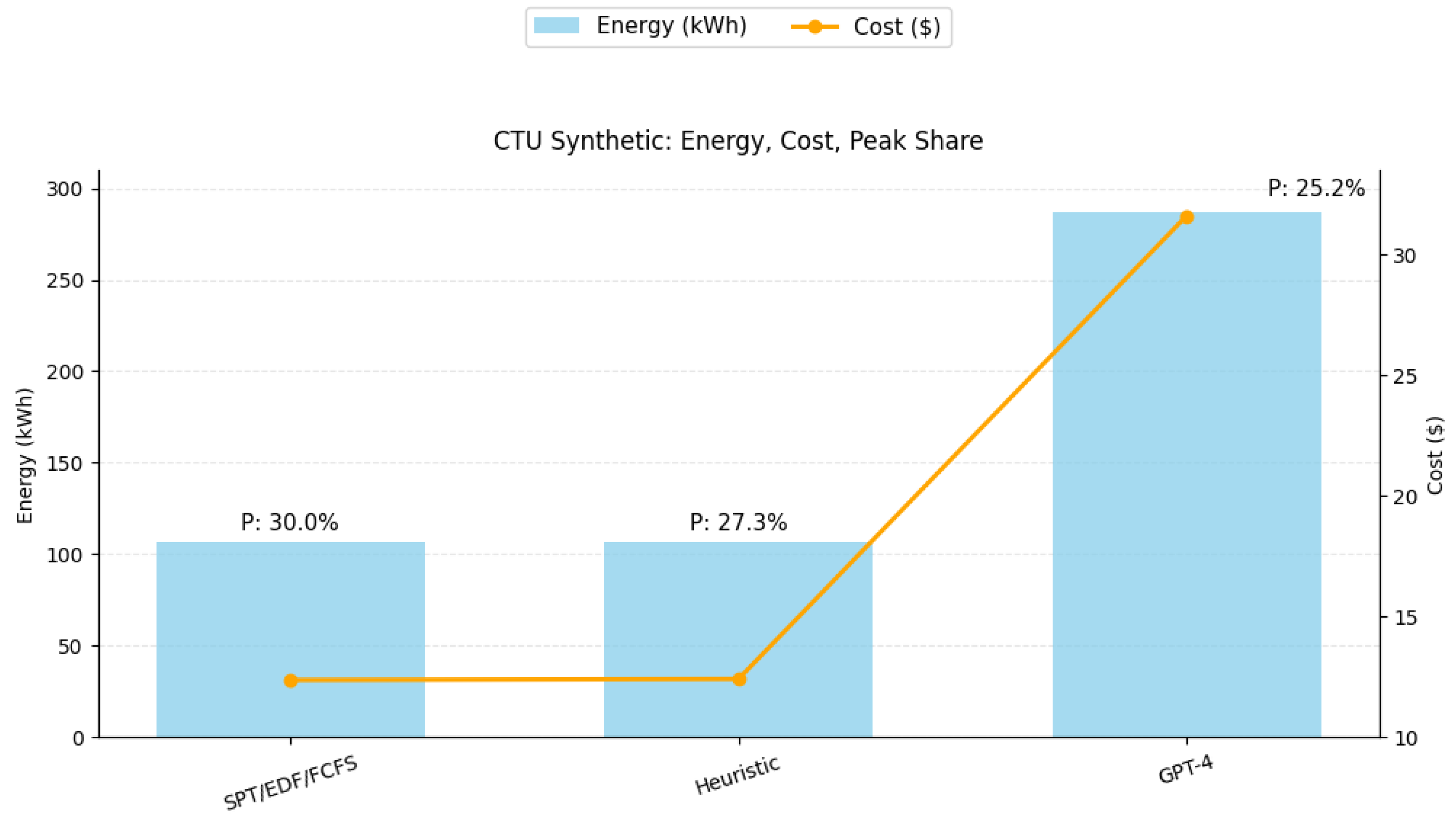
| CTU Synthetic | SPT/EDF/FCFS | 106.5 | 12.36 | 30.0 |
| Heuristic Co-Pilot | 106.5 | 12.40 | 27.3 | |
| GPT-4 Co-Pilot | 286.8 | 31.60 | 25.2 | |
| SA (Metaheuristic) | 1062.00 | 127.20 | 33.1 | |
| RRG (Metaheuristic) | 1062.00 | 127.20 | 33.1 | |
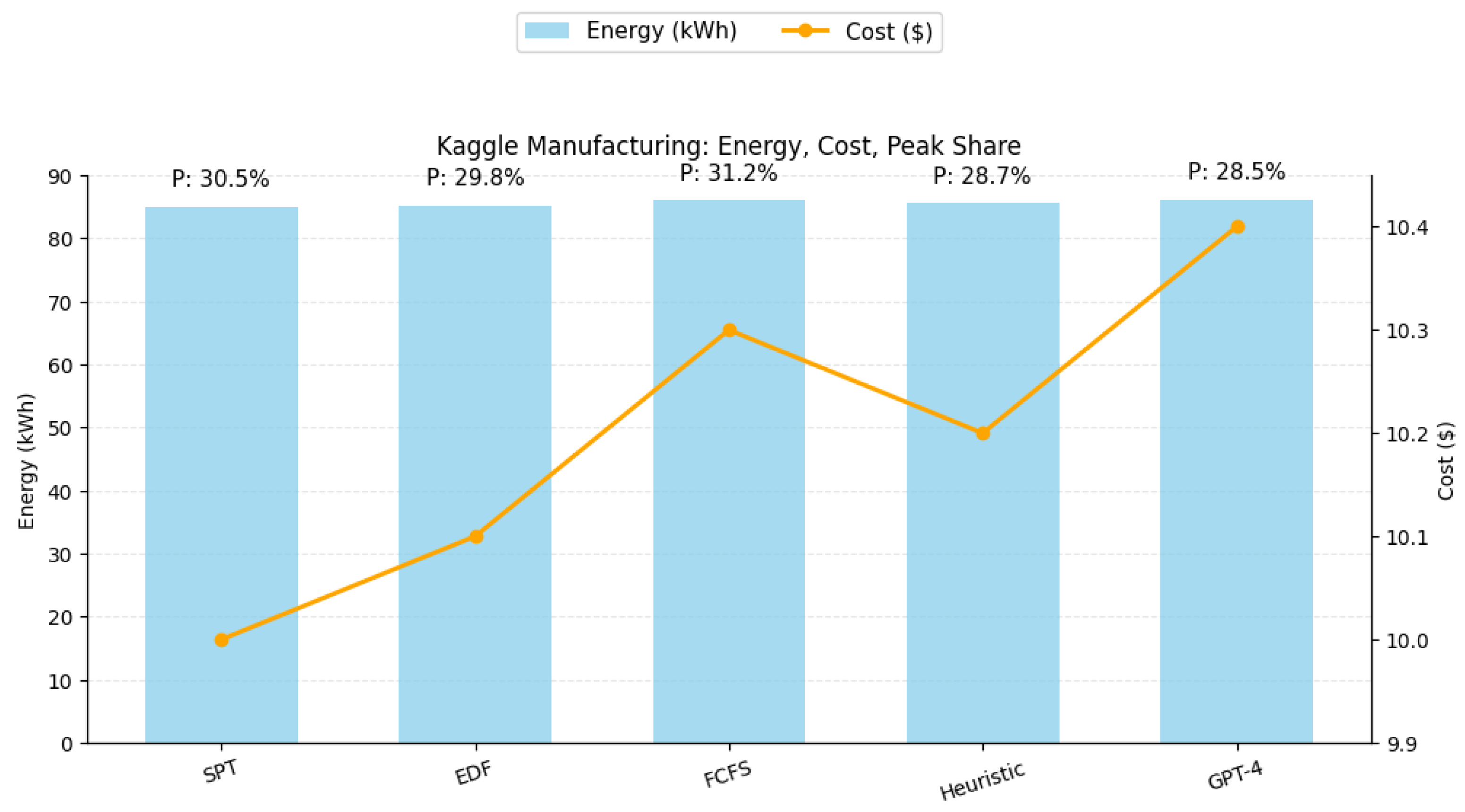
| Kaggle Manufacturing | SPT | 85.0 | 10.0 | 30.5 |
| EDF | 85.2 | 10.1 | 29.8 | |
| FCFS | 86.0 | 10.3 | 31.2 | |
| Heuristic Co-Pilot | 85.5 | 10.2 | 28.7 | |
| GPT-4 Co-Pilot | 86.1 | 10.4 | 28.5 | |
| SA (Metaheuristic) | 8521.34 | 994.20 | 33.1 | |
| RRG (Metaheuristic) | 8521.34 | 1002.89 | 32.6 | |
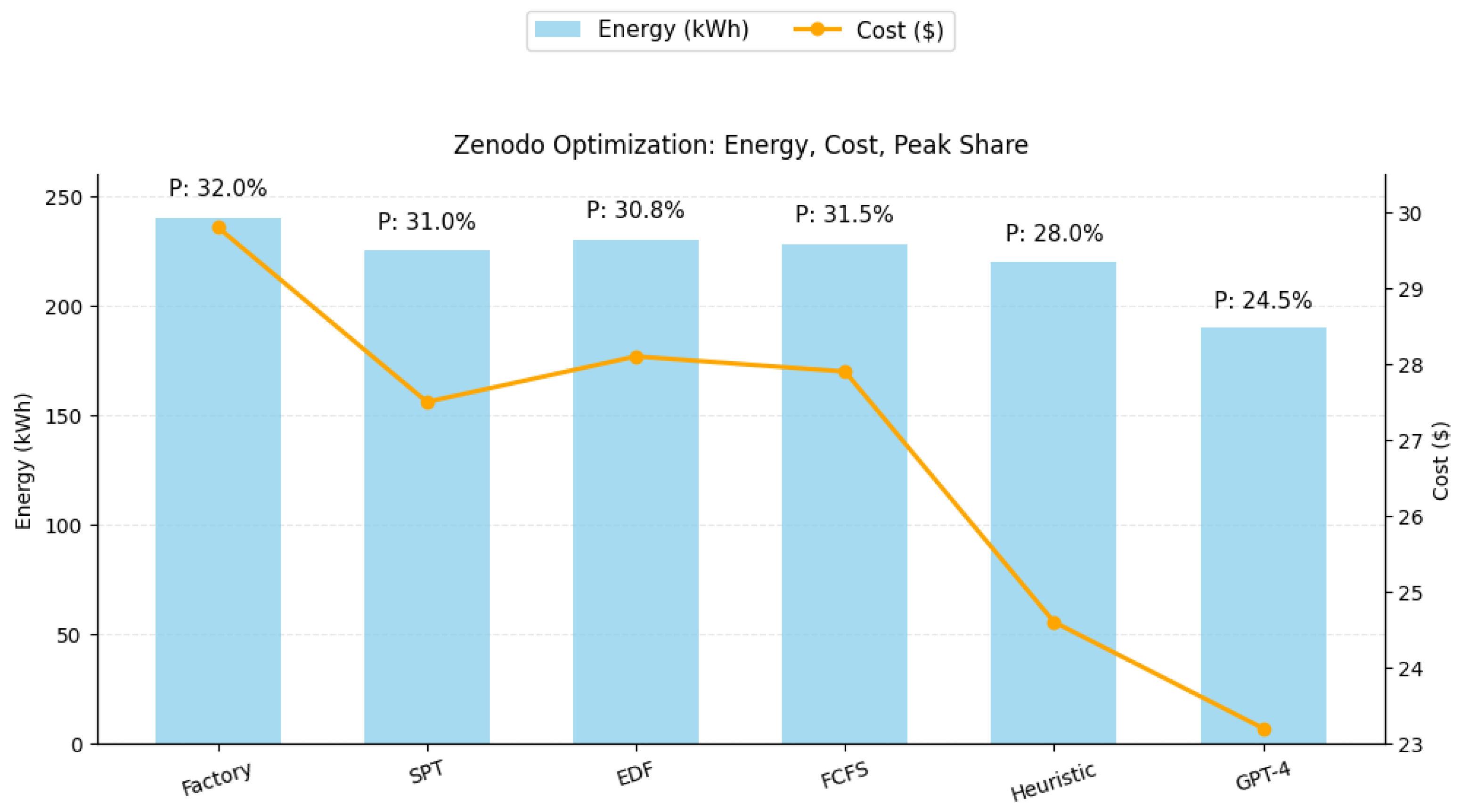
| Zenodo Optimization | Factory | 240.0 | 29.8 | 32.0 |
| SPT | 225.0 | 27.5 | 31.0 | |
| EDF | 230.0 | 28.1 | 30.8 | |
| FCFS | 228.0 | 27.9 | 31.5 | |
| Heuristic Co-Pilot | 220.0 | 24.6 | 28.0 | |
| GPT-4 Co-Pilot | 190.0 | 23.2 | 24.5 | |
| SA (Metaheuristic) | 87,837.60 | 9155.78 | 20.2 | |
| RRG (Metaheuristic) | 87,837.60 | 9879.15 | 27.1 |
Disclaimer/Publisher’s Note: The statements, opinions and data contained in all publications are solely those of the individual author(s) and contributor(s) and not of MDPI and/or the editor(s). MDPI and/or the editor(s) disclaim responsibility for any injury to people or property resulting from any ideas, methods, instructions or products referred to in the content. |
© 2025 by the authors. Licensee MDPI, Basel, Switzerland. This article is an open access article distributed under the terms and conditions of the Creative Commons Attribution (CC BY) license.
Share and Cite
Kiangala, K.S.; Wang, Z. Towards Sustainable Industry 5.0: An LLM-Based Co-Pilot for Energy-Efficient Factory Scheduling. Processes 2026, 14, 709. https://doi.org/10.3390/pr14040709
Kiangala KS, Wang Z. Towards Sustainable Industry 5.0: An LLM-Based Co-Pilot for Energy-Efficient Factory Scheduling. Processes. 2026; 14(4):709. https://doi.org/10.3390/pr14040709
Chicago/Turabian StyleKiangala, Kahiomba Sonia, and Zenghui Wang. 2026. "Towards Sustainable Industry 5.0: An LLM-Based Co-Pilot for Energy-Efficient Factory Scheduling" Processes 14, no. 4: 709. https://doi.org/10.3390/pr14040709
APA StyleKiangala, K. S., & Wang, Z. (2026). Towards Sustainable Industry 5.0: An LLM-Based Co-Pilot for Energy-Efficient Factory Scheduling. Processes, 14(4), 709. https://doi.org/10.3390/pr14040709