Article

Fortification of the Bioactive and Sensory Profile of Dark Cup Chocolate Formulated with Three Percentages of Cocoa Liquor (Forastero Variety)

by
Eliana Milagros Cabrejos-Barrios
1,2,
Frank Fernandez-Rosillo
1,3,
Noemí León-Roque
4,
Aleida Soledad Cabrejos-Barrios
3,
Marleni Medina-Mendoza
1,
Efraín M. Castro-Alayo
1 and
César R. Balcázar-Zumaeta
1,*
1
Grupo de Investigación en Cacao y Chocolate, Instituto de Investigación, Innovación y Desarrollo para el Sector Agrario y Agroindustrial (IIDAA), Facultad de Ingeniería y Ciencias Agrarias, Universidad Nacional Toribio Rodríguez de Mendoza de Amazonas, Chachapoyas 01001, Peru
2
Programa de Doctorado en Ingeniería de Alimentos, Escuela de Posgrado, Universidad Nacional del Santa (UNS), Urb. Av. Universitaria s/n, Chimbote 02712, Peru
3
Grupo de Modelamiento y Simulación de Procesos en la Industria Alimentaria, Instituto de Investigación de Ciencia de Datos (INSCID), Universidad Nacional de Jaén (UNJ), Carretera Jaén—San Ignacio KM 24, Cajamarca 06801, Peru
4
Facultad de Ingeniería Química e Industrias Alimentarias, Universidad Nacional Pedro Ruiz Gallo, Lambayeque 14013, Peru
*
Author to whom correspondence should be addressed.
Processes 2026, 14(4), 697; https://doi.org/10.3390/pr14040697
Submission received: 11 January 2026 / Revised: 6 February 2026 / Accepted: 14 February 2026 / Published: 19 February 2026
(This article belongs to the Section Food Process Engineering)

Abstract

Dark cup chocolate is recognized as a source of bioactive compounds with potential health-promoting properties. This study aimed to evaluate the fortification of the bioactive and sensory profile of dark cup chocolate formulated with three percentages of cocoa liquor from the Forastero variety (40, 70, and 100%). Chocolates were produced from cacao beans cultivated in Jaén (Cajamarca, Peru) and characterized in terms of their antioxidant capacity, total phenolic content, tyramine concentration, and sensory attributes, which were assessed by a trained panel. The results showed that increasing the cocoa liquor percentage significantly enhanced the antioxidant capacity and phenolic content, with the 100% cacao chocolate exhibiting the highest values. Likewise, tyramine concentration also increased with cocoa liquor content, reaching 41.90 mg/kg in the 100% formulation, while the 40% chocolate showed markedly lower levels (1.85 mg/kg). Overall, the findings demonstrate a positive association between cocoa liquor percentage, bioactive potential, and tyramine accumulation, highlighting the importance of cacao proportions in defining both functional properties and safety-related aspects of dark cup chocolate.

1. Introduction

Theobroma cacao L. is recognized as a rich source of bioactive compounds, particularly polyphenols and biogenic amines [1], which are either generated or significantly modified during post-harvest handling and industrial processing [2]. These compounds largely explain the cocoa bean’s central role in chocolate production [3,4,5] and are responsible for its characteristic sensory properties, including aroma and flavor [6,7].
According to the Peruvian Chamber of Coffee and Cacao, cocoa is classified into three main genetic groups: Criollo, Forastero, and Trinitario [8,9]. Among them, the Forastero variety accounts for approximately 80% of global production and represents the most widely commercialized variety due to its agronomic robustness and adaptability [10,11,12]. In Peru, Forastero-variety cocoa originated from natural hybridization between varieties such as Criollo-type and Brazilian Forastero populations, resulting in materials with combined morphological and genetic traits [12]. Despite its widespread use in dark cup chocolate formulations, particularly in products intended for beverage preparation, information regarding its bioactive composition remains limited.
Cocoa-derived products have attracted increasing scientific interest due to their biological potential and associated health benefits. At the same time, there is a growing demand for fine-flavor cocoa with differentiated commercial attributes, including single-origin designation, organic cultivation, controlled bean-to-bar processing, distinctive reddish and pinkish tonalities in chocolate, and potential health benefits associated with its consumption [13].
Cocoa bean fermentation is a critical post-harvest step that strongly influences both the sensory quality and chemical safety of chocolate. During fermentation, endogenous enzymes and microbial activity—mainly lactic acid bacteria, acetic acid bacteria, and yeasts—promote the degradation of proteins and free amino acids, which may serve as precursors for the formation of biogenic amines, including tyramine [7,14]. Several studies have reported that the accumulation of tyramine in cocoa beans and chocolate is closely associated with fermentation conditions, microbial composition, and genotype. In particular, Forastero-variety cocoa, which is commonly subjected to full fermentation processes, has been associated with higher variability in biogenic amine profiles compared to fine-flavor varieties [15]. From a food safety perspective, elevated tyramine levels may pose potential risks for sensitive consumers, especially those under monoamine oxidase inhibitor (MAOI) therapy, highlighting the importance of evaluating tyramine content in fermented cocoa bean-derived products [16,17,18].
Chocolate is one of the foods widely consumed and enjoyed worldwide due to its particular flavor and aroma, characteristics that make it a highly attractive product [19]. Inputs for manufacturing are cocoa beans and cocoa butter (CB), which provides a network structure that gives stability to the components found in the dispersed phase, such as cocoa liquor, sugar and lecithin [20,21]. Chocolate contains several bioactive amines, including spermidine, phenylethylamine, serotonin, tryptamine, histamine, and tyramine [22,23,24]. At low-to-moderate concentrations, these compounds may contribute positively to human health in a manner comparable to that reported for polyphenolic compounds [25,26]. Documented biological activities include cardiovascular protection, antioxidant and anti-aging effects, and antiulcer, anticancer, antithrombotic, and antimicrobial properties [27,28,29,30,31], in addition to the potential modulation of mood and neurological responses [32]. Recent studies have reported the occurrence, formation, and technological relevance of bioactive amines in cocoa bean and chocolate matrices [1,22,23,24,33,34,35,36]. Nevertheless, the phenolic content, antioxidant capacity, and overall levels of bioactive compounds in cocoa beans and chocolate are strongly influenced by multiple factors, including the cocoa variety, their geographical origin, soil and climatic conditions, agricultural practices (conventional or organic), and pre-processing stages such as harvesting, pulp and seed selection, fermentation, and drying. In addition, processing operations—including roasting, refining, conching, tempering, and crystallization—as well as storage conditions, particularly those related to lipid oxidation, play a critical role in determining the final bioactive profile of chocolate products [24,33,34,36,37,38,39].
Chocolate production involves a high lipid content, primarily derived from CB, which is rich in saturated fatty acids [40,41]. Although excessive intake of saturated fats has been associated with increased cardiovascular risk [42], chocolate also contains a wide range of bioactive compounds with potential health benefits [43,44]. However, during fermentation and the subsequent processing stages, enzymatic and microbial reactions may promote the formation of biogenic amines, such as tyramine, which have been associated with adverse physiological effects. Tyramine has been linked to vasoconstriction, headaches, and hypertensive responses, particularly in susceptible individuals or those undergoing monoamine oxidase inhibitor (MAOI) therapy, and is considered one of the most prevalent biogenic amines in fermented foods due to the decarboxylation of tyrosine [45,46,47]. Despite its relevance to food safety, information regarding the safe intake thresholds of tyramine remains limited, underscoring the importance of studies focused on its identification and quantification in cocoa bean-derived products.
In this context, and despite the extensive literature reporting a positive relationship between cocoa liquor percentage and antioxidant activity in chocolate, most studies have focused primarily on polyphenolic content without simultaneously addressing food safety-related compounds such as biogenic amines, particularly tyramine. Furthermore, limited information is available on dark cup chocolates formulated exclusively with Forastero-variety cocoa from specific producing regions, such as northern Peru, where fermentation practices and microbial ecology may markedly influence both the bioactive potential and amine accumulation. Consequently, an integrated evaluation combining antioxidant capacity, phenolic content, tyramine concentration, and sensory attributes across different cocoa liquor proportions remains insufficiently explored. Therefore, the present study addresses this gap by providing a comprehensive assessment of the fortification of bioactive and safety-related properties in dark cup chocolates formulated with different percentages of cocoa liquor from the Forastero variety.
That is why the objective of this study was to evaluate the fortification of the bioactive and sensory profile of dark cup chocolates formulated with three percentages of cocoa liquor (40, 70, and 100%) from Forastero variety cocoa. Dark cup chocolate is defined here as a cocoa liquor-based formulation intended for beverage preparation, differing from conventional dark chocolate in both composition and consumption mode. The assessment focused on antioxidant capacity, total phenolic content, tyramine concentration, and sensory attributes, providing integrated information on both functional quality and potential safety considerations.

2. Materials and Methods

2.1. Study Material

2.1.1. Materials

Analytical grade reagents (≥97%): ethanol, potassium persulfate, hydrochloric acid, ferric chloride hexahydrate, ferrous sulfate heptahydrate, sodium carbonate, and Trolox, which were purchased from Sigma-Aldrich (St. Louis, MO, USA). LP grade reagents: formic acid (≥95%), acetone (≥99.5%), acetic acid (≥99.5%), sodium bicarbonate (≥99.7%) and dansyl chloride. Standard tyramine and acetonitrile (≥99.9%) were LC grade and purchased from Merck & Co (Rahway, NJ, USA).

2.1.2. Samples

The raw material consisted of 40 kg of cocoa beans (T. cacao L., Forastero variety) obtained from small-scale producers in the district of Bellavista (5°40′04″ S, 78°40′38″ W; 438 m.a.s.l.), Jaén province (Cajamarca, Peru). The cocoa pods were harvested during a single harvest season (March–April 2023) and originated from a single, homogeneous production lot to minimize variability associated with differences in the harvest time and post-harvest handling. After harvesting, the beans were subjected to a traditional fermentation process carried out at the farm level using wooden fermentation boxes. Fermentation was conducted under natural conditions for 5 days, with manual turning every 24 h to promote homogeneous microbial activity and aeration. Following fermentation, the beans were sun-dried on raised wooden platforms until reaching a final moisture content of approximately 7–8%, monitored gravimetrically.
The fermented and dried cocoa beans were transported to the Coffee and Cacao Production Center of the National University of Jaén (UNJ), where they were stored under controlled conditions prior to processing. Additional ingredients used in the formulation of dark cup chocolate included CB (Forastero variety), wheat starch, and defatted cocoa powder, all sourced from the same cocoa genetic background to minimize compositional variability.
Variability between different harvest lots was not considered in this study, as the experimental design focused on evaluating the effect of cocoa liquor percentage within a single, well-defined raw material batch. This approach allowed for a controlled assessment of bioactive composition, tyramine formation, and sensory attributes attributable specifically to cocoa liquor concentration rather than to inter-lot variability.

2.2. Processing to Obtain Dark Cup Chocolate

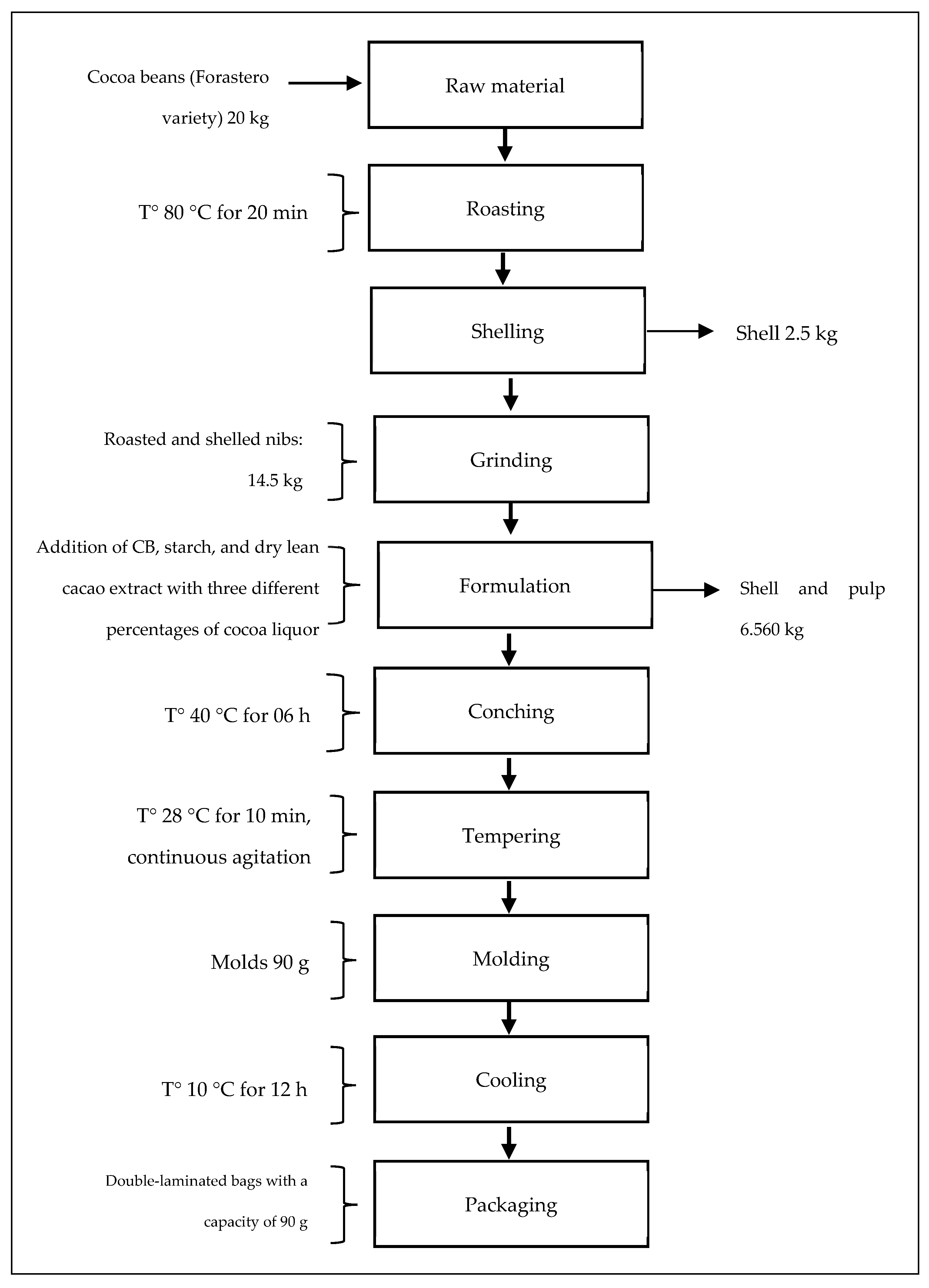
The cocoa beans obtained were roasted at 180 °C for 20 min in a roaster (ROASTY 20, Delani, Lima, Peru), followed by shelling. The cocoa nibs were then ground in a semi-industrial electric mill (Disk Mill, Bonelly, Italy) to obtain the product (cocoa liquor). The formulation was based on the provisions of the Codex Alimentarius [48], and the required proportions of ground nibs and other inputs were adjusted to obtain dark cup chocolates with 100, 70, and 40% cocoa liquor content.
Unlike conventional dark cup chocolates, the formulations were developed without the addition of refined sugar. Therefore, wheat starch and defatted dry cocoa extract were incorporated as technological ingredients to ensure structural integrity, viscosity control, and moldability in reduced-cocoa formulations while maintaining a sugar-free matrix. The defatted dry lean cocoa extract was used to partially compensate for the reduction in cocoa solids, whereas starch acted as a neutral structuring agent with no intrinsic bioactive contribution. Importantly, both ingredients were included at controlled levels and did not introduce non-cocoa bioactive compounds, allowing the evaluation to focus on the effect of the cocoa liquor percentage on the bioactive and sensory profiles. All formulations were developed using cocoa bean-derived materials from the same genetic background (Forastero), thereby minimizing compositional variability unrelated to the cocoa liquor proportion (Table 1).
Subsequently, the chocolate mass was subjected to paddle conching using a semi-industrial conche (MAX AMD W100, Amanda, Lima, Peru). Once the ingredients corresponding to each formulation (40, 70, and 100% cocoa liquor) were homogenized, conching was carried out for 6 h at 40 °C. This step allowed further homogenization of the matrix, a reduction in volatile acids, and development of the characteristic chocolate flavor. The same conching conditions were applied to all formulations to ensure process comparability. After conching, the chocolate mass was tempered using a tempering unit (MINI AMD-XZ, Amanda, Lima, Peru). Tempering was conducted by cooling the chocolate to 28 °C with continuous agitation and maintaining this temperature for 10 min to promote the formation of stable CB crystals (V polymorph). The tempered chocolate was then poured into standardized polycarbonate molds (90 g), allowed to set, and subsequently cooled at 10 °C for 12 h in a refrigerated chamber (BPR-5V288S, Biobase, Shandong, China).
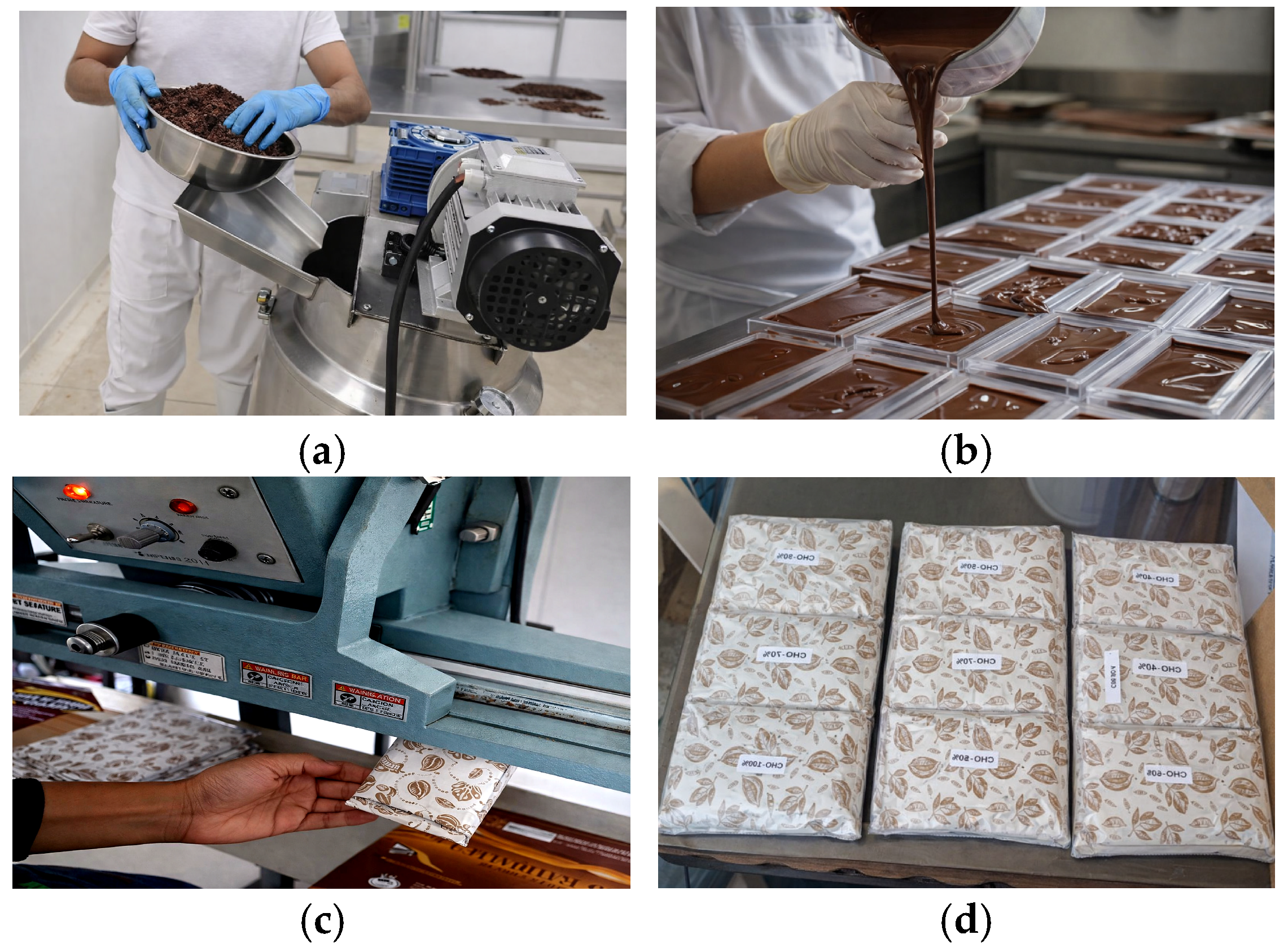
Finally, the chocolates were demolded, packaged in 90 g bilaminated bags, and stored under controlled conditions until analysis (Figure 1 and Figure 2). Analytical determinations were performed using samples taken from each independent batch, and the results are reported as mean values across batches.
This processing approach was designed to preserve the cocoa bean-derived bioactive compounds while ensuring technological feasibility and sensory acceptability in sugar-free dark cup chocolates.

2.3. Conditioning of Dark Chocolate Samples for Cups

The chocolate powder was defatted according to the method proposed by Fernández-Romero et al. and Summa et al. [49,50], with some adaptations, using petroleum ether. For this purpose, 10 g of grated chocolate were taken and placed in 50 mL Falcon tubes. Subsequently, 40 mL of petroleum ether was added, and the sample was subjected to centrifugation (MPW-352RH, MPW Med Instrument, Warsaw, Poland) at 10,000 rpm for 10 min at a temperature of 4 °C in a refrigerated centrifuge. After centrifugation, the supernatant was removed.
To ensure the complete removal of petroleum ether residues, the defatted material was air-dried at room temperature for 24 h under a fume hood until a constant mass was achieved. This procedure is commonly used to allow full solvent evaporation due to the high volatility of petroleum ether. The efficiency of the defatting process was indirectly verified by monitoring the mass loss associated with lipid removal and by visual inspection of the residue, which exhibited the characteristic appearance of defatted cocoa bean material. The same defatting protocol was applied consistently to all samples to ensure comparability.
Subsequently, 1 g of the defatted sample was extracted with 10 mL of methanol–water (80:20, v/v). The mixture was centrifuged at 10 000 rpm for 10 min and filtered through Whatman N° 40 filter paper, and the supernatant was stored refrigerated and protected from light until analysis [38,51].

2.4. Antioxidant Capacity

2.4.1. ABTS Assay

This procedure is described by de Souza et al. and Re et al. [52,53]. The radical cation ABTS•+ was generated by reacting 5 mL of aqueous ABTS solution (7 mM) with 88 µL of 140 mM potassium persulfate (final concentration of 2.45 mM). The mixture was kept in the dark for 16 h before use and then diluted with ethanol to obtain an absorbance of 0.7 ± 0.05 units at 734 nm using a UV-Vis spectrophotometer (Genesys 150, Thermo Scientific, Waltham, MA, USA). Fruit extracts (30 μL) or a reference substance (Trolox) were allowed to react with 3 mL of the blue–green ABTS radical solution. The decrease in absorbance at 734 nm was measured after 6 min. Ethanolic solutions of Trolox concentrations (y = −0.1385x + 0.6906, R2 = 0.9904) were used for calibration. The results are expressed as micromoles of Trolox equivalents (TE) per gram of the sample (μmol (TE)/g). All analyses were performed in triplicate.

2.4.2. DPPH Assay

This assay was conducted as described by Ramos-Escudero et al. [54] with some modifications. Briefly, the DPPH solution (600 μM) was diluted with ethanol to obtain an absorbance of 0.7 ± 0.02 units at 517 nm. Fruit extracts (0.1 mL) or a Trolox reference substance were allowed to react with 3.9 mL of the DPPH radical solution for 30 min in the dark, and the absorbance of the resulting solution was monitored for amelioration (y = −0.1324x + 0.6002, y R2 = 0.9963). The reaction was carried out at room temperature with stirring using a vortex mixer. The absorbance of the reaction mixture was measured at 517 nm. Total antioxidant capacity was expressed as the Trolox equivalent (TE) per g of the sample (μmol (TE)/g). All analyses were performed in triplicate.

2.4.3. FRAP Assay

The FRAP reagent was prepared by making a mixture of 0.3 M acetate buffer (pH 3.6), 0.1 M TPTZ diluted in 0.4 M hydrochloric acid and 0.2 M ferric chloride hexahydrate (FeCl3·6H2O) in a 10:1:1 ratio of each reagent. The reagent was pipetted into 2.7 mL test tubes, and then 90 µL of the sample and 270 µL of distilled water were added, placed in a water bath at 30 °C for 4 min and finally read at 593 in a spectrophotometer (EMC-11-UV, EMCLAB, Duisburg, Germany). The antioxidant potential was determined from a linear calibration curve of ferrous sulfate heptahydrate (FeSO4·7H2O) with a concentration ranging from 200 to 3 800 µm (y = 0.0006x + 0.0853, y R2 = 0.9949). The antioxidant capacity determined by the assay was expressed as micromoles of Fe2+ equivalents per gram of the sample (µmol Fe2+/g) [55,56] to ensure consistency with the ABTS and DPPH assays and to facilitate direct comparison among methods. All analyses were performed in triplicate.
Although chocolate is a lipid-rich matrix, antioxidant capacity was evaluated using ABTS, DPPH, and FRAP assays due to their robustness and wide application in cocoa beans and chocolate matrices. To minimize lipid interference, all samples were previously defatted prior to extraction, allowing assessment of the antioxidant potential mainly associated with polar bioactive compounds, particularly phenolic constituents. These assays are based on single-electron transfer mechanisms and provide complementary information on the reducing capacity and radical scavenging ability of cocoa bean-derived antioxidants. However, they do not directly measure lipid oxidation processes.
Accordingly, all antioxidant capacity results are expressed on a defatted sample basis (μmol TE/g defatted chocolate or μmol Fe2+/g defatted chocolate). This approach was adopted to reduce variability associated with differences in lipid content among formulations and to allow a more direct comparison of the antioxidant potential attributable to non-lipid bioactive compounds.

2.5. Total Phenol Content (TPC)

This was determined in accordance with the procedures of Fernández-Romero et al. and Singleton et al. [49,57] with some modifications. The extract (0.1 mL) was mixed with 2.5 mL of Folin–Ciocalteu reagent, and then 2 mL of sodium carbonate solution was added. The reagents were mixed by vigorous vortexing for 10 s. The mixture was allowed to stand in the dark for 2 h before measuring the absorbance at 760 nm with a UV-Vis spectrophotometer (Genesys 150, Thermo Scientific, Waltham, MA, USA). A gallic acid standard curve was diluted in 70% methanol (10–100 µg/mL) to create a calibration curve (y = 0.0009x + 0.0473, R2 = 0.9997). Total phenolic content is expressed as mg of gallic acid equivalents per gram of the sample (mg GAE/g). All samples were analyzed in triplicate.
It is acknowledged that the Folin–Ciocalteu assay is not specific to phenolic compounds and may also respond to other reducing substances. Therefore, the Folin–Ciocalteu values are interpreted as an estimate of the total reducing capacity commonly reported as total phenolic content, and their interpretation is supported by complementary antioxidant assays (ABTS, DPPH, and FRAP).

2.6. Tyramine Quantification

The procedure described by Llerena et al. [58] was used with some adaptations. First, 1 g of striped chocolate was taken and placed in a 15 mL test tube containing 5 mL of 0.1 M HCl and left on a rotator shaker (RS-24, Boeco, Hamburg, Germany) for 40 min. The sample was centrifuged at 5000 RPM for 15 min in a centrifuge (Pro-Analytical CR4000R, Centurion Scientific, Lancing, UK). The supernatant was filtered through a 0.22 μm PTFE-2 filter until the formation of an aliquot of the extract for subsequent derivatization.
For derivatization, the procedure of Ai et al. and Chiacchierini et al. [59,60] was used with some adaptations. First, 100 μL of the standard tyramine with an analytical grade of ≥98.0% purity was placed in a 2 mL Eppendorf tube, 20 μL NaOH 2 M was diluted with 30 μL of saturated NaHCO3 solution and 200 μL of dansyl chloride at a concentration of 10 mg/1 mL, and derivatization was then performed at a temperature of 60 °C for 30 min. After that time, 10 μL of NH4OH at 25% (v/v) was added to remove the remaining ClHS-Cl. Likewise, preparation of the reagent for the tyramine standard curve was carried out, for which the stock solution of 1 000 mg/L of tyramine was conditioned with ultrapure water, based on calibration points of 4, 10, 25, 50 and 100 ppm of tyramine with 0.1 M HCl.
The quantification was performed using a liquid chromatograph (DGU-20A3R, Shimadzu, Kyoto, Japan), in accordance with the procedure of Ai et al. (2021) [59]. For this purpose, the tyramine standard and the extracts obtained from derivatization were diluted in a microvial, with methanol:water used as the mobile phase in an isocratic state with a ratio of (80:20), a flow rate of 1.32 mL/min, an injection volume of 10 μL, and an oven temperature of 30 °C (CTO-20AC). A 5 μm, 4.6 × 150 mm C18 column (Hawach Scientific, Shaanxi, China) coupled to a 254 nm photodiode array detector (model SPD-M30A) was used. Tyramine quantification was performed by comparison with the peak areas of the standard using LabSolutions Main control software. The tyramine concentration measured in the extract (mg/L) was converted to mg/kg of chocolate considering the extraction volume and sample mass.
The analytical method for tyramine quantification was validated in terms of linearity, sensitivity, and recovery. Calibration curves showed good linearity over the concentration range of 4–100 mg/L, with determination coefficients (R2) higher than 0.99. The limit of detection (LOD) and limit of quantification (LOQ) were estimated based on a signal-to-noise ratio of 3 and 10, respectively. The LOD and LOQ for tyramine were 0.5 to 2 mg/kg and 1.5 to 6 mg/kg of chocolate, respectively. Method accuracy was evaluated by recovery assays performed by spiking previously analyzed chocolate samples with known amounts of tyramine at three concentration levels (low, medium, and high). Recoveries ranged from 85 to 110%, indicating satisfactory accuracy of the method. All analyses were performed in triplicate.

2.7. Sensory Profile

Sensory evaluation was performed by certified expert judges (n = 3) following the protocol described in Table S1 (Supplementary Materials). The samples were coded according to the cocoa liquor concentration and the number of repetitions, and the evaluators received prior information about the product but not about the cocoa liquor concentrations in each of the samples. The process began with the provision of nine samples of dark cup chocolate per taster, representing cocoa liquor concentrations of 100, 70 and 40%, with each sample provided in triplicate. With the support of an instrument called the “sensory evaluation sheet for cocoa liquor”, each sample was tasted according to the descriptors of smell/aroma, acidity, bitterness, astringency, flavor (cocoa, sweetness, dried fruits, fresh fruits, nutty, floral, spices, others), aftertaste and defects [61] (Table 2). To this end, approximately 10 g per sample was taken for evaluation. Between samples, the evaluators cleaned their palates with mineral water and unsalted crackers. A structured scale of 0–10 points (0: absent, 10: very intense) was used to quantify the intensity of the predefined attributes (Table S1). Once the evaluation was completed, it was consolidated for further analysis.

2.8. Statistical Analysis

Sensory profile data were analyzed using quantitative descriptive analysis and simple correspondence analysis (SCA). These analyses were performed using Minitab® software, version 19 (Minitab LLC, State College, PA, USA).
For antioxidant activity, total phenolic content, and tyramine concentration, data were first evaluated for compliance with the parametric assumptions of normality and homoscedasticity. Parametric data (ABTS and FRAP assays) were analyzed using one-way analysis of variance (ANOVA) followed by Tukey’s post hoc test to identify significant differences among samples. Non-parametric data were analyzed using the Kruskal–Wallis test, followed by Nemenyi’s multiple comparison test. All statistical analyses were performed at a significance level of p < 0.05, using the free statistical environment RStudio (RMarkdown), version 2022.12.0 + 353 (RStudio Inc., Boston, MA, USA).

3. Results and Discussion

3.1. Bioactive Profile in Dark Cup Chocolate with Three Percentages of Cocoa Liquor

Table 3 summarizes the antioxidant capacity and total phenolic content of the dark cup chocolate samples. A clear positive relationship was observed between the cocoa liquor percentage and antioxidant capacity across all assays (ABTS, DPPH, and FRAP). The 100% cocoa liquor in dark cup chocolate exhibited the highest antioxidant values, while the 40% formulation showed the lowest. Differences among assays reflect distinct reaction mechanisms, reinforcing the relevance of applying multiple methods to comprehensively assess antioxidant capacity in complex food matrices. Furthermore, the statistically significant differences observed among samples confirm that cocoa liquor concentration is a key determinant of the antioxidant capacity of dark cup chocolate. The DPPH results are consistent with the findings of Jaćimović et al. [62], who reported a clear dependence of antioxidant activity on cocoa percentage, with lower free radical scavenging capacity in chocolates containing 40% cocoa (29.61 ± 0.70%) and the highest activity in samples with 99% cocoa (48.34 ± 0.99%). Although the same increasing trend was observed, the antioxidant capacities reported in the present study were higher for comparable cocoa liquor contents. Similarly, Jaćimović et al. [62] reported ferric reducing antioxidant power (FRAP) values following the same pattern as the DPPH assay, with the highest antioxidant capacity in chocolates with 99% cocoa and the lowest in those with 40% cocoa liquor, with values ranging from 20.50 to 89.00 mgGAE/g, which were lower than those obtained in this study. In addition, Caponio et al. [63] reported ABTS and DPPH values of 98.39 ± 1.70 µmol TE/g and 79.81 ± 5.40 µmol TE/g, respectively, for dark cup chocolate containing 70% cocoa liquor; these values were lower than those recorded in the present investigation for the same assays, further supporting the influence of cocoa liquor concentration and matrix characteristics on antioxidant capacity.
It should be emphasized that direct numerical comparisons with the literature data should be interpreted with caution, as reported antioxidant and phenolic values are strongly influenced by differences in extraction procedures, analytical methodologies, and bases of expression (e.g., defatted vs. whole chocolate matrix, fresh weight vs. dry weight). Therefore, comparisons in the present study were primarily focused on relative trends and magnitudes rather than absolute equivalence of values.
It should be noted that the antioxidant assays applied in this study (ABTS, DPPH and FRAP) are based on single-electron transfer reactions and therefore evaluate the reducing capacity of cocoa bioactives rather than lipid oxidation per se [64]. Nevertheless, these methods are widely accepted indicators of the antioxidant potential of cocoa products and have been shown to correlate with oxidative stability in lipid-containing foods [65,66]. Future studies could be strengthened by incorporating lipid oxidation-specific assays, such as peroxide values, thiobarbituric acid reactive substances (TBARS), or conjugated diene formation, to directly assess oxidative degradation in chocolate matrices.
The total phenolic content (TPC) values obtained in this study (19.00–27.32 mg GAE/g) are within the range reported for dark cup chocolates with high cocoa liquor content, particularly those formulated with ≥70% cocoa liquor. The observed progressive increase in TPC with increasing cocoa liquor percentage is consistent with that of previous studies and confirms cocoa solids as the primary contributors to the phenolic fraction and antioxidant potential of dark cup chocolate. These findings are in agreement with Jaćimović et al. [62], who reported TPC values ranging from 10.55 to 39.82 mg GAE/g in dark chocolates containing 40–99% cocoa liquor, with the highest polyphenol content associated with the highest cocoa liquor percentage. Although the TPC value obtained for the 100% cocoa liquor in dark cup chocolate was slightly lower than that reported for 99% cocoa liquor by these authors, it remains within the reported variability for high-cocoa formulations. Similar TPC levels have also been reported by Miller et al. and Todorović et al. [67,68] in dark chocolate samples, as well as by Caponio et al. [63], who reported a TPC of 20.66 ± 1.28 mg GAE/g for a 70% cocoa liquor dark chocolate. It should be noted that direct quantitative comparisons with the literature should be interpreted with caution, as differences in extraction procedures, analytical protocols, and bases of expression may influence absolute TPC values.
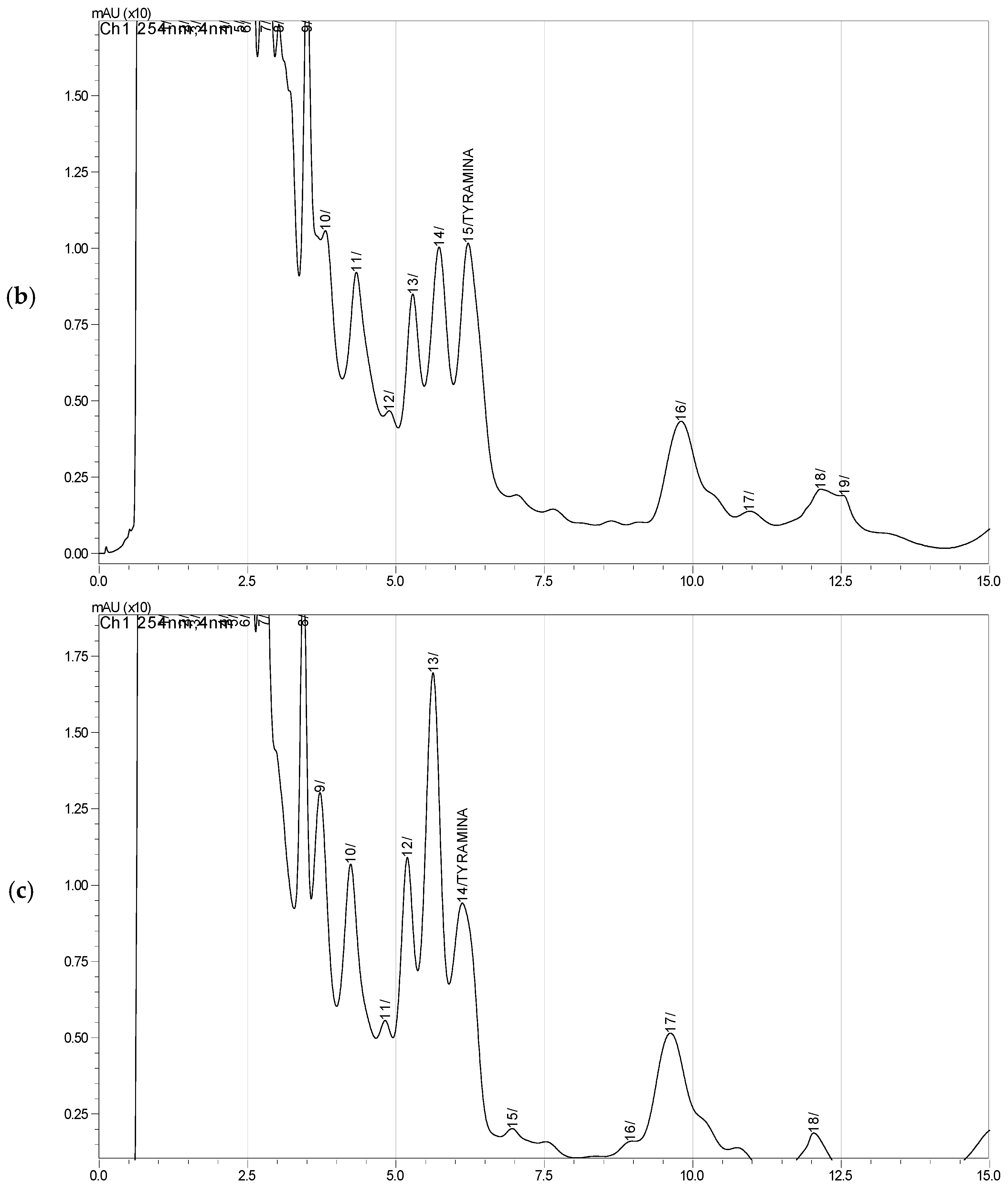
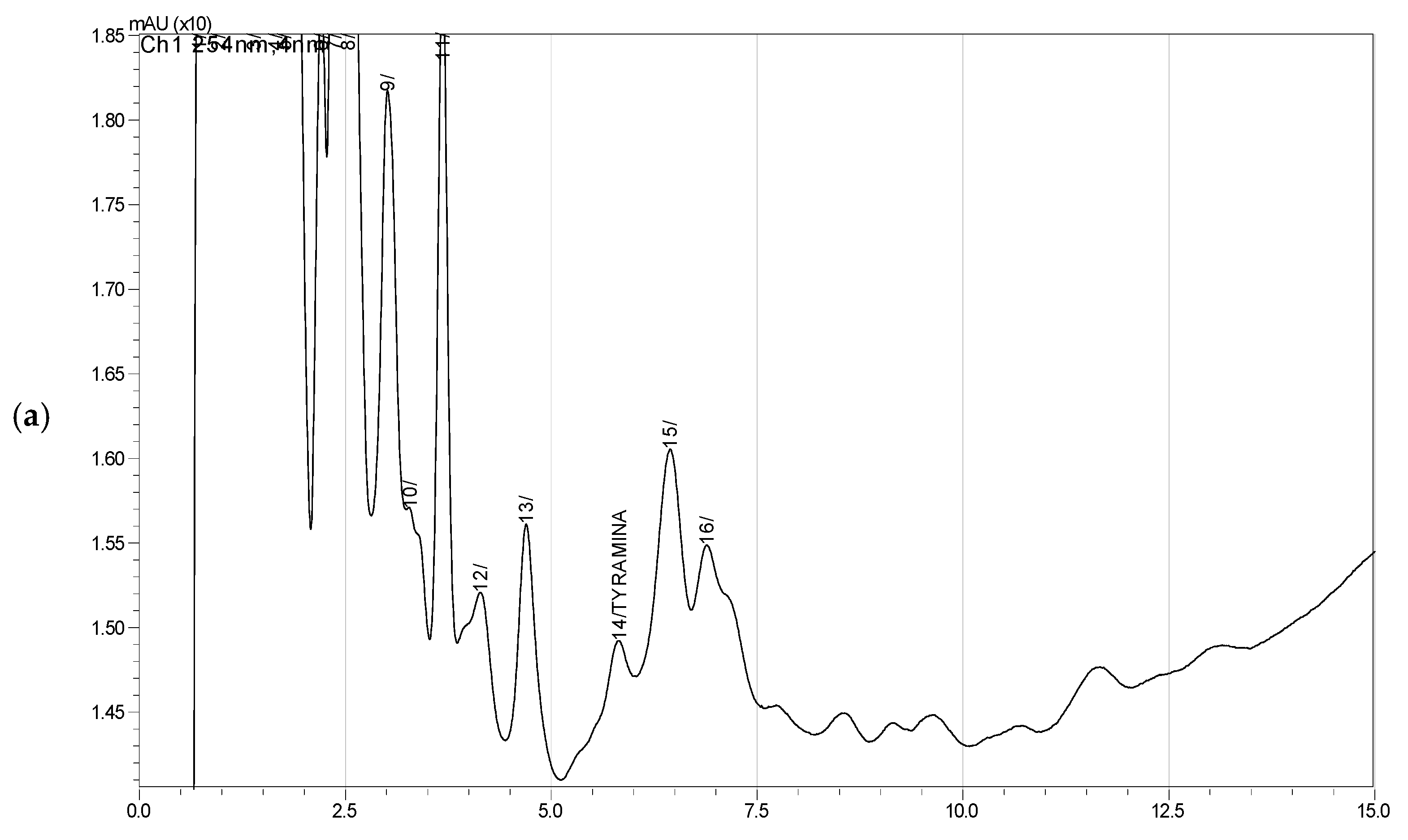
The presence and relative abundance of tyramine in dark cup chocolate samples were confirmed by HPLC analysis, as shown in Figure 3, where a clear increase in peak intensity is observed with increasing cocoa liquor percentage.
The concentration of tyramine in the chocolate samples is shown in Table 4. The sample with 100% cocoa liquor presented the highest concentration (41.90 mg/kg), followed by the one with 70% (34.15 mg/kg), while the one with 40% showed a significantly lower amount (1.85 mg/kg). These values suggest a positive correlation between the amount of tyramine in chocolate and the percentage of cocoa liquor in its composition. Regarding the identification of tyramine, similar results are reported in the study by Santos et al. [69], who detected tyramine among eight amines in dark chocolate with different proportions of cocoa made with fully fermented cocoa beans, as well as in chocolates with 70% cocoa liquor made with different cocoa cultivars [23] and in Brazilian commercial chocolate with 70% cocoa liquor [22]. However, the present research obtained higher tyramine values than those reported by Santos et al. [69], with levels lower than 2.77 mg/kg in different proportions of cocoa, and by Dala-Paula et al. [70], who reported values of 0.5 mg/kg for dark chocolate (70% cocoa mass). Carpéné et al. and Melfi et al. [71,72] identified the presence of tyramine in various foods, highlighting that its metabolism can be altered by factors such as the administration of monoamine oxidase inhibitors (MAOIs). Likewise, these reports reinforce the influence of cocoa cultivars and processing on the levels and profile of amines in chocolate [23,35,73].
The accumulation of certain biogenic amines in fermented foods has been discussed in the literature in relation to human health, particularly under high intake scenarios or in sensitive populations. Tyramine, in particular, has been reported to induce vasoconstriction and increase blood pressure [17] and has been associated with migraine episodes in susceptible individuals as well as hypertensive crises in patients undergoing monoamine oxidase inhibitor (MAOI) therapy [33].
In the present study, the highest tyramine concentration was detected in the 100% cocoa liquor dark cup chocolate (41.90 mg/kg). Although this value may appear relatively elevated when compared with some previous reports, its assessment from a food safety perspective should be based on estimated dietary intake rather than concentration alone. Based on typical chocolate consumption portions (10–30 g), the estimated tyramine intake would range from approximately 0.42 to 1.26 mg per serving, which is well below the levels associated with adverse effects in the general population (25–50 mg per meal).
Nevertheless, lower safety thresholds (6–10 mg per meal) have been proposed for sensitive populations, including individuals treated with MAOI drugs or those prone to migraine episodes [18]. In this context, while the tyramine levels observed in the present study do not represent a safety concern for the general consumer, they may be of relevance for susceptible groups, reinforcing the importance of monitoring biogenic amines in fermented cocoa bean-derived products. Therefore, the tyramine concentrations reported in this study should not be interpreted as indicative of a general health risk but rather as a parameter reflecting fermentation intensity and cocoa composition, with relevance primarily for product characterization and quality control.
Beyond concentration, tyramine bioavailability is influenced by multiple factors, including food matrix composition, lipid content, intestinal monoamine oxidase activity, and co-occurrence of other bioactive compounds. The high fat content of chocolate, primarily derived from CB, may modulate the release and intestinal absorption of biogenic amines, potentially attenuating acute physiological effects compared to other fermented foods with higher water activity [74]. However, data on tyramine bioaccessibility in chocolate matrices remain scarce, underscoring the need for future in vitro digestion or pharmacokinetic studies.
Comparatively, the tyramine levels observed in Forastero-based dark cup chocolate fall within the wide range reported for fermented cocoa bean products and chocolates derived from bulk cocoa varieties, which tend to undergo more intense and prolonged fermentation processes [24,73]. Previous studies have suggested that fine-flavor varieties, such as Criollo and some Trinitario genotypes, generally exhibit lower and more stable biogenic amine profiles, whereas Forastero-variety cocoa shows greater variability, depending on the fermentation conditions, microbial ecology, and post-harvest handling [1].
In parallel, fermentation-driven metabolic transformations not only influence biogenic amines but also reshape the profile of phenolic compounds and volatile metabolites that contribute to aroma and flavor development. Recent metabolomic approaches using LC–MS- and HPLC-based platforms have demonstrated extensive remodeling of phenolic and secondary metabolite profiles in fermented foods, linking microbial activity to both sensory attributes and bioactive composition [1,24,74].
Although the present study focused on targeted analysis of antioxidant capacity, total phenolics, tyramine content, and sensory profiling, future research integrating volatile compound analysis (e.g., GC–MS) and untargeted metabolomics would provide a more comprehensive understanding of the relationships between fermentation, aroma development, bioactive composition, and health-related attributes in dark cup chocolate.

3.2. Sensory Profile in Dark Cup Chocolate with Three Percentages of Cocoa Liquor

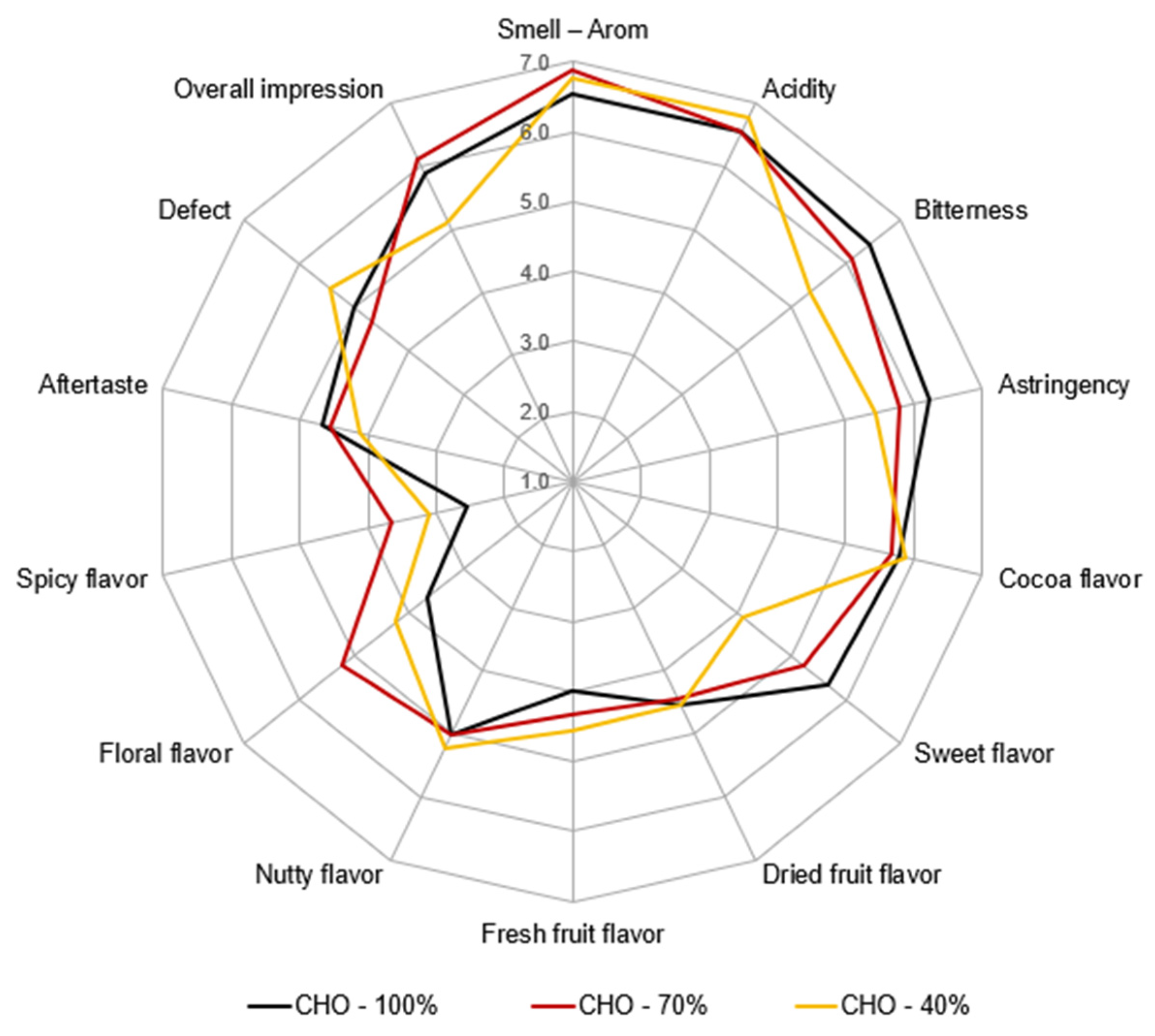
Figure 4 highlights clear sensory differences among dark cup chocolates formulated with 40, 70, and 100% cocoa liquor, demonstrating the strong influence of cocoa concentration on the overall sensory profile.
The CHO-100% and CHO-70% samples had the highest perceived sweetness intensity, while the CHO-40% sample had the lowest score. In the case of CHO-70% and CHO-100%, the sweet taste perceived by experts probably corresponds to secondary sweet notes derived from cocoa flavor precursors (peptides, free amino acids such as alanine and glycine, Maillard reaction products) rather than the primary sweetness of saccharides. This phenomenon has been documented in previous studies. The perception of sweet notes in sugar-free cocoa products can be attributed to non-saccharide compounds, including sweet-taste amino acids (alanine, glycine), low-molecular-weight peptides generated during fermentation, and Maillard reaction products formed during roasting, all of which can activate sweet taste receptors or enhance sweet perception through synergistic effects [8,75,76,77].
The chocolate with 100% cocoa liquor exhibited the highest intensity of bitterness, astringency, and aftertaste, reflecting the dominance of non-volatile compounds typically associated with high cocoa liquor content. The chocolate formulated with 70% cocoa liquor presented a more balanced sensory profile, characterized by pronounced aroma attributes such as floral and spicy notes, moderate bitterness and astringency, and a relatively high overall impression. This intermediate formulation appears to achieve an optimal balance between intensity and complexity, combining a strong cocoa liquor character with enhanced aromatic attributes and acceptable taste sensations. In contrast, the 40% cocoa liquor dark cup chocolate showed higher perceptions of acidity, nutty flavor and fresh fruit notes along with a greater presence of defect-related attributes, indicating a milder cocoa character and reduced sensory complexity. Although this formulation may be more approachable for consumers preferring sweeter profiles, it exhibited lower intensities of attributes commonly associated with premium dark cup chocolates.
Regarding the general sensory appreciation of dark cup chocolate by the panelists, studies such as those of Caponio et al. and Thamke et al. [63,78] report descriptors of bitterness, sweetness, acidity, cocoa flavor and astringency, results that are similar to those of the present research, and Sari et al. [79] show results of the sensory profile for chocolates made with cocoa beans of the Forastero variety similar to those of the present study.
Overall, the radar plot demonstrates that increasing the cocoa liquor percentage intensifies bitterness, astringency, cocoa flavor, and persistence, while intermediate cocoa levels favor aromatic complexity and overall sensory acceptance. These results confirm that cocoa liquor concentration is a key determinant of sensory differentiation in dark cup chocolates and plays a crucial role in shaping consumer perception and product quality [80,81].
However, the sensory evaluation of the study has a methodological limitation since the small size of the sensory panel (n = 3) allows for a qualitative characterization of the sensory profile but does not enable a robust statistical analysis or generalization of results. The sensory findings should be interpreted as qualitative trends identified by experts.
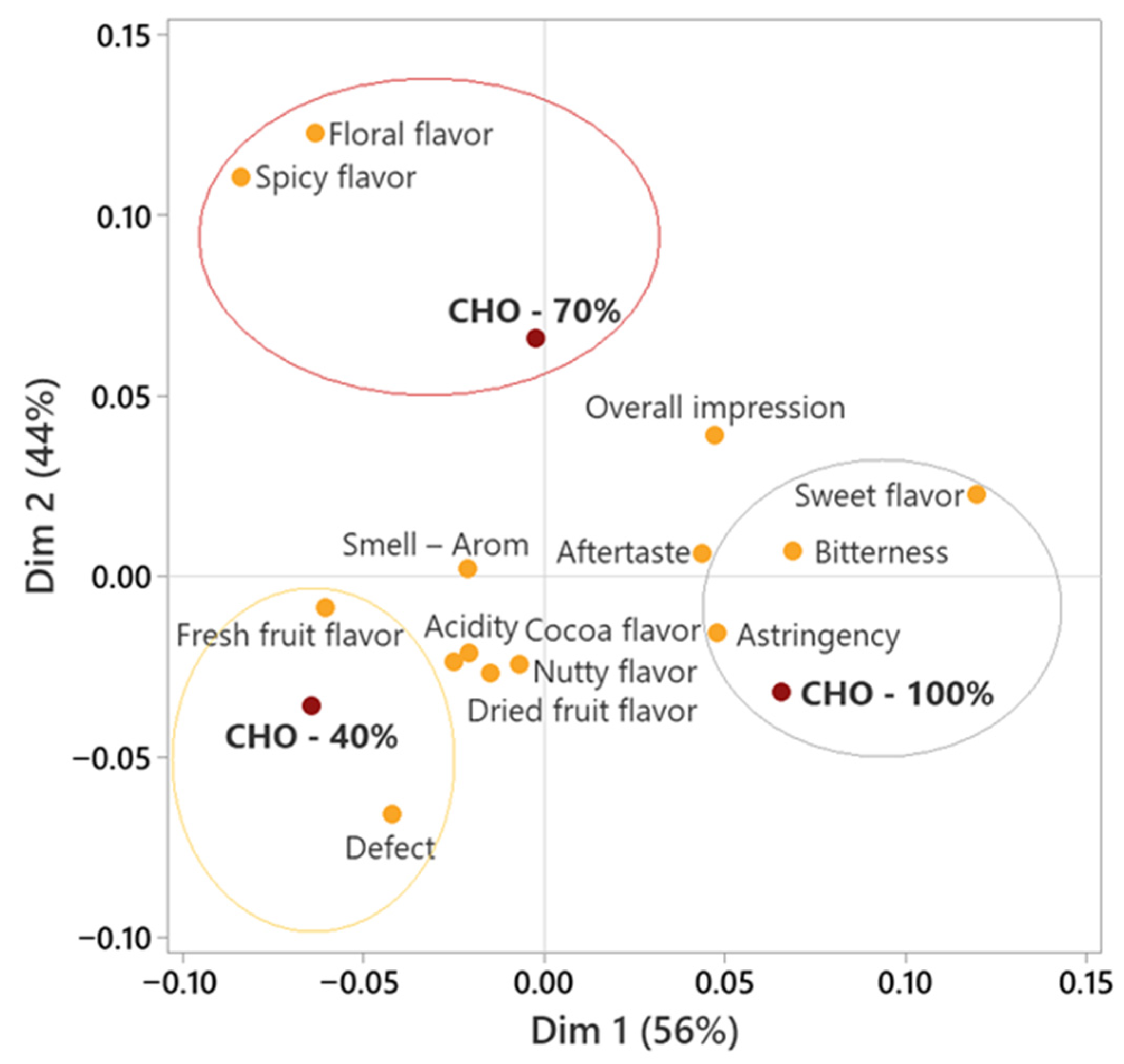
The relationships between sensory attributes and cocoa liquor concentration were further explored by PCA, and the resulting biplot is presented in Figure 5. It can be seen that, for the sample with 100% cocoa liquor, the attributes that characterized it were sweetness, bitterness and astringency; for 70% cocoa liquor, the attributes with greater perceived intensity were a floral flavor, a spicy flavor and a slightly greater overall impression; the sample with 40% cocoa liquor was characterized by a greater perception of defects and a taste of fresh fruits.
Principal component analysis (PCA) revealed a clear differentiation among dark cup chocolate samples according to the cocoa liquor percentage based on their sensory profiles. The first two principal components accounted for 100% of the total variance, with Dim 1 explaining 56% of the variance and Dim 2 explaining 44%. Dim 1 was mainly driven by taste-related attributes such as bitterness, astringency, cocoa flavor, sweetness, and aftertaste, which were positively associated with the CHO–100% sample, indicating a more intense and complex taste profile at higher cocoa liquor concentrations. In contrast, the CHO–40% sample was positioned on the negative side of Dim 1 and was mainly associated with a fresh fruit flavor and defects, suggesting a less intense cocoa character and the presence of sensory attributes typically related to lower cocoa liquor content formulations. Dim 2 was primarily influenced by aroma-related attributes, particularly floral and spicy flavors, which were strongly associated with the CHO–70% sample, indicating a more aromatic profile at intermediate cocoa liquor levels. The overall impression was located between Dim 1 and Dim 2, suggesting that the evaluator’s perception of overall quality is influenced by a balance between taste intensity and aromatic complexity rather than by a single sensory dimension. These results demonstrate that the cocoa liquor percentage is a determining factor in the sensory differentiation of dark cup chocolates, with higher cocoa liquor levels enhancing taste-related attributes and intermediate levels favoring aromatic characteristics.

3.3. Correlation Between Bioactive and Sensory Properties in Dark Cup Chocolate in Three Percentages of Cocoa Liquor

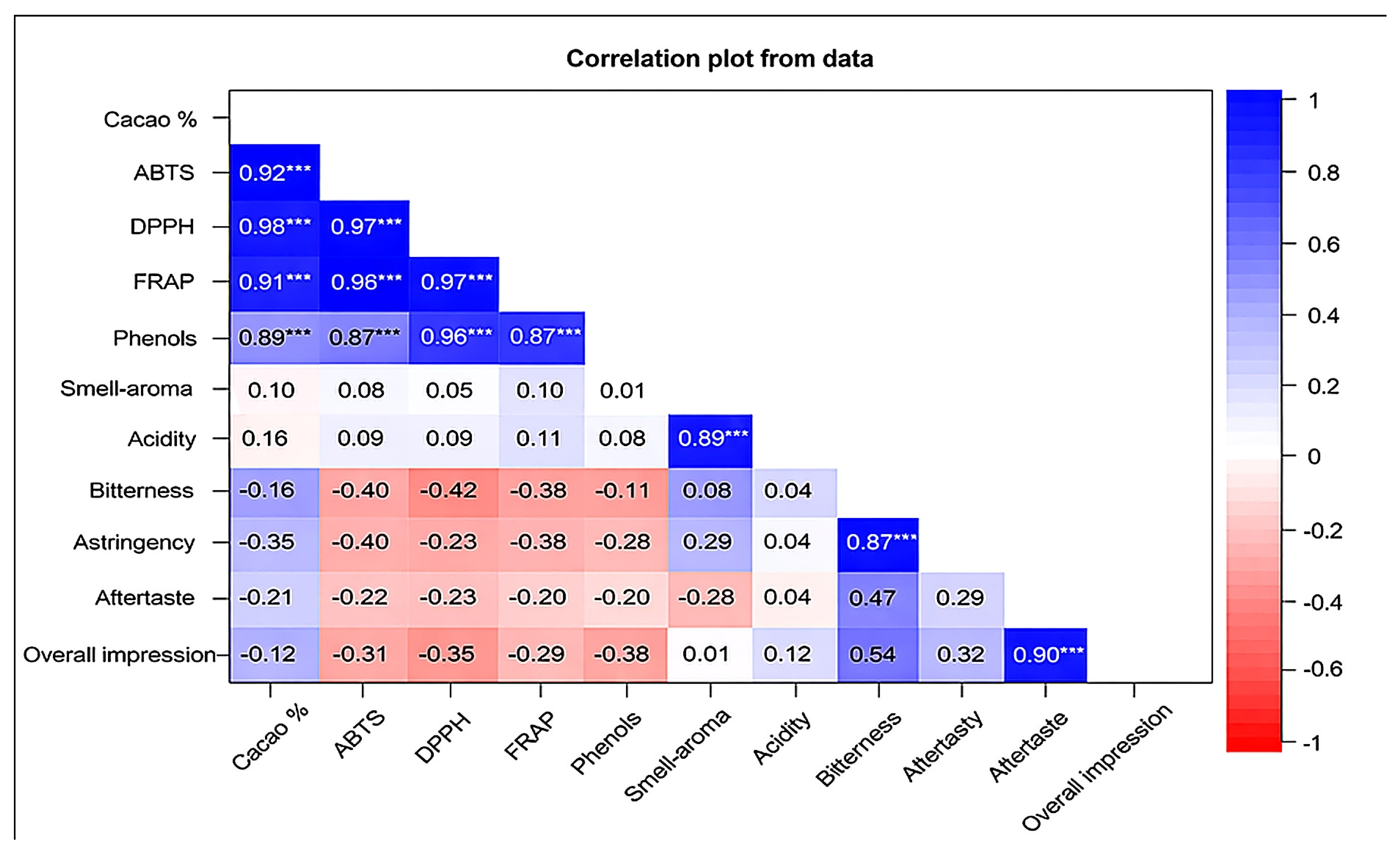
Figure 6 shows the correlation matrix of the indicators evaluated in the chocolate samples. There was a cocoa liquor percentage that was strongly and positively correlated with total phenolic content and antioxidant activity (ABTS, DPPH, and FRAP), confirming that higher cocoa liquor concentrations enhance the bioactive profile of dark cup chocolate. Additionally, the very high positive correlations among the antioxidant assays suggest methodological consistency and reinforce the reliability of the antioxidant capacity measurements.
Regarding the sensory profile, most attributes exhibit weak correlations with bioactive compounds, indicating that increases in phenolic content and antioxidant activity do not substantially alter the perceived sensory characteristics of chocolate. However, important relationships are observed among the sensory variables themselves. Bitterness and astringency present a strong positive correlation, which is expected given their common association with polyphenolic compounds in high-cocoa products. Aftertaste is moderately correlated with both bitterness and astringency, suggesting that these sensations contribute to the persistence of flavor after consumption. A strong positive correlation is also observed between aftertaste and overall impression, indicating that a pleasant and lasting flavor may be a key determinant of consumer acceptance. In contrast, acidity and smell–aroma show a high positive correlation, suggesting that volatile compounds contributing to aroma may also influence the perception of acidity in dark cup chocolate.
Overall, these findings indicate that while higher cocoa liquor percentages significantly improve the functional properties of chocolate, sensory acceptance appears to be more strongly influenced by the interaction among sensory attributes rather than directly by the bioactive composition. This balance between enhanced health-related compounds and stable sensory quality is particularly relevant for the development of high-cocoa chocolate products.

4. Conclusions

This study demonstrates that the percentage of Forastero-variety cocoa liquor in dark cup chocolate significantly influences its bioactive profile and sensory characteristics. Higher cocoa liquor content (70–100%) was associated with superior antioxidant capacity, total phenolic content, and more complex sensory attributes (bitterness, astringency), although it also led to increased tyramine accumulation. While the tyramine levels detected do not pose a risk for most consumers, they highlight the need for controlled fermentation processes to balance the bioactive benefits with safety, particularly for sensitive populations. The strong positive correlation between phenolic content, antioxidant activity, and tyramine suggests that fermentation management is key to optimizing both functional and safety aspects. These findings provide practical insights for developing high-cocoa liquor dark cup chocolates with enhanced health potential and sensory appeal without compromising product safety.

Supplementary Materials

The following supporting information can be downloaded at: https://www.mdpi.com/article/10.3390/pr14040697/s1, Table S1: Sensory evaluation protocol and descriptor definitions.

Author Contributions

Conceptualization, E.M.C.-B., A.S.C.-B., C.R.B.-Z., and F.F.-R.; methodology, E.M.C.-B. and N.L.-R.; software, N.L.-R., F.F.-R., and M.M.-M.; validation, N.L.-R. and E.M.C.-B.; formal analysis, N.L.-R., E.M.C.-B., and A.S.C.-B.; investigation, E.M.C.-B., E.M.C.-A., F.F.-R., and C.R.B.-Z.; resources, E.M.C.-B., N.L.-R., and F.F.-R.; data curation, E.M.C.-B. and N.L.-R.; writing—original draft preparation, E.M.C.-B., F.F.-R., E.M.C.-A., M.M.-M., and C.R.B.-Z.; writing—review and editing, E.M.C.-B., F.F.-R., and C.R.B.-Z.; visualization, N.L.-R., M.M.-M., and A.S.C.-B.; supervision, F.F.-R. and C.R.B.-Z.; project administration, E.M.C.-B., A.S.C.-B., and F.F.-R.; funding acquisition, E.M.C.-B., F.F.-R., and C.R.B.-Z. All authors have read and agreed to the published version of the manuscript.

Funding

The APC was funded by Vicerrectorado de Investigación—Universidad Nacional Toribio Rodríguez de Mendoza de Amazonas.

Data Availability Statement

Dataset available on request from the authors.

Acknowledgments

The authors thank the Universidad Nacional Toribio Rodríguez de Mendoza de Amazonas (Amazonas), Universidad Nacional de Jaén (Cajamarca) and Universidad Nacional del Santa (Ancash).

Conflicts of Interest

The authors declare no conflicts of interest.

References

  1. Delgado-Ospina, J.; Di Mattia, C.D.; Paparella, A.; Mastrocola, D.; Martuscelli, M.; Chaves-Lopez, C. Effect of Fermentation, Drying and Roasting on Biogenic Amines and Other Biocompounds in Colombian Criollo Cocoa Beans and Shells. Foods 2020, 9, 520. [Google Scholar] [CrossRef]
  2. Gil, M.; Uribe, D.; Gallego, V.; Bedoya, C.; Arango-Varela, S. Traceability of Polyphenols in Cocoa during the Postharvest and Industrialization Processes and Their Biological Antioxidant Potential. Heliyon 2021, 7, e07738. [Google Scholar] [CrossRef] [PubMed]
  3. Anoraga, S.B.; Shamsudin, R.; Hamzah, M.H.; Sharif, S.; Saputro, A.D. Cocoa By-Products: A Comprehensive Review on Potential Uses, Waste Management, and Emerging Green Technologies for Cocoa Pod Husk Utilization. Heliyon 2024, 10, e35537. [Google Scholar] [CrossRef] [PubMed]
  4. Nascimento, M.B.; Alencar, J.C.G.; Paulino, B.N.; Nascimento, J.C.N.; Ferreira, T.R.; Batista, A.S.; Nascimento, M.M.; Soares, S.E.; Mesquita, P.R.R. Functional and technological potential of by-products from the cocoa (Theobroma cacao L.) production chain. Food Chem. 2025, 493, 145718. [Google Scholar] [CrossRef]
  5. Tuenter, E.; Sakavitsi, M.E.; Rivera-Mondragón, A.; Hermans, N.; Foubert, K.; Halabalaki, M.; Pieters, L. Ruby Chocolate: A Study of Its Phytochemical Composition and Quantitative Comparison with Dark, Milk and White Chocolate. Food Chem. 2021, 343, 128446. [Google Scholar] [CrossRef]
  6. Cherniienko, A.; Pawełczyk, A.; Zaprutko, L. Antimicrobial and Odour Qualities of Alkylpyrazines Occurring in Chocolate and Cocoa Products. Appl. Sci. 2022, 12, 11361. [Google Scholar] [CrossRef]
  7. Paparella, A.; Schirone, M.; López, C.C. The Health Impact of Cocoa from Cultivation to the Formation of Biogenic Amines: An Updated Review. Foods 2025, 14, 255. [Google Scholar] [CrossRef]
  8. Castro-Alayo, E.M.; Idrogo-Vásquez, G.; Siche, R.; Cardenas-Toro, F.P. Formation of Aromatic Compounds Precursors during Fermentation of Criollo and Forastero Cocoa. Heliyon 2019, 5, e01157. [Google Scholar] [CrossRef]
  9. Erazo Solórzano, C.Y.; Bravo Franco, K.J.; Tuárez García, D.A.; Fernández Escobar, Á.O.; Torres Navarrete, Y.; Vera, J. Efecto de la fermentación de cacao (Theobroma cacao L.), variedad nacional y trinitario, en cajas de maderas no convencionales sobre la calidad física y sensorial del licor de cacao. Rev. Investig. Talent. 2021, 8, 42–55. [Google Scholar]
  10. Duana-Ávila, D.; Hernández-Gracía, T.J.; Martínez-Muñoz, E.; García-Velázquez, M.d.R.; Román-Gutiérrez, A.D. Study of the Mexican Cocoa Market: An Analysis of Its Competitiveness (2010–2021). Agronomy 2023, 13, 378. [Google Scholar] [CrossRef]
  11. Kongor, J.E.; Owusu, M.; Oduro-Yeboah, C. Cocoa Production in the 2020s: Challenges and Solutions. CABI Agric. Biosci. 2024, 5, 102. [Google Scholar] [CrossRef]
  12. Wahyuni, N.L.; Sunarharum, W.B.; Muhammad, D.R.A.; Saputro, A.D. Formation and Development of Flavour of Cocoa (Theobroma cacao L.) Cultivar Criollo and Forastero: A Review. IOP Conf. Ser. Earth Environ. Sci. 2021, 733, 012078. [Google Scholar] [CrossRef]
  13. Putri, D.N.; De Steur, H.; Juvinal, J.G.; Gellynck, X.; Schouteten, J.J. Sensory Attributes of Fine Flavor Cocoa Beans and Chocolate: A Systematic Literature Review. J. Food Sci. 2024, 89, 1917–1943. [Google Scholar] [CrossRef] [PubMed]
  14. do Carmo Brito, B.d.N.; Campos Chisté, R.; da Silva Pena, R.; Abreu Gloria, M.B.; Santos Lopes, A. Bioactive Amines and Phenolic Compounds in Cocoa Beans Are Affected by Fermentation. Food Chem. 2017, 228, 484–490. [Google Scholar] [CrossRef]
  15. Silveira, P.T.D.S.; Glória, M.B.A.; Tonin, I.P.; Martins, M.O.P.; Efraim, P. Varietal Influence on the Formation of Bioactive Amines during the Processing of Fermented Cocoa with Different Pulp Contents. Foods 2023, 12, 495. [Google Scholar] [CrossRef]
  16. EFSA Panel on Biological Hazards (BIOHAZ) Scientific Opinion on Risk Based Control of Biogenic Amine Formation in Fermented Foods. EFSA J. 2011, 9, 2393–2486. [CrossRef]
  17. Ruiz-Capillas, C.; Herrero, A.M. Impact of Biogenic Amines on Food Quality and Safety. Foods 2019, 8, 62. [Google Scholar] [CrossRef]
  18. McCabe-Sellers, B.J.; Staggs, C.G.; Bogle, M.L. Tyramine in Foods and Monoamine Oxidase Inhibitor Drugs: A Crossroad Where Medicine, Nutrition, Pharmacy, and Food Industry Converge. J. Food Compos. Anal. 2006, 19, S58–S65. [Google Scholar] [CrossRef]
  19. Singh, P.K.; Khedkar, R.D.; Chandra, S. Chocolate: An Overview of Functional Potential and Recent Trends in Fortification. Braz. J. Food Technol. 2024, 27, e2023118. [Google Scholar] [CrossRef]
  20. Sun, P.; Xia, B.; Ni, Z.-J.; Wang, Y.; Elam, E.; Thakur, K.; Ma, Y.-L.; Wei, Z.-J. Characterization of Functional Chocolate Formulated Using Oleogels Derived from β-Sitosterol with γ-Oryzanol/Lecithin/Stearic Acid. Food Chem. 2021, 360, 130017. [Google Scholar] [CrossRef] [PubMed]
  21. Żyżelewicz, D.; Budryn, G.; Oracz, J.; Antolak, H.; Kręgiel, D.; Kaczmarska, M. The Effect on Bioactive Components and Characteristics of Chocolate by Functionalization with Raw Cocoa Beans. Food Res. Int. 2018, 113, 234–244. [Google Scholar] [CrossRef] [PubMed]
  22. Dala-Paula, B.M.; Starling, M.d.F.V.; Gloria, M.B.A. Vegetables Consumed in Brazilian Cuisine as Sources of Bioactive Amines. Food Biosci. 2021, 40, 100856. [Google Scholar] [CrossRef]
  23. Deus, V.L.; Bispo, E.S.; Franca, A.S.; Gloria, M.B.A. Influence of Cocoa Clones on the Quality and Functional Properties of Chocolate – Nitrogenous Compounds. LWT 2020, 134, 110202. [Google Scholar] [CrossRef]
  24. Deus, V.L.; Bispo, E.S.; Franca, A.S.; Gloria, M.B.A. Understanding Amino Acids and Bioactive Amines Changes during On-Farm Cocoa Fermentation. J. Food Compos. Anal. 2021, 97, 103776. [Google Scholar] [CrossRef]
  25. Faccinetto-Beltrán, P.; Gómez-Fernández, A.R.; Santacruz, A.; Jacobo-Velázquez, D.A. Chocolate as Carrier to Deliver Bioactive Ingredients: Current Advances and Future Perspectives. Foods 2021, 10, 2065. [Google Scholar] [CrossRef]
  26. Ostrowska-Ligęza, E.; Górska, A.; Wirkowska-Wojdyła, M.; Bryś, J.; Dolatowska-Żebrowska, K.; Shamilowa, M.; Ratusz, K. Thermogravimetric Characterization of Dark and Milk Chocolates at Different Processing Stages. J. Therm. Anal. Calorim. 2018, 134, 623–631. [Google Scholar] [CrossRef]
  27. Eisenberg, T.; Abdellatif, M.; Schroeder, S.; Primessnig, U.; Stekovic, S.; Pendl, T.; Harger, A.; Schipke, J.; Zimmermann, A.; Schmidt, A.; et al. Cardioprotection and Lifespan Extension by the Natural Polyamine Spermidine. Nat. Med. 2016, 22, 1428–1438. [Google Scholar] [CrossRef]
  28. Liang, Y.; Piao, C.; Beuschel, C.B.; Toppe, D.; Kollipara, L.; Bogdanow, B.; Maglione, M.; Lützkendorf, J.; See, J.C.K.; Huang, S.; et al. eIF5A Hypusination, Boosted by Dietary Spermidine, Protects from Premature Brain Aging and Mitochondrial Dysfunction. Cell Rep. 2021, 35, 108941. [Google Scholar] [CrossRef]
  29. Muñoz-Esparza, N.C.; Latorre-Moratalla, M.L.; Comas-Basté, O.; Toro-Funes, N.; Veciana-Nogués, M.T.; Vidal-Carou, M.C. Polyamines in Food. Front. Nutr. 2019, 6, 108. [Google Scholar] [CrossRef]
  30. Sadowska-Rociek, A. Monitoring of Monochloropropanediol Esters and Glycidyl Esters in Different Types of Chocolates Using the Modified Sample Preparation Approach. LWT 2022, 165, 113692. [Google Scholar] [CrossRef]
  31. Zugravu, C.; Otelea, M.R. Dark Chocolate: To Eat or Not to Eat? A Review. J. AOAC Int. 2019, 102, 1388–1396. [Google Scholar] [CrossRef] [PubMed]
  32. Yılmaz, C.; Gökmen, V. Neuroactive Compounds in Foods: Occurrence, Mechanism and Potential Health Effects. Food Res. Int. 2020, 128, 108744. [Google Scholar] [CrossRef]
  33. Delgado-Ospina, J.; Acquaticci, L.; Molina-Hernandez, J.B.; Rantsiou, K.; Martuscelli, M.; Kamgang-Nzekoue, A.F.; Vittori, S.; Paparella, A.; Chaves-López, C. Exploring the Capability of Yeasts Isolated from Colombian Fermented Cocoa Beans to Form and Degrade Biogenic Amines in a Lab-Scale Model System for Cocoa Fermentation. Microorganisms 2021, 9, 28. [Google Scholar] [CrossRef]
  34. Restuccia, D.; Spizzirri, U.G.; Puoci, F.; Picci, N. Determination of Biogenic Amine Profiles in Conventional and Organic Cocoa-Based Products. Food Addit. Contam. Part A 2015, 32, 1156–1163. [Google Scholar] [CrossRef]
  35. Restuccia, D.; Spizzirri, U.G.; Luca, M.D.; Parisi, O.I.; Picci, N. Biogenic Amines as Quality Marker in Organic and Fair-Trade Cocoa-Based Products. Sustainability 2016, 8, 856. [Google Scholar] [CrossRef]
  36. Spizzirri, U.G.; Ieri, F.; Campo, M.; Paolino, D.; Restuccia, D.; Romani, A. Biogenic Amines, Phenolic, and Aroma-Related Compounds of Unroasted and Roasted Cocoa Beans with Different Origin. Foods 2019, 8, 306. [Google Scholar] [CrossRef] [PubMed]
  37. Britto, A.d.A.; Lins da Cruz, M.; Antonia de Souza Oliveira, F.; Soares, S.E.; Druzian, J.I.; Radomille de Santana, L.R.; Oliveira de Souza, C.; da Silva Bispo, E. Influence of Under-Fermented Cocoa Mass in Chocolate Production: Sensory Acceptance and Volatile Profile Characterization during the Processing. LWT 2021, 149, 112048. [Google Scholar] [CrossRef]
  38. Gültekin-Özgüven, M.; Berktaş, İ.; Özçelik, B. Influence of Processing Conditions on Procyanidin Profiles and Antioxidant Capacity of Chocolates: Optimization of Dark Chocolate Manufacturing by Response Surface Methodology. LWT 2016, 66, 252–259. [Google Scholar] [CrossRef]
  39. López, Y.G.; Vásquez Vega, J.T.; Rosillo, F.F.; Castro Alayo, E.M.; Cueva Ríos, M.A.; Huatangari, L.Q.; Mendoza, M.M. Predicting the Shelf Life of Cup Chocolate Using the Arrhenius Model Based on Peroxide Value. Math. Model. Eng. Probl. 2024, 11, 517. Available online: https://openurl.ebsco.com/contentitem/doi:10.18280%2Fmmep.110224?sid=ebsco:plink:crawler&id=ebsco:doi:10.18280%2Fmmep.110224 (accessed on 27 August 2025). [CrossRef]
  40. Mursu, J.; Voutilainen, S.; Nurmi, T.; Rissanen, T.H.; Virtanen, J.K.; Kaikkonen, J.; Nyyssönen, K.; Salonen, J.T. Dark Chocolate Consumption Increases HDL Cholesterol Concentration and Chocolate Fatty Acids May Inhibit Lipid Peroxidation in Healthy Humans. Free Radic. Biol. Med. 2004, 37, 1351–1359. [Google Scholar] [CrossRef]
  41. Torres-Moreno, M.; Torrescasana, E.; Salas-Salvadó, J.; Blanch, C. Nutritional Composition and Fatty Acids Profile in Cocoa Beans and Chocolates with Different Geographical Origin and Processing Conditions. Food Chem. 2015, 166, 125–132. [Google Scholar] [CrossRef]
  42. Galleano, M.; Oteiza, P.I.; Fraga, C.G. Cocoa, Chocolate, and Cardiovascular Disease. J. Cardiovasc. Pharmacol. 2009, 54, 483. [Google Scholar] [CrossRef]
  43. Dala-Paula, B.M.; Custódio, F.B.; Gloria, M.B. Health Concerns Associated with Biogenic Amines in Food and Interaction with Amine Oxidase Drugs. Curr. Opin. Food Sci. 2023, 54, 101090s. [Google Scholar] [CrossRef]
  44. Edinoff, A.N.; Swinford, C.R.; Odisho, A.S.; Burroughs, C.R.; Stark, C.W.; Raslan, W.A.; Cornett, E.M.; Kaye, A.M.; Kaye, A.D. Clinically Relevant Drug Interactions with Monoamine Oxidase Inhibitors. Health Psychol. Res. 2022, 10, 39576. [Google Scholar] [CrossRef] [PubMed]
  45. Canlı, M.; Çelik, E.E.; Kocadağlı, T.; Kanmaz, E.Ö.; Gökmen, V. Formation of Bioactive Tyrosine Derivatives during Sprouting and Fermenting of Selected Whole Grains. J. Agric. Food Chem. 2021, 69, 12517–12526. [Google Scholar] [CrossRef]
  46. Lan, Q.; Pei, H.; Deng, L.; Zhang, Y.; Yang, L.; He, W.; Ma, Y.; Li, J.; Yang, Y. Research Progress of Tyramine Formation and Control Methods in Fermented Meat Products. Sci. Technol. Food Ind. 2024, 45, 380–388. [Google Scholar] [CrossRef]
  47. Yao, Y.; Gao, X.; Guo, M.; Liu, J.; Kang, M. The Key Tyrosine Decarboxylase Gene and Its Negative Transcription Factor for GX-50 Biosynthesis in Sichuan Pepper (Zanthoxylum Armatum). Ind. Crops Prod. 2024, 210, 118128. [Google Scholar] [CrossRef]
  48. CXS 87-1981; Standard for Chocolate and Chocolate Products. Codex Alimentarius Commission: Rome, Italy, 1981.
  49. Fernández-Romero, E.; Chavez-Quintana, S.G.; Siche, R.; Castro-Alayo, E.M.; Cardenas-Toro, F.P. The Kinetics of Total Phenolic Content and Monomeric Flavan-3-Ols during the Roasting Process of Criollo Cocoa. Antioxidants 2020, 9, 146. [Google Scholar] [CrossRef]
  50. Summa, C.; Raposo, F.C.; McCourt, J.; Scalzo, R.L.; Wagner, K.-H.; Elmadfa, I.; Anklam, E. Effect of Roasting on the Radical Scavenging Activity of Cocoa Beans. Eur. Food Res. Technol. 2006, 222, 368–375. [Google Scholar] [CrossRef]
  51. Zhou, S.; Seo, S.; Alli, I.; Chang, Y.-W. Interactions of Caseins with Phenolic Acids Found in Chocolate. Food Res. Int. 2015, 74, 177–184. [Google Scholar] [CrossRef]
  52. de Souza, V.R.; Pereira, P.A.P.; da Silva, T.L.T.; de Oliveira Lima, L.C.; Pio, R.; Queiroz, F. Determination of the Bioactive Compounds, Antioxidant Activity and Chemical Composition of Brazilian Blackberry, Red Raspberry, Strawberry, Blueberry and Sweet Cherry Fruits. Food Chem. 2014, 156, 362–368. [Google Scholar] [CrossRef]
  53. Re, R.; Pellegrini, N.; Proteggente, A.; Pannala, A.; Yang, M.; Rice-Evans, C. Antioxidant Activity Applying an Improved ABTS Radical Cation Decolorization Assay. Free Radic. Biol. Med. 1999, 26, 1231–1237. [Google Scholar] [CrossRef]
  54. Ramos-Escudero, F.; Casimiro-Gonzales, S.; Fernández-Prior, Á.; Cancino Chávez, K.; Gómez-Mendoza, J.; de la Fuente-Carmelino, L.; Muñoz, A.M. Colour, Fatty Acids, Bioactive Compounds, and Total Antioxidant Capacity in Commercial Cocoa Beans (Theobroma cacao L.). LWT 2021, 147, 111629. [Google Scholar] [CrossRef]
  55. Melo, T.S.; Pires, T.C.; Engelmann, J.V.P.; Monteiro, A.L.O.; Maciel, L.F.; Bispo, E.d.S. Evaluation of the Content of Bioactive Compounds in Cocoa Beans during the Fermentation Process. J. Food Sci. Technol. 2021, 58, 1947–1957. [Google Scholar] [CrossRef] [PubMed]
  56. Pulido, R.; Bravo, L.; Saura-Calixto, F. Antioxidant Activity of Dietary Polyphenols As Determined by a Modified Ferric Reducing/Antioxidant Power Assay. J. Agric. Food Chem. 2000, 48, 3396–3402. [Google Scholar] [CrossRef]
  57. Singleton, V.L.; Orthofer, R.; Lamuela-Raventós, R.M. Analysis of Total Phenols and Other Oxidation Substrates and Antioxidants by Means of Folin-Ciocalteu Reagent. In Methods in Enzymology; Oxidants and Antioxidants Part A; Academic Press: Cambridge, MA, USA, 1999; Volume 299, pp. 152–178.s. [Google Scholar]
  58. Llerena, W.; Samaniego, I.; Vallejo, C.; Arreaga, A.; Zhunio, B.; Coronel, Z.; Quiroz, J.; Angós, I.; Carrillo, W. Profile of Bioactive Components of Cocoa (Theobroma cacao L.) By-Products from Ecuador and Evaluation of Their Antioxidant Activity. Foods 2023, 12, 2583. [Google Scholar] [CrossRef] [PubMed]
  59. Ai, Y.; Sun, Y.N.; Liu, L.; Yao, F.Y.; Zhang, Y.; Guo, F.Y.; Zhao, W.J.; Liu, J.L.; Zhang, N. Determination of Biogenic Amines in Different Parts of Lycium Barbarum L. by HPLC with Precolumn Dansylation. Molecules 2021, 26, 1046. [Google Scholar] [CrossRef]
  60. Chiacchierini, E.; Restuccia, D.; Vinci, G. Evaluation of Two Different Extraction Methods for Chromatographic Determination of Bioactive Amines in Tomato Products. Talanta 2006, 69, 548–555. [Google Scholar] [CrossRef] [PubMed]
  61. Murcia-Artunduaga, K.; Gasca-Torres, L.; Castañeda, M.d.R. Evaluación físico-sensorial de granos de cacao (Theobroma cacao L.), región sur del Huila (Colombia). Inf. Técnico 2022, 86, 194–204. [Google Scholar] [CrossRef]
  62. Jaćimović, S.; Popović-Djordjević, J.; Sarić, B.; Krstić, A.; Mickovski-Stefanović, V.; Pantelić, N.Đ. Antioxidant Activity and Multi-Elemental Analysis of Dark Chocolate. Foods 2022, 11, 1445. [Google Scholar] [CrossRef]
  63. Caponio, G.R.; Lorusso, M.P.; Sorrenti, G.T.; Marcotrigiano, V.; Difonzo, G.; De Angelis, E.; Guagnano, R.; Ciaula, A.D.; Diella, G.; Logrieco, A.F.; et al. Chemical Characterization, Gastrointestinal Motility and Sensory Evaluation of Dark Chocolate: A Nutraceutical Boosting Consumers’ Health. Nutrients 2020, 12, 939. [Google Scholar] [CrossRef]
  64. Bibi Sadeer, N.; Montesano, D.; Albrizio, S.; Zengin, G.; Mahomoodally, M.F. The Versatility of Antioxidant Assays in Food Science and Safety—Chemistry, Applications, Strengths, and Limitations. Antioxidants 2020, 9, 709. [Google Scholar] [CrossRef]
  65. Apak, R.; Özyürek, M.; Güçlü, K.; Çapanoğlu, E. Antioxidant Activity/Capacity Measurement. 1. Classification, Physicochemical Principles, Mechanisms, and Electron Transfer (ET)-Based Assays. J. Agric. Food Chem. 2016, 64, 997–1027. [Google Scholar] [CrossRef] [PubMed]
  66. Abeyrathne, E.D.N.S.; Nam, K.; Ahn, D.U. Analytical Methods for Lipid Oxidation and Antioxidant Capacity in Food Systems. Antioxidants 2021, 10, 1587. [Google Scholar] [CrossRef]
  67. Miller, K.B.; Stuart, D.A.; Smith, N.L.; Lee, C.Y.; McHale, N.L.; Flanagan, J.A.; Ou, B.; Hurst, W.J. Antioxidant Activity and Polyphenol and Procyanidin Contents of Selected Commercially Available Cocoa-Containing and Chocolate Products in the United States. J. Agric. Food Chem. 2006, 54, 4062–4068. [Google Scholar] [CrossRef] [PubMed]
  68. Todorovic, V.; Redovnikovic, I.R.; Todorovic, Z.; Jankovic, G.; Dodevska, M.; Sobajic, S. Polyphenols, Methylxanthines, and Antioxidant Capacity of Chocolates Produced in Serbia. J. Food Compos. Anal. 2015, 41, 137–143. [Google Scholar] [CrossRef]
  69. Santos, G.; Dala-Paula, B.M.; Bispo, E.S.; Gloria, M.B.A. Bioaccessibility of Bioactive Amines in Dark Chocolates Made with Different Proportions of Under-Fermented and Fermented Cocoa Beans. Food Chem. 2023, 404, 134725. [Google Scholar] [CrossRef]
  70. Dala-Paula, B.M.; Deus, V.L.; Tavano, O.L.; Glória, M.B.A. Bioactive Amines in 70% Cocoa Dark Chocolate: What You Eat and What You Get. Food Chem. 2021, 343, 128397. [Google Scholar] [CrossRef]
  71. Carpéné, C.; Viana, P.; Fontaine, J.; Laurell, H.; Grolleau, J.-L. Multiple Direct Effects of the Dietary Protoalkaloid N-Methyltyramine in Human Adipocytes. Nutrients 2022, 14, 3118. [Google Scholar] [CrossRef]
  72. Melfi, F.; Carradori, S.; Angeli, A.; D’Agostino, I. Nature as a Source and Inspiration for Human Monoamine Oxidase B (hMAO-B) Inhibition: A Review of the Recent Advances in Chemical Modification of Natural Compounds. Expert Opin. Drug Discov. 2023, 18, 851–879. [Google Scholar] [CrossRef]
  73. Oracz, J.; Nebesny, E. Influence of Roasting Conditions on the Biogenic Amine Content in Cocoa Beans of Different Theobroma cacao Cultivars. Food Res. Int. 2014, 55, 1–10. [Google Scholar] [CrossRef]
  74. Lang, S.; Liu, L.; Li, Z.; Liu, S.; Liang, J.; Lu, L.; Wang, L. Untargeted Metabolomics Reveals Phenolic Compound Dynamics during Mung Bean Fermentation. Food Chem. X 2025, 31, 103189. [Google Scholar] [CrossRef] [PubMed]
  75. Aprotosoaie, A.C.; Luca, S.V.; Miron, A. Flavor Chemistry of Cocoa and Cocoa Products-An Overview: Flavor Chemistry of Cocoa and Cocoa Products—An Overview. Compr. Rev. Food Sci. Food Saf. 2016, 15, 73–91. [Google Scholar] [CrossRef]
  76. Giacometti, J.; Jolić, S.M.; Josić, D. Cocoa Processing and Impact on Composition. In Processing and Impact on Active Components in Food; Elsevier: Amsterdam, The Netherlands, 2015; pp. 605–612. ISBN 978-0-12-404699-3. [Google Scholar]
  77. Kongor, J.E.; Hinneh, M.; De Walle, D.V.; Afoakwa, E.O.; Boeckx, P.; Dewettinck, K. Factors Influencing Quality Variation in Cocoa (Theobroma cacao) Bean Flavour Profile — A Review. Food Res. Int. 2016, 82, 44–52. [Google Scholar] [CrossRef]
  78. Thamke, I.; Dürrschmid, K.; Rohm, H. Sensory Description of Dark Chocolates by Consumers. LWT 2009, 42, 534–539. [Google Scholar] [CrossRef]
  79. Sari, I.A.; Murti, R.H.M.; Misnawi, M.; Putra, E.T.S.P.; Susilo, A.W.S. Sensory Profiles of Cocoa Genotypes in Indonesia. Biodivers. J. Biol. Divers. 2022, 23, 648–654. [Google Scholar] [CrossRef]
  80. Oberrauter, L.-M.; Januszewska, R.; Schlich, P.; Majchrzak, D. Sensory Evaluation of Dark Origin and Non-Origin Chocolates Applying Temporal Dominance of Sensations (TDS). Food Res. Int. 2018, 111, 39–49. [Google Scholar] [CrossRef] [PubMed]
  81. McClure, A.P.; Hopfer, H.; Grün, I.U. Optimizing Consumer Acceptability of 100% Chocolate through Roasting Treatments and Effects on Bitterness and Other Important Sensory Characteristics. Curr. Res. Food Sci. 2022, 5, 167–174. [Google Scholar] [CrossRef] [PubMed]
Figure 1. Processing and packaging stages of dark cup chocolate production. (a) Chocolate mass during conching. (b) Molded dark cup chocolates. (c) Sealing the chocolate tablet packaging. (d) Final packaged product.
Processes 14 00697 g001
Figure 2. Manufacturing process flow diagram for dark cup chocolates with different cocoa liquor percentages.
Processes 14 00697 g002
Figure 3. HPLC chromatographic profiles of tyramine in dark cup chocolate samples formulated with (a) 40%, (b) 70%, and (c) 100% cocoa liquor. Peaks corresponding to tyramine are identified based on retention time and standard comparison, showing a progressive increase in signal intensity with increasing cocoa liquor concentration.
Processes 14 00697 g003aProcesses 14 00697 g003b
Figure 4. Radar plot of sensory attributes of dark cup chocolates formulated with different cocoa liquor percentages.
Processes 14 00697 g004
Figure 5. PCA biplot of sensory attributes and dark cup chocolate samples (CHO–40%, CHO–70%, CHO–100%) based on quantitative descriptive analysis. The biplot represents the distribution of sensory attributes and chocolate samples (CHO–40%, CHO–70%, and CHO–100%) according to the first two principal components. Dimension 1 (Dim 1) explains 56% of the total variance and is mainly associated with taste-related attributes such as bitterness, astringency, sweetness, aftertaste, and cocoa flavor, which characterize samples with higher cocoa percentages. Dimension 2 (Dim 2), explaining 44% of the variance, is primarily related to aroma-related attributes, including floral and spicy flavors, as well as overall impression. The proximity between samples and sensory descriptors indicates a stronger association, while the ellipses highlight the sensory grouping of chocolates according to cocoa liquor concentration.
Processes 14 00697 g005
Figure 6. Correlation matrix between bioactive compounds and sensory attributes in dark cup chocolates with different cocoa liquor percentages. Colors represent Pearson’s correlation coefficients, where blue indicates positive correlations and red indicates negative correlations. Color intensity reflects the strength of the association; values closer to +1 or −1 denote stronger relationships, while values near 0 indicate weak or no correlation. Asterisks denote statistically significant correlations (*** p < 0.001).
Processes 14 00697 g006
Table 1. Formulation of dark cup chocolate at 100, 70 and 40% cocoa liquor percentages.
InputSpecification100%70%40%
%Kg%Kg%Kg
Cocoa liquor≥35%1002.60701.820401.040
Cocoa butter≥18% CDE----80.20830.078
Starch<8%----70.18270.182
Dry lean cocoa extract *≥14% CDE----150.390501.300
Total 2.60 2.60 2.60
Note: Each formulation (40, 70, and 100% cocoa liquor) was produced in three independent processing batches, using the same raw material lot and identical processing conditions, to assess process reproducibility. All ingredient quantities are expressed in kilograms (kg) and correspond to a total batch size of 2.60 kg for each formulation. *: Dry lean cocoa extract refers to a solid, defatted cocoa-derived ingredient and not to a liquid extract. No refined sugar or sweeteners were added to any of the formulations. The reduction in cocoa liquor percentage in the 40% and 70% samples was achieved exclusively by adjusting the proportions of CB, starch, and defatted dry cocoa solids.
Table 2. Sensory attribute definitions.
DescriptorsOperational Definition
Smell/AromaIntensity of aromas perceived through direct sniffing
Cocoa FlavorIntensity of typical processed cocoa character
BitternessBitter sensation on tongue (back, sides)
SweetnessGlobal perception of sweet notes from any source
AciditySour sensation (lateral salivation)
AstringencyDryness/roughness sensation on oral mucosa
Floral FlavorFloral aromas (white flowers, jasmine, rose)
Spicy FlavorSpice aromas (cinnamon, nutmeg, clove)
Fresh fruit FlavorFresh fruit (citrus, berries) or dried fruit (raisin, fig)
Nutty FlavorNutty aromas (hazelnut, almond, walnut)
DefectOff notes (vinegary, ammoniacal, moldy, rancid)
AftertasteDuration and intensity of post-swallow sensations
Dried Fruit FlavorSweet, concentrated aromas reminiscent of dehydrated fruits (raisins, dates, figs, prunes)
Overall ImpressionGlobal quality and acceptability assessment
Note: Sensory attributes were evaluated by a trained panel using a structured 10-point intensity scale, where higher values indicate greater perceived intensity. Attribute definitions were adapted from standard sensory lexicons for cocoa beans and chocolate products to ensure consistency and reproducibility of the evaluations.
Table 3. Antioxidant activity and total phenol content values in dark cup chocolates.
SampleABTS
(µmol TE/g)
DPPH
(µmol TE/g)
FRAP
(µmol Fe2+/g)
TPC
(mg GAE/g)
CHO–40%96.46 c ± 2.1764.35 b ± 2.2761.89 c ± 2.4619.00 b ± 0.23
CHO–70%176.37 b ± 3.71202.06 ab ± 3.80126.78 b ± 2.4619.80 ab ± 0.16
CHO–100%273.36 a ± 4.02278.85 a ± 2.72213.07 a ± 5.1327.32 a ± 0.07
Note: Data represent mean ± standard deviation. Different letters indicate significant differences between samples at a 5% level of significance.
Table 4. Quantification of tyramine in dark cup chocolates.
SampleRetention TimeAreaConcentration (mg/L)Concentration (mg/kg)
CHO–40%5.82 ± 0.029980 ± 8620.37 b ± 0.031.85 b ± 0.03
CHO–70%6.16 ± 0.05184,366 ± 53236.83 ab ± 0.2034.15 ab ± 0.20
CHO–100%6.12 ± 0.00226,179 ± 15,8708.38 a ± 0.5941.90 a ± 0.59
Note: Data represent mean ± standard deviation. Different letters indicate significant differences between samples at a 5% level of significance.
Disclaimer/Publisher’s Note: The statements, opinions and data contained in all publications are solely those of the individual author(s) and contributor(s) and not of MDPI and/or the editor(s). MDPI and/or the editor(s) disclaim responsibility for any injury to people or property resulting from any ideas, methods, instructions or products referred to in the content.