1. Introduction
Geothermal energy, as a representative renewable energy source, has become one of the pathways for achieving carbon neutrality due to its unique advantages, such as plentiful reserves, extensive distribution, hygienic conditions, environmental friendliness, and high utilization efficiency [
1]. Beginning in some areas at the start of the twenty-first century, China piloted the development of groundwater- and shallow soil-source heat pumps before progressively expanding their use across the country [
2]. By the end of 2020, China had 841 million square meters of shallow geothermal energy heating and cooling, of which 282 million square meters were hydrothermal geothermal heating. The total geothermal heating area in China approached 1.4 billion square meters, maintaining its position as the largest in the world [
3]. To date, China is the world’s biggest consumer of geothermal energy resources, leading the globe in installed capacity, heating area, and direct use of shallow and hydrothermal geothermal energy resources. [
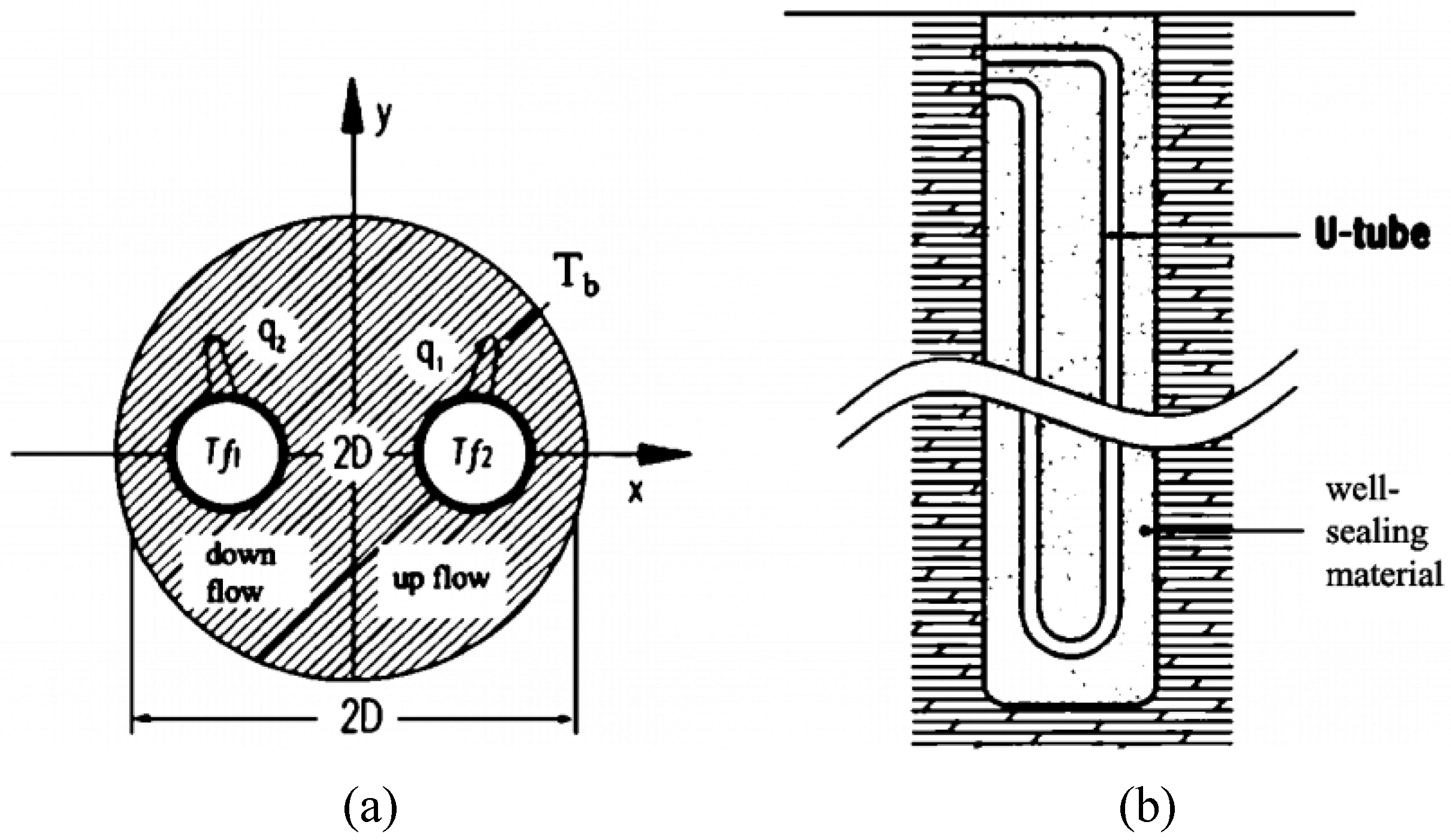
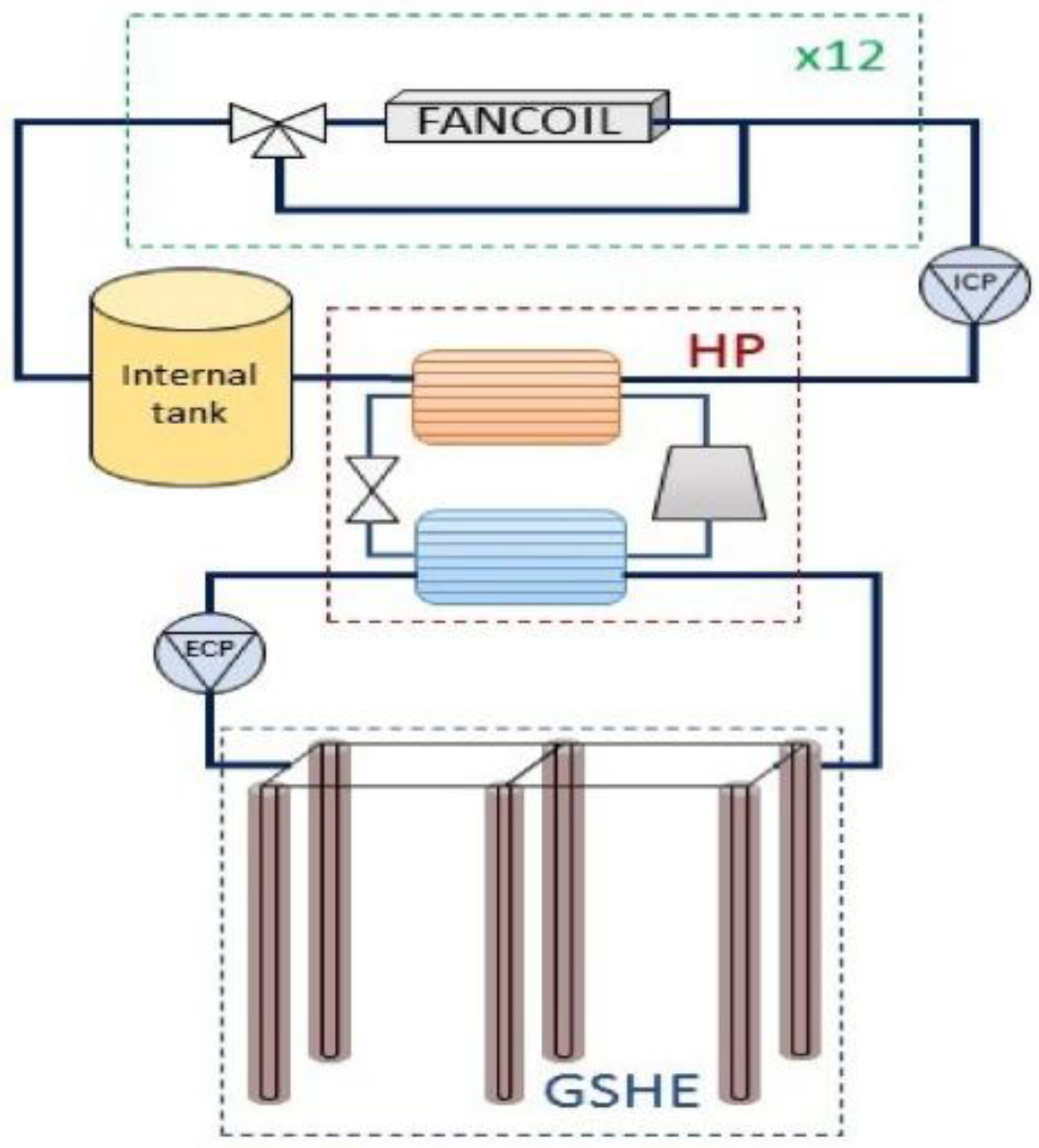
4]. The shallow ground-source heat-pump system consists of three main components. Among them, the geothermal energy exchange system (i.e., the GHE) has always been a key focus in the further development of ground-source heat-pump technology [
5].
For GHEs, several heat-transport models have been presented by researchers. However, there is presently no universal agreement on the heat-transfer models for GHEs worldwide due to the heat exchanger’s intricate heat-transfer mechanism with the surrounding geological components. There are two main categories of GHE heat-transfer models. The first is the analytical solution model, which is based on the theory of line heat sources and cylindrical sources.; the second type is the numerical solution model based on numerical calculation methods [
6]. The first type of analytical solution model primarily consists of two heat-transfer models: one for the area outside the borehole and the other for the area inside the borehole [
7]. For the heat-transfer model outside the borehole, by discretizing the heat source in both time and location, Luo et al. [
8] were able to apply the analytical solution to the process of heat transmission in subterranean areas. Based on the Kelvin line-heat-source hypothesis, Ingersoll [
9] developed the first endless line-heat-source model. This model assumes that the formation is a homogeneous, infinitely large medium with an initially uniform temperature, where the thermal characteristics are fixed and unaffected by temperature. It only considers radial heat transfer and ignores the radial dimensions of the borehole. Therefore, under constant heat flux, the following formula Equation (1) can be used to represent the temperature distribution of the surrounding geological elements with the borehole wall’s radial direction:
where
is the temperature of the geological material at time
and radial distance
from the borehole wall, in Kelvin (K);
is the radial distance from the borehole wall to the geological material, in meters (m);
is time, in seconds (s);
is the initial temperature of the geological material, in Kelvin (K);
is the heat flux per unit length, in watts per meter (W/m);
is the thermal conductivity of the geological material, in watts per meter per Kelvin (W/(m·K)); and
is the thermal diffusivity of the geological material, in square meters per second (m
2/s).
The solution of the infinite line heat-source model is simple and computationally convenient, but its drawbacks are also quite evident. By neglecting the surface boundary and the finite depth of the borehole, the model fails to maintain a stable soil temperature field and cannot simulate long-term operating conditions [
10]. Zeng Heyi et al. [
11,
12] proposed the finite-length line heat-source model by treating the GHE as a finite-length line heat source perpendicular to the ground boundary in a semi-infinite homogeneous medium with uniform initial temperature, based on the linear superposition principle, Green’s function method and virtual heat-source method. Its analytical form is given as the Equation (2):
where
is the temperature of the geological material at time
, radial distance
, and axial distance
, in Kelvin
;
is the distance along the axial direction from the ground surface to the geological material, in meters (m);
is the borehole depth of the GHE, in meters (m); and
is the complementary error function.
The analytical solution obtained from the finite-length line heat-source model provides a good agreement with actual results when simulating long-term operation [
13]. A unified analytical approach for shallow and deep geothermal heat exchangers was provided by Luo et al. [
8]. This technique can handle both shallow and deep wells at the same time without taking segmentation into account.
The first and most straightforward model to be presented for the heat transmission within the borehole is the one-dimensional model. Its principle is to replace the actual single U-tube or double U-tube GHE inside the borehole with a circular pipe having an equivalent diameter, thus avoiding the complex heat-transfer problems caused by the different positions of each branch of the U-tube relative to the borehole axis [
14]. Furthermore, the two-dimensional heat transfer problem in the plane perpendicular to the borehole axis is reduced to a one-dimensional radial heat transfer problem by ignoring axial heat transmission along the borehole, then the problem can be solved using methods such as Laplace transform [
15,
16].
Minaei et al. [
17] proposed a two-dimensional thermal resistance-capacitance model (TRCM) by adding additional thermal capacitance network nodes. Since this model takes into account the effect of the thermal capacitance of backfill materials on heat transfer in the GHE, it maintains good accuracy in short-term calculations. Building on this, Pasquier et al. [
18] considered the thermal capacitance of the fluid inside the U-tube and the borehole wall, thereby improving the TRCM and enhancing the accuracy of temperature-response predictions for the U-tube GHE in short-term scenarios. De Carli M et al. [
19] proposed a two-dimensional capacitance-resistance model (CaRM) for the GHE, and Zarrella [
20] further considered the thermal capacitance of both the backfill material and circulating fluid inside the borehole, proposing an improved two-dimensional capacitance-resistance model.
Despite a significant amount of study on heat transfer models for shallow geothermal heat exchangers, two research gaps are identified according to a survey of the existing literature:
Currently, the heat-transfer calculations for shallow GHE arrays face the issue of large computational loads and slow calculation speeds due to the massive number of pipes, which limits the iterative optimization design of large-scale GSHPs. Since there are many different kinds of analytical models for both shallow and deep ground-heat exchangers, those models are also facing simulation speed problems because they contain complex integration calculation within the formula [
21,
22,
23].
For shallow GSHPs (0–200 m deep), their thermal performance during long-term operation is affected by numerous influencing factors, and there is currently a lack of comprehensive and integrated analysis of these factors. Few studies take closer look at the heat extraction/injection capacity, thermal effect radius and various relevant system parameters.
To address the above issues, this study presents the following innovations:
- (1)
Based on the “segmented line heat source” approach that was previously suggested, this study introduces the Response Factor Method (RFM) to heat-transfer calculations for shallow GHEs by the use of the integral computation in the analytical model and the convolution link between the heat flux. By incorporating the concept of excitation and response from system control theory, the approach allows for the pre-calculation of the integral part of the model, constructing a response-factor matrix library. During subsequent calculations, the required data can be directly retrieved from this library, enabling accelerated long-period geothermal system calculations using interdisciplinary expertise.
- (2)
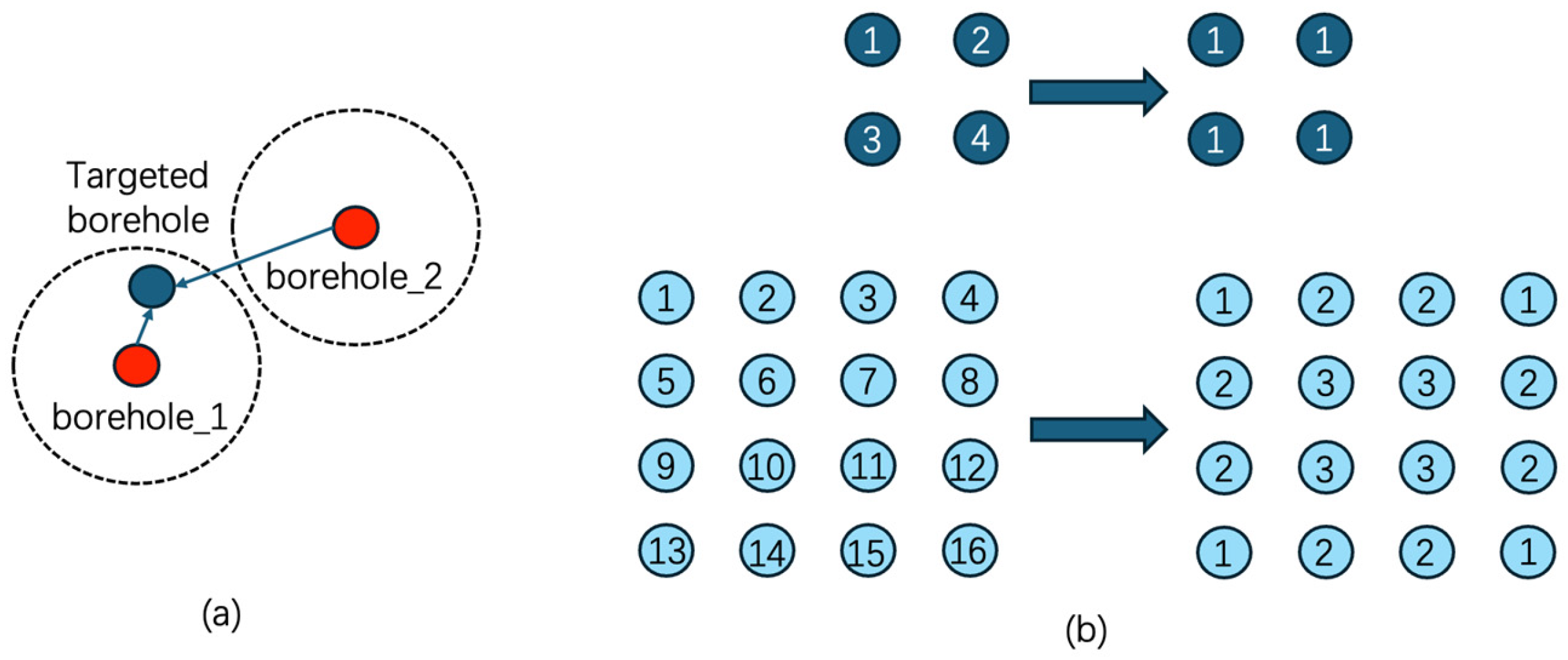
To address the limitations of existing large-scale borehole heat exchanger (BHE) heat-transfer calculations, which either only apply to simplified calculations for regular arrangements or overlook the influence of distant GHEs, this study proposes a method for Large-scale borehole Arrays Dimension Reduction (LADR). The method groups large-scale, irregularly arranged pipe arrays into different clusters based on computational needs. Each cluster’s selected borehole can directly replace the heat transfer calculations of the other boreholes in that cluster.
Based on those two improved models and methods, it is possible to explore the large-scale shallow geothermal systems. This study examines the impact of factors such as the geometry of single U-tube pipes, well spacing, ground-source side load, and operational modes on the thermal performance of shallow GHEs over long-term operation. Furthermore, the work offers a thorough justification for the seasonal fluctuations in the thermal effect radius, the yearly soil temperature changes under heating–cooling load balance conditions, and the differences in heat transfer performance of GHEs at different positions within the borehole array during long-term operation of the shallow GSHP.
In a further step, this work provided some new discussions in which we uncover the unsteady features of thermal effect radius across different seasons. We found the heat-accumulation phenomenon in a thermally balanced system and explained this observation. Finally, we showcased the unequal thermal performance of boreholes in an array.
By reviewing shallow GHEs’ thermal performance, we provided a better tool while exhibiting some neglected aspects about shallow geothermal energy applications.
3. Results and Discussion
By utilizing the previously proposed response-factor method, the computational load and time cost of long-term transient heat-exchange calculations for shallow GHEs have been significantly reduced. Under typical geological and geothermal conditions, the influence of important elements was methodically investigated using the control variable technique, such as borehole depth, borehole spacing, inner and outer pipe diameters, ground-source load, and operation modes on the heat extraction capacity (maximum heat extraction and thermal effect radius) of shallow geothermal wells (borehole depth 0–200 m) over a 30-year operational period. This study focuses on parameter analysis for shallow single U-tubes, with default parameters considering the actual engineering parameters [
28].
The following analysis is not particular for a typical region or climate zone, but for a general case with a certain heating and cooling load on the ground side. In the simulation, the effect of soil moisture is not in consideration but only using a lumped thermal property parameter, which is also a convention. The parameters used in the afterwards simulation are based on
Table 2.
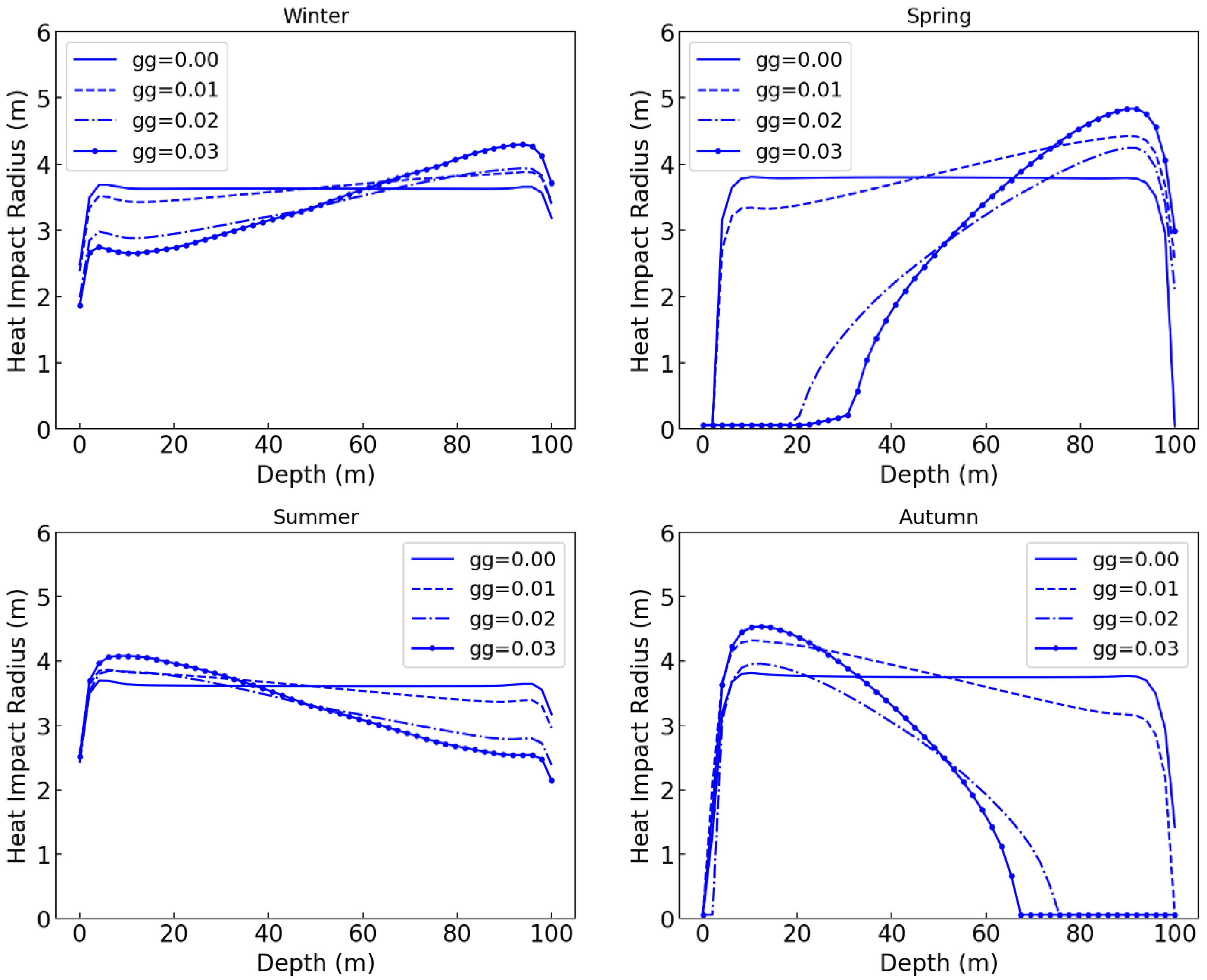
The impact of shallow geothermal gradient on the maximum heat-extraction and thermal-effect radius typically requires repeated transient calculations over the years. However, by utilizing the response-factor method proposed above, rapid comparative calculations can be performed. Therefore, a comparative analysis was conducted to examine the impact of different geothermal gradient settings on the maximum heat extraction and thermal effect radius of shallow GHEs. In the computational analysis using home-made python codes, geothermal gradient values of 0.00, 0.01, 0.02, and 0.03 °C/m were set for case studies, and the maximum heat extraction and thermal effect radius distribution for the single pipe were calculated under the three conditions.
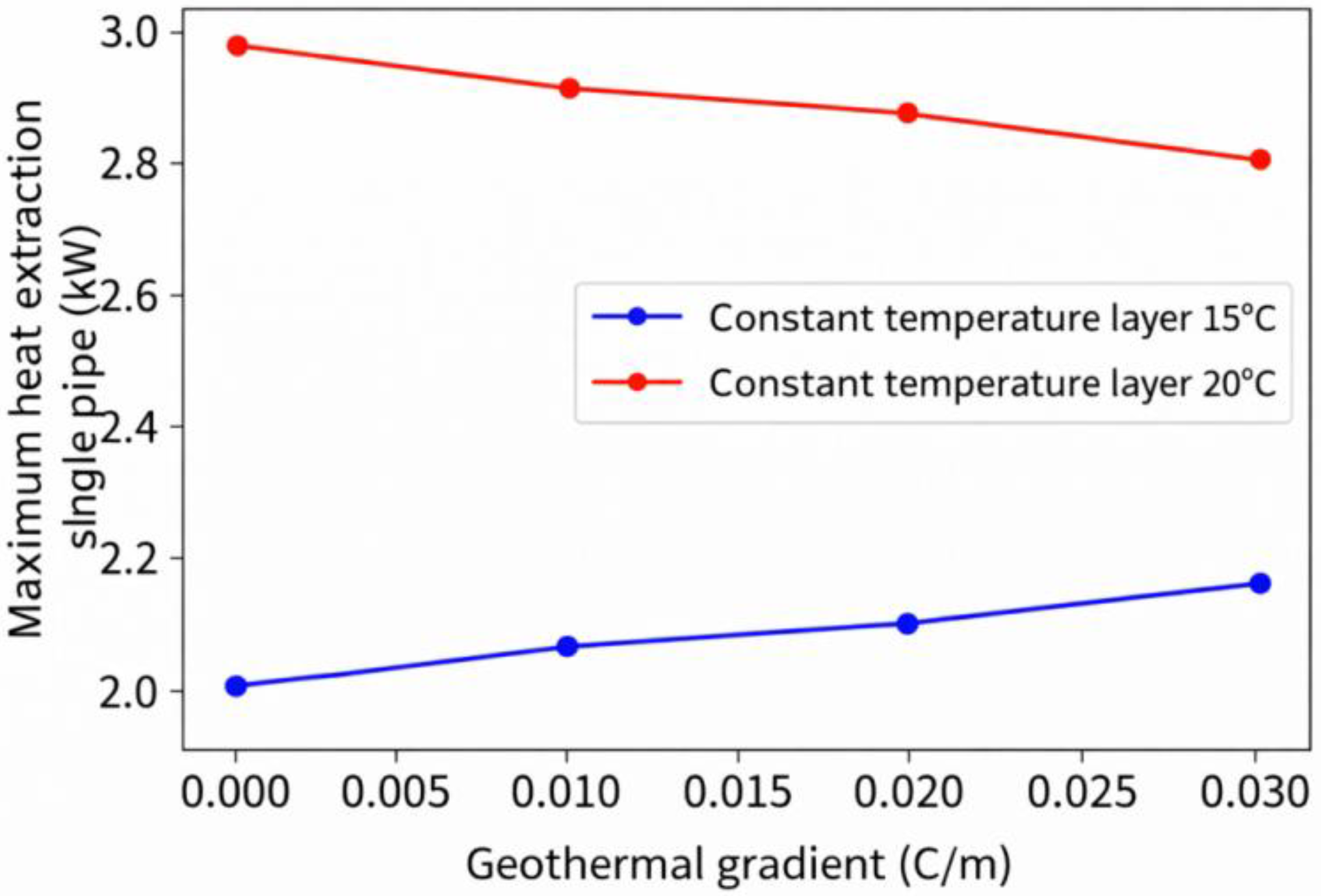
Figure 6 displays the highest heat-extraction capacity values for a single pipe under various geothermal-gradient conditions. When the constant temperature layer is set at 15 °C, and the shallow geothermal gradient increases, the initial temperature distribution of the soil also gradually increases with depth. However, when the constant temperature layer is set at 20 °C, the trend is the opposite. From the figure, it can be observed that the change in shallow geothermal gradient affects the maximum heat extraction capacity of the single pipe as follows: for every 0.01 °C/m increase in the geothermal gradient, the single pipe’s ability to extract heat increases (or decreases) by 0.06 kW. Furthermore, the distribution of the thermal-effect radius surrounding the single pipe was examined under various geothermal-gradient settings; the findings are displayed in
Figure 7.
3.1. The Impact of Design Parameter on the Thermal Performance of Shallow GHEs
3.1.1. Borehole Depth
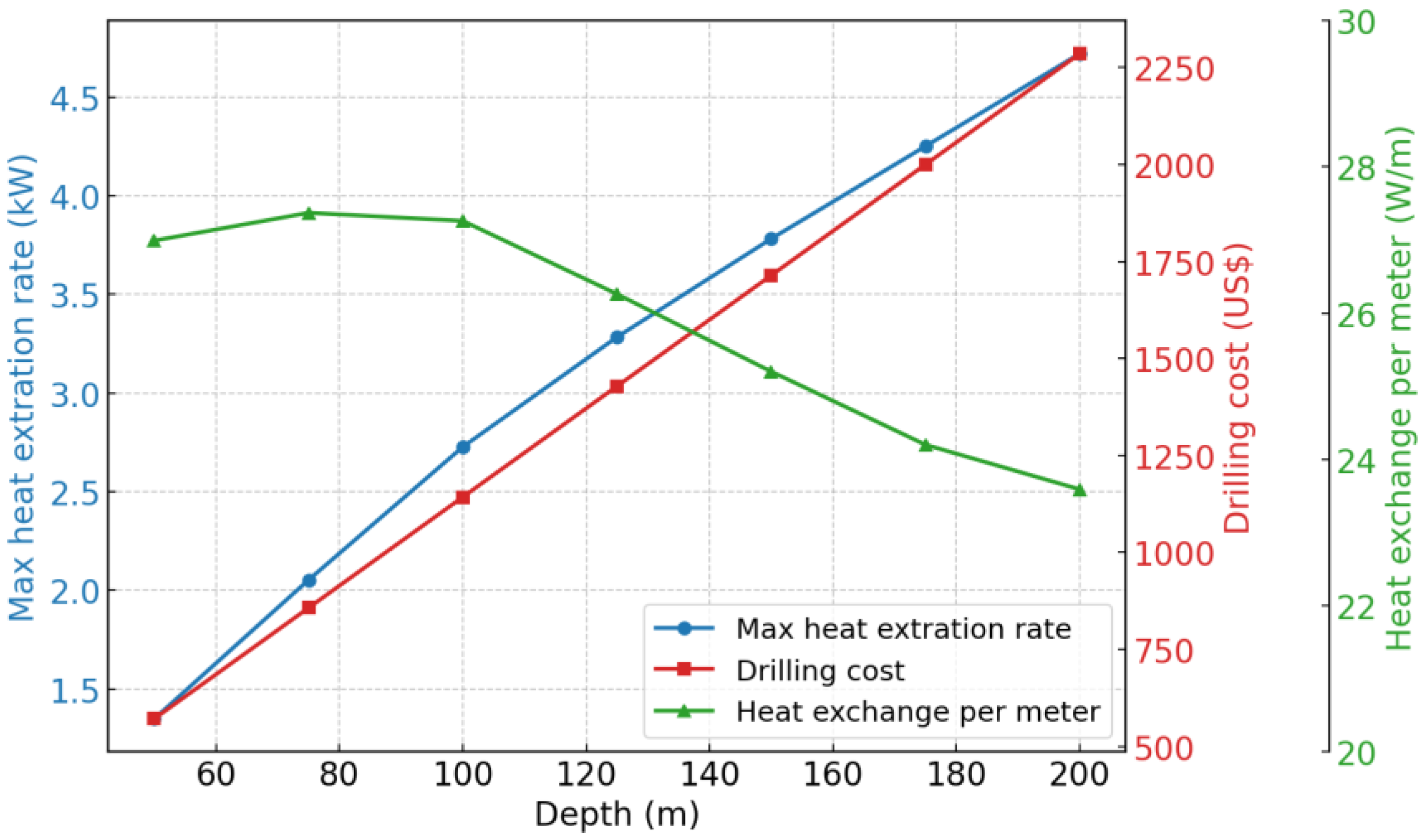
For various borehole depth ranges, a long-term operating investigation of the maximum extracting heat for shallow GHEs was carried out. The results in
Figure 8 indicate that, under the condition of load balance having a cooling load in the summer and an equal but opposite heating load in the winter throughout a 30-year operating period, the maximum heat extraction of a single pipe in shallow GHEs increases approximately linearly with borehole depth. However, the rate of increase slightly slows down as the borehole depth increases. An analysis of drilling costs under different borehole depths reveals that drilling costs are generally linearly related to borehole depth. Therefore, at greater borehole depths, the heat-transfer gain per unit of depth shows diminishing marginal returns. Overall, the heat-exchange capacity per unit depth of shallow GHEs typically ranges from 20 to 30 W/m, which is consistent with existing engineering practice.
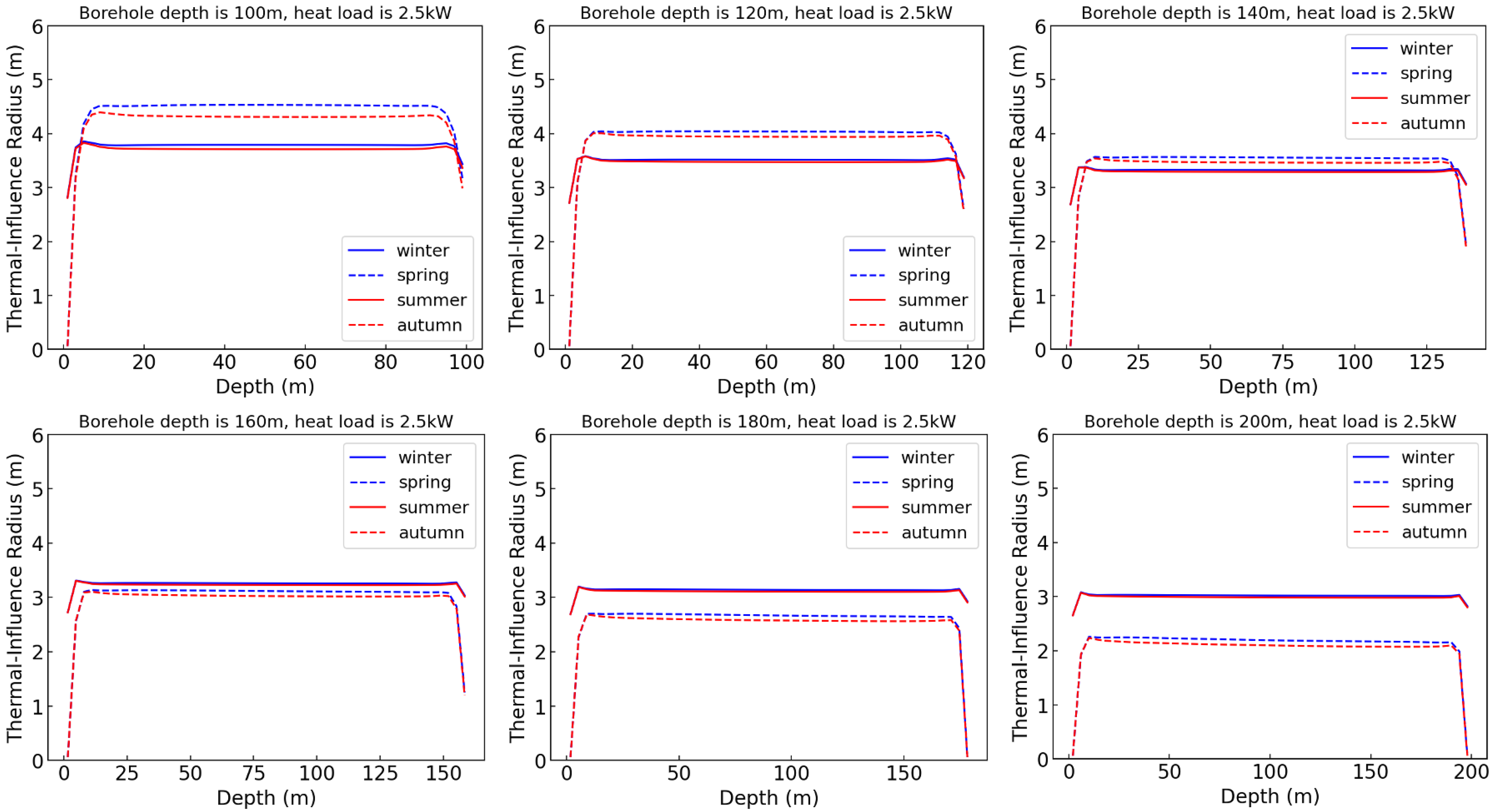
To conduct a typical study of shallow GHEs’ thermal effect radius, a 30-year heat-transfer calculation was performed for single pipes of shallow GHEs with different maximum heat-extraction values at various borehole depths, using default parameters. The temperature threshold for the thermal effect radius was set to 0.3 °C, and the load during the transitional season was set to 0, with equal cooling and heating loads in the cooling and heating seasons. Case studies were conducted for borehole depths ranging from 100 to 200 m, and the results are shown in
Figure 9. As the borehole depth of the GHE increases, the maximum thermal-effect radius decreases. The main reason for this is that, with a constant heat extraction
on the ground-source side, the deeper the borehole depth
, the smaller the heat extraction or heat dissipation per unit length
, thus resulting in a smaller thermal-effect radius.
3.1.2. Single U-Tube Pipe Diameter
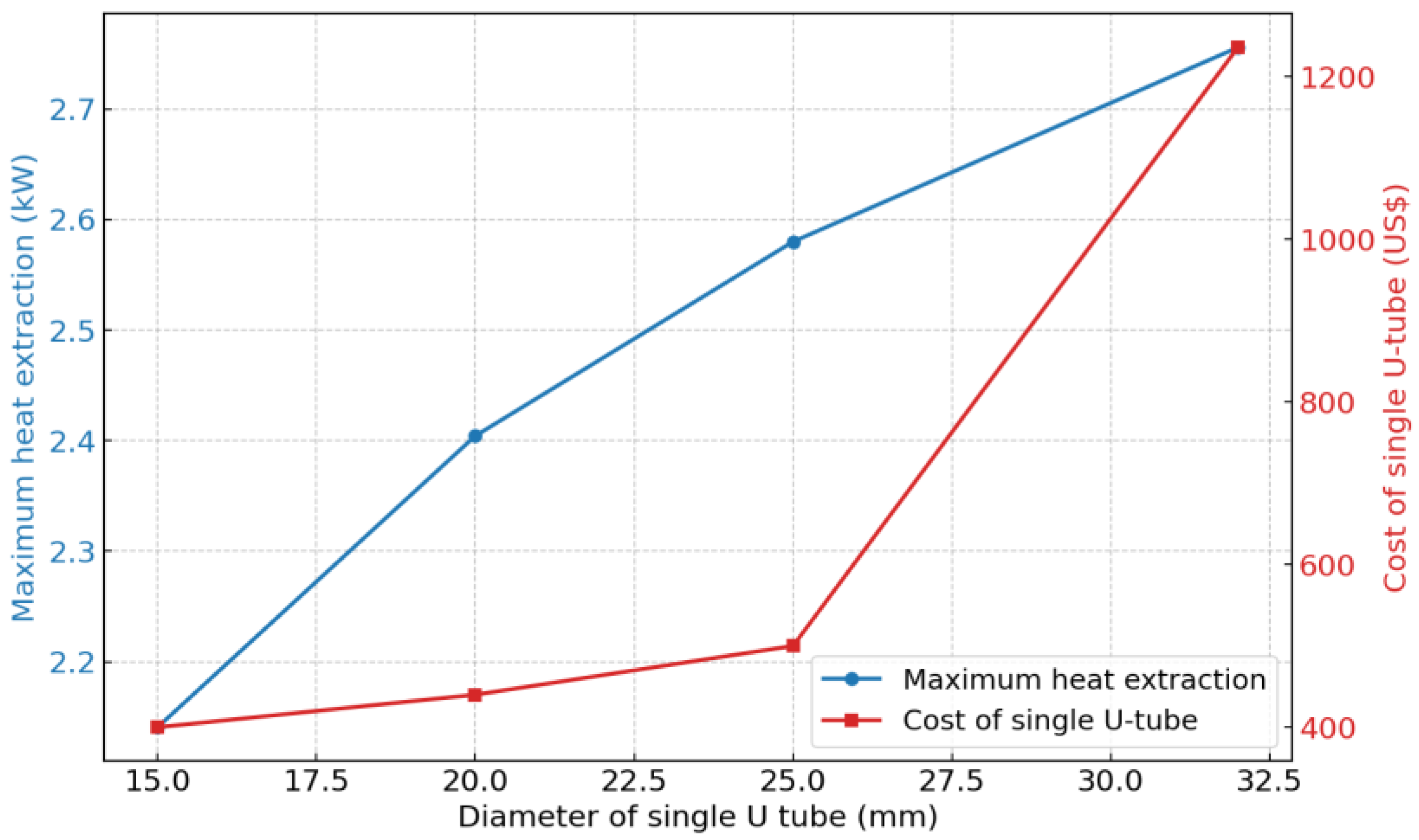
An analysis of the maximum heat extraction for shallow GHEs at a depth of 100 m was conducted under different inner pipe-diameter settings. In shallow GHEs, the commonly available nominal pipe diameters are DN15, DN20, DN25, and DN32. During the calculations, the pipe-wall thickness was kept constant at 3.5 mm. The
Figure 10 shows that, as the borehole diameter increases, the cost slightly increases, while the maximum heat extraction of the single pipe also increases. The impact of pipe diameter on heat-extraction capacity is consistent with the findings of previous studies, further validating the accuracy of the response factor method.
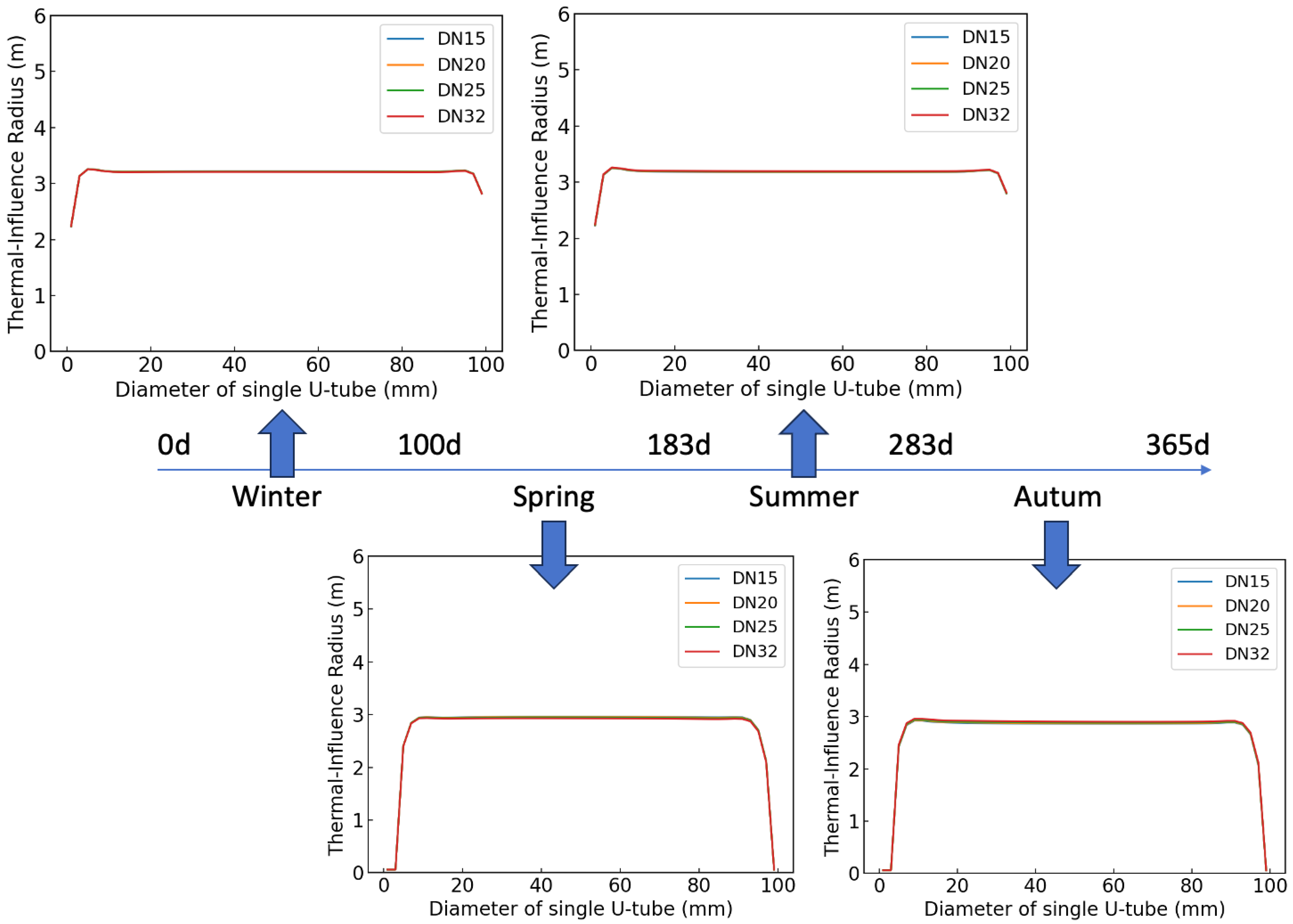
Further analysis was conducted on the relationship between pipe diameter and thermal-effect radius. Under the default settings for the system’s other parameters, a shallow GHE at a depth of 100 m with a heat-withdrawal load of 1.5 kW was selected, and the thermal-effect radius at different depths of the GHE was analyzed over a 30-year period. The thermal-effect radius was calculated using a temperature threshold of 0.3 °C; the results are displayed in
Figure 11. It should be noted that some of the results are overlapped in the
Figure 11. According to the computation findings, when the shallow GHE’s heat withdrawal falls short of its maximum capacity, the system’s heating and cooling reliability can remain at 100%. In this instance, the actual heat-withdrawal power of the single pipe is equal to the specified heat-withdrawal power of the ground-source side. Under these operating conditions, the thermal-effect radius exhibits a consistent pattern: the thermal-effect radius during the transitional season is generally smaller than during the heating or cooling seasons, indicating that shallow GHEs can achieve some degree of soil-heat recovery in the transitional season.
3.1.3. Single U-Tube Pipe Spacing
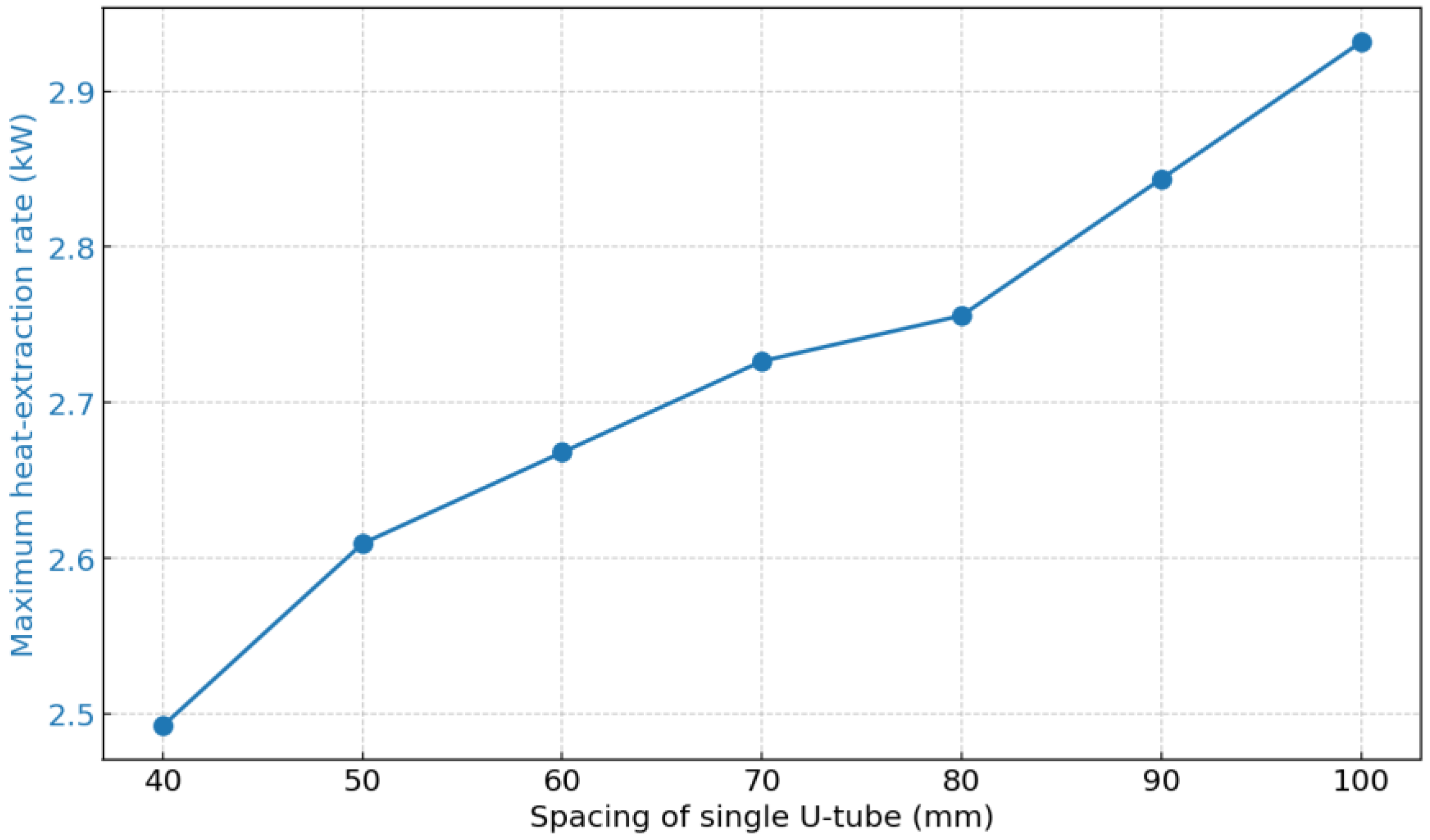
An analysis was conducted on the relationship between the spacing of single U-tubes and the maximum heat extraction of a single pipe. In the calculations, the shallow GHE was assumed to simultaneously provide heating and cooling over a one-year period, with equal loads in both the winter and summer seasons. The calculation results, shown in
Figure 12, show that the mutual thermal interference between the two pipes diminishes with increasing pipe distance, thereby increasing the overall heat-extraction capacity.
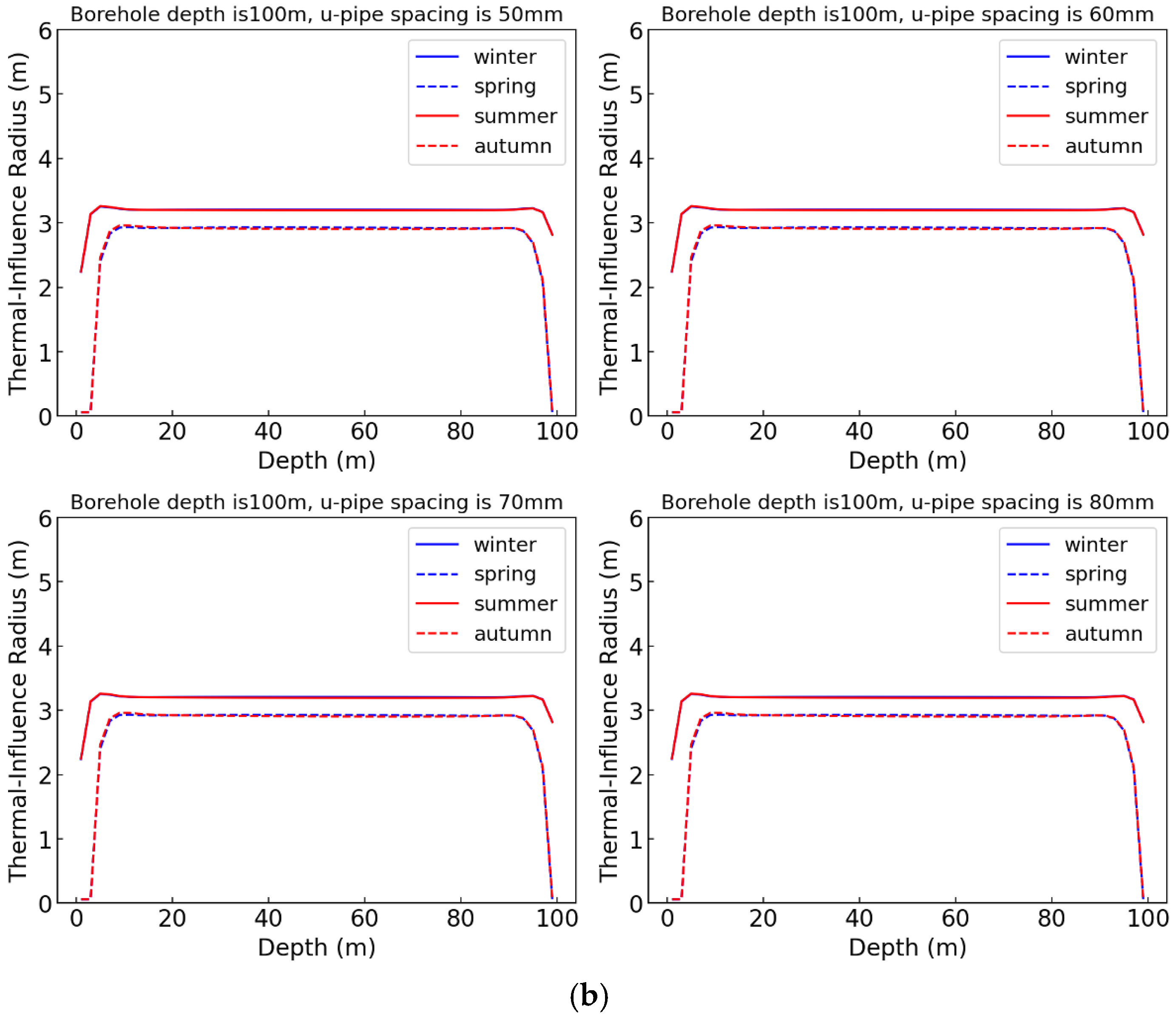
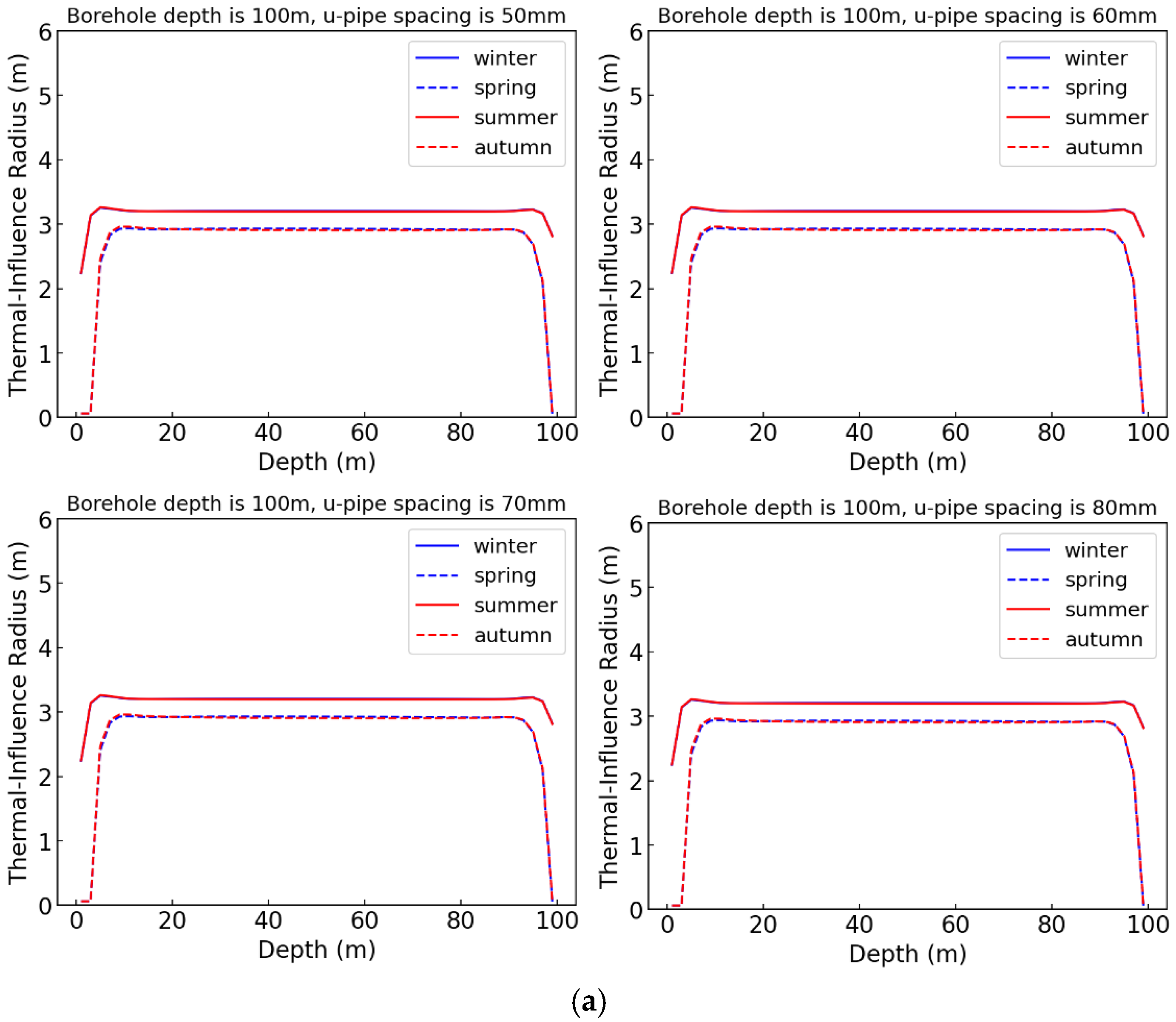
Further analysis was conducted on the relationship between the spacing of single U-tubes and the thermal effect radius. Under the default settings for the system’s other parameters, a shallow GHE at a depth of 100 m was selected, with pipe spacing set to 50, 60, 70, and 80 mm in four calculation cases. For all cases, heat-extraction loads of 2.0 kW and 1.5 kW were chosen. A temperature threshold of 0.3 °C was used to calculate the thermal effect radius, which was examined over a 30-year period at various depth placements of the GHE. The results are shown in
Figure 13. When the ground-source side load is relatively high, the thermal-effect radius during the transitional season will be slightly larger than that during the heating or cooling periods. Therefore, when the ground-source side load is 2.0 kW (
Figure 13a), the thermal-effect radius during the transitional season is larger under all pipe spacing settings. However, for a load of 1.5 kW, the thermal-effect radius during the transitional season is smaller.
3.1.4. Borehole Spacing Among GHE Arrays
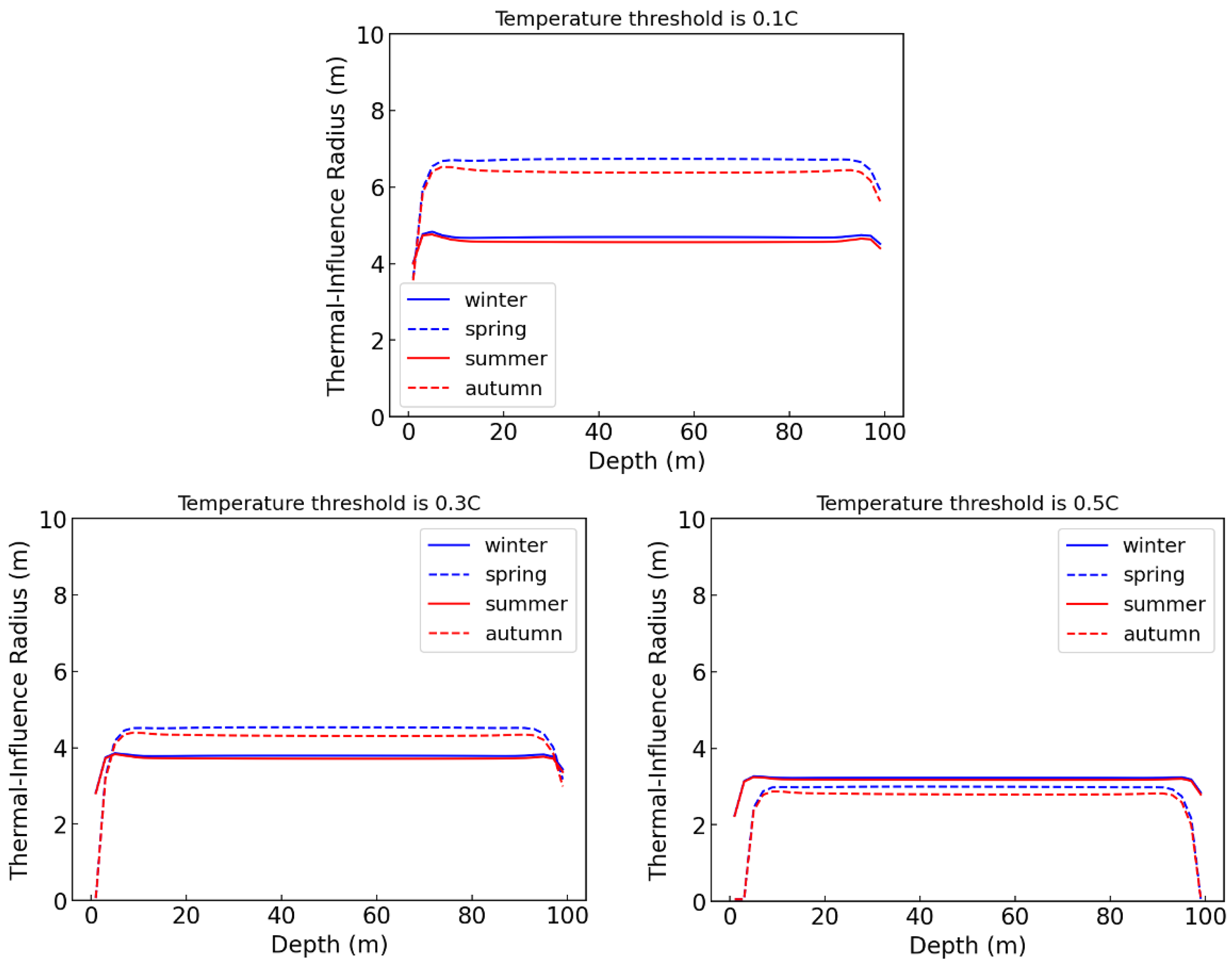
Under the conditions of a 100 m depth with a single pipe heat extraction of 2.5 kW and thermal effect radius temperature thresholds of 0.1 °C, 0.3 °C, and 0.5 °C, the heat-influence radius for the single pipe was calculated over a 30-year period. The results in
Figure 14 show that the smaller temperature threshold results in larger thermal-influence radius. But it is found that the value of radius in transition seasons behaves with higher sensitivity.
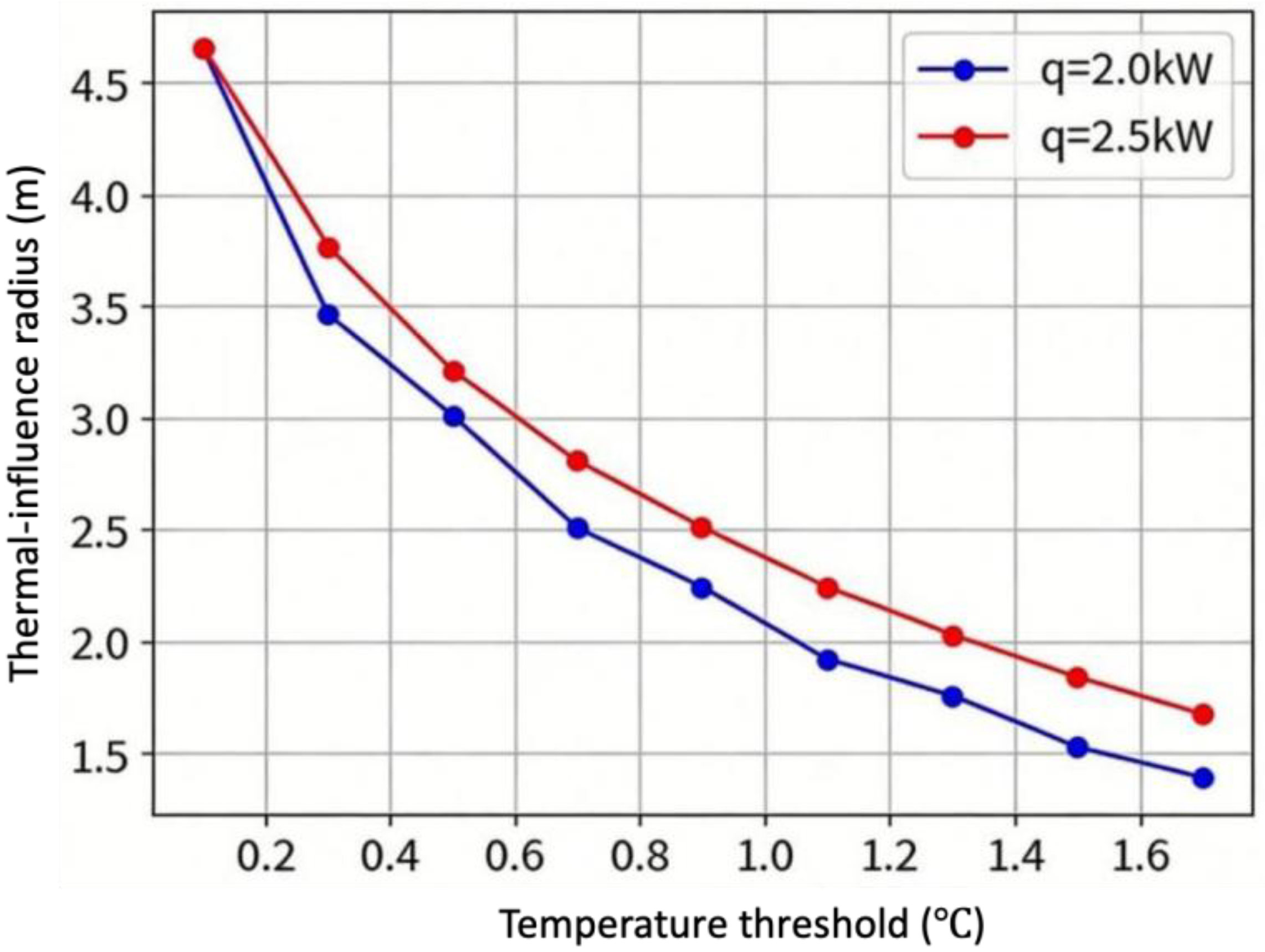
To obtain the thermal-effect radius under different temperature-threshold settings, further calculations were performed with temperature thresholds of 0.7, 0.9, 1.1, 1.3, 1.5, and 1.7 °C, yielding the corresponding thermal-influence radii. This results in a function curve for the single pipe’s thermal-effect radius as a function of temperature threshold. Furthermore, to evaluate how various load amounts affect the outcomes, a set of calculations with a load of 2.5 kW was added, as shown in
Figure 15. Both curves follow an exponential decay pattern, and nonlinear fitting yields the following formulas:
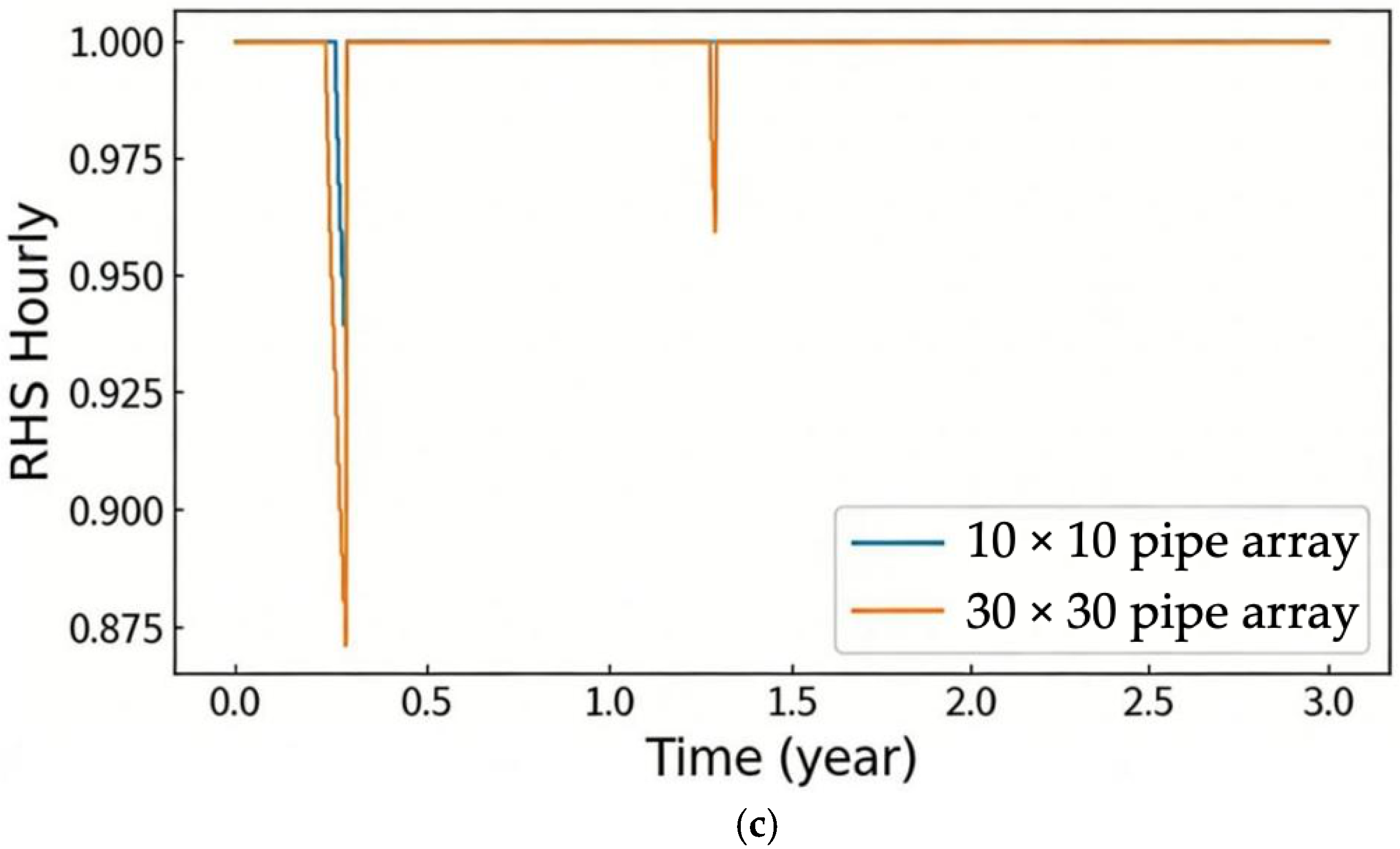
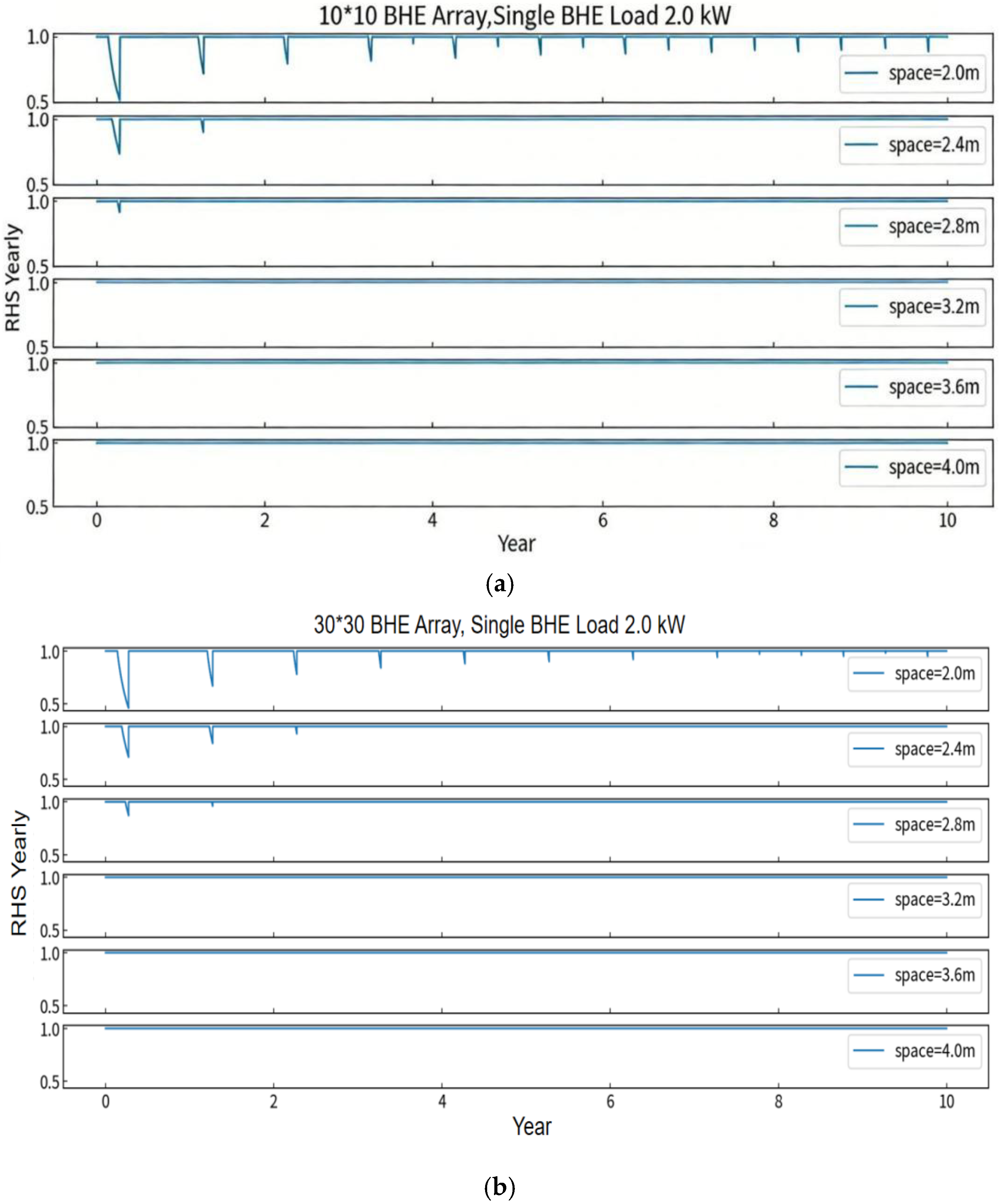
When the size of the GHE array changes, its heat-extraction capacity also varies. Analyzing the 10 × 10 and 30 × 30 shallow GHE array widths using the suggested dimension-reduction technique can significantly reduce the time cost required for large-scale array heat-transfer calculations without causing a significant loss in accuracy. For both array sizes, well spacing was set, and the hourly heating and cooling reliability rate (RHS) for each operating condition was calculated. The results, as shown in
Figure 16, indicate that for well spacing greater than 2.8 m, the heating and cooling reliability rate will not drop below 1. However, for well spacing greater than 2.8 m, the performance of different array sizes slightly varies, with the larger array sizes showing a slightly lower heating and cooling reliability rate in the first three years compared to the smaller array sizes.
For the 10 × 10 shallow GHE array, when the well spacing is set at 2.8 m and the single pipe is intended to provide a load of 2.0 kW, the thermal effect radius of the single pipe in the array is 1.4 m. By combining the thermal effect radius with the temperature-threshold function curve, the corresponding temperature threshold can be reverse-calculated to be 1.86 °C.
3.2. The Impact of Operating Parameter on the Thermal Performance of Shallow GHEs
3.2.1. Ground-Source Side Load
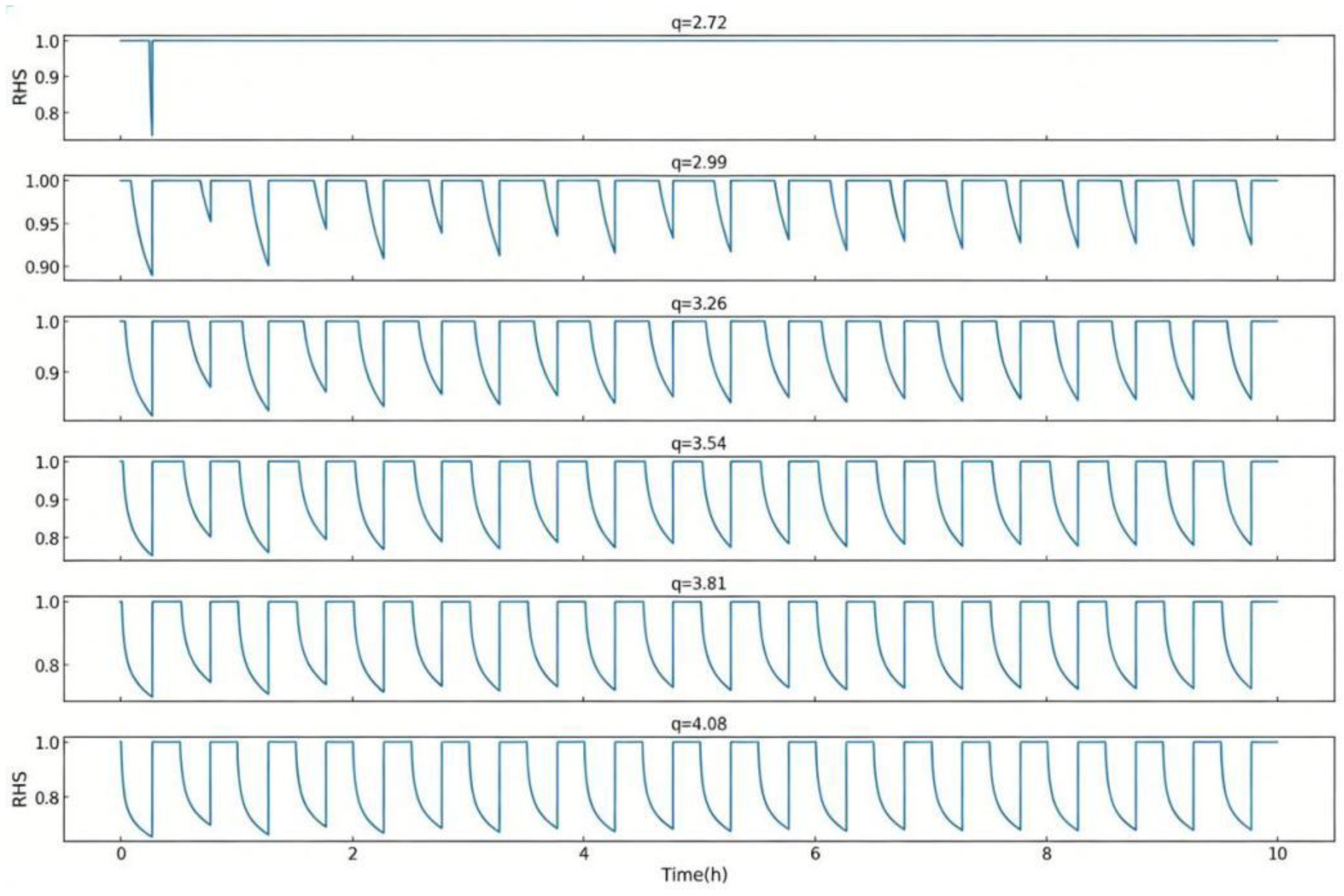
The analysis of a 10 × 10 shallow GHE array is the main topic of this section, with a single well that is built to support the system’s 2.72 kW heat extraction load and 272 kW total ground-source side load. Under this design condition, the impact of low, full, and overload operating conditions on the ground-source side load during actual operation was further examined.
Figure 17 illustrates the findings, which show that when the ground-source side load is below the design value, the system can consistently meet heating and cooling demands. However, as the load gradually exceeds the maximum heat extraction capacity of the single well, both the heating and cooling reliability rates of the system continuously decrease. This demonstrates that in the design scheme where the well spacing is determined based on the maximum heat withdrawal of a single pipe, overload operation markedly impairs the long-term operating reliability of the GHE system. It highlights how crucial it is to provide a suitable safety margin for the ground-source side load in the engineering design stage.
3.2.2. Operating Mode
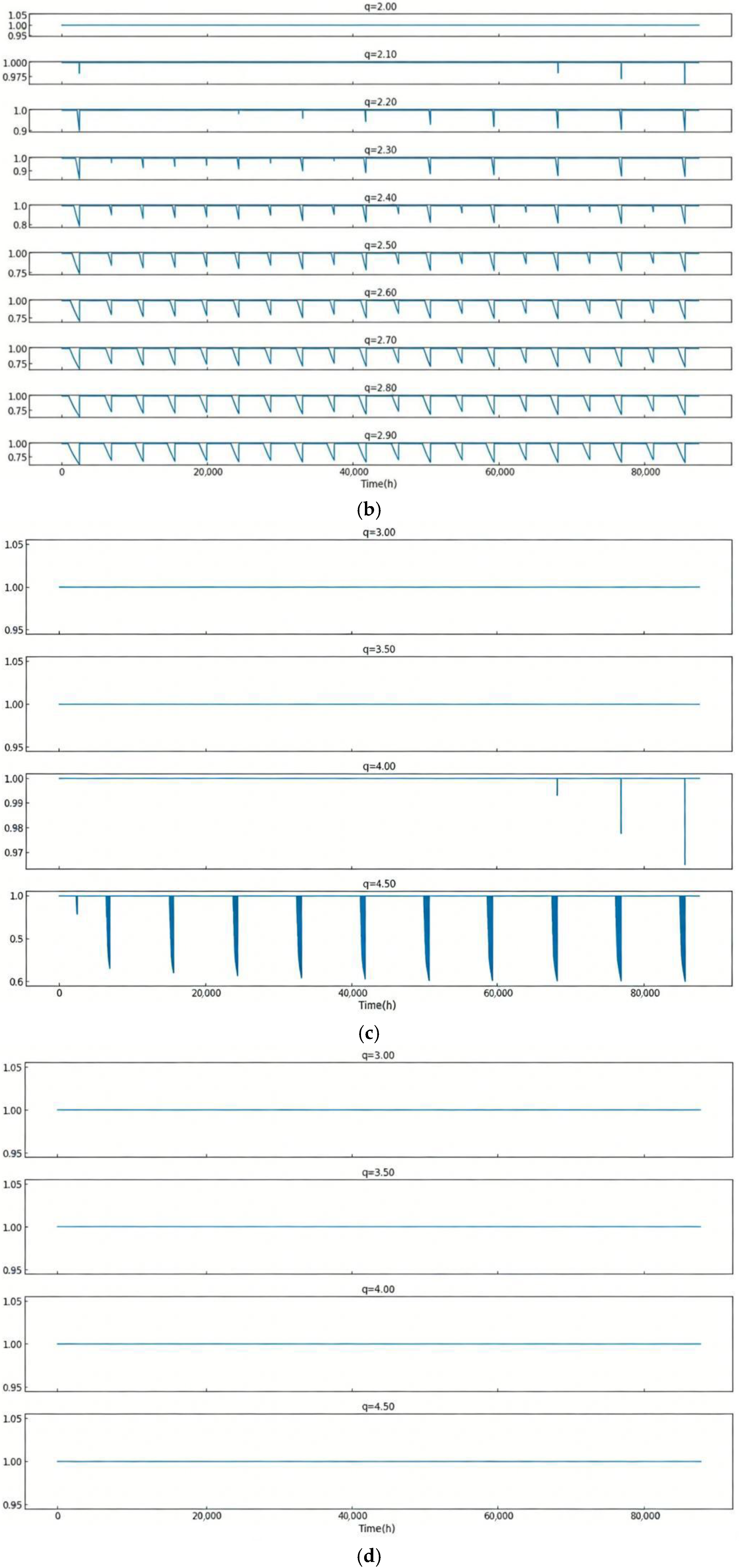
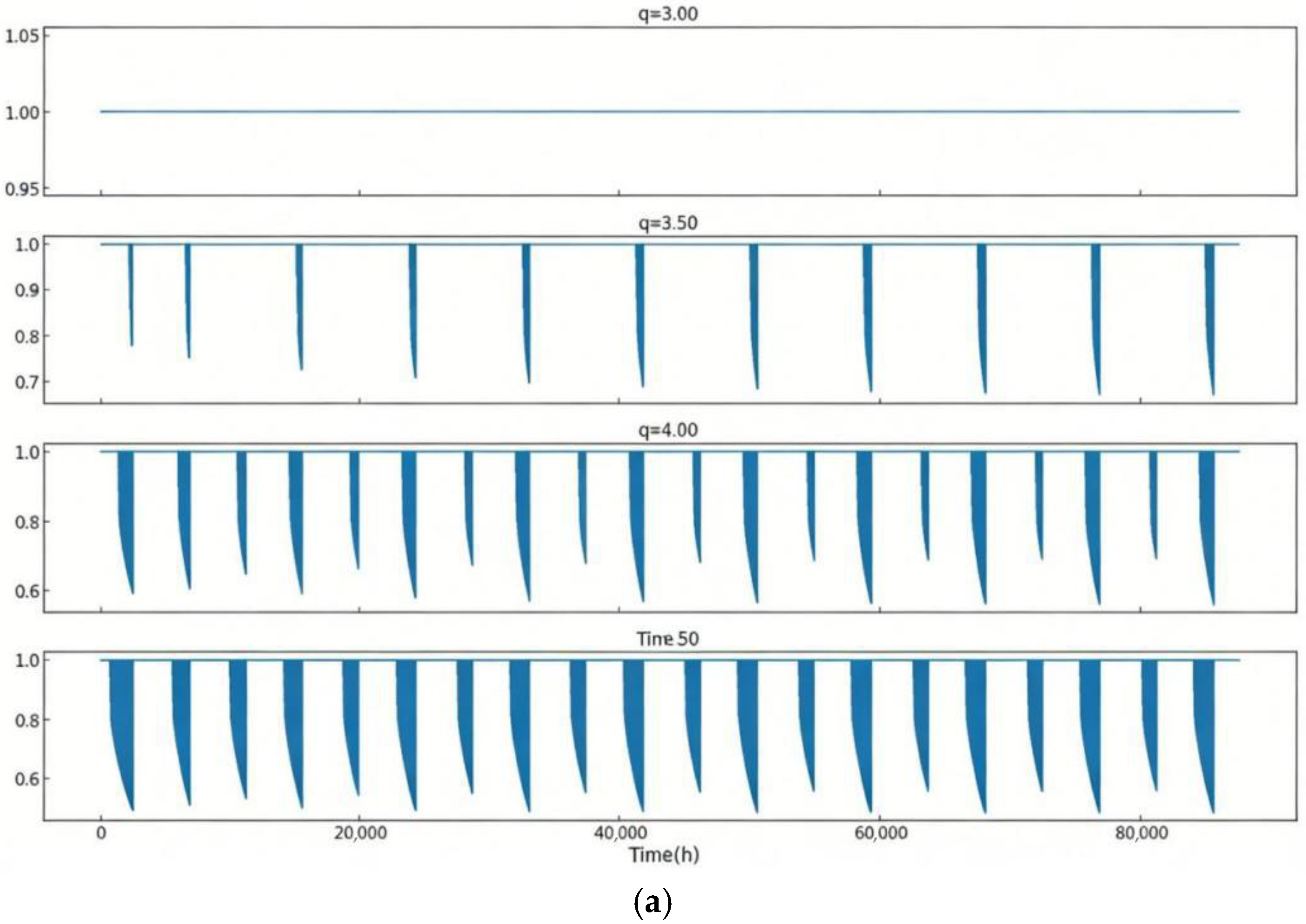
To investigate the variation in maximum heat extraction of shallow GHEs under different operating modes, the system’s running hours per day were set to 12, 16, 20, and 24 h, with equal heating and cooling loads over the course of a year. For a 10 × 10 pipe array with a well spacing of 2.8 m and balanced heating and cooling load design, the load of the single pipe in the array was set to different values: 3.0 kW, 3.5 kW, 4.0 kW, and 4.5 kW. The variation in RHS of the shallow GHE array under different intermittent operating conditions was examined. The calculation results, as shown in
Figure 18, indicate that with 24 h continuous operation, the maximum load a single pipe can handle is only 2.0–2.1 kW. However, with 20 h of operation and 4 h of shutdown, the single pipe load can reach up to 3.0 kW. When intermittent operation is applied with 12 h of operation and 12 h of shutdown, the load a single pipe can bear increases to over 4.5 kW.
3.3. New Discussions
3.3.1. Unsteady Thermal-Effect Radius Across Seasons
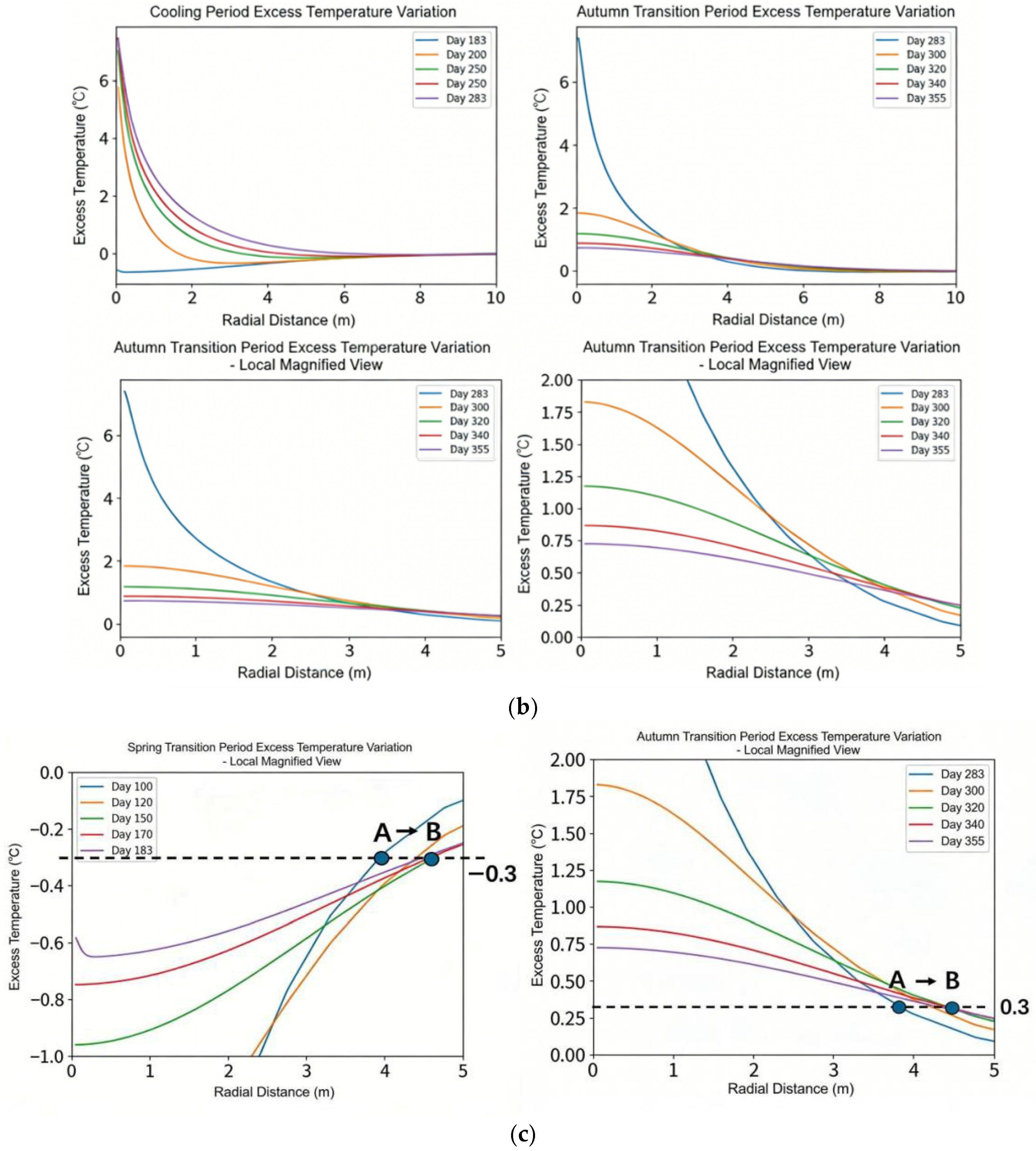
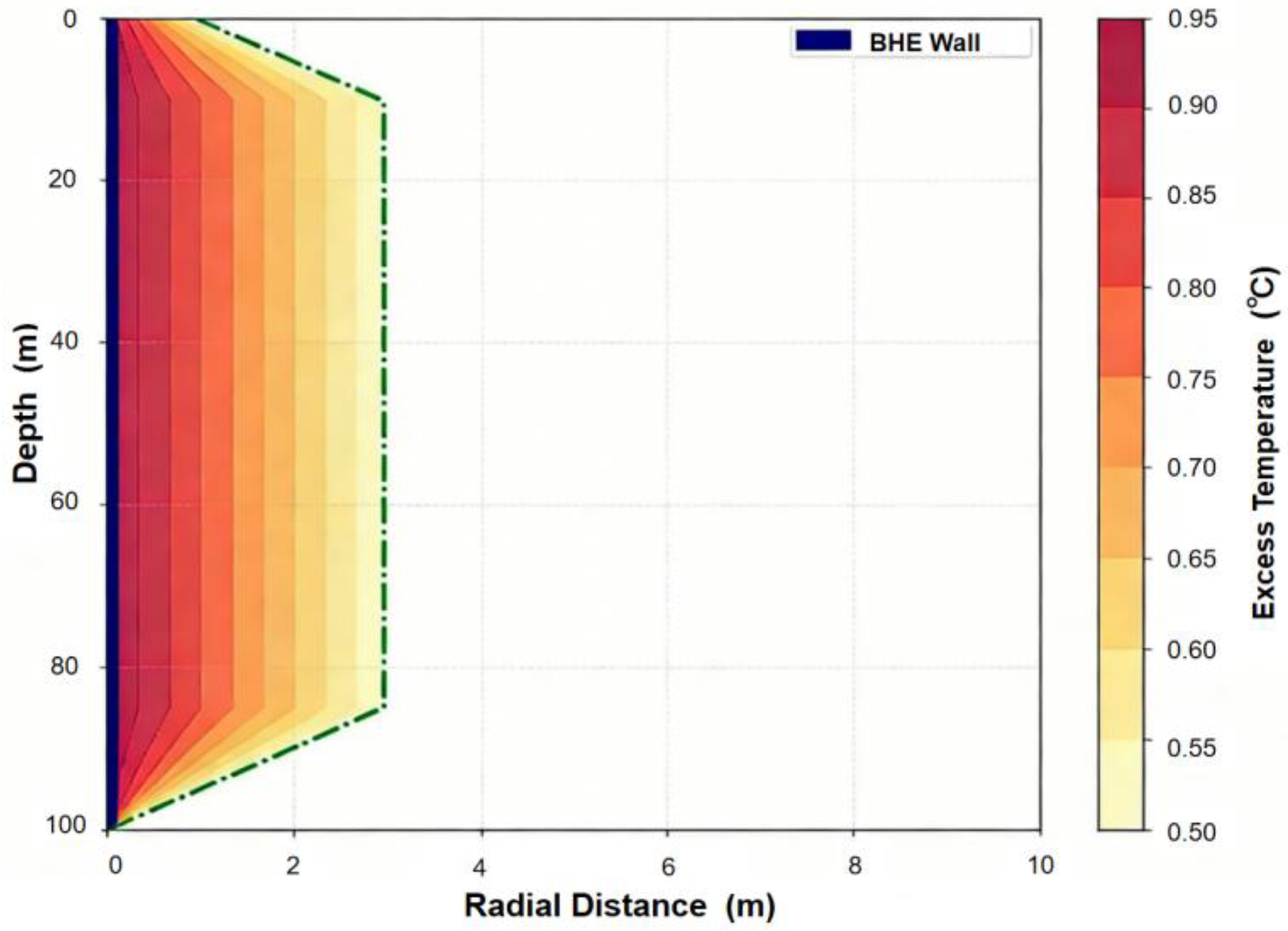
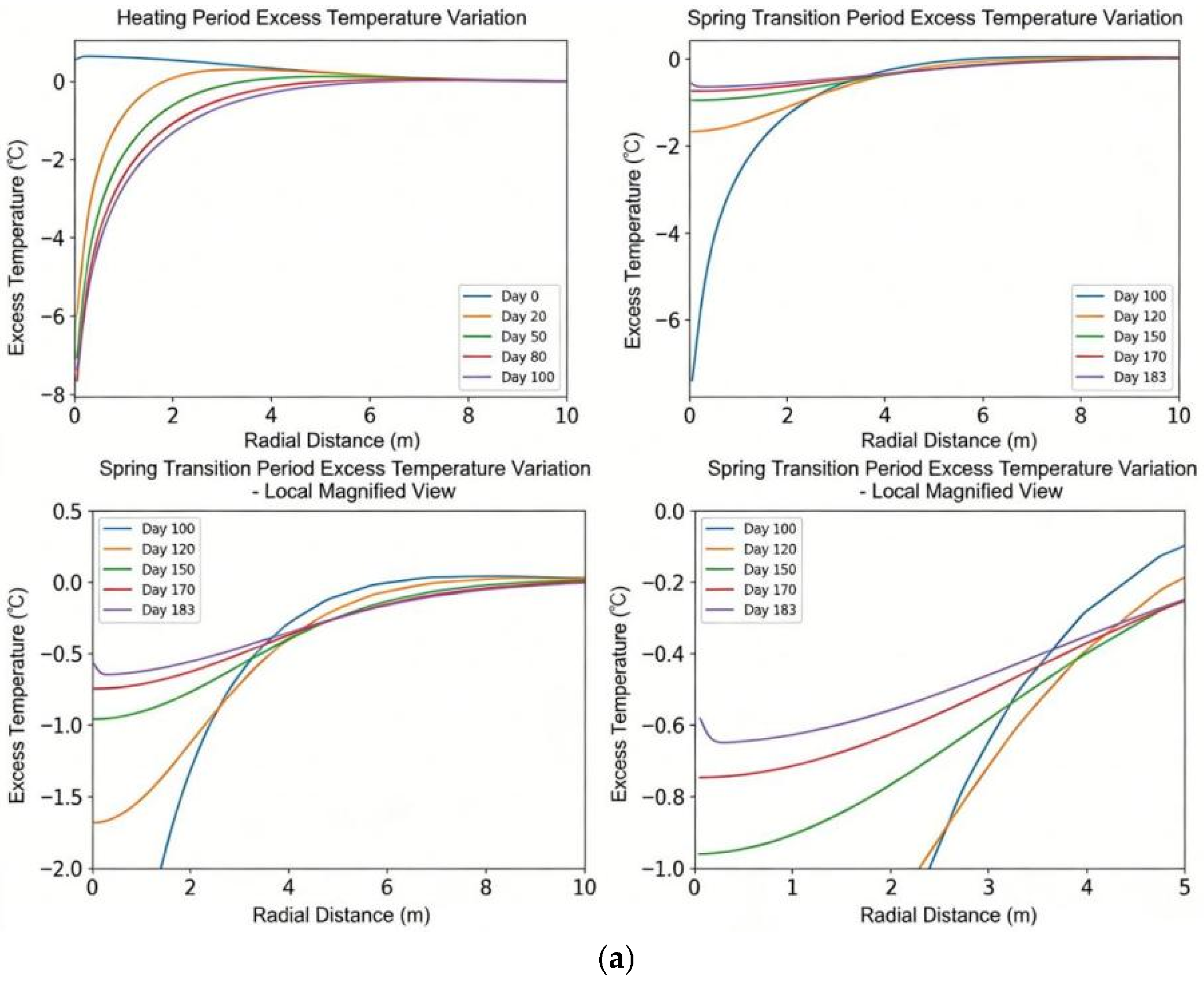
When the ground-source side load of a shallow GHE approaches or exceeds its maximum heat-extraction capacity, the thermal-effect radius during the transitional period becomes larger than that during the heating–cooling period. A thorough examination of the temperature field variation is necessary to look into the causes of this in more depth. By calculating the temperature field data around the single pipe at each moment in the 10th year, using a GHE at a depth of 100 m as an example, the excess temperature variation at different radial positions at a depth of 50 m is analyzed.
Figure 19 displays the outcomes. It is evident from
Figure 19a that during the heating period (Day 0 to Day 100), as the GHE continues to extract heat, the temperature within a 10 m radius of the pipe keeps decreasing. The excess temperature decreases more significantly the closer it is to the GHE. From Day 100 to Day 183, during the spring transitional period, the soil temperature around the GHE gradually recovers. The winter heat-withdrawal power in this calculating instance is 2.5 kW, which is nearly equal to the single pipe’s maximum heat-withdrawal capability. After the heating period, this causes the soil temperature close to the pipe to significantly drop. Therefore, during the spring transitional period, there is a great temperature difference between the soil near the well and the soil farther away. As time progresses, due to soil thermal conduction, the temperature of the soil at other positions also gradually decreases, which causes the thermal-effect radius during the spring transitional period to be larger than that at the termination of the heating period. Similarly, the soil temperature close to the pipe considerably rises following the cooling phase, as seen in
Figure 19b, which causes a gradual rise in soil temperature in other directions during the subsequent autumn transitional period. This results in a larger thermal-effect radius during the autumn transitional period compared to that at the end of the cooling period. As illustrated in
Figure 19c, when the temperature threshold is set at 0.3 °C, it can be observed that the thermal-effect radius at the termination of the transitional period is significantly larger than that during the heating and cooling periods, further validating this pattern.
3.3.2. Soil Temperature Imbalance in Thermally Balanced Bore Field
Extensive numerical research has revealed that even in cases when the pipe array’s heating and cooling loads and durations are identical, the geothermal system’s annual heating and cooling RHS show intricate fluctuation patterns. A large number of numerical calculations and comparative analyses indicate that these patterns are directly related to the initial soil temperature (constant temperature layer temperature).
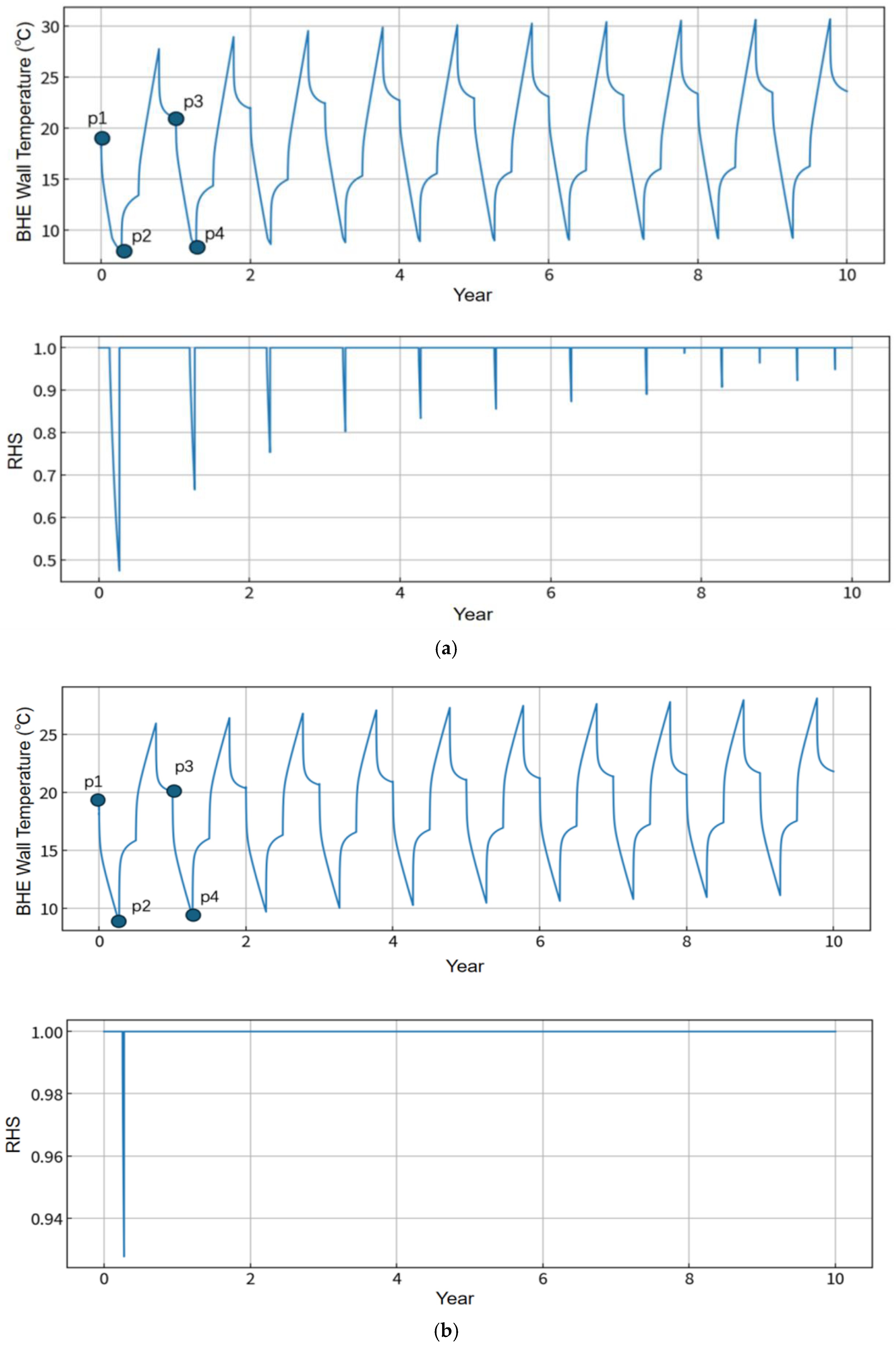
A study was carried out utilizing a 10 × 10 pipe array with a single pipe load of 2.0 kW in order to better understand the process underlying the system’s annual rise in the minimum RHS under balanced ground-source loads. The analysis was performed for well spacings of 2.0 m and 2.8 m, with a calculation period of the first 10 years of system operation. The results are illustrated in
Figure 20. Even under the condition of balanced heating load
and cooling load
during the operating periods, an upward trend in soil temperature is observed year after year. This phenomenon is observed across all well spacing configurations. The initial soil temperature is 20 °C, and for shallow GHE arrays, the first-year experiences insufficient space for soil temperature decrease. As a result, in both calculation cases, a few hours at the termination of the first heating period show the RHS below 1. However, the soil temperature rise during the first cooling period is sufficient, so the RHS during the first cooling period is 1. As a result, the soil temperature increases since the heat extraction is less than the heat rejection. This increase in soil temperature will progressively affect the operation in subsequent years.
Based on the gradually heat-accumulated ground in a thermally balanced system, the temperature increase is not a linear trend but an ascending trend with slower speed when approaching 10 years’ time. Actually, it does not fully depend on the initial temperature but depends on both initial ground state and the ground-side heating/cooling load. We added 4 points as p1–p4 for illustration. In a thermally balanced designed geothermal system, the heat extraction in winter and heat injection in summer are equal. But if the initial ground temperature is a bit low, the heat-supplying ratio can be below 1.0 as the figure of RHS shows. However, the ground can undertake the heat injection without any problem, and the heat injection is larger than the heat extraction in a whole-year operation. This makes an increased ground temperature year-on-year.
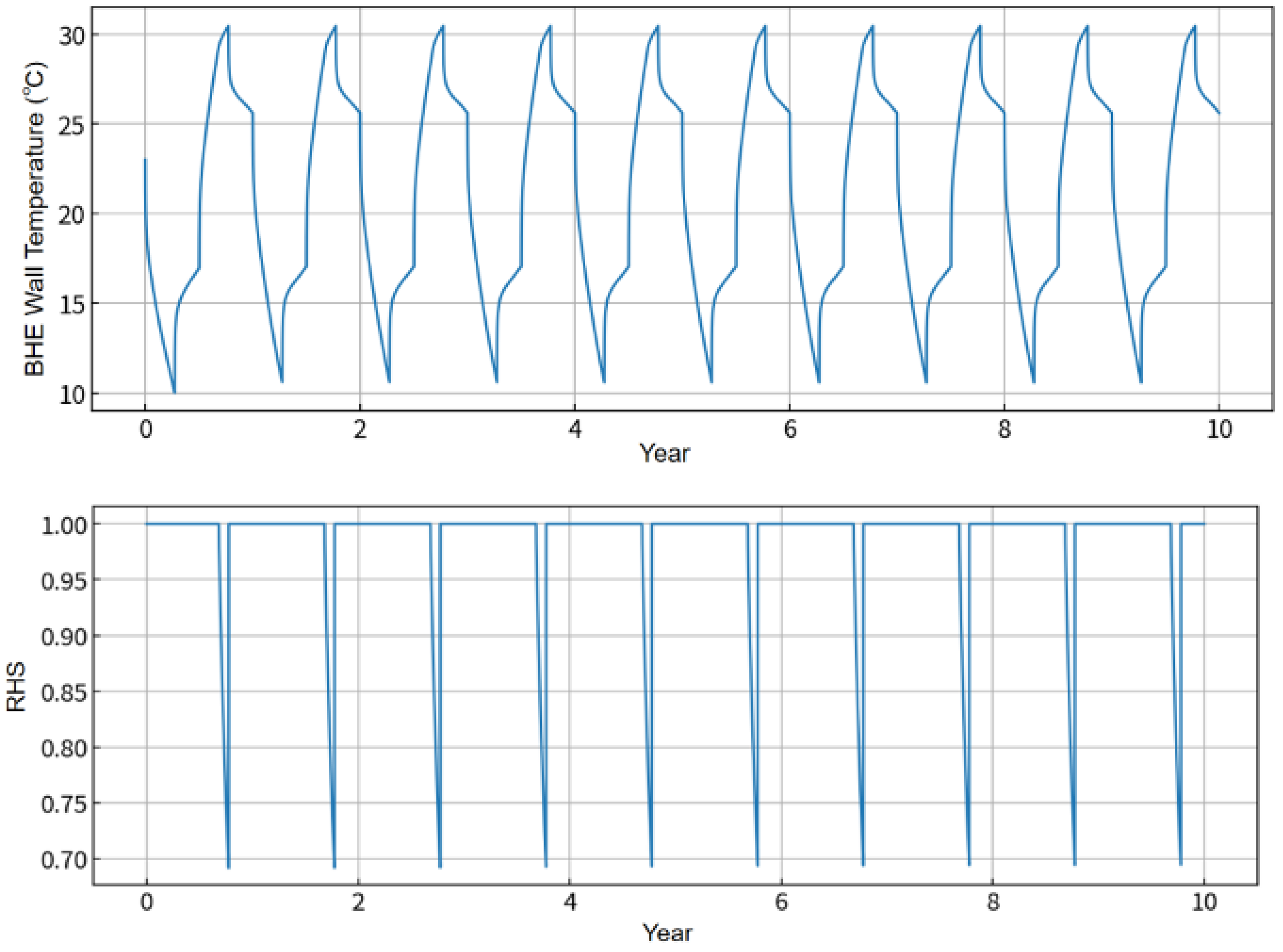
To verify the accuracy of the above analysis, an additional calculation case was set up. In this case, all calculation parameters were kept the same, except for the initial soil temperature, which was changed from 20 °C to 23 °C. The results are shown in
Figure 21. When the initial soil temperature is increased, the heat-extraction process during the first year’s heating period has enough temperature difference to meet the GHE’s heat-extraction capacity. However, after experiencing a transitional period of thermal recovery, the soil temperature rises further. This results in a decrease in the heat-rejection capacity of the GHE during the cooling period. However, since the conditions are similar each year, this effect leads to a stable heating and cooling RHS year after year.
Therefore, this new discovery implies that we should not only consider the balance of heat extraction and injection of geothermal system but also take care of the initial thermal state of ground. In a further step, in an initial design of a geothermal system, a detailed and long-term simulation is needed and some extra heat or cold supplement should be considered for a better thermally balanced geothermal system.
3.3.3. Unequal Thermal Performance of Bores in Bore Field
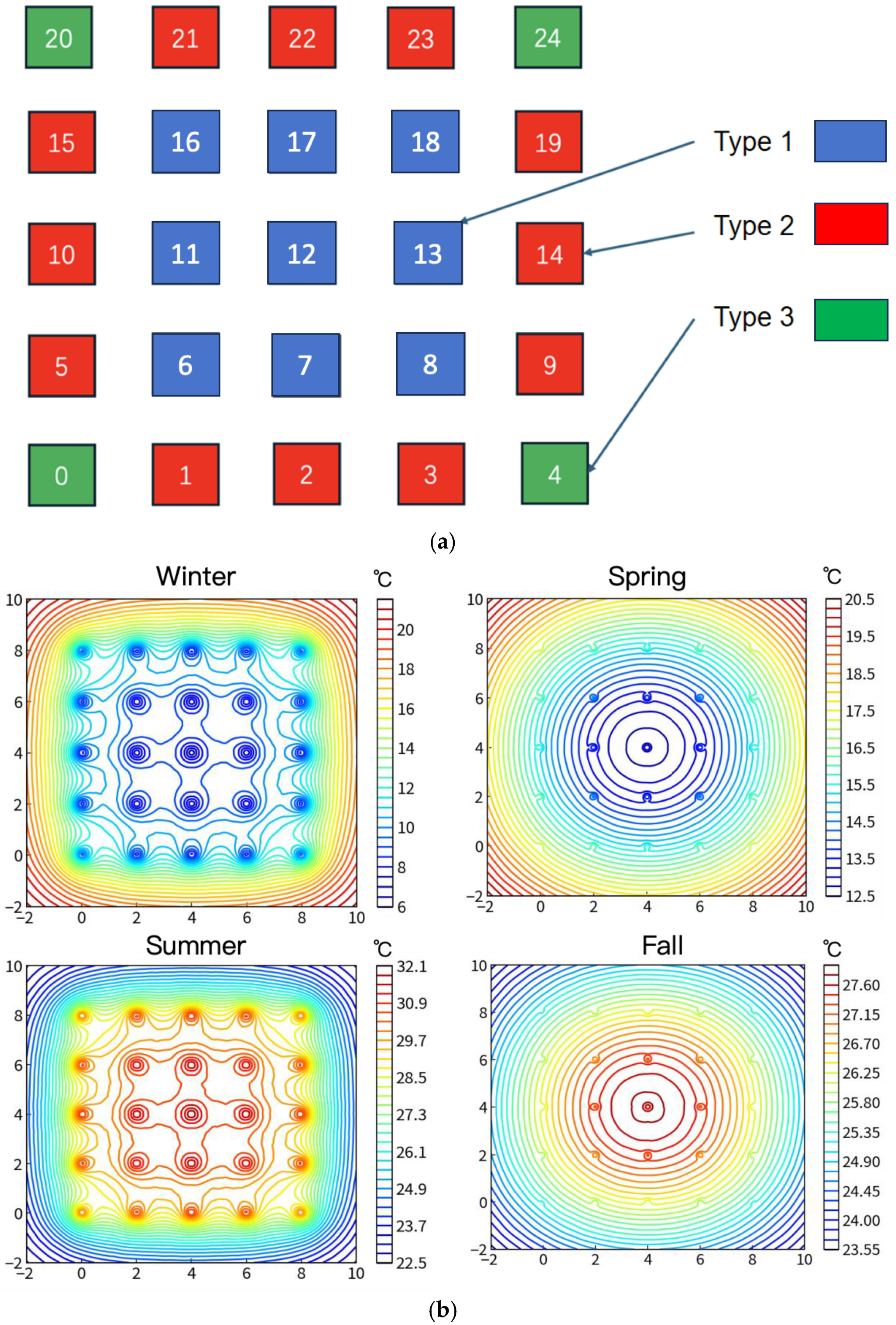
The above analysis treats the entire GHE array as a whole, but in practice, the outlet temperatures of the GHEs at different positions within an array are not the same. Therefore, this section analyzes the differences and distribution of heating and cooling RHS for GHEs at different positions within a shallow pipe array. In this analysis, a soil initial temperature of 20 °C, a 5 × 5 pipe array, a well spacing of 2 m, and a single pipe load of 2 kW were selected. Using the algorithm, the 5 × 5 pipe array can be automatically divided into three types of GHEs, as shown in
Figure 22. These three types can be summarized as: “Center Area,” “Boundary Area,” and “Corner Area.”
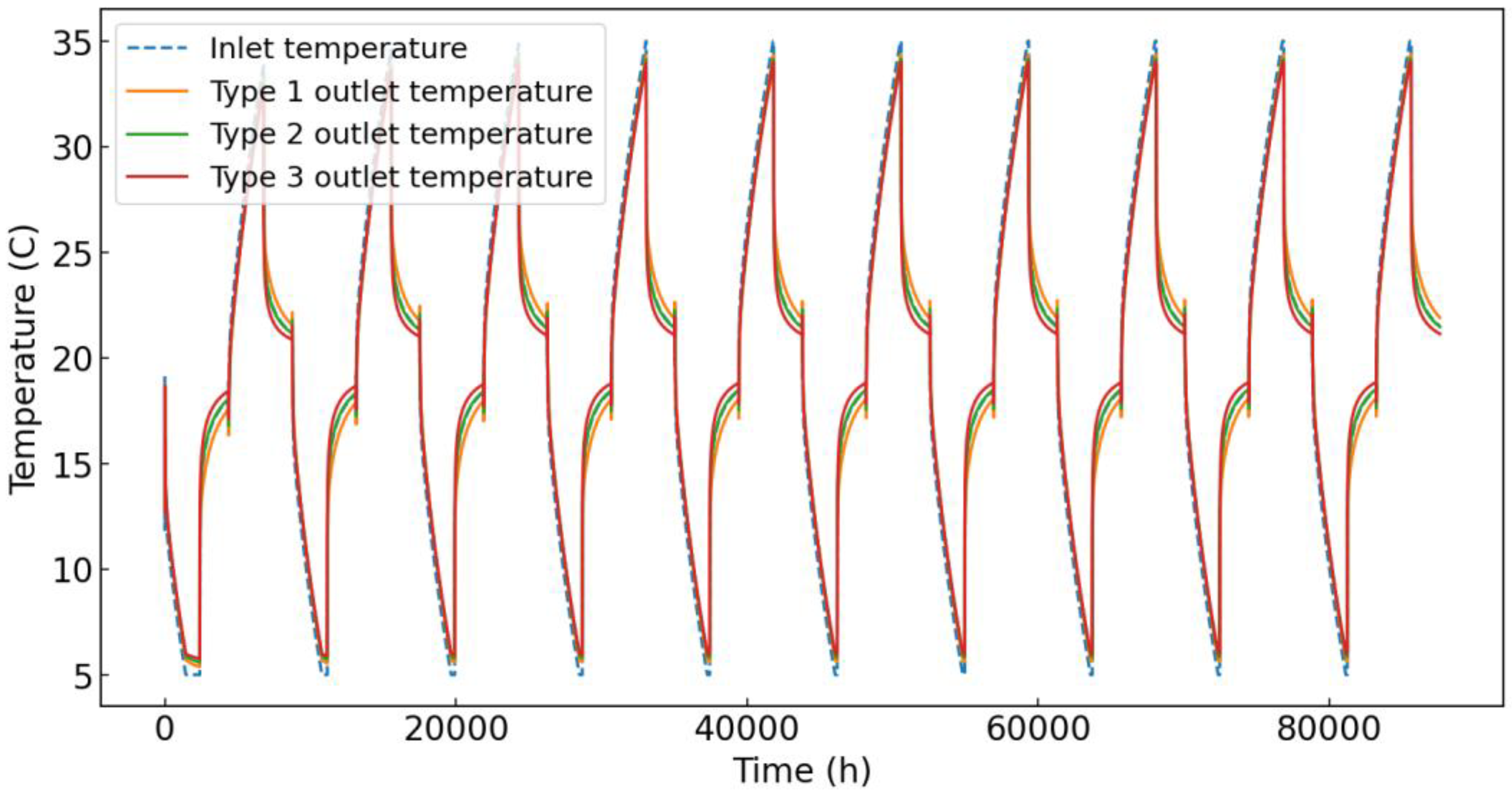
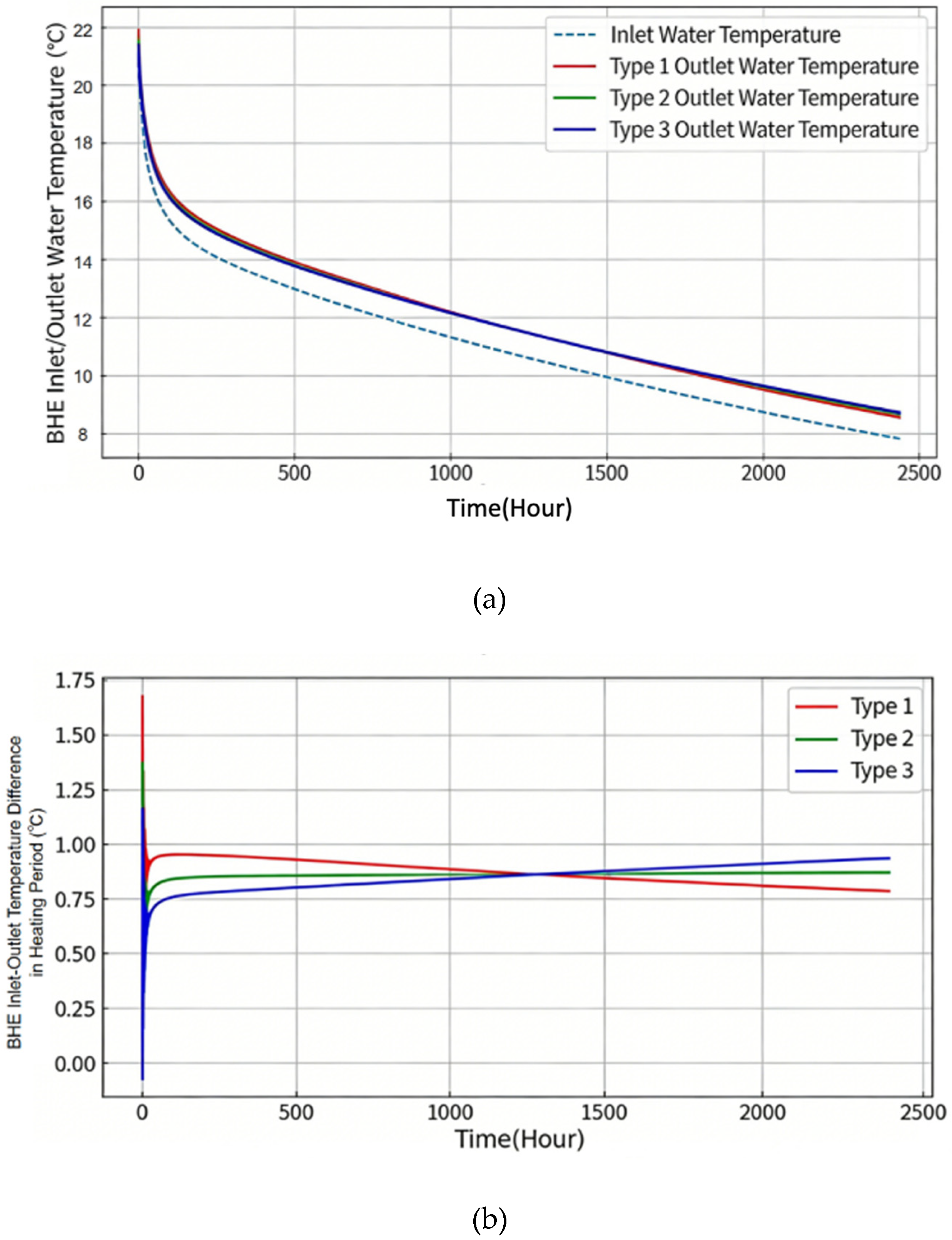
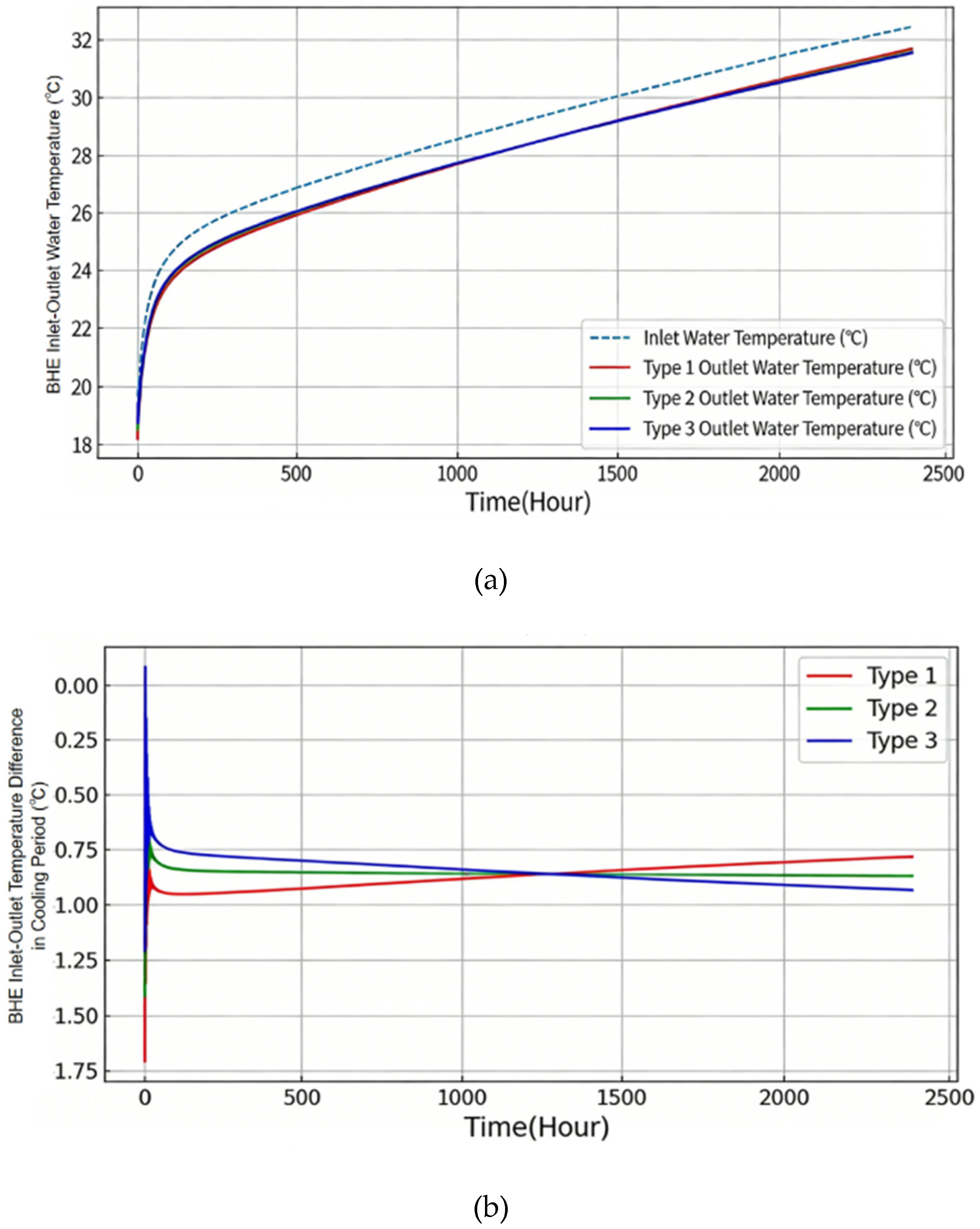
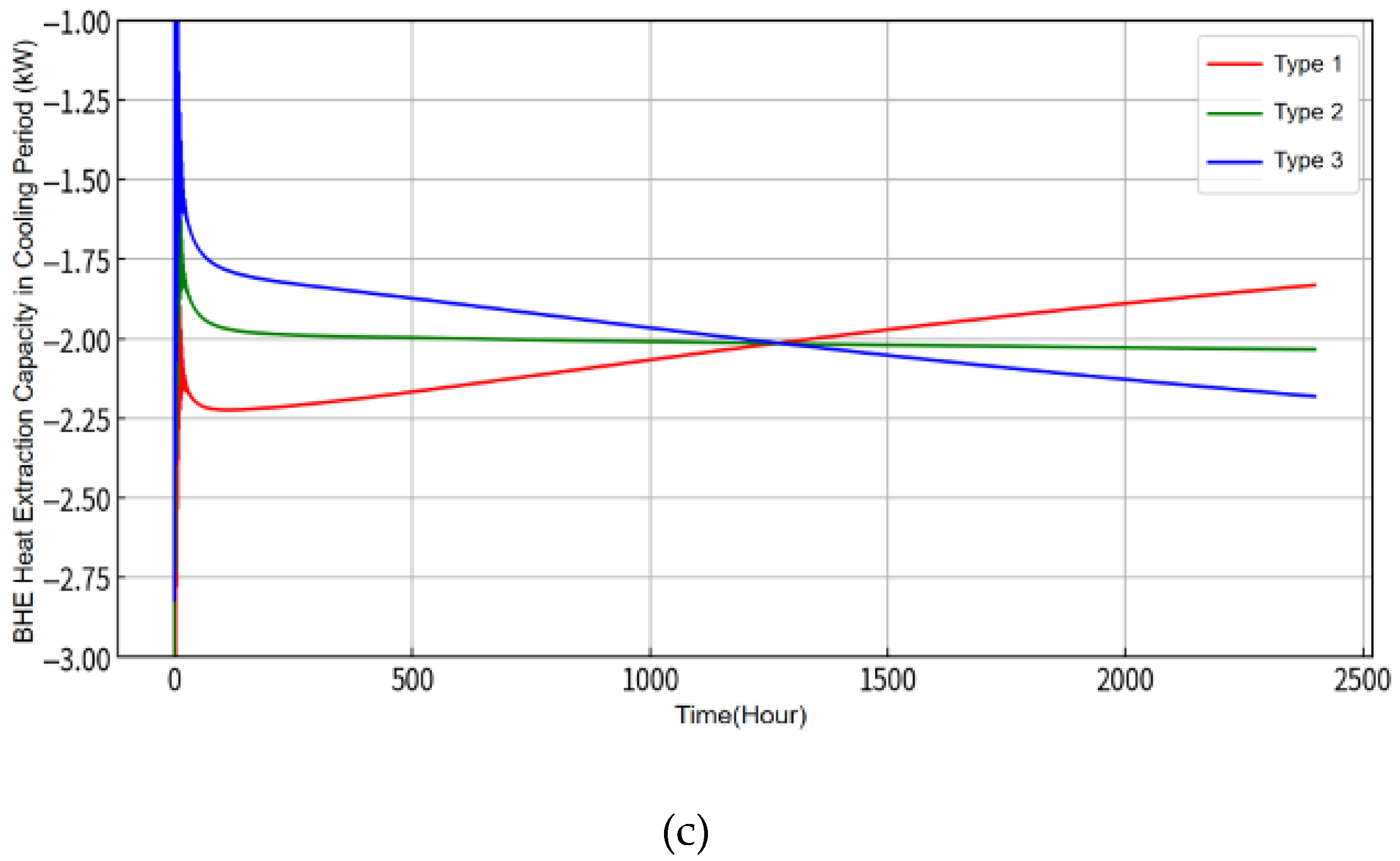
Heat-exchange calculations were performed for the shallow GHE array, and the results are illustrated in
Figure 23,
Figure 24 and
Figure 25.
- (1)
During the 10-year operation period, there is a noticeable rise in water temperature during the first three years, while in the following years, the temperature remains almost unchanged. The reason is that the initial soil temperature of 20 °C leaves insufficient space for the temperature drops when the pipe array is used for heat extraction. This results in a situation where, at the end of the heating period, the RHS drops below 1. However, during the cooling period, the RHS is equal to 1. As a result, the total heat extraction in the first year is slightly less than the heat rejection, causing a slight increase in soil temperature, which causes a gradual increase in water temperature in subsequent years.
- (2)
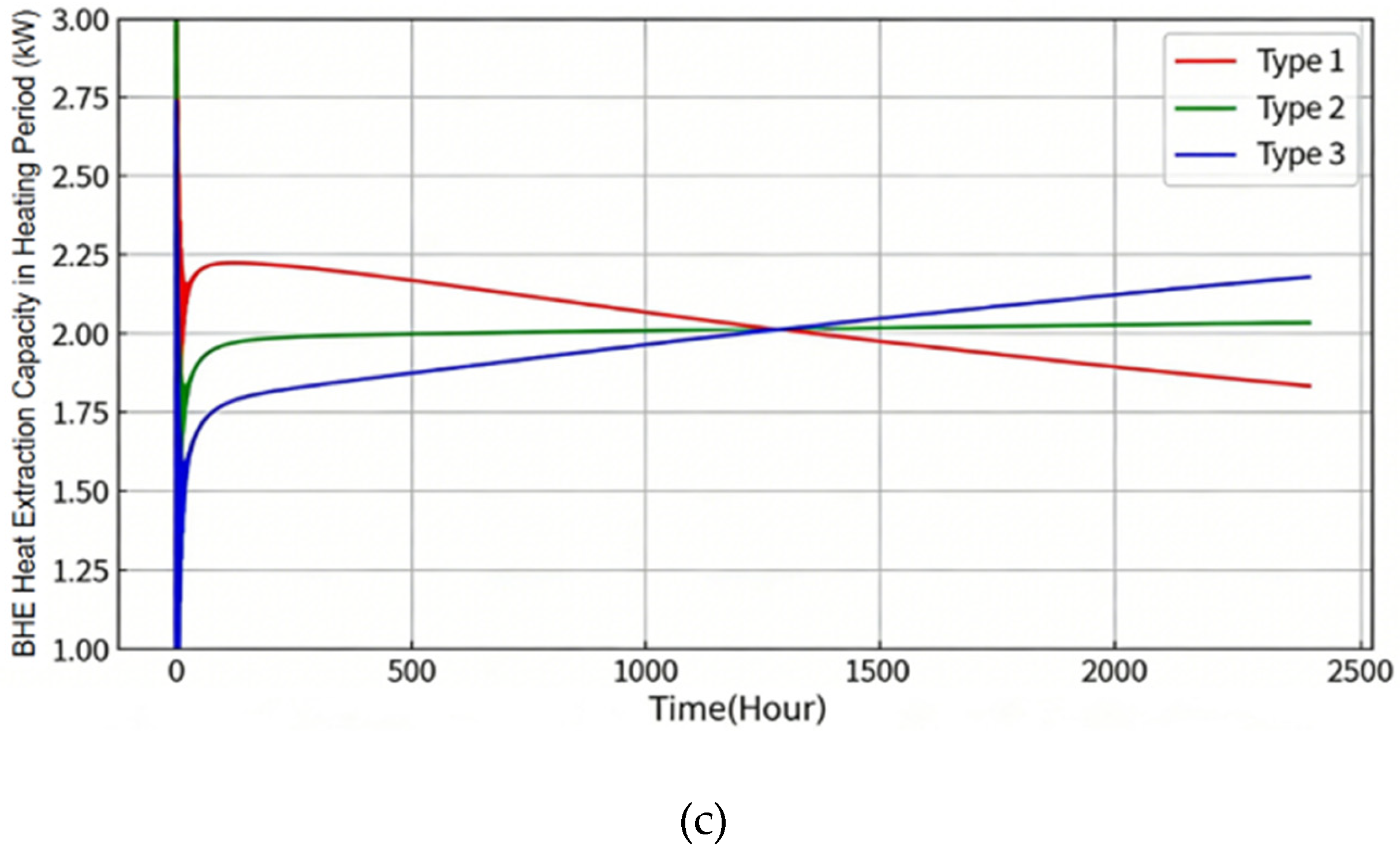
During the heating and cooling phases of the tenth year, the intake and exit water temperatures, temperature variations, and the computed heat exchange values for the single pipe were examined; it is evident that the three kinds’ inlet–outlet temperature differences varied by around 0.1 °C. Among them, Type 3 has the largest difference, while Type 1 has the smallest. The difference in outlet water temperatures for all three types is very small when displayed on the same graph.
- (3)
The inlet–outlet temperature differences for the three types vary by approximately 0.1 °C. Consequently, there is a 0.233 kW difference in heat withdrawal for the single pipe across the three variants. Therefore, during the operating period, the difference in heat withdrawal and heat rejection for the single pipe in Types 1, 2, and 3 is approximately 0.2 kW.
- (4)
Whether during the heating or cooling period, the heat-withdrawal capacity of Type 3 rises continuously, the heat-withdrawal capacity of Type 1 decreases continuously, and the heat-withdrawal capacity of Type 2 remains roughly constant or changes very little. Consequently, provided that the average heat extraction capacity of each pipe in the pipe array stays at 2 kW, the GHEs of Type 1 are more affected by heat accumulation, which results in a transfer of some of the heat-withdrawal capacity to the Type 3 GHEs.
4. Conclusions
This study proposes a response-factor method that effectively cuts down the time cost of long-term transient heat-transfer calculations for shallow ground-heat exchangers (GHEs): the pre-constructed factor matrix can be directly invoked, which addresses the time-consuming and low-efficiency issues of traditional calculation methods. Meanwhile, the dimension-reduction algorithm developed in this study is applicable to large-scale and irregularly arranged pipe arrays, and it streamlines the calculation process without causing significant accuracy loss.
Thermal performance of shallow GHEs is found to be significantly affected by design parameters: the maximum heat withdrawal of a single pipe rises approximately linearly with burial depth, with a unit depth heat extraction capacity of 20–30 W/m, yet drilling costs also increase linearly with burial depth, leading to diminishing marginal returns at greater depths; for single U-tubes, larger pipe diameters and wider pipe spacing correspond to stronger heat-withdrawal capacity, and the system can maintain a long-term heating and cooling reliability rate of no less than 1 when the well spacing exceeds 2.8 m. In addition, the thermal-effect radius decreases with the increase in burial depth, and the impact of pipe spacing on the thermal effect radius is negligible when heat extraction has not reached the maximum operating condition.
Optimizing operating parameters is proven to effectively improve the performance of shallow ground-source heat pump (GSHP) systems: the system operates stably when the ground-source load is below the design value, whereas overload results in a continuous decline in the reliability rate, indicating that a reasonable safety margin should be reserved in the design phase; intermittent operation mode is superior to continuous operation mode, as the load-bearing capacity of a single pipe can exceed 4.5 kW under the 12 h operation and 12 h shutdown mode, which is much higher than the 2.0–2.1 kW level achieved under 24 h continuous operation.
This study also clarifies several key trends of shallow GSHPs during long-term operation: the thermal-effect radius in the transitional period increases first and then decreases, and ultimately remains smaller at the termination of the transitional period than that at the end of the operating period; under heating–cooling load balance conditions, the initial soil temperature exerts a direct influence on subsequent soil temperature changes; notable differences exist in the thermal performance of boreholes at different positions in the pipe array, with central boreholes being more severely affected by heat accumulation, while corner boreholes show a continuous improvement in heat extraction capacity, thus forming a distinct load-transfer effect among the pipe array.
In future studies, the heat-transfer analysis should be integrated with detailed calculation of geothermal system economic performance, as well as carbon emissions. Based on that, a complete optimization algorithm should be developed to better design all settings in geothermal systems to meet different demands. With the RFM and LADR presented in this study, the simulation and optimization procedure will be accelerated.