3.1. Cu Precipitation
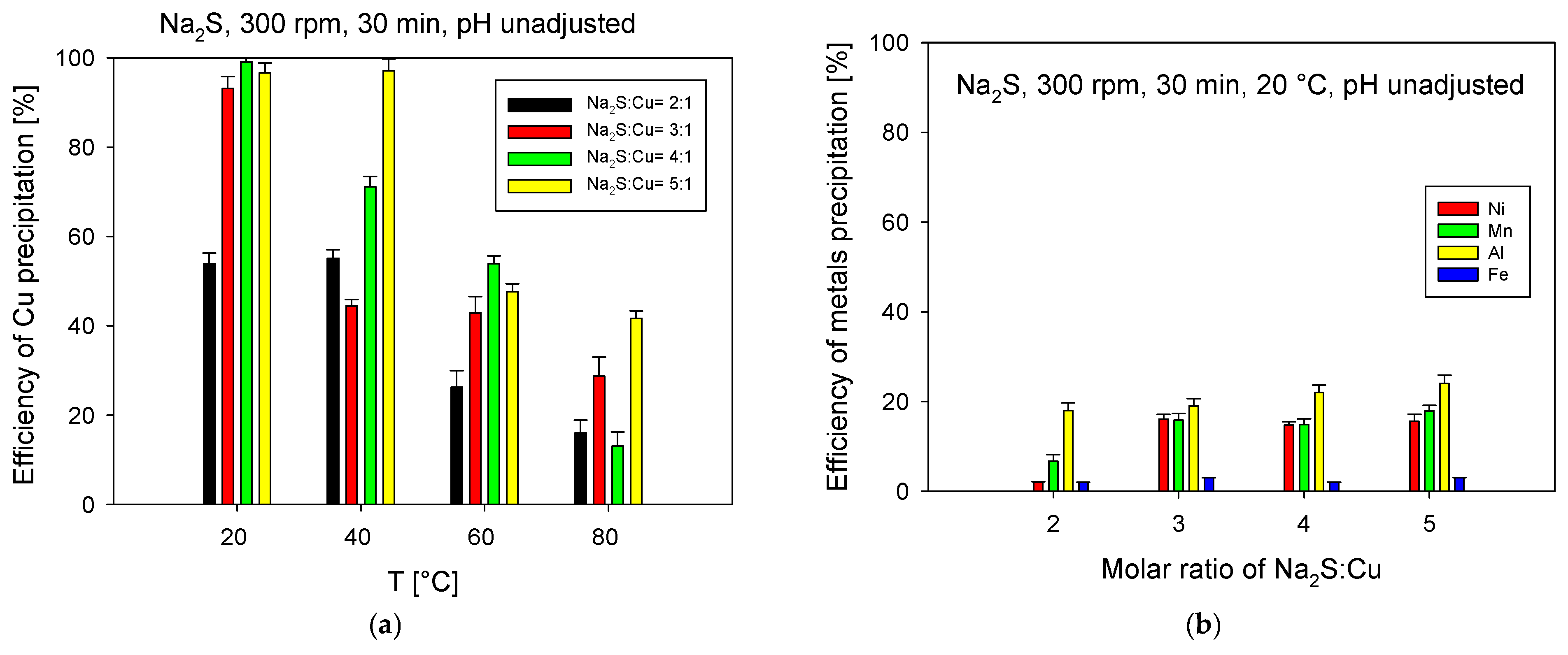
Figure 9a presents the precipitation efficiency of Cu with Na
2S at temperatures of 20–80 °C and molar ratios of Na
2S:Cu = 2:1, 3:1, 4:1, and 5:1, and
Figure 9b presents the co-precipitation of Mn, Ni, Fe, and Al at 20 °C for all applied molar ratios.
The experimental data demonstrate that peak copper precipitation efficiency was achieved at 20 °C for molar ratios ranging from 3:1 to 5:1, with efficiencies between 93.13% and 99.02%. As the temperature increased, the efficiency of Cu precipitation decreased—the decline was slight at 40 °C but became significant at 60 °C and 80 °C, likely due to the increased solubility of the precipitate at higher temperatures. Conducting the precipitation at 20 °C is advantageous, as it obviates the need for external heating, thereby reducing operational energy costs. Based on the results, a molar ratio of Na2S:Cu = 4:1 proved to be the most suitable, achieving an efficiency of up to 99%.
As illustrated in
Figure 9a, the precipitation efficiency reaches its peak at this ratio and subsequently remains stagnant or exhibits a slight downward trend with further reagent addition. This behaviour suggests that the residual Cu concentration has reached its thermodynamic minimum for the given system. The minor decrease in efficiency observed at higher molar ratio could be attributed to the potential formation of soluble thiometallate or polysulfide complexes in the presence of excess sulphide ions [
32]. This phenomenon, often referred to as over-sulphidization, may lead to the partial re-solubilization of the CuS precipitate, indicating that excessive reagent addition beyond the 4:1 ratio is counterproductive for maximizing copper recovery.
The analysis of the solution after 30 min (
Figure 9b) showed a substantial co-precipitation of Al, Mn, and Ni, particularly at higher molar ratios. At this stage, the removal efficiency of these metals reached approximately 14–24 wt.%, whereas Fe removal remained low (2–5 wt.%). Cobalt and lithium were not removed from the solution under any of the tested conditions. These results suggest that the optimization of the precipitation time is necessary to minimize the loss of accompanying metals while achieving maximum Cu precipitation efficiency in the shortest possible time.
For the optimization of copper precipitation time, the best conditions for copper removal were selected (20 °C, molar ratio Na
2S:Cu = 4:1). An experiment was conducted to monitor the time dependence of precipitation over 60 min at a stirring speed of 300 rpm. Samples were taken at 2, 5, 10, 15, 20, 30, 45, and 60 min. The co-precipitation of cobalt, lithium, and other accompanying metals was also monitored.
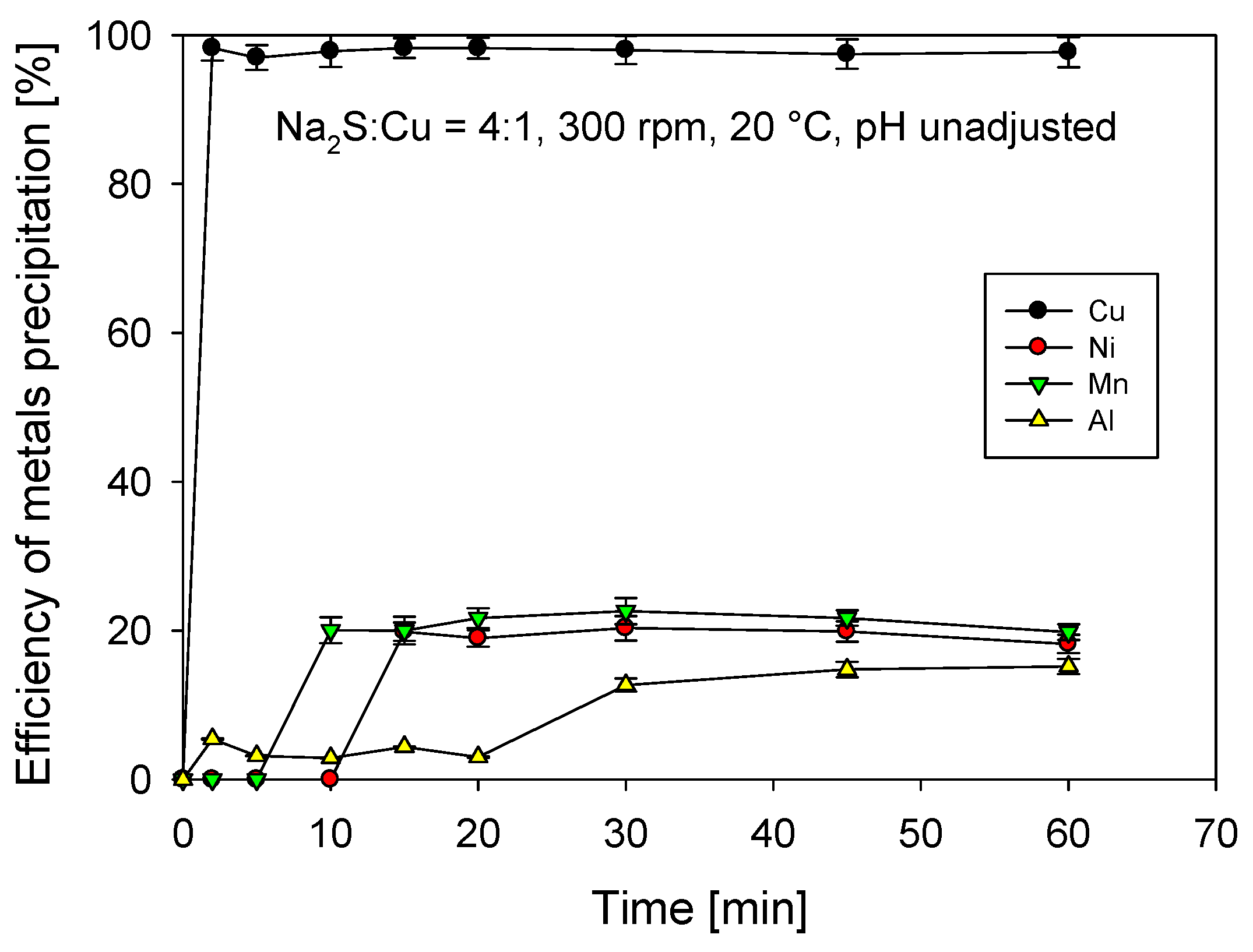
Figure 10 shows the efficiency of Cu precipitation and the simultaneous co-precipitation of other metals as a function of time under the specified conditions.
The results indicate that Cu precipitation occurs very rapidly, with near-maximum efficiency achieved within the first minutes of the process. This behaviour is closely related to the solubility of the formed sulphide. The precipitation of metal sulphides is governed by the solubility product (K
sp), where precipitation occurs if the ionic product [M
2+]. [S
2−] exceeds the K
sp of the corresponding metal sulphide. Under the same sulphide ion concentration, the metal with the lowest K
sp value precipitates first [
33]. The solubility product of CuS (≈7.9 × 10
−37) [
26] is among the lowest of common metal sulphides, which, together with the high affinity of Cu
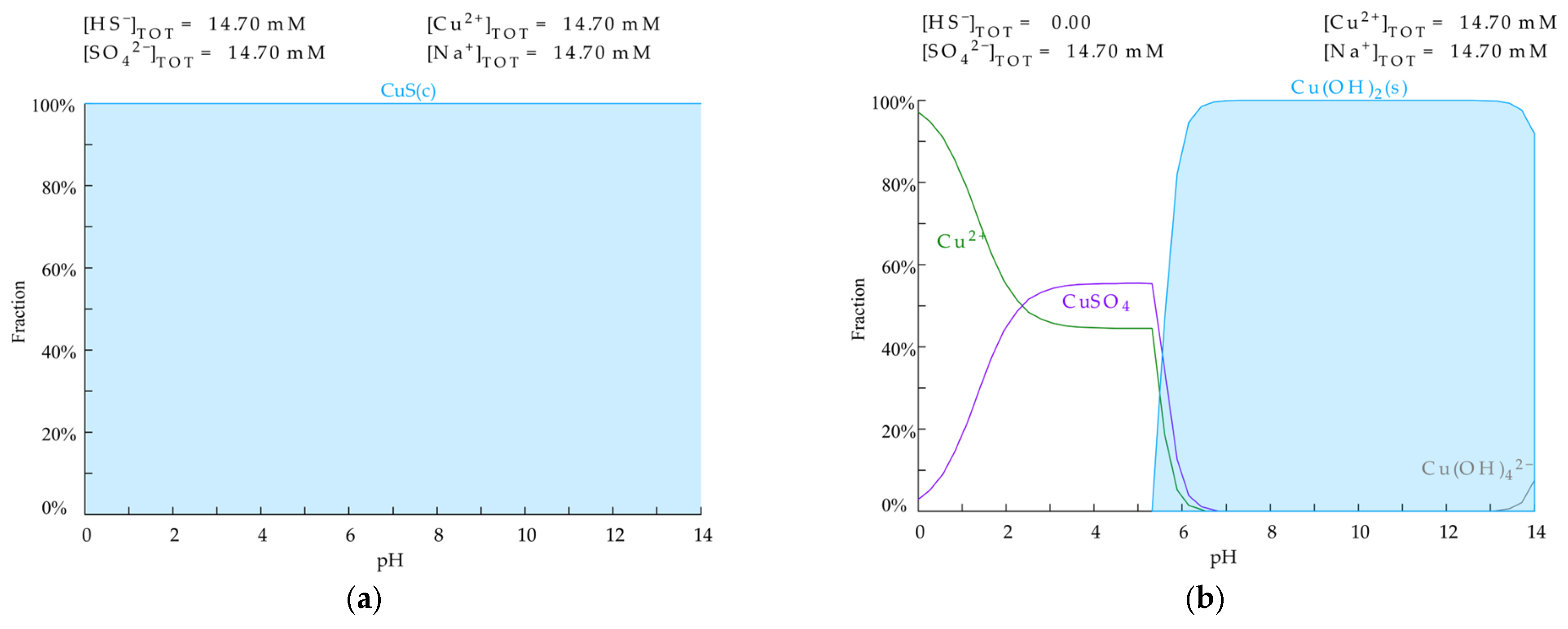
2+ for sulphur, explains its immediate and quantitative precipitation. For comparison, the K
sp of CoS is ≈4 × 10
−21 and that of FeS is approximately 6 × 10
−18 [
26], reflecting significantly higher solubility for these compounds. The observed stability of CuS precipitation at 20 °C is consistent with these thermodynamic data. However, as shown in
Figure 9a, the precipitation efficiency decreases at temperatures above 60 °C. This suggests that, while the K
sp remains low, the apparent solubility increases or competitive kinetic effects occur at higher temperatures. Therefore, maintaining a lower temperature is essential for maximizing the selectivity of Cu removal against Co and Ni, whose sulphides have higher K
sp and remain in the solution under the existing acidic conditions (pH < 1). The selectivity of this step is primarily governed by the solution pH. Under these conditions, the extremely low K
sp of CuS ensures its quantitative precipitation, while the higher solubility products of Co, Ni, Mn, and Fe sulphides prevent their formation, thus keeping them in the solution for subsequent recovery steps.
During the precipitation process, co-removal of other metals present in the leachate is also observed. Manganese achieves a removal efficiency of approximately 20 wt.% within the first 10 min, after which it remains essentially constant throughout the remainder of the process. Nickel exhibits similar behaviour, with precipitation observed from the 15th minute, also reaching around 20 wt.% efficiency. Among minor components, aluminum was detected in the precipitate, with a maximum efficiency of 18 wt.% from the 30th minute until the end of the process. The precipitation of MnS (K
sp ≈ 2.5 × 10
−13) and NiS (K
sp ≈ 3 × 10
−20) [
26] occurs only at higher concentrations of available sulphide ions. During the initial phase of the experiment, most S
2− is consumed by copper precipitation; only after its effective removal is sufficient free sulphide ion available to react with Mn
2+ and Ni
2+. Consequently, the precipitation of these metals is delayed, explaining their later appearance in the precipitate.
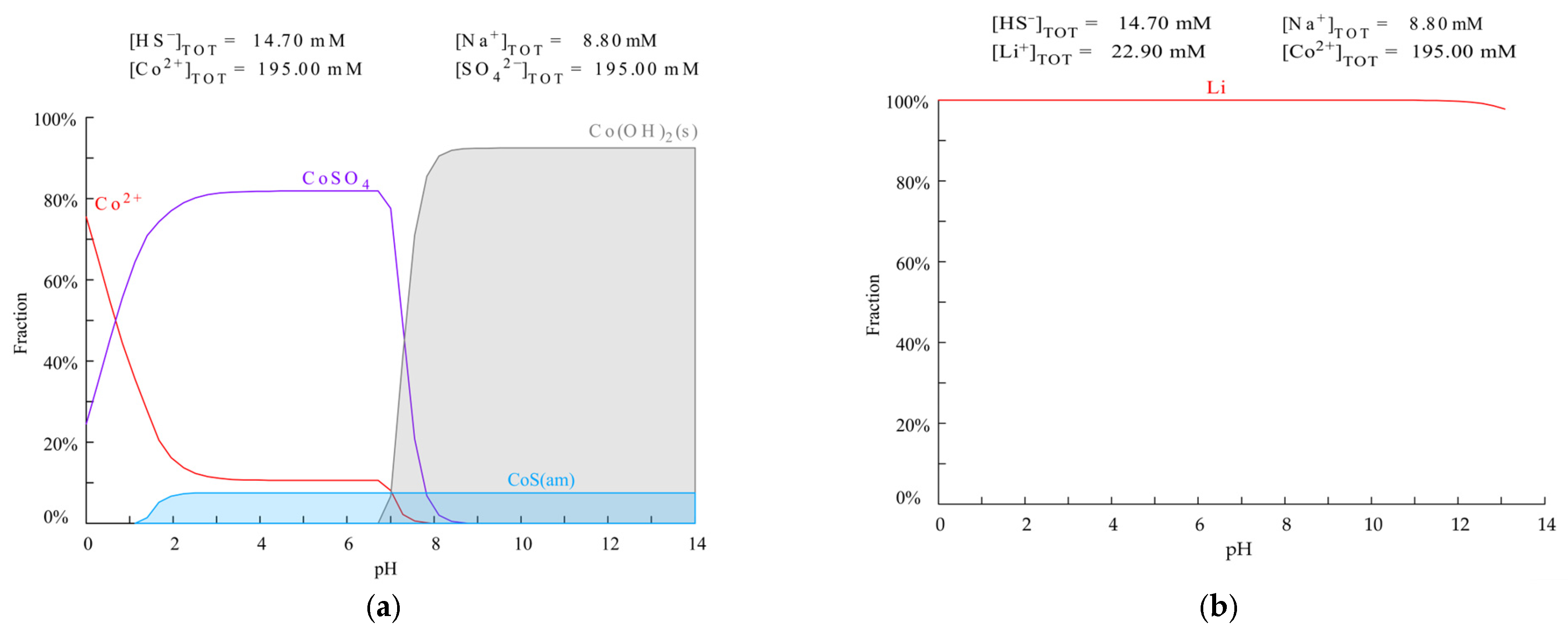
An important observation is that Co and Li, as the main metals of interest, remain in solution throughout the entire process, confirming the selectivity of the method. Although CoS formation could be expected based on Ksp values, its precipitation was not observed experimentally. This is attributable to the relatively higher Ksp of CoS compared to CuS, meaning CoS is more soluble and less likely to precipitate under the given conditions.
Based on the time-dependent precipitation efficiency, it can be concluded that copper sulphide precipitates very quickly and effectively, with the process practically complete within 2–5 min. Extending the reaction time beyond this period results in unwanted co-precipitation of manganese and nickel. Therefore, the optimal precipitation time can be considered 5 min, allowing selective removal of copper with minimal losses of other metals.
The optimal conditions for copper precipitation from acidic sulphate leachate (pH = 0–1) using Na2S can be summarized as follows: molar ratio Na2S:Cu = 4:1, temperature = 20 °C, reaction time = 5 min, and stirring speed = 300 rpm.
Analysis of the Obtained Cu Precipitate
The results of the chemical analysis of the precipitates obtained by copper precipitation using Na
2S under optimal conditions are shown in
Table 7.
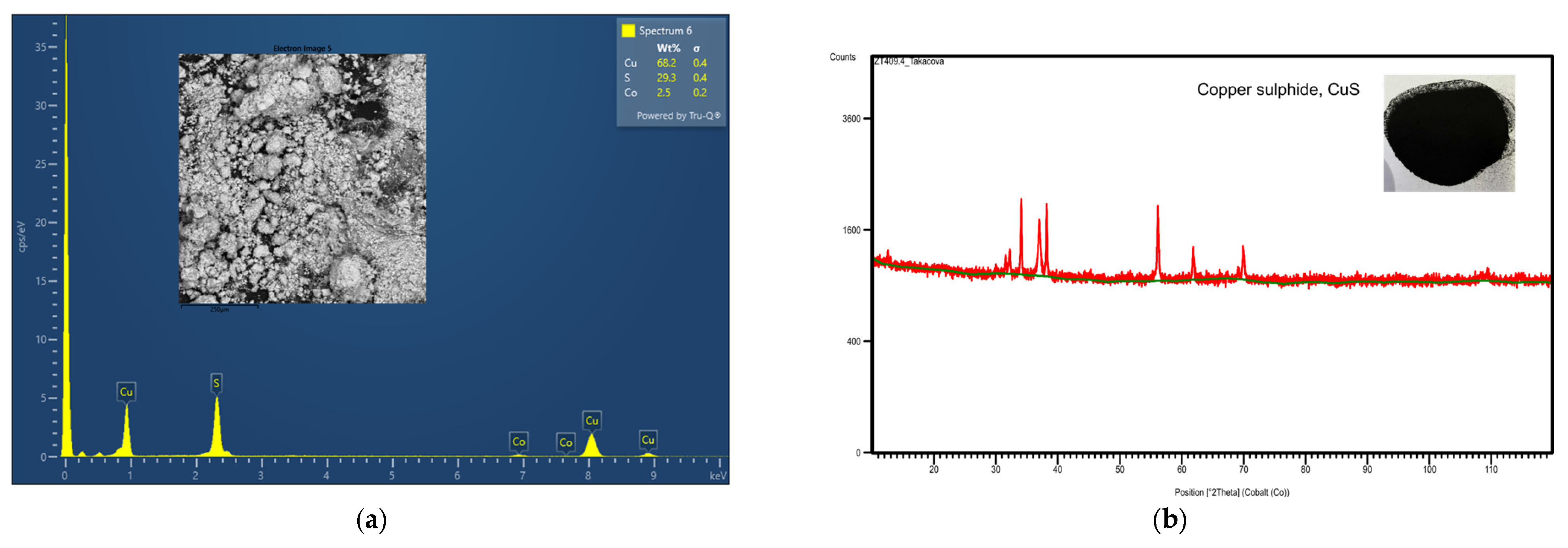
Under the optimal conditions, a precipitate containing 45.87% Cu was obtained from the initial leachate. This corresponds to approximately 67 wt.% of CuS in the precipitate. The high copper content was further confirmed by SEM-EDX analysis, the spectrum of which is shown in
Figure 11a. In addition to copper (68.2%) and sulphur (29.3%), cobalt was detected at a concentration of 2.5%. The crystalline structure was subsequently verified by XRD analysis (
Figure 11b), where the diffraction peaks are consistent with the standard reference for covellite (CuS, JCPDS 06-0464). Phase identification was performed using the JCPDS database [
34]. This phase identification confirms that the precipitate consists primarily of CuS, demonstrating the high selectivity of the precipitation process under the established acidic conditions.
Regarding the presence of impurities, although no decrease in cobalt concentration was observed in the leachates after copper precipitation, cobalt was incorporated into the precipitate at approximately 2.73% (AAS). This corresponds to a cobalt loss of about 0.6% during the Cu precipitation process, calculated based on the weight of the obtained precipitate. The presence of Co in the precipitate may result, for example, from its adsorption on the precipitate surface. Other monitored metals, such as Li, Ni, Mn, Al, and Fe, were present in the precipitate only at trace concentrations, with even lower losses than cobalt; for instance, the calculated lithium loss was approximately 0.0002%.
From the above, it follows that the main product of copper precipitation using Na2S is a precipitate with a dominant copper content in the form of CuS, with cobalt as the primary impurity. This type of precipitate could be used in pyrometallurgical copper production, where accompanying elements such as Co and Ni would enter the crude alloy and could be recovered in subsequent refining steps. Conversely, elements such as Al and Fe would likely concentrate in the slag.
3.2. Mn Precipitation
The precipitation of Mn was carried out from a Cu-free leachate obtained under the previously established optimal conditions for Cu precipitation (Na
2S:Cu = 4:1, T = 20 °C, t = 5 min) in a large-scale experiment (V
input = 5000 mL), the composition of which is given in
Table 8. Two precipitating agents, Na
3PO
4·12H
2O and KMnO
4, were selected, and their effectiveness in removing manganese was verified in separate experiments.
3.2.1. Mn Precipitation Using Na3PO4
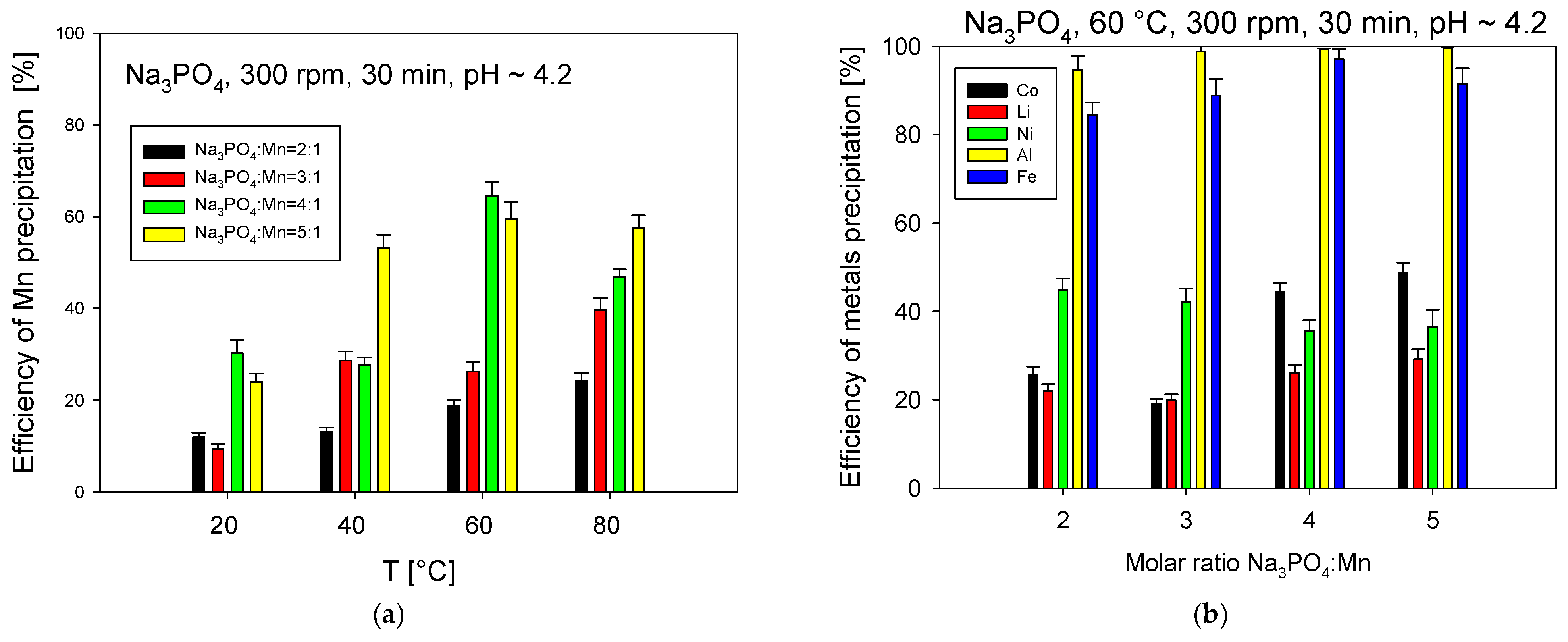
During the precipitation of Mn using Na3PO4·12H2O, the following conditions were studied: Na3PO4·12H2O:Mn molar ratios of 2:1, 3:1, 4:1, and 5:1; temperatures of 20, 40, 60, and 80 °C; precipitation time of 30 min; and stirring at 300 rpm. Preliminary experiments indicated that pH adjustment to approximately 4 was necessary to initiate precipitation.
The influence of the Na
3PO
4:Mn molar ratio and temperature was examined to determine the optimal conditions for Mn separation from the Cu-free leachate.
Figure 12a illustrates the effect of temperature on the efficiency of Mn precipitation from the solution at different molar ratios.
For the study of the co-precipitation of metals (Co, Li, Mn, Al, and Fe), a temperature of 60 °C was selected, as it showed the highest efficiency in Mn precipitation.
Figure 12b presents the co-precipitation of these metals under the applied conditions, depending on the Na
3PO
4:Mn molar ratio.
The obtained results indicate that the highest Mn precipitation efficiency was achieved at 60 °C and Na
3PO
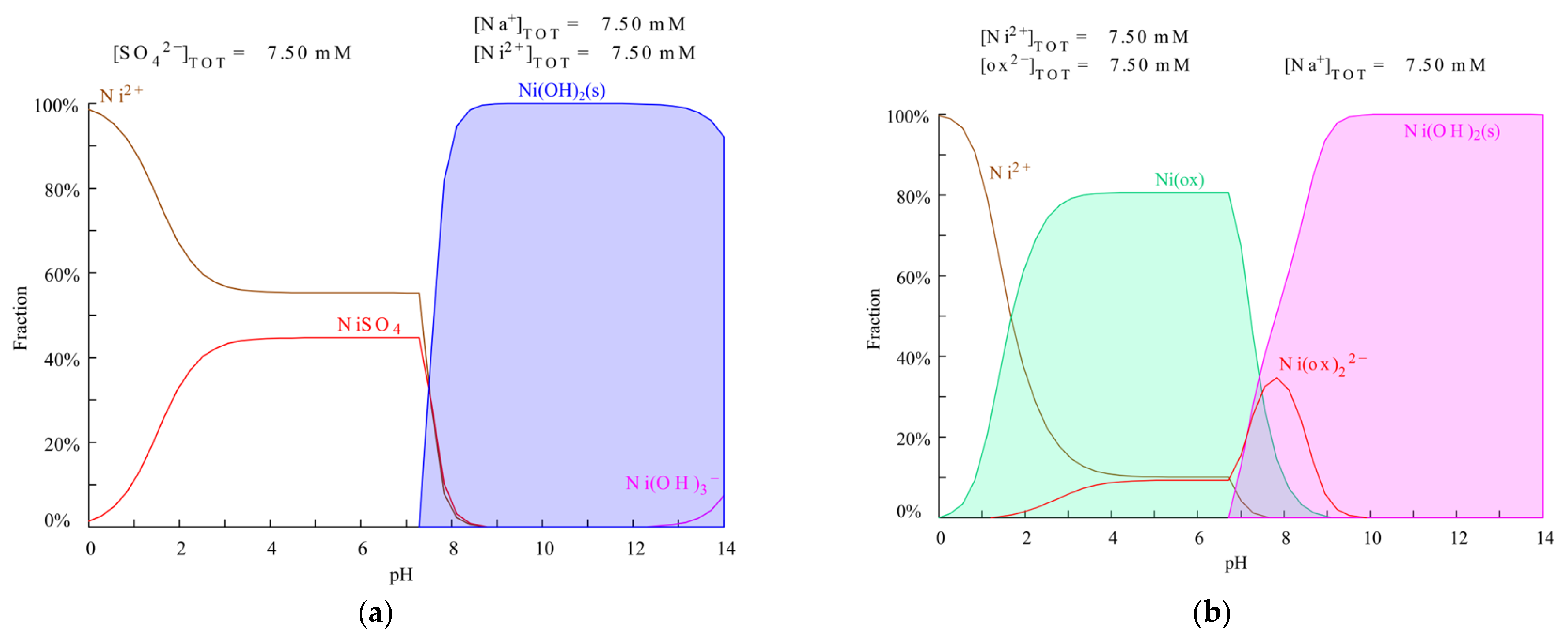
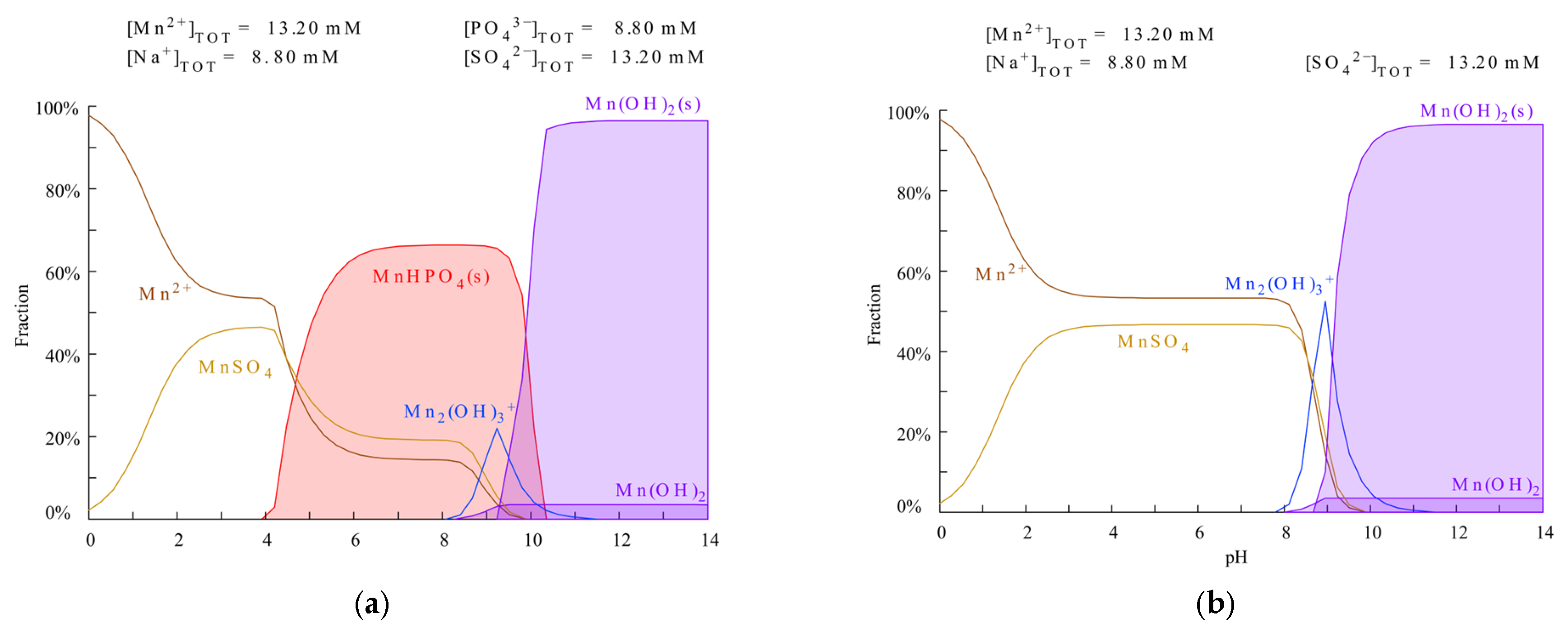
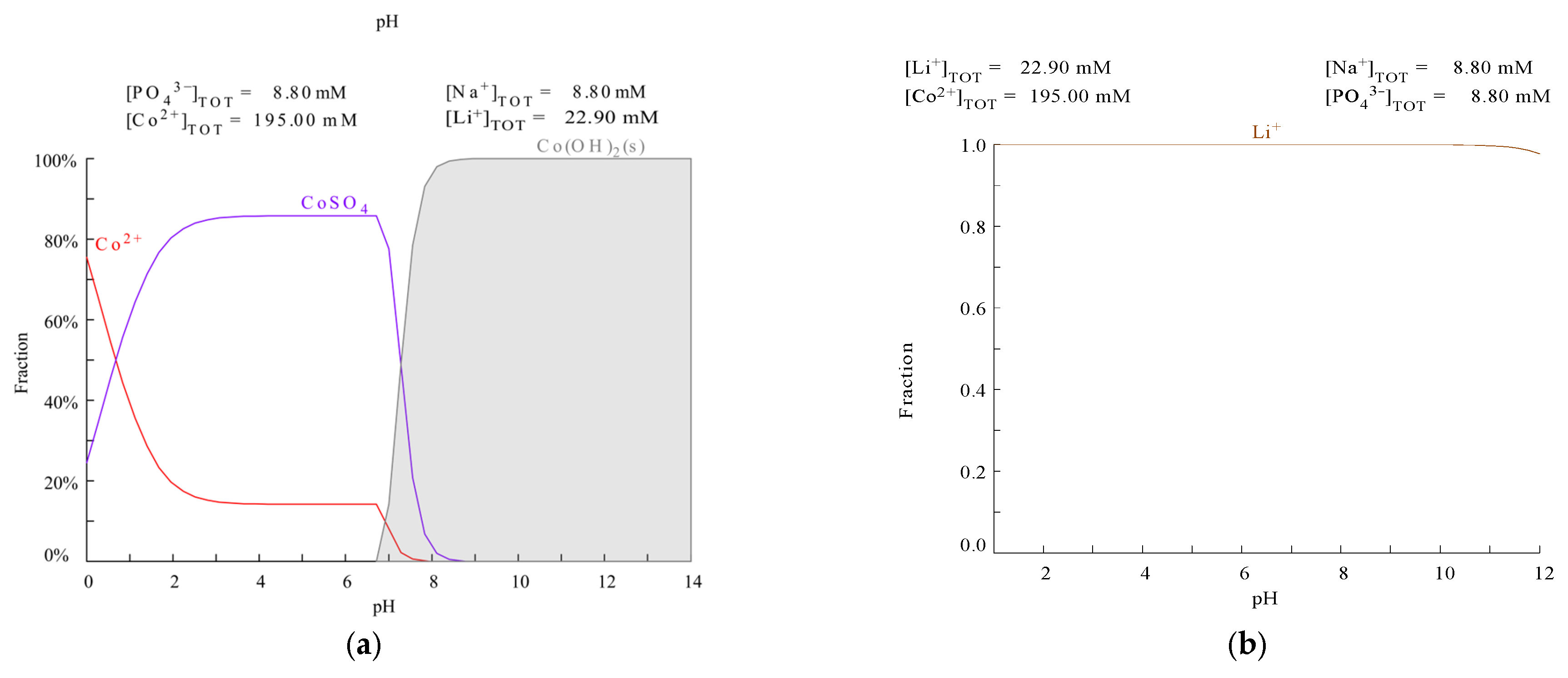
4:Mn molar ratios of 4:1 and 5:1, reaching 64.5% and 59.5%, respectively. Precipitation efficiency increased with temperature, but a decrease was observed at 80 °C, likely due to partial redissolution of the precipitate. A higher molar ratio also enhanced Mn precipitation, particularly at elevated temperatures. These findings are consistent with the fraction diagram shown in
Figure 2a, which also indicates a maximum Mn recovery of approximately 60% using Na
3PO
4.
Based on these results, a temperature of 60 °C was selected for the study of co-precipitation of metals (Co, Li, Mn, Al, and Fe) (
Figure 12b), as it showed the highest efficiency in Mn precipitation. Significant co-precipitation of other metals was observed. Cobalt showed increasing co-precipitation with rising excess of the precipitating agent, reaching 19–49%. This reduces process selectivity toward manganese. Due to similar ionic radii and coordination behaviour, Co
2+ and Mn
2+ both form sparingly soluble phosphates—Co
3(PO
4)
2 (K
sp ≈ 2.05 × 10
−35) and Mn
3(PO
4)
2 (K
sp ≈ 1.0 × 10
−31) [
26]—with cobalt phosphate being less soluble. Thus, Co
2+ tends to precipitate more readily under identical conditions. A higher phosphate excess increases PO
43− concentration, promoting precipitation of both metals and potentially causing non-selective co-precipitation. The pH ≈ 4 required for manganese precipitation also favours Co
2+ removal, since phosphate species (HPO
42− and PO
43−) readily react with divalent cations [
35,
36].
Lithium precipitation remained relatively stable (20–30%) across all molar ratios, reflecting its low sensitivity to reaction conditions. Due to the high solubility of Li
3PO
4 (K
sp ≈ 3.2 × 10
−9) [
26], lithium does not precipitate fully; observed losses likely result from Li adsorption onto phosphate solids.
Nickel co-precipitation was most pronounced at a low Na3PO4:Mn ratio (2:1), likely due to insufficient selectivity and limited PO43− availability. At higher ratios, metals with lower phosphate solubilities (Mn, Fe, Al, and Co) precipitate preferentially, while Ni2+ largely remains in solution. This behaviour is favourable for maintaining Ni in the leachate for subsequent recovery.
Aluminum and iron co-precipitated almost completely (90–100%) under all tested conditions, as expected for Al due to its chemical behaviour. AlPO
4 has a very low solubility (K
sp ≈ 6.3 × 10
−19) [
26], and Al
3+ easily hydrolyses at pH > 3, forming hydroxides or phosphates [
37,
38]. Fe
2+ also forms highly insoluble Fe
3(PO
4)
2 (K
sp ≈ 10
−36–10
−31) [
26]. Consequently, both Al and Fe precipitate easily alongside Mn in phosphate media. While their removal can be beneficial for purification, it results in a mixed, compositionally complex precipitate.
Due to the low maximum precipitation efficiency of Mn (64.5%) and its significant non-selectivity and Li and Co co-precipitation, Na3PO4 was evaluated as unsuitable for manganese precipitation in the presence of Co, Li, and other metals. Therefore, subsequent experiments focused on Mn precipitation using KMnO4.
3.2.2. Mn Precipitation Using KMnO4
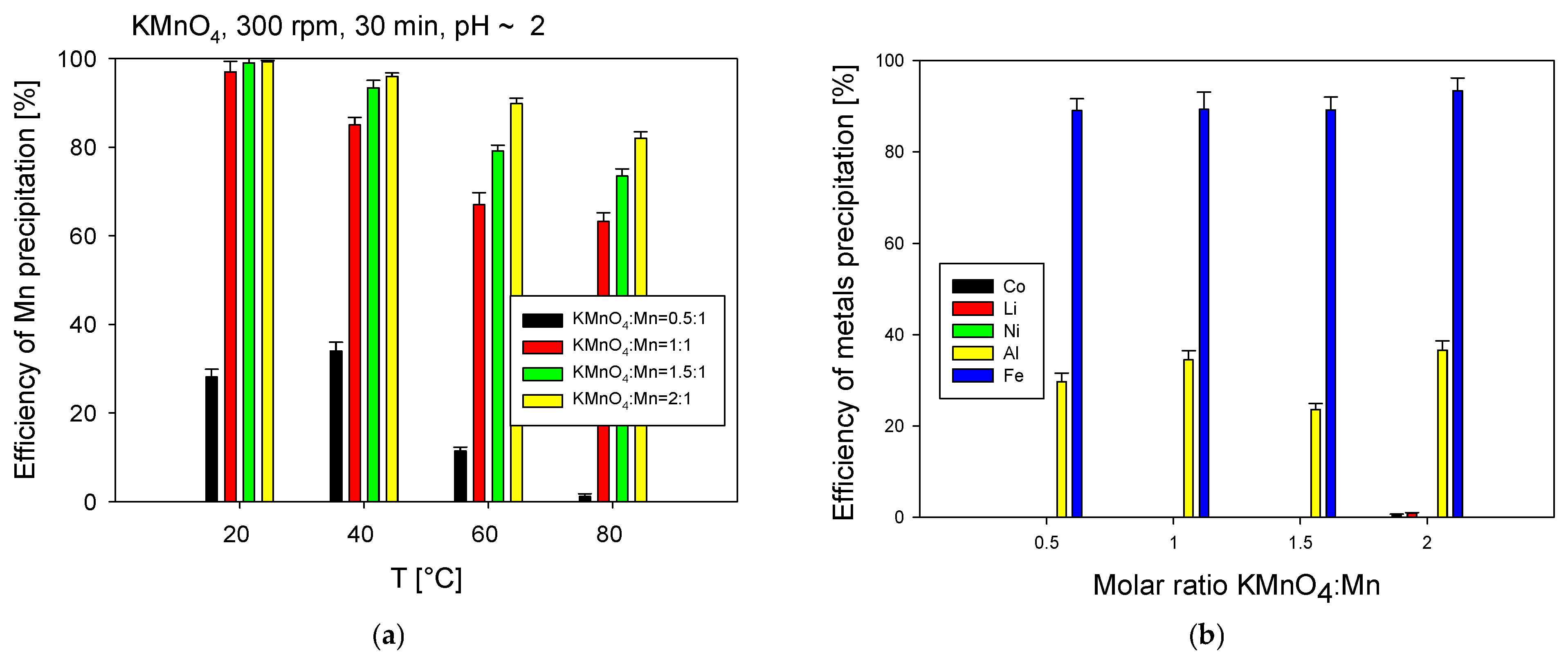
Figure 13a shows the effect of temperature on Mn precipitation efficiency at different KMnO
4:Mn molar ratios. The experiments were performed using a Cu-free leachate with the composition shown in
Table 8.
Figure 13b presents the co-precipitation of metals (Co, Li, Ni, Fe, and Al) during Mn precipitation at 20 °C, depending on the applied KMnO
4:Mn molar ratio.
The results indicate that the molar ratio of the oxidizing agent KMnO
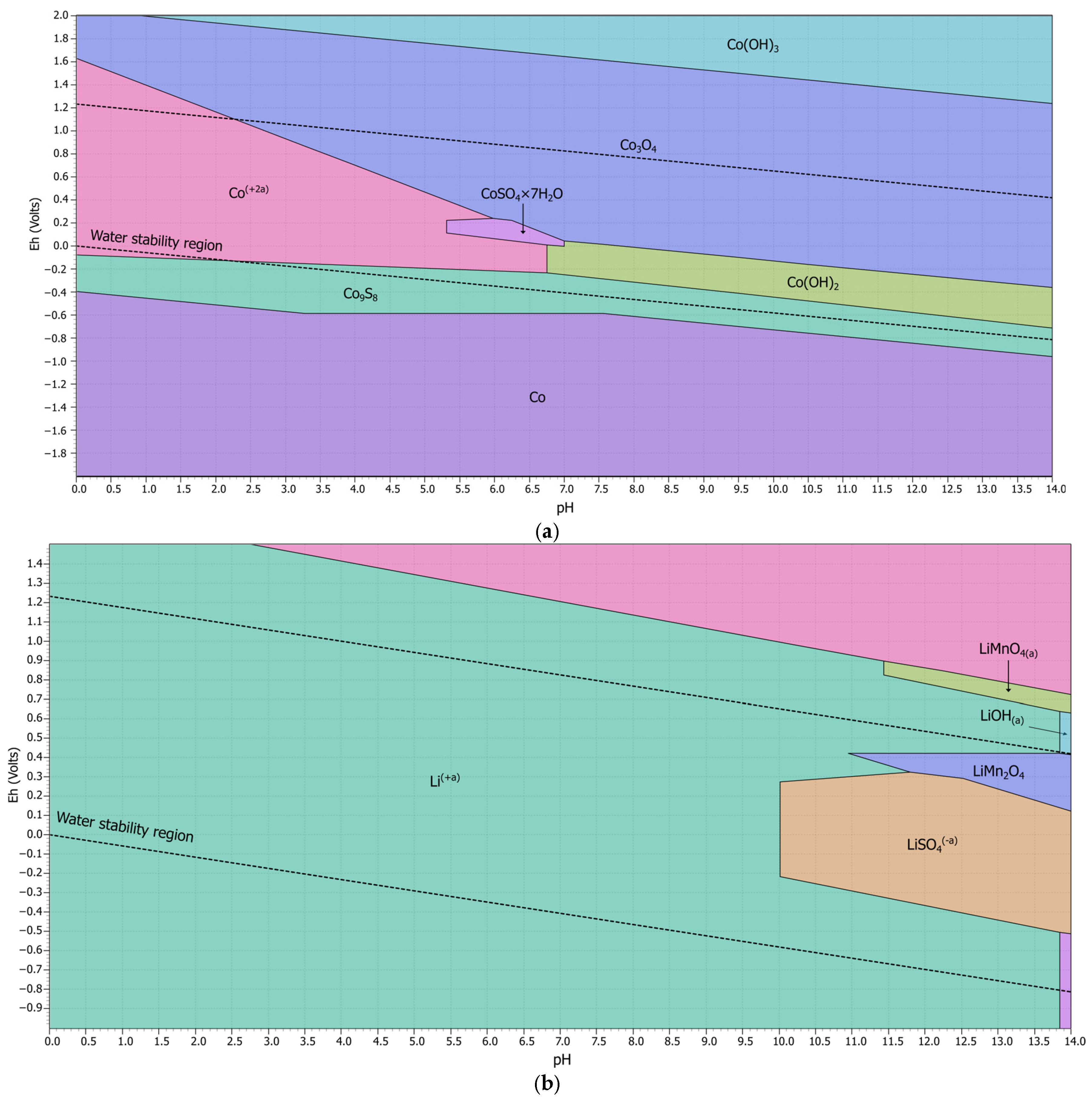
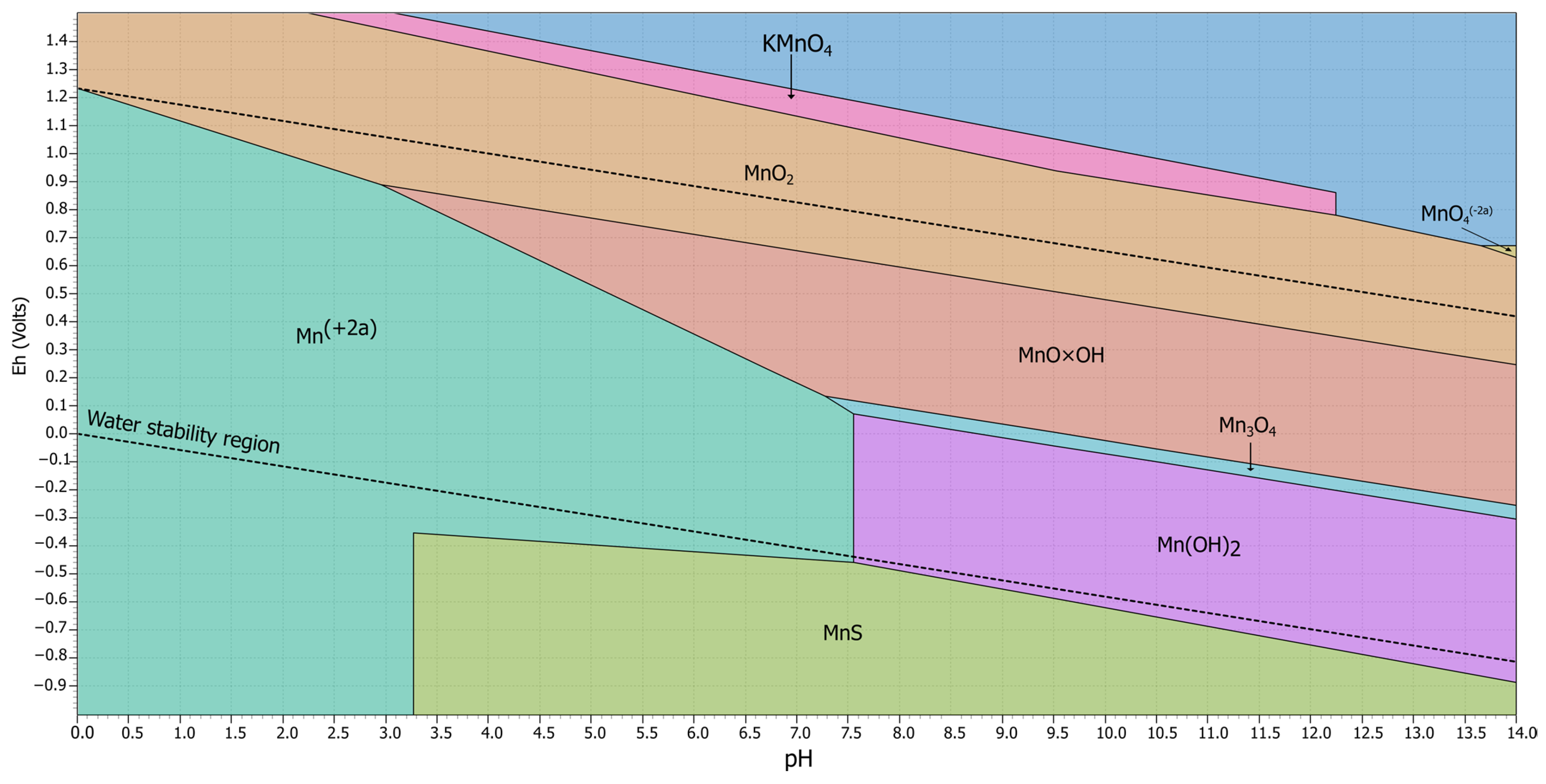
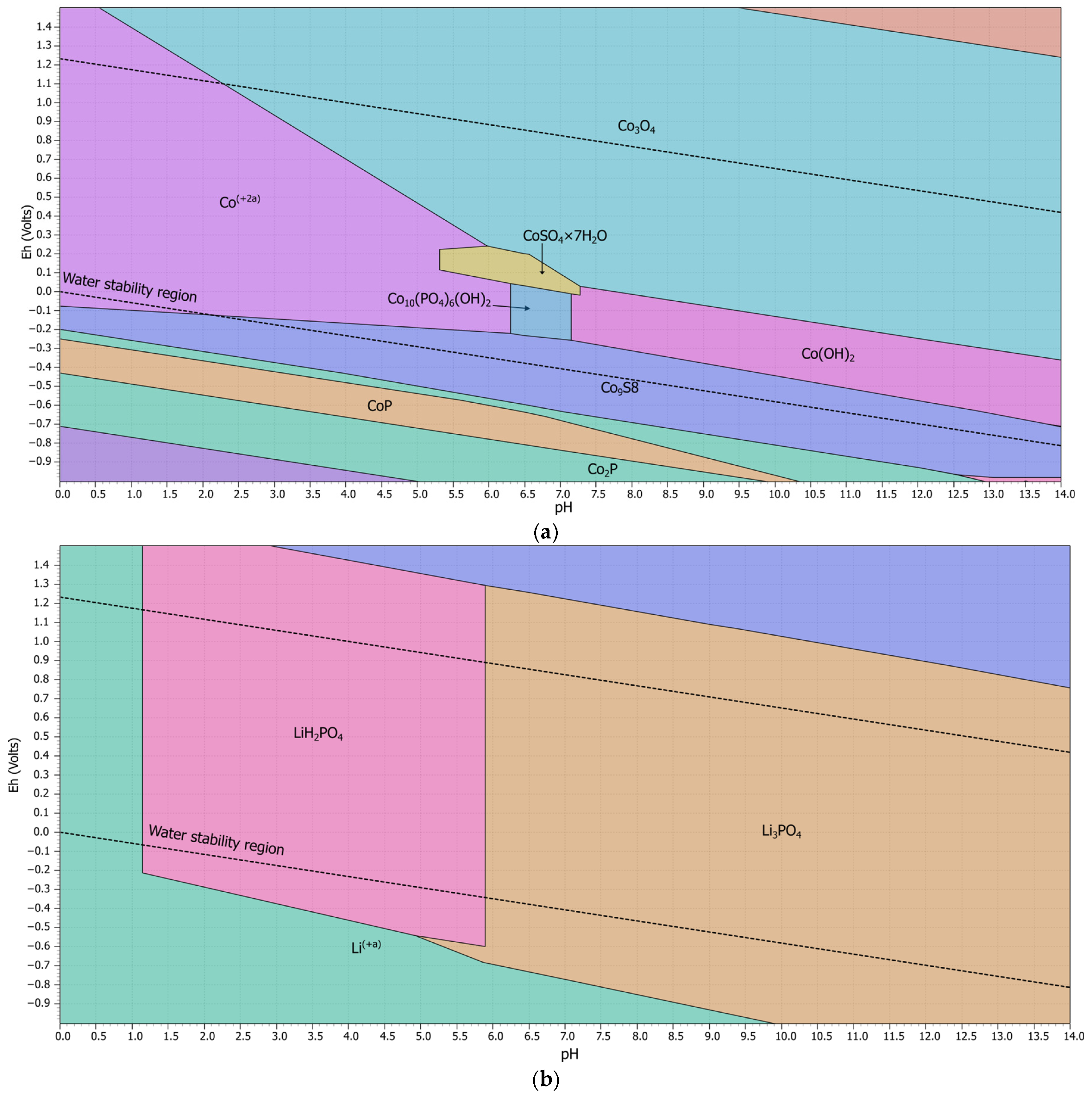
4 to Mn is the key factor determining the efficiency of Mn precipitation, while temperature plays a secondary but still significant role. This aligns with thermodynamic predictions from the E–pH diagram (
Figure 3), which indicate the formation of solid MnO
2 across the entire pH range, facilitated by the high oxidation potential of KMnO
4. The highest efficiency (97–100%) was achieved at molar ratios ranging from 1.5:1 to 2:1 at 20 °C. This excess, relative to the theoretical stoichiometry, was found necessary to ensure the quantitative oxidation of Mn
2+ within the complex leachate matrix. Any residual KMnO
4 is effectively neutralized during the subsequent process stages, specifically during the pH adjustment and the addition of dimethylglyoxime for nickel recovery. This stepwise approach ensures that the oxidant does not interfere with the final product quality.
The lowest efficiency occurred at the sub-stoichiometric 0.5:1 ratio (≈30% at 20 °C, nearly zero at 80 °C) due to insufficient oxidizing capacity and competing reactions. The observed temperature effect likely results from KMnO4 decomposition, side reactions, and reduced supersaturation for MnO2 nucleation.
Co-precipitation behaviour under investigated conditions shows that Co, Li, and Ni did not co-precipitate at KMnO
4:Mn ratios of 0.5:1, 1:1, and 1.5:1, which is favourable for process selectivity. At the 2:1 ratio, Co and Li co-precipitation remained minimal (<1%). In contrast, Fe likely experienced significant co-precipitation (89–93%), which is consistent with thermodynamic evaluations reported in the literature [
39]. These indicate that under oxidizing conditions, Fe
2+ is readily converted to Fe
3+, followed by the precipitation of Fe
3+ oxyhydroxides such as goethite (FeO(OH)), whose extremely low solubility (K
sp = 1.1 × 10
−43 [
26]) drives the extensive removal of Fe from solution even at low pH.
Aluminum co-precipitated in the range of 23–36% at all molar ratios. This can be attributed to the amphoteric nature of aluminum, which under slightly acidic conditions can form insoluble Al(OH)
3 [
40]. Although Al generally dissolves in acidic media, the oxidation of Mn
2+ by KMnO
4 can locally increase pH, promoting Al precipitation as hydroxide. Additionally, higher KMnO
4 excess can generate finely dispersed precipitates with high adsorption capacity, capturing Al
3+ via sorption or co-precipitation mechanisms. These accompanying metals can be removed in subsequent processing steps. Based on these results, the optimal conditions for Mn precipitation from sulphate leachate are a KMnO
4:Mn ratio of 1:1–1.5, temperature of 20 °C, and slightly acidic pH (≈2). Under these conditions, Mn is efficiently precipitated, Co, Li, and Ni largely remain in solution, and Fe together with Al co-precipitates. Overall, KMnO
4 proves to be a highly selective and efficient precipitating agent compared to alternatives such as Na
3PO
4.
After determining the optimal temperature and molar ratio, the optimal reaction time was studied, as it affects both the energy demand and the technological efficiency of the process. A study was conducted on the effect of precipitation time (2–60 min) at 20 °C, with a stirring speed of 300 rpm and a KMnO
4:Mn molar ratio of 1, on the precipitation efficiency of Mn and the co-precipitating metals Fe and Al.
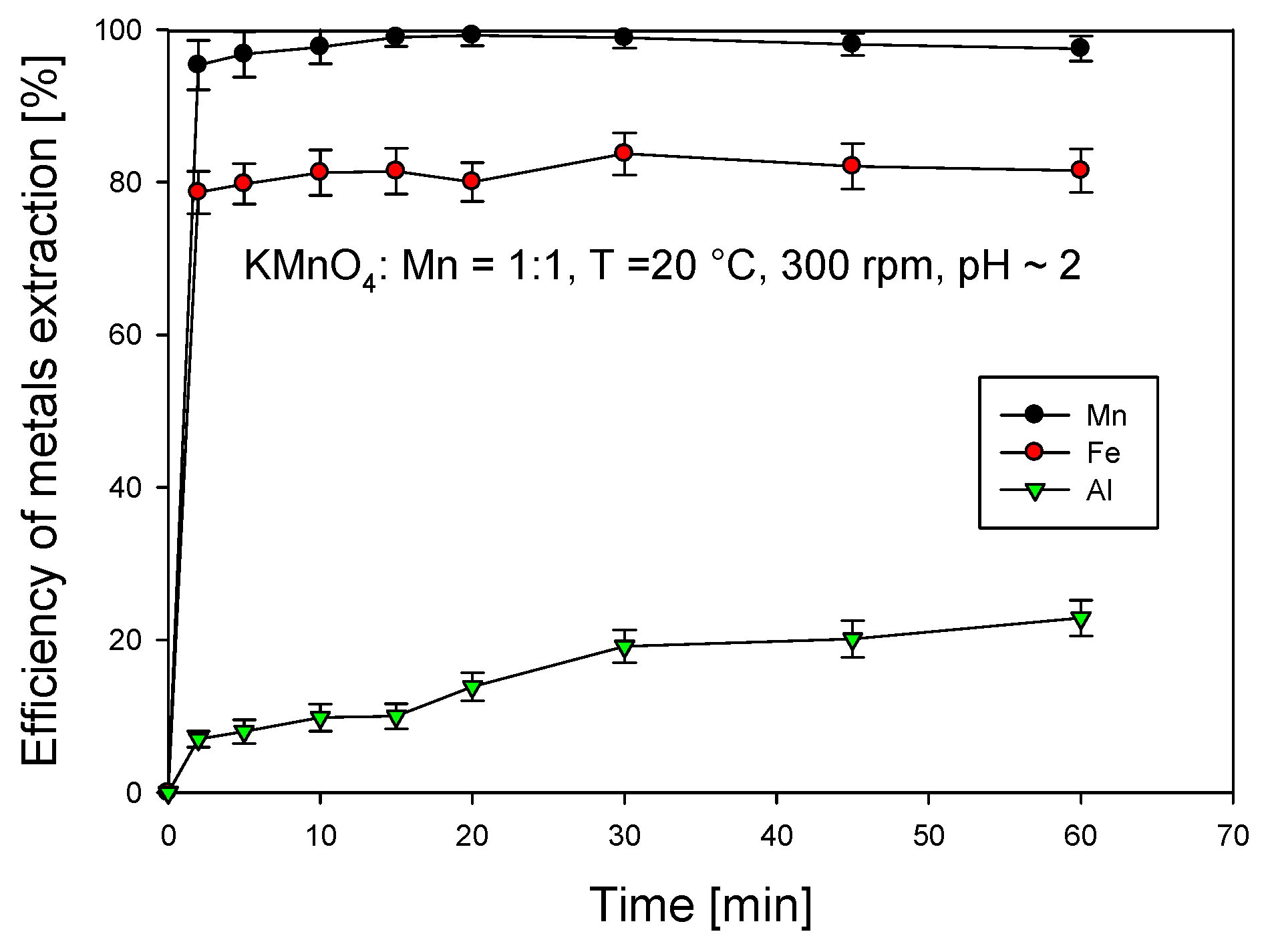
Figure 14 shows the precipitation efficiency of Mn and the simultaneous co-precipitation of Fe and Al as a function of reaction time under these experimental conditions.
The results indicate that Mn precipitation is highly efficient within the first few minutes of the reaction—efficiency exceeds 98% and remains stable throughout the entire reaction time. This demonstrates the rapid oxidation of Mn2+ ions to insoluble MnO2. Iron shows a similar trend, with precipitation ranging between 80 and 85% and remaining constant with increasing reaction time.
Aluminum co-precipitation gradually increases, reaching up to approximately 22%, likely due to local pH increases and adsorption/co-precipitation on MnO2 surfaces. Based on these observations, the optimal reaction time was set at 15 min, which ensures effective Mn precipitation.
Analysis of the Obtained Mn Precipitate
The results of the precipitates obtained under conditions yielding the highest manganese removal efficiency (KMnO
4:Mn molar ratio = 1:1, T = 20 °C, t = 15 min, pH ≈ 2) are summarized in
Table 9, showing their chemical composition determined through the AAS method.
Table 9 shows that Mn is the main component of the precipitate (34.06 wt.%). Co (2.441 wt.%) and Fe (4.019 wt.%) are also present, while Ni (0.034 wt.%), Li (0.013 wt.%), and Al (0.006 wt.%) are negligible, indicating minimal losses (e.g., Li loss ≈ 0.02 wt.%). Interestingly, Co appears in the precipitate despite no noticeable decrease in leachate concentration, likely due to sorption onto freshly formed MnO
2 via ion exchange, complexation, or adsorption [
41]. This accounts for only ≈ 0.62 wt.% of the total cobalt in the leachate. The Fe content (4.019 wt.%) reflects an approximately 80% precipitation efficiency. Based on the measured manganese content (34.06 wt.%), the precipitate is estimated to contain approximately 53 wt.% MnO
2, its expected primary component.
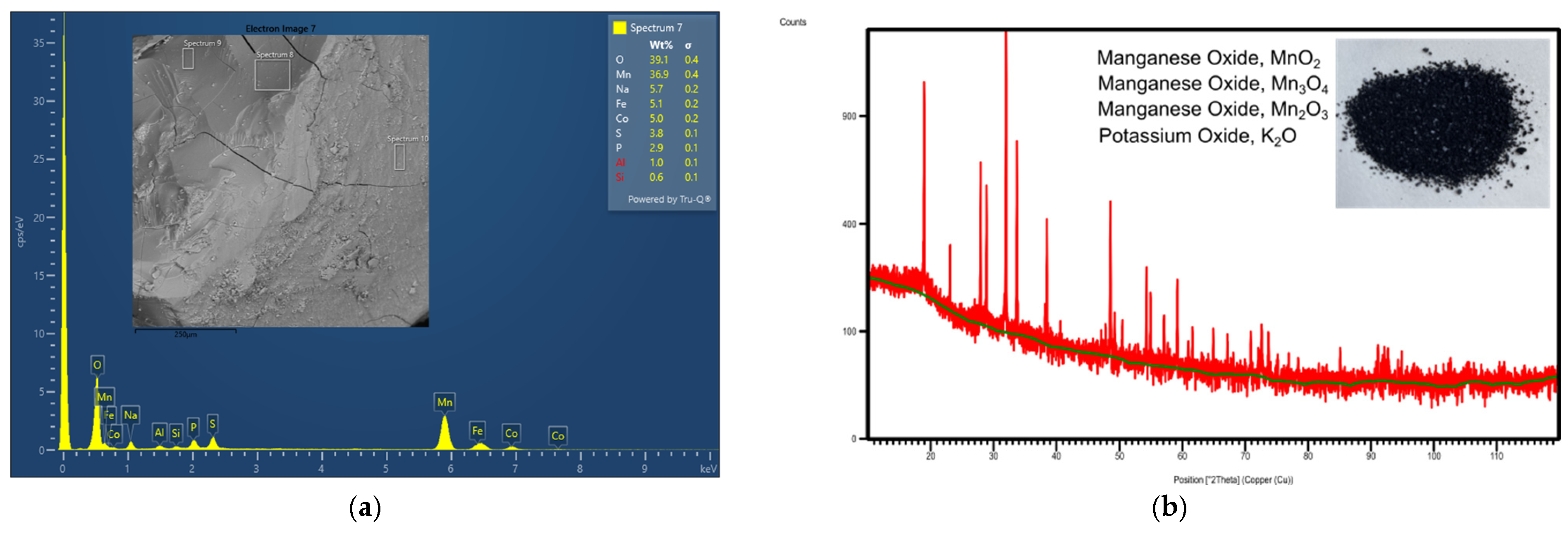
The SEM-EDX analysis identified the presence of Mn and O, along with Fe and Co as the main impurities in the obtained precipitate. Additionally, Na from the reagent used for pH adjustment was detected, as shown in
Figure 15a. The XRD analysis (
Figure 15b) confirmed that the manganese precipitate is primarily composed of pyrolusite (MnO
2, JCPDS 24-0735 [
34]), though phases of bixbyite (Mn
2O
3, JCPDS 41-1442 [
34]) and hausmannite (Mn
3O
4, JCPDS 24-0734 [
34]) were also detected. These findings indicate a partial reduction or structural transformation during the process. Additionally, the presence of potassium was confirmed in the form of K
2O (JCPDS 77-2176 [
34]), which originates from the KMnO
4 used as the oxidizing and precipitating agent. No crystalline phases of Fe or Co were observed, likely due to their amorphous nature or concentrations below the XRD detection limit.
It can be concluded that the precipitate consists predominantly of manganese oxides with minor amounts of accompanying metals. From a selectivity and purity perspective, this product could be further processed as a raw material for manganese-based battery materials. The results confirm that KMnO4 is a particularly suitable oxidizing agent for manganese removal.
The optimal conditions for Mn precipitation from acidic sulphate leachate using KMnO4 are a KMnO4:Mn molar ratio of 1:1, T = 20 °C, t = 10–15 min and pH ≈ 2. These conditions achieve up to 97% Mn precipitation efficiency with minimal precipitating agent consumption, reducing costs and improving process economics. Solution supersaturation is minimized, and Al co-precipitation remains acceptable (≈10%), while Fe co-precipitation remains significant (≈80%). Overall, these conditions provide an efficient process, producing a Mn-rich precipitate suitable for further processing and a Cu-Mn-free leachate for subsequent Ni, Co, and Li recovery.
3.3. Ni Precipitation
Nickel precipitation using DMG was carried out from the leachate after the removal of Cu and Mn under the defined optimal conditions (Step 1—Cu precipitation, Na
2S:Cu = 4:1, T = 20 °C, t = 5 min, without pH adjustment; Step 2—Mn precipitation, KMnO
4:Mn = 1:1, T = 20 °C, t = 15 min, pH ≈ 2). The content of the monitored components in the leachate used for the Ni precipitation experiments is presented in
Table 10.
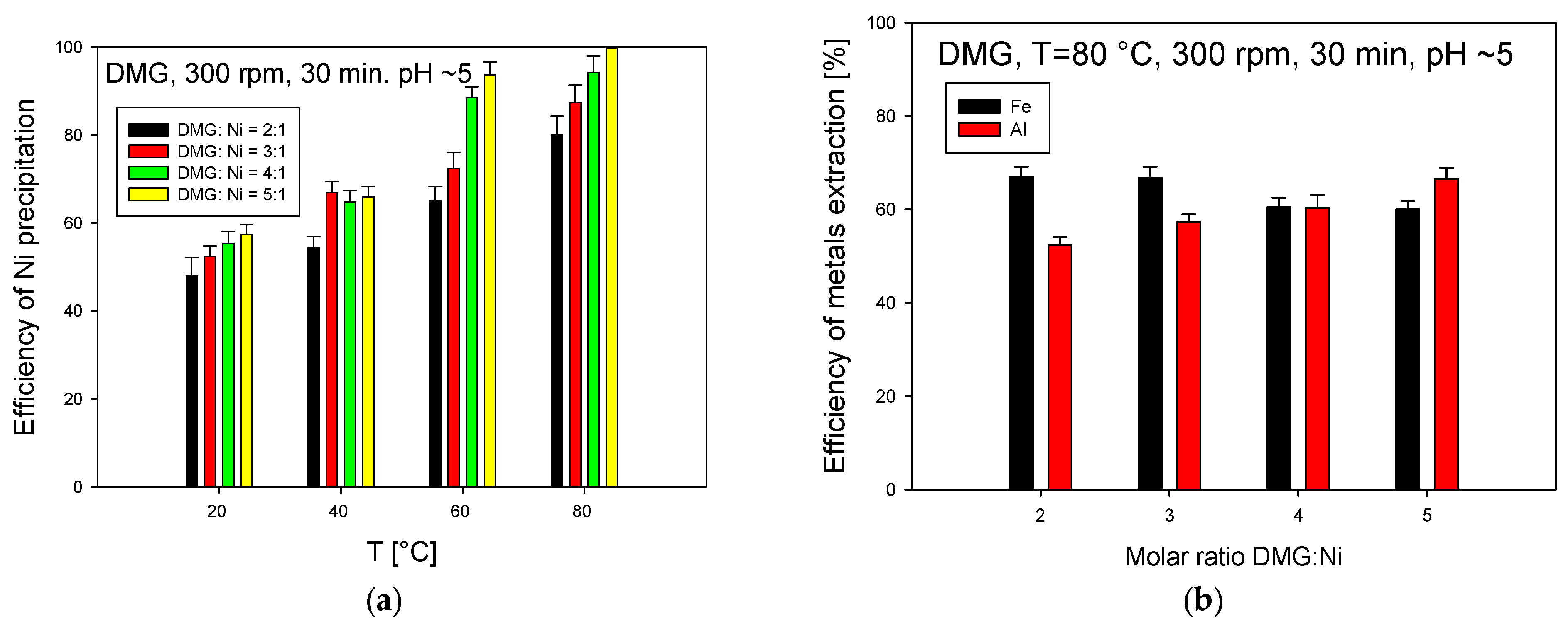
Figure 16a illustrates the effect of temperature on Ni precipitation efficiency at different DMG:Ni molar ratios (2–5). The experiments were carried out at pH ≈ 5 (adjusted with NaOH), with a precipitation time of 30 min and stirring at 300 rpm. Temperatures of 20, 40, 60, and 80 °C were studied to assess their influence on Ni recovery.
Figure 16b shows the co-precipitation of other metals during Ni precipitation as a function of the DMG:Ni molar ratio at 80 °C.
Nickel precipitation using DMG proceeds efficiently due to the formation of the highly stable [Ni(DMG)
2] complex (log β = 13.38), which ensures effective removal of Ni from solution [
42]. The efficiency of Ni precipitation increases with both temperature and the DMG:Ni molar ratio. At 20 °C, the efficiency ranged from approximately 50% at a 2:1 ratio to 57% at a 5:1 ratio. As the temperature increased to 80 °C, Ni precipitation efficiency rose substantially, reaching 80% at the 2:1 ratio and up to 99.8% at the 5:1 ratio. These results indicate that higher temperatures enhance the reaction kinetics and improve the effectiveness of the complexation reaction and that sufficient DMG is necessary to form the insoluble [Ni(DMG)
2] complex. This complex is highly stable and virtually insoluble in water, and therefore precipitates very effectively, especially when DMG is present in excess [
28]. The marked increase in efficiency with temperature demonstrates that nickel precipitation using DMG is highly temperature-sensitive, making optimization of reaction conditions crucial. The highest efficiency (99.8%) was achieved with the combination of the highest tested temperature (80 °C) and the highest DMG:Ni molar ratio (5:1). In addition to nickel precipitation, the co-precipitation of other present metals—Co, Li, Fe, and Al—was also monitored.
Figure 16b shows that Fe and Al co-precipitate significantly at 80 °C. Fe precipitation reached its maximum (≈70%) at lower DMG:Ni ratios (2:1–3:1) and slightly decreased at higher ratios, likely due to selective complexation of Ni
2+ dominating over Fe
2+ co-precipitation. Aluminum, in contrast, exhibited increasing precipitation efficiency with higher DMG excess, rising from 55% at a 2:1 ratio to 67% at a 5:1 ratio. This is probably caused by hydrolytic precipitation of Al(OH)
3 due to local pH changes and increased ionic strength rather than direct complexation with DMG [
42]. Cobalt and lithium showed negligible co-precipitation under all tested conditions.
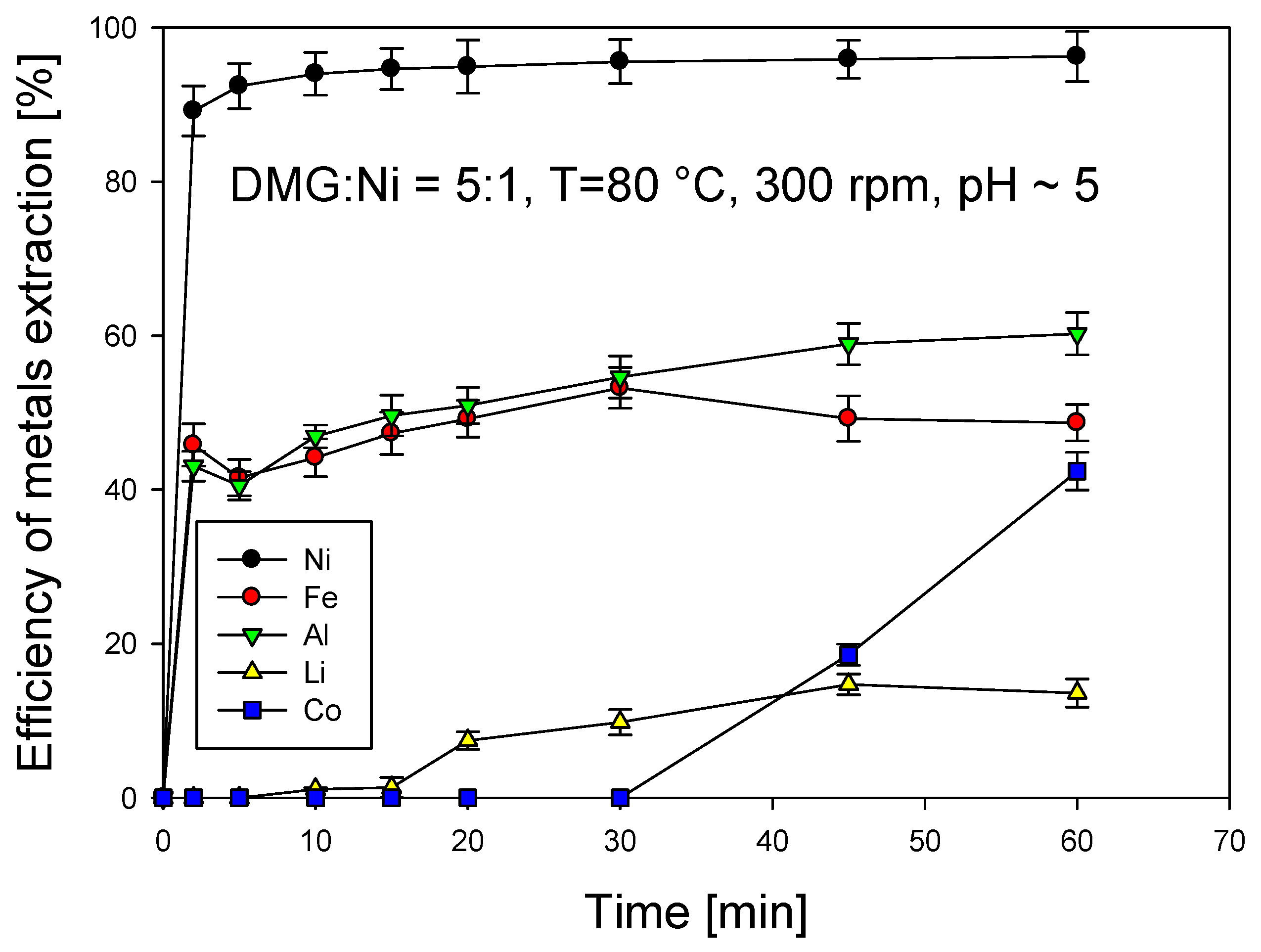
The reported results correspond to a precipitation time of 30 min. To determine the optimal precipitation time for Ni, additional experiments were conducted, and the time-dependent precipitation efficiency of Ni and other present metals is shown in
Figure 17.
The results presented in
Figure 17 indicate that Ni precipitation with DMG occurs rapidly within the first minutes, accompanied by significant co-precipitation of Fe and Al. After approximately 15 min, Ni precipitation stabilizes, suggesting that near equilibrium is reached. Al co-precipitation continues beyond 30 min, whereas Fe co-precipitation slightly decreases. Co co-precipitation appears at later times, likely due to its slower complexation with DMG [
43], which is undesirable for selectivity. Lithium loss (≈10% after 20 min) likely occurs via physical mechanisms, such as inclusion in the [Ni(DMG)
2] precipitate or adsorption onto Fe and Al particles, rather than chemical complexation [
31].
Based on these observations, the optimal precipitation time is 15 min, achieving efficient Ni removal together with significant Fe and Al co-precipitation while minimizing undesired Co and Li co-precipitation.
Analysis of the Obtained Ni Precipitate
The precipitates obtained from the experiments using DMG under conditions that yielded the highest Ni removal efficiency (DMG:Ni molar ratio = 5:1, T = 80 °C, t = 15 min, pH ≈ 5) were analyzed for their chemical composition using the AAS method (
Table 11).
The average nickel content in the precipitates obtained under the established optimal conditions (DMG:Ni = 5:1, T = 80 °C, t = 15 min, 300 rpm, pH ≈ 5) was 16.2 wt.%, corresponding to the highest nickel precipitation efficiency of 98.9%. The precipitate thus contained approximately 56% [Ni(DMG)2] by total mass, while the remaining ≈ 44% consisted of accompanying components (Co, Li, Fe, Al, Mn, and Cu), unreacted DMG, and bound water.
Among the impurities, cobalt, aluminum, and iron were present at significant levels, with average contents of 2.493 wt.% Co, 1.751 wt.% Al, and 3.449 wt.% Fe. Lithium, manganese, and copper were negligible, with average concentrations of 0.005 wt.%, 0.004 wt.%, and 0.002 wt.%, respectively.
Losses of the target metals (Co and Li) remained very low. Based on the leachate composition, Co loss was estimated at ≈1.9%, while Li losses did not exceed 0.5%. The trace presence of Li in the precipitate confirms that this is likely due to physical mechanisms, as previously indicated, such as inclusion in the [Ni(DMG)
2] precipitate or adsorption onto Fe and Al particles [
31]. Similarly, Co is present only in trace amounts, most likely due to physical adsorption or mechanical entrapment in the [Ni(DMG)
2] matrix rather than the formation of distinct metal complexes. These findings are consistent with AAS analysis of the liquid phase after precipitation, which confirmed that nearly all Co and Li remained dissolved in the solution.
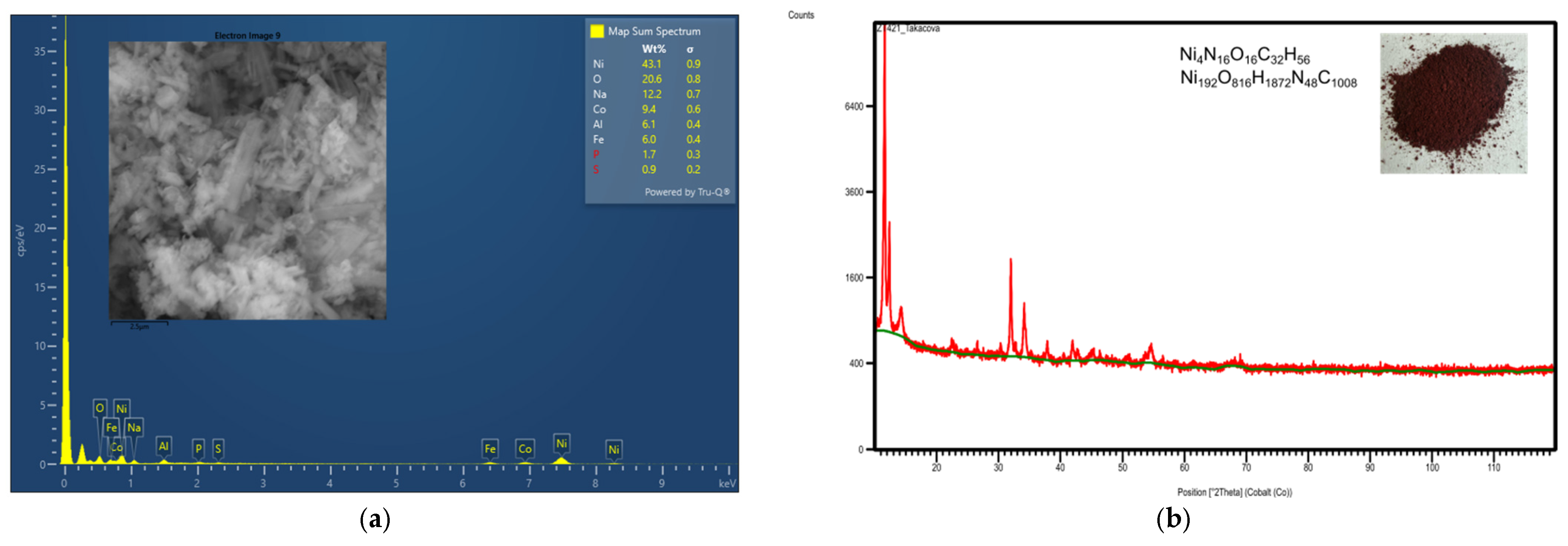
The SEM-EDX analysis (
Figure 18a) revealed a high Ni content in the precipitate, along with the presence of Na, Al, and Fe, consistent with the chemical composition determined by AAS. Two phases were identified in the sample by XRD phase analysis, as shown in
Figure 18b. The first phase corresponds to a coordinated low-molecular nickel complex with dimethylglyoxime, most likely the tetradimethylglyoximate complex [Ni(DMG)
2], with the molecular formula Ni
4N
16O
16C
32H
56 (JCPDS 17-0299 [
34]). A second phase was also detected, corresponding to a related nickel complex structure (JCPDS 42-1981 [
34]). The presence of these two related phases suggests a high degree of crystallinity and structural complexity in the final precipitate. No diffraction peaks for Fe or Co were observed, suggesting these impurities are either present in concentrations below the XRD detection limit or exist as amorphous phases.
Nickel precipitation using DMG proved to be highly effective, achieving nearly complete Ni removal from the leachate. However, significant co-precipitation of iron and aluminum also occurred, which reduced the purity of the obtained precipitate. At the same time, this co-precipitation allows for partial removal of unwanted accompanying metals from the leachate before further processing, thereby improving the overall process efficiency. The precipitate, containing Ni along with Fe and Al, can—after composition adjustment, such as dissolution followed by re-precipitation—serve as an intermediate product in nickel recycling to produce new cathode materials, catalysts, or electrical engineering materials.
3.4. Verification of Cu–Mn–Ni Precipitation and Co/Li Losses Using a Sequential Experiment
The sequential precipitation experiment was designed to verify the applicability of the optimal conditions determined in laboratory-scale tests to a larger and more representative leachate volume. While the initial optimization experiments were performed on 300 mL samples under controlled laboratory conditions, the sequential experiment was initiated with 2000 mL of leachate and continued until the entire batch volume was processed. Each precipitation step (Cu → Mn → Ni) was carried out consecutively under the previously established optimal parameters for temperature, pH, reagent type, and molar ratio. The order of metal removal was deliberately selected based on the required pH conditions: copper was precipitated first at the original leachate pH (without adjustment), followed by pH adjustment to 2 for manganese precipitation and to 5 for nickel precipitation. The comparison of leachate composition before and after sequential precipitation is shown in
Table 12.
During sequential precipitation, the leachate volume decreased mainly due to partial retention of liquid in the precipitates, sampling losses, and minor evaporation. The concentrations of cobalt and lithium increased from 12.9 g·L
−1 and 2.71 g·L
−1 to 18.8 g·L
−1 and 3.50 g·L
−1, respectively, confirming that both elements remained in solution with minimal losses. This demonstrates the high selectivity of the process, as accompanying metals were efficiently removed, while Co and Li were retained and concentrated in the leachate. The mass balance and composition of the obtained precipitates are summarized in
Table 13.
3.4.1. Step 1—Cu Precipitation
The results of verification experiments show that during Step 1 (Cu precipitation), 5.42 g of precipitate containing 42.14 wt.% Cu was formed, with a precipitation efficiency of 99.98% and minimal Co and Li losses (0.85% and 2.7%, respectively). In the 300 mL experiments, Ni and Al co-precipitation began only after 15 min (≈20%) and 30 min (≈18%), respectively (
Figure 10). In contrast, in the 2 L sequential experiment, partial co-precipitation was already detected after 5 min; (≈23% Ni and 21% Al), likely due to faster nucleation and growth of CuS particles, which provided a larger surface area and more adsorption sites [
44]. Local enrichment of Ni
2+ and Al
3+ ions near growing CuS surfaces, as well as residual fine particles from previous steps, may also have promoted this effect. Such early co-precipitation and incorporation of Ni and Al during CuS formation are well documented in hydroxide and sulphide systems [
45]. Despite this, the absolute amounts of Ni and Al in the precipitate remained negligible (<0.1 g each). The copper precipitation efficiency was nearly identical in both 300 mL and 2 L experiments, indicating that scale and sequential processing did not affect Cu removal.
3.4.2. Step 2—Mn Precipitation
In Step 2 (Mn precipitation), 19.14 g of precipitate containing 29.38 wt.% Mn was obtained, with an average precipitation efficiency of 90.9%. In the 300 mL experiments, about 80% Fe and 15% Al co-precipitated with Mn after 15 min (
Figure 14), whereas in the 2 L sequential experiment, co-precipitation reached 93% Fe and 36% Al. The slightly lower Mn precipitation efficiency in the larger-scale test (≈90% vs. 97%) was likely due to enhanced nucleation and growth of MnO
2 particles with higher surface area, which promoted Fe
3+ and Al
3+ co-precipitation and reduced Mn
2+ availability. Local enrichment of Fe
3+ and Al
3+ near MnO
2 surfaces and residual fine particles from the Cu precipitation step likely served as heterogeneous nucleation sites, altering local supersaturation and limiting Mn precipitation. These findings agree with literature reports showing that Fe and Al readily co-precipitate with Mn hydroxides and oxides under similar conditions, influenced by pH, mixing, and ion concentration [
46,
47].
Co and Ni remained mostly in solution during Mn precipitation, consistent with their low concentrations and higher pH thresholds for precipitation [
48,
49], explaining their negligible presence in the Mn precipitate and retention for subsequent selective Ni recovery. Overall, Mn and associated impurities were efficiently removed, while the main metals of interest remained in solution for the following Ni precipitation step.
3.4.3. Step 3—Ni Precipitation
In Step 3 (Ni precipitation), 10.72 g of precipitate containing 15.47 wt.% Ni was obtained, with an average Ni precipitation efficiency of 98.9%. Partial co-precipitation of Fe (94.2%) and Al (17.7%) occurred, while Co and Li losses remained minimal (1.9% and 0.5%). In the 300 mL tests, after 30 min, about 10% Li and 50% Fe and Al co-precipitated with Ni (
Figure 17). In the 2 L sequential experiment, Li behaviour was similar (≈9%), whereas Fe (94%) and Al (30.5%) co-precipitation was more pronounced. The increased Fe and Al incorporation in the larger system likely resulted from enhanced nucleation and growth of [Ni(DMG)
2] particles and local microenvironments favouring adsorption or co-precipitation of these metals. Residual fine particles and reagents from previous steps probably acted as heterogeneous nucleation sites, promoting Fe and Al co-precipitation [
50].
These observations align with literature reports describing Fe–Al hydroxide formation during Ni precipitation and the strong influence of pH, solution volume, and mixing on metal adsorption and co-precipitation [
49]. Meanwhile, Co and Li remained mostly in solution, confirming the high selectivity of Ni removal under the applied conditions. Overall, the sequential process maintained excellent Ni removal efficiency while only slightly increasing Fe and Al co-precipitation.
The mass balance of the precipitates corresponded well with the expected metal contents, confirming the effectiveness of the selective separation procedure. The precipitates obtained during sequential Cu–Mn–Ni precipitation showed moderate purity (CuS ≈ 63%, MnO2 ≈ 46%, [Ni(DMG)2] ≈ 53%), primarily due to co-precipitation of accompanying metals and the presence of residual moisture and entrained mother liquor. Specifically, the main impurities in each precipitate were: Co and Li in CuS (4.05 wt.% Co, 0.31 wt.% Li); Co, Al, and Fe in MnO2 (Co 4.7 wt.%, Al 1.55 wt.%, Fe 1.55 wt.%); and Co, Al, and Fe in [Ni(DMG)2] (Co 5.34 wt.%, Al 4.29 wt.%, Fe 3.41 wt.%). These impurities reduced the overall product purity despite quantitative precipitation efficiencies. Such impurity levels are typical for single-stage precipitation from complex polymetallic leachates and could be further minimized by additional washing steps or recrystallization.
Although the relatively low purity limits their direct industrial use, the precipitates represent valuable secondary raw materials. They can be refined through dissolution and selective re-precipitation to yield higher-purity products. CuS may serve as feedstock in pyrometallurgical Cu production, while purified MnO
2 (≥90%) can be utilized for KMnO
4 production, water treatment, deoxidation in steelmaking, or ceramics [
50]. The [Ni(DMG)
2] precipitate, after dissolution and purification, could be processed into NiO or Ni(OH)
2 precursors suitable for cathode materials in lithium-ion batteries and other nickel-based compounds, thus enabling efficient recovery of valuable metals from the leachate.
The mass balance of the precipitates corresponded well with the expected metal contents, confirming the effectiveness of the proposed selective separation procedure. The precipitates obtained during sequential Cu–Mn–Ni precipitation exhibited moderate purity (CuS ≈ 63%, MnO2 ≈ 46%, [Ni(DMG)2] ≈ 53%). The main impurities were Co and Li in CuS; Co (4.7 wt.%), Al, and Fe (1.5 wt.%) in MnO2; and Co (5.3 wt.%), Al (4.3 wt.%), and Fe (3.4 wt.%) in [Ni(DMG)2], which reduced the overall product purity despite nearly quantitative precipitation yields.
In addition to these elemental impurities, the reduced purity and increased mass of the precipitates were also influenced by the presence of crystallization-bound water and sorbed ionic species (mainly sulphates, alkali cations, and organic residues). This effect was particularly pronounced for MnO
2, where the experimentally obtained precipitate mass (19.14 g) exceeded the theoretically calculated amount (≈2.7 g) by more than sevenfold. Such a large discrepancy indicates substantial incorporation of hydration water, amorphous phases, and entrapped impurities within the oxide structure, which is typical of manganese oxides synthesized at low temperature under acidic conditions [
51].
Despite their relatively low purity, the precipitates represent valuable secondary raw materials. Reduced purity is attributed to residual reagents, crystallization-bound water, and amorphous or volatile components, which can be partially removed via controlled thermal treatment or calcination. Further refinement through dissolution and selective re-precipitation can yield higher-purity products. CuS can serve as a feedstock for pyrometallurgical copper production, while purified MnO
2 (≥90%) is suitable for KMnO
4 synthesis, water treatment, steel deoxidation, or ceramics [
52]. The [Ni(DMG)
2] precipitate, after dissolution and purification, can be converted into NiO or Ni(OH)
2 precursors for lithium-ion battery cathodes and other nickel-based compounds, enabling efficient recovery of valuable metals from the leachate.
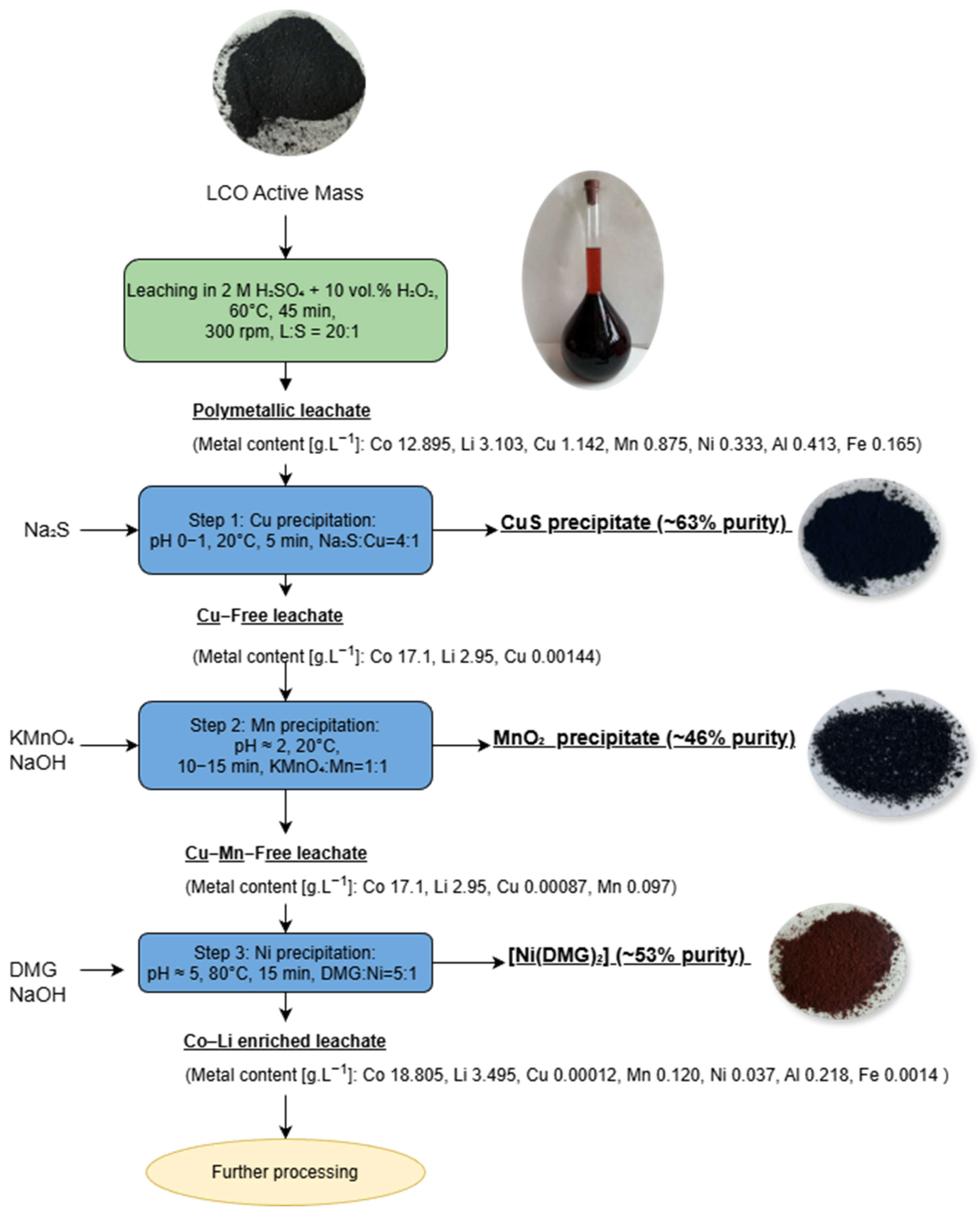
The sequential precipitation process effectively concentrated Co and Li in the final leachate while removing most accompanying metals. As shown in the final analysis, the proposed purification sequence is highly effective, reducing the Fe concentration to a negligible level of 0.0014 g·L
−1 and Al to 0.218 g·L
−1. Mn was significantly reduced from 0.875 g·L
−1 to 0.120 g·L
−1 (
Table 12). Although these residual amounts of Mn and Al indicate that oxidation and precipitation were not 100% complete under the applied conditions, they are sufficiently low not to interfere with the subsequent selective recovery of Co and Li. T The Co–Li-enriched leachate thus represents a concentrated, refined feed solution for subsequent selective recovery, while minor optimization of Mn and Al removal (e.g., optimization of the KMnO
4 dosage or pH) could further enhance the overall efficiency and product purity.
Figure 19 shows a schematic of the proposed sequential precipitation process and the order of steps for removing accompanying metals.