Article

Ultra-High-Temperature Oil-Based Drilling and Completion Fluids: Design and Application Under Harsh Conditions


1
Tianjin Key Laboratory of Complicated Conditions Drilling Fluids, Tianjin 300280, China
2
CNPC Bohai Drilling Engineering Company Limited, Tianjin 300280, China
3
School of Petroleum Engineering, China University of Petroleum (East China), Qingdao 266580, China
*
Author to whom correspondence should be addressed.
These authors contributed equally to this work.
Processes 2026, 14(4), 655; https://doi.org/10.3390/pr14040655
Submission received: 24 October 2025 / Revised: 6 December 2025 / Accepted: 15 January 2026 / Published: 13 February 2026
(This article belongs to the Section Chemical Processes and Systems)

Abstract

The western region of the Tarim Basin is a typical deep and ultra-deep oil and gas reservoir with complex geological conditions in China. This area includes a thick salt–gypsum layer, high-pressure brine layers, and other formations with high pressures and a complex pressure system. These geological features present challenges such as a high risk of drilling fluid contamination by formation fluids, the deep burial of subsalt reservoirs, high temperatures, and difficulty in designing drilling fluids. In this paper, by systematically screening and optimizing key additives, a diesel oil-based drilling and completion fluid system resistant to 220 °C ultra-high temperatures with a density of 2.60 g/cm3 was developed. The overall performance was evaluated. Utilizing an independently developed high-temperature emulsifier (BZ-PSE), an organically modified lithium silicate viscosity modifier (BZ-CHT), and compounded fluid loss reducers (BZ-OLG/BZ-OSL), the system maintained excellent rheological stability (yield point > 4.3 Pa) and filtration control capacity (HTHP fluid loss < 4.8 mL) even after aging at 220 °C. The system demonstrated a resistance to contamination by 30–50% composite brines, 15% salt–gypsum cuttings, and 10% cement, proving its capability to effectively handle extremely thick mud shale, salt–gypsum layers, and high-pressure brine. Field tests were conducted in wells GL 3C, DB X, Boz 13X, and Boz 3X. The results indicated that the high-temperature, high-density diesel oil-based drilling fluids and completion fluids can effectively address the technical challenges posed by wellbore instability in thick salt–gypsum layers, high-pressure brine invasion, and performance degradation under ultra-high temperature conditions, providing reliable technical support for the safe and efficient drilling of similar complex formations.

1. Introduction

As the contradiction between the amount of oil and gas resources exploited globally and the growing energy demand of mankind become increasingly acute, the field of oil and gas exploration and development is constantly expanding. Exploration has gradually progressed from the middle and shallow layers to the deep and ultra-deep layers. According to geological predictions, China is rich in oil and gas resources in ultra-deep layers at depths of around 10,000 m. However, the geological conditions of deep and ultra-deep oil and gas resources are complex [1]. The quality of drilling works is difficult to guarantee because of the coexistence of multiple technical difficulties, including ultra-high temperatures and high pressures, thick salt–gypsum layers, thick high-steepness mud shale, high-pressure brine, and wellbore instability [2,3]. Oil-based drilling fluids have become the preferred solution to these problems due to their excellent resistance to high temperatures, lubrication, wellbore stability, high solids tolerance, and resistance to fluid contamination [4,5]. These fluids can be formulated with various base oils, including low-toxicity mineral oils, synthetic paraffins, and diesel [6]. While diesel is more toxic than the former two, it was selected for this study because of its widespread availability, significantly lower cost, and proven technical maturity in formulating high-density fluids—critical factors for the large-scale field applications targeted by this work.
A prime example is the Tarim Oilfield, a typical deep and ultra-deep oil and gas resource tectonic zone in China, characterized by complex geological conditions. In recent years, the main exploration wells located in the region have reached depths of over 8000 m, with Well LT 1 reaching 8882 m. Well Boz 9, located in the Bozi-DB block of the Kelasu tectonic belt in the Kuqa depression, Tarim Basin, has yielded high-production industrial oil and gas reservoirs, confirming the significant potential of this area. The piedmont zone of Tarim contains a thick salt–gypsum layer, high-pressure brine, and other formations, resulting in high-pressure and complex pressure systems. The density of the drilling fluid used for drilling operations reaches 2.40 g/cm3, and the density of the kill fluid reaches 2.55–2.85 g/cm3. The drilling fluid is highly susceptible to contamination from formation fluids, with saline brine potentially accounting for up to 30% of the contaminant volume. Moreover, the temperature of the target layer is estimated to be 180–200 °C. The specific geological blocks under study in this basin are not categorized as environmentally sensitive areas. This unique context renders diesel-based systems a technically reliable and economically viable solution for developing high-density fluids, which are essential to addressing the extreme downhole challenges.
Currently, the wells located in the Kuqa foreland thrust belt of the Tarim Basin utilize high-temperature and high-density diesel oil drilling fluids after drilling into the salt–gypsum layer. After drilling into the reservoir, the diesel oil-based drilling fluid is also used for completion and well testing operations for periods of up to 15 days. During this period, excellent suspension stability without weighting materials is essential.
To address the aforementioned drilling challenges, this study focused on the development of a highly contamination-resistant, high-temperature, and high-density diesel-based drilling and completion fluid. The distinctive features and novel contributions of this work are threefold: First, a novel imidazolinamide-based emulsifier (BZ-PSE) was molecularly designed and synthesized, featuring a five-membered cyclic structure and grafted anhydride functional groups to confer exceptional interfacial stability at temperatures exceeding 200 °C. Second, through a systematic screening protocol, a synergistic combination of additives was identified, notably including an organo-modified lithium silicate clay (BZ-CHT) for superior high-temperature rheological properties and a tailored blend of fluid loss reducers (BZ-OLG/BZ-OSL) for optimal filtration control. Third, the resulting integrated fluid system has been shown to exhibit a unique ability to maintain a stable performance under extreme conditions (220 °C, 2.60 g/cm3) while resisting severe contamination from complex brine and salt–gypsum cuttings, thereby fulfilling the critical technical requirements for drilling and completing wells in the target formations.

2. Materials and Methods

2.1. Materials

The following materials were used in the formulation of the oil-based drilling fluid in this study. #0 diesel oil (commercial grade, Sinopec Cangzhou, Cangzhou, China) was used as the base oil. The high-temperature emulsifier, designated as BZ-PSE, was synthesized in this study. Other BZ series products (industrial grade, BHDC, Tianjin, China) were employed as the primary additives. Organophilic clays, such as OC-1 (industrial grade, Hubei *** Company, Wuhan, China), OC-2 (industrial grade, Hubei *** Company, Wuhan, China), and VG-PLUS (commercial grade), were employed as viscosifiers and gelling agents in the drilling fluid. P-4 (industrial grade, Hubei *** Company, Wuhan, China) and OFL (industrial grade, Jiangsu *** Company, Jiangsu, China) were employed as primary fluid loss additives. Inorganic salts (analytical grade, Sinopharm, Beijing, China), including NaCl, CaCl2, and CaO, were used for brine preparation and fluid conditioning. Barite (API grade, Qisheng Mining, Liaoning, China) was used as the weighting material.

2.2. Methods

All drilling and completion fluids were formulated with additive concentrations calculated based on the total volume of the liquid phase (i.e., the sum of #0 diesel oil and CaCl2 brine solution). The rheological properties, high-temperature and high-pressure (HTHP) filtration loss, and electrical stability (ES) of the drilling fluid were measured according to the API Recommended Practice 13B-2 [7].

2.2.1. Fluid Preparation Procedure

The drilling fluids were prepared using a high-speed mixer (Model WT-2000C, Beijing Institute of Exploration Engineering, Beijing, China, or equivalent) following a standardized sequence to ensure homogeneity and proper activation of additives.
Base Fluid and Emulsification: The base fluid was prepared by mixing #0 diesel oil and a pre-prepared calcium chloride (CaCl2) brine solution at the desired oil-to-water ratio (OWR). The primary and secondary emulsifiers were then added to the base fluid. The mixture was sheared at a high speed of 11,000 rpm for 20 min to form a stable water-in-oil emulsion.
Addition of Other Liquid and Powder Additives: With the mixer running at a moderate speed of 11,000 rpm, the following additives were sequentially added, with each component mixed for 20 min before the introduction of the next: the wetting agent (if applicable) and rheology modifier (BZ-MOD); alkalinity provider (CaO); organophilic clay (e.g., BZ-CHT, OC-1); and fluid loss reducers (e.g., BZ-OLG, BZ-OSL, P-4).
Weighting: Barite was added gradually to the formulated mud to achieve the target density. During this process, the mixing speed was adjusted to 8000 rpm to ensure effective suspension and wetting; after all barite was incorporated, the fluid was mixed for a final 40 min at 11,000 rpm to ensure a homogeneous and sag-stable mixture.

2.2.2. Hot Rolling Aging

To simulate the thermal aging under downhole conditions, the prepared drilling fluids were transferred into stainless steel aging cells and hot-rolled in a roller oven (OFI Testing Equipment, Inc., Houston, TX, USA, or equivalent). The aging was conducted at specified temperatures (ranging from 150 °C to 220 °C) for 16 h.

2.2.3. Performance Testing

After hot rolling and cooling to room temperature, the fluids were subjected to a series of performance tests. The detailed procedures are as follows:
Rheological Properties: The rheological properties were measured using an OFITE 900 rotational viscometer (OFI Testing Equipment, Inc., Houston, TX, USA, or equivalent).
Electrical Stability (ES): The electrical stability (ES) was assessed using a Fann 23E ES meter (Fann Instrument Company, Houston, TX, USA, or equivalent) to evaluate the emulsion stability.
HTHP Filtration: The HTHP fluid loss was measured with an OFITE HTHP filter press (Model OFI-171-01, OFI Testing Equipment, Inc., Houston, TX, USA, or equivalent). The standard test was performed at elevated temperatures and a 3.5 MPa (500 psi) differential pressure for 30 min.
Static Sag Stability Evaluation: The prepared completion fluid was placed in an aging cell and subjected to static aging at a specified temperature for a predetermined duration. After aging, the cell was opened to systematically assess the settlement condition. The evaluation included the following observations: liquid precipitation, the fluid volume of the free supernatant, and the characteristics of any sediment (with the thickness of soft precipitate and hard precipitate recorded separately).
Dynamic Sag Factor (SR): The dynamic sag tendency was determined by measuring the dynamic sag factor (SR). The completion fluid was placed in a high-speed mixing cup and stirred using a rotational viscometer at 600 r/min. A syringe was used to extract a sample from the bottom of the cup, and its density (ρ1) was measured. Subsequently, the rotational speed was adjusted to 100 r/min and maintained for 30 min, after which another sample was collected from the bottom, and its density (ρ2) was measured. The sag factor was calculated using the following formula: SR = exp(−kΔρ/ρ), where Δρ = ρ2ρ1.

3. Results and Discussion

3.1. Additive Screening for the Oil-Based Drilling Fluid

3.1.1. Emulsifiers

Being water-in-oil emulsions, the stability of oil-based drilling fluids is governed primarily by the repulsive interactions between emulsion droplets, resulting from the synergistic effects of van der Waals forces, steric repulsion, electrostatic repulsion, and depletion forces [8,9]. These interactions collectively dictate the thermodynamic and kinetic stability as well as the mechanical strength of the emulsion system [10,11]. The magnitude of such repulsive forces is functionally dependent on the surface concentration of the emulsifiers at the oil–water interface [12]. The use of structurally optimized emulsifiers facilitates the formation of a highly coherent and resilient interfacial film, which significantly enhances the colloidal stability and prolongs the stability of the emulsion under downhole conditions.
To enhance the adsorption of hydrophilic groups at the oil–water interfaces and suppress the hydrolysis of amide groups under high-temperature alkaline conditions, this study modified amidoamine–functional compounds via dehydration at 240 °C to synthesize a bis-hydrophobic chain imidazoline amide. This process converted long-chain polyamidoamine emulsifiers into imidazoline–amide variants with five-membered cyclic structures through successive intermolecular and intramolecular dehydration. Subsequently, the unreacted primary and secondary amine groups underwent amidation with small organic carboxylic acid molecules and anhydrides. Finally, an organotin-catalyzed bis-alkene addition to the unsaturated bonds in the tall oil fatty acid hydrocarbon groups was used to introduce anhydride functionalities. The resulting polycarboxylic tall oil fatty acid imidazoline–amide emulsifier demonstrated significantly improved thermal resistance, thereby enhancing the high-temperature stability of the emulsion systems [13,14].
As shown in Figure 1, the peaks at 1644 cm−1, 1599 cm−1, 1192 cm−1, and 1772 cm−1 are attributed to the stretching vibration of amide carbonyl, C=N stretching vibration, C-N stretching vibration, and the stretching vibration of acid anhydride carbonyl, respectively, for the high-temperature-resistant primary emulsifier. Additionally, the peak observed at 721 cm−1 is associated with the rocking vibration of methylene groups, indicating the presence of long alkyl chains in the molecule. For the high-temperature-resistant secondary emulsifier, similar peaks at 725 cm−1, 1645 cm−1, 1608 cm−1, 1175 cm−1, and 1778 cm−1 were also assigned to the characteristic vibrations of amide, imidazoline, and anhydride, respectively. The results indicated that the synthesized high-temperature-resistant emulsifiers were imidazoline–amide-type compounds with unsaturated organic anhydrides grafted onto the fatty group of the tall oil.
To evaluate the high-temperature stability, various oil-based drilling fluids with varied concentrations of primary and secondary emulsifiers were prepared. The rheological, filtration loss, and electrical stability (ES) of the oil-based drilling fluids were measured before and after hot rolling at various temperatures according to the API standard.
As depicted in Table 1, the oil-based drilling fluids formulated with the prepared high-temperature-resistant primary and secondary emulsifiers showed no light liquid precipitation on the surface and no settled solids in the rolling oven after hot rolling. The oil-based drilling fluids after hot rolling exhibited high electric stability (ES), and the changes in the plastic viscosity (PV), yield point (YP), and HTHP filtration loss (FLHTHP) were minimal. The drilling fluid with an oil/water ratio of 85:15 and a 3% emulsifier (by total oil/water volume) was rolled at 220 °C, resulting in an ES above 700 V and a relatively stable YP. The stability of the system can be ascribed to its distinctive molecular design. Whereas conventional research often focuses on formulation parameters like the emulsifier concentration and oil/water ratio [8]; our results underscore the critical role of the molecular structure in ultra-high-temperature applications. Specifically, the rigid five-membered ring and grafted anhydride groups in BZ-PSE facilitate a more resilient interfacial film compared to common commercial emulsifiers that typically degrade above 200 °C [13]. These findings demonstrate that the designed emulsifier provides sufficient interfacial cohesion and steric hindrance to stabilize the emulsion droplets against coalescence and sedimentation under extreme thermal conditions [15].

3.1.2. Organo-Modified Clays

Organo-modified clay is commonly used as a viscosity enhancer in oil-based drilling fluid, which is a collective name for the products of the surface hydrophobic modification of clay minerals, such as montmorillonite, lithium saponite, attapulgite, sepiolite, or bumpy clay with long carbon chain surfactants [16,17,18,19]. Organophilic clay forms a gel in the oil phase, providing high thixotropy and static gel strength for the oil-based drilling fluid. This gel structure can effectively regulate the rheology of the drilling fluid, suspend weighted materials, clean the borehole, and enhance the rate of penetration (ROP). It can form a thin, low-permeability filter cake, reducing the filtration loss volume and minimizing the filtrate–formation interaction. Additionally, it can also stabilize the wellbore through physicochemical effects [20,21,22]. To identify the most effective organophilic clay for high-temperature applications, four organophilic clay products, including OC-1, OC-2, composite-modified BZ-OC, and organo-modified lithium silicate BZ-CHT, were evaluated, and their properties were compared with those of a commercial organophilic clay (VG-PLUS). The diesel oil-based drilling fluids were prepared according to the experimental methods recommended by the API Standards. The drilling fluid formula with an oil/water ratio (OWR) of 83:17 is listed in Table 2.
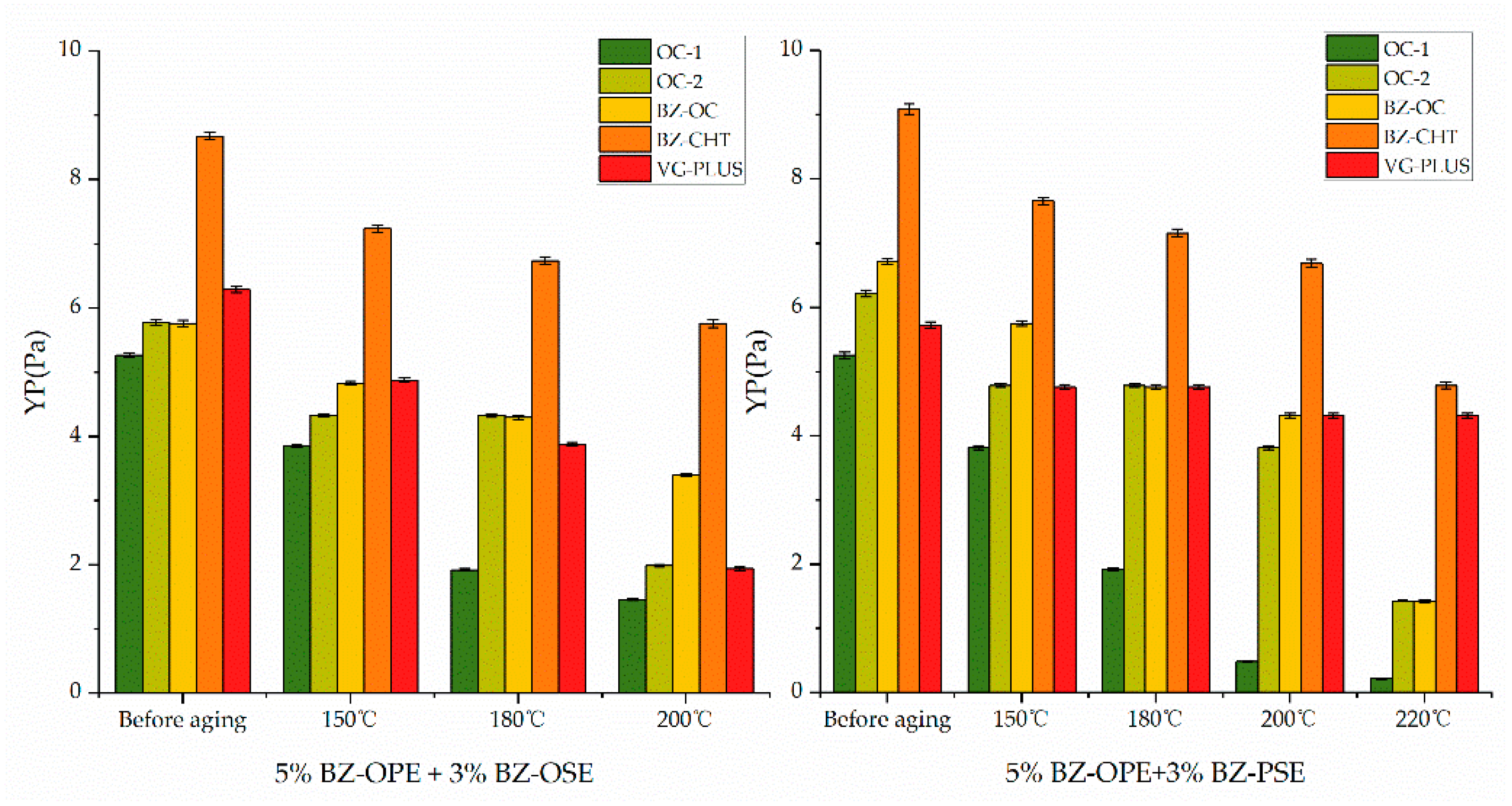
As can be seen from Figure 2, in oil-based drilling fluids with different thermal stability tolerances, organophilic clay significantly influences the YP, the key indicator of a fluid’s ability to suspend solids. At aging evaluation temperatures ranging from 150 °C to 220 °C, the oil-based drilling fluid formulated with organophilically modified lithium aluminum silicate BZ-CHT demonstrated a higher YP and superior thermal stability among the four evaluated organophilic clays. This enhanced performance can be attributed to its ability to effectively build and maintain a stable three-dimensional gel network even at elevated temperatures. Unlike conventional organo-montmorillonites, whose viscosity-building mechanism via layer swelling can be compromised at high temperatures [16,17], the structure of BZ-CHT is likely akin to fibrous organoclays known for robust, thermally stable networks [21]. Among the other three clays, the fluid containing BZ-OC exhibited a higher yield point (YP), indicating a consistent pattern of performance influence. Therefore, based on the evaluation results, BZ-OC and BZ-CHT were selected as the primary organophilic clays for subsequent studies in this paper.

3.1.3. Filtration Loss Reducer

For oil-based drilling fluids, organophilically modified humic acid, organic-modified lignite, and oxidized asphalt are commonly used as filtration loss reducers. These reducers enable the drilling fluid to form a low-permeability filter cake, minimizing fluid invasion and preserving wellbore stability [23,24]. To identify a reducer suitable for ultra-high-temperature conditions, we selected the organophilic lignite fluid loss reducer BZ-OLG, modified humic acid P-4, and gilsonite fluid loss reducers OFL and BZ-OSL. The drilling fluid formula with an OWR of 85:15 is listed in Table 3.
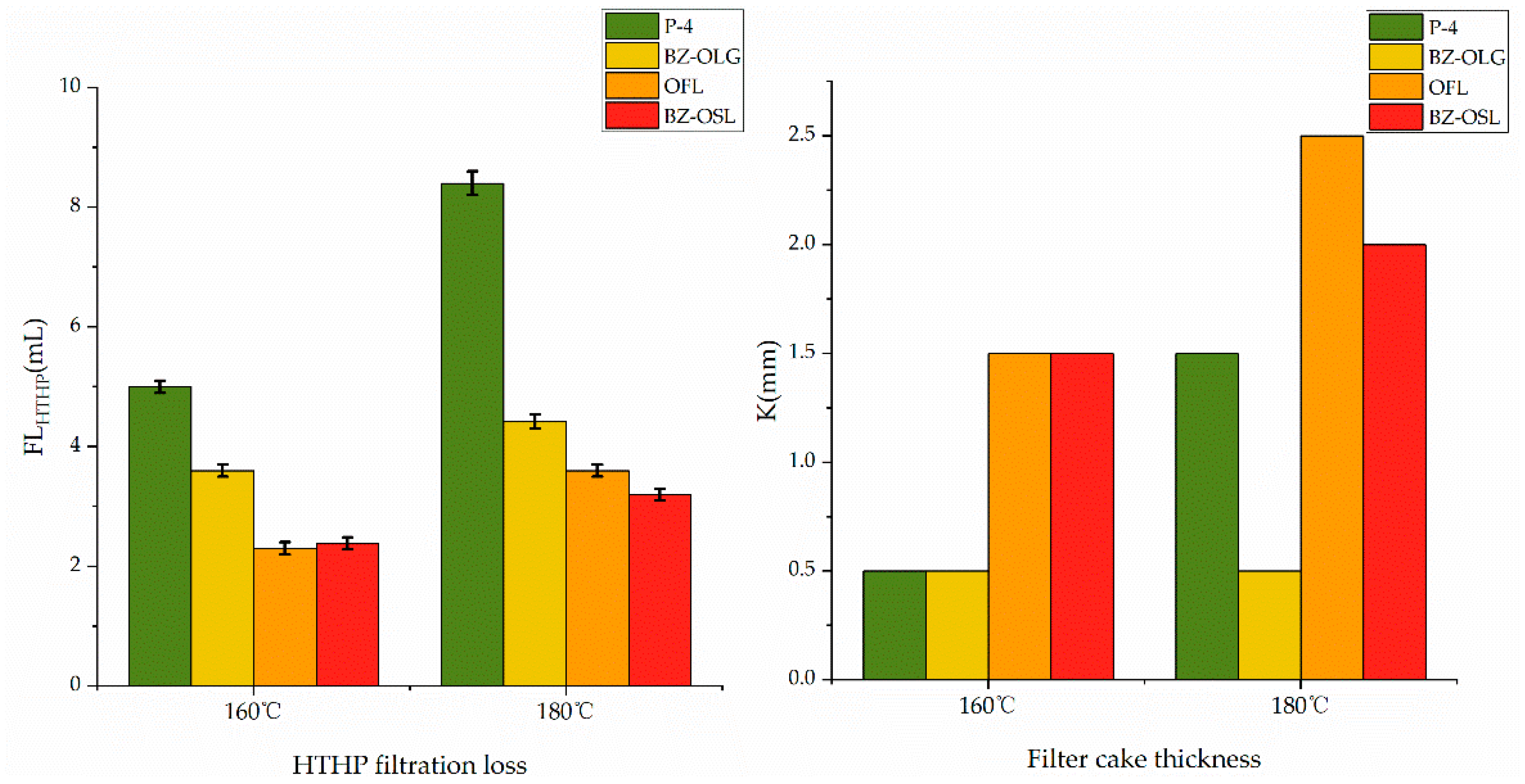
Figure 3 compares the results of HTHP filtration tests conducted on the filtration performance of four fluid loss reducers in diesel oil-based drilling fluids after hot rolling at 160 °C and 180 °C. It can be seen that the different fluid loss reducers have significant variations in the HTHP fluid loss and filter cake thickness of the oil-based drilling fluids. P-4 performed adequately at 160 °C but lost efficacy at 180 °C, indicating thermal degradation. Operating through a mechanism of particle dispersion and plugging, BZ-OLG maintained lower HTHP fluid loss and a thinner filter cake after hot rolling at 180 °C. The lipophilic colloidal fluid loss reducers, OFL (softening point: 160 °C) and BZ-OSL (softening point: 220 °C), can effectively control the HTHP fluid loss of the drilling fluid. However, asphalt-based fluid loss reducers generate thicker HTHP filter cakes in oil-based drilling fluids.
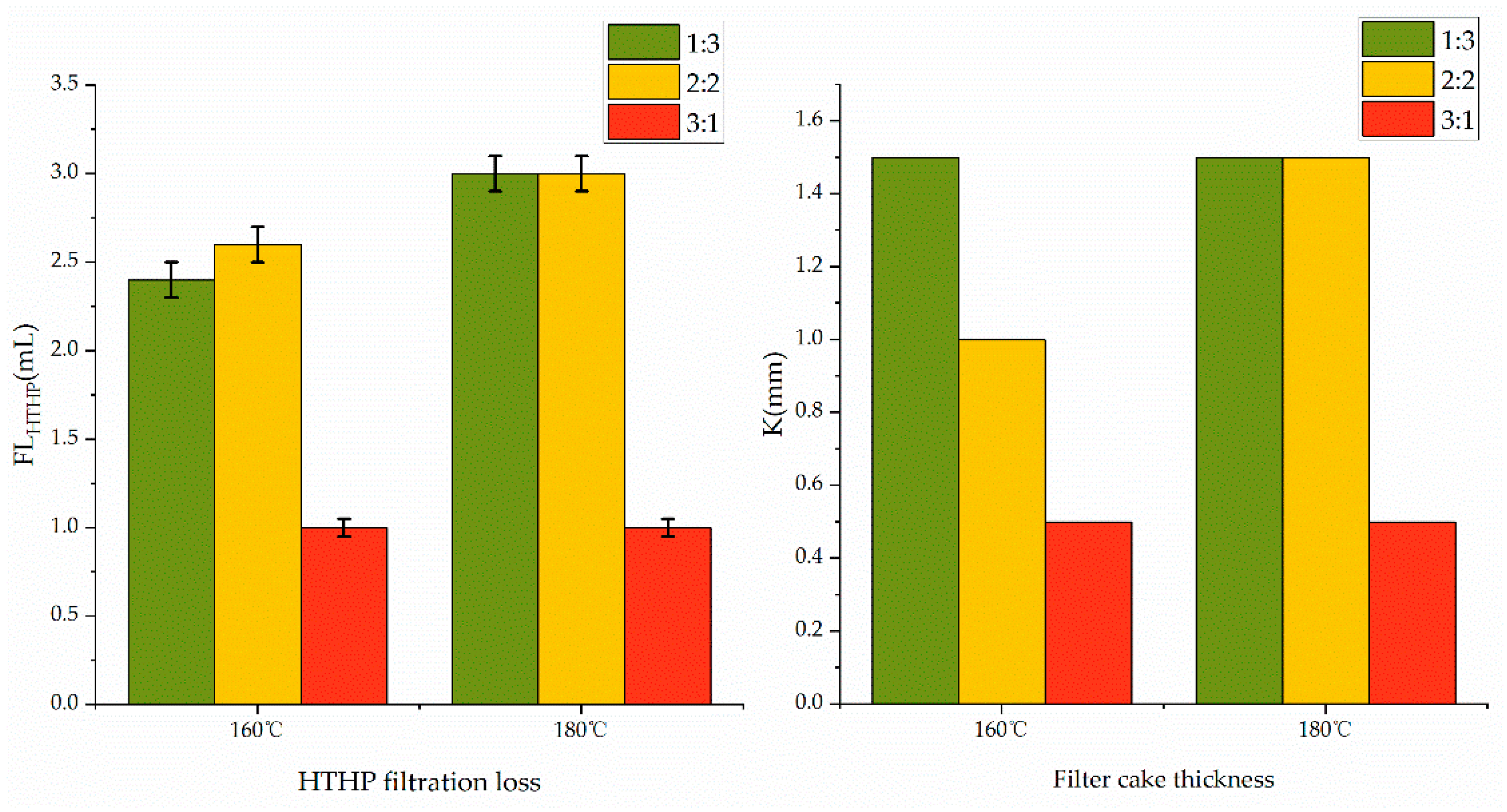
Based on the complementary properties of BZ-OLG and BZ-OSL, they were blended at mass ratios of 1:3, 2:2, and 3:1 to simultaneously optimize the HTHP fluid loss and filter cake quality of the oil-based drilling fluids. These blends were evaluated in the drilling fluid system based on the API Standards. The results are shown in Figure 4. The HTHP filtration loss was reduced to 1.0 mL with a filter cake thickness of 0.5 mm, demonstrating a synergistic enhancement.

3.2. Properties of the High-Temperature and High-Density Diesel Oil-Based Drilling Fluid

Based on the aforementioned additives, the diesel oil-based drilling fluids with a temperature resistance of 220 °C and a density of 2.6 g/cm3 were formed (the base formula is shown in Table 4).
When the density reaches 2.6 g/cm3, the content of barite and other solid phases in the drilling fluid increases significantly, which typically elevates the risk of sagging and rheological instability. After hot rolling at 200 °C, key performance indicators such as the PV, YP, and gel strength showed minimal change (Table 5). This indicates that the synergistic effect of the high-temperature emulsifier and the organoclay effectively mitigated the negative impacts of high solid contents, ensuring robust suspension and high-temperature stability.
During the drilling process, the oil-based drilling fluid is frequently contaminated by the invasion of drill cuttings, cement powder from cementing operations, and high-pressure brine from the salt–gypsum formations [25]. Contamination resistance is a critical property of oil-based drilling fluids, playing a vital role in safe and efficient drilling through salt–gypsum strata. Therefore, the ability of the diesel oil-based drilling fluids to resist contamination from salt–gypsum formation drill cuttings, cement stone, and highly mineralized brine was evaluated, and the test results are shown in Table 6.
The experimental data in Table 6 indicate that cement contamination minimally affects the diesel oil-based drilling fluid performance, whereas high-salinity brine contamination significantly influences the fluid properties. At lower contamination levels (<50%), the property changes are negligible. However, exceeding 50% contamination causes a substantial viscosity increase and severe fluid thickening. No free water separation occurred because the non-ionic imidazoline five-membered ring in the emulsifier maintained its structural stability under high-salinity conditions and resists desorption from the interface. This performance exceeds the 30% brine tolerance limit often reported for conventional systems [25]. Consequently, the emulsion stability of the drilling fluid remains unaffected by the electrolyte concentration, which confirms that the water-in-oil (W/O) emulsion state is maintained. These results demonstrate the high contamination resistance of the developed diesel oil-based drilling fluid.

3.3. Stability Testing of the High-Temperature and High-Density Diesel Oil-Based Completion Fluid

The decrease in the stability of the completion fluid at high temperatures is mainly due to the following factors. First, the insufficient adsorption strength of the key materials (emulsifiers, wetting agents, organophilic clays, rheology modifiers) at oil–water interfaces and solid surfaces leads to desorption from emulsion droplets or weighting material particles. This causes hydrophilic interface coalescence and flocculation. Second, asphalt-based organophilic colloids at high temperatures cause excessive solvation and softening, resulting in asphalt particles agglomerating. Third, the weak spatial framework stability in medium–low-density fluids results from the low number density of the weighting materials, diminishing solid particle structural integrity.
Consequently, an oil-based completion fluid formulation was designed on the basis of experimental studies, with the specific composition detailed in Table 7.
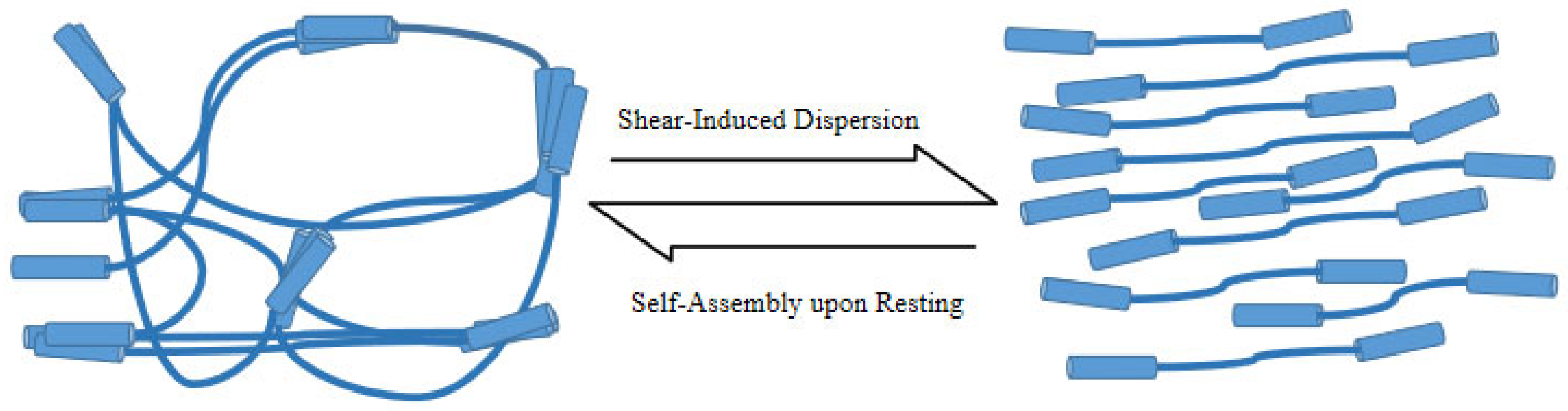
As shown in Table 8, the high-temperature oil-based completion fluids exhibited a dynamic sag tendency (SR) of 1.00 after 360 h of static aging. The observation that all glass rods settled freely to the bottom with no soft deposition confirms the absence of barite sag, demonstrating effective suspension stability under high-temperature static conditions. Furthermore, according to the design strategy, the addition of BZ-CHT (high-temperature-resistant organoclay) was incrementally reduced from 4% to 1%, and the addition of the oil-soluble polyolefin block copolymer BZ-PRM was maintained at 0.5–1.0% (Figure 5). This formulation eliminated the pumpability issues in the high-temperature oil-based completion fluid.
Based on formulation 3, three different weighting methods were adopted for weighting: (1) 12,000-mesh barium sulfate; (2) a 1:1 blend of 12,000-mesh and 6000-mesh barium sulfate; and (3) 6000-mesh barium sulfate. The prepared completion fluids were hot-rolled and statically aged at 200 °C to evaluate their performance. The test results are shown in Table 9.
After hot rolling and static aging at 200 °C, the oil-based completion fluid exhibited no sag, with no signs of soft packing or hard settling. The finer-grade weighting material (12,000-mesh barium sulfate) demonstrated superior sag stability (SR = 1.00), ensuring reliable downhole tool assembly and reservoir evaluation in high-temperature well operations. This performance is attributed to the material’s high specific surface area and enhanced sag resistance.
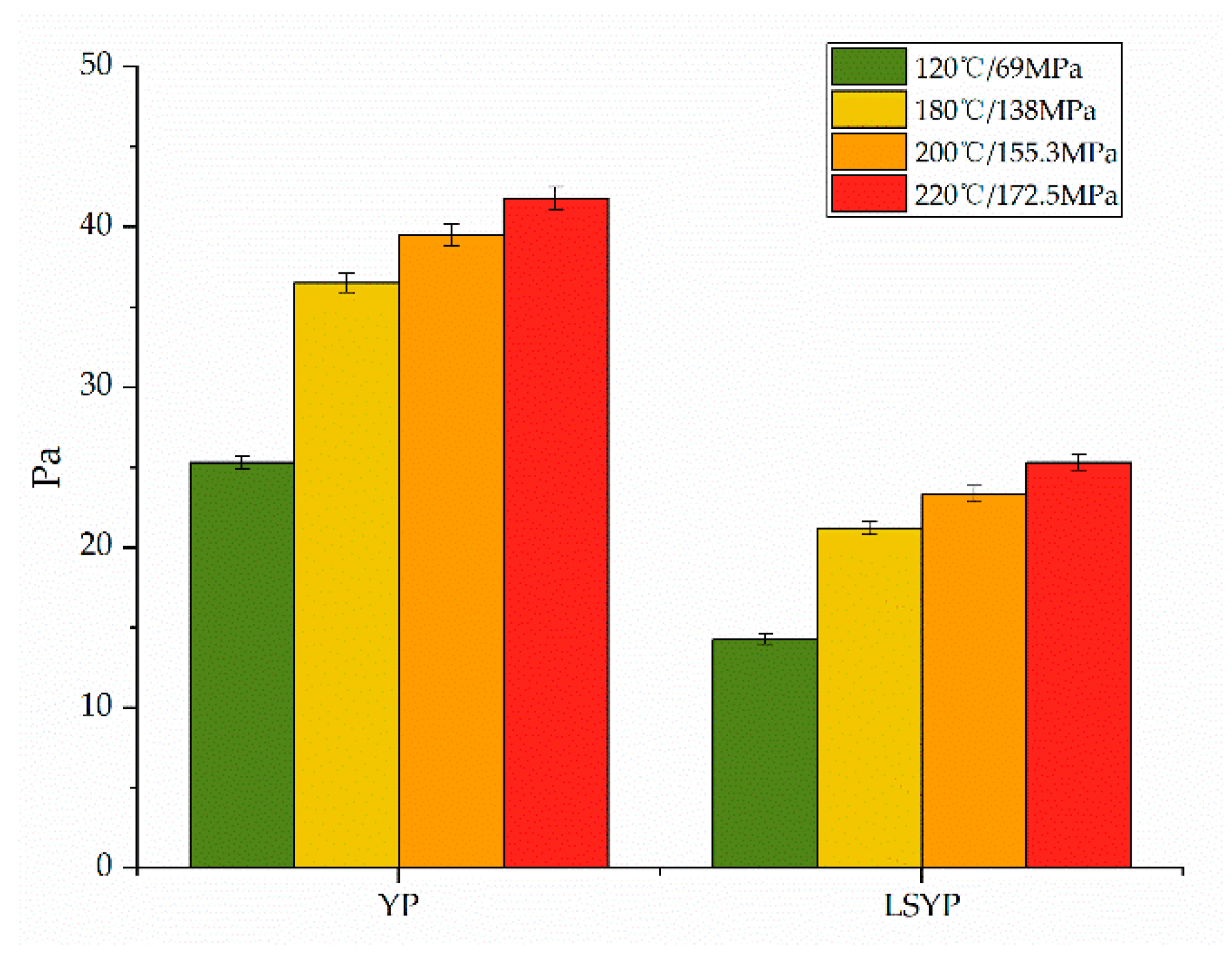
Furthermore, the rheology of the well testing fluid under the simulated downhole temperature and pressure conditions was measured using a Fann ix77 high-temperature and high-pressure rheometer (Fann Instrument Company, Houston, TX, USA). The results are presented in Table 10. During testing to simulate the gradient growth in wellbore temperature–pressure changes, the rheological properties of the well testing fluid had a narrow range of variation and showed a stable rheological profile. Under the same temperature conditions, the rheology of the well testing fluid increased with the increase in pressure. The rheological properties decreased with the increasing temperature under the same pressure conditions. The yield point (YP) and low-shear yield point (LSYP) increased gradually with the combined increase in temperature and pressure (Figure 6).

3.4. Field Application

To further verify the practicability of the oil-based oil well testing fluid formed in this paper, field applications were conducted in the Tarim Basin and yielded excellent operational results. Among them, GL 3C is a key development well deployed by PetroChina, with an actual completion depth of 9396.12 m, which is the deepest well in Asia. The predecessor wells, well GL 3 and well GL 3 Side-track 1, were drilled to more than 8500 m with water-based drilling fluids. Their challenges included complex downhole conditions, high torque and drag, difficulties in directional drilling, and frequent pipe sticking. To address these issues, the switch to an oil-based drilling fluid system was essential, as it effectively stabilized the wellbore, reduced drill string friction, and minimized stuck pipe incidents [26,27].
As shown in Table 11, the fluid maintained stable rheological properties across the interval from 7713 to 9396 m. This stability is a direct result of the effective suspension capability provided by the BZ-CHT organoclay and the stable emulsion structure formed by the BZ-PSE emulsifier. This performance was crucial for ensuring effective hole cleaning, reducing torque and drag, and preventing pipe sticking, which were key factors in the successful drilling and completion of this record-breaking well.
Well DB X, the first ultra-deep well targeting a massive salt formation in the Junggar Basin, utilized the diesel oil-based drilling fluid from the third to the fifth spud. From the test data in Table 12, it can be seen that the drilling fluid in this paper maintained a low viscosity and high dynamic shear in field applications, with high electrical stability and effective fluid loss control. At a density of 2.38 g/cm3, the fluid exhibited reliable suspension stability, demonstrated by stable rheology and no barite sag. This confirms the ability of the BZ-CHT organoclay and emulsifier system to form a stable gel structure under challenging downhole conditions for the effective suspension of the weighting material.
The operational challenges and key outcomes encountered during the application of this fluid system in wells DB X, Boz 13X, and Boz 3X are summarized in Table 13. Both well Boz 3X and well Boz 13X encountered high-pressure brine formations during the third spud. During the construction process, the contaminated drilling fluids were supplemented with emulsifiers and wetting agents, and the oil/water ratio of the drilling fluids was adjusted to ensure the high electrical stability and rheological properties of the oil-based drilling fluids. The success of this remedial action in recovering fluid properties underscores the system’s inherent contamination resistance, as quantitatively demonstrated in the laboratory, where the fluid tolerated up to 50% composite brine (Table 6).
The well completion and oil testing of well DB X and well Boz 13X were conducted with the oil well testing fluid in this paper. After 15 days of static downhole aging, the field drilling fluid achieved normal circulation upon pump restart, and the lowest pumping pressure was only 0.9 MPa. This field observation directly correlates with the excellent sag stability (SR = 1.00) and consistent rheology under high-temperature static conditions demonstrated by the completion fluid in laboratory tests (Table 8) and is summarized in Table 14.
Several wells tested in the field were electrically tested to the end, with a success rate of 100%. The field applications demonstrate that the developed drilling and completion fluid system provides stable rheology, effective filtration control, high contamination resistance, and reliable sedimentation stability. These properties collectively ensured the successful drilling of massive salt–gypsum formations, high-pressure brine formations, and the completion of ultra-deep wells with oil testing.

4. Conclusions

To address the technical challenges associated with ultra-deep formations, such as high temperatures, complex pressure regimes, and wellbore instability, this study developed a diesel oil-based drilling and completion fluid system capable of withstanding extreme temperatures up to 220 °C and achieving a density of 2.60 g/cm3. The following conclusions can be drawn:
(1)
The synthesized imidazolinamide-based emulsifier BZ-PSE, engineered with a five-membered ring and grafted anhydride groups in its molecular structure, forms a robust interfacial film under ultra-high-temperature conditions. The five-membered ring enhances the molecular rigidity and adsorption energy, while the grafted anhydride groups promote strong lateral interactions, which collectively form a robust interfacial film that is key to maintaining high electrical stability (>700 V) even after aging at 220 °C. Meanwhile, the organo-modified lithium silicate BZ-CHT demonstrates superior gel-building and suspension capabilities over conventional organoclays at elevated temperatures, effectively ensuring the sag stability of high-density fluids by forming a durable, three-dimensional network under long-term thermal aging.
(2)
The drilling fluid system formulated with these optimized additives retains stable rheological properties and low fluid loss (<4.8 mL) after dynamic aging at 220 °C. It also exhibits exceptional contamination resistance, withstanding invasion by up to 50% composite brine and 15% salt–gypsum cuttings while maintaining fluid loss and rheological parameters within the specified design window. The overall performance meets the technical requirements for safely drilling salt–gypsum intervals in ultra-deep wells.
(3)
This fluid system has been successfully applied in several high-risk wells, including GL 3C—which was the deepest well in Asia at the time of drilling, with a total depth of 9396 m—as well as Well DB X. Field monitoring confirmed that the fluid maintained an SR of 1.00 throughout multi-day completion tests, with no evidence of hard settlement and low restart pressure, demonstrating excellent long-term suspension stability. Its strong resistance to salt–gypsum and brine contamination effectively mitigated wellbore instability and fluid incompatibility issues in the target blocks, thereby ensuring the successful drilling, completion, and testing of these ultra-deep wells.
In summary, this ultra-high-temperature, high-density oil-based drilling and completion fluid system provides an effective and proven technical solution for addressing the challenges posed by deep salt–gypsum formations and high-pressure brine zones. The selection of diesel as the base fluid was justified by its cost-effectiveness and technical maturity, and the strong performance of the developed key additives was successfully validated. This work thus lays a solid foundation for developing low-toxicity oil-based fluids utilizing the same additive technology, providing a direction for future exploration in environmentally sensitive areas.

Author Contributions

Conceptualization, X.Z. and D.D.; methodology, J.Z. and T.L.; investigation, X.Z. and Q.W.; resources, H.Z.; data curation, L.W. and Y.W.; writing—original draft preparation, Q.W.; writing–review and editing, T.L. All authors have read and agreed to the published version of the manuscript.

Funding

This research was funded by the Tianjin Science and Technology Program, grant number 19PTSYJC00120; China National Petroleum Corporation (CNPC) R&D Program, grant number 2020E-2803(JT) and 2023ZZ20; and Bohai Drilling Engineering Co., Ltd. Major R&D Program, grant number 2023ZD08F.

Data Availability Statement

The original contributions presented in this study are included in the article. Further inquiries can be directed to the corresponding authors.

Conflicts of Interest

Authors Qian Wang, Dianbin Dong, Jian Zhang, Tengjiao Liu, Xianbin Zhang, Li Wang and Yuan Wan were employed by the CNPC Bohai Drilling Engineering Company Limited. The remaining author declarse that the research was conducted in the absence of any commercial or financial relationships that could be construed as a potential conflict of interest.

References

  1. Shmoncheva, Y.Y.; Jabbarova, G.V.; Abdulmutalibov, T.E. Drilling Fluids in Complicated Conditions: A Review. Naft.-Gaz 2023, 79, 651–660. [Google Scholar] [CrossRef]
  2. Li, J.X.; Li, Q.H.; Li, N.; Teng, X.Q.; Ren, L.L.; Liu, H.T.; Guo, B.; Li, S.X.; Hisham, N.-E.-D.; Al-Mujalhem, M. Ultra-High Density Oil-Based Drilling Fluids Laboratory Evaluation and Applications in Ultra-HPHT Reservoir. In Proceedings of the SPE/IATMI Asia Pacific Oil & Gas Conference and Exhibition, Bali, Indonesia, 29–31 October 2019. [Google Scholar] [CrossRef]
  3. Zhang, L.; Xie, T.; Hou, X.; Li, W.; Jin, J. Study on Safe Drilling Cycle of Soft Mudstone of Minghuazhen Formation in an Oilfield in Bohai Sea. Unconv. Oil Gas 2024, 11, 134–139. [Google Scholar]
  4. AlBahrani, H.; Alsheikh, M.; Wagle, V.; Alshakhouri, A. Designing Drilling Fluids Rheological Properties with a Numerical Geomechanics Model for the Purpose of Improving Wellbore Stability. In Proceedings of the IADC/SPE International Drilling Conference and Exhibition, Galveston, TX, USA, 8–10 March 2022. [Google Scholar] [CrossRef]
  5. Nutskova, M.V.; Kupavykh, K.S.; Sidorov, D.A.; Lundaev, V.A. Research of Oil-Based Drilling Fluids to Improve the Quality of Wells Completion. IOP Conf. Ser. Mater. Sci. Eng. 2019, 666, 012065. [Google Scholar] [CrossRef]
  6. Yan, L.; Li, Q.; Guo, X.; Guan, X.; Wang, Y.; Liu, L.; Jiang, J.; Song, J.; Han, C. Environmentally friendly bio-based additives in oil-based drilling fluids: Efficient synthesis, well-ordered self-assembly, exceptional ultra-high-temperature resistance, and excellent anti-settling properties. Colloids Surf. A Physicochem. Eng. Asp. 2025, 719, 137014. [Google Scholar] [CrossRef]
  7. API RP 13B-2-2023; Recommended Practice for Field Testing Nonaqueous-Based Drilling Fluids. American Petroleum Institute: Washington, DC, USA, 2023.
  8. He, R.B.; Liu, X.Q.; Xie, T.; Geng, T.; Dong, P.H. The Influence Study on Stability of Oil-Based Drilling Fluids Emulsion. J. Oil Gas Technol. 2020, 42, 56–65, (In Chinese with English Abstract). [Google Scholar] [CrossRef]
  9. Zhao, C.; Qiu, Z.S.; Zhang, X.B.; Zhong, H.Y.; Huang, D.Q.; Wei, J.R.; Zhang, J. Improving the Oil-Based Drilling Fluid’s Rheological Properties with Polyamidoamine Copolymers. Fresenius Environ. Bull. 2021, 30, 2201–2209. Available online: https://www.prt-parlar.de/download_list/?c=FEB_2021 (accessed on 20 March 2024).
  10. Shen, Z.; Zhang, H.; Yu, X.; Li, J. Experimental optimization of high-temperature-resistant and low oil–water ratio high-density oil-based drilling fluid. Processes 2023, 11, 1129. [Google Scholar] [CrossRef]
  11. Hou, J.; Huang, T.; Alotaibi, M.; AlSofi, A. Long-term thermal stability of ionic surfactants for improving oil production at high-salinity high-temperature conditions. ACS Omega 2024, 9, 11976–11986. [Google Scholar] [CrossRef]
  12. Chen, Y.R.; Song, Q.; Tan, Y.B. Synthesis, Aggregation Behavior of Alternating Copolymer Emulsifier in Oil Solution and Its Application in Oil-Based Drilling Fluids. J. Mol. Liq. 2022, 348, 118011. [Google Scholar] [CrossRef]
  13. Fayad, M.M.; Mohamed, D.E.; Soliman, E.A.; El-Fattah, M.A.; Ibrahim, S.; Dardir, M.M. Optimization of Invert Emulsion Oil-Based Drilling Fluids Performance Through Heterocyclic Imidazoline-Based Emulsifiers. Colloids Surf. A Physicochem. Eng. Asp. 2021, 613, 126092. [Google Scholar] [CrossRef]
  14. Yanovsky, V.A.; Fenzel, A.D.; Andropov, M.O.; Fakhrislamova, R.S.; Zakharov, A.S.; Churkin, R.A.; Minaev, K.M. The Effect of Synthesis Conditions of Emulsifier on the Properties of Oil-Based Drilling Muds (Russian). Oil Ind. J. 2018, 6, 93–97. [Google Scholar] [CrossRef]
  15. Hao, X.; Elakneswaran, Y.; Shimokawara, M.; Chen, H. Impact of the temperature, homogenization condition, and oil property on the formation and stability of crude oil emulsion. Energy Fuels 2024, 38, 979–994. [Google Scholar] [CrossRef]
  16. Zhuang, G.Z.; Zhang, Z.P.; Jaber, M. Organoclays Used as Colloidal and Rheological Additives in Oil-Based Drilling Fluids: An Overview. Appl. Clay Sci. 2019, 177, 63–81. [Google Scholar] [CrossRef]
  17. Mahmoud, A.; Gajbhiye, R.; Elkatatny, S. Application of Organoclays in Oil-Based Drilling Fluids: A Review. ACS Omega 2023, 8, 29847–29858. [Google Scholar] [CrossRef] [PubMed]
  18. Gautam, R.; Sahai, M.; Kumar, S. Recent Advances in Application of Nanomaterials as Additives for Drilling Fluids. Energy Source Part A Recovery Util. Environ. Eff. 2025, 47, 3496–3519. [Google Scholar] [CrossRef]
  19. Zhang, J.R.; Xu, M.D.; Christidis, G.E.; Zhou, C.H. Clay Minerals in Drilling Fluids: Functions and Challenges. Clay Miner. 2020, 55, 1–11. [Google Scholar] [CrossRef]
  20. Mahmoud, A.; Gajbhiye, R.; Elkatatny, S. Enhanced Performance of Oil-Based Drilling Fluids under HPHT Conditions Using an Organophilic Phyllosilicate. Sci. Rep. 2025, 15, 22447. [Google Scholar] [CrossRef]
  21. Zhuang, G.Z.; Zhang, Z.P.; Yang, H.; Tan, J.J. Structures and Rheological Properties of Organo-Sepiolite in Oil-Based Drilling Fluids. Appl. Clay Sci. 2018, 154, 43–51. [Google Scholar] [CrossRef]
  22. Zhuang, G.Z.; Gao, J.H.; Peng, S.M.; Zhang, Z.P. Synergistically Using Layered and Fibrous Organoclays to Enhance the Rheological Properties of Oil-Based Drilling Fluids. Appl. Clay Sci. 2019, 172, 40–48. [Google Scholar] [CrossRef]
  23. Mahmoud, A.; Gajbhiye, R.; Elkatatny, S. A Novel Rheological Additive for High-Performance Oil-Based Drilling Fluids in High-Pressure and High-Temperature Conditions; GOTECH: Dubai, United Arab Emirates, 2025. [Google Scholar] [CrossRef]
  24. Siddig, O.; Mahmoud, A.A.; Elkatatny, S. A Review of the Various Treatments of Oil-Based Drilling Fluids Filter Cakes. J. Petrol. Explor. Prod. Technol. 2022, 12, 365–381. [Google Scholar] [CrossRef]
  25. Cui, X.B.; He, S.L.; Wang, X.; Ni, X.X.; Yang, H.J.; Wang, J.H.; Gao, S. A New Method for Treating Saline Water Damage of Oil-Based Drilling Fluid Paste in Salt Beds. Nat. Gas Ind. 2023, 43, 105–111, (In Chinese with English Abstract). [Google Scholar]
  26. Wang, Y.D.; Wang, Y.Z.; Ran, B.; Xing, P.Y.; Xin, X.L.; Li, Y. Research on High Density Oil-Based Drilling Fluid and Application in the Southern Edge of Junggar Basin, China. Open J. Yangtze Oil Gas 2018, 3, 253–262. [Google Scholar] [CrossRef][Green Version]
  27. D’Amicis, S.; Pagani, M.; Matteucci, M.; Piroddi, L. Stuck Pipe Prediction from Rare Events in Oil Drilling Operations. Upstream Oil Gas 2023, 29, 125–140. [Google Scholar] [CrossRef]
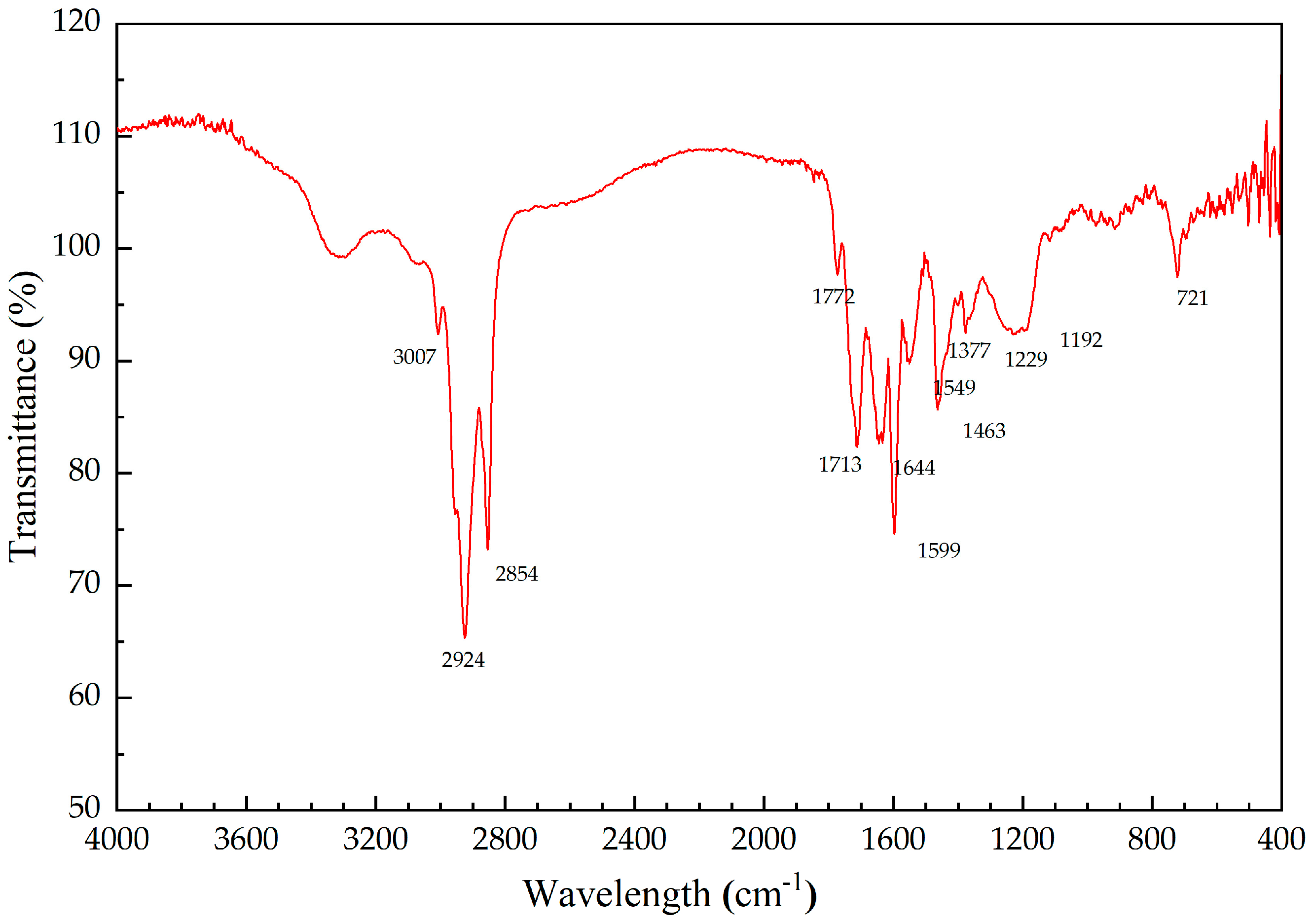
Figure 1. The infrared spectra of the high-temperature oil-based drilling fluid emulsifier.
Processes 14 00655 g001
Figure 2. The effect of the organophilic clay on the YP of the diesel oil-based drilling fluid at different temperatures.
Processes 14 00655 g002
Figure 3. The influence of the fluid loss reducer on the HTHP filtration loss and filter cake thickness of oil-based drilling fluids.
Processes 14 00655 g003
Figure 4. The influence of the fluid loss reducer compounding ratio on the HTHP filtration loss and filter cake thickness of oil-based drilling fluids.
Processes 14 00655 g004
Figure 5. A reversible self-assembled structure formed by the rigid block in the oil phase of the block copolymer.
Processes 14 00655 g005
Figure 6. YP and LSYP of oil-based completion fluids at different temperature–pressure conditions.
Processes 14 00655 g006
Table 1. The temperature resistance of the oil-based drilling fluid emulsifiers.
Testing ConditionPV
(mPa·s)
YP
(Pa)
FLHTHP
(mL)
ES
(V)
BHR 1365.8/1328
150 °C × 16 h367.22.81242
180 °C × 16 h354.83.61049
200 °C × 16 h344.84.2917
220 °C × 16 h304.34.8709
1 BHR means before hot rolling.
Table 2. Base formula of diesel oil-based drilling fluids with an oil-to-water ratio (OWR) of 83:17.
ComponentContentUnit
0# diesel255mL
High-temperature-resistant emulsifier30.0g/L
Rheological modifier4.9g/L
CaCl2 solution (25 wt %)52.0mL
CaO34.9g/L
Organophilic clay50.2g/L
Fluid loss reducer40.1g/L
BariteAs required
Note: Additive concentrations are based on the liquid phase volume.
Table 3. The base formula of the diesel oil-based drilling fluids with a water ratio (OWR) of 85:15.
ComponentContentUnit
0# diesel204mL
Primary emulsifier50.0g/L
Secondary emulsifier30.0g/L
Rheological modifier5.0g/L
CaCl2 solution (25 wt %)36.0mL
CaO30.0g/L
Organophilic clay17.9g/L
Fluid loss reducer40.0g/L
BariteAs required
Note: Additive concentrations are based on the liquid phase volume.
Table 4. The base formula of the diesel oil-based drilling fluids with a water ratio (OWR) of 85:15.
ComponentContentUnit
Density2.42.6g/cm3
0# diesel216180mL
BZ-OPE(HT)50.030.0g/L
BZ-OSE(HT)30.040.0g/L
BZ-MOD7.54.0g/L
CaCl2 solution (25 wt %)24.020.0mL
CaO30.030.0g/L
BZ-CHT18.010.0g/L
BZ-OLG30.040.0g/L
BZ-OSL30.015.0g/L
BariteAs required
Note: Additive concentrations are based on the liquid phase volume.
Table 5. Properties of diesel oil-based drilling fluids with an OWR of 85:15 before and after hot rolling.
Density
(g/cm3)
Testing ConditionAV
(mPa·s)
PV
(mPa·s)
YP
(Pa)
Φ6Φ3Gel
(Pa/Pa)
FLHTHP
(mL)
ES
(V)
2.4BHR958213.011104.5/7.2-2027
AHR (180 °C)97897.7642.4/5.71.01524
2.6BHR816714.015147.5/9.4-2034
AHR (200 °C)807010.51194.5/6.71.02036
Table 6. Contamination performance data of the diesel oil-based drilling fluids.
Testing ConditionAV
(mPa·s)
PV
(mPa·s)
YP
(Pa)
Φ6Φ3Gel
(Pa/Pa)
FLHTHP
(mL)
ES
(V)
Before75677.5763.5/5.5-1508
30% (180 g/L NaCl + 120 g/L CaCl2)1007425.519167.7/8.6-618
50% (180 g/L NaCl + 120 g/L CaCl2)13710333.5272210.5/11.5-382
15% drill cuttings from the salt–gypsum formations77715.5762.9/4.32.5955
10% cement75696.0652.9/4.33.81380
Note: Contamination concentrations are given in vol% of the base drilling fluid.
Table 7. Base formula of diesel oil-based drilling fluids with OWR of 85:15.
ComponentContentUnit
Serial No.123/
0# diesel225250250mL
BZ-OPE(HT)30.030.030.0g/L
BZ-WET40.040.040.0g/L
BZ-MOD10.010.010.0g/L
CaCl2 solution (25 wt %)2500mL
CaO40.040.040.0g/L
BZ-CHT40.010.010.0g/L
BZ-OLG80.080.080.0g/L
BZ-PRM5.05.010.0g/L
2000 mesh CaCO3100.0100.0100.0g/L
6000 mesh bariteAs requiredAs required/
12,000 mesh barite//As required
Note: Additive concentrations are based on the liquid phase volume.
Table 8. The base formula of the diesel oil-based completion fluids.
Serial NoTesting ConditionPV
(mPa·s)
YP
(Pa)
Φ6Φ3Gel
(Pa/Pa)
ES
(V)
SRSettlement Stability Description
(cm)
Liquid PrecipitationFluid VolumeSoft PrecipitateHard Precipitate
1BHR-----------
AHR (16 h)9132.6504734.4/56.720141.00----
AHS 1 (360 h)11543.7585632.9/72.120371.000.510.500
2BHR5321.6282615.7/21.62037-----
AHR (16 h)5718.8242315.9/19.820321.00----
AHS (360 h)5517.3201811.6/16.420191.002.011.000
3BHR6326.9333116.6/21.62027-----
AHR (16 h)7022.6282615.9/20.620231.00----
AHS (360 h)8024.0302813.6/26.220241.002.011.500
1 AHS: After high-temperature standing.
Table 9. Stability testing of the diesel oil-based completion fluids.
Weighing MethodTesting ConditionPV
(mPa·s)
YP
(Pa)
Φ6Φ3Gel
(Pa/Pa)
ES
(V)
SRSettlement Stability Description
(cm)
Liquid PrecipitationFluid VolumeSoft PrecipitateHard Precipitate
12,000 meshBHR5216.8222014.1/18.720201.00----
AHR (16 h)5414.9191812.1/17.620221.003.513.500
AHS (360 h)5314.9191811.6/17.520221.003.011.500
12,000 mesh:6000 mesh = 1:1 ratioBHR3812.0151410.4/14.520121.00----
AHR (16 h)3710.613128.6/12.820221.004.513.500
AHS (360 h)4010.613128.8/13.220321.003.512.500
6000 meshBHR307.21096.4/11.320201.00----
AHR (16 h)327.81085.5/9.820301.005.013.500
AHS (360 h)357.81086.5/10.320221.004.012.000
Table 10. HTHP rheological profiles of the high-temperature oil-based completion fluids.
T
(°C)
P
(MPa)
AV
(mPa·s)
PV
(mPa·s)
YP
(Pa)
YP/PV RatioΦ6Φ3LSYP
(Pa)
12034.561.039.022.00.5628.027.012.5
12069.083.558.025.50.4434.032.014.4
15069.061.031.030.00.9735.534.015.6
150103.579.045.034.00.7644.041.018.2
180103.566.034.032.00.9443.541.519.0
180138.080.544.036.50.8347.546.021.4
200138.073.035.038.01.0951.049.022.6
200155.379.540.039.50.9955.052.023.5
220155.375.035.040.01.1457.054.024.5
220172.581.039.042.01.0861.057.025.4
Table 11. Performance of the drilling fluids in well GL 3C.
Measured Depth
(m)
ρ
(g/cm3)
Viscosity
(s)
PV
(mPa·s)
YP
(mPa·s)
Gel
(Pa/Pa)
FLHTHP
(mL)
77131.38573273.5/5.04.6
82351.42603992.5/4.53.4
87911.5560409.52.5/4.53.6
92351.556040103.5/7.04.0
9396.121.466038103.0/6.04.0
Table 12. Performance of the drilling fluids in well DB X.
Measured Depth
(m)
ρ
(g/cm3)
AV
(mPa·s)
PV
(mPa·s)
YP
(Pa)
Φ6Φ3Gel
(Pa/Pa)
ES
(V)
FLHTHP
(mL)
O/W
48402.3599936.0653.0/4.05843.076/24
68002.3580737.0874.0/5.58032.084/16
73622.3865614.0653.0/4.510422.090/10
80052.3670655.0653.0/5.05872.083/17
81431.7525214.0432.0/4.05902.486/14
82711.7526224.0432.0/4.05802.085/15
Table 13. Operational challenges and application status of oil-based drilling and completion fluids.
Well NumberConstruction Well SectionsDifficultiesField Effects
DB X4837–8271.4 mHuge salt–gypsum layer, high-pressure brine, salt bottom leakage, high-temperature reservoir completion test, etc.Drilling through the salt–gypsum for 3200 m, smooth casing in the salt–gypsum layer, smooth plugging of the salt bottom jam, and outstanding oil test results in the target layer.
Boz 13X5188–7268 mHigh-pressure brine formations in the third spud (5975.93 m), salt–gypsum layer, and target layer oil testDispose of 443.69 m3 of formation water and 1274 m3 of contaminated oil-based drilling fluids; smooth construction of third spud casing to the completion of drilling; obvious effect of oil testing in the target layer.
Boz 3X5646–6289 mHigh-pressure brine formations in the third spud (5646.97 m)Disposed of 1076 m3 of formation water, leaking 1956 m3 of drilling fluids; disposed of 1469 m3 of contaminated drilling fluids. Well completion went smoothly.
Table 14. Performance of the completion fluids at well DB X and well Boz 13X.
Well NumberWorking ConditionExperimental ResultsOperation Results
DB XMidway oil testing170 °C for 15 days, no hard sinking at the bottom of the tank (glass rod falls freely to the bottom and then against the wall)Pump speed was 1.3 L/s, and pump start-up pressure was 0.9 MPa
Oil testing completionPump speed was 1.3 L/s, and pump start-up pressure was 5.8 MPa
Boz 13XOil testing completion140 °C for 10–14 days, no hard sinking at the bottom of the tank (glass rod falls freely to the bottom and then against the wall)Pump start-up pressure was 5.5 MPa
Disclaimer/Publisher’s Note: The statements, opinions and data contained in all publications are solely those of the individual author(s) and contributor(s) and not of MDPI and/or the editor(s). MDPI and/or the editor(s) disclaim responsibility for any injury to people or property resulting from any ideas, methods, instructions or products referred to in the content.