


Abstract
Hydroforming has become an effective manufacturing technique for asymmetric corrugated thin-walled tubular components in lightweight automotive structures, owing to its capability to integrally form complex geometries. In this study, a finite-element model of the hydroforming process for 316L stainless-steel asymmetric corrugated thin-walled tubes was established, and three representative internal pressure loading paths—pulsating, linear, and stepped—were investigated using the DYNAFORM/LS-DYNA platform. The effects of different loading paths on material flow behavior, strain evolution, and forming quality, particularly wall-thickness distribution, were systematically compared. Among the three loading strategies, the pulsating pressure path exhibited the most balanced forming performance for asymmetric thin-walled tubes in terms of overall forming quality and wall-thickness control, although limited forming stability was observed in the initial pulsation scheme. To address this limitation, a dual-window orthogonal pulsation strategy was employed to optimize the initial pulsating loading path and further enhance its forming performance. The optimized pulsating curve completely eliminated the wrinkling tendency in the corrugated regions and reduced the maximum wall-thickness thinning ratio from 21.8% to 19.6%. Furthermore, the numerical simulation results show good agreement with experimental observations, with both the average wall-thickness deviation and the minimum wall-thickness error calculated using the interpolation method remaining within 2%. These results confirm the effectiveness of the optimized pulsating loading path for the hydroforming process design of asymmetric corrugated thin-walled tubes.
1. Introduction
Hydroforming processes of metal tubes and sheets are being widely applied in manufacturing because of the increasing demand for lightweight parts in sectors such as the automobile, aerospace, and ship-building industries [1]. The loading path required for hydraulic forming of tubular components with unequal diameters is essentially nonlinear and is very similar to the path observed in tubular hydraulic bulging tests. Although the traditional monotonic linear pressure loading is effective for simple straight tubes or geometrically symmetric components, it is no longer applicable for components with significant axial variations or geometric asymmetries. In such cases, the monotonic loading path often fails to correctly synchronize material flow, resulting in local strain accumulation, excessive thinning of the wall thickness, and, in severe cases, even premature fracture [2,3].
Asymmetric corrugated thin-walled tubes, with their periodic crest–valley features and axial asymmetry, create a complex interplay between radial expansion and axial material flow during hydroforming. The crest and transition fillet regions undergo intense circumferential stretching under internal pressure, leading to rapid strain buildup. Meanwhile, geometric asymmetry narrows material flow routes, heightening the forming quality’s dependence on loading path parameters [4].
To address these issues, pulsating loading has been increasingly introduced into hydraulic bulging processes in recent years. By incorporating periodic loading–unloading–reloading cycles, pulsating pressure allows partial strain relaxation and material redistribution during unloading stages, thereby weakening local stress concentration and promoting coordinated axial feeding. Song Xinyi et al. analyzed tube formability under pulsating water forming conditions using forming limit diagrams and demonstrated that pulsating pressure effectively expands the safe forming domain [5,6]. Loh-Mousavi M. et al. reported that pulsating loading significantly improves die-fitting quality and reduces rupture risk in three-way tube hydroforming [7]. Similarly, Xu Y. et al. showed that pulsating pressure loading exhibits clear advantages in suppressing local thinning and enhancing wall-thickness uniformity in stainless steel tubes [8,9]. From a mechanistic perspective, Mori K. et al. revealed that pulsating loading improves forming performance by regulating strain paths and redistributing stresses, providing a theoretical basis for its engineering application [10,11].
In parallel, various loading path optimization methods have been proposed to further improve forming quality. Zheng Z. et al. developed a multi-objective optimization framework combining NSGA-II with finite element simulations to achieve coordinated optimization of internal pressure paths and axial feeding rates [12,13]. Sabbah Ataya, Chen M. et al. employed response surface methods to analyze parameter sensitivity and optimize loading paths for irregular extruded tubes, offering an effective approach for expanding process windows [14,15]. In addition, Ge Y. and Xu Y. introduced adaptive and fuzzy-control-based strategies for dynamic planning of hydraulic bulging loading paths, achieving notable improvements in forming stability and thickness uniformity for thin-walled tubes and plates [16,17]. These studies indicate that integrating optimization and adaptive control into loading path design is a promising direction for improving the hydroforming of complex tubular components.
Despite these advances, existing studies primarily focus on geometrically symmetric tubes or consider pulsating loading using single-stage strategies and empirically selected parameters. For wave-shaped thin-walled tubes with pronounced axial asymmetry, systematic investigations remain limited [18,19]. The periodic distribution of wave peaks and valleys along the axial direction is prone to cause non-uniform material deformation, and the asymmetry of the structure in the front and back further aggravates local stress concentration and material flow imbalance, making the forming process more sensitive to the loading path parameters. Currently, regarding the mechanism of pulsating loading in the hydraulic bulging of asymmetric wave-shaped tubes, most studies focus on a single loading form or the selection of empirical parameters, and there is a lack of systematic analysis and quantitative optimization methods for the coupling relationship of “loading path–friction conditions–wall-thickness evolution” [20].
Therefore, a systematic investigation into the influence of pulsating loading paths on material flow behavior, strain evolution, and forming quality in the hydraulic bulging of asymmetric corrugated thin-walled tubes is still needed. On this basis, developing a loading path optimization strategy that simultaneously considers forming stability and wall-thickness uniformity is essential for providing reliable theoretical guidance and practical process references for the high-quality hydroforming of complex waveform tubular components.
2. Forming Model Establishment and Preprocessing Analysis
2.1. Design Scheme for the Structure of Formed Parts
This section aims to establish the mechanical basis and deformation characteristics of the asymmetric waveform tube during the hydroforming process. By analyzing the coupled stress–strain state under internal pressure and axial feeding, the fundamental deformation mechanism of the tube is clarified. The proposed mechanical model and deformation zoning provide theoretical support for subsequent structural design, loading path optimization, and forming quality evaluation of asymmetric waveform tubes.
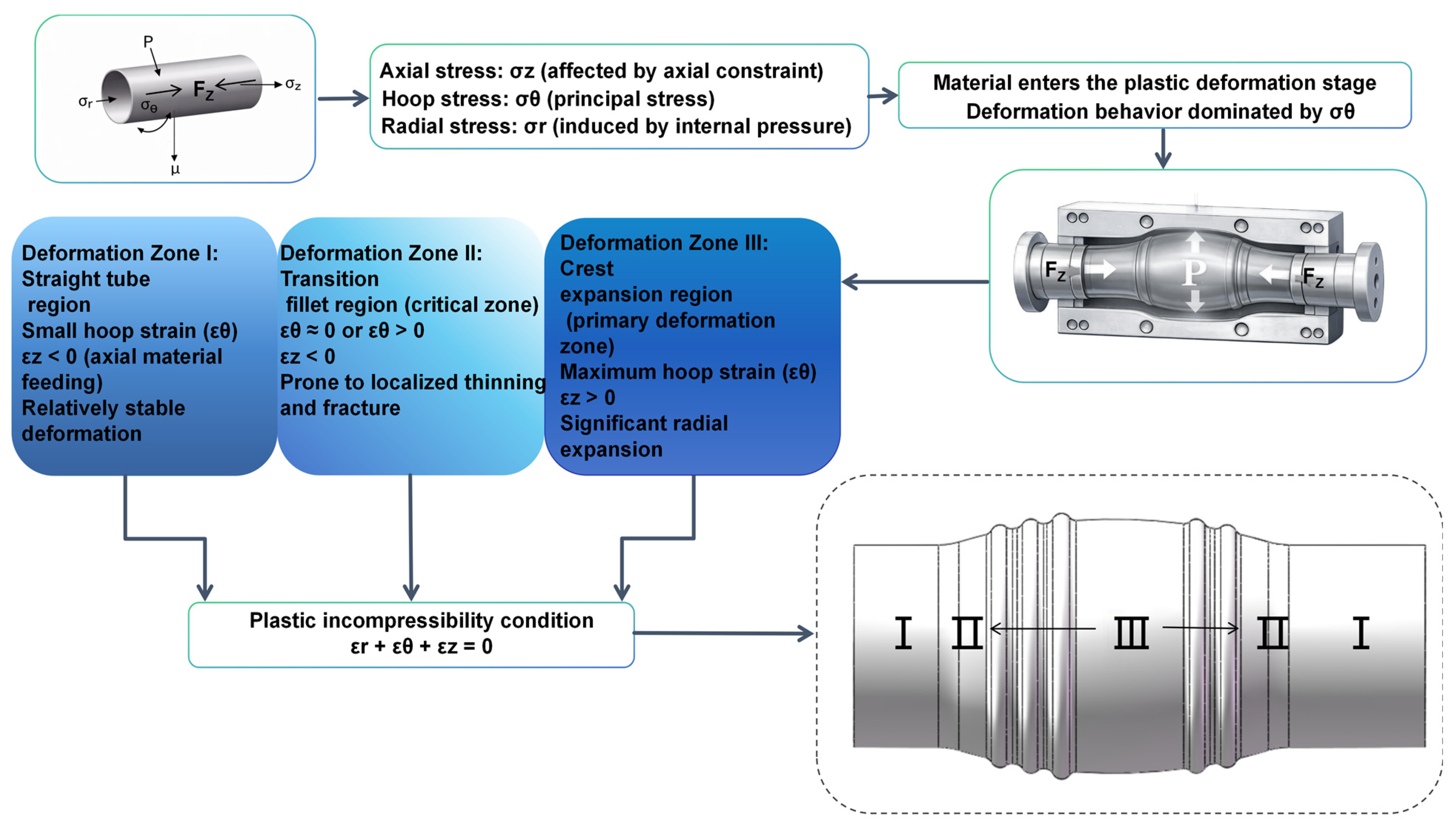
Figure 1 schematically illustrates the stress state and deformation mechanism of the tube during hydroforming under combined internal pressure and axial feeding.
Figure 1.
Model design of asymmetric waveform tube and hydraulic bulging process: mechanical flow chart.
During hydroforming, the tube blank is subjected to a complex three-dimensional stress–strain state resulting from the coupled action of internal pressure and axial feeding force . To clarify the deformation behavior, a differential element along the tube wall thickness is considered.
The principal stress components acting on the tube include the circumferential (hoop) stress , axial stress , and radial stress . Among them, is directly induced by the internal pressure and generally acts as the dominant principal stress controlling the plastic deformation behavior. The axial stress is affected by axial feeding and frictional constraints between the tube and the die, while the radial stress represents the compressive stress caused by internal pressure and mainly contributes to the yielding condition.
As plastic deformation proceeds, the tube can be divided into three characteristic deformation zones along the axial direction, as indicated in Figure 1:
- Zone I (straight tube region) exhibits relatively small hoop strain with negative axial strain due to material feeding, resulting in stable deformation.
- Zone II (transition fillet region) is a critical zone where strain state changes rapidly, making it prone to localized thinning and fracture initiation.
- Zone III (crest expansion region) corresponds to the primary deformation zone, characterized by the maximum hoop strain and significant radial expansion.
Owing to the plastic incompressibility of the tube material, the strain components satisfy the following relationship during plastic deformation, which is Equation (1) [21]:
In the formula, denote the radial, circumferential, and axial strains, respectively.
Due to the geometric variation in the component along the axial direction, the stress state and strain distribution differ significantly among the deformation zones. In the actual forming process, radial expansion driven by circumferential stress and axial material feeding are strongly coupled, directly affecting forming stability. Particularly in transition regions with abrupt section changes, strain concentration is more likely to occur. Rational regulation of the internal pressure loading path and axial feeding strategy is essential for improving local strain distribution, thereby enhancing overall forming quality and forming safety.
2.2. Material Data
Based on the mechanical properties of the material and the structural characteristics of the asymmetric corrugated tube, 316L stainless steel was selected as the research material. The nominal chemical composition (in mass percentage) of 316L stainless steel is shown in Table 1. This composition combination endows it with excellent corrosion resistance and stable plastic deformation properties.
Table 1.
Chemical composition of 316L stainless steel (wt.%).
The room-temperature mechanical properties of the material are summarized as follows: the yield strength is about 290 MPa, the ultimate tensile strength is approximately 580 MPa, the Young’s modulus is 193,000 MPa, and the Poisson’s ratio is 0.30. The total elongation at fracture exceeds 40%, indicating pronounced ductility. In addition, 316L stainless steel exhibits a high strain-hardening capability, which is beneficial for delaying local necking and improving formability under complex multiaxial stress states.
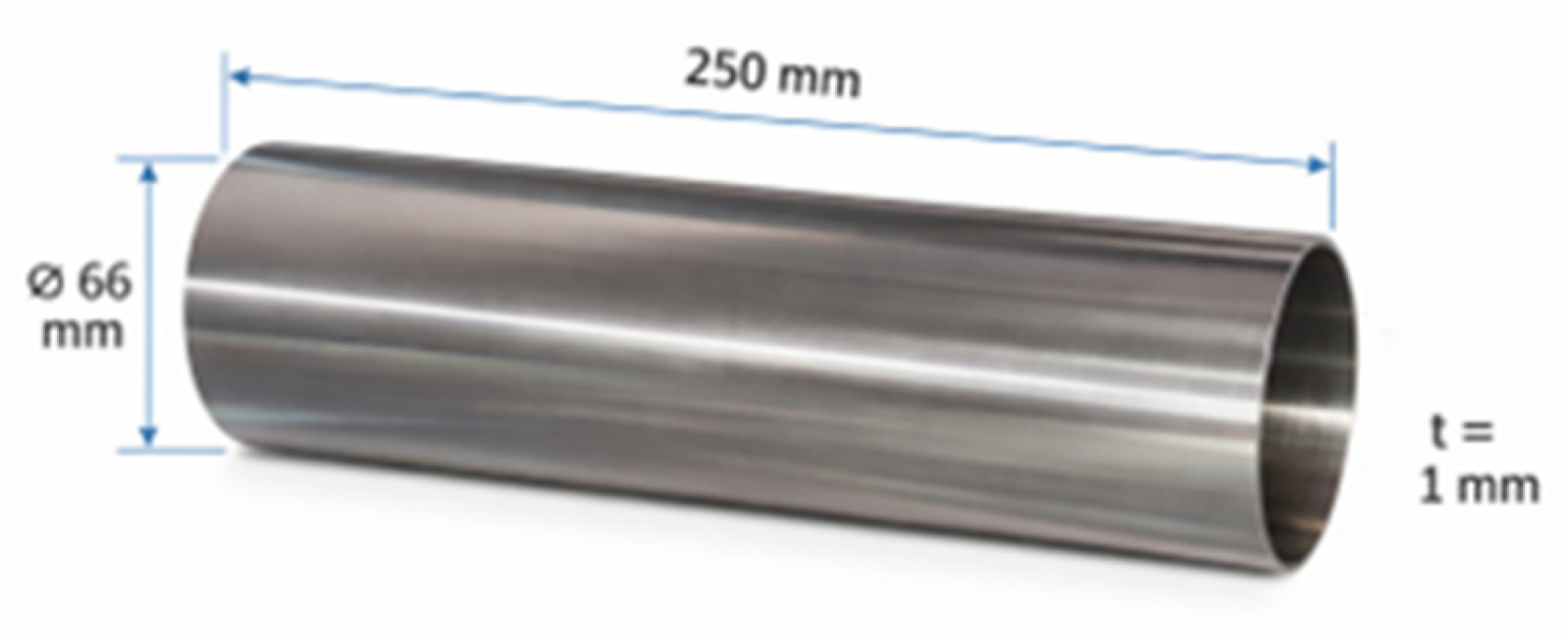
The tube billets used in this study are shown in Figure 2. Their outer diameter is 66 mm, the wall thickness is 1 mm, and the length is 250 mm. These dimensions were selected to ensure sufficient deformation space for the asymmetric waveform structure while avoiding premature instability during hydroforming.
Figure 2.
316L stainless steel tube material.
Owing to its low yield strength, strong strain-hardening behavior, and excellent plasticity under multi-directional tensile loading, 316L stainless steel is well-suited for large plastic deformation and complex stress states encountered in hydroforming. Therefore, it is an appropriate material for the integrated forming study of asymmetric waveform tubes and related energy-absorbing structures [22,23].
2.3. Establishment of the Simulation Model
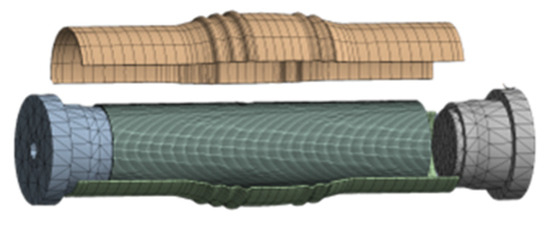
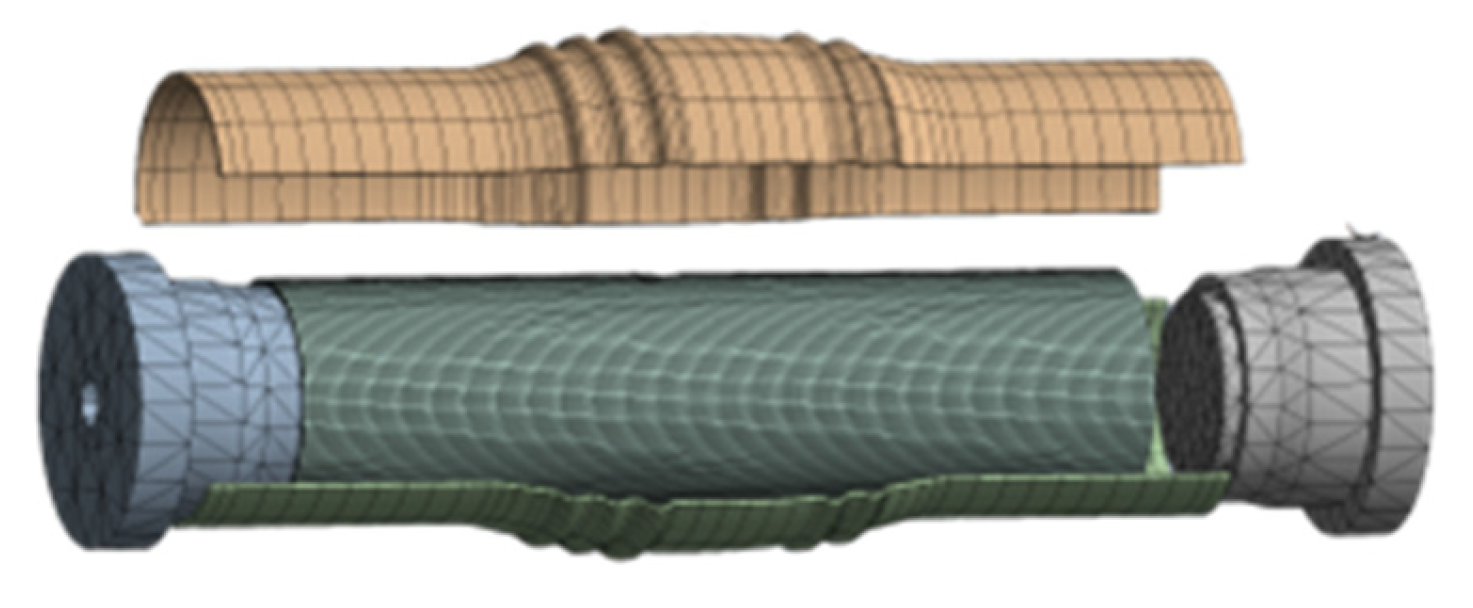
To numerically simulate the hydroforming process of asymmetric corrugated thin-walled tubes, three-dimensional geometrical models of the asymmetric corrugated tube blank, upper die, lower die, left punch, and right punch were first established using SolidWorks 2022. All components were then assembled and exported in IGES format, and subsequently imported into DYNAFORM 5.9.4 for finite element preprocessing [24].
The tube blank was defined as a deformable body and assigned 316L stainless steel material properties. A constant Coulomb friction model was adopted for all contact interfaces between the tube blank and the forming tools, with the friction coefficient set to 0.125. The tube blank was discretized using shell elements with a uniform mesh size of 5 mm to ensure sufficient accuracy in capturing local plastic deformation and wall-thickness evolution.
The left- and right-moving punches, as well as the upper and lower dies, were defined as rigid bodies, since their deformation during the hydroforming process is negligible compared with that of the tube blank. To reduce computational cost while maintaining contact accuracy, a relatively coarser mesh was applied to these rigid components, with the element size set to 8 mm, which is larger than that of the tube blank. The finite element model, after meshing and boundary condition assignment, is shown in Figure 3.
Figure 3.
Asymmetric waveform tube finite element model.
Regarding boundary conditions, the upper and lower dies were fully constrained in all degrees of freedom, while the left and right punches were allowed to move only along the axial direction to provide controlled axial feeding during the forming process. Internal pressure was uniformly applied to the inner surface of the tube blank according to the prescribed loading path. All contact definitions and mesh quality were carefully checked to prevent element distortion or penetration during the simulation.
2.4. Loading Path Design and Analysis
During the hydraulic forming process, the loading path is used to describe the relationship between the internal pressure P and the axial feed rate L over time t. Its function is to guide the flow pattern of the material under the die cavity constraint. A reasonable loading path enables the tube to gradually conform to the die cavity under constraint conditions. At the same time, it helps to suppress local strain concentration, improve wall-thickness uniformity, and reduce the risk of cracking.
According to the empirical conclusions reported in the literature [25,26], the determination of hydroforming pressure generally follows the principles summarized below. Based on the theory of thin-walled circular tubes under internal pressure, the critical bursting pressure is Equation (2):
In the formula : is the initial wall thickness of the tube blank, is the ultimate tensile strength of the material, and is the initial diameter of the tube blank.
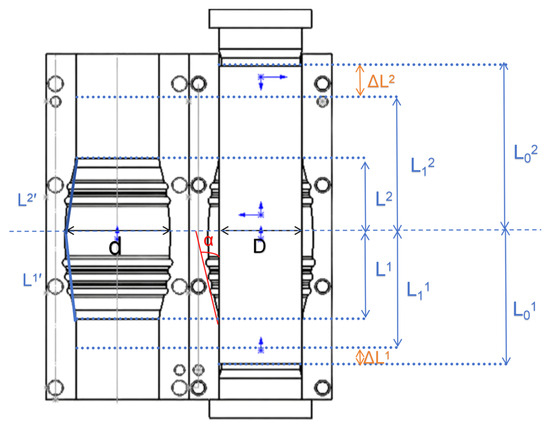
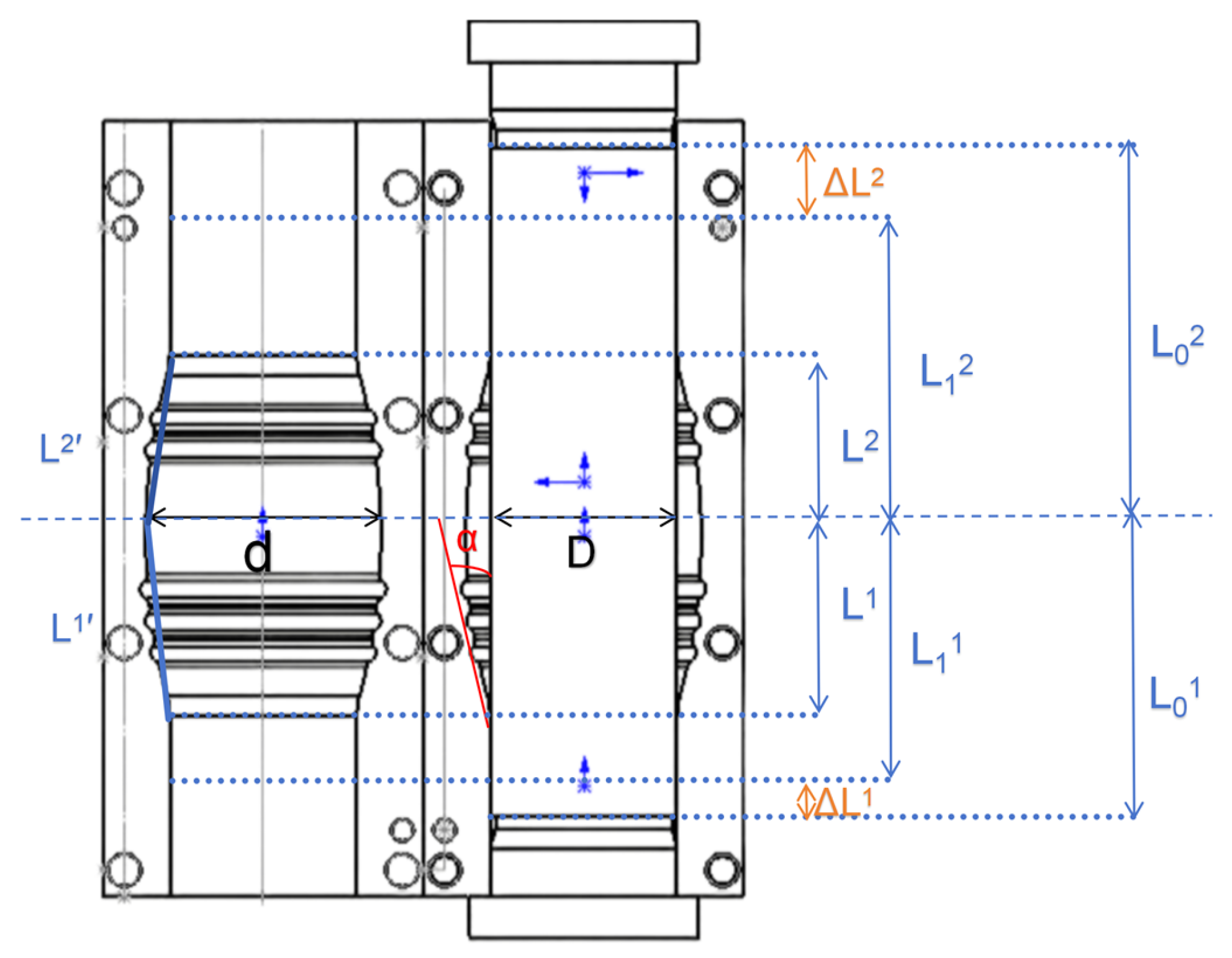
Based on the assumption of approximate volume conservation and geometric relationships, the ideal axial feeding displacement is Equation (3):
In the formula, is the ideal axial feeding displacement; is the initial length of the tube blank; is the length of the formed tube; is the length of the bulging zone; is the length at the maximum diameter section; is the semi-cone angle of the transition region; is the initial outer diameter of the tube; and is the maximum outer diameter of the formed component.
To improve the physical interpretability of Equation (3), a geometric schematic with detailed parameter definitions is introduced; the superscripts 1 and 2 indicate the left and right tube ends with asymmetric axial feeding, as shown in Figure 4.
Figure 4.
Axial feed difference and geometric parameters of asymmetric corrugated thin-walled tubes.
By considering the material properties and practical forming experience, the initial process parameters were preliminarily determined as follows.
The internal pressure was fixed at Pa, with an axial feeding displacement of 15 mm on the left side and 18 mm on the right side, and a friction factor of . Numerical simulations were performed using DYNAFORM.
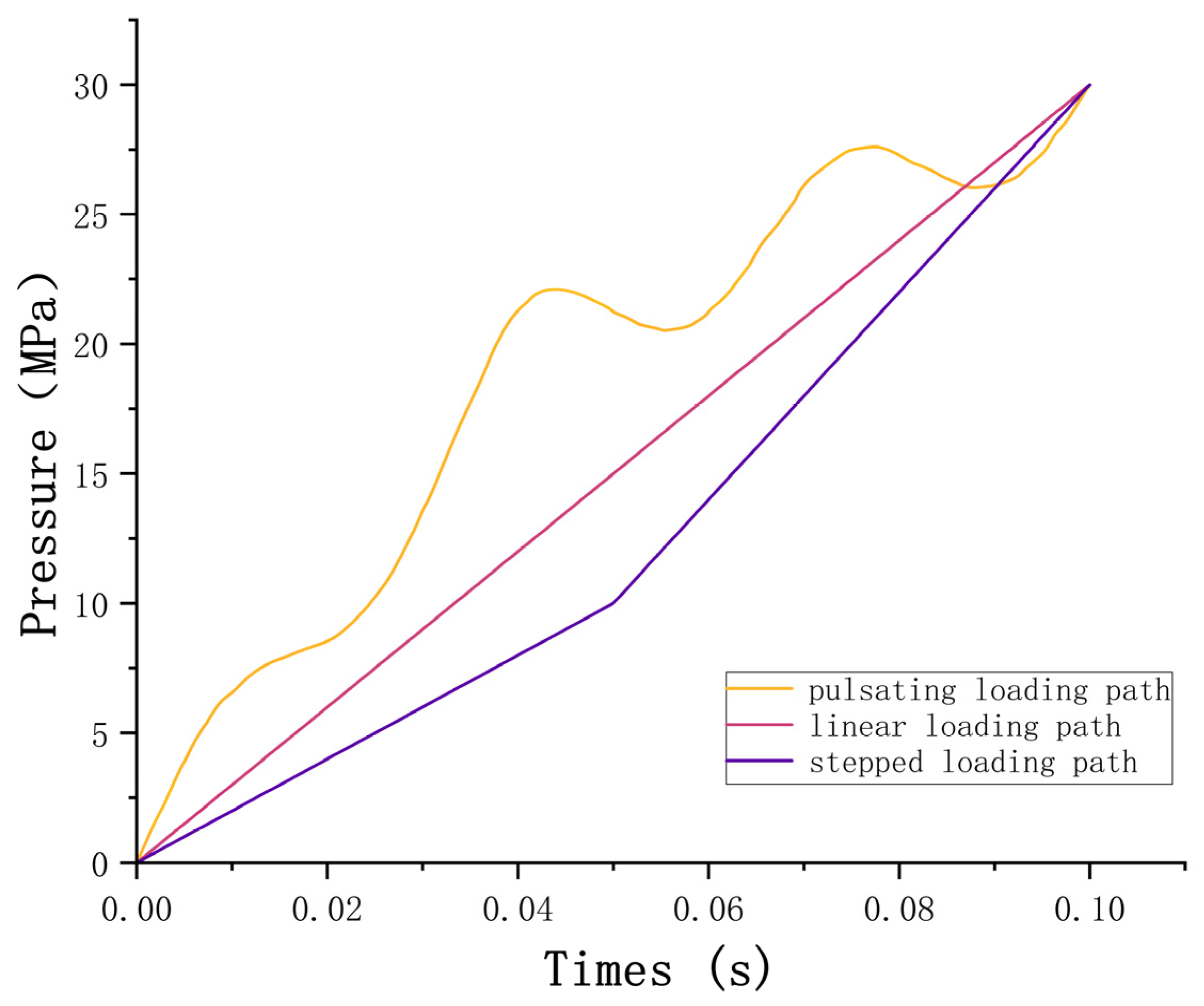
To ensure the consistency and comparability of the results among different loading paths, the total forming time in all numerical simulations was uniformly set to 0.1 s. The pressure–time loading history and axial feed displacement were defined within the same time interval, while maintaining the evolution characteristics of each loading path unchanged.
Under the same forming conditions, the differences in material flow behavior and stress evolution can be reasonably attributed to the influence of different loading paths. Since metal forming is inherently nonlinear, different pressure–time loading paths directly affect the evolution of normal stresses in the bulging region, thereby influencing material flow toward the transition and corrugation crest regions.
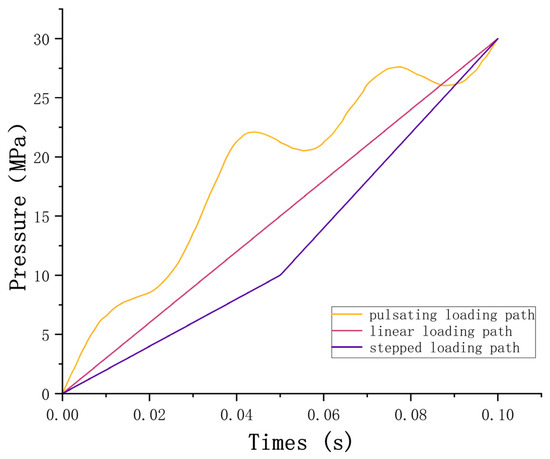
The three pressure–time loading paths adopted in this study are illustrated in Figure 5. For the pulsating loading path, the internal pressure is applied through repeated loading and unloading, resulting in a fluctuating pressure curve. The linear loading path applies internal pressure in a continuous manner with an approximately constant loading rate. By contrast, in the stepped loading path, the pressure increases slowly in the initial stage and then rises more rapidly in the later stage, so that deformation proceeds gradually at the beginning and accelerates during the subsequent forming process. To ensure comparability, all loading paths are designed with the same total forming time.
Figure 5.
Loading path curves diagram.
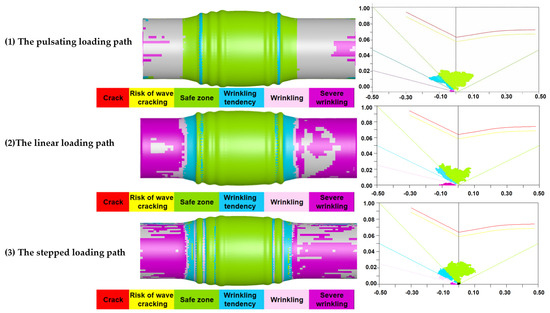
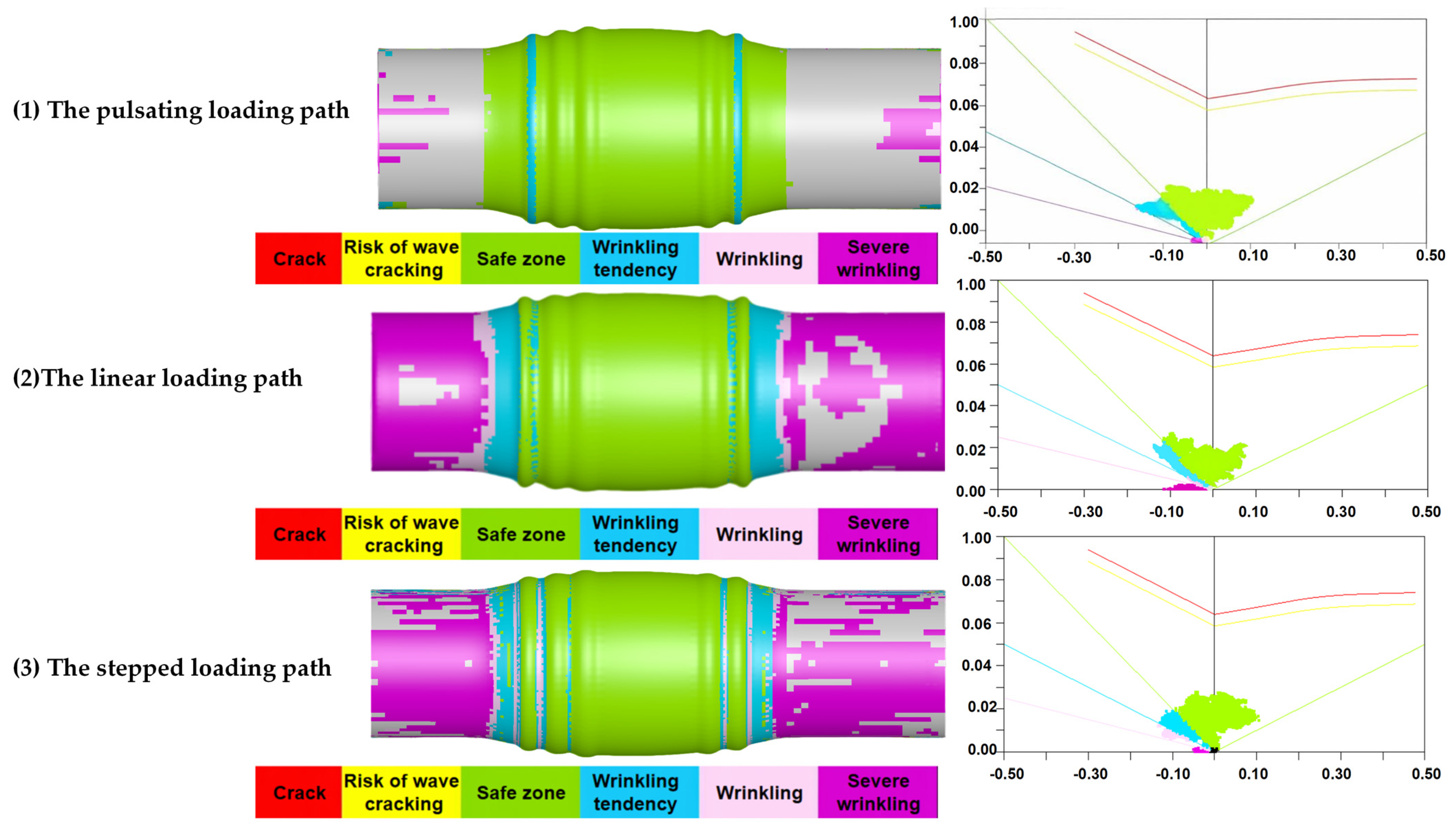
The corresponding forming quality obtained under these loading paths is comparatively analyzed in Figure 6.
Figure 6.
The distribution of forming quality along different loading paths.
2.5. Comparison of Different Loading Paths and Forming Performance
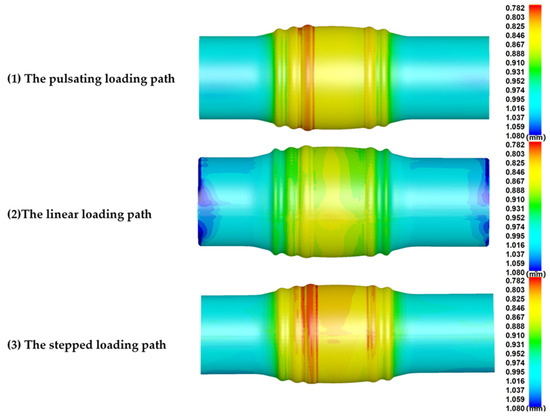
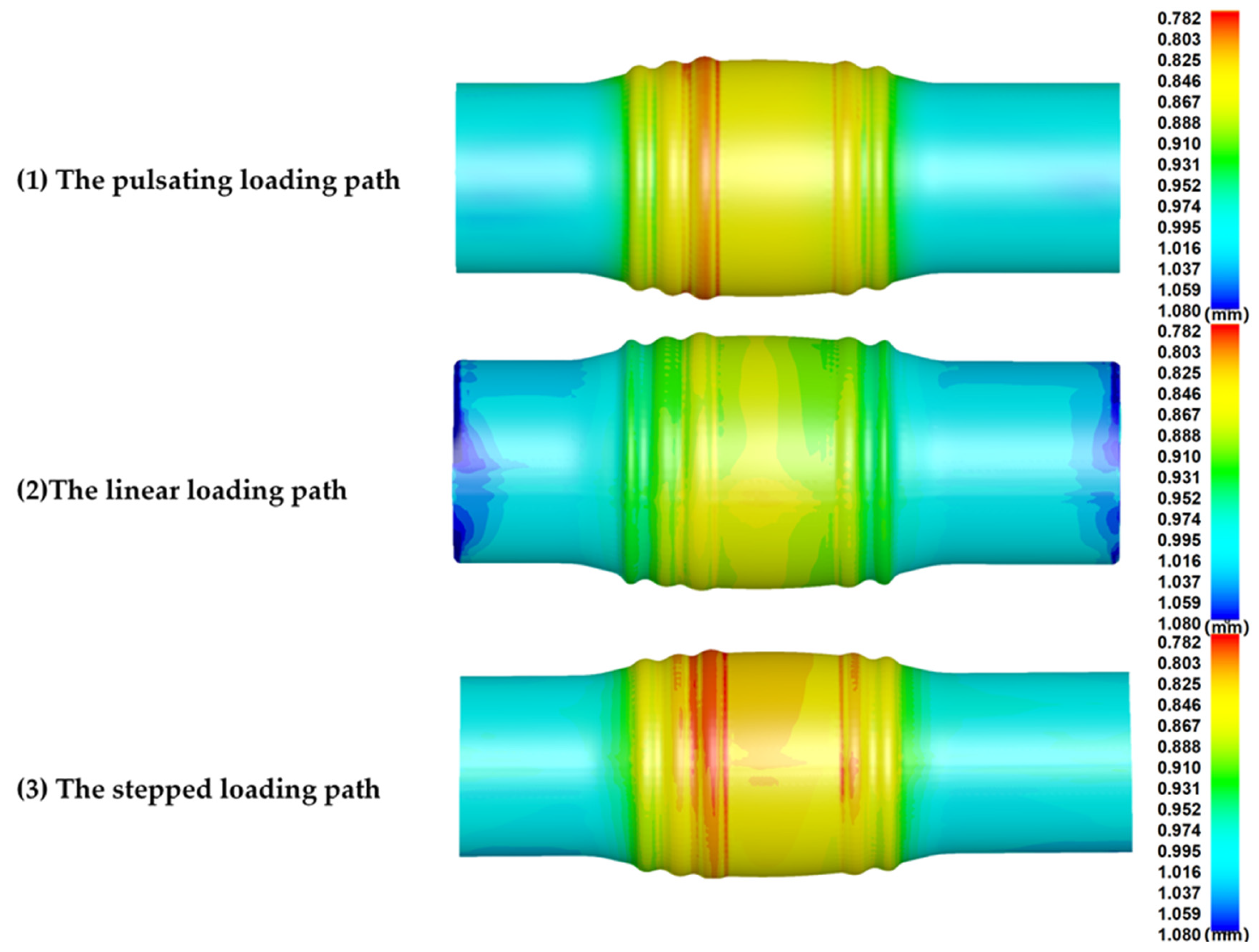
Based on the above loading conditions, simulations were conducted in DYNAFORM to analyze the forming behavior of the asymmetric corrugated thin-walled tube under three internal pressure loading paths, including pulsating, linear, and stepped loading. The corresponding forming quality results and wall-thickness distribution charts are presented in Figure 6 and Figure 7, where the strain states obtained from different loading paths are mapped onto the forming limit diagram (FLD). As the FLD is commonly used to evaluate the formability of thin-walled metallic materials, this representation allows the strain evolution and forming quality to be examined simultaneously, facilitating a direct comparison of forming performance under different loading conditions [27].
Figure 7.
The distribution map of the wall thickness of the molded parts under different loading paths (mm).
Figure 6 and Figure 7 compare the forming responses of the asymmetric corrugated thin-walled tube under three internal pressure loading paths (pulsating, linear, and stepped) and present the strain state distribution diagrams and the forming wall-thickness variation diagrams corresponding to the forming limit diagram (FLD), thereby conducting a comprehensive assessment of the deformation uniformity and forming capability.
Under the pulsating loading path, the tube exhibits the most uniform deformation curve. The peaks and transition areas of the corrugations are fully developed, while the excessive localization phenomenon is effectively suppressed. As shown in the FLD mapping, most strain states are distributed in the compact region far below the forming limit curve, indicating a stable deformation mode with sufficient safety margin. This behavior indicates that the periodic pressure fluctuations promote the gradual redistribution of the material, allowing the circumferential expansion to coordinate with the axial feed and friction constraints. It avoids premature strain concentration, which explains why this pulsating path is recognized as the optimal choice among the three loading strategies.
In contrast, the linear loading path results in a more scattered strain distribution in the FLD, with a notable portion of strain states closely approaching the forming limit curve. This indicates a reduced safety margin during forming. From the perspective of thickness distribution and deformation morphology, pronounced local thinning is observed near the corrugation valleys and transition arc regions. The continuous monotonic pressure increase restricts the material’s ability to redistribute strain dynamically, thereby weakening strain adaptability and promoting localized instability during the forming process.
The stepped loading path shows a transitional response. Although the gradually increasing pressure can partially alleviate the sudden strain accumulation, local thinning phenomena still occur in the central corrugation area. When comparing the thickness evolution results in Figure 7, the stepped loading path has a slightly lower thinning rate in the corrugation center compared to the pulsating path. This advantage is accompanied by significant insufficient thickening at the ends and transition zones, indicating that the material’s redistribution effect is not significant on an overall scale. Although this difference does not affect overall formability, it indicates that even if a pulsating strategy is adopted, there is still room for further improvement to achieve local thickness control of the asymmetric corrugated thin-walled tube.
It should be clearly pointed out that the forming limit diagram (FLD) used in this study is derived from the experimental data reported in the DYNAFORM simulation and compared based on the results of different loading paths. This is not only a qualitative description based on the deformation profile but also helps to clarify the strain evolution mechanism and show how different pressure paths affect the distribution and concentration of strain states in the asymmetric corrugated thin-walled tube during hydraulic forming.
3. Stage-Wise Orthogonal Optimization of Dual-Window Pulsating Pressure Paths
In order to address potential issues such as local stress concentration, excessive wall thinning, and insufficient forming stability during the hydroforming of asymmetric corrugated tubes, a staged regulation strategy based on a dual-window pulsating loading path is proposed. This strategy is developed through a systematic analysis of the mechanical characteristics throughout the forming process, and the key loading parameters are optimized using an orthogonal experimental design [28].
Unlike traditional methods that rely on die modification or final pressure-level adjustment, the proposed strategy regulates the internal pressure loading pattern during the critical stages of forming while maintaining the continuity of the overall loading trend. By introducing a controlled sequence of loading–unloading–reloading, the coordination of material flow in the axial and radial directions has been improved, thereby influencing the evolution of forming quality.
In the pulsating loading path, the amplitude of unloading and the dwell time at the pressure trough determine the characteristics of internal pressure fluctuations, and their effects vary in different forming stages. In the early stage, deformation is mainly related to the initial contact between the tube blank and the die and the rapid establishment of the stress state. In contrast, in the middle and later stages, the main control is on the material flow behavior, wall-thickness changes, and local deformation stability.
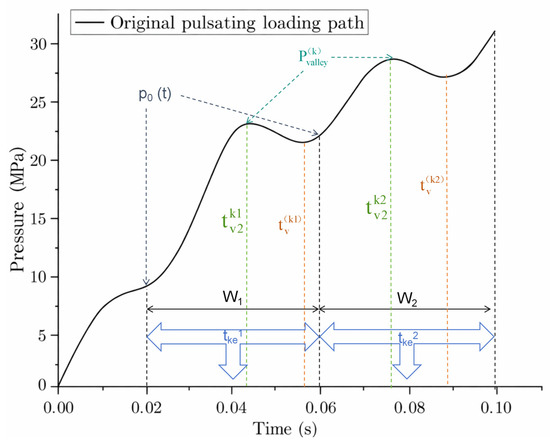
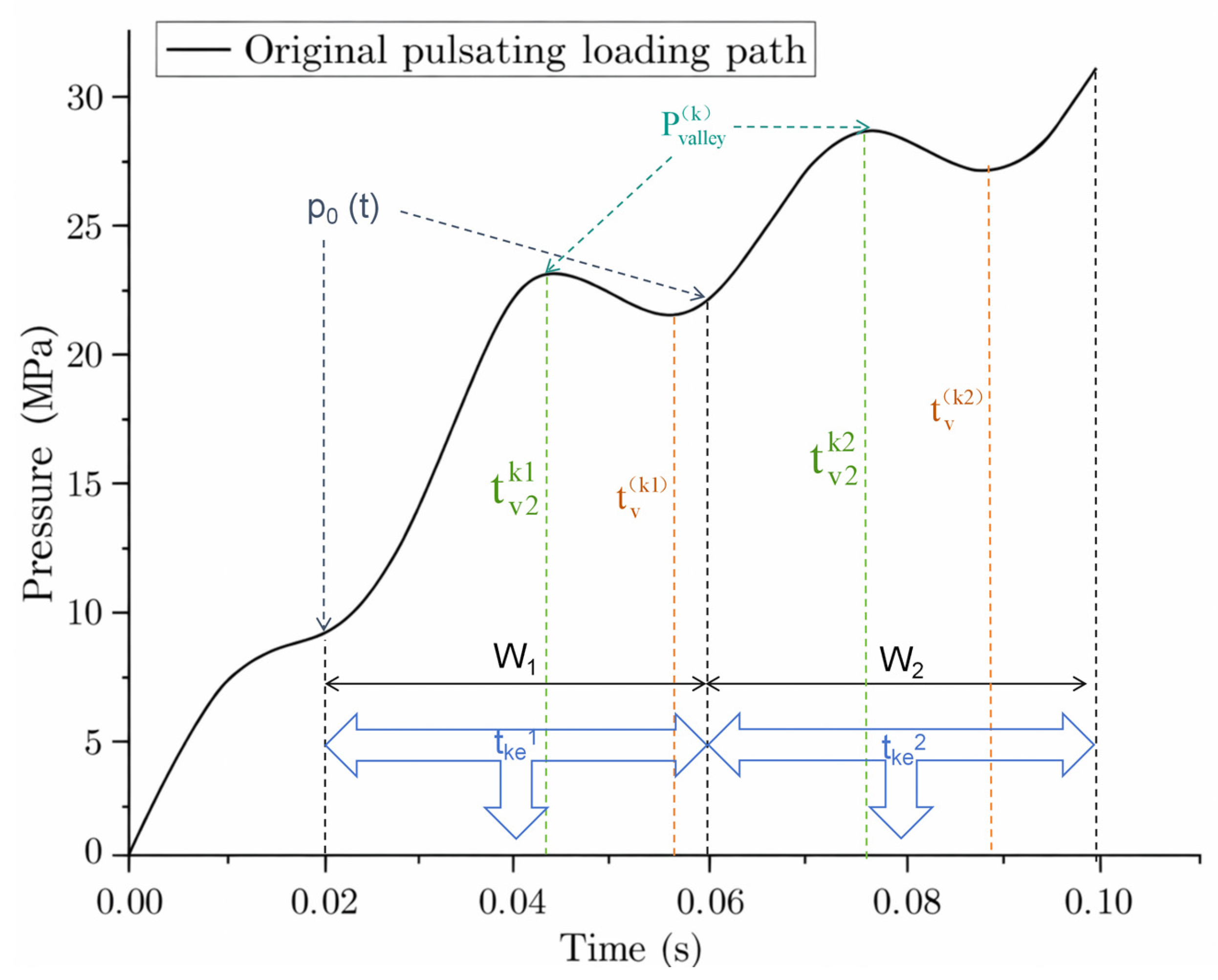
To clarify these phased effects, the pulsating loading path is divided into several independent segments. In the internal pressure history, each complete loading–unloading cycle is defined as a pulsating loading window (forming window). According to its time sequence, the initial window has only unidirectional loading classified as an early-forming window, while the subsequent mid-to-late windows have complete loading–unloading–reloading to form complete pulsating loading windows. The corresponding window division and parameter definitions are shown in Figure 8.
Figure 8.
Schematic diagram of the dual-window optimization algorithm for the original pulsating loading path.
Based on this window classification, the loading time of the early-forming window and the unloading amplitude and groove dwell time in the mid-to-late-forming windows are selected as design variables. Without the need for additional structural modifications or die adjustments, these parameters can effectively regulate the die-contact behavior, wall-thickness distribution, and local deformation stability, while maintaining good engineering feasibility.
3.1. Selection of Design Variables
In the pulsating loading path, the amplitude of unloading and the dwell time at the valley directly determine the characteristics of pressure fluctuations, and their effects vary at different forming stages. Specifically, the early-forming stage mainly involves the initial die attachment and the rapid establishment of stress, while the middle and later stages are closely related to the evolution of wall thickness and deformation stability. Corresponding to these forming characteristics, this paper selects the pulsating unloading amplitude and valley dwell time within the early and middle–late forming windows as design variables. These parameters, without introducing additional structural adjustments, can significantly influence the wall-thickness distribution, die-attachment process, and local stability, and have good engineering tunability.
Accordingly, the design variables of the proposed algorithm for the dual-window pulsating loading path are defined in Equation (4):
In the formula: where and denote the unloading amplitude and valley dwell time in the early forming window, respectively, and and represent the unloading amplitude and valley dwell time in the middle and later-forming window.
3.2. Determination of Intermediate Function and Target Function
On the basis of the defined design variables, a baseline pressure curve is introduced as the reference function for loading path construction. This baseline curve is derived from traditional pulsating loading paths. The role is to provide a pressure-level reference that is feasible in engineering practice, rather than being directly used as an optimization objective. By applying unloading and reloading operations within local intervals of the reference curve, it can be ensured that the modified loading path remains within a reasonable pressure range at all times.
The schematic illustration of the formulation within the time window is shown in Figure 8, the optimized pressure curve is defined with Equation (5):
In the formula, denotes the pulsating pressure in the -th window; represents the baseline pressure loading curve; is the valley pressure level; denotes the peak time within the window; is the unloading termination time; represents the end time of the valley dwell period; and denotes the total duration of the pulsating loading process.
Based on the constructed loading path, four indicators were selected to quantitatively evaluate the forming performance under different parameter combinations, including the wrinkling criterion , the maximum thinning ratio , the time required to reach a 95% die-fitting rate , and the die-fitting stability . In the split-window pulsation pressure model, the unloading amplitude and the valley retention time are used as design variables.
The optimization objective was set to simultaneously suppress the wrinkling phenomenon and excessive thinning, improve the assembly efficiency of the die, and enhance the stability of the die assembly, corresponding to minimizing , , and , while maximizing . To convert this multi-indicator evaluation into a single scalar objective suitable for optimization, a normalization and weighted aggregation strategy was adopted.
For feasible candidate loading paths that satisfy the basic forming constraints, each indicator was first normalized to eliminate the influence of different magnitudes and units. For indicators to be minimized (, , and ), min–max normalization was applied, whereas for the indicator to be maximized (), reverse normalization was used. The normalized indicators were then combined into an overall forming-quality objective function using a weighted-sum scheme that is expressed with Equation (6):
In the formula, are weighting factors reflecting the relative priority of different performance aspects, with higher weights typically assigned to defect suppression indicators such as wrinkling and thinning. A smaller value of indicates better overall forming quality.
In addition, feasibility constraints were set to ensure that the wrinkling and thinning phenomena remained within an acceptable range and that the edge relief ratio could reach 95% within the specified forming time. Through this setup, a complete and clear optimization objective function was established, forming a comprehensive framework that connects design variables → loading paths → forming responses → target evaluation.
3.3. Process Parameter Optimization Procedure
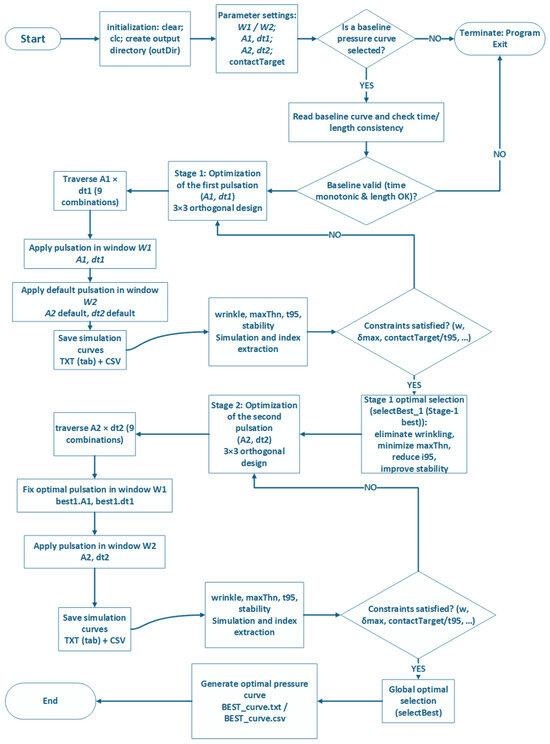
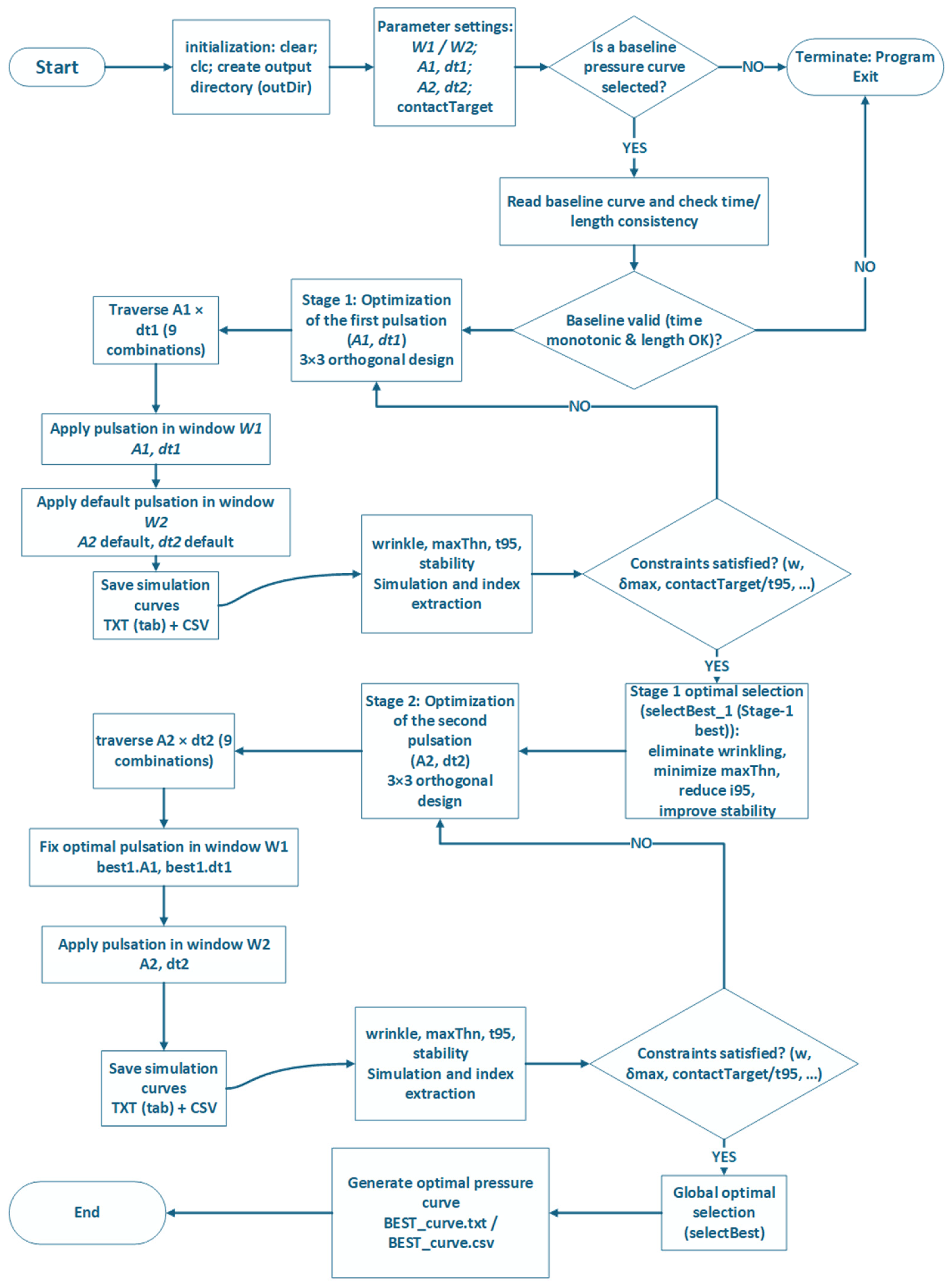
To obtain a phased pulsating loading path optimization strategy for tube hydraulic bulging (Figure 9), the proposed algorithm regulates the pressure evolution only in the critical forming intervals while keeping the global loading trend and process feasibility unchanged. The framework couples an outer-layer parameter search and an inner-layer adaptive path correction.
Figure 9.
Main process (dual window + two-stage 3 × 3 small orthogonal array).
First, the program initializes the working environment, creates the output directory, and defines the search ranges of the sliding windows (W1 and W2) together with the candidate pulsation parameters (amplitude and time variables). A baseline pressure curve is then imported and checked for data integrity, time monotonicity, and curve length consistency. If the baseline does not satisfy the requirements, the program terminates to avoid invalid perturbations. Otherwise, the algorithm enters the phased optimization.
The full loading process is divided into two independent pulsation-control stages. Stage 1 optimizes the first pulsation window (W1) using a three-level small orthogonal traversal (3 × 3, 9 combinations) of the pulsation amplitude and time parameters. For each candidate combination, the inner-layer correction routine reconstructs the pressure segment inside W1 while keeping the pressure outside the window unchanged, thereby ensuring continuity in both time and pressure domains. The resulting candidate curve is passed to the FE solver, and the simulation outputs are post-processed to extract quantitative indicators, including the wrinkling criterion (), the maximum thinning ratio (), the time to reach 95% die fitting (), and the die-fitting stability ().
The screening strategy follows two steps. First, feasibility filtering is performed: candidates that violate defect constraints (e.g., excessive wrinkling or thinning beyond the allowable threshold, or failure to reach the target die-fitting level) are rejected. Second, among the feasible candidates, a score-based ranking is applied using the normalized indicators and a weighted-sum objective. The best candidate of Stage 1 is selected (select Best 1), and its optimal parameters are fixed for W1.
Stage 2 further optimizes the second pulsation window (W2) under the fixed Stage-1 optimal settings. Similarly, 3 × 3 traversal is conducted for (A2, dt2). For each combination, the inner-layer correction routine modifies the pressure only inside W2 (with W1 unchanged), followed by FE simulation, indicator extraction, feasibility filtering, and objective ranking. Finally, a global best candidate (select Best) is determined, and the corresponding optimized pressure curve is exported.
In the inner-layer correction, the algorithm performs a local analysis within the sliding window. When sufficient sampling points exist, the peak pressure and its time location are identified from the baseline segment, the valley level is calculated using the unloading amplitude coefficient, and the target pressure at the window end is obtained from the baseline by interpolation. Two time points (end of unloading and end of valley dwell) are introduced, and the window is naturally partitioned into four segments: pre-peak maintenance, linear unloading, valley dwell, and smooth recovery. This construction preserves the original curve outside the window and guarantees a smooth, physically feasible pressure history after correction.
4. Optimization of Dual-Window Pulse Loading Path and Its Forming Effect
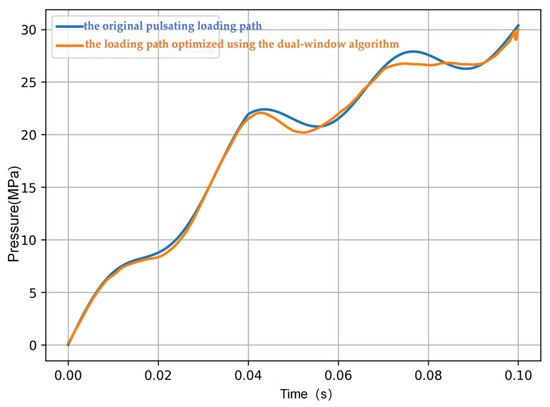
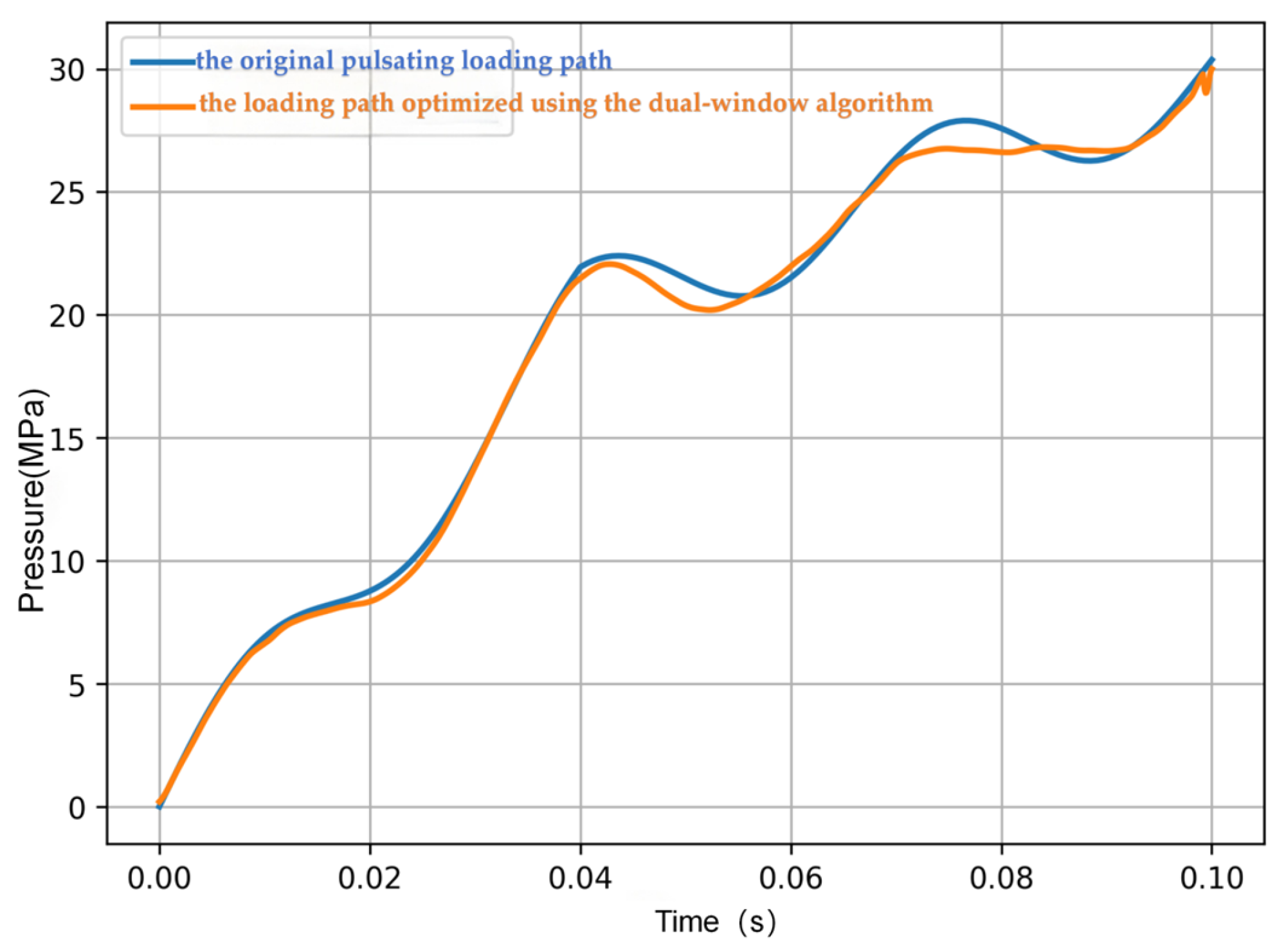
Figure 10 contrasts the initial pulsating loading path with the loading path optimized by the dual-window algorithm. Although the global rising profile is preserved, the optimized curve shows a noticeably different local modulation within the key time windows. Specifically, the early-stage pulsation is softened by reducing the unloading aggressiveness and smoothing the recovery slope, which mitigates abrupt stress/strain transients during the initial die engagement. In the subsequent clamping and stable forming stage, the pressure recovery becomes more continuous and less “step-like”, weakening the tendency for sudden acceleration of circumferential expansion that can trigger localized thinning in peak and fillet regions. As a result, the optimized path provides a steadier driving condition for coupled axial feeding and radial bulging: material flow is promoted in a more progressive manner, and strain redistribution is facilitated rather than interrupted by sharp pressure rebounds. These changes are consistent with the improvements observed in the numerical results, including reduced strain localization, a more uniform thickness distribution, and enhanced die-fitting stability in the mid-to-late forming stage.
Figure 10.
Comparison chart of the original pulsation loading path and the pulsation path optimized using the dual-window orthogonal optimization algorithm.
Although the two loading paths in Figure 10 exhibit nearly identical global pressure levels, the dual-window optimization deliberately introduces subtle local adjustments in unloading depth and recovery slope within critical time windows. These differences, while numerically small, effectively suppress abrupt pressure transients that disrupt axial feeding continuity and promote localized strain accumulation. As a result, the optimized path improves deformation stability and strain redistribution under essentially the same global loading conditions, leading to enhanced thickness uniformity and die-fitting stability.
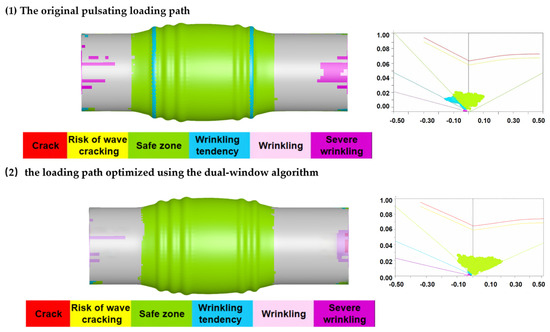
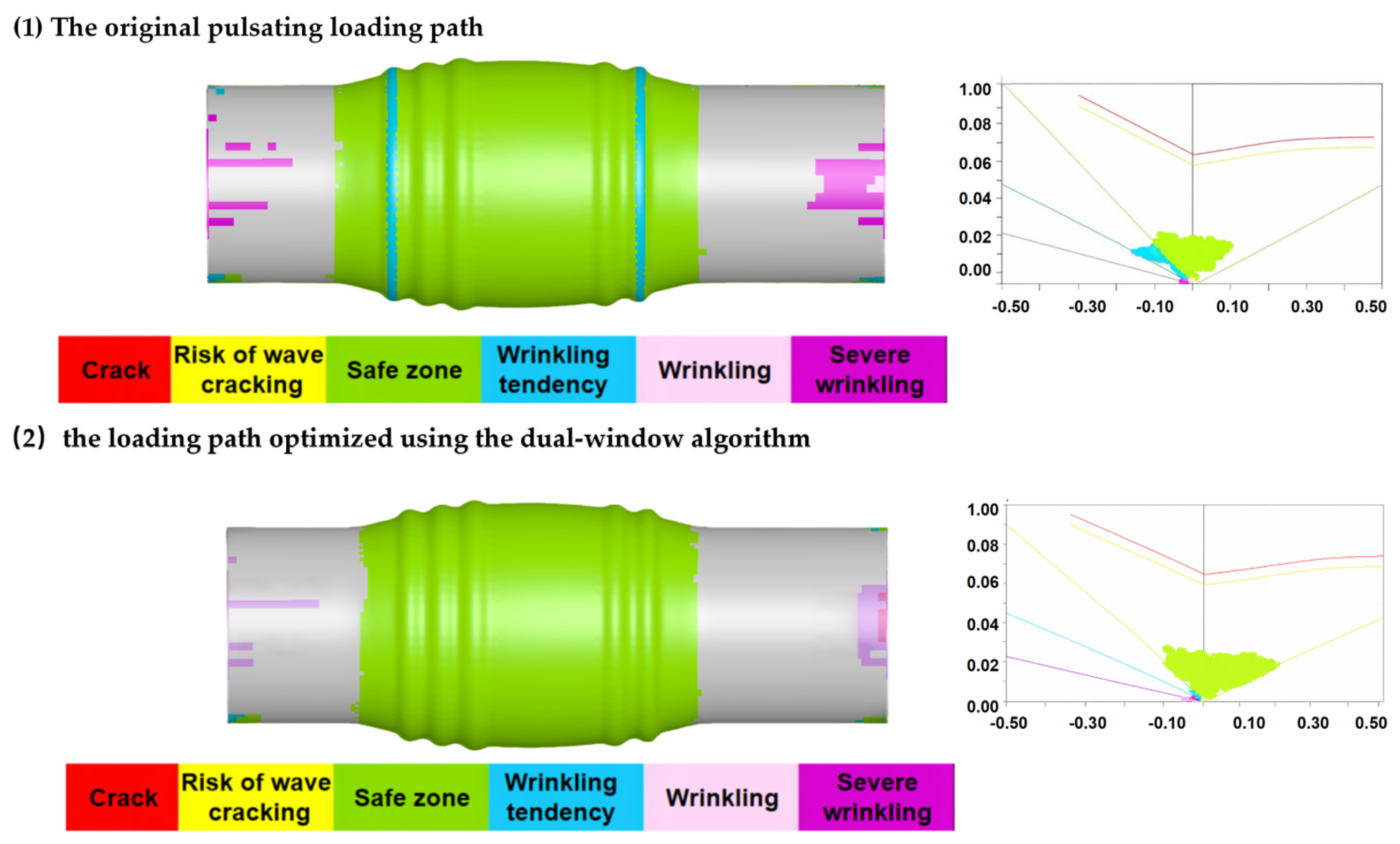
The above loading path optimization strategy effectively promotes the continuous progress of the axial feeding process and enhances the material’s ability to redistribute strain in the wave peaks and transition areas, providing a stable and reliable process foundation for the overall improvement of subsequent forming quality. The specific improvement in the forming effect will be further verified and analyzed in the following text, combined with the distribution characteristics of the forming limit diagram (FLD) and the evolution law of wall thickness (as shown in Figure 11 and Figure 12).
Figure 11.
Optimize the distribution of the forming quality under the fluctuation curve before and after the optimization.
Figure 12.
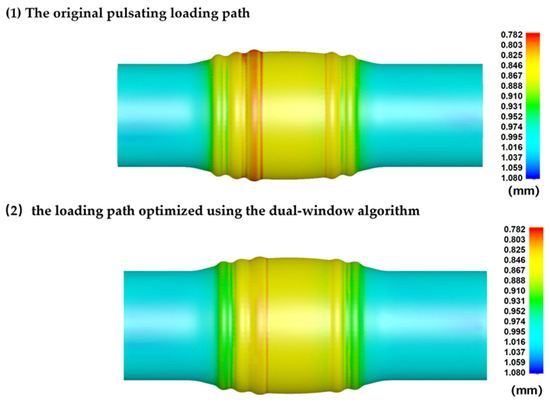
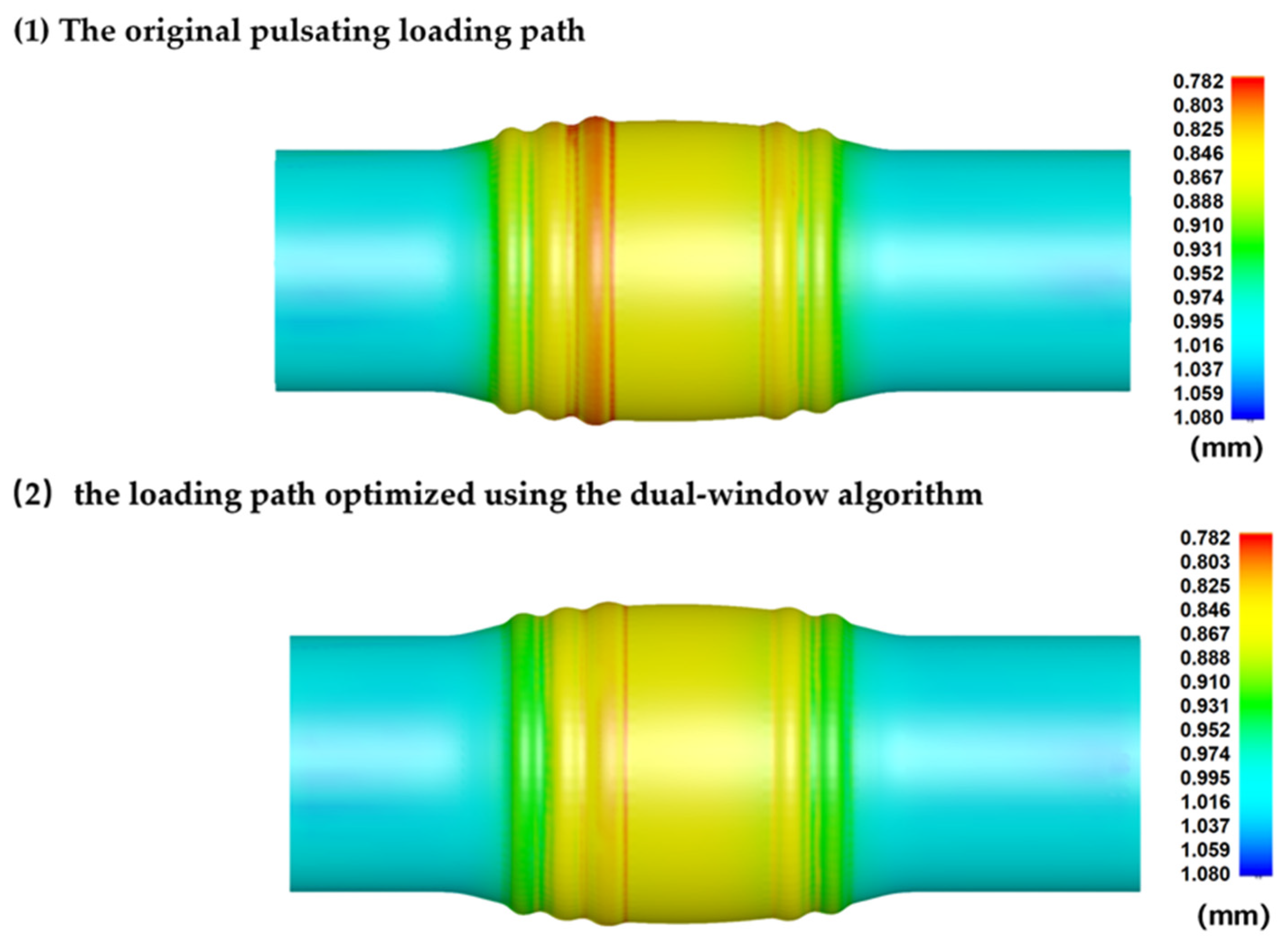
Comparison of wall-thickness distributions of the formed parts before and after pulsating loading path optimization (mm).
A comparison of the forming limit diagram (FLD) results shows that the optimization of the pulsating loading path has a clear effect on forming safety and quality. Prior to optimization, the forming state points are mainly distributed near the boundary of the safe zone, with some points approaching the wrinkling and fracture risk region at the transition fillets between the wave valley and peak. This indicates localized strain concentration and a tendency toward forming instability in these regions.
With the application of the optimized double-window pulsating loading path, the forming state points move toward the interior of the safe zone. The strain distribution becomes more uniform and concentrated, and the distance to the wrinkling and fracture limit curves increases, reflecting improved forming stability and a higher safety margin. In addition, the wall-thickness distribution in the thin-groove regions becomes more uniform, wrinkling in the peak regions is effectively suppressed, and the wrinkling behavior in the straight-tube sections is noticeably improved.
Figure 12 and Table 2 compare the wall-thickness distributions of the formed component obtained under the original pulsating loading path and the loading path optimized using the dual-window algorithm, with an initial tube thickness of 1.0 mm.
Table 2.
Comparison of wall-thickness distributions under pulsating loading paths before and after optimization.
Under the original pulsating loading path, pronounced wall-thickness nonuniformity can be observed. Severe thinning is concentrated in the wave-peak regions and their adjacent transition zones, indicating localized excessive plastic deformation caused by insufficient coordination between internal pressure and axial material feeding. Such thinning behavior implies a higher risk of premature failure and reduced forming robustness.
In contrast, the dual-window optimized loading path results in a more uniform wall-thickness distribution along the formed profile. The extent of thinning in the wave-peak regions is effectively reduced, while the thickness variation in the thin-groove and straight-tube regions becomes smoother. Quantitatively, the maximum thinning ratio increases from 19.6% to 21.8% after optimization, indicating a more sufficient and stable deformation in the critical expansion zones without inducing localized instability.
This improvement can be attributed to the staged regulation of pressure unloading and reloading within the critical forming windows, which promotes gradual strain redistribution and enhances the effectiveness of axial feeding. As a result, material flow is better balanced between the radial expansion and axial compression directions, leading to improved thickness uniformity and overall forming quality.
Overall, this dual-window pulsating loading strategy demonstrates significant advantages in controlling the variation in wall thickness. It can alleviate local thinning and improve the coordination of material flow throughout the forming process.
5. Validity Experiment and Result Analysis
5.1. Hydroforming Experiments
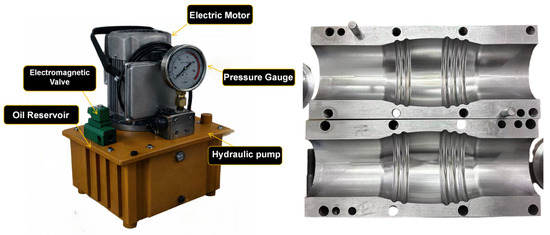
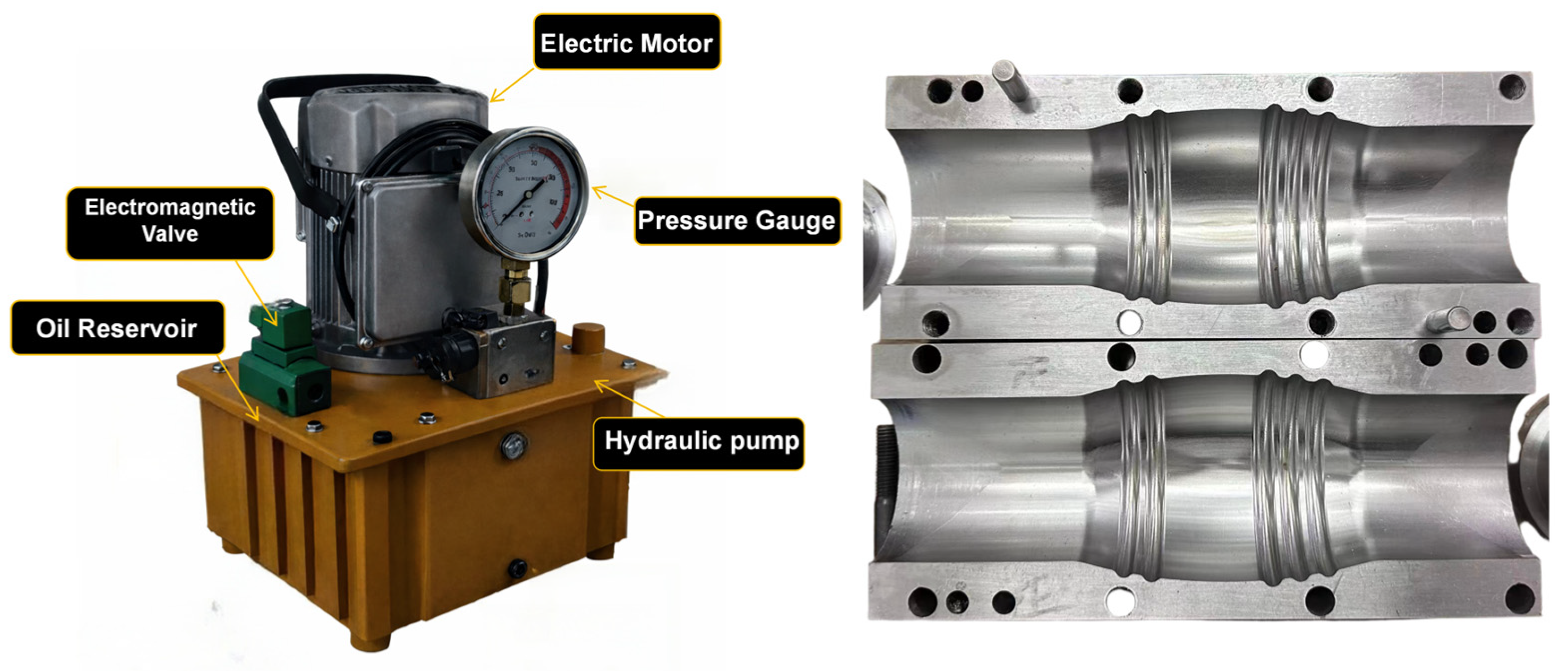
In the hydraulic bulging experiment of the asymmetric waveform thin-walled tube, the controllability and repeatability of the loading path are the prerequisite conditions for the effectiveness of pulse optimization. To ensure a stable pressure supply and achieve precise regulation of pulsating pressure, this study uses a four-column servo oil bulging forming equipment as the axial feed device and the GYB-630 B-type electric hydraulic pump as the hydraulic oil source.
A proportional solenoid valve and a pressure gauge are installed at the outlet of the pump station (see Figure 13). This proportional solenoid valve is used to continuously proportionally adjust the opening degree of the valve, thereby achieving dynamic control of the system pressure/flow and reducing pressure shock during rapid pressure rise and unload switching, thereby improving the tracking accuracy of the loading curve. During the experiment, the tube blank is placed in a specially designed asymmetric waveform hydraulic bulging die, and it gradually adheres to the die cavity under the action of internal pressure to complete the forming. The die structure and cavity features are shown in Figure 13.
Figure 13.
Electric hydraulic pump and tube material grinding tools.
5.2. Comparative Analysis of Experimental Results
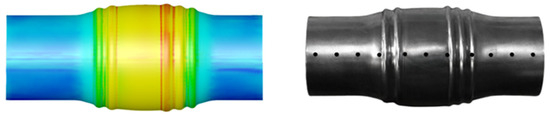
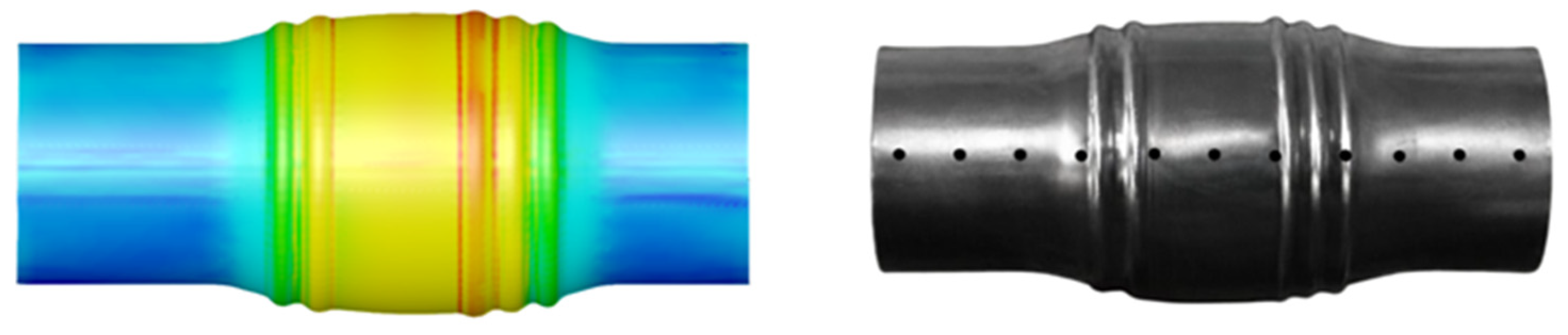
To further verify the effectiveness and engineering applicability of the dual-window pulsating loading path optimization strategy, an asymmetric waveform thin-walled tube hydraulic bulging experiment was conducted based on the aforementioned numerical simulation research. Figure 14 shows the overall appearance of the fabricated formed piece after hydraulic bulging and is compared and analyzed with the three typical axial regions divided in the asymmetric waveform tube model shown in Figure 1.
Figure 14.
Comparative analysis of the quality of experimental and simulated hydraulic-formed parts.
The experimental results show that the specimens achieved complete bulging formation under the optimized pulsating loading path. The waveform structure is clearly distinguishable, and the overall contour is highly consistent with the design model. No through cracks or macroscopic instability occurred during the forming process. Combining the deformation characteristics of different axial regions, the following can be found. ① In the straight tube section region, due to weaker geometric constraints, the tube material mainly participates in deformation through axial feeding, and the circumferential strain level is relatively low. The physical form and the simulation results did not show significant thinning or instability; only slight wrinkles were observed at the local edge position, and the overall forming stability was high. ② In the transition rounded corner region, affected by the section change, the stress state undergoes redistribution, the circumferential tension significantly increases, the radial strain develops negatively, and this region shows a relatively obvious local thinning trend, which is a potentially dangerous area during the forming process, and this feature is consistent with the numerical simulation prediction results. ③ In the peak forming area, the tube material undergoes strong circumferential tension under the combined influence of internal pressure and die constraints. This is the main forming area with the most significant wall-thickness reduction, but under the regulation of the optimized pulsating loading path, this area still maintains good structural integrity, and no fracture or severe instability occurred. By integrating the analysis results of the physical forming quality, local deformation characteristics, and stability of key areas, and comparing with the numerical simulation, it can be confirmed that the proposed dual-window pulsating loading path optimization strategy can effectively improve the material flow coordination, suppress local strain concentration, and has good engineering application potential for enhancing the stability of asymmetric waveform thin-walled tube hydraulic bulging forming.
Following the comparison of the overall forming quality between the formed part and the simulation results, a quantitative comparison of wall-thickness distribution was further conducted to evaluate thickness uniformity and thinning behavior during the forming process.
The wall thickness of the formed asymmetric corrugated tube was measured using a digital ultrasonic thickness gauge, which enables non-destructive and high-precision thickness measurement for thin-walled metallic components. To ensure consistency with the numerical model, eleven representative measurement points were selected along the axial direction of the formed part, as schematically illustrated in Figure 15. These points cover the straight sections, corrugation peaks, valleys, and transition regions, where significant thickness variation is expected during hydraulic bulging.
Figure 15.
Comparative analysis of the forming wall thickness of experimental and simulated hydraulic-formed parts.
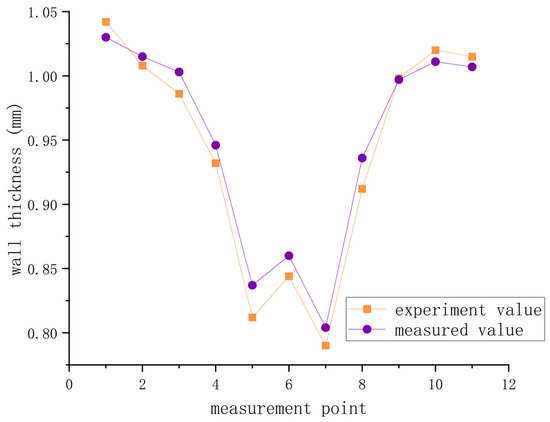
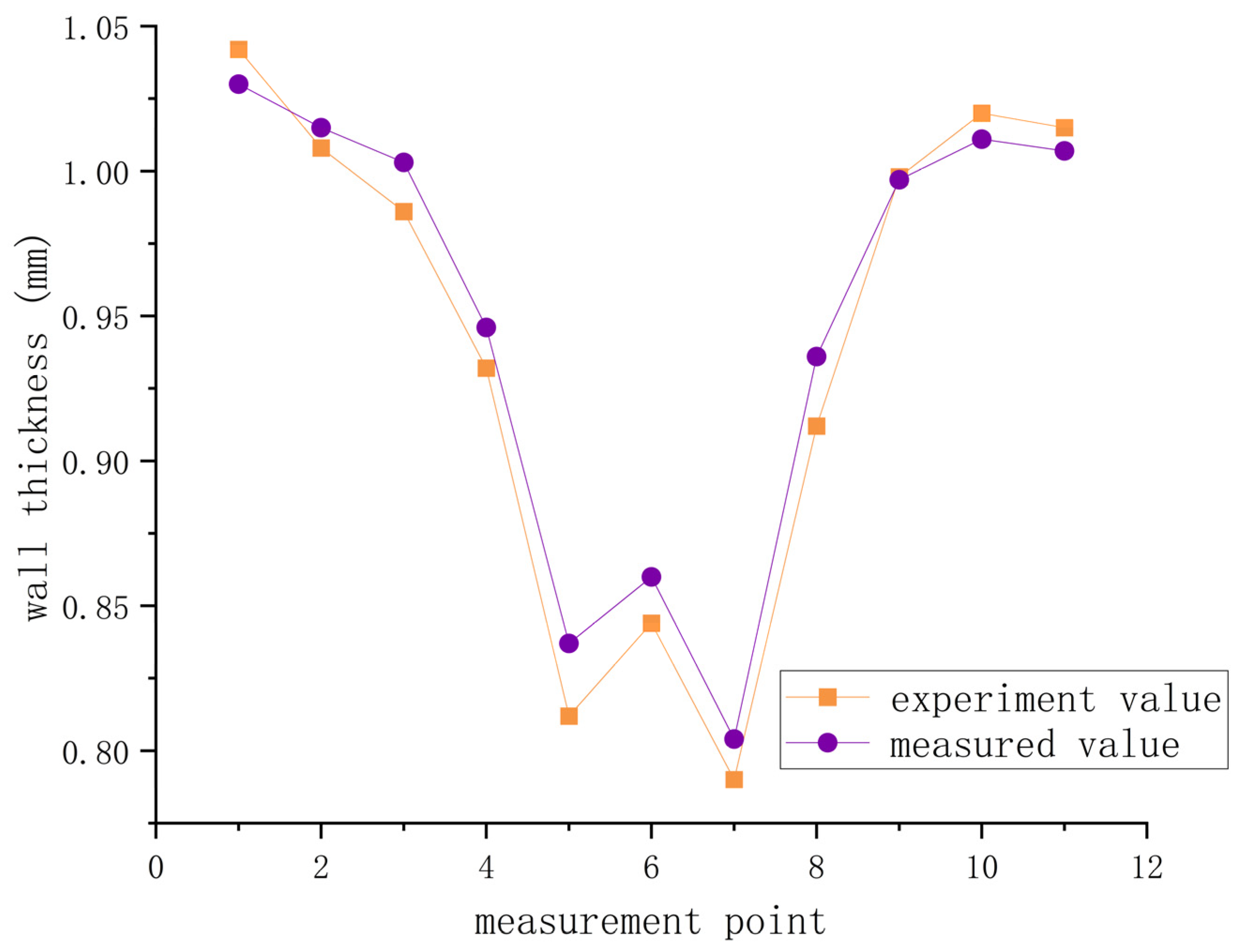
Subsequently, the measured wall-thickness values obtained from the experiment were compared with the corresponding thickness results extracted from the finite element simulation. The comparison results are shown in Figure 16 and Table 3. It can be observed that the wall-thickness distributions from the experiment and the simulation exhibit a similar overall trend. The minimum wall-thickness value occurs in the ripple area (measurement points 5–6), indicating a significant material stretching phenomenon in this area, while in the straight sections and ripple peak areas, the wall layers remain relatively thick.
Figure 16.
Graph of wall-thickness measurement points for simulation values and experimental values (mm).
Table 3.
Experimental simulation thickness comparison table.
Though minor deviations exist between experimental and simulated values, the maximum discrepancy remains within an acceptable range, which can be attributed to factors such as material property variability, friction conditions, and measurement uncertainty. Overall, the statistical results indicate that the simulated wall thickness slightly overestimates the experimental measurements, with an average deviation of approximately 0.016 mm and a mean absolute percentage error of 1.92%. This demonstrates that the numerical model can accurately predict the wall-thickness distribution and thinning behavior of the asymmetric corrugated tube during hydraulic forming. The close agreement between experiment and simulation demonstrates that the proposed loading path and numerical model can accurately predict the wall-thickness evolution and effectively capture the thinning characteristics of the asymmetric corrugated tube during hydraulic forming.
6. Conclusions
- (1)
- To tackle localized strain concentration and excessive thinning in hydroforming asymmetric corrugated thin-walled tubes, a staged optimization method using a dual-window pulsating loading path was proposed. A finite element model was developed to compare forming behavior under different loading paths.
- (2)
- The findings show that, with the same final pressure, the optimized pulsating loading path enhances material flow and reduces strain concentration in corrugation crests and transition fillets.
- (3)
- Wall-thickness analysis reveals that the dual-window pulsating loading path greatly reduces excessive thinning in key forming areas, improves axial material feeding, and ensures more uniform wall-thickness distribution.
- (4)
- The experimental results of hydraulic forming show good agreement with the numerical simulations in terms of axial-region deformation. In addition, the deviation in the wall thickness after forming between experiments and simulations remains within 2%. These results confirm the reliability of the established numerical model and demonstrate the engineering feasibility of the proposed loading path optimization method.
Author Contributions
Conceptualization, S.Z.; methodology, S.Z.; software, S.Z.; validation, S.Z.; formal analysis, S.W.; investigation, S.Z.; resources, S.W.; writing—original draft preparation, S.Z.; writing—review and editing, S.W.; visualization, S.W.; supervision, S.W.; project administration, S.W.; funding acquisition, S.W. All authors have read and agreed to the published version of the manuscript.
Funding
This research received no external funding.
Data Availability Statement
The original contributions presented in this study are included in the article. Further inquiries can be directed to the corresponding authors.
Conflicts of Interest
The authors declare no conflicts of interest.
References
- Hwang, Y.M.; Manabe, K.I. Latest hydroforming technology of metallic tubes and sheets. Metals 2021, 11, 1360. [Google Scholar] [CrossRef] [Scilit]
- Zhang, X.; Zheng, C.; Xie, X.; Liu, X.; Xiao, J. Effect of internal pressure and loading path on deformation behavior during low pressure tube hydro-pressing. J. Manuf. Process. 2024, 131, 2208–2218. [Google Scholar] [CrossRef] [Scilit]
- Zhu, H.; He, Z.; Lin, Y.; Zheng, K.; Fan, X.; Yuan, S. The development of a novel forming limit diagram under nonlinear loading paths in tube hydroforming. Int. J. Mech. Sci. 2020, 172, 105392. [Google Scholar] [CrossRef] [Scilit]
- Ou, Z.; Hongjun, H.; Gang, H.; Hui, Z.; Zhongwen, O. A new method of processing magnesium alloy thin-walled tube by direct extrusion and corrugated equal channel angular extrusion. Int. J. Adv. Manuf. Technol. 2022, 122, 4029–4039. [Google Scholar] [CrossRef] [Scilit]
- Singh, R.P.; Kumar, S.; Singh, P.K.; Meraz, M.; Srivastwa, A.K.; Salunkhe, S.; Hussein, H.M.A.; Nasr, E.S.A.; Kamrani, A. A mathematical model for force prediction in single point incremental sheet forming with validation by experiments and simulation. Processes 2023, 11, 1688. [Google Scholar] [CrossRef] [Scilit]
- Min, K.M.; Kim, C.; Choi, S.; Hong, J.H.; Lee, J.; Bong, H.J. Forming limit diagram of an ultra-thin commercially pure titanium sheet: Combined experimental–numerical approach. J. Mater. Res. Technol. 2025, 39, 7110–7123. [Google Scholar] [CrossRef] [Scilit]
- Loh-Mousavi, M.; Bakhshi-Jooybari, M.; Mori, K.I.; Hyashi, K. Improvement of formability in T-shape hydroforming of tubes by pulsating pressure. Proc. Inst. Mech. Eng. Part B J. Eng. Manuf. 2008, 222, 1139–1146. [Google Scholar] [CrossRef] [Scilit]
- Xu, Y.; Zhang, S.H.; Cheng, M.; Song, H.W. Formability improvement of austenitic stainless steel by pulsating hydroforming. Proc. Inst. Mech. Eng. Part B J. Eng. Manuf. 2015, 229, 609–615. [Google Scholar] [CrossRef] [Scilit]
- Talebi Anaraki, A.; Loh-Mousavi, M.; Wang, L.L. Experimental and numerical investigation of the influence of pulsating pressure on hot tube gas forming using oscillating heating. Int. J. Adv. Manuf. Technol. 2018, 97, 3839–3848. [Google Scholar] [CrossRef] [Scilit]
- Mori, K.; Patwari, A.U.; Maki, S. Improvement of formability by oscillation of internal pressure in pulsating hydroforming of tube. CIRP Ann. 2004, 53, 215–218. [Google Scholar] [CrossRef] [Scilit]
- Mori, K.; Maeno, T.; Maki, S. Mechanism of improvement of formability in pulsating hydroforming of tubes. Int. J. Mach. Tools Manuf. 2007, 47, 978–984. [Google Scholar] [CrossRef] [Scilit]
- Zheng, Z.; Yao, Z.; Pan, Z. Optimization of loading path for internal high-pressure forming of instrument panel tube beam based on NSGA-II. J. Eng. Appl. Sci. 2025, 72, 77. [Google Scholar] [CrossRef] [Scilit]
- Yin, H.; Wang, L.; Li, P.; Liu, J. Preload Multi-Objective Optimization Method for Ultrasonic Motors Based on NSGA-II. Processes 2024, 12, 2899. [Google Scholar] [CrossRef] [Scilit]
- Ataya, S.; Alrasheedi, N.H.; El-Sayed Seleman, M.M.; Eid, R.G.; Bakkar, A.; Ataya, A.; Fouad, R.A. Response Surface Methodology-Based Optimization of AZ91 Composites Reinforced with Short Carbon Fibers for Enhanced Mechanical and Wear Properties. Processes 2025, 13, 1697. [Google Scholar] [CrossRef] [Scilit]
- Chen, M.; Xiao, X.; Tong, J.; Guo, H.; Wen, J. Optimization of loading path in hydroforming of parallel double branched tube through response surface methodology. Adv. Eng. Softw. 2018, 115, 429–438. [Google Scholar] [CrossRef] [Scilit]
- Ge, Y.L.; Li, X.X.; Lang, L.H.; Ruan, S. An adaptive loading path design method for tube hydroforming using fuzzy logic theory. J. Braz. Soc. Mech. Sci. Eng. 2017, 39, 2607–2617. [Google Scholar] [CrossRef] [Scilit]
- Li, S.H.; Yang, B.; Zhang, W.G.; Lin, Z.Q. Loading path prediction for tube hydroforming process using a fuzzy control strategy. Mater. Des. 2008, 29, 1110–1116. [Google Scholar] [CrossRef] [Scilit]
- Marlapalle, B.G.; Hingole, R.S. Predictions of formability parameters in tube hydroforming process. SN Appl. Sci. 2021, 3, 606. [Google Scholar] [CrossRef] [Scilit]
- An, H.; Green, D.E.; Johrendt, J. Multi-objective optimization and sensitivity analysis of tube hydroforming. Int. J. Adv. Manuf. Technol. 2010, 50, 67–84. [Google Scholar] [CrossRef] [Scilit]
- Feng, Y.Y.; Luo, Z.A.; Su, H.L.; Wu, Q.L. Research on the optimization mechanism of loading path in hydroforming process. Int. J. Adv. Manuf. Technol. 2018, 94, 4125–4137. [Google Scholar] [CrossRef] [Scilit]
- Lang, L.; Alexandrov, S.; Rynkovskaya, M. An analytic solution for an expanding/contracting strain-hardening viscoplastic hollow cylinder at large strains and its application to tube hydroforming design. Processes 2021, 9, 2161. [Google Scholar] [CrossRef] [Scilit]
- Song, I.; Jeong, G.-H.; Kim, S.-K.; Kim, Y.H.; Murphy, A.B.; Park, T.-K.; Kim, D.; Park, H.; Cho, D.-W. Effects of Autogenous Gas Tungsten Arc Welding (GTAW) on Corrosion Resistance of Stainless Steel 316L. Processes 2024, 12, 1757. [Google Scholar] [CrossRef] [Scilit]
- Li, R.; Wei, W.; Wu, M.; Liu, F.; Li, W.; Lai, Y.; Chen, R.; Liu, H.; Ye, J.; Li, J.; et al. Tensile and Fracture Properties Evaluation of Additively Manufactured Different Stainless Steels via Small Punch Testing. Processes 2025, 13, 2584. [Google Scholar] [CrossRef] [Scilit]
- Seyedkashi, S.M.H.; Liaghat, G.H.; Naeini, H.M.; Mahdavian, S.M.; Hoseinpour Gollo, M. Numerical and experimental study of two-layered tube forming by hydroforming process. Adv. Mater. Res. 2011, 264–265, 102–107. [Google Scholar] [CrossRef] [Scilit]
- Jia, Y.; Li, J.; Luo, J. Analysis and experiment on tube hydroforming in a rectangular cross-sectional die. Adv. Mech. Eng. 2017, 9, 1687814017694831. [Google Scholar] [CrossRef] [Scilit]
- Ma, J.; Yang, L.; Huang, J.; Chen, Z.; He, Y.; Jiang, J. Residual contact pressure and elastic recovery of an assembled camshaft using tube hydroforming. CIRP J. Manuf. Sci. Technol. 2021, 32, 287–298. [Google Scholar] [CrossRef] [Scilit]
- Zhu, H.; Lin, Y.; Chen, K.; He, Z. Forming Limit Analysis of Thin-Walled Extruded Aluminum Alloy Tubes under Nonlinear Loading Paths Using an Improved MK Model. Materials 2023, 16, 1647. [Google Scholar] [CrossRef] [Scilit]
- Zhang, C.; Liu, W.; Huang, L.; Wang, C.; Huang, H.; Lin, L.; Wang, P. Process analysis of biconvex tube hydroforming based on loading path optimization by response surface method. Int. J. Adv. Manuf. Technol. 2021, 112, 2609–2622. [Google Scholar] [CrossRef] [Scilit]



Disclaimer/Publisher’s Note: The statements, opinions and data contained in all publications are solely those of the individual author(s) and contributor(s) and not of MDPI and/or the editor(s). MDPI and/or the editor(s) disclaim responsibility for any injury to people or property resulting from any ideas, methods, instructions or products referred to in the content. |
© 2026 by the authors. Licensee MDPI, Basel, Switzerland. This article is an open access article distributed under the terms and conditions of the Creative Commons Attribution (CC BY) license.