


Abstract
Diamond is becoming an increasingly popular substrate material in the semiconductor industry due to its high thermal conductivity and wide forbidden band characteristics. With the development of high-power electronic devices, the demand for large-area single-crystal diamond films is also dramatically increasing. Microwave plasma chemical vapor deposition (MPCVD) technology is the dominant method for producing high-quality diamond films due to its advantages of high controllability, fast deposition rate, and low contamination. Despite the excellent performance of MPCVD reactors in various aspects, the question of how to increase the plasma size while improving its homogeneity remains a challenge for device design and optimization. This paper proposes a method to expand the geometrical sizes of the TM01-mode MPCVD reactor while maintaining the mode’s axisymmetric homogeneity. The size-enlarged TM01-mode MPCVD reactor was first designed and optimized with electromagnetic simulations. A multiphysics model that accounted for the microwave field, hydrogen gas discharge, and energy conservation was proposed to evaluate the performance of the MPCVD reactor afterwards. The results demonstrate that the size-enlarged MPCVD reactor can generate a plasma sphere with a diameter of 4 inches while still maintaining TM01-mode single-mode transmission, either with or without plasma. Its outstanding robustness and adaptability underlie excellent potential for large-area diamond thin-film deposition.
1. Introduction
Diamond has become one of the most promising semiconductor materials due to its advantages of high band gap, high thermal conductivity, high hole mobility, and high critical electric field [1,2,3]. Consequently, diamond semiconductors exhibit considerable potential for application in high-power electronic devices, optoelectronic integrated circuits, quantum computing, and other fields [4,5,6,7]. Currently, the deposition methods for diamond semiconductor materials are primarily divided into two categories: the high-temperature and high-pressure (HTHP) method, and the chemical vapor deposition (CVD) method [8,9,10]. However, diamonds deposited by HTHP, high-frequency CVD, and direct current arc plasma CVD methods have significant shortcomings, such as impurities and limited size [11,12,13]. The microwave plasma chemical vapor deposition (MPCVD) method is becoming increasingly popular for high-quality, large-size diamond film preparation because of its low contamination level, fast deposition rate, good crystal quality, and high controllability [14,15,16,17,18].
Although MPCVD reactor design has made significant progress over recent decades, enlarging the plasma sphere for larger-size diamond deposition while maintaining its uniformity remains challenging [19]. Generally, to ensure discharge uniformity in an MPCVD reactor, azimuthally uniform transverse magnetic (TM0n) modes are used because they have an azimuthally even distribution of the microwave electric field. In addition, TM modes allow the microwave electric field to be perpendicular to the metal substrate surface [20,21], which can increase the discharge stability and force the plasma sphere closer to the substrate surface. Because of these advantages, Applied Science and Technology, Inc. (ASTEX) [20,21,22,23] developed a classic TM01 single-mode MPCVD reactor in the late 1980s, which quickly became popular. However, restricted by the TM01 single-mode reactor’s size and the microwave’s operating wavelength, the generated plasma sphere diameter generally cannot exceed 4 inches, making deposition of a 4-inch diamond film difficult.
Therefore, increasing the cavity size of the MPCVD reactors and introducing higher-order electromagnetic modes is an obvious strategy. TM0n(n≥2) single-mode and multimode MPCVD reactors have larger cavity diameters, allowing them to generate plasma over a wider area. This capability has attracted significant attention and research from numerous scholars over the past two decades [10,18,19,21,24,25,26,27,28,29,30], facilitating the growth of larger-size diamond films (2–4 inches). For example, F. Silva et al. designed a TM02 + TEM multimode MPCVD reactor that achieved a diamond film deposition of 75 mm [21]. J. Weng et al. proposed a TM01 + TM02 mixed-mode MPCVD reactor that achieved 80 mm diamond film deposition [28]. A. L. Vikharev et al. designed a TM01 + TM02 + TM03 cylindrical MPCVD reactor via electromagnetic simulation; the reactor deposited a 75 mm diamond film on a substrate with a diameter of 80 mm [29]. K. An et al. proposed an ellipsoidal TM03 single-mode MPCVD reactor that successfully generated a 4-inch plasma sphere on a 100 mm substrate and could deposit a 4-inch diamond film [27]. Shao et al. demonstrated a 2.45 GHz, 10 kW MPCVD system and successfully deposited a 4-inch free-standing diamond film [31]. Other researchers have proposed dual-substrate MPCVD reactors and experimentally realized large-area diamond growth [32]. Furthermore, high-power multimode MPCVD reactors have been developed, enabling diamond deposition over areas with diameters of about 80 mm [33]. However, when the electromagnetic mode order rises (TM0n(n≥2) compared with TM01), the electromagnetic field becomes increasingly sensitive to cavity size. As a result, these reactors become susceptible to thermal deformation, machining accuracy, and operating conditions, which in turn cause uneven microwave electric field and plasma distributions, and lower discharge stability and deposition quality.
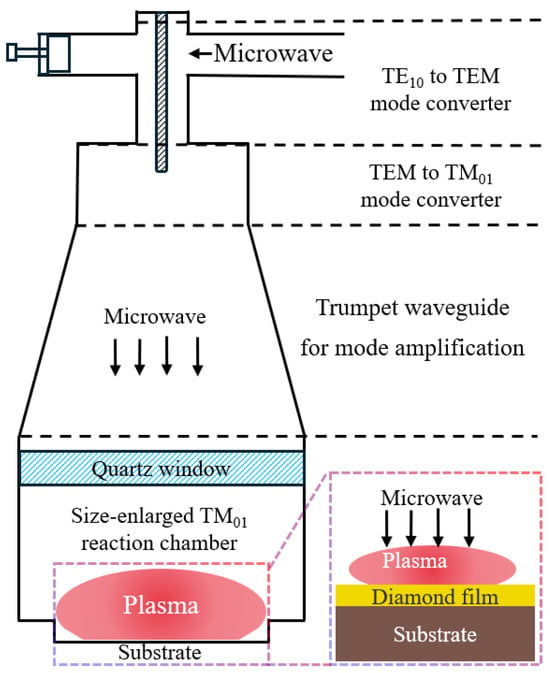
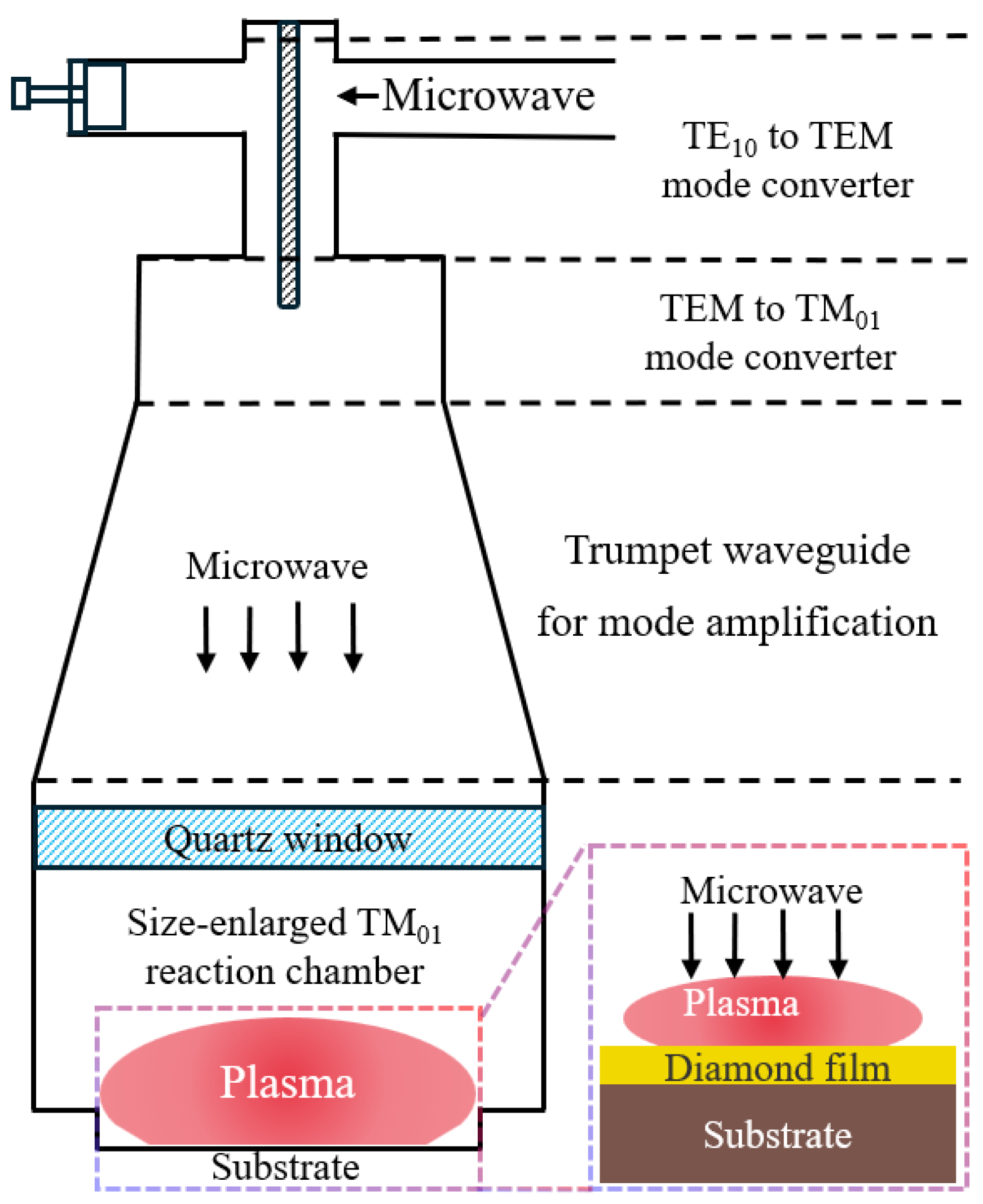
Considering the limitations of TM0n(n≥2) single-mode and multimode MPCVD reactors, this paper presents a TM01 single-mode MPCVD reactor based on the electromagnetic mode amplification method proposed by our team [34,35]. This paper covers the electromagnetic design and mode analysis of the up-scaled TM01-mode reactor; the development of a coupled multiphysics model (microwave fields, hydrogen discharge, gas heating) to simulate the plasma formation and near steady-state behaviors; and a numerical investigation of the plasma size, uniformity, and stability under varying operating conditions. The core novelty lies in the application of a mode-amplification technique using a tailored trumpet-shaped waveguide transition, which selectively enhances the TM01 mode and suppresses competing higher-order modes even when the cavity radius is increased beyond the conventional single-mode limit. Furthermore, a multiphysics modeling is performed to verify the effectiveness of designing the reactor based on estimating the pure hydrogen discharge properties in it. The results showed that the mode-amplified MPCVD reactor produced a plasma sphere with a diameter of 4 inches, highlighting its potential for depositing 4-inch diamond films while maintaining the stability and uniformity characteristic of the TM01 single-mode reactor. Figure 1 shows the design concept of the proposed TM01 MPCVD reactor and its basic configuration.
Figure 1.
Schematic of the design concept and basic configuration of the MPCVD reactor.
2. Electromagnetic Design and Optimization
2.1. Mode Analysis of the MPCVD Reaction Chamber
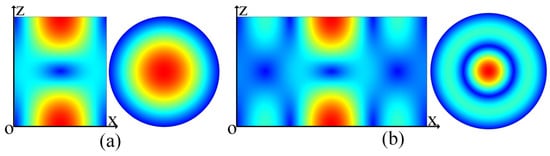
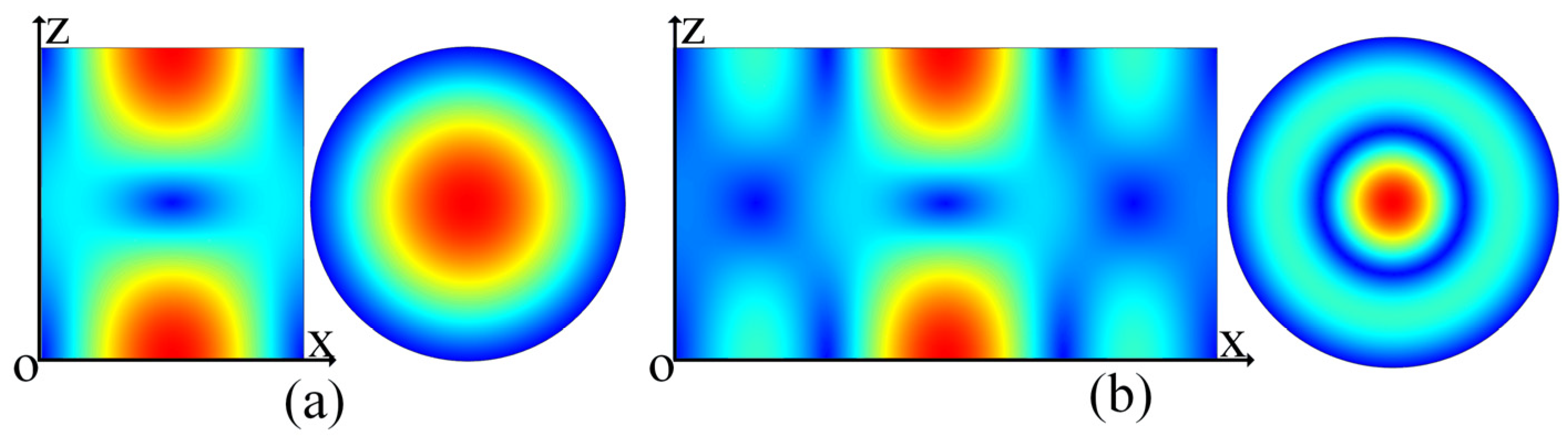
For MPCVD reactors, achieving large-area diamond film deposition typically necessitates an increase in plasma sphere size. The plasma sphere size closely correlates with the microwave electric field, which is constrained by the reactor dimensions. In this paper, we will enhance the plasma sphere size by enlarging the radius of the circular waveguide, thereby improving the ability of the reactor to deposit large-area diamond films. The key challenge is determining the waveguide radius to ensure that only the TM01 mode propagates within the MPCVD reactor, i.e., without the generation of higher-order modes. However, expanding the cavity size is not a simple enlargement, because it may lead to the propagation of higher-order modes, as illustrated in Figure 2.
Figure 2.
Distribution characteristics of TM01 and TM02 modes: (a) TM01 mode, (b) TM02 mode.
In a circular waveguide, a high-order microwave mode is allowed to exist when its cutoff wavelength satisfies the relation shown in (1).
where is the microwave wavelength in free space at the frequency of 2.45 GHz, and is the cutoff wavelength of the high-order TMmn modes, which can be determined by Equation (2).
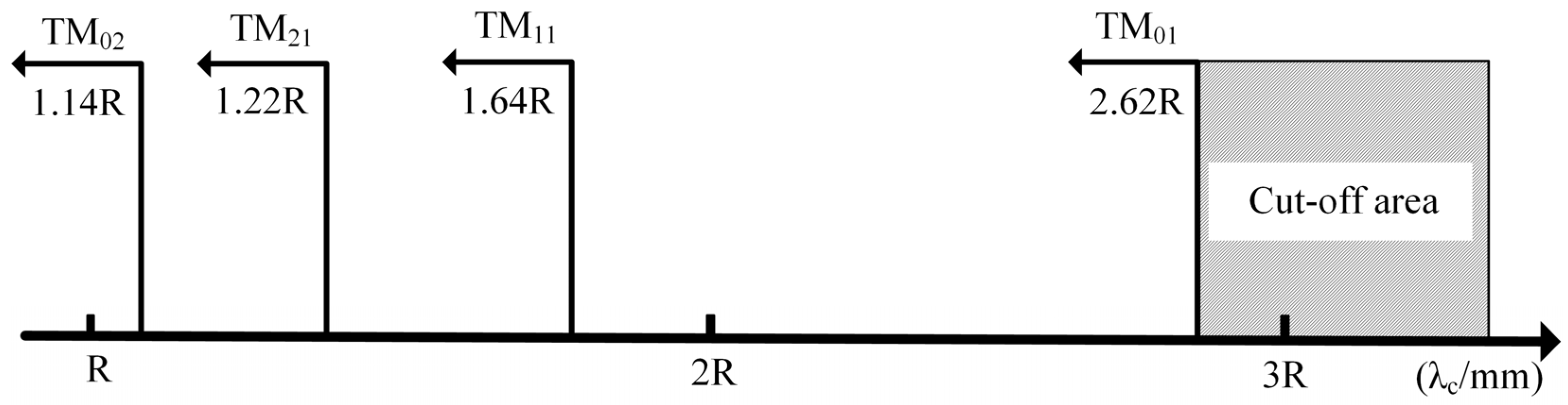
Here, R is the radius of the circular waveguide, and is the nth root of the Bessel function of the first class of order m. The values of can be obtained from reference [36]. The cutoff wavelengths of different TM modes in the circular waveguide are obtained by substituting the value of into Equation (2), as shown in Figure 3. It can be seen that when the radius R of the circular waveguide exceeds certain thresholds, different modes can exist. The TM01 mode is present when R > 46.74 mm (); the TM11 mode when R > 74.66 mm (); and the TM02 mode when R > 107.41 mm (). It is worth noting that the cutoff wavelength of a mode directly determines its operating wavelength because .
Figure 3.
Cutoff wavelength of the TM modes.
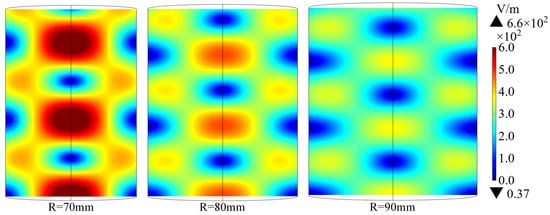
Figure 4 shows the microwave electric field distribution for the TM01 mode in an MPCVD reactor with a height of 200 mm and varying radii. As the reactor radius increases, the operating wavelength decreases, flattening the TM01 mode wavelength and resulting in a larger, more uniform microwave electric field. In short, a reasonable increase in the radius of the circular waveguide facilitates the expansion of the reaction chamber, thereby enlarging the plasma sphere size. However, increasing the circular waveguide radius decreases microwave power density and electric field intensity.
Figure 4.
Microwave electric field distribution of TM01 mode at different radii.
2.2. Mode Amplification and Design Optimization Criteria
In addition to the reactor radius, the microwave excitation method also affects the operating mode in the MPCVD reactor [37]. To achieve a large-area, uniform plasma while retaining the axisymmetric field homogeneity and operational stability inherent to the fundamental transverse magnetic mode, our design strategy focuses on selectively exciting and amplifying the TM01 mode while suppressing non-axisymmetric and higher-order modes (e.g., TM11, TM02).
The core criterion for optimizing the reactor is to enable large-area plasma deposition while preserving the stability and axisymmetric uniformity of TM01 single-mode operation. First, it must be ensured that the reactor cavity supports only the TM01 mode at 2.45 GHz, preventing the excitation of higher-order modes. Second, the excitation structure should maximize coupling efficiency into the TM01 mode while suppressing spurious modes (e.g., using the TEM-TM01 mode adapter). Third, a sufficiently strong and uniform microwave electric field must be generated above the substrate to ignite and maintain a plasma that covers a 4-inch area. Finally, the design should exhibit good robustness against variations in machining tolerances, thermal deformation, and operational parameters such as substrate height.
To achieve the stated objectives, the design incorporates the mode amplification method previously proposed by our team [34,35]. An optimized trumpet waveguide section is introduced into the excitation structure. Its profiled contour enables a smooth transition of microwave energy from the input waveguide into the larger reaction chamber while selectively amplifying the TM01 mode and effectively suppressing non-axisymmetric and higher-order modes. Furthermore, a concave substrate holder is integrated to locally enhance the electric field, thereby promoting plasma ignition and improving spatial conformity between the plasma and the substrate. Electromagnetic simulation results confirm that the electric field maintains a pure TM01 distribution even when the chamber radius is increased to 80 mm, with no significant presence of higher-order modes. This validates the effectiveness of the design in terms of scaling up the reactor size while maintaining single-mode operation.
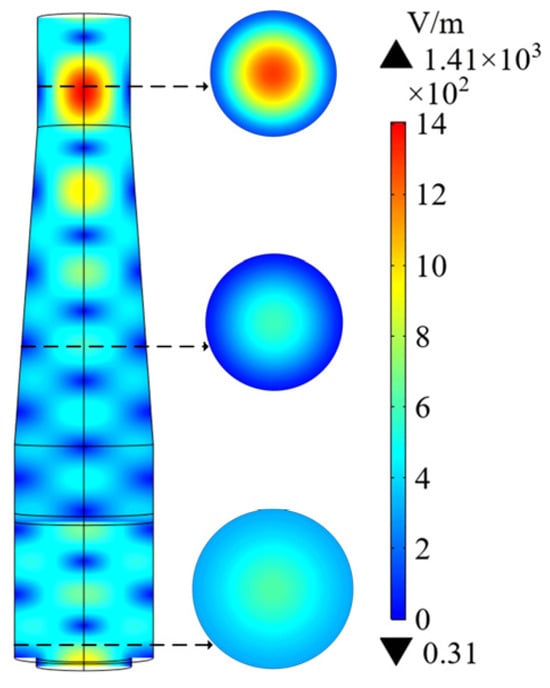
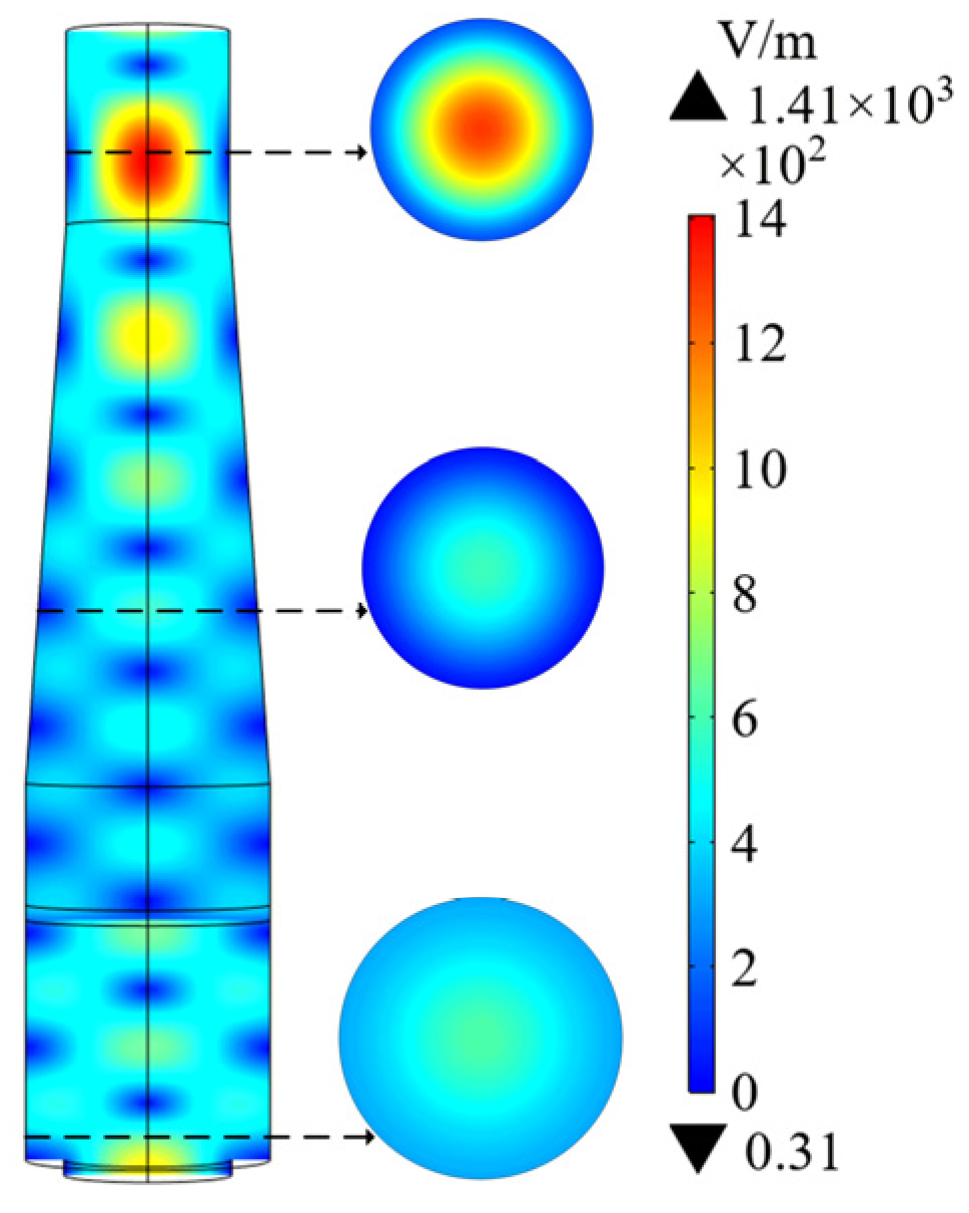
Figure 5 presents the microwave electric field distribution of the amplified TM01 mode with an input microwave power of 1W and a reactor radius of 80 mm. The longitudinal and cross-sectional electric field distributions show that the MPCVD reactor maintains TM01 mode transmission. Though the MPCVD reactor dimensions allow for the transmission of other high-order modes, only the TM01 mode is present, further confirming the effectiveness of mode amplification method. Notably, to enhance the electric field strength above the substrate and facilitate the ionization of hydrogen to form plasma, we designed a concave substrate with a radius of 55 mm and a height (H) of 10 mm. This design not only preserves the mode distribution in the MPCVD reaction chamber but also ensures that plasma is generated above the substrate, eventually covering the entire 4-inch substrate.
Figure 5.
Amplification of the TM01 mode.
3. Plasma Modeling and Numerical Implementation
In MPCVD reactor design, microwave electromagnetic simulations are only capable of illustrating the situation prior to gas discharge initiation. Nevertheless, relying on electromagnetic simulation without plasma modeling cannot provide a comprehensive understanding of the performance of the reactor in real production. Therefore, a multiphysics model incorporating microwave field, hydrogen discharge, and energy conservation is proposed to further verify the performance of MPCVD reactors.
3.1. Geometrical Model and Computational Domain
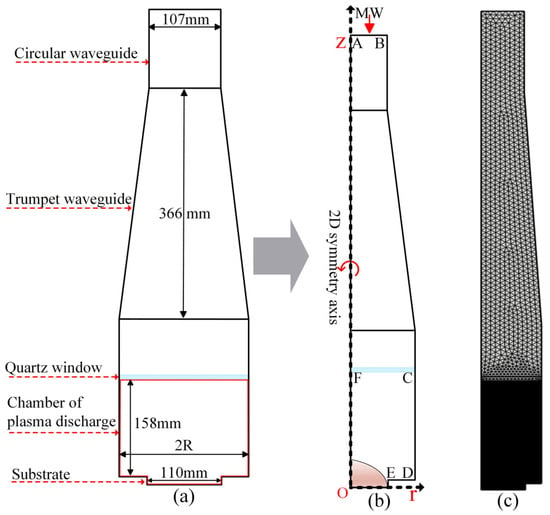
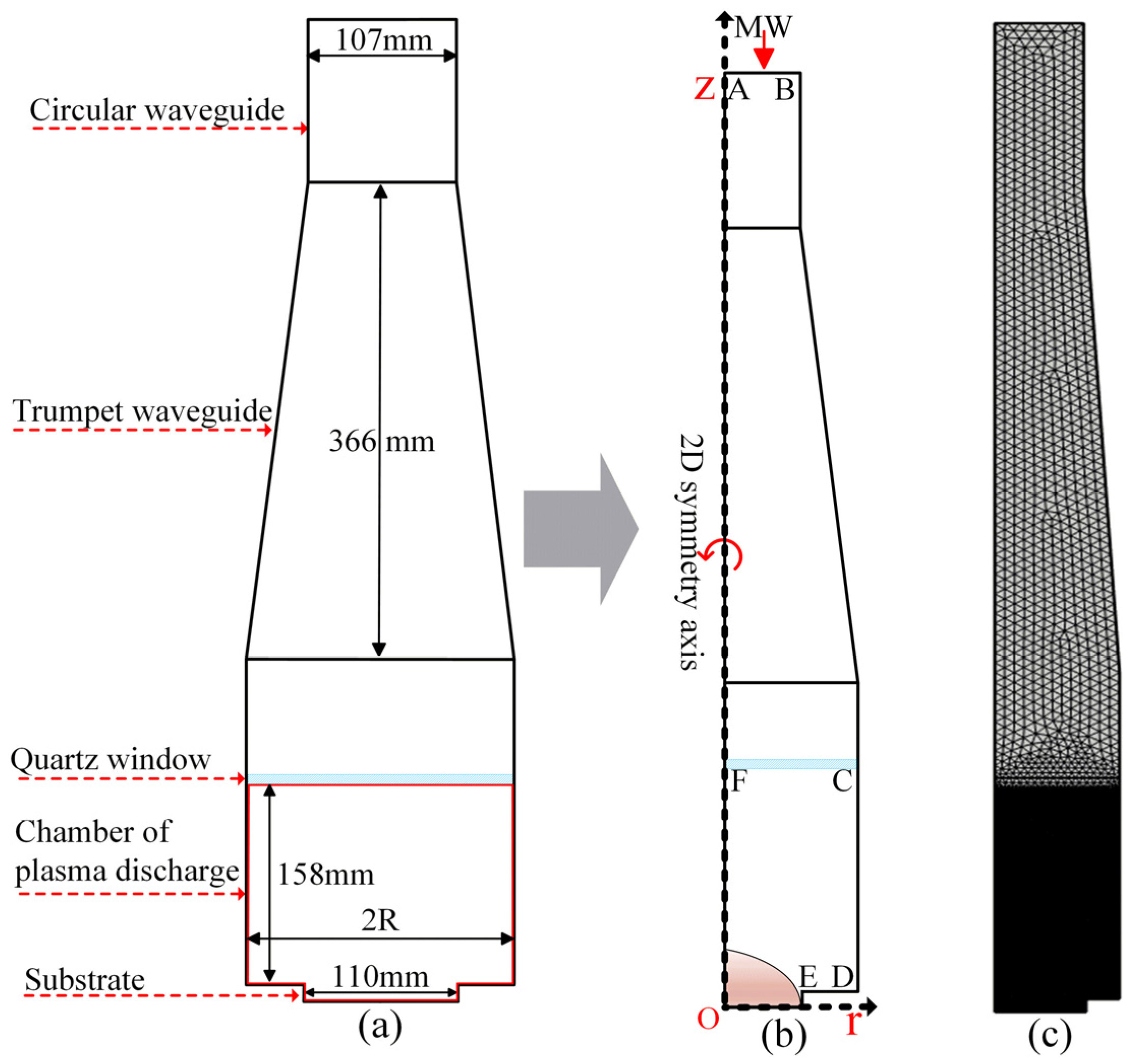
Figure 6a shows a schematic of the cross-sectional geometry of the extended TM01-mode MPCVD reactor after optimization. The microwave energy is transmitted into a circular waveguide with an inner diameter of 107 mm, ensuring the propagation of TM01 mode. A trumpet waveguide connected to the circular waveguide is applied to gain a smooth transition from the 107 mm circular waveguide to the larger-diameter cylindrical reaction chamber, which helps to restrain other non-axisymmetric electromagnetic modes. The cylindrical reaction chamber is divided into two parts by a quartz window that is designed to isolate the plasma region from the air. The relative dielectric constant of the quartz window is set to 3.78, and the window is positioned 158 mm away from the substrate surface, effectively preventing plasma etching and contamination during diamond deposition.
Figure 6.
Geometrical sizes and computational domain. (a) Geometrical sizes of the reactor chamber. (b) Two-dimensional axisymmetric simplification of the calculation domain. (c) Mesh structure of the calculation domain.
The microwave plasma mathematical model consists of multiple partial differential equations, each describing different physical processes. Specifically, the Helmholtz equation describes the propagation of the microwave electromagnetic field, the transport equations simulate the change in electrons and heavy species densities, and the energy balance equation can be solved to obtain the temperatures of electrons and the heavy species mixture. These equations have complex coupling relationships at different time and space scales, making the solution process cumbersome and computationally intensive. To reduce computational complexity and calculation time, in this study, a two-dimensional axisymmetric simplification is applied to the calculation domain based on the field distribution characteristics of the TM01 mode, as shown in Figure 6b.
3.2. Mathematical Model and Numerical Implementation
The diamond growth environment has a low methane content (typically less than 5%). This low methane content allows us to use the pure hydrogen discharge characteristic to estimate the practical working conditions of the MPCVD reactor. Table 1 and Table 2 present the main hydrogen plasma reactions, including 35 electron-collision reactions, 7 heavy species reactions, and 6 surface reactions, enabling description of the main hydrogen discharge characteristics [38,39,40]. The reaction model includes eight species: electrons, H2, H, H2+, H+, H3+, and two hydrogen excited states of different energy levels, H(n = 2) and H(n = 3). The chemical reaction rate sources and energy thresholds are taken from the literature [41,42,43,44].
Table 1.
Chemical reactions.
Table 2.
Surface reactions.
The microwave electric field is obtained by solving the Helmholtz equation (Equation (3)) in the frequency domain with a preset microwave frequency of 2.45 GHz.
Here, is the wave number in free space, where and are the vacuum permeability and permittivity, respectively. is the microwave angular frequency. indicates the electric conductivity, which is equal to for the plasma. Here, and denote the elementary charge and mass of the electron, respectively, and is the electron number density. The parameter represents the electron–neutrals collision frequency. Here, νm1 denotes the electron–hydrogen molecule (e–H2) momentum transfer collision frequency, while νm2 represents the electron–hydrogen atom (e–H) momentum transfer collision frequency. These electron–neutral momentum transfer processes and are used in the elastic energy transfer term of the electron energy balance equation, which can be obtained using Equation (4) [45]:
Here, is the charge of the electron and is the electron temperature, where the unit of electron temperature is . and denote the collision cross section of electrons with a hydrogen molecule and a hydrogen atom, respectively [46,47,48]. and represent the number densities of hydrogen molecules and hydrogen atoms, respectively.
The temporal and spatial variations in electron number density and energy density can be effectively described by Equations (5) and (6).
In Equations (5) and (6), is the electron mobility and (with Te in eV) is the electron diffusion coefficient. is the diffusion coefficient of electron energy density, where has unit of . is the mobility of electron energy density. is the source term of the electron number density, which represents the rate at which electrons are generated (source) or extinguished (sink), as determined by the electron correlation reactions in Table 1. is the power loss or gain due to electron inelastic collisions. represents the energy transfer from electrons to the neutral gas due to elastic collisions. Here, is the Boltzmann constant. is the power absorbed by the plasma from the microwave electric field. The static electric field due to space charge can be obtained by solving Equation (7), where is denoted as positive ions (; ).
The number densities of heavy species, including ions (; ) and excited atoms (; ), can be determined using Equation (8), where is the mass fraction of the kth species, is the source term of the kth heavy species, and is the corresponding multicomponent transport velocity. The heavy species mixture includes ions, neutral atoms, and molecules, and is assumed to have a common temperature that can be calculated with a heat transfer equation as follows:
In Equation (9), is the heat capacity of the heavy species mixture and indicates its thermal conductivity. Their values can be obtained from reference [49].
Microwave power is transmitted to the proposed MPCVD reactor through a circular waveguide in TM01 mode, with wave excitation applied to the A-B boundary in Figure 6b. A set of perfect electric conductor (PEC) boundary conditions are applied on the reactor metal walls to simplify calculations. This choice is justified by the high electrical conductivity of the metallic chamber (typically stainless steel or aluminum), which ensures minimal power dissipation at the walls. This ensures that the tangential component of the electric field is zero (Et = 0), allowing only the normal component to exist, which is essential for maintaining the stability of the TM01 resonance mode and focusing the microwave energy into the plasma discharge region.
In the plasma region, the wall boundary conditions are used to solve the continuity equations to obtain the electron density and electron energy density distributions. These flux-based conditions account for the loss of charged species due to wall recombination and the formation of the plasma sheath, which directly determines the spatial uniformity and the confinement of the plasma. For simplicity, these walls are treated as electric ground () when solving the Poisson equation for the electrostatic field due to space charge, providing a consistent reference potential for the self-consistent calculation of the sheath potential.
For the heat transfer equation for heavy species temperature, a set of Dirichlet boundary conditions are imposed on the chamber walls, which assume the chamber walls are cooled by circulating water to 350K, consistent with the experimental setup where the chamber is cooled via a high-capacity circulating water system. This temperature boundary is critical as it establishes the gas temperature gradient, which significantly influences the local gas density via the ideal gas law and consequently affects the chemical reaction rates and the transport of reactive radicals to the substrate. Table 3 lists all the boundary conditions involved in Figure 6b. The initial time step and the final simulation time are set to s and 100 s, respectively, which covers the entire discharge process from the gas breakdown to the formation of a stable plasma. The initial number densities of electrons, H+, H2+, H3+, H, H(n = 2), and H(n = 3) are set to , , , , , , and , where is the number density of hydrogen molecules and P represents the gas pressure in Pascal. The initial values of the heavy species temperature (T) and the mean electron energy density are 293.15 K and 3 eV, respectively.
Table 3.
Boundary conditions.
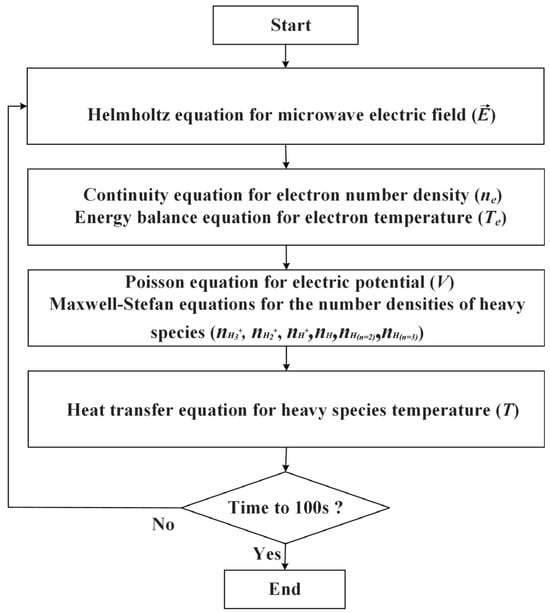
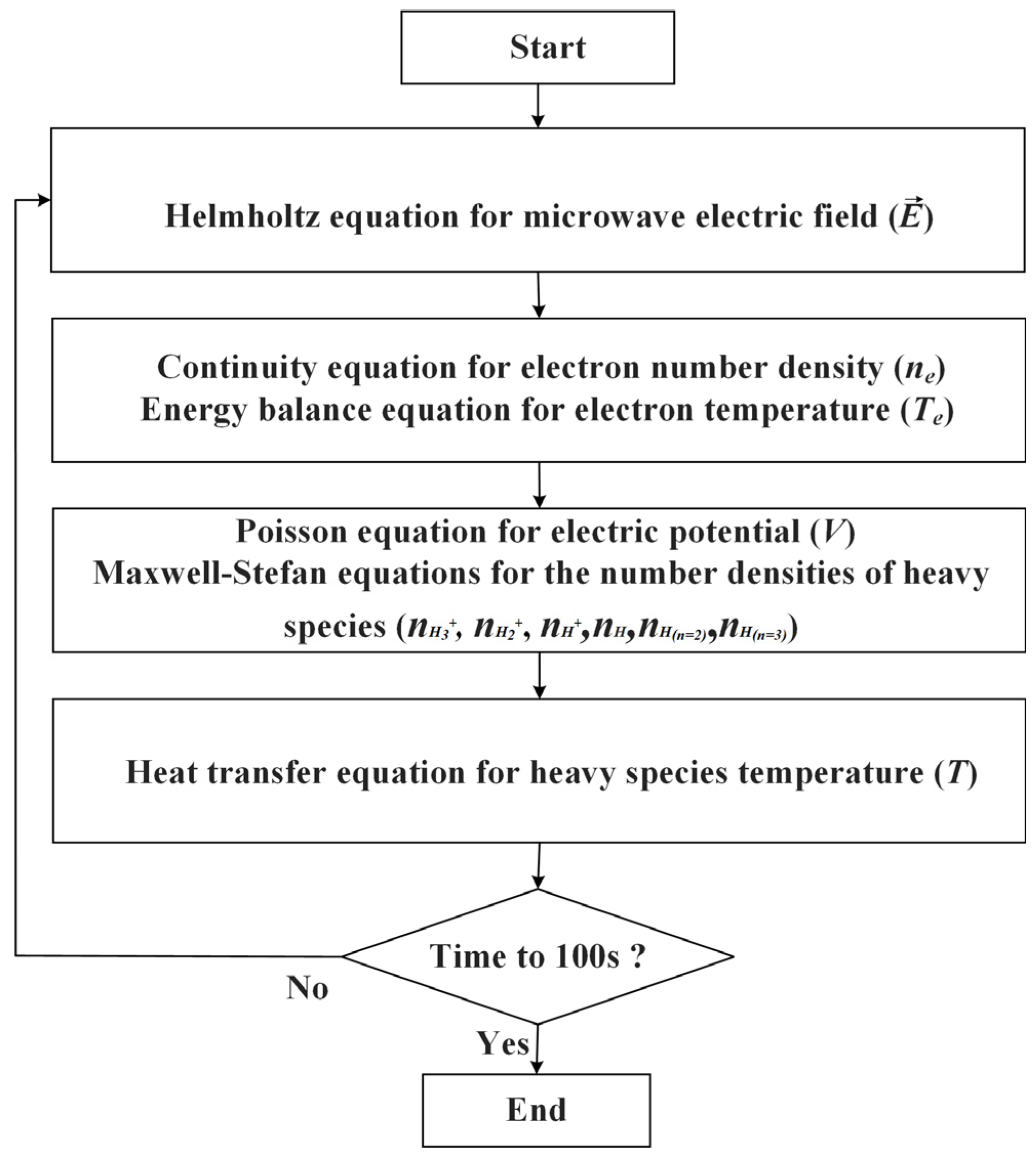
The mathematical model is implemented in COMSOL Multiphysics 6.3, a commercial simulation platform based on the finite element method. The calculation procedure is shown in Figure 7. The total number of grid cells in the computational domain is 11101, as shown in Figure 6c. It takes about 1 to 2 h to complete a calculation. The simulation was performed on a computer equipped with an I7-10700K CPU and 128 GB RAM (Dell Precision 3640 Tower, made in China).
Figure 7.
Calculation procedure.
4. Results and Analysis
4.1. Validity of the Plasma Modeling
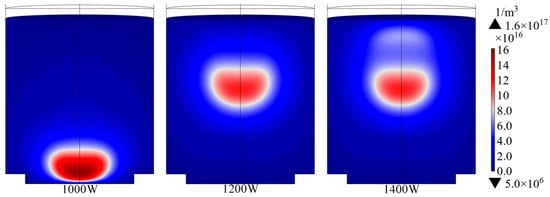
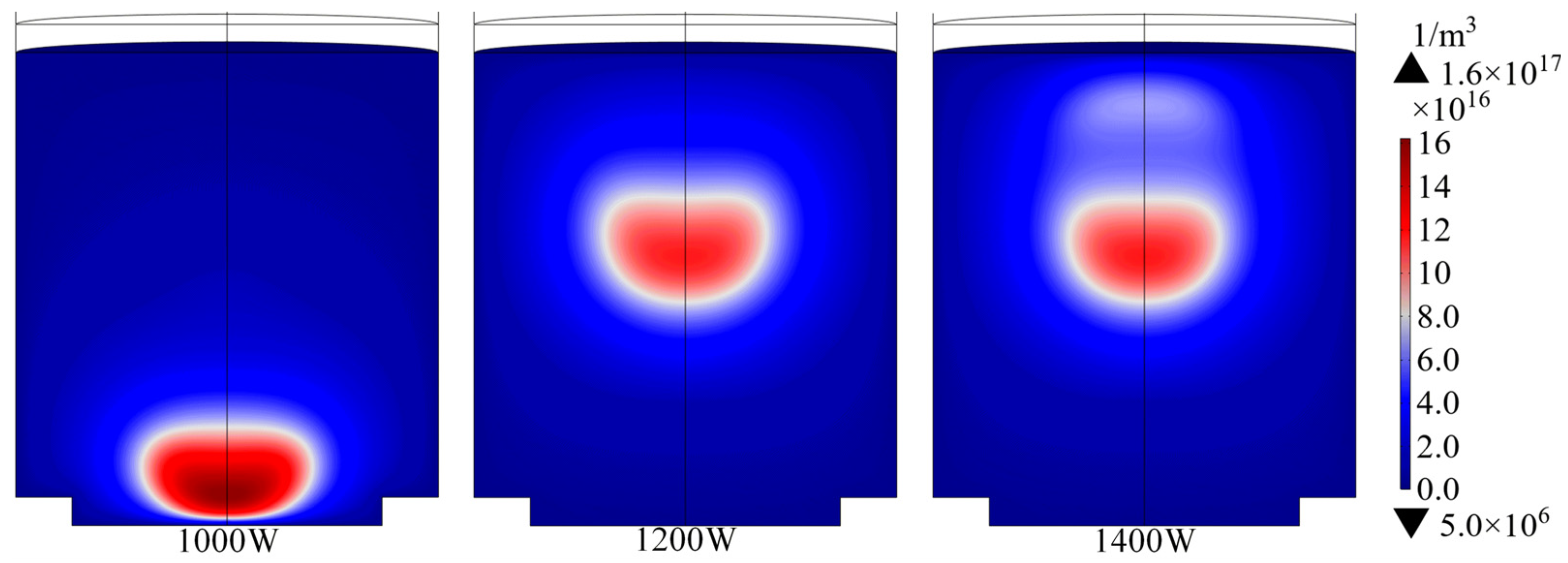
Figure 8 shows the spatial distribution of the electron density in the MPCVD reactor. The gas pressure in the reactor is 5000 Pa, and the input microwave powers are 1000 W, 1200 W, and 1400 W, respectively. It can be observed that as the microwave power increases, the plasma ball progressively shifts closer to the quartz window. A larger microwave power input will force the plasma ball to float upward towards the quartz plate. This is because a higher microwave power generally leads to a higher electron number density, creating an over-dense plasma that has a smaller skin depth and a stronger microwave-reflection capability. As a consequence, the over-dense plasma will prevent the incoming microwave from penetrating it and absorb less microwave power. A higher proportion of microwave energy will be reflected and superposed with the incoming microwave, resulting in a higher peak of traveling standing wave above the plasma ball. Finally, the large microwave electric field at the peak can ionize the gas, create more electrons, and force the plasma ball to approach the quartz plate. This phenomenon is consistent with our experimental observations and other numerical simulations [38].
Figure 8.
Electron density distribution at different microwave input power (Time = 100 s).
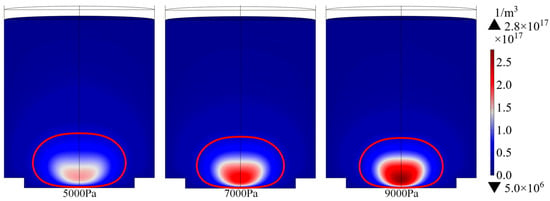
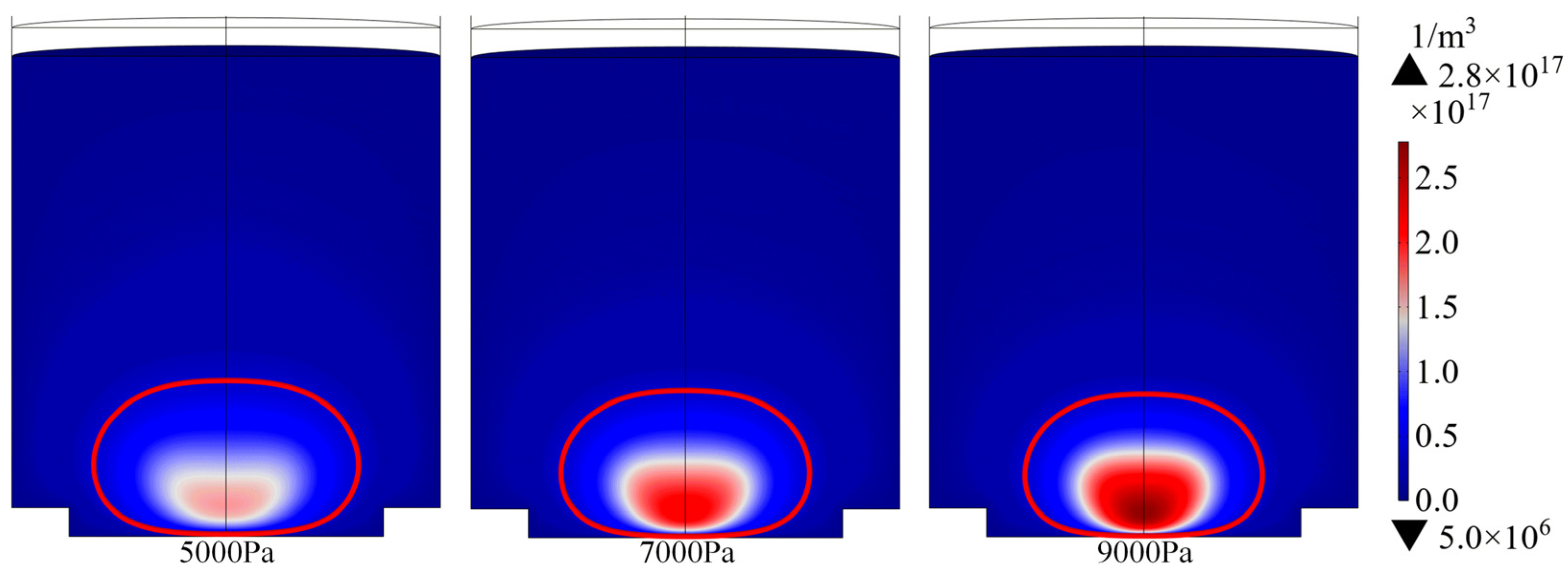
Figure 9 illustrates the plasma electron density distribution in the MPCVD reactor when the input power is 1000 W and the gas pressure changes from 5000 Pa to 7000 Pa or 9000 Pa. It is noteworthy that the red contour line representing an electron number density of is used for a clearer representation of the variation in plasma shape. The results indicate that as the gas pressure increases, the diameter of the plasma sphere gradually decreases. This is because at low gas pressures, the mean free path between gas molecules is longer, resulting in a lower collision frequency between electrons and ions in the plasma. Consequently, this allows the plasma to diffuse to a larger volume. However, when the gas pressure increases, the density of gas molecules also rises. This can lead to a significant increase in collision frequency, which restricts particle movement and results in the plasma sphere reducing in volume. The simulation results are consistent with the phenomenon observed in the literature [50,51], namely that when the gas pressure increases, the plasma sphere shrinks.
Figure 9.
Electron density distribution at different gas pressures (Time = 100 s).
The consistency between our numerical results and the experimental observations or numerical simulations in other studies demonstrates the validity of the multiphysics model proposed in this study, lending credence to the idea of further investigations with this model.
4.2. Performance of the MPCVD Reactor in the Presence of Plasma
The deposition rate and size of diamond films deposited by MPCVD are greatly influenced by the number density of hydrogen atoms and the diameter of the plasma ball [52,53]. Therefore, to accurately determine the plasma size from the simulation results is of vital importance in estimating the performance of the MPCVD reactor under different operation conditions. It was demonstrated that the visually observed plasma size can be identified by a proper number density () contour of hydrogen atoms () [54]. denotes the maximum value of the number density of hydrogen atoms in the MPCVD reactor and b is a constant ratio equal to (e = 2.718), as described in reference [55].
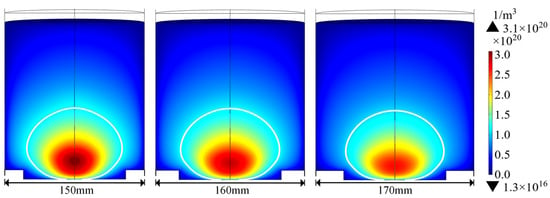
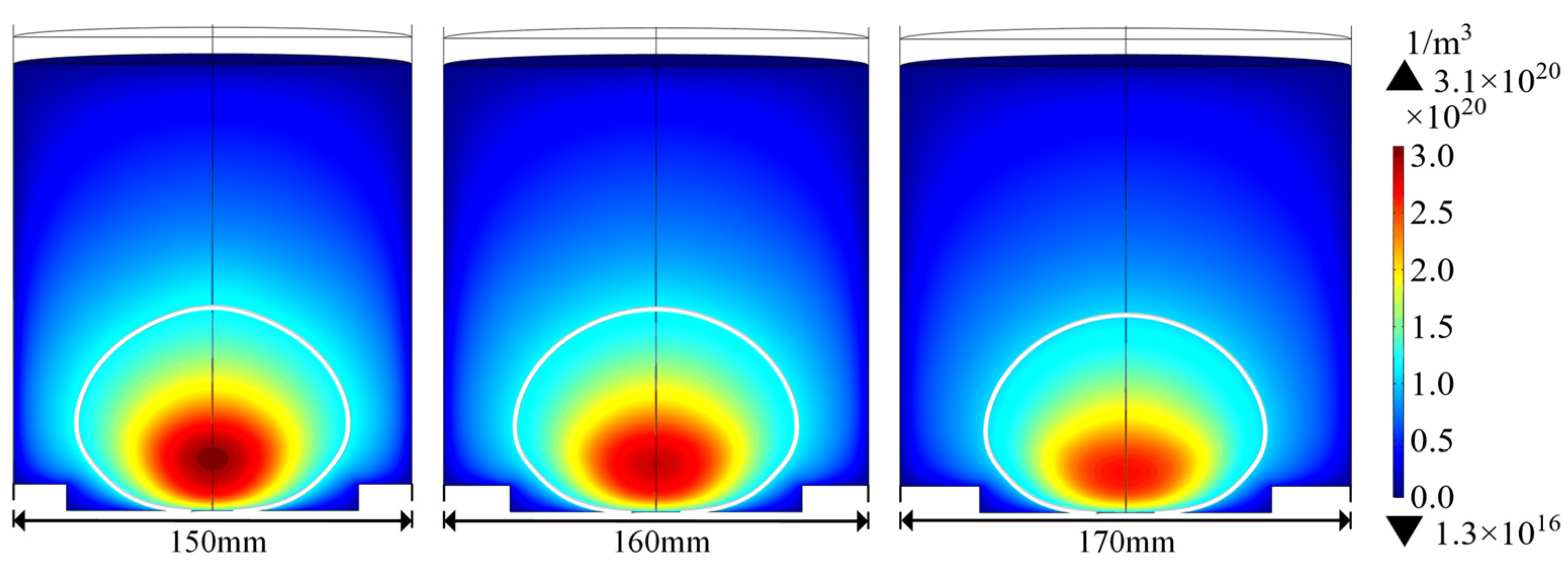
Figure 10 illustrates the spatial distributions of the hydrogen atom density in MPCVD reactors with different chamber diameters (2R = 150 mm, 160 mm, 170 mm) under a gas pressure of 5000 Pa and a microwave input power of 1000 W. The white contour indicates the hydrogen atom number density at the effective boundary , which can be used to quantify the geometrical size of the plasma sphere. It can be observed in Figure 10 that as the diameter of the reactor chamber increases, the hydrogen atom number density at the center of the plasma gradually decreases. However, the plasma size remains almost unchanged when the concentration gradient of hydrogen atoms becomes smaller. It indicates that the plasma density distribution becomes uniform when the reactor chamber enlarges. These results demonstrate that increasing the reactor diameter improves plasma uniformity and facilitates the deposition of high-quality diamond films. Moreover, it is worth noting that the plasma sphere nearly covers the entire circular substrate surface diameter of 110 mm, proving that the plasma sphere size has reached 4 inches.
Figure 10.
Realization of a 4-inch plasma sphere based on the mode amplification method (Time = 100 s).
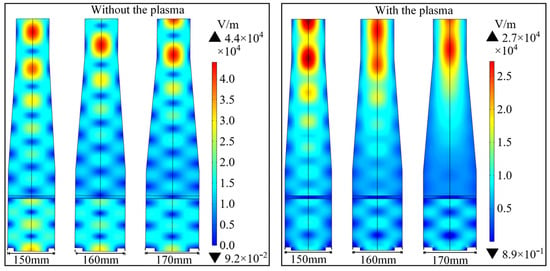
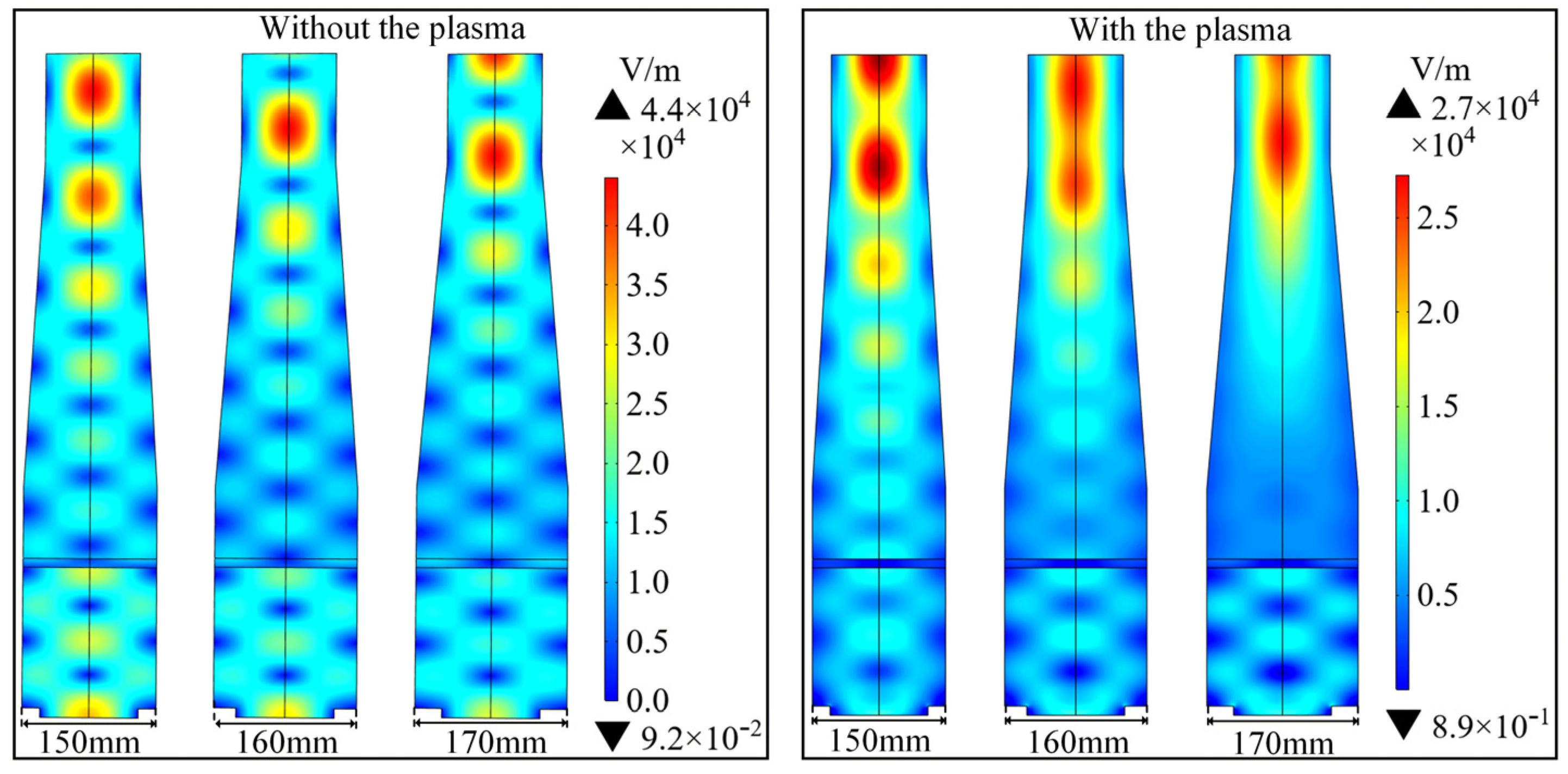
Figure 11 shows the microwave electric field distribution inside different MPCVD reactors with and without plasma. Before gas discharge, the microwave propagated in the MPCVD reactor in TM01 mode, with its highest microwave electric field concentrated above the substrate. Once the discharge occurs and the plasma reaches a steady state, the electromagnetic mode inside the reactor remains unchanged, as shown in Figure 11. This validates the design of the TM01 single-mode propagation in the MPCVD reactor proposed in this study. Furthermore, combined with a slight change in the plasma ball due to the increased chamber size, Figure 10 demonstrates that the proposed single-mode TM01 MPCVD reactor has good geometric robustness and good adaptability to thermal deformation, machining accuracy, and operating conditions.
Figure 11.
Distributions of the microwave electric field with and without the plasma (Time = 100 s).
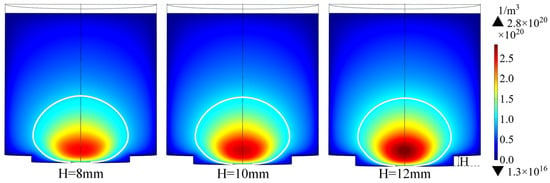
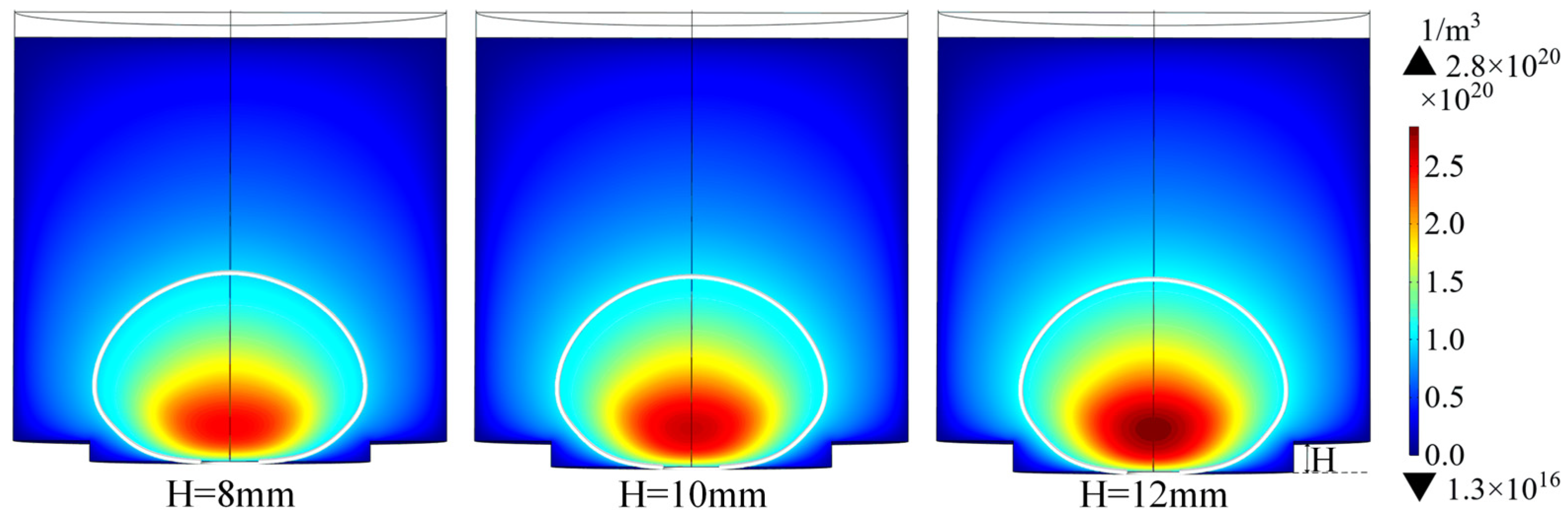
To regulate and control the gas discharge, the substrate height is often designed to be adjustable, which may also change the size of the plasma ball or introduce discharge instability besides the geometrical deformation. Therefore, to further demonstrate the robustness of the TM01 single-mode MPCVD reactor, Figure 12 shows the distributions of the number densities of hydrogen atoms at different substrate heights (H), with the white contours denoting . As the height increases, the hydrogen atom number density at the plasma sphere center rises, while the plasma sphere size remains relatively unchanged. This suggests that a plasma sphere with a diameter of 4 inches can be easily achieved without changing the diameter of the MPCVD reactor or the height of the substrate. Overall, the designed TM01 single-mode reactor has good robustness and can effectively avoid the problem of uneven plasma distribution due to poor machining accuracy, which can affect the quality of diamond deposition.
Figure 12.
The effect of substrate height on the plasma sphere in the MPCVD reactor (Time = 100 s).
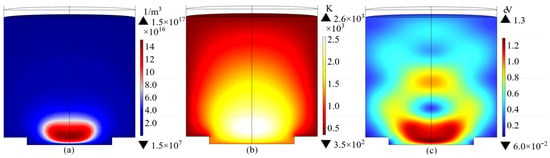
Figure 13 gives the distributions of other plasma parameters in the proposed MPCVD reactor, including electron density, heavy species temperature, and electron temperature. The simulation is performed with a gas pressure of 5000 Pa, a microwave input power of 1000 W, and a chamber diameter of 170 mm. The results demonstrate that the plasma is effectively maintained on the substrate support, indicating that the designed TM01 single-mode MPCVD reactor has the potential to deposit diamond. Moreover, the values of these parameters are largely aligned with those in other studies [56], again demonstrating the validity of the numerical simulations and the reactor design.
Figure 13.
Distributions of other plasma properties in the 170 mm diameter 4-inch MPCVD reactor. (a) Electron number density. (b) Heavy species temperature. (c) Electron temperature (Time = 100 s).
5. Conclusions
This study proposed a mode amplification method to increase the diameter of the plasma sphere in a TM01-mode MPCVD reactor by expanding its geometrical size without exciting other higher-order modes. The radius of the cylindrical reactor chamber can range from 75 mm to 85 mm, with only the TM01 electromagnetic mode being maintained. A multiphysics model that took into account microwave fields, hydrogen discharge, and energy conservation was further proposed to demonstrate the electromagnetic design of the MPCVD reactor, calculate the plasma size, and estimate the possibility of 4-inch diamond deposition. The numerical simulation has a time scale of to 100 s, covering the entire discharge process from the initial microwave breakdown to the final stabilization of the plasma. The results are compared and analyzed at a simulation time of 100 s, which approaches a steady-state discharge and real-world production. The main conclusions of the study are summarized as follows.
- The designed reactor can generate a 4-inch diameter plasma sphere, demonstrating significant potential for the deposition of 4-inch diamond films;
- Increasing the diameter of the reactor chamber improves the uniformity of the plasma sphere;
- The microwave in the proposed MPCVD reactor can maintain TM01 single-mode transmission with or without plasma;
- Slightly changing the diameter of the reactor chamber or the substrate height has no significant effect on plasma size, demonstrating that the proposed MPCVD reactor has good robustness.
Simulations demonstrate that the mode-amplified TM01 MPCVD reactor can generate a stable 4-inch diameter plasma ball, enabling uniform diamond deposition over a large area. It is worth noting that the current model focuses on pure hydrogen discharge, neglecting the carbon source gas methane and non-equilibrium plasma behavior at higher pressures, which may lead to deviations from actual performance. In future work, we plan to develop a more comprehensive multiphysics model for H2/CH4 mixtures to enable more accurate predictions of the reactor’s performance and its ability to support large-area diamond growth.
Author Contributions
Conceptualization, W.Z. and Y.Y.; methodology, W.Z.; software, Y.Y.; validation, J.Y. and Y.Y.; formal analysis, H.T. and P.T.; investigation, J.Y.; resources, X.P.; data curation, Y.Y.; writing—original draft preparation, J.Y.; writing—review and editing, W.Z. and Y.Y.; visualization, Y.H. and C.S.; supervision, X.P.; project administration, H.Z.; funding acquisition, W.Z. and P.T. All authors have read and agreed to the published version of the manuscript.
Funding
This research was funded by the National Natural Science Foundation of China (grant No. 62461007), the Guizhou Province High-Level Innovative Talent Program (grant No. GCC [2023]004), the Young Top-notch Talents Project from Guizhou Provincial Department of Education (grant No. Qianjiaoji[2024]341), the Guizhou 2024 Graduate Research Fund Project (grant No. 2024YJSKYJJ398), and the National Training Program of Innovation and Entrepreneurship for Undergraduates of China (grant No. 202510976683).
Data Availability Statement
The original contributions presented in this study are included in the article. Further inquiries can be directed to the corresponding authors.
Conflicts of Interest
The authors declare no conflicts of interest.
References
- Inyushkin, A.V.; Taldenkov, A.N.; Ralchenko, V.G.; Bolshakov, A.P.; Koliadin, A.V.; Katrusha, A.N. Thermal conductivity of high purity synthetic single crystal diamonds. Phys. Rev. B 2018, 97, 144305. [Google Scholar] [CrossRef] [Scilit]
- Osipov, A.S.; Klimczyk, P.; Rutkowski, P.; Melniychuk, Y.A.; Romanko, L.O.; Podsiadlo, M.; Petrusha, I.A.; Jaworska, L. Diamond composites of high thermal conductivity and low dielectric loss tangent. Mater. Sci. Eng. B 2021, 269, 115171. [Google Scholar] [CrossRef] [Scilit]
- Zhang, Z.D.; Schneider, H.; Tounsi, P. A promising solution using CVD diamond for efficient cooling of power devices. Mater. Sci. Eng. B 2012, 177, 1358–1361. [Google Scholar] [CrossRef] [Scilit]
- Dang, C.Q.; Lu, A.L.; Wang, H.Y.; Zhang, H.T.; Lu, Y. Diamond Semiconductor and Elastic Strain Engineering. Int. J. Semicond. 2022, 43, 021801. [Google Scholar] [CrossRef] [Scilit]
- Lin, W.; Lv, X.Y.; Wang, Q.L.; Li, L.; Zou, G.T. Effect of growth rate on the incorporation of silicon impurity in single crystal diamond. Mater. Sci. Semicond. Process. 2024, 180, 108554. [Google Scholar] [CrossRef] [Scilit]
- Zhang, R. Diamond Based Materials and Nanostructures for Advanced Functional Applications. Ph.D. Thesis, University of Leicester, Leicester, UK, 2023. [Google Scholar]
- Arnault, J.C.; Saada, S.; Ralchenko, V. Chemical vapor deposition single-crystal diamond: A review. Phys. Status Solidi RRL 2022, 16, 2100354. [Google Scholar] [CrossRef] [Scilit]
- Donato, N.; Rouger, N.; Pernot, J.; Longobardi, G.; Udrea, F. Diamond power devices: State of the art, modelling, figures of merit and future perspective. J. Phys. D Appl. Phys. 2019, 53, 493001. [Google Scholar] [CrossRef] [Scilit]
- Mokuno, Y.; Chayahara, A.; Soda, Y.; Yamada, H.; Horino, Y.; Fujimori, N. High rate homoepitaxial growth of diamond by microwave plasma CVD with nitrogen addition. Diam. Relat. Mater. 2006, 15, 455–459. [Google Scholar] [CrossRef] [Scilit]
- Wang, Q.J.; Wu, G.; Liu, S.; Gan, Z.Y.; Yang, B.; Pan, J.H. Simulation-based development of a new cylindrical-cavity microwave plasma reactor for diamond film synthesis. Crystals 2019, 9, 320. [Google Scholar] [CrossRef] [Scilit]
- Ren, Y.; Li, X.G.; Lv, W.; Dong, H.Y.; Cheng, Q.H.; Yue, F.; Wöhrl, N.; Mendes, J.C.; Yang, X.; Li, Z.X. Recent progress in homoepitaxial single-crystal diamond growth via MPCVD. J. Mater. Sci. Mater. Electron. 2024, 35, 525. [Google Scholar] [CrossRef] [Scilit]
- Yamada, H.; Chayahara, A.; Mokuno, Y.; Shikata, S. Simulation with an improved plasma model utilized to design a new structure of microwave plasma discharge for chemical vapor deposition of diamond crystals. Diam. Relat. Mater. 2008, 17, 494–497. [Google Scholar] [CrossRef] [Scilit]
- Zhang, J.B.; Wang, J.P.; Zhang, G.Q.; Huo, Z.X.; Huang, Z.J. A review of diamond synthesis, modification technology, and cutting tool application in ultra-precision machining. Mater. Des. 2024, 237, 112577. [Google Scholar] [CrossRef] [Scilit]
- Misra, D.S. Nitrogen centers in single crystal diamond grown by chemical vapor deposition. J. Vac. Sci. Technol. A 2023, 41, 042703. [Google Scholar] [CrossRef] [Scilit]
- Liang, Q.; Yan, C.S.; Meng, Y.; Lai, J.; Krasnicki, S.; Mao, H.K.; Hemley, R.J. Recent advances in high-growth rate single-crystal CVD diamond. Diamond Relat. Mater. 2009, 18, 698–703. [Google Scholar] [CrossRef] [Scilit]
- Schwander, M.; Partes, K. A review of diamond synthesis by CVD processes. Diam. Relat. Mater. 2011, 20, 1287–1301. [Google Scholar] [CrossRef] [Scilit]
- Hemawan, K.W.; Hemley, R.J. Optical emission diagnostics of plasmas in chemical vapor deposition of single-crystal diamond. J. Vac. Sci. Technol. A 2015, 33, 061302. [Google Scholar] [CrossRef] [Scilit]
- An, K.; Yu, S.W.; Li, X.J.; Shen, Y.Y.; Zhou, B.; Zhang, G.J.; Liu, X.P. Microwave plasma reactor with conical-reflector for diamond deposition. Vacuum 2015, 117, 112–120. [Google Scholar] [CrossRef] [Scilit]
- Li, Y.F.; Su, J.J.; Liu, Y.Q.; Ding, M.H.; Li, X.L.; Wang, G.; Yao, P.L.; Tang, W.Z. Design of a new TM021 mode cavity type MPCVD reactor for diamond film deposition. Diam. Relat. Mater. 2014, 44, 88–94. [Google Scholar] [CrossRef] [Scilit]
- Sevillano, E.; Dischler, B.; Wild, C. Microwave-Plasma Deposition of Diamond; Springer: Berlin/Heidelberg, Germany, 1998. [Google Scholar]
- Silva, F.; Hassouni, K.; Bonnin, X.; Gicquel, A. Microwave engineering of plasma-assisted CVD reactors for diamond deposition. J. Phys. Condens. Matter 2009, 21, 364202. [Google Scholar] [CrossRef] [Scilit]
- Wang, B.S.; Yang, D.; Zhu, X.M.; Zhao, Y.; Wang, S.; Zhu, J.Q.; Zhai, M. Effect of positive bias and pressure on plasma flow characteristics in a chemical vapor deposition chamber. Processes 2022, 10, 2665. [Google Scholar] [CrossRef] [Scilit]
- Bachmann, P.K.; Messier, R. Emerging technology of diamond thin films. Chem. Eng. News 1989, 67, 24–39. [Google Scholar] [CrossRef] [Scilit]
- Füner, M.; Wild, C.; Koidl, P. Simulation and development of optimized microwave plasma reactors for diamond deposition. Surf. Coat. Technol. 1999, 116–119, 853–862. [Google Scholar] [CrossRef] [Scilit]
- Su, J.J.; Li, Y.F.; Ding, M.H.; Li, X.L.; Liu, Y.Q.; Wang, G.; Tang, W.Z. A dome-shaped cavity type microwave plasma chemical vapor deposition reactor for diamond films deposition. Vacuum 2014, 107, 51–55. [Google Scholar] [CrossRef] [Scilit]
- Su, J.J.; Li, Y.F.; Li, X.L.; Yao, P.L.; Liu, Y.Q.; Ding, M.H.; Tang, W.Z. A novel microwave plasma reactor with a unique structure for chemical vapor deposition of diamond films. Diam. Relat. Mater. 2014, 42, 28–32. [Google Scholar] [CrossRef] [Scilit]
- An, K.; Zhang, S.; Shao, S.W.; Liu, L.J.; Wei, J.J.; Chen, L.X.; Zheng, Y.T.; Liu, Q.; Li, C.M. Effects of the electric field at the edge of a substrate to deposit a Ø100 mm uniform diamond film in a 2.45 GHz MPCVD system. Plasma Sci. Technol. 2022, 24, 045502. [Google Scholar] [CrossRef] [Scilit]
- Weng, J.; Xiong, L.W.; Wang, J.H.; Dai, S.Y.; Man, W.D.; Liu, F. Investigation of depositing large area uniform diamond films in multi-mode MPCVD chamber. Diam. Relat. Mater. 2012, 30, 15–19. [Google Scholar] [CrossRef] [Scilit]
- Vikharev, A.L.; Gorbachev, A.M.; Lobaev, M.A.; Radishev, D.B. Multimode cavity type MPACVD reactor for large area diamond film deposition. Diam. Relat. Mater. 2018, 83, 8–14. [Google Scholar] [CrossRef] [Scilit]
- Gu, Y.; Lu, J.; Grotjohn, T.; Schuelke, T.; Asmussen, J. Microwave plasma reactor design for high pressure and high power density diamond synthesis. Diam. Relat. Mater. 2012, 24, 210–214. [Google Scholar] [CrossRef] [Scilit]
- Shao, J.; Cao, B.; Wu, X.; Sun, G.; Zhao, J.; Xu, S. The 4-inch free-standing diamond film prepared by MPCVD at 10kW. Funct. Diam. 2024, 4, 2356570. [Google Scholar] [CrossRef] [Scilit]
- Ma, T.; Fan, W.; Sang, H.; Zhang, Y. Study on the uniformity of diamond growth using a dual-substrate MPCVD reactor. Vacuum 2025, 237, 114141. [Google Scholar] [CrossRef] [Scilit]
- Liu, X.; Mu, C.; Wang, Q.; Liu, W.; Lv, X.; Li, L.; Zou, G. Demonstration of a novel high-power MPCVD reactor using combined TM01 and TM02 modes for efficient diamond growth. Vacuum 2025, 234, 114761. [Google Scholar] [CrossRef] [Scilit]
- Zhang, W.C.; Wu, L.; Zhou, Y.P.; Xu, Y.C.; Deng, J.; Yang, Z.Y.; Sun, H.R. Design of a capacity-enhanced single-mode reactor for microwave chemistry researches. Chem. Eng. J. 2022, 427, 131898. [Google Scholar] [CrossRef] [Scilit]
- Li, M.; Wu, X.; Han, D.X.; Peng, R.Y.; Yang, Y.; Wu, L.; Zhang, W.C. A high-efficiency single-mode traveling wave reactor for continuous flow processing. Processes 2022, 10, 1261. [Google Scholar] [CrossRef] [Scilit]
- Pozar, D.M. Microwave Engineering, 4th ed.; Wiley: Hoboken, NJ, USA, 2012. [Google Scholar]
- José, M.; Catalá, C.; Antoni, J.C.; Pedro, P.P.; José, D.G.; Beatriz, B.G.; Felipe, L.P.F. Measurement of dielectric properties of materials at high temperature during microwave heating in a dual mode cylindrical cavity. IEEE Trans. Microw. Theory Tech. 2015, 63, 2905–2914. [Google Scholar] [CrossRef] [Scilit]
- Hassouni, K.; Silva, F.; Gicquel, A. Modelling of diamond deposition microwave cavity generated plasmas. J. Phys. D Appl. Phys. 2010, 43, 153001. [Google Scholar] [CrossRef] [Scilit]
- Hjartarson, A.T.; Thorsteinsson, E.G.; Gudmundsson, J.T. Low pressure hydrogen discharges diluted with argon explored using a global model. Plasma Sources Sci. Technol. 2010, 19, 065008. [Google Scholar] [CrossRef] [Scilit]
- Obrusník, A.; Bonaventura, Z. Studying a low-pressure microwave coaxial discharge in hydrogen using a mixed 2D/3D fluid model. J. Phys. D Appl. Phys. 2015, 48, 065201. [Google Scholar] [CrossRef] [Scilit]
- Marques, L.; Jolly, J.; Alves, L.L. Capacitively coupled radio-frequency hydrogen discharges: The role of kinetics. J. Appl. Phys. 2007, 102, 063305. [Google Scholar] [CrossRef] [Scilit]
- IST-Lisbon Database. Available online: https://nl.lxcat.net/data/set_databases.php (accessed on 1 June 2024).
- Capitelli, M.; Ferreira, C.M.; Gordiets, B.F.; Osipov, A.I. Plasma Kinetics in Atmospheric Gases; Springer: Berlin/Heidelberg, Germany, 2000. [Google Scholar]
- Janev, R.K.; Langer, W.D.; Evans, K., Jr.; Post, D.E., Jr. Elementary Processes in Hydrogen-Helium Plasmas; Springer: Berlin/Heidelberg, Germany, 1987. [Google Scholar]
- Zhang, W.; Yang, Y.; Zhu, H.; Peng, X.; Tian, H.; Han, D.; Peng, R.; Wu, L.; Tian, W.; Tao, J. Design and optimization of a high-efficiency MPCVD reactor for 4-inch diamond film deposition based on steady-state multiphysics modeling. Diam. Relat. Mater. 2025, 157, 112446. [Google Scholar] [CrossRef] [Scilit]
- Yoon, J.S.; Song, M.Y.; Han, J.M.; Hwang, S.H.; Chang, W.S.; Lee, B.J.; Itikawa, Y. Cross sections for electron collisions with hydrogen molecules. J. Phys. Chem. Ref. Data 2008, 37, 913–931. [Google Scholar] [CrossRef] [Scilit]
- Available online: https://www.lxcat.net (accessed on 1 June 2024).
- Shi, N.K. Theory of Low-Temperature Plasma Physics; Springer: Cham, Switzerland, 2017. [Google Scholar]
- Gordon, S.; McBride, B.J. Computer Program for Calculation of Complex Chemical Equilibrium Compositions and Applications, Part 1: Analysis; NASA Lewis Research Center: Cleveland, OH, USA, 1994.
- Muehle, M.; Asmussen, J.; Becker, M.F.; Schuelke, T. Extending microwave plasma assisted CVD SCD growth to pressures of 400 Torr. Diam. Relat. Mater. 2017, 79, 150–163. [Google Scholar] [CrossRef] [Scilit]
- Yang, D.; Guo, L.; Wang, B.S.; Jin, S.; Zhu, J.Q.; Zhai, M. Hydrogen plasma characteristics in a microwave chemical vapor deposition chamber. Mater. Sci. Eng. B 2023, 292, 116422. [Google Scholar] [CrossRef] [Scilit]
- Butler, J.E.; Mankelevich, Y.A.; Cheesman, A.; Ma, J.; Ashfold, M.N.R. Understanding the chemical vapor deposition of diamond: Recent progress. J. Phys. Condens. Matter 2009, 21, 364201. [Google Scholar] [CrossRef] [Scilit]
- Zhongwen, H.E.; Zhibin, M.A. Preparation of polycrystalline diamond films by MPCVD at high plasma power density. Diam. Abras. Eng. 2022, 42, 156–161. [Google Scholar] [CrossRef]
- Li, Y.C.; Hao, X.B.; Dai, B.; Wen, D.Y.; Zhu, J.Q.; Geng, F.J.; Yue, W.P.; Lin, W.Q. Optimization design of MPCVD single crystal diamond growth based on plasma diagnostics. J. Inorg. Mater. 2023, 38, 1405–1412. [Google Scholar] [CrossRef] [Scilit]
- Bushuev, E.V.; Yurov, V.Y.; Bolshakov, A.P.; Ralchenko, V.G.; Khomich, A.A.; Antonova, I.A.; Ashkinazi, E.E.; Shershulin, V.A.; Pashinin, V.P.; Konov, V.I. Express in situ measurement of epitaxial CVD diamond film growth kinetics. Diam. Relat. Mater. 2017, 72, 61–70. [Google Scholar] [CrossRef] [Scilit]
- Mallika, K.; Komanduri, R. Low pressure microwave plasma assisted chemical vapor deposition (MPCVD) of diamond coatings on silicon nitride cutting tools. Thin Solid Film. 2001, 396, 146–166. [Google Scholar] [CrossRef] [Scilit]

Disclaimer/Publisher’s Note: The statements, opinions and data contained in all publications are solely those of the individual author(s) and contributor(s) and not of MDPI and/or the editor(s). MDPI and/or the editor(s) disclaim responsibility for any injury to people or property resulting from any ideas, methods, instructions or products referred to in the content. |
© 2026 by the authors. Licensee MDPI, Basel, Switzerland. This article is an open access article distributed under the terms and conditions of the Creative Commons Attribution (CC BY) license.