1. Introduction
Against the backdrop of global efforts to address climate change and transition towards sustainable development, deep transformation of the energy structure centered on the “Carbon Neutrality” goal has become a common strategic choice for nations worldwide [
1,
2]. This ambitious goal necessitates a fundamental reshaping of energy production and consumption patterns, progressively reducing reliance on fossil fuels, and vigorously developing clean, low-carbon renewable energy technologies [
3,
4]. Amidst the challenges to grid stability posed by the large-scale integration of intermittent energy sources like wind and solar power, biomass energy occupies an increasingly strategic position in the global energy landscape due to its unique multiple advantages [
5,
6].
Biomass energy derived from organic materials, such as plants and algae, essentially stores chemical energy fixed from solar energy via photosynthesis. Its core advantage lies in the “Carbon-Neutral” cycle characteristic: biomass absorbs carbon dioxide (CO
2) from the atmosphere during growth and releases it back upon combustion, theoretically resulting in no net increase in greenhouse gas emissions [
7,
8]. Biomass resources are vast, widely distributed and possess significant potential to serve as baseload power, including crop straw, forestry residues, energy crops and organic municipal waste [
9]. Compared to variable sources like wind and solar, biomass energy is storable and dispatchable, capable of providing stable and reliable electrical and thermal output, playing an irreplaceable role in ensuring energy system security and mitigating fluctuations from new energy sources [
10].
Among various biomass utilization technologies, direct combustion for power generation is currently the most technologically mature, widely applied, and scaled-up core pathway [
11]. Grate-fired combustion technology, particularly reciprocating grate boilers, has become the mainstream choice for global industrial boilers and small-to-medium-sized biomass power plants, owing to its excellent adaptability to fuel type, size, and moisture content, as well as relatively simple fuel pre-treatment requirements [
12,
13]. The inherent complexity and variability of biomass fuels pose severe challenges to the stable and efficient operation of grate-fired boilers, such as chemical composition, moisture content and ash characteristics significantly influenced by season and region [
14,
15]. Due to suboptimal combustion organization and insufficient mixing of air and fuel, boilers commonly face issues like relatively low combustion efficiency, high carbon content in bottom ash, and difficulties in controlling pollutant emissions (especially nitrogen oxides, NO
x). This not only wastes energy but also undermines the economic viability and environmental benefits of biomass power generation [
16]. In-depth analysis of the biomass grate-firing process, precise regulation of combustion conditions, and achieving its clean and efficient utilization have become critical scientific and engineering problems urgently requiring solutions in this field [
17,
18].
The combustion process within a grate-fired boiler is a complex, multi-stage, multi-physics coupled process occurring on a fixed or moving grate. Fuel on the grate sequentially undergoes stages of preheating and drying, devolatilization and volatile combustion, char combustion, and burnout. To accommodate the different oxygen demands of these stages, combustion air is typically supplied in stages: primary air supplied beneath the grate and secondary air (or Over-Fire Air, OFA) supplied into the upper furnace. Primary air primarily supports fuel drying, pyrolysis, and char combustion, while also controlling bed temperature. Secondary air aims to mix thoroughly with volatiles and combustible gases (e.g., CO, H2) from the primary combustion stage, achieving gas-phase combustion, ensuring complete fuel burnout, and suppressing pollutant formation.
Despite the clear principles of grate-firing technology, challenges in practical operation remain severe [
19,
20]. Grate-fired boilers can “accommodate” different types of biomass fuels, but drastic fluctuations in fuel properties, such as the sudden feeding of high-moisture straw, can severely disrupt bed temperature and combustion rates, leading to deteriorated combustion conditions or even flame extinction [
21]. Dynamically optimizing the air distribution strategy based on real-time fuel characteristics to maintain stable combustion represents a core operational challenge. Incomplete combustion is the primary cause of low efficiency, mainly manifested in two ways: unburned carbon particles in the fly ash carried away by flue gas, and high carbon content in the bottom ash slag due to unburned char. This typically results from uneven penetration of primary air through the fuel bed, insufficient mixing of secondary air with combustible gases, or inadequate residence time of gases in high-temperature zones. Biomass fuels contain nitrogen and sulfur, leading to the formation of nitrogen oxides (NO
x) and sulfur oxides (SO
x) during combustion [
22]. The mechanisms of NO
x formation are complex, involving both Fuel-NO
x derived from nitrogen in the fuel and Thermal-NO
x generated from the oxidation of atmospheric nitrogen at high temperature [
23]. Precise air staging is the mainstream technique for NO
x control. It involves creating a fuel-rich, reducing atmosphere in the lower furnace to suppress NO
x formation, followed by the introduction of secondary air to complete combustion.
Confronting these challenges, the traditional trial-and-error optimization approach based on field tests is not only costly and time-consuming but also high-risk and limited in providing comprehensive insights into the complex combustion mechanisms inside the furnace. With the rapid advancement of computational power and the continuous improvement of Computational Fluid Dynamics (CFD) theory, CFD-based numerical simulation has become a powerful tool for studying and optimizing boiler combustion processes [
24]. CFD can construct a virtual 3D model identical to the actual boiler, accurately simulating complex physico-chemical processes such as gas–solid two-phase flow, heat and mass transfer, chemical reactions, and even pollutant formation by solving a series of partial differential equations for mass, momentum, energy, and species conservation, thereby enabling visual analysis and quantitative prediction of combustion conditions [
25].
In recent years, researchers worldwide have conducted extensive in-depth studies on biomass grate-fired boilers using CFD technology, yielding fruitful results [
26,
27]. Regarding air distribution strategy and secondary air system optimization, some studies analyzed the combustion process of mixed biomass pellets in a boiler, focusing particularly on the impact of the primary-to-secondary air ratio on the combustion process, emission characteristics, and thermal balance. Results indicated that a 60/40 (primary/secondary) air distribution ratio led to more complete combustion and improved boiler efficiency [
28]. Other sensitivity analyses on primary and secondary air showed that changing the primary-to-secondary air ratio from 79/21 to 40/60 reduced the average CO mass fraction at the furnace outlet by over 50%. The average furnace temperature increased to a maximum of 1323.15 K, enhancing combustion efficiency. Results also indicated that shifting char combustion towards the rear of the grate caused temperature imbalances near the boiler walls, emphasizing the importance of grate-specific conversion curves. These findings highlight the importance of optimized air distribution [
13].
Regarding advancements in fuel bed combustion modeling, the combustion of the solid fuel bed on the grate is the boundary condition and foundation of the entire process, and its accurate simulation is crucial. To overcome the limitations of traditional CFD models that simplify the bed as a porous medium or fixed heat/species source, advanced models have been developed. The study used an Eulerian–Lagrangian approach to resolve the intense combustion in both the grate and fuel bed within a single framework [
12]. The results showed uneven distribution of key parameters across the grate width, poorer airflow and combustion conditions near the water-cooled walls compared to the furnace center. This led to significant delays in volatile release and char oxidation near the walls, ultimately causing notable differences in temperature and species distributions. At 3.3 m from the fuel inlet, the peak CO concentration at the center was 12.6%, while near the water-cooled wall, the peak occurred around 3.5 m with a concentration of 8.6%. It provided a method for calculating fly ash particles using size grouping and non-spherical particles. The study, based on a 3D Eulerian–Lagrangian model, analyzed the effect of combustion pressure (P) on gas–solid flow and reaction characteristics [
29]. The results demonstrated that the model accurately predicted flow structure, temperature, and concentrations of CO
2, CO, O
2, NO, N
2O, and SO
2. Increased pressure created favorable gas–solid flow and chemical reaction conditions, leading not only to better temperature distribution and higher CO
2 concentration in the flue gas but also reduced pollutant emissions. The study advanced understanding by showing that increased pressure, without altering local gas velocity but increasing heat input, constructed favorable conditions.
In terms of pollutant formation mechanisms and control, CFD simulation has also shown great potential in predicting and controlling NO
x emissions [
30]. By coupling detailed NO
x formation and reduction chemical mechanisms into CFD models, researchers can quantitatively analyze the impact of different air staging strategies (e.g., vertical placement height and flow rate of secondary air) on NO
x emissions. Studies confirm that positioning secondary air slightly above the main combustion zone while maintaining an appropriate overall excess air ratio can establish a stable reducing atmosphere in the lower furnace, maximizing the conversion of fuel nitrogen to harmless N
2, thereby achieving NO
x reduction at the source.
Although the aforementioned studies provide valuable insights into combustion optimization in biomass grate-fired boilers from perspectives like primary-to-secondary air ratio, secondary air configuration, and velocity, most focus on the front and middle sections of the combustion process. For large-scale biomass boilers, especially when burning high-volatility, low-density straw-based fuels, a significant amount of char particles undergo final combustion in the rear section (burnout zone) of the grate. The combustion efficiency in this stage directly determines the final carbon content in the bottom ash and is key to improving the overall thermal efficiency of the boiler [
31].
The systematic and quantitative research on the air distribution method specifically for the rear grate zone, the dedicated “Burnout Air” system and its impact on the overall combustion process, particularly its application in large-scale industrial straw-fired boilers, remains relatively scarce [
32]. Key questions, such as whether the design and regulation of burnout air can effectively enhance char burnout in the rear section and reduce slagging loss, and how it might conversely affect the temperature field, species concentration field in the upper furnace, and pollutant formation, await in-depth investigation [
33].
This paper takes a typical 130 t/h large-scale straw-fired grate boiler as the specific research object. Distinguished from previous CFD studies that primarily focused on primary-to-secondary air ratios or general secondary air configurations, this work specifically targets the dedicated ‘burnout air’ system at the rear grate section, a critical yet under investigated component for large-scale boilers burning high-volatility biomass. The advanced CFD numerical simulation technology to construct a high-fidelity, full-scale three-dimensional gas–solid two-phase combustion model is employed. The core of the research focuses on systematically evaluating the effects of key burnout air parameters (outlet velocity, pipe diameter, and injection angle) on the flow field and combustion characteristics in the furnace rear section. By comparatively analyzing key performance indicators, such as the char burnout ratio, flue gas temperature distribution and species concentration fields (e.g., O2, CO and CO2), this study aims to quantitatively reveal the mechanisms through which rear-stage burnout air enhances combustion completeness. The findings are expected to provide direct scientific guidance for optimizing the operation of similar large-scale biomass boilers and offer solid theoretical support for the design of refined air distribution strategies, thereby contributing to improved efficiency and reduced carbon emissions in biomass power generation.
3. Results and Discussion
The following results were obtained using the numerical models and setup described in detail in
Section 2.2. The analysis focuses on the impact of burnout air parameters on key combustion indicators, including in-furnace species concentration, temperature fields, and the overall char burnout ratio.
3.1. Model Reliability Validation
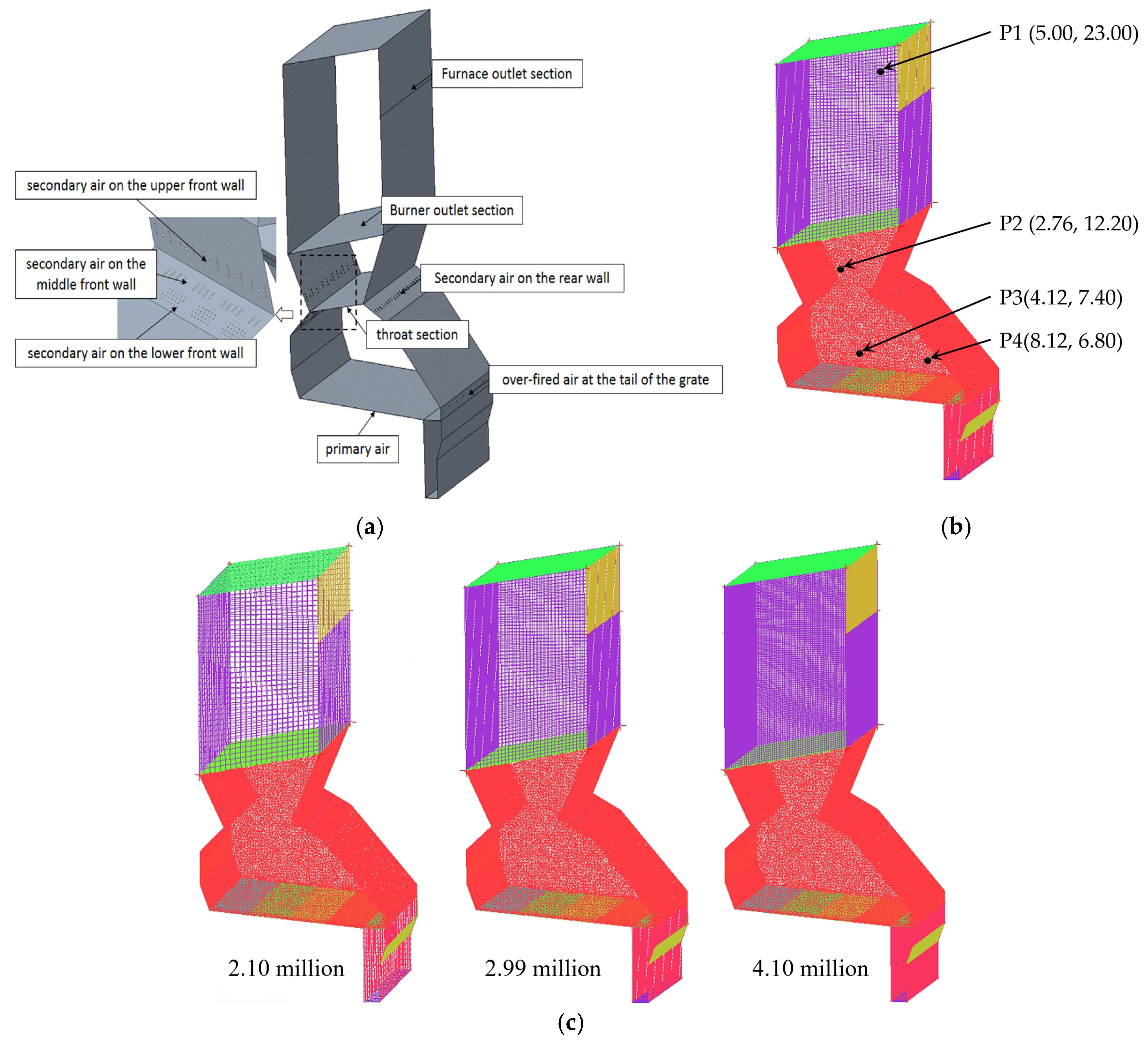
The simulation results of the biomass grate-fired boiler under the initial operating condition were compared with field measurement data for validation. The validation relied on temperature data from four fixed thermocouples (P1–P4) installed at different heights along the boiler side walls, as well as O
2 concentration measured at the rear of the grate. These measurement points were selected because they are standard monitoring locations in the industrial boiler, providing reliable and representative data on the spatial temperature distribution and combustion atmosphere. The specific coordinates of the temperature points are listed in
Table 4, and their schematic locations are shown in
Figure 1b. The in-furnace temperature was measured using type-K shielded thermocouple with an estimated uncertainty of ±1.5 K. The O
2 concentration at the rear of the grate was obtained from KM9106 Comprehensive Flue Gas Analyzer (Kane, Welwyn Garden City, UK, uncertainty: ±0.1 vol.%). The carbon content in the bottom ash was determined via laboratory loss-on-ignition tests according to standard procedures.
The simulated values for temperature near the side walls, oxygen concentration at the rear of the grate, and carbon content in the bottom ash showed good agreement with the measured data, with relative errors generally controlled within 7%, as detailed in
Table 4. For instance, at location (5.00, 23.00), the measured temperature was 1134.45 K, while the simulated result was 1171.38 K, resulting in a relative deviation of 3.26%. At location (2.76, 12.20), the measured temperature was 1082.95 K, compared to a simulated value of 1136.25 K (deviation of 6.58%). For location (4.12, 7.40), the measured temperature was 1187.25 K versus a simulated value of 1156.97 K (deviation of 3.31%). At location (8.12, 6.80), the measured temperature was 1052.35 K, and the simulated value was 1065.49 K (deviation of 1.69%). The measured oxygen concentration at the furnace rear was 11.67%, and the simulated value was 12.25% (deviation of 4.97%). These error ranges fell within acceptable engineering tolerances, adequately demonstrating that the established model accurately predicted the in-furnace combustion state and the flue gas characteristics at the furnace outlet, thus providing a reliable basis for subsequent optimization analysis.
Field measurements indicated a high carbon content in the bottom ash (approximately 25–30% as received) under the baseline condition, which directly corresponds to the simulated low char burnout ratio of 76.5% and confirms significant incomplete combustion heat loss. This was potentially attributable to insufficient fuel residence time on the grate or uneven local oxygen concentration distribution, leading to the discharge of unburned carbon particles with the slag and consequently reducing the overall combustion efficiency. This phenomenon underscored the necessity of optimizing air distribution parameters to enhance combustion completeness and reduce energy waste.
3.2. Results Influenced by Multiple Factors
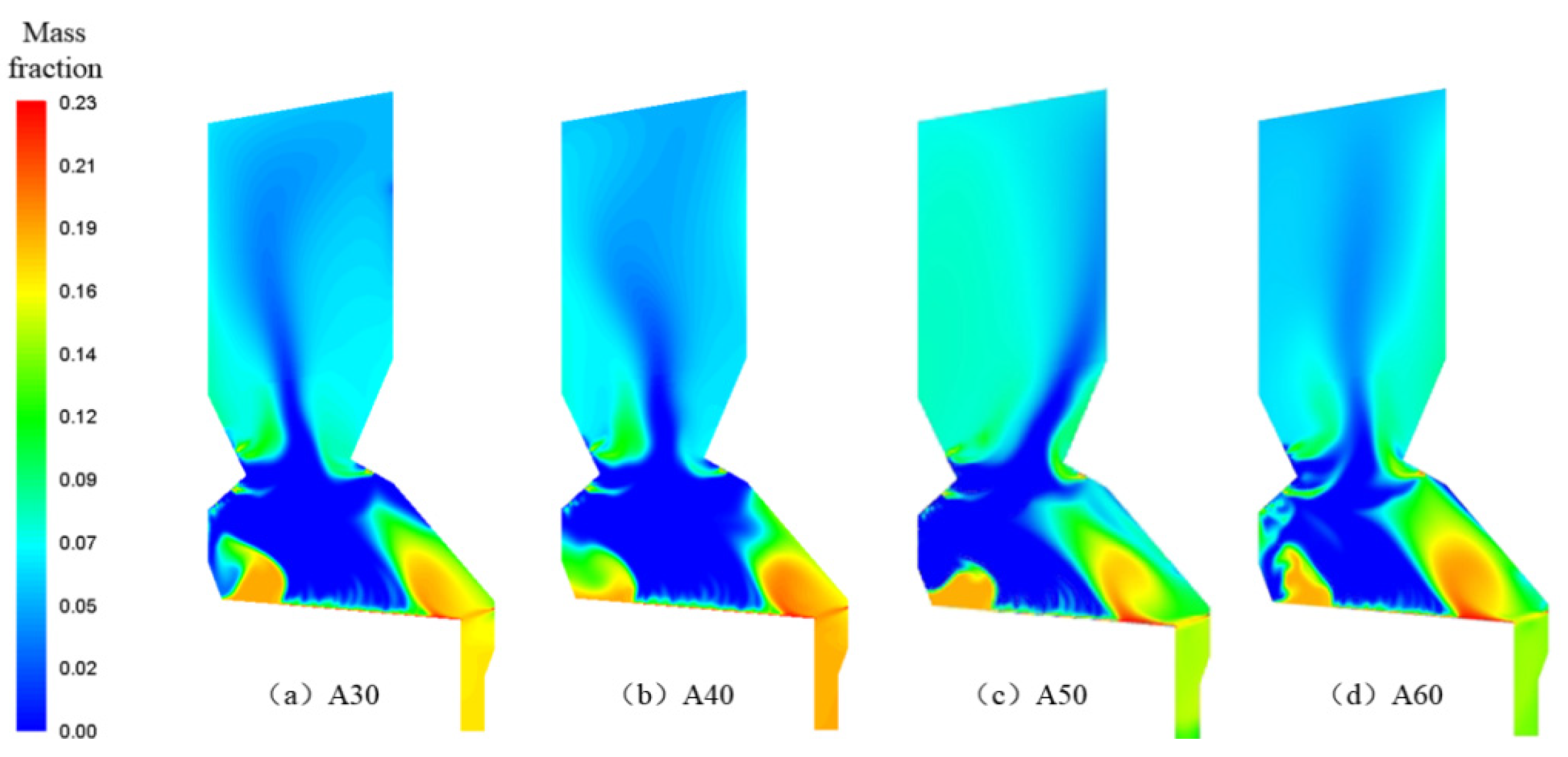
Under the condition of a constant total system air flow, the effect of increasing the velocity of the burnout air, added with a specific pipe diameter, on the oxygen content inside the furnace is shown in
Figure 2. As the burnout air velocity increased, both the oxygen concentration and its distribution range in the rear furnace section significantly expanded. The higher outlet velocity leads to greater penetration of the burnout air jet into the furnace cross-flow, creating a stronger recirculation zone that draws hot flue gases back towards the grate. This enhanced mixing and transport of oxygen and heat intensified the combustion of unburned carbon particles. This indicated that increasing the burnout air flow effectively enhanced the oxygen concentration in this region, thereby intensifying the combustion process. Specifically, the higher velocity promoted the mixing of air with unburned fuel, enhanced turbulent diffusion effects, allowing oxygen to penetrate the fuel bed more easily and promoting the late-stage combustion of carbon particles.
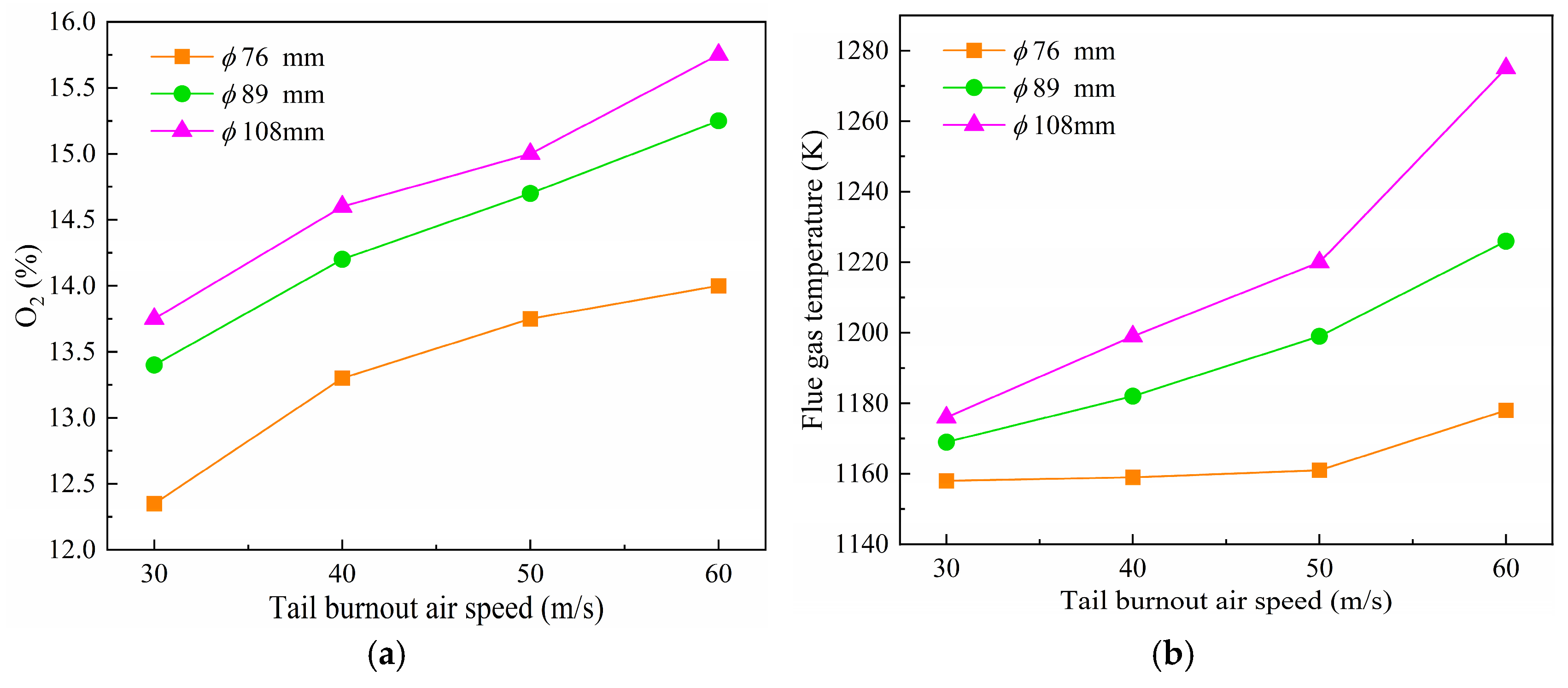
The influence of velocity variation under different pipe diameters on the oxygen content and flue gas temperature at the furnace outlet is shown in
Figure 3. Differences in the oxygen content carried by burnout air at different outlet velocities caused corresponding changes in the oxygen concentration at the end of the grate. As the burnout air outlet velocity increased, the oxygen concentration in the rear grate region increased, and the flue gas temperature consequently rose. This was primarily because the oxidation reaction of unburned carbon particles intensified in the high-oxygen environment, releasing more heat and thereby elevating the flue gas temperature. Under the same pipe diameter condition, the flue gas temperature at the rear gradually increased with the increasing burnout air velocity, and the temperature trend was consistent across different pipe diameters, further confirming the positive impact of velocity on the combustion process. Quantitatively, a strong positive correlation was observed among the burnout air parameters, the resulting furnace conditions, and combustion completeness. Across all simulated cases with varying velocity and diameter, the increase in area-averaged O
2 concentration at the furnace rear showed a near-linear relationship (R
2 > 0.9) with the rise in local flue gas temperature. Both of these parameters were strongly correlated with the improvement in the char burnout ratio, which increased from a baseline of 76.5% up to 87.8%. This tripartite relationship underscores that enhancing oxygen availability and mixing in the burnout zone directly elevates local temperatures through intensified combustion, which in turn drives more complete char oxidation. The increase in furnace outlet temperature, under the premise of constant total air flow, indirectly indicated improved combustion conditions within the furnace and enhanced fuel combustion efficiency, which helped reduce incomplete combustion heat loss and improve the overall thermal efficiency of the boiler. The excessively high velocities could lead to localized overheating or excessive flow disturbance, potentially causing slagging or erosion issues. The optimal velocity range needed careful consideration in practice.
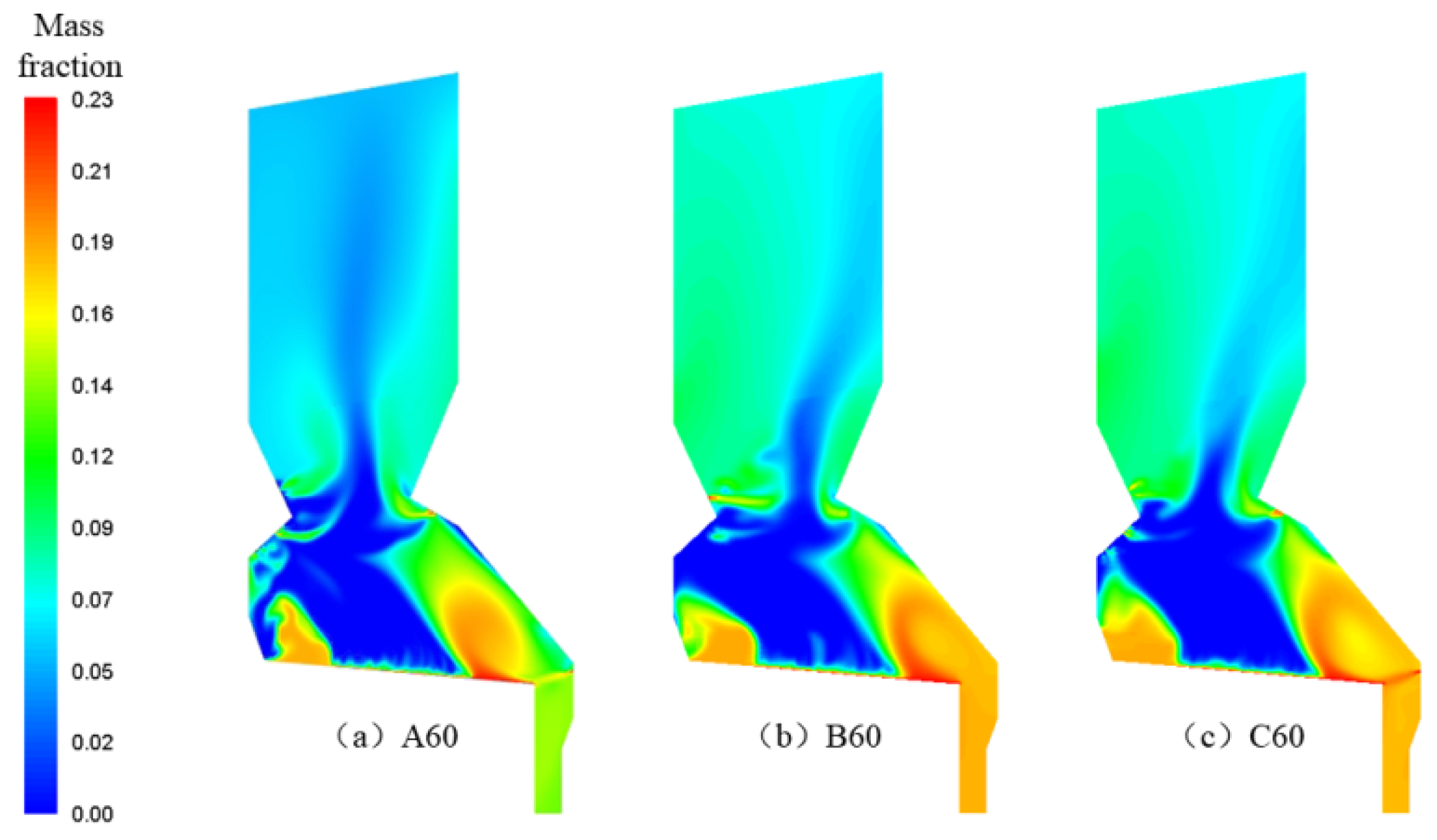
The influence of the burnout air pipe diameter on the oxygen content inside the furnace is shown in
Figure 4. Analysis revealed that the overall impact of pipe diameter on the oxygen concentration distribution was relatively minor. The oxygen concentration was higher at both ends of the grate and close to zero in the central region, reflecting the zonal characteristics of combustion within the furnace: direct injection of burnout air led to higher oxygen concentrations at the ends, while the central region likely experienced local oxygen deficiency due to concentrated fuel combustion consuming large amounts of oxygen. As the pipe diameter increased, the oxygen concentration at the rear of the grate showed some improvement, and the turbulence intensity inside the furnace enhanced. This was mainly because a larger pipe diameter could deliver more air volume at the same velocity, enhancing the penetration and mixing capability of the airflow through the fuel bed, thus favoring the combustion of particles on the grate.
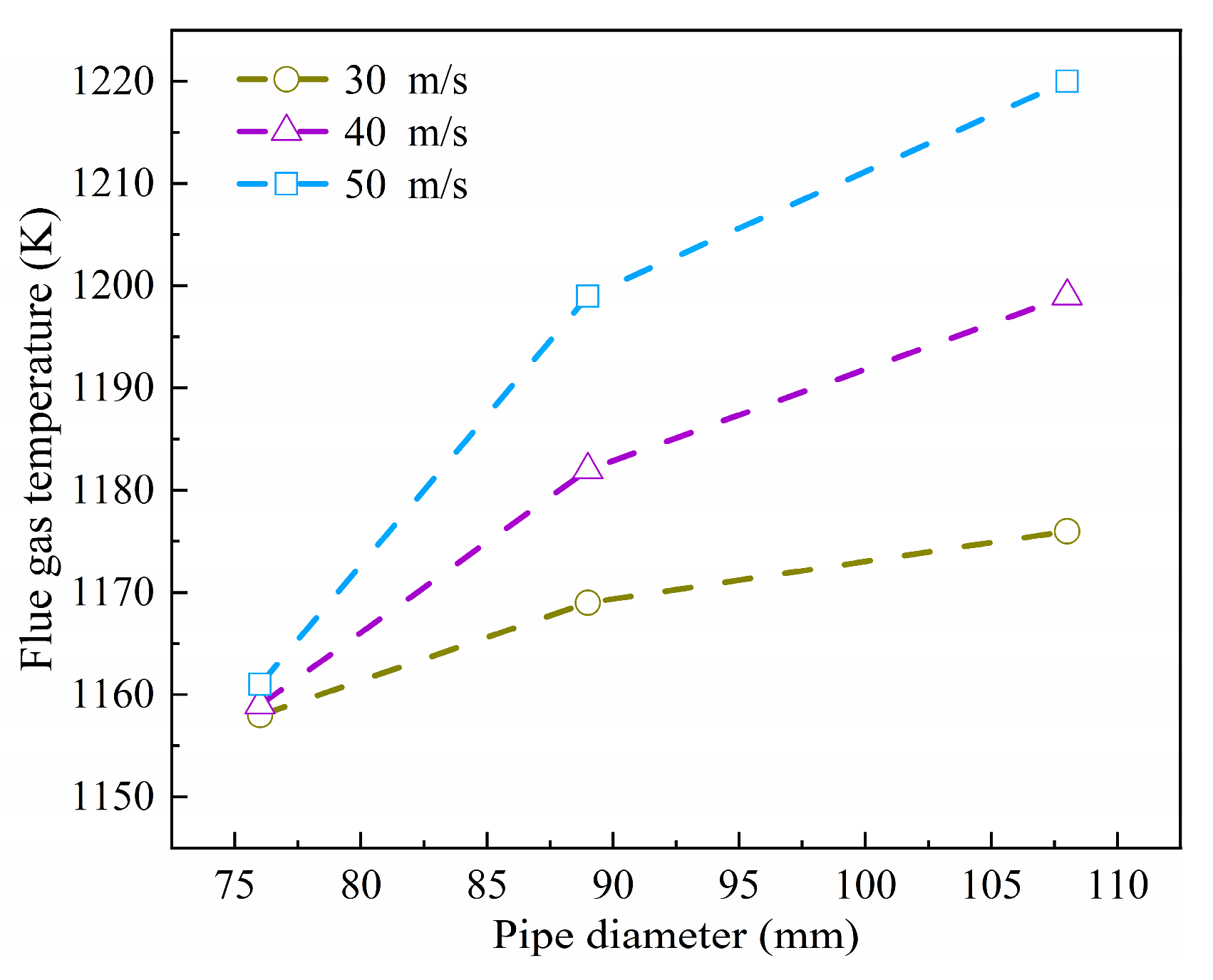
The effect of the burnout air pipe diameter on the flue gas temperature is shown in
Figure 5. The flue gas temperature increased with the increasing pipe diameter. When the burnout air outlet velocity remained constant, increasing the pipe diameter raised the oxygen concentration at the rear of the grate and the flue gas temperature, optimizing the in-furnace combustion process. For example, a larger pipe diameter might promote more uniform oxygen distribution by increasing the air flow area, reducing regions of local incomplete combustion. However, vigilance was required, as excessively high furnace outlet flue gas temperature could easily lead to wall slagging, potentially affecting the long-term operational safety and maintenance costs of the boiler. In practical application, the boiler operating conditions needed comprehensive consideration based on the aforementioned data to select appropriate burnout air parameters, aiming to improve combustion efficiency while avoiding potential problems.
To directly address the improvement in combustion efficiency, the char burnout ratio, which was the primary indicator of solid fuel completeness, was calculated for each case. As detailed in
Table 3, the baseline case (Case 0) exhibited a burnout ratio of 76.5%. Implementing burnout air improved this ratio, with values ranging from approximately 83.2% (Case A30) to a maximum of 87.8% (Case C60). This corresponds to a relative increase in combustion efficiency of up to 14.8%. Analysis of the parametric variations reveals that increasing the outlet velocity has the most pronounced effect on enhancing the burnout ratio within the tested range. For a fixed pipe diameter (76 mm), increasing velocity from 30 to 60 m/s (A30 to A60) accounted for the majority of the improvement. Increasing the pipe diameter at a fixed velocity (60 m/s, from A60 to C60) provided a further, though comparatively smaller, gain. This identifies outlet velocity as the most significant parameter for optimizing combustion efficiency via the burnout air system.
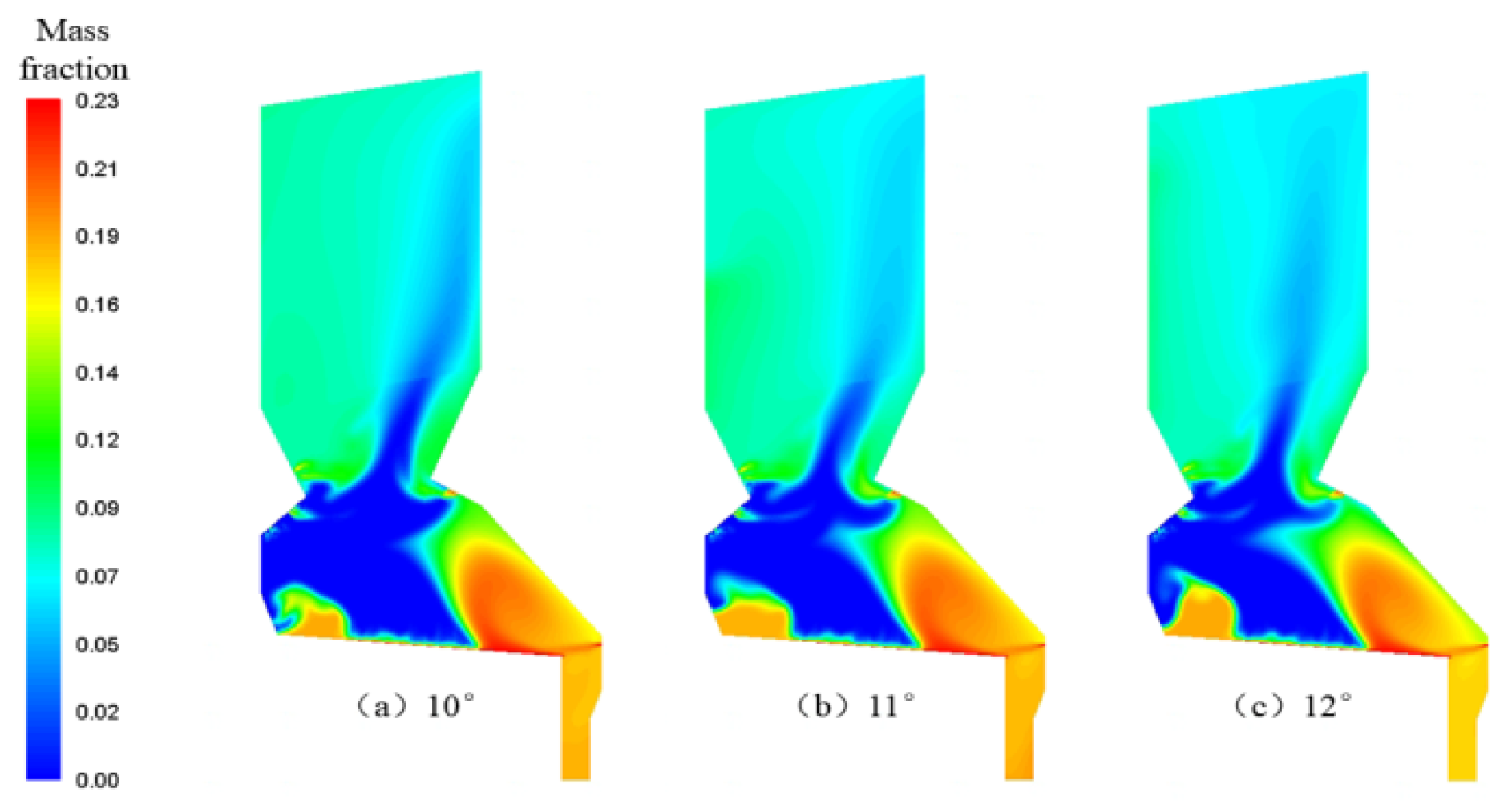
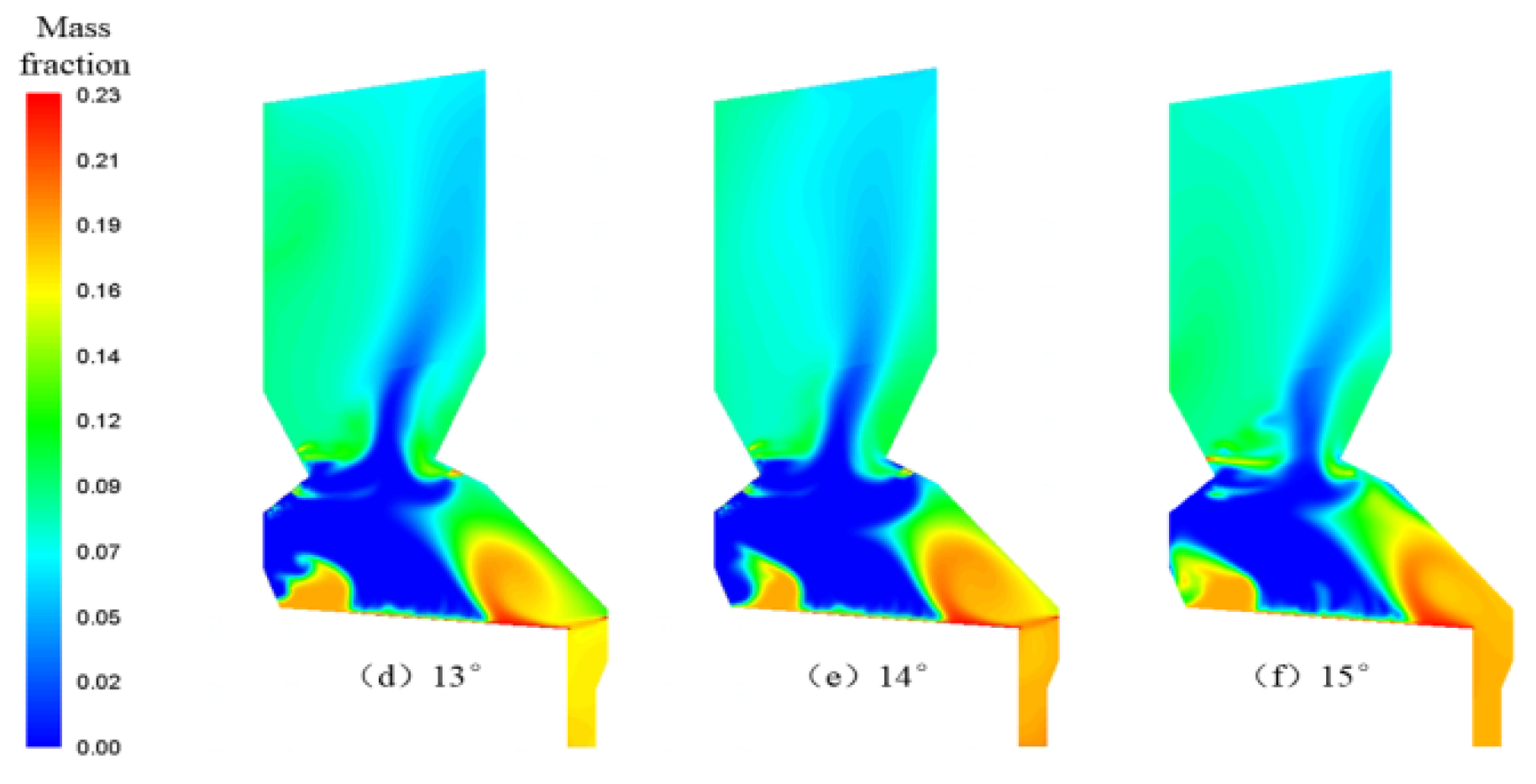
The influence of different injection angles on the oxygen content inside the furnace is shown in
Figure 6. The tested angle range (10° to 15° upward from horizontal) was selected based on the physical constraints of the rear furnace wall and the need to avoid direct impingement of the high-velocity jet onto the opposite wall. Under this operating condition, the oxygen concentration distribution was characterized by high levels at both ends of the grate and low levels in the middle. Changes in the burnout air injection angle had a minimal effect on the oxygen concentration in the rear grate region. This was likely because, under constant total air flow and velocity conditions, changes in angle produced limited alterations to the flow path and mixing effectiveness, failing to significantly change the oxygen distribution pattern.
The influence of the injection angle on the flue gas temperature and in-furnace oxygen concentration is summarized in
Table 5. As the angle of the burnout air pipe changed from 10° to 15°, neither the flue gas temperature nor the oxygen concentration at the furnace outlet changed significantly. The oxygen concentration remained between 14.85% and 15.55%, and the flue gas temperature fluctuated within the range of 1161.40 K to 1224.65 K, with a variation amplitude of approximately 5%. This indicated that changing the burnout air pipe angle resulted in minimal changes to the oxygen concentration and the degree of flow field disturbance at the furnace rear, having a limited impact on the in-furnace combustion process. This might stem from the angle adjustment failing to effectively alter the aerodynamic characteristics of the core combustion zone, or the angle having lower sensitivity compared to other parameters such as velocity and pipe diameter. When optimizing boiler operation, priority might be given to adjusting the velocity and pipe diameter rather than the angle.
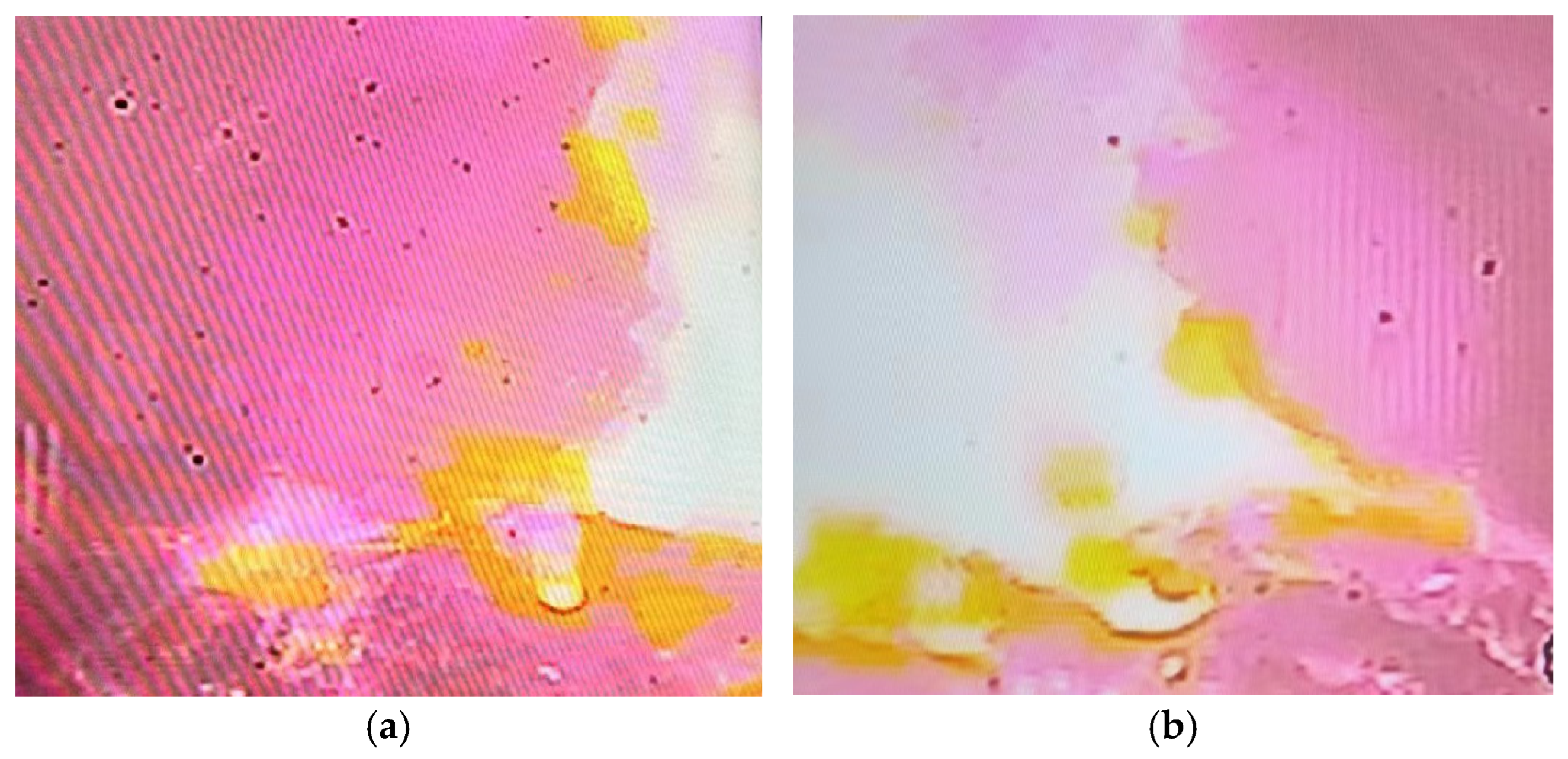
To provide contextual, qualitative insight into the real boiler operation,
Figure 7 presents photographs of the combustion flame taken through inspection ports on the side wall during stable operation under conditions corresponding to the baseline simulation. The visible intense flames in the rear grate section (both left and right sides) corroborate the practical significance of this zone, where incomplete combustion of char particles occurs. While not a quantitative validation of turbulent structure, these images visually confirm the presence of active combustion in the region targeted for optimization by the burnout air system, aligning with the simulated prediction of high temperature and ongoing reactions in this area.
By adjusting the velocity and pipe diameter of the tail-end burnout air, the oxygen concentration and temperature distribution inside the furnace could be effectively optimized, thereby enhancing combustion efficiency and reducing incomplete combustion heat loss. In contrast, angle adjustment proved less effective. This might provide important guidance for boiler design and operation, suggesting that focusing on the optimization of velocity and pipe diameter could be more cost-effective when resources are limited. These findings emphasized the importance of comprehensively balancing various parameters in biomass boiler operation to achieve efficient, stable, and environmentally friendly combustion processes, while also providing direction for future research, such as further exploring multi-parameter interactions or introducing advanced control strategies to maximize boiler performance. While the total thermal input remained constant across all cases, defined by the fixed fuel feed rate and lower heating value, the spatial distribution of combustion changed significantly. This localized increase in energy release is consistent with the observed rise in local flue gas temperature and oxygen consumption, providing a direct thermodynamic measure of the burnout air’s effectiveness in enhancing combustion in the target region.
3.3. Implications for Pollutant Emissions
While the primary focus of this study was on improving combustion efficiency, the optimization of burnout air parameters also has significant implications for pollutant emissions. The intensified combustion and elevated temperature in the rear grate section, as evidenced by the increased flue gas temperature and oxygen consumption, are conducive to the complete oxidation of CO, thereby potentially reducing CO emissions. The localized high-temperature zones resulting from enhanced char burnout could potentially promote the formation of thermal NOx. Although a detailed NOx reaction mechanism was not activated in the current simulations, this trade-off warrants attention in future work. An optimal burnout air strategy should therefore strike a balance between maximizing carbon burnout and minimizing NOx formation, possibly through further staging or temperature modulation.
3.4. Practical Application and Load Fluctuation
It is important to contextualize the findings within practical boiler operation. This study was conducted under the rated design condition of the boiler with a constant total air supply. This approach was essential to isolate and quantify the individual effects of burnout air parameters (velocity, diameter and angle) on combustion characteristics. In actual operation, the boiler load fluctuates in response to grid demand, necessitating adjustments in both the total air flow and the distribution ratio between primary and secondary air (including burnout air). While the optimal absolute values of burnout air velocity and flow rate identified here might shift under part-load conditions, the fundamental trends and mechanisms revealed are expected to remain valid, such as the strong positive correlation of velocity and diameter with rear-grate oxygen availability and burnout efficiency and the weak sensitivity to injection angle. The validated CFD model developed in this work can serve as a tool for future investigations into optimal coordinated control strategies across a wider range of operating loads, ensuring both high efficiency and low emissions under variable conditions.
3.5. Generalized Parameters and Future Work
While this study identified velocity and pipe diameter as dominant parameters within the tested configuration, the momentum flux ratio (J) of the burnout air jet to the cross-flow in the rear furnace is a key dimensionless parameter governing jet penetration and mixing, indicating significant penetration capability which explains the effective oxygen delivery. The limited sensitivity to injection angle (10–15°) suggests that within this ‘window’, the variation in the normal momentum component relative to the cross-flow is insufficient to drastically alter the jet trajectory and mixing pattern in this specific geometry.
Future work should expand the parametric space to include a wider range of injection angles (including downward angles), different nozzle elevations and spacing arrangements, and the potential use of swirl to enhance mixing. Systematic studies correlating J, Reynolds number, and the stoichiometry in the burnout zone with overall combustion efficiency and pollutant emissions would yield more generalizable design guidelines for burnout air systems across different boiler scales and designs. The impact of burnout air optimization on the burnout of entrained fly ash particles could be investigated to provide a more complete picture of combustion efficiency. Systematically incorporating variations in fuel composition (moisture, volatile matter, ash content) into the parametric study could facilitate a comprehensive multivariate analysis. This could establish quantitative relationships between key controllable parameters (e.g., burnout air settings), intrinsic fuel properties, and critical performance indicators like O2 concentration, temperature distribution, and carbon-in-ash content.
4. Conclusions
This work systematically investigates the neglected burnout air system at the rear grate of an industrial boiler. It provides three key contributions: a concurrent parametric analysis of velocity, pipe diameter, and injection angle; industrially validated guidance identifying velocity (30–60 m/s) and pipe diameter (76–108 mm) as the main controls for char burnout (up to 87.8%), with low sensitivity to angle (10–15°); and a critical link between burnout enhancement and slagging suppression, balancing efficiency against furnace outlet temperature. A mathematical model with high accuracy was established based on actual operational parameters: fuel consumption rate of 35.93 t/h, grate speed of 7.5 m/h, excess air ratio of 1.3, and primary-to-secondary air ratio of 3:7. Validation against field measurements showed relative errors for temperature at critical furnace locations and carbon content in bottom ash remained within 7%, confirming the model’s reliability and providing a solid foundation for subsequent optimization analysis.
The results quantitatively demonstrated that implementing tail-end burnout air significantly improved combustion efficiency, quantified by an increase in the char burnout ratio from 76.5% to a maximum of 87.8%. Parametric sensitivity analysis identified the outlet velocity as the most influential factor, with pipe diameter providing secondary benefits. Injection angle (within 10–15°) showed negligible impact. A larger pipe diameter provided additional benefits, further elevating oxygen availability and turbulence intensity. These improvements directly indicate a substantial reduction in unburned carbon loss. The larger pipe diameters additionally enhanced oxygen concentration and flue gas temperature in the rear section while intensifying gas flow turbulence, thereby optimizing the combustion process.
Selecting optimal burnout air parameters required balancing multiple factors. Although increased velocity and pipe diameter improved combustion, excessively high flue gas temperature at the furnace outlet risked wall slagging, threatening operational safety. Practical engineering design should avoid extreme values for these parameters, instead requiring comprehensive consideration of furnace outlet temperature characteristics combined with biomass ash slagging tendencies. Varying the burnout air injection angle between 10° and 15°, a typical practical range, produced minimal effects, indicating low sensitivity within this constrained window. This can be interpreted through the jet momentum flux ratio (J), where changes in the angle within this range did not substantially alter the effective penetration and mixing dynamics under the given cross-flow conditions.
Achieving economical, stable, and environmentally friendly boiler operation required balancing burnout enhancement against slagging suppression. The rational adjustment of burnout air velocity and pipe diameter effectively enhanced boiler combustion efficiency, thereby providing a technical pathway towards more stable, efficient, and environmentally friendly boiler operation. The key to practical implementation lies in balancing the enhancement of char burnout against the suppression of potential slagging risks caused by elevated furnace outlet temperature. A detailed techno-economic assessment (considering fan power, retrofit costs, and payback period) falls beyond the scope of this parametric study but would be a logical next step, utilizing the efficiency gains quantified here as primary input. While this study focused on the char burnout on the grate (reflected in bottom ash), the validated model provides a foundation for future work to investigate the impact of air distribution strategies on the formation and burnout of fly ash particles.