Article

Study on the Mechanism of Enhanced Water Injection for Improving Oil Recovery in Low-Permeability Reservoirs
1
School of Economics and Management, China University of Petroleum (Beijing), Beijing 102249, China
2
State Key Laboratory of Petroleum Resources and Engineering, China University of Petroleum (Beijing), Beijing 102249, China
3
PetroChina Dagang Oilfield Company, Tianjin 300280, China
*
Author to whom correspondence should be addressed.
Processes 2026, 14(3), 562; https://doi.org/10.3390/pr14030562
Submission received: 19 December 2025 / Revised: 16 January 2026 / Accepted: 31 January 2026 / Published: 5 February 2026
(This article belongs to the Special Issue Advances in Enhanced Oil Recovery Processes)

Abstract

The development of low-permeability reservoirs faces significant challenges, particularly regarding low recovery rates. Conventional water injection is often limited by poor injectivity and low waterflood efficiency. As a key technology to enhance development effectiveness, enhanced water injection requires a systematic investigation into its intrinsic mechanism for improving recovery. This study focuses on a typical low-permeability reservoir. Through laboratory experiments on rock fracturing and spontaneous imbibition, the mechanism by which enhanced water injection increases recovery rates is elucidated. COMSOL Multiphysics is employed to simulate the enhanced water injection process and examine the multi-field coupling patterns during injection. The results indicate that (1) low-permeability rocks in the study area exhibit strong oil–water exchange capabilities driven by capillary forces, with average imbibition capacity ranging from 0.6 to 0.7 g/cm3 and oil displacement efficiency between 20% and 30%; (2) fracturing experiments demonstrate that the injection of low-viscosity fluids at low flow rates (15 mL/min) can induce complex fracture propagation, thereby expanding flow pathways; and (3) the evolution of fluid–solid coupling is jointly governed by injection pressure and damage effects. Specifically, coupling intensity and fracture propagation potential increase with pressure, with optimal injection pressure ranging from 20 to 25 MPa. Rock damage exacerbates the nonlinear response of this coupling. This study combines experimental validation with numerical simulation to provide theoretical support for field practice.

1. Introduction

As conventional reservoir exploitation enters its mid-to-late stages, low-permeability reservoirs have become a primary target for remaining crude oil reserves in many countries. China possesses abundant low-permeability reservoir resources with widespread distribution, including geological reserves of 178.2 × 10⁸ t and technically recoverable reserves of 12.34 × 10⁸ t [1]. These reserves are primarily located in the Bohai Bay Basin, Songliao Basin, Ordos Basin, Junggar Basin, and other regions [2,3]. Low-permeability reservoirs exhibit characteristics such as small pore-throat radii, poor connectivity, insufficient natural energy, strong reservoir heterogeneity, and large specific surface area [4,5]. Conventional water injection development in low-permeability reservoirs often suffers from low injection efficiency, slow waterflood front advancement, and uneven resource mobilization. To address these issues, various enhanced water injection technologies have been introduced in field practice.
In recent years, significant research progress has been made globally on the mechanisms of enhanced water injection in low-permeability reservoirs. In international research, Hu et al. [6] found out from the perspective of thermal-seepage–geostress coupling, that the vertical containment or propagation of water-injection-induced fractures is closely related to the evolution of thermal stresses caused by heat conduction. Thermal stresses can alter the boundary conditions and geometric scale of fracture propagation, thereby influencing the long-range migration and reach of the injected fluid. Reznikov et al. [7] proposed an analytical model for water-drive-induced fractures incorporating two-dimensional leakage, emphasizing that under conditions of prolonged duration and large injection volumes, leakage between fractures and formations coupled with pressure diffusion processes govern fracture geometry prediction. Neglecting two-dimensional leakage leads to significant overestimation of fracture scale. Li et al. [8] systematically analyzed the mechanism of high-pressure water injection in low-permeability reservoirs through core experiments and numerical simulations. Results indicate that high-pressure injection significantly enhances permeability near the wellbore. It also induces microfracture opening and expansion. These effects increase the swept volume and improve waterflood efficiency. He et al. [9] proposed a cyclic water injection method for developing naturally fractured low-permeability reservoirs, effectively controlling water cut in production wells and preventing further water cut increase. Liang et al. [10] comprehensively investigated the mechanism of dynamic fracture induction by water injection through laboratory experiments and numerical simulations, concluding that repeated fluctuations in injection pressure can cause rock fracture and fracture propagation, thereby improving reservoir flow capacity. Tang et al. [11] investigated reservoir damage and found that reservoir permeability could decrease by up to 65.35% when injection water contained suspended solids, emulsified oil, or mineral particles. They emphasized that injection water quality control and reservoir protection are critical for ensuring effective enhanced water injection. Xie et al. [12] combined physical experiments with theoretical analysis to determine optimal water injection timing, concluding that pre-injection before reservoir production can mitigate adverse stress-sensitive effects. Wang and Wei [13] investigated pre-injection in low-permeability reservoirs, demonstrating that it helps maintain high formation pressure and pressure gradient, making it an effective approach for developing such reservoirs. Simultaneously, to address the challenge of “poor injectivity and low productivity” in low-permeability reservoirs, Wang et al. [14] investigated pressure propagation patterns during injection, accounting for fracture propagation induced by the injection process. Liu et al. [15] proposed shifting from “equivalent injection” to “high-pressure injection”, enhancing injection efficiency and fracture formation potential.
Regarding the field application of enhanced water injection, major oilfields have conducted extensive research integrating theory and practice. Shaoul et al. [16] noted that implementing fracturing and fracture-sustaining injection enhancement modifications on injection wells prior to new field development reduces initial injection pressure, improves injectability, and enhances adaptability to water quality fluctuations, thereby improving the stability of long-term water injection operations. Singh et al. [17] conducted water injection pilot tests in the low-permeability ABH reservoir, comparing injection capacity under conditions below and above fracture pressure. They utilized time-lapse pressure drawdown and pressure transient analysis to invert water-induced fracture parameters, providing field-based evidence for rationally determining injection pressure windows and well network designs; Aniskin et al. [18] conducted historical fitting and coupled simulations of water-induced fractures in the West Salym field of Western Siberia, Russia. This integrated monitoring data included temperature, liquid production profiling, pressure drawdown testing, and step-rate injection tests to support water injection regime optimization and controlled fracture management. Zhu et al. [19] evaluated the high-pressure injection capacity of the Binnan Area in Shengli Oilfield. They used a fluid–solid coupled numerical model. The injection production pressure differential was identified as the core parameter. Property variations in near-wellbore stimulated zones significantly impact injection capacity compared to the matrix zone. Wang et al. [20] studied water injection development in Daqing Oilfield, revealing that dynamic fracture initiation correlates with reservoir stress fields and proposing control measures to prevent water channeling. Wang et al. [21] proposed “mild water injection” in Yanchang Oilfield, achieving stable injection and enhanced recovery by controlling injection parameters to avoid high-pressure damage and water channeling, emphasizing the balance between reservoir sensitivity and injection intensity. Wang et al. [22] investigated enhanced water injection mechanisms and influencing factors in the low-porosity, low-permeability sandy conglomerate oil reservoir at Tuha Oilfield. They found that reservoir hydrophilicity and fracturing promote imbibition, injection parameters have optimal values, and the effectiveness of multiple injection cycles diminishes. Field implementation of 71 well treatments achieved an 88% success rate, providing a basis for developing such reservoirs. Liu et al. [23] addressed declining energy and production in the ultra-deep, low-porosity, low-permeability heavy oil reservoirs of the Lukuqin Permian Basin, caused by poor properties and high under-injection rates. They employed water injection-enhanced fracturing technology, optimizing injection parameters based on reservoir hydrophilicity and imbibition effects. Field application achieved significant oil production increases per well.
Although extensive research has investigated the mechanisms and field performance of enhanced water injection in low-permeability reservoirs, existing studies predominantly focus on laboratory conditions or single-well analyses. Systematic understanding remains limited regarding rock imbibition-driven oil displacement, fracture patterns, and multi-field coupling phenomena in complex fault-block reservoirs. To address these issues, this study combines laboratory experiments with numerical simulation to elucidate the mechanism of enhanced oil recovery and provide theoretical support for water injection development in low-permeability reservoirs.

2. Regional Geological Background

2.1. Regional Tectonic and Sedimentary Characteristics

The Zaoyuan 34 block belongs to the ZiLaitun Development Area of the Zaoyuan Oilfield, located in the northern part of the oilfield [24]. Tectonically, it occupies the uplifted side of the Litianmu Fault, adhering to the fault nose structure. Internally, it is dissected by multiple faults, predominantly trending northeast–southwest. The strata exhibit an overall east-high, west-low topography, with the Zao 19 Block representing the tectonic high point of the study area. Based on the combination of faults and strata, the structure exhibits patterns such as synclinal tilting, anticlinical tilting, graben, and horst. Four substrata—Kong Er 2-1, Kong Er 2-2, Kong Er 2-3, and Kong Er 2-4—exhibit relatively good tectonic continuity. Along the main survey line (NW-SE), strata show overall uplift. Based on fault–stratum combinations, they exhibit reverse tilting, graben, and thrust patterns. Along the connecting line (SW-NE), strata form a central high with lower margins, locally complexly dissected by faults showing forward tilting and thrust blocks.
The Kong Er Formation within the Zao 34 block represents deposits of the delta front subfacies, featuring sedimentary microfacies such as mouth bars, distributary channels, and channel bars. Sand bodies exhibit a planar distribution controlled by sedimentary processes, extending in a north–northeast direction. These sand bodies thin laterally along the main channel and branch channels, while mouth bars and some branch channel sand bodies exhibit greater thickness.

2.2. Development History and Current Status

Development of the Zao 34 block commenced in 1999 and has been divided into four phases (Figure 1): development evaluation, productivity construction, decline, and adjustment trial. It currently operates in a “low-rate, low-recovery, high-water-cut” development phase. During the development evaluation phase, 11 oil wells and 2 water wells were deployed in an irregular well grid configuration. Production primarily followed a depletion pattern, achieving a peak daily oil production of 30 t/d with a water cut of 6%. Initial water injection demonstrated effectiveness, leading to a significant increase in liquid and oil production within the block. However, due to casing deformation in water wells, high injection pressure, and injection cessation, liquid and oil production exhibited a declining trend. During the production establishment phase, 18 adjustment wells were deployed, forming a network of 9 injection and 19 production wells. The block achieved a peak daily oil production of 85 t/d. To extend the stable production period, measures combining new well injection, existing well reallocation, and surface injection enhancement were implemented proactively. However, injection effectiveness was limited to the primary stress direction, with poor results in marginal areas. During the decline phase, issues of insufficient injection and injection failure in water wells became prominent. Only three wells maintained normal injection, with peak daily oil production dropping to 45.9 t/d. Since 2020, the adjustment and testing phase has implemented 11 wells. Following the production start of new wells, daily oil production rapidly increased alongside gradually rising injection rates, reaching 82 t/d.
Currently, the Zao 34 block has 31 oil production wells (26 in operation) and 8 water injection wells (6 in operation). The block produces 60.37 t/d, with a comprehensive water cut of 76.19%. Cumulative oil production stands at 302,500 t, and the recovery factor is 5.36%.

3. Experimental Study on Enhanced Water Injection

3.1. Experimental Method

To investigate the spontaneous imbibition mechanism and its oil recovery effectiveness in low-permeability reservoirs, laboratory spontaneous imbibition experiments were conducted. The objective was to evaluate the contribution of capillary-dominated imbibition to oil recovery efficiency under conditions of insufficient water drive. Simultaneously, portions of the cores were extracted at different time points. Fluid distribution was determined using nuclear magnetic resonance (NMR) to analyze oil–water displacement patterns during the imbibition process.
The rock fracture experiments aimed to investigate the fracturing patterns of low-permeability sandstone under applied stress conditions and the flow capacity of fractures after formation. The experiments comprised SEM scanning of fractured rock, unsupported fracture permeability testing, and pressure transmission experiments. For unsupported fracture permeability testing, fractured cores were placed in a permeability testing apparatus. Permeability was measured using the steady-state method. Measurements were conducted under varying flow pressure differentials. The experiments evaluated the flow capacity of unsupported fractures and yielded permeability-versus-confining pressure curves. Pressure transmission experiments investigated displacement patterns before and after rock fracturing. During testing, the core was connected to injection and production ends. Simulated formation water at constant pressure was injected into one end, while multiple miniature pressure sensors were embedded within the core recorded pressure variation curves at different locations [25,26].

3.2. Imbibition Oil Displacement Experiment

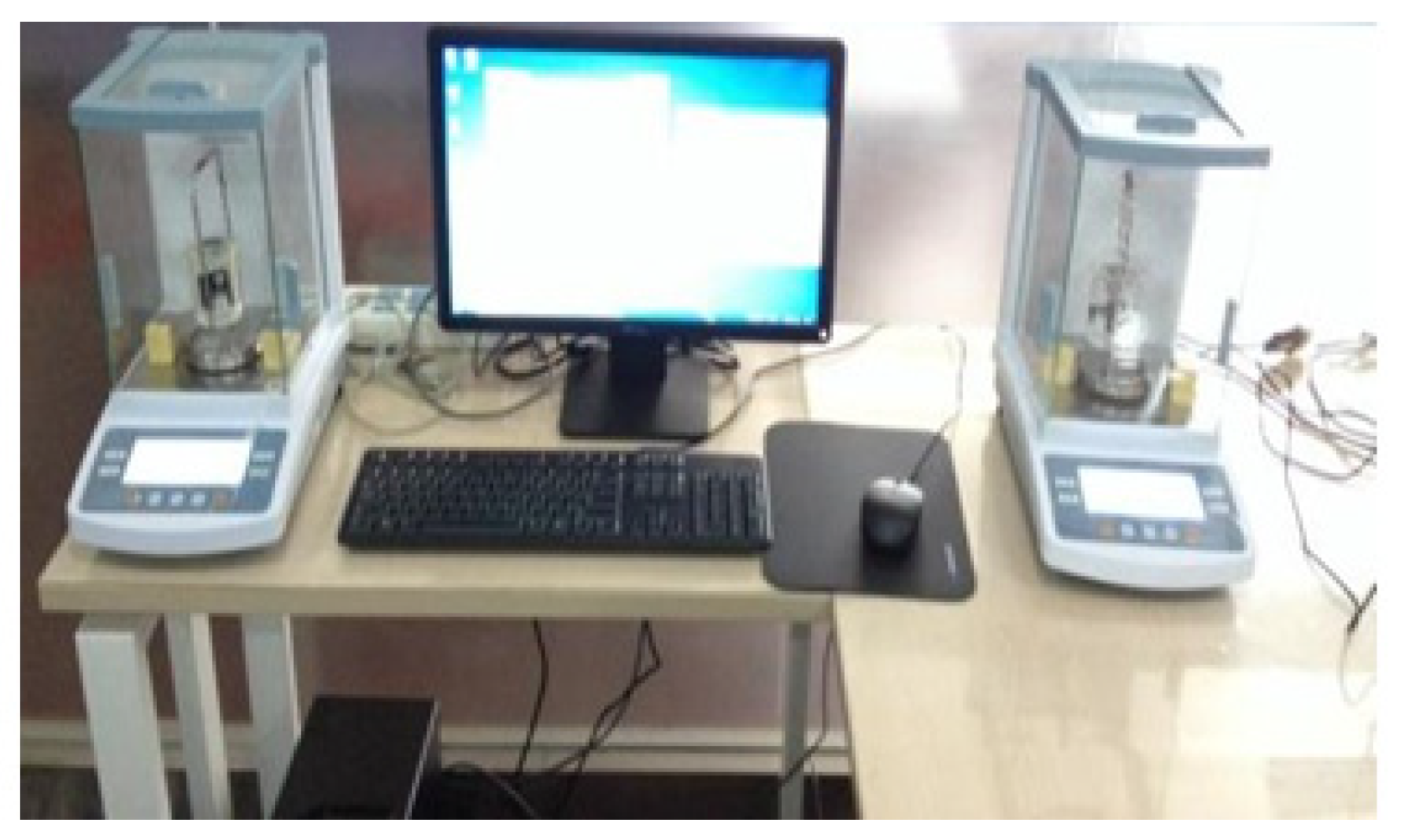
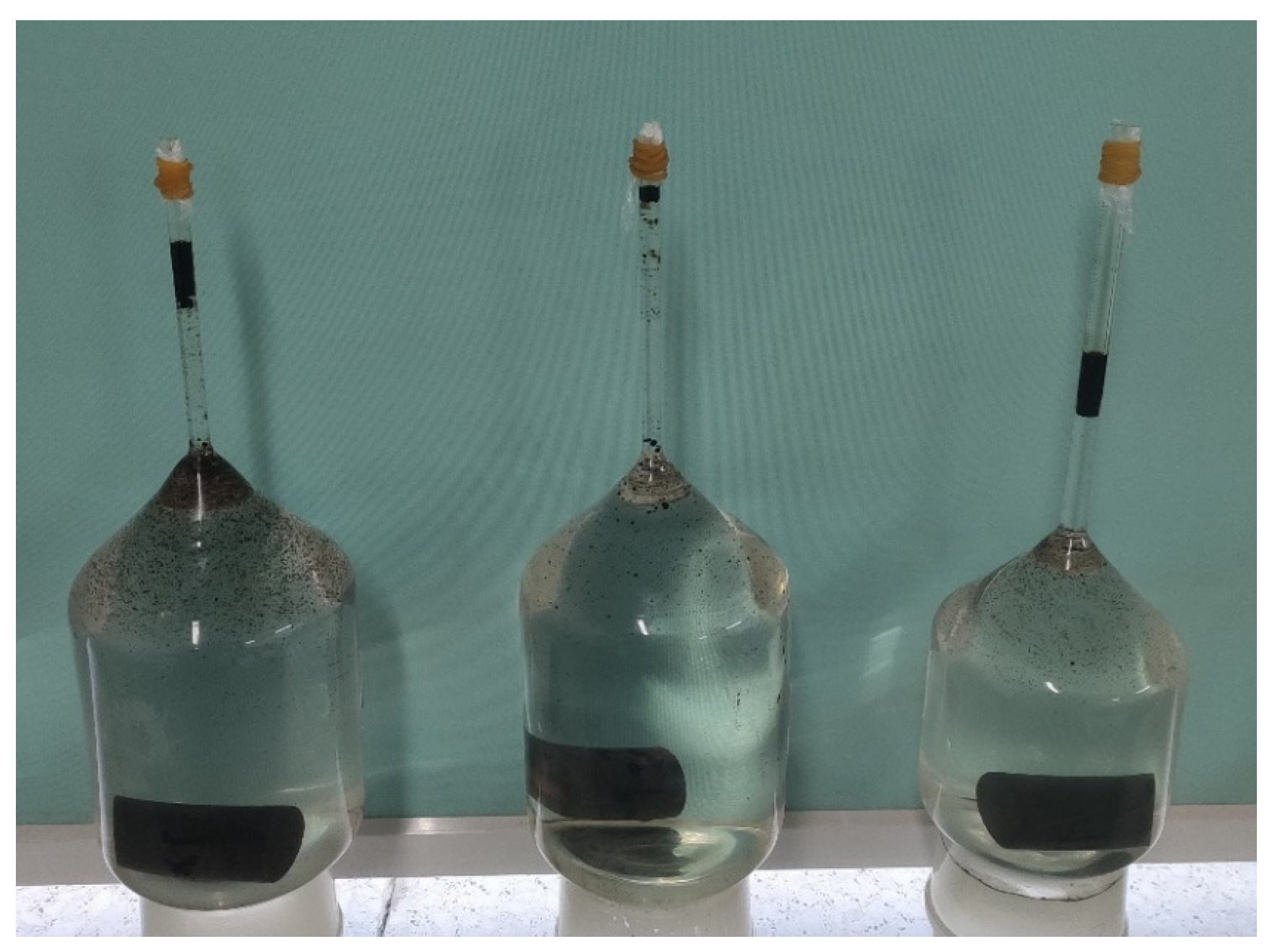
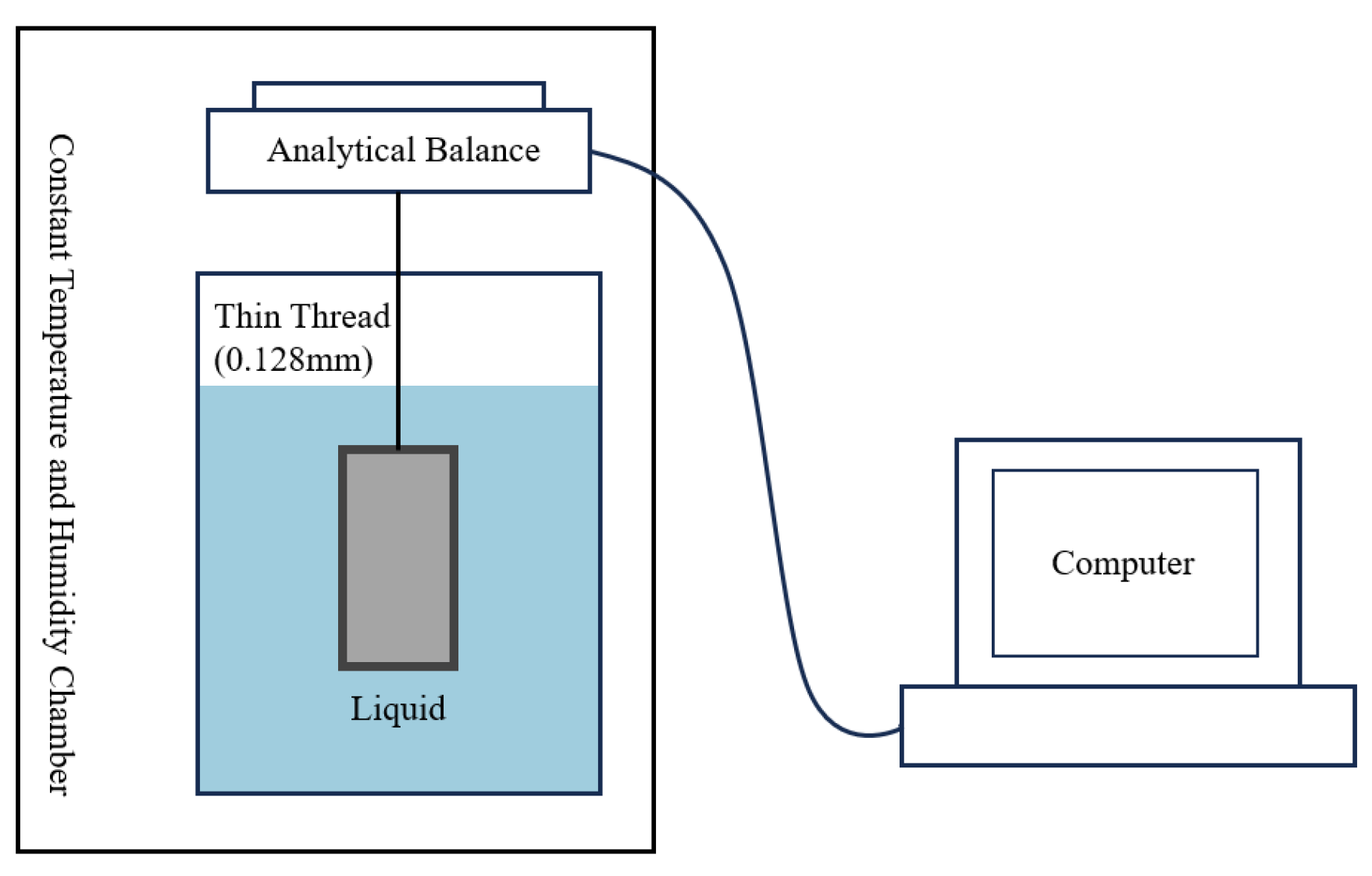
Core samples from the Kong Er Formation were selected for spontaneous imbibition experiments and imbibition oil displacement experiments to analyze the capacity of fluid to enter low-permeability samples and their oil displacement capability. The rock cores used in the experiment were extracted from actual reservoir formations. They were prepared through drilling, cutting, and polishing into cylindrical samples measuring 2.5 cm in diameter and 6.0 cm in height for pre-treatment, as shown in Figure 2. Using an in-house continuous monitoring device for spontaneous imbibition, the variation in suction capacity over time was recorded. The experimental setup and schematic diagram are illustrated in Figure 3 and Figure 4. The specific operational steps for the spontaneous imbibition experiment are as follows:
(1)
Firstly, level and zero all balances. Then, suspend the rock sample using a nylon thread, positioning the core in the center of the support frame.
(2)
Place the sample holder on the balance weighing platform. Simultaneously launch the software on the computer and configure the program to 8 bit and 9600 bit. Once the balance reading stabilizes, click the balance’s output button and observe whether data recording begins on the computer. If no data appears, reconnect all data transmission cables and repeat the balance output step until the software begins recording real-time balance data.
(3)
Prepare solutions (deionized water, ionic solution, emulsion) and pour into beakers. Ensure the solution volume is adequate to fully submerge the core without overflowing. Gently place the beaker on the beaker rack. Lift the core using the nylon thread and quickly lower it into the beaker, ensuring it is fully submerged and positioned in the center of the solution.
(4)
Close the balance draft shield and press the record button on the balance to begin logging.
(5)
Monitor mass changes periodically until equilibrium is reached, then plot and analyze the recorded data.
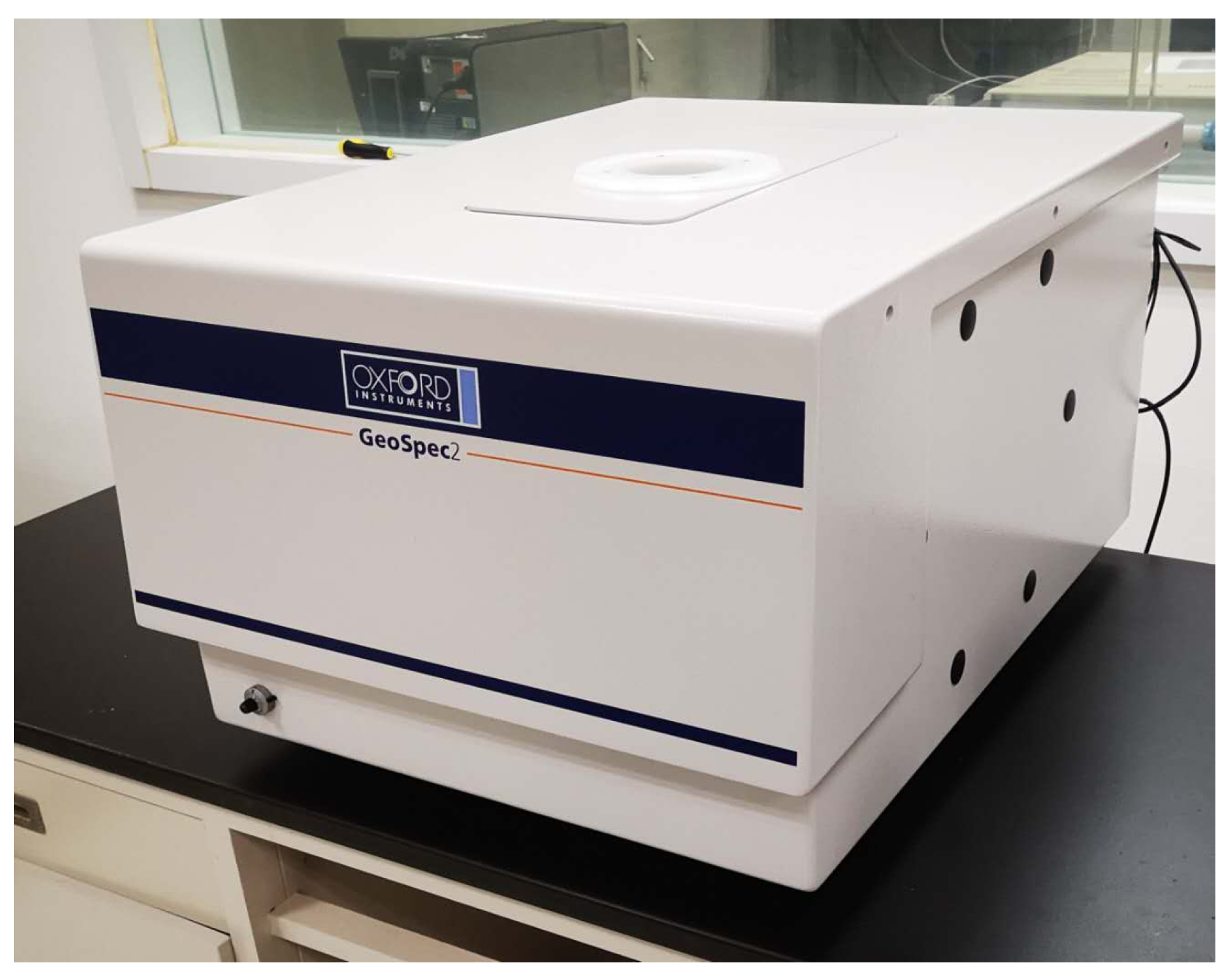
The core imbibition oil-displacement experiment was carried out using a nuclear magnetic resonance (NMR) analyzer, and the experimental setup is illustrated schematically in Figure 5. The instrument operates with RF pulse frequencies in the range of 1–30 MHz, with a frequency control accuracy of 0.1 Hz. The NMR-based imbibition oil-displacement procedure mainly consists of the following steps.
(1)
Core pre-treatment: Sandstone cores were immersed in a mixed solution of C2H5OH and CHCl3 for 72 h and then oven-dried at elevated temperature for 24 h to ensure that the cores were completely dry and free of water.
(2)
Crude oil preparation: The sampled crude oil had a viscosity of 22 mPa·s and a density of 0.86 g/cm3.
(3)
Synthetic formation water preparation: A CaCl2-type synthetic formation brine with a salinity of 35,000 mg/L was prepared. MnCl2 solution was added at a mass concentration of 0.05 g/mL to suppress the NMR signal of hydrogen nuclei in the water.
(4)
Core saturation: First, the cores were flooded with formation water to achieve full brine saturation. Subsequently, the prepared crude oil was injected to displace the brine in the cores, thereby simulating the initial oil–water distribution under reservoir conditions.
(5)
Baseline data acquisition: After the samples were fully saturated with the simulated crude oil, the initial NMR T2 spectrum of the cores was measured.
(6)
Imbibition data acquisition: The samples were placed in the imbibition apparatus. Imbibed volumes were recorded at different times, and NMR T2 spectra were measured at different experimental stages. The experiment was terminated when the T2 spectra exhibited negligible change, after which the samples and apparatus were retrieved.
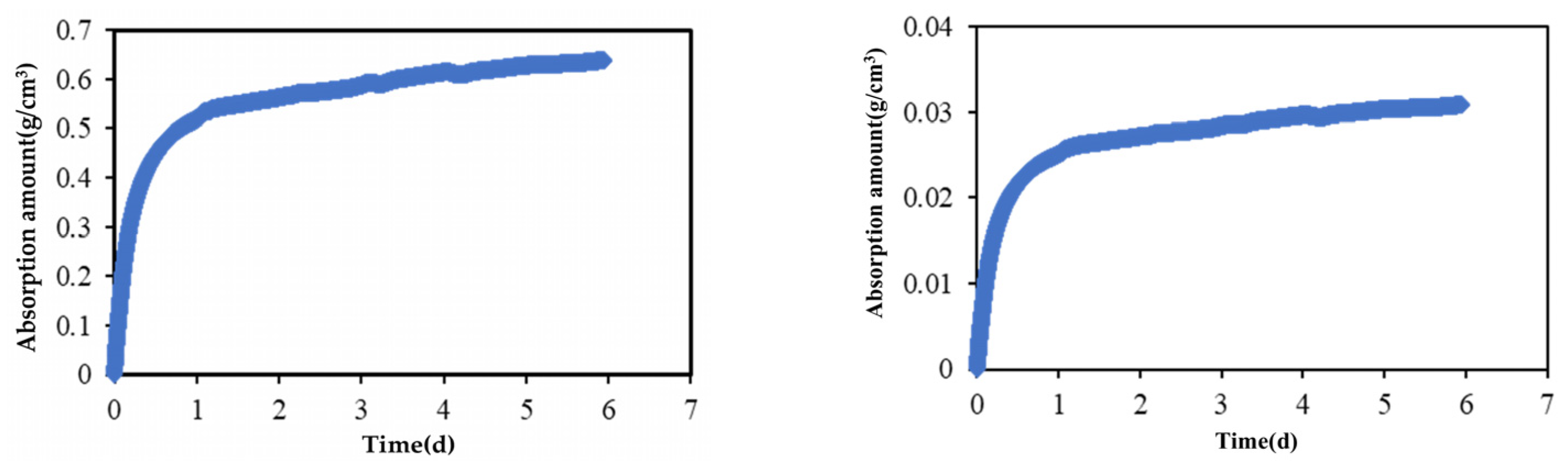
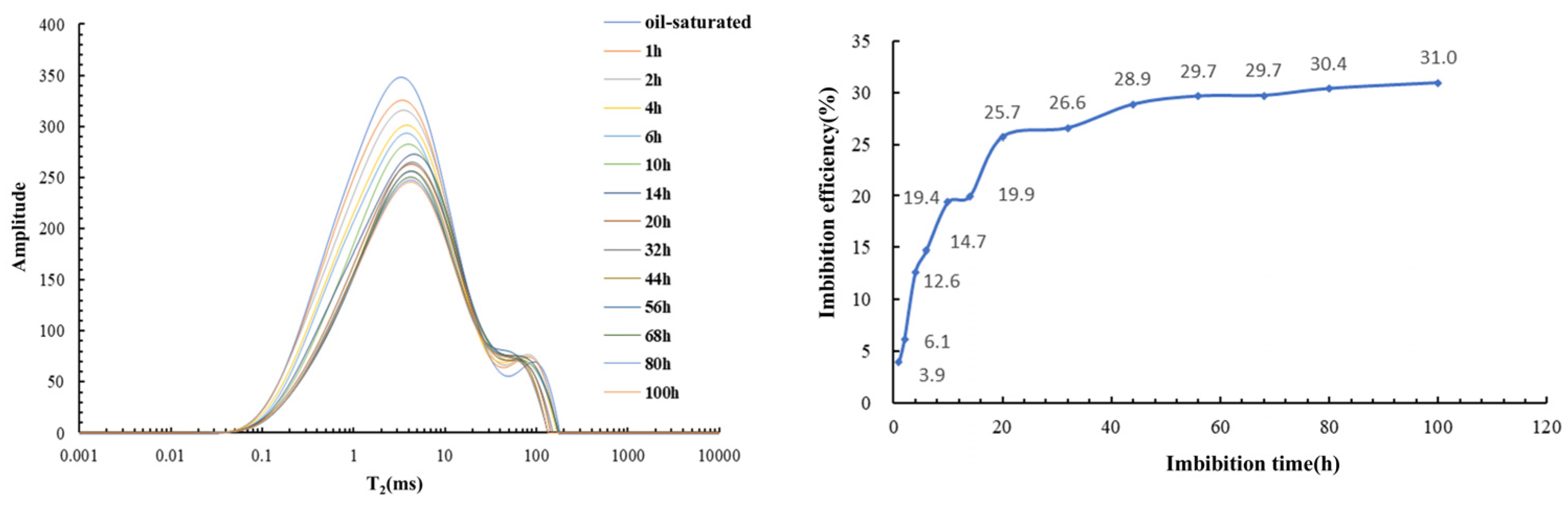
Figure 6 presents the spontaneous imbibition curve of a typical sample. It shows a characteristic two-stage pattern: the rapid imbibition stage occurs between 16 and 24 h, while the diffusion stage persists last longer and can penetrate deeper into the matrix. The average imbibition capacity ranges from 0.6 to 0.7 g/cm3, and the core integrity remained stable throughout the imbibition process. Figure 7 presents the NMR response curves and the corresponding oil replacement efficiency curve for a representative sample during imbibition oil displacement. The T2 spectral responses indicate specific signal variations during imbibition. These variations are mainly concentrated in the T2 intervals associated with small-to-medium pore throats. This suggests that imbibition preferentially mobilizes movable crude oil in small and medium pores. In contrast, micropore throats, characterized by small radii, relatively poorer connectivity, and higher flow resistance, constrain the imbibition invasion depth and the effectively contacted volume. As a result, part of the crude oil remains trapped in these ultrafine pores, thereby limiting the ultimate recovery efficiency [27]. In this study, the crude oil viscosity is approximately 22 mPa·s. This relatively high viscous resistance slows imbibition-driven displacement kinetics, resulting in a gradual increase in recovery and limiting the final recovery level [28]. In addition, spontaneous imbibition is governed by capillary pressure: small pore-throat radii generate stronger capillary driving forces, causing oil in small and medium pores to be mobilized first. However, in tight pore-throat systems, ultrafine throats are difficult to effectively mobilize due to connectivity constraints and high flow resistance [29]. Overall, the samples from the study area exhibit a moderate imbibition oil-displacement capacity, with a total recovery efficiency of 20–30%.

3.3. Rock Fracturing Experiment

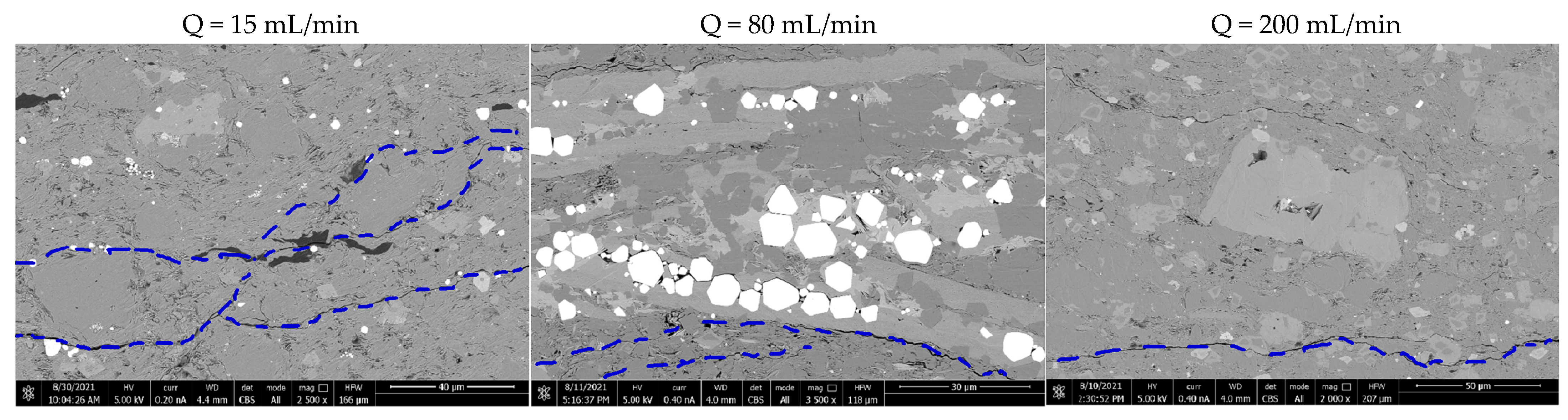
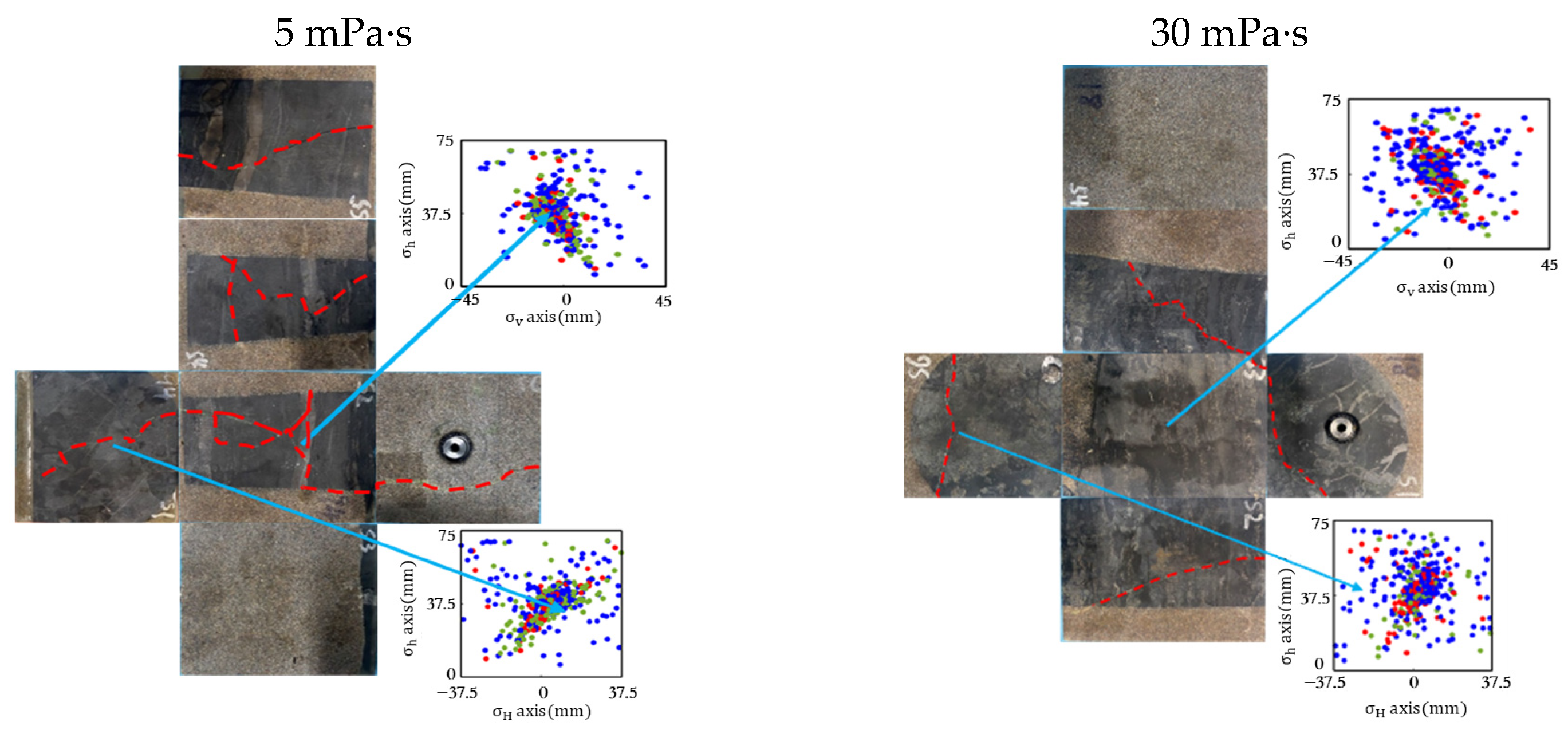
Samples from the Kong Er Formation were selected for study. In enhanced water injection applications, the fluid injection rate is the primary factor influencing rock fracture patterns. Figure 8 and Figure 9 show SEM scans of rock fractures under different injection rates and varying injection fluid viscosities. The results indicate that fracture morphology evolves with increasing injection rate. It transitions from a multi-branched fracture network to a pattern dominated by a through-going main fracture. The number of secondary branches is reduced. Similarly, with increasing water viscosity, fracture branching decreases and the fracture geometry becomes more planar. This behavior can be attributed to the fact that a higher injection rate corresponds to a higher loading rate and a shorter injection duration, enabling fractures to be strongly driven and to propagate rapidly within a short time. Consequently, fluid imbibition near the fracture walls and pressure diffusion are insufficient, weakening the interaction between fractures and pre-existing weak planes and thereby reducing fracture tortuosity and complexity. Moreover, as the injection rate and fluid viscosity increase further, fractures tend to evolve from complex branched networks to planar or quasi-planar fractures, and secondary branching largely disappears. In contrast, complex branching and network-like fractures are more likely to develop under intermediate injection conditions [30]. Previous studies have also suggested that the transition from planar propagation to branched propagation exhibits a threshold behavior, which can be jointly regulated by injection rate and fluid viscosity [31]. In low-permeability enhanced water injection scenarios, the injected water exhibits low viscosity and relatively low injection rates compared to fracturing operations. Consequently, under conditions conducive to complex fracture formation in reservoir rocks, more intricate fracture patterns can develop. This facilitates increased contact area between injected water and reservoir rock, enhances oil displacement efficiency, and better leverages the fluid’s imbibition oil exchange capability.
Research indicates that rock fracture patterns exhibit a certain correlation with the loading rate. At low loading rates, rock fractures develop over longer cycles, featuring a distinct crack initiation phase that facilitates the formation of complex fracture networks. To address the long fracture-development period caused by a low loading rate, two approaches can be adopted. Firstly, the equivalent loading intensity can be increased. This can be achieved by using a stepwise increase in injection rate or by moderately raising the injection rate within a safe operating range. These measures accelerate pressure buildup near the wellbore and promote faster fracture initiation and propagation. Secondly, cyclic injection or pulsed pressurization can be applied. Under a relatively low average injection condition, repeated loading enables the accumulation of fatigue damage. This reduces the breakdown pressure and improves the efficiency of fracture initiation. Compared to hydraulic fracturing, high-pressure water injection results in greater fluid loss and lower flow rates, prolonging the crack initiation phase and primarily inducing microfractures. By limiting the injected volume in each cycle and adopting a cyclic injection scheme, the early formation of a single dominant fracture as a pressure-relief pathway can be mitigated to some extent. During repeated loading, fatigue damage accumulates in the rock. This promotes the growth of microcracks and is conducive to developing a complex fracture network [32]. Laboratory tests have shown that fracture morphology is strongly dependent on injection rate. In some low-permeability shale samples, fracture generation is mainly controlled by injection rate rather than by the cumulative injected volume over the entire injection process. Testing rock mechanical properties after fluid–rock interaction reveals that fluid immersion reduces fracture toughness and accelerates crack propagation. This mechanism enables continuous microcrack formation during enhanced water injection.
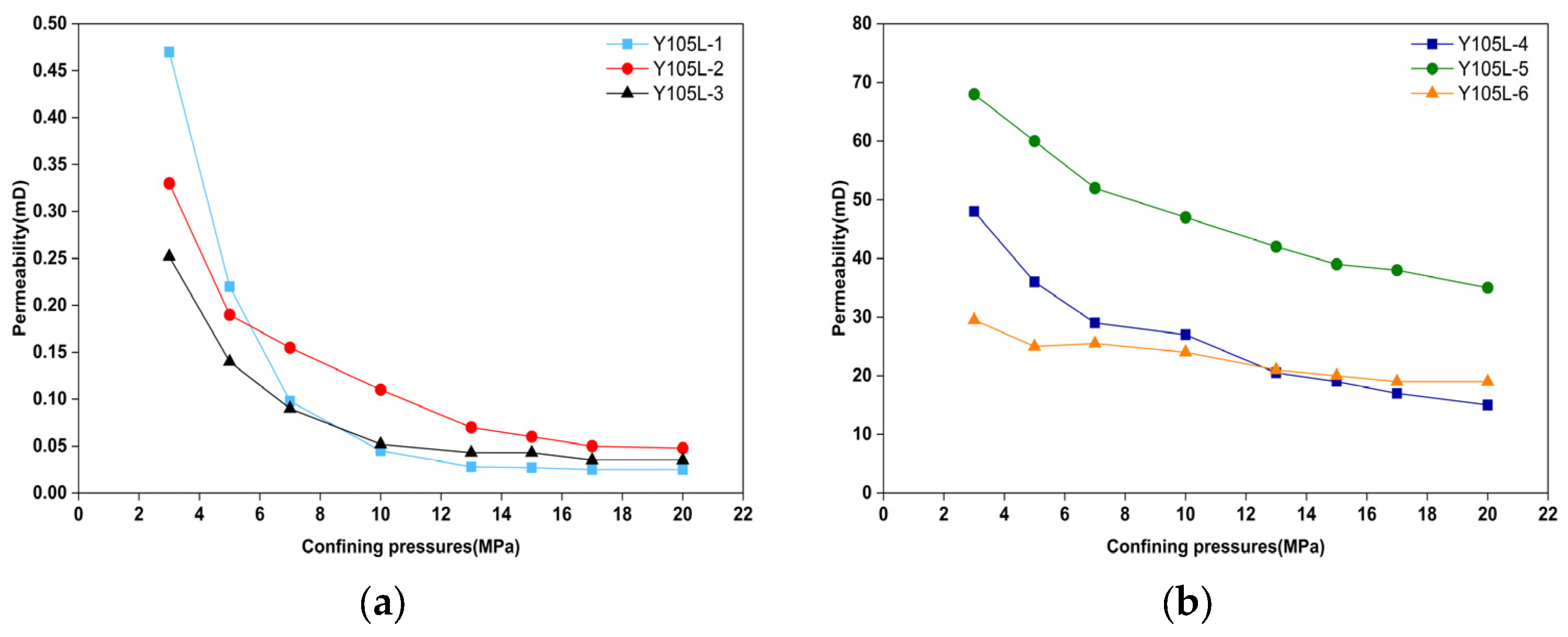
To analyze the improvement in permeability and effectiveness of this micro-damage formed during enhanced water injection, permeability tests were conducted on unsupported fractures. Core samples from the Kong Er Formation were selected, and their basic properties are listed in Table 1. After saturation with synthetic formation water, the cores were split axially to create a natural fracture surface. Permeability was measured using a triaxial permeability apparatus. The confining pressure ranged from 0 to 12 MPa, and the temperature was maintained at the reservoir temperature of 60 °C. Formation water was injected at a constant flow rate of 0.5–5 mL/min. Permeability was calculated from the measured pressure drop and flow rate using Darcy’s law. Different samples were then split to compare permeability with and without shear slip (Figure 10). The results show a substantial increase in permeability after slip occurred. The permeability along the frictional slip surface increased by a factor of 103 relative to the natural fracture surface, and the closure stress increased from 3.0 MPa to approximately 7.0 MPa.
Meanwhile, pressure transmission experiments were conducted to evaluate changes in displacement behavior before and after rock fracturing. With the downstream outlet exposed to atmospheric pressure, pressure is gradually increased upstream. A sudden pressure drop at the upstream side indicates that the rock has fractured, demonstrating that the induced fracture becomes the dominant flow conduit. Under simulated reservoir temperature conditions, pressure propagation within the rock matrix (matrix permeability: 0.3 mD) was evaluated by measuring the time required for matrix pressure to reach equilibrium. Pressure communication between the fracture and the matrix is relatively slow; the main reason is the extremely low permeability of tight reservoirs. Pressure transfer from fractures to the matrix relies mainly on slow seepage-driven diffusion. This greatly reduces the pressure propagation rate. Microfractures also affect pressure transmission. Once a connected microfracture pathway forms, the upstream and downstream pressures tend to equalize. If no effective connected pathway develops, a pressure difference remains between the two sides. In addition, reservoir rocks typically exhibit small pore-throat radii, poor connectivity, and strong heterogeneity. These features further restrict fluid flow in the matrix and delay pressure communication between fractures and the matrix. This significantly improves injectivity in scenarios where conventional water injection is unfeasible, thereby facilitating a transition to conventional water injection operations following the enhanced injection treatment.

4. Fluid–Solid Interaction Numerical Simulation Based on COMSOL

4.1. Model Assumptions and Governing Equations

The fluid–solid interaction model employed in this study comprehensively accounts for the interaction between fluid seepage and rock deformation. Its governing equations are derived from the continuity equation, principles of pore seepage, and fluid–solid interaction principles. To account for the complexity of actual reservoir geological conditions and enhance computational efficiency, the following reasonable assumptions are made for the fluid–solid coupling model.
(1)
Heterogeneous rock regions are treated as anisotropic porous media, and rock deformation during production is considered small-strain.
(2)
Only water-phase flow is considered during injection, disregarding oil–water two-phase coupling effects and phase changes.
(3)
Pore fluid flow follows Darcy’s law, with inertial forces and turbulent effects neglected under low-velocity conditions.
(4)
In the initial simplification of the mathematical model, temperature effects on fluid density and viscosity are ignored, reducing the multi-field coupling problem to a fluid–solid two-way coupling.
(5)
It is assumed that there are no chemical reactions between fluids and rock particles, avoiding the influence of rock property alterations and fluid composition changes due to chemical interactions on seepage and deformation fields, thereby focusing on the mechanical coupling process between fluid flow and rock deformation.
Porous media exhibit elastic behavior at the onset of loading. Following generalized Hooke’s law, they satisfy constitutive equations expressed in terms of displacement and pore fluid pressure [33,34]:
G u i , j j + G ( 1 2 ν ) u j , j i α p i + F i = 0
where G is the shear modulus of the medium (Pa); u is displacement (m); v is Poisson’s ratio; α is the Biot coefficient; p is pore fluid pressure (Pa); F i is force per unit volume (N/m3); and subscripts i and j are the tensor notation.
The porous medium consists of a skeletal matrix containing pores, where the pores are filled with freely flowing fluid, indicating that the pores are saturated. Based on this, combining the fluid mass conservation equation and Darcy’s law, the seepage governing equation can be derived [35]:
c 1 ε ν t + c 2 p t = k μ ( p + ρ l g z ) c 1 = 1 K K s c 2 = ϕ β 1 + 1 ϕ K s
where ε v is the volumetric strain; t is the time (s); k is the permeability (m2); μ is the dynamic viscosity (Pa·s); ρ l is the fluid density (kg/m3); g is the gravitational acceleration (m/s2); ϕ is the porosity; and β 1 is the bulk modulus of the pore fluid (Pa).
In the fluid–solid coupling model, damage is determined by the maximum tensile stress criterion and the Mohr–Coulomb criterion [36]:
F 1 = σ 1 f t F 2 = σ 3 + 1 + sin φ 1 sin φ σ 1 f c
where F 1 and F 2 are two functions representing stress states (MPa); σ 1 and σ 3 are the maximum and minimum principal stresses (MPa); f t and f c are the tensile and compressive strengths of the rock (MPa); φ is the angle of internal friction (rad).
During damage evolution, the damage variable D quantifies the damage level, with values ranging from 0 to 1. D = 0 indicates virtually undamaged rock, while D = 1 signifies complete stiffness degradation or total fracture. Higher values denote more severe damage. D is defined as follows [37]:
D = 0 , F 1 < 0 , F 2 < 0 1 ε t 0 ε 1 n , F 1 = 0 , d F 1 > 0 1 ε c 0 ε 3 n , F 2 = 0 , d F 2 > 0
where ε represents the strain variable.
When damage occurs, the properties of rock also change. The elastic modulus is expressed as follows [38]:
E = ( 1 D ) E 0
where E 0 is the elastic modulus before damage (MPa); and E is the elastic modulus after damage (MPa).
The porosity ϕ is expressed as follows [39]:
ϕ = ( ϕ 0 ϕ r ) exp ( α ϕ σ ¯ v ) + ϕ r
where ϕ 0 is the initial porosity; ϕ r is the residual porosity; α ϕ is the stress sensitivity coefficient of porosity; σ ¯ v is the mean effective stress.
The permeability k is expressed as follows [40]:
k = k 0 ϕ ϕ 0 3 exp ( α D k D )
where k 0 is the initial permeability (m2); α D k is the damage coefficient affecting permeability.

4.2. Model Method and Parameter Selection

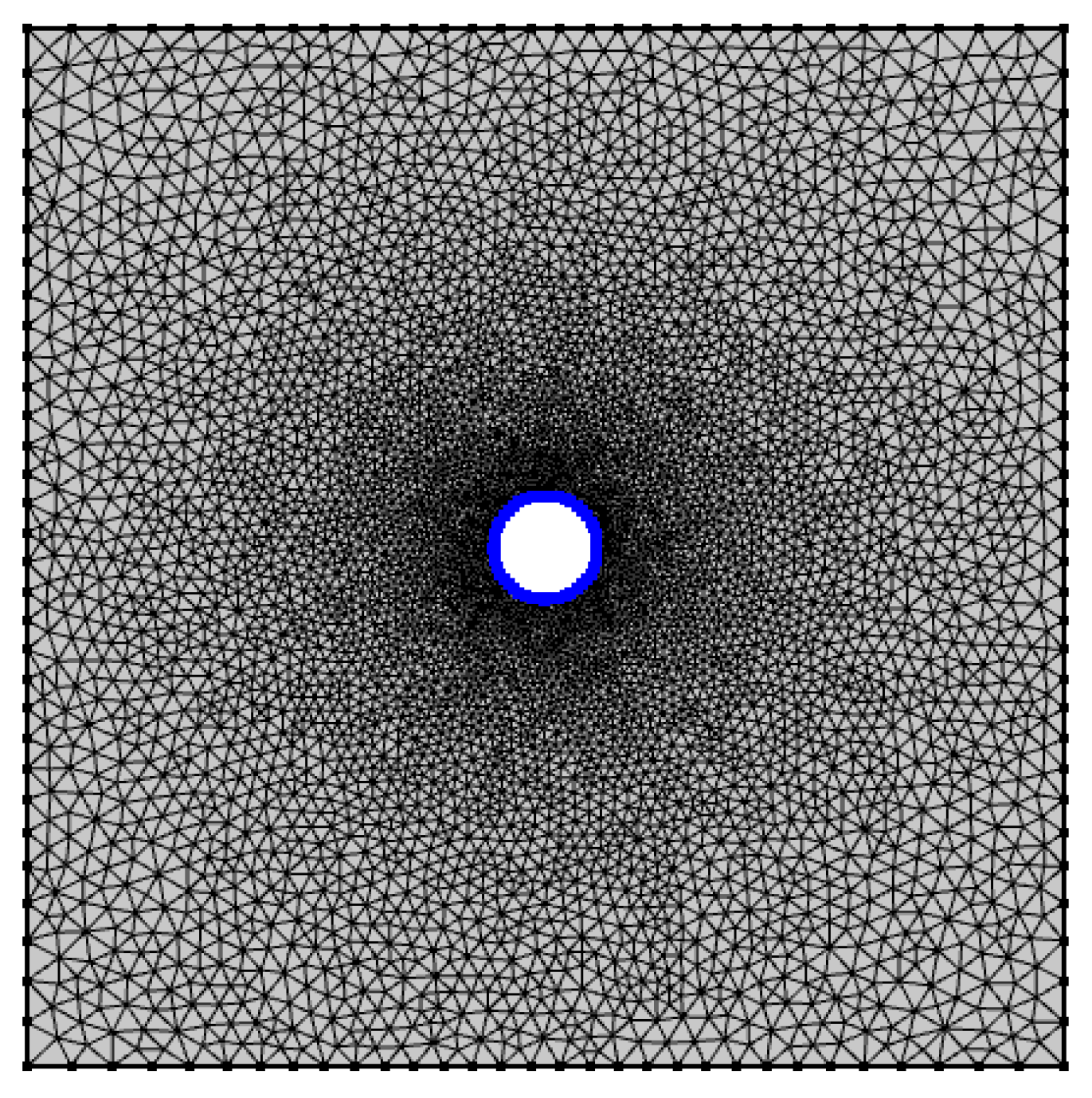
To investigate fluid–solid coupling during enhanced-energy water injection in low-permeability reservoirs, a 2D axisymmetric model was built in COMSOL Multiphysics 6.2 (Figure 11). The wellbore is located at the center of the model. The model side length was set to 0.3 m, and the wellbore radius was 0.015 m. For meshing (Figure 12), local refinement was applied near the wellbore to ensure accuracy in the high-pressure-gradient zone. The mesh was gradually coarsened away from the wellbore. A free triangular mesh was used, yielding 11,026 elements and 5599 mesh vertices. Roller support constraints were applied on the bottom boundary and the left boundary to restrict normal displacement. A uniformly distributed vertical downward load of 10 MPa was applied on the top boundary. A uniformly distributed horizontal leftward load of 20 MPa was applied on the right boundary. Two-way coupling between the seepage field and the solid mechanics field was considered in the model. The seepage field follows Darcy’s law. The solid behavior was described using a linear elastic–damage constitutive model. The detailed computation procedure is as follows.
(1)
Apply in situ stress constraints and no-flow boundary conditions at the model boundaries. Obtain the initial stress field and flow field distribution of the rock mass before water injection through transient calculations, serving as the initial state for subsequent water injection processes.
(2)
Under steady-state conditions, use the stress field and flow field obtained in the previous step as initial conditions. Apply displacement increments to the rock loading process to derive the stress field and damage field.
(3)
Under transient conditions, using the stress field and damage field from the previous step as initial conditions, apply time increments according to the set injection rate to calculate the dynamic evolution of the flow field within the rock mass. This yields patterns of pore pressure diffusion, changes in porosity and permeability, and damage progression.
The model’s basic parameters are shown in Table 2.

4.3. Evolution Laws of Various Fields During Enhanced Water Injection

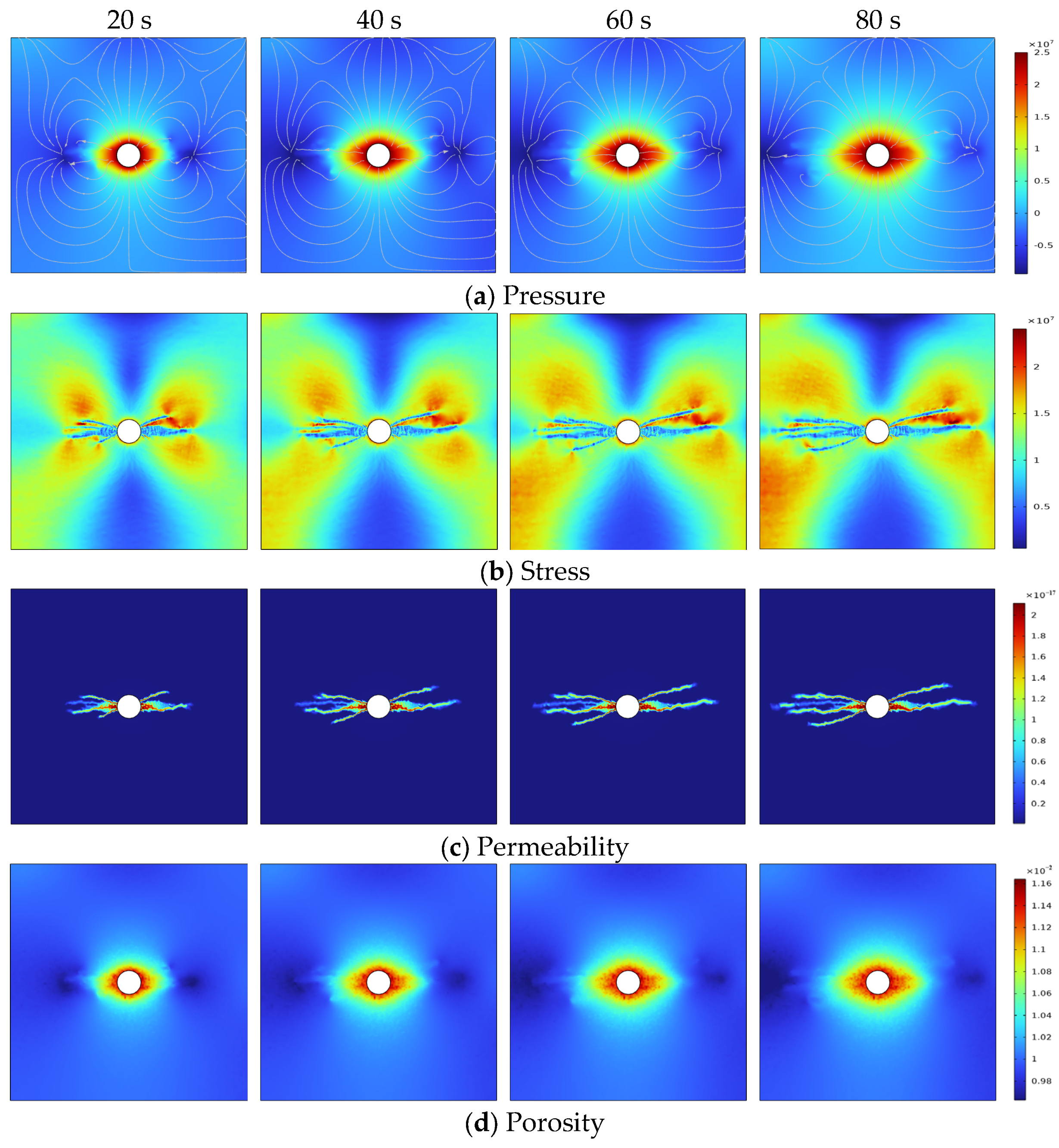
Simulating the evolution patterns of various fields during enhanced water injection (Figure 13) reveals that the pressure field, stress field, permeability, and porosity all exhibit distinct temporal evolution characteristics. By treating heterogeneous rock regions as anisotropic porous media, the evolution of each field exhibits distinct directional characteristics. The pressure field (Figure 13a) initially concentrates near the wellbore, forming localized high-pressure zones. Over time, these high-pressure zones gradually expand as pressure propagates outward. Overall, pressure increases progressively with time, exhibiting a trend of outward propagation from the wellbore. The stress field (Figure 13b) undergoes significant adjustment early in the injection phase, manifesting as stress concentration zones around the wellbore. As injection duration increases, the range of stress disturbance continuously expands and gradually extends radially. The final stress distribution exhibits pronounced asymmetry. This reflects the controlling effect of reservoir anisotropy on the stress adjustment path. The permeability evolution (Figure 13c) indicates that, at the early stage of injection, permeability enhancement is mainly confined to the vicinity of the wellbore. With time, the local permeability gradually increases and extends radially outward. This trend results from the coupled effects of pore-pressure diffusion and damage accumulation. Pore pressure propagates outward with seepage diffusion. When the pore pressure reaches the fracture-initiation threshold (10 MPa) or satisfies the Mohr–Coulomb failure criterion (Equation (3)), damage and microcracks develop in the rock [36]. According to the damage evolution model (Equation (7)), permeability is exponentially related to the damage variable. Therefore, accumulated damage can significantly increase local permeability [40]. In addition, the pressure gradient drives radial fluid flow in accordance with Darcy’s law (Equation (2)). This progressively activates microcracks farther from the wellbore and forms an outward-growing permeability-enhancement zone. To prevent non-physical divergence of permeability, the damage variable D was constrained to the range 0–1, and the permeability increase was limited to k / k 0 10 4 . The temporal evolution of porosity (Figure 13d) largely parallels the pressure distribution pattern. At t = 20 s, porosity increases are confined to a small area primarily surrounding the wellbore. As time progresses, porosity gradually expands outward, developing an overall annular distribution that reaches relative stability at t = 80 s.

4.4. Evolution Laws of Various Fields Under Different Injection Pressures

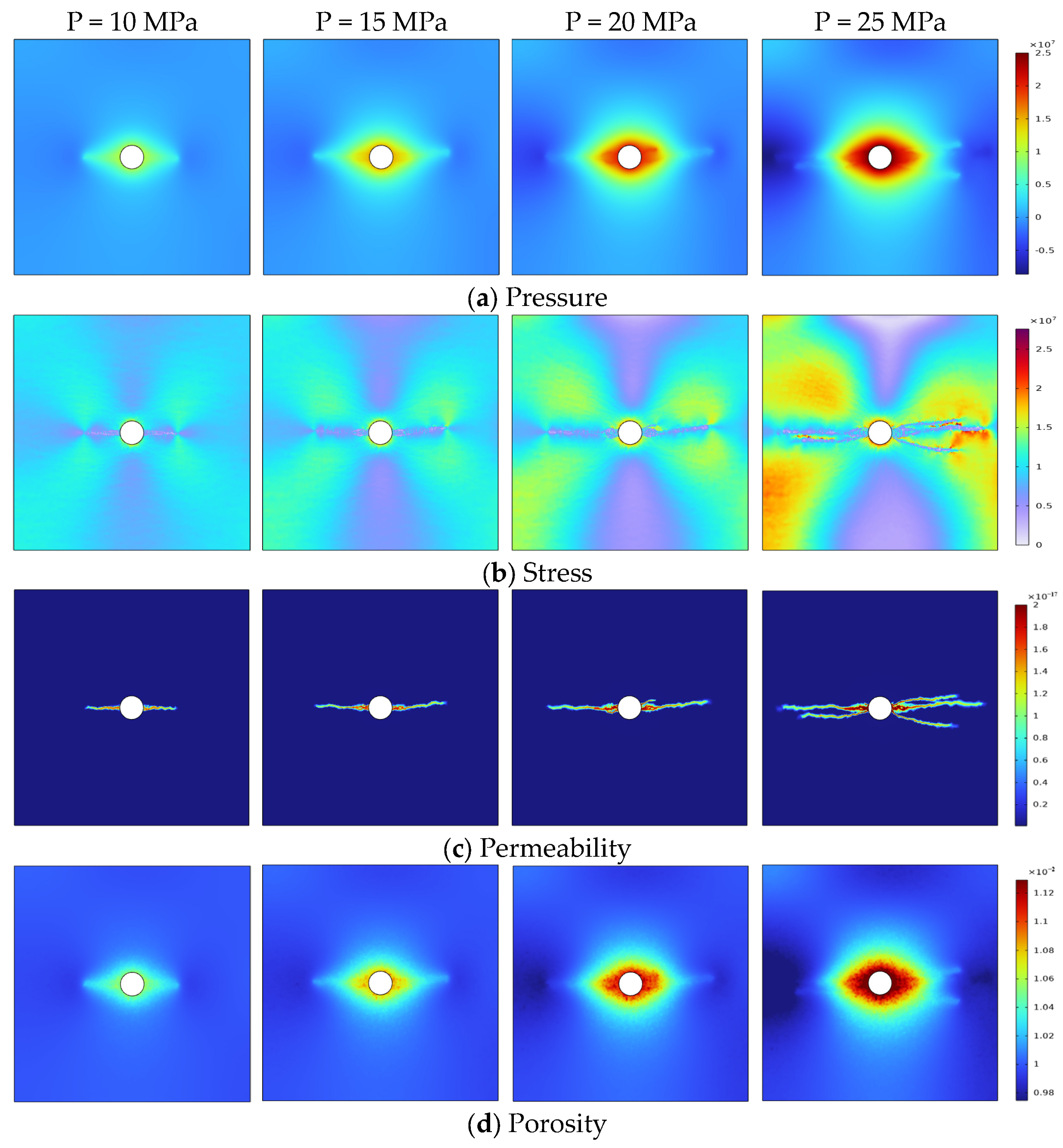
The coupling between the stress field and the flow field under different injection pressures is mainly controlled by the injection-pressure magnitude. Overall, the coupling evolves nonlinearly and becomes stronger as injection pressure increases. As shown in Figure 14a depicting the pressure field distribution, the high-pressure zone near the wellbore continuously expands and propagates outward as injection pressure increases from 10 MPa to 25 MPa. At low injection pressures, pressure diffusion remains limited, exhibiting relatively uniform circumferential distribution. At high injection pressures, the pressure field becomes asymmetric, closely linked to fracture generation and propagation. These fractures create low-resistance pathways for fluid flow, enabling rapid pressure transmission along fracture planes. The evolution of the stress field in Figure 14b indicates that as injection pressure increases, the rise in pore pressure induced by seepage continuously alters the rock’s stress distribution. The anisotropic mechanical properties of the porous medium cause an asymmetric pattern of stress redistribution. At low injection pressures, stress perturbations remain confined near the wellbore. When pressure exceeds 20 MPa, the stress field undergoes significant redistribution, particularly forming stress concentration zones in fracture nucleation and propagation regions, manifesting as localized stress release and redistribution. This change indicates that fluid flow not only alters the pore structure but also influences fracture propagation direction and scale through stress field feedback. The propagation direction is governed by the anisotropic stress field. As shown in Figure 14c,d, at low injection pressures, permeability and porosity distributions remain largely stable, with only slight increases around the wellbore. When injection pressure reaches 20 MPa, fracture channels gradually form, presenting banded distributions of permeability and porosity. At 25 MPa, fractures significantly expand, markedly enhancing reservoir flow capacity. These fractures are also key factors in coupling effects, intensifying and complicating interactions between the flow field and stress field.
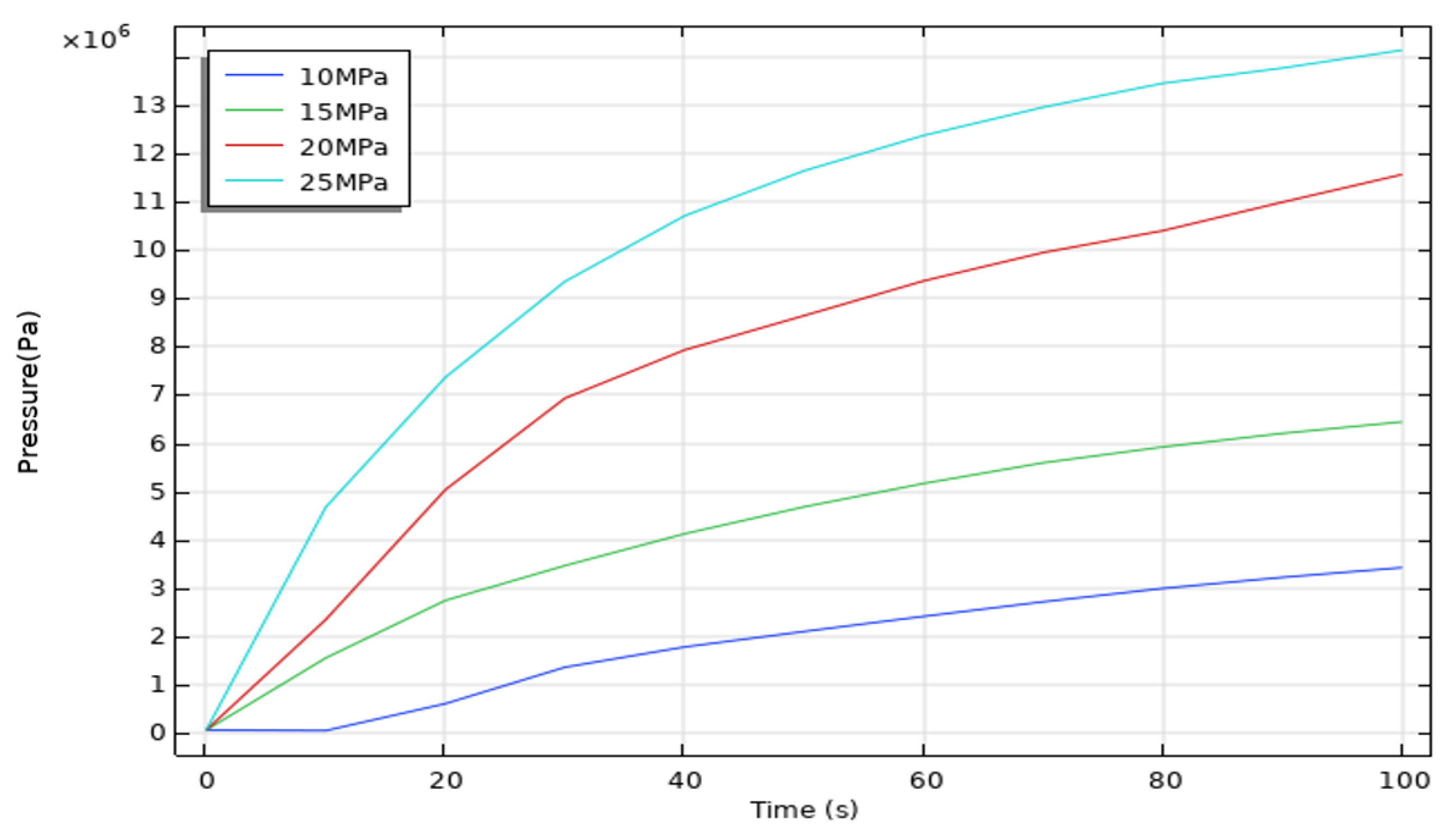
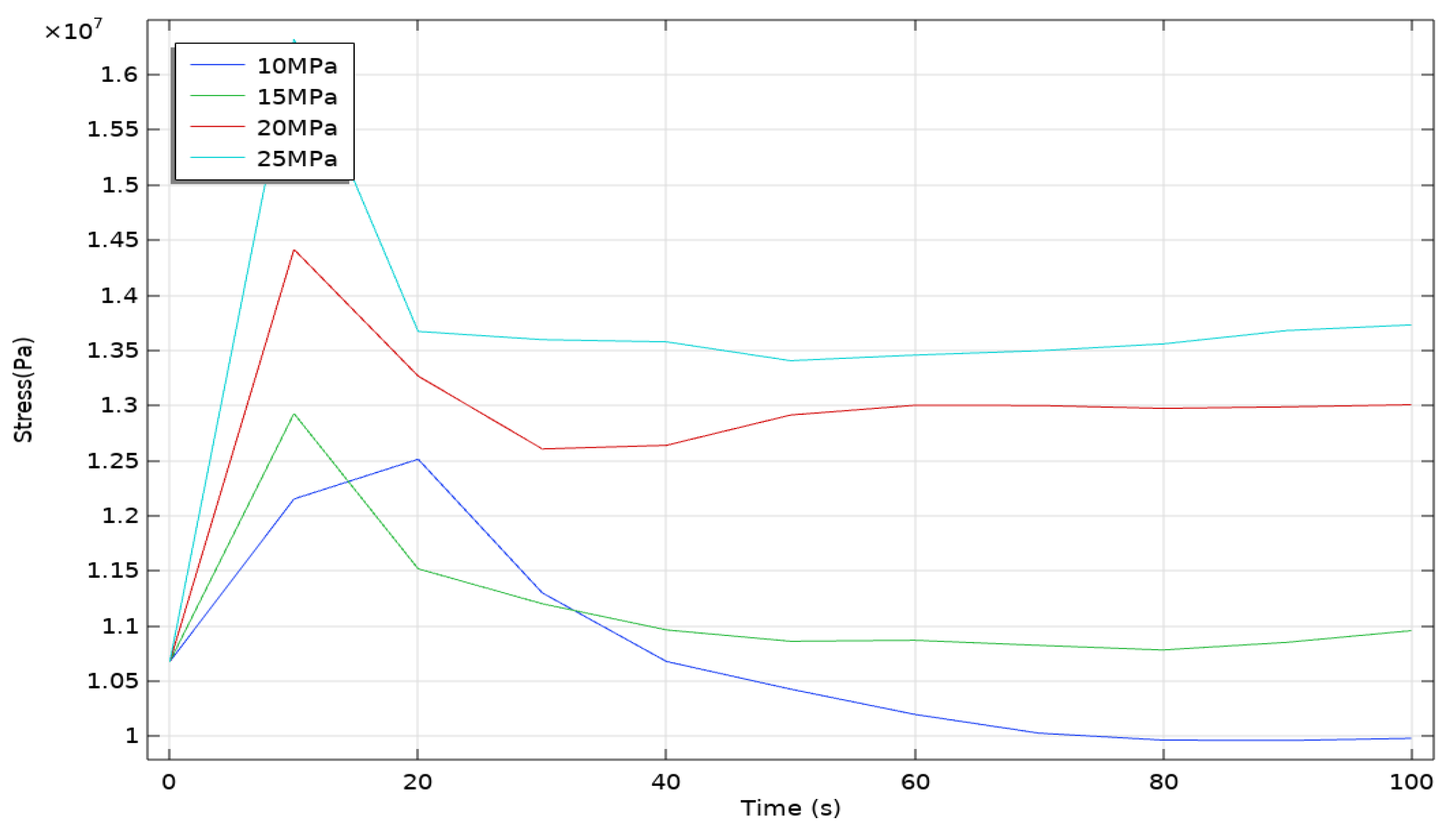
To quantitatively characterize the relationship between near-wellbore stress perturbation and fracture propagation, the pressure and stress at the monitoring point (0.18, 0.17) were extracted under different injection pressures (10, 15, 20, and 25 MPa) (Figure 15 and Figure 16). As the injection pressure p i n j increased from 10 to 25 MPa, the pore pressure P at the monitoring point rose from 3.4 to 14.2 MPa at t = 100 s . Meanwhile, the stress σ increased from 10.0 to 13.7 MPa. These results indicate that both pressure buildup and the intensity of stress perturbation near the wellbore increase with injection pressure. A strong-damage zone was defined as D 0.8 . Its fracture-propagation area A f and the maximum radial propagation radius R d were then calculated. The maximum radial radius R d increased from 0.06 to 0.13 m, and the fracture area A f increased from 2.1 × 10⁻⁶ m2 to 7.1 × 10⁻⁶ m2 (Table 3). Both P and σ show positive correlations with R d and A f . This suggests that stronger stress perturbations and more extensive pore-pressure propagation promote fracture growth from the near-wellbore region outward, thereby enlarging the stimulated reservoir volume.

4.5. Laws of Damage’s Influence on Multi-Field Coupling

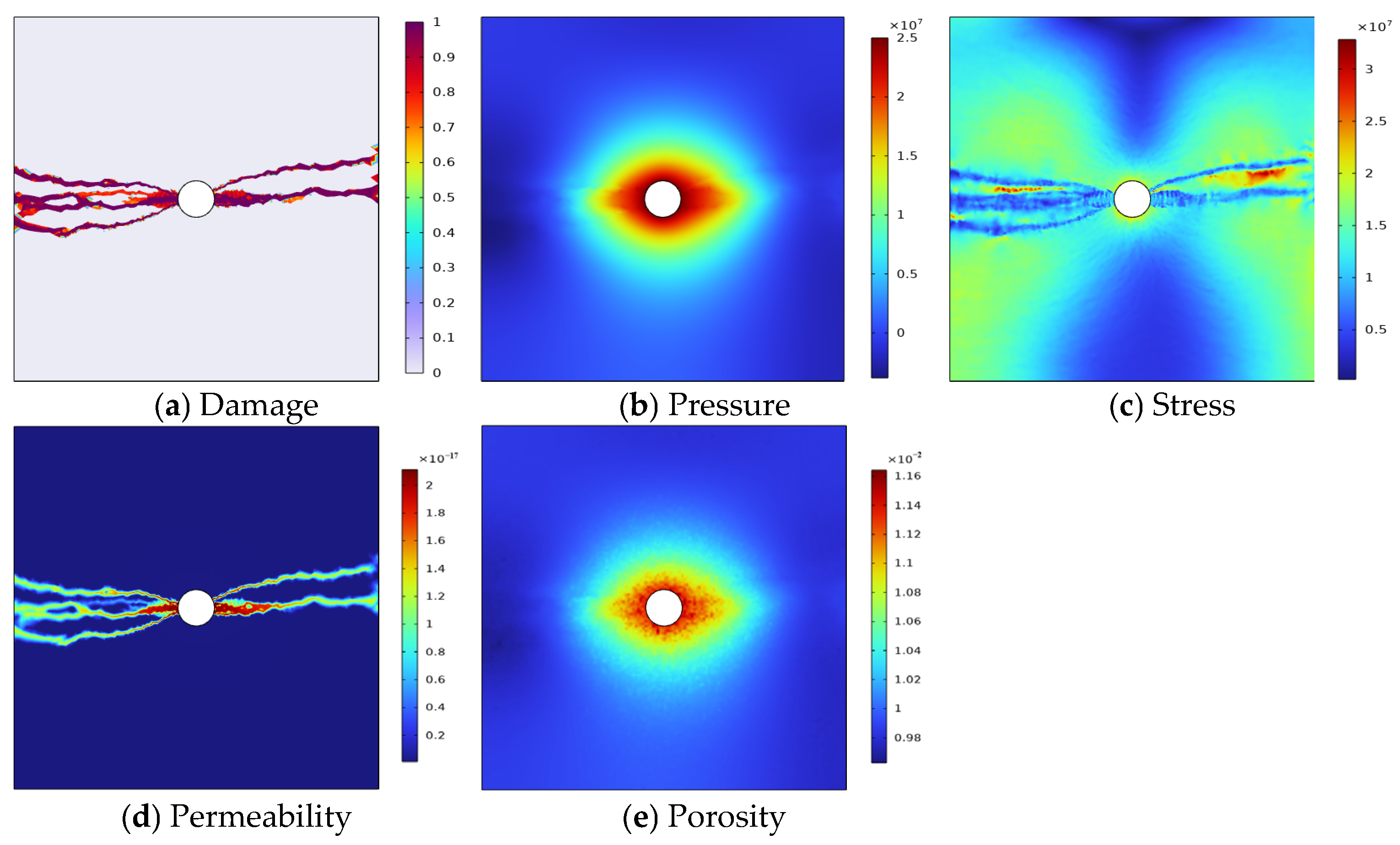
During enhanced water injection, the generation and evolution of damage serve as the critical links between the stress field and the flow field. Figure 17 presents the results of fluid–solid coupling simulation under enhanced water injection conditions, including damage distribution, pore pressure field, stress field, permeability distribution, and porosity distribution. Figure 17a reveals a distinct high-damage zone forming near the wellbore during the initial injection phase. This zone gradually expands along stress concentration directions, ultimately developing into a fracture-like failure zone. The primary drivers for fracture initiation are the increase in pore pressure and the reduction in effective stress induced by injection pressure. Figure 17b demonstrates that pore pressure forms a high-pressure core near the wellbore and preferentially propagates along newly formed fractures. Its propagation range significantly exceeds that in the matrix region, reflecting the guiding effect of fractures on pressure transmission. The stress distribution in Figure 17c indicates that crack formation redistributes the stress field. Localized stress concentration zones and stress relief zones develop in a band-like pattern along the fracture zone, disrupting the originally nearly symmetric stress field structure. Figure 17d,e reveals the impact of damage on flow characteristics. As fractures form and propagate, permeability significantly increases within the fractured zone, creating highly permeable pathways with good connectivity. Their spatial distribution closely aligns with the damaged zone. Porosity also markedly increases within the fracture zones, indicating substantial volumetric damage to the rock structure that provides additional space for fluid migration. The changes in permeability and pore volume are particularly pronounced in the fracture zones and around the wellbore, indicating these areas are the core regions for enhanced flow capacity during enhanced water injection.
The study concludes that enhanced water injection induces fracture generation and propagation through increased pore pressure, leading to substantial gains in porosity and permeability. This creates a nonlinear amplification effect in the coupling between the flow field and stress field. Damage progression not only alters local stress distribution but also enhances the flow capacity of conduits, thereby facilitating the propagation of pore pressure over greater distances.

5. Field Application of Enhanced Water Injection

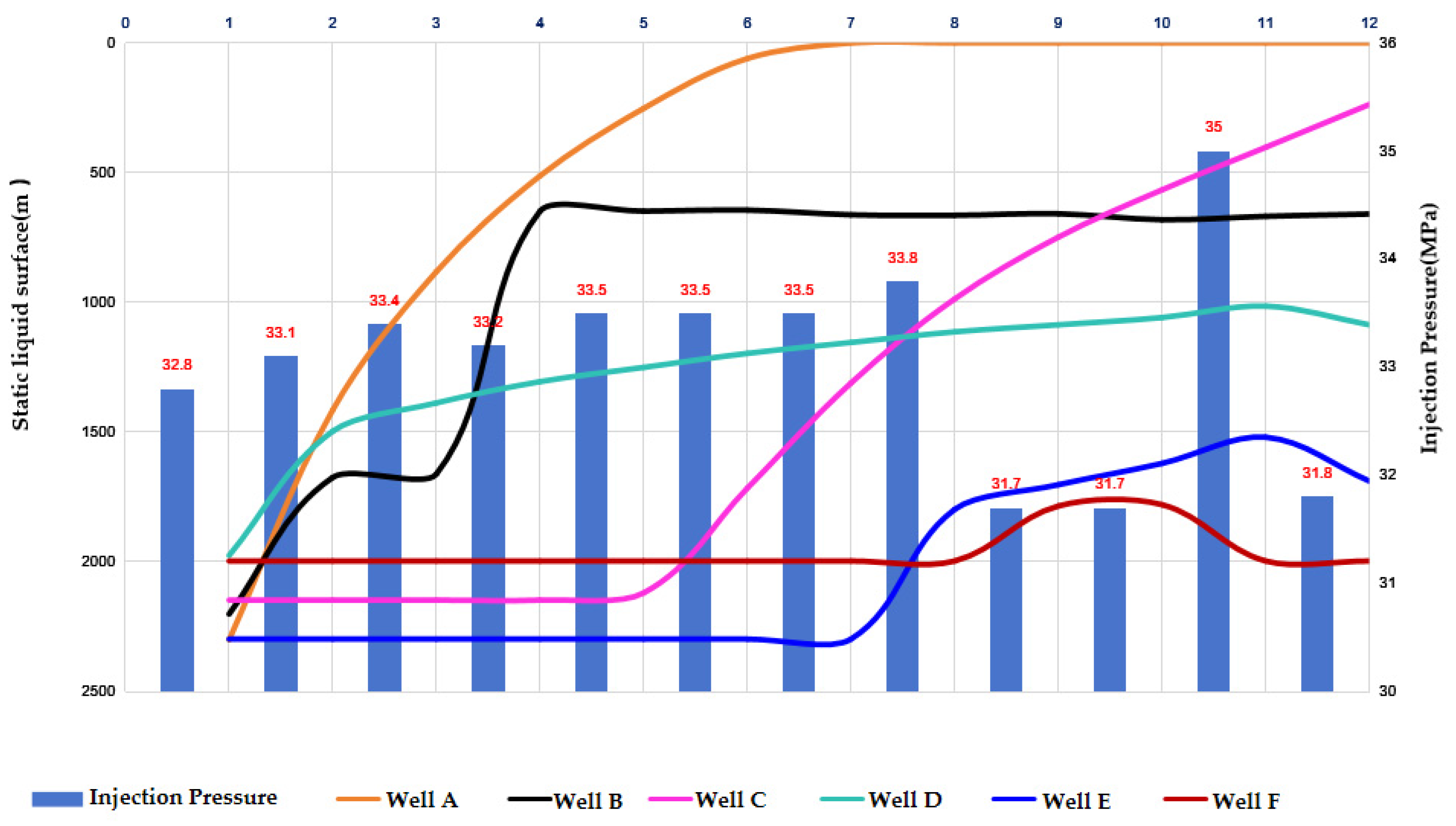
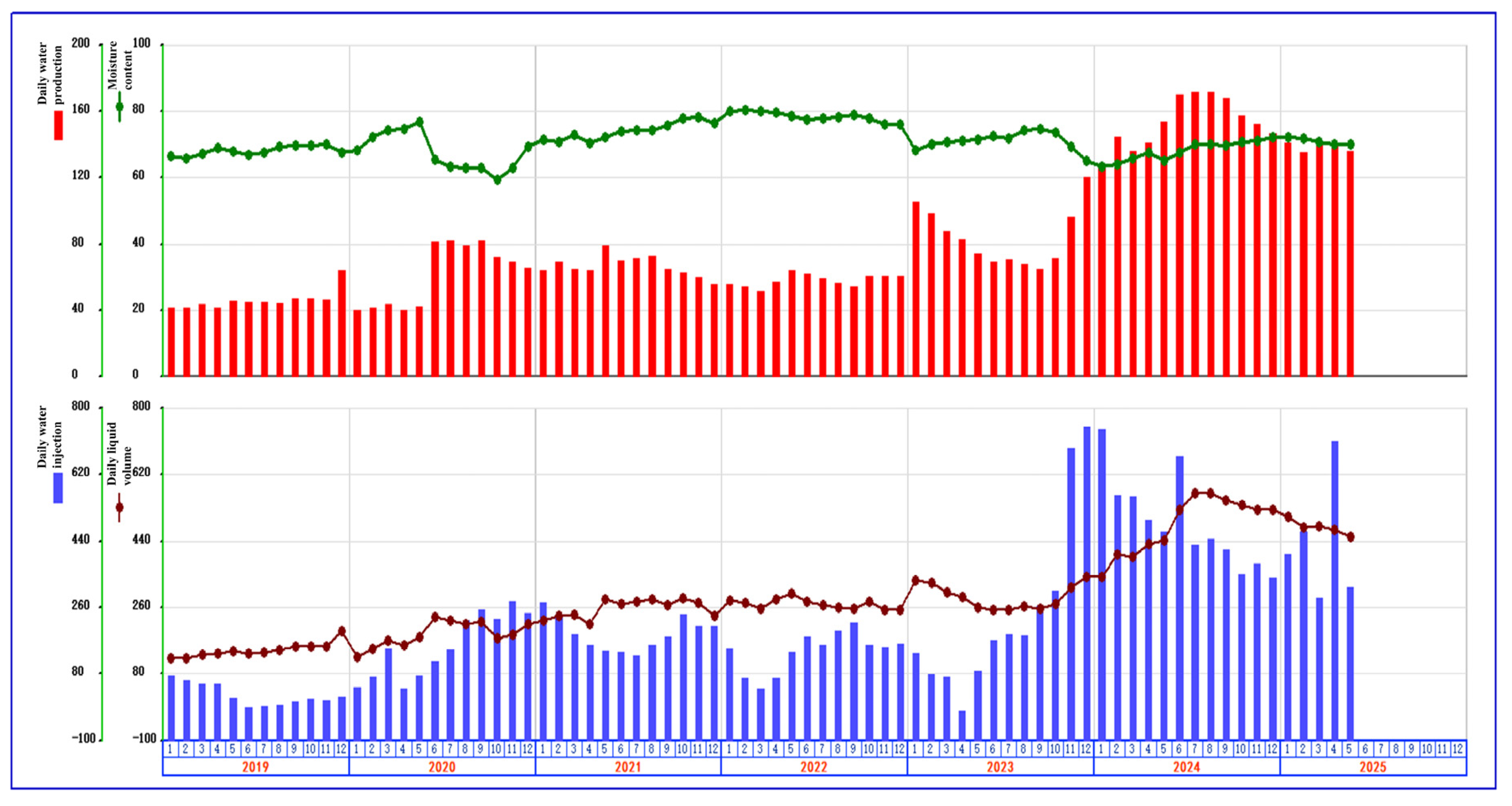
Guided by theoretical principles, enhanced water injection has achieved notable results in field practice. Prior to implementation in the Zao 32 well area, the pressure coefficient was 1.04, with an average sand connectivity rate of 67.8% across the well group. The average distance between injection wells and production wells was 245 m. Enhanced water injection has been initially deployed during early development phases. Later, injection difficulties occurred. To address this, large-scale high-pressure injection was followed by conventional injection. Preliminary numerical simulations and field tests indicated that when injection volume reached 20,000 m3, Well A experienced water channeling, leading to reduced oil production across the well group. Thus, the optimal injection volume was determined to be 19,000 m3. Following the field-scale enhanced injection and blockage-clearing phase with 19,000 m3 injection, the well group transitioned from unidirectional to multidirectional enhancement. The implementation was conducted in two stages: (1) enhanced water injection stage—injection pressure was maintained at 24 MPa with daily injection volume gradually increasing from 30 m3 to 80 m3 for energy enhancement and blockage removal; (2) conventional water injection stage—after enhancement treatment, injection pressure decreased to 19.9 MPa, enabling sustained stable injection. Consistent with numerical modeling and experimental results, Well X achieved continuous stable injection after reverting to normal injection, accumulating 21,000 m3 of injection. The well group achieved a daily oil production increase of 8.5 t/d, with a cumulative oil production increase of 1366 t and an investment-to-output ratio of 1.12. Figure 18 shows the fluid level change curve of the beneficiary oil well during the enhanced water injection phase of Well X.
For low-utilization blocks like the Zao 34 block, research was conducted on achieving sustained water injection. The technical approach involves initial high-pressure injection followed by conventional water injection for water wells, while oil wells underwent multistage cluster fracturing. The specific implementation plan included (1) pre-injection evaluation—reservoir connectivity assessment through pressure testing and numerical simulation to determine optimal injection volume; (2) enhanced injection phase—injection pressure of 29.2 MPa, injection rate of 30 m3/d, with real-time monitoring of pressure response in offset wells; (3) transition phase—gradual pressure reduction to 27.3 MPa while monitoring for stable injection capacity; (4) conventional injection phase—sustained injection at 27.3 MPa with rates of 55 m3/d. Prior to implementation in the Zao 34 well area, the pre-injection pressure coefficient was 0.92, with an average sand connectivity rate of 59.7% across the well group. The average distance between injection wells and production wells was 194 m, and the angle between the three production wells and the provenance direction was less than 40° for all wells. From 15 to 30 June 2023, enhanced water injection was conducted, accumulating 21,522 m3 of injected fluid. All six production wells in the group showed improvement, with two wells along the provenance direction demonstrating significant gains. Three wells achieved enhanced production through fracturing, with daily oil output rising from 1.5 tons to approximately 3.0 tons and stabilizing at this level. The well group’s daily production increased to 21.0 tons, with cumulative additional oil production reaching 2904 tons.
Small-scale pressure drive operations were conducted in the developed area of the Zao 34 fault block. Injection pressure decreased from 33.8 MPa to 24.4 MPa, with cumulative additional injection reaching 4758 m3. From 2022 to 2025, the plan involves drilling 23 new wells and conducting 11 pressure drive operations, with a total injection volume of 97,400 m3. Following the pressure drive, continuous water injection will add 157,200 m3, resulting in the cumulative additional production of 7100 tons of oil. Following comprehensive block adjustments, daily oil production peaked at 175 tons from 60 tons, with current output at 140 tons. The recovery rate increased from 9.6% to 18.5%. Figure 19 shows the development curve for the Zao 34 block. Building on the successful water injection enhancement experience from Zao 34, since October 2023, both new and existing wells have been prioritized. Through a combination of pressure drive and well network optimization, the Kong Er Formation in the South Zao (Zao 40-Zao 111 well areas) and Kong Er-4 Formation in the North Zao were comprehensively treated. The combined daily production increased from 191.5 tons to 347 tons.
Based on the findings of this study, the following recommendations are proposed for field applications of enhanced water injection in low-permeability reservoirs. First, the injection pressure should be controlled within 20–25 MPa to achieve optimal fracture-network complexity, while the injection rate/volume can be determined through numerical simulations. In terms of implementation, it is recommended to adopt a staged strategy in which a high-pressure injection is applied at the early stage and then switched to conventional water injection. In addition, hydraulic fracturing of production wells should be coordinated with enhanced water injection to maximize ultimate recovery. A real-time monitoring system should be established, with a focus on injection pressure, production-well responses, and the effectiveness of pressure propagation. Future work should develop a three-dimensional thermo–hydro-mechanical–chemical (THMC) coupled model, integrate microseismic monitoring techniques, and conduct long-term field trials to evaluate the sustainability of repeated injection cycles. Moreover, an economic optimization framework should be established to guide broader field deployment.

6. Conclusions

This study systematically investigates the mechanism of enhanced recovery through enhanced water injection in low-permeability reservoirs using a combination of laboratory experiments and numerical simulations. The primary conclusions are as follows:
  • Low-permeability rocks in the study area exhibit strong imbibition-driven oil displacement capacity. The injection of large volumes of fluid during enhanced water injection enhances this displacement capacity, improving the mobilization of oil in small pores within the matrix through displacement effects.
  • During enhanced water injection, employing low-rate, low-viscosity fluids induces complex rock fracturing. This increases the fluid–rock contact area, enhancing sweep efficiency and imbibition oil exchange performance.
  • The complex fractures formed during enhanced water injection significantly reduce injection resistance, thereby lowering the injection initiation pressure for water injection wells. This facilitates the establishment of displacement relationships and enables the transition to conventional water injection in later stages.
  • Parameters such as injection pressure and fracture damage intensify multi-field coupling effects, promoting fracture propagation and expanding swept volumes. This provides theoretical support for field implementation.
Despite the valuable insights obtained, several limitations of this study should be acknowledged. The laboratory experiments on small-scale cores (2.5 cm × 6.0 cm) and two-dimensional simulations cannot fully capture the three-dimensional complexity of field-scale fault-block reservoirs. Additionally, the field application results are based on short-term observations, and long-term effects of repeated injection cycles require further investigation. Future work should develop comprehensive three-dimensional models and conduct extended field monitoring to address these limitations.

Author Contributions

Conceptualization, F.L. and H.S.; methodology, F.L.; software, C.X.; validation, C.X., X.L. and F.T.; formal analysis, H.S.; investigation, F.T.; resources, C.X.; data curation, X.L.; writing—original draft preparation, F.L.; writing—review and editing, H.S.; visualization, F.T.; supervision, C.X.; project administration, X.L.; funding acquisition, H.S. All authors have read and agreed to the published version of the manuscript.

Funding

This research was funded by CNPC’s Ballast Stone Project (No. 2020YFA0710600).

Data Availability Statement

The original contributions presented in this study are included in the article. Further inquiries can be directed to the corresponding authors.

Acknowledgments

All authors express their gratitude for the valuable comments provided by the reviewers and editors.

Conflicts of Interest

We declare that we have no financial and personal relationships with other people or organizations that can inappropriately influence our work, there is no professional or other personal interest of any nature or kind in any product, service and/or company that could be construed as influencing the position presented in, or the review of, the manuscript entitled.

References

  1. Yu, Z.; Wang, Z.; Jiang, Q.; Wang, J.; Feng, Y.; Zheng, J.; Baffour, B.A. Evaluation of Low Permeability Conglomerate Reservoirs Based on Petrophysical Facies: A Case Study from the Triassic Baikouquan Formation, Northern Mahu Sag, Junggar Basin, China. J. Pet. Sci. Eng. 2022, 219, 111082. [Google Scholar] [CrossRef]
  2. Yuan, S.; Wang, Q. New Progress and Prospect of Oilfields Development Technologies in China. Pet. Explor. Dev. 2018, 45, 698–711. [Google Scholar] [CrossRef]
  3. Wang, H.; Liao, X.; Dou, X.; Shang, B.; Ye, H.; Zhao, D.; Liao, C.; Chen, X. Potential Evaluation of CO2 Sequestration and Enhanced Oil Recovery of Low Permeability Reservoir in the Junggar Basin, China. Energy Fuels 2014, 28, 3281–3291. [Google Scholar] [CrossRef]
  4. Cong, L.; Li, W.L.; Lei, J.C.; Li, R.B. The Current Situation and Prospects of Development of Low Permeability Oil Reservoir. Adv. Mater. Res. 2013, 734–737, 1286–1289. [Google Scholar] [CrossRef]
  5. Hu, W.; Wei, Y.; Bao, J. Development of the Theory and Technology for Low Permeability Reservoirs in China. Pet. Explor. Dev. 2018, 45, 685–697. [Google Scholar] [CrossRef]
  6. Hu, T.; Sharma, M.M. Containment of Water-Injection-Induced Fractures: The Role of Heat Conduction and Thermal Stresses. SPE Reserv. Eval. Eng. 2022, 25, 245–260. [Google Scholar] [CrossRef]
  7. Reznikov, I.; Chuprakov, D.; Bekerov, I. Analytical Model of 2D Leakoff in Waterflood-Induced Fractures. J. Rock Mech. Geotech. Eng. 2023, 15, 1713–1733. [Google Scholar] [CrossRef]
  8. Li, Y.; Xu, H.; Fu, S.; Zhao, H.; Chen, Z.; Bai, X.; Li, J.; Xiu, C.; Zhang, L.; Wang, J. Analysis of the Effectiveness Mechanism and Research on Key Influencing Factors of High-Pressure Water Injection in Low-Permeability Reservoirs. Processes 2025, 13, 2664. [Google Scholar] [CrossRef]
  9. He, Y.; Cheng, S.; Li, L.; Mu, G.; Zhang, T.; Xu, H.; Qin, J.; Yu, H. Waterflood Direction and Front Characterization With Four-Step Work Flow: A Case Study in Changqing Oil Field China. SPE Reserv. Eval. Eng. 2017, 20, 708–725. [Google Scholar] [CrossRef]
  10. Weiwei, L.; Hailong, D.; Bin, L.I.U.; Tianlong, Z.; Xiaofeng, W.; Binchi, H.O.U.; Pengxing, C.U.I.; Qian, W.; Fengyuan, Z. Experiment and numerical simulation of water injection induced dynamic fractures in ultra-low permeability reservoirs. Sysydz 2023, 45, 566–575. [Google Scholar] [CrossRef]
  11. Tang, Y.; Mu, T.; Qin, J.; Peng, R.; Liu, M.; Xie, Y. The Mechanism of Reservoir Damage by Water Injection in Ultra-Low-Permeability Reservoirs and Optimization of Water Quality Index. Energies 2025, 18, 1455. [Google Scholar] [CrossRef]
  12. Xie, X.; Jiang, H.; Chen, M.; Liu, T.; Zhang, W. Timing of Advanced Water Flooding in Low Permeability Reservoirs. Min. Sci. Technol. 2009, 19, 124–128. [Google Scholar] [CrossRef]
  13. Wang, L.; Wei, L. Study on Advanced Water Injection Time in Low Permeability Reservoir. Energy Power Eng. 2011, 3, 194–197. [Google Scholar] [CrossRef]
  14. Wang, Y.; Cheng, S.; Feng, N.; He, Y.; Yu, H. The Physical Process and Pressure-Transient Analysis Considering Fractures Excessive Extension in Water Injection Wells. J. Pet. Sci. Eng. 2017, 151, 439–454. [Google Scholar] [CrossRef]
  15. Liu, Y.; Wang, F.; Wang, Y.; Li, B.; Zhang, D.; Yang, G.; Zhi, J.; Sun, S.; Wang, X.; Deng, Q.; et al. The Mechanism of Hydraulic Fracturing Assisted Oil Displacement to Enhance Oil Recovery in Low and Medium Permeability Reservoirs. Pet. Explor. Dev. 2022, 49, 864–873. [Google Scholar] [CrossRef]
  16. Shaoul, J.R.; Spitzer, W.J.; Fekkai, S.; Sepulveda, L. A Case Study of Water Injection Well Stimulation in a Low Permeability Oil Reservoir. In Proceedings of the SPE Annual Technical Conference and Exhibition, Dubai, UAE, 26–28 September 2016. SPE-181330-MS. [Google Scholar] [CrossRef]
  17. Singh, R.; Agarwal, P.; Saurav; Gupta, S.; Mandapati, S.K. Learning from Water Injection Pilot in a Low Permeability Reservoir Developed with Hydraulically Fractured Horizontal Wells—ABH Field Case Study. In Proceedings of the SPE/IATMI Asia Pacific Oil & Gas Conference and Exhibition, Jakarta, Indonesia, 10–12 October 2023. SPE-215306-MS. [Google Scholar]
  18. Aniskin, A.; Chmuzh, I.; Sakhibgareev, R. Waterflood Induced Fracture Modeling in West Salym Field. In Proceedings of the SPE Russian Oil and Gas Conference and Exhibition, Moscow, Russia, 26–28 October 2010. SPE-136560-MS. [Google Scholar] [CrossRef]
  19. Zhu, W.; Gao, Y.; Wang, Y.; Liu, P.; Liu, Y. The Injection Capacity Evaluation of High-Pressure Water Injection in Low Permeability Reservoir: Numerical and Case Study. Front. Earth Sci. 2024, 12, 1411451. [Google Scholar] [CrossRef]
  20. Wang, Y.; Song, X. Comprehensive Characterization Integrating Static and Dynamic Data for Dynamic Fractures in Ultra-Low Permeability Reservoirs: A Case Study of the Chang 6 Reservoir of the Triassic Yanchang Formation in the Ordos Basin, China. Minerals 2022, 12, 1277. [Google Scholar] [CrossRef]
  21. Wang, X.; Dang, H.; Gao, T. Method of Moderate Water Injection and Its Application in Ultra-Low Permeability Oil Reservoirs of Yanchang Oilfield, NW China. Pet. Explor. Dev. 2018, 45, 1094–1102. [Google Scholar] [CrossRef]
  22. Wang, H.Q.; Wang, S.; Liu, X.L. Factors Affecting the Water Injection Enhancement Effect in Low-Porosity, Low-Permeability Heavy Oil Reservoirs. XinJiang Pet. Geol. 2023, 44, 347–351. [Google Scholar]
  23. Liu, X.L.; Che, H.; He, J. Application of Water Injection and Energy Enhancement Technology in Permian Heavy Oil of Lukqin. Chenical Eng. Equip. 2020, 3, 133–134. [Google Scholar]
  24. Zhen, L.; Junhua, Z.; Chunli, Z.; Weichao, Z. The Challenges and Countermeasures in Precisely Describing Complex Fault-Block Reservoirs: A Case Study of the Dagang Zilaitun Oilfield. In Proceedings of the Fourth International Meeting for Applied Geoscience & Energy, Houston, TX, USA, 26–29 August 2024; Society of Exploration Geophysicists and American Association of Petroleum Geologists: Houston, TX, USA, 2024; pp. 1218–1222. [Google Scholar]
  25. Qiao, Y.; Zhang, Z.X.; Zhang, S. Experimental Study of Development of Fracture Process Zone in Rock. Geotech. Geol. Eng. 2024, 42, 1887–1904. [Google Scholar] [CrossRef]
  26. Zhang, Y.; Zou, Y.; Zhang, Y.; Wang, L.; Liu, D.; Sun, J.; Ge, H.; Zhou, D. Experimental Study on Characteristics and Mechanisms of Matrix Pressure Transmission Near the Fracture Surface During Post-Fracturing Shut-In in Tight Oil Reservoirs. SSRN J. 2022, 219, 111133. [Google Scholar] [CrossRef]
  27. Zuo, M.-S.; Chen, H.; Liu, X.-L.; Liu, H.-P.; Wu, Y.; Qi, X.-Y. Fractal Model of Spontaneous Imbibition in Low-Permeability Reservoirs Coupled with Heterogeneity of Pore Seepage Channels and Threshold Pressure. Pet. Sci. 2024, 21, 1002–1017. [Google Scholar] [CrossRef]
  28. Meng, Q.; Liu, H.; Wang, J.; Liu, H. Effect of Fluid Viscosity on Correlation of Oil Recovery by Linear Counter-Current Spontaneous Imbibition. J. Pet. Sci. Eng. 2017, 151, 341–347. [Google Scholar] [CrossRef]
  29. Morrow, N.R.; Mason, G. Recovery of Oil by Spontaneous Imbibition. Curr. Opin. Colloid Interface Sci. 2001, 6, 321–337. [Google Scholar] [CrossRef]
  30. Li, W.F.; Frash, L.P.; Carey, J.W.; Welch, N.J.; Meng, M.; Viswanathan, H.S.; Nguyen, H.; Rahimi-Aghdam, S.; Bažant, Z.P. Effect of Injection Parameters on Hydraulic Fracture Branching. Paper presented at the 55th U.S. Rock Mechanics/Geomechanics Symposium, Virtual, 18–25 June 2021. [Google Scholar]
  31. Li, W.; Frash, L.P.; Carey, J.W.; Welch, N.J.; Meng, M.; Nguyen, H.; Viswanathan, H.S.; Rougier, E.; Lei, Z.; Rahimi-Aghdam, S.; et al. Injection Parameters That Promote Branching of Hydraulic Cracks. Geophys. Res. Lett. 2021, 48, e2021GL093321. [Google Scholar] [CrossRef]
  32. Zhuang, L.; Kim, K.Y.; Jung, S.G.; Diaz, M.; Min, K.-B.; Zang, A.; Stephansson, O.; Zimmermann, G.; Yoon, J.-S.; Hofmann, H. Cyclic hydraulic fracturing of Pocheon granite cores and its impact on breakdown pressure, acoustic emission amplitudes and injectivity. Int. J. Rock Mech. Min. Sci. 2019, 122, 104065. [Google Scholar] [CrossRef]
  33. Li, L.C.; Tang, C.A.; Wang, S.Y.; Yu, J. A Coupled Thermo-Hydrologic-Mechanical Damage Model and Associated Application in a Stability Analysis on a Rock Pillar. Tunn. Undergr. Space Technol. 2013, 34, 38–53. [Google Scholar] [CrossRef]
  34. Xue, Y.; Liu, S.; Chai, J.; Liu, J.; Ranjith, P.G.; Cai, C.; Gao, F.; Bai, X. Effect of Water-Cooling Shock on Fracture Initiation and Morphology of High-Temperature Granite: Application of Hydraulic Fracturing to Enhanced Geothermal Systems. Appl. Energy 2023, 337, 120858. [Google Scholar] [CrossRef]
  35. Li, Z.; Li, L.; Huang, B.; Zhang, L.; Li, M.; Zuo, J.; Li, A.; Yu, Q. Numerical Investigation on the Propagation Behavior of Hydraulic Fractures in Shale Reservoir Based on the DIP Technique. J. Pet. Sci. Eng. 2017, 154, 302–314. [Google Scholar] [CrossRef]
  36. Zhu, W.C.; Tang, C.A. Micromechanical Model for Simulating the Fracture Process of Rock. Rock Mech. Rock Eng. 2004, 37, 25–56. [Google Scholar] [CrossRef]
  37. Liang, Z.Z.; Tang, C.A.; Li, H.X.; Xu, T.; Zhang, Y.B. Numerical Simulation of 3-d Failure Process in Heterogeneous Rocks. Int. J. Rock Mech. Min. Sci. 2004, 41, 323–328. [Google Scholar] [CrossRef]
  38. Lin, H.; Li, B.; Li, S.; Qin, L.; Wei, Z.; Wang, P.; Luo, R. Numerical Investigation of Temperature Distribution and Thermal Damage of Heterogeneous Coal under Liquid Nitrogen Freezing. Energy 2023, 267, 126592. [Google Scholar] [CrossRef]
  39. Rutqvist, J.; Wu, Y.-S.; Tsang, C.-F.; Bodvarsson, G. A Modeling Approach for Analysis of Coupled Multiphase Fluid Flow, Heat Transfer, and Deformation in Fractured Porous Rock. Int. J. Rock Mech. Min. Sci. 2002, 39, 429–442. [Google Scholar] [CrossRef]
  40. Zhu, W.C.; Wei, C.H. Numerical Simulation on Mining-Induced Water Inrushes Related to Geologic Structures Using a Damage-Based Hydromechanical Model. Env. Earth Sci 2011, 62, 43–54. [Google Scholar] [CrossRef]
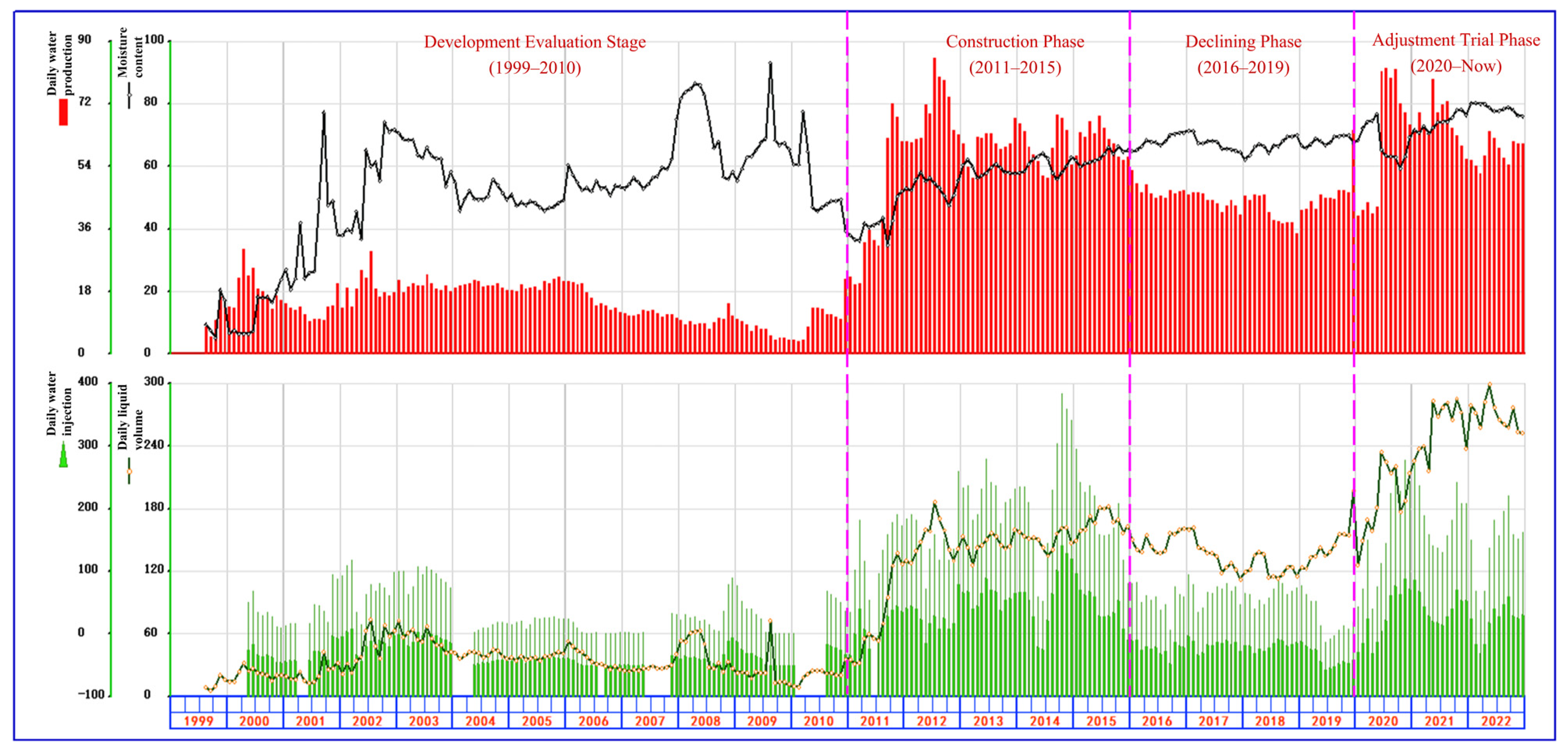
Figure 1. Comprehensive development curve for the Zao 34 Block.
Processes 14 00562 g001
Figure 2. Experimental sample.
Processes 14 00562 g002
Figure 3. Theoretical diagram of spontaneous imbibition experiment apparatus.
Processes 14 00562 g003
Figure 4. Spontaneous imbibition measurement system diagram.
Processes 14 00562 g004
Figure 5. Nuclear magnetic resonance analyzer.
Processes 14 00562 g005
Figure 6. Spontaneous imbibition curve of a typical sample.
Processes 14 00562 g006
Figure 7. Permeation-driven oil displacement experimental curve for a typical sample.
Processes 14 00562 g007
Figure 8. Rock fracture diagrams at different displacement levels.
Processes 14 00562 g008
Figure 9. Rock fracture diagrams at different viscosities.
Processes 14 00562 g009
Figure 10. Permeability test results before (a) and after (b) slip on the fracture surface.
Processes 14 00562 g010
Figure 11. Geometry of the model.
Processes 14 00562 g011
Figure 12. Mesh generation diagram.
Processes 14 00562 g012
Figure 13. Distribution of pressure, stress, permeability, and porosity at different time instants.
Processes 14 00562 g013
Figure 14. Distribution of pressure, stress, permeability, and porosity under different injection pressures.
Processes 14 00562 g014
Figure 15. Pressure changes at monitoring points under different injection pressures.
Processes 14 00562 g015
Figure 16. Stress changes at monitoring points under different injection pressures.
Processes 14 00562 g016
Figure 17. Distribution of damage, pressure, stress, permeability and porosity in the enhanced water injection model.
Processes 14 00562 g017
Figure 18. Fluid level change curve of the beneficiary oil well during the enhanced water injection phase of Well X.
Processes 14 00562 g018
Figure 19. Development curve for the Zao 34 block.
Processes 14 00562 g019
Table 1. Basic physical parameters of the core samples.
Sample NumberLength/cmDiameter/cmPorosity/%Permeability/mD
Y105L-16.222.529.610.203
Y105L-26.352.4910.210.366
Y105L-36.252.539.730.25
Y105L-46.122.566.820.051
Y105L-56.232.508.270.057
Y105L-66.132.515.070.027
Table 2. Basic model parameters.
Material PropertiesValuesUnits
Tensile strength10MPa
Compressive strength170MPa
Poisson’s ratio0.2-
Initial porosity0.01-
Residual porosity0.001-
Initial permeability1 × 10−19m2
Friction angle40deg
Table 3. Parameter values under different injection pressures.
p i n j (MPa) P (MPa) σ (MPa) A f (×10−6 m2) R d (m)
103.410.02.10.06
156.410.92.50.08
2011.513.02.90.11
2514.213.77.10.13
Disclaimer/Publisher’s Note: The statements, opinions and data contained in all publications are solely those of the individual author(s) and contributor(s) and not of MDPI and/or the editor(s). MDPI and/or the editor(s) disclaim responsibility for any injury to people or property resulting from any ideas, methods, instructions or products referred to in the content.