1. Introduction
As a critical component of oil and gas well construction, well cementing directly impacts wellbore integrity and long-term reservoir productivity. Conventional cementing operations encounter three principal challenges in complex formation pressure systems: formation pressure imbalance [
1], limitations in dynamic pressure control [
2], and insufficient adaptability to anisotropic reservoirs [
3]. To address these operational constraints, managed pressure cementing (MPC) technology has evolved from managed pressure drilling (MPD) principles. This sophisticated operational methodology enables dynamic wellbore pressure control through a closed-loop pressure management system, characterized by three key features: real-time pressure monitoring, adaptive control algorithms [
4], and collaborative optimization of engineering parameters [
5].
During the cementing waiting stage, the inherent hydrostatic pressure drop of cement slurry poses a critical challenge to maintaining annular pressure integrity. This pressure decay phenomenon can induce annular gas migration, necessitating two principal mitigation strategies: (1) deployment of specialized cement formulations incorporating expansive additives, latex polymers, or resin composites [
6] to enhance gas migration resistance; and (2) implementation of surface backpressure systems to compensate for hydrostatic pressure losses [
7]. Successful application of the latter approach requires precise prediction of the pressure drop magnitude. In formations with wide pressure windows, empirical backpressure application (in the range of 4–8 MPa) proves effective [
8]. Conversely, in formations with narrow pressure margins, constant backpressure application runs the risk of inducing formation fracturing. Under such constraints, engineers employ cement hydration pressure drop models to simulate annular pressure evolution, thereby enabling dynamic pressure compensation based on real-time pressure drop data [
9].
Current hydrostatic pressure decay models can be categorized into three principal methodologies: first, empirical models derived from experimental data analysis [
10,
11]. While these models capture general pressure decline trends, their predictive capability remains constrained by multifactorial dependencies including cement composition, temperature gradients, and geological heterogeneity. The second are thermo-poromechanical models correlating hydration kinetics with pore structure evolution [
12,
13]. Although theoretically rigorous, these laboratory-derived formulations neglect critical downhole factors such as cement matrix volumetric shrinkage under confining pressure. The third are rheological–mechanical frameworks integrating shear stress theory with gel dynamics [
7]. Despite the recent advancements, two critical limitations persist: inadequate incorporation of additive-mediated hydration modulation effects, and systematic inaccuracies in static gel strength (SGS) predictions due to oversimplified gel models. Field implementation is further complicated by the operational challenges in acquiring reliable SGS measurements under downhole conditions [
14].
Recent investigations have revealed a critical yet frequently overlooked parameter in annular pressure management—the dynamic pressure transfer efficiency (PTE) of cement slurries during hydration. As demonstrated by Liu [
15], the PTE, which characterizes the cement column’s capacity to transmit surface-applied backpressure to downhole formations, follows a progressive decay profile rather than maintaining a theoretical 100% efficiency throughout the setting process. This necessitates a dual requirement for optimized gas migration prevention: precise modeling of time-dependent hydrostatic pressure attenuation in the annulus, and quantitative characterization of the temporal evolution of PTE during the cement slurry waiting-on-set stage. The operational effectiveness of annular pressure maintenance (APM) techniques fundamentally depends on the synergistic integration of these two predictive components. Current industry practices often oversimplify PTE as a constant value, neglecting its chemical–thermal–mechanical coupling with cement hydration kinetics—a knowledge gap that significantly compromises the reliability of cementing operations in narrow-pressure-margins.
In this study, a prediction model for the SGS of cement slurries, derived from the slurry thickening time, was first developed, and a subsequent model for annular space hydrostatic column pressure drop was then developed based on the theory of gel suspension and volume shrinkage theory. Then, the evolution law of PTE during cement slurry setting was summarized through experiments. On this basis, a wellhead backpressure calculation model combining the PTE was proposed. The accuracy of the model was verified through experiments. Finally, the wellhead back pressure management method combined with PTE was applied in well WZ12-1-E of the Beibu Gulf.
2. Variation of PTE During Weight Loss of Cement Slurry
2.1. Experimental Material
High sulfur-resistant G-grade cement produced by the Sichuan Jiahua Cement Plant was used for cement, and the composition of cement slurry compounds is shown in
Table 1.
The anti-gas channeling cement formula is as follows: JIAHUA G grade cement + 35%, silica fume + 1%, expansion agent + 4%, latex + 5%, anti-gas migration agent + 4%, fluid loss additive + 2%, dispersant + 0.8%, defoaming agent 1 + 1%, defoaming agent 2, and a water–cement ratio of 0.42; cement slurry system performance was evaluated via the API standard test, the results of which are shown in
Table 2.
2.2. Experimental Methods
2.2.1. SGS Text
The theory of gelled suspension weight loss is an important description of cement slurry weight loss, while SGS is responsible for gelled suspension weight loss. Previous studies often used a metal sheet to cut the cement slurry slowly and record its shear strength to estimate the SGS [
16]. In this experiment, a 5265U-shaped ultrasonic SGS analyzer (CHANDLER ENGINEERING Product, Broken Arrow, OK, USA) was used to determine the SGS changes during the hydration of cement slurry.
2.2.2. Thickening Time Test
The time tbc1 and tbc2 for the consistency of cement slurry to reach 100 BC at 21 MPa, 40 °C, and 21 MPa, 80 °C were tested using a HTHP thickener, respectively (Shenyang Aerospace University, Shenyang, China).
2.2.3. Weight-Loss Test
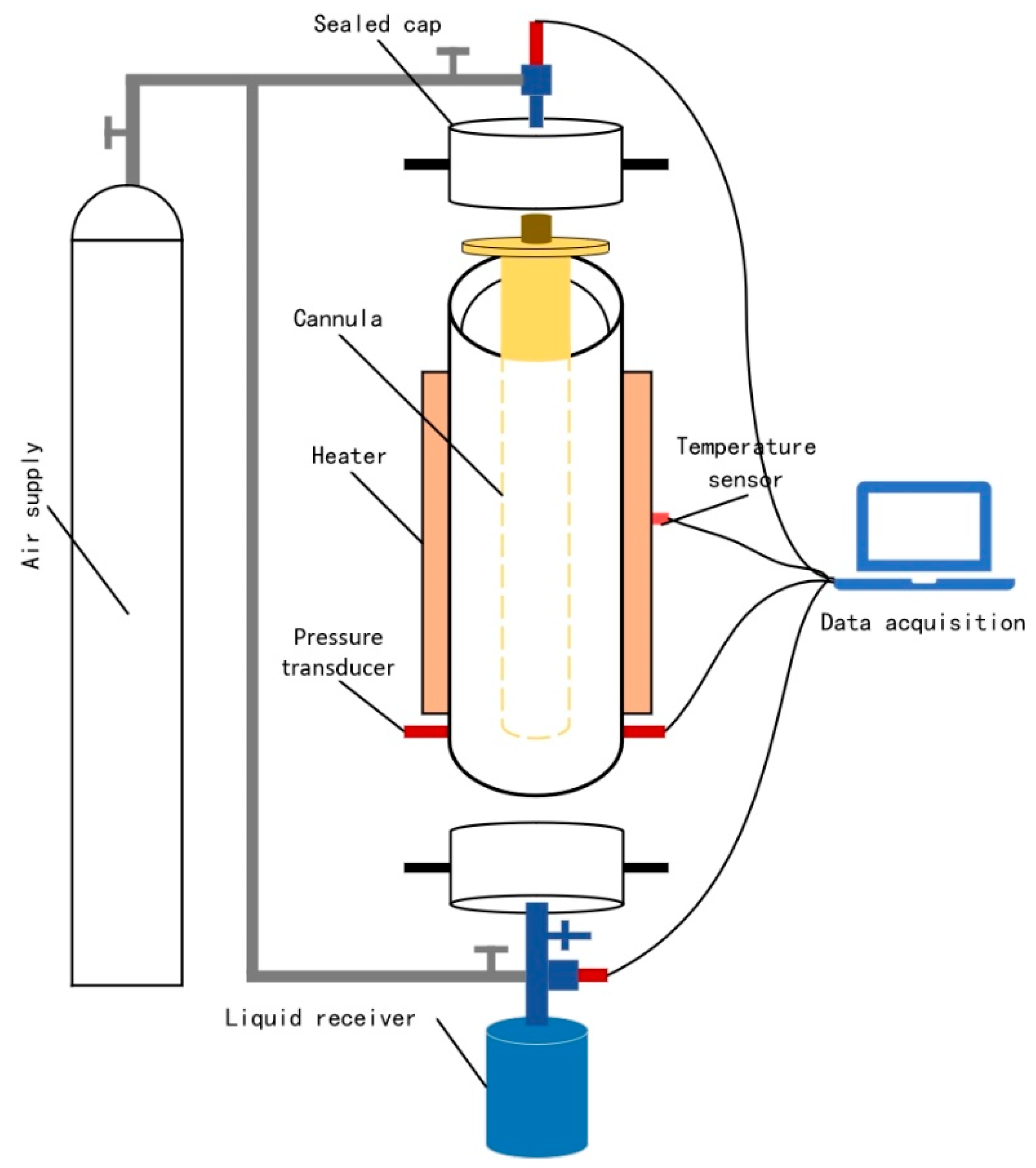
Figure 1 illustrates a schematic diagram of a test setup used to simulate cement slurry weight loss (Southwest Petroleum University, Chengdu, China), which consists of pressure control, temperature control, data acquisition, and a simulated annular space system. The device can simulate underground conditions, including temperature, pressure, eccentricity, well slope, annular space gap, stratum permeability, and cement slurry water loss. The flow of the experiment is as follows:
① Choose a 55 mm diameter casing, adjust the eccentricity to 0, the good inclination angle of 0 °, and assemble a weightlessness simulation device.
② The experimental temperature was set to 60 °C and the kettle was preheated for 30 min.
③ Prepare cement slurry according to API standards and pour it into the kettle annular space.
④ Record the change in static column pressure of the slurry.
2.2.4. PTE Test Method
In the cement slurry weight loss experiment under back pressure, the pressure acting on the bottom of the kettle is the sum of the slurry column pressure
P1 and the back pressure
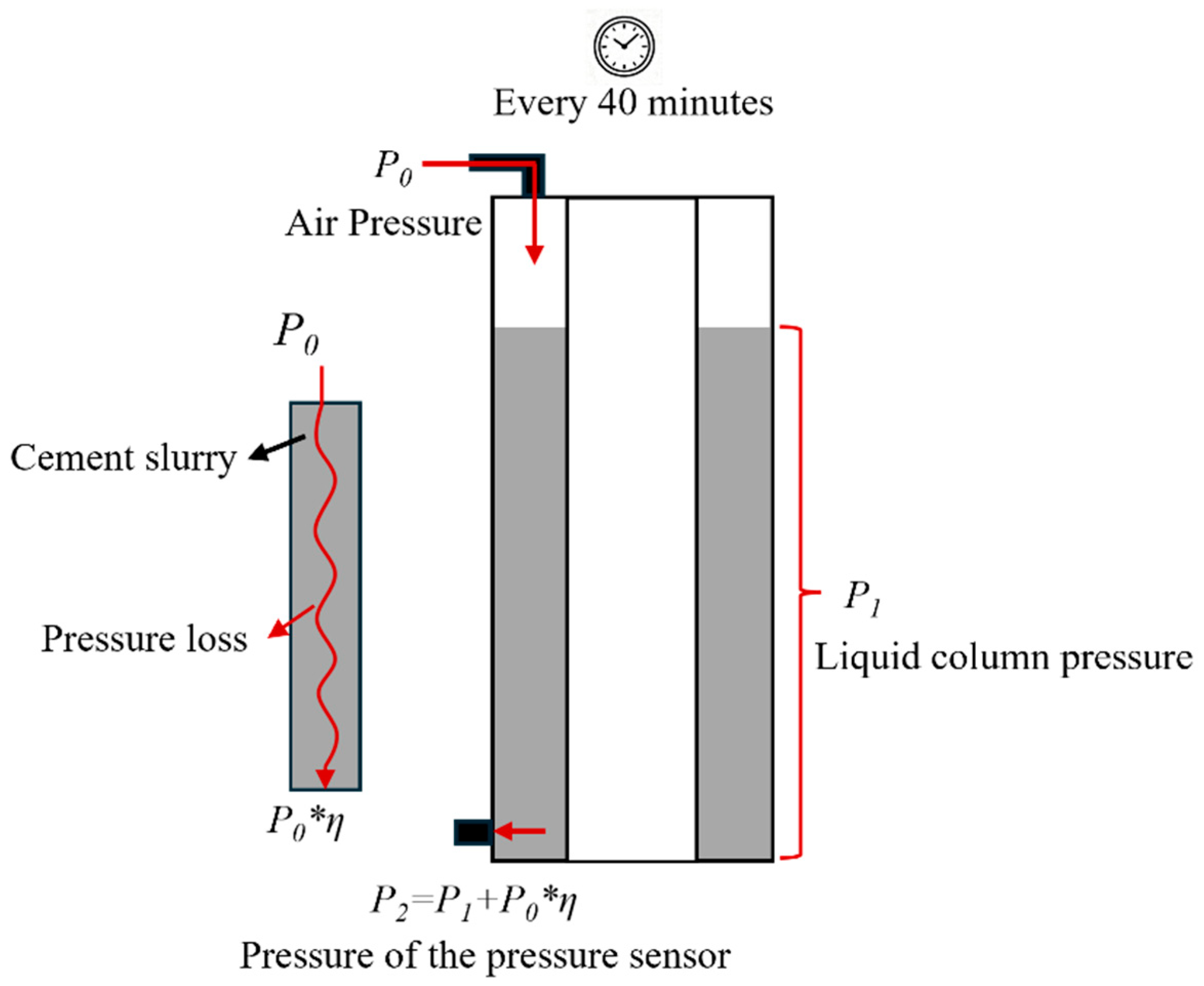
P0 transmitted to the bottom of the kettle. When the back pressure was maintained constant during the experiment, the slurry column pressure and PTE changed gradually, making it impossible to obtain the inherent column pressure of the cement slurry itself during the process of weight loss through the experiment, and therefore unable to calculate and obtain the PTE. In this experiment, during the process of cement slurry weight loss simulation, the pressure control system was used to apply a 20 KPa pressure to the annulus of the experimental kettle every 40 min, maintain it for 1 min, and then release the pressure. This operation allowed for the recording of the pressure of the cement slurry column before pressurization
P1, the pressure at the bottom of the kettle after pressurization
P2, and the applied backpressure
P0; the PTE was expressed by
ƞ. A schematic diagram of the PTE test is shown in
Figure 2. The PTE was calculated using the following formula:
Due to the great uncertainty of the experimental results of SGS, the same bucket of cement slurry was used to test its SGS under the same conditions while the PTE experiment was conducted, which can increase the accuracy of the SGS data.
2.3. Results and Analysis
- (1)
Pure cement slurry columns
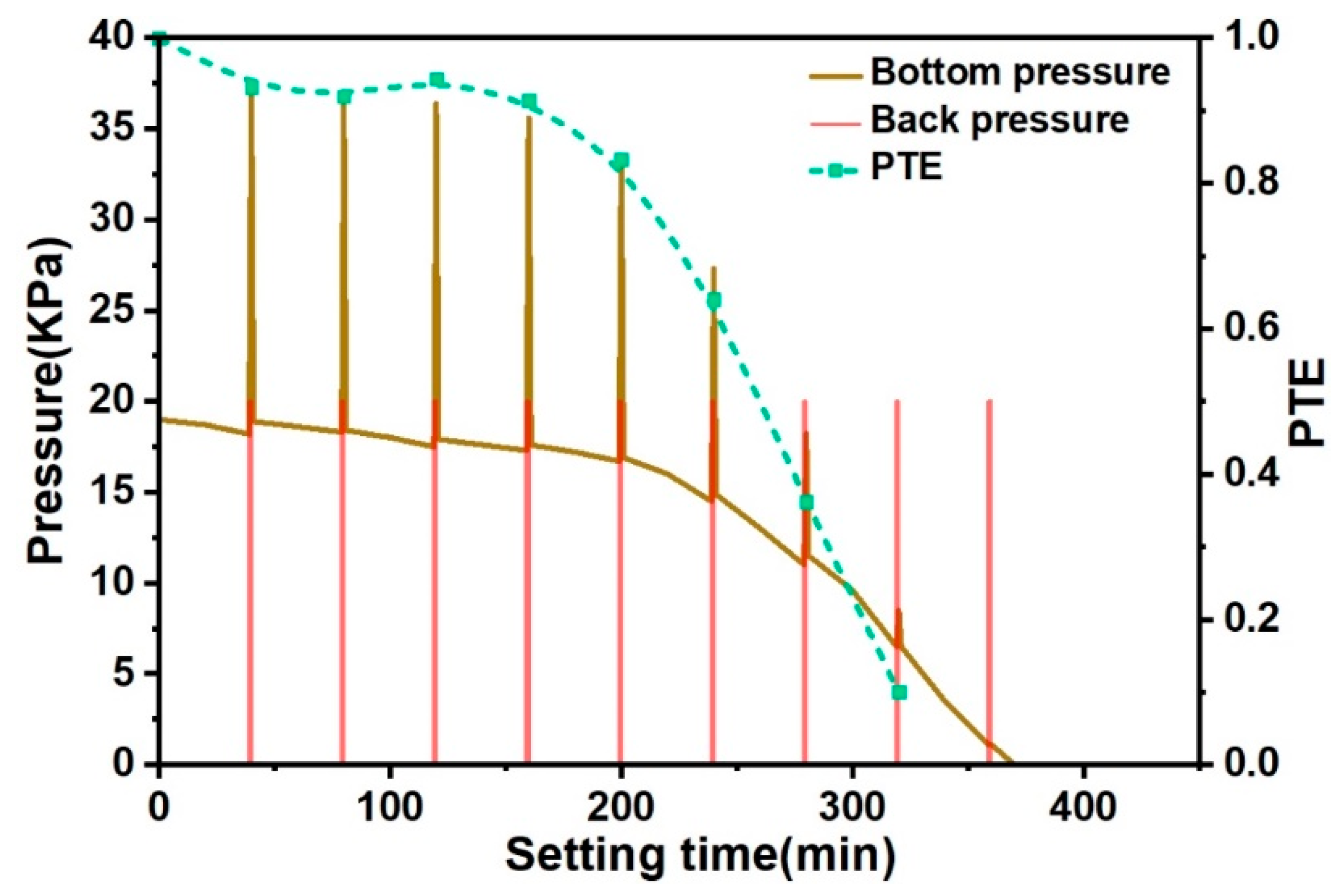
As shown in
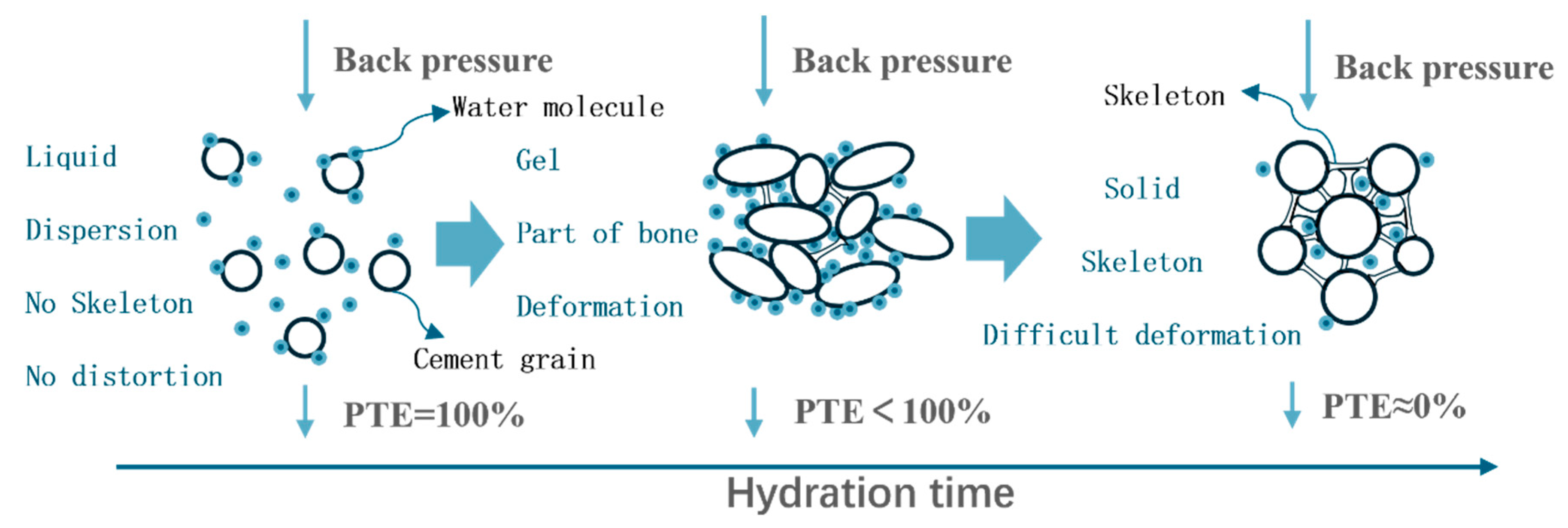
Figure 3, with the increase in setting time, the back pressure applied to the top of the kettle annulars that could be transferred to the kettle bottom gradually decreased. The PTE of the annular slurry column exhibited a two-stage variation, consistent with the trend of the hydrostatic column pressure drop curve. During 0–230 min, the PTE dropped from 100% to 85%; in this stage, the cement slurry remained in the liquid state. At this time, the pressure transfer followed the liquid pressure transfer law, i.e., the liquid with high mobility can transfer the pressure quickly and uniformly. After 230 min, the cement slurry enters the liquid–solid transition state (gelation state), its free water content gradually decreases, the fluidity gradually decreases, and the pressure transfer depends more on the elastic deformation of the cement slurry. At this stage, the cement slurry lost part of its energy during compressive deformation. The compressive energy consumed by the deformation of the cement slurry gradually increases as the viscosity and cementitious strength of the slurry accelerates, and its compressibility subsequently decreases. Therefore, the transfer efficiency of the back pressure by the annular slurry column is also declined at an accelerated rate until it drops to 0%, and no pressure can be transferred. The schematic diagram of the change of the pressurized structure of the cement slurry setting process is shown in
Figure 4.
- (2)
Multi-liquid slurry columns
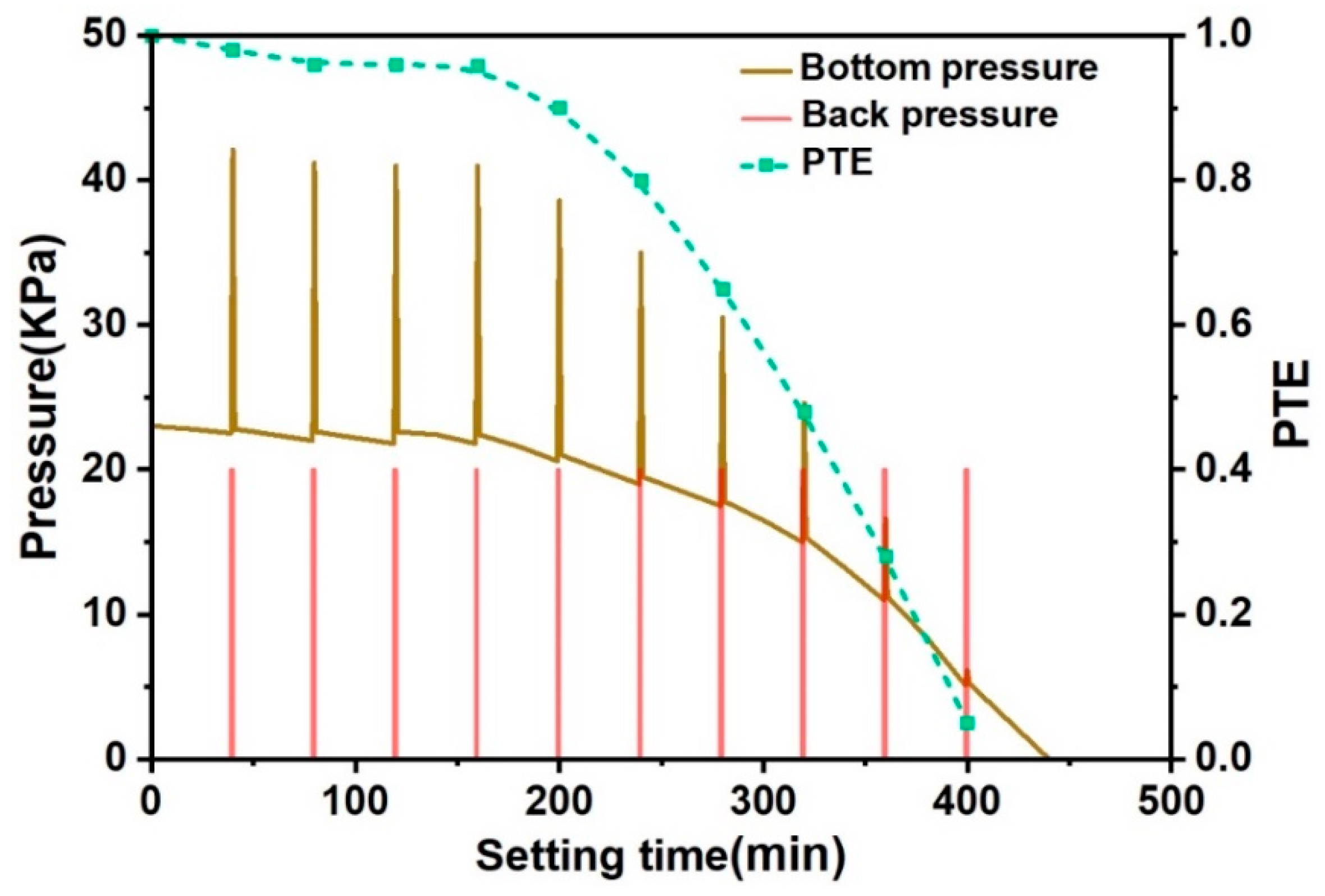
The kettle was sequentially filled with a 100 cm height of cement slurry, a 5 cm height of spacer fluid, and a 35 cm height of water. As can be seen in
Figure 5, the PTE exhibited a two-stage declining trend: the first stage was stable and slow, while the second stage declined rapidly to 0%. When comparing with the change curve of PTE of pure cement slurry column, it can be seen that the change trend of PTE is not affected by the structure of the upper slurry column.
- (3)
Effect of temperature on PTE
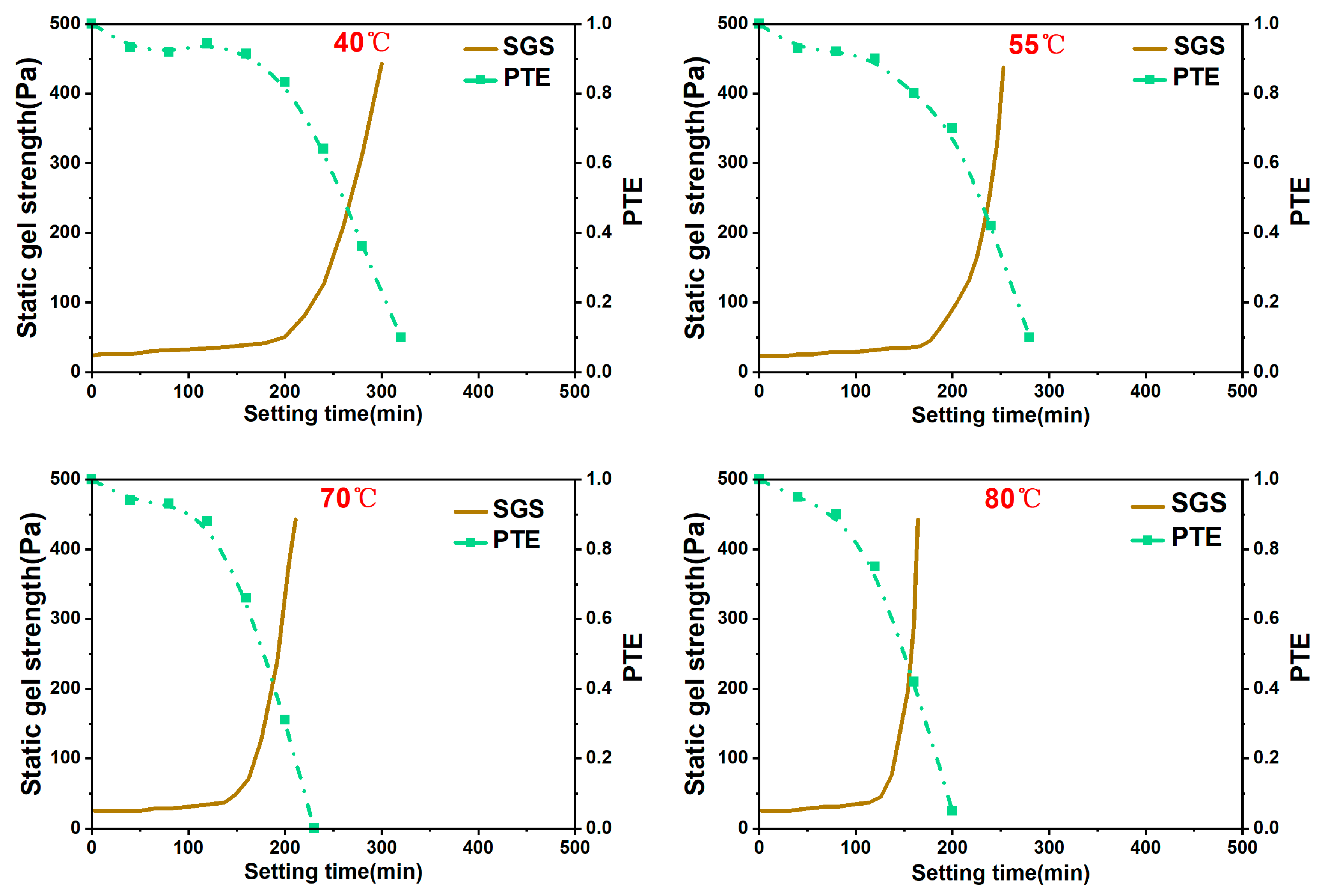
After these experiments, it was found that there is a correlation between the decrease in the annular PTE during the cement slurry weight loss process and the reduction in the hydrostatic column pressure. Under the experimental conditions, the weight loss of the cement slurry was mainly dominated by the gel suspending effect, while the development of SGS of cement slurries of the same system was most significantly influenced by temperature variations [
17]. In order to quantitatively verify the relationship between SGS and PTE during cement slurry weight loss, experiments on the variation of the PTE of the cement slurry weight loss process were carried out at temperatures of 40 °C, 55 °C, 70 °C, and 80 °C, respectively; the SGS was measured at the same time, and the results are shown in
Figure 6.
With the increase in temperature, the rate of weight loss of cement slurry and the development rate of SGS are gradually accelerated, simultaneously, the decrease rate of cement slurry PTE was also enhanced. This indicates that the decrease in PTE during the cement slurry weight loss process exhibits a negative correlation with the increase in cement slurry SGS.
3. Modelling
The cement slurry enters a waiting stage after displacement. During this period, the SGS of the slurry gradually develops, the cement microstructure changes from “dispersed particles” to a “cementitious network” [
13], and the weight of the slurry column is gradually suspended by the casing and the well wall. At the same time, the volume of the annular slurry column is also reduced due to cement hydration shrinkage and water loss to the stratum, and the static liquid column pressure is reduced under the combined effect of cement suspension and volume shrinkage, which is the cement slurry “weight loss”. In addition, cement slurry also loses weight due to bridge plugging, but the loss of weight due to bridge plugging is mainly due to the layers running into each other below the bridge plug, so it is not considered of significance in the static liquid column pressure drop models.
3.1. Gel Suspension Weight Loss
The development of SGS and the consistency of cement slurry are both closely related to the degree of hydration of cement slurry, which is affected by the ambient temperature and hydration reaction time. According to the research of [
18], the hydration degree of cement slurry changes trend with the increase in time—first rapidly increasing, and then slowing down, and finally reaching the stabilizer change trend in line with the rule of change of the exponential function. This is combined with the cement slurry hydration degree T model to get the expression of cement slurry hydration rate.
Based on thermodynamic and kinetic modeling, the Arrhenius equation was used to describe the effect of temperature on the hydration rate.
where
da(T,t)/dt is the rate of hydration at the specified temperature and time;
K(T) is the reaction rate constant;
n is the reaction grade 1,2,3……;
A is the frequency factor;
Ea is hydration activation energy, J/mol;
R is the universal gas constant, 8.314.
T is temperature, °C; and
t is time, s.
In order to make the model have better field applicability, by comparing the relationship between the cement slurry thickening time and the reaction rate constant
K, it is analyzed that the reciprocal of the time for the slurry consistency to reach 100 BC can be approximated as
K. On this basis, if the time
tbc1 and
tbc2 for the cement slurry consistency to reach 100 BC at two different temperatures
T1 and
T2 are known, the values of
Ea and
A at the target temperature can be obtained by substituting the values of
K(T) at these two temperatures into Equation (3) for calculation.
Then, substituting Equations (4) and (5) into Equation (3) yields
K(T) under different temperature conditions, as follows:
According to Equations (2) and (6), the rate of hydration can be expressed as
The relationship between the SGS of cement slurry and the thickening time of cement slurry was analyzed through a large amount of experimental data (Average R
2 = 0.953), which was then combined with the prediction model of the hydration rate of cement slurry to obtain the prediction model of the SGS.
where
τ is SGS, Pa;
tbc100 is the time for the consistency to reach 100 BC, s; and
tbc30 is the time for the consistency to reach 30 BC, s.
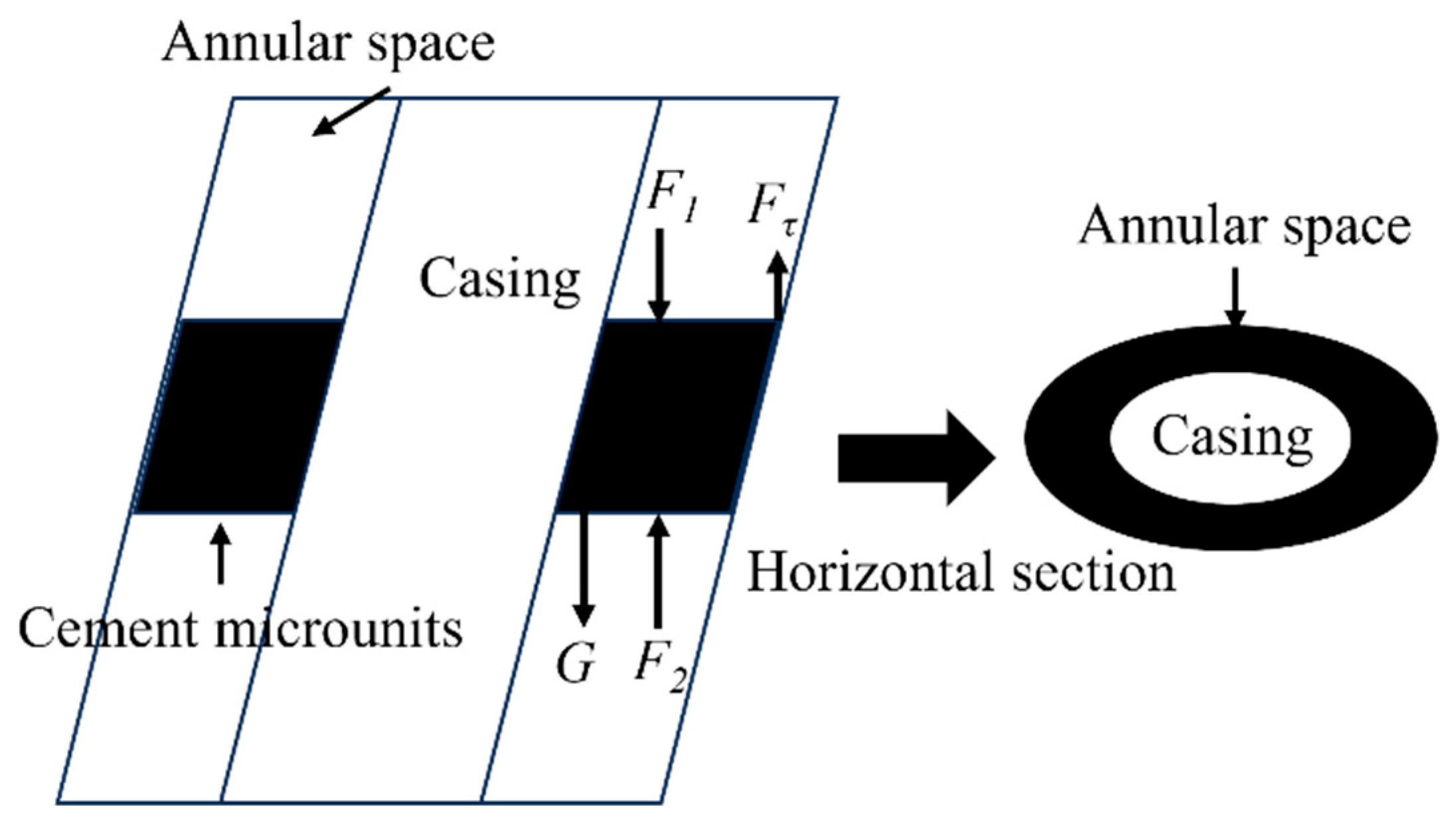
Based on the classical shear stress model, the force structure of the cement micro-unit and the horizontal section of the wellbore under the slanting hole condition are shown in
Figure 7, and the contact of the micro-unit with the well wall and casing is considered an ellipse when calculating the cement micro-unit subjected to the gelling suspension.
After calculation and simplification, the pressure drop caused by gelling suspension under the consideration of well deviation angle is expressed as Equation (10).
where
D is the borehole diameter, m;
d is the casing diameter, m;
P1 is the pressure of the upper slurry column on the cement micro-unit, Kpa;
P2 is the supporting force of the lower slurry column on the cement micro-unit, Kpa; G is gravity, Kpa;
Fτ is the supporting force of gelled suspension, Kpa.
Combining Equations (8) and (10), the gelled suspension weight loss can be expressed by Equation (11):
3.2. Volume Shrinkage Weight Loss
After cementing displacement in place, the volume of the annular slurry column decreases due to slurry hydration shrinkage (Δ
vsh) and water loss (Δ
vloss), which in turn leads to a decrease in the pressure of the annular slurry column. The annular slurry column also compresses further under pressurized conditions. Then, at this point and according to the closed hydraulic system, the cement slurry volume shrinkage pressure drop can be expressed as Equation (12).
where ∆
Pshr is shrinkage of volume pressure drop, KPa; ∆
vloss is water loss volume, m
3; ∆
vsh is hydration shrinkage volume, m
3;
Va is annular volume, m
3; and
Ccem is cement compression coefficient, MPa
−1;
- (1)
Hydration volume shrinkage
Combined with the hydration model, the cement slurry hydration shrinkage model proposed by Yuan is used here [
7]:
where
v(t) is the Hydration shrinkage rate, cm
3/cm
3 and
w/c is the water–cement ratio.
- (2)
Water loss volume
Cement slurry loses water to the formation during the setting process because of the pressure difference. Based on Darcy’s law and the model of the dynamic mechanism of cement slurry water loss, the volume of water loss can be expressed as
where
k is the combined permeability of the stratum and filter cake; D,
u is the cement slurry viscosity, Pa.s; Δ
P is the balancing pressure, MPa;
Pinit is the cement slurry initial column pressure, MPa;
Pp is average pore pressure of stratum, MPa; and Δ
Ploss is water loss pressure drop, MPa.
Bringing Equation (14) into Equation (15) and integrating over the depth of the stratum, the lost water pressure drop is obtained as
- (3)
Volume shrinkage weight loss
Finally combining Equations (12), (13) and (16), then the pressure drop due to volume shrinkage can be expressed as
3.3. PTE Prediction Method
Sabins et al. found that the SGS of cement slurry can prevent the intrusion of stratum fluid by its strength after the SGS of cement slurry reaches 240 Pa through simulation experiments [
19]. Therefore, the development curves of SGS and variation curves of PTE of the experimental cement slurry at different temperatures were analyzed, and the PTE of the cement slurry column was defined as the value when its SGS reaches when the SGS reached 240 Pa.
As shown in
Table 3, the PTE of the cement slurry columns were all in the range of 45–49% when the SGS of cement slurry reached 240 Pa. This indicates that the faster the growth rate of SGS, the faster the decrease of PTE, and the PTE shows a correspondence with SGS.
Based on the relationship between the time for the SGS of the anti-gas channeling cement to reach 240 Pa and the value of the PTE when the SGS reaches 240 Pa, the relationship between the PTE and the time was established using linear regression. (R
2 = 0.9343)
where
ƞ is PTE;
A is a constant, −8.4 × 10
−5;
T240Pa is the time for SGS to reach 240 Pa, min; and
t is setting time, min.
3.4. Wellhead Back Pressure Management Model
Combining Equations (11) and (17), the process of hydrostatic column pressure drop in the annular space slurry column during the cementing setting stage can be expressed as Equation (19).
In the cementing setting stage, the annular space slurry column consists of a variety of slurries, starting from the lower part upward, which usually include cement slurry, spacer fluid, flushing fluid, and drilling fluid, in the holding pressure conditions of the wellhead pressure is
Pwb, the volume change of the annular space slurry column in pressurized conditions is calculated using the bulk modulus model; then, the volume change at this time is expressed as
where Δ
Vi is volume change, m
3;
V0i is initial volume, m
3;
Li is column length, m; and
B is bulk modulus, KPa;
Since the pressure change is much smaller than the bulk modulus
B,
B is considered a constant. The pressure drop due to the pressurized volume contraction of the annular space slurry column under back pressure conditions can then be expressed as
The wellbore pressure should be maintained between the formation pore pressure
Po and formation fracture pressure
Pb while considering the hydrostatic column pressure drop and pressurized volume change; the wellbore pressure balance equation is expressed as
where
Pi is the annular space hydrostatic column pressure, MPa.
Then, the wellhead pressure, considering the PTE, is expressed as
4. Model Validation
- (1)
SGS
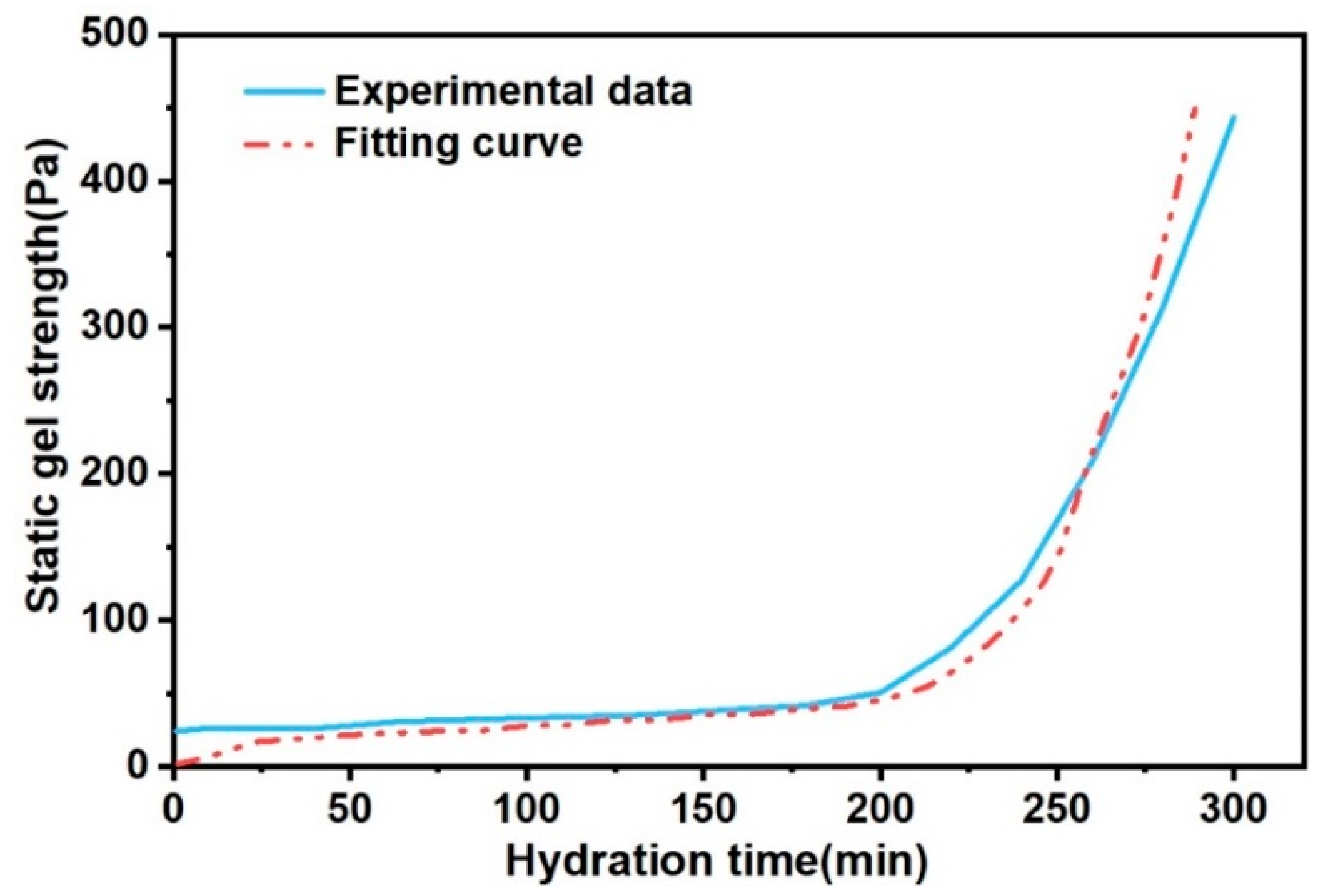
Figure 8 demonstrates the SGS development curve of cement slurry at 21 MPa and 60 °C. The development process contains two phases: stabilization and acceleration. A comparison of experimental and fitted data shows that the cement slurry under natural environment conditions has an initial SGS and that the fitted SGS increases rapidly from 0 Pa to the initial value and then develops smoothly. This is due to the change rule of the degree of hydration, which is initially fast and then slow [
20]. In the early stage of weight loss, the SGS are small, and the effect on the calculation results of the suspension effect is also negligible. Overall, the calculated values are in good agreement with the experimental test curves, indicating that the prediction of SGS by thickening time is reliable.
- (2)
Weight loss
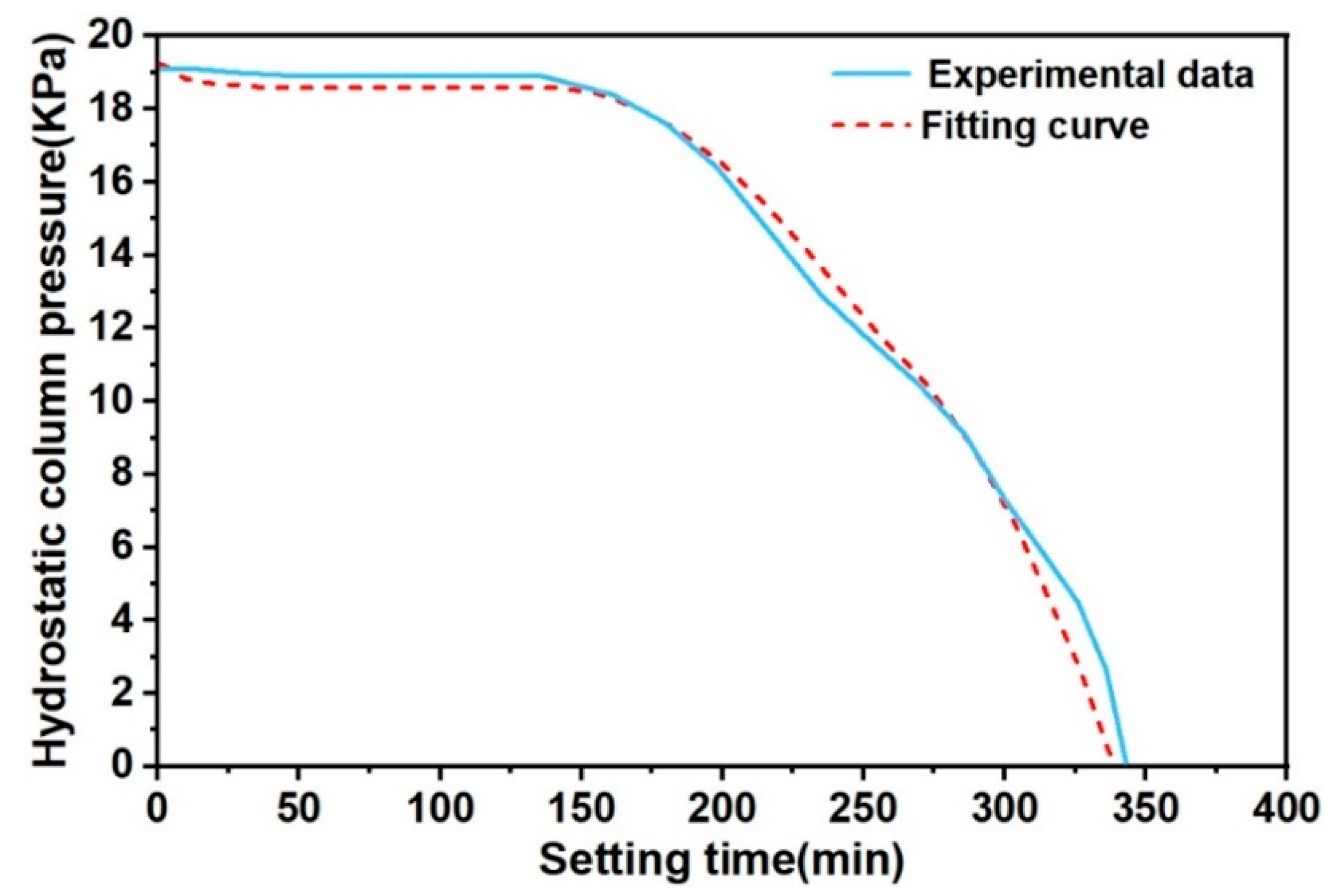
Figure 9 demonstrates the weight loss curve of the cement slurry. The measured hydrostatic column pressure remained steady during 0–145 min and began to accelerate from 145 min until it dropped to 0 Kpa at 345 min, with a two-stage pressure drop process. This weight loss curve has a slower rate of weight loss in the rapid descent phase compared to conventional system cement slurries, which is consistent with the slower rate of weight loss of anti-gas channeling cement slurries [
21]. Finally, the measured curve is compared with the fitted curve, and it is found that the two results are in good agreement.
- (3)
PTE
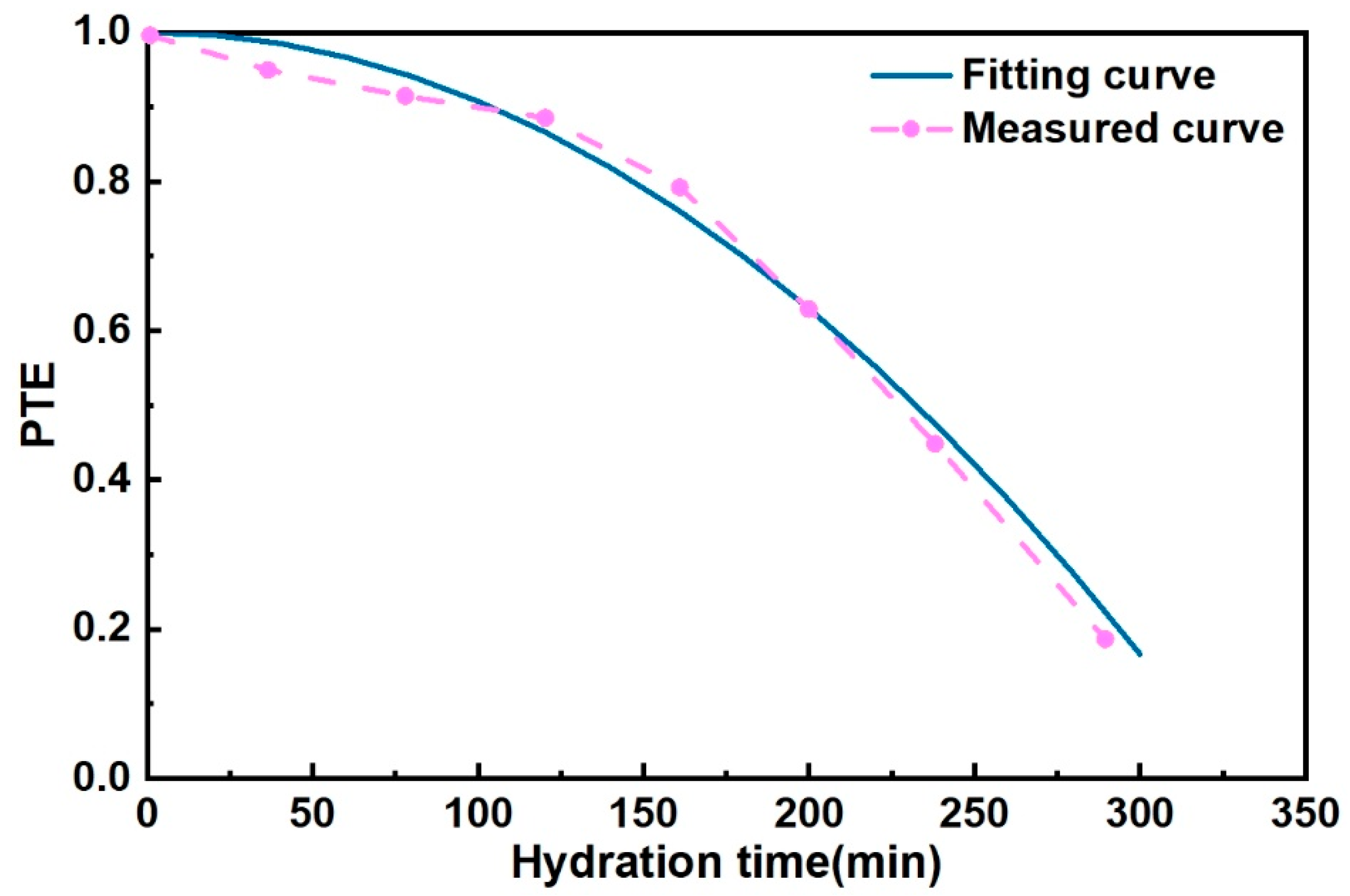
The change curve of PTE was tested at 50 °C using the anti-gas channeling cement, and the experimental test values and calculated results are shown in
Figure 10, which shows that the curves are in good agreement and the overall error is less than 5%.
5. Examples of Applications
Well WZ12-1-E, an exploratory well located in the Beibu Gulf, was drilled to 4835 m using a 215.9 mm diameter drilling bit, and then a 177.8 mm diameter casing was lowered into the target stratum. Cement slurry was used for anti-gas channeling cement, and the fluid density and length of the sealing section are shown in
Table 4. The density and length of cement slurry columns, with a cement counter-depth of 3692 m, and an average stratum temperature of the quick-setting tail rotor sealing section is 164 °C, were measured. The safe density window is 1.43~1.55 g/cm
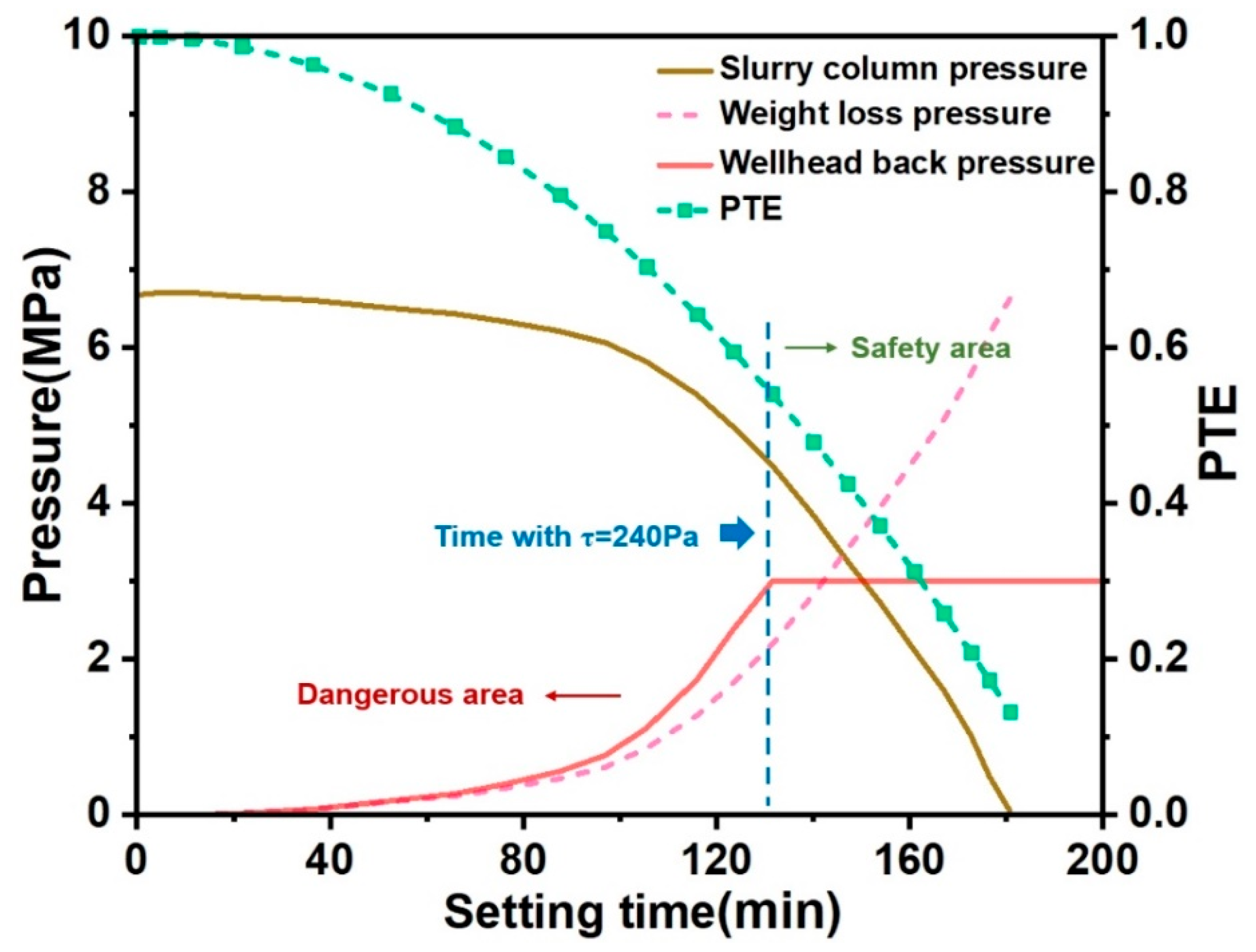
3. Before construction, the HTHP thickening instrument was used to test the time of the quick-setting tail rotor at 120 °C and 160 °C. The cement slurry weight loss model was used for annular space slurry column pressure prediction, which was then combined with the PTE prediction model to calculate the wellhead pressure management curve during the waiting period for cementing. It was predicted that the pressure of the slurry column at SGS = 240 Pa would be 4.6 MPa, and the weight loss pressure would be 2.22 MPa. After calculation, the PTE in the annular space was 56%, making it necessary to apply a back pressure of 3.96 MPa. After the completion of the top replacement, the cementing entered the setting stage, and the back pressure was applied according to the predicted curve of wellhead back pressure management. According to this program, the cementing quality was qualified and there was no gas migration after cementing.
As shown in
Figure 11, the static backpressure applied during cementing waiting condensation, considering PTE, is greater than the backpressure demand at the wellhead without considering PTE. If the effect of PTE in the annular space is not taken into account, it may result in a poor anti-gas channeling effect due to the application of too little pressure.
6. Conclusions
In this study, the hydrostatic column pressure drop of cement slurry was predicted by combining the cement slurry thickening time, and a prediction model of the hydrostatic column pressure drop was constructed based on the mechanism of cement suspension and volume shrinkage. The relationship between SGS and PTE was analyzed based on experiments on the variation of PTE in the cement slurry setting process. Finally, by synthesizing the above models and laws, a wellhead pressure control model was constructed for the setting period. The following conclusions can be drawn from the experimental results and model simulation calculations:
(1) The PTE of cement slurry during the waiting-on-cement stage shows a two-stage decrease, which is consistent with the trend of hydrostatic column pressure drop, and has a significant negative correlation with the SGS. The essence of its attenuation is related to the phase transition of the slurry from a liquid to a solid state and energy loss.
(2) Under the conditions of 40–80 °C, the PTE of the anti-gas channeling cement slurry was in the range of 45–48% when the SGS of the cement slurry reached 240 Pa; the prediction formula for the PTE of this cement slurry during the SGS of 240 Pa was fitted accordingly.
(3) Based on the SGS prediction model of the cement hydration T-model (error ≤ 5%) and the hydrostatic column pressure drop model coupling the mechanisms of gel suspension and volume shrinkage (error ≤ 7%), verified by field application in Well WZ12-1-E of the Beibu Gulf, it was confirmed that the wellhead backpressure scheme coupled with pressure transfer efficiency can ensure that the annular pressure is stable within the safe window, with qualified cementing quality and no gas channeling, providing reliable technical support for cementing under complex well conditions.
7. Recommendations
Based on the experimental results and theoretical analysis of the variation law of PTE carried out in this paper, the following suggestions are proposed for future research:
(1). In the field of oil and gas well cementing, when the geothermal gradient is large and the cementing section is long, there are significant differences in the setting time. SGS explores how to predict the pressure transfer efficiency during the setting period under such extreme conditions.
(2). PTE was tested under a pressure of 20 kPa in this study. Future research can adopt different pressure conditions to investigate the effect of external force on the gelling suspension structure, as well as whether different pressurization conditions exert an impact on the PTE test. In addition, this study did not take into account the effects of factors such as casing roughness and eccentricity, and the experiment needs to be further improved. Finally, it is necessary to further verify the relationship between the changes in cement microstructure and the decrease in PTE during the PTE test process.
Author Contributions
Conceptualization, Z.Z.; Validation, B.Y.; Investigation, Z.Z.; Resources, B.Y.; Writing—original draft, X.W.; Writing—review & editing, Q.C.; Supervision, B.Y. All authors have read and agreed to the published version of the manuscript.
Funding
This research received no external funding.
Data Availability Statement
The data presented in this study are available on request from the corresponding author.
Conflicts of Interest
Authors Xiaoshan Wang and Qiang Cui were employed by the Sinopec Shanghai Offshore Oil & Gas Company. The remaining authors declare that the research was conducted in the absence of any commercial or financial relationships that could be construed as a potential conflict of interest.
References
- Xu, B.; LI, J.; Li, B. Research on fine pressure-control casing-lowering technology in stratum with narrow safety pressure window. J. Southwest Pet. Univ. (Nat. Sci. Ed.) 2022, 44, 54–61. [Google Scholar]
- American Petroleum Institute. Recommended Practice for Testing Well Cements, 3rd ed.; Available online: https://store.accuristech.com/standards/api-rp-10b-2?product_id=2912614 (accessed on 17 December 2025).
- Chaturvedi, K.R.; Fogat, M.; Sharma, T. Low Temperature rheological characterization of single-step silica nanofluids: An additive in refrigeration and gas hydrate drilling applications. J. Pet. Sci. Eng. 2021, 204, 108742. [Google Scholar] [CrossRef]
- Rostami, S.A.; Mirrajabi, M.; Stoian, E.; Babar, K. Managed Pressure Cementing in HPHT Utilizing Real Time Pressure Estimation and Control Software—A Case Study. In Proceedings of the Offshore Technology Conference (OTC), Houston, TX, USA, 1–4 May 2017. [Google Scholar]
- Liu, J.; Li, J.; Yang, H.; Li, H.; Liu, G. A wellbore fluid performance parameters–temperature–pressure coupling prediction model during the managed pressure cementing injection stage. Energy Sci. Eng. 2024, 12, 249–266. [Google Scholar] [CrossRef]
- Zhang, X.; Yu, X.; Guo, X.; Yang, J.; Yan, R.; Li, Z. Temperature Sensitive Expandable Microencapsulated Anti-Aerosion Cement Slurry System. Drill. Fluid Complet. Fluid 2018, 35, 71–76. [Google Scholar] [CrossRef]
- Yuan, B.; Li, J.; Xu, B.; Su, Y.; Li, B.; Yang, L. Managed wellhead backpressure during waiting setting of managed pressure cementing. J. Pet. Sci. Eng. 2021, 207, 109158. [Google Scholar] [CrossRef]
- Li, X.; Li, K.; Liu, R.; Huang, S.; Gu, T.; Zhang, X.; Guo, X. Cementing Technology for Plugging and Leakage Prevention in Ultra-deep Natural Gas Wells in Tarim Basin. Nat. Gas Ind. 2016, 36, 102–109. [Google Scholar] [CrossRef]
- Liang, H.; Zou, J.; Zuo, K.; Khan, M.J. An improved genetic algorithm optimization fuzzy controller applied to the wellhead back pressure control system. Mech. Syst. Signal Process. 2020, 142, 106708. [Google Scholar] [CrossRef]
- Lv, K.; Huang, Z.; Ling, X.; Xia, X. Analysis of the Weight Loss of High Temperature Cement Slurry. Fluid Dyn. Mater. Process. 2022, 18, 1307–1318. [Google Scholar] [CrossRef]
- Zeng, Y.; Lu, P.; Zhou, S.; Sang, L.; Liu, R.; Tao, Q. A new prediction model for hydrostatic pressure reduction of anti-gas channeling cement slurry based on large-scale physical modeling experiments. J. Pet. Sci. Eng. 2019, 172, 259–268. [Google Scholar] [CrossRef]
- Liu, K.; Yu, J.; Xia, Y.; Wang, H.; Wang, D.; Du, J.; Tian, Y.; Zhang, X. Quantitative determination of the hydrostatic pressure of oil-well cement slurry using its hydration kinetics. Constr. Build. Mater. 2022, 340, 127704. [Google Scholar] [CrossRef]
- Liu, K.; Yang, Y.; Zhang, X.; Zhu, K.; Wang, J.; Li, L.; Tu, Q.; Ma, R.; Cheng, X.; Zhang, X. Time-varying characteristics and mechanisms of hydrostatic pressure descent of Portland cement slurry. Powder Technol. 2021, 385, 434–443. [Google Scholar] [CrossRef]
- Zhu, H.X.; Xu, J.X.; Zou, J.L. Cement slurry static SGS test methods and problems. Oilfield Chem. 2009, 26, 362–365. [Google Scholar] [CrossRef]
- Liu, K.; Zheng, Y.; Feng, Y.; Shi, W.; Liu, Y.; Jiang, P.; Qu, Z.; Gong, Z.; Zhang, X. Time-varying law of PTE in the cement slurry solidification stage of deep well cementation. Nat. Gas Ind. 2024, 44, 125–132. [Google Scholar]
- Liu, H. An analysis of the measurement of static SGS of cement slurry. Petrochem. Ind. Technol. 2015, 101–102. [Google Scholar]
- Cao, C. Modeling of Cement Slurry Cementitious Strength and Evaluation of Anti-Gas Scavenging. Master’s Thesis, China University of Petroleum, Qingdao, China, 2010. [Google Scholar]
- Zhang, J.; Weissinger, E.A.; Peethamparan, S.; Scherer, G.W. Early hydration and setting of oil well cement. Cem. Concr. Res. 2010, 40, 1023–1033. [Google Scholar] [CrossRef]
- Sabins, F.L.; Tinsley, J.M.; Sutton, D.L. Transition time of cement slurries between the fluid and set states. Soc. Pet. Eng. J. 1982, 22, 875–882. [Google Scholar] [CrossRef]
- Ash, J.E.; Hall, M.G.; Langford, J.I.; Mellas, M. Estimations of degree of hydration of portland cement pastes. Cem. Concr. Res. 1993, 23, 399–406. [Google Scholar] [CrossRef]
- Lu, P.; Sang, L.; Xuliang, K. Analysis of anti-gassing effect and weight loss pattern of phenylpropylene latex cement slurry. Pet. Drill. Tech. 2019, 47, 52–58. [Google Scholar] [CrossRef]
| Disclaimer/Publisher’s Note: The statements, opinions and data contained in all publications are solely those of the individual author(s) and contributor(s) and not of MDPI and/or the editor(s). MDPI and/or the editor(s) disclaim responsibility for any injury to people or property resulting from any ideas, methods, instructions or products referred to in the content. |