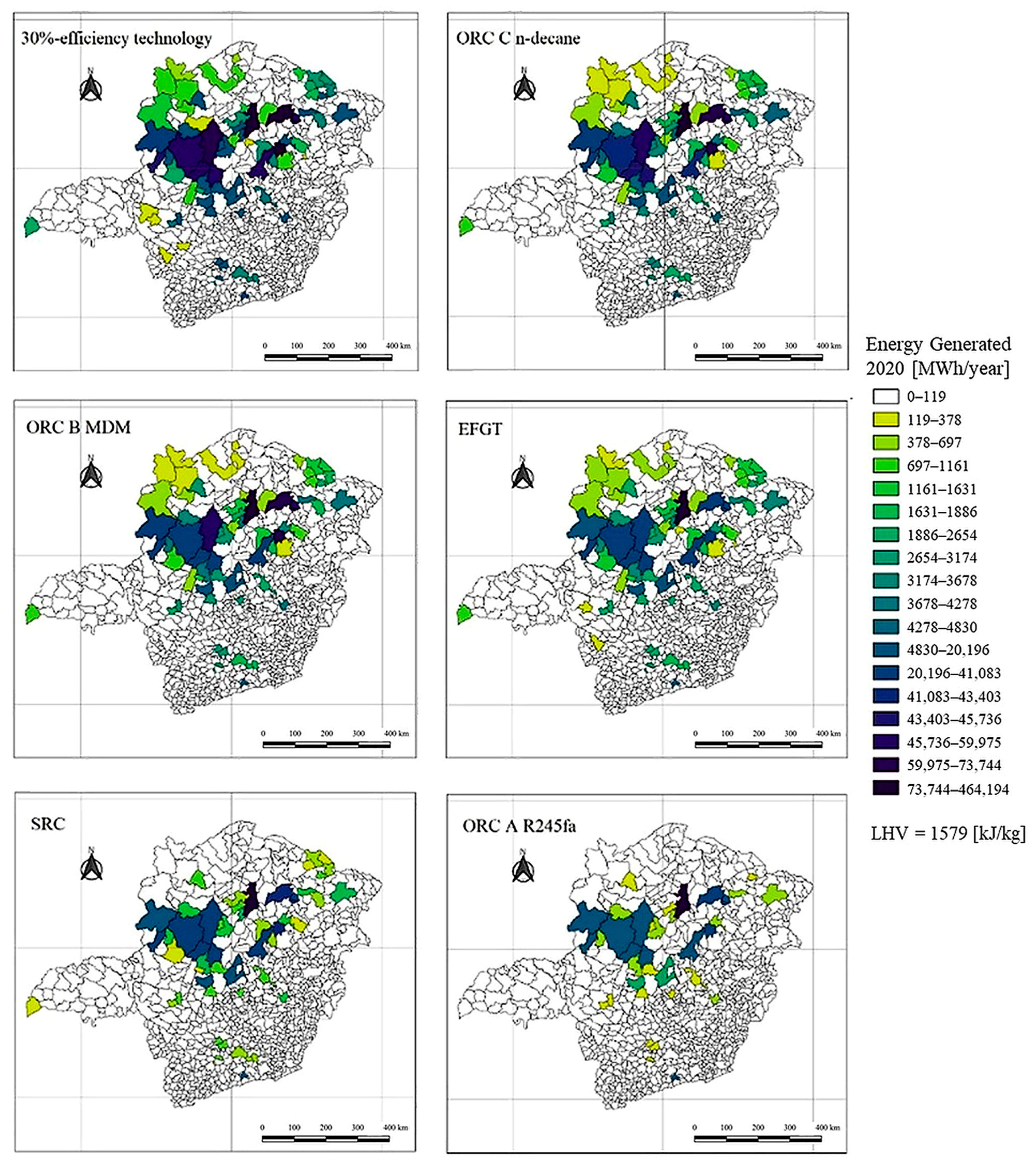
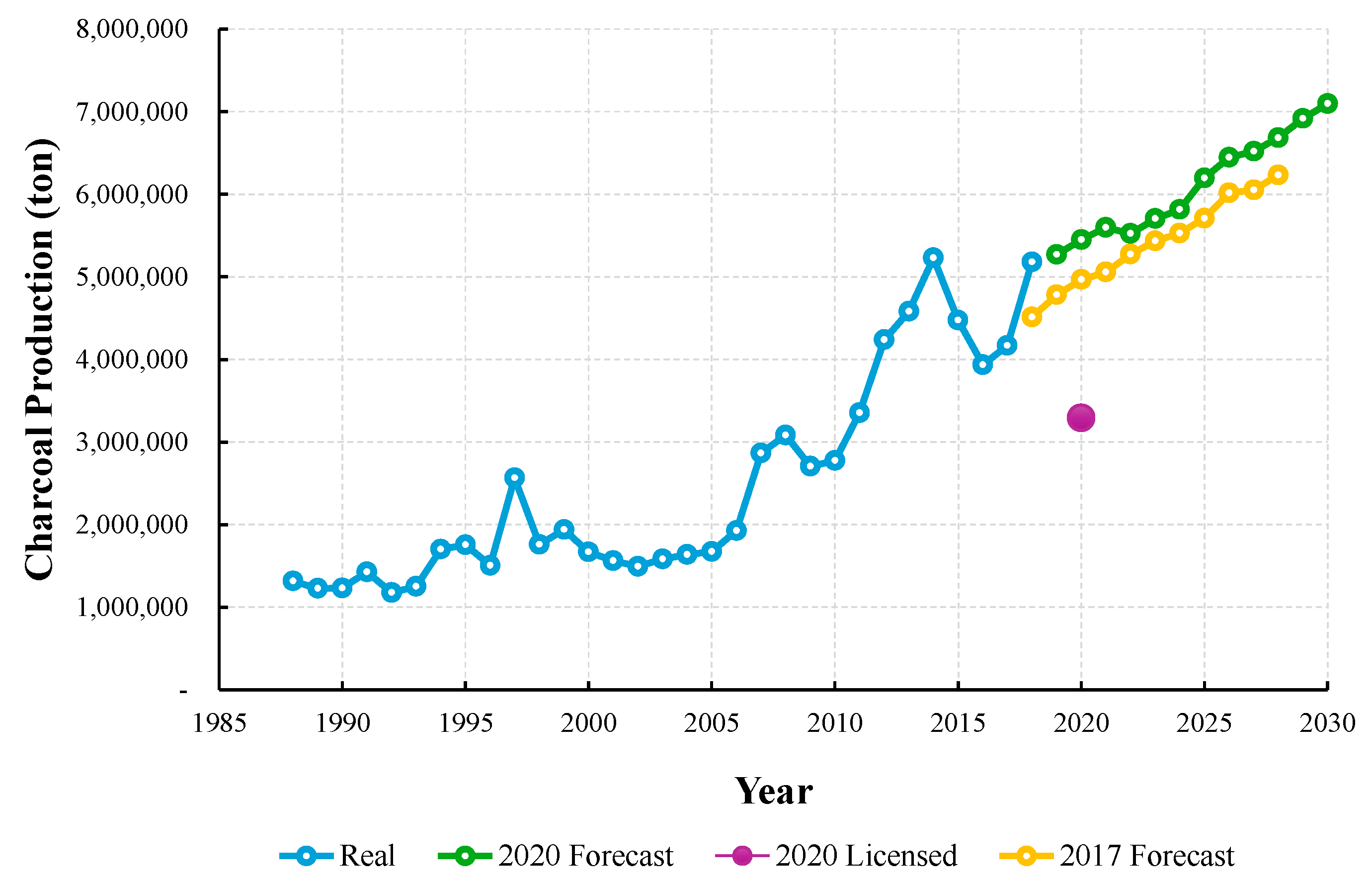
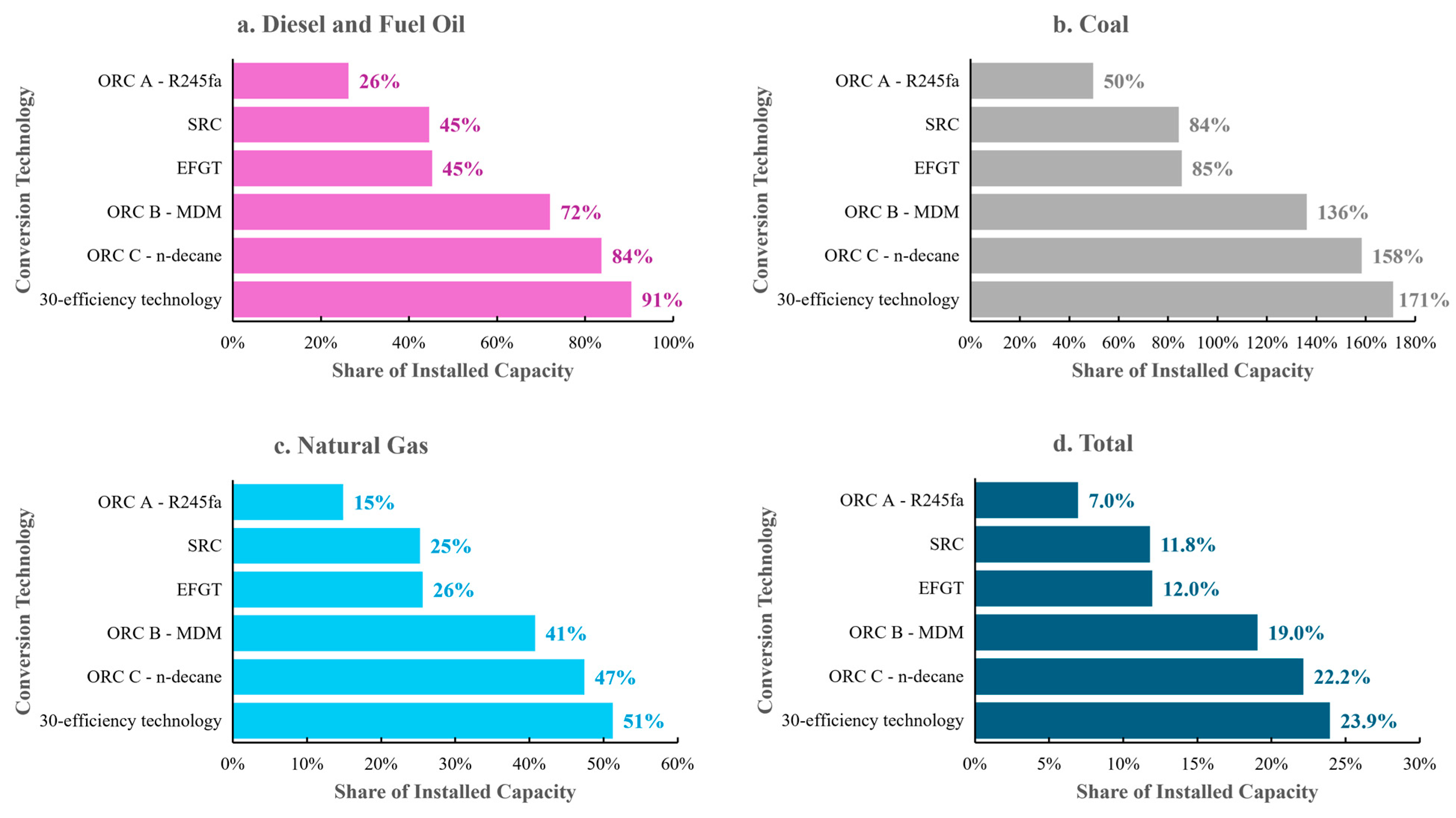
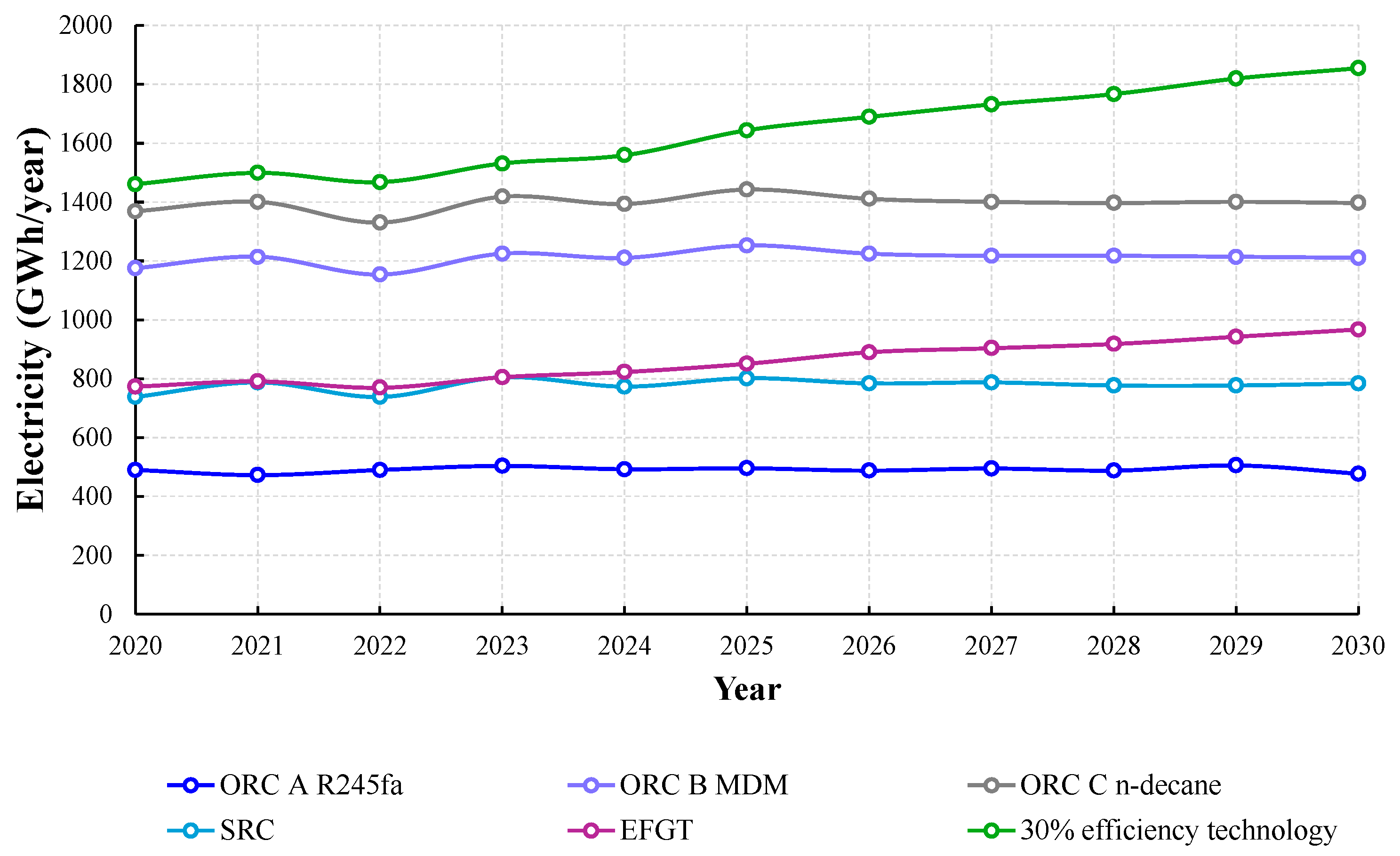
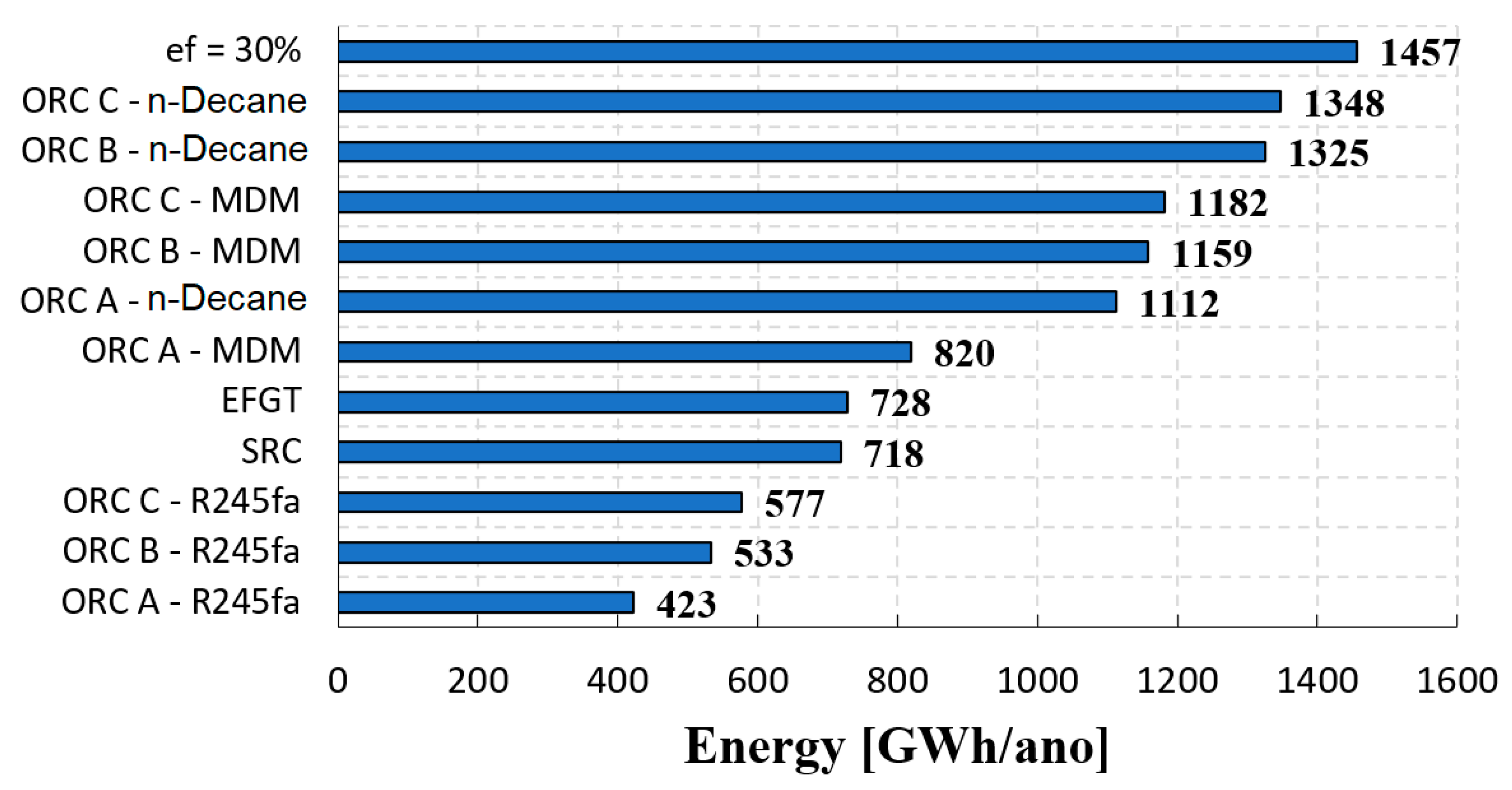
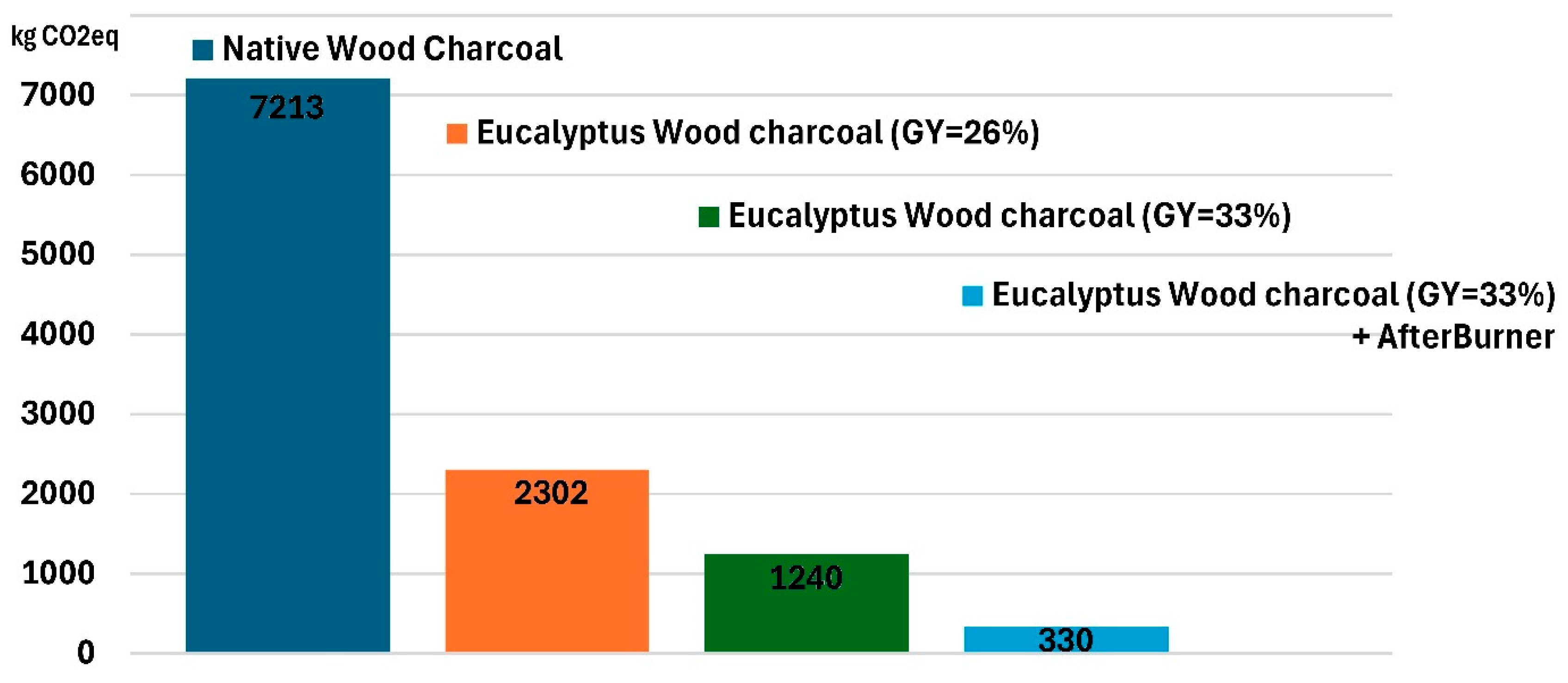
To calculate the energy potential in MG, various scenarios dependent on charcoal production and conversion technologies are considered.
2.4.2. Thermodynamic Simulation Models and Performance Indicators
The thermodynamic models developed considered the generation of electricity using SRC, ORC, and EFGT Cycles within the range of 100 to 2000 kWel, and average LHV of waste gases of 1579 kJ/kg were contemplated. The average LHV was obtained from measurements performed in the Technical Report n°. 4 [
26].
To ensure transparency, reproducibility, and accessibility of the thermodynamic modeling backbone, the main design assumptions and performance-related parameters adopted for each power generation technology are explicitly summarized below. These parameters define the operating conditions, efficiency assumptions, and boundary conditions applied in the simulations and constitute the core inputs of the SRC, ORC, and EFGT models.
For the Steam Rankine Cycle (SRC), the simulations were performed considering typical industrial operating conditions for waste gas and waste heat recovery systems applied to charcoal carbonization plants. The adopted parameters include ambient reference conditions, boiler pressure and steam temperature levels, isentropic efficiencies of turbines and pumps, condensation pressure, and auxiliary electricity consumption. These assumptions reflect practical design constraints and operating conditions for SRC applications using low-calorific waste gases. The values obtained from the thermodynamic models developed for the SRC are presented in
Table 3.
For the Organic Rankine Cycle (ORC), the thermodynamic model was based on steady-state mass and energy balances considering a high-temperature waste gas source. The main parameters include assumed isentropic efficiencies for the turbine and pump, pinch-point temperature differences in the evaporator and condenser, condensation temperature, superheating and subcooling temperature margins, and reference temperatures of the hot and cold sources. These assumptions are consistent with standard ORC design practices for low- to medium-temperature heat recovery applications. The adopted parameters and modeling assumptions for the ORC system are summarized in
Table 4.
The Externally Fired Gas Turbine (EFGT) model was evaluated at its nominal design point under ISO reference conditions [
27]. The adopted parameters describe the thermodynamic state of the working air throughout the compression, external heating, and expansion stages, as well as the main performance characteristics of the compressor, turbine, heat exchanger, and generator. These inputs are representative of small-scale externally fired gas turbine systems operating with low-heating-value waste gases. The main design and performance parameters adopted for the EFGT simulations are presented in
Table 5.
The EFGT model was evaluated at its design point under ISO reference conditions (ambient temperature 15 °C, atmospheric pressure 101.32 kPa, relative humidity 60%) [
27], based on the model proposed by Kautz and Hansen [
28], assuming steady-state operation.
The values obtained from the thermodynamic models developed for the SRC are presented in
Table 6. The main parameters considered were the efficiency and consumption of non-condensable gases (NCGs).
For the Steam Rankine Cycle (SRC), a sensitivity analysis was performed to assess the influence of the lower heating value (LHV) of the non-condensable gases on system performance. As expected for Rankine-based power cycles, the SRC exhibits a strong dependence on fuel energetic quality, since the available thermal input directly affects steam generation conditions and turbine expansion work.
To ensure consistency across all evaluated conversion routes, the same LHV variation range was analyzed for the SRC, ORC, and EFGT systems. This range spans from the reference case of 1158 kJ/kg to approximately 2000 kJ/kg, corresponding to a variation of about 70% relative to the reference LHV.
Within this assessed range, the SRC efficiency decreases significantly as the fuel LHV is reduced. The thermodynamic sensitivity analysis indicates that, for larger capacities (1000–2000 kW), a reduction of approximately 70% in fuel LHV relative to the reference case leads to a relative decrease in net electrical efficiency of about 18%.
These results highlight the high sensitivity of SRC systems to fuel quality when operating with low-calorific gases, emphasizing the importance of maintaining sufficient heating value to sustain favorable steam generation and cycle efficiency.
For the ORCs, three different configurations were considered: without regeneration and with superheat (ORC A), with regeneration and without superheat (ORC B), and with regeneration and with superheat (ORC C). The working fluids considered were R245fa, MDM, and n-decane. The selection of working fluids was based on thermodynamic performance criteria, aiming to explore the operational range of ORC systems supplied with heat recovered from the combustion of charcoal production gases. Thermal stability limits, environmental aspects, and safety constraints, including flammability and handling requirements, were not addressed in detail and should be considered in subsequent engineering design stages. The values of efficiency and consumption of NCG for the different configurations of the analyzed ORCs were also retrieved from the Technical Report n°. 4 [
26].
For the Organic Rankine Cycle (ORC), the thermodynamic performance was evaluated considering a fixed set of design parameters and the same range of lower heating values (LHV) of the carbonization gases adopted in the study. The simulations considered different power capacities between 100 and 2000 kWel and multiple working fluids, including n-decane and MDM, under configurations with and without regeneration and superheating.
The results indicate that the electrical efficiency of the ORC systems spans a relatively wide range, reflecting the strong influence of working fluid selection and cycle configuration. Based on the thermodynamic simulations, ORC efficiencies vary between approximately 5% and 24% across the evaluated power range. The highest efficiencies are achieved when using n-decane as the working fluid, particularly in configurations with regeneration and superheating, while MDM also presents competitive performance and is currently employed in biomass-based ORC applications.
An additional sensitivity analysis was conducted to evaluate the influence of the fuel LHV on ORC performance. For the evaluated range of 1158 to 2000 kJ/kg, the results show that increasing the LHV leads to higher cycle efficiencies. In the case of n-decane, the efficiency increase associated with this LHV variation is approximately 10 percentage points, confirming the strong dependence of ORC performance on fuel energetic quality.
The Externally Fired Gas Turbine (EFGT) was evaluated at its nominal design point under ISO reference conditions [
27] using the same average lower heating value (LHV) framework adopted in this study. The thermodynamic model represents steady-state operation of a small-scale externally fired gas turbine system fueled by charcoal carbonization gases, with performance indicators derived directly from mass and energy balances.
Under ISO conditions [
27], the modeled EFGT presents a net electrical efficiency of approximately 16.7%. A parametric sensitivity analysis was conducted to assess the influence of the fuel LHV on system performance. The results indicate that the electrical efficiency of the EFGT exhibits a relatively low sensitivity to variations in fuel LHV when compared to Rankine-based cycles. For the evaluated LHV range of approximately 2000 to 7000 kJ/kg, the net electrical efficiency varies from about 15.8% to 16.8%, corresponding to a total efficiency variation of roughly 1 percentage point.
This limited sensitivity is a direct consequence of the externally fired configuration, in which the combustion gases do not expand through the turbine and primarily act as a heat source for the compressed air. As a result, reductions in fuel LHV lead to moderate efficiency penalties, allowing the EFGT to maintain electrical efficiencies on the order of 15–17% even when operating with low-calorific carbonization gases.
A comparative analysis of the influence of the lower heating value (LHV) of the carbonization gases on the evaluated conversion technologies reveals distinct thermodynamic behaviors. Among the assessed systems, the Steam Rankine Cycle (SRC) is the most strongly affected by variations in fuel LHV. This behavior is inherent to steam-based Rankine cycles, in which the thermal energy supplied by the fuel directly governs steam generation, turbine inlet conditions, and expansion work. Consequently, reductions in LHV lead to pronounced efficiency penalties, particularly at smaller plant scales.
The Organic Rankine Cycle (ORC), as modeled in this study, exhibits a significantly lower sensitivity to fuel LHV variations when compared to the SRC. This behavior is primarily associated with the presence of an intermediate thermal circuit and the use of high-boiling-point organic working fluids, which decouple the working fluid conditions from direct fluctuations in fuel energetic quality. Moreover, the ORC systems considered operate with high-temperature combustion gases rather than low-grade residual heat, allowing the cycle to maintain favorable thermodynamic conditions over a wide range of fuel LHV. As a result, variations in fuel LHV mainly affect the available thermal power and, consequently, the electrical output, while the conversion efficiency remains within a relatively bounded range.
The Externally Fired Gas Turbine (EFGT) presents the lowest sensitivity to variations in fuel LHV. Owing to its externally fired configuration, the combustion gases do not expand through the turbine but serve solely as a heat source for the compressed working air. This arrangement results in limited efficiency degradation under reduced fuel LHV, with variations on the order of one percentage point across a wide LHV range.
From a thermodynamic standpoint, these results indicate that SRC systems are best suited for applications with relatively stable and higher heating value fuels, ORC systems operating with high-temperature combustion gases provide improved robustness against fuel quality fluctuations, and EFGT configurations offer the highest tolerance to low-calorific gases, albeit with lower absolute efficiencies compared to optimized Rankine-based systems.
To calculate the electricity generation potential in each municipality, it is necessary to consider that the efficiency of the SRC and ORCs changes depending on the cycle’s operating parameters, which depend on the chosen generation capacity. Bearing in mind that charcoal production varies from municipality to municipality and, therefore, the efficiency of the steam cycle will change depending on the amount of gas available for electricity generation, it was necessary to build a correlation between the efficiency of the steam cycle and the gas consumption. The calculation of Net Electrical Power, in kW, was performed using Equation (2).
where η is the efficiency of the electricity generation technology [%]; LHV
NCG is the lower heating value of non-condensable gases [kJ/kg]; and NCG flow is the mass flow rate of non-condensable gases [kg/s].
By multiplying these parameters, the net electrical power output of the system in kilowatts (kW) is obtained. This formulation enables the estimation of the conversion efficiency of non-condensable gases into usable electrical power, considering the performance of the selected electricity generation technology.
For the calculation of the NCG flow, it was considered that 21% of the production is carried out in high-performance kilns. This percentage comes from the cross-checking of annual production data and the number of ovens surveyed for each project; according to the yearly production per kiln and the data from Rodrigues and Braghini Junior [
23], the type of oven most likely used in each CHPU is obtained. The number is also in agreement with that provided by Bailis et al. [
29], who estimate that only 20% of national production takes place in high-performance kilns, with 80% in rudimentary ones. The NCG flow rate for high-performance furnaces was calculated according to Leme [
30] for clustered furnaces of 200 tons of wood, through Equation (3):
Based on the annual production data per CHPU, the estimated number of 200-ton kilns and the generated thermal power were calculated. From the power and the average LHV, the NCG flow for high-performance furnaces was calculated using Equation (4).
where NCG flow
high efficiency is the mass flow rate of non-condensable gases in high-efficiency furnaces [kg/s]; NCG Thermal Power is the thermal power generated by the non-condensable gases [kWt]; and LHV
average is the average lower heating value of the non-condensable gases [kJ/kg].
This equation allows for the estimation of the mass flow rate of NCG required to sustain the thermal energy demand of high-efficiency metal furnaces, providing a key parameter for energy recovery and optimization. On the other hand, the NCG flow for the 79% CHPU with low-efficiency kilns [
29], the authors calculated that in “hot tail” furnaces, around 3167 kg of NCG are produced per ton of carbon-coal produced. According to the same study, each kiln has the capacity to produce 1.4 tons of carbon-coal per batch, totaling a production of 4.37 tons of NCG per kiln.
The estimated number of low-efficiency kilns was calculated considering the annual production of each CHPU and that each furnace produces batches of 2.3 tons of coal in 5 days of pyrolysis, totaling 62 batches per year. The NCG flow rate for low-efficiency kilns was calculated using Equation (5).
where NCG flow
low efficiency is the mass flow rate of non-condensable gases in low-efficiency kilns, [kg/s]; 62 is the number of production batches per year for each kiln; n∘ of kilns is the total number of low-efficiency kilns in operation; kg NCG/kiln is the amount of non-condensable gases produced per kiln per batch; annual operation hours is the total number of operating hours per year; and 3600 converts the time units from hours to seconds, ensuring that the NCG flow rate is expressed in kg/s.
This equation provides an estimate of the NCG flow rate required for low-efficiency kilns, contributing to the analysis of energy recovery potential in pyrolysis processes.
This work considered that the electricity generation plants would have 7447 h of annual operation (85% of the year).
Considering all the estimated power in each CHPU, the potential for thermal generation per municipality for 2020 is obtained. However, it is noteworthy that the calculated value is based on the CHPUs surveyed in the previous items. Therefore, it does not correspond to the State’s total potential, as the production values found per CHPU were below expectations or projected for 2020.
2.4.3. Scenarios for Electric Power Generation
The considered scenarios were based on the variation in parameters inherent to charcoal production and electric energy conversion technologies: LHV of effluent gases, and the flow based on charcoal production over the projected years. Those related to conversion technologies are the technologies themselves with different thermal efficiencies.
To calculate the maximum potential for total electricity generation in the state, the maximum electrical efficiency that can be achieved through the generation technologies considered in the study was initially considered. An electrical efficiency of 30% was adopted, considering that through improvements in the projects of the ORC and SRCs, it is possible to achieve this efficiency value in the coming years.
To compare the results for each scenario, some indicators were also created. Based on the power, efficiencies, and gas consumption of each technology, the indicators of specific consumption of gas per MWh generated and electricity generated per ton of coal produced were calculated. The calculations of conversions and indicators were made following Equations (6) and (7):
Specific NCG flow per power indicator (SNCG):
where NCGflow is the mass flow rate of non-condensable gases [ton/h], and Power is the net electrical power output of the system [MW].
A lower SNCG value indicates a more efficient process, as less NCG is needed to generate each megawatt of electricity.
Specific Energy Generation (SEG) Indicator:
where Energy [MWh] is the total electricity generated [MWh] and Charcoal Production is the total mass of charcoal produced [tons].
A higher SEG value suggests a more energy-efficient process, as more electricity is generated per ton of charcoal produced.
The annual charcoal production needed to reach a specific power range in each conversion technology was also estimated. The calculation is based on the average NCG productivity in kg/h per ton of coal produced in the CHPUs. The amount of charcoal can be calculated using Equation (8).
where
Charcoal is the annual charcoal production [mdc/year], where mdc refers to cubic meters of charcoal.
NCG is the mass flow rate of non-condensable gases generated during the carbonization process [kg/h].
Productivity is defined as the average NCG generation rate per unit of annual charcoal production, expressed as (kg NCG/h)/(ton charcoal/year). This definition implicitly accounts for the annual production basis.
dcharcoal is the bulk density of charcoal [kg/m3].
The factor 1.2 is the volumetric conversion factor, indicating that 1 mdc of charcoal corresponds to 1.2 m3 of charcoal.



 ,
,