2.1. Geometric Model
The present work analyzes a cold salt pump with the following design parameters: flow rate Q = 1155 m
3·h
−1, single-stage head H
1 = 72 m, total head H = 360 m, rotational speed n = 1480 r·min
−1, impeller inlet diameter D
1 = 345 mm, and outlet diameter D
2 = 510 mm. The fluid domain (
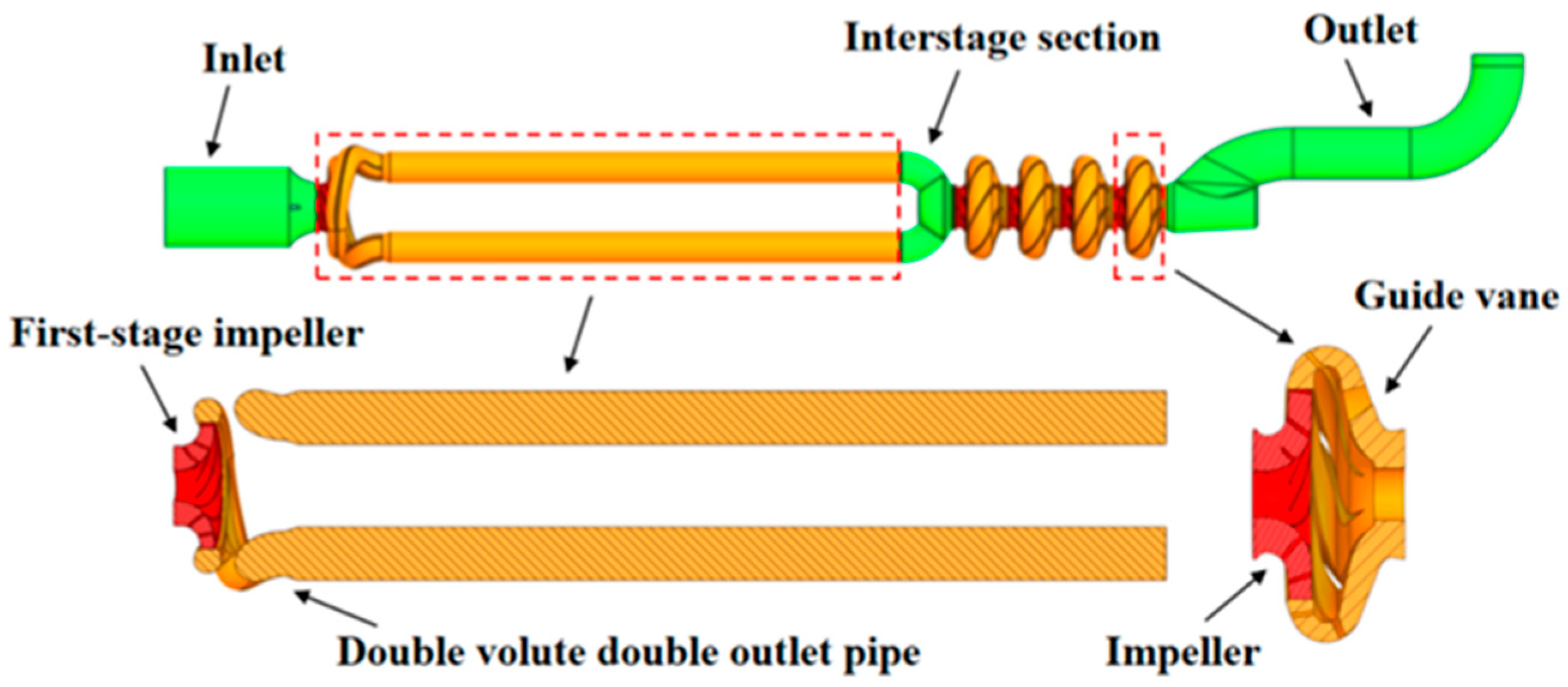
Figure 1) comprises an inlet bell, first-stage impeller, volute, intermediate conduit, second-to-fifth-stage impellers, spatial guide vanes, and an outlet pipe. Structurally, the first-stage impeller is paired with a double-volute casing. The flow subsequently passes through a long dual-passage conduit before entering the second-stage impeller. Stages two through five are equipped with spatially arranged guide vanes connected in series. This configuration contributes to reduced system vibration and enhanced operational stability.
The computational domain includes the complete flow passage from the pump inlet to the outlet. The working fluids are defined as 25 °C water and 300 °C molten salt. The thermo-physical properties of the molten salt at 300 °C are adopted from the literature: density = 1899.2 kg/m
3, dynamic viscosity = 3.26 mPa·s, specific heat = 1494.6 J/(kg·°C), and thermal conductivity = 0.5 W/(m·°C). The impeller and long shaft are constructed from 347H stainless steel (07Cr18Ni11Nb). The corresponding material properties, sourced from the literature, are listed in
Table 1 [
32].
2.2. Mesh Generation
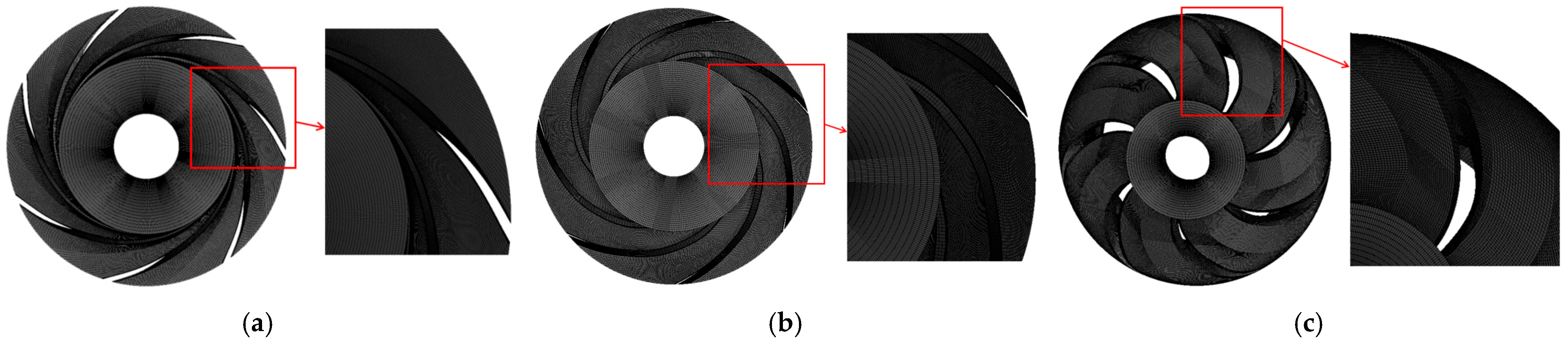
To ensure both accuracy and computational efficiency, the quality and size of the fluid domain mesh were determined according to the model geometry and boundary conditions. The rotating components were discretized with hexahedral structured grids using ANSYS ICEM CFD 2022 R1, while the stationary parts were meshed with tetrahedral unstructured grids.
To ensure the reliability of the simulation results, a mesh independence study was conducted, accompanied by an analysis of the near-wall mesh quality. The latter is critical because the dimensionless wall distance, y
+, directly determines the modeling fidelity of the viscous boundary layer, which is essential for accurately predicting wall shear stress, flow separation, and overall pump performance. The study employed six mesh densities under identical boundary conditions, as summarized in
Table 2. Preliminary results indicate that when the mesh number reaches 1.221 × 10
7, the variation in head stabilizes, suggesting that mesh convergence has been achieved. Further increasing the mesh number has little impact on the calculated head. As the mesh number increases, the y
+ value gradually decreases, which is attributed to the progressive refinement of the mesh in the near-wall region. y
+ is a dimensionless parameter representing the distance from the wall to the first computational node; its magnitude determines the modeling approach for the flow near the wall. Therefore, a smaller y
+ value is desirable, as it allows for a more accurate resolution of the flow characteristics in the vicinity of the wall. Based on the balance between accuracy and computational cost, Mesh 3 was selected for the final simulations.
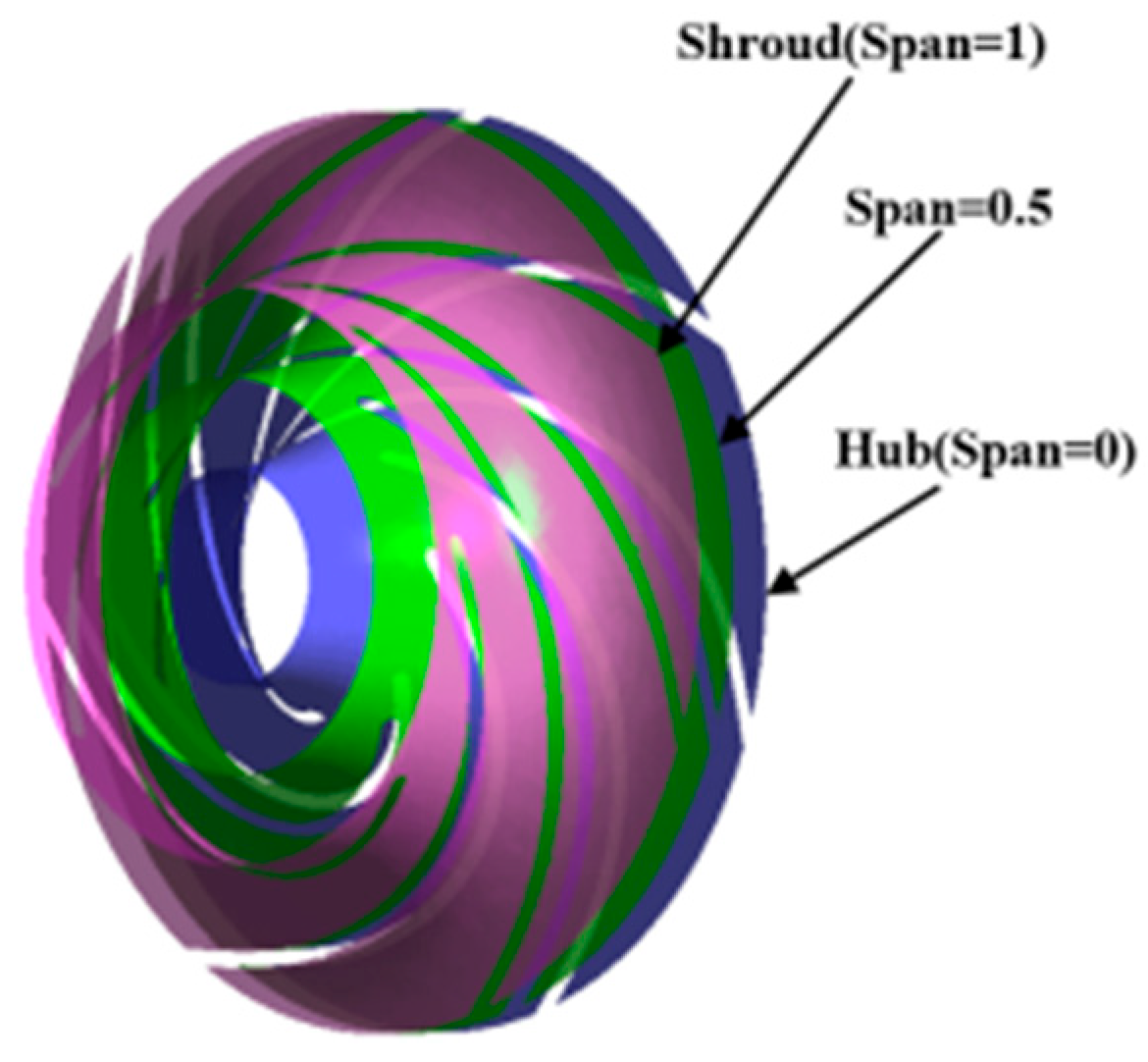
The meshing result with refined wall grids is shown in
Figure 2. The mesh quality was evaluated as follows: the first-stage impeller scored 0.38, the remaining impellers 0.34, the spatial guide vanes 0.32, and the other stationary components averaged 0.30.
2.3. Turbulence Model and Boundary Conditions
The four turbulence models, namely Standard k-ε, RNG k-ε, Standard k-ω, and SST k-ω, were selected for comparison to conduct a turbulence model independence analysis. These models are widely recognized for their high reliability in simulating internal flows in pumps. Their extensive application in rotating machinery is based on a well-established capability to accurately capture critical flow features, such as strong swirl, streamline curvature, and adverse pressure gradients in multistage configurations.
- (1)
Standard k-ε Model
The standard k-ε turbulence model, which is primarily based on the turbulent kinetic energy and its dissipation rate, offers relatively high computational accuracy and broad applicability, making it one of the most widely used turbulence models. However, due to its reliance on wall functions, its predictive accuracy is often insufficient for flows with separation, strong swirl, or high curvature. The governing equations are given below.
Turbulent kinetic energy (k) equation:
Dissipation rate (ε) equation:
In the equations, and are user-defined source terms; is the turbulent viscosity coefficient, ; model constants are , , , , .
- (2)
RNG k-ε Model
The RNG
k-ε model modifies the standard
k-ε model by applying renormalization group theory to adjust the turbulent viscosity and account for vortex effects, thereby incorporating the influence of turbulent eddies. Although its transport equations for turbulent kinetic energy and dissipation rate are similar in form to those of the standard
k-ε model, the model constants differ. Due to its consideration of factors such as high strain rates and strongly curved flow surfaces, the RNG
k-ε model achieves higher computational accuracy for rotating flows, internal flow fields in turbomachinery, and boundary layers along complex curved walls. The transport equations for k and ε are as follows:
- (3)
Standard k-ω Model
The standard
k-ω model includes sub-models for compressibility effects, transitional flows, and shear flow corrections. It is more sensitive to free-stream conditions and performs better in simulating flows with adverse pressure gradients. It is widely used in turbomachinery and rotating machinery applications. Its governing equations are as follows:
- (4)
SST k-ω Model
The SST
k-ω model integrates the advantages of both the
k-ω and
k-ε models. Near the wall, the
k-ω model is used, allowing resolution within the viscous sublayer; away from the wall, the model shifts to the
k-ε form, thereby mitigating the well-known sensitivity of the standard
k-ω model to inlet free-stream turbulence. The SST
k-ω model shows improved accuracy in predicting the onset and size of flow separation under adverse pressure gradients. Its equations are as follows:
Typically, each computational model is best suited to a particular turbulence model. To improve the prediction of internal flow in the cold salt pump, its hydraulic performance under different turbulence models was simulated and compared with experimental data, using water as the working medium at the design flow rate.
Table 3 compares the predicted and experimental performance results for the cold salt pump at the design flow rate of 1155 m
3/h, showing the relative deviation for each turbulence model.
As indicated in
Table 3, although the experimental results are lower than the numerical predictions, all turbulence models yield errors below 10%. The SST k-ω model shows the smallest prediction deviations for both head and efficiency, at 3.06% and 2.08%, respectively. Hence, the SST
k-ω model is adopted for the present numerical simulations.
A steady-state numerical simulation of the cold salt pump was conducted using ANSYS CFX 2022 R1, with the inlet defined as a total pressure boundary, the outlet as a mass flow rate boundary, the rotor–stator interface treated by the frozen rotor method, and all walls set as no-slip surfaces. The heat transfer mode was set to isothermal. The steady-state solution provided the initial condition for the subsequent unsteady simulation. In the unsteady calculation, the rotor–stator interface was set to the Transient Rotor–Stator mode. A time step corresponding to an impeller rotation of 3° (0.000337838 s) was selected to ensure the maximum local Courant number (C
max) remained below 1.0 throughout the computational domain. Preliminary simulations confirmed a C
max = 0.93 under operating conditions, satisfying the accuracy criterion for transient flow resolution. The total simulation time covered 25 impeller revolutions (1.0135135 s). A residual convergence criterion of 1 × 10
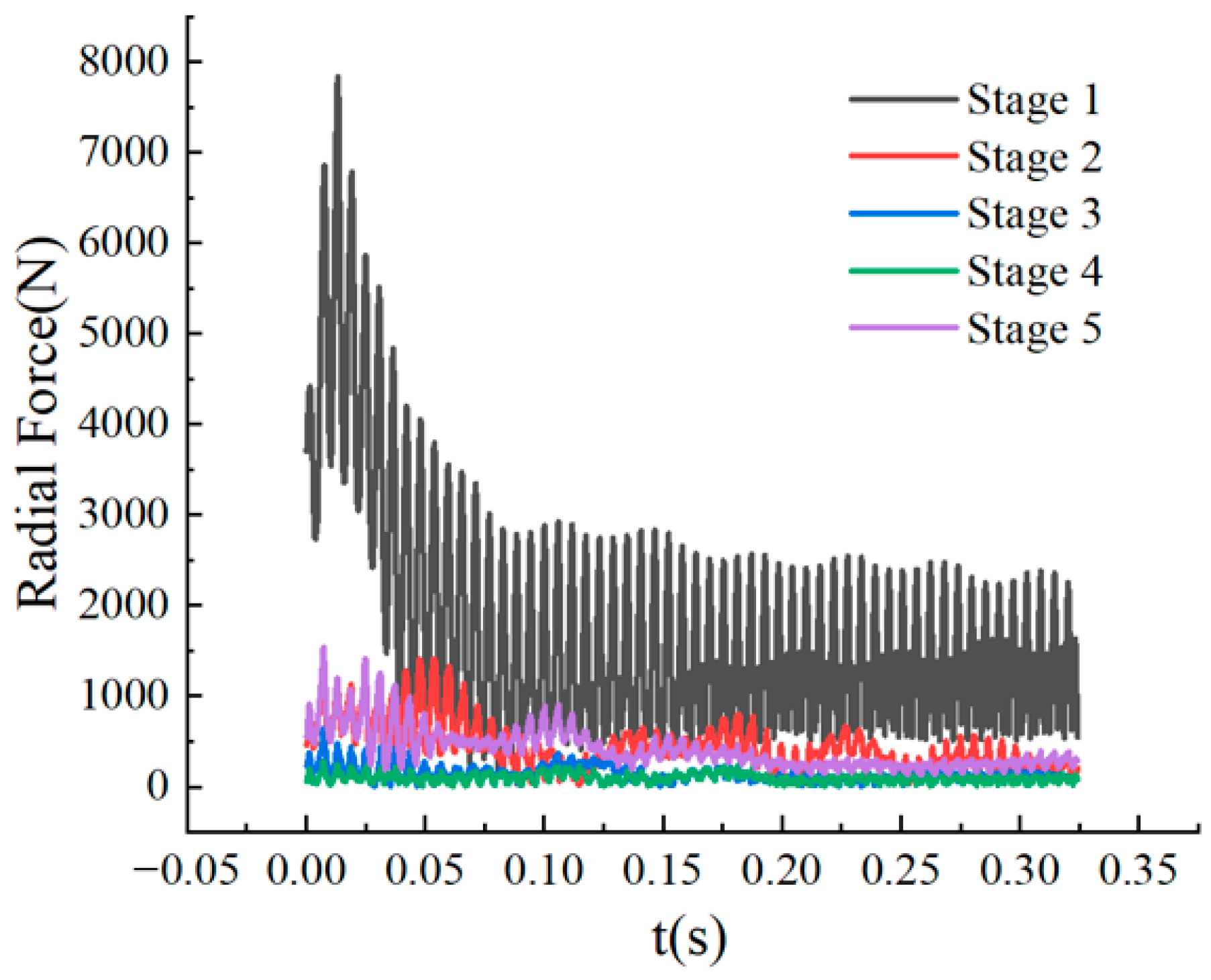
−4 was enforced per time step, while the radial forces on each impeller stage were monitored. The important solver settings are summarized in
Table 4.
2.4. Numerical Simulation and Experimental Validation
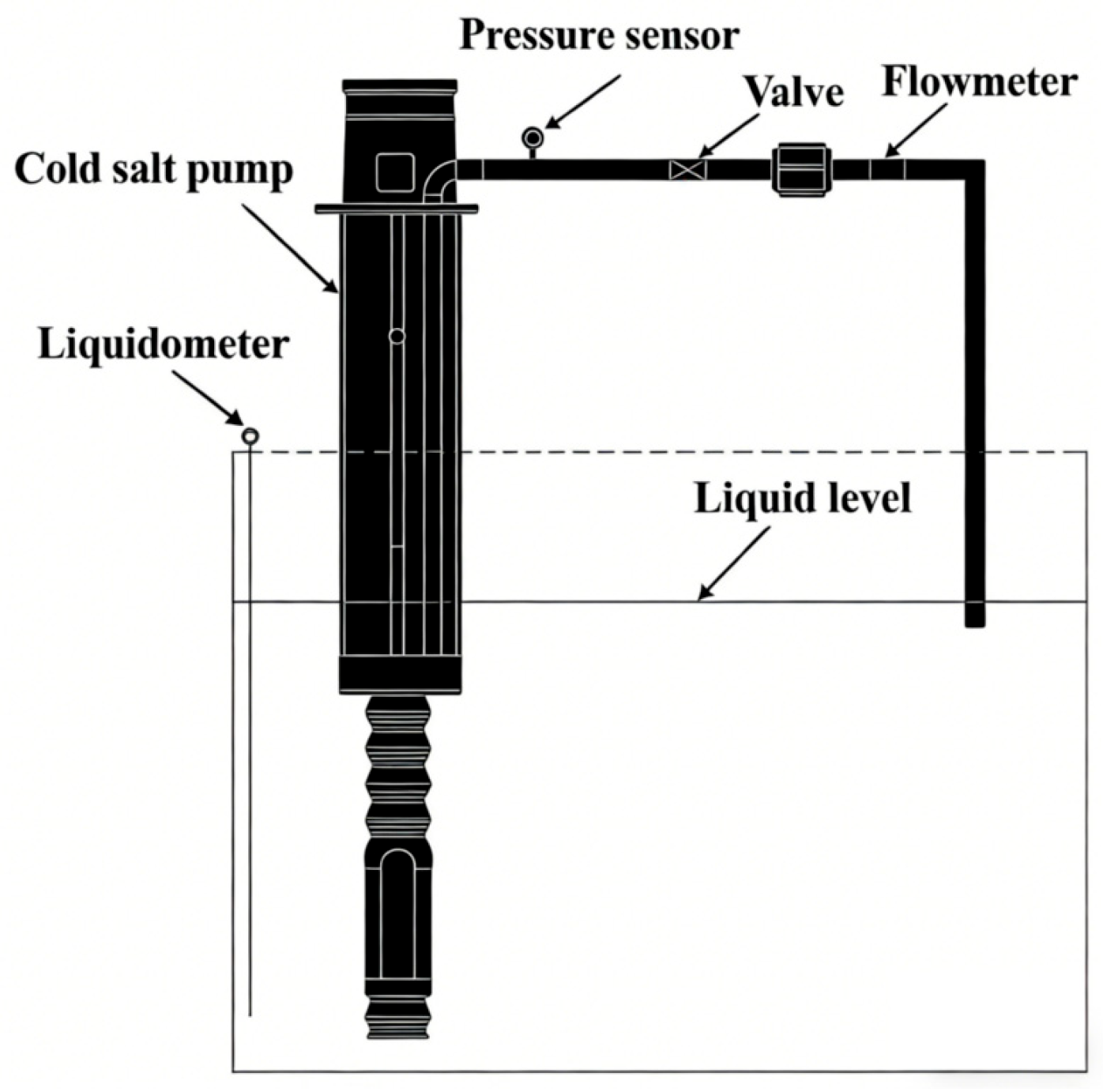
Due to the elevated safety risks and costs associated with performance testing using molten salt, water was employed as the working medium in this study. A schematic diagram of the test rig is presented in
Figure 3. The experimental instrumentation included a liquid-level gauge, high-frequency pressure transducers, and a flow meter, with measurement accuracies within ±0.1% for both the pressure transducers and the flow meter, and within ±0.2% for the liquid-level gauge.
The hydraulic performance parameters of the cold salt pump were acquired under various operating conditions. Prior to formal testing, air was purged from the pump system, and checks for vibration and seal integrity were performed. During the performance tests, data including outlet pressure, flow rate, rotational speed, and input power were recorded at designated monitoring points. Each operating point was tested three times, and the collected data were subsequently fitted for analysis.
The experimental procedure comprised the following key steps. The test rig and instrumentation were verified to be operational and calibrated. With all valves open, the pump was operated at rated conditions for over 40 min to purge air, during which the system was checked for leaks or abnormalities. The flow rate was then regulated by adjusting the outlet valve. Data were recorded at set intervals (0.2Qd) once conditions stabilized. A reverse repeatability test was subsequently performed by closing the valve stepwise, collecting data at corresponding points. At each stable operating point, three consecutive tests were conducted without intervention, with the median value adopted as the final result. Following data collection, the system was safely shut down and depressurized. The acquired data were finally processed to generate the pump performance curves.
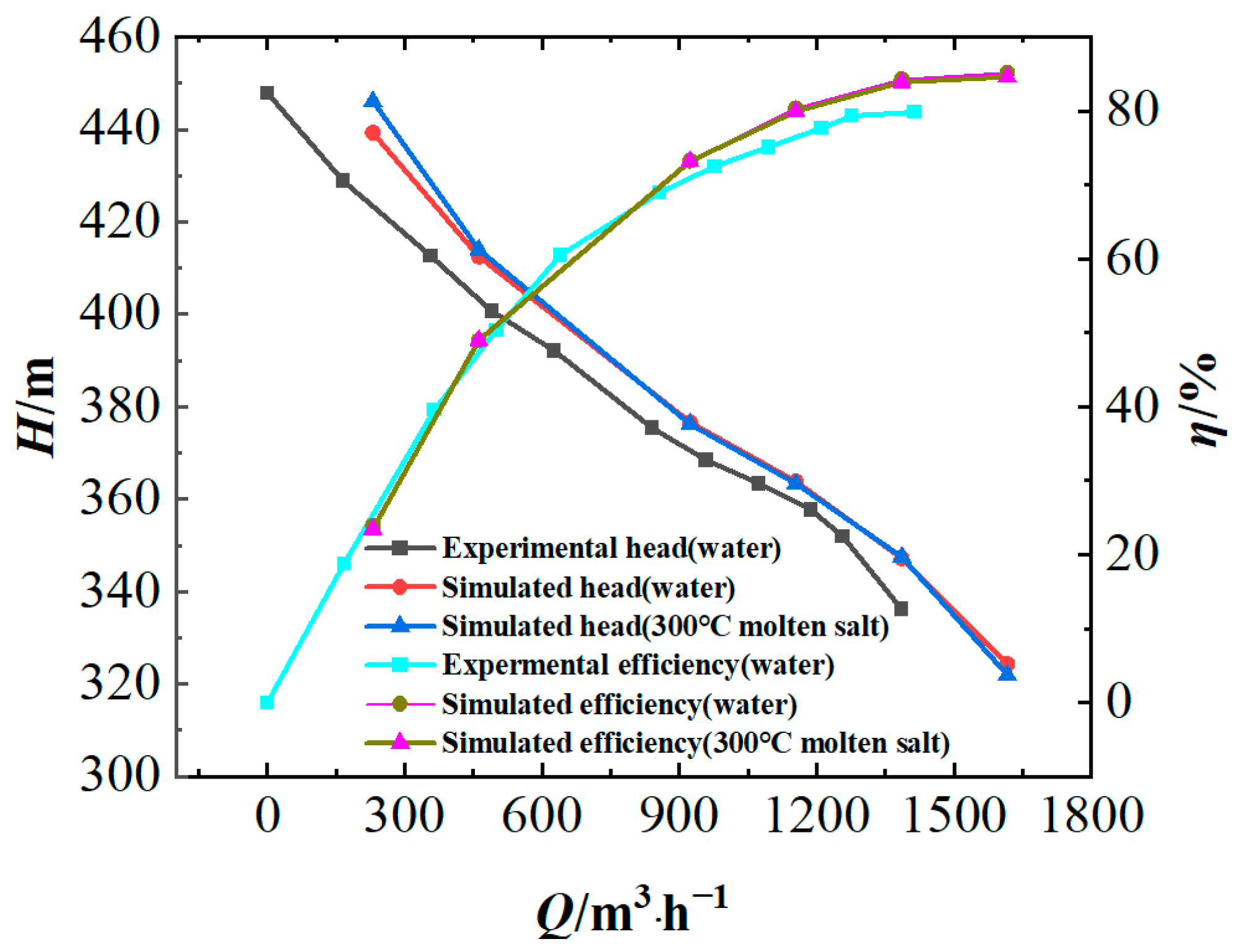
As seen in
Figure 4, the pump head decreases with increasing flow rate. Under both low- and high-flow conditions, significant deviations exist between the experimental head (water) and the numerically predicted heads for both media. However, near the design point, the head predictions agree more closely with the test data.
Regarding efficiency, the water test yields higher efficiency than the simulations at low flow rates, but lower efficiency at high flow rates. At the rated condition, the difference between experimental and numerical efficiencies remains within 5%. Based on economic and safety considerations, water is therefore adopted as the test medium for subsequent performance validation of this cold salt pump model.