Review

Research Progress and Prospects of Pyrolysis Oil from Corn Stover Lignin Extracted by Switchable Solvents

Food and Pharmaceutical Engineering, Suihua University, Suihua 152061, China
*
Author to whom correspondence should be addressed.
Processes 2026, 14(3), 475; https://doi.org/10.3390/pr14030475
Submission received: 18 December 2025 / Revised: 20 January 2026 / Accepted: 26 January 2026 / Published: 29 January 2026
(This article belongs to the Section Chemical Processes and Systems)

Abstract

Amid global energy crises and environmental pollution, the valorization of renewable biomass resources like corn stover lignin is crucial. This review systematically examines the innovative application of switchable solvents (CO2-responsive, thermo-responsive, pH-responsive) for extracting lignin from corn stover and its subsequent pyrolysis into bio-oil. We critically analyze the extraction mechanisms, key process parameters (e.g., solvent type, temperature, solid-to-liquid ratio), and their intricate effects on lignin yield and purity. Furthermore, we delve into the pyrolysis kinetics, product distribution influenced by conditions (temperature, atmosphere, catalysts), and comprehensive characterization of the resulting bio-oil. This review highlights the broad application prospects of pyrolysis oil in energy, chemical feedstocks, and niche markets, while frankly addressing current challenges: high costs, product quality issues, and technological immaturity. Finally, we propose future directions focusing on green solvent design, process intensification, multi-technique characterization protocols, and the imperative for integrated lifecycle and techno-economic assessments to guide sustainable industrialization.

1. Introduction

1.1. Research Background and Significance

Amidst the ongoing processes of globalization and industrialization, the energy crisis and environmental pollution have emerged as critical and pressing challenges demanding immediate resolution [1,2,3]. The continuous growth of the global population, coupled with the rapid rise of emerging economies, has led to a dramatic surge in energy demand. However, the development and utilization of renewable energy sources have progressed at an inadequate pace to meet this demand, while traditional fossil fuels are gradually being depleted, resulting in an unstable energy supply [4,5]. Concurrently, waste and emissions generated during energy production and consumption have become a major source of environmental pollution. For instance, exhaust gases, wastewater, and solid waste from coal combustion, oil refining, and nuclear power generation cause severe environmental contamination, leading to the deterioration of air, water, and soil quality and the degradation of ecosystems (Figure 1) [6].
Within this context, the development of renewable energy and green chemical feedstocks has become a key strategy for addressing the intertwined problems of the energy crisis and environmental pollution. Lignin, the second most abundant natural organic polymer on Earth after cellulose, is widely present in plant cell walls and constitutes a significant component of biomass. It is estimated that global annual lignin production from plant growth reaches 150 billion tons [7]. However, the current utilization rate of this lignin is extremely low. The substantial disposal of lignin waste not only represents a severe waste of resources but also imposes a heavy environmental burden [8].
Corn stover, as an abundant biomass resource, contains lignin that can be converted into various products—including bio-char, bio-oil, and gases—via pyrolysis technology. These products demonstrate broad application prospects in the energy and chemical sectors [9]. In the energy field, the bio-oil derived from lignin pyrolysis possesses a high energy density. After appropriate upgrading processes, it can be used for power generation, heating, and as an additive for transportation fuels. This contributes to alleviating the shortage of petroleum resources, reducing dependence on conventional fossil fuels, lowering greenhouse gas emissions, and facilitating a transition towards a renewable energy structure [10,11]. In the chemical industry, compounds such as phenols and aromatic hydrocarbons found in lignin pyrolysis products serve as important feedstocks for synthesizing high-value-added chemicals. They can be used to produce phenolic resins, pharmaceutical intermediates, fragrances, plastics, rubbers, fibers, and other fine chemicals and polymeric materials. This provides a sustainable raw material source for the chemical industry, reduces the demand for petroleum-based feedstocks, and mitigates the environmental impact of chemical production [12]. Therefore, research on corn stover lignin pyrolysis oil holds significant practical implications.

1.2. Current Research Status (Domestic and International)

The investigation of lignin pyrolysis characteristics and products has remained a focal point in the field of bioenergy [13]. Research on lignin pyrolysis commenced earlier internationally, resulting in a relatively mature technological and theoretical framework. Research teams from countries such as the United States, Canada, and the United Kingdom have taken a leading role in studying the kinetics and reaction mechanisms of lignin pyrolysis [14]. Utilizing advanced techniques like thermogravimetric analysis (TGA), Fourier-transform infrared spectroscopy (FT-IR), and gas chromatography–mass spectrometry (GC-MS), they have conducted systematic studies on mass changes, product composition, and the patterns of chemical bond cleavage and formation during lignin pyrolysis [15]. For instance, the National Renewable Energy Laboratory (NREL) of the U.S. Department of Energy has performed pyrolysis experiments on various lignin feedstocks. By employing sophisticated thermal analysis instruments to precisely measure heat flow and mass loss during pyrolysis, they successfully established detailed kinetic models, delving into the relationship between lignin structure and pyrolysis behavior [16]. Their findings revealed that lignin pyrolysis occurs in multiple stages, with the reaction rate and product distribution in each stage being closely correlated to its chemical structure. Regarding pyrolysis products, international researchers have focused significantly on bio-oil upgrading and the extraction of high-value-added chemicals. A Canadian research team, by employing catalytic pyrolysis technology involving the addition of specific catalysts during lignin pyrolysis, successfully increased the content of phenolic compounds in the bio-oil by over 30%, providing a superior feedstock for its further processing and application [17]. Furthermore, researchers in the United Kingdom have devoted efforts to developing separation and purification techniques for lignin pyrolysis products. Utilizing advanced technologies such as supercritical fluid extraction and membrane separation, they have isolated high-purity aromatic and phenolic compounds from pyrolysis products, effectively enhancing their added value [18,19].
Domestic research on lignin pyrolysis has progressed rapidly in recent years, achieving significant advancements in process optimization, catalyst development, and product applications. By employing advanced pyrolysis techniques and analytical methods, researchers systematically investigated the pyrolysis process, elucidating the patterns of chemical bond cleavage and recombination, thereby providing a theoretical basis for process optimization [20]. Regarding catalyst development, domestic researchers have also achieved a series of innovative results. For example, the developed composite metal oxide catalysts can effectively enhance the selectivity for phenolic compounds in pyrolysis oil [21,22].
Nevertheless, current research on the pyrolysis oil of switchable solvent-extracted corn stover lignin still faces several shortcomings and challenges. On one hand, there is a lack of systematic study on the screening and optimization of switchable solvents, failing to fully identify the most suitable solvent systems and their combinations to achieve efficient lignin extraction and high-yield, high-quality pyrolysis oil [23,24]. On the other hand, the scale-up and industrial application of the pyrolysis process confront numerous technical difficulties, such as the design and optimization of pyrolysis reactors, precise control of reaction conditions, and the separation and purification of products. These issues hinder the translation of this technology from laboratory research to practical production [25]. Furthermore, research on the structural evolution of lignin and its reaction mechanisms during pyrolysis remains insufficiently in-depth, making it difficult to provide solid theoretical support at the molecular level for the improvement of pyrolysis processes [26].
Despite the progress, a comprehensive and critical review that bridges the specific properties of corn stover lignin, the tailored application of switchable solvents for its extraction, and the resultant bio-oil characteristics is notably lacking. Most existing reviews either focus on generic lignin pyrolysis or solvent extraction in isolation. This work aims to fill this gap by providing a systematic analysis that links the unique structural features of corn stover lignin to the selection and optimization of switchable solvent-based extraction processes, and ultimately to the quality and application potential of the pyrolysis oil. Our critical evaluation of process parameters, characterization techniques, and application markets, coupled with a proposed framework for sustainability and economic assessment, aims to offer a roadmap for researchers and industry stakeholders towards the efficient and sustainable valorization of this abundant agricultural residue.

2. Basic Principles and Characteristics of Switchable Solvents

2.1. Definition and Classification of Switchable Solvents

Switchable solvents are special solvents that can reversibly change certain properties when exposed to external stimuli—such as temperature, pressure, light, pH, or specific gases. They act like having a controllable “switch” [27,28]. These property changes include adjustments in physicochemical traits or phase behavior, which meet the needs of different chemical reactions or separation processes. They are mainly classified by stimulus type or chemical structure, as follows:
CO2-Responsive Switchable Solvents: A typical example is the mixed system of organic amines and alcohols. When carbon dioxide (CO2) is introduced, the organic amine reacts chemically with CO2 to form alkylammonium carbamate, which greatly changes the solvent’s polarity and solvating ability [29]; for instance, the switchable solvent system made of 1,8-diazabicyclo[5.4.0]undec-7-ene (DBU) and methanol: adding CO2 leads to the formation of carbamate salt from DBU and CO2, increasing the system’s polarity to dissolve previously insoluble substances. Removing CO2 reverses the reaction, restoring the solvent to its original state [30]. These solvents’ key structural feature is that the organic amine component has lone pair electrons, which can undergo acid–base neutralization with CO2 molecules to form a stable carbamate structure. This structural change causes the solvent’s properties to alter [31].
Thermo-Responsive Switchable Solvents: These are usually composed of polymers or surfactants with specific molecular structures that contain temperature-sensitive functional groups. Changes in temperature modify the interactions between these groups, leading to variations in the solvent’s phase state, solvating capacity, or surface activity [32]. Take poly(N-isopropylacrylamide) (PNIPAM) as an example: it forms a homogeneous, highly soluble aqueous solution at low temperatures. But when the temperature exceeds its lower critical solution temperature (LCST), the polymer chains collapse, reducing the solvent’s solvating capacity and causing phase separation from water [33]. This happens because higher temperatures break the hydrogen bonds between PNIPAM and water molecules, strengthening the hydrophobic interactions within the polymer chains and triggering the phase transition [34].
pH-Responsive Switchable Solvents: Their molecular structure contains ionizable groups, such as carboxyl or amino groups. Under different pH conditions, the ionization state of these groups changes, which in turn alters the solvent’s properties [35]. For example, a switchable solvent with carboxyl groups is in a protonated, hydrophobic form under acidic conditions. In alkaline environments, the carboxyl groups ionize to form carboxylate salts, boosting the solvent’s hydrophilicity [36]. This structural transformation allows the solvent to reversibly switch between hydrophilic and hydrophobic states in different pH settings, meeting various separation and reaction requirements.

2.2. Mechanism of Action of Switchable Solvents

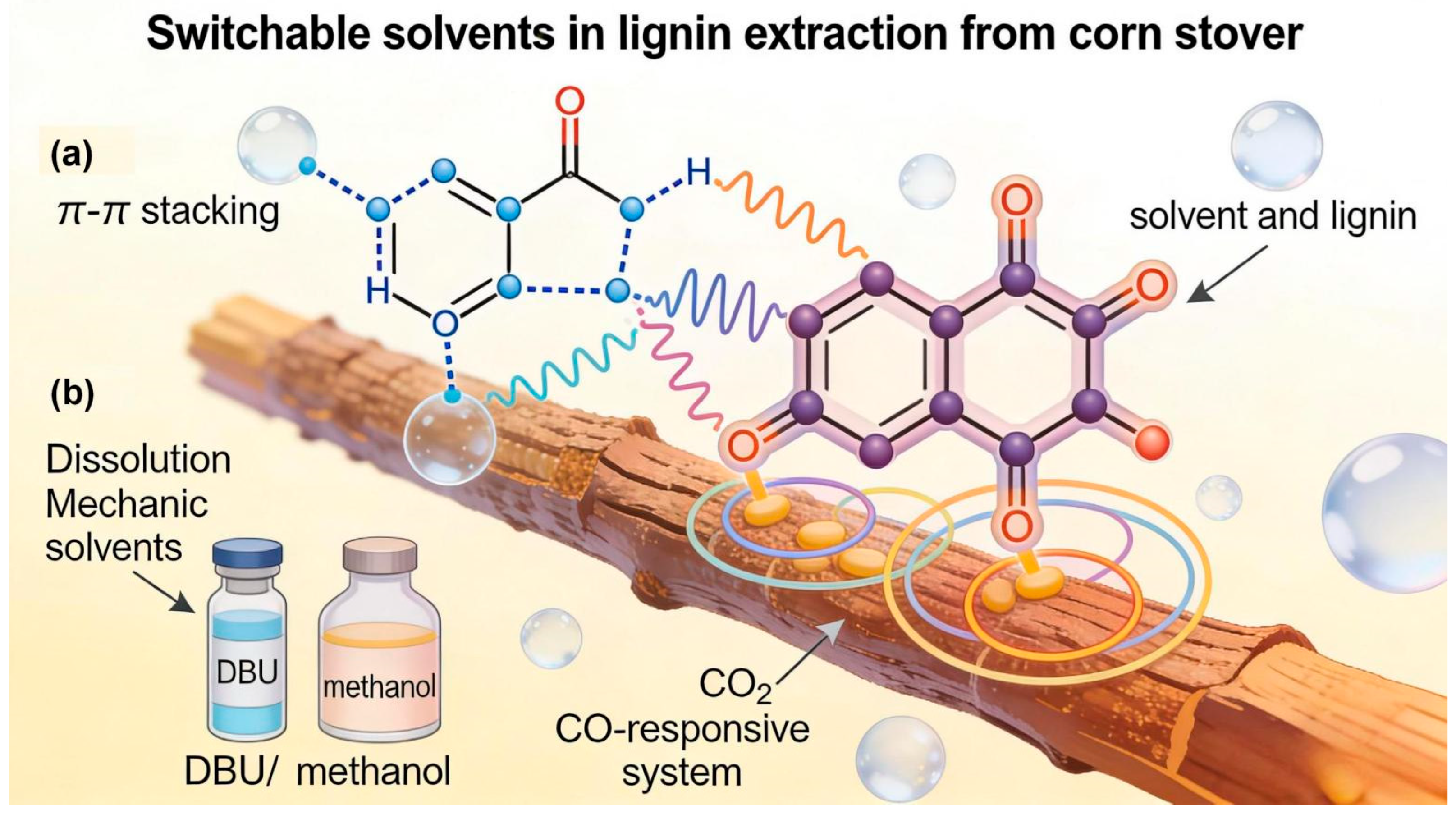
In lignin extraction from corn stover, switchable solvents play key roles in dissolution, separation, and reaction promotion. The dissolution mechanism involves the solvents using their specific molecular structures to form interactions (e.g., hydrogen bonding, van der Waals forces, π-π stacking) with lignin molecules. This effectively breaks the chemical bonds in the lignin matrix, helping lignin dissolve in the solvent system [37]. For CO2-responsive solvents, adding CO2 increases their polarity, enabling stronger interactions with polar functional groups in lignin and promoting dissolution (Figure 2a) [38,39].
For the separation mechanism, changing the external stimulus alters the solvent’s physicochemical properties, weakening the interactions between lignin and the solvent and allowing their separation. For example, with thermo-responsive solvents, raising the temperature to a specific point causes phase separation, making lignin precipitate from the solvent phase for easy subsequent isolation and purification. Switchable solvents can also enhance lignin extraction reactions. During extraction, they act as reaction media, providing a suitable environment for lignin depolymerization and conversion. Meanwhile, their unique property changes can facilitate reaction progress. For instance, the alkylammonium carbamate formed in CO2-responsive solvents after adding CO2 has certain catalytic activity, which accelerates the cleavage of specific chemical bonds in lignin and improves extraction yield [40].
The core of efficient extraction lies in the external stimulus-induced changes in the solvent’s physicochemical properties. Different stimuli trigger different response modes: temperature changes affect intermolecular interactions, altering solubility and phase state; pH changes modify the ionization of ionizable groups in solvent molecules, adjusting hydrophilic–hydrophobic properties; and introducing gases like CO2 triggers chemical reactions to form new compounds, changing polarity and solvating capacity. These changes allow switchable solvents to meet the requirements of different lignin extraction stages, enabling an efficient and convenient process.

2.3. Common Switchable Solvents and Their Performance Characteristics

Common switchable solvents include the aforementioned CO2-responsive, thermo-responsive, and pH-responsive types, as well as photo-responsive solvents. Each type has distinct advantages and disadvantages in performance, and behaves differently in lignin extraction. CO2-Responsive Solvents: They offer fast response and mild reaction conditions [41]. Switching properties only requires introducing CO2 at room temperature and pressure, and their good reversibility allows repeated reuse [42]. For example, the DBU/methanol system achieved an optimized yield of 91.43% in soybean oil extraction experiments [43]. However, they have limitations: the alkylammonium carbamate formed by the reaction of organic amines and CO2 may decompose at high temperatures, restricting their use in high-temperature reaction systems (Figure 2b).
Thermo-Responsive Solvents: They are easy to operate—only temperature adjustment is needed to switch properties. Temperature control is simple and suitable for industrial production. For instance, PNIPAM-based switchable solvents are widely used in bio-separation and drug release [44]. Their drawbacks are high sensitivity to temperature fluctuations (which may affect performance stability) and a narrow applicable temperature range due to their specific LCST.
pH-Responsive Solvents: Their advantage is precise control of properties by adjusting solution pH. They are ideal for lignin extraction processes that require specific acidity or alkalinity. For example, in some enzyme-assisted lignin extraction processes, pH adjustment can control solvent properties to improve efficiency. However, they require adding acids or bases for adjustment (which may introduce impurities) and subsequent neutralization steps, increasing process complexity [45].
Photo-Responsive Solvents: They change properties under light irradiation, offering fast response and remote controllability. They show unique potential in lignin extraction experiments that require precise control of reaction conditions or progress). Their disadvantages include the need for specific wavelength light sources, higher equipment costs, and limited light penetration—all of which restrict their large-scale industrial application [46,47].

3. Structure and Properties of Corn Stover Lignin

3.1. Composition of Corn Stover and Lignin Content

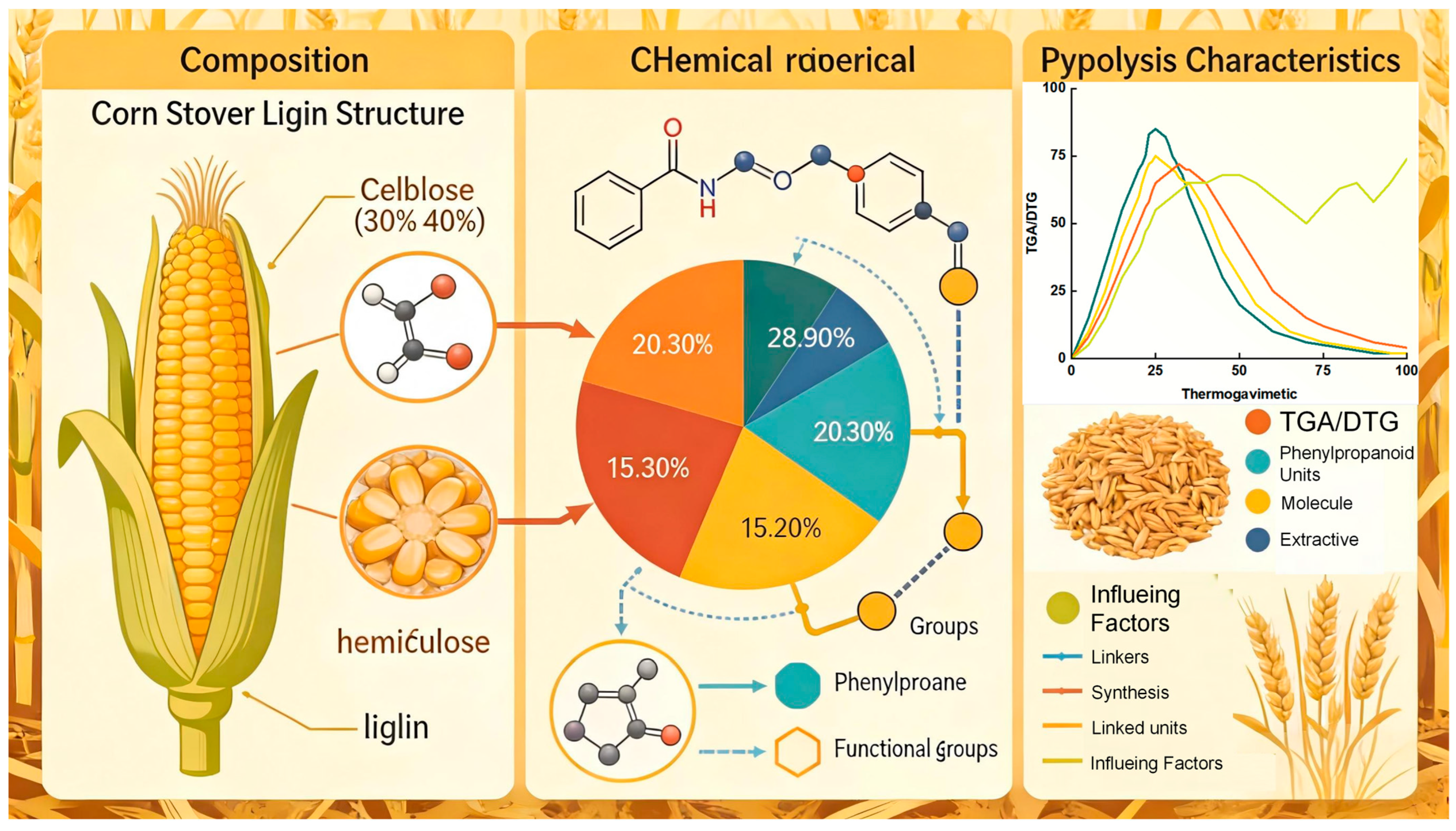
As a significant agricultural biomass resource, the primary chemical constituents of corn stover include cellulose, hemicellulose, lignin, along with small amounts of ash and extractives. Among these, cellulose is the major component of the corn stover cell wall, accounting for approximately 30–40% of the dry weight. It consists of glucose units linked by β-1,4-glycosidic bonds, forming a highly crystalline fibrous structure that confers strength and rigidity to the stover. Hemicellulose acts as a bridge connecting cellulose and lignin, with a content of about 20–30% in corn stover. It is a heteropolysaccharide composed of various monosaccharides, possessing a relatively complex and amorphous structure that contributes to the structural stability of the stover (Figure 3) [48].
The lignin content in corn stover is approximately 15–20%. It is a complex aromatic polymer that primarily serves a reinforcing function within the stover, influencing its decomposition rate and physicochemical properties [49]. Lignin infiltrates the spaces between cellulose and hemicellulose, binding tightly to them via covalent bonds and hydrogen bonds, forming a robust lignocellulosic composite that enhances the mechanical strength of the stover and supports plant growth [50].
The presence of lignin exerts multifaceted effects on the physicochemical properties of corn stover. Regarding physical properties, lignin increases the hardness and toughness of the stover, making it more resistant to mechanical forces and chemical erosion. For instance, in agriculture, corn stover rich in lignin can serve as the roughage component in livestock feed, where its higher toughness aids in chewing and digestion for ruminants. In the pulp and paper industry, the presence of lignin affects paper quality; excessive lignin can darken paper color and reduce its strength, necessitating delignification treatment during the pulping process.
Concerning chemical properties, the aromatic ring structures and diverse functional groups in lignin impart a certain degree of chemical reactivity to the stover. Lignin can undergo reactions with various chemical agents. For example, under alkaline conditions, ether bonds and carbon–carbon bonds in lignin can cleave, leading to its partial dissolution, a characteristic utilized in alkali pulping processes for lignin extraction. Furthermore, lignin can be converted into various useful chemicals such as bio-oil and phenolic compounds through reactions like pyrolysis and hydrolysis, enabling the high-value utilization of corn stover.

3.2. Chemical Structural Characteristics of Corn Stover Lignin

Corn stover lignin is a complex phenolic polymer with a phenylpropane skeleton as its basic structural unit. It is mainly formed by the polymerization of three monolignol monomers—p-coumaryl alcohol, coniferyl alcohol, and sinapyl alcohol—connected by ether and carbon–carbon bonds, forming a three-dimensional network biopolymer [51]. The main inter-unit linkages in corn stover lignin include β-O-4 ether bonds, α-O-4 ether bonds, and β-5 carbon–carbon bonds. Among them, β-O-4 ether bonds are the most common, accounting for about 50–60% of all linkages. Although relatively stable, these bonds can break under specific conditions [52]. α-O-4 ether bonds and β-5 carbon–carbon bonds are less abundant but significantly affect lignin’s overall structure and properties [53].
Lignin also contains abundant functional groups, such as methoxyl, hydroxyl, carbonyl, and carboxyl groups. Methoxyl groups are mostly attached to the aromatic rings of phenylpropane units, with a content of about 14–16%. They influence lignin’s hydrophilicity, hydrophobicity, and reactivity. Hydroxyl groups—including aliphatic and phenolic hydroxyls—play a key role in lignin’s chemical reactions, such as participating in esterification or etherification to modify its properties. Carbonyl and carboxyl groups give lignin certain polarity and acidity, enabling it to form complexes with some metal ions.
Compared with lignin from other sources, corn stover lignin has distinct structural differences (Table 1). For example, compared to wood lignin, it has a higher proportion of p-hydroxyphenyl (H) units derived from p-coumaryl alcohol and a lower proportion of syringyl (S) units. This difference in monomer composition leads to variations in chemical properties and reactivity between corn stover lignin and wood lignin. During pyrolysis, corn stover lignin may produce more phenolic compounds and small gas molecules due to its structural features. For extraction and utilization, these structural differences require different methods and processes to achieve efficient extraction and conversion. A thorough understanding of corn stover lignin’s chemical structure helps optimize its extraction and utilization processes, thereby increasing its added value [54].

3.3. Pyrolysis Characteristics of Lignin and Influencing Factors

Lignin pyrolysis is a complex process involving multiple chemical reactions and product formation. Initially, lignin undergoes dehydration, releasing water from functional groups like hydroxyl and carboxyl. As temperature rises further, chemical bonds break down through decomposition, generating various small molecular fragments. These fragments then undergo additional reactions such as carbonization, cracking, and repolymerization, producing pyrolysis products mainly including char, bio-oil, and gases.
Thermogravimetric analysis (TGA) is commonly used to study mass changes during lignin pyrolysis. TGA results typically show three distinct stages of lignin pyrolysis. In the low-temperature stage (200–300 °C), low-boiling components volatilize and a small number of chemical bonds break, resulting in minimal mass loss. The mid-temperature stage (300–500 °C) is the main pyrolysis phase: extensive bond cleavage occurs, generating large amounts of small molecular products and causing rapid mass loss. In the high-temperature stage (>500 °C), remaining macromolecular substances continue to decompose while undergoing carbonization and condensation to form char, with mass loss gradually stabilizing [55].
Note: Curve (a) is the TG curve, reflecting mass retention changes during pyrolysis. Curve (b) is the DTG curve, showing mass loss rate versus temperature, with its peak indicating the maximum mass loss rate temperature. The figure shows that corn stover lignin’s main weight loss occurs between 300 and 500 °C, and the maximum mass loss rate temperature is approximately 380–420 °C, consistent with reported lignin pyrolysis characteristics [56].
Pyrolysis product distribution is affected by several factors. First, raw material properties: lignin from different sources and extraction methods has different chemical structures and compositions, leading to variations in pyrolysis products. As mentioned earlier, structural differences between corn stover lignin and wood lignin result in different types and contents of phenolic compounds in their pyrolysis bio-oils [57].
Pyrolysis conditions also significantly impact product distribution. Pyrolysis temperature is a key factor; as temperature increases, bio-oil yield initially rises, reaches a maximum around 500–600 °C, then decreases. This is because decomposition is incomplete at low temperatures, while excessively high temperatures promote secondary cracking of bio-oil, generating more gas and char [58]. Heating rate also matters; a faster heating rate leads to more intense pyrolysis, favoring rapid volatile generation and release, resulting in bio-oil with higher light component content. In contrast, a slower heating rate allows gradual reactions, favoring heavier compound formation and more complete reactions.
Catalyst addition can significantly alter lignin’s pyrolysis characteristics and product distribution. For example, solid acid catalysts promote lignin depolymerization and aromatization, increasing phenolic compound content and purity in bio-oil. Adding metal oxide catalysts during pyrolysis can change reaction pathways, promoting the formation of specific products (e.g., increasing gaseous products like hydrogen and carbon monoxide yields) [59]. In-depth research on lignin pyrolysis characteristics and influencing factors is crucial for optimizing pyrolysis processes, improving product yield and quality, and achieving efficient lignin conversion and utilization.

4. Process Research on the Extraction of Corn Stover Lignin Using Switchable Solvents

4.1. Process Flow and Key Steps

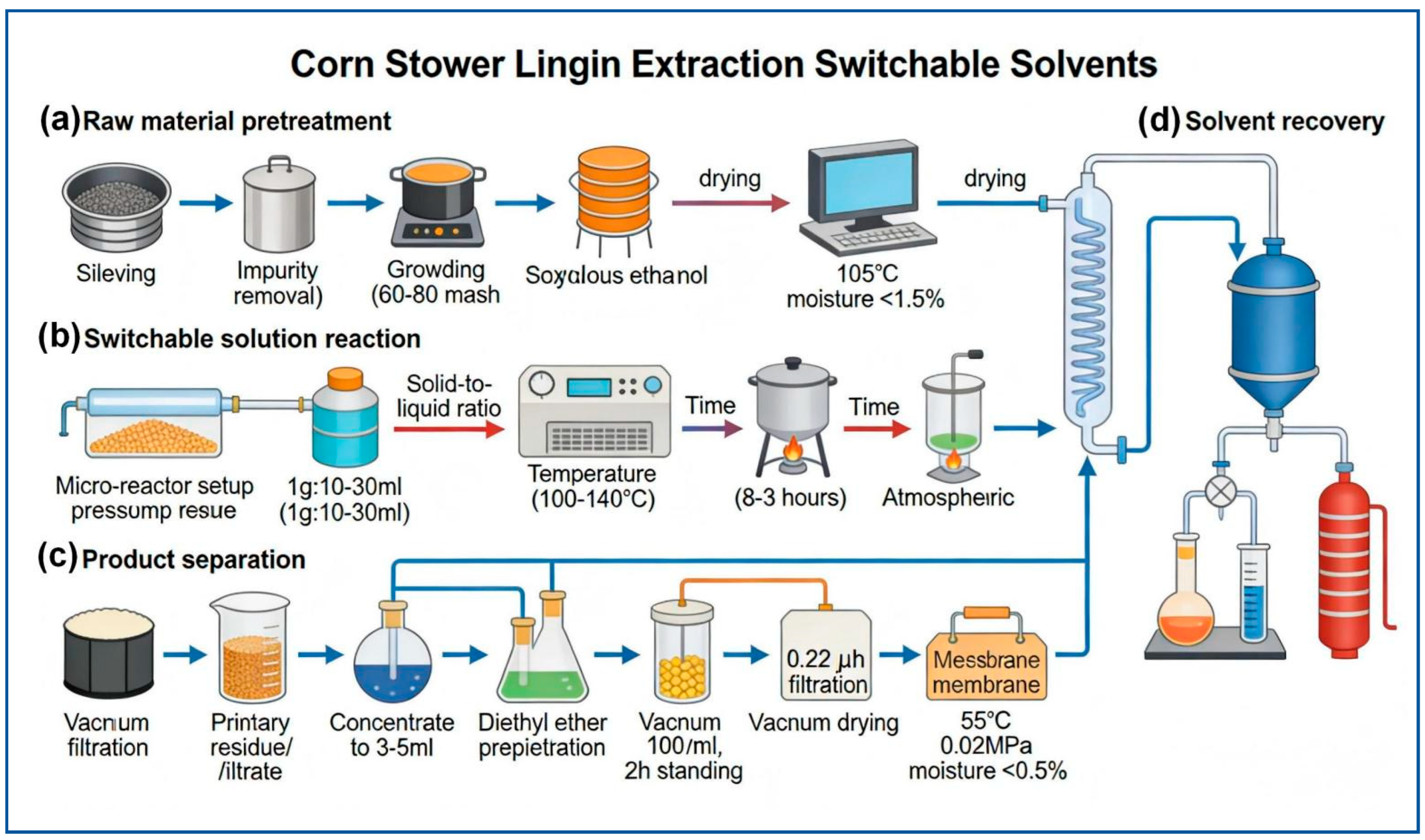
The process of extracting lignin from corn stover using switchable solvents mainly includes key steps such as raw material pretreatment, reaction condition control, product separation, and solvent recovery. Each step is critical to extraction efficiency. During raw material pretreatment, corn stover is first collected and sieved to remove impurities like sand, soil, and metal fragments, ensuring smooth subsequent extraction [60]. The sieved stover is then ground to a specific particle size (typically 60–80 mesh). Smaller particle sizes increase the contact area between stover and switchable solvent, enhancing reaction efficiency. Next, the ground corn stover powder undergoes Soxhlet extraction with anhydrous ethanol to remove small organic molecules such as lipids and waxes. After Soxhlet extraction, the solid residue is dried at 105 °C until moisture content is below 1.5% to avoid water interfering with subsequent reactions (Figure 4).
Note: The process mainly consists of four core units: raw material pretreatment (sieving, grinding, Soxhlet extraction, drying), switchable solvent reaction (temperature control, time control, stirring), product separation (filtration, concentration, extraction, filtration, drying), and solvent recovery (regeneration, recycling). The diagram clearly marks key operating parameters and material flow paths for each unit, visually showing the material conversion route throughout the extraction process (Figure 4a) [61].
In the reaction condition control stage, pretreated corn stover solid residue and switchable solvent are added to a microreactor at a specific solid-to-liquid ratio. Taking cetyltrimethylammonium bromide–ethylene glycol deep eutectic solvent as an example, the solid-to-liquid ratio is typically controlled at 1 g:(10–30 mL). During the reaction, temperature and time are strictly controlled; reaction temperature is generally 100–140 °C, and reaction time is 1–3 h. Appropriate temperature and duration allow the switchable solvent to fully interact with lignin, improving extraction yield. Meanwhile, reaction system pressure control is important; most reactions are carried out at atmospheric pressure, but some specific switchable solvent systems may require certain pressures for optimal results (Figure 4b) [62].
In the product separation stage, after the reaction is complete and the mixture cools to room temperature, vacuum filtration is performed to obtain primary solid residue and primary filtrate. The primary filtrate contains dissolved lignin and switchable solvent. To further isolate lignin, a rotary evaporator concentrates the primary filtrate to 3–5 mL to obtain a concentrate. The concentrate is transferred to a separatory funnel, 100 mL of anhydrous diethyl ether is added, and the funnel is shaken thoroughly before standing for 2 h. Due to lignin’s low solubility in diethyl ether, it precipitates at the bottom and is collected [63]. The bottom mixture is vacuum-filtered through a 0.22 μm microporous membrane, and the resulting solid residue is transferred to a vacuum-drying oven, and dried at 55 °C and 0.02 MPa until moisture content is below 0.5%, yielding corn stover lignin extracted by the deep eutectic solvent (Figure 4c).
Solvent recovery is crucial for reducing production costs and minimizing environmental impact. For recyclable switchable solvents (e.g., CO2-responsive types), after product separation, the solvent can be restored to its original state (e.g., by removing CO2) and reused. For other switchable solvent types, methods like distillation or extraction can also be used for recovery, improving solvent utilization and reducing process costs (Figure 4d) [64].

4.2. Influence of Process Parameters on Lignin Extraction Yield

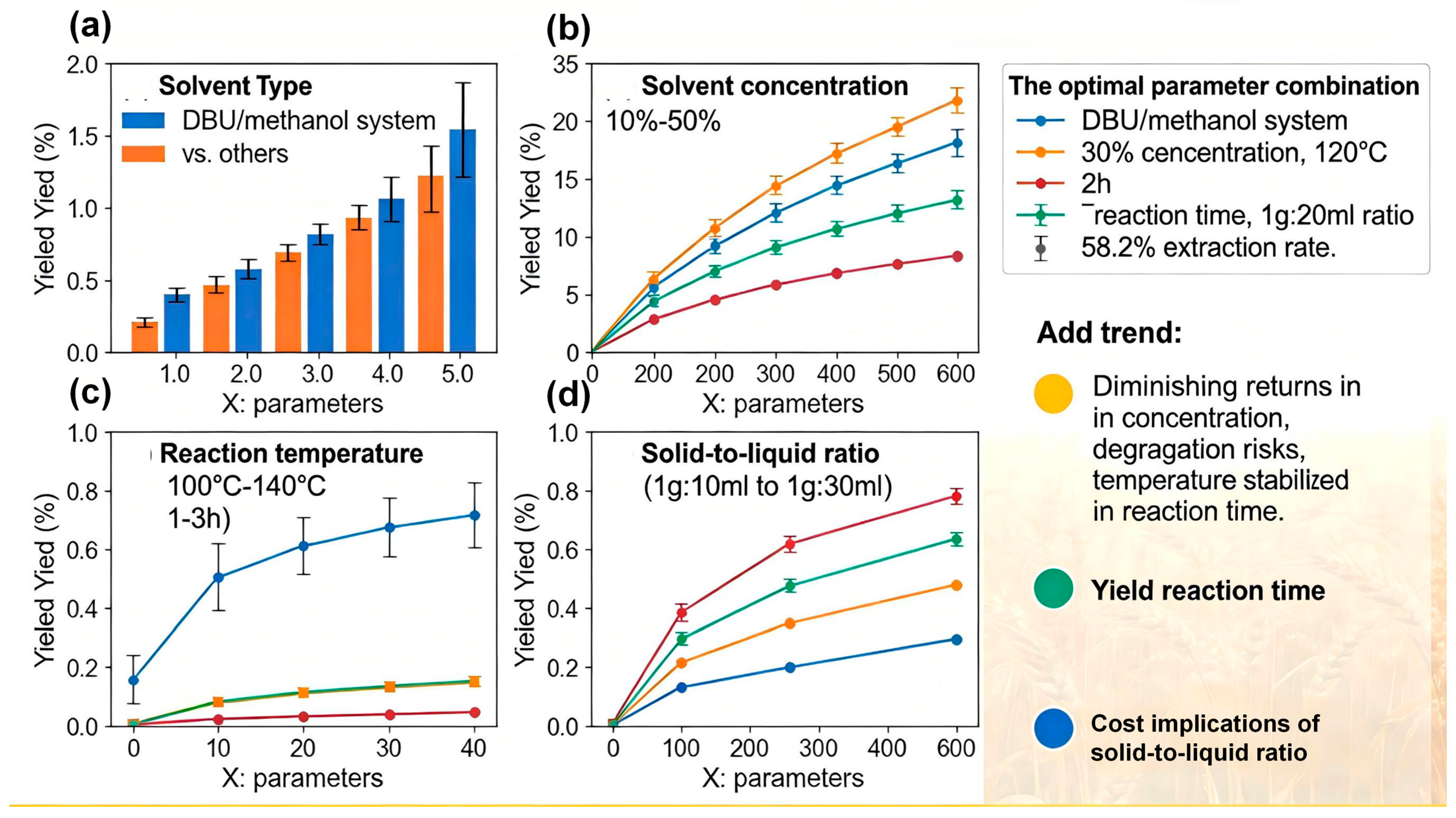
Process parameters significantly affect the yield of corn stover lignin extracted using switchable solvents, as confirmed by extensive experimental data. Switchable solvent type is a key factor; different types have different molecular structures and properties, leading to varying dissolution capacities and reactivities with lignin. For example, CO2-responsive switchable solvents change polarity and solvating ability when CO2 is introduced, enabling stronger interactions with lignin molecules and promoting dissolution. Studies show that under the same reaction conditions, using a DBU/methanol system as the switchable solvent can achieve a lignin extraction yield of 50–60%, while other types may produce different results [65].
Note: Panel (a) shows the effect of different switchable solvent types on extraction yield; (b) shows the effect of solvent concentration; (c) shows the effect of reaction temperature; (d) shows the effect of reaction time; and (e) shows the effect of solid-to-liquid ratio. Experiments used the control variable method, keeping other parameters constant to study the impact of a single parameter. The figure indicates that the optimal parameter combination is DBU/methanol system, solvent concentration 30%, reaction temperature 120 °C, reaction time 2 h, and solid-to-liquid ratio 1 g:20 mL, achieving an extraction rate of 58.2% [66].
Solvent concentration also significantly impacts extraction yield. Within a certain range, lignin extraction yield gradually increases with higher switchable solvent concentration. This is because higher concentrations provide more active sites, enhancing interaction with lignin. However, beyond a certain threshold, the yield may plateau or even decrease—possibly due to increased system viscosity at excessively high concentrations, hindering mass transfer and preventing full lignin dissolution and diffusion [67]. For example, with a specific thermo-responsive switchable solvent, increasing concentration from 10% to 30% raised lignin extraction yield from 30% to 50%, but further increasing to 50% only resulted in a yield of 52%, showing diminishing returns (Figure 5b).
Reaction temperature has a significant effect on lignin extraction yield. Generally, yield increases with rising temperature; higher temperatures provide more energy, promoting chemical reactions between switchable solvent and lignin, accelerating cleavage of intermolecular bonds in lignin, and facilitating dissolution. However, excessively high temperatures can cause problems such as lignin structural degradation (reducing product quality) and increased energy consumption and production costs. Experimental data show that increasing reaction temperature from 100 °C to 120 °C raised lignin extraction yield from 40% to 55%, but further increasing to 140 °C only slightly increased yield while introducing more degradation products in the extracted lignin, affecting subsequent applications (Figure 5c) [68].
Reaction time is another important parameter. Initially, prolonging reaction time allows more complete interaction between lignin and switchable solvent, continuously improving yield. However, after a certain duration, yield may stabilize; further extension may have little positive effect and even lead to a decrease due to side reactions. For example, in a specific switchable solvent extraction system, yield increased rapidly within the first 1–2 h, reaching 55% at 2 h. Extending reaction time to 3 h only increased yield to 58%, with a concurrent decrease in lignin purity (Figure 5d) [69].
The solid-to-liquid ratio also affects extraction yield. An appropriate ratio ensures sufficient contact between switchable solvent and corn stover lignin, improving extraction efficiency. A too-low ratio (excessive solid relative to solvent) may prevent full lignin dissolution, reducing yield. Conversely, an excessively high ratio increases solvent usage and subsequent processing costs. Experiments show that a solid-to-liquid ratio of 1 g:20 mL yields a relatively high extraction rate, while further increasing solvent amount does not significantly improve yield [70].

4.3. Influence Mechanisms, Trade-Offs, and Underexplored Areas of Key Parameters

While the effects of individual parameters are described above, a critical synthesis reveals their interconnected nature and underlying mechanisms. The pursuit of higher extraction yield often conflicts with lignin quality and process sustainability, presenting key trade-offs.
Solvent Type and Mechanism of Action: CO2-responsive solvents (e.g., DBU/methanol) achieve efficient dissolution through polarity switching, but their inherent thermal instability limits application in integrated extraction–pyrolysis processes. Thermo-responsive solvents offer operational simplicity, yet their narrow lower critical solution temperature (LCST) window demands high-precision temperature control. Future research should focus on developing multifunctional switchable solvents, such as systems responsive to both CO2 and temperature, to provide optimal dissolution and separation performance at different process stages.
Synergy and Trade-offs Between Temperature and Time: Increasing temperature and prolonging time can improve initial extraction yield but often trigger lignin condensation reactions. This leads to increased molecular weight and reduced reactivity of the extracted lignin, which is detrimental to producing high-quality bio-oil in subsequent pyrolysis. Therefore, the optimal condition is not the absolute maximum yield, but a balance between extraction yield and the preserved reactivity of lignin. Currently, “milder” extraction strategies aimed at maximizing the retention of β-O-4 ether bonds in corn stover lignin and their impact on pyrolysis products remain underexplored.
Overlooked Parameters: Pretreatment and Solvent Microstructure: Most studies focus on macroscopic operating parameters, while two critical micro-scale factors are severely under-researched: (i) the influence of corn stover’s micro-morphology (e.g., vascular bundle structure) on solvent penetration and mass transfer; and (ii) how the nanoscale aggregate structure of switchable solvents in their “ON” state (e.g., ion pair clusters, micelles) selectively dissolves specific lignin components. Investigating these processes via in situ microscopy and molecular simulations could enable a paradigm shift from empirical “trial-and-error” to rational process design.
Process Intensification Strategies: Ultrasonic/microwave pretreatment effectively disrupts the dense biomass structure but is energy intensive. A promising yet underexplored direction is the in situ combination of switchable solvent extraction with mechanochemical pretreatment (e.g., ball milling), utilizing mechanical force to continuously expose fresh surfaces while the solvent acts immediately. This approach could significantly reduce extraction time and energy consumption.

4.4. Process Optimization and Improvement Measures

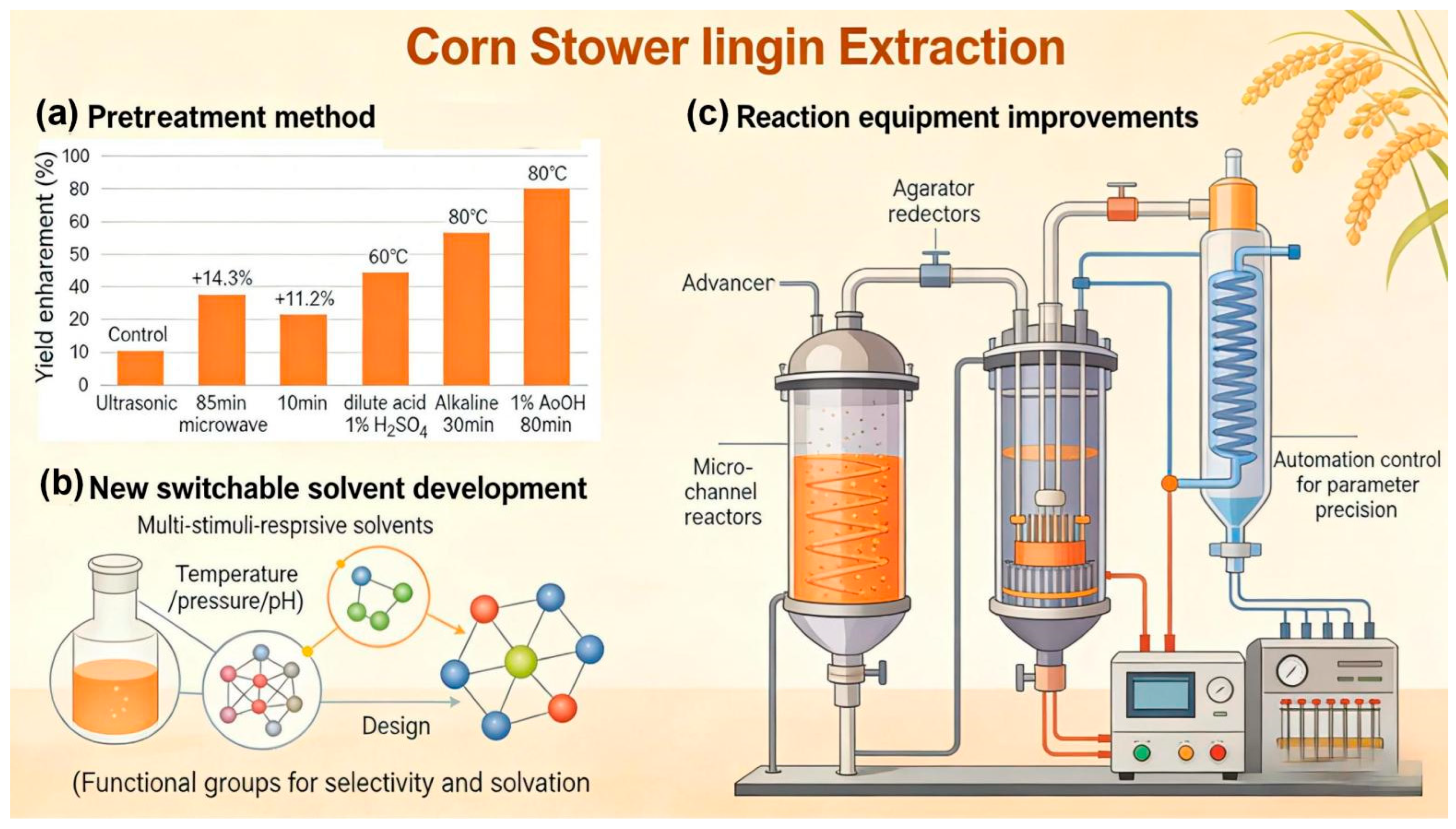
Although progress has been made in extracting corn stover lignin using switchable solvents, existing methods still have shortcomings that require optimization from multiple aspects. Combining with other pretreatment methods is an effective way to improve extracted lignin yield and quality. When used alone, the current switchable solvent extraction process may not fully break down the complex structure linking lignin, cellulose, and hemicellulose in corn stover [71]. Switchable solvent extraction can be combined with physical pretreatment methods such as ultrasonic or microwave-assisted treatment (Figure 6a).
Ultrasonication generates cavitation effects, damaging the corn stover cell wall structure, increasing the contact area between lignin and switchable solvent, and thus improving extraction yield. Research shows that ultrasonic pretreatment of corn stover for 10–20 min before switchable solvent extraction can increase lignin yield by 10–15%. Microwave-assisted treatment can accelerate reactions between lignin and switchable solvent through thermal and non-thermal effects, shortening reaction time while improving yield. Chemical pretreatment methods (e.g., dilute acid or alkaline pretreatment) can also be combined. Dilute acid pretreatment hydrolyzes hemicellulose and disrupts the lignocellulosic structure, making lignin more accessible to the switchable solvent [72]. Conducting switchable solvent extraction after dilute acid pretreatment can increase lignin yield by 5–10%.
Note: The control group is the switchable solvent extraction process without additional pretreatment. Experimental groups are ultrasonic pretreatment (15 min), microwave pretreatment (10 min), dilute acid pretreatment (1% H2SO4, 60 °C, 30 min), and alkaline pretreatment (1% NaOH, 80 °C, 30 min). The figure shows that ultrasonic pretreatment provides the most significant enhancement, increasing yield by 14.3% compared to the control, followed by microwave pretreatment with an 11.2% increase [73].
Developing new switchable solvent systems is another important direction for process optimization. Current switchable solvents have limitations; for example, CO2-responsive types may have poor high-temperature stability, and thermo-responsive types have a narrow applicable temperature range. Research should focus on developing new systems with better properties, such as multi-functional solvents responsive to multiple stimuli (temperature, pressure, pH), or solvents with higher selectivity and solvating capacity to better meet corn stover lignin extraction needs [74]. Molecular design can be used to incorporate different functional groups into solvent molecules, endowing them with more complex responsive characteristics and better dissolution performance (Figure 6b).
Improving reaction equipment can also effectively enhance process efficiency and product quality. Existing reactors may have issues such as uneven heat and mass transfer or difficulty in precise process control. Designing reactors with better heat and mass transfer performance—such as adding new agitation devices to ensure thorough mixing of switchable solvent and corn stover—can improve reaction efficiency. Using advanced automation control technology enables precise control of parameters like temperature, pressure, and time, ensuring process stability and reproducibility [75]. Adopting microchannel reactors can significantly enhance heat and mass transfer efficiency, shorten reaction time, reduce side reactions, and improve extracted lignin yield and purity (Figure 6c).

5. Study on the Pyrolysis Process of Lignin for Bio-Oil Production

5.1. Pyrolysis Reaction Mechanisms and Kinetic Models

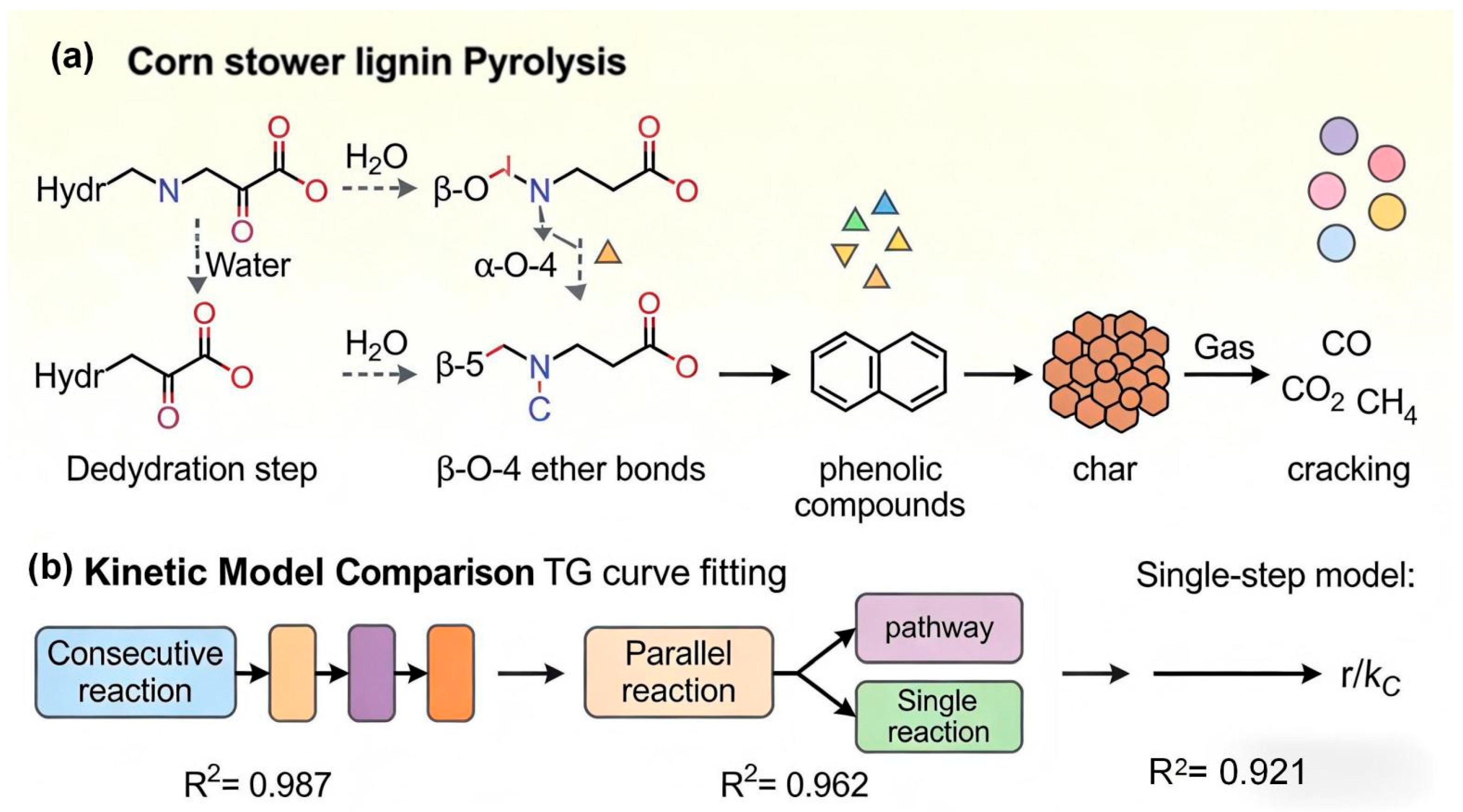
Lignin pyrolysis is an extremely complex process involving numerous chemical reactions. Studying its reaction mechanisms is crucial for understanding the pyrolysis process and optimizing pyrolysis technology. In the initial pyrolysis stage, lignin first undergoes dehydration; functional groups like hydroxyl and carboxyl interact to release water. As temperature gradually rises, chemical bond cleavage occurs—a key step in pyrolysis. Ether bonds (e.g., β-O-4, α-O-4) and carbon–carbon bonds (e.g., β-5) in lignin gradually break during pyrolysis, forming various small molecular fragments (Figure 7a) [76].
These highly reactive fragments undergo further reactions: on one hand, they may undergo intramolecular rearrangement and cyclization to form stable phenolic compounds (a major source of phenolics in pyrolysis bio-oil); on the other hand, they may polymerize to form macromolecular char. Meanwhile, some fragments further crack to produce gaseous products such as carbon monoxide, carbon dioxide, and methane [77].
To better describe the lignin pyrolysis process, scholars have proposed various kinetic models. Common ones include the single-step reaction model, parallel reaction model, competing reaction model, and consecutive reaction model. The single-step reaction model assumes pyrolysis is a first-order process, with reaction rate proportional to reactant concentration (mathematically expressed as r = kC, where r is reaction rate, k is rate constant, and C is reactant concentration) [78]. This model is simple and can to some extent describe reactant concentration changes over time but ignores multiple complex reactions during pyrolysis, limiting its ability to describe actual processes (Figure 7b).
The parallel reaction model suggests multiple parallel reaction pathways exist during lignin pyrolysis, each with its own rate constant and products. For example, lignin may simultaneously undergo depolymerization to generate small fragments and polymerization to form char, with these reactions competing. This model can effectively explain the simultaneous formation of multiple products but involves many parameters that are difficult to determine, requiring further refinement to accurately describe reaction pathways in practical applications.
The competing reaction model emphasizes competition between different reactions during pyrolysis (e.g., polymerization and cracking of small fragments). It can analyze the dominance of different reactions and their impact on product distribution. However, accurately obtaining parameters like rate constants and activation energies for each competing reaction is challenging in practice, as these parameters are affected by factors such as raw material properties and pyrolysis conditions.
The consecutive reaction model treats lignin pyrolysis as a sequential process; reactants go through multiple intermediate stages to ultimately form various products. This model can effectively describe the continuity and staging of pyrolysis but faces difficulties in accurately identifying intermediate products and determining kinetic parameters (intermediates are often unstable and hard to analyze precisely).
Each of these models has applicable scenarios and limitations in describing lignin pyrolysis. In practical research, it is necessary to select an appropriate model based on specific research objectives and experimental conditions, combined with parameter optimization and validation using experimental data, to improve the model’s accuracy in describing the pyrolysis process. With ongoing research, new models and theories continue to emerge, providing new ideas and methods for a more accurate understanding of lignin pyrolysis mechanisms.
Note: Panel (a) is a schematic diagram of the lignin pyrolysis reaction pathway, clearly showing key steps such as dehydration, bond cleavage and small molecule rearrangement, polymerization, and cracking, along with product distribution. Panel (b) compares the fitting performance of different kinetic models to lignin pyrolysis TG curves. The consecutive reaction model has the highest goodness-of-fit (R2 = 0.987), followed by the parallel reaction model (R2 = 0.962), and the single-step reaction model has the lowest fit (R2 = 0.921) [79].

5.2. Influence of Pyrolysis Process Conditions on Bio-Oil Yield and Quality

Pyrolysis process conditions critically affect bio-oil yield and quality. In-depth study of these factors is vital for optimizing pyrolysis technology and improving bio-oil quality and yield. Pyrolysis temperature is a key factor. At low temperatures, lignin decomposition is incomplete, resulting in low bio-oil yield. As temperature increases, chemical bond cleavage in lignin intensifies, generating more small-molecule products and increasing bio-oil yield [58]. However, beyond a certain temperature range, bio-oil undergoes secondary cracking, producing more gas and char and reducing bio-oil yield. Studies show that the maximum bio-oil yield from corn stover lignin pyrolysis is typically achieved between 500 and 600 °C. At 550 °C, bio-oil yield can reach 40–45%, while at 700 °C, it may drop below 30% [80].
Pyrolysis temperature also affects bio-oil quality. Bio-oil produced at low temperatures contains more macromolecules and oxygenated compounds, leading to higher viscosity, poor stability, and lower heating value. At higher temperatures, bio-oil has more small molecules and aromatic hydrocarbons, reducing viscosity, improving stability, and increasing heating value—but may also contain more impurities and harmful components.
Heating rate also significantly impacts bio-oil yield and quality. A faster heating rate allows lignin to quickly reach pyrolysis temperature, resulting in intense pyrolysis that favors rapid volatile generation and release. The resulting bio-oil has a higher content of light components, leading to lower viscosity and better fluidity. However, rapid heating may make the reaction difficult to control, causing local overheating and secondary cracking of bio-oil, reducing yield. In contrast, a slower heating rate leads to gradual reactions, favoring heavier compound formation and more complete reactions. Bio-oil from slower heating has more macromolecules and oxygenated compounds, resulting in higher viscosity and poor stability—but the pyrolysis reaction is more stable, with fewer side reactions and higher bio-oil purity.
Residence time refers to the duration lignin spends in the pyrolysis reactor. Excessively short residence time leads to incomplete pyrolysis and low bio-oil yield. As residence time increases, pyrolysis becomes more complete, and bio-oil yield gradually rises. However, excessively long residence time can cause secondary reactions of bio-oil, reducing yield and worsening quality (increasing viscosity, oxygen content, and lowering heating value) [81]. For corn stover lignin pyrolysis, the optimal residence time is generally 1–3 s, with specific values requiring optimization based on reactor type and other pyrolysis conditions.
Pyrolysis atmosphere is another important factor. Common atmospheres include nitrogen, hydrogen, and carbon dioxide. Under nitrogen, pyrolysis mainly involves lignin thermal decomposition, and bio-oil composition depends on lignin structure and pyrolysis conditions. Under hydrogen, hydrogen acts as a hydrogen donor, participating in pyrolysis and promoting lignin hydrocracking—reducing bio-oil oxygen content and increasing aromatic and aliphatic hydrocarbon content, thereby improving bio-oil quality (making it closer to traditional fossil fuels). Under carbon dioxide, CO2 may react with radicals generated during lignin pyrolysis, altering reaction pathways and product distribution, resulting in bio-oil with more oxygenated organic compounds.
The influence of pyrolysis process conditions on bio-oil yield and quality is complex, with factors interrelated and interacting. In practical pyrolysis processes, these factors must be comprehensively considered and optimized to maximize bio-oil yield and quality [82].
Note: Panel (a) shows the effect of pyrolysis temperature on bio-oil yield and heating value; (b) shows the effect of heating rate; (c) shows the effect of residence time; and (d) shows the effect of different pyrolysis atmospheres (N2, H2, CO2). Experimental results indicate that the optimal pyrolysis conditions are temperature 550 °C, heating rate 100 °C/min, residence time 2 s, H2 atmosphere. Under these conditions, bio-oil yield reaches 43.8%, and heating value reaches 28.6 MJ/kg [83].

5.3. Composition Analysis and Characterization Methods for Bio-Oil

To deeply understand bio-oil properties and application potential, accurate composition analysis and characterization are necessary. Currently, common methods include gas chromatography–mass spectrometry (GC-MS), Fourier-transform infrared spectroscopy (FT-IR), and nuclear magnetic resonance spectroscopy (NMR). Each method has unique principles and application scopes [84].
Gas chromatography–mass spectrometry (GC-MS) combines gas chromatography’s high separation efficiency with mass spectrometry’s high sensitivity and qualitative capability. Its principle involves injecting the bio-oil sample into a gas chromatograph; in the GC column, different components are separated based on their partition coefficient differences between stationary and mobile phases. Separated components then enter the mass spectrometer sequentially, where sample molecules are ionized to form various ion fragments. These fragments are separated by the mass-to-charge ratio (m/z) under electric and magnetic fields and detected [85]. By comparing with known compound mass spectrum libraries, the structure and relative content of bio-oil components can be determined.
GC-MS enables accurate qualitative and quantitative analysis of volatile and semi-volatile organic compounds in bio-oil, detecting substances such as phenols, aromatics, alcohols, aldehydes, and ketones. For example, phenol, guaiacol, 4-methylguaiacol, 2,6-dimethoxyphenol, and aromatics like benzene, toluene, and xylene have been detected in bio-oil. However, GC-MS has limitations in analyzing high-boiling-point, non-volatile, or thermally unstable compounds [20].
Fourier-transform infrared spectroscopy (FT-IR) is based on molecules’ infrared absorption characteristics. When infrared light irradiates a bio-oil sample, chemical bonds in molecules absorb infrared light at specific frequencies, causing transitions in molecular vibrational and rotational energy levels. Different chemical bonds have different vibrational frequencies, resulting in specific absorption peaks in the infrared spectrum. Analyzing these peaks’ position, intensity, and shape allows the type and relative content of functional groups in bio-oil to be inferred, providing preliminary chemical structure characterization.
FT-IR can quickly and accurately detect functional groups such as hydroxyl (-OH), carbonyl (C=O), methoxyl (-OCH3), and ether bonds (C-O-C) in bio-oil. In bio-oil FT-IR spectra, absorption peaks around 3400–3600 cm−1 typically indicate hydroxyl groups, peaks around 1700–1750 cm−1 indicate carbonyl groups, and peaks around 1200–1300 cm−1 indicate methoxyl or ether bonds [86]. However, FT-IR only provides functional group information; determining specific compound structures and composition requires combination with other analytical methods [87].
Nuclear magnetic resonance spectroscopy (NMR) uses atomic nuclei’s resonance properties in a magnetic field for analysis. Atomic nuclei in different chemical environments (e.g., hydrogen nuclei 1H and carbon nuclei 13C) absorb different frequency radiofrequency radiation in a magnetic field, producing specific resonance signals. Analyzing parameters such as chemical shift, coupling constants, and integral areas of these signals allows the determination of bio-oil molecular structure, chemical bond connectivity, and relative atom numbers [88].
1H-NMR can determine the chemical environment and relative number of hydrogen atoms in bio-oil, allowing compound structures to be inferred. In bio-oil 1H-NMR spectra, peaks at different chemical shifts correspond to different hydrogen atom types (e.g., aromatic, aliphatic, hydroxyl hydrogens). 13C-NMR provides information about carbon atom chemical environment and structure. NMR analysis requires relatively high-purity samples, with higher analysis costs and longer times.
Each bio-oil composition analysis and characterization method has advantages and disadvantages. In practical research, multiple methods are often combined to complement and validate each other, providing a comprehensive and accurate understanding of bio-oil composition and structure—laying a scientific foundation for subsequent bio-oil application and upgrading.
A single technique is insufficient to decode the complexity of bio-oil. A multi-tiered characterization protocol is recommended: (Tier 1) GC-MS provides a detailed inventory of volatile and semi-volatile compounds, essential for identifying fuel and chemical feedstock potential. (Tier 2) FT-IR and 1H-NMR offer rapid fingerprinting and quantitative functional group analysis (e.g., hydroxyl, carbonyl content), crucial for assessing stability, polarity, and upgrading needs. (Tier 3) GPC/SEC determines the molecular weight distribution, which correlates directly with viscosity and upgrading difficulty. (Tier 4) 13C-NMR and 2D NMR (e.g., HSQC) deliver unparalleled structural elucidation of macromolecular and oligomeric species, linking feedstock and process conditions to product structure.
Current techniques still face gaps. GC-MS misses the non-volatile, high-molecular-weight oligomers that constitute a significant fraction of bio-oil and govern its undesirable properties like high viscosity and instability. FT-IR bands often overlap, making precise quantification challenging. To bridge these gaps, advanced techniques are emerging. Fourier-transform ion cyclotron resonance mass spectrometry (FT-ICR MS) can resolve thousands of compounds in complex mixtures, providing an ultra-high-resolution molecular map. Thermogravimetric analysis coupled with FT-IR or MS (TGA-FTIR/MS) can probe the evolution of volatile species as a function of temperature, simulating thermal upgrading processes. Integrating these advanced tools with standard protocols will enable a predictive connection between bio-oil composition, its physicochemical properties, and its performance in specific applications.

6. Application Fields of Corn Stover Lignin Pyrolysis Oil

6.1. Applications in the Energy Sector

Corn stover lignin pyrolysis oil has unique value in the energy sector, with extensive exploration as a fuel for power generation, heating, and internal combustion engines. In power generation, pyrolysis oil can be burned to produce thermal energy, which is then converted into electricity. Compared with traditional coal-fired power generation, pyrolysis oil-based power generation has distinct advantages: first, it is a renewable energy source with wide availability, reducing reliance on increasingly scarce coal resources (aligning with global sustainable development trends); second, it emits fewer pollutants during combustion. Coal combustion releases large amounts of sulfur dioxide, nitrogen oxides, and particulate matter (harmful to the environment and human health), while pyrolysis oil combustion can reduce sulfur dioxide emissions by about 70% and nitrogen oxides by about 50%, helping mitigate environmental pollution and promoting coordinated energy and environmental development (Figure 8) [89].
Pyrolysis oil also has potential for heating applications. Its relatively high energy density allows effective thermal energy supply for buildings. Compared with conventional heating fuels like natural gas and fuel oil, pyrolysis oil is more cost effective—especially in corn stover-rich regions where raw materials are inexpensive. Using locally produced pyrolysis oil for heating can significantly reduce energy costs. Additionally, pyrolysis oil supply is stable and not affected by international energy market price fluctuations, providing reliable energy security for regional heating. In some rural areas or small towns, using locally produced corn stover pyrolysis oil for centralized heating achieves in situ resource conversion and utilization while improving energy supply stability and economic efficiency [5].
However, applying pyrolysis oil in internal combustion engines faces challenges. Its complex composition (high oxygenated compound and impurity content) leads to poor stability—prone to oxidation and polymerization during storage and use, affecting engine performance and lifespan. Additionally, its high viscosity and poor fluidity place higher demands on engine fuel injection systems, requiring modifications or special additives to improve flow characteristics. Moreover, its lower heating value compared to traditional gasoline and diesel means equivalent volumes provide less energy, potentially reducing engine power output.
To address these challenges, researchers are actively conducting studies: upgrading pyrolysis oil through hydrotreatment and deoxygenation to reduce oxygen and impurity content (improving stability and heating value); developing new fuel injection systems adapted to pyrolysis oil properties; and exploring suitable additives to enhance performance. Despite challenges, continuous technological advancements make pyrolysis oil’s application prospects in internal combustion engines promising.
Application Prospects and TRL Analysis: Currently, the use of bio-oil in boilers or kilns for heating is at the pilot to demonstration stage (TRL 5-6), with relatively mature technology. The core challenges lie in fuel standardization and supply chain development. Its application in internal combustion engines or turbines for power generation is at the R&D to demonstration stage (TRL 4-5), requiring solutions for oil upgrading and engine adaptation. Its use as a direct substitute for transportation fuels is at a lower TRL (3-4), hindered by the bottleneck of efficient and low-cost hydrodeoxygenation technology. Its competitive advantage stems from the localization and renewability of its feedstock, along with its carbon-neutral potential, making it particularly suitable for establishing distributed energy systems in agricultural regions rich in corn stover resources.

6.2. Applications as Chemical Feedstocks

Corn stover lignin pyrolysis oil has rich application scenarios as a chemical feedstock. Its phenolic and aromatic compounds serve as important raw materials for synthesizing various high-value-added chemicals. Phenolic compounds are key for synthesizing phenolic resins—important polymeric materials with excellent heat resistance, wear resistance, insulation, and mechanical strength, widely used in electronics, construction, automotive, and other industries. Phenolic compounds in pyrolysis oil can undergo polycondensation with formaldehyde to produce phenolic resins. Compared with traditional petroleum-based phenol synthesis, using pyrolysis oil-derived phenolic compounds not only achieves high-value biomass resource utilization and reduces petroleum dependence but also offers advantages in some properties [90]. Optimizing reaction conditions (e.g., phenol-to-formaldehyde ratio, temperature, time) allows preparing phenolic resins with different properties to meet diverse market needs.
Phenolic and aromatic compounds in pyrolysis oil also have important applications in synthesizing pharmaceutical intermediates. Many pharmaceutical intermediates require specific phenolic and aromatic structures as starting materials. Structurally modifying and derivatizing pyrolysis oil-derived phenolic compounds can produce biologically active compounds. For example, methyl p-hydroxybenzoate in pyrolysis oil can be further reacted to synthesize antibacterial pharmaceutical intermediates. Using pyrolysis oil-derived aromatics allows the synthesis of a series of benzene ring-containing pharmaceutical intermediates, providing new raw material sources for drug development [91]. This expands biomass resource applications in the pharmaceutical field, reduces production costs, and improves drug sustainability.
In polymeric material synthesis, pyrolysis oil-derived aromatic compounds are important monomers for producing plastics, rubbers, fibers, and other polymers. Styrene (a key monomer for polystyrene and styrene-butadiene rubber) can use purified pyrolysis oil aromatics as one of its raw material sources. These monomers can form polymers with different properties through polymerization reactions. Polymers synthesized from pyrolysis oil aromatics have performance comparable to that of traditional petroleum-based polymers but are more environmentally friendly, reducing environmental pressure. For example, using pyrolysis oil aromatics to synthesize high-performance engineering plastics (e.g., polycarbonates) can be applied in aerospace, electronics, and other high-end fields, increasing biomass resource added value. Overall, pyrolysis oil’s application as a chemical feedstock provides a sustainable raw material source for the chemical industry, promoting its transition to green and low-carbon development [92].
Application Prospects and Market Analysis: The isolation of phenolic compounds from bio-oil for synthesizing phenolic resins has achieved small-scale production (TRL 6-7). The product performance is comparable to petroleum-based counterparts and carries the green marketing advantage of being “bio-based,” targeting high-end adhesives and composite materials markets. The synthesis of pharmaceutical intermediates and aromatic polymer monomers remains predominantly at the laboratory R&D stage (TRL 3-4). The main challenges are the cost and purity of product separation and purification, which must meet the stringent standards of the pharmaceutical and polymer industries. The long-term value of this pathway lies in providing the chemical industry with structurally diverse bio-based aromatic platform molecules, opening avenues for differentiated product lines.

6.3. Potential Applications in Other Fields

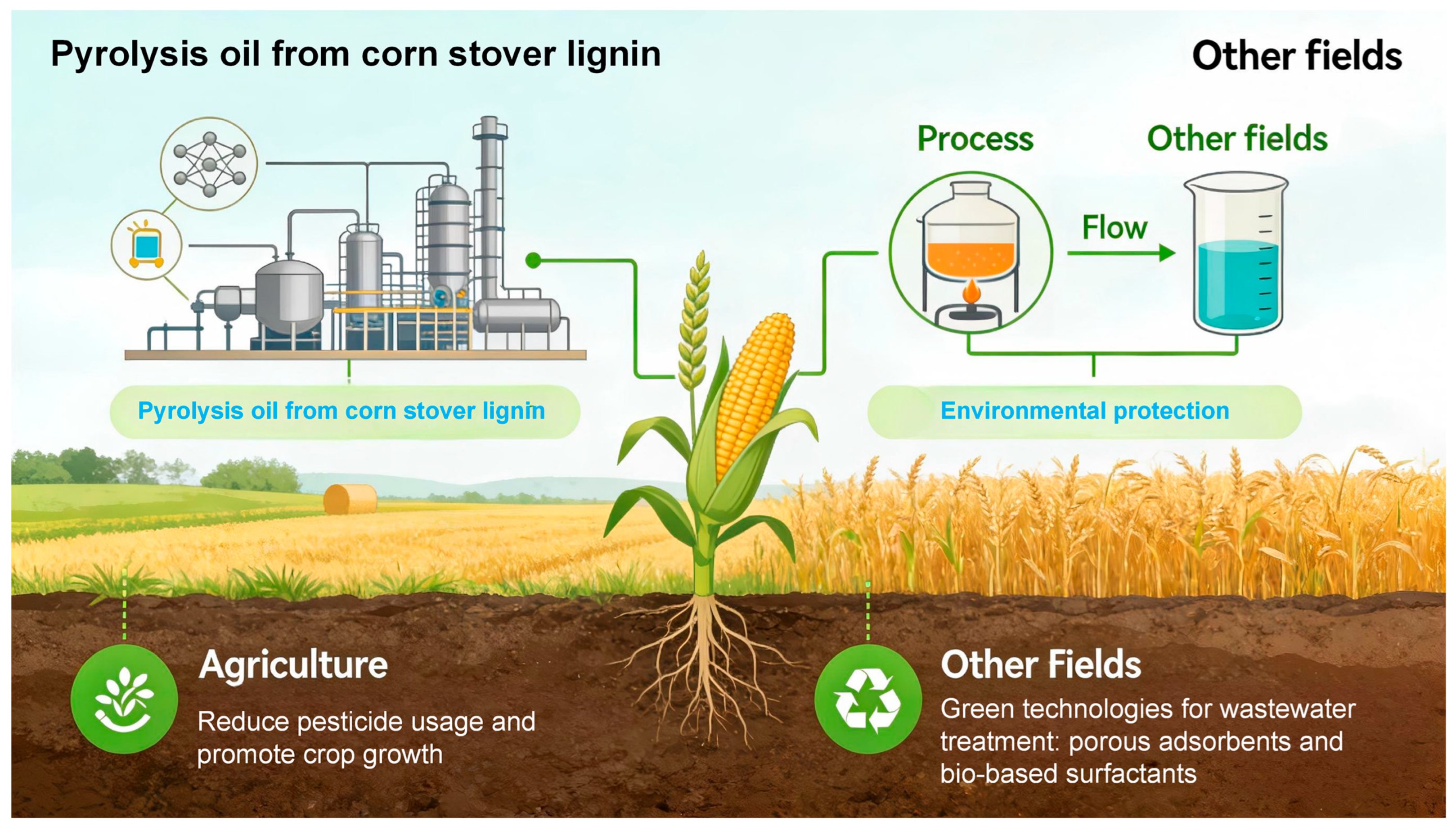
Beyond energy and chemical feedstocks, corn stover lignin pyrolysis oil has potential applications in agriculture, environmental protection, and material surface treatment. In agriculture, pyrolysis oil can be used to prepare pesticide carriers. Pesticides are vital for agricultural production, but traditional formulations have issues like low utilization efficiency and easy runoff. Pyrolysis oil—with good adsorption capacity and chemical stability—can serve as a pesticide carrier, loading active ingredients on its surface or within its structure to form controlled-release pesticide formulations. These carriers can slowly release pesticides, prolonging action time, improving utilization efficiency, reducing usage, and minimizing environmental pollution. Additionally, some pyrolysis oil components have biological activity, potentially promoting crop growth or enhancing pest and disease resistance. Studies show that mixing pyrolysis oil with specific components and pesticides can not only improve pesticide efficacy but also promote crop root growth and photosynthesis, increasing yield and quality.
In environmental protection, pyrolysis oil can be used to prepare adsorbents. After a series of treatments, pyrolysis oil can form porous adsorbent materials with good adsorption performance for heavy metal ions and organic pollutants in water. These adsorbents can treat industrial and domestic wastewater, effectively removing harmful substances and enabling water purification and reuse. Compared with traditional adsorbents like activated carbon, pyrolysis oil-derived adsorbents are cheaper and renewable, with advantages for large-scale wastewater treatment. Furthermore, some pyrolysis oil components can be used to prepare surfactants. Oxygenated compounds in pyrolysis oil can exhibit surface activity after modification, enabling production of environmentally friendly surfactants with good emulsifying, dispersing, and solubilizing properties—along with good biodegradability, aligning with current green chemistry requirements [93].
In material surface treatment, pyrolysis oil also has potential. Adding certain pyrolysis oil components to coatings can improve material surface properties: for example, incorporating aromatic compounds enhances coating hardness and wear resistance. Phenolic compounds in pyrolysis oil have antioxidant properties; adding them to coatings improves aging resistance and extends lifespan. Pyrolysis oil can also be used to prepare functional films for food packaging, medical and health, and other fields. In-depth research and development of pyrolysis oil components will continue to explore and expand its potential applications in other fields, providing new solutions for various industries [94].
Application Prospects and TRL Analysis: Its potential use in agriculture and environmental protection as pesticide carriers or adsorbents is at the proof-of-concept to validation stage (TRL 3-4). Its advantage lies in the biomass origin of the material itself and its potential environmental compatibility. However, its performance requires systematic comparison with established commercial products (e.g., diatomaceous earth, activated carbon) and an assessment of its long-term environmental behavior. Its application in material surface treatment is more exploratory (TRL 2-3), necessitating a deeper understanding of the interaction mechanisms between specific bio-oil components and material surfaces. While these niche markets may be smaller in scale, they potentially offer high added value and are crucial pathways for achieving full-component utilization of bio-oil and improving the overall process economics.

7. Sustainability and Techno-Economic Assessment Framework

Challenges and elements of life cycle assessment (LCA): A comprehensive evaluation of the environmental performance of the “switchable solvent extraction–pyrolysis” pathway requires a systematic LCA. Key life cycle stages to consider include feedstock acquisition (energy consumption and soil carbon impacts associated with corn stover collection), solvent system (synthesis, recovery, emissions, and potential toxicity), process energy consumption (pretreatment, extraction, pyrolysis), and products and emissions. Compared to conventional extraction methods (e.g., alkali processes) or direct pyrolysis, the core potential advantage of the switchable solvent route may lie in reducing the impurity content (e.g., ash, sulfur) in the subsequent pyrolysis oil, thereby lowering the environmental burden of the upgrading processes. Future LCA studies should employ system expansion to rationally allocate the alternative uses of corn stover (e.g., as waste or fodder) and quantify the carbon avoidance benefits achieved by substituting fossil fuels with bio-oil.
Key drivers for techno-economic analysis: The industrialization of this technology hinges on its economic viability. Capital Expenditure is primarily concentrated in corrosion/pressure-resistant reaction and separation equipment. The major drivers of Operating Expenditure are (1) solvent cost and recycling efficiency; high-efficiency, low-loss solvent recovery is critical for cost reduction; (2) feedstock cost and supply chain logistics; (3) energy consumption, particularly the high-temperature requirements of the pyrolysis stage; and (4) product value: bio-oil sold as a fuel commands a lower market price, whereas its value increases significantly if used as a source of fine chemicals. Therefore, a multi-product co-production strategy (e.g., simultaneous production of bio-oil, biochar, and high-value phenolic compounds) is crucial for improving process economics. Sensitivity analysis should focus on the impact of solvent price, bio-oil market price, and carbon tax policies.
Comparison with competing pathways: Several competing pathways exist for corn stover valorization, such as cellulosic ethanol production, gasification for hydrogen, or direct return to farmland. The comparative advantages of the pathway described herein (producing pyrolysis oil) include relative technological flexibility in handling whole biomass; ease of storage and transportation of the primary product (bio-oil); and the potential to produce distinctive bio-based chemicals. Its disadvantages include the current need for product upgrading and potentially lower overall energy efficiency compared to gasification routes. Future development must, through process integration, optimization, and product valorization within this technological framework, define its most suitable market niche.

8. Research Summary and Future Perspectives

8.1. Summary of Research Achievements

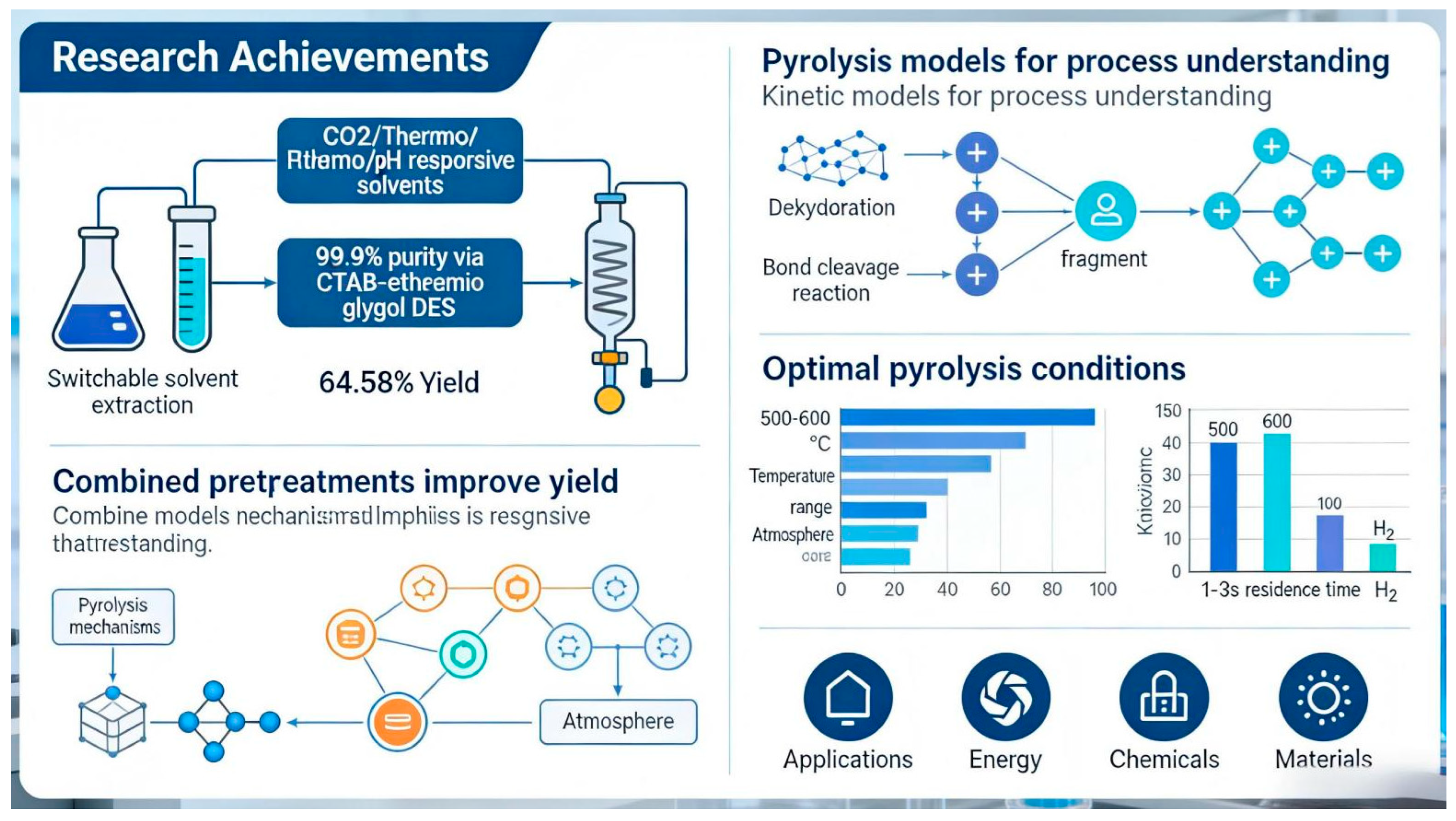
Significant progress has been made in the process of extracting pyrolysis oil from corn stover lignin using switchable solvents. In-depth study of process parameters (solvent type, concentration, reaction temperature, time, solid-to-liquid ratio) has clarified their influence on lignin extraction yield [95]. Different switchable solvent types have distinct characteristics: CO2-responsive solvents enable reversible property changes under mild conditions (effectively promoting lignin dissolution); thermo-responsive solvents are easy to operate (allowing process control via temperature adjustment); and pH-responsive solvents permit precise performance tuning based on solution acidity/alkalinity. Optimizing these parameters has significantly improved lignin extraction yield; for example, using a cetyltrimethylammonium bromide–ethylene glycol deep eutectic solvent under suitable conditions achieved a 64.58% extraction yield with 99.4% purity. Additionally, combination with other pretreatment methods (ultrasonic, microwave-assisted, dilute acid, alkaline pretreatments) has further enhanced extracted lignin yield and quality [52].
Pyrolysis process research has revealed complex reaction mechanisms, including dehydration, bond cleavage, small fragment reactions, carbonization, cracking, and polymerization. Various pyrolysis kinetic models have been established, each with limitations but providing important tools for understanding the pyrolysis process. In-depth studies on pyrolysis conditions (temperature, heating rate, residence time, atmosphere) have shown their significant impact on bio-oil yield and quality. For corn stover lignin, maximum bio-oil yield is typically achieved at 500–600 °C; faster heating rates produce bio-oil with higher light component content, while slower rates favor heavier compounds; optimal residence time is generally 1–3 s; different atmospheres lead to varying bio-oil composition and properties.
In terms of product applications, corn stover lignin pyrolysis oil shows promise in the energy sector (power generation, heating) with advantages such as renewability, low pollution, and cost reduction, partially reducing reliance on traditional fossil fuels. In the chemical feedstock sector, its phenolic and aromatic compounds can synthesize phenolic resins, pharmaceutical intermediates, and polymeric materials, providing a sustainable raw material source. In other fields, it has potential for preparing pesticide carriers, adsorbents, surfactants, and functional films, expanding its application scope.

8.2. Current Challenges and Problems

Current research faces significant challenges in process costs: switchable solvent preparation and recovery are expensive (some specialized solvents have complex synthesis and high raw material costs; recovery consumes substantial energy and chemicals), increasing overall process costs. Although combined pretreatment methods improve yield, they introduce additional equipment and operational expenses, keeping overall costs high and limiting large-scale application (Figure 9) [96].
In terms of product quality, pyrolysis oil has a complex composition, high oxygen content, poor stability, high viscosity, and low heating value, hindering further application. Oxygenated compounds make it prone to oxidation and polymerization during storage and use, degrading quality. High viscosity causes transportation and combustion difficulties, requiring special equipment modifications or viscosity-reducing additives. Low heating value limits use in high-energy-density applications.
Equipment stability is another major issue; high pyrolysis temperatures and pressures place strict requirements on equipment materials and structure. Existing pyrolysis equipment may have uneven heat and mass transfer, difficulty in precise process control (leading to unstable pyrolysis and variable product quality), and prominent corrosion problems (especially when using corrosive switchable solvents or under high-temperature, acidic conditions)—severely affecting equipment lifespan and increasing maintenance costs.
Regarding environmental impact: although pyrolysis oil combustion emits fewer pollutants (as a renewable energy source), the production process may still pose environmental risks. Switchable solvent use and recovery may involve chemical reagent leakage (contaminating soil and water). Improper handling of pyrolysis exhaust gases and solid residues can also cause pollution (exhaust gases may contain carbon monoxide, nitrogen oxides, volatile organic compounds; solid residues may contain heavy metals and unreacted lignin), requiring proper treatment.

8.3. Future Research Directions and Development Trends

Future research should focus on developing green and efficient processes: on one hand, continue exploring new switchable solvents (via molecular design, develop multi-functional solvents responsive to multiple stimuli to improve performance, selectivity, and reduce costs; research low-toxicity, high-stability, easy-to-recover solvents to minimize environmental impact); on the other hand, further optimize combined pretreatment methods, seeking more efficient and environmentally friendly technology combinations to reduce costs while improving lignin extraction yield and quality.
Optimizing the pyrolysis process is another key direction: conduct in-depth studies on pyrolysis reaction mechanisms, establish more accurate kinetic models (laying a solid theoretical foundation for process optimization); improve pyrolysis equipment (adopt new reactor structures, optimize heat and mass transfer methods to achieve precise process control and enhance bio-oil yield and quality); and explore new pyrolysis technologies (e.g., catalytic pyrolysis, plasma pyrolysis) to further improve bio-oil quality and added value.
Expanding product application fields will be a major focus: beyond existing energy, chemical feedstock, and other applications, continue exploring pyrolysis oil’s potential in new fields (e.g., new energy batteries, biomedical materials); through deep processing and modification of pyrolysis oil, develop materials with special properties to meet diverse market needs.
Strengthening industrial-scale application research is crucial: conduct pilot and industrial-scale tests to address key technical challenges in industrial production (e.g., equipment scaling, process stability, product separation and purification); establish comprehensive quality control and environmental monitoring systems to ensure safe, stable, and environmentally friendly industrial production; and enhance industry–academia–research collaboration to promote research result transformation and application, driving the industrialization of corn stover lignin pyrolysis oil production using switchable solvents.

9. Conclusions

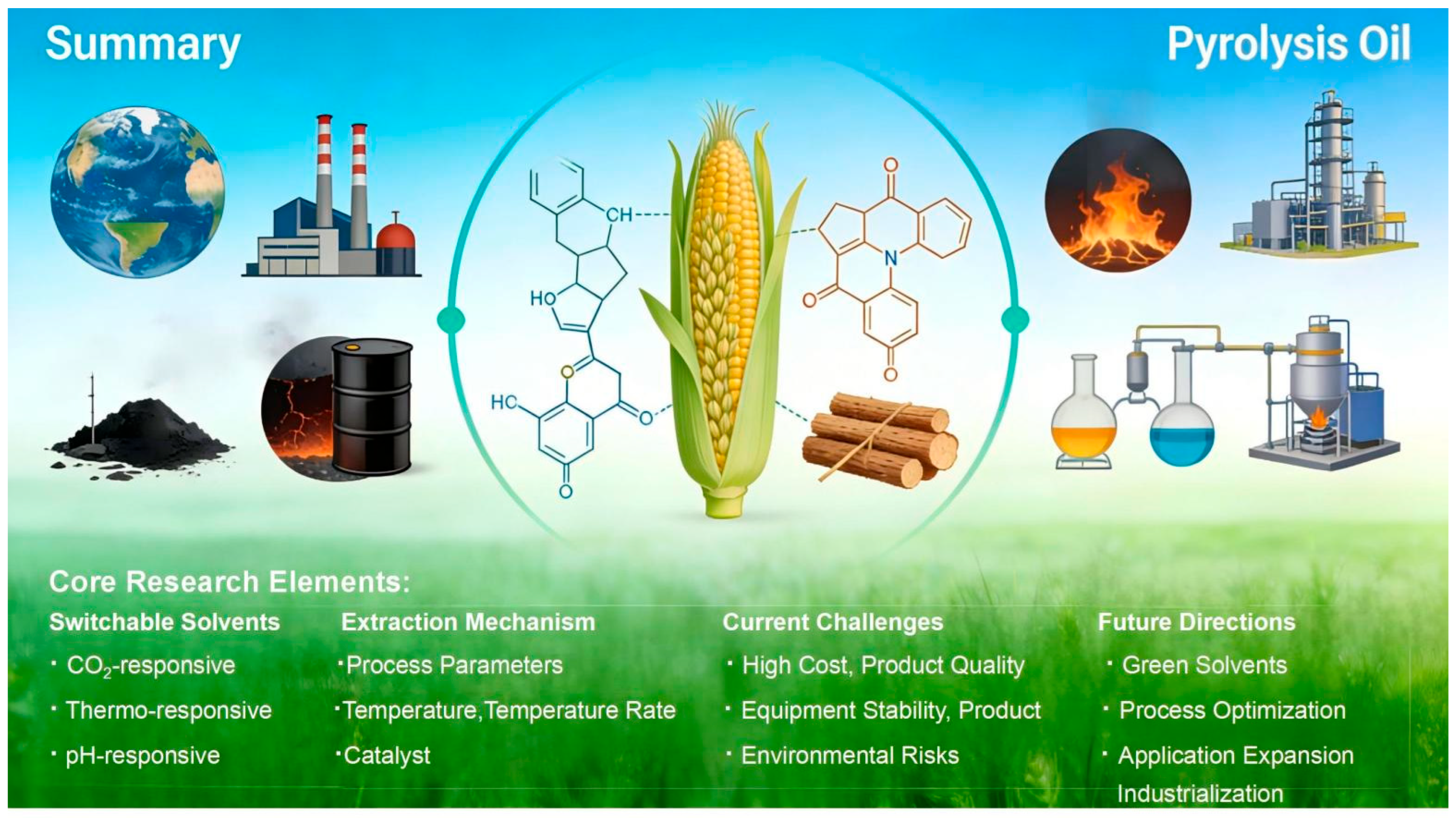
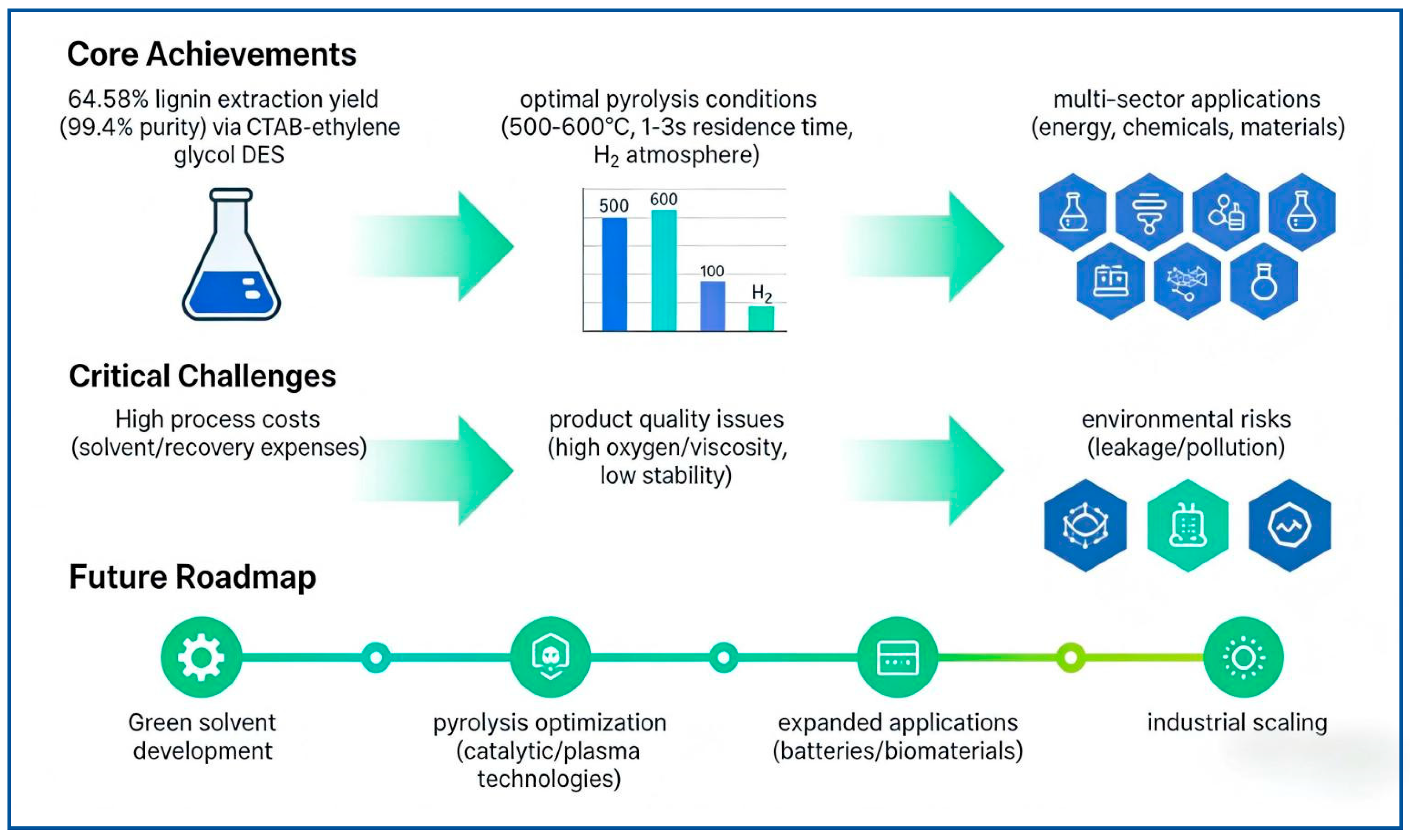
In the context of increasingly severe global energy crises and environmental problems, research on producing pyrolysis oil from corn stover lignin using switchable solvents has important practical significance—it relates to energy structure optimization and adjustment, and plays a key role in the chemical industry’s sustainable development (Figure 10).
In terms of research achievements, breakthrough progress has been made in the extraction process; in-depth exploration of multiple parameters (solvent type, concentration, reaction temperature, time, solid-to-liquid ratio) has clarified their intrinsic relationships with lignin extraction yield. Different switchable solvent types leverage unique properties (CO2-responsive solvents enable reversible changes under mild conditions; thermo-responsive solvents offer simple operation; pH-responsive solvents permit precise tuning). Optimizing process parameters has substantially improved yield; for example, using a cetyltrimethylammonium bromide–ethylene glycol deep eutectic solvent under suitable conditions achieved a 64.58% extraction yield with 99.4% purity. Combination with other pretreatment methods (ultrasonic, microwave-assisted, dilute acid/alkaline pretreatments) has further enhanced extraction efficiency and product quality.
Pyrolysis process research has revealed complex reaction mechanisms (including dehydration, bond cleavage, small fragment reactions, carbonization, cracking, polymerization). Various kinetic models have been established, each with limitations but providing powerful tools for understanding pyrolysis. Studies on pyrolysis conditions show that temperature, heating rate, residence time, and atmosphere significantly affect bio-oil yield and quality: maximum yield for corn stover lignin is typically at 500–600 °C; faster heating rates produce more light components, slower rates favor heavier compounds; optimal residence time is 1–3 s; hydrogen atmosphere promotes hydrocracking and improves quality.
In product applications, corn stover lignin pyrolysis oil has broad prospects: in the energy sector, it offers advantages for power generation and heating (renewability, low pollution, cost reduction), alleviating reliance on traditional fossil fuels; in the chemical feedstock sector, its phenolic and aromatic compounds are important raw materials for synthesizing phenolic resins, pharmaceutical intermediates, and polymers, providing a sustainable source; in other fields, it can be used to prepare pesticide carriers, adsorbents, surfactants, and functional films, further expanding application scope.
However, current research faces numerous challenges: high process costs (expensive solvent preparation/recovery, additional combined pretreatment costs) limit large-scale application; product quality issues (complex composition, high oxygen content, poor stability, high viscosity, low heating value) hinder further use; equipment stability problems (uneven heat/mass transfer, imprecise control, corrosion); and environmental concerns (potential chemical leakage, exhaust gas and solid residue pollution).
Looking ahead, research will develop towards greener and more efficient processes, pyrolysis optimization, expanded product applications, and strengthened industrial-scale research. By developing new solvents, optimizing combined pretreatments, deepening pyrolysis mechanism understanding, improving equipment, broadening application fields, and enhancing industry–academia–research collaboration, this technology’s industrialization can potentially be realized, contributing significantly to renewable energy and chemical sector development, and promoting sustainable energy and environmental development.

Author Contributions

Y.Z. designed, collected and analyzed the data, and wrote the manuscript. J.Y., K.W., L.M., Y.C. and K.C. assisted in collecting relevant materials and mapping. All authors have read and agreed to the published version of the manuscript.

Funding

Basic Scientific Research Operating Fund Projects of Provincial Undergraduate Universities in Heilongjiang Province (2021): Application Research on the Extraction of Lignin Pyrolysis Oil from Corn Stover Using Switchable Solvents (YWK10236210238).

Data Availability Statement

The original contributions presented in this study are included in the article. Further inquiries can be directed to the corresponding author.

Conflicts of Interest

The authors declare no conflicts of interest.

References

  1. Wu, W.; Shah, F.; Ahmad, A.; Ma, C.; Chan, F.K.S.; Zou, G. Challenges and solutions for global plastic governance. Innovation 2025, 6, 100943. [Google Scholar] [CrossRef] [Scilit]
  2. Debnath, B.; Shakur, M.S.; Siraj, M.T.; Bari, A.B.M.M.; Islam, A.R.M.T. Analyzing the factors influencing the wind energy adoption in Bangladesh: A pathway to sustainability for emerging economies. Energy Strategy Rev. 2023, 50, 101265. [Google Scholar] [CrossRef] [Scilit]
  3. Ding, Z.; Ge, X.; Ren, S.; Bi, X.; Wang, R. Comparison of methanol and formic acid as hydrogen carriers: From acquisition to utilization. Mater. Today Commun. 2025, 47, 113150. [Google Scholar] [CrossRef] [Scilit]
  4. Kamkar, M.; Leonard, K.C.; Ferrer, I.; Loo, S.C.J.; Biddinger, E.J.; Brady, D.; Carrier, D.J.; Gathergood, N.; Han, H.; Hermans, I.; et al. Artificial Intelligence (AI) for Sustainable Resource Management and Chemical Processes. ACS Sustain. Chem. Eng. 2024, 12, 2924–2926. [Google Scholar] [CrossRef] [Scilit]
  5. Song, C.; Wong, S.S.; Cheng, Y.; Gurkan, B.; Hu, Y.H.; Chaffee, A.; Zhang, S.; Hu, L.; Bashir, S.; Liu, J.L. 2024 Energy and Fuels Community Highlights: Advancing Materials and Technologies in Decarbonization and Renewable Energy Solutions. ACS Energy Lett. 2025, 10, 4543–4552. [Google Scholar] [CrossRef] [Scilit]
  6. Zhang, F.; He, Z.; Tu, R.; Jia, Z.; Wu, Y.; Sun, Y.; Jiang, E.; Xu, X. Influence of Ultrasonic/Torrefaction Assisted Deep Eutectic Solvents on the Upgrading of Bio-Oil from Corn Stalk. ACS Sustain. Chem. Eng. 2020, 8, 8562–8576. [Google Scholar] [CrossRef] [Scilit]
  7. Árvai, C.; Medgyesi, Z.; Lui, M.Y.; Mika, L.T. The Chemistry of Levulinic Acid: Its Potential in the Production of Biomass-Based Chemicals. Adv. Synth. Catal. 2024, 366, 4846–4888. [Google Scholar] [CrossRef] [Scilit]
  8. Xie, W.; Hu, B.; Zhou, G.; Liu, J.; Fang, Z.; Zhang, Z.; Jiang, X.; Lu, Q. Radical characteristic reactions in lignin pyrolysis: Aryl migration on linkages and substituents. J. Energy Chem. 2025, 109, 692–701. [Google Scholar] [CrossRef] [Scilit]
  9. Savage, P.E. Renewable Fuels and Chemical Recycling of Plastics via Hydrothermal Liquefaction. Acc. Chem. Res. 2024, 57, 3386–3396. [Google Scholar] [CrossRef] [Scilit] [PubMed]
  10. Logan, B.E.; Rossi, R.; Baek, G.; Shi, L.; O’Connor, J.; Peng, W. Energy Use for Electricity Generation Requires an Assessment More Directly Relevant to Climate Change. ACS Energy Lett. 2020, 5, 3514–3517. [Google Scholar] [CrossRef] [Scilit]
  11. García-Franco, A.; Godoy, P.; de la Torre, J.; Duque, E.; Ramos, J.L. United Nations sustainability development goals approached from the side of the biological production of fuels. Microb. Biotechnol. 2021, 14, 1871–1877. [Google Scholar] [CrossRef] [Scilit] [PubMed]
  12. Zhang, C.; Xue, J.; Yang, X.; Ke, Y.; Ou, R.; Wang, Y.; Madbouly, S.A.; Wang, Q. From plant phenols to novel bio-based polymers. Prog. Polym. Sci. 2022, 125, 101473. [Google Scholar] [CrossRef] [Scilit]
  13. Liu, Z.; Wang, Z.; Li, Y.; Wang, W.; Liu, X.; Shu, H.; Jiang, J. Comparison of the Effects of NaOH and Deep Eutectic Solvent Catalyzed Tobacco Stock Lignin Isolation: Chemical Structure and Thermal Characteristics. Catalysts 2024, 14, 744. [Google Scholar] [CrossRef] [Scilit]
  14. Jiang, Y.; Byrne, E.; Glassey, J.; Chen, X. Integrating Graph Neural Network-Based Surrogate Modeling with Inverse Design for Granular Flows. Ind. Eng. Chem. Res. 2024, 63, 9225–9235. [Google Scholar] [CrossRef] [Scilit]
  15. Tav, A.; Öz, Y.; Akyıldız, H.İ. Identification of permethyloctasilsesquioxane by a novel method: Collecting smoke formed by chemical changes in a methylsilsesquioxane blanket at 2000–2500 °C using gas chromatography-mass spectrometry. Analyst 2025, 150, 3958–3973. [Google Scholar] [CrossRef] [Scilit]
  16. Glaznev, R.K.; Karpov, A.I.; Korobeinichev, O.P.; Bolkisev, A.A.; Shaklein, A.A.; Shmakov, A.G.; Paletsky, A.A.; Gonchikzhapov, M.B.; Kumar, A. Experimental and numerical study of polyoxymethylene (Aldrich) combustion in counterflow. Combust. Flame 2019, 205, 358–367. [Google Scholar] [CrossRef] [Scilit]
  17. Abou Rjeily, M.; Gennequin, C.; Pron, H.; Abi-Aad, E.; Randrianalisoa, J.H. Pyrolysis-catalytic upgrading of bio-oil and pyrolysis-catalytic steam reforming of biogas: A review. Environ. Chem. Lett. 2021, 19, 2825–2872. [Google Scholar] [CrossRef] [Scilit]
  18. Adebayo, A.J.; Olanrewaju, A. A Complete Review of Lignin’s Extraction, Analysis, Applications, and Future Outlook. Chem. Afr. 2025, 8, 1711–1741. [Google Scholar] [CrossRef] [Scilit]
  19. Rodrigues, J.S.; Lima, V.; Araújo, L.C.P.; Botaro, V.R. Lignin Fractionation Methods: Can Lignin Fractions Be Separated in a True Industrial Process? Ind. Eng. Chem. Res. 2021, 60, 10863–10881. [Google Scholar] [CrossRef] [Scilit]
  20. Yan, P.; Peng, H.; Rabiee, H.; Ge, L.; Weng, Y.; Ma, B.; Wang, J.; Konarova, M.; Zhao, G.; Kennedy, E.M.; et al. Advances in lignocellulosic biomass pyrolysis and catalytic upgrading for sustainable biofuel production: Process design strategies and reaction rationales. Green Chem. 2025, 27, 10444–10477. [Google Scholar] [CrossRef] [Scilit]
  21. Iliopoulou, E.F.; Pachatouridou, E.; Marianou, A.A.; Michailof, C.; Kalogiannis, K.K.; Lappas, A.A. Catalytic pyrolysis of olive mill wastes towards advanced bio-fuels and bio-chemicals using metal oxide catalysts. Catal. Today 2023, 420, 114151. [Google Scholar] [CrossRef] [Scilit]
  22. Sun, W.; Yan, Y.; Wei, Y.; Ma, J.; Niu, Z.; Hu, G. Catalytic Pyrolysis of Biomass: A Review of Zeolite, Carbonaceous, and Metal Oxide Catalysts. Nanomaterials 2025, 15, 493. [Google Scholar] [CrossRef] [Scilit]
  23. Hu, M.; Yu, Y.; Li, X.; Wang, X.; Liu, Y. The dawn of aqueous deep eutectic solvents for lignin extraction. Green Chem. 2023, 25, 10235–10262. [Google Scholar] [CrossRef] [Scilit]
  24. Vermeeren, B.; Van Praet, S.; Arts, W.; Narmon, T.; Zhang, Y.; Zhou, C.; Steenackers, H.P.; Sels, B.F. From sugars to aliphatic amines: As sweet as it sounds? Production and applications of bio-based aliphatic amines. Chem. Soc. Rev. 2024, 53, 11804–11849. [Google Scholar] [CrossRef] [Scilit]
  25. Talwar, P.; Agudelo, M.A.; Nanda, S. Pyrolysis Process, Reactors, Products, and Applications: A Review. Energies 2025, 18, 2979. [Google Scholar] [CrossRef] [Scilit]
  26. Jia, W.; Zhang, H.; Liu, B.; Xiao, J.; Yang, H.; Chen, H. Pyrolytic Interactions in Biomass: A Review Across Molecular, Component, and Feedstock Scales. Energy Fuels 2025, 39, 22463–22488. [Google Scholar] [CrossRef] [Scilit]
  27. Aguirre, M.Á.; Vidal, L.; Ahmadi, M.; Canals, A. Stimulus-responsive smart solvents and their application in analytical liquid-liquid (micro)extraction techniques. TrAC Trends Anal. Chem. 2025, 189, 118267. [Google Scholar] [CrossRef] [Scilit]
  28. Ferreira, M.P.S.; Gonçalves, A.S.; Antunes, J.C.; Bessa, J.; Cunha, F.; Fangueiro, R. Fibrous Structures: An Overview of Their Responsiveness to External Stimuli towards Intended Application. Polymers 2024, 16, 1345. [Google Scholar] [CrossRef] [Scilit] [PubMed]
  29. Vicente, F.A.; Tkalec, N.; Likozar, B. Responsive deep eutectic solvents: Mechanisms, applications and their role in sustainable chemistry. Chem. Commun. 2025, 61, 1002–1013. [Google Scholar] [CrossRef] [Scilit] [PubMed]
  30. Costa e Silva, R.; Vega, C.; Regnier, M.; Capaldo, L.; Wesenberg, L.; Lowe, G.; Thiago de Oliveira, K.; Noël, T. Electrosynthesis of Aryliminophosphoranes in Continuous Flow. Adv. Synth. Catal. 2023, 366, 955–960. [Google Scholar] [CrossRef] [Scilit]
  31. Maginn, E.J. Virtual Issue on Carbon Dioxide: Physical Chemistry That Impacts Its Capture, Sequestration, and Conversion. J. Phys. Chem. B 2022, 126, 9927–9929. [Google Scholar] [CrossRef] [Scilit]
  32. Lin, H.; Ding, Y. Polymeric membranes: Chemistry, physics, and applications. J. Polym. Sci. 2020, 58, 2433–2434. [Google Scholar] [CrossRef] [Scilit]
  33. Costa, M.C.M.; Silva, S.M.C.; Antunes, F.E. Adjusting the low critical solution temperature of poly(N-isopropyl acrylamide) solutions by salts, ionic surfactants and solvents: A rheological study. J. Mol. Liq. 2015, 210, 113–118. [Google Scholar] [CrossRef] [Scilit]
  34. Dong, Z.; Qu, Y.; Jiao, Y.; Xue, K.; Zhu, W.; Liu, H.; Qi, J.; Wang, Y. Temperature response behavior of poly(1-vinyl-3-methylimidazole dimethyl phosphate-co-N-isopropylacrylamide) in aqueous and ester solutions driven by hydrogen bonding. J. Mol. Liq. 2024, 395, 123848. [Google Scholar] [CrossRef] [Scilit]
  35. Credidio, B.; Thürmer, S.; Stemer, D.; Pugini, M.; Trinter, F.; Vokrouhlický, J.; Slavíček, P.; Winter, B. From Gas to Solution: The Changing Neutral Structure of Proline upon Solvation. J. Phys. Chem. A 2024, 128, 10202–10212. [Google Scholar] [CrossRef] [Scilit] [PubMed]
  36. Lim, V.T.; Bayly, C.I.; Fusti-Molnar, L.; Mobley, D.L. Assessing the Conformational Equilibrium of Carboxylic Acid via Quantum Mechanical and Molecular Dynamics Studies on Acetic Acid. J. Chem. Inf. Model. 2019, 59, 1957–1964. [Google Scholar] [CrossRef] [Scilit]
  37. Ge, H.; Wei, J.; Zhu, B.; Xu, Y.; Wang, S.; Yu, G.; Li, B.; Xu, H. Microscopic mechanism investigation of extraction of lignin by benzyltriethylammonium chloride-based deep eutectic solvents. J. Mol. Liq. 2024, 413, 125996. [Google Scholar] [CrossRef] [Scilit]
  38. Ouyang, J.; Liu, L.; Zhou, L.; Liu, Z.; Li, Y.; Zhang, C. Solubility, dissolution thermodynamics, Hansen solubility parameter and molecular simulation of 4-chlorobenzophenone with different solvents. J. Mol. Liq. 2022, 360, 119438. [Google Scholar] [CrossRef] [Scilit]
  39. Tu, H.; Tian, B.; Chen, S.; Xu, J.; Yang, J.; Zhao, Z.; Chen, S.; Wu, J. Enhancing photocatalytic efficiency through surface modification to manipulate internal electron-hole distribution. npj Clean Water 2025, 8, 48. [Google Scholar] [CrossRef] [Scilit]
  40. Wei, Z.-F.; Han, X.; Nie, C.-D.; Yang, H.; Fu, Y.-J. A customizable CO2-Responsive supramolecular solvent for the simultaneous extraction of Multi-Polar phytochemicals from plants. Microchem. J. 2025, 210, 112959. [Google Scholar] [CrossRef] [Scilit]
  41. Ying, Z.; Chen, J.; Shang, Z.; Liu, T.; Xu, S.; Wu, G. Recovery and Resource Utilization of Spent Hydrogenation Catalysts: A Review. Environ. Sci. Technol. 2025, 59, 14809–14831. [Google Scholar] [CrossRef] [Scilit]
  42. Wang, Q.; Feng, X.; Yang, S.; Xu, F.; Chai, M.; Fan, Y. Research on reversible bonding of microfluidic chips based on stretch release adhesive strips. Polym. Eng. Sci. 2024, 64, 4508–4519. [Google Scholar] [CrossRef] [Scilit]
  43. Pourhoseini, S.H.; Karimian, A.; Ficarella, A. A new environmental friend and commercial biodiesel from Salicornia persica Akhani: Studies of synthesis, physico chemical analysis and flame analysis. Eng. Sci. Technol. Int. J. 2024, 54, 101716. [Google Scholar] [CrossRef] [Scilit]
  44. Wei, Z.; Zhao, W.; Wang, Y.; Wang, X.; Long, S.; Yang, J. Novel PNIPAm-based electrospun nanofibres used directly as a drug carrier for “on-off” switchable drug release. Colloids Surf. B Biointerfaces 2019, 182, 110347. [Google Scholar] [CrossRef] [Scilit] [PubMed]
  45. Jiménez-Ortega, L.A.; Yao, S.; Mota-Morales, J.D.; Heredia, J.B. Deep Eutectic Solvents Can Contribute to Fight against Zero Hunger from a Sustainable Perspective. J. Agric. Food Chem. 2023, 71, 5027–5029. [Google Scholar] [CrossRef] [Scilit]
  46. Grimm, O.; Wendler, F.; Schacher, F. Micellization of Photo-Responsive Block Copolymers. Polymers 2017, 9, 396. [Google Scholar] [CrossRef] [Scilit] [PubMed]
  47. Tu, H.; Zhao, Z.; Chen, S.; Wang, Y.; Chen, S.; Zhang, J.; Wu, J. Unveiling the Impact of Microstructure Alterations on Photocatalytic Hydrogen Peroxide Preparation via DFT Prediction and Analysis. Energy Environ. Mater. 2025, 8, e70016. [Google Scholar] [CrossRef] [Scilit]
  48. Wang, F.; Xu, F.; Liu, Z.; Cui, Z.; Li, Y. Effects of outdoor dry bale storage conditions on corn stover and the subsequent biogas production from anaerobic digestion. Renew. Energy 2019, 134, 276–283. [Google Scholar] [CrossRef] [Scilit]
  49. Qu, W.; Liu, J.; Xue, Y.; Wang, X.; Bai, X. Potential of producing carbon fiber from biorefinery corn stover lignin with high ash content. J. Appl. Polym. Sci. 2017, 135, 45736. [Google Scholar] [CrossRef] [Scilit]
  50. Tryfona, T.; Pankratova, Y.; Petrik, D.; Rebaque Moran, D.; Wightman, R.; Yu, X.; Echevarría-Poza, A.; Deralia, P.K.; Vilaplana, F.; Anderson, C.T.; et al. Altering the substitution and cross-linking of glucuronoarabinoxylans affects cell wall architecture in Brachypodium distachyon. New Phytol. 2024, 242, 524–543. [Google Scholar] [CrossRef] [Scilit]
  51. Hu, S.; Kamimura, N.; Sakamoto, S.; Nagano, S.; Takata, N.; Liu, S.; Goeminne, G.; Vanholme, R.; Uesugi, M.; Yamamoto, M.; et al. Rerouting of the lignin biosynthetic pathway by inhibition of cytosolic shikimate recycling in transgenic hybrid aspen. Plant J. 2022, 110, 358–376. [Google Scholar] [CrossRef] [Scilit]
  52. Rencoret, J.; Marques, G.; Gutiérrez, A.; Ibarra, D.; Li, J.; Gellerstedt, G.; Santos, J.I.; Jiménez-Barbero, J.; Martínez, Á.T.; del Río, J.C. Structural characterization of milled wood lignins from different eucalypt species. Holzforschung 2008, 62, 514–526. [Google Scholar] [CrossRef] [Scilit]
  53. Li, Z.; Sutandar, E.; Goihl, T.; Zhang, X.; Pan, X. Cleavage of ethers and demethylation of lignin in acidic concentrated lithium bromide (ACLB) solution. Green Chem. 2020, 22, 7989–8001. [Google Scholar] [CrossRef] [Scilit]
  54. Vanholme, R.; De Meester, B.; Ralph, J.; Boerjan, W. Lignin biosynthesis and its integration into metabolism. Curr. Opin. Biotechnol. 2019, 56, 230–239. [Google Scholar] [CrossRef] [Scilit]
  55. Kim, H.N.; So, B.-D.; Kim, M.S.; Han, K.S.; Oh, S.B. Seismic fault weakening via CO2 pressurization enhanced by mechanical deformation of dolomite fault gouges. Geology 2021, 49, 1245–1249. [Google Scholar] [CrossRef] [Scilit]
  56. Wu, M.; Jin, J.; Cai, C.; Shi, J.; Xing, X.; Cai, J. Effects of impregnation combined heat treatment on the pyrolysis behavior of poplar wood. PLoS ONE 2020, 15, e0229907. [Google Scholar] [CrossRef] [Scilit]
  57. Li, W.; Wanninayake, N.; Gao, X.; Li, M.; Pu, Y.; Kim, D.-Y.; Ragauskas, A.J.; Shi, J. Mechanistic Insight into Lignin Slow Pyrolysis by Linking Pyrolysis Chemistry and Carbon Material Properties. ACS Sustain. Chem. Eng. 2020, 8, 15843–15854. [Google Scholar] [CrossRef] [Scilit]
  58. Baghel, P.; Sakhiya, A.K.; Kaushal, P. Influence of temperature on slow pyrolysis of Prosopis Juliflora: An experimental and thermodynamic approach. Renew. Energy 2022, 185, 538–551. [Google Scholar] [CrossRef] [Scilit]
  59. Cai, N.; Xia, S.; Li, X.; Xiao, H.; Chen, X.; Chen, Y.; Bartocci, P.; Chen, H.; Williams, P.T.; Yang, H. High-value products from ex-situ catalytic pyrolysis of polypropylene waste using iron-based catalysts: The influence of support materials. Waste Manag. 2021, 136, 47–56. [Google Scholar] [CrossRef] [Scilit]
  60. Allen, D.T.; Gathergood, N.; Licence, P.; Subramaniam, B. Expectations for Manuscripts Contributing to the Field of Solvents in ACS Sustainable Chemistry & Engineering. ACS Sustain. Chem. Eng. 2020, 8, 14627–14629. [Google Scholar] [CrossRef] [Scilit]
  61. Natarajan, S.; Aravindan, V. Recycling Strategies for Spent Li-Ion Battery Mixed Cathodes. ACS Energy Lett. 2018, 3, 2101–2103. [Google Scholar] [CrossRef] [Scilit]
  62. Mazej, Z.; Goreshnik, E. Syntheses of Dioxygenyl Salts by Photochemical Reactions in Liquid Anhydrous Hydrogen Fluoride: X-ray Crystal Structures of α- and β-O2Sn2F9, O2Sn2F9·0.9HF, O2GeF5·HF, and O2[Hg(HF)]4(SbF6)9. Inorg. Chem. 2020, 59, 2092–2103. [Google Scholar] [CrossRef] [Scilit] [PubMed]
  63. Liu, Y.; Guo, Q.; Yao, Z.; Liu, H.; Zhang, S.; Hao, H. Improved piezocatalytic performance of BaTiO3 nanowires via in situ pore structure regulation. Nano Converg. 2025, 12, 51. [Google Scholar] [CrossRef] [Scilit] [PubMed]
  64. Noonan, G.M.; Mullen, A.; Argoud, S.; Owen, S.F. Sustainable medicines development and use: Challenges and opportunities in the sustainable production of active pharmaceutical ingredients. Br. J. Clin. Pharmacol. 2024, 90, 3090–3093. [Google Scholar] [CrossRef] [Scilit]
  65. Rajbangshi, J.; Sener, C.; Van Lehn, R.C. Effect of Solvents on Lignin–Surface Interactions via Molecular Dynamics Simulations. J. Phys. Chem. B 2025, 129, 9175–9189. [Google Scholar] [CrossRef] [Scilit]
  66. Ramalingam, S.; Murugesan, E.; Ganesan, P.; Rajendiran, S. Characteristics analysis of julifora biodiesel derived from different production methods. Fuel 2020, 280, 118579. [Google Scholar] [CrossRef] [Scilit]
  67. Adamczyk, S.; Lehtonen, A.; Mäkipää, R.; Adamczyk, B. A step forward in fungal biomass estimation—A new protocol for more precise measurements of soil ergosterol with liquid chromatography-mass spectrometry and comparison of extraction methods. New Phytol. 2023, 241, 2333–2336. [Google Scholar] [CrossRef] [Scilit]
  68. Park, C.-W.; Han, S.-Y.; Park, J.-S.; Lee, E.-A.; Bandi, R.; Dadigala, R.; Kim, J.-K.; Kwon, G.-J.; Kim, N.-H.; Lee, S.-H. Deep eutectic-like solvent-assisted isolation of lignin from Pinus densiflora and its characteristics. BioResources 2022, 17, 5600–5611. [Google Scholar] [CrossRef] [Scilit]
  69. Lapray, A.; Martzel, T.; Hiebel, M.A.; Oudeyer, S.; Suzenet, F.; Brière, J.F. Domino Transformations of 3-Fluoro-1,2,4-Triazine Derivatives towards Spirocyclic and Fused Pyridines. Adv. Synth. Catal. 2023, 366, 316–322. [Google Scholar] [CrossRef] [Scilit]
  70. Saleknezhad, M.; Madadi, M.; Al Azad, S.; Gupta, V.K. Harnessing the potential of biphasic solvent systems in lignocellulosic biomass fractionation through computational insights. Green Chem. 2025, 27, 4094–4127. [Google Scholar] [CrossRef] [Scilit]
  71. Resch, M.G.; Ladisch, M.R. Analysis, Impacts, and Solutions to Biomass Variability for Production of Fuels and Value-Added Products. ACS Sustain. Chem. Eng. 2020, 8, 15375–15377. [Google Scholar] [CrossRef] [Scilit]
  72. Gong, C.; Thomsen, S.T.; Meng, X.; Pu, Y.; Puig-Arnavat, M.; Bryant, N.; Bhagia, S.; Felby, C.; Ragauskas, A.J.; Thygesen, L.G. Effects of different pelleting technologies and parameters on pretreatment and enzymatic saccharification of lignocellulosic biomass. Renew. Energy 2021, 179, 2147–2157. [Google Scholar] [CrossRef] [Scilit]
  73. Jamaldheen, S.B.; Sharma, K.; Rani, A.; Moholkar, V.S.; Goyal, A. Comparative analysis of pretreatment methods on sorghum (Sorghum durra) stalk agrowaste for holocellulose content. Prep. Biochem. Biotechnol. 2018, 48, 457–464. [Google Scholar] [CrossRef] [Scilit] [PubMed]
  74. Heuson, E.; Dumeignil, F. The various levels of integration of chemo- and bio-catalysis towards hybrid catalysis. Catal. Sci. Technol. 2020, 10, 7082–7100. [Google Scholar] [CrossRef] [Scilit]
  75. Gao, P.; Liu, Y.; Huang, X.; Abulaiti, A.; Yang, S. Effect of wet torrefaction on the physicochemical characteristics and gasification behavior of biochar. Ind. Crops Prod. 2023, 197, 116544. [Google Scholar] [CrossRef] [Scilit]
  76. Hou, J.; Jie, J.; Wei, X.; Shen, X.; Zhao, Q.; Chai, X.; Pang, H.; Shen, Z.; Wang, J.; Wu, L.; et al. A core-shell-type nanosystem promotes diabetic wound healing through Photothermal-responsive release of transforming growth factor β. J. Nanobiotechnol. 2024, 22, 449. [Google Scholar] [CrossRef] [Scilit]
  77. Zhang, L.; Yin, R.; Mei, Y.; Liu, R.; Yu, W. Characterization of crude and ethanol-stabilized bio-oils before and after accelerated aging treatment by comprehensive two-dimensional gas-chromatography with time-of-flight mass spectrometry. J. Energy Inst. 2017, 90, 646–659. [Google Scholar] [CrossRef] [Scilit]
  78. Ollis, D.F. Kinetics of Photocatalyzed Reactions: Five Lessons Learned. Front. Chem. 2018, 6, 378. [Google Scholar] [CrossRef] [Scilit] [PubMed]
  79. Kumbhakar, M.; Manna, A.; Sayed, M.; Kumar, A.; Pal, H. Observation of the Marcus Inverted Region for Bimolecular Photoinduced Electron-Transfer Reactions in Viscous Media. J. Phys. Chem. B 2014, 118, 10704–10715. [Google Scholar] [CrossRef] [Scilit]
  80. Tan, Z.; Li, Y.; Chen, F.; Liu, J.; Zhong, J.; Guo, L.; Zhang, R.; Chen, R. Challenges and Perspectives of the Conversion of Lignin Waste to High-Value Chemicals by Pyrolysis. Processes 2024, 12, 589. [Google Scholar] [CrossRef] [Scilit]
  81. Dabros, T.M.H.; Stummann, M.Z.; Høj, M.; Jensen, P.A.; Grunwaldt, J.-D.; Gabrielsen, J.; Mortensen, P.M.; Jensen, A.D. Transportation fuels from biomass fast pyrolysis, catalytic hydrodeoxygenation, and catalytic fast hydropyrolysis. Prog. Energy Combust. Sci. 2018, 68, 268–309. [Google Scholar] [CrossRef] [Scilit]
  82. Sinha, S.; Sankar Rao, C.; Kumar, A.; Venkata Surya, D.; Basak, T. Exploring and understanding the microwave-assisted pyrolysis of waste lignocellulose biomass using gradient boosting regression machine learning model. Renew. Energy 2024, 231, 120968. [Google Scholar] [CrossRef] [Scilit]
  83. Bhattacharjee, N.; Biswas, A.B. Pyrolysis of Alternanthera philoxeroides (alligator weed): Effect of pyrolysis parameter on product yield and characterization of liquid product and bio char. J. Energy Inst. 2018, 91, 605–618. [Google Scholar] [CrossRef] [Scilit]
  84. Shirinichi, F.; Gao, Y.; Webber, M.J.; Wang, Y. Recent advances in sensing technologies for fentanyl and its analogs: Challenges and future directions. Sens. Actuators Rep. 2025, 10, 100386. [Google Scholar] [CrossRef] [Scilit]
  85. Tsikas, D. Interpretation of negative-ion chemical ionization GC–MS and GC–MS/MS mass spectra of perfluorinated organic analyte derivatives: Consideration of reduction reactions in the gas phase. J. Chromatogr. B 2025, 1253, 124487. [Google Scholar] [CrossRef] [Scilit]
  86. Tu, H.; Tian, B.; Zhao, Z.; Guo, R.; Wang, Y.; Chen, S.; Wu, J. Research on the influence of g-C3N4 microstructure changes on the efficiency of visible light photocatalytic degradation. Water Res. X 2025, 28, 100315. [Google Scholar] [CrossRef] [Scilit]
  87. Enders, A.A.; North, N.M.; Fensore, C.M.; Velez-Alvarez, J.; Allen, H.C. Functional Group Identification for FTIR Spectra Using Image-Based Machine Learning Models. Anal. Chem. 2021, 93, 9711–9718. [Google Scholar] [CrossRef] [Scilit]
  88. Reinhard, M.; van der Ham, A.; Yang, L.; Bröker, L.; Orlando, T.; Tkach, I.; Levien, M.; Bennati, M. Enhancing NMR Signals in Liquids by Fluorine-19 Overhauser Dynamic Nuclear Polarization (DNP) and Hyperpolarization Transfer to Carbon-13. Angew. Chem. Int. Ed. 2025, 64, e202517498. [Google Scholar] [CrossRef] [Scilit]
  89. Wang, J.; Lou, H.H.; Yang, F.; Cheng, F. Development and performance evaluation of a clean-burning stove. J. Clean. Prod. 2016, 134, 447–455. [Google Scholar] [CrossRef] [Scilit]
  90. Deng, Y.; Ye, Y.; Yin, T.; Tian, Z.; Wang, C.; Chen, Y.; Yang, Z.; Tu, J.; Shu, R. Efficient hydrodeoxygenation of phenolic compounds and lignin pyrolysis oil by core-shell Ru@SiO2-Al2O3 catalyst. Renew. Energy 2025, 250, 123294. [Google Scholar] [CrossRef] [Scilit]
  91. Fu, H.; Li, X.; Shao, S.; Cai, Y. Jet fuel range hydrocarbon generation from catalytic pyrolysis of lignin and polypropylene with iron-modified activated carbon. J. Anal. Appl. Pyrolysis 2024, 177, 106360. [Google Scholar] [CrossRef] [Scilit]
  92. Veeramanoharan, A.; Kim, S.-C.; Lee, G. Application of cashew nut shell liquid as a green oilfield chemical: A state-of-the-art review. Mater. Today Sustain. 2025, 32, 101268. [Google Scholar] [CrossRef] [Scilit]
  93. Atta, D.Y.; Negash, B.M.; Yekeen, N.; Habte, A.D. A state-of-the-art review on the application of natural surfactants in enhanced oil recovery. J. Mol. Liq. 2021, 321, 114888. [Google Scholar] [CrossRef] [Scilit]
  94. Upadhyay, P.; Zubair, M.; Roopesh, M.S.; Ullah, A. An Overview of Advanced Antimicrobial Food Packaging: Emphasizing Antimicrobial Agents and Polymer-Based Films. Polymers 2024, 16, 2007. [Google Scholar] [CrossRef] [Scilit] [PubMed]
  95. Yaakob, M.N.A.; Salim, N.; Mustapha, S.N.H.; Misnon, I.I.; Rahim, M.H.A.; Roslan, R. Efficient lignin extraction from oil palm empty fruit bunches using guanidine-based deep eutectic solvents under microwave assistance. Ind. Crops Prod. 2024, 218, 118968. [Google Scholar] [CrossRef] [Scilit]
  96. Paul, S.; Shrotriya, P. Efficient Recycling Processes for Lithium-Ion Batteries. Materials 2025, 18, 613. [Google Scholar] [CrossRef] [Scilit]
Figure 1. Schematic overview of biomass (corn/wood) conversion to pyrolysis oil: core research elements (switchable solvents, extraction mechanisms), current challenges, and future directions for sustainable valorization.
Processes 14 00475 g001
Figure 2. Schematic illustration of lignin extraction from corn stover using CO2-responsive switchable solvents (DBU/methanol): (a) π-π stacking interactions between solvent and lignin aromatic structures, and (b) dissolution mechanism of lignin via the CO2-activated solvent system.
Processes 14 00475 g002
Figure 3. Multi-dimensional characterization of corn stover: composition (cellulose, hemicellulose, lignin), chemical structure (phenylpropane units and functional groups distribution), and pyrolysis characteristics (TGA/DTG curves of major components).
Processes 14 00475 g003
Figure 4. Process flow diagram for lignin extraction from corn stover using switchable solvents: (a) raw material pretreatment (sieving to drying), (b) switchable solution reaction (micro-reactor setup to atmospheric processing), (c) product separation (vacuum filtration to membrane treatment), and (d) solvent recovery system.
Processes 14 00475 g004
Figure 5. Parametric analysis of lignin extraction yield from corn stover using switchable solvents: (a) solvent type comparison (DBU/methanol vs. others), (b) solvent concentration effect (10–50%), (c) reaction temperature impact (100–140 °C), (d) solid-to-liquid ratio influence (1 g:10 mL to 1 g:30 mL), with optimal parameter combination and trend interpretations (e.g., diminishing returns, cost implications).
Processes 14 00475 g005
Figure 6. Optimization strategies for corn stover lignin extraction: (a) pretreatment methods (with yield enhancement percentages), (b) development of multi-stimuli-responsive switchable solvents (designed for selectivity), and (c) upgraded reaction equipment (micro-channel/agitator reactors with automated parameter control).
Processes 14 00475 g006
Figure 7. Corn stover lignin pyrolysis process and kinetic model evaluation: (a) pyrolysis pathway (dehydration, β-O-4 ether bond cleavage, phenolic compound formation, char generation, and gas cracking); (b) kinetic model fitting comparison (consecutive, parallel, and single-step reactions) with corresponding R2 values.
Processes 14 00475 g007
Figure 8. Value chain of corn stover lignin pyrolysis oil: production process and cross-field applications (agriculture: pesticide carriers/crop promotion; environmental protection: porous absorbents/green surfactants).
Processes 14 00475 g008
Figure 9. Research achievements in corn stover lignin valorization: switchable solvent extraction, combined pretreatments for yield improvement, pyrolysis models.
Processes 14 00475 g009
Figure 10. Lignin valorization: core achievements (64.58% extraction yield, optimal pyrolysis conditions, multi-sector applications), critical challenges (costs, product quality, environmental risks), and future roadmap (green solvents, pyrolysis optimization, expanded applications, industrial scaling).
Processes 14 00475 g010
Table 1. Comparative structural characteristics of corn stover lignin and softwood/hardwood lignin.
FeatureCorn Stover LigninSoftwood LigninHardwood Lignin
Major Monomer UnitsH (high), G, S (low)Predominantly GS and G
Typical S/G/H Ratio~1:1.5:1 *G-dominated, negligible SS/G > 1
β-O-4 Linkage ContentModerate (~50–60%)HigherHighest
Methoxyl (-OCH3) ContentModerate (~14–16%)LowerHigh
Key Pyrolysis ImplicationsLower depolymerization temperature; higher yield of phenolic compounds (especially H-type phenols) and gases.Pyrolysis yields more G-type phenolics (e.g., guaiacols).Pyrolysis yields more S-type phenolics (e.g., syringols) and less char.
Note: H: p-hydroxyphenyl; G: guaiacyl; S: syringyl. * Example ratio; actual values vary with cultivar and tissue. Compared to wood lignins, the higher H-unit content and distinct linkage architecture of corn stover lignin facilitate depolymerization at relatively lower temperatures but may also increase extraction difficulty due to condensed structures. This uniqueness necessitates the tailored screening of switchable solvents (e.g., those with stronger affinity for H-type aromatic rings) and optimized pyrolysis conditions for valorization.
Disclaimer/Publisher’s Note: The statements, opinions and data contained in all publications are solely those of the individual author(s) and contributor(s) and not of MDPI and/or the editor(s). MDPI and/or the editor(s) disclaim responsibility for any injury to people or property resulting from any ideas, methods, instructions or products referred to in the content.