1. Introduction
Fossil fuel shortages and greenhouse gas emissions are major global challenges of the 21st century [
1], driving researchers to actively explore renewable alternative energy sources [
2,
3]. Among the numerous options, biomass energy has emerged as one of the most promising choices due to its carbon-neutral nature (the CO
2 released during its utilization can be reabsorbed during plant growth) [
4] and has secured a significant share in the energy mix of many countries [
5]. Among various biomass utilization technologies, direct combustion is dominant (accounting for approximately 97%) owing to its technological maturity and operational simplicity [
6]. However, the combustion process involves multiple complex, coupled, and interacting stages [
7], posing challenges for in-depth optimization of the combustion process.
To address this challenge, our research team has proposed a novel fusion decoupled combustion technology and has validated its effectiveness in optimizing combustion and reducing pollutant emissions through process simulation [
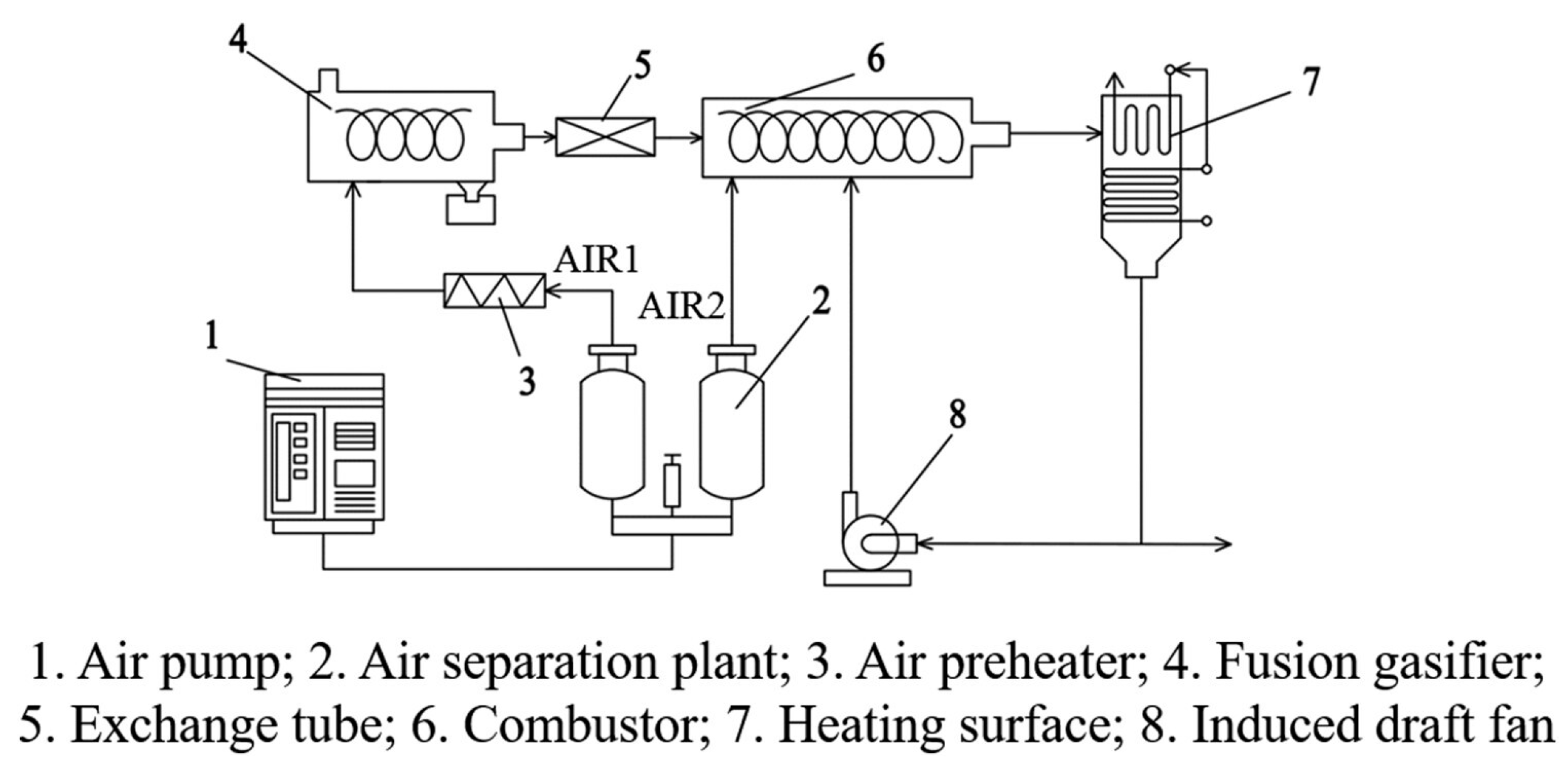
8]. This technology divides the continuous combustion process into two core stages: the fusion gasification stage and the high-temperature gasification syngas combustion stage. The detailed process flow is illustrated in
Figure 1. During the fusion gasification stage, the air required for biomass combustion is separated into two streams (Air1 and Air2) via an air separation unit. Air1 enters the gasification zone after passing through an air preheater. In the gasification zone, Air1 reacts with the biomass. The heat released maintains the gasification zone temperature above the ash fusion point. Under these conditions, tar undergoes cracking [
9], and ash is discharged in a liquid state [
10], thereby preventing issues related to coking and slagging [
11,
12,
13]. In the high-temperature gasification syngas combustion stage, to reduce NOx emissions, the high-temperature syngas is first cooled by an exchange tube before being introduced into the combustion zone, where it reacts with Air2. The flue gas generated in the combustion zone is subsequently cooled by heating surfaces. Prior to discharge, a portion of the flue gas is recirculated back into the combustion zone using an induced draft fan. This enhances mixing and suppresses NOx formation within the combustion zone.
The core engineering and scientific question addressed in this study lies precisely in this second stage: Can the high-temperature syngas produced from the gasifier achieve stable ignition after direct mixing with ambient-temperature air (Air2)? The answer to this question directly determines the design principles of the combustion device, and the operational stability of the entire system. For engineering applications, a reliable ignition system design cannot rely merely on confirming ignition under a single “safe” operating condition; instead, it must be built upon a systematic understanding of the stable ignition boundaries. These boundaries are defined by the upper and lower limits of the excess air coefficient (λmin and λmax), which together delineate the range of fuel-air mixture concentrations within which the system can successfully ignite and sustain a stable flame. Systematically studying how λmin and λmax vary with key parameters (such as syngas temperature and composition) holds three fundamental implications: First, it defines the operational window that ensures safe and reliable operation, providing a quantitative basis for setting control logic and safety interlocks. Second, the width of this window (λmin–λmax) directly quantifies the system’s tolerance to operational fluctuations, serving as a key indicator for assessing its robustness. Finally, the high sensitivity of the limiting parameters to the underlying conditions, along with their variation patterns, offers crucial insights for revealing the dominant physicochemical mechanisms (such as kinetic control or thermal effects) governing the ignition process.
Substantial foundational research on syngas ignition has accumulated, primarily focused on two major application scenarios. These studies have deepened the understanding of H
2/CO oxidation kinetics, yet their research paradigms differ fundamentally from the engineering scenario of interest in this work. In research targeting homogeneous ignition under high-pressure, highly diluted conditions for advanced power cycles, such work primarily provides a design basis for advanced systems like supercritical CO
2 power cycles. The core involves measuring the ignition delay time (τ
ign) of syngas under high pressure (up to ~300 atm), high dilution (CO
2 dilution up to 94%), and fully premixed conditions, using shock tubes or rapid compression machines, with the focus on revealing detailed homogeneous chemical reaction kinetics under extreme conditions. For instance, Barak et al. [
14,
15] found in experiments at pressures up to 45.5 atm and 85% CO
2 dilution that even for the relatively well-established H
2-CO mechanism, model-predicted τ
ign still differed from experimental values by orders of magnitude, highlighting the special influence of the high-concentration CO
2 environment on reaction pathways. To explain this deviation, Li et al. [
16] specifically developed a syngas combustion kinetic model suitable for high CO
2 dilution conditions. Subsequently, Karimi et al. [
17] extended the experimental pressure range to 90–210 atm and found that predictions from several mainstream chemical kinetic models agreed well with experimental data, indicating that existing mechanisms have a certain degree of applicability at higher pressures. These studies collectively reveal the significant influence of the complex interactions between pressure, H
2/CO ratio, and diluent type (CO
2 vs. Ar/N
2) on τ
ign. In research targeting stratified mixture auto-ignition for internal combustion engines, such work primarily serves low-temperature combustion strategies like Homogeneous Charge Compression Ignition (HCCI), aiming to control the combustion rate through thermodynamic and compositional stratification. Studies often employ high-fidelity computational tools like Direct Numerical Simulation (DNS) to reveal the microscale coupling mechanisms of turbulence, mixing, and chemical reactions under initial conditions with stratified temperature and fuel concentration. For example, DNS studies by Bansal and Im [
18] on H
2/air mixtures showed that different initial correlation methods between temperature and composition stratification lead to significantly different heat release patterns. Zhang et al. [
19] further pointed out that for H
2/air mixtures, intensified compositional stratification promotes earlier ignition, while flue gas recirculation (FGR) delays ignition. Regarding syngas, related researches indicate that high-H
2 syngas flames exhibit unique structures due to the strong diffusivity of hydrogen, and the addition of CO affects pollutant formation by altering reaction pathways [
20,
21]. These studies profoundly elucidate the microscopic control mechanisms of fuel variability (H
2/CO ratio) and thermodynamic stratification on auto-ignition timing, flame propagation, and emission formation under near-HCCI conditions. These studies collectively establish a core scientific consensus regarding syngas ignition: its overall reactivity is governed by the synergistic and competitive kinetics of H
2 and CO. With its low-activation-energy chain-initiation and chain-branching reactions, H
2 acts as an efficient radical “producer” and ignition “promoter,” while CO oxidation is relatively inert and its consumption heavily relies on the OH radical pool provided by the H
2 reaction chain [
22]. This kinetic coupling implies that the ignition characteristics of syngas are extremely sensitive to H
2 content. This rule is universal and has also been corroborated in studies on mixed fuels like NH
3/H
2, where the addition of H
2 significantly promotes overall ignition through its active elementary reactions [
23,
24], further highlighting the decisive role of active radical chemistry in ignition.
It is worth emphasizing that increasing the hydrogen proportion in syngas is an important direction for optimizing fuel quality and enhancing reactivity, as well as a frontier trend in biomass gasification technology. In recent years, significant progress has been made in technologies aimed at producing hydrogen-rich syngas (H
2 > 20 vol.%). For example, catalytic gasification technology, using specific catalysts (such as industrial slag), can efficiently promote the water-gas shift reaction, increasing H
2 concentration to over 35% at typical gasification temperatures (~750 °C) [
25]. Pressurized gasification technology optimizes H
2 yield to about 21% at 0.5 MPa through thermodynamic optimization [
26]. Innovative process integration routes (such as combining anaerobic digestion with gasification) can also achieve H
2 yields of about 29% [
27]. These studies indicate that elevating and stabilizing the H
2 concentration in syngas within the 20–30% range or even higher is an important subject with a solid technical foundation and represents a future development direction. Therefore, conducting fundamental combustion characteristic research on syngas within this concentration range has clear practical relevance and foresight. Despite the abundance of existing research mentioned above, most of it is based on conditions where fuel and oxidizer temperatures are similar, and the mixtures are premixed or partially premixed. This differs fundamentally from the ignition scenario faced by the fusion decoupled combustion technology: a large initial temperature difference (high-temperature syngas vs. ambient-temperature air), non-premixed conditions, and near-atmospheric pressure. Under this unique operating condition, the key parameter determining engineering feasibility is not the ignition delay time but rather the practical ignition limits (λ
min and λ
max). Currently, data on the ignition limits of high-temperature syngas mixed with ambient-temperature air under conditions of large temperature differences and mixing control, especially systematic studies targeting the future compositional range of hydrogen-rich syngas, are still lacking. This knowledge gap directly constrains the reliable design and optimization of this novel combustion technology.
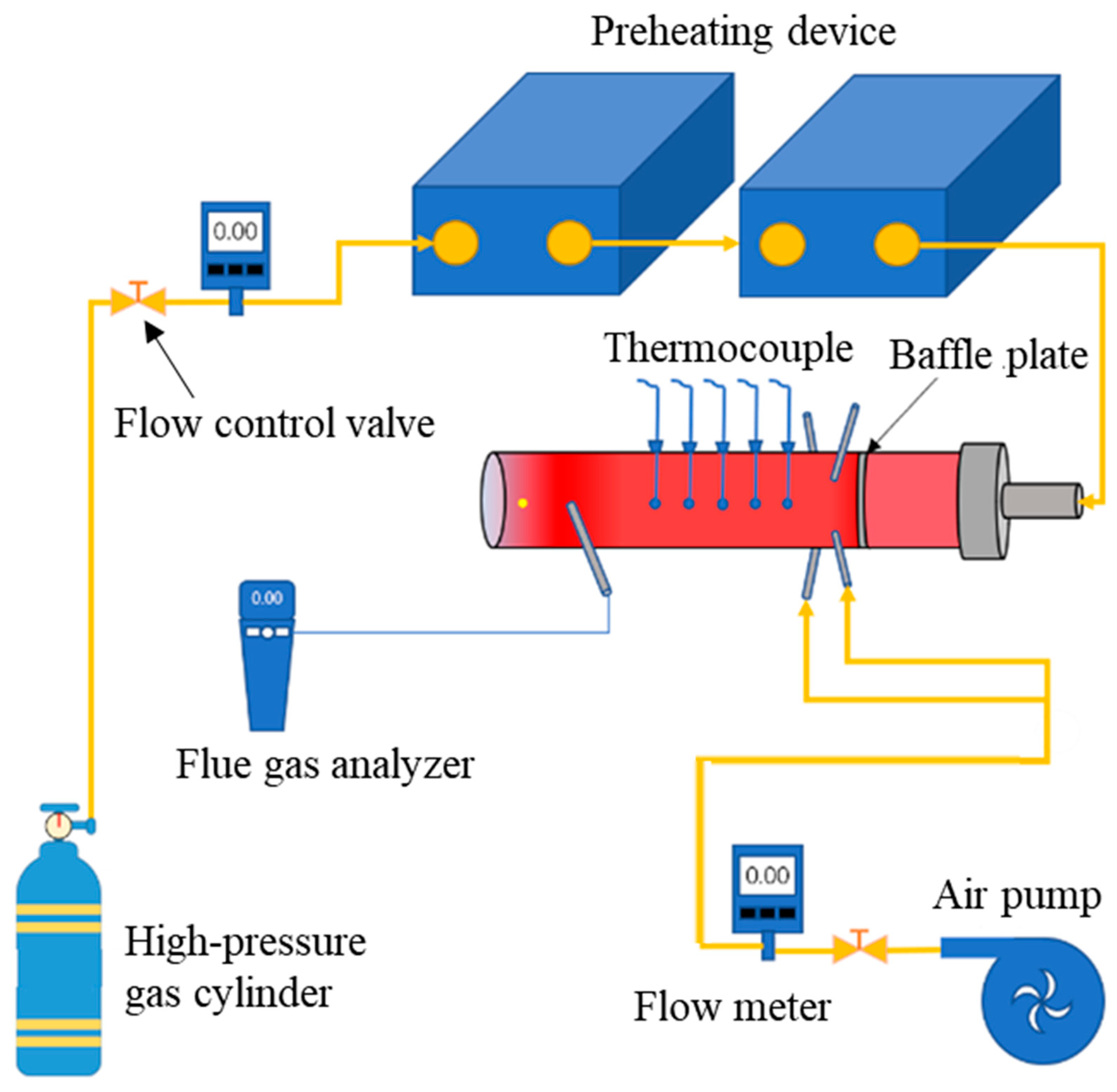
Therefore, to verify the feasibility of direct ignition between high-temperature gasification syngas and ambient air, this study designed and constructed a high-temperature syngas combustion experimental system. It focuses on investigating the influence of syngas temperature and key component variations (H2, CO, CO2, N2) on ignition limits (characterized by the upper and lower limits of excess air coefficient) and delves into the underlying chemical kinetic and thermodynamic mechanisms. This study aims to provide a solid scientific foundation for the engineering implementation of the fusion decoupled combustion process.
3. Results and Discussion
3.1. Effect of Syngas Temperature
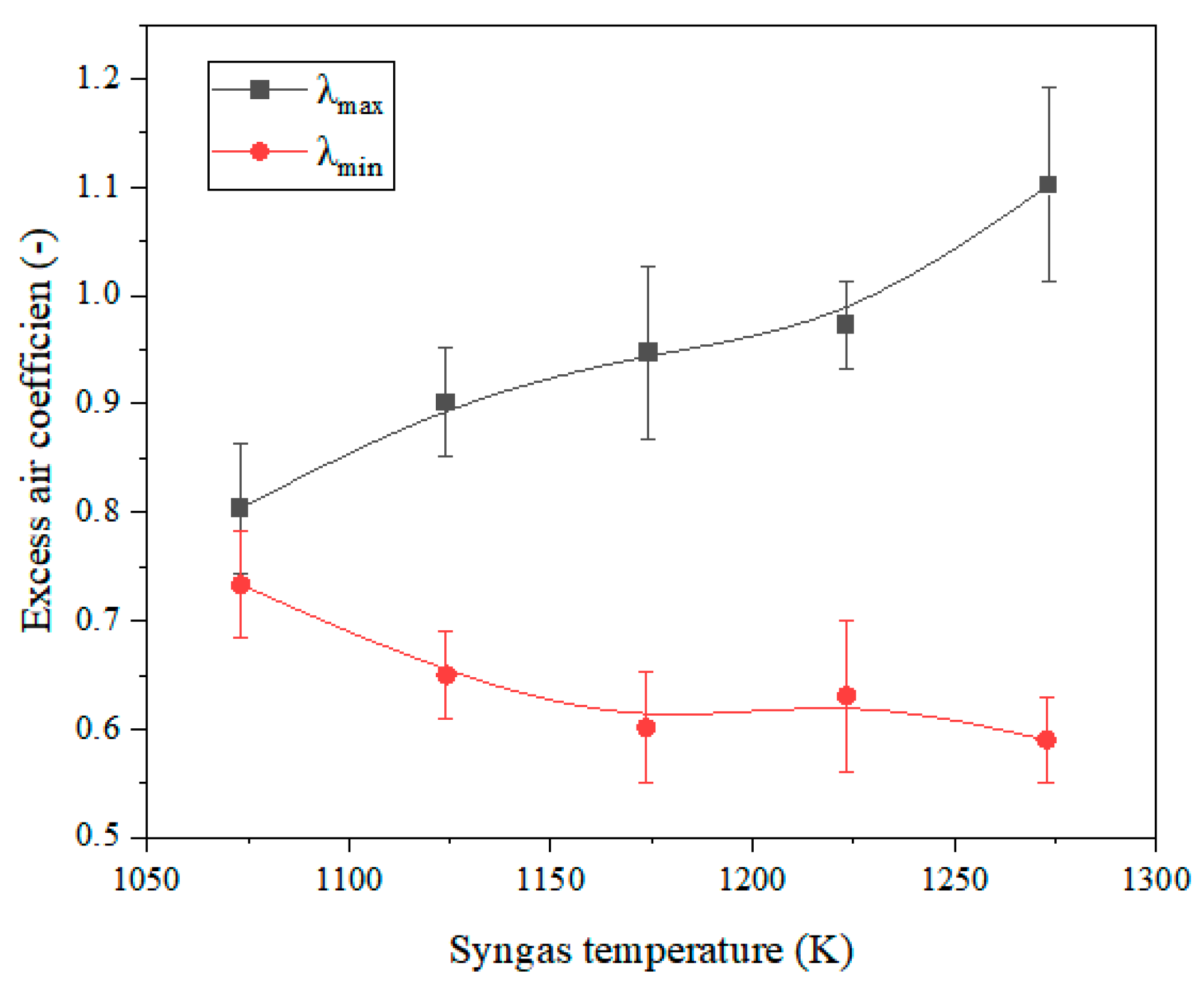
The influence of syngas temperature on the maximum (λ
max) and minimum (λ
min) excess air coefficients achievable for stable ignition is shown in
Figure 4. The experimental data reveal that as the syngas temperature increases from 1073 K to 1273 K, the minimum excess air coefficient required for stable ignition decreases linearly from 0.73 to 0.59, a reduction of 19.2%. Concurrently, the maximum excess air coefficient also increases. This phenomenon is governed by the dual, dominant roles of temperature in both chemical reaction kinetics and system thermodynamics.
From the perspective of chemical reaction kinetics, according to the Arrhenius law (k = Aexp(−Ea/RT)), the rate constants for the oxidation reactions of the combustible components (H2 and CO) increase exponentially with temperature. This means that a higher syngas temperature endows the reactant molecules with greater average kinetic energy, significantly lowering the activation energy barrier for the reactions. Consequently, within the fuel/air mixing zone, the time required to reach the critical condition where the chain-branching reaction rate surpasses the chain-termination reaction rate (i.e., the ignition condition), known as the ignition delay time, is markedly shortened. Furthermore, the critical condition itself becomes less demanding in terms of fuel concentration in the mixture. This directly manifests as the observed decrease in λmin. In other words, a higher syngas temperature allows the mixture to achieve self-sustained ignition under “leaner” (more fuel-dilute) conditions.
Examining from the viewpoint of system thermodynamics and energy balance reveals a more profound impact of elevated syngas temperature. Firstly, the high-temperature syngas inherently carries substantial physical sensible heat, which is fully preserved and injected into the combustion reaction zone, serving as an “internal heat source” to maintain the high-temperature environment. Secondly, the higher reaction rates directly translate into more intense chemical heat release per unit time. The superposition of these two heat sources dramatically enhances the energy density and temperature level within the combustion region. This enhanced energetic state is crucial for resisting the significant “cooling load” introduced by the mixing of excessive ambient-temperature air (i.e., high λ conditions). As λ increases, while the introduction of ambient air provides more oxygen, it also drastically dilutes the mixture concentration and lowers the overall temperature. When λ reaches a certain critical value (λmax), this cooling effect causes the heat loss rate from the reaction zone to exceed the heat generation rate, preventing stable flame propagation and leading to flame “blow-off”. Nevertheless, a higher syngas temperature, by providing stronger initial energy input and a faster heat replenishment rate, effectively pushes this blow-off limit towards higher λ values, thereby achieving the observed simultaneous increase in λmax.
It is worth noting that when the syngas temperature reaches approximately 1225 K, a key turning point emerges in the variation in the ignition limits: λmin shows a slight increase (λmin ≈ 0.65), while the rising rate of λmax becomes slower (λmax ≈ 0.95). This phenomenon stems from the system’s energy balance reaching a critical state at this syngas temperature. Regarding λmin, although it is expected to continuously decrease with rising syngas temperature, the reduction in λmin implies that the heat released per unit volume consequently decreases. When the syngas temperature is around 1225 K, the sum of its sensible heat and the diminished reaction heat is no longer sufficient to fully offset the thermal losses caused by mixing-induced cooling and system heat dissipation, leading to a decline in flame stability and thus a temporary rise in λmin. On the λmax side, as the excess air coefficient increases, the cooling load brought about by cold-air entrainment intensifies markedly. Meanwhile, the higher flow velocity enhances convective heat transfer with the wall and shortens the residence time of the fuel in the reaction zone, further increasing the system heat loss. At this syngas temperature, the available thermodynamic margin for resisting highly diluted conditions is inadequate, resulting in a deceleration of the broadening trend of λmax.
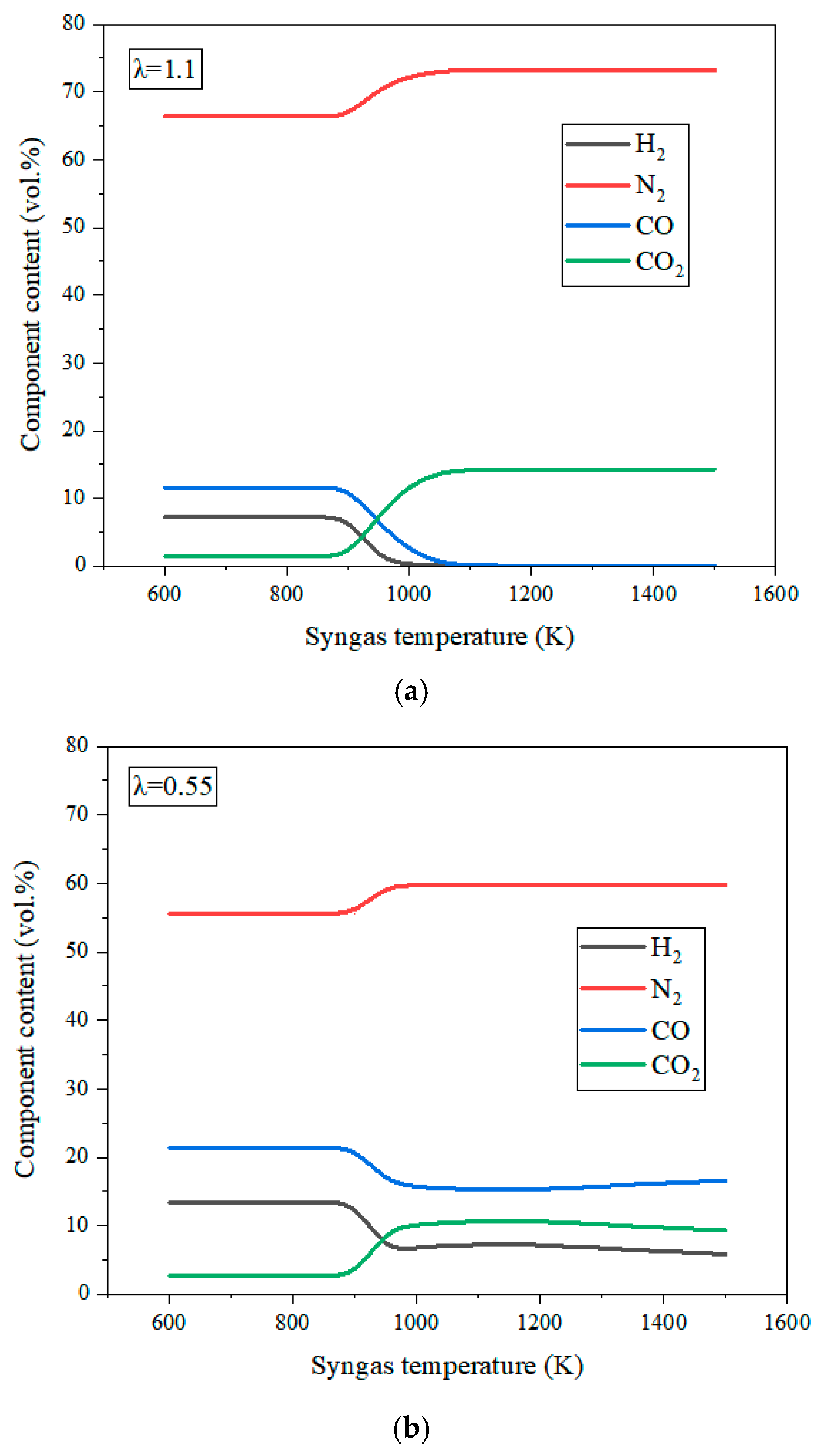
Figure 5 illustrates the variation in component content with syngas temperature under the two limiting conditions (λ = 0.55 and λ = 1.1) shown in
Figure 4, as obtained from simulations conducted using the Hydrogen Syngas mechanism in Chemkin [
28]. The simulation results show that under these two limiting conditions, the concentration curves exhibit a distinct “inflection point” when the syngas temperature reaches approximately 850 K, indicating that the system has approached the critical condition for chemical autoignition near this temperature. However, a clear discrepancy exists between these findings and the experimental observations. For the same syngas composition, the minimum syngas temperature required to achieve stable ignition in practice is as high as 1073 K (tested at 50 K intervals, with no successful ignition at 1023 K), resulting in a temperature difference of approximately 223 K compared to the theoretical value. This gap reveals the fundamental distinction between the ideal homogeneous chemical reaction model and the actual combustion process: the Chemkin simulation is based on the assumption of instantaneous, perfect premixing, whereas the experimental conditions involve non-premixed, large-temperature-difference mixing between a high-temperature syngas jet and ambient air. In the actual combustor, the swirl used to enhance mixing also induces significant flame stretching, local quenching, and additional heat loss. Furthermore, the time and energy consumption inherent to the mixing process itself further elevate the practical temperature threshold required for ignition. Therefore, 850 K can be regarded as the “chemical auto-ignition threshold” for this syngas under ideal conditions, while 1073 K represents the “engineering ignition threshold” that incorporates the effects of practical mixing, heat loss, and flow field influences. This study systematically measures precisely this engineering ignition threshold—which holds direct guiding significance for combustor design and operation—and its variation patterns, providing crucial temperature boundary criteria for the stable combustion design of high-temperature syngas combustor.
3.2. Effect of Combustible Components (H2 and CO) in Syngas
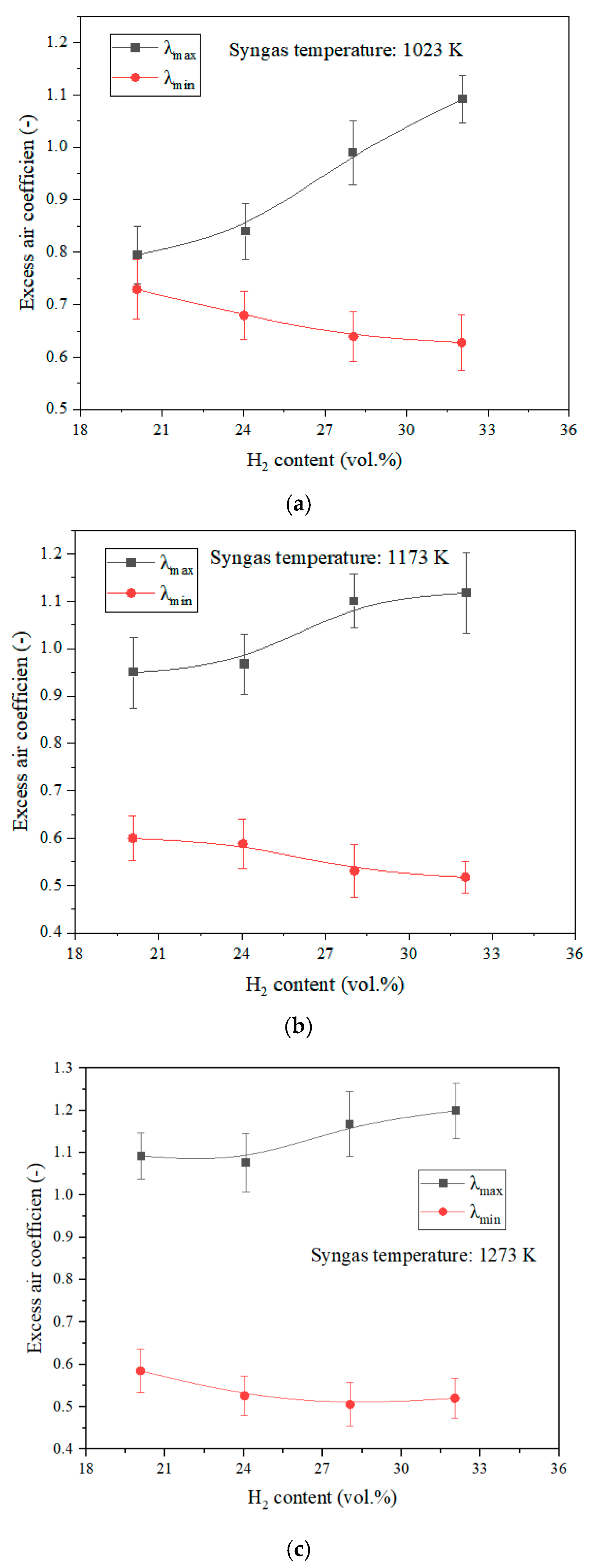
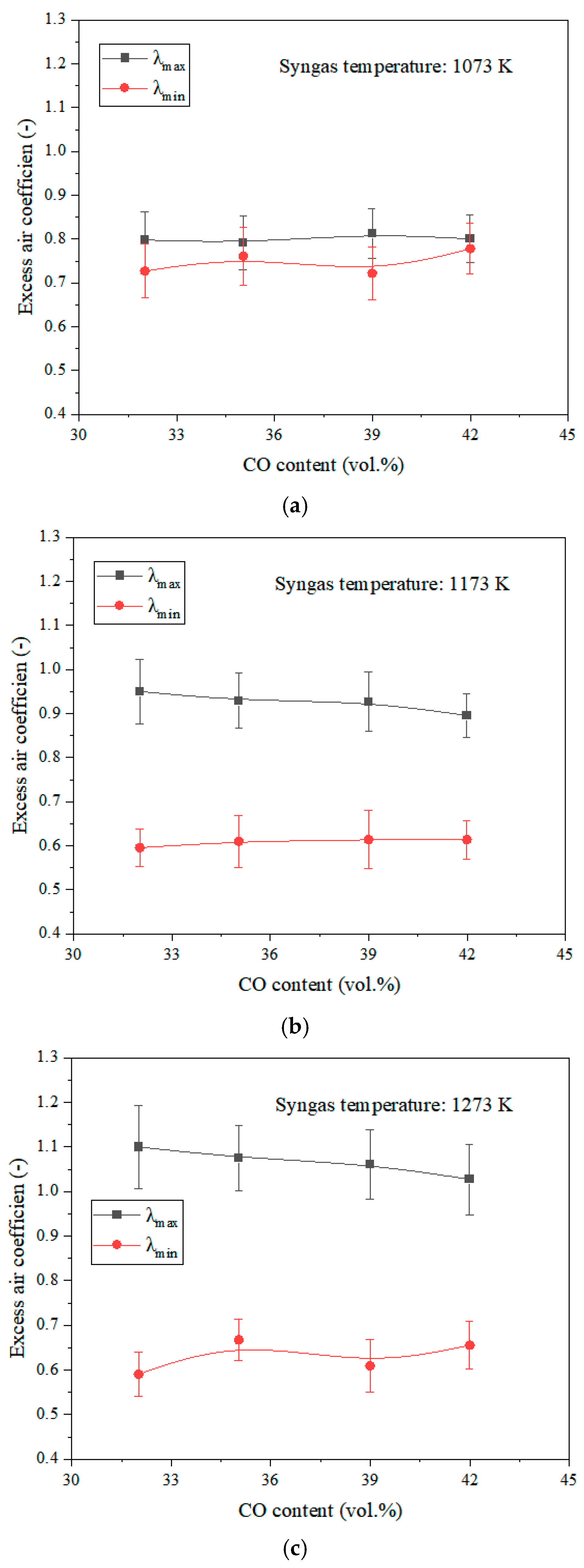
Figure 6 and
Figure 7 systematically compare the influence of the concentrations of combustible components H
2 and CO in the syngas on the ignition limits. The difference in their effects can be attributed to their distinct chemical kinetic properties and their decisive role in determining the overall reactivity of the mixture.
As shown in
Figure 6, increasing the H
2 volume fraction significantly reduces λ
min and raises λ
max across different syngas temperatures, effectively broadening the ignition limits. The underlying mechanism for this universal trend lies in the unique kinetic advantages of H
2 oxidation. Firstly, the key initiation steps of the H
2/O
2 reaction chain (e.g., H
2 + O·→ OH + H) have very low activation energies (typically below 10 kJ/mol), allowing the reaction to initiate rapidly even at low temperatures. Secondly, this reaction chain is a highly efficient “proliferator” of free radicals, rapidly generating a large number of highly reactive H, O, and OH radicals. These radicals are not only carriers for the continued oxidation of H
2 itself but are also indispensable chain carriers for the CO oxidation reaction (CO + OH·→ CO
2 + H). Therefore, increasing the H
2 content produces a dual enhancement effect on the mixture: it directly increases the concentration of the highly reactive fuel in the mixture, and it significantly elevates the global radical concentration level of the mixture. Together, this leads to a substantial increase in the laminar flame speed of the mixture. A higher flame speed means the flame front can propagate through the reaction zone in a shorter time, releasing chemical energy, and thus more effectively resist heat loss and stretch effects caused by the flow. Consequently, the flame can maintain stable propagation even at lower fuel concentrations (corresponding to higher λ) (increasing λ
max); simultaneously, the faster reaction rate also makes it possible to reach the ignition critical condition under leaner conditions (reducing λ
min).
In contrast to the effect of H
2,
Figure 7 clearly demonstrates that an increase in CO content systematically narrows the ignition range. This inhibitory effect stems from CO’s inherently high reaction activation energy and its deep dependence on the reaction environment. The kinetics of pure CO oxidation (CO + O·→ CO
2) are slow, and its primary fast oxidation pathway heavily relies on OH radicals provided by the H
2-O
2 reaction system. Therefore, CO itself is a relatively inert fuel in terms of reactivity. When the proportion of CO in the syngas increases (usually accompanied by a relative or absolute decrease in the H
2 proportion), two adverse consequences arise: First, the overall chemical reactivity of the mixture decreases because the highly reactive component H
2 is diluted; Second, the generation rate of the radical pool (especially OH) essential for sustaining CO combustion is weakened. This necessitates a higher local temperature or longer residence time for successful ignition, directly manifesting as an increase in λ
min. More critically, the combustion process dominated by CO is extremely sensitive to thermodynamic conditions. Due to its relatively slow heat release rate from oxidation, the combustion zone has a weaker ability to maintain high temperatures. When the excess air coefficient λ increases, the mixing of a large amount of ambient air rapidly “cools” the reaction zone, dropping the local temperature below the threshold required to sustain the CO oxidation chain. This “thermal quenching” effect is particularly pronounced under high λ conditions, leading to a significant decrease in λ
max as the CO content rises. Therefore, syngas with high CO content is not only more difficult to ignite, but its range of stable combustion conditions is also narrower, imposing more stringent requirements on flow field organization, thermal insulation, and mixing intensity within the burner.
3.3. Effect of Non-Combustible Components (CO2 and N2) in Syngas
CO
2 and N
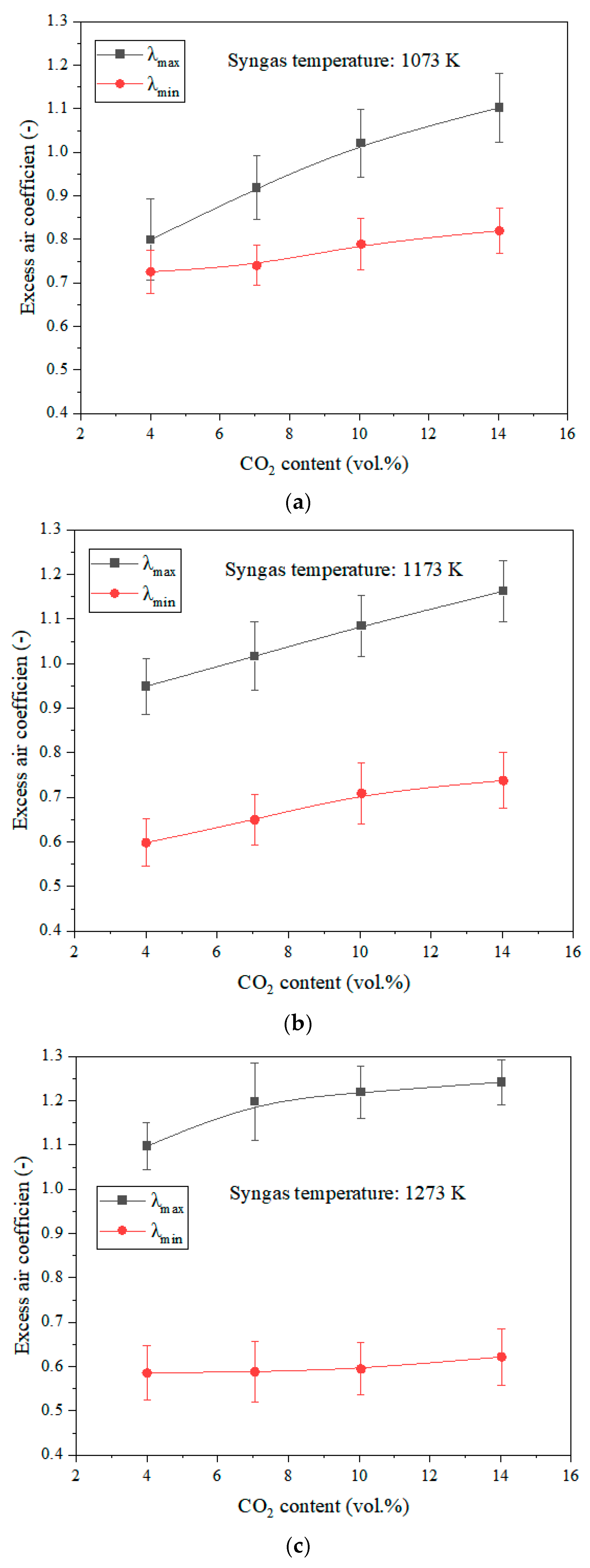
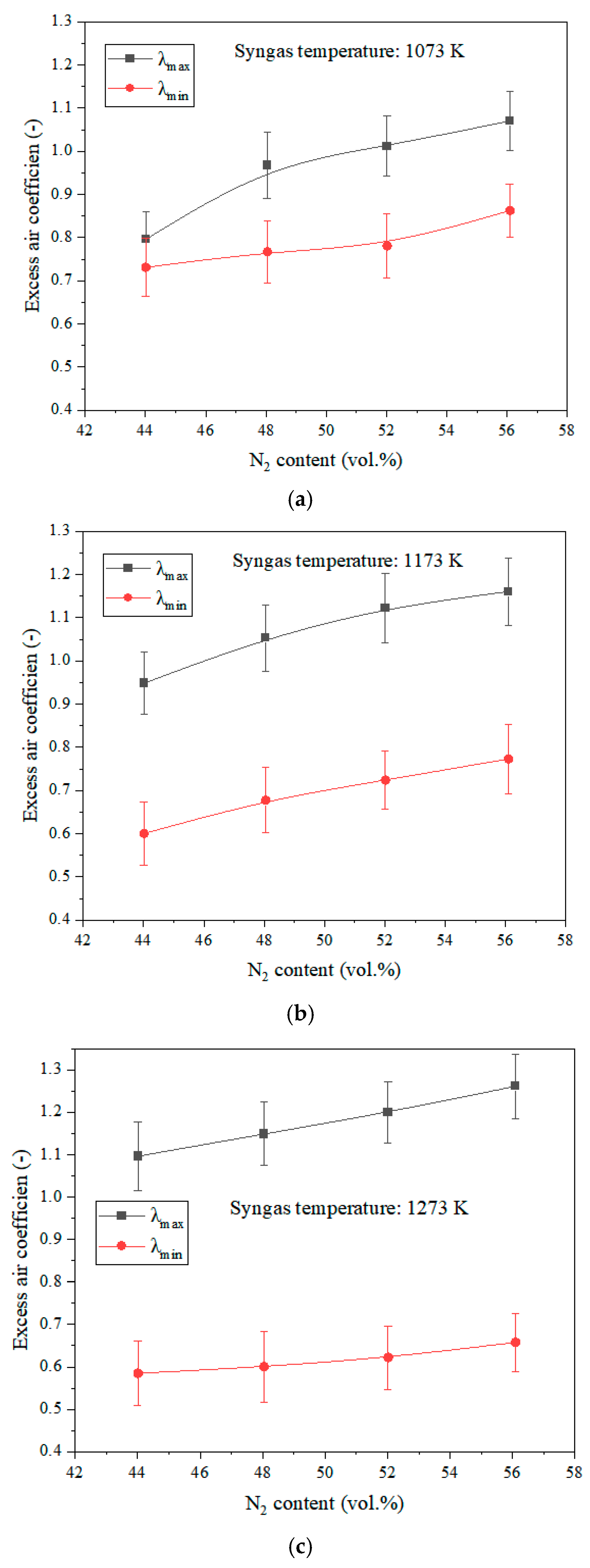
2 are non-combustible components in syngas, and variations in their concentrations significantly impact ignition characteristics. Experimental data in
Figure 8 and
Figure 9 show that while both cause an increase in the lower ignition limit and a change in the upper ignition limit, the extent of their influence and the underlying mechanisms are fundamentally different.
An increase in CO
2 content leads to a systematic rise in λ
min (
Figure 8). The core mechanism lies in the multi-faceted, superimposed inhibitory effects. First, the thermodynamic dilution effect is foundational: CO
2 directly reduces the partial pressures of combustible components (H
2, CO) per unit volume of syngas, causing a proportional decrease in the lower heating value (LHV) of the syngas. This means that at the same syngas temperature, the maximum chemical energy releasable from combustion is reduced, making it harder to reach the critical energy threshold required to form a self-sustaining ignition kernel. Second, CO
2 exhibits a significant heat capacity effect. In high-temperature regions, the molar isobaric heat capacity of CO
2 (~55 J/(mol·K)) is higher than that of N
2 (~33 J/(mol·K)). When CO
2 is heated, it absorbs more of the reaction heat to raise its own temperature, thereby exerting a stronger “cooling” effect on the combustion reaction zone, slowing the temperature rise rate and hindering the rapid crossing of the ignition temperature threshold. More uniquely, CO
2 also participates in chemical kinetic processes and enhances radiative heat loss. CO
2 molecules can act as a third body (M) in radical recombination reactions (e.g., H + O + M→OH + M), promoting chain termination to some extent and inhibiting chain propagation. Simultaneously, as a triatomic molecule, CO
2 possesses significant infrared radiation capability at high temperatures, causing a portion of the reaction heat to be lost via radiation, further diminishing the heat available to sustain and propagate the flame.
Within the experimental parameter range of this study, an increase in CO2 content is accompanied by a rise in λmax. Explaining this phenomenon requires a comprehensive consideration of the dual role of CO2 as a diluent: the physicochemical dilution effect and the negative thermal effects. On one hand, the dilution effect may, under specific conditions, provide a local positive buffer. CO2 dilution directly reduces the concentration of combustible components (H2, CO) per unit volume of syngas, thereby lowering the “baseline oxygen demand” required for their complete combustion. Consequently, when the overall excess air coefficient (λ) increases, although the absolute flow rate of introduced ambient air rises, the relative increment in the additional cooling load introduced is somewhat mitigated because the denominator (baseline oxygen demand) itself is reduced by the dilution. This offers slightly more lenient thermodynamic conditions for the flame to remain stable under high λ conditions. It must be emphasized that this increase in λmax, dominated by dilution, is conditional and limited. The negative thermal effects—namely, the stronger thermal absorption capacity due to CO2’s higher molar heat capacity (compared to N2) and its significant radiative heat loss as a triatomic molecule at high temperatures—are always present and intensify with increasing CO2 concentration. These effects strongly inhibit ignition, lower flame temperature, and promote blow-off. Therefore, the increase in λmax only indicates that, within the range of CO2 concentration variation in this experiment, the “oxygen demand buffering” effect brought by dilution temporarily outweighs its additional thermal inhibition effect. It can be anticipated that if the CO2 concentration continues to increase, its thermal inhibition effect will rapidly become overwhelmingly dominant, causing λmax to decrease instead.
Similarly to CO
2, an increase in N
2 content also leads to a significant rise in λ
min (
Figure 9). However, a clear comparison of the curve slopes in
Figure 8 and
Figure 9 reveals that N
2’s effect on elevating λ
min is far stronger than that of CO
2. This phenomenon cannot be explained by simply comparing a single physical property, such as molar heat capacity, as the molar heat capacity of CO
2 is higher than that of N
2 at any reasonable temperature. The underlying reason lies in the unique role played by N
2 in the syngas system under investigation and its comprehensive thermophysical effects. First and foremost, the dominant factor is the significant thermal inertia resulting from the exceptionally high volume fraction of N
2. In typical syngas produced via air gasification, N
2 acts as the background carrier gas, and its concentration far exceeds that of other components. Such a large population of diluents, possessing considerable heat capacity, forms a massive “heat reservoir.” The limited chemical heat released during the initial ignition stage is primarily absorbed to raise the temperature of this N
2 matrix, rather than elevating the temperature of the combustible mixture itself to reach the ignition threshold. This substantial thermal inertia, driven by the high proportion of N
2, is the primary reason for its strong inhibition of ignition (significantly raising λ
min). Secondly, there are systematic differences between N
2 and CO
2 in terms of thermophysical and chemical properties. Although CO
2 has a higher molar heat capacity and exhibits combustion-inhibiting capabilities through radiative heat loss and participation in specific third-body reactions, N
2 exhibits significantly higher thermal diffusivity. In non-uniform systems with temperature gradients and flow, higher thermal diffusivity enables N
2 to more effectively transport heat away from the critical reaction zone to the surrounding environment, thereby producing a stronger “cooling” effect. Additionally, the chemical effects of CO
2 may, under certain conditions, partially counteract the thermal inhibition arising from its physical dilution. Therefore, the stronger inhibitory effect exhibited by N
2 should be understood as the combined result of the substantial thermal inertia dominated by its extremely high background concentration and its relatively high thermal diffusivity. This mechanism fundamentally differs from that of CO
2, which primarily exerts inhibition through higher specific heat capacity, radiation, and specific chemical interactions. This understanding holds significant importance for guiding the design of syngas combustion systems utilizing different gasification media (air vs. oxygen-enriched/pure oxygen).
3.4. Sensitivity Analysis and Energy Balance Mechanism Based on Cooling Load
To comprehensively compare and quantify the influence of key parameters on the ignition limits,
Table 2 summarizes the variation amplitudes of the lower and upper excess air coefficients (λ
min and λ
max) corresponding to changes in component concentrations and syngas temperature, under the condition of a syngas temperature of 1173 K. It can be observed that the influence of syngas temperature is the most extensive, with a 200 K increase raising λ
max by 0.30 and reducing λ
min by 0.15. Among the combustible components, H
2 exhibits a strong positive effect, as a 10 vol.% increase in its content elevates λ
max by 0.17; in contrast, an equivalent increase in CO content only reduces λ
max by 0.05, quantitatively confirming the dominant role of H
2 in the reaction kinetics. The influence of diluents is more complex: while CO
2 inhibits lean ignition (increasing λ
min by 0.14), it uniquely broadens the rich/extinction limit (increasing λ
max by 0.20); N
2 demonstrates the strongest thermal inertia inhibition, with a 10 vol.% increase significantly worsening λ
min by 0.18.
To uniformly understand the above patterns from an energy balance perspective, this study introduces the concept of “cooling load” to quantitatively assess the quenching effect of ambient air. Based on the syngas initial temperature of 1173 K and the λ = 1.0 condition, the theoretical adiabatic flame temperature is calculated to be approximately 2550 K. Considering the actual system heat losses, 2250 K is conservatively selected as the engineering representative value of the reaction zone temperature for this condition. Accordingly, the “specific cooling load” of ambient air (298 K) per unit mass is calculated to be approximately 2.15 kJ/g. Further analysis reveals that at λ = 1.0, the cooling load already accounts for 50–55% of the fuel’s chemical heat release (LHV = 5.93 kJ/g). This quantitative result demonstrates that ambient air, as a massive “mobile heat sink,” absorbs most of the available chemical energy under high dilution conditions, thereby becoming the decisive factor governing the system’s energy balance. Based on this, the physical essence of λmax can be defined as the critical state where the sum of reaction heat release and fuel sensible heat precisely balances the introduction rate of the total cooling load at that λ. This energy balance framework provides a self-consistent unified explanation for all sensitivity trends. The most significant influence of syngas temperature stems from its increase directly enhancing the sensible heat capital that resists the cooling load. The positive effect of H2 far exceeds that of CO because it not only increases the fuel heating value but also accelerates heat release through kinetic promotion, thereby offsetting the cooling load more effectively. The unique enhancement effect of CO2 on λmax can be attributed to its dilution effect, which reduces the “baseline oxygen demand” of the mixture under high λ conditions, thereby partially buffering the absolute increment in the cooling load. The strong deterioration effect of N2 on λmin arises from the substantial thermal inertia introduced by its high background proportion, greatly intensifying the heat sink effect during the lean ignition stage.
In summary, by quantifying the “cooling load” and its critical effects, this study not only uniformly explains the sensitivity differences in various parameters from an energy balance perspective but also clarifies the optimization direction for engineering applications: increasing syngas temperature and H2 content is the most effective strategy to resist the cooling load and broaden the stable combustion window, while the thermal inertia inhibition caused by high N2 concentration in air gasification processes must be fully considered and compensated for in design.
4. Conclusions
This study systematically investigated the ignition characteristics of direct mixing between high-temperature syngas from biomass gasification and ambient air using a self-built high-temperature syngas combustion experimental platform. The main conclusions are as follows:
(1) Syngas temperature is a critical factor determining the ignition limits. Increasing the syngas temperature from 1073 K to 1273 K reduces the minimum excess air coefficient λmin by 19.2%, while the maximum excess air coefficient λmax increases simultaneously. This is primarily attributed to the exponential acceleration of reaction kinetics by temperature and the positive contribution of high-temperature sensible heat to the energy balance of the combustion zone, enabling stable flame existence under leaner or more diluted conditions.
(2) The combustible components H2 and CO exhibit opposing regulatory effects on the ignition limits. Increasing the H2 content significantly broadens the ignition limits due to its low activation energy and high radical generation capability. In contrast, increasing the CO content narrows the ignition range due to its reaction inertness and dependence on OH radicals.
(3) The non-combustible components CO2 and N2 in syngas both inhibit ignition through dilution and thermal effects, leading to an increase in the lower ignition limit (λmin). Notably, N2, due to its high proportion and significant thermal inertia in syngas, exerts a stronger deteriorating effect on λmin through its “heat sink” effect compared to CO2. Regarding the upper ignition limit (λmax), the dilution effect of CO2 reduces the combustible concentration while simultaneously lowering the baseline oxygen demand. This buffers the cooling load under high excess air conditions, resulting in a slight increase in λmax.