Article

Dynamic Modeling and Calibration of an Industrial Delayed Coking Drum Model for Digital Twin Applications


by
Vladimir V. Bukhtoyarov
1,
Ivan S. Nekrasov
1,*,
Alexey A. Gorodov
1,
Yadviga A. Tynchenko
1,
Oleg A. Kolenchukov
1 and
Fedor A. Buryukin
2
1
Department of Technological Machines and Equipment of Oil and Gas Complex, School of Petroleum and Natural Gas Engineering, Siberian Federal University, 660041 Krasnoyarsk, Russia
2
Department of Chemistry and Technology of Natural Energy Carriers and Carbon Materials, School of Petroleum and Natural Gas Engineering, Siberian Federal University, 660041 Krasnoyarsk, Russia
*
Author to whom correspondence should be addressed.
Processes 2026, 14(2), 375; https://doi.org/10.3390/pr14020375
Submission received: 26 November 2025 / Revised: 7 January 2026 / Accepted: 19 January 2026 / Published: 21 January 2026

Abstract

The increasing share of heavy and high-sulfur crude oils in refinery feed slates worldwide highlights the need for models of delayed coking units (DCUs) that are both physically meaningful and computationally efficient. In this study, we develop and calibrate a simplified yet dynamic one-dimensional model of an industrial coke drum intended for integration into digital twin frameworks. The model includes a three-phase representation of the drum contents, a temperature-dependent global kinetic scheme for vacuum residue cracking, and lumped descriptions of heat transfer and phase holdups. Only three physically interpretable parameters—the kinetic scaling factors for distillate and coke formation and an effective wall temperature—were calibrated using routinely measured plant data, namely the overhead vapor and drum head temperatures and the final coke bed height. The calibrated model reproduces the temporal evolution of the top head and overhead temperatures and the final bed height with mean relative errors of a few percent, while capturing the more complex bottom-head temperature dynamics qualitatively. Scenario simulations illustrate how the coking severity (represented here by the effective wall temperature) affects the coke yield, bed growth, and cycle duration. Overall, the results indicate that low-order dynamic models can provide a practical balance between physical fidelity and computational speed, making them suitable as mechanistic cores for digital twins and optimization tools in delayed coking operations.

1. Introduction

In recent decades, the oil-refining industry has faced a persistent decline in crude oil quality; the share of heavy, high-sulfur, and high-asphaltene crudes, as well as bitumen-derived resources, has increased steadily. These feedstocks constitute a significant portion of the global hydrocarbon reserves and require deeper and more energy-intensive processing [1]. In the context of digital transformation and the Industry 4.0 paradigm, combining advanced modeling with artificial intelligence and machine learning methods opens up new opportunities to optimize deep conversion processes and improve their sustainability [2,3]. In such refinery configurations, the deep conversion of petroleum residues becomes essential. Among the available residue-upgrading processes, delayed coking (DC) plays a key role; it is a thermal cracking process that converts heavy oil residues (atmospheric and vacuum residues, heavy distillates, and deasphalted oils) into valuable light fractions and a solid carbon product—petroleum coke.
According to the review by Sawarkar et al. [4], delayed coking is the most widely used technology for processing heavy residues: the worldwide coking capacity is comparable to (or exceeds) that of other thermal and catalytic residue conversion processes, and thermal upgrading (visbreaking + coking) remains dominant in many residue-upgrading schemes. This is largely due to a combination of technological and economic advantages, including the ability to process a wide range of heavy feeds (including high-sulfur and high-metal residues); relative insensitivity to asphaltene and metal content compared with hydrocracking; and a comparatively simple process scheme with lower capital costs [5,6]. At the same time, DC converts low-value heavy feedstocks into commercially attractive products—gasoline and diesel fractions, vacuum gas oil, and liquefied petroleum gas—while concentrating sulfur, metals, and ash in the solid residue. For modern refineries aiming to maximize motor fuel yields and move toward bottom-of-the-barrel-free configurations, delayed coking therefore remains a key link in the processing chain for heavy oils and residues.
However, the technological advantages of DC are accompanied by serious energy and environmental challenges. Delayed coking units (DCUs) are among the most energy-intensive process units in refineries. High process temperatures, the long residence times of feedstocks in the drums, and significant coke yields (typically 20–30 wt.% with 60–70 wt.% liquid products) result in substantial CO2 emissions and other environmental impacts [7,8]. The multi-objective optimization of DCUs, taking into account the conversion depth, energy consumption, emissions, and coke quality, is therefore critical in achieving a balance between the economic and environmental performance of refineries [9].
Given the growing share of heavy and high-sulfur crudes in the refinery feed slate and the industry’s focus on processing heavy resources (heavy and extra-heavy oils, oil sands, and bitumen) [10], the role of delayed coking is expected to continue to grow. This is particularly important for refineries processing high-sulfur residues, where delayed coking often represents the final conversion step in recovering valuable distillates.
Petroleum coke, the main solid product of coking, is a valuable raw material for metallurgy and high-tech industries. High-quality needle coke is traditionally used to produce graphitized electrodes for steelmaking furnaces and anodes for the aluminum industry [11]. Recent studies also demonstrate the feasibility of converting high-sulfur petroleum coke into high-purity graphite and carbon nanostructures (e.g., graphene, nanotubes, and porous carbons), which are in demand in the energy and materials science sectors and can significantly increase product value [12,13]. Consequently, controlling the petroleum coke yield and properties in DCUs is not only technologically important but also strategically significant from an economic perspective.
From a physicochemical perspective, delayed coking is a complex, multi-stage thermal cracking process that occurs under severe conditions (T ≈ 450–500 °C) and long residence times in the drums. The reactions proceed under strongly non-equilibrium conditions, involve free radical chain mechanisms, and are accompanied by the intensive formation of gases, light and middle distillates, and a solid carbon phase [14]. The situation is further complicated because chemical transformations, phase transitions (evaporation and condensation), heat and mass transfer, and coke structure formation occur simultaneously. At an industrial scale, DCUs operate cyclically (drum heating and filling, coking, shutdown, cooling, and hydraulic decoking), which leads to pronounced non-steady-state temperature and concentration fields and strong temporal variation in key process indicators.
Under these conditions, the mathematical modeling and optimization of delayed coking units are critical. A wide range of approaches to DC modeling have been reported. Kinetic models based on coarse fractions and structure-oriented lumping (SOL) can describe how feedstock properties and operating conditions affect product distribution while accounting for molecular structural fragments [15,16]. Beyond this, molecular-level kinetic models have been proposed, in which the reaction network for vacuum residue is generated automatically from a set of reaction rules, and kinetic parameters are tuned to experimental data. When coupled with vapor–liquid equilibrium models, these approaches enable a more accurate description of the interplay between chemical transformations and the evaporation/condensation of fractions [17].
In addition to kinetic approaches, hydrodynamic and CFD models have been developed to describe heat and mass transfer and the phase distribution within the drum [18,19]. In parallel, artificial intelligence and hybrid modeling methods have been actively used: neural network models trained on industrial DCU data can predict product distributions with high accuracy and are applied to the identification, soft sensing, and offline optimization of operating conditions [20,21]. Integrating machine learning methods with mechanistic models is particularly promising. For example, hybrid ML approaches (e.g., deep neural networks with residual shrinkage and attention mechanisms combined with genetic algorithms) can achieve high accuracy in predicting product yields while enabling the multi-objective optimization of energy consumption, emissions, and product quality [22]. Surrogate models based on Gaussian processes and related methods can further reduce the computational cost in multi-criteria optimization, supporting the transition toward the concept of a “digital oil refinery” [23,24].
Despite significant progress, most published models focus either on steady-state or quasi-steady-state conditions (e.g., cycle-averaged parameters) or on predicting overall product yields, without resolving the process dynamics inside the drums and associated equipment [25]. The cyclic, non-steady-state nature of DCU operation determines many critical operating parameters, including the heating duration and profile, the drum switching time, level and foaming dynamics, coke structure formation, temperature distribution, and the unit’s response to disturbances in feed composition and properties. The limited availability of dynamic models complicates the development of advanced control systems (APC/MPC), the implementation of unit digital twins, and multi-objective optimization, which simultaneously accounts for economic, energy, and environmental criteria.
Digital twins of DCUs, which integrate real-time data, mechanistic models, and machine learning algorithms, are increasingly used as a foundation for next-generation predictive control and optimization systems [26,27]. Such systems not only enable the monitoring and forecasting of equipment conditions but also support virtual experiments to assess how different control scenarios affect economic and environmental performance under changing feed quality. Recent reviews report that digital twin adoption in the oil and gas industry can reduce unplanned downtime by about 20% and maintenance costs by 12–15% by shifting from reactive to predictive strategies [28]. However, for delayed coking units, the development of full-scale digital twins is still hindered by the lack of high-quality dynamic models that describe non-steady-state operating modes with acceptable accuracy and computational efficiency.
This creates a gap between, on the one hand, highly detailed but computationally expensive CFD models and, on the other hand, simple steady-state kinetic models that cannot reproduce the dynamics of an individual coke drum cycle. For practical optimization and advanced control, a relatively simple yet dynamic model of a delayed coking drum is therefore required that achieves the following:
  • Accounts for the essential heat and mass transfer and cracking kinetics along the drum height;
  • Can be calibrated using a limited set of industrial data (temperature, pressure, feedstock flow rate, and final coke bed height);
  • Provides acceptable accuracy at a reasonable computational cost.
This paper addresses this need. We use a one-dimensional (axial) model of a delayed coking drum and calibrate it to industrial data. The calibration goal is to reduce the mean relative error in the temperature trajectories and the final coke bed height to approximately 5% while preserving parameters’ physical interpretability and maintaining suitability for integration into a DCU digital twin and for use in performance optimization.

2. Materials and Methods

2.1. Industrial Case Study and Available Measurements

Model calibration and validation were conducted using routinely archived industrial data from a commercial delayed coking unit (DCU) processing vacuum residue (VR). Results are reported for one representative full-scale drum cycle (32 h) for which complete time series of operating conditions and temperatures were available. Recorded variables included the furnace outlet (drum inlet) flow rate, pressure, and temperature, as well as temperatures at three locations: the drum outlet (overhead vapor), the top head, and the bottom head. The final coke bed height at the end of the cycle was available from standard plant measurements; intermediate bed height data were not available. Detailed feed assays and drum design data are subject to confidentiality restrictions; therefore, the model focuses on dynamic variables that are routinely measured and used in daily operations.
For the mechanistic description, we used the three-phase dynamic model proposed by Díaz et al. [29] as a starting point and developed a simplified one-dimensional version for calibration against industrial data. The simplified model retains the key physicochemical features of delayed coking at a substantially lower computational cost.
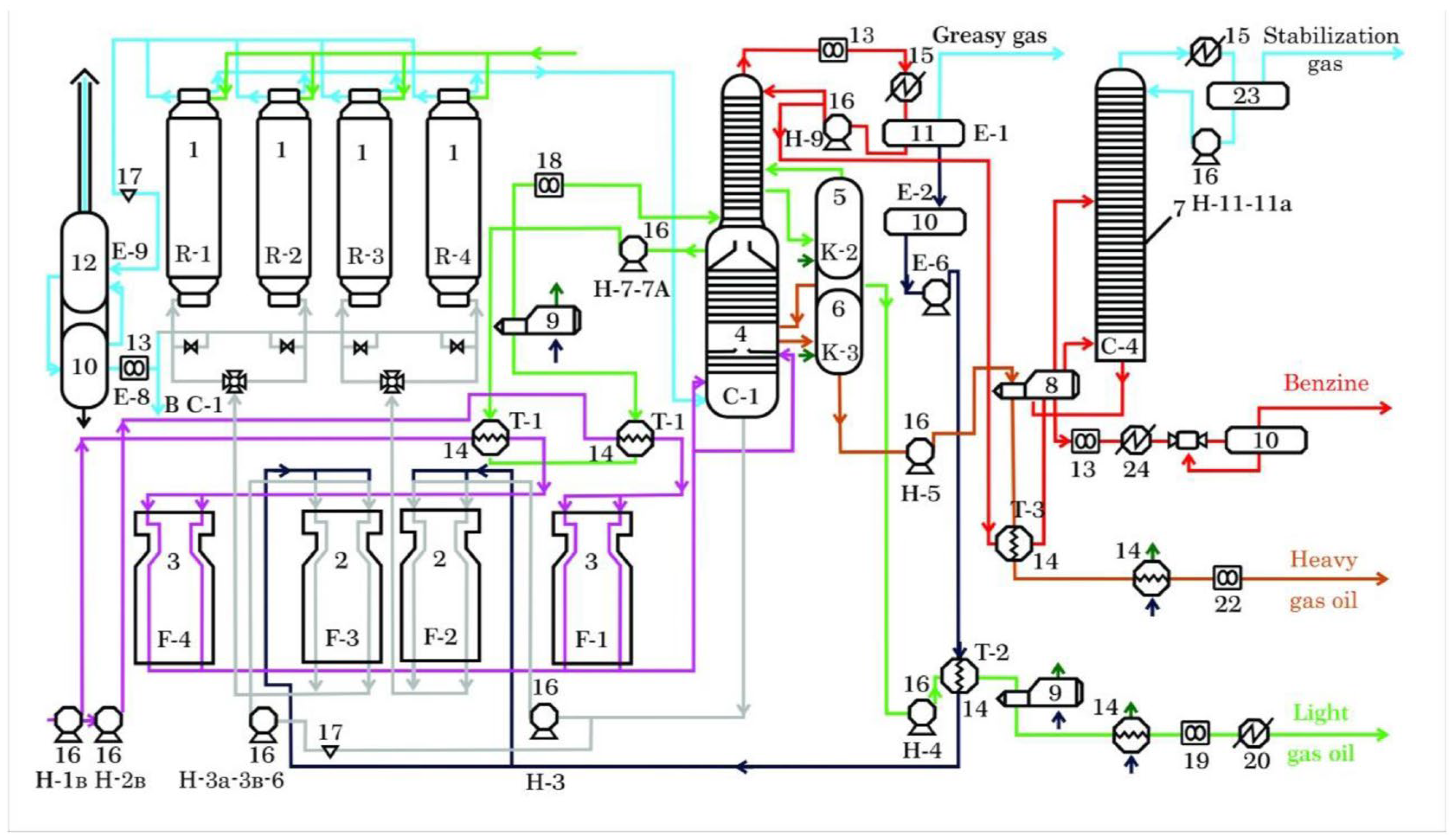
Figure 1 shows a typical delayed coking unit (DCU) flowsheet. The industrial unit from which the calibration data were obtained had a similar configuration (four drums operating cyclically).
In this scheme, fresh vacuum residue (and heavy recycle streams) is heated in the coker furnaces (blocks 2–3) to the cracking temperature and routed to one of the coke drums (block 1) that operate in the coking mode. The hot cracked vapors and entrained liquids leave the drum overhead and are sent to the main fractionator (block 4), where overhead and side products are recovered, while the heaviest bottoms can be recycled back to the furnaces. Although Figure 1 shows the full DCU, the present work models only the transient behavior of a single drum; the measured inlet conditions and pressure represent boundary conditions imposed by the upstream heating and downstream fractionation sections.

2.2. Base One-Dimensional Delayed Coker Drum Model

2.2.1. Model Assumptions and Phases

The following simplifying assumptions were adopted.
1.
Geometry and dimensionality.
The drum is modeled as a vertical cylinder of height H and radius R. The domain is discretized along the vertical coordinate z into N uniform cells. All variables are assumed to be radially uniform (1D model in the axial direction).
2.
Phases.
The system is treated as a three-phase medium:
  • A liquid phase consisting of vacuum residue and heavy intermediate products;
  • A gas phase of distillate vapors;
  • A solid phase representing the porous coke bed.
The solid (coke) phase is immobile and forms a stationary porous matrix with effective porosity ϕ; gas and liquid flow through this matrix.
3.
Hydrodynamics.
Macroscopic momentum balances are not solved explicitly; instead, phase movement is described by prescribed pseudo-velocities that depend on the local holdup and pressure drop. The overall pressure in the drum is taken from industrial measurements; axial pressure gradients are small compared to the absolute pressure and are neglected in the energy balance.
4.
Thermal description.
Heat transfer from the drum wall is described by an effective wall temperature T₍wall₎ and an overall heat transfer coefficient. Radial temperature gradients within each cell are lumped into effective thermal conductivities of the three-phase mixture.
5.
Chemistry.
Chemical conversion is represented by a global irreversible reaction of vacuum residue (VR): VR → distillates + coke. The reaction is assumed to proceed only above an activation threshold temperature Tcut ≈ 415 °C. Below this temperature, chemical conversion is neglected.

2.2.2. Governing Mass and Energy Balances

Within each axial cell i, transient conservation equations are written for the masses of the liquid, gas, and solid phases and for the total energy of the three-phase mixture.
Liquid phase mass balance:
t ε l ρ l + z ε l ρ l u l = r VR T ,
where
εl—liquid holdup;
ρl, ul—liquid density and superficial velocity; and
rVR—local rate of VR consumption.
Gas phase mass balance:
t ε g ρ g + z ε g ρ g u g = ν g r VR T ,
where
εg, ρg, ug—gas holdup, density, and superficial velocity;
νg—stoichiometric factor for gas formation.
Solid (coke) phase mass balance:
t ε s ρ s = ν s r VR T ,
where
εs = 1 − εlεg—solid fraction;
ρs—apparent coke density;
νs—stoichiometric factor for coke formation.
Energy balance for the three-phase mixture:
t j ε j ρ j h j + z j ε j ρ j h j u j = z λ eff T z + h w A w V T wall T + Δ H r r VR T ,
where
hⱼ—specific enthalpy of phase j;
λeff—effective thermal conductivity of the three-phase mixture (lumped axial conduction through the gas–liquid–coke medium, not the metal–wall conductivity);
hw—wall heat transfer coefficient;
A w V —wall surface-to-volume ratio;
Twall—equivalent (effective) inner wall temperature, used as a boundary condition for heat input (assumed constant in time and uniform along height in the present model);
ΔHᵣ—overall reaction enthalpy.
The system of equations is closed by algebraic relationships for phase holdups, densities, and thermophysical properties as functions of the temperature and local composition and by appropriate inlet/outlet and initial conditions.

2.2.3. Kinetic Scheme and Temperature-Dependent Reaction Order

The global conversion of VR into distillates and coke is described by a temperature-dependent reaction rate of the form
r VR T = k T C VR n T ,             k T = A   e x p E R T k ,
where
CVR—VR concentration in the liquid phase;
Tₖ—temperature in Kelvin;
A and E—Arrhenius pre-exponential factor and activation energy;
n(T)—effective reaction order.
A three-regime kinetic law is adopted.
  • T < 487.8 °C: first-order kinetics, n = 1.0;
  • 487.8 °C ≤ T < 570.1 °C: 1.5-order kinetics, n = 1.5;
  • T ≥ 570.1 °C: second-order kinetics, n = 2.0.
Below Tcut ≈ 415 °C, the reaction is turned off (rVR = 0).
To account for uncertainties in the absolute values of laboratory-based Arrhenius parameters and scale-up effects, two dimensionless scaling factors are introduced:
  • scale_dist—multiplies the nominal rate of distillate formation;
  • scale_coke—multiplies the nominal rate of coke formation.
In the uncalibrated base model, these were initially set to 0.002 and 0.50, respectively, based on laboratory data.

2.2.4. Heat Transfer and Wall Temperature

Heat transfer from the drum wall to the three-phase mixture is lumped into an equivalent (effective) wall temperature Twall and empirical time constants for heating the bottom and top of the drum. In the present low-order model, Twall should be interpreted as an equivalent inner-wall boundary temperature that reproduces the net heat flux from the fired heater/wall system; it does not distinguish between the outer and inner metal surfaces and it is assumed to be constant in time and uniform along height. Because no direct wall temperature measurements were available for the studied cycle, Twall is estimated (calibrated) indirectly from routinely measured process temperatures and the final coke bed height. The base model uses the following:
  • Nominal characteristic heating times of τbottom = 2 h and τtop = 4 h to represent slower heating at the top;
  • An empirical profile exponent β = 2.5 to interpolate between bottom and top heating dynamics;
  • A gas-phase enhancement factor and mixing coefficient to account for increased convective heat transfer in zones with high vapor flow.
These parameters were kept fixed during calibration because the sensitivity analysis indicated that their influence on the main calibration targets (top head and outlet temperatures and final coke height) was smaller than that of the kinetic scaling factors and the wall temperature.
The wall temperature T₍wall₎ is treated as a controllable effective parameter bounded between the reaction threshold and maximum furnace outlet temperature. Based on the industrial data, the physically reasonable range was chosen as 415–480 °C.

2.2.5. Accounting for Residence Time Variation

The residence time is a key driver for secondary cracking reactions and, consequently, for petroleum coke specifications. In an industrial drum, the residence time is inherently non-uniform and varies with the feed rate profile, evolving phase holdups, and the growth of the porous coke bed.
In the proposed dynamic framework, residence time variation is accounted for implicitly through the transient phase mass balances (Equations (1)–(3)). At each axial cell, the model updates the phase holdups and superficial velocities, which allows for a qualitative assessment of local flow velocities and the corresponding mean residence time within the porous coke bed as the cycle progresses.
To conceptually link residence time variations with coke specifications, the model also provides a qualitative “coke age” indicator, defined as the time elapsed since local solidification. Together with the simulated temperature history, this indicator enables the construction of coking severity measures (e.g., time–temperature integrals) when detailed coke quality data are available. In the present work, such data were not available; therefore, residence time and severity indicators are proposed as potential digital twin outputs for future correlation and closed-loop optimization, rather than as validated predictive variables.

2.3. Parameter Calibration Procedure

2.3.1. Decision Variables and Bounds

The calibration problem is formulated as the identification of a small set of influential model parameters with physically justified constraints:
  • scale_dist ∈ [10−4, 10−1]—kinetic scaling factor for distillate formation;
  • scale_coke ∈ [0.1, 1.0]—kinetic scaling factor for coke formation;
  • Twall ∈ [415, 480] °C—effective (equivalent) wall temperature boundary condition (assumed constant in time and uniform along the drum height). It should not be lower than the kinetic cut-off and not higher than the maximum furnace temperature.

2.3.2. Objective Function

For each candidate parameter set θ = (scale_dist, scale_coke, Twall), the model is run over the full 32 h cycle using the measured profiles of the feed rate, pressure, and inlet temperature as inputs. The model outputs are compared to industrial measurements of the following:
  • The overhead vapor temperature (drum outlet);
  • The upper head temperature;
  • The final coke bed height.
The primary calibration metric is the mean absolute percentage error (MAPE):
MAPE θ = 100 N i = 1 N y i mod θ y i e x p y i e x p .
where y i mod and y i e x p denote the model-predicted and measured values at sampling points. Equal weights are assigned to the overhead temperature, upper head temperature, and final coke height.
Due to known model limitations in representing the late cycle cooling of the lower head (e.g., onset of dry coke, possible water/steam injection for stripping), the lower head temperature was monitored but not used as a primary calibration target, since its dynamics are dominated by physical effects not included in the simplified model (wall cooling, local flooding/drying).

2.3.3. Optimization Algorithm

Parameter calibration was performed using a two-stage approach.
1.
Coarse grid search.
A coarse grid in the (scale_dist, scale_coke, Twall) space was explored to identify the region with the lowest MAPE. This step ensured that the final solution was not trapped in a poor local minimum.
2.
Local refinement.
In the most promising region identified by the grid search, a derivative-free local optimization (pattern search of the Nelder–Mead simplex method) was applied to further reduce the objective function.
Given the low dimensionality of the parameter space and the moderate computational cost of the 1D model, this simple global-plus-local strategy was sufficient to obtain a well-calibrated parameter set.

2.4. Numerical Implementation and Validation Metrics

The governing equations were discretized in the axial direction using first-order upwind finite differences for convective terms and central differences for the diffusive (heat conduction) term. Time integration was performed using an explicit finite-difference scheme with a time step chosen to satisfy standard stability criteria for the combined advection–diffusion–reaction problem.
Model performance was assessed by the following:
  • Time-series plots comparing simulated and measured overhead (drum outlet) and top head temperatures;
  • Comparison of the predicted and measured final coke bed height;
  • Calculation of the MAPE separately for each measured quantity and overall;
  • Calculation of the coefficient of determination (R2) for each temperature trajectory to evaluate trend agreement.
The coefficient of determination (R2) was computed for each temperature time series using the measured and simulated values at all sampling points. R2 complements the MAPE/MAE/RMSE by quantifying trend agreement and the fraction of variance in the measurements explained by the model.
R 2 = 1 i = 1 N y i y i ^ 2 i = 1 N y i y ¯ 2 ,
where
y i —measured value at sampling point i ;
y i ^ —corresponding model-predicted value;
y ¯ —mean of the measured values over the entire data set;
N—total number of sampling points in the time series.

3. Results and Discussion

The proposed one-dimensional dynamic model was first calibrated on a representative industrial coking cycle of a commercial delayed coking unit. The operating conditions and key characteristics of this cycle are summarized in Table 1. For the considered cycle, the fresh feed rate was approximately 40–44 m3·h−1, the drum pressure was maintained in the range 3.5–3.8 kgf·cm−2, and the inlet temperature to the drum varied from the initial heating stage to about 460–475 °C during the main coking period. The total cycle time was 32 h and the measured final coke bed height was about 17–18 m.
The feedstock was vacuum residue (100 wt.%); in this operating mode, no additional heavy catalytic cracking gas oil was co-fed. The coking capacity of the feedstock, determined from laboratory tests, was 10.4 wt.%.

3.1. Calibration on Industrial Data

Calibration was performed by adjusting three influential parameters—the kinetic scaling factors for distillate and coke formation and the effective wall temperature—within the bounds defined in Section 2. The results reported below correspond to the representative industrial drum cycle described in Section 2.1 (32 h), which is treated as a single calibration experiment. The two-stage optimization strategy (coarse grid search followed by local refinement) yielded a unique parameter set that minimized the MAPE while keeping all parameters within their physically meaningful intervals. Compared with the nominal (“uncalibrated”) model, the calibrated parameter set significantly reduced discrepancies between the simulated and measured temperatures and brought the predicted final coke bed height into close agreement with the plant data. No numerical stability problems were observed, and the 1D model remained sufficiently fast for repeated simulations, which is important for subsequent scenario analysis and optimization.

3.2. Reproduction of Head Temperature Profiles

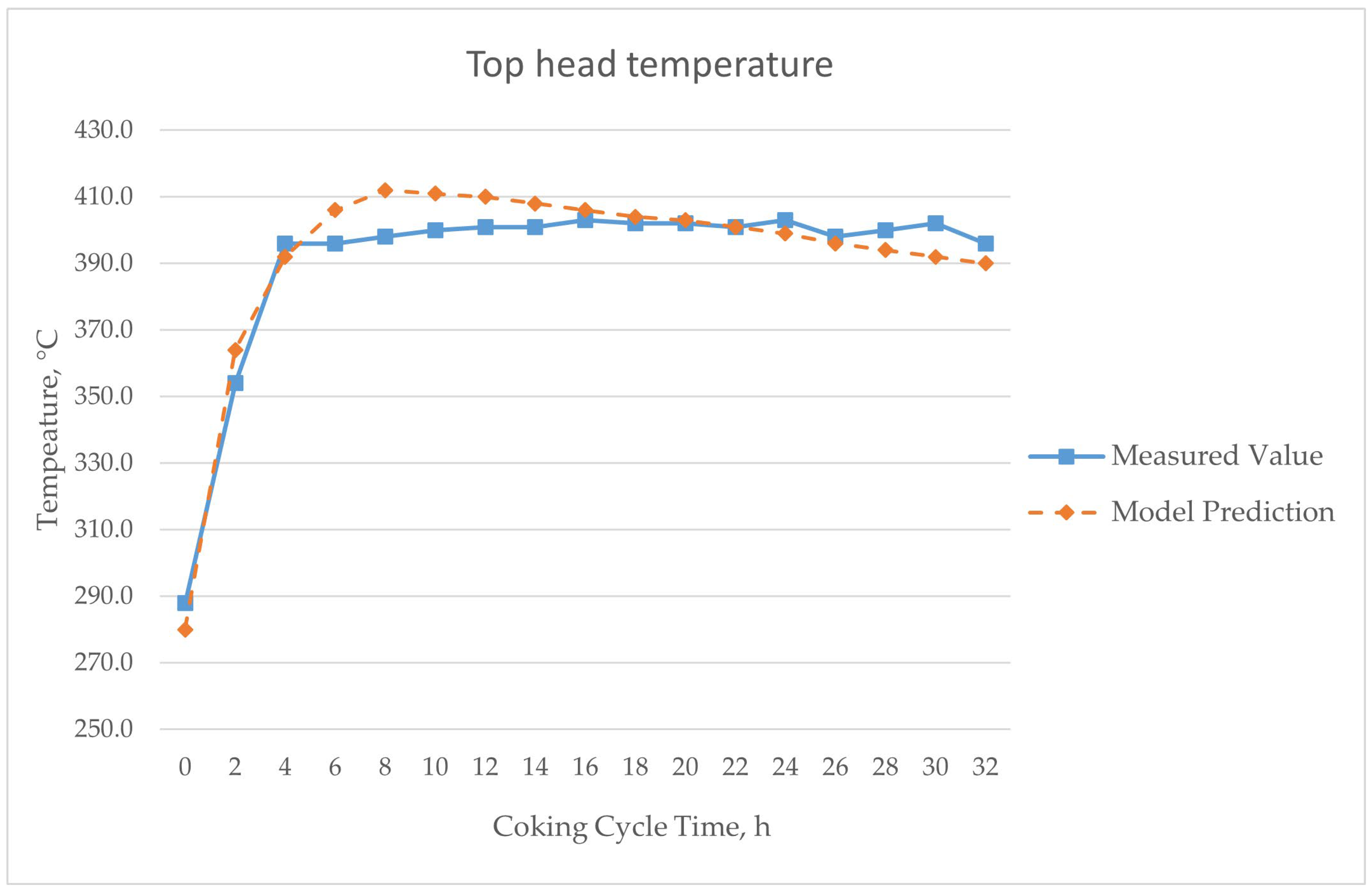
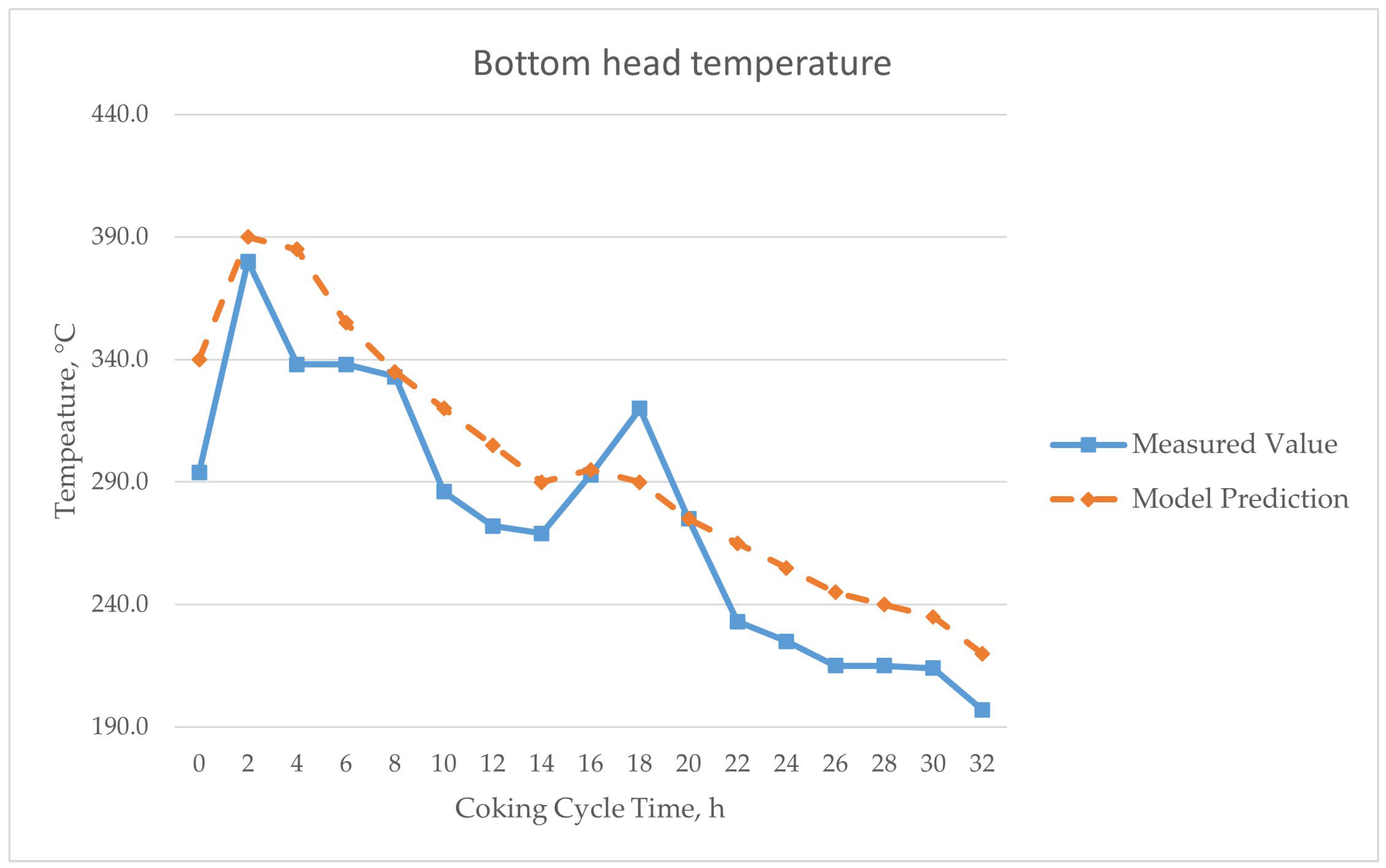
Figure 2 and Figure 3 compare the measured and simulated head temperatures for the calibration cycle.
At the top head (Figure 2), the model captures both the rapid initial heat-up and the subsequent quasi-steady coking period. Between 0 and 4 h, the measured and simulated temperatures rise from about 280 °C to nearly 390–400 °C with very similar slopes. During the main coking stage (roughly 4–28 h), the measured temperature remains within a narrow band around 400 °C, while the simulated trajectory exhibits a slightly higher early maximum followed by a gradual decline; the difference between the curves is typically within 5–10 °C over the entire period. In the final hours of the cycle, both curves show a mild decrease in temperature associated with the approach to the drum-switching operation. Overall, the agreement at the top head is very good and sufficient for the engineering analysis of the coking severity.
The bottom head temperature (Figure 3) is reproduced less accurately. The model predicts the initial heating stage and the occurrence of a temperature maximum at approximately the correct time (around 2 h), but the subsequent cooling and late cycle behavior deviate more noticeably from the measurements. In particular, the measured temperature drops more abruptly after the maximum and reaches significantly lower values in the second half of the cycle, whereas the simulated curve shows a smoother and slower decline. The maximum absolute deviation between the model and data at the bottom head is in the order of 40–50 °C. This is consistent with the modeling assumptions: the simplified 1D model does not explicitly account for complex local hydrodynamics, foam formation, potential water/steam injections, or wall cooling patterns near the bottom head, all of which strongly influence the local temperature field. For this reason, the bottom head temperature was treated as a secondary validation variable rather than a primary calibration target.
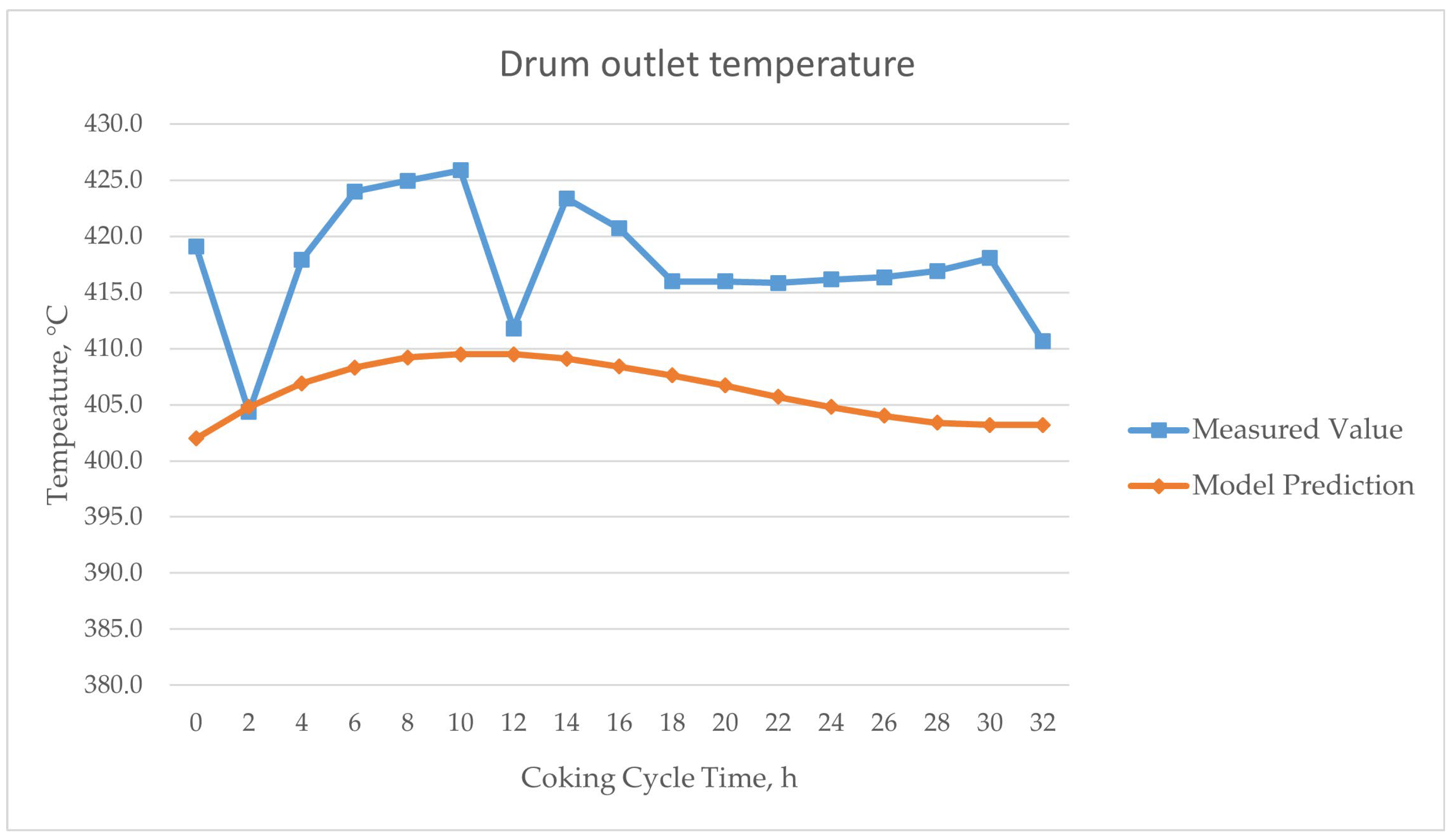
The drum outlet (overhead vapor) temperature (Figure 4) is reproduced with moderate accuracy. The model captures the overall shape of the trajectory—an initial adjustment period followed by gradual warming and mild late cycle cooling—but underestimates the absolute temperature level and does not reproduce the short-term transients observed in the measurements. In the plant data, the outlet temperature exhibits a pronounced early minimum at around 2 h and then rises rapidly to a mid-cycle maximum of about 425–426 °C (≈6–10 h), followed by an abrupt drop near 12 h and partial recovery around 14 h. After ≈18 h, the measured temperature remains close to a quasi-plateau (≈416–418 °C) before a final decrease at the end of the cycle. In contrast, the simulated curve is much smoother: it reaches only about 409–410 °C and then decreases almost monotonically toward ≈403 °C, thereby underestimating the outlet temperature throughout most of the cycle and not reproducing the step-like changes (e.g., around 12–14 h).
The maximum absolute deviation is in the order of 15–20 °C, with the largest discrepancies occurring during the mid-cycle peak and the late cycle plateau. This behavior is consistent with the modeling assumptions: the simplified 1D approach represents the drum as an axially distributed but radially averaged system and does not explicitly account for transient operational actions (e.g., switching and pressure control effects), vapor–liquid disengagement and entrainment/foaming dynamics, or line/measurement location effects, which can strongly influence the apparent outlet temperature. Accordingly, the outlet temperature is useful for verifying trends and characteristic time scales, but it is less suitable as a primary calibration variable.
Taken together, the head, bottom, and outlet temperatures indicate that the overall thermal history of the drum is represented realistically by the model.

3.3. Prediction of Coke Bed Growth

The calibrated model also predicts the growth of the coke bed height over the cycle. Starting from an empty drum at the beginning of the run, the simulated bed height increases gradually, with a faster growth rate during the period of maximum feed rate and reaction rate and a slower approach to the final height as the reactive liquid becomes depleted. The predicted final bed height differs from the measured value by only a few percent, well within the target accuracy. This level of agreement suggests that the combined description of reaction kinetics, phase holdups, and heat transfer is adequate to capture the main features of coke accumulation at the scale of the industrial drum.
Because only the final coke level is available from the plant data, the intermediate part of the height trajectory cannot be validated directly. Nevertheless, the simultaneous agreement in terms of head temperatures and the final height indicates that the model reproduces the consistent internal state of the drum: for the given heating profile and kinetics, the amount of coke produced is consistent with the energy balance and the extent of cracking.

3.4. Quantitative Accuracy Metrics

To quantify the predictive quality of the calibrated model, the MAPE defined in Equation (6) was calculated for each temperature time series, together with the mean absolute error (MAE), the root mean square error (RMSE), and the coefficient of determination (R2) over the cycle. For clarity, the MAE and RMSE for temperatures are reported in °C. The final coke bed height is discussed separately because only an end-of-cycle measurement was available for this variable.
In qualitative terms, the errors for the overhead and top head temperatures are small (typically a few percent), with no pronounced systematic bias over the 32 h cycle. The final coke bed height is reproduced with a relative error in the order of several percent, consistent with the target of approximately 5%. In addition to the MAPE/MAE/RMSE, the R2 values reported in Table 2 provide a trend-oriented assessment and corroborate that the model captures the main temporal evolution of the measured temperatures. The bottom head temperature exhibits noticeably larger deviations and lower trend agreement, in line with the discussion above. When reported for plant data, these metrics provide a compact numerical summary of the calibration quality that can be compared with alternative models or additional cycles.
The model explains 93% of the variance in the top head temperature (R2 = 0.930) and 73% for the bottom head temperature (R2 = 0.726), indicating good trend agreement for the main head temperature dynamics. By contrast, the drum outlet (overhead vapor) temperature yields a negative R2 (−4.310). This does not contradict the low absolute errors for the outlet temperature (MAPE = 2.51%, RMSE = 12.2 °C); rather, it reflects the relatively small variance in the measured outlet temperature signal in the considered cycle (a long quasi-steady plateau). When the total variance Σ(yiȳ)2 is small, even moderate absolute deviations and small systematic offsets can lead to Σ(yiŷi)2 > Σ(yiȳ)2 and, therefore, to R2 < 0. For such near-constant signals, the MAE/RMSE and direct time-series overlays are more informative than the R2, whereas the R2 is most meaningful for the more dynamic head temperature trajectories.

3.5. Scenario Analysis and Optimization of Operating Temperature

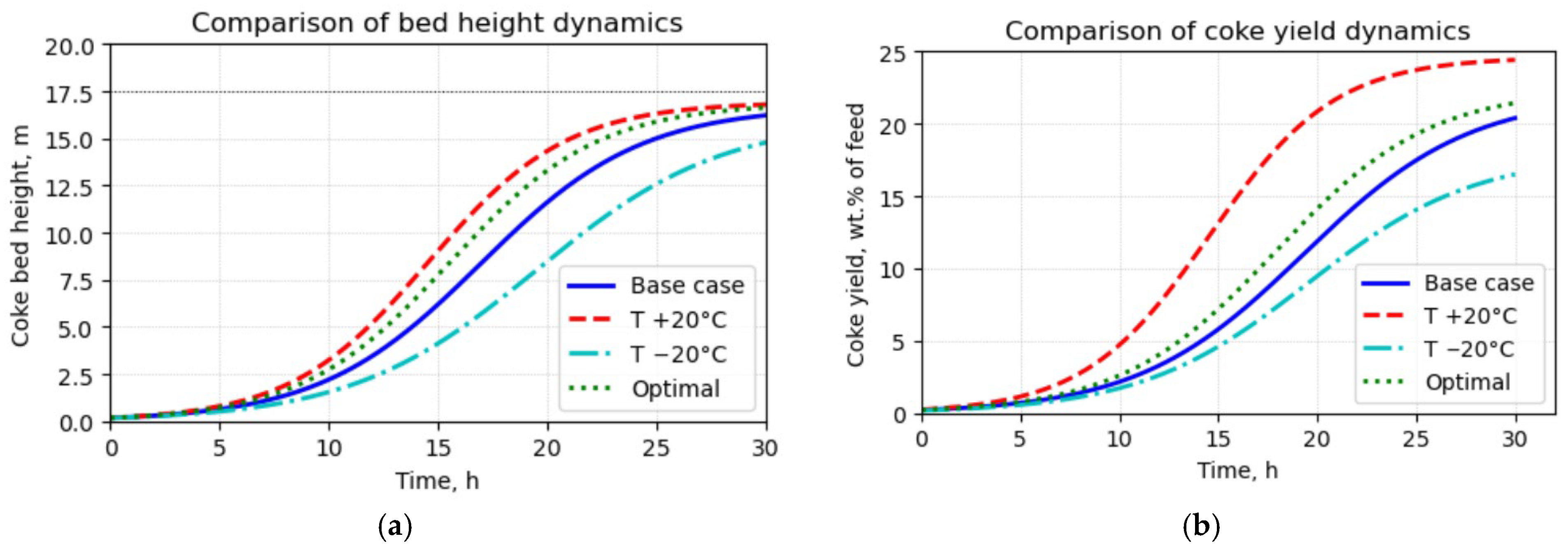
After calibration and validation, the model was used to perform a series of “what-if” simulations aimed at assessing the impact of the coking severity on drum utilization and the coke yield. In these simulations, the calibrated kinetic parameters were kept fixed, while the effective wall temperature was varied within the physically plausible range. Three hypothetical scenarios were considered in addition to the calibrated base case:
  • T + 20 °C—increased severity, with the effective wall temperature raised by 20 °C;
  • T − 20 °C—reduced severity, with the effective wall temperature lowered by 20 °C;
  • Optimal—an operating point obtained from a simple optimization problem that minimizes the time needed to reach a target coke yield and bed height, subject to constraints on the maximum allowable bed height.
The results are summarized in Figure 5. The left panel shows the predicted evolution of the coke bed height, whereas the right panel shows the cumulative coke yield (wt.% of feed).
The trends observed in Figure 5 are in line with physical expectations. Increasing the effective wall temperature by 20 °C accelerates the overall reaction rate and leads to more rapid bed growth. In the T + 20 °C scenario, both the bed height and the coke yield rise faster and reach their asymptotic values earlier than in the base case. According to Table 3, the final coke yield increases from 22.0 wt.% in the base case to 24.6 wt.% in the high-severity case, while the time required to reach 95% of the final yield decreases from 31.7 h to 23.9 h. The final bed height also increases slightly (from 16.69 m to 16.92 m), remaining within the acceptable range for the drum geometry.
Conversely, in the T − 20 °C scenario, the reduced severity leads to slower coke formation. Both the bed height and the coke yield grow more gradually and reach lower final values: the final coke yield decreases to 17.9 wt.% and the final bed height to 16.03 m, while the times to reach 95% of the final height and yield extend to 32.0 h. This scenario illustrates the trade-off between energy input and throughput: operating at lower wall temperatures reduces the coking severity and gas/oil cracking, but at the expense of longer cycle times and lower coke production.
The optimal scenario lies between the base and T + 20 °C cases in terms of severity. It was obtained by minimizing the cycle time while enforcing constraints on the maximum bed height and minimum acceptable coke yield (Section 2.3). As seen in Figure 3 and Table 3, this scenario achieves a coke yield (22.4 wt.%) that is comparable to the base case and a final bed height slightly below that in the T + 20 °C case (16.86 m). From an operational viewpoint, such a regime represents a compromise between higher throughput (shorter cycle) and conservative utilization of the drum volume.
It should be emphasized that the T ± 20 °C scenarios are model-based extrapolations around the calibrated operating point. Although the effective wall temperature remains within the physically reasonable range, no industrial cycles under such conditions were available for validation. Nevertheless, the monotonic and physically consistent dependence of the bed height and coke yield on Twall illustrates how the calibrated 1D model can be employed for scenario analysis and the preliminary optimization of the coking severity.

3.6. Limitations and Implications for Digital Twin Applications

The main limitations of the present model are associated with the simplified hydrodynamic and heat transfer descriptions. The model assumes a one-dimensional flow, neglects detailed momentum balances, and represents complex phenomena such as foam formation, flooding and drying, intermittent steam injection, and local wall cooling through an effective constant wall temperature and empirical phase holdup correlations. As a result, certain features—in particular, the late cycle behavior of the bottom head temperature and local two-dimensional effects near the drum domes—are not captured fully.
Despite these simplifications, the calibrated model reproduces the key operational indicators of the delayed coking cycle—the overhead and upper head temperatures and final coke bed height—with accuracy that is sufficient for engineering purposes. At the same time, the computational cost of the 1D finite-difference implementation is low, allowing full-cycle simulations and parametric studies to be performed within seconds on a standard workstation.
Taken together, these properties make the model well suited for integration into a digital twin of the delayed coking unit. In such a framework, the model can be used for the following:
  • Soft sensing of unmeasured variables (e.g., internal phase holdups and the coke front position);
  • Offline analysis of alternative operating strategies and drum-switching times;
  • Providing a mechanistic core for hybrid models in which first-principles dynamics are complemented by data-driven corrections;
  • Residence time and coking severity tracking (e.g., coke age and time–temperature integrals) to support coke specification monitoring and cycle time optimization.
Future work will focus on extending the model to include time-dependent wall temperature profiles, coupling with furnace and fractionator models, and incorporating additional product quality and environmental constraints into the optimization framework.

4. Conclusions

In this work, a simplified but dynamic one-dimensional model of an industrial delayed coking drum was developed, calibrated, and applied to scenario analysis. The model combines a temperature-dependent global kinetic scheme with lumped descriptions of three-phase hydrodynamics and heat transfer, and it is identified using a limited set of routinely measured plant variables (head temperatures, overhead temperature, and final coke bed height).
Calibration on a representative industrial cycle demonstrated that, after tuning only three physically interpretable parameters, the model is able to reproduce the temporal evolution of the top head and overhead temperatures and the final coke level with errors in the order of a few percent. The more complex behavior of the bottom head temperature is captured only qualitatively, which reflects the deliberate simplifications in the hydrodynamic and thermal descriptions near the drum heads.
On the basis of the calibrated model, several “what-if” scenarios were explored in which the effective wall temperature was varied by ±20 °C and an optimal operating point was determined. These simulations showed how changes in coking severity influence coke bed growth, the final coke yield, and the cycle time and provided quantitative indicators such as the time to reach 95% of the final height and yield. The analysis highlights the trade-offs between the throughput, coke yield, and utilization of the drum volume and illustrates the potential of the model to support decision making regarding the operating temperature and switching strategy.
The overall conclusion is that calibrated low-order dynamic models of this type can serve as a practical building block for digital twins of delayed coking units. Their computational efficiency and physical transparency make them suitable for the following:
  • The rapid off-line evaluation of alternative operating scenarios and cycle scheduling;
  • The soft sensing of internal drum variables that are difficult or impossible to measure directly;
  • Embedding into hybrid MPC/APC frameworks where mechanistic predictions are complemented by data-driven corrections;
  • The preliminary multi-objective optimization of the coking severity with respect to product yields, energy use, and environmental constraints.
While more detailed CFD or molecular-level models remain essential for fundamental studies and detailed design, the present approach offers a balanced compromise between realism, robustness, and speed that is well aligned with the requirements of industrial digitalization and real-time decision support in delayed coking operations.

Author Contributions

Conceptualization, V.V.B., Y.A.T. and I.S.N.; methodology, V.V.B., I.S.N., A.A.G. and F.A.B.; software, V.V.B. and I.S.N.; validation, I.S.N. and O.A.K.; formal analysis, I.S.N.; investigation, V.V.B., I.S.N. and A.A.G.; resources, I.S.N. and Y.A.T.; data curation, V.V.B. and I.S.N.; writing—original draft preparation, I.S.N.; writing—review and editing, V.V.B., A.A.G. and I.S.N.; visualization, O.A.K. and I.S.N.; supervision, V.V.B. and F.A.B.; project administration, V.V.B. and F.A.B.; funding acquisition, V.V.B. and I.S.N. All authors have read and agreed to the published version of the manuscript.

Funding

This research was funded by the Russian Science Foundation, project number 25-19-20154, and the Krasnoyarsk Regional Science Foundation.

Data Availability Statement

The industrial data used for model calibration and validation were obtained from an industrial partner and are subject to confidentiality restrictions that prevent public disclosure. Requests to access these data should be directed to the corresponding author. The one-dimensional delayed coking drum model developed in this study is openly available on GitHub at https://github.com/Daos711/coke-project-simple (accessed on 25 November 2025).

Conflicts of Interest

The authors declare no conflicts of interest.

Abbreviations

The following abbreviations are used in this manuscript:
DCDelayed Coking
DCUDelayed Coking Unit
VRVacuum Residue
CFDComputational Fluid Dynamics
SOLStructure-Oriented Lumping
MLMachine Learning
APCAdvanced Process Control
MPCModel Predictive Control
MAPEMean Absolute Percentage Error
MAEMean Absolute Error
RMSERoot Mean Square Error
1DOne-Dimensional
R2Coefficient of Determination

References

  1. Gomaa, S.; Salem, K.G.; El-Hoshoudy, A.N. Enhanced heavy and extra heavy oil recovery: Current status and new trends. Petroleum 2024, 10, 399–410. [Google Scholar] [CrossRef]
  2. Yang, J.; Yang, X.; Zhang, Z.; Qin, H.; Wang, C.; Shen, H.; Zhou, X. Optimizing engineering strategies for delayed coking applications: A machine learning-based multi-objective framework. J. Clean. Prod. 2025, 520, 146093. [Google Scholar] [CrossRef]
  3. Hussain, M.; Alamri, A.H.; Zhang, T.; Jamil, I. Application of artificial intelligence in the oil and gas industry. In Engineering Applications of Artificial Intelligence; Chakir, A., Andry, J.-F., Ullah, A., Bansal, R., Ghazouani, M., Eds.; Springer: Cham, Switzerland, 2024; pp. 341–373. [Google Scholar] [CrossRef]
  4. Sawarkar, A.N.; Pandit, A.B.; Samant, S.D.; Joshi, J.B. Petroleum residue upgrading via delayed coking: A review. Can. J. Chem. Eng. 2007, 85, 1–24. [Google Scholar] [CrossRef]
  5. Valyavin, G.G.; Khukhrin, E.A.; Valyavin, K.G. The place of delayed coking in modern oil refineries. Chem. Technol. Fuels Oils 2007, 43, 191–196. [Google Scholar] [CrossRef]
  6. Borodin, E.V.; Zhirnov, B.S.; Vedernikov, O.S.; Kleymenov, A.V.; Golovachev, V.A.; Demin, A.M.; Bessonov, V.V. Optimization of the delayed coking process for the production of premium petroleum cokes. Chem. Technol. Fuels Oils 2025, 61, 7–15. [Google Scholar] [CrossRef]
  7. Chen, Q.L.; Yin, Q.H.; Wang, S.P.; Hua, B. Energy-use analysis and improvement for delayed coking units. Energy 2004, 29, 2225–2237. [Google Scholar] [CrossRef]
  8. Ren, J.; Meng, X.; Xu, C.; Song, Z.; Jiang, Q.; Liu, Z. Analysis and calculation model of energy consumption and product yields of delayed coking units. Pet. Sci. 2012, 9, 100–105. [Google Scholar] [CrossRef][Green Version]
  9. Fuentes-García, J.T.; Rivera-Toledo, M. Multiobjective sustainability optimisation of a delayed coking unit processing heavy Mexican crude using Aspen Plus. Processes 2025, 13, 3151. [Google Scholar] [CrossRef]
  10. Yatimi, Y.; Mendil, J.; Marafi, M.; Alalou, A.; Al-Dahhan, M.H. Advancement in heavy oil upgrading and sustainable exploration emerging technologies. Arab. J. Chem. 2024, 17, 105610. [Google Scholar] [CrossRef]
  11. Edwards, L. The history and future challenges of calcined petroleum coke production and use in aluminum smelting. JOM 2015, 67, 308–321. [Google Scholar] [CrossRef]
  12. Zhu, F.; Song, W.-L.; Ge, J.; Wang, Z.; Huang, Z.; Li, S.; Wang, M.; Zuo, H.; Jiao, S.; Zhu, H. High-purity graphitic carbon for energy storage: Sustainable electrochemical conversion from petroleum coke. Adv. Sci. 2023, 10, 2205269. [Google Scholar] [CrossRef] [PubMed]
  13. Cabral, R.L.B.; Galvão, E.R.V.P.; Fechine, P.B.A.; Galvão, F.M.F.; do Nascimento, J.H.O. A minireview on the utilization of petroleum coke as a precursor for carbon-based nanomaterials (CNMs): Perspectives and potential applications. RSC Adv. 2024, 14, 19953–19968. [Google Scholar] [CrossRef] [PubMed]
  14. Ancheyta, J.; Speight, J.G. Hydroprocessing of Heavy Oils and Residua; CRC Press: Boca Raton, FL, USA, 2007. [Google Scholar] [CrossRef]
  15. Tian, L.; Shen, B.; Liu, J. Building and application of delayed coking structure-oriented lumping model. Ind. Eng. Chem. Res. 2012, 51, 3923–3931. [Google Scholar] [CrossRef]
  16. Ye, L.; Qin, X.; Murad, A.; Liu, J.; Ying, Q.; Xie, J.; Hou, L.; Yu, W.; Zhao, J.; Sun, H.; et al. Calculation of reaction network and product properties of delayed coking process based on structural increments. Chem. Eng. J. 2022, 431, 133764. [Google Scholar] [CrossRef]
  17. Chen, Z.; Yao, X.; Guan, D.; Zhao, S.; Zhang, L.; Xu, C. Vacuum residue coking process simulation using molecular-level kinetic model coupled with vapor–liquid phase separation. Chin. J. Chem. Eng. 2022, 42, 301–310. [Google Scholar] [CrossRef]
  18. Han, W.; Yue, Y.; Jia, Y.; Xiong, X.; Zhang, Y.; Liu, Y.; Ge, W. Dynamically coupling computational fluid dynamics (CFD) and steady-state model (SSM) for simulating industrial coke drum and temperature prediction. Chem. Eng. Sci. 2025, 320, 122678. [Google Scholar] [CrossRef]
  19. Chen, B.; Cao, Y.; Zhang, Y.; Sun, G.; Liu, Y.; Wang, L. CFD simulation and temperature regulation of the coke drum. Chin. J. Process Eng. 2024, 24, 414–424. [Google Scholar] [CrossRef]
  20. Zahedi, G.; Lohi, A.; Karami, Z. A neural network approach for identification and modeling of delayed coking plant. Int. J. Chem. React. Eng. 2009, 7. [Google Scholar] [CrossRef]
  21. Chen, X.; Wang, N. Modeling a delayed coking process with GRNN and double-chain based DNA genetic algorithm. Int. J. Chem. React. Eng. 2010, 8, 47–54. [Google Scholar] [CrossRef]
  22. Saghir, H.; Ahmad, I.; Kano, M.; Caliskan, H.; Hong, H. Prediction and optimisation of gasoline quality in petroleum refining: The use of machine learning model as a surrogate in optimisation framework. CAAI Trans. Intell. Technol. 2024, 9, 1185–1198. [Google Scholar] [CrossRef]
  23. Alzahawi, A.H.; Issa, H.M. Intelligent petroleum processing: A short review on applying AI/ML to petroleum products optimization. Preprints 2024, 2024040442. [Google Scholar] [CrossRef]
  24. Al-Jamimi, H.A.; BinMakhashen, G.M.; Saleh, T.A. Multiobjectives optimization in petroleum refinery catalytic desulfurization using machine learning approach. Fuel 2022, 322, 124088. [Google Scholar] [CrossRef]
  25. Orazbayev, B.; Orazbayeva, K.; Uskenbayeva, G.; Dyussembina, E.; Shukirova, A.; Rzayeva, L.; Tuleuova, R. System of models for simulation and optimization of operating modes of a delayed coking unit in a fuzzy environment. Sci. Rep. 2023, 13, 14102. [Google Scholar] [CrossRef]
  26. Sircar, A.; Nair, A.; Bist, N.; Yadav, K. Digital twin in hydrocarbon industry. Pet. Res. 2023, 8, 270–278. [Google Scholar] [CrossRef]
  27. Meza, E.B.M.; Souza, D.G.B.D.; Copetti, A.; Sobral, A.P.B.; Silva, G.V.; Tammela, I.; Cardoso, R. Tools, technologies and frameworks for digital twins in the oil and gas industry: An in-depth analysis. Sensors 2024, 24, 6457. [Google Scholar] [CrossRef] [PubMed]
  28. Jiangang, W.; Lei, S.; Ding, F.; Jinli, L.; Lingxia, H.; Enming, M. A digital twin modeling and application for gear rack drilling rigs lifting system. Sci. Rep. 2024, 14, 18445. [Google Scholar] [CrossRef]
  29. Díaz, F.A.; Chaves-Guerrero, A.; Gauthier-Maradei, P.; Fuentes, D.; Guzmán, A.; Picón, H. CFD simulation of a pilot plant delayed coking reactor using an in-house CFD code. CTF-Cienc. Tecnol. Y Futuro 2017, 7, 85–100. [Google Scholar] [CrossRef][Green Version]
  30. Orazbayev, B.; Dyussembina, E.; Uskenbayeva, G.; Shukirova, A.; Orazbayeva, K. Methods for modeling and optimizing the delayed coking process in a fuzzy environment. Processes 2023, 11, 450. [Google Scholar] [CrossRef]
Figure 1. Flowchart of a typical delayed coking unit. The main units of the DCU are as follows: 1—coking drums; 2—secondary raw material heating furnaces; 3—primary raw material heating furnaces; 4—main fractionation column [30].
Processes 14 00375 g001
Figure 2. Comparison of measured and simulated top head temperature profiles over the full 32 h coking cycle.
Processes 14 00375 g002
Figure 3. Comparison of measured and simulated bottom head temperature profiles over the 32 h coking cycle.
Processes 14 00375 g003
Figure 4. Comparison of measured and simulated drum outlet (overhead vapor) temperature profiles over the 32 h coking cycle.
Processes 14 00375 g004
Figure 5. (a) Simulated coke bed height growth under different effective wall temperature scenarios (Twall ± 20 °C and optimal case); (b) cumulative coke yield as a function of time for the same scenarios.
Processes 14 00375 g005
Table 1. Operating conditions and key characteristics of the industrial delayed coking cycle used for model calibration.
ParameterUnit of MeasurementRange
Furnace Feed Flow Ratem3/h10–60
Drum Inlet Pressurekgf/cm20–4.2
Drum Inlet Temperature°C460–475
Drum Outlet Temperature°C360–430
Top Head Temperature°C<450
Bottom Head Temperature°C<475
Cycle Durationh32
Feedstock-Vacuum residue (100 wt.%)
Feedstock Coking Capacitywt.%10.4
Table 2. Quantitative accuracy metrics (MAPE, MAE, RMSE, and R2) for simulated and measured temperatures.
ParameterMAPE, %MAE, °CRMSE, °CR2
Drum Outlet Temperature2.5111.4012.20–4.31
Top Head Temperature1.636.247.400.930
Bottom Head Temperature9.0523.7127.360.726
Table 3. Effects of wall temperature scenarios (Twall ± 20 °C and optimal case) on final coke yield, coke bed height, and time required to reach 95% of asymptotic values.
ScenarioH Final, mY Final, %t (95% H), ht (95% Y), h
Base case16.6922.027.831.7
T + 20 °C16.9224.623.923.9
T − 20 °C16.0317.93232
Optimal16.8622.425.529.4
Disclaimer/Publisher’s Note: The statements, opinions and data contained in all publications are solely those of the individual author(s) and contributor(s) and not of MDPI and/or the editor(s). MDPI and/or the editor(s) disclaim responsibility for any injury to people or property resulting from any ideas, methods, instructions or products referred to in the content.