Article

Alkaline Element Leaching from Fly Ash for Direct CO2 Fixation

1
Shanghai Datun Energy Co., Ltd., Jiangsu Branch, Xuzhou 221000, China
2
China Coal Technology & Engineering Group Chongqing Research Institute Co., Ltd., Chongqing 400039, China
3
State Key Laboratory of Chemistry and Utilization of Carbon Based Energy Resources, Xinjiang Key Laboratory of Coal Clean Conversion & Chemical Engineering Process, School of Chemical Engineering and Technology, Xinjiang University, Urumqi 830017, China
4
Xinjiang Geological Engineering Co., Ltd., Urumqi 830002, China
5
School of Geology and Mining Engineering, Xinjiang University, Urumqi 830017, China
*
Authors to whom correspondence should be addressed.
Processes 2026, 14(2), 370; https://doi.org/10.3390/pr14020370
Submission received: 20 November 2025 / Revised: 27 December 2025 / Accepted: 4 January 2026 / Published: 21 January 2026
(This article belongs to the Section Petroleum and Low-Carbon Energy Process Engineering)

Abstract

Fly ash (FA), a major by-product of coal combustion, has long been regarded as a challenging industrial solid waste. Its inherent abundance of alkaline-earth oxides positioned it as a promising candidate for CO2 sequestration through mineral carbonation. This study systematically investigated the effects of key operational parameters, including time, stirring rate, ultrasonic treatment, and solid-to-liquid ratio, on the leaching efficiency of calcium ions and subsequent CO2 fixation. Ultrasonic treatment, a solid-to-liquid ratio of 1:7, a stirring speed of 600 rpm, and 7% monoethanolamine (MEA) collectively enhanced the calcium leaching efficiency (χe) to 16.7%, thereby supplying a substantial reservoir of calcium ions for CO2 fixation. Additionally, the CO2 injection into fly ash slurry and the slurry spraying into CO2 gas were investigated to optimize reactor configurations. The latter method demonstrated superior performance, attaining a CO2 fixation efficiency of 7.23%. This corresponds to a carbonation conversion efficiency (ηc) of approximately 44.5%, indicating that nearly half of the leached calcium ions were successfully converted into stable carbonates. Advanced characterization techniques (SEM-EDS, XRD, FTIR) confirmed the formation of stable carbonates and highlighted the role of additives in enhancing reactivity. The environmental benefit of this approach is addressing fly ash wastes and transforming fly ash into a CO2 fixation material. These findings provided critical insights for calcium leaching and CO2 fixation of fly ash.

1. Introduction

The most recent statistics from the International Energy Agency (IEA) demonstrate that global energy-related CO2 emissions increased by 1.1% in 2023, reaching an unprecedented peak of 37.4 Gt. It is noteworthy that coal emissions accounted for more than 65% of this increase [1,2]. The process of CO2 fixation is defined as the carbonation reaction of CO2 into carbonates with natural Ca/Mg silicate minerals or alkaline residues [3]. In comparison with alternative utilization methodologies, CO2 fixation possesses distinct advantages that are attributable to its spontaneous nature, including its cost-effectiveness and high feasibility.
Fly ash (FA) is a significant by-product of coal-fired power plants and is regarded as one of the most complex human-made waste materials [4]. The production of fly ash is globally estimated to be approximately 1.1 billion tonnages per annum. In China, the emission of fly ash is estimated to be approximately 900 million tonnages with a continued increase [5]. In addition, the FA can also be used for Al recovery, Si recovery, iron oxides recovery, zeolite preparation, adsorbents, and cementing material [6,7]. Critically, beyond its role as a bulking agent, FA possesses inherent agronomic value due to its composition. It is a source of essential plant nutrients such as calcium, magnesium, and potassium, alongside silicon and trace elements. Analogous to nutrient-rich biomass ash from natural fires—which is documented to elevate soil pH, increase electrical conductivity, and enhance the bioavailability of exchangeable calcium (exch. Ca), magnesium (exch. Mg), and mineral nitrogen [8]—appropriately processed FA holds significant potential as a soil amendment to improve fertility and physical structure. The improper disposal of FA has had consequences for the environment and resulted in the wastage of potentially recoverable resources. Consequently, there is an urgent and continuous demand to explore innovative recycling approaches for FA. Because the FA is rich in earth-alkali oxides, the carbonation of FA provides a potential candidate for the sequestration of CO2. The substantial by-product has the potential to facilitate the sequestration of approximately 38 million tonnages of CO2 per annum [9]. The CO2 fixation can synergistically solve two main environmental problems associated with coal combustion.
According to process characteristics, the CO2 fixation can be regarded as an in situ and ex situ mineral carbonation process [10]. The former refers to in situ mineral carbonation, as defined in IPCC reports: a process where CO2 reacts with Ca-Mg bearing minerals in their native geological formations. Specifically, CO2 is injected into deep subsurface geological reservoirs, including saline aquifers, depleted oil and gas fields, and unmineable coal seams [11], where it reacts with naturally occurring Ca-Mg bearing minerals within the formation to form stable Ca and Mg carbonates. This reaction immobilizes CO2 and prevents its emission into the atmosphere. That said, stringent operational management is required for in situ mineral carbonation to mitigate potential risks, such as groundwater contamination, low rock reactivity, and unintended CO2 migration [12]. The latter refers to ex situ mineral carbonation, which occurs outside the original geological formation. In this process, Ca-Mg bearing minerals are first extracted from the geological formation and transported to a purpose-built reaction site, where they are subjected to reactions with CO2 to generate Ca and Mg carbonates. Based on the source of free Ca/Mg ions, the ex situ process can be divided into direct fixation (with abundant Ca/Mg present in the reaction solvent) and indirect fixation (with abundant Ca/Mg present in solid residues) [13,14]. Compared with indirect fixation, direct fixation accomplishes CO2 fixation in one single step, with fixation capacity as the exclusive performance indicator [15]. The straightforward process offers economic viability for the large-scale utilization of FA.
Despite the different fixation processes, CO2 sequestration is achieved by two main mechanisms: the leakage of ions and the carbonation of calcium hydroxide [16]. Despite the fact that CO2 has the capacity to react directly with oxides under dry conditions, the high pressure and slow reaction rate render dry fixation a challenging process to apply. Furthermore, the reduction in operating pressure would result in the release of some free CO2 into the atmosphere [17,18]. Indeed, the fixation rate and capacity may be dictated by the release of alkaline metals from such residues. This finding has been corroborated by numerous researchers [19,20]. Pressure, temperature, stirring speed, ultrasonic treatment, and the solid-to-liquid ratio (the mass ratio of FA in slurry) affect the CO2 sequestration in alkaline residues by regulating the ion transportation. Some researchers even proposed chemical modification and physical activation methods to improve the carbonation potential of FA by enlarging the specific surface, changing the chemical environments, and destabilizing the crystal structure [21]. Therefore, it is necessary to clarify and improve the transportation of ions in the CO2 stability system for a specific FA specimen.
In the present study, the research group endeavored to explore the transportation of ions during the process of CO2 fixation. A series of systematic bench-scale experiments was conducted for the purpose of parameter optimization, with the objective of advancing specific FA towards the realm of fixation practices. Following the characterization of the sample, the parameters were considered in the experimental design: pressure, temperature, stirring speed, ultrasonic treatment, solid-to-liquid ratio, and contact modes. Two stages of ion leakage and CO2 fixation were investigated by means of monitoring the following parameters: ion concentration, surface texture, crystal structure, and element distribution. Ultimately, the study developed a spray system to improve CO2 fixation capacity further.

2. Materials and Methods

2.1. FA Samples Reagents

The FA was retrieved from the baghouse filters following the desulfurization process and subsequently conveyed from the Shanghai Thermal Power Plant to Xinjiang University. To obtain samples that were representative of the population, approximately 50 kg of FA was collected per day over a 20-day period, and the samples were thoroughly amalgamated. In the laboratory, the FA was utilized for CO2 fixation without undergoing any pretreatment, thus simulating the practical situation. The surface textures, element distribution, and minerals were analyzed using a scanning electron microscope (SEM-EDS), X-ray fluorescence (XRF), and X-ray diffraction (XRD). In accordance with the national standard GB/T 212-2008—“Methods for approximate analysis of coal” [22], the approximate analysis of FA was conducted to determine its moisture content, ash content, volatile matter, and fixed carbon. Ethanolamine (C2H7NO, MEA) was purchased from the Sinopharm Co., Ltd. (Shanghai, China). The reagent was not treated before the experiments.

2.2. Fixation System

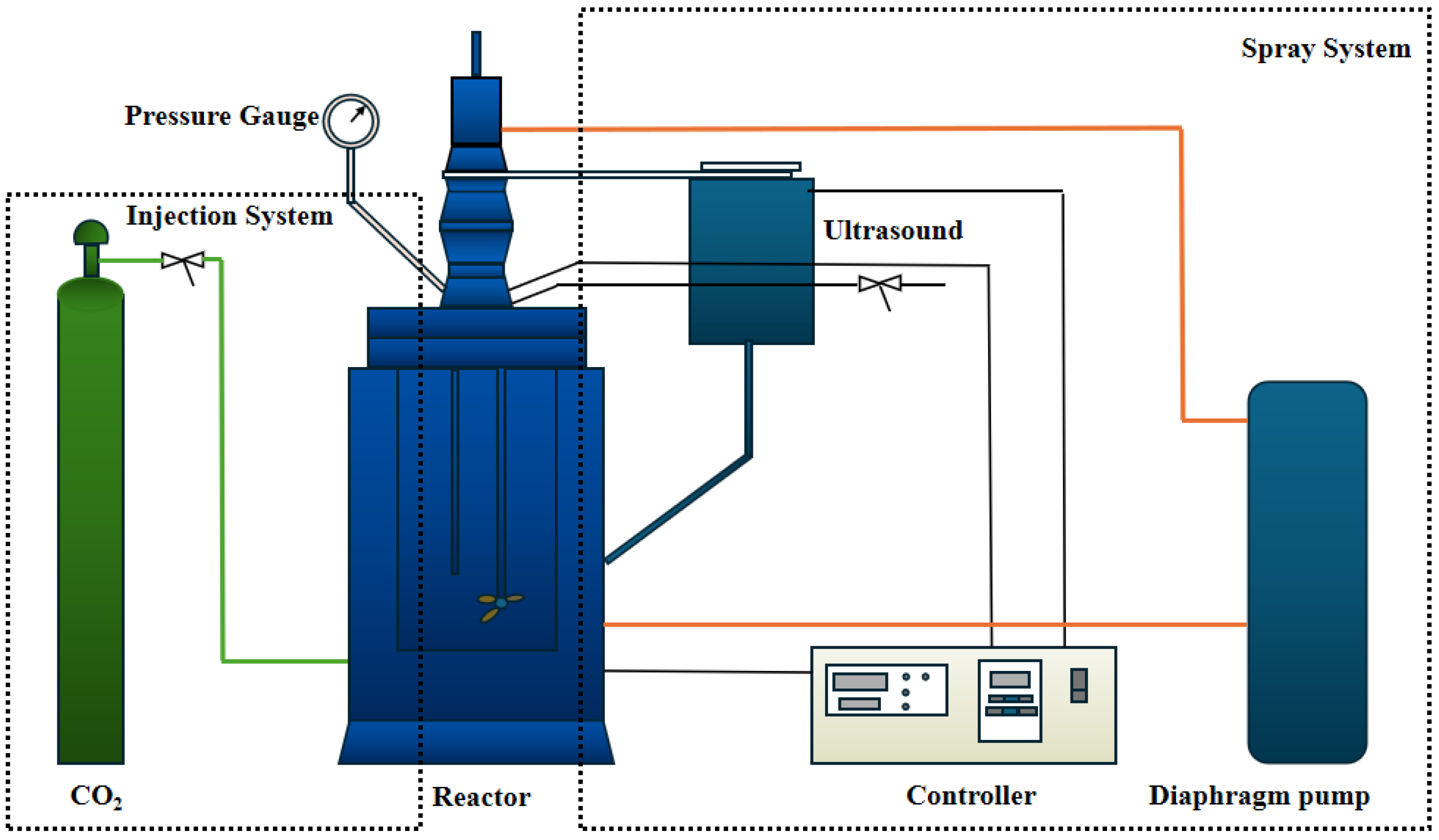
As demonstrated in Figure 1, an artificial fixation system was devised for the purpose of simulating the CO2 fixation process. The supply of pure CO2 to the autoclave reactor was facilitated by a steel pipe, with the inner pressure of the autoclave reactor being regulated by a pressure-reducing valve. Its internal volume was 0.6 L, and the presence of a substantial reaction cavity was conducive to pilot-scale experimentation. The autoclave reactor was equipped with a stirrer, an ultrasonicator, an inlet valve, a nozzle, an observation window, and an exhaust valve, which facilitated the optimization of experimental parameters. The entire system (with the exception of a gas cylinder) was placed on a large electronic balance, with the weight increment thereby representing the carbon sequestration. In order to facilitate the sampling process, a sampling port was installed at the bottom of the reactor.

2.3. Leaching and Fixation Operation

The CO2 fixation system has the capacity to facilitate two distinct modes of contact. The first mode involves the injection of CO2 gas into the FA suspension located at the base of the autoclave reactor. The second mode entails the spraying of FA suspension into the CO2 gas from the upper region of the reactor. In the former mode, the FA powder of 2.5 kg and a specific amount of water were added into the autoclave reactor, and fixation commenced with CO2 pumping. The effect of solid-to-liquid ratio (1:3–1:7), time (10–60 min), stirring speed (200 r/min–1000 r/min), and ultrasonication on ions leaching and CO2 fixation were investigated through single-factor experiments. The MEA (1–10%) was utilized as an additive to ascertain its impact on ion leaching and CO2 fixation. The optimal solution conditions identified in the preliminary phase were subsequently applied in the subsequent fixation. In other words, the FA was pre-activated by stirring in a 7% MEA solution for 1 h, employing a combination of ultrasonication (2400 W) and mechanical agitation at 600 rpm. The 7% of MEA additive was driven by considerations of cost-effectiveness.

2.4. Sample Characterization

The elemental distribution, surface morphology, crystal phase, functional groups, and chemical bonds of residues were characterized using X-ray fluorescence (XRF, PANalytical Axios, Almelo, The Netherlands), scanning electron microscopy (SEM-EDS, JSM-7000F, JEOL, Tokyo, Japan), X-ray diffraction (XRD, Bruker D8 ADVANCE, Bruker Corporation, Billerica, MA, USA), and Fourier-transform infrared spectroscopy (FTIR, Bruker VERTEX 70v, Bruker Corporation, Billerica, MA, USA), respectively. The residues resulting from the leaching and carbonation processes were designated L-Residues and C-Residues, respectively. In addition, the calcium ions of the solution after leaching and carbonation were analyzed using an ion meter (PXSJ-216F, Shanghai Leici Instrument Co., Ltd., Shanghai, China).
The XRD data were supplied with Cu-K α radiation (λ = 1.5406 Å) over a 2θ range from 5° to 80° with a scanning speed of 5 °/min. The wavenumber range of FT-IR was 4000–400 cm−1, and the detection applies a resolution of 0.09 cm−1 and fast scanning at 65 times per second. The SEM-EDS analysis was performed with the working voltage of 5–20 kV and the amplification factors of 500–2000. The EDS analysis set the acceleration voltage to 20 kV, the extraction voltage to 4.9 kV, and the emission current to 10 μA. The XRF semi-quantitative analysis was performed with the analysis voltage of 40 kV, X-ray tube bundle current of 95 mA, and Rh target power of 4000 W.

2.5. Calculation Methods

The fixation was considered as two stages: ion leaching and carbonation conversion. As shown in Equations (1)–(5), leaching efficiency (χe) is the ratio between leaching calcium (WCa-leahing) and total calcium (WCa-total). The quantity of CO2 fixation was indicated by the discrepancy in slurry quality prior to and following the reaction (mpost and mex). Additionally, to evaluate the efficiency of converting the leached calcium into carbonate, the carbonation conversion efficiency (ηC) is defined as the molar ratio of fixed CO2 to leached calcium.
W C a l e a c h i n g = C C a 2 + 1000 × v 1000 ( g )
W C a t o t a l = C C a 100 × m
χ e = W C a l e a c h i n g W C a t o t a l × 100 ( % )
F i x a t i o n = m p o s t m e x m e x
η C = m p o s t m e x / 44.01 W C a l e a c h i n g / 40.08 × 100 %

3. Results and Discussion

3.1. FA Samples

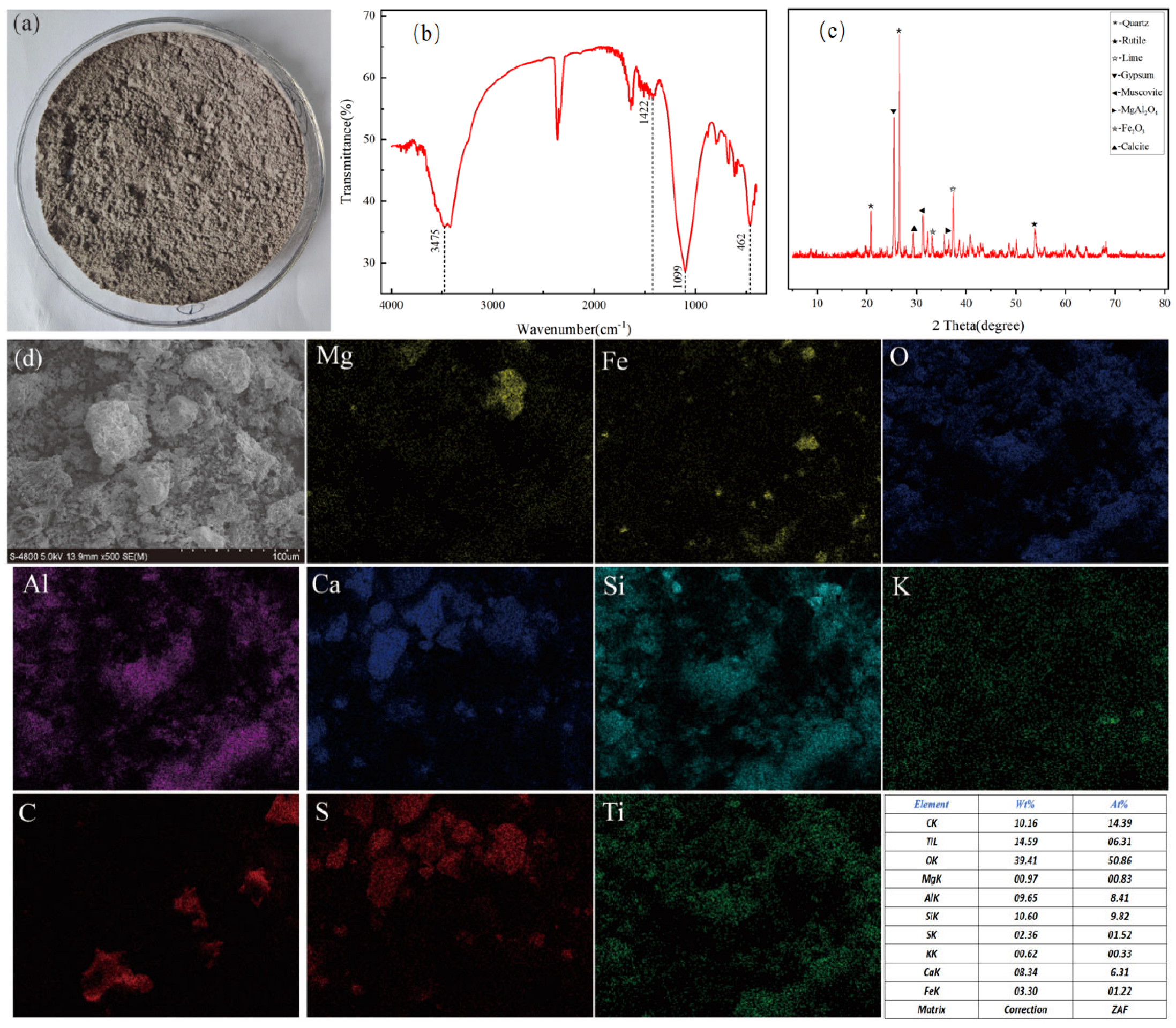
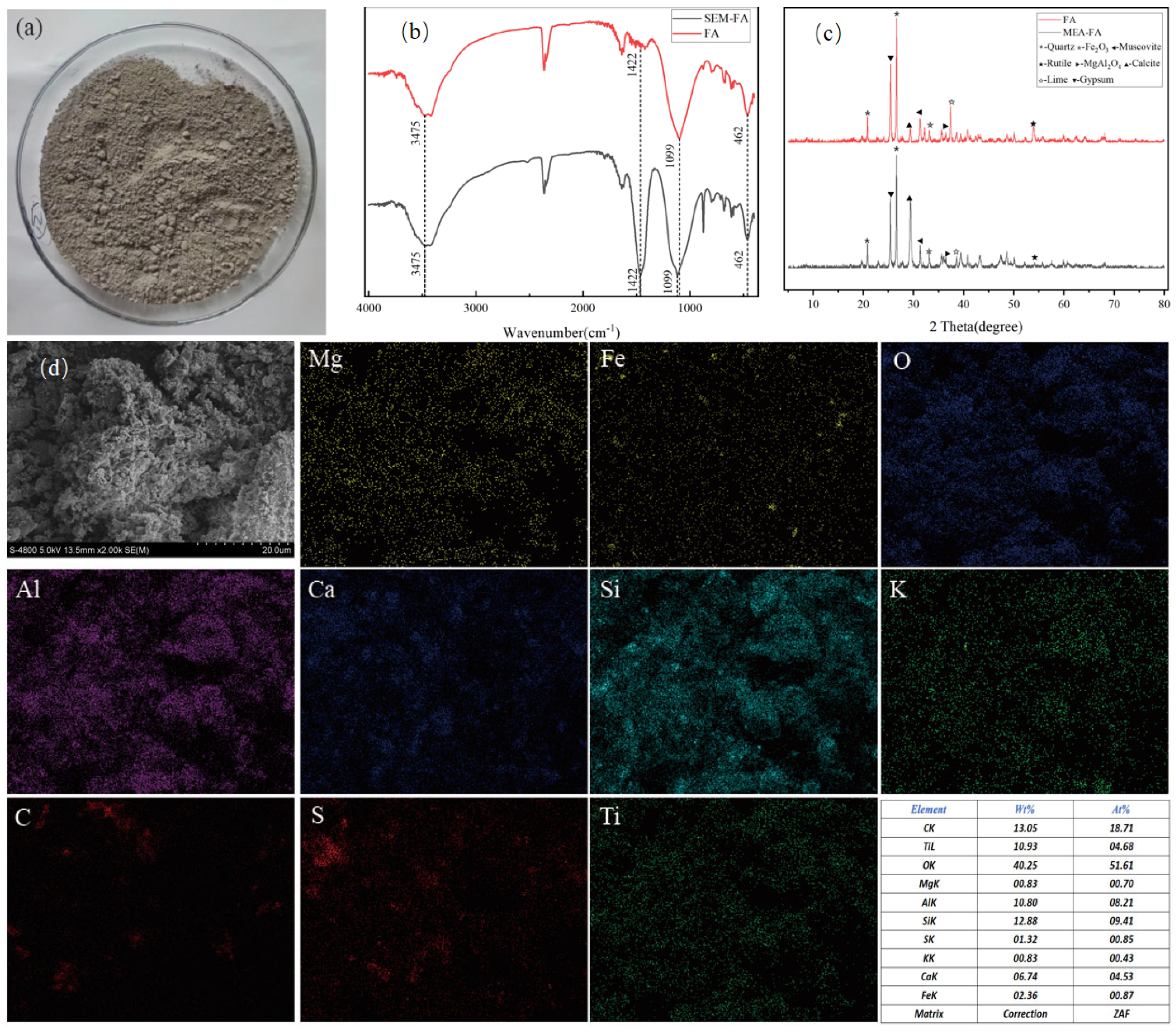
The suitability of FA for CO2 fixation and sequestration was largely attributed to the presence of alkaline oxides such as CaO and MgO. Nevertheless, the CaO content in FA may be subject to considerable variation, owing to the disparities in combustion processes, coal types, and desulfurization methods. This element constitutes a pivotal factor in the diverse CO2 sequestration capacities observed among the various types of FA [23]. Therefore, it is necessary to explore the chemical and physical properties of pristine FA samples. The photograph, SEM-EDS images, element distribution, and mineral crystals are shown in Figure 2. The samples obtained from the FA exhibited a uniform size distribution and appeared as brown powders. The images obtained using SEM appear to demonstrate that the FA particles exhibit a characteristic polymorphic morphology. According to the principles of large particle adsorption and small particle agglomeration, small spherical particles adhered to the surface of larger spheres [24], and the small particles could provide a large specific surface for CO2 fixation.
The primary constituents of the FA include C, Si, Al, Ca, S, Fe, O, and Ti, whose oxides collectively account for over 95% of the total ash mass. Notably, the CaO content was about 15.59%, which was an active component for CO2 fixation, while K and Mg were observed as minor elements. The element groups demonstrated concurrence with the mean value of the industrial FA recently published in the academic literature [25]. After full peak fit and Rietveld refinement, the main calcium minerals in FA were CaSO4 and CaO. In view of the rigorous preparation protocols, it was reasonable to infer that S in the samples originated exclusively from the desulfurization section [26]. Based on XRF and XRD data, elemental analysis indicated 6.35% of SO3 from CaSO4. In the course of the processes of hydration and carbonation, S exhibited a marked preference for reacting with CaO and Ca(OH)2, resulting in the formation of stable CaSO4. This implied that S competed with CO2 for binding sites on CaO and Ca(OH)2, and the formation of stable CaSO4 on the FA surface might hinder CO2 diffusion [27]. This has the potential to reduce the availability of these compounds for CO2 fixation, thereby impairing overall carbonation efficiency.
According to the approximate analysis, the water content, volatile matter, ash, and fixed carbon were 5.60%, 10.23%, 82.47%, and 1.70% (Table 1). The incomplete combustion of coal results in the presence of residual coal particles in FA samples. Even so, the FA contained a certain amount of moisture, but it was insufficient to meet the substantial carbonation demands of the FA.

3.2. Ion Leaching

3.2.1. Influence of Leaching Time

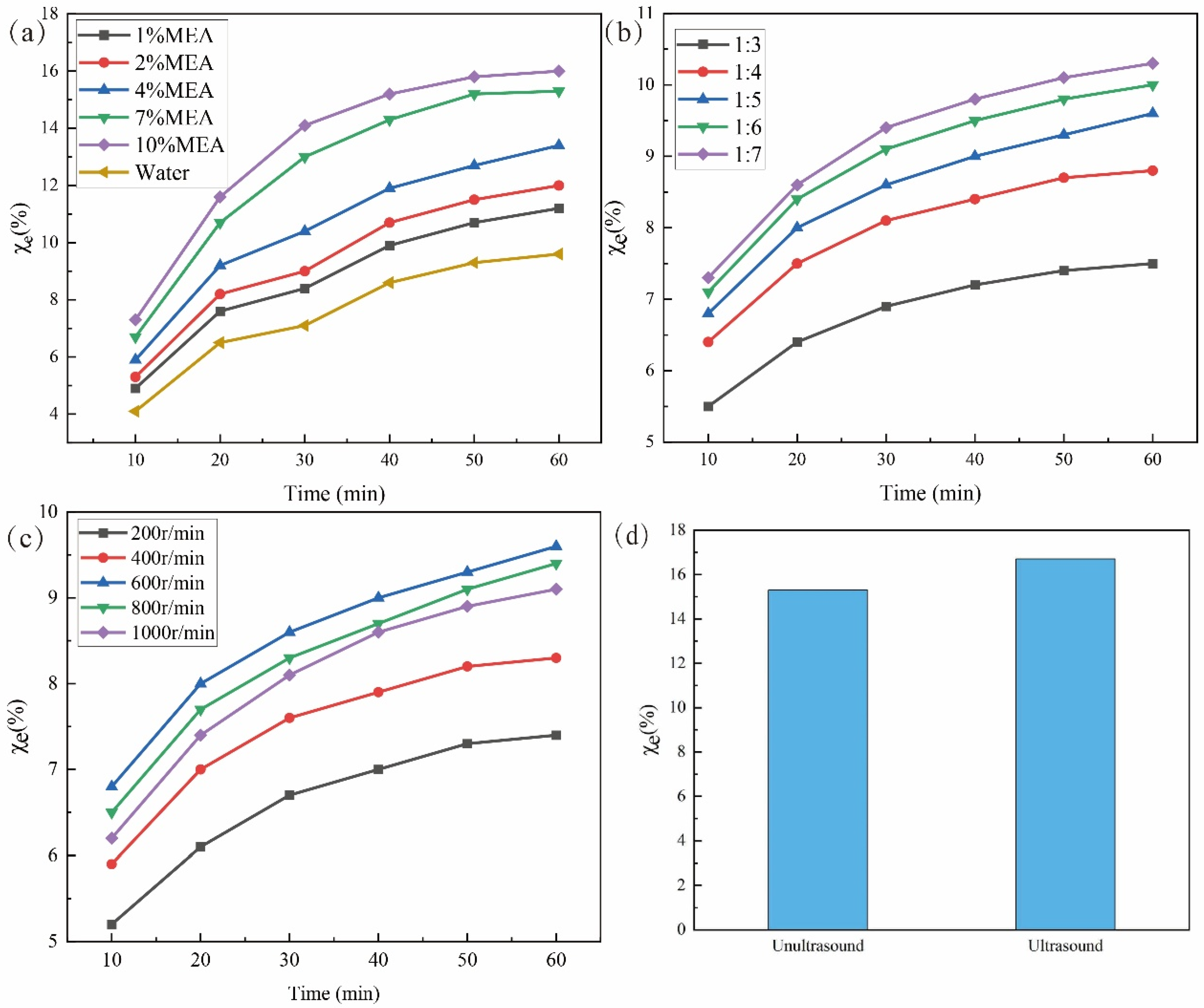
The migration of calcium ions into the solution from the FA samples was a pivotal stage for the process of CO2 fixation [28]. Thus, an organic amine was normally used as a leaching agent to assist in ion leaching in order to chemically activate FA and ameliorate the CO2 fixation [29]. Consequently, the MEA was selected as an auxiliary agent to accelerate and increase the rate of ion migration. The water medium is the control group. As shown in Figure 3a, the ions leaching are positively correlated with treatment time. The ions leaching from both solutions exhibit a rapid initial phase within the first 30 min, followed by a deceleration in the subsequent period. The leaching efficiency initially surged and then plateaued after approximately 1 h, with the final leaching efficiencies of 9.60% (Figure 3a). The ion leaching could be divided into two stages: an initial fast leaching and subsequent slow leaching. The former stage is governed by chemical reactions, while the latter is driven by the diffusion mechanism [30].
During the initial rapid phase, the calcium primarily originated from calcium-containing compounds located on the particle surfaces. The surface-bound species were directly contacting the solution and reacting with the leaching agent. As the leaching progresses, the calcium content on the particle surface swiftly diminishes, exposing an inert surface layer of insoluble SiO2 and Al2O3 [31]. The inert layer had been shown to impede the contact between the reactive sites in the particle core, thereby significantly reducing the leaching rate. Finally, the ions extraction shifted from the chemical-reactions-controlled stage to the diffusion-controlled stage.

3.2.2. Influence of Solid-to-Liquid Ratio

The initial moisture content of the material appears to be sufficient to facilitate the carbonation reaction. For example, it is optimal for municipal solid waste incinerator bottom ash for CO2 sequestration with an ash moisture content of 15% (w/w) [32]. However, the optimal moisture content for FA fixation was determined to exceed that of bottom ash derived from municipal solid waste. In conditions of elevated moisture levels, water molecules have the potential to engage in carbonation reactions through two distinct mechanisms: (1) the dissolution of CO2 gas within the water film that accumulates on residual surfaces, and (2) the hydration of alkaline oxides present in FA [33]. As shown in Figure 3b, the ion extraction efficiency decreased with an increasing solid-to-liquid ratio. When the solid-to-liquid ratio decreased from 1:3 to 1:7, the leaching efficiency increased from 7.5% to 10.30% (Figure 3b).
Obviously, the fixation took a very long time, and the carbonation suffered from unsatisfied reaction kinetics when the water content was incommensurate with a threshold value of CO2 fixation. It is evident that water has a significant role in facilitating the leaching of calcium ions, as well as the diffusion of CO2 [34]. In other words, a high solid-to-liquid ratio meant insufficient water in the fixation system, inhibiting the ion extraction reaction [35]. In instances where water participated in the process of fixation, the gas-solid reaction system, which comprises two phases, transitioned into a gas-liquid-solid reaction system, encompassing three phases. A portion of the gaseous CO2 dissolved in the aqueous phase to form carbonic acid, which subsequently ionizes to produce H+, HCO3, and CO32− (Equations (6)–(8)). The dissolution of minerals is promoted by these ions, which also enhance their subsequent carbonation. He et al. [36] also demonstrated that the leaching efficiency in the solution decreased rapidly with a decreasing solid-to-liquid ratio, monotonically. Thus, the CO2 fixation is still plagued by the role of water molecules.
H 2 O + C O 2 H 2 C O 3 2 H + + C O 3 2
C a O + H 2 O C a 2 + + 2 O H
C a 2 + + C O 3 2 C a C O 3

3.2.3. Influence of Reactor Design

In the context of a CO2 fixation system, the reactor design constitutes a pivotal site at which alkaline residues react with CO2. Notable among the reactor design factors that are typically employed to enhance CO2 fixation are stirring speed and ultrasonic pretreatment [37]. As demonstrated in Figure 3c,d, when the stirring speed increased from 200 rpm to 600 rpm, the leaching efficiency of FA increased from 7.4% to 9.60%. However, a marginal decline to 9.1% was discerned at 1000 rpm. In the experimental investigation of ultrasonic pretreatment, the leaching efficiency of FA was observed to be 10.8% in the absence of ultrasonic pretreatment, whereas it increased to 12.7% when ultrasonic pretreatment was applied in ion leaching. In the ultrasonic reaction system, the growth and subsequent explosion of microbubbles resulted in the dispersion of particle clusters in liquid media. This process also led to an increase in the specific surface area of powders and an enhancement of the chemical reactivity of FA [38]. Chen et al. [39] reported an increase of carbonation efficiency from 14.1% to 18.8% through ultrasound enhancement. The stirring could improve the diffusion and mass transfer efficiency of CO2 and the leaching efficiency of alkaline metal elements.

3.2.4. Influence of Agent Concentration

The integration of CO2 absorption and fixation was proposed by scholars as a means of combining the rapid CO2 absorption rate characteristic of amine solutions with the low energy consumption of fixation [40]. The introduction of exogenous substances was required to increase the CO2 uptake further. It has been established by scholars that conventional acid leaching not only extracts alkaline elements, but also heavy metal pollutants [41]. Furthermore, the addition of industrial alkali is necessary to ensure the desired pH level for CO2 fixation [42]. In order to leave heavy metals in the leached residue and avoid the frequent pH swing, amine media were proposed to promote CO2 fixation.
As shown in Figure 3a, a significant increase in leaching efficiency was observed by 66.67% as the agent concentration increased to 10%. The presence of ammonium ions has been demonstrated to facilitate the transformation of inactive calcium to active calcium within the reaction system. In this process, a plausible explanation is that a Ca(CH3COO)+ complex was formed to reduce free ions in the solution. It was hypothesized that this would promote the dissolution of calcium ions from FA [43]. However, the MEA was in favor of carbonation in the mode of absorbing CO2 to zwitterions [44]. Considering the lost effectiveness and leaching performance, ultrasonic treatment, solid-to-liquid ratio of 1:7, stirring speed of 600 rpm, and MEA of 7% enhanced the leaching efficiency by 73.95%, which provided a substantial amount of calcium ions for CO2 fixation.

3.2.5. Characterization of Leaching FA Samples

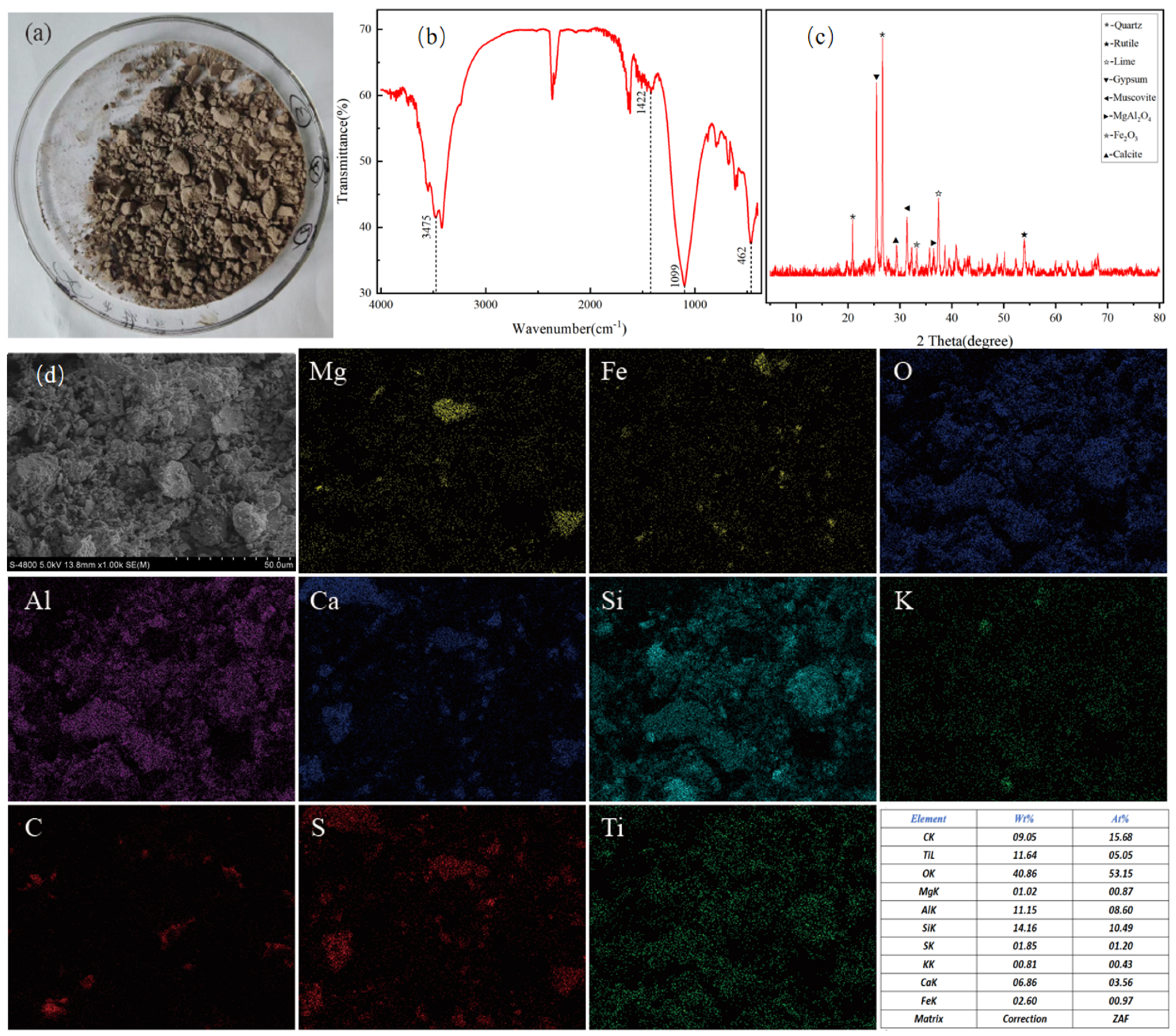
As depicted in Figure 4a,b, several key absorption bands are revealed in the FT-IR spectra. The absorption band at approximately 1100 cm−1, corresponding to the stretching vibration of Si-O bonds, is indicative of the presence of quartz and aluminosilicates. The unshifted wavenumbers of Si-O bonds demonstrated stable aluminosilicates throughout the experimental process. Additionally, leaching residues exhibited a high-intensity absorption band at about 3400 cm−1, which is characteristic of the hydroxyl groups (O-H) in Ca(OH)2 [45]. The XRD patterns of products derived from the leaching process are presented in Figure 4c. The predominant mineral phases in leaching products comprised TiO2, CaSO4, CaO, Al2O3, and 3Al2O3·2SiO2, which was consistent with the raw FA. The morphology of leaching products was depicted in Figure 4d. The reduction in the sphericity of fly ash indicates that ions at the active sites have been dissolved. Furthermore, the mass ratio of calcium in leaching FA decreased from 8.34% to 6.86% because calcium ions were dissolved in the FA slurry. The extraction of ions was employed as a pretreatment stage for the fixation of CO2. Calcium sources present in the FA samples have been shown to promote CO2 retention through the process of leaching precipitation [24].

3.3. CO2 Fixation

3.3.1. Effects of Contact Modes and MEA on FA CO2 Fixation Efficiency

Following the ions leaching, the CO2 fixation should be processed under conditions that ensure sufficient exposure. To this end, a range of reactors have been designed to enhance the contact between the CO2 gas and the leaching solution. This study gave two types of contact modes whose phase interfaces were optimized to reduce the mass transfer resistance during CO2 fixation. The fixation efficiency was evaluated subsequent to the process of CO2 fixation.
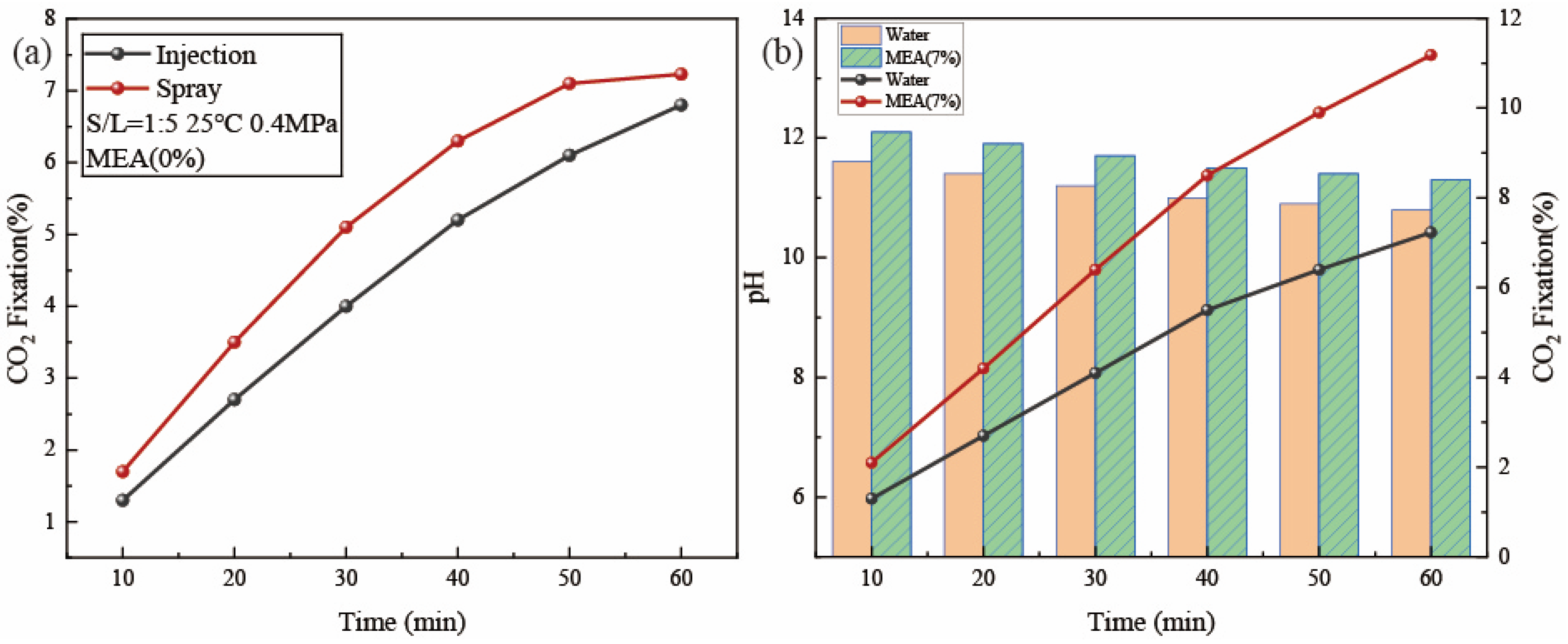
The experiment commenced with the introduction of CO2 gas into the FA slurry. This method resulted in a fixation ratio of 6.80% with a rapid initial increase in fixation occurring within the first 10 to 30 min. Subsequently, the FA slurry was sprayed into CO2 gas. Despite similar trends in the curves, this approach achieved a fixation ratio of 7.23% (Figure 5a). Notably, this fixation efficiency was achieved starting from the optimized leaching condition with χe = 16.7%. The corresponding carbonation conversion efficiency (ηC), calculated via Equation (5), was approximately 44.5%. This indicates that under the optimal spraying condition, roughly half of the calcium ions made available through leaching were successfully converted into stable carbonate. Additionally, the solution with 7% MEA increased the CO2 fixation of FA samples from 2.10% to 11.18%, which could be attributed to the promoted dissolution of calcium ions from FA and the enhanced CO2 absorption capacity of the amine (Figure 5b).

3.3.2. Characterization of Mineralizing FA Samples

As shown in Figure 6a,b, the dominant absorption bands in the range of 1410–1430 cm−1 and the subsequent band at 860–875 cm−1 were associated with the presence of carbonate (C-O) bonds, with significant increases in peak intensities suggesting the formation of calcite. As demonstrated in Figure 6c,d, subsequent to the fixation reaction, a multitude of fine-grained crystals manifested morphologically rhombohedral and spherical structures within carbonation products. The crystals exhibited a tendency to aggregate into clusters, displaying a variety of morphologies, including spindle-shaped (fibrous and spear-like) and cuboid. These observations are indicative of the formation of vaterite, aragonite, and calcite [46]. After CO2 fixation, the intensity of the CaO crystal structure collapsed, and the peak intensity of the fixation product CaCO3 was obviously enhanced at 2θ = 29.4°, 48.5°, and 36.0°. As observed in the relevant literature, analogous XRD patterns were identified [47,48]. In consideration of the XRD analysis, the precipitation of CaCO3 is characterized by a sequential transformation from thermodynamically unstable temporary amorphous CaCO3 to metastable vaterite or aragonite, ultimately stabilizing as calcite [49].

4. Process Analysis and Economic Considerations

4.1. Analysis of Rate-Limiting Steps and Reactor Performance

The comparative analysis of reactor configurations revealed a modest performance gain for the spray method (7.23%) over bubbling (6.80%). While the spray method fundamentally enhances the gas-liquid interfacial area for CO2 absorption, the small magnitude of improvement indicates that the overall carbonation rate was not solely limited by the gas-phase mass transfer of CO2. Instead, the process appears to be co-limited by the supply and diffusion of Ca2+ ions from the fly ash particles and the kinetics of carbonate precipitation. This is consistent with the calculated carbonation conversion efficiency (ηC) of ~44.5%, which quantifies the yield limitation inherent to the precipitation step. Thus, while reactor design optimizing gas-liquid contact (e.g., spraying) is beneficial, significant further efficiency gains will require strategies to address these subsequent solid-liquid reaction and crystallization bottlenecks.

4.2. Economic Assessment and the Role of MEA

The use of monoethanolamine (MEA) as a consumable additive presents a significant economic barrier for scale-up. As an expensive solvent designed for regenerative cycles, its consumption as a single-pass additive would render the process economically unviable at scale. The marginal gain in overall fixation efficiency (7.23%) does not justify the high cost of MEA. Herein, MEA was employed primarily as a model chemical agent to establish the system’s maximum theoretical performance and to elucidate mechanisms, not as a proposed commercial additive. Therefore, achieving a favorable cost-benefit ratio for fly ash carbonation necessitates future research focused on additive-free process intensification, such as advanced reactor design (e.g., spray systems) or physical activation methods to overcome the kinetic limitations identified.

5. Conclusions

This study systematically elucidated the mechanisms and optimization strategies for CO2 fixation using coal-derived fly ash. Key operational parameters, including ultrasonic pretreatment, solid-to-liquid ratio, reactor configuration, and additive selection, were rigorously evaluated to enhance calcium leaching and subsequent CO2 fixation. Ultrasonic treatment significantly improved ion leaching efficiency by disrupting particle agglomerations, achieving an enhancement of up to 12.70%. A solid-to-liquid ratio of 1:7 was identified as optimal, balancing ion diffusion and CO2 dissolution to attain a leaching efficiency of 10.30%. The combined application of ultrasonic treatment, a solid-to-liquid ratio of 1:7, a stirring speed of 600 rpm, and 7% MEA enhanced the calcium leaching efficiency (χe) to 16.7%, which provided a substantial reservoir of calcium ions for CO2 fixation. Comparative analysis of reactor designs revealed that spraying FA suspension into CO2 gas outperformed gas injection into FA slurry, achieving a CO2 fixation efficiency of 7.23%. The carbonation conversion efficiency (ηC) under this condition was calculated to be ~44.5%, effectively linking the leaching and fixation stages by quantifying the proportion of leached calcium ultimately sequestered as carbonate.
The economic feasibility of the process is constrained by the high cost of monoethanolamine (MEA) as a consumable additive. For large-scale applications, achieving a favorable cost-benefit ratio would require either a significant increase in the carbonation conversion efficiency or the development of additive-free process intensification routes. The reliable equipment and optimized process parameters established herein provide a foundational framework for such technological advancement, supporting the potential future integration of carbonation technology within coal-based power systems.

Author Contributions

Conceptualization, Z.Z. and B.L.; methodology, C.C.; software, X.J.; validation, Y.Y., L.Z., S.Z. and Y.Z. (Yingshuang Zhang); investigation, Z.N.; resources, R.Q.; data curation, Y.Z. (Yazhou Zhang); writing—original draft preparation, L.Z.; writing—review and editing, Y.Z. (Yingshuang Zhang); funding acquisition, S.Z. All authors have read and agreed to the published version of the manuscript.

Funding

This study was sponsored by the Major Scientific and Technical Projects of Xinjiang (2024A03002-5-2), the Key Project of Research and Development for Xinjiang (2022B01041-1-3), the Natural Science Foundation of Xinjiang Uygur Autonomous Region (2022D01C669), the Tianchi Talents Introduction Plan (No number), the China National Coal Group Key R&D Project (GH-KZMK-2024-00052), the National Natural Science Foundation of China (52400187), and the Autonomous Region Key R&D Program Research Topic (2023B01009-1).

Data Availability Statement

The data presented in this study are available upon request from the corresponding author.

Conflicts of Interest

Authors Lingjin Zhu, Chuncheng Cai, Rongqiang Qiao, Yazhou Zhang and Shengqi Zhou were employed by the company Shanghai Datun Energy Co., Ltd. Jiangsu Branch. Author Yahu Yao was employed by the company China Coal Technology & Engineering Group Chongqing Research Institute Co., Ltd. Author Baiye Li was employed by the company Xinjiang Geological Engineering Co., Ltd. The remaining authors declare that the research was conducted in the absence of any commercial or financial relationships that could be construed as a potential conflict of interest.

References

  1. IEA. CO2 Emissionsins in 2023; IEA: Paris, France, 2024; Available online: https://www-iea-org-s-154.libdb.csu.edu.cn/reports/co2-emissions-in-2023 (accessed on 1 January 2024).
  2. Lu, J.W.; Wang, Z.H.; Su, S.; Liu, H.; Ma, Z.W.; Ren, Q.Q.; Xu, K.; Wang, Y.; Hu, S.; Xiang, J. Single-step integrated CO2 absorption and mineralization using fly ash coupled mixed amine solution: Mineralization performance and reaction kinetics. Energy 2024, 286, 129615. [Google Scholar] [CrossRef]
  3. Zhao, K.Y.; Jia, C.Q.; Li, Z.H.; Du, X.Z.; Wang, Y.B.; Li, J.J.; Yao, Z.C.; Yao, J. Recent Advances and Future Perspectives in Carbon Capture, Transportation, Utilization, and Storage (CCTUS) Technologies: A Comprehensive Review. Fuel 2023, 351, 128913. [Google Scholar] [CrossRef]
  4. Blissett, R.S.; Rowson, N.A. A review of the multi-component utilisation of coal fly ash. Fuel 2012, 97, 1–23. [Google Scholar] [CrossRef]
  5. Sun, B.B.; Ye, G.; De Schutter, G. A review: Reaction mechanism and strength of slag and fly ash-based alkali-activated materials. Constr. Build. Mater. 2022, 326, 126843. [Google Scholar] [CrossRef]
  6. Wei, H.J.; Wan, H.F.; Yuan, S.; Liu, G.Q.; Teng, J.J.; Shi, N.; Liu, Z.W. A new gelling material: Properties of recycled aggregate concrete under conditions of complete cement replacement using steel slag, ore slag, and fly ash. Constr. Build. Mater. 2025, 464, 140180. [Google Scholar] [CrossRef]
  7. Zhang, Z.Y.; Zhu, Q.J.; Huang, G.F.; Chen, Y.J.; Li, J.; Zhao, G.P.; Peng, X.L.; Li, J.; Wang, X.Q. Innovative dry magnetic separation for Enhanced recovery of magnetic iron oxides from coal fly ash. Fuel 2025, 388, 134489. [Google Scholar] [CrossRef]
  8. Arunrat, N.; Sereenonchai, S.; Kongsurakan, P.; Yuttitham, M.; Hatano, R. Variations of soil properties and soil surface loss after fire in rotational shifting cultivation in Northern Thailand. Front. Environ. Sci. 2023, 11, 1213181. [Google Scholar] [CrossRef]
  9. Pan, S.Y.; Chen, Y.H.; Fan, L.S.; Kim, H.; Gao, X.; Ling, T.C.; Chiang, P.C.; Pei, S.L.; Gu, G.W. CO2 mineralization and utilization by alkaline solid wastes for potential carbon reduction. Nat. Sustain. 2020, 3, 399–405. [Google Scholar] [CrossRef]
  10. Wang, J.J.; Sekiai, R.; Tamura, R.; Watanabe, N. CO2 capture, geological storage, and mineralization using biobased biodegradable chelating agents and seawater. Sci. Adv. 2024, 10, eadq0515. [Google Scholar] [CrossRef] [PubMed]
  11. Yildirim, L.T.O.; Qian, Q.H.; Wang, J. A critical review of assessments of geological CO2 storage resources in Pennsylvania and the surrounding region. Geoenergy Sci. Eng. 2025, 247, 213732. [Google Scholar] [CrossRef]
  12. Bielicki, J.M.; Pollak, M.F.; Deng, H.; Wilson, E.J.; Fitts, J.P.; Peters, C.A. The Leakage Risk Monetization Model for Geologic CO2 Storage. Environ. Sci. Technol. 2016, 50, 4923–4931. [Google Scholar] [CrossRef]
  13. Veetil, S.P.; Hitch, M. Recent developments and challenges of aqueous mineral carbonation: A review. Int. J. Environ. Sci. Technol. 2020, 17, 4359–4380. [Google Scholar] [CrossRef]
  14. Milani, D.; McDonald, R.; Fawell, P.; Weldekidan, H.; Puxty, G.; Feron, P. Ex-situ mineral carbonation process challenges and technology enablers: A review from Australia’s perspective. Miner. Eng. 2025, 222, 109124. [Google Scholar] [CrossRef]
  15. Wu, M.; Zhang, Y.S.; Liu, Z.Y.; Liu, C.; She, W.; Wu, Z.T. Experimental study on eco-friendly one-part alkali-activated slag-fly ash-lime composites under CO2 environment: Reaction mechanism and carbon capture capacity. Constr. Build. Mater. 2024, 421, 135779. [Google Scholar] [CrossRef]
  16. Sanna, A.; Uibu, M.; Caramanna, G.; Kuusik, R.; Maroto-Valer, M.M. A review of mineral carbonation technologies to sequester CO2. Chem. Soc. Rev. 2014, 43, 8049–8080. [Google Scholar] [CrossRef]
  17. Mazzella, A.; Errico, M.; Spiga, D. CO2 uptake capacity of coal fly ash: Influence of pressure and temperature on direct gas-solid carbonation. J. Environ. Chem. Eng. 2016, 4, 4120–4128. [Google Scholar] [CrossRef]
  18. Ji, L.; Yu, H.; Zhang, R.J.; French, D.; Grigore, M.; Yu, B.; Wang, X.L.; Yu, J.L.; Zhao, S.F. Effects of fly ash properties on carbonation efficiency in CO2 mineralisation. Fuel Process. Technol. 2019, 188, 79–88. [Google Scholar] [CrossRef]
  19. Chen, K.L.; Han, S.Y.; Meng, F.Z.; Lin, L.; Li, J.L.; Gao, Y.C.; Qin, W.K.; Hu, E.D.; Jiang, J.G. Diisobutylamine mediated CO2 mineralization and CaCO3 production from municipal solid waste incineration fly ash as raw ingredient and regeneration reagent. Chem. Eng. J. 2024, 481, 148392. [Google Scholar] [CrossRef]
  20. Chen, J.; Zhu, W.C.; Li, X.Q.; Li, X.D.; Liu, S.J.; Yan, J.H. A novel method for MSWI fly ash resource based on calcium component regulation and CO2 mineralization. Chem. Eng. J. 2024, 492, 152320. [Google Scholar] [CrossRef]
  21. Jiang, Z.; Qin, B.T.; Shi, Q.L.; Ma, Z.J.; Shao, X.; Xu, Y.Z.; Hao, M.Y.; Yang, Y.X. Effect of ball milling activation on CO2 mineralization performance in fly ash and fire resistance capabilities of mineralized product. J. Environ. Chem. Eng. 2024, 12, 113954. [Google Scholar] [CrossRef]
  22. GB/T 212-2008; Methods for Proximate Analysis of Coal. China Standards Press: Beijing, China, 2008.
  23. Ji, L.; Yu, H.; Yu, B.; Jiang, K.; Grigore, M.; Wang, X.; Zhao, S.; Li, K. Integrated absorption–mineralization for energy-efficient CO2 sequestration: Reaction mechanism and feasibility of using fly ash as a feedstock. Chem. Eng. J. 2018, 352, 151–162. [Google Scholar] [CrossRef]
  24. Wang, J.-Z.; Lin, H.-H.; Tang, Y.-C.; Shen, Y.-H. Recovery of Calcium from Reaction Fly Ash. Sustainability 2023, 15, 2428. [Google Scholar] [CrossRef]
  25. Chen, J.; Zhang, Z.M.; Shen, Y.Z.; Li, H.L.; Lin, X.Q.; Li, X.D.; Yan, J.H. A novel insight into CO2-cured cement modified by ultrasonic carbonated waste incineration fly ash: Mechanical properties, carbon sequestration, and heavy metals immobilization. Carbon Capture Sci. Technol. 2025, 14, 100368. [Google Scholar] [CrossRef]
  26. Gu, Q.Y.; Wang, T.W.; Wu, W.; Wang, D.C.; Jin, B.S. Influence of pretreatments on accelerated dry carbonation of MSWI fly ash under medium temperatures. Chem. Eng. J. 2021, 414, 128756. [Google Scholar] [CrossRef]
  27. Wang, X.B.; Pan, Y.B.; Fan, W.D.; Guo, H.; Zhang, H. Fly Ash-CaO sorbents modified with chlorides and hydroxides for CO2 capture in high-temperature flue gas. Chem. Eng. J. 2024, 498, 155606. [Google Scholar] [CrossRef]
  28. Uliasz-Bocheńczyk, A. A Comprehensive Review of CO2 Mineral Sequestration Methods Using Coal Fly Ash for Carbon Capture, Utilisation, and Storage (CCUS) Technology. Energies 2024, 17, 5605. [Google Scholar] [CrossRef]
  29. Liu, Y.H.; Li, J.W.; Zhao, Z.H.; Hou, X.S.; Zhang, H.Z.; Wen, C.Q.; Wang, X.J.; Li, Y.Z.; Wang, W.L. Study of a coal fly ash-based integrated CO2 capture-mineralization material: Preparation method, modification mechanism, and CO2 fixation property. Sci. Total Environ. 2024, 955, 177201. [Google Scholar] [CrossRef]
  30. Wang, C.L.; Jiang, H.Y.; Miao, E.D.; Wang, Y.J.; Zhang, T.T.; Xiao, Y.Q.; Liu, Z.Y.; Ma, J.; Xiong, Z.; Zhao, Y.C.; et al. Accelerated CO2 mineralization technology using fly ash as raw material: Recent research advances. Chem. Eng. J. 2024, 488, 150676. [Google Scholar] [CrossRef]
  31. Liu, W.; Su, S.; Xu, K.; Chen, Q.D.; Xu, J.; Sun, Z.J.; Wang, Y.; Hu, S.; Wang, X.L.; Xue, Y.T.; et al. CO2 sequestration by direct gasesolid carbonation of fly ash with steam addition. J. Clean. Prod. 2018, 178, 98–107. [Google Scholar] [CrossRef]
  32. Rendek, E.; Ducom, G.; Germain, P. Carbon dioxide sequestration in municipal solid waste incinerator (MSWI) bottom ash. J. Hazard. Mater. 2005, 128, 73–79. [Google Scholar] [CrossRef] [PubMed]
  33. Liu, W.Z.; Teng, L.M.; Rohani, S.; Qin, Z.F.; Zhao, B.; Xu, C.C.; Ren, S.; Liu, Q.C.; Liang, B. CO2 mineral carbonation using industrial solid wastes: A review of recent developments. Chem. Eng. J. 2021, 416, 129093. [Google Scholar] [CrossRef]
  34. Back, M.; Kuehn, M.; Stanjek, H.; Peiffer, S. Reactivity of alkaline lignite fly ashes towards CO2 in water. Environ. Sci. Technol. 2008, 42, 4520–4526. [Google Scholar] [CrossRef] [PubMed]
  35. Ho, H.J.; Lizuka, A.; Shibata, E. Utilization of low-calcium fly ash via direct aqueous carbonation with a low-energy input: Determination of carbonation reaction and evaluation of the potential for CO2 sequestration and utilization. J. Environ. Manag. 2021, 288, 112411. [Google Scholar] [CrossRef] [PubMed]
  36. He, L.L.; Yu, D.X.; Lv, W.Z.; Wu, J.Q.; Xu, M.H. A Novel Method for CO2 Sequestration via Indirect Carbonation of Coal Fly Ash. Ind. Eng. Chem. Res. 2013, 52, 15138−15145. [Google Scholar] [CrossRef]
  37. Chen, T.L.; Chen, Y.H.; Dai, M.Y.; Chiang, P.C. Stabilization—Solidification utilization of MSWI fly ash coupling CO2 mineralization using a high-gravity rotating packed bed. Waste Manag. 2020, 121, 412–421. [Google Scholar] [CrossRef] [PubMed]
  38. Chen, J.; Wang, R.; Chen, Z.L.; Zhang, P.; Lin, X.Q.; Takaoka, M.; Li, X.D.; Yan, J.H. Insights into closed-wet ultrasonic carbonation of MSWI fly ash: Carbon sequestration, heavy metals stabilization, and PCDD/Fs migration and degradation. J. Environ. Manag. 2025, 373, 123591. [Google Scholar] [CrossRef]
  39. Chen, J.; Fu, C.K.; Mao, T.Y.; Shen, Y.Z.; Li, M.J.; Lin, X.Q.; Li, X.D.; Yan, J.H. Study on the accelerated carbonation of MSWI fly ash under ultrasonic excitation: CO2 capture, heavy metals solidification, mechanism and geochemical modelling. Chem. Eng. J. 2022, 450, 138418. [Google Scholar] [CrossRef]
  40. Lv, B.H.; Guo, B.S.; Zhou, Z.M.; Jing, G.H. Mechanisms of CO2 capture into monoethanolamine solution with different CO2 loading during the absorption/desorption processes. Environ. Sci. Technol. 2015, 49, 10728–10735. [Google Scholar] [CrossRef]
  41. Uliasz-Bocheńczyk, A.; Mokrzycki, E. The potential of FBC fly ashes to reduce CO2 emissions. Sci. Rep. 2020, 10, 9469. [Google Scholar] [CrossRef]
  42. Ho, H.J.; Iizuka, A.; Shibata, E.; Ojumu, T. Circular indirect carbonation of coal fly ash for carbon dioxide capture and utilization. J. Environ. Chem. Eng. 2022, 10, 108269. [Google Scholar] [CrossRef]
  43. Ji, L.; Yu, H.; Li, K.K.; Yu, B.; Grigore, M.; Yang, Q.; Wang, X.L.; Chen, Z.L.; Zeng, M.; Zhao, S.F. Integrated absorption-mineralisation for low-energy CO2 capture and sequestration. Appl. Energy 2018, 225, 356–366. [Google Scholar] [CrossRef]
  44. Mao, Y.; Yang, X.; Van Gerven, T. Amine-assisted simultaneous CO2 absorption and mineral carbonation: Effect of different categories of amines. Environ. Sci. Technol. 2023, 57, 10816–10827. [Google Scholar] [CrossRef]
  45. La Plante, E.C.; Mehdipour, I.; Shortt, I.; Yang, K.; Simonetti, D.; Bauchy, M.; Sant, G.N. Controls on CO2 Mineralization Using Natural and Industrial Alkaline Solids under Ambient Conditions. ACS Sustain. Chem. Eng. 2021, 9, 10727–10739. [Google Scholar] [CrossRef]
  46. Zheng, X.; Zhang, L.; Feng, L.; He, Q.; Ji, L.; Yan, S. Insights into dual functions of amino acid salts as CO2 carriers and CaCO3 regulators for integrated CO2 absorption and mineralization. J. CO2 Util. 2021, 48, 101531. [Google Scholar] [CrossRef]
  47. Gao, S.; Zhao, S.; Yang, L.; Wang, Y.L.; Guan, X.M.; Zhang, H.B.; Luo, S.Q. Synergistic effects of fly ash-cement slurry and CO2 fixation on coal gangue aggregate and its concrete properties. Constr. Build. Mater. 2025, 465, 140225. [Google Scholar] [CrossRef]
  48. Chen, J.; Zhu, W.C.; Shen, Y.Z.; Fu, C.K.; Li, M.J.; Lin, X.Q.; Li, X.D.; Yan, J.H. Thermochemical heat storage utilization of MSWI fly ash after carbonation enhancement with ammonia water regulation: Carbon sequestration efficiency, heavy metal immobilization, and heat storage characteristics analysis. Sep. Purif. Technol. 2023, 320, 124179. [Google Scholar] [CrossRef]
  49. Huang, Y.X.; Zheng, X.; Wei, Y.B.; He, Q.Y.; Yan, S.P.; Ji, L. Protonated amines mediated CO2 mineralization of coal fly ash and polymorph selection of CaCO3. Chem. Eng. J. 2022, 450, 138121. [Google Scholar] [CrossRef]
Figure 1. A schematic image of CO2 fixation system.
Processes 14 00370 g001
Figure 2. Photograph of FA samples (a), FT-IR spectra showing functional groups (b), XRD pattern indicating dominant mineral phases (c), and surface morphology (d) of FA samples.
Processes 14 00370 g002
Figure 3. Effect of MEA concentration on calcium leaching efficiency over time (a), solid-to-liquid ratio (b), stirring speed (c), and ultrasonic treatment (d).
Processes 14 00370 g003
Figure 4. Photograph of FA samples (a), FT-IR spectra showing functional groups (b), XRD pattern indicating dominant mineral phases (c), and surface morphology (d) of FA samples.
Processes 14 00370 g004
Figure 5. The CO2 fixation under different contact models (a) and media (b).
Processes 14 00370 g005
Figure 6. Photograph of FA samples (a), FT-IR spectra showing functional groups (b), XRD pattern indicating dominant mineral phases (c), and surface morphology (d) of FA samples.
Processes 14 00370 g006
Table 1. Elemental composition and approximate analysis of fly ash.
Elemental Composition
ItemsSiO2Al2O3CaOSO3Fe2O3MgOK2OTiO2P2O5
wt.%19.3629.4315.596.353.556.671.4417.450.16
Approximate analysis
ItemsMadAdVdafFCdaf\\\\\
wt.%5.6082.4710.231.70\\\\\
Disclaimer/Publisher’s Note: The statements, opinions and data contained in all publications are solely those of the individual author(s) and contributor(s) and not of MDPI and/or the editor(s). MDPI and/or the editor(s) disclaim responsibility for any injury to people or property resulting from any ideas, methods, instructions or products referred to in the content.