Article

Sand Fluidized Beds for Wood Waste Gasification: The Pellet Influence on Bed Fluid Dynamics at Ambient-Conditions


by
Marcos Navarro Salazar
,
Nicolas Torres Brauer
and
Hugo de Lasa
*
Chemical Reactor Engineering Centre (CREC), Department of Chemical and Biochemical Engineering, Faculty of Engineering Science, Western University, London, ON N6A 5B9, Canada
*
Author to whom correspondence should be addressed.
Processes 2026, 14(2), 291; https://doi.org/10.3390/pr14020291
Submission received: 18 December 2025 / Revised: 6 January 2026 / Accepted: 9 January 2026 / Published: 14 January 2026

Abstract

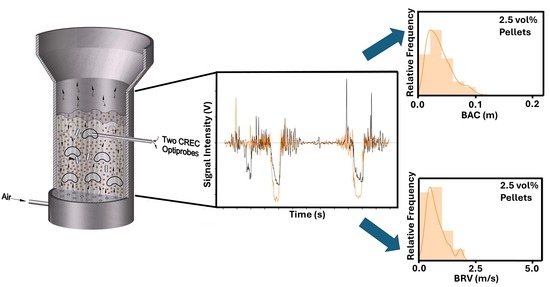
Understanding the fluid dynamics of fluidized beds loaded with biomass pellets is of significant value for the design of wood waste gasifiers. In the present study, cylindrical wood pellets are loaded into a lab-scale cold gasifier unit at 2.5 vol% and 7.5 vol% concentrations and studied at superficial air velocities of 0.25, 0.282, and 0.344 m/s (corresponding to 80, 90, and 110 SCFM). Measurements of bubbles, sand particles, and biomass pellets are taken at a 45 cm height from the distributor plate, and at 9, 12, 15, 18, and 21 cm radial positions from the column wall by employing the CREC-GS-Optiprobes, a valuable integrated fiber optic-laser tool system. A new data processing methodology is established using laser signals that are reflected from the outer surface of aluminum-foil-wrapped cylindrical wood pellets. In addition, a new algorithm is implemented to distinguish pellet-reflected signals from those of bubbles and emulsion-phase particles. On this basis, for the first time, a Phenomenological Probabilistic Predictive Model (PPPM), is considered to predict Bubble Axial Chords (BACs) and Bubble Rise Velocities (BRVs), in a sand fluidized bed loaded with biomass pellets. This is accomplished within a set band of values accounting for three standard deviations from their means or including 85.9% of the bubbles measured. Thus, it is demonstrated that the PPPM is adequate to establish the constrained random motion of bubbles in sand fluidized beds, under the influence of uniformly distributed biomass pellets. It is anticipated that the findings of the present study will be of significant value for the design of sand biomass gasifiers of different scales.

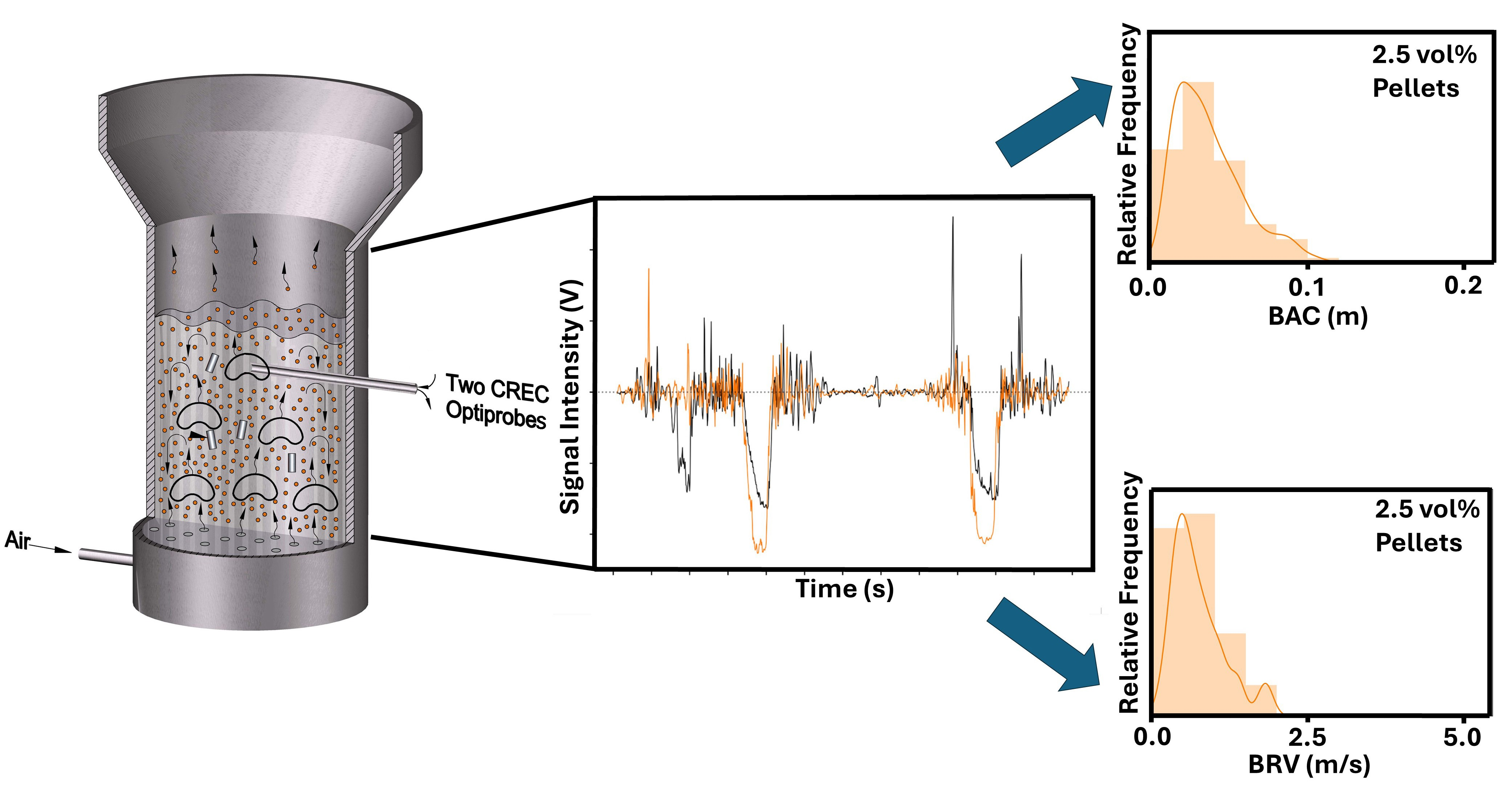
Graphical Abstract

1. Introduction

Fluidized bed reactors can be widely employed for biomass gasification due to their excellent heat transfer properties, their ability to handle solids with fluid-like behavior, and their suitability for waste materials with broad particle size distributions [1,2,3]. To understand and develop biomass gasification in fluidized bed units, one must assess gas- and solid-phase fluid dynamics, as they directly impact gasification performance and yields [4,5,6,7,8]. In this respect, superficial air velocity, sand particle size, biomass pellet size, bubble size, pressure drop, and bed height can all significantly affect the quality and stability of biomass-loaded fluidized-bed gasifiers.
Bubble motion in fluidized beds is comparable to bubble motion in a low-viscosity liquid [1,9,10]. In 1950, Davis and Taylor [11] established a bubble model that considered “bubble rise velocity” (BRV) as a function of two parameters: gravity acceleration (g) and the radius of the bubble nose (Rn).
B R V = 2 3 g R n
By following this approach, authors attempted to correlate bubble rise velocity (BRV) with bubble size by introducing modified equations and additional parameters [12,13,14,15,16].
However, few available models consider the random behavior of bubbles in fluidized bed systems [17,18,19,20]. In 2023, by using experimental bubble data obtained with CREC-GS-Optiprobes in a sand fluidized bed, Torres Brauer and de Lasa [20] reported a Probabilistic Predictive Model (PPM). This model was based on the classical Davis and Taylor model, as shown in Equation (1), with, however, a superimposed probabilistic band of values, accounting for the inherent bubble flow randomness.
As an improvement to the original PPM, Torres Brauer et al. [4] proposed a Phenomenological Probabilistic Predictive Model (PPPM), based on a balance of forces including gravity, drag, buoyancy, and minimum fluidization excess velocity as follows:
B R V = Ω A α β g B A C C f + + C 0 v e x 2
where Ω is a probabilistic coefficient that accounts for both bubble motion and random flow, A is a constant parameter, α and β are correlation constants, C f is a shape factor, C 0 is a constant factor, and v e x is an excess gas velocity.
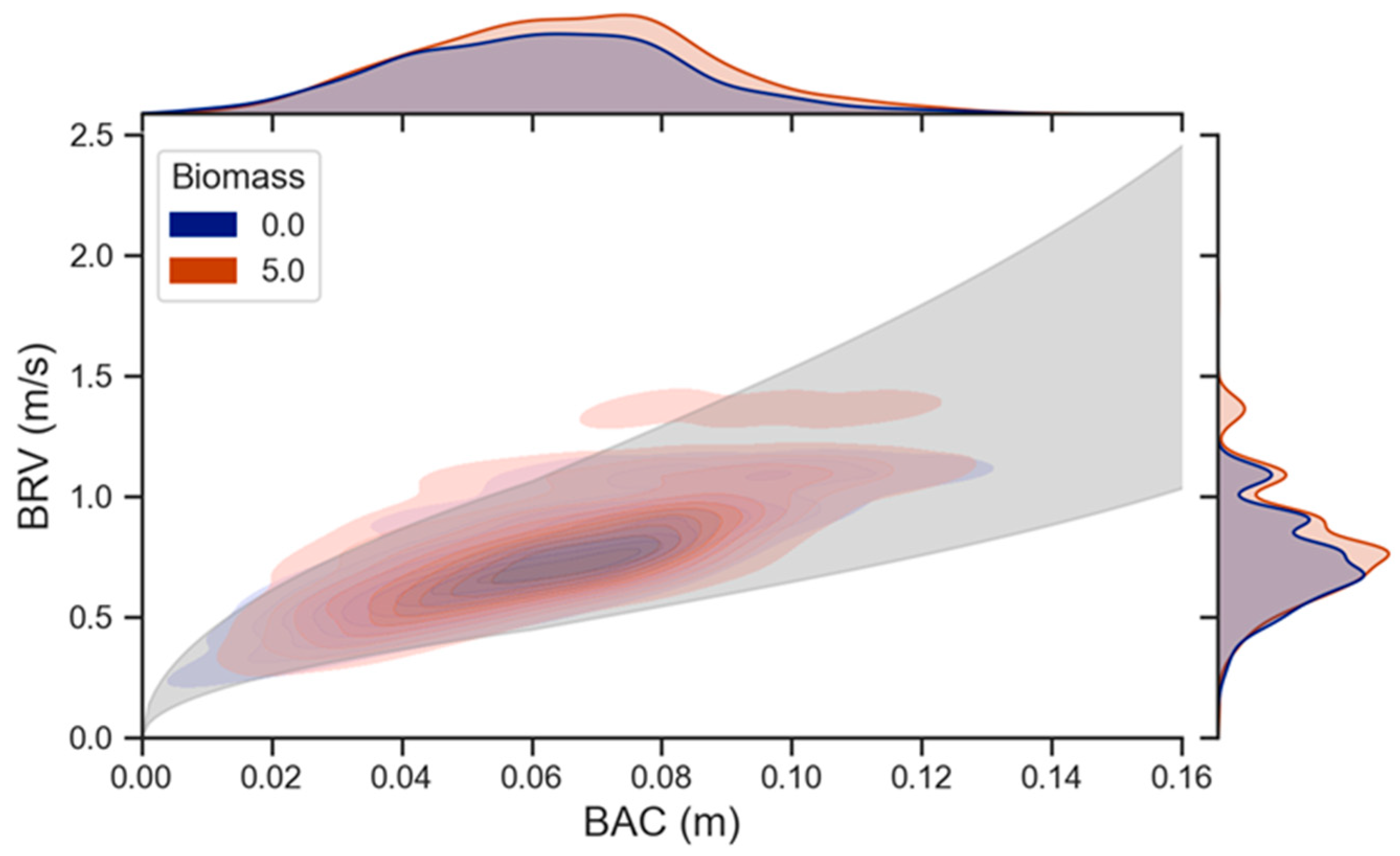
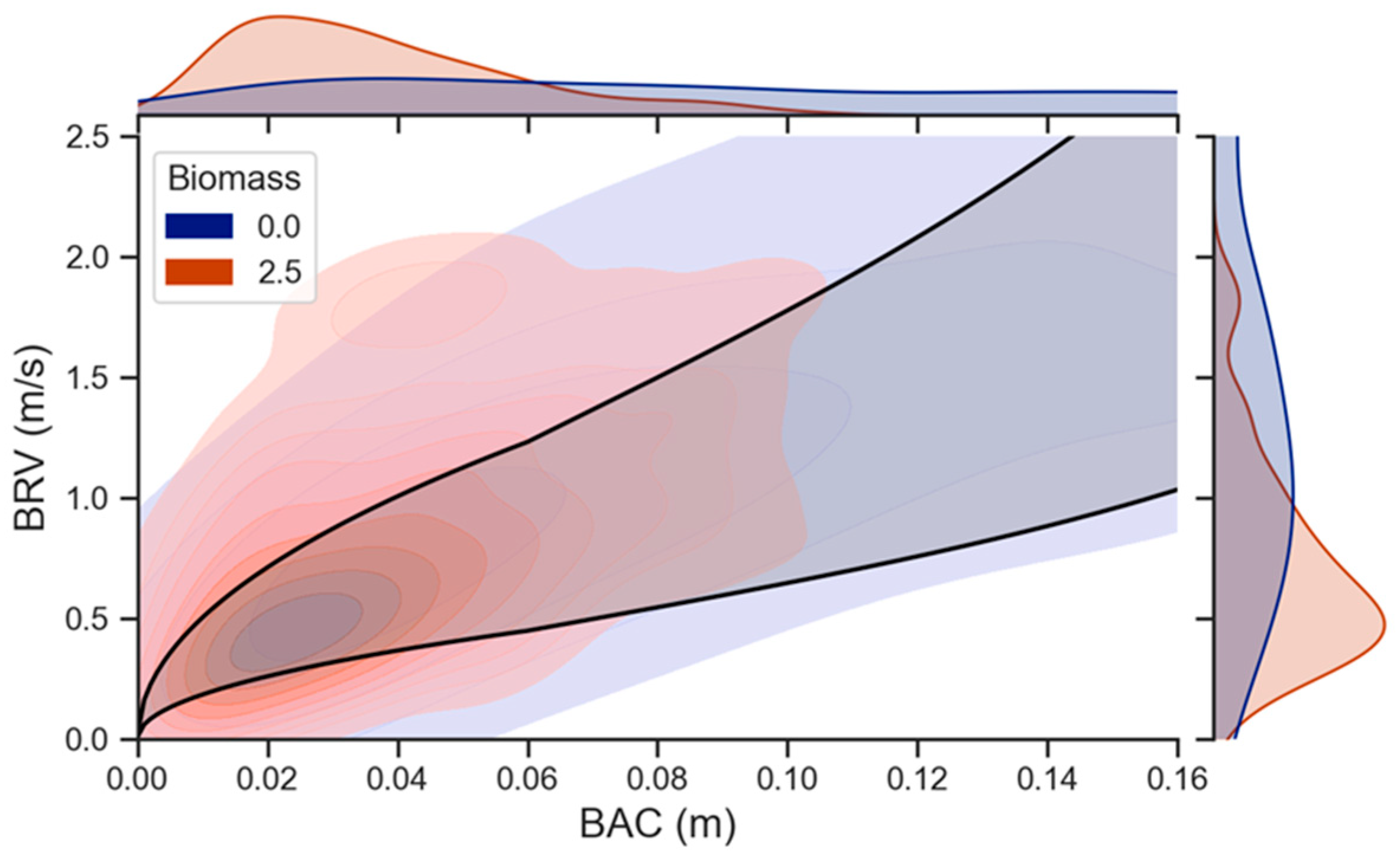
When applying the PPPM to the specific case of a sand fluidized bed, the upper (UL) and the lower (LL) predictions for the bubble behavior band limits, designated as BRVUL and BRVLL, were calculated using Equations (3) and (4) as illustrated in Figure 1.
B R V U L = B R V P P P M + σ B R V P P P M ,
B R V L L = B R V P P P M σ B R V P P P M
It is noteworthy to mention that in the specific case of a biomass-loaded sand fluidized bed, with loaded biomass “broza”, formed by agglomerates of coffee waste fibers with variable shapes and sizes, an average of 90% of the bubbles observed experimentally consistently fell within the PPPM predicted band. The limits of this band are predicted with Equations (3) and (4).
One should mention that inadequate biomass pellet distribution, in the fluidized bed, also referred to as non-uniform pellet segregation, may be detrimental to biomass gasification [21,22,23,24,25]. In the case of biomass-loaded gasifiers, one should design and operate these units based on well-defined feedstock characteristics (e.g., pellet size, pellet shape, pellet density) so that biomass segregation is minimized and the gasifier unit is properly designed.
To the best of our knowledge, there is no prior study in the open literature that has established phase volumetric fractions concurrently for bubbles, biomass pellets, and sand particle emulsion phase together with bubble dynamics by using a miniaturized bubble detection device such as the CREC-GS-Optiprobes (Recat Technologies Inc., London, ON, Canada). This is achieved by using laser signals reflected from the surface of aluminum-foil-wrapped biomass pellets. The novel approach reported is demonstrated by employing a CREC-UWO developed software required to interpret the laser reflected pellet signals. Furthermore, the findings obtained with the CREC-GS-Optiprobes demonstrate that there is a range of operating conditions that lead to uniform pellet distribution in the sand bed. Furthermore, the reported data also helps to establish, for the first time, the predictive capabilities of the PPPM in a sand fluidized bed loaded with biomass pellets. It shows the significant pellet influence on bed fluid dynamics, consisting of a reduction in the size of the bubbles detected. It is our view that the information reported is of prime value for the scale-up of biomass-sand fluidized bed gasifiers, with uniformly distributed biomass pellets.

2. Materials and Methods

2.1. Cold Gasifier Unit

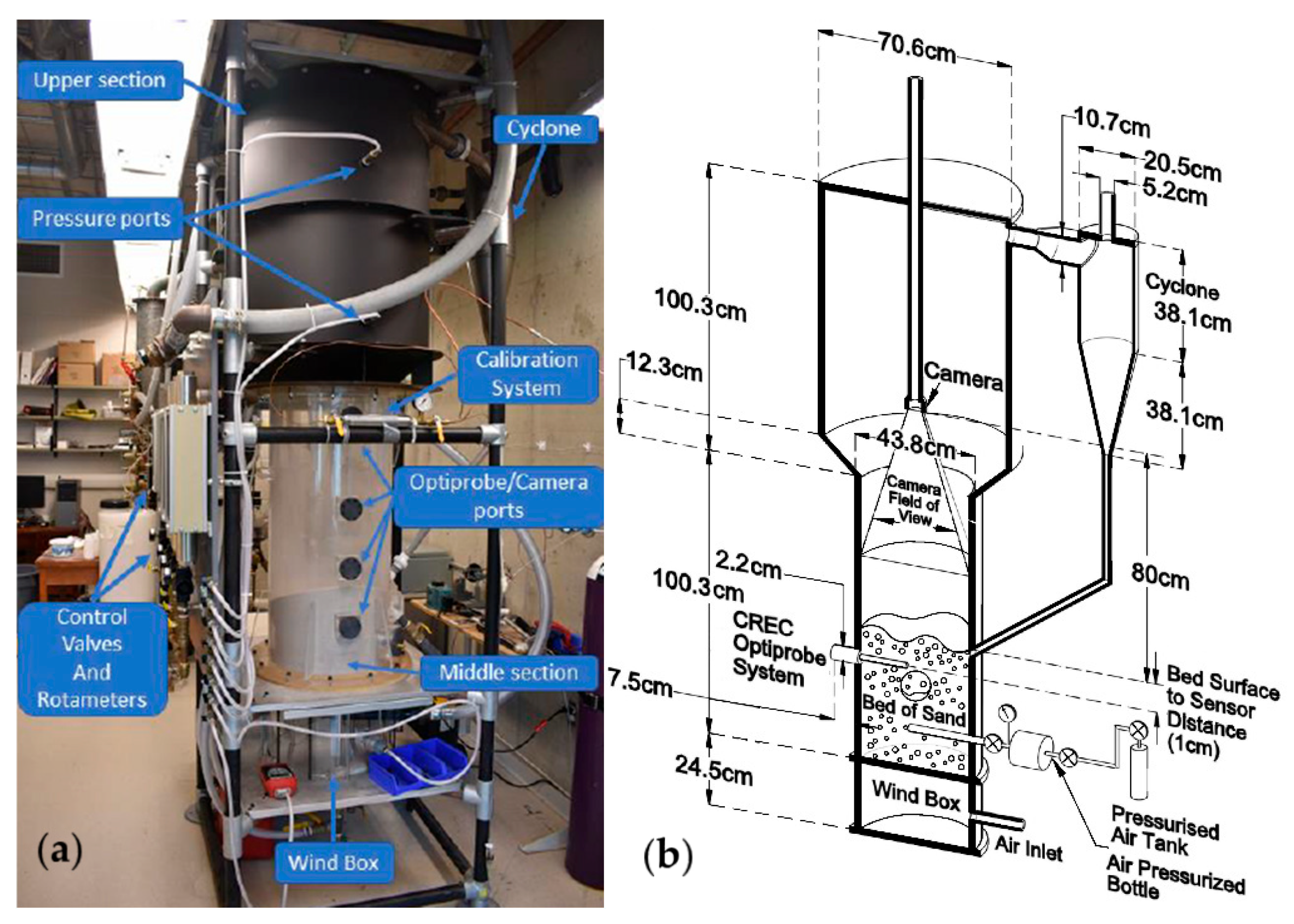
The present study reports data obtained using a cold gasifier unit designed to operate at room temperature. This unit enables the simulation of fluidized bed hydrodynamics under non-reactive conditions. The unit is composed of three sections (as shown in Figure 2a,b: a wind box (lower section) with a diameter of 0.44 m and a height of 0.24 m, a fluidization column with a diameter of 0.43 m and a height of 1.20 m (middle section), and an upper metallic section with a diameter of 0.70 m and a height of 0.88 m. The total height of the gasifier system is 2.25 m. Compressed air is introduced into the bed through a gas distributor plate containing 37 small tubes, each measuring 2.5 cm in height and 2.2 cm in diameter. The column is also equipped with four ports located at different axial positions, allowing the insertion of the CREC-GS-Optiprobe system. In addition, a camera placed above the bed is used to record bubble fronts emerging from the bed.

2.2. Silica Sand Particles and Pellets in the Fluidized Bed

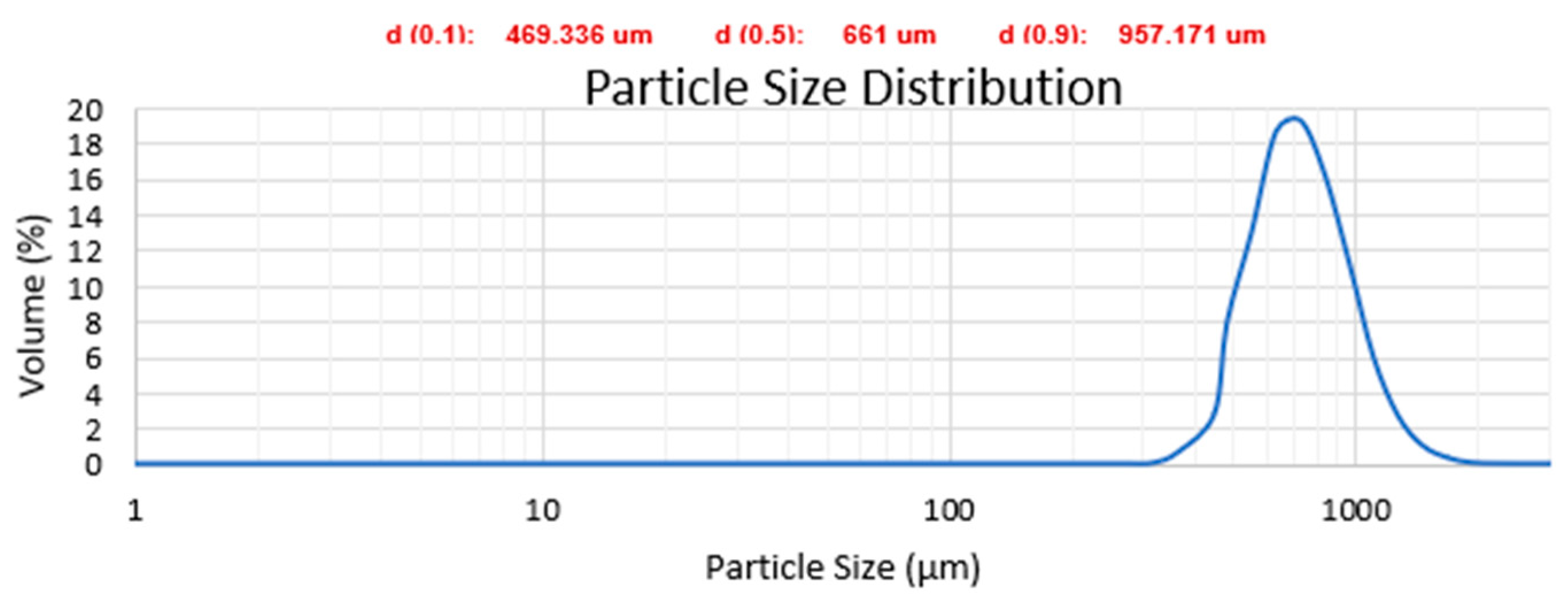
The cold gasifier unit was filled with silica sand (SiO2) particles with a particle size distribution (PSD) ranging from 320 to 1100 μm, and a mean diameter of 661 μm, as described in Figure 3. Based on these properties, the SiO2 particles used can be said to fall within Groups B and D in the Geldard classification [27].
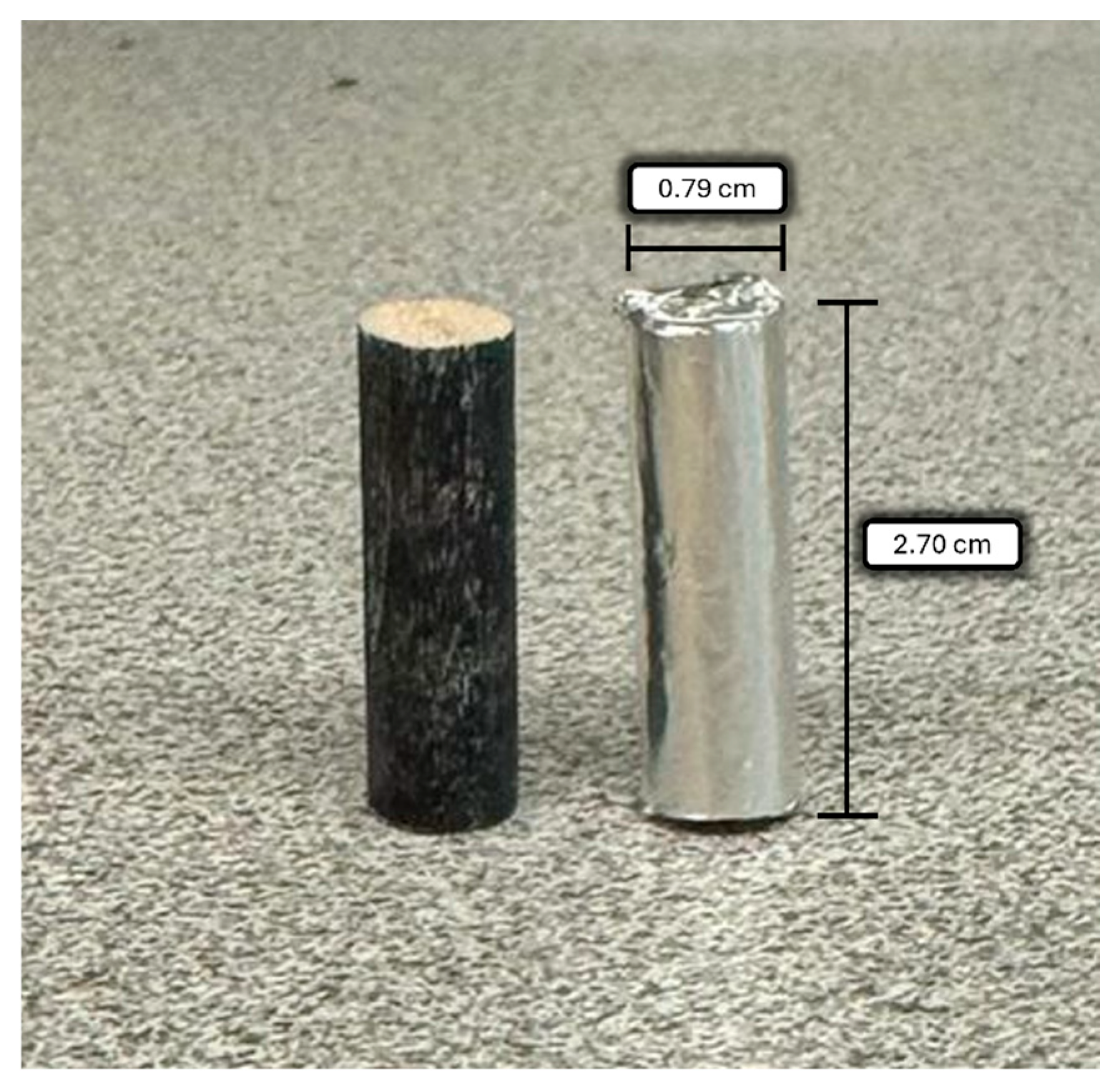
In addition, cylindrical wood pellets with a diameter of 0.79 and a length of 2.70 cm were used in the fluidization experiments. These wood pellets were selected to simulate those considered for use in the ICAFE gasifier in Costa Rica, produced by compressing coffee waste particles (broza) [26,28,29]. Once these pellets were wrapped in aluminum foil, they were introduced into the bed through a loading port located in the upper section of the gasifier (Figure 2).

2.3. Biomass Pellet Segregation

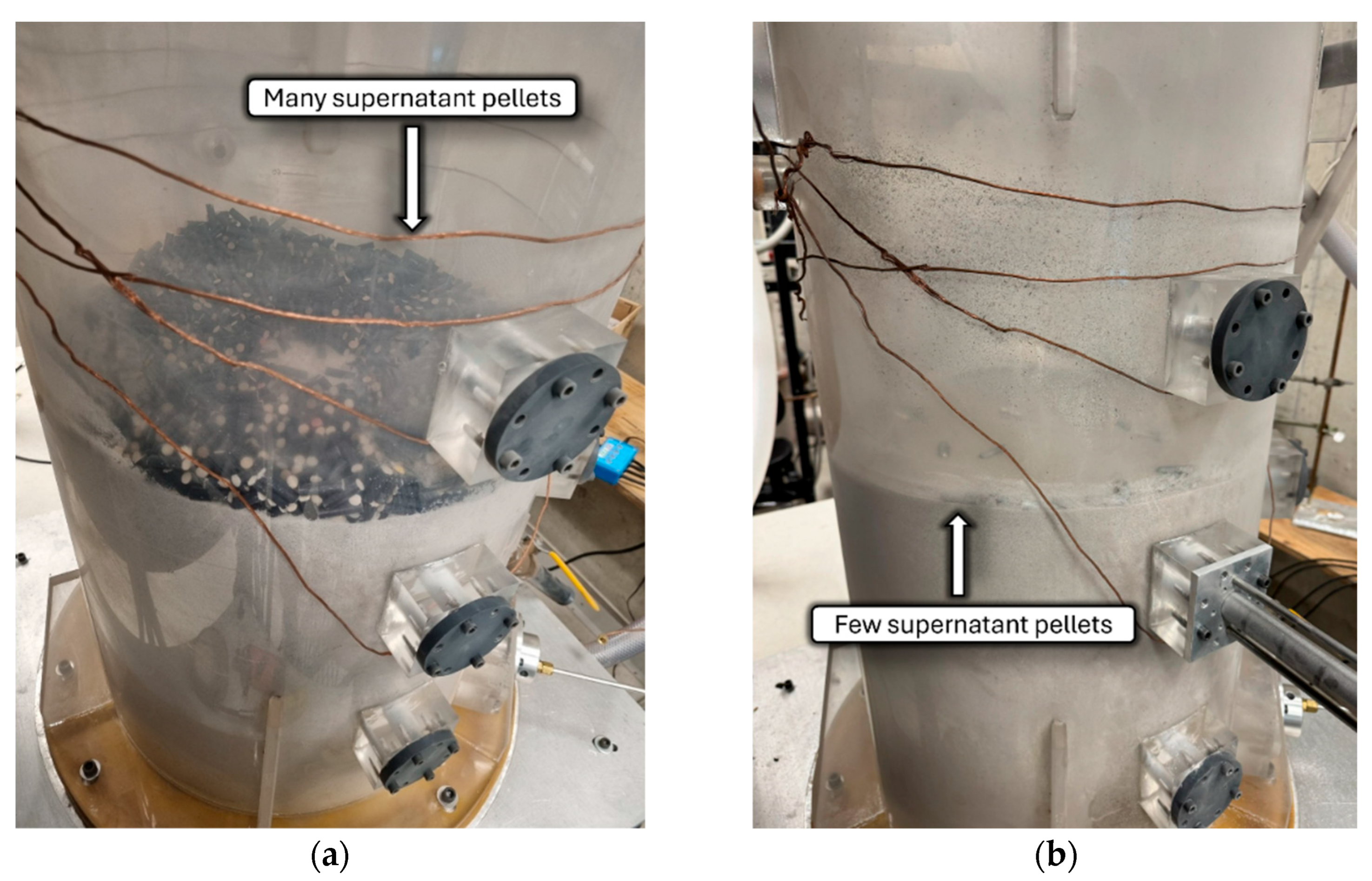
To ascertain the state of the bed, such as whether biomass pellets were uniformly mixed, bed photos of the upper bed surface were taken, as shown in Figure 4a,b. These photos of the upper bed surface were taken after 5 min of fluidization, at 0.282 m/s, for 7.5 vol% and 2.5 vol% pellet loadings, respectively. It can be observed in Figure 4a that for a pellet loading of 7.5 vol% and an air velocity of 0.282 m/s, there was a substantial fraction of the cylindrical wood pellets, averaging 27% of the total added biomass, that remained segregated at the upper bed surface. Such results indicated that operating conditions may lead to inadequate pellet axial mixing, potentially negatively affecting gasification efficiency.
Thus, it can be concluded that biomass pellet loadings and superficial gas velocities must be selected carefully to ensure the homogenous mixing of pellets [24,25,30,31,32]. For instance, one can see that for a 0.282 m/s superficial velocity and a 2.5 vol% pellet loading, as shown in the upper bed surface photo reported in Figure 4b, there were very few observable supernatant pellets. Consequently, one can conclude that, in principle, in this case, biomass pellets were uniformly distributed in the bed.

2.4. CREC-GS-Optiprobe System, Biomass Pellet Detection and Data Analysis

Experimental data consisting of laser signals or the absence thereof, obtained from bubbles, sand particles, and biomass pellets, were acquired by using the CREC-GS-Optiprobe system developed by de Lasa et al. [33,34]. This system involved two laser diodes operating at a wavelength of 850 µm and a power of 20 mW, and two optical fibers. Each of the laser beams emitted by the diodes was transmitted to the CREC-Optiprobe system through optical fibers. One fiber transmitted a laser beam into the bed, while the other captured the reflected laser beam signals and transmitted them to a photosensor that generated a voltage signal in the range of 0–5 V, later converting this digitally by an analog-to-digital (A/D) converter. A graded refractive index (GRIN) lens was used to focus the laser beam at a point located 0.005 m in front of the probe tip. This was defined as the focal region. This region was the location where the interaction between photons and particles within the bed took place. The reflected signals generated by this interaction were then collected by a receiver fiber. The receiver fiber guided the reflected light to a photodetector, which converted the optical signal into a voltage signal in the 0–5 V range. Additional details regarding the CREC Optiprobe system are given in [35].
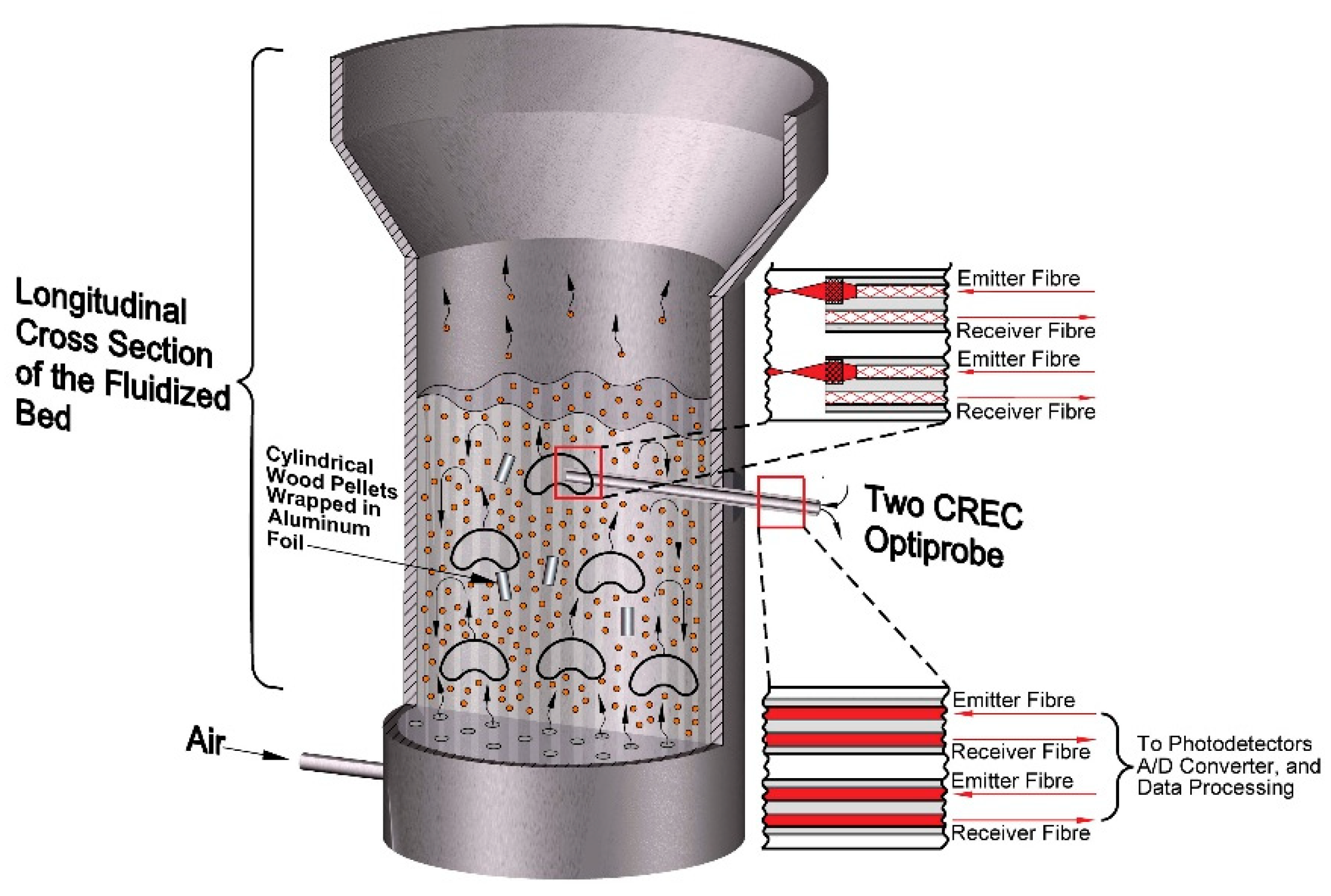
A longitudinal cross-section of the fluidized bed reactor is reported in Figure 5. The measurements of BRVs and BACs were performed after data acquisition, as described by Torres Brauer et al. [26].
Due to the optical properties of the laser and the surface characteristics of the wood pellets, it was decided to wrap the cylindrical pellets with aluminum foil, as shown in Figure 6. This aluminum paper wrapping was necessary to ensure that the laser beams emitted by the transmitter fiber could be properly reflected from the surface of the wood pellets and captured by the fiber detector.
To establish the modification of pellet density with the addition of the aluminum paper wrapping, the density of a single cylindrical wood pellet was measured, prior to and after aluminum foil covering. It was observed that the addition of the aluminum foil increased the pellet density from 0.535 g/cm3 to 0.555 g/cm3. This consisted of an increased pellet density of 3.7% only, which was considered negligible and not expected to affect pellet distribution in the fluidized bed significantly [37,38,39].

3. Proposed Phase Fraction Calculation Methodology

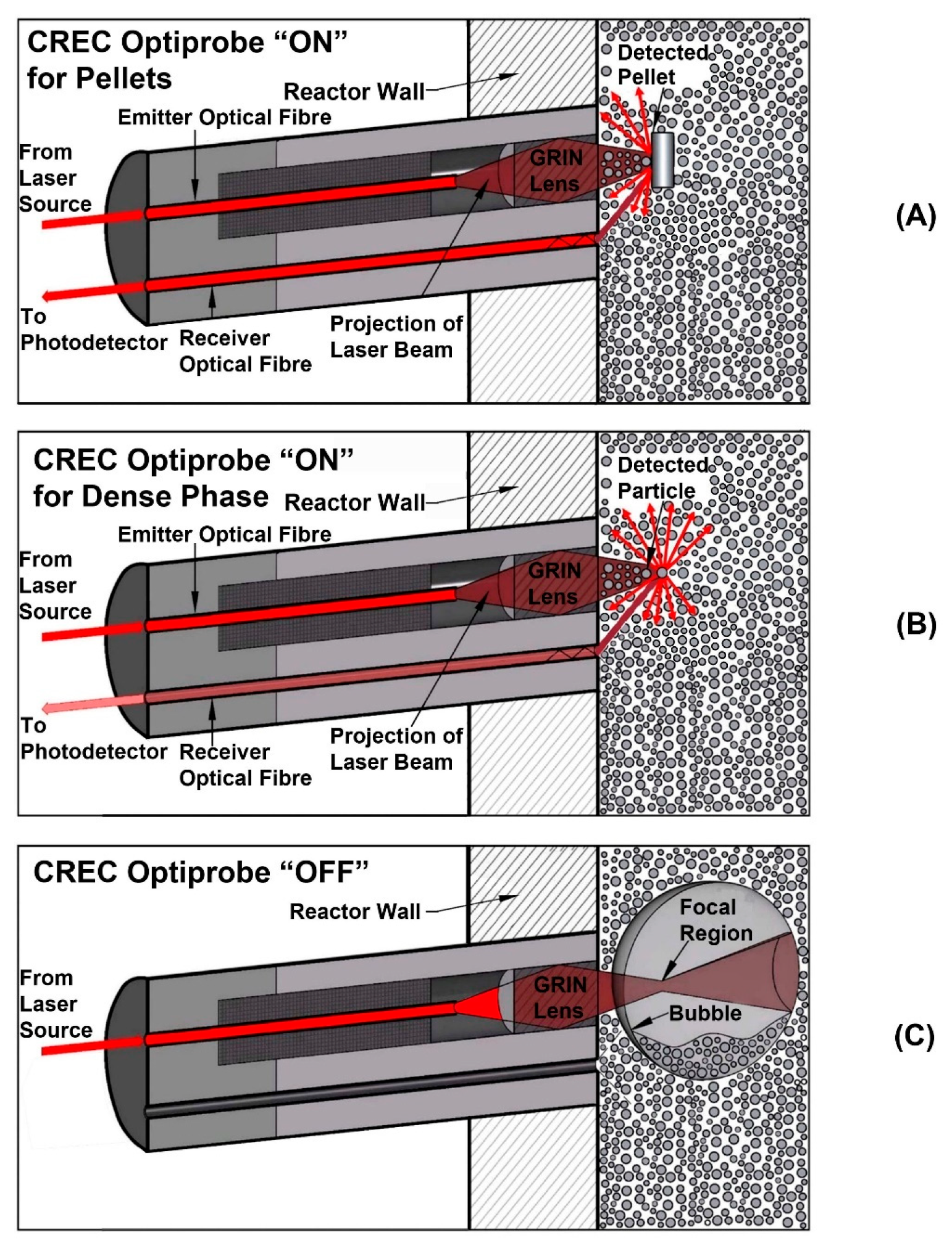
The proposed data signal methodology is based on anticipated differences in the data signal recording of bubbles, wood pellets, and sand particles, as acquired by the CREC Optiprobes. Figure 7 describes the three anticipated detection cases in a sand bed loaded with biomass pellets:
  • Case A or Biomass Pellet Detected: A pellet wrapped in aluminum foil reaches the high laser ray density focal region, generating a highly positive reflected peak,
  • Case B or Sand Particle Detected. Sand particles fill the high laser ray density focal region, producing small high-frequency peaks,
  • Case C or Bubble Detected: The high laser ray density focal region is immersed in a bubble, and as a result, there are no beam rays that reach the receiver fiber. In this case, a strong negative peak is recorded.
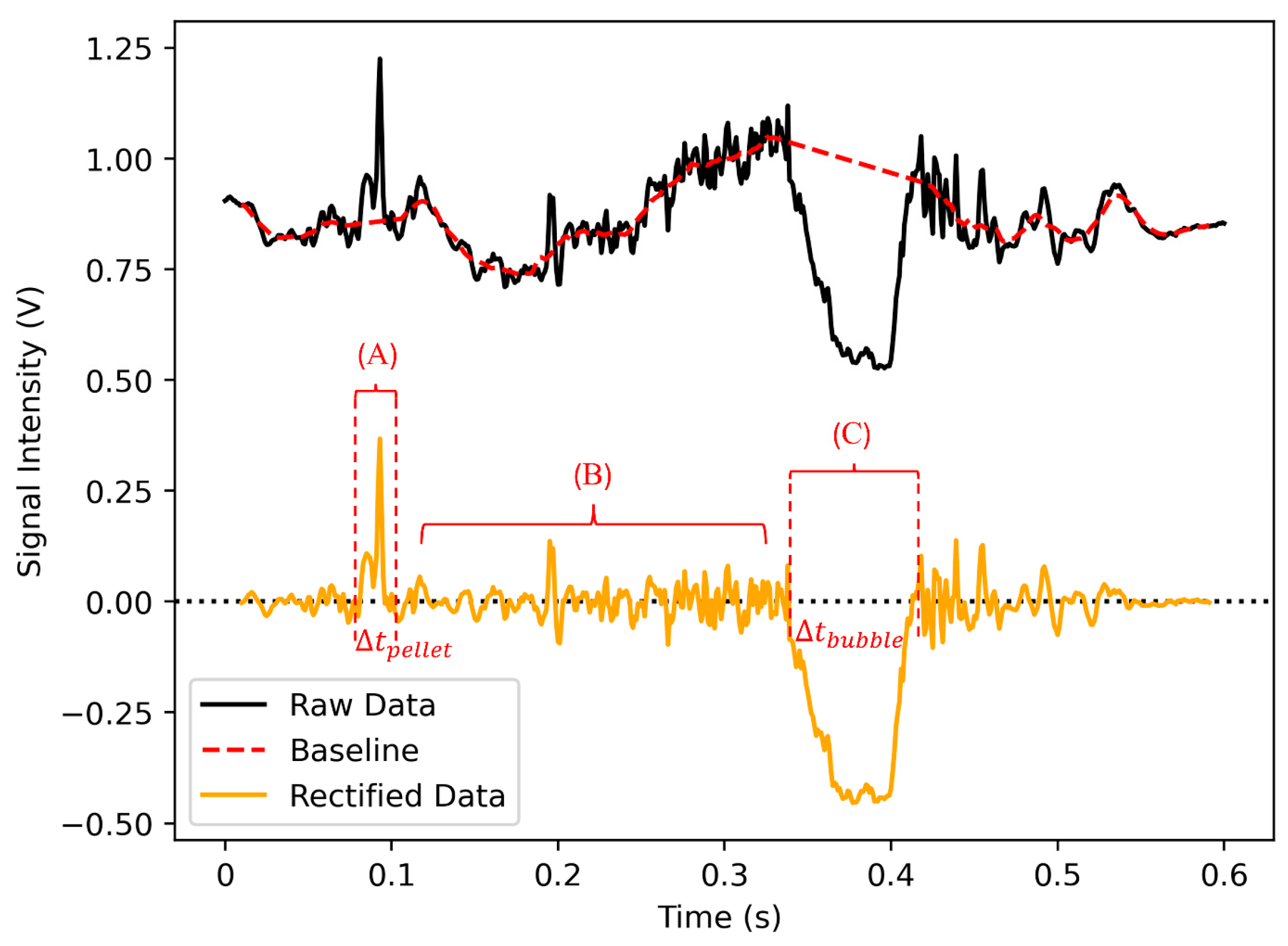
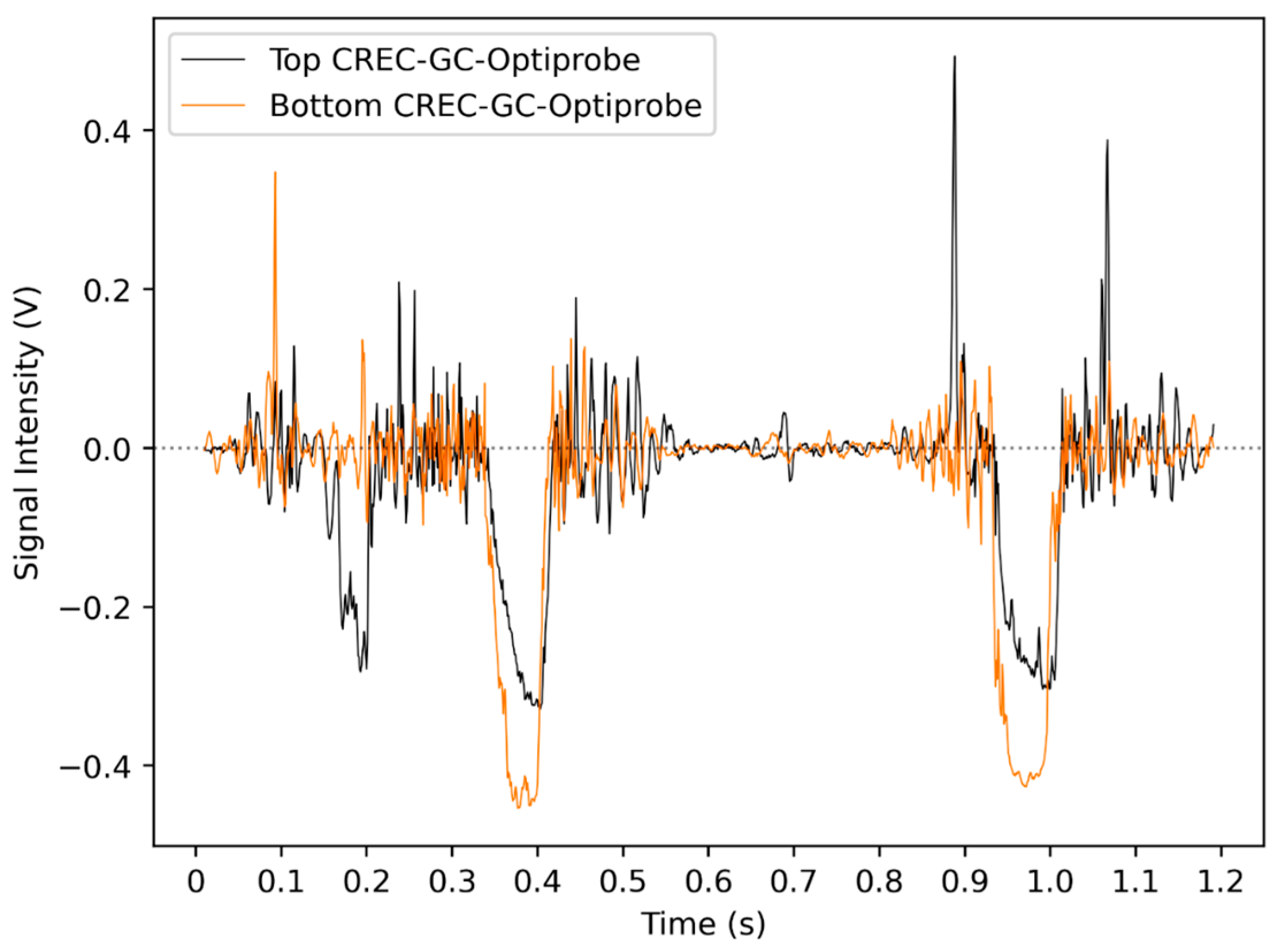
Figure 8 reports a typical detection record, as obtained with the CREC-Optiprobes, showing: (a) the high peak at 0.09 s that was assigned to a biomass pellet (Case A), (b) a series of small high frequency peaks between 0.12 s and 0.33 s that were allocated to emulsion phase sand particles (Case B), and finally (c) a high negative peak (Case C) between 0.33 s and 0.42 s, that was assigned to a bubble.
Thus, the proposed methodology of the present study, using the CREC-GS-Optiprobes, offers the distinct possibility of distinguishing among pellet, bubble, and sand-particle emulsion phase signals. As a result, the volumetric concentrations of local biomass pellets and sand particles can be calculated. This allows the confirmation of bed homogeneity in a sand fluidized bed unit, containing both biomass pellets and sand particles. On this basis, one can also assess bubble size and bubble velocity, as well as the influence of biomass pellets on bubble dynamics.

4. Data Treatment for Establishing Pellet, Bubble, and Emulsion Phase Volumetric Fractions

One should note that the CREC-GS-Optiprobe 0–5 V range detected signals were AD converted, using a sampling frequency of 1000 Hz. Typical results for a detection period of 0.6 s are reported in Figure 7B. In previous studies, the A/D signal conversion was carried out by using a MATLAB® R2024b script, following a step-by-step methodology, as described by Torres Brauer et al. [26]. In the present study, however, the data processing of the CREC-Optiprobe laser signals for wood pellets, dense-phase sand particles, and bubbles was conducted using a modified MATLAB code in order to account for the significant data signal differences. This MATLAB code allowed one to distinguish between high-positive and low-frequency signals assigned to biomass pellets, small low-intensity and high-frequency signals attributed to the sand emulsion phase, and high-negative signals allocated to bubbles.
On this basis, various phases in the sand fluidized bed loaded with pellets were accounted for.

4.1. Biomass Pellet Local Volume Fraction

The local biomass pellet volume fraction V ¯ p e l l e t is a critical parameter used to establish the pellet distribution in the bed. In the present study, it was calculated, for every run at various radial positions, assuming that reflected rays from pellets led to low frequency, high and positive voltage intensity peaks, with the I voltage being larger than 0.1 Volts, with the following being applicable:
V ¯ p e l l e t = Σ t p e l l e t s t T × 100 ,        w i t h   I > 0.1   V
with Σ t p e l l e t representing the cumulative time of pellet detected signals, and T standing for the total run time.

4.2. Bubble Local Volume Fraction

Furthermore, a similar analysis to determine the local ( V ¯ b u b b l e ) or bubble volume fraction was conducted, with negative peaks being attributed to bubbles, complying with I < −0.1 Volts, with the following equation being considered:
V ¯ b u b b l e = Σ t b u b b l e s t T × 100   w i t h   I < 0.1   V
with Σ t b u b b l e s   representing the cumulative time of negative bubble signals and t T being the total run time.

4.3. Sand Particle Emulsion Local Volume Fraction

Finally, the particle emulsion volume fraction ( V ¯ e m u l s i o n ) was calculated by subtracting the Σ t p e l l e t s t T and Σ t b u b b l e s t T normalized cumulative times for detected pellet and bubble signals, from the value of one as follows:
V ¯ e m u l s i o n = 1 ( Σ t p e l l e t s Σ t b u b b l e s ) t T    × 100

4.4. Bubble Axial Chord and Bubble Velocities

Figure 9 reports two signal trains obtained by using a pair of CREC-GS-Optiprobes, vertically aligned and separated by a 0.54 cm distance. These two probes were designated as the “upper probe” and the “lower probe”, according to their position in the fluidized bed.
On this basis, the time delays (τmax ) corresponding to bubbles moving between the lower CREC-GS-Optiprobe and the upper CREC-GS-Optiprobe were determined by cross-correlating the negative valley-shaped signals, as follows [26,40]:
R x y τ = lim T 1 T 0 T x t · y t + τ · d t
where τ is the delay time, and Rxy is the cross-correlation function.
Considering that the axial separation between CREC-Optiprobes is a set distance, the following Equations (9) and (10) were employed to calculate both the bubble rise velocity (BRV) and the bubble axial chord (BAC) as follows:
B R V = O p t i p r o b e   d i s t a n c e τ m a x
B A C = W i d t h   o f   t h e   b u b b l e   v a l l e y   s i g n a l B R V
with τmax representing the time delay established at the maximum Rxy(τ) cross-correlation bubble signal values between the lower and upper CREC-GS Optiprobes.

5. Experimental Results

Experiments in the sand fluidized bed described in Section 2.1 were carried out at room temperature. The minimum fluidization velocity was determined to be 0.218 m/s (70 SCFM). Three superficial air velocities above the minimum fluidization velocities were used during the experiments: (a) 0.250 m/s (80 SCFM), (b) 0.281 m/s (90 SCFM), and (c) 0.344 m/s (110 SCFM). Each condition was tested at 0 vol% and 2.5 vol% concentrations of biomass pellets. Measurements were taken at 40 cm from the grid axial level and at five different radial positions from the wall: 3, 6, 9, 12, 15, 18, and 21 cm, from the central axis of the cylindrical column. All experimental conditions were replicated five times to ensure consistency and reproducibility.

5.1. Cylindrical Wood Pellet Peak Treatment and Experimental Concentration Results

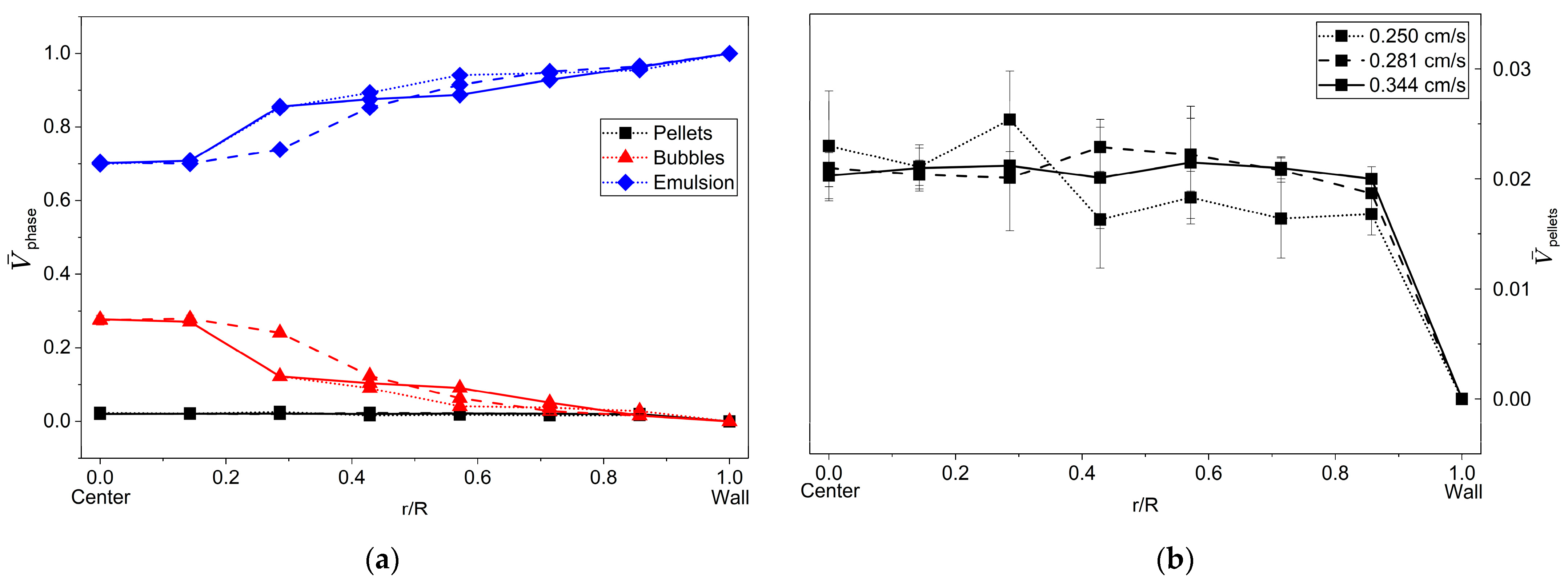
Following the above-described data processing using Equations (5) to (7), local pellet volumetric fractions, local bubble volumetric fractions, and local sand emulsion phase volumetric fractions at various superficial velocities were obtained. Results are reported in Figure 10a,b.
One can notice that Figure 10a displays the characteristic pattern of bubble volume fractions and emulsion phase fractions in a dense-phase fluidized bed. It shows a 0.24 maximum bubble volume fraction value at the center of the bed (r = 0) and a near-zero fraction value close to the wall (r = R). Furthermore, the same Figure 10a reports a 0.7 minimum emulsion phase fraction at r = 0, increasing progressively towards 1 at r = R. Finally, Figure 10b provides an expanded view of Figure 10a, displaying the pellet volume fraction distribution in the bed. One can notice that the experimentally observed biomass volumetric fractions were in the 2.0–2.2 range with a radial 2.1 vol% average and a relative error of 15.2%.
These pellet volumetric fractions compare favorably with the 2.5 vol% of biomass pellets loaded in the reactor. These data show that in the prototype unit in operation at the CREC-UWO laboratories, with the selected gas distributor described in Section 2.1, the radial biomass pellet concentration is close to uniform.
Regarding the bubbles and the emulsion phase, Figure 10a shows a typical pattern for dense phase fluidized beds with a central upflow of bubbles and emulsion phase and a peripheral downflow of few bubbles and high emulsion phase. It is thus confirmed that in the fluidized bed prototype in operation at the CREC-UWO laboratories, the required phase mixing for appropriate gasifier operation is met.
Additionally, and for the bubble phase, an average volume fraction ( V ¯ b u b b l e _ a v g ) across the bed was calculated, by using Equation (11) and by comparing this with the increase in bed height resulting from the bed expansion, under fluidization conditions:
V ¯ b u b b l e _ a v g = 2 π r V ¯ d r π R 2
Table 1 reports a comparison of the V ¯ b u b b l e _ a v g values, as given by Equation (11), and by the V ¯ b u b b l e _ a v g calculated via bed expansion.
Table 1 shows the closeness of the various reported V ¯ b u b b l e _ a v g , with this consistency being helpful to validate the bubble volumetric fractions determined using the CREC-Optiprobes.

5.2. BACs and BRVs Bubble Distribution

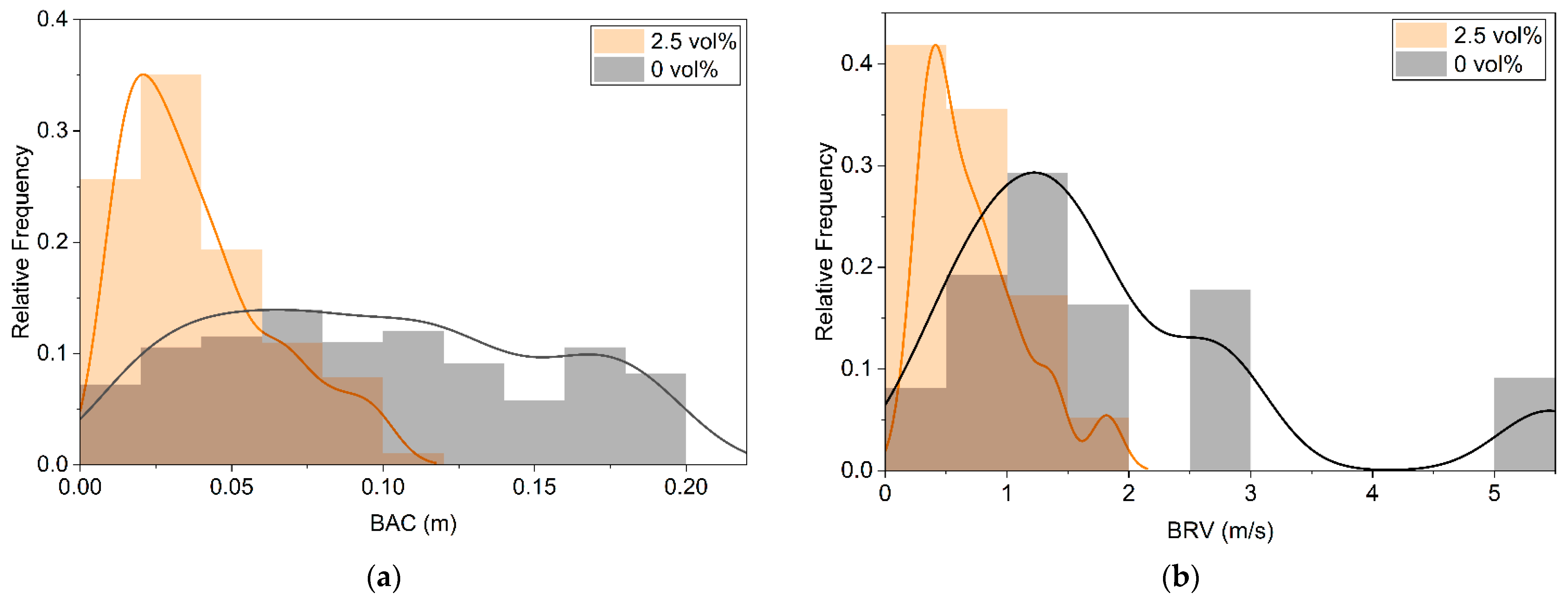
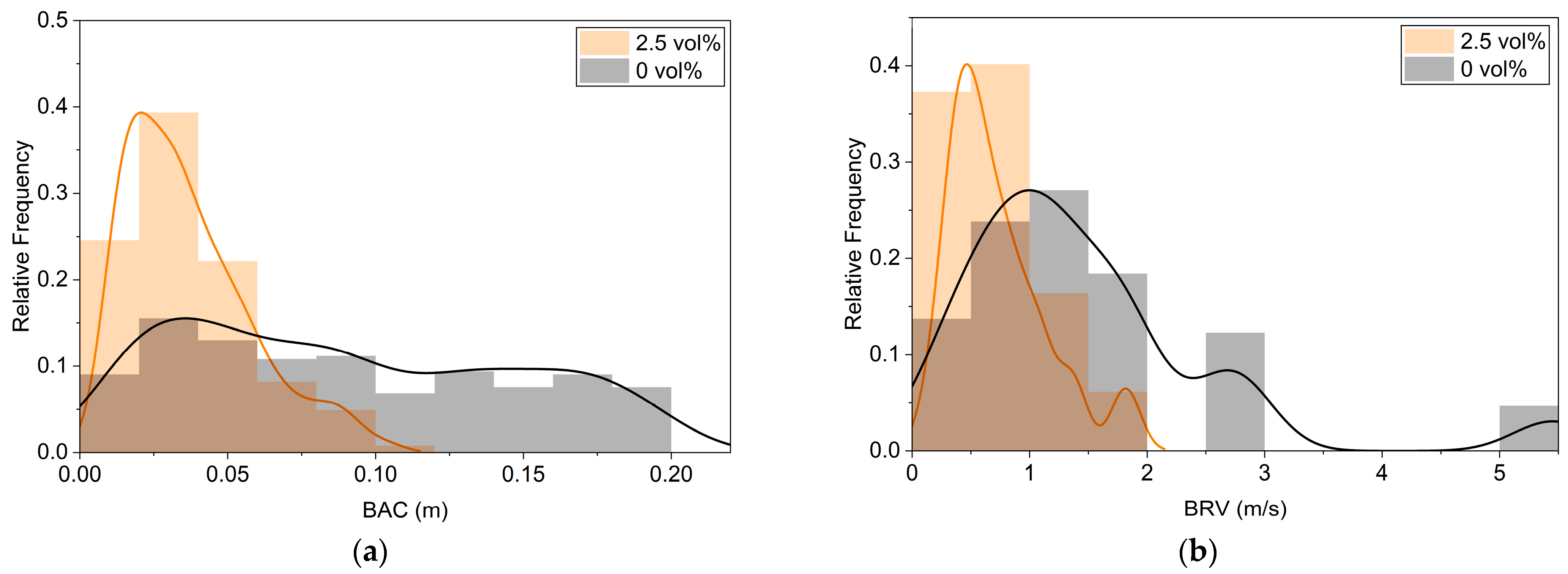
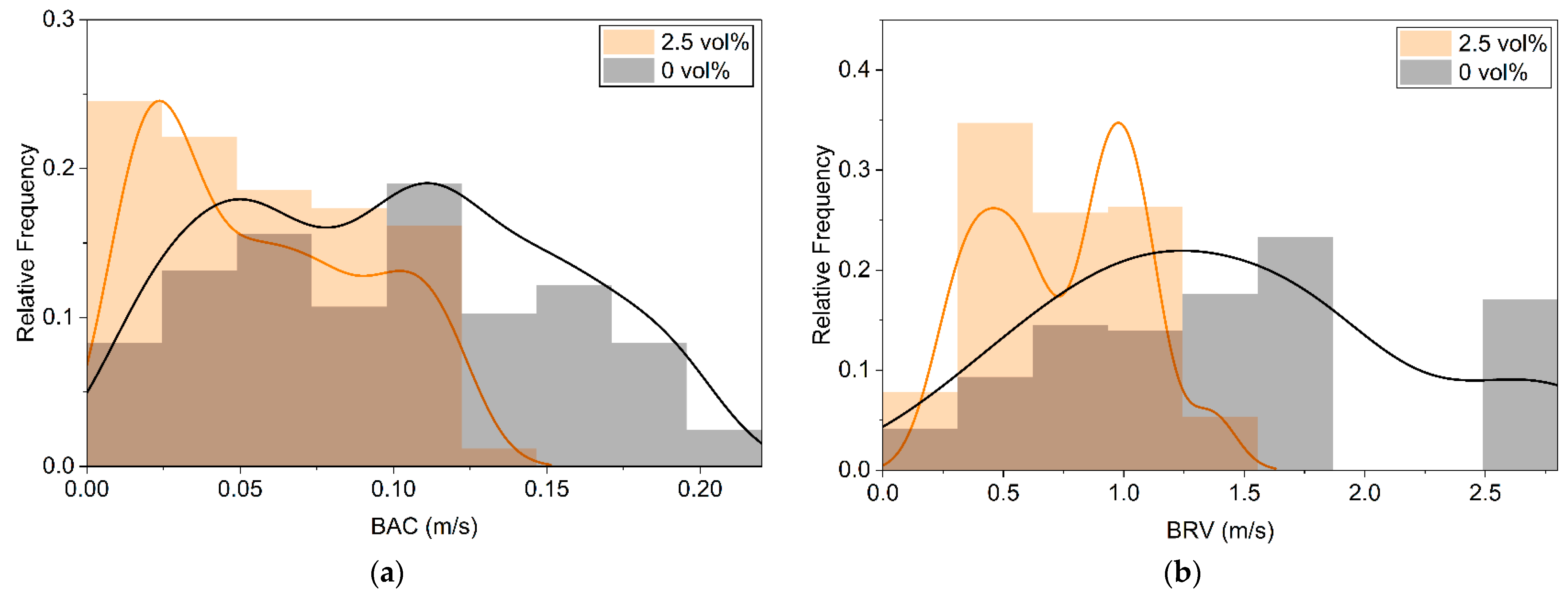
Figure 11 reports typical BAC and BRV distributions obtained by using experimental bubble data from various runs. Normal distributions of both BACs and BRVs were calculated and compared for runs, with and without biomass pellets.
On the basis of the data reported in Figure 11, it can be concluded that the addition of cylindrical biomass pellets significantly affects fluidized-bed dynamics, leading to the formation of smaller bubbles with reduced BRVs.

5.3. Bubbles Dynamics in Sand-Fluidized Beds and PPPM Predictions

Given the positive findings regarding fluidized bed operation, with a uniform distribution of loaded biomass pellets, as reported in Section 5.1, the next step was to determine the properties of the bubbles formed during fluidization, and to compare these experimental observations with the predictions given by the Phenomenological Probabilistic Predictive Model (PPPM), as reported in Equation (2).
A total of 576 bubbles were identified after the initial phase of the signal processing. A post-processing procedure was then applied to remove outlier data. To accomplish this, bounds were defined as proposed by Torres Brauer et al. [26], assuming a data normal distribution, with 25% of the data being contained in the first and third quartiles (Q1 and Q3) and 50% being contained in the IQR interquartile range. As a result, by using Equations (12) and (13), the Upper Bound (UL) and Lower Bound (LB) of the data distribution were established.
U p p e r   B o u n d   ( U L ) = Q 3 1.5 × I Q R
L o w e r   B o u n d   ( L L ) = Q 1 1.5 × I Q R
By using this approach, 477 bubbles falling in the upper (BRVUL) and lower (BRVLL) range, were selected for further analysis. Additionally, and as an enhanced feature of the PPPM of the present study, a bubble velocity standard deviation (σ), shown in Equations (14) and (15), was considered. This variable σ accounts for the increased bubble randomness occurring with the augmented gas superficial velocity. Table 2 reports the σ values, showing their increase with superficial velocity.
B R V U L = B R V P P P M + σ B R V P P P M
B R V L L = B R V P P P M σ B R V P P P M
On this basis, the following relationship was established, to include the needed σ correction:
σ = 1.0638   v a i r + 0.034
Figure 12 reports a comparison between the PPPM predictions and a population of 477 selected experimentally obtained bubbles under a 2.5 vol% biomass pellet concentration, a radial position of 21 cm, and a superficial air velocity of 0.344 m/s. In this figure, the two black lines represent the upper (UL) and lower (LL) bounds of the PPPM predictions. It was observed that 86.1% of the bubble population fell within the PPPM prediction band, while 13.9% of the bubbles fell outside the prediction band.
Figure 12 shows that 86.3% to 85.9% of the BRVs-BACs, respectively, for 477 selected bubbles, obtained experimentally at a 0.344 m/s gas superficial velocity, fell within the PPPM prediction band when 0 and 2.5 vol% biomass loadings were used. These results demonstrate that the PPPM accurately predicts bubble behavior in a sand fluidized bed with and without cylindrical wood pellets.
On this basis, one can establish that the relationship between the bubble diameter (Db) and the bubble velocity ( v b ) in a bed without pellets is preserved in a bed with pellets. This is despite the significant influence of biomass pellets on bubble dynamics, generating smaller bubbles. In summary, one can conclude that the PPPM successfully accounts for this variability by defining a prediction band that encompasses the intrinsic probabilistic nature of the Db v b relationship.
Thus, it can be concluded that cylindrical wood pellets significantly modify bed fluid dynamics, resulting in smaller Bubble Axial Chords (BACs) and lower Bubble Rise Velocities (BRVs). This behavior is considered beneficial, as smaller bubbles enhance gas–solid interfacial contact, favoring improved mass transfer rates during fluidization, which is an essential factor for efficient gasifier performance [41,42,43].
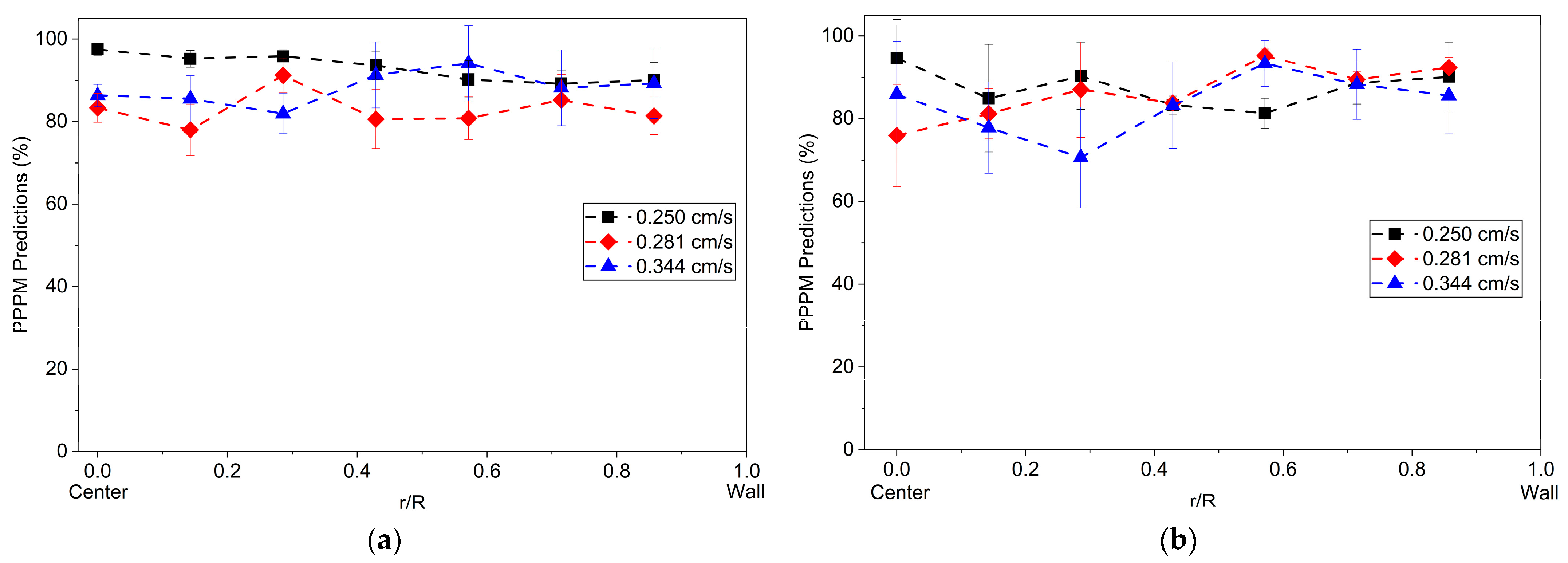
Furthermore, to establish the suitability of the PPPM for the entire range of superficial air gas velocities studied, Figure 13a,b were considered.
Figure 13a,b report the total number of bubbles falling inside the PPPM prediction band for different superficial air velocities, radial positions, and under biomass pellet loadings of 0 vol% and 2.5 vol%. One can see that the percentage of bubbles falling within the PPPM is between 85% and 82% within the 0.250–0.344 m/s range. Thus, it can be concluded that the PPPM provides a trustworthy model for predicting bubble BACs and BRVs for an ample range of superficial velocities.
In closing, it is important to mention that the results of the present study are relevant for industrial-scale gasifier units loaded with biomass pellets and operated at 700 °C and 10 atm, as reported in Appendix B.

6. Conclusions

  • The CREC-GS-Optiprobe system is suitable for assessing the influence of biomass pellets on the fluid dynamics of sand fluidized beds. This can be achieved by covering biomass pellets with a thin aluminum reflective film, enabling the differentiation of rays reflected from the pellet phase and the emulsion phase, and thereby making it possible to distinguish bubbles based on the absence of rays.
  • The CREC-GS-Optiprobe data is validated using average biomass pellet and average bubble volumetric fractions, calculated from the known value of the biomass loaded and the bed expansion at fluidization conditions.
  • The bubbles recorded with the CREC-GS-Optiprobes show a significant reduction in both BACs and BRVs when pellets are loaded into the sand bed. This behavior is assigned to the influence of biomass pellets, creating smaller and slower bubbles.
  • The proposed PPPM with its prediction band can be used very effectively to establish the relationship between BACs and BRVs, for an ample range of superficial gas velocities.
  • The established PPPM provides adequate BAC-BRV band predictions, with 85% of the experimentally measured bubbles falling within this model’s probabilistic prediction band.
  • The selected PPPM for sand fluidized beds loaded with biomass pellets requires a standard deviation (σ) parameter, with this parameter being a function of the superficial air velocity.

Author Contributions

Conceptualization, M.N.S. and H.d.L.; methodology, M.N.S. and H.d.L.; software, M.N.S. and N.T.B.; validation, M.N.S., N.T.B. and H.d.L.; formal analysis, M.N.S. and H.d.L.; investigation, M.N.S.; resources, M.N.S.; data curation, M.N.S.; writing—original draft preparation, M.N.S. and H.d.L.; writing—review and editing, M.N.S., N.T.B. and H.d.L.; visualization, M.N.S., N.T.B. and H.d.L.; supervision, H.d.L.; project administration, H.d.L.; funding acquisition, H.d.L. All authors have read and agreed to the published version of the manuscript.

Funding

This research was funded by NSERC Canada through the Discovery Grant awarded to H.d.L. and by CONAHCyT (Mexico) through a scholarship awarded to M.N.S. The APC was funded by NSERC Canada through the Discovery Grant awarded to H.d.L.

Data Availability Statement

The original contributions presented in this study are included in the article. Further inquiries can be directed to the corresponding author.

Acknowledgments

We would like to thank Florencia de Lasa, who assisted with the editing of this paper and the drafting of the graphical abstract.

Conflicts of Interest

The authors declare no conflicts of interest.

Abbreviations

The following abbreviations are used in this manuscript:
AProportionality Constant for the Bubble Rise Velocity
C 0 Proportionality Constant between the Top and the Bottom Hemispheres’ Wetted Areas
C f Proportionality Constant between Cross-Sectional and Wetted Areas
DbBubble Diameter m
gGravity m s 2
IQRInter Quartile Range m , m s
Q1First Quartile m , m s
Q3Third Quartile m , m s
RnRadius of the Bubble Nose m
RxyCross-Correlation Function s
v b Bubble Velocity m s
V ¯ b u b b l e Bubble Local Volume Fraction v o l %
V ¯ b u b b l e _ a v g Average Bubble Local Volume Fraction v o l %
V ¯ e m u l s i o n Sand Particle Local Volume Fraction v o l %
v e x Excess Velocity of Gas above Incipient Fluidization
V ¯ p e l l e t Pellet-Biomass Local Volume Fraction v o l %
Greek Symbols
α Correlation between Geometry and BAC of the Bubble
β Constant Used for the PPM
Ω Probabilistic Coefficient in the PPPM
τ m a x Time Delay of CREC-GS-Optiprobe signals s
Acronyms
BACBubble Axial Chord m
BRVBubble Rise Velocity m s
CREC—GSChemical Reaction Engineering Center—Gas Solid
GRINGraded Refractive Index
ICAFECoffee Institute of Costa Rica
LLLower Limit m s
PPMProbabilistic Predictive Model m s
PPPMPhenomenologycal Probabilistic Predictive Model m s
PSDParticle Size Distribution μ m
SCFMStandard Cubic Feet over Minute ( f t 3 m i n )
ULUpper Limit m s
Designations
BrozaBiomass coffee waste fiber agglomerates of variable shape and size

Appendix A

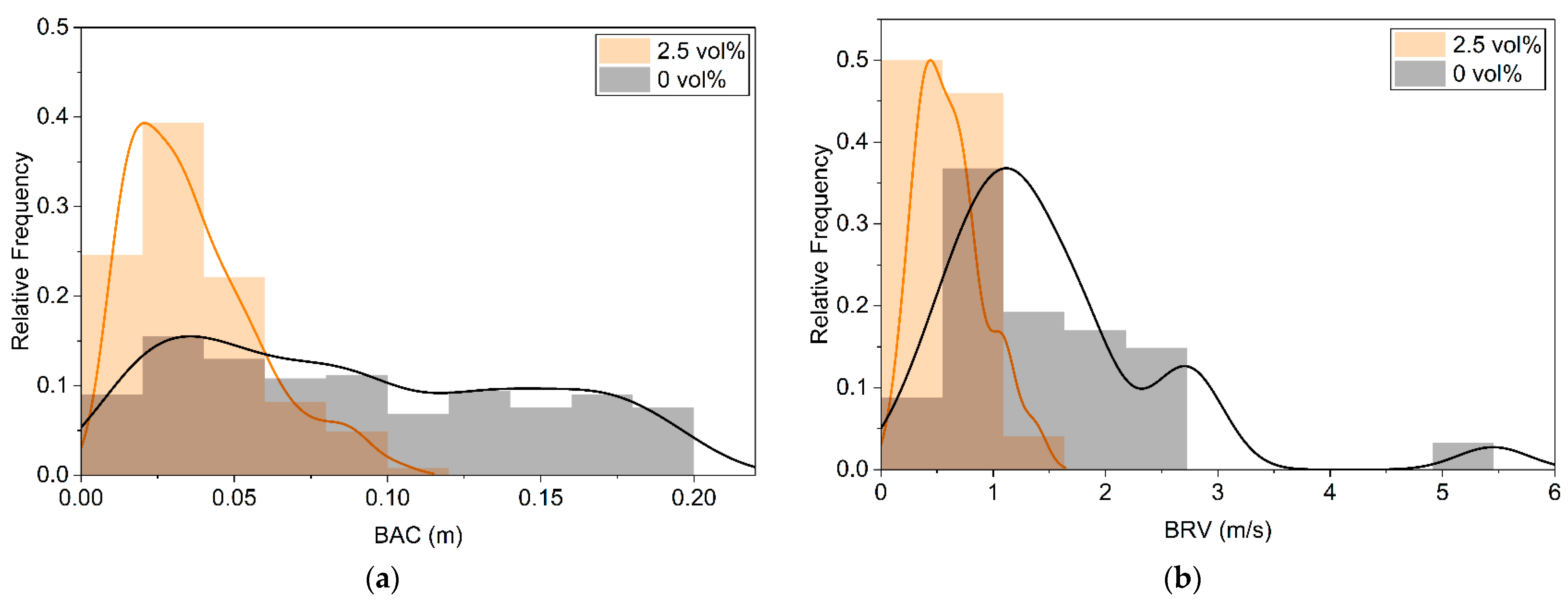
In this Appendix, additional data is provided consisting of BAC and BRV distributions obtained from Figure 10, in a bed with a 2.5 vol% pellet concentration, at 12 cm, 15 cm, and 18 radial positions, and at a 40 cm axial position from the grid.
Figure A1. Distributions of: (a) BACs and (b) BRVs in a cold unit sand fluidized bed, at 0.344 m/s, with and without loaded biomass pellets (0 vol% and 2.5 vol%). Note: radial and axial measurement positions: 18 cm and 40 cm.
Processes 14 00291 g0a1
Figure A2. Distributions of: (a) BACs and (b) BRVs in a cold unit sand fluidized bed, at 0.344 m/s, with and without loaded biomass pellets (0 vol% and 2.5 vol%). Note: radial and axial measurement positions: 15 cm and 40 cm.
Processes 14 00291 g0a2
Figure A3. Distributions of: (a) BACs and (b) BRVs in a cold unit sand fluidized bed, at 0.344 m/s, with and without loaded biomass pellets (0 vol% and 2.5 vol%). Note: radial and axial measurement positions: 12 cm and 40 cm.
Processes 14 00291 g0a3
By reviewing Figure A1, Figure A2 and Figure A3, taken at various radial positions, one can conclude that there is a relation between the bubble distribution as shown in Figure 11 and the addition of biomass pellets. These biomass pellets contribute in all cases to the formation of asymmetric bubble distributions, with significantly smaller BACs and reduced BRVs.

Appendix B

Additional information regarding the scalability of the Cold Gasifier Model Unit is reported in Table A1. All physicochemical information was obtained by using the Chemical Process Simulator of the Aspen HYSYS® software.
Table A1. Scalability evaluation of the cold gasifier model unit versus an industrial air gasifier.
Cold Air Gasifier Unit Operated at Room Temperature and Close to Atmospheric Pressure at the CREC-UWO FacilitiesIndustrial Air Gasifier Operated Under Moderate Pressure and High Temperature
Sand Particle Size Range (µm)320–1100320–1100
Sand Density (g/cm3)2.652.65
Type of Sand-Geldart ClassificationIn between B to D regionsIn between B to D regions
Temperature (°C)20700
Pressure (atm)1.110
Superficial Gas Velocity (cm/s)33.433.4
Fed Gas Density (g/cm3)1.35 × 10−31.86 × 10−3
Fed Gas Viscosity (g/cm3s)1.86 × 10−44.77 × 10−4
Particle Reynolds Number7.25–26.597.51–27.01
Froude Number3.01–6.063.01–6.08
It can be observed from Table A1 that the results obtained for both the cold gasifier unit and the industrial air gasifier, when evaluated under their respective operating conditions, are comparable in terms of the Reynolds number and Froude number. Therefore, it can be concluded that the results obtained in this study can be reliably used for the scale-up of an industrial chemical gasification process.

References

  1. Kunii, D.; Levenspiel, O. Fluidization Engineering, 2nd ed.; Butterworth–Heinemann: Boston, MA, USA, 1991. [Google Scholar]
  2. Narnaware, S.L.; Panwar, N.L.; Gupta, T.; Meena, K.K. Bubbling fluidized bed gasification of biomass: A Review on the Effect of Selected Operational Parameters. Biointerface Res. Appl. Chem. 2023, 13, 458. [Google Scholar] [CrossRef]
  3. Zhu, Y.; Frey, H.C. Integrated gasification combined cycle power plant design. In Advanced Power Plant Materials, Design and Technology; Elsevier: Oxford, UK, 2010; pp. 54–88. [Google Scholar] [CrossRef]
  4. Torres Brauer, N.; Navarro Salazar, M.; de Lasa, H. Bubbles in biomass fluidized bed gasifiers: A phenomenological probabilistic predictive model. Chem. Eng. Sci. 2023, 271, 118582. [Google Scholar] [CrossRef]
  5. Timsina, R.; Thapa, R.K.; Moldestad, B.M.E.; Eikeland, M.S. CPFD simulation of biomass gasification in an entrained flow gasifier. Chem. Eng. Sci. X 2021, 12, 100112. [Google Scholar] [CrossRef]
  6. Khodabandehlou, R.; Norouzi, H.R.; Larimi, A.; Mostoufi, N. Analysis of biomass gasification in a fluidized bed using CFD–DEM. Energy 2025, 320. [Google Scholar] [CrossRef]
  7. Yang, M.; Mousavi, S.M.; Fatehi, H.; Bai, X.S. Numerical simulation of biomass gasification in fluidized bed gasifiers. Fuel 2023, 337, 127104. [Google Scholar] [CrossRef]
  8. Sahoo, A.; Ram, D.K. Gasifier performance and energy analysis for fluidized bed gasification of sugarcane bagasse. Energy 2015, 90, 1420–1425. [Google Scholar] [CrossRef]
  9. Tsuchiya, K.; Furumoto, A.; Fan, L.-S.; Zhang, J. Suspension viscosity and bubble rise velocity in liquid–solid fluidized beds. Chem. Eng. Sci. 1997, 52, 3053–3066. [Google Scholar] [CrossRef]
  10. Son, S.M.; Kang, S.H.; Kim, U.Y.; Kang, Y.; Kim, S.D. Bubble properties in three-phase inverse fluidized beds. Chem. Eng. Process. 2007, 46, 736–741. [Google Scholar] [CrossRef]
  11. Davies, R.M.; Taylor, G. The mechanics of large bubbles rising through extended liquids. Proc. R. Soc. Lond. A 1950, 200, 375–390. [Google Scholar] [CrossRef]
  12. Karimipour, S.; Pugsley, T. A Critical Evaluation of Literature Correlations for Predicting Bubble size and velocity in gas–solid fluidized beds. Powder Technol. 2011, 205, 1–14. [Google Scholar] [CrossRef]
  13. Agu, C.E.; Tokheim, L.A.; Eikeland, M.; Moldestad, B.M.E. Improved Models for Predicting Bubble velocity, frequency, and bed expansion in a Bubbling Fluidized Bed. Chem. Eng. Res. Des. 2019, 141, 361–371. [Google Scholar] [CrossRef]
  14. Choi, J.H.; Son, J.E.; Kim, S.D. Bubble size and frequency in gas fluidized beds. J. Chem. Eng. Jpn. 1988, 21, 171–178. [Google Scholar] [CrossRef]
  15. Manica, R.; Klaseboer, E.; Chan, D.Y.C. Force Balance Model for Bubble rise and interaction with solid surfaces. Langmuir 2015, 31, 6763–6772. [Google Scholar] [CrossRef] [PubMed]
  16. Radmanesh, R. Effect of bed diameter on hydrodynamics of gas–solid fluidized beds. Powder Technol. 2010, 29, 345–353. [Google Scholar]
  17. Jaiswal, R.; Agu, C.E.; Thapa, R.K.; Moldestad, B.M.E. Investigation of Bubble properties in bubbling fluidized-bed gasification using a Computational Particle Fluid Dynamic Model. Ind. Eng. Chem. Res. 2023, 62, 8500–8514. [Google Scholar] [CrossRef]
  18. Busciglio, A.; Vella, G.; Micale, G.; Kuipers, J.A.M. Lagrangian simulation of bubbling dynamics in a 2D fluidized bed. In Proceedings of the 14th International Conference on Fluidization, Noordwijkerhout, The Netherlands, 26–31 May 2013. [Google Scholar]
  19. Acosta-Iborra, A.; Sobrino, C.; Hernández-Jiménez, F.; de Vega, M. Experimental and Computational Study on Bubble behavior in a 3D fluidized bed. Chem. Eng. Sci. 2011, 60, 3499–3512. [Google Scholar] [CrossRef]
  20. Torres Brauer, N.T.; de Lasa, H. Dancing with Bubbles: Deterministic versus Probabilistic Bubble Models in Dense Phase Sand Fluidized Beds for Biomass Gasification. Processes 2021, 9, 1092. [Google Scholar] [CrossRef]
  21. Emiola-Sadiq, T.; Wang, J.; Zhang, L.; Dalai, A. Mixing and Segregation of Binary Mixtures of Biomass and Silica Sand in a Fluidized Bed. Particuology 2021, 58, 58–73. [Google Scholar] [CrossRef]
  22. Köhler, A.; Pallarès, D.; Johnsson, F. Modeling Axial Mixing of Fuel Particles in the Dense Region of a Fluidized Bed. Energy Fuels 2020, 34, 3294–3304. [Google Scholar] [CrossRef]
  23. Gera, D.; Syamlal, M.; O’Brien, T.J. Hydrodynamics of Particle segregation in fluidized beds. Int. J. Multiph. Flow 2004, 30, 419–428. [Google Scholar] [CrossRef]
  24. Menéndez, M.; Ciércoles, R.; Soler, J.; Herguido, J. A Preliminary Assessment of Sorption-Enhanced Methanol Synthesis in a Fluidized Bed Reactor with Selective Addition/Removal of the Sorbent. Catalysts 2024, 14, 409. [Google Scholar] [CrossRef]
  25. Renda, S.; Soler, J.; Menéndez, M. Effect of Particles Size and Density on the Segregation of Catalyst-Sorbent Mixtures for Direct Sorption-Enhanced DME Synthesis: Experimental and Mathematical Study. Biomass Bioenergy 2025, 197, 107764. [Google Scholar] [CrossRef]
  26. Torres Brauer, N.; Serrano Rosales, B.; de Lasa, H. Single-Bubble Dynamics in a Dense Phase Fluidized Sand Bed Biomass Gasification Environment. Ind. Eng. Chem. Res. 2020, 59, 5601–5614. [Google Scholar] [CrossRef]
  27. Yang, W.C. Modification and Re-Interpretation of Geldart’s Classification of Powders. Powder Technol. 2007, 171, 69–74. [Google Scholar] [CrossRef]
  28. Torres, C.; Urvina, L.; de Lasa, H. Chemical equilibrium model for biomass gasification. Application to Costa Rican Coffee Pulp Transformation Unit. Biomass Bioenergy 2019, 123, 89–103. [Google Scholar] [CrossRef]
  29. Erlich, C.; Fransson, T.H. Downdraft Gasification of Pellets Made of Wood, Palm-Oil Residues Respective Bagasse: Experimental Study. Appl. Energy 2011, 88, 899–908. [Google Scholar] [CrossRef]
  30. Beeckmans, J.M.; Bergström, L.; Large, J.F. Segregation mechanisms in gas fluidized beds. Chem. Eng. J. 1984, 28, 1–11. [Google Scholar] [CrossRef]
  31. Chen, J.-P.; Keairns, D.L. Particle Segregation in a Fluidized Bed. Can. J. Chem. Eng. 1975, 53, 395–402. [Google Scholar] [CrossRef]
  32. Singh, B.K.; Roy, S.; Buwa, V.V. Dynamics of Segregation and Fluidization of Binary Mixtures in a Cylindrical Fluidized Bed. AIChE J. 2019, 65, e16682. [Google Scholar] [CrossRef]
  33. Nova, S.R.; Krol, S.; de Lasa, H.I. CREC Fiber-Optic Probes for Particle Velocity and Particle Clustering: Design Principles and Calibration Procedures. Ind. Eng. Chem. Res. 2004, 43, 5620–5631. [Google Scholar] [CrossRef]
  34. de Lasa, H.L.; Young, B.J.; Krol, S.; London, C. Fiber Optic Sensor for Sensing Particle Movement in a Catalytic Reactor. U.S. Patent 5740291, 14 April 1998. [Google Scholar]
  35. Torres Brauer, N.; Medina-Pedraza, C.; de Lasa, H. CREC Optical-Fibre Sensors for Hydrodynamic Studies in Gas–Solid Fluidized Beds. Inventions 2024, 9, 94. [Google Scholar] [CrossRef]
  36. Torres Brauer, N.; Navarro Salazar, M.G.; de Lasa, H. Bubbles in a Sand Fluidized Bed Unit for the Gasification of Coffee Waste Biomass. A Probabilistic Based Fluid-Dynamic Description. Can. J. Chem. Eng. 2023, 101, 195–209. [Google Scholar] [CrossRef]
  37. Thiffault, E.; Barrette, J.; Blanchet, P.; Nguyen, Q.N.; Adjalle, K. Optimizing Quality of Wood Pellets Made of Hardwood Processing Residues. Forests 2019, 10, 607. [Google Scholar] [CrossRef]
  38. Tumuluru, J.S.; Kuang, X.; Sokhansanj, S.; Lim, C.J.; Bi, T.; Melin, S. Development of Laboratory Studies on the Off-Gassing of Wood Pellets. Can. Biosyst. Eng. 2010, 52, 8.1–8.8. [Google Scholar]
  39. Nath, B.; Chen, G.; Bowtell, L.; Mahmood, R.A. Assessment of Densified Fuel Quality Parameters: A Case Study for Wheat Straw Pellet. J. Bioresour. Bioprod. 2023, 8, 45–58. [Google Scholar] [CrossRef]
  40. Virgilio, S.; Soto, L. Cluster Fluid Dynamics in Down Flow Reactors: Experimental and Cluster Fluid Dynamics in Down Flow Reactors: Experimental and Modeling Study Modeling Study. Ph.D. Thesis, Western University, London, ON, Canada, 2015. [Google Scholar]
  41. Jarolin, K.; Wang, S.; Dymala, T.; Song, T.; Heinrich, S.; Shen, L.; Dosta, M. Characterizing Devolatilized Wood Pellets for Fluidized Bed Applications. Biomass Convers. Biorefin. 2023, 13, 5133–5150. [Google Scholar] [CrossRef]
  42. Agu, C.E.; Tokheim, L.A.; Pfeifer, C.; Moldestad, B.M.E. Behaviour of Biomass Particles in a Bubbling Fluidized Bed: A Comparison between Wood Pellets and Wood Chips. Chem. Eng. J. 2019, 363, 84–98. [Google Scholar] [CrossRef]
  43. Miccio, F.; Russo, S.; Silvestri, N. Assessment of the Devolatilization Behavior of Fuel Pellets in Fluidized Bed. Fuel Process. Technol. 2013, 115, 122–129. [Google Scholar] [CrossRef]
Figure 1. Comparison of the PPPM Prediction Band with BRVs and BACs as Recorded in a Sand Fluidized Bed Using 0 vol% and 5 vol% of Broza Biomass, using Density Distributions Functions. The number of bubbles considered was 2272. The superficial gas velocity was 0.188 m/s. Notes: The light gray region represents the PPPM Prediction Band, and the red (5v%) and dark blue (0v%) colored regions stand for the experimental sand bed fluidized data, as reported in [2].
Processes 14 00291 g001
Figure 2. (a) Cold gasifier sand fluidized bed with labels describing the various auxiliary components, (b) schematic diagram of the cold gasifier sand fluidized bed unit, including its dimensions [26].
Processes 14 00291 g002
Figure 3. SiO2 particle size distribution.
Processes 14 00291 g003
Figure 4. Sand fluidized bed after 5 min of bed fluidization using a gas superficial velocity: 0.282 m/s, (a) 7.5 vol% biomass pellets showing many supernatant pellets, and (b) 2.5 vol% biomass pellets displaying very few supernatant pellets.
Processes 14 00291 g004
Figure 5. Schematic diagram of the fluidized bed reactor [36].
Processes 14 00291 g005
Figure 6. Cylindrical wood pellet and cylindrical wood pellet wrapped in aluminum foil.
Processes 14 00291 g006
Figure 7. Schematic representation of the three possible detection cases while using the CREC-GS Optiprobes: Case (A): biomass pellet detection; Case (B): sand particle detection; Case (C): bubble detection.
Processes 14 00291 g007
Figure 8. Data as obtained by one of the CREC-GC-Optiprobes, showing the raw data signal in “black”, the selected baseline as a “red” broken line, and the rectified data signal, in “yellow”.
Processes 14 00291 g008
Figure 9. Voltage System Signals from the CREC-GS-Optiprobes for a 1.25 s signal detection time. The signals shown are for the upper and lower CREC-GS-Optiprobes.
Processes 14 00291 g009
Figure 10. (a) Emulsion phase, bubble and pellet local average volumetric fractions, (b) expanded view of Figure 10a for the pellet volume fraction in the bed. Notes: (1) dotted lines correspond to 0.250 m/s, dashed lines to 0.281 m/s, solid lines to 0.344 m/s; (2) standard deviations of bubble and of emulsion phase volumetric fractions are within +/−5% of the reported values.
Processes 14 00291 g010
Figure 11. Distributions of (a) BACs and (b) BRVs in a sand fluidized bed, at 0.344 m/s, with and without loaded biomass pellets (0 vol% and 2.5 vol%). Note: Radial and axial measurements were 21 cm from the wall and 40 cm from the grid, respectively.
Processes 14 00291 g011
Figure 12. PPPM Prediction Band with BRV and BAC data as calculated from experiments in a sand fluidized bed at 21 cm and 40 cm radial and axial positions, and 0.344 m/s superficial air velocity, with 0 vol% and 2.5 vol% of pellets. Notes: BRVs are expressed as a function of the BACs, for 477 bubbles recorded using CREC-Optiprobes, Black lines represent PPPM band predictions as calculated with Equations (8)–(10), the red and dark blue colored regions stand for the experimental bubbling sand bed density function data.
Processes 14 00291 g012
Figure 13. Percentage of Bubbles at different radial positions and at various superficial air velocities falling inside the PPPM prediction band. Note: (a) a 0 vol% biomass pellet concentration is used; (b) a 2.5 vol% biomass pellet concentration is used.
Processes 14 00291 g013
Table 1. Comparison of V ¯ b u b b l e _ a v g at different superficial gas velocities for a sand bed loaded with a 2.5 vol% concentration of pellets.
Air Velocity
(m/s)
V ¯ b u b b l e _ a v g
(%)
Calculated with
CREC-Optiprobes Data at 40 cm Axial Position from Grid
V ¯ b u b b l e _ a v g
(%)
Calculated with Bed Total Height
Change
0.2505.314.4
0.2816.286.2
0.3446.598.6
Table 2. Bubble velocity standard deviations (σ) for different air velocities.
Air Velocity
(m/s)
σ
0.2500.30
0.2810.33
0.3440.40
Disclaimer/Publisher’s Note: The statements, opinions and data contained in all publications are solely those of the individual author(s) and contributor(s) and not of MDPI and/or the editor(s). MDPI and/or the editor(s) disclaim responsibility for any injury to people or property resulting from any ideas, methods, instructions or products referred to in the content.