Abstract
The shale oil reservoir is characterized by ultra-low porosity and permeability and multi-scale strong heterogeneity. During the sampling process of downhole cores, the rocks can easily be affected by drilling fluid contamination, mechanical stress damage, and other factors, altering the original distribution of oil–water and the characteristics of pore structures. Oil removal and oil saturation are critical steps in core pre-treatment, yet the mechanism of its impact on cores has not been systematically studied. This research focuses on oil removal in six cores from the Jimsar shale oil reservoir with different oil saturations. The necessity and effectiveness of the oil removal saturation and its impact on the microstructure of the cores were systematically evaluated by employing nuclear magnetic resonance (NMR), CT scanning, and permeability testing methods. The results indicate that there are significant differences in fluid composition, pore structure, and wettability among downhole cores, making oil removal saturation treatment a necessary prerequisite for subsequent experiments. High-temperature and high-pressure oil removal shows significant effectiveness, with an average core weight reduction of 2.46% and average reduction in T2 peak area of 73.75%. The efficacy of oil saturation is influenced by the initial pore-throat distribution in the cores. The oil removal process significantly alters petrophysical parameters, with an average increase in porosity of 3.21 times and permeability rising by an average of 2.16 times, although individual variations exist. Microstructural analysis demonstrates that the oil removal process preferentially removes crude oil from larger pores, while residual oil is mainly distributed in smaller pores, indicated by a left shift in T2 peak values. Meanwhile, high-temperature and high-pressure conditions induce microfracture development, promoting the migration of crude oil into smaller pores. This research reveals the complex impact mechanism of the oil removal saturation process on shale cores, providing a theoretical basis for accurately evaluating shale reservoir characteristics and optimizing experimental design.
1. Introduction
Shale oil reservoirs represent one of the most critical unconventional energy resources in the world, characterized by ultra-low porosity and permeability and strong multi-scale heterogeneity. Within shale formations, movable fluid saturation typically ranges between 23.59% and 44.42%, while pore-throat diameters span from 0.001 to 6 μm [1]. These inherent properties pose significant challenges to reservoir characterization and development optimization.
Numerous studies evaluating shale reservoirs rely predominantly on core analysis. Cao et al. [2] employed micro-CT scanning to reconstruct three-dimensional models of Qingshankou Formation shale cores in the Songliao Basin, quantifying pore networks through threshold segmentation in Avizo 2019 software. Li et al. [3] conducted high-pressure imbibition displacement experiments using nuclear magnetic resonance (NMR) technology across seven shale core groups, elucidating fundamental flow dynamics. Sun et al. [4] systematically compared pore-throat structures among distinct shale lithofacies, employing low-temperature nitrogen adsorption and mercury injection capillary pressure analysis. Wang et al. [5] investigated fracture complexity and fracability assessment in shale gas reservoirs through triaxial compression tests under constant strain rates integrated with digital rock core technology, subsequently developing a novel model based on core fracturing experiments and fracture parameter extraction for comprehensive fracturing efficiency and complexity evaluation.
Reliable core analysis fundamentally underpins the accuracy of shale reservoir evaluations. However, core sampling introduces multifaceted alterations to native oil–water distributions and pore architectures through drilling fluid contamination, mechanical stress alteration, and oxidative degradation [6]. Wu et al. [7], utilizing micro-engraved model displacement techniques, experimentally demonstrated that fluid invasion during coring modifies pore geometry, disrupting adsorption layers and diminishing slip flow effects. Kang et al. [8] comprehensively assessed formation damage from drilling fluid loss in fractured tight reservoirs, revealing that fluid incursion into fracture networks provokes fracture closure and matrix pore compression, reducing permeability by up to 50%—thereby validating core integrity vulnerability to hydrodynamic injury during sampling. Xu et al. [9] synthesized formation damage mechanisms in shale gas reservoirs, identifying drilling and coring operations as primary sources of impairment. Drilling fluid invasion, stress release, and pore-structure disturbance collectively induce irreversible permeability deterioration, emphasizing the necessity of controlled fluid exposure during sampling to circumvent microscopic pore damage. Zhang et al. [10] experimentally evaluated permeability impairment from drilling and fracturing fluids in tight low-permeability sandstone reservoirs, confirming fluid-induced pore blockage and throat constriction wherein drilling fluid loss substantially diminishes core permeability during sampling—validating both chemical and mechanical sub-surface damage. Wang et al. [11] experimentally investigated drilling mud damage mechanisms in fractured tight reservoirs, demonstrating that solid-phase particulate invasion obstructs nanoscale pore throats during coring, causing permeability attenuation that highlights solid-phase invasion as a critical injury mechanism during core extraction.
Solvent extraction followed by re-saturation is extensively employed as a core restoration methodology prior to conducting subsequent experiments with downhole cores, thereby ensuring experimental result reliability. Considerable scholarly attention has focused on evaluating ultimate oil saturation. Zhao et al. [12] systematically reviewed advancements in log-based oil saturation assessment for shale reservoirs through electrical, non-electrical, and machine learning approaches, while comparatively analyzing the applicability of various representative models in the Qingshankou Formation of the Gulong Sag. Liu Yahui et al. [13] determined oil saturation by computing oil-bearing porosity through nuclear magnetic resonance T2 spectra, employing varied initiation times. Yan Weilin et al. [14] calculated shale reservoir oil saturation via fluid signal clustering and partitioning in two-dimensional NMR T1–T2 spectra using blind source separation techniques. Kadkhodaie et al. [15] established a novel saturation model accounting for parallel conduction effects between kerogen and clay constituents, thereby compensating for organic matter-induced resistivity anomalies in shale formations. Qin Yingyao et al. [16] developed a T1–T2 fluid interpretation chart for Jimsar shale oil reservoirs through two-dimensional NMR experiments, subsequently enabling fluid saturation quantification. Zeng Jingbo et al. [17] identified optimal centrifugation duration through multi-stage centrifugal one-dimensional NMR experiments and constructed a water saturation model incorporating pore fabric classification by integrating NMR and high-pressure mercury injection data.
Current research predominantly concentrates on characterizing the saturation process itself, particularly evaluating ultimate oil saturation, while overshadowing potential alterations induced by the cleaning and re-saturation procedures. Failure to delineate the impact of this pre-treatment phase on core integrity precludes definitive attribution of subsequent experimental outcomes to either intentionally designed variables or methodological artifacts introduced during core preparation. Consequently, beyond verifying saturation efficacy, the inherent damage inflicted by cleaning and re-saturation protocols warrants equivalent scrutiny.
To bridge this knowledge gap, this study aims to systematically evaluate the impact of solvent extraction and re-saturation protocols on the petrophysical and microstructural integrity of shale cores. Specifically, we pursue the following objectives: (1) quantifying the efficacy of oil removal and re-saturation using nuclear magnetic resonance (NMR) techniques; (2) characterizing the evolution of key petrophysical properties, including porosity and permeability, before and after treatment; and (3) identifying and analyzing potential microstructural alterations induced by the cleaning process using computed tomography (CT) imaging. We hypothesize that while the cleaning process effectively restores movable fluid saturation, it may concurrently induce subtle but critical damage, such as micro-fracture generation or fine particle migration, which could compromise the representativeness of treated cores for subsequent flow experiments. Testing these hypotheses is essential for establishing reliable core preparation standards and for accurately deconvoluting experimental observations attributable to inherent reservoir properties from those arising from preparatory artifacts.
2. Materials and Methods
2.1. Samples and Equipment
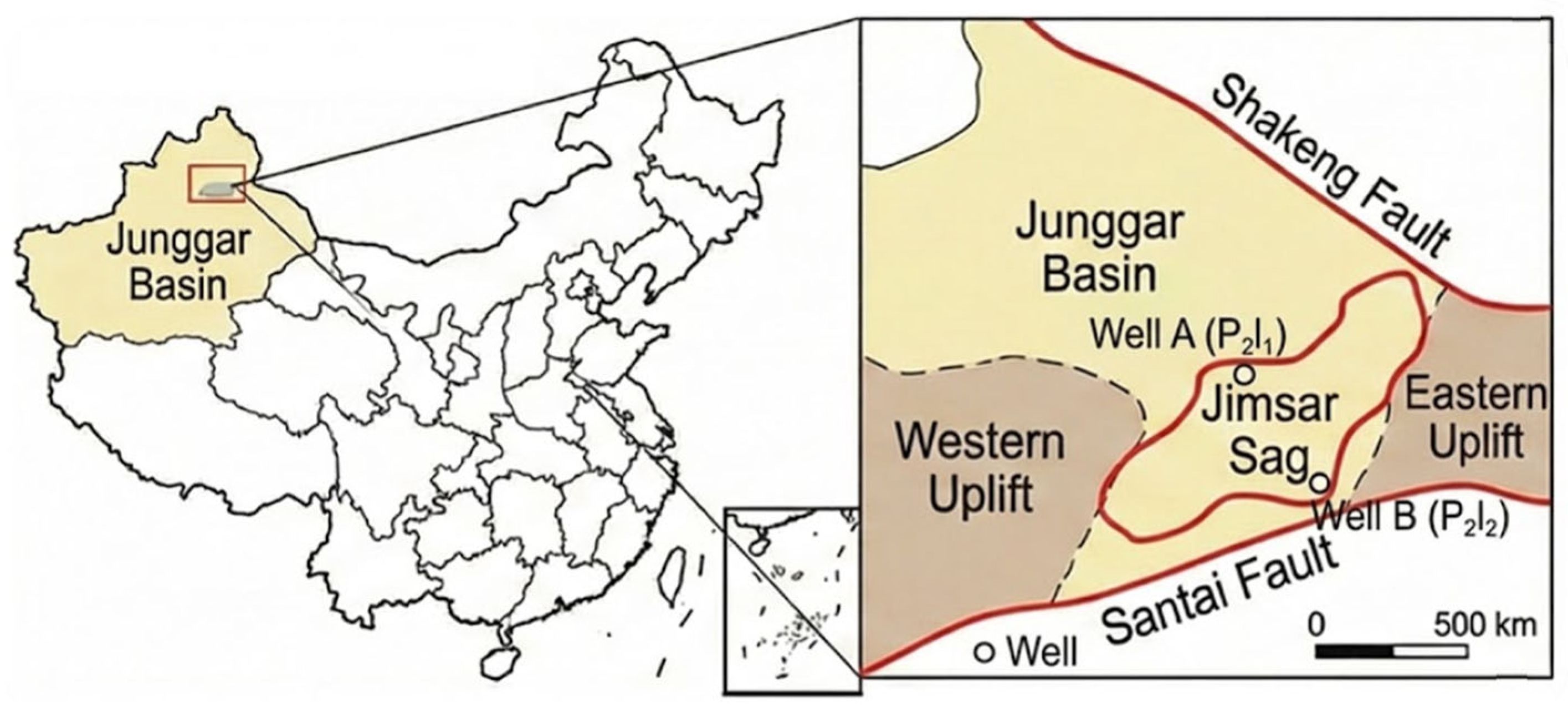
The study area is located in the Jimsar Sag, southeastern Junggar Basin (Figure 1). The target interval is the Middle Permian Lucaogou Formation (P2l), a saline lacustrine shale oil reservoir. Deposited in semi-deep to deep lake environments, this formation comprises fine-grained mixed rocks (mudstone, dolomite, and siltstone). It functions as both a source rock and a tight reservoir, with ultra-low porosity/permeability and lithofacies-controlled oil accumulation [18].
Figure 1.
The location of the study area.
In this study, six shale core samples were selected from the Lucaogou Formation in the Jimsar Sag. To ensure comprehensive stratigraphic representation, the cores were collected from two distinct wells: Samples 1–4 were obtained from Well A, while Samples 5–6 were collected from Well B. These cores were retrieved from different coring barrels at varying burial depths ranging from 4018 m to 4079 m. Table 1 presents fundamental petrophysical properties, with six cylindrical cores (diameter 3.8 ± 0.1 cm × height 7.0 ± 0.1 cm) prepared for analysis. Upon extraction from core barrels, the specimens exhibited heterogeneous oil distribution: Samples 1–2 displayed pervasive speckled band-like dark brown crude exudation accompanied by persistent pinhead-sized gas ebullition, exhibiting approximately 70% oil saturation. Samples 3–4 manifested similar banded oil seepage patterns covering roughly 60% of the surface area. Subtle hydrocarbon indications were observed on Sample 5 (~15% saturation), while Sample 6 released pronounced petrogenic odors with visible brown crude in axial fractures and cross-sections (~30% saturation). This marked heterogeneity in native hydrocarbon distribution underscores the necessity for standardized solvent extraction and re-saturation protocols to restore baseline petrophysical conditions, thereby ensuring fidelity in subsequent petrophysical experimentation.
Table 1.
Basic data of experimental cores.
A DY-4 Core Solvent Extractor, principally comprising a solvent chamber, sample chamber, cooling apparatus, and control module, was employed in the current experiment. This apparatus generates vapor through heated organic solvents. Upon condensation, the resulting liquid droplets percolate into the core chamber to flush and immerse rock specimens, effectively dissolving crude oil. Subsequently, the solvent returns to the original chamber via siphonic reflux, enabling cyclic purification. Throughout this cleansing process, core samples endure prolonged exposure to conditions of 80 °C and 20 MPa. Such elevated temperature–pressure parameters may potentially induce structural alterations within the core matrix. Elucidating the effects of this procedure on core integrity establishes critical data foundations for subsequent experimental investigations.
2.2. Experimental Design
T2 spectrum measurements from NMR scans were employed in this study before and after the cleaning process to investigate core damage during solvent extraction and evaluate solvent-saturation efficacy. Alterations in the core’s pore structure were comprehensively characterized by integrating CT imaging, porosity–permeability tests, and other analytical methodologies, thereby the impacts of the solvent extraction procedure were elucidated. Furthermore, the efficacy of solvent saturation is quantitatively assessed through mass balance analysis and peak area variations in T2 spectra observed pre- and post-treatment.
The solvent extraction principle followed the industry standard SY/T 5385-2007 [19]. Considering the ultra-low permeability of Jimsar shale, a pressurized extraction method was adopted. The process lasted 14 days. The petroleum ethers were utilized to clean core samples at 80 °C and 20 MPa, ensuring complete oil removal as indicated by the fluorescence test, followed by a 5-day desiccation phase. Vacuum treatment exceeding 32 h was implemented post-desiccation to circumvent compromised oil saturation efficacy arising from residual air within core pores. Subsequently, cores were expeditiously transferred to a high-temperature/high-pressure oil saturation apparatus calibrated to simulate reservoir conditions at 90 °C and 40 MPa. Accounting for the pronounced lithological tightness characteristic of Jimsar shale formations, the oil saturation process was sustained for a minimum duration of 14 days.
3. Results
3.1. Initial Core Characterization
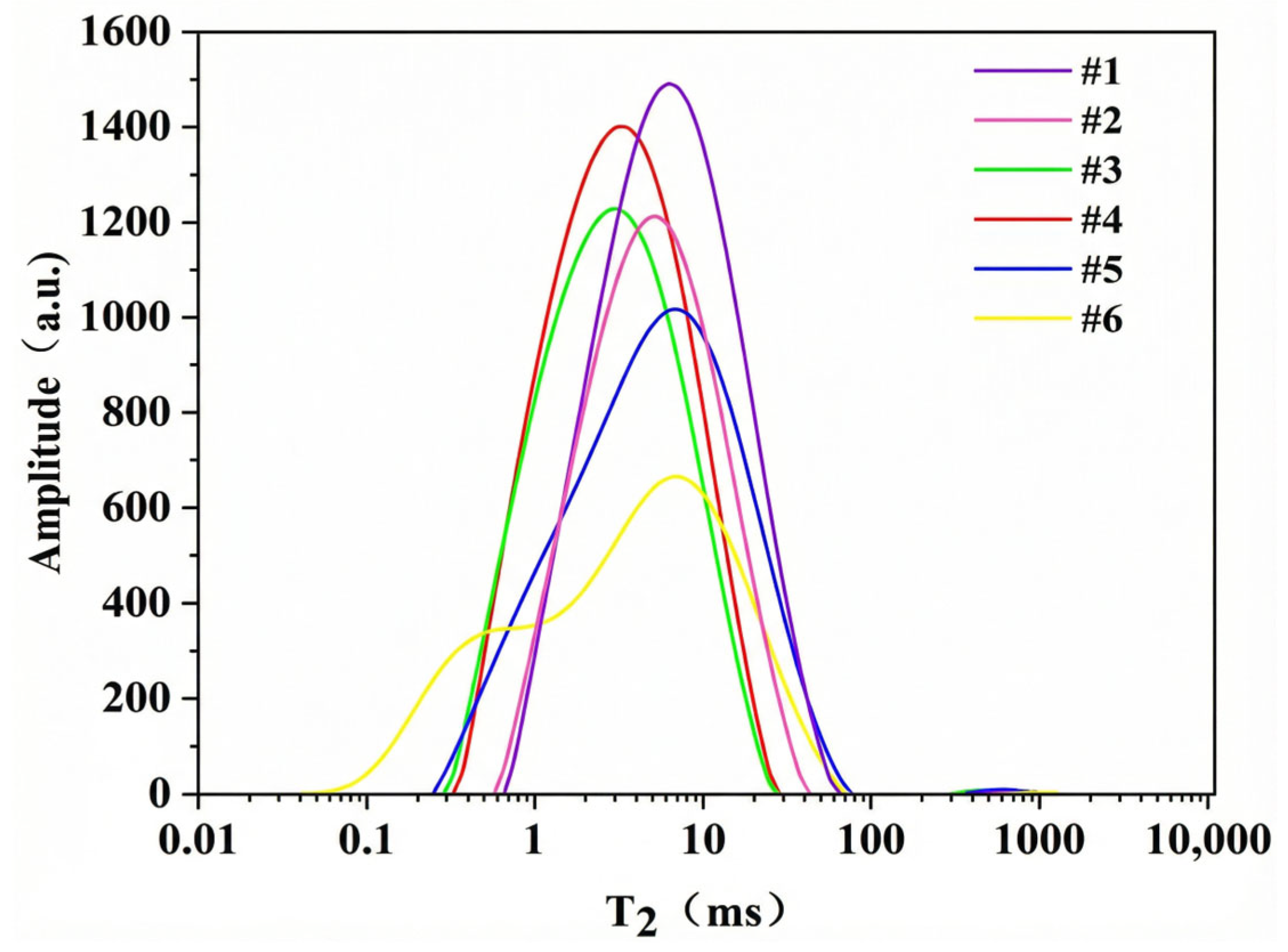
Analysis of the downhole core samples revealed substantial heterogeneity in their initial fluid composition and pore structure. The NMR T2 spectra (Figure 2) showed marked variations in peak shapes and positions across different samples. Notably, Sample 6 exhibited a distinct bimodal distribution, which is indicative of not only differential fluid distribution but also a strongly heterogeneous pore structure.
Figure 2.
Initial T2 spectrum of downhole core.
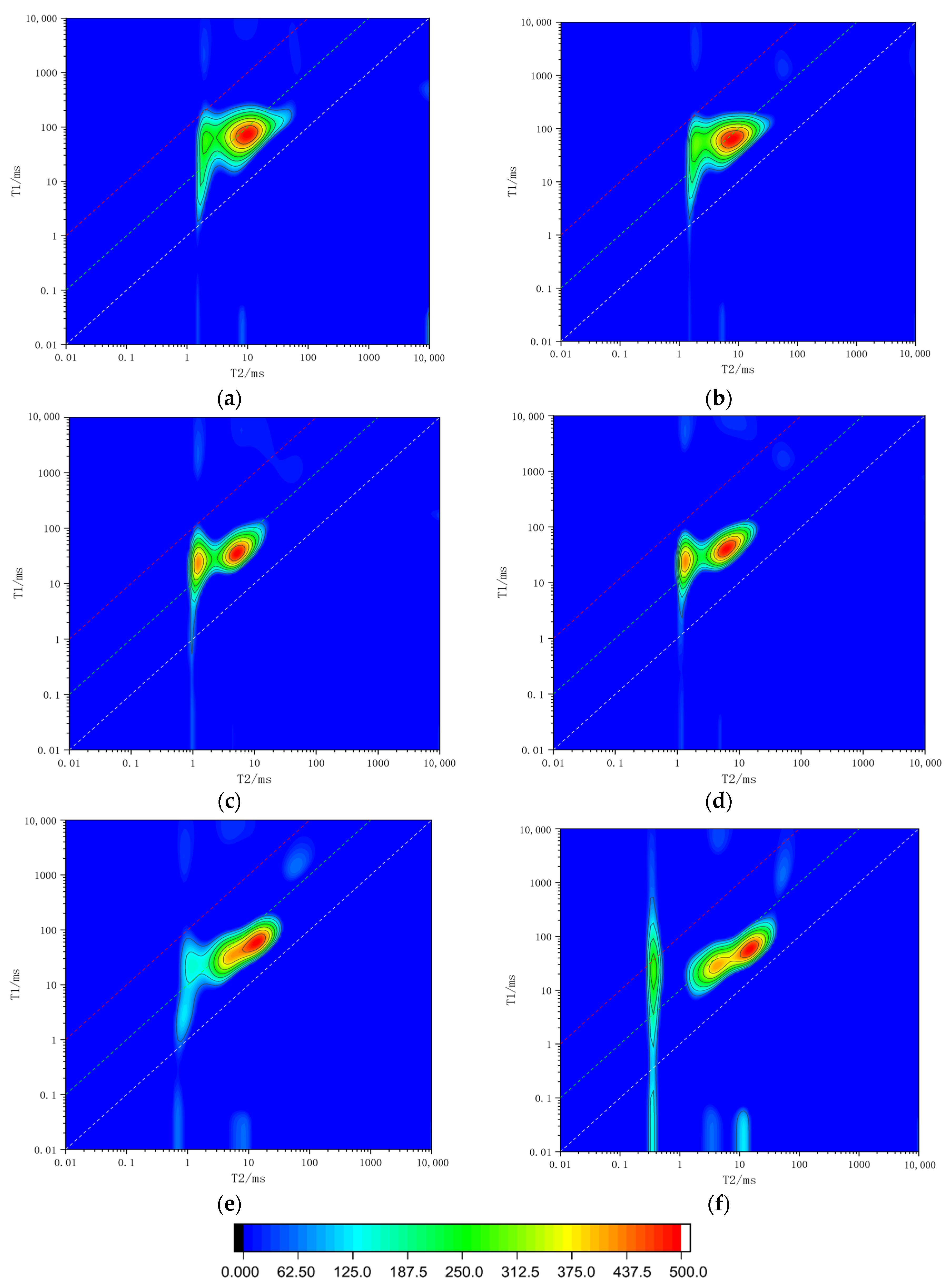
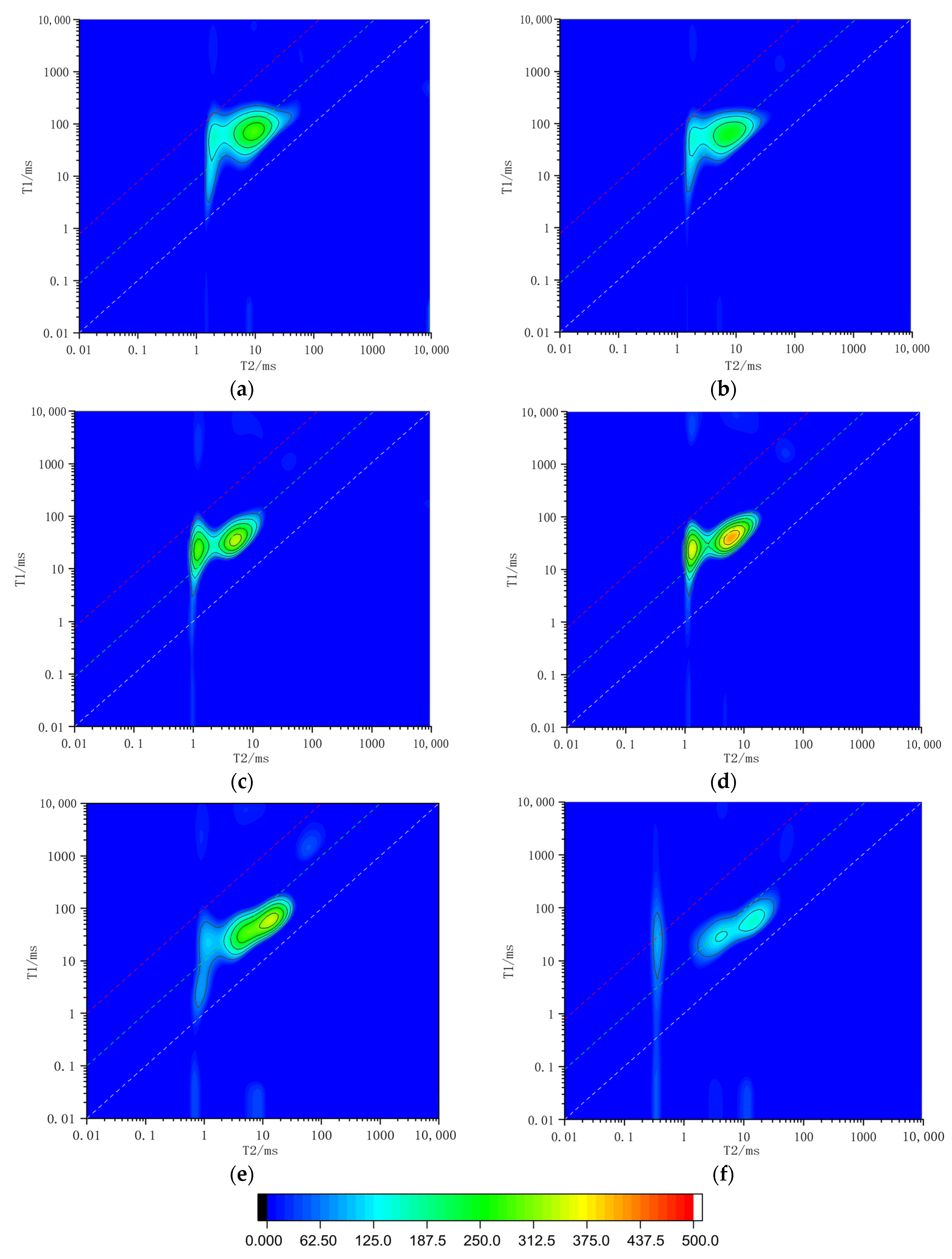
The T1–T2 spectra further confirmed the cores contained mixtures of oil and aqueous phases within a predominantly neutral wettability pore system (Figure 3).
Figure 3.
Initial T1–T2 spectra of downhole core. (a–f) #1~#6.
3.2. Effectiveness of Oil Removal
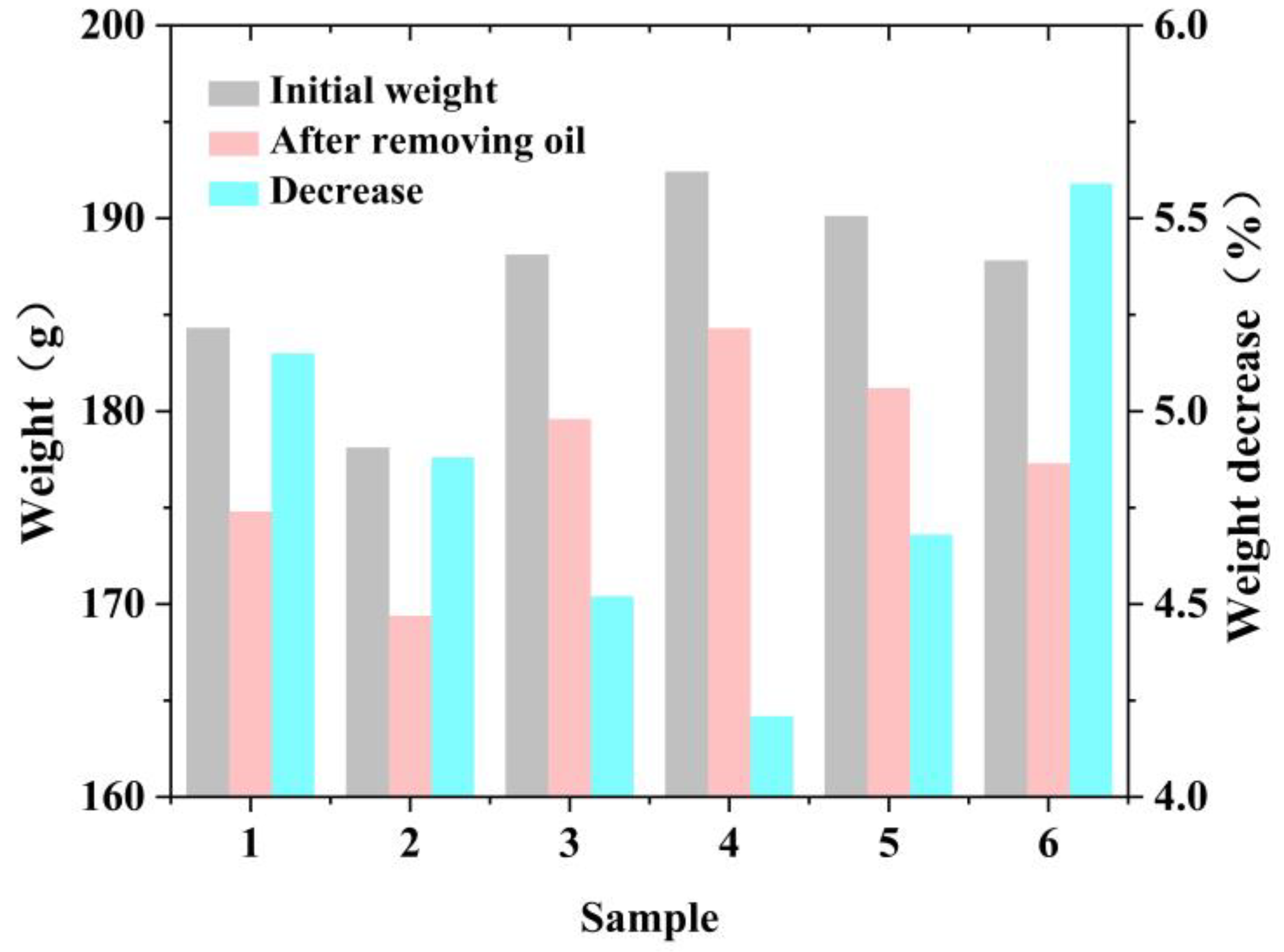
The oil removal process led to a measurable decrease in core mass. Post-treatment, the mass of the core samples decreased by an average of 2.46%, with individual variations presented in Figure 4.
Figure 4.
Variation in mass before and after oil removal.
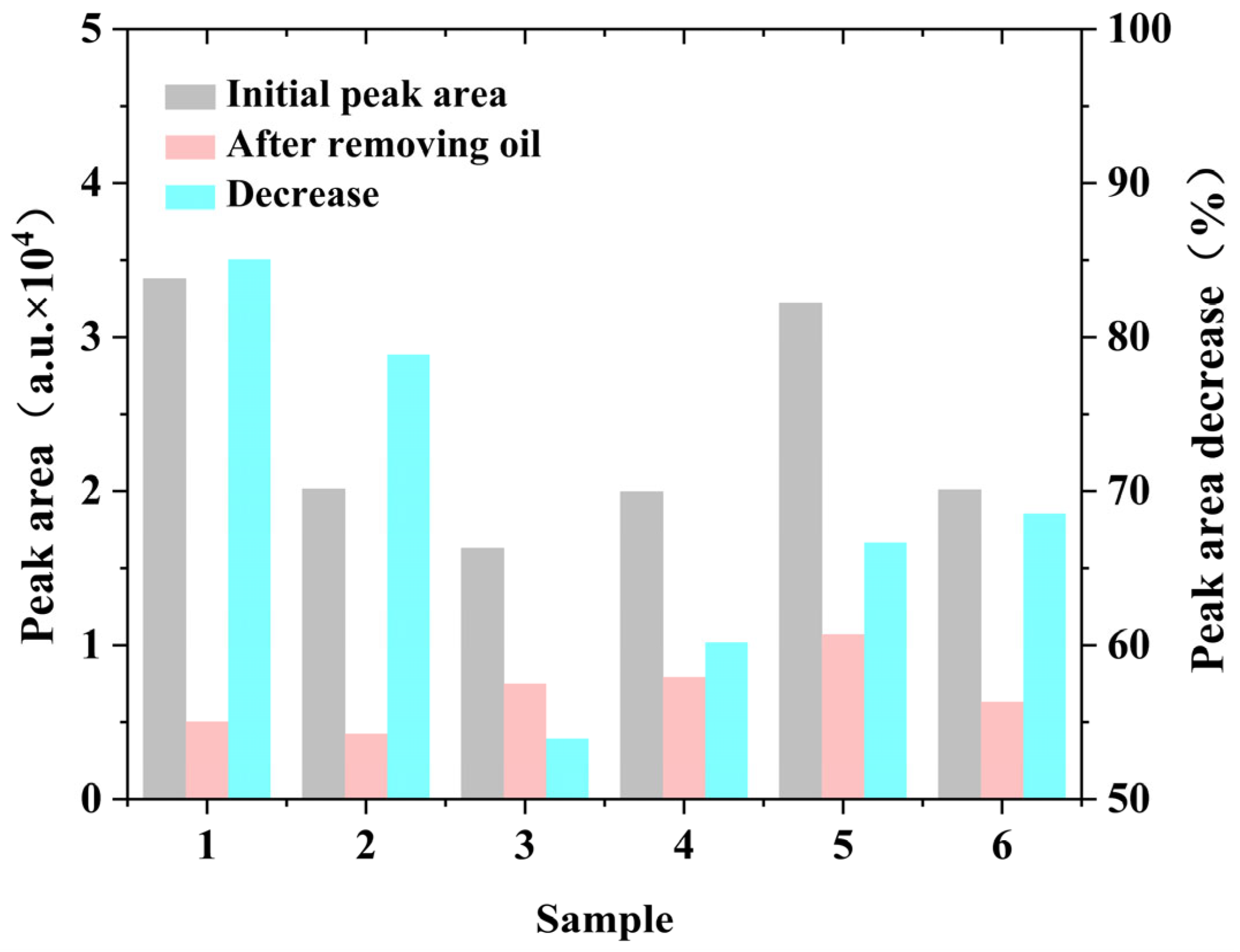
Concurrently, the NMR T2 spectrum peak area showed an average reduction of 73.75% after treatment (Figure 5), indicating a significant decrease in the signal from movable hydrocarbons.
Figure 5.
Variation in T2 spectrum peak area before and after oil removal.
3.3. Effectiveness of Oil Saturation
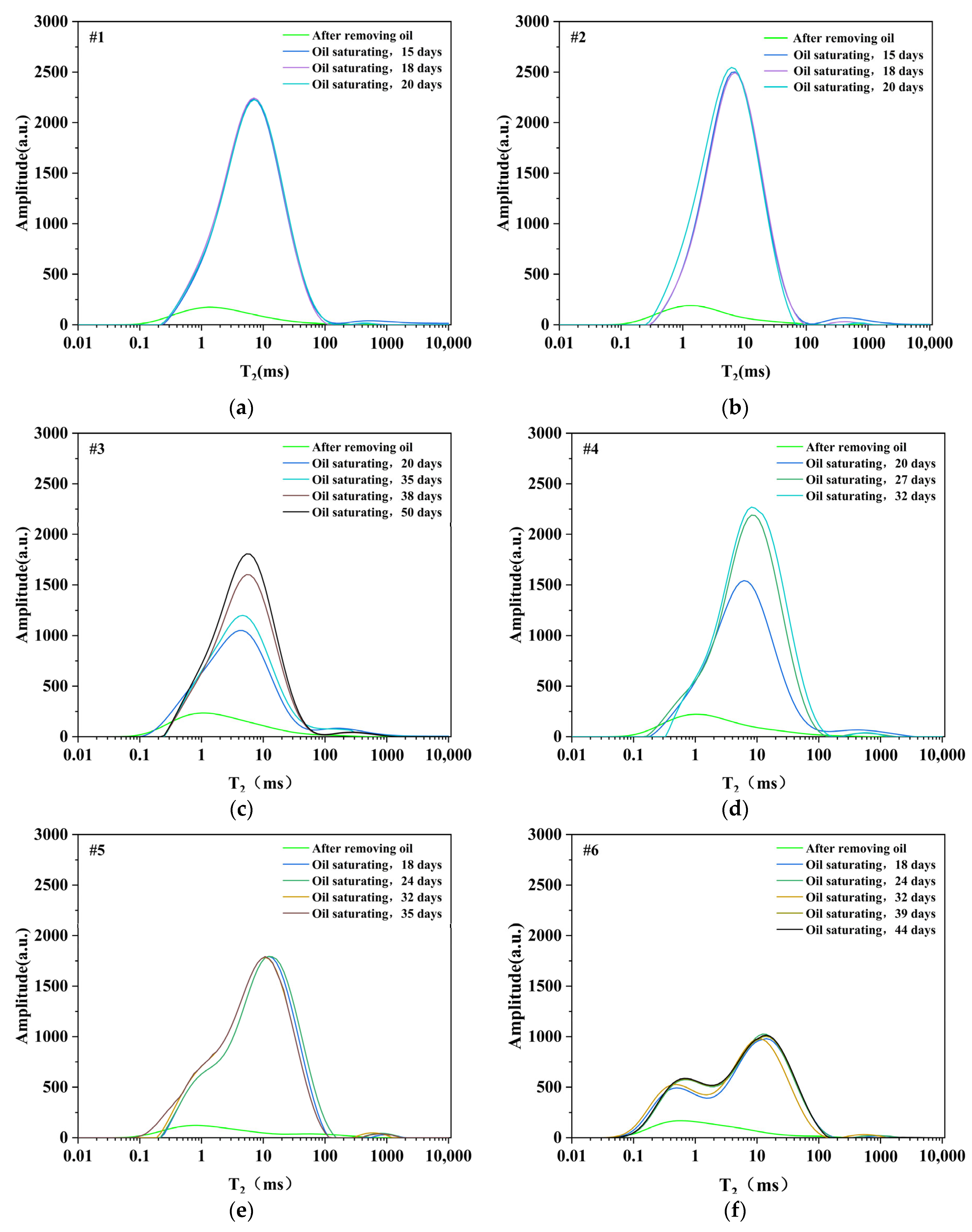
The oil saturation process resulted in varied outcomes across samples. The temporal evolution of the T2 spectra during saturation is shown in Figure 6. Samples 1 and 2 displayed rapid saturation kinetics, while Sample 5 exhibited a protracted process. Sample 6 achieved the least favorable saturation outcome, with its T2 spectrum maintaining a bimodal shape post-saturation.
Figure 6.
T2 spectrum throughout the oil saturation procedure. (a–f) #1~#6.
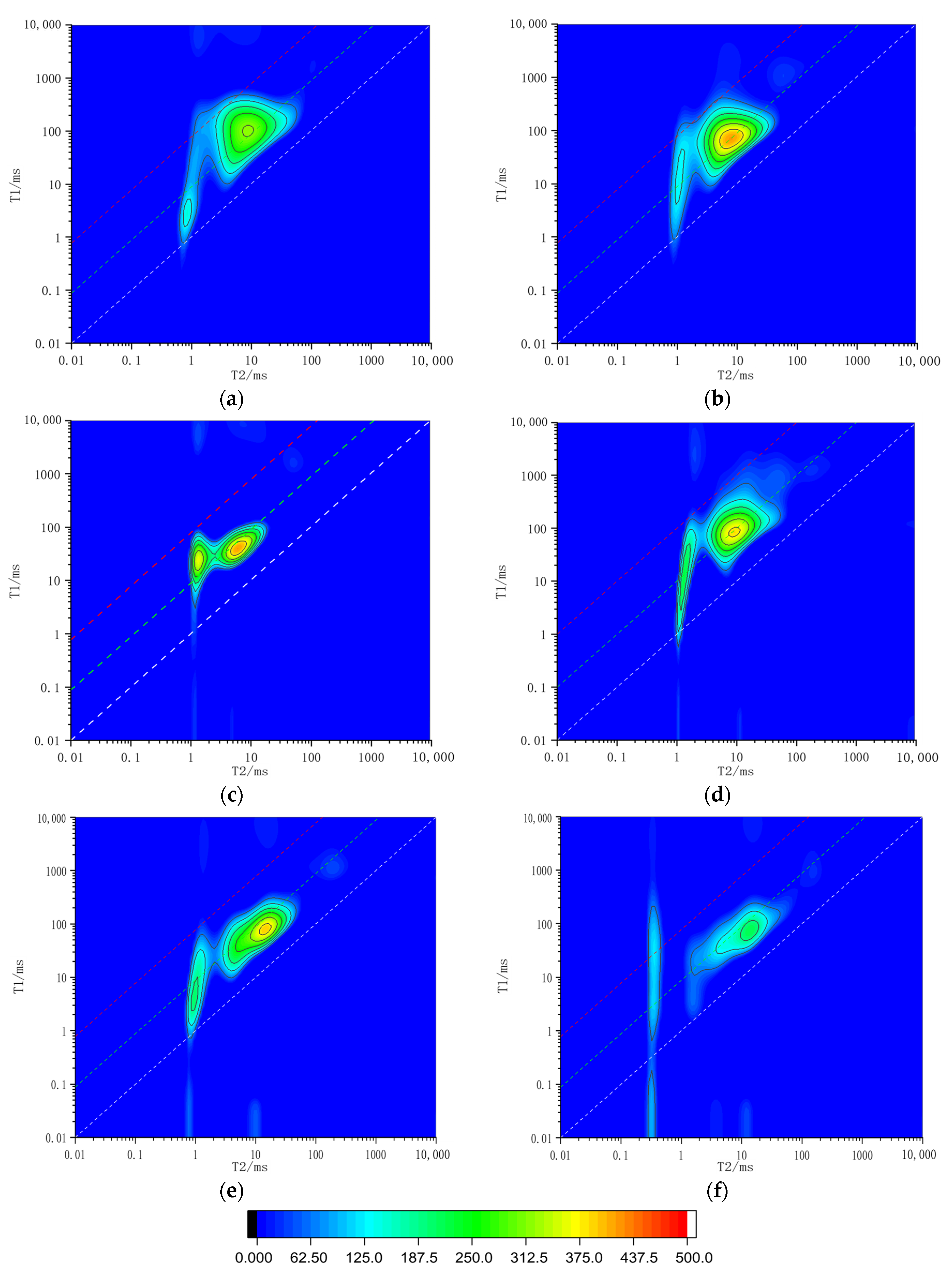
The T1–T2 spectra before and after saturation (Figure 7 and Figure 8) showed a distinct signal cluster consistent with the oil phase in Samples 1 to 5 following saturation. In contrast, Sample 6 showed no significant new signal cluster, with its spectrum indicating the presence of organic kerogen and bound water.
Figure 7.
T1–T2 spectra before saturated oil. (a–f) #1~#6.
Figure 8.
T1–T2 spectra after saturated oil. (a–f) #1~#6.
3.4. Impact on Petrophysical Properties
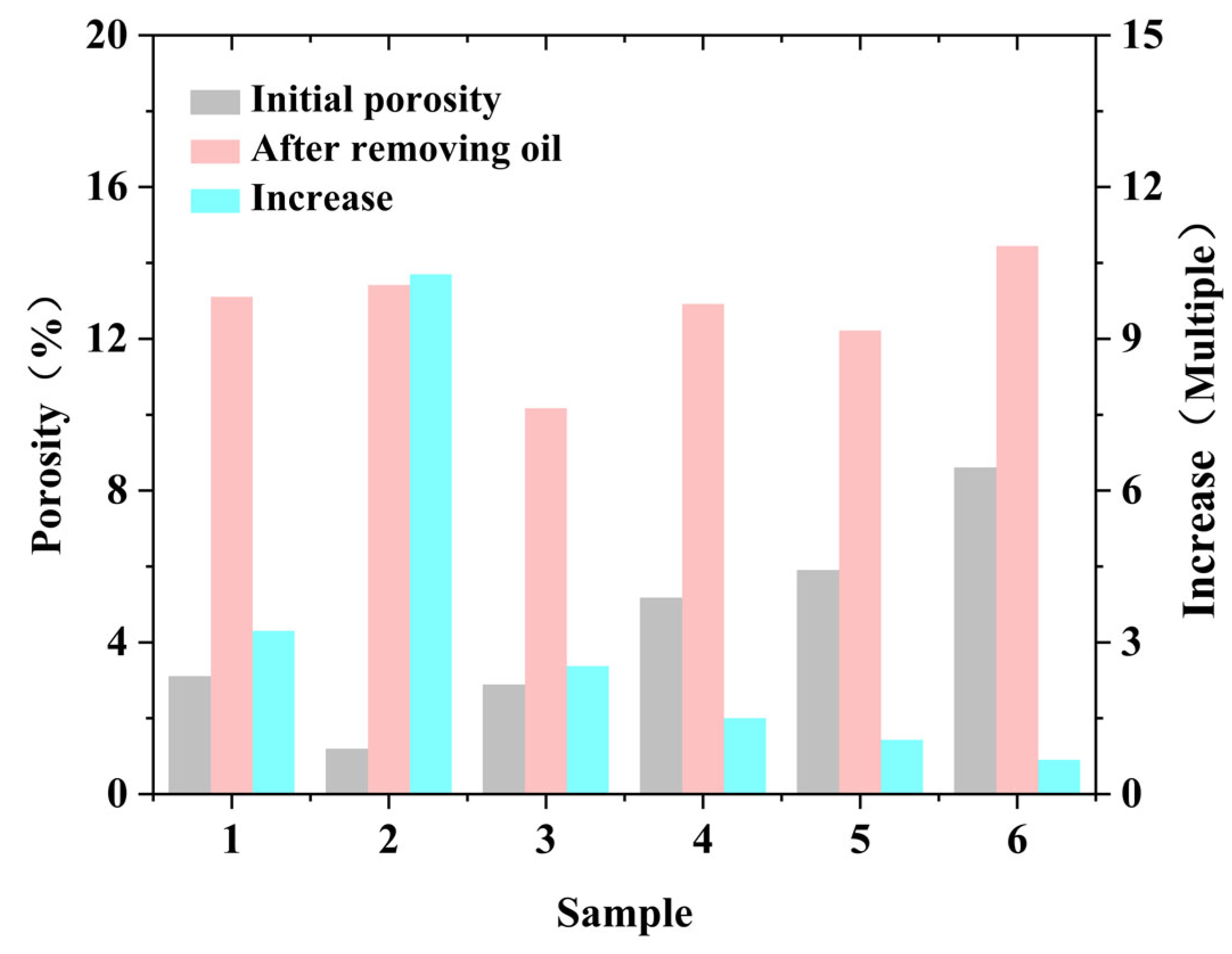
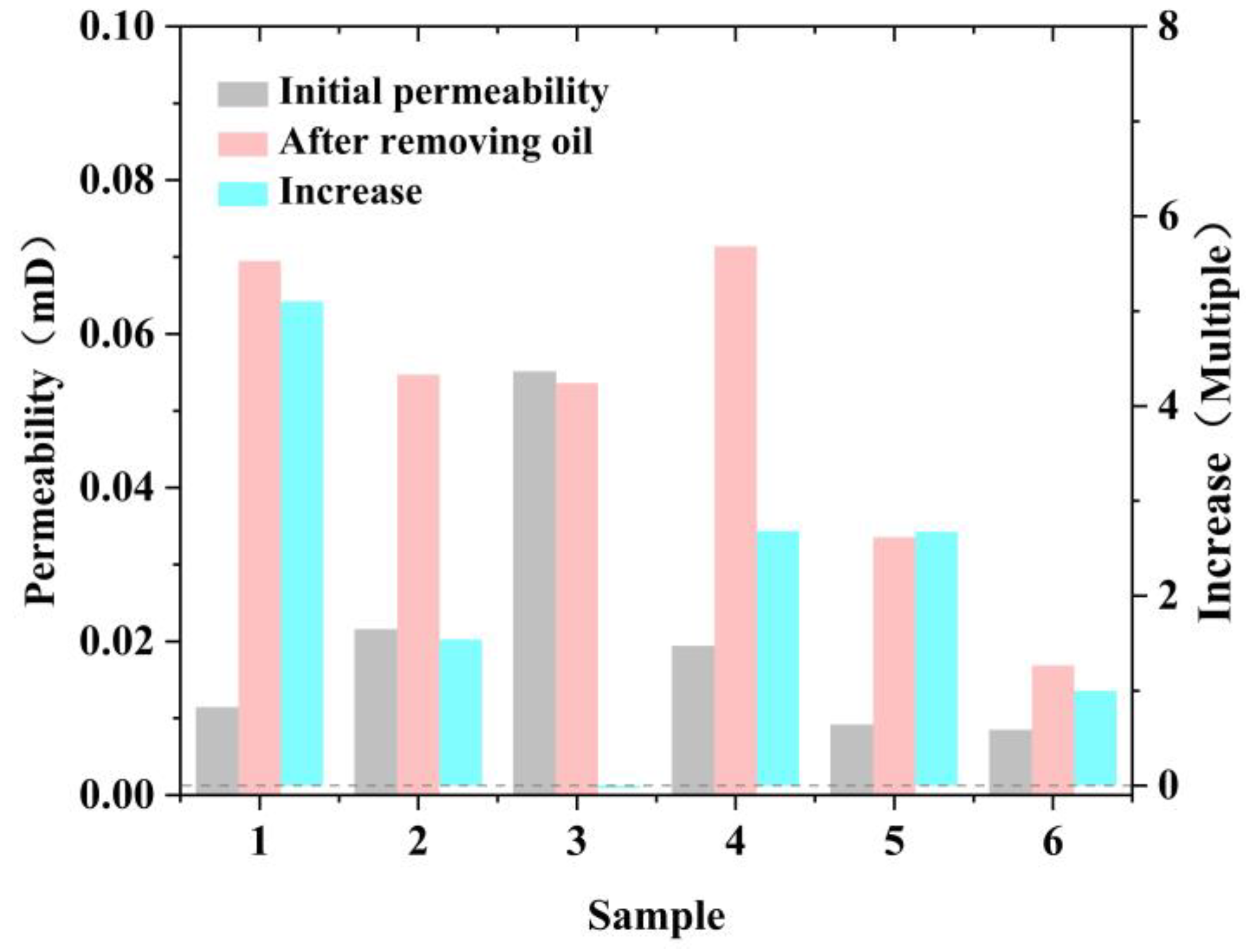
Following oil removal and drying, the porosity and permeability of the core samples exhibited an overall increasing trend (Figure 9 and Figure 10). The extraction of the oil phase resulted in an average increase in porosity by approximately 3.21 times and an average enhancement in permeability by approximately 2.16 times. However, Sample 3 presented an anomalous response, where an increase in porosity was accompanied by a decrease in permeability.
Figure 9.
Variation in porosity before and after oil removal.
Figure 10.
Variation in permeability before and after oil removal.
3.5. Microstructural Changes Visualized by CT
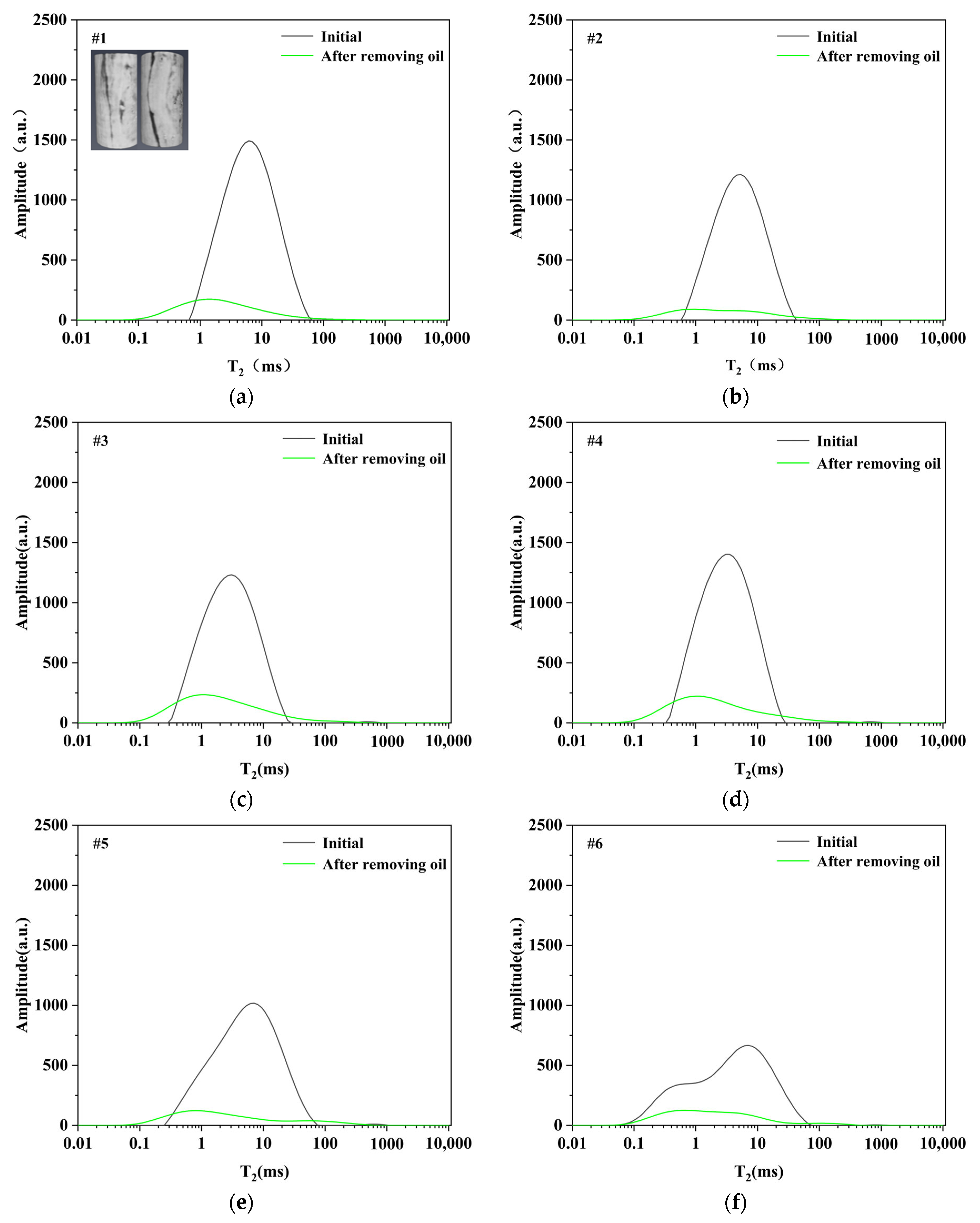
X-ray CT imaging provided visualization of the physical alterations within the cores. As typically illustrated by the representative images of Sample 1 in Figure 11, the 3D reconstructions identified well-defined microfractures. Consistent with these features, similar fracture networks were identified in Sample 5, while a tendency for microfracture initiation and propagation was also observed in Samples 2 and 4. A comparative analysis of the imagery before and after the treatment revealed a more extensive and pronounced network of microfractures post-treatment.
Figure 11.
T2 Spectra and CT images before and after oil removal. (a–f) #1~#6.
4. Discussions
4.1. Interpretation of Saturation Efficacy and Heterogeneity
The observed heterogeneity in saturation efficacy can be attributed to variations in initial pore structure and treatment-induced alterations. The accelerated saturation in Samples 1 and 2 correlates with the development of microfractures (Section 3.5), which likely enhanced connectivity and permeability. The poor saturation performance of Sample 6 is consistent with its T1–T2 spectral data, which suggests that the abundant organic matter and bound water in its nano-pores impeded effective oil imbibition by occupying pore spaces and altering fluid–rock interactions.
4.2. Mechanisms of Petrophysical Property Alteration
The overall increase in porosity and permeability is attributed to the effective extraction of the oil phase, which cleared pore throats and altered the wettability of initially water-bearing pores towards a more neutral state, thereby optimizing flow pathways. The anomalous behavior of Sample 3, where porosity increased but permeability decreased, presents a critical case. We attribute this discrepancy to the formation of microfractures induced by the coupling effect of thermal-mechanical stress and intrinsic material heterogeneity. More specifically, thermally induced differential expansion among constituent minerals under varying temperature and pressure conditions likely caused localized stress concentrations. These induced microfractures, while contributing to total porosity, concurrently mobilized fine internal particles. The migration and subsequent re-deposition of these fines likely led to localized throat blockage, which disproportionately compromised the effective fluid flow capacity, explaining the permeability reduction.
4.3. Synthesis on Microstructural Evolution and Its Implications
The integrated NMR and CT data elucidate a coherent process of microstructural evolution. The leftward shift in the NMR T2 spectrum peak post-treatment indicates a redistribution of residual fluids towards smaller pores. This is explained by the preferential clearance of oil from larger, well-connected pores during extraction, potentially aided by pressure-driven displacement that pushed residual oil into smaller pore spaces. Concurrently, CT imagery confirms that the treatment induced microfracture propagation. This is likely triggered by thermo-mechanical stresses from temperature and pressure fluctuations during oil removal, which can reduce effective confining stress or exceed local tensile strength. The resulting enhanced microfracture network provides conductive pathways that facilitate fluid redistribution during the process but may also act as sites for fine particle liberation.
4.4. Practical Implications for Core Preparation
This study underscores that standard solvent extraction and re-saturation protocols are not passive preparation steps but actively alter core microstructure. While effective in establishing a uniform initial fluid saturation, the process can induce subtle but significant damage, such as micro fracturing and fines migration. These alterations may artificially enhance or impair subsequent flow measurements. Therefore, it is recommended that core preparation protocols for shale reservoirs be tailored based on initial lithology, and post-treatment screening (e.g., via CT scanning) should be considered to assess induced microstructural damage before using cores for advanced petrophysical experiments. This ensures that observed phenomena in subsequent tests can be more reliably attributed to inherent reservoir properties rather than preparation artifacts.
5. Conclusions
Restoration of downhole core samples to their native reservoir state necessitates oil-washing and hydrocarbon saturation treatments. Systematically evaluating the impacts of these processes constitutes the foundation for generating reliable experimental data and ensuring the scientific validity of subsequent results. Nuclear magnetic resonance (NMR) and computed tomography (CT) techniques were employed in this study to establish the indispensability of oil-washing and saturation procedures, assess their efficacy, and analyze alterations in pore permeability characteristics and microstructural configurations pre- and post-treatment, thereby providing a theoretical framework for comprehensively understanding core sample transformations. The conclusions are as follows:
- (1)
- Implementing oil-washing and saturation treatments while discerning their influence on core samples serves as a prerequisite for subsequent experimentation. The oil-washing and saturation processes substantially reconfigure microstructural arrangements, pore permeability profiles, and fluid distributions, which are factors exerting direct consequences on ensuing experimental outcomes.
- (2)
- High-temperature and high-pressure oil-washing demonstrates pronounced effectiveness, while saturation efficiency is contingent upon initial core conditions. Post-treatment analysis reveals an average mass reduction of 2.46% in core specimens, accompanied by a 73.75% average decrease in T2 spectral peak areas. Superior pore-throat development correlates with enhanced petrophysical properties and more effective saturation, whereas bound water presence adversely impacts saturation performance.
- (3)
- Oil-washing profoundly modifies petrophysical parameters. Post-treatment drying yields an average 3.21-fold porosity enhancement and 2.16-fold permeability augmentation, although isolated reductions occur. These anomalies are attributed to thermo-mechanically induced microfractures during processing, though potential pore-throat obstruction via particle migration remains plausible.
- (4)
- During oil-washing, preferential evacuation of hydrocarbons occurs in macroscopic pores, with residual oil predominantly localized within microscopic voids—manifested as leftward migration of T2 spectral peaks. Under elevated temperatures and pressures, microfracture proliferation emerges, with synergistic fracture-channel effects impelling crude oil displacement into finer capillaries. This phenomenon generates T2 spectral signatures in previously quiescent regions.
Author Contributions
Conceptualization, L.L. and H.Q.; methodology, H.Q. and F.Z.; software, Y.C.; validation, M.Y. and H.W.; formal analysis, J.Z.; investigation, Y.C.; resources, H.Q.; data curation, J.Z.; writing—original draft, L.L., H.Q. and M.Y.; writing—review and editing, H.Q. and M.Y.; visualization, M.Y. and Y.C.; supervision, H.Q.; project administration, L.L. and F.Z.; funding acquisition, L.L. All authors have read and agreed to the published version of the manuscript.
Funding
This work is supported by the National Natural Science Foundation of China (Grant No. 52174044), Science and Technology Department of Xinjiang Uyghur Autonomous Region (Grant No. 2024B01013-1), Tianshan Talent Training Program (T2024TSYCCX0070) and Xinjiang Uygur Region ‘One Case, One Policy’ Strategic Talent Introduction Project (No. XQZX20240054), and Major Project of PetroChina (Grant No. 2022KT1704).
Data Availability Statement
The data presented in this study are available on request from the corresponding author.
Conflicts of Interest
Authors Linmao Lu, Yanjie Chu and Hongzhou Wang were employed by the PetroChina Xinjiang Oilfield Company. Author Jun Zhang was employed by the PetroChina Tarim Oilfield Company. The remaining authors declare that the research was conducted in the absence of any commercial or financial relationships that could be construed as a potential conflict of interest.
References
- Zhang, G.; Zhou, Z.; Cui, C.; Zhang, J.; Wang, J. Characterization of Pore Structure and Fluid Mobility of Shale Reservoirs. ACS Omega 2024, 9, 37724–37736. [Google Scholar] [CrossRef] [PubMed]
- Cao, Y.; Wu, Q.; Jin, Z.; Zhu, R. Characterization of Microstructures in Lacustrine Organic-Rich Shale Using Micro-CT Images: Qingshankou Formation in Songliao Basin. Energies 2022, 15, 6712. [Google Scholar] [CrossRef]
- Li, S.; Sun, J.; Gao, Y.; Liu, D.; Zhang, Z.; Ma, P. Flow Characterization in Fractured Shale Oil Matrices Using Advanced Nuclear Magnetic Resonance Techniques. Processes 2024, 12, 879. [Google Scholar] [CrossRef]
- Sun, N.; He, W.; Zhong, J.; Gao, J.; Sheng, P. Lithofacies and Shale Oil Potential of Fine-Grained Sedimentary Rocks in Lacustrine Basin (Upper Cretaceous Qingshankou Formation, Songliao Basin, Northeast China). Minerals 2023, 13, 385. [Google Scholar] [CrossRef]
- Wang, F.; Zhang, Y.; Li, X.; Han, X. Study on a New Rock Fracability Evaluation Model of Shale Gas Reservoir. Geofluids 2020, 2020, 1–11. [Google Scholar] [CrossRef]
- Zhang, L.; Li, B.; Jiang, S.; Xiao, D.; Lu, S.; Zhang, Y.; Gong, C.; Chen, L. Heterogeneity Characterization of the Lower Silurian Longmaxi Marine Shale in the Pengshui Area, South China. Int. J. Coal Geol. 2018, 195, 250–266. [Google Scholar] [CrossRef]
- Wu, F.; Dai, J.; Shi, L.; Fan, L.; Guan, Y.; Li, Y.; Wang, Q.; Chen, C. An Experiment-Based Study of Formation Damage Using a Microetching Model Displacement Method. Micromachines 2022, 13, 270. [Google Scholar] [CrossRef] [PubMed]
- Kang, Y.; Xu, C.; You, L.; Yu, H.; Zhang, B. Comprehensive Evaluation of Formation Damage Induced by Working Fluid Loss in Fractured Tight Gas Reservoir. J. Nat. Gas Sci. Eng. 2014, 18, 353–359. [Google Scholar] [CrossRef]
- Xu, C.; Kang, Y.; You, Z.; Chen, M. Review on Formation Damage Mechanisms and Processes in Shale Gas Reservoir: Known and to Be Known. J. Nat. Gas Sci. Eng. 2016, 36, 1208–1219. [Google Scholar] [CrossRef]
- Zhang, L.; Zhou, F.; Zhang, S.; Li, Z.; Wang, J.; Wang, Y. Evaluation of Permeability Damage Caused by Drilling and Fracturing Fluids in Tight Low Permeability Sandstone Reservoirs. J. Pet. Sci. Eng. 2019, 175, 1122–1135. [Google Scholar] [CrossRef]
- Wang, Z.; Qiu, Y.; Guo, P.; Du, J.; Liu, H.; Hu, Y.; Zeng, F. Experimental Investigation of the Damage Mechanisms of Drilling Mud in Fractured Tight Gas Reservoir. J. Energy Resour. Technol. 2019, 141, 092907. [Google Scholar] [CrossRef]
- Zhao, H.; Zheng, J.; Zhang, Z.; Qin, H.; Wang, C.; Zhu, J.; Chen, A.; Chen, L.; Liu, P.; Yang, W.; et al. Research Progress and Prospects of Oil Saturation Evaluation Methods in Shale Oil Reservoirs. Processes 2024, 12, 2421. [Google Scholar] [CrossRef]
- Liu, Y.; Wang, C.; Liu, Z.; Wang, H.; Liu, Y. A Logging Method for Evaluating Oil-Bearing Property of Jimsar Shale Oil: Case Study of Sag in Junggar Basin. Nat. Gas Geosci. 2021, 32, 1084–1092. [Google Scholar]
- Yan, W.; Zhang, Z.; Chen, L.; Zhao, Z.; Wang, W. New Evaluating Method of Oil Saturation in Gulong Shale Based on NMR Technique. Pet. Geol. Oilfield Dev. Daqing 2021, 40, 78–86. [Google Scholar]
- Kadkhodaie, A.; Rezaee, R. A New Correlation for Water Saturation Calculation in Gas Shale Reservoirs Based on Compensation of Kerogen-Clay Conductivity. J. Pet. Sci. Eng. 2016, 146, 932–939. [Google Scholar] [CrossRef]
- Qin, Y.; Zhang, G.; Luo, C.; Zhang, J.; Wang, Z. Two-Dimensional NMR Characteristics of Jimsar Shale Oil Reservoir. J. Cent. South. Univ. 2022, 53, 3387–3400. [Google Scholar] [CrossRef]
- Zeng, J.B.; Zheng, Q.W.; Xie, X.Q.; Yang, F.; Cheng, L.; Xia, Y. New method of saturation calculation based on NMR experiment and application. Prog. Geophys. 2023, 38, 1228–1237. [Google Scholar] [CrossRef]
- He, X.; Luo, Q.; Jiang, Z.; Qiu, Z.; Luo, J.; Li, Y.; Deng, Y. Control of Complex Lithofacies on the Shale Oil Potential in Saline Lacustrine Basins of the Jimsar Sag, NW China: Coupling Mechanisms and Conceptual Models. J. Asian Earth Sci. 2024, 266, 106135. [Google Scholar] [CrossRef]
- SY/T 5385-2007; Calculus of Porosity and Fluid Saturation of Rock in Laboratory. National Development and Reform Commission of China. Petroleum Industry Press: Beijing, China, 2007. Available online: https://std.samr.gov.cn/hb/search/stdHBDetailed?id=5DDA8BA2053918DEE05397BE0A0A95A7 (accessed on 28 December 2025).
Disclaimer/Publisher’s Note: The statements, opinions and data contained in all publications are solely those of the individual author(s) and contributor(s) and not of MDPI and/or the editor(s). MDPI and/or the editor(s) disclaim responsibility for any injury to people or property resulting from any ideas, methods, instructions or products referred to in the content. |
© 2026 by the authors. Licensee MDPI, Basel, Switzerland. This article is an open access article distributed under the terms and conditions of the Creative Commons Attribution (CC BY) license.