Article

Intelligent Disassembly System for PCB Components Integrating Multimodal Large Language Model and Multi-Agent Framework


1
State Grid Zhejiang Electric Power Co., Ltd., Hangzhou 310015, China
2
Institute of Cyber-Systems and Control, Zhejiang University, Hangzhou 310027, China
*
Authors to whom correspondence should be addressed.
Processes 2026, 14(2), 227; https://doi.org/10.3390/pr14020227
Submission received: 22 November 2025 / Revised: 31 December 2025 / Accepted: 6 January 2026 / Published: 8 January 2026

Abstract

The escalating volume of waste electrical and electronic equipment (WEEE) poses a significant global environmental challenge. The disassembly of printed circuit boards (PCBs), a critical step for resource recovery, remains inefficient due to limitations in the adaptability and dexterity of existing automated systems. This paper proposes an intelligent disassembly system for PCB components that integrates a multimodal large language model (MLLM) with a multi-agent framework. The MLLM serves as the system’s cognitive core, enabling high-level visual-language understanding and task planning by converting images into semantic descriptions and generating disassembly strategies. A state-of-the-art object detection algorithm (YOLOv13) is incorporated to provide fine-grained component localization. This high-level intelligence is seamlessly connected to low-level execution through a multi-agent framework that orchestrates collaborative dual robotic arms. One arm controls a heater for precise solder melting, while the other performs fine “probing-grasping” actions guided by real-time force feedback. Experiments were conducted on 30 decommissioned smart electricity meter PCBs, evaluating the system on recognition rate, capture rate, melting rate, and time consumption for seven component types. Results demonstrate that the system achieved a 100% melting rate across all components and high recognition rates (90–100%), validating its strengths in perception and thermal control. However, the capture rate varied significantly, highlighting the grasping of small, low-profile components as the primary bottleneck. This research presents a significant step towards autonomous, non-destructive e-waste recycling by effectively combining high-level cognitive intelligence with low-level robotic control, while also clearly identifying key areas for future improvement.

1. Introduction

The issue of Waste Electrical and Electronic Equipment (WEEE or e-waste) indeed constitutes a major global challenge due to its rapidly increasing volume worldwide [1]. As highlighted in the UN Digital Economy Report 2024 [2], the negative environmental footprint of digital transformation, including the surge in e-waste, necessitates urgent circular economy interventions. This waste stream encompasses a wide variety of devices, including mobile phones, computers, televisions, refrigerators, household appliances, lamps, medical equipment, and photovoltaic panels [3,4,5]. E-waste contains hazardous substances that can cause significant environmental and health problems if not managed properly. Furthermore, modern electronic products contain rare and valuable resources that can be recycled and reused, contributing to a circular economy and enhancing the security of supply for critical raw materials [6,7,8].
Dismantling or disassembly is widely regarded by numerous researchers as the initial and pivotal stage in the product recovery lifecycle. This is because the effectiveness of the disassembly operation significantly influences the outcomes of subsequent stages in the recycling process [9]. An effective disassembly process can also help reduce the excessive use of reagents in chemical processes used to separate various valuable metals. Additionally, it presents a non-destructive alternative to techniques like shredding, which, while faster, limits the usability of recovered materials due to its detrimental impact on the structural integrity of components [10].
With the high-quality development of smart grids and the arrival of large-scale replacement cycles for smart electricity meters, the environmentally sound treatment and resource recovery of massive quantities of decommissioned meters have become a critical bottleneck for the green development of the power industry. This paper, therefore, focuses on exploring an efficient disassembly and recycling strategy for waste electricity meter circuit boards, aiming to recover valuable resources and reduce environmental pollution.
The core value and the primary recycling challenge of electricity meters lie in their internal precise circuit boards. If components such as chips, sensors, and connectors integrated on these boards can be disassembled non-destructively and recovered at high value, it would yield significant economic and environmental benefits.
In the field of PCB component disassembly and recycling, while current automation research has made preliminary progress, it still faces several core technical challenges. For instance, Santos et al. [11] developed a robotic system for automated disassembly of PCB components. This system successfully achieved desoldering and extraction of larger components with a near 100% success rate, utilizing a custom push-pull tool and precise force-motion control. The study clearly delineated the disassembly process into six stages: approach, contact, melting, grasping, transport, and release, and recorded key force data. However, this approach also reveals limitations: its tool requires customization based on component size, is prone to collisions with densely packed smaller components, and exhibits a relatively low success rate in the grasping phase. This highlights the shortcomings of existing technologies in terms of adaptability, dexterity, and intelligent decision-making capabilities. Current disposal methods predominantly rely on manual labor or semi-automated equipment, which suffer from low efficiency, high safety risks, and a high probability of damaging valuable components. Although researchers have proposed automation solutions based on machine vision and robotic arms, effectively achieving tasks like automatic screw removal and board handling, they remain inadequate for component-level fine disassembly tasks. These include unplugging various interfaces, handling different soldering methods, and manipulating densely arranged fragile components. The flexibility, adaptability, and intelligent decision-making capabilities of existing technologies fall short of the high requirements for non-destructive disassembly. Traditional rule-based or pre-programmed systems often rely on rigid sequences, which struggle to adapt to the diverse and non-standardized layouts of decommissioned PCBs. By utilizing a Multimodal Large Language Model (MLLM) as the intelligent core, our system achieves a transition from rigid automation to cognitive-driven reasoning, allowing for a deeper semantic understanding of complex board layouts. To bridge this gap, we utilize a Multi-modal Large Language Model (MLLM) as the “intelligent core,” enabling the system to transition from rigid automation to cognitive-driven reasoning.
To address the challenges mentioned above, this paper proposes an intelligent disassembly system and method for PCB components based on a multimodal large model and a multi-agent framework. The core innovation of this research lies in the deep integration of high-level cognitive intelligence with low-level dexterous control. Specifically, the system utilizes a multimodal large model as its “intelligent core,” endowing the robot with powerful visual-language understanding and task planning capabilities. This enables it to parse complex natural language instructions and decompose them into specific, executable action sequences. Building upon this, we designed a multi-agent framework to control the dual dexterous hands performing the disassembly tasks collaboratively. One arm is responsible for applying heat, while the other utilizes force feedback to perform fine “probing-grasping” actions. A dedicated classification and registration agent could be employed for OCR recognition, categorization, and data logging of the disassembled chips.
In summary, our innovations are as follows:
  • We have proposed a novel intelligent PCB disassembly system, exploring the systemic feasibility of using robotic arms to achieve the entire process of waste PCB recycling, including identification and disassembly to recycling and storage.
  • Addressing the challenges of lacking flexibility and intelligent decision-making in existing rule-based robotic disassembly systems for waste PCBs, we proposed a solution that utilizes multimodal large models for intelligent perception of circuit boards and employs multi-agent systems to achieve flexible decision-making for the multi-stage disassembly process.
  • Experimental results demonstrate that our proposed system can achieve efficient identification of components such as chips and diodes, with a recovery rate of up to 80% for various types of components.

2. Related Works

2.1. Traditional Disassembly Methods

Waste printed circuit boards (WPCBs), as important secondary resource carriers, contain precious metal components such as gold, silver, platinum, and palladium [12,13]. The distribution characteristics of these metals are closely related to the types of components. Taking electronic pins as an example, their precious metal content is relatively low. Currently, the resource recovery treatment of WPCBs mainly revolves around three technical pathways: thermal disassembly [14,15], mechanical separation [13,16], and chemical treatment [17,18], which provide effective approaches for the sustainable recycling of precious metals.

2.1.1. Thermal Disassembly Technology

Thermal treatment of WPCBs using customized or commercial heating devices is a common method. Heat sources can include electricity, gas, or open flames, but in practical applications, issues such as insufficient temperature control precision and lack of exhaust gas treatment systems often exist, posing potential threats to operator safety and the ecological environment. Modern industrial equipment has begun to employ engineering control systems to effectively treat toxic gases through processes such as adsorption, separation, and decomposition.
Thermo-fluid heating technology involves immersing WPCBs in a silicone oil or paraffin oil bath at 215–250 °C [19,20,21], combined with vibrators and ultrasonic generators to improve the separation efficiency of electrochemical cells (ECs). The wastewater generated by this process requires specialized treatment. Although ionic liquids (ILs) offer advantages in stability and safety, their cost control, recyclability, and process stability remain unresolved issues [22,23].
Infrared radiation technology uses radiators arranged along a conveyor belt to liquefy solder, enabling the removal of electronic components through gravity separation or robotic grasping. Residual components are then cleared by brushing or shearing [24]. Park’s team achieved a 94% disassembly rate using a rotating steel brush structure at 250 °C and a speed of 0.33 cm/s [25].
High-temperature centrifugal method achieves efficient recovery of metals such as copper, lead, and tin under conditions of 1400 rpm and 240 °C. Experiments show that under 1300 °C conditions, the recovery rate of multiple metals can exceed 90%, but the temperature range must be strictly controlled to prevent the release of toxic substances [26,27]. Hot air disassembly technology uses a 260 °C portable hot air gun. Although its efficiency is lower than that of infrared methods, it effectively avoids the risk of component overheating. The industrial waste heat and steam coupling system developed by Chen et al. significantly improved temperature control precision [24,28].
The solder bath technique involves briefly immersing WPCBs in molten solder at 230 °C but carries the risk of overheating. In China, manual hammering disassembly is commonly used. Even with ventilation equipment, health risks persist, and molten metal splashing can form hazardous waste [29].

2.1.2. Mechanical Separation Technology

Informal recycling sectors often use tools such as chisels and hammers for manual disassembly, focusing on recovering high-value components like aluminum heat sinks, batteries, and capacitors. However, this operational model significantly reduces the resource value of the remaining materials, affecting the economic benefits of formal recycling enterprises [30]. Surface cutting blade technology, as a core equipment of automated recycling systems, can efficiently liberate the PCB structure while maintaining the integrity of components, providing key technical support for improving recovery rates [10,31].

2.1.3. Chemical Treatment Technology

Hydrometallurgical technology achieves efficient metal leaching under optimized conditions using strong acid media such as hydrochloric acid and nitric acid [32]. Chloride leaching systems utilize copper(II) ions to promote metal dissolution, creating conditions for subsequent electrochemical recovery. Bioleaching technology relies on microbial action to extract metals such as gold and copper, significantly reducing chemical usage. Electrodeposition technology improves the selectivity and efficiency of metal recovery through ionic liquids or molten salt media [33]. Compared with thermal and mechanical methods, chemical methods offer four main advantages: (1) Significant reduction in toxic gas emissions. (2) Effective control of energy consumption costs. (3) Minimized thermal damage to reusable components. (4) Reduced impact of residual solder on subsequent processes. However, chemical treatment methods are associated with higher costs, which hinders the alignment of economic and environmental benefits in WPCB source processing.

2.2. Robotic Disassembly Fundamentals

The process of removing components from a PCB requires the robotic tool to contact both the board and its individual components [11]. Therefore, it is imperative to control the robot’s forces and positions to ensure operational safety and effectiveness [34]. The tools used for desoldering, grasping, and transporting PCB components face a series of obstacles due to the relatively small size of the components. Automating this process requires the integration of diverse components into architectures that ensure functionality, namely real-time force and motion control mechanisms for the robot.

2.2.1. Control Methods in Robotics

In robotics literature, force control is often categorized into two core strategies: passive and active. The essence of passive strategy lies in constraining the applied forces within a predefined range to ensure the smooth execution of tasks. The active strategy adjusts contact forces in real time based on the efficiency level required for the task, which necessitates accurate perception of force magnitude. Thus, real-time awareness of contact forces is crucial for effective force control [35]. Active control can be further divided into direct and indirect types according to their implementation principles. Direct control separately handles the force and position control loops. Indirect control aims to enable the robot’s end-effector to exhibit the desired compliant dynamic behavior during interaction with the environment [36], with impedance control and admittance control being two typical forms of indirect control for this purpose [37]. At the implementation level, explicit approaches measure environmental contact forces directly using force sensors, while implicit approaches estimate the forces indirectly through other physical quantities. For robotic tasks that involve contact with the external environment, such as polishing or printed circuit board (PCB) disassembly, the compliance of the robot allows it to flexibly adapt to the workspace [38,39]. The grasping and manipulation of PCB components can be accomplished using various grippers or customized tools, which may employ mechanically actuated methods with multiple contact points or rely on principles such as vacuum suction or magnetic actuation [40,41].

2.2.2. Recent Advances and Persistent Challenges

The automatic disassembly of e-waste, specifically the removal of PCBs from mobile phones, was addressed in the European project ADIR [42]. The proposed approach covers multiple stages, such as image processing, robotic handling, and automated sorting of parts into different material streams. More recently, a system was developed for the automated recovery of CPUs from cell phones [43]. This system utilizes eye-to-hand visual servoing, employs hot air for desoldering, and uses a gripper for component transfer. Separately, in 2019, Apple unveiled a machine that performs automatic iPhone disassembly, where components are separated according to their material composition [44]. Recently, Santos et al. [11] developed a robotic system for automating the disassembly of PCB components. While it achieved high success rates for large components using custom tools, it lacks adaptability for densely packed small components and requires manual tool adjustment. Similarly, Park’s team utilized a mechanical brushing method reaching a 94% disassembly rate [25], but posed higher risks of component damage compared to our precision thermal-force control. However, a significant challenge remains: the lack of a fine, intelligent, and universally adaptable method for separating components from PCBs without compromising their integrity, especially for small, densely packed components. Our work aims to bridge this gap through the proposed intelligent system.

3. Materials and Methods

3.1. The Role of Multi-Agent and Multi-Modal in Waste Printed Circuit Board Disassembly

The integration of Multi-agent systems and Multi-modal learning represents a transformative paradigm for intelligent robotic disassembly of Waste Printed Circuit Boards (WPCBs). This integrated architectural approach is of particular benefit to tasks requiring complex coordination and high-level cognitive understanding, which are fundamental challenges in the disassembly of WPCBs. The term “Multi-agent system” in this context refers to a coordinated framework where multiple software agents, each specializing in a specific function (e.g., visual comprehension, temperature control, robotic manipulation), collaborate to achieve the common objective of non-destructive disassembly. It is clear that traditional methods, including early automation attempts, rely on rigid, pre-programmed sequences or inefficient manual procedures. This inevitably results in low adaptability, high component damage rates, and limited economic viability. Unlike conventional hard-coded algorithms, MLLM-based reasoning allows the system to parse natural language instructions and perform autonomous task planning. By integrating RAG technology, the framework can dynamically retrieve disassembly strategies from a knowledge base, mimicking human-like expertise in handling varying heating profiles and grasping forces, which is essential for universal applicability across different products.
Concurrently, Multi-modal learning serves as the intelligent core that empowers these agents. It enables the system to process and fuse diverse data types—primarily visual information from high-definition cameras and thermal data from infrared sensors—to achieve a human-like understanding of the disassembly scene. This deep semantic understanding allows the system to parse complex board layouts, identify component types, and crucially, generate context-aware disassembly strategies. The real-time processing of multi-modal data markedly enhances the system’s perception and decision-making capabilities, facilitating more dexterous and precise manipulation of components.
The synergy between these two technologies is the key to enhancing PCB disassembly. The multi-agent framework provides the structural basis for distributed and concurrent task execution, while multi-modal learning supplies the necessary intelligence for situational awareness and planning. This cohesive integration is revolutionizing the WPCB recycling process, boosting its efficiency, sustainability, and economic viability by enabling a level of flexibility and intelligence previously unattainable with conventional automation.
This chapter elaborates on an intelligent PCB component disassembly system based on a multi-modal large model and a multi-agent framework. Its core innovation lies in constructing a hierarchical intelligent architecture and applying it to the field of circuit board disassembly. This architecture achieves human-like fine disassembly by integrating high-level semantic understanding with low-level imitation of human skills. The overall architecture of the system is shown in Figure 1, which includes the following core parts: the Perception and Strategy Module, the Task Allocation Module, the Collaborative Disassembly Module, and the Identification and Registration Module.

3.2. Perception and Strategy Module

The Perception and Strategy Module consists of a hardware-side multi-modal perception unit and a visual comprehension and planning agent. Since all components are arranged on a single side of the PCB, they can all be captured in a single image by a camera. Therefore, our multi-modal perception unit includes a high-definition camera. Furthermore, to achieve precise component disassembly, we plan to use a hot air gun to melt the solder and a gripping tool for component retrieval. Consequently, we have also placed a thermal imager next to the camera to obtain real-time temperature readings of the components.
The visual comprehension and planning agent first invokes the sensors of the perception unit to receive image input X i m g R W × H × C . The agent utilizes the multi-modal large model to achieve deep semantic understanding of the image, converting it into a corresponding textual description D W = { D i } i = 1 N . This description includes the position and category of electronic components, achieving a coarse-grained understanding of the image. While multimodal large language models (MLLMs) offer holistic image understanding, their localization precision is often insufficient. To compensate for this, we integrated the YOLOv13 [45] object detection algorithm, which features hypergraph-enhanced adaptive visual perception, to obtain high-precision location descriptions ( D L ).
D W = M L L M ( Q , X i m g )
D L = Y O L O ( X i m g )
where Q is the prompt used to guide the MLLM in obtaining a standardized description. Subsequently, the holistic semantic description D W and the fine-grained location data D L are synergistically integrated to form a comprehensive and precise representation of the components on the circuit board image, named D.
Subsequently, based on D, the agent retrieves disassembly methods and information S for the corresponding component from a chip knowledge base using RAG methods. To ensure the system’s universality in the absence of specific board design documents, we utilized Adaptive RAG [46] to dynamically retrieve disassembly methods from a general chip knowledge base, allowing the system to adapt to unknown PCB layouts. Both D and S are used as the prompt for an LLM to generate the overall component disassembly strategy P, which includes the target coordinates, package type, required temperature profile, and grasping strategy.
P = L L M ( D , S )

3.3. Task Allocation Module

The Task Allocation Module consists of an orchestrator agent. This agent decomposes the overall disassembly strategy P into multiple subtasks and allocates them to the corresponding executive agents in the subsequent modules. This enables the orderly allocation of the task plan from the overall level down to the individual modules.

3.4. Collaborative Disassembly Module

The Collaborative Disassembly Module consists of a temperature control agent, a robotic arm control agent, a heater, and a robotic arm. During the complete disassembly process, after the temperature control agent receives a temperature control task from the Task Allocation Module, it initiates a closed-loop temperature control process. The temperature map of the circuit board, captured by the infrared thermal imager, is input into the multi-modal large model by the agent to obtain a semantic modeling of the temperature distribution. The agent then compares this with the required temperature profile from the assigned task, deriving the control signal for the heater in the next heating phase. This signal is sent to the heater for execution, achieving closed-loop temperature control. The temperature control agent ensures the target solder pad area reaches the melting point while keeping other areas within safe temperature thresholds. Once the target pad temperature is achieved, the temperature control agent broadcasts a signal to the robotic arm control agent and the orchestrator agent to initiate the robotic arm disassembly sequence and obtain the instructions and parameters for the next step.
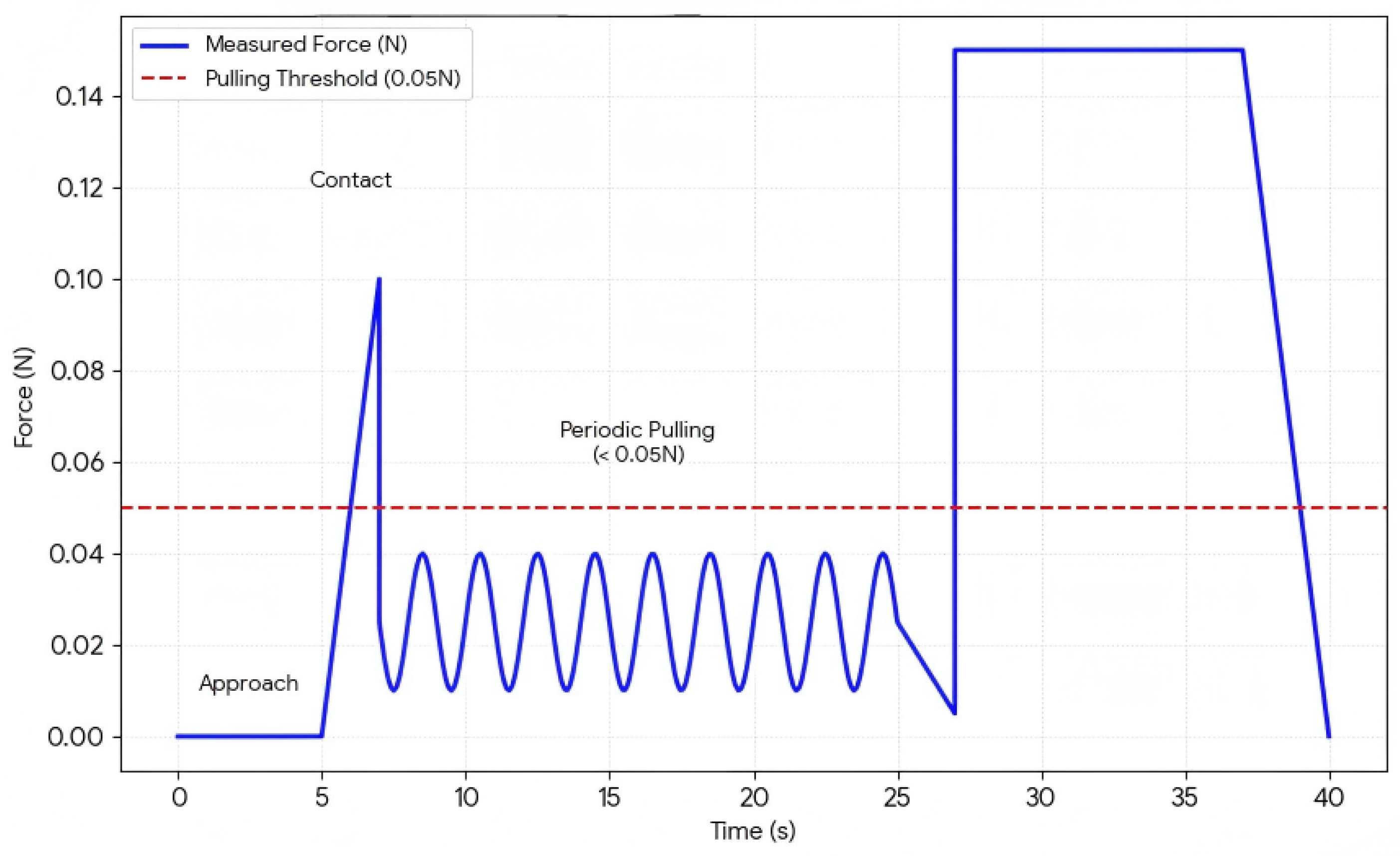
At this point, the agents will control the heater and the robotic arm to move to the target component position based on the instructions. The heater is controlled by the temperature control agent, and the robotic arm is controlled by the robotic arm control agent. During the heating process, the robotic arm applies a periodic pulling force of less than 0.05 N to the component to check the melting state of the solder. When the pressure sensor on the robotic arm detects a sudden change in pressure, it indicates the solder is fully melted. The robotic arm control agent then sends an instruction to the temperature control agent to coordinate gripping the target component and stop heating. This completes one full component removal cycle.

3.4.1. Identification and Registration Module

The Identification and Registration Module is responsible for identifying and logging the disassembled components. The robotic arm from the Collaborative Disassembly Module moves the gripped component to a dedicated camera. The registration agent performs OCR on the component image I 2 captured by the registration camera to obtain the component’s model and parameter information. This information is cross-verified with nearby components on the PCB and the knowledge base. Subsequently, the registration agent records data such as the component model, source (PCB ID), disassembly time, and thermal profile during heating into a database. Then, the registration agent controls the robotic arm to place the component into the corresponding storage bin and sends a completion message to the orchestrator agent. At this point, the system has completed the identification, disassembly, recording, and storage steps for one component. The orchestrator agent will then proceed to send the disassembly task for the next component until all components are disassembled and stored.

3.4.2. Experimental Setup

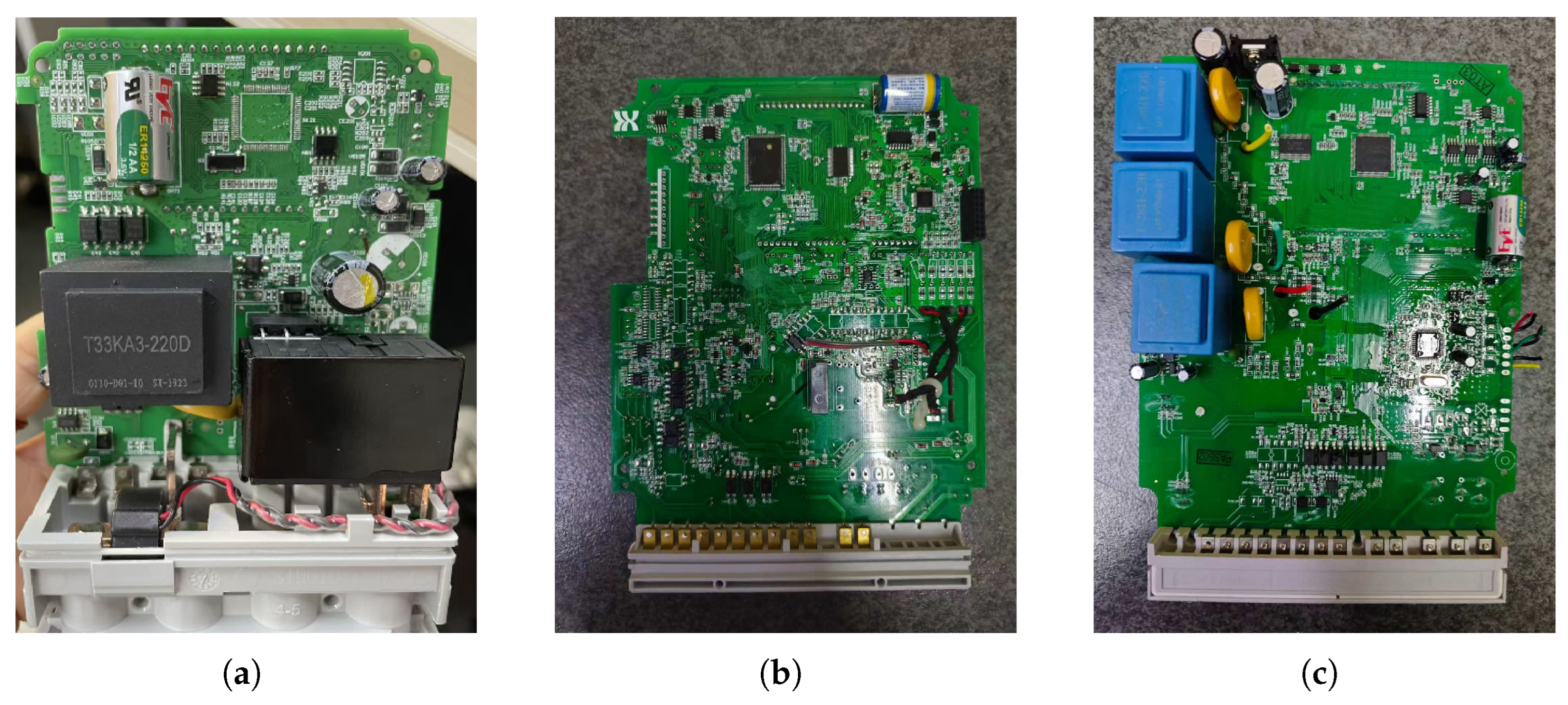
The experimental setup comprises two main parts: Knowledge Base Construction, Model Pretraining and Experimental Design. In this experiment, Gemini 2.5 [47] was employed as the model for the agents and multi-modal model via API calls. All experiments were conducted on a setup equipped with four RTX 4090 GPUs. The core framework was developed using Python 3.10. During the pre-training of the YOLOv13 model, hyperparameters such as learning rate and epochs were optimized following the protocol in Reference [48] to ensure convergence on the specific PCB component detection task. The multi-agent core and semantic understanding were implemented via Gemini 2.5 API calls, while Chroma served as the vector database for Knowledge Base management. The disassembled circuit board used in the experiment is shown in Figure 2.
Knowledge Base Construction. To build a specialized vector knowledge base for electricity meter circuit boards, we aggregated a comprehensive set of documents. This included board design documents, component datasheets, maintenance guides, historical manual disassembly records, and repair reports. These materials contain invaluable information such as component parameters, soldering techniques, locations of potential sensitive components, and historical failure points. A crucial part of this collection is the Bill of Materials (BOM), which details every component on the board with information like reference designators, model numbers, and package types. We also incorporated data parsed by experts from schematic diagrams and PCB layout files, including netlists, component coordinates, and pad dimensions.
This diverse dataset underwent a rigorous process of text extraction (from images where necessary), data cleaning, and segmentation to form a complete and structured data collection. Subsequently, we utilized the Gemini embedding API to convert the textual information into vector representations. These vectors were then stored in a vector database using Chroma. Each vector is associated with its corresponding component data, facilitating manual verification and retrieval.
Model Pretraining. Building upon the established methodology, we pre-trained the YOLOv13 model for the specific task of component detection on circuit boards, employing the same training protocol as detailed in Reference [48].
Experimental Design. To objectively and comprehensively evaluate the performance of the intelligent PCB disassembly system based on the multimodal large model and multi-agent framework proposed in this paper, we have designed a comprehensive experimental validation scheme.
The experimental sample consists of 30 different decommissioned electricity meter PCB boards of the same model. To ensure a substantial and comparable dataset across all test conditions, the experimental setup involved selecting 20 target components from each PCB board for disassembly. Detailed information regarding these target components is provided in Table 1.
Throughout the disassembly process, system logs, high-speed cameras, and precision measuring instruments were synchronized to record detailed data for each task. This meticulously collected dataset serves as the foundational raw material for all subsequent calculations and analysis, ensuring the validity and reliability of the evaluation.

4. Results

We conducted comprehensive testing and evaluation of the proposed disassembly system on the specific task of disassembling and recycling electricity meter circuit boards. The primary objective was to assess the system’s practical performance in a controlled environment, with a particular focus on its accuracy in handling individual electronic components. The evaluation protocol was designed to quantify the system’s precision at each critical stage: from the initial identification and localization of components on the board to their final successful recovery. Each component processed by the system was meticulously tracked and its outcome was recorded. The performance was rigorously measured based on the recognition and recovery accuracy for various types of electronic components. Due to limitations in experimental equipment and technology, we conducted experiments using only the proposed method.
The quantitative results of this assessment, detailing the accuracy statistics for each component type, are systematically compiled and presented in Table 2 below. Overall, the system demonstrates exceptional reliability in the initial recognition and melting phases but exhibits variable performance in the subsequent pick-up stage.

5. Discussion

As shown in Table 2, the system achieved a 100% recognition rate for Integrated Circuits (ICs), Aluminum Capacitors (ACs), and Transistors, with rates for other components all exceeding 90%. This validates the effectiveness of the strategy combining the Multimodal Large Language Model (MLLM) with the YOLOv13 algorithm in complex PCB scenarios, enabling accurate parsing of component layout and type. The slightly lower recognition rates for Resistors (90.0%) and Tantalum Capacitors (TCs, 93.3%) can be attributed to their small size, faint markings, or low contrast against the background, posing greater challenges to the vision system’s resolution.
What’s more, The system achieved a 100% melting rate for all components, which is fundamental to successful disassembly. This accomplishment stems from the effectiveness of the closed-loop temperature control strategy. As illustrated in the system architecture (Figure 1), the temperature control agent, guided by real-time feedback from the thermal imager, precisely regulates the heater output. This ensures the target solder pad reaches the melting point while preventing overheating in surrounding areas.
The significant variance in capture success rate (Capture Rate) is the most critical finding of this experiment, revealing the system’s main current bottleneck. Capture rate is highly correlated with the physical characteristics of the components (size, shape, weight, solder joint strength). Success rates are higher for larger, more robust components like Integrated Circuits (ICs, 80%) and Inductors (70%). In contrast, capture rates plummet for small, low-profile components like Tantalum Capacitors (TCs, 36.6%) and Diodes (46.7%). This bottleneck originates from the limitations of the current grasping strategy.
The significant variance in the capture success rate, as presented in Table 2, reveals a strong correlation between a component’s physical characteristics and the system’s execution efficacy. Larger components with robust geometries, such as Integrated Circuits (80%) and Inductors (70%), provide sufficient surface area for stable grasping and exhibit higher tolerance to positional offsets. Conversely, the capture rate drops significantly for components with smaller dimensions and high solder-joint-to-volume ratios, suggesting that physical scale and surface geometry are the primary determinants of grasping stability in autonomous disassembly.
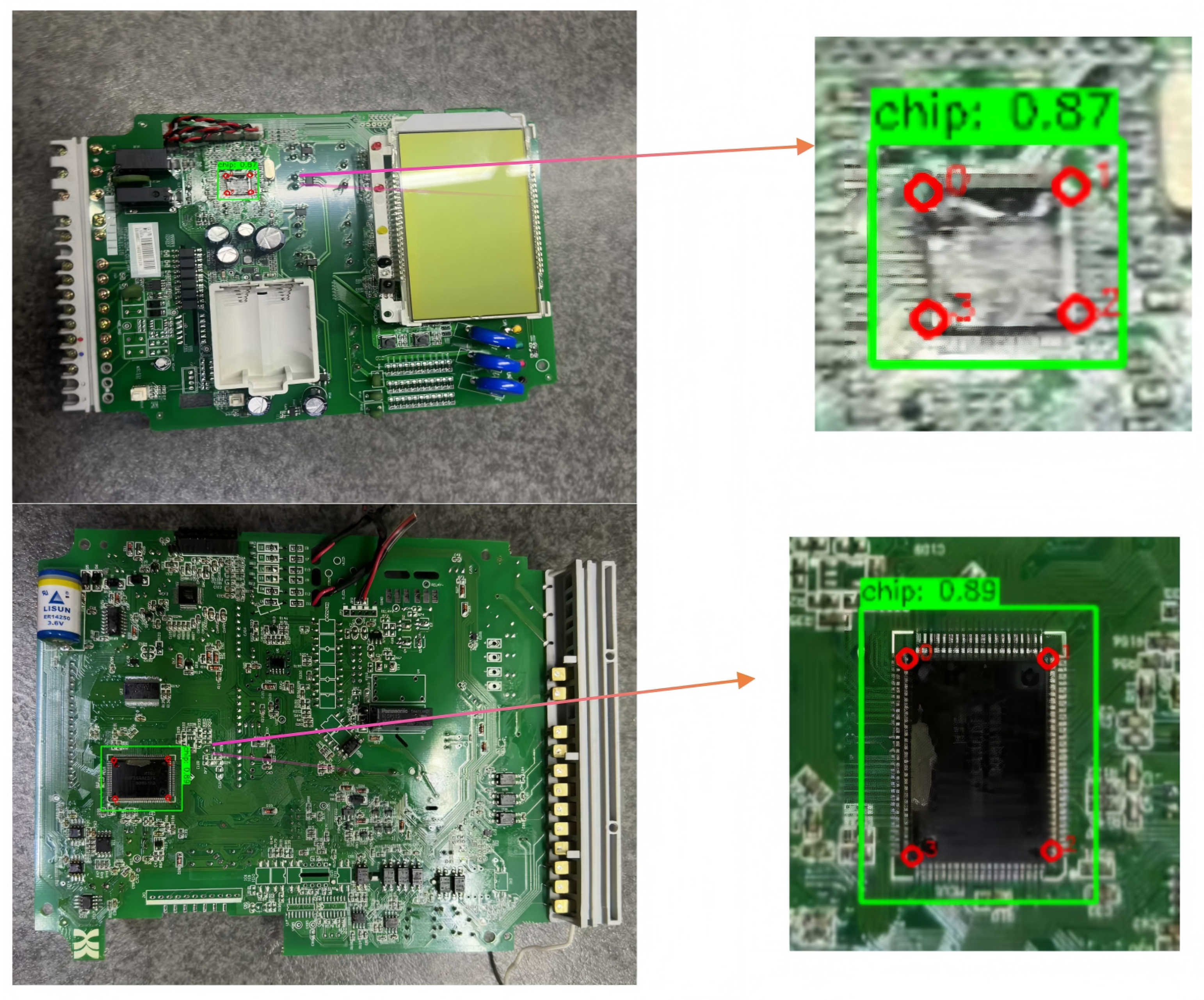
We have also added a more detailed case of the robotic arm grasping chips during the experiment. Figure 3 illustrates the moment when the robotic arm uses YOLO solely for chip recognition, while Figure 4 shows the pressure feedback curve from the pressure sensor during the grasping process.
As suggested by the force curve diagram (Figure 4), the “probing-grasping” phase is where most failures occur for miniature components. Specifically, for Tantalum Capacitors (36.6% capture rate), the failure is attributed to two primary physical factors: (1) the current end-effector lacks the ultra-fine force resolution required to counteract the surface tension and residual adhesion of molten solder without displacing the component; (2) the lack of adaptive tactile sensing makes it difficult to maintain a stable equilibrium between the pulling force and the solder’s phase-change resistance. This mechanical bottleneck indicates that super-fine force control and specialized micro-grippers are essential for handling low-profile, fragile components.
The analysis of disassembly time (Table 2) reflects a clear logical relationship between task complexity and system efficiency, governed primarily by the component’s thermal mass and pin count. Integrated Circuits (ICs) require the longest duration (168.5 s) because their high thermal mass necessitates extended heating periods to ensure simultaneous melting of all pins, combined with more intricate path planning for the dual arms. In contrast, Diodes (98.1 s) and Resistors (106.7 s), characterized by low thermal mass and simple lead structures, allow for rapid heat transfer and simplified grasping trajectories, thus optimizing the overall disassembly throughput.
The experimental results strongly validate the advantages of the proposed system in high-level semantic understanding and precise thermal control. The collaborative operation of the multimodal large model and the multi-agent framework provides a viable technological pathway for intelligent PCB disassembly. However, the lack of adaptability in the grasping phase remains the key constraint for overall system performance.

6. Conclusions

This study successfully designed and implemented an intelligent PCB component disassembly system based on a multimodal large model and a multi-agent framework. By deeply integrating high-level semantic understanding with low-level dexterous control, the system provides an innovative solution to the challenges of fine-grained recycling of electronic waste. The core contribution of this research lies in the construction of a hierarchical intelligent architecture. This architecture utilizes a multimodal large model as the “intelligent core,” endowing the system with powerful visual-language understanding and task planning capabilities, enabling it to adapt to complex scenarios involving different circuit boards and components. Furthermore, the multi-agent framework facilitates the collaborative operation of dual dexterous hands. The integration of force-feedback control and closed-loop temperature control ensures the controllability and safety of the disassembly process. Experimental results demonstrate the system’s high reliability and stability in component recognition and solder joint melting, achieving a 100% melting rate and generally high recognition rates, thereby validating the effectiveness of the proposed architecture at the perception and decision-making levels. However, the experimental results also reveal the system’s current main limitation: a relatively low success rate in picking up small, and low-profile components such as tantalum capacitors. This bottleneck clearly identifies the direction for future optimization. It is essential to focus on researching end-effector designs tailored to the geometric features of specific components and to develop more refined grasping and manipulation strategies.
In summary, this research provides a viable technological pathway for achieving efficient and non-destructive recycling of PCB components. By continuously optimizing the grasping and manipulation module and extending this intelligent system to a broader range of e-waste processing scenarios, it holds significant potential for substantially improving resource recovery efficiency and advancing the circular economy. In conclusion, our system achieved a 100% melting rate across all components and high recognition rates ranging from 90% to 100%, validating the proposed hierarchical architecture. Qualitatively, the integration of high-level cognitive intelligence with low-level dexterous control offers a viable pathway for autonomous recycling, although future work must focus on optimizing end-effector designs for miniature component retrieval. Future work will concentrate on overcoming the identified challenges to further enhance the system’s robustness and universality.

Author Contributions

Conceptualization, L.W.; methodology, L.O.; software, H.W.; validation, X.C.; formal analysis, A.W.; investigation, K.Z.; resources, A.W.; data curation, X.C.; writing original draft preparation, L.W.; writing review and editing, L.O. and H.W.; visualization, X.C.; supervision, K.Z. and A.W.: project administration, L.W.; funding acquisition, K.Z. All authors have read and agreed to the published version of the manuscript.

Funding

This paper is funded by the State Grid Zhejiang Electric Power Science and Technology Project (5211WF250006) Research on Key Component Reverse Disassembly Technology of Scrap Electric Energy Meter Circuit Boards Based on Embodied Intelligence.

Data Availability Statement

The raw data supporting the conclusions of this article will be made available by the authors on request.

Conflicts of Interest

Authors Li Wang, Liu Ouyang, Huiying Weng, Xiang Chen, and Anna Wang were employed by State Grid Zhejiang Electric Power Co., Ltd. The remaining authors declare that the research was conducted in the absence of any commercial or financial relationships that could be construed as a potential conflicts of interest.

References

  1. Adenuga, A.A.; Amos, O.D.; Olajide, O.D.; Eludoyin, A.O.; Idowu, O.O. Environmental impact and health risk assessment of potentially toxic metals emanating from different anthropogenic activities related to E-wastes. Heliyon 2022, 8, e10296. [Google Scholar] [CrossRef] [PubMed]
  2. United Nations Conference on Trade and Development. Digital Economy Report 2024: Shaping an Environmentally Sustainable and Inclusive Digital Future; Technical Report UNCTAD/DER/2024; United Nations: Geneva, Switzerland, 2024. [Google Scholar]
  3. de Oliveira Neto, J.F.; Monteiro, M.; Silva, M.M.; Miranda, R.; Santos, S.M. Household practices regarding e-waste management: A case study from Brazil. Environ. Technol. Innov. 2022, 28, 102723. [Google Scholar] [CrossRef]
  4. Abdelbasir, S.M.; Hassan, S.S.; Kamel, A.H.; El-Nasr, R.S. Status of electronic waste recycling techniques: A review. Environ. Sci. Pollut. Res. 2018, 25, 16533–16547. [Google Scholar] [CrossRef] [PubMed]
  5. Tunali, M.; Tunali, M.M.; Yenigun, O. Characterization of different types of electronic waste: Heavy metal, precious metal and rare earth element content by comparing different digestıon methods. J. Mater. Cycles Waste Manag. 2020, 23, 149–157. [Google Scholar] [CrossRef]
  6. Mudali, U.K.; Patil, M.; Saravanabhavan, R.; Saraswat, V. Review on e-waste recycling: Part I—A prospective urban mining opportunity and challenges. Trans. Indian Natl. Acad. Eng. 2021, 6, 547–568. [Google Scholar] [CrossRef]
  7. Thakur, P.; Kumar, S. Evaluation of e-waste status, management strategies, and legislations. Int. J. Environ. Sci. Technol. 2022, 19, 6957–6966. [Google Scholar] [CrossRef]
  8. Sahle-Demessie, E.; Mezgebe, B.; Dietrich, J.; Shan, Y.; Harmon, S.; Lee, C.C. Material recovery from electronic waste using pyrolysis: Emissions measurements and risk assessment. J. Environ. Chem. Eng. 2021, 9, 104943. [Google Scholar] [CrossRef]
  9. Kopacek, B. Intelligent Disassembly of components from printed circuit boards to enable re-use and more efficient recovery of critical metals. IFAC-PapersOnLine 2016, 49, 190–195. [Google Scholar] [CrossRef]
  10. Maurice, A.A.; Dinh, K.N.; Charpentier, N.M.; Brambilla, A.; Gabriel, J.C.P. Dismantling of Printed Circuit Boards Enabling Electronic Components Sorting and Their Subsequent Treatment Open Improved Elemental Sustainability Opportunities. Sustainability 2021, 13, 10357. [Google Scholar] [CrossRef]
  11. Santos, S.; Marques, L.; Neto, P. A robotic system to automate the disassembly of pcb components. In Proceedings of the Iberian Robotics Conference; Springer: Berlin/Heidelberg, Germany, 2023; pp. 456–465. [Google Scholar]
  12. Bizzo, W.A.; Figueiredo, R.A.; De Andrade, V.F. Characterization of Printed Circuit Boards for Metal and Energy Recovery after Milling and Mechanical Separation. Materials 2014, 7, 4555–4566. [Google Scholar] [CrossRef]
  13. Vakilchap, F.; Mousavi, S.M. Structural study and metal speciation assessments of waste PCBs and environmental implications: Outlooks for choosing efficient recycling routes. Waste Manag. 2022, 151, 181–194. [Google Scholar] [CrossRef]
  14. An, T.; Huang, Y.; Li, G.; He, Z.; Chen, J.; Zhang, C. Pollution profiles and health risk assessment of VOCs emitted during e-waste dismantling processes associated with different dismantling methods. Environ. Int. 2014, 73, 186–194. [Google Scholar] [CrossRef] [PubMed]
  15. Ren, Z.; Bi, X.; Huang, B.; Liu, M.; Sheng, G.; Fu, J. Hydroxylated PBDEs and brominated phenolic compounds in particulate matters emitted during recycling of waste printed circuit boards in a typical e-waste workshop of South China. Environ. Pollut. 2013, 177, 71–77. [Google Scholar] [CrossRef] [PubMed]
  16. de Oliveira Neto, J.F.; Silva, M.M.; Machado Santos, S. A mini-review of E-waste management in Brazil: Perspectives and challenges. CLEAN-Air Water 2019, 47, 1900152. [Google Scholar] [CrossRef]
  17. Vlasopoulos, D.; Mendrinou, P.; Oustadakis, P.; Kousi, P.; Stergiou, A.; Karamoutsos, S.D.; Hatzikioseyian, A.; Tsakiridis, P.E.; Remoundaki, E.; Agatzini-Leonardou, S. Hydrometallurgical recovery of silver and gold from waste printed circuit boards and treatment of the wastewater in a biofilm reactor: An integrated pilot application. J. Environ. Manag. 2023, 344, 118334. [Google Scholar] [CrossRef] [PubMed]
  18. Han, J.; Duan, C.; Lu, Q.; Jiang, H.; Fan, X.; Wen, P.; Ju, Y. Improvement of the crushing effect of waste printed circuit boards by co-heating swelling with organic solvent. J. Clean. Prod. 2019, 214, 70–78. [Google Scholar] [CrossRef]
  19. Zeng, X.; Li, J.; Xie, H.; Liu, L. A novel dismantling process of waste printed circuit boards using water-soluble ionic liquid. Chemosphere 2013, 93, 1288–1294. [Google Scholar] [CrossRef]
  20. Ghosh, B.; Ghosh, M.; Parhi, P.; Mukherjee, P.; Mishra, B. Waste printed circuit boards recycling: An extensive assessment of current status. J. Clean. Prod. 2015, 94, 5–19. [Google Scholar] [CrossRef]
  21. Huang, H.; Pan, J.; Liu, Z.; Song, S.; Liu, G. Study on disassembling approaches of electronic components mounted on PCBs. In Advances in Life Cycle Engineering for Sustainable Manufacturing Businesses, Proceedings of the 14th CIRP Conference on Life Cycle Engineering, Waseda University, Tokyo, Japan, 11–13 June 2007; Springer: Berlin/Heidelberg, Germany, 2007; pp. 263–266. [Google Scholar]
  22. Cao, Y.; Mu, T. Comprehensive investigation on the thermal stability of 66 ionic liquids by thermogravimetric analysis. Ind. Eng. Chem. Res. 2014, 53, 8651–8664. [Google Scholar] [CrossRef]
  23. Zhu, P.; Chen, Y.; Wang, L.Y.; Zhou, M. A new technology for recycling solder from waste printed circuit boards using ionic liquid. Waste Manag. Res. 2012, 30, 1222–1226. [Google Scholar] [CrossRef]
  24. Duan, H.; Hou, K.; Li, J.; Zhu, X. Examining the technology acceptance for dismantling of waste printed circuit boards in light of recycling and environmental concerns. J. Environ. Manag. 2011, 92, 392–399. [Google Scholar] [CrossRef]
  25. Park, S.; Kim, S.; Han, Y.; Park, J. Apparatus for electronic component disassembly from printed circuit board assembly in e-wastes. Int. J. Miner. Process. 2015, 144, 11–15. [Google Scholar] [CrossRef]
  26. Zhou, Y.; Qiu, K. A new technology for recycling materials from waste printed circuit boards. J. Hazard. Mater. 2010, 175, 823–828. [Google Scholar] [CrossRef]
  27. Meng, L.; Zhong, Y.; Guo, L.; Wang, Z.; Chen, K.; Guo, Z. High-temperature centrifugal separation of Cu from waste printed circuit boards. J. Clean. Prod. 2018, 199, 831–839. [Google Scholar] [CrossRef]
  28. Duan, H.; Li, J.; Liu, Y.; Yamazaki, N.; Jiang, W. Characterization and inventory of PCDD/Fs and PBDD/Fs emissions from the incineration of waste printed circuit board. Environ. Sci. Technol. 2011, 45, 6322–6328. [Google Scholar] [CrossRef] [PubMed]
  29. Wang, J.; Guo, J.; Xu, Z. An environmentally friendly technology of disassembling electronic components from waste printed circuit boards. Waste Manag. 2016, 53, 218–224. [Google Scholar] [CrossRef]
  30. Yang, C.; Tan, Q.; Liu, L.; Dong, Q.; Li, J. Recycling tin from electronic waste: A problem that needs more attention. ACS Sustain. Chem. Eng. 2017, 5, 9586–9598. [Google Scholar] [CrossRef]
  31. Vermeșan, H.; Tiuc, A.E.; Purcar, M. Advanced recovery techniques for waste materials from IT and telecommunication equipment printed circuit boards. Sustainability 2019, 12, 74. [Google Scholar] [CrossRef]
  32. Carneiro, M.F.C.; Leão, V.A. The role of sodium chloride on surface properties of chalcopyrite leached with ferric sulphate. Hydrometallurgy 2007, 87, 73–82. [Google Scholar] [CrossRef]
  33. Altinkaya, P.; Liipo, J.; Kolehmainen, E.; Haapalainen, M.; Leikola, M.; Lundström, M. Leaching of trace amounts of metals from flotation tailings in cupric chloride solutions. Mining, Metall. Explor. 2019, 36, 335–342. [Google Scholar] [CrossRef]
  34. Zhu, M.; Gong, D.; Zhao, Y.; Chen, J.; Qi, J.; Song, S. Compliant Force Control for Robots: A Survey. Mathematics 2025, 13, 2204. [Google Scholar] [CrossRef]
  35. Mendes, N.; Neto, P.; Pires, J.N.; Loureiro, A. An optimal fuzzy-PI force/motion controller to increase industrial robot autonomy. Int. J. Adv. Manuf. Technol. 2013, 68, 435–441. [Google Scholar] [CrossRef]
  36. Calanca, A.; Muradore, R.; Fiorini, P. A Review of Algorithms for Compliant Control of Stiff and Fixed-Compliance Robots. IEEE/ASME Trans. Mechatron. 2016, 21, 613–624. [Google Scholar] [CrossRef]
  37. Sadun, A.; Jalani, J.; Sukor, J. An overview of active compliance control for a robotic hand. FME Trans. 2016, 11, 11872–11876. [Google Scholar]
  38. Huang, J.; Pham, D.; Wang, Y.W.; Ji, C.; Xu, W.; Liu, Q.; Zhou, Z. A strategy for human-robot collaboration in taking products apart for remanufacture. FME Trans. 2019, 47, 731–738. [Google Scholar] [CrossRef]
  39. Su, S.; Pham, D.T.; Ji, C.; Wang, Y.; Huang, J.; Zhou, W.; Wang, H. Design of a compliant device for peg-hole separation in robotic disassembly. Int. J. Adv. Manuf. Technol. 2022, 124, 3011–3019. [Google Scholar] [CrossRef]
  40. Fantoni, G.; Santochi, M.; Dini, G.; Tracht, K.; Scholz-Reiter, B.; Fleischer, J.; Kristoffer Lien, T.; Seliger, G.; Reinhart, G.; Franke, J.; et al. Grasping devices and methods in automated production processes. CIRP Ann. 2014, 63, 679–701. [Google Scholar] [CrossRef]
  41. Ruggeri, S.; Fontana, G.; Basile, V.; Valori, M.; Fassi, I. Micro-robotic Handling Solutions for PCB (re-)Manufacturing. Procedia Manuf. 2017, 11, 441–448. [Google Scholar] [CrossRef]
  42. Noll, R.; Ambrosch, R.; Bergmann, K.; Britten, S.; Brumm, H.; Chmielarz, A.; Connemann, S.; Eschen, M.; Frank, A.; Fricke-Begemann, C.; et al. Next generation urban mining-Automated disassembly, separation and recovery of valuable materials from electronic equipment: Overview of R&D approaches and first results of the European project ADIR. In Proceedings of the EMC, ADIR, Zrenjnin, Serbia, 16–17 June 2017; p. 1. [Google Scholar]
  43. He, C.; Jin, Z.; Gu, R.; Qu, H. Automatic disassembly and recovery device for mobile phone circuit board CPU based on machine vision. J. Phys. Conf. Ser. 2020, 1684, 012137. [Google Scholar] [CrossRef]
  44. Li, J.; Zhang, X.; Feng, P. Detection Method of End-of-Life Mobile Phone Components Based on Image Processing. Sustainability 2022, 14, 12915. [Google Scholar] [CrossRef]
  45. Lei, M.; Li, S.; Wu, Y.; Hu, H.; Zhou, Y.; Zheng, X.; Ding, G.; Du, S.; Wu, Z.; Gao, Y. YOLOv13: Real-Time Object Detection with Hypergraph-Enhanced Adaptive Visual Perception. arXiv 2025, arXiv:2506.17733. [Google Scholar]
  46. Jeong, S.; Baek, J.; Cho, S.; Hwang, S.J.; Park, J. Adaptive-RAG: Learning to Adapt Retrieval-Augmented Large Language Models through Question Complexity. arXiv 2024, arXiv:2403.14403. [Google Scholar]
  47. DeepMind, G. Gemini API Documentation. Technical Report, Google. 2024. Available online: https://ai.google.dev/gemini-api/docs (accessed on 10 November 2025).
  48. Mohsin, M.; Rovetta, S.; Masulli, F.; Cabri, A. Automated Disassembly of Waste Printed Circuit Boards: The Role of Edge Computing and IoT. Computers 2025, 14, 62. [Google Scholar] [CrossRef]
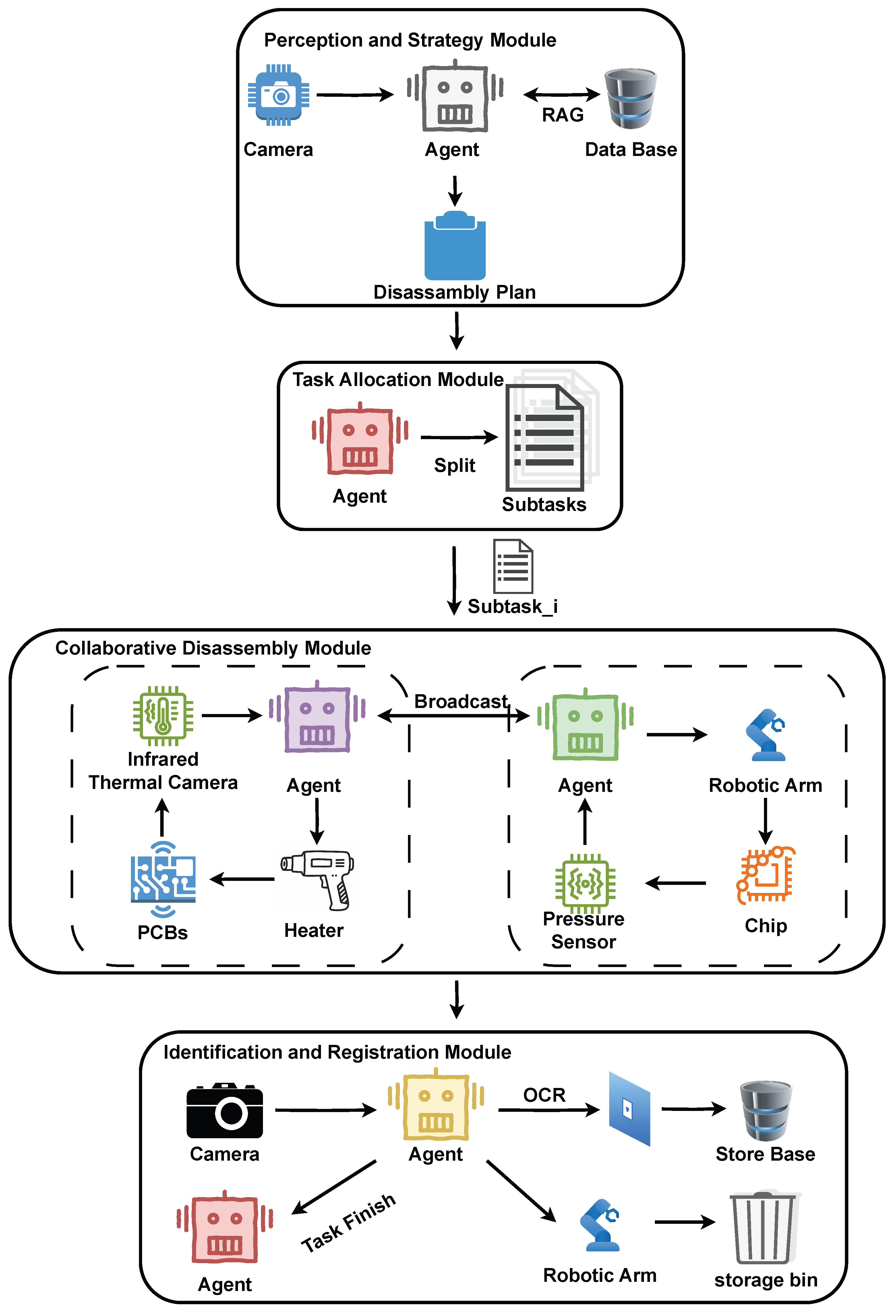
Figure 1. Architectural diagram of the disassembly strategy for electricity meter circuit boards proposed in this paper, composed of the Perception and Strategy Module, Task Allocation Module, Collaborative Disassembly Module, and Identification and Registration Module.
Processes 14 00227 g001
Figure 2. Schematic diagrams of the different types of electricity meter circuit boards used in the experiment. The circuit boards of different models vary significantly in board size, electronic component layout, and device types. (a) Single-phase electricity meter (b) Single-phase electricity meter (c) Three-phase electricity meter.
Processes 14 00227 g002
Figure 3. Real-world cases of PCB component recognition and localization utilizing the integrated vision-language framework.
Processes 14 00227 g003
Figure 4. Schematic diagram of the pressure sensor feedback curve during the robotic arm’s chip grasping process.
Processes 14 00227 g004
Table 1. Description of the target electronic components selected for disassembly in the experiment. These components exhibit significant variations in size, shape, function, and disassembly difficulty, thereby demonstrating the comprehensiveness and generalizability of the experimental data selection.
ComponentTypeReason
Integrated circuit (IC)CompositeAn integrated circuit (IC) is fabricated on a semiconductor substrate, typically silicon, which is doped with impurities to form p-n junctions. These components are interconnected via metallic pathways, usually made from alloys. The packaging material may consist of plastic or ceramic.
Aluminum Capacitor (AC)CompositeThis component comprises an aluminum foil and an aluminum oxide coating, along with a liquid or gel electrolyte. These distinct materials are physically combined to enable its function.
Tantalum Capacitor (TC)CompositeIt is composed of tantalum powder and an electrolyte. The tantalum powder forms a porous structure with a large surface area, coated with an oxide layer that acts as a dielectric; this structure is physically integrated with the electrolyte.
DiodeAlloy/CompositeIt is constructed from semiconductor materials, such as silicon or germanium, which are doped with impurities and feature metal contacts that may be alloys. The use of doped semiconductors and metallic connections is essential to its function.
TransistorAlloy/CompositeLike diodes, transistors are manufactured from semiconductor materials doped with impurities and equipped with metal (alloy) contacts. These materials physically influence the flow of electrons.
ResistorCompositeThis component can be produced using a carbon film, metal film, or metal oxide film coated onto an insulating substrate. The body and leads employ various materials, which are physically connected to form the resistive device.
InductorCompositeAn inductor consists of a copper coil wound around a magnetic core, which may be air, ferrite, or an iron alloy. The coil and core are physically separate but interact magnetically.
Table 2. Experimental Results for the Disassembly of Various Components Achieved by the Proposed Framework.
ComponentRecognition Rate (%)Capture Rate (%)Melting Rate (%)Average Time Consumption (s)
IC10080100168.5
AC10070100112.3
TC93.336.6100109.6
Diode96.746.710098.1
Transistor10066.7100100.4
Resistor90.056.7100106.7
Inductor93.370100124.0
Disclaimer/Publisher’s Note: The statements, opinions and data contained in all publications are solely those of the individual author(s) and contributor(s) and not of MDPI and/or the editor(s). MDPI and/or the editor(s) disclaim responsibility for any injury to people or property resulting from any ideas, methods, instructions or products referred to in the content.