Article

Effects of Water Diversion Projects on Hydrodynamics and Water Quality in Shallow Lakes: A Case Study of Chaohu Lake, China


1
State Key Laboratory of Water Cycle and Water Security, China Institute of Water Resources and Hydropower Research, Beijing 100048, China
2
Anhui Survey & Design Institute of Water Resources & Hydropower Co., Ltd., Hefei 230088, China
3
Beijing IWHR Corporation, Beijing 100044, China
4
China Power Construction Group Northwest Engineering Co., Ltd., Xi’an 710065, China
5
Shandong Survey and Design Institute of Water Conservancy Co., Ltd., Jinan 250013, China
6
China South-to-North Water Diversion Group Water Network Development Research Co., Ltd., Beijing 100036, China
*
Authors to whom correspondence should be addressed.
Processes 2026, 14(2), 193; https://doi.org/10.3390/pr14020193
Submission received: 17 November 2025 / Revised: 18 December 2025 / Accepted: 31 December 2025 / Published: 6 January 2026
(This article belongs to the Special Issue Advances in Hydrodynamics, Pollution and Bioavailable Transfers)

Abstract

Water diversion projects are a crucial measure for addressing eutrophication in shallow lakes worldwide. However, the impacts of different water diversion operation schemes on lake hydrodynamics and water quality can vary significantly, necessitating targeted, refined simulation assessments. This study focuses on Chaohu Lake, one of China’s most eutrophic lakes, and uses a mesoscale meteorological model coupled with a three-dimensional hydrodynamic and water quality model to conduct detailed numerical simulations. The study evaluates the effects of three water diversion operation scenarios and three subsurface flow guide dam scenarios during the ecological water replenishment period in Chaohu Lake from September to November. The simulation results indicate that all three water diversion operation scenarios improve the hydrodynamic conditions of Chaohu Lake, but there are significant differences in their effects on pollutant reduction in the lake. The retention of chemical oxygen demand (COD) in the water ranges from −36,812.1 to 472.8 tons, total nitrogen (TN) retention ranges from −22,637.2 to 3 tons, total phosphorus (TP) retention ranges from −4974 to 10.7 tons, and chlorophyll-a (Chl-a) retention ranges from −310.8 to −3.3 tons. Among the three subsurface flow guide dam schemes, all can promote the outflow of pollutants from Chaohu Lake. The combined subsurface flow guide dam scheme is the most effective, enabling an approximately 7.4% increase in pollutant export. The study demonstrates that diverting Huaihe River water through Paihe into Chaohu Lake, along with adding a combined subsurface flow guide dam in the West Lake area, can significantly improve the hydrodynamics and water quality in the West Lake area. This research provides essential technical support for the future operation of the Yangtze-to-Huaihe River Water Diversion Project and the layout of subsurface flow guide dams in Chaohu Lake, offering valuable insights for the ecological management of other shallow lakes.

1. Introduction

Material and energy cycling processes in natural lake ecosystems have been altered in relation to human activities, climate change, and dam dispatch, and this has disrupted the ecological balance of lakes and induced eutrophication [1]. Abundant nutrients deposited in lakes combined with suitable hydrological and meteorological conditions leads to the massive proliferation of algae and algal blooms [2,3]. The growth and decline of lake algal blooms consume large amounts of dissolved oxygen within the water, which affects the normal growth of other aquatic organisms. In addition, algae growth produces harmful secondary metabolites that threaten human health [4].
Large shallow lakes are typically characterised by wind-driven currents, which are hydrodynamic processes initiated when wind stress acts on the lake’s surface water layer [5]. The vertical flow structure of wind-induced currents in shallow lakes originates from the shear stress generated by surface water movement under the influence of viscous forces. This subsequently drives the motion of mid- and bottom-layer waters. However, due to bottom friction and basin topography, the velocity and direction of flow in the bottom layers often differ from those in the upper and middle layers [6]. Moreover, under persistent and stable wind conditions, water accumulation typically occurs on the downwind side, leading to a sloping water surface across the lake. This creates a pressure gradient force directed from high to low water levels, which induces return flows in the vertical direction to maintain hydrodynamic and energetic balance within the lake system [7].
The hydrodynamic characteristics of vertical flow fields in shallow lakes play a critical role in the transport and transformation of substances and energy within the lake system. Waves, turbulence, and large-scale circulation processes in the water column drive the resuspension and redistribution of bottom sediments, nutrients, and algae [8]. In shallower lakes, surface waves exert greater shear stress on the lakebed, intensifying sediment disturbance [9], while vertical flow velocities can facilitate the settling of particulate matter under turbulent conditions [10]. Moreover, vertical flow dynamics are important environmental factors influencing algal population growth, colony fragmentation, morphological changes, and vertical migration [11]. When vertical turbulence is lower than the algal resistance threshold, algae tend to remain suspended and form aggregates; conversely, when turbulence exceeds this threshold, it induces vertical migration of algal cells [12]. In eutrophic shallow lakes, vertical flow fields also affect the vertical distribution of nitrogen and phosphorus. Studies of Lake Taihu in China have shown that when summer wind speeds fall below 3 m/s, transient thermal stratification can occur. Such stratification influences dissolved oxygen concentration, which in turn affects phosphorus adsorption and release from sediments. Additionally, increasing water depth is associated with decreasing concentrations of total nitrogen and total phosphorus in the water column [13].
Due to the complex spatiotemporal distribution of hydrodynamics and water quality in shallow lakes, many lake management authorities have been attempting to address the issue of lake eutrophication through water diversion projects [14,15,16]. Most studies suggest that water diversion projects can alter the hydrodynamic conditions of the lake, promote the outward transport of pollutants, and have a positive impact on the lake [17,18]. However, some studies argue that the nutrient load from external water sources is high, leading to only short-term positive effects on lake algae [19], and even causing ecological degradation in certain lake areas [20,21]. Additionally, the construction cost of water diversion projects is high, and different operational schemes have varying impacts on the hydrodynamics and water quality of the lake [22,23,24]. Therefore, it is crucial to comprehensively understand the effects of water diversion projects on the hydrodynamics and water quality of lakes.
Chaohu Lake in China is a typical shallow lake characterized by wind-driven flow. Eutrophication and algal blooms have long been challenging issues for its management. This study focuses on Chaohu Lake, using a three-dimensional hydrodynamic and water quality model to simulate the impact of different operating conditions of the Yangtze River to Huaihe River Water Diversion Project (YHWTP) on the hydrodynamics and water quality of the lake. Therefore, the objectives of this study are: (1) to conduct a refined numerical simulation of the lake-atmosphere coupling of Chaohu Lake using a mesoscale meteorological model and a three-dimensional hydrodynamic and water quality model; (2) to compare and analyze the effects of external water diversion and drainage projects on the hydrodynamics and water quality of Chaohu Lake, and to propose a layout scheme for the installation of subsurface flow guide dams in the western part of the lake; (3) to evaluate the impact of external water diversion and internal subsurface flow guide dams on pollutant transport in the West Lake area. This study quantitatively assesses the effectiveness of the Chaohu water diversion project, providing technical support for the ecological environmental management of Chaohu Lake and offering insights for similar water diversion projects in other large shallow lakes.

2. Materials and Methods

2.1. Study Area and Data

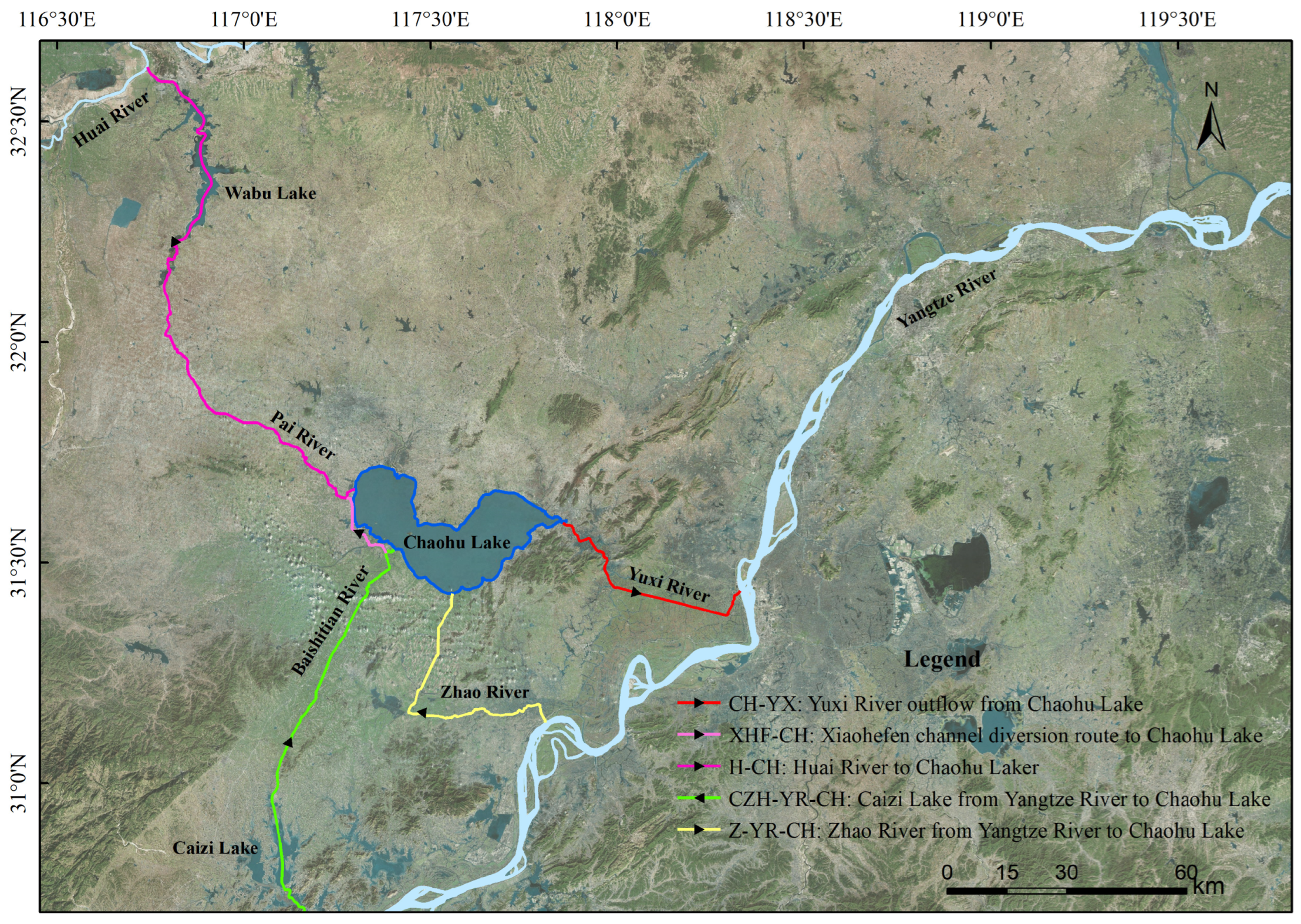
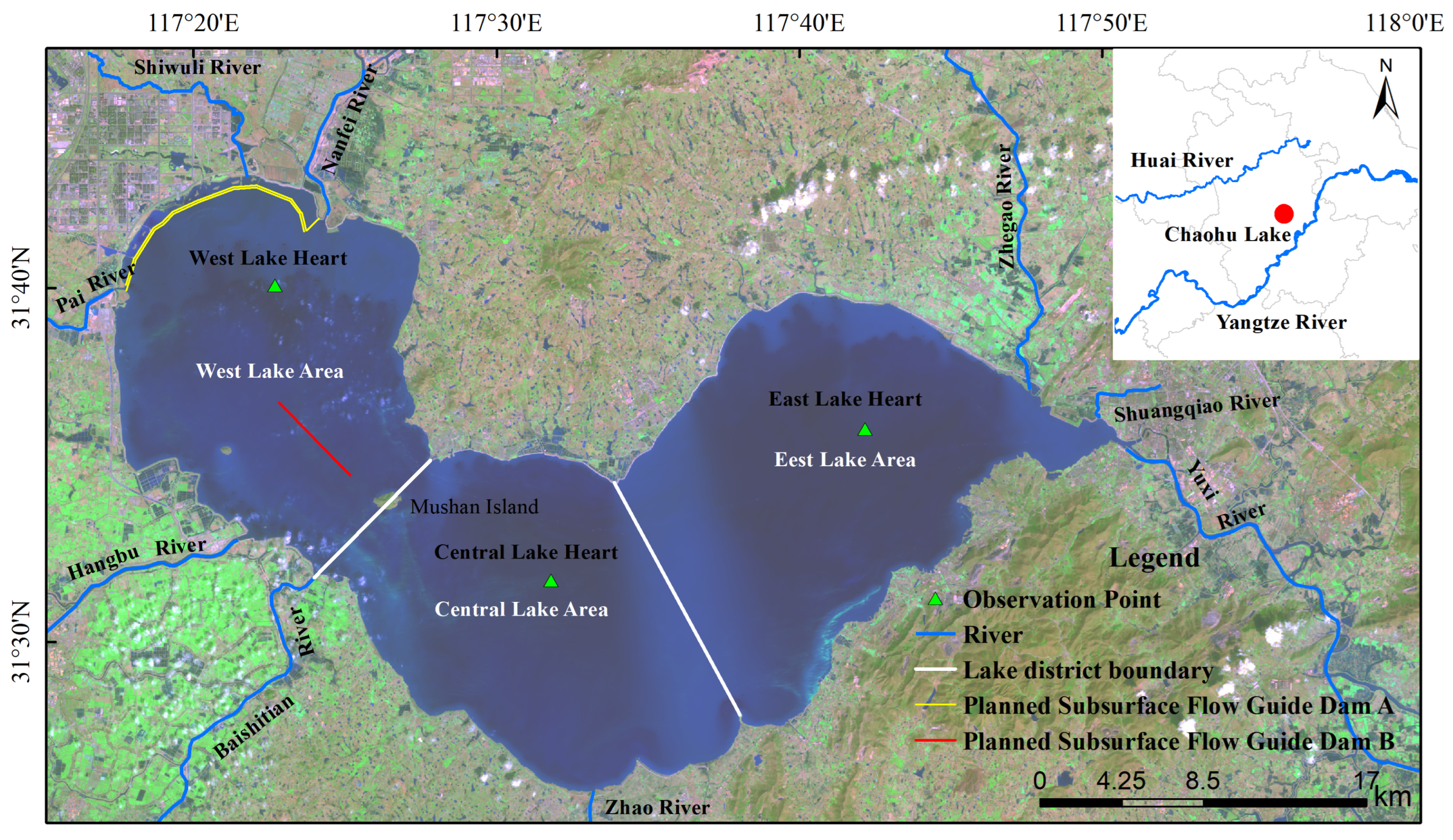
This study focuses on Lake Chaohu, one of China’s five largest freshwater lakes. It is located in central Anhui Province, bordered by the lower reaches of the Yangtze River to the east and the Dabie Mountain foothills to the west. Several major tributaries—including the Nanfei River, Shiwuli River, Pai River, Hangbu River, Baishitian River, Zhao River, Zhegao River, and Shuangqiao River—flow into the lake from the south, north, and west. Water exits the lake through the Chaohu Sluice on the eastern side and subsequently flows into the Yangtze River via the Yuxi River (Figure 1). The lake experiences seasonally variable wind directions, with an annual average wind speed of 2.41 m/s. The mean water depth is approximately 3 m, and at the normal storage level of 6.1 m, the lake surface area covers about 755 km2. Lake Chaohu is a typical large shallow lake, where wind-driven circulation constitutes the primary hydrodynamic feature.
To investigate wind-induced variations in Lake Chaohu’s flow field, we employed the synchronized wind and flow field monitoring equipment deployed by the Chaohu Basin Management Bureau at the West Lake Center, Middle Lake Center, and East Lake Center (Figure 1). The monitoring data collected from January to March 2022 at these three locations represent the wind and flow field characteristics of their respective regions: West Lake, Central Lake, and East Lake. Vertical flow measurements were obtained using the ADCP (Acoustic Doppler Current Profiler), a shallow-water instrument developed in the United States. Installed on the lakebed, the ADCP transmits acoustic signals upward through the water column, recording flow direction, velocity, and water depth across vertical layers at 0.4-m intervals, with data logged every minute. Simultaneously, meteorological conditions were monitored using the Vaisala WXT-536 multi-parameter sensor (Finland), which records atmospheric pressure, air temperature, relative humidity, rainfall, wind speed, and wind direction, with a data acquisition interval of five minutes.

2.2. Water Diversion Routes of the YHWTP

According to the layout of YHWTP and the distribution of the Chaohu Lake water system, the water sources available for water diversion and drainage in Chaohu Lake include three types: the Yangtze River, Chaohu Lake, and the Huaihe River. The water diversion routes flowing into Chaohu Lake include the Zhao River Yangtze diversion route to Chaohu Lake (Z-YR-CH), the Caizi Lake Yangtze diversion route to Chaohu Lake (CZH-YR-CH), the Xiaohefen channel diversion route to Chaohu Lake (XHF-CH), and the Huai River diversion route to Chaohu Lake (H-CH). The only outflow channel from Chaohu Lake is through the Chaohu Gate, where water flows from the Yuxi River into the Yangtze River (CH-YX), as shown in Figure 2.

2.3. Construction of the Hydrodynamic and Water Quality Model for Chaohu Lake

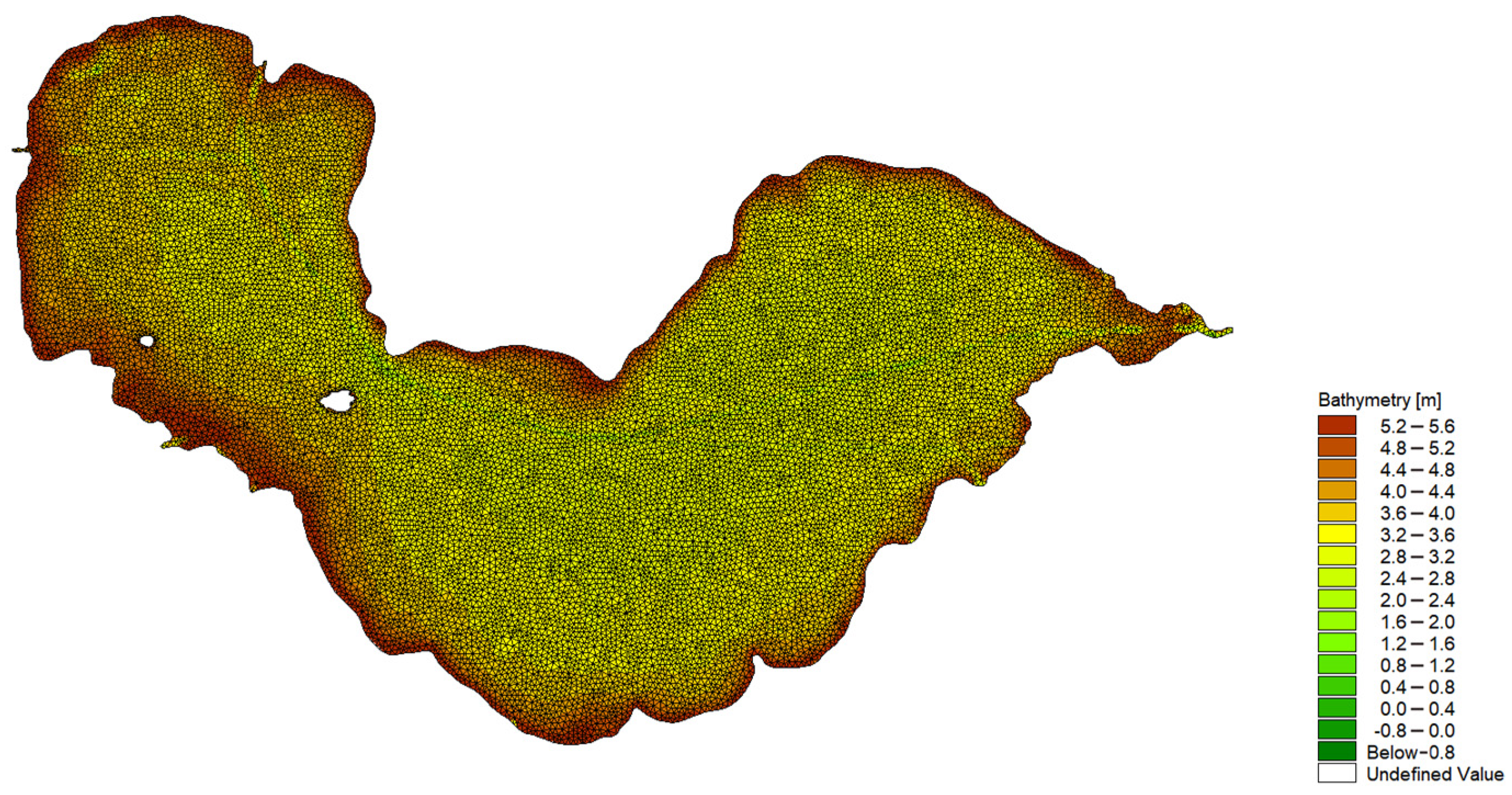
The hydrodynamic model is constructed using the MIKE 3 Flow Model, and based on this, water quality model is built using the ECO Lab model. The horizontal grid of the hydrodynamic model uses a 250 m × 250 m triangular grid, consisting of a total of 28,592 horizontal grid cells (Figure 3). A uniform sigma grid is divided into five layers for vertical discretization. The model’s topography uses the underwater bathymetry measured in Chaohu Lake in 2018. The actual river inflow and outflow, water quality, rainfall, and evaporation data in the model are all sourced from measurements made in 2022. The wind field data used in the model are hourly outputs from the Weather Research and Forecasting (WRF) model for 2022. The boundary conditions for the WRF model and the simulation results are provided in the Supplementary Material (Text S1). The water quality validation data used are daily measurements from West Lake Center and East Lake Center from January to March 2022. The hydrodynamic validation data used are daily surface velocity measurements from West Lake Center, Central Lake, and East Lake Center from January to March 2022. The initial water level for the hydrodynamic model is set to 7.47 m, with an initial flow velocity of 0.09 m/s (the measured velocity at the lake center). The initial water quality data are derived from the concentration values of various water quality indicators measured the previous day. All initial data are sourced from measurements taken on 1 January 2022. Other model parameters are shown in Table 1, and the model accuracy assessment is detailed in the Supplementary Material (Text S1).
Based on the hydrodynamic–water quality model calibrated and validated using the 2022 observations, we conducted scenario simulations. Guided by the channel design discharges in the YHWTP planning and design scheme and the adjustable water resources from the Huai River and the Yangtze River, we developed four integrated water-quantity and water-quality schemes for the Lake Chaohu diversion–drainage plan (Table 2).
Scheme 1 (A1): Under the current condition without water diversion, the inflow and outflow of the lake follow the streamflow data of each tributary in 2019.
Scheme 2 (A2): Water is diverted from the Yangtze River through Caizi Lake (at a flow rate of 150 m3/s) from Baishitianhekou, and through the West Zhaohe River (at a flow rate of 150 m3/s) into Chaohu Lake. The total inflow to the lake is 300 m3/s, and the outflow from Chaohu Lake via the Yuxi River is also 300 m3/s.
Scheme 3 (A3): Water is diverted from Wabu Lake or from the Huaihe River with a discharge of 300 m3/s into Chaohu Lake through the Paihekou. The outflow from Chaohu Lake via the Yuxi River is 300 m3/s.
Scheme 4 (A4): Water is diverted from Chaohu Lake through the Xiaohefen water diversion route, with a flow rate of 300 m3/s, from Baishitianhekou. The water enters the lake through the Paihekou via the Xiaohefen route, and the outflow from the Chaohu Gate follows the 2019 outflow data.
For the river flow and water volume entering the lake, the non-flood period flow data from the average water year is used, specifically from September to November 2019. Except for Scheme 4, which involves the self-circulation of Chaohu Lake’s water, the other three schemes introduce approximately 2.36 billion m3 of external water, with the same volume of water exiting Chaohu Lake via the Yuxi River. The water quality of the inflowing rivers follows the data from September to November 2019, and the water quality of the three water sources is based on the data from September to November 2019, including the Yangtze River at the Anqing Qianjiangkou section, Wabu Lake, and the southern Zhaohe inlet area of Chaohu Lake. The initial water level of Chaohu Lake is set at 7.11 m.
This study uses Hydraulic Retention Time (HRT) to assess the impact of YHWTP on the hydrodynamics of Chaohu Lake’s flow field. HRT is a commonly used indicator for evaluating the rate of material exchange in lakes under convective diffusion processes. It can be conceptually understood as the time required for the concentration of non-degradable substances in the lake to be diluted to 37% of its original concentration by inflowing water that does not contain the substance, under the influence of lake inflows and outflows [25,26].

3. Results and Discussion

3.1. Hydrodynamic Evolution of Chaohu Lake Under the Regulation of YHWTP

3.1.1. Flow Velocity at Typical Representative Locations

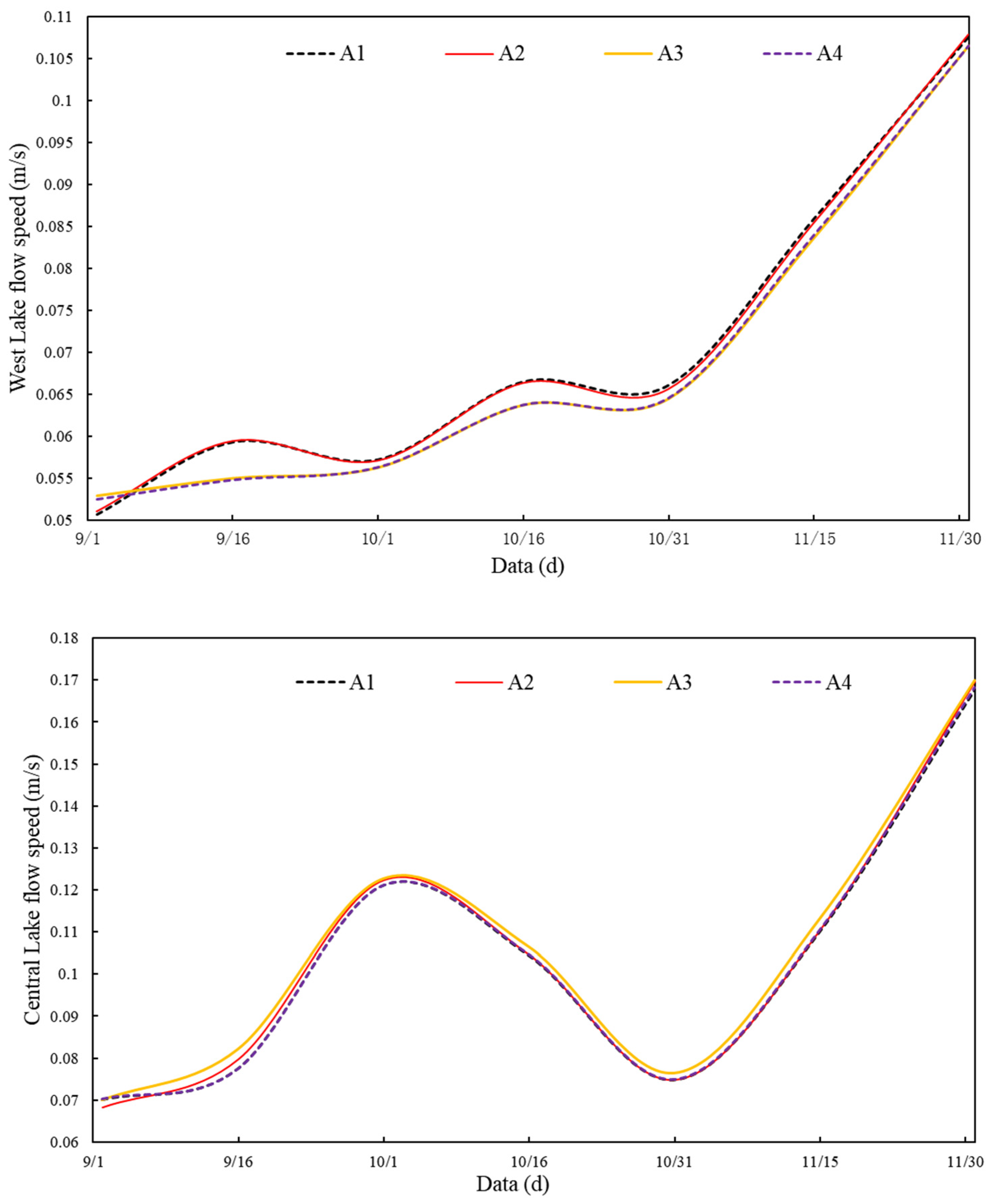
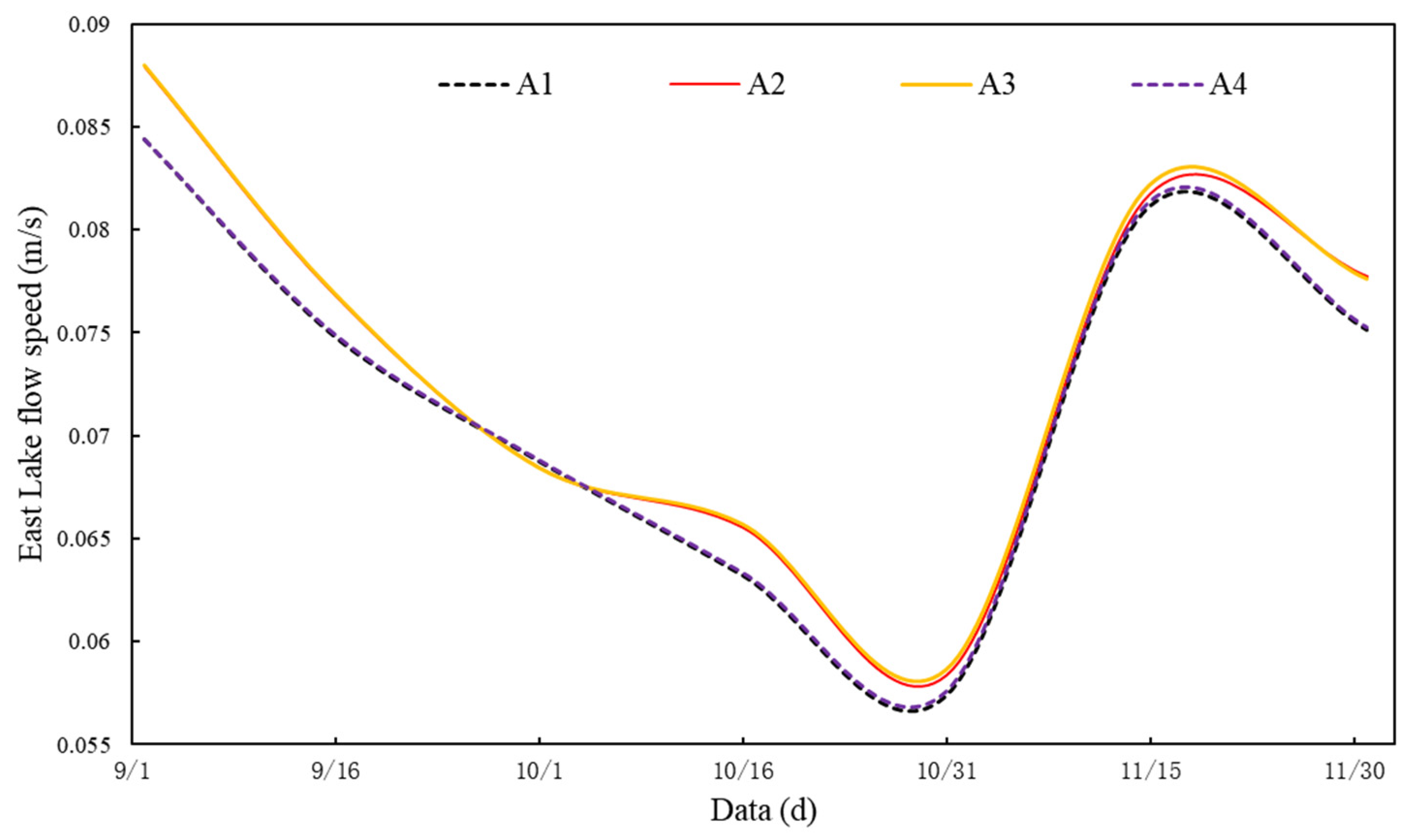
To visually demonstrate the variation in flow velocity across the lake area, typical representative points at the West Lake Center, Central Lake Center, and East Lake Center were selected (Figure 4). Regarding the flow velocity changes at the West Lake Center, compared to the A1 scenario, the impacts of the A1 and A2 scenarios on flow velocity are almost identical. In contrast, the A3 and A4 scenarios result in a 2.9% decrease in flow velocity at the West Lake Center. At the Central Lake Center, compared to the A1 scenario, the A3 scenario has the greatest impact on flow velocity, increasing it by 2.1%. The A2 scenario has a secondary effect, increasing the flow velocity by 0.5%, while the A4 scenario has the smallest effect, increasing the flow velocity by 0.2%. At the East Lake Center, compared to the A1 scenario, the A3 scenario has the greatest impact, increasing the flow velocity by 2.5%. The A2 scenario follows with a 2.3% increase, while the A4 scenario has the smallest impact, with a 0.2% increase in flow velocity.

3.1.2. Flow Velocity at Typical Cross-Sections

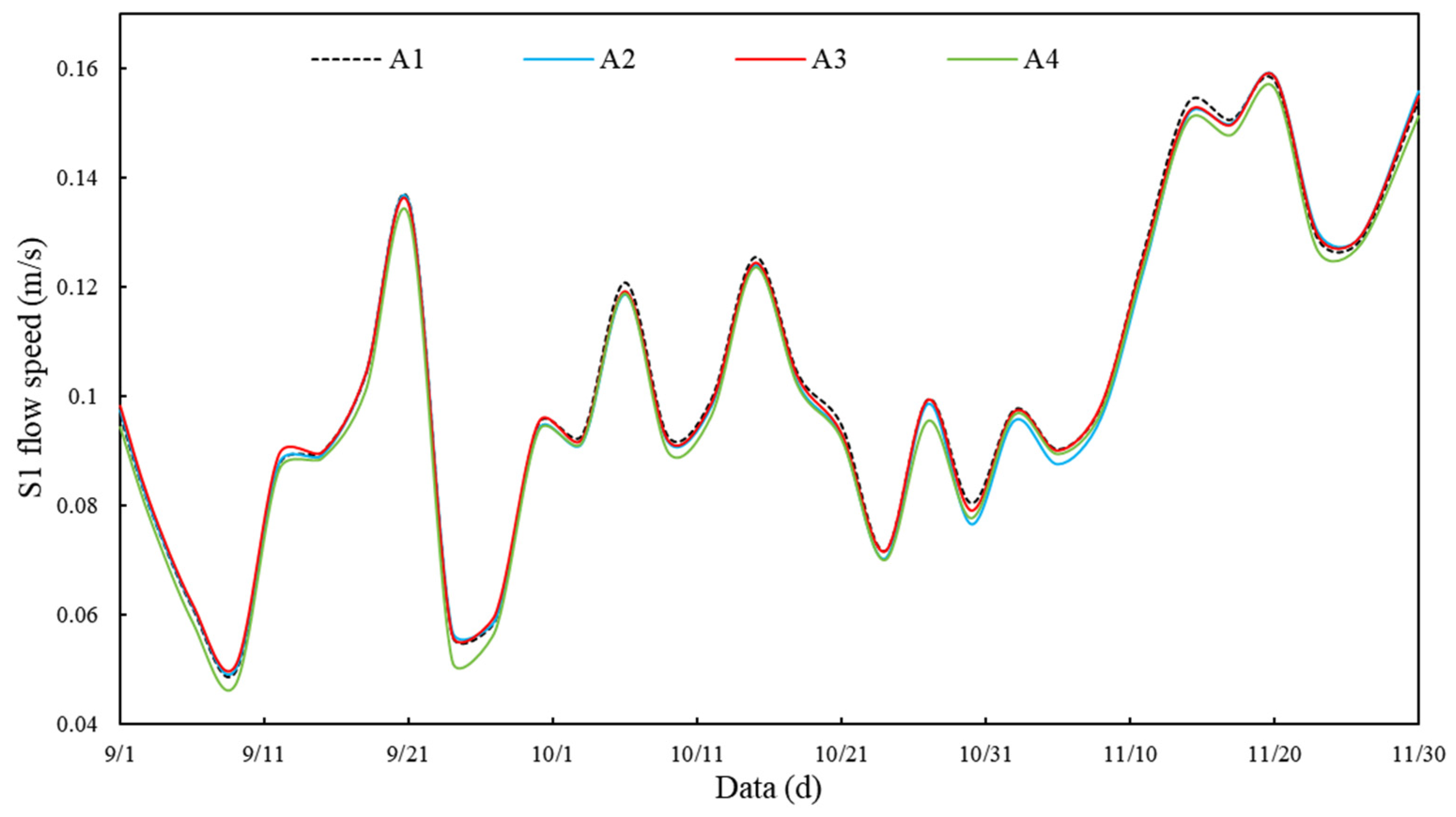
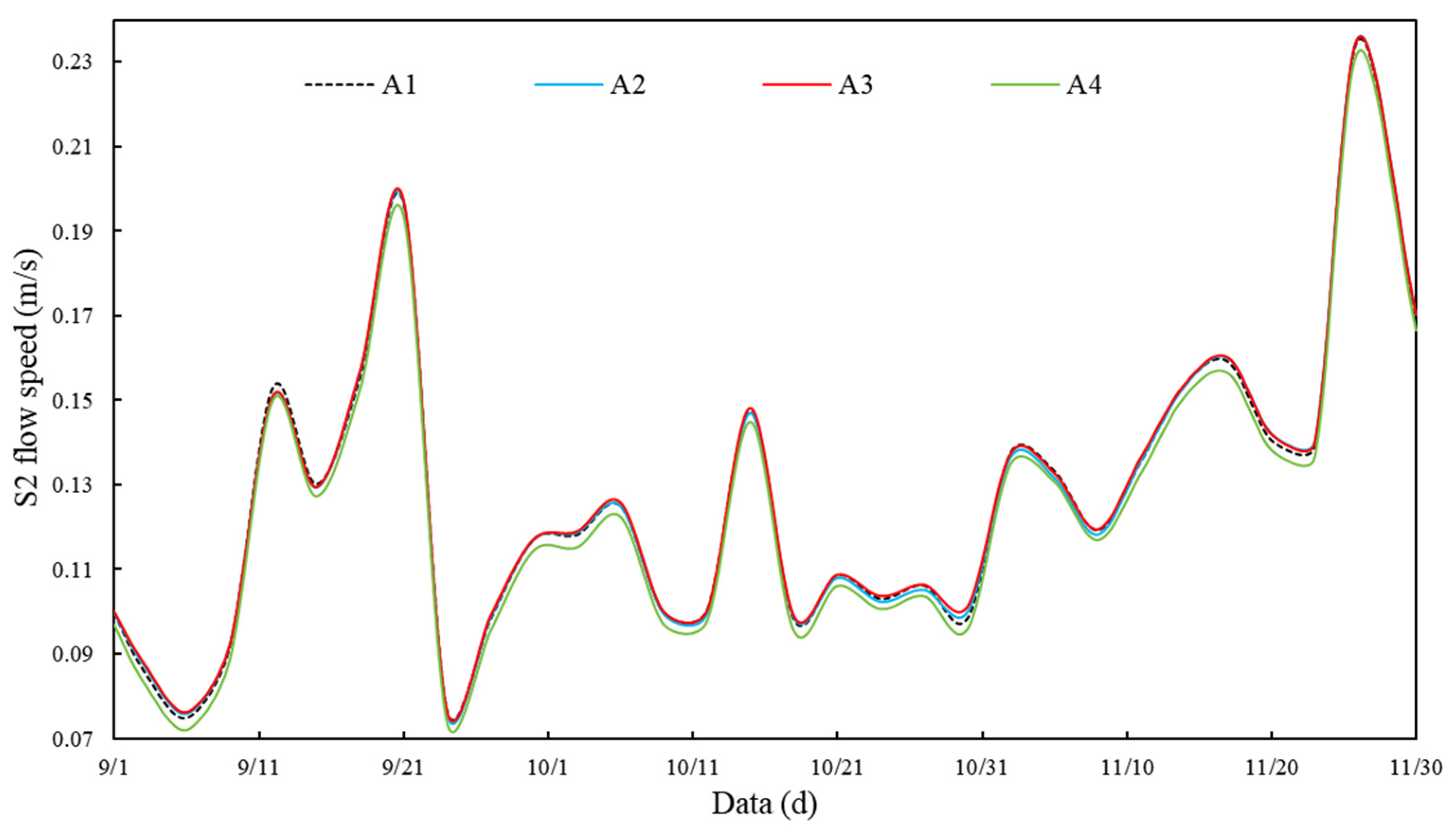
The partitioned cross-section S1 in the West Lake area and Central Lake area, as well as the partitioned cross-section S2 in the Central Lake area and East Lake area, were selected to calculate the variation in the three-day average flow velocity at these cross-sections. As shown in Figure 5, at the cross-section S1, compared to the A1 scenario, the A3 scenario has a limited effect on improving the flow velocity in the West Lake area, while the A2 and A4 scenarios show almost no improvement in flow velocity in the West Lake area during most periods. At the cross-section S2, compared to the A1 scenario, the A2 and A3 scenarios also have limited effects on improving flow velocity in the West Lake area, while the A4 scenario shows no improvement in flow velocity during most periods.

3.1.3. Hydraulic Retention Time

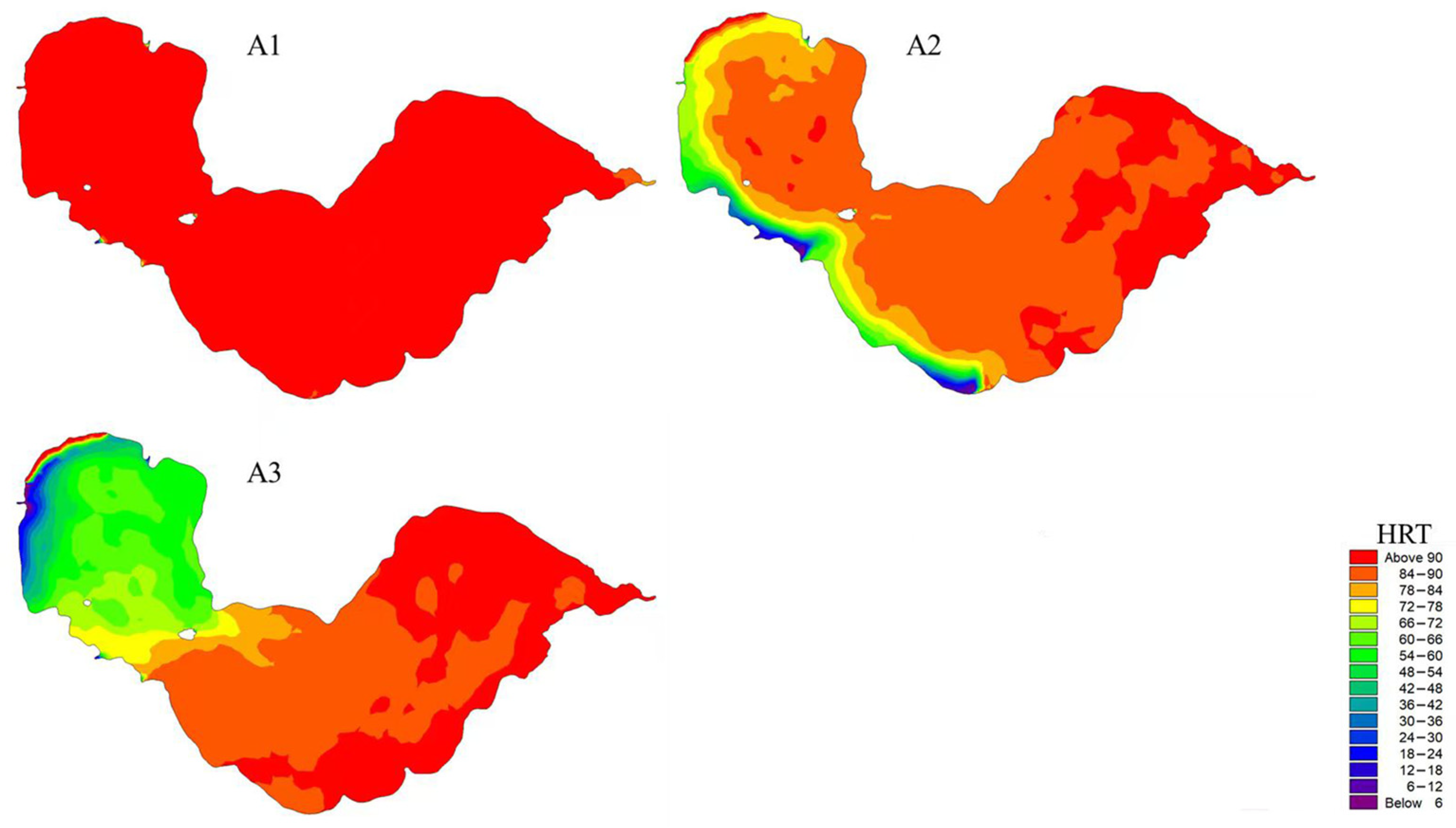
As shown in Figure 6, during the simulated 3-month period of 91 days, the A1 scenario has only 5.5% of the lake area with an HRT less than 91 days. In the A2 scenario, 84.2% of the lake area has an HRT less than 91 days, with 11.0% of the area having a retention time less than 70 days, 3.5% having a retention time less than 50 days, and 2.0% having a retention time less than 30 days. In the A3 scenario, 74.5% of the lake area has an HRT less than 91 days, with 30.9% of the area having a retention time less than 70 days, 11.3% having a retention time less than 50 days, and 4.2% having a retention time less than 30 days. The A4 scenario corresponds to the self-circulation of the lake water body, with no HRT. In summary, based on the changes in flow velocity and HRT under different scenarios, the A2, A3, and A4 scenarios can all improve the hydrodynamic conditions of the lake area. Among these, the A3 scenario provides the best improvement in the hydrodynamic conditions of the western half of the lake. Compared with Lake Taihu (China), a study indicates that when a water-diversion project increases the lake inflow from 7.0 × 10⁹ m3 to 1.1 × 10¹⁰ m3, the lake’s hydraulic retention time can be reduced from 300 days to approximately 170 days [27]. For Poyang Lake (China), research suggests that after the construction of a sluice (dam) at the lake outlet (Hukou), the hydraulic retention time in the lake region would be prolonged by 16–29% [28].

3.2. Water Quality Evolution of Chaohu Lake Under the Regulation of YHWTP

3.2.1. Distribution of COD

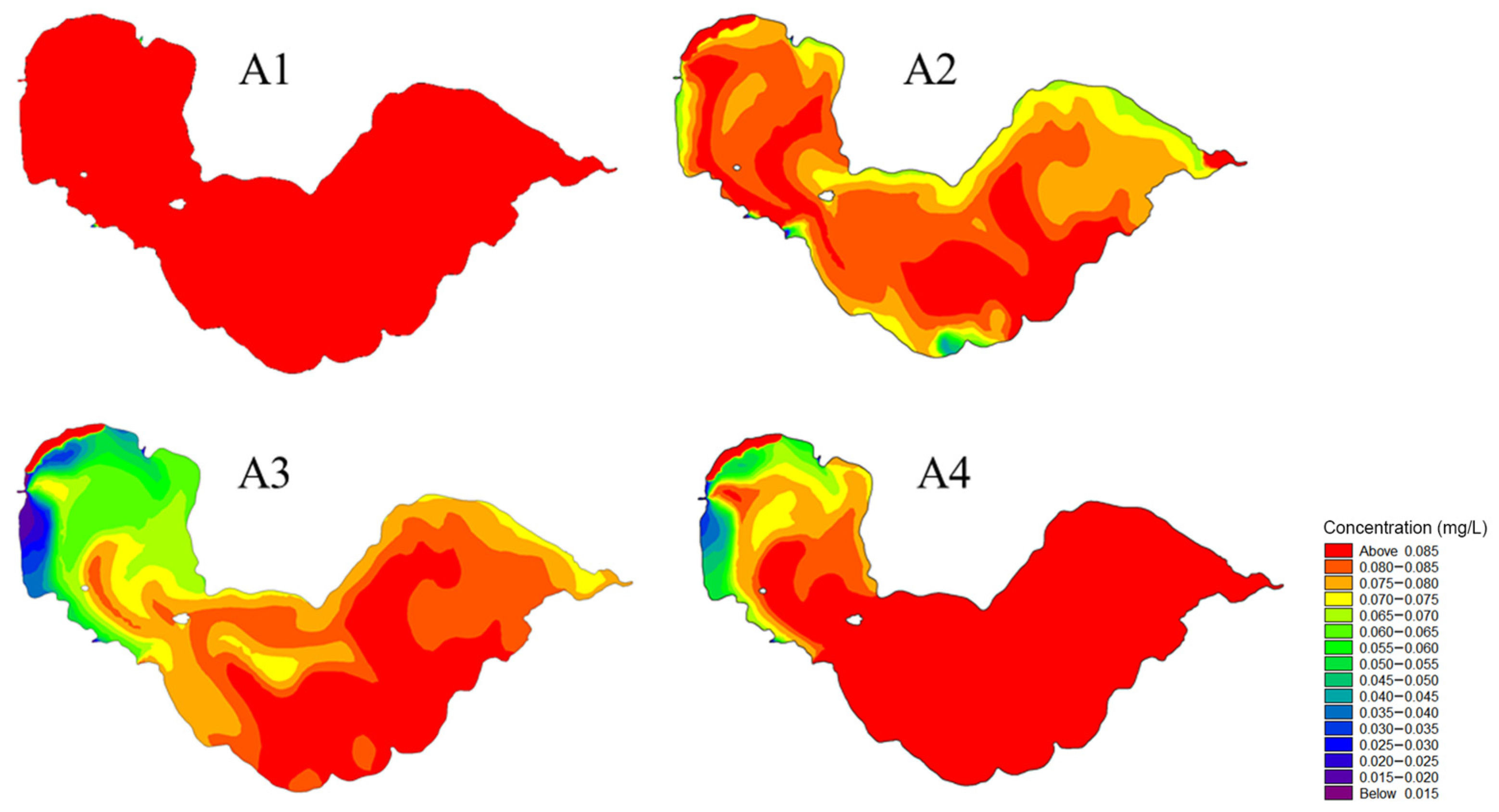
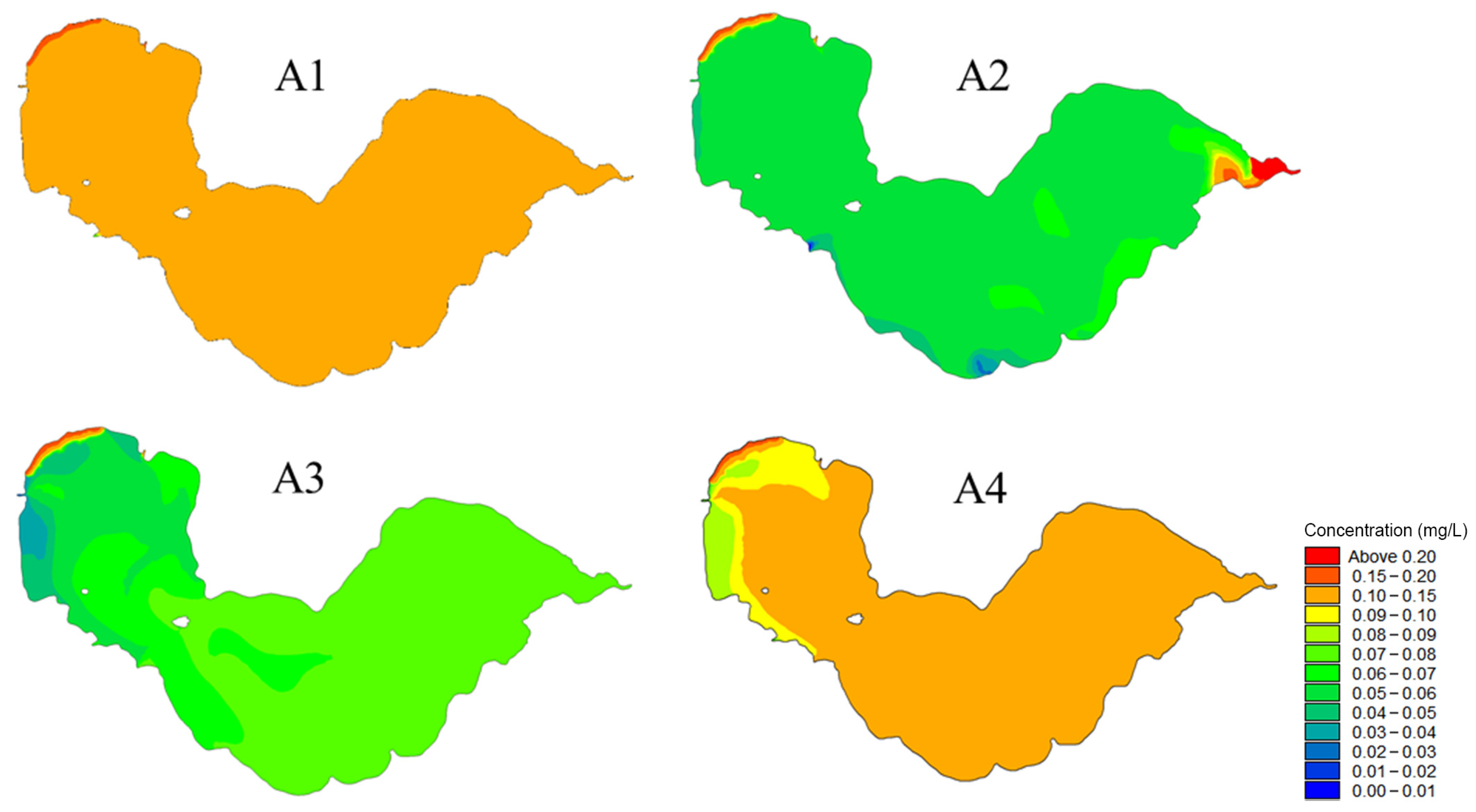
Under different water diversion scenarios, the COD concentration in the Huai River water is the highest at 4.67 mg/L, followed by the COD concentration in the southern part of Chaohu Lake at 4.12 mg/L, and the lowest COD concentration is in the Yangtze River water at 1.78 mg/L. Therefore, during the water diversion period, under the influence of the A2 scenario, the overall lake COD decreases by approximately 36,812.1 tons. In contrast, under the influence of the A1, A3, and A4 scenarios, the overall lake COD increases by approximately 425 tons, 2925.7 tons, and 472.8 tons, respectively, as shown in Figure 7 and Table 3.

3.2.2. Distribution of TN

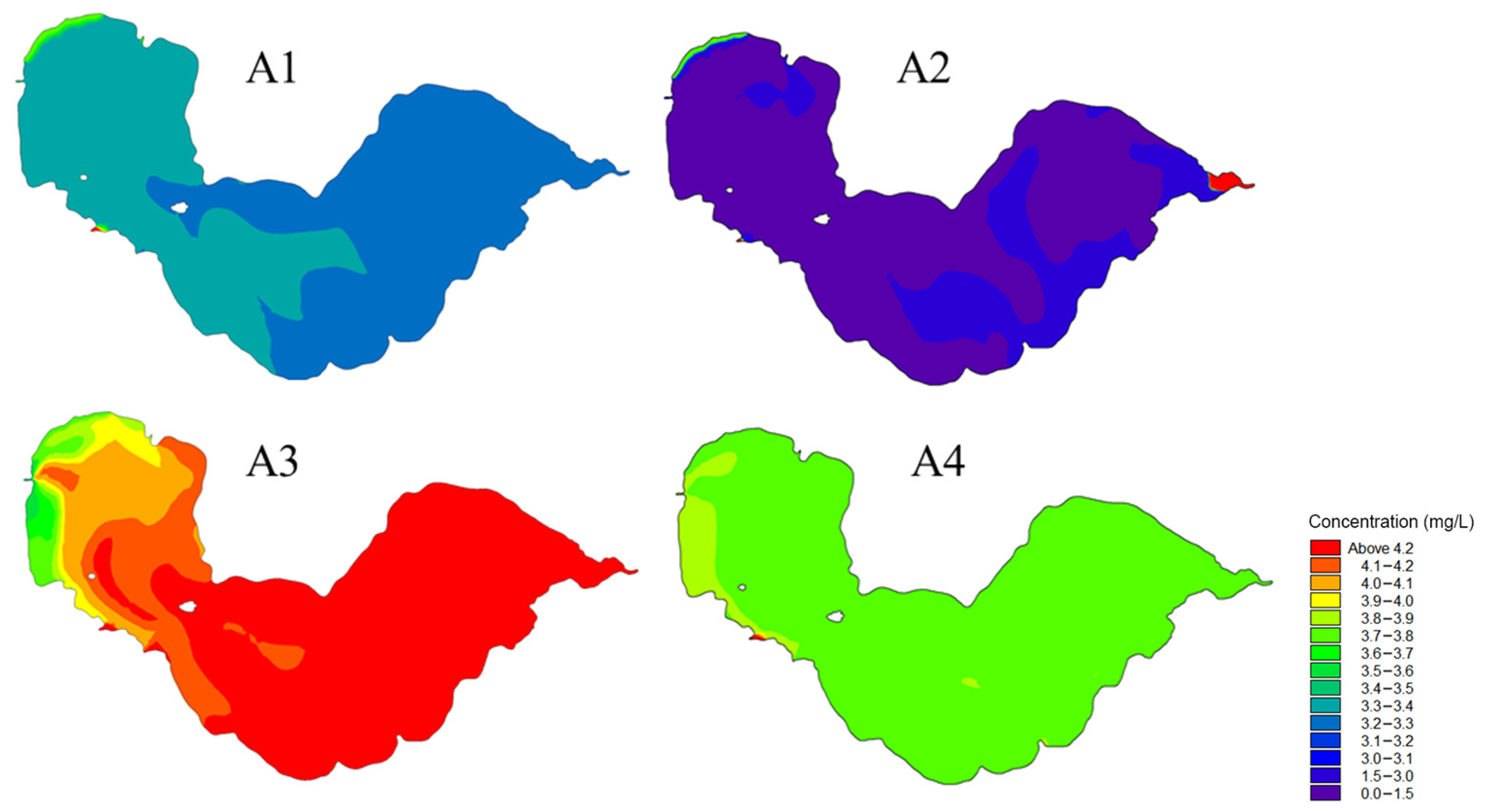
Under different water diversion scenarios, the TN (Total Nitrogen) concentration in the Yangtze River water is the highest at 1.52 mg/L, followed by the TN concentration in the southern part of Chaohu Lake at 1.29 mg/L, and the lowest TN concentration in the Huaihe River water at 0.88 mg/L. During the water diversion period, the A2 scenario promotes the diffusion of pollutants throughout the entire lake, resulting in a decrease of approximately 22,637.2 tons of total nitrogen. However, the A3 and A4 scenarios have a greater impact on the diffusion of total nitrogen in the West Lake area, while their influence on the total nitrogen concentration near the Chaohu Gate in the East Lake area is relatively small. As a result, the total nitrogen in the entire lake increases by approximately 898.1 tons and 3 tons under the A3 and A4 scenarios, respectively. In contrast, under the A1 scenario, the total nitrogen in the lake increases by 338.8 tons, as shown in Figure 8 and Table 3.
The reason that total nitrogen only increases by 3 tons under the A4 scenario, compared to the A1 and A3 scenarios, can be attributed to two factors: First, both the A4 and A1 scenarios have relatively low and similar pollutant loads entering the lake. However, the A4 scenario promotes the diffusion of total nitrogen within the lake, which leads to higher total nitrogen concentrations near the Chaohu Gate compared to the A1 scenario, resulting in a greater load of pollutants exiting the lake. Second, the A4 scenario corresponds to a self-circulation process of the lake’s water body, with both the outflow volume and total pollutant load being small. The pollutant load entering the lake is only from the tributaries other than Baishitianhekou and Paihekou. In contrast, the A3 scenario has the highest total nitrogen contribution from the Huaihe River, with a significantly larger outflow compared to the A4 scenario.

3.2.3. Distribution of TP

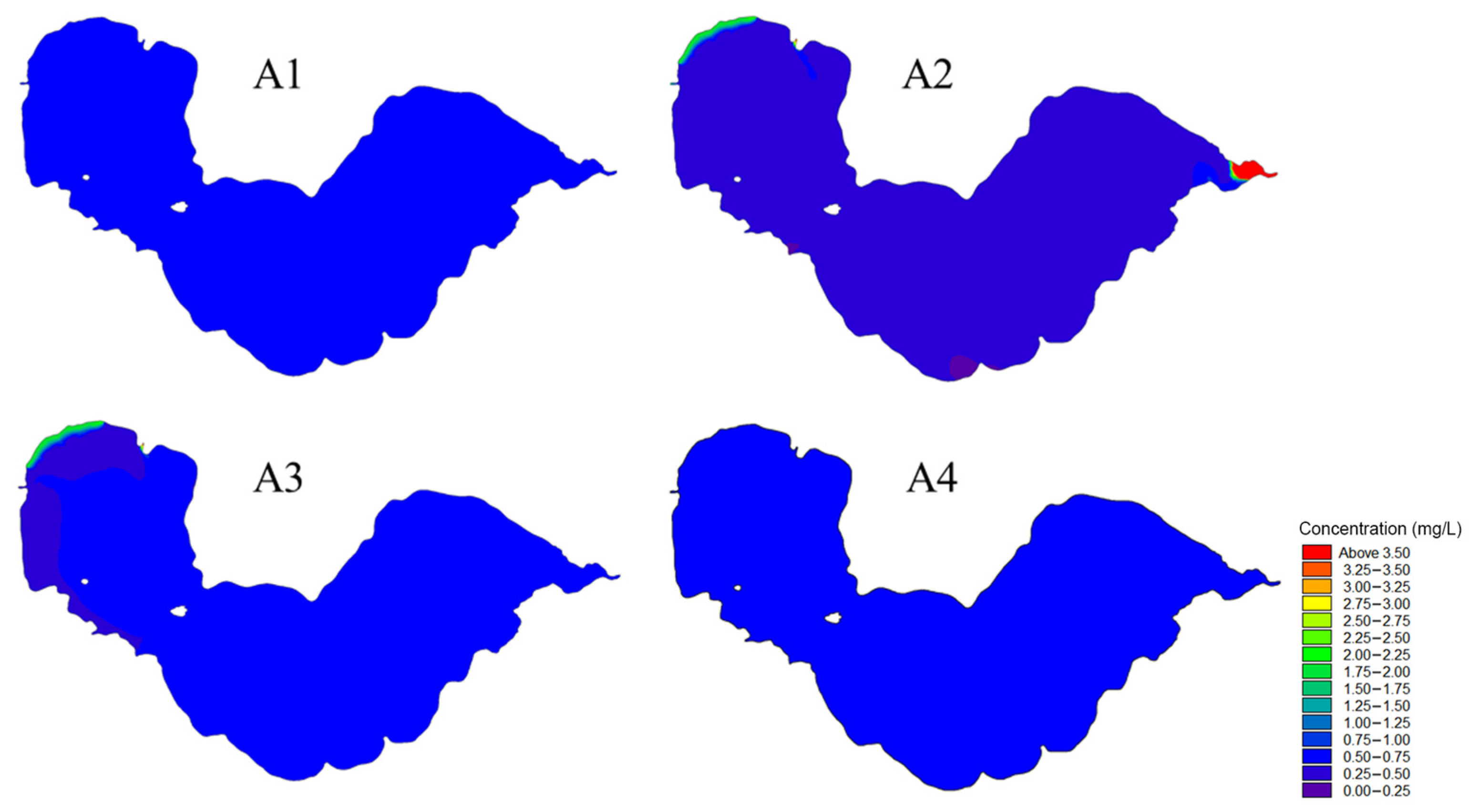
Under different water diversion scenarios, the TP (Total Phosphorus) concentration in the southern part of Chaohu Lake is the highest at 0.11 mg/L, followed by the TP concentration in the Yangtze River water at 0.07 mg/L, and the lowest TP concentration in the Huaihe River water at 0.03 mg/L. During the water diversion period, the A2 scenario promotes the diffusion of pollutants throughout the entire lake, resulting in the greatest reduction in total phosphorus in the lake, with a decrease of approximately 4974.0 tons. At the same time, due to the lowest TP concentration in the Huaihe River water, the A3 scenario also leads to a reduction in total phosphorus in the entire lake, decreasing by approximately 100.6 tons. Additionally, under the A1 and A4 scenarios, the total phosphorus in the lake increases, with increases of approximately 29.0 tons and 10.7 tons, respectively. The main reason for this increase is the lower outflow volume, as shown in Figure 9 and Table 3.

3.2.4. Distribution of Chl-a

Under different water diversion scenarios, since there are no Chl-a monitoring data available for the Yangtze River and the inflowing rivers, the Chl-a concentration variation process was only defined in the A3 and A4 scenarios during the water quality simulation. In these scenarios, the Chl-a concentration in the southern part of Chaohu Lake is 0.11 mg/L, and in the Huai River water, the Chl-a concentration is 0.03 mg/L, with the Chl-a concentration in the southern part of Chaohu Lake being approximately three times that in the Huai River water. During the water diversion period, due to the absence of Chl-a concentration in the Yangtze River and inflowing tributaries, and since the A4 scenario corresponds to the self-circulation process of Chaohu Lake’s water body, the A2, A1, and A4 scenarios all result in a net outflow of Chl-a, with a decrease of approximately 310.8 tons, 1.7 tons, and 3.3 tons of Chl-a, respectively. Additionally, since the Chl-a concentration in the Huai River water is lower than that in Chaohu Lake, the A3 scenario leads to a decrease of approximately 158.3 tons of Chl-a in the entire lake, as shown in Figure 10 and Table 3.

3.3. Impact of Subsurface Flow Guide Dam Layout in the West Lake Area on the Migration of Heavily Polluted Water

3.3.1. Layout Scheme of Subsurface Flow Guide Dams in the West Lake

Based on the previous analysis of changes in hydraulic retention time in the lake area, the A3 scenario shows the best improvement in the flow field of the West Lake area. Additionally, among the inflowing rivers in the northwest, the Nanfei River has the largest pollutant load, with approximately 1.4 million tons per day of wastewater entering the West Lake area, posing a significant threat to the water ecological environment of the West Lake area. To further enhance the flow field in the West Lake area, it is planned to construct subsurface flow guide dams (Figure 1) on the basis of the A3 scenario, in order to quickly transport the pollutants from the Nanfei River out of the West Chaohu Lake.
Subsurface Flow Guide Dam A will be combined with the existing wave-dissipation dam in the West Lake area. The existing wave-dissipation dam will serve as the left bank, and a new subsurface flow guide dam A will be constructed to serve as the right bank. Together, they will form a water transport channel approximately 120 m wide, through which 300 m3/s of ecological water will be injected from the Paihekou, guiding the flow towards the Nanfei River mouth. The outflow direction of the water transport channel at its exit will intersect the flow direction of the Nanfei River mouth at approximately 45°. Subsurface Flow Guide Dam B will be constructed as a 5 km long lake guide dam in the northwest of Mushan Island.
Under the two subsurface flow guide dam schemes, three numerical simulation scenarios are established. Scenario B1 represents the case without any subsurface flow guide dams, Scenario B2 involves the construction of only Subsurface Flow Guide Dam A, and Scenario B3 involves the construction of only Subsurface Flow Guide Dam B. During the numerical simulations, non-degradable substances with a concentration of 1 mg/L and a flow rate of 16.2 m3/s will be continuously released from the Nanfei River mouth, while no pollutants will be input from other inflowing rivers. The background concentration of water quality in the lake area will be set to 0.

3.3.2. Changes in Hydraulic Retention Time and Flow Velocity in the West Lake

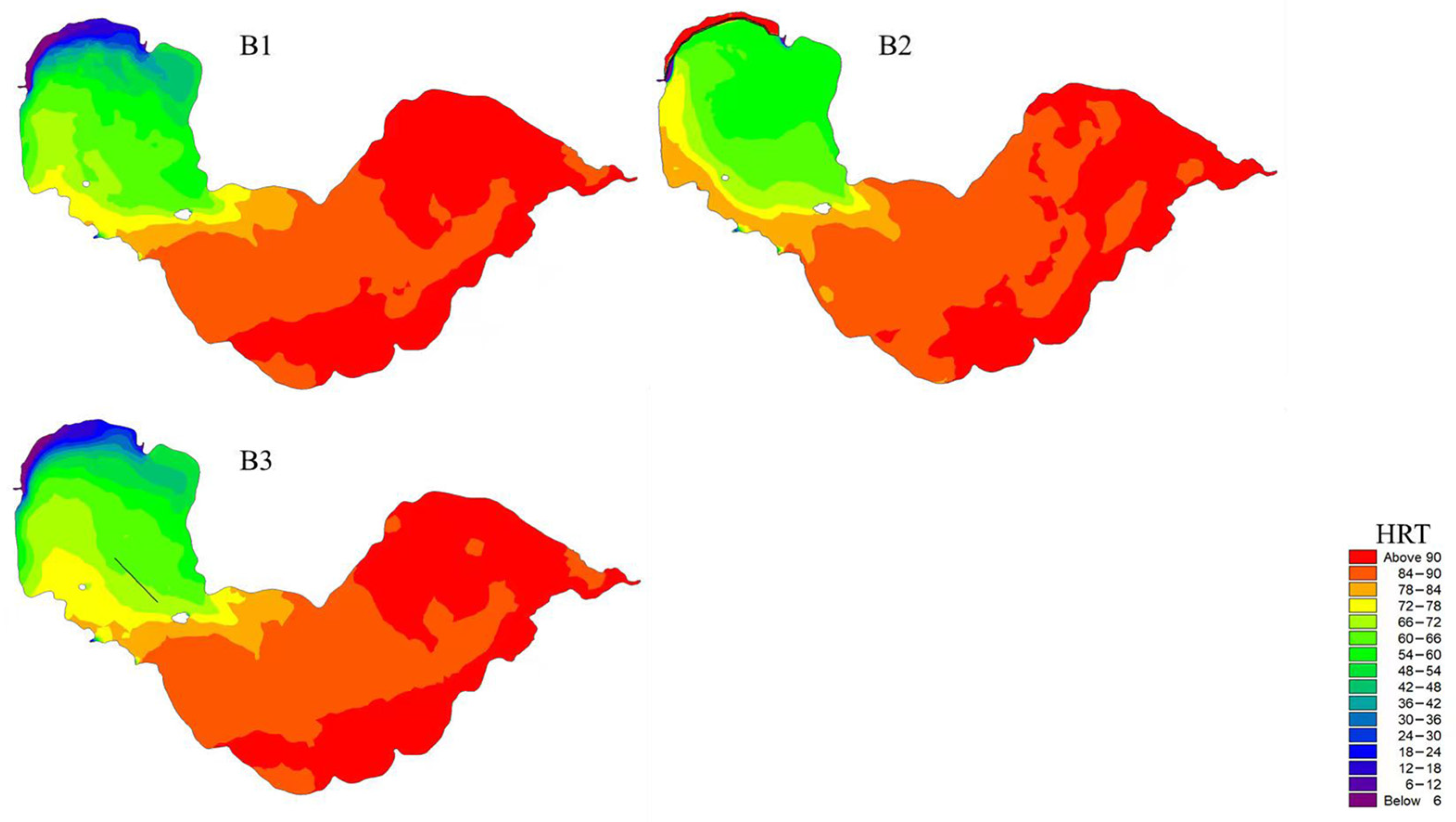
According to the hydraulic retention time statistics for each grid in the West Lake area shown in Figure 11, in Scenario B1, the hydraulic retention time is less than 91 days across all areas, with 96% of the area having a retention time less than 70 days, 73% having a retention time less than 50 days, and 41% having a retention time less than 30 days. In Scenario B2, approximately 80% of the area has a hydraulic retention time of less than 91 days, with 72% of the area having a retention time less than 70 days, 4% having a retention time less than 50 days, and 3% having a retention time less than 30 days. In Scenario B3, the hydraulic retention time in all areas is less than 91 days, with 81% of the area having a retention time less than 70 days, 46% having a retention time less than 50 days, and 39% having a retention time less than 30 days. Overall, there is no significant difference in the hydraulic retention time of the West Lake area across the three scenarios. The scenario without any guide dams (B1) results in the shortest hydraulic retention time, while the introduction of guide dams actually increases the hydraulic retention time, though the increase is not substantial.
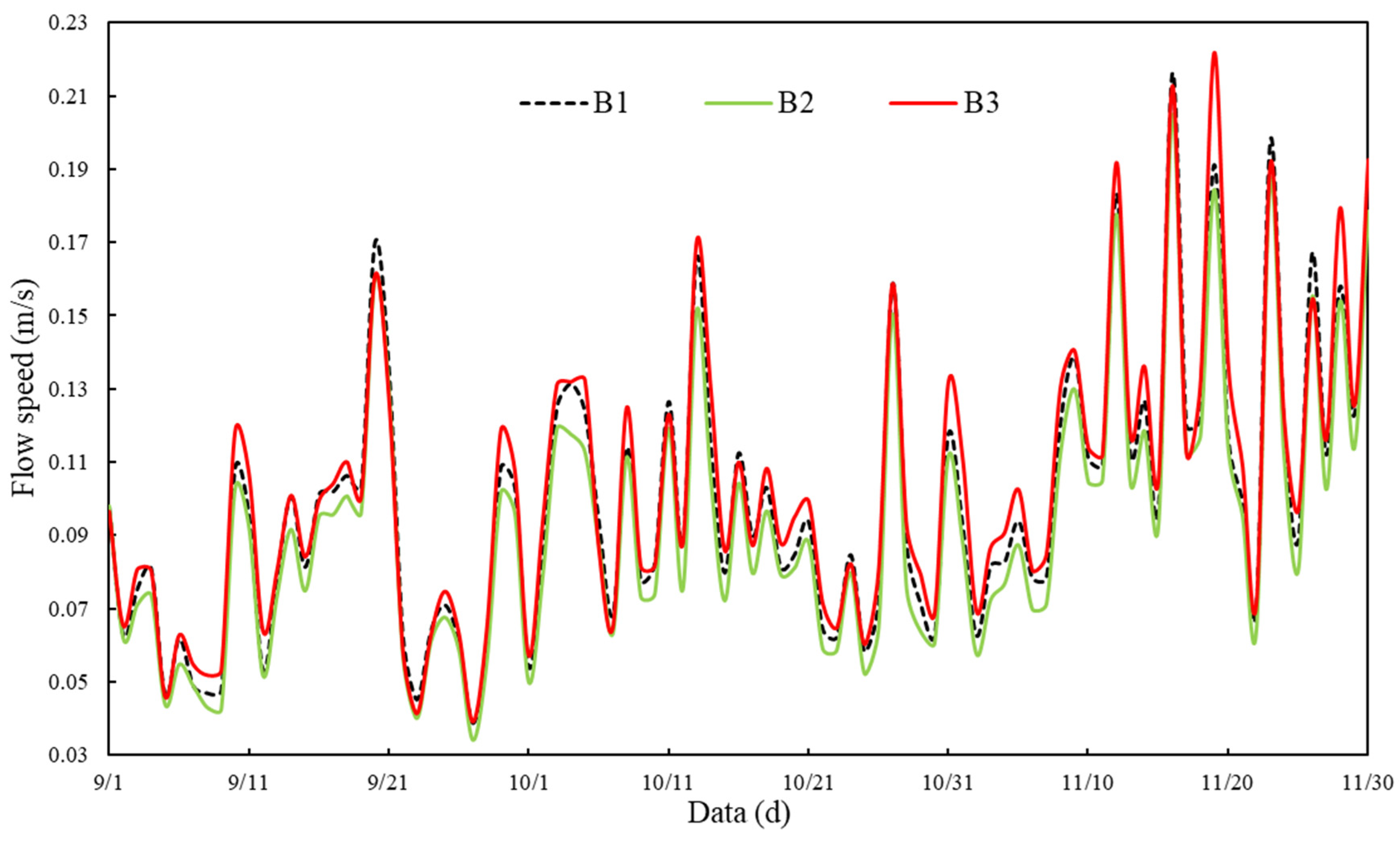
The partitioned cross-section S1 in the West Lake and Central Lake areas was selected to calculate the daily average flow velocity variations at the cross-section. As shown in Figure 12, at the S1 cross-section, the B2 scenario reduces the flow velocity compared to the B1 scenario. Meanwhile, compared to the other scenarios, the B3 scenario accelerates the flow velocity at the West Lake and Central Lake partitioned cross-sections. This is due to the fact that the lake guide dam narrows the outflow channel of the West Lake area, accelerating the outflow of water from the area near Mushan Island. Additionally, by analyzing the inflow and outflow volumes at the S1 cross-section, the water volumes entering the West Lake area under the three scenarios are 3.869 billion m3, 3.595 billion m3, and 3.828 billion m3, respectively. The water volumes exiting the West Lake area are −6.353 billion m3, −6.082 billion m3, and −6.319 billion m3, respectively. The differences in inflow and outflow volumes are −2.485 billion m3, −2.486 billion m3, and −2.491 billion m3. In summary, the B2 scenario does not improve the flow velocity or outflow volume at the S1 cross-section, while the B3 scenario accelerates the flow velocity and increases the outflow volume by 0.06 billion m3 compared to the B2 scenario.

3.3.3. Changes in the Average Concentration of Pollutants

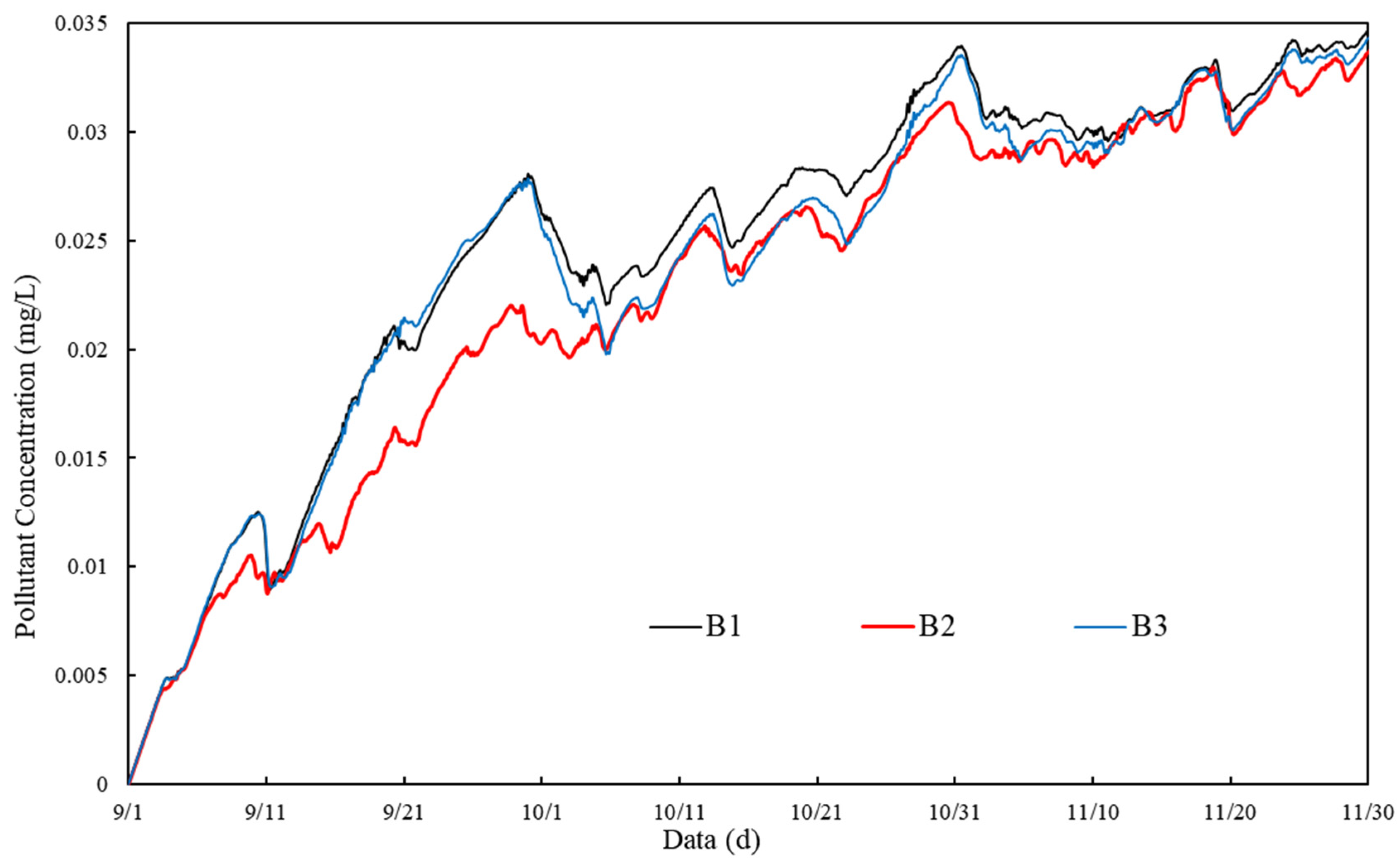
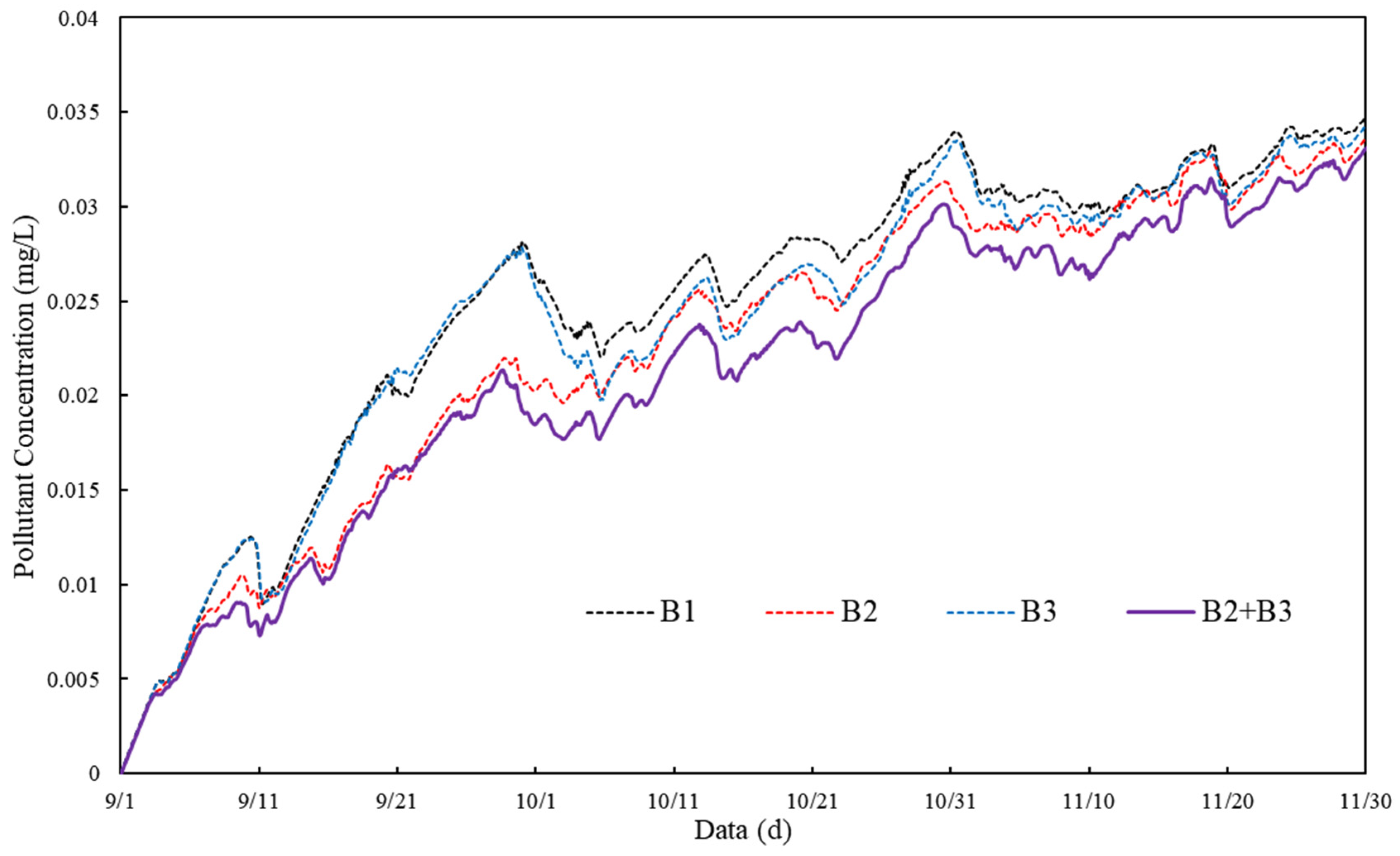
The variation in the average concentration of pollutants in the West Lake area under the three scenarios is shown in Figure 13. In the B2 scenario, the pollutant concentration in the West Lake area is lower than in the other scenarios. Compared to the B3 scenario, the pollutant concentration in September shows the greatest difference, with a maximum value of approximately 31.4%. As the pollutants spread throughout the West Lake area, the concentration difference gradually decreases, eventually reaching about 1.9%. The reason why the B2 scenario performs better than the others is that it guides the wastewater from the Nanfei River to the eastern shore of the West Lake area, causing pollutants to flow along the edge of the flow field’s circulation, thus avoiding being drawn into the central circulation of the West Lake area.

3.3.4. Optimization of Subsurface Flow Guide Dam Layout

From the analysis of the impact of individual subsurface flow guide dams on the hydrodynamics and water quality of the West Lake area, it is evident that although the B2 and B3 scenarios improve the water quality and hydrodynamic conditions in the West Lake area, neither of the individual guide dam scenarios shows significant improvements compared to the no-guide-dam scenario. Therefore, this study further analyzes the impact of the B2 + B3 combined scenario on lake pollutants.
In the B2 + B3 combined scenario, the variation in the average concentration of pollutants and the total lake pollutant outflow are shown in Figure 14 and Table 4. As seen in Figure 14, the combined scenario significantly outperforms the other scenarios and effectively reduces the pollutant concentration in the West Lake area. Compared to the B1 scenario, from September to November, Scenario 1 can reduce the total lake pollutants by 1.48 tons, with an additional 4.3% of pollutants being exported, while the combined scenario can reduce the total lake pollutants by 2.54 tons, with approximately 7.4% more pollutants being exported compared to the B1 scenario. The combined scenario significantly improves the hydrodynamic and water quality conditions of the lake area due to two main reasons: first, Scenario B2 drives the wastewater from the Nanfei River along the eastern shore of the West Lake area, preventing pollutants from being drawn into the West Lake’s flow field circulation; second, Scenario B3 disrupts the large-scale circulation of the West Lake’s flow field, accelerating the flow velocity of the outflow passage east of Laoshan Island, thereby further promoting the rapid outflow of pollutants from the West Lake.

4. Conclusions

This study employs a lake-atmosphere coupled three-dimensional hydrodynamic and water quality model to conduct refined numerical simulations of three water diversion scenarios and three subsurface flow guide dam layout scenarios during the ecological water replenishment period in Chaohu Lake from September to November.
Based on the changes in flow velocity at typical points and cross-sections, as well as the overall lake’s hydraulic retention time under different water diversion scenarios, the A3 scenario shows the best improvement in the West Lake area’s flow field. However, the flow velocity in the West Lake center decreases under the A3 scenario. The A2 scenario provides the best improvement in the overall lake’s flow field, but has a poorer effect on the flow field in the West Lake area. The A4 scenario, which corresponds to the self-circulation of the lake water body, shows flow field improvements that are between those of the A3 and A2 scenarios.
Regarding the total inflow and outflow of pollutants, the A2 scenario results in the best improvement in water quality in the overall lake, significantly reducing the pollutant load in the overall lake. The A3 scenario follows, showing good improvement in the West Lake area’s water quality, reducing the total load of total phosphorus and chlorophyll-a in the entire lake. The A4 scenario, being part of the self-circulation process of Chaohu Lake, has the least effect on improving water quality in the entire lake.
A single subsurface flow guide dam does not significantly improve the hydrodynamics and water quality in the West Lake area. However, under the A3 scenario and the B2 + B3 combined scheme, it not only prevents pollutants from being drawn into the West Lake’s flow field circulation but also accelerates the flow velocity of the outflow passage, promoting the rapid export of pollutants from the West Lake. Given the numerous possible combinations of subsurface flow guide dams, this study only explores the feasibility of the combined scheme. Future research could further optimize the combination methods, layout positions, alignment, and length of the subsurface flow guide dams.

Supplementary Materials

The following supporting information can be downloaded at: https://www.mdpi.com/article/10.3390/pr14020193/s1, Figure S1: Schematic of the WRF simulation domain setup; Figure S2: Comparison of simulated and observed wind speed at West Lake Heart; Figure S3: Comparison of simulated and observed wind direction at West Lake Heart; Figure S4: Comparison of simulated and observed wind speed at Middle Lake Heart; Figure S5: Comparison of simulated and observed wind direction at Middle Lake Heart; Figure S6: Comparison of simulated and observed wind speed at East Lake Heart; Figure S7: Comparison of simulated and observed wind direction at East Lake Heart; Figure S8: Comparison of simulated and measured daily average surface flow speed and direction in various areas of Chaohu Lake; Figure S9: Comparison of simulated and measured Chl a, COD, TN, and TP concentration values in Chaohu Lake.

Author Contributions

F.D.: Conceptualization, Software, Data Curation, Formal Analysis, Funding Acquisition, Writing—Original Draft. Q.Z.: Resources, Conceptualization. Y.W.: Supervision, Writing—Review & Editing. S.W.: Methodology, Funding Acquisition, Resources. H.Y.: Writing—Review & Editing. C.L.: Methodology, Validation. S.G.: Methodology, Validation, Project Administration. K.C.: Software, Validation. C.Z.: Writing—Review & Editing. Z.J.: Writing—Review & Editing. Y.B.: Writing—Review & Editing. M.G.: Writing—Review & Editing. X.L.: Conceptualization, Funding Acquisition, Project Administration, Supervision, Writing—Review & Editing. All authors have read and agreed to the published version of the manuscript.

Funding

This work was supported by the CRSRl Open Research Program (Program SN: CKWV2025920/KY) and the National Natural Science Foundation of China (Grant No. U2340224).

Data Availability Statement

The original contributions presented in this study are included in the article/Supplementary Materials. Further inquiries can be directed to the corresponding authors.

Conflicts of Interest

Authors [Qing Zhu] is employed by [Anhui Survey & Design Institute of Water Resources & Hydropower Co., Ltd.]. Author [Huangfeng Yan] is employed by [Beijing IWHR Corporation]. Author [Shilin Gao] is employed by [China Power Construction Group Northwest Engineering Co., Ltd.]. Author [Kang Chen] is employed by [Shandong Survey and Design Institute of Water Conservancy Co., Ltd.]. Author [Chao Zhang] is employed by [China South-to-North Water Diversion Group Water Network Development Research Co., Ltd.]. The remaining authors declare that the research was conducted in the absence of any commercial or financial relation-ships that could be construed as a potential conflict of interest.

References

  1. Zhou, J.; Leavitt, P.R.; Zhang, Y.; Qin, B. Anthropogenic eutrophication of shallow lakes: Is it occasional? Water Res. 2022, 221, 118728. [Google Scholar] [CrossRef] [PubMed]
  2. Dai, Y.; Yang, S.; Zhao, D.; Hu, C.; Xu, W.; Anderson, D.M.; Li, Y.; Song, X.-P.; Boyce, D.G.; Gibson, L.; et al. Coastal phytoplankton blooms expand and intensify in the 21st century. Nature 2023, 615, 280–284. [Google Scholar] [CrossRef] [PubMed]
  3. Hou, X.; Feng, L.; Dai, Y.; Hu, C.; Gibson, L.; Tang, J.; Lee, Z.; Wang, Y.; Cai, X.; Liu, J.; et al. Global mapping reveals increase in lacustrine algal blooms over the past decade. Nat. Geosci. 2022, 15, 130–134. [Google Scholar] [CrossRef]
  4. Huang, J.; Zhang, Y.; Arhonditsis, G.B.; Gao, J.; Chen, Q.; Peng, J. The magnitude and drivers of harmful algal blooms in China’s lakes and reservoirs: A national-scale characterization. Water Res. 2020, 181, 115902. [Google Scholar] [CrossRef]
  5. Boqiang, Q.I.N. Shallow lake limnology and control of eutrophication in Lake Taihu. J. Lake Sci. 2020, 32, 1229–1243. [Google Scholar] [CrossRef]
  6. Li, Y.; Jalil, A.; Du, W.; Gao, X.; Wang, J.; Luo, L.; Li, H.; Dai, S.; Hashim, S.; Yu, Z.; et al. Wind induced reverse flow and vertical profile characteristics in a semi-enclosed bay of large shallow Lake Taihu, China. Ecol. Eng. 2017, 102, 224–233. [Google Scholar] [CrossRef]
  7. Yang, P. Vertical Mixing and Flow Patterns in a Tropical, Shallow Lake. Ph.D. Thesis, Nanyang Technological University, Singapore, 2017. [Google Scholar]
  8. Liu, S.; Ye, Q.; Wu, S.; Stive, M.J.F. Horizontal Circulation Patterns in a Large Shallow Lake: Taihu Lake, China. Water 2018, 10, 792. [Google Scholar] [CrossRef]
  9. Józsa, J. On the internal boundary layer related wind stress curl and its role in generating shallow lake circulations. J. Hydrol. Hydromech. 2014, 62, 16–23. [Google Scholar] [CrossRef]
  10. Gao, X.; Li, Y.; Tang, C.; Acharya, K.; Du, W.; Wang, J.; Luo, L.; Li, H.; Dai, S.; Yu, Z.; et al. Using ADV for suspended sediment concentration and settling velocity measurements in large shallow lakes. Environ. Sci. Pollut. Res. 2017, 24, 2675–2684. [Google Scholar] [CrossRef]
  11. Zhu, W.; Chen, H.; Xiao, M.; Lürling, M.; Li, M. Wind induced turbulence caused colony disaggregation and morphological changes in the cyanobacterium Microcystis. J. Lake Sci. 2021, 33, 349–365. [Google Scholar] [CrossRef]
  12. Zhu, W.; Feng, G.; Chen, H.; Wang, R.; Tan, Y.; Zhao, H. Modelling the vertical migration of different-sized Microcystis colonies: Coupling turbulent mixing and buoyancy regulation. Environ. Sci. Pollut. Res. 2018, 25, 30339–30347. [Google Scholar] [CrossRef]
  13. Xiong, J.; Xue, K.; Li, J.; Hu, M.; Li, J.; Wang, X.; Lin, C.; Ma, R.; Chen, L. Vertical distribution analysis and total mass estimation of nitrogen and phosphorus in large shallow lakes. J. Environ. Manag. 2023, 344, 118465. [Google Scholar] [CrossRef]
  14. Bargu, S.; Justic, D.; White, J.R.; Lane, R.; Day, J.; Paerl, H.; Raynie, R. Mississippi River diversions and phytoplankton dynamics in deltaic Gulf of Mexico estuaries: A review. Estuar. Coast. Shelf Sci. 2019, 221, 39–52. [Google Scholar] [CrossRef]
  15. Lee, H.W.; Yeom, B.-M.; Choi, J.H. Modelling Water Quality Improvements in a South Korean Inter-Basin Water Transfer System. Water 2020, 12, 3173. [Google Scholar] [CrossRef]
  16. Peng, F.; Li, K.; Liang, R.; Li, X.; Zhang, P.; Yuan, Q.; Ji, Q.; Zhu, Z.; Wang, Y. Shallow lake water exchange process before and after water diversion projects as affected by wind field. J. Hydrol. 2021, 592, 125785. [Google Scholar] [CrossRef]
  17. Gao, X.; Xu, L.; Zhang, C. Modelling the effect of water diversion projects on renewal capacity in an urban artificial lake in China. J. Hydroinform. 2015, 17, 990–1002. [Google Scholar] [CrossRef]
  18. Wang, Y.; Liu, G.; Zhu, S.; Hu, W.; Zhang, H.; Zhou, X.; Peng, Z. Assessment of impacts of water transfer on lake flow and water quality in Lake Chaohu using a three-dimensional hydrodynamic-ecological model. J. Hydrol. Reg. Stud. 2023, 46, 101333. [Google Scholar] [CrossRef]
  19. Dai, J.; Wu, S.; Wu, X.; Lv, X.; Sivakumar, B.; Wang, F.; Zhang, Y.; Yang, Q.; Gao, A.; Zhao, Y.; et al. Impacts of a large river-to-lake water diversion project on lacustrine phytoplankton communities. J. Hydrol. 2020, 587, 124938. [Google Scholar] [CrossRef]
  20. Yao, X.; Zhang, L.; Zhang, Y.; Du, Y.; Jiang, X.; Li, M. Water diversion projects negatively impact lake metabolism: A case study in Lake Dazong, China. Sci. Total Environ. 2018, 613–614, 1460–1468. [Google Scholar] [CrossRef]
  21. Yu, M.; Wang, C.; Liu, Y.; Olsson, G.; Wang, C. Sustainability of mega water diversion projects: Experience and lessons from China. Sci. Total Environ. 2018, 619–620, 721–731. [Google Scholar] [CrossRef] [PubMed]
  22. Tachamo Shah, R.D.; Sharma, S.; Bharati, L. Water diversion induced changes in aquatic biodiversity in monsoon-dominated rivers of Western Himalayas in Nepal: Implications for environmental flows. Ecol. Indic. 2020, 108, 105735. [Google Scholar] [CrossRef]
  23. Zhao, P.; Li, Z.; Zhang, R.; Pan, J.; Liu, Y. Does water diversion project deteriorate the water quality of reservoir and downstream? A case-study in Danjiangkou reservoir. Glob. Ecol. Conserv. 2020, 24, e01235. [Google Scholar] [CrossRef]
  24. Tang, C.; He, C.; Li, Y.; Acharya, K. Diverse responses of hydrodynamics, nutrients and algal biomass to water diversion in a eutrophic shallow lake. J. Hydrol. 2021, 593, 125933. [Google Scholar] [CrossRef]
  25. Cucco, A.; Umgiesser, G. Modeling the Venice Lagoon residence time. Ecol. Model. 2006, 193, 34–51. [Google Scholar] [CrossRef]
  26. Takeoka, H. Fundamental concepts of exchange and transport time scales in a coastal sea. Cont. Shelf Res. 1984, 3, 311–326. [Google Scholar] [CrossRef]
  27. Hu, Z.; Yong, P.; Ruichen, X.; Yuan, L. Study on the proportion and flow path of Yangtze River water diversion into Taihu Lake. Water Supply 2022, 22, 1820–1834. [Google Scholar] [CrossRef]
  28. Huang, A.; Liu, X.; Dong, F.; Peng, W.; Ma, B.; Han, Z.; Yang, X. Long-term variations in hydraulic residence time of floodplain lakes and their response to water conservancy projects. Ecol. Indic. 2024, 169, 112778. [Google Scholar] [CrossRef]
Figure 1. An overview of the hydrological and topographical conditions of Chao Lake.
Processes 14 00193 g001
Figure 2. Schematic Diagram of the Overall Layout of the YHWTP.
Processes 14 00193 g002
Figure 3. Model grid division and terrain of Chaohu Lake.
Processes 14 00193 g003
Figure 4. Variation in Flow Velocity at Typical Representative Points in the Lake Area under Different Water Diversion Scenarios in Chaohu Lake.
Processes 14 00193 g004aProcesses 14 00193 g004b
Figure 5. Variation in Flow Velocity at Typical Cross-Sections of Chaohu Lake.
Processes 14 00193 g005aProcesses 14 00193 g005b
Figure 6. Distribution of HRT in the Lake Area under Different Scenarios.
Processes 14 00193 g006
Figure 7. Distribution of COD under Different Water Diversion Scenarios.
Processes 14 00193 g007
Figure 8. Distribution of TN under Different Water Diversion Scenarios.
Processes 14 00193 g008
Figure 9. Distribution of TP under Different Water Diversion Scenarios.
Processes 14 00193 g009
Figure 10. Distribution of Chl-a under Different Water Diversion Scenarios.
Processes 14 00193 g010
Figure 11. Distribution of HRT for the Entire Lake under Different Subsurface Flow Guide Dam Scenarios.
Processes 14 00193 g011
Figure 12. Variation in Flow Velocity at Cross-Section S1 under Different Scenarios.
Processes 14 00193 g012
Figure 13. Variation in the Average Pollutant Concentration in the West Lake under Different Scenarios.
Processes 14 00193 g013
Figure 14. Variation in the Average Pollutant Concentration in the West Lake Area under the B2 + B3 Combined Scenario.
Processes 14 00193 g014
Table 1. Key parameter values used in the Chaohu Lake model.
Key ParameterValueUnit
Bed resistance: Quadratic drag coefficient0.0005~0.06/
Horizontal viscosity: Smagorinsky formulation0.001/
Vertical eddy viscosity: k-epsilon formulation//
Wind friction0.004m
Nitrification: 1st order decay rate at 20 °C0.043/d
Ammonia processes: Amount of NH3-N taken up by plants0.02g N/g DO
Ammonia processes: Amount of NH3-N taken up by bacteria0.06g N/g DO
Phosphorous processes: Amount of PO4-P taken up by plants0.003g P/g DO
Phosphorous processes: Amount of PO4-P taken up by bacteria0.008g P/g DO
Chlorophyll processes: Death rate of chlorophyll-a0.006per day
Chlorophyll processes: Setting rate of chlorophyll-a0.06m/day
COD Processes: 1st order decay rate at 20 °C0.02/d
Table 2. Water Diversion and Drainage Schemes for Chaohu Lake.
ScenarioWater Diversion RoutesWater Diversion Flow RateWater Source of the DiversionWater
Quality of the Diversion
Outflow from Chaohu Lake
A1//Current RunoffCurrent Water QualityCurrent Runoff
A2Z-YR-CH150 m3/sYangtze RiverQianjiangkou Section300 m3/s
CZH-YR-CH150 m3/s
A3H-CH300 m3/sHuai RiverWabu Lake Section300 m3/s
A4XHF-CH300 m3/sChaohu LakeZhao River Inlet to Chaohu Lake Section/
Table 3. Statistics of Inflow and Outflow Pollutant Loads (t) under Different Water Diversion Scenarios from September to November.
ScenarioA1A2A3A4
CODInflow Volume634.53894.511,748.8684.3
Outflow Volume209.440,705.68823.1211.5
Retention Volume425.0−36,812.12925.7472.8
TNInflow Volume401.02071.12432.4348.8
Outflow Volume62.3−24,708.21534345.8
Retention Volume338.8−22,637.2898.13.0
TPInflow Volume33.7171.7107.431.6
Outflow Volume4.75145.7208.020.9
Retention Volume29.0−4974.0−100.610.7
Chl-aInflow Volume0016.80
Outflow Volume1.7310.8175.03.3
Retention Volume−1.7−310.8−158.3−3.3
Table 4. Statistics of Total Lake Pollutant Outflow under Different Scenarios (t).
ScenarioOutflow VolumeReduction Compared to the B1 Scenario
B134.36/
B235.841.48
B334.920.56
B2 + B336.902.54
Disclaimer/Publisher’s Note: The statements, opinions and data contained in all publications are solely those of the individual author(s) and contributor(s) and not of MDPI and/or the editor(s). MDPI and/or the editor(s) disclaim responsibility for any injury to people or property resulting from any ideas, methods, instructions or products referred to in the content.