Article

Research on Gypsum-Based Composites for Optical Media in Projection Applications Based on Sustainable Development Principles

1
School of Advertising and Branding, Communication University of China, Beijing 100024, China
2
State Key Laboratory of Advanced Separation Membrane Materials, School of Material Science and Engineering, Tiangong University, Tianjin 300387, China
*
Author to whom correspondence should be addressed.
Processes 2026, 14(18), 2968; https://doi.org/10.3390/pr14182968 (registering DOI)
Submission received: 21 August 2026 / Revised: 13 September 2026 / Accepted: 14 September 2026 / Published: 17 September 2026

Abstract

To improve the optical efficiency and environmental adaptability of projection materials in public exhibition scenarios, gypsum-based composites were obtained with TiO2 and pretreated corn straw powder, strategically embedding circular economy principles into material design through the valorization of agricultural waste. This composite features outstanding low-carbon, realizing agricultural straw recycling of exhibition projection projects. The phase composition, microstructure, mechanical behavior, water resistance, and optical properties of the composites were systematically investigated using XRD, SEM, TGA, FTIR, UV-Vis, XPS, refractive index, and whiteness measurements. The results showed that the incorporation of straw powder enhanced the structural integrity of the gypsum matrix, while the subsequent addition of TiO2 reduced water absorption and improved both the refractive index and whiteness. At a TiO2 content of 20 wt.%, both the refractive index and whiteness increased substantially relative to pure gypsum. These results demonstrate that the synergistic modification of gypsum with pretreated straw powder and TiO2 effectively improves both structural stability and optical performance. This work provides a feasible strategy for transforming low-value waste into high-value optical applications, contributing to the sustainable development goals of green building and waste recycling.

1. Introduction

With the increasing adoption of projection technologies in the digital transformation of urban public culture and artistic exhibitions, the development of environmentally sustainable projection materials with enhanced optical performance has become an important research focus [1]. As a widely used construction and decorative material in public exhibition and display applications, gypsum offers several advantages, including low cost, abundant availability, ease of processing, and excellent moldability. Consequently, it has been extensively employed in wall construction, customized casting, and three-dimensional decorative fabrication [2,3,4,5,6]. In current practice, applying a surface coating is a common approach to improving the suitability of gypsum surfaces for projection applications [7]. However, coatings applied to gypsum-based surfaces require complicated substrate preparation, as inadequate preparation and progressive loss of interfacial adhesion can contribute to loosening, cracking, flaking, and surface degradation during use in buildings and exhibitions [8,9]. Therefore, the development of formable gypsum-based projection materials with enhanced optical performance is of considerable significance. Such materials may provide a potential route to improving surface optical response and projection performance while retaining the inherent advantages of gypsum-based materials, such as low cost, processability, and architectural integration.
Although gypsum has been widely employed in public exhibition and building design, its application remains limited by inherent drawbacks, including high brittleness, low durability and poor water resistance [5]. In particular, the relatively low refractive index and whiteness of gypsum restrict its effectiveness as a projection material. Consequently, the functional modification of gypsum-based materials has attracted considerable research attention. Existing studies have primarily focused on improving the mechanical properties and environmental adaptability of gypsum through fiber reinforcement and mineral modification. Fiber reinforcement has been widely recognized as an effective approach for enhancing toughness and crack resistance. For toughness enhancement, Esan [5] reviewed reinforcement pathways such as glass fiber, PVA fiber, carbon fiber, and natural plant fibers, concluding that fiber network structures can effectively inhibit internal crack propagation, thereby increasing the flexural strength and toughness of the material. Iqbal [10] introduced a hybrid fiber reinforcement method, introducing natural and recycled fibers into gypsum-based composite systems; through thermo-mechanical testing, they verified the improvement effects of fiber synergy on the tensile strength, flexibility, and thermal resistance of gypsum. Souidi [11] prepared gypsum-based composites using plant fibers from date palm waste and compared them with synthetic polyester fibers, showing that natural fibers can modify the density and mechanical behavior of gypsum composites and provide a potential route for toughness enhancement. In terms of durability enhancement, Lima [12] incorporated recycled polyethylene fibers into gypsum-based materials to study their durability under wet–dry cycles and fire exposure conditions, demonstrating that the addition of fibers can reduce the open porosity and total water absorption of gypsum composites, thereby improving their suitability in humid environments. Feng [13] performed mineral synergistic modification on gypsum-based systems by introducing slag materials activated by CaO, forming a more stable gel structure and ettringite products, which significantly enhanced the water resistance of the material. Zaragoza-Benzal [14] found that adding recycled LDPE plastic particles to the gypsum system could reduce the total water absorption of the composites, thereby improving the water resistance of eco-gypsum composites. Wang [15] prepared strain-hardening high-performance gypsum-based composites and systematically tested their tensile, compressive, and flexural properties, as well as water resistance, under normal, dry, and saturated states. The study indicated that while polyethylene fibers do not significantly improve the waterproofing performance of the material, they markedly enhance the tensile deformation capacity and crack control performance of gypsum-based composites. Khalil [16] regulated the micromorphology of gypsum composites by dry-mixing fine or ultra-fine sand, silica fume, silica gel, rice husk, slag, calcium carbonate, or PVA. By studying changes in compressive strength and water resistance, it was found that structural densification and pore optimization can reduce moisture intrusion, thereby enhancing the service stability of gypsum materials. In the field of plant fiber-reinforced gypsum-based composites, corn stalk, as an abundant agricultural waste, has attracted research attention. Studies have shown that alkali-treated and surface-modified corn stalk fibers can significantly improve the mechanical properties and water resistance of gypsum-based composites. At a fiber content of 5%, the flexural and compressive strengths of the composite increased by 92.31% and 7.14%, respectively, compared with pure gypsum [17,18].
In addition, considerable efforts have been devoted to improving the projection performance of functional materials. Conventional projection-related materials, such as ZnO, ZnS, and zirconia-based ceramics, suffer from relatively complex preparation or sintering processes [19,20,21,22]. In contrast, TiO2 is gradually becoming a significant direction in the research of optical performance materials due to its high refractive index, excellent photocatalytic activity, and strong chemical stability. Fujishima [23] pointed out that TiO2 can generate highly active free radicals under light conditions, producing photocatalytic and surface self-cleaning capabilities. Chen [24] further summarized the application characteristics of TiO2 nanomaterials in optical interfaces, photocatalysis, and functional coatings, suggesting that its combination of high reflectivity, stability, and environmental friendliness offers broad application potential in the field of new optical media materials. From the perspective of projection materials, TiO2 offers two key advantages. First, its high refractive index can effectively enhance light scattering and reflection at the material surface, thereby improving projected image brightness and visual clarity. Second, its excellent chemical stability and resistance to ultraviolet-induced degradation contribute to long-term optical stability and extended service life of the composites. Therefore, incorporating TiO2 into gypsum-based systems is expected to compensate for the inherently low refractive index and limited whiteness of gypsum, enabling simultaneous improvements in optical performance and durability without significantly increasing processing complexity.
Based on the aforementioned research background, this study focuses on developing gypsum-based composites with enhanced optical and mechanical performance for projection applications. Straw powder was first pretreated using alkali treatment and silane coupling agents to improve its interfacial compatibility with the gypsum matrix. Subsequently, TiO2 was incorporated into the gypsum system to regulate its optical properties, aiming to develop high-performance gypsum-based projection materials suitable for projection scenarios. The microstructure and phase evolution of the composites, as well as the underlying mechanisms governing performance enhancement, were systematically investigated using XRD, SEM, TGA, FTIR, UV-VIS, and XPS. This research provides novel ideas for the development of environmentally friendly projection media in the construction of urban digital public art, balancing the mechanical properties and optical performance of aesthetic display materials, and reflecting the sustainable development philosophy of green, low-carbon, and functional integration.

2. Experiment

2.1. Materials

The materials and experimental reagents used in this experiment include the following: corn straw powder, building gypsum powder (CaSO4·0.5H2O), sodium hydroxide (NaOH), silane coupling agent (KH-550), polycarboxylic acid superplasticizer (HPEG), hydroxypropyl methylcellulose (HPMC), redispersible polymer powder (RDP), citric acid (C6H8O7), calcium stearate (Ca[CH3(CH2)16COO]2), and nano-TiO2; the properties of the nano-TiO2 are shown in Table 1.
The nano-TiO2 used in this study is an industrial product (not laboratory-synthesized). As an industrial material with mature supply chains and stable pricing, TiO2 offers chemical stability and aging resistance, which can help maintain the performance of the composites in projection applications. The durability advantage may lead to more pronounced economic benefits over longer service periods.

2.2. Preparation of Straw Powder-Based Composites

2.2.1. Pretreatment of Straw Powder

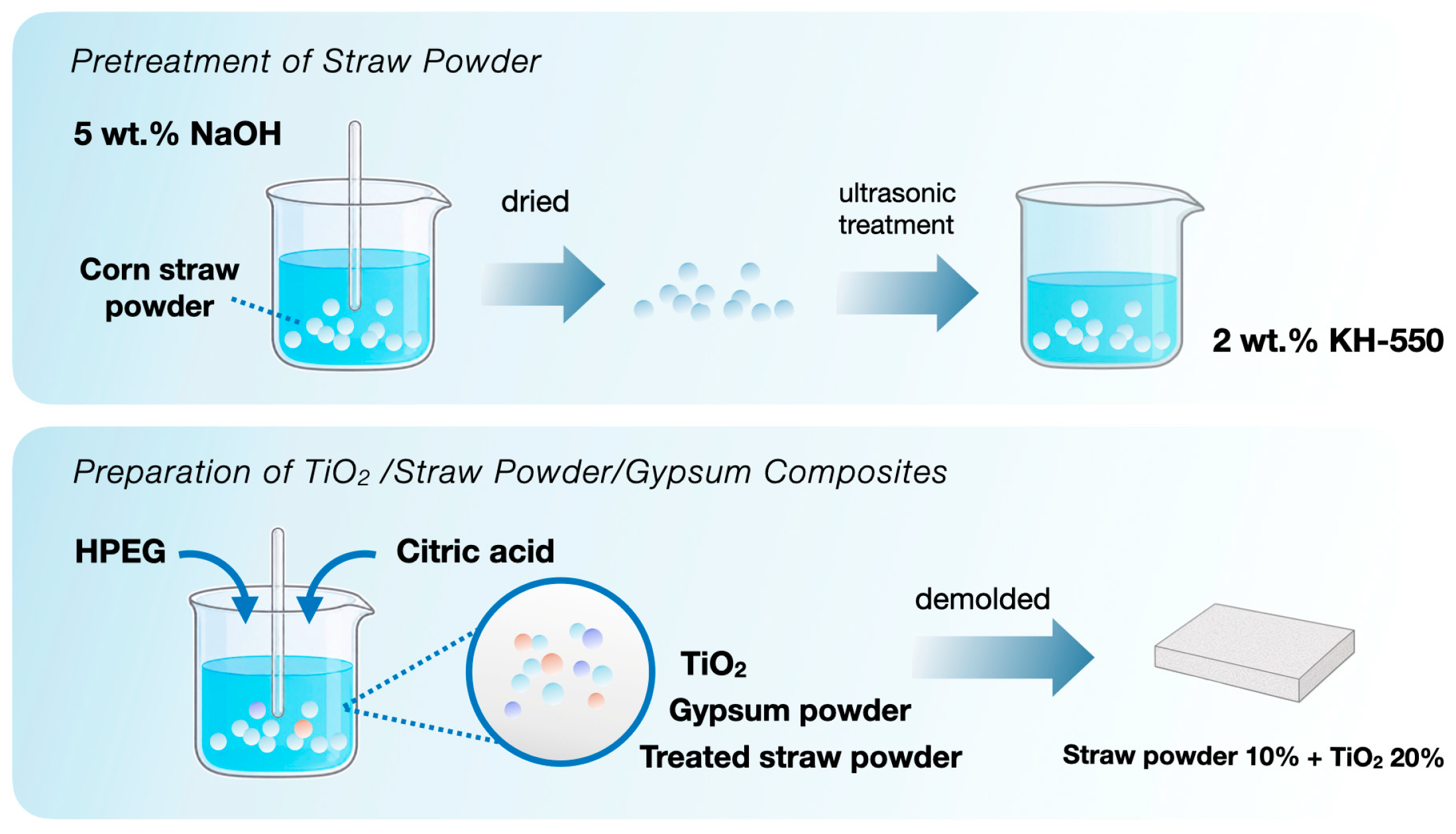
(1) Alkali treatment: The corn straw powder (which has a median particle size (d50) of approximately 15.54 μm, is mainly composed of cellulose, hemicellulose, and lignin, and exhibits an irregular block-like morphology) was immersed in a 5 wt.% NaOH solution and stirred in a water bath at 80 °C for 2 h; the solid-to-liquid ratio of corn straw powder to 5 wt.% NaOH solution was 1:10. After treatment, the suspension was filtered and repeatedly washed with deionized water until the filtrate reached a neutral pH. The washed straw powder was then dried at 80 °C for 24 h and stored for subsequent use.
(2) Silane coupling agent treatment (KH-550): A 2 wt.% KH-550 ethanol solution was used as the silane treatment agent. The alkali-treated straw powder was immersed in the KH-550 solution and subjected to ultrasonic treatment for 30 min. Subsequently, the treated straw powder was dried at 70 °C and activated at 105 °C for 1 h.

2.2.2. Preparation of TiO2/Straw Powder/Gypsum Composites

The base formulation (by mass) consisted of 100 parts gypsum powder; 65 parts water (water-to-gypsum ratio of 0.65, slightly adjusted according to the standard consistency); 10 wt.% straw powder; 0.5 wt.% polycarboxylic acid water-reducing agent (HPEG); 0.2 wt.% hydroxypropyl methylcellulose (HPMC); 0.1 wt.% citric acid; 2 wt.% redispersible polymer powder (RPP); and 1 wt.% calcium stearate. The percentages of the additives were calculated based on the mass of gypsum powder.
The polycarboxylate superplasticizer and citric acid were first dissolved in water and mixed thoroughly. The resulting solution was then added to the dry-mixed powders and stirred at 800 rpm for 3 min using a mechanical mixer. The slurry was allowed to stand for 1 min to facilitate preliminary deaeration, followed by slow stirring at 200 rpm for 1 min. Subsequently, the homogeneous slurry was poured into molds pre-coated with a release agent and vibrated on a vibrating table for 30 s to remove entrapped air bubbles. After standing at room temperature (20 ± 2 °C) for 1 h, the specimens were demolded and transferred to a temperature- and humidity-controlled chamber (20 ± 2 °C, 65 ± 5% RH) to cure for 7 days. According to the above formulation, three groups of composite materials were prepared by adding TiO2 (based on the mass of gypsum) at contents of 10 wt.%, 20 wt.%, and 30 wt.%, respectively. For each formulation, 3 parallel specimens were prepared for each test, and the average value was taken as the final result to ensure the reliability and representativeness of the data.The overall preparation procedure is illustrated in Figure 1.

2.3. Materials Analysis

To reveal the microstructure and performance enhancement mechanism of the composites, this study employed the following methods for sample characterization: X-ray diffraction (XRD, X’Pert PRO MPD, Almelo, The Netherlands) was used to analyze the phase composition of the composites; scanning electron microscopy (SEM, ZEISS Gemini 300, Oberkochen, Germany) was utilized to observe the cross-sectional morphology and microstructural features; thermogravimetric analysis (TGA, NETZSCH STA 449 F3, Selb, Germany) was conducted to evaluate the thermal stability and weight loss behavior of each component; Fourier transform infrared spectroscopy (FTIR, Thermo Scientific Nicolet iS20, Madison, WI, USA) was applied to analyze chemical bonding and functional group changes within the composites; a UV-Vis spectrophotometer (UV-Vis, Shimadzu UV-2600, Kyoto, Japan) was used to test the light reflection properties and optical absorption characteristics; X-ray photoelectron spectroscopy (XPS, Thermo Scientific K-Alpha, East Grinstead, UK) was employed to analyze the chemical states and bonding environments of surface elements; and the skeletal density was measured using a helium pycnometer (AccuPyc III 1350, Micromeritics Instrument Corp., Norcross, GA, USA). Through these characterization techniques, the intrinsic correlation between the microstructure and macroscopic properties of the composites was systematically explored.

3. Results and Discussion

3.1. Structural Analysis of Gypsum-Based Composites

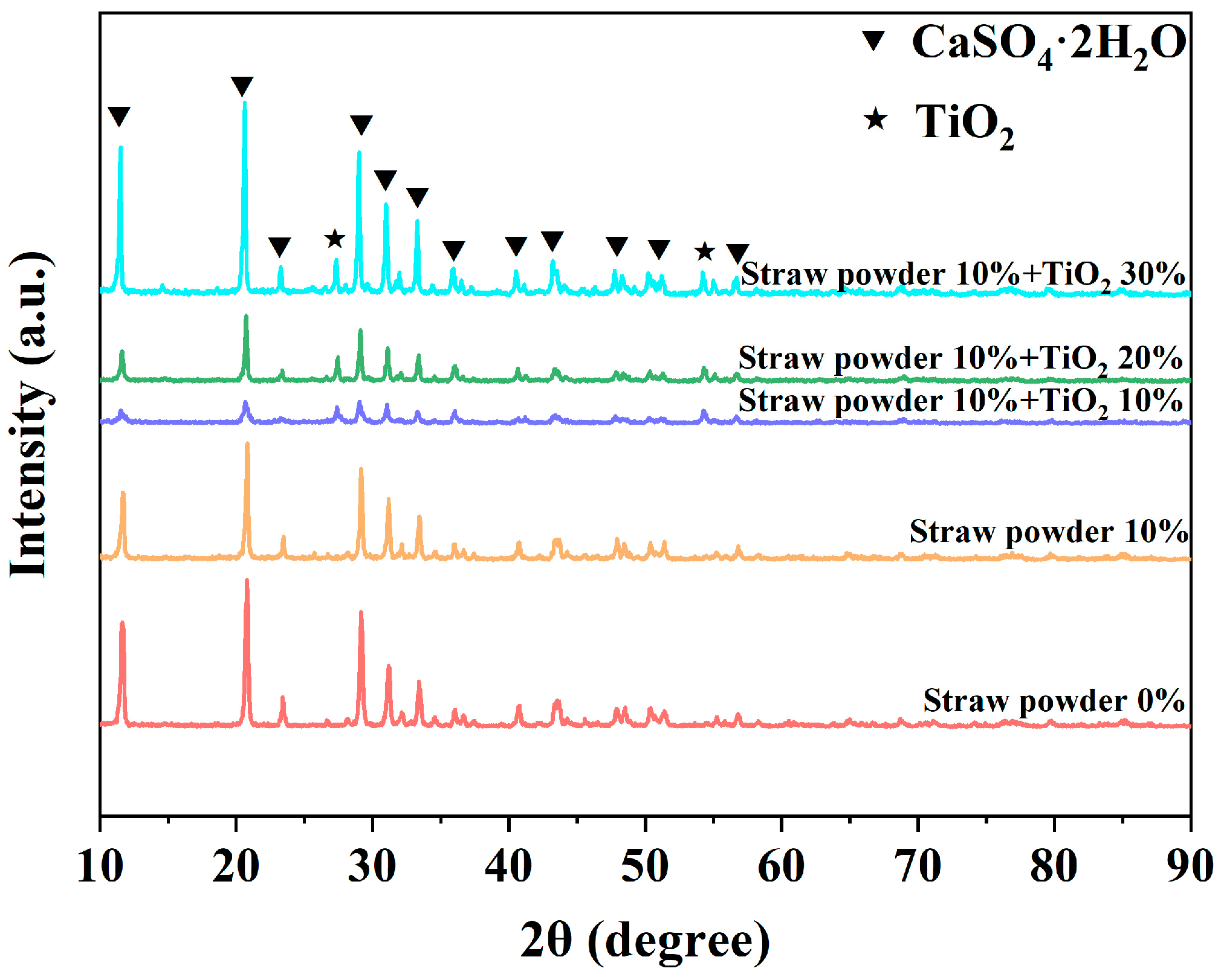
As shown in Figure 2, XRD results show that CaSO4·2H2O is the predominant crystalline phase in all samples. The incorporation of 10% straw powder causes no noticeable shift in the main diffraction peaks, indicating that the crystal structure of CaSO4·2H2O remains essentially unchanged. After TiO2 addition, characteristic diffraction peaks of TiO2 appear and become more pronounced with increasing TiO2 content, confirming its successful incorporation into the composite system. Meanwhile, the main diffraction peaks of CaSO4·2H2O remain nearly unchanged, with no obvious new crystalline phases detected. These results suggest that TiO2 addition does not induce a significant phase transformation of the matrix, and the system mainly exhibits a multiphase composite structure.
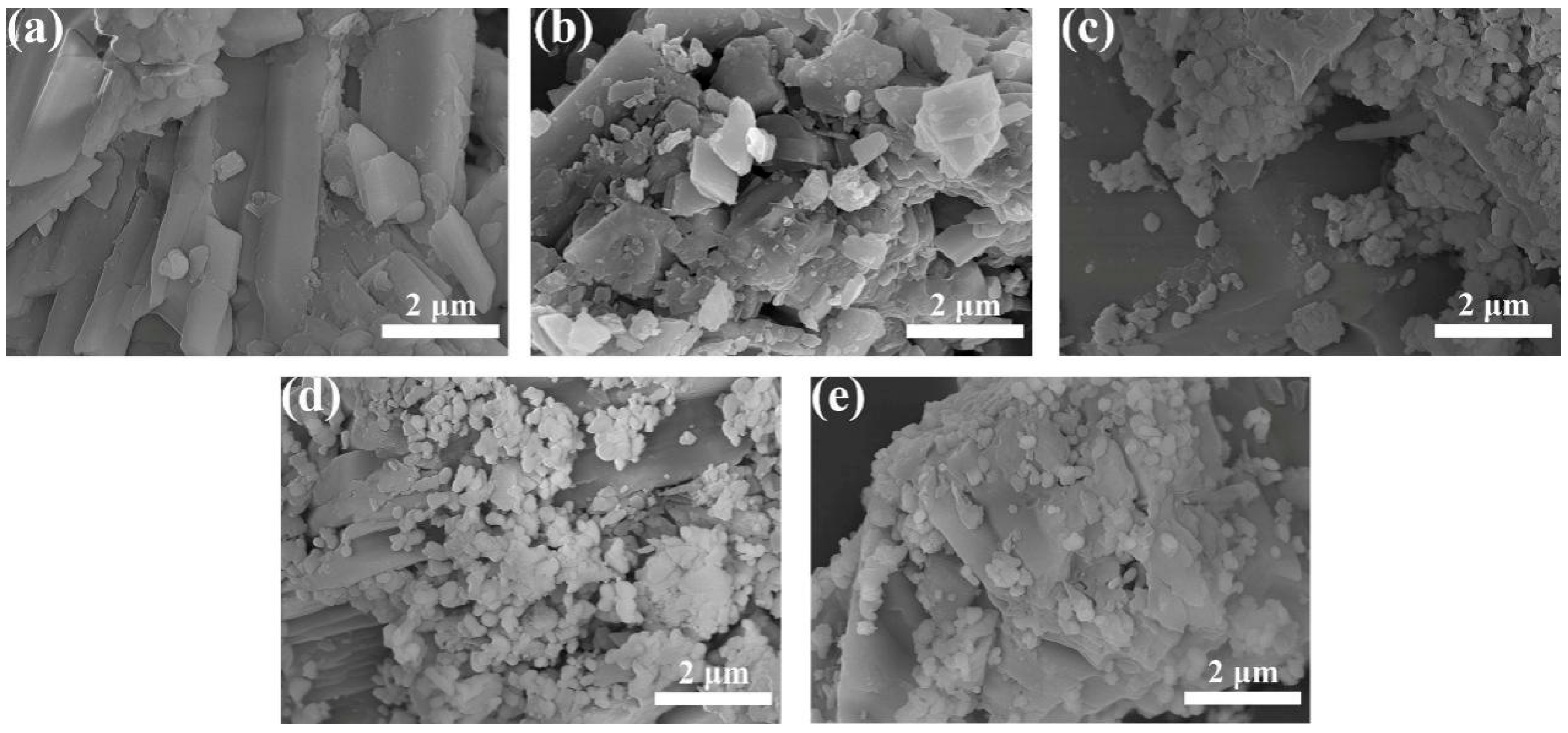
To further elucidate the interfacial modification effects of straw powder and TiO2 addition on the gypsum-based composites, as well as their influence on the internal microstructure, the specimens were characterized using SEM. As shown in Figure 3a, the pure gypsum sample exhibited typical plate-like and blocky crystalline morphologies with relatively loose packing and visible microvoids, indicating a porous internal structure. The corn straw powder exhibits an irregular block-like morphology, as shown in Figure 3b. After the incorporation of 10 wt.% modified straw powder, the number of internal interfaces increased, and the overall microstructure became less uniform. The presence of organic fibers disrupted the original crystal growth and packing behavior of gypsum, leading to a more heterogeneous morphology, which was consistent with the changes observed in the XRD results. With the addition of TiO2, the microstructure of the composites underwent further evolution. At 10 wt.% TiO2, as shown in Figure 3c, fine particles were observed to be distributed on the surfaces of gypsum crystals and along pore boundaries, which suggests that TiO2 was well dispersed within the gypsum matrix. This filling effect contributed to an increase in surface micro-roughness, which was beneficial for enhancing light-scattering behavior. As the TiO2 content increases to 20 wt.%, particle coverage on the crystal surfaces became more pronounced, indicating that a higher TiO2 content can further improve the surface structure of the composites, resulting in more extensive particulate coverage and greater surface roughness. When the TiO2 content is further increased to 30 wt.%, as shown in Figure 3e, the number of particles on the sample surface increased further, but localized particle agglomeration became evident. Some TiO2 particles were concentrated on the surfaces and edges of the gypsum crystals, forming localized agglomerated structures, which indicates that the dispersion uniformity of TiO2 within the gypsum matrix decreased when its content was too high. Excessive TiO2 particles were difficult to disperse completely and uniformly, tending to concentrate in localized regions and thus leading to particle agglomeration. Such agglomeration may introduce scattering heterogeneity, which is unfavorable for maintaining uniform optical performance.
To complement the qualitative SEM observations with bulk structural parameters, the apparent density of the composites was determined, and their porosity was calculated using Equation (1), as summarized in Table 2. The skeletal density was measured using a helium pycnometer. Prior to the measurement, all specimens were dried in an oven at 60 °C for 24 h until a constant mass was achieved. For each formulation, at least three parallel measurements were conducted, and the average value was adopted. The incorporation of 10 wt.% straw powder decreased the apparent density from 1.20 to 1.12 g/cm3 and increased the porosity from 46% to 52%, which can be attributed to the low density of the straw particles and the additional voids introduced at the straw–gypsum interfaces. With increasing TiO2 addition, the apparent density progressively increased from 1.23 to 1.33 g/cm3, while the porosity decreased from 48% to 45%. This trend can be mainly attributed to the relatively high density of TiO2 and the filling effect of fine TiO2 particles within the pores and interparticle spaces of the gypsum matrix. The results indicate that TiO2 incorporation contributed to a more compact microstructure of the composites. It should be noted that the incorporation of TiO2 affects both the apparent density and porosity of the composites through two mechanisms. On one hand, the intrinsic density of TiO2 (4.23–4.26 g/cm3) is much higher than that of the gypsum matrix (~2.3 g/cm3), so its addition inevitably increases the overall apparent density of the composite. On the other hand, TiO2 particles can fill the intercrystalline pores and interfacial microcracks within the gypsum matrix, resulting in a genuine pore-filling effect.
P   =   1     ρ a ρ s   ×   100 %
where P is the porosity (%), ρa is the apparent density calculated from the specimen mass and geometric volume, and ρs is the skeletal density measured using a helium pycnometer.

3.2. Performance Analysis of Gypsum-Based Composites

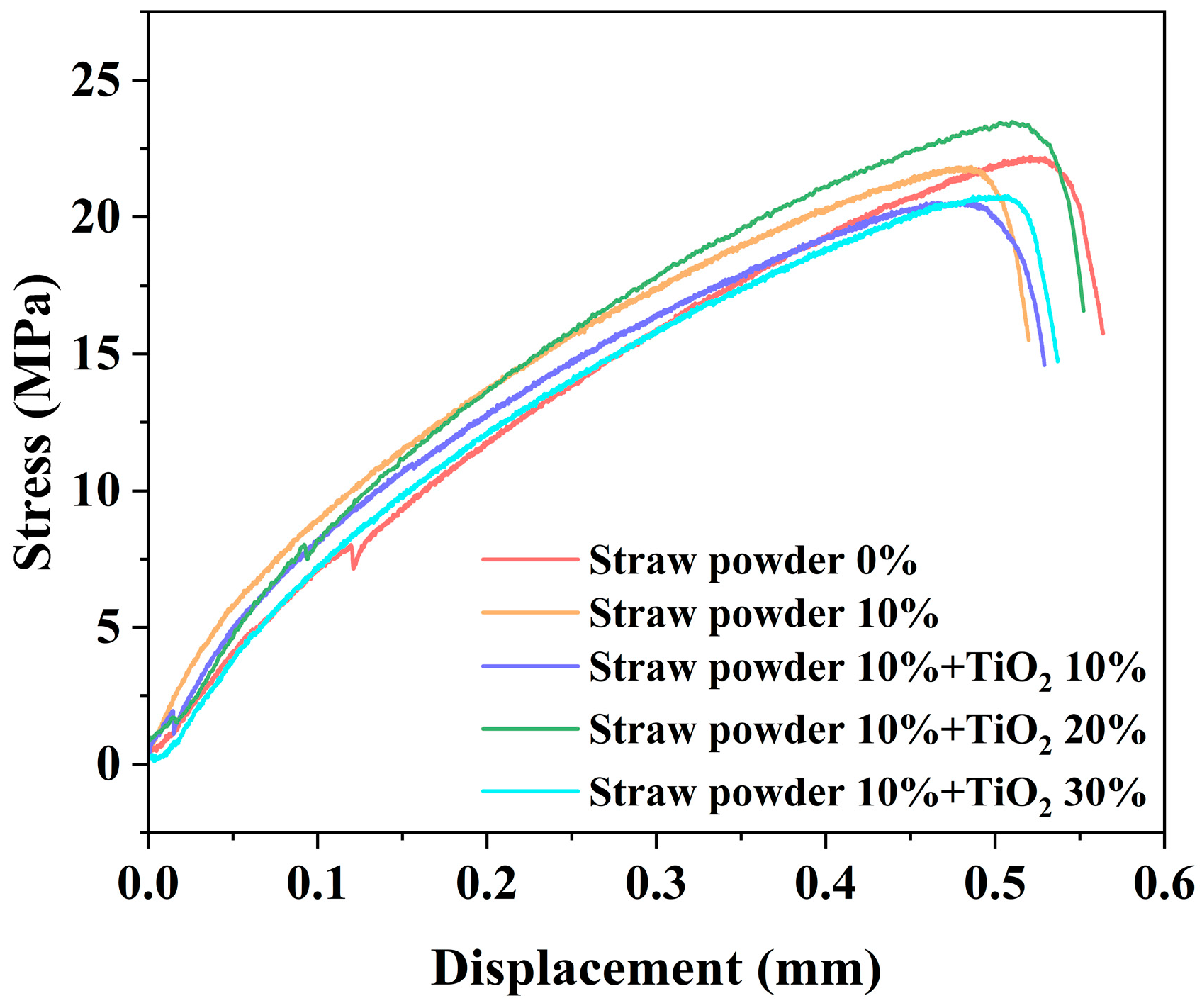
Figure 4 presents the compressive stress–displacement curves of the composites obtained from uniaxial compression tests. The compressive stress–displacement curves were obtained using an INSTRON 3369 universal testing machine (capacity 50 kN, class 0.5 accuracy) at a loading rate of (2400 ± 200) N/min. The specimen size was 40 mm × 40 mm × 40 mm cubes, with three parallel specimens prepared for each formulation, and the average value was taken as the final result. The tests were conducted in accordance with GB/T 17669.3-1999 [25]. The compressive strength results (Figure 4) showed that the mechanical performance of the gypsum-based composites initially increased and then decreased with increasing TiO2 content, with the specimen containing 20 wt.% TiO2 exhibiting the optimal compressive performance. Incorporating modified straw powder alone resulted in a noticeable reduction in compressive strength. This decrease was attributable to the relatively low stiffness of the biomass filler and the introduction of heterogeneous organic–inorganic interfaces, which promoted the formation of microvoids and interfacial defects, thereby weakening the continuity of the load-bearing network within the gypsum matrix. Following the incorporation of TiO2, the compressive strength increased significantly. This improvement can be attributed to the pore-filling effect of fine TiO2 particles, enhanced interfacial bonding, and more efficient stress transfer throughout the composite, leading to increased structural compactness and load-bearing capacity. At a TiO2 content of 20 wt.%, these reinforcing effects reached an optimal balance, resulting in the maximum compressive strength. This observation was consistent with the SEM results, which revealed a denser microstructure and a more uniform distribution of TiO2 particles at this composition. However, when the TiO2 content was further increased to 30 wt.%, the compressive strength decreased. This deterioration was likely associated with particle agglomeration, disruption of gypsum crystallization, and the generation of localized stress concentrations, all of which reduced the effectiveness of reinforcement. With reference to the test method in GB/T 17669.3-1999 and the Grade 4.0 (the highest grade) dry compressive-strength requirement in GB/T 9776-2022 (≥15.0 MPa), the composite containing 20 wt.% TiO2 achieved a compressive strength of approximately 23 MPa, which is higher than the basic load-bearing requirement of this grade [26]. This provides preliminary evidence that the composite possesses sufficient load-bearing capacity to support its own weight in the intended exhibition projection-wall application. Nevertheless, it should be noted that this study remains at the laboratory research stage with small specimen sizes, and the above conclusions require further verification through scaled-up fabrication and systematic testing at actual component scale. The enhancement can be attributed to two main mechanisms: first, TiO2 particles filled the intercrystalline pores and grain boundaries, reducing porosity and densifying the microstructure, thereby alleviating stress concentration (Figure 3c,d); second, at 20 wt.% TiO2, the particles were uniformly distributed on the gypsum crystal surfaces and interfaces, forming good physical interlocking and interfacial bonding that facilitated effective load transfer and delayed crack propagation. However, at 30 wt.% TiO2 (Figure 3e), localized particle agglomeration occurred, introducing stress concentrations and non-uniform defects, which led to a decrease in strength. These results indicate that 20 wt.% TiO2 is the optimal content, achieving the best balance between filling densification and interfacial strengthening. Therefore, the mechanical performance of the composites was essentially governed by the combined effects of interfacial bonding between the different phases and the compactness of the microstructure.
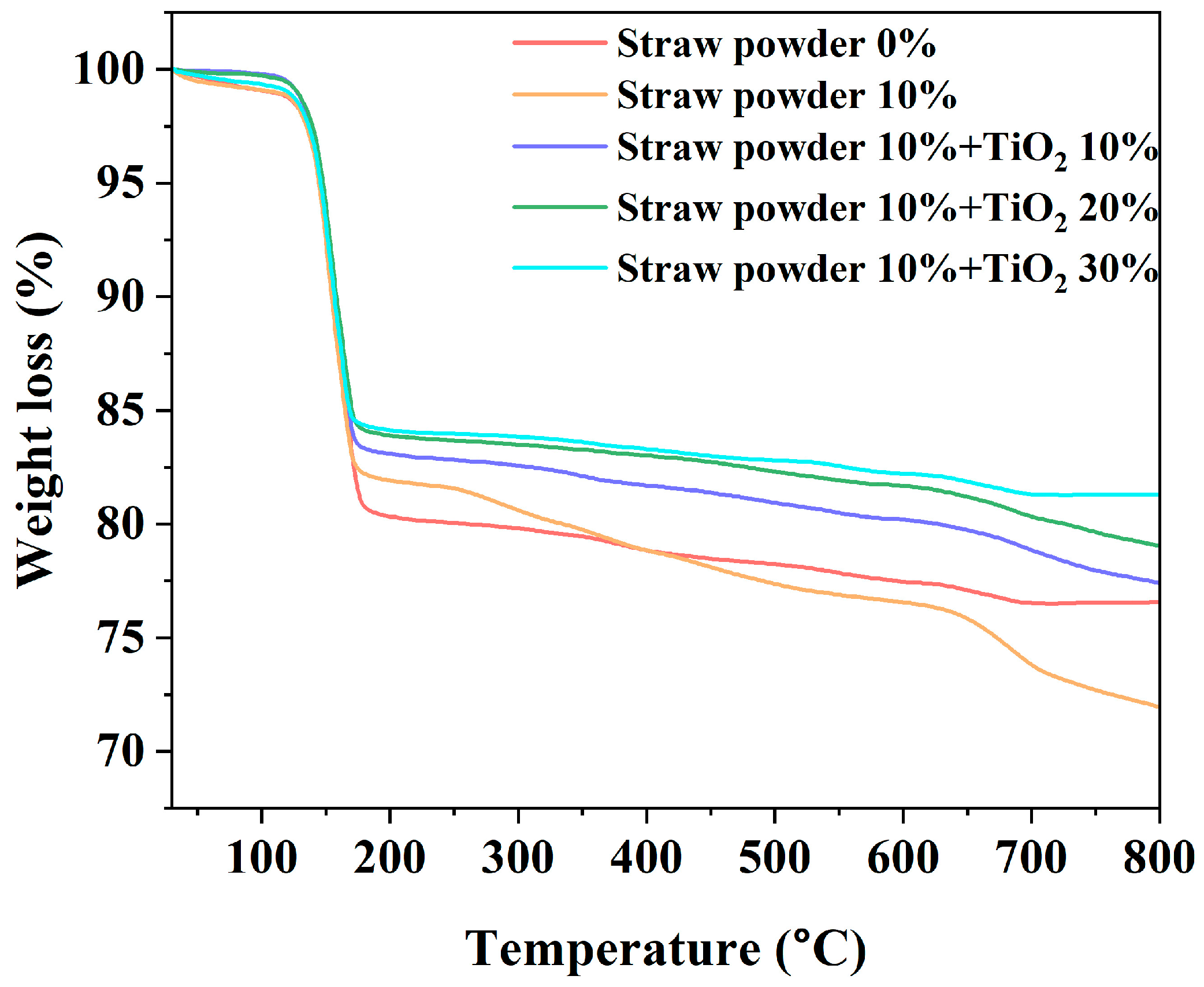
To evaluate the influence of TiO2 incorporation on the thermal stability of the gypsum-based composites, TGA was conducted, and the results are shown in Figure 5. It can be observed that the thermal weight loss process for all sample groups can be divided into three stages: the low-temperature region primarily corresponds to the evaporation of free water and adsorbed water; the medium-temperature region primarily corresponds to the removal of crystalline water from gypsum; and the high-temperature region is related to the continuous decomposition of organic components in straw, such as cellulose, hemicellulose, and lignin. Compared with pure gypsum, the straw powder-modified composites exhibited a greater mass loss in the high-temperature region and a lower residual mass, indicating that the incorporation of the organic phase reduced the thermal stability of the composite to some extent. With increasing TiO2 content, the residual mass at elevated temperatures gradually increased, suggesting an apparent improvement in thermal stability, which may be attributed to the increased proportion of thermally stable inorganic TiO2 in the composite. This apparent enhancement may arise from two primary factors. First, TiO2 is a thermally stable inorganic phase that increases the fraction of thermally stable constituents within the composite. Second, the incorporation of TiO2 promoted microstructural densification, which may be beneficial for reducing heat transfer efficiency and may partially inhibit further thermal degradation of the organic components. Among all specimens, the composite with 30 wt.% TiO2 addition exhibited the highest residual mass, indicating higher apparent thermal stability under the tested TGA conditions. However, the speculation requires further verification through thermal conductivity/diffusivity measurements in future work.
Table 3 presents the water absorption behavior of gypsum-based composite materials with varying straw powder and TiO2 contents, calculated as the percentage increase in specimen mass relative to its initial dry mass during 72 h of water immersion. The pure gypsum specimen (Straw powder 0%) exhibited a continuous mass gain throughout the immersion period, reaching a total mass increase of 1.72% after 72 h. After the incorporation of 10 wt.% modified straw powder alone, the mass increase after 72 h decreased to 0.79%. The water resistance of samples containing a combination of straw powder and TiO2 was significantly improved, and this improvement became more pronounced as the TiO2 content increased. The specimen containing 10 wt.% TiO2 exhibited a mass gain of only 0.65% after 72 h of immersion, while the sample containing 20 wt.% TiO2 showed minimal additional mass increase during the later stages of immersion, indicating that water uptake had approached equilibrium. Further increasing the TiO2 content to 30 wt.% reduced the total mass gain to 0.22%, demonstrating the lowest water absorption among all specimens. This improvement can be attributed to the ability of TiO2 to regulate the growth and packing of gypsum hydration crystals, which likely refines the pore structure and reduces the matrix porosity, thereby effectively inhibiting the penetration and adsorption of water molecules. The improvement in water resistance can be attributed to the pore-filling effect of TiO2 particles, which blocked water penetration pathways and reduced water absorption. This mechanism is consistent with previous reports: Li et al. found that TiO2 improved water resistance in gypsum–lime-modified soil through pore filling and structural stabilization, achieving a water absorption of only 0.84% and a strength retention rate of 93.1%; Gasan et al. also confirmed that TiO2 treatment significantly reduced the water absorption (9–21%) of gypsum-based artificial stone, with a softening coefficient of 0.6–0.82 [27,28]. The incorporation of TiO2 significantly reduced the water absorption of gypsum-based composites under short-term immersion conditions (72 h), indicating good short-term resistance to water penetration. However, the long-term waterproofing and durability of the material under actual service conditions require further verification through longer-term immersion tests, wet–dry cycling, or freeze–thaw cycling tests.
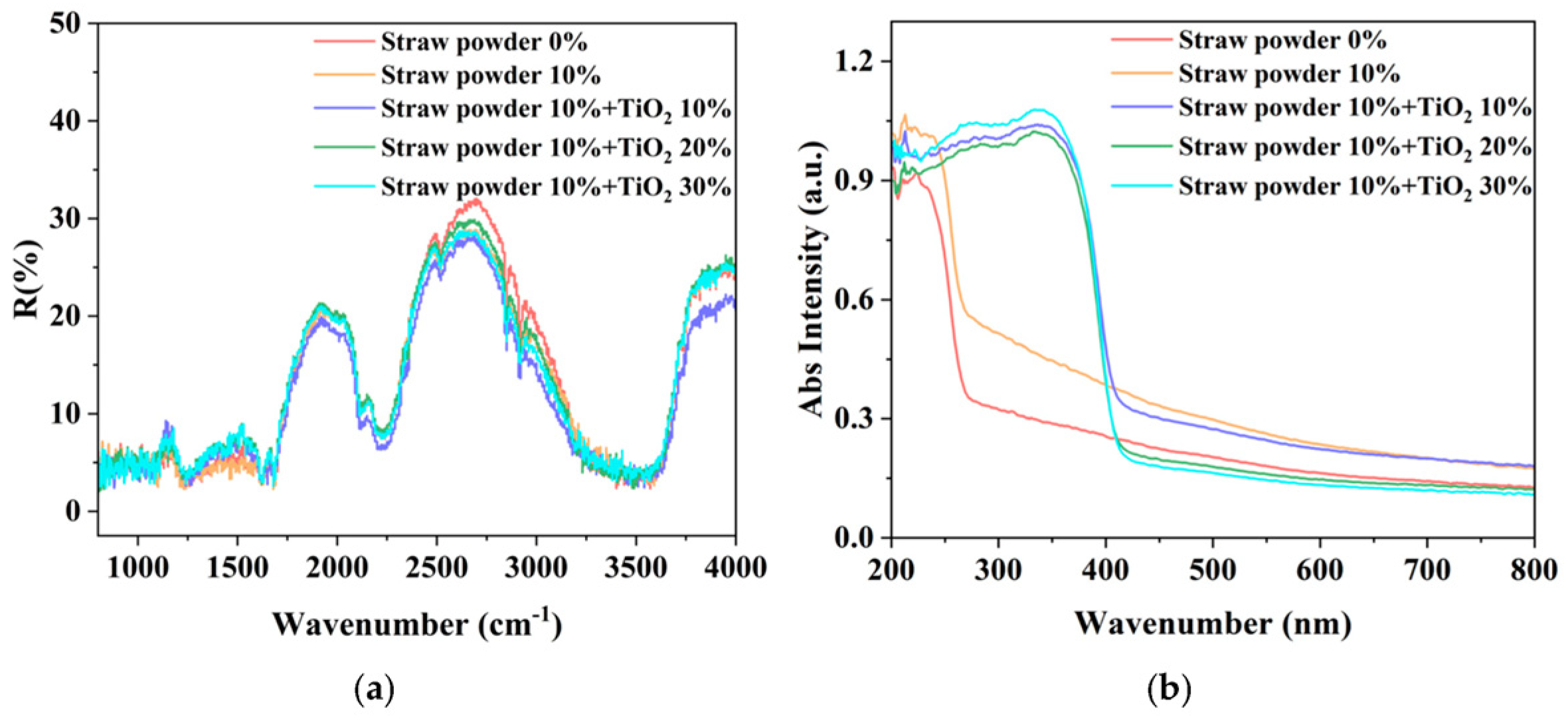
The infrared reflectance results (Figure 6a) show that the overall infrared reflectance of the samples decreased after the addition of straw powder. After the addition of TiO2, however, the reflectance of the composites in certain mid-infrared bands improved. This enhancement can be attributed to the high refractive index of TiO2, which enhanced the scattering and interfacial reflection of infrared radiation by the material, thereby reducing radiative heat transfer. Nevertheless, the infrared reflectance did not increase linearly with increasing TiO2 content, suggesting that the optical response was governed not only by filler loading but also by particle dispersion, interfacial compatibility, and pore structure, which collectively influenced light-scattering efficiency. The UV absorption results (Figure 6b) further demonstrated the synergistic optical effect of modified straw powder and TiO2. The incorporation of modified straw powder increased visible light absorption owing to the presence of aromatic structures and chromophores in organic components such as lignin in the straw. With the further addition of TiO2, the optical absorption was enhanced, accompanied by improved UV absorption performance. This finding indicated a synergistic interaction between the organic and inorganic phases, in which the straw powder provided intrinsic organic absorption centers, while TiO2 further enhanced UV attenuation through the absorption and scattering effects of inorganic particles.
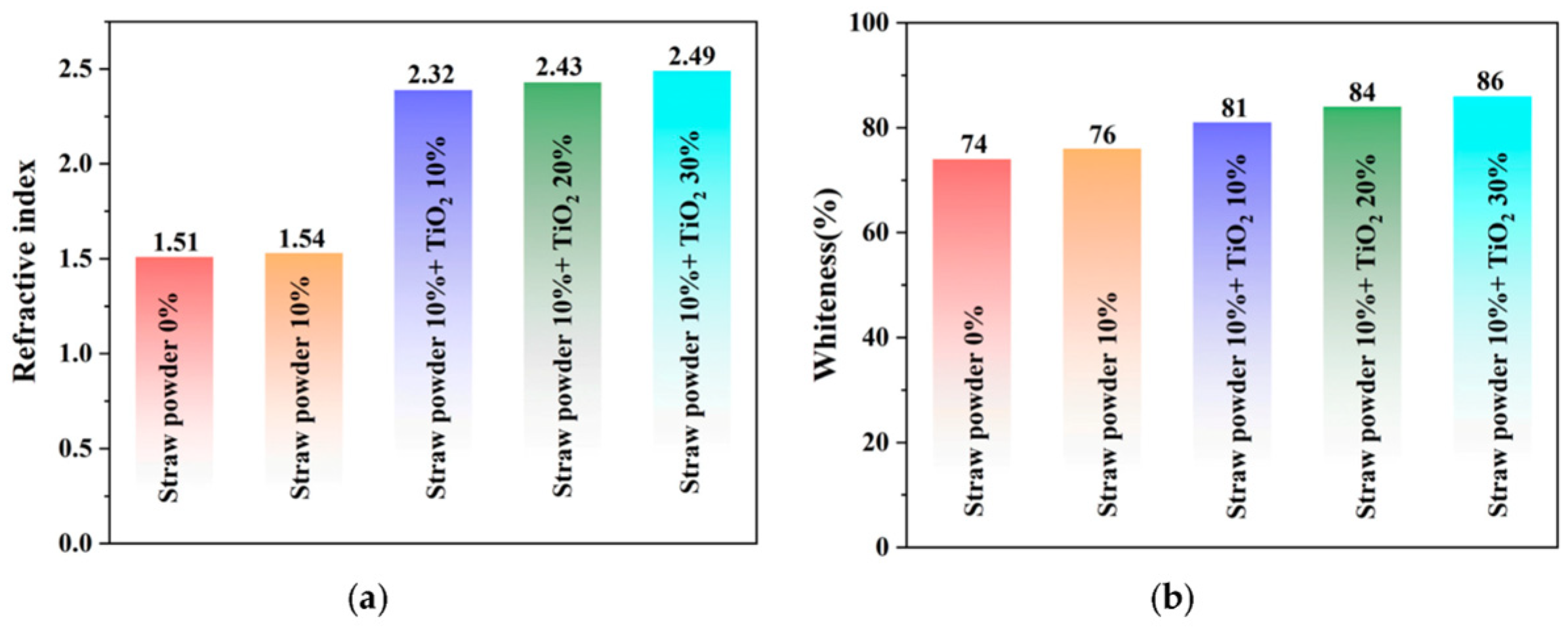
Refractive index was measured using the prism coupling technique with a Metricon 2010 prism coupler, providing a measurement range of 1.00–3.35, which fully covers the high refractive index range of the composites in this study. A 632.8 nm He-Ne laser was used as the light source. The samples were prepared as thin sheets with smooth surfaces (approximately 2 mm in thickness). The refractive index was determined by measuring the coupling mode angles at which total internal reflection occurred at the prism–sample interface. Three different positions on each sample were measured, and the average value was taken as the final result. Figure 7 presents the refractive index and whiteness of the gypsum-based composites with different straw powder and TiO2 contents, as measured using a prism coupler and a whiteness meter. The pure gypsum sample had a low refractive index (approximately 1.52) and limited whiteness, which restricted its suitability for high-performance projection media. The incorporation of 10 wt.% modified straw powder alone resulted in only marginal improvements in both refractive index and whiteness. Although pretreatment of the straw powder improved interfacial compatibility, its inherent refractive properties and color limited the enhancement of optical performance. Upon further introduction of TiO2, the refractive index and whiteness of the composites increased as the TiO2 content increased. At a TiO2 content of 20 wt.%, the refractive index was substantially higher than that of pure gypsum. When the TiO2 content was further increased to 30 wt.%, however, the improvement became less pronounced, indicating that 20 wt.% TiO2 content represented the optimal loading level. Analysis of these results suggested that TiO2 possessed a high refractive index (approximately 2.75 for the rutile phase) and excellent white pigment properties. When its nanoparticles were uniformly dispersed in the gypsum matrix, they effectively masked the underlying color of the gypsum and straw powder, thereby reducing light absorption losses. Furthermore, the pretreated straw powder improved interfacial bonding with the gypsum, reducing the adverse effects of interfacial defects on light transmission. The synergistic effect of TiO2 and straw powder resulted in significant improvements in both the refractive index and whiteness of the modified gypsum-based composite material, providing a core optical foundation for its use as a high-performance, sustainable projection medium.

3.3. Mechanisms for Improving the Properties of Gypsum-Based Composites

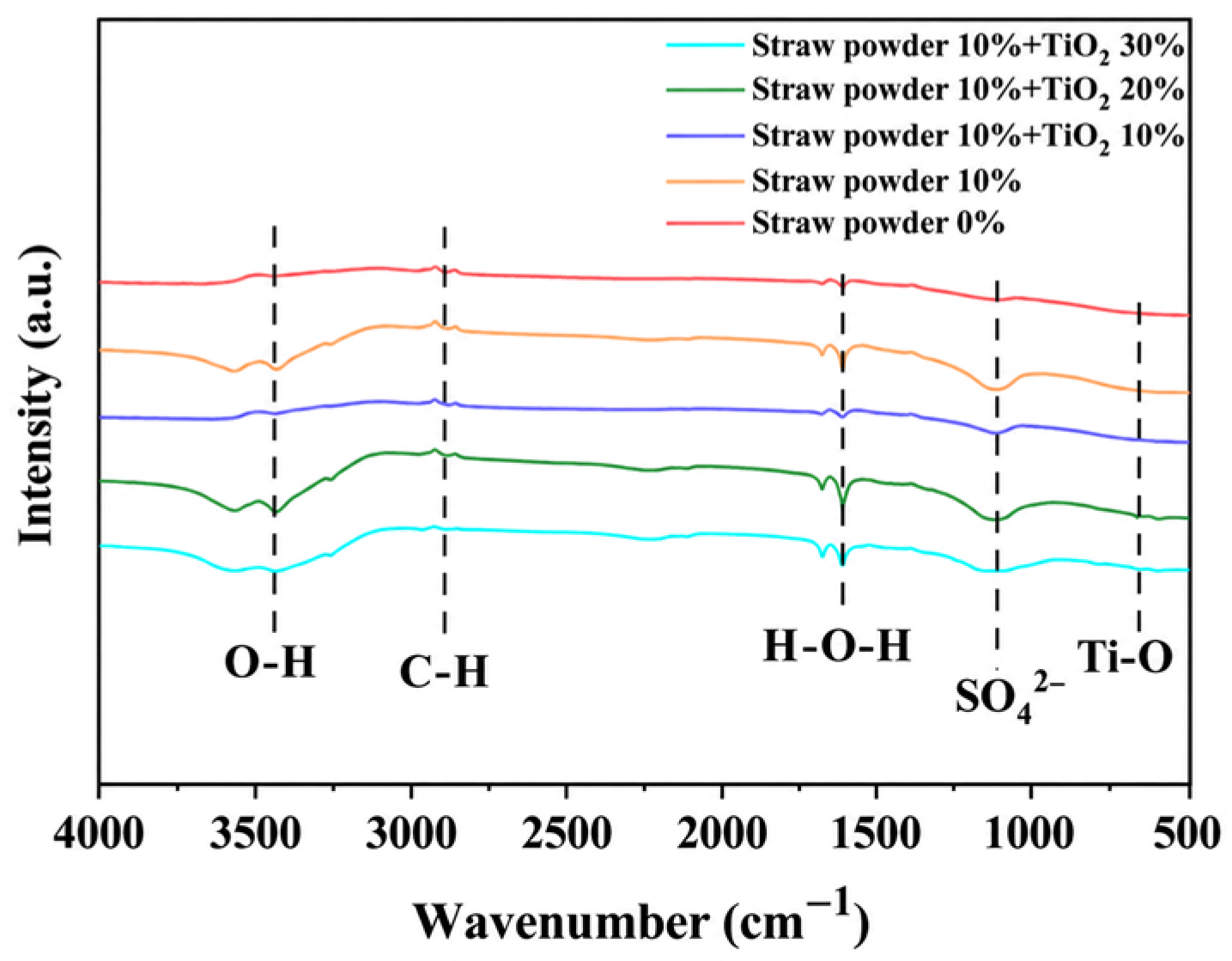
As shown in Figure 8, the FTIR spectra of the gypsum-based composites exhibit several characteristic absorption bands. The broad absorption band at approximately 3400 cm−1 is assigned to the O-H stretching vibration [ν(O-H)], originating mainly from crystalline/adsorbed water in the gypsum matrix and hydroxyl groups in the straw powder. The weak band near 2920 cm−1 corresponds to the C-H stretching vibration [ν(C-H)] of aliphatic -CH2 and -CH3 groups in the lignocellulosic components of the straw powder. The absorption band around 1620 cm−1 is attributed to the H-O-H bending vibration [δ(H-O-H)] of crystalline and adsorbed water. The prominent absorption band at approximately 1150 cm−1 is associated with the asymmetric stretching vibration of sulfate groups [ν3(SO42−)] in the gypsum matrix. After the incorporation of TiO2, changes in the absorption characteristics in the low-wavenumber region can also be associated with Ti-O and Ti-O-Ti lattice vibrations. As shown in Figure 8, after the addition of 10 wt.% straw powder, a C-H stretching vibration peak appeared at 2920 cm−1, and the relative intensity of the O-H peak at 3400 cm−1 slightly increased, indicating the introduction of organic components from the straw. The peak area of the O-H band also slightly increased after 10 wt.% straw powder addition, which is attributed to the contribution of hydroxyl groups from cellulose and hemicellulose in the straw. With further TiO2 addition, the relative intensity of the SO42− characteristic peak at 1150 cm−1 slightly decreased, and a broadened absorption band appeared in the low-wavenumber region (approximately 800–500 cm−1), attributable to Ti-O lattice vibrations. In addition, the O-H peak position at 3400 cm−1 showed a slight shift with increasing TiO2 content, suggesting that hydrogen bonding or weak chemical interactions may exist between TiO2 and the gypsum matrix, affecting the chemical environment of the OH groups. The peak area of the O-H band initially decreased and then stabilized with increasing TiO2 content, which may be related to the interfacial interaction between TiO2 particles and the gypsum matrix, as well as the reduced adsorbed water content following TiO2-induced densification. Moreover, the peak area of the SO42− characteristic peak at 1150 cm−1 showed no significant change after TiO2 addition, indicating that TiO2 incorporation did not alter the main chemical structure of the gypsum matrix. Overall, the characteristic absorption bands of the gypsum matrix are retained after the incorporation of straw powder and TiO2, while variations in band intensity and shape indicate changes in the local chemical environment and interfacial interactions among gypsum, modified straw powder, and TiO2.
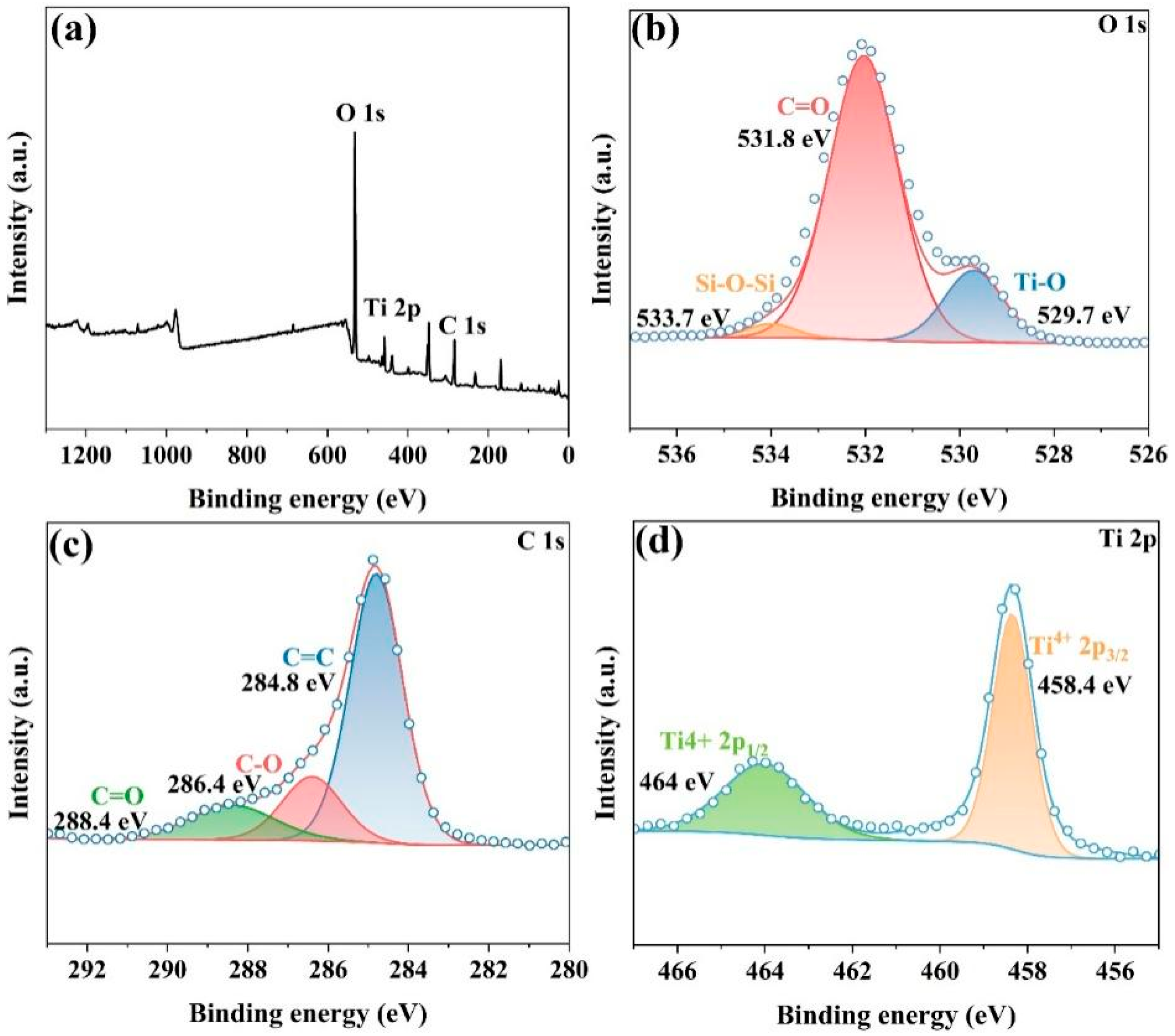
To analyze the surface elemental composition and chemical state of the composite material, as well as their relationship with performance, XPS testing was conducted on the samples (Figure 9). The survey spectrum revealed the presence of O 1s, C 1s, Si 2p, and Ti 2p signals, confirming the coexistence of the inorganic gypsum matrix, modified straw powder, and TiO2 within the composite system. The Ti-O bond at 529.7 eV in the O 1s spectrum and the Ti4+ characteristic peaks at 458.4 and 464.0 eV in the Ti 2p spectrum indicated that TiO2 was present as a chemically stable oxide phase. The incorporation of the Ti-O bond increased the proportion of the inorganic stabilizing phase in the composites to enhance the material’s chemical stability. In addition, the Ti-O bond possesses strong ultraviolet absorption and light-scattering capabilities, which can mitigate the photo-induced oxidative degradation of organic components in straw, including cellulose, hemicellulose, and lignin, thereby improving the material’s resistance to photo-oxidative aging [29]. Characteristic peaks such as C-O and C=O in the O1s and C 1s spectra confirmed that the organic phase of the straw participates in the construction of the composite. The Si-O-Si peak at 533.7 eV indicated that a siloxane network was formed following the hydrolytic condensation of KH-550. This siloxane structure acted as a chemical bridge between the organic straw phase and the inorganic gypsum matrix, enhancing interfacial compatibility, reducing structural defects, and making the composite more stable. From an optical perspective, the chemically stable TiO2 phase also served as a high-refractive-index inorganic component that promoted light scattering and diffuse reflection, thereby contributing to the enhanced refractive index, whiteness, and projection performance observed in the optical characterization [30]. Overall, the XPS results showed that chemical interactions involving Ti-O, C-O, C=O, and Si-O-Si bonds established a stable organic–inorganic interface within the gypsum-based composites. The combined effects of chemical coupling, structural stabilization, and the intrinsic optical properties of TiO2 provided the key mechanism responsible for the improved mechanical durability, environmental stability, and optical performance of the composites.
It should be noted that the silane coupling agent treatment increases process complexity and cost, and its enhancement of the macroscopic mechanical properties of the composite is limited in this study. However, this treatment plays a positive role in improving the interfacial compatibility between the straw powder and the gypsum matrix, reducing interfacial defects, and maintaining the stability of the composite. In future work, more economically viable interfacial modification strategies could be explored, or the pretreatment process could be simplified where performance requirements permit.
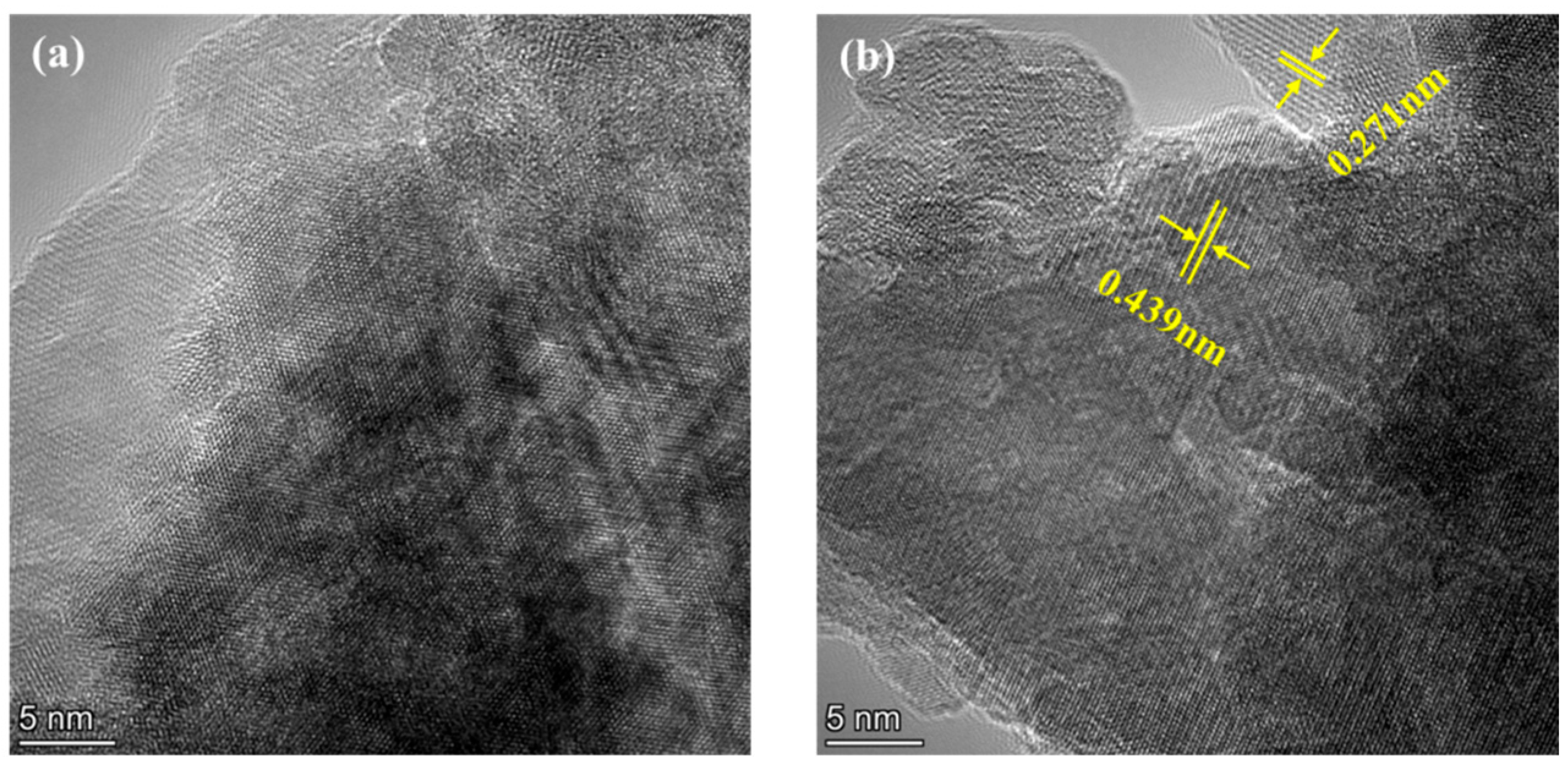
Figure 10 shows high-resolution transmission electron microscopy images of gypsum-based composites with different TiO2 contents. As shown in Figure 10a, the pure gypsum sample without added TiO2 exhibited coarse grains and blurred grain boundaries. However, in Figure 10b, the composite containing 20 wt.% TiO2 displayed significantly refined grains and well-defined lattice fringes, indicating a more ordered microstructure. The observed grain refinement suggested that TiO2 nanoparticles act as heterogeneous nucleation sites during the hydration of gypsum, promoting uniform crystal nucleation and inhibiting excessive grain growth. Grain refinement increased the number of grain boundaries, effectively hindering crack propagation and thereby improving the structural stability of the composite material. Moreover, the refined microstructure facilitated a more homogeneous distribution of TiO2 within the gypsum matrix, increasing the number of refractive-index discontinuities and light-scattering interfaces and enhancing the brightness and clarity of the projected image. At the same time, the photocatalytic self-cleaning function of TiO2 helped maintain the surface of the medium clean over the long term, providing a microstructural foundation for the development of stable, efficient, and sustainable projection materials.

3.4. Analysis of Low-Carbon Environmental Benefits of the Composites

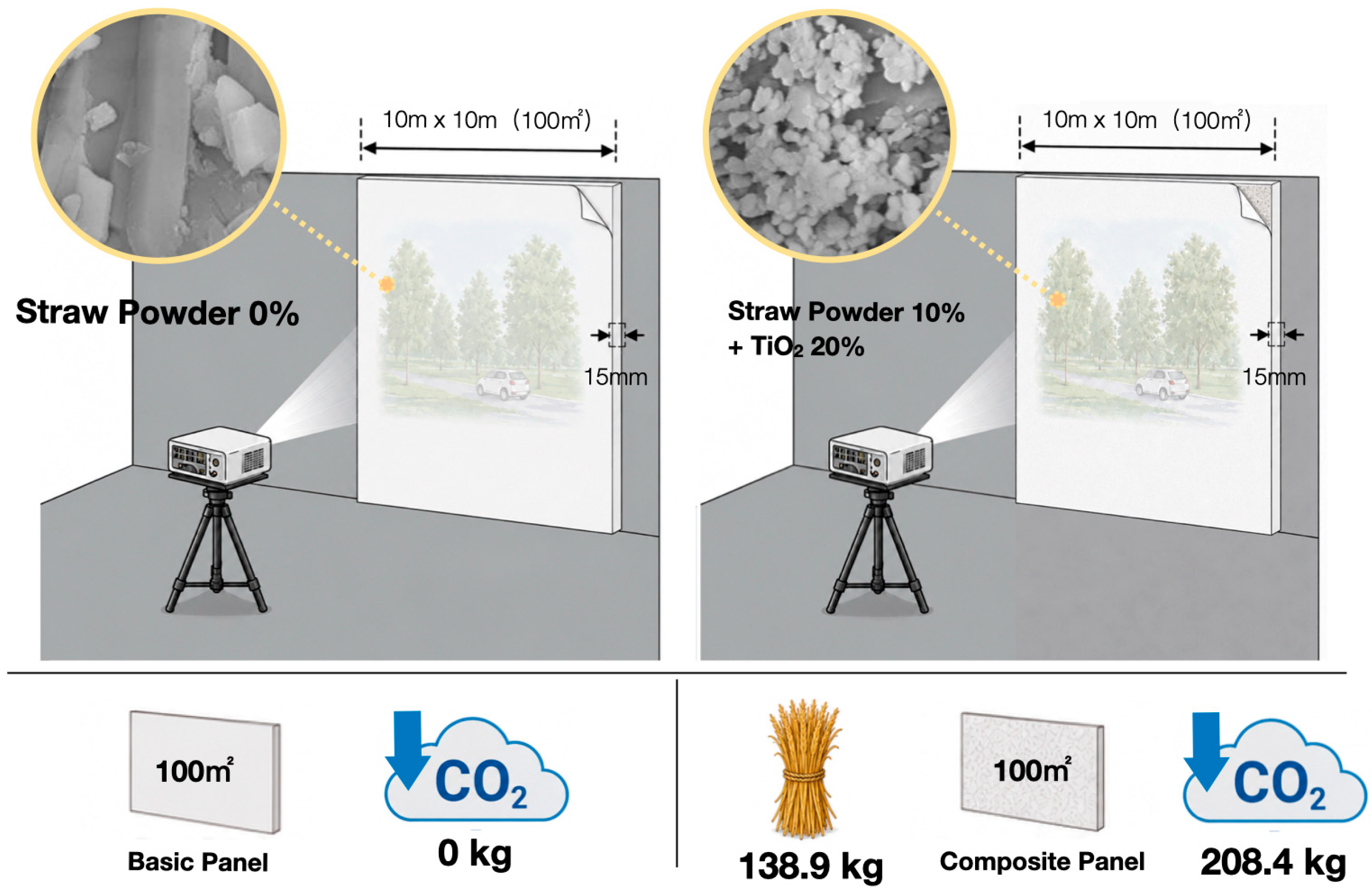
Table 4 and Table 5 present a preliminary scenario-based estimate of the agricultural waste valorization potential of the straw/TiO2-modified gypsum composite, with the aim of illustrating the potential magnitude of straw utilization and the associated environmental benefits under the specified assumptions. As shown in Table 4, the composite incorporating 10 wt.% pretreated straw powder enables the consumption of 92.6 kg (with a straw content of 10 wt.% and a composite density of ~926 kg/m3, the material consumes 92.6 kg of straw per cubic meter) of agricultural straw waste per cubic meter of finished product, replacing 10 wt.% of natural gypsum raw materials. In contrast, pure gypsum offers no capacity for solid waste utilization. For a classic public exhibition projection wall measuring 100 m2 with a plate thickness of 15 mm, the required volume of composite would be 1.5 m3. According to the scenario calculation presented in Table 5, this wall can incorporate 138.9 kg of waste straw, potentially avoiding the open-field burning of the same amount of straw and the associated direct release of approximately 208.4 kg of CO2, as schematically illustrated in Figure 11. These results provide a preliminary indication of the potential magnitude of agricultural waste valorization and reduced demand for natural gypsum associated with the developed composite, thereby providing a reference for further evaluation of its potential environmental benefits in exhibition and display applications. It should be noted that the above CO2 reduction estimation is a simplified illustration based on idealized assumptions. The calculation boundary is limited to two components: straw substitution for natural gypsum (on an equal-mass basis) and the avoidance of open-field burning. Energy consumption and emissions from straw collection/transportation, chemical treatment, TiO2 production, and composite fabrication are not included. In addition, the emission factor adopts the IPCC default value (1.5 kg CO2/kg straw) without considering process-specific variations in actual practice. Therefore, this estimation is intended to qualitatively demonstrate the potential environmental benefits of agricultural waste valorization, rather than to provide a precise carbon footprint based on a complete life cycle assessment. For practical engineering applications, a more systematic life cycle assessment should be conducted, taking into account specific process routes and regional energy structures.
Given that this material is intended for use in exhibition scenarios, its decomposition behavior in the natural environment after disposal also deserves attention. Gypsum (CaSO4·2H2O) has a solubility of approximately 2 g/L in water and can gradually decompose through physical fragmentation and dissolution, releasing sulfate and calcium ions [31,32]. These ions are ubiquitous in the environment and are essential for plant growth. Spent gypsum materials can also be reused as soil amendments or recycled as raw materials for building products [33]. TiO2 nanoparticles exhibit good chemical stability, and the potential environmental release pathways include erosion or degradation of the host material, rainfall-induced wash-off and leaching, and improper disposal or incineration [34,35]. In this study, they are dispersed and embedded within the gypsum matrix rather than existing as free nanoparticles, which may reduce the risk of environmental release to some extent. However, because no leaching tests were conducted in this study, the actual release behavior of TiO2 and its associated environmental risks require systematic assessment through appropriate leaching and aging tests. Future work will further evaluate TiO2 nanoparticle release and gypsum leaching.

4. Conclusions

This study developed gypsum-based composites modified synergistically with pretreated straw powder and TiO2 to improve the optical efficiency of projection media while addressing the environmental-sustainability requirements of display materials. The microstructure, overall performance, and enhancement mechanisms were systematically investigated. The main conclusions are as follows:
(1) XRD showed that TiO2 incorporation did not disrupt the dominant gypsum phase, which remained relatively intact at 20 wt.% TiO2. SEM observations indicated that TiO2 particles filled intercrystalline pores and transformed the microstructure from loosely packed to rough and dense. Straw powder alone reduced compressive strength, whereas subsequent TiO2 addition restored and improved it; the 20 wt.% TiO2 sample achieved the best balance between strength and structural stability. TGA further showed that TiO2 increased the proportion of thermally stable inorganic phases and enhanced composite thermal stability.
(2) Water Resistance and Optical Properties: TiO2 significantly reduced the pore connectivity of gypsum-based composites and enhanced interfacial density, thereby improving water resistance. In addition, due to its high refractive index and properties as a white pigment, TiO2 enhanced the material’s light scattering, reflectivity, UV-shielding capability, refractive index, and whiteness. Specifically, when TiO2 content at 20 wt.%, both the refractive index and whiteness increased substantially relative to pure gypsum, which may be beneficial for improving brightness and light-utilization efficiency in projection-surface applications.
(3) Straw powder and TiO2 contributed primarily to interfacial regulation and functional reinforcement, respectively. FTIR and XPS showed that KH-550 hydrolysis and condensation generated Si-O-Si bridges that improved organic–inorganic interfacial compatibility, while stable Ti-O bonds enhanced chemical stability. TiO2 nanoparticles also served as heterogeneous nucleation sites, promoting grain refinement, increasing grain-boundary density, and creating a more uniform light-scattering interface. These mechanisms jointly improved mechanical stability and projection performance. The scenario-based assessment indicates the potential environmental benefits of the gypsum-based composite.
This study integrated straw powder and TiO2 into a gypsum-based system to simultaneously enhance the utilization of biomass resources and improve the optical performance of the material. The developed composites exhibited improved whiteness, increased refractive index, and enhanced resistance to water penetration, indicating their potential as a more stable and functional gypsum-based optical medium. The synergistic modification strategy provides an effective approach for tailoring the microstructure and optical properties of gypsum-based materials. These findings offer a theoretical basis and design guidance for sustainable projection media and exhibition applications in urban public spaces.

Author Contributions

Conceptualization, B.Y.; Methodology, Y.Z.; Software, B.Y.; Resources, Y.Z.; Data curation, B.Y.; Writing—original draft, B.Y.; Writing-Review and editing, Y.Z.; Supervision, Y.Z.; Visualization, Y.Z.; Project administration, Y.Z.; Funding acquisition, Y.Z. All authors have read and agreed to the published version of the manuscript.

Funding

This research received no external funding.

Data Availability Statement

The original contributions presented in this study are included in the article. Further inquiries can be directed to the corresponding author.

Conflicts of Interest

The authors declare no conflicts of interest.

References

  1. Mine, M.R.; van Baar, J.; Grundhöfer, A.; Rose, D.; Yang, B. Projection-Based Augmented Reality in Disney Theme Parks. Computer 2012, 45, 32–40. [Google Scholar] [CrossRef] [Scilit]
  2. Mishmastnehi, M.; Van Driessche, A.E.S.; Smales, G.J.; Moya, A.; Stawski, T.M. Advanced Materials Engineering in Historical Gypsum Plaster Formulations. Proc. Natl. Acad. Sci. USA 2023, 120, e2208836120. [Google Scholar] [CrossRef] [Scilit] [PubMed]
  3. Otunla, R.A.; Adeleke, A.A.; Olosho, A.I.; Ogedengbe, T.S.; Ikubanni, P.P.; Rasheed, H.A.; Bamgbade, A.A. Gypsum in the 21st Century: Multifaceted Applications and Emerging Opportunities. J. Eng. Appl. Sci. 2026, 73, 57. [Google Scholar] [CrossRef] [Scilit]
  4. Jia, R.; Wang, Q.; Feng, P. A Comprehensive Overview of Fibre-Reinforced Gypsum-Based Composites (FRGCs) in the Construction Field. Compos. Part B Eng. 2021, 205, 108540. [Google Scholar] [CrossRef] [Scilit]
  5. Esan, M.T. Review of Gypsum Reinforced Composites as Building Materials. Discov. Civ. Eng. 2024, 1, 5. [Google Scholar] [CrossRef] [Scilit]
  6. Zaragoza-Benzal, A.; Ferrández, D.; Santos, P.; Atanes-Sánchez, E. Lightweight Gypsum Composite Material to Improve Energy Efficiency: Assessment of Physico-Chemical, Mechanical, Thermal and Fire Performance Properties. Mater. Construc. 2025, 75, e377. [Google Scholar] [CrossRef] [Scilit]
  7. Beijing International Horticultural Exhibition Coordination Bureau. Annals of Expo 2019 Beijing; Beijing International Horticultural Exhibition Coordination Bureau: Beijing, China, 2021; pp. 114–115. Available online: https://aiph.org/wp-content/uploads/2021/10/ENGLISH-Annals-of-Expo-2019-Beijing-by-the-Expo-Bureau.pdf (accessed on 21 June 2026).
  8. Pereira, A.; Palha, F.; de Brito, J.; Silvestre, J.D. Diagnosis and Repair of Gypsum Plaster Coatings: Statistical Characterization and Lessons Learned from a Field Survey. J. Civ. Eng. Manag. 2014, 20, 485–496. [Google Scholar] [CrossRef] [Scilit]
  9. Kim, B.K.; Han, Y.B.; Beom, D.G. Study on the Application of Coating Agents for the Conservation of Painted Plaster Sculptures. J. Conserv. Sci. 2026, 42, 221–234. [Google Scholar] [CrossRef] [Scilit]
  10. Iqbal, A.; Mubin, S.; Riaz, A.; Masood, R.; Iqbal, A. Thermo-Mechanical Properties of the Gypsum Composites Reinforced with Natural and Recycled Fibers. J. Asian Archit. Build. Eng. 2025, 25, 3389–3405. [Google Scholar] [CrossRef] [Scilit]
  11. Souidi, A.; Atigui, M.; Maaloufa, Y.; Amazal, M.; Oubeddou, S.; Mounir, S.; Aharoune, A. Comparative Study of Gypsum Composite Materials Reinforced with Date Palm and Polyester Fibres. Rev. Compos. Mater. Av. 2024, 34, 133–142. [Google Scholar] [CrossRef] [Scilit]
  12. Lima, L.; Zaragoza-Benzal, A.; Ferrández, D.; Atanes-Sánchez, E.; Santos, P. Durability and Fire Performance of Gypsum Composites Reinforced with Recycled Polyethylene Fibers. Appl. Sci. 2026, 16, 1489. [Google Scholar] [CrossRef] [Scilit]
  13. Feng, C.; Wang, Y.; Wang, L.; Zhao, X.; Zhang, W.; Zhu, J.; Du, M. Improving the Water Resistance of Gypsum-Based Building Materials with Slag Activated by Calcium Oxide. J. CO2 Util. 2024, 90, 102996. [Google Scholar] [CrossRef] [Scilit]
  14. Zaragoza-Benzal, A.; Ferrández, D.; Santos, P.; Morón, C. Study of the Water-Resistant Properties of New Eco-Friendly Gypsum Composites with Additions from Single-Use Plastic Waste. Eng. Proc. 2023, 53, 26. [Google Scholar] [CrossRef] [Scilit]
  15. Wang, Y.; Song, J.; Hu, Z.; Zhang, Y.; Guan, Z.; Yang, H. Mechanical and Water Resistance Properties of Strain Hardening Fiber Reinforced Gypsum-Based Composites. Constr. Build. Mater. 2024, 425, 136116. [Google Scholar] [CrossRef] [Scilit]
  16. Khalil, A.A.; Tawfik, A.; Hegazy, A.A. Plaster Composites Modified Morphology with Enhanced Compressive Strength and Water Resistance Characteristics. Constr. Build. Mater. 2018, 167, 55–64. [Google Scholar] [CrossRef] [Scilit]
  17. Wang, Y.Y.; Li, G.Z.; Bai, Y.T. Performance of Corn Straw Fibre/Desulfurization Gypsum Composite Materials. Acta Mater. Compos. Sin. 2010, 27, 94–99. [Google Scholar]
  18. Wang, Y.Y.; Li, G.Z. Surface Modification of Cornstalk Fiber and Properties of Cornstalk Fiber/Gypsum Composites. Adv. Mater. Res. 2011, 306–307, 766–769. [Google Scholar] [CrossRef] [Scilit]
  19. Kołodziejczak-Radzimska, A.; Jesionowski, T. Zinc Oxide-From Synthesis to Application: A Review. Materials 2014, 7, 2833–2881. [Google Scholar] [CrossRef] [Scilit] [PubMed]
  20. Zhang, H.; Kim, B.N.; Morita, K.; Yoshida, H.; Lim, J.-H.; Hiraga, K. Optical Properties and Microstructure of Nanocrystalline Cubic Zirconia Prepared by High-Pressure Spark Plasma Sintering. J. Am. Ceram. Soc. 2011, 94, 2981–2986. [Google Scholar] [CrossRef] [Scilit]
  21. Lee, K.T.; Choi, B.H.; Woo, J.U.; Kang, J.S.; Paik, J.H.; Chu, B.U.; Nahm, S. Microstructural and Optical Properties of the ZnS Ceramics Sintered by Vacuum Hot-Pressing Using Hydrothermally Synthesized ZnS Powders. J. Eur. Ceram. Soc. 2018, 38, 4237–4244. [Google Scholar] [CrossRef] [Scilit]
  22. Anselmi-Tamburini, U.; Woolman, J.N.; Munir, Z.A. Transparent Nanometric Cubic and Tetragonal Zirconia Obtained by High-Pressure Pulsed Electric Current Sintering. Adv. Funct. Mater. 2007, 17, 3267–3273. [Google Scholar] [CrossRef] [Scilit]
  23. Fujishima, A.; Zhang, X.; Tryk, D.A. TiO2 Photocatalysis and Related Surface Phenomena. Surf. Sci. Rep. 2008, 63, 515–582. [Google Scholar] [CrossRef] [Scilit]
  24. Chen, X.; Mao, S.S. Titanium Dioxide Nanomaterials: Synthesis, Properties, Modifications, and Applications. Chem. Rev. 2007, 107, 2891–2959. [Google Scholar] [CrossRef] [Scilit] [PubMed]
  25. GB/T 17669.3-1999; Gypsum Plasters—Determination of Mechanical Properties. Standards. Standards Press of China: Beijing, China, 1999.
  26. GB/T 9776-2022; Calcined Gypsum. Standards Press of China: Beijing, China, 2022.
  27. Li, W.; Bao, W.; Huang, Z.; Li, Y.; Guo, Y.; Wang, M. Enhanced Water Resistance of TiO2-GO-SMS-Modified Soil Composite for Use as a Repair Material in Earthen Sites. Materials 2024, 17, 4610. [Google Scholar] [CrossRef] [Scilit] [PubMed]
  28. Gasan, Y.; Drozdova, O.; Tarasevych, V.; Hryhorchuk, O. Effective Method of Improving the Performance Properties of Wall Products on the Basis of the Gypsum Binder. Am. J. Chem. Eng. 2024, 12, 29–33. [Google Scholar] [CrossRef] [Scilit]
  29. Guo, D.; Zhang, J.; Sha, L.; Liu, B.; Zhang, X.; Zhang, X.; Xue, G. Preparation and Characterization of Lignin-TiO2 UV-Shielding Composite Material by Induced Synthesis with Nanofibrillated Cellulose. BioResources 2020, 15, 7374–7389. [Google Scholar] [CrossRef] [Scilit]
  30. Tawfilas, M.; Bartolini Torres, G.; Lorenzi, R.; Saibene, M.; Mauri, M.; Simonutti, R. Transparent and high-refractive-index titanium dioxide/thermoplastic polyurethane nanocomposites. ACS Omega 2024, 9, 29339–29349. [Google Scholar] [CrossRef] [Scilit] [PubMed]
  31. Bolan, N.S.; Syers, J.K.; Sumner, M.E. Dissolution of Various Sources of Gypsum in Aqueous Solutions and in Soil. J. Sci. Food Agric. 1991, 57, 527–541. [Google Scholar] [CrossRef] [Scilit]
  32. Taherdangkoo, R.; Tian, M.; Sadighi, A.; Meng, T.; Yang, H.; Butscher, C. Experimental Data on Solubility of the Two Calcium Sulfates Gypsum and Anhydrite in Aqueous Solutions. Data 2022, 7, 140. [Google Scholar] [CrossRef] [Scilit]
  33. Abdolvand, Y.; Sadeghiamirshahidi, M. Soil Stabilization with Gypsum: A Review. J. Rock Mech. Geotech. Eng. 2024, 16, 5278–5296. [Google Scholar] [CrossRef] [Scilit]
  34. Solymos, K.; Babcsányi, I.; Ariya, B.; Gyulavári, T.; Ágoston, Á.; Kukovecz, Á.; Kónya, Z.; Pap, Z. Environmental Significance of the Interaction between Titanium Dioxides and Soil Solutions. Environ. Sci. Eur. 2024, 36, 85. [Google Scholar] [CrossRef] [Scilit]
  35. Chandoliya, R.; Sharma, S.; Sharma, V.; Joshi, R.; Sivanesan, I. Titanium Dioxide Nanoparticle: A Comprehensive Review on Synthesis, Applications and Toxicity. Plants 2024, 13, 2964. [Google Scholar] [CrossRef] [Scilit] [PubMed]
Figure 1. Experimental flowchart.
Processes 14 02968 g001
Figure 2. XRD patterns of gypsum-based composites with different straw powder/TiO2 contents.
Processes 14 02968 g002
Figure 3. SEM morphologies of gypsum-based composites with different straw powder/TiO2 contents: (a) straw powder 0%; (b) straw powder 10%; (c) straw powder 10% + TiO2 10%; (d) straw powder 10% + TiO2 20%; (e) straw powder 10% + TiO2 30%.
Processes 14 02968 g003
Figure 4. Compressive stress–displacement curves for gypsum-based composites with different proportions of straw powder and TiO2.
Processes 14 02968 g004
Figure 5. TGA curves of gypsum-based composites with different straw powder/TiO2 contents.
Processes 14 02968 g005
Figure 6. Optical properties of gypsum-based composites with different content of straw powder and TiO2: (a) infrared reflectance spectra; (b) ultraviolet–visible absorption spectra.
Processes 14 02968 g006
Figure 7. Optical properties of gypsum-based composites with different straw powder/TiO2 content: (a) refractive index; (b) whiteness.
Processes 14 02968 g007
Figure 8. FTIR spectra of gypsum-based composites with different straw powder/TiO2 contents.
Processes 14 02968 g008
Figure 9. XPS spectra of straw powder 10% + TiO2 20% composites: (a) full spectrum; (b) O 1s; (c) C 1s; (d) Ti 2p.
Processes 14 02968 g009
Figure 10. High-resolution transmission electron microscope images of gypsum-based composites with different TiO2 contents: (a) 0%; (b) 20%.
Processes 14 02968 g010
Figure 11. Schematic illustration of straw utilization and the potential low-carbon environmental benefits of the composites.
Processes 14 02968 g011
Table 1. Physical properties of nano-TiO2.
PropertyMolecular WeightPurityParticle SizeCrystal PhaseSpecific Surface AreaDensityRefractive Index
Value79.87 g/mol 99.9% <60
nm
Rutile~150
m2/g
4.23–4.26 g/cm32.70–2.75
Table 2. Apparent density and calculated porosity of gypsum-based composites with different straw powder/TiO2.
Sample GroupApparent Density (g/cm3)Porosity (%)
Straw powder 0%1.246
Straw powder 10%1.1252
Straw powder 10%+ TiO2 10%1.2348
Straw powder 10%+ TiO2 20%1.3046
Straw powder 10%+ TiO2 30%1.3345
Table 3. Mass change (%) in gypsum-based composite material with different straw powder/TiO2 content after immersion in water.
Sample Group24 h36 h48 h60 h72 h
Straw powder 0%0.30%0.71%1.49%1.61%1.72%
Straw powder 10%0.16%0.24%0.37%0.55%0.79%
Straw powder 10% + TiO2 10%0.13%0.21%0.35%0.47%0.65%
Straw powder 10% + TiO2 20%0.07%0.12%0.23%0.32%0.36%
Straw powder 10% + TiO2 30%0.04%0.09%0.13%0.21%0.22%
Table 4. Solid waste utilization and natural gypsum replacement performance of the composite as a function of straw content.
Sample GroupStraw Consumption (kg/m3)Gypsum Substitution Rate (wt.%)
Straw powder 0%00
Straw powder 10% + TiO2 20%92.610
Table 5. Total straw waste consumed and associated CO2 emission reductions in a representative 100 m2 exhibition wall application.
Sample GroupStraw Consumption (kg)CO2 Emission Reduction (kg)
Straw powder 0%00
Straw powder 10% + TiO2 20%138.9208.4
Disclaimer/Publisher’s Note: The statements, opinions and data contained in all publications are solely those of the individual author(s) and contributor(s) and not of MDPI and/or the editor(s). MDPI and/or the editor(s) disclaim responsibility for any injury to people or property resulting from any ideas, methods, instructions or products referred to in the content.