Article

An Analytical Method for Estimating Large-Scale Cave Volume in Fractured-Vuggy Carbonate Reservoirs of the Tarim Basin, China

1
Oil and Gas Development Management Department, Sinopec Northwest Oilfield Company, Urumqi 830011, China
2
Sinopec Key Laboratory of Enhanced Oil Recovery in Fractured-Vuggy Reservoirs, Sinopec Northwest Oilfield Company, Urumqi 830011, China
3
Department of Modern Mechanics, University of Science and Technology of China, Hefei 230026, China
4
Anhui Inflywell Technology Co., Ltd., Hefei 230088, China
*
Author to whom correspondence should be addressed.
Processes 2026, 14(18), 2966; https://doi.org/10.3390/pr14182966 (registering DOI)
Submission received: 4 August 2026 / Revised: 15 September 2026 / Accepted: 16 September 2026 / Published: 17 September 2026
(This article belongs to the Special Issue Application of Advanced Numerical Simulation in Petroleum Engineering)

Abstract

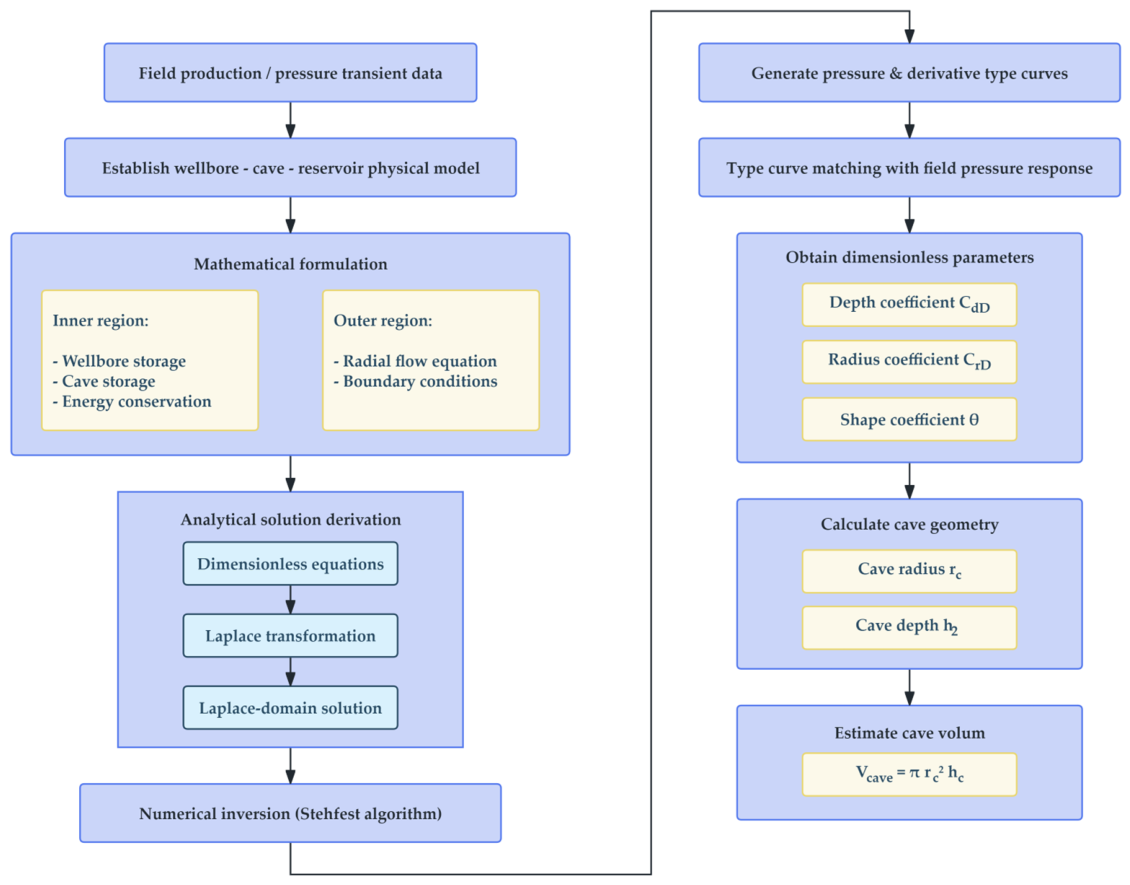
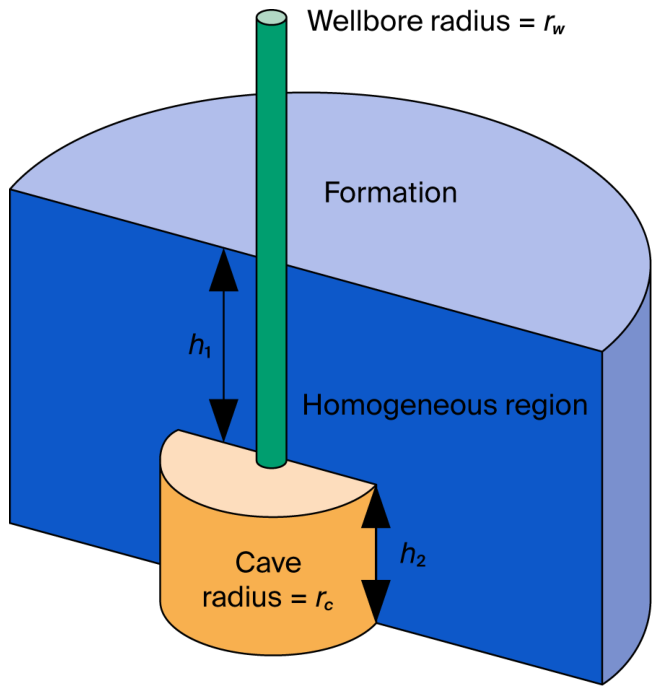
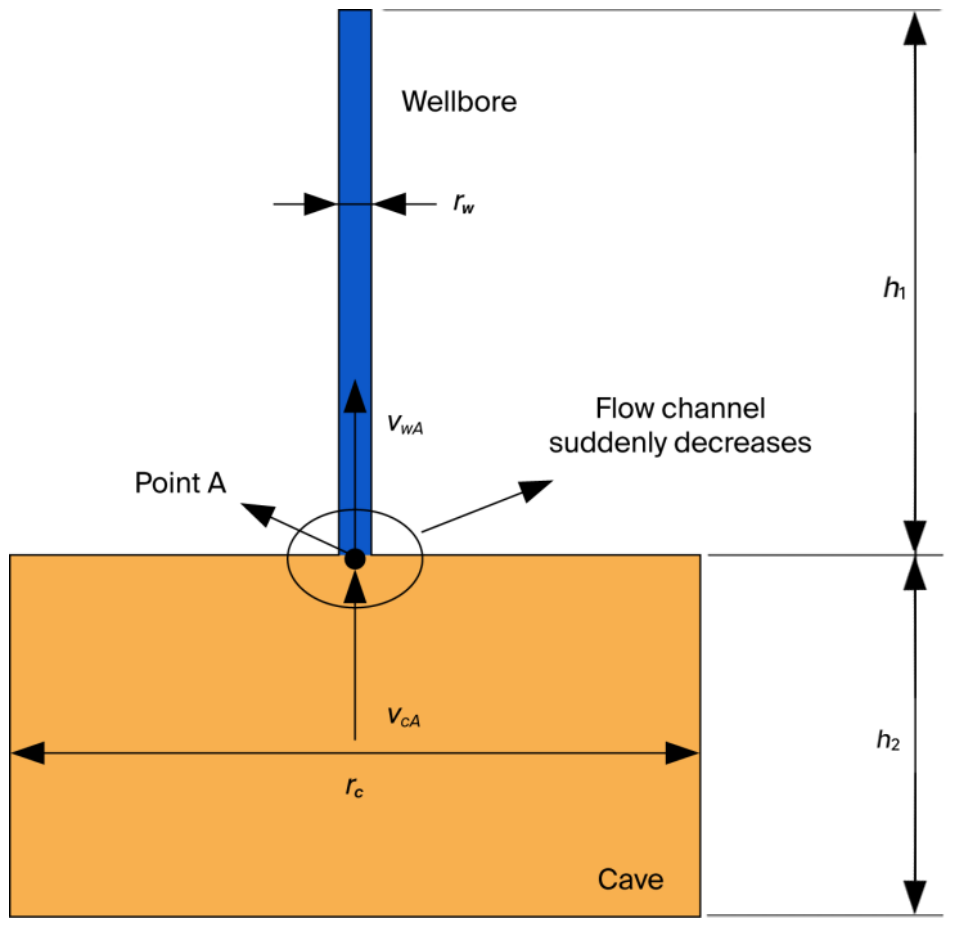
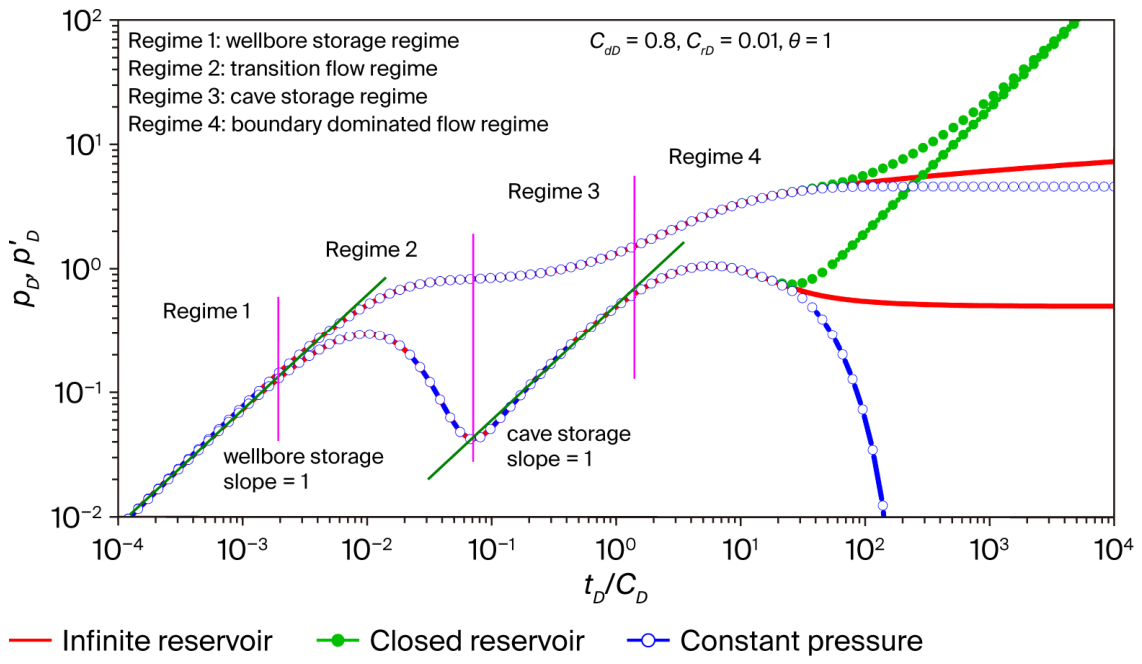
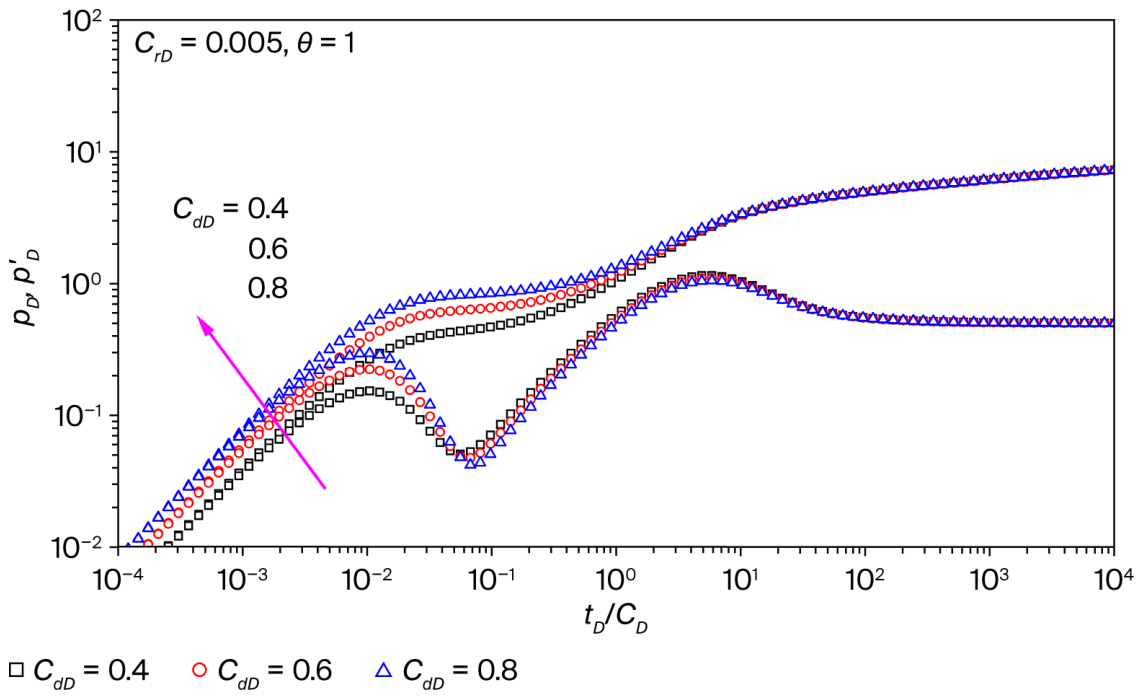
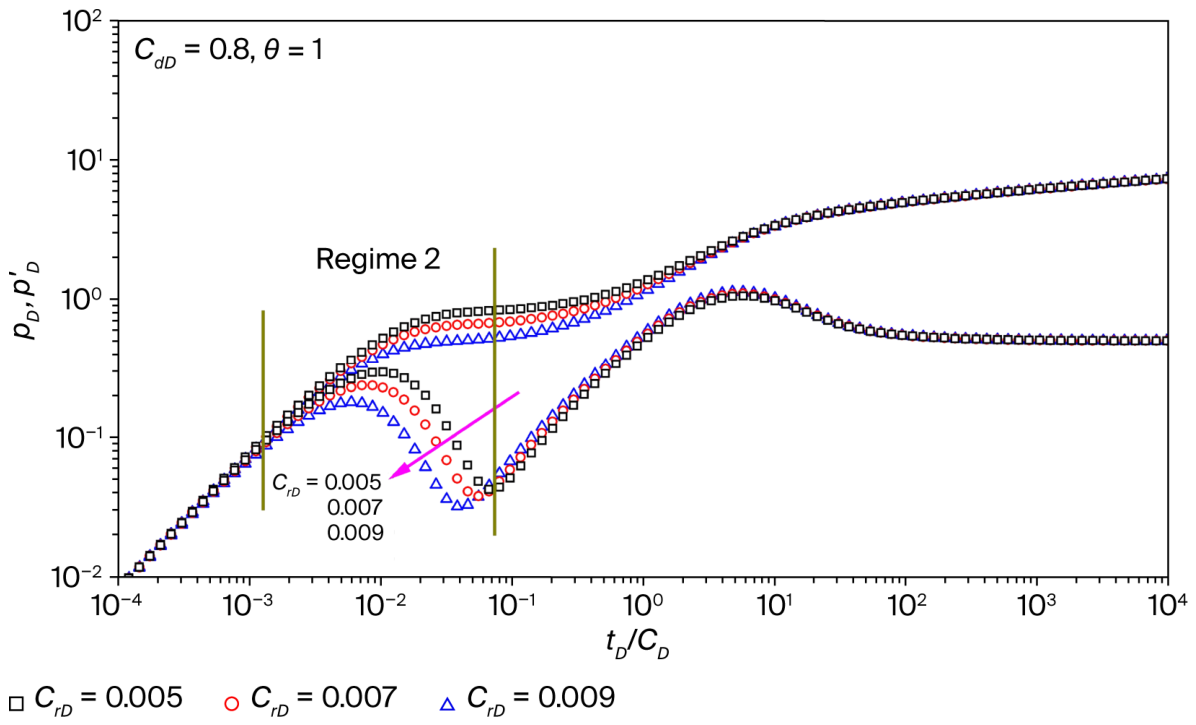
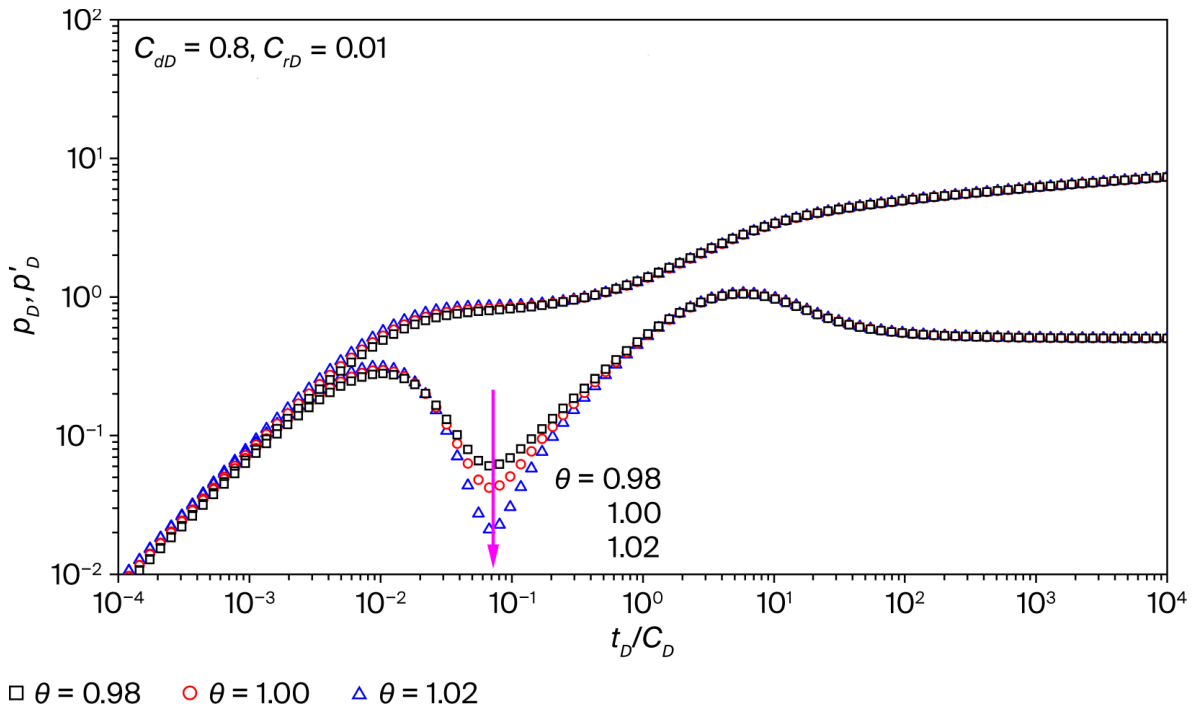
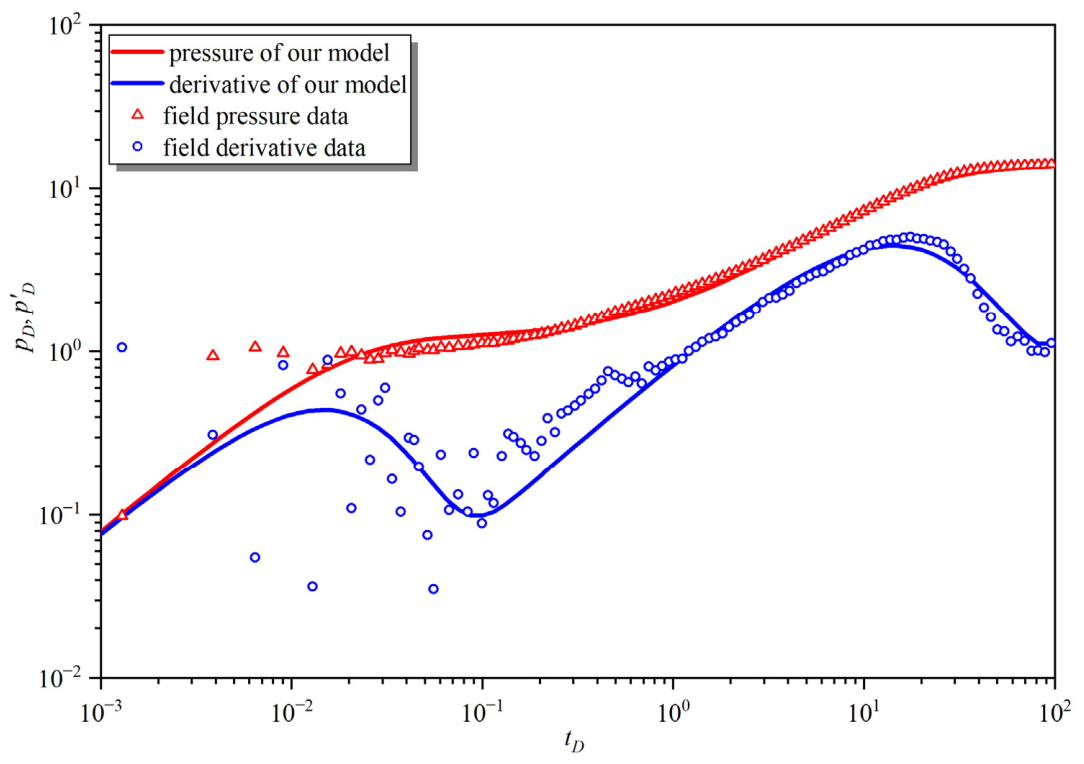
Large-scale caves provide important storage space in carbonate oil and gas reservoirs. However, accurately estimating their volume remains challenging because of complex geometries and limited access to underground cavities. In this study, an analytical well-test method is proposed to estimate large-scale cave volume from pressure-transient responses. A physical model is first established and mathematically formulated, followed by the derivation of an analytical solution in the Laplace domain. Stehfest’s numerical inversion is then applied to obtain pressure and pressure-derivative-type curves under different outer boundary conditions. The results identify four characteristic flow regimes: the wellbore-storage regime, the transition-flow regime, the cave-storage regime, and the boundary-dominated flow regime. A distinct concave feature is observed in the pressure-derivative curves. Sensitivity analysis shows that the pressure response is mainly influenced by three dimensionless parameters: the depth coefficient, radius coefficient, and shape coefficient. The depth coefficient primarily determines the transition time of the wellbore-storage regime, the radius coefficient mainly affects the width and depth of the concave response, and the shape coefficient mainly influences its magnitude. Finally, two field cases are presented to demonstrate the applicability of the proposed method for estimating cave volume.
Keywords: cave volume; depth coefficient; fractured-vuggy carbonate reservoirs; large-scale cave; radius coefficient; shape coefficient; type curves cave volume; depth coefficient; fractured-vuggy carbonate reservoirs; large-scale cave; radius coefficient; shape coefficient; type curves