1. Introduction
The widespread use of conventional plastics has drawn significant criticism due to inadequate recycling infrastructure, their dependence on non-renewable resources, limited biodegradability, and the presence of potentially harmful additives. These environmental and sustainability concerns have accelerated the search for eco-friendly alternatives derived from renewable biomass. Recent advances in plant-based materials, including protein-derived products, biopolymers, and polysaccharide-based systems, highlight the growing potential of biomass valorization for sustainable applications [
1]. In this context, materials such as starch, plant-based biochar, and arabinoxylan-based polymers, and more have gained increasing attention due to their biodegradability, tunable properties, and compatibility with green processing approaches [
2,
3]. Consequently, the development of biodegradable plastics is steadily increasing, driven by the expanding availability of sustainable raw materials and innovative material design strategies [
4].
Starch is a naturally occurring carbohydrate that is viewed as a promising biodegradable material because of its abundance, low cost, recyclability, and ability to fully decompose into carbon dioxide and water in the environment [
5]. These benefits make it a strong candidate for sustainable material development. In recent years, starch-based degradable materials have attracted growing interest in the scientific community, becoming a key focus in the global effort to find environmentally friendly alternatives [
6].
Despite its advantages, native starch has significant limitations that restrict its direct use in commercial applications. Its high-water affinity and poor mechanical strength greatly reduce its practicality in many real-world settings. To address these issues, starch is often combined with other polymers, such as polyvinyl alcohol (PVA), polylactic acid (PLA), poly(ε-caprolactone) (PCL), and polybutylene adipate terephthalate (PBAT) to improve its overall performance [
7,
8].
Nevertheless, blends of starch with PLA, PCL, or PBAT usually show subpar mechanical properties. This is primarily due to the natural incompatibility between starch’s hydrophilicity and the hydrophobicity of these synthetic polymers, which limit interfacial adhesion. On the other hand, PVA, a polar polymer rich in hydroxyl groups, can form strong hydrogen bonds with starch [
9]. This interaction enhances compatibility and improves the physical properties of the resulting starch-based materials, making PVA a promising partner for creating advanced biodegradable composites [
10]. In this experiment, starch was extracted from chickpeas, and PVA was used as a polymer blend.
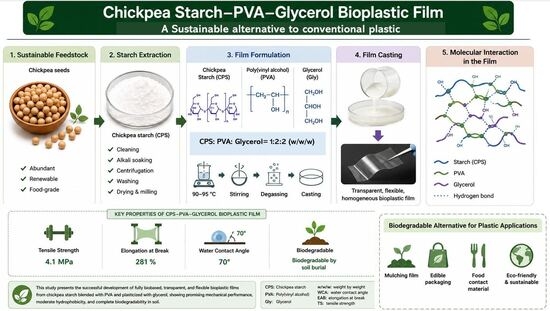
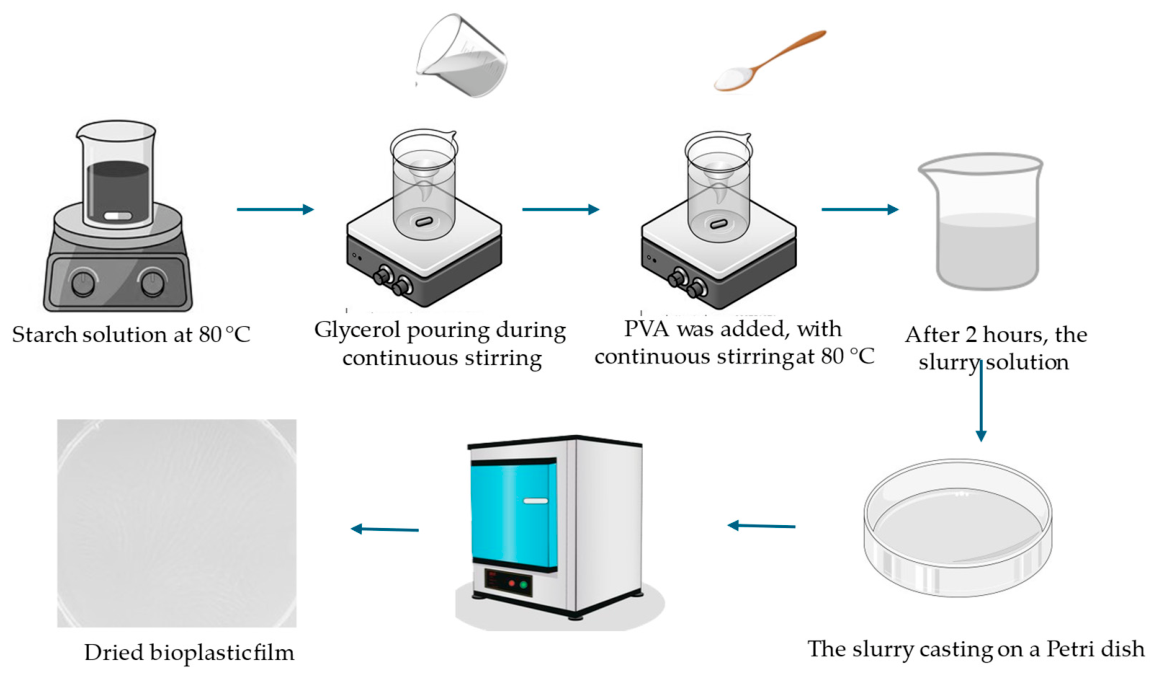
The interaction mechanism in starch/PVA/glycerol films is governed primarily by intermolecular hydrogen bonding among hydroxyl groups in all three components. During thermal processing, starch granules absorb water and gelatinize. Dissolved poly (vinyl alcohol) (PVA) chains become uniformly dispersed and form strong hydrogen-bonding interactions with the exposed hydroxyl groups of starch, improving miscibility and forming a homogeneous polymer matrix. Glycerol acts as a plasticizer by inserting between adjacent starch and PVA chains and forming additional hydrogen bonds with both polymers. This plasticization weakens excessive polymer–polymer interactions, increases free volume and chain mobility, and consequently enhances film flexibility and elongation while reducing brittleness. During drying, water evaporation brings polymer chains into closer proximity, strengthening the hydrogen-bonding network and promoting molecular entanglement, which contributes to the structural integrity, mechanical strength, and barrier performance of the final biodegradable film. Therefore, the overall physicochemical properties of starch/PVA/glycerol films are determined by the balance between intermolecular hydrogen bonding and glycerol-induced plasticization.
Chickpeas (
Cicer arietinum L.) rank as the third most important pulse crop globally, covering 14.84 million hectares of cultivated land and producing 15.08 million tons, with an average yield of 1.01 tons per hectare in 2020 [
11]. Chickpeas (
Cicer arietinum) are widely consumed across various parts of the world, largely due to their rich nutritional value. The composition of chickpea seeds includes carbohydrates (50–58%), protein (15–22%), moisture (7–8%), fat (3.8–10.20%), and a small number of micronutrients (less than 1%) [
12]. Chickpea was selected as a starch source because it is a renewable, food-grade, nutrient-rich, and widely cultivated legume, making it a promising and sustainable feedstock for developing biodegradable materials [
13]. Chickpea starch contains abundant hydroxyl groups and exhibits favorable physicochemical characteristics that promote intermolecular interactions and film formation, enabling the development of cohesive and flexible starch-based matrices [
14,
15].
Chickpea was therefore considered in this study as an alternative starch source with the potential for producing biodegradable materials while enabling utilization of additional biomass fractions. Importantly, starch extraction can be integrated with recovery of the residual fiber fraction, allowing greater utilization of the original biomass and reducing process-generated waste. Nevertheless, the use of edible chickpea directly for bioplastic production presents a potential limitation because it may compete with established food and feed applications. This concern is particularly relevant for large-scale production and should therefore be considered when evaluating the overall sustainability and economic feasibility of chickpea-based bioplastics. A more sustainable approach would be to prioritize off-grade, rejected, damaged, or chickpea-processing streams that are unsuitable for direct human consumption, while recovering and valorizing the residual fiber fraction. Thus, chickpea-based starch utilization may provide a promising route for developing biodegradable materials when integrated with whole-biomass valorization and appropriate feedstock selection [
16,
17,
18,
19,
20].
Accordingly, this study investigated the feasibility of using starch extracted from chickpea to fabricate biodegradable bioplastic films and evaluated their key physicochemical, mechanical, thermal, and functional properties. The residual fiber generated during starch extraction was also recovered, supporting a more integrated utilization of the chickpea biomass. However, evaluation of the physico-mechanical characteristics of bioplastics is critical for determining their viability as eco-friendly substitutes for traditional petroleum-based plastics. Key parameters such as tensile strength, elongation at break, Young’s modulus, thermal and chemical resistance, and water solubility play a vital role in defining the material’s performance across various applications, including food packaging, agricultural films, and medical devices [
21]. Tensile strength and elongation at break, for instance, are direct indicators of a material’s mechanical durability and flexibility, both of which are essential for packaging that must endure stress or deformation during use. Similarly, properties like water resistance and thermal stability are important when bioplastics are exposed to environmental or operational extremes [
22].
To analyze these properties comprehensively, several advanced techniques are used. Fourier-Transform Infrared Spectroscopy (FTIR) is employed to identify chemical bonds and functional groups present in the material. Scanning Electron Microscopy (SEM) provides detailed insights into surface morphology and structural features, while Universal Testing Machines (UTM) are used to perform tensile testing and quantify mechanical strength. Additionally, Water Contact Angle (WCA) measurements are conducted to evaluate surface wettability, which indicates the hydrophilic or hydrophobic nature of the bioplastic [
23].
Together, these analytical tools enable a deeper understanding of the bioplastics’ structural and functional qualities and are fundamental in guiding the formulation and enhancement of next-generation biodegradable plastics.
We hypothesize that starch extracted from chickpeas (Cicer arietinum L.), when blended with polyvinyl alcohol (PVA), will form a compatibilized biodegradable bioplastic through strong intermolecular hydrogen bonding, resulting in significantly improved mechanical strength, flexibility, and surface properties compared to native chickpea starch-based films. Specifically, the incorporation of PVA is expected to reduce starch hydrophilicity, enhance interfacial adhesion, and produce a homogeneous microstructure, thereby yielding physico-mechanical properties suitable for practical biodegradable packaging applications.
3. Results
3.1. Physicochemical Characterization of Chickpea-Extracted Starch
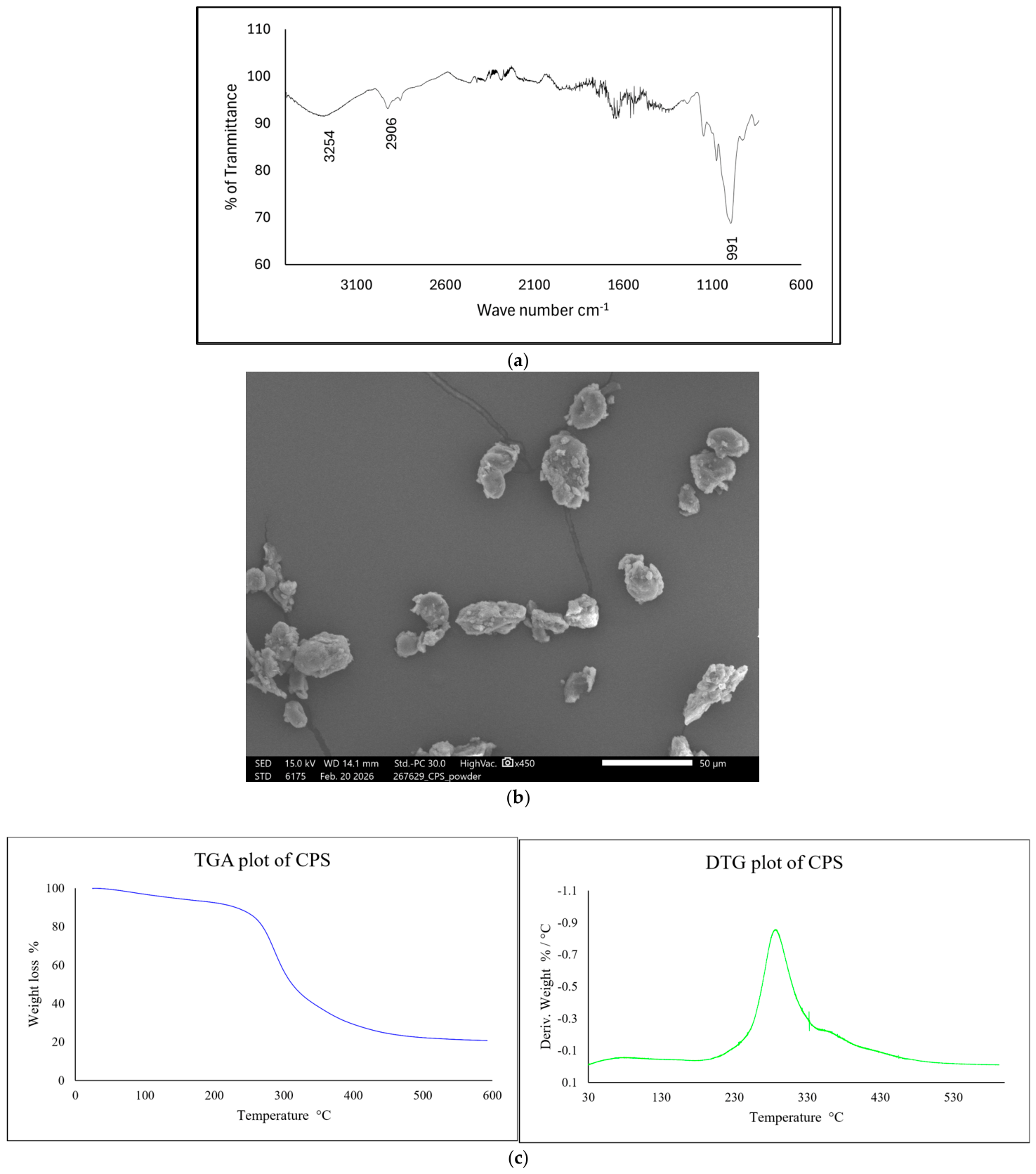
The successful extraction of starch from chickpea was confirmed by Fourier-transform infrared spectroscopy (FTIR), scanning electron microscopy (SEM), and thermogravimetric analysis, which provided complementary evidence of the extracted starch’s characteristic chemical and morphological features. Fourier Transform Infrared (FTIR) spectroscopy was used to investigate functional groups in extracted chickpea starch. In
Figure 3a, the broad absorption band at 3254 cm
−1 corresponds to O–H stretching vibrations arising from intermolecular and intramolecular hydrogen bonding within the starch structure [
41,
42]. The peak at 2906 cm
−1 is attributed to C–H stretching of aliphatic –CH and –CH
2 groups [
41], and the band at 991 cm
−1 represents C–O and C–O–C stretching vibrations of glycosidic linkages [
43], confirming successful extraction and structural integrity of the starch [
44].
The SEM micrograph of chickpea-derived starch is shown in
Figure 3b, which reveals irregularly shaped and aggregated granules with a heterogeneous size distribution. Like typical native starches, the granules exhibit spherical or oval morphology of about 10 μm, though they appear as fragmented and fused structures with rough and uneven surfaces [
45]. Several particles show signs of deformation and partial collapse, likely resulting from the extraction or drying process. The presence of clustered aggregates suggests inter-particle adhesion, forming larger compact domains. Surface textures range from relatively smooth regions to highly corrugated and flaky structures, indicating disruption of the native granular architecture. Overall, the micrograph suggests that the starch is well defined morphology, has undergone structural modification, leading to loss of intact granule morphology and formation of irregular, aggregated particles.
TGA was performed to evaluate the thermal stability of the extracted chickpea starch. In
Figure 3c, the thermogram showed two distinct stages of weight loss. An initial 13% weight loss up to 245 °C was attributed mainly to moisture loss and dehydration, followed by the major degradation stage between 245 and 404 °C, corresponding to approximately 60% weight loss due to decomposition of the starch polymer chains. The DTG curve showed the maximum degradation rate at approximately 290 °C. At 600 °C, approximately 20% residual mass remained, indicating the formation of thermally stable carbonaceous residues.
Compared with reported initial degradation temperatures of 220 °C for corn, 210 °C for rice, and 174 °C for nut starch, chickpea starch demonstrated comparatively high thermal stability [
18,
19,
20]. This is particularly advantageous for bioplastic fabrication because common processing steps such as gelatinization and thermal drying are generally conducted below 200 °C [
46], well below its major degradation region. Therefore, the high thermal stability of chickpea starch supports its suitability as a renewable feedstock for biodegradable bioplastic fabrication and other starch-based applications.
3.2. Fourier Transform Infrared Spectroscopy (FT-IR)
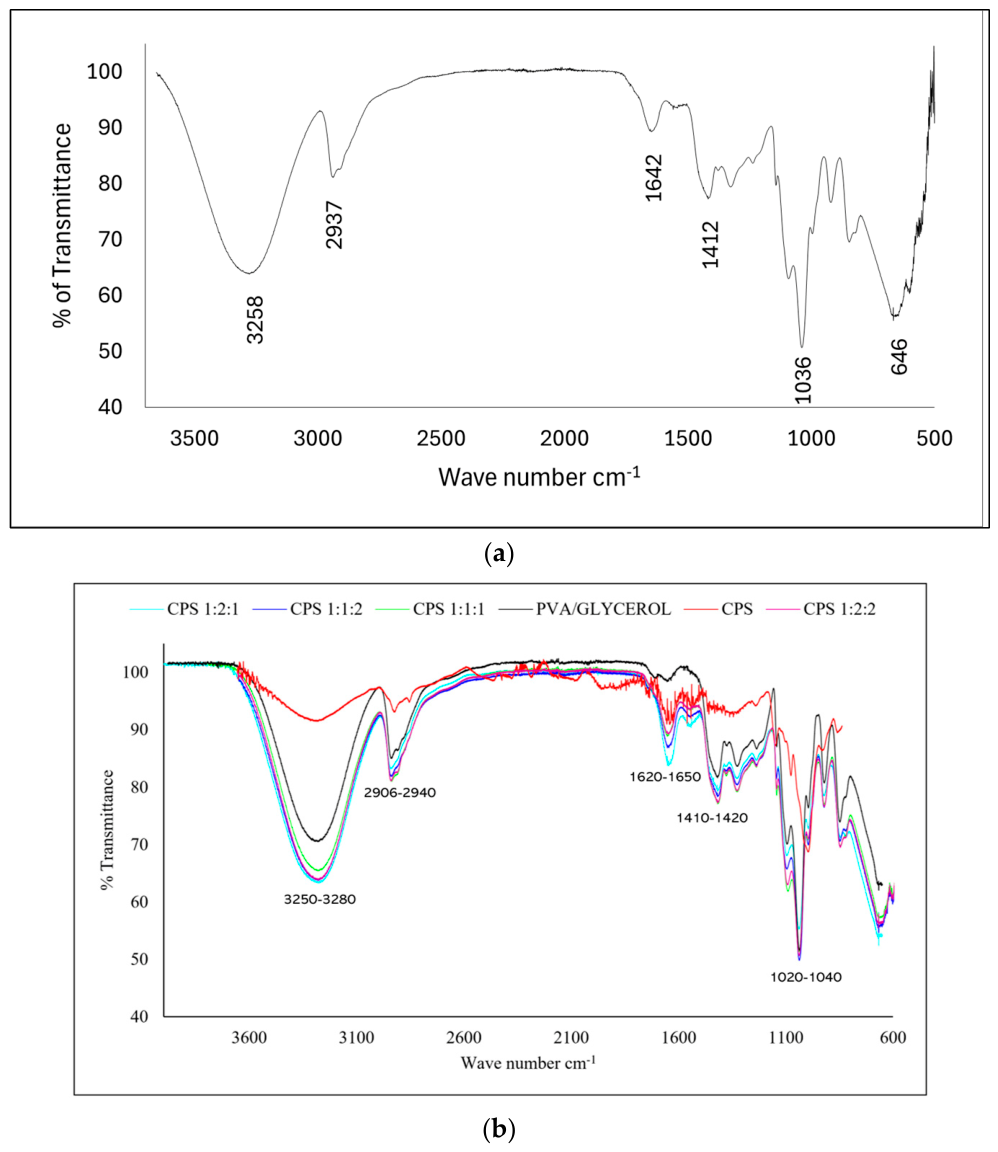
The FTIR spectrum of bioplastic (
Figure 4a) exhibits similar characteristic starch peaks, with notable shifts and intensity changes, indicating strong intermolecular interactions within the blended system. The broad O–H stretching band at 3258 cm
−1 is broader and more intense than in the native starch, reflecting enhanced hydrogen bonding among hydroxyl groups of starch, glycerol, and poly (vinyl alcohol) (PVA). The peak at 2937 cm
−1 corresponds to C–H stretching vibrations of the polymer backbone. The absorption band near 1642 cm
−1 is assigned to H–O–H bending vibrations of absorbed or bound water, commonly observed in hydrophilic polysaccharide-based systems [
47]. The peaks at 1412 cm
−1 and 1036 cm
−1 are attributed to C–H bending and C–O stretching vibrations, respectively, further supporting the presence of starch and PVA in the bioplastic matrix. The spectral region below 1000 cm
−1 reflects complex skeletal vibrations associated with polysaccharide chains, confirming the formation of a physically cross-linked network primarily stabilized through hydrogen bonding rather than covalent chemical bonding.
The FTIR spectra of the CPS 1:2:2 formulation were compared with those of the other plastic formulations, including the PVA/glycerol-based plastic, as shown in
Figure 4b. The spectra exhibited characteristic bands in the 3250–3280 cm
−1 region, corresponding primarily to O–H stretching vibrations, with differences in peak intensity and position among the formulations. These changes suggest variations in hydrogen-bonding interactions between the hydroxyl groups of CPS, PVA, and glycerol. A second characteristic region was observed at 2906–2940 cm
−1, which can be attributed to C–H stretching vibrations of the polymer chains. The bands in the 1620–1650 cm
−1 region are associated with O–H bending and/or absorbed water, while the absorption observed at 1410–1420 cm
−1 is related to C–H bending and skeletal vibrations of the carbohydrate/polymer structure. In addition, the strong bands in the 1020–1040 cm
−1 region are characteristic of C–O and C–C stretching vibrations within the polysaccharide backbone.
Overall, the shifts in peak positions and changes in absorption intensity across these regions demonstrate that incorporation of CPS and glycerol altered the intermolecular interactions within the polymer matrix compared with the PVA/glycerol formulation. Nevertheless, the retention of the characteristic absorption regions indicates that the fundamental chemical structures of the constituent polymers were preserved. These FTIR changes therefore support the formation of a physically interacting CPS-based polymer network through hydrogen bonding and other intermolecular interactions, rather than the formation of entirely new chemical functionalities.
3.3. Mechanical Performance
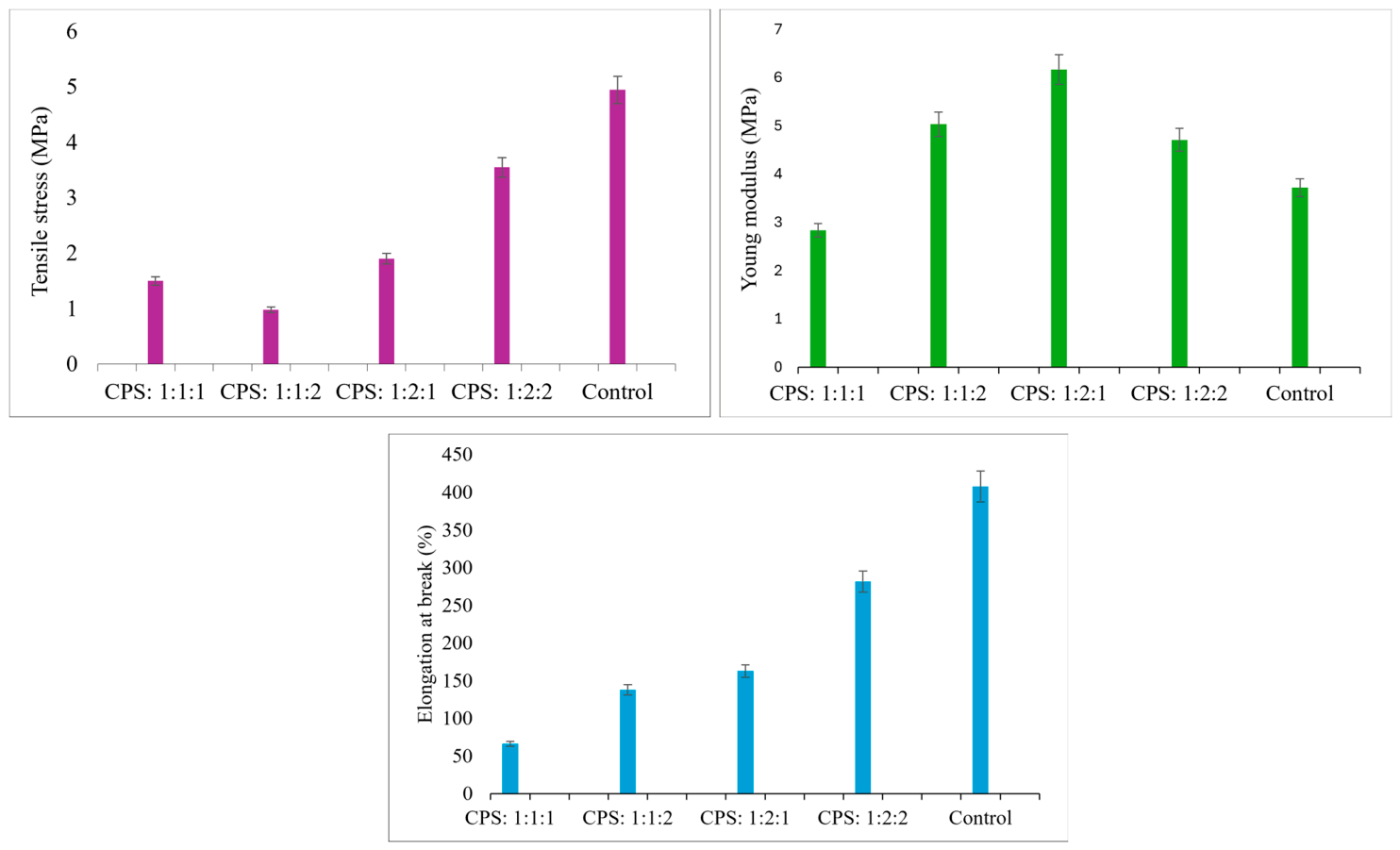
The mechanical properties of the chickpea starch (CPS)-based bioplastic films were evaluated by measuring tensile strength (TS), elongation at break (EAB), and Young’s modulus (YM), which characterize the film’s resistance to fracture, flexibility, and stiffness, respectively. For tensile testing, three rectangular strips were cut from each cast film and tested independently according to ASTM D412. The tensile strength, Young’s modulus, and elongation at break were calculated from the three tested specimens and are reported as mean ± SD (
n = 3) in
Figure 5. Because the three specimens were obtained from the same cast film, they represent technical/specimen replicates rather than independent film preparations. The stress–strain curves are provided in
Figures S1–S4.
The mechanical performance of the films was strongly influenced by the CPS:PVA:glycerol ratio, indicating that the polymer composition plays a crucial role in controlling intermolecular interactions and the resulting network structure. The tensile strength of the starch-based films ranged from 0.98 ± 0.10 MPa to 3.55 ± 0.51 MPa, while the elongation at break varied from approximately 67 ± 4% to 283 ± 12%. Young’s Modulus ranged between 2.8 ± 0.1 MPa and 6.1 ± 0.3 MPa, demonstrating significant formulation-dependent differences in film stiffness.
The CPS 1:1:1 formulation exhibited relatively low tensile strength and elongation at break, suggesting that the polymer network was insufficiently plasticized and possessed limited chain mobility. Increasing the glycerol content while maintaining the same starch-to-PVA ratio (CPS 1:1:2) significantly improved both tensile strength and flexibility. This improvement can be attributed to the plasticizing effect of glycerol, which enhances polymer chain mobility and promotes a more homogeneous distribution of starch and PVA, thereby facilitating more efficient stress transfer through the hydrogen-bonded polymer network.
Further increasing the PVA content (CPS 1:2:1) resulted in the highest Young’s modulus, indicating the formation of a stiffer polymer matrix due to stronger intermolecular interactions between starch and PVA. Although the increased stiffness restricted polymer chain mobility, the formulation still maintained a moderate tensile strength (1.5 ± 0.05 MPa), demonstrating that increasing the PVA content improved the rigidity of the film without causing severe mechanical deterioration. Upon increasing the glycerol concentration in the CPS 1:2:2 formulation, the film exhibited the highest tensile strength (3.55 ± 0.51 MPa) together with a relatively high elongation at break (283 ± 12%) and a moderate Young’s modulus (4.7 ± 0.2 MPa). This balanced mechanical performance indicates that the selected CPS:PVA:glycerol ratio provided an optimal balance between intermolecular hydrogen bonding and glycerol-induced plasticization. Strong hydrogen bonding between the hydroxyl groups of chickpea starch and PVA enhanced the cohesion of the polymer network, while glycerol increased molecular mobility and reduced internal stresses, enabling greater deformation before fracture without compromising structural integrity.
The control film exhibited the highest tensile strength (4.90 ± 0.25 MPa) and elongation at break (408%), confirming its superior mechanical performance compared with the starch-containing formulations. Nevertheless, based on the observed mean values, among the developed bioplastic films, the CPS 1:2:2 formulation demonstrated the most desirable combination of tensile strength, flexibility, and stiffness [
23,
38,
48].
3.4. Surface Morphology by Scanning Electron Microscope (SEM) Analysis
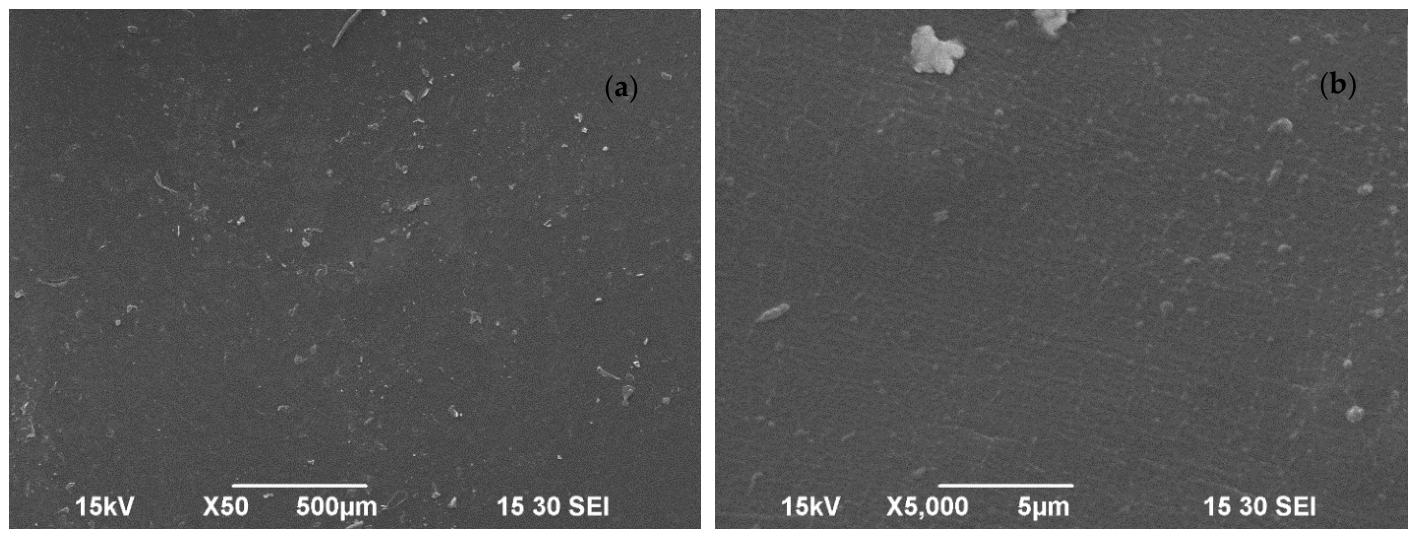
The surface morphology of the CPS 1:2:2 bioplastic was examined using SEM at two different magnifications (
Figure 6). The images indicate a generally uniform and continuous surface with no obvious cracks or large voids. While the surface appears relatively smooth, a detailed quantitative analysis, such as pore size distribution, surface roughness, or phase separation, was not conducted, and minor microscale heterogeneities cannot be ruled out. The observed morphology suggests that glycerol was reasonably well-dispersed within the polymer matrix and that the gelatinization process facilitated integration of the starch, PVA, and glycerol components. These features are consistent with cohesive film formation and indicate potential for strong intermolecular interactions among the constituents. This observation is comparable to that observed in high-performance synthetic polymers and elastic polyethylene-based materials, as reported by Gere et al. [
49,
50]. However, future work could include quantitative surface roughness measurements or image-based pore analysis to support these observations and provide a more rigorous evaluation of the film microstructure.
3.5. Transparency of the Biofilm
From the experimental data, the bioplastic films developed in this study showed lower transparency compared to traditional synthetic polyethylene films. This reduced transparency is probably due to the presence of fillers and the inherent thickness of the bioplastic materials, both of which can scatter light and decrease clarity. Despite this, the PVA-based bioplastic films produced here demonstrated significantly better transparency than that reported in several earlier studies. For example, Mulyono et al. documented a maximum transparency value of 3.13 for tapioca starch-based films [
28], while the bioplastics developed in this study achieved a lower transparency index of 1.52, indicating improved optical clarity. This suggests that the formulation used in this study resulted in better light transmittance and potentially more desirable qualities for applications such as biodegradable packaging.
Table 2 indicates the comparison of transparency for several synthetic and bioplastics. Complete spectral curves are shown in
Figure S5.
3.6. Water Contact Angle (WCA)
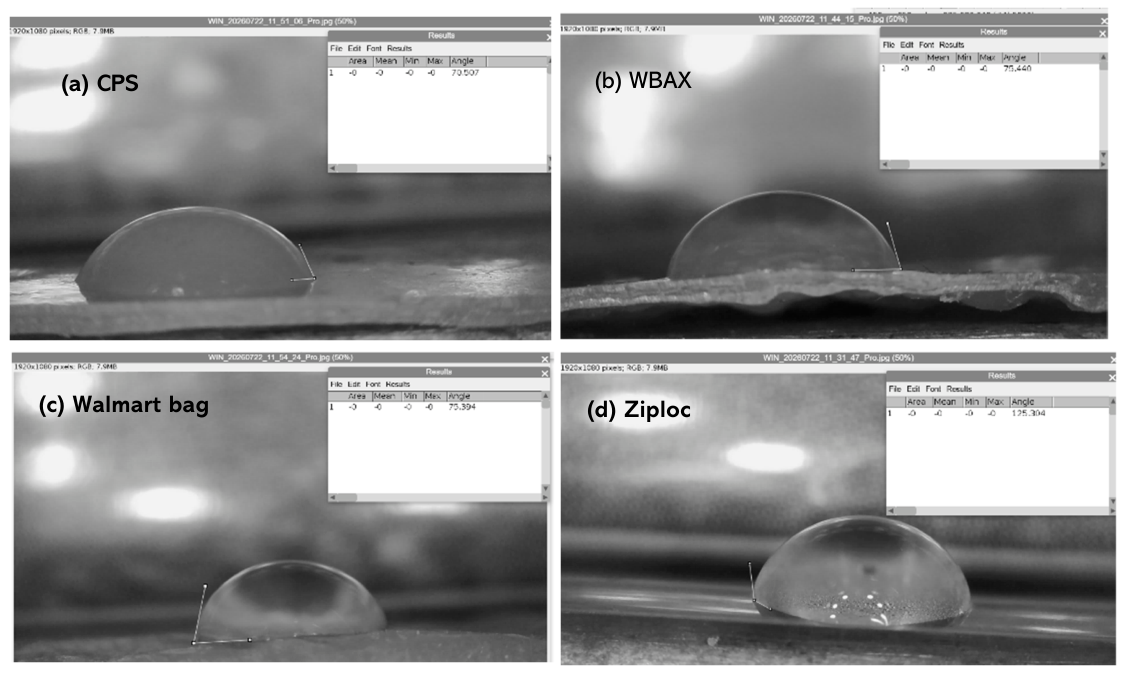
In this section, the water contact angle (WCA) of the bioplastic films is listed along with corresponding images of water droplets on the film surfaces.
Table 3 and
Figure 5 summarize the WCA values for the CPS bioplastic film, WBAX bioplastic film, and a commercial synthetic plastic bag, and comparative values from the relevant literature [
23,
50].
The results indicate that the CPS-based bioplastic film exhibits a WCA comparable to that of market-available plastic, suggesting similar surface wettability behavior. However, the measured WCA remains below 90°, which means the surface does not meet the criteria for true hydrophobicity. Materials are generally considered hydrophobic if their WCA exceeds 90°, indicating a strong tendency to repel water.
Therefore, although the CPS film shows lower water affinity than many conventional bioplastics, it still demonstrates moderate water absorption potential. This suggests that while the film is not fully water-repellent, it may be suitable for applications requiring partial moisture resistance, such as short-term packaging or disposable agricultural films.
Table 3.
Water Contact Angle (WCA) of plastics [
23].
Table 3.
Water Contact Angle (WCA) of plastics [
23].
| Film Type | Water Contact Angle (Degree) | SD |
|---|
| CPS bioplastic film | 70.1 | ±0.71 |
| WBAX bioplastic film | 75.80 | ±0.60 |
| Ziploc plastic bag | 124.83 | ±1.11 |
| Walmart plastic bag | 76.78 | ±1.10 |
| PLA/starch/lecithin film | 59.250 | - |
3.7. Effect of Mineral Acid Treatment
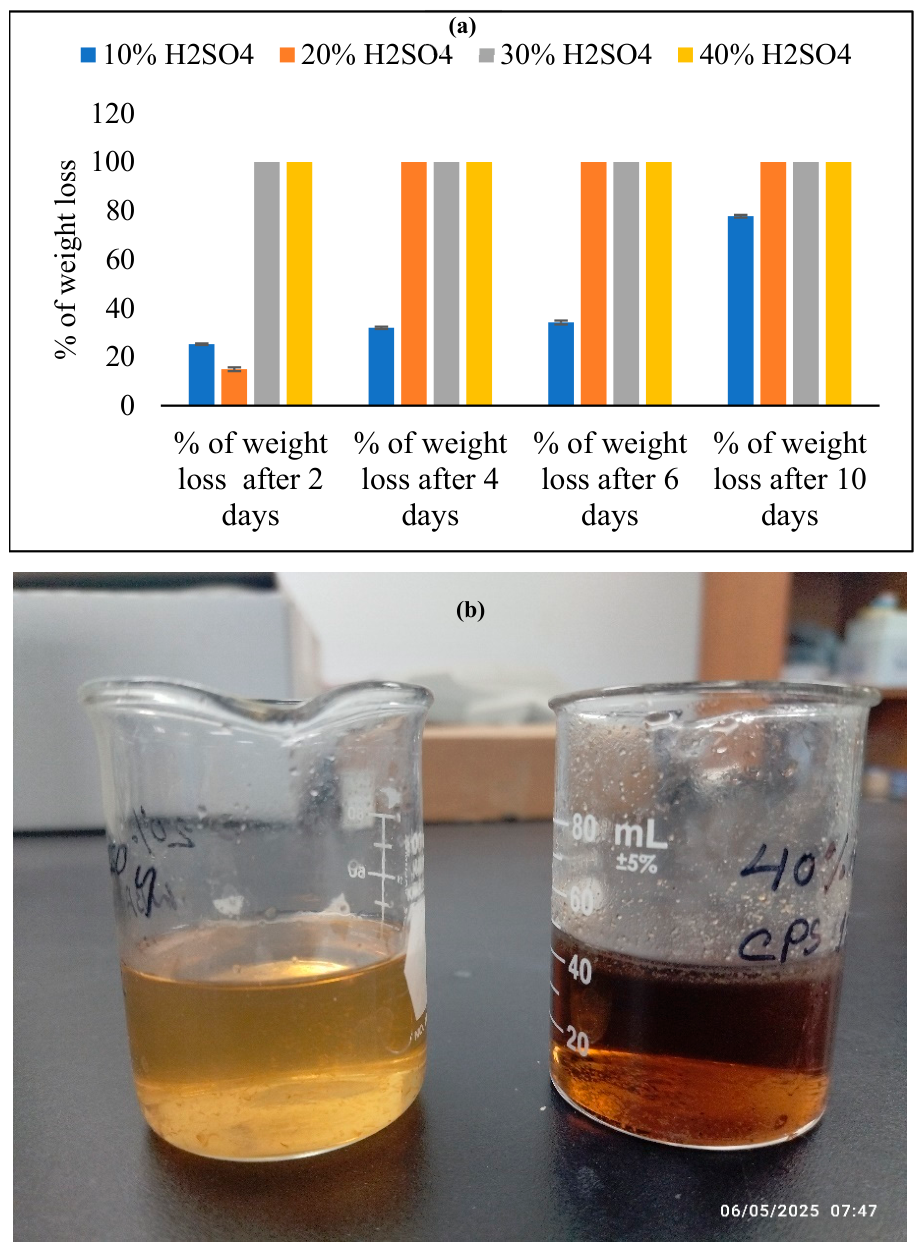
The concentration of sulfuric acid significantly influences the degradation behavior of the bioplastic synthesized from chickpea-derived starch. As described in
Figure 8a, the weight loss of the bioplastic increased as the acid concentration rose from 10% (1.02 M) to 20% (2.04 M), indicating a direct relationship between acid strength and degradation rate.
At elevated concentrations of 30% (3.06 M) and 40% (4.08 M), the bioplastic underwent rapid and near-complete dissolution, with substantial disintegration occurring within just two days. Even at 20% concentration, the material showed almost complete breakdown within four days. However, in all cases, a gelatinous residue remained, resulting in a thicker, slurry-like solution, as illustrated in
Figure 8b. This suggests that while bulk dissolution occurred, some insoluble or partially degraded fragments remained.
These findings suggest that higher acid concentrations induce more aggressive hydrolytic reactions, likely leading to the cleavage of glycosidic bonds in starch and disruption of the polymeric network, ultimately compromising the structural integrity of the bioplastic.
The bioplastics developed from chickpea-extracted starch demonstrated notable resistance to acidic conditions, particularly at lower acid concentrations (1.02 M). Their performance under acid exposure was found to be slightly superior to that of commercial cellulose acetate (CA), a widely used biodegradable polymer known to possess an environmental resistance factor of 3 against strong acids, which is classified as “good resistance”.
This comparative resilience indicates that chickpea starch-based bioplastics not only serve as a sustainable alternative to conventional biopolymers but also exhibit enhanced durability in chemically aggressive environments. Such properties expand their potential applicability in areas requiring exposure to mild to moderate acidic conditions, such as food packaging, agricultural films, and biomedical materials.
Exposure time is another important factor affecting the acid resistance of starch-based bioplastics. Although all films in this study were evaluated after the same immersion period, prolonged exposure is expected to promote acid hydrolysis, leading to increased swelling and gradual degradation of the polymer network. The stability observed at 10% acid concentration therefore reflects the resistance of the films under the selected exposure conditions. Further studies should investigate the combined effects of acid concentration and exposure time on the long-term stability of the film.
3.8. Effect of Alkali Treatment
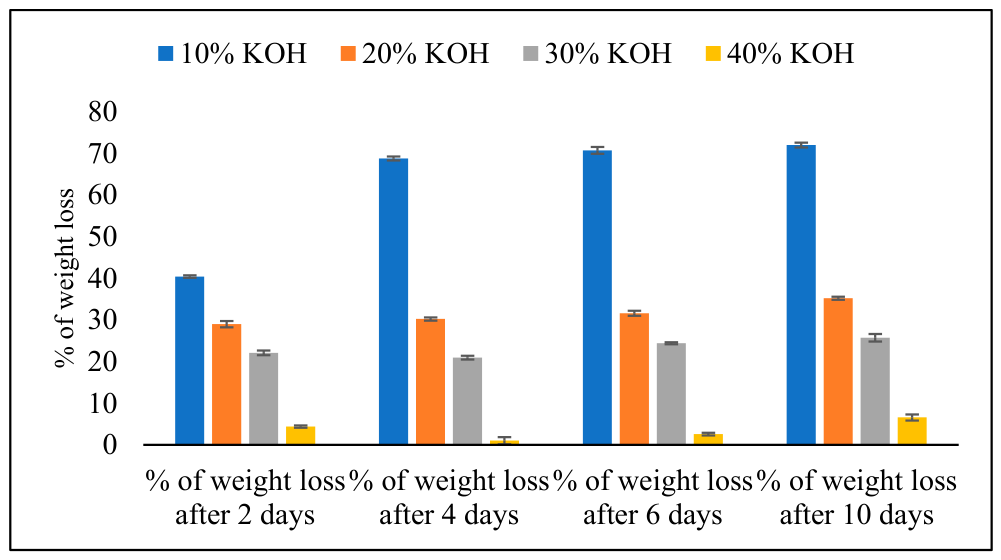
The weight loss behavior of the CPS 1:2:2 bioplastic, derived from chickpea starch, under different concentrations of potassium hydroxide (KOH) is illustrated in
Figure 7. After ten days of treatment, the bioplastic exposed to 10% (1.78 M) KOH exhibited the highest weight loss, reaching 52%. Surprisingly, when the concentration increased to 40% (7.12 M) KOH, the weight loss decreased to 31%, suggesting that alkali degradation may not scale proportionally with concentration.
Figure 7.
Water Contact Angle of (a) CPS 1:2:2 bioplastic; (b) WBAX bioplastic; (c) Walmart plastic bag; (d) Ziploc plastic bag.
Figure 7.
Water Contact Angle of (a) CPS 1:2:2 bioplastic; (b) WBAX bioplastic; (c) Walmart plastic bag; (d) Ziploc plastic bag.
Figure 8.
(a) Effect of acid concentration and treatment duration on weight loss. Mean values ± standard deviation (SD) of three technical replicates (n = 3). (b) The thicker slurry solution after 2 days of dissolution (right side), 40% acid solution (left side).
Figure 8.
(a) Effect of acid concentration and treatment duration on weight loss. Mean values ± standard deviation (SD) of three technical replicates (n = 3). (b) The thicker slurry solution after 2 days of dissolution (right side), 40% acid solution (left side).
This pattern implies a complex interaction between the biopolymer and alkaline medium, where higher concentrations might lead to surface hardening or limited diffusion, thereby reducing further degradation. Despite prolonged exposure, the bioplastic maintained a high degree of structural integrity, demonstrating strong alkali resistance.
When compared to commercial cellulose acetate (CA), which possesses a resistance factor of 3 against strong alkalis [
38], the synthesized bioplastic performs on par with or better, reinforcing its potential for use in chemically challenging environments, particularly where alkaline exposure is a factor.
Figure 9.
Effect of alkali concentration and treatment duration on weight loss. Mean values ± standard deviation (SD) of three technical replicates (n = 3).
Figure 9.
Effect of alkali concentration and treatment duration on weight loss. Mean values ± standard deviation (SD) of three technical replicates (n = 3).
3.9. Water Absorption Behavior
As illustrated in
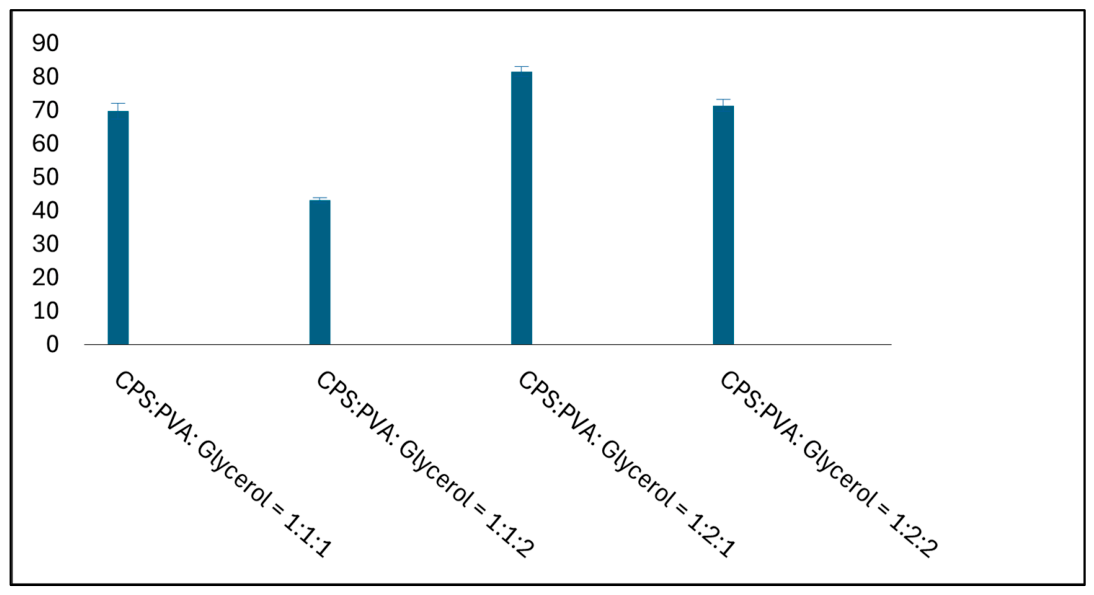
Figure 10, bioplastic films show a changeable water absorption pattern, which reflects the hydrophilic nature of their components. The inclusion of polyvinyl alcohol (PVA), a water-attracting polymer, contributes significantly to the higher water uptake observed in some film compositions. In particular, the 1:2:1 ratio film demonstrated the highest water solubility of about 80%, likely due to its greater PVA and glycerol content, which promote water diffusion into the matrix.
Figure 10.
Water absorption properties of CPS bioplastic films. Mean values ± standard deviation (SD) of three technical replicates (n = 3).
Figure 10.
Water absorption properties of CPS bioplastic films. Mean values ± standard deviation (SD) of three technical replicates (n = 3).
In contrast, the 1:1:2 ratio film exhibited lower water absorption, suggesting stronger intermolecular forces and denser cross-linking that restrict water interaction. Among all tested samples, the 1:2:2 bioplastic film showed a moderate level of water absorption, balancing hydrophilicity and matrix stability.
3.10. Biodegradability Test
To evaluate the biodegradability of the CPS bioplastic film, a soil burial test was conducted over two months followed by chemical and structural analyses using Fourier Transform Infrared Spectroscopy (FT-IR) and Scanning Electron Microscopy (SEM).
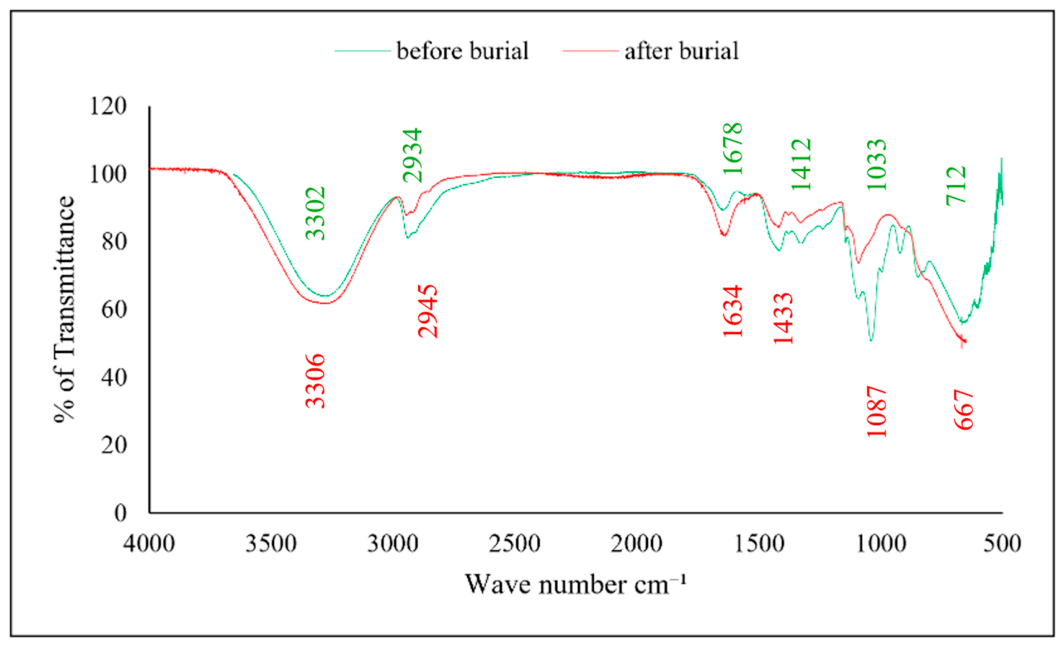
As shown in
Figure 11, FT-IR analysis revealed notable chemical changes in the film’s molecular structure after soil exposure. Comparison of the spectra revealed noticeable shifts in several characteristic absorption bands, along with changes in their intensities, indicating alterations in the polymeric network. The broad O–H stretching vibration shifted slightly from 3302 to 3306 cm
−1, suggesting changes in the hydrogen-bonding environment due to microbial attack and moisture absorption during soil burial. Likewise, the C–H stretching band shifted from 2934 to 2945 cm
−1, while the characteristic bands at 1412 and 1344 cm
−1 shifted to 1433 and 1400 cm
−1, respectively, reflecting structural modifications of the starch/PVA matrix. The C–O stretching vibration also shifted from 1033 to 1087 cm
−1, indicating cleavage and rearrangement of glycosidic linkages and hydroxyl-containing polymer chains. In addition, the absorption band at 712 cm
−1 shifted to 667 cm
−1, further confirming changes in the molecular framework after soil exposure. Except for the absorption band at 1678 cm
−1, which shifted to 1634 cm
−1 with an increase in intensity, all other characteristic peaks exhibited a noticeable reduction in intensity after burial. The enhanced intensity of the 1634 cm
−1 band is attributed to increased O–H bending of absorbed water and/or the formation of carbonyl-containing degradation products generated during microbial decomposition. In contrast, the overall decrease in the intensities of the remaining absorption bands indicates the progressive disruption of intermolecular hydrogen bonding and partial scission of the starch–PVA polymer network. These spectral changes collectively provide strong evidence that the film underwent the initial stages of biodegradation during soil burial, resulting in chemical modification and degradation of the polymer matrix.
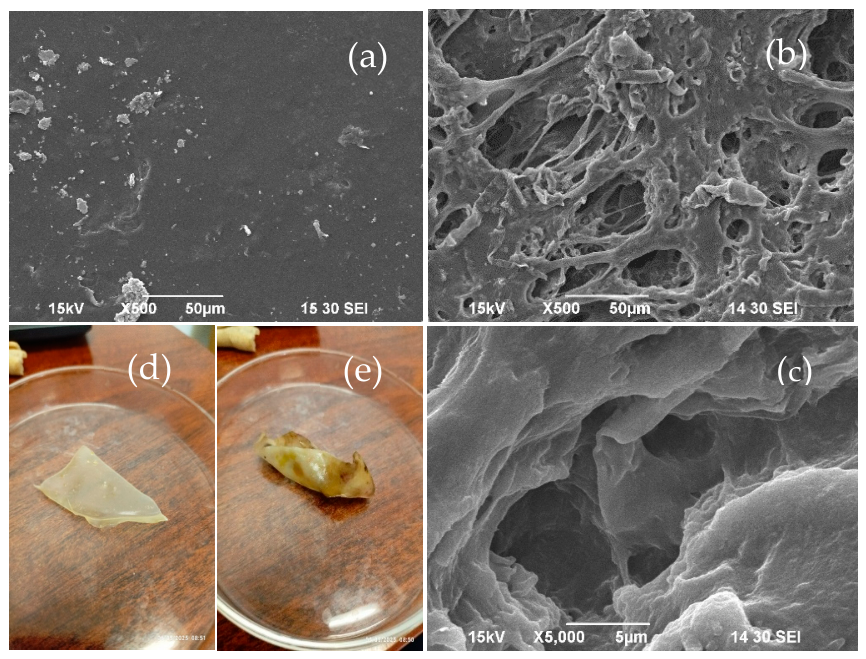
Additional degradation ability of the prepared plastics was observed through SEM imaging, presented in
Figure 12a–c. The surface morphology of the undegraded film appeared smooth and uniform, whereas the buried samples exhibited cracks, voids, and erosion, all characteristic of biodegradation effects. These physical changes indicate that soil microbes and moisture contributed to the deterioration of the polymer matrix, weakening its structure over time.
The development of micro-voids suggests that degradation was likely initiated via localized enzymatic activity, which gradually led to fragmentation and structural disintegration. Visual differences in film appearance before and after degradation are also documented in
Figure 12d,e.
It should be noted that quantitative degradation kinetics, including precise mass-loss rates, reproducibility across multiple samples, and long-term stability under different environmental conditions, were not fully established in this study. Future experiments will focus on detailed time-course degradation assays with replicates and proper controls to provide statistically robust kinetic data and confirm the reproducibility of biodegradation behavior.
4. Discussion
The chickpea starch (CPS)-based bioplastic film developed in this study offers a sustainable alternative to conventional petroleum-based plastics such as low-density polyethylene (LDPE). Its biodegradability and moderate water resistance provide an environmental advantage, making it particularly suitable for short-term packaging and agricultural applications where plastic waste reduction is a growing concern [
51].
Water solubility testing indicated that the CPS film absorbed moisture up to 40%, which reflects its partial water resistance and biodegradable nature. In comparison, LDPE remains highly water-resistant and non-biodegradable, contributing to long-term environmental persistence [
52]. The soil burial test, along with SEM and FT-IR analyses, confirmed the degradation behavior of CPS films over time, emphasizing their compatibility with composting and natural decomposition.
Surface wettability, evaluated through water contact angle (WCA) measurements, revealed a value of 70.1° for CPS films, lower than LDPE’s WCA of over 95°, but still within a range that indicates moderate hydrophilicity [
53]. While CPS does not meet the criteria for being hydrophobic (>90°), the relatively low affinity to water suggests it is suitable for applications with controlled moisture exposure, such as dry food packaging or single-use materials.
Chemical resistance tests further highlighted the durability of CPS bioplastics. The films demonstrated notable resistance in alkaline environments (up to 40% KOH) and maintained their structure in mildly acidic conditions. Compared to commercial cellulose acetate, which has a resistance factor of 3, CPS bioplastics showed comparable or better performance, making them viable for use in chemically variable settings like agriculture or food storage.
Mechanically, the CPS-based films exhibited a tensile strength of 4.1 MPa and an elongation at break of 281%. While the strength is lower than that of commercial LDPE (10–30 MPa), the elongation falls comfortably within LDPE’s typical range of 100–650%, indicating the film’s excellent flexibility [
54]. These characteristics support its potential in applications requiring moderate load-bearing capacity with high ductility, such as wrapping films or light packaging.
Table 4 summarizes the comparative characteristics of these materials.
Table 4.
Comparison of the physical and mechanical characteristics of synthetic plastics and bioplastics.
Table 4.
Comparison of the physical and mechanical characteristics of synthetic plastics and bioplastics.
| Property | CPS Bioplastic | LDPE (Synthetic Plastic) |
|---|
| Tensile Strength (MPa) | 4.1 | 10–30 |
| Elongation at Break (%) | 281 | 100–600 |
| Water Contact Angle (°) | 70.1 | >95 |
| Water Solubility (%) | ~40 | <1 |
| Biodegradability | Yes | No |
| Acid Resistance | Low concentration | Moderate |
| Alkali Resistance | High concentration | Moderate |
| Transparency | Yes | Yes |
5. Conclusions
Chickpea (
Cicer arietinum L.) starch was selected as the primary biopolymer because of its favorable physicochemical properties and excellent film-forming ability. Compared with many conventional starch sources, chickpea starch generally contains a relatively high amylose content, which promotes stronger intermolecular interactions and contributes to improved mechanical strength, thermal stability, and reduced water sensitivity of starch-based films [
55]. In addition, chickpea is one of the world’s most widely cultivated pulse crops, making its starch readily available and renewable. Therefore, CPS bioplastic films developed in this study demonstrate promising potential as sustainable alternatives to conventional synthetic plastics. Among the formulations tested, the CPS 1:2:2 matrix exhibited the most favorable combination of properties depending on the observed mean values, with a tensile strength of 4.1 MPa and elongation at break of 281%, indicating adequate flexibility. Water contact angle analysis (WCA = 70.1°) suggests a moderately hydrophilic surface, providing limited water resistance appropriate for controlled-moisture environments. Chemical resistance tests showed that the films can tolerate alkaline conditions up to 40% KOH and mildly acidic environments, highlighting their potential use in chemically variable settings. Water solubility (40%) and biodegradability assessments confirm that the films can partially resist moisture while still undergoing environmentally relevant degradation, unlike conventional persistent plastics.
It should be noted that comparative claims regarding commercial plastics are based on literature values rather than side-by-side testing; direct experimental comparisons are recommended in future work. The observed mechanical and chemical behavior correlates with the dense, homogeneous polymer network formed through starch–polyvinyl alcohol–glycerol interactions, as revealed by SEM and FTIR analyses. Overall, CPS bioplastic films exhibit a balanced combination of flexibility, chemical durability, moderate water affinity, and biodegradability, making them a viable candidate for eco-friendly packaging materials, shopping bags, and agricultural mulch films. Future work could focus on enhancing hydrophobicity and tensile strength to expand applicability in more demanding industrial and commercial environments.
6. Limitations and Future Perspectives
Despite the promising properties of CPS-based bioplastic films, several limitations remain that may restrict broader industrial application. The relatively low tensile strength (3.63 MPa), compared with conventional polymers such as LDPE, indicates limited suitability for high-load-bearing applications. Additionally, moderate water solubility (~40%) and hydrophilic nature (WCA = 70.1°) may compromise performance under high-moisture or humid conditions, limiting use in packaging applications requiring strong moisture barriers. Although the films exhibited notable chemical resistance in alkaline environments, long-term stability under diverse environmental conditions, including varying temperature and humidity, was not fully evaluated. Furthermore, the comparative analysis with commercial plastics relied on literature values rather than direct experimental benchmarking, which may introduce variability in interpretation.
Future research should focus on enhancing the mechanical strength and water resistance of CPS bioplastics through material modification strategies such as chemical crosslinking, hydrophobic additive incorporation, or reinforcing with nanofillers. Optimizing formulation ratios and processing conditions may further improve film uniformity and performance consistency. Expanding biodegradation studies to include controlled composting and real-environment assessments will also be critical to establishing environmental impact and degradation kinetics. Collectively, these improvements could significantly broaden the applicability of CPS-based bioplastics in industrial and commercial sectors.




 ,
,