Numerical Investigation of Gas Dispersion, Drag-Coefficient Distribution, and Mixing Performance in a Rushton-Turbine Stirred Tank Using a Euler–Euler Model

 , ,
, ,
Abstract
1. Introduction
2. Mathematical Model
2.1. Governing Equations
2.2. Interfacial Momentum Transfer
3. Computational Settings
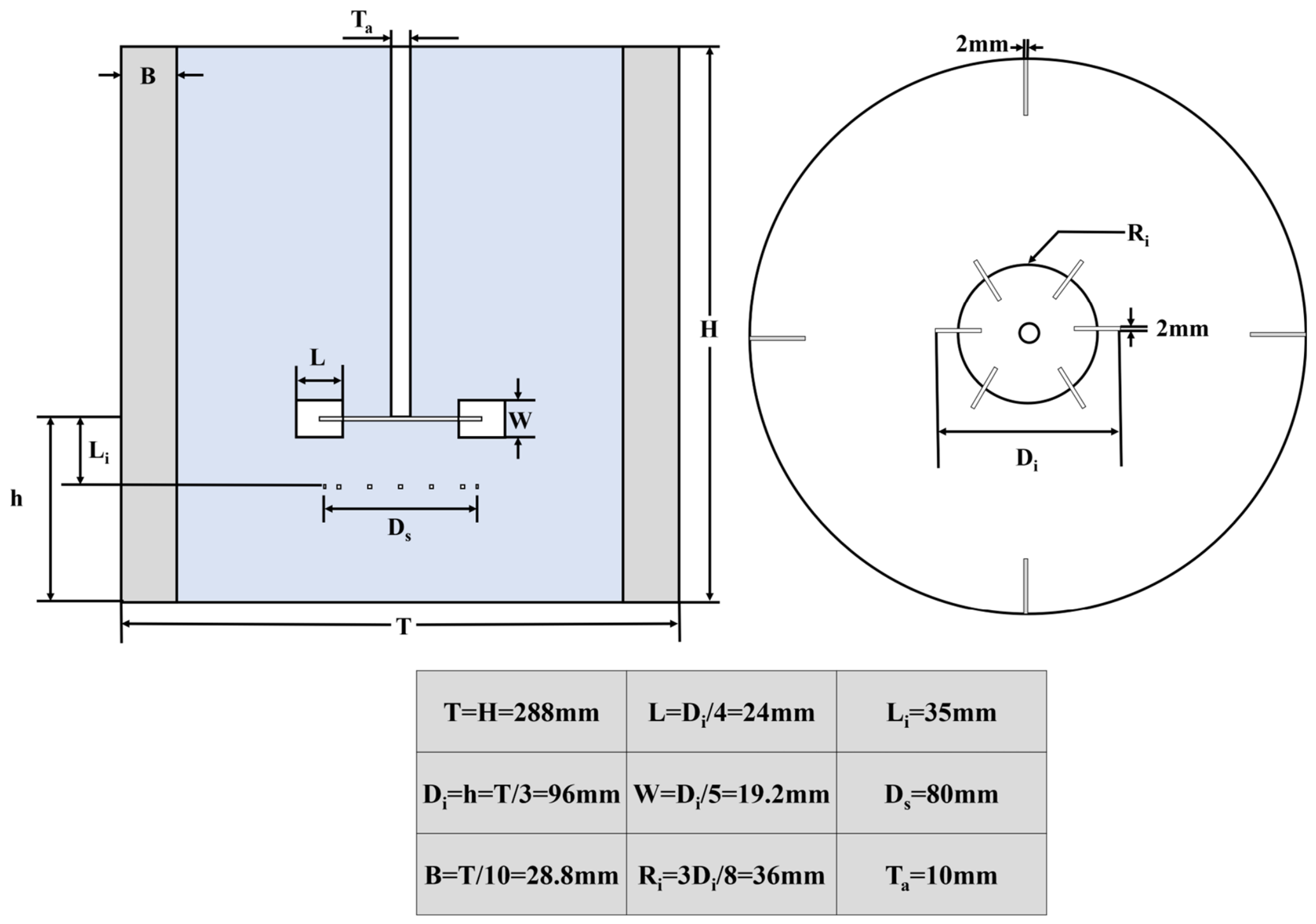
3.1. Simulation Configuration
3.2. Performance Indicators
3.3. Model Validation
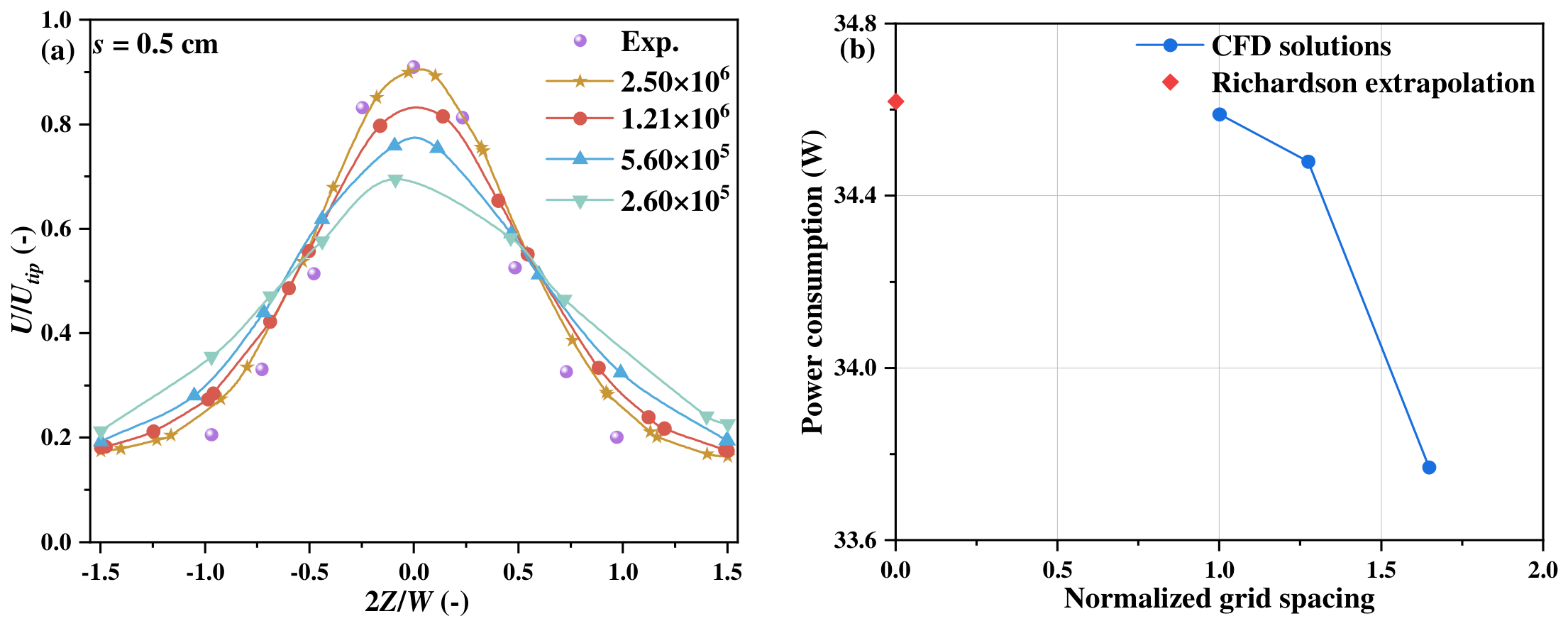
3.3.1. Validation I: Grid-Independence
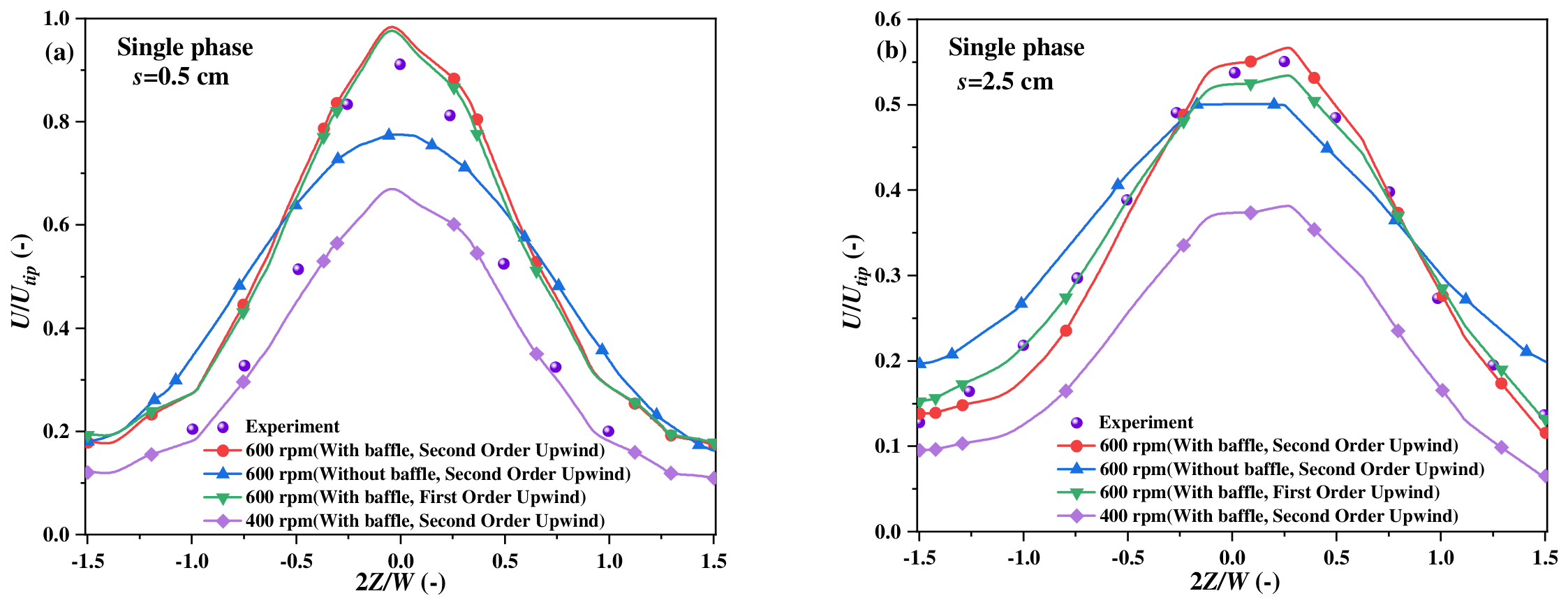
3.3.2. Validation II: Single Phase
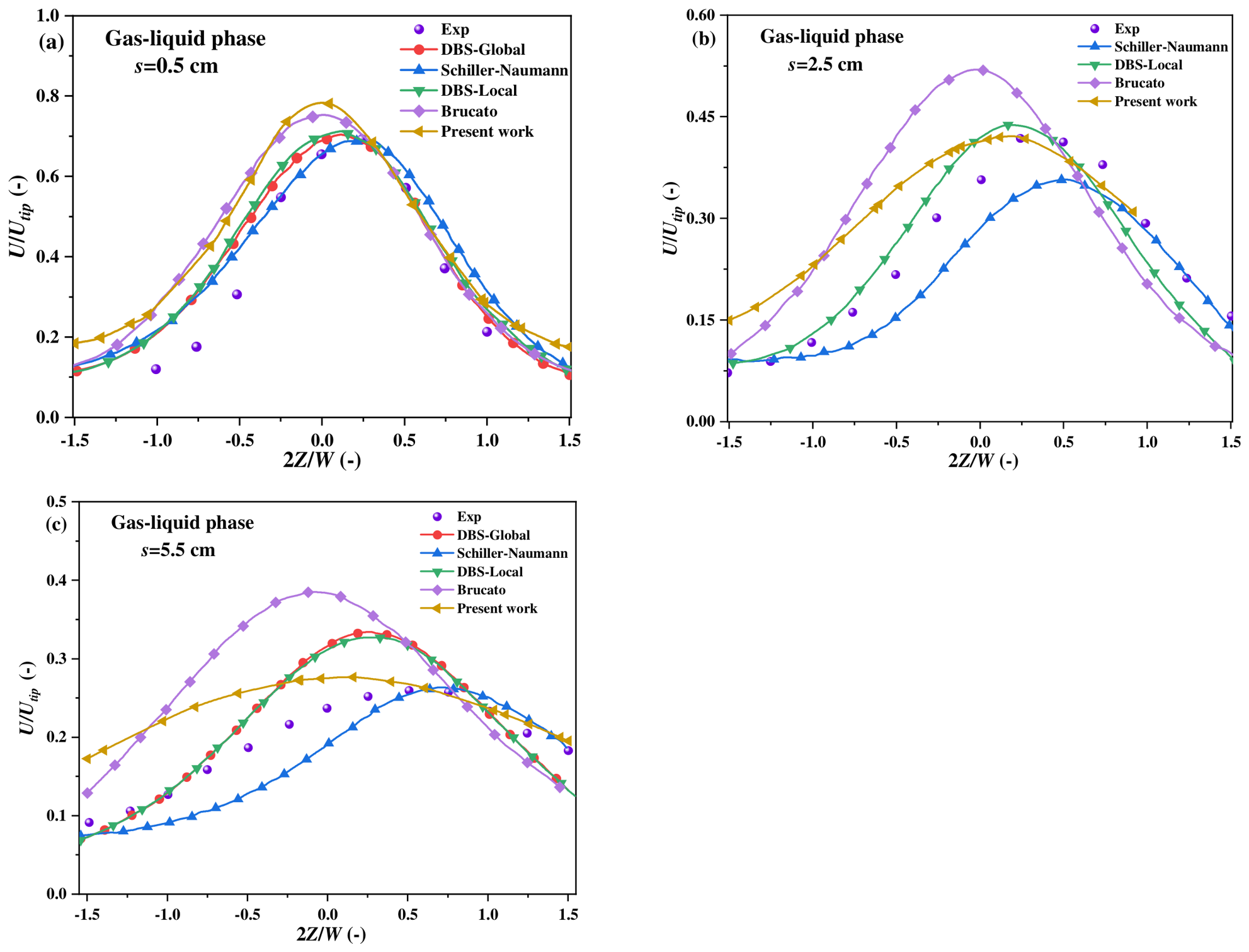
3.3.3. Validation III: Gas–Liquid Phase
4. Results and Discussion
4.1. Gas Holdup, Velocity Field, and Interphase Drag Coefficient Distribution
4.2. Effect of Stirring Speed
4.3. Effect of Gas Injection Velocity
4.4. Effect of Blade Length
4.5. Effect of Blade Height
5. Conclusions
- (1)
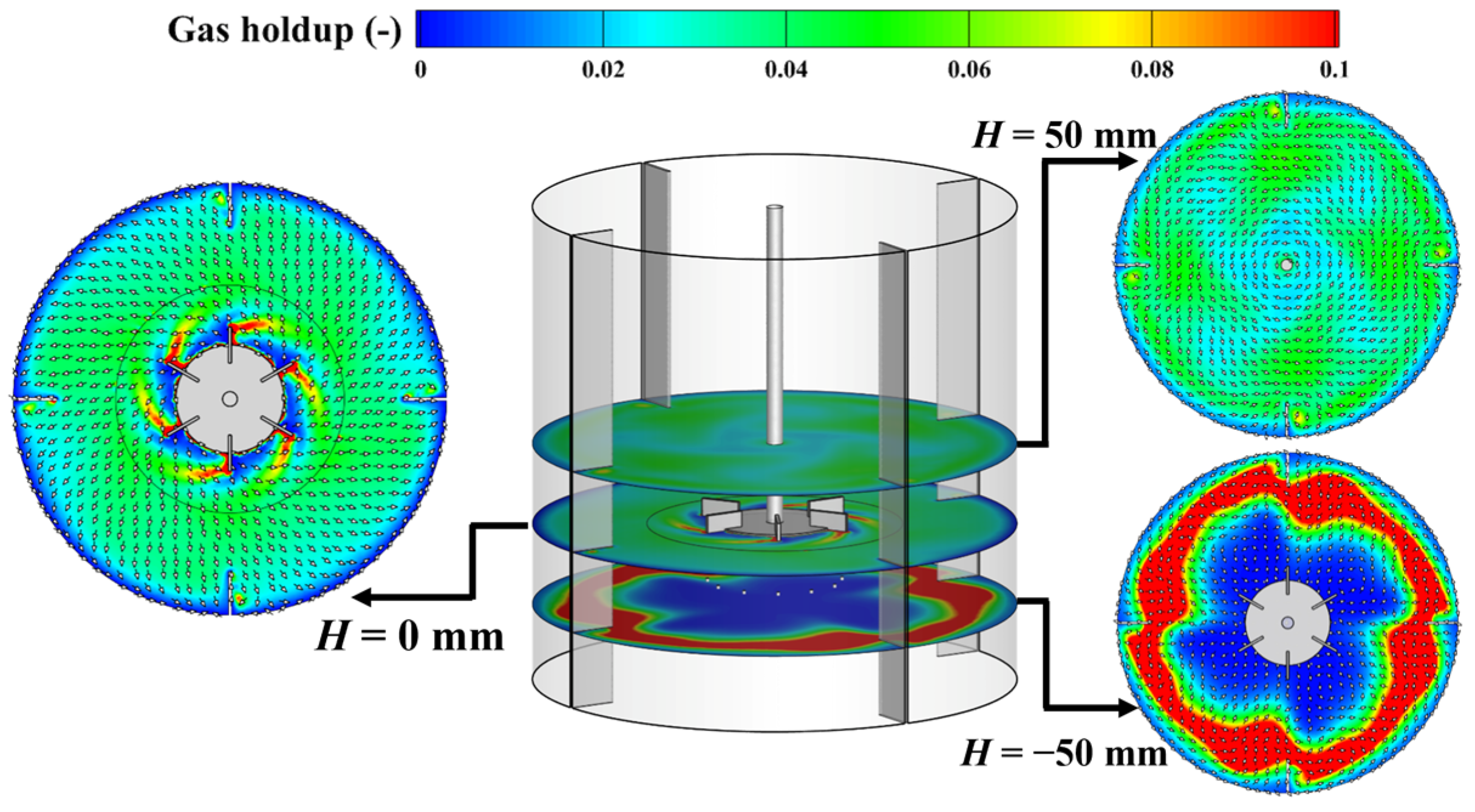
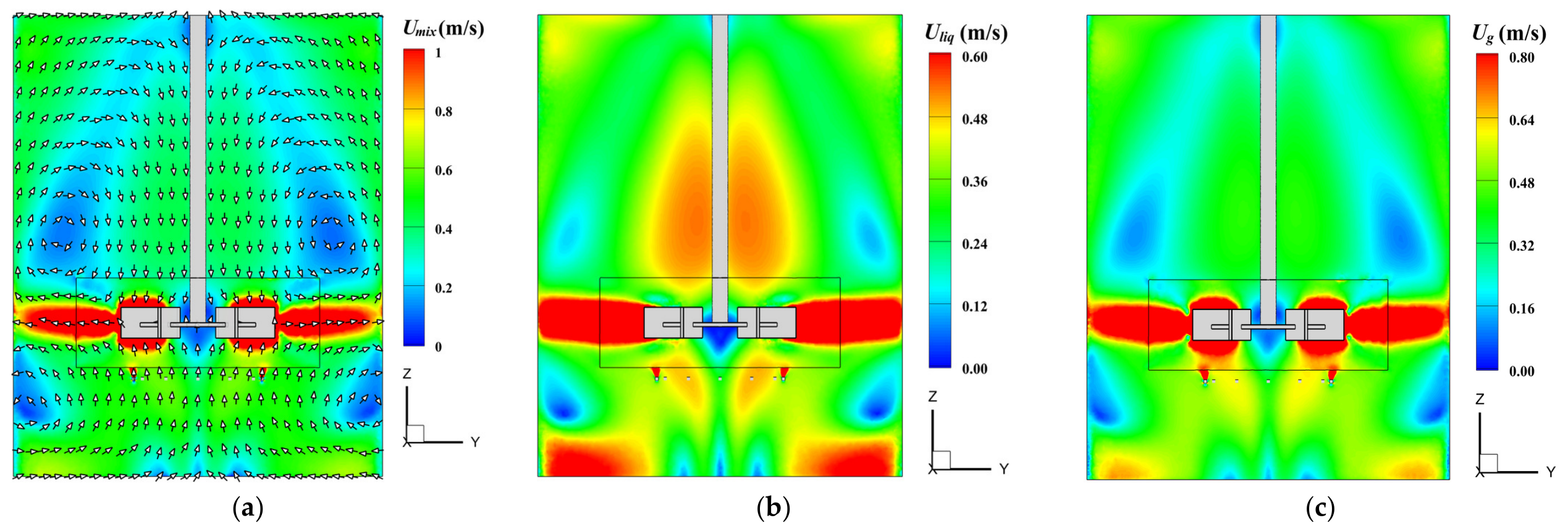
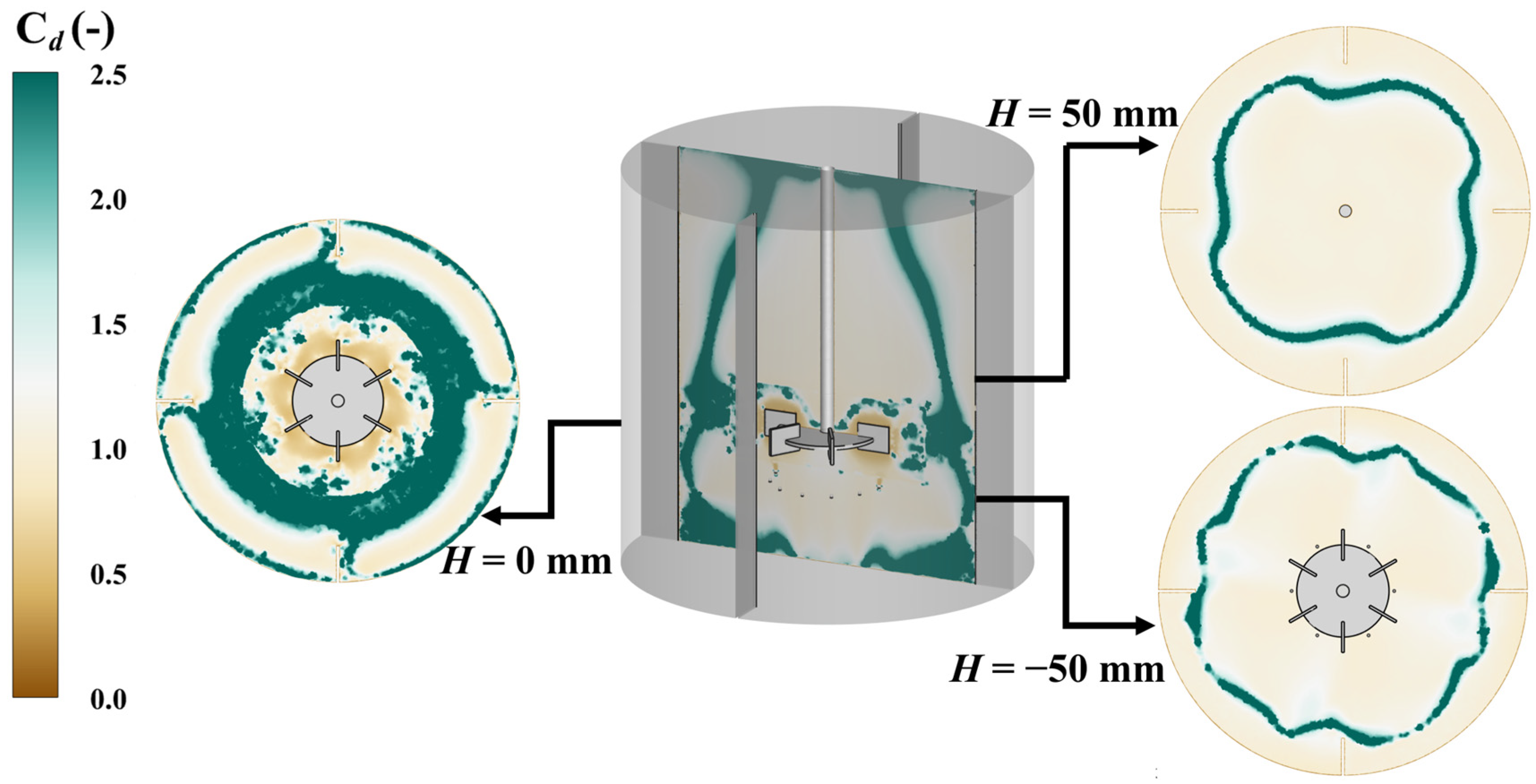
- The baseline flow field shows that gas dispersion in the stirred tank is governed by the combined effects of impeller-induced radial discharge, buoyancy-driven bubble rise, and circulation-controlled residence time. High drag-coefficient regions are mainly located along the impeller discharge path, near vortex-core regions, and in annular structures close to the vessel wall. These regions correspond to relatively small gas–liquid slip velocities and stronger kinematic coupling between the dispersed gas phase and the continuous liquid phase.
- (2)
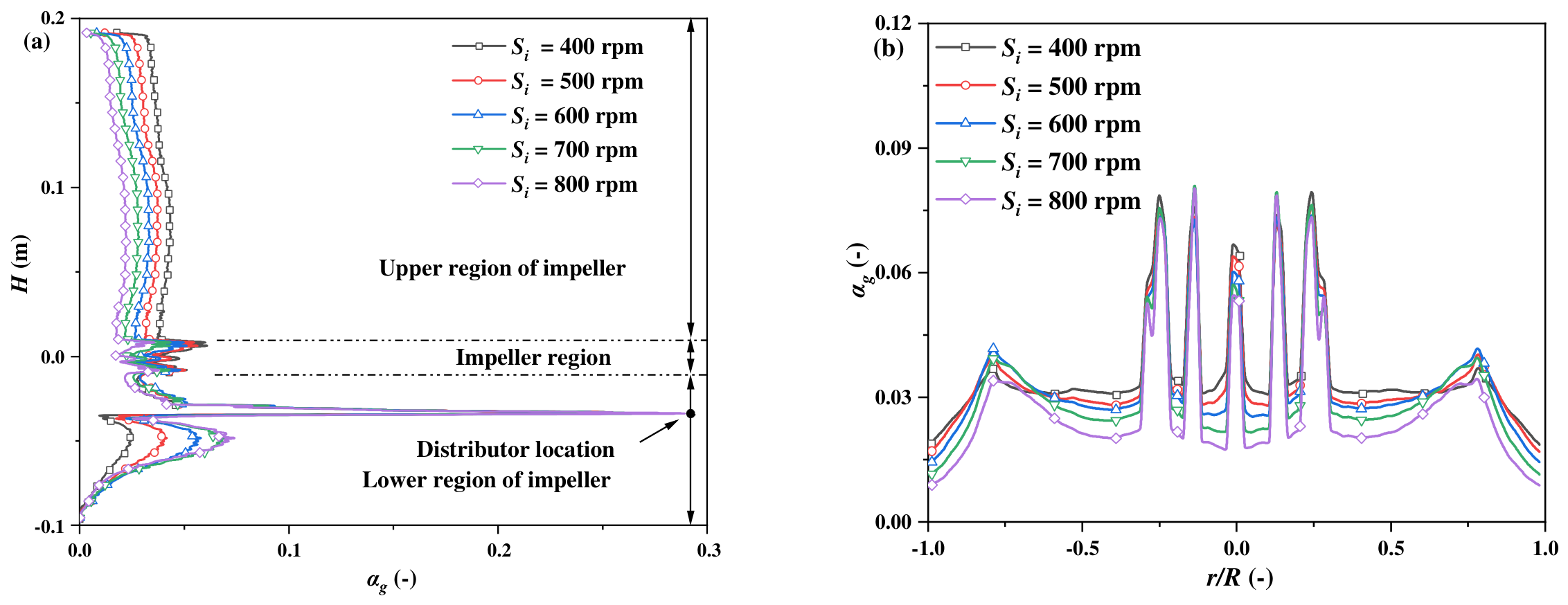
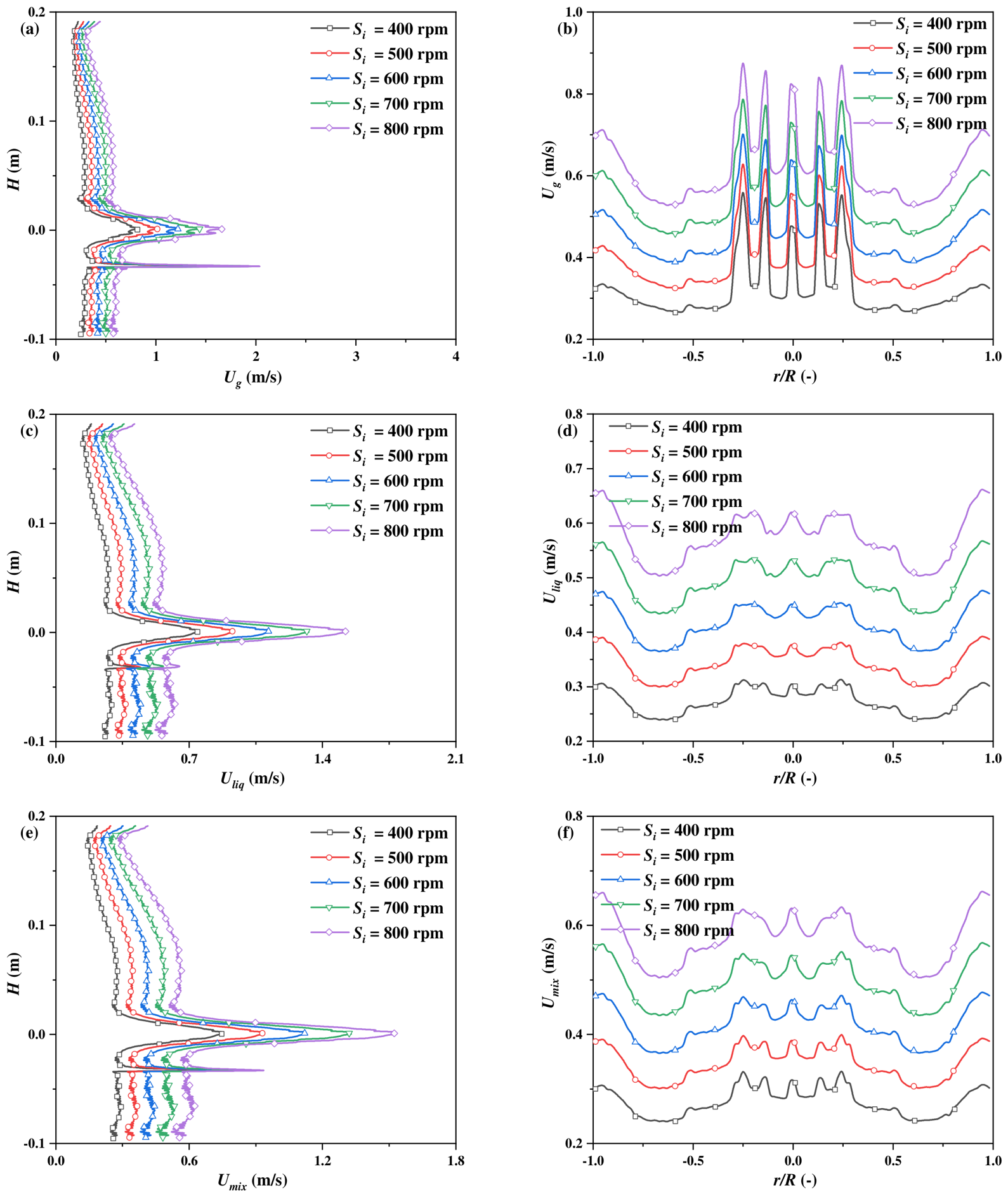
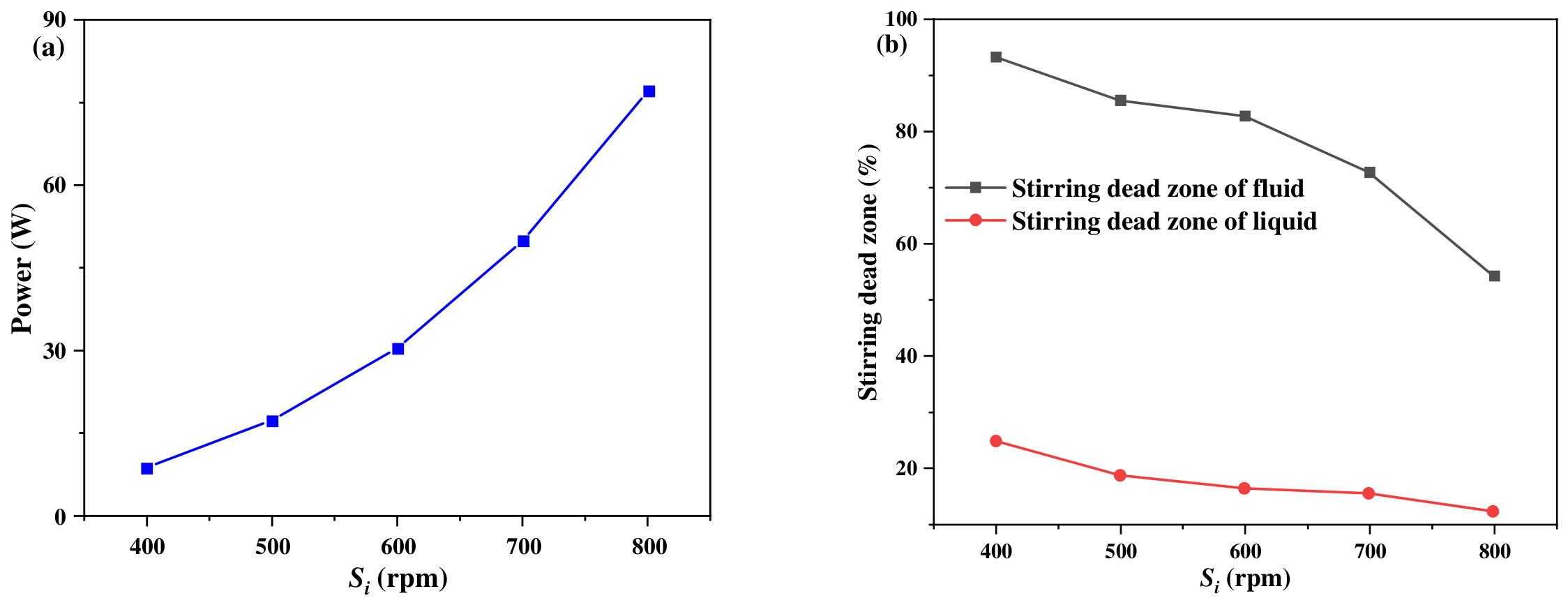
- Increasing stirring speed is the most direct operating strategy for enhancing liquid circulation and suppressing stagnant zones. As the stirring speed increases from 400 to 800 rpm, the mixture-phase dead-zone fraction decreases from 93.31% to 54.27%, and the liquid-phase dead-zone fraction decreases from 24.64% to 12.08%. This improvement is caused by stronger radial discharge, enhanced bubble entrainment, and improved drag-mediated gas–liquid coupling. However, the corresponding power consumption increases sharply from 8.78 to 77.00 W. Therefore, increasing stirring speed improves mixing performance effectively, but this enhancement is accompanied by a substantial energy penalty.
- (3)
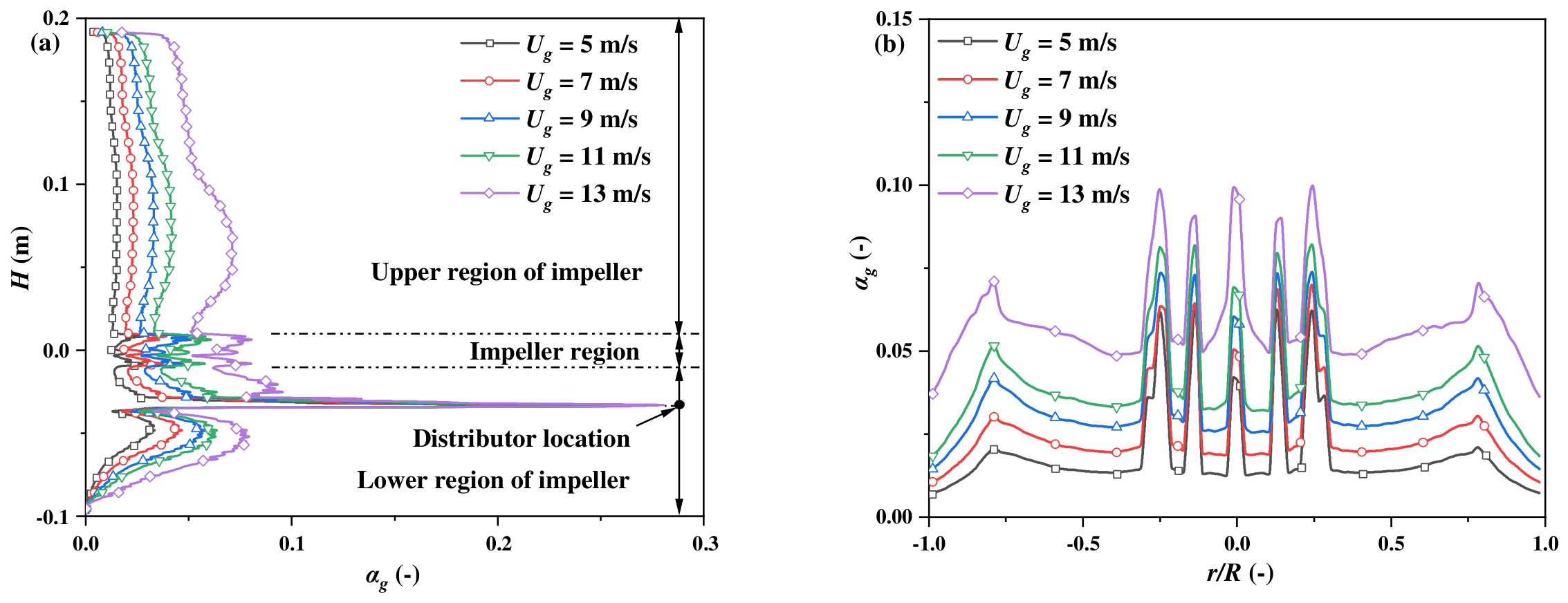
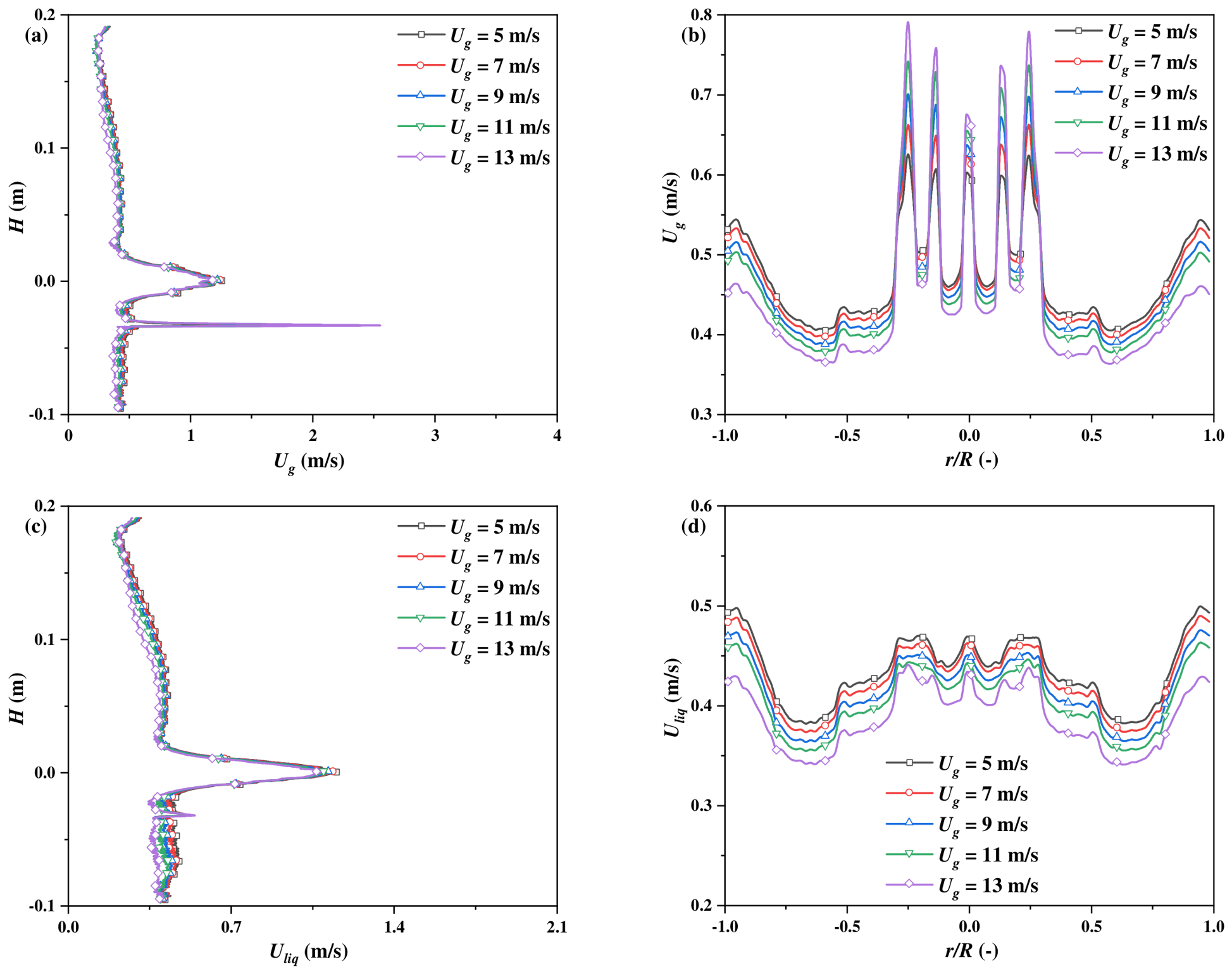
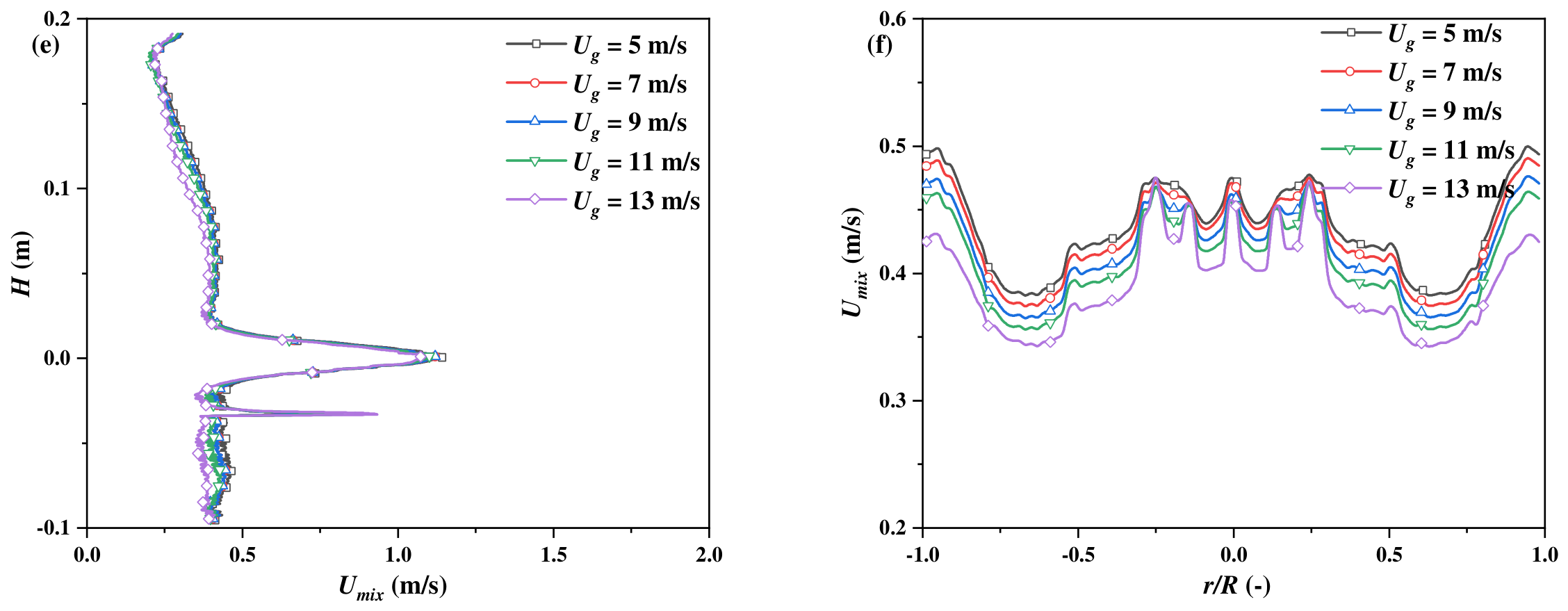
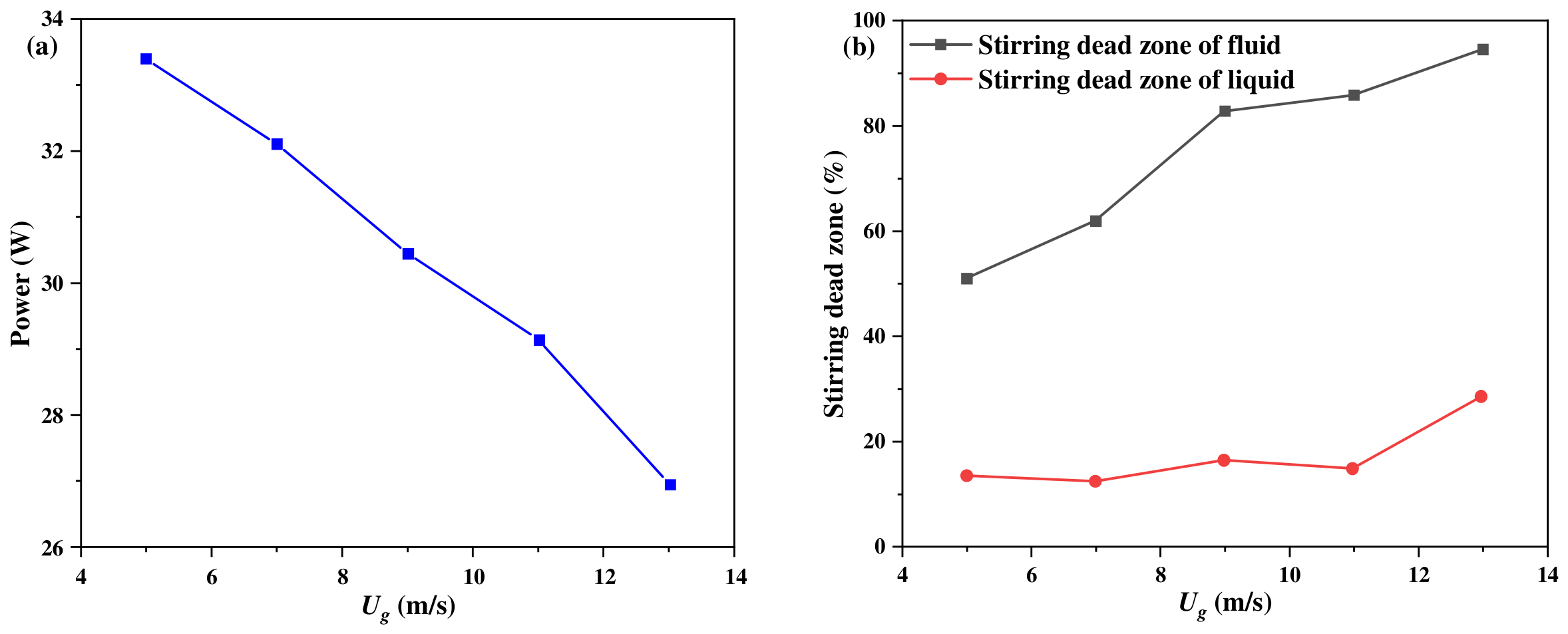
- Increasing gas injection velocity raises the overall gas holdup but does not necessarily improve mixing performance. As the gas injection velocity increases from 5 to 13 m/s, the power consumption decreases from 33.3 to 26.9 W, while the mixture-phase dead-zone fraction increases from 50.94% to 94.54%. The liquid-phase dead-zone fraction exhibits a non-monotonic response, decreasing slightly from 13.21% to 12.13% between 5 and 7 m/s and then increasing to 28.32% at 13 m/s. This behavior indicates that moderate aeration can provide limited enhancement of local liquid agitation, whereas excessive gas loading promotes gas accumulation near the impeller, weakens its effective pumping capacity, and suppresses liquid circulation.
- (4)
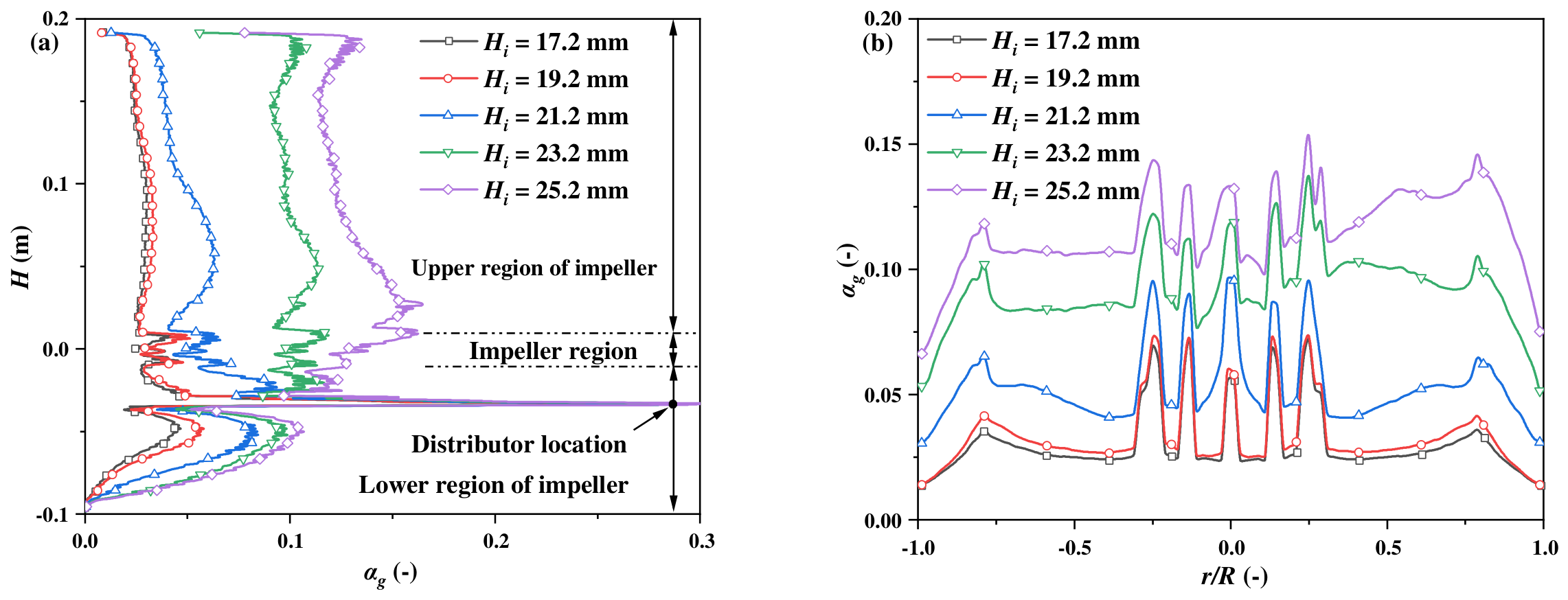
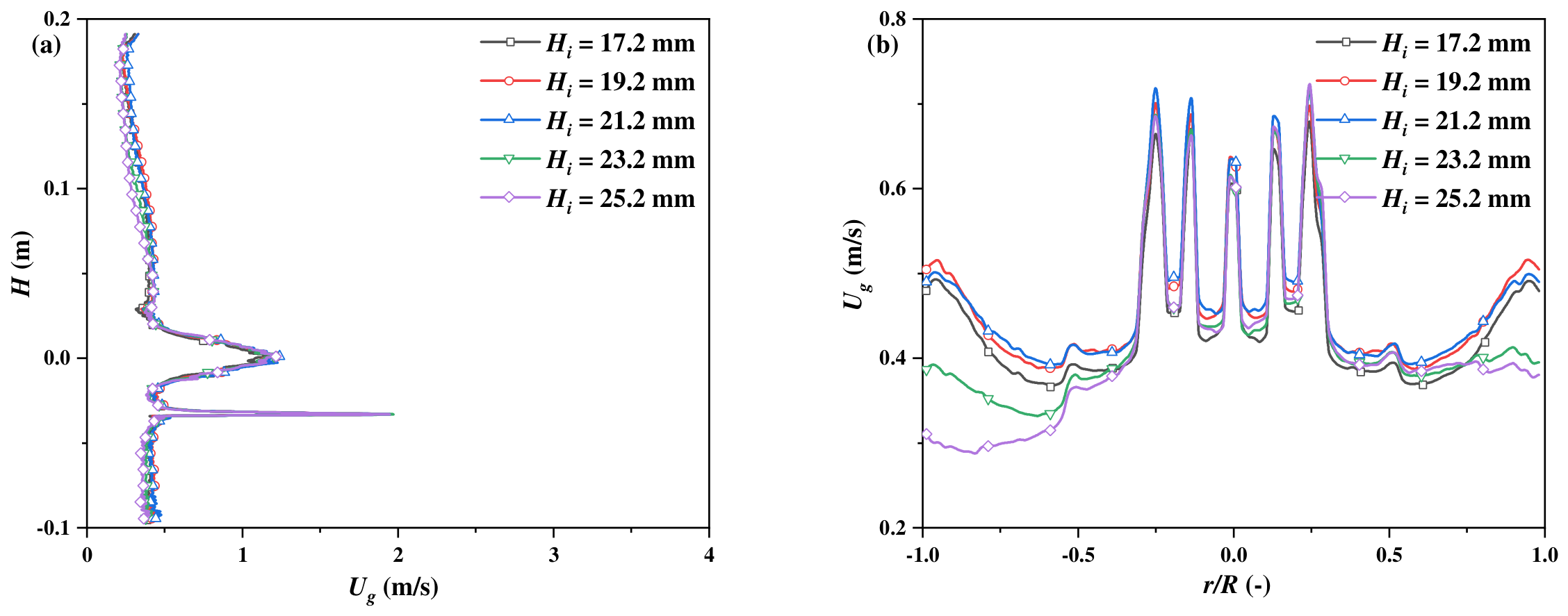
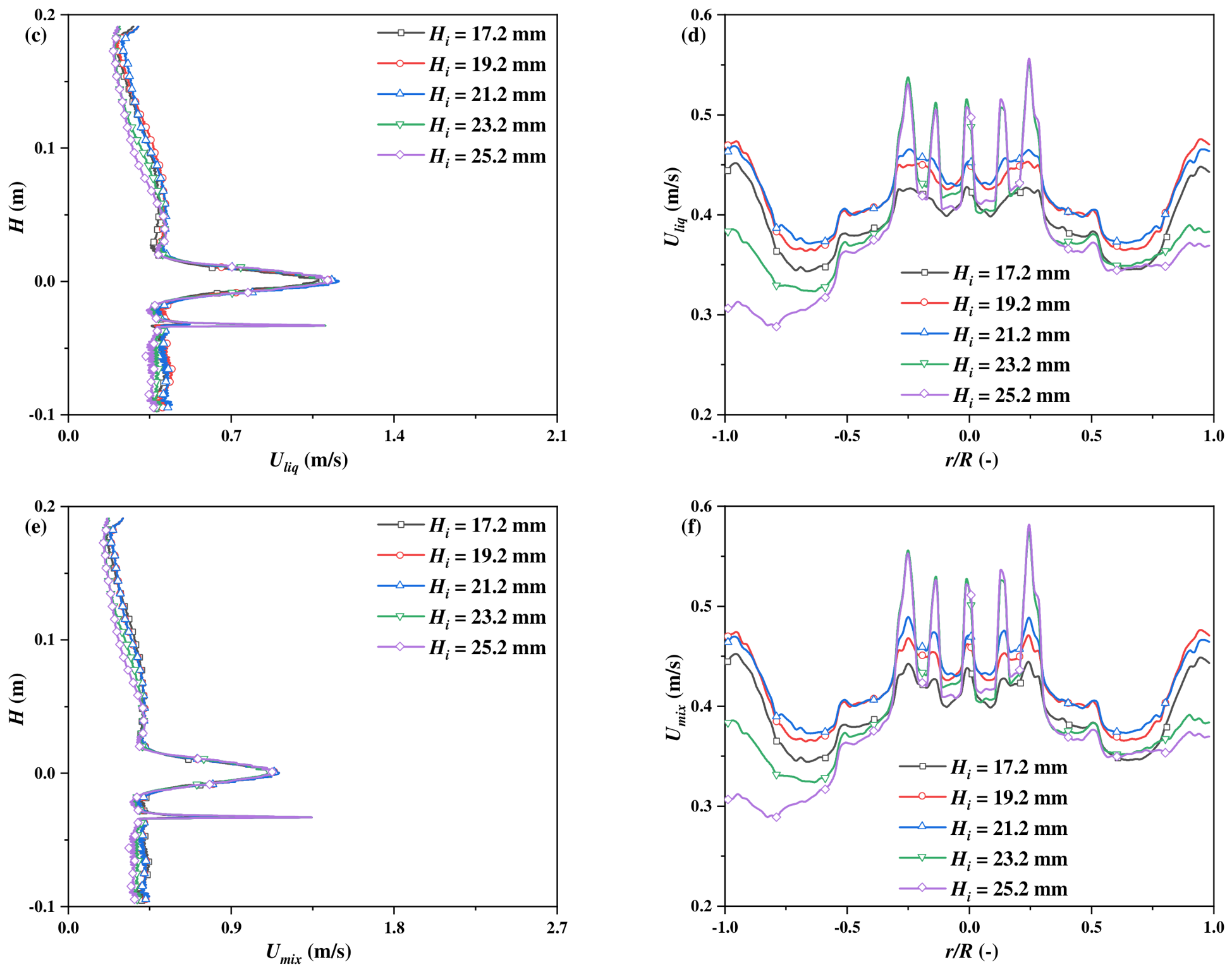
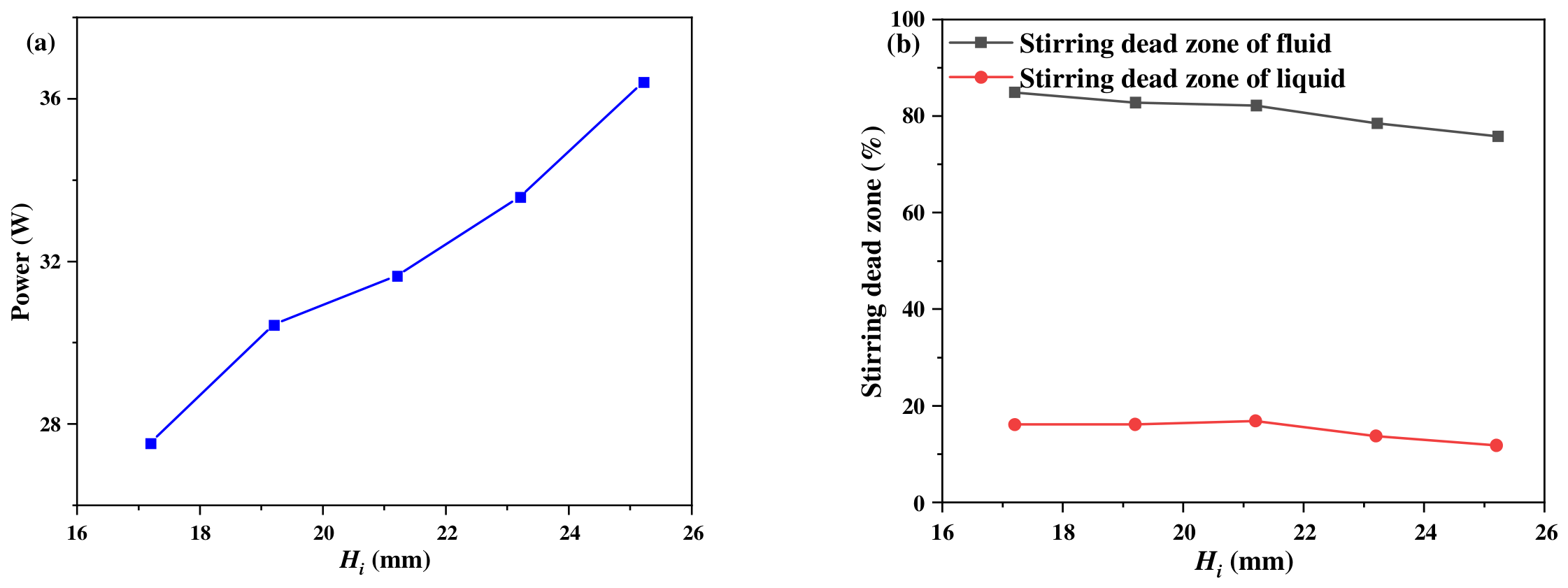
- Blade height mainly regulates local shear and gas–liquid interaction near the impeller. Increasing the blade height from 17.2 to 25.2 mm increases the power consumption from 27.55 to 36.39 W, while the mixture-phase and liquid-phase dead-zone fractions decrease from 84.89% to 75.83% and from 16.10% to 11.81%, respectively. Although a larger blade height improves local gas redistribution and radial gas-holdup uniformity, its effect on tank-scale circulation and global dead-zone suppression remains limited. Therefore, blade height should be regarded as a local flow-regulation parameter rather than the dominant parameter for global mixing enhancement.
- (5)
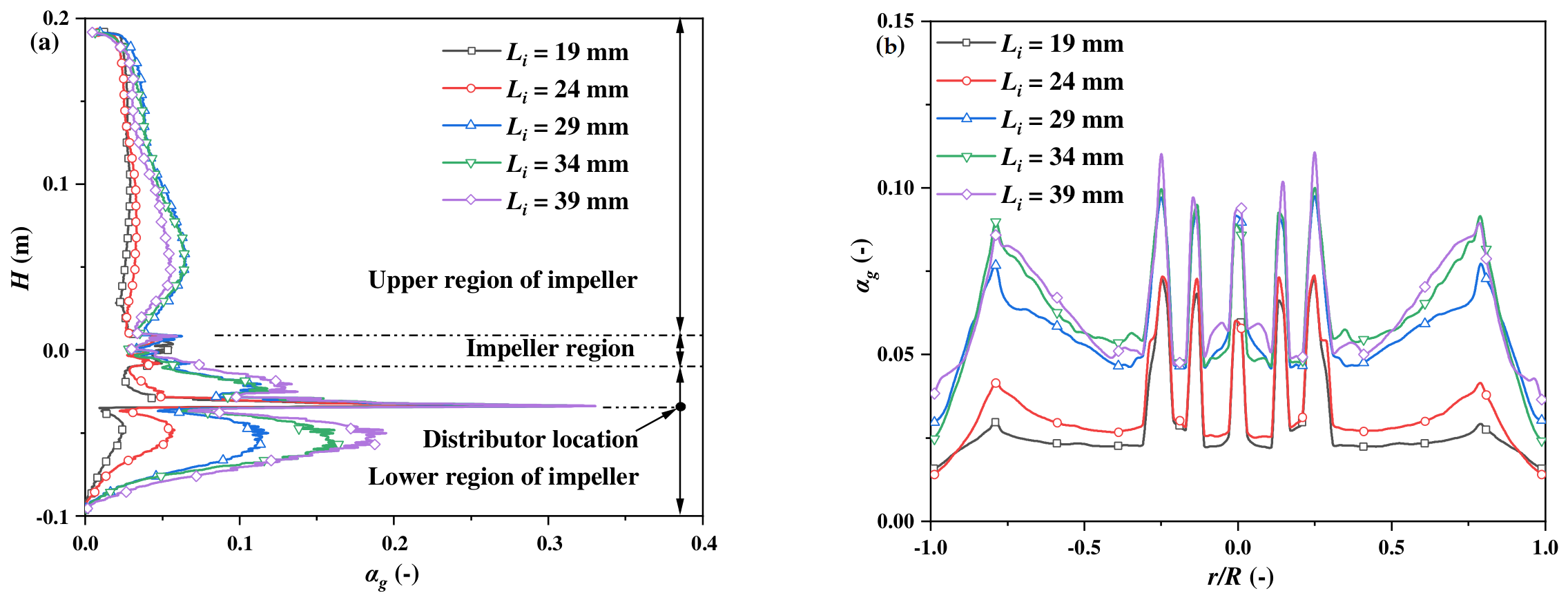
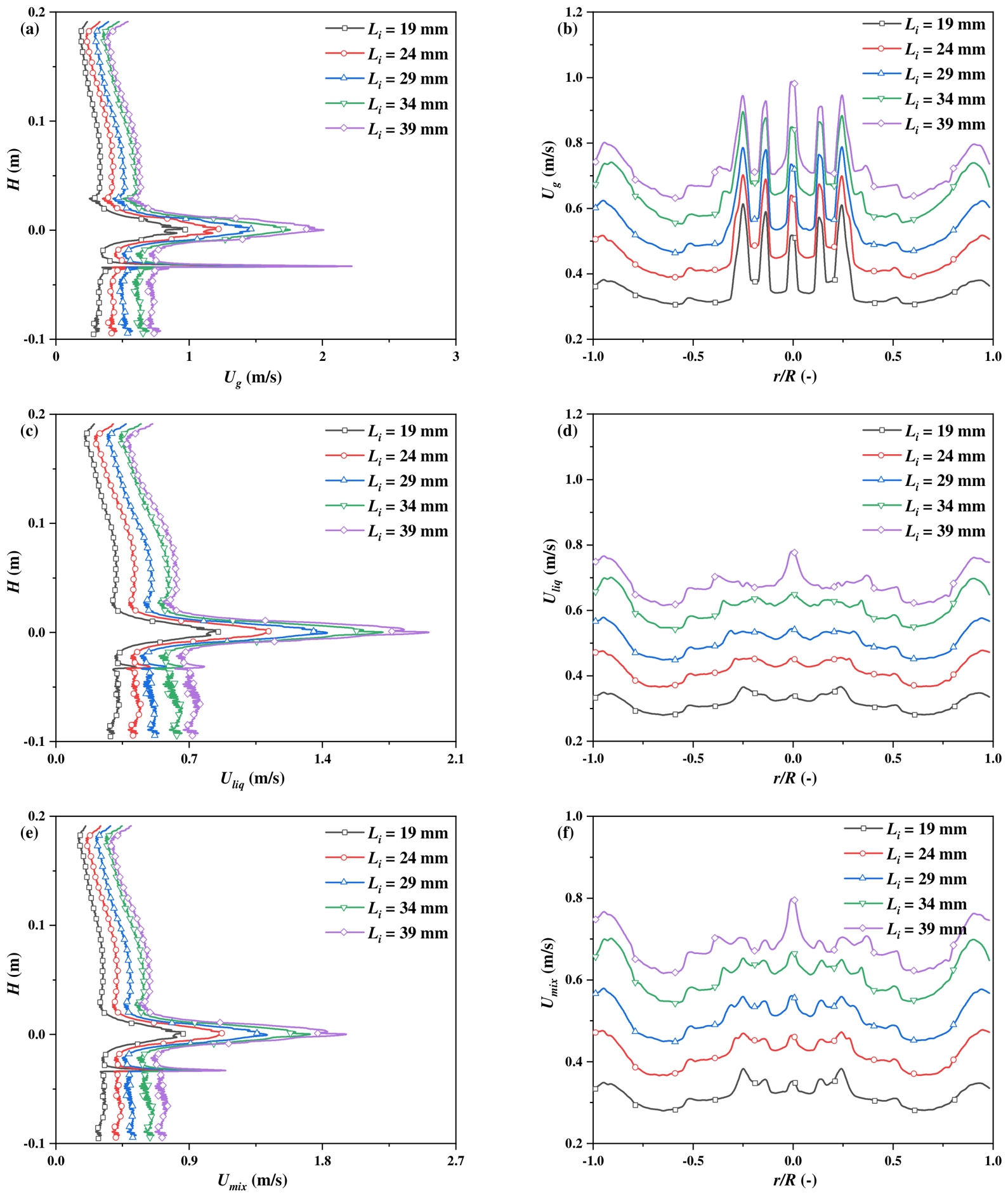
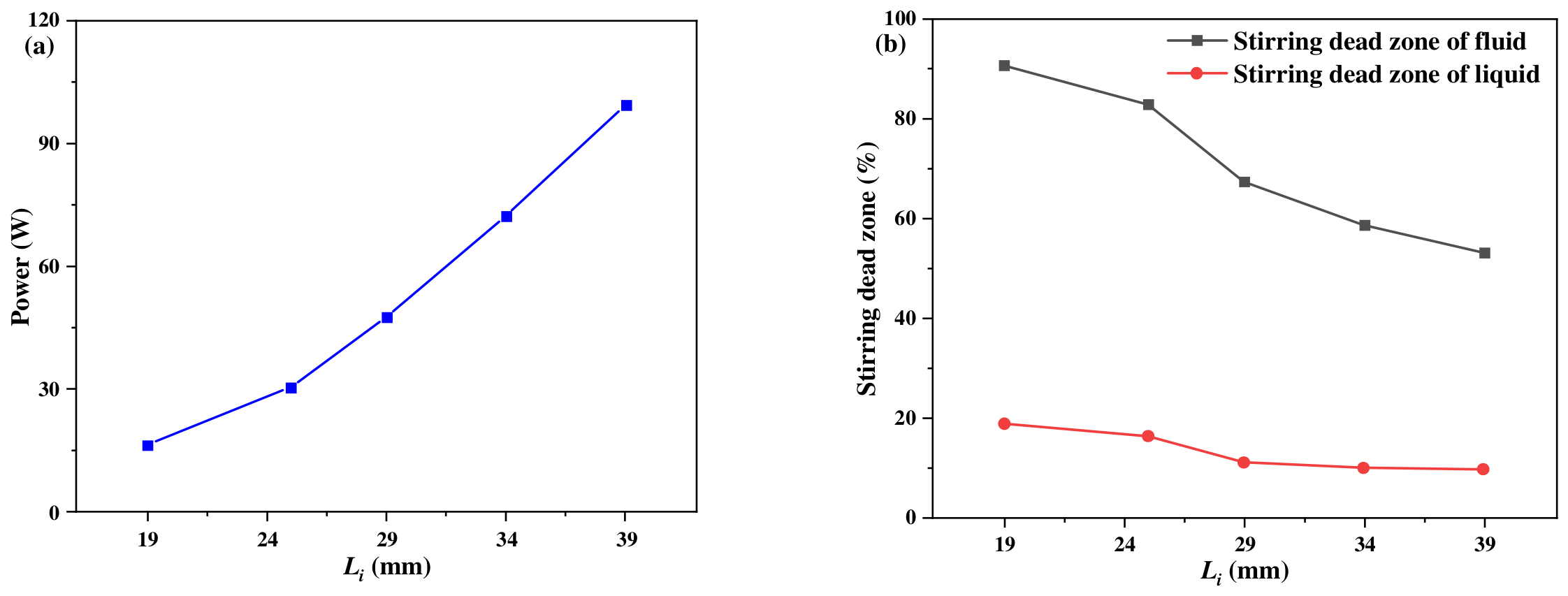
- Blade length is the most effective geometric parameter for reducing dead zones in the present Rushton-turbine stirred tank. Increasing the blade length from 19 to 39 mm strengthens the radial discharge flow and bubble redistribution, reducing the mixture-phase dead-zone fraction from 90.63% to 53.07% and the liquid-phase dead-zone fraction from 18.66% to 9.50%. However, the power consumption increases markedly from 16.46 to 99.25 W. Moreover, the reduction in the liquid-phase dead zone becomes marginal when the blade length increases from 34 to 39 mm, indicating diminishing returns at excessive blade length. Therefore, blade length is more effective than blade height for enhancing global circulation, but an excessively long blade is not necessarily energy-efficient.
Author Contributions
Funding
Data Availability Statement
Conflicts of Interest
References
- Zhao, Z.; Chen, F.; Liu, J.; Liu, Q.; Hou, Y.; Yang, N.; Xie, G. Numerical simulation study of gas-liquid two-phase flow in a pressurized leaching stirred tank. Processes 2024, 12, 896. [Google Scholar] [CrossRef] [Scilit]
- Cudak, M.; Rakoczy, R. Hydrodynamics of gas-liquid and biophase-gas-liquid systems in stirred tanks of different scales. Korean J. Chem. Eng. 2022, 39, 2959–2971. [Google Scholar] [CrossRef] [Scilit]
- Montante, G.; Paglianti, A. Gas hold-up distribution and mixing time in gas–liquid stirred tanks. Chem. Eng. J. 2015, 279, 648–658. [Google Scholar] [CrossRef] [Scilit]
- Liu, B.; Xiao, Q.; Sun, N.; Gao, P.; Fan, F.; Sunden, B. Effect of gas distributor on gas–liquid dispersion and mass transfer characteristics in stirred tank. Chem. Eng. Res. Des. 2019, 145, 314–322. [Google Scholar] [CrossRef] [Scilit]
- Ngoma, E.; Pakostova, E.; Wiesner, J.A.; Clark, T.; Laamanen, C.; Mykytczuk, N. Commissioning and Optimization of Pilot-Scale Stirred Tank Reactors in Biohydrometallurgy. J. Sustain. Metall. 2025, 11, 3806–3822. [Google Scholar] [CrossRef] [Scilit]
- Voinov, N.A.; Frolov, A.S.; Bogatkova, A.V.; Zemtsov, D.A.; Zhukova, O.P. Method for intensive gas–liquid dispersion in a stirred tank. ChemEngineering 2023, 7, 30. [Google Scholar] [CrossRef] [Scilit]
- Zhang, Q.; Yong, Y.; Mao, Z.-S.; Yang, C.; Zhao, C. Experimental determination and numerical simulation of mixing time in a gas–liquid stirred tank. Chem. Eng. Sci. 2009, 64, 2926–2933. [Google Scholar] [CrossRef] [Scilit]
- Amiraftabi, M.; Khiadani, M.; Mohammed, H.A.; Arshad, A. CFD-PBM and experimental investigation of a shear thinning fluid in a gas-liquid tank agitated by a helical ribbon impeller. Sep. Purif. Technol. 2021, 272, 118855. [Google Scholar] [CrossRef] [Scilit]
- Liu, L.; Chen, Z.-b.; Yan, H.-j.; Zhang, D.-k.; Zhou, P. Numerical simulation and multi-objective parameter optimization of gas−liquid flow in horizontal stirred tank. Trans. Nonferrous Met. Soc. China 2023, 33, 958–968. [Google Scholar] [CrossRef] [Scilit]
- Li, L.; Chen, C.; Tao, X.; Qi, H.; Liu, T.; Yan, Q.; Deng, F.; Allayev, A.; Lin, W.; Wang, J. Effect of Salt Solution Tracer Dosage on the Transport and Mixing of Tracer in a Water Model of Asymmetrical Gas-Stirred Ladle with a Moderate Gas Flowrate. Symmetry 2024, 16, 619. [Google Scholar] [CrossRef] [Scilit]
- Zhao, Y.; Chen, C.; Li, L.; Wang, T.; Chen, L.; Wang, J. Application of an Improved Tracer in a Water Model of Ladle. Metall. Mater. Trans. B Process Metall. Mater. Process. Sci. 2025, 56, 6725–6745. [Google Scholar] [CrossRef] [Scilit]
- Rong, Z.; Hou, D.; Chen, C.; Song, G.; Du, Z.; Li, J.; Zhang, H.; Lin, W.; Chen, L.; Qian, G. The Effect of Baffle Structure and Rotational Speed on the Flow Field in the Silicon Purification Process via the Rotational Segregation Method: A Water Model Study on Tracer Transport and Concentration Variation. Processes 2026, 14, 1500. [Google Scholar] [CrossRef] [Scilit]
- Gu, D.; Wen, L.; Xu, H.; Ye, M. Study on hydrodynamics characteristics in a gas-liquid stirred tank with a self-similarity impeller based on CFD-PBM coupled model. J. Taiwan Inst. Chem. Eng. 2023, 143, 104688. [Google Scholar] [CrossRef] [Scilit]
- Maluta, F.; Paglianti, A.; Montante, G. Prediction of gas cavities size and structure and their effect on the power consumption in a gas-liquid stirred tank by means of a two-fluid RANS model. Chem. Eng. Sci. 2021, 241, 116677. [Google Scholar] [CrossRef] [Scilit]
- Petitti, M.; Vanni, M.; Marchisio, D.L.; Buffo, A.; Podenzani, F. Simulation of coalescence, break-up and mass transfer in a gas–liquid stirred tank with CQMOM. Chem. Eng. J. 2013, 228, 1182–1194. [Google Scholar] [CrossRef] [Scilit]
- Lane, G.; Schwarz, M.; Evans, G. Predicting gas–liquid flow in a mechanically stirred tank. Appl. Math. Model. 2002, 26, 223–235. [Google Scholar] [CrossRef] [Scilit]
- Krýsa, P.; Kuhn, S.; Šoóš, M. Modelling of bubble breakage and coalescence in stirred and sparged bioreactor using the Euler–Lagrange approach coupled with volume of fluid method. Int. J. Heat Mass Transf. 2025, 252, 127249. [Google Scholar] [CrossRef] [Scilit]
- Maluta, F.; Alberini, F.; Paglianti, A.; Montante, G. Hydrodynamics, power consumption and bubble size distribution in gas-liquid stirred tanks. Chem. Eng. Res. Des. 2023, 194, 582–596. [Google Scholar] [CrossRef] [Scilit]
- Yan, Y.; Mohanarangam, K.; Yang, W.; Tu, J. Experimental measuring techniques for industrial-scale multiphase flow problems. Exp. Comput. Multiph. Flow 2024, 6, 1–13. [Google Scholar] [CrossRef] [Scilit]
- Płusa, T.; Talaga, J.; Duda, A.; Duda, P. Modeling mixing dynamics in uncovered baffled and unbaffled stirred tanks. AIChE J. 2021, 67, e17322. [Google Scholar] [CrossRef] [Scilit]
- Simon, E.; Augier, F.; Morchain, J.; Pierson, J.-L.; Liné, A. Investigation of the local apparent viscosity in a stirred tank with a shear-thinning fluid through particle image velocimetry. Chem. Eng. Res. Des. 2024, 206, 378–385. [Google Scholar] [CrossRef] [Scilit]
- Ciou, Z.-Y.; Wu, C.Y. Investigation of the flow patterns and mixing efficiency in a stirred tank through particle image velocimetry. J. Taiwan Inst. Chem. Eng. 2023, 149, 104988. [Google Scholar] [CrossRef] [Scilit]
- Story, A.; Jaworski, Z.; Simmons, M.J.; Nowak, E. Comparative PIV and LDA studies of Newtonian and non-Newtonian flows in an agitated tank. Chem. Pap. 2018, 72, 593–602. [Google Scholar] [CrossRef] [Scilit]
- Kolano, M.; Kraume, M. A PIV study to quantify the relationships between viscoelasticity and flow behavior in stirred tanks. Chem. Eng. Sci. 2023, 282, 119301. [Google Scholar] [CrossRef] [Scilit]
- Aubin, J.; Le Sauze, N.; Bertrand, J.; Fletcher, D.F.; Xuereb, C. PIV measurements of flow in an aerated tank stirred by a down- and an up-pumping axial flow impeller. Exp. Therm. Fluid. Sci. 2004, 28, 447–456. [Google Scholar] [CrossRef] [Scilit]
- Schäfer, M.; Höfken, M.; Durst, F. Detailed LDV measurements for visualization of the flow field within a stirred-tank reactor equipped with a Rushton turbine. Chem. Eng. Res. Des. 1997, 75, 729–736. [Google Scholar] [CrossRef] [Scilit]
- Benayad, S.; Salem, A.; Legrand, J. Investigation of the interaction of velocity and concentration fields by coupling LDV to conductivity probe in a continuous stirred tank reactor (CSTR). Chem. Eng. J. 2001, 84, 239–245. [Google Scholar] [CrossRef] [Scilit]
- Wang, B.; Dai, J.; Yu, J.; Gao, X. Coupling superquadric Discrete Element Method-Computational Fluid Dynamics (DEM-CFD) with immersed boundary method for particle-resolved direct numerical simulations of non-spherical particle suspension and fluidisation. J. Fluid. Mech. 2025, 1019, A35. [Google Scholar] [CrossRef] [Scilit]
- Gorji, M.; Bozorgmehry Boozarjomehry, R.; Kazemeini, M. CFD Modeling of gas-liquid hydrodynamics in a stirred tank reactor. Iran. J. Chem. Chem. Eng. 2007, 26, 85–96. [Google Scholar] [CrossRef]
- Sajjadi, B.; Raman, A.A.A.; Ibrahim, S.; Shah, R.S.S.R.E. Review on gas-liquid mixing analysis in multiscale stirred vessel using CFD. Rev. Chem. Eng. 2012, 28, 171–189. [Google Scholar] [CrossRef] [Scilit]
- Xia, Y.; Lin, Z.; Yu, Z. Modelling mesoscale turbulence in clustered gas–solid flows based on particle-resolved simulation data. J. Fluid Mech. 2025, 1021, A6. [Google Scholar] [CrossRef] [Scilit]
- Liu, Y.-J.; Li, W.; Han, L.-C.; Cao, Y.; Luo, H.-a.; Al-Dahhan, M.; Dudukovic, M. γ-CT measurement and CFD simulation of cross section gas holdup distribution in a gas–liquid stirred standard Rushton tank. Chem. Eng. Sci. 2011, 66, 3721–3731. [Google Scholar] [CrossRef] [Scilit]
- Li, Y.; Wang, J.; Lu, C.; Wang, S.; Dong, H. Gas–liquid flow characteristics and performance optimization of industrial downflow jet loop reactor based on computational fluid dynamics. Korean J. Chem. Eng. 2024, 41, 1637–1656. [Google Scholar] [CrossRef] [Scilit]
- Ochieng, A.; Onyango, M.; Kiriamiti, K. Experimental measurement and computational fluid dynamics simulation of mixing in a stirred tank: A review. South Afr. J. Sci. 2009, 105, 421–426. [Google Scholar] [CrossRef] [Scilit]
- Joshi, J.B.; Nere, N.K.; Rane, C.V.; Murthy, B.; Mathpati, C.S.; Patwardhan, A.W.; Ranade, V.V. CFD simulation of stirred tanks: Comparison of turbulence models. Part I: Radial flow impellers. Can. J. Chem. Eng. 2011, 89, 23–82. [Google Scholar] [CrossRef] [Scilit]
- Joshi, J.B.; Nere, N.K.; Rane, C.V.; Murthy, B.; Mathpati, C.S.; Patwardhan, A.W.; Ranade, V.V. CFD simulation of stirred tanks: Comparison of turbulence models (Part II: Axial flow impellers, multiple impellers and multiphase dispersions). Can. J. Chem. Eng. 2011, 89, 754–816. [Google Scholar] [CrossRef] [Scilit]
- Jahoda, M.; Tomášková, L.; Moštěk, M. CFD prediction of liquid homogenisation in a gas–liquid stirred tank. Chem. Eng. Res. Des. 2009, 87, 460–467. [Google Scholar] [CrossRef] [Scilit]
- Duguay, J.; Lacey, J.; Massé, A. Evaluating the Euler-Euler approach for predicting a strongly 3D bubble-induced recirculatory flow with OpenFOAM. Chem. Eng. Sci. 2021, 229, 115982. [Google Scholar] [CrossRef] [Scilit]
- Shi, P.; Rzehak, R. Bubbly flow in stirred tanks: Euler-Euler/RANS modeling. Chem. Eng. Sci. 2018, 190, 419–435. [Google Scholar] [CrossRef] [Scilit]
- Tamburini, A.; Brucato, A.; Ciofalo, M.; Gagliano, G.; Micale, G.; Scargiali, F. CFD simulations of early-to fully-turbulent conditions in unbaffled and baffled vessels stirred by a Rushton turbine. Chem. Eng. Res. Des. 2021, 171, 36–47. [Google Scholar] [CrossRef] [Scilit]
- Xu, C.; Liu, X.; Ding, C.; Zhou, X.; Xu, Y.; Gu, X. Power consumption and oxygen transfer optimization for C5 sugar acid production in a gas-liquid stirred tank bioreactor using CFD-Taguchi method. Renew. Energy 2023, 212, 430–442. [Google Scholar] [CrossRef] [Scilit]
- Chen, Z.; Yan, H.; Zhou, P.; Yang, P.; Ding, J.; Liu, J.; Liu, L. Parametric study of gas− liquid two-phase flow field in horizontal stirred tank. Trans. Nonferrous Met. Soc. China 2021, 31, 1806–1817. [Google Scholar] [CrossRef] [Scilit]
- Li, L.; Xu, B. CFD simulation of hydrodynamics characteristics in a tank with forward-reverse rotating impeller. J. Taiwan Inst. Chem. Eng. 2022, 131, 104174. [Google Scholar] [CrossRef] [Scilit]
- Bao, Y.; Yang, J.; Wang, B.; Gao, Z. Influence of impeller diameter on local gas dispersion properties in a sparged multi-impeller stirred tank. Chin. J. Chem. Eng. 2015, 23, 615–622. [Google Scholar] [CrossRef] [Scilit]
- Scargiali, F.; D’Orazio, A.; Grisafi, F.; Brucato, A. Modelling and simulation of gas–liquid hydrodynamics in mechanically stirred tanks. Chem. Eng. Res. Des. 2007, 85, 637–646. [Google Scholar] [CrossRef] [Scilit]
- Izzah, C.; Yunardi, Y.; Reza, M.; Sylvia, N.; Malahayati, N.; Mulana, F.; Fairweather, M. Comparative Assessment of Turbulence Models for Predicting Square Cyclone Separator Performance. J. Adv. Res. Fluid. Mech. Therm. Sci. 2025, 127, 140–160. [Google Scholar] [CrossRef] [Scilit]
- Coroneo, M.; Montante, G.; Paglianti, A.; Magelli, F. CFD prediction of fluid flow and mixing in stirred tanks: Numerical issues about the RANS simulations. Comput. Chem. Eng. 2011, 35, 1959–1968. [Google Scholar] [CrossRef] [Scilit]
- Guan, X.; Li, X.; Yang, N.; Liu, M. CFD simulation of gas-liquid flow in stirred tanks: Effect of drag models. Chem. Eng. J. 2020, 386, 121554. [Google Scholar] [CrossRef] [Scilit]
- Trad, Z.; Fontaine, J.-P.; Larroche, C.; Vial, C. Multiscale mixing analysis and modeling of biohydrogen production by dark fermentation. Renew. Energy 2016, 98, 264–282. [Google Scholar] [CrossRef] [Scilit]
- Leonzio, G. Study of mixing systems and geometric configurations for anaerobic digesters using CFD analysis. Renew. Energy 2018, 123, 578–589. [Google Scholar] [CrossRef] [Scilit]
- Celik, I.B.; Ghia, U.; Roache, P.J.; Freitas, C.J.; Coleman, H.; Raad, P.E. Procedure for Estimation and Reporting of Uncertainty Due to Discretization in CFD Applications. J. Fluids Eng. 2008, 130, 078001. [Google Scholar] [CrossRef] [Scilit]



| Group | Stirring Speed Si (rpm) | Gas Injection Velocity Ug (m/s) | Blade Length Li (mm) | Blade Height Hi (mm) |
|---|---|---|---|---|
| 1 | 400 | 5 | 19 | 17.2 |
| 2 | 500 | 7 | 24 * | 19.2 * |
| 3 | 600 * | 9 * | 29 | 21.2 |
| 4 | 700 | 11 | 34 | 23.2 |
| 5 | 700 | 13 | 39 | 25.2 |
Disclaimer/Publisher’s Note: The statements, opinions and data contained in all publications are solely those of the individual author(s) and contributor(s) and not of MDPI and/or the editor(s). MDPI and/or the editor(s) disclaim responsibility for any injury to people or property resulting from any ideas, methods, instructions or products referred to in the content. |
© 2026 by the authors. Licensee MDPI, Basel, Switzerland. This article is an open access article distributed under the terms and conditions of the Creative Commons Attribution (CC BY) license.
Share and Cite
Hu, L.; Xie, D.; Tan, J.; Mei, H.; Li, M.; Wan, Z.; Xiao, Y. Numerical Investigation of Gas Dispersion, Drag-Coefficient Distribution, and Mixing Performance in a Rushton-Turbine Stirred Tank Using a Euler–Euler Model. Processes 2026, 14, 2776. https://doi.org/10.3390/pr14172776
Hu L, Xie D, Tan J, Mei H, Li M, Wan Z, Xiao Y. Numerical Investigation of Gas Dispersion, Drag-Coefficient Distribution, and Mixing Performance in a Rushton-Turbine Stirred Tank Using a Euler–Euler Model. Processes. 2026; 14(17):2776. https://doi.org/10.3390/pr14172776
Chicago/Turabian StyleHu, Lixia, Dihao Xie, Jiahao Tan, Haijun Mei, Mingzhou Li, Zhanghao Wan, and Yanfei Xiao. 2026. "Numerical Investigation of Gas Dispersion, Drag-Coefficient Distribution, and Mixing Performance in a Rushton-Turbine Stirred Tank Using a Euler–Euler Model" Processes 14, no. 17: 2776. https://doi.org/10.3390/pr14172776
APA StyleHu, L., Xie, D., Tan, J., Mei, H., Li, M., Wan, Z., & Xiao, Y. (2026). Numerical Investigation of Gas Dispersion, Drag-Coefficient Distribution, and Mixing Performance in a Rushton-Turbine Stirred Tank Using a Euler–Euler Model. Processes, 14(17), 2776. https://doi.org/10.3390/pr14172776