Life-Cycle Assessment of Underground Lining Concrete Incorporating Recycled Aggregates: Key Factors for Green Building Materials from Dispersed Waste


Abstract
1. Introduction
2. Methodology
2.1. Method Description and System Boundary
2.2. Life-Cycle Inventory and Model Construction
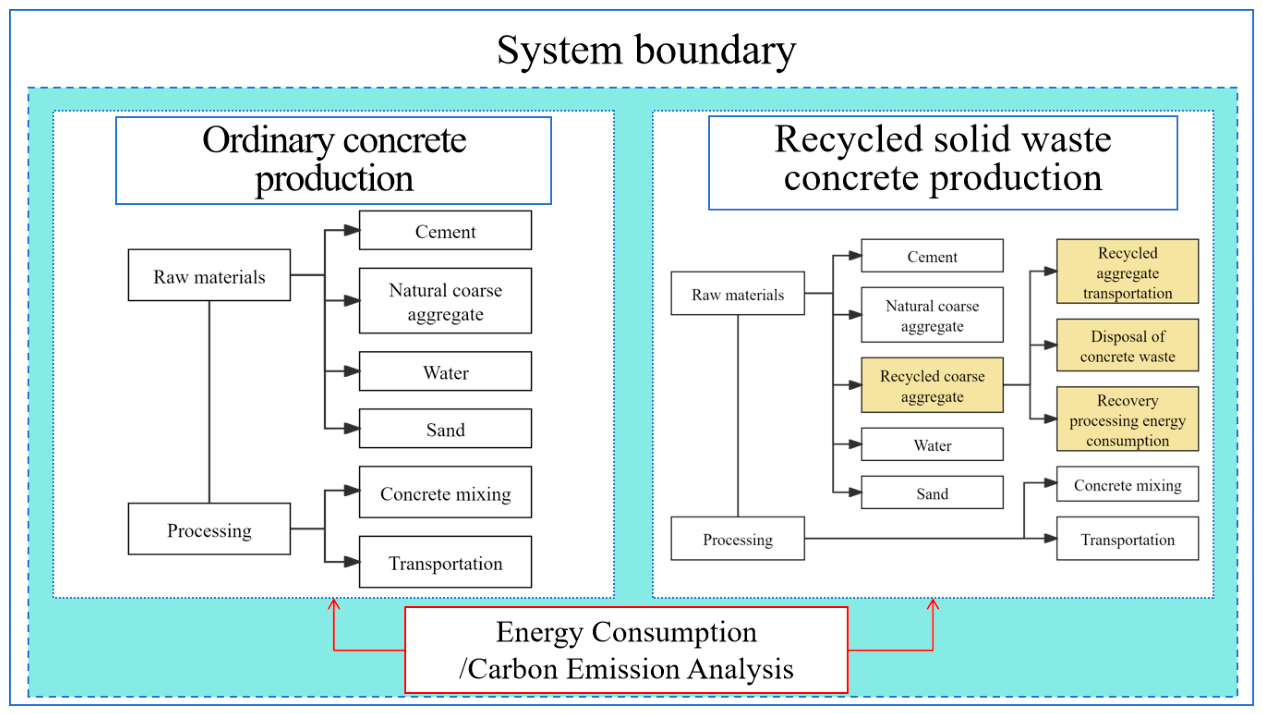
- Baseline scenario (conventional concrete): The model was established based on a typical C30 mix design, with the main input data shown in Table 1.
- Alternative scenario (recycled concrete): Natural coarse aggregate was replaced by recycled coarse aggregate at replacement ratios of 0% to 40% by mass. The recycled aggregate production subsystem includes waste concrete collection, recycling treatment energy consumption, and transport to the treatment facility. Key parameter settings are presented in Table 2. Notably, mixing water was explicitly included at 175 kg/m3 for both conventional and RCA concrete. No additional foreground water consumption was assigned to RCA processing because the modeled recycling route consisted of dry crushing and screening without a washing step. Upstream water consumption embodied in electricity and fuel production was included through the corresponding ecoinvent background datasets.
2.3. Literature-Derived RCA Quality Parameters and Quality-Dependent LCA Assumptions
2.4. Impact Assessment Method
- (1)
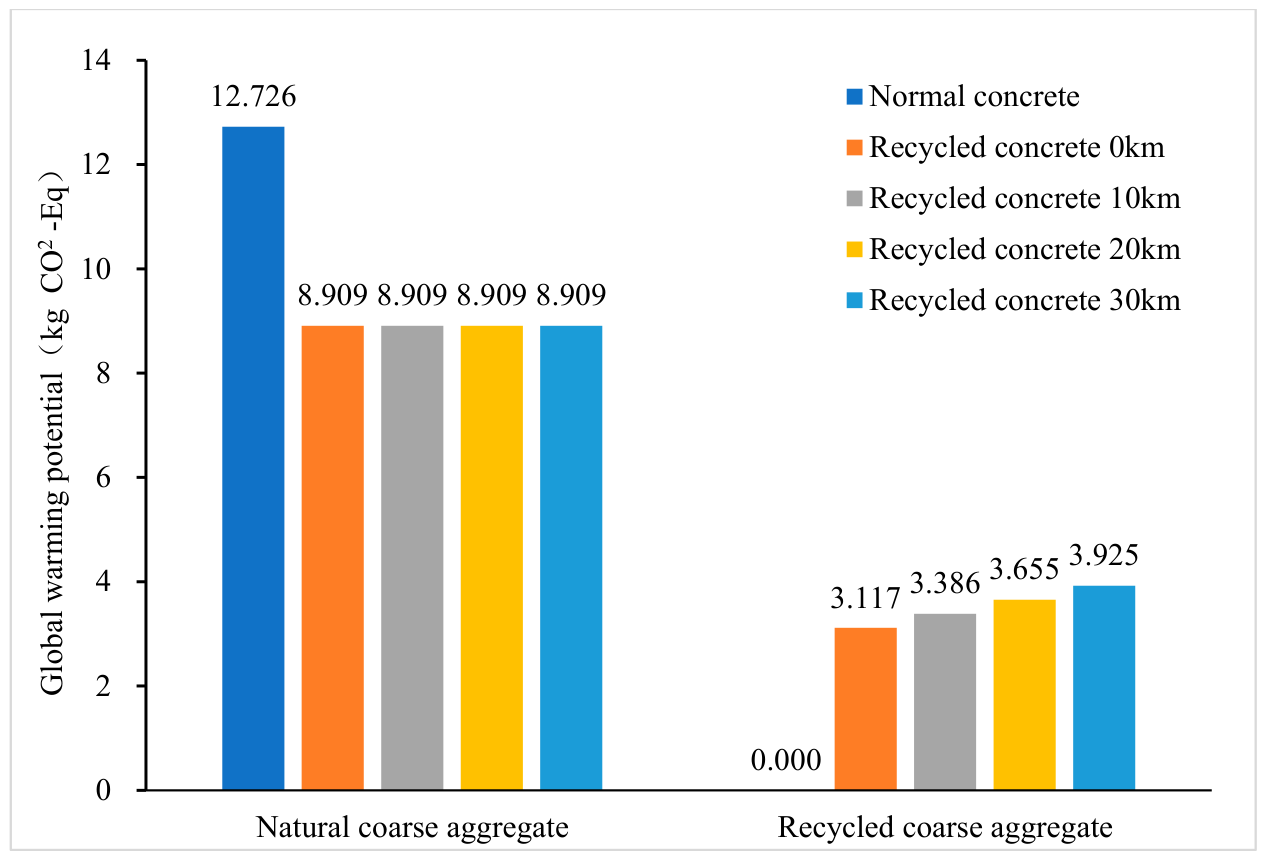
- Global warming potential (GWP), kg CO2-eq, to quantify the contribution of the whole concrete production process to climate change;
- (2)
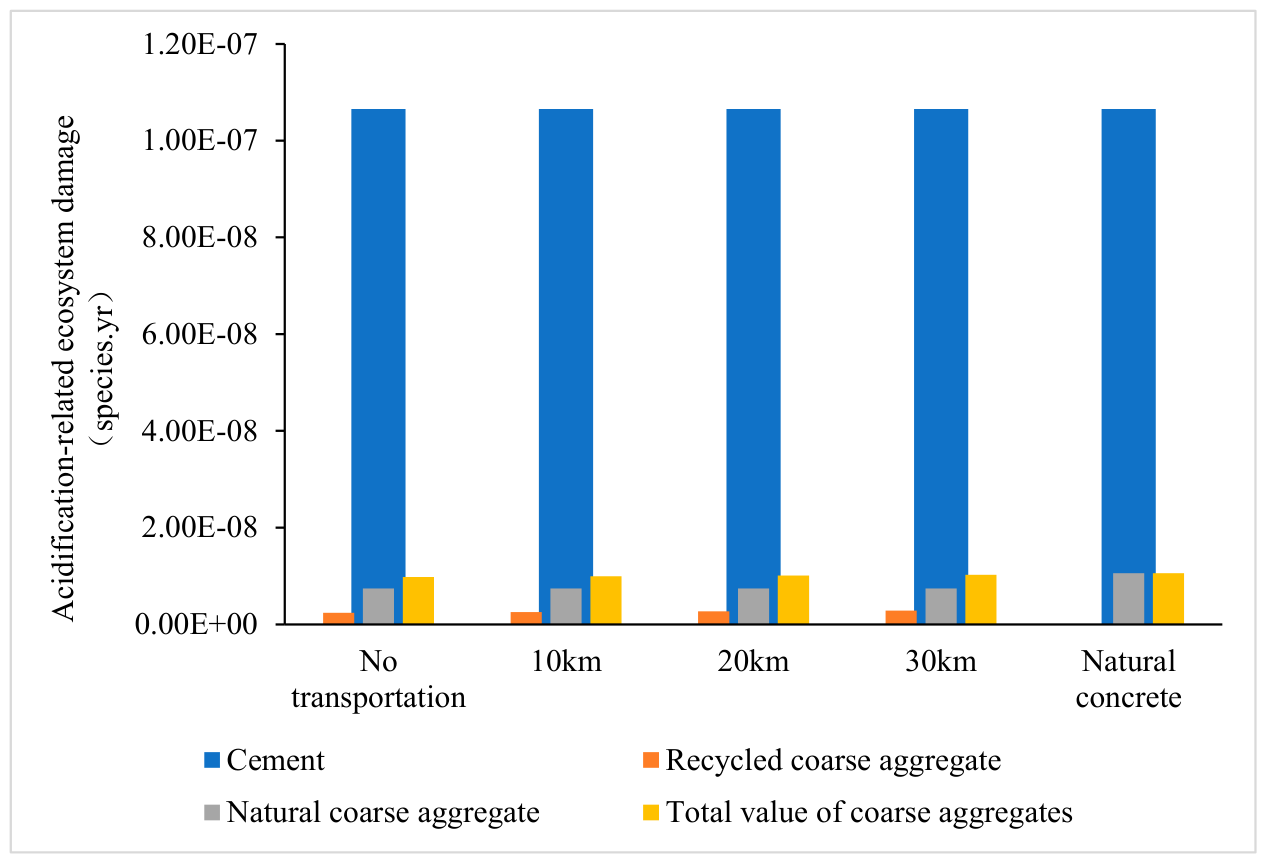
- Acidification-related ecosystem damage, species·yr, to characterize the potential damage to terrestrial ecosystems associated with acidifying emissions during transport and production.
3. LCA Model Calculation Results
3.1. Sankey Diagram of GWP Impact for Concrete Production
3.2. Effect of Coarse Aggregate Replacement Ratio on GWP
3.3. Effect of Waste-Concrete Transport Distance on Acidification
3.4. Effect of Waste-Concrete Transport Distance on GWP
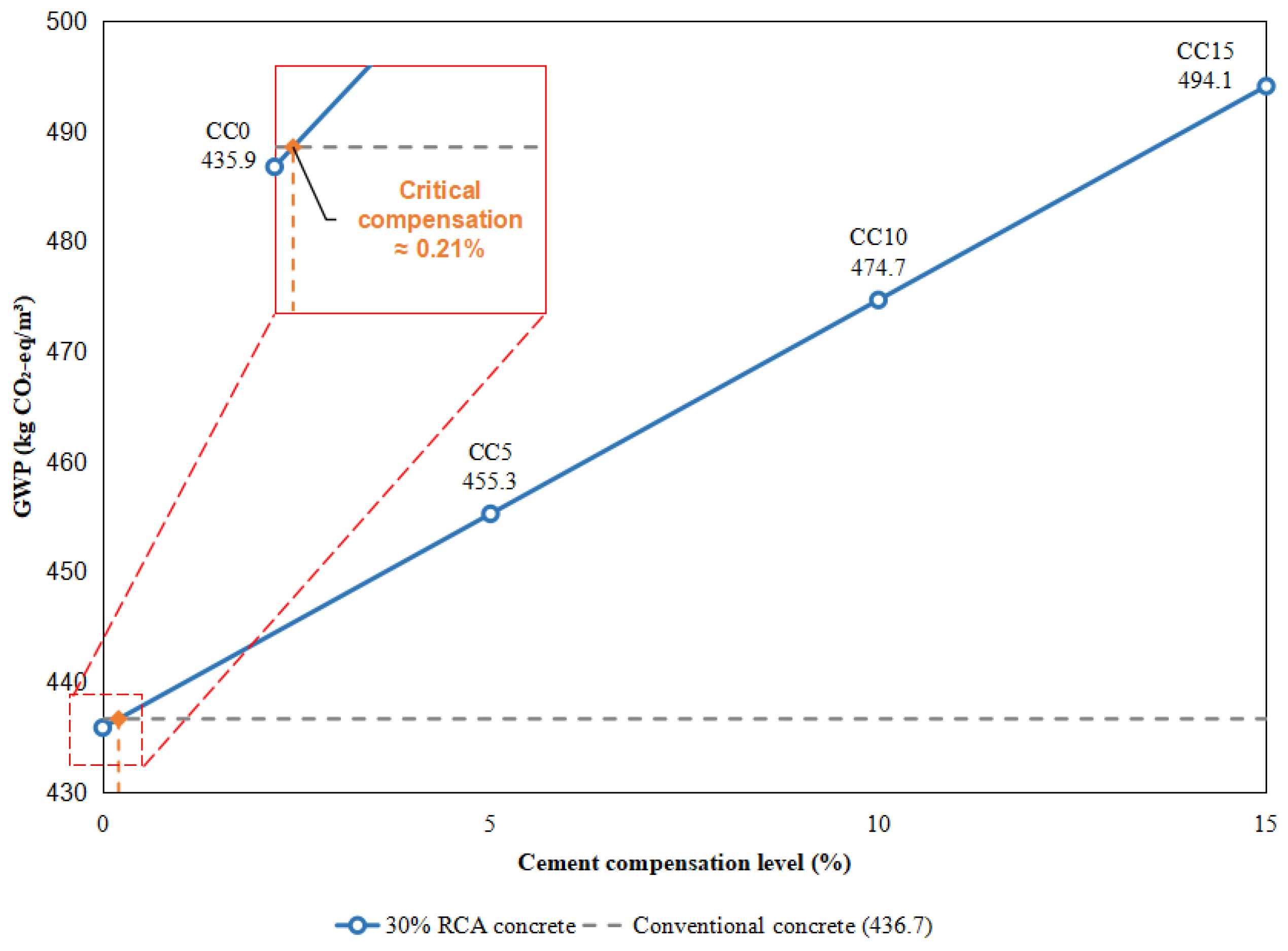
3.5. Effect of Cement Compensation Level on GWP
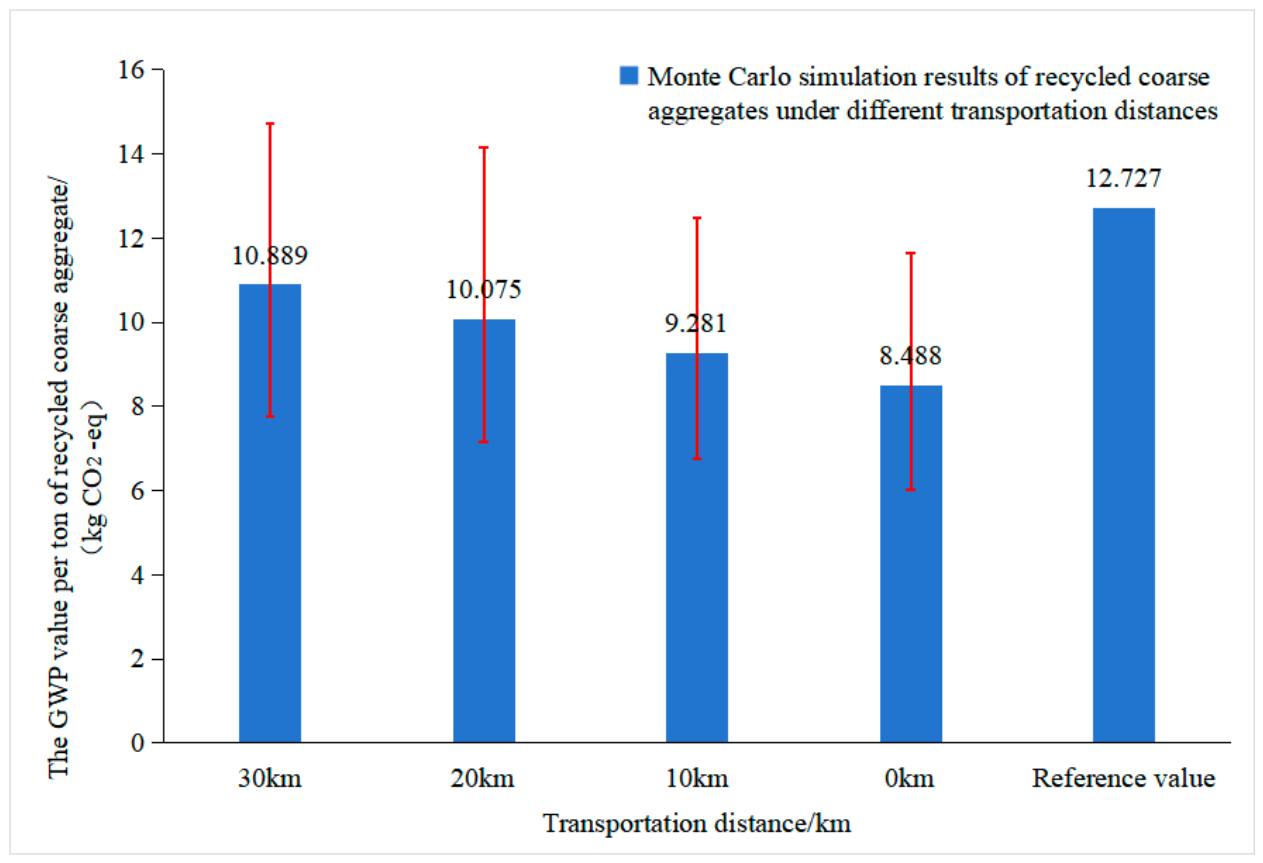
3.6. Uncertainty Simulation of Waste-Concrete Transport Distance
4. Summary and Discussion
4.1. Theoretical and Practical Implications of Key Findings
4.2. Influence of Cement Compensation on the Environmental Feasibility of RAC
4.3. Trade-Offs Revealed by Multi-Indicator Assessment
4.4. Research Limitations
- (1)
- The system boundary is “cradle-to-gate”, excluding durability differences during the use phase of recycled concrete. In practice, recycled aggregate may reduce freeze–thaw resistance and carbonation life, and the environmental impacts of end-of-life disposal also need to be considered. In particular, the model did not directly evaluate the structural performance, impermeability, deterioration, maintenance, or service life of RCA-based underground lining concrete under groundwater pressure, sulfate or chloride attack, high geothermal conditions, freeze–thaw cycling, or other extreme underground environments.
- (2)
- The cement compensation levels of 0%, 5%, 10%, and 15% were established as literature-informed sensitivity scenarios and were not validated using experimental mixture designs for the specific RCA considered. Moreover, only the cement input was varied, while water, aggregate contents, and concrete output volume were held constant. Therefore, these scenarios represent environmental sensitivity to additional cement demand rather than physically rebalanced or experimentally optimized concrete mixtures.
- (3)
- The transport distance is treated as a deterministic variable. Although uncertainty was quantified via Monte Carlo simulation, practical logistics characteristics such as route detour factors and multi-source aggregation were not considered.
- (4)
- The present study focuses on production-stage environmental impacts and does not derive a multi-objective optimum integrating GWP, economic cost, and experimentally validated material performance. Economic feasibility is affected by region-specific factors such as transport tariffs, aggregate prices, recycling plant operation costs, and disposal fees, while performance feasibility requires experimental verification of the specific RCA concrete. Therefore, the calculated transport threshold should be interpreted as an environmental break-even condition rather than a comprehensive engineering optimum. Future work should integrate life-cycle costing (LCC), experimentally validated mechanical and durability constraints, and multi-criteria decision analysis (MCDA).
5. Conclusions
- (1)
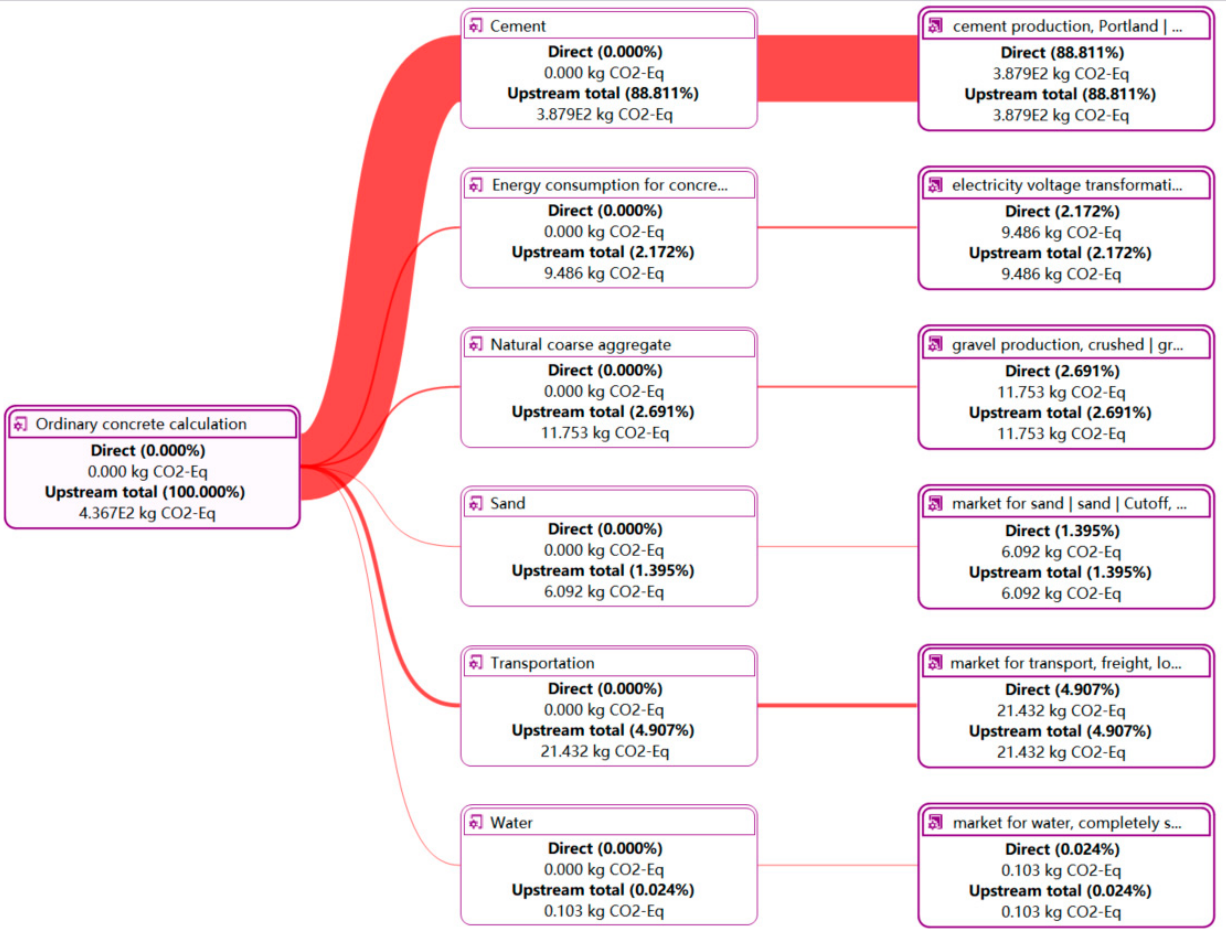
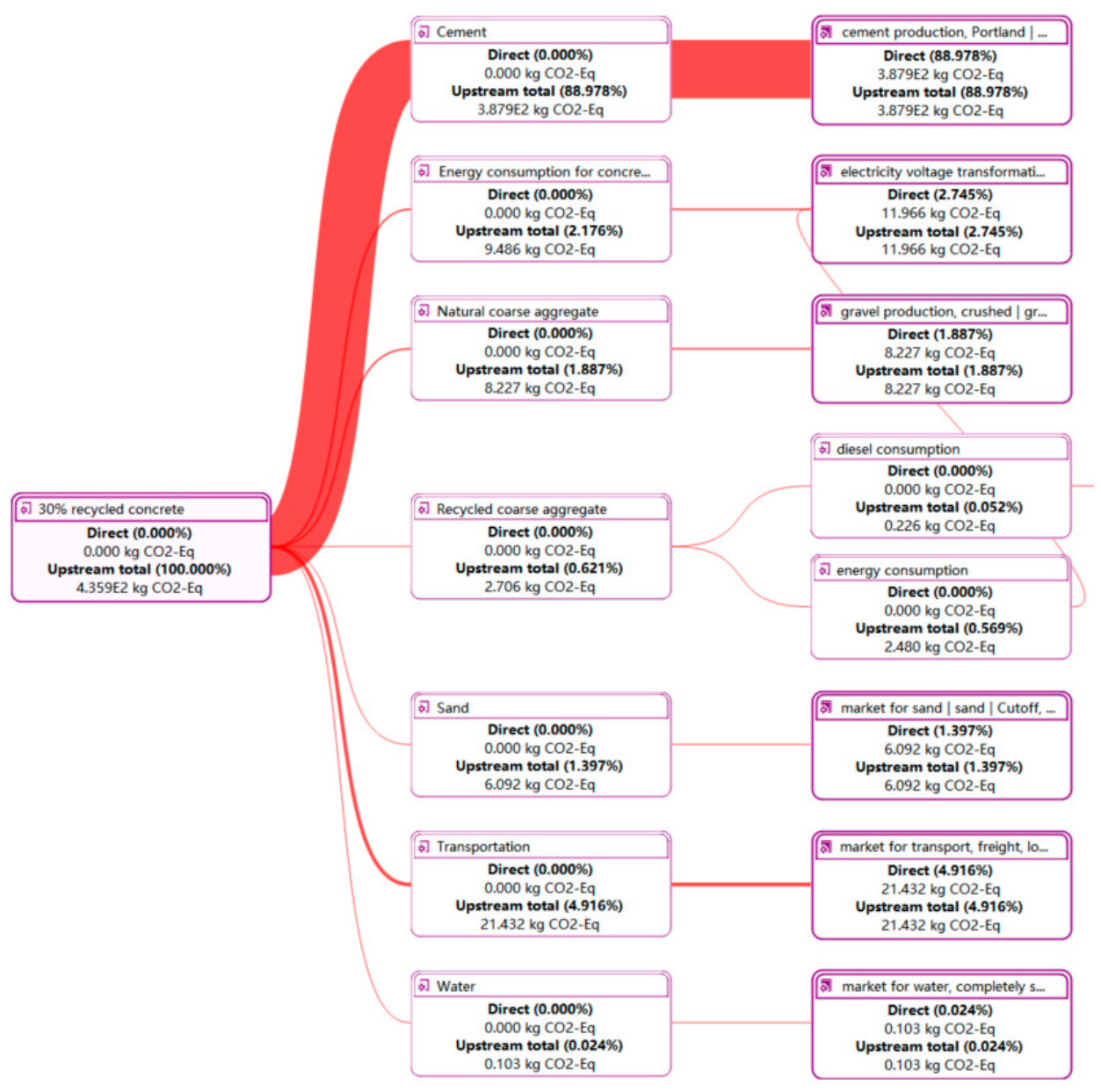
- Cement production was the dominant source of the production-stage GWP of both conventional and recycled aggregate concrete, accounting for more than 80% of the total. Therefore, limiting clinker-based cement demand or using lower-carbon binders is more influential for reducing the carbon footprint of concrete than aggregate substitution alone.
- (2)
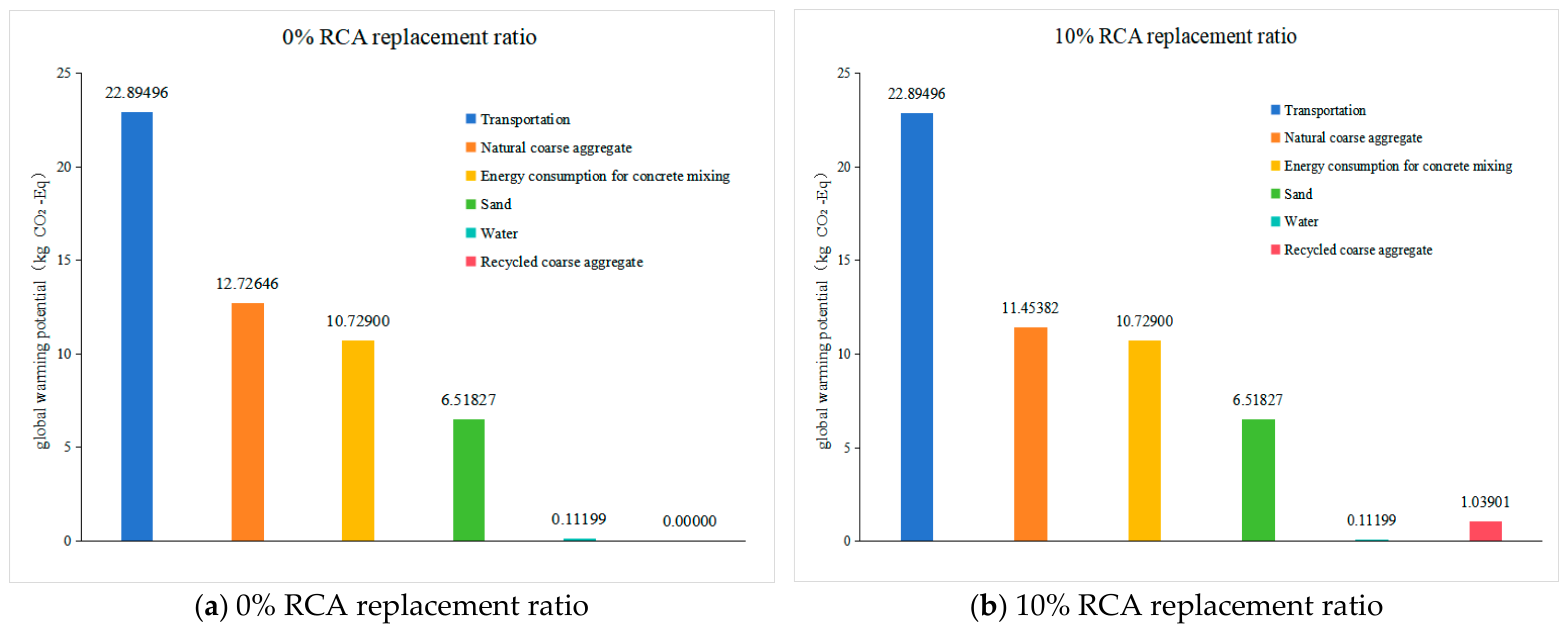
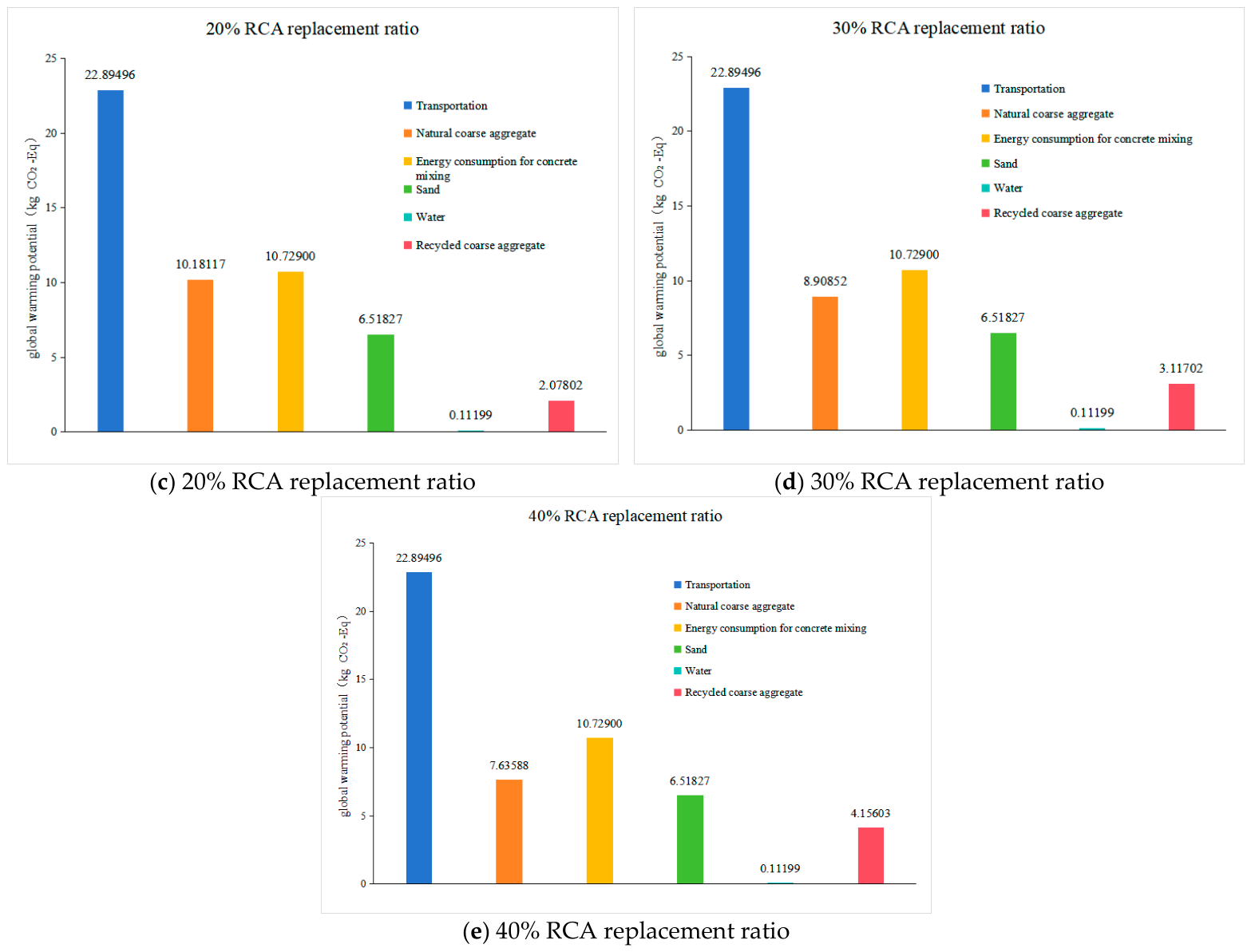
- Under the equal-cement assumption, replacing natural coarse aggregate with RCA reduced the environmental burden associated with aggregate production. Each 10% increase in the RCA replacement ratio reduced the aggregate-related GWP by approximately 0.233 kg CO2-eq/m3. However, because coarse aggregate contributed only a small proportion of the total concrete GWP, the overall reduction remained limited.
- (3)
- At a fixed RCA replacement ratio of 30%, the CC0 scenario reduced the total GWP by only 0.18% relative to conventional concrete. In contrast, cement compensation levels of 5%, 10%, and 15% increased the total GWP by 4.26%, 8.72%, and 13.17%, respectively. Thus, the production-stage environmental benefit obtained from aggregate substitution can be rapidly offset when additional cement is required to compensate for RCA quality-related mixture changes.
- (4)
- Under the equal-cement CC0 scenario, the deterministic break-even transport distance was calculated as 26.04 km. This value is specific to the 30% RCA replacement scenario and to the inventory, processing, and transport assumptions adopted in this study. Monte Carlo analysis further showed that the upper bounds of the 95% uncertainty intervals at 20 and 30 km exceeded the natural aggregate baseline, whereas the complete interval at 10 km remained below it. Therefore, 10 km may be regarded as a more conservative screening reference among the investigated distances, whereas 26.04 km represents the deterministic model-specific break-even value rather than a universal transport limit.
- (5)
- The model results indicated that the acidification-related ecosystem damage of the 30% RCA concrete was 0.21–0.51% lower than that of conventional concrete over the investigated transport distance range of 0–30 km. However, the magnitude and transport sensitivity of this difference were not identical to those observed for GWP, demonstrating the importance of considering more than one environmental impact indicator.
- (6)
- Overall, the production-stage environmental feasibility of RCA-based underground lining concrete depends jointly on the quality of the recycled aggregate, the additional cement demand, and the regional transport conditions. Locally available, relatively high-quality RCA that can be incorporated without increasing cement content is more likely to retain an environmental advantage. The present results provide an environmental screening basis for RCA source selection and mixture-scenario comparison.
Author Contributions
Funding
Data Availability Statement
Conflicts of Interest
References
- Yi, Y.; Fei, X.; Lavagnolo, M.C.; Manzardo, A. An integrated model of life cycle assessment and system dynamics for construction and demolition waste management and reduction in Italy. J. Clean. Prod. 2025, 486, 144469. [Google Scholar] [CrossRef] [Scilit]
- Chen, L.L.; Zhu, J.K.; Ye, Q.; Zhao, X.; Qian, Z. Progress and trends of low-carbon application of waste materials in asphalt pavements. J. Traffic Transp. Eng. 2026, 26, 93–115. [Google Scholar] [CrossRef]
- Hossain, M.U.; Xuan, D.; Ng, S.T.; Amor, B. Designing sustainable partition wall blocks using secondary materials: A life cycle assessment approach. J. Build. Eng. 2021, 43, 103035. [Google Scholar] [CrossRef] [Scilit]
- Hossain, M.U. Life Cycle Assessment of Recycled Construction Materials: Methodology Framework Development and Results Evaluation. Ph.D. Thesis, The Hong Kong Polytechnic University, Hong Kong, China, 2021. [Google Scholar]
- Wang, X.; Fan, F.; Lai, J.; Xie, Y. Steel fiber reinforced concrete: A review of its material properties and usage in tunnel lining. Structures 2021, 34, 1080–1098. [Google Scholar] [CrossRef] [Scilit]
- Zhao, D.; Zhu, L.; Shen, Z.; Miu, Z.; Liu, X. Effect of hydration heat of super-large-section tunnel-lining concrete on structural stress and its mitigation measures. Tunn. Undergr. Space Technol. 2025, 157, 106324. [Google Scholar] [CrossRef] [Scilit]
- Ba, M.; Xue, T.; Huang, G.; Li, Y. Prediction and analysis of carbonation durability of lining concrete with low water–cement ratio for vehicle tunnels. J. Highw. Transp. Res. Dev. 2018, 35, 56–62. [Google Scholar] [CrossRef]
- Ma, K.; Long, G.; Xie, Y. Railway tunnel concrete lining damaged by formation of gypsum, thaumasite and sulfate crystallization products in southwest of China. J. Cent. South Univ. 2012, 19, 2340–2347. [Google Scholar] [CrossRef] [Scilit]
- Wang, Y.; Wu, J.; Zhang, S.; Niu, D. Corrosion behavior of steel reinforcement in simulated concrete pore solutions under multiple factors in high-geothermal environments. J. Chin. Ceram. Soc. 2024, 52, 3583–3593. [Google Scholar] [CrossRef]
- Liu, C.; Zhang, X.; Lai, J.; Qin, Y. Steel fiber-reinforced recycled coarse aggregate shotcrete repair for tunnel lining corrosion: Experimental tests and calculation analysis. Tunn. Undergr. Space Technol. 2025, 157, 106236. [Google Scholar] [CrossRef] [Scilit]
- Xie, K. The Environmental Load Research of Construction Waste Recycling. Master’s thesis, Beijing University of Technology, Beijing, China, 2013. [Google Scholar]
- Luo, Y.J.; Zhao, W. The research development of construction and demolition waste resource utilization and its life cycle assessment. Environ. Pollut. Control 2024, 46, 901–907. [Google Scholar] [CrossRef]
- Gursel, A.P.; Masanet, E.; Horvath, A.; Stadel, A. Life-cycle inventory analysis of concrete production: A critical review. Cem. Concr. Compos. 2014, 51, 38–48. [Google Scholar] [CrossRef] [Scilit]
- Van den Heede, P.; De Belie, N. Environmental impact and life cycle assessment (LCA) of traditional and ‘green’ concretes: Literature review and theoretical calculations. Cem. Concr. Compos. 2012, 34, 431–442. [Google Scholar] [CrossRef] [Scilit]
- Tait, M.W.; Cheung, W.M. A comparative cradle-to-gate life cycle assessment of three concrete mix designs. Int. J. Life Cycle Assess. 2016, 21, 847–860. [Google Scholar] [CrossRef] [Scilit]
- Knoeri, C.; Sanyé-Mengual, E.; Althaus, H.-J. Comparative LCA of recycled and conventional concrete for structural applications. Int. J. Life Cycle Assess. 2013, 18, 909–918. [Google Scholar] [CrossRef] [Scilit]
- Volk, R.; Steins, J.J.; Kreft, O.; Schultmann, F. Life cycle assessment of post-demolition autoclaved aerated concrete (AAC) recycling options. Resour. Conserv. Recycl. 2023, 188, 106716. [Google Scholar] [CrossRef] [Scilit]
- Yin, Z.; Liu, G.; Dong, Y.; Wang, B.; Li, Z.; Yuan, T.; Yin, H. Research on carbon reduction benefits and spatial optimization of construction waste resource utilization under transport distance thresholds: A case study in Jiangsu, China. Case Stud. Constr. Mater. 2026, 24, e05804. [Google Scholar] [CrossRef] [Scilit]
- Zeng, K.; Zou, Q.; Song, S.; Zhang, W.; Wang, S.; Liu, Z.; Gong, M.; Zhang, L. Thermal insulation, acoustic absorption, and environmental benefits of a cellular green recycling brick cement-based material used in energy-efficient buildings. J. Build. Eng. 2026, 117, 114803. [Google Scholar] [CrossRef] [Scilit]
- D’Angelo, G. Technologies for the reuse of demolition waste in the production of geopolymer-based building materials: Prospects and opportunities. Renew. Energy Environ. Sustain. 2025, 10, 1. [Google Scholar] [CrossRef] [Scilit]
- Shi, D.; Ma, X.; Zhao, Y.; Wang, J.; Xia, Y.; Liu, M. Utilization of industrial wastes in non-sintered bricks: Microstructure and environmental impacts. Environ. Sci. Pollut. Res. 2024, 31, 50709–50721. [Google Scholar] [CrossRef] [Scilit] [PubMed]
- Sabău, M.; Bompa, D.V.; Silva, L.F.O. Comparative carbon emission assessments of recycled and natural aggregate concrete: Environmental influence of cement content. Geosci. Front. 2021, 12, 101235. [Google Scholar] [CrossRef] [Scilit]
- Peng, Z.; Ji, H.; Easa, S.M.; Wang, C.; Wang, Y.; Pan, H. Analyzing spatiotemporal truck emission pattern using explainable machine learning: A case study in Xi’an, China. Transp. Res. Part D Transp. Environ. 2024, 137, 104489. [Google Scholar] [CrossRef] [Scilit]
- Xu, Y.; Kang, M.; Chen, D.; Wu, C.; Wang, X.; Tu, R.; Yu, W. Flight departure optimization reduces airport CO2 emissions proved by Beijing-Tianjin-Hebei multiple-airport-region. Transp. Res. Part D Transp. Environ. 2025, 147, 104920. [Google Scholar] [CrossRef] [Scilit]
- Duan, Z.; Fu, X.; Tang, D.; Zhong, T.; Zhong, L. Equitable carbon budget allocation: Integrating travel mode preference and multi-activity accessibility. Transp. Res. Part D Transp. Environ. 2025, 146, 104894. [Google Scholar] [CrossRef] [Scilit]
- Verian, K.P.; Ashraf, W.; Cao, Y. Properties of recycled concrete aggregate and their influence in new concrete production. Resour. Conserv. Recycl. 2018, 133, 30–49. [Google Scholar] [CrossRef] [Scilit]
- McNeil, K.; Kang, T.H.-K. Recycled concrete aggregates: A review. Int. J. Concr. Struct. Mater. 2013, 7, 61–69. [Google Scholar] [CrossRef] [Scilit]
- Tam, V.W.Y.; Soomro, M.; Evangelista, A.C.J. A review of recycled aggregate in concrete applications (2000–2017). Constr. Build. Mater. 2018, 172, 272–292. [Google Scholar] [CrossRef] [Scilit]
- Poon, C.S.; Shui, Z.H.; Lam, L.; Fok, H.; Kou, S.C. Influence of moisture states of natural and recycled aggregates on the slump and compressive strength of concrete. Cem. Concr. Res. 2004, 34, 31–36. [Google Scholar] [CrossRef] [Scilit]
- Etxeberria, M.; Vázquez, E.; Marí, A.; Barra, M. Influence of amount of recycled coarse aggregates and production process on properties of recycled aggregate concrete. Cem. Concr. Res. 2007, 37, 735–742. [Google Scholar] [CrossRef] [Scilit]
- Ferronato, N.; Guisbert Lizarazu, G.E.; Gorritty Portillo, M.A.; Moresco, L.; Conti, F.; Torretta, V. Environmental assessment of construction and demolition waste recycling in Bolivia: Focus on transportation distances and selective collection rates. Waste Manag. Res. 2022, 40, 793–805. [Google Scholar] [CrossRef] [Scilit] [PubMed]
- Piccinali, A.; Diotti, A.; Plizzari, G.; Sorlini, S. Impact of recycled aggregate on the mechanical and environmental properties of concrete: A review. Materials 2022, 15, 1818. [Google Scholar] [CrossRef] [Scilit] [PubMed]
- Silva, R.V.; de Brito, J.; Dhir, R.K. Properties and composition of recycled aggregates from construction and demolition waste suitable for concrete production. Constr. Build. Mater. 2014, 65, 201–217. [Google Scholar] [CrossRef] [Scilit]
- Ding, Y.; She, A.; Yao, W. Investigation of water absorption behavior of recycled aggregates and its effect on concrete strength. Materials 2023, 16, 4505. [Google Scholar] [CrossRef] [Scilit] [PubMed]
- Tran, D.V.P.; Allawi, A.; Albayati, A.; Cao, T.N.; El-Zohairy, A.; Nguyen, Y.T.H. Recycled concrete aggregate for medium-quality structural concrete. Materials 2021, 14, 4612. [Google Scholar] [CrossRef] [Scilit] [PubMed]
- Leite, M.B.; Lima, P.R.L. Experimental and statistical evaluation of the interaction effect of recycled aggregate and water/cement ratio on concrete compressive strength. Recent Prog. Mater. 2021, 3, 032. [Google Scholar] [CrossRef] [Scilit]
- Marvila, M.; de Matos, P.; Rodríguez, E.; Monteiro, S.; de Azevedo, A. Recycled aggregate: A viable solution for sustainable concrete production. Materials 2022, 15, 5276. [Google Scholar] [CrossRef] [Scilit] [PubMed]
- Xing, W.; Tam, V.W.Y.; Le, K.N.; Hao, J.L.; Wang, J. Life cycle assessment of recycled aggregate concrete on its environmental impacts: A critical review. Constr. Build. Mater. 2022, 317, 125950. [Google Scholar] [CrossRef] [Scilit]
- Zhang, Y.; Luo, W.; Wang, J.; Wang, Y.; Xu, Y.; Xiao, J. A review of life cycle assessment of recycled aggregate concrete. Constr. Build. Mater. 2019, 209, 115–125. [Google Scholar] [CrossRef] [Scilit]
- Schneider, M. The cement industry on the way to a low-carbon future. Cem. Concr. Res. 2019, 124, 105792. [Google Scholar] [CrossRef] [Scilit]
- Olsson, J.A.; Hafez, H.; Miller, S.A.; Scrivener, K.L. Greenhouse gas emissions and decarbonization potential of global fired clay brick production. Environ. Sci. Technol. 2025, 59, 1909–1920. [Google Scholar] [CrossRef] [Scilit] [PubMed]
- Xiao, J.; Zou, S.; Poon, C.S.; Sham, M.L.; Li, Z.; Shah, S.P. We use 30 billion tonnes of concrete each year—Here’s how to make it sustainable. Nature 2025, 638, 888–890. [Google Scholar] [CrossRef] [Scilit] [PubMed]
- Serres, N.; Braymand, S.; Feugeas, F. Environmental evaluation of concrete made from recycled concrete aggregate implementing life cycle assessment. J. Build. Eng. 2016, 5, 24–33. [Google Scholar] [CrossRef] [Scilit]
- Jullien, A.; Proust, C.; Martaud, T.; Rayssac, E.; Ropert, C. Variability in the environmental impacts of aggregate production. Resour. Conserv. Recycl. 2012, 62, 1–13. [Google Scholar] [CrossRef] [Scilit]
- Hosseini, S.A.; Asghari, V.; Liu, X.; Hsu, S.-C.; Poon, C.-S. Cross-country life cycle assessment of construction and demolition waste recycling with evaluation of energy use, carbon emissions, and regional trade-offs. Sci. Rep. 2025, 15, 41377. [Google Scholar] [CrossRef] [Scilit] [PubMed]
- Marinković, S.; Radonjanin, V.; Malešev, M.; Ignjatović, I. Comparative environmental assessment of natural and recycled aggregate concrete. Waste Manag. 2010, 30, 2255–2264. [Google Scholar] [CrossRef] [Scilit] [PubMed]
- Coelho, A.; de Brito, J. Environmental analysis of a construction and demolition waste recycling plant in Portugal—Part I: Energy consumption and CO2 emissions. Waste Manag. 2013, 33, 1258–1267. [Google Scholar] [CrossRef] [Scilit] [PubMed]
- Kurda, R.; Silvestre, J.D.; de Brito, J. Life cycle assessment of concrete made with high volume of recycled concrete aggregates and fly ash. Resour. Conserv. Recycl. 2018, 139, 407–417. [Google Scholar] [CrossRef] [Scilit]
- Hossain, M.U.; Poon, C.S.; Lo, I.M.C.; Cheng, J.C.P. Comparative environmental evaluation of aggregate production from recycled waste materials and virgin sources by LCA. Resour. Conserv. Recycl. 2016, 109, 67–77. [Google Scholar] [CrossRef] [Scilit]
- Kumari, S.; Walia, R. Life cycle assessment of sustainable concrete by utilizing groundnut husk ash in concrete. Mater. Today Proc. 2022, 49, 1910–1915. [Google Scholar] [CrossRef] [Scilit]
- Shen, X.; Liu, C.; Zhao, Y.; Li, Q.; Wang, J. The recycling use of MSWI bottom ash as road construction material for carbon emissions reduction based on life cycle assessment—A case study in China. Waste Manag. 2025, 207, 115122. [Google Scholar] [CrossRef] [Scilit] [PubMed]





| Stage | Material/Process | Amount | Unit | Proportion/Note |
|---|---|---|---|---|
| Raw material acquisition | Natural coarse aggregate | 1252 | kg/m3 | 52.17% |
| Cement | 461 | kg/m3 | 19.21% | |
| Sand | 512 | kg/m3 | 21.33% | |
| Water | 175 | kg/m3 | 7.29% | |
| Production stage | Concrete mixing | 8.98 | kW·h/m3 | -- |
| Transport | 52.72 | km | -- |
| Stage | Material/Process | Amount | Unit | Note |
|---|---|---|---|---|
| Recycled aggregate production | Waste concrete | 1250 | kg | -- |
| Recycling electricity consumption | 6.25 | kWh | Per tonne of RCA | |
| Recycling diesel consumption | 1.25 | L | Per tonne of RCA | |
| Collection and transport | 93.75 | t·km | Average from dispersed sources to treatment plant | |
| Recycled concrete production | Natural coarse aggregate | 876.4 | kg/m3 | 70% |
| Recycled coarse aggregate | 375.6 | kg/m3 | 30% | |
| Cement | 461 | kg/m3 | Base RCA scenario without cement compensation; cement compensation levels of 5%, 10%, and 15% were evaluated separately | |
| Sand | 512 | kg/m3 | -- | |
| Water | 175 | kg/m3 | -- | |
| Transport | 23.68 | t·km | Average from cement plant to use location |
| Scenario/Assumption | Literature Basis | Parameter | Reported Value | Function in This Study |
|---|---|---|---|---|
| Medium-quality RCA | Ding et al. [34] | Apparent density | 2580–2590 kg/m3 | Defines representative medium-quality RCA |
| Crushing index | 10.6% | Supports mechanical quality assumption | ||
| Water absorption | 4.7–6.4% | Supports water absorption uncertainty | ||
| Structural RAC performance | Tran et al. [35] | Workability reduction | 8–38% | Explains potential workability loss |
| Compressive strength reduction | 5.0–9.3% | Provides qualitative evidence for examining additional cement demand; not used to derive a fixed compensation rate | ||
| Low-quality RCA | Leite and Lima [36] | Specific gravity of recycled coarse aggregate | 2.41 kg/dm3 | Defines low-quality RCA scenario |
| Bulk density of recycled coarse aggregate | 0.99 kg/dm3 | Defines low-quality RCA scenario | ||
| Water absorption of recycled coarse aggregate | 11.3% | Defines high-absorption RCA scenario | ||
| Los Angeles abrasion value | 63.70% | Represents low mechanical quality | ||
| Main replacement ratio | Marvila et al. [37] | Low RCA replacement level | ≤30% | Supports the 30% RCA main scenario |
| LCA modeling uncertainty | Xing et al. [38]; Zhang et al. [39] | Mixture design, functional unit, system boundary and transport distance | Qualitative basis | Supports quality-dependent and transport-sensitive LCA modeling |
| Cement | Recycled Coarse Aggregate | Natural Coarse Aggregate | ||||
|---|---|---|---|---|---|---|
| Transport Distance | Acidification Proportion | Acidification Value (Species·yr *) | Acidification Proportion | Acidification Value (Species·yr) | Acidification Proportion | Acidification Value (Species·yr) |
| 0 | 74.76% | 1.065 × 10⁻⁷ | 1.68% | 2.394 × 10⁻⁹ | 5.20% | 7.414 × 10⁻⁹ |
| 10 km | 74.68% | 1.065 × 10⁻⁷ | 1.78% | 2.538 × 10⁻⁹ | 5.20% | 7.414 × 10⁻⁹ |
| 20 km | 74.61% | 1.065 × 10⁻⁷ | 1.88% | 2.682 × 10⁻⁹ | 5.20% | 7.414 × 10⁻⁹ |
| 30 km | 74.53% | 1.065 × 10⁻⁷ | 1.98% | 2.827 × 10⁻⁹ | 5.20% | 7.414 × 10⁻⁹ |
| Conventional concrete | 74.35% | 1.065 × 10⁻⁷ | - | - | 7.39% | 1.059 × 10⁻⁸ |
| Scenario | Cement Compensation (%) | Cement Content (kg/m3) | GWP (kg CO2-eq/m3) | Change Relative to CC0 (%) | Difference from Conventional Concrete (%) |
|---|---|---|---|---|---|
| Conventional concrete | — | 461.00 | 436.7 | — | 0 |
| CC0 | 0 | 461.00 | 435.9 | — | −0.18 |
| CC5 ** | 5 | 484.05 | 455.3 | 4.45 | 4.26 |
| CC10 ** | 10 | 507.10 | 474.7 | 8.90 | 8.72 |
| CC15 ** | 15 | 530.15 | 494.1 | 13.35 | 13.17 |
Disclaimer/Publisher’s Note: The statements, opinions and data contained in all publications are solely those of the individual author(s) and contributor(s) and not of MDPI and/or the editor(s). MDPI and/or the editor(s) disclaim responsibility for any injury to people or property resulting from any ideas, methods, instructions or products referred to in the content. |
© 2026 by the authors. Licensee MDPI, Basel, Switzerland. This article is an open access article distributed under the terms and conditions of the Creative Commons Attribution (CC BY) license.
Share and Cite
Liu, F.; Chen, L.; Huang, H.; Ma, B. Life-Cycle Assessment of Underground Lining Concrete Incorporating Recycled Aggregates: Key Factors for Green Building Materials from Dispersed Waste. Processes 2026, 14, 2768. https://doi.org/10.3390/pr14172768
Liu F, Chen L, Huang H, Ma B. Life-Cycle Assessment of Underground Lining Concrete Incorporating Recycled Aggregates: Key Factors for Green Building Materials from Dispersed Waste. Processes. 2026; 14(17):2768. https://doi.org/10.3390/pr14172768
Chicago/Turabian StyleLiu, Fang, Lizhi Chen, Houqing Huang, and Binhui Ma. 2026. "Life-Cycle Assessment of Underground Lining Concrete Incorporating Recycled Aggregates: Key Factors for Green Building Materials from Dispersed Waste" Processes 14, no. 17: 2768. https://doi.org/10.3390/pr14172768
APA StyleLiu, F., Chen, L., Huang, H., & Ma, B. (2026). Life-Cycle Assessment of Underground Lining Concrete Incorporating Recycled Aggregates: Key Factors for Green Building Materials from Dispersed Waste. Processes, 14(17), 2768. https://doi.org/10.3390/pr14172768