A Comparative Study of a Single-Phase Immersion-Cooled Server with a Pin-Fin Heat Sink for Mitigation of the Flow Bypass Effect



Abstract
1. Introduction
2. Methodology
2.1. Definition of the System Thermal Resistance
2.2. Governing Relations
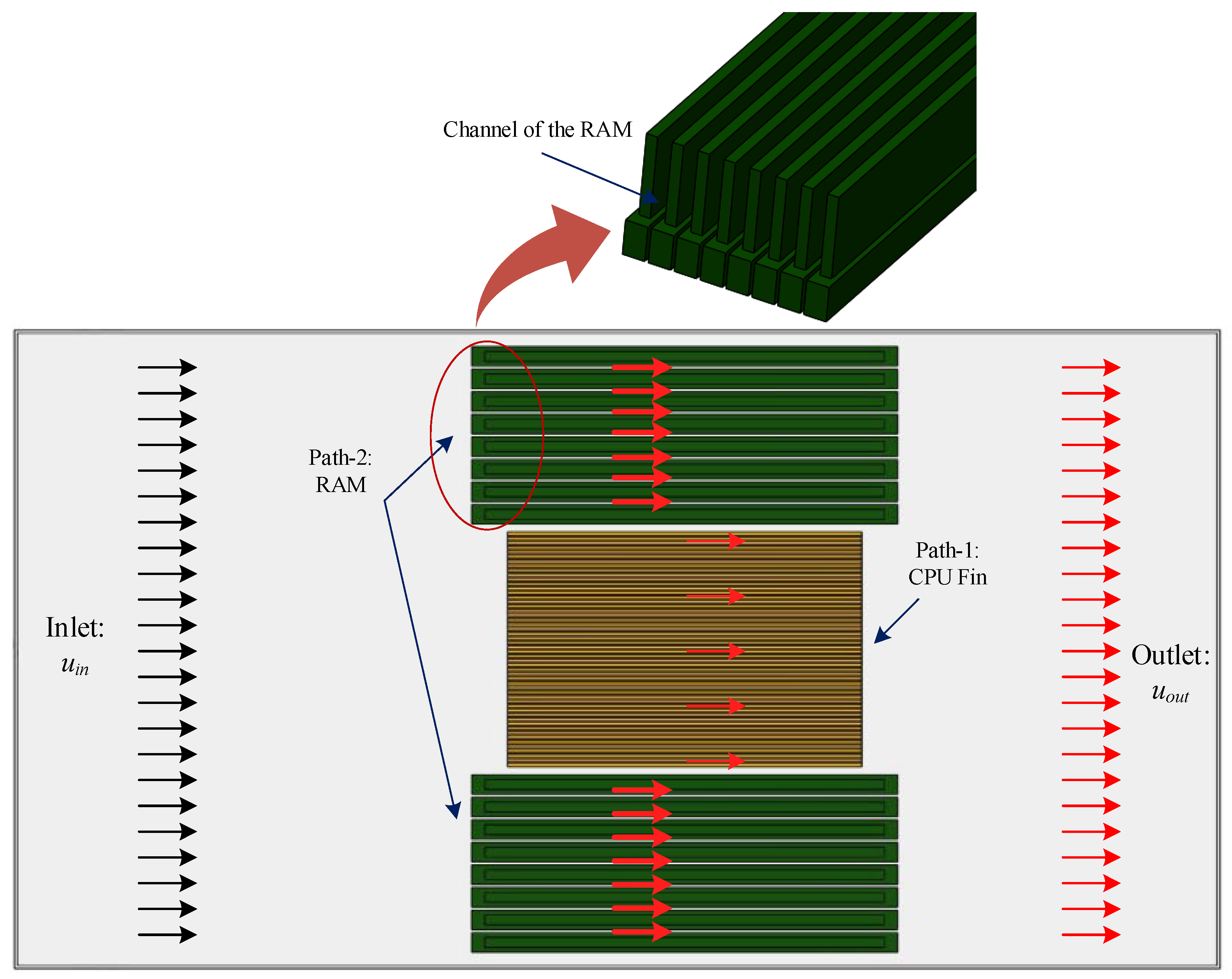
2.3. Simplified Analysis of the Bypass Flow at the CPU Heat Sink
2.4. Experimental System
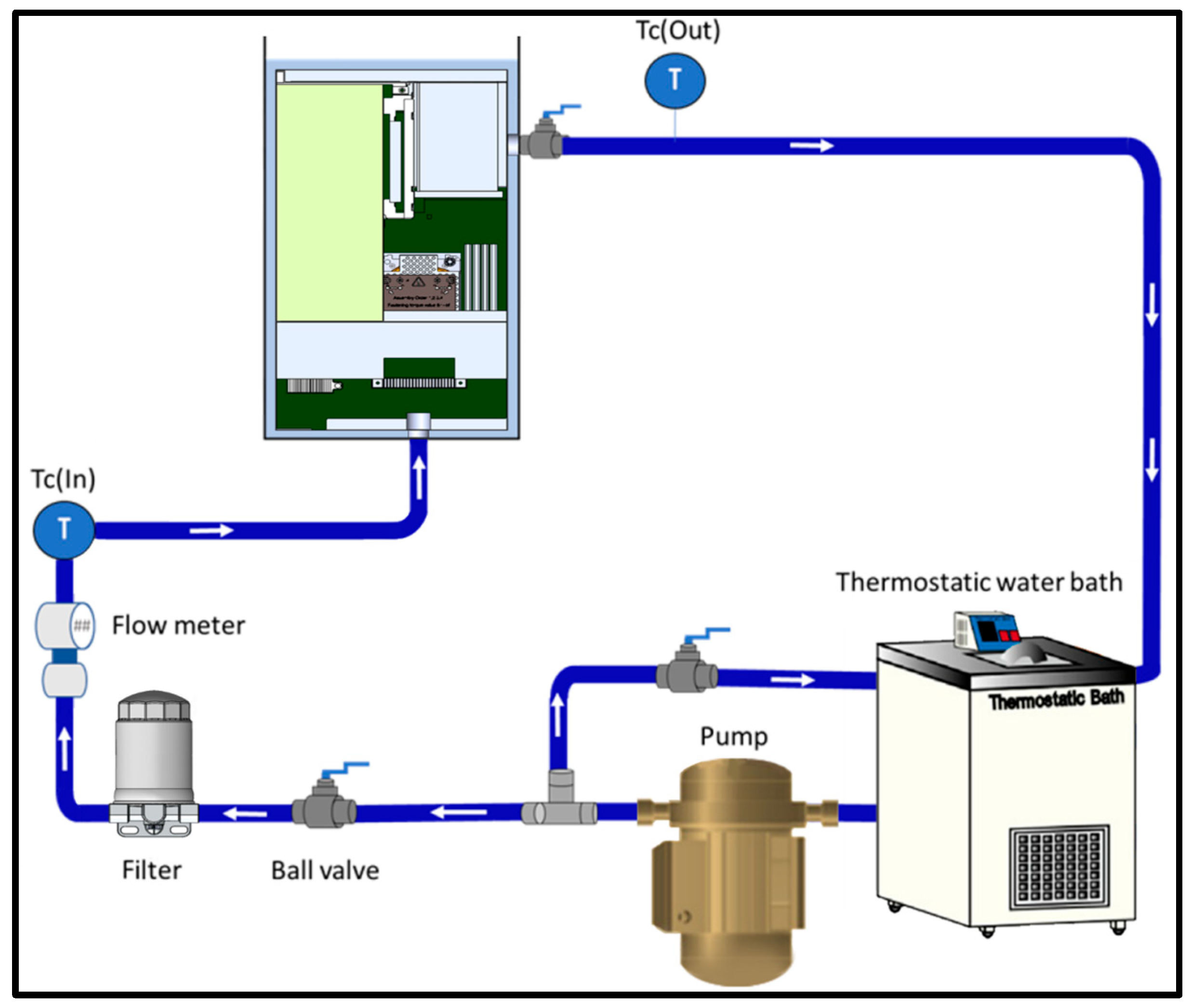
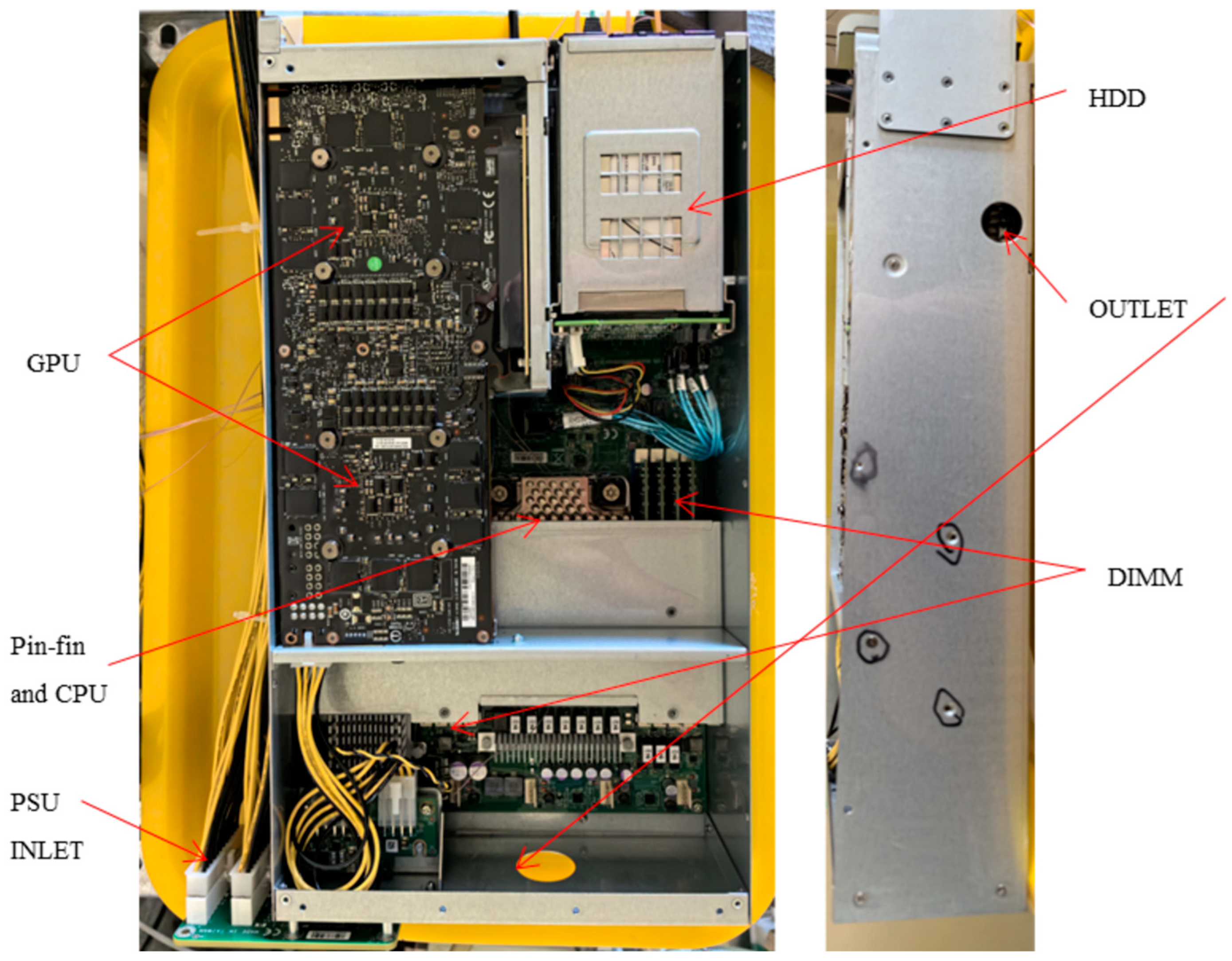
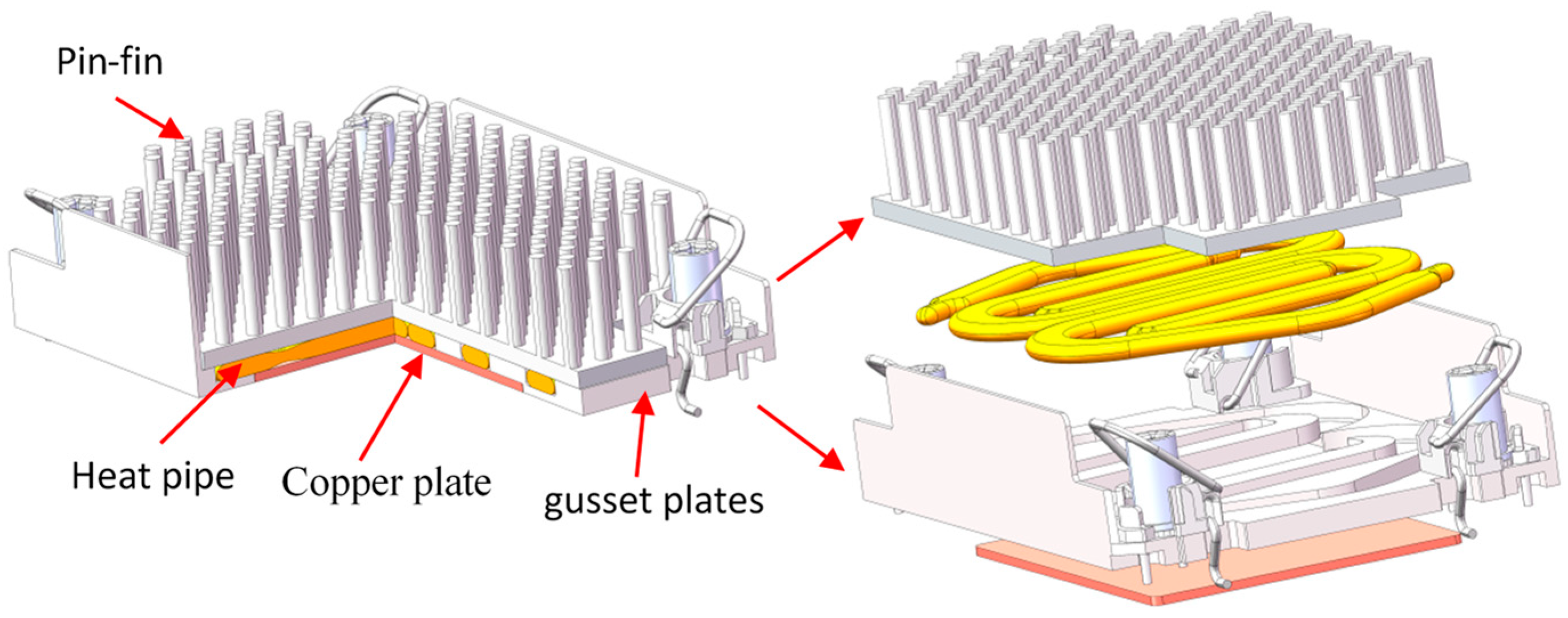
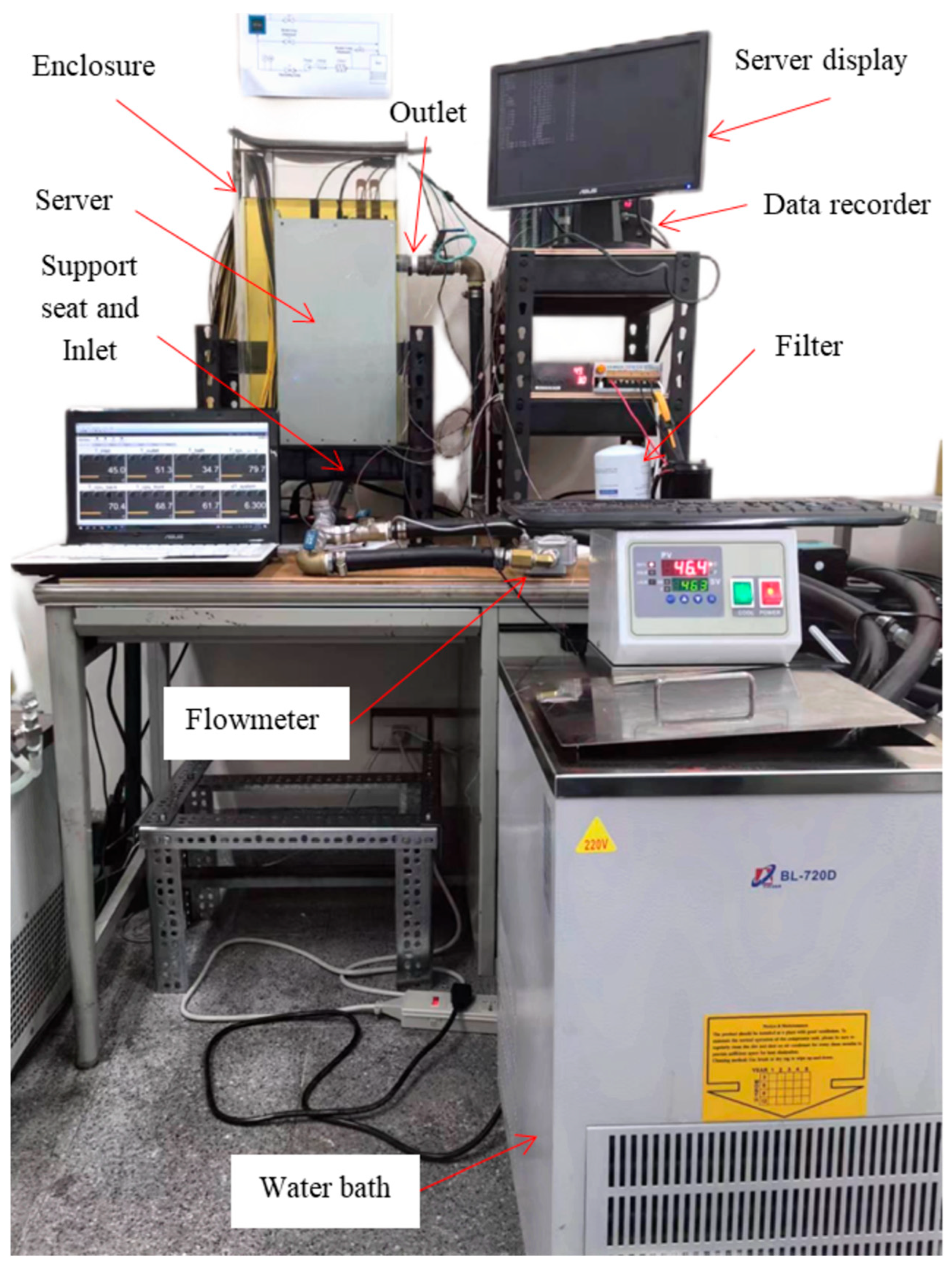
2.4.1. System Framework
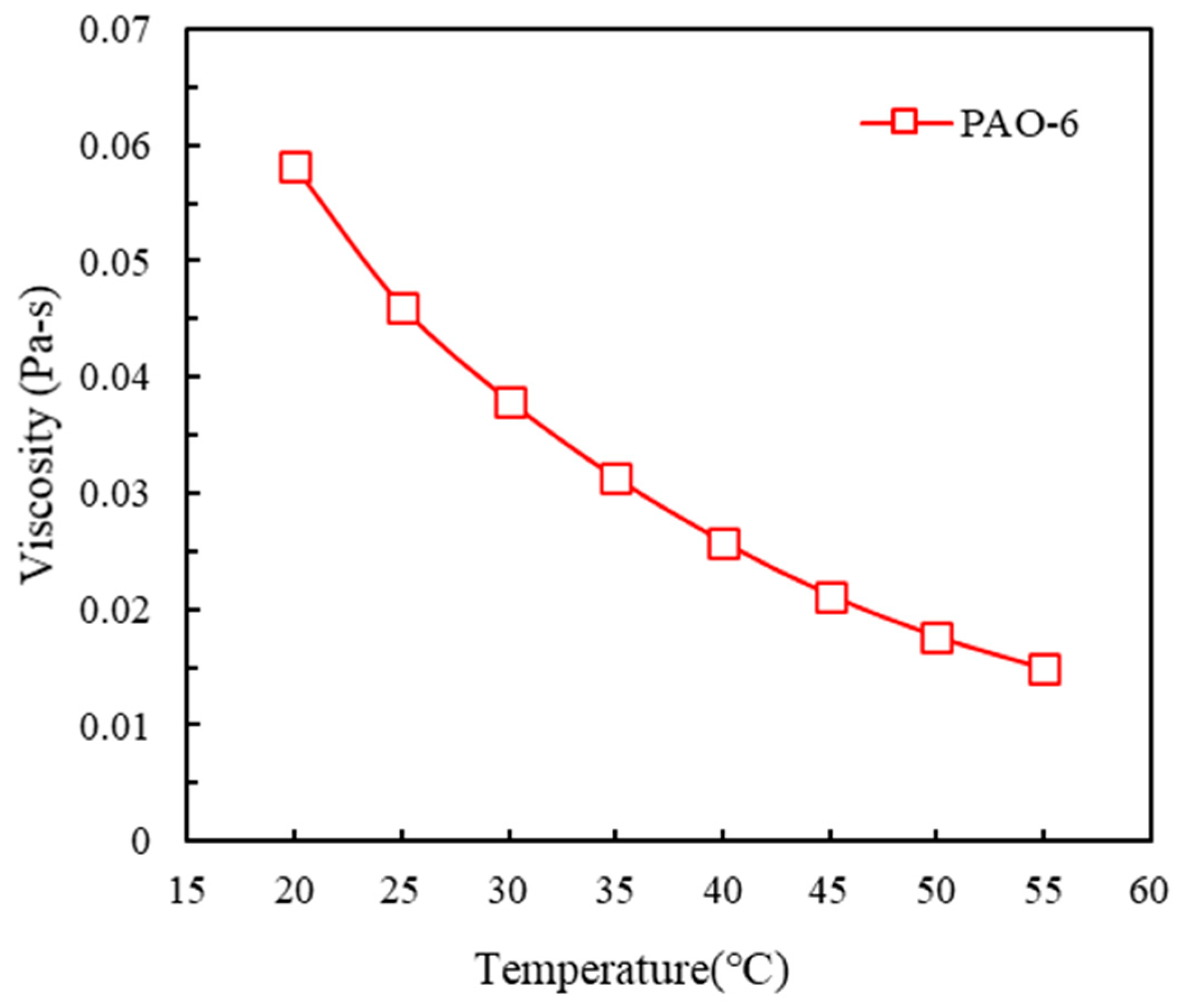
2.4.2. Working Fluid
2.4.3. Loading and Monitoring Software
2.4.4. Instrumentation and Uncertainty Analysis
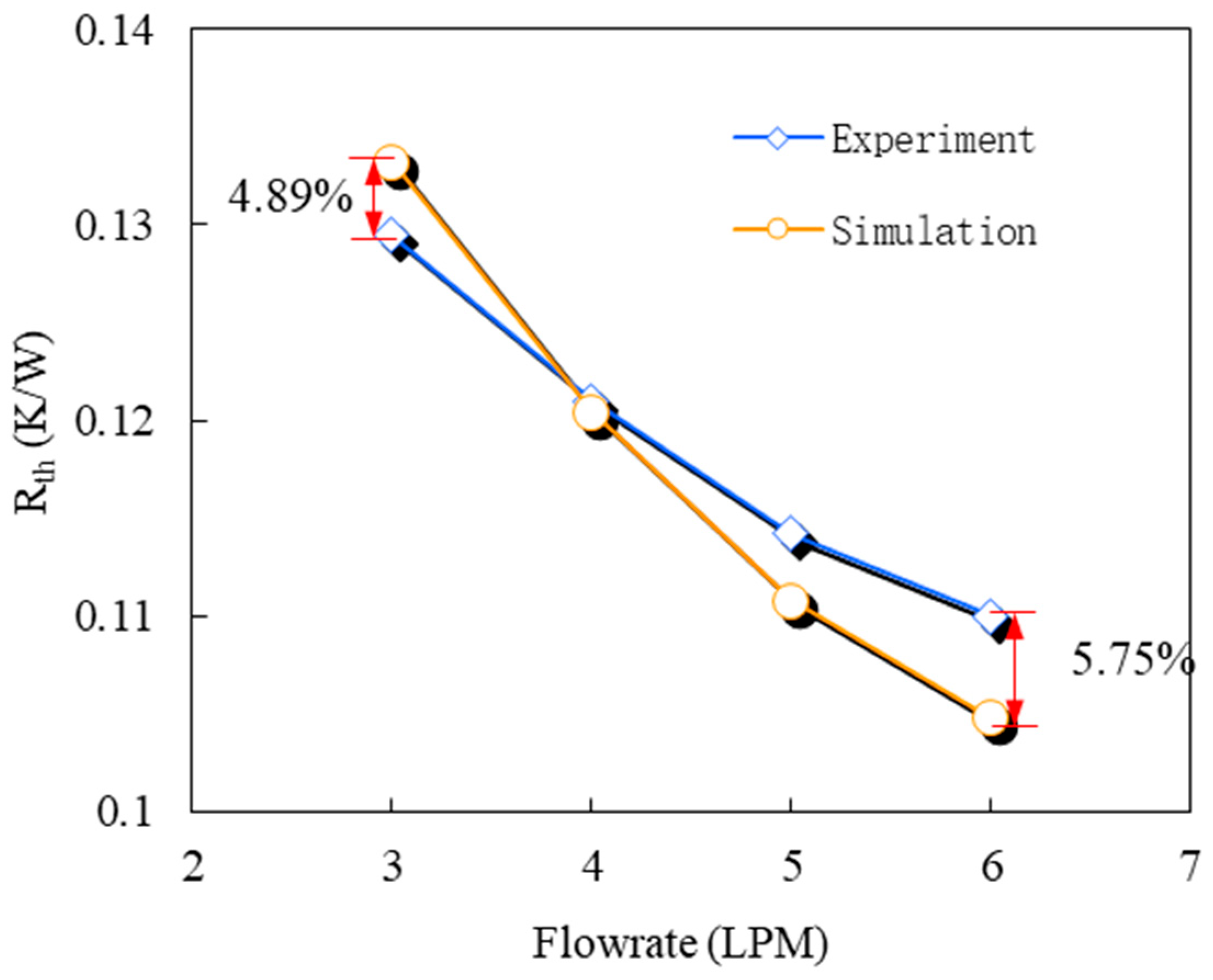
2.5. Numerical Simulation
3. Results
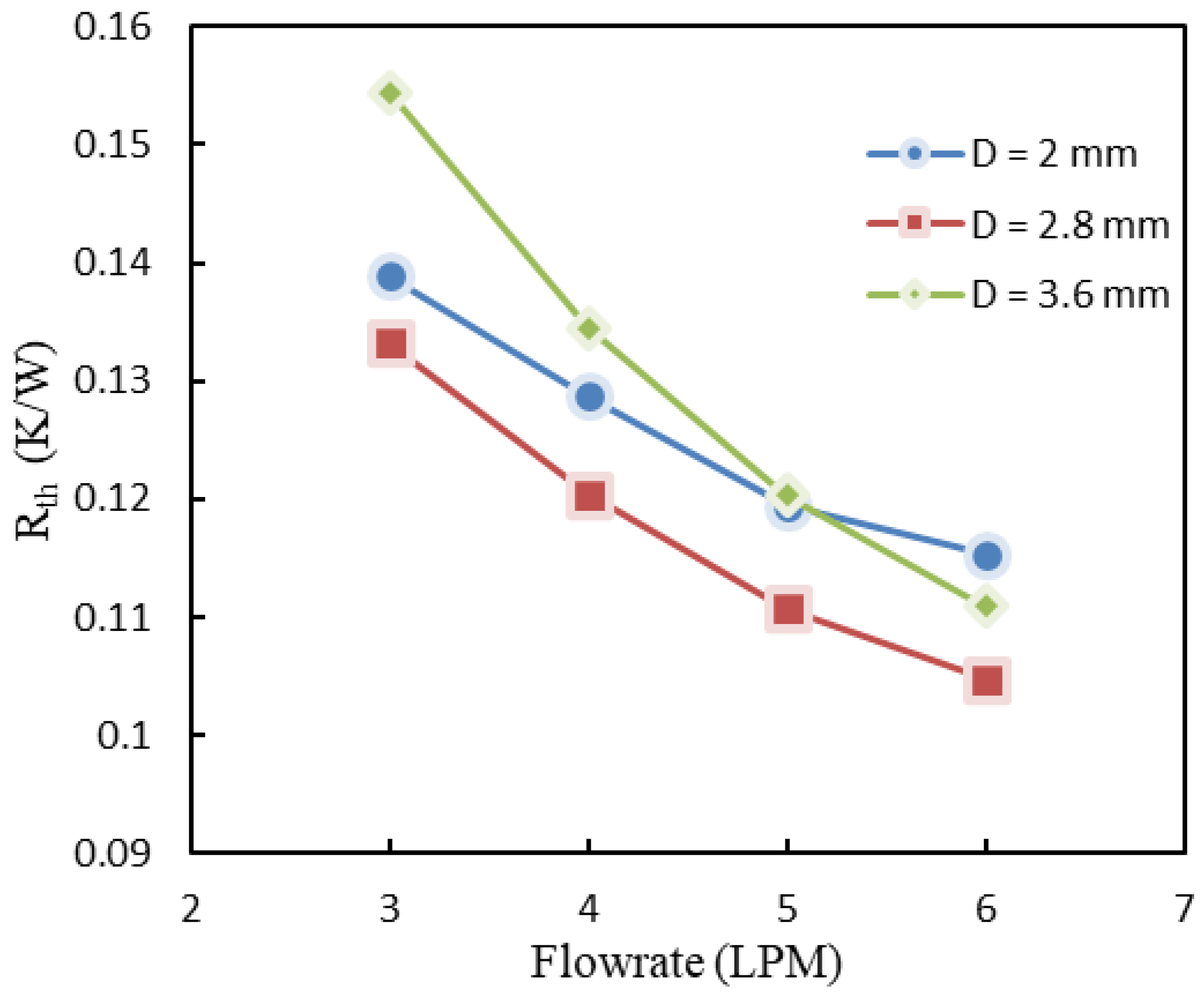
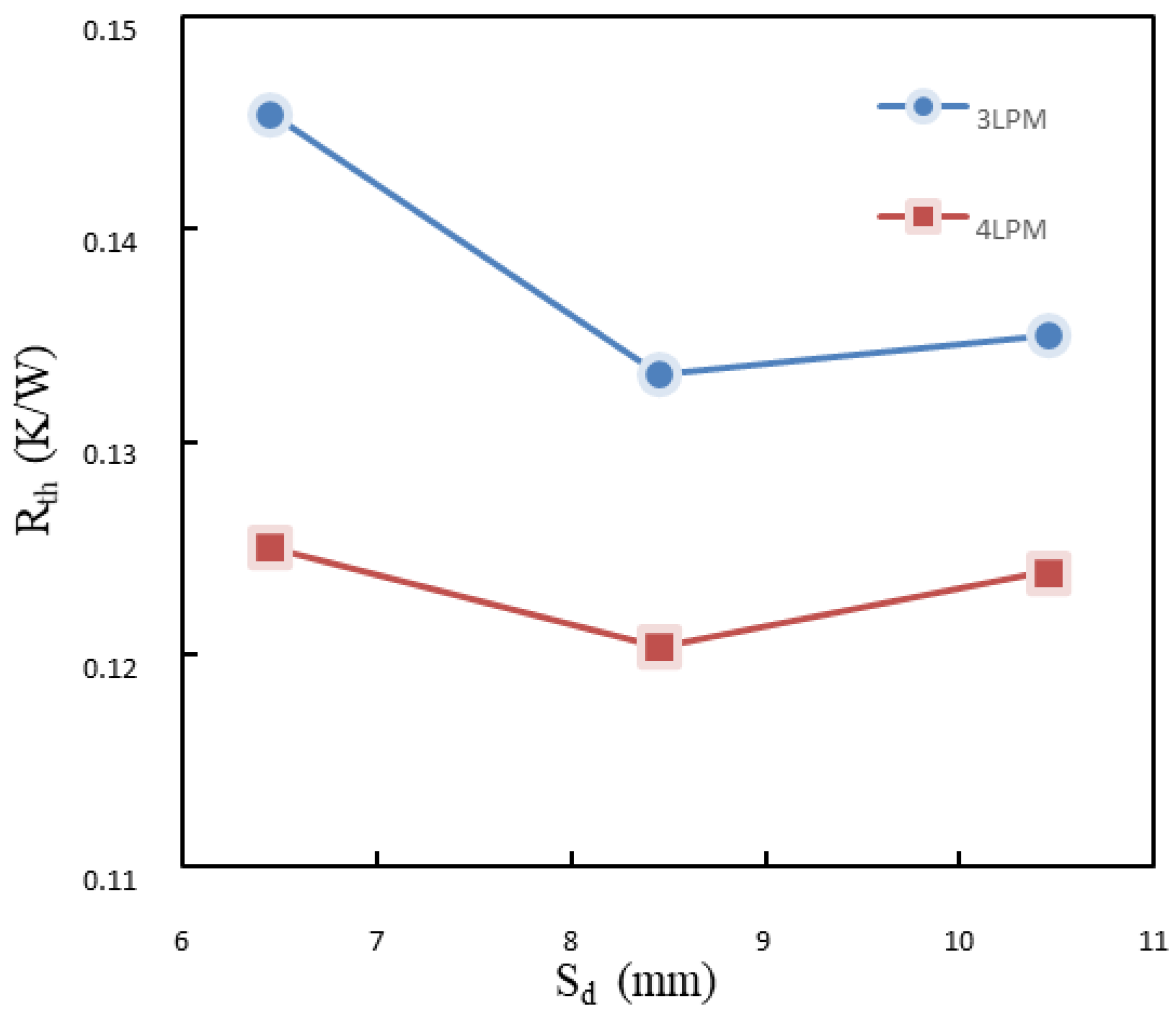
3.1. Numerical Optimization of the Pin-Fin Heat Sink
3.2. Experimental Effect of Inlet Temperature and Oil Flow Rate
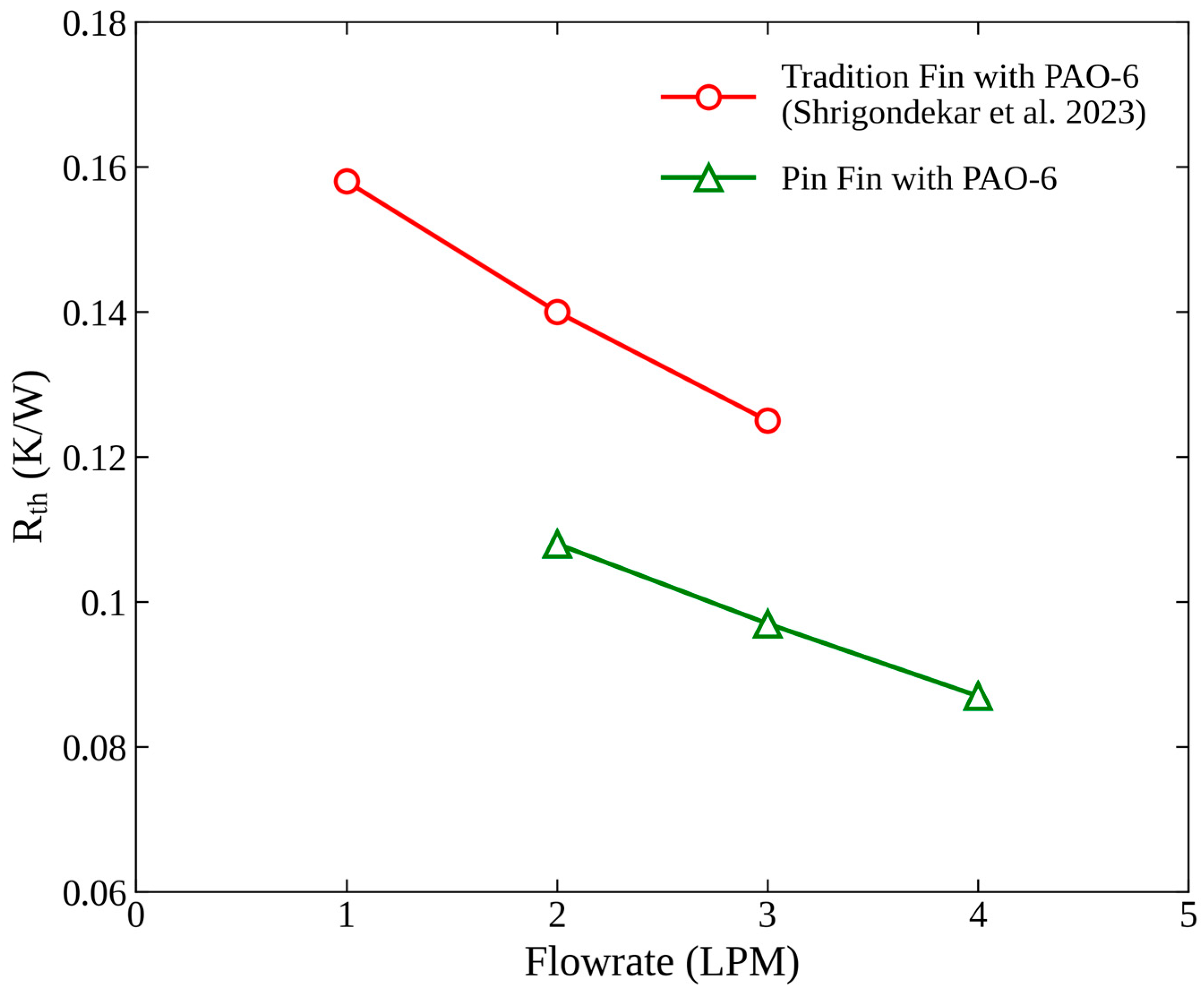
3.3. Experimental Comparison with a Rectangular-Fin Immersion-Cooled Server
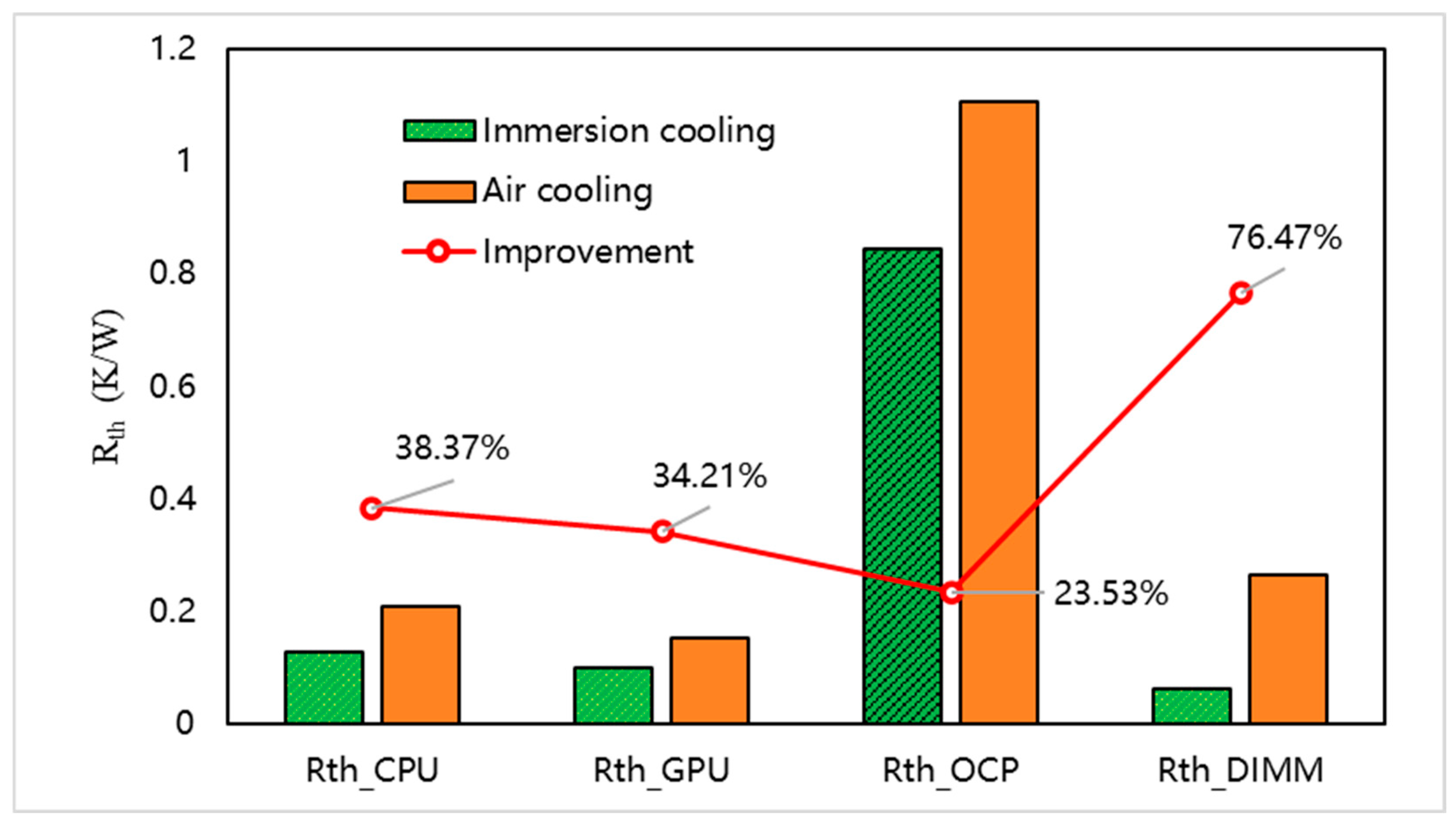
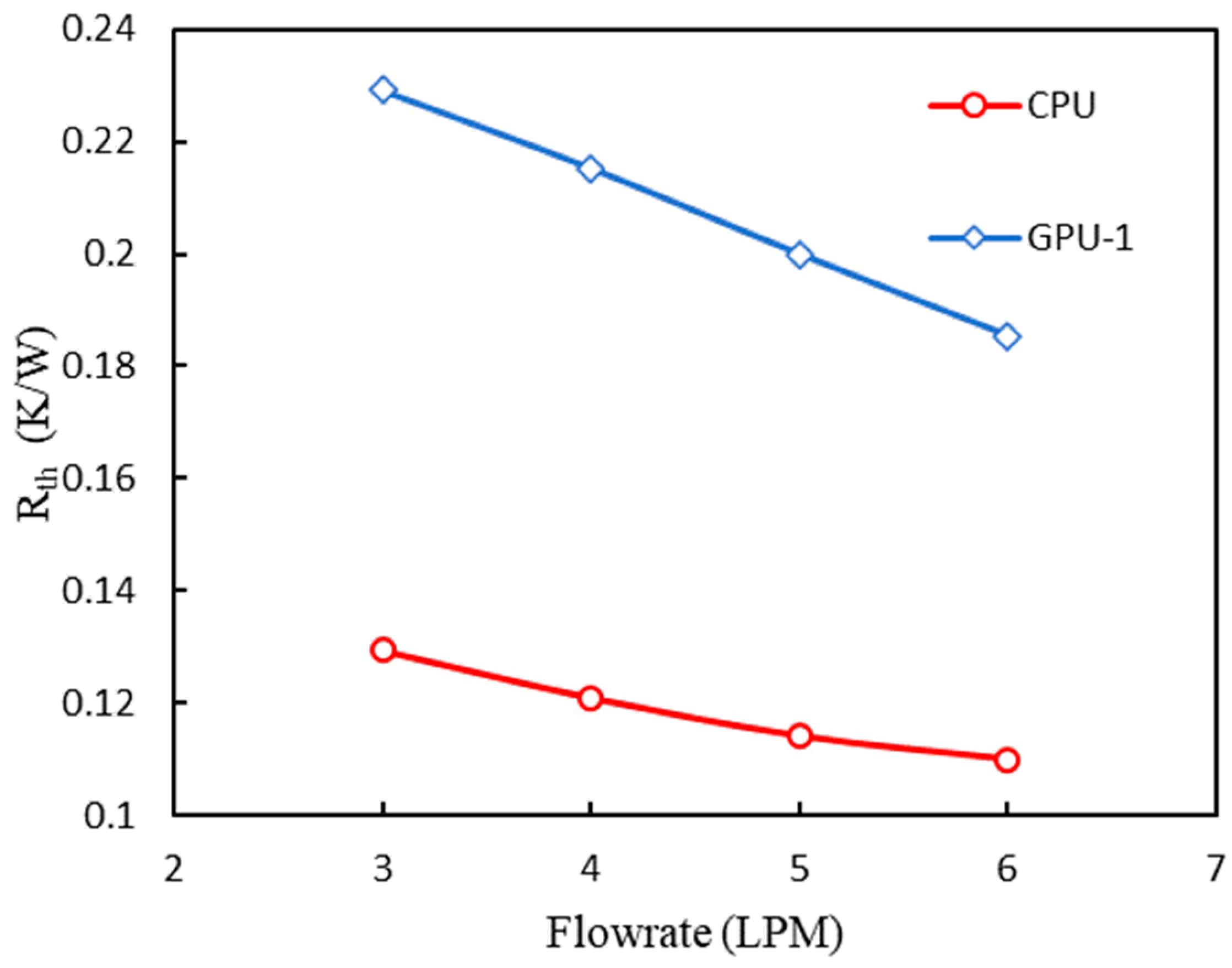
3.4. Experimental Comparison with the Air-Cooled Baseline
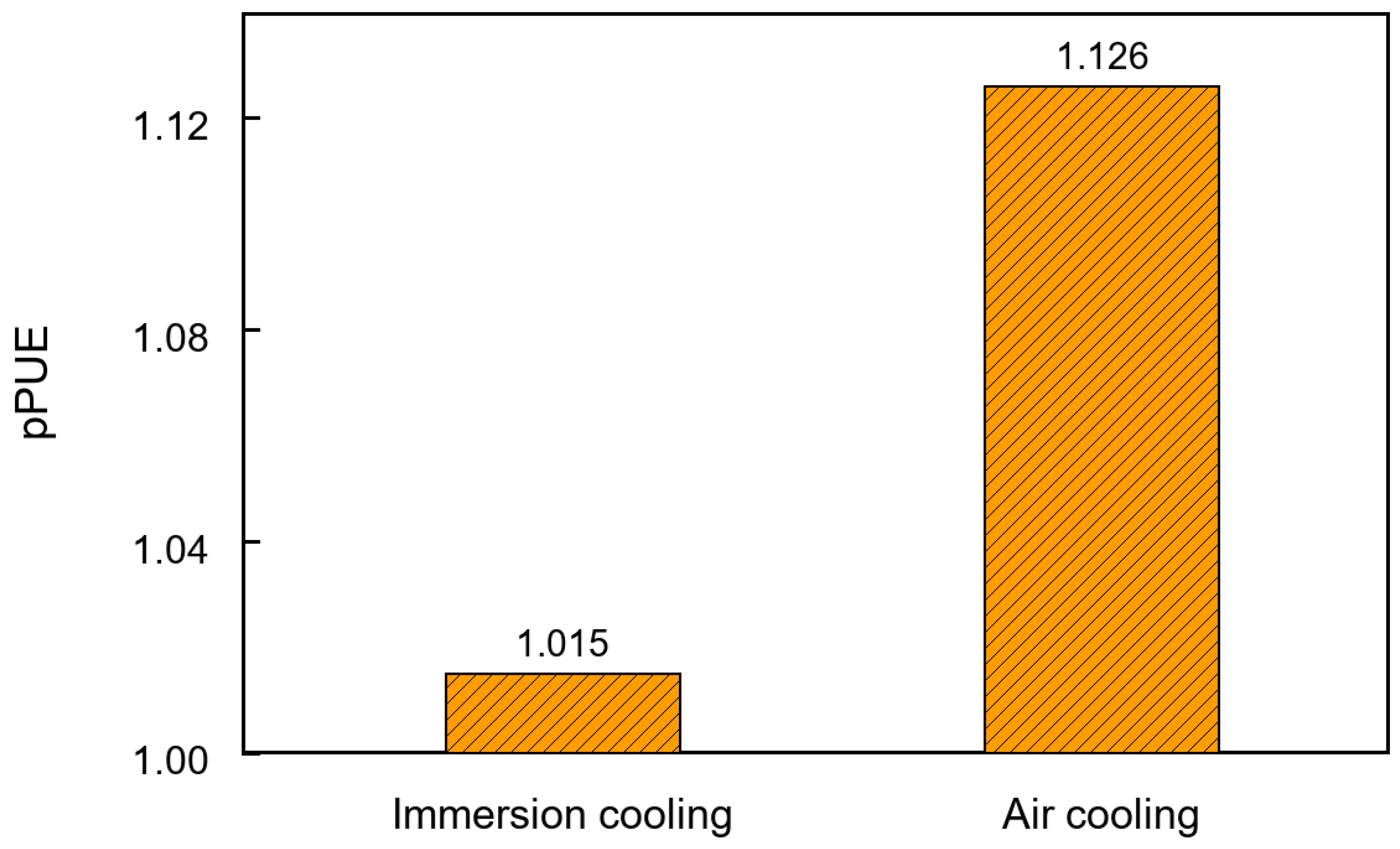
3.5. Partial Power Usage Effectiveness (pPUE)
4. Conclusions
- The bypass analysis shows that, for a rectangular-fin heat sink, the bypass penalty cannot be removed by reducing the fin pitch alone, because any reduction in convective resistance is offset by an increase in the bypass term, so only an optimum fin pitch exists for a given motherboard. The closed-form expression for the overall thermal resistance, Equation (23), makes this trade-off explicit.
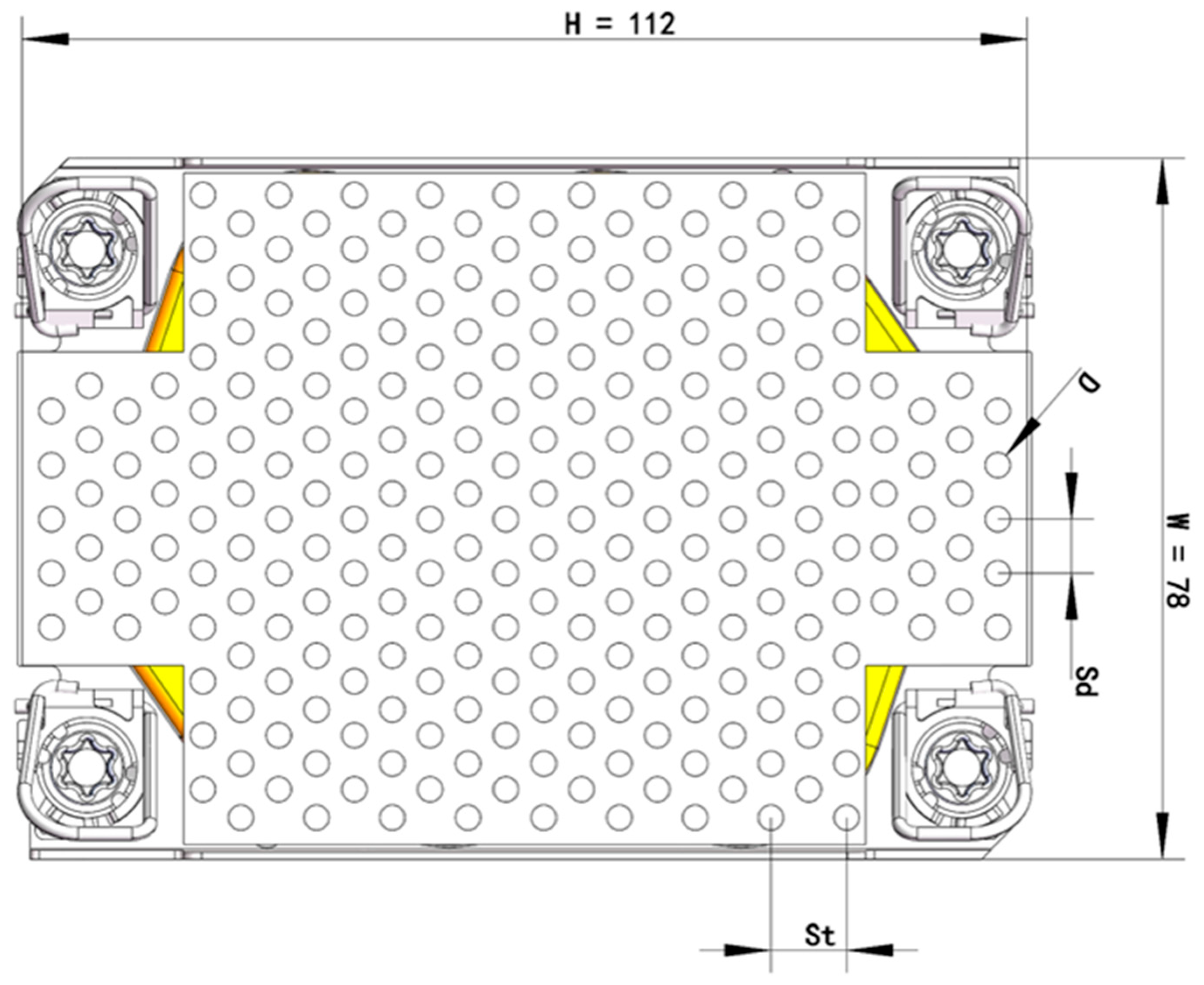
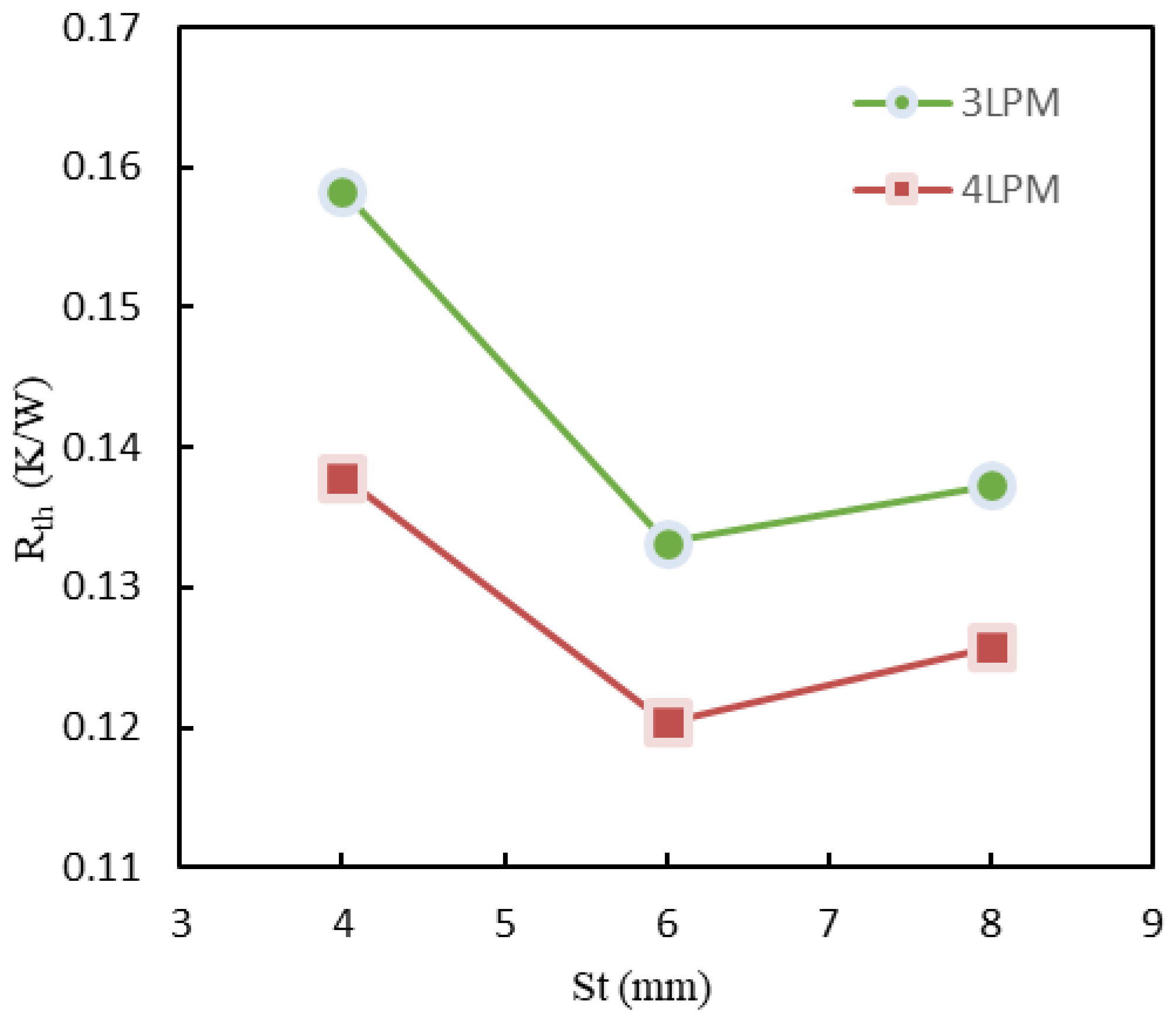
- CFD identified clear optima for the three pin-fin parameters at D = 2.8 mm, Sd = 8.45 mm, and St = 6 mm, respectively. Over the range investigated, these parameters changed the CPU thermal resistance by approximately 4 to 15%.
- Relative to a published rectangular-fin immersion server using the same oil [30], the optimized pin-fin heat sink reduced the CPU thermal resistance by 22.29% at 3 LPM despite having only 15.9% of the wetted area, owing to its higher fin efficiency, stronger inter-row mixing, and reduced bypass
- Relative to the air-cooled baseline operating on the same server platform, the pin-fin immersion server reduced the CPU and GPU thermal resistances by 38.37% and 34.21%, respectively, while operating those two components at thermal design powers 31.7% and 20.0% higher than the air-cooled reference. The partial Power Usage Effectiveness of the immersion server was 1.015, corresponding to an 88.09% improvement relative to the air-cooled baseline value of 1.126.
Author Contributions
Funding
Data Availability Statement
Conflicts of Interest
Nomenclature
| total wetted heat-transfer area (m2) | |
| flow cross-sectional area of the CPU heat sink (m2) | |
| flow cross-sectional area of the RAM channels (m2) | |
| specific heat capacity (J/kg∙ K) | |
| pin diameter (m) | |
| hydraulic diameter (m) | |
| hydraulic diameter of the fin channel (m) | |
| hydraulic diameter of the RAM channel (m) | |
| Fanning friction factor | |
| Gr | Grashof number |
| convective heat-transfer coefficient (W/m2 ∙ K) | |
| convective heat-transfer coefficient of the fin channel (W/m2 ∙ K) | |
| fin height (m) | |
| thermal conductivity (W/m∙ K) | |
| thermal conductivity of the working fluid (W/m∙ K) | |
| streamwise length of the CPU heat sink (m) | |
| hydrodynamic entry length (m) | |
| streamwise length of the RAM channel (m) | |
| number of fin passages | |
| Nusselt number of the fin channel | |
| pressure (Pa) | |
| pressure drop (Pa) | |
| Prandtl number | |
| heat input (W) | |
| Reynolds number | |
| Ri | Richardson number |
| thermal resistance (K/W) | |
| longitudinal pin pitch (m) | |
| transverse pin pitch (m) | |
| H/xc | |
| CPU case temperature (°C) | |
| fluid inlet temperature (°C) | |
| fluid outlet temperature (°C) | |
| average wall temperature (°C) | |
| average fluid temperature (°C) | |
| mean velocity in the fin channel (m/s) | |
| mean velocity in the RAM channel (m/s) | |
| volumetric flow rate (m3/s) | |
| volumetric flow through the CPU heat sink (m3/s) | |
| volumetric flow through the RAM channels (m3/s) | |
| total volumetric flow rate (m3/s) | |
| fin spacing (m) | |
| turbulent dissipation rate (m2/s3) | |
| dynamic viscosity (Pa∙ s) | |
| density (kg/m3) | |
| viscous stress tensor | |
| CFD | Computational fluid dynamics |
| CPU | Central processing unit |
| DC | Data center |
| DIMM | Dual in-line memory module |
| GPU | Graphics processing unit |
| GWP | Global warming potential |
| LPM | Liters per minute |
| OCP | Open Compute Project module |
| PAO | Poly-α-olefin |
| PCB | Printed circuit board |
| pPUE | Partial power usage effectiveness |
| PUE | Power usage effectiveness |
| RAM | Random-access memory |
| TIM | Thermal interface material |
| TTV | Thermal test vehicle |
References
- Zezulka, F.; Marcon, P.; Vesely, I.; Sajdl, O. Industry 4.0–An Introduction in the phenomenon. IFAC-PapersOnLine 2016, 49, 8–12. [Google Scholar]
- Ebrahimi, K.; Jones, G.F.; Fleischer, A.S. A review of data center cooling technology, operating conditions and the corresponding low-grade waste heat recovery opportunities. Renew. Sustain. Energy Rev. 2014, 31, 622–638. [Google Scholar] [CrossRef]
- Liu, Y.; Wei, X.; Xiao, J.; Liu, Z.; Xu, Y.; Tian, Y. Energy consumption and emission mitigation prediction based on data center traffic and PUE for global data centers. Glob. Energy Interconnect. 2020, 3, 272–282. [Google Scholar] [CrossRef]
- Daraghmeh, H.M.; Wang, C.-C. A review of current status of free cooling in datacenters. Appl. Therm. Eng. 2017, 114, 1224–1239. [Google Scholar] [CrossRef]
- Nadjahi, C.; Louahlia, H.; Lemasson, S. A review of thermal management and innovative cooling strategies for data center. Sustain. Comput. Inform. Syst. 2018, 19, 14–28. [Google Scholar] [CrossRef]
- Moore, A.L.; Shi, L. Emerging challenges and materials for thermal management of electronics. Mater. Today 2014, 17, 163–174. [Google Scholar] [CrossRef]
- Ahmed, K.M.U.; Bollen, M.H.; Alvarez, M. A review of data centers energy consumption and reliability modeling. IEEE Access 2021, 9, 152536–152563. [Google Scholar] [CrossRef]
- Chu, W.-X.; Wang, C.-C. A review on airflow management in data centers. Appl. Energy 2019, 240, 84–119. [Google Scholar] [CrossRef]
- Fulpagare, Y.; Bhargav, A. Advances in data center thermal management. Renew. Sustain. Energy Rev. 2015, 43, 981–996. [Google Scholar] [CrossRef]
- Khalaj, A.H.; Halgamuge, S.K. A Review on efficient thermal management of air-and liquid-cooled data centers: From chip to the cooling system. Appl. Energy 2017, 205, 1165–1188. [Google Scholar]
- Ramakrishnan, B.; Alissa, H.; Manousakis, I.; Lankston, R.; Bianchini, R.; Kim, W.; Baca, R.; Misra, P.A.; Goiri, I.; Jalili, M. CPU overclocking: A performance assessment of air, cold plates, and two-phase immersion cooling. IEEE Trans. Compon. Packag. Manuf. Technol. 2021, 11, 1703–1715. [Google Scholar] [CrossRef]
- Rong, H.; Zhang, H.; Xiao, S.; Li, C.; Hu, C. Optimizing energy consumption for data centers. Renew. Sustain. Energy Rev. 2016, 58, 674–691. [Google Scholar] [CrossRef]
- Kheirabadi, A.C.; Groulx, D. Cooling of server electronics: A design review of existing technology. Appl. Therm. Eng. 2016, 105, 622–638. [Google Scholar] [CrossRef]
- Kuncoro, I.W.; Pambudi, N.; Biddinika, M.K.; Widiastuti, I.; Hijriawan, M.; Wibowo, K. Immersion cooling as the next technology for data center cooling: A review. Proc. J. Phys. Conf. Ser. 2019, 1402, 044057. [Google Scholar] [CrossRef]
- Pambudi, N.A.; Sarifudin, A.; Firdaus, R.A.; Ulfa, D.K.; Gandidi, I.M.; Romadhon, R. The immersion cooling technology: Current and future development in energy saving. Alex. Eng. J. 2022, 61, 9509–9527. [Google Scholar] [CrossRef]
- Cheng, C.-C.; Chang, P.-C.; Li, H.-C.; Hsu, F.-I. Design of a single-phase immersion cooling system through experimental and numerical analysis. Int. J. Heat Mass Transf. 2020, 160, 120203. [Google Scholar] [CrossRef]
- Kanbur, B.B.; Wu, C.; Fan, S.; Duan, F. System-level experimental investigations of the direct immersion cooling data center units with thermodynamic and thermoeconomic assessments. Energy 2021, 217, 119373. [Google Scholar] [CrossRef]
- Birbarah, P.; Gebrael, T.; Foulkes, T.; Stillwell, A.; Moore, A.; Pilawa-Podgurski, R.; Miljkovic, N. Water immersion cooling of high power density electronics. Int. J. Heat Mass Transf. 2020, 147, 118918. [Google Scholar] [CrossRef]
- Qu, W.; Mudawar, I. Measurement and prediction of pressure drop in two-phase micro-channel heat sinks. Int. J. Heat Mass Transf. 2003, 46, 2737–2753. [Google Scholar]
- Pires, I.A.; Silva, R.Á.; Pereira, I.T.O.; Faria, O.A.; Maia, T.A.C.; de Jesus Cardoso Filho, B. An assessment of immersion cooling for power electronics: An oil volume case study. IEEE Trans. Ind. Appl. 2020, 56, 3231–3237. [Google Scholar] [CrossRef]
- Sarangi, S.; McAfee, E.D.; Damm, D.G.; Gullbrand, J. Single-phase immersion cooling performance in intel servers with immersion influenced heatsink design. In Proceedings of the 2022 38th Semiconductor Thermal Measurement, Modeling & Management Symposium (SEMI-THERM), San Jose, CA, USA, 21–25 March 2022; pp. 1–5. [Google Scholar]
- Agung Pambudi, N.; Muhamad Yusuf, A.; Sarifudin, A. The Use of Single-Phase Immersion Cooling by Using Two Types of Dielectric Fluid for Data Center Energy Savings. Energy Eng. 2022, 119, 275–286. [Google Scholar] [CrossRef]
- Shah, J.M.; Eiland, R.; Rajmane, P.; Siddarth, A.; Agonafer, D.; Mulay, V. Reliability considerations for oil immersion-cooled data centers. J. Electron. Packag. 2019, 141, 021007. [Google Scholar] [CrossRef]
- Eiland, R.; Fernandes, J.; Vallejo, M.; Agonafer, D.; Mulay, V. Flow Rate and inlet temperature considerations for direct immersion of a single server in mineral oil. In Proceedings of the Fourteenth Intersociety Conference on Thermal and Thermomechanical Phenomena in Electronic Systems (ITherm), Orlando, FL, USA, 27–30 May 2014; pp. 706–714. [Google Scholar]
- Shinde, P.A.; Bansode, P.V.; Saini, S.; Kasukurthy, R.; Chauhan, T.; Shah, J.M.; Agonafer, D. Experimental analysis for optimization of thermal performance of a server in single phase immersion cooling. In Proceedings of the International Electronic Packaging Technical Conference and Exhibition, Anaheim, CA, USA, 7–9 October 2019. [Google Scholar]
- Huang, Y.; Ge, J.; Chen, Y.; Zhang, C. Natural and forced convection heat transfer characteristics of single-phase immersion cooling systems for data centers. Int. J. Heat Mass Transf. 2023, 207, 124023. [Google Scholar] [CrossRef]
- Wang, H.; Yuan, X.; Zhang, K.; Lang, X.; Chen, H.; Yu, H.; Li, S. Performance evaluation and optimization of data center servers using single-phase immersion cooling. Int. J. Heat Mass Transf. 2024, 221, 125057. [Google Scholar] [CrossRef]
- Li, X.; Xu, Z.; Liu, S.; Zhang, X.; Sun, H. Server performance optimization for single-phase immersion cooling data center. Appl. Therm. Eng. 2023, 224, 120080. [Google Scholar] [CrossRef]
- Muneeshwaran, M.; Lin, Y.-C.; Wang, C.-C. Performance analysis of single-phase immersion cooling system of data center using FC-40 dielectric fluid. Int. Commun. Heat Mass Transf. 2023, 145, 106843. [Google Scholar] [CrossRef]
- Shrigondekar, H.; Lin, Y.-C.; Wang, C.-C. Investigations on performance of single-phase immersion cooling system. Int. J. Heat Mass Transf. 2023, 206, 123961. [Google Scholar] [CrossRef]
- Huang, Y.; Liu, C.; Zhong, Y.; Zhang, C. Experimental study on jet-enhanced immersion liquid cooling for energy-efficient data centers. Energy 2025, 334, 137584. [Google Scholar] [CrossRef]
- Matsuoka, M.; Matsuda, K.; Kubo, H. Liquid immersion cooling technology with natural convection in data center. In Proceedings of the 2017 IEEE 6th International Conference on Cloud Networking (CloudNet), Prague, Czech Republic, 25–27 September 2017; pp. 1–7. [Google Scholar]
- Shah, J.M.; Eiland, R.; Siddarth, A.; Agonafer, D. Effects of mineral oil immersion cooling on IT equipment reliability and reliability enhancements to data center operations. In Proceedings of the 2016 15th IEEE Intersociety Conference on Thermal and Thermomechanical Phenomena in Electronic Systems (ITherm), Las Vegas, NV, USA, 31 May–3 June 2016; pp. 316–325. [Google Scholar]
- Zhang, Y.-D.; Lin, Y.-C.; Wang, C.-C. Investigation of the single-phase immersion cold plate amid PAO-4 and Noah@ 3000A—An experimental approach and its numerical verification. Int. Commun. Heat Mass Transf. 2024, 155, 107509. [Google Scholar]
- Gandhi, D.; Chowdhury, U.; Chauhan, T.; Bansode, P.; Saini, S.; Shah, J.M.; Agonafer, D. Computational analysis for thermal optimization of server for single phase immersion cooling. In Proceedings of the International Electronic Packaging Technical Conference and Exhibition, Anaheim, CA, USA, 7–9 October 2019. [Google Scholar]
- Kumar, V.M.; Rao, B.N.; Farooq, S. A detailed review on pin fin heat sink. Int. J. Mech. Aerosp. Ind. Mechatron. Manuf. Eng. 2016, 10, 971–980. [Google Scholar]
- Bhandari, P.; Rawat, K.S.; Prajapati, Y.K.; Padalia, D.; Ranakoti, L.; Singh, T. Design modifications in micro pin fin configuration of microchannel heat sink for single phase liquid flow: A review. J. Energy Storage 2023, 66, 107548. [Google Scholar] [CrossRef]
- Shaukatullah, H.; Storr, W.R.; Hansen, B.J.; Gaynes, M.A. Design and optimization of pin fin heat sinks for low velocity applications. IEEE Trans. Compon. Packag. Manuf. Technol. Part A 1996, 19, 486–494. [Google Scholar] [CrossRef]
- Mohammadi, A.; Koşar, A. Review on heat and fluid flow in micro pin fin heat sinks under single-phase and two-phase flow conditions. Nanoscale Microscale Thermophys. Eng. 2018, 22, 153–197. [Google Scholar]
- Ahmed, H.E.; Salman, B.H.; Kherbeet, A.S.; Ahmed, M. Optimization of thermal design of heat sinks: A review. Int. J. Heat Mass Transf. 2018, 118, 129–153. [Google Scholar] [CrossRef]
- Rizzi, M.; Canino, M.; Hu, K.; Jones, S.; Travkin, V.; Catton, I. Experimental investigation of pin fin heat sink effectiveness. In Proceedings of the National Heat Transfer Conference, Anaheim, CA, USA, 10–14 June 2001; pp. 1235–1243. [Google Scholar]
- Khan, W.A.; Culham, J.R.; Yovanovich, M.M. Optimization of pin-fin heat sinks using entropy generation minimization. IEEE Trans. Compon. Packag. Technol. 2005, 28, 247–254. [Google Scholar] [CrossRef]
- Sparrow, E.M.; Ramsey, J.; Altemani, C. Experiments on in-line pin fin arrays and performance comparisons with staggered arrays. J. Heat Transfer. 1980, 102, 44–50. [Google Scholar] [CrossRef]
- Shah, R. Laminar flow friction and forced convection heat transfer in ducts of arbitrary geometry. Int. J. Heat Mass Transf. 1975, 18, 849–862. [Google Scholar] [CrossRef]
- Chiriac, G.-G.; Dumitraș, C.G.; Chitariu, D.F.; Vizureanu, P.; Sandu, A.V. Influence of Gravity on Passively Cooled Heat Sink Using Experimental Data and Finite Element Analysis. Processes 2023, 11, 896. [Google Scholar] [CrossRef]
- Incropera, F.P.; DeWitt, D.P.; Bergman, T.L.; Lavine, A.S. Fundamentals of Heat and Mass Transfer; Wiley: Hoboken, NJ, USA, 1996; Volume 6. [Google Scholar]
- Avelar, V.; Azevedo, D.; French, A.; Power, E.N. PUE: A comprehensive examination of the metric. White Pap. 2012, 49, 52. [Google Scholar]












| Component | Unit Power (W) | Quantity | Power (W) |
|---|---|---|---|
| CPU | 270 | 1 | 270 |
| DIMM | 8 | 8 | 64 |
| GPU | 150 | 2 | 300 |
| OCP | 50 | 1 | 20 |
| Others | -- | -- | 66 |
| Total | 720 |
| Working Fluid |
Density (kg/m3) |
Thermal Conductivity (W/m·K) |
Specific Heat (J/kg·°C) | GWP |
|---|---|---|---|---|
| PAO-6 | 807 | 0.144 | 2413 | 0 |
| Mesh (Cells) | CPU Thermal Resistance Rth (K/W) | Deviation from Finest Mesh |
|---|---|---|
| Mesh I (8 million) | 0.1328 | 1.61% |
| Mesh II (10 million) | 0.1322 | 1.15% |
| Mesh III (13.6 million) | 0.1307 | baseline |
| Component | Immersion (W) | Air Cooling (W) |
|---|---|---|
| CPU | 270 | 205 |
| OCP | 20 | 20 |
| GPU | 300 | 250 |
| DIMM | 64 | 64 |
Disclaimer/Publisher’s Note: The statements, opinions and data contained in all publications are solely those of the individual author(s) and contributor(s) and not of MDPI and/or the editor(s). MDPI and/or the editor(s) disclaim responsibility for any injury to people or property resulting from any ideas, methods, instructions or products referred to in the content. |
© 2026 by the authors. Licensee MDPI, Basel, Switzerland. This article is an open access article distributed under the terms and conditions of the Creative Commons Attribution (CC BY) license.
Share and Cite
Cheng, S.-W.; Zhang, Y.-D.; Chien, L.-H.; Wang, C.-C. A Comparative Study of a Single-Phase Immersion-Cooled Server with a Pin-Fin Heat Sink for Mitigation of the Flow Bypass Effect. Processes 2026, 14, 2209. https://doi.org/10.3390/pr14132209
Cheng S-W, Zhang Y-D, Chien L-H, Wang C-C. A Comparative Study of a Single-Phase Immersion-Cooled Server with a Pin-Fin Heat Sink for Mitigation of the Flow Bypass Effect. Processes. 2026; 14(13):2209. https://doi.org/10.3390/pr14132209
Chicago/Turabian StyleCheng, Shau-Wai, Yong-Dong Zhang, Li-Hung Chien, and Chi-Chuan Wang. 2026. "A Comparative Study of a Single-Phase Immersion-Cooled Server with a Pin-Fin Heat Sink for Mitigation of the Flow Bypass Effect" Processes 14, no. 13: 2209. https://doi.org/10.3390/pr14132209
APA StyleCheng, S.-W., Zhang, Y.-D., Chien, L.-H., & Wang, C.-C. (2026). A Comparative Study of a Single-Phase Immersion-Cooled Server with a Pin-Fin Heat Sink for Mitigation of the Flow Bypass Effect. Processes, 14(13), 2209. https://doi.org/10.3390/pr14132209