Study on the Startup Mechanism and Quantitative Characterization of Multiple Oil-Phase Morphologies During the Ultra-High Water-Cut Stage


Abstract
1. Introduction
2. Steady-State Oil–Water Two-Phase Core Flooding Experimental
2.1. Experimental Samples
2.2. Experimental Procedures
- (1)
- Procedure for the Steady-State Two-Phase Core Flooding Experiment
- (2)
- Procedure for the Core Flooding CT Scanning Experiment
2.3. Experimental Program
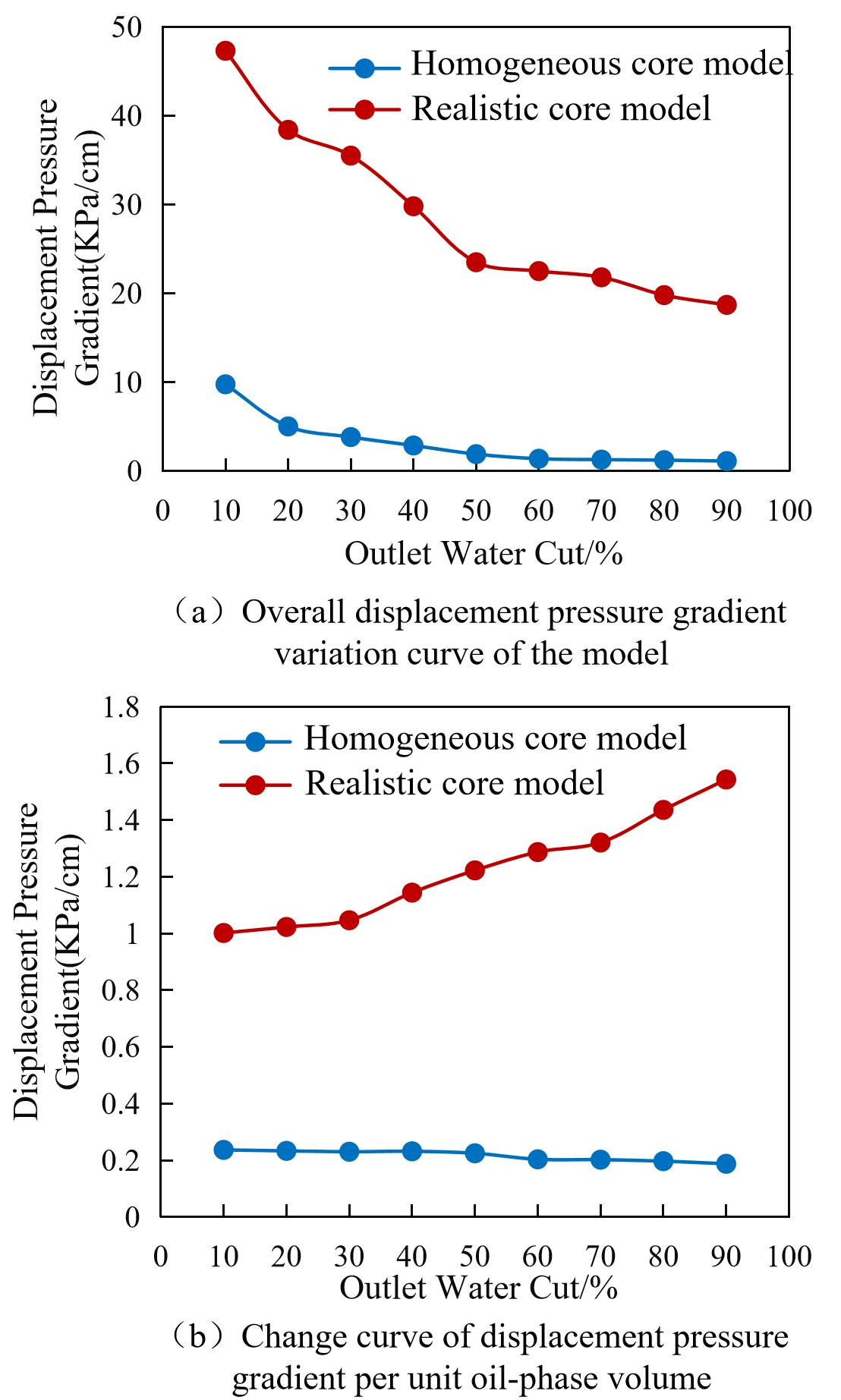
2.4. Experimental Results and Analysis
3. Analysis of the Startup Mechanism and Microscopic Causes of Multiple Oil-Phase Morphologies
3.1. Description of Oil-Phase Morphological Differences at Different Displacement Stage
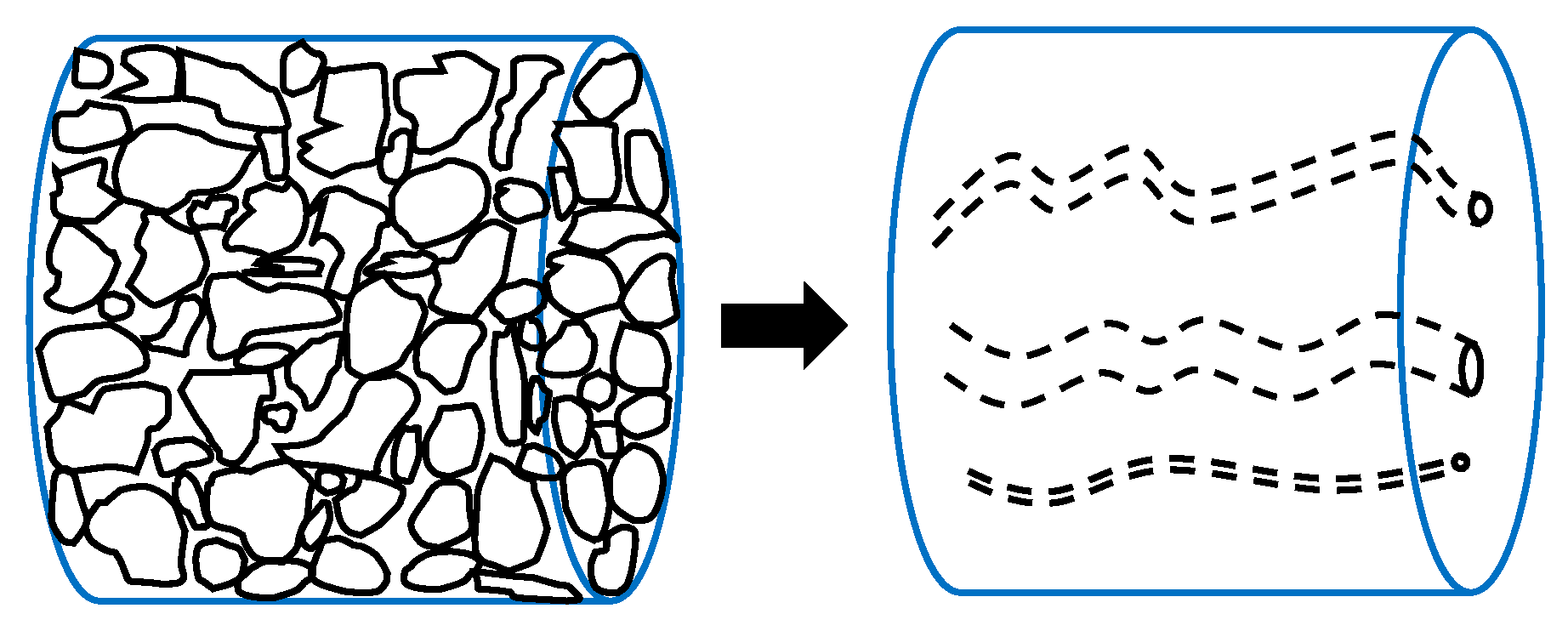
3.2. Construction of the Porous Media Model
4. Calculation Method for the Startup Resistance of Multiple Oil-Phase Morphologies Based on Fractal Theory
5. Conclusions
- (1)
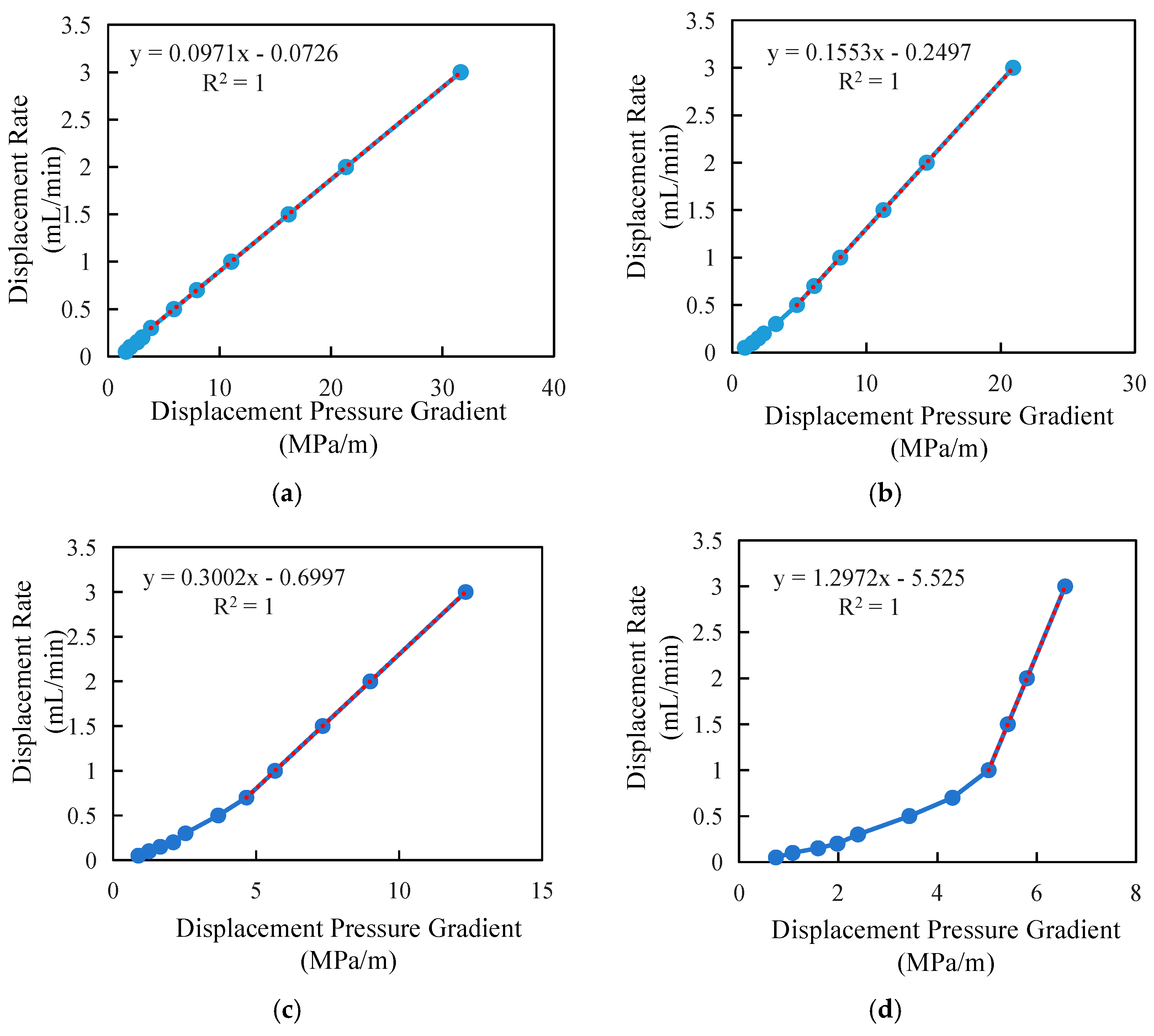
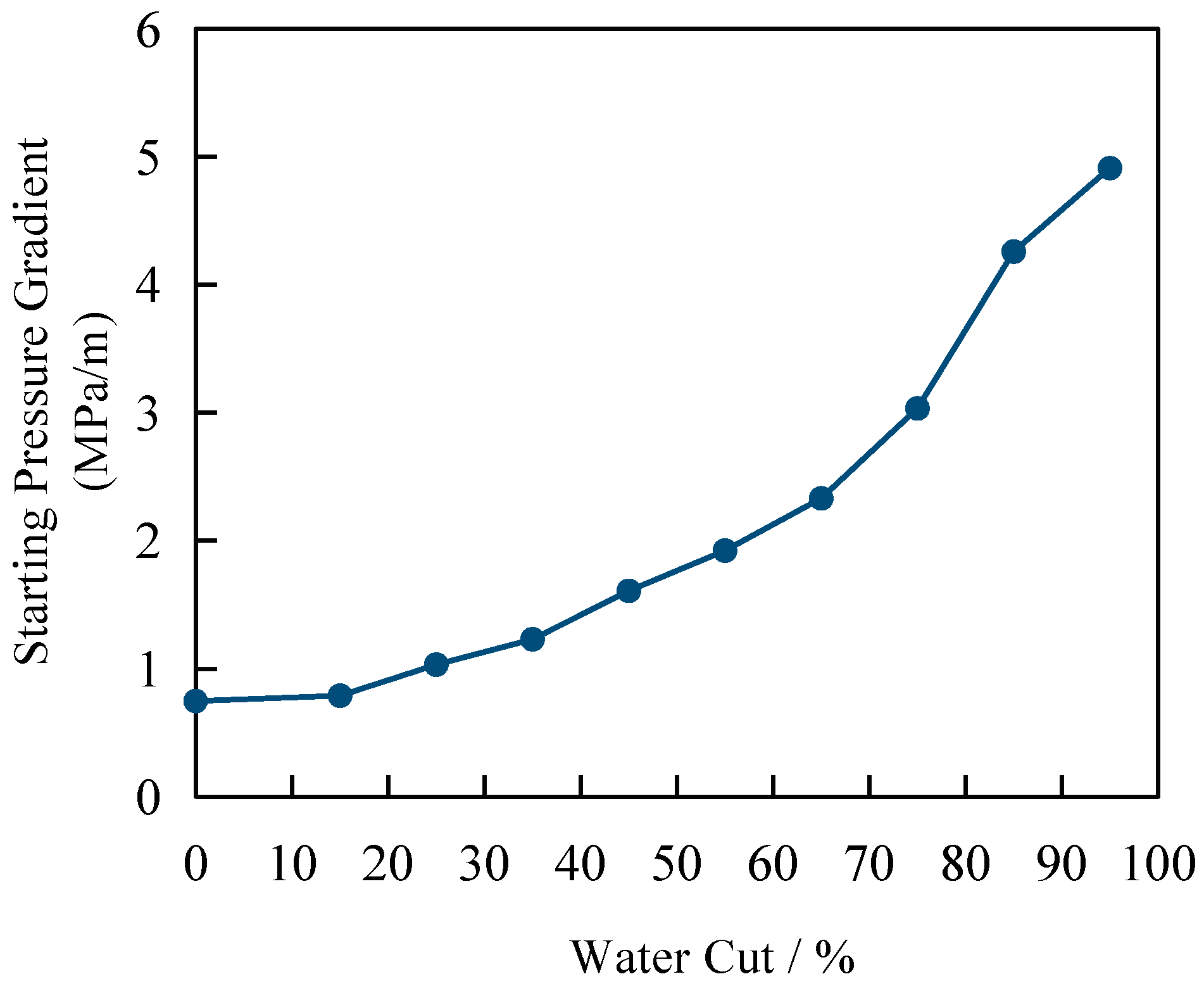
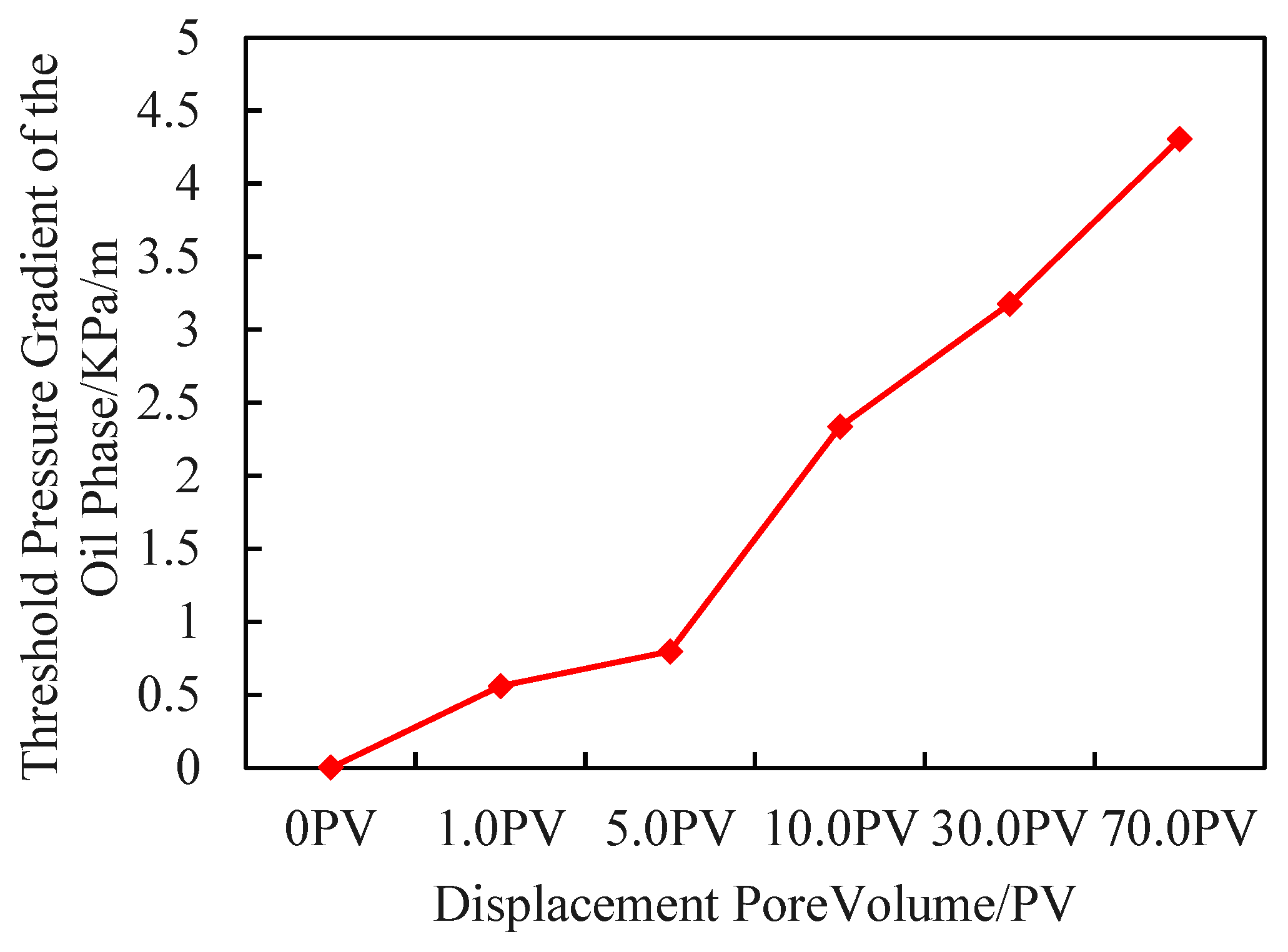
- Using the steady-state oil–water two-phase flooding method, the variation law of the oil-phase starting pressure gradient at different water-cut stages was determined. As the water cut increased, the oil-phase starting pressure gradient showed a nonlinear increasing trend. At the low water-cut stage, the oil-phase starting pressure gradient changed relatively slowly with increasing water cut. When the water cut exceeded 70%, however, the variation in the oil-phase starting pressure gradient became significantly greater at different water-cut stages. At a water cut of 90%, the oil-phase starting pressure gradient was approximately 7–8 times that under the pure-oil condition.
- (2)
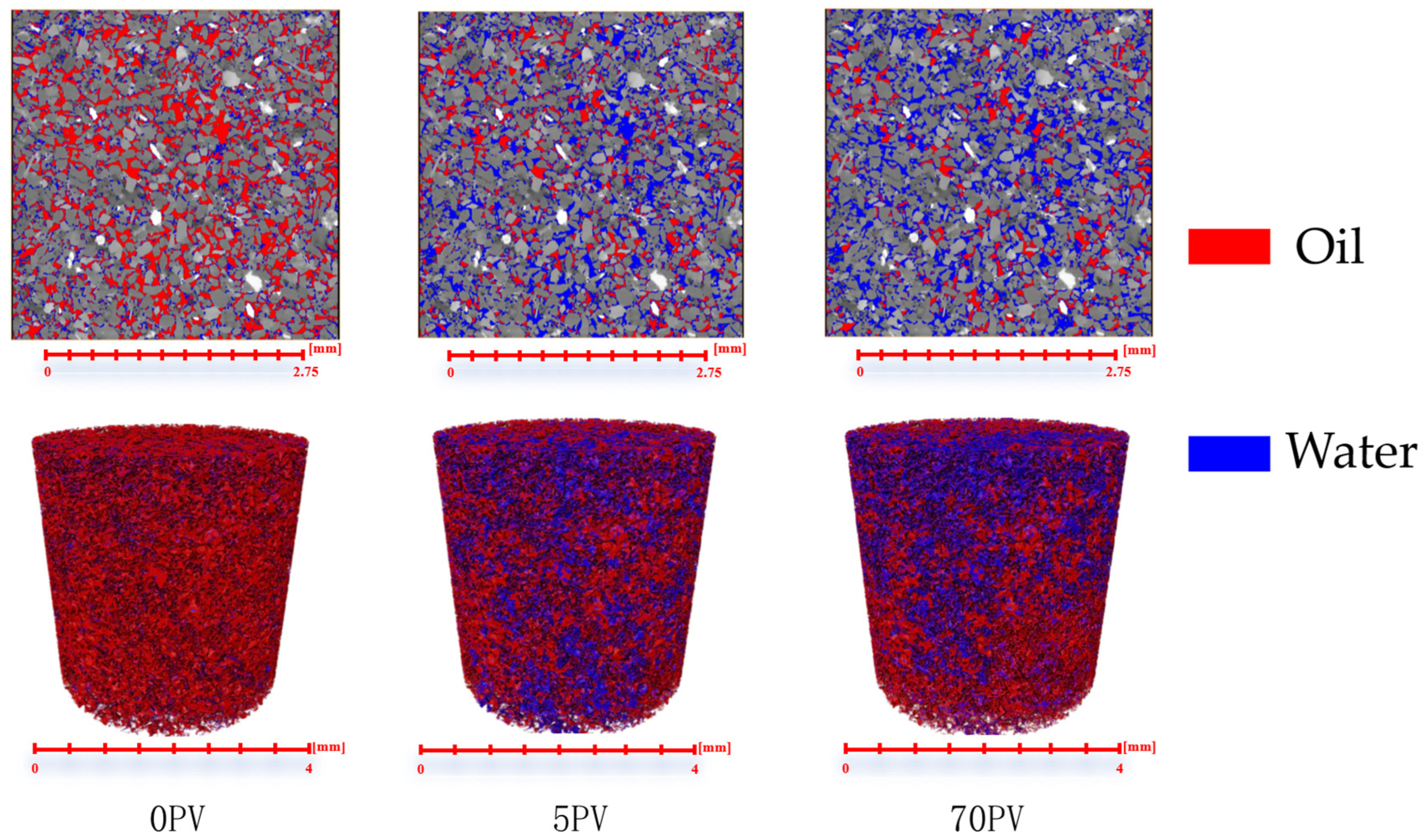
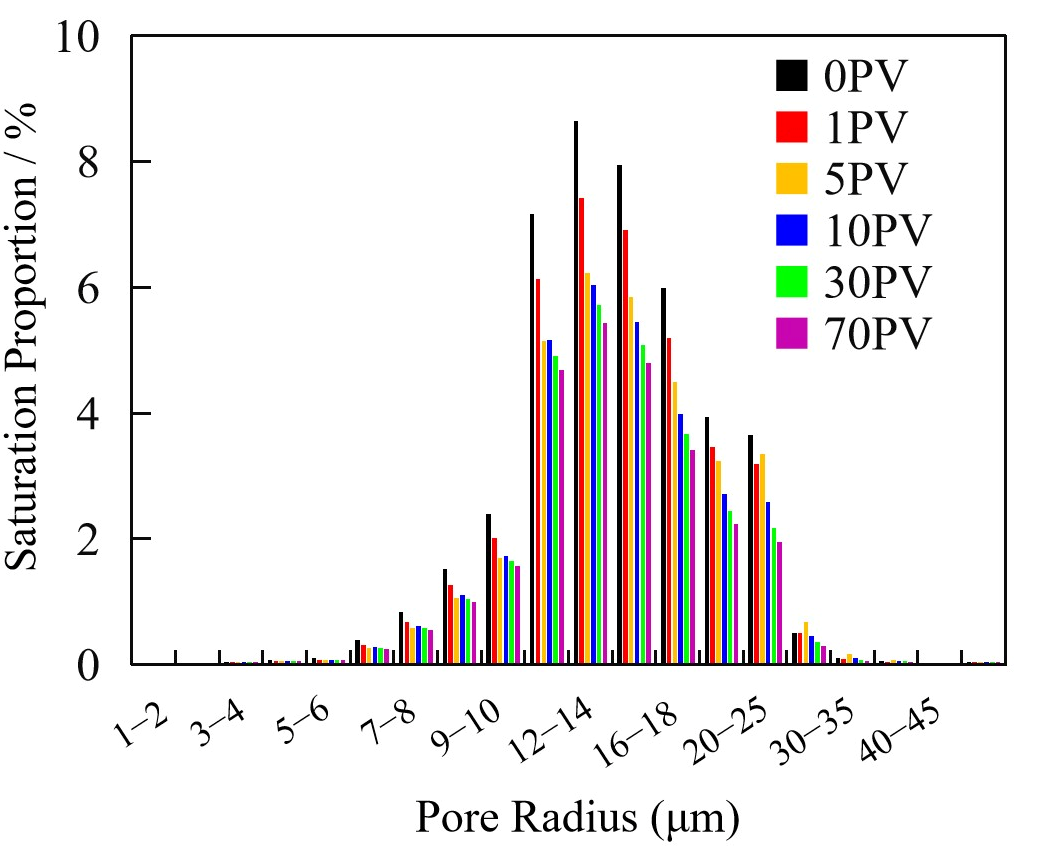
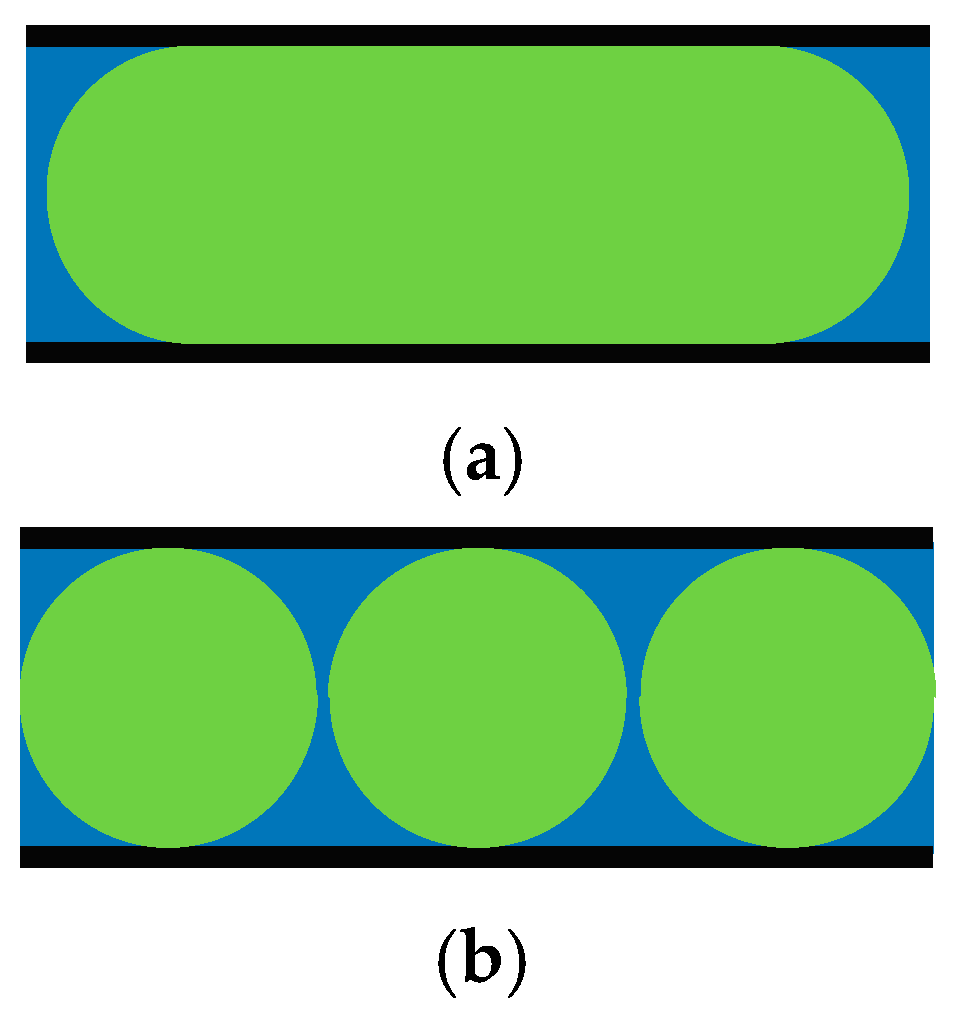
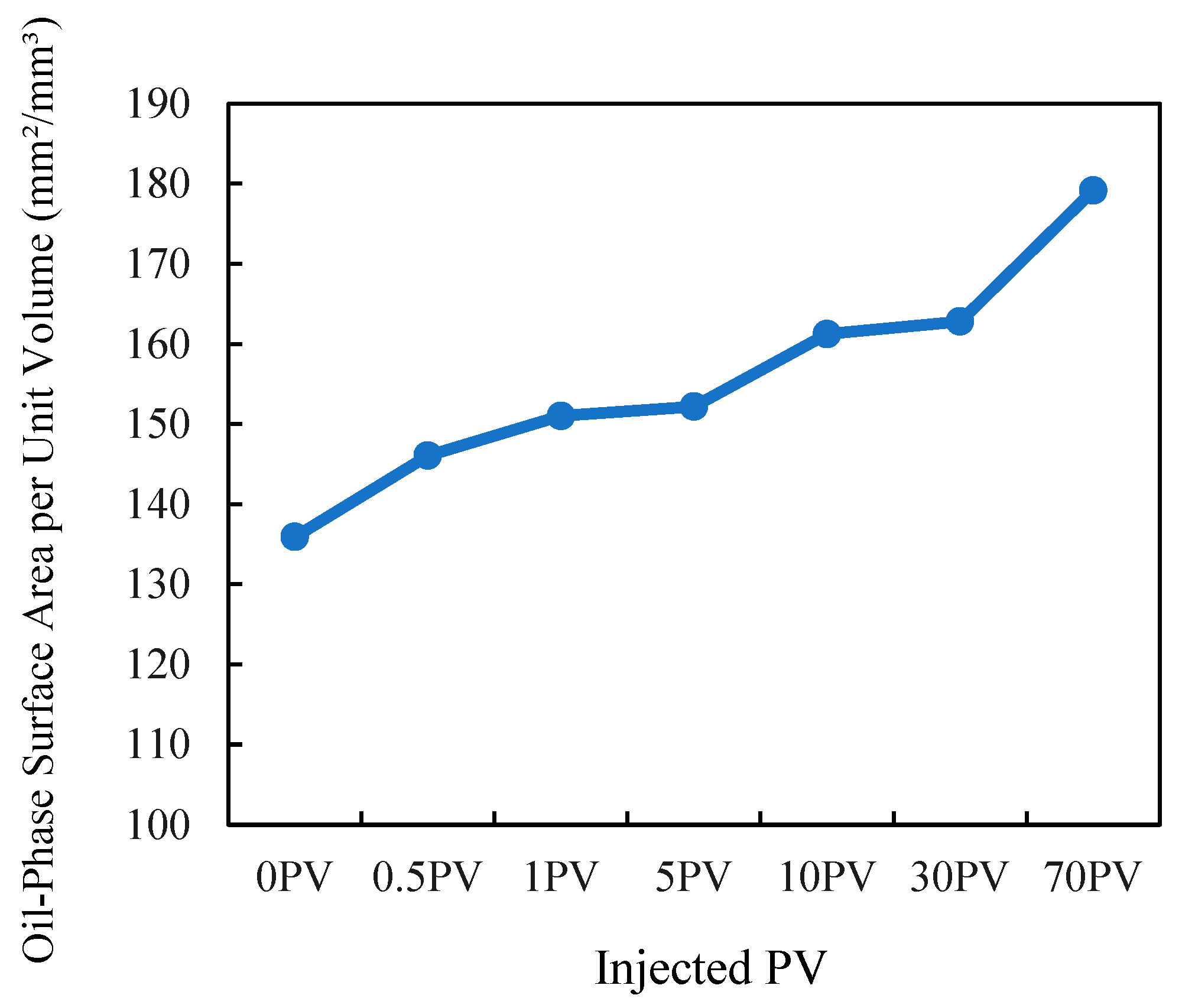
- Using in situ CT scanning and microscopic pore-scale phase-field simulation, the causes and influencing factors of the oil-phase starting pressure gradient at the high water-cut stage were clarified. As water saturation increased, the oil phase gradually changed from a continuous phase to a discontinuous phase, the degree of oil-phase dispersion increased, and the radius of the pores in which the oil phase was trapped became significantly smaller. The greater the injected waterflooding PV, the larger the oil-phase surface area per unit volume; at 70 PV, the surface area per unit oil-phase volume was approximately 1.32 times that under the irreducible-water condition. Under the influence of the Jamin effect, capillary force exerted an increasingly strong control on oil-phase flow, resulting in a pronounced starting pressure gradient of the oil phase during the ultra-high water-cut stage.
- (3)
- Based on the startup mechanism and microscopic causes of multiple oil-phase morphologies, and considering the fractal characteristics of reservoir pore structure, a calculation method for the startup resistance of multiple oil-phase morphologies at different water-cut stages was established, realizing the quantitative characterization of the oil-phase starting pressure gradient at different displacement stages.
Author Contributions
Funding
Data Availability Statement
Conflicts of Interest
Nomenclature
| Le | Actual length of the capillary, m |
| L | Reference length of the capillary, m |
| R | Equivalent diameter of the capillary, m |
| δ | Tortuosity fractal dimension, Dimensionless |
| Tav | Tortuosity, Dimensionless |
| Lm | Characteristic length, μm |
| rav | Average pore radius, μm |
| φ | Porosity, Dimensionless |
| ▽ p(t) | Starting pressure gradient of the oil phase at displacement time t, kPa/m |
| So(t) | Volumetric fraction of the oil phase retained in pores with radius r relative to the total oil volume in all pores, Dimensionless |
| λ | Correction factor for the degree of oil-phase dispersion, Dimensionless |
| a(t) | Specific surface area of oil droplets at time t, μm2 |
| a(0) | Specific surface area of oil droplets at the initial time, μm2 |
| Vo(t) | Total oil-phase volume at time t, μm3 |
| V0(t) | Total oil-phase volume at the initial time, μm3 |
| μs | Coefficient of static friction, Dimensionless |
| ▽ p | Displacement pressure gradient, MPa/m |
References
- Guo, J.; Zheng, X.; Wang, Z. Intelligent Practice and Prospects of Waterflood Development Technology in Daqing Placanticline Oilfield. Pet. Geol. Oilfield Dev. Daqing 2024, 43, 203–213. [Google Scholar]
- Sun, H.; Yang, Y.; Wang, H.; Wang, J.; Wu, G.; Cui, Y.; Yu, Q. Distribution characteristics of remaining oil in extra-high water cut reservoirs and new technologies for enhancing oil recovery. J. China Univ. Pet. (Ed. Nat. Sci.) 2023, 47, 90–102. [Google Scholar]
- Cui, C.; Li, S.; Yang, Y.; Wang, J.; Huang, Y.; Wu, Z. Plane Zonal Regulation Method for Reservoirs in Extra-High Water Cut Stage. Acta Pet. Sin. 2018, 39, 1155–1161. [Google Scholar]
- Yuan, S.; Wang, Q. New Progress and Prospects of Main Technologies for China’s Oilfield Development. Pet. Explor. Dev. 2018, 45, 657–668. [Google Scholar] [CrossRef]
- Ibrahim, A.E.D.S. Investigation of the Mobilization of Residual Oil Using Micromodels. In Proceedings of the The Second International Energy 2030 Conference, Abu Dhabi, United Arab Emirates, 4–5 November 2008. [Google Scholar] [CrossRef]
- Li, G.; Xu, H.; Shi, Z.; Huang, F.; Kong, X. Experimental Study on Microscopic Remaining Oil Distribution Patterns and Improving Waterflood Efficiency. Sci. Technol. Rev. 2008, 26, 69–72. [Google Scholar]
- Liu, T.; Xu, H. Simulation Experiment on Microscopic Remaining Oil Distribution in Fan Delta Reservoirs. J. China Univ. Pet. (Nat. Sci. Ed.) 2011, 35, 20–26. [Google Scholar]
- Sun, T.; Lin, C.; Cui, S.; Zhang, S.; Wang, P.; Wang, L. Characteristics of Microscopic Heterogeneity in Marine Clastic Rock Reservoirs and Their Influence on Remaining Oil Distribution in High Water Cut Stage. J. Cent. S. Univ. (Sci. Technol.) 2013, 44, 3282–3292. [Google Scholar]
- Hou, J.; Qiu, M.; Lu, N.; Qu, Y.; Li, F.; Meng, X.; Shi, X. Study on Microscopic Occurrence State of Remaining Oil in Core Using CT Technology. Acta Pet. Sin. 2014, 35, 319–325. [Google Scholar]
- Gao, W.; Li, Y.; He, S.; Pan, D.; Liu, M.; Guan, C. Classification Method for Remaining Oil Occurrence Morphology Based on Fluorescence Thin Sections. Acta Pet. Sin. 2020, 41, 1406–1415. [Google Scholar]
- Gao, Y.; Xie, X.; Wang, S.; Tang, L.; Geng, Z.; Li, J. Pore-scale experimental investigation of the remaining oil formation in water-wet, mixed-wet and oil-wet sandstone samples. J. Pet. Sci. Eng. 2022, 216, 110790. [Google Scholar] [CrossRef]
- Zhang, Q.; Yang, Y.; Wang, D.; Sun, H.; Zhong, J.; Yao, J.; Lisitsa, V. Correlations of residual oil distribution with pore structure during the water flooding process in sandstone reservoirs. Adv. Geo-Energy Res. 2024, 12, 113–126. [Google Scholar] [CrossRef]
- Zhou, Z.; Zhang, X.; Zhang, Q.; Jia, N.; Han, L.; Zhang, L.; Zhang, L.; Lyu, W. Efficient Method for Enhancing Oil Recovery Based on Superwettability Phenomenon. Pet. Explor. Dev. 2025, 52, 1154–1165. [Google Scholar] [CrossRef]
- Lenormand, R.; Zarcone, C.; Sarr, A. Mechanisms of the displacement of one fluid by another in a network of capillary ducts. J. Fluid. Mech. 1983, 135, 337–353. [Google Scholar] [CrossRef]
- Zhao, B.; MacMinn, C.W.; Juanes, R. Wettability control on multiphase flow in patterned microfluidics. Proc. Natl. Acad. Sci. USA 2016, 113, 10251–10256. [Google Scholar] [CrossRef] [PubMed]
- Holtzman, R.; Juanes, R. Crossover from fingering to fracturing in deformable disordered media. Phys. Rev. E 2010, 82, 046305. [Google Scholar] [CrossRef] [PubMed]
- Yin, D.; Fang, Y.; Xin, Y. Study on Microscopic Mechanism of Changing Displacement Direction in Low-Permeability Reservoirs. Spec. Oil Gas Reserv. 2017, 24, 59–63. [Google Scholar]
- Ding, S.; Jiang, H.; Xi, Y.; Li, J. Microscopic Mechanical Genesis of Remaining Oil and Pore Channel Selection Mechanism in Extra-High Water Cut Stage. J. Liaoning Shihua Univ. 2018, 38, 45–49. [Google Scholar]
- Zhang, L.; Nie, J.; Yu, H. Study on Development Countermeasures of Microscopic Remaining Oil in Extra-High Water Cut Stage. Sino-Glob. Energy 2021, 26, 44–48. [Google Scholar]
- Hu, H. Study on Distribution State and Oil Displacement Efficiency Characterization of Microscopic Remaining Oil in Extra-High Water Cut Stage. J. Guangdong Univ. Petrochem. Technol. 2023, 33, 43–46. [Google Scholar]
- Zhang, D.; Peng, J.; Gu, Y.; Leng, Y. Starting pressure gradient experiment of heavy oil reservoir. Xinjiang Pet. Geol. 2012, 33, 201–204. [Google Scholar]
- Huang, L.; Shi, J.; Yang, L.; Zang, J.; Zhang, L.; Yu, P. Experimental study and analysis of starting pressure gradient in low permeability gas reservoir. Fault Block Oil Gas Field 2016, 23, 610–614. [Google Scholar]
- Zhang, J. Study on Pressure Gradient of Oil-Water Two-Phase Interference and Characterization Method of Inefficient Water Injection; China University of Petroleum (East China): Shandong, China, 2018. [Google Scholar]
- Hu, B.; Chai, G.; Liu, X.; Wen, X.; Gu, Z.; Xie, L.; Han, S.; Su, J. Insights into the Microscopic Oil–Water Flow Characteristics and Displacement Mechanisms during Waterflooding in Sandstone Reservoir Rock Based on Micro-CT Technology: A Pore-Scale Numerical Simulation Study. Materials 2023, 16, 3555. [Google Scholar] [CrossRef] [PubMed]
- Yang, Y.; Cai, S.; Yao, J.; Zhong, J.; Zhang, K.; Song, W.; Zhang, L.; Sun, H.; Lisitsa, V. Pore-scale simulation of remaining oil distribution in 3D porous media affected by wettability and capillarity based on volume of fluid method. Int. J. Multiph. Flow 2021, 143, 103746. [Google Scholar] [CrossRef]


| Length (cm) | Diameter (cm) | Porosity (%) | Permeability (mD) | Crude Oil Viscosity (mPa·s) |
|---|---|---|---|---|
| 5 | 2.5 | 30.5 | 2996.5 | 150 |
Disclaimer/Publisher’s Note: The statements, opinions and data contained in all publications are solely those of the individual author(s) and contributor(s) and not of MDPI and/or the editor(s). MDPI and/or the editor(s) disclaim responsibility for any injury to people or property resulting from any ideas, methods, instructions or products referred to in the content. |
© 2026 by the authors. Licensee MDPI, Basel, Switzerland. This article is an open access article distributed under the terms and conditions of the Creative Commons Attribution (CC BY) license.
Share and Cite
Sun, P.; Liu, Y.; Gao, Y.; Xu, J. Study on the Startup Mechanism and Quantitative Characterization of Multiple Oil-Phase Morphologies During the Ultra-High Water-Cut Stage. Processes 2026, 14, 2047. https://doi.org/10.3390/pr14132047
Sun P, Liu Y, Gao Y, Xu J. Study on the Startup Mechanism and Quantitative Characterization of Multiple Oil-Phase Morphologies During the Ultra-High Water-Cut Stage. Processes. 2026; 14(13):2047. https://doi.org/10.3390/pr14132047
Chicago/Turabian StyleSun, Pengxiao, Yingxian Liu, Yue Gao, and Jianchun Xu. 2026. "Study on the Startup Mechanism and Quantitative Characterization of Multiple Oil-Phase Morphologies During the Ultra-High Water-Cut Stage" Processes 14, no. 13: 2047. https://doi.org/10.3390/pr14132047
APA StyleSun, P., Liu, Y., Gao, Y., & Xu, J. (2026). Study on the Startup Mechanism and Quantitative Characterization of Multiple Oil-Phase Morphologies During the Ultra-High Water-Cut Stage. Processes, 14(13), 2047. https://doi.org/10.3390/pr14132047