1. Introduction
In recent years, interest in products aligned with the “clean label” concept has intensified, evolving from a mere market trend into a consolidated consumer expectation [
1,
2,
3]. In this context, concerns regarding the use of synthetic additives—particularly colorants, which are widely employed to impart or standardize product coloration—have grown significantly. It is widely reported that exposure to these compounds, especially among children, may trigger intolerances and allergic reactions. More recent studies also suggest potential adverse health effects in adults, including suspected carcinogenic properties associated with certain synthetic colorants; however, the evidence remains inconclusive [
4].
In this context, compounds of natural origin have been widely investigated as safer and more sustainable alternatives. Among them, anthocyanins stand out as a class of pigments whose coloration ranges from red to blue and purple [
1]. These compounds represent the largest group of phenolic pigments and the most important class of water-soluble pigments of plant origin. In addition to providing color, anthocyanins exhibit health-promoting effects associated with their antioxidant activity, with reports indicating their role in reducing the risk of coronary diseases, as well as their anti-inflammatory properties and selective cytotoxic activity against tumor cells [
4].
Chemically, anthocyanins are glycosides or acylglycosides of anthocyanidins—flavylium-based structures composed of two aromatic rings linked by a three-carbon oxygen-containing heterocyclic ring. These structural features directly influence their physicochemical properties, behavior, and stability across different matrices [
5].
In this context, the use of natural colorants in the food and cosmetics industry has gained increasing attention due to their important role in product perception and consumer acceptance. In the food industry, color is a fundamental sensory attribute, directly associated with flavor perception as well as with food safety and quality [
6]. The loss of natural coloration during processing and storage, together with the need to enhance product visual appeal, are key factors driving the use of colorants in the food sector [
7].
In parallel, consumer demand has shifted toward products with enhanced safety, biobased composition, and biodegradability, without compromising performance and efficacy. In line with these trends, the cosmetic industry has shown a significant increase in the incorporation of naturally derived ingredients, aligned with the principles of the circular economy. In this context, natural colorants emerge as highly attractive cosmetic ingredients due to their multifunctionality, safety, and sustainability. In addition to providing color, these compounds exhibit biological activities that may confer additional beneficial properties to cosmetic formulations [
8].
Anthocyanins can be extracted from abundant and low-cost raw materials, such as fruit residues and other agro-industrial by-products, which has attracted considerable interest for the production of higher value-added colorants. Anthocyanins have attracted considerable interest for industrial applications, particularly as natural colorants in the food and cosmetic industries and as indicator compounds in active and intelligent packaging systems [
7].
On the other hand, the solvents traditionally used for the extraction of these compounds are of petrochemical origin, volatile, environmentally harmful, and generate residues associated with toxicity [
9,
10,
11]. In this context, natural deep eutectic solvents (NADES) have emerged as promising alternatives [
1]. These solvents consist of mixtures of salts, amino acids, organic acids, polyols, and sugars capable of forming hydrogen bonds, resulting in melting points significantly lower than those of their individual components. NADES offer advantages such as low toxicity, biodegradability, and high extraction efficiency [
12].
The use of sorbitol, citric acid, and glycine as constituents of NADES is considered a scientifically relevant and sustainable approach for the extraction of phenolic compounds from cereals and legumes. These primary metabolites, such as sorbitol (a polyalcohol), citric acid (an organic acid), and glycine (an amino acid), are combined to form eutectic mixtures with tunable polarity and enhanced hydrogen-bonding capacity, which are essential for the efficient solubilization of phenolic compounds with varying chemical structures [
13,
14,
15]. Sorbitol is employed to modulate viscosity and to facilitate interactions with the hydroxyl groups present in phenolic molecules. Citric acid is used to increase the polarity of the solvent system, thereby improving the extraction of hydrophilic phenolic species. Glycine provides zwitterionic properties, which enhance hydrogen-bonding interactions and contribute to the disruption of plant cell wall structures, promoting the release of bound phenolics [
16].
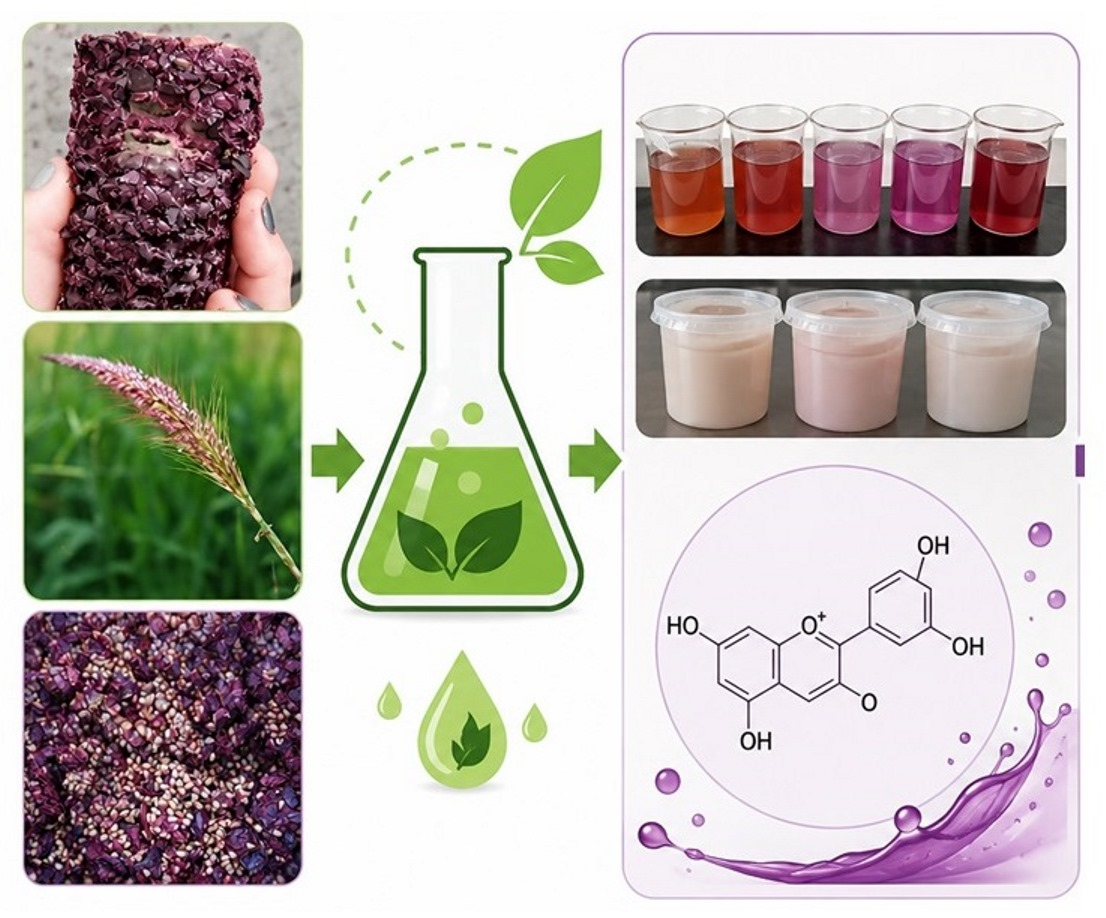
Despite these advances, limitations remain regarding the optimization of extraction conditions and the stability of anthocyanins, particularly for their application in food and cosmetic matrices. Furthermore, studies addressing anthocyanin extraction from agro-industrial by-products using NADES and their subsequent application in food and cosmetic matrices remain scarce. Therefore, the present study aimed to evaluate the efficiency of NADES in the extraction of anthocyanins from molasses grass (Melinis minutiflora), black corn cobs (Zea mays L.), variety TO002, and grape skins (Vitis vinifera), residues from the winemaking process, as well as their application in food and cosmetic matrices.
2. Materials and Methods
Black corn cobs (Zea mays L.) variety TO002 were supplied by the Brazilian Agricultural Research Corporation (Embrapa, Brasília, Brazil). This genotype corresponds to an accession from the Embrapa Maize and Sorghum Germplasm Bank. The material was cultivated during the 2024 harvest season at the Embrapa Maize and Sorghum Experimental Farm (Sete Lagoas, Minas Gerais, Brazil). The corn cobs were fractionated into smaller pieces and ground in a ball mill (TE-350, Tecnal, Piracicaba, Brazil) until a fine powder was obtained.
Grape skins (Vitis vinifera L.), variety Syrah, a by-product of the 2024 winemaking process, were provided by the Quinta da Matriculata winery (Diamantina, Minas Gerais, Brazil). For anthocyanins extraction, the grapes skins were fragmented into smaller pieces. Molasses grass (Melinis minutiflora P. Beauv., Poaceae) was collected in Diamantina (Minas Gerais, Brazil) (18°12′14.89′′ S; 43°34′51.73′′ W; 1386 m altitude). The inflorescences were manually separated from the stems. All raw materials were packed in plastic bags and stored under freezing conditions until use.
The raw materials were subjected to extraction of the anthocyanin fraction using a mixture of natural deep eutectic solvents (NADES) composed of sorbitol (3 M), citric acid (60 mM), and glycine (300 mM), according to the experimental design described below.
2.1. Experimental Design
To determine the optimal proportion of components in natural deep eutectic solvents (NADES) for the extraction of anthocyanins from molasses grass, grape skins, and black corn cobs, a Response Surface Methodology (RSM) approach was employed. A constrained Simplex-Centroid Mixture Design was applied, following the methodology described by Rodrigues and Iemma [
17]. The solvent systems evaluated in this study were formulated using combinations of sorbitol, citric acid, and glycine, following compositions and preparation procedures previously described in the literature for natural deep eutectic solvents (NADES). Sorbitol (3 M) was dissolved in water at 80 °C, whereas citric acid (60 mM) and glycine (300 mM) solutions were prepared separately at room temperature. Each stock solution was prepared individually, and the mixtures were combined immediately before extraction according to the proportions established for each experimental assay. These components are known to establish extensive hydrogen-bonding networks, leading to solvent systems with tunable physicochemical properties and enhanced extraction capacity. However, no specific physicochemical characterization techniques, such as Fourier-transform infrared spectroscopy (FTIR), differential scanning calorimetry (DSC), or nuclear magnetic resonance (NMR), were performed to directly confirm the formation of the eutectic structure. Therefore, the present work focused on the extraction performance and technological application of these NADES-based solvent systems, while further studies are required to provide direct evidence of the intermolecular interactions involved and to elucidate the physicochemical characteristics associated with NADES formation.
2.1.1. Anthocyanin Extraction
For each of the three raw materials studied, an experimental design was carried out under the same conditions described in
Table 1. For each assay, 0.1 g of the anthocyanin source was added to Eppendorf tubes containing 1 mL of the solvent solution. Extraction was performed using low-frequency ultrasound-assisted extraction (Cristófoli, Campo Mourão, Brazil) at 40 kHz and 100 W for 30 min, followed by centrifugation at 9600 RCF for 15 min at 4 °C in an SL-5GR centrifuge (Spinlab, Ribeirão Preto, Brazil). The supernatant was collected and adjusted to a final volume of 2 mL.
2.1.2. Conventional Extraction
For each raw material, a standard extraction was also performed using a solution containing water, methanol, and formic acid (48.5:50:1.5, v/v/v) for comparison purposes.
2.1.3. Anthocyanin Quantification and Optimization of NADES Composition
As the response (dependent variable) for the experimental design, anthocyanin quantification was performed using the single pH method, according to the methodology described by Fuleki and Francis [
18], aiming to optimize the solvent mixture for improved anthocyanin extraction. The data were analyzed using Response Surface Methodology (R
2 ≥ 0.80;
p ≤ 0.10).
2.1.4. Spectral Characterization of Extracts
All extracts were characterized in terms of absorbance across the wavelength range of 300 to 1100 nm, encompassing the near-ultraviolet to the near-infrared regions, with the visible light region (400 to 700 nm) being of primary interest. A scanning spectrophotometer (Agilent Technologies Cary 60 UV-Vis, Santa Clara, CA, USA) was employed for this purpose.
After validation, the optimal concentrations of each solvent component were determined for each raw material studied, resulting in an optimized extract for each source. The samples were subsequently frozen in a DFN41 freezer (Electrolux, Curitiba, Brazil) at −18 °C for 96 h. After freezing, freeze-drying was performed using an Alpha 3–4 LSC freeze dryer (Martin Christ, Osterode am Harz, Germany) for 48 h at 150 mmHg. The freeze-dried samples were then stored for 24 h in sealed glass containers inside a desiccator, protected from light and maintained at 20 °C. After this storage period, the samples were analyzed for total anthocyanin content, proanthocyanidins, total phenolic compounds, total flavonoids, and antioxidant capacity.
The content of phenolic compounds was determined using the Folin–Ciocalteu method, as described by Nascimento et al. [
19]. The results were expressed in mg of gallic acid per 100 g of freeze-dried extract.
2.1.5. Scanning Electron Microscopy (SEM)
The lyophilized colorants were further subjected to scanning electron microscopy (SEM) analysis. The samples were mounted on sample holders (stubs) using double-sided conductive carbon tape (TED PELLA). Subsequently, the set was coated with gold using a plasma sputter coater (Sputter Coater Q150R ES, Quorum Technologies, London, UK). Surface morphology was then examined using a scanning electron microscope (HITACHI, model TM-3000, Tokyo, Japan).
2.2. Determination of the AGREE Index (Analytical GREEnness Metric Approach)
The environmental impact associated with the anthocyanin extraction process was evaluated using the AGREE index, according to the methodology proposed by Pena-Pereira et al. [
20]. This metric is based on the 12 principles of Green Analytical Chemistry, which are assigned weighted scores according to their relevance to the analytical method under study, with results expressed on a unified scale ranging from 0 to 1.
The assessment considered two extraction systems: a conventional solvent system composed of water, methanol, and formic acid, and a NADES-based system composed of sorbitol, citric acid, and glycine. The final score was determined based on the relative importance of the principles applicable to the specific context of the extraction process.
2.3. Application of Dyes
The dyes obtained from the optimized extraction of molasses grass, grape skins and black corn cob using NADES were applied to two distinct matrices: a food matrix (yogurt) and a cosmetic matrix (moisturizing gel).
2.3.1. Yogurt Preparation
For the production of stirred-type yogurt, milk powder was added to UHT milk until the non-fat solids content reached 10%. Subsequently, sucrose and a stabilizer were incorporated, and the mixture was subjected to heat treatment in a water bath at 80 °C for 30 min under constant agitation. The mixture was then cooled to 42 °C for inoculation with a lactic acid culture (Streptococcus salivarius subsp. thermophilus and Lactobacillus delbrueckii subsp. bulgaricus), followed by incubation in a controlled chamber at 42 °C until coagulation occurred (pH 4.6). After completion of the fermentation process, the system was cooled to 20 °C, and the curd was disrupted, followed by the addition of 6 g of freeze-dried dye per 250 g of yogurt.
The obtained yogurts were characterized in terms of color, pH, and titratable acidity on the day of processing. During storage, color changes were evaluated on days 3, 6, 9, 12, and 15.
pH and Titratable Acidity Analysis
pH was measured using a potentiometer (mPA210, Tecnopon, Piracicaba, Brazil), and titratable acidity was determined according to AOAC Method 942.15b (2019) [
21]. All analyses were performed in triplicate.
Instrumental Color Analysis
Instrumental color was determined using a Mini Scan CM5 spectrophotometer (Konica Minolta, Tokyo, Japan), employing the CIELab color system under D65 illuminant, 10° observer angle, and RSIN calibration mode (specular reflectance included). The parameters L*, a*, and b* were measured in triplicate.
Color variation during storage was calculated using Equation (1):
where Δ
E* represents total color variation; Δ
L* corresponds to luminosity variation; Δ
a* corresponds to the red–green coordinate variation; and Δ
b* corresponds to the yellow–blue coordinate variation.
2.4. Moisturizing Gel Preparation
Non-ionic aqueous gel formulations were adapted from the Brazilian National Formulary of the Brazilian Pharmacopoeia (2nd edition, Revision 02) [
22]. The gel base was composed of distilled water as the main vehicle, vegetable glycerin as a humectant agent, and carbomer (Carbopol
® 940, Dinâmica, Indaiatuba, Brazil) as the gelling polymer, used at concentrations of 0.5% and 0.75% in order to evaluate the influence of polymer concentration on the structure and stability of the semisolid system.
The carbomer was dispersed in a small portion of distilled water under moderate stirring. Subsequently, vegetable glycerin was added, and the system was stirred until complete polymer hydration (~15 min, room temperature). Distilled water was gradually incorporated up to 75% of the final formulation. Neutralization of the polymer was carried out by the slow addition of triethanolamine (TEA) (0.5%) under constant agitation until gel formation (pH ~6.0–7.0). The pH was then adjusted using citric acid solution (dropwise) to reach the range of 4.0–4.5.
Additional excipients were incorporated into the gels, including disodium EDTA as a chelating agent, vitamin E (tocopherol) (0.5%) as an antioxidant, and Aloe vera extract (5%) as a functional ingredient. After obtaining the gel base, freeze-dried anthocyanin-containing extracts derived from the different plant raw materials were individually incorporated into the formulation at 3.0% (w/w), resulting in three distinct pigmented systems for each carbomer concentration.
The formulations were stored in properly sealed opaque plastic containers at room temperature until the completion of all analyses.
2.5. Statistical Analysis
The data from the simplex-centroid mixture design were analyzed using Response Surface Methodology (RSM), following Equation (2) as described by Rodrigues and Iemma [
17], implemented in Statistica software, version 7.0 (StatSoft, Inc., Tulsa, OK, USA) . The regression coefficients and analysis of variance (ANOVA) were evaluated at a significance level of 10%. The optimization of the extraction solution was performed using Design-Expert 6.0 software, based on the methodology proposed by Derringer and Suich (1980) [
23]. Quantitative data were compared using Student’s
t-test (
p < 0.05).
where
Y is the dependent variable; β
i and β
ij represent the coefficients for the pseudocomponents and their binary and ternary interactions, respectively;
i and
j denote the independent variables in coded form; and ε is the experimental error.
3. Results
3.1. Obtaining the Extracts
The anthocyanin concentrations obtained from the assays conducted according to the mixture design are presented in
Table 2. Anthocyanin concentrations in the extracts ranged from 4.26 to 33.25 mg/100 g for purple corn cobs, from 6.95 to 11.29 mg/100 g for grape skins, and from 4.72 to 8.47 mg/100 g for molasses grass.
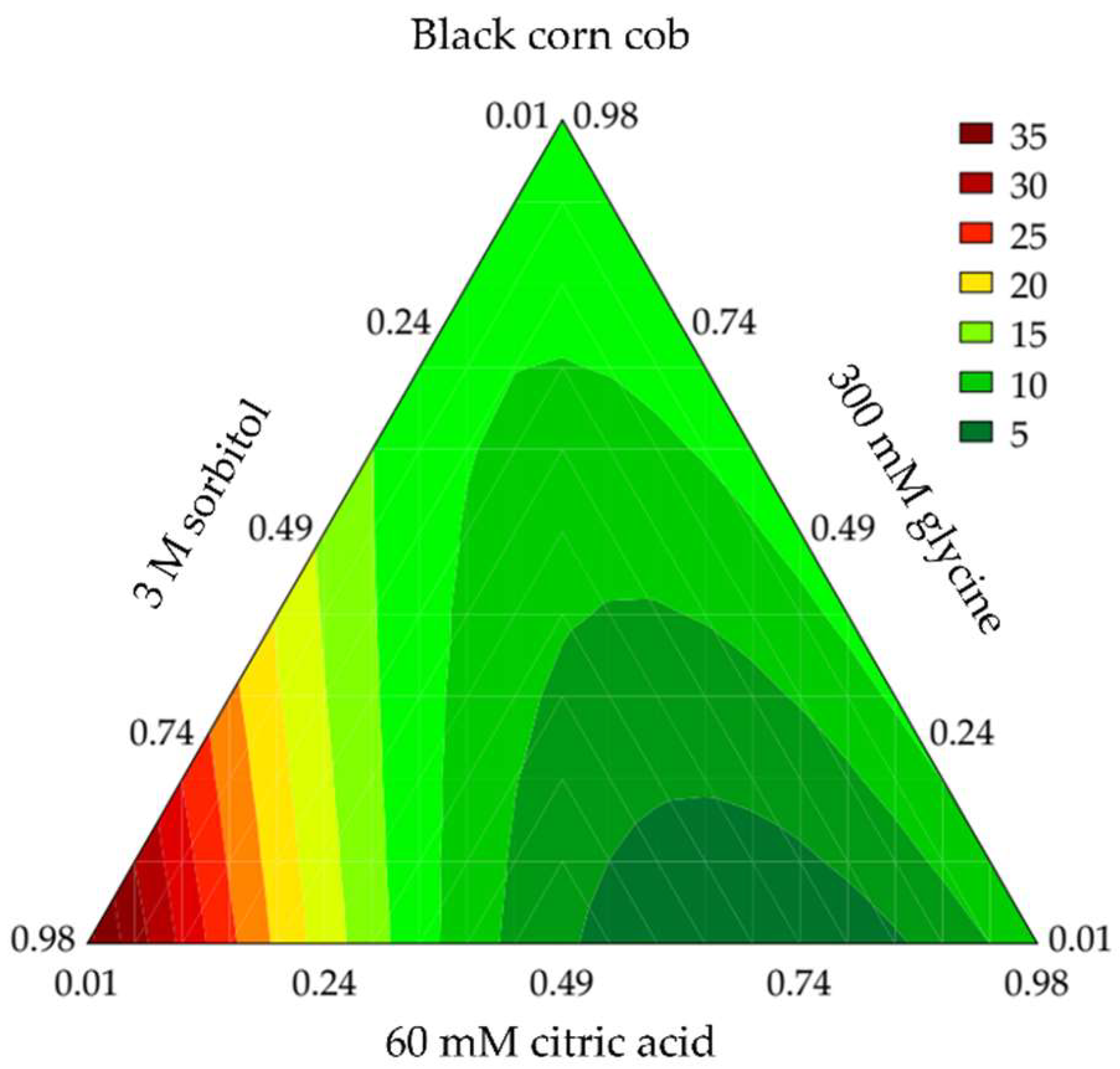
For black corn cobs, sorbitol exhibited the greatest effect on anthocyanin extraction (
β1 = 35.76;
p < 0.001), followed by glycine (
β2 = 12.45;
p = 0.018) and citric acid (
β3 = 9.46;
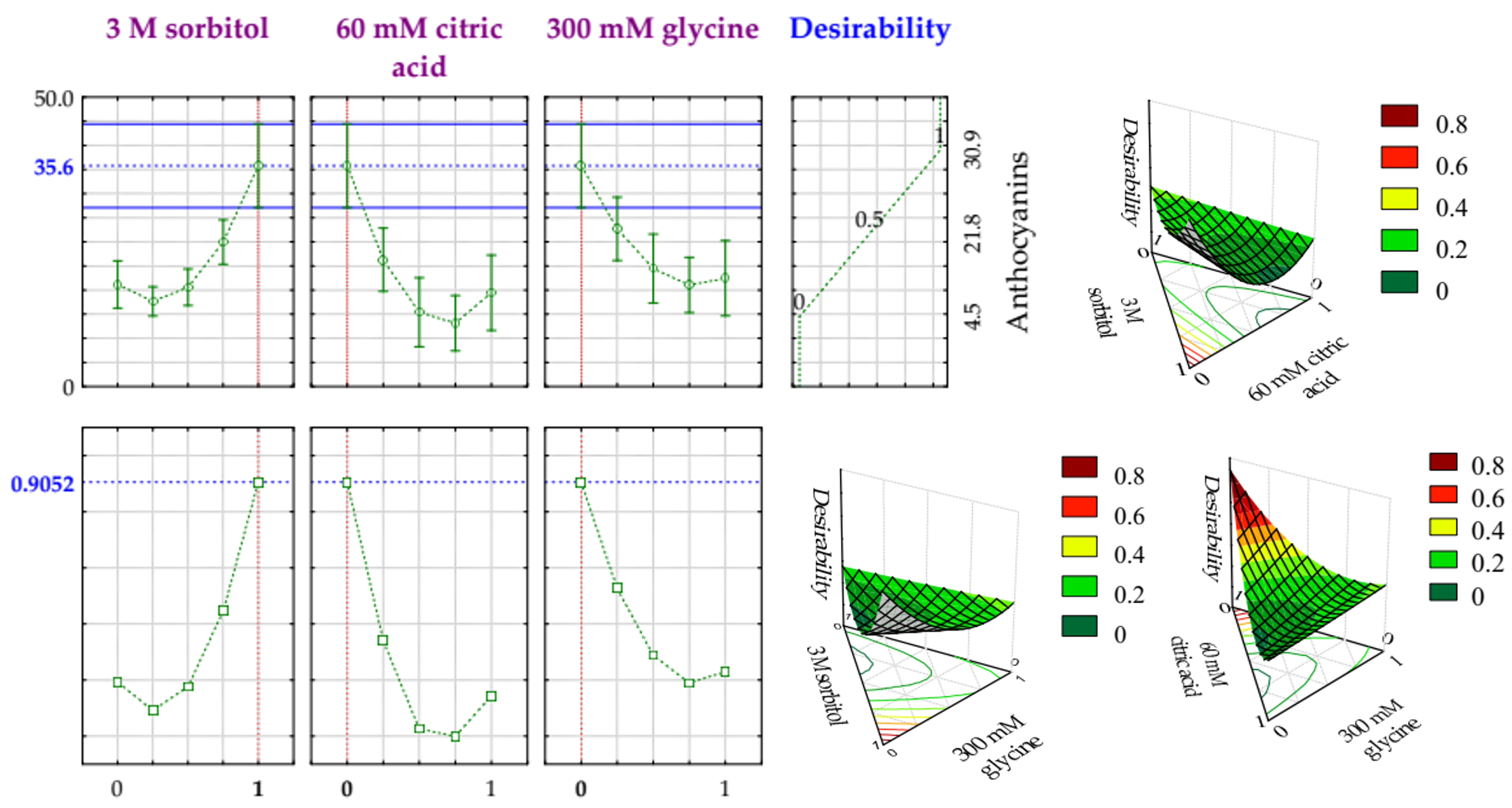
p = 0.054). (
Figure 1). The binary interaction between sorbitol and citric acid (
β12 = −68.78;
p = 0.010) and between sorbitol and glycine (
β13 = −38.56;
p = 0.100) showed antagonistic effects, indicating that the polyol was indeed the most effective component for anthocyanin extraction, as described by the mathematical model represented in Equation (3).
where TA−BCC are the total anthocyanins from black corn cob expressed as mg of cyanidin-3-
O-glucoside·100/g of sample in dry weight; x
1, x
2 and x
3 correspond to the coded levels of 3M sorbitol, 60 mM citric acid, and 300 mM glycine, respectively.
The mathematical model was considered predictive (
p = 0.007, R
2 = 0.8005; F
calc/F
tab = 8.02). The optimized condition consisted of 98% sorbitol (3 M), 1% citric acid (60 mM), and 1% glycine (300 mM) (desirability = 0.9052), resulting in a predicted value of 33.25 mg of cyanidin-3-
O-glucoside per 100 g of sample (d.b.), corresponding to assay 1 of the experimental design (
Figure 2).
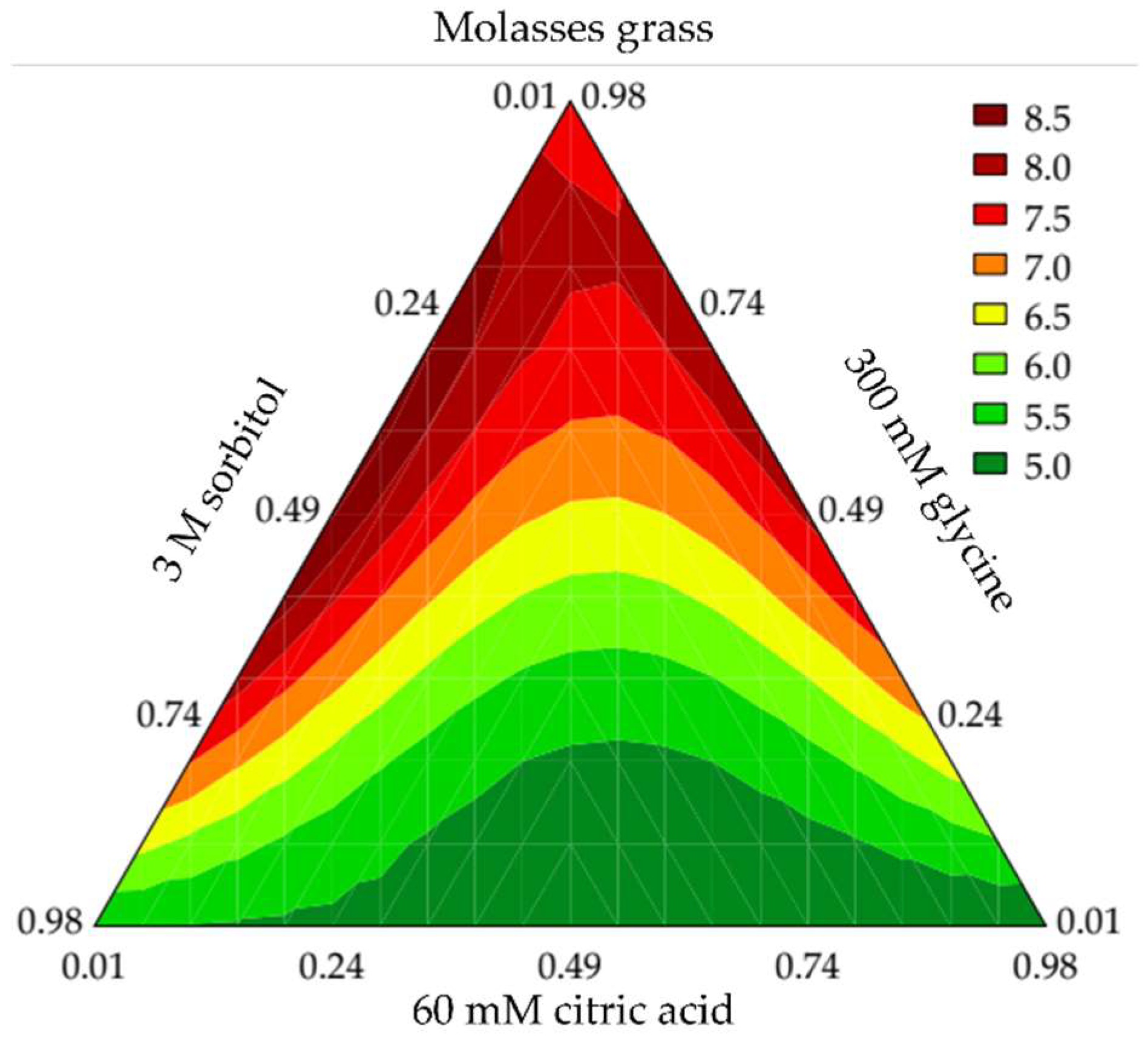
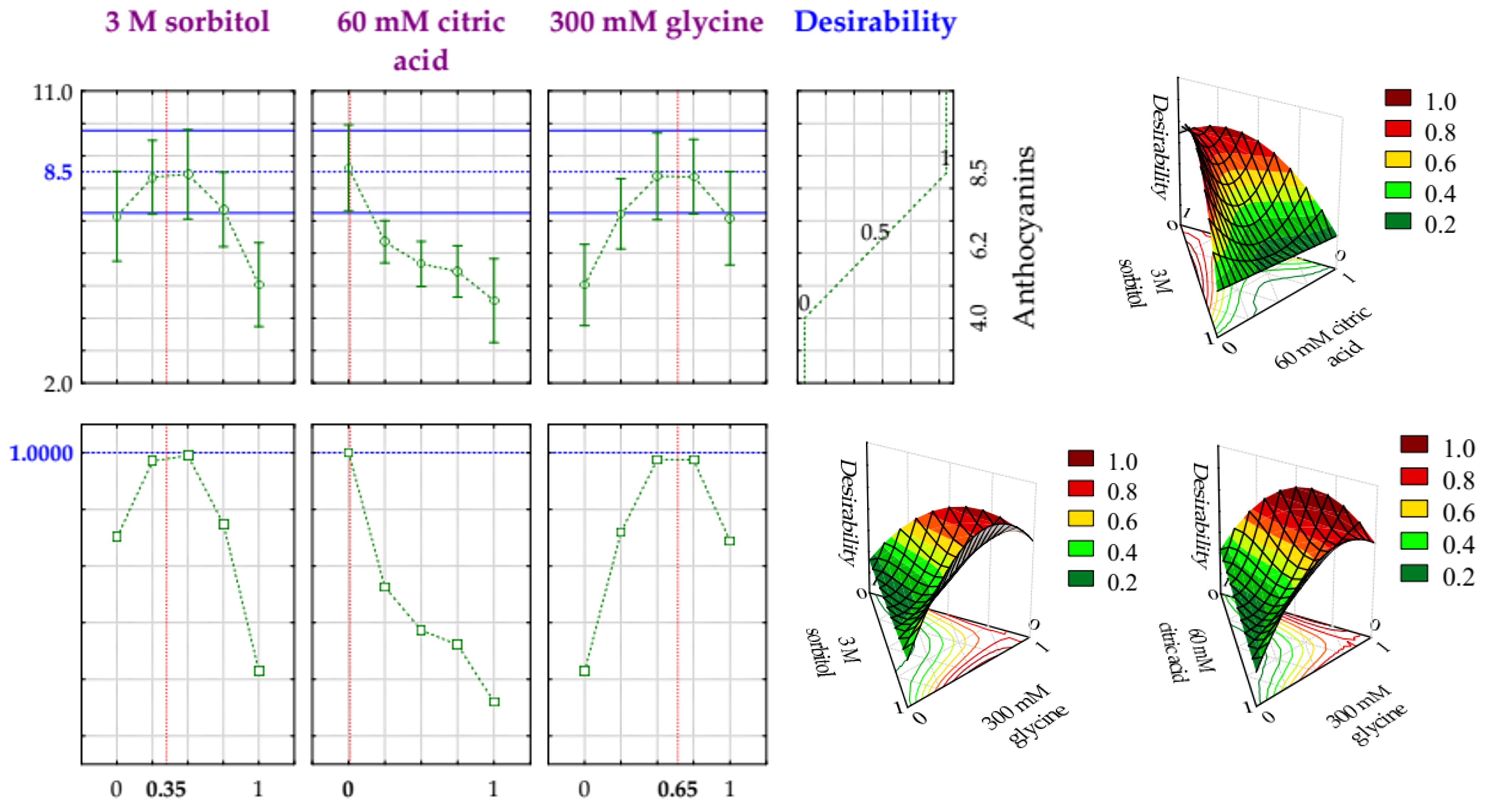
In contrast, the optimal conditions for the extraction of total polymeric anthocyanins from molasses grass were obtained at the lowest citric acid concentration (60 mM), combined with coded levels of 0.35 for sorbitol (3 M) and 0.65 for glycine (300 mM) (
Figure 3). The descriptive mathematical model is represented by Equation (4).
where TA − MM are the total anthocyanins from molasses grass expressed as mg of cyanidin-3-
O-glycoside/100 g of sample in dry weight; x
1, x
2 and x
3 correspond to the coded levels of sorbitol, 60 mM citric acid, and 300 mM glycine, respectively.
The mathematical model was considered predictive (
p < 0.001). The optimal extraction solution for anthocyanins consisted of 43.7% sorbitol, 1.0% citric acid, and 55.33% glycine. The predicted anthocyanin concentration under these conditions was 8.5 mg cyanidin-3-
O-glucoside·100 g
−1, achieving a maximum desirability (D = 1.0) (
Figure 4).
For grape skin assay, the mathematical model did not provide a satisfactory fit to the experimental data, as indicated by the lack of statistical significance of the regression and the poor predictive performance of the model. The inability to obtain statistically significant models for the formulations containing grape pomace suggests that the experimental domain defined by the simplex-centroid mixture design was insufficient to adequately describe the behavior of the evaluated responses for this specific matrix. The compositional characteristics of grape pomace, particularly its high contents of dietary fiber and phenolic compounds, may promote more complex interactions among the mixture components, resulting in response patterns that were not captured by the fitted models. Therefore, the experimental region investigated may not have encompassed the most suitable proportions for optimization, indicating the need to explore other regions of the mixture space and, potentially, to employ higher-order models in future studies. Consequently, the results obtained for grape pomace formulations should be interpreted with caution. Due to the absence of a valid predictive model, the simplex-centroid mixture design could not be reliably applied for optimization purposes. Therefore, the extraction condition corresponding to the highest experimentally observed response was selected as the most appropriate formulation for this matrix.
3.2. Characterization of Anthocyanin Extracts
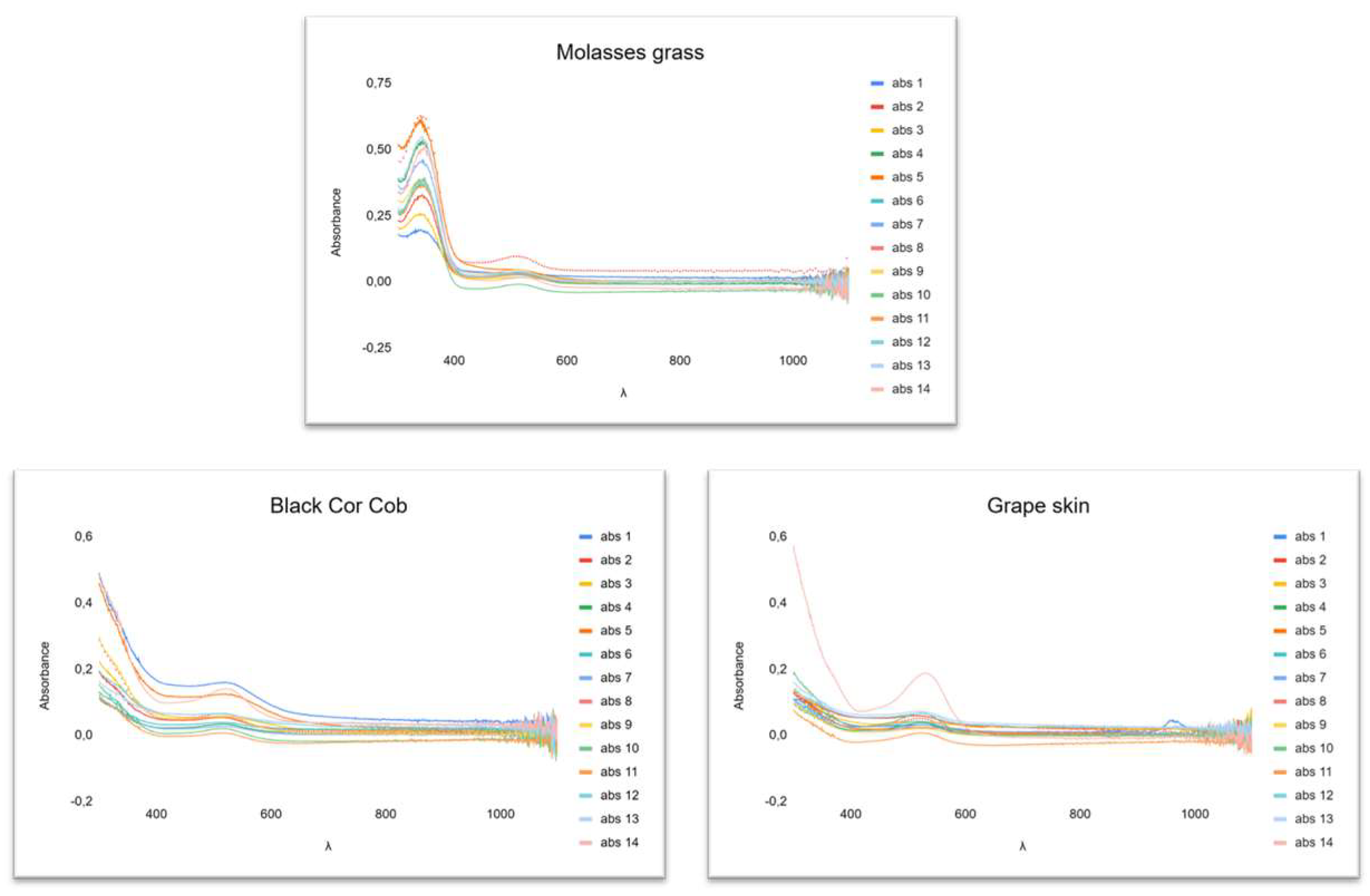
The spectral scanning profiles of the obtained extracts for all raw materials are presented in
Figure 5.
The obtained extracts exhibited absorption peaks at wavelengths close to 500 nm. Specifically, extracts from molasses grass showed maximum absorbance at 505 nm, black corn cob extracts at 513 nm, and grape skin extracts at 522 nm.
Grape skins were the only raw material for which the conventional extraction method, using methanol and formic acid, demonstrated superior quantitative performance in anthocyanin recovery. In contrast, for molasses grass, the highest extraction efficiency was observed in assay 8, which presented a higher proportion of citric acid, whereas for corn cobs, the best performance was achieved in assay 1, composed exclusively of sorbitol.
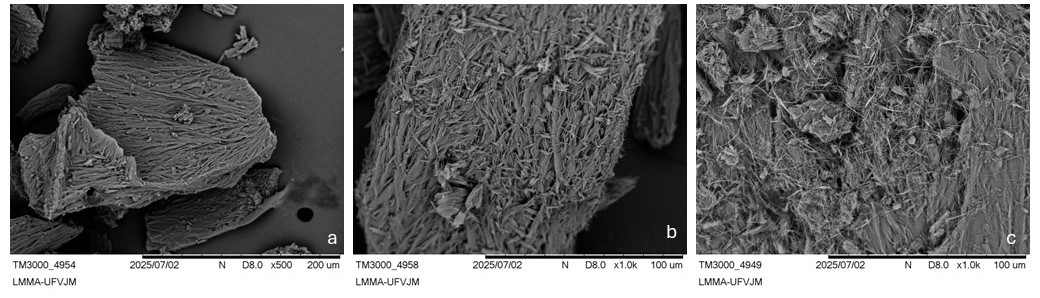
In
Figure 6, the freeze-dried extracts are shown as observed by scanning electron microscopy. Scanning electron microscopy (SEM) images of the freeze-dried extracts revealed distinct microstructural features depending on the composition of the system. Sample (a) exhibited a more organized and lamellar structure, suggesting the formation of a homogeneous solid matrix during freezing and sublimation. Sample (b) showed an intermediate morphology with increased roughness and partial structural collapse, indicating heterogeneity in the system. In contrast, sample (c) presented a highly irregular and amorphous structure, typical of systems with poor matrix-forming ability, such as those rich in low molecular weight compounds. These differences can be attributed to the composition of the NADES and their intermolecular interactions, which influence the formation of glassy structures, hygroscopicity, and the physical stability of the freeze-dried extracts.
The results demonstrate the ability of NADES to extract not only anthocyanins but also total phenolic compounds and their different fractions (
Table 3). Although the optimized extract for black corn cobs was efficient in the extraction of anthocyanins, higher concentrations of total phenolic compounds were obtained for molasses grass, suggesting that the composition of the natural deep eutectic solvent showed greater affinity for phenolic compounds with broader structural diversity present in this matrix. A trend proportionally also observed for grape skins.
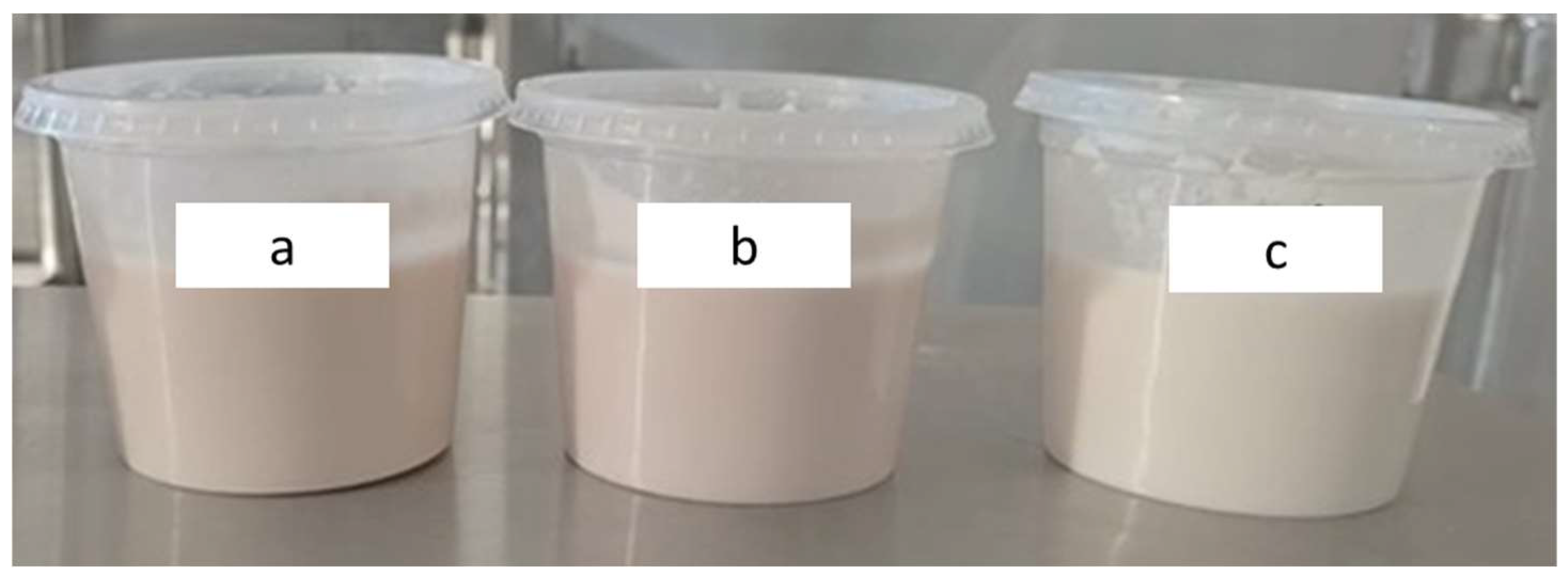
The results obtained for the application of colorants from black corn cobs, molasses grass, and grape skins can be observed in
Figure 7 and
Table 4.
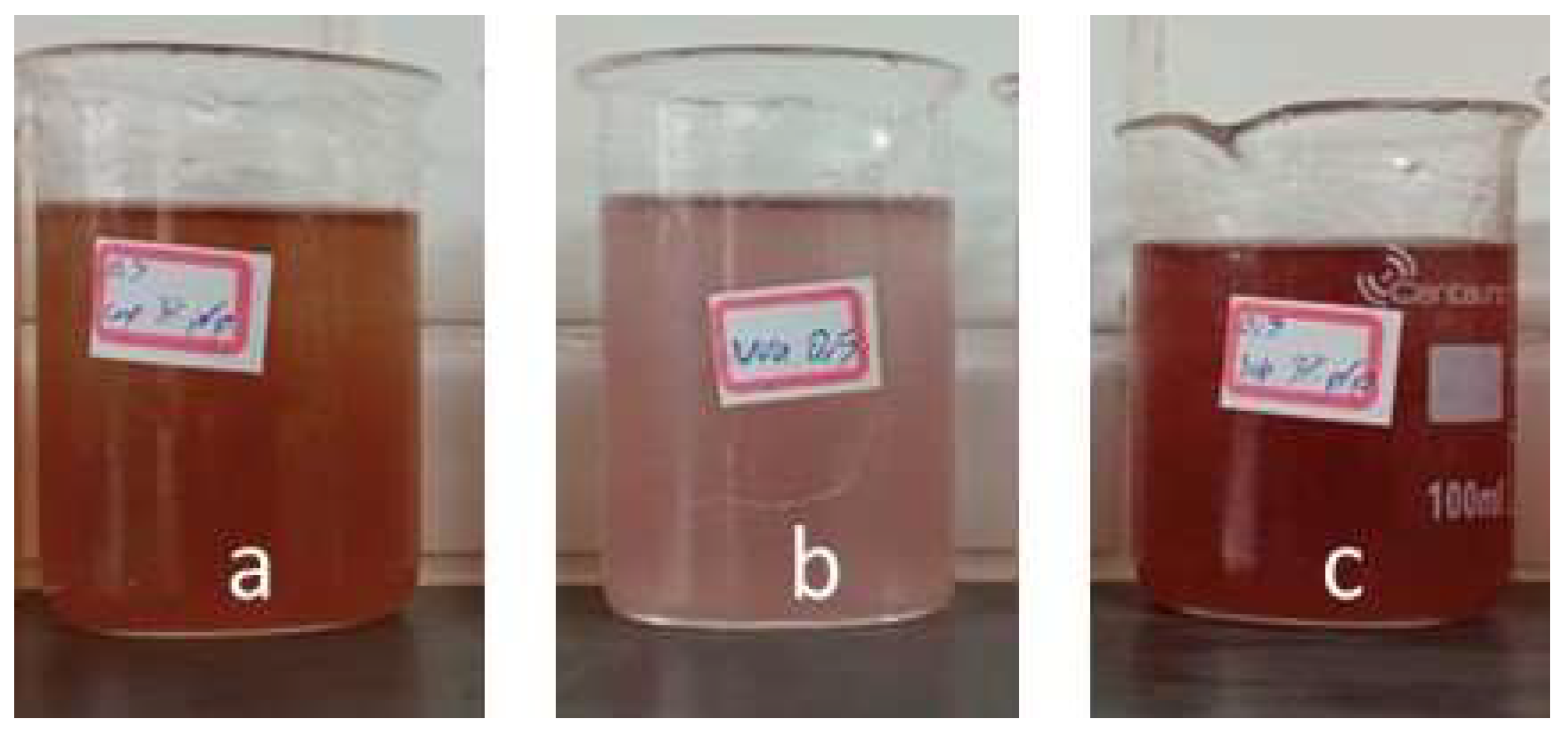
The moisturizing gels supplemented with the extracted pigments are shown in
Figure 8 and their responses in the color analyses are presented in
Table 5.
The gel-cream formulations exhibited a homogeneous appearance and uniform coloration. Furthermore, after the incorporation of freeze-dried anthocyanins, the formulations showed no phase separation, indicating proper formation of the semisolid matrix and good dispersion of the natural pigments. Throughout the storage period, the gel base demonstrated macroscopic stability, with no visible changes in texture or homogeneity.
Colorimetric characterization revealed differences among the formulations as a function of the anthocyanin source. Gels containing pigments from grape skins exhibited luminosity (L*) values comparable to those of the other formulations, along with lower a* values and negative b* values, indicating hues closer to purple-blue. In contrast, formulations containing extracts from black corn cobs and molasses grass showed positive a* and b* values, associated with more intense coloration and a tendency toward reddish-brown tones, possibly due to the anthocyanin composition of each matrix.
3.3. Determination of the AGREE Index (Analytical Greenness Metric Approach)
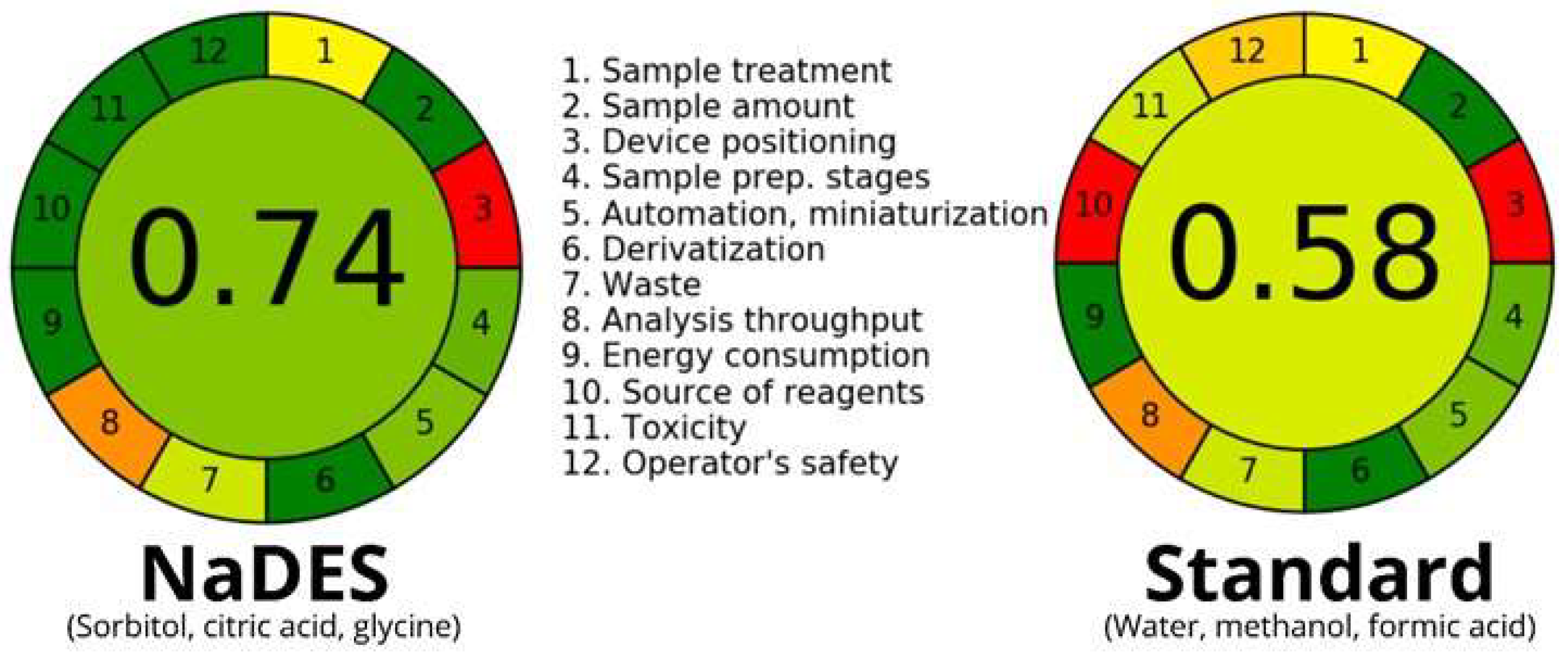
The green analytical chemistry assessment of the anthocyanin extraction method, performed using the AGREE metric, demonstrated a significant difference between the NADES-based method (score = 0.73) and the conventional method, which consisted of water, methanol, and formic acid (score = 0.58).
As observed in
Figure 9, the use of bio-based compounds, such as sorbitol, citric acid, and glycine, resulted in maximum scores for the criteria related to reagent origin and toxicity. Additionally, both methods exhibited similar performance with respect to sample preparation efficiency criteria, including the use of a low sample mass (0.1 g), a reduced number of preparation steps (ultrasound-assisted extraction, centrifugation, and volume adjustment), and low waste generation (approximately 2 mL per analysis).
Both methods also showed moderate energy consumption (~0.1 kWh per analysis) and limited performance in the multi-analyte analysis criterion, as the determination was restricted to total anthocyanins. Furthermore, both approaches were classified as off-line methods, requiring preliminary sample preparation steps.
Scores—sample treatment (NaDES/Standard: 0.48); sample amount (NaDES/Standard: 1.0); device positioning (NaDES/Standard: 0.0); sample rep. stages (NaDES/Standard: 0.8); automation, miniaturization (NaDES/Standard: 0.75); derivatization (NaDES/Standard: 1.0); waste (NaDES/Standard: 0.6); analysis throughput (NaDES/Standard: 0.29); energy consumption (NaDES/Standard: 1.0); source of reagents (NaDES: 1.0, Standard: 0.0); toxicity (NaDES: 1.0, Standard: 0.59); operator’s safety (NaDES: 1.0, Standard: 0.4). Source: Agree—Analytical Greenness Calculator.
4. Discussion
4.1. Characterization of Anthocyanin Extracts
Anthocyanins present in each raw material exhibit distinct structural characteristics, including the nature of the anthocyanidin (aglycone) and the degree of glycosylation, methylation, and acylation. Consequently, there is a wide diversity of anthocyanins in nature, differing in the number of hydroxyl groups as well as in the type and number of sugar moieties attached. Although more than 500 different anthocyanins and 23 anthocyanidins have been identified, six anthocyanidins are the most prevalent: cyanidin (≈50% occurrence in nature), delphinidin (12%), pelargonidin (12%), peonidin (12%), petunidin (7%), and malvidin (7%). The most widespread glycosidic derivatives in nature are 3-monosides, 3-biosides, and 3,5- and 3,7-diglycosides. Among these, 3-glycosylated derivatives are approximately 2.5 times more frequent than 3,5-diglycosides, with cyanidin-3-glucoside (Cy-3-glucoside) being the most abundant anthocyanin [
18,
20].
Glycosylation significantly influences the polarity and molecular size of anthocyanidins, increasing their solubility and stability due to the formation of intramolecular hydrogen-bonding networks [
24,
25,
26]. As a result, anthocyanins from different sources exhibit varying degrees of polarity and, consequently, different solubility behaviors depending on the composition of the NADES systems evaluated in each assay [
27].
However, extraction yield is not solely determined by solubility in the solvent system; it is also strongly influenced by the solvent’s ability to penetrate the solid matrix. In this context, the recovery efficiency of a target compound depends on several factors, including solvent viscosity, the morphology and cellular structure of the plant material, and the diffusion of the solute within the solvent phase. These aspects help explain the differences observed in the extraction efficiencies of the NADES systems studied for each anthocyanin-containing matrix [
18].
Molecular differences among anthocyanins also affect their wavelengths of maximum absorbance. As reported in the literature, anthocyanidins exhibit maximum absorbance in the visible region between 520 and 546 nm, depending on their hydroxylation pattern, with pelargonidin absorbing near 520 nm and delphinidin derivatives near 540–546 nm. Additionally, copigmentation phenomena can shift these absorption wavelengths. A bathochromic effect results in a shift toward longer wavelengths (red shift), whereas a hypsochromic effect corresponds to a shift toward shorter wavelengths (higher energy), leading to colors closer to yellow or orange [
20].
The black corn cob extract exhibited the highest anthocyanin content, with values several times higher than those found in molasses grass and grape skins. This result highlights the superior efficiency of the extraction process under the conditions applied in this assay. The enhanced extraction capacity of sorbitol is likely related to its chemical interactions with phenolic compounds through hydrogen bonding. As a highly hydrophilic polyol, sorbitol contains six hydroxyl (-OH) groups, which increase these interactions and facilitate the solubilization of phenolic compounds, thereby promoting efficient extraction [
16,
28].
The presence of additional phenolic compounds in the extracts is also relevant from the perspective of colorant stability, as it enables the occurrence of co-pigmentation and complexation phenomena with anthocyanins, which are highly desirable for maintaining and enhancing color stability in natural dyes.
4.2. AGREE Index
The differences between anthocyanin extraction methods using NADES and the conventional extraction method employing methanol and formic acid are primarily related to the environmental performance and analytical safety of the method.
The superior performance of the NADES-based method is associated with its renewable origin, low toxicity, and high efficiency in the extraction of bioactive compounds. This result is consistent with the literature, as demonstrated by Zhang et al. [
29], who investigated NADES-based extraction systems composed of choline chloride and glycerol for the extraction of anthocyanins from
Vitis davidii Foex pomace. These solvents exhibit low toxicity, high thermal stability, and environmentally friendly characteristics when compared to conventional solvents used for phytochemical extraction.
The present results reinforce the importance not only of the composition of extraction solvents but also of their optimization, as these factors are critical to maximizing extraction yield, preserving the integrity of bioactive compounds, and promoting more sustainable and efficient processes.
In contrast, the conventional method employs methanol, a widely used solvent for the extraction of bioactive compounds; however, it is classified as toxic and highly flammable. Methanol may cause adverse effects on human health, including neurotoxicity and damage to the central nervous system, in addition to environmental risks associated with its volatility and flammability [
30,
31]. Furthermore, it is estimated that approximately 0.515 mL of toxic reagents (methanol and formic acid) are used per extraction, representing more than 50% of the total solvent volume, which highlights the lower sustainability of the conventional method.
From a safety perspective, the NADES-based method presents a significant advantage, as it does not involve substances with high toxicity, flammability, or corrosivity, resulting in safer working conditions and alignment with green chemistry principles [
13,
29,
32]. Despite differences between extraction systems, criteria such as low sample consumption, procedural simplicity, and reduced waste generation showed similar performance for both methods. The use of a small sample mass (0.1 g) and simplified procedures contributes to reduced environmental impact and resource consumption, in accordance with the principles of green analytical chemistry [
33,
34,
35].
However, limitations were observed regarding energy consumption and analytical productivity. The use of ultrasound-assisted extraction and centrifugation resulted in moderate energy consumption (~0.1 kWh per analysis), preventing maximum scores in this criterion. In addition, the restriction to total anthocyanin determination limits a multi-analyte approach, which could be expanded using techniques such as HPLC [
36]. Nevertheless, this choice favors methodological simplicity and rapidity.
In addition, the restriction to total anthocyanin determination limits a multi-analyte approach and does not allow the identification of individual anthocyanin species present in the extracts. Since anthocyanins may differ in their degree of glycosylation, acylation, and hydroxylation, different NADES compositions may exhibit selective extraction behavior toward specific anthocyanin structures [
37]. Therefore, chromatographic techniques such as HPLC-DAD or LC-MS would provide a more detailed characterization of the extracts and contribute to a deeper understanding of the selectivity of the extraction systems evaluated. Nevertheless, the present study was focused on the optimization of total anthocyanin recovery and the technological application of the obtained extracts. Future studies should investigate the individual anthocyanin profiles of the extracts obtained with different NADES formulations [
15,
16].
Finally, the requirement for preliminary sample preparation and the off-line nature of the analyses also negatively affected both methods, reflecting an inherent limitation of extraction-based techniques [
33].
Overall, the results indicate that although both methods are efficient in terms of sample consumption and waste generation, the replacement of conventional solvents with NADES significantly improves green chemistry performance, particularly regarding sustainability, toxicity, and operational safety, reinforcing the potential of NADES as a promising alternative for the extraction of bioactive compounds such as anthocyanins.
4.3. Dye Application
The pH values observed in this study were lower than the range commonly reported for yogurts (4.0–4.6). In contrast, titratable acidity showed higher values than those normally found in conventional formulations, indicating greater product acidification [
38]. Similar results have been reported in studies evaluating the incorporation of plant-based ingredients into yogurts [
28,
38,
39,
40].
This behavior may be related to the incorporation of anthocyanin-rich compounds, since, in addition to these bioactive pigments, the extraction process may also have recovered organic acids naturally present in the raw materials, as well as other phenolic compounds with acidic characteristics [
41]. Thus, the addition of these extracts directly contributed to the reduction in pH and increase in titratable acidity of the yogurts. Furthermore, the presence of these compounds may influence the metabolism of
starter cultures and intensify post-acidification during storage [
38]. Although the physicochemical results obtained in this study did not indicate adverse effects on yogurt quality during storage, further studies evaluating the viability of starter cultures and probiotic microorganisms are necessary to better understand the microbiological impact of anthocyanin-rich extracts obtained using NADES.
The yogurt supplemented with black corn cob showed lower luminosity, characterizing it as the darkest sample, and a higher a* value (p < 0.05), indicating a more reddish coloration. This result was already expected, since this sample presented an anthocyanin content approximately six times higher (54.19 mg/100 g) than grape skin (10.07 mg/100 g) and molasses grass (8.46 mg/100 g).
Visually, the yogurt containing grape skin showed lower color variation, which may be attributed to the higher
L* value and lower
a* value observed for this sample (
p < 0.05). In acidic media, such as yogurt (pH close to 4.0), these pigments tend to remain in more structurally stable forms, displaying light purple to reddish tones [
42]. This condition favors the maintenance of a color that is attractive to consumers.
During storage, anthocyanin stability may be affected by factors such as temperature, pH, water activity, light exposure, and microbial activity, favoring the formation of polymerized compounds with yellow and brown coloration [
43,
44]. These changes may justify the variations observed in Δ
E* values throughout storage.
Overall, the characteristic coloration of each gel was maintained throughout the storage period, as evidenced by the low Δ
E values (
Table 4, which remained below 2. Δ
E values below this threshold indicate that color variations are imperceptible or only minimally perceptible to the human eye, demonstrating high chromatic stability of the systems. These results suggest that the extracted anthocyanins exhibit good resistance to the evaluated storage conditions, maintaining their colorimetric properties over time.
5. Conclusions
The results of this study demonstrate that natural deep eutectic solvents (NADES) represent an efficient and sustainable alternative for the extraction of anthocyanins from agro-industrial by-products. The optimized solvent systems showed high extraction performance, particularly for black corn cobs and molasses grass, while also enabling the recovery of additional phenolic compounds.
Compared to conventional extraction methods, NADES may offer advantages related to environmental performance and reduced toxicity, reinforcing their alignment with green chemistry principles. The successful application of the extracted pigments in yogurt and cosmetic gel formulations further confirms their technological feasibility, as evidenced by adequate physicochemical properties, homogeneous dispersion, and high color stability during storage.
Although some limitations remain, particularly regarding extraction optimization for certain matrices such as grape skins, the findings highlight the promising potential of NADES for the development of natural and sustainable colorants. This approach may contribute to the valorization of agro-industrial residues and support the advancement of greener extraction technologies. However, further studies are needed to evaluate safety aspects, long-term stability, and the scalability of NADES-based extraction processes. Future research should also focus on the chromatographic characterization of the obtained extracts using techniques such as HPLC-DAD and LC-MS, enabling the identification and quantification of individual anthocyanins and providing a more comprehensive assessment of the selectivity of different NADES formulations.
Future studies should also evaluate the effect of anthocyanin-rich extracts obtained using NADES on the viability of starter cultures and probiotic microorganisms during storage, in order to ensure that the incorporation of these natural colorants does not negatively affect the microbiological quality and functionality of fermented dairy products.
Additionally, future studies should focus on optimizing extraction conditions for different plant matrices and assessing the broader applicability of these solvent systems in food and cosmetic products.



 ,
,