


Abstract
To address the issues of insufficient pre-dispersion in the classification zone and inadequate powder-processing capacity in traditional turbine-type air classifiers, this paper proposes a bottom-fed vertical triple-cage classifier. Numerical simulations were performed using the finite element analysis software ANSYS FLUENT to compare and analyze the influence of the classifier chamber structure on flow patterns and classification performance. The results reveal that when the top diameter of the classification chamber is relatively large, with a top-diameter-to-rotor-diameter ratio of 1.45–1.50, the energy consumption of the rotating cage increases, and the scale of vortices within the classification zone increases significantly. Conversely, when this ratio falls within the range 1.30–1.35, wear on the chamber walls becomes markedly more severe. Among the tested configurations, the T-C-type chamber, which features a ratio of 1.40, proved to be the optimal structure, delivering a separation sharpness of 0.71 and a cut size (Dc) of 22.4 µm. This study provides a theoretical basis for the structural optimization design of such classifiers.
1. Introduction
Due to their extremely small particle size and large specific surface area, powders exhibit higher contact efficiency and reaction rates in gas–solid and solid-phase reactions compared to traditional materials, and have been widely used in the food, pharmaceutical, chemical, and materials industries. This has greatly driven the development of powder classification technology [1,2]. Vortex air classifiers have become the mainstream choice for powder classification equipment due to their simple structure and controllable particle size. Meanwhile, advancements in materials science have further propelled classification technology toward ultra-fine and narrow-range classification trends [3,4,5,6]. Consequently, the development of new classification equipment with higher classification efficiency and lower energy consumption during operation has become a key research focus.
Classifiers can be categorized as horizontal or vertical based on whether the cage’s rotating shaft is arranged vertically or horizontally [4,7,8]. With the rapid development of computational fluid dynamics (CFD), simulation efforts have shifted toward vertical classifiers. Many scholars have optimized flow-field distributions for particle classifiers with various structures. Guizani [9] found that in the cement industry, increasing the fine powder outlet significantly increases the pressure drop and rotational motion of the gas–solid flow within the dynamic classifier, thereby improving classification efficiency and reducing the impact of the fishhook effect. Huang [10] noted that, compared to traditional guide vanes, streamlined guide vanes eliminate inertial vortices between the vanes, reduce velocity gradients, and result in a more uniform flow field. At the same time, the airflow within the channel essentially follows the vane profile, thereby reducing its impact on the vanes. This facilitates material conveyance and classification. Yu [11,12] found that logarithmic spiral guide vanes significantly improve the classification sharpness index compared to L-shaped and straight-blade guide vane structures. Furthermore, the resistance of the vane tail cylinder to the airflow affects the pressure drop between the classifier inlet and outlet, and an increase in the tail cylinder diameter significantly impacts powder dispersion; therefore, the diameter of the vane tail cylinder should not be excessive. Liu [13] noted that there is an optimal range for the guide vane installation diameter to improve the uniformity of the flow-field distribution near the rotating cage. At the same time, Wang [14] investigated the effect of the secondary guide vane installation angle on the secondary airflow field and classification performance. The optimal angle can directly improve the efficiency and stability of existing classifiers while reducing energy consumption and maintenance costs. Mou [15] and Jia [16] studied the effect of conical rotating cages on the velocity in the classification zone. They found that an appropriate inclination angle can effectively improve the flow-field distribution within the classification zone and enhance classification efficiency. To improve the flow-field distribution within the cage channels, Ren [17] and Zeng [18] found that, compared to straight-blade cages, with non-radial curved blades achieved higher classification accuracy and produced fine powder with a narrower particle size distribution. Xu [19] pointed out that the backward-curved elbow design of flow blades is more suitable for the classification of ultrafine particles than the straight-line design. Yu [8,20] improved powder pneumatic transport and diffusion capabilities while eliminating vortices in the rotor channels by modifying the inlet dimensions and layout. Li [21] noted that increasing the height and diameter of the guide cone within a reasonable range reduces the impact of vortices on the flow field, thereby enhancing classification performance.
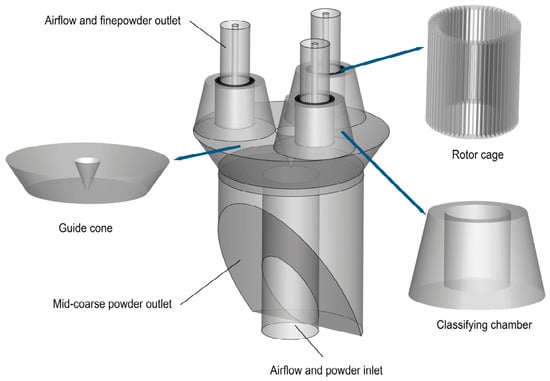
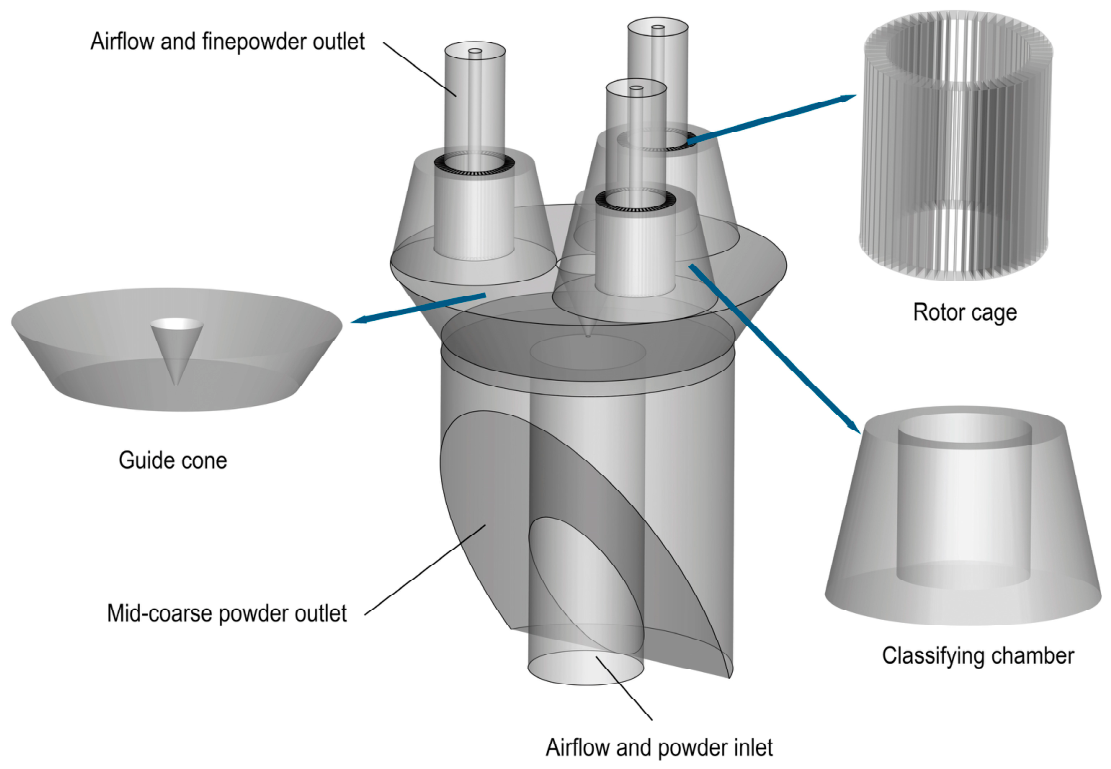
For multi-cage classifiers, Yang [22] studied the internal flow field of the classifier using the Q-criterion to optimize the guide cone structure. Currently, vertical three-cage classifiers have been widely adopted across numerous industrial fields, including deep processing of non-metallic minerals, modification of building material powders, utilization of fly ash, production of new energy battery powders, fine chemicals, and high-end abrasives. In processing non-metallic minerals such as calcium carbonate, kaolin, talc, and quartz, this equipment enables precise classification of micron- and sub-micron-sized powders, significantly improving powder packing performance and product added value. In the fields of building materials and solid waste utilization, it can efficiently separate micro-powder slag, fly ash, and other industrial solid waste, thereby increasing the resource recovery rate. In the new energy powder sector, it achieves high-purity and narrow-size-distribution classification of electrode materials, meeting the production standards required for high-end lithium battery materials. Motivated by these industrial demands, this paper designs and simulates a vertical triple-cage classifier with six main components: fine powder outlet, rotating cage, classification chamber, flow guide cone, coarse powder outlet, and air inlet.
The classification process in a classifier primarily occurs within the classification chamber. To analyze the impact of the classification chamber structure on the internal flow field of a vertical three-cage classifier, numerical simulations and comparative analyses were conducted on classifiers with different chamber structures. The results indicate that the ratio of the classifier chamber’s top diameter to the rotor diameter should be neither too large nor too small; an optimal dimension exists to enhance the classifier’s performance. This provides a theoretical basis for the design and optimization of vertical multi-rotor classifiers.
2. Calculation Method
2.1. Equipment Description
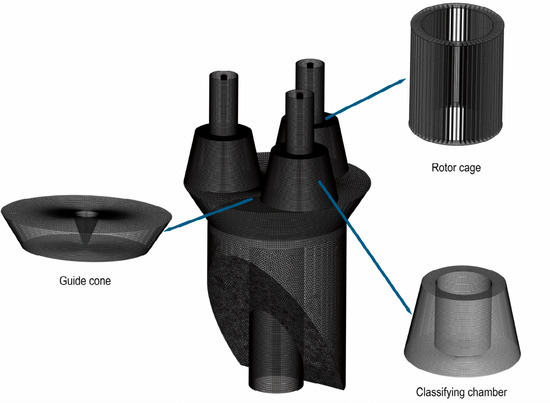
Figure 1 shows the structure of a laboratory-scale classifier with three rotors. The device utilizes pneumatic conveying for material feeding, with the material entering the classification zone driven by an air stream. Compared to traditional vortex air classifiers, its classification chamber features a tapered design that effectively suppresses turbulence within the classification zone. At the same time, multiple rotating cages operate in parallel and in concert, creating a stable, uniform classification force field across a larger space, thereby enhancing the equipment’s classification accuracy and processing capacity.
Figure 1.
3D structure of the vertical three-cage classifier.
2.2. Model Creation and Mesh Generation
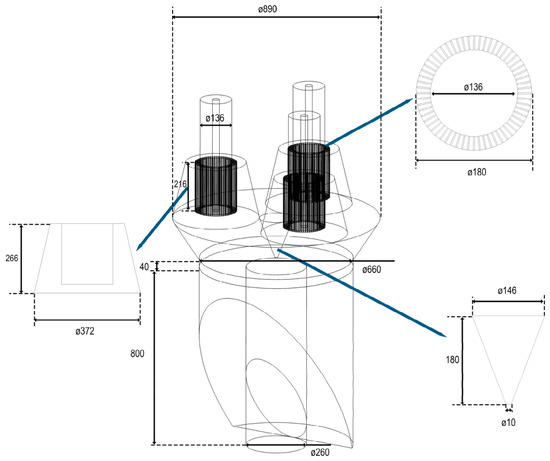
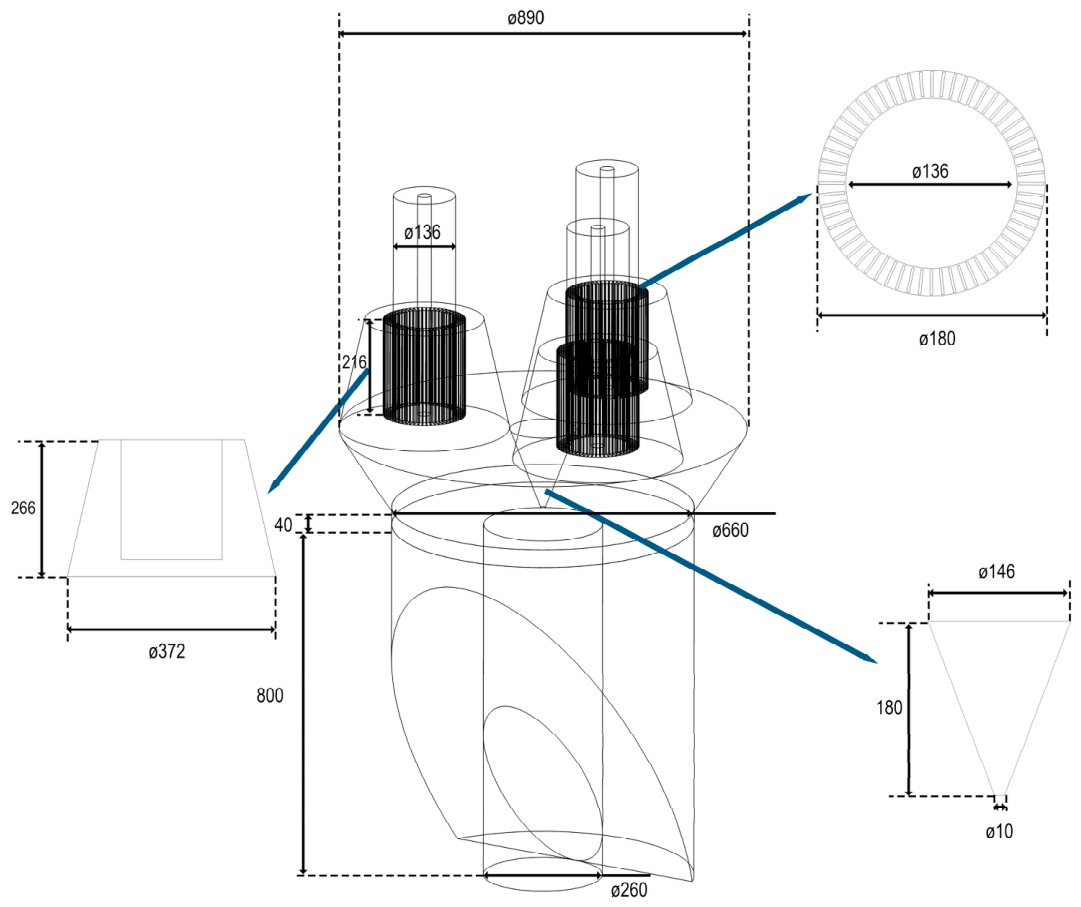
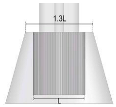
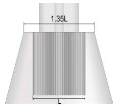
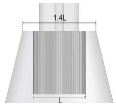
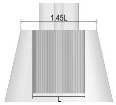
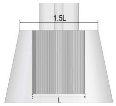
The geometry of the vertical three-cage classifier was developed in SolidWorks 2024 and subsequently discretized into a mesh using ICEMCFD 2024 R1. For stable computation, the classifier’s internal volume was split into six parts: air inlet, flow guide cone, classification chamber, rotating cage, fine powder outlet, and coarse powder outlet. The figure provides key dimensional information; as an example, the fine powder outlet diameter is 136 mm, and the rotating cage is 216 mm high and 180 mm in diameter; the cage features 60 radially distributed blades. Each blade is 20 mm long, 2 mm wide, and 216 mm high. The guide cone is 180 mm high, with an upper diameter of 146 mm and a lower diameter of 10 mm, as shown in Figure 2. In this study, the classifier chamber has a height of 266 mm and a base diameter of 372 mm. To investigate the effect of changes in the top diameter of the conical classifier chamber on the performance of the classifier, the cage diameter is defined as L, and classifier chamber models T-A, T-B, T-C, T-D, and T-E were established (Table 1).
Figure 2.
Dimensions of the vertical three-cage classifier.
Table 1.
Classification chamber dimension parameters. (The “proportion” in Table 1 refers to the ratio of the classification chamber top diameter to the rotor diameter).
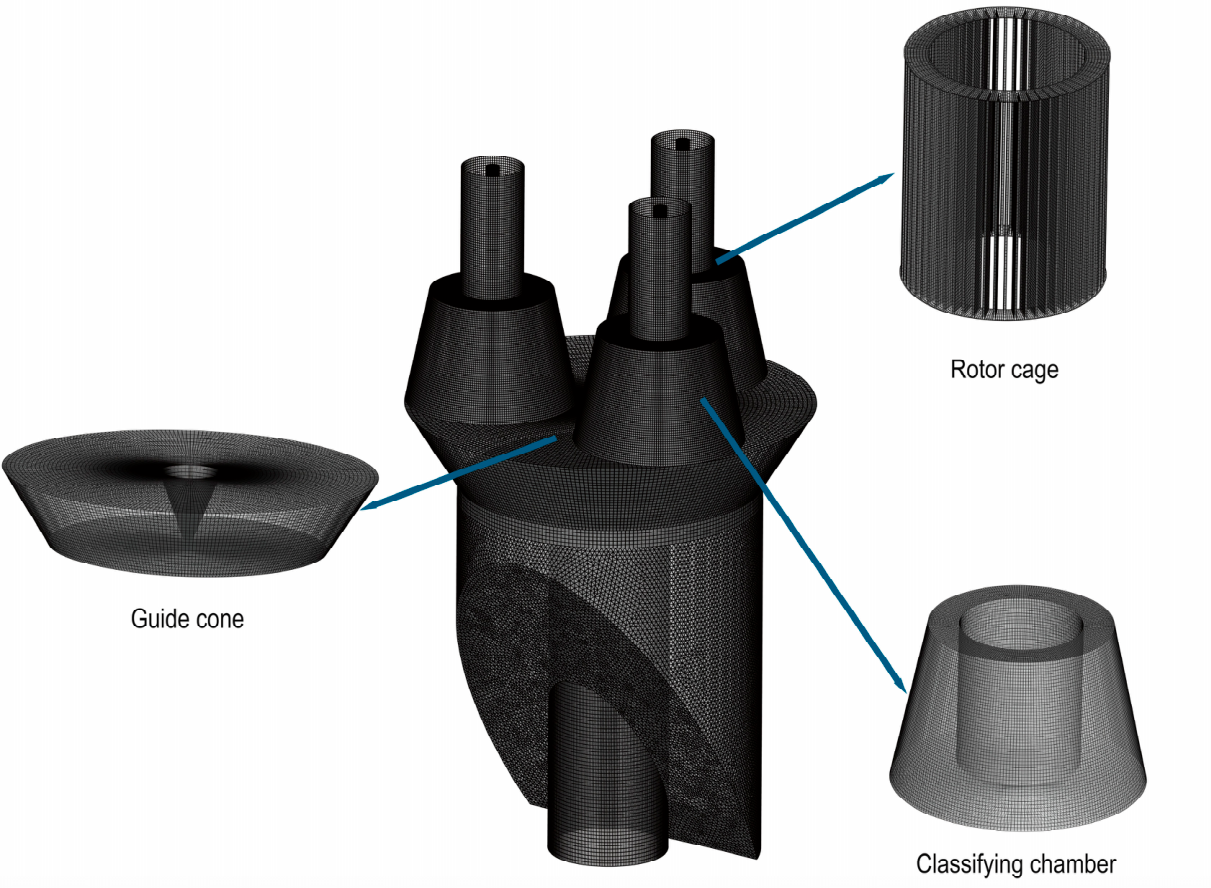
Figure 3 shows the mesh of the rotary classifier. An unstructured mesh is used for the coarse powder outlet, while a hexahedral structured mesh is used for the remaining sections. A mesh independence study was conducted to confirm the accuracy of the numerical solution while minimizing computational cost and time. Four mesh counts were examined: 1,884,283, 2,824,482, 3,704,631, and 4,770,226.
Figure 3.
Mesh diagram of a vertical three-cage classifier.
2.3. Mesh Independence Verification
2.3.1. Radial Velocity Mesh Independence Verification
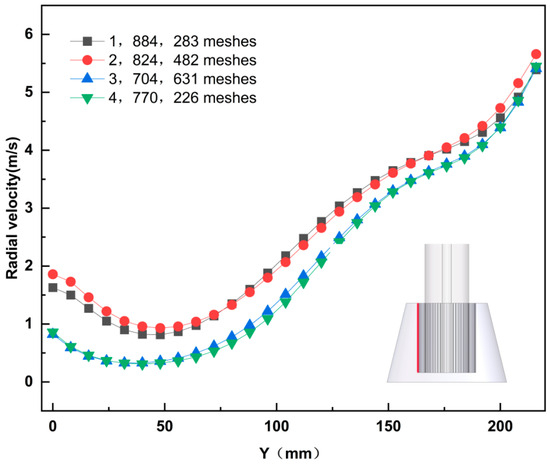
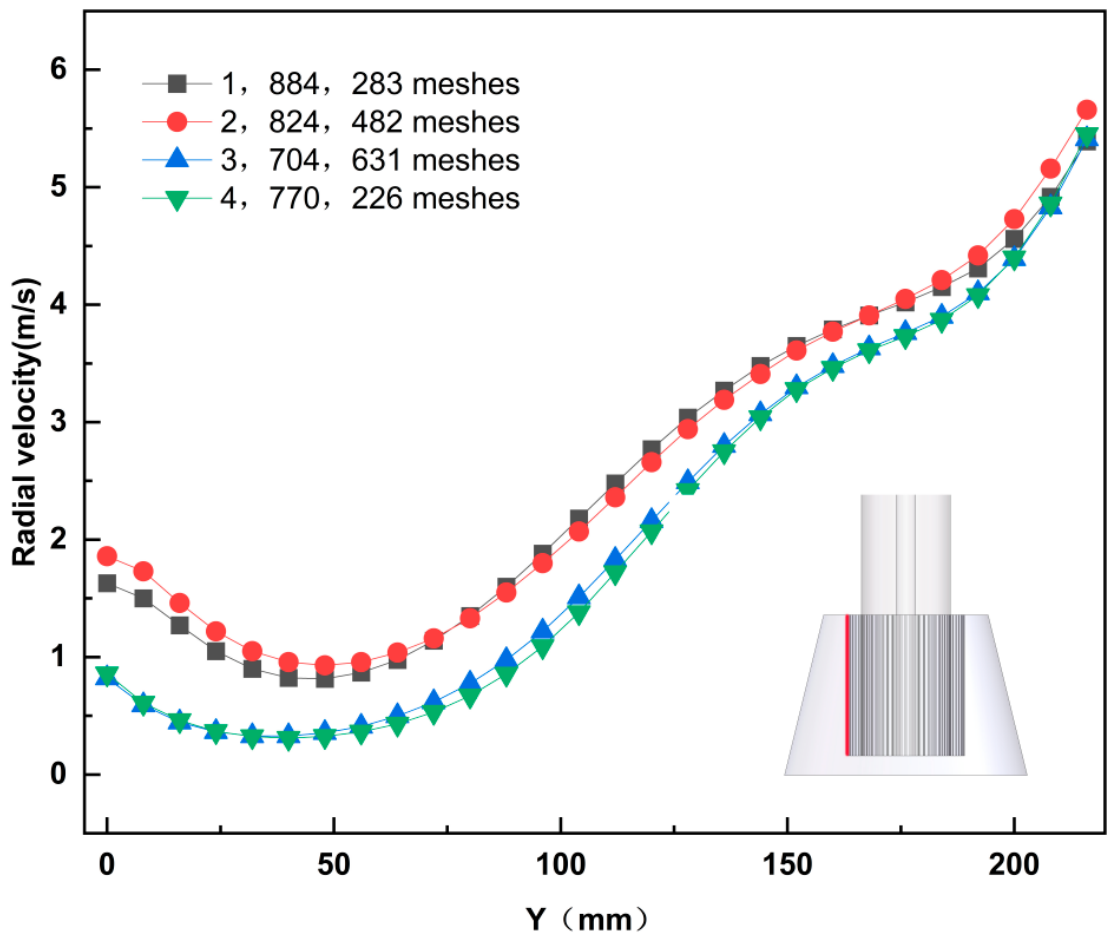
As shown in Figure 4, the radial velocity distribution at the outer edge of the rotating cage was compared for the four meshes with 1,884,283, 2,824,482, 3,704,631, and 4,770,226 cells. It was found that the resulting curves for the 3,704,631- and 4,770,226-cell meshes closely matched, whereas those for the first two meshes showed significant deviations. This indicates that once the number of mesh cells reaches 3,704,631, the calculation results tend to stabilize, and the effect of further mesh refinement on the radial velocity distribution is negligible, satisfying the requirement for mesh independence.
Figure 4.
Radial velocity distribution under different numbers of meshes.
2.3.2. Characteristic Particle Size and Classification Accuracy Mesh Independence Verification
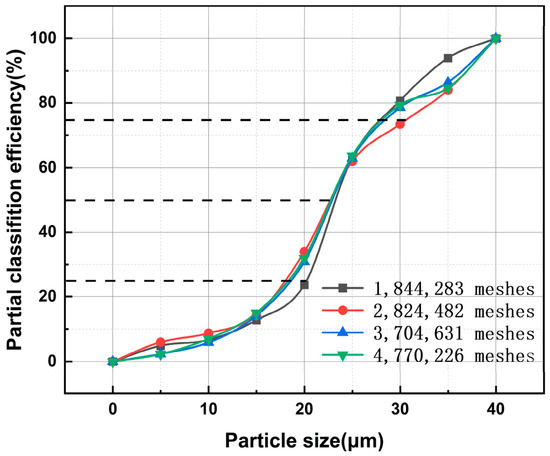
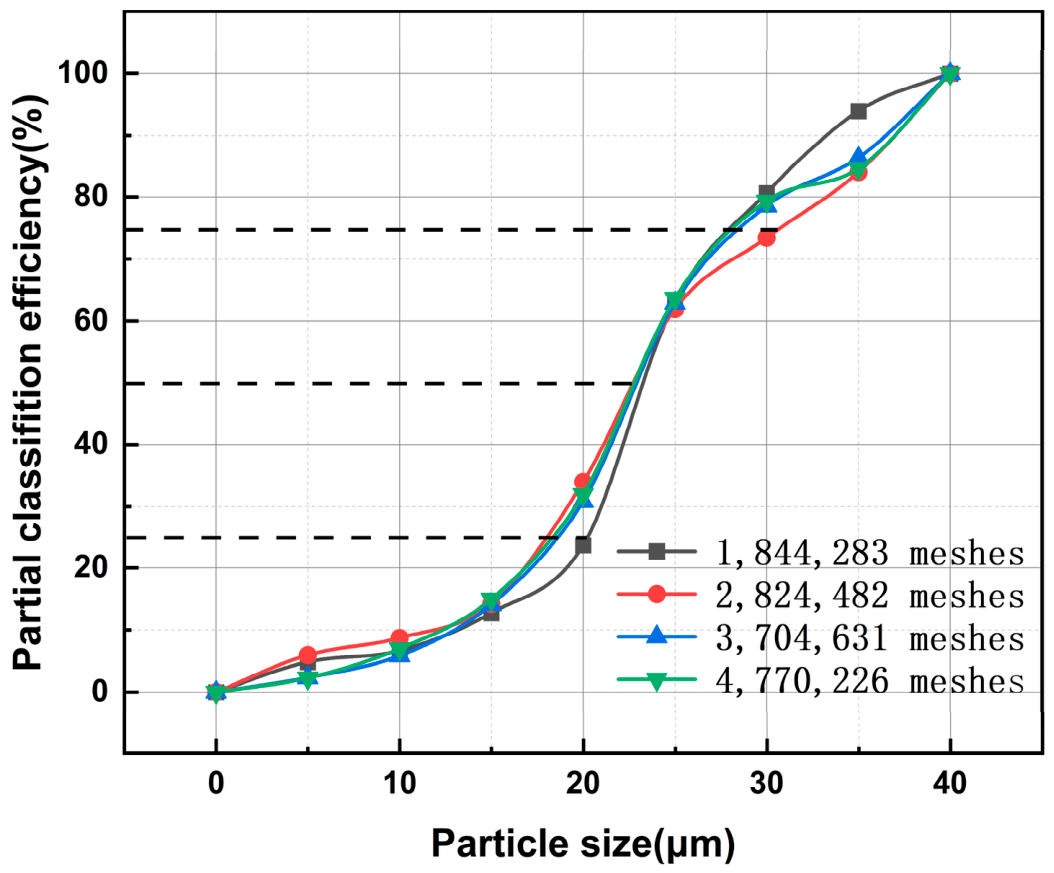
A comparison of the Tromp curves, characteristic particle sizes, and grading accuracy k for each mesh is shown in Table 2 and Figure 5. As shown in Table 2, when the number of mesh cells was increased from 1,884,283 to 2,824,482, d50 changed from 23.8 µm to 24.0 µm, and k changed from 0.73 to 0.69, indicating a significant change. Upon further refinement to 3,704,631, the results for each parameter were highly consistent with those from the finest mesh count of 4,770,226: d50 differed by only 0.1 µm, with a relative deviation of 0.44%; d75 differed by 0.1 µm, with a relative deviation of 0.37%; and d25 and k were identical. Upon further refinement to 4,770,226, the various parameters showed virtually no change. The Tromp curves shown in Figure 5 also indicate that the curves for the 3,704,631-mesh and 4,770,226-mesh meshes largely overlap across the entire particle size range. In contrast, the curves for the 1,884,283-mesh and 2,824,482-mesh meshes exhibit visible deviations.
Table 2.
Characteristic particle size and grading accuracy for different numbers of meshes.
Figure 5.
Tromp curves for different numbers of mesh cells.
2.3.3. Turbulence Intensity Mesh Independence Verification
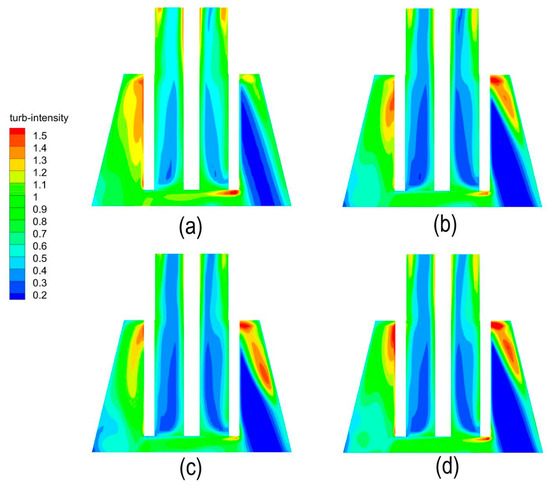
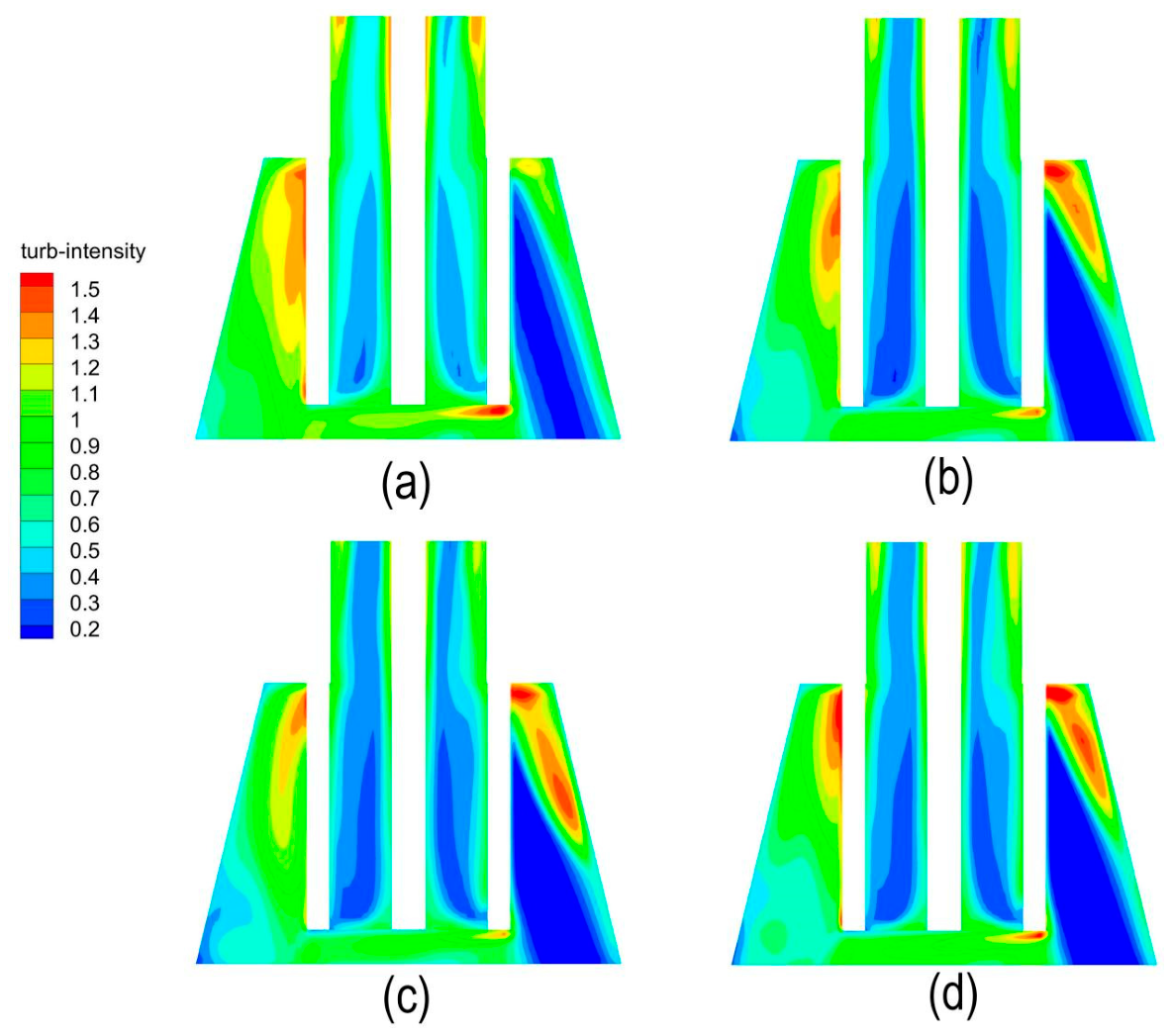
Figure 6 shows the turbulence intensity contour plots for the classifier chamber under four different mesh densities, while Table 3 lists the area-weighted average turbulence intensity for each mesh density, as well as the pressure values at the classifier inlet and outlet and the corresponding pressure drop ΔP. Analysis shows that when the mesh resolution was increased from 1,884,283 to 2,824,482 cells, the turbulence intensity rose from 50.96% to 55.19%, representing a relative change of 8.3%—a significant increase. Upon further refinement to 3,704,631 cells, the turbulence intensity was 55.90%, an increase of only 1.29% compared to the 2,824,482-cell mesh; further refinement to 4,770,226 cells resulted in a turbulence intensity of 56.74%, an increase of only 0.84 percentage points compared to the 3,704,631-cell mesh, with a relative change of 1.50%. Using the finest mesh of 4,770,226 cells as a reference, the relative deviation in turbulence intensity for the 3,704,631-cell mesh is −1.48%, which is well below the 5% convergence criterion commonly used in engineering. At the same time, pressure drop data indicate that it has not yet stabilized on the coarser meshes of 1,884,283 and 2,824,482 cells. In contrast, when the mesh size reaches 3,704,631 cells, the pressure drop variation becomes very small, with an absolute change of less than 0.5 Pa and a relative deviation of less than 0.3%. Therefore, the 3,704,631-cell mesh can be considered a mesh-independent solution. Considering both computational accuracy and resource consumption, this mesh configuration was adopted for all subsequent simulations. Table 4 lists the number of meshes for each region.
Figure 6.
Classifier chamber turbulence intensity for various mesh numbers. (a) Number of meshes: 1,884,483; (b) Number of meshes: 2,824,482; (c) Number of meshes: 3,704,631; (d) Number of meshes: 4,770,226.
Table 3.
Area-weighted average turbulence intensity and pressure drop for different mesh counts.
Table 4.
Number of meshes in each zone.
2.4. Turbulence Model and Simulation Conditions
Numerical simulations in three dimensions under steady-state conditions were conducted using Ansys Fluent 19.2 (a large-scale finite element analysis package). Incompressible flow was assumed for the fluid, and the governing equations were discretized and solved using the finite volume method [23]. The fluid phase is simulated using the Eulerian method. The corresponding mass and momentum conservation equations are as follows:
where is the gas-flow density, is the gas velocity, is the position, is the static pressure, and is the term for Reynolds stress.
Given the significant anisotropy of the flow field within the air classifier, this study employs the Reynolds Stress Model (RSM) for turbulence simulation. The anisotropy of this flow primarily stems from three sources: strong vortices generated by the rotating impeller, complex flow structures in the separation zone, and enhanced gas–solid interaction. These physical mechanisms make the anisotropy of Reynolds stress impossible to ignore. In contrast, traditional kinematic viscosity models based on the isotropic assumption (such as the k-ε and k-ω models) cannot accurately capture the aforementioned anisotropic characteristics when relating Reynolds stress to strain rate, leading to significant computational errors. Therefore, the use of the RSM is a necessary prerequisite for accurately revealing the flow and separation mechanisms in this study [24,25].
Despite its ability to capture anisotropic turbulence effectively, the Reynolds Stress Model (RSM) shares the inherent limitations of any Reynolds-averaged Navier–Stokes (RANS) approach. The core of the RANS method lies in the statistical averaging of turbulence, characterizing the flow by solving for time-averaged flow-field variables and turbulence statistics. Therefore, the RSM cannot directly resolve instantaneous dynamic processes such as vortex shedding and flow instabilities, but can only capture their average effects over a given time scale.
The transport equation for Reynolds stress can be written as
Equation (3) describes the conservation relationship of the Reynolds stress in the turbulent transport process, specifically covering its rate of change, generation, redistribution, and dissipation mechanisms in both the temporal and spatial domains. Two terms reside on the left-hand side of the equation, corresponding respectively to the local rate of change in the Reynolds stress and the convection term. The right-hand side lists four terms in order: the diffusion term , the pressure–strain term , the stress generation term , and the turbulent dissipation term .
Among these, the diffusion term consists of three components: turbulent diffusion, pressure diffusion, and viscous diffusion; the pressure–strain term reflects the relationship between turbulent pressure and the rate of turbulent strain and is typically regarded as a redistribution term for the Reynolds stress; the generation term characterizes the interaction between Reynolds stress and the mean flow gradient, revealing the mechanism by which turbulent energy is transferred from the mean flow to the pulsating flow; the dissipation term depends on the combined effect of the fluid viscosity coefficient and the turbulent velocity gradient, and governs the dissipation process of turbulent kinetic energy.
2.5. Comparison of Steady-State MRF and Transient Sliding Mesh Simulations
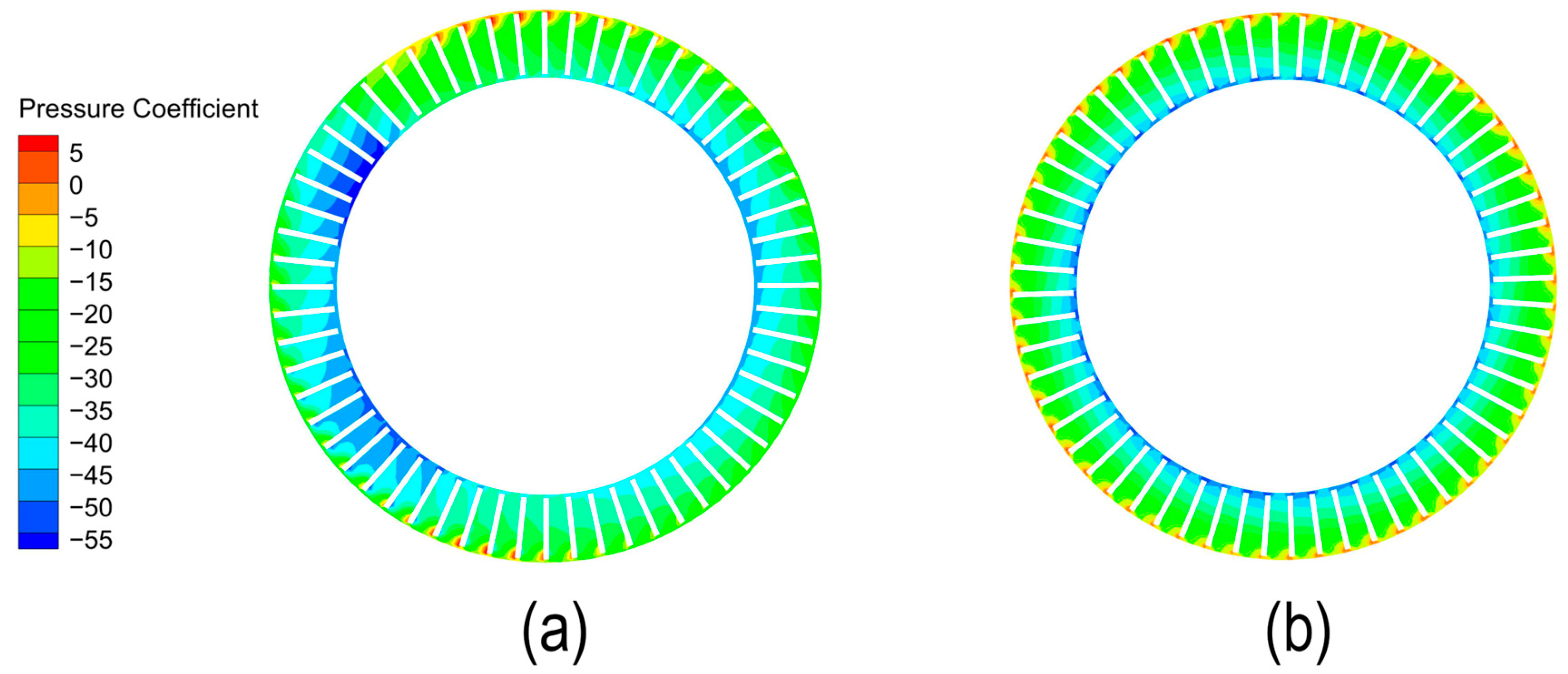
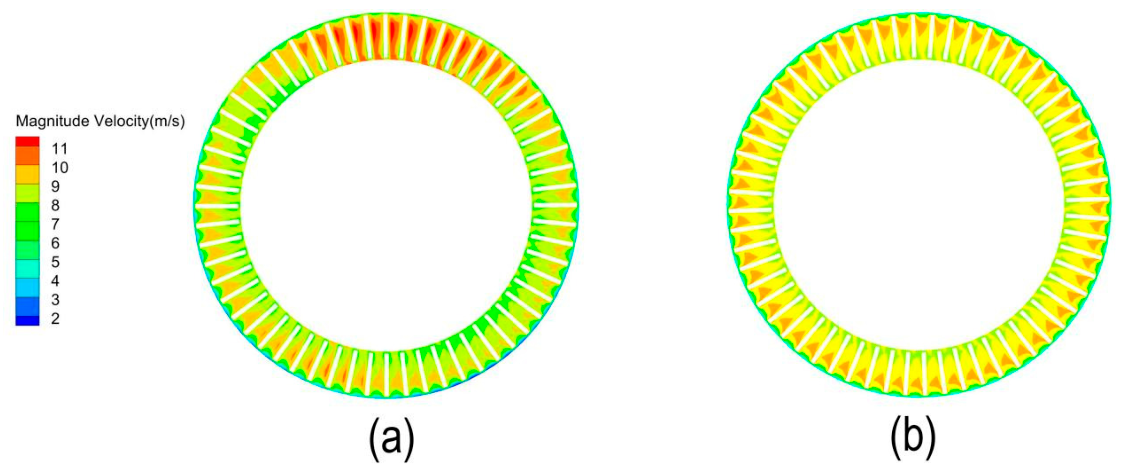
To evaluate the reliability of the Multi-Reference Frame (MRF) steady-state approximation method in predicting the flow field inside a classifier, the transient Sliding Mesh method was used as a high-precision reference. The pressure coefficients (Cp) and velocity contour plots in the rotor region under identical operating conditions (Y = 318 mm cross-section) were compared between the two methods, and area-weighted averages were calculated. The results are shown in Figure 7 and Figure 8 and in Table 5.
Figure 7.
Pressure coefficient at the rotor section at Y = 318 mm. (a) MRF model; (b) Sliding mesh model.
Figure 8.
Velocity distribution at the rotor section at Y = 318 mm. (a) MRF model; (b) Sliding mesh model.
Table 5.
Area-weighted average of the pressure coefficient and velocity at the rotor section at Y = 318 mm.
Table 5 shows the area-weighted averages of the pressure coefficient and velocity in the rotor region at the Y = 318 mm cross-section for different methods.
As shown in Figure 7 and Figure 8, the Cp and velocity distributions obtained by the two methods are highly similar overall. Low-speed wake regions appear at the trailing edges of the blades in both velocity fields, and the locations of high-speed regions are consistent. This indicates that the MRF method can capture the primary spatial characteristics of the time-averaged flow field within the rotor.
A quantitative comparison of the area-weighted averages in Table 5 reveals that the absolute values of the pressure coefficients predicted by the MRF method deviate from the slip-mesh results by approximately 14.9%. In comparison, the velocity deviations are approximately 5.7%. Nevertheless, the differences in predicted velocity between the two methods are less than 6%, and those in pressure coefficient are less than 15%. To evaluate macroscopic performance indicators, such as the overall pressure drop and classifier cut size, these deviations fall within an engineering-acceptable range; therefore, the MRF method is selected for simulation in this study.
No-slip boundary conditions are applied to all boundaries of the computational domain, with a wall roughness of 0.01 mm and standard wall functions. The simulation of rotating components employs the Multi-Reference Frame (MRF) method, with the rotation direction set to counterclockwise. Mesh continuity across the rotating and stationary zones was maintained by an interface defined at the cage boundary. Pressure–velocity coupling employed the SIMPLEC algorithm, and the QUICK scheme discretized the convection–diffusion terms to achieve computational accuracy.
2.6. Discrete Phase Model
The dispersed-phase problem was addressed using a Discrete Phase Model (DPM), which describes particle behavior from both Lagrangian and discrete viewpoints. In FLUENT, this model imposes a strict limitation on the dispersed-phase volume fraction, requiring it to stay below 10%. In this study, the particle shape factor was set to spherical, with an initial velocity of 8 m/s, and the Discrete Random Walk model was enabled, with a rotor speed of 1000 rpm. Calcium carbonate particles enter the classifier through the feed inlet, carried by the main airflow. The simulation uses 2800 kg/m3 of calcium carbonate (CaCO3) as the feed material for classification.
The flow direction is perpendicular to the plane containing the inlet. The mass flow rate is set to 0.005 kg/s and the particle density to 2800 kg/m3, and the particle size distribution is modeled using the Rosin–Rammler function. Gravitational acceleration is −9.81 m/s2 (Y-axis positive upward). To account for the effects of turbulent eddies on particle motion, the Discrete Random Walk (DRW) model is used to predict turbulence-driven particle dispersion. Particle trajectories are obtained through steady-state tracking within the discrete-phase framework. Once released, particles are followed until they encounter a boundary; the termination behavior then depends on the boundary type. Specifically, the fine powder outlet is assigned an “escape” condition, the coarse powder outlet a “capture” condition, and all remaining walls are treated as “reflection” boundaries. Due to limited computational resources, the mesh density is constrained, and therefore, standard wall functions are employed for the near-wall region.
2.7. Classification Performance Metrics
Partial classification efficiency is defined as the percentage of the total mass of particles in the feed within a specific size range that is separated into the classification product. It quantitatively characterizes the selective separation performance of the classification equipment for particles of different sizes [26]. Connecting the partial classification efficiencies of each particle size interval forms a curve, known in the industry as the Tromp curve. The geometric shape of this curve intuitively reflects the classification precision: the steeper the curve, the higher the classification selectivity. Based on this curve, a key evaluation index—the classification precision index K—can be defined as K = D25/D75. In this equation, D25, D50, and D75 correspond to the characteristic particle sizes at which the partial classification efficiency reaches 25%, 50%, and 75%, respectively, where D50 is the cut-off size.
3. Simulation Results and Analysis
3.1. Residual Convergence Verification of the RSM Turbulence Model
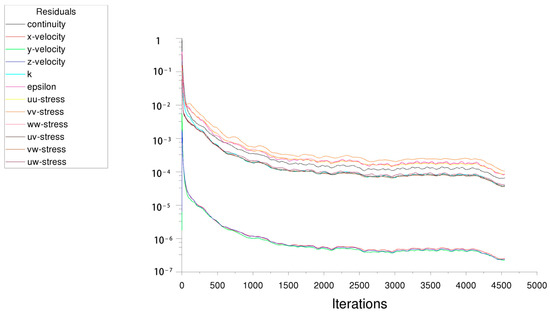
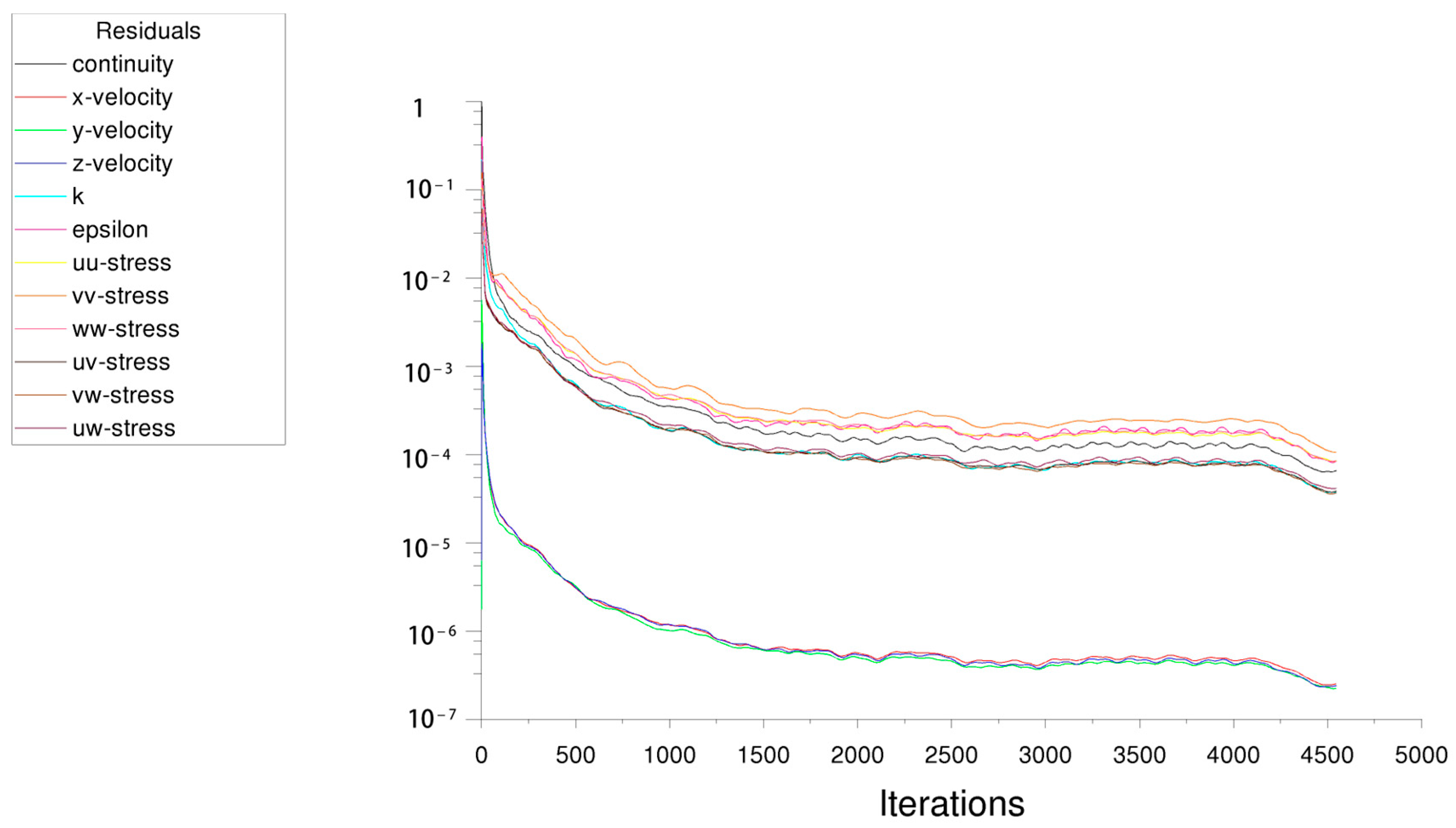
To meet the RSM’s stricter convergence accuracy requirements, the residual convergence criterion for each transport equation was increased from the default 1 × 10⁻³ to 1 × 10⁻⁴. Figure 9 shows the residual convergence curve for the calculation process. As shown in Figure 9, all residuals decrease rapidly in the early stages of iteration and then gradually stabilize. The fact that all residuals fall below 1 × 10⁻⁴ after 4500 steps indicates that the calculation has reached strict convergence. Therefore, the flow-field solution obtained in this study meets the numerical accuracy required by the RSM and can be used for subsequent analysis.
Figure 9.
RSM convergence plot.
3.2. Overall Flow-Field Distribution
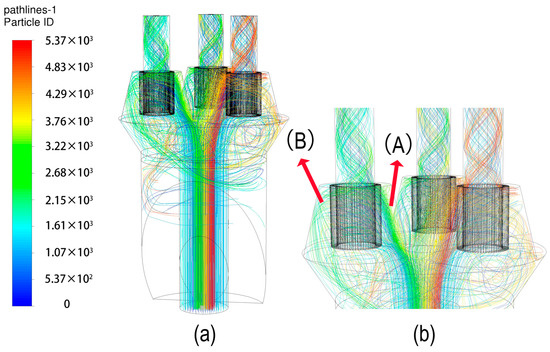
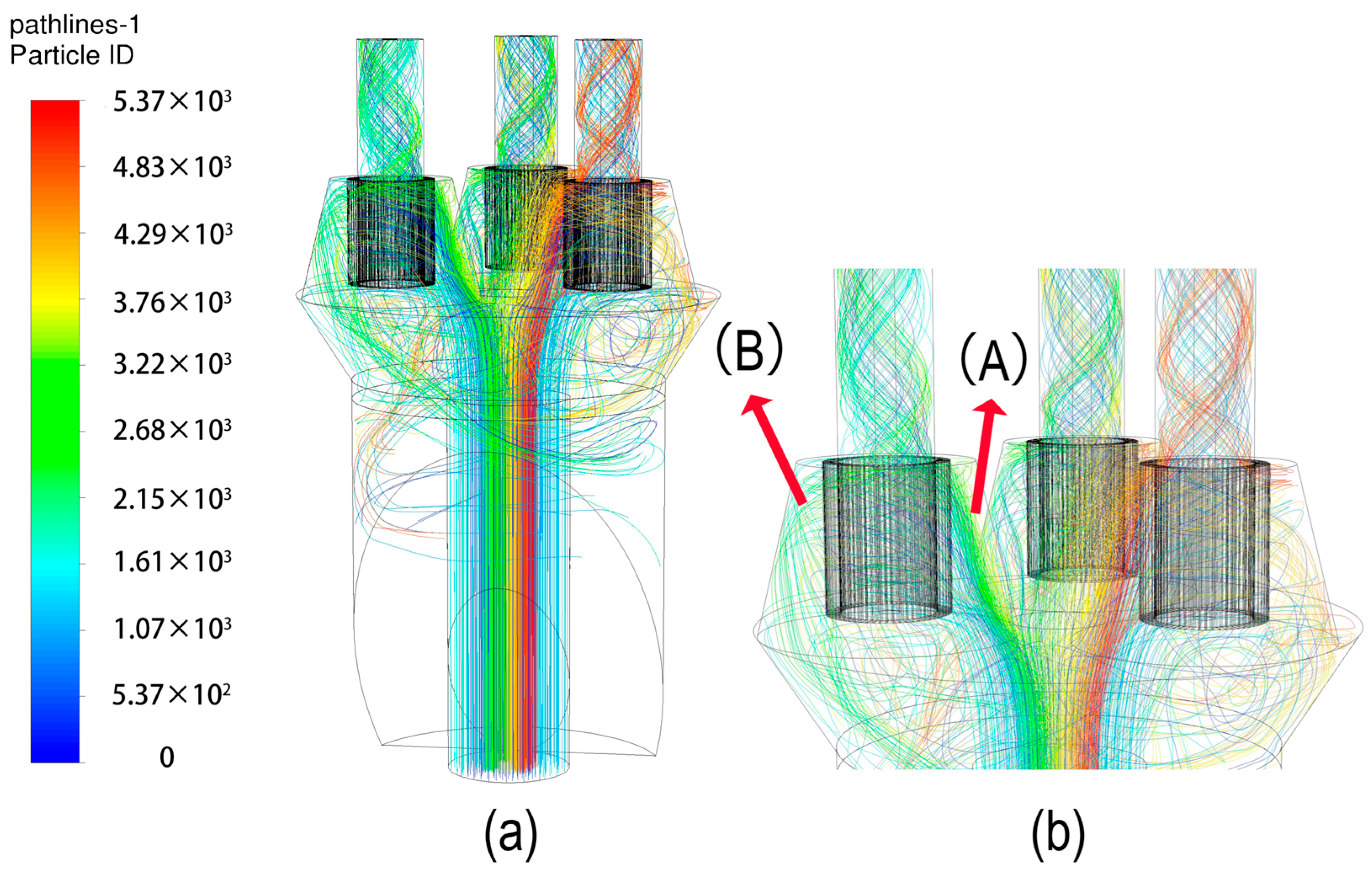
To explore the flow-field properties of the classifier, Figure 10a shows the airflow trajectory diagram within the classifier. For ease of description, the side of the classifier chamber in Figure 10b closest to the guide cone is referred to as Side A, and the opposite side as Side B. The operating principle of this classifier is as follows: the material is first entrained by the airflow and enters the equipment through the lower feed pipe. In the flow-guiding cone region, the airflow fully disperses the material through collisions with the cone surface.
Figure 10.
Airflow trajectory diagram of the classifier. (a) Overall airflow trajectory of the classifier; (b) Airflow trajectory near the guide cone and classification chamber. (A) Airflow trajectory on the side of the classifier chamber near the swirl cone; (B) Airflow trajectory on the side of the classifier chamber away from the swirl cone.
The air stream carrying the particles to be classified is directed by the deflector cone into the respective classification chambers (Side A). Upon entering the chamber, the rotating cage blades deflect the air stream, altering its flow pattern and creating a forced vortex. Classification occurs under the combined action of gas drag and centrifugal force. As the rotor blades rotate, they impart a tangential thrust to the airflow, increasing its tangential velocity. At this point, the centrifugal force acting on the coarse particles exceeds the drag force of the gas, preventing them from entering the interior of the rotor. Instead, they decelerate due to airflow resistance and gradually move toward the cylinder wall. Upon reaching the vicinity of the wall, they descend under the combined action of gravity and the gas flow, and are ultimately collected as coarse powder on the B side; conversely, the gas drag on fine particles exceeds the centrifugal force, allowing them to enter the interior of the rotating cage and subsequently be discharged through the fine powder outlet.
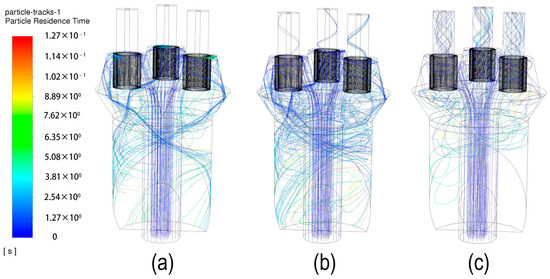
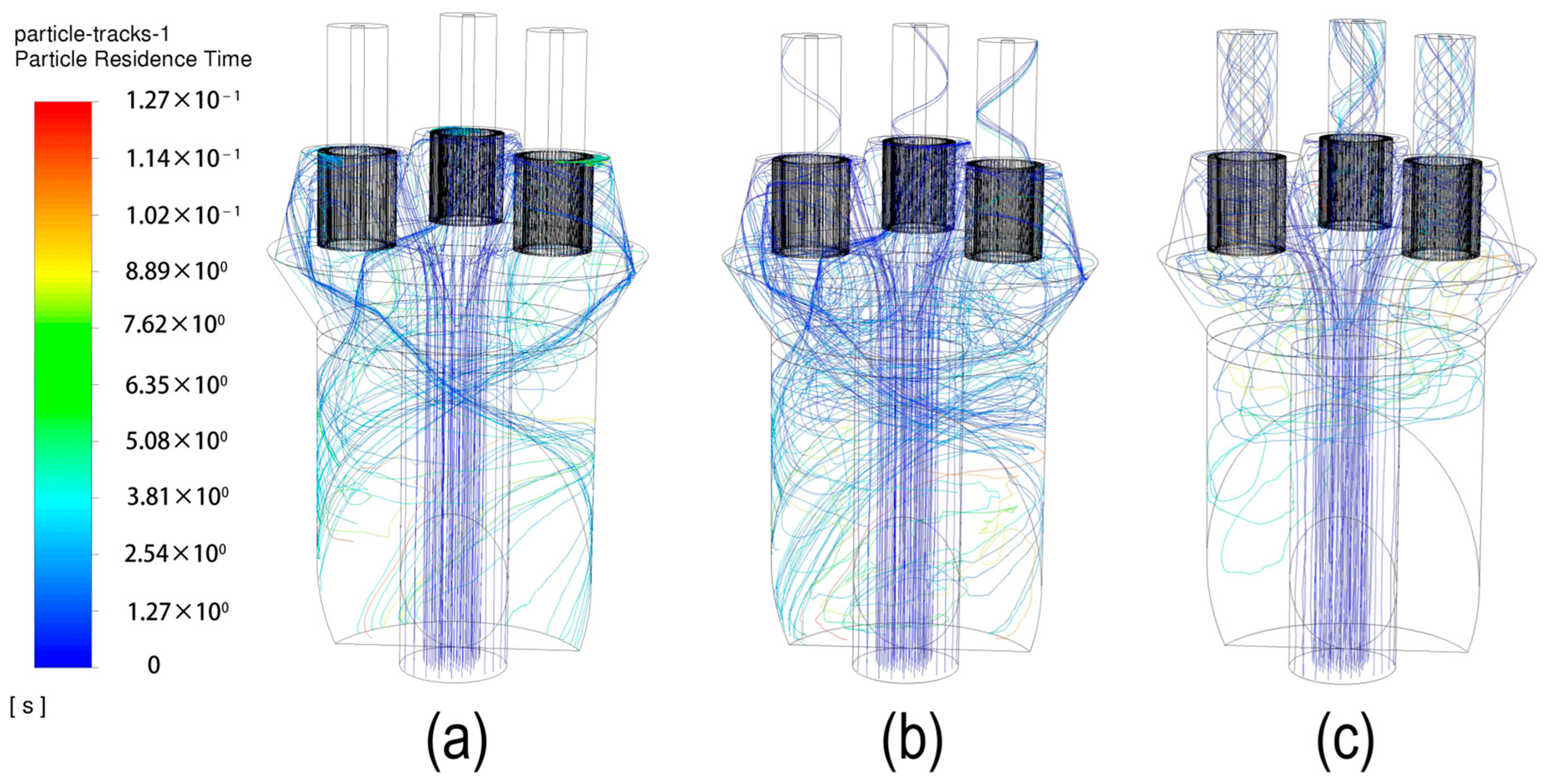
To more intuitively illustrate the movement patterns and separation process of particles of different sizes within the classifier, Figure 11 presents schematic diagrams of the trajectories of coarse, mixed, and fine powders.
Figure 11.
Particle trajectory diagram for different particle sizes. (a) Coarse powder particle size = 40 µm. (b) Mixed powder particle size = 25 µm. (c) Fine powder = 10 µm.
3.3. Influence of the Classifier Chamber Structure on the Flow Field
Effect of Classifier Chamber Structure on Tangential Velocity
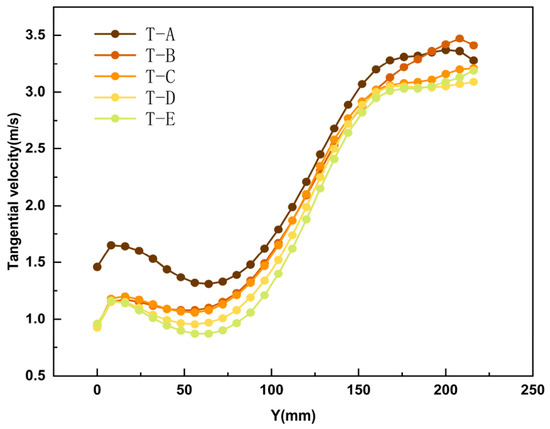
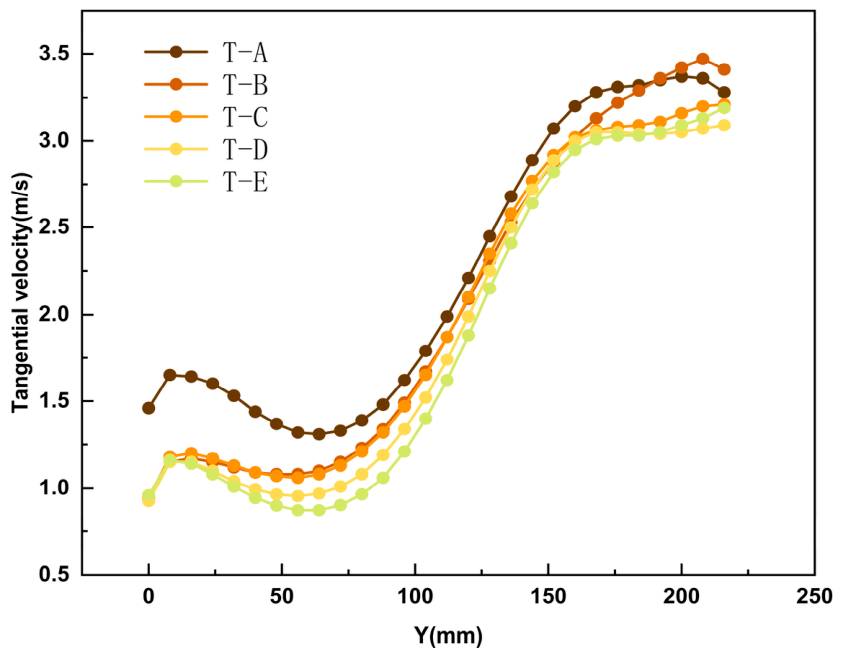
During the formation of forced vortices within the classifier chamber, the rotating cage imparts greater tangential velocity to the airflow and consumes energy, a phenomenon known as cage energy. The measured tangential velocities at the outer edge of the rotating cage for classifiers with five different top diameters are shown in Figure 12. The top tangential velocity of T-C is 3.21 m/s. Compared to T-C, when the top diameter of the classification chamber decreases, the tangential velocities of T-A and T-B increase to 3.28 m/s and 3.41 m/s, respectively.
Figure 12.
Tangential velocity distribution at the outer edge of the rotor.
3.4. Energy Quantification of Different Classifier Designs
To comprehensively evaluate the energy consumption characteristics of the five classifier models, the rotor power, inlet and outlet pressure drops, and comprehensive specific energy consumption for each model were calculated and are presented in Table 6, Table 7 and Table 8, respectively. Additionally, the volumetric flow rate was measured at 0.4245 m3/s and the mass flow rate at 0.5 kg/s, and the fan efficiency was set at 0.7.
Table 6.
Energy loss table for classifiers of different sizes.
Table 7.
Inlet and outlet pressures and pressure drops for different classifier models.
Table 8.
Power parameters and specific energy consumption (SEC) for different classifier models.
As shown in Table 6, Model 3 has the lowest single-rotor power at 9.85 W, while Model 5 has the highest at 10.09 W; Models TA, T-B, and T-D fall in the middle. This indicates that the rotor of Model T-C has the lowest aerodynamic torque resistance.
Table 7 shows that Model T-D has the lowest pressure drop at 172.18 Pa; Model T-E has the highest at 173.08 Pa; and the pressure drops for Models T-A through T-C range between 172.47 Pa and 172.79 Pa. The pressure drop for Model T-C is 172.47 Pa, which is relatively low, but the difference from Model T-D is only 0.29 Pa.
Table 8 presents the comprehensive specific energy consumption. This value is influenced by both fan power and rotor power. The results show that T-C has the lowest specific energy consumption at 632.7 J/kg, while T-E has the highest at 637.8 J/kg; models T-A, T-B, and T-D fall in the middle. Although T-D has the lowest pressure drop, its rotor power is relatively high at 10.02 W, resulting in higher total power and specific energy consumption compared to T-C. T-C, on the other hand, achieves the optimal balance between pressure drop and rotor power, with the lowest values among all models.
In summary, the T-C classifier requires the least amount of theoretical energy to process a unit mass of powder and offers the best energy efficiency.
3.5. Effect of the Top Diameter of the Classifier Chamber on Axial Velocity Inside the Chamber
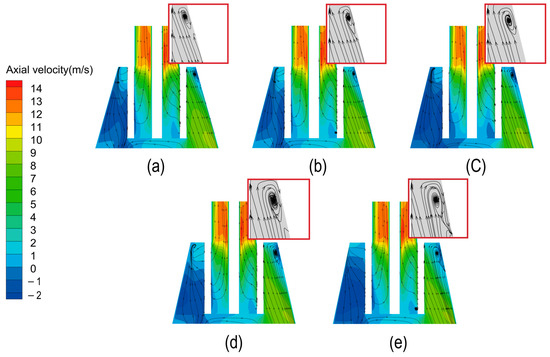
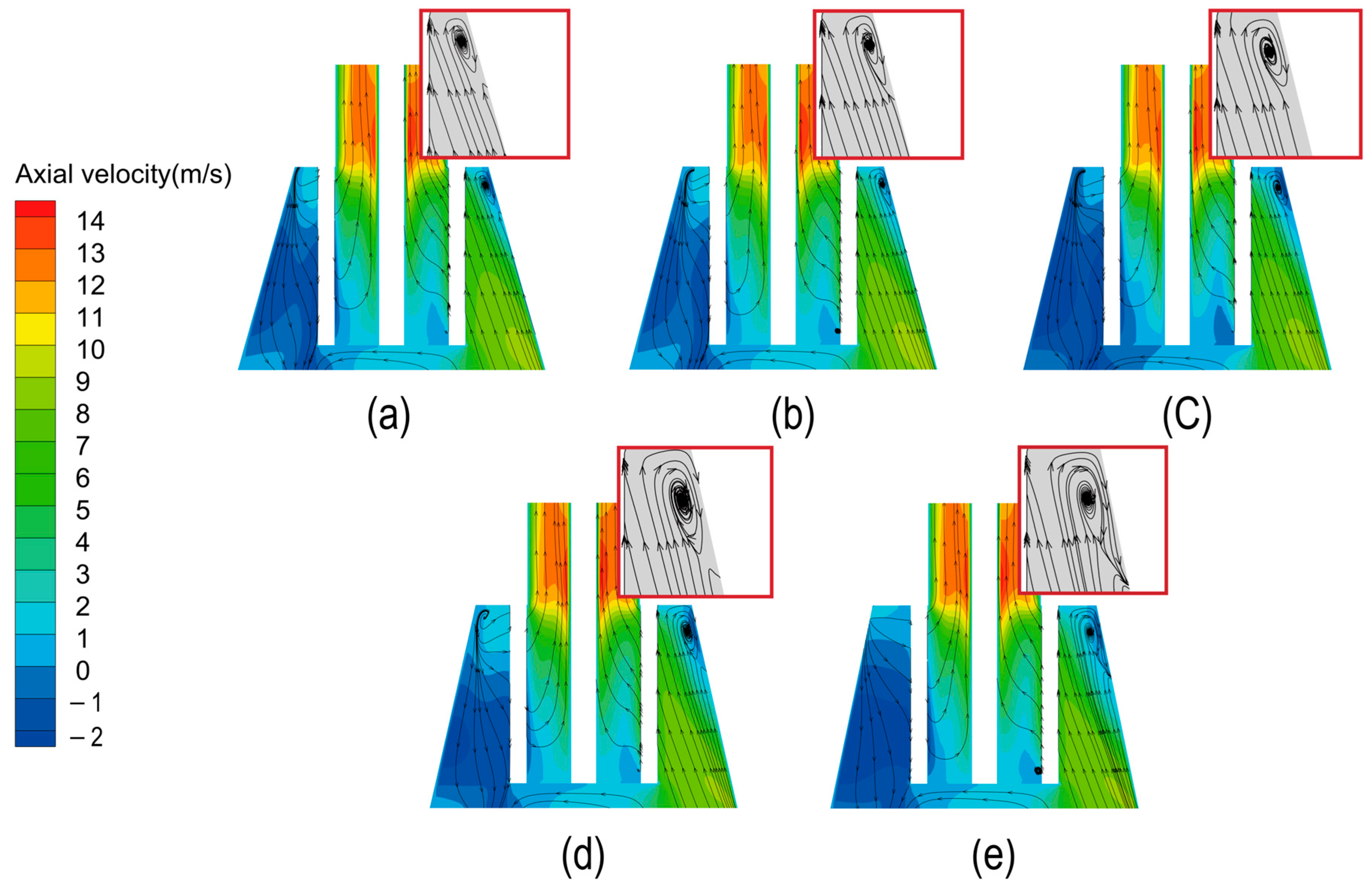
Figure 13 shows that as the top diameter of the classification chamber increases on both sides of AB, the airflow behavior in the two regions undergoes a fundamental change:
Figure 13.
Effect of the top diameter of the classification chamber on axial velocity and airflow movement. (a) T-A-type classification chamber; (b) T-B-type classification chamber; (c) T-C-type classification chamber; (d) T-D-type classification chamber; (e) T-E-type classification chamber.
For the A side: This side faces the outlet of the guide cone. After the airflow rises from the bottom, due to its initial momentum, it adheres closely to the inner wall of the A-side classification chamber. As it moves toward the top of the chamber, its kinetic energy decreases. As shown in Figure 13a, when the top diameter of the classification chamber increases, the scale of the low-speed vortex zone formed at the angle between the top of the chamber and the wall significantly increases. If the axial velocity in this vortex region is too low, particles are likely to accumulate inside the equipment, leading to blockages and increased energy consumption.
Regarding the B side: When the top diameter is small, the already disturbed, highly turbulent airflow from the A side is violently sheared by the rotating cage and flung toward the B side wall. However, when the diameter exceeds a critical value, the distance between the rotating cage and the B-side wall increases. At this point, the airflow gradually decays into a more uniform, average flow over a long distance before reaching the B-side wall. Since the collection of coarse particles relies on the negative axial flow on the B-side, only a small portion of the airflow at the top is used for screening fine particles. As shown in Figure 13e, the amplitude of the negative axial velocity on the side of the T-E-type lower classification chamber decreases, weakening the return flow and reducing downward airflow. The expansion of the flow channel caused by the large-diameter structure increases the axial velocity gradient, thereby weakening the negative axial flow. This reduces the probability of coarse particles being flung back into the coarse powder zone, allowing some inadequately separated particles to enter the fine powder collection zone with the main flow, thereby degrading the classification accuracy.
The above velocity contour analysis indicates the presence of vortex structures within the classification chamber, primarily concentrated in the corner vortex regions where the chamber’s top plate meets the side walls. These vortices increase the fluid resistance torque and are a significant factor affecting the classifier’s energy consumption.
3.6. Effect of Classifier Chamber Structure on Turbulence Intensity
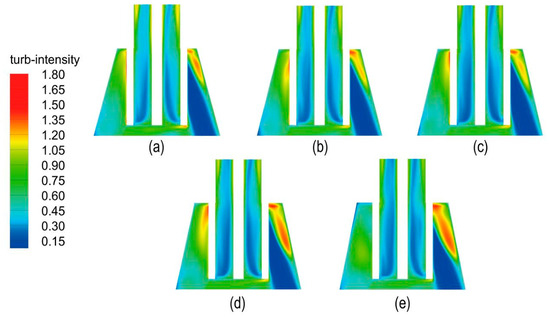
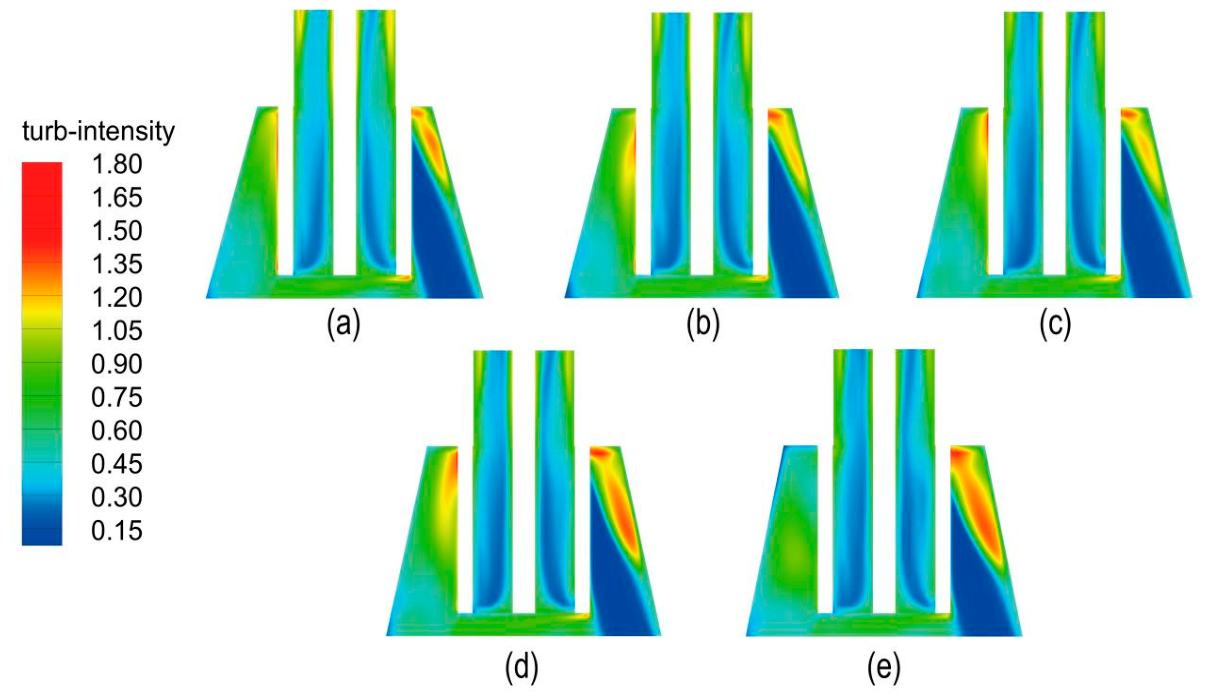
Figure 14 illustrates the variation in turbulence intensity in the classification chamber with changes in the top diameter. It is observed that turbulence is primarily concentrated in the vortex region at the angle between the top and the wall on the aforementioned side A. On side B, due to the narrow space, the airflow undergoes intense compression and shear, leading to some turbulence. However, as the top diameter increases up to the T-E type, side B finally has sufficient space for dissipation and reorganization. Consequently, the airflow at the top of this side gradually decays into a more uniform flow, thereby reducing the turbulence intensity on that side.
Figure 14.
Turbulence intensity contour plots in the graded chamber. (a) T-A-type classification chamber; (b) T-B-type classification chamber; (c) T-C-type classification chamber; (d) T-D-type classification chamber; (e) T-E-type classification chamber.
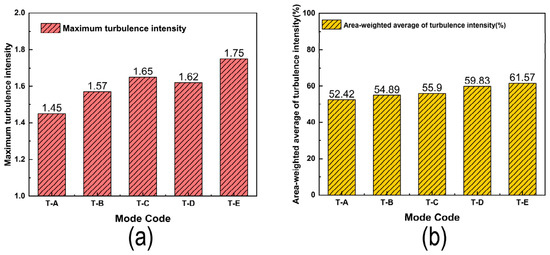
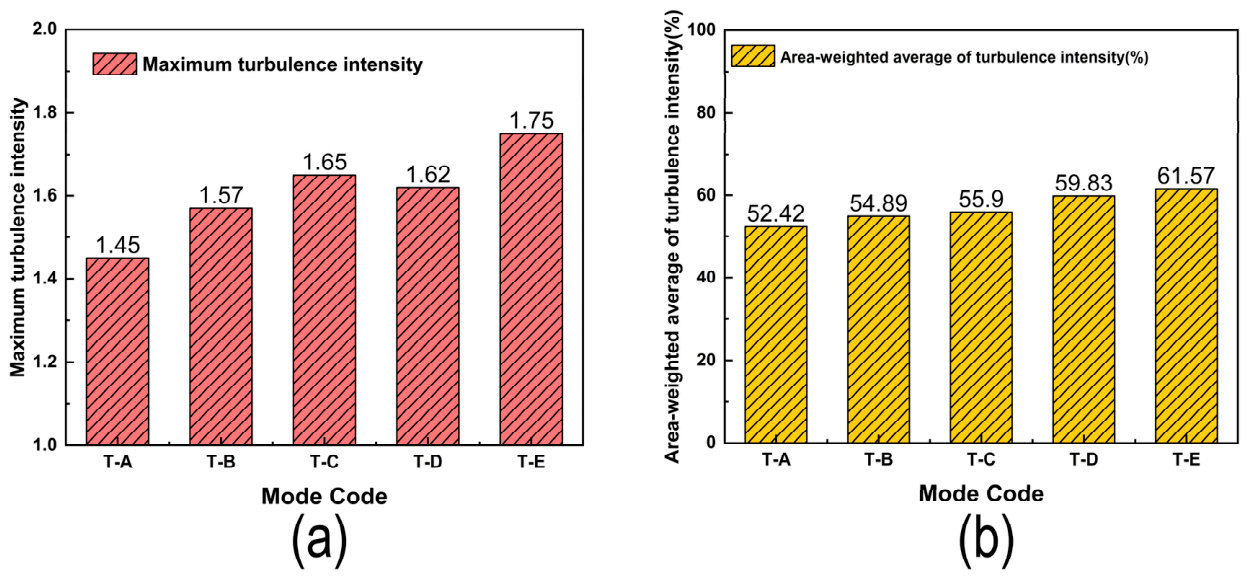
Figure 15a illustrates the trend of peak turbulence intensity as a function of the top diameter of the classification chamber. As the diameter increases, the peak turbulence intensity increases. It is noted that for the T-D type, the peak turbulence intensity is 1.62, a slight decrease from the previous trend. To eliminate the randomness caused by local flow fluctuations and further investigate the variation pattern of the overall turbulence intensity, Figure 15b displays the area-weighted average of the turbulence intensity as a function of the top diameter of the classification chamber. After spatial integration and averaging, the turbulence intensity exhibits a strictly monotonically increasing trend with increasing top diameter of the classification chamber. Although local peaks exhibit slight fluctuations at certain specific dimensions, these fluctuations are manifestations of local flow phenomena. From the perspective of energy averaging across the entire cross-section, the turbulence intensity contour plots for T-A, T-B, and T-C at small diameters exhibit local imperfections but remain generally controllable. In contrast, the T-D and T-E contour plots at large diameters indicate that high-intensity turbulence regions have spread across a broader range of classifications.
Figure 15.
Turbulence intensity peaks and the area-weighted average of turbulence intensity. (a) Maximum turbulence intensity in the classification chamber of different classifier models; (b) Area-weighted average turbulence intensity in the classification chamber of different classifier models.
3.7. Effect of Classifier Chamber Structure on Static Pressure near the Rotating Cage and on Chamber Walls
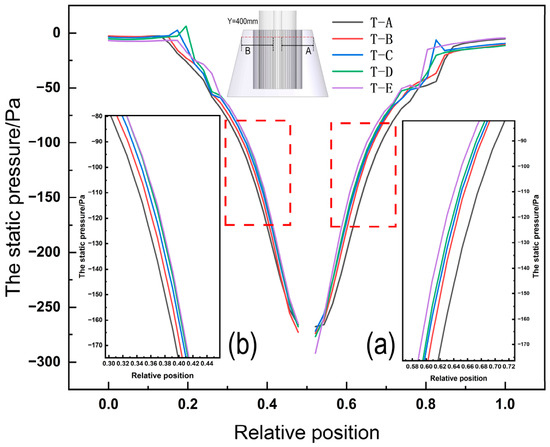
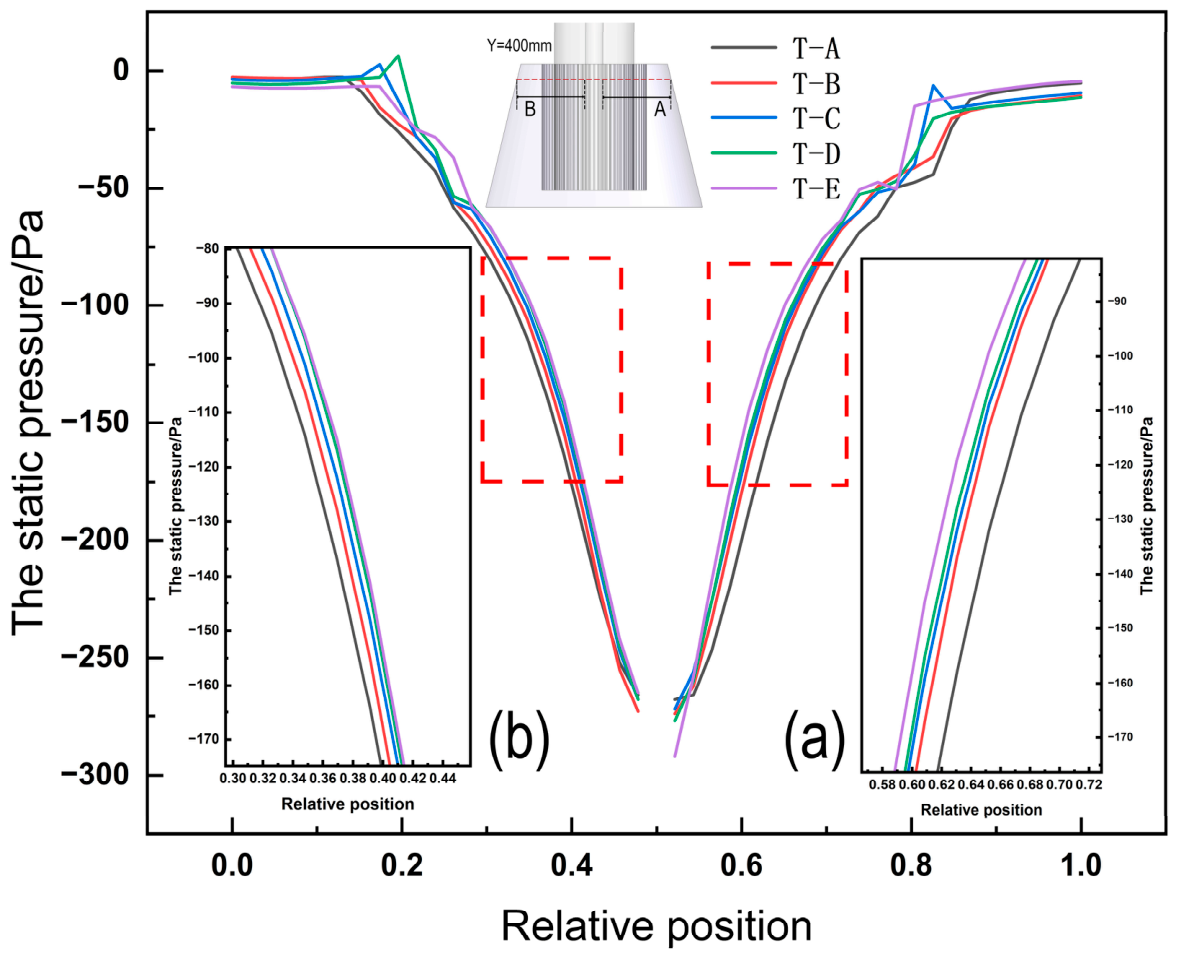
Figure 16 shows the static pressure distribution for the five classification chambers under the aforementioned vortex (Y = 400 mm). As shown in Figure 16a,b at the same relative position near the rotating cage, the negative pressure of T-A and T-B is greatest at the small diameter. In contrast, the negative pressure of T-D and T-E is smallest at the large diameter, with T-D in an intermediate state. For Side A, the average negative pressure increased by 26.95% as the top diameter of the classification chamber changed from T-A (234 mm) to T-E, while for Side B, it increased by 10.74% on average. Higher negative pressure results in higher gas flow velocity, thereby increasing processing capacity; however, for classifiers handling powders with higher hardness, this increase in the two-phase gas–solid flow velocity exacerbates particle erosion and wear on the rotor blades and the inner walls of the classifier chamber. The service life of the classifier wheel, a core component of the equipment, may be significantly shortened as a result.
Figure 16.
Static pressure at relative positions when Y = 400 mm: (a) static pressure on side A; (b) static pressure on side B. Because the top diameters differ, the relative positions indicate the proportional locations within the structure at Y = 400 mm.
3.8. Effect of Classifier Chamber Structure on Wall Pressure
3.8.1. Verification of Wall y+ Values
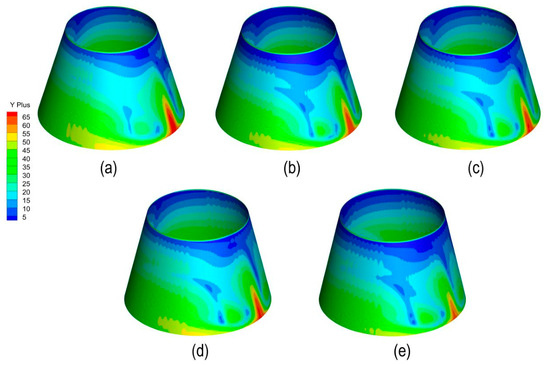
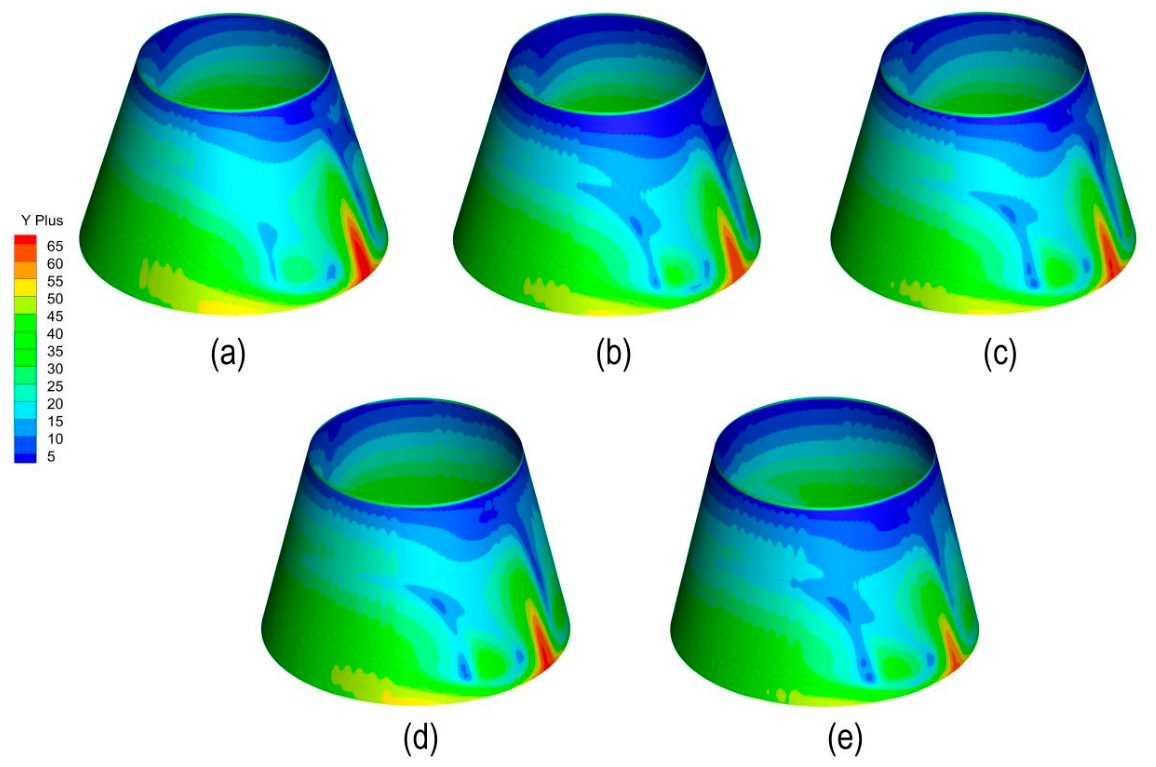
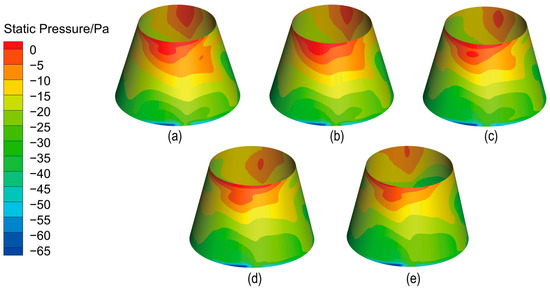
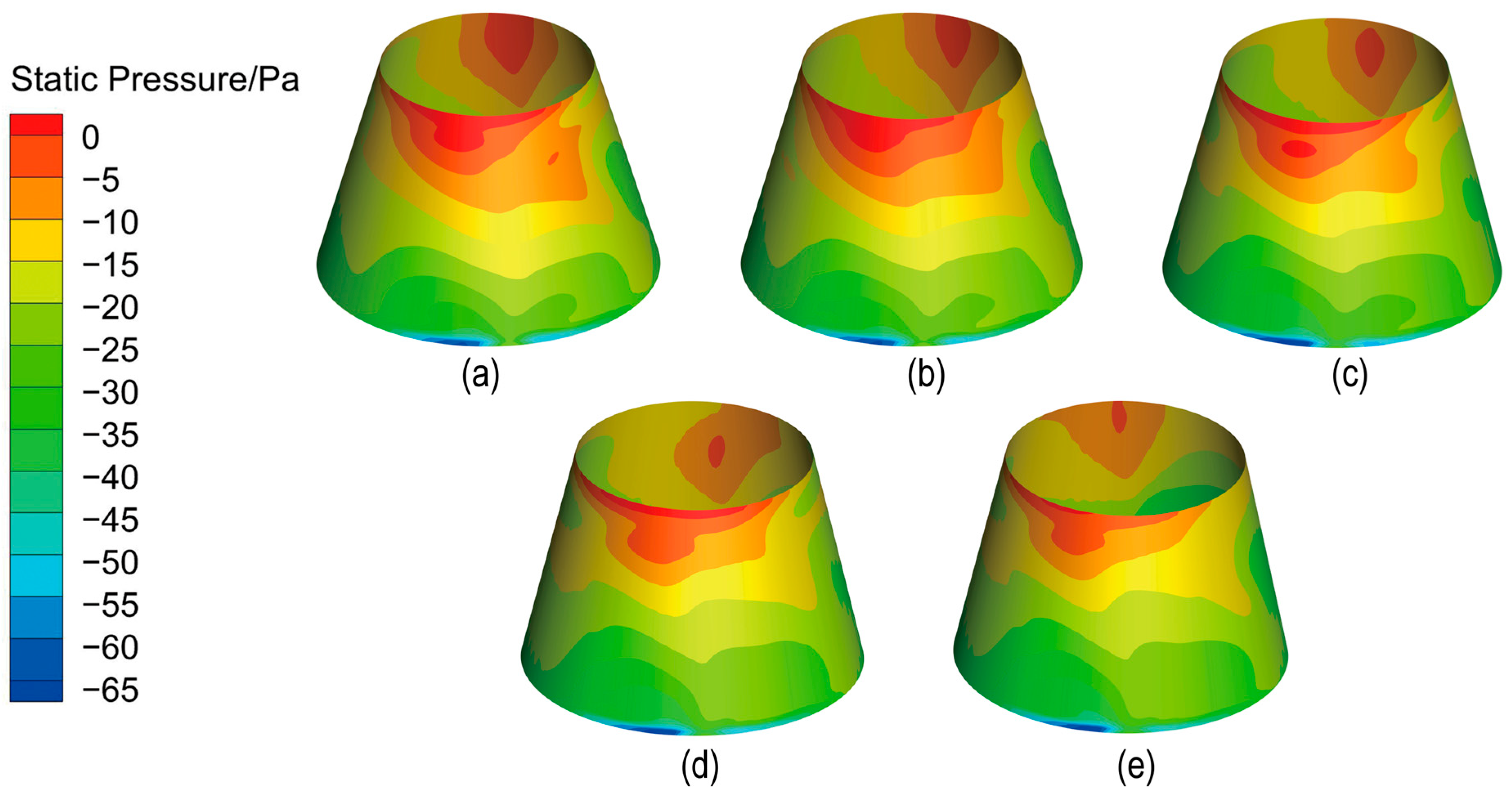
As shown in Figure 17, the y+values on the wall of the grading chamber are mainly between 30 and 50, and Figure 18 shows the contour map of the static pressure distribution on the wall of the grading chamber of the classifier. Table 9 lists the average and maximum values of y+, and this range satisfies the requirements of the standard wall function for near-wall meshes. Therefore, the wall boundary layer has been adequately resolved, and it is reasonable to use the standard wall function to calculate the turbulent flow near the wall. Under these conditions, the static pressure distribution on the wall shown in Figure 18 is highly accurate.
Figure 17.
Contour of y plus on the classifier wall. (a) T-A-type classification chamber; (b) T-B-type classification chamber; (c) T-C-type classification chamber; (d) T-D-type classification chamber; (e) T-E-type classification chamber.
Figure 18.
Effect of the top diameter of the classification chamber on the static pressure distribution on the chamber walls. (a) T-A-type classification chamber; (b) T-B-type classification chamber; (c) T-C-type classification chamber; (d) T-D-type classification chamber; (e) T-E-type classification chamber.
Table 9.
Maximum values and area-weighted averages for the y plus classifier in different sizes.
3.8.2. Wall Static Pressure for Different Classifier Designs
Figure 18 shows the static pressure contour plots on the classification chamber walls for the five structures. For both sides A and B, as the top diameter of the classification chamber increases, the area of high static pressure acting on the chamber walls decreases significantly. Furthermore, the average static pressure in this high-pressure zone increased by 7.09% as the top diameter of the classification chamber increased from T-A to T-E. This trend is consistent across all five structures, indicating that the static pressure at the wall surfaces on both sides of the top of the classification chamber decreases continuously.
3.8.3. Wall Shear Stress for Different Classifier Designs
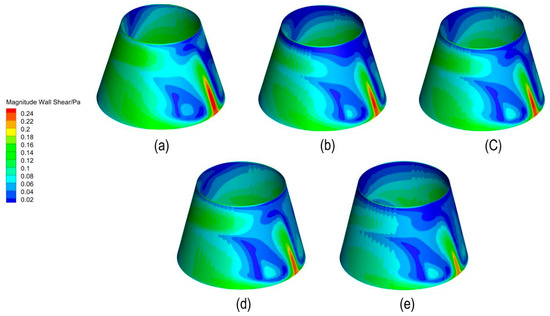
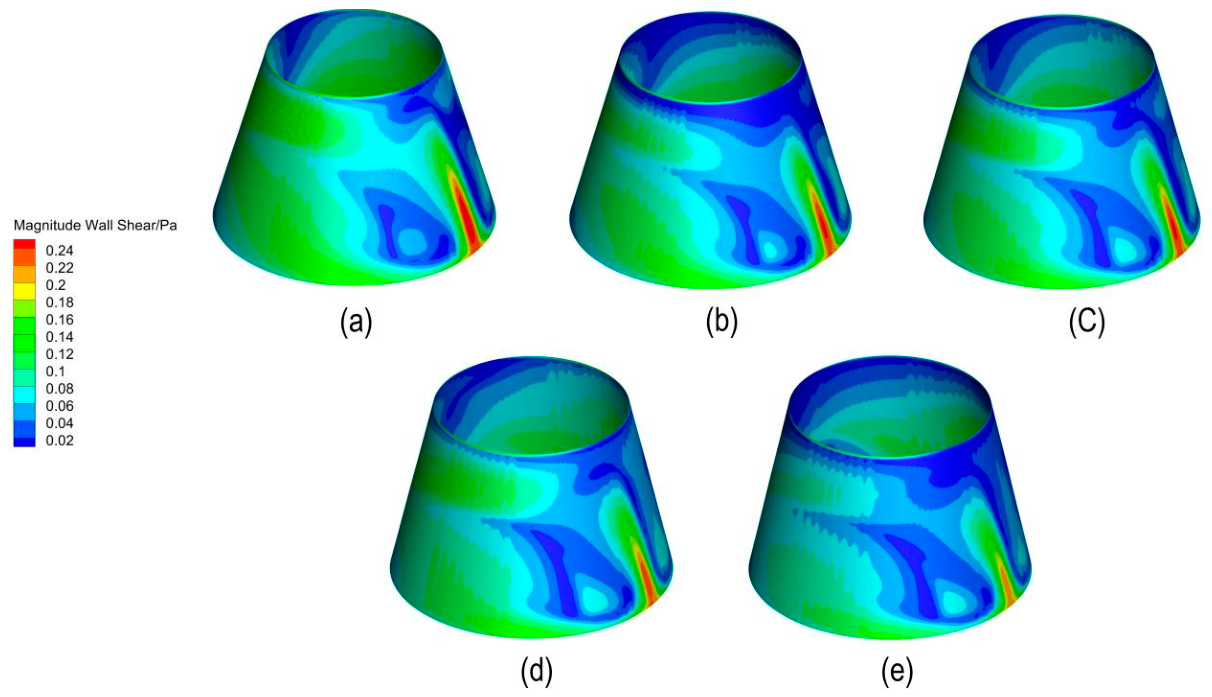
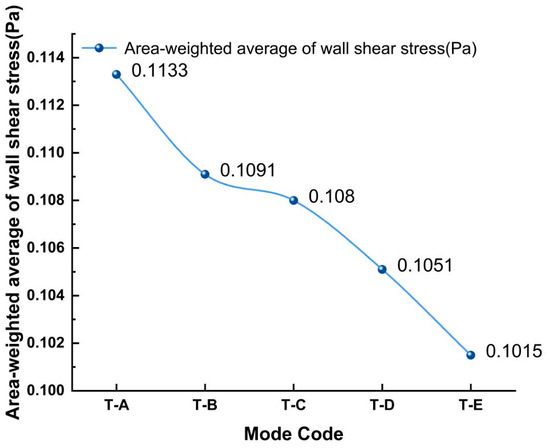
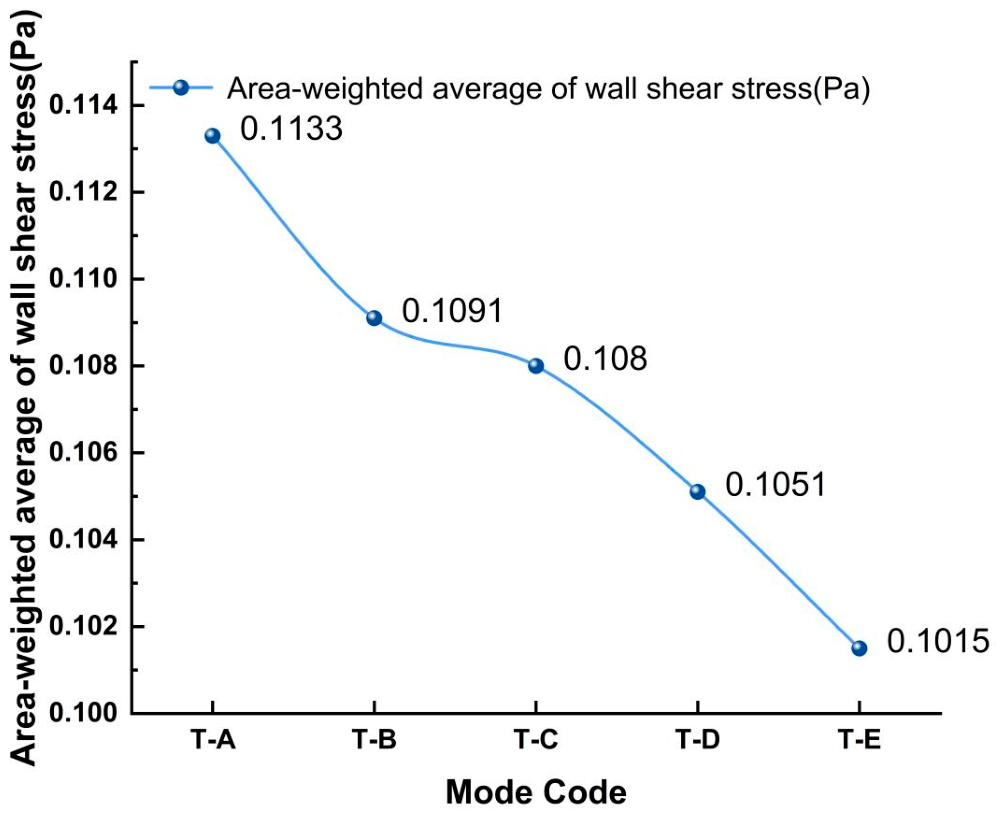
Figure 19 shows shear stress contour plots for the walls of the classification chambers for the five classifier models; Figure 20 displays the area-weighted average wall shear stress. As the upper diameter of the classification chamber increases, the average wall shear stress decreases monotonically, from 0.1133 Pa for T-A to 0.1015 Pa for T-E, a 10.4% reduction.
Figure 19.
Shear stress on the walls of different classifier models. (a) T-A-type classification chamber; (b) T-B-type classification chamber; (c) T-C-type classification chamber; (d) T-D-type classification chamber; (e) T-E-type classification chamber.
Figure 20.
Area-weighted average of wall shear stress for different classifier models.
Wall shear stress is a key parameter for quantifying the intensity of particle–wall impact and friction, and its magnitude is directly related to the equipment’s wear rate. The higher the shear stress, the stronger the tangential force acting on the wall material, and the more susceptible it is to wear. In this study, the wall shear stress at T-E was significantly lower than that at T-A, indicating that the former causes less wall wear under identical operating conditions. This trend is more pronounced in classifiers with larger diameters, suggesting that appropriately increasing the upper diameter of the classification chamber helps reduce wall wear and extend equipment service life.
3.9. Analysis of Discrete Phase Simulation Results
Particle Independence Verification
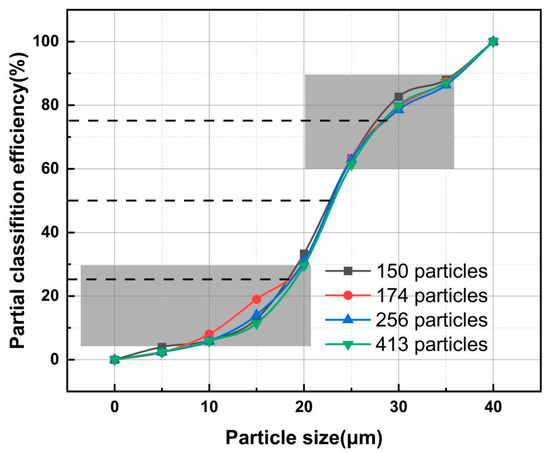
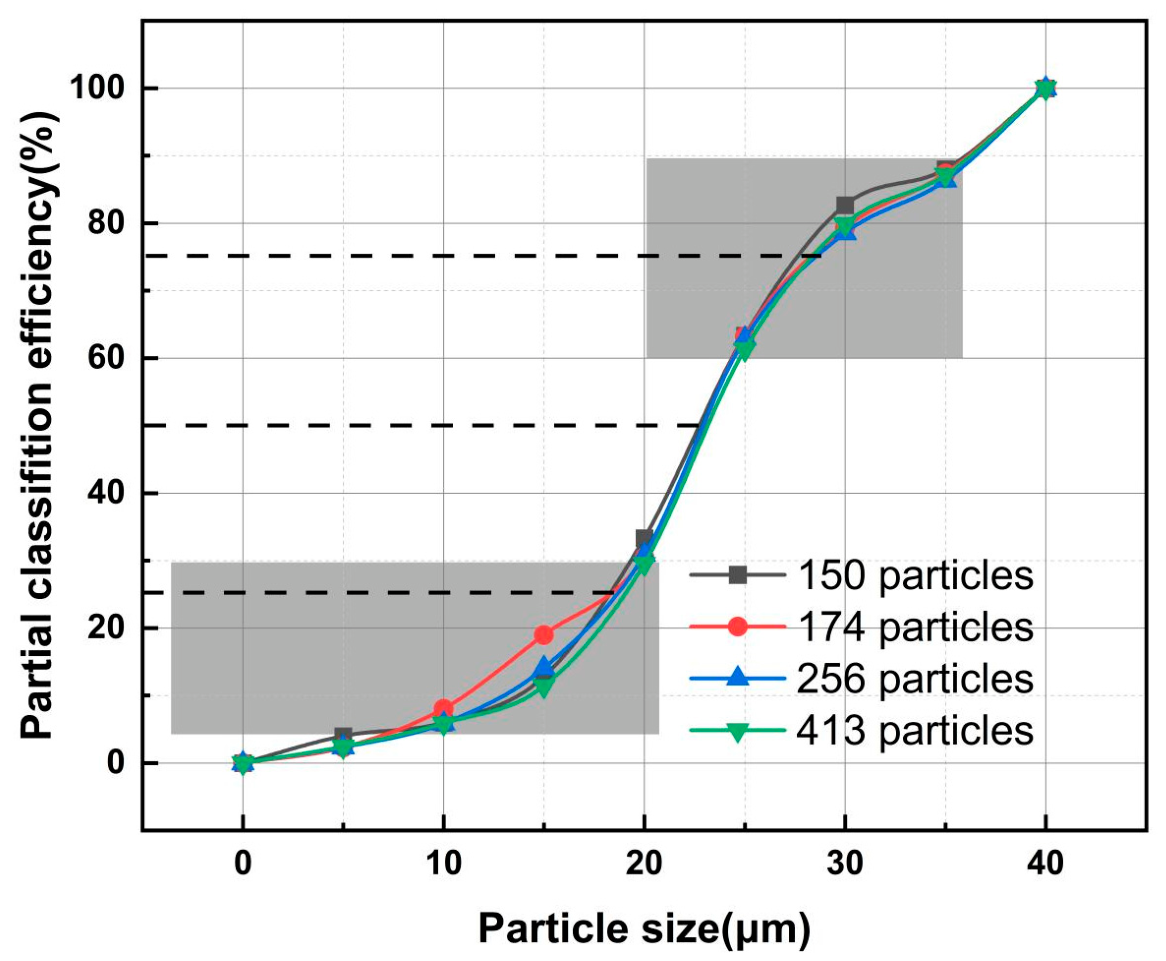
To verify the independence of the Tromp curve from the number of particles, simulation results for 150, 174, 256, and 413 particles were compared, including Tromp curves and the characteristic particle sizes D25, D50, and D75, as well as the grading accuracy k (defined as D25/D75) corresponding to each particle count. The specific values are shown in Table 10.
Table 10.
Characteristic particle size and classification accuracy for different particle counts.
The data in the table show that when the number of particles is 150, D50 is 22.8 µm and k is 0.75; when the number of particles increases to 174, D50 decreases slightly to 22.7 µm and k drops to 0.69, representing a relatively significant change. Upon further increasing the number of particles to 256, D50 decreases further to 22.4 µm, while k rises back to 0.71; when the number of particles reaches 413, D50 remains unchanged at 22.4 µm, D75 increases slightly from 27.3 µm to 27.9 µm, and D25 changes from 19.4 µm to 19.9 µm. In contrast, the k value remains unchanged at 0.71. Using the 413-particle sample as the reference, the deviation in D50 for the 256-particle sample is zero, the deviation in k is zero, and the absolute deviations for D25 and D75 are 0.5 µm and 0.6 µm, respectively, with relative deviations within 2%.
The Tromp curves shown in Figure 21 also indicate that the curves for 256 particles and 413 particles overlap closely across the entire particle size range. In comparison, the curves for 150 and 174 particles show significant deviations, particularly in the D5–D30 and D60–D90 ranges (shaded areas in the figure). The above results demonstrate that once the particle count reaches 256, further increases have negligible effects on the Tromp curve and the classification parameters. Therefore, 256 particles satisfy the requirement for independence of particle count, and this number of particles was used in all subsequent simulations.
Figure 21.
Tromp curves for different particle counts. (The shaded area in the figure represents the uncertainty band of the tromp curve caused by changes in the number of particles).
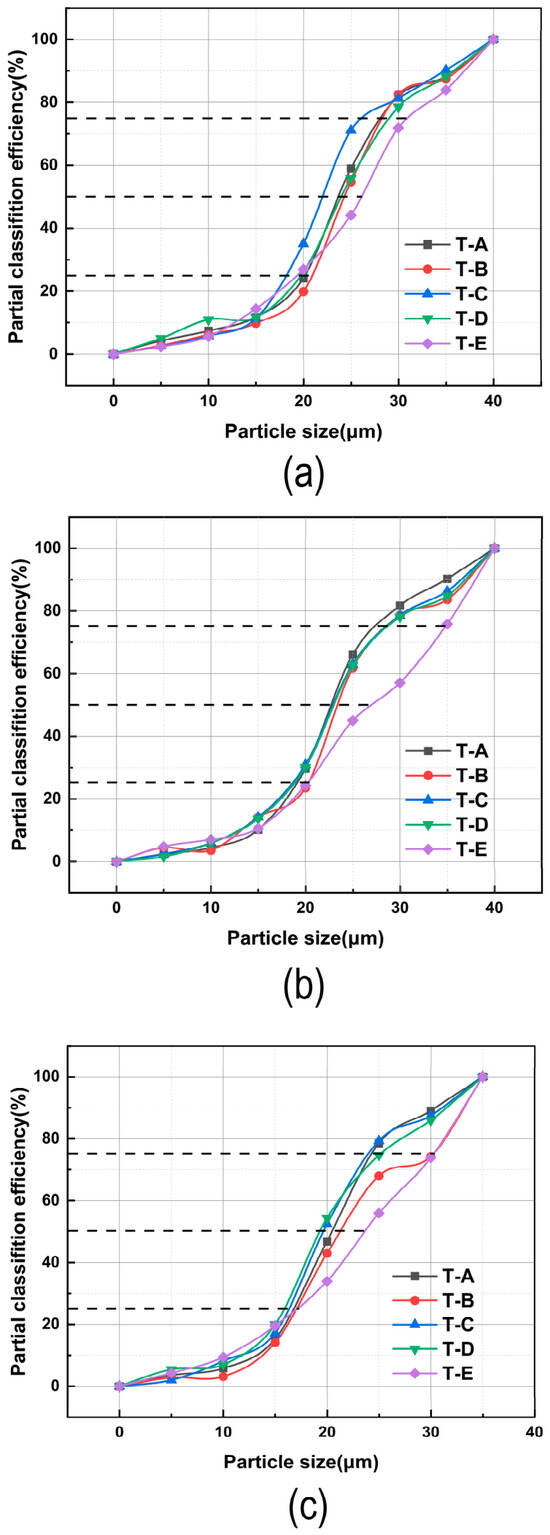
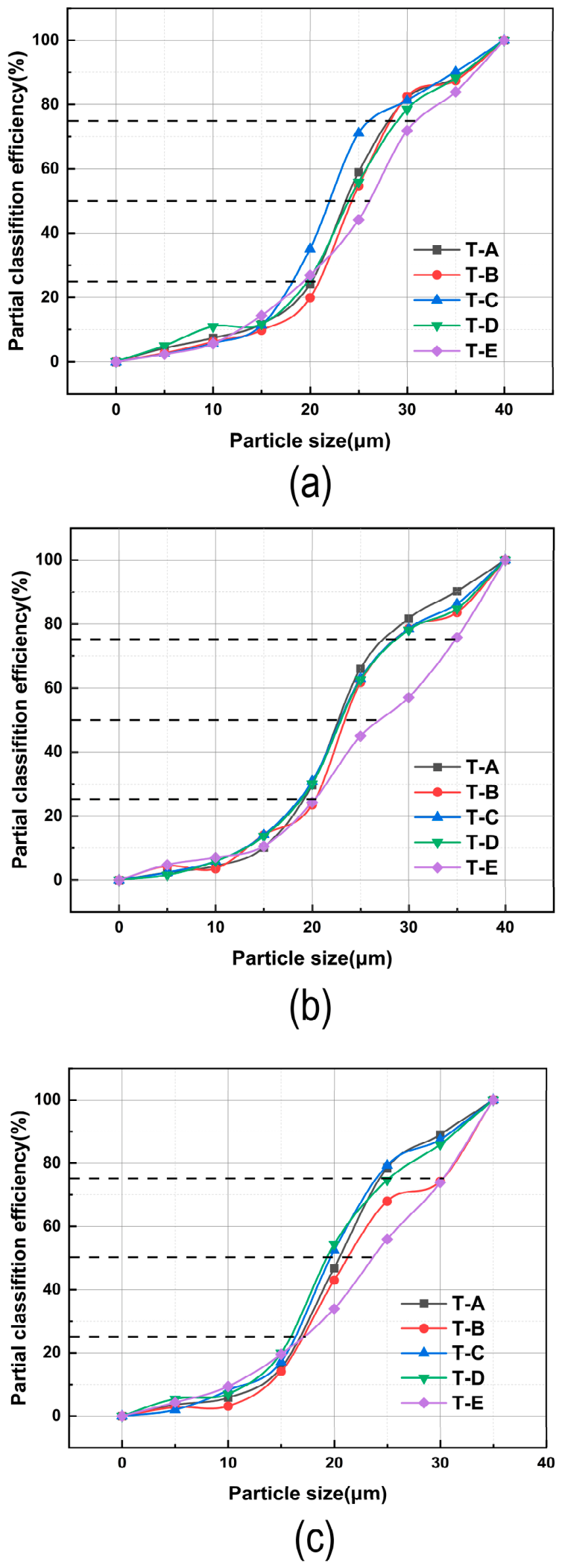
A discrete-phase model was used to simulate the effect of classifier chamber top diameters on the performance of a vertical triple-cage classifier. Using 256 particles ranging from 0 to 40 micrometers to simulate particle trajectories, TROMP curves were plotted for each structure. Sun [27] described the evaluation criteria for industrial classifiers. An analysis of the TROMP curve in Figure 22b under the operating conditions described in this paper (inlet velocity of 8 m/s and rotor speed of 1000 rpm) indicates that when the top diameter of the classification chamber increases from 234 mm (T-A) to 261 mm (T-E), the curves shift significantly to the right. Concurrently, as the top diameter increased, the cut size D50 also increased. The T-A, T-B, and T-C curves were steep, indicating higher classification accuracy. Their values reached 0.71, 0.69, and 0.71, respectively, while those for the T-D and T-E types were 0.65 and 0.57, respectively.
Figure 22.
Tromp curves of the classifier under different operating conditions: (a) inlet velocity of 6 m/s, rotor speed of 800 rpm; (b) inlet velocity of 8 m/s, rotor speed of 1000 rpm; (c) inlet velocity of 11 m/s, rotor speed of 1400 rpm.
The Tromp curves for T-A and T-B have a smaller cut size Dc. This is because a smaller top diameter increases the tangential velocity, thereby increasing the centrifugal force acting on fine particles. However, this comes at the cost of higher rotor energy consumption and increased erosion and wear of the classification chamber walls due to high-speed airflow carrying particles. Therefore, although these two models can produce finer products, they suffer from poor economic efficiency and shorter equipment lifespan.
While maintaining a classification accuracy of 0.71, the T-C model exhibits the ideal Tromp curve: both D25 and D75 are smaller than those of the T-A and T-B models, indicating a steeper classification curve and a more concentrated product particle-size distribution. At the same time, due to the moderate top diameter, the tangential velocity is reduced to a reasonable range, resulting in lower energy consumption and reduced wall wear, thereby achieving a balance of “high precision, low energy consumption, and long service life.”
The top diameters of T-D and T-E are too large, causing significant distortion of the Tromp curve. Their classification accuracy drops sharply to 0.65 and 0.57, respectively. This is because the excessive top diameter significantly increases the scale of vortices within the classification chamber, disrupting the stable classification force field and causing a large number of coarse particles to be entrained into the fine powder, or fine particles to mix into the coarse powder.
To further validate the research results, TROMP curves for the classifier under two additional operating conditions were simulated. As shown in Figure 22a,b, the T-C type demonstrated good classification accuracy in both cases.
In summary, the T-C structure maintains high classification accuracy (0.71) while effectively avoiding the high energy consumption and high wear associated with small-diameter structures, and preventing flow-field instability and accuracy degradation characteristic of large-diameter structures. Its Tromp curve exhibits the optimal Dc position and the steepest separation slope, making it the optimal design among the five structures.
4. Experimental Results and Analysis
4.1. Experimental Setup
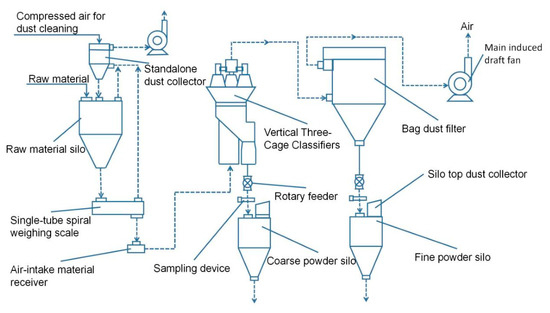
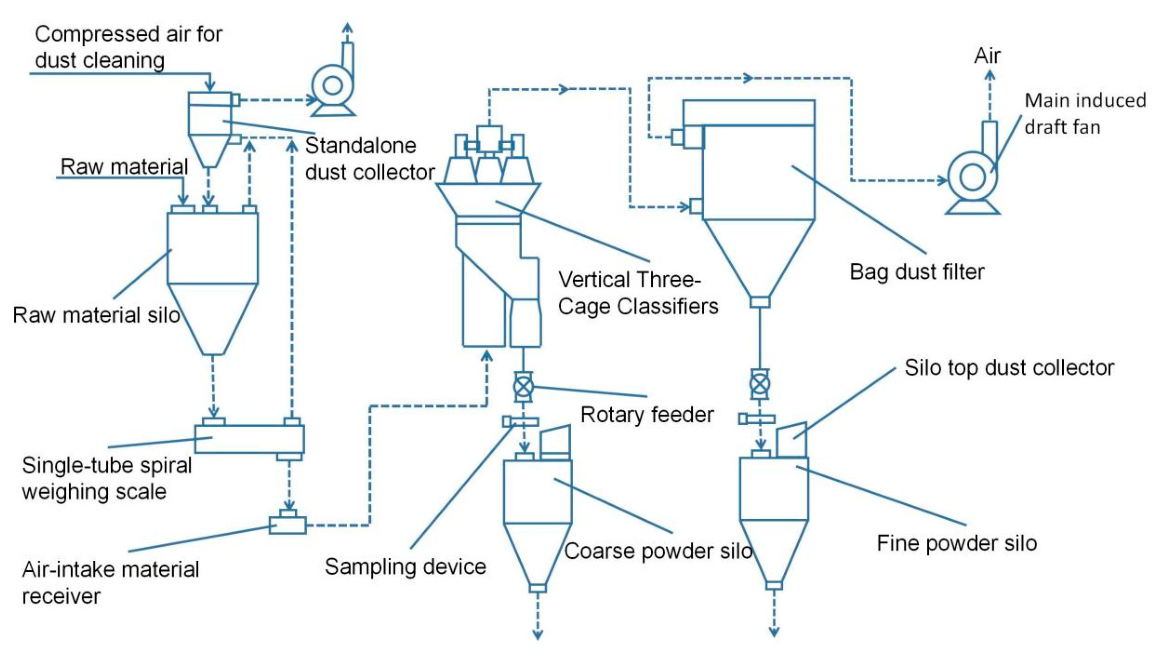
Figure 23 shows the experimental classification system of Kaijin New Energy Technology Co., Ltd., Yancheng City, Jiangsu Province, China, which consists of a raw material silo, a stand-alone dust collector, a single-tube spiral weighing scale, an air-intake material receiver, vertical three-cage classifiers, a bag dust filter, a main induced draft fan, a rotary feeder, a sampling device, a coarse powder silo, a silo top dust collector, and a fine powder silo. The system’s equipment parameters are shown in Table 11.
Figure 23.
Flowchart of the grading system process.
Table 11.
List of equipment in the classification system.
4.2. Comparison of Simulation Results and Experimental Results
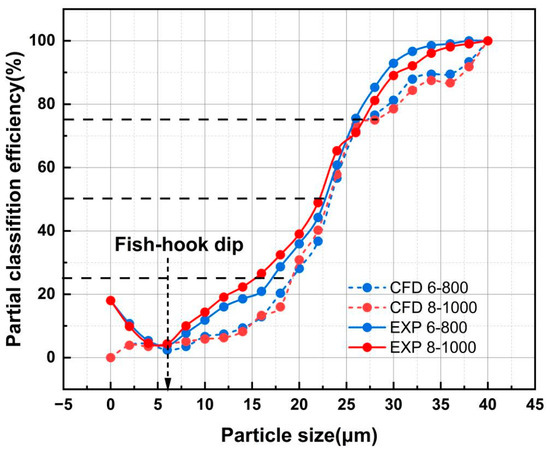
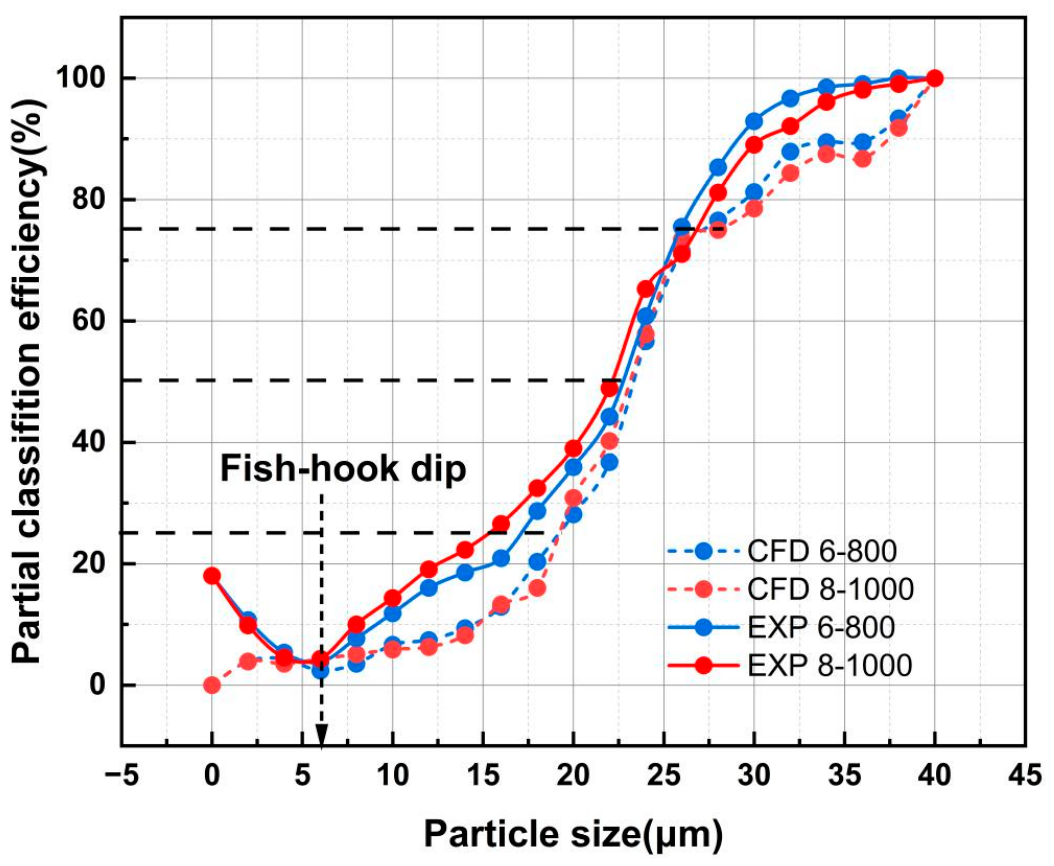
To verify the reliability of the numerical simulations, this study compares the Tromp curves of a T-C-type classifier—where the ratio of the top diameter of the classifier chamber to the rotor diameter is 1.4—under two operating conditions. In this experiment, calcium carbonate is used as the raw material, with a batch size of approximately 0.5 kg. The system involves manual feeding and unloading, with a simple packaging machine used for manual packaging. The classification system operates under full negative pressure; each silo is equipped with load cells and negative-pressure exhaust vents, and airflow measurement ports are provided at appropriate locations.
As shown in Table 12, the CFD simulations capture the same trends in characteristic particle sizes as the experiments. When the inlet air velocity and rotor speed are increased from 6 m/s–800 rpm to 8 m/s–1000 rpm, both simulation and experiment indicate a decrease in cut size d50 (simulation: 22.8 → 22.4 µm; experiment: 22.7 → 22.1 µm). The d75 values remain nearly unchanged around 27 µm. This consistency demonstrates that the CFD method reliably predicts the shift in the separation curve with changing operating parameters.
Table 12.
Comparison of experimental and simulated values and K.
However, the experimental Tromp curves (presented in Figure 24) exhibit a pronounced fish-hook effect in the fine particle region, i.e., an abnormal increase in recovery of very fine particles due to agglomeration in the actual process. This effect is absent in the simulations because the current CFD model does not account for particle–particle cohesion, electrostatic forces, or moisture-induced agglomeration. Consequently, the experimental classification accuracy k is lower than the simulated values (0.64 vs. 0.70 for 6-800; 0.60 vs. 0.71 for 8-1000). The deviation in k becomes larger at higher rotor speed (1000 rpm), where particle collision frequency and agglomeration tendency increase.
Figure 24.
Experimentation and simulation of Tromp curves.
Despite the fish-hook effect, the relative errors for the key design parameter d50 are only 0.44% and 1.36% under the two conditions. The errors for d75 are below 3%. These deviations are well within the acceptable range for engineering applications. The larger errors in d25 and k are directly attributable to fine-particle agglomeration, which does not affect the prediction of the intrinsic separation behavior of the classifier.
Therefore, the CFD method can effectively predict the variation pattern of classification performance (especially cut size and coarse-end separation), even though it does not capture the fish-hook effect. CFD remains an effective tool for predicting trends in classification performance, aiding in the design of air classifiers.
5. Conclusions
Numerical simulations of the flow field in a rotary cage classifier were carried out with FLUENT 19.2, based on the finite-volume method. A discrete-phase model served to predict particle motion under single-phase conditions. The key conclusions are presented below:
- The vertical triple-cage classifier was designed with air and material entering from the bottom. The classifier is fitted with an inverted conical rotor cage and a diversion cone. This solved the problems of inadequate predispersion and high dust concentration in the grading zone of the turbo air classifier.
- The new rotary cage dynamic classifier is designed with bottom air and feed inlet configurations. The classifier is equipped with an inverted conical cage support and a flow-guiding cone inside the classifier chamber. This design addresses the issues of insufficient pre-dispersion in the classification zone and high dust concentration found in turbine-type air classifiers.
- The tangential velocity at the outer edge of the rotating cage does not have a decisive impact on the cage’s energy consumption. When the classification chamber structure is enlarged, although the tangential velocity itself is reduced to some extent, stronger vortices are introduced. This has a more significant impact on total energy consumption, ultimately increasing the cage’s overall energy consumption. This indicates that, in optimizing the classification chamber structure, one must not focus solely on reducing the tangential velocity but also comprehensively consider the increased energy consumption induced by vortices generated by an enlarged top diameter.
- When the top diameter of the classification chamber is too small, the high negative pressure inside the chamber exacerbates the erosion and wear of the classifier cage blades and chamber walls caused by particle impact. Conversely, when the top diameter is too large, the scale of vortices within the chamber increases, and turbulence intensity rises. Furthermore, DPM simulations confirm that turbulence diffusion in this region reduces the classifier’s classification accuracy. Therefore, there is an optimal ratio between the top diameter of the classification chamber and the rotor diameter. This ratio reduces rotor energy consumption and wall wear while improving classification accuracy.
Author Contributions
Y.F. provided the design idea of the new classifier and supervised the research; Q.C. was responsible for the analysis of experimental results, writing, and editing the manuscript; F.W. and H.L. were responsible for making modifications. All authors have read and agreed to the published version of the manuscript.
Funding
This research received no external funding.
Data Availability Statement
The original contributions presented in this study are included in the article. Further inquiries can be directed to the corresponding author.
Conflicts of Interest
The authors declare no conflict of interest.
References
- Raganati, F.; Chirone, R.; Ammendola, P. Gas–solid fluidization of cohesive powders. Chem. Eng. Res. Des. 2018, 133, 347–387. [Google Scholar] [CrossRef] [Scilit]
- Huang, J.; Yang, M.; Wan, L.; Tang, K.; Zhang, H.; Chen, J.; Noël, J.J.; Barker, I.; Zhang, H.; Zhu, J. Ultrafine powder coating: Smooth surface, dense structure and enhanced corrosion resistance. Chem. Eng. J. 2023, 455, 140815. [Google Scholar] [CrossRef] [Scilit]
- Xing, W.; Wang, Y.; Zhang, Y.; Yamane, Y.; Saga, M.; Lu, J.; Zhang, H.; Jin, Y. Experimental study on velocity field between two adjacent blades and gas–solid separation of a turbo air classifier. Powder Technol. 2015, 286, 240–245. [Google Scholar] [CrossRef] [Scilit]
- Sun, Z.; Liang, L.; Liu, C.; Zhu, Y.; Zhang, L.; Yang, G. CFD simulation and performance optimization of a new horizontal turbo air classifier. Adv. Powder Technol. 2021, 32, 977–986. [Google Scholar] [CrossRef] [Scilit]
- Gao, L.; Yu, Y.; Liu, J. Study on the cut size of a turbo air classifier. Powder Technol. 2013, 237, 520–528. [Google Scholar] [CrossRef] [Scilit]
- Morimoto, H.; Shakouchi, T. Classification of ultra fine powder by a new pneumatic type classifier. Powder Technol. 2003, 131, 71–79. [Google Scholar] [CrossRef] [Scilit]
- Wang, X.; Ge, X.; Zhao, X.; Wang, Z. Study on horizontal turbine classification. Powder Technol. 1999, 102, 166–170. [Google Scholar] [CrossRef] [Scilit]
- Yu, Y.; Li, X.; Zhang, Y.; Jiao, Z.; Liu, J. The influence of air inlet layout on the inner flow field for a vertical turbo air classifier. Physicochem. Probl. Miner. Process. 2023, 59, 175859. [Google Scholar] [CrossRef] [Scilit]
- Guizani, R.; Mhiri, H.; Bournot, P. Effects of the geometry of fine powder outlet on pressure drop and separation performances for dynamic separators. Powder Technol. 2017, 314, 599–607. [Google Scholar] [CrossRef] [Scilit]
- Huang, Q.; Liu, J.; Yu, Y. Turbo air classifier guide vane improvement and inner flow field numerical simulation. Powder Technol. 2012, 226, 10–15. [Google Scholar] [CrossRef] [Scilit]
- Yu, Y.; Ren, W.; Liu, J. A new volute design method for the turbo air classifier. Powder Technol. 2019, 348, 65–69. [Google Scholar] [CrossRef] [Scilit]
- Yu, Y.; Li, X.; Ren, J.; Kang, J.; Jiao, Z.; Liu, J. Influence of guide vane on dispersion of aggregates near the guide vane in a turbo air classifier. Powder Technol. 2024, 434, 119344. [Google Scholar] [CrossRef] [Scilit]
- Liu, K.; Chen, W.; Gong, Z.; Liu, J.; Yu, Y. The influence of the guide vane positioning on the flow field of a turbo air classifier. Mater. Werkst. 2024, 55, 1385–1394. [Google Scholar] [CrossRef] [Scilit]
- Wang, F.; Zhao, Z.; Peng, J.; Fang, Y. The Influence of Secondary Air Guide Vanes on the Flow Field and Performance of a Turbine Air Classifier. Processes 2025, 13, 2268. [Google Scholar] [CrossRef] [Scilit]
- Mou, X.; Jia, F.; Fang, Y.; Chen, C. CFD-Based Structural Optimization of Rotor Cage for High-Efficiency Rotor Classifier. Processes 2021, 9, 1148. [Google Scholar] [CrossRef] [Scilit]
- Jia, F.; Mou, X.; Fang, Y.; Chen, C. A New Rotor-Type Dynamic Classifier: Structural Optimization and Industrial Applications. Processes 2021, 9, 1033. [Google Scholar] [CrossRef] [Scilit]
- Ren, W.; Liu, J.; Yu, Y. Design of a rotor cage with non-radial arc blades for turbo air classifiers. Powder Technol. 2016, 292, 46–53. [Google Scholar] [CrossRef] [Scilit]
- Zeng, Y.; Huang, B.; Qin, D.; Zhou, S.; Li, M. Numerical and Experiment Investigation on Novel Guide Vane Structures of Turbo Air Classifier. Processes 2022, 10, 844. [Google Scholar] [CrossRef] [Scilit]
- Xu, N.; Li, G.; Huang, Z. Numerical simulation of particle motion in turbo classifier. China Particuol. 2005, 3, 275–278. [Google Scholar] [CrossRef] [Scilit]
- Yu, Y.; Cao, Y.; Zhang, Y.; Fu, J.; Liu, J. Effects of guide holes on the performance of a vertical turbo air classifier. Can. J. Chem. Eng. 2022, 101, 4700–4710. [Google Scholar] [CrossRef] [Scilit]
- Li, Q.; Mou, X.; Fang, Y. Effects of a Guide Cone on the Flow Field and Performance of a New Dynamic Air Classifier. Processes 2022, 10, 874. [Google Scholar] [CrossRef] [Scilit]
- Yang, H.; Sun, Z.; Liu, C.; Wang, Z.; Yao, Y.; Yang, G. Vortex analysis and flow field optimization for the particle classifier with three rotary cages. Adv. Powder Technol. 2023, 34, 104169. [Google Scholar] [CrossRef] [Scilit]
- Hryb, D.; Cardozo, M.; Ferro, S.; Goldschmit, M. Particle transport in turbulent flow using both Lagrangian and Eulerian formulations. Int. Commun. Heat Mass Transf. 2009, 36, 451–457. [Google Scholar] [CrossRef] [Scilit]
- Shukla, S.K.; Shukla, P.; Ghosh, P. Evaluation of numerical schemes using different simulation methods for the continuous phase modeling of cyclone separators. Adv. Powder Technol. 2011, 22, 209–219. [Google Scholar] [CrossRef] [Scilit]
- Jiao, J.; Zheng, Y.; Wang, J.; Sun, G. Experimental and numerical investigations of a dynamic cyclone with a rotary impeller. Chem. Eng. Process. Process Intensif. 2008, 47, 1861–1866. [Google Scholar] [CrossRef] [Scilit]
- Yu, Y.; Liu, R.R.; Liu, J. Correspondence analysis and establishment of evaluation model of classification performance indices for a turbo air classifier. Mater. Werkst. 2014, 45, 900–911. [Google Scholar] [CrossRef] [Scilit]
- Sun, Z.; Sun, G.; Peng, P.; Liu, Q.; Yu, X. A new static cyclonic classifier: Flow characteristics, performance evaluation and industrial applications. Chem. Eng. Res. Des. 2019, 145, 141–149. [Google Scholar] [CrossRef] [Scilit]

Disclaimer/Publisher’s Note: The statements, opinions and data contained in all publications are solely those of the individual author(s) and contributor(s) and not of MDPI and/or the editor(s). MDPI and/or the editor(s) disclaim responsibility for any injury to people or property resulting from any ideas, methods, instructions or products referred to in the content. |
© 2026 by the authors. Licensee MDPI, Basel, Switzerland. This article is an open access article distributed under the terms and conditions of the Creative Commons Attribution (CC BY) license.