Relative Permeability Characteristics of Natural Gas and CO2 Mixtures in Matrix and Fractured Cores: An Experimental Study



Abstract
1. Introduction
2. Experiment and Methodology
2.1. Materials
2.1.1. Core Samples
- (1)
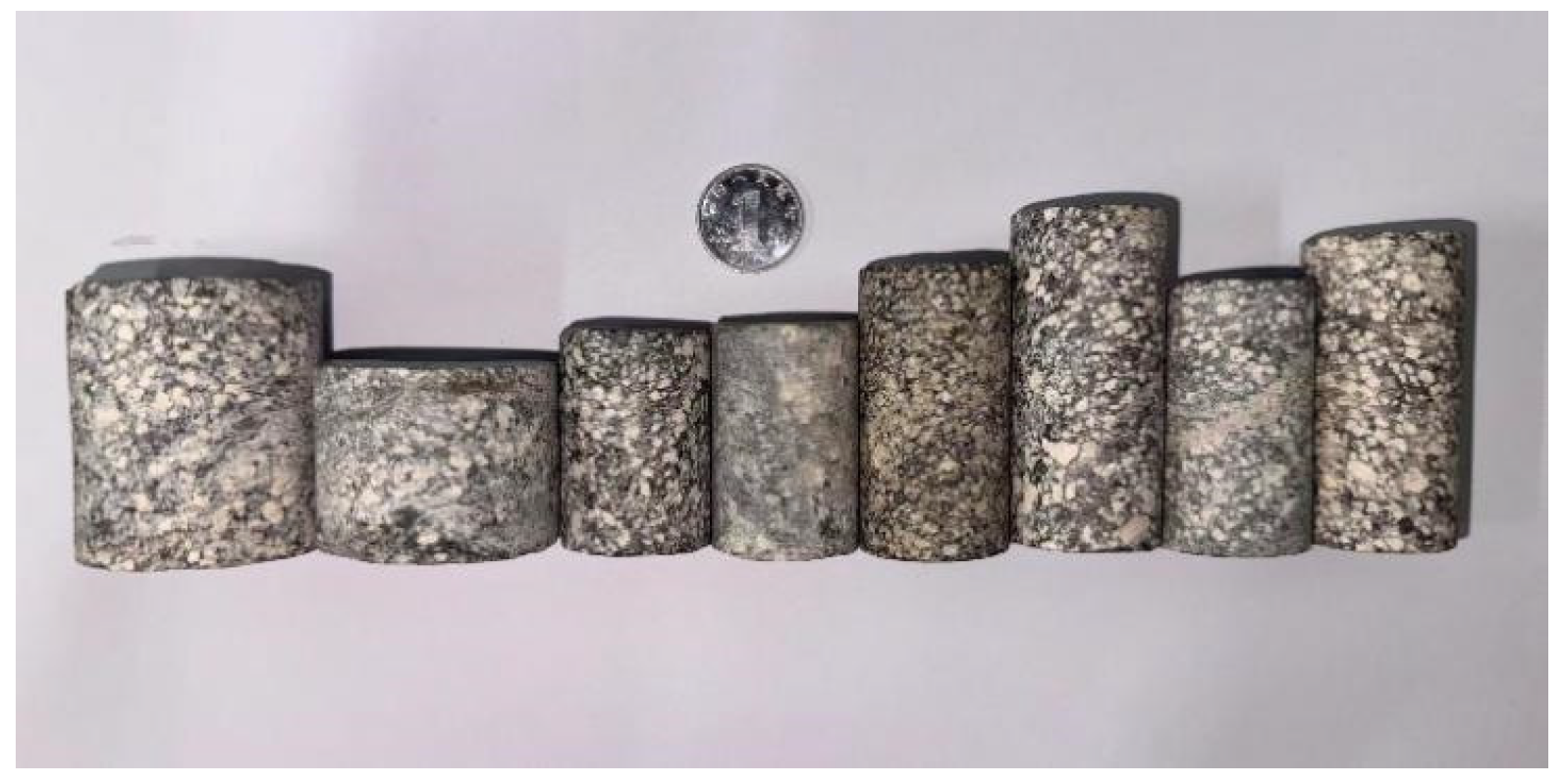
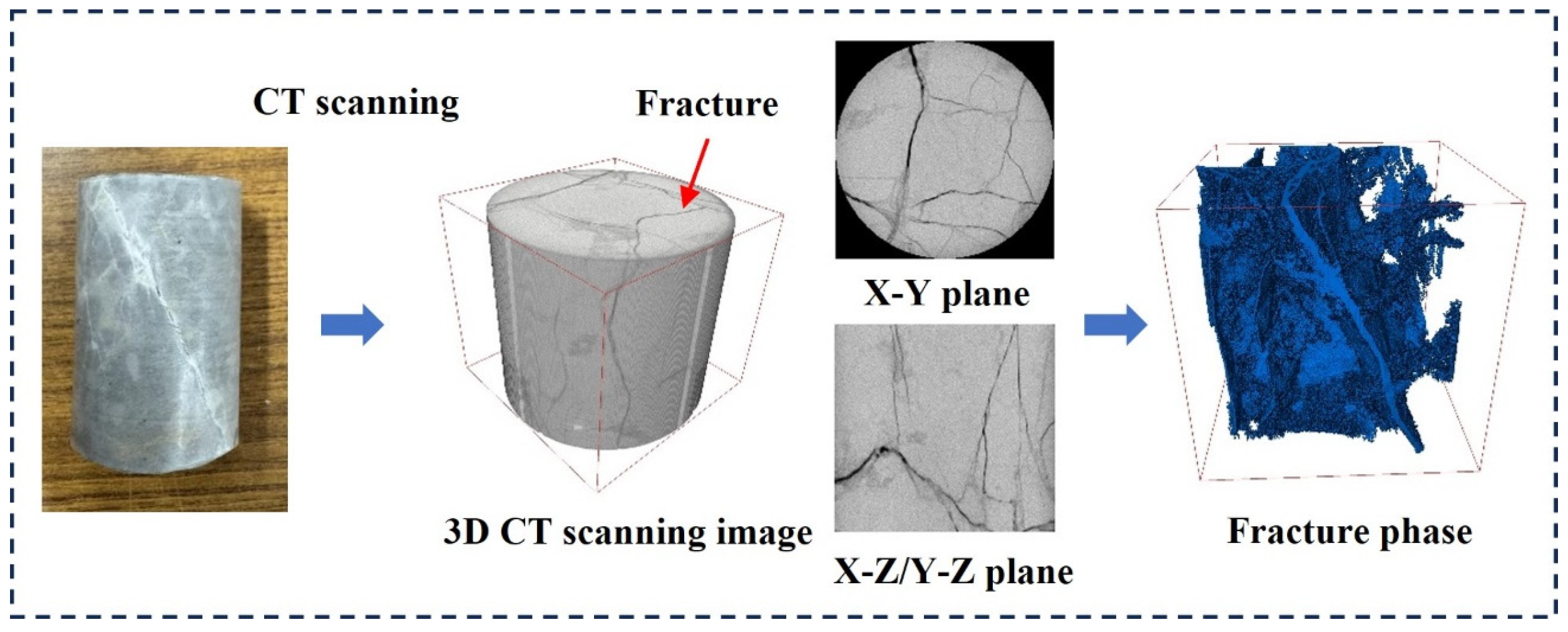
- Preparation of fractured metamorphic rock cores
- (2)
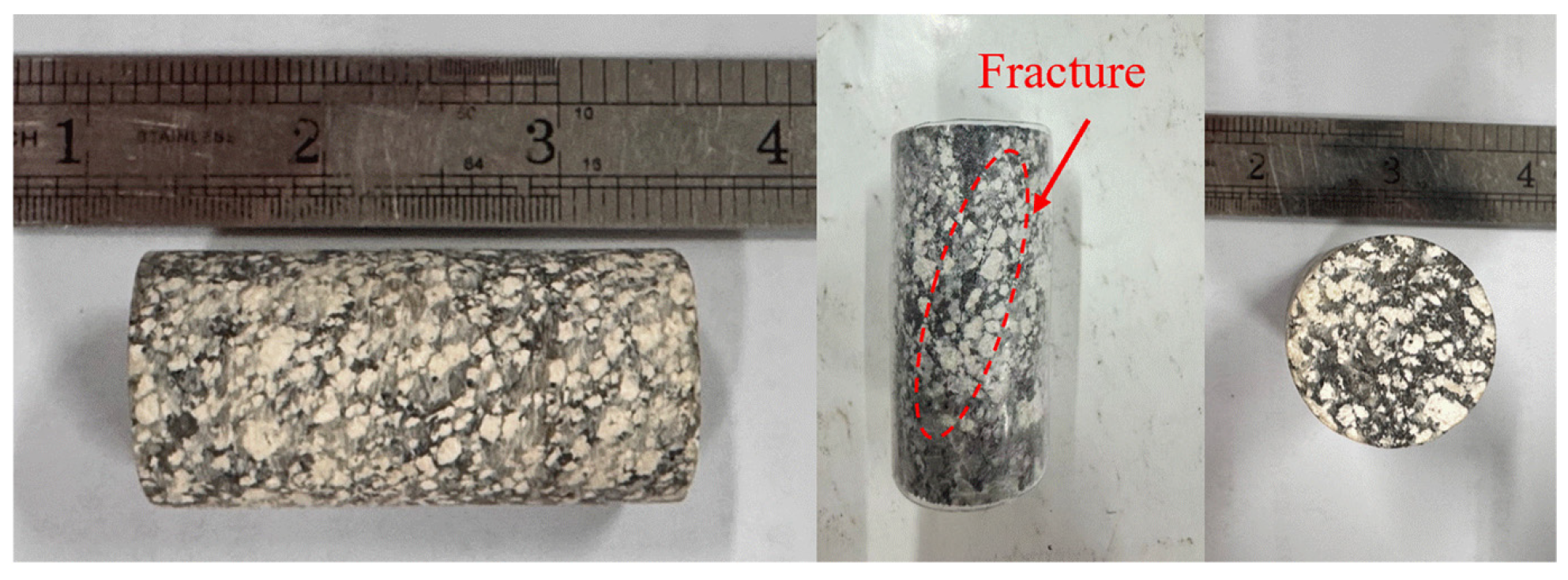
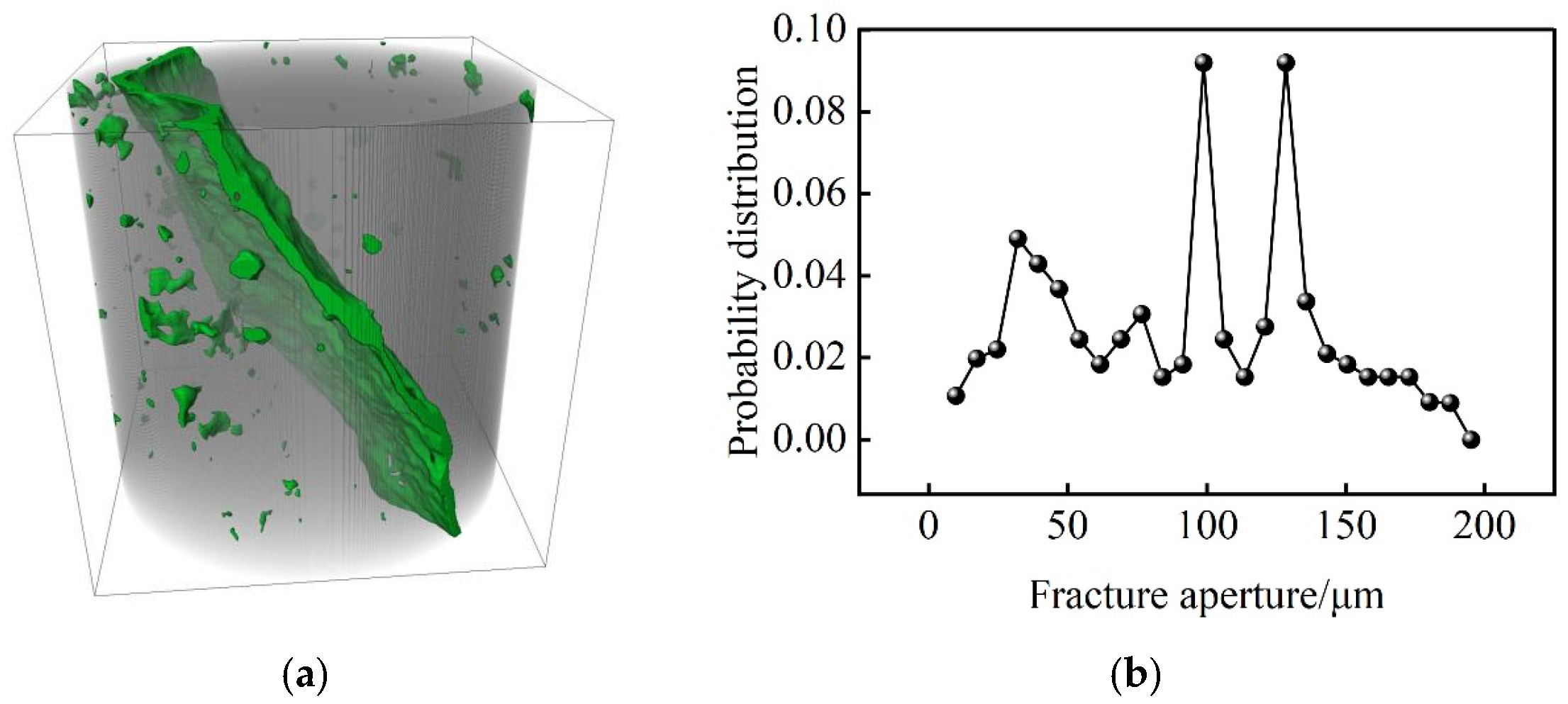
- Preparation of fractured carbonate rock core
2.1.2. Preparation and Properties of Fluids
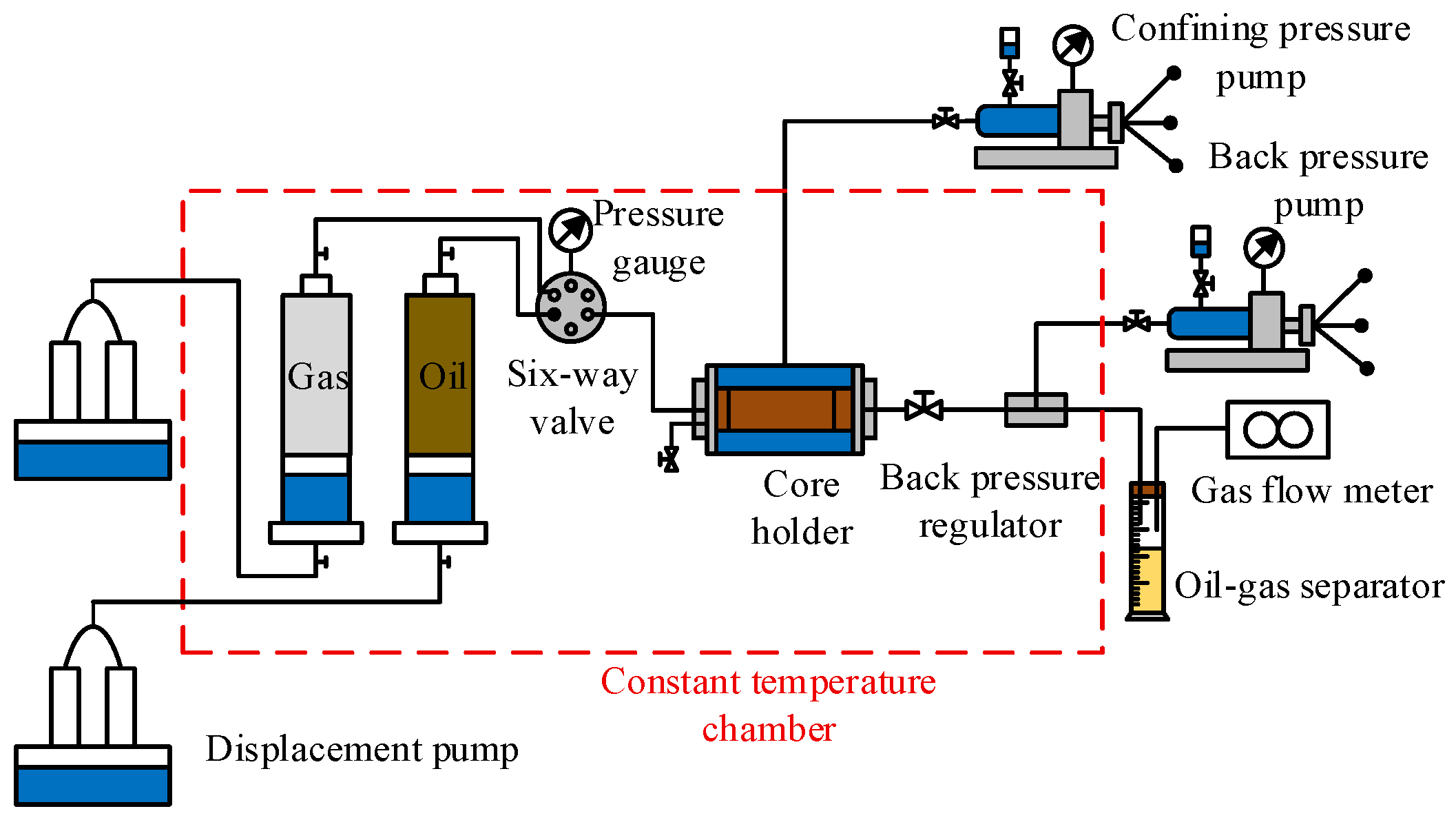
2.2. Experimental Setup and Procedure
2.2.1. Steady-State Method for Relative Permeability Measurement
- The core was evacuated to 10−3 Pa using a vacuum pump and then saturated with formation water under reservoir pressure until the pressure in the saturation vessel stabilized. The core was then removed and weighed.
- The saturated core was placed into a high-pressure core holder, and the temperature was brought to the preset value using the ultra-high-temperature oven and heating jacket.
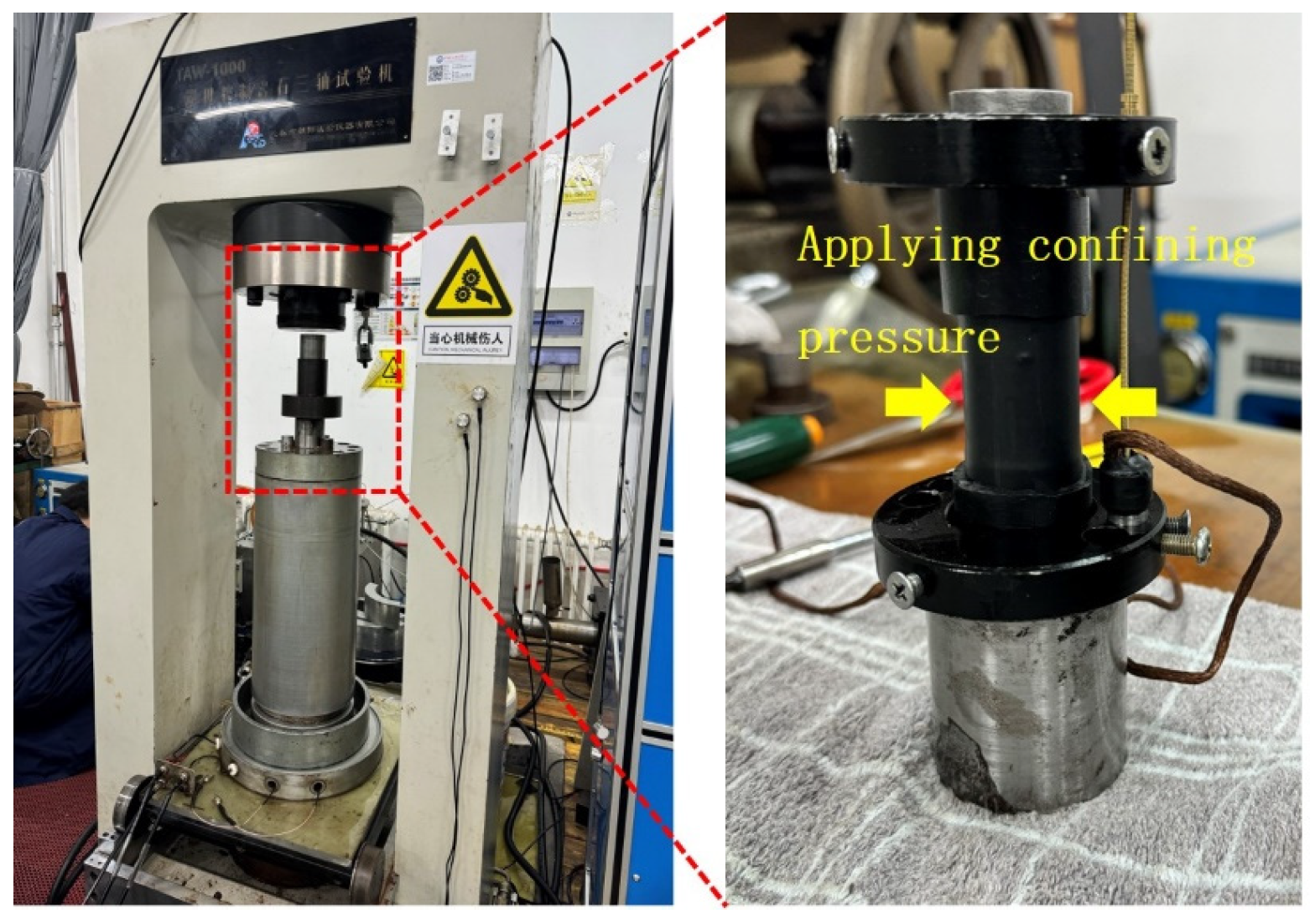
- The confining pressure was maintained at 4 MPa above the pore pressure throughout the experiment. Formation water was injected into the core until stable water production was achieved, and the water-phase permeability was measured. Back pressure was gradually applied to the back-pressure valve using a back-pressure pump until the experimental pressure was reached. The injection pressure was monitored continuously, and the confining pressure was maintained above the injection pressure by controlling the confining-pressure pump, ensuring that the core remained fully saturated with formation water under the target pressure.
- Formation oil was then injected to displace the water until stable oil production was obtained at the outlet and no further water was produced. The produced water volume was recorded to calculate irreducible water saturation and initial oil saturation. Oil injection was then continued for more than 10 pore volumes to ensure full saturation with the simulated oil, followed by an aging period of 24 h. The oil-phase permeability at irreducible water saturation was measured, and the initial oil saturation was determined by the gravimetric method.
- Gas was injected to displace the oil until no further oil was produced at the outlet, and the gas-phase permeability and oil saturation at this initial gas-flooding condition were determined.
- Gas and oil were then injected simultaneously according to the steady-state relative permeability procedure. For each experimental run, five steady-state measurement points were established by changing the oil–gas injection ratio step by step. During this process, the oil injection rate was gradually increased, while the gas injection rate was correspondingly reduced or adjusted to obtain different oil and gas saturation states. At each measurement point, steady state was judged when the inlet and outlet pressures and the oil and gas flow rates remained stable during the measurement period.
- After steady state was reached at each measurement point, the pressure drop across the core, inlet and outlet pressures, oil and gas flow rates, and the mass of the oil-containing core were recorded. These data were used to calculate the gas-phase effective permeability, oil-phase effective permeability, and corresponding oil and gas saturations at different saturation states. Finally, oil was injected at a constant flow rate to determine the oil-phase permeability at residual gas saturation.
2.2.2. Data Processing and Calculation
3. Results and Discussion
3.1. Effect of CO2 Content in Composite Gas on Oil-Gas Relative Permeability
3.1.1. In Matrix Metamorphic Cores
3.1.2. In Fractured Metamorphic Cores
3.1.3. In Fractured Carbonate Cores
3.2. Effect of Displacement Pressure on Oil-Gas Relative Permeability
3.3. Effect of Core Type on Oil-Gas Two-Phase Flow Behavior
4. Conclusions
- (1)
- The CO2 fraction in the composite gas has a significant effect on relative permeability behavior and displacement efficiency. Increasing the CO2 fraction generally improves oil mobilization and displacement efficiency, whereas the two-phase co-flow zone may reach an optimum at an intermediate CO2 fraction depending on core structure. Within the scope of this study, 40% CO2 appears to be a comparatively favorable option when both flooding performance and gas-source economics are considered.
- (2)
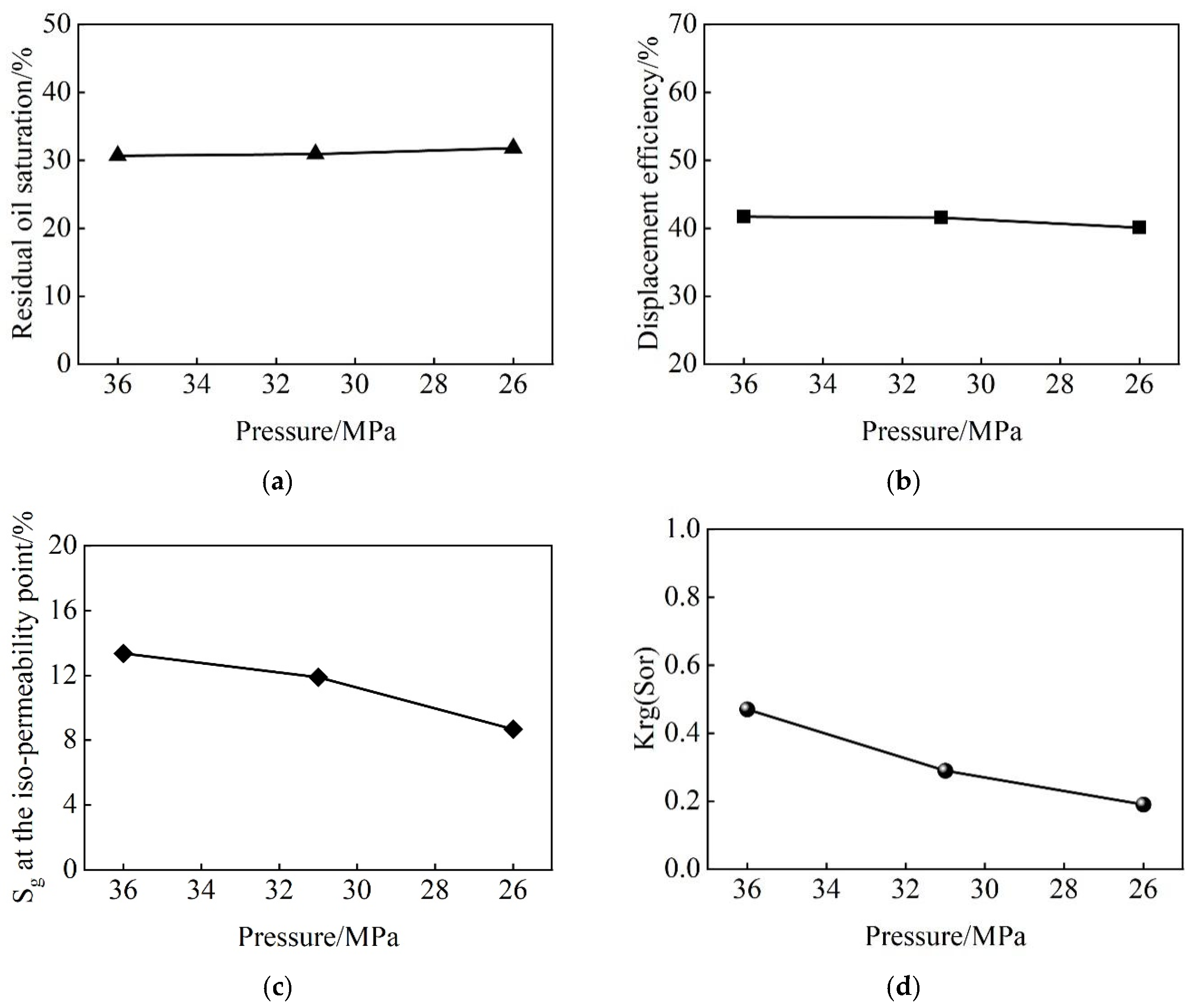
- Reservoir pressure strongly controls oil-gas two-phase flow capacity in fractured reservoirs. Pressure depletion weakens the oil–gas interaction and potential near-miscible displacement capacity of the composite gas and may induce stress-sensitive compression of pore-fracture structures, resulting in reduced gas relative permeability, a narrower co-flow region, higher residual oil saturation, and lower displacement efficiency. Maintaining relatively high reservoir pressure is therefore beneficial for composite-gas flooding.
- (3)
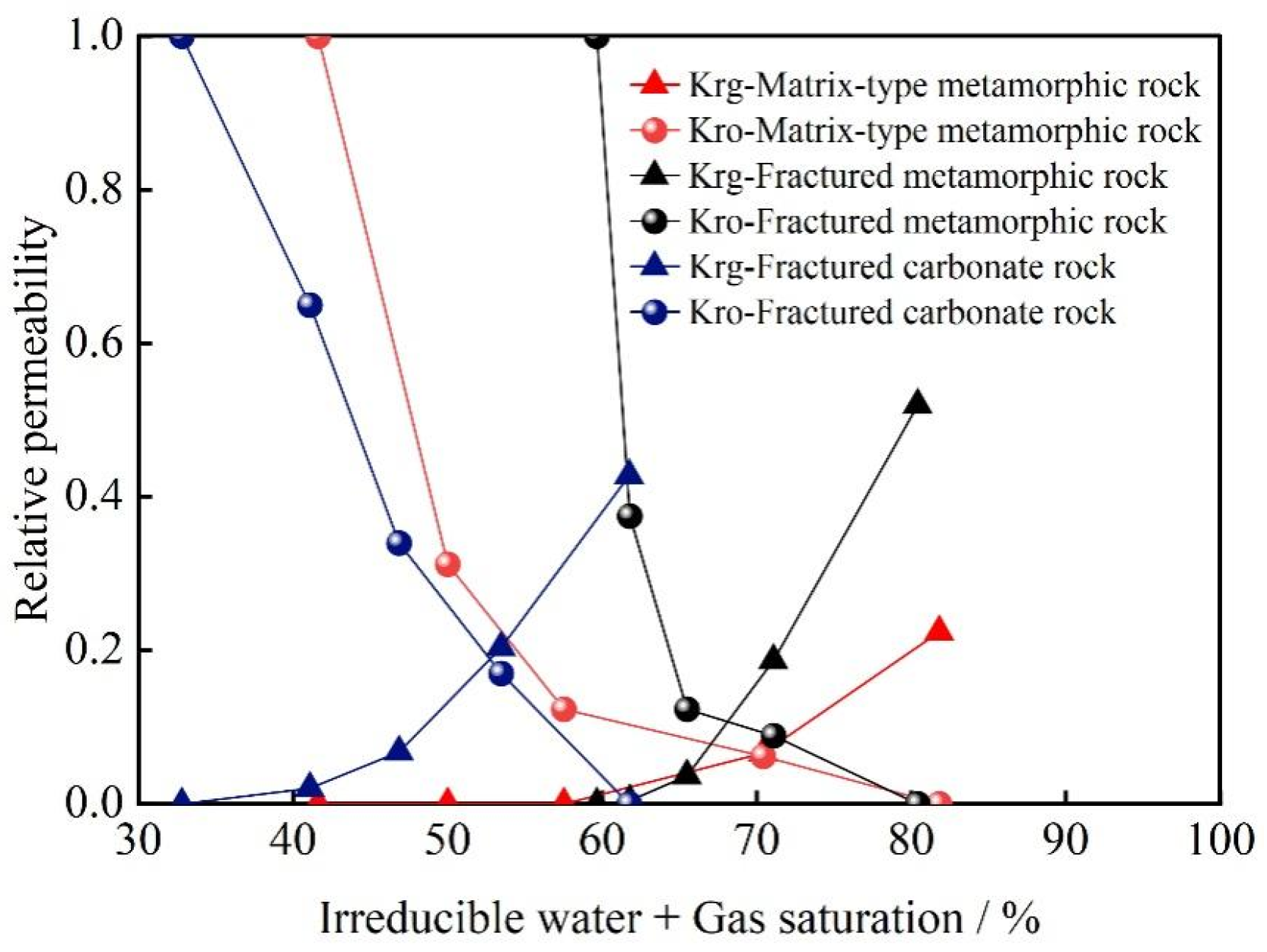
- Reservoir structure is a key factor controlling flooding effectiveness. Matrix metamorphic cores show relatively strong oil–gas coordination but are difficult to develop because of their fine pore-throat structure. Fractured metamorphic cores are prone to preferential flow and gas channeling, which limit matrix oil mobilization. For fractured carbonate cores, increasing the CO2 fraction improved displacement efficiency and reduced residual oil saturation. However, the two-phase co-flow zone reached its maximum at 40% CO2 rather than increasing monotonically. This indicates that a moderate CO2 fraction is more favorable for maintaining coordinated oil–gas flow, whereas pure CO2 flooding provides stronger oil mobilization but may narrow the effective co-flow interval.
Author Contributions
Funding
Data Availability Statement
Conflicts of Interest
References
- Li, H. Evaluation methods of inner episodes for buried-hill reservoirs in the Liaohe oilfield. Prog. Geophys. 2010, 25, 90–99. [Google Scholar] [CrossRef]
- Tong, K.; Zhao, C.; Lü, Z.; Zhang, Y.; Zheng, H.; Xu, S.; Wang, J.; Pan, L. Reservoir evaluation and fracture characterization of the metamorphic buried hill reservoir in Bohai Bay Basin. Pet. Explor. Dev. 2012, 39, 62–69. [Google Scholar] [CrossRef]
- Hou, M.; Cao, H.; Li, H.; Chen, A.; Wei, A.; Chen, Y.; Wang, Y.; Zhou, X.; Ye, T. Characteristics and controlling factors of deep buried-hill reservoirs in the BZ19-6 structural belt, Bohai Sea area. Nat. Gas Ind. B 2019, 6, 305–316. [Google Scholar] [CrossRef]
- Ge, L.; Tong, K.; Meng, Z.; Zhu, Z.; Zhu, X. Construction of an efficient development mode for buried-hill fractured reservoirs in Bohai Bay. Adv. Geo-Energy Res. 2020, 4, 162–172. [Google Scholar] [CrossRef]
- Man, A. Application of carbonate buried-hill reservoir prediction technology in Kab Oilfield. Spec. Oil Gas Reserv. 2016, 23, 57–60, 153. [Google Scholar] [CrossRef]
- van Golf-Racht, T.D. Fundamentals of Fractured Reservoir Engineering; Elsevier: Amsterdam, The Netherlands, 1982. [Google Scholar] [CrossRef]
- Gauthier, B.D.M.; Garcia, M.; Daniel, J.-M. Integrated fractured reservoir characterization: A case study in a North Africa field. SPE Reserv. Eval. Eng. 2002, 5, 284–294. [Google Scholar] [CrossRef]
- Xie, Z.; Zhang, Z.; Li, S.; He, J.; Hu, Y.; Guo, P.; Li, G.; Mao, T.; Zheng, B.; Li, X. Mechanisms and technological advances of CO2 flooding for enhanced oil recovery. J. Eng. Geol. 2025, 33, 1774–1790. [Google Scholar] [CrossRef]
- Zhang, J.; Zhang, H.X.; Ma, L.Y.; Liu, Y.; Zhang, L. Performance evaluation and mechanism with different CO2 flooding modes in tight oil reservoir with fractures. J. Pet. Sci. Eng. 2020, 188, 106950. [Google Scholar] [CrossRef]
- Zhang, T.; Zhou, G.; Tang, M.; Wu, J.; Yang, X.; Zhu, M.; Xie, Z. Experimental study on CO2 flooding characteristics in low-permeability fractured reservoirs. Energy Sources Part A Recovery Util. Environ. Eff. 2023, 45, 11637–11649. [Google Scholar] [CrossRef]
- Dai, J.-C.; Wang, T.-Y.; Weng, J.-T.; Tian, K.-J.; Zhu, L.-Y.; Li, G.-S. CO2 flooding in shale oil reservoir with radial borehole fracturing for CO2 storage and enhanced oil recovery. Pet. Sci. 2024, 21, 519–534. [Google Scholar] [CrossRef]
- Ding, M.; Gao, M.; Wang, Y.; Qu, Z.; Chen, X. Experimental study on CO2-EOR in fractured reservoirs: Influence of fracture density, miscibility and production scheme. J. Pet. Sci. Eng. 2019, 174, 476–485. [Google Scholar] [CrossRef]
- Cao, C.; Chen, X.; Zhang, L.; Zhou, S.; Zhao, Y.; Wen, S.; Li, Q.; Zhang, D.; Hu, Y.; Shen, B. EGR and channeling control mechanisms of CO2 mixture injection into carbonate gas reservoirs. Nat. Gas Ind. 2025, 45, 92–103. [Google Scholar] [CrossRef]
- Liao, H.; Liu, X.; He, X.; Li, Y.; Jiang, Z.; Li, K.; Wu, K. The time-varying characteristics of relative permeability in oil reservoirs with gas injection. Energies 2024, 17, 4512. [Google Scholar] [CrossRef]
- Liu, T.; Diwu, P.; Zhao, X.; Hu, G. Dynamic inversion method of percolation characteristic parameters after gas injection in tight reservoirs. Pet. Geol. Recovery Effic. 2020, 27, 93–100. [Google Scholar] [CrossRef]
- Liu, Q.; Wu, K.; Li, X.; Tu, B.; Zhao, W.; He, M.; Zhang, Q.; Xie, Y. Effect of displacement pressure on oil–water relative permeability for extra-low-permeability reservoirs. ACS Omega 2021, 6, 2749–2758. [Google Scholar] [CrossRef] [PubMed]
- Pi, Z.; Hui, G.; Li, J.; Yao, F.; Bao, P. Microscopic flow simulation of CO2 flooding and oil production in the shale reservoir. J. South China Norm. Univ. (Nat. Sci. Ed.) 2025, 57, 91–104. [Google Scholar] [CrossRef]
- Seyyedi, M.; Mahmud, H.; Verrall, M.; Giwelli, A.; Esteban, L.; Ghasemiziarani, M.; Clennell, B. Pore structure changes occur during CO2 injection into carbonate reservoirs. Sci. Rep. 2020, 10, 3624. [Google Scholar] [CrossRef]
- Okhovat, M.R.; Hassani, K.; Rostami, B.; Khosravi, M. Experimental studies of CO2–brine–rock interaction effects on permeability alteration during CO2-EOR. J. Pet. Explor. Prod. Technol. 2020, 10, 2293–2301. [Google Scholar] [CrossRef]
- Yue, H. Experimental Study on Seepage Curve Characteristics of Fractured Carbonate Reservoirs. Master’s Thesis, China University of Geosciences (Beijing), Beijing, China, 2017. [Google Scholar] [CrossRef]
- Yang, Y.-B.; Xiao, W.-L.; Zheng, L.-L.; Lei, Q.-H.; Qin, C.-Z.; He, Y.-A.; Liu, S.-S.; Li, M.; Li, Y.-M.; Zhao, J.-Z.; et al. Pore throat structure heterogeneity and its effect on gas-phase seepage capacity in tight sandstone reservoirs: A case study from the Triassic Yanchang Formation, Ordos Basin. Pet. Sci. 2023, 20, 2892–2907. [Google Scholar] [CrossRef]
- Lian, P.; Cheng, L.; Liu, L. The relative permeability curve of fractured carbonate reservoirs. Acta Pet. Sin. 2011, 32, 1026–1030. [Google Scholar] [CrossRef]
- Qi, Y. Study on Unsteady Flow of Vertical Fractured Gas Wells in Dual Porosity Media. Master’s Thesis, China University of Geosciences (Beijing), Beijing, China, 2020. [Google Scholar] [CrossRef]
- Li, Y.; Ban, F.; Gao, S.; Hui, X. Effect of effective stress on fractured low-permeability sandstone reservoir pressure response. Rock Soil Mech. 2008, 29, 1649–1653. [Google Scholar] [CrossRef]
- Zhang, N.; Yao, J.; Huang, Z.; Wang, Y. Accurate multiscale finite element method for numerical simulation of two-phase flow in fractured media using discrete-fracture model. J. Comput. Phys. 2013, 242, 420–438. [Google Scholar] [CrossRef]
- Xu, C.; Liu, J.; Xu, L.; Li, M.; Luo, Q.; Pu, W.; Sun, L.; Dong, S.; Sun, H. Performance of water-alternating-gas assisted CO2 flooding in conglomerate reservoirs. Oilfield Chem. 2025, 42, 489–495. [Google Scholar] [CrossRef]
- Pudugramam, V.S. A Numerical Study of CO2-EOR with Emphasis on Mobility Control Processes: Water Alternating Gas (WAG) and Foam. Master’s Thesis, The University of Texas at Austin, Austin, TX, USA, 2013. Available online: http://hdl.handle.net/2152/22382 (accessed on 1 June 2026).
- Shafiei, M.; Kazemzadeh, Y.; Escrochi, M.; Cortés, F.B.; Franco, C.A.; Riazi, M. A comprehensive review direct methods to overcome the limitations of gas injection during the EOR process. Sci. Rep. 2024, 14, 7468. [Google Scholar] [CrossRef] [PubMed]
- Chen, Z.; Liang, H.; Li, Y.; Liu, Z.; Li, H.; Jin, Z.; Ganzer, L.; Li, K.; Li, H.; Qin, H. Experiment on multifactorial mechanisms of CO2 injection for enhancing deep coalbed methane recovery. J. China Univ. Pet. (Ed. Nat. Sci.) 2025, 49, 82–92. [Google Scholar] [CrossRef]
- Yang, Y.; Yao, J.; van Dijke, M.I.J. Effect of reservoir rock wettability on microcosmic distribution of residual oil after gas displacement. Acta Pet. Sin. 2010, 31, 467–470. [Google Scholar] [CrossRef]
- Pan, H.; Jiang, Y.; Guo, G.; Yang, C.; Deng, H.; Zhu, X.; Zeng, Q.; Song, L.; Cao, J.; Wang, Z. Pore-throat structure characteristics and fluid mobility analysis of tight sandstone reservoirs in Shaximiao Formation, Central Sichuan. Geol. J. 2023, 58, 4243–4256. [Google Scholar] [CrossRef]
- Bai, J.; Feng, Q.; Yang, G.; Ai, X.; Cheng, S.; Pan, Y.; Lu, Y. Research progress of friendly carbon dioxide expansion flooding: A review. Chem. Technol. Fuels Oils 2024, 60, 119–131. [Google Scholar] [CrossRef]
- Fang, T.; Wang, M.; Gao, Y.; Zhang, Y.; Yan, Y.; Zhang, J. Enhanced oil recovery with CO2/N2 slug in low permeability reservoir: Molecular dynamics simulation. Chem. Eng. Sci. 2019, 197, 204–211. [Google Scholar] [CrossRef]
- Liu, Y.; Wang, S.; Zhao, W.; Yan, H.; Guo, P.; Zhang, J.; Bai, Z.; Wang, Z.; Ou, L. Multi-dimensional experimental study of hydrocarbon gas-assisted gravity drainage. Arab. J. Sci. Eng. 2023, 48, 17031–17048. [Google Scholar] [CrossRef]
- Lin, B.; Wei, Y.; Gao, S.; Ye, L.; Liu, H.; Zhu, W.; Zhang, J.; Han, D. Current progress and development trend of gas injection to enhance gas recovery in gas reservoirs. Energies 2024, 17, 1595. [Google Scholar] [CrossRef]
- GB/T 28912-2012; Test Method for Two-Phase Relative Permeability in Rock. China Standards Press: Beijing, China, 2012.
- Zhou, L.; Sun, H.; Liu, L.; Zhang, L.; Imani, G.; Yao, J.; Yang, Y. Microscopic flow simulation of shale multi-scale digital core based on image classification. Int. J. Heat Mass Transf. 2025, 252, 127438. [Google Scholar] [CrossRef]
- Liu, L.; Yao, J.; Sun, H.; Zhang, L.; Zhang, K. Digital rock analysis on the influence of coarse micro-fractures on petrophysical properties in tight sandstone reservoirs. Appl. Sci. 2023, 13, 5237. [Google Scholar] [CrossRef]
- Yang, W.; Wang, B.; Yao, J.; Ranjith, P.G.; Zhang, X. Experimental study on the physical and mechanical properties of carbonatite rocks under high confining pressure after thermal treatment. Deep Undergr. Sci. Eng. 2025, 4, 105–118. [Google Scholar] [CrossRef]
- GB/T 29172-2012; Practices for Core Analysis. China Standards Press: Beijing, China, 2012.



| Core Type | Number | Diameter/cm | Length/cm | Porosity/% | Permeability/mD | Fracture Aperture/μm |
|---|---|---|---|---|---|---|
| Matrix-type metamorphic rock | BZ-1 | 2.500 | 4.872 | 4.6 | 0.0185 | — |
| BZ-2 | 2.500 | 4.804 | 3.8 | 0.0155 | — | |
| Fractured metamorphic rock | FR-1 | 2.500 | 4.290 | 6.51 | 8.22 | 62.20 |
| FR-2 | 2.532 | 4.702 | 5.85 | 8.45 | 70.35 | |
| Fractured carbonate rock | FC-1 | 2.450 | 6.470 | 7.35 | 8.36 | 100.35 |
| Component | CO2 | N2 | CH4 | C2H6 | C3H8 | C4H10 | C5H12 | C6H14 |
|---|---|---|---|---|---|---|---|---|
| Mole fraction yi (%) | 15.85 | 0.36 | 70.35 | 8.60 | 2.38 | 1.30 | 1.11 | 0.05 |
| Source of Uncertainty | Variable | Instrument/Method | Accuracy |
|---|---|---|---|
| Pressure measurement | p1, p2 | Pressure transducer | ±0.25% FS |
| Gas flow rate | Q0 | Gas flow meter | ±1.0% of reading |
| Oil flow rate | q0 | Displacement pump | ±0.5% of reading |
| Temperature | T | Temperature sensor | ±0.1 °C |
| Core length | L | Vernier caliper | ±0.01 mm |
| Core diameter | D | Vernier caliper | ±0.01 mm |
| Mass measurement | mi, mw | Electronic balance | ±0.001 g |
| Oil viscosity | μo | Viscometer | ±1.0% |
| Gas viscosity | μg | REFPROP calculation | estimated ±0.5% |
| Gas compressibility factor | Z | REFPROP calculation | estimated ±0.5% |
| CO2 Content | Displacement Efficiency/% | Swc/% | Krg(Sor) | Residual Oil Saturation/% | Gas Saturation at Iso-Permeability Point/% | Two-Phase Co-Flow Zone Range/% |
|---|---|---|---|---|---|---|
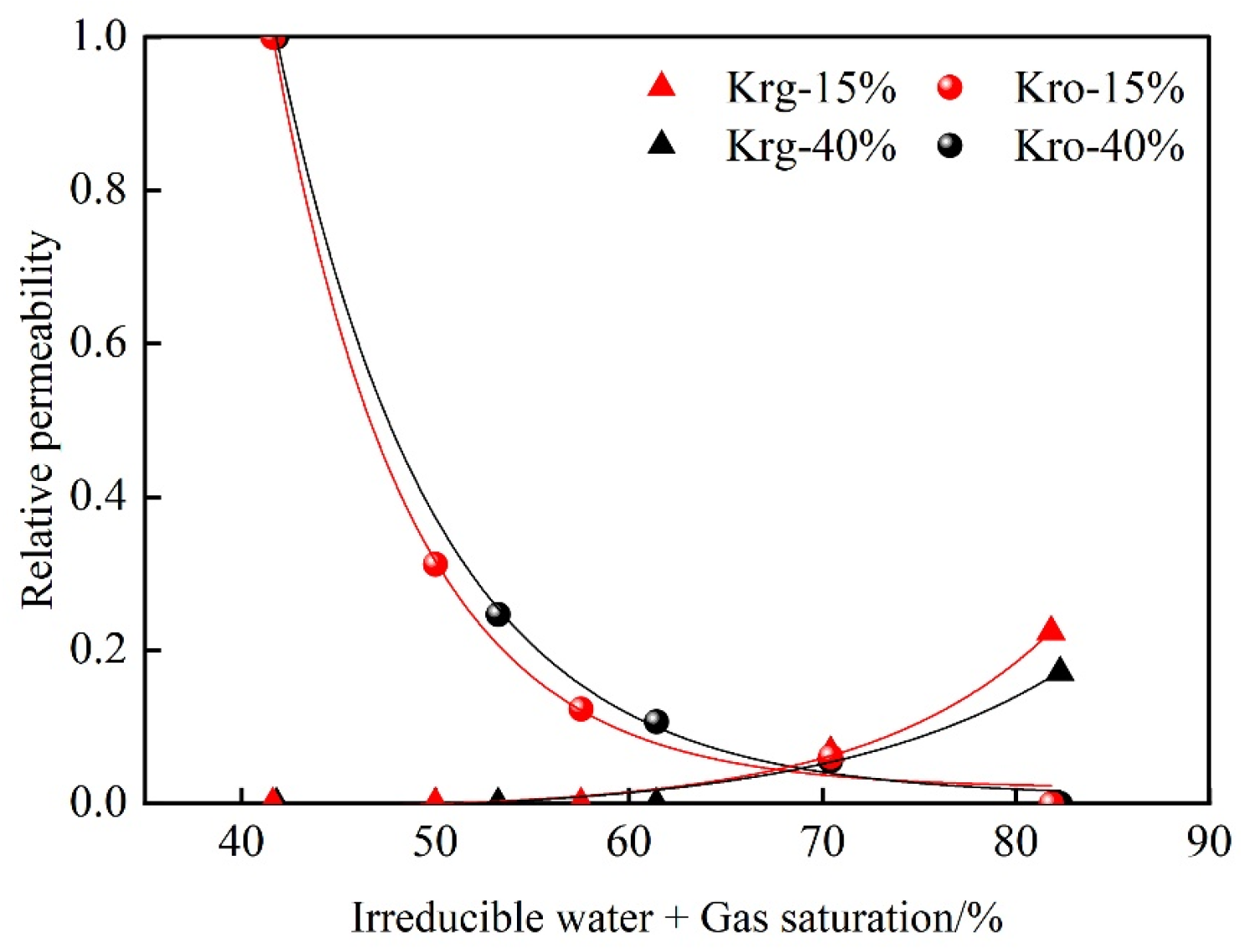
| 15% | 60.21 | 53.71 | 0.22 | 18.42 | 28.88 | 40.71 |
| 40% | 63.33 | 52.71 | 0.17 | 17.34 | 29.25 | 42.35 |
| CO2 Content | Displacement Efficiency/% | Swc/% | Krg(Sor) | Residual Oil Saturation/% | Gas Saturation at Iso-Permeability Point/% | Two-Phase Co-Flow Zone Range/% |
|---|---|---|---|---|---|---|
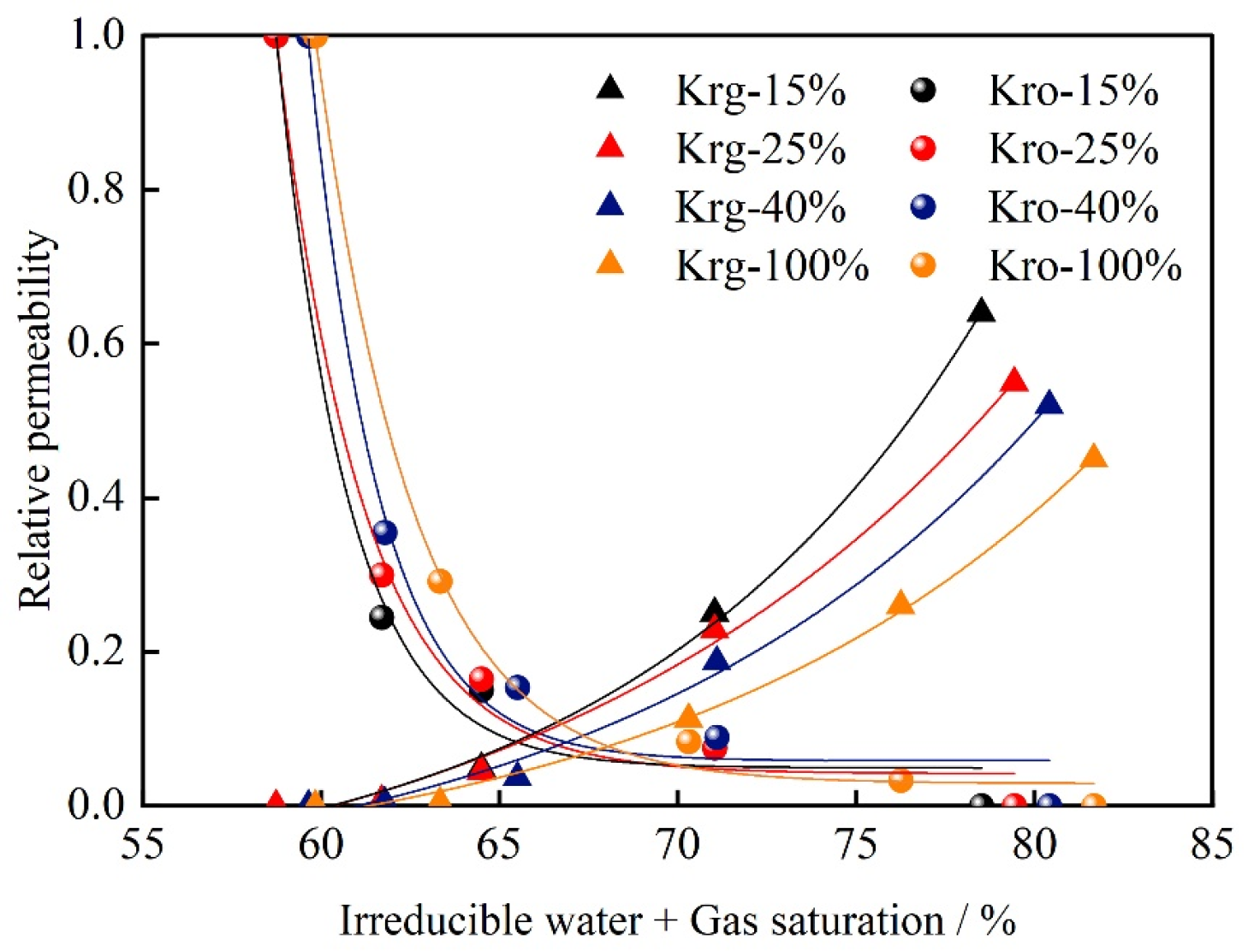
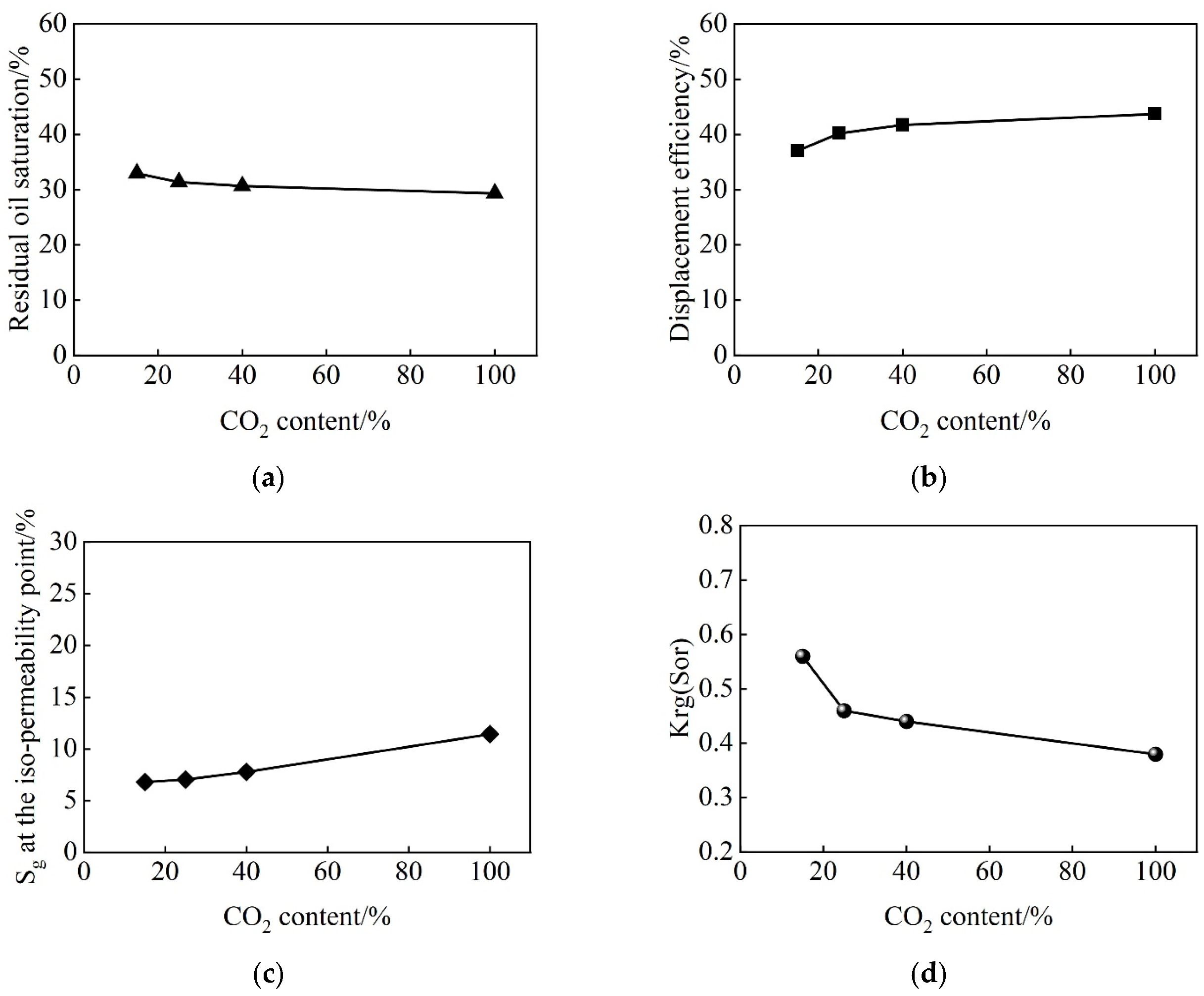
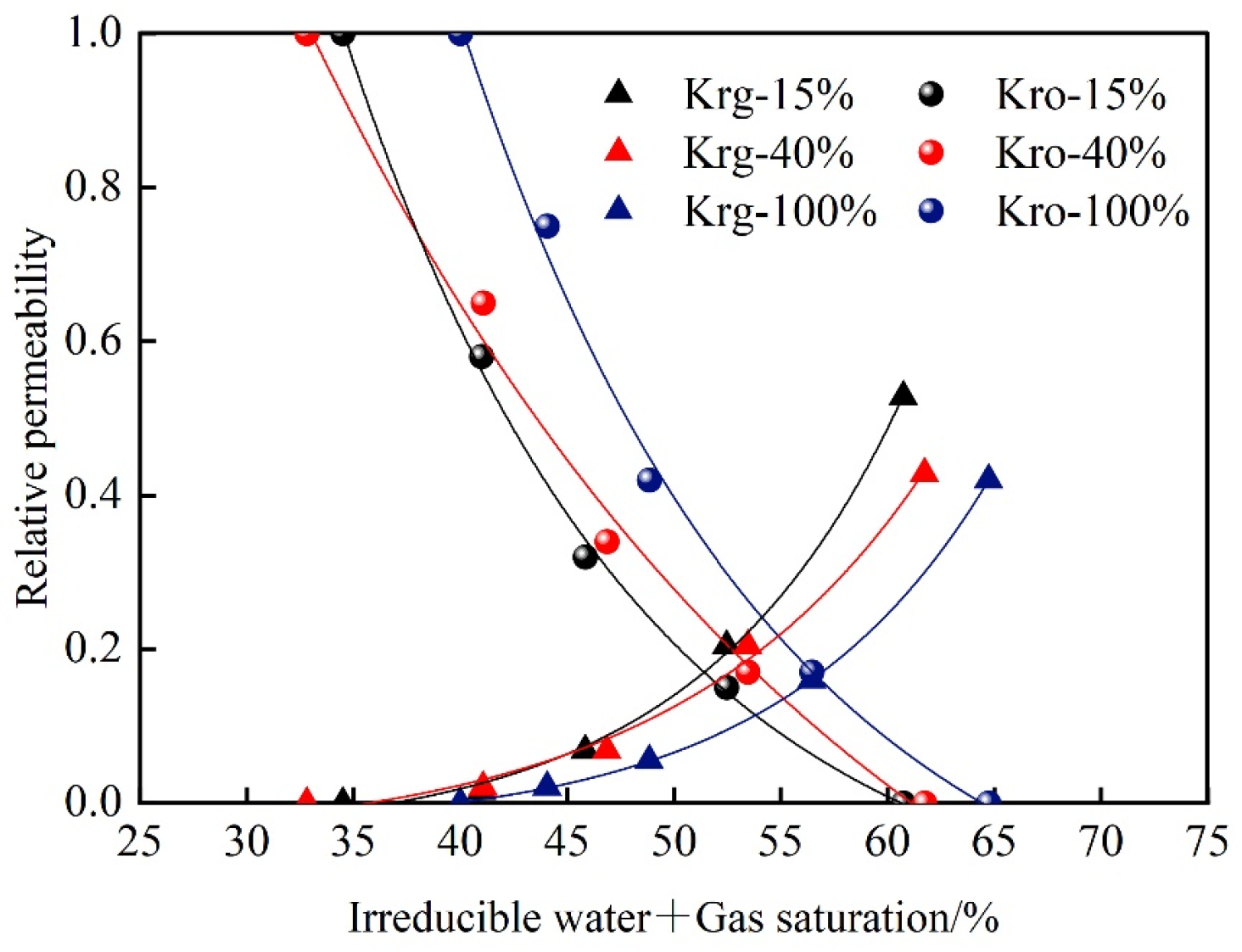
| 15% | 37.05 | 47.63 | 0.56 | 32.97 | 6.798 | 21.68 |
| 25% | 40.21 | 47.55 | 0.46 | 31.36 | 7.040 | 21.93 |
| 40% | 41.72 | 47.37 | 0.44 | 30.67 | 7.788 | 22.61 |
| 100% | 43.70 | 47.89 | 0.38 | 29.34 | 11.420 | 22.78 |
| CO2 Content | Displacement Efficiency/% | Swc/% | Krg(Sor) | Residual Oil Saturation/% | Gas Saturation at Iso-Permeability Point/% | Two-Phase Co-Flow Zone Range/% |
|---|---|---|---|---|---|---|
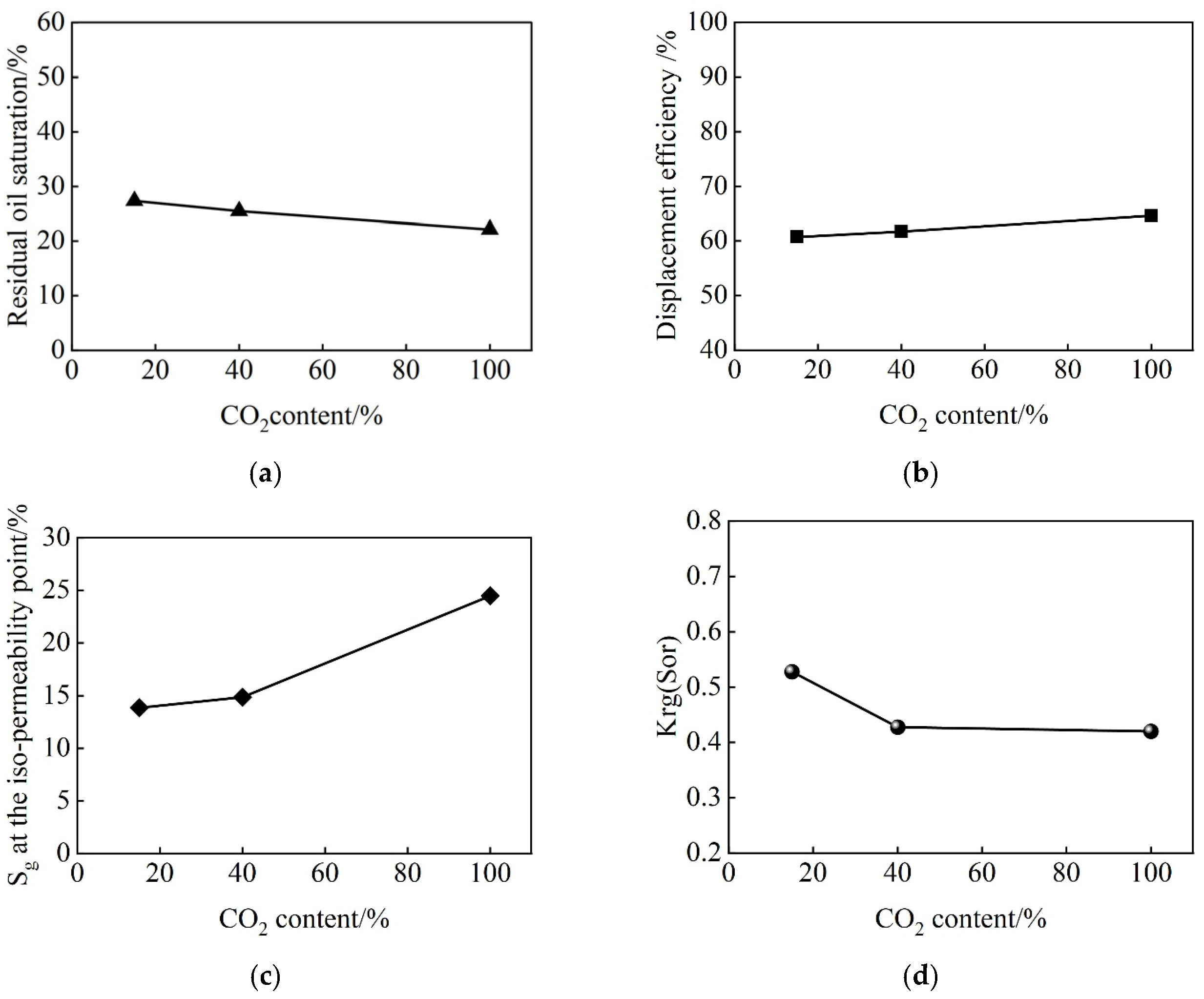
| 15% | 60.74 | 30.31 | 0.528 | 27.36 | 13.86 | 26.23 |
| 40% | 61.73 | 33.47 | 0.428 | 25.46 | 14.85 | 28.93 |
| 100% | 64.63 | 37.46 | 0.420 | 22.12 | 24.47 | 25.49 |
| Pressure/MPa | Displacement Efficiency/% | Swc/% | Krg(Sor) | Residual Oil Saturation/% | Gas Saturation at Iso-Permeability Point/% | Two-Phase Co-Flow Zone Range/% |
|---|---|---|---|---|---|---|
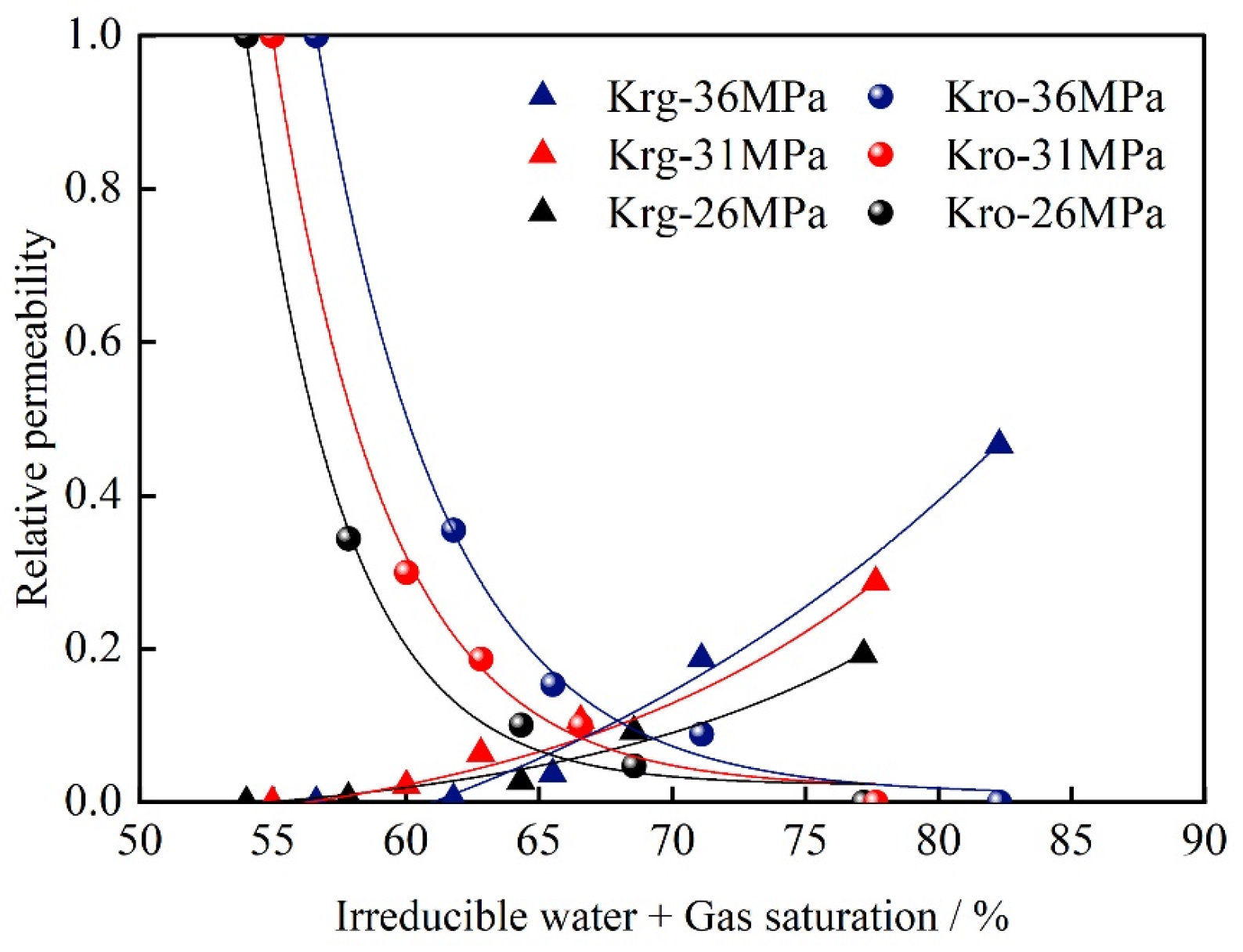
| 36 | 41.72 | 47.37 | 0.47 | 30.67 | 13.37 | 25.49 |
| 31 | 41.55 | 47.08 | 0.29 | 30.93 | 11.89 | 21.98 |
| 26 | 40.08 | 46.93 | 0.19 | 31.80 | 8.68 | 21.26 |
| Core Type | Displacement Efficiency/% | Krg(Sor) | Residual Oil Saturation/% | Gas Saturation at Iso-Permeability Point/% | Two-Phase Co-Flow Zone Range/% |
|---|---|---|---|---|---|
| Matrix-type metamorphic rock | 63.33 | 0.17 | 17.34 | 29.25 | 42.35 |
| Fractured metamorphic rock | 41.72 | 0.44 | 30.67 | 7.788 | 22.61 |
| Fractured carbonate rock | 61.73 | 0.428 | 25.46 | 14.85 | 28.93 |
Disclaimer/Publisher’s Note: The statements, opinions and data contained in all publications are solely those of the individual author(s) and contributor(s) and not of MDPI and/or the editor(s). MDPI and/or the editor(s) disclaim responsibility for any injury to people or property resulting from any ideas, methods, instructions or products referred to in the content. |
© 2026 by the authors. Licensee MDPI, Basel, Switzerland. This article is an open access article distributed under the terms and conditions of the Creative Commons Attribution (CC BY) license.
Share and Cite
Zhang, H.; Liu, W.; Sun, G.; Liu, X.; Wei, Z.; Zhang, L.; Sun, H. Relative Permeability Characteristics of Natural Gas and CO2 Mixtures in Matrix and Fractured Cores: An Experimental Study. Processes 2026, 14, 1948. https://doi.org/10.3390/pr14121948
Zhang H, Liu W, Sun G, Liu X, Wei Z, Zhang L, Sun H. Relative Permeability Characteristics of Natural Gas and CO2 Mixtures in Matrix and Fractured Cores: An Experimental Study. Processes. 2026; 14(12):1948. https://doi.org/10.3390/pr14121948
Chicago/Turabian StyleZhang, Hongyou, Wenzheng Liu, Guangyi Sun, Xin Liu, Zhihui Wei, Lei Zhang, and Hai Sun. 2026. "Relative Permeability Characteristics of Natural Gas and CO2 Mixtures in Matrix and Fractured Cores: An Experimental Study" Processes 14, no. 12: 1948. https://doi.org/10.3390/pr14121948
APA StyleZhang, H., Liu, W., Sun, G., Liu, X., Wei, Z., Zhang, L., & Sun, H. (2026). Relative Permeability Characteristics of Natural Gas and CO2 Mixtures in Matrix and Fractured Cores: An Experimental Study. Processes, 14(12), 1948. https://doi.org/10.3390/pr14121948