Article

A Numerical Well Testing Method for Horizontal Wells in Hydraulically Fractured Shale Reservoirs Based on 3D Simulation and the Embedded Discrete Fracture Model

1
Shunan Division, PetroChina Southwest Oil & Gas Field Company, Luzhou 646000, China
2
Shale Gas Research Institute of PetroChina Southwest Oil & Gas Field Company, Chengdu 610051, China
3
Lihua New Energy Sci-Tech Services Company Limited, Chengdu 610051, China
4
State Key Laboratory of Oil and Gas Reservoir Geology and Exploitation, Southwest Petroleum University, Chengdu 610500, China
*
Authors to whom correspondence should be addressed.
Processes 2026, 14(12), 1941; https://doi.org/10.3390/pr14121941 (registering DOI)
Submission received: 24 May 2026 / Revised: 9 June 2026 / Accepted: 11 June 2026 / Published: 14 June 2026
(This article belongs to the Special Issue Recent Advances in Oil Reservoir Simulation and Multiphase Flow)

Abstract

Shale oil is a vital unconventional resource. Large-scale hydraulic fracturing serves as the core technology for the efficient development of shale oil reservoirs. Well testing can be applied to characterize the reservoir parameters of fractured shale formations. Nevertheless, conventional well testing approaches fail to account for numerous discrete fractures and complex formation geometries. Based on the embedded discrete fracture model (EDFM)—an effective tool for simulating flow in discrete fractures—this work proposes a numerical well testing approach for horizontal wells in hydraulically fractured shale reservoirs. The effects of fracture permeability, number of fracture clusters, matrix permeability, and water saturation on well testing curves are also investigated. The results showed that the parameters such as the main fracture permeability, the number of fracture clusters, and the matrix permeability all have significant effects on the well test curves. When the permeability of main fractures exceeds 20D, radial flow characteristics appear in Stage V. For the distance between fracturing intervals and pressure monitoring points within 0 m to 200 m, it imposes the most significant impact on Stage I and Stage II. The half-length of main fractures, the SRV extent in the Y-direction, and boundary conditions mainly affect Stage VI and Stage VII.

1. Introduction

As traditional oil and gas reservoirs become increasingly difficult to discover, shale oil, as an important unconventional resource, has become a focal point for the future growth of oil production in China [1,2,3]. However, shale oil reservoirs are characterized by ultra-low matrix permeability, strong heterogeneity, and complex micro-nano pore systems, leading to significant development difficulty. Consequently, the natural productivity of a traditional well is extremely low [4,5]. The massive multi-stage hydraulic fracturing of horizontal wells is well-known as an effective technology to develop shale oil reservoirs. Large fluid volume and large injection rate are usually designed to create complex hydraulic fracture networks, increase the stimulated reservoir volume (SRV), and enhance the productivity of shale oil [6,7,8,9].
Well test analysis is a highly reliable and cost-effective method with a large investigation radius for evaluating the properties of formation and hydraulic fractures [10]. Especially by predicting and interpreting the dimensionless log–log diagnostic curves of pressure and pressure derivative, modern well testing can sensitively identify distinct flow regimes in complex hydraulically fractured reservoirs. Some key parameters like matrix permeability and fracture length can also be quantitatively determined through curve-fitting and interpretation [11].
Classical well testing analysis primarily relies on analytical and semi-analytical methods for the evaluation of formation and fracture parameters. Xing et al. (2018) used an analytical method to construct a dual-porosity single-permeability analytical well testing model and conducted well test curve and parameter sensitivity analyses [12]. Yin et al. (2018) established a mathematical well testing model using an analytical method specifically for fractured-vuggy reservoirs with large-scale vug development [13]. Li et al. (2019) developed a well testing model via an analytical method for fractured wells in stress-sensitive dual-porosity media, using it to perform well test curve analysis [14]. Peng et al. (2023) introduced a temperature correction function to establish a temperature well testing model with variable heat storage effects, obtaining the analytical solution through the Laplace transform [15]. Shamsiev et al. (2023) linearized the flow equation for vertical wells in gas reservoirs and solved it using an analytical method to carry out gas reservoir well testing analysis and formation parameter inversion [16]. Zeng et al. (2017) extended the semi-analytical method to infinite-acting reservoirs and developed a transient well testing model for horizontal wells under multi-zone composite conditions [17]. Wang (2018) employed a semi-analytical method to build a well testing model for multistage fractured horizontal wells in composite reservoirs, completing the solution through Gaussian elimination and Stehfest numerical inversion to conduct dynamic performance analysis [18]. Chen (2023) established multiple types of semi-analytical flow and well testing models targeting the complex fracture network systems of multistage fractured horizontal wells in tight oil reservoirs to perform dynamic well test analysis [19].
However, due to the complexity of hydraulic fractures after massive multi-stage fracturing as well as the reservoir shape, traditional analytical and semi-analytical methods exhibit distinct limitations. Numerical well testing methods, which can easily introduce irregular fracture networks, multi-cluster interference, and strong heterogeneity, are better ways to evaluate fractured shale oil reservoirs. Currently, they have been widely applied in well-test modeling and production forecasting. Sun (2022) used a numerical well testing method to establish a multi-well fluid flow model for sandstone reservoirs, analyzing the influence of inter-well interference and preferential channels on well test curves [20]. Yang et al. (2023) employed the finite volume method combined with PEBI grids to construct a numerical well testing model for fractured wells, conducting well test curve and pressure field analyses targeting the non-uniform distribution characteristics of the skin factor [21]. He et al. (2025) adopted a numerical method integrating PEBI grids and the finite volume method to establish a multi-well interference well testing model for fractured horizontal wells, performing pressure transient analysis and well test evaluation under complex fracture network conditions [22]. Lin (2025) applied a numerical simulation method to build a well testing model for volume-fractured horizontal wells in tight oil reservoirs, validated the model using analytical results, and carried out well test dynamic and parameter sensitivity analyses under various operating conditions [23].
Although traditional numerical well testing methods have achieved success in productivity prediction and key parameters evaluation, they still have limitations in accurately simulating the effects of complex discrete fractures. The embedded discrete fracture model (EDFM) is widely used for efficiently simulating porous flow in hydraulically fractured reservoirs, yet its integration with well testing theory remains understudied. To address this gap, this study combined EDFM with well testing theory, developed a numerical method of well testing for horizontal wells in hydraulically fractured shale oil reservoirs, and finally determined the effects of several key parameters on well testing curves.

2. Methodology

After the massive multi-stage hydraulic fracturing of the shale oil reservoirs, the formation can be regarded as divided into three zones, including the main hydraulic fractures, the stimulated reservoir volume (SRV) zone with a large number of micro–macro scale fractures, and the matrix zone located outside the SRV and with a few disconnected fractures [24]. For the numerical well testing of such horizontal wells in hydraulically fractured shale oil reservoirs, it is necessary to first use the EDFM method to establish a two-phase porous flow model for hydraulically fractured shale oil reservoirs, then conduct a numerical simulation of production, and finally calculate the well testing curves according to the theory of well testing. The numerical model is established based on the following fundamental assumptions: (1) The fluid flow in both matrix and fractures obey Darcy’s law; (2) the black oil model is adopted to model oil–water two-phase porous flow; (3) the capillary pressure within the fractures is neglected; (4) the effects of gravity are negligible. In this work, all the numerical simulation calculations are implemented on the MATLAB (version R2023a) platform, and the resulting well testing curves are generated using Origin (version 2023) software.

2.1. Mathematical Model of Multi-Phase Flow in Hydraulically Fractured Shale Reservoirs

The numerical simulation of production from hydraulically fractured shale oil reservoirs involves the porous flow of water and oil in the matrix and the fractures, as well as the transfer flow between the matrix and the fractures.

2.1.1. Fluid Flow in Shale Matrix

Assuming that the water and oil phase coexist in the shale matrix, the governing equations for water–oil two-phase porous flow in the shale matrix can respectively be expressed as [25]:
ϕ m ρ w S w t + ρ w k m K r w , m μ w p w , m + Q m f , w = 0
ϕ m ρ o S o t + ρ o k m K r o , m μ o p o , m + Q m f , o = 0
where ϕ m represents the porosity of the shale matrix; k m is the permeability of the matrix; K r w , m and K r o , m represent the relative permeability of the water phase and oil phase in the matrix, respectively; Q m f , w and Q m f , o are the mass flow rate of the water phase and oil phase from the fractures to the matrix; ρ w and ρ o denote the density of the water phase and oil phase; S w and S o stand for the saturation of the water phase and oil phase; μ w and μ o correspond to the viscosity of the water phase and oil phase. In addition, the water phase pressure and the oil phase pressure inside the shale matrix satisfy the following relationship [25]:
p c , m S w = p o , m p w , m

2.1.2. Fluid Flow in Fractures

Similarly, the water and oil phase can be regarded as coexisting in the hydraulic and natural fractures in the shale reservoir, and the governing equations for water–oil two-phase porous flow in the fractures can respectively be expressed as [25]:
ϕ f ρ w S w t + ρ w k f K r w , f μ w p w , f + Q f m , w = Q s , w
ϕ f ρ o S o t + ρ o k f K r o , f μ o p o , f + Q f m , o = Q s , o
where ϕ f represents the porosity of the fractures; k f is the permeability of the fractures; K r w , f and K r o , f represent the relative permeability of the water phase and oil phase in the fractures, respectively; Q f m , w and Q f m , o are the mass flow rate of the water phase and oil phase from the matrix to fractures. Q s , w and Q s , o are the source or sink terms of the water phase and oil phase, respectively.
Inside the fractures, the water phase pressure and the oil phase pressure satisfy Equation (6) [25]. However, since the capillary pressure within the fractures is generally quite small, the capillary force within the fractures can be ignored. It can be assumed that the pressures of the water phase and the oil phase within the fractures are equal.
p c , f S w = p o , f p w , f

2.1.3. Mass Transfer Between Matrix and Fracture

Mass transfer between matrix and fracture is related to fluid density, viscosity, permeability, pressure difference, as well as the shape factor C I . According to the EDFM theory, the calculation formula for the mass flow rates of the water phase and oil phase can be expressed as [25]:
Q f m , w = C I ρ w k m K r w , m μ w p w , m p w , f
Q f m , o = C I ρ o k m K r o , m μ o p o , f p o , m
Furthermore, assuming that the fluid mass flowing out of the matrix is exactly equal to the fluid mass flowing into the fractures, the following two equations are established.
Q f m , w = Q m f , w
Q f m , o = Q m f , o

2.2. Embedded Discrete Fracture Model (EDFM)

EDFM is an efficient model for simulating fluid flow in fractured reservoirs [25]. Unlike the discrete fracture model (DFM), EDFM enables the fractures to be independent of the matrix grids (Figure 1), which can significantly reduce the difficulty of grid division, especially in cases where there are a large number of discrete fractures.
Under the EDFM theory, the mass transfer rates between the matrix and the fractures can be simply expressed as Equations (7) and (8) [25]. In these equations, C I represents the matrix–fracture connectivity coefficient (Equation (11)), which is related to the intersection relationship between the matrix grid and the fractures inside it.
C I = d x f d
where d x f represents the fracture segment length produced by the division of the fractures by the matrix cell; d represents the average distance from the matrix cell center to the fracture segments.
In addition to the connection between the matrix and the fractures, EDFM also establishes the connection relationships between matrix cells, fracture cells, fracture cell and wellbore cell, as well as between matrix cell and wellbore cell, and then establishes the mass transfer equations between different media [26].

2.3. Post-Processing Method for Well Testing

After simulating the production of horizontal wells in shale oil reservoirs, the simulation results of the bottomhole flowing pressure during the production process can be obtained. Then, the dimensionless time, dimensionless pressure, and dimensionless pressure derivative can be established respectively using the bottom-hole flowing pressure according to the well testing theory [27].
t D = 3.6 k m t ϕ m μ o C t r 2 C D
P D = k m H f p 1.842 × 10 3 q μ B
where t D and P D represent the dimensionless time and dimensionless pressure; k m , ϕ m and C t are the matrix permeability, the matrix porosity, and the total compressibility factor of the shale reservoir; r represents the radius of the horizontal well; H f is the reservoir thickness; μ o and B represent the viscosity and the volume factor of shale oil, respectively; q is the production rate; t and p represent the production time and the pressure drop; and C D is a comprehensive parameter and takes the following form [27]:
C D = 0.159 C w ϕ m C t r 2 H f
where C w represents the coefficient of wellbore storage effect.
The pressure derivative P D can be obtained by differentiating the dimensionless pressure P D with respect to the dimensionless time t D .

3. Simulation and Analysis

3.1. Model Validation

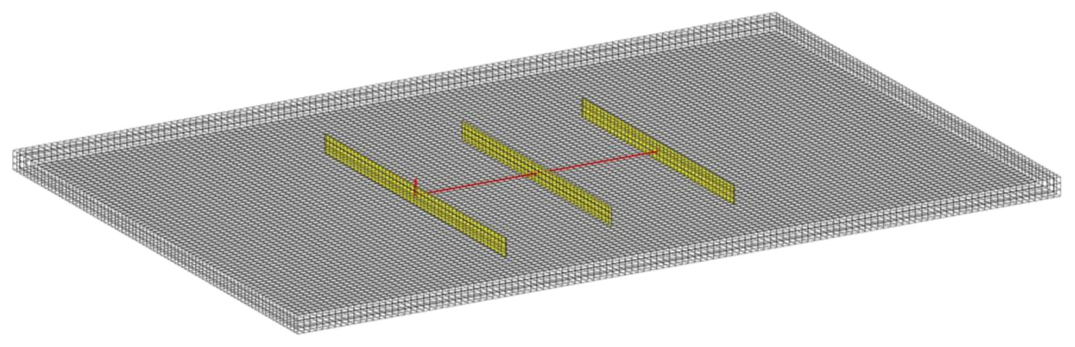
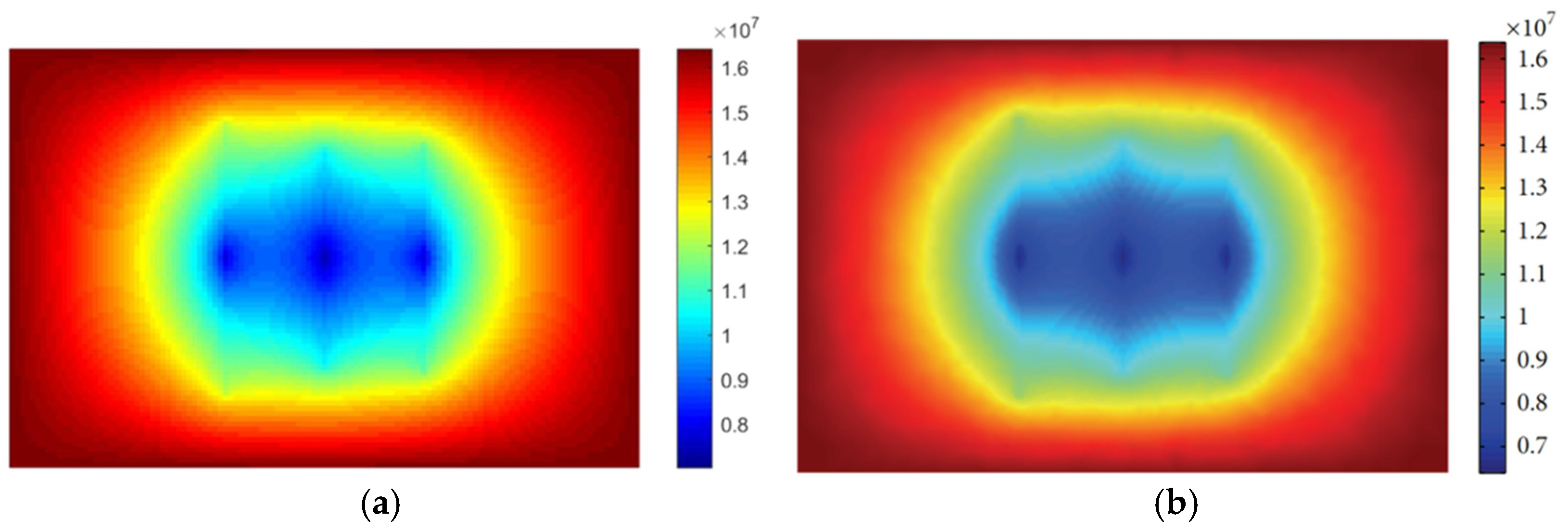
The well testing simulations in this paper are based on the production model of hydraulically fractured shale oil reservoirs, which are centered on EDFM and the finite volume method. In this section, we conducted a simulation of oil production from horizontal wells in hydraulically fractured reservoirs according to the case in Jiang et al. (2014) [28]. All the simulation parameters were derived from that literature. Figure 2 shows the shape of the target fractured formation and the grids. Figure 3 shows that the simulation result is consistent with that presented in Jiang et al. (2014) [28].

3.2. Results of the Basic Example

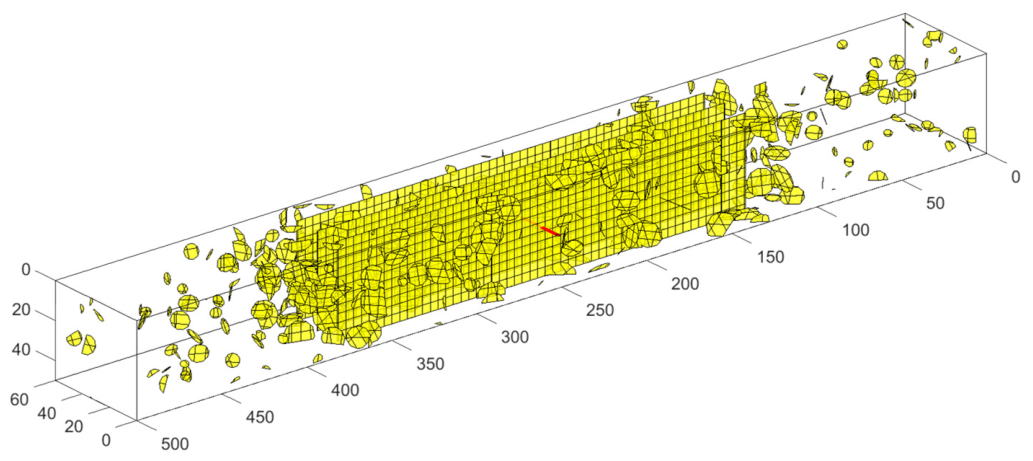
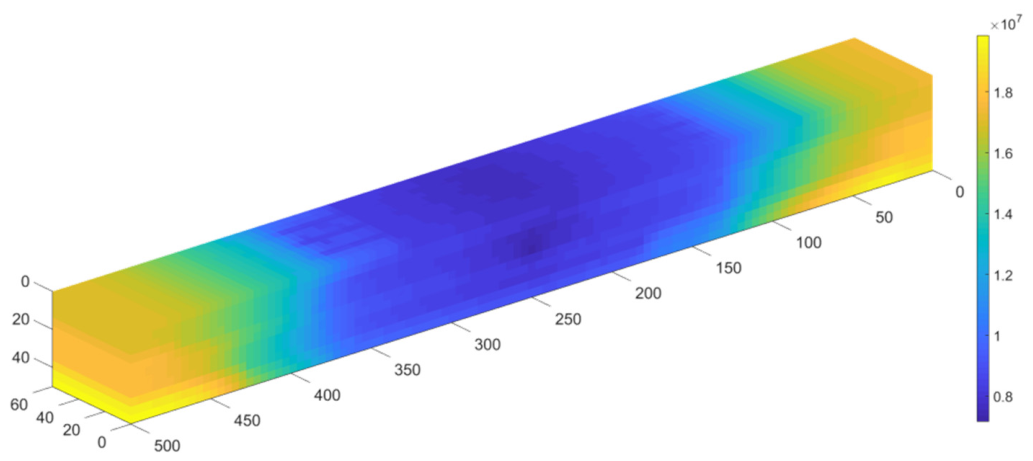
The simulation of pressure drawdown well testing is based on the basic parameters listed in Table 1. Most of these parameters are derived from a research paper related to shale oil [29]. Figure 4 illustrates one stage of hydraulically fractured shale oil reservoir and the horizontal well. Figure 5 shows the pressure distribution in the hydraulically fractured shale formation after three years of production.
Based on the pressure drawdown well testing theory, the bottom-hole flowing pressure can be used to further calculate the typical double-logarithmic well testing curves. By analyzing the characteristics of these double-logarithmic curves, the flow stages of the horizontal wells in hydraulically fractured shale oil reservoirs can be classified into the following seven stages, as shown in Figure 6.
(I)
Stage of wellbore storage effect
(II)
Stage of transitional flow
(III)
Stage of linear flow inside fractures
(IV)
Stage of bi-linear flow
(V)
Stage of radial flow (occurs in some cases)
(VI)
Stage of the effect of the shale region outside of SRV
(VII)
Stage of the effect of closed boundary
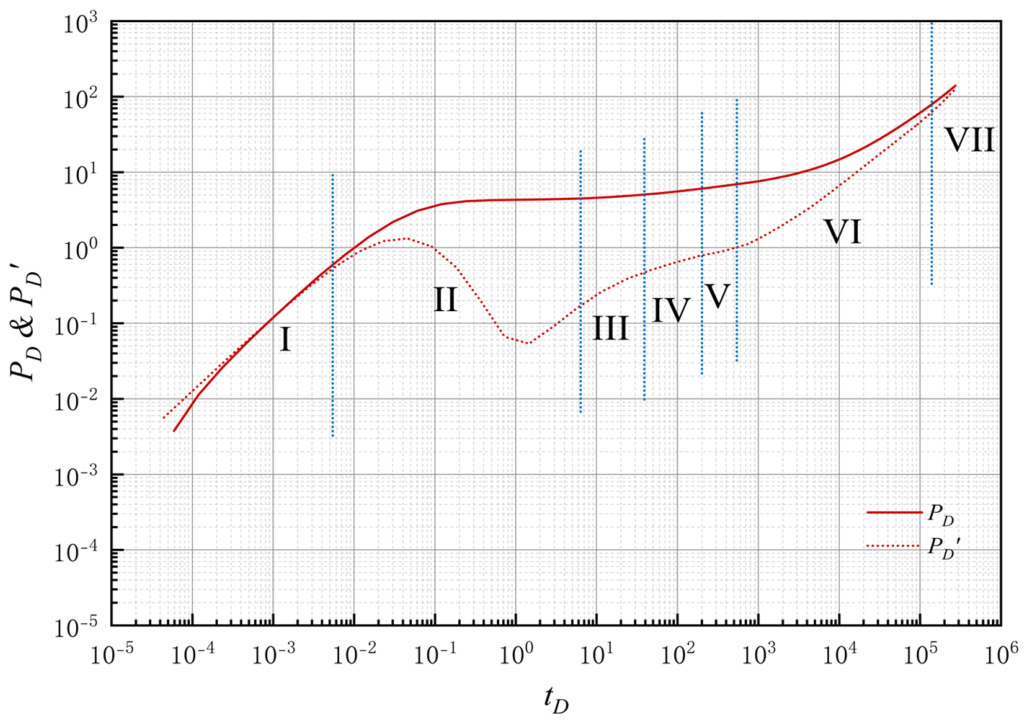
Figure 6. Typical double-logarithmic well testing curves.
Processes 14 01941 g006

3.3. Sensitivity Analysis

3.3.1. Permeability of Main Hydraulic Fractures

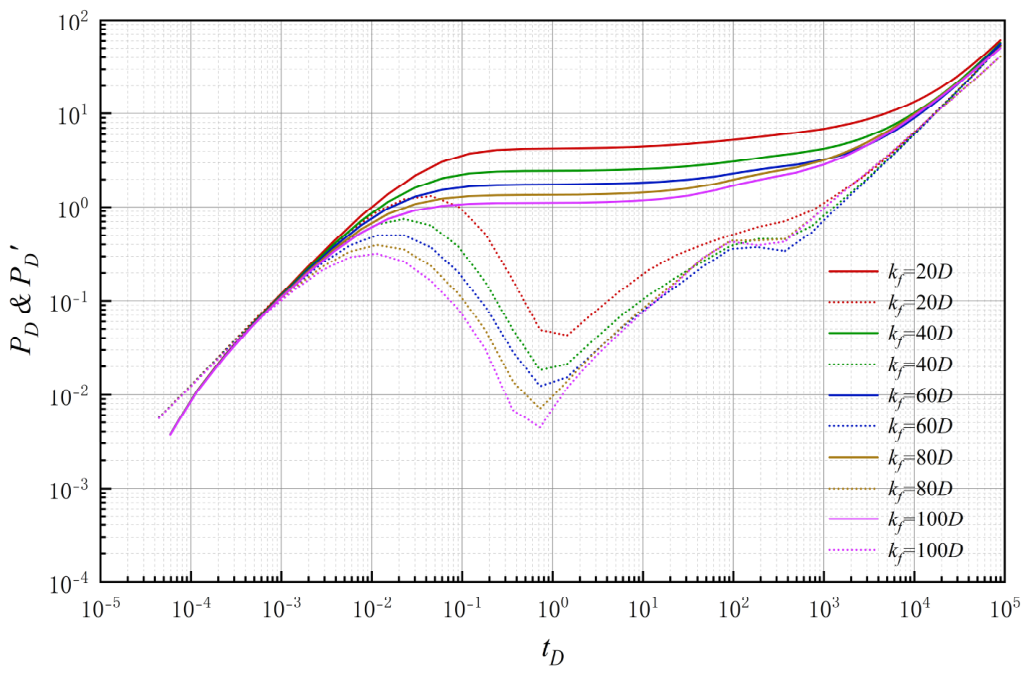
Figure 7 illustrates the log–log well testing curves of dimensionless pressure and dimensionless pressure derivative versus dimensionless time under the different permeabilities of main fractures ( k f = 20, 40, 60, 80, 100D). During Stages II, III, and IV, the curves under different k f exhibit significant differences. The smaller permeability ( k f ) of main fractures results in greater flow resistance and eventually leads to a higher dimensionless pressure and dimensionless pressure derivative. Simultaneously, the first dip of the pressure derivative curve becomes shallower. The physical mechanism is that a larger permeability contrast between fractures and the matrix is formed at a higher main fracture permeability. Fluids in fractures flow toward the wellbore more rapidly, leading to rapid pressure depletion inside the fracture system in the early stage, and further causing a deeper decline of pressure drop gradient curves during the transitional period. When the permeability ( k f ) of the main fractures is relatively high, the feature of radial flow may occur in Stage V. On the contrary, while k f is relatively low, the feature of radial flow will not occur or will be less obvious.

3.3.2. Number of Fracture Clusters

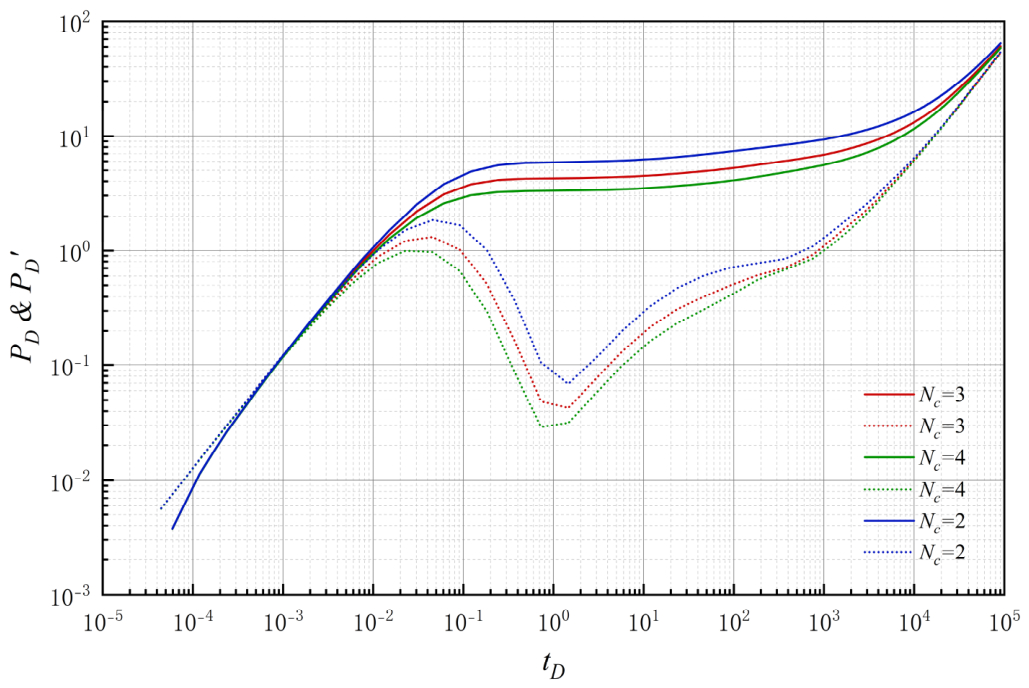
Figure 8 illustrates the effects of the number of fracture clusters ( N c = 2, 3, 4) on the dimensionless pressure and dimensionless pressure derivative curves. From Stage II to Stage V, the curves under different numbers of fracture clusters exhibit significant differences. The fewer the fracture clusters, the smaller the total conductivity of all the fracture clusters, and therefore the larger the overall flow resistance. This leads to a higher dimensionless pressure curve. Simultaneously, the overall position of the pressure derivative curve is also higher when N c is smaller, and its “dip” feature is more obvious.

3.3.3. Distance from Fracturing Stage to Pressure Monitoring Point

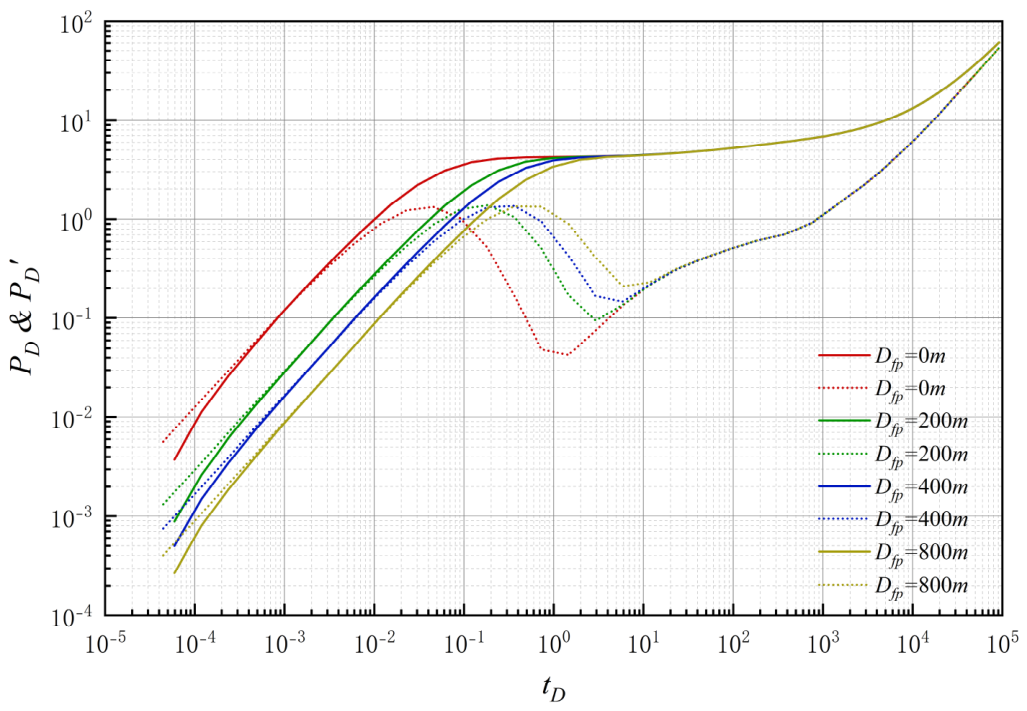
Figure 9 illustrates the influences of the distance from the fracturing stage to the pressure monitoring point ( D f p = 0 m, 200 m, 400 m, 800 m). It is shown that a larger D f p results in a longer time for pressure signal propagation and a significant lag to the first stage of these two dimensionless curves. Consequently, during Stage I and Stage II, both the dimensionless pressure and pressure derivative curves shift significantly to the right when D f p increases. In addition, the dip of the derivative curve becomes shallower and its appearance time is also later. Among all cases, the distance between the fracturing stage and pressure monitoring point exerts the most prominent influence on Stage I and Stage II when it ranges from 0 m to 200 m. However, upon entering Stage III, the curves under different D f p rapidly converge.

3.3.4. Initial Matrix Permeability

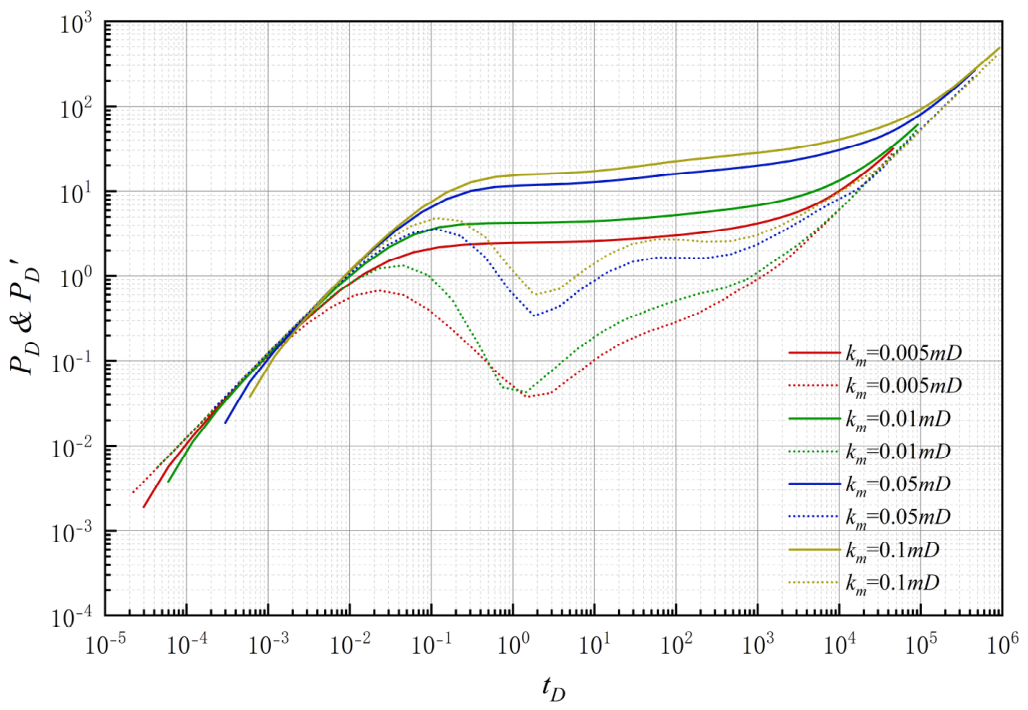
As shown in Figure 10, the initial matrix permeability ( k m ) exerts a significant impact on the well testing curves across the entire range of dimensionless time. In Stage I, the larger the k m , the later the appearance time of the dimensionless curves, accompanied by higher values of both the dimensionless pressure and dimensionless pressure derivative. From Stage II to Stage V, under low permeability conditions, the “dip” feature is deep and wide; as k m increases, the “dip” on the pressure derivative curve becomes shallower, and the corresponding pressure curve exhibits overall upward shift. When the initial matrix permeability is 0.05 mD and 0.1 mD, their effects on the values of dimensionless pressure and dimensionless pressure derivative are approximately ten times those observed at 0.005 mD and 0.01 mD. The dimensionless times of these dimensionless curves in Stage VI and VII are also different.

3.3.5. Effective Matrix Permeability in SRV

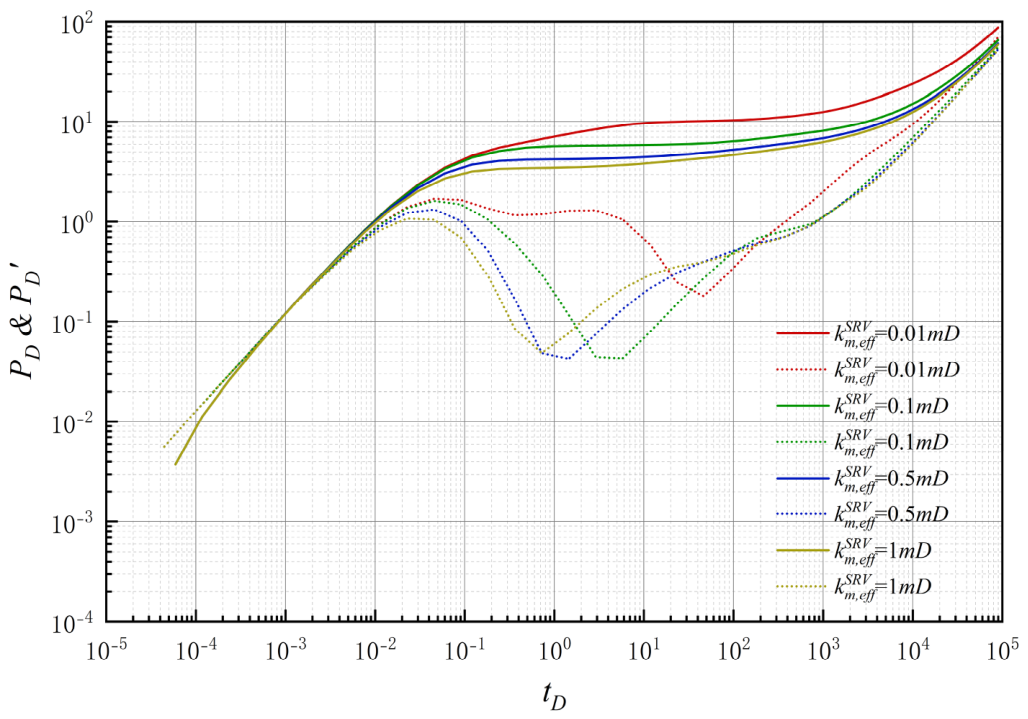
The massive hydraulic fracturing of shale oil reservoirs can enhance the effective matrix permeability in SRV. As shown in Figure 11, the effective matrix permeability in SRV shows a significant impact on the dimensionless pressure curve and the dimensionless pressure derivative curve. A smaller effective matrix permeability in SRV results in weaker fluid supply capacity from the matrix to the fractures, which leads to a higher position of the dimensionless pressure curve during Stage II and Stage III; simultaneously, the dip of the pressure derivative curve becomes shallower, and its appearance time is later. Therefore, a higher effective matrix permeability in the SRV can lower the internal seepage resistance and mitigate the drop of formation pressure. However, upon entering Stage IV, except for a distinct deviation observed when the effective matrix permeability in SRV is 1, the remaining curves gradually tend to converge.

3.3.6. Half-Lengths of Main Fractures and SRV in the Y Direction

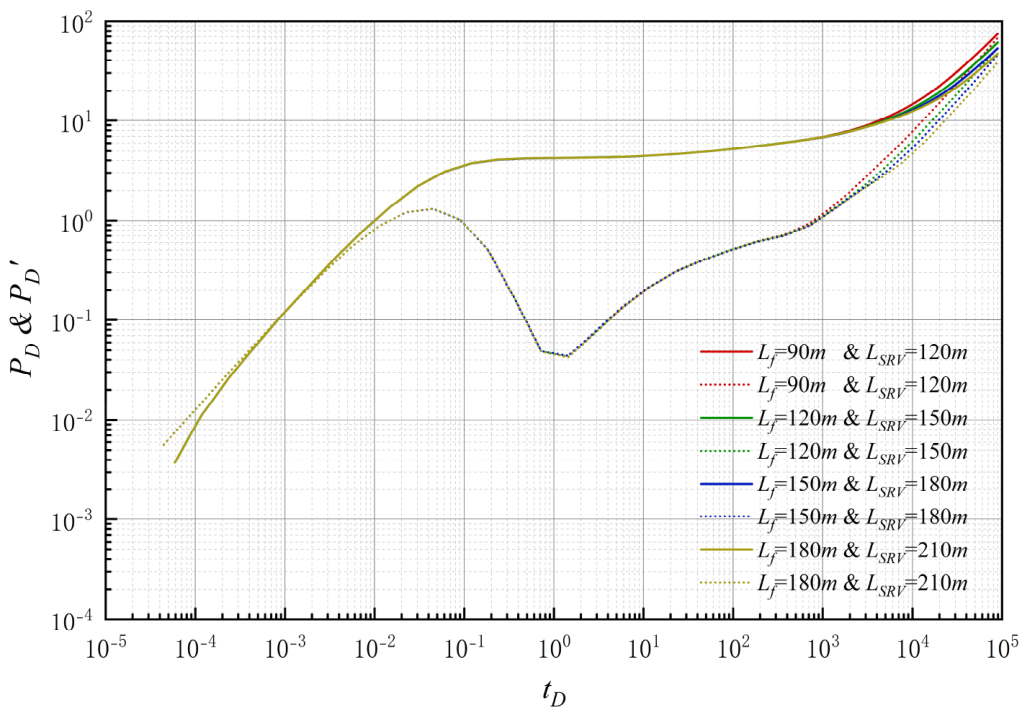
As illustrated in Figure 12, the half-length of main fractures ( L f ) and the half-length of SRV in the y-direction ( L S R V ) primarily influence fluid flow in Stage VI and VII. Upon entering Stage VI, the curves exhibit a distinct divergence. Smaller half-lengths of main fractures and SRV in the y-direction result in a smaller stimulated reservoir volume and larger total flow resistance, which leads to a higher dimensionless pressure and pressure derivative in Stage VI and VII; concurrently, the small half-lengths of main fractures and SRV can cause the derivative curve to swing upward at an earlier dimensionless time.

3.3.7. Water Saturation of Hydraulic Fractures

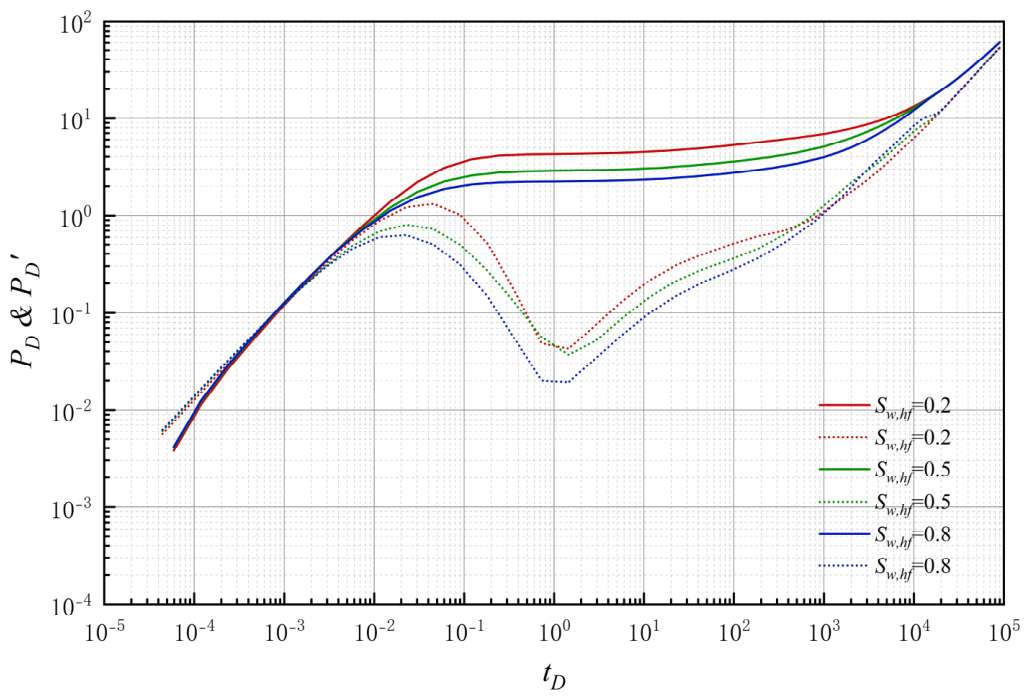
As illustrated in Figure 13, the dimensionless pressure and dimensionless pressure derivative curves exhibit significant variations in Stages II, III, and IV when water saturation ( S w , h f ) in hydraulic fractures increases from 0.2 to 0.8. As S w , h f increases, both the pressure and pressure derivative decrease, and the dip of the derivative curve becomes deeper. Subsequently, the dimensionless curves turn to converge in Stage V, but diverge again upon entering Stage VI. In summary, larger S w , h f causes the pressure derivative curve to shift upward at relatively early stages, but it has little effect in Stage VI and VII.

3.3.8. Boundary Conditions

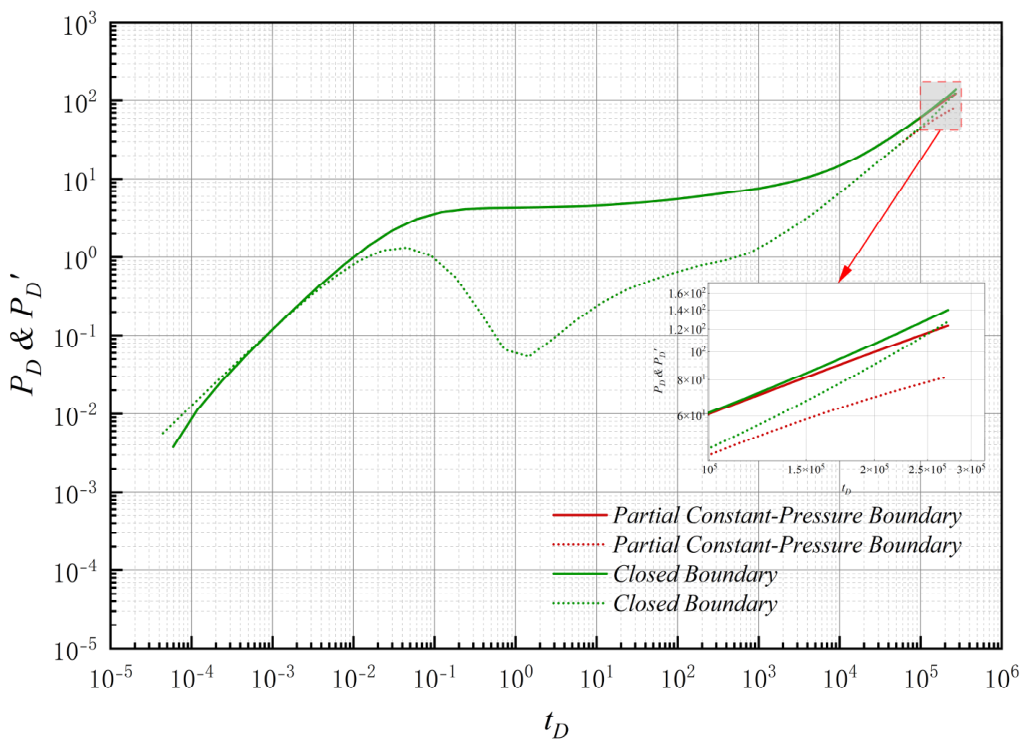
Figure 14 shows the typical log–log well testing curves of shale oil reservoirs under two different boundary conditions (closed boundary and partial constant-pressure boundary). It is not until Stage VII that different boundary conditions have different effects on the dimensionless curves: under the condition of closed boundary, the lack of fluid replenishment leads to rapid pressure depletion, resulting in a higher dimensionless pressure and dimensionless pressure derivative. Under this condition, the slope of the dimensionless pressure derivative curve in Stage VII approaches 1. Conversely, under the partial constant-pressure boundary conditions, the external energy or fluid replenishment mitigates the pressure drop, causing the upward trend of the dimensionless pressure and the dimensionless pressure derivative curves to slow significantly down.

4. Conclusions

In this study, a numerical method of well testing for horizontal wells in hydraulically fractured shale reservoirs was developed. This method is based on the 3D numerical simulation of hydraulically fractured shale oil reservoirs and EDFM is used to model porous flow in the matrix and fractures, as well as the transfer flow between the matrix and fractures. Through numerical well testing, the effects of several important factors on pressure performance and well testing curves were determined. The main conclusions are drawn as follows:
(1)
Several factors have significant influences on most stages of the well testing curve, such as matrix permeability, main-fracture permeability, the number of fracture clusters in one fracturing stage, the equivalent matrix permeability in SRV, water saturation, etc. Others, however, only have an impact on a few specific stages, such as the distance from fracturing stage to pressure monitoring point, boundary conditions, and the size of the SRV, etc.
(2)
The main fracture permeability (conductivity) has a significant impact on the II to V stages of the well testing curve. Among them, when the permeability (conductivity) of the main fractures is relatively high, the characteristics of radial flow may occur in Stage V; while the permeability (conductivity) of the main fractures is relatively low, such characteristics will not occur or will be less obvious. The initial matrix permeability ( k m ) exerts a significant impact on the well testing curves across the entire range of dimensionless time. When the initial matrix permeability is 0.05 mD and 0.1 mD, its effects on the values of the dimensionless pressure and dimensionless pressure derivative are approximately ten times those observed at 0.005 mD and 0.01 mD.
(3)
Some factors which are often overlooked also have significant impacts on certain stages of the well testing curve, such as the distance from fracturing stage to pressure monitoring point and the initial water saturation inside the hydraulic fractures. The further the monitoring distance, the later the stages of the wellbore storage effect and the transitional flow occur, and at the same time, the V-shape dip of the dimensionless pressure derivative curve in the transitional flow stage (the II stage) becomes smaller. Among all cases, the distance between the fracturing stage and pressure monitoring point exerts the most prominent influence on Stage I and Stage II when it ranges from 0 m to 200 m. The water saturation inside the hydraulic fractures exhibits more complex effects. In the II to V stage if the water saturation is higher, the dimensionless pressure curve and the dimensionless pressure derivative curve are lower. However, in the VI stage, the situation reverses.

Author Contributions

Conceptualization, Z.O., W.Y., and Y.J.; methodology, Z.O. and Y.J.; validation, S.L.; writing—original draft preparation, Z.O.; writing-review and editing, Z.O., J.N., M.P., and Z.L.; supervision, Z.O.; funding acquisition, S.L. All authors have read and agreed to the published version of the manuscript.

Funding

This work was supported by the Major Science and Technology Special Project of Shunan Division of PetroChina Southwest Oil and Gas Field Company (2023ZX02-01).

Data Availability Statement

The original contributions presented in this study are included in the article. Further inquiries can be directed to the corresponding author.

Conflicts of Interest

Author Zhipeng Ou was employed by the Shunan Division, PetroChina Southwest Oil and Gas Field Company. Authors Shengjun Liu, Wenhan Yue and Jia Ni were employed by the Shale Gas Research Institute of PetroChina Southwest Oil and Gas Field Company and the Lihua New Energy Sci-Tech Services Company Limited. The remaining authors declare that the research was conducted in the absence of any commercial or financial relationships that could be construed as a potential conflict of interest. The authors declare that this study received funding from the Shunan Division of PetroChina Southwest Oil and Gas Field Company. The funder was not involved in the study design, collection, analysis, interpretation of data, the writing of this article, or the decision to submit it for publication.

Abbreviations

The following abbreviations are used in this manuscript:
EDFMEmbedded discrete fracture model
SRVStimulated reservoir volume
DFMDiscrete fracture model
ϕ m The porosity of the shale matrix, Dimensionless
k m The permeability of the matrix, m2
K r w , m The relative permeability of the water phase in the matrix, Dimensionless
K r o , m The relative permeability of the oil phase in the matrix, Dimensionless
Q m f , w The mass flow rate of the water phase from the fractures to matrix, kg/(m2⋅s)
Q m f , o The mass flow rate of the oil phase from the fractures to matrix, kg/(m2⋅s)
ρ w The density of the water phase, kg/m3
ρ o The density of the oil phase, kg/m3
S w The saturation of the water phase, Dimensionless
S o The saturation of the oil phase, Dimensionless
μ w The viscosity of the water phase, Pa⋅s
μ o The viscosity of the oil phase, Pa⋅s
p w , m The water phase pressure inside the shale matrix, Pa
p o , m The oil phase pressure inside the shale matrix, Pa
p c , m S w The capillary pressure inside the shale matrix, Pa
ϕ f The porosity of the fractures, Dimensionless
k f The permeability of the fractures, m2
K r w , f The relative permeability of the water phase in the fractures, Dimensionless
K r o , f The relative permeability of the oil phase in the fractures, Dimensionless
Q f m , w The mass flow rate of the water phase from the matrix to fractures, kg/(m2⋅s)
Q f m , o The mass flow rate of the oil phase from the matrix to fractures, kg/(m2⋅s)
Q s , w The source or sink terms of the water phase, kg/(m3⋅s)
Q s , o The source or sink terms of the oil phase, kg/(m3⋅s)
p w , f The pressure of the water phase in the fractures, Pa
p o , f The pressure of the oil phase in the fractures, Pa
p c , f S w The capillary pressure in the fractures, Pa
C I The matrix-fracture connectivity coefficient, Dimensionless
d x f The fracture segment length produced by the division of the fractures by the matrix cell, m
d The average distance from the matrix cell center to the fracture segments, m
t D The dimensionless time, Dimensionless
P D The dimensionless pressure, Dimensionless
P D The pressure derivative, Dimensionless
C t The total compressibility factor of the shale reservoir, Pa−1
r Radius of horizontal wells, m
H f The reservoir thickness, m
B The volume factor of shale oil, Dimensionless
q The production rate, m3/s
t The production time, s
p The pressure drop, Pa
C D A comprehensive parameter, Dimensionless
C w The coefficient of wellbore storage effect, m3/Pa
N c The number of fracture clusters, Dimensionless
D f p The distance from the fracturing stage to the pressure monitoring point, m
k m , e f f S R V The effective matrix permeability in SRV, m2
L f The half-length of main fractures, m
L S R V The half-length of SRV in the y-direction, m
S w , h f The water saturation of hydraulic fractures, Dimensionless

References

  1. Jin, Z.; Zhu, R.; Liang, X.; Shen, Y. Several issues worthy of attention in current lacustrine shale oil exploration and development. Pet. Explor. Dev. 2021, 48, 1276–1287. [Google Scholar] [CrossRef]
  2. Yang, L.; Jin, Z. Global shale oil development and prospects. China Pet. Explor. 2019, 24, 553–559. [Google Scholar]
  3. Chao, H. The Research of New Energy Source Development Strategy of China. Ph.D. thesis, Wuhan University, Wuhan, China, 2015. [Google Scholar]
  4. He, W.; Liu, B.; Zhang, J.; Bai, L.; Tian, S.; Chi, Y. Geological characteristics and key scientific and technological problems of Gulong shale oil in Songliao Basin. Earth Sci. 2023, 48, 49–62. [Google Scholar]
  5. Zhang, Y.; Zeng, H.; Tao, X.; Zhang, Y.; Zhou, D. Review of fracturing fluid leakage and prevention during volume fracturing in tight reservoirs. Sci. Technol. Eng. 2022, 22, 11277–11286. [Google Scholar]
  6. Jiang, T.; Wang, H. The current status and development suggestions for Sinopec′s staged fracturing technologies of horizontal shale oil wells. Pet. Drill. Tech. 2021, 49, 14–21. [Google Scholar]
  7. Meng, X. Numerical simulation of fracture propagation in the whole well stage of multi-cluster fracturing of horizontal wells in shale oil reservoirs: A case study of Shahejie Formation in Jiyang Depression. Fault-Block Oil Gas Field 2024, 31, 459–466. [Google Scholar]
  8. Zhao, J.; Chen, X.; Li, Y.; Fu, B.; Xu, W. Numerical simulation of multi-stage fracturing and optimization of perforation in a horizontal well. Pet. Explor. Dev. 2017, 44, 117–124. [Google Scholar] [CrossRef]
  9. Wang, L.; Sheng, Z.; Zhao, Z.; Song, D.; Wang, L.; Wang, G. Large-section and multi-cluster fracturing technology for horizontal wells in the Jimsar shale oil reservoir. Pet. Drill. Tech. 2021, 49, 106–111. [Google Scholar]
  10. Chen, H.; Liao, X.; Gao, J.; Chen, Z. A well test analysis method for multi-stage fractured horizontal wells in shale oil reservoirs. Xinjiang Pet. Geol. 2019, 40, 357–364. [Google Scholar]
  11. Liu, N. Practical Modern Well Test Interpretation Methods; Petroleum Industry Press: Beijing, China, 2008; pp. 21–25. [Google Scholar]
  12. Xing, C.; Yin, H.; Li, X.; Zhao, Z.; Fu, J. Research of the fractured vuggy type carbonate reservoirs well test analysis model. Hebei J. Ind. Sci. Technol. 2018, 35, 31–36. [Google Scholar]
  13. Yin, H.; Xing, C.; Ji, B.; Zhong, H.; Fakcharoenphol, P. Well Test Interpretation Model for Fracture-Cavity Reservoir with Well-Developed Large-Scale Caves. Spec. Oil Gas Reserv. 2018, 25, 84–88. [Google Scholar]
  14. Li, M.; Lin, J.; Li, Q.; Zhang, J. Well test analysis for a well with stress-sensitive natural fracture permeability and stress-dependent hydraulic fracture conductivities. Int. J. Oil Gas Coal Technol. 2019, 21, 298–312. [Google Scholar] [CrossRef]
  15. Peng, S.; Zhang, L.; Jiao, Y.; Yuan, H. A Temperature Well Test Analysis Method Considering Variable Thermal Storage Effect. In Springer Series in Geomechanics and Geoengineering; Springer: Cham, Switzerland, 2023; pp. 5168–5178. [Google Scholar]
  16. Shamsiev, M.; Gadil’shina, V. Numerical Well Test Analysis of Gas Reservoirs. Lobachevskii J. Math. 2023, 44, 1796–1800. [Google Scholar] [CrossRef]
  17. Zeng, Y.; Wang, B.; Nie, R. The porous flow model of multi-stage fractured horizontal well in linear composite oil reservoir. Acta Pet. Sin. 2017, 38, 687–695+720. [Google Scholar]
  18. Wang, J. Semi-Analytical Models for Multiple-Fractured Horizontal Wells in Compartmental Reservoirs. Ph.D. thesis, China University of Geosciences, Beijing, China, 2018. [Google Scholar]
  19. Chen, X. Semi-Analytical Model of Complex Fracture Networks and Performance Analysis of Fractured Horizontal Wells in Tight Oil Reservoirs. Thesis, China University of Geosciences, Beijing, China, 2023. [Google Scholar]
  20. Sun, L. Research on Numerical Well Testing Analysis Method in Sandstone Reservoir with Multiple Wells. Ph.D. thesis, China University of Petroleum, Beijing, China, 2022. [Google Scholar]
  21. Yang, S.; Fu, C.; Yang, L.; Zhao, J.; Li, Y.; Suo, Y. Numerical well testing analysis of pressure considering non-uniform distribution of skin factors in fractured wells. Mech. Eng. 2023, 45, 1128–1136. [Google Scholar]
  22. He, Y.; Chen, Z.; Tang, Y.; Zhao, G.; Wu, K. Numerical well testing analysis of multi-fractured horizontal wells with multi-well interference. J. Southwest Pet. Univ. (Sci. Technol. Ed.) 2025, 47, 96–112. [Google Scholar]
  23. Lin, Q. Numerical Well Testing Analysis of Multi-Stage Hydraulically Fractured Horizontal Wells in Tight Oil Reservoirs. Master’s thesis, Northeast Petroleum University, Daqing, China, 2025. [Google Scholar]
  24. Li, Y.; Jiang, Y.; Zhao, J.; Liu, C.; Zhang, L. Extended finite element method for analysis of multi-scale flow in fractured shale gas reservoirs. Environ. Earth Sci. 2015, 73, 6035–6045. [Google Scholar] [CrossRef]
  25. Li, Y.; Mo, W.; Jiang, Y.; Chang, T. Influence of fractures and heat transmission on wormhole propagation in fractured carbonate rocks. Geoenergy Sci. Eng. 2024, 239, 212916. [Google Scholar] [CrossRef]
  26. Xu, Y. Development and Application of Embedded Discrete Fracture Model for Conventional and Unconventional Reservoir Simulation. Ph.D. thesis, University of Texas at Austin, Austin, TX, USA, 2018. [Google Scholar]
  27. Yao, J.; Wang, Z. Theory and Method for Well Test Interpretation in Fractured-Vuggy Carbonate Reservoirs; China University of Petroleum Press: Beijing, China, 2008. [Google Scholar]
  28. Jiang, Y.; Zhao, J.; Li, Y.; Jia, H.; Zhang, L. Extended finite element method for predicting productivity of multifractured horizontal wells. Math. Probl. Eng. 2014, 2014, 810493. [Google Scholar] [CrossRef]
  29. Xu, R.; Guo, T.; Qu, Z.; Chen, M.; Qin, J.; Mou, S.; Chen, H.; Zhang, Y. Numerical simulation of fractured imbibition in a shale oil reservoir based on the discrete fracture model. Chin. J. Eng. 2022, 44, 451–463. [Google Scholar]
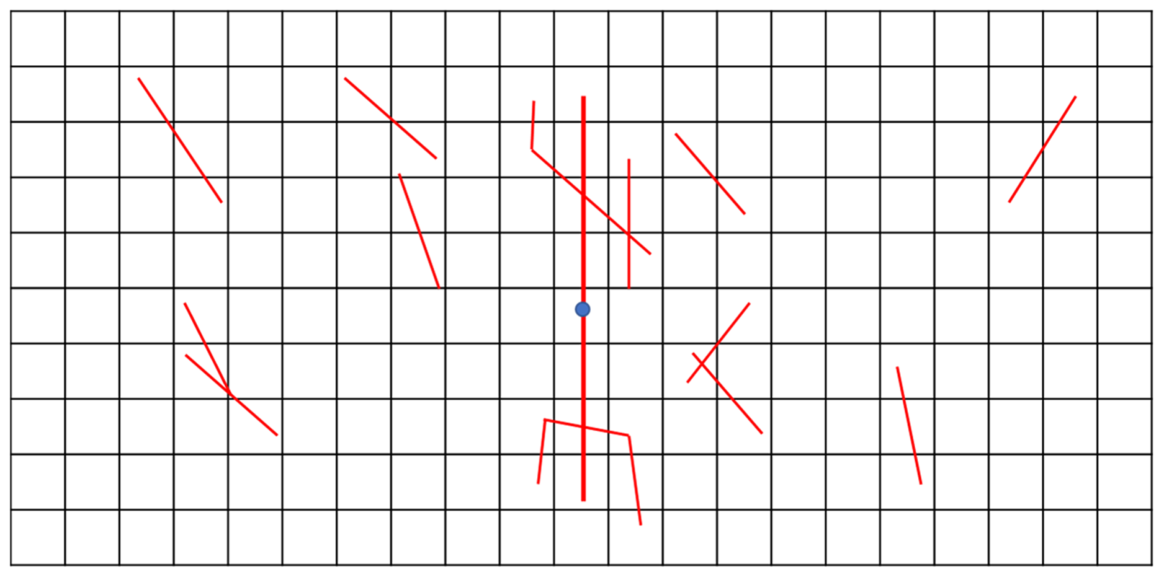
Figure 1. Schematic of the embedded discrete fracture model (EDFM).
Processes 14 01941 g001
Figure 2. The formation and grids used for model validation.
Processes 14 01941 g002
Figure 3. Comparison of simulation results. (a) Pressure distribution obtained in this study. (b) Pressure distribution in Jiang et al. (2014) [28].
Processes 14 01941 g003
Figure 4. Illustration of hydraulically fractured shale reservoir corresponding to single fracturing stage (the formation size in the x, y and z directions are 60, 500, 50 m respectively).
Processes 14 01941 g004
Figure 5. Pressure distribution in the hydraulically fractured shale formation after three years of production.
Processes 14 01941 g005
Figure 7. Log–log curves of dimensionless pressure PD and dimensionless pressure derivative PD versus dimensionless time tD under different main fracture permeabilities (kf).
Processes 14 01941 g007
Figure 8. Log–log curves of dimensionless pressure PD and dimensionless pressure derivative PD versus dimensionless time tD under different numbers of fracture clusters (Nc).
Processes 14 01941 g008
Figure 9. Log–log curves of dimensionless pressure PD and dimensionless pressure derivative PD versus dimensionless time tD under different distances from the fracturing stage to the pressure monitoring point (Dfp).
Processes 14 01941 g009
Figure 10. Log–log curves of dimensionless pressure PD and dimensionless pressure derivative PD versus dimensionless time tD under different initial matrix permeabilities (km).
Processes 14 01941 g010
Figure 11. Log–log curves of dimensionless pressure PD and dimensionless pressure derivative PD versus dimensionless time tD under different effective matrix permeabilities in SRV( k m , e f f S R V ).
Processes 14 01941 g011
Figure 12. Log–log curves of dimensionless pressure PD and dimensionless pressure derivative PD versus dimensionless time tD under different half-lengths of main fractures and SRV in the Y direction ( L f & L S R V ).
Processes 14 01941 g012
Figure 13. Log–log curves of dimensionless pressure PD and dimensionless pressure derivative PD versus dimensionless time tD under different water saturations of hydraulic fractures ( S w , h f ).
Processes 14 01941 g013
Figure 14. Log–log curves of dimensionless pressure PD and dimensionless pressure derivative PD versus dimensionless time tD under different types of boundary conditions.
Processes 14 01941 g014
Table 1. Basic parameters.
Parameter TypeValueUnit
Production rate (One stage)10m3/day
Reservoir size corresponding to single fracturing stage60 × 500 × 50m
Compressibility of rock2 × 10−9Pa−1
Compressibility of water5 × 10−9Pa−1
Compressibility of oil2 × 10−9Pa−1
Matrix permeability0.01mD
Matrix porosity10%
Initial formation pressure30MPa
Viscosity of water and oil1, 5mPa·s
Number of main fractures per stage3clusters
Semi-length of main fractures120m
Permeability of main hydraulic fractures20Darcy
Width of main hydraulic fractures5mm
Permeability of secondary hydraulic fractures1Darcy
Width of secondary hydraulic fractures2mm
Permeability of natural fractures10 × 10−3Darcy
Width of natural fractures0.5mm
Porosity of main, secondary, and natural fractures0.25, 0.15, 0.0005/
Disclaimer/Publisher’s Note: The statements, opinions and data contained in all publications are solely those of the individual author(s) and contributor(s) and not of MDPI and/or the editor(s). MDPI and/or the editor(s) disclaim responsibility for any injury to people or property resulting from any ideas, methods, instructions or products referred to in the content.