


Abstract
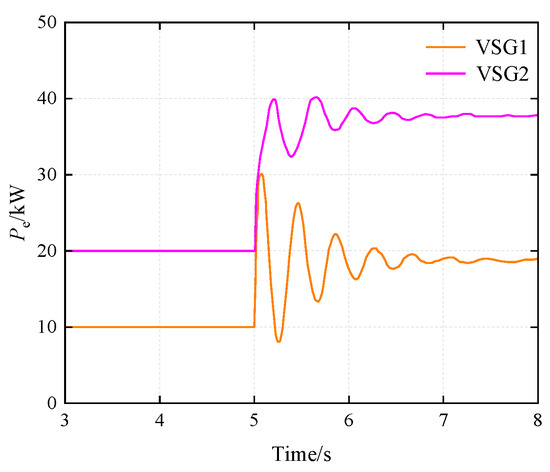
Parallel grid-forming energy storage converters based on virtual synchronous generator (VSG) control are prone to active power oscillation and interphase circulating current under load disturbance, unit switching, and parameter mismatch conditions. To address these problems, this paper proposes a dual-layer damping control strategy that combines adaptive virtual damping in the power loop with capacitor current feedback damping in the current loop. First, the small-signal models of the LCL filter, VSG power loop, and parallel converter system are established, and the dominant oscillation modes are analyzed using eigenvalue and participation factor methods. Then, an adaptive damping coefficient is designed according to the active power deviation and frequency dynamic response to suppress low-frequency power oscillation, while a capacitor current feedback branch is introduced to reshape the LCL filter’s resonant poles and attenuate circulating current resonance. Compared with the conventional fixed-damping VSG control, the proposed method reduces active power overshoot and accelerates power redistribution under load step and unit switching conditions. In the traditional control case, the active power peaks of VSG1 and VSG2 reach approximately 30 kW and 40 kW, with an oscillation period of about 1.8 s, whereas the proposed strategy suppresses the oscillatory process and enables the output powers to rapidly reach the preset sharing ratio. In addition, the system frequency can recover to the rated value of 50 Hz without obvious steady-state deviation, and the high-frequency component of the grid-connected current and the interphase circulating current are significantly attenuated. MATLAB/Simulink simulation results verify that the proposed dual-layer damping strategy provides better power oscillation suppression, circulating current mitigation, and frequency dynamic performance than the conventional VSG control.
1. Introduction
In the context of the global push towards green energy, the grid faces new challenges due to the expanding presence of wind and solar generation, the system’s equivalent inertia exhibits a continuous declining trend, leading to an increasingly severe risk of low-frequency oscillations, which constitutes a significant risk to the security and ensuring the power system remains stable [1,2,3]. To meet this challenge, virtual synchronous generator technology has emerged. This technology enables converters to exhibit the operational characteristics of synchronous generators, thereby providing necessary voltage and frequency support for the grid, outperforming traditional grid-following control strategies [4,5,6,7,8]. In view of this, deploying grid-forming energy storage systems is regarded as a crucial technical pathway [9]. Damping control, as a core technology for suppressing oscillations and enhancing system dynamic stability, directly determines the system’s ability to withstand disturbances and its recovery speed. Traditional fixed-parameter control struggles to meet damping requirements, leading to issues such as excessive equipment vibration and reduced control accuracy [10,11,12]. Consequently, designing damping control strategies that combine adaptability to operating conditions with fast dynamic response has become a research hotspot and a key challenge in the energy and power field.
Currently, VSGs are widely used in scenarios such as microgrids, but their control strategies still require further optimization for complex operating conditions; the adaptability and multi-objective coordination capabilities of existing control schemes remain insufficient [13]. At the level of single-machine system research, scholars have conducted in-depth work. The literature [14] discusses the construction method of the small-signal model for a single grid-forming converter and its parameter tuning principles, while the literature [15] provides a detailed analysis of the dynamic response characteristics of a single unit. The literature [16] addresses the impacts caused by line impedance differences, but its scope is limited to the voltage sag phenomenon in the reactive power control loop, lacking a more comprehensive analysis.
Furthermore, in practical engineering, grid-forming converters often operate in parallel configurations. The complex electromagnetic and control interactions between units can easily trigger active power oscillation problems: when loads suddenly increase or decrease, or when renewable energy output fluctuates, dynamic imbalances in the power angle difference δ and angular speed ω among multiple units can cause power fluctuation amplitudes to reach 20~50% of the rated power [17,18]. Since the overcurrent capability of grid-forming converters is typically only 1.2~1.5 times the rated current, severe power oscillations may not only damage power electronic devices but also trigger overcurrent protection, causing unit disconnection and seriously threatening system power supply reliability [19]. The literature [20] focuses on analyzing the frequency small-signal stability of multi-machine systems. The literature [21] constructs a complete state-space model to study synchronization stability under the premise of identical VSG parameters but does not address power oscillation phenomena potentially induced by parameter differences. Regarding the power oscillation issue, the literature [22] points out its existence in a two-parallel VSG system but fails to delve into its intrinsic mechanism. Subsequently, the literature [23] analyzes this phenomenon, attributing the root cause to the imbalance in instantaneous active power sharing among parallel units. Therefore, revealing the mechanism of power oscillation in multi-parallel systems and designing control strategies that combine oscillation/overcurrent suppression with frequency support capability has become a key bottleneck in the engineering application of grid-forming converters.
To address this, this paper investigates the power oscillation and circulating current issues in a two-VSG parallel system. Firstly, a state-space small-signal model of the system is established. Through eigenvalue analysis, the dominant modes of power oscillation under load disturbance are extracted, and stability criteria are clarified. Based on the eigenvalue trajectory method, the impacts of virtual inertia J and virtual damping D on stability are quantified, revealing that mismatch between virtual inertia and line impedance is the core cause of power oscillations. On this basis, an optimized control strategy is proposed: dynamic adjustment of virtual damping based on power deviation to suppress oscillations, and a capacitor current feedback branch to eliminate inter-phase circulating currents. Finally, a model is constructed on the MATLAB/Simulink (MATLAB R2024b), and comparative verification demonstrates the superiority of this method in active oscillation suppression, circulating current mitigation, and frequency response.
2. Modeling of Multi-Parallel Grid-Forming Energy Storage System Based on VSG
2.1. VSG Main Circuit Model
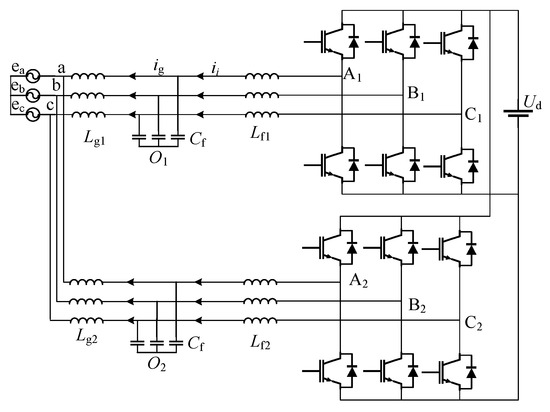
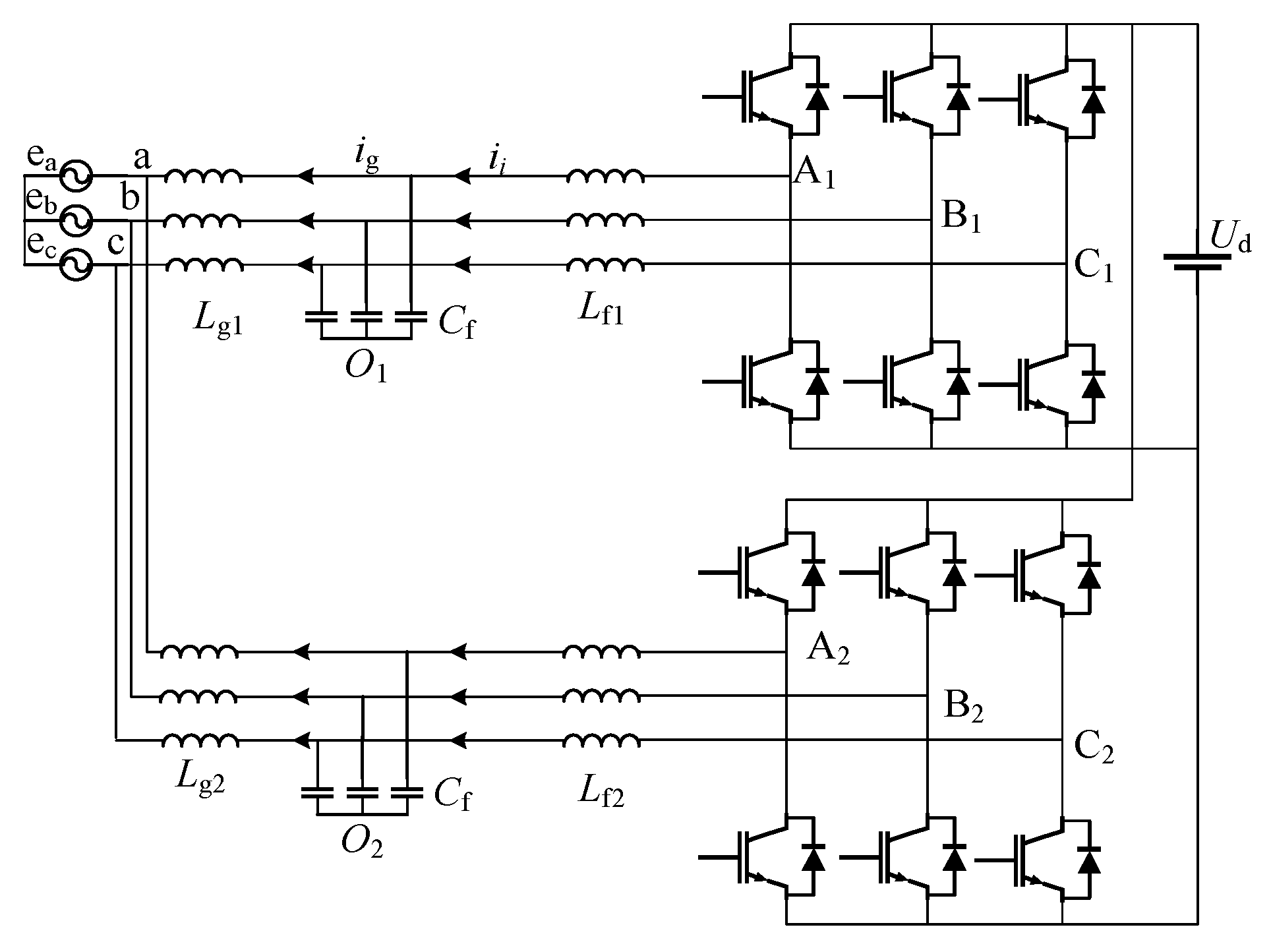
This paper uses the commonly employed VSG in grid-forming control as an example [24]. The VSG main circuit topology and control block diagram are shown in Figure 1.
Figure 1.
VSG main circuit topology structure diagram.
In Figure 1, the main circuit topology includes a DC voltage source, a power electronic DC/AC inverter, and an LCL filter. Since the research object is an energy storage VSG, where the front-end power source is an energy storage system, the DC-side voltage is modeled as a constant DC source for analysis.
To simplify the analysis, this paper first studies the LCL filter under ideal conditions, selecting the three-phase stationary coordinate system as the analytical reference. The mathematical equations of the filter in state-space form can be derived as follows:
where Lg and Lf are the grid-side and machine-side inductances of the filter; and are the machine-side and grid-side inductor currents of the k-th phase, k = a, b, c; and , , and are the capacitor voltage, machine terminal voltage, and grid voltage of the k-th phase, respectively.
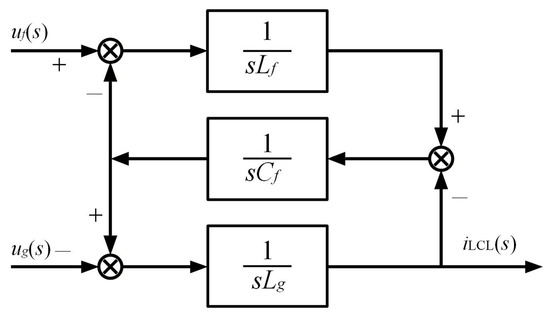
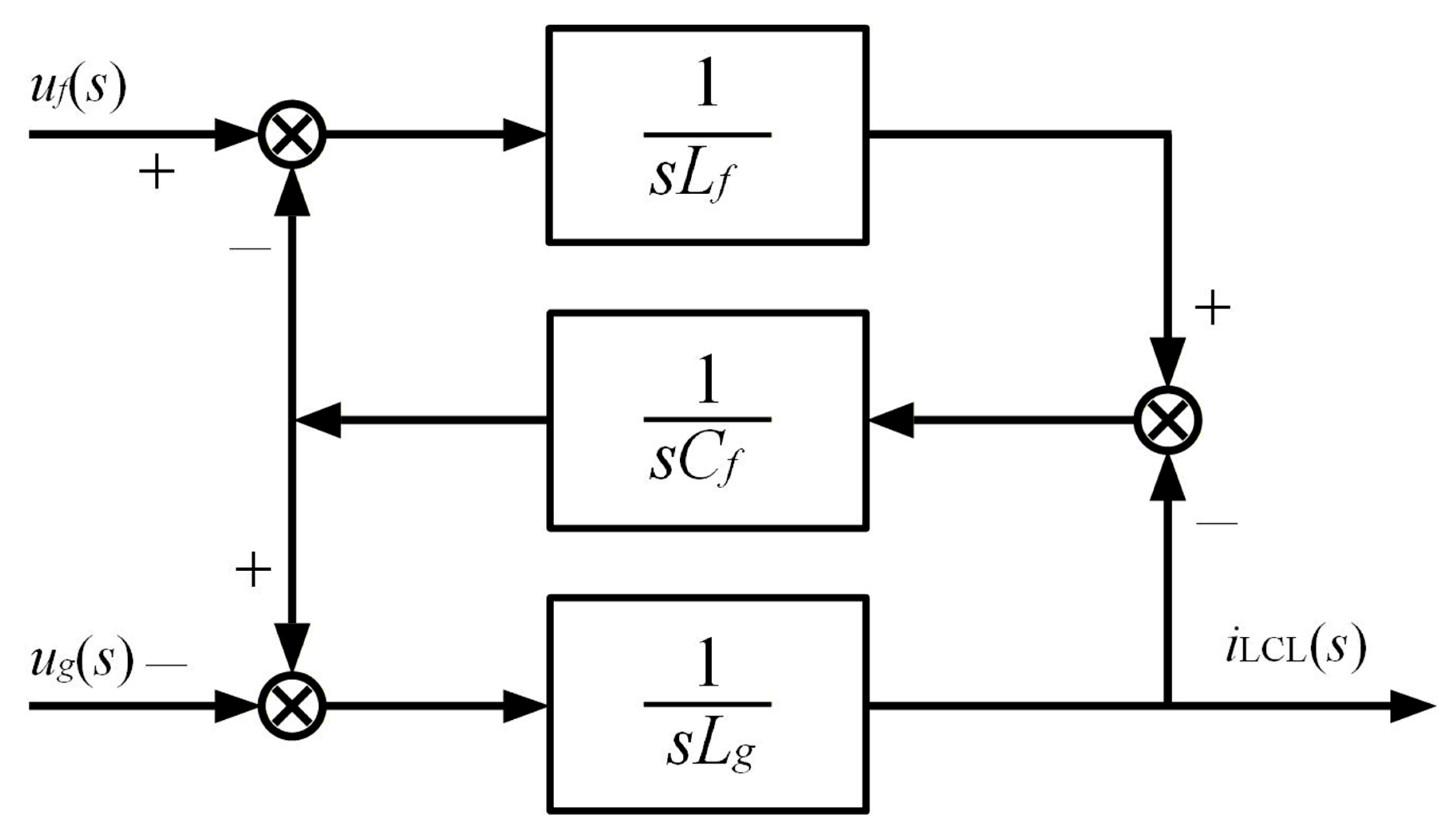
Figure 2 shows the mathematical model of the LCL filter, and the grid-connected current after filtering is as follows.
Figure 2.
LCL filter equivalent model.
The transfer characteristics between the input and output ports of the LCL filter can be obtained by analyzing the circuit structure shown in Figure 2, with its specific form as follows:
where GLCL(s) denotes the transfer function of the LCL filter, iLCL(s) denotes the filtered grid-connected current, uf(s) denotes the converter-side input voltage of the filter, s is the Laplace operator, and Cf represents filter capacitance.
Based on the denominator of Equation (4), it is known that the LCL filter inherently has a resonant peak, which inevitably affects the stability of inverter operation [25].
2.2. LCL Filter Small-Signal Model
Combining the system main circuit topology and the established LCL filter state-space equations by applying the Park transformation, this mathematical model is converted from the stationary coordinate system to the synchronous rotating coordinate system. Its circuit equations are as follows:
By linearizing Equation (5) around the equilibrium point and expanding near the steady-state operating point, we derive the small-signal model for the LCL filter yields:
where ∆ifd, ∆ifq, ∆uCd, ∆uCq, ∆igd, and ∆igq are the state variables; ∆ufd and ∆ufq are the small-signal disturbance of the inverter output voltage; ∆ugd and ∆ugq are the small-signal disturbance of the grid voltage; ∆ω is the small disturbance of the grid angular frequency deviating from the rated value; Af is the system matrix of the LCL filter; Bf1 is the input matrix; and Bf2 is the frequency disturbance matrix.
2.3. Parallel VSG Power Loop Small-Signal Model
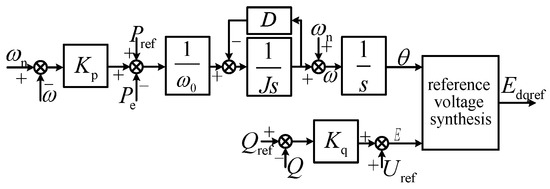
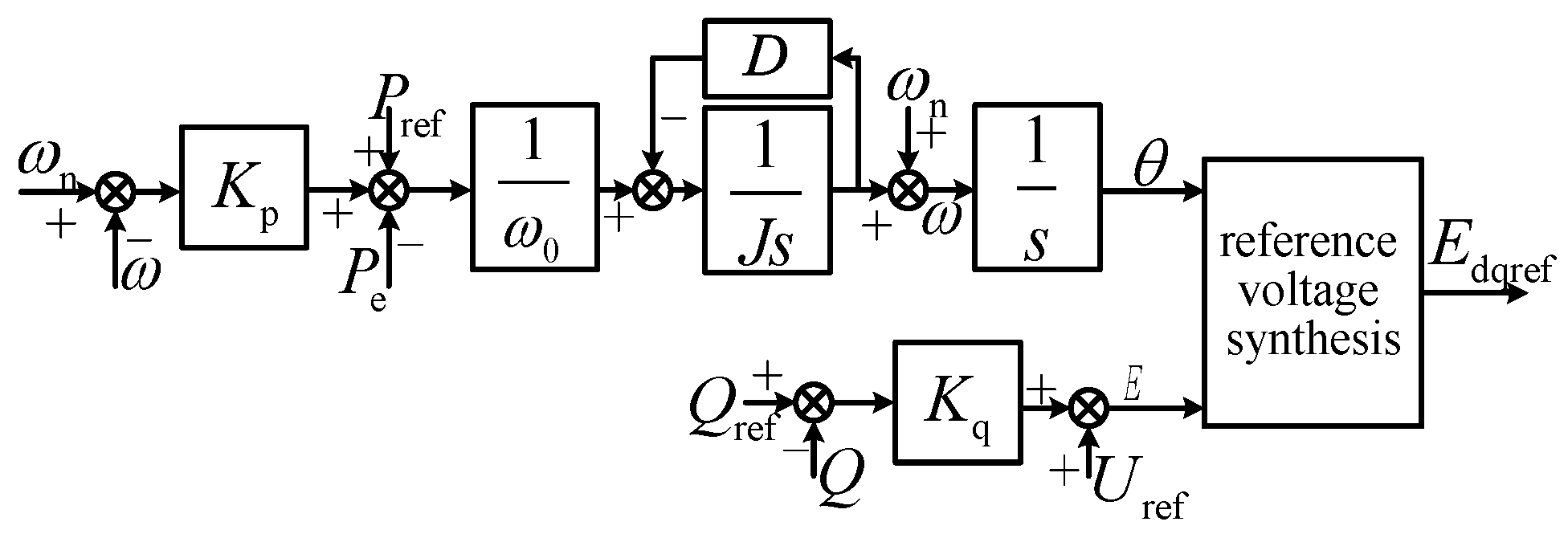
The core principle of VSG technology is to mimic the external characteristics of traditional synchronous generators to cope with system dynamic disturbances, thereby supporting grid frequency and voltage and ensuring power balance between supply and demand. Its basic control structure is shown in Figure 3.
Figure 3.
VSG power control block diagram.
Analyzing the VSG power outer loop structure shown in Figure 3, its mathematical relationships can be established as follows:
where J is the virtual moment of inertia; Pref and Qref are the active and reactive power reference values; Pe and Q are the instantaneous output power of the inverter; D is the damping coefficient; Kp is the active droop coefficient; Kq is the reactive droop coefficient; E is the reference voltage amplitude; and Uref is the given reference voltage value.
The VSG output power can be expressed as:
By linearizing the active frequency and reactive voltage control equations in Equation (8) at the steady-state operating point of the VSG system, we derive Equations (9) and (10) for small-signal conditions:
Furthermore, by linearizing Equation (8) and combining it with Equations (9) and (10), the small-signal model of the VSG power loop can be constructed as follows:
where ∆Ed is the rate of change in the d-axis electromotive force; AVSG is the state matrix; and BVSG is the input matrix.
2.4. VSG Multi-Parallel Small-Signal Model
Building upon the small-signal models of the LCL filter circuit and the VSG power loop, as well as integrating the various equations, the small-signal model for a single VSG system can be obtained as:
where is the small-signal state vector of the LCL filter; is the rate of change; is the small-signal state vector of the VSG power loop; is the state matrix of the filter itself; is the submatrix related to ∆Ed in the LCL model; is the coupling matrix from LCL to VSG power loop; is the selection matrix; is the input matrix from grid voltage to LCL; and is the input matrix from frequency disturbance to LCL.
If there are n VSGs connected in parallel, each VSG corresponds to a set, and multiple machines are coupled through the grid’s common coupling point to achieve frequency and voltage coupling. The total state equation of the multi-machine parallel system is:
where is the system state change rate; is the total state matrix; is the total input matrix; is the external input disturbance vector of the multi-machine system; is the output deviation vector; is the output matrix; is the total state deviation vector of the multi-machine parallel system; is the front-end state deviation vector of the n-th VSG; is the internal state deviation vector of dq-axis current and voltage of the n-th VSG; and is the common state deviation vector on the grid side.
The specific parameters used for the inverter main circuit and the virtual synchronous machine control loops in this study are summarized in Table 1.
Table 1.
Inverter main circuit and VSG control loop parameters.
3. Power Oscillation and Circulating Current Suppression Strategy for GFI Parallel Systems
3.1. Control Parameter Analysis
The locations of the eigenvalues in the state matrix A dictate the small-signal stability of the system. The complete set of eigenvalues can be determined by solving the characteristic equation , and the solutions typically exist in the form of complex conjugate pairs:
where is the damping ratio of the i-th oscillation mode, and is the damped oscillation angular frequency of that mode.
To reveal the participation degree of each state variable in the system stability, participation factor analysis is required [26]. This method treats the system’s eigenvalue λi as a function determined by both controller parameters and operating conditions, which is expressed as follows:
where represents the control parameters and operating parameters of the controller.
The participation factor quantitatively describes the contribution of the k-th state variable to the i-th mode. It is defined as the product of the corresponding components of the left eigenvector and the right eigenvector of that mode:
For ease of comparison, the participation factors of all state variables are normalized:
where is the participation factor of the k-th state variable normalized for the i-th mode.
Based on the VSG multi-machine small-signal model and the dominant oscillation modes identified through the parameter analysis in this section, the normalized participation factors of all state variables for each dominant mode are calculated. The top six state variables with the highest participation degrees are selected as the key participating variables for that mode, resulting in the system eigenvalues shown in Table 2.
Table 2.
Eigenvalues and their dominant state variables.
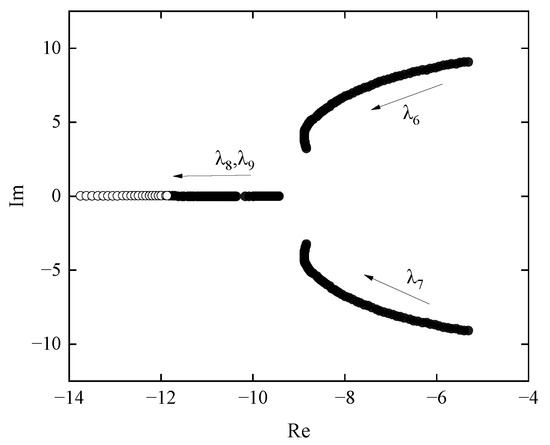
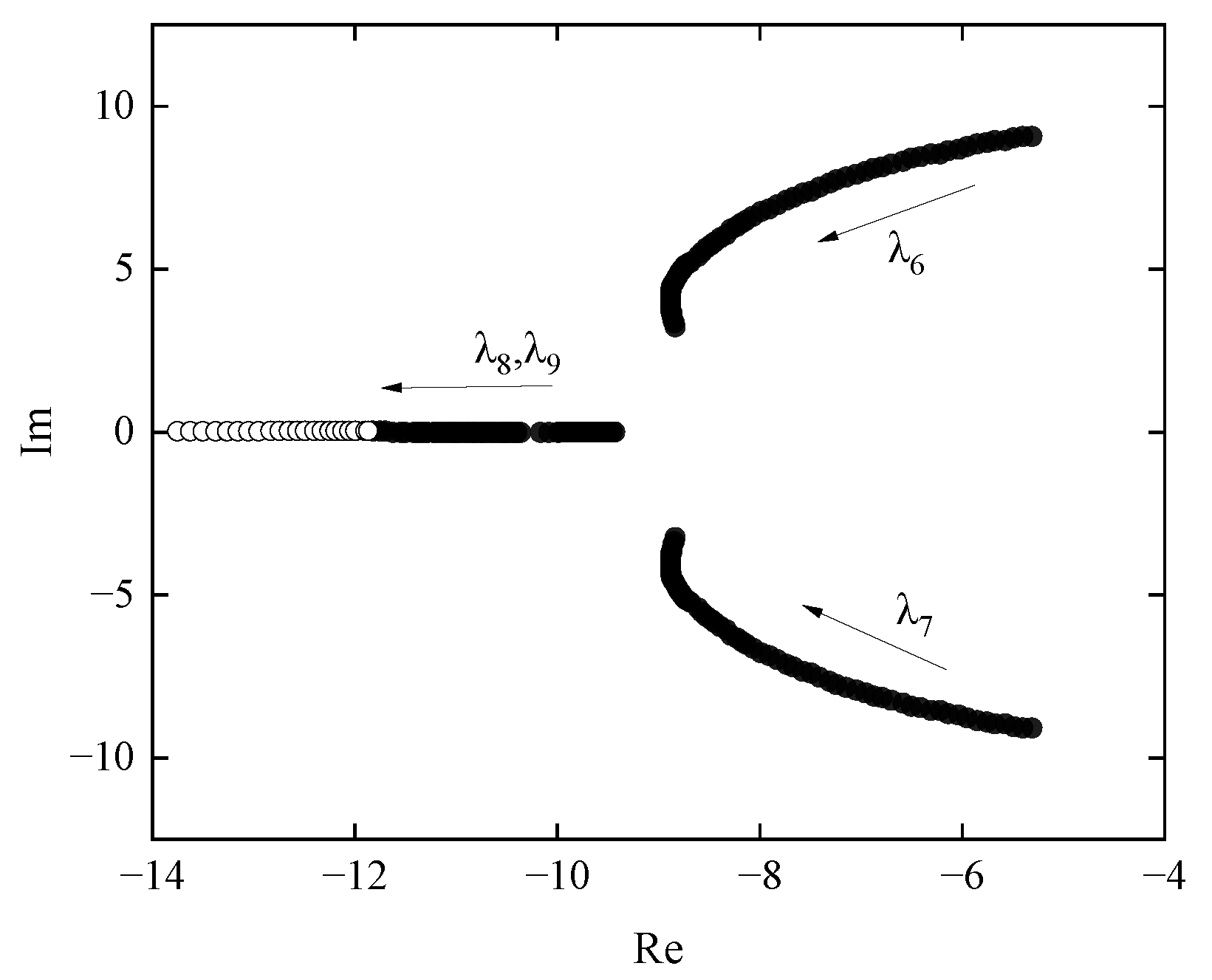
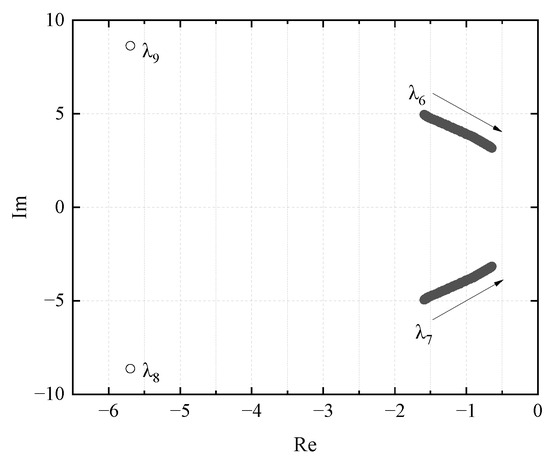
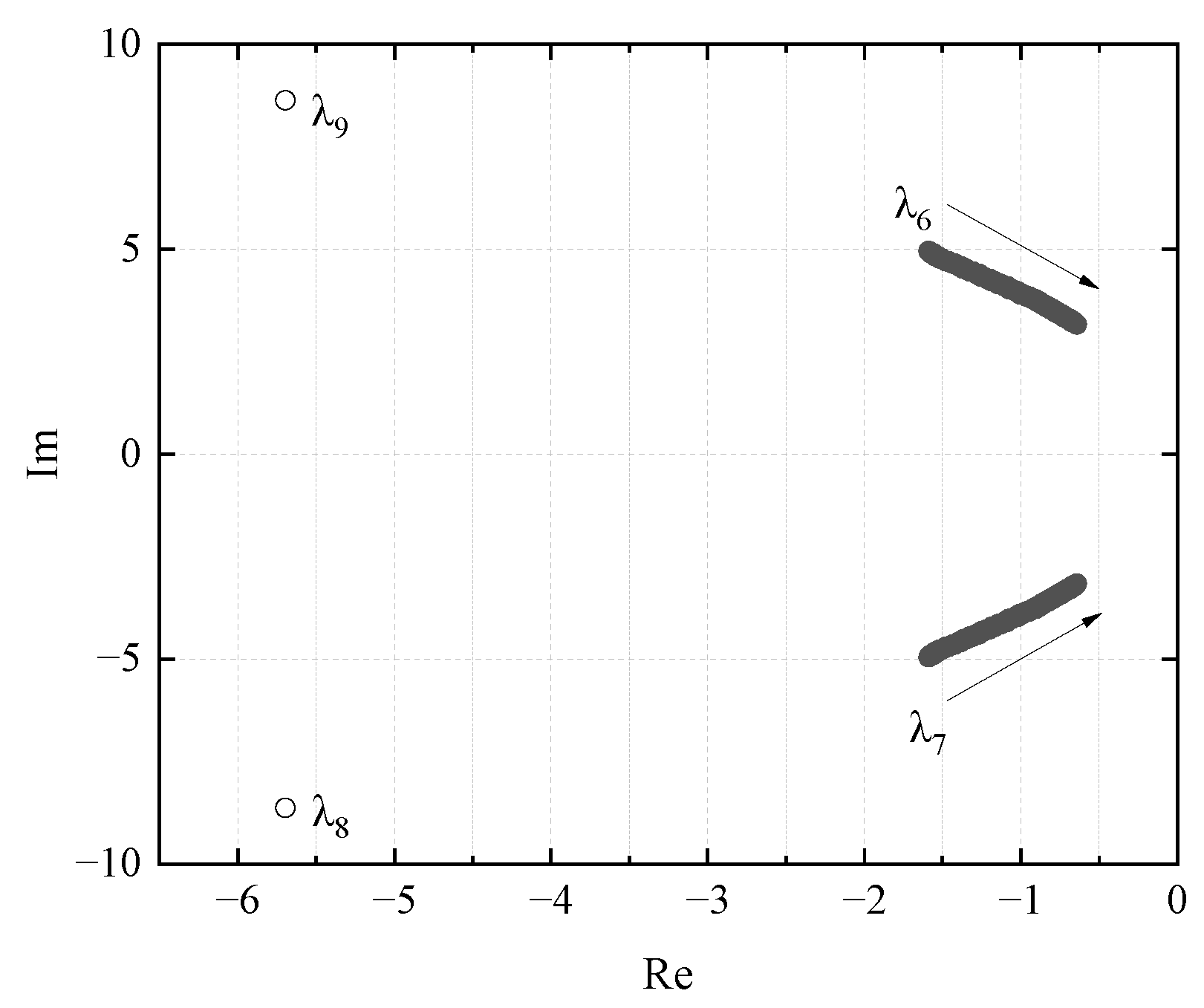
The data presented in Table 2 indicate that all system eigenvalues lie in the left-half plane, thus the system can be judged stable under small disturbances. Furthermore, the frequency deviation ∆ωi and power angle deviation ∆δi show significant participation in the dominant modes. This mechanistically indicates that such oscillations originate from the loss of synchronism and swinging of the rotor dynamics between parallel VSGs. Frequency and power angle are the most direct physical quantities characterizing this process. The capacitor current ΔiC and filter inductor current Δif also participate significantly, clearly revealing that the oscillation energy is primarily concentrated in the capacitor branch of the LCL filter and its associated loops. To further investigate the influence of key parameters on system stability, based on the benchmark results in Table 2, this paper focuses on the effects of the damping coefficient D and the moment of inertia J. Figure 4 and Figure 5 show the root loci changes in the system eigenvalues when D and J vary within specified ranges, respectively.
Figure 4.
Eigenvalue locus when D = 5~80.
Figure 5.
Eigenvalue locus when J = 0.5~5.
By analyzing the root loci in Figure 4 and Figure 5, it is found that increasing the system damping D causes eigenvalues λ6 to λ9 to move deeper into the left-half plane, thereby enhancing the system’s attenuation characteristics and helping to suppress active power oscillations. Conversely, when the virtual inertia J increases, eigenvalues λ6 and λ7 move closer to the imaginary axis, with their trajectory shifting from the stable region towards the unstable region. This indicates that although increasing J can augment the system’s virtual inertia, it reduces the system’s stability margin, degrades dynamic performance, and induces low-frequency oscillation risks. Thus, proper configuration of virtual damping is an effective means to suppress low-frequency power oscillations in the system.
3.2. Mechanism of Power Oscillation in VSG Multi-Parallel Systems
If grid-forming converters exhibit identical rates of frequency change, the change in their power angles over equal time intervals must also be consistent. Based on this, under load disturbance conditions, the active power output at the point of common coupling for a single VSG inverter can be expressed as:
From Equation (19), we obtain:
According to fundamental kinematic principles, if the angular speeds of two virtual synchronous machines remain equal, even under load disturbances, the system will not exhibit power oscillation phenomena:
When a step load disturbance occurs, the rotor speed of the virtual synchronous machine does not change abruptly due to its inherent inertia, instead temporarily retaining its previous value.
By combining Equations (20) and (22), we get:
Neglecting line resistance, we obtain:
Under normal system operating conditions, the ratio of voltage amplitude E1 to Ei is approximately 1; therefore, the slight fluctuations of these voltage values have a negligible effect on active power oscillations.
3.3. Power Oscillation Suppression in VSG Multi-Parallel Systems
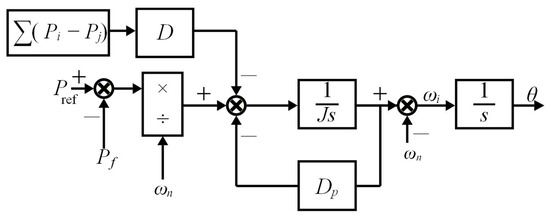
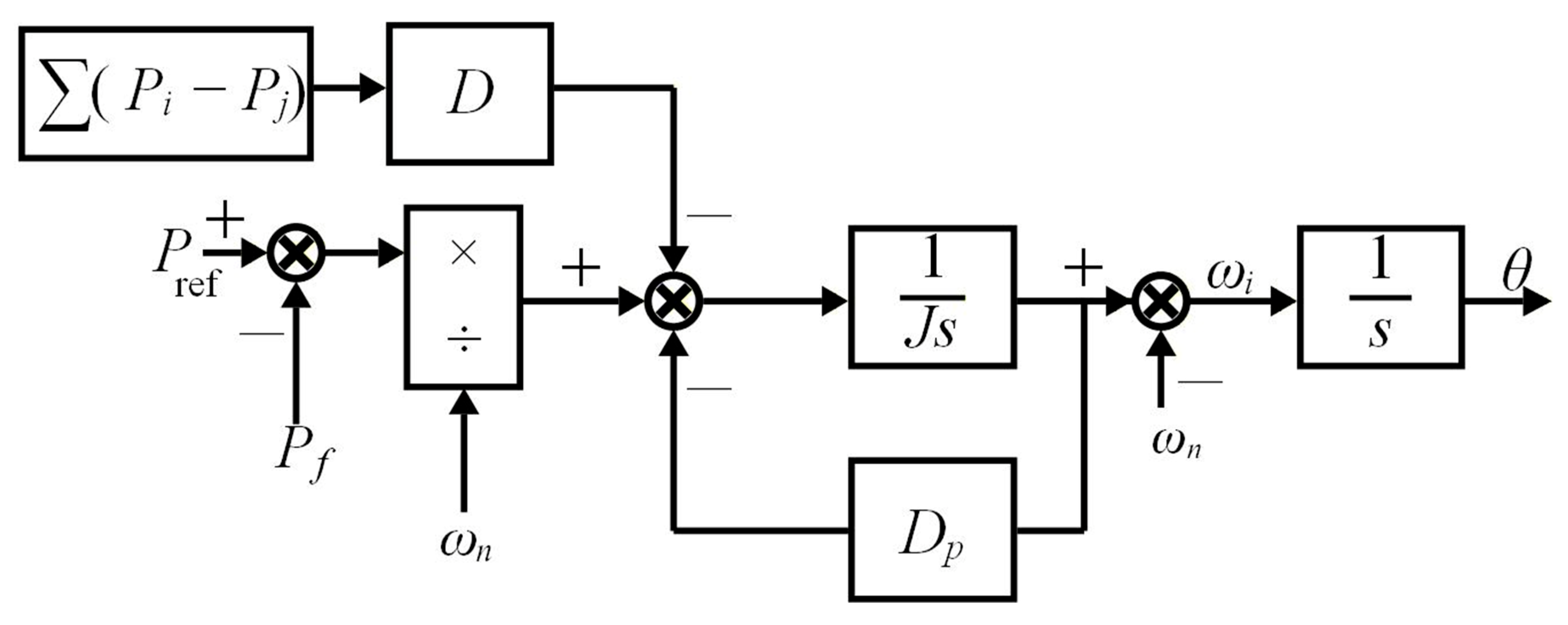
Equation (24) reveals that the core of suppressing active power oscillations lies in maintaining an inverse relationship between the virtual inertia ratio and the output reactance ratio of the grid-forming converters. If this condition is not met, the frequency rates of change in the parallel converters will differ, leading to inconsistent frequency dynamic responses and consequently causing power oscillations. Drawing on the control parameter analysis mentioned earlier, an effective suppression strategy is to dynamically adjust the system damping by monitoring the output power deviation, thereby smoothing power oscillations caused by load fluctuations. The principle is shown in Figure 6. The damping coefficient Di must satisfy the following conditions:
where ωmin is the minimum angular velocity; ωmax is maximum angular velocity; Pmin is the minimum active power; and Pmax is the maximum active power.
Figure 6.
Adaptive virtual damping control method.
Furthermore, in terms of parameter design, the damping coefficient Di should be proportional to the magnitude of the output power.
To clarify the boundary selection of the adaptive damping coefficient, the value of Di calculated from Equation (26) is constrained within the allowable range defined by Equation (25). The lower limit Dimin is selected to ensure sufficient damping for the dominant oscillation modes, so that the active power and power angle oscillations caused by disturbances can be effectively attenuated. The upper limit Dimax is determined by the dynamic response requirement, since an excessively large damping coefficient may slow down frequency recovery and prolong the active power regulation process. Therefore, the boundary of Di is determined by balancing oscillation suppression, frequency deviation, circulating current limitation, and settling performance. This constrained design enables the proposed damping strategy to improve system stability while maintaining an acceptable transient response speed.
As shown in Figure 6, the proposed adaptive virtual damping loop first measures the actual active powers of the parallel VSG units and calculates the total power deviation relative to the reference command. This deviation is then converted into a damping correction term and added to the original swing equation damping channel. When a load step or renewable power fluctuation causes an active power imbalance, the additional damping increases the attenuation of the power angle swing and accelerates the convergence of Δω and Δδ. When the system approaches a steady state, the damping correction decreases automatically, avoiding unnecessary degradation of dynamic response. Therefore, the control loop improves transient stability without sacrificing the steady-state ac-tive power–frequency droop characteristics.
3.4. Inter-Phase Circulating Current Resonance Suppression in Parallel Systems
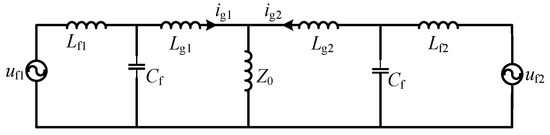
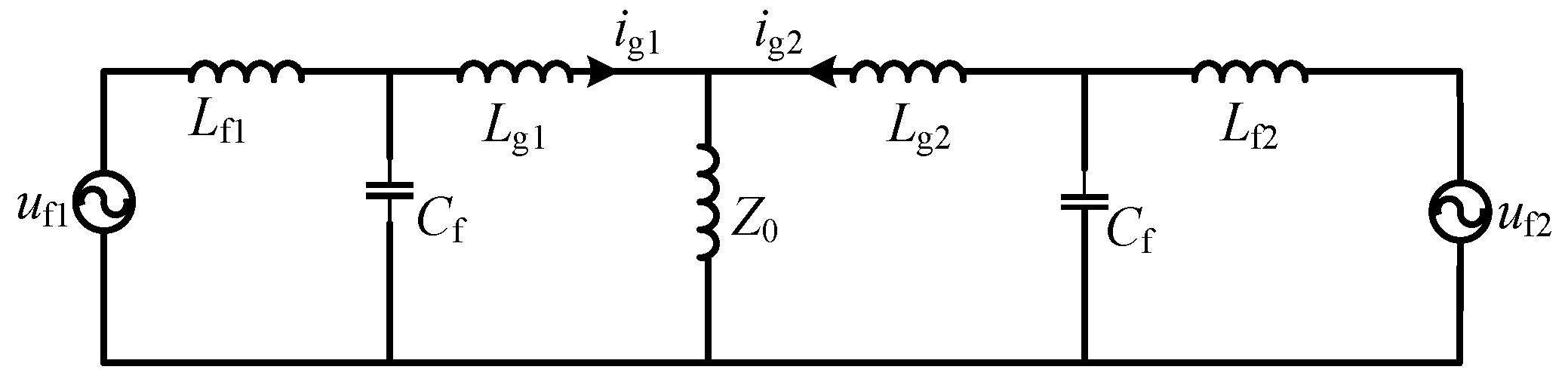
Figure 7 first presents the single-phase equivalent circuit of a double-GFI module parallel system, where Z0 is the grid equivalent impedance.
Figure 7.
Single-phase equivalent circuit of GFI parallel connection.
Here, and are the terminal voltages of the two different GFIs. Considering the interaction between inverters, the transfer function from uf1 to ig1 shown in Figure 7 is:
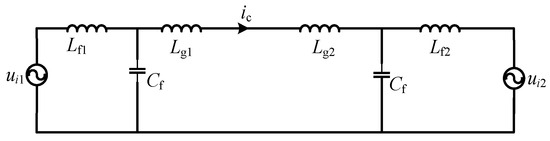
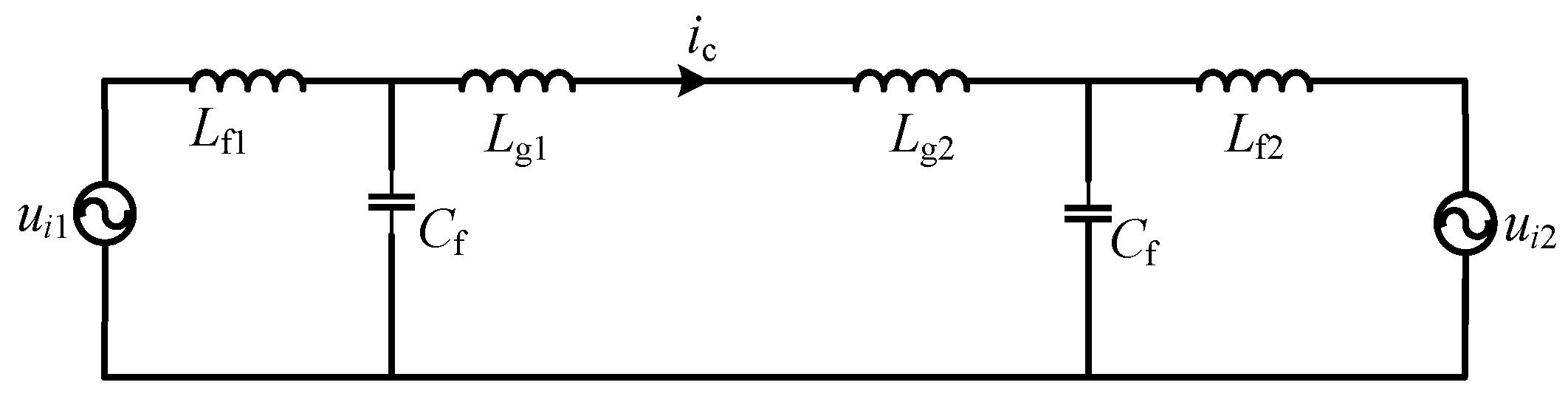
To reveal the circulating current resonance generated by the parallel operation of GFIs, Figure 8 shows the single-phase equivalent circuit diagram for the parallel circulating current.
Figure 8.
Single-phase equivalent circuit for circulating current.
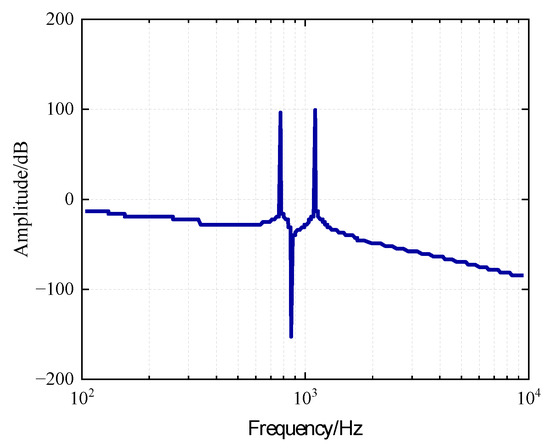
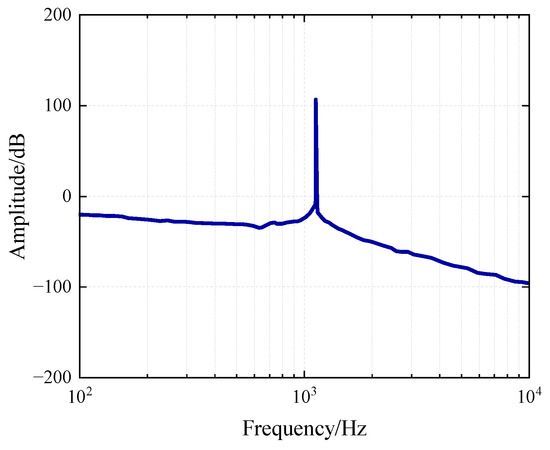
To intuitively verify the generation mechanism of inter-phase circulating current when two grid-forming energy storage converters operate in parallel and clearly present the inherent resonance peak characteristics of the parallel system, the frequency characteristic curves of G1(s) and G2(s) are plotted, as shown in Figure 9 and Figure 10. These can visually reflect the response patterns and resonance characteristics of the system at different frequencies from a frequency domain perspective.
Figure 9.
Frequency response curve of transfer function G1(S).
Figure 10.
Frequency response curve of transfer function G2(S).
By analyzing Figure 9, it is evident that when two GFI modules operate in parallel, two inherent resonance peaks are excited in the system. The current component of one resonance peak injects into the grid, causing high-frequency oscillation in the grid current; the other peak coincides with the position of the circulating current resonance peak shown in Figure 10, indicating that this part of the resonant current circulates only between the parallel GFI modules, which forms the inter-phase circulating current. This inter-phase circulating current resonance phenomenon can significantly shorten the service life of the equipment and may induce power–frequency oscillations, posing a serious challenge to the system’s operational reliability. To address this, this paper proposes introducing capacitor current feedback into the current inner loop to construct a damping element, aiming to effectively suppress the inter-phase circulating current resonance.
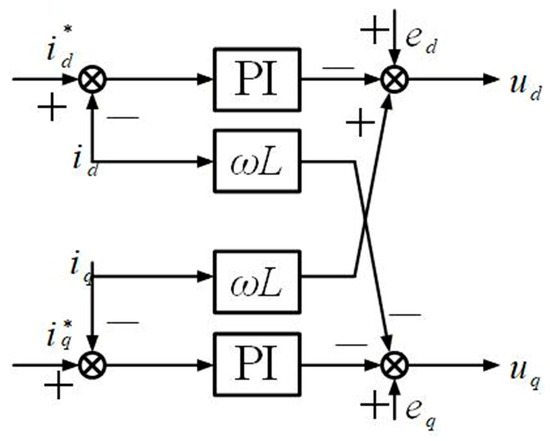
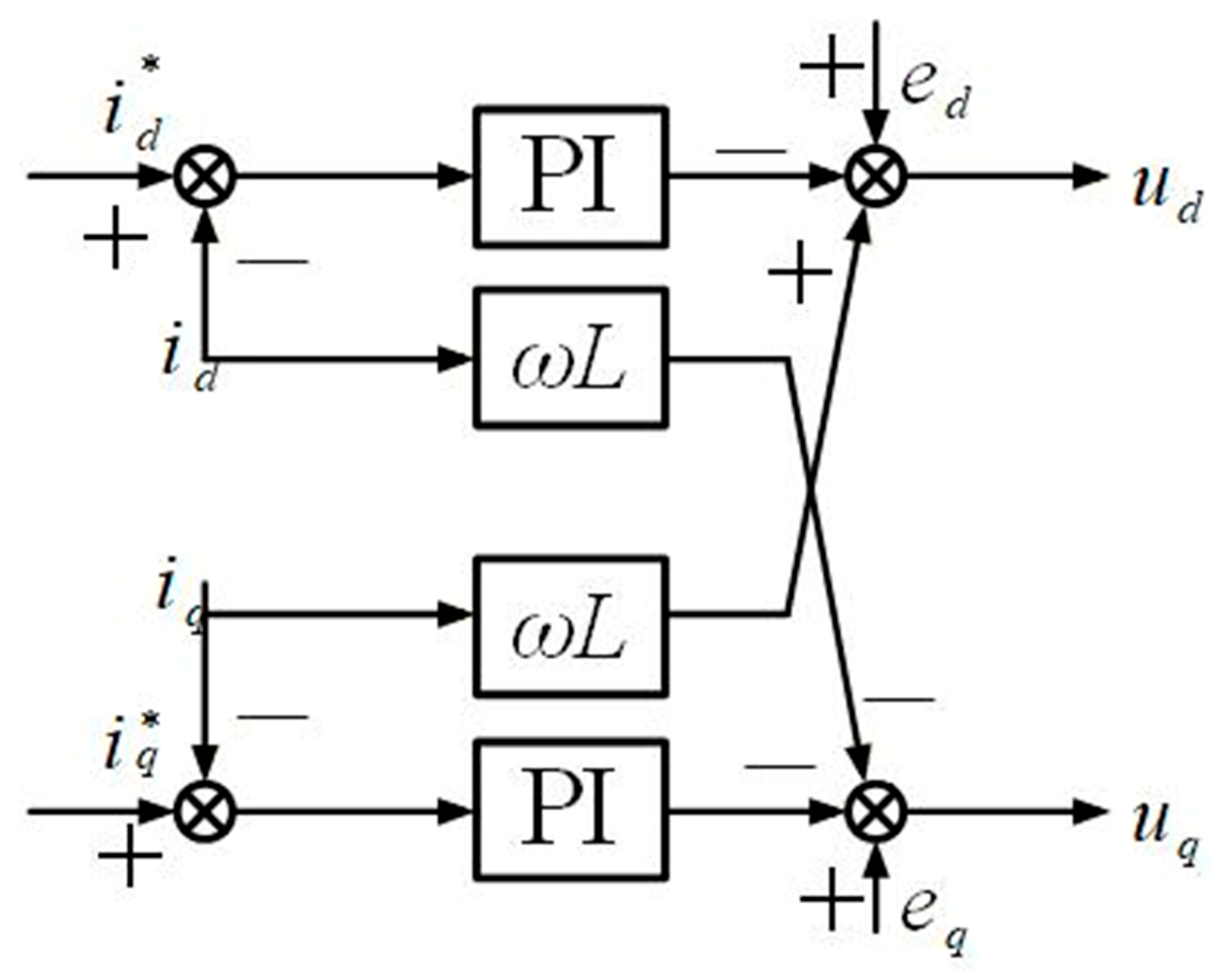
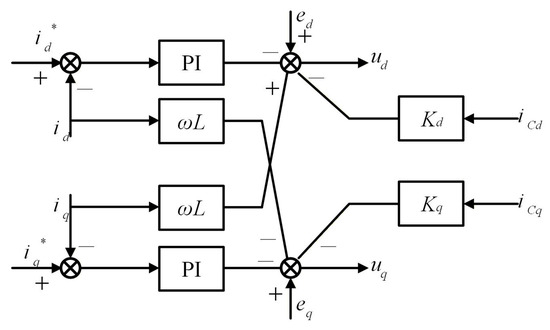
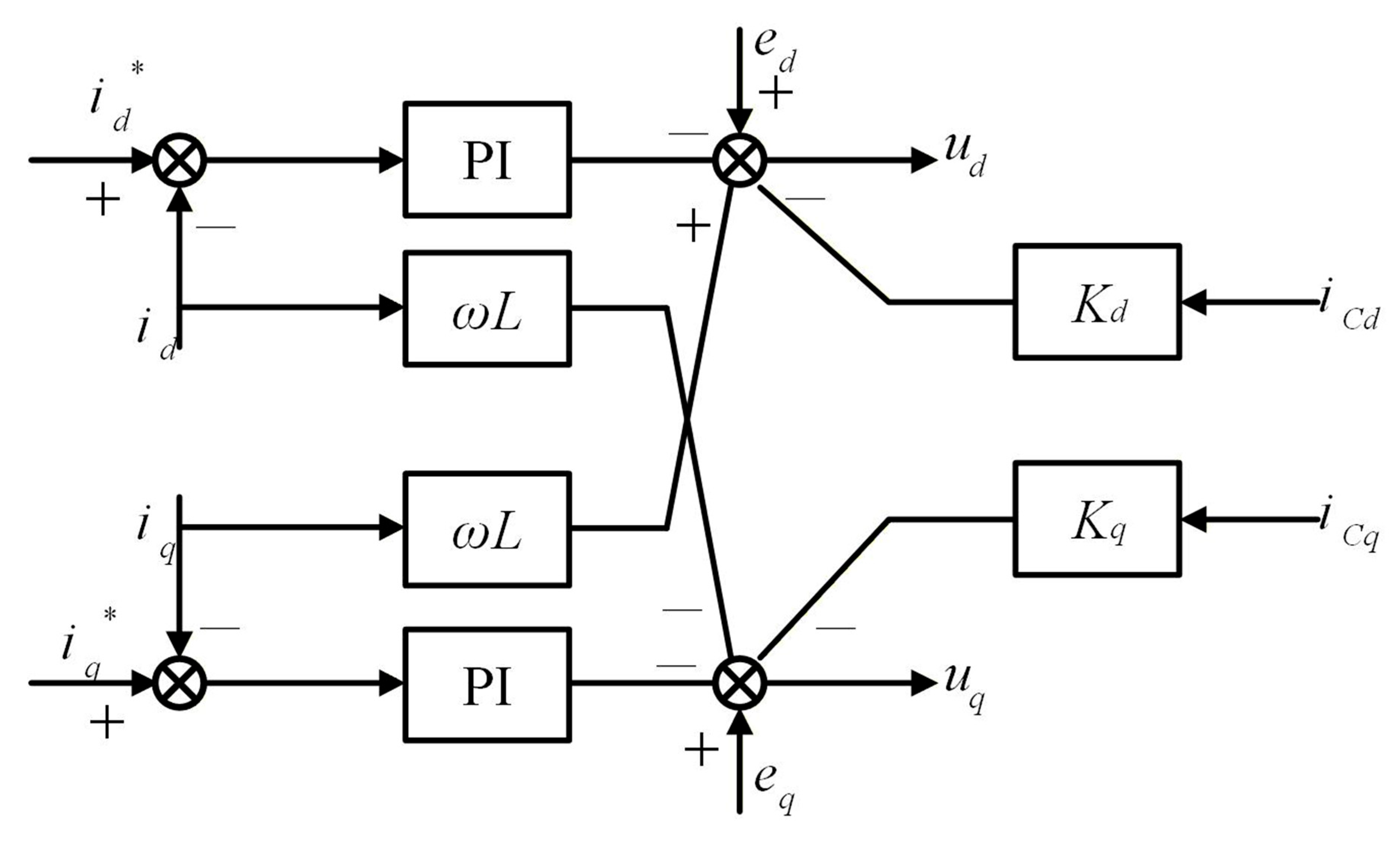
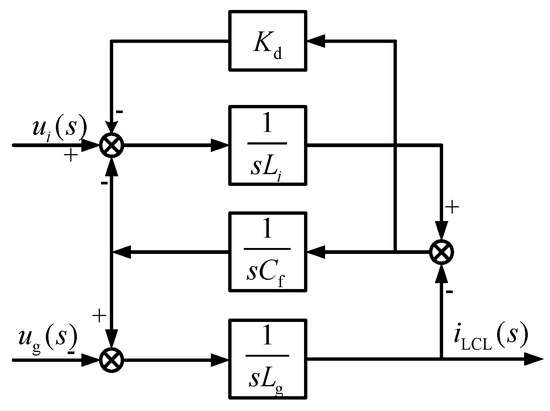
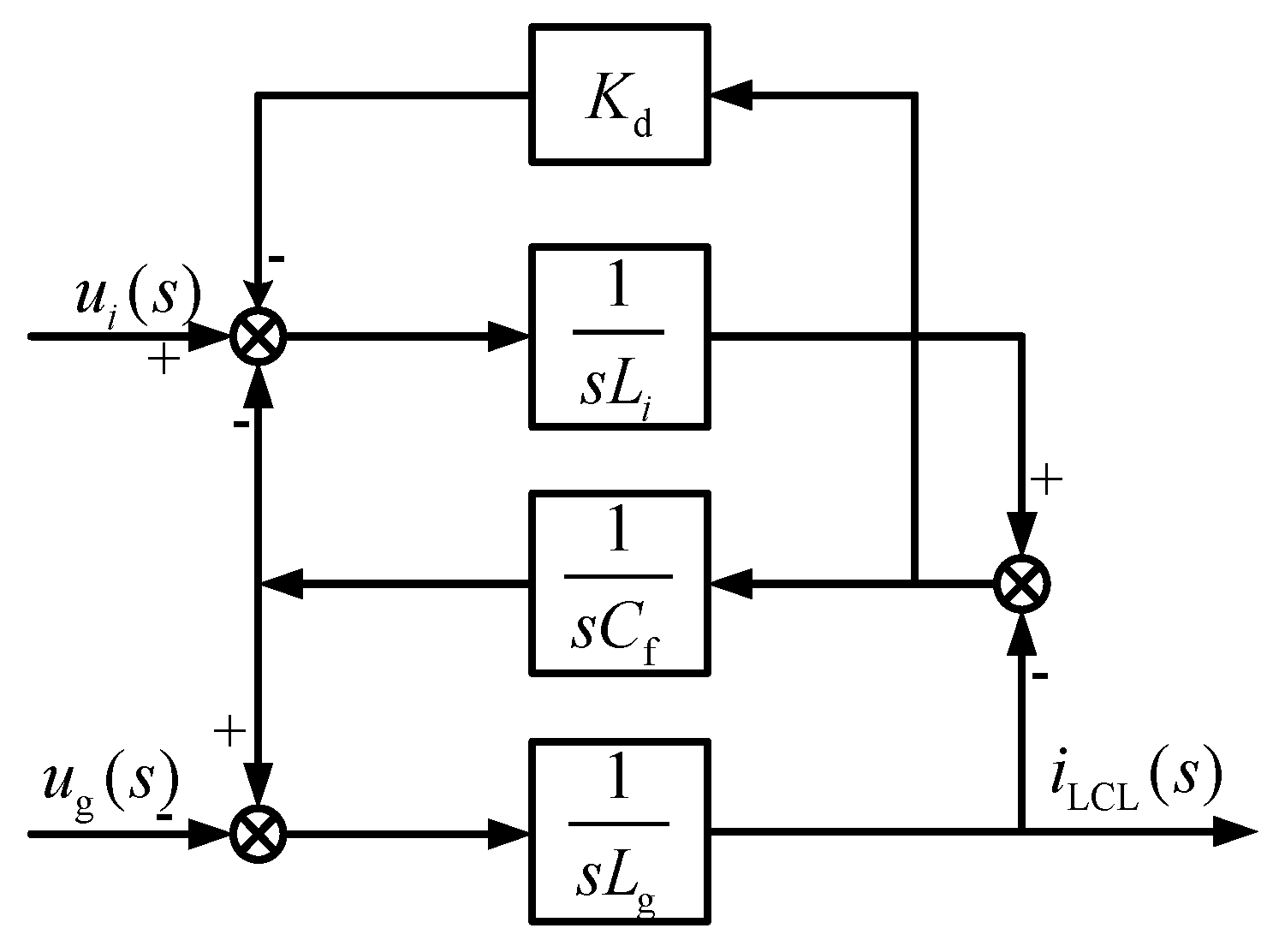
The schematic diagram of the internal current regulation framework for a conventional VSG is shown in Figure 11, while the optimized control block diagram incorporating the capacitor current damping term is depicted in Figure 12. Here, and denote the d-axis and q-axis components obtained by applying the Park transformation to the three-phase filter capacitor current iCabc. After introducing this damping term, the analytical model of the LCL-type filter is presented in Figure 13.
Figure 11.
Traditional VSG current inner loop.
Figure 12.
VSG current inner loop with damping term.
Figure 13.
Equivalent model of LCL filter with the introduced damping branch.
When comparing the control structures in Figure 11 and Figure 12, the traditional current inner loop primarily relies on the PI controller and cross-decoupling control methods. The improved strategy proposed in this paper additionally introduces a feedback path composed of the damping coefficient Kd and the circulating current components iCd and iCq. This strategy constructs virtual damping within the control algorithm by feeding back the capacitor current, effectively suppressing the inherent resonance of the LCL filter. This improved scheme offers dual advantages: firstly, it actively suppresses inter-phase circulating currents in multi-VSG parallel systems, thereby reducing power losses and device thermal stress caused by circulating currents; and secondly, the introduction of virtual damping significantly enhances system damping, accelerates the dynamic response of the current inner loop, and improves the waveform quality of the grid current. Ultimately, this control method not only overcomes the efficiency drawbacks of passive damping but also allows for flexible adjustment of Kd to enhance system robustness, providing stable inner loop support for the upper-layer power control, thus comprehensively improving the operational stability and grid-connected power quality of the parallel system.
Based on the filter model with the introduced damping term shown in Figure 13, the transfer function from to ig can be obtained as:
where Kd is the damping coefficient.
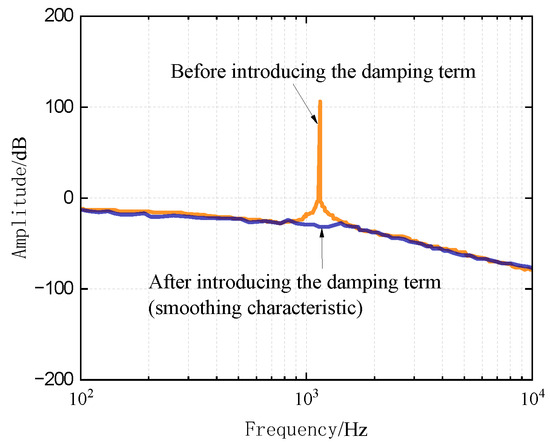
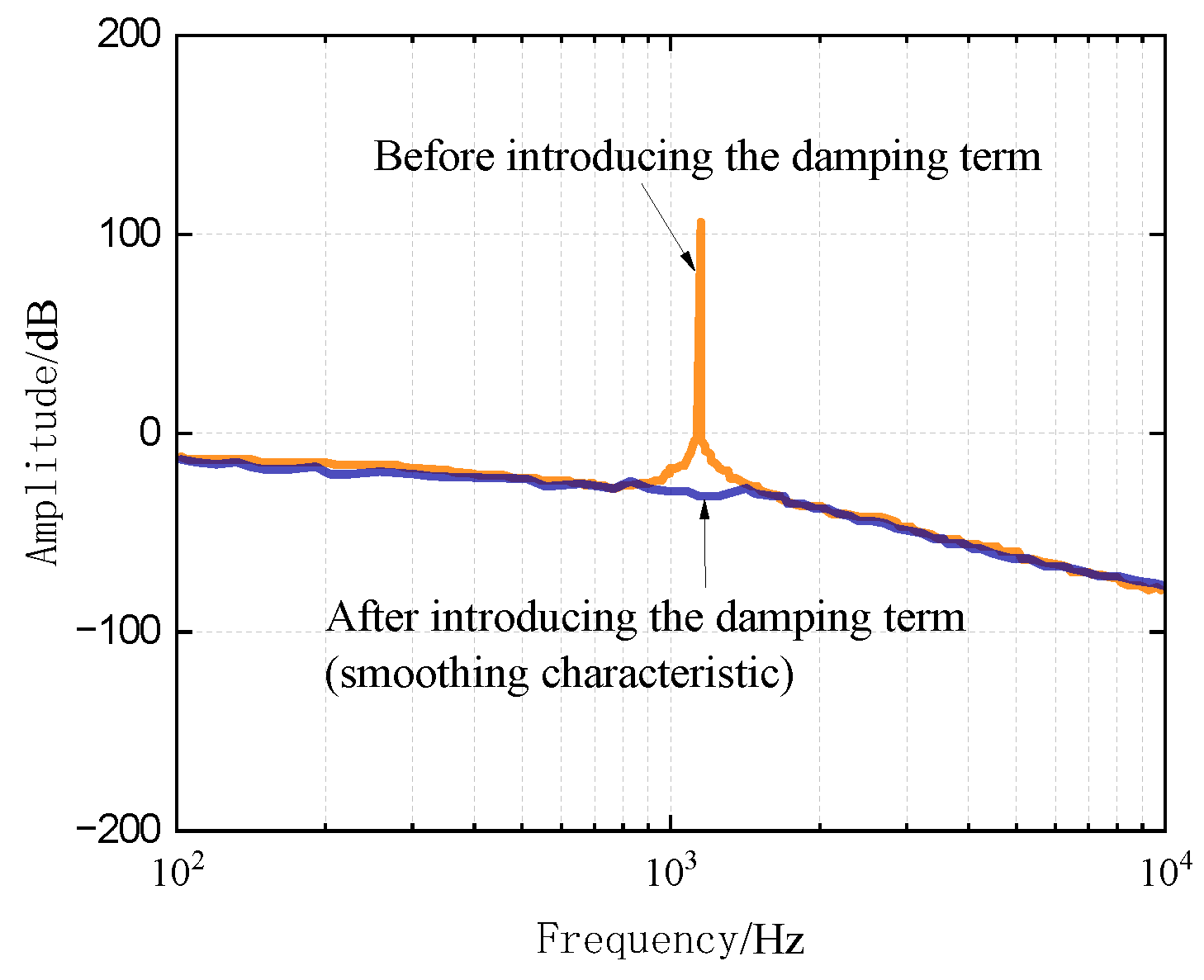
The theoretical analysis above demonstrates that the proposed active damping strategy based on capacitive current feedback can reshape the resonance poles of the LCL filter and suppress its resonance peaks. To further evaluate this damping effect, a frequency-domain analysis of the open-loop transfer function of the parallel converter system was performed. The frequencies shown in the Bode plot refer to the sweep range used for small-signal resonance analysis, rather than the fundamental operating frequency of the AC grid. Therefore, the frequency range in Figure 14 was selected to cover the resonance regions of both the LCL filter and the circulating current path. Figure 14 shows the amplitude–frequency response curves before and after the introduction of the damping branch.
Figure 14.
Comparison of GFI output frequency characteristic curves.
Figure 14 simulation results of the magnitude–frequency characteristics demonstrate that after introducing the capacitor current damping term, the inter-phase circulating current resonance peaks existing in the LCL filter and the dual-parallel virtual synchronous generator system are significantly suppressed. This results in a smooth and stable system magnitude–frequency characteristic over a wide frequency range, fully validating the effectiveness and practicality of the proposed active damping strategy in enhancing the damping characteristics of the dual-parallel VSG system, suppressing inter-phase circulating current resonance, and improving the overall system stability.
4. Simulation Analysis and Verification
To demonstrate the viability of the proposed regulation scheme, a dual-machine parallel simulation model was constructed in MATLAB/Simulink R2021b based on the VSG control topology shown in Figure 1. In this model, an ideal DC source represents the stable DC bus. VSG1 has a rated capacity of 10 kVA, while VSG2 has a rated capacity of 20 kVA. The DC bus voltage is set to 750 V, and the AC-side rated line voltage is 380 V. Other key configuration parameters are listed in Table 1. Unless otherwise specified, all validation results in this section are simulation results.
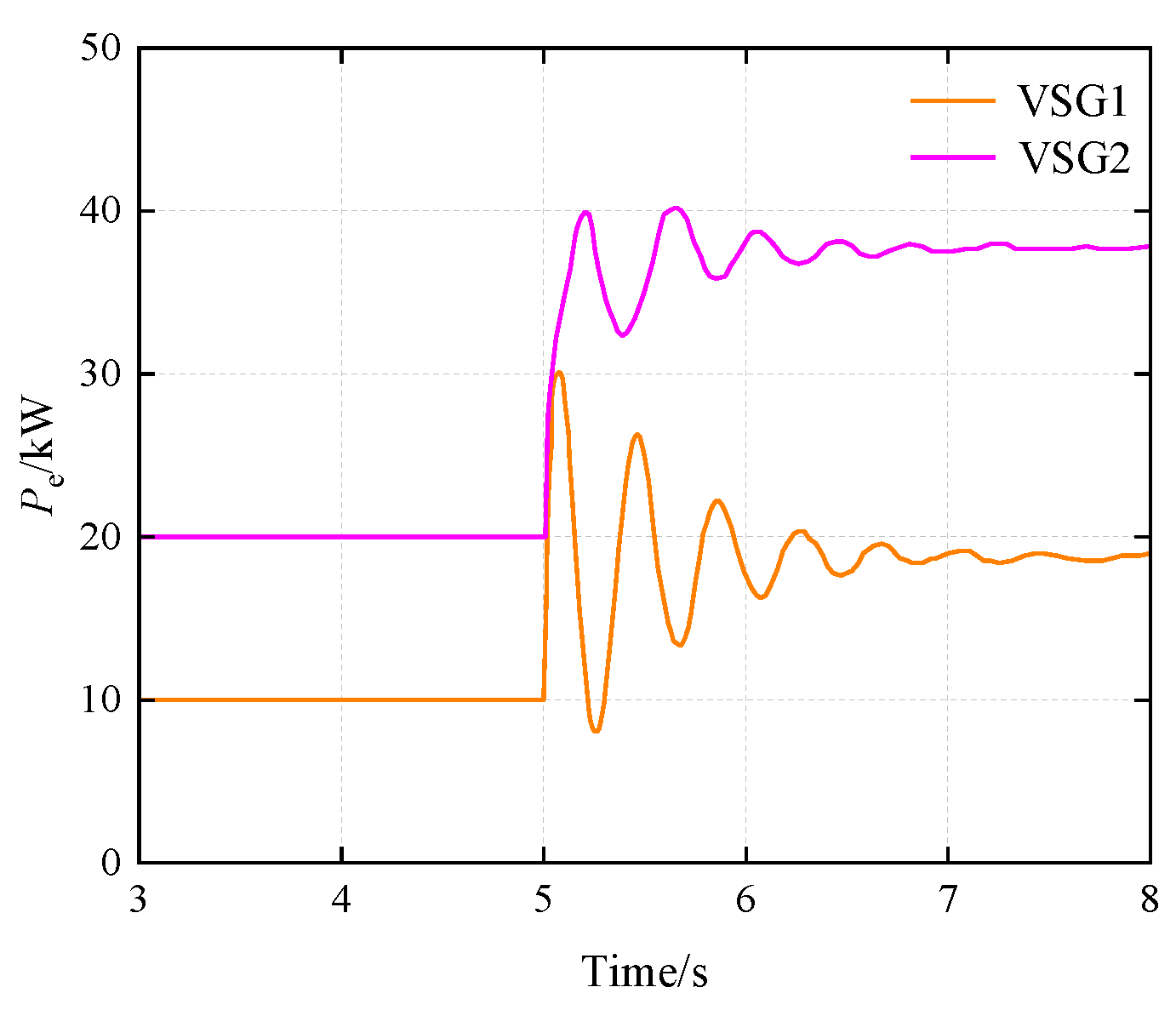
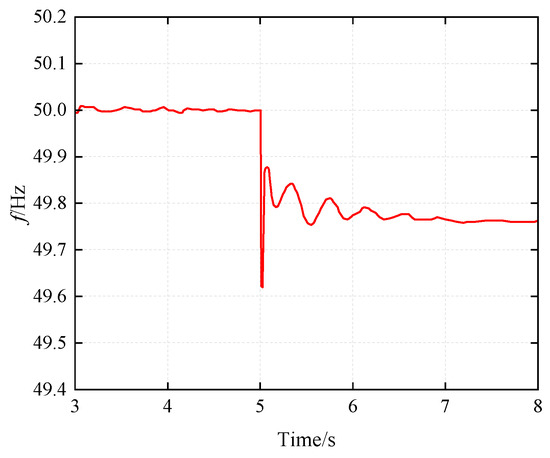
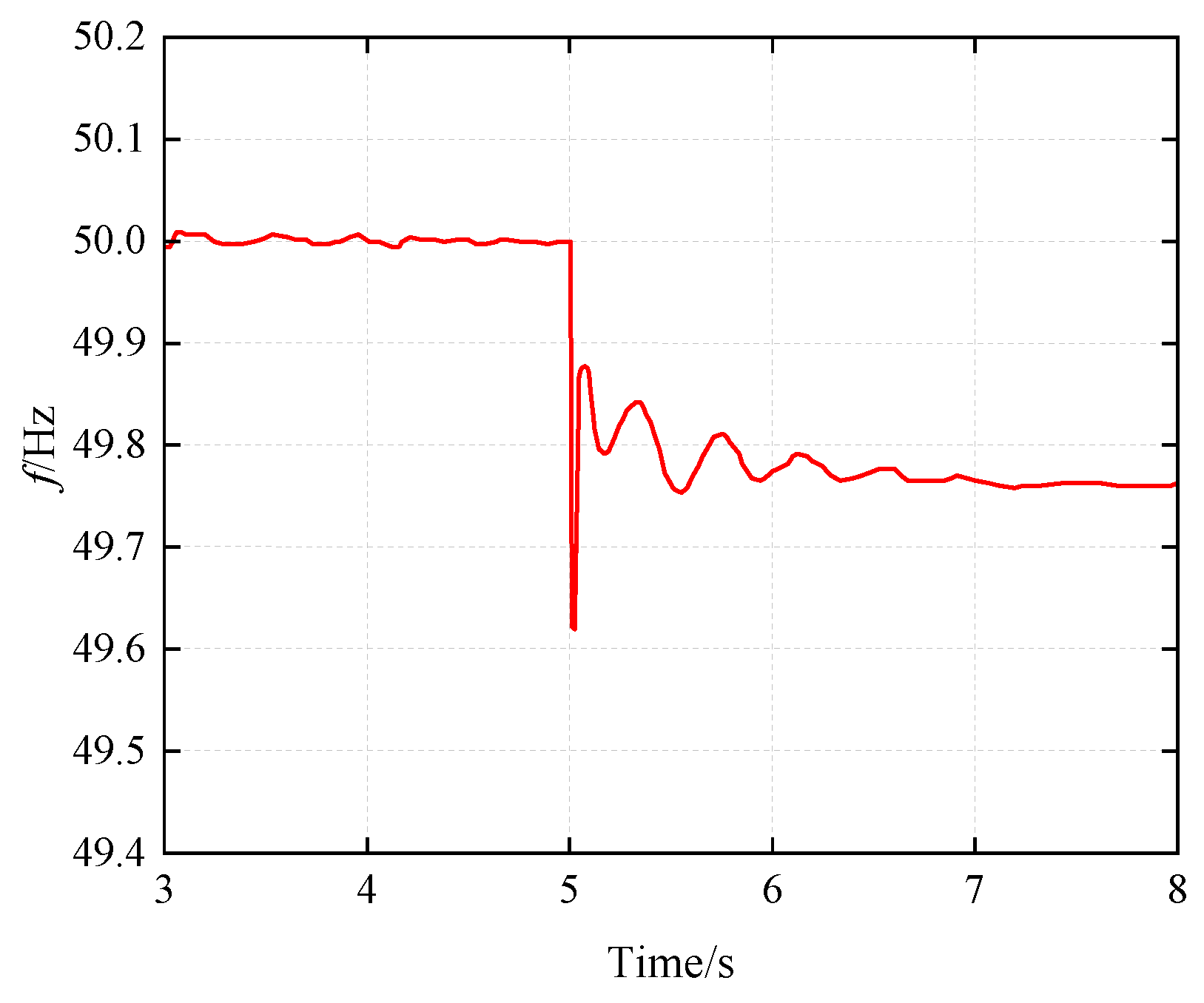
Figure 15 and Figure 16 illustrate the output power and frequency responses of the VSG parallel system before applying the proposed control strategy under the basic load step condition, where a 24 kW load is applied at t = 5 s.
Figure 15.
Output power response of the VSG parallel system before applying the proposed control strategy under the basic load step condition.
Figure 16.
Frequency response of the VSG parallel system before applying the proposed control strategy under the basic load step condition.
As shown in Figure 15, under the operating condition where a 24 kW load is applied at t = 5 s, the parallel system employing traditional VSG control methods exhibits significant dynamic deficiencies. As evident from the active power output curve in Figure 15, the maximum active power peaks of VSG1 and VSG2 reached 30 kW and 40 kW, respectively. These oscillations exhibited a period of approximately 1.8 s and prolonged duration. Such severe active power oscillations lead to inaccurate power distribution, exacerbate power electronic device losses and thermal stress, and compromise system operational stability; Meanwhile, the bus frequency curve in Figure 16 indicates that the frequency deviates significantly from the rated value of 50 Hz following load transients, exhibiting a pronounced steady-state frequency deviation. This phenomenon adversely affects the synchronization performance of grid-connected equipment, compromising power supply reliability and power quality.
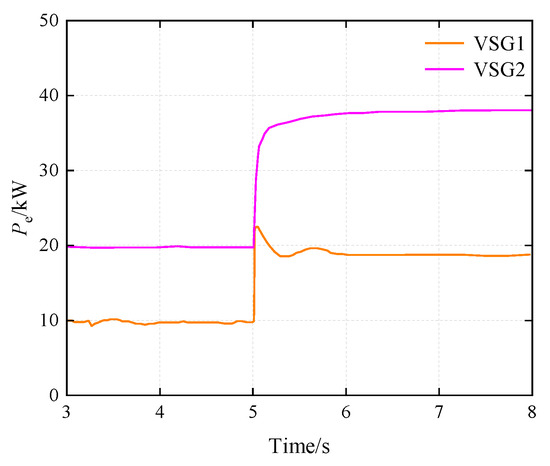
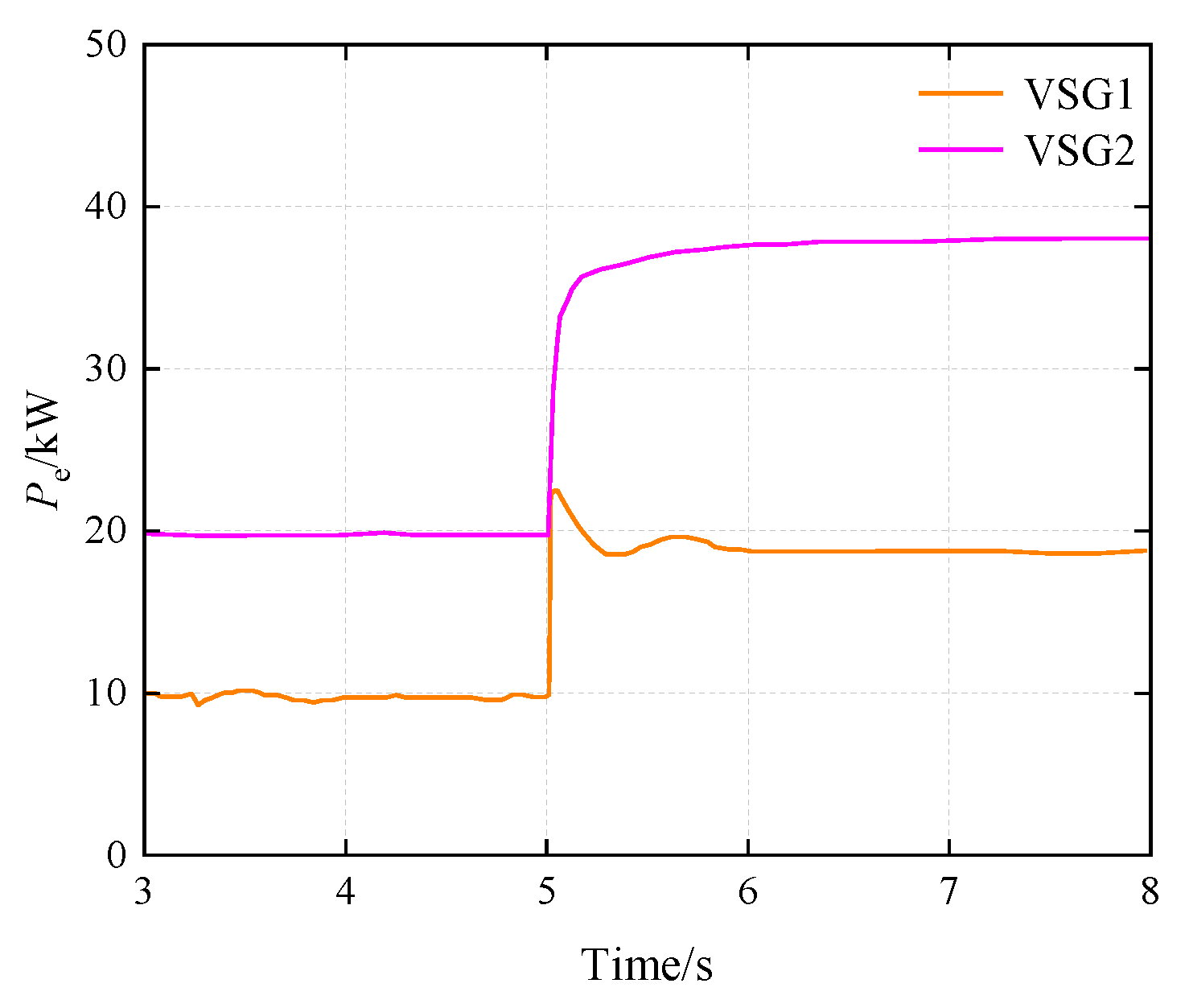
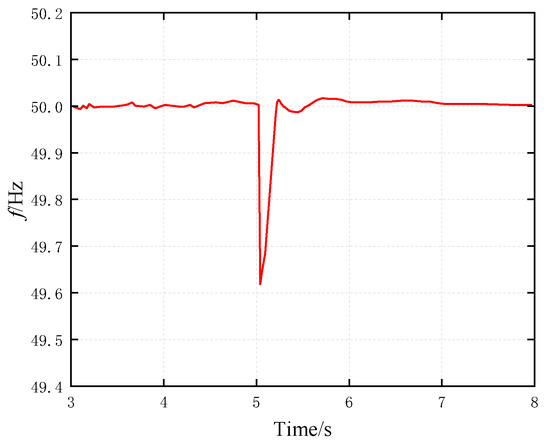
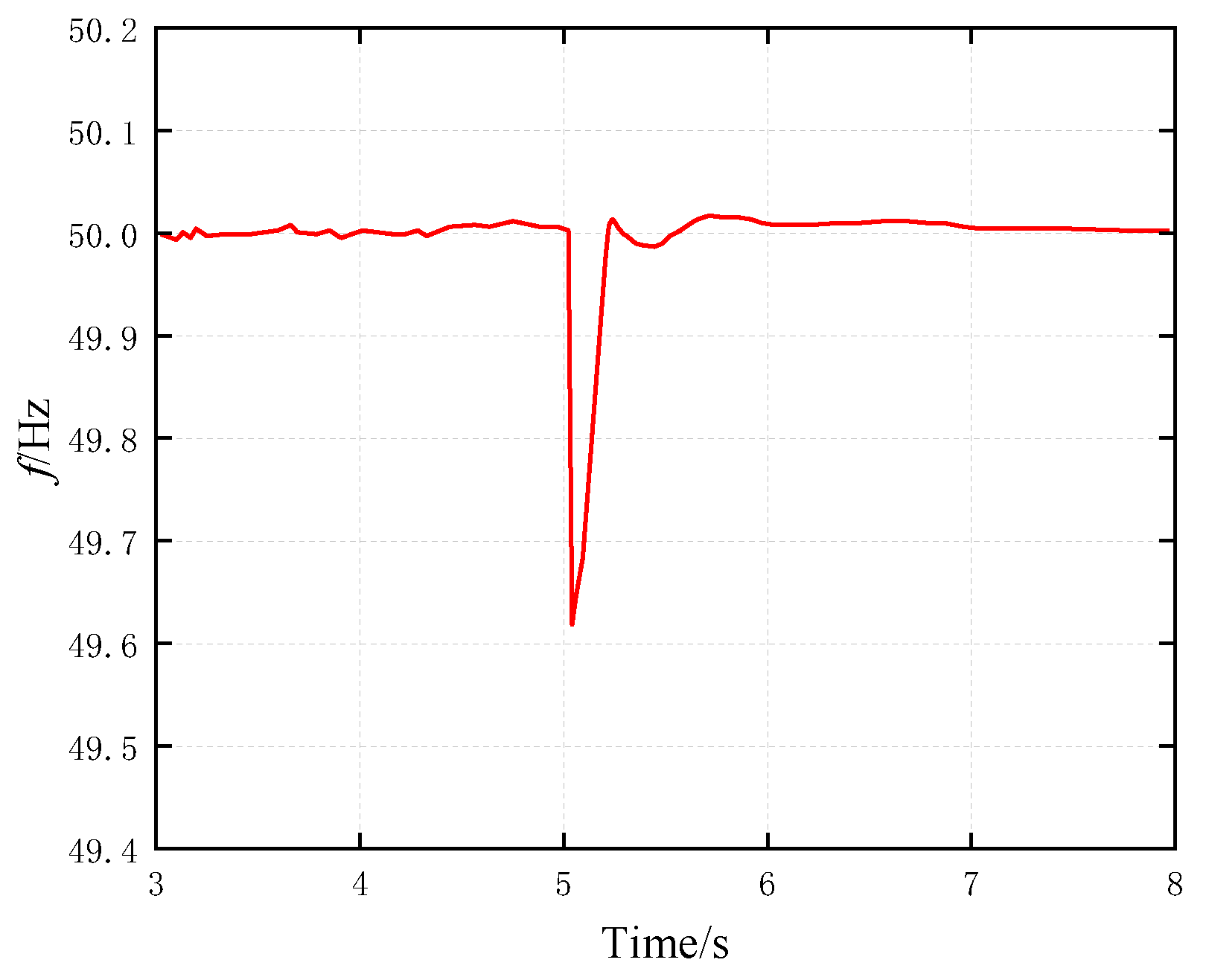
To address the issues, this paper proposes a dual-layer damping control strategy. By introducing an adaptive virtual damping element into the power loop and designing a damping compensation module in the current loop, the system’s damping characteristics are enhanced from two dimensions. After implementing this strategy, the optimized simulation results shown in Figure 17 and Figure 18 clearly demonstrate that active power oscillations are significantly suppressed, and the power of each VSG rapidly and accurately reaches steady-state distribution. The system frequency recovers swiftly and stabilizes at the rated value without noticeable steady-state deviation.
Figure 17.
Output power response of the VSG parallel system after applying the proposed control strategy under the basic load step condition.
Figure 18.
Frequency response of the VSG parallel system after applying the proposed control strategy under the basic load step condition.
To demonstrate the superiority of the proposed dual-layer damping control strategy under multiple operating conditions, a comparative analysis was conducted between the dynamic deficiencies of conventional VSG parallel systems, including active oscillations and frequency deviations, and the preliminary simulation results of this strategy. To comprehensively verify the robustness and adaptability of this strategy across multiple dimensions, this paper further designs the following two typical operating scenarios to evaluate the strategy’s robustness under conditions of sudden load increase, generator disconnection, new generator connection, and load switching.
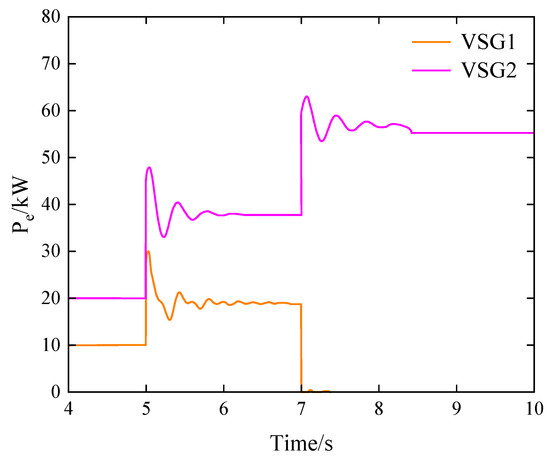
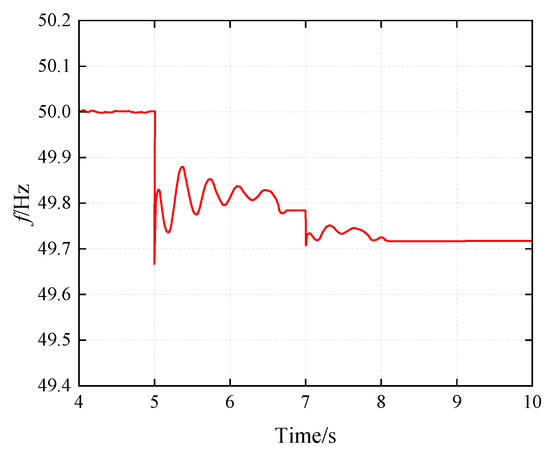
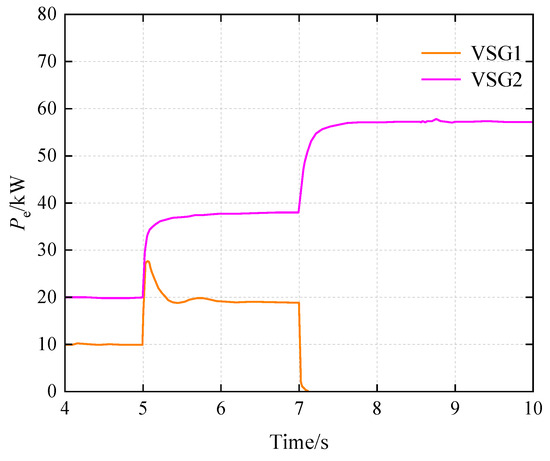
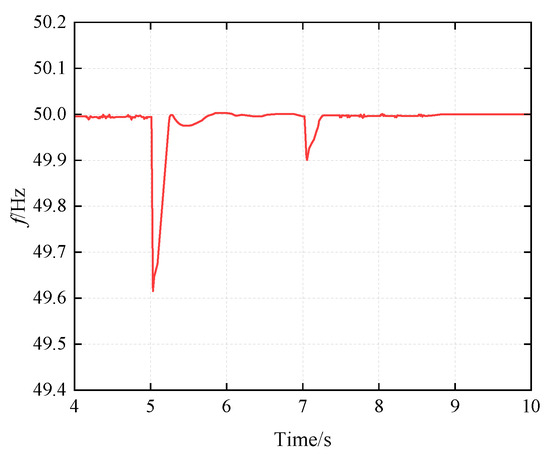
Case 1: To simulate the composite disturbance scenario of load surge and unit failure in actual microgrid operation, a 24 kW load is applied at t = 5 s, and VSG1 disconnects from the microgrid due to a fault at t = 7 s. The simulation results for the conventional VSG parallel system are shown in Figure 19 and Figure 20.
Figure 19.
Output power response of the VSG parallel system before applying the proposed control strategy under operating condition 1.
Figure 20.
Frequency response of the VSG parallel system before applying the proposed control strategy under operating condition 1.
As shown in Figure 19 and Figure 20, before applying the proposed control strategy, the conventional VSG parallel system exhibits more pronounced active power oscillations and larger frequency deviations under the composite disturbance condition. When an additional 24 kW load is applied at t = 5 s, both VSG1 and VSG2 experience evident transient power fluctuations and overshoot during the load redistribution process. At t = 7 s, VSG1 is disconnected due to a fault and VSG2 undertakes the remaining load, resulting in a secondary power oscillation and a further frequency dip. These results indicate that the conventional fixed-damping control has limited disturbance–rejection capability and poor adaptability under severe operating conditions.
In contrast, after applying the proposed dual-layer damping control strategy, the transient response of the system is significantly improved, as shown in Figure 21 and Figure 22.
Figure 21.
Output power response of the VSG parallel system after applying the proposed control strategy under operating condition 1.
Figure 22.
Frequency response of the VSG parallel system after applying the proposed control strategy under operating condition 1.
As shown in the dynamic active power response results of Figure 21, when VSG1 fails and shuts down, VSG2 can rapidly share the excess active power demand. The load power originally supplied by VSG1 is automatically and precisely allocated to VSG2, demonstrating the adaptability and balance of power distribution. This effectively avoids the risk of power shortages or local overloads caused by unit withdrawal; meanwhile, as depicted in Figure 22, under the proposed dual-layer damping control strategy, the microgrid frequency exhibits a smooth transition despite dual disturbances, rapidly recovering to the 50 Hz nominal value without any oscillations. This fully validates the strategy’s superior performance in suppressing frequency fluctuations and ensuring system frequency stability under complex disturbances.
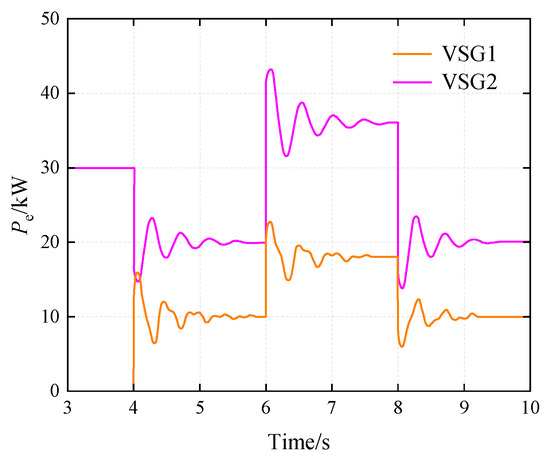
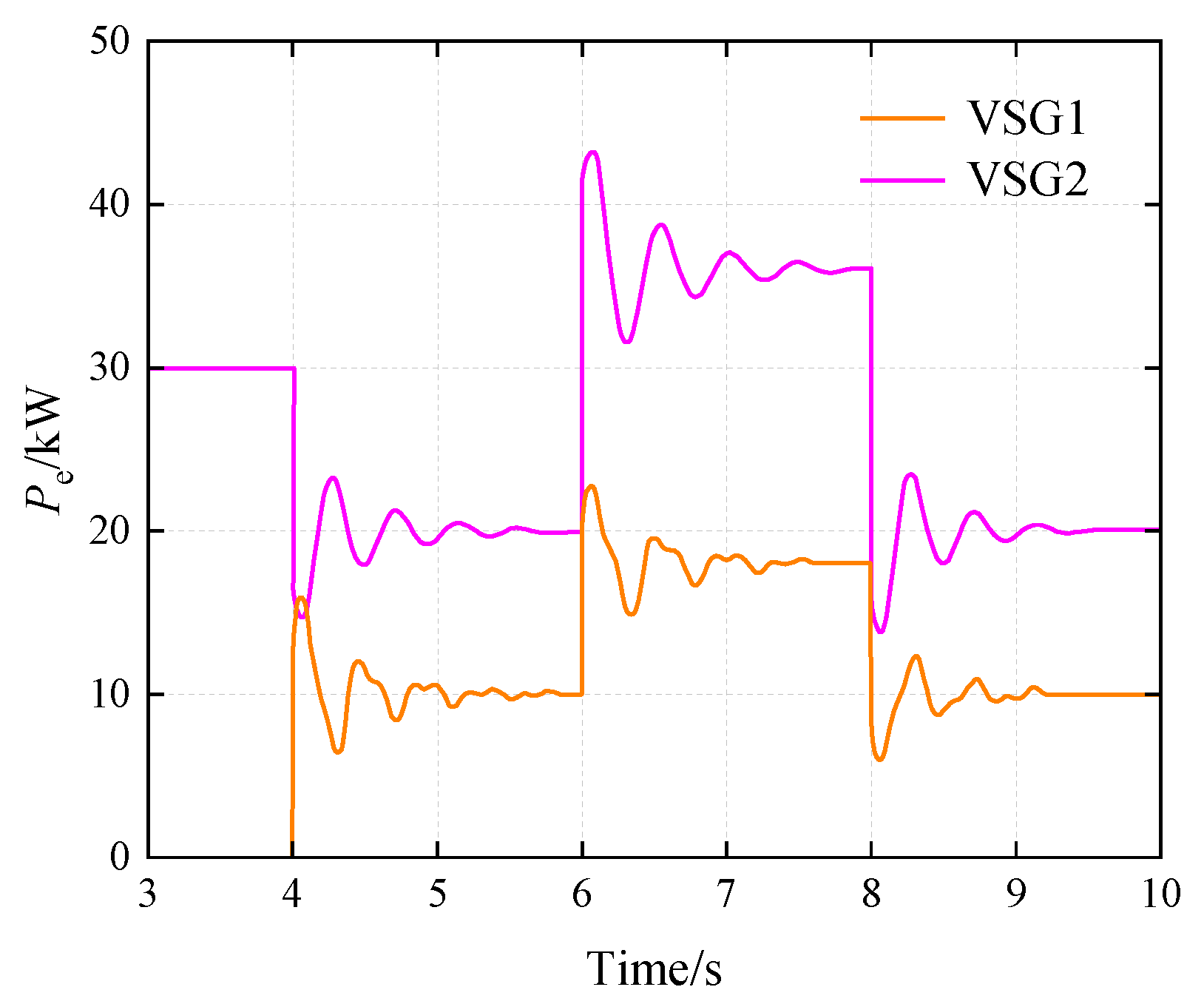
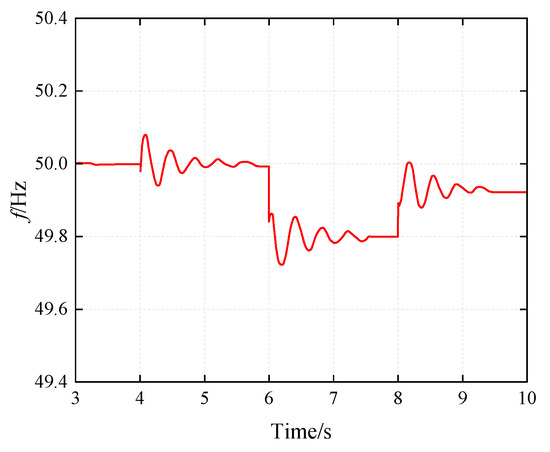
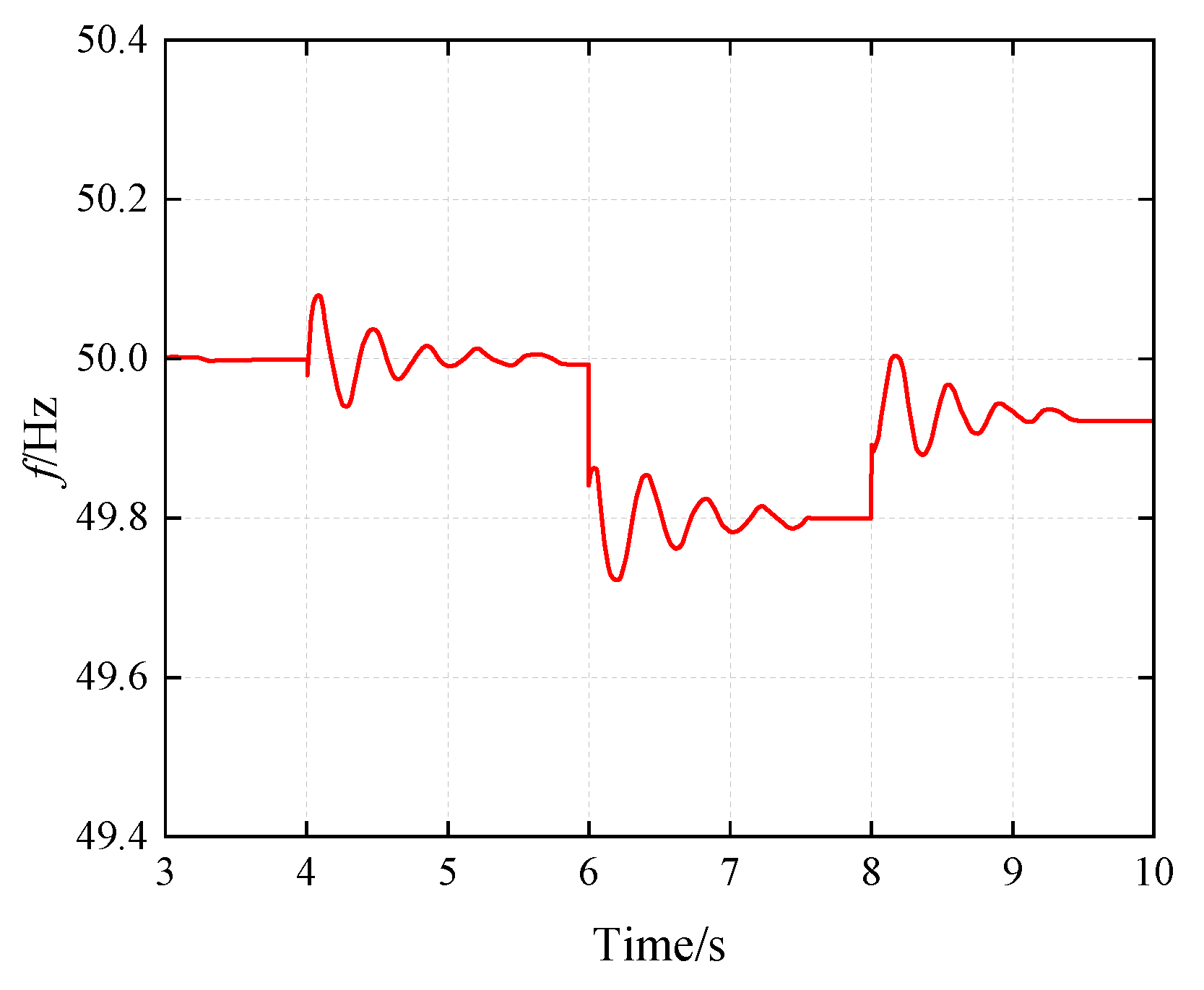
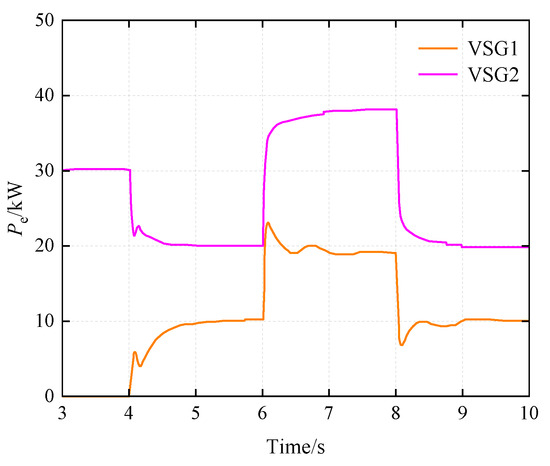
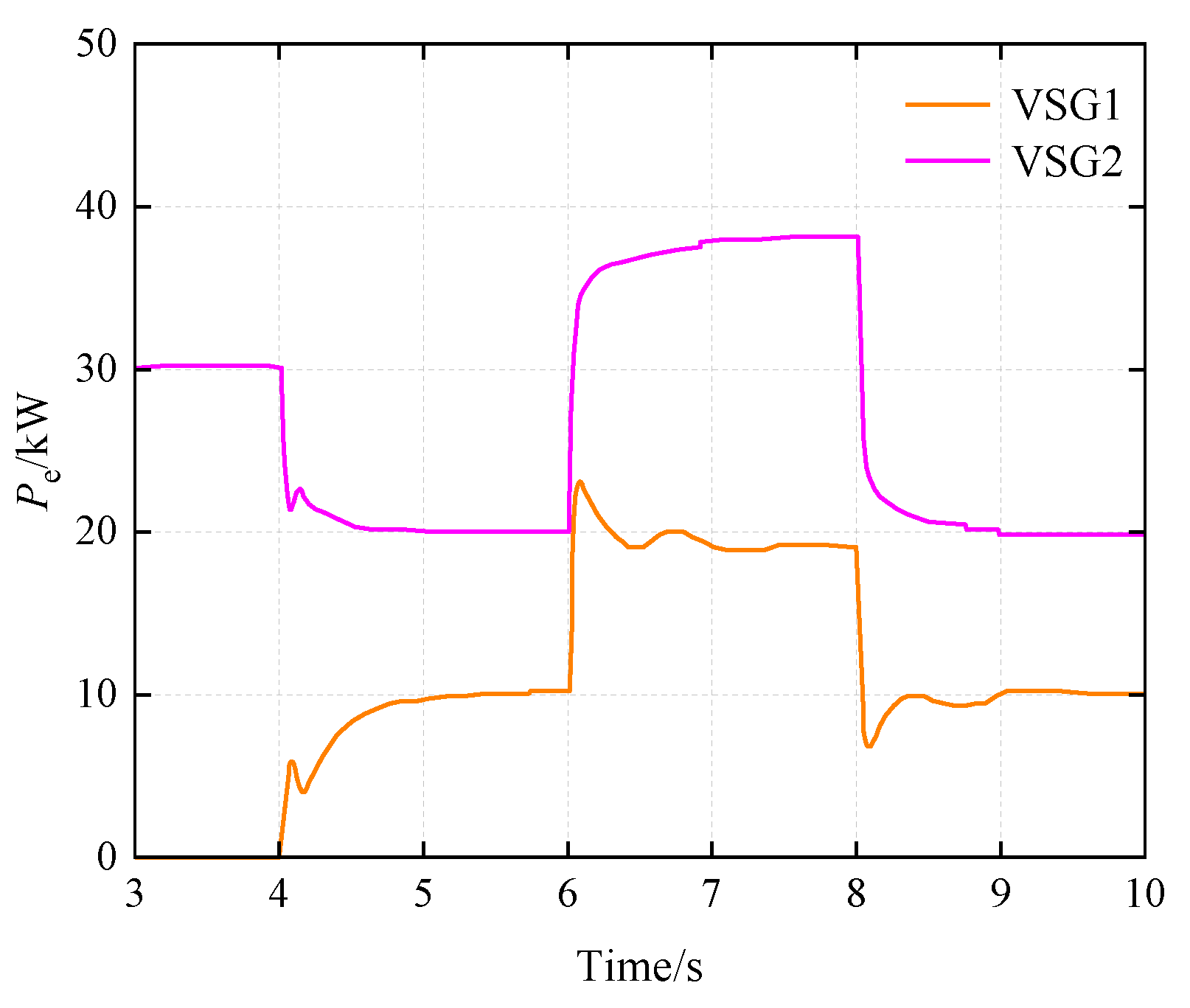
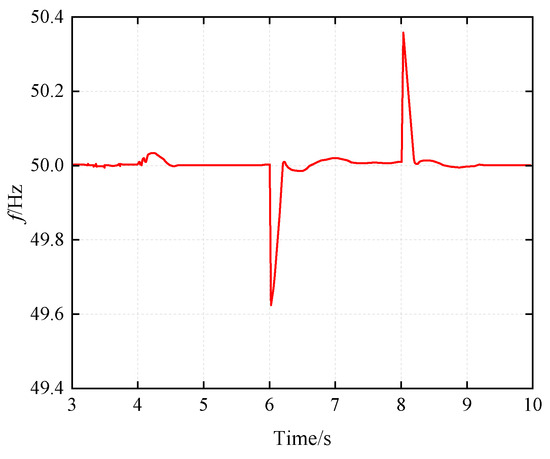
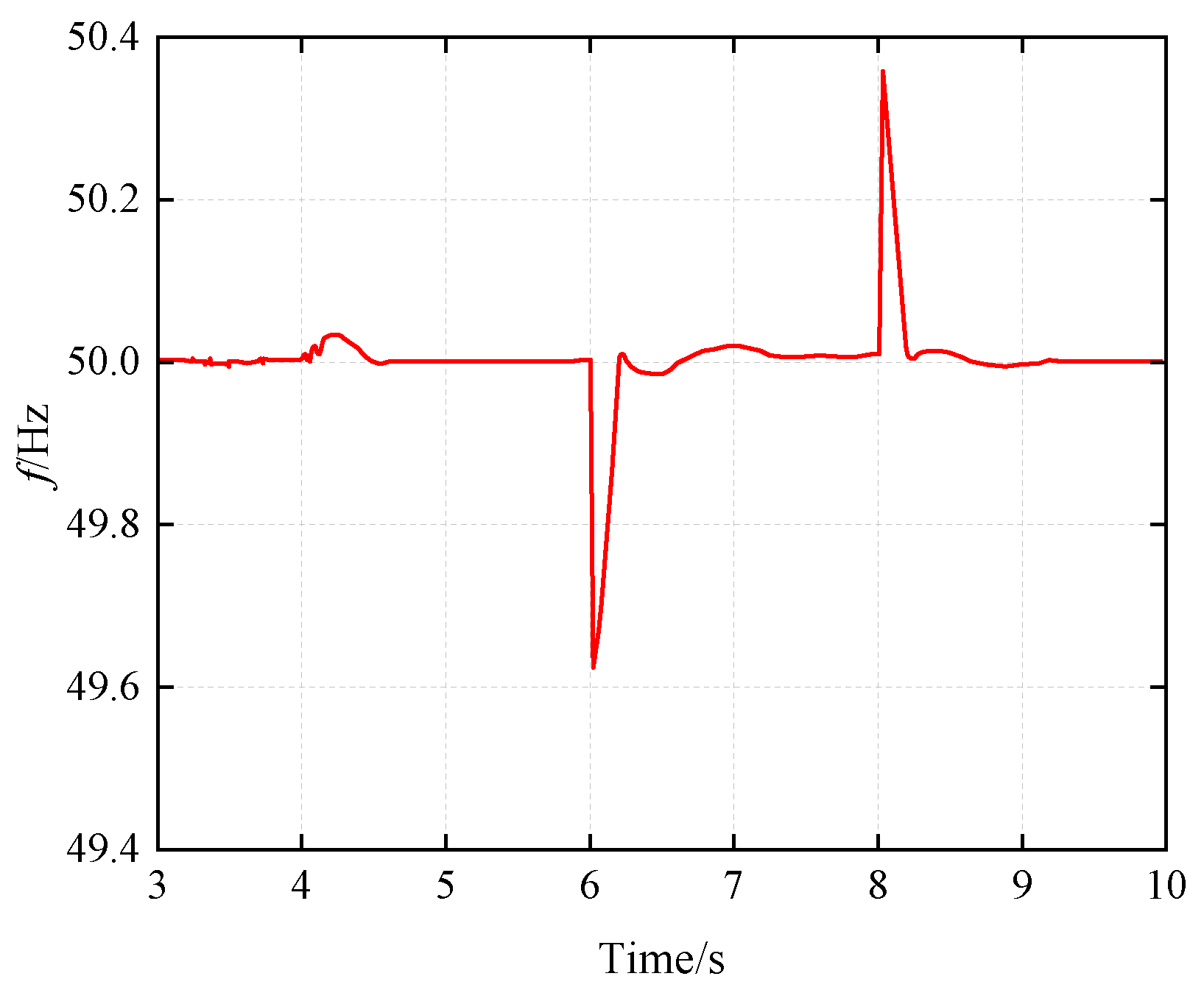
Case 2: To simulate the typical dynamic scenario of new unit grid connection and frequent load fluctuations in a microgrid, the following test conditions are set: VSG1 completes the pre-synchronization process and activates grid connection at t = 4 s; a 24 kW load is applied at t = 6 s; and this load is disconnected at t = 8 s. This evaluates the proposed control strategy’s ability to regulate the composite dynamic process of grid connection and load switching. Figure 23 and Figure 24 show the output power and frequency responses, respectively, under operating condition 2 prior to the application of the control strategy.
Figure 23.
Output power response of the VSG parallel system before applying the proposed control strategy under operating condition 2.
Figure 24.
Frequency response of the VSG parallel system before applying the proposed control strategy under operating condition 2.
As shown in Figure 23 and Figure 24, before applying the proposed control strategy, the conventional VSG parallel system exhibits evident transient oscillations during both the grid connection and load switching processes. At t = 4 s, VSG1 is connected to the microgrid, which causes a short-term power redistribution between VSG1 and VSG2 and introduces a noticeable oscillatory response. When the 24 kW load is applied at t = 6 s, the output powers of the two VSG units increase according to the preset power sharing ratio, but significant overshoot and low-frequency oscillations occur during the redistribution process. Meanwhile, the system frequency drops rapidly and then undergoes a damped oscillation, indicating that the conventional fixed-damping control cannot provide sufficient dynamic support under sudden load increase. When the 24 kW load is disconnected at t = 8 s, the active power decreases sharply and the frequency rises temporarily, accompanied by secondary oscillations. These results demonstrate that the conventional control strategy has limited damping capability and insufficient adaptability under the composite disturbance of unit grid connection and frequent load switching.
Figure 25 and Figure 26 compare the waveforms of the grid-connected current and phase-to-phase circulating current before and after the introduction of the damping branch.
Figure 25.
Grid-connected current waveform of the VSG parallel system before and after introducing the capacitor current feedback damping branch.
Figure 26.
Interphase circulating current waveform of the VSG parallel system before and after introducing the capacitor current feedback damping branch.
As shown in the active power response curve of Figure 25, even after experiencing dual disturbances from the VSG1 grid connection impact and load switching, the active power output ratio between VSG1 and VSG2 consistently maintained the preset allocation of VSG1:VSG2 = 1:2. No power distribution inaccuracies or circulating current surges occurred, fully demonstrating the strategy’s precise control capability for active power allocation. This effectively prevents device overload issues caused by power imbalance; Meanwhile, as shown by the frequency response curve in Figure 26, Throughout the entire dynamic process, although the system frequency exhibits transient fluctuations due to disturbances, it rapidly recovers to the 50 Hz nominal value without any active power oscillations or frequency overshoot. This further validates the proposed dual-layer damping control strategy’s superior frequency stability performance, oscillation suppression capability, and robust disturbance resistance under scenarios involving new unit grid connection and frequent load changes, providing reliable experimental support for its engineering application.
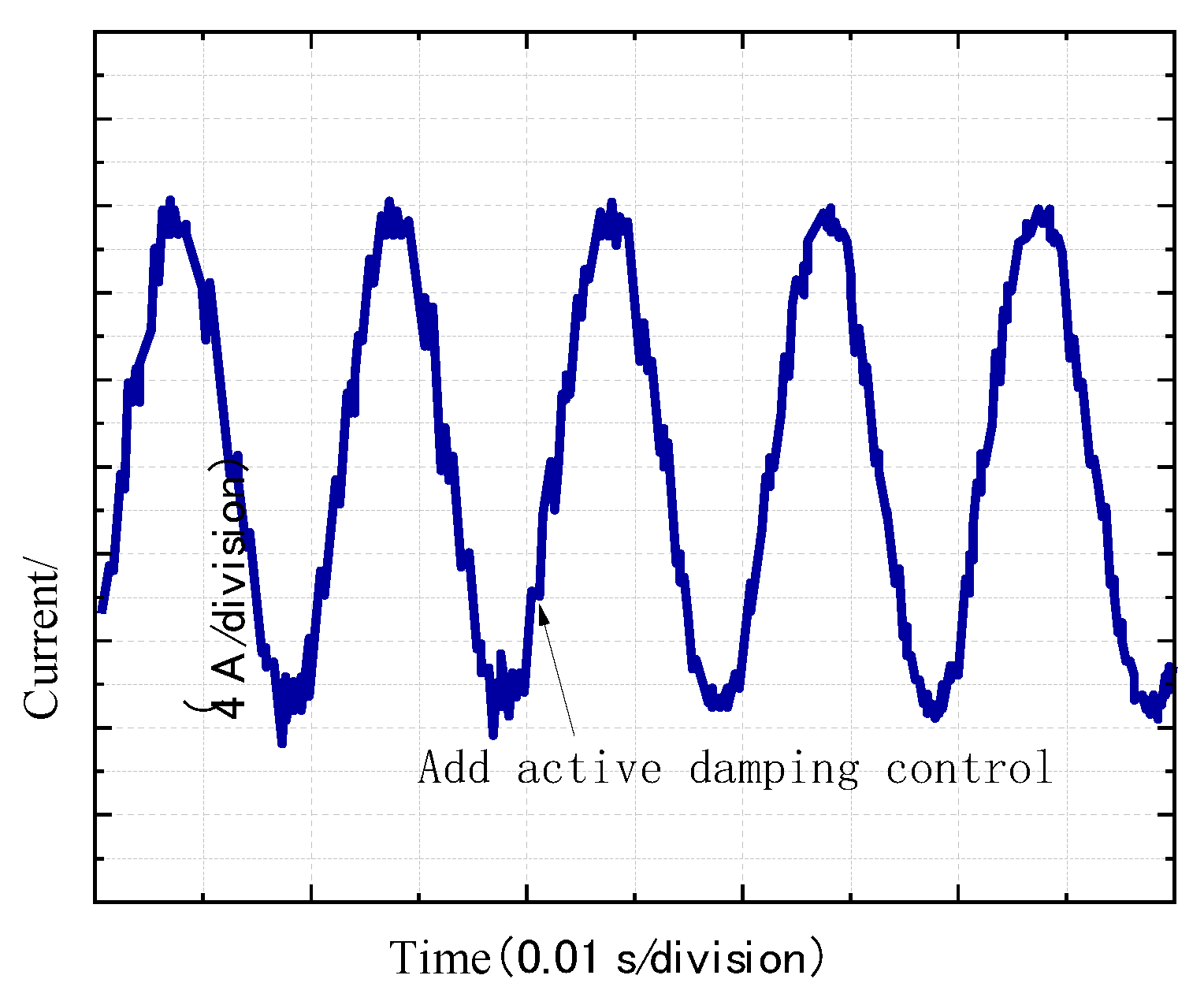
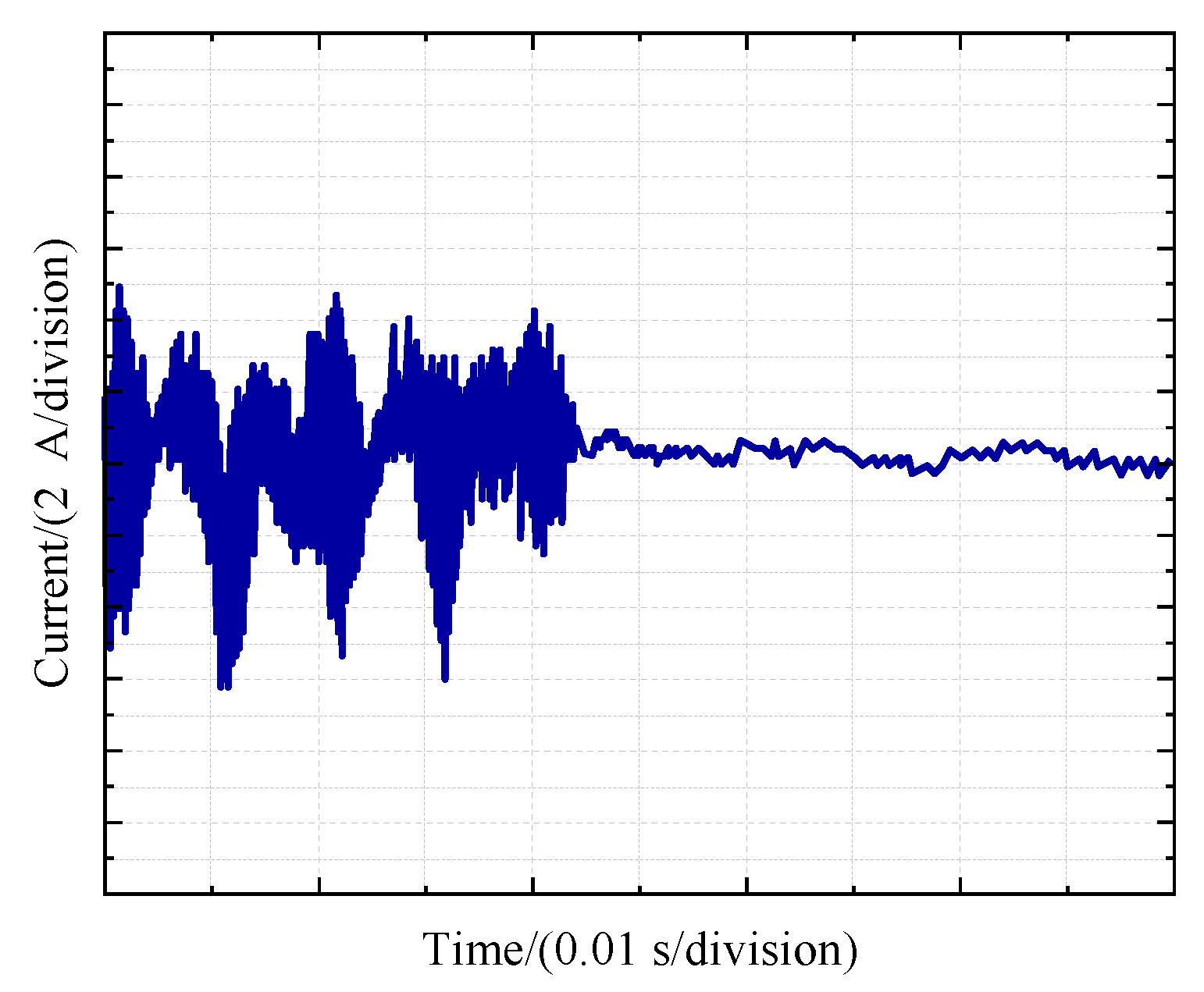
To further evaluate the circulating current suppression capability of the proposed capacitor current feedback damping method, a dual-parallel VSG model was established in MATLAB/Simulink. Figure 27 and Figure 28 show the grid-connected current waveform and the interphase circulating current waveform before and after introducing the damping branch. It can be observed that the proposed method effectively attenuates the high-frequency oscillation component in the grid-connected current and significantly reduces the interphase circulating current amplitude, thereby improving the current quality and operational stability of the parallel converter system.
Figure 27.
Grid-connected current waveform before and after applying the active damping control.
Figure 28.
Interphase circulating current waveform before and after applying the active damping control.
Analyses of the grid-connected current waveform shown in Figure 27 and the inter-phase circulating current waveform shown in Figure 28 indicate that, without the capacitor current feedback damping term, the grid-connected current contains noticeable distortion and the inter-phase circulating current has a relatively large amplitude with pronounced fluctuation. After the active damping control strategy is implemented, the sinusoidal quality of the grid-connected current is improved, and the magnitude and fluctuation of the inter-phase circulating current are effectively suppressed. Therefore, the proposed method improves grid-connected current quality and enhances the stable operation of parallel VSG systems in simulation.
5. Conclusions
This paper conducts simulation experiments using MATLAB/Simulink R2021b. Based on a state-space model, it performs small-signal analysis to identify the causes of power oscillations and investigates cooperative damping optimization strategies in parallel configurations. The study reaches the following conclusions:
- (1)
- The analysis of a small-signal model identifies virtual inertia mismatch as the primary mechanism through which load disturbances induce power oscillations. A clear mapping was established between the J/D parameters and the stability margin.
- (2)
- When the adaptive virtual damping regulation strategy is used alone, although it can dynamically suppress power oscillations, there is room for optimization in the speed and stability of the transient frequency response. When relying solely on the capacitor current feedback branch to suppress inter-phase circulating current, the effect on power oscillation suppression is insufficient. Coordinating both control methods is necessary to achieve multi-objective optimization.
- (3)
- The optimization strategy based on power-error adaptive damping and current inner-loop damping can effectively suppress active power oscillations under load disturbances, reduce inter-phase circulating currents and maintain frequency stability. The results verify the effectiveness of the proposed strategy in simulation.
Future work will extend the verification to systems with more than two parallel converters and hardware experimental platforms, and will further investigate the engineering implementation of the proposed control strategy in practical microgrids and distributed energy systems, including parameter tuning guidelines, controller deployment, and performance verification under more diverse operating conditions.
Author Contributions
Conceptualization, Z.L., Z.H., H.L., L.Y. and J.Z.; software, Z.L., Z.H., H.L., L.Y. and J.Z.; writing—original draft preparation, Z.L., Z.H., H.L., L.Y. and J.Z. All authors have read and agreed to the published version of the manuscript.
Funding
This research received no funding.
Data Availability Statement
The authors confirm that the data supporting the findings of this study are available within the article.
Conflicts of Interest
Author Zhe Li is affiliated with Hubei Electric Power Research Institute of State Grid Corporation of China. Authors ZhiXiang Hu and Hua Liu are affiliated with State Grid Shiyan Power Supply Company. Author Li You is affiliated with Hubei Key Laboratory of Regional New Power Systems and Rural Energy System Configuration. The remaining authors declare that the research was conducted in the absence of any commercial or financial relationships that could be construed as potential conflicts of interest.
Abbreviations
The following abbreviations are used in this manuscript:
| Abbreviation | Meaning |
| VSG | Virtual Synchronous Generator |
| GFI | Grid-Forming Inverter |
| LCL | Inductor–Capacitor–Inductor Filter |
| PCC | Point of Common Coupling |
| PI | Proportional–Integral |
| DC/AC | Direct Current to Alternating Current Conversion |
References
- Abulkhair, A.F.; Abdelsattar, M.; Mohamed, H.A. Negative Effects and Processing Methods Review of Renewable Energy Sources on Modern Power System: A Review. Int. J. Renew. Energy Res. (IJRER) 2024, 14, 385–394. [Google Scholar]
- Song, J.; Zhou, X.; Zhou, Z. Review of Low Inertia in Power Systems Caused by High Proportion of Renewable Energy Grid Integration. Energies 2023, 16, 6042. [Google Scholar] [CrossRef] [Scilit]
- Mirmohammad, M.; Azad, S.P. Control and Stability of Grid-Forming Inverters: A Comprehensive Review. Energies 2024, 17, 3186. [Google Scholar] [CrossRef] [Scilit]
- Yan, X.; Zhang, W. Review of VSG Control-Enabled Universal Compatibility Architecture for Future Power Systems with High-Penetration Renewable Generation. Appl. Sci. 2019, 9, 1484. [Google Scholar] [CrossRef] [Scilit]
- Wang, Y.; Chen, S.; Yang, M. Low-Frequency Oscillation in Power Grids with Virtual Synchronous Generators: A Comprehensive Review. Renew. Sustain. Energy Rev. 2025, 207, 114921. [Google Scholar] [CrossRef] [Scilit]
- Li, X.; Yao, J.; Chen, W. Grid-Forming Converter Fault Control Strategy and Its Impact on Relay Protection: Challenges and Adaptability Analysis. Energies 2025, 18, 2933. [Google Scholar] [CrossRef] [Scilit]
- Liu, K.; Qian, T.; Zhang, W. Review on Small-Signal Stability of Multiple Virtual Synchronous Generators. Renew. Sustain. Energy Rev. 2025, 215, 115543. [Google Scholar] [CrossRef] [Scilit]
- Li, C.; Yang, Y.; Mao, X.; Xiong, X.; Dragicevic, T. Modeling, Control and Stabilization of Virtual Synchronous Generator in Future Power Electronics-Dominated Power Systems: A Survey of Challenges, Advances, and Future Trends. Int. J. Electr. Power Energy Syst. 2025, 171, 111001. [Google Scholar] [CrossRef] [Scilit]
- Gao, X.; Zhang, J.; Sun, H. A Review of Voltage Control Studies on Low Voltage Distribution Networks Containing High Penetration Distributed Photovoltaics. Energies 2024, 17, 3058. [Google Scholar] [CrossRef] [Scilit]
- Chen, Y.; Wang, Y.; Wang, Q. Parametric Adaptive Inverter VSG Control Strategy with Transient Damping Characteristics. IEICE Electron. Express 2024, 21, 20230558. [Google Scholar] [CrossRef] [Scilit]
- Li, D.; Zhu, Q.; Lin, S. A Self-Adaptive Inertia and Damping Combination Control of VSG to Support Frequency Stability. IEEE Trans. Energy Convers. 2016, 32, 397–398. [Google Scholar] [CrossRef] [Scilit]
- Barzegar-Kalashani, M.; Seyedmahmoudian, M.; Mekhilef, S. Active Disturbance Rejection Resonant Controller with Virtual Damper for Sub-10 kW Three-Leg Four-Wire Inverters. Sustain. Energy Technol. Assess. 2025, 83, 104621. [Google Scholar] [CrossRef] [Scilit]
- Shadoul, M.; Ahshan, R.; AlAbri, R.S. A Comprehensive Review on a Virtual-Synchronous Generator: Topologies, Control Orders and Techniques, Energy Storages, and Applications. Energies 2022, 15, 8406. [Google Scholar] [CrossRef] [Scilit]
- Zhang, X.; Gong, L.; Zhao, X. Voltage and Frequency Stabilization Control Strategy of Virtual Synchronous Generator Based on Small Signal Model. Energy Rep. 2023, 9, 583–590. [Google Scholar] [CrossRef] [Scilit]
- Elshenawy, M.A.; Radwan, A.A.A.; Yasser, A.R.M.; El-Saadany, E.F. Suppression of the Dynamic Interactions Between a VSG and Dynamic Loads Under Weak-Grid Conditions. IEEE Trans. Smart Grid 2024, 16, 1434–1447. [Google Scholar] [CrossRef] [Scilit]
- Chen, S.; Han, H.; Wu, Z. Distributed Frequency Interactive Damping Control for Multiple VSGs in Islanded Microgrids. IEEE Trans. Circuits Syst. I Regul. Pap. 2024, 71, 3867–3879. [Google Scholar] [CrossRef] [Scilit]
- Li, J.; Shi, R.; Dong, Z. Power-Frequency Oscillation Modeling, Analysis and Suppression of Multi-VSG Grid-Connected System. Int. J. Electr. Power Energy Syst. 2025, 172, 111129. [Google Scholar] [CrossRef] [Scilit]
- Fu, S.; Sun, Y.; Lin, J. P/Q-ω/V Admittance Modeling and Oscillation Analysis for Multi-VSG Grid-Connected System. IEEE Trans. Power Syst. 2022, 38, 5849–5859. [Google Scholar] [CrossRef] [Scilit]
- He, X.; Desai, M.A.; Huang, L. Cross-Forming Control and Fault Current Limiting for Grid-Forming Inverters. IEEE Trans. Power Electron. 2024, 40, 3980–4007. [Google Scholar] [CrossRef] [Scilit]
- Lin, J.; Liu, S.; Wang, G. Stability Analysis and Control Parameter Optimization of Multi-VSG Parallel Grid-Connected System. Electr. Power Syst. Res. 2023, 221, 109478. [Google Scholar] [CrossRef] [Scilit]
- Sun, Z.; Zhu, F.; Cao, X. Study on a Frequency Fluctuation Attenuation Method for the Parallel Multi-VSG System. Front. Energy Res. 2021, 9, 693878. [Google Scholar] [CrossRef] [Scilit]
- Qin, B.; Xu, Y.; Yuan, C. A Unified Method of Frequency Oscillation Characteristic Analysis for Multi-VSG Grid-Connected System. IEEE Trans. Power Deliv. 2021, 37, 279–289. [Google Scholar] [CrossRef] [Scilit]
- Chen, S.; Sun, Y.; Han, H. Active Power Oscillation Suppression and Dynamic Performance Improvement for Multi-VSG Grids Based on Consensus Control via COI Frequency. Int. J. Electr. Power Energy Syst. 2023, 147, 108796. [Google Scholar] [CrossRef] [Scilit]
- Chen, D.; Zhang, S.; Lin, H. An Active Damping Control Strategy for Suppressing LCL Resonant Point Migration for Three-Phase Grid-Tied Inverter. Sci. Rep. 2024, 14, 22911. [Google Scholar] [CrossRef] [Scilit]
- Cheema, K.M. A Comprehensive Review of Virtual Synchronous Generator. Int. J. Electr. Power Energy Syst. 2020, 120, 106006. [Google Scholar] [CrossRef] [Scilit]
- Chen, Q.; Zhu, B.; Liu, M. Analysis of Grid-Connected Stability of VSG-Controlled PV Plant Integrated with Energy Storage System and Optimization of Control Parameters. Electronics 2024, 13, 1343. [Google Scholar] [CrossRef] [Scilit]

Disclaimer/Publisher’s Note: The statements, opinions and data contained in all publications are solely those of the individual author(s) and contributor(s) and not of MDPI and/or the editor(s). MDPI and/or the editor(s) disclaim responsibility for any injury to people or property resulting from any ideas, methods, instructions or products referred to in the content. |
© 2026 by the authors. Licensee MDPI, Basel, Switzerland. This article is an open access article distributed under the terms and conditions of the Creative Commons Attribution (CC BY) license.