1. Introduction
Carbonate reservoirs with fracture–vuggy systems exhibit highly complex storage structures, characterized by the coexistence of fractures and large-scale cavities. The spatial configuration between cavities and fractures is intricate, and both the types and degrees of infill vary significantly. As a result, such reservoirs can be regarded as spatially discrete media [
1,
2,
3].
Camacho-Velazquez et al. [
4] proposed that fractured–vuggy reservoirs are formed through dissolution processes that create interconnected systems of fractures and cavities, enabling interactions among the matrix, cavities, and fracture networks. Arbogast et al. [
5,
6] further classified fractured–vuggy reservoirs into porous, fracture–porous, and karst fracture–vuggy types and established connections between different media and network representations. Accordingly, distinct media are modeled using different network approaches, such as flow network models, interwell numerical simulation models (INSIM), invasion percolation models, and reduced-order simulation methods. While these models perform well for continuously distributed terrestrial sandstone reservoirs, their applicability is limited for carbonate reservoirs characterized by strongly discrete storage distributions and highly complex fracture–cavity configurations.
The influence of in situ stress on carbonate dissolution and karstification leads to the coexistence of dissolution and crystallization processes within carbonate formations. Consequently, both bead-like connected cavities and isolated cavities are commonly observed. In addition, collapse within karst zones results in cavity infilling; the larger the cavity, the thicker the accumulation of collapse breccia. These observations collectively indicate that carbonate reservoirs commonly contain cavities of varying shapes and sizes, often with diverse infilling materials.
Most studies on the flow mechanisms of fractured–vuggy reservoirs interpret them as multi-continuum systems, including dual-porosity models [
7], discrete fracture–matrix models [
8], and triple-porosity dual-permeability models [
9]. In 2007, Lin et al. [
10] proposed that flow in fractured–vuggy reservoirs can be described as a coupling between pipe flow and porous-media flow. Based on this concept, they investigated the in-plane coupled-linear-flow behavior of fractured–vuggy systems and established corresponding physical and mathematical models, along with numerical solution methods.
In 2010, Kang [
11] developed a two-phase-flow model for coupled-cavity systems, presenting computational approaches for two-phase flow within cavities as well as interface treatment methods for two-phase flow between cavities and the surrounding porous medium. Lei et al. [
12] introduced a mathematical model for wells intersecting large-scale partially filled cavities in 2017. Their work considered the crossflow between bedrock and unfilled-cavity regions, as well as that between filled- and unfilled-cavity zones, and it analyzed the influence of key parameters on crossflow characteristic curves.
More recently, in 2019, Li et al. [
13] proposed, from a statistical perspective, the concept of dominant flow channels in complex media, which effectively simplifies the computational treatment of such systems. However, in most of these studies, multi-continuum approaches are constructed by defining storage coefficients and interporosity flow parameters for different media (matrix, fractures, and cavities). Since these parameters are statistical in nature within the framework of porous-media flow, they do not directly provide physically meaningful quantities—such as the volume, number, and spatial distribution of cavities—which are critical for reservoir development and engineering applications. Lin et al. [
14] integrated traditional oil and gas reservoir characterization methods with artificial intelligence and geological knowledge base technologies, developing key techniques such as the construction of a karst fracture–cavity geological knowledge base and the intelligent modeling of multi-type fracture–cavity reservoirs.
Recent studies have further advanced pressure-transient analysis for reservoirs with natural fractures and cavities; three-dimensional unstructured grids for complex wells and geological features; two-phase numerical well-test models for fractured–vuggy carbonate reservoirs; and embedded-discrete-fracture or PEBI-grid numerical approaches for transient well-test interpretation [
15,
16,
17,
18,
19,
20]. In particular, Yan et al. [
20] developed an unstructured PEBI-grid-based pulse well-testing model for fractured caved reservoirs, demonstrating the usefulness of PEBI grids for dynamic pressure response analysis in reservoirs with discrete cavity storage. These developments improve reservoir architecture description and pressure response recognition, but the explicit incorporation of irregular cavity geometry into a wave–seepage-coupled pressure-buildup interpretation workflow remains insufficiently addressed. This motivates the present PEBI-FVM implementation, which focuses on physically interpretable parameters, such as the cavity volume, cavity geometry, and well–cavity distance. Although Ref. [
20] also used an unstructured PEBI grid for pressure response analysis, its focus was pulse well testing in fractured caved reservoirs. The present study addresses a different well-test interpretation problem by incorporating the wave–seepage cavity pressure relation into a finite-volume control-volume system, explicitly representing irregular cavity geometry, and estimating physically interpretable parameters, such as the cavity volume and well–cavity distance, from pressure-buildup data.
Du et al. [
21] and Wang et al. [
22] established governing flow equations for wellbore–cavity–formation systems based on the three fundamental conservation laws. They introduced the concept that pressure evolution within cavities arises from the coupling between fluid flow and pressure wave propagation and derived the corresponding governing equations under this coupled framework. By solving these equations, expressions for the pressure difference between the wellbore and the cavities were obtained. In addition, they proposed several carbonate flow models, including well–cavity, well–multiple-cavity, and well–cavity–fracture–cavity systems, which provide a theoretical foundation for well-test analysis, productivity prediction, and optimization of production strategies in fractured–vuggy reservoirs.
Flow models for fractured–vuggy reservoirs that incorporate coupled wave propagation and porous-media flow can capture physically meaningful features, such as the volume, number, and spatial distribution of cavities. However, most existing wave–seepage-coupled well-test models are analytical or semi-analytical and therefore idealize cavities as regular geometries. In contrast, unstructured-grid and finite-volume methods have been widely used in general flow simulation and reservoir modeling, including simulations with complex wells, faults, and lower-dimensional geological objects [
23,
24,
25,
26]. The present work therefore does not claim that PEBI grids or finite-volume discretization are new by themselves. The scientific contribution of this study lies in the integration of an established PEBI-FVM discretization with a wave–seepage cavity pressure model for irregular-cavity well-test interpretation, where the cavity boundaries are represented explicitly, the cavity is embedded as a special control volume, and the resulting pressure and pressure-derivative responses are linked to the cavity volume and well–cavity distance.
2. Physical Model and Assumptions
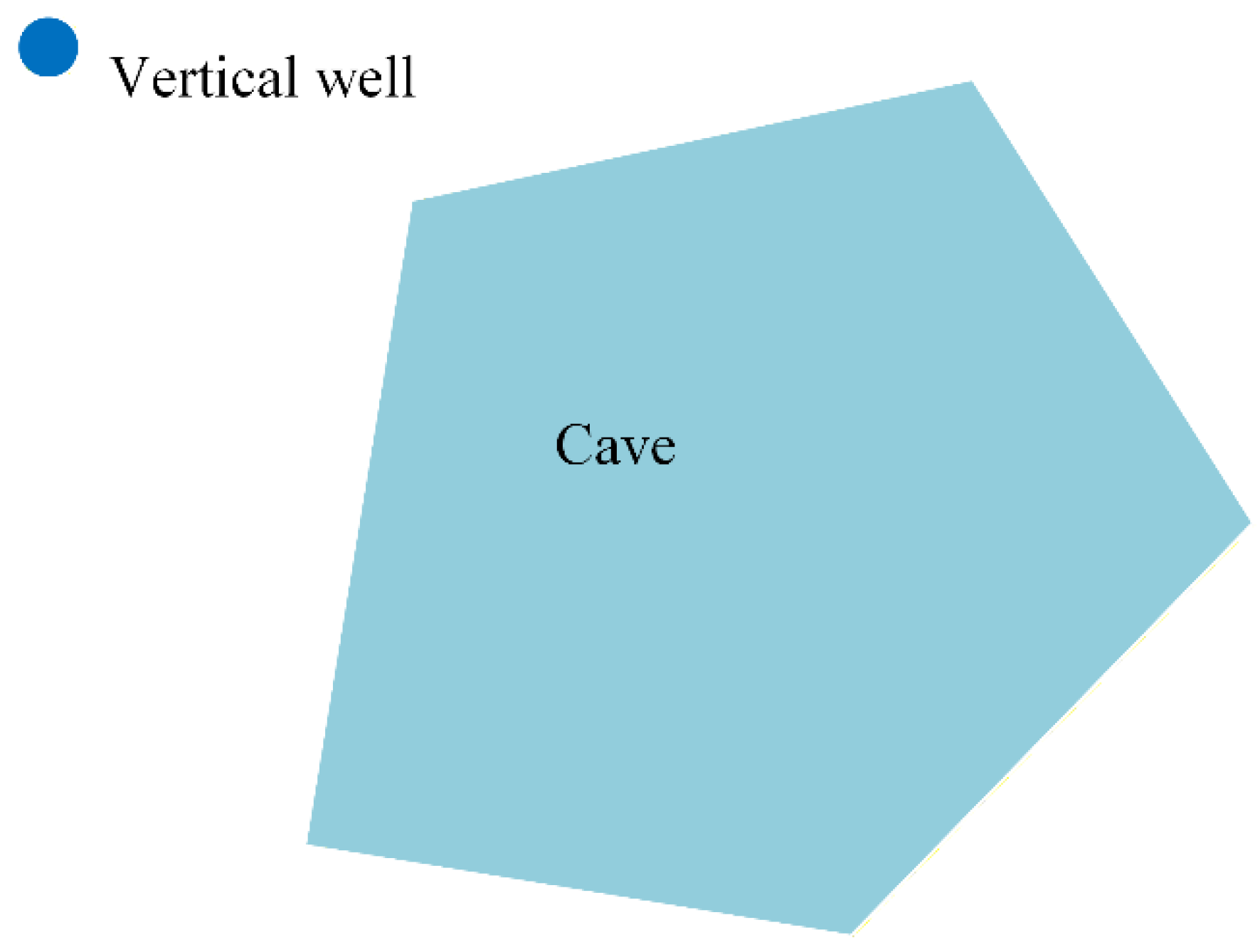
Consider a carbonate formation containing a vertical well and an irregularly shaped cavity, as illustrated in
Figure 1. In addition to large cavities, such reservoirs typically comprise fractures and a rock matrix. Although fluids are predominantly stored within the cavities, they are also widely distributed throughout the fractures and matrix.
When production begins, fluids in the vicinity of the wellbore flow into the well through porous-media seepage, generating a pressure drawdown around the well. This drawdown propagates outward with time. Once it reaches the cavity, the pressure equilibrium within the cavity is disrupted, and the fluid stored in the cavity begins to supply the surrounding formation toward the well.
From the perspective of pressure wave propagation, the cavity behaves much like a pressurized tank whose valve has been opened. The pressure decline within the cavity is primarily caused by fluid leakage into the surrounding formation, which reduces the fluid mass contained in the cavity. Importantly, pressure transmission inside the cavity is not governed by fluid flow but by wave propagation resulting from the combined effects of the fluid bulk modulus and the elastic response of the surrounding rock [
21,
27,
28,]. Consequently, pressure disturbances are transmitted across the entire cavity almost instantaneously, allowing the cavity pressure to be treated as a function of time only.
Based on these physical considerations, the following assumptions are introduced to formulate the governing equations for fractured–vuggy reservoirs:
- (1)
The porous medium formed by fractures and the rock matrix are treated as a homogeneous continuum with uniform effective porosity and permeability, and fluid flow within this medium follows Darcy’s law.
- (2)
Both the reservoir fluid and the rock are slightly compressible.
- (3)
The flow is single-phase, and capillary effects are neglected.
- (4)
The pressure within the cavity is spatially uniform at any given time and depends only on time.
The present model is a thickness-averaged two-dimensional formulation rather than a fully three-dimensional simulator. Flow in the fracture–matrix continuum is solved in the horizontal plane, while the reservoir thickness is included in transmissibility, storage, well index, and cavity volume calculations. Vertical flow within the formation is not explicitly resolved. Therefore, the method should be regarded as a quasi-three-dimensional or areal reservoir model with an equivalent thickness.
The assumptions above define the validity range of the model. The uniform-cavity-pressure assumption is appropriate when the characteristic time of pressure wave propagation inside the cavity is much shorter than the characteristic time of Darcy exchange between the cavity and the surrounding formation. The model is therefore most suitable for well-connected, single-phase, fluid-filled cavities. For very large cavities, partially filled cavities, cavities with strong internal barriers, or poorly connected cavity–fracture systems, internal pressure gradients may become non-negligible, and the present lumped-pressure cavity treatment may lose accuracy.
2.1. Governing Equations
Under the assumptions outlined above, the governing equation for pressure in a fractured–vuggy reservoir, together with the associated initial and boundary conditions, can be formulated as follows.
By combining the continuity equation with Darcy’s law, one obtains the partial differential equation governing seepage flow in the porous medium formed jointly by the fractures and the rock matrix:
Here, K denotes the absolute formation permeability; B is the formation volume factor; μ is the fluid viscosity; γo is the fluid specific weight; ϕ represents the porosity; p denotes the pressure; and Z is the vertical coordinate.
According to Ref. [
21], the pressure within the cavity satisfies Equation (2):
In Equation (2), C is the propagation velocity of pressure waves within the cavity; M denotes the fluid bulk modulus; E is the Young’s modulus of the formation rock; ϕ represents the porosity; ρ is the fluid density; v denotes the volumetric expansion velocity of the fluid under isobaric conditions; and g is the gravitational acceleration.
If gravitational effects inside the cavity are neglected, Equation (2) can be simplified to Equation (3):
When the fluid inside the cavity is depleted, pressure propagates in the form of a rarefaction wave with propagation velocity C. As the cavity pressure decreases, the fluid undergoes volumetric expansion under isobaric conditions. Considering a cavity with volume V, Equation (3) can be reformulated in terms of volume variation, leading to Equation (4):
Since the rate of volume change is equivalent to the flow rate, Equation (4) can be further expressed as Equation (5):
where V is the cavity volume, dp
v/dt is the time derivative of the cavity pressure, and Q(t) denotes the flow rate exchanged between the cavity and the surrounding formation.
2.2. Unstructured PEBI Grid Generation
Flow in fractured–vuggy carbonate reservoirs is governed by the coupling between wave propagation and porous-media seepage, as described by Equations (1) and (5). Analytical solutions are available only for a few highly idealized cases in which the governing equations can be further simplified and the cavity geometry is regular [
21,
22]. For irregular cavities, complex well–cavity configurations, or spatially separated wells and cavities, numerical treatment is required. In the present work, the main numerical challenge is to generate a locally orthogonal control-volume grid that simultaneously honors the radial-flow behavior near the well and the polygonal boundary of the cavity.
Given the irregular geometry of cavities, the possible presence of multiple cavities, and the variety of well configurations, structured grids are not convenient for representing the domain without excessive local refinement. An unstructured PEBI grid is therefore adopted. The PEBI grid is a locally orthogonal mesh in which the interface between any two neighboring control volumes is the perpendicular bisector of the line connecting their corresponding nodes [
29]. In this study, the point distribution is physics-oriented: radial geometric progression is used near the well to resolve early-time pressure gradients, while points along cavity boundaries and constraint lines preserve irregular cavity geometry. This strategy is not intended to replace general-purpose commercial or open-source mesh generators but rather to provide a reservoir simulation-oriented grid that directly couples well-centered radial refinement with cavity boundary conformity.
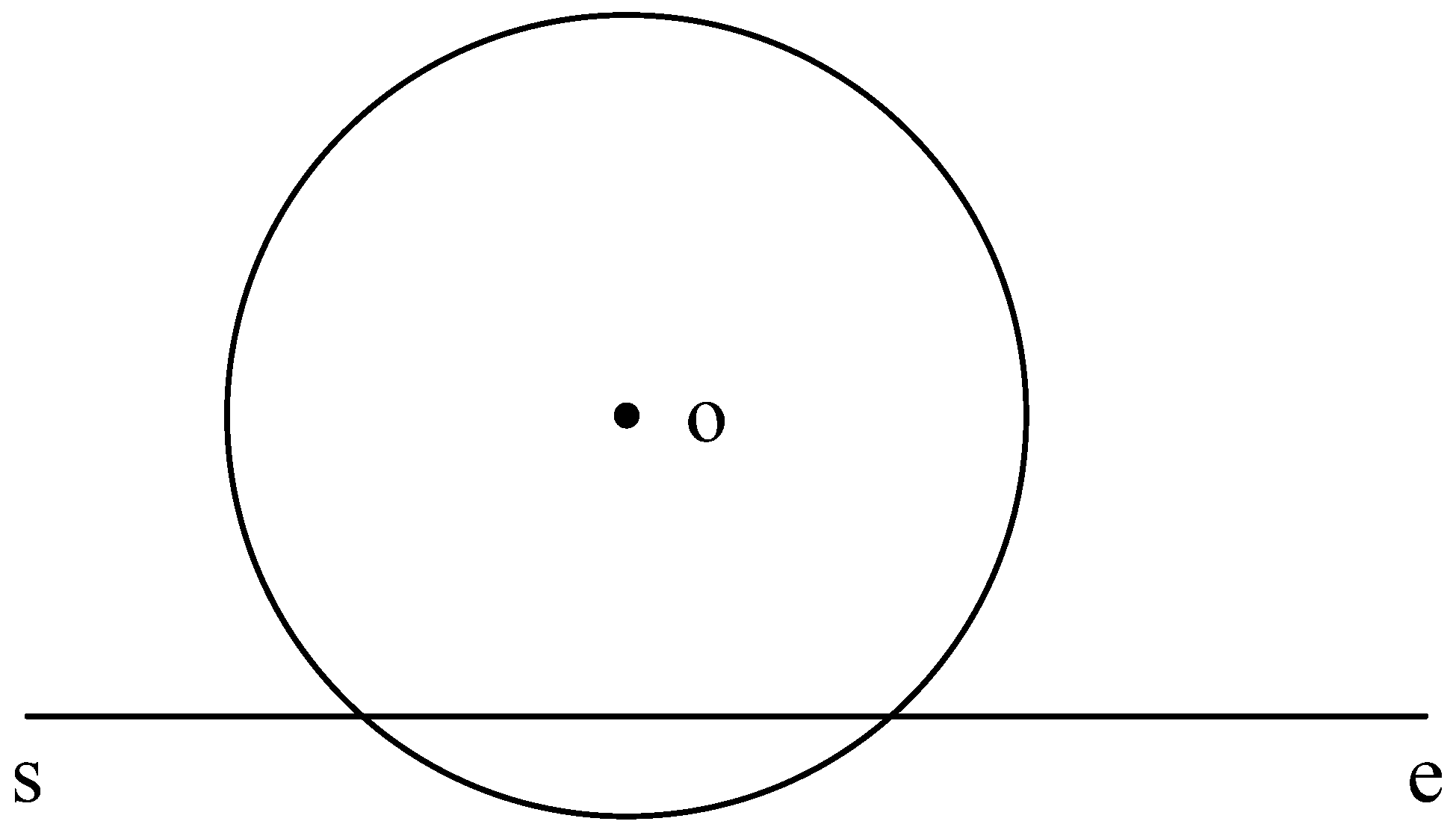
To account for the characteristics of the seepage equations, grid points around the well are distributed radially using a geometric progression, while cavities are approximated as polygons. Along line features, points are placed uniformly in the tangential direction. However, when circular and linear point distributions coexist, mutual interference may arise, as illustrated in
Figure 2.
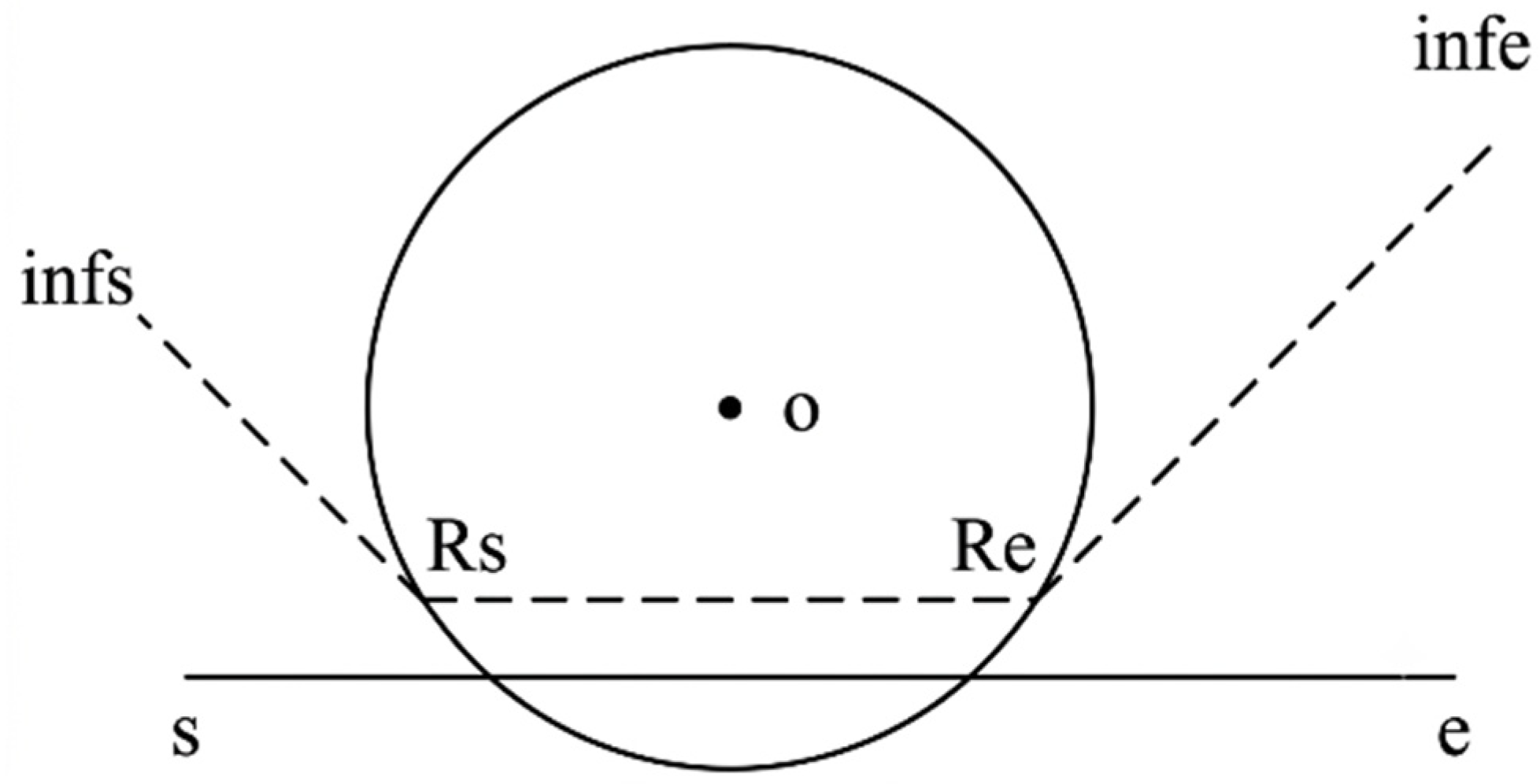
To address this issue, constraint lines are introduced. As shown in
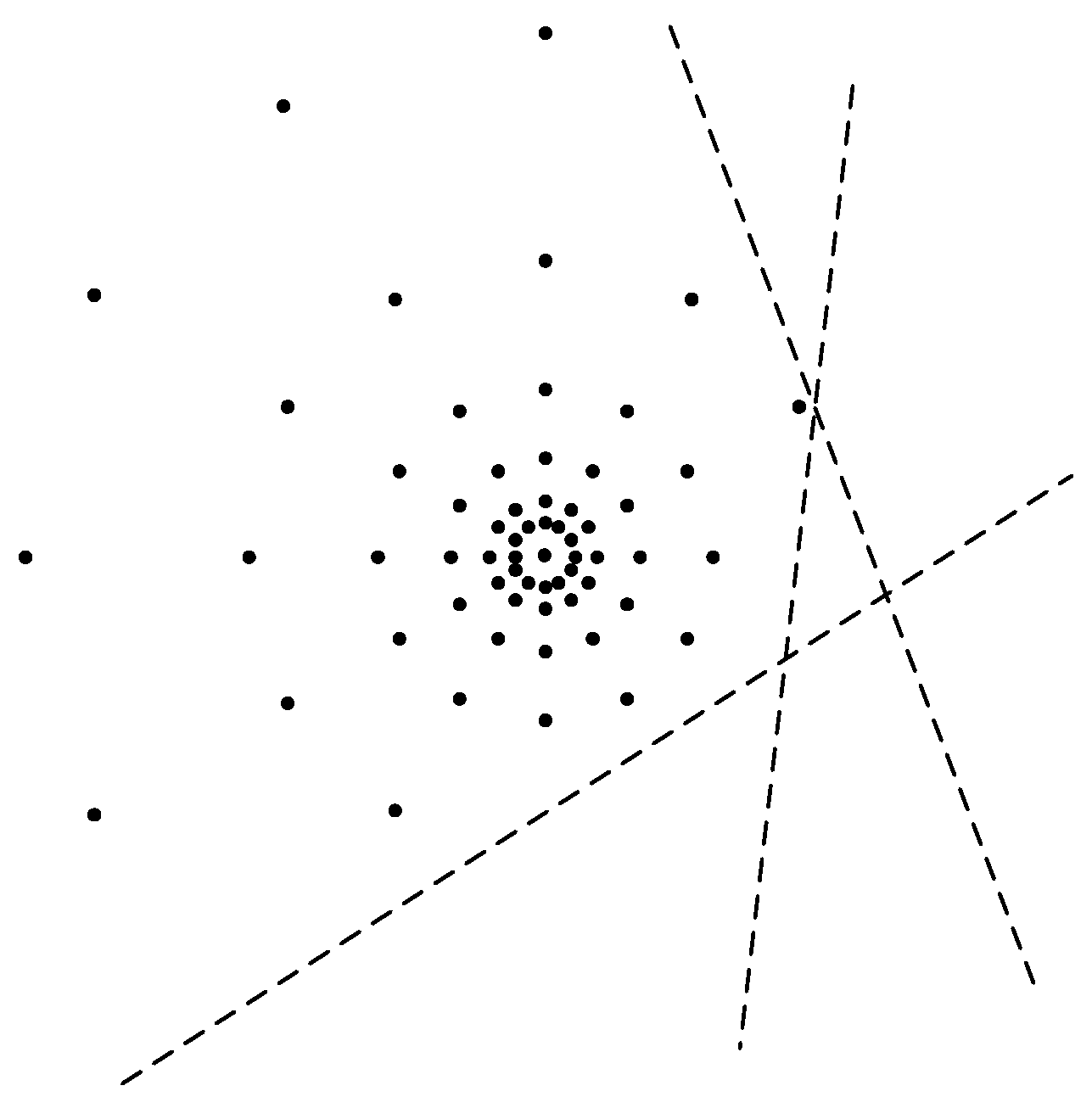
Figure 3, points Rs and Re are defined as the intersections between the circle centered at O and the line parallel to segment SE, offset by a prescribed distance. The segments Rs–Infs and Re–Infe form angles of 45° with the SE. These three segments—Infs–Rs, Rs–Re, and Re–Infe—serve as constraint lines to decouple the circular and linear point distributions. The final grid layout is shown in
Figure 4.
The computational implementation of the algorithm shown in
Figure 4 can be summarized in the following pseudocode steps:
Algorithm steps:
Initialize the point set P←∅
// Generate grid points in the circular region
for to
for to
if the segment does not intersect with any segment in set Ω
Add to set
end if
end for
end for
// Generate virtual grid points on the inner boundary
for to
Add to set and mark it as a virtual grid point
end for
return |
In the above formulation, η denotes the radial growth factor of the grid around the well, namely, the common ratio of the geometric progression. Point p0 represents the center of the circular region. The parameter re denotes the distance from the center to the innermost grid boundary. The inner radius (ri) represents the distance from the module center to the innermost ring of grid points, with ri > rw. The outer radius (ro) represents the distance from the module center to the outermost ring of grid points. The number of radial divisions is nr, and the number of angular divisions is nθ. The set Ω denotes the collection of constraint boundaries. The use of these variables ensures that the grid density can be controlled separately in the radial, angular, and boundary-constrained regions.
Based on the PEBI grid generation framework described above,
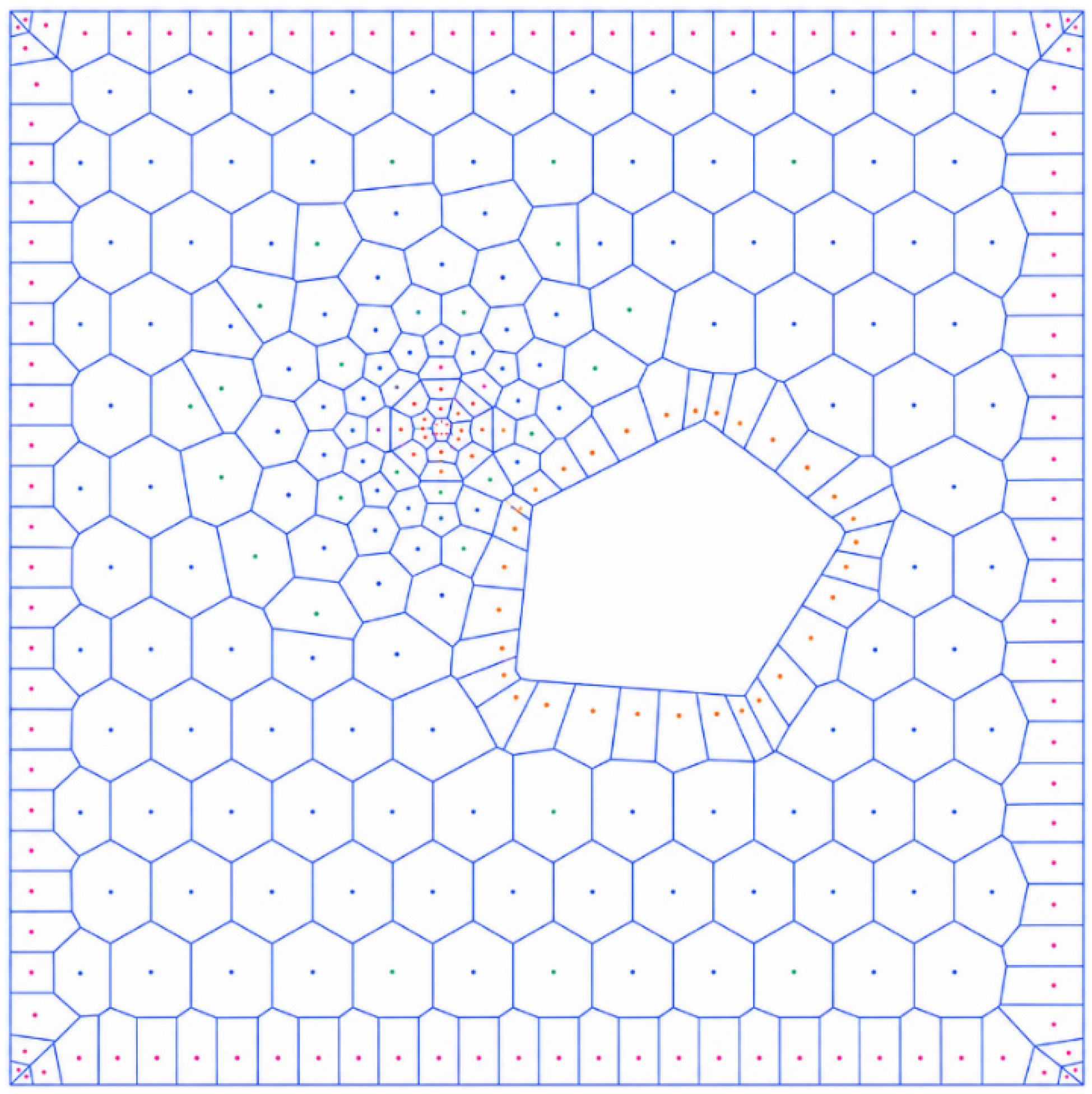
Figure 5 presents a local enlarged view of the variable-scale PEBI mesh around the well and the interpreted cavity boundary rather than a full-domain geometrical map.
Compared with a generic unstructured mesh, the present grid is designed to preserve the orthogonality required by the two-point finite-volume transmissibility calculation and to concentrate cells in the regions that dominate pressure-transient behavior. Because
Figure 5 is a local enlarged view extracted from the variable-scale mesh, a single global scale bar may be misleading. The full field-scale simulation domain used in the field application is 10,000 × 10,000 m, and the final interpreted pentagonal cavity has a volume of 169,770 m
3 with a well–cavity distance of 158.4 m. These dimensional quantities are therefore reported explicitly in the text and Field Application and Case Study Section.
2.3. Finite-Volume Discretization of Governing Equations
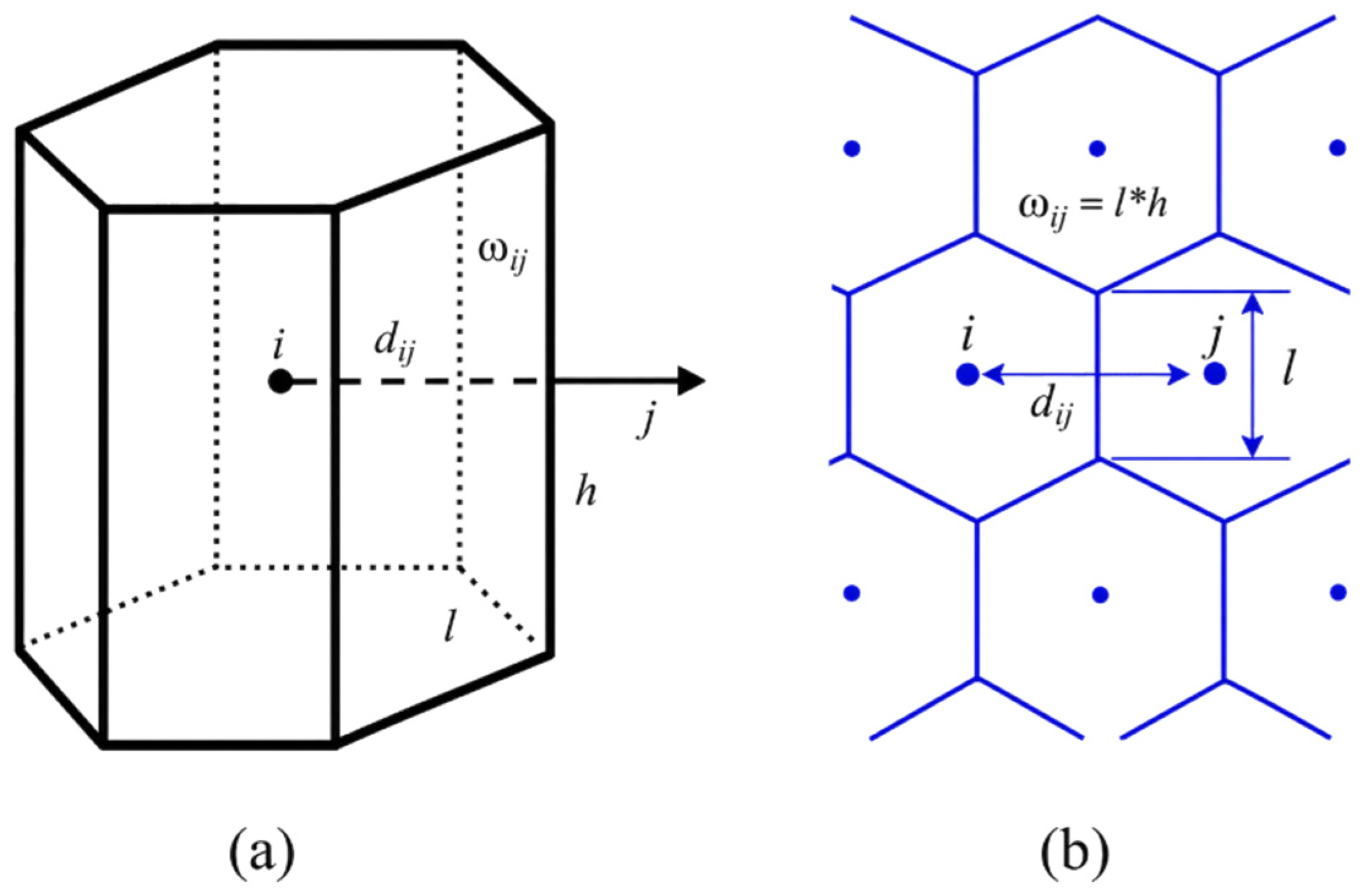
A cell-centered finite-volume method (FVM) is used to discretize the governing equations because it is locally conservative and naturally compatible with PEBI control volumes. The procedure begins by integrating the governing equation over each control volume. As illustrated in
Figure 6, the i-th grid cell is taken as a control volume, and Equation (1) is integrated over this control volume, yielding:
With the application of Gauss’s divergence theorem and summing over all faces of the control volume, the left-hand side of Equation (6) can be rewritten as:
The right-hand side of Equation (6) represents the accumulation term. Considering that both porosity and fluid properties are functions of pressure, the discretized form of the governing equation can be expressed as:
The porosity and the formation volume factor of a slightly compressible fluid are approximated using standard linearized relationships for small pressure changes around the reference pressure, as commonly adopted in reservoir simulation and well-test formulations [
27,
28,]. These approximations are valid when the pressure variation during one time step is sufficiently small relative to the characteristic compressibility scale:
After the application of a fully implicit scheme and linearization, Equation (8) can be further written as:
In the above equations, the transmissibility between grid blocks i and j is denoted by
Tij = λijGij. Here,
λij = (1/μB)ij
represents the pressure-dependent mobility across the interface between adjacent grid blocks, and
Gij = Kijωij/dij is the geometric conductance associated with the connection between grid blocks i and j. K
ij and ω
ij denote the permeability and interface area between neighboring grid blocks, respectively, and d
ij is the distance between the cell centers. The reference pressure, porosity at reference pressure, and formation volume factor at reference pressure are denoted by pref, ϕref, and Bref, respectively.
For formations containing cavities, the cavity is treated as a special control volume with pressure (
). The total inflow from all connected grid cells into the cavity can be described using Darcy’s law, and the discretized cavity equation can be written as:
At the wellbore boundary, the bottom-hole pressure expression accounting for wellbore storage and skin effects is given by:
The well index (WIj) characterizes the flow capacity between the well and the connected grid block (j). The pressure of the connected grid block is pj, the mobility is λj = (1/μB)j, and the wellbore storage coefficient (C) and skin factor (S) are included to account for near-wellbore effects. The bottom-hole flowing pressure is denoted by pwf.
Equations (9)–(11) together form the coupled discrete system governing the seepage flow in the porous medium, the pressure evolution within the cavity, and the flow behavior near the well. In the assembled system, matrix/fracture cells, cavity control volumes, and the wellbore pressure are solved simultaneously at each time step, which avoids explicit lagging of the cavity pressure and improves mass conservation.
2.4. Numerical Solution Procedure and Reproducibility
At each time step, all matrix/fracture grid-cell pressures, cavity pressures, and the bottom-hole pressure are assembled into a single algebraic system. A backward-Euler fully implicit time discretization is used for the accumulation terms. The pressure-dependent properties, including the porosity, formation volume factor, and mobility, are linearized around the previous iteration level. The resulting linearized algebraic system is expressed as A(pᵐ)δpᵐ = b(pᵐ), where δpᵐ is the pressure correction vector and m is the nonlinear iteration index.
The nonlinear iteration is performed using a Picard-type procedure. After each iteration, pressure-dependent coefficients are updated, and the residual is reassembled. The iteration is stopped when the relative pressure correction satisfies ||δp||2/(||pm+1||2 + ε) < 10−6 or when the residual reduction becomes smaller than the prescribed tolerance, where ε is a small number used to avoid division by zero. A maximum iteration number is specified to prevent indefinite cycling. In the calculations reported here, the time-step size is selected to resolve early wellbore storage behavior and cavity-related derivative extrema; smaller time steps are used near rapid pressure changes, while larger steps are used in late-time smooth regimes.
The matrix assembly follows the connectivity of the PEBI control volumes. For each neighboring cell pair, a transmissibility contribution is added symmetrically to the corresponding diagonal and off-diagonal entries. Cavity cells are connected only to their neighboring formation cells through Equation (10), and the well equation is assembled through Equation (11). The simulator used in this study was developed in-house directly in VC++ and does not rely on commercial reservoir simulators or external computing platforms, such as MATLAB R2023a or Python 3.10.12. The software suite includes four closely coupled modules: PEBI grid generation, the fractured–vuggy reservoir numerical solver, computational visualization, and history matching. All post-processing results and figures were generated using the visualization and history-matching modules of this in-house VC++ software suite. The complete source code cannot be publicly released because the software is a large GUI-based industrial program used by the oilfield partner and contains project-specific implementation components. Nevertheless, the governing equations, discretization, pseudocode, convergence criteria, and interpretation workflow described above provide the necessary information for reproducing the numerical procedure.
3. Model Verification and Sensitivity Analysis
The numerical implementation was first verified using the limiting case, in which the cavity volume is zero. Under this condition, the fractured–vuggy system degenerates to a conventional single-continuum seepage-flow problem. For a rectangular reservoir with a centrally located well, an analytical solution for bottom-hole pressure (BHP) that accounts for wellbore storage and skin effects is available [
27]. The parameters used in the calculations are summarized in
Table 1.
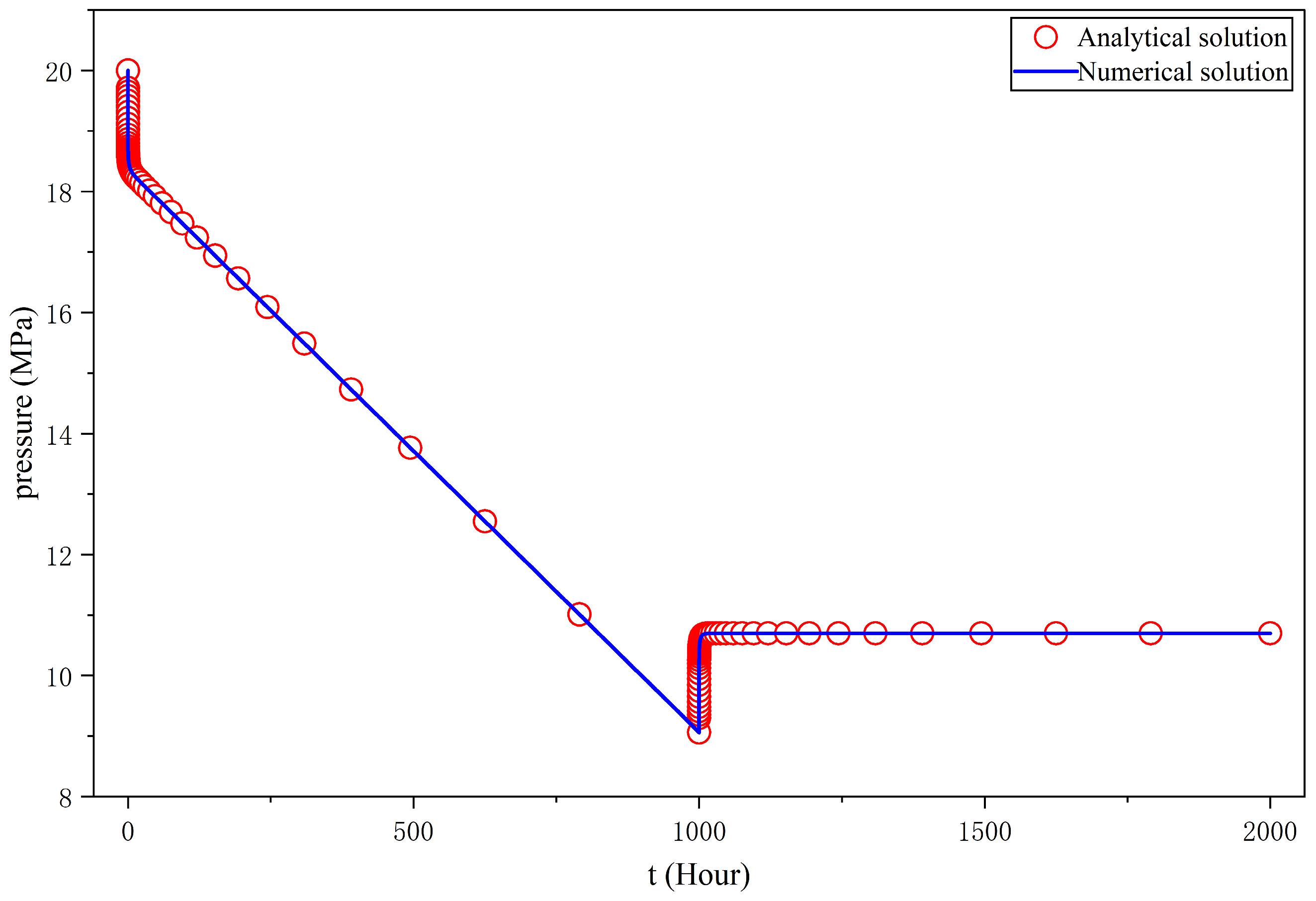
Figure 7 compares the numerical solution obtained using the PEBI grid with the analytical solution. The two curves are in close agreement over the entire production and buildup period, indicating that the finite-volume discretization and wellbore storage treatment were correctly implemented for the limiting seepage-flow case. The quantitative error was evaluated using the analytical solution as the reference. When the two curves were not sampled at identical time points, the reference solution was linearly interpolated to the numerical sampling times over the overlapping interval. Here and throughout this paper, the relative L2 error is calculated as the Euclidean norm of the difference between the numerical and reference pressure vectors divided by the Euclidean norm of the reference pressure vector and multiplied by 100%; the same definition is used for pressure-derivative errors when derivative data are evaluated. The relative L2 error is 5.59 × 10
−4%, the RMSE is 8.18 × 10
−5 MPa, the mean absolute error is 4.78 × 10
−5 MPa, and the maximum absolute error is 2.47 × 10
−4 MPa.
Furthermore, for a single well in a closed rectangular reservoir with relatively high permeability, a production rate of 60 m3/d over 1000 h yields a cumulative oil production of 2500 m3. The original oil in place is V0 = XeYe hϕ = 400 × 400 × 10 × 0.12 = 192,000 m3.
Fluid withdrawal leads to a decline in the average reservoir pressure. According to the material-balance relationship V/V0 = Ct(pi − p), the average pressure after producing 2500 m
3 is 11.05 MPa. This value is consistent with the bottom-hole pressure at 1000 h shown in
Figure 7, providing an additional material-balance consistency check.
This verification case does not by itself prove the uniqueness of the full cavity-coupled interpretation. Instead, it verifies the limiting seepage-flow formulation, the PEBI finite-volume assembly, and the wellbore storage implementation. For nonzero cavity volume, the cavity equation is checked through discrete mass conservation: the summed Darcy flux across the cavity boundary equals the cavity storage term in Equation (10) at convergence. This provides an internal consistency check for the wave–seepage coupling before the method is applied to irregular cavities and field data.
To further validate the cavity-coupled formulation, an additional regular-cavity benchmark was introduced before applying the model to irregular geometries. In this benchmark, the well intersects a cylindrical cavity with a radius of 50 m, and the well is located at the center of the cylinder. The fluid and formation parameters are the same as those listed in
Table 1, while the permeability of the porous medium outside the cavity is set to 10 md. The well is produced at Q = 100 m
3/d for 160 h. For this configuration, an analytical wave–seepage solution for bottom-hole pressure is available from Ref. [
21].
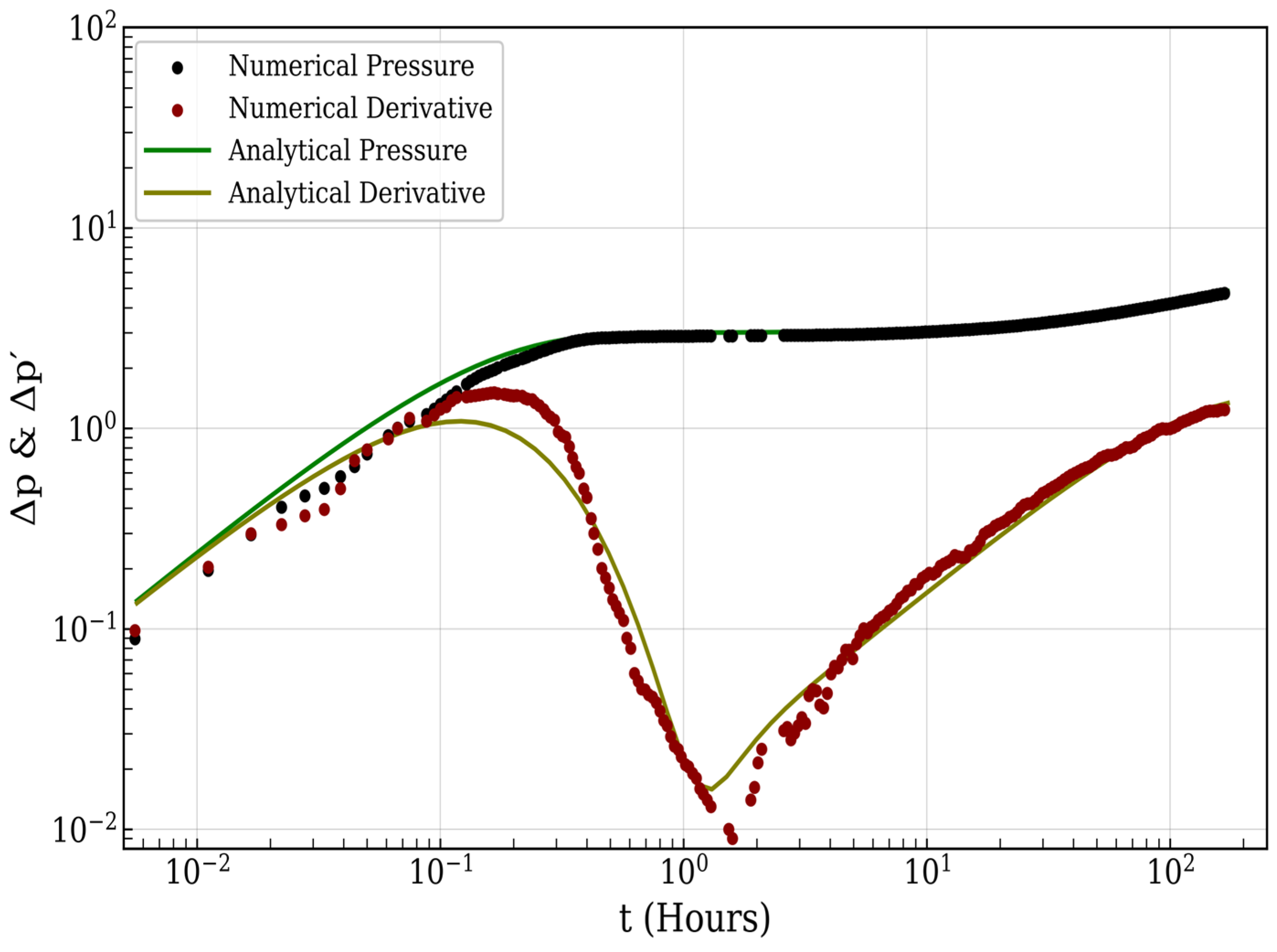
Figure 8 compares the analytical and numerical pressure-drawdown and pressure-derivative curves. The analytical and numerical pressure-drawdown curves agree well over the whole time interval. Quantitatively, after interpolating the analytical solution to the numerical time points in logarithmic time coordinates, the relative L2 error, RMSE, MAE, and maximum absolute error of the pressure drawdown are 4.38%, 0.138 MPa, 0.117 MPa, and 0.364 MPa, respectively. For the pressure derivative, the corresponding values are 30.00%, 0.183 MPa, 0.098 MPa, and 0.583 MPa, respectively. The larger derivative discrepancy mainly occurs before 0.3 h; after this early-time interval, the relative L2 errors of the pressure drawdown and pressure derivative decrease to 2.74% and 13.11%, respectively. This regular-cavity comparison provides additional support for the reliability of the cavity-coupled numerical formulation.
To investigate the effects of the cavity volume and well–cavity distance on the bottom-hole pressure, the reservoir dimensions are set to Xe = 10,000 m and Ye = 10,000 m, which approximates an infinite reservoir and minimizes boundary effects. For convenience in calculating the cavity volume, the cavity is idealized as a vertical cylinder with the radius (rv) and height equal to the effective reservoir thickness. Its volume is therefore V = πrv2h. The well–cavity distance is defined as the shortest distance from the well to the cavity boundary.
Using the parameters listed in
Table 1,
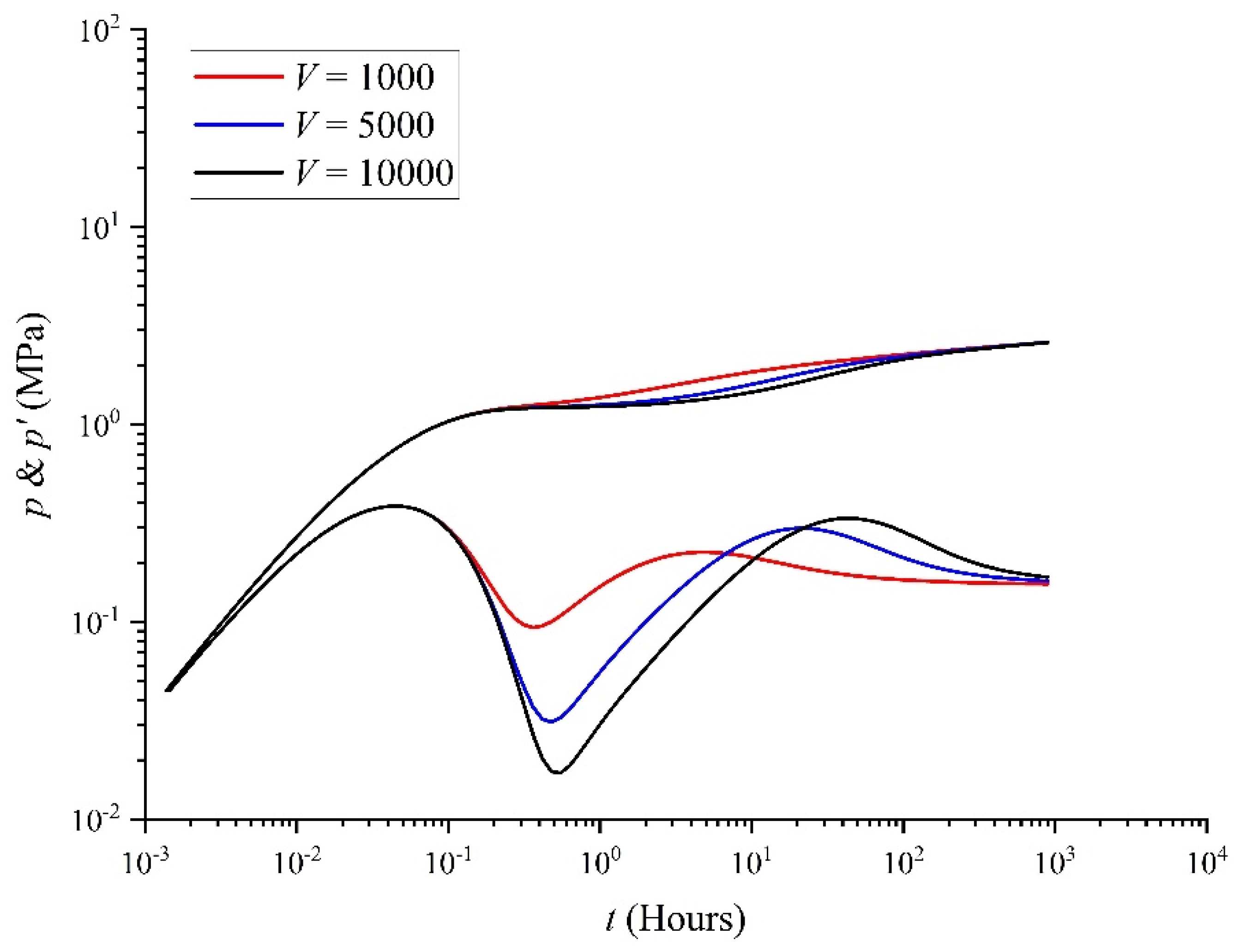
Figure 9 presents the bottom-hole pressure and corresponding pressure-derivative curves after 1000 h of production. The fluid bulk modulus and rock Young’s modulus are specified as M = 1.6 × 10
9 Pa and E = 5 × 10
10 Pa, respectively, and the well–cavity distance is 50 m. Results are shown for cavity volumes of 1000, 5000, and 10,000 m
3.
As shown in
Figure 9, the pressure-derivative curve can be divided into five distinct flow regimes:
- (1)
The wellbore storage regime, which appears as a straight line with a slope of 1 on the log–log plot of pressure and its derivative.
- (2)
Transition from wellbore storage to formation flow, where a maximum appears in the derivative curve. If the well–cavity distance is sufficiently large, a radial-flow regime may be observed as a horizontal straight line.
- (3)
Cavity-dominated regime, where the derivative decreases and then increases, forming a minimum as the pressure disturbance reaches the cavity.
- (4)
Transition from the cavity to the surrounding formation flow, during which another maximum appears in the derivative curve.
- (5)
The overall radial-flow regime, where, for an effectively infinite reservoir and sufficiently long time, the flow behavior ultimately approaches radial flow.
It can also be observed from
Figure 9 that the cavity volume significantly affects both the pressure and pressure derivative. As the cavity volume increases, the minimum in the cavity-dominated regime becomes lower and occurs later. Meanwhile, the subsequent maximum becomes higher and is also delayed. This indicates that the cavity volume controls both the strength and duration of the storage exchange between the cavity and the surrounding formation.
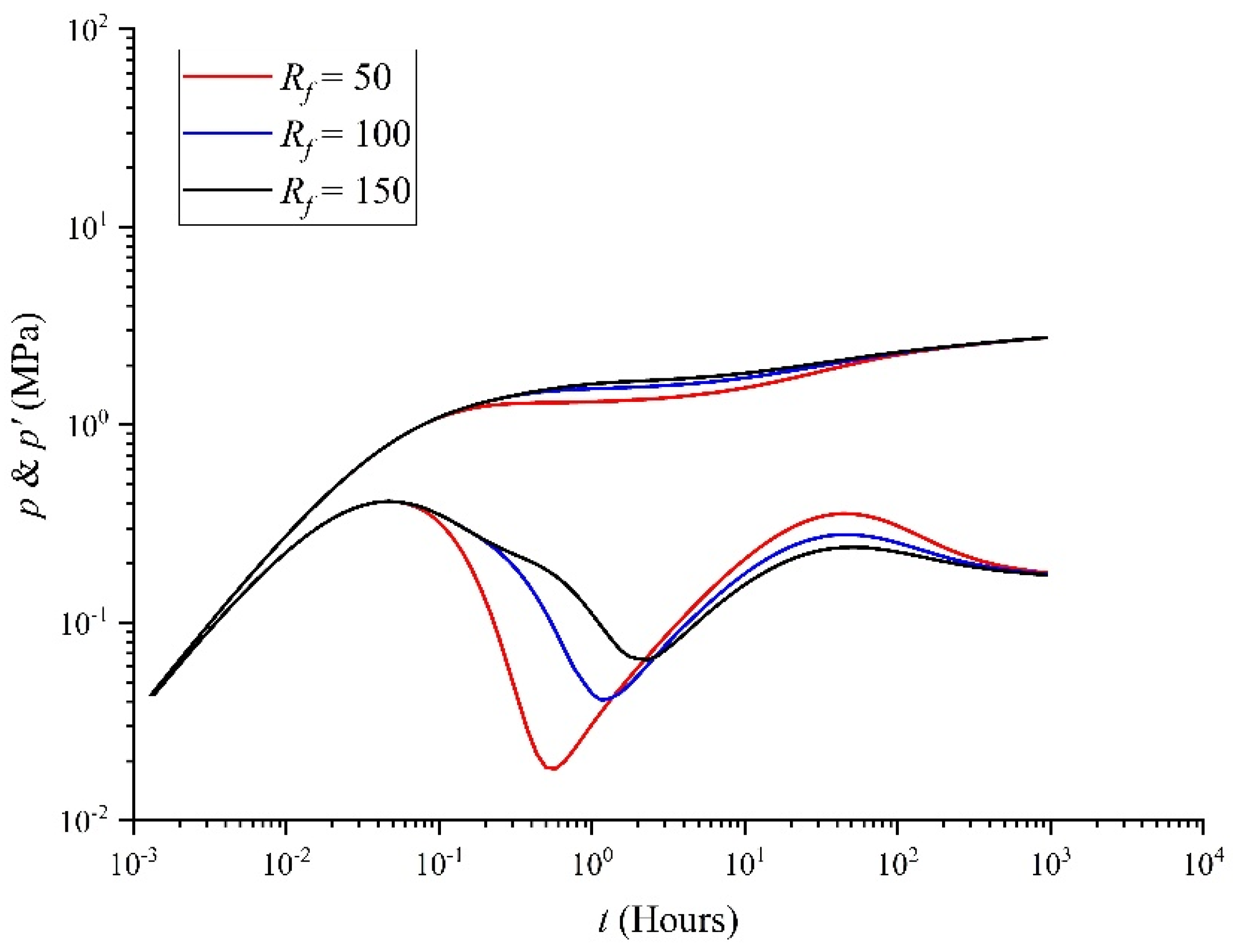
Figure 10 presents the bottom-hole pressures and their derivative curves for different well–cavity distances (50, 100, and 150 m), using the parameters listed in
Table 1 and a fixed cavity volume.
As shown in
Figure 10, the well–cavity distance influences both the pressure and pressure derivative. When the well is closer to the cavity, the minimum in the cavity-dominated regime occurs earlier and becomes more pronounced, while the subsequent maximum becomes higher. In the cases considered here, the timing of the later peak is less sensitive to the well–cavity distance than it is to the cavity volume, suggesting that the peak time is mainly controlled by the cavity storage capacity.
Furthermore, for a fixed cavity volume, increasing the well–cavity distance causes the pressure-derivative curve to resemble that of a dual-porosity system more closely. This observation suggests that, in reservoirs containing multiple cavities with different sizes and distances from the well, overlapping cavity responses may generate composite-flow regimes. Therefore, the interpretation of the extrema should be combined with geological and seismic constraints rather than rely solely on a one-to-one correspondence between the extrema and cavity number.
4. Field Application and Case Study
The Fuyuan oilfield in Xinjiang is a typical carbonate reservoir in which cavities have been identified from seismic data. The proposed PEBI-FVM wave–seepage-coupled model is therefore applied to pressure-buildup interpretation for a representative well. The basic reservoir and fluid parameters are listed in
Table 2, and the production history before the buildup test is summarized in
Table 3.
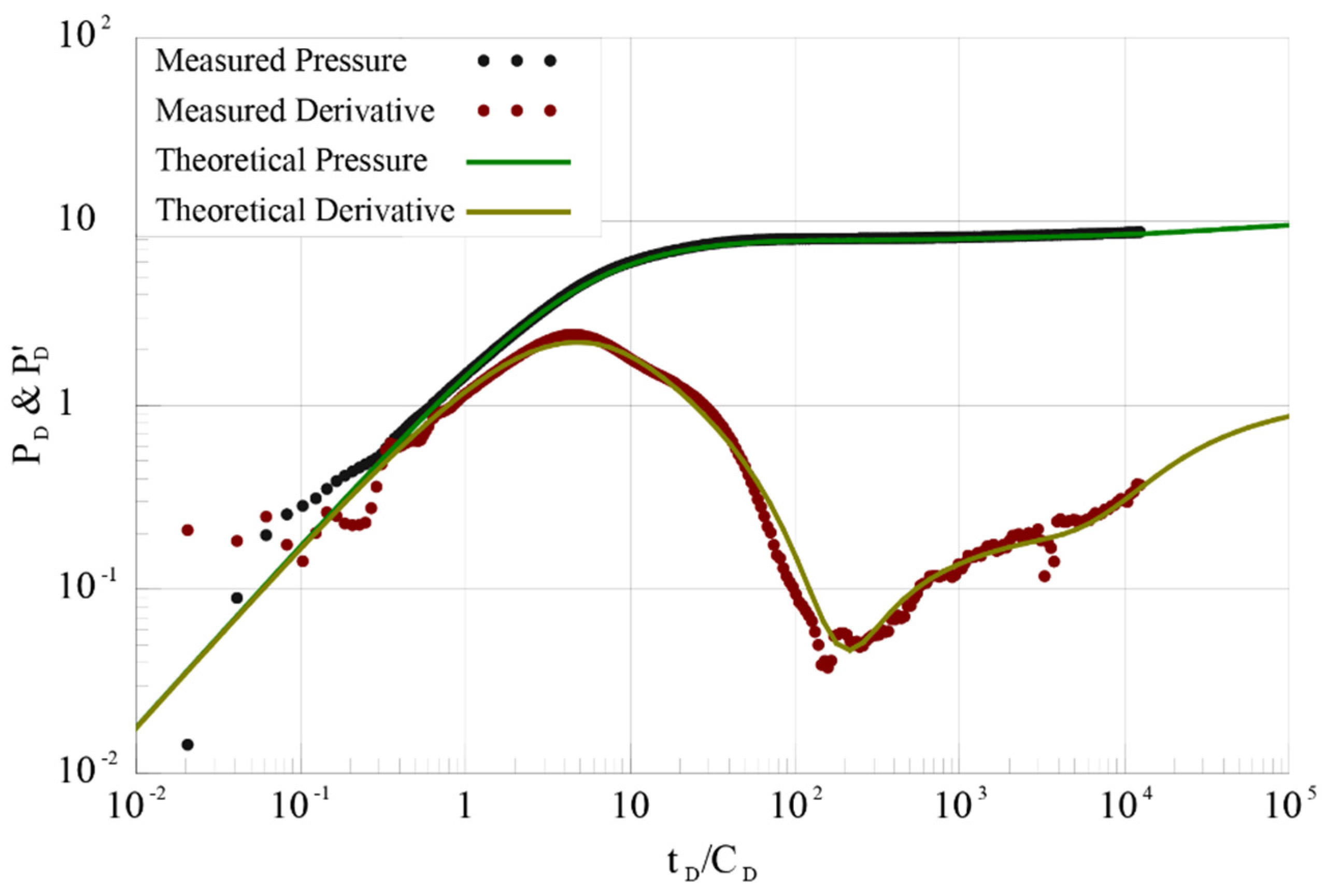
Figure 11 presents the matching results for the pressure and pressure derivative in the buildup test. The measured derivative curve exhibits a clear cavity-dominated response, whereas no obvious outer-boundary effect is observed. Accordingly, the well–fracture–cavity model shown in
Figure 5 is adopted. To remain consistent with the absence of boundary influence, the full simulation domain is extended to 10,000 × 10,000 m.
Figure 5 should be understood as a local enlarged grid view around the well and interpreted cavity boundary rather than as a full-domain map. A variable-scale PEBI grid is then generated by combining radial refinement near the well with boundary-conforming cells around the interpreted cavity geometry.
History matching is performed using an iterative interpretation workflow. First, the early-time wellbore storage segment is used to constrain near-well parameters. Second, the timing and amplitude of the cavity-related minimum and maximum in the pressure-derivative curve are used to estimate the well–cavity distance and cavity volume. Third, the permeability, initial reservoir pressure, and polygonal cavity geometry are adjusted iteratively until the pressure curve, pressure derivative, pressure history, and Horner plot are simultaneously matched. The final interpretation indicates that the cavity can be approximated as a pentagonal geometry with a volume of 169,770 m3. The well–cavity distance is 158.4 m, the reservoir permeability is 5.535 md, and the initial reservoir pressure is 86.66 MPa.
The matching problem is not strictly unique. Similar pressure-derivative responses may be produced by different combinations of cavity volumes, well–cavity distances, permeabilities, and initial pressures, especially when field data are noisy or when multiple cavities interact. Therefore, the pressure-transient match is interpreted together with seismic evidence and geological constraints. In the present case, the pentagonal cavity geometry is used as a simplified representation consistent with the available seismic interpretation rather than as a unique geometric solution.
The computational cost is mainly controlled by the number of PEBI cells and by the number of nonlinear iterations per time step. Refinement near the well and cavity improves the resolution of derivative extrema, but it also increases the matrix size. Because the total runtime also depends on the time-step distribution and the number of history-matching trials, it is not a fixed property of the formulation. In practical field interpretation, a coarse-to-fine workflow is recommended: a coarse grid is first used to estimate the plausible parameter range, and a refined grid is then used for final matching.
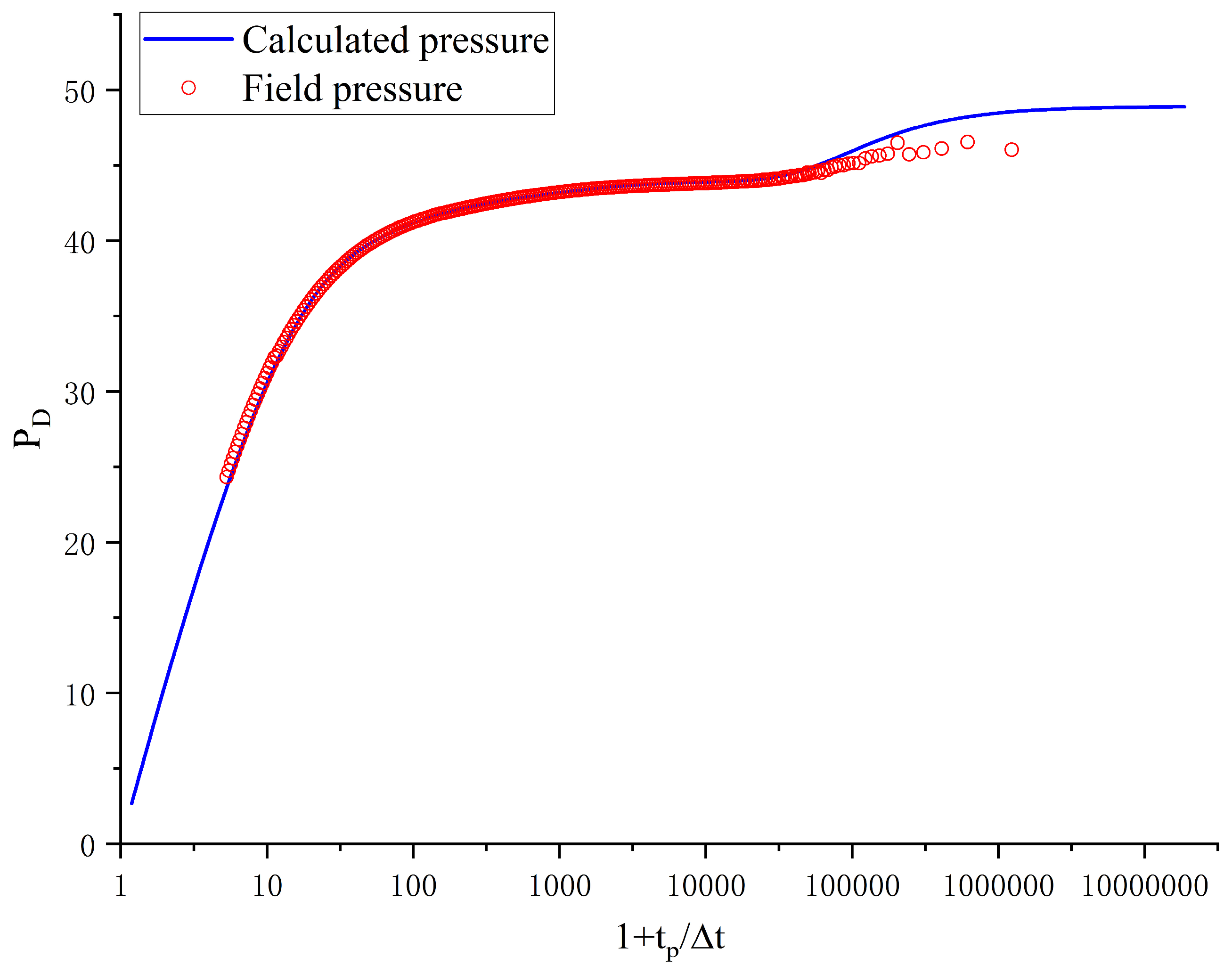
The fitting accuracy of the field case was quantified using the relative L2 error, RMSE, mean absolute error (MAE), and maximum absolute error. For
Figure 12 and
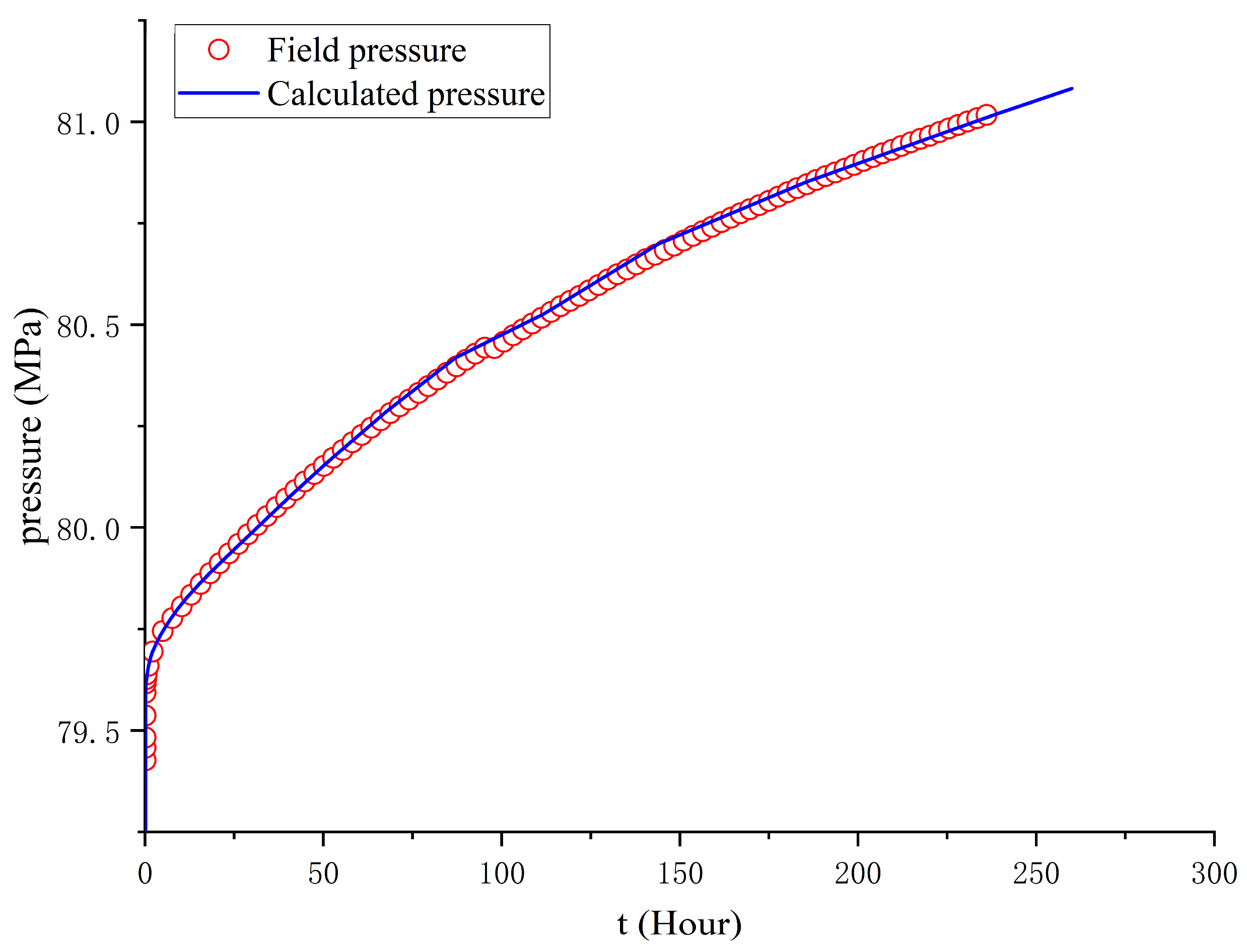
Figure 13, the measured field pressure was used as the reference, and the calculated pressure curve was linearly interpolated to the field-data abscissae before the errors were evaluated. For the pressure–history matching in
Figure 12, the relative L2 error, RMSE, MAE, and maximum absolute error are 0.028%, 0.022 MPa, 0.012 MPa, and 0.123 MPa, respectively. For the Horner plot in
Figure 13, the corresponding values are 0.99%, 0.407 MPa, 0.211 MPa, and 2.514 MPa, respectively. These field-case errors are post-calibration history-matching misfits rather than independent verification errors against an analytical solution. Therefore, they are not directly comparable with the 4.38% error from the cylindrical-cavity benchmark. The smaller field-case values should be interpreted as measures of the calibrated match quality and not as evidence that the real field case is intrinsically more accurate than the simpler benchmark problem.
5. Conclusions
This study develops a PEBI-FVM implementation of a wave–seepage-coupled model for well-test interpretation in fractured–vuggy carbonate reservoirs with irregular cavities. The main conclusions are summarized as follows:
- (1)
The PEBI grid provides a locally orthogonal control-volume framework for representing well-centered radial refinement and irregular cavity boundaries within the same computational domain. The use of constraint lines mitigates interference between circular near-well point distributions and polygonal cavity boundaries.
- (2)
The cavity is embedded into the finite-volume system as a special control volume. Coupling between the porous-media seepage and cavity pressure wave response is established through the pressure–flow exchange relation so that the cavity pressure and formation pressure are solved in a unified discrete system. In addition to the zero-cavity limiting-case verification, the cylindrical-cavity benchmark gives a pressure-drawdown relative L2 error (normalized Euclidean-norm error) of 4.38%, further supporting the reliability of the cavity-coupled formulation for a regular geometry.
- (3)
In the single-cavity cases examined in this study, the cavity produces a characteristic pair of extrema in the pressure-derivative curve. However, in multi-cavity systems, strongly interacting cavities, or cases of noisy field data, these extrema may overlap or become difficult to distinguish. Therefore, derivative extrema should be interpreted together with geological and seismic constraints.
- (4)
The cavity volume and well–cavity distance have different but coupled effects on the pressure-derivative response. The cavity volume mainly controls the timing and magnitude of the cavity-related extrema, whereas the well–cavity distance affects the onset and strength of the cavity-dominated response.
- (5)
The field application demonstrates the practical use of the method for pressure-buildup interpretation. For the Fuyuan case, the matched parameters indicate a pentagonal cavity with a volume of 169,770 m
3, a well–cavity distance of 158.4 m, a permeability of 5.535 md, and an initial reservoir pressure of 86.66 MPa. The pressure–history matching in
Figure 12 gives a relative L2 error of 0.028%, an RMSE of 0.022 MPa, a mean absolute error of 0.012 MPa, and a maximum absolute error of 0.123 MPa. The Horner plot matching in
Figure 13 gives a relative L2 error of 0.99%, an RMSE of 0.407 MPa, a mean absolute error of 0.211 MPa, and a maximum absolute error of 2.514 MPa. Because these values were obtained after parameter calibration, they are interpreted as history-matching misfits and should not be directly compared with the analytical benchmark error reported for the cylindrical-cavity case.
The main limitations of the current model are the equivalent-continuum treatment of the fracture–matrix region, the uniform-pressure approximation inside each cavity, the single-phase-flow assumption, and the thickness-averaged two-dimensional formulation. A direct comparison with general-purpose commercial reservoir simulators was not included because commonly used CAE/reservoir simulation packages, such as Eclipse, CMG Suite, and VIP, do not provide a directly equivalent built-in formulation for the specific wave–seepage cavity-control-volume model considered here. Therefore, such a comparison would require additional user-defined model development and would not constitute a direct benchmark of the same governing equations. Future work will extend the method to multiple interacting cavities, partially filled cavities, and fully three-dimensional models with more comprehensive uncertainty analysis.
Author Contributions
Conceptualization, B.Y. and Q.L.; methodology, T.L. and M.C.; software, T.L. and Y.G.; validation, G.Z. and H.S.; formal analysis, B.Y. and M.C.; investigation, Y.B. and J.H.; resources, B.Y. and G.Z.; data curation, H.S. and Y.B.; writing—original draft preparation, B.Y. and T.L.; writing—review and editing, M.C. and Q.L.; visualization, Y.G. and J.H.; supervision, Q.L. and M.C.; project administration, B.Y. All authors have read and agreed to the published version of the manuscript.
Funding
This research received no external funding.
Data Availability Statement
The numerical data supporting the validation examples are available from the corresponding author upon reasonable request. The field pressure-buildup data and the complete source code cannot be made publicly available because of confidentiality restrictions and the industrial use of the in-house VC++ 8.0 software suite.
Acknowledgments
The authors thank the editors and reviewers for their constructive comments, which helped improve the clarity and quality of this manuscript.
Conflicts of Interest
Authors Bingxu Yan, Tengyi Long, Mingjin Cai, Yingjie Guan, Guojun Zhang, Haochen Sun, Yachao Bai, and Jianing Hu were employed by the Tarim Oilfield Company. The remaining authors declare that the research was conducted in the absence of any commercial or financial relationships that could be construed as potential conflicts of interest.
References
- Guo, J.C.; Nie, R.S.; Jia, Y.L. Dual permeability flow behavior for modeling horizontal well production in fractured–vuggy carbonate reservoirs. J. Hydrol. 2012, 464–465, 281–293. [Google Scholar] [CrossRef]
- Zhang, S.X.; Zou, C.C.; Peng, C. Numerical simulation study of anisotropic velocities in fractured–vuggy carbonate reservoirs. J. Geophys. Eng. 2018, 15, 1851–1863. [Google Scholar] [CrossRef]
- Xing, C.Q.; Yin, H.J.; Liu, K.X.; Li, X.K.; Fu, J. Well test analysis for fractured and vuggy carbonate reservoirs of well drilling in large scale cave. Energies 2018, 11, 80. [Google Scholar] [CrossRef]
- Camacho-Velazquez, R.; Vasquez-Cruz, M.A.; Castrejon-Aivar, R.; Arana-Ortiz, V. Pressure transient and decline curve behaviors in naturally fractured vuggy carbonate reservoirs. SPE Reserv. Eval. Eng. 2005, 8, 95–112. [Google Scholar] [CrossRef]
- Arbogast, T.; Lehr, H.L. Homogenization of a Darcy–Stokes system modeling vuggy porous media. Comput. Geosci. 2006, 10, 291–302. [Google Scholar] [CrossRef]
- Arbogast, T.; Brunson, D.S. A computational method for approximating a Darcy–Stokes system governing a vuggy porous medium. Comput. Geosci. 2007, 11, 207–218. [Google Scholar] [CrossRef]
- Cai, J.; Guo, S.; You, L.; Hu, X. Fractal analysis of imbibition mechanisms in fracture–pore dual-porosity reservoirs. Acta Phys. Sin. 2013, 62, 014701. [Google Scholar]
- Zhao, Y.; Jiang, H.; Rahman, S.; Yuan, Y.; Zhao, L.; Li, J.; Ge, J.; Li, J. Three-dimensional representation of discrete fracture matrix model for fractured reservoirs. J. Pet. Sci. Eng. 2019, 180, 886–900. [Google Scholar] [CrossRef]
- Gómez, S.; Ramos, G.; Mesejo, A.; Camacho, R.; Vásquez, M.; del Castillo, N. Well test analysis of naturally fractured vuggy reservoirs with an analytical triple porosity–double permeability model and a global optimization method. Oil Gas Sci. Technol. 2014, 69, 653–671. [Google Scholar]
- Lin, J.; Li, L.; Yang, H. A preliminary study on coupled pipe flow and porous-media flow. J. Xi’an Shiyou Univ. Nat. Sci. Ed. 2007, 22, 11–15. (In Chinese) [Google Scholar]
- Kang, Z. A new coupled numerical simulation method for fracture–cave carbonate reservoirs. Xinjiang Pet. Geol. 2010, 31, 514–516. (In Chinese) [Google Scholar]
- Lei, G.; Zhang, D.; Yang, W.; Wang, H.; et al. A mathematical model for wells intersecting large-scale partially filled caves in fracture–cave reservoirs. J. China Univ. Geosci. Earth Sci. 2017, 38, 1047–1052. (In Chinese) [Google Scholar]
- Li, X.; Lu, D.; Luo, R.; Sun, Y.; Shen, W.; Hu, Y.; Liu, X.; Qi, Y.; Guan, C.; Guo, H. Quantitative criteria for identifying main flow channels in complex porous media. Pet. Explor. Dev. 2019, 46, 998–1005. [Google Scholar] [CrossRef]
- Lin, C.; Zhang, G.; Zhang, X.; Li, F.; Ren, L.; Zhu, Y.; Zhang, Y.; Guan, B. Key technologies for intelligent characterization and modeling of deep fractured–vuggy carbonate reservoirs. Deep Earth Energy Sci. Technol. 2025, 1, 53–66. [Google Scholar] [CrossRef]
- Dong, P.; Chen, Z.; Liao, X.; Yu, W. Application of deep learning on well-test interpretation for identifying pressure behavior and characterizing reservoirs. J. Pet. Sci. Eng. 2022, 208, 109264. [Google Scholar] [CrossRef]
- Mohammed, I.; Olayiwola, T.O.; Alkathim, M.; Awotunde, A.A.; Alafnan, S.F. A review of pressure transient analysis in reservoirs with natural fractures, vugs and/or caves. Pet. Sci. 2021, 18, 154–172. [Google Scholar] [CrossRef]
- Manzoor, S.; Edwards, M.G.; Dogru, A.H. Three-dimensional unstructured gridding for complex wells and geological features in subsurface reservoirs, with CVD-MPFA discretization performance. Comput. Methods Appl. Mech. Eng. 2021, 373, 113389. [Google Scholar] [CrossRef]
- Xu, G.; Yin, H.; Zhang, D.; Fu, J.; Xing, C. Numerical well test model of oil-water two-phase flow in fractured and vuggy carbonate reservoir. Adv. Geo-Energy Res. 2023, 10, 91–103. [Google Scholar] [CrossRef]
- Zhou, B.; Chen, Z.; Song, Z.; Tang, Z.; Wang, B.; Olorode, O. A new analytically modified embedded discrete fracture model for pressure transient analysis in fluid flow. J. Hydrol. 2024, 636, 131330. [Google Scholar] [CrossRef]
- Yan, B.; Cai, M.; Sun, H.; Li, Q.; Long, T.; Zhang, G.; Hu, J.; Bai, Y. Unstructured PEBI Grid-Based Pulse Well Testing for Fractured Caved Reservoirs. Processes 2026, 14, 1569. [Google Scholar] [CrossRef]
- Du, X.; Lu, Z.W.; Li, D.M.; Xu, Y.D.; Li, P.C.; Lu, D.T. A novel analytical well test model for fractured vuggy carbonate reservoirs considering the coupling between oil flow and wave propagation. J. Pet. Sci. Eng. 2019, 173, 447–461. [Google Scholar] [CrossRef]
- Wang, L.; Wang, X.D.; Luo, E.H.; Wang, J.L. Analytical modeling of flow behavior for wormholes in naturally fractured–vuggy porous media. Transp. Porous Media 2014, 105, 539–558. [Google Scholar] [CrossRef]
- Begnudelli, L.; Sanders, B.F. Unstructured grid finite-volume algorithm for shallow-water flow and scalar transport with wetting and drying. J. Hydraul. Eng. 2006, 132, 371–384. [Google Scholar] [CrossRef]
- Ding, X.Y.; Fung, L.S.K. An unstructured gridding method for simulating faulted reservoirs populated with complex wells. In Proceedings of the SPE Reservoir Simulation Symposium, Houston, TX, USA, 23–25 February 2015. [Google Scholar] [CrossRef]
- Klemetsdal, Ø.S.; Berge, R.L.; Lie, K.-A.; Nilsen, H.M.; Møyner, O. Unstructured gridding and consistent discretizations for reservoirs with faults and complex wells. In Proceedings of the SPE Reservoir Simulation Conference, Montgomery, TX, USA, 20–22 February 2017. [Google Scholar] [CrossRef]
- Berge, R.L.; Klemetsdal, Ø.S.; Lie, K.-A. Unstructured Voronoi grids conforming to lower dimensional objects. Comput. Geosci. 2019, 23, 169–188. [Google Scholar] [CrossRef]
- Lu, D. Well Test Analysis: Theory and Applications; Petroleum Industry Press: Beijing, China, 2009; p. 166. (In Chinese) [Google Scholar]
- Xiangyan, K. Advanced Seepage Mechanics; University of Science and Technology of China Press: Hefei, China, 2010; p. 235. (In Chinese) [Google Scholar]
- Zha, W.; Li, D.; Lu, D.; Kong, X. Study on PEBI grid generation under interwell interference conditions. Acta Pet. Sin. 2008, 29, 742–746. (In Chinese) [Google Scholar]
Figure 1.
Schematic diagram of cavity geometry, location, and well position in carbonate reservoir.
Figure 1.
Schematic diagram of cavity geometry, location, and well position in carbonate reservoir.
Figure 2.
Illustration of interference between circular and linear discretizations, where s and e denote the start and end points of the reference line, respectively, and o denotes the center point of the circular.
Figure 2.
Illustration of interference between circular and linear discretizations, where s and e denote the start and end points of the reference line, respectively, and o denotes the center point of the circular.
Figure 3.
Constraint lines for resolving interference between circular and linear discretizations, where s and e denote the start and end points of the reference line, respectively, and o denotes the center point of the circular.
Figure 3.
Constraint lines for resolving interference between circular and linear discretizations, where s and e denote the start and end points of the reference line, respectively, and o denotes the center point of the circular.
Figure 4.
Grid point distribution after resolving interference between circular and linear discretizations.
Figure 4.
Grid point distribution after resolving interference between circular and linear discretizations.
Figure 5.
A local enlarged view of the variable-scale PEBI grid around the well and the interpreted cavity boundary in a carbonate reservoir. Different dot colors indicate different groups of grid points used in the mesh generation process: blue dots represent background grid points, red dots represent locally refined points around the well, orange dots represent points generated near the cavity boundary, green dots represent auxiliary points in the transition region, and magenta dots represent boundary points.
Figure 5.
A local enlarged view of the variable-scale PEBI grid around the well and the interpreted cavity boundary in a carbonate reservoir. Different dot colors indicate different groups of grid points used in the mesh generation process: blue dots represent background grid points, red dots represent locally refined points around the well, orange dots represent points generated near the cavity boundary, green dots represent auxiliary points in the transition region, and magenta dots represent boundary points.
Figure 6.
Schematic illustration of grid parameters in finite-volume method: (a) control volume; (b) planar projection.
Figure 6.
Schematic illustration of grid parameters in finite-volume method: (a) control volume; (b) planar projection.
Figure 7.
Comparison between numerical results and analytical solutions.
Figure 7.
Comparison between numerical results and analytical solutions.
Figure 8.
Comparison of analytical and numerical pressure drawdowns and pressure derivatives for cylindrical cavity benchmark.
Figure 8.
Comparison of analytical and numerical pressure drawdowns and pressure derivatives for cylindrical cavity benchmark.
Figure 9.
Log–log plots of bottom-hole pressures and their derivatives for different cavity volumes.
Figure 9.
Log–log plots of bottom-hole pressures and their derivatives for different cavity volumes.
Figure 10.
Log–log plots of bottom-hole pressures and their derivatives for different well–cavity distances.
Figure 10.
Log–log plots of bottom-hole pressures and their derivatives for different well–cavity distances.
Figure 11.
Matching of pressure and derivative curves for pressure-buildup test in well from Fuyuan oilfield, Xinjiang.
Figure 11.
Matching of pressure and derivative curves for pressure-buildup test in well from Fuyuan oilfield, Xinjiang.
Figure 12.
Pressure–history matching for selected well in Fuyuan oilfield.
Figure 12.
Pressure–history matching for selected well in Fuyuan oilfield.
Figure 13.
Dimensionless Horner plot for selected well in Fuyuan oilfield.
Figure 13.
Dimensionless Horner plot for selected well in Fuyuan oilfield.
Table 1.
The parameters for the rectangular-reservoir case with a central well.
Table 1.
The parameters for the rectangular-reservoir case with a central well.
| Parameter | Value | Unit |
|---|
| Initial pressure, pi | 20 | MPa |
| Reservoir thickness, h | 10 | m |
| Wellbore radius, rw | 0.1 | m |
| Porosity, φ | 0.12 | – |
| Fluid density, ρ | 860 | kg/m3 |
| Fluid viscosity, μ | 1 | mPa·s |
| Formation volume factor, B | 1.1 | – |
| Total compressibility, Ct | 1.54 × 10⁻³ | MPa−1 |
| Permeability, k | 60 | md |
| Wellbore storage coefficient, C | 0.1 | m3/MPa |
| Skin factor, S | 2 | – |
| Reservoir width in x-direction, Xe | 400 | m |
| Reservoir width in y-direction, Ye | 400 | m |
| Production time, tp | 1000 | h |
| Production rate, q | 60 | m3/d |
| Shut-in time | 1000 | h |
Table 2.
The basic parameters of the selected well in the Fuyuan block, Xinjiang.
Table 2.
The basic parameters of the selected well in the Fuyuan block, Xinjiang.
| Parameter | Value | Unit |
|---|
| Reservoir thickness, h | 10 | m |
| Wellbore radius, rw | 0.060325 | m |
| Porosity, φ | 0.05 | – |
| Fluid viscosity, μ | 0.24 | mPa·s |
| Formation volume factor, B | 2.2574 | – |
| Total compressibility, Ct | 0.002157 | MPa−1 |
| Mid-depth, H1 | 7561.96 | m |
| Fluid density, ρ | 860.0021 | kg/m3 |
| Fluid compressibility, Cq | 0.002157 | MPa−1 |
Table 3.
The production history of the selected well in the Fuyuan oilfield.
Table 3.
The production history of the selected well in the Fuyuan oilfield.
| Parameter | Value | Unit |
|---|
| Production interval 1 | 0–168 | h |
| Production rate in interval 1 | 52.2 | m3/d |
| Production interval 2 | 168–456 | h |
| Production rate in interval 2 | 134.78 | m3/d |
| Production interval 3 | 456–672 | h |
| Production rate in interval 3 | 206.67 | m3/d |
| Production interval 4 | 672–1389 | h |
| Production rate in interval 4 | 257.59 | m3/d |
| Production interval 5 | 1389–1407 | h |
| Production rate in interval 5 | 116.8 | m3/d |
| Production interval 6 | 1407–1575 | h |
| Production rate in interval 6 | 0 | m3/d |
| Disclaimer/Publisher’s Note: The statements, opinions and data contained in all publications are solely those of the individual author(s) and contributor(s) and not of MDPI and/or the editor(s). MDPI and/or the editor(s) disclaim responsibility for any injury to people or property resulting from any ideas, methods, instructions or products referred to in the content. |