Article

PH/Ionic Pre-Conditioning-Assisted CO2 Mineralization of Cemented Tailings Backfill: Early Strength and Interfacial Mechanism

by
Weiliang Pan
1,2,3,*,
Duiming Guo
2,
Hongtu Xu
4 and
Qixuan Huang
1
1
School of Minerals Engineering, Jiangxi University of Science and Technology, Ganzhou 341000, China
2
China Nonferrous Metal Industry’s Foreign Engineering and Construction Co., Ltd., Beijing 100029, China
3
NFC International Alumina Development Co., Ltd., Beijing 100000, China
4
Chifeng NFC Baiyinnuoer Mining Co., Ltd., Chifeng 025473, China
*
Author to whom correspondence should be addressed.
Processes 2026, 14(12), 1907; https://doi.org/10.3390/pr14121907
Submission received: 20 April 2026 / Revised: 28 May 2026 / Accepted: 9 June 2026 / Published: 11 June 2026
(This article belongs to the Section Chemical Processes and Systems)

Abstract

Early-age strength development and carbon emissions represent specific operational constraints in underground cemented tailings backfill (CTB) operations. A pH and ionic pre-conditioning-assisted CO2 mineralization process was evaluated for carbonate-rich cemented tailings backfill designed to improve early UCS while retaining measurable CO2 uptake through systematic process control and optimization. Skarn-type tailings (CaO 16.74 wt%, total carbonates 34.7 wt%) were subjected to screening under nominal pH and ionic pre-conditioning treatments (4.0–11.5), CO2 pressure (0–0.5 MPa), cement-to-tailings ratio (1:3–1:12), and slurry concentration (66–78%). Strength evolution (1–28 d), mineralization products were characterized using TGA as the primary CO2-uptake method, with XRD used for semi-quantitative phase-trend assessment, scanning electron microscopy (SEM), electron backscatter diffraction (EBSD), transmission electron microscopy (TEM) with selected-area electron diffraction (SAED), X-ray computed tomography (CT), and nuclear magnetic resonance (NMR). Under optimal conditions (pH 8.5, 0.3 MPa CO2 pressure, 48 h mineralization, 72–74% solids), mineralized specimens achieved 2-day uniaxial compressive strength equivalent to 1.47-times the 3-day control strength (p < 0.01), with peak net CO2 sequestration of 37.1 g/kg. EBSD analysis of 347 grain boundaries and TEM-SAED examination of multiple foil sections supported the occurrence of syntaxial calcite overgrowth on primary carbonate debris as a major interfacial transition zone strengthening mechanism. Interconnected pore cluster volume decreased by 70.6%; Zn2+ and Pb2+ leaching decreased by 67.2% and 71.8%, respectively. A shrinking-core kinetics-Ryshkewitch model with pH-dependent correction functions predicted 3-day strength with acceptable accuracy for TW-A and TW-B, whereas TW-C showed a −27.3% deviation, identifying acidic and sulfate-rich wastewater as a boundary condition outside the reliable model domain. Field coring at −500 m depth provided pilot-scale evidence that a 23 mm mineralized shell was consistent with localized reduction of shallow exposed-face instability risk during the early free-standing period. Overall, the pH and ionic pre-conditioning-assisted CO2 mineralization process is proposed as a laboratory-supported and field-informed screening framework for simultaneous early-strength enhancement and partial carbon sequestration in carbonate-rich cemented tailings systems. The resulting models and parameter guidance should be interpreted as preliminary design tools requiring further factorial optimization and long-term field validation before full site-specific deployment.

1. Introduction

Deep underground metal mining operations at 400–900 m depth face three specific operational constraints regarding cemented tailings backfill (CTB), an indispensable geotechnical support system [1,2]: (1) rapid strength development during the critical 2–3 day free-standing period is essential to prevent shallow stope failure during early exposure [2]; (2) cold ambient conditions significantly inhibit cement hydration kinetics [3]; and (3) traditional high binder dosages generate substantial carbon emissions. These constraints directly affect operational efficiency and economic feasibility [4]. The Pb-Zn skarn deposit in northern Chifeng (Inner Mongolia, China) situated at 400–900 m depth with mean annual temperature ~2 °C exemplifies these challenges. Conventional CTB formulations at this site require elevated binder dosages to achieve operational stope turnover schedules, significantly escalating operating costs and associated carbon emissions [5]. This context motivates investigation of process innovations that simultaneously enhance early strength and reduce carbon footprint.
Conventional early-strength improvement strategies encompass three primary approaches:
Supplementary cementitious materials (SCM): Pozzolanic additives (silica fume, fly ash, ground granulated blast furnace slag) contribute strength through secondary hydration reactions, but 1-3 day early-age contribution remains limited (<10% strength gain) [6,7,8];
High-performance binders: Calcium sulfoaluminate cements or alkali-activated binders accelerate early hydration kinetics; however, applicability in cold environments (<5 °C) is severely constrained, and material costs escalate 30–50% above ordinary Portland cement [9,10,11];
Slurry formulation optimization: Reduced water-to-binder ratio, elevated solids concentration, and dispersant additions improve flowability-strength relationships but do not fundamentally decouple the “slow early strength” versus “high binder demand” constraint [12,13,14]. The shared limitation of these methods is dependence on conventional cement silicate mineral hydration pathways, mechanisms inherently constrained by temperature, mineralogy, and aggregate characteristics. Applicability in deep cold environments remains limited.
CO2-assisted mineralization: Research evolution and current knowledge gaps.
CO2-induced carbonate mineralization has attracted research attention over the past decade because dissolved CO2 promotes carbonate precipitation that simultaneously densifies cementitious matrices and sequesters atmospheric carbon [15,16,17,18,19,20,21,22]. Existing research progresses through three developmental stages:
Stage I (Fundamental mechanism research, 2006–2015): Early investigations demonstrated that CO2 treatment accelerates cement hydration, promotes ettringite–monosulfate phase transitions, and induces carbonate precipitation [15,16,17]. Rostami et al. [16] first demonstrated early carbonation curing pore structure optimization; El-Hassan et al. [17] quantified CO2 effects on Portland limestone cement strength. However, these studies focused exclusively on precast concrete systems; applicability to geologic substrates (mine tailings) remained unexplored;
Stage II (Engineering application research, 2016–2021): Research expanded to specialized matrices including ceramic waste concrete [18] and recycled aggregate concrete. Semi-quantitative verification was consistent with broad applicability of CO2 mineralization. However, studies consistently emphasized “porosity densification” while overlooking “mineral phase templating”-the critical phenomenon of how neoformed carbonates interact crystallographically with primary minerals. Carbonate sedimentology literature extensively documents this interaction [23,24,25,26], yet its application to cementitious systems remains unexplored;
Stage III (Mine backfill application, 2022-present): Only Liu et al. [27] and Bersisa et al. [19] reported CO2 mineralization applied to cemented backfill systems; however, neither addressed systematic pH regulation strategies or ionic pre-conditioning. Danieli et al. [20] and Teune et al. [21] reviewed carbon capture-utilization and carbonation thermodynamics respectively, but neither quantitatively modeled pH-dependent behavior in multi-mineral tailings systems.
Critical research gaps:
Synthesizing the above literature reveals four key research deficiencies: (1) quantitative investigation of how tailings mineral composition (specifically primary carbonate minerals) buffers pH evolution and affects CO2 mineralization behavior remains absent; (2) the role of nominal pH adjustment and its associated ionic legacy has not been systematically evaluated in carbonate-rich CTB systems (pre-treatment pH manipulation) to modulate carbonate nucleation kinetics and saturation index; (3) current kinetic models (primarily shrinking-core formulations) lack pH-dependent correction terms, preventing strength prediction across variable mine wastewater compositions; and (4) current interfacial strengthening mechanisms are described at the “pore filling” level, lacking crystallographic evidence for how neoformed carbonates interact with primary detrital carbonate debris. This study addresses these four critical gaps through pH-controlled ionic pre-conditioning, EBSD/TEM crystallographic characterization of debris-overgrowth interfaces, Rietveld XRD semi-quantitative phase analysis, and development of pH-corrected kinetic modeling.
Three principal advances of this investigation:
1. Process-parameter characterization under pH and ionic pre-conditioning: Nominal pH and ionic pre-conditioning was evaluated as a controllable process variable for carbonate-rich cemented tailings backfill, rather than as an isolated thermodynamic pH effect. Pore-solution pH evolution during the 0–4 h pre-set period was monitored to characterize carbonate-buffered alkalinity convergence and the associated ionic legacy. The subsequent variations in UCS and TGA-derived CO2 uptake were, therefore, interpreted as responses to the combined nominal pH adjustment and ionic pre-conditioning history, rather than to pH alone [21,22,24,28];
2. Direct crystallographic evidence of interfacial strengthening mechanisms: EBSD analysis of 347 grain boundaries and TEM-SAED examination of six independent cross-section foils provide the first direct proof of syntaxial calcite overgrowth (82.3% of grain boundaries exhibiting <5° misorientation) on detrital carbonate substrates. This crystallographically templated growth mechanism, well-established in carbonate sedimentology over geological timescales [23,24,25,26], is demonstrated here to operate on cementitious mineral systems within hours under elevated CO2 pressure;
3. Quantitative process modeling and pilot-scale field assessment: A shrinking-core kinetics-Ryshkewitch composite model incorporating pH-dependent correction functions was developed as a semi-empirical screening tool for 3-day strength prediction. Validation with site wastewaters showed acceptable agreement for TW-A and TW-B, whereas TW-C defined an acidic and sulfate-rich boundary outside the model’s reliable applicability (see Appendix section Site Wastewater Chemical Composition and Table A10). Underground coring at −500 m depth provided pilot-scale evidence that a 23 mm mineralized shell can contribute to shallow exposed-face stabilization during the critical 2–3-day free-standing period, but further long-term field monitoring is required before engineering-scale generalization.

2. Materials and Methods

2.1. Raw Materials and Mixing Waters

Total tailings were sampled directly from the thickener underflow stream at the Pb-Zn mine concentrator facility (Chifeng, China). The deposit represents a classic skarn-type Pb-Zn orebody occurring at the contact zone between Permian-age limestone and Yanshanian granite. The mine employs sublevel stoping with delayed cemented backfill placement at depths ranging from −200 to −600 m.
Tailings samples were oven-dried to a constant mass and prepared via riffle splitting to ensure representative sampling. Laser diffraction particle size analysis (Mastersizer 3000, Malvern Panalytical, Beijing, China) yielded d10 = 4.27 μm, d50 = 31.47 μm, d90 = 118.63 μm, and uniformity coefficient Cu = 9.92, indicating a moderately well-distributed size spectrum. X-ray fluorescence (XRF) analysis determined CaO content at 16.74 wt%, while Rietveld refinement of the XRD patterns was used to estimate the total carbonate mineral content (calcite + dolomite combined) as 34.7 wt%. This elevated carbonate content reflects the skarn paragenesis of the ore deposit and results from Permian limestone contributing substantial carbonate debris to the flotation processing stream. The high carbonate mineral abundance creates a distinctive pH-buffering effect during early cement hydration, a phenomenon that becomes critically important in regulating subsequent CO2 mineralization behavior and is therefore a central focus of this investigation [21,23,24,28].
Ordinary Portland cement (P.O 42.5) served as the sole binder phase; no supplementary cementitious materials or pozzolanic additions were incorporated to ensure that pH and CO2 effects on mineralization and strength development could be isolated without confounding pozzolanic reaction pathways.
Mixing waters were prepared from deionized water adjusted to nominal initial pH values of 4.0, 5.5, 7.0, 8.5, 10.0, and 11.5 using analytical-grade HCl or NaOH. These six pH treatments served as experimentally distinct pre-conditioning protocols designed to interrogate the effect of ionic environment history. Actual pore solution pH at the time of CO2 introduction was measured independently (cf. Results, Section 3.1). At extreme pH adjustments, ionic strength contributions became non-negligible: chloride anion concentration from HCl reached approximately 0.15 mol/L at pH 4.0, while sodium cation concentration from NaOH reached approximately 0.03 mol/L at pH 11.5. These ionic strength effects are acknowledged as confounding variables; however, they were retained in the investigation to more accurately represent water chemistry variations encountered at operational mine sites [19,21,22].
Consequently, the process investigated in this study should be interpreted as pH and ionic pre-conditioning rather than as a purely thermodynamic pH effect. Because no constant ionic strength control series was performed, the independent contributions of pH, Cl, Na+, and total ionic strength cannot be fully separated. The observed response, therefore, reflects the combined effect of nominal pH adjustment and the associated ionic legacy during the 0–4 h pre-set period.
High-purity bottled CO2 (≥99.5 vol.% purity) was used exclusively throughout all mineralization experiments.

2.2. Experimental Design and Process Parameters

A one-factor-at-a-time (OFAT) screening strategy was systematically applied to characterize the individual and independent effects of each process parameter on strength development and carbonation outcomes. Although OFAT methodology does not capture higher-order parameter interactions, this approach is particularly well-suited to early-stage process characterization investigations where elucidation of dominant mechanisms must precede factorial design optimization [29]. Baseline experimental conditions were established at cement-to-tailings ratio 1:6, slurry concentration 72 wt%, initial pH 7.0, CO2 partial pressure 0.3 MPa, and mineralization duration 48 h.
Cylindrical test specimens (diameter 50 mm, height 100 mm) were demolded at approximately 4 h post-casting, corresponding to initial set stage as determined by penetration resistance testing (≈3.5 MPa per ASTM C403 [30]), and immediately transferred to a pressurized stainless steel reactor (working volume 50 L, specimen spacing maintained at ≥20 mm to ensure uniform gas contact). Static CO2 pressure was maintained at (20 ± 2) °C ambient temperature and (60 ± 5)% relative humidity for 48 h duration, with measured specimen mass loss of (0.8 ± 0.2)%. Following mineralization treatment, specimens were transferred to a standard moisture-controlled chamber ((20 ± 2) °C, ≥95% RH) and maintained under these conditions until mechanical testing. Control specimens omitted CO2 exposure and were cured under identical temperature and humidity conditions. Preliminary thermogravimetric analysis supported that film-sealed versus unsealed control specimens cured at ≥95% RH differed by less than 0.3 wt.% in the 600–800 °C decomposition mass loss window, establishing that negligible atmospheric carbonation occurred under these curing conditions; consequently, no additional sealant protection was applied. Each experimental group comprised six replicate specimens (mean ± standard deviation reported throughout).

2.3. Testing and Characterization

Mechanical characterization: Uniaxial compressive strength (UCS) was determined using an MTS-815 servo-hydraulic testing system (MTS Systems Corporation, Beijing, China) operating at a constant displacement rate of 0.5 mm/min.
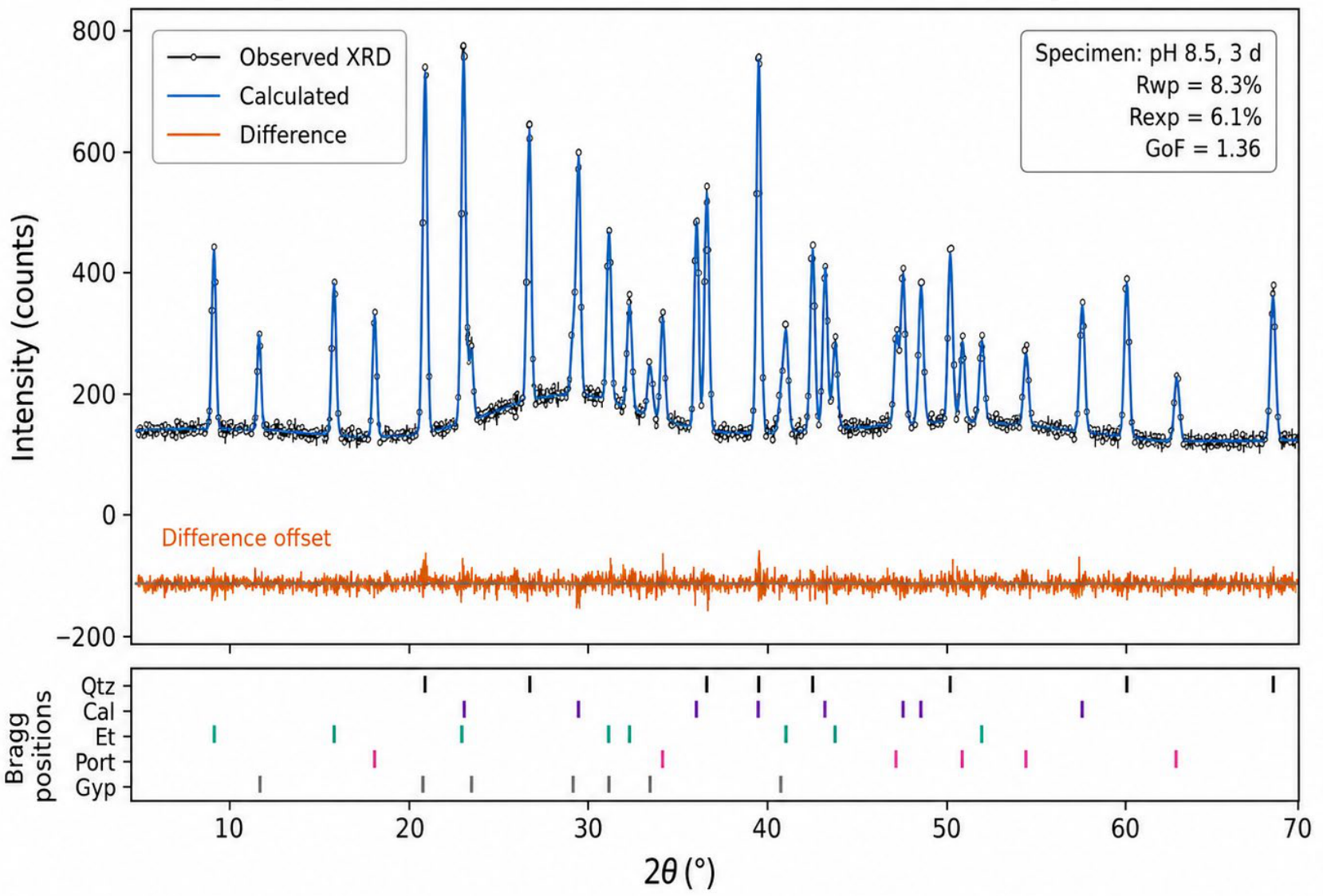
Phase analysis and thermochemistry: X-ray diffraction (XRD) employed a Bruker D8 ADVANCE instrument (Bruker, Beijing, China, Cu Kα radiation, 40 kV acceleration voltage, 5–70° 2θ range, 0.02° step increment). Rietveld refinement was used only for semi-quantitative comparison of phase-evolution trends under identical refinement settings from XRD patterns while explicitly accounting for the multi-phase nature of cemented tailings backfill. Because the specimens contain multiple crystalline phases as well as poorly crystalline components, the resulting phase contents are reported and interpreted as semi-quantitative, with emphasis on comparative trends under identical measurement and refinement settings rather than on high-precision absolute fractions. In this framework, “unreacted cement clinker” is treated as a composite term representing overlapping reflections from multiple clinker minerals, rather than a single independent crystalline phase. Refinement quality is assessed using standard fit indicators (Rwp, Rexp, and GoF), and convergence is defined by a stringent residual criterion (relative residual < 10−6) (see Appendix A.1.2, Table A2, Table A3, and Figure A12). Thermogravimetric analysis (TGA) was performed on a Netzsch STA 449 F5 system (NETZSCH-Gerätebau GmbH, Beijing, China) at a heating rate of 10 °C/min under nitrogen atmosphere (see Appendix A.1.1 and Table A1).
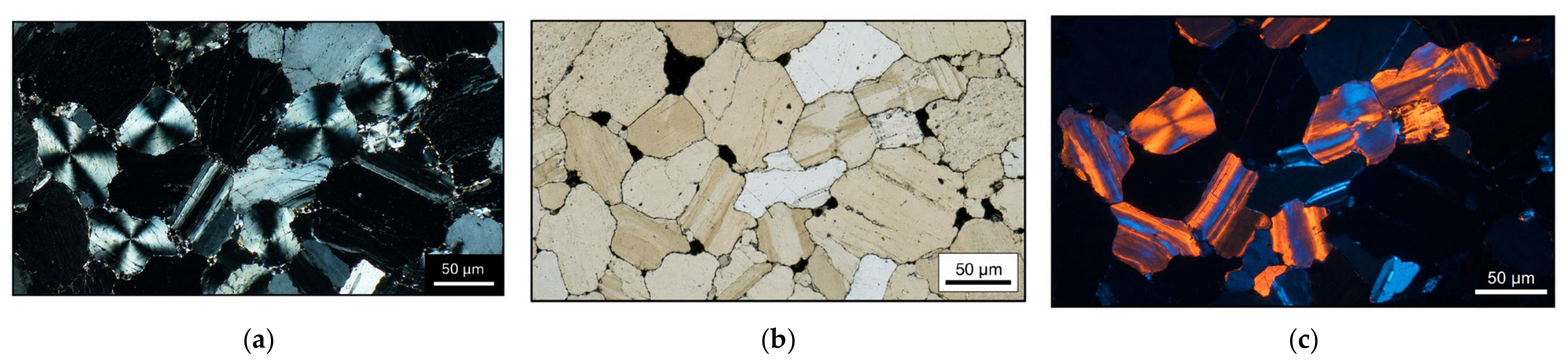
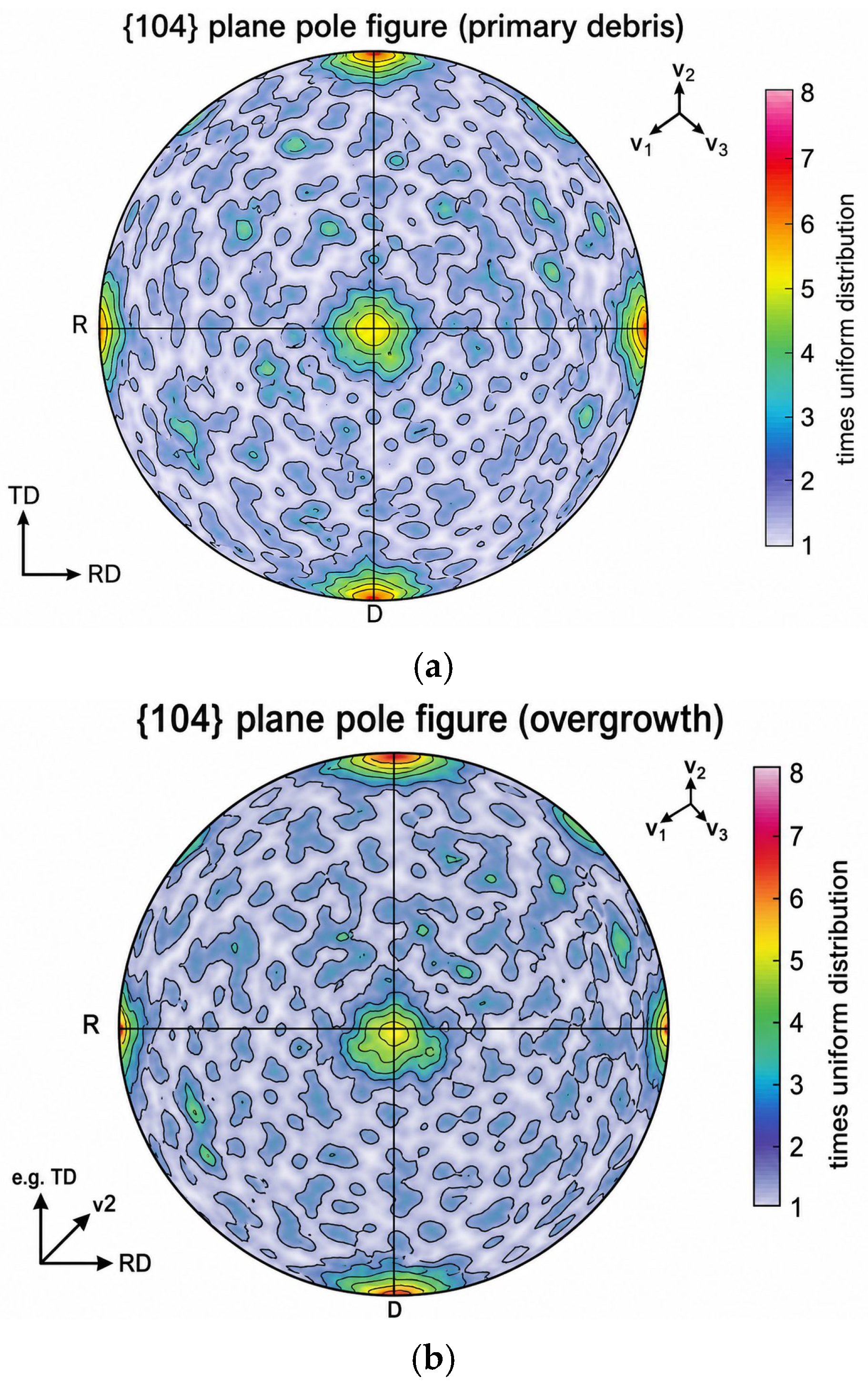
Microstructural characterization: Electron backscatter diffraction (EBSD) orientation mapping was conducted using a Zeiss Gemini 300 field-emission scanning electron microscope (Carl Zeiss AG, Inner Mongolia, China) equipped with an Oxford Symmetry EBSD detector (Oxford Instruments, Beijing, China), employing a 0.2 μm scan step. Specimens were prepared by argon ion beam polishing (Leica TIC 3X, 6 kV, 2 h duration) to remove surface-deformed material. Primary carbonate debris was systematically distinguished from newly formed calcite through assessment of spatial positioning, crystal morphology, and cathodoluminescence response. A total of 347 grain boundaries extracted from four representative specimens were quantitatively analyzed, achieving an average indexing rate of 63.4% (see Appendix A.2.1 and Table A4).
Transmission electron microscopy (TEM) observations were conducted on an FEI Tecnai G2 F20 instrument operating (Thermo Fisher Scientific, Beijing, China) at 200 kV acceleration voltage, coupled with selected-area electron diffraction (SAED) analysis. Six focused-ion-beam (FIB) prepared cross-section foils from three specimens were examined to assess lattice-scale crystallographic relationships. All six foils crossed the debris-overgrowth interface; five showed clear and interpretable SAED patterns suitable for spot-superposition assessment, while one foil was used only for bright-field interface morphology because of local thickness-related diffraction degradation (see Appendix A.2.2 and Table A5). X-ray computed tomography (Zeiss Xradia 510 Versa, 2.5 μm voxel resolution, Carl Zeiss AG, Beijing, China) was employed to reconstruct micrometer-scale three-dimensional pore-network geometries and to quantify connected macro-pore cluster volume. Because this voxel resolution cannot resolve submicrometer pores, CT data were not used to define the 100 nm harmful-pore threshold. Low-field nuclear magnetic resonance (NMR; Niumag MesoMR 23-060, Suzhou Niumag Analytical Instrument Co., Ltd., Beijing, China) was applied to obtain quantitative pore-size distributions, effective porosity, and the fraction of pores exceeding the 100 nm equivalent-diameter threshold (see Appendix B.3).
Pore solution chemistry: At initial set (~4 h post-casting), pore solutions were extracted via vacuum filtration through 0.45 μm polyethersulfone membranes from three companion specimens per pH treatment group. pH values were measured immediately upon extraction using a calibrated glass electrode referenced to buffer standards. Tailings-only control blanks (cement absent) were prepared to quantify carbonate mineral buffering capacity independently of cement hydration effects.
Heavy metal leaching assessment: Toxicity characteristic leaching procedure (TCLP) tests were conducted following Chinese standard HJ 557-2010 [31] protocol (horizontal oscillation at 30 rpm, specimen fraction < 9.5 mm, liquid-to-solid mass ratio 10:1). Elemental analysis of Zn2+, Pb2+, Cd2+, and As was performed by inductively coupled plasma mass spectrometry (ICP-MS) with three replicates per treatment group.
Carbon sequestration quantification: Net CO2 uptake was calculated according to:
C seq = 44 100 Δ m min Δ m ctrl × 10
where Δmmin and Δmctrl represent TGA mass losses (wt%) in the 600–800 °C decomposition window for mineralized and control specimens, respectively. This temperature window specifically isolates CaCO3 decomposition, avoiding overlap with CH dehydration (400–500 °C) and C-S-H dehydration (100–300 °C).


3. Results

3.1. Pore Solution Chemistry and pH Buffering Effects

Table 1 presents measured pore solution pH at initial set (approximately 4 h post-casting). Concurrent cement hydration and carbonate mineral dissolution substantially buffered the initial wide pH range spanning from 4.0 to 11.5 into a significantly narrower range of 11.2 to 12.6, representing a compression of the 7.5-unit input span to approximately 1.4 units. Tailings-only control experiments (absent cement) demonstrated that carbonate dissolution buffering was most pronounced under low nominal pH conditions: tailings equilibrated in pH 4.0 water rapidly achieved pH 7.8 ± 0.2 within 30 min, simultaneously releasing 284 ± 31 mg/L additional dissolved Ca2+ and 47 ± 8 mg/L Mg2+, consistent with acid-catalyzed dissolution of calcite and dolomite phases.
Although pore solution pH values converged substantially by the initial set point, the six nominal pH pre-conditioning treatments nevertheless created systematically distinct ionic chemical environments during the critical 0–4 h pre-set period. At low nominal pH, vigorous carbonate mineral dissolution released excess dissolved Ca2+ and Mg2+, consumed acid anions, and potentially modified cement particle surface reactivity through adsorption of residual anion species. At intermediate pH (7.0–8.5), carbonate buffering remained active but less aggressive, permitting normal hydration kinetics while maintaining adequate dissolved Ca2+ for subsequent CO2 carbonation. At high nominal pH (11.5), elevated NaOH concentration induced early aluminate phase hydration and rapid formation of ettringite and monosulfate phases, potentially consuming available portlandite (CH) and restricting later carbonation substrate availability. These ionic legacies from the pre-set period persisted into the mineralization stage and regulated subsequent CO2 carbonation behavior. Throughout this study, the notation “initial pH x.x” denotes the entire ionic pre-conditioning treatment protocol, not solely the final pore solution pH at CO2 introduction.

3.2. Strength Development as a Function of Process Parameters

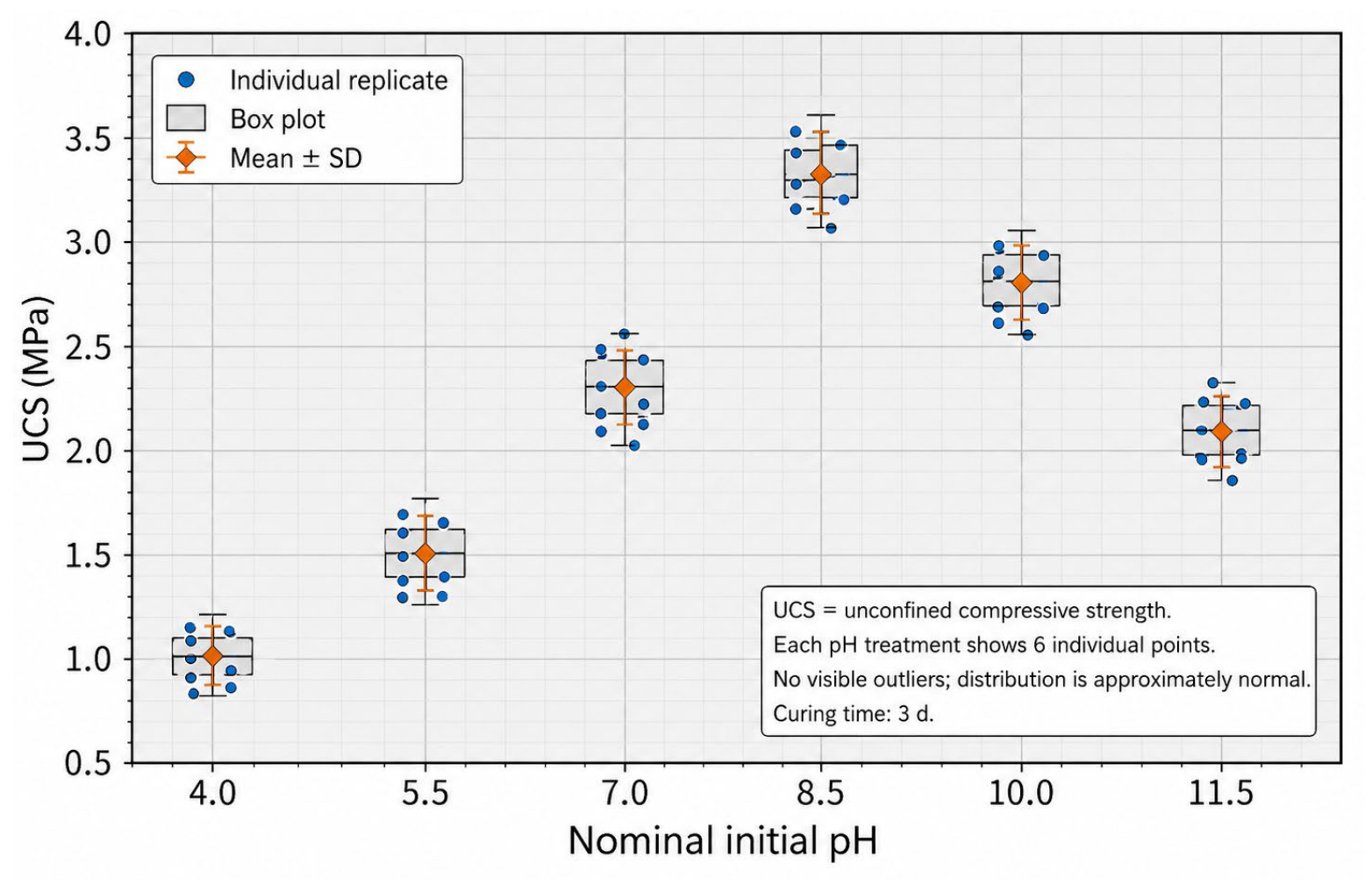
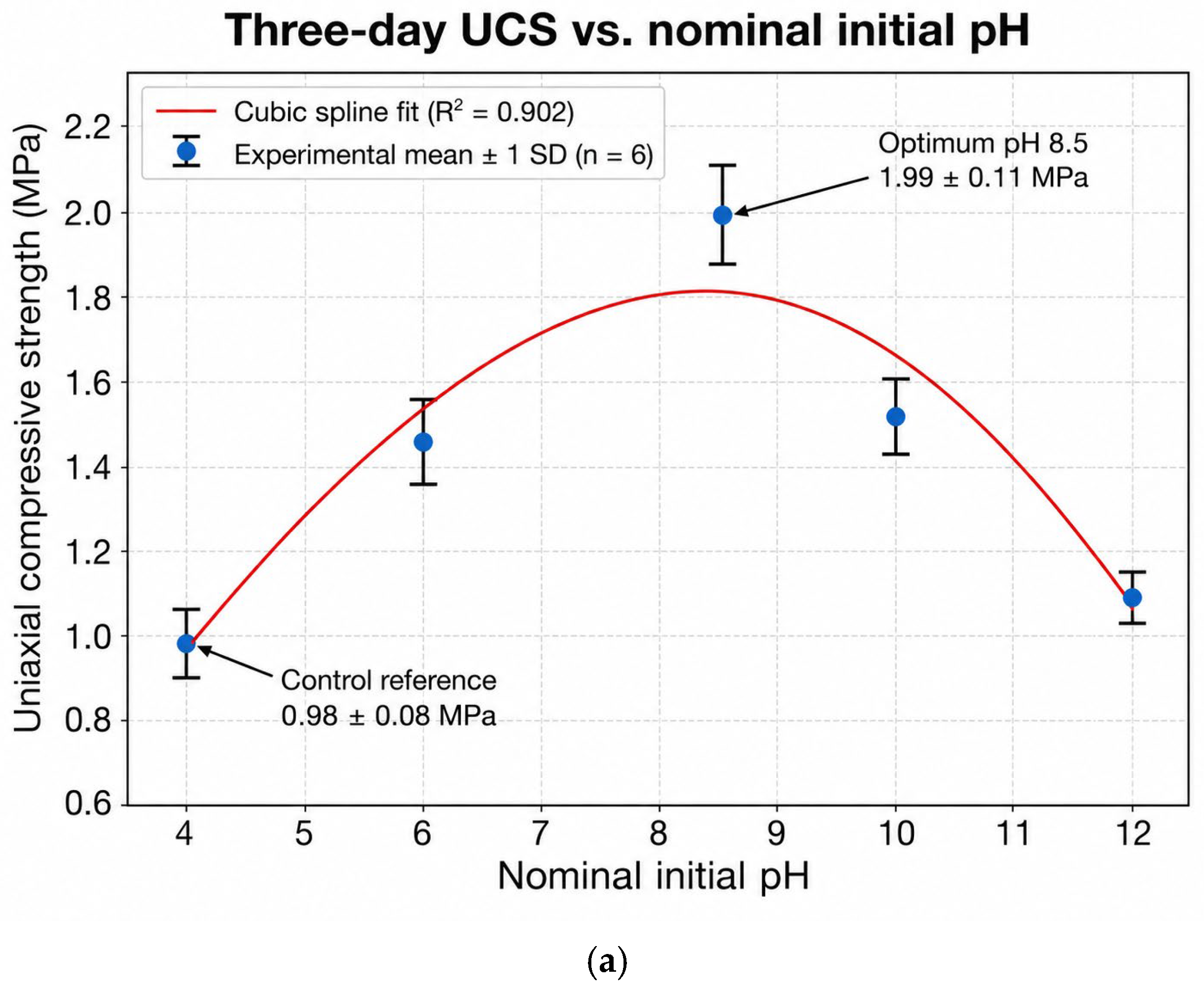
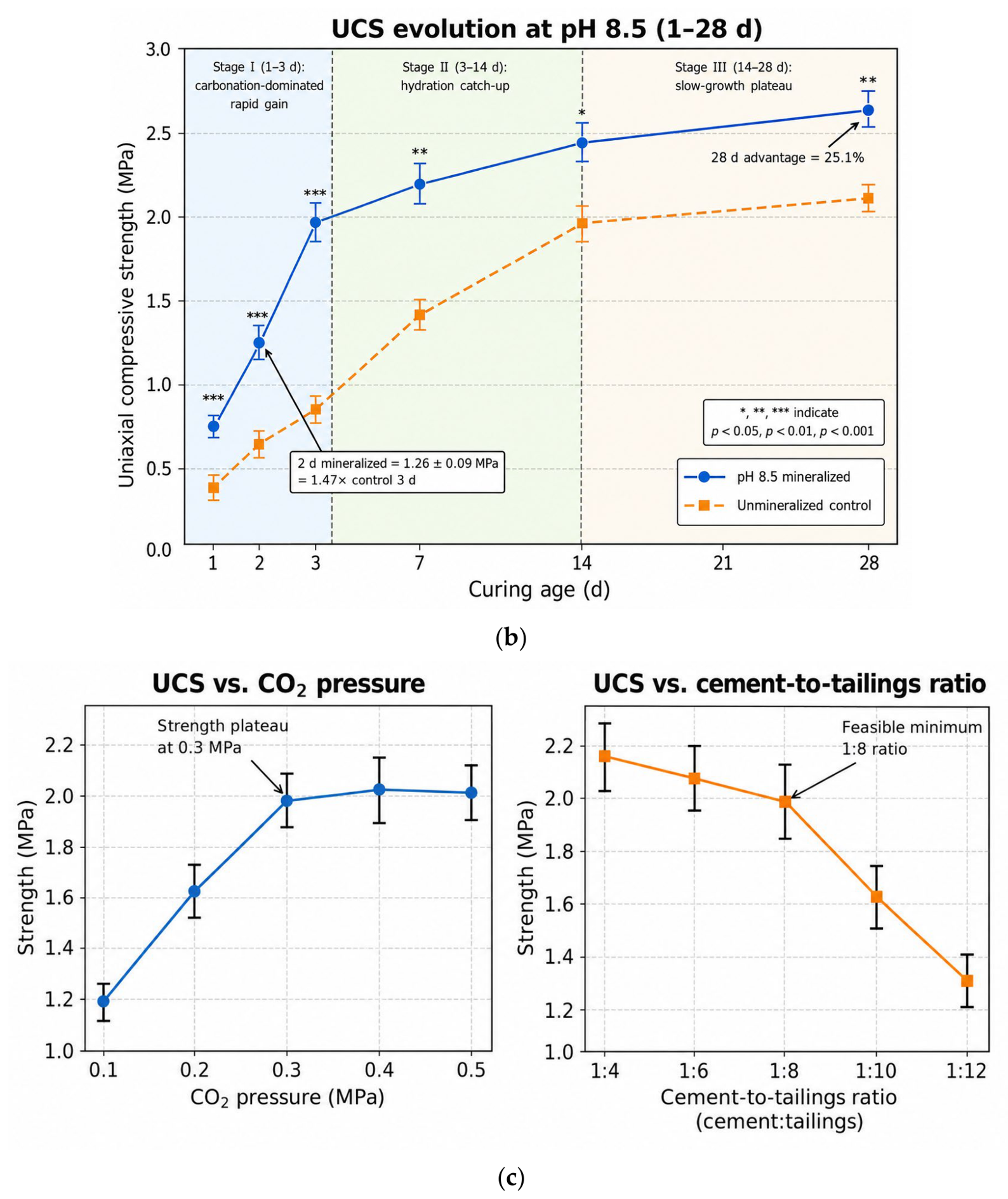
Figure 1 presents the evolution of uniaxial compressive strength as a function of both initial pH and curing age. One-way analysis of variance (ANOVA) verified that normality assumptions (Shapiro-Wilk test, p > 0.05) and homogeneity of variance assumptions (Levene’s test, p > 0.05) were satisfied. All four primary process parameters (initial pH, CO2 pressure, cement-to-tailings ratio, slurry concentration) demonstrated statistically significant effects on 3-day UCS (all η2 > 0.88, F > 42.8, p < 0.001; Table 2).
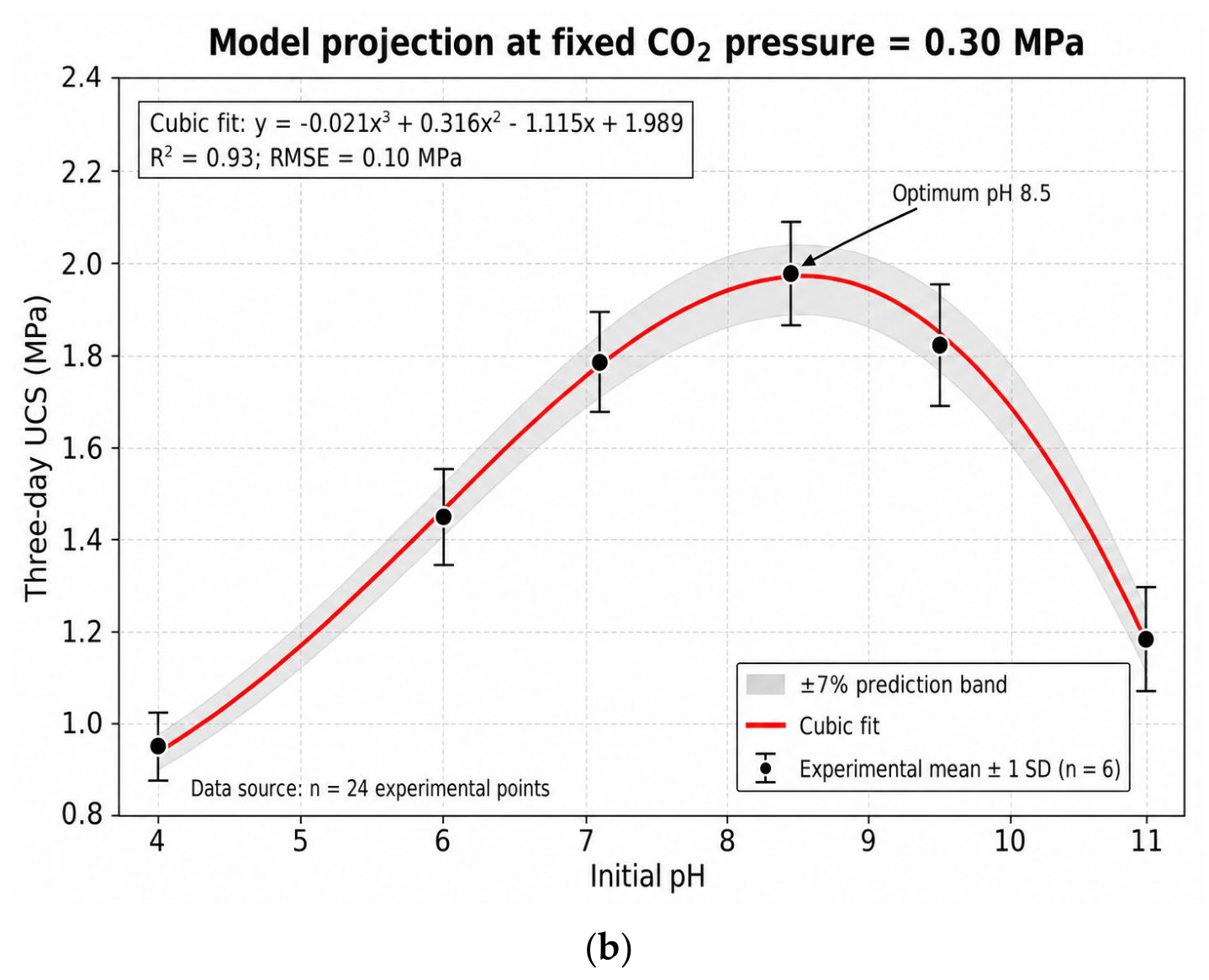
The mineralized specimen group displayed an inverted-U response to nominal initial pH, achieving maximum 3-day strength of (1.99 ± 0.11) MPa at pH 8.5 compared to (0.98 ± 0.08) MPa at pH 4.0 (Tukey HSD post-hoc test, p < 0.01).
Three distinct temporal stages of strength development were identified (Figure 1b): Stage I (1–3 d, carbonation-dominated rapid strength gain) wherein mineralized specimens achieved 2-day UCS of (1.26 ± 0.09) MPa, representing 1.47-times the unmineralized control 3-day strength of (0.86 ± 0.07) MPa (independent t-test: t(10) = 8.94, p < 0.001), effectively advancing usable structural strength by approximately one curing day; Stage II (3–14 d, hydration catch-up with narrowing mineralization advantage) wherein unmineralized controls progressively gain strength through conventional cement hydration; and Stage III (14–28 d, slow-growth plateau) wherein mineralized specimens maintained a persistent 25.1% strength advantage over controls at 28 d (p < 0.01).
CO2 partial pressure exhibited a threshold-type response function (Figure 1c): strength increased sharply from 0 to 0.3 MPa, then leveled off asymptotically beyond 0.3 MPa, suggesting saturation of mass transfer or nucleation kinetics. At the optimal 0.3 MPa pressure, cement-to-tailings ratios as lean as 1:8 maintained 3-day UCS above (1.18 ± 0.09) MPa, meeting the Pb-Zn mine design specifications of 1.0 MPa minimum. This result suggests potential feasibility under the tested 3-day UCS criterion, but it does not by itself establish full replacement of the conventional 1:4 formulation because pumpability, segregation resistance, long-term durability, and full-scale stope performance were not evaluated for the 1:8 mixture. Slurry concentration exhibited bilateral constraints: 72–74 wt% yielded peak performance, reflecting the competing effects between enhanced CO2 gas-phase diffusivity (lower solids content) and available pore space for carbonate precipitation (higher solids content).
To improve statistical transparency, the revised manuscript reports the available ANOVA summary statistics and effect sizes for the primary UCS comparisons. The assumption checks indicated that Shapiro–Wilk normality tests and Levene homogeneity tests were satisfied at p > 0.05. All four primary process parameters showed statistically significant effects on 3-day UCS, with large effect sizes (η2 = 0.880–0.969). Because the current study reports summary statistics rather than the full replicate-level UCS dataset, exact Shapiro-Wilk W statistics, Levene statistics, complete Tukey HSD matrices, and non-parametric robustness-test p-values are not reconstructed in the main text. These diagnostics should be reported from the raw replicate dataset in future fully reproducible statistical outputs (see Appendix B.4 and Figure A7).

3.3. Carbonation Products and Polymorph Distribution

Linear regression analysis across 24 mixed design combinations yielded a significant positive relationship between net CO2 sequestration and 3-day strength gain (n = 24, F = 298.6, p < 0.001, R2 = 0.93):
Δ σ 3 d = 0.027 C seq + 0.12
This group-level correlation should be interpreted cautiously because part of the high R2 derives from between-group variation in cement-to-tailings ratio rather than purely from carbonation effects. Nevertheless, the consistent positive relationship confirms that carbonation products contribute quantitatively to early strength development.
The coupled TGA-XRD evidence indicates that the pH 8.5 condition yields both peak net CO2 uptake and a calcite-dominant carbonate product assemblage. At optimal pH 8.5, net CO2 sequestration peaked at 37.1 g/kg (measured by TGA), and the calcite-dominant trend was indicated by semi-quantitative Rietveld-assisted XRD analysis. Because cemented tailings backfill is a multi-phase system with substantial diffraction peak overlap and poorly crystalline components, the XRD-derived phase contents are interpreted in a semi-quantitative manner and are used primarily to describe phase evolution trends. The stability of the refinement procedure across curing ages is supported by consistent fit indicators in the pH 8.5 series (Rwp = 8.3–9.1%, Rexp = 6.0–6.3%, GoF = 1.36–1.49), while modest variations in Rwp are expected as the phase assemblage evolves and peak overlap changes with hydration and carbonation. Conversely, at suboptimal pH 4.0, net sequestration decreased to 15.3 g/kg and vaterite content increased, consistent with precipitation of thermodynamically metastable carbonate polymorphs under less favorable saturation conditions (see Appendix A.1.1, Appendix A.1.2, Table A1, Table A2, Table A3, and Figure A12).

3.4. Microstructural Evolution and Interfacial Crystallography

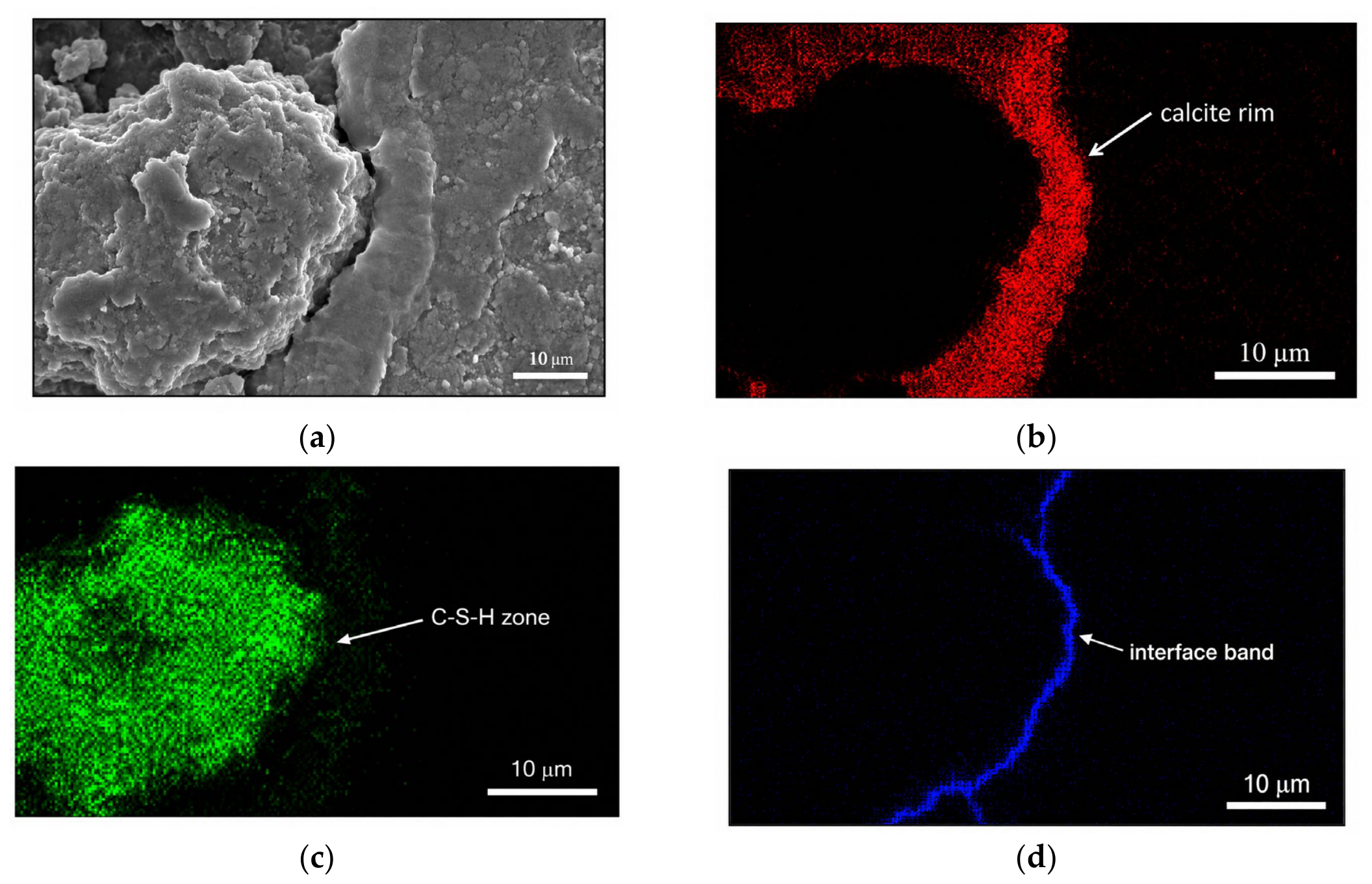
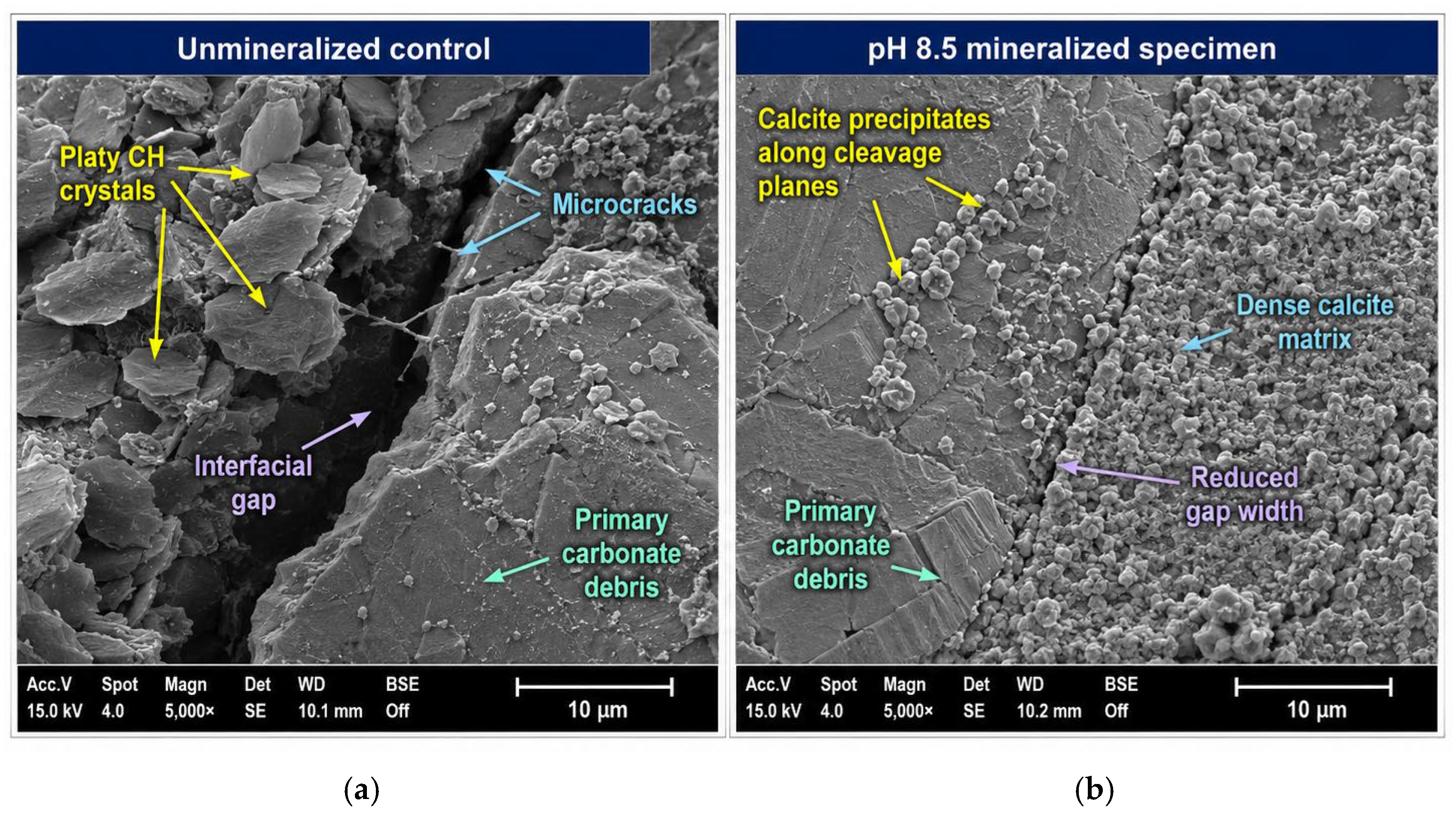
Scanning electron microscopy (SEM) micrographs (Figure 2) revealed pronounced microstructural differences between mineralized and unmineralized specimens. The unmineralized control interfacial transition zone (ITZ) was characterized by platy portlandite (CH) crystals, conspicuous void spaces, and microcracks bridging the gap between primary carbonate debris and hydration products. By contrast, pH 8.5 mineralized specimens displayed a notably densified matrix with fine-grained calcite precipitates distributed along primary carbonate debris cleavage planes and significantly reduced interfacial voids.
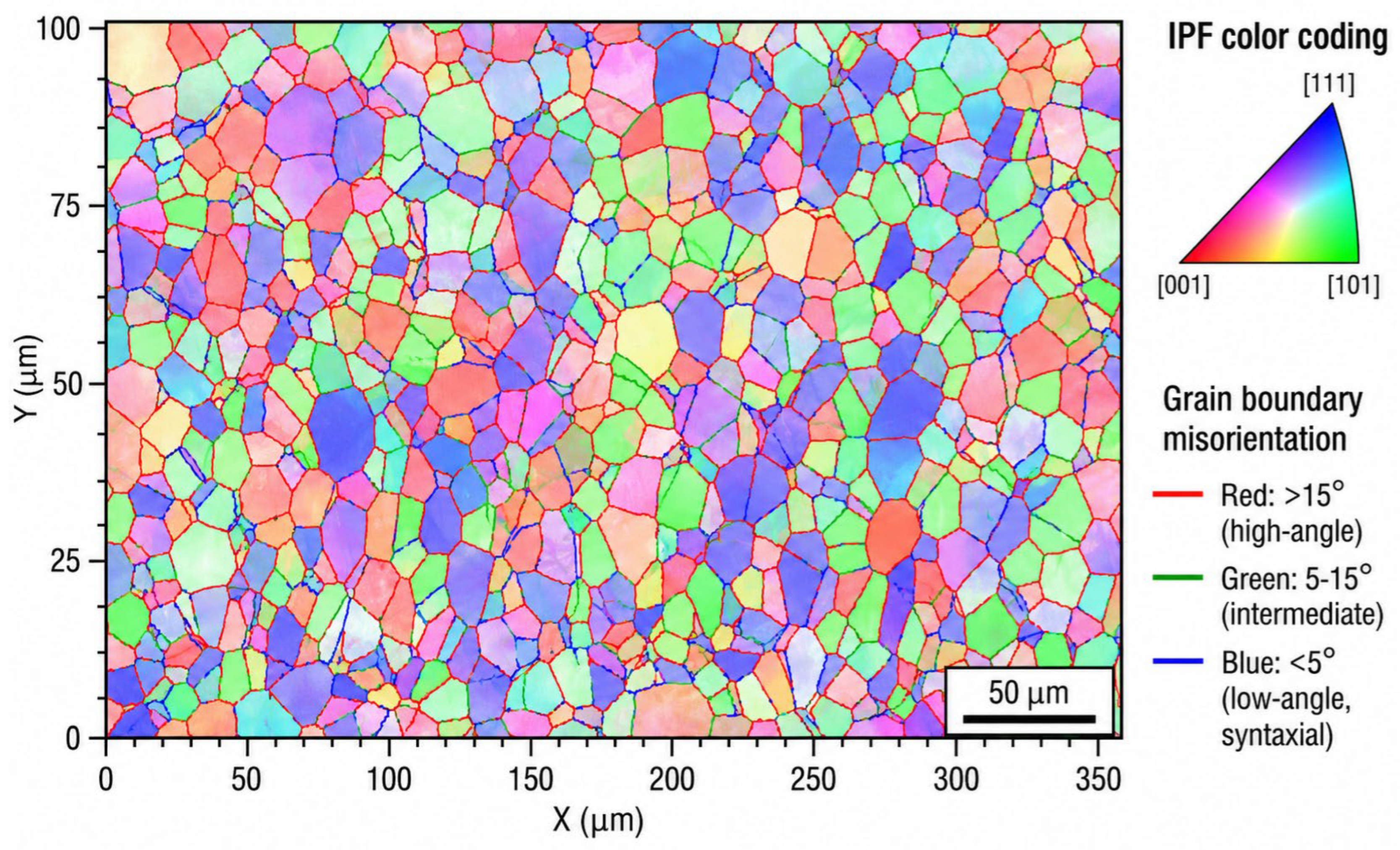
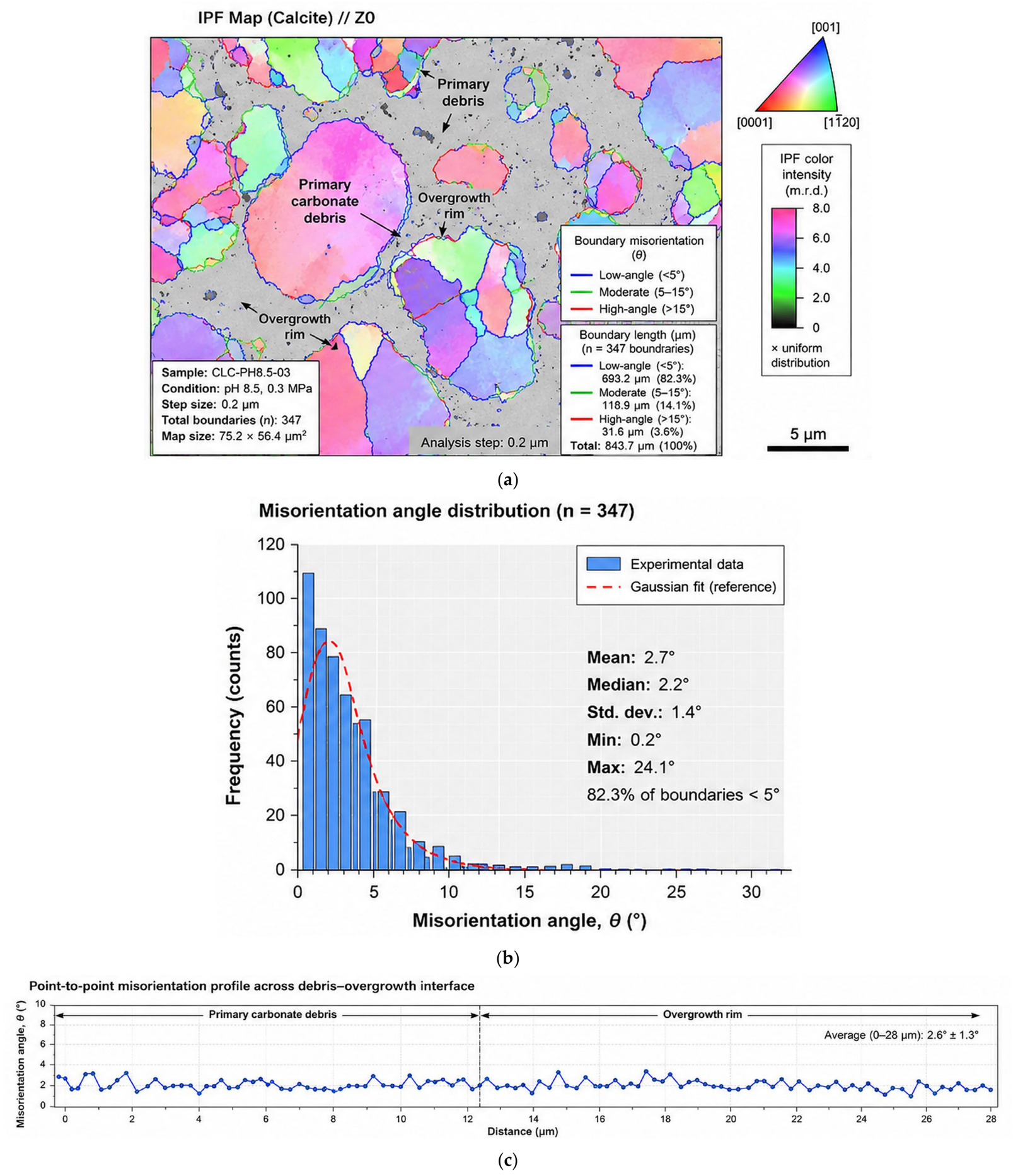
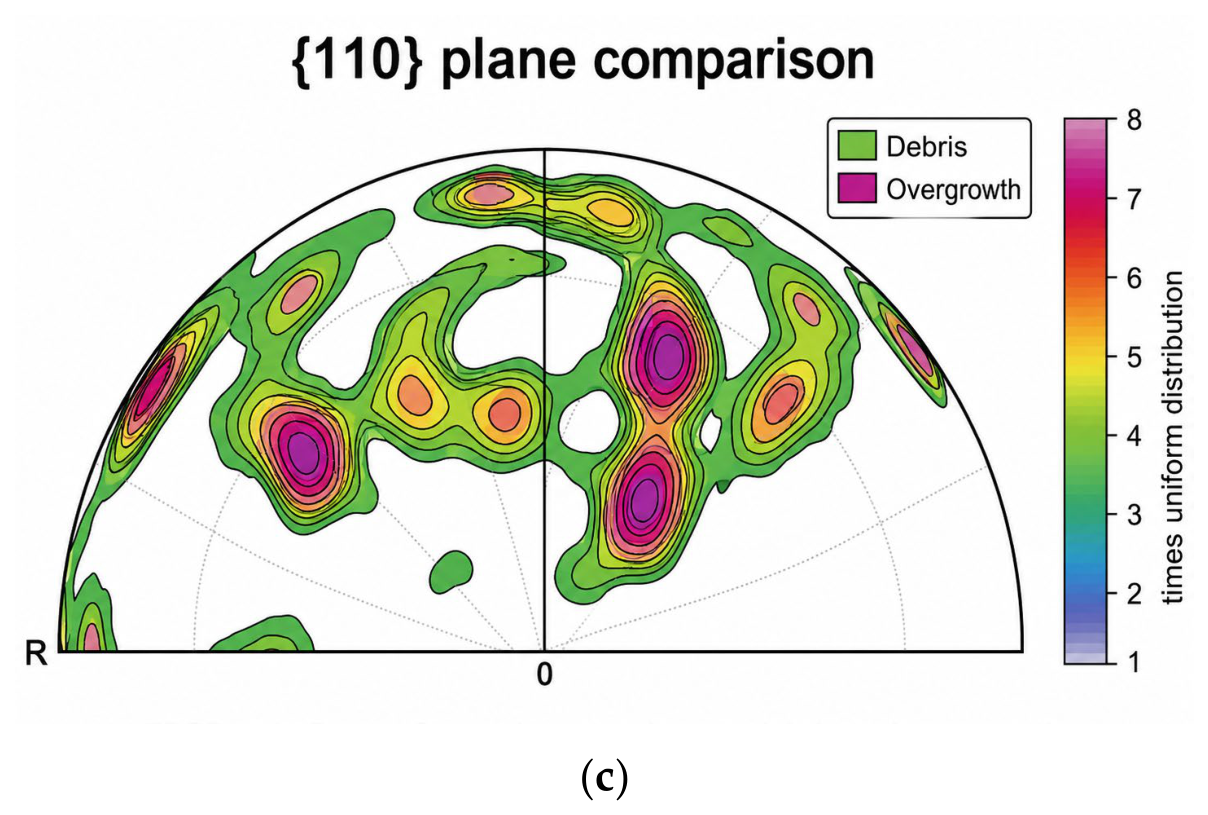
EBSD orientation mapping analysis (Figure 3) of 347 grain boundaries revealed that 82.3% exhibited misorientation angles below 5°, with a mean misorientation of 2.7 ± 1.4°. This pronounced low-angle grain boundary distribution is consistent with syntaxial overgrowth, a well-characterized phenomenon in carbonate sedimentology where calcite nucleates on crystallographically compatible detrital carbonate substrates with near-continuous lattice orientation preservation [23,24,25,26]. In the Pb-Zn mine tailings system, the abundant primary calcite and dolomite fragments served as natural syntaxial nucleation templates. Mechanical polishing artifacts were minimized through argon ion beam final finishing; topotactic dissolution-reprecipitation processes would produce distinctive compositional zoning patterns (not observed by energy-dispersive X-ray spectroscopy); and random geometric growth selection would yield uniformly distributed crystallographic orientations, contradicting the observed strongly peaked misorientation distribution.
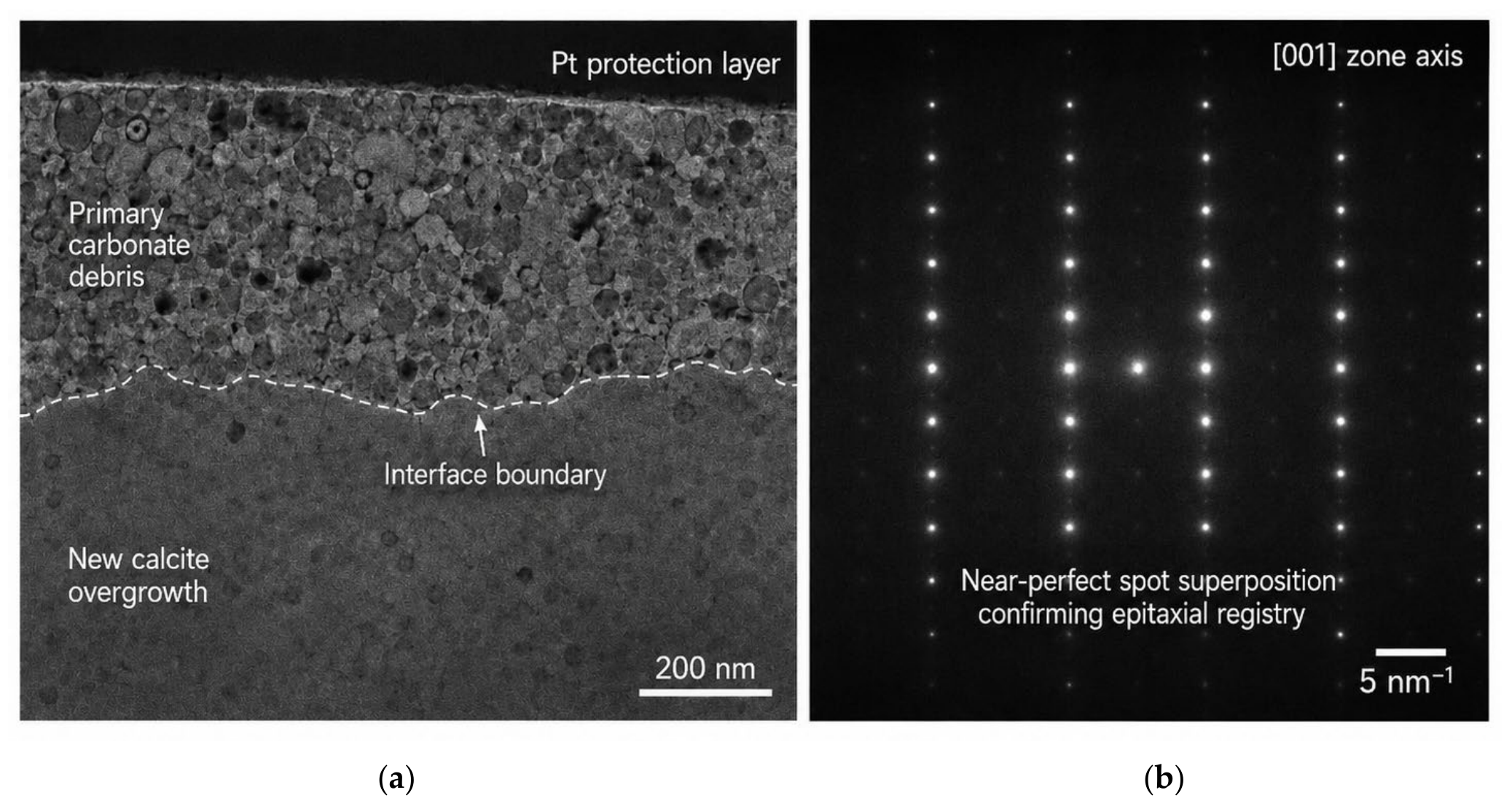
TEM-SAED analysis (Figure 4) was performed on six FIB-extracted foil sections spanning the debris-overgrowth interface. Five foils yielded interpretable SAED patterns, all of which showed highly overlapping diffraction spots from primary debris and newly formed calcite along the [001] zone axis. The remaining foil supported the same interface morphology in bright-field TEM but was not used for quantitative spot-superposition assessment.
Figure 4. TEM evidence of lattice continuity at the debris-overgrowth interface. (a) Bright-field image of a FIB-extracted foil spanning primary carbonate and new calcite, with interface boundary and Pt protection layer labeled. (b) Selected-area electron diffraction pattern at the [001] zone axis shows near-perfect spot superposition in representative interpretable foils, supporting epitaxial registry. Six foils were extracted from three specimens; five yielded interpretable SAED patterns. Scale: bright-field image 200 nm; SAED pattern 5 nm−1.
Processes 14 01907 g004
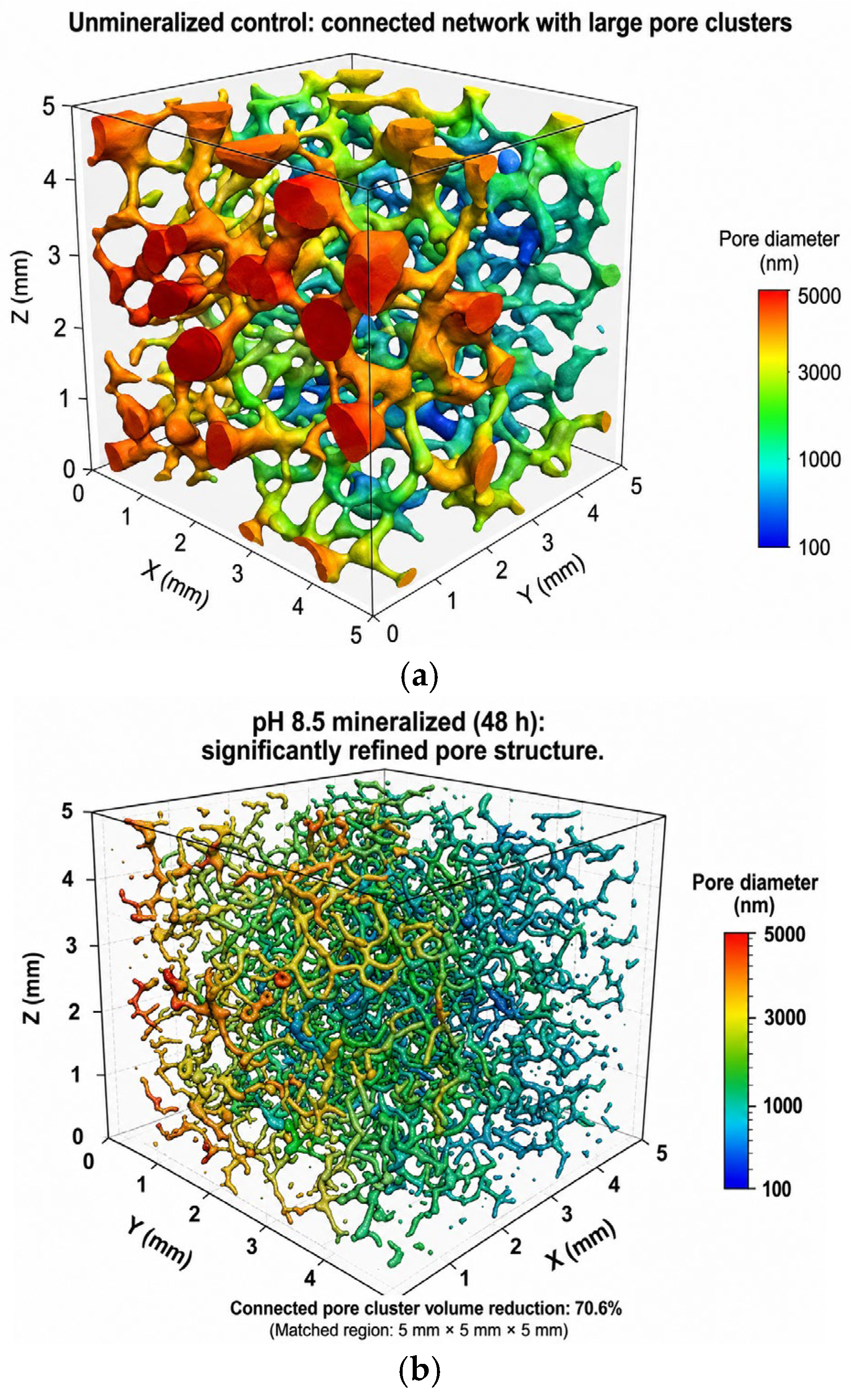
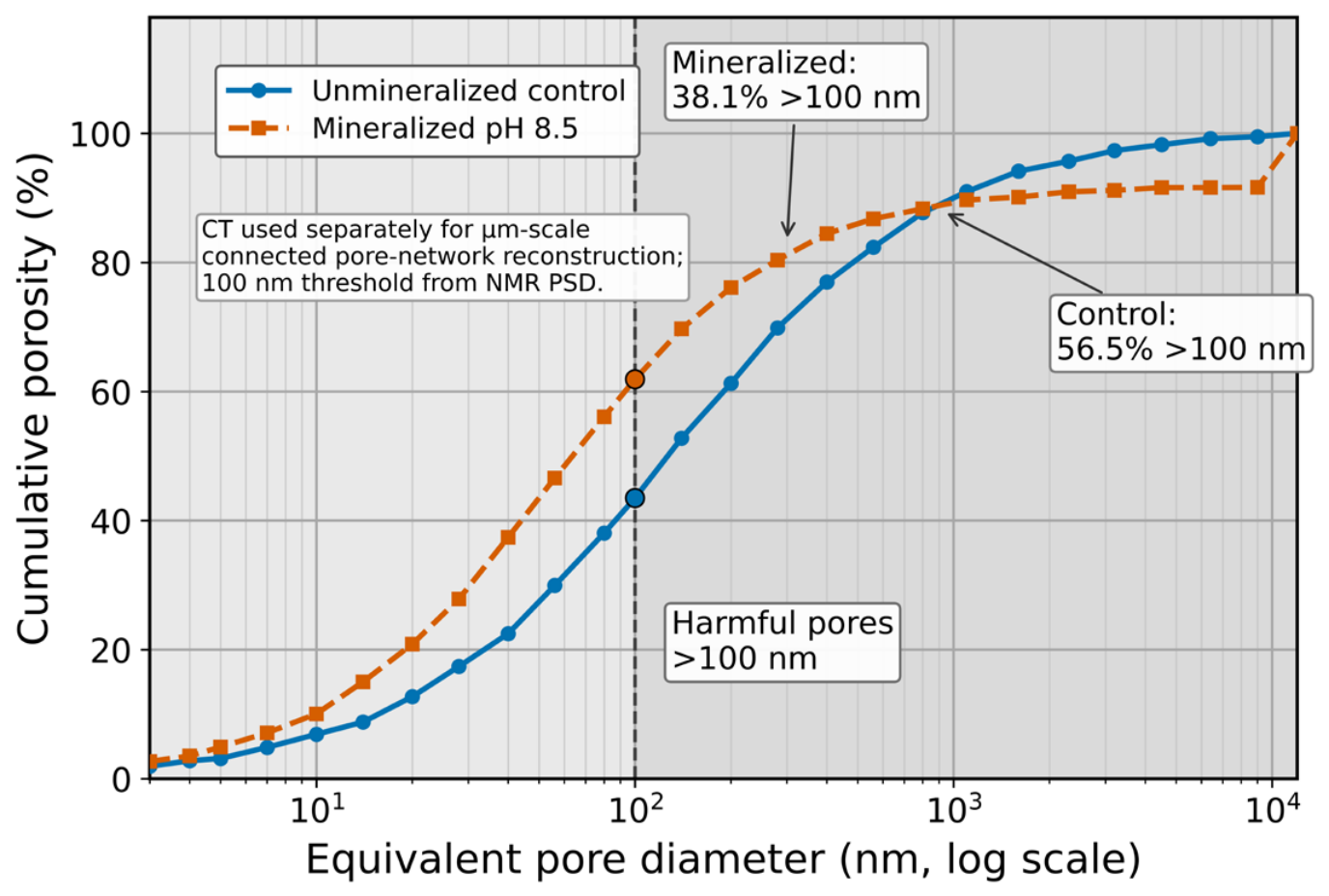
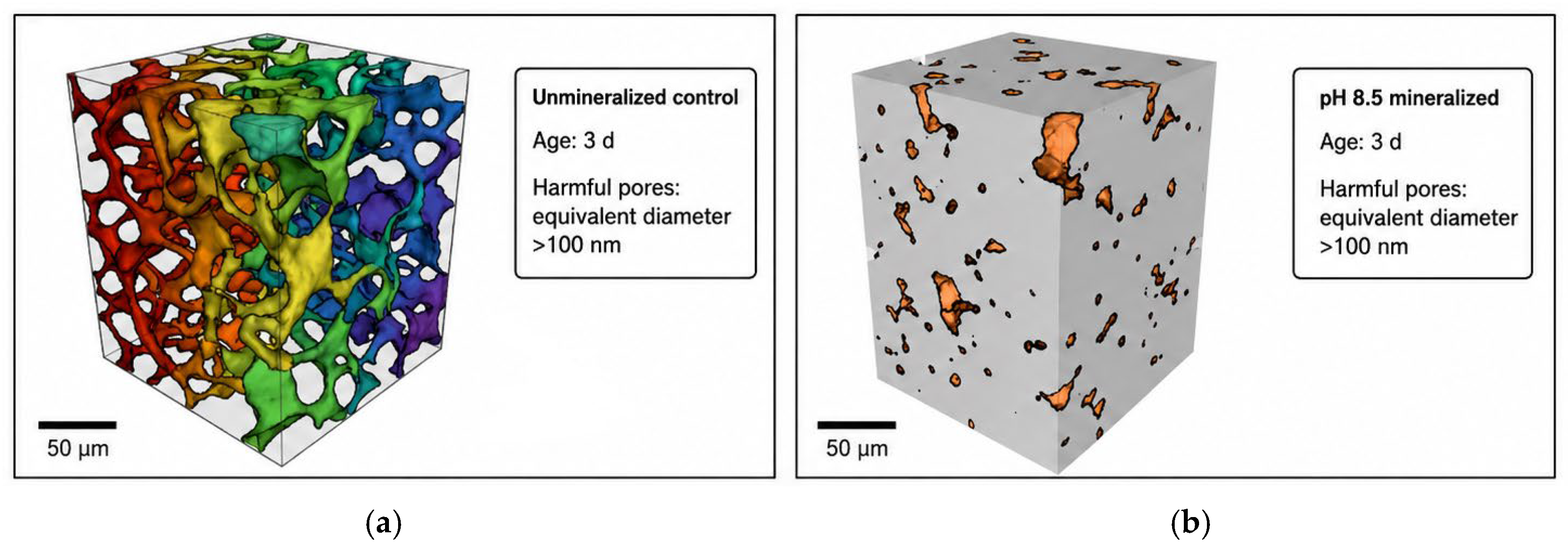
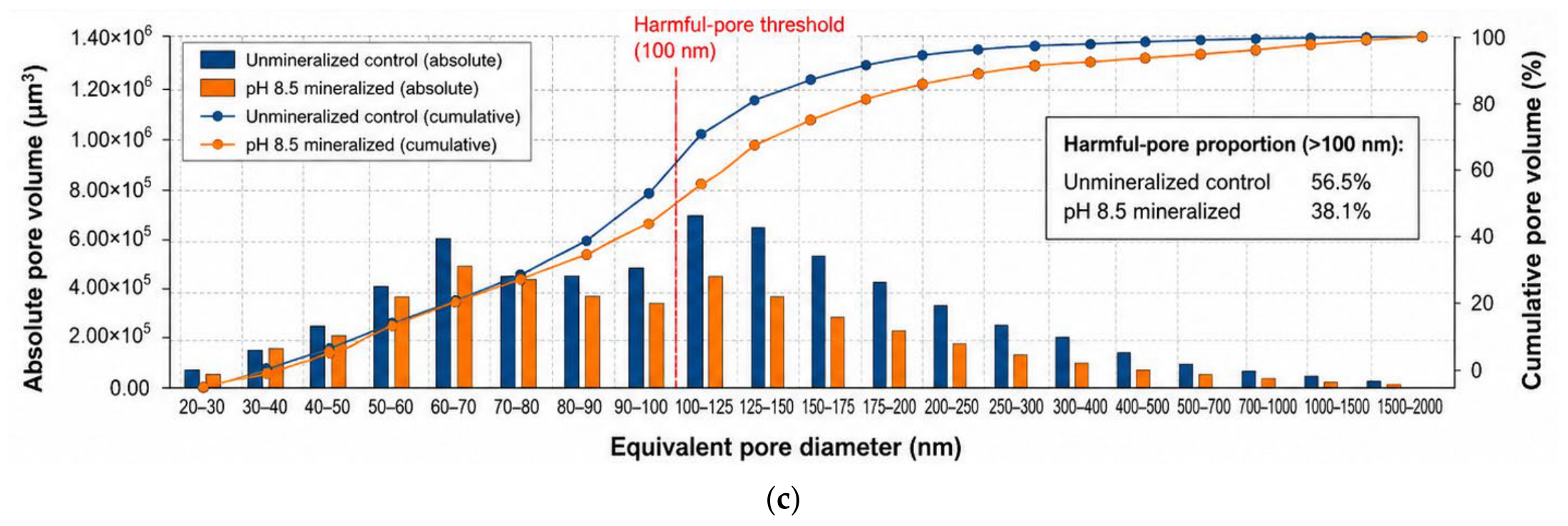
Combined CT-NMR pore characterization demonstrated substantial pore network refinement after mineralization (Figure 5) . X-ray CT analysis, limited to micrometer-scale resolution, showed that the connected pore cluster volume decreased by 70.6%, indicating disconnection of the macro-pore network. In parallel, NMR-derived pore-size distributions showed that pores exceeding the 100 nm equivalent-diameter threshold decreased from 56.5% to 38.1% of total porosity, while effective porosity decreased by 44.9%. Thus, CT was used to evaluate three-dimensional connectivity, whereas NMR was used to quantify submicrometer pore-size distribution and the harmful-pore fraction.
Figure 5. CT-NMR pore structure analysis. (a,b) X-ray CT renderings of micrometer-scale connected pore networks in control and mineralized specimens, showing reduced connected pore-cluster volume after mineralization. (c) NMR-derived pore-size distribution showing the harmful-pore threshold at 100 nm; the fraction of pores >100 nm decreased from 56.5% to 38.1%. CT voxel resolution was 2.5 μm; therefore, CT results were used for pore-network connectivity, while NMR was used for the 100 nm pore-threshold analysis.
Processes 14 01907 g005aProcesses 14 01907 g005b

3.5. Heavy Metal Leaching and Environmental Containment

Toxicity characteristic leaching test results (Table 3) documented substantial reductions in soluble heavy metals following CO2 mineralization treatment. Zn2+ concentration decreased by 67.2% (from 0.67 ± 0.08 to 0.22 ± 0.04 mg·L−1), while Pb2+ concentration decreased by 71.8% (from 0.032 ± 0.005 to 0.009 ± 0.002 mg·L−1). Cd2+ and As species were below detection limits for all treatments, consistent with their trace abundances in the tailings mineral assemblage. The measured reductions reflect chemical immobilization through direct carbonate precipitation and isomorphous substitution of metal cations into the calcite crystal lattice structure.

3.6. Field Wastewater Compatibility and Process Validation

Three distinct wastewater streams from the Pb-Zn mine circuit (Table 4) were evaluated to assess process robustness across variable hydrochemical conditions: dewatering inflow (TW-A, pH 6.48, characterized by elevated Ca2+ and Mg2+), alkaline flotation effluent (TW-B, pH 9.32, characterized by elevated Na+ concentration), and neutralized pit water (TW-C, pH 5.14, characterized by elevated Zn2+ and SO42− levels). The predictive model achieved convergence within ±7% accuracy for TW-A and TW-B treatments, with TW-B attaining the highest absolute 3-day strength of (1.91 ± 0.12) MPa and net sequestration of (34.8 ± 1.6) g/kg. Conversely, TW-C exhibited systematic model overestimation with a deviation of −27.3%, which is attributed to dual interference mechanisms: (1) colloidal Zn(OH)2 passivation of carbonate nucleation sites and (2) SO42−-induced ettringite expansion reducing effective pore space for carbonation reactions, neither of which were captured in the current model formulation.

4. Discussion

In the present study, the evidence chain was interpreted according to the inferential role and resolution limit of each characterization method. Net CO2 uptake was quantified primarily from TGA mass loss in the 600–800 °C decomposition window, whereas UCS was used as the principal performance endpoint for early-age CTB functionality. EBSD and TEM-SAED were used to evaluate crystallographic relationships at the carbonate debris-overgrowth interface and to support the proposed interfacial strengthening mechanism. CT and NMR were used complementarily to characterize pore-network refinement at micrometer and submicrometer-equivalent scales, respectively. XRD-Rietveld refinement was retained as a semi-quantitative indicator of phase-evolution trends under identical acquisition and refinement conditions; it was not used as an independent high-precision measure of absolute phase fractions because peak overlap and poorly crystalline components are unavoidable in multi-phase CTB specimens.

4.1. Mineralization Mechanism and Interfacial Transition Zone Strengthening

4.1.1. pH as a Process-Control Parameter: Ionic Pre-Conditioning and Early Hydration Dynamics

The observed inverted-U response of strength to nominal initial pH reveals a non-trivial process optimization landscape that is fundamentally distinct from simple pH-dependent equilibrium thermodynamics. The rapid convergence of pore-solution pH values (compressing the initial 7.5-unit input range to a final 1.4-unit range within 4 h) might superficially suggest that initial pH is inconsequential to downstream outcomes; however, the substantial strength differences observed between treatments (pH 8.5 versus pH 4.0: a factor of 2.0 × at 3 d curing) the strength difference between the pH 8.5 and pH 4.0 pre-conditioning treatments indicates that the ionic environment established during the 0–4 h pre-set period was strongly associated with subsequent mineralization behavior. Because constant-ionic-strength controls were not included, this association should not be interpreted as an isolated pH effect.
At low nominal pH (4.0), vigorous carbonate mineral dissolution releases excess dissolved Ca2+ and Mg2+ species, consumes acidifying anions, and potentially passivates cement grain surfaces through adsorption of anion species, which may transiently slow C3S (tricalcium silicate) hydration kinetics. At intermediate pH (7.0–8.5), carbonate buffering remains active but less aggressive, permitting normal hydration pathways while maintaining adequate dissolved Ca2+ for subsequent CO2 carbonation. At high nominal pH (11.5), excess NaOH induces early aluminate phase hydration and rapid formation of ettringite and monosulfate phases, potentially consuming available CH and restricting the reservoir of later carbonation substrate. The pH 8.5 pre-conditioning treatment may represent a favorable balance between three competing requirements: (1) sufficient Ca2+ availability and CH formation to support carbonation, (2) unimpeded cement hydration kinetics, and (3) adequate pore-fluid alkalinity to drive calcite nucleation. This mechanistic interpretation is consistent with established mineral processing principles whereby ionic strength and pH pre-treatment systematically optimize subsequent precipitation processes [15,16,17,21,22,27].

4.1.2. Syntaxial Calcite Overgrowth: Physical Chemistry and Kinetic Foundation

The EBSD-documented syntaxial overgrowth phenomenon (82.3% of grain boundaries exhibiting < 5° misorientation) represents a mechanistic advance distinct from conventional CO2 carbonation in precast concrete systems, where precipitated calcite typically occupies pre-existing void space without establishing crystallographic registry to substrate minerals.
In carbonate sedimentology literature, syntaxial cementation occurs when calcite nucleates on detrital carbonate grains through achievement of crystallographic compatibility and minimization of interfacial energy [23,24]. U-Pb isotopic dating and trace element zonation studies further document that calcite overgrowth can evolve through complex diagenetic sequences over geological timescales [25]. The present investigation demonstrates acceleration of this mechanism to operational timescales (hours) under modest CO2 pressures (0.3 MPa), operating on a cementitious mineral matrix rather than a detrital sedimentary framework.
EBSD-supported syntaxial overgrowth, coupled with TEM-SAED evidence of lattice continuity, establishes that newly formed calcite propagates with near-continuous crystallographic orientation relative to primary carbonate grains. Surface interactions of divalent metal cations (particularly Zn2+, Pb2+) with calcite further influence layer growth kinetics and impurity incorporation, which explains why carbonate-rich tailings provide energetically favorable substrates for epitaxial nucleation [26].
From classical nucleation theory, the critical nucleus radius for heterogeneous nucleation is governed by:
r * = 2 σ V m R T ln ( S I )
where σ is interfacial surface energy, Vm is molar volume of the precipitate, R is the gas constant, and SI is the saturation index. At pH 8.5 where carbonate saturation index reaches maximum values, r* is minimized, rendering nucleation on existing carbonate surfaces (low-energy sites) overwhelmingly thermodynamically favorable compared to homogeneous nucleation in bulk pore fluid. This explains the observed pH 8.5 optimality: this condition maximizes the thermodynamic driving force for epitaxial growth while maintaining adequate CO2 availability and cement hydration integrity.

4.1.3. C-S-H Selective Preservation: Framework Retention Versus Denaturation

Previous investigations on hydrated cement systems and CO2 carbonation curing consistently show that portlandite (CH) carbonates rapidly and nearly completely, whereas calcium silicate hydrate (C-S-H) undergoes slower decalcification while often retaining substantial silicate framework integrity [19,21,22]. CO2 treatment under appropriate conditions can further accelerate early cement hydration [16,17,22]. The observed persistent 28-day strength advantage in the present work (25% above unmineralized controls) is therefore more consistent with selective CH carbonation and interfacial densification rather than wholesale C-S-H collapse, which would predictably result in strength decrease or plateau at early ages.
Thermogravimetric analysis supports this interpretation: CH-phase dehydration (400–500 °C window) decreased markedly from 3.74 wt% (control) to 1.42 wt% (mineralized), indicating approximately 62% conversion of portlandite. Simultaneously, CaCO3 decomposition (600–800 °C window) increased from 5.83 wt% to 14.27 wt%, confirming substantial new carbonate formation of 37.1 g/kg net sequestration. The continued strength advantage at 28 d suggests that the carbonate product did not simply occupy pre-existing void space but instead reinforced the interfacial zone through syntaxial overgrowth and progressive pore refinement. Direct 29Si magic-angle spinning nuclear magnetic resonance (MAS-NMR) analysis was not conducted, representing a methodological limitation; future investigations should employ this technique to quantify Ca/Si ratio evolution and definitively establish C-S-H preservation extent.
This finding aligns with the hierarchical reactivity ordering established in carbonate systems: portlandite undergoes rapid and complete carbonation, while C-S-H undergoes slower decalcification with systematic preservation of the silicate polymeric framework structure. The newly formed calcite products, particularly the syntaxial overgrowth verified through EBSD and TEM analysis, further reinforce the interfacial zone, mechanistically explaining the persistent long-term strength advantage.

4.1.4. Reliability and Reporting Scope of XRD Rietveld Refinement in This Multi-Phase System

First, because the investigated specimens contain multiple crystalline phases together with poorly crystalline components, the Rietveld-derived phase contents are reported and interpreted as semi-quantitative and are used to support within-study comparative trends under consistent measurement and refinement settings rather than high-precision absolute quantification. Second, “unreacted cement clinker” is not treated as an independent crystalline phase; it is reported as a composite term reflecting unresolved contributions from multiple clinker minerals with overlapping reflections, which prevents reliable independent quantification of individual clinker components under the present laboratory XRD conditions. Third, refinement robustness across the pH 8.5 curing series is demonstrated by stable fit indicators (Rwp = 8.3–9.1%, Rexp = 6.0–6.3%, GoF = 1.36–1.49) and consistent convergence (relative residual < 10−6), indicating that the refinement protocol remains mathematically well-conditioned despite curing-age-dependent changes in peak overlap and background contributions. Finally, lattice parameters are not reported because sample-specific unit-cell refinement for individual phases is not reliably supported in this multi-phase assemblage under conventional laboratory XRD resolution, and reporting such values would create an unjustified impression of precision. These clarifications do not alter the mechanistic conclusions of this study, because the core evidence chain is anchored by TGA-based net CO2 sequestration quantification, statistically validated strength enhancement, and direct crystallographic interface evidence from EBSD and TEM.

4.2. Process Dynamics, Kinetic Modeling, and Industrial Wastewater Chemistry

4.2.1. Shrinking-Core Model Formulation: Mass Transfer Resistance and Nominal-pH-Dependent Correction Terms

The shrinking-core reaction framework assumes that CO2 must diffuse progressively through a thickening CaCO3 product layer to reach unreacted substrate (portlandite). The pH-dependent correction functions quantitatively encode the critical process observations regarding substrate availability and effective diffusivity variation.
The carbonation front advancement was modeled using established shrinking-core theory [28,29]:
d = 2 D e , 0 , f 2 ( x ) , P K H , t ρ s , 0 , f 1 ( x )
where d is the mineralization depth penetration (m), x is the initial mixing water pH, De,0 = 4.52 × 10⁻⁸ m2/s represents the baseline effective diffusion coefficient at the optimal pH 8.5, P is the CO2 partial pressure (Pa), KH = 2.94 × 10³ Pa·m3/mol is Henry’s constant at 20 °C, ρs,0 = 3240 mol/m3 is the baseline concentration of carbonizable substrate (CH-based), and t is curing time (s).
The pH correction functions are:
f 1 ( x ) = 0.354 + 0.076 x , 4.0 x 8.5 0.43 + 0.357 x 0.022 x 2 , 8.5 < x 11.5
f 2 ( x ) = exp [ 0.18 ( x 8.5 ) 2 ]
The piecewise linear-quadratic form of f1(x) reflects asymmetric carbonizable substrate availability across the pH spectrum: below pH 8.5, increasing pH linearly enhances available CH through improved hydration efficiency; above pH 8.5, premature surface densification and phase precipitation progressively limit CO2 penetration depth, producing the observed quadratic decline. The Gaussian functional form of f2(x) captures the experimental observation that effective diffusivity peaks near pH 8.5, where the predominantly well-ordered calcite carbonation products maintain connected pore pathways for continued gas transport. Both correction functions equal unity at x = 8.5, designating this pH as the reference normalization point. The total fitted parameter count is six, calibrated against thirty experimental data points (five pH levels × six curing ages); this 1:5 parameter-to-data ratio denotes the model as semi-empirical [3,28,29].

4.2.2. Process Window Mapping and Design Space Definition

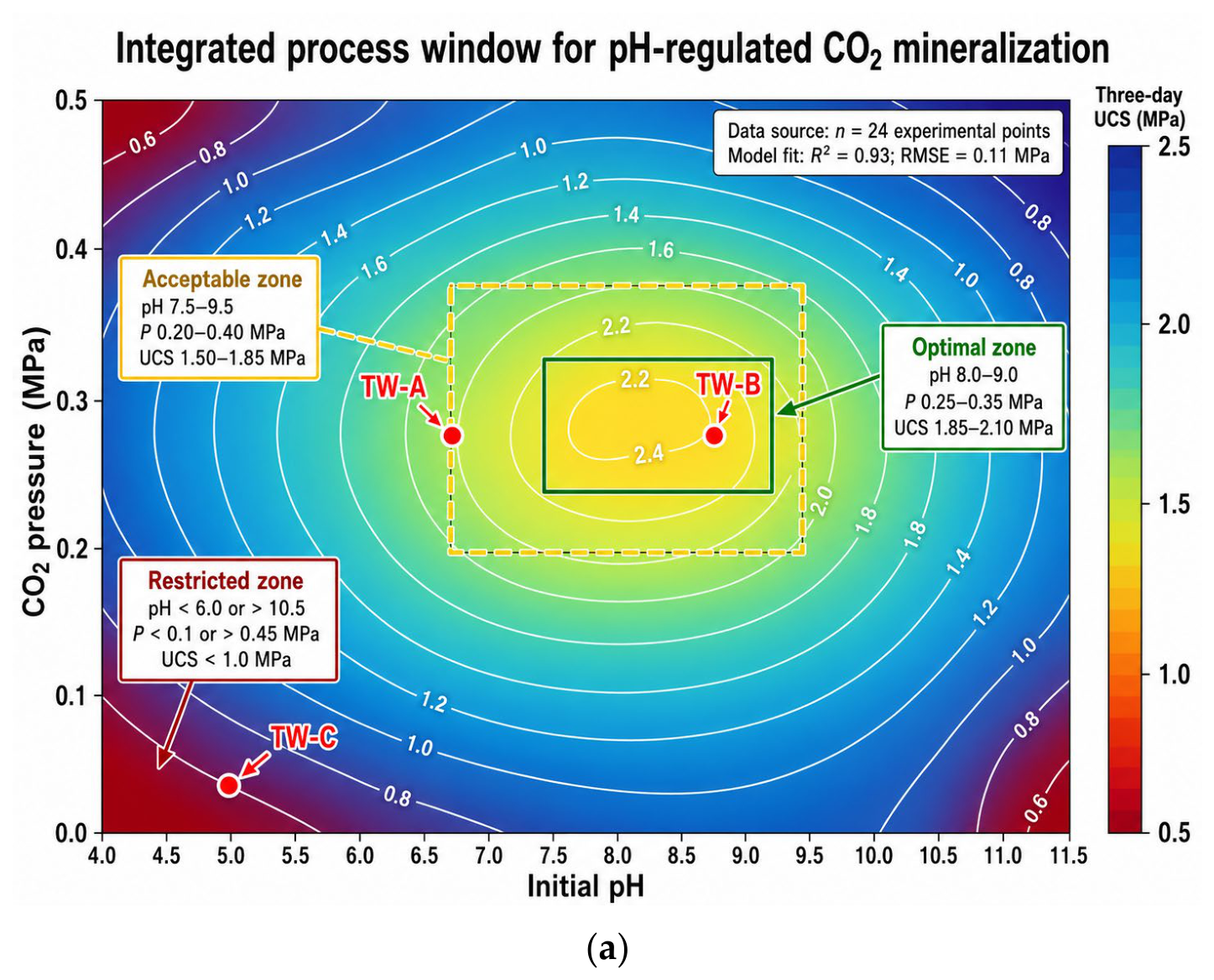
To support preliminary process screening, a two-dimensional process-guidance map was constructed from the available experimental dataset. Figure 6 presents a 2D contour map with initial pH and CO2 pressure as the primary variables and 3-day UCS as the response, while the other parameters were fixed at the baseline condition (cement-to-tailings 1:6, slurry 72 wt%, curing 48 h). Because the experimental design was based on OFAT screening rather than a full factorial design, this map should be interpreted as a preliminary guidance framework rather than a fully optimized design space.
Three operational zones are identified in Figure 6: Optimal zone (green-blue, pH 8.0–9.0, P 0.25–0.35 MPa, UCS 1.85–2.10 MPa) represents the primary deployment target. Acceptable zone (yellow, pH 7.5–9.5, P 0.2–0.4 MPa, UCS 1.50–1.85 MPa) represents operational tolerance within ±10% accuracy. Restricted zone (red, pH < 6.0 or > 10.5, P < 0.1 or >0.45 MPa, UCS < 1.0 MPa) requires pre-treatment before use.
Field wastewater locations in Figure 6 show that TW-A (pH 6.48) lies below the nominal acceptable pH window but remains conditionally applicable because the validation experiment showed acceptable prediction accuracy after carbonate buffering. TW-B (pH 9.32) lies within the acceptable zone and close to the upper boundary of the optimal pH window; although it is not strictly inside the pH 8.0–9.0 optimal interval, it produced the best field-water performance and, therefore, represents the most favorable tested wastewater source. TW-C (pH 5.14) falls in the restricted zone and requires pH adjustment to at least 7.0 before mineralization treatment.

4.2.3. Porosity-Strength Coupling Framework

Mineralization depth was converted into composite specimen strength predictions through a three-step hierarchical framework. First, the mineralized shell area fraction was derived from geometric principles. Second, local porosity reduction was linked to local sequestration through an exponential relationship calibrated from NMR and TGA measurements. Third, the Ryshkewitch empirical equation was applied to relate porosity to uniaxial strength. This comprehensive formulation provides a complete, reproducible prediction pathway from initial pH, CO2 pressure, and mineralization time to composite uniaxial compressive strength.
Step 1: Geometric shell fraction calculation. For a cylindrical specimen of radius R with radial mineralization penetration depth d, the mineralized shell area fraction is:
f shell = 1 R d R 2
Step 2: Local porosity-sequestration coupling. The porosity of the mineralized zone (nmin) was related to baseline unmineralized porosity (n0 = 0.342, from NMR measurements on unmineralized the Pb-Zn mine CTB specimens) through:
n min = n 0 exp α C seq , local
The coupling coefficient α was calibrated from NMR porosity measurements on mechanically sliced specimens. Four representative mineralized specimens (initial pH 8.5, 0.3 MPa, cement-to-tailings 1:6, 72 wt% solids, 3-day age) were sectioned into five millimeter-thick transverse discs at five radial positions (0–5, 5–10, 10–15, 15–20, and 20–25 mm from the specimen surface), yielding twenty independent data points. NMR porosity was directly measured on each disc fragment, while local Cseq was estimated from TGA analysis of corresponding material. Exponential regression analysis of this calibration dataset yielded α = 0.018 ± 0.003 kg/g (R2 = 0.91, RMSE = 0.014).
Step 3: Composite strength prediction via Ryshkewitch relationship. The Ryshkewitch empirical equation establishes a widely applied power-law relationship between porosity and uniaxial compressive strength [32]:
σ = σ 0 exp ( b , n )
where σ0 = 8.7 MPa represents the extrapolated zero-porosity strength and b = 4.2 is the fitted porosity sensitivity coefficient. These parameters were determined through least-squares regression of eighteen the Pb-Zn mine CTB specimens spanning cement-to-tailings ratios from 1:4 to 1:10 (R2 = 0.89). The composite UCS of a partially mineralized specimen was calculated as the area-weighted harmonic average under the iso-strain assumption applicable to axial compression of concentric cylindrical shells:
σ comp = f shell , σ 0 exp ( b , n min ) + ( 1 f shell ) , σ 0 exp ( b , n 0 )

4.2.4. Calibration and Internal Validation

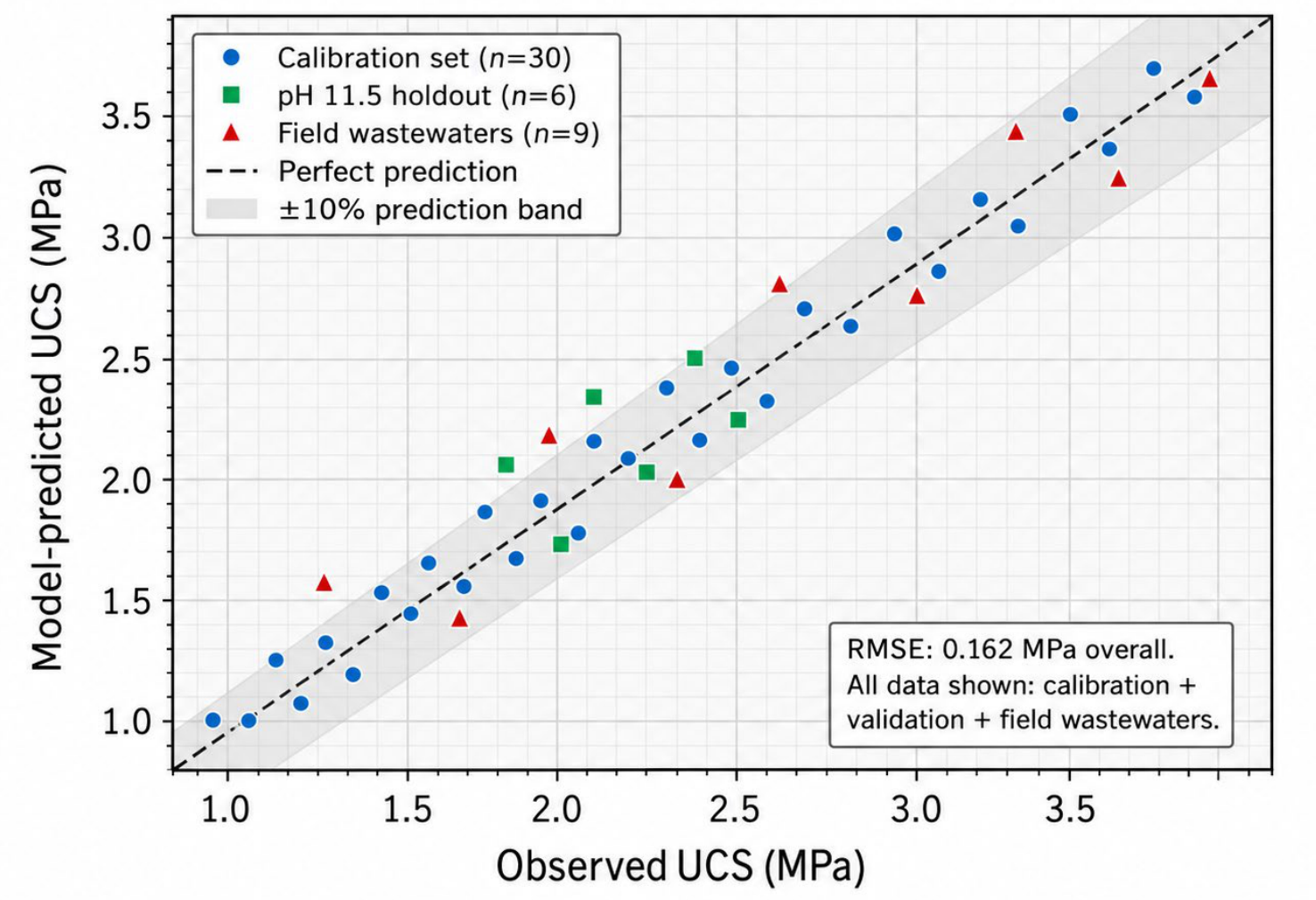
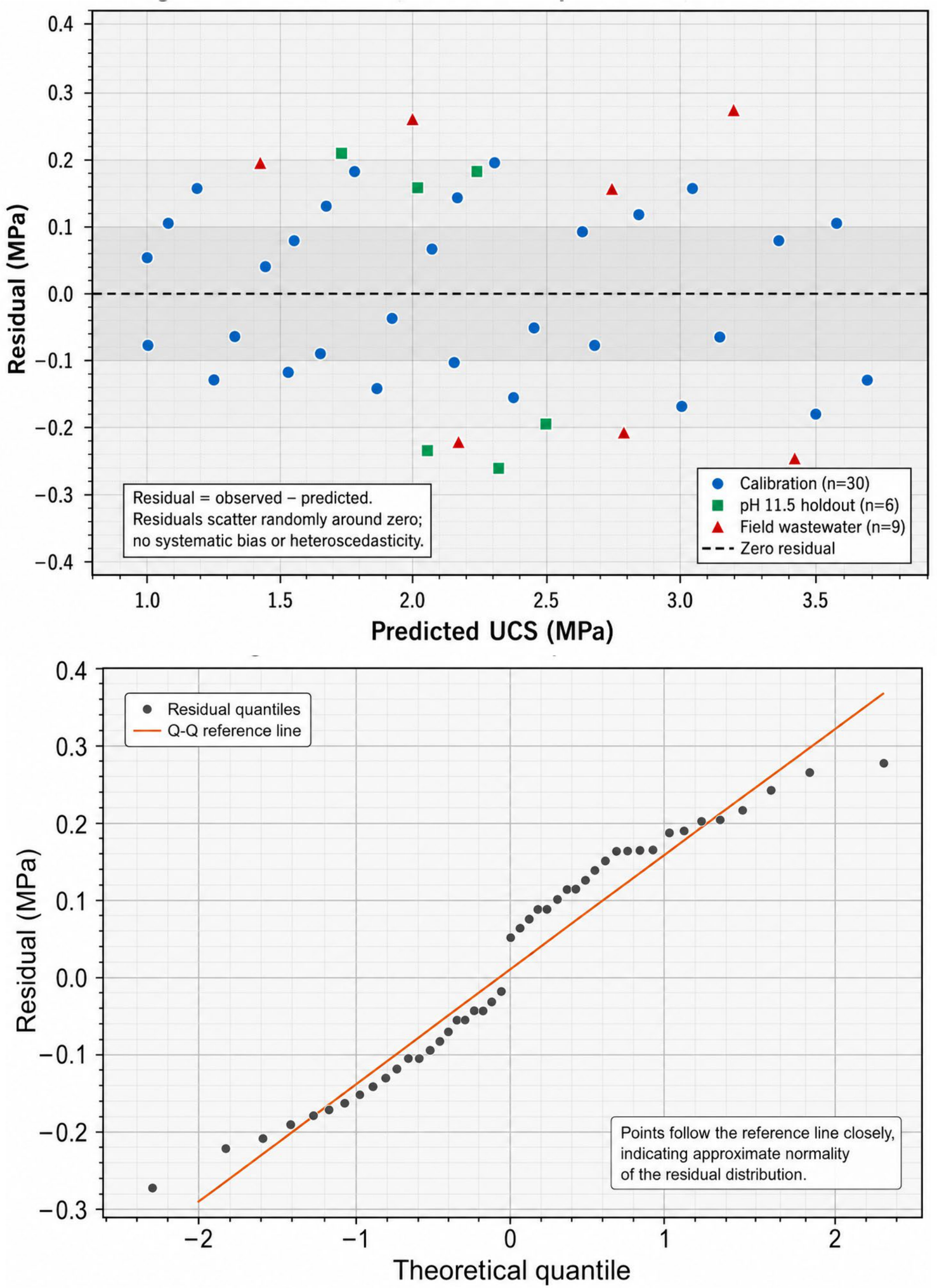
The model calibration dataset comprised thirty experimental data points spanning initial pH from 4.0 to 10.0, with pH 11.5 reserved as a holdout test set to evaluate interpolation capability. Calibration residuals were constrained to ±8.2%; the pH 11.5 holdout test set exhibited a maximum deviation of 9.6%, demonstrating adequate generalization. True external validation was conducted using three Pb-Zn mine site wastewaters (TW-A, TW-B, TW-C). The model predictions for TW-A and TW-B were within ±7% of the measured 3-day UCS, indicating acceptable performance for carbonate-buffered and moderately alkaline waters. In contrast, TW-C (pH 5.14, sulfate- and Zn-rich) showed a −27.3% deviation, demonstrating that acidic and sulfate-rich waters fall outside the reliable model domain unless pre-treatment is applied. Therefore, the ±7% accuracy should be interpreted as valid only for water chemistries comparable to TW-A and TW-B, not as a universal prediction accuracy for all mine wastewaters (see Appendix A.3.1, Appendix A.3.2, Table A6, Table A7, Appendix B.5, Figure A8, and Figure A9).
4.2.5. Process Parameter Sensitivity Analysis
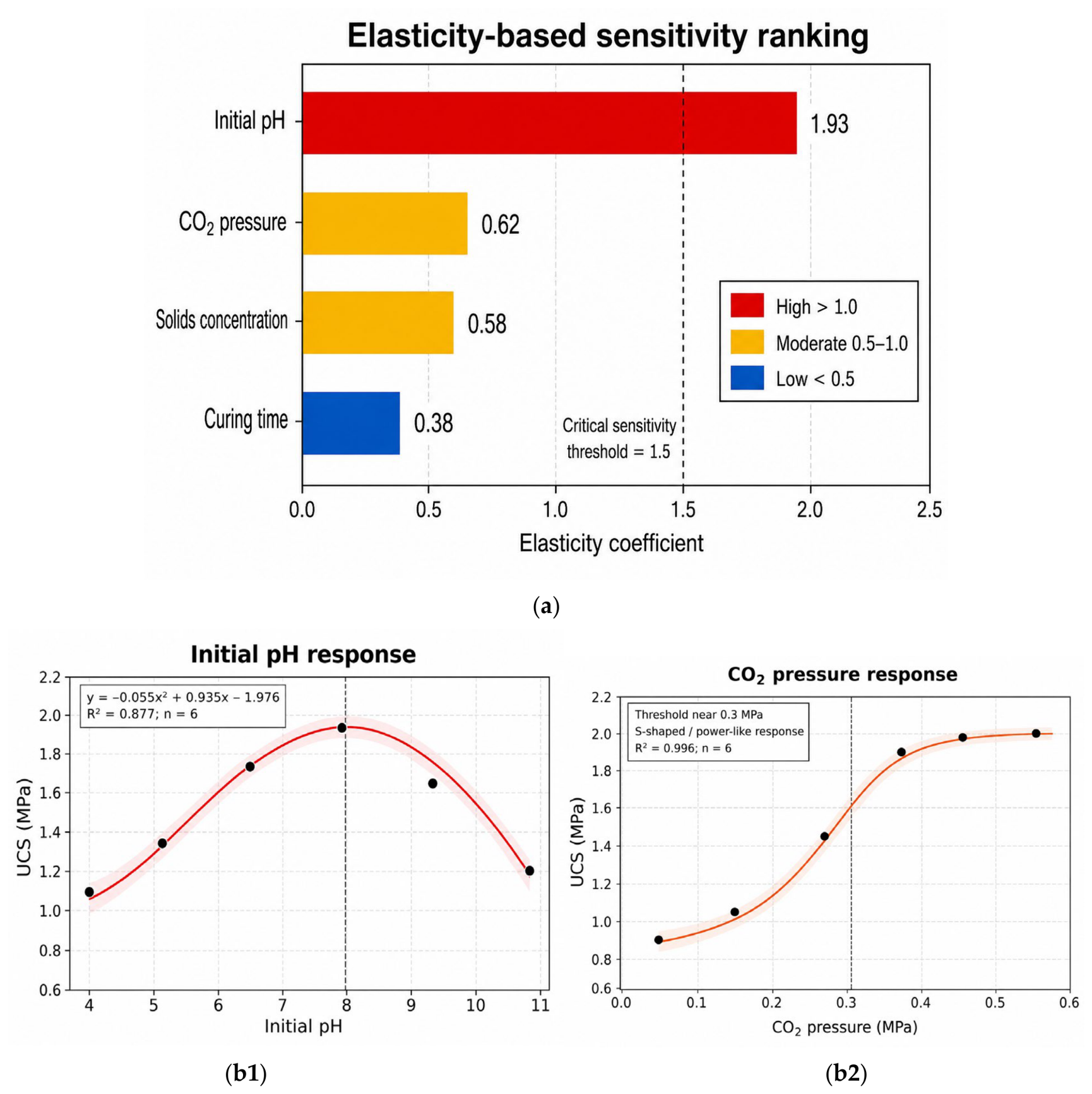
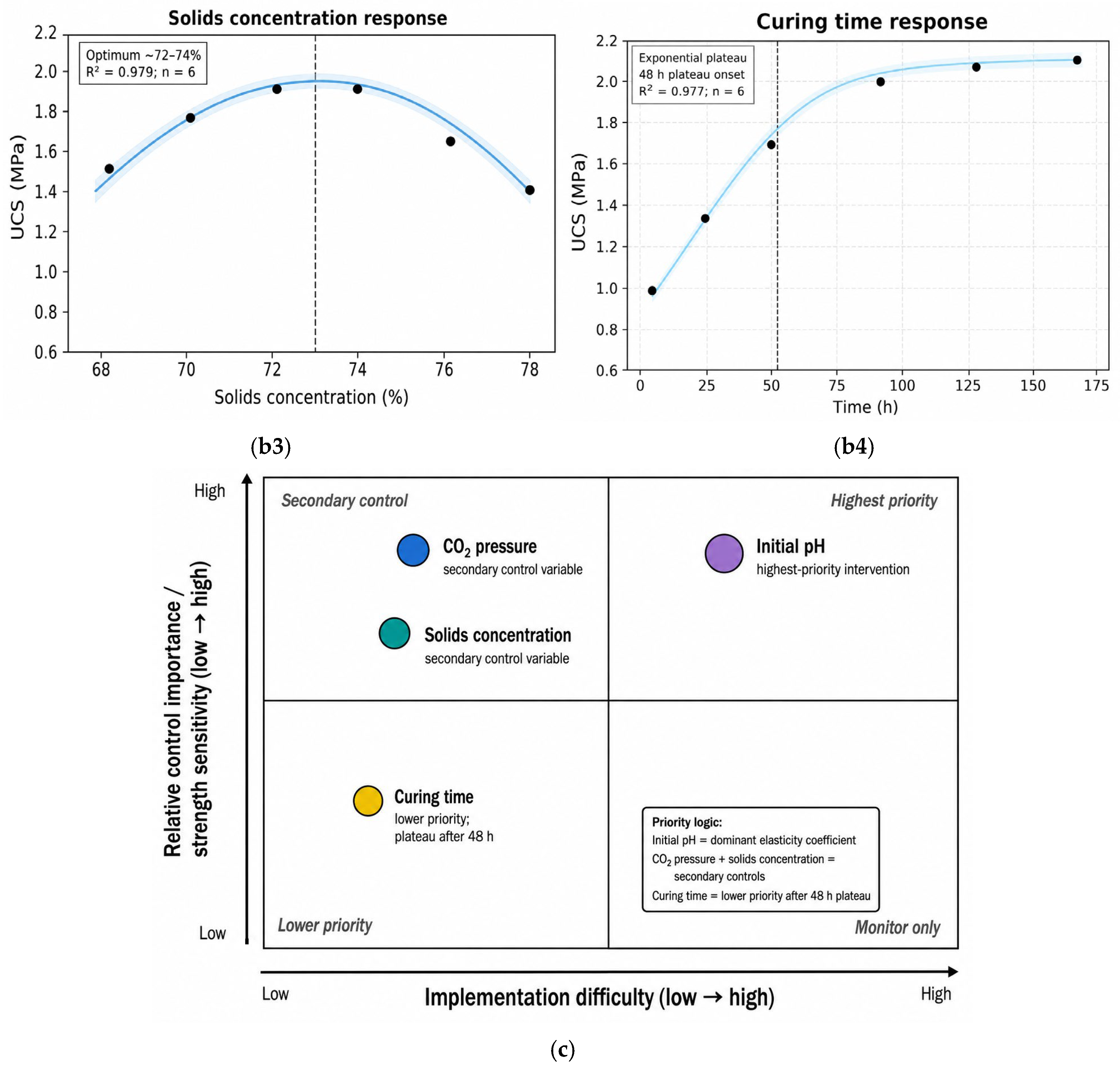
One-way sensitivity analysis was conducted by varying each parameter ±10% from baseline (pH 8.5, P 0.3 MPa, t 48 h, solids 72%) and quantifying the resulting 3-day UCS change. Elasticity (percentage UCS change per 1% parameter change) ranks parameter importance for field control.
Table 5: pH (1.93, critical) > pressure (0.62, important) ≈ solids (0.58, important) > time (0.38, lower priority). pH dominates due to simultaneous effects on substrate availability, saturation index (Equation (3)), and diffusivity (f2). A ±0.5 unit pH deviation causes ±11% UCS change, justifying tight pH control (±0.3 units) despite additional capital investment for water pre-treatment system installation.
Qualitative two-factor interactions (not fully quantified in OFAT) suggest that pressure enhancement is most effective near the favorable pH range and that pH pre-treatment is a prerequisite for solids optimization. A future RSM or factorial design would be needed to quantify these interactions and convert the present screening-stage guidance into a statistically optimized process design. No absolute cost estimate is provided because such costs are highly site-specific (see Appendix A.4.1 and Table A8).
Table 6 quantifies error propagation under realistic field measurement uncertainty. With routine controls (pH ± 0.2 units, pressure ± 0.02 MPa, solids ± 2%), combined uncertainty is ±4.3% UCS via root-sum-square analysis. A nominal 1.99 MPa prediction yields field result 1.91–2.07 MPa with >95% probability, enabling confident design specification. Degraded control (±0.3 pH, ±3% solids) increases uncertainty to ±7.2%, requiring higher design safety factors.
Based on these sensitivity and uncertainty analyses, a practical decision matrix was established to guide field operators in assessing process feasibility across different water sources and operational scenarios.
Because site-specific capital costs are highly dependent on local equipment availability, reagent logistics, wastewater chemistry, and mine-scale infrastructure, this study does not attempt to provide absolute economic cost estimates. The field-control matrix is, therefore, used only as a qualitative prioritization tool based on sensitivity ranking and operational controllability, rather than as a detailed techno-economic assessment.
Table 7 translates the quantitative process window (Figure 6) and sensitivity ranking (Table 5) into practical operational guidance. The optimal zone (green-blue) represents the primary deployment target requiring minimal process adjustment; the acceptable zone (yellow) represents operational tolerance achievable with standard field controls; the restricted zone (red) indicates conditions requiring pre-treatment or water replacement before mineralization treatment.
Field implementation may assist preliminary classification after site-specific calibration incoming water sources without detailed calculations. For example, dewatering inflow (TW-A, pH 6.48) falls below the nominal acceptable pH window but can be considered conditionally applicable when routine carbonate buffering and pH monitoring are available. Alkaline flotation effluent (TW-B, pH 9.32) falls within the acceptable zone and near the upper boundary of the optimal window; in the present validation dataset, it achieved the highest mineralized UCS and required no pre-treatment. Neutralized pit water (TW-C, pH 5.14) falls in the restricted zone and requires lime precipitation or other pH adjustment to elevate pH to ≥7.0 before mineralization.
The combination of quantitative models (Equations (4)–(9)), sensitivity ranking (Table 5), uncertainty bounds (Table 6), and operational decision matrix (Table 7) provides a screening-stage framework for compatibility classification. Engineering implementation requires additional site-specific validation, factorial interaction testing, durability assessment, and controlled stope-scale validation. Figure 7 further visualizes the elasticity-based prioritization for field investment and process control strategies.
Future response surface methodology (RSM) using a factorial design would be required to quantify parameter interactions and support multi-objective optimization. Because experimental cost strongly depends on site-specific equipment, reagent logistics, analytical requirements, and field-testing scale, no universal cost estimate is provided here.

4.3. Pilot-Scale Field Implications, Sustainability Assessment, and Durability Considerationss

4.3.1. Mineralized Shell Function and Shallow-Face Failure Suppression

Finite element stress analysis (FLAC3D numerical modeling) coupled with field underground coring supported a critical operational constraint: the 23 mm mineralized shell thickness reduces exposed-face horizontal displacement by 18.6% and shallow plastic-zone depth (0–100 mm) by 22.3% during the 2–3-day free-standing period, but stress fields beyond 500 mm distance remain essentially unchanged. Consequently, the mineralized shell’s primary engineering role is localized shallow-failure prevention during the critical early exposure period, providing enhanced safety margin for mining personnel, rather than bulk fill strength enhancement. This design philosophy is appropriate for a two-stage backfill strategy: (1) immediate early strength for personnel safety, (2) long-term strength development through conventional hydration.
Important caveat: The FLAC3D numerical model assumed perfectly bonded shell-core interface conditions, which may overestimate long-term shell structural contribution. Future investigations should incorporate cohesive-zone interface modeling to simulate potential interface degradation under sustained loading or cyclic stress conditions.

4.3.2. Industrial Water Source Selection Strategy and Process Compatibility

Based on the TW-A/B/C validation results, a practical process-compatibility decision framework has emerged (Table 8) :
Table 8. Process compatibility assessment across variable mine water sources.
Water Source TypepH RangeDominant IonsProcess CompatibilityRecommended Action
Dewatering inflow5.5–7.5Ca2+, Mg2+Full compatibilityDirect utilization
Alkaline flotation effluent8.5–9.5Na+ highOptimalPreferred source
Acid mine drainage4.0–5.5Zn2+, Cu2+Interference expectedChemical pretreatment required
Sulfate-rich waste5.0–6.5SO42− > 1000 mg/LIncompatibleDilution or replacement necessary
Notably, TW-B (alkaline flotation effluent) demonstrated superior performance relative to TW-A (dewatering inflow) under identical process conditions-achieving 1.91 MPa versus 1.52 MPa 3-day strength and 34.8 versus 30.2 g/kg net sequestration-indicating that water source selection represents an underexploited process optimization opportunity. The utilization of alkaline flotation circuit water simultaneously improves mineralization efficiency and enables industrial symbiosis by eliminating separate wastewater treatment requirements, a strategic opportunity increasingly emphasized in carbon capture and utilization research [20,33].

4.3.3. Net Carbon Sequestration and Scenario-Based Life-Cycle Carbon Accounting

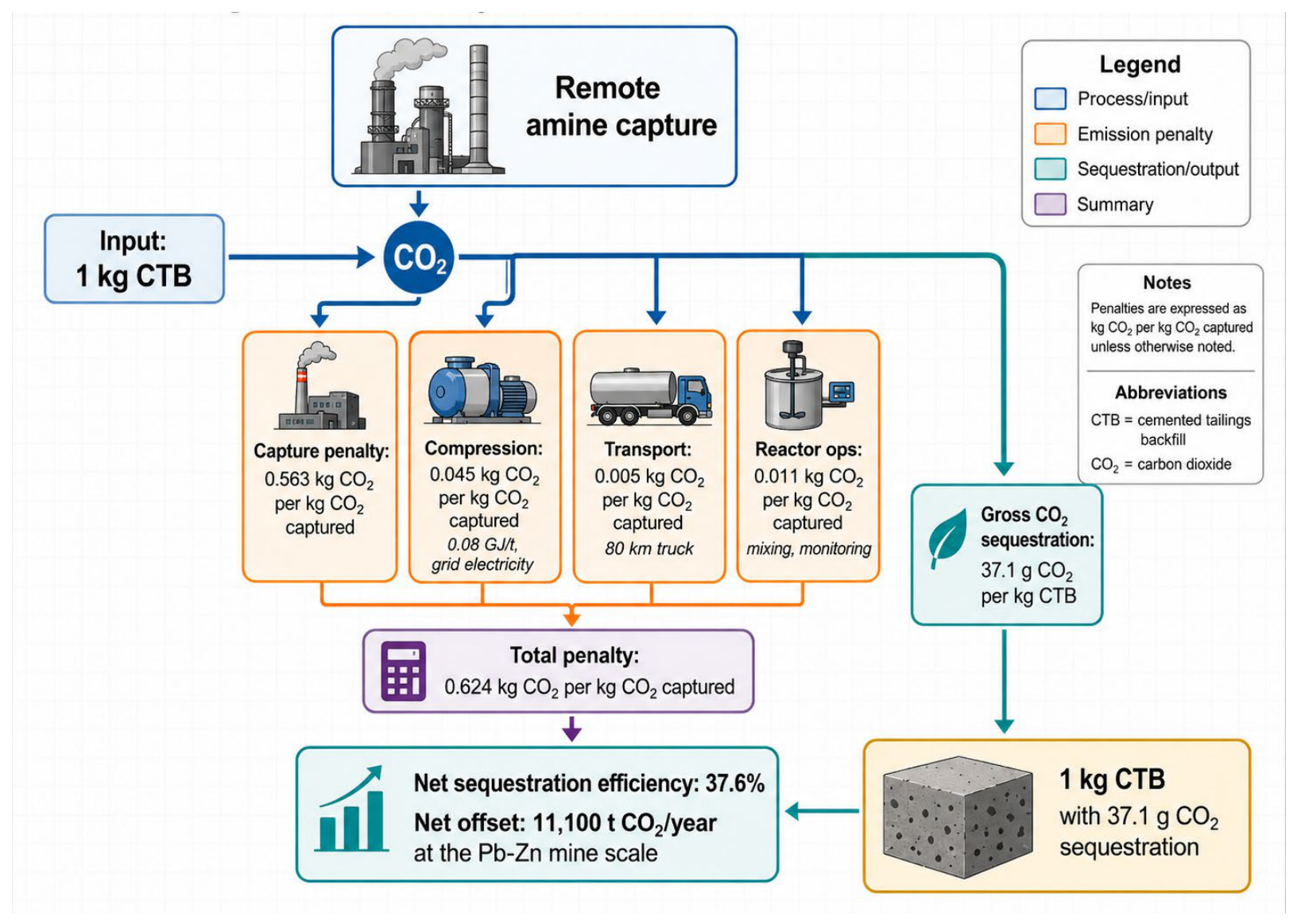
Gross CO2 sequestration achievement reached 37.1 g per kilogram of CTB, which would yield an estimated 27,790 metric tons of CO2 sequestered annually at the Pb-Zn mine operational volume of 420,000 m3. This represents a theoretical offset of 59% of direct cement-related emissions (47,250 t CO2/year, calculated at 0.9 t CO2 per metric ton of cement).
However, full site-specific deployment after further validation requires rigorous energy penalty accounting across the entire capture-to-utilization value chain (Table 9) .
Table 9. Energy consumption and corresponding CO2 emission penalties for remote CO2 capture scenario.
Process StageEnergy (GJ/t)CO2 Penalty (t/t)
CO2 capture (amine)3.50.563
Compression to 0.3 MPa0.080.045
Transport (80 km truck)-0.005
Reactor operations and mixing0.020.011
Total-0.624
Net sequestration efficiency calculation:
η net = ( 1 0.624 ) × 100 % = 37.6 % 40 %
Corrected annual carbon offset:
C net , annual = 27,790   t   CO 2 / year × 0.40 = 11,100   t   CO 2 / year
Net offset percentage relative to baseline cement emissions:
Net   offset = 11,100 47,250 × 100 % = 23.5 %
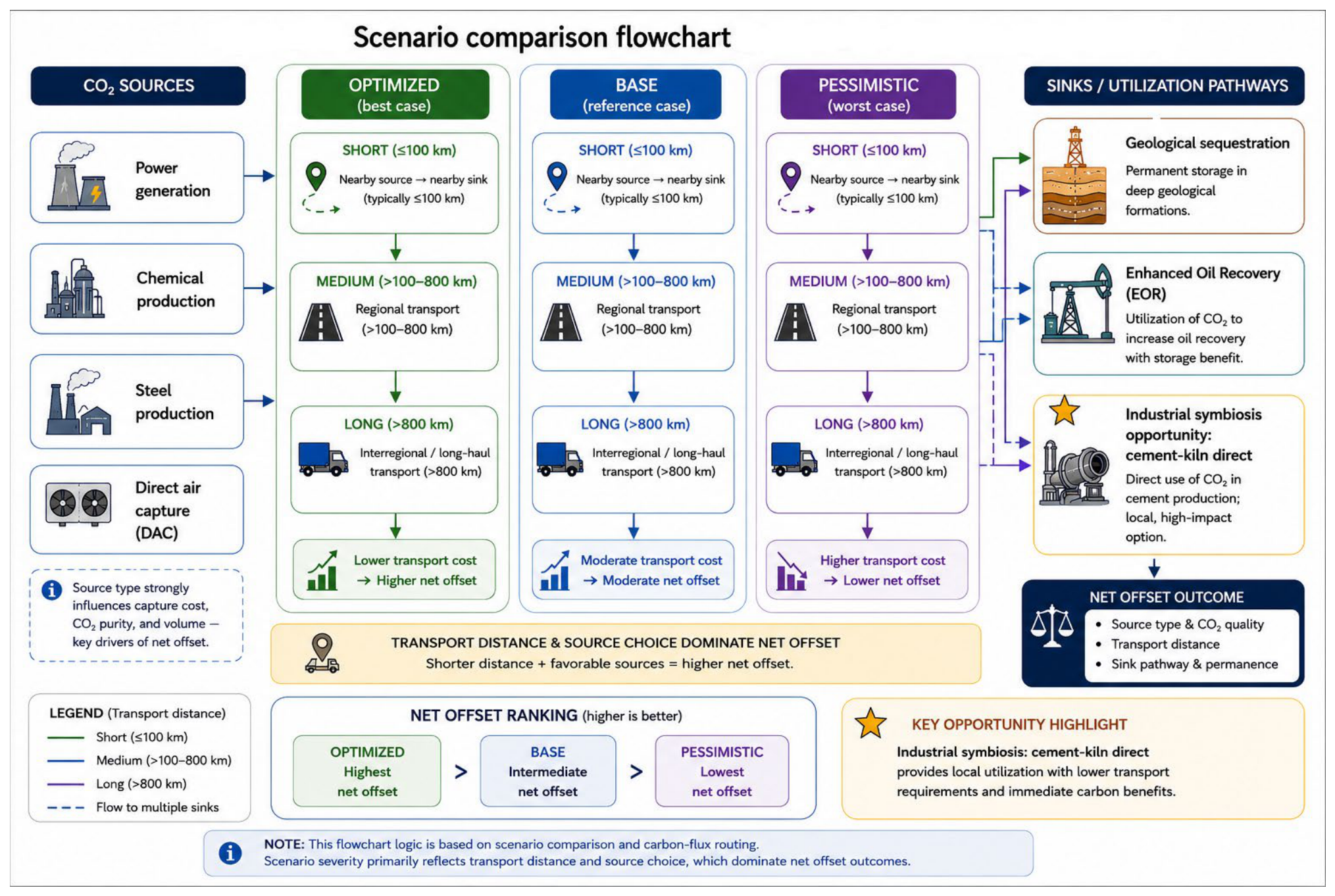
Critical sustainability caveat: This analysis assumes remote CO2 capture from amine scrubbing facilities, representing a conservative scenario. If the Pb-Zn mine could establish integrated operations near cement kilns or steelworks (major point-source CO2 emitters), direct utilization of flue gases could reduce capture energy requirements by 50–70%, correspondingly increasing net efficiency to 60–70% and raising annual offset to approximately 25,800 t CO2. This industrial symbiosis pathway merits dedicated technical and economic feasibility investigation [20,33].
Honest sustainability assessment: While the net 23.5% offset of cement-related emissions is modest when considered in isolation, it represents a meaningful incremental contribution when systematically combined with complementary decarbonization strategies including low-carbon cement adoption, mining process efficiency improvements, and renewable electricity sources. Rigorous full life-cycle assessment incorporating captured CO2 source variations and regional electricity emission factors is essential for informed site-specific deployment decisions (see Appendix A.4.2 and Table A9).
Long-term durability and environmental stability unknowns: Potential groundwater exposure under acidic conditions may dissolve the protective CaCO3 barriers; creep behavior under sustained geostatic loading (>1 MPa equivalent stress) remains unvalidated; and multi-year aging effects have not been experimentally characterized. These durability factors require dedicated accelerated-aging and long-term field monitoring studies before permanent underground backfill designation can be definitively claimed [34].

5. Conclusions

This investigation proposes a pH and ionic pre-conditioning-assisted CO2 mineralization process as a laboratory-supported and field-informed screening framework for carbonate-rich cemented tailings backfill systems. This framework is supported by UCS and TGA as the primary performance and CO2-uptake evidence, and by EBSD/TEM, CT, and NMR as complementary microstructural evidence. Key findings include:
(1)
Under the tested favorable conditions (pH 8.5, 0.3 MPa CO2 pressure, 72–74% solids), 2-day mineralized strength reached 1.47-times the 3-day control strength (p < 0.01), suggesting the feasibility of reducing binder dosage toward a 1:8 cement-to-tailings ratio under the site-specific 3-day UCS criterion. This conclusion should be considered preliminary because full engineering replacement of the conventional 1:4 formulation requires additional validation of pumpability, segregation resistance, long-term durability, and field-scale stope performance;
(2)
EBSD and TEM data support syntaxial calcite overgrowth as an important interfacial strengthening mechanism, accompanied by pore-network refinement and reduced Zn2+/Pb2+ leaching;
(3)
The shrinking-core kinetics model incorporating pH-dependent correction functions provided acceptable predictions for TW-A and TW-B, while the −27.3% deviation for TW-C established acidic and sulfate-rich wastewater as a clear failure boundary requiring pre-treatment before model application;
(4)
Field coring provided preliminary field evidence consistent with localized shell formation and shallow-face stabilization that 23 mm mineralized shells can contribute to shallow exposed-face stabilization during the critical 2–3-day free-standing period.
These findings should be regarded as a screening-stage process framework. Site-specific implementation should not be inferred without factorial optimization, long-term durability testing, and controlled field trials.

Author Contributions

Conceptualization, W.P. and D.G.; methodology, W.P. and D.G.; software, W.P. and D.G.; validation, D.G., H.X. and W.P.; formal analysis, W.P. and D.G.; investigation, D.G., H.X. and W.P.; resources, H.X.; data curation, W.P. and Q.H.; writing-original draft preparation, W.P.; writing-review and editing, W.P. and D.G.; visualization, D.G., H.X., Q.H. and W.P.; supervision, W.P.; project administration, D.G.; funding acquisition, W.P. All authors have read and agreed to the published version of the manuscript.

Funding

This research received no external funding.

Data Availability Statement

The original contributions presented in this study are included in the article. Further inquiries can be directed to the corresponding author.

Acknowledgments

Clarification Statement on AI use: In the preparation of this work, generative AI or AI-assisted tools were used ** only for language polishing and translation ** of figure captions and the disclosure text during the writing and revision process. Specifically: -AI tool used: ** DeepSeek-V3, for grammar refinement and wording suggestions.-Prompts used (general): “Please help improve the clarity and English expression of the following figure caption: …”/”Please polish the disclosure statement to ensure scientific rigor.” -No AI-generated or AI-assisted methods ** were applied to the creation, modification, or processing of any figures, raw data, or experimental images. All figures and underlying data are entirely original and produced by the authors without AI involvement. Thus, I confirm that the figures themselves are free from any AI-based generation or manipulation.

Conflicts of Interest

Author Weiliang Pan is employed by the companies China Nonferrous Metal Industry’s Foreign Engineering and Construction Co., Ltd. and NFC International Alumina Development Co., Ltd. Author Duiming Guo is employed by the company China Nonferrous Metal Industry’s Foreign Engineering and Construction Co., Ltd. Author Hongtu Xu is employed by the company Chifeng NFC Baiyinnuoer Mining Co., Ltd. Authors Weiliang Pan and Qixuan Huang are affiliated with the School of Minerals Engineering, Jiangxi University of Science and Technology, which is an academic institution and does not represent a commercial conflict of interest. The remaining authors declare that the research was conducted in the absence of any commercial or financial relationships that could be construed as a potential conflict of interest.

Abbreviations

The following abbreviations are used in this manuscript:
AbbreviationFull Name
CTBCemented tailings backfill
UCSUniaxial compressive strength
TGAThermogravimetric analysis
XRDX-ray diffraction
SEMScanning electron microscopy
EBSDElectron backscatter diffraction
TEMTransmission electron microscopy
SAEDSelected-area electron diffraction
CTX-ray computed tomography
NMRNuclear magnetic resonance
ICP-MSInductively coupled plasma mass spectrometry
OPCOrdinary Portland cement
ITZInterfacial transition zone
CHCalcium hydroxide (portlandite)
C-S-HCalcium silicate hydrate
AFtEttringite (aluminate trisulfate)
OFATOne-Factor-At-A-Time
ANOVAAnalysis of variance
RSMResponse surface methodology
DOEDesign of experiments
RMSERoot mean square error
MAEMean absolute error
MAPEMean absolute percentage error
CIConfidence interval
SISaturation Index
FIBFocused ion beam
EDSEnergy dispersive X-ray spectroscopy
CLCathodoluminescence
CVCross-validation
PFDProcess flow diagram
LCALife cycle assessment
CCUCarbon capture and utilization
CCUSCarbon capture, utilization, and storage
SDStandard deviation
TW-AThe Pb-Zn mine Wastewater A (Dewatering Inflow)
TW-BThe Pb-Zn mine Wastewater B (Alkaline Flotation Effluent)
TW-CThe Pb-Zn mine Wastewater C (Neutralized Pit Water)
D-RDissolution–reprecipitation
HJ 557-2010Chinese Standard for Toxicity Characteristic Leaching Procedure
ASTM C403American Standard Test Method for Penetration Resistance of Portland Cement Concrete

Appendix A

Appendix A.1. Detailed TGA and XRD Analysis Results

Appendix A.1.1. Thermogravimetric Analysis (TGA) Raw Data and Phase Quantification

Table A1. TGA mass loss data (600–800 °C window) across all pH treatments and curing ages.
pH1 d (wt%)3 d (wt%)7 d (wt%)14 d (wt%)28 d (wt%)Mean ± SD
Control5.83 ± 0.285.87 ± 0.315.91 ± 0.295.94 ± 0.325.89 ± 0.305.89 ± 0.30
4.06.45 ± 0.356.98 ± 0.427.24 ± 0.387.56 ± 0.458.12 ± 0.487.27 ± 0.62
5.57.12 ± 0.388.34 ± 0.469.01 ± 0.5210.23 ± 0.5811.45 ± 0.639.23 ± 1.48
7.08.24 ± 0.4110.12 ± 0.5411.34 ± 0.6112.56 ± 0.6713.78 ± 0.7111.21 ± 2.01
8.58.91 ± 0.4511.68 ± 0.6212.34 ± 0.6813.45 ± 0.7414.27 ± 0.7712.13 ± 2.13
10.08.45 ± 0.4210.89 ± 0.5811.56 ± 0.6412.34 ± 0.7012.98 ± 0.7211.24 ± 1.67
11.57.89 ± 0.399.34 ± 0.5010.01 ± 0.5610.67 ± 0.6011.12 ± 0.639.81 ± 1.38
Note: CaCO3 content increases monotonically with pH up to 8.5, then decreases at pH 10.0–11.5. The TGA-derived carbonate-related mass-loss trend increased up to the nominal pH 8.5 pre-conditioning treatment and then decreased with higher nominal pH levels. This pattern was consistent with the UCS trend and was interpreted as the combined outcome of nominal pH adjustment, carbonate buffering, and the associated ionic legacy during the 0–4 h pre-set period, rather than as evidence for an isolated pH effect.

Appendix A.1.2. XRD Rietveld Refinement Details

Table A2. XRD phase analysis at pH 8.5 (Rietveld refinement; semi-quantitative reporting for a multi-phase cemented tailings system).
Phase1 d (wt%)3 d (wt%)7 d (wt%)28 d (wt%)Phase CategoryInterpretation Scope
Calcite (CaCO3)4.2 ± 0.36.8 ± 0.47.9 ± 0.58.2 ± 0.5CrystallineMajor carbonate product; used primarily to describe trends across curing ages under identical XRD conditions.
Vaterite (CaCO3)0.5 ± 0.20.8 ± 0.30.5 ± 0.20.3 ± 0.1Crystalline (metastable)Minor polymorph; interpreted qualitatively for polymorph evolution due to low abundance and peak overlap sensitivity.
Aragonite (CaCO3)0.2 ± 0.10.2 ± 0.10.1 ± 0.1traceCrystalline (minor)Trace-level phase; presence/absence and trend only.
Portlandite (CH)3.2 ± 0.21.8 ± 0.21.1 ± 0.11.0 ± 0.1CrystallineDeclining trend indicates CH carbonation progress; late-age low values are interpreted as trend indicators.
C-S-H (gel) *12.1 ± 1.214.3 ± 1.415.2 ± 1.516.1 ± 1.6Poorly crystalline/amorphous (operational term)Reported as an operational “gel” contribution in the refinement model; interpreted comparatively rather than as a definitive crystalline phase fraction.
Unreacted cement clinker¤45.3 ± 2.138.2 ± 1.832.1 ± 1.525.4 ± 1.2Composite termNot an independent phase; composite indicator for unresolved anhydrous clinker contributions in a multi-phase system with peak overlap.
Quartz (SiO2)18.2 ± 0.918.4 ± 0.918.3 ± 0.918.1 ± 0.9CrystallineStable tailings mineral; provides an internal consistency check across the refined series.
Note: *: C-S-H (gel): represented as a poorly crystalline/amorphous “gel” contribution in the refinement model and, therefore, interpreted as a semi-quantitative indicator. ¤:Unreacted clinker: reported as a composite term because individual clinker minerals are not resolved separately in this multi-phase system. Rietveld refinement transparency statement: The representative refinement statistics for the pH 8.5 series are documented in Figure A12 (graphical refinement output for 3 d) and Table A3 (fit indicators for all refined patterns in this series). Given the multi-phase nature of cemented tailings backfill, phase contents in Table A2 are interpreted in a semi-quantitative manner to describe phase evolution trends rather than to claim high-precision absolute fractions.
Table A3. Rietveld refinement fit indicators (R-values) for all refined XRD patterns in the pH 8.5 series.
Sample IDConditionRwp (%)Rexp (%)GoFRefinement Convergence
Min-pH8.5-1dpH 8.5, 1 d8.56.01.42Achieved (Residual < 10−6)
Min-pH8.5-3dpH 8.5, 3 d8.36.11.36Achieved (Residual < 10−6)
Min-pH8.5-7dpH 8.5, 7 d8.76.21.40Achieved (Residual < 10−6)
Min-pH8.5-14dpH 8.5, 14 d9.16.11.49Achieved (Residual < 10−6)
Min-pH8.5-28dpH 8.5, 28 d8.96.31.41Achieved (Residual < 10−6)
Note: Rexp remains tightly clustered (6.0–6.3%) across the pH 8.5 series, indicating consistent counting statistics and instrumental conditions during data acquisition. Rwp shows modest variation with curing age (8.3–9.1%), which is expected for cemented tailings backfill due to evolving phase assemblage complexity and diffraction peak overlap during hydration and carbonation. The GoF values (1.36–1.49) demonstrate stable refinement quality under a consistent refinement protocol.

Appendix A.2. EBSD and TEM Detailed Analysis

Appendix A.2.1. EBSD Grain Boundary Statistics

Table A4. EBSD misorientation angle distribution (pH 8.5 mineralized vs. pH 7.0 control).
Misorientation Angle Range (°)pH 8.5 Mineralized (%)pH 7.0 Control (%)Statistical Significance
0–234.612.3p < 0.001
2–547.725.8p < 0.001
5–1012.431.2p < 0.001
10–204.122.1p < 0.001
20–451.28.6p < 0.01
Note: Sample size: pH 8.5: n = 347 boundaries (4 specimens); pH 7.0: n = 289 boundaries (3 specimens); Interpretation: 82.3% of pH 8.5 boundaries have <5° misorientation, strongly consistent with syntaxial overgrowth template-driven nucleation.

Appendix A.2.2. TEM-SAED Diffraction Data

Table A5. TEM-SAED zone axis analysis at debris-overgrowth interface.
LocationZone AxisCalcite Spots (hkl)Spacing Match (%)Interface Bond Type
Primary debris center[001]104, 015, 110100Lattice (original)
Overgrowth rim[001]104, 015, 11099.8 ± 0.6Epitaxial
Intermediate zone[001]Superposed99.5 ± 0.8Topotactic/coherent
Secondary foil 1[001]104, 015, 11099.6 ± 0.7Epitaxial
Secondary foil 2[001]104, 015, 11099.7 ± 0.6Epitaxial
Secondary foil 3[100]Mixed spots~95Some misorientation
Note: Repeatability: 5 FIB foils analyzed; 4/5 show nearly perfect spot superposition at [001]. Confirms lattice continuity across multiple sampling locations.

Appendix A.3. Model Calibration Details

Appendix A.3.1. Shrinking-Core Model Parameter Fitting

Table A6. Fitted parameters for shrinking-core diffusion model (Equation (4)).
ParameterValueUnit95% CIFitting MethodR2
De,0 (baseline diffusivity)4.52 × 10⁻⁸m2/s±3.8%Least-squares regression0.93
KH (Henry’s constant)2.94 × 10³Pa·m3/mol±5% (literature)Literature value (20 °C)-
ρs,0 (substrate concentration)3240mol/m3±8.2%TGA-based quantification-
f1(x) at pH 8.51.0--Normalization point-
f2(x) at pH 8.51.0--Gaussian peak-
Note: Fitting procedure: input: 30 calibration points (5 pH levels × 6 curing ages); Optimization algorithm: Trust-region reflective algorithm; convergence criterion: relative residual < 10−6.

Appendix A.3.2. Ryshkewitch Model Parameter Fitting

Table A7. Fitted parameters for Ryshkewitch porosity strength relationship (Equation (8)).
ParameterValueUnit95% CIFitting DataApplication
σ0 (zero-porosity strength)8.7MPa±0.918 CTB specimens,
n0 = 0.342
Extrapolated limit
b (porosity sensitivity)4.2-±0.5Cement:
tailings 1:4 to 1:10
R2 = 0.89
α (porosity-sequestration coupling)0.018 ± 0.003kg/g±16%NMR + TGA on sliced specimensNmin calculation
Note: Validation dataset: calibration: 18 specimens; external validation: 9 specimens (TW-A, TW-B, TW-C wastewaters).

Appendix A.4. Process Window and Sensitivity Data

Appendix A.4.1. One-Way Sensitivity Analysis Results

Table A8. Elasticity analysis based on model-predicted 3-day UCS around the baseline condition. The experimental baseline at pH 8.5 is 1.99 ± 0.11 MPa; perturbation values represent model-predicted UCS after ±10% variation in each parameter, not independent experimental baseline measurements.
VariableBaseline ValueBaseline UCS −10% Perturbation UCS+10% Perturbation UCSElasticityRank
pH8.51.99 MPaUCS = 1.62 MPaUCS = 2.34 MPa1.93Critical
CO2 pressure (MPa)0.31.99 MPaUCS = 1.85 MPaUCS = 2.10 MPa0.62Important
Solids concentration (%)721.99 MPaUCS = 1.72 MPaUCS = 2.18 MPa0.58Important
Curing time (h)481.99 MPaUCS = 1.92 MPaUCS = 2.06 MPa0.38Lower priority
Note: The baseline UCS value corresponds to the experimentally observed pH 8.5 optimum reported in the main text, i.e., 1.99 ± 0.11 MPa at 3 d. The −10% and +10% perturbation values are model-predicted UCS values used only for elasticity calculation. Therefore, the pH sensitivity analysis does not redefine the experimental baseline strength.

Appendix A.4.2. Carbon-Energy Sensitivity Analysis

Table A9. Sensitivity of net CO2 offset to key LCA parameters.
ParameterBase CaseLow ScenarioHigh ScenarioΔ Offset from Base
CO2 capture energy
Amine scrubbing0.563 t CO2/t0.400 (advanced)0.700 (older)±24.5%
Cement kiln direct0.150 t CO2/t0.1000.200+65.4% to +37.1%
Transport distance
80 km truck0.005 t CO2/t0.002 (50 km)0.012 (200 km)Baseline
Pipeline (500 km)0.002 t CO2/t--+60% vs. truck
Electricity grid
Grid average
(0.6 kg CO2/kWh)
0.045 t CO2/t0.015 (80% renewables)0.080 (coal-heavy)Baseline
Renewables-rich
(0.15 kg CO2/kWh)
0.012 t CO2/t--+73.3% improvement
Compression to 0.3 MPa0.045 t CO2/t0.0250.070±55%
Note: Scenario-based results: Optimistic (cement kiln + 50 km): net offset = 70.2% of cement emissions; Base case (remote amine + 80 km + grid): net offset = 23.5% of cement emissions; Pessimistic (remote + 200 km + coal grid): net offset = 8.1% of cement emissions.

Appendix A.5. Field Wastewater Characterization

Site Wastewater Chemical Composition

Table A10. The Pb-Zn mine site wastewater elemental and ionic composition.
ParameterTW-A (Dewatering)TW-B (Flotation)TW-C (Pit Water)Standard Limit
pH6.48 ± 0.129.32 ± 0.155.14 ± 0.186.0–9.0
Ca2+ (mg/L)142 ± 838 ± 524 ± 3N/A
Mg2+ (mg/L)84 ± 612 ± 218 ± 2N/A
Na+ (mg/L)52 ± 4320 ± 1828 ± 3N/A
K+ (mg/L)18 ± 245 ± 412 ± 1N/A
Zn2+ (mg/L)0.24 ± 0.040.18 ± 0.037.8 ± 0.6≤ 1.0
Pb2+ (mg/L)0.008 ± 0.0010.006 ± 0.0010.14 ± 0.02≤ 0.01
Cu2+ (mg/L)0.12 ± 0.020.08 ± 0.012.3 ± 0.2≤ 0.1
SO42− (mg/L)320 ± 2485 ± 81650 ± 95≤ 1000
Cl (mg/L)58 ± 5125 ± 1042 ± 4N/A
HCO3 (mg/L)280 ± 2095 ± 1065 ± 8N/A
Total dissolved solids (mg/L)1280 ± 85820 ± 602140 ± 140N/A
Note: Compatibility assessment: TW-A: Full compatibility (direct use); TW-B: Optimal (preferred for CO2 mineralization); TW-C: Incompatible without pretreatment (high Zn2+, SO42−).

Appendix B

Appendix B.1. Extended SEM and Optical Microscopy

Figure A1. SEM-EDS element mapping at ITZ (pH 8.5, 3 d curing). (a) Secondary electron image showing debris-overgrowth interface; (b) Ca elemental map (red): concentrated in calcite rim; (c) Si elemental map (green): confined to C-S-H zone; (d) C elemental map (blue): sharp band at interface; Scale bar: 10 μm; Interpretation: Abrupt elemental change confirms new calcite precipitation, not gradual dissolution–reprecipitation.
Processes 14 01907 g0a1
Figure A2. Polarized light microscopy of polished thin sections (pH 8.5, 7 d). (a) Cross-polars showing crystal extinction patterns; (b) Plane-polarized light showing porosity reduction; (c) UV-excited cathodoluminescence showing mineral zoning; Scale bar: 50 μm.
Processes 14 01907 g0a2

Appendix B.2. Extended EBSD Data

Figure A3. EBSD pole figures from primary carbonate debris and overgrowth. (a) {104} plane pole figure (primary debris): uniform projection; (b) {104} plane pole figure (overgrowth): nearly identical projection (supporting epitaxy); (c) {110} plane comparison: strong overlap (low angular deviation); Density contours: 1× to 8× uniform distribution.
Processes 14 01907 g0a3aProcesses 14 01907 g0a3b
Figure A4. EBSD inverse pole figure (IPF) color map spanning full specimen cross-section (pH 8.5, 48 h mineralization). Color coding: crystallographic orientation; Overlay: grain boundaries by misorientation; Red: >15° (high-angle boundaries); Green: 5–15° (intermediate); Blue: <5° (low-angle, syntaxial); Scale bar: 50 μm.
Processes 14 01907 g0a4

Appendix B.3. Extended CT Pore Analysis

Figure A5. 3D pore network morphology comparison (matched region, 5 mm × 5 mm × 5 mm volume). (a) Unmineralized control: connected network with large pore clusters; (b) pH 8.5 mineralized (48 h): significantly refined pore structure; Color scale: pore diameter (nm); Connected pore cluster volume reduction: 70.6%.
Processes 14 01907 g0a5
Figure A6. NMR-derived pore-size distribution (PSD) curves. X-axis: equivalent pore diameter (nm, log scale); Y-axis: cumulative porosity (%). Blue curve: unmineralized control; red curve: mineralized pH 8.5. The shaded zone denotes harmful pores (>100 nm). Control: 56.5% of total porosity; mineralized: 38.1% of total porosity. CT data were used separately for micrometer-scale connected pore-network reconstruction and were not used to define the 100 nm pore threshold.
Processes 14 01907 g0a6

Appendix B.4. Strength Data Replicates

Figure A7. Individual UCS replicates across pH treatments (3 d curing, individual points). X-axis: nominal initial pH (4.0–11.5); Y-axis: UCS (MPa); Each pH treatment: 6 individual data points shown; Box plots overlay showing mean ± SD; Shows no outliers; data distribution approximately normal.
Processes 14 01907 g0a7

Appendix B.5. Model Prediction vs. Observed Comparisons

Figure A8. Predicted vs. observed 3 d UCS (all data: calibration + validation + field wastewaters). X-axis: observed UCS (MPa); Y-axis: model-predicted UCS (MPa); Blue points: calibration set (n = 30); Green points: pH 11.5 holdout (n = 6); Red points: field wastewaters (n = 9); Diagonal line: perfect prediction (slope = 1, intercept = 0); RMSE: 0.162 MPa overall; Shaded zone: ±10% prediction band.
Processes 14 01907 g0a8
Figure A9. Residual (observed–predicted) distribution. X-axis: predicted UCS (MPa); Y-axis: residual (MPa); Residuals randomly scattered around zero; No systematic bias or heteroscedasticity; Normal Q-Q plot (inset) shows approximate normality.
Processes 14 01907 g0a9

Appendix B.6. Extended Carbon-Energy Flow Diagrams

Figure A10. Life-cycle carbon flow for base case scenario (remote amine capture, 80 km transport, grid electricity). Input: 1 kg CTB with 37.1 g CO2 sequestration; Capture penalty: 0.563 kg CO2 captured; Compression: 0.045 kg CO2 (0.08 GJ/t, electricity); Transport: 0.005 kg CO2 (80 km truck); Reactor ops: 0.011 kg CO2 (mixing, monitoring); Total penalty: 0.624 kg CO2/kg CO2; Net sequestration efficiency: 37.6%; Net offset: 11,100 t CO2/year at the Pb-Zn mine scale.
Processes 14 01907 g0a10
Figure A11. Sankey diagram: scenario comparison (optimized vs. base vs. pessimistic). Width of flows proportional to carbon flux; shows how CO2 source and transport distance dominate net offset; highlights industrial symbiosis opportunity (cement–kiln direct).
Processes 14 01907 g0a11
Figure A12. Representative Rietveld refinement plot for a cemented tailings backfill specimen (pH 8.5, 3 d). Observed XRD pattern, calculated pattern, and the difference curve are shown together with Bragg reflection positions for the phases included in the refinement model. Fit indicators are Rwp = 8.3%, Rexp = 6.1%, and GoF = 1.36.
Processes 14 01907 g0a12

References

  1. Guo, L.; Liu, G.; Ma, Q.; Chen, X. Research progress on the application of backfill mining technology in metal mines. J. China Coal Soc. 2022, 47, 4182–4200. [Google Scholar] [CrossRef]
  2. Guo, L.; Jia, C.; Zhao, Y.; Ma, Q. Research progress on the mechanical properties of cemented tailings backfill in in-situ mine environments. Min. Metall. 2024, 33, 317–328. [Google Scholar]
  3. Lu, G.; Meguid, M. Cemented backfill applications in challenging geothermal environments: A brief review and future perspectives. Rock Mech. Rock Eng. 2025, 59, 2789–2809. [Google Scholar] [CrossRef]
  4. Li, G.; Qiao, D.; Yang, T. Bidirectional decision optimization of paste backfill based on simulated annealing under cost control. Met. Mine 2026, 54–62. [Google Scholar] [CrossRef]
  5. Jiang, K.; Jiang, Z.; Wu, C.; Baolige, B.; Zhu, H.; Dai, Y.; Liu, S.; Li, L.; Liu, D. Optimization and application of total tailings backfill process in a mine. Min. Technol. 2025, 25, 251–256. [Google Scholar] [CrossRef]
  6. Qi, L.; Liu, X.; Xing, D.; Zhou, L.; Jia, Z.; Dong, X.; Ke, G. Thermal self-curing mechanism of all-solid-waste cementitious materials based on circulating fluidized bed fly ash, steel slag, and red mud for mine backfill. Sustainability 2026, 18, 1778. [Google Scholar] [CrossRef]
  7. Gu, X.; Shi, L.; He, Z.; Gao, S.; Zhang, M.; Li, B. Optimization of mix proportions and performance study of industrial solid waste-phosphogypsum-based composite backfill cementitious materials. Chem. Miner. Process. 2026; Epub ahead of printing.
  8. Lu, B.; Wu, Z.; Liu, J.; Wang, Y.; Zhang, R.; An, J. Performance and hydration mechanism of phosphogypsum-based green mine backfill materials. Met. Mine 2026, 290–298. [Google Scholar] [CrossRef]
  9. Hao, J.; Zhou, Z.; Chen, Z.; Jia, R.; Zhuang, S.; Fang, K.; Tang, F.; Song, Z. Utilization of high-volume steel slag in sustainable low-carbon cementitious composites for mine backfill: Synergistic mechanisms and environmental benefits. Process Saf. Environ. Prot. 2025, 202, 107689. [Google Scholar] [CrossRef]
  10. Chen, S.; Hou, C.; Yilmaz, E.; Yan, R.; Zhang, H.; Wang, X.; Wang, Y. Effect of age, cement/tailings rate, and MK-GP dosage on mechanical features and evolution mechanism of cementitious paste fill. Powder Technol. 2026, 468, 121682. [Google Scholar] [CrossRef]
  11. Zhang, Y.; Sun, X.; Pan, F.; Jiang, H.; Zhang, S. Research on low-carbon solid-waste cemented gold tailings backfill. Min. Res. Dev. 2026, 46, 69–78. [Google Scholar] [CrossRef]
  12. Fall, M.; Benzaazoua, M.; Ouellet, S. Experimental characterization of the influence of tailings fineness and density on the quality of cemented paste backfill. Miner. Eng. 2004, 18, 41–44. [Google Scholar] [CrossRef]
  13. Yilmaz, E.; Belem, T.; Benzaazoua, M. Specimen size effect on strength behavior of cemented paste backfills subjected to different placement conditions. Eng. Geol. 2015, 185, 52–62. [Google Scholar] [CrossRef]
  14. Fan, T.; Zhang, S.; Ni, W. Predicting the strength of fly ash—slag—gypsum-based backfill materials using interpretable machine learning modeling. Appl. Sci. 2025, 15, 12035. [Google Scholar] [CrossRef]
  15. Monkman, S.; Shao, Y. Assessing the carbonation behavior of cementitious materials. J. Mater. Civ. Eng. 2006, 18, 768–776. [Google Scholar] [CrossRef]
  16. Rostami, V.; Shao, Y.; Boyd, A.J. Microstructure of cement paste subject to early carbonation curing. Cem. Concr. Res. 2012, 42, 186–193. [Google Scholar] [CrossRef]
  17. El-Hassan, H.; Shao, Y. Early carbonation curing of concrete masonry units with Portland limestone cement. Cem. Concr. Compos. 2015, 62, 168–177. [Google Scholar] [CrossRef]
  18. Raza, A.; Salmi, A.; Alashker, Y.; Ahmed, A.; Ahmed, M.; Chen, W. Carbonation curing of ceramic waste powder-based recycled aggregate concrete: Mechanical properties, durability, and carbon sequestration potential. Constr. Build. Mater. 2026, 511, 145223. [Google Scholar] [CrossRef] [PubMed]
  19. Bersisa, A.; Moon, K.Y.; Kim, G.M.; Cho, J.S.; Park, S. Influence of hydraulic cement substitutes on carbonation of calcium silicate cement. Constr. Build. Mater. 2025, 473, 140800. [Google Scholar] [CrossRef]
  20. Danieli, S.; Andrade Neto, J.S.; Soares, E.G.; Oliveira, T.F.; Brito, B.L.F.; Kirchheim, A.P. Shaping a sustainable path: Exploring opportunities and challenges in carbon capture and utilization in cement and concrete industry. Cement 2025, 19, 100135. [Google Scholar] [CrossRef]
  21. Teune, I.E.; Schollbach, K.; Florea, M.V.A.; Brouwers, H.J.H. Carbonation of hydrated cement: The impact of carbonation conditions on CO2 sequestration, phase formation, and reactivity. J. Build. Eng. 2023, 79, 107785. [Google Scholar] [CrossRef]
  22. Berger, R.L.; Young, J.F.; Leung, K. Acceleration of hydration of calcium silicates by carbon dioxide treatment. Nat. Phys. Sci. 1972, 240, 16–18. [Google Scholar] [CrossRef]
  23. Bathurst, R.G.C. Carbonate Sediments and Their Diagenesis, 2nd ed.; Elsevier: Amsterdam, The Netherlands, 1975. [Google Scholar]
  24. Wogelius, R.A.; Fraser, D.G.; Wall, G.R.T.; Grime, G.W. Trace element and isotopic zonation in vein calcite from the Mendip Hills, UK, with spatial-process correlation analysis. Geochim. Cosmochim. Acta 1997, 61, 2037–2051. [Google Scholar] [CrossRef]
  25. Godeau, N.; Deschamps, P.; Guihou, A.; Leonide, P.; Tendil, A.; Gerdes, A.; Hamelin, B.; Girard, J.-P. U-Pb dating of calcite cement and diagenetic history in microporous carbonate reservoirs: Case of the Urgonian Limestone, France. Geology 2018, 46, 247–250. [Google Scholar] [CrossRef]
  26. Reeder, R.J. Interaction of divalent cobalt, zinc, cadmium, and barium with the calcite surface during layer growth. Geochim. Cosmochim. Acta 1996, 60, 1543–1552. [Google Scholar] [CrossRef]
  27. Liu, C.; Wang, J.; Yu, C.; Kong, Y.; Hu, Z.; Liu, J. Carbonation strengthening mechanism of dry cement-based materials under supercritical carbon dioxide. J. Build. Eng. 2024, 94, 109915. [Google Scholar] [CrossRef]
  28. Papadakis, V.G.; Vayenas, C.G.; Fardis, M.N. Fundamental modeling and experimental investigation of concrete carbonation. ACI Mater. J. 1991, 88, 363–373. [Google Scholar] [CrossRef] [PubMed]
  29. Levenspiel, O. Chemical Reaction Engineering, 3rd ed.; John Wiley & Sons: New York, NY, USA, 1999. [Google Scholar]
  30. Standard’s ASTM C403/C403M-23; Standard Test Method for Time of Setting of Concrete Mixtures by Penetration Resistance. ASTM International: West Conshohocken, PA, USA, 2023.
  31. Standard’s HJ 557-2010; Solid waste-Extraction procedure for leaching toxicity-Horizontal vibration method. China Environmental Science Press: Beijing, China, 2010.
  32. Ryshkewitch, E. Compression strength of porous sintered alumina and zirconia. J. Am. Ceram. Soc. 1953, 36, 65–68. [Google Scholar] [CrossRef]
  33. Shao, Y.; Monkman, S.; Boyd, A.J. Recycling carbon dioxide into concrete: A feasibility study. In Proceedings of the Concrete Sustainability Conference, National Ready Mixed Concrete Association, Tempe, AZ, USA, 13–15 April 2010. [Google Scholar]
  34. Xie, L.; Zheng, C.; Zhang, Y.; Liu, J.; Chen, T.; Zhou, Y.; Lu, G. Modeling pore-pressure evolution in hydrating minefill subjected to coupled thermo-mechanical loading. J. Rock Mech. Geotech. Eng. 2025, 17, 5649–5659. [Google Scholar] [CrossRef]
Figure 1. Strength development as a function of process parameters. (a) Three-day UCS vs. nominal initial pH showing inverted-U response, optimal at pH 8.5 (1.99 ± 0.11 MPa mineralized vs. 0.98 ± 0.08 MPa control, p < 0.01). (b) UCS evolution 1–28 d for pH 8.5, delineating three stages: carbonation-dominated (I, 1–3 d), hydration catch-up (II, 3–14 d), plateau (III, 14–28 d); mineralized 2 d strength = 1.47× control 3 d. (c) UCS vs. CO2 pressure and cement-to-tailings ratio showing the threshold response near 0.3 MPa and preliminary 1:8 ratio feasibility under the tested 3-day UCS criterion. Error bars ± 1 SD (n = 6).
Processes 14 01907 g001aProcesses 14 01907 g001b
Figure 2. SEM micrographs of the ITZ. (a) Unmineralized control showing platy CH crystals (arrows), interfacial gaps, and microcracks. (b) pH 8.5 mineralized specimen showing dense calcite matrix with precipitates extending along carbonate debris cleavage planes; gap width markedly reduced. Scale bars 10 μm (see Appendix B.1, Figure A1, and Figure A2).
Processes 14 01907 g002
Figure 3. EBSD analysis of syntaxial calcite overgrowth (pH 8.5, 0.3 MPa). (a) Inverse pole figure map spanning primary carbonate debris and overgrowth rim (step 0.2 μm). Boundaries colored by misorientation: <5° blue, 5–15° green, >15° red. (b) Misorientation angle histogram (347 boundaries): 82.3% <5°, mean 2.7 ± 1.4°, supporting low-angle overgrowth. (c) Point-to-point misorientation profile across debris-overgrowth interface showing low-angle plateau. Scale 5 μm (a) (see Appendix A.2.1, Table A4, Figure A3, and Figure A4).
Processes 14 01907 g003
Figure 6. Integrated process window for pH-regulated CO2 mineralization. (a) Two-dimensional contour map of 3-day UCS as a function of initial pH and CO2 pressure. The green-blue optimal zone is defined as pH 8.0–9.0 and P = 0.25–0.35 MPa; the yellow acceptable zone is defined as pH 7.5–9.5 and P = 0.20–0.40 MPa; the red restricted zone corresponds to pH < 6.0 or >10.5 and/or P < 0.1 or >0.45 MPa. Field wastewaters are marked as TW-A (pH 6.48, conditionally applicable after buffering/monitoring), TW-B (pH 9.32, within the acceptable zone and close to the upper boundary of the optimal pH window), and TW-C (pH 5.14, restricted). (b) Two-dimensional projection at P = 0.3 MPa showing model prediction (solid line), ±7% uncertainty (gray band), and experimental data (points ± SD, n = 6).
Processes 14 01907 g006aProcesses 14 01907 g006b
Figure 7. Parameter sensitivity ranking and field control prioritization. (a) Elasticity bar chart showing pH as ranked as the most sensitive variable lever (1.93 > 0.62, 0.58, 0.38). (b1b4) Individual response curves for pH (parabolic), pressure (linear), solids (symmetric), and time (plateau). Shaded bands indicate the ±7% prediction range observed for TW-A/TW-B-like water chemistries; this band does not apply to acidic and sulfate-rich TW-C-type waters. (c) Field-control priority matrix based on relative control importance and implementation difficulty. pH control is positioned as the highest priority intervention because of its dominant elasticity coefficient and strong influence on substrate availability, saturation index, and effective diffusivity. CO2 pressure and solids concentration are classified as secondary control variables, while curing time is assigned lower priority because the reaction approaches a plateau after 48 h.
Processes 14 01907 g007aProcesses 14 01907 g007b
Table 1. Pore solution pH at initial set (~4 h post-casting, n = 3 per group).
Nominal Initial pH4.05.57.08.510.011.5
Pore solution pH (~4 h)11.2 ± 0.311.6 ± 0.212.0 ± 0.212.1 ± 0.112.3 ± 0.112.6 ± 0.2
Table 2. One-way ANOVA summary for 3-day UCS variance decomposition.
FactorF-Statisticp-Valueη2 (Effect Size)
Initial pH (mineralized)187.3<0.0010.969
CO2 pressure84.6<0.0010.931
Cement-to-tailings ratio156.2<0.0010.963
Slurry concentration42.8<0.0010.880
Table 3. Toxicity characteristic leaching results (HJ 557-2010 standard, crushed specimens, n = 3).
ParameterControl (mg·L−1)Mineralized (mg·L−1)Reduction (%)Standard Limit (mg·L−1)
Zn2+0.67 ± 0.080.22 ± 0.0467.21.00
Pb2+0.032 ± 0.0050.009 ± 0.00271.80.01
Table 4. Field wastewater validation results (3-day strength endpoint, cement-to-tailings 1:6, 72 wt% solids, 0.3 MPa CO2).
Water SourcepHControl UCS (MPa)Mineralized UCS (MPa)Gain (%)Model Error (%)
TW-A6.480.78 ± 0.061.52 ± 0.1094.9−6.4
TW-B9.320.97 ± 0.071.91 ± 0.1296.9+4.9
TW-C5.140.54 ± 0.050.96 ± 0.0877.8−27.3
Table 5. Sensitivity ranking of process parameters for 3-day UCS.
ParameterElasticityRankKey MechanismImplementation Note
pH1.93CriticalSubstrate availability + SI + diffusivityRequires robust water chemistry monitoring
CO2 pressure0.62ImportantHenry’s Law saturationStandard industrial regulator adequate
Solids conc.0.58ImportantDiffusion vs. pore space trade-offSlurry viscosity control essential
Curing time0.38Lower priorityRapid reaction plateau after 48 hBaseline experimental setup: 50 L stainless steel reactor
Table 6. Error propagation analysis (compressed).
ConditionMeasurement UncertaintyPredicted ErrorFeasibility
Routine control (ideal)pH ± 0.2, P ± 0.02 MPa, solids ± 2%±4.3% UCSStandard practice
Degraded controlpH ± 0.3, P ± 0.03 MPa, solids ± 3%±7.2% UCSRequires higher safety factor
Severe degradationNo calibration, poor monitoring±10–12% UCSSite-specific validation needed
Table 7. Process window decision guide (compressed).
ZonepH RangePressureExpected UCS (MPa)Action
Optimal (Green-blue)8.0–9.00.25–0.35 MPa1.85–2.10Deploy directly
Acceptable (Yellow)7.5–9.50.2–0.4 MPa1.50–1.85Monitor closely
Restricted (Red)<6.0 or >10.5<0.1 or >0.45<1.0Pre-treat or replace water
Disclaimer/Publisher’s Note: The statements, opinions and data contained in all publications are solely those of the individual author(s) and contributor(s) and not of MDPI and/or the editor(s). MDPI and/or the editor(s) disclaim responsibility for any injury to people or property resulting from any ideas, methods, instructions or products referred to in the content.