Deep Eutectic Solvents as a Potential Alternative Extraction Technique for the Isolation of Phenolic Compounds from Economically Important European Tree Species



Abstract
1. Introduction
2. Selected Trees in the Forests of the European Union
2.1. Pedunculate and Sessile Oaks (Quercus robur/petraea)
2.2. European Beech (Fagus sylvatica)

| Tree Species | Phenolic Acids | Flavonoids * | Stilbenes * | Tannins |
|---|---|---|---|---|
| Hardwood Bark | ||||
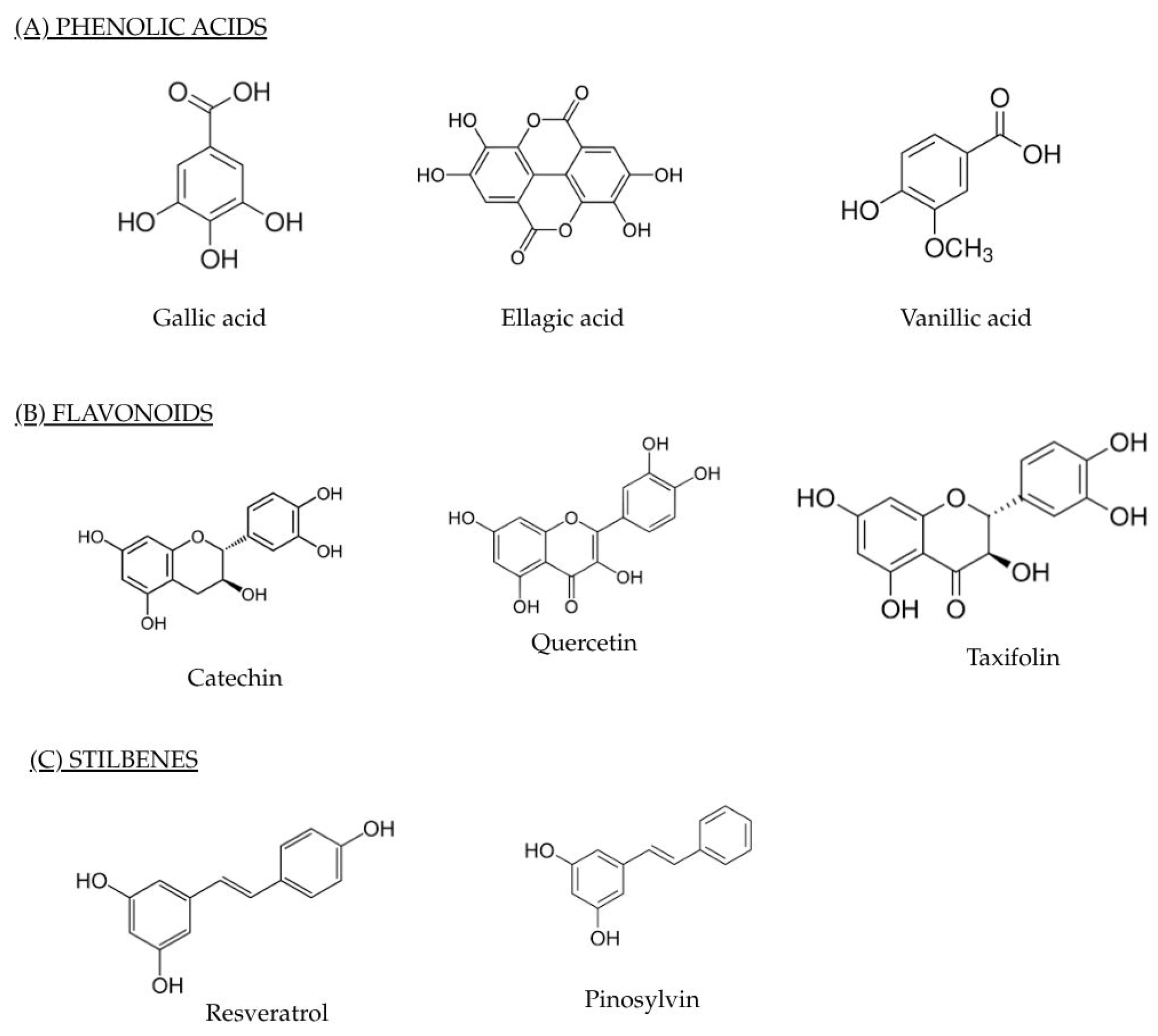
| Beech | ellagic acid gallic acid vanillic acid | catechin and quercetin | - | roburin |
| Oak | ellagic acid gallic acid vanillic acid coumaric acid and syringic acid | catechin, epicatechin, taxifolin and quercetin | - | - |
| Hornbeam | chlorogenic acid and ellagic acid | myricetin, luteolin, quercetin and apigenin | - | - |
| Softwood bark | ||||
| Pine | - | kaempferol, quercetin and taxifolin | pinosylvin | - |
| Spruce | - | quercetin and myricetin | resveratrol piceid piceatannol | - |
| Fir | gallic acid vanillic acid coumaric acid and ferulic acid | catechin, taxifolin, epicatechin and quercetin | - | - |
2.3. Hornbeam (Carpinus betulus)
2.4. Scots Pine (Pinus sylvestris)
2.5. Norway Spruce (Picea abies)
2.6. Silver Fir (Abies Alba)
3. Extraction Techniques for Isolation of Phenolic Compounds
3.1. Conventional Extraction Techniques
3.2. Nonconventional Extraction Techniques
3.3. Deep Eutectic Solvents as Bark Extraction Agents
3.3.1. The Position of DES Extraction Among Current Extraction Methodologies
3.3.2. The Concept of DESs and Their Classification
| HBD with Various Functional Groups | |||||
|---|---|---|---|---|---|
| Carboxylic Acid-Based DESs | |||||
| Monocarboxylic acids | |||||
| Formic acid | Acetic acid | Butyric acid | Lactic acid | Glycolic acid | Propionic acid Levulinic acid |
| Di/Tricarboxylic acids | |||||
| Oxalic acid | Malonic acid | Succinic acid | Malic acid | Citric acid | Maleic acid Glutaric acid |
| Amine/amide-based DESs | |||||
| urea, formamide, acetamide, ethanolamine, diethanolamine, imidazole, methyl diethanolamine | |||||
| Polyalcohol/saccharide-based DESs | |||||
| glycerol ethylene glycol propylene glycol 1,4-butanediol glucose fructose xylitol sucrose | |||||
| DESs based on phenolic compounds (derived from lignin) | |||||
| resorcinol catechol vanillin p-hydroxybenzaldehyde p-hydroxybenzyl alcohol p-hydroxybenzoic acid p-coumaric acid gallic acid salicylic acid | |||||
| HBAs with various functional groups | |||||
| choline chloride betaine guanidine hydrochloride proline choline dihydrogen citrate | |||||
| ethyl ammonium chloride acetylcholine chloride choline dihydrogen phosphate benzyl triethyl ammonium chloride benzyl trimethyl ammonium chloride | |||||
| Catalysts/co-solvents | |||||
| Inorganic and organic acids | |||||
| sulfuric acid phosphotungstic acid phosphomolybdic acid silicotungstic acid p-toluenesulfonic acid | |||||
| Metal salts or hydrates | |||||
| AlCl3 × 6H2O FeCl3 × 6H2O CrCl3 × 6H2O FeCl2 × 4H2O ZnCl2 CuCl2 | |||||
| Non-polar solvents n-butanol | |||||
| Others water and alkaline hydrogen peroxide | |||||
- Ionic liquids composed of acids and bases;
- Neutral NADESs prepared solely from carbohydrates or from carbohydrates combined with other polyalcohols;
- Neutral NADESs with bases, formed from carbohydrates or polyalcohols and organic bases;
- Neutral NADESs with acids, prepared from carbohydrates or polyalcohols and organic acids;
3.3.3. Methods of DES Preparation
3.3.4. Physical–Chemical Properties of DESs
3.3.5. Techno-Economic Aspects and Engineering Challenges of Industrializing DES Extraction
4. Isolation of Phenolic Compounds from Forest Biomass Using DESs/NADESs
5. Use of Phenolic Compounds from Bark Extracts
5.1. Polymer Industry
5.2. Agricultural and Food Industry
5.3. Pharmaceutical and Cosmetic Industries
5.4. Protection of Cultural Heritage Objects
6. Conclusions
Author Contributions
Funding
Data Availability Statement
Conflicts of Interest
References
- Forest Portal. Available online: https://www.forestportal.sk/odborna-sekcia-i/informacie-o-lesoch/zakladne-informacie-o-lesoch/vymera-lesov-europy/ (accessed on 8 April 2023).
- The European Union and Forests. Available online: https://www.europarl.europa.eu/ftu/pdf/en/FTU_3.2.11.pdf (accessed on 6 April 2023).
- Report on Forestry in the Slovak Republic for 2021—Green Report. Available online: https://web.nlcsk.org/ (accessed on 31 March 2023).
- Europe’s Forests in the Spotlight. In Proceedings of the 4th Ministerial Conference on the Protection of Forests in Europe, Vienna, Austria, 28–30 April 2003.
- European Forest Institute. Available online: http://dataservices.efi.int/euromap/phase2/register.php (accessed on 27 November 2025).
- Bark Structure and Functional Ecology. Available online: https://www.jstor.org/stable/43932771 (accessed on 26 September 2025).
- Tirado-Kulieva, V.A.; Hernández-Martinéz, E.; Choque-Rivera, T.J. Phenolic compounds versus SARS-CoV-2: An update on the main findings against COVID-19. Heliyon 2022, 8, e10702. [Google Scholar] [CrossRef] [Scilit]
- Burčová, Z.; Kreps, F.; Greifová, M.; Jablonský, M.; Ház, A.; Schmidt, Š.; Šurina, I. Antibacterial and antifungal activity of phytosterols and methyl dehydroabietate of Norway spruce bark extracts. J. Biotechnol. 2018, 282, 18–24. [Google Scholar] [CrossRef] [Scilit]
- Freyssin, A.; Page, G.; Fauconneau, B.; Bilan, A.R. Natural stilbenes effects in animal models of Alzheimer‘s disease. Neural Regen Res. 2020, 15, 843. [Google Scholar] [CrossRef] [Scilit] [PubMed]
- Rege, S.D.; Geetha, T.; Griffin, G.D.; Broderick, T.L.; Babu, J.R. Neuroprotective effects of resveratrol in Alzheimer disease pathology. Front. Aging Neurosci. 2014, 6, 218. [Google Scholar] [CrossRef] [Scilit]
- Lesjak, M.M.; Beara, I.N.; Orčić, D.Z.; Anačkov, G.T.; Balog, K.J.; Francišković, M.M.; Mimica-Dukić, N.M. Juniperus sibirica Burgsdorf. as a novel source of antioxidant and anti-inflammatory agents. Food Chem. 2011, 124, 850–856. [Google Scholar] [CrossRef] [Scilit]
- Ali Redha, A. Review on extraction of phenolic compounds from natural sources using green deep eutectic solvents. J. Agric. Food Chem. 2021, 69, 878–912. [Google Scholar] [CrossRef] [Scilit]
- Burlacu, E.; Tanase, C. Anticancer Potential of natural bark products—A review. Plants 2021, 10, 1895. [Google Scholar] [CrossRef] [Scilit] [PubMed]
- da Silva, N.C.; de Barros-Alexandrino, T.T.; Assis, O.B.G.; Martelli-Tosi, M. Extraction of phenolic compounds from acerola by-products using chitosan solution, encapsulation and application in extending the shelf-life of guava. Food Chem. 2021, 354, 129553. [Google Scholar] [CrossRef] [Scilit] [PubMed]
- Samper, M.D.; Fages, E.; Fenollar, O.; Boronat, T.; Balart, R. The potential of flavonoids as natural antioxidants and UV light stabilizers for polypropylene. J. Appl. Polym. Sci. 2013, 129, 1707–1716. [Google Scholar] [CrossRef] [Scilit]
- Neis, F.A.; de Costa, F.; de Araújo, A.T., Jr.; Fett, J.P.; Fett-Neto, A.G. Multiple industrial uses of non-wood pine products. Ind. Crops Prod. 2019, 130, 248–258. [Google Scholar] [CrossRef] [Scilit]
- De La Rosa, L.A.; Moreno-Escamilla, J.O.; Rodrigo-García, J.; Alvarez-Parrilla, E. Phenolic compounds. In Postharvest Physiology and Biochemistry of Fruits and Vegetables; Yahia, E.M., Carrillo-López, A., Eds.; Woodhead Publishing: Cambridge, UK; Andre Gerharc Wolff: Cambridge, MA, USA, 2019; pp. 253–271. [Google Scholar] [CrossRef] [Scilit]
- Dedrie, M.; Jacquet, N.; Bombeck, P.L.; Hébert, J.; Richel, A. Oak barks as raw materials for the extraction of polyphenols for the chemical and pharmaceutical sectors: A regional case study. Ind. Crops Prod. 2015, 70, 316–321. [Google Scholar] [CrossRef] [Scilit]
- Dietrichs, H.H.; Garves, K.; Behrensdorf, D.; Sinner, M. Untersuchungen über die Kohlenhydrate der Rinden einheimischer Holzarten. Holzforschung 1978, 32, 60–67. [Google Scholar] [CrossRef] [Scilit]
- Fernández de Simón, B.; Cadahía, E.; Conde, E.; García-Vallejo, M.C. Low molecular weight phenolic compounds in Spanish oak woods. J. Agric. Food Chem. 1996, 44, 1507–1511. [Google Scholar] [CrossRef] [Scilit]
- Elansary, H.O.; Szopa, A.; Kubica, P.; Ekiert, H.; Mattar, M.A.; Al-Yafrasi, M.A.; Yessoufou, K. Polyphenol profile and pharmaceutical potential of Quercus spp. bark extracts. Plants 2019, 8, 486. [Google Scholar] [CrossRef] [Scilit]
- Zahri, S.; Belloncle, C.; Charrier, F.; Pardon, P.; Quideau, S.; Charrier, B. UV light impact on ellagitannins and wood surface colour of European oak (Quercus petraea and Quercus robur). Appl. Surf. Sci. 2007, 253, 4985–4989. [Google Scholar] [CrossRef] [Scilit]
- Frédérich, M.; Marcowycz, A.; Cieckiewicz, E.; Mégalizzi, V.; Angenot, L.; Kiss, R. In vitro anticancer potential of tree extracts from the Walloon Region forest. Planta Med. 2019, 75, 1634–1637. [Google Scholar] [CrossRef] [Scilit]
- Mämmelä, P.; Savolainen, H.; Lindroos, L.; Kangas, J.; Vartiainen, T. Analysis of oak tannins by liquid chromatography-electrospray ionisation mass spectrometry. J. Chromatogr. A 2020, 891, 75–83. [Google Scholar] [CrossRef] [Scilit]
- Salminen, J.P.; Roslin, T.; Karonen, M.; Sinkkonen, J.; Pihlaja, K.; Pulkkinen, P. Seasonal variation in the content of hydrolyzable tannins, flavonoid glycosides, and proanthocyanidins in oak leaves. J. Chem. Ecol. 2004, 30, 1693–1711. [Google Scholar] [CrossRef] [Scilit] [PubMed]
- Hofmann, T.; Makk, Á.N.; Albert, L. Extraction of (+)-catechin from oak (Quercus spp.) bark: Optimization of pretreatment and extraction conditions. Heliyon 2023, 9, e22024. [Google Scholar] [CrossRef] [Scilit]
- Affany, A.; Salvayre, R.; Dousté-Blazy, L. Comparison of the protective effect of various flavonoids against lipid peroxidation of erythrocyte membranes (induced by cumene hydroperoxide). Fundam. Clin. Pharmacol. 1987, 1, 451–457. [Google Scholar] [CrossRef] [Scilit]
- Isemura, M. Catechin in human health and disease. Molecules 2019, 24, 528. [Google Scholar] [CrossRef] [Scilit]
- Blažej, A.; Košík, M. Complex processing of tree phytomass. In Phytomass a Raw Material for Chemistry and Biotechnology; Kemp, T.J., Kennedy, J.F., Eds.; Ellis Horwood Limited: Chichester, UK, 1993; pp. 426–431. [Google Scholar]
- Hofmann, T.; Nebehaj, E.; Stefanovits-Bányai, É.; Albert, L. Antioxidant capacity and total phenol content of beech (Fagus sylvatica L.) bark extracts. Ind. Crops Prod. 2015, 77, 375–381. [Google Scholar] [CrossRef] [Scilit]
- Hofmann, T.; Nebehaj, E.; Albert, L. The high-performance liquid chromatography/multistage electrospray mass spectrometric investigation and extraction optimization of beech (Fagus sylvatica L.) bark polyphenols. J. Chromatogr. A 2015, 1393, 96–105. [Google Scholar] [CrossRef] [Scilit] [PubMed]
- Tănase, C.; Coşarcă, S.; Toma, F.; Mare, A.; Man, A.; Miklos, A.; Boz, I. Antibacterial activities of beech bark (Fagus sylvatica L.) polyphenolic extract. Environ. Eng. Manag. J. 2018, 17, 877–884. [Google Scholar] [CrossRef] [Scilit]
- Formato, M.; Piccolella, S.; Zidorn, C.; Pacifico, S. UHPLC-HRMS analysis of Fagus sylvatica (Fagaceae) leaves: A renewable source of antioxidant polyphenols. Antioxidants 2021, 10, 1140. [Google Scholar] [CrossRef] [Scilit]
- Formato, M.; Scharenberg, F.; Pacifico, S.; Zidorn, C. Seasonal variations in phenolic natural products in Fagus sylvatica (European beech) leaves. Phytochemistry 2022, 203, 113385. [Google Scholar] [CrossRef] [Scilit]
- Tanase, C.; Mocan, A.; Coșarcă, S.; Gavan, A.; Nicolescu, A.; Gheldiu, A.M.; Crișan, O. Biological and chemical insights of beech (Fagus sylvatica L.) bark: A source of bioactive compounds with functional properties. Antioxidants 2019, 8, 417. [Google Scholar] [CrossRef] [Scilit] [PubMed]
- Nicu, A.I.; Pîrvu, L.; Stoian, G.; Vamanu, A. Antibacterial activity of ethanolic extracts from Fagus sylvatica L. And Juglans regia L. leaves. Farmacia 2018, 66, 483–486. [Google Scholar] [CrossRef] [Scilit]
- Coșarcă, S.L.; Moacă, E.A.; Tanase, C.; Muntean, D.L.; Pavel, I.Z.; Dehelean, C.A. Spruce and beech bark aqueous extracts: Source of polyphenols, tannins and antioxidants correlated to in vitro antitumor potential on two different cell lines. Wood Sci. Technol. 2019, 53, 313–333. [Google Scholar] [CrossRef] [Scilit]
- Kovač-Bešović, E.E.; Durić, K.; Kalodera, Z.; Sofić, E. Identification and isolation of pharmacologically active triterpenes in Betuale cortex, Betula pendula Roth., Betulaceae. Bosn. J. Basic Med. Sci. 2009, 9, 31. [Google Scholar] [CrossRef] [Scilit]
- Cieckiewicz, E.; Angenot, L.; Gras, T.; Kiss, R.; Frédérich, M. Potential anticancer activity of young Carpinus betulus leaves. Phytomedicine 2012, 19, 278–283. [Google Scholar] [CrossRef] [Scilit] [PubMed]
- Hofmann, T.; Nebehaj, E.; Albert, L. Antioxidant properties and detailed polyphenol profiling of European hornbeam (Carpinus betulus L.) leaves by multiple antioxidant capacity assays and high-performance liquid chromatography/multistage electrospray mass spectrometry. Ind. Crops Prod. 2016, 87, 340–349. [Google Scholar] [CrossRef] [Scilit]
- Kuiters, A.T.; Sarink, H.M. Leaching of phenolic compounds from leaf and needle litter of several deciduous and coniferous trees. Soil Biol. Biochem. 1986, 18, 475–480. [Google Scholar] [CrossRef] [Scilit]
- Xiao, J.; Capanoglu, E.; Jassbi, A.R.; Miron, A. Advance on the flavonoid C-glycosides and health benefits. Crit. Rev. Food Sci. Nutr. 2016, 56, S29–S45. [Google Scholar] [CrossRef] [Scilit]
- Metsämuuronen, S.; Sirén, H. Bioactive phenolic compounds, metabolism and properties: A review on valuable chemical compounds in Scots pine and Norway spruce. Phytochem. Rev. 2019, 18, 623–664. [Google Scholar] [CrossRef] [Scilit]
- Välimaa, A.L.; Honkalampi-Hämäläinen, U.; Pietarinen, S.; Willför, S.; Holmbom, B.; von Wright, A. Antimicrobial and cytotoxic knotwood extracts and related pure compounds and their effects on food-associated microorganisms. Int. J. Food Microbiol. 2007, 115, 235–243. [Google Scholar] [CrossRef] [Scilit]
- Lindberg, L.E.; Willför, S.M.; Holmbom, B.R. Antibacterial effects of knotwood extractives on paper mill bacteria. J. Ind. Microbiol. Biotechnol. 2004, 31, 137–147. [Google Scholar] [CrossRef] [Scilit]
- Sunil, C.; Xu, B. An insight into the health-promoting effects of taxifolin (dihydroquercetin). Phytochemistry 2019, 166, 112066. [Google Scholar] [CrossRef] [Scilit] [PubMed]
- Hashemzaei, M.; Far, A.D.; Yari, A.; Heravi, R.E.; Tabrizian, K.; Taghdisi, S.M.; Sadegh, G.H.; Hosseini, M.; Kelly-Wintenberg, K.; Rezaee, R. Anticancer and apoptosis-inducing effects of quercetin in vitro and in vivo. Oncol. Rep. 2017, 38, 819–828. [Google Scholar] [CrossRef] [Scilit]
- Costa, L.G.; Garrick, J.M.; Roquè, P.J.; Pellacani, C. Mechanisms of neuroprotection by quercetin: Counteracting oxidative stress and more. Oxid. Med. Cell. Longev. 2016, 2016, 2986796. [Google Scholar] [CrossRef] [Scilit]
- Boyina, H.K.; Khan, I.; Pappula, N.; Mondal, R.; Deora, N.J.; Shrivastava, S.K.; Kumar, V. In silico and in vivo studies on quercetin as potential anti-parkinson agent. Adv. Exp. Med. Biol. 2020, 1195, 1–11. [Google Scholar] [CrossRef] [Scilit]
- Jablonský, M.; Nosalova, J.; Sládková, A.; Ház, A.; Kreps, F.; Valka, J.; Šurina, I. Valorisation of softwood bark through extraction of utilizable chemicals. A review. Biotechnol. Adv. 2017, 35, 726–750. [Google Scholar] [CrossRef] [Scilit]
- Bastianetto, S.; Ménard, C.; Quirion, R. Neuroprotective action of resveratrol. Biochim. Biophys. Acta Mol. Basis Dis. 2015, 1852, 1195–1201. [Google Scholar] [CrossRef] [Scilit]
- Kazemirad, H.; Kazerani, H.R. Cardioprotective effects of resveratrol following myocardial ischemia and reperfusion. Mol. Biol. Rep. 2020, 47, 5843–5850. [Google Scholar] [CrossRef] [Scilit]
- Zhou, H.B.; Chen, J.J.; Wang, W.X.; Cai, J.T.; Du, Q. Anticancer activity of resveratrol on implanted human primary gastric carcinoma cells in nude mice. World J. Gastroenterol. 2005, 11, 280–284. [Google Scholar] [CrossRef] [Scilit]
- Jang, M.; Cai, L.; Udeani, G.O.; Slowing, K.V.; Thomas, C.F.; Beecher, C.W.; Fong, H.H.; Farnsworth, N.R.; Kinghorn, A.D.; Mehta, R.G.; et al. Cancer chemopreventive activity of resveratrol, a natural product derived from grapes. Science 1997, 275, 218–220. [Google Scholar] [CrossRef] [Scilit]
- Su, J.L.; Yang, C.Y.; Zhao, M.; Kuo, M.L.; Yen, M.L. Forkhead proteins are critical for bone morphogenetic protein-2 regulation and anti-tumor activity of resveratrol. J. Biol. Chem. 2007, 282, 19385–19398. [Google Scholar] [CrossRef] [Scilit] [PubMed]
- Piotrowska, H.; Kucinska, M.; Murias, M. Biological activity of piceatannol: Leaving the shadow of resveratrol. Mutat. Res. Rev. Mutat. Res. 2012, 750, 60–82. [Google Scholar] [CrossRef] [Scilit]
- Butnaru, E.; Pamfil, D.; Stoleru, E.; Brebu, M. Characterization of bark, needles and cones from silver fir (Abies alba mill.) towards valorization of biomass forestry residues. Biomass Bioenergy 2022, 159, 106413. [Google Scholar] [CrossRef] [Scilit]
- Benković, E.T.; Grohar, T.; Žigon, D.; Švajger, U.; Janeš, D.; Kreft, S.; Kočevar Glavač, N. Chemical composition of the silver fir (Abies alba) bark extract Abigenol® and its antioxidant activity. Ind. Crops Prod. 2014, 52, 23–28. [Google Scholar] [CrossRef] [Scilit]
- Vek, V.; Keržič, E.; Poljanšek, I.; Eklund, P.; Humar, M.; Oven, P. Wood extractives of silver fir and their antioxidant and antifungal properties. Molecules 2021, 26, 6412. [Google Scholar] [CrossRef] [Scilit]
- Das, A.; Baidya, R.; Chakraborty, T.; Samanta, A.K.; Roy, S. Pharmacological basis and new insights of taxifolin: A comprehensive review. Biomed. Pharmacother. 2021, 142, 112004. [Google Scholar] [CrossRef] [Scilit]
- Jha, A.K.; Sit, N. Extraction of bioactive compounds from plant materials using combination of various novel methods: A review. Trends Food Sci. Technol. 2022, 119, 579–591. [Google Scholar] [CrossRef] [Scilit]
- Azmir, J.; Zaidul, I.S.M.; Rahman, M.M.; Sharif, K.M.; Mohamed, A.; Sahena, F.; Jahurul, M.H.A.; Ghafoor, K.; Norulaini, N.A.N.; Omar, A.K.M. Techniques for extraction of bioactive compounds from plant materials: A review. J. Food Eng. 2013, 117, 426–436. [Google Scholar] [CrossRef] [Scilit]
- Alara, O.R.; Abdurahman, N.H.; Ukaegbu, C.I. Extraction of phenolic compounds: A review. Curr. Res. Food Sci. 2021, 4, 200–214. [Google Scholar] [CrossRef] [Scilit] [PubMed]
- Abubakar, A.R.; Haque, M. Preparation of Medicinal Plants: Preparation of medicinal plants: Basic extraction and fractionation procedures for experimental purposes. J. Pharm. Bioallied Sci. 2020, 12, 1–10. [Google Scholar] [CrossRef] [Scilit]
- Santos, M.B.; Sillero, L.; Gatto, D.A.; Labidi, J. Bioactive molecules in wood extractives: Methods of extraction and separation, a review. Ind. Crops Prod. 2022, 186, 115231. [Google Scholar] [CrossRef] [Scilit]
- Olejar, K.J.; Fedrizzi, B.; Kilmartin, P.A. Influence of harvesting technique and maceration process on aroma and phenolic attributes of Sauvignon blanc wine. Food Chem. 2015, 183, 181–189. [Google Scholar] [CrossRef] [Scilit]
- Medeiros, A.B.P.; de Matos, M.E.; de Pinho Monteiro, A.; de Carvalho, J.C.; Soccol, C.R. Cachaça and Rum. Curr. Dev. Biotechnol. Bioeng. 2017, 451–468. [Google Scholar] [CrossRef] [Scilit]
- Bortoletto, A.M. Rum and cachaça. In Distilled Spirits; Elsevier: Amsterdam, The Netherlands, 2023; pp. 61–74. [Google Scholar] [CrossRef] [Scilit]
- Mangwanda, T.; Majozi, T.; Jumbam, N.E.; Aboyade, A.O. Processes, challenges and optimisation of rum production from molasses—A contemporary review. Fermentation 2021, 7, 21. [Google Scholar] [CrossRef] [Scilit]
- Meullemiestre, A.; Petitcolas, E.; Maache-Rezzoug, Z.; Chemat, F.; Rezzoug, S.A. Impact of ultrasound on solid–liquid extraction of phenolic compounds from maritime pine sawdust waste. Kinetics, optimization and large scale experiments. Ultrason. Sonochem. 2016, 28, 230–239. [Google Scholar] [CrossRef] [Scilit] [PubMed]
- Bostyn, S.; Destandau, E.; Charpentier, J.-P.; Serrano, V.; Seigneuret, J.-M.; Breton, C. Optimization and kinetic modelling of robinetin and dihydrorobinetin extraction from Robinia pseudoacacia wood. Ind. Crops Prod. 2018, 126, 22–30. [Google Scholar] [CrossRef] [Scilit]
- Todaro, L.; Russo, D.; Cetera, P.; Milella, L. Effects of thermo-vacuum treatment on secondary metabolite content and antioxidant activity of poplar (Populus nigra L.) wood extracts. Ind. Crops Prod. 2017, 109, 384–390. [Google Scholar] [CrossRef] [Scilit]
- Cetera, P.; Russo, D.; Milella, L.; Todaro, L. Thermo-treatment affects Quercus cerris L. wood properties and the antioxidant activity and chemical composition of its by-product extracts. Ind. Crops Prod. 2019, 130, 198–208. [Google Scholar] [CrossRef] [Scilit]
- St-Pierre, F.O.; Achim, A.; Stevanovic, T. Composition of ethanolic extracts of wood and bark from Acer saccharum and Betula alleghaniensis trees of different vigor classes. Ind. Crops Prod. 2013, 41, 179–187. [Google Scholar] [CrossRef] [Scilit]
- Diouf, P.N.; Stevanovic, T.; Boutin, Y. The effect of extraction process on polyphenol content, triterpene composition and bioactivity of yellow birch (Betula alleghaniensis Britton) extracts. Ind. Crops Prod. 2009, 30, 297–303. [Google Scholar] [CrossRef] [Scilit]
- Fernández-Agulló, A.; Freire, M.S.; González-Álvarez, J. Effect of the extraction technique on the recovery of bioactive compounds from eucalyptus (Eucalyptus globulus) wood industrial wastes. Ind. Crops Prod. 2015, 64, 105–113. [Google Scholar] [CrossRef] [Scilit]
- Hussain, M.K.; Saquib, M.; Khan, M.F. Techniques for extraction, isolation, and standardization of bio-active compounds from medicinal plants. Nat. Bio-act. Compd. 2019, 2, 179–200. [Google Scholar] [CrossRef] [Scilit]
- Soquetta, M.B.; Terra, L.M.; Bastos, C.P. Green technologies for the extraction of bioactive compounds in fruits and vegetables. CyTA J. Food 2018, 16, 400–412. [Google Scholar] [CrossRef] [Scilit]
- Ulukanli, Z.; Karabörklü, S.; Bozok, F.; Ates, B.; Erdogan, S.; Cenet, M.; Karaaslan, M.G. Chemical composition, antimicrobial, insecticidal, phytotoxic and antioxidant activities of Mediterranean Pinus brutia and Pinus pinea resin essential oils. Chin. J. Nat. Med. 2014, 12, 901–910. [Google Scholar] [CrossRef] [Scilit]
- Choi, Y.H.; Verpoorte, R. Green solvents for the extraction of bioactive compounds from natural products using ionic liquids and deep eutectic solvents. Curr. Opin. Food Sci. 2019, 26, 87–93. [Google Scholar] [CrossRef] [Scilit]
- Nisca, A.; Tanase, C. Approaches to Extracting Bioactive Compounds from Bark of Various Plants: A Brief Review. Plants 2025, 14, 2929. [Google Scholar] [CrossRef] [Scilit] [PubMed]
- Ali, A.; Chua, B.L.; Chow, Y.H. An insight into the extraction and fractionation technologies of the essential oils and bioactive compounds in Rosmarinus officinalis L.: Past, present and future. Trends Anal. Chem. 2019, 118, 338–351. [Google Scholar] [CrossRef] [Scilit]
- Alchera, F.; Ginepro, M.; Giacalone, G. Microwave-assisted extraction (MAE) of bioactive compounds from blueberry by-products using a sugar-based NADES: A novelty in green chemistry. Food Sci. Technol. 2023, 189, 115642. [Google Scholar] [CrossRef] [Scilit]
- Smith, E.L.; Abbott, A.P.; Ryder, K.S. Deep eutectic solvents (DESs) and their applications. Chem. Rev. 2014, 114, 11060–11082. [Google Scholar] [CrossRef] [Scilit]
- Abbott, A.P.; Harris, R.C.; Ryder, K.S. Application of hole theory to define ionic liquids by their transport properties. J. Phys. Chem. B 2007, 111, 4910–4913. [Google Scholar] [CrossRef] [Scilit]
- Abbott, A.P.; Capper, G.; Davies, L.L.; Rasheed, R.K.; Tambyrajah, V. Novel solvent properties of choline chloride/urea mixtures. Chem. Commun. 2003, 1, 70–71. [Google Scholar] [CrossRef] [Scilit]
- Dai, Y.; van Spronsen, J.; Witkamp, G.J.; Verpoorte, R.; Choi, Y.H. Natural deep eutectic solvents as new potential media for green technology. Anal. Chim. Acta 2013, 766, 61–68. [Google Scholar] [CrossRef] [Scilit] [PubMed]
- Mannu, A.; Blangetti, M.; Baldino, S.; Prandi, C. Promising technological and industrial applications of deep eutectic systems. Materials 2021, 14, 2494. [Google Scholar] [CrossRef] [Scilit] [PubMed]
- Abranches, D.O.; Coutinho, J.A.P. Type V deep eutectic solvents: Design and applications. Curr. Opin. Green Sustain. Chem. 2022, 35, 100612. [Google Scholar] [CrossRef] [Scilit]
- EFSA Panel on Additives and Products or Substances Used in Animal Feed. Scientific Opinion on safety and efficacy of choline chloride as a feed additive for all animal species. EFSA J. 2011, 9, 2353. [CrossRef] [Scilit]
- Paiva, A.; Craveiro, R.; Aroso, I.; Martins, M.; Reis, R.L.; Duarte, A.R.C. Natural deep eutectic solvents–solvents for the 21st century. ACS Sustain. Chem. Eng. 2014, 2, 1063–1071. [Google Scholar] [CrossRef] [Scilit]
- Duarte, A.R.C.; Ferreira, A.S.D.; Barreiros, S.; Cabrita, E.; Reis, R.L.; Paiva, A. A comparison between pure active pharmaceutical ingredients and therapeutic deep eutectic solvents: Solubility and permeability studies. Eur. J. Pharm. Biopharm. 2017, 114, 296–304. [Google Scholar] [CrossRef] [Scilit]
- El Achkar, T.; Greige-Gerges, H.; Fourmentin, S. Basics and properties of deep eutectic solvents: A review. Environ. Chem. Lett. 2021, 19, 3397–3408. [Google Scholar] [CrossRef] [Scilit]
- Jančíková, V.; Jablonský, M. Exploiting deep eutectic solvent-like mixtures for fractionation biomass, and the mechanism removal of lignin: A review. Sustainability 2024, 16, 504. [Google Scholar] [CrossRef] [Scilit]
- Abbott, A.P.; Boothby, D.; Capper, G.; Davies, D.L.; Rasheed, R.K. Deep eutectic solvents formed between choline chloride and carboxylic acids: Versatile alternatives to ionic liquids. J. Am. Chem. Soc. 2004, 126, 9142–9147. [Google Scholar] [CrossRef] [Scilit]
- Abbott, A.P.; Capper, G.; Davies, D.L.; Rasheed, R.K. Ionic liquid analogues formed from hydrated metal salts. Chem. Eur. J. 2004, 10, 3769–3774. [Google Scholar] [CrossRef] [Scilit] [PubMed]
- Rodriguez Rodriguez, N.; Van Den Bruinhorst, A.; Kollau, L.J.B.M.; Kroon, M.C.; Binnemans, K. Degradation of deep-eutectic solvents based on choline chloride and carboxylic acids. ACS Sustain. Chem. Eng. 2019, 7, 11521–11528. [Google Scholar] [CrossRef] [Scilit]
- Gutiérrez, M.C.; Ferrer, M.L.; Mateo, C.R.; Del Monte, F. Freeze-drying of aqueous solutions of deep eutectic solvents: A suitable approach to deep eutectic suspensions of self-assembled structures. Langmuir 2009, 25, 5509–5515. [Google Scholar] [CrossRef] [Scilit]
- Martins, M.A.R.; Pinho, S.P.; Coutinho, J.A.P. Insights into the nature of eutectic and deep eutectic mixtures. J. Solution Chem. 2019, 48, 962–982. [Google Scholar] [CrossRef] [Scilit]
- Tang, B.; Row, K.H. Recent developments in deep eutectic solvents in chemical sciences. Monatsh. Chem. 2013, 144, 1427–1454. [Google Scholar] [CrossRef] [Scilit]
- Florindo, C.; Branco, L.C.; Marrucho, I.M. Quest for green-solvent design: From hydrophilic to hydrophobic (deep) eutectic solvents. ChemSusChem 2019, 12, 1549–1559. [Google Scholar] [CrossRef] [Scilit]
- Shahbaz, K.; Baroutian, S.; Mjalli, F.S.; Hashim, M.A.; Alnashef, I.M. Densities of ammonium and phosphonium based deep eutectic solvents: Prediction using artificial intelligence and group contribution techniques. Thermochim. Acta 2012, 527, 59–66. [Google Scholar] [CrossRef] [Scilit]
- Ibrahim, R.K.; Hayyan, M.; AlSaadi, M.A.; Ibrahim, S.; Hayyan, A.; Hashim, M.A. Physical properties of ethylene glycol-based deep eutectic solvents. J. Mol. Liq. 2019, 276, 794–800. [Google Scholar] [CrossRef] [Scilit]
- Florindo, C.; Oliveira, F.S.; Rebelo, L.P.N.; Fernandes, A.M.; Marrucho, I.M. Insights into the synthesis and properties of deep eutectic solvents based on cholinium chloride and carboxylic acids. ACS Sustain. Chem. Eng. 2014, 2, 2416–2425. [Google Scholar] [CrossRef] [Scilit]
- Cui, Y.; Li, C.; Yin, J.; Li, S.; Jia, Y.; Bao, M. Design, synthesis and properties of acidic deep eutectic solvents based on choline chloride. J. Mol. Liq. 2017, 236, 338–343. [Google Scholar] [CrossRef] [Scilit]
- Abbott, A.P.; Barron, J.C.; Ryder, K.S.; Wilson, D. Eutectic-based ionic liquids with metal-containing anions and cations. Chem. Eur. J. 2007, 13, 6495–6501. [Google Scholar] [CrossRef] [Scilit]
- Weng, L.; Toner, M. Janus-faced role of water in defining nanostructure of choline chloride/glycerol deep eutectic solvent. Phys. Chem. Chem. Phys. 2018, 20, 22455–22462. [Google Scholar] [CrossRef] [Scilit]
- García, G.; Aparicio, S.; Ullah, R.; Atilhan, M. Deep eutectic solvents: Physicochemical properties and gas separation applications. Energy Fuels 2015, 29, 2616–2644. [Google Scholar] [CrossRef] [Scilit]
- Lapeña, D.; Lomba, L.; Artal, M.; Lafuente, C.; Giner, B. The NADES glyceline as a potential green solvent: A comprehensive study of its thermophysical properties and effect of water inclusion. J. Chem. Thermodyn. 2019, 128, 164–172. [Google Scholar] [CrossRef] [Scilit]
- Dai, Y.; Witkamp, G.J.; Verpoorte, R.; Choi, Y.H. Tailoring properties of natural deep eutectic solvents with water to facilitate their applications. Food Chem. 2015, 187, 14–19. [Google Scholar] [CrossRef] [Scilit]
- Oliveira, I.L.D.; Domínguez-Rodríguez, G.; Montero, L.; Viganó, J.; Cifuentes, A.; Rostagno, M.A.; Ibáñez, E. Advanced extraction techniques combined with natural deep eutectic solvents for extracting phenolic compounds from pomegranate (Punica granatum L.) peels. Int.J. Mol. Sci. 2024, 25, 9992. [Google Scholar] [CrossRef] [Scilit]
- Bezerra, F.D.S.; Koblitz, M.G.B. Extraction of phenolic compounds from agro-industrial by-products using natural deep eutectic solvents: A review of green and advanced techniques. Separations 2025, 12, 150. [Google Scholar] [CrossRef] [Scilit]
- Ruesgas-Ramón, M.; Figueroa-Espinoza, M.C.; Durand, E. Application of deep eutectic solvents (DES) for phenolic compounds extraction: Overview, challenges, and opportunities. J. Agric. Food Chem. 2017, 65, 3591–3601. [Google Scholar] [CrossRef] [Scilit]
- Jablonský, M.; Majová, V.; Strižincová, P.; Šima, J.; Jablonský, J. Investigation of total phenolic content and antioxidant activities of spruce bark extracts isolated by deep eutectic solvents. Crystals 2020, 10, 402. [Google Scholar] [CrossRef] [Scilit]
- Duarte, H.; Gomes, V.; Aliaño-González, M.J.; Faleiro, L.; Romano, A.; Medronho, B. Ultrasound-assisted extraction of polyphenols from maritime pine residues with deep eutectic solvents. Foods 2022, 11, 3754. [Google Scholar] [CrossRef] [Scilit] [PubMed]
- Sillero, L.; Prado, R.; Welton, T.; Labidi, J. Extraction of flavonoid compounds from bark using sustainable deep eutectic solvents. Sustain. Chem. Pharm. 2021, 24, 100544. [Google Scholar] [CrossRef] [Scilit]
- Spinelli, S.; Costa, C.; Conte, A.; La Porta, N.; Padalino, L.; Del Nobile, M.A. Bioactive compounds from Norway spruce bark: Comparison among sustainable extraction techniques for potential food applications. Foods 2019, 8, 524. [Google Scholar] [CrossRef] [Scilit]
- Fernandes, C.; Melro, E.; Magalhães, S.; Alves, L.; Craveiro, R.; Filipe, A.; Valente, A.J.M.; Martins, F.E.; Antunes, F.E. New deep eutectic solvent assisted extraction of highly pure lignin from maritime pine sawdust (Pinus pinaster Ait.). Int. J. Biol. Macromol. 2021, 177, 294–305. [Google Scholar] [CrossRef] [Scilit]
- Vieira, V.; Prieto, M.A.; Barros, L.; Coutinho, J.A.P.; Ferreira, I.C.F.R.; Ferreira, O. Enhanced extraction of phenolic compounds using choline chloride based deep eutectic solvents from Juglans regia L. Ind. Crops Prod. 2018, 115, 261–271. [Google Scholar] [CrossRef] [Scilit]
- García, A.; Rodríguez-Juan, E.; Rodríguez-Gutiérrez, G.; Rios, J.J.; Fernández-Bolaños, J. Extraction of phenolic compounds from virgin olive oil by deep eutectic solvents (DESs). Food Chem. 2016, 197, 554–561. [Google Scholar] [CrossRef] [Scilit] [PubMed]
- Gao, M.Z.; Ke, F.Y.; Liu, J.L.; Yang, L.L.; Zheng, J.X.; Xu, S.J.; Zhou, L.S.; Li, X.L. A green and integrated strategy for enhanced phenolic compounds extraction from mulberry (Morus alba L.) leaves by deep eutectic solvent. Microchem. J. 2020, 154, 104598. [Google Scholar] [CrossRef] [Scilit]
- Mouratoglou, E.; Malliou, V.; Makris, D.P. Novel glycerol-based natural eutectic mixtures and their efficiency in the ultrasound-assisted extraction of antioxidant polyphenols from agri-food waste biomass. Waste Biomass Valoriz. 2016, 7, 1377–1387. [Google Scholar] [CrossRef] [Scilit]
- Duarte, H.; Gomes, V.; Aliaño-González, M.J.; Faleiro, L.; Romano, A.; Medronho, B. Optimization of the extraction of polyphenols from Pinus pinaster residues using deep eutectic solvents: A sustainable approach. Wood Sci. Technol. 2023, 57, 1175–1196. [Google Scholar] [CrossRef] [Scilit]
- Wu, S.; Fan, X.; Yang, P.; Tian, B.; Jia, X.; Xie, H.; Wang, H. Ultrasound-assisted deep eutectic solvent extraction and bioactivity evaluation of phenolic compounds from white birch bark. Ind. Crops Prod. 2026, 242, 122900. [Google Scholar] [CrossRef] [Scilit]
- Shu, P.; Liu, S.; Wang, N.; Fan, S.; Meng, Y.; Fan, X.; Huang, J. Efficient extraction of flavonoids from Cercis chinensis bark using ultrasound-assisted deep eutectic solvents: Process optimization, characterization, kinetic studies, antioxidant and enzyme inhibition activities. Ind. Crops Prod. 2026, 239, 122536. [Google Scholar] [CrossRef] [Scilit]
- Sánchez-Moya, T.; López-Nicolás, R.; Peso-Echarri, P.; González-Bermúdez, C.A.; Frontela-Saseta, C. Effect of pine bark extract and its phenolic compounds on selected pathogenic and probiotic bacterial strains. Front. Nutr. 2024, 11, 1381125. [Google Scholar] [CrossRef] [Scilit]
- Bravo, L. Polyphenols: Chemistry, dietary sources, metabolism, and nutritional significance. Nutr. Rev. 1998, 56, 317–333. [Google Scholar] [CrossRef] [Scilit]
- Kapadia, P.; Saibi, W.; Selsemi, N.; Sellami, M.; Borgi, M.A.; Guerfel, M.; Allouche, N. Extraction of high-value chemicals from plants for technical and medical applications. Int. J. Mol. Sci. 2022, 23, 10334. [Google Scholar] [CrossRef] [Scilit]
- Benavente-García, O.; Castillo, J.; Marin, F.R.; Ortuño, A.; Del Río, J.A. Uses and properties of citrus flavonoids. J. Agric. Food Chem. 1997, 45, 4505–4515. [Google Scholar] [CrossRef] [Scilit]
- Dou, J.; Sui, M.; Malinen, K.; Pesonen, T.; Isohanni, T.; Vuorinen, T. Spruce bark stilbenes as a nature-inspired sun blocker for sunscreens. Green Chem. 2022, 24, 2962–2974. [Google Scholar] [CrossRef] [Scilit]
- Qian, Y.; Qiu, X.; Zhu, S. Sunscreen performance of lignin from different technical resources and their general synergistic effect with synthetic sunscreens. ACS Sustain. Chem. Eng. 2016, 4, 4029–4035. [Google Scholar] [CrossRef] [Scilit]
- Bridson, J.H.; Kaur, J.; Zhang, Z.; Donaldson, L.; Fernyhough, A. Polymeric flavonoids processed with co-polymers as UV and thermal stabilisers for polyethylene films. Polym. Degrad. Stab. 2015, 122, 18–24. [Google Scholar] [CrossRef] [Scilit]
- Ambrogi, V.; Carfagna, C.; Cerruti, P.; Marturano, V. Additives in polymers. Modif. Polym. Prop. 2017, 87–108. [Google Scholar] [CrossRef] [Scilit]
- OECD. Global Plastics Outlook: Economic Drivers, Environmental Impacts and Policy Options; OECD Publishing: Paris, France, 2022. [Google Scholar] [CrossRef] [Scilit]
- Marturano, V.; Marotta, A.; Salazar, S.A.; Ambrogi, V.; Cerruti, P. Recent advances in bio-based functional additives for polymers. Prog. Mater. Sci. 2023, 139, 101186. [Google Scholar] [CrossRef] [Scilit]
- Gopinath, K.P.; Nagarajan, V.M.; Krishnan, A.; Malolan, R. A critical review on the influence of energy, environmental and economic factors on various processes used to handle and recycle plastic wastes: Development of a comprehensive index. J. Clean. Prod. 2020, 274, 123031. [Google Scholar] [CrossRef] [Scilit]
- Chandrasekaran, S.R.; Avasarala, S.; Murali, D.; Rajagopalan, N.; Sharma, B.K. Materials and energy recovery from e-waste plastics. ACS Sustain. Chem. Eng. 2018, 6, 4594–4602. [Google Scholar] [CrossRef] [Scilit]
- Haider, T.P.; Völker, C.; Kramm, J.; Landfester, K.; Wurm, F.R. Plastics of the future? The impact of biodegradable polymers on the environment and on society. Angew. Chem. Int. Ed. 2019, 58, 50–62. [Google Scholar] [CrossRef] [Scilit]
- Zhang, C.; Garrison, T.F.; Madbouly, S.A.; Kessler, M.R. From plant phenols to novel bio-based polymers. Prog. Polym. Sci. 2022, 125, 101473. [Google Scholar] [CrossRef] [Scilit]
- Ganewatta, M.S.; Lokupitiya, H.N.; Tang, C. Lignin biopolymers in the age of controlled polymerization. Polymers 2019, 11, 1176. [Google Scholar] [CrossRef] [Scilit]
- Ramires, E.C.; Megiatto, J.D.; Gardrat, C.; Castellan, A.; Frollini, E. Biobased composites from glyoxal–phenolic resins and sisal fibers. Bioresour. Technol. 2010, 101, 1998–2006. [Google Scholar] [CrossRef] [Scilit]
- Shirmohammadli, Y.; Efhamisisi, D.; Pizzi, A. Tannins as a sustainable raw material for green chemistry: A review. Ind. Crops Prod. 2018, 126, 316–332. [Google Scholar] [CrossRef] [Scilit]
- Sarika, P.R.; Nancarrow, P.; Khansaheb, A.; Ibrahim, T. Bio-based alternatives to phenol and formaldehyde for the production of resins. Polymers 2020, 12, 2237. [Google Scholar] [CrossRef] [Scilit]
- Aristri, M.A.; Lubis, M.A.R.; Yadav, S.M.; Antov, M.G.; Papadopoulos, A.N.; Pizzi, A.; Fatriasari, W.; Ismayati, M.; Iswanto, A.H. Bio-based polyurethane resins derived from tannin: Source, synthesis, characterisation, and application. Forests 2021, 12, 1516. [Google Scholar] [CrossRef] [Scilit]
- Tátraaljai, D.; Földes, E.; Pukánszky, B. Efficient melt stabilization of polyethylene with quercetin, a flavonoid type natural antioxidant. Polym. Degrad. Stab. 2014, 102, 41–48. [Google Scholar] [CrossRef] [Scilit]
- Sain, S.; Matsakas, L.; Rova, U.; Christakopoulos, P.; Öman, T.; Skrifvars, M. Spruce bark-extracted lignin and tannin-based bioresin-adhesives: Effect of curing temperatures on the thermal properties of the resins. Molecules 2021, 26, 3523. [Google Scholar] [CrossRef] [Scilit] [PubMed]
- Basso, M.C.; Giovando, S.; Pizzi, A.; Celzard, A.; Fierro, V. MALDI-TOF and 13C NMR analysis of tannin–furanic–polyurethane foams adapted for industrial continuous lines application. Polymers 2014, 6, 2985–3004. [Google Scholar] [CrossRef] [Scilit]
- Munteanu, S.B.; Vasile, C. Vegetable additives in food packaging polymeric materials. Polymers 2020, 12, 28. [Google Scholar] [CrossRef] [Scilit] [PubMed]
- Hassan, B.; Chatha, S.A.S.; Hussain, A.I.; Zia, K.M.; Akhtar, N. Recent advances on polysaccharides, lipids and protein based edible films and coatings: A review. Int. J. Biol. Macromol. 2018, 109, 1095–1107. [Google Scholar] [CrossRef] [Scilit]
- Liu, J.; Meng, C.G.; Liu, S.; Kan, J.; Jin, C.H. Preparation and characterization of protocatechuic acid grafted chitosan films with antioxidant activity. Food Hydrocoll. 2017, 63, 457–466. [Google Scholar] [CrossRef] [Scilit]
- Yang, G.; Yue, J.; Gong, X.; Qian, B.; Wang, H.; Deng, Y.; Zhao, Y. Blueberry leaf extracts incorporated chitosan coatings for preserving postharvest quality of fresh blueberries. Postharvest Biol. Technol. 2014, 92, 46–53. [Google Scholar] [CrossRef] [Scilit]
- Damas-Job, M.d.C.; Soriano-Melgar, L.d.A.A.; Rodríguez-Herrera, R.; Peralta-Rodríguez, R.D.; Rivera-Cabrera, F.; Martínez-Vazquez, D.G. Effect of broccoli fresh residues-based extracts on the postharvest quality of cherry tomato (Solanum lycopersicum L.) fruits. Sci. Hortic. 2023, 317, 112076. [Google Scholar] [CrossRef] [Scilit]
- Tang, S.; Sheehan, D.; Buckley, D.J.; Morrissey, P.A.; Kerry, J.P. Anti-oxidant activity of added tea catechins on lipid oxidation of raw minced red meat, poultry and fish muscle. Int. J. Food Sci. Technol. 2001, 36, 685–692. [Google Scholar] [CrossRef] [Scilit]
- Fernández-López, J.; Fernández-Ginés, J.M.; Aleson-Carbonell, L.; Sendra, E.; Sayas-Barberá, E.; Pérez-Alvarez, J.A. Application of functional citrus by-products to meat products. Trends Food Sci. Technol. 2004, 15, 176–185. [Google Scholar] [CrossRef] [Scilit]
- Zabka, M.; Pavela, R. Antifungal efficacy of some natural phenolic compounds against significant pathogenic and toxinogenic filamentous fungi. Chemosphere 2013, 93, 1051–1056. [Google Scholar] [CrossRef] [Scilit]
- Gautam, S.; Chimni, S.S.; Arora, S.; Sohal, S.K. Toxic effects of purified phenolic compounds from Acacia nilotica against common cutworm. Toxicon 2021, 203, 22–29. [Google Scholar] [CrossRef] [Scilit]
- Hernández-Carlos, B.; Gamboa-Angulo, M. Insecticidal and nematicidal contributions of mexican flora in the search for safer biopesticides. Molecules 2019, 24, 897. [Google Scholar] [CrossRef] [Scilit]
- Bass, C.; Hayward, A.; Troczka, B.J.; Haas, J.; Nauen, R. The molecular determinants of pesticide sensitivity in bee pollinators. Sci. Total Environ. 2024, 915, 170174. [Google Scholar] [CrossRef] [Scilit] [PubMed]
- Khan, M.A.; Ahmad, W. Synthetic chemical insecticides: Environmental and agro contaminants. In Microbes for Sustainable Insect Pest Management; Springer: Berlin/Heidelberg, Germany, 2019; pp. 1–22. [Google Scholar] [CrossRef] [Scilit]
- Jayanegara, A.; Leiber, F.; Kreuzer, M. Meta-analysis of the relationship between dietary tannin level and methane formation in ruminants from in vivo and in vitro experiments. J. Anim. Physiol. Anim. Nutr. 2012, 96, 365–375. [Google Scholar] [CrossRef] [Scilit]
- Ku-Vera, J.C.; Jiménez-Ocampo, R.; Valencia-Salazar, S.S.; Montoya-Flores, M.D.; Molina-Botero, I.C.; Arango, J.; Aguilar-Pérez, C.F.; Solorio-Sánchez, F.J. Role of secondary plant metabolites on enteric methane mitigation in ruminants. Front. Vet. Sci. 2020, 7, 560472. [Google Scholar] [CrossRef] [Scilit] [PubMed]
- Tungmunnithum, D.; Thongboonyou, A.; Pholboon, A.; Yangsabai, A. Flavonoids and other phenolic compounds from medicinal plants for pharmaceutical and medical aspects: An Overview. Medicines 2018, 5, 93. [Google Scholar] [CrossRef] [Scilit]
- Dzotam, J.K.; Touani, F.K.; Kuete, V. In vitro antibacterial and antibiotic modifying activity of crude extract, fractions and 3′,4′,7-trihydroxyflavone from Myristica fragrans Houtt against MDR Gram-negative enteric bacteria. BMC Complement. Altern. Med. 2018, 18, 15. [Google Scholar] [CrossRef] [Scilit] [PubMed]
- Tsai, P.J.; Huang, W.C.; Hsieh, M.C.; Sung, P.J.; Kuo, Y.H.; Wu, W.H. Flavones isolated from Scutellariae radix suppress Propionibacterium Acnes-induced cytokine production in vitro and in vivo. Molecules 2016, 21, 15. [Google Scholar] [CrossRef] [Scilit]
- Brusselmans, K.; Vrolix, R.; Verhoeven, G.; Swinnen, J.V. Induction of cancer cell apoptosis by flavonoids is associated with their ability to inhibit fatty acid synthase activity. J. Biol. Chem. 2005, 280, 5636–5645. [Google Scholar] [CrossRef] [Scilit] [PubMed]
- Tylkowski, B.; Romio, M.; Giamberini, M.; Rosu, D.; Rincon, P.A.R.; Montané, D.; Garcia-Valls, R. Christmas tree bio-waste as a power source of bioactive materials with anti-proliferative activities for oral care. Molecules 2022, 27, 6553. [Google Scholar] [CrossRef] [Scilit]
- Piyaratne, P.S.; Leblanc, R.; Myracle, A.D.; Cole, B.J.W.; Fort, R.C. Extraction and purification of (E)-resveratrol from the bark of conifer species. Processes 2022, 10, 647. [Google Scholar] [CrossRef] [Scilit]
- Sterflinger, K.; Pinzari, F. The revenge of time: Fungal deterioration of cultural heritage with particular reference to books, paper and parchment. Environ. Microbiol. 2012, 14, 559–566. [Google Scholar] [CrossRef] [Scilit] [PubMed]
- Sterflinger, K.; Piñar, G. Microbial deterioration of cultural heritage and works of art—Tilting at windmills? Appl. Microbiol. Biotechnol. 2013, 97, 9637–9646. [Google Scholar] [CrossRef] [Scilit]
- Palla, F.; Bruno, M.; Mercurio, F.; Tantillo, A.; Rotolo, V. Essential oils as natural biocides in conservation of cultural heritage. Molecules 2020, 25, 730. [Google Scholar] [CrossRef] [Scilit]
- Macchia, A.; Aureli, H.; Campanella, L.; Carota, J.; Gatto, A.; Prestley, F.; Tortora, M.; Zaratti, G. In-situ comparative study of eucalyptus, basil, cloves, thyme, pine tree, and tea tree essential oil biocide efficacy. Methods Protoc. 2022, 5, 37. [Google Scholar] [CrossRef] [Scilit]
- Savković, Ž.D.; Stupar, M.; Grbić, M.V.L.; Vukojević, J.B. Comparison of anti-Aspergillus activity of Origanum vulgare L. essential oil and commercial biocide based on silver ions and hydrogen peroxide. Acta Bot. Croat. 2016, 75, 121–128. [Google Scholar] [CrossRef] [Scilit]


| Chemical Composition of Wood and Bark (wt%) | Coniferous Trees | Deciduous Trees | ||
|---|---|---|---|---|
| Wood | Bark | Wood | Bark | |
| Lignin | 25–30 | 40–55 | 18–25 | 40–50 |
| α-Cellulose | 45–58 | Not detected | 42–48 | Not detected |
| Polysaccharides | 66–72 | 30–48 | 74–80 | 32–45 |
| Hemicelluloses | 13–18 | Not detected | 18–27 | Not detected |
| Extractive compounds | 2–9 | 2–25 | 2–5 | 5–10 |
| Ash | 0.2–0.6 | 1–2.5 | 0.2–0.6 | 1.5–11 |
| Extraction Category | Method | Main Advantages | Main Disadvantages |
|---|---|---|---|
| Traditional methods | Maceration | Simple protocol and low operation costs. No sophisticated equipment required. Suitable for thermolabile compounds (at room temperature). | Extremely long extraction times (hours to days). Low extraction yields. High consumption of hazardous organic solvents. |
| Soxhlet extraction | High extraction efficiency due to continuous recycling of fresh solvent. No filtration required after extraction. | High risk of thermal degradation of sensitive phenolics. High energy consumption (continuous heating). Large volumes of toxic organic solvents needed. | |
| Non-traditional methods | Ultrasound-assisted extraction (UAE) | Short extraction time. Enhanced mass transfer via acoustic cavitation. Reduced solvent consumption. | Difficult to scale up to industrial levels. Potential degradation of compounds due to localized high temperatures/pressures. |
| Microwave-assisted extraction (MAE) | Very rapid heating and short extraction times. High extraction yields. Reduced environmental impact compared to Soxhlet. | High equipment costs. Restricted to polar or moderately polar solvents. Risk of thermal degradation for highly volatile/sensitive compounds. | |
| DES-based extraction | DES extraction (often combined with UAE/MAE) | Highly tunable selectivity (‘designer solvents’). Negligible vapor pressure and high thermal stability. Biodegradable, nontoxic, and nonflammable (for most biomass-derived DESs). High extraction capacity for both hydrophilic and hydrophobic phenolic compounds. | High viscosity limits mass transfer (requires dilution with water or heating). Difficult and energy-intensive recovery of both target compounds and the solvent. Lack of comprehensive Life Cycle Assessment (LCA) data. |
| Methods of Recovery | Mechanism/Principle | Main Technical Difficulties and Challenges |
|---|---|---|
| Antisolvent precipitation | Water is added to disrupt the DES hydrogen bonding network, decreasing the solubility of target phenolics and forcing them to precipitate. | High energy consumption required to evaporate water during subsequent DES recycling. Restricted mainly to hydrophobic or poorly water-soluble phenolic compounds. |
| Macroporous resin adsorption | Phenolics are selectively adsorbed onto solid polymeric resins (e.g., XAD series), while the DES passes through. Phenolics are then recovered using a volatile eluent (ethanol). | High viscosity of the DES impairs mass transfer and flow rate, leading to column clogging. Requires initial dilution, leading to partial DES dissociation. Gradual loss of resin adsorption capacity over repeated cycles. |
| Membrane filtration (ultrafiltration or nanofiltration) | Pressure-driven separation occurs, where target molecules and DES components are separated based on molecular weight cut-off (MWCO) and size exclusion | Severe membrane fouling due to the complex nature of bark extracts. High operating pressures required to process highly viscous DES fluids. Limited chemical compatibility of some commercial membranes with aggressive DES components (e.g., organic acids). |
| Supercritical CO2 (scCO2) extraction | Supercritical CO2 is used as a green solvent to selectively back-extract phenolic compounds directly from the DES phase. | High investment costs for high-pressure industrial equipment. Low solubility of highly polar, multi-hydroxyl phenolic compounds in pure scCO2 (requires co-solvents). |
| DES Composition | Molar Ratio and Water Content | Target Phenolic Compounds | Source Material (Literature) | Prospective European Tree Species | Extraction Conditions and Yield | Ref. |
|---|---|---|---|---|---|---|
| PART A: Prospective applications based on food industry by-products (proof of concept models) | ||||||
| Choline chloride + Lactic acid | 1:2 20 wt% | Quercetin glycosides | Walnut tree leaves (Juglans regia L.) | Beech Oak Hornbeam Pine | * HAE (50 °C, SESR of 0.15 g/5 mL, 600 rpm for 60 min) 5.7–9.9 mg/g | [119] |
| Choline chloride + Lactic acid | 1:2 20 wt% | Chlorogenic acid | Mulberry leaves (Morus alba L.) | Hornbeam | * MAE (60 °C, power 600 W, SESR of 0.05g/mL for 20 min) 4.507 mg/g | [120] |
| Choline chloride + Glycerol | 1:3 10 wt% | Total polyphenols and flavonoids | Lemon peels (Citrus limon) | Beech Oak Hornbeam, Pine Spruce Fir | * UAE (80 °C, sonification power 140 W, frequency 37 kHz for 90 min, SESR of 100 mL/g 53.76 mg GAE/g, 19.42 mg RE/g | [121] |
| Choline chloride + Lactic acid | 1:2 - | Apigenin | Virgin olive oil (Olea europaea) | Hornbeam | * SLE (40 °C, with agitation for 1 h, being vortexed for 1 min every 15 min, SESR of 1 g/g 0.120 mg/kg | [122] |
| PART B: Validated applications on bark matrices (directly related to this review) | ||||||
| Levulinic acid + Formic acid | 28:12 (v/v) 60 (v/v) | Polyphenols | Bark (Pinus Pinaster) | All investigated species | USE (20 kHz, 130 W) 1.5 g of biomass/10 mL solvents, 30 °C, 40 min) 315.50 mg GAE/g | [123] |
| Choline chloride + Glycolic acid | 1:2 10 wt% | Total phenolic compounds | White birch bark (Betula papyrifera) | All investigated species | UAE (56 °C, 16 min, 423 W, 1:51.49 g/mL 29.17 mg/g | [124] |
| L-proline + Sorbitol | 1:2 10 wt% | Flavonoids | Bark (Cercis chinensis) | All investigated species | UAE (42 °C, 40 min and 8 wt% of water) 87.6 mg/g | [125] |
| Levulinic acid + Formic acid | 70:30 (v/v) | Polyphenols | Maritime pine (Pinus pinaster Aiton) | All investigated species | UAE (30 °C, 40 min, with ultrasound amplitude of 80% at 37 kHz) ~60 mg/g | [115] |
Disclaimer/Publisher’s Note: The statements, opinions and data contained in all publications are solely those of the individual author(s) and contributor(s) and not of MDPI and/or the editor(s). MDPI and/or the editor(s) disclaim responsibility for any injury to people or property resulting from any ideas, methods, instructions or products referred to in the content. |
© 2026 by the authors. Licensee MDPI, Basel, Switzerland. This article is an open access article distributed under the terms and conditions of the Creative Commons Attribution (CC BY) license.
Share and Cite
Štosel, M.; Ház, A.; Nadányi, R.; Jančíková, V. Deep Eutectic Solvents as a Potential Alternative Extraction Technique for the Isolation of Phenolic Compounds from Economically Important European Tree Species. Processes 2026, 14, 1877. https://doi.org/10.3390/pr14121877
Štosel M, Ház A, Nadányi R, Jančíková V. Deep Eutectic Solvents as a Potential Alternative Extraction Technique for the Isolation of Phenolic Compounds from Economically Important European Tree Species. Processes. 2026; 14(12):1877. https://doi.org/10.3390/pr14121877
Chicago/Turabian StyleŠtosel, Martin, Aleš Ház, Richard Nadányi, and Veronika Jančíková. 2026. "Deep Eutectic Solvents as a Potential Alternative Extraction Technique for the Isolation of Phenolic Compounds from Economically Important European Tree Species" Processes 14, no. 12: 1877. https://doi.org/10.3390/pr14121877
APA StyleŠtosel, M., Ház, A., Nadányi, R., & Jančíková, V. (2026). Deep Eutectic Solvents as a Potential Alternative Extraction Technique for the Isolation of Phenolic Compounds from Economically Important European Tree Species. Processes, 14(12), 1877. https://doi.org/10.3390/pr14121877