1. Introduction
The types of annular pressure buildup of natural gas wells not only include the pressure in the trapped annular space caused by thermal expansion and volume changes [
1], but also include the continuous pressure in the annular space resulting from leakage of the pipe string, sealing elements, or cement sheath leakage [
2]. As the service time of natural gas wells increases, the probability and proportion of sustained casing pressure occurrence also increase. As a special type of natural gas well, injection–production wells of gas storage reservoirs frequently carry out gas extraction and injection operations, and are constantly facing special working conditions such as large fluctuations in wellbore temperature and pressure, complex alternating loads, and stress changes in the cement sheath underground. This makes it more likely that the phenomenon of sustained casing pressure will occur due to the decline in the cement sheath’s cementation quality and sealing performance [
3]. Through the investigation and analysis of a domestic gas storage reservoir, it was found that among 57 injection–production wells, 19 wells had B-type annular space pressure phenomenon, accounting for 33%, which seriously affects the safe production and operation of the gas storage reservoir and the work of people’s livelihood protection.
In recent years, scholars both at home and abroad have conducted extensive research on the prediction of annular pressure in oil and gas wells. The existing modeling approaches can be mainly categorized into four types: transient thermal–structural modeling, equation-of-state-based modeling, coupled deformation effect modeling, and solid deposition modeling. Each method has certain applicability, but still exhibits technical shortcomings and research gaps under the special operating conditions of gas storage reservoirs. Detailed analysis is as follows.
In terms of transient thermal–structural modeling, Tao Qian [
4] conducted experimental investigations on cement sheath sealing performance and found that periodic temperature and pressure variations are the dominant cause of sealing failure in long-term service cement sheaths. Wajid Ali et al. [
5] pointed out that cement sheath damage is one of the primary factors leading to annular pressure buildup. Martins Ianto O. et al. [
6] constructed a multi-concentric annulus wellbore transient thermal–structural coupling model, enabling dynamic solution of wellbore temperature and annular pressure distribution under water injection conditions. Alves Eduardo B. D. M. [
7] established a wellbore heat transfer model based on Laplace transformation, clarifying the positive correlation between annular temperature rise rate and pressure increase. This type of method only focuses on the temporary pressure caused by fluid thermal expansion and wellbore structure heat transfer, without considering the continuous pressure accumulation mechanism induced by defects such as cement sheath leakage and fluid channeling. Therefore, it is not applicable to the prediction scenario of cement sheath leakage-induced annular pressure in gas storage reservoirs.
In terms of equation-of-state-based modeling, Zeng Jing et al. [
8] comprehensively considered annular volume deformation and nonlinear fluid thermal property changes, established a multi-annular pressure prediction model based on a fluid equation of state, and systematically analyzed the influence of production parameters and string structure on annular pressure. Ding Liangliang et al. [
9] introduced temperature–pressure coupling correction coefficients, optimized the calculation method for annular fluid thermal expansion and compression characteristics, and constructed a sustained casing pressure prediction model. Sui Xiaofeng [
10] established an annular pressure calculation model considering the effects of temperature and pressure, and investigated the stress distribution law of cement sheath and the development of interfacial micro-annuli under loading and unloading conditions, as well as the influencing factors of the above characteristics. This type of model mostly focuses on ideal conditions with an intact wellbore and no leakage defects, without introducing damage parameters such as cement sheath cracks and leakage channels, and thus cannot quantify the dynamic impact of cement sheath leakage and fluid channeling on annular pressure.
In terms of coupled deformation effect modeling, Renjun Xie et al. [
11], targeting offshore gas well conditions, introduced the deformation effect of casing sealing sections into the annular pressure prediction model, effectively improving the fit of pressure calculations. Wang, H. et al. [
12] coupled wellbore thermal stress effects, established a method for determining the limit of annular pressure in thermal recovery wells, and developed a supporting control chart. Such studies only consider the structural deformation of casing and sealing elements, ignoring the core disease characteristics of cement sheath bonding failure, crack propagation, and leakage channel formation under alternating temperature and pressure conditions in gas storage reservoirs, and thus cannot characterize cement sheath leakage—a typical cause of annular pressure in gas storage reservoir wells.
In terms of solid deposition modeling, Shunhua Zhou et al. [
13] optimized the wellbore permeability calculation method for media containing solid deposits, providing support for fluid migration analysis under deposition conditions. Liu, J. et al. [
14] combined with experimental tests, established a pressure prediction method considering the effect of solid deposition in annular fluid, clarifying the influence of drilling fluid characteristics and wellbore structure on pressure relief capacity. This type of research mainly focuses on the pressure mechanism caused by static deposition and blockage, without addressing the dynamic leakage problem of cement sheath induced by high-frequency injection–production and alternating loads in gas storage reservoirs, and thus cannot solve the dynamic prediction challenge of leakage-type annular pressure under cyclic operating conditions.
In addition, the API RP 90 standard [
15,
16] and studies by Wang Zhaohui et al. [
17] mainly focus on risk classification and macro-control of annular pressure, which can only achieve post-event risk assessment, not dynamic pressure evolution prediction under leakage causes. Related studies by Yang, S. et al. [
18] and Guan S. et al. [
19] also only target fixed leakage conditions and rupture disk protection mechanisms and cannot adapt to the multi-parameter coupled complex injection–production conditions of gas storage reservoirs. Zhiyao Tian et al. [
20] proposed an adaptive RJMCMC algorithm to solve the inverse problem of Bayesian curve fitting. This method works satisfactorily even when the traditional auxiliary-temperature RJMCMC algorithm fails to converge, thereby facilitating temperature–pressure coupling analysis and providing new algorithmic support for multi-field coupling solutions in wellbores. However, this method only optimizes numerical calculation accuracy and does not specifically address the core issue of predicting sustained casing pressure induced by cement sheath leakage in gas storage reservoirs.
In summary, the four mainstream modeling approaches each have their own emphases, but none have effectively targeted the core issue of annular pressure induced by dynamic cement sheath leakage under alternating injection–production and large temperature–pressure fluctuation conditions in gas storage reservoirs. They commonly exhibit technical deficiencies such as neglecting the core cause of cement sheath leakage, failing to adapt to the special alternating conditions of gas storage reservoirs, and being unable to quantify the dynamic evolution of leakage-type pressure under multi-field coupling. Consequently, they cannot meet the engineering requirements for accurate prediction and proactive control of annular pressure in gas storage injection–production wells.
Therefore, this paper addresses the problem of induced wellbore pressure increase in gas storage reservoir wells due to cement sheath leakage. By comprehensively considering the influence of formation pressure, annular temperature, and cement sheath parameters, a calculation model for induced sustained casing pressure increase due to cement sheath leakage in gas storage reservoir wells is established. This model quantitatively predicts the changes in sustained casing pressure and conducts case calculations. The main controlling factors for the induced sustained casing pressure increase due to cement sheath leakage are obtained, providing theoretical guidance for the control of sustained casing pressure in the gas storage reservoir field and ensuring safe production of the gas storage reservoir.
2. Prediction Model for Pressure in the Annular Space Caused by Leakage of Cement Sheath in Gas Storage Wells
2.1. Causes of Gas Leakage and Migration Channels
The fundamental reason for the occurrence of annular pressure build-up during the gas extraction or injection process in gas storage wells is that the wellbore barrier fails, creating a gas leakage migration channel. The gas then uncontrollably migrates through the leakage channel to the annular space and accumulates there. The wellbore barrier components of gas storage wells are numerous, and the wellbore structures and geological environments at different depths of the wells vary significantly [
21]. The causes of wellbore leakage and the migration channels are also diverse [
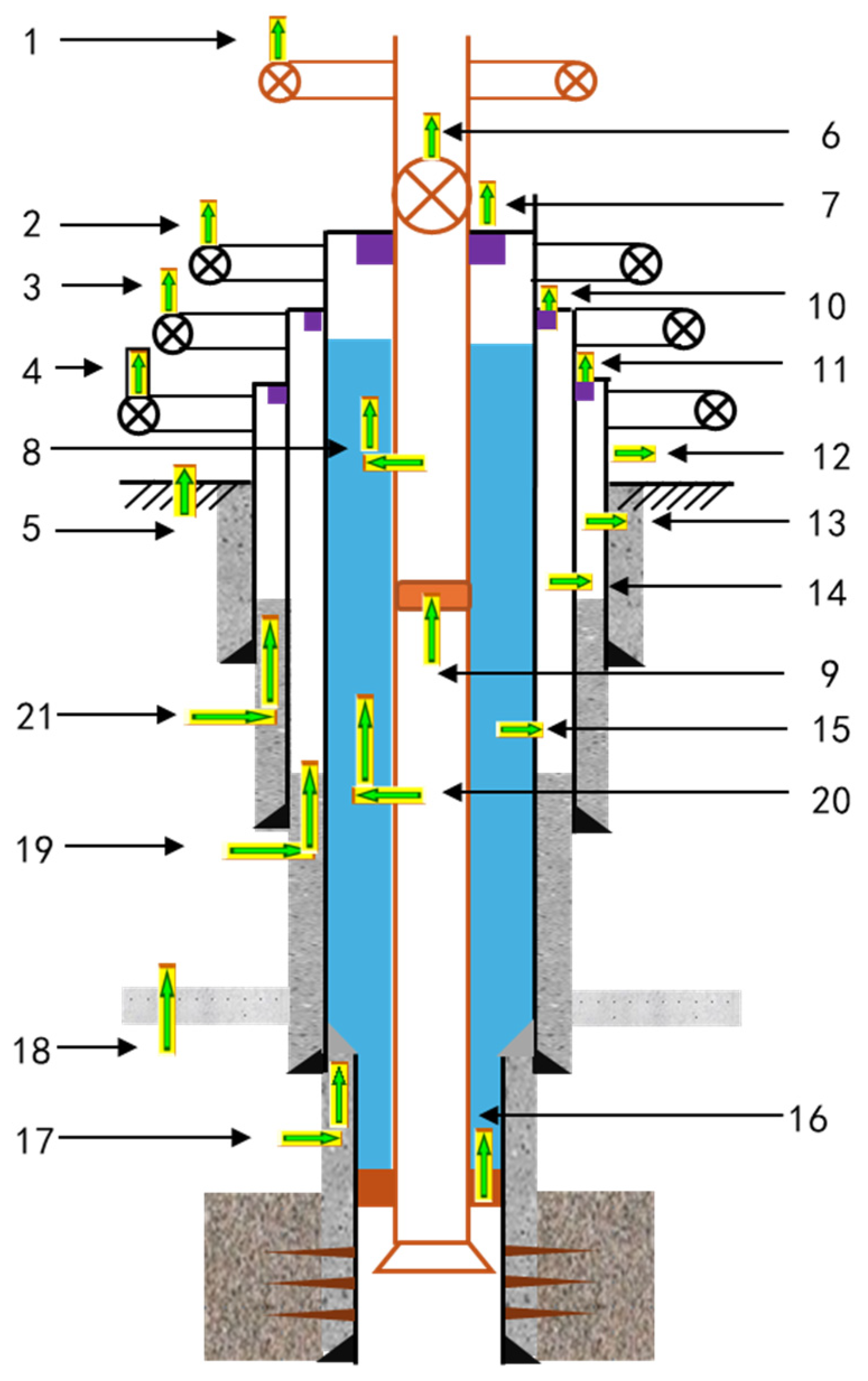
22]. The common causes of fluid leakage in gas storage wells are shown in
Table 1.
In order to have a more intuitive understanding of the common gas leakage migration channels in gas storage wells, the fluid migration channels corresponding to the fluid leakage causes listed in
Table 1 were plotted as a diagram, as shown in
Figure 1.
Among them, leakage of the cement body or the cementation interface at the B/C annular casing shoe is a typical cause of annular casing pressure build-up in injection–production wells of gas storage reservoirs. During the repeated production, injection, and storage processes of gas storage wells, the temperature and pressure in the wellbore undergo periodic changes. The cement body may develop large pores or cracks due to significant changes in internal stress, and the interface between the formation, the cement body, and the casing may also separate due to stress changes. Gas then migrates from these channels to the upper part of the wellbore and accumulates near the wellhead, thereby causing pressure build-up in the annular space of the casing [
23].
2.2. Gas Permeation Model Within the Cement Sheath
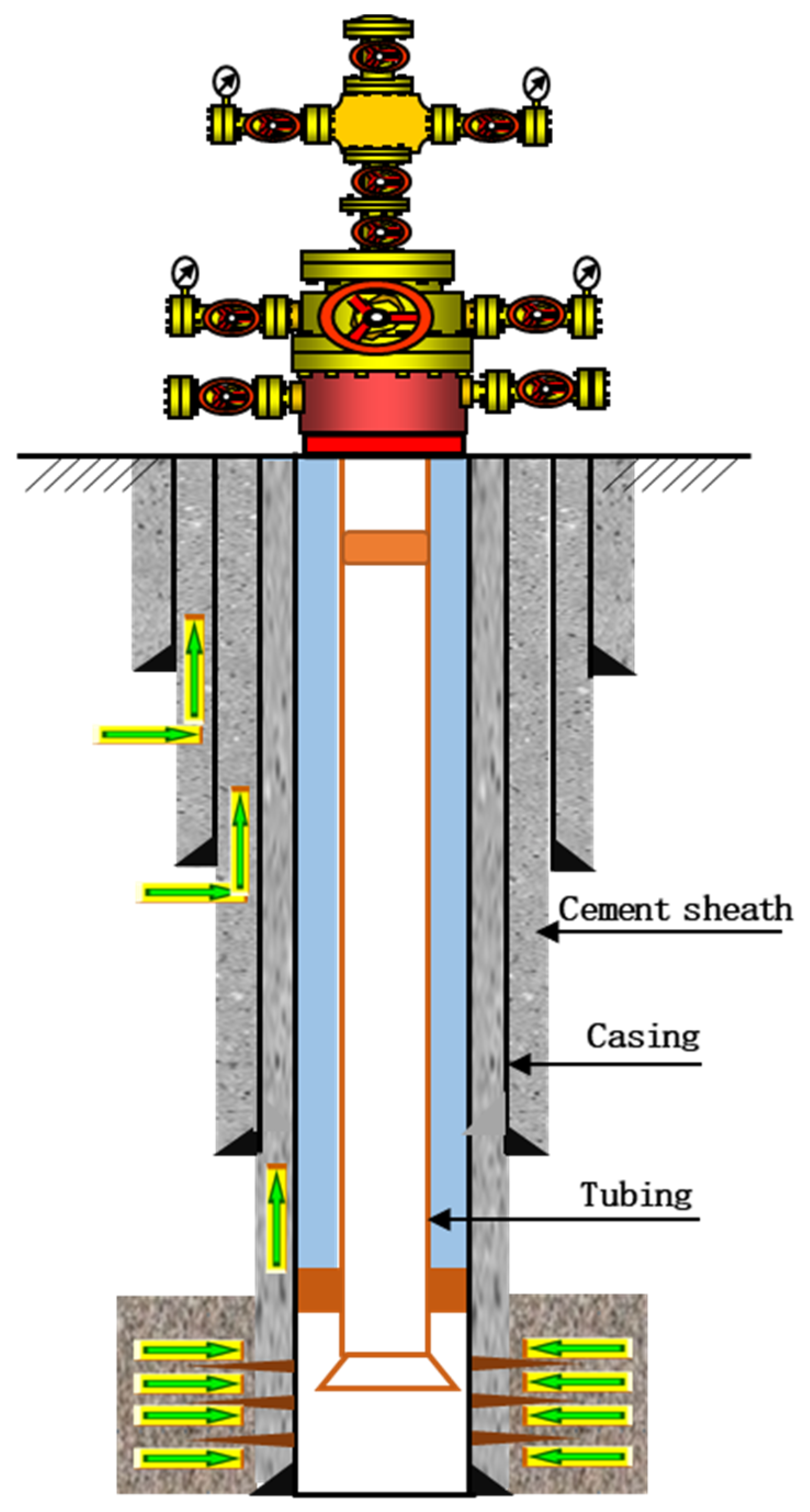
To effectively seal the gas reservoir and cap rock layers, prevent gas leakage or seepage, and ensure the integrity, reliability, and safety of the injection and production system of the gas storage reservoir, the cement return height of the B and C annular spaces of the injection–production wells is mostly designed to reach the wellhead. When the cement returns to the wellhead, the cement seals to the wellhead, meaning there is no free annular section. The gas migration phenomenon within the cement sheath can be regarded as the seepage of gas in a low-permeability porous medium [
24]. The highest point of the annular cement is the wellhead, which is generally in a closed state and has a pressure of zero in the initial state; the lowest end of the annular cement is connected to the formation, and the initial pressure is equal to the formation pressure, and the permeability of the cement is much lower than that of the formation. Gas can enter the cement sheath from the formation and continuously move upward until reaching the wellhead. The seepage process is shown in
Figure 2.
To simulate the seepage behavior of gas within the cement sheath, the following assumptions are made: (1) The boundary pressure of the formation remains constant and does not change with the seepage time; (2) the permeability of the cement sheath is the combined permeability of the original formation permeability, the micro-ring gap permeability of the cement sheath, the internal gaps of the cement sheath, and the interface gaps between the casing and the cement; (3) the cement sheath is regarded as a homogeneous medium, and the combined permeability of the cement sheath is regarded as a uniform permeability; (4) the gas that causes the sustained casing pressure is seeping from the formation or the leakage point through the cement sheath to the wellhead; (5) the seepage of gas within the cement sheath is continuous; (6) the gas seepage rate is small, and the inertial term and the high-speed non-Darcy effect are ignored. During the pressure formation stage, the flow velocity gradually decreases and eventually approaches zero; (7) there is no free casing section at the wellhead (no liquid column/air column), and the cement sheath reaches the wellhead [
14].
This model unifies diverse leakage mechanisms (e.g., micro-annuli, cracks within the cement matrix, debonding gaps at cement interfaces, etc.) via an equivalent permeability, which represents a highly simplified engineering treatment. During the one-dimensional overall migration of gas from formation to wellhead along the axial direction of the wellbore, leakage pathways feature varied microscopic configurations. Nevertheless, provided these pathways are distributed interlacedly along the well depth, the macroscopic gas movement can be approximated as seepage in porous media, with its macroscopic flow resistance characterized by an averaged permeability. This approximation is valid for flow systems composed of multiple series-connected segments, yet it fails to quantify the contribution of dominant preferential flow channels when leakage pathways exist in parallel locally. Such a simplified model tends to underestimate early-stage annular pressure predictions but remains practically valuable for long-term trend evaluation in engineering applications.
Despite the assumption of a homogeneous cement sheath, actual UDGS wells suffer heterogeneous fatigue damage induced by cyclic alternating loads, particularly near casing shoes and shallow subsurface intervals. Although the length-weighted averaging method is adopted for modification, this approach underpredicts the influence of locally high-permeability zones once damage concentrates within discrete well intervals. Non-Darcy flow effects are neglected in the present assumption; however, gas flow velocity rises sharply when leaking through localized flow paths such as micro-annuli or fractures, triggering prominent non-Darcy behaviors. Accordingly, the limitations of this simplification should be noted when rapid initial pressure buildup is detected in field measurements.
Based on the flow law of Newtonian fluids in a uniform medium, a one-dimensional continuity equation for the migration of natural gas in the cement sheath is established:
Initial conditions are as follows:
In the formula:
p—gas pressure inside cement sheath of wellbore, Pa;
t—time, s;
k—permeability of cement sheath, ;
φ—porosity of cement sheath, dimensionless;
—gas dynamic viscosity, Pa·s;
—total compressibility, Pa−1;
x—vertical coordinate along wellbore, m.
—initial pressure within cement sheath, Pa;
—seepage length of cement sheath, m;
—constant boundary pressure, Pa.
Based on the above assumption, the pressure gradient formula for the fluid inside the cement sheath can be derived using Darcy’s law:
In the formula: v represents the fluid seepage velocity, m/s;
k is the permeability of the cement sheath, ;
μ is the viscosity of the gas, Pa·s;
p is the pressure, Pa;
t is the time, s;
is the pressure gradient, Pa/m;
The negative sign indicates that the seepage direction is opposite to the pressure gradient direction (the pressure decreases along the seepage direction).
The diffusion equation for one-dimensional linear unsteady flow of a compressible gas is:
where the pseudo-pressure m(p) is defined as:
In the formula:
m represents the pseudo-pressure of the gas, Pa2/(Pa·s) = Pa/s;
ct is the combined compression coefficient, MPa−1;
φ is the porosity of the cement sheath, dimensionless;
μ is the dynamic viscosity of the gas, Pa·s;
k is the permeability of the cement sheath, m2;
x is the vertical coordinate of the wellbore, m;
t is the time, s;
p0 is the reference pressure, Pa;
Z is the gas compressibility factor, dimensionless.
Combining the gas state equation with the flow conversion relationship, the calculation formula for the volumetric flow rate of the circulating gas is established as follows:
In the formula:
q represents the volumetric flow rate of the gas in the annular gas layer, m3/s;
Bg is the volume coefficient of the gas, ;
is the volumetric flow rate of the gas at standard conditions, m3/s;
is the pressure at standard conditions, Pa;
T is the temperature of the gas in the formation, K;
is the temperature at standard conditions, K;
P is the pressure of the gas in the formation, Pa.
2.3. Model of Gas Accumulation in the Cement Sheath
By combining the Darcy formula, the diffusion equation, and the gas flow conversion formula, the solution equation for the steady-state seepage pressure of the gas in the cement sheath, which is linearly distributed along the well depth direction, was derived as follows:
In the formula: represents the pseudo-pressure at position x, Pa/s;
A represents the cross-sectional area of gas flow, m2.
Taking the derivative of the proposed pressure equation and performing the transformation, the analytical solutions for the sustained casing pressure at the gas reservoir position (x = 0) and the wellhead position (x = L) are obtained (a detailed derivation is given in the
Appendix A):
In the formula:
is the pseudo-pressure corresponding to the formation boundary pressure , Pa/s;
is the pseudo-pressure corresponding to the initial cement sheath pressure , Pa/s
is the eigenvalue , m2/s;
is the pressure diffusivity (hydraulic diffusivity), m2/s;
n is the series term number, dimensionless.
The formula for calculating the average permeability of a heterogeneous cement sheath using the length-weighted method is:
In the formula:
kavg represents the average permeability of the cement sheath, ;
Li is the length of a certain section of the cement sheath, m;
ki is the permeability corresponding to the Li section of the cement sheath, .
2.4. Model Solving Process
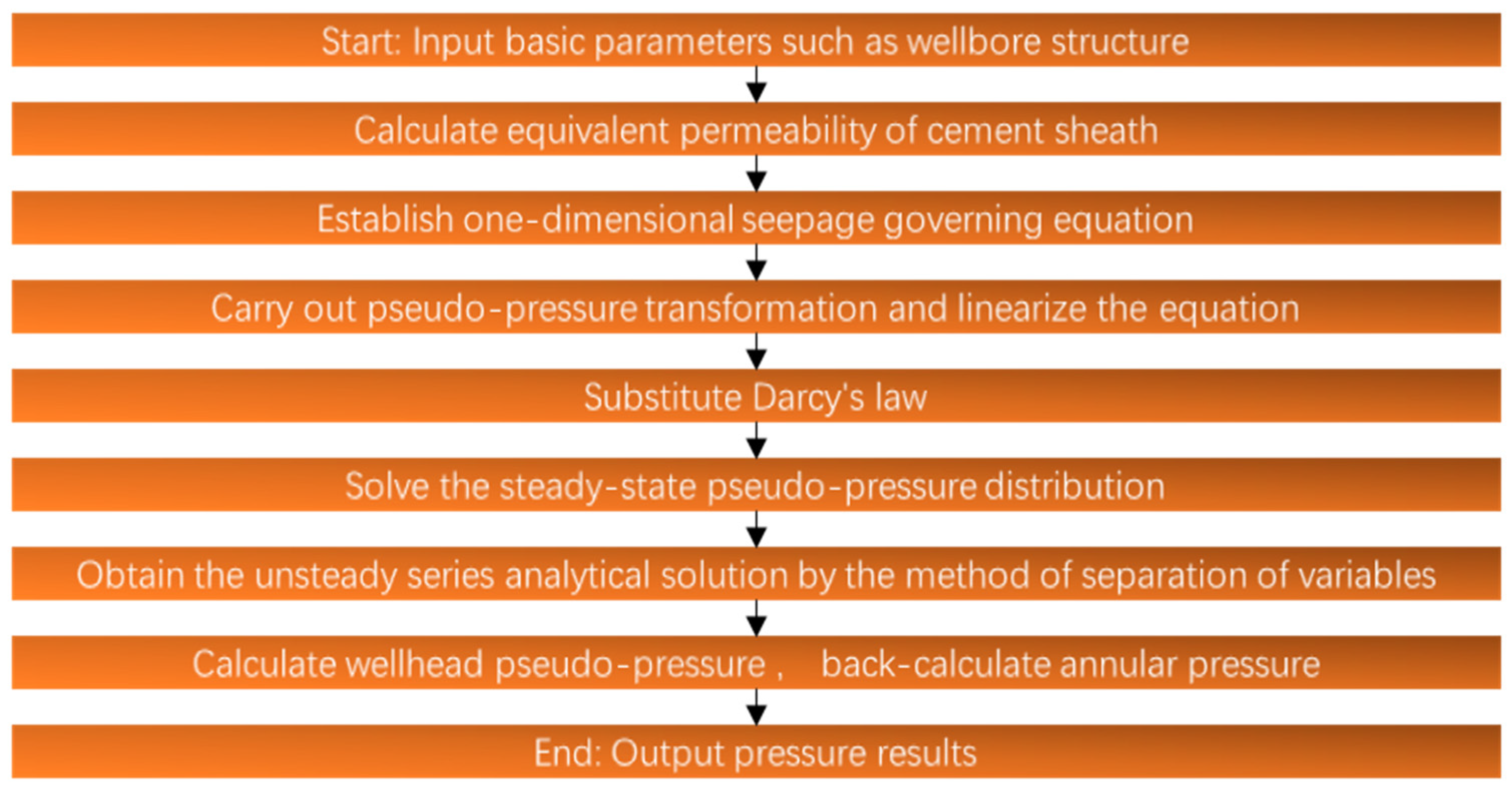
This model focuses on one-dimensional compressible gas seepage through the cement sheath. It employs pseudo-pressure linearization to eliminate the nonlinearity caused by gas compressibility, combines Darcy’s law with the gas state equation, and constructs an analytical solution system under the condition of constant pressure and constant flow rate. Eventually, the variation patterns of the pseudo-pressure in the annulus with time and position are obtained, enabling the prediction and analysis of the pressure in the annulus, the calculation flow is presented in
Figure 3.
The detailed solution steps are as follows:
① Parameter preprocessing: Input the wellbore structure, cement sheath length, permeability, porosity, gas viscosity, compressibility, temperature, pressure, etc., as basic parameters.
② Calculation of equivalent permeability of heterogeneous cement sheath: Calculate the comprehensive equivalent permeability of the cement sheath and simplify the heterogeneity into a homogeneous model.
③ Establishment of governing equations and boundary conditions: Construct a one-dimensional non-steady-state seepage diffusion equation, substitute the initial conditions and boundary conditions to form a complete boundary value problem.
④ Transformation of pressure: Replace the pressure with pseudo-pressure, convert the nonlinear equation into a linear diffusion equation, which is convenient for analytical solution.
⑤ Substitution of Darcy’s law and flow conversion relationship: Substitute the Darcy velocity formula and flow conversion formula into the governing equation, unify the physical quantity relationship.
⑥ Solution of steady-state: Ignore the time term, obtain the steady-state linear distribution formula of pseudo-pressure within the cement sheath, which is used for initial field and limit state judgment.
⑦ Solution of non-steady analytical solution: Use the separation of variables method to solve the linear diffusion equation, and obtain the series form of the spatiotemporal distribution solution.
⑧ Calculation of wellhead pseudo-pressure and sustained casing pressure: Substitute the wellhead position, obtain the time-varying curve of wellhead pseudo-pressure, calculate the wellhead pressure, and realize the prediction of sustained casing pressure.
⑨ Result output: Output pressure distribution and time variation data, as well as other key indicators, are provided.
2.5. Model Validation
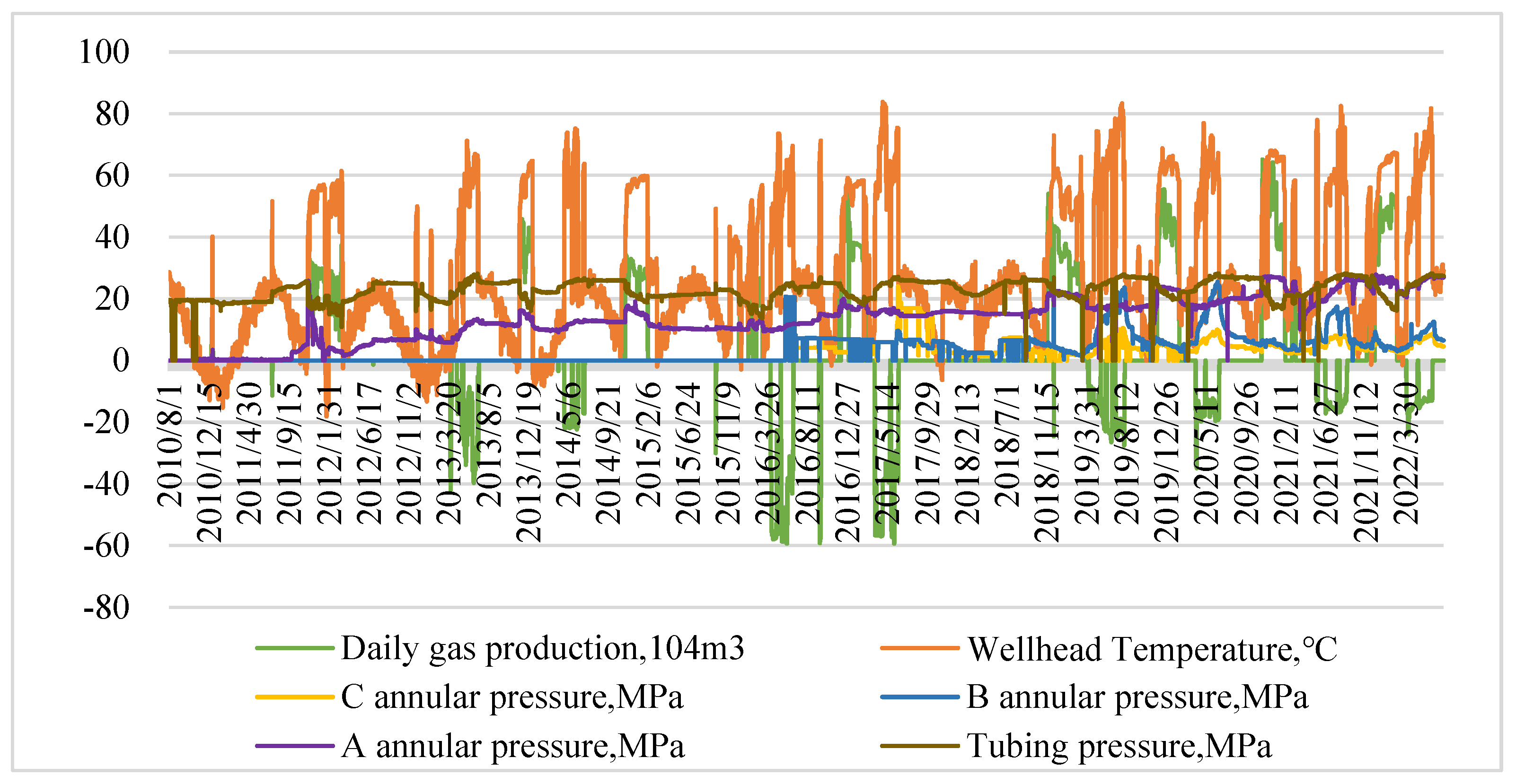
Based on the measured casing pressure data of Well X in a certain gas storage reservoir, the model was verified. The basic parameters are shown in
Table 2.
This well serves as an injection–production well with a measured depth of 3510 m. The measured mid-reservoir pressure at a measured depth of 3250.26 m (vertical depth: 3070.90 m) is 28.91 MPa at a formation temperature of 110.53 °C, and the cement sheath length is 3502.81 m. The cement sheath permeability is 0.21 mD, and its porosity is 1.76%, both determined via laboratory tests. The gas viscosity is 0.013 mPa·s, which was obtained by referring to the gas property handbook.
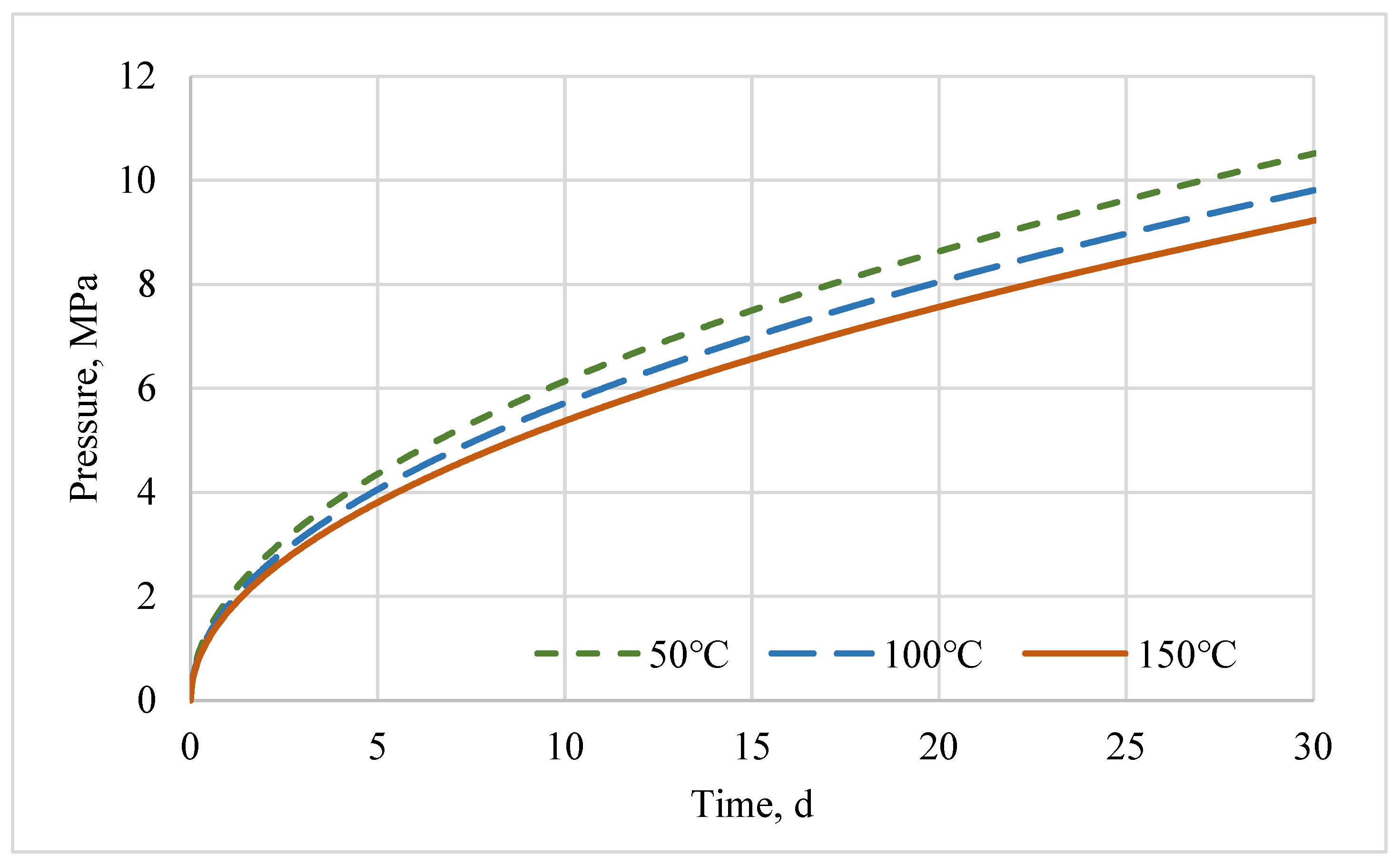
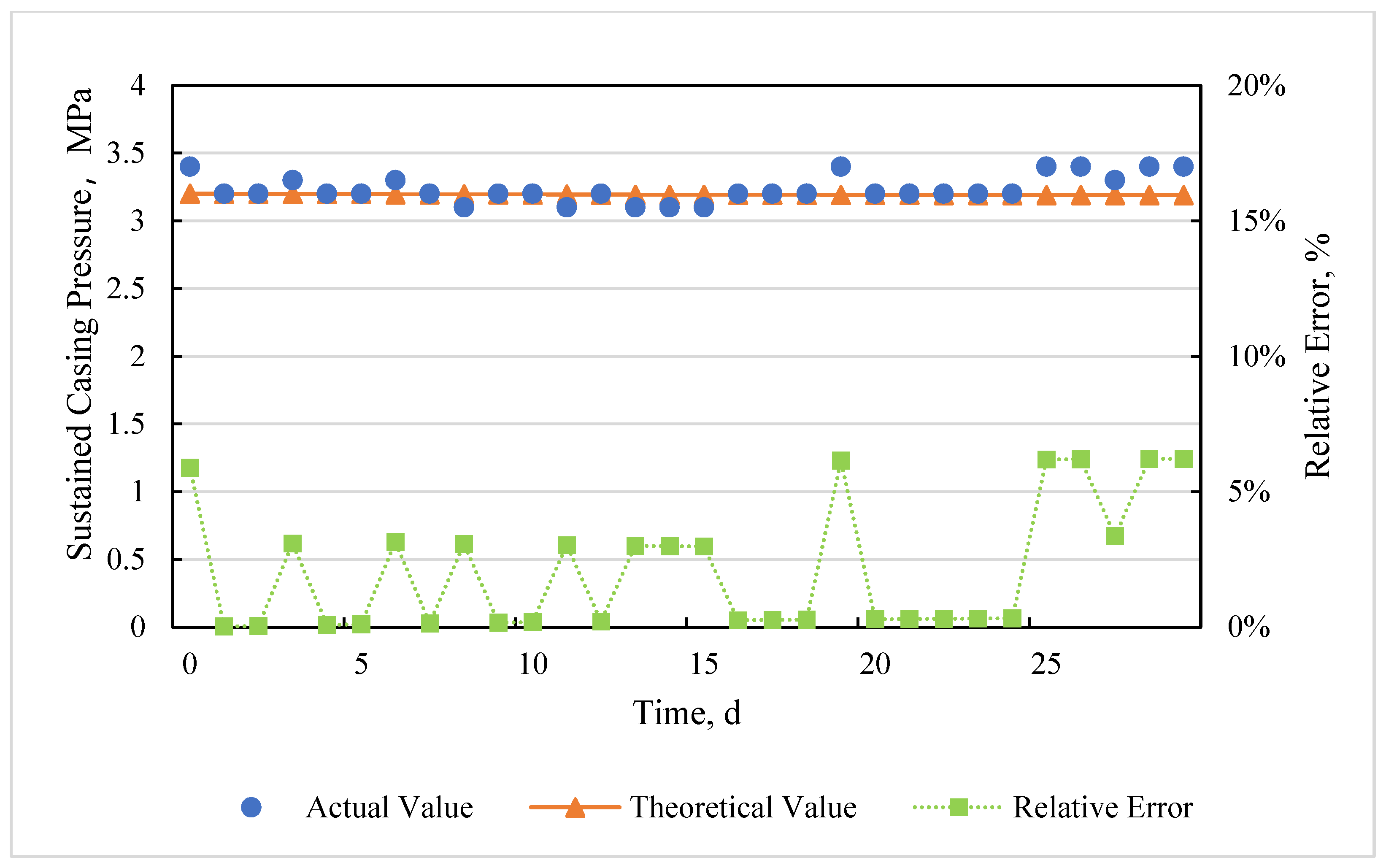
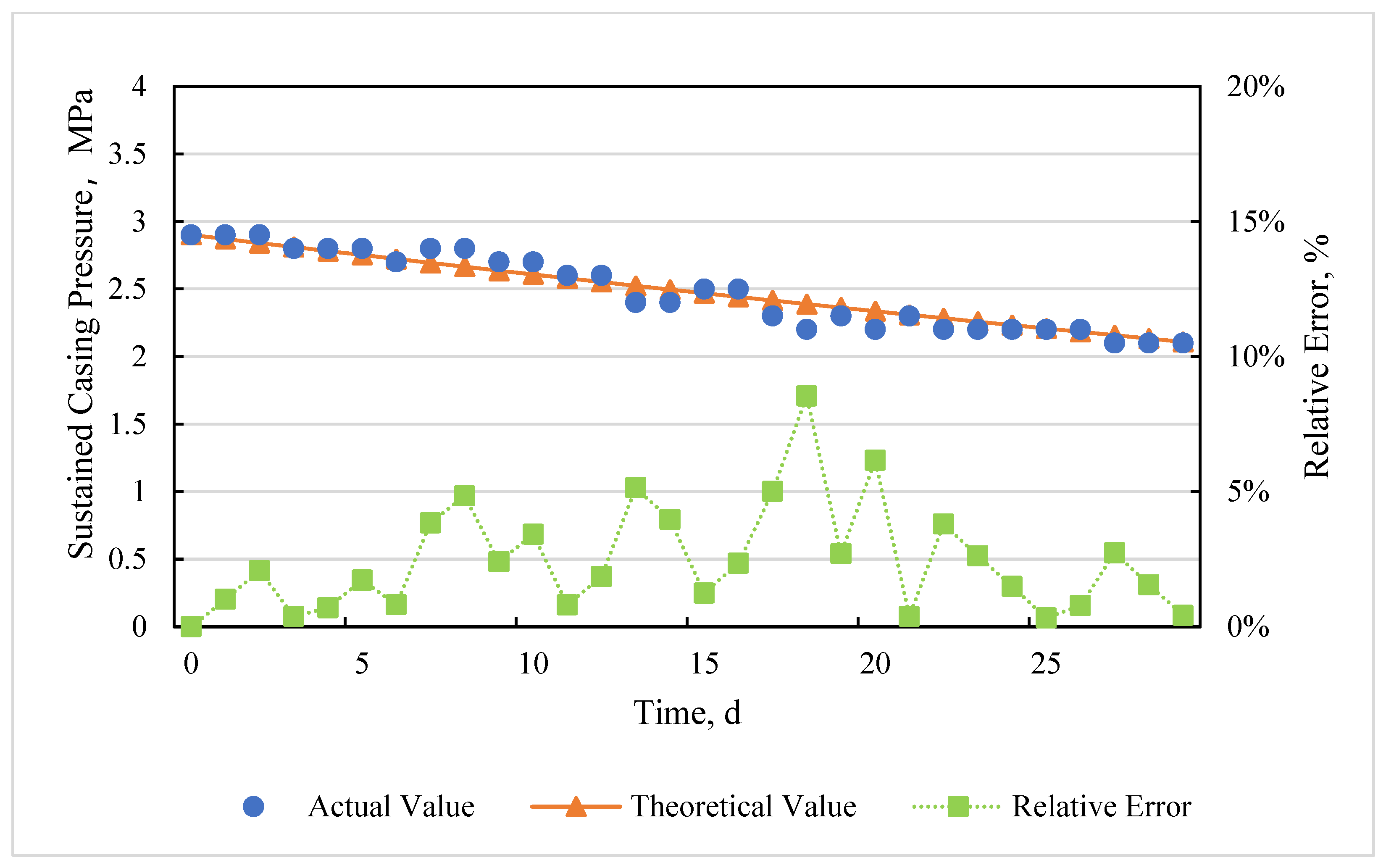
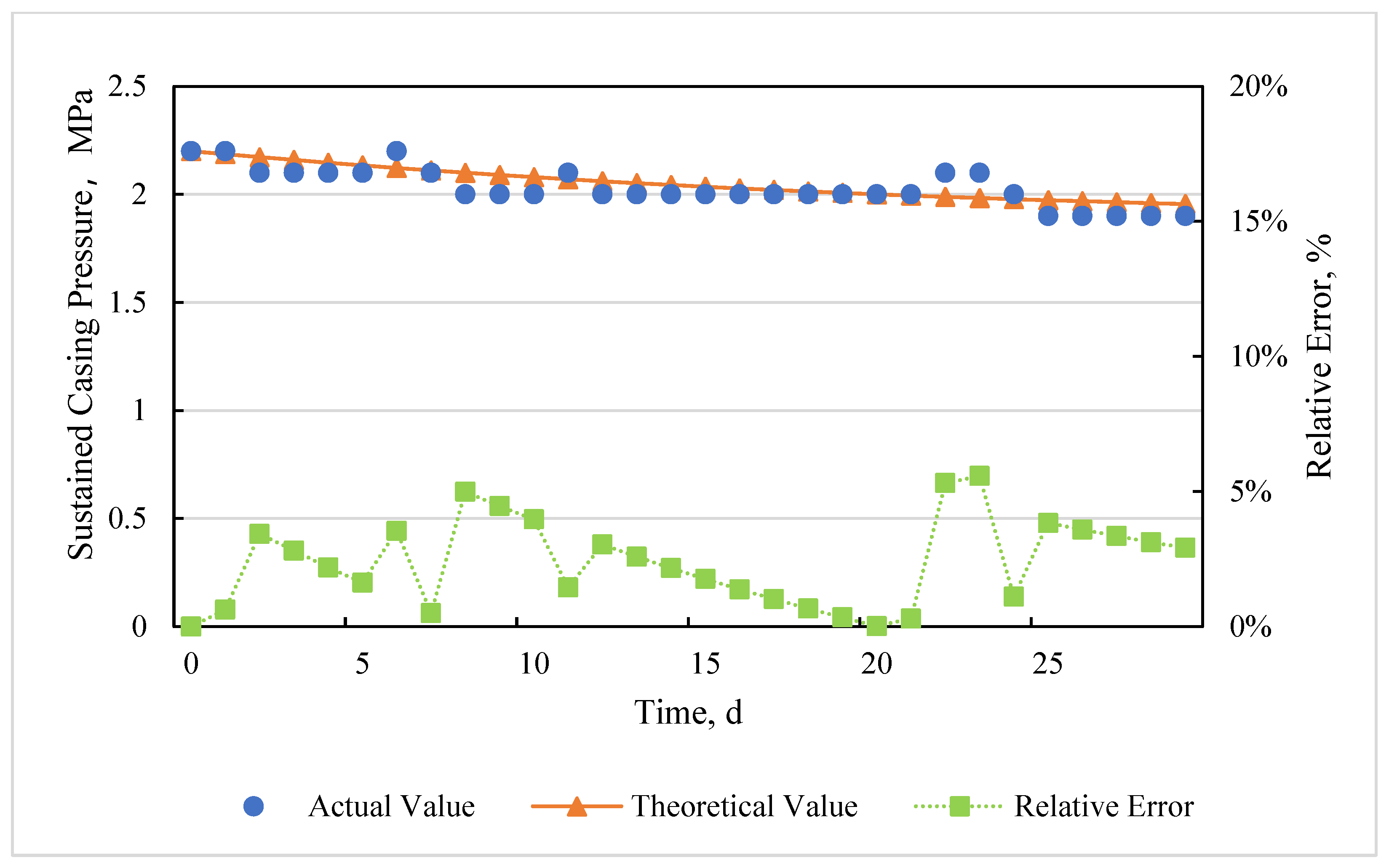
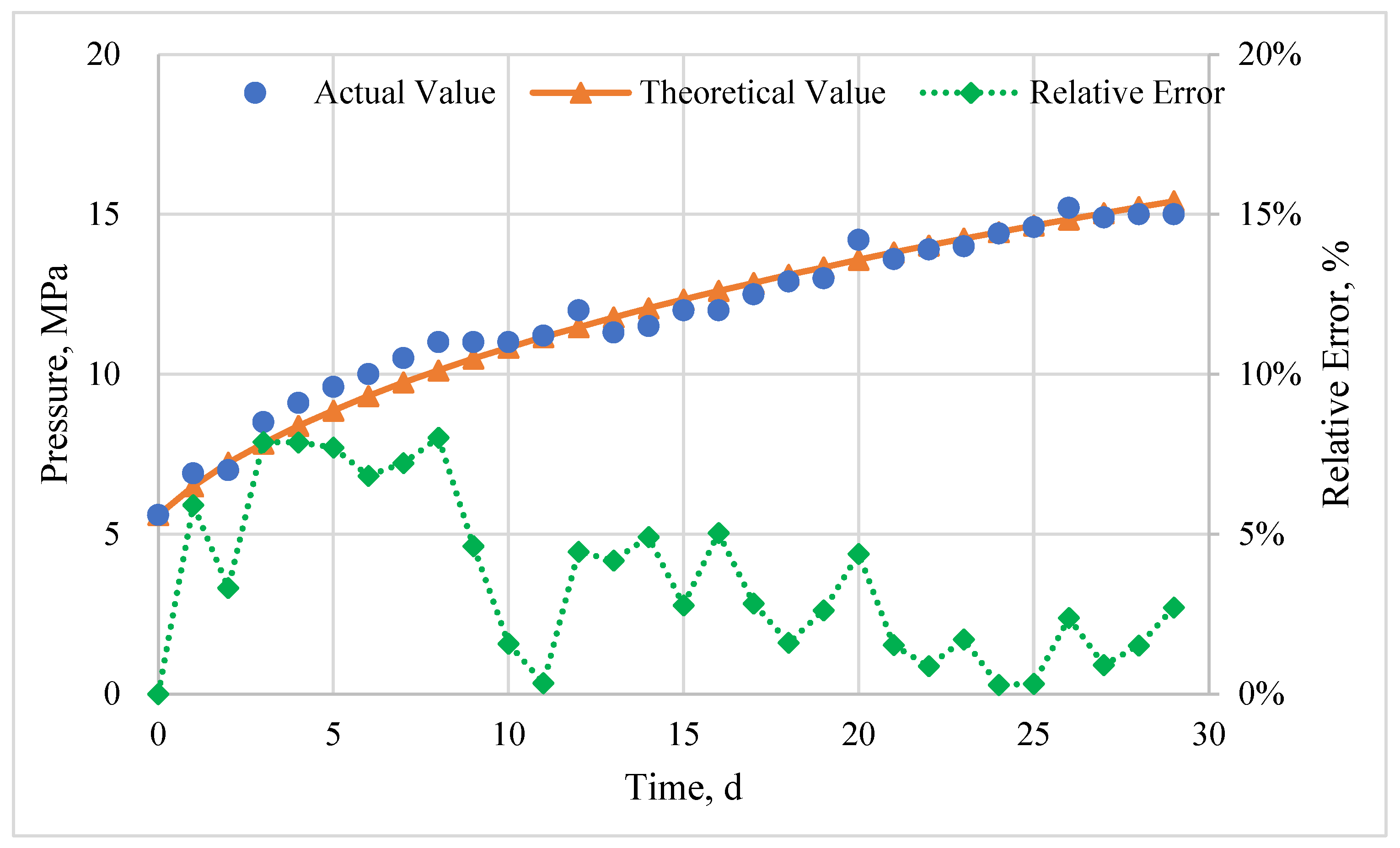
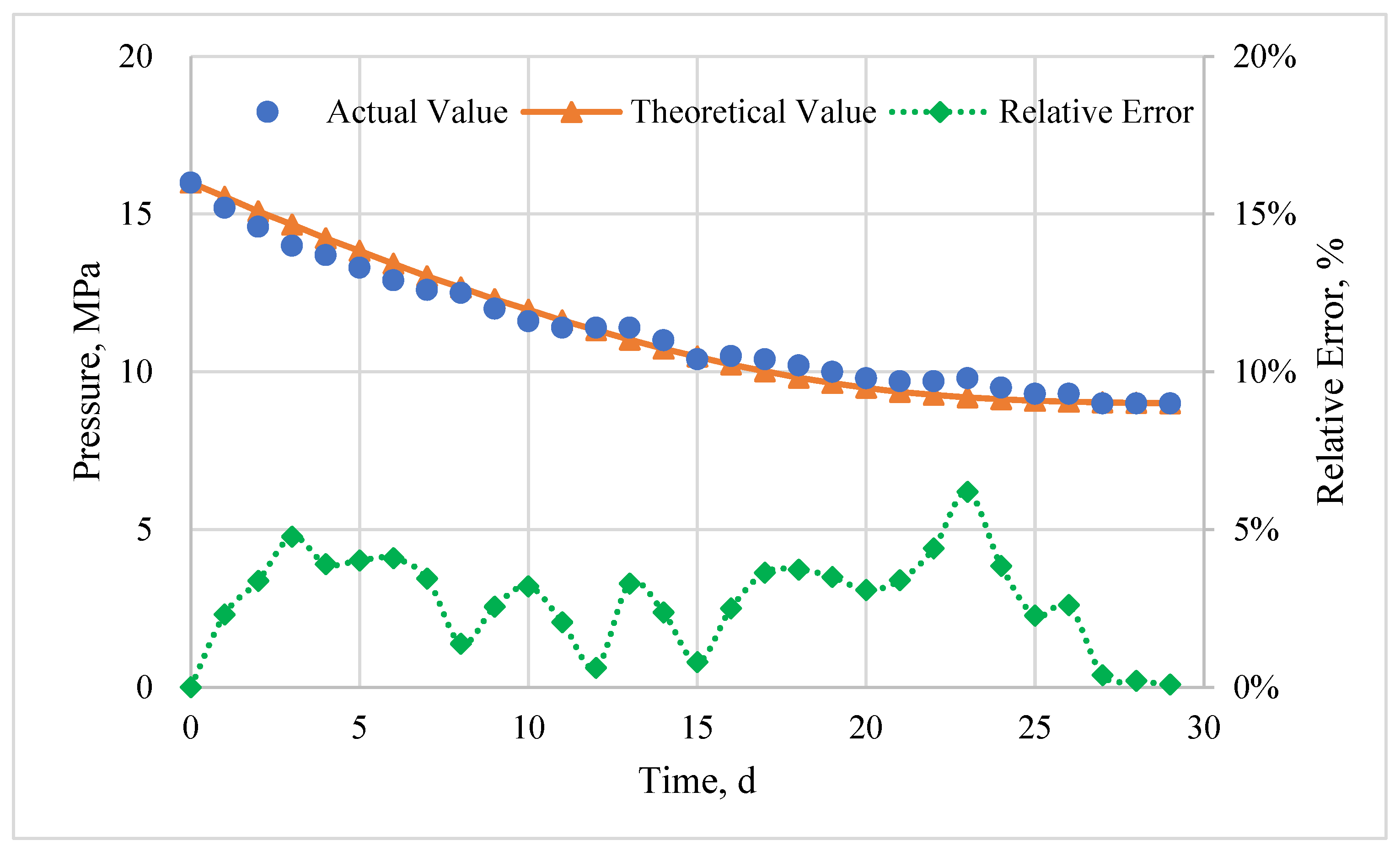
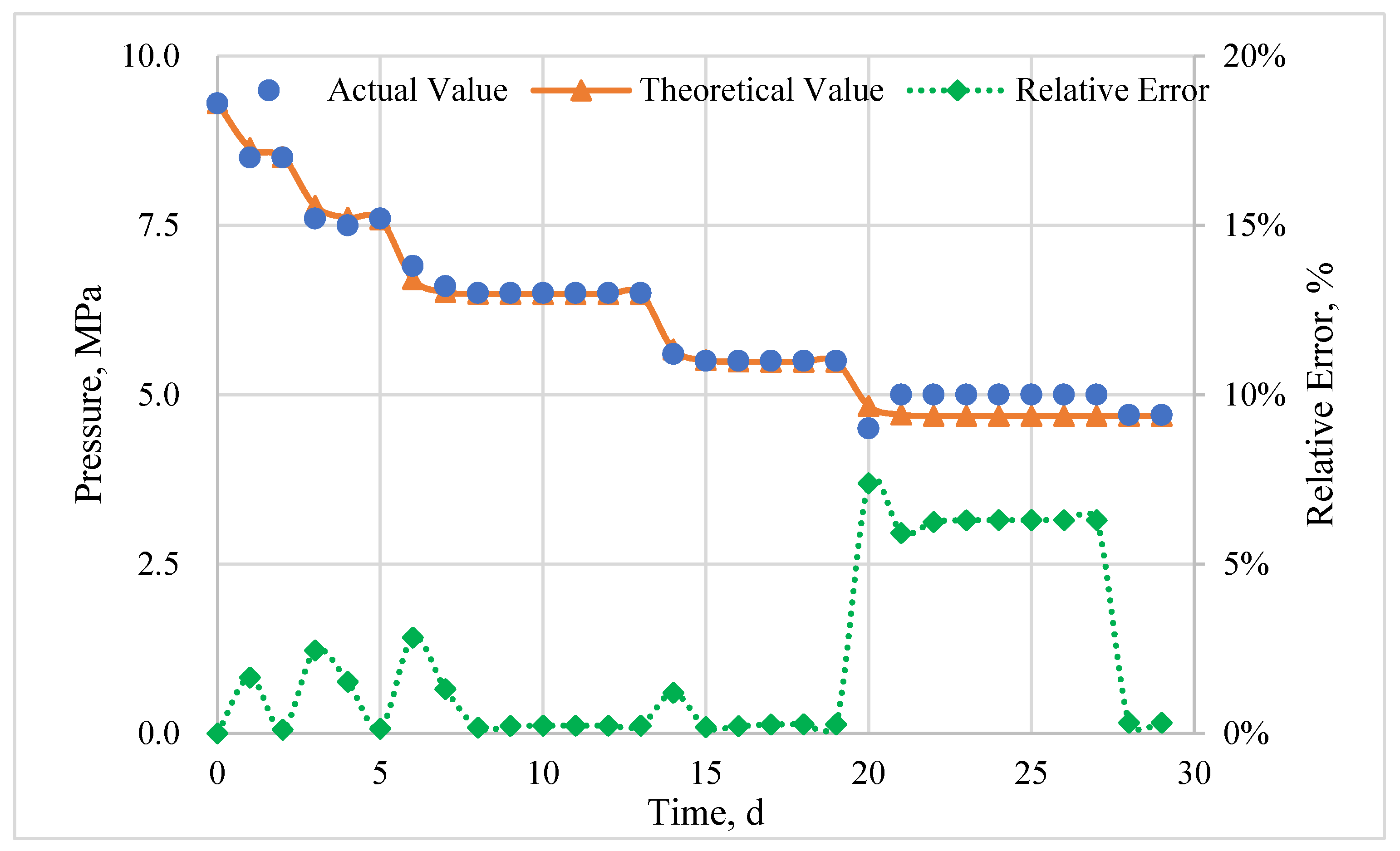
The calculation model is established based on the original data of Well X to compute and analyze the Annulus B pressure buildup, as presented in
Figure 4,
Figure 5 and
Figure 6. For the gas injection, shut-in, and gas production stages, the maximum relative errors between the calculated and measured Annulus B pressure values are 6.21%, 8.54%, and 5.58%, respectively; the average relative errors are 2.16%, 2.44%, and 2.39%; the mean absolute errors are 0.07 MPa, 0.06 MPa, and 0.05 MPa; and the root-mean-square errors are 0.11 MPa, 0.08 MPa, and 0.06 MPa. Overall, all error indicators remain at low levels.
To further expand the applicable range of the evaluation model, the same calculation approach is adopted to predict the pressure buildup in Annulus C of Well X. The calculated results show that the maximum relative errors between simulated and measured pressures of Annulus C during gas injection, shut-in and gas production are 6.53%, 9.20%, and 7.65%, respectively; the average relative errors are 2.66%, 4.30% and 1.92%; the mean absolute errors (MAE) are 0.11 MPa, 0.12 MPa, and 0.04 MPa; and the root-mean-square errors (RMSE) are 0.13 MPa, 0.14 MPa, and 0.06 MPa.
A comprehensive comparative analysis of simulated and field-measured annulus pressure buildup data under six working conditions for Annulus B and Annulus C yields a maximum relative error of 9.20%, an average relative error of 2.64%, a mean absolute error of 0.08 MPa, and an average root-mean-square error of 0.09 MPa. In general, the error metrics of Annulus C across gas injection, shut-in, and gas production stages are in the same order of magnitude as those of Annulus B. This demonstrates that the proposed model achieves favorable consistency in pressure prediction for different annuli within the same well and further improves the reliability of the model.
5. Conclusions and Recommendations
(1) Aiming at the annulus pressure buildup triggered by cement sheath leakage in injection–production wells of underground gas storage, potential gas leakage pathways of injection–production wells are analyzed. By comprehensively incorporating the effects of formation pressure, annulus temperature, and cement sheath property parameters, a numerical model is developed to calculate leakage-induced annulus pressure buildup and quantitatively predict pressure evolution. Validated against field monitoring data across six working conditions of Annulus B and Annulus C in the test well, the model yields low error metrics between predicted and measured pressures, with a maximum relative error of 9.20% and a maximum mean absolute error of 0.12 MPa. The results verify the engineering reliability of the proposed model under the tested operating conditions.
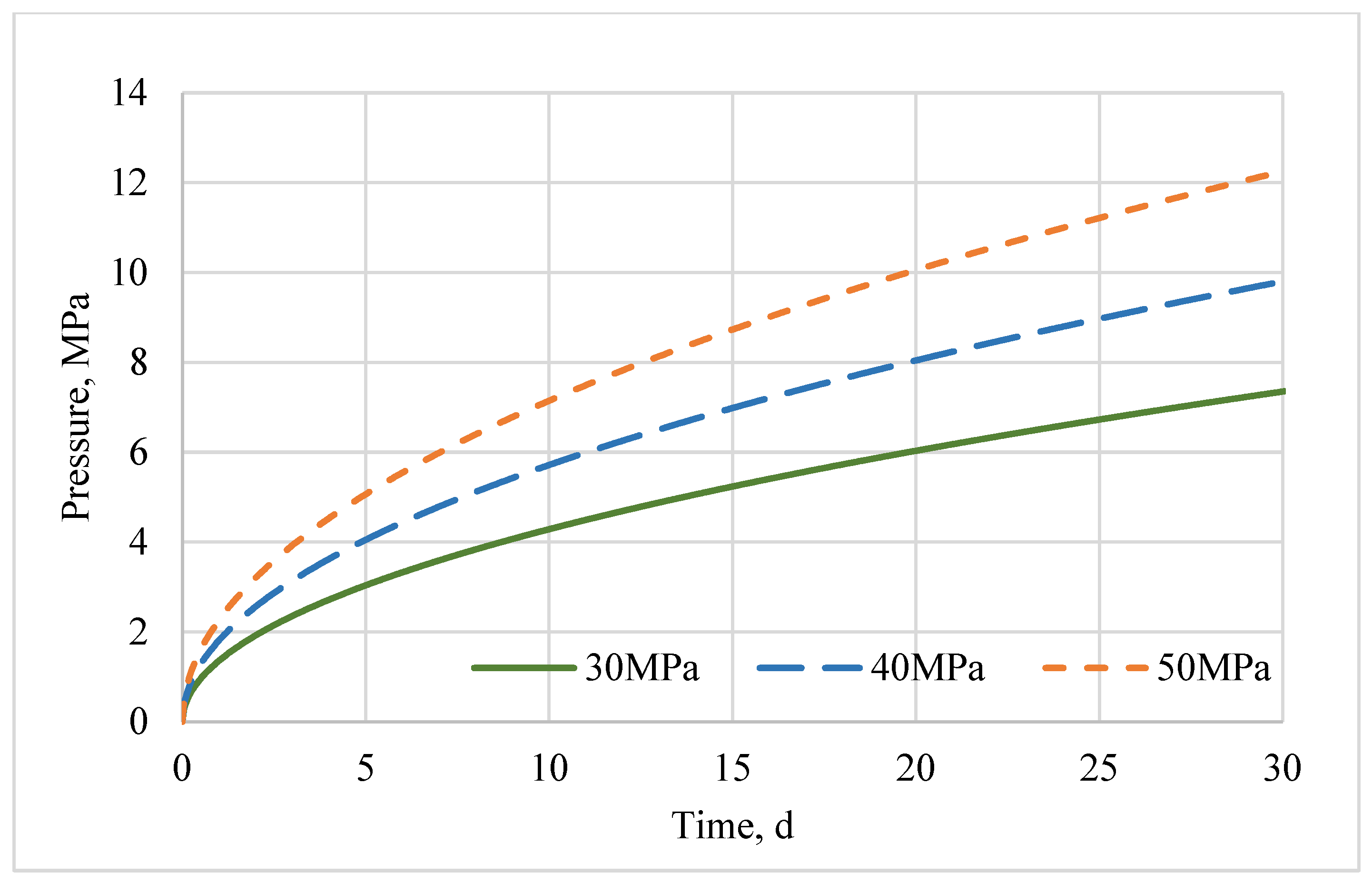
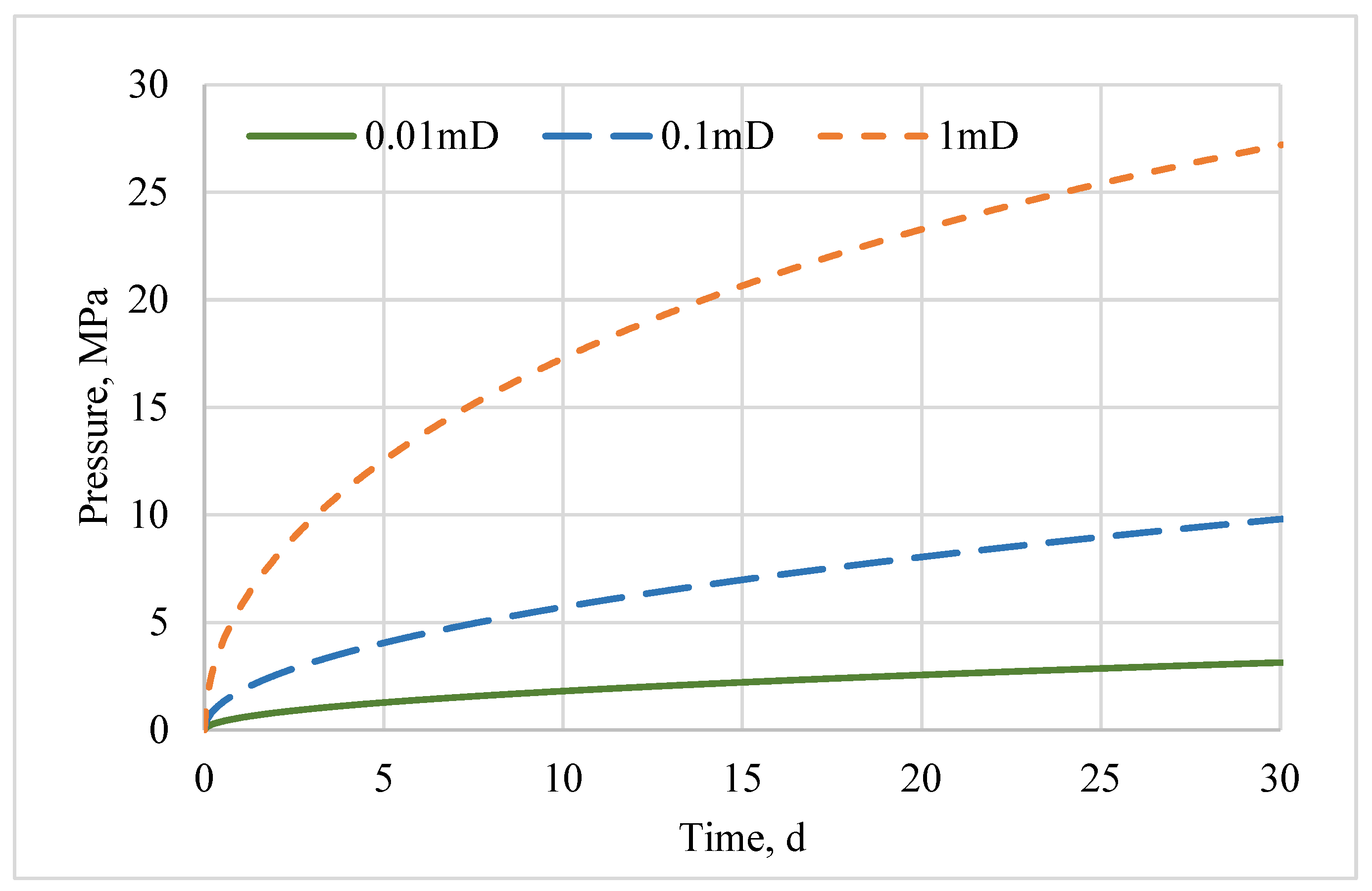
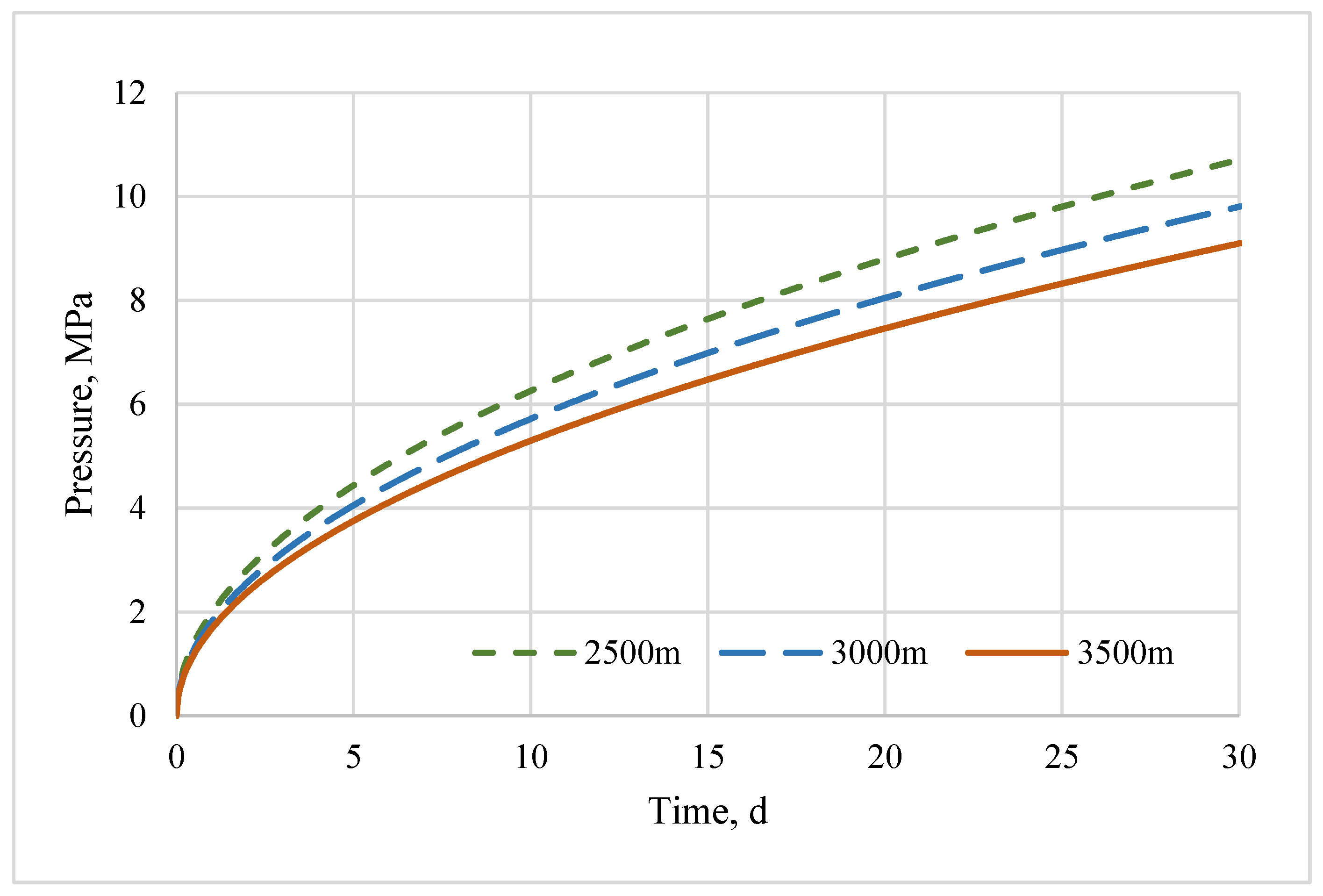
(2) Sensitivity analysis on sustained annulus pressure indicates that annulus pressure rises significantly with increasing cement sheath permeability and formation pressure. Therefore, formation pressure and cement sheath permeability are the dominant controlling factors governing leakage-derived annulus pressure.
(3) From the perspective of field operation, improving cementing quality can reduce cement sheath permeability and enhance the zonal isolation performance of the cement sheath, which effectively mitigates annulus pressure buildup originating from cement sheath seepage and guarantees the safe operation of underground gas storage.
(4) Future research will systematically validate and optimize model parameters using additional field wells with varied wellbore configurations, burial depths, and production histories. Standardized comparisons with existing mainstream prediction models will also be conducted to further improve the model’s generalization capability.




 and
and