Article

Oxy-Fuel Combustion Mechanism of Fushun Oil Shale Kerogen: A ReaxFF Molecular Dynamics Study

1
School of Energy and Power Engineering, Northeast Electric Power University, Jilin 132012, China
2
Engineering Research Centre of Oil Shale Comprehensive Utilization, Ministry of Education, Northeast Electric Power University, Jilin 132012, China
3
School of Energy Science and Engineering, Harbin Institute of Technology, Harbin 150001, China
*
Authors to whom correspondence should be addressed.
Processes 2026, 14(11), 1831; https://doi.org/10.3390/pr14111831 (registering DOI)
Submission received: 6 May 2026 / Revised: 25 May 2026 / Accepted: 2 June 2026 / Published: 5 June 2026
(This article belongs to the Section Chemical Processes and Systems)

Abstract

To elucidate the combustion behavior and molecular-scale reaction mechanisms of Fushun oil shale kerogen under oxy-fuel atmospheres, ReaxFF molecular dynamics simulations were performed based on a previously constructed kerogen model. Five reaction systems were established: 21% O2/79% N2, 21% O2/79% CO2, 35% O2/65% CO2, 55% O2/45% CO2, and 75% O2/25% CO2. Under programmed heating, the evolution of chemical bonds, gaseous products, char, tar and gas transformation, and system potential energy was systematically analyzed. The results show that, at the same O2 concentration, CO2 delays low-temperature oxidation, shifting C–C and C–H bond cleavage and O2 consumption to higher temperatures. At elevated temperatures, however, CO2-related pathways promote carbon skeleton fragmentation and CO formation. Increasing O2 concentration from 21% to 75% advances O2 participation and H2O formation, suppresses low-temperature CO accumulation, accelerates char consumption, and drives the system toward complete oxidation dominated by small-molecule gases. Potential energy analysis further indicates that higher O2 concentrations advance the intense exothermic oxidation stage. A four-stage oxy-fuel combustion mechanism is proposed, providing molecular-level insight into the coupled effects of CO2 and O2 concentration.

1. Introduction

Oil shale is an important unconventional fossil resource rich in organic matter, which mainly occurs in the form of kerogen [1,2,3]. Fushun oil shale is one of the representative oil shale resources in China. It has abundant reserves and a long history of exploitation, making it significant for energy security and comprehensive resource utilization [4,5,6]. However, the direct thermal utilization of oil shale is often associated with low combustion efficiency, high carbon emission intensity, and complex pollutant formation mechanisms. In the context of China’s carbon peaking and carbon neutrality goals, oil shale utilization must reduce CO2 emissions while improving combustion efficiency. Therefore, the efficient and clean utilization of oil shale still faces technical challenges.
Oxy-fuel combustion is considered one of the CO2 emission control technologies with significant application potential in fuel combustion processes. Compared with conventional air combustion, oxy-fuel combustion uses an O2/CO2 atmosphere instead of an O2/N2 atmosphere. This can markedly increase the CO2 concentration in flue gas and thereby reduce the cost of subsequent CO2 capture. In addition, when the diluent gas in the combustion environment changes from N2 to CO2, the thermophysical properties, heat and mass transfer characteristics, and reaction pathways of the entire combustion system are also altered [7,8,9,10]. Oil shale is a complex hydrocarbon fuel. Its organic structure contains aromatic rings, aliphatic side chains, and various heteroatom-containing functional groups [11]. The change in atmosphere caused by oxy-fuel combustion not only affects the ignition and burnout processes of oil shale, but also modifies O2 adsorption, radical formation, and intermediate conversion. These changes further influence the formation behavior and reaction pathways of gaseous products such as CO2 and H2O. Therefore, an in-depth investigation of the combustion behavior and underlying mechanism of oil shale kerogen in an O2/CO2 atmosphere can provide a theoretical basis for optimizing oxy-fuel combustion technology and developing numerical models for oil shale.
Experimental and numerical studies on the thermochemical conversion of coal, oil shale, and kerogen have made considerable progress. Existing experimental work has mainly focused on mass-loss behavior, ignition and burnout characteristics, and product distribution [12,13,14,15,16]. However, combustion involves numerous radicals and intermediates. As a result, experimental methods often have difficulty directly capturing microscopic information such as chemical bond cleavage, radical formation, and changes in reaction energy barriers. ReaxFF-MD reactive molecular dynamics combines the ability of quantum chemistry to describe bond formation and bond breaking with the computational efficiency of classical molecular dynamics. It is therefore a suitable tool for investigating the reaction mechanisms of complex hydrocarbon fuels [17,18]. Without predefining reaction pathways, ReaxFF-MD can track the breaking and formation of chemical bonds in complex systems. This method has been widely applied to studies of solid fuel pyrolysis and combustion mechanisms.
Qiu et al. [19] used ReaxFF-MD to investigate the oxy-fuel combustion characteristics of lignite in an O2/CO2 atmosphere. They clarified the CO2 formation mechanism and key reaction pathways at the molecular scale. Subsequently, Qiu et al. [20] simulated pressurized oxy-coal combustion and gasification. Their results showed that increases in both temperature and pressure promoted coal decomposition and combustion reactions and accelerated oxidation processes such as dehydrogenation and structural fragmentation. Hong et al. [21] applied ReaxFF-MD to analyze the contribution of char–CO2 gasification to char conversion during pressurized oxy-fuel combustion. They pointed out that elevated pressure favors char conversion and changes the competition between char oxidation and char gasification. Lei et al. [22] combined pressurized drop-tube furnace experiments with ReaxFF-MD simulations to reveal the competition and decoupling between gasification and oxidation during pressurized oxy-fuel combustion. Their results indicated that pulverized coal carbon conversion is jointly controlled by oxygen concentration and pressure. For oil shale systems, Wang et al. [23] used ReaxFF-MD simulations to study the non-isothermal pyrolysis of Fushun oil shale kerogen. They revealed its stage-wise decomposition behavior and chemical bond cleavage characteristics and described the evolution of char, shale oil, and gaseous products. Zhang et al. [24] further simulated the combustion process of oil shale, revealing staged reaction characteristics such as volatile release, char formation, and gaseous product generation. They also analyzed the transformation behavior of sulfur- and nitrogen-containing products. Overall, the oxy-fuel combustion mechanism of Fushun oil shale kerogen under different O2/CO2 atmospheres remains unclear, and systematic molecular-scale studies are still lacking. Compared with previous ReaxFF-MD studies on coal oxy-fuel combustion, the present work focuses on the molecular-scale combustion behavior of Fushun oil shale kerogen, which has a more complex organic framework containing aromatic units, aliphatic side chains, and O-, N-, and S-containing functional groups. Previous coal studies have mainly emphasized char oxidation, char–CO2 gasification, pressure effects, and the competition between oxidation and gasification reactions. In contrast, the present study further considers the coupled evolution of chemical bonds, gaseous species, char/tar/gas products, and system potential energy under both N2 replacement by CO2 and increasing O2 concentration. Therefore, this work not only reveals common oxy-fuel combustion features shared by carbonaceous fuels, but also highlights the specific reaction behavior of Fushun oil shale kerogen caused by its unique macromolecular structure and heteroatom-containing functional groups.
Based on this background, Fushun oil shale kerogen was selected as the research object in this study. Reaction systems under air and multiple O2/CO2 oxy-fuel atmospheres were established using ReaxFF-MD reactive molecular dynamics. Through programmed heating simulations, the evolution of chemical bonds, formation behavior of major gaseous products, and system energy variation during kerogen combustion were analyzed under different atmospheres and O2 concentrations. On this basis, a stage-wise reaction mechanism model for the oxy-fuel combustion of Fushun oil shale kerogen was proposed. This study reveals, at the molecular level, the intrinsic mechanism by which CO2 and O2 jointly regulate the combustion pathways of oil shale kerogen, providing theoretical support for process optimization and efficient, clean utilization of oil shale under oxy-fuel combustion conditions.

2. Computational Methods

2.1. Model Construction and Optimization

The molecular structure of Fushun oil shale kerogen was used as the initial structural basis for constructing the reactive molecular dynamics system. This two-dimensional kerogen model is shown in Figure 1. The model has a chemical formula of C240H322O32N7S5 [25]. This model was constructed based on experimental characterization data, including elemental analysis, Fourier transform infrared spectroscopy (FTIR), X-ray photoelectron spectroscopy (XPS), and solid-state 13C nuclear magnetic resonance (NMR). It can reasonably represent the complex organic framework of Fushun oil shale kerogen, characterized by the coexistence of aromatic structures, alicyclic units, aliphatic side chains, and O-, N-, and S-containing heteroatomic functional groups.
The model contains abundant hydroxyl groups, ether linkages, carbonyl/ester groups, carboxyl groups, nitrogen-containing heterocycles, and sulfur-containing heterocycles, which provide diverse reactive sites for subsequent oxygen adsorption, weak-bond cleavage, and radical evolution. To obtain a reasonable and stable three-dimensional initial configuration, the two-dimensional molecular structure was subjected to geometry optimization and simulated annealing using the Forcite module in Materials Studio 8.0. First, preliminary geometry optimization was performed with the Dreiding force field using the Smart algorithm. The calculation quality was set to Fine, atomic charges were assigned using the QEq method, and the maximum number of iterations was set to 100,000 to eliminate locally unfavorable conformations.
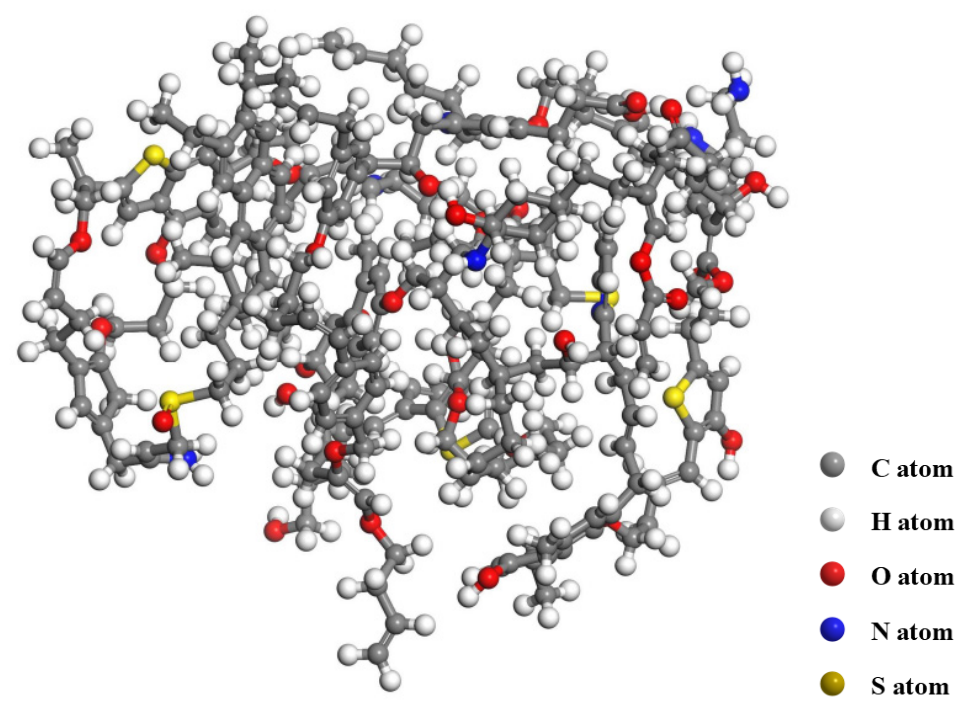
Subsequently, simulated annealing was further conducted to prevent the structure from being trapped in a local minimum during single-step geometry optimization and to search for configurations with lower potential energy over a broader conformational space. The annealing procedure consisted of 10 cycles over a temperature range of 300–600 K under the NVT ensemble, with a time step of 0.1 fs. After geometry optimization and simulated annealing, an energetically favorable three-dimensional configuration was obtained. The optimized three-dimensional molecular model of Fushun oil shale kerogen is presented in Figure 2.
Table 1 lists the energy changes of the kerogen molecular model before and after structural optimization. After optimization, the total energy decreased from 15,273.72 to 736.69 kcal·mol−1, indicating that the high-energy and unstable configurations in the initial structure were effectively relaxed. Bond stretching energy, torsional energy, and van der Waals energy decreased markedly. This suggests that the optimization process effectively relieved local strain and non-bonded repulsion, while improving unreasonable bond-length distributions and steric hindrance. In contrast, bond angle energy and inversion energy changed only slightly, indicating that the topology of the main molecular skeleton remained largely stable after optimization. The optimized three-dimensional kerogen molecular model therefore has a lower energy and a more reasonable configuration, providing a solid basis for subsequent ReaxFF-MD reactive molecular dynamics simulations.

2.2. Computational Conditions and Parameter Settings

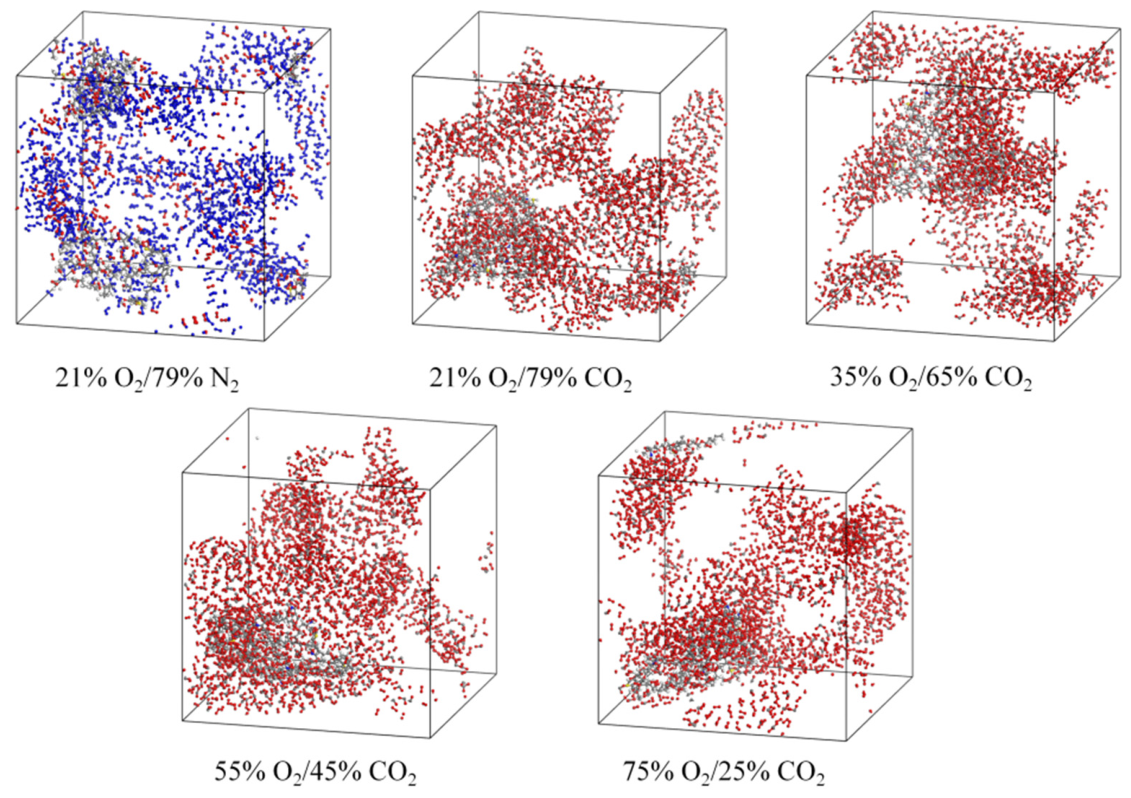
Five reaction systems were constructed using the Amorphous Cell module in Materials Studio, and the detailed parameters for different operating conditions are listed in Table 2. The initial density of each system was uniformly set to 0.3 g·cm−3 to avoid unrealistic overlap or stacking of major functional groups caused by excessively short initial distances. Each system contained one kerogen macromolecule and the same total number of gas molecules, ensuring good comparability among the simulation results. To obtain stable initial configurations for the subsequent ReaxFF-MD simulations, the five reaction systems were sequentially subjected to geometry optimization, simulated annealing, density optimization, and structural relaxation. The optimized macromolecular reaction systems are shown in Figure 3. The resulting systems exhibited lower energies and stable configurations. These five systems cover both the air atmosphere and different O2/CO2 oxy-fuel atmospheres, enabling a comparative analysis of the effects of N2 replacement by CO2 and increasing O2 concentration on the combustion pathways and product evolution of Fushun oil shale kerogen.
All ReaxFF-MD simulations were performed using LAMMPS software, version 2 August 2023, which has been widely adopted in related molecular simulation studies [26,27,28]. The ReaxFF reactive force field developed by Mattsson et al. [29] was used in the simulations. This force field can describe chemical reactions involving C, H, O, N, and S elements, making it suitable for simulating combustion reactions in macromolecular systems such as oil shale kerogen. Before the dynamic simulations, the five reaction systems were first subjected to energy minimization. They were then relaxed at 300 K for 20 ps to improve structural stability. Next, each system was heated from 300 to 6000 K at a heating rate of 5 K·ps−1. A total of 11,400,000 steps were performed, corresponding to a simulation time of 1.14 ns. All simulations were conducted under the NVT ensemble, and the temperature was controlled using a Berendsen thermostat. The damping coefficient was set to 100 fs to maintain reasonable dynamic trajectories. A time step of 0.1 fs was used to balance computational accuracy and efficiency. During the simulations, bond information was output every 20,000 steps, while product information and thermodynamic data were recorded every 100 steps. To improve the statistical reliability of the simulation results, all simulations were repeated three times, and the final results were reported as the average values of the three independent runs.
The maximum temperature of 6000 K used in this work should not be interpreted as the actual operating temperature of oil shale combustion. Instead, it is an accelerated reaction temperature adopted to overcome the time-scale limitation of ReaxFF-MD simulations. Because the accessible simulation time is limited to the nanosecond scale, many bond-breaking and oxidation events that occur over much longer experimental times would be difficult to observe at practical combustion temperatures. According to the Arrhenius equation, increasing the reaction temperature can significantly accelerate the reaction rate without substantially altering the underlying reaction mechanism. Therefore, many researchers have adopted temperatures much higher than experimental conditions in simulations to accelerate reaction processes and investigate their reaction systems within a computationally feasible timescale [26,28,30,31,32]. Although there are considerable differences between experiments and simulations in terms of reaction temperature and timescale, the product distributions and reaction mechanisms obtained from simulations generally show good agreement with experimental observations. Wang et al. [28] investigated the pyrolysis and combustion of n-dodecane and found that the activation energy and pre-exponential factor obtained from high-temperature ReaxFF-MD simulations were consistent with the experimental values. Zheng et al. [30] investigated the product evolution and reaction mechanism of Liulin coal at high temperatures using ReaxFF-MD simulations. They found that the simulated evolution trends of naphthalene, methylnaphthalene, and dimethylnaphthalene were consistent with the Py–GC/MS results.
In the present ReaxFF-MD simulations, chemical species were identified using a bond-order cutoff of 0.3, which has been widely adopted for molecular species recognition in previous ReaxFF-MD studies [30,33,34] and is also the default cutoff used in LAMMPS species analysis. To evaluate the influence of this parameter, sensitivity tests were performed using bond-order cutoffs of 0.25, 0.30, and 0.35. The results show that the absolute numbers of some transient intermediates vary slightly, but the overall trends of major gaseous species and the effect of O2 concentration remain consistent. Therefore, the main conclusions are robust with respect to the selected bond-order threshold. Based on this criterion, the combustion products were classified into five categories according to the number of carbon atoms: semi-char (C40+), light tar (C5–C13), heavy tar (C14–C40), organic gases (C1–C4), and inorganic gases such as H2, CO2, and H2O. This classification scheme is consistent with those adopted in previous ReaxFF-MD studies on the pyrolysis and combustion of complex solid fuels [24,35,36].

3. Results and Discussion

3.1. Effect of CO2 on the Combustion Behavior of Kerogen

3.1.1. Evolution Characteristics of Chemical Bonds

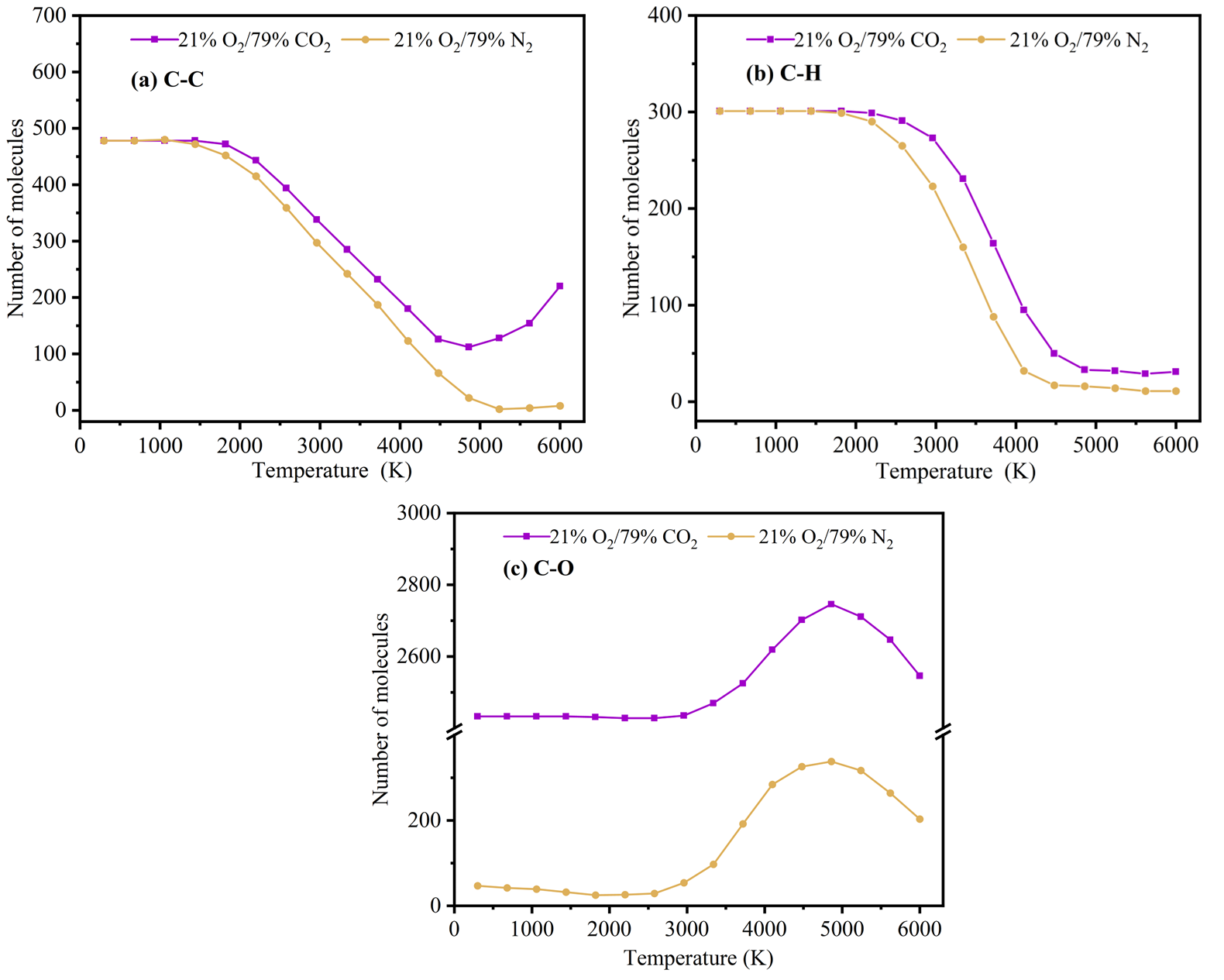
Combustion reactions essentially involve the continuous breaking and formation of chemical bonds. To clarify the influence of CO2 on the combustion behavior of Fushun oil shale kerogen, the evolution of C–C, C–H, and C–O bonds under 21% O2/79% CO2 and 21% O2/79% N2 atmospheres was comparatively analyzed, as shown in Figure 4. Overall, the three types of bonds exhibit clear stage-dependent evolution. In the low-temperature region, only slight changes are observed, and the system is mainly governed by thermal activation and initial oxygen adsorption. In the intermediate-temperature region, the numbers of C–C and C–H bonds decrease rapidly, indicating intensified skeleton fragmentation and dehydrogenation. In the high-temperature region, C–O bonds first accumulate and then decline, reflecting the formation and subsequent decomposition of oxygen-containing intermediates.
As shown in Figure 4a, the number of C–C bonds remains nearly unchanged before approximately 1500–2000 K, suggesting that extensive cleavage of the aromatic skeleton and aliphatic bridge chains has not yet occurred at this stage. As the temperature further increases, the number of C–C bonds decreases sharply, indicating that the main kerogen framework enters an intense cracking stage. Compared with the 21% O2/79% N2 atmosphere, the substantial reduction in C–C bonds under the 21% O2/79% CO2 atmosphere occurs at a later stage. This indicates that CO2 mainly exerts dilution and mass-transfer inhibition effects in the low-temperature region, thereby weakening the early oxidation of active sites by O2. Once the system enters the high-temperature reaction region, however, CO2 participates in gasification and radical-mediated reactions, accelerating further depolymerization of the carbon skeleton and leading to a more pronounced net loss of C–C bonds at high temperatures.
As shown in Figure 4b, the evolution of C–H bonds shows a clear correspondence with that of C–C bonds, although the decrease in C–H bonds occurs within a more concentrated temperature range. Under both atmospheres, the number of C–H bonds changes only slightly before approximately 2000 K, followed by a sharp decline within 2500–4500 K. This indicates that this temperature interval is the most active stage for C–H bond cleavage, hydrogen radical migration, and oxidative cracking of side chains in kerogen. Compared with the 21% O2/79% N2 atmosphere, the rapid cleavage of C–H bonds under the 21% O2/79% CO2 atmosphere occurs at relatively higher temperatures, but the decrease becomes more complete in the later reaction stage. This phenomenon suggests that CO2 may suppress initial oxidation reactions at low temperatures. At elevated temperatures, however, CO2 can participate in radical transformation pathways, such as CO2 + H· → CO + OH·. This process can alter the radical distribution within the system and further enhance the dehydrogenation of the kerogen structure.
The evolution of C–O bonds differs markedly from that of C–C and C–H bonds, as shown in Figure 4c. Since the 21% O2/79% CO2 atmosphere contains a large amount of CO2 from the initial state, the absolute number of C–O bonds is much higher than that under the 21% O2/79% N2 atmosphere. With increasing temperature, C–O bonds under both atmospheres undergo three stages: slow growth, pronounced accumulation, and high-temperature decline. This behavior can be attributed to the initial adsorption of O2 on active carbon sites, which forms surface oxygen-containing structures such as C–O and C=O groups. At elevated temperatures, these oxygenated intermediates further decompose to produce CO, CO2, and other products.
Overall, the evolution of C–C, C–H, and C–O bonds provides quantitative evidence for the different roles of CO2 at different reaction stages. The delayed decrease in C–C bonds and the shift of rapid C–H bond cleavage to higher temperatures under the 21% O2/79% CO2 atmosphere indicate that CO2 suppresses the early oxidation and fragmentation of kerogen mainly through dilution and mass-transfer inhibition effects. In contrast, the more pronounced bond conversion in the high-temperature region suggests that CO2 participates in secondary gasification or radical-mediated transformation pathways after the system enters the intense reaction stage. Therefore, the bond evolution results support the interpretation that CO2 acts primarily as an inhibitor at low temperatures but becomes involved in carbon skeleton conversion at high temperatures.

3.1.2. Evolution Characteristics of Major Gaseous Species

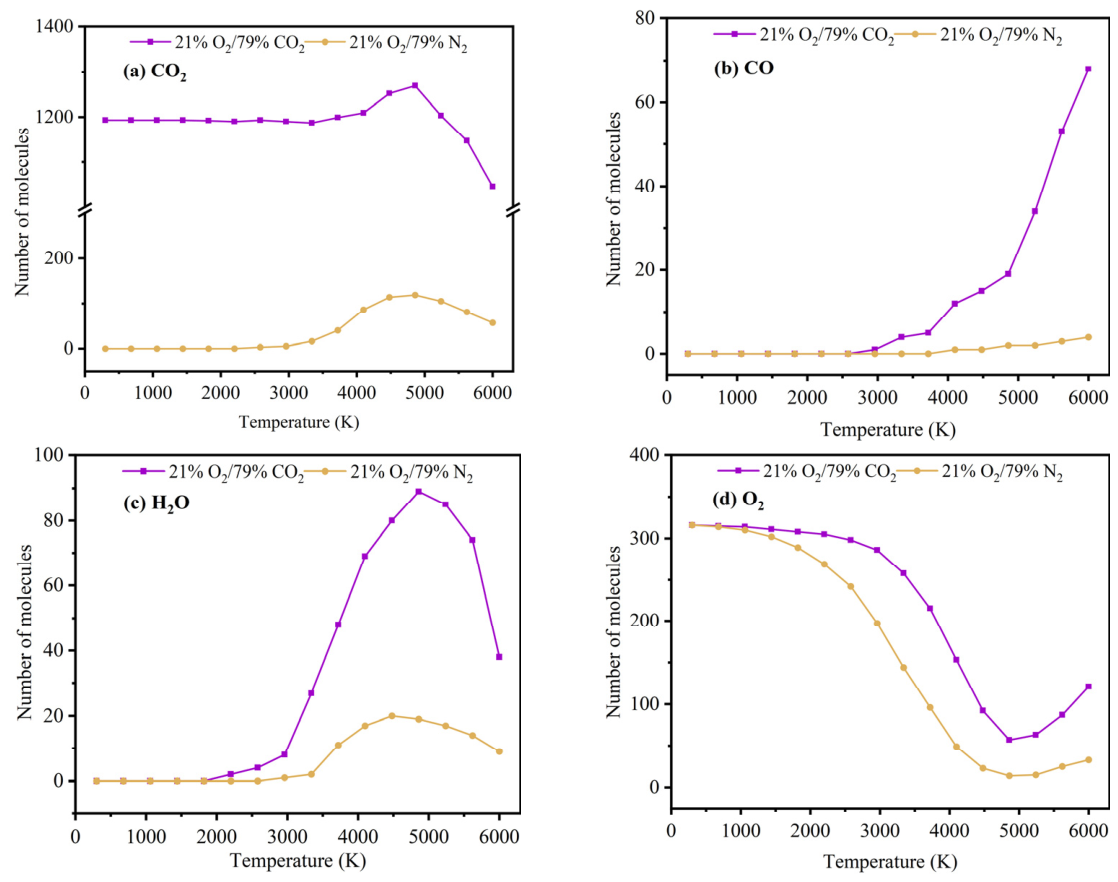
The evolution of major gaseous species provides another set of quantitative indicators for evaluating the influence of CO2 on kerogen combustion. In this section, the changes in CO2, CO, H2O, and O2 molecular numbers under 21% O2/79% CO2 and 21% O2/79% N2 atmospheres are compared, as shown in Figure 5. It is worth noting that the 21% O2/79% CO2 atmosphere contains a large amount of CO2 from the initial state. Therefore, a higher number of CO2 molecules is observed throughout the heating process, as shown in Figure 5a. Under both atmospheres, the number of CO2 molecules remains nearly stable in the low-temperature stage. As the temperature increases, kerogen oxidation gradually intensifies, producing more CO2 molecules, which reach a peak at around 5000 K. Under the 21% O2/79% N2 atmosphere, the generated CO2 mainly originates from the oxidation of carbon structures in kerogen. In contrast, under the 21% O2/79% CO2 atmosphere, CO2 not only serves as a background gas, but also participates in gasification reactions and radical transformation processes at high temperatures. The decrease in CO2 molecules at the final high-temperature stage indicates that, after substantial O2 consumption, part of the CO2 may further participate in high-temperature gasification reactions or the conversion of carbon-containing radicals.
As shown in Figure 5b, CO formation remains consistently low under the 21% O2/79% N2 atmosphere. In contrast, under the 21% O2/79% CO2 atmosphere, CO begins to accumulate noticeably above approximately 2600 K and increases rapidly in the high-temperature region. This indicates that a high-CO2 background favors CO formation. This behavior can be explained by two factors. First, at high temperatures, CO2 can react with the carbon skeleton through gasification reactions and promote further cleavage of C–C structures. Second, after participating in radical transformation reactions, CO2 may alter the distribution of oxygen-containing radicals and carbonaceous intermediates in the system. As a result, some oxygenated intermediates are more likely to be released through CO-forming pathways.
Figure 5c shows that the evolution trends of H2O are broadly similar under the two atmospheres. In both cases, the number of H2O molecules increases rapidly after approximately 2000 K, reaches a peak at the high-temperature stage, and then gradually declines. This suggests that H2O formation is mainly associated with the generation of reactive species such as H· and OH· and their recombination reactions, while the atmosphere type exerts a relatively limited influence on its fundamental formation pathways. However, the peak H2O yield under the 21% O2/79% CO2 atmosphere is clearly higher than that under the 21% O2/79% N2 atmosphere, indicating that CO2 may indirectly promote the formation of reactive species such as OH· through high-temperature radical transformation processes, thereby enhancing the conversion of hydrogen into H2O.
As shown in Figure 5d, the number of O2 molecules continuously decreases with increasing temperature in both systems, reflecting the ongoing consumption of O2 during oxidation. Under the 21% O2/79% N2 atmosphere, O2 consumption starts earlier and proceeds at a faster rate, indicating that in the absence of the dilution and mass-transfer inhibition effects of CO2, O2 can more readily access and oxidize active sites in kerogen during the low-temperature stage. A slight recovery in the O2 molecule number is observed at the final high-temperature stage, which can be related to recombination reactions among oxygen-containing radicals or to the decomposition of oxygenated intermediates. Overall, the evolution characteristics of CO2, H2O, and O2 under the two atmospheres are in good agreement with previous experimental results on the combustion behavior of Fushun oil shale under the same atmospheric conditions [6].
Taken together, the gaseous product evolution further confirms the dual role of CO2 during kerogen combustion. In the low-temperature region, the earlier O2 consumption under the 21% O2/79% N2 atmosphere indicates that replacing N2 with CO2 reduces the effective contact between O2 and reactive sites, thereby delaying the initial oxidation process. In the high-temperature region, the rapid accumulation of CO above approximately 2600 K under the 21% O2/79% CO2 atmosphere, together with the decrease in CO2 molecules at the final stage, indicates that CO2 is no longer only a diluent but also participates in high-temperature gasification or carbon-containing intermediate conversion. The higher H2O yield under the CO2-containing atmosphere also suggests that CO2-related high-temperature reactions can influence the formation and transformation of hydrogen- and oxygen-containing species. These results are consistent with the bond evolution discussed above and provide a coherent evidence chain for the low-temperature inhibition and high-temperature participation effects of CO2.

3.1.3. Evolution Characteristics of Kerogen Structure

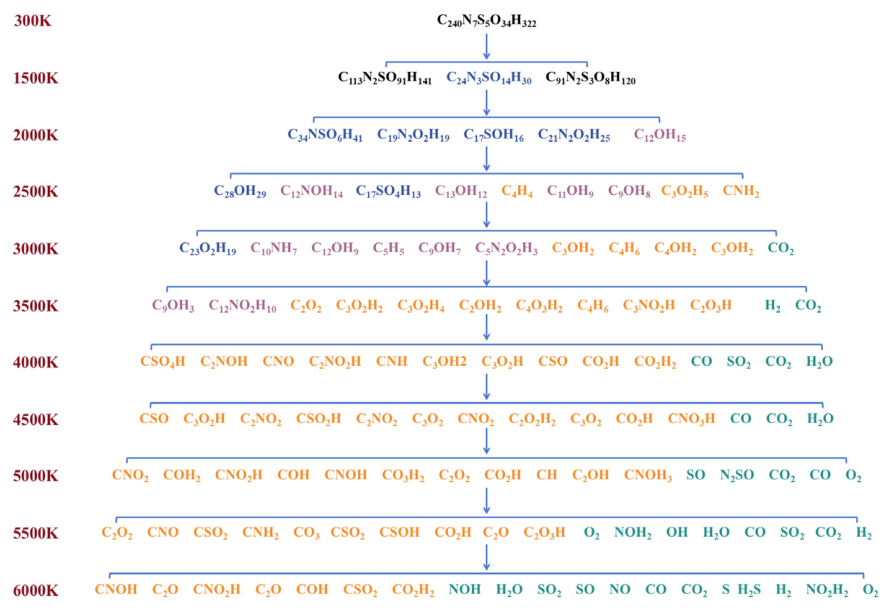
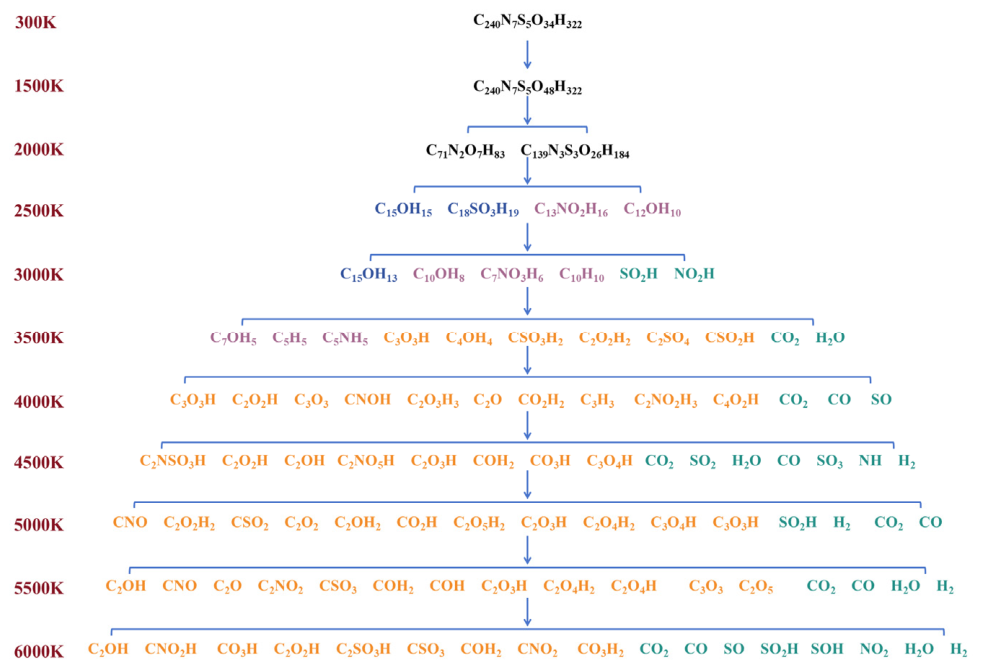
To further elucidate the influence of CO2 on the kerogen combustion process, the structural evolution and reaction pathways of the two systems were analyzed, as shown in Figure 6 and Figure 7. Overall, both systems exhibit a similar sequence of principal reaction stages, namely low-temperature slow oxidation, intermediate-temperature skeletal fragmentation, high-temperature deep oxidation, and final stabilization of small-molecule products. However, clear differences are observed in the rate of reaction progression and the distribution of intermediates.
Under the 21% O2/79% N2 atmosphere, cleavage of weak bonds and depolymerization of the macromolecular structure occur at relatively low temperatures, indicating that O2 can access active sites on kerogen at an early stage and initiate the initial oxidation process. As the temperature increases, aliphatic side chains, sulfur-containing functional groups, and bridge structures are progressively cleaved, and the number of product species rises rapidly, suggesting that the initial oxidation and intermediate evolution are more active in this atmosphere. In contrast, under the 21% O2/79% CO2 atmosphere, the system remains in a slow oxidation state for a longer period during the low-temperature stage, and the cleavage of the molecular framework as well as the release of intermediates are collectively shifted to a higher temperature range. This result indicates that CO2 can reduce the effective diffusion and collision probability of O2 through dilution and mass-transfer inhibition effects, thereby delaying the oxidation process. Once the system enters the high-temperature reaction regime, CO2 no longer acts solely as a background gas, but may participate in gasification and radical transformation reactions, thereby promoting further fragmentation of the carbon skeleton and altering the composition of intermediates. In general, the 21% O2/79% CO2 atmosphere produces a relatively smaller variety of products and more concentrated reaction pathways, indicating that the introduction of CO2 suppresses, to some extent, the parallel formation of complex intermediates during the low-temperature stage.
The representative reaction pathways provide structural-level support for the conclusions derived from bond evolution and gaseous product analysis. Under the 21% O2/79% N2 atmosphere, early oxidation and weak-bond cleavage are more active, leading to earlier depolymerization and a broader distribution of intermediates. Under the 21% O2/79% CO2 atmosphere, the release of intermediates is delayed to higher temperatures, confirming the inhibitory effect of CO2 during the early stage. At elevated temperatures, however, CO2-related conversion pathways promote further fragmentation of the carbon skeleton and favor CO-forming routes. Thus, the combined evidence from characteristic bond evolution, O2 consumption, CO2/CO/H2O formation, and representative reaction pathways supports the conclusion that CO2 suppresses early oxidation mainly through dilution and mass-transfer effects, while participating in gasification and radical-mediated transformation reactions at high temperatures.

3.2. Effect of O2 Concentration on Kerogen Combustion Behavior

3.2.1. Characteristics of the Reaction Process

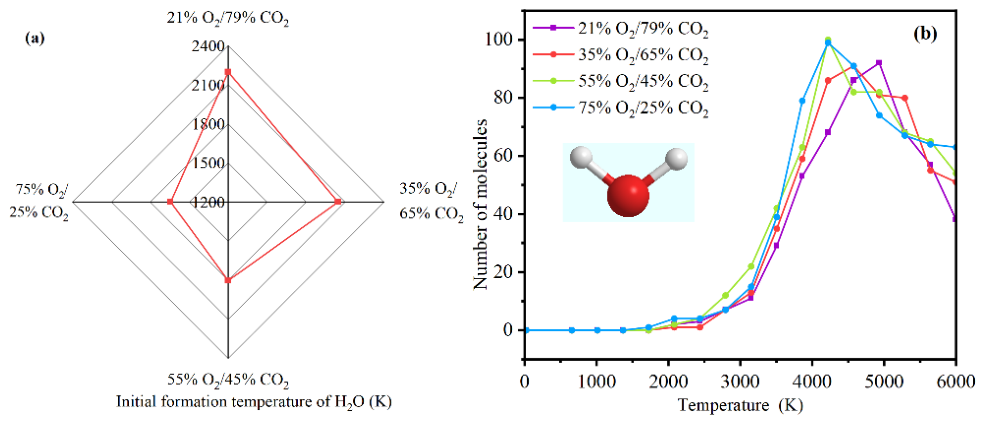
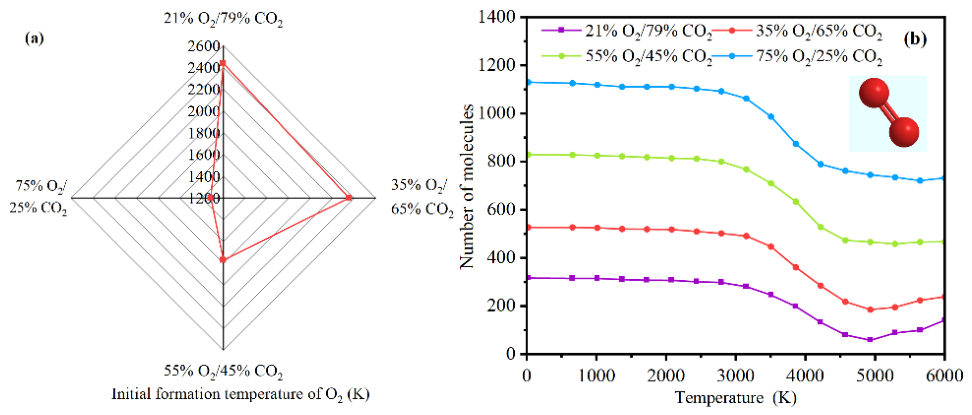
To examine the effect of O2 concentration on the oxy-fuel combustion of kerogen, four atmospheres were selected: 21% O2/79% CO2, 35% O2/65% CO2, 55% O2/45% CO2, and 75% O2/25% CO2. The initial formation or consumption behavior and molecular evolution of CO2, CO, H2O, and O2 were then compared under these conditions. It should be emphasized that the initial numbers of CO2 and O2 molecules differ among the O2/CO2 systems. Therefore, the comparison should focus on their onset temperatures, main variation ranges, and relative changes rather than absolute molecular numbers.
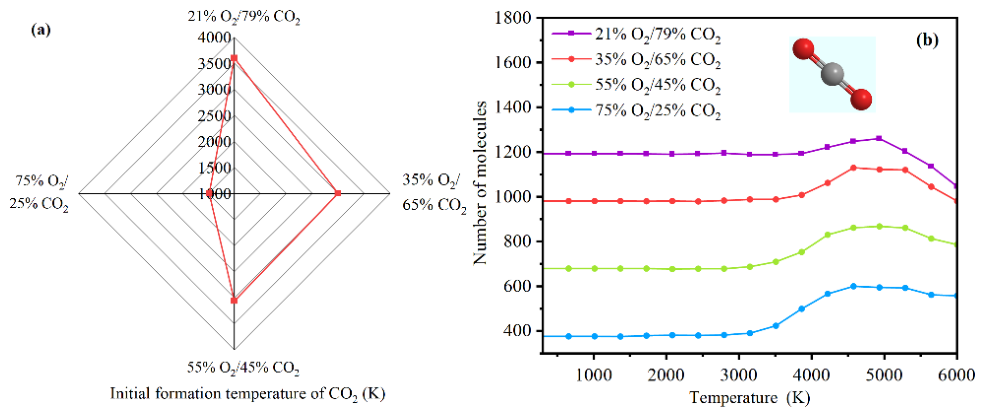
As shown in Figure 8, the initial formation temperature of CO2 differs markedly among the systems with different O2 concentrations, although it generally falls within the intermediate- to high-temperature range. In all systems, the number of CO2 molecules first increases and then decreases. When the net increase in CO2 is evaluated relative to the initial background CO2 level in each system, both the net formation rate and net increment of CO2 generally increase with increasing O2 concentration. This indicates that a higher O2 concentration promotes the deep oxidation of carbonaceous structures and facilitates the further conversion of CO to CO2. The decrease in CO2 at the later high-temperature stage can be associated with the participation of CO2 in high-temperature gasification, reduction reactions, or radical transformation processes after substantial O2 consumption.
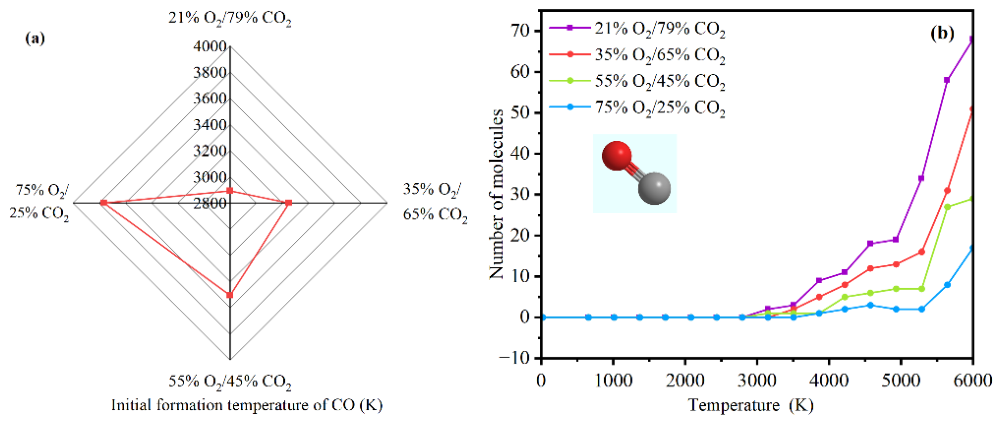
As shown in Figure 9, CO formation is mainly concentrated in the high-temperature stage, with its onset temperature occurring at approximately 2800–3200 K. No clear monotonic relationship is observed between the onset of CO generation and O2 concentration. However, both the peak value and final cumulative amount of CO decrease markedly as the O2 concentration increases. These results demonstrate that high-O2 conditions substantially enhance the deep oxidation pathway of carbon, allowing more carbon-containing intermediate fragments to be further converted into CO2 and thereby suppressing the continuous accumulation of CO. In other words, increasing the O2 concentration weakens the relative contributions of incomplete oxidation reactions and high-temperature CO2-to-CO conversion pathways.
As shown in Figure 10, H2O formation is highly sensitive to the O2 concentration. With increasing O2 concentration, the onset temperature of H2O formation shifts toward the lower-temperature region, and its peak value increases markedly. This indicates that, under oxygen-enriched conditions, reactive oxygen-containing radicals such as OH· and O· can be generated earlier and continuously participate in subsequent reactions, thereby accelerating the conversion of hydrogen radicals into H2O [37]. At higher temperatures, the number of H2O molecules decreases, suggesting that H2O may further decompose or participate in other high-temperature reactions.
As shown in Figure 11, with increasing O2 concentration, the onset temperature of O2 consumption shifts toward lower temperatures. The earlier onset of O2 consumption reflects the enhanced collision probability between O2 molecules and active sites in kerogen, allowing oxidation reactions to occur at lower temperatures. In all four reaction systems, the number of O2 molecules decreases continuously with increasing temperature, followed by a slight recovery at the final high-temperature stage. Because the initial number of O2 molecules differs among the systems, the absolute molecular numbers are not directly comparable. From the temperature at which the inflection occurs, the rapid O2 consumption stage appears earlier in systems with higher O2 concentrations. This trend is consistent with the evolution behavior of CO2 and H2O, further indicating that oxygen-enriched conditions drive the oxidation process into the accelerated reaction region at an earlier stage. Overall, the influence of O2 concentration on the evolution of gaseous products such as CO2 and H2O is generally consistent with the experimental findings reported by Bai et al. [16,38] for the oxy-fuel combustion of Huadian oil shale.

3.2.2. Product Distribution Characteristics

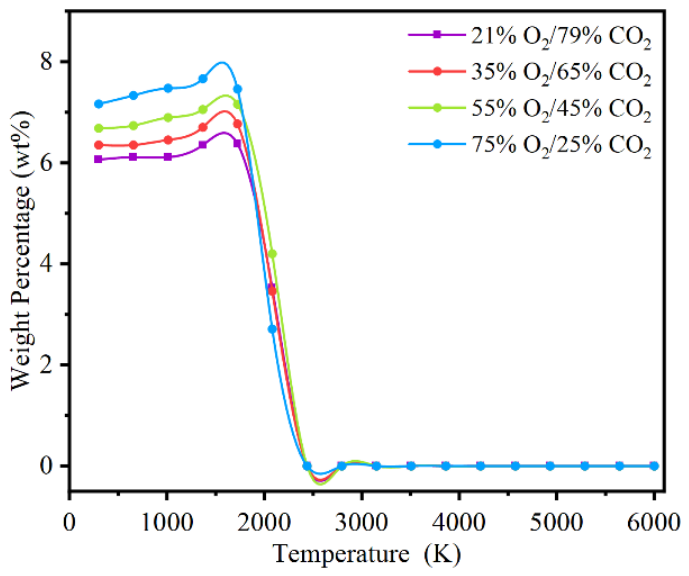
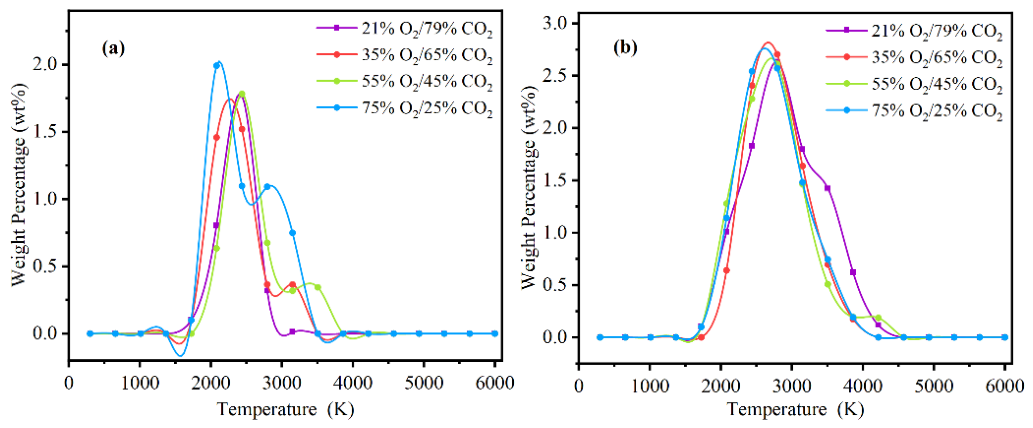
Product distribution provides direct information on the conversion of kerogen from condensed-phase intermediates to final gaseous products. During programmed heating, Fushun oil shale kerogen undergoes char formation, tar release, oxidative consumption of intermediate phases, and the gradual dominance of gaseous products. The evolution of char, tar, and gaseous products under different O2 concentrations is presented in Figure 12, Figure 13 and Figure 14, respectively. Overall, during programmed heating, Fushun oil shale kerogen sequentially undergoes polycondensation-induced char formation, tar release, oxidative consumption of intermediate phases, and the gradual dominance of gaseous products. These changes reflect the typical evolution of kerogen from solid/intermediate phases toward gas-phase products. Meanwhile, the temperature ranges and peak characteristics of each stage are strongly affected by the O2 concentration.
As shown in Figure 12, the char yield first increases and then decreases with increasing temperature, indicating that char mainly serves as a solid intermediate formed through the recombination and polycondensation of pyrolytic fragments and is subsequently consumed rapidly during high-temperature oxidation. Within approximately 300–2000 K, small molecular fragments generated from macromolecular skeleton cleavage undergo cross-linking and polycondensation reactions, leading to a transient accumulation of char. As the temperature further increases, char is rapidly oxidized by O2 and decreases markedly. With increasing O2 concentration, the char peak in the low-temperature stage increases slightly, whereas the depletion of char in the high-temperature stage is accelerated. This suggests that an oxygen-enriched environment not only promotes the pyrolysis–polycondensation process to form transient solid intermediates, but also more strongly enhances the subsequent oxidative burnout of char.
As shown in Figure 13, the yields of both heavy tar and light tar first increase and then decrease with increasing temperature. In the early stage of the reaction, decomposition of the kerogen skeleton and cleavage of weak bonds promote the formation of tar-like intermediate products. As the temperature further increases, tar undergoes continuous cracking and oxidation reactions and is gradually converted into small gaseous molecules. In comparison, heavy tar is more sensitive to changes in O2 concentration. Under high-O2 conditions, its peak appears slightly earlier, and the high-temperature tail becomes markedly shorter. This indicates that an oxygen-enriched environment is more favorable for suppressing the sustained accumulation of heavy fragments and promoting their secondary cracking and oxidative conversion. The peak profiles of light tar are relatively similar under different operating conditions. However, under the 21% O2/79% CO2 condition, the high-temperature tail is slightly longer, suggesting that the further oxidation of light tar is somewhat delayed at low O2 concentrations.
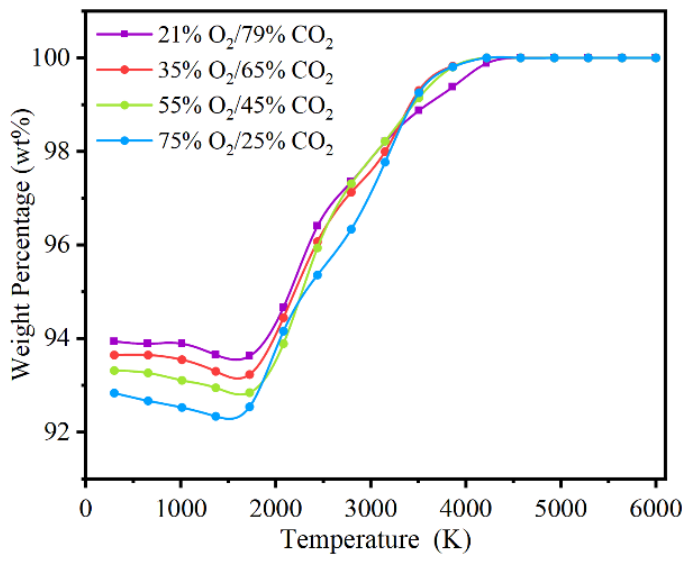
The gas-phase fraction reflects the final conversion degree of condensed intermediates during high-temperature oxidation. As presented in Figure 14, the mass fraction of gaseous products first decreases slightly, then increases rapidly, and finally approaches 100%. Because the simulation system initially contains a large number of gas molecules, the gas-phase fraction is relatively high at the low-temperature stage. As the temperature increases, O2 adsorption and the formation of condensed-phase intermediates, such as char and tar, temporarily increase the proportion of condensed products, resulting in a slight decrease in the mass fraction of gaseous products.
After entering the high-temperature combustion stage, char and tar continuously undergo oxidation, cracking, and gasification reactions, and the product distribution gradually shifts toward small gaseous molecules as the dominant products. With increasing O2 concentration, the onset temperature for the rapid increase in gaseous products shifts to lower temperatures, indicating that oxygen-enriched conditions significantly promote the conversion of condensed-phase intermediates into final gas-phase products.

3.2.3. Evolution Characteristics of System Energy

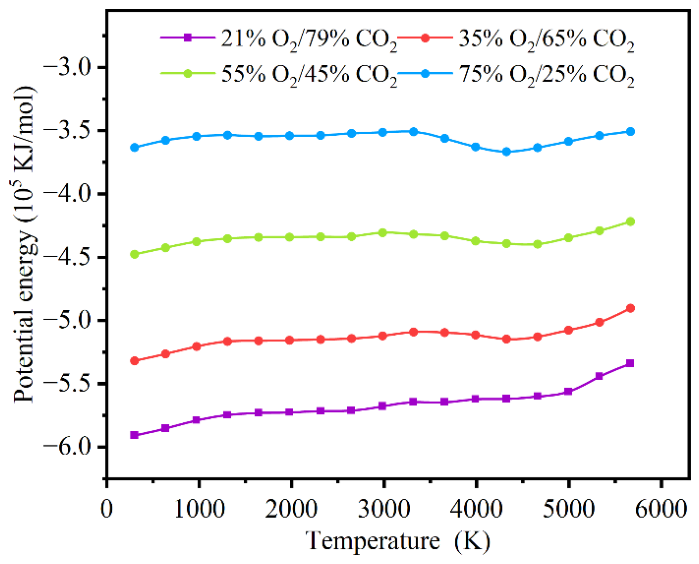
Under the NVT ensemble, the system temperature is controlled by the programmed heating process; therefore, variations in potential energy can, to some extent, reflect the competition between endothermic bond cleavage and exothermic bond formation. To further evaluate the effect of O2 concentration on the energy evolution of kerogen oxy-fuel combustion, the system potential energy was analyzed as a function of temperature, as shown in Figure 15.
It should be noted that, because the atmospheric compositions differ among the systems, their initial molecular compositions and intermolecular interactions are not identical. Therefore, the absolute potential energy values should not be used as the sole criterion for evaluating the effect of O2 concentration; instead, greater emphasis should be placed on the relative trends in potential energy variation with temperature.
As shown in Figure 15, the potential energy of the four systems increases slowly with temperature in the low-temperature region. This is mainly because kerogen pyrolysis, weak-bond cleavage, and intermediate fragment formation dominate this stage, and bond breaking requires heat absorption. When the temperature rises to approximately 3500–4500 K, the system potential energy decreases markedly. This indicates that oxidation reactions between pyrolysis products and O2 become stronger, and the heat released by bond formation gradually exceeds the heat absorbed by bond cleavage. As a result, the system enters a strongly exothermic combustion stage. In the high-temperature stage, the potential energy variation gradually becomes stable. This suggests that most highly reactive structures have been consumed, the product distribution shifts toward stable small gaseous molecules, and the overall reactivity of the system decreases.
In addition, as the O2 concentration increases, the temperature range in which the potential energy changes from increasing to decreasing shifts toward lower temperatures. This indicates that oxygen-enriched conditions increase the effective collision probability between O2 and pyrolysis products or reactive intermediates, thereby lowering the temperature required for exothermic oxidation reactions. In contrast, under low-O2 conditions, the oxidant supply is relatively insufficient. The system therefore needs to continuously absorb energy at higher temperatures to drive skeleton cracking and intermediate-phase formation, leading to more pronounced potential energy accumulation. Thus, from the perspective of energy evolution, Figure 15 further demonstrates that O2 concentration plays an important role in regulating the onset temperature range and exothermic intensity of kerogen oxy-fuel combustion.

3.3. Major Reaction Pathways and Mechanistic Model

3.3.1. Conversion Pathways of CO2, CO, O2, and H2O

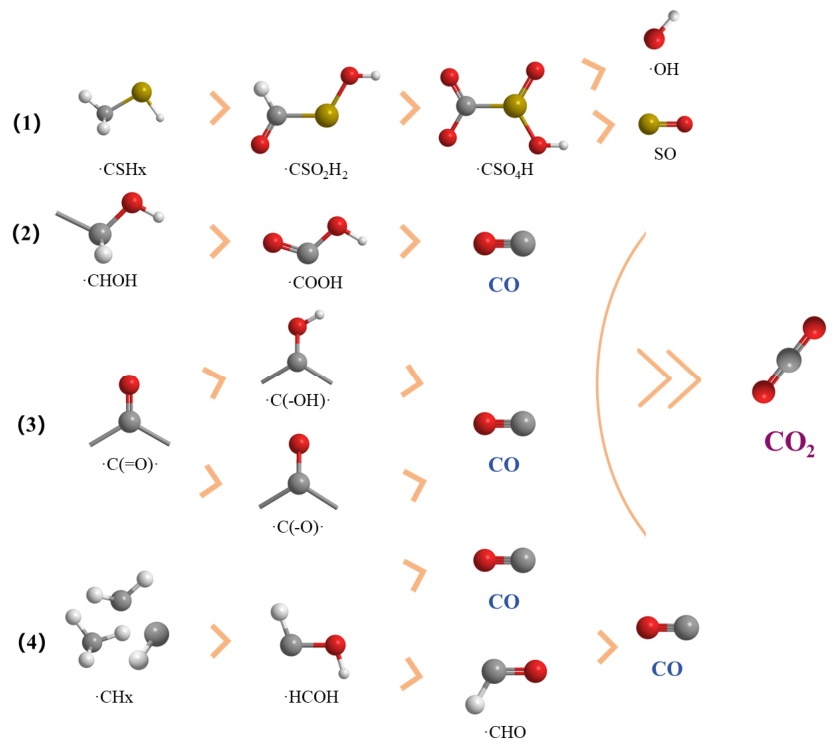
To clarify the molecular origin of the major gaseous products, representative reaction trajectories and intermediates were further analyzed. Particular attention was paid to the formation and conversion pathways of CO2 and CO, because these species directly reflect deep oxidation, incomplete oxidation, and CO2-related high-temperature reactions. The main reaction pathways of CO2 and CO are summarized in Figure 16.
In general, CO2 is generated not only through the direct removal of oxygen-containing functional groups but also through the continuous oxidation of small carbon-containing fragments derived from carbon skeleton cleavage. In contrast, CO mainly acts as an important carbonaceous intermediate in the high-temperature stage, and its subsequent conversion is jointly governed by atmospheric composition and local oxidation intensity.
The formation pathways of CO2 can be broadly classified into four categories. First, sulfur-containing structures are initially oxidized into highly oxygenated sulfur species, which subsequently undergo further cleavage to release products such as SO, OH·, and CO2. Second, hydroxyl-containing carbon structures are oxidized by O2 to form ·COOH intermediates, which then decompose or detach to generate CO2; in some cases, CO can be produced first and subsequently oxidized to CO2. Third, cleavage of carbonyl-containing radical fragments yields ·COH or ·CO species. The ·COH intermediate can undergo dehydrogenation to form CO, which is then further oxidized to CO2, whereas ·CO may react directly with oxygen-containing radicals such as OH· to generate CO2. Fourth, CHx· fragments released from the macromolecular skeleton are first oxidized by O2 to form CHxO· species. These species then undergo dehydrogenation, rearrangement, and further oxidation, gradually forming CO and eventually converting into CO2. Therefore, CO2 can be regarded as one of the terminal products formed through the combined effects of kerogen skeleton cleavage, functional group oxidation, and deep oxidation of carbon-containing intermediates.
CO formation mainly proceeds through two types of pathways. In the first pathway, terminal carbon atoms can combine directly with O· to form CO, or C–O structures can detach from the macromolecular skeleton and be released as CO. This type of CO may remain temporarily stable in regions with relatively weak local oxidizing conditions. The second pathway mainly occurs in the final high-temperature stage. When O2 becomes markedly insufficient in the system, part of the CO2 may participate in reduction reactions, gasification reactions, or high-temperature radical transformation processes, leading to CO formation [39]. For O2/CO2 systems, the high CO2 background provides a more abundant reactant source for these conversion pathways. As a result, CO accumulation becomes more pronounced at high temperatures.
Figure 16 also shows that the evolution of O2 and H2O follows relatively clear reaction pathways. In the early reaction stage, O2 is mainly consumed through the oxidation of active sites in kerogen, resulting in the formation of numerous oxygen-containing structures such as C–O, C=O, S–O, and S=O. In the later stage, some oxygen-rich radicals, including O·, CO3·, and HO2·, may undergo recombination reactions to generate a small amount of O2. The formation of H2O mainly depends on the recombination of H· and OH·, whereas its further decomposition at high temperatures may regenerate OH· and H·. Therefore, H2O is not only an important terminal hydrogen-containing product in the system but may also participate in regulating the radical pool, thereby influencing subsequent oxidation reactions.

3.3.2. Mechanistic Model of Oxy-Fuel Combustion

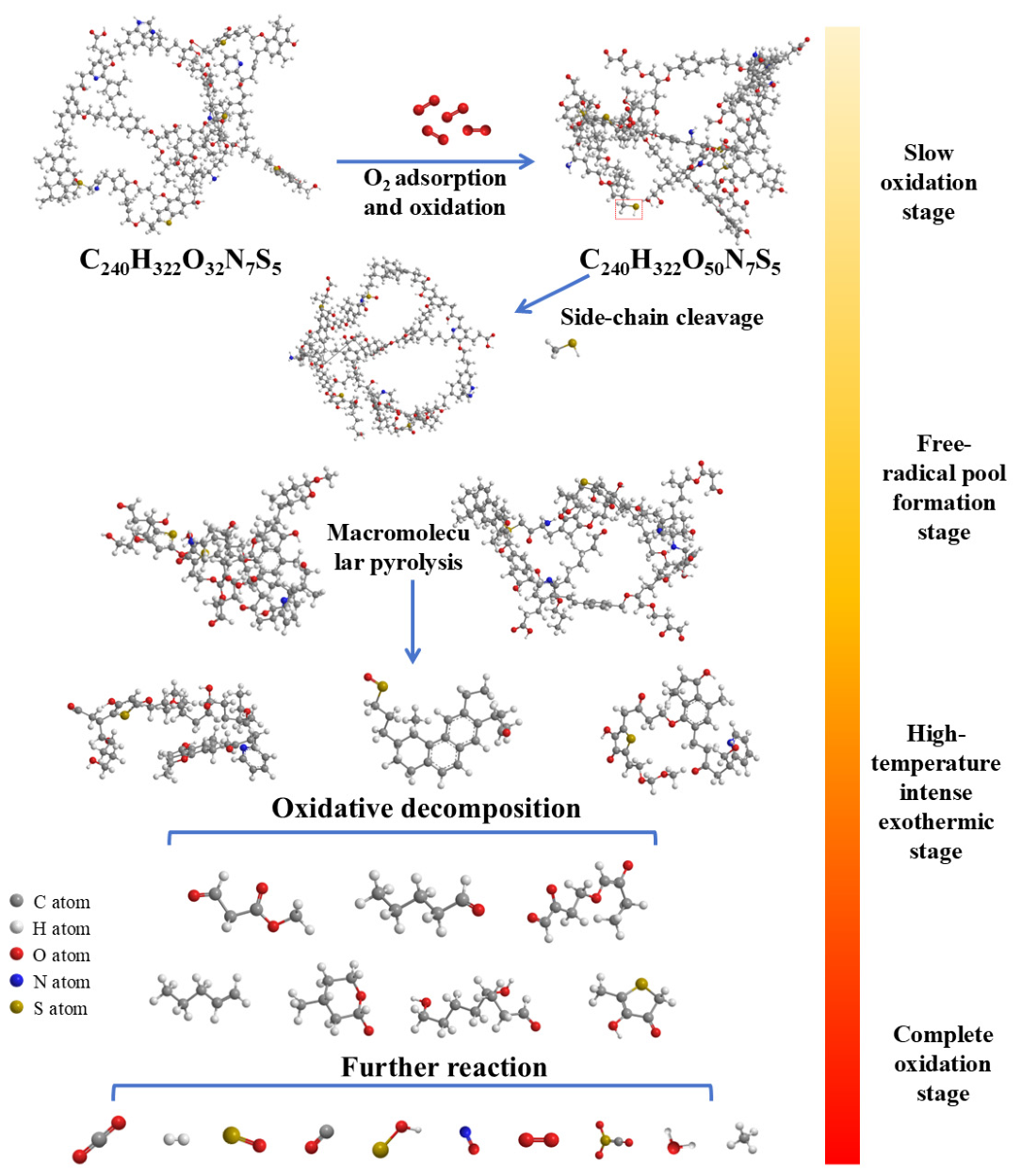
Based on the combined analysis of chemical bond evolution, gaseous product formation, char/tar/gas conversion, potential energy variation, and representative reaction pathways, the oxy-fuel combustion of Fushun oil shale kerogen can be divided into four consecutive stages. To make the mechanistic model more explicit, approximate characteristic temperature ranges were assigned to each stage according to the major transition points observed in the simulation results. It should be noted that these temperature ranges are not fixed kinetic boundaries but representative regions that vary slightly with the atmosphere and O2 concentration. The stage division is mainly based on the onset of O2 consumption, the rapid decrease in C–C and C–H bonds, the formation of CO2, CO and H2O, the conversion of char and tar intermediates, and the turning point in potential energy evolution., as shown in Table 3. Figure 17 illustrates the mechanistic model for the oxy-fuel combustion of Fushun oil shale kerogen.
During Stage I, namely the slow oxidation stage below approximately 2000 K, O2 initially contacts active sites on the kerogen surface and initiates preliminary oxidation reactions. In this stage, the numbers of C–C and C–H bonds remain relatively stable, and only limited O2 consumption and weak-bond activation occur. Sulfur- and oxygen-containing functional groups are preferentially oxidized or cleaved because of their relatively low bond energies. In the O2/CO2 system, the dilution effect and diffusion limitation of CO2 reduce the effective contact probability between O2 and active sites, thereby delaying the initial oxidation process.
Stage II, corresponding to free radical pool formation, mainly occurs within approximately 2000–3500 K. In this stage, the cleavage of C–C, C–H, and some C–O bonds becomes more active, and the kerogen macromolecular structure gradually depolymerizes. Aliphatic side chains and bridge structures are cleaved, generating char, tar, and smaller reactive fragments. These reactions provide abundant reactive intermediates for subsequent oxidation.
Stage III is the high-temperature intense exothermic oxidation stage, mainly occurring within approximately 3500–4500 K. This stage is characterized by the sharp decrease in potential energy, rapid O2 consumption, and intense formation of CO2, CO, and H2O. Char, tar, and small-molecule intermediates undergo continuous oxidative cracking and deep oxidation. In the O2/CO2 atmosphere, CO2 no longer acts only as a diluent, but also participates in high-temperature gasification and radical-mediated transformation pathways, thereby promoting carbon skeleton fragmentation and CO formation.
Stage IV, above approximately 4500 K, corresponds to final complete oxidation and small-molecule stabilization. In this stage, condensed-phase intermediates are largely consumed, and gaseous products become dominant. The system gradually approaches a relatively stable product distribution. Under locally oxygen-deficient conditions, highly oxidized oxygen-containing species such as CO2 and ·CO3 may undergo recombination or transformation reactions, while H· and OH· can combine to form H2O. With increasing O2 concentration, the whole reaction process shifts toward earlier and deeper oxidation, as reflected by earlier O2 consumption, earlier H2O formation, accelerated char/tar consumption, and suppressed CO accumulation.
The proposed mechanism shows both common oxy-fuel combustion features and distinct characteristics compared with previous studies on coal and oil shale combustion [21,22,23,24]. Similar to other carbonaceous fuels, CO2-rich atmospheres inhibit early oxidation through dilution and mass-transfer limitations, while at elevated temperatures CO2 participates in gasification or radical-mediated reactions, promoting CO formation. Increasing the O2 concentration advances O2 consumption, enhances deep oxidation, and suppresses CO accumulation. However, Fushun oil shale kerogen differs from coal char and simplified carbonaceous systems because of its complex macromolecular structure, which contains aliphatic side chains, aromatic units, and O-, N-, and S-containing functional groups. As a result, its oxy-fuel combustion is governed not only by char oxidation and char–CO2 gasification, but also by the coupled conversion of the kerogen skeleton, heteroatom-containing groups, tar-like fragments, char intermediates, and gaseous products. This structural specificity accounts for the staged reaction behavior and distinct product evolution observed in this work.
It should be noted that the radical-related pathways proposed in this section are mainly derived from representative trajectory analysis and intermediate identification. Because many radical species in high-temperature ReaxFF-MD simulations are highly transient, their instantaneous populations may be sensitive to the bond-order threshold and sampling frequency. Therefore, this work focuses on the qualitative identification of radical-mediated pathways and their consistency with quantitative indicators and potential energy variation. A more detailed statistical analysis of radical population evolution will be conducted in future work.

4. Conclusions

In this study, ReaxFF-MD reactive molecular dynamics simulations were performed using a three-dimensional macromolecular model of Fushun oil shale kerogen. Different O2/N2 and O2/CO2 reaction systems were constructed, and programmed heating simulations were conducted to systematically investigate the evolution of chemical bonds, gaseous product formation, product distribution, and system energy variation during kerogen combustion under different atmospheres and O2 concentrations. On this basis, the oxy-fuel combustion mechanism of Fushun oil shale kerogen was elucidated at the molecular scale. The main conclusions are as follows:
(1) Compared with the 21% O2/79% N2 atmosphere, the 21% O2/79% CO2 atmosphere exhibits stronger dilution and mass-transfer inhibition effects at the low-temperature stage, shifting the initial oxidation of kerogen, the cleavage of C–C and C–H bonds, and O2 consumption toward higher temperature regions. At the high-temperature stage, however, CO2 can participate in gasification reactions and radical transformation processes, thereby promoting further fragmentation of the carbon skeleton and significantly enhancing CO formation.
(2) With increasing O2 concentration, the onset temperature of O2 participation shifts to lower temperatures, and the initial formation of H2O also occurs earlier. Intermediate products such as char and tar are oxidized and consumed more rapidly, allowing the system to enter the deep oxidation stage dominated by small gaseous molecules at an earlier stage. Meanwhile, a high O2 concentration markedly suppresses CO accumulation and strengthens the direct oxidation pathway for carbon conversion to CO2.
(3) Based on chemical bond evolution, major gaseous species conversion pathways, product distribution, and potential energy variation, a four-stage mechanistic model for the oxy-fuel combustion of Fushun oil shale kerogen was proposed and further characterized by approximate temperature ranges. These stages include slow oxidation below approximately 2000 K, free radical pool formation within approximately 2000–3500 K, high-temperature intense exothermic oxidation within approximately 3500–4500 K, and final deep oxidation and small-molecule stabilization above approximately 4500 K. The composition of the O2/CO2 atmosphere and the O2 concentration further influence the overall reaction progression and final product distribution during kerogen oxy-fuel combustion by regulating active-site competition, the structure of the radical pool, and the intensity of gas–solid coupled reactions.

Author Contributions

Conceptualization, Q.L., Q.W., J.B. and C.X.; methodology, Q.L.; software, Q.L., W.W., M.Z., F.X. and X.W.; validation, Q.L., Q.W., J.B., S.G. and C.X.; formal analysis, Q.L., W.W., M.Z. and F.X.; investigation, Q.L., W.W., M.Z. and F.X.; resources, Q.W. and J.B.; data curation, Q.L., W.W., M.Z. and F.X.; writing—original draft preparation, Q.L., W.W., M.Z. and F.X.; writing—review and editing, Q.W., J.B., S.G. and C.X.; visualization, Q.L., W.W., M.Z. and F.X.; supervision, Q.L., Q.W., J.B. and C.X.; project administration, Q.W. and J.B.; funding acquisition, Q.W. and J.B. All authors have read and agreed to the published version of the manuscript.

Funding

This research was funded by Jilin Provincial Science and Technology Development Plan Project (No. 20210203202SF) and the National Natural Science Foundation of China (No. 52476106).

Data Availability Statement

The original contributions presented in this study are included in the article. Further inquiries can be directed to the corresponding author.

Conflicts of Interest

Authors Qi Liu, Qing Wang, Jingru Bai, Wenxiao Wang, Mohan Zhao, Fang Xu, Shuai Guo, Xinmin Wang were employed by Northeast Electric Power University. Author Chang Xing was employed by Harbin Institute of Technology. The remaining authors declare that the research was conducted in the absence of any commercial or financial relationships that could be construed as a potential conflict of interest.

References

  1. Qian, J.L.; Wang, J.Q.; Li, S.Y. World oil shale utilization and its future. J. Jilin Univ. (Earth Sci. Ed.) 2006, 36, 877–887. (In Chinese) [Google Scholar]
  2. Hou, J.L.; Ma, Y.; Li, S.Y.; Teng, J.S. Development and utilization of oil shale worldwide. Chem. Ind. Eng. Prog. 2015, 34, 1183–1190. (In Chinese) [Google Scholar]
  3. Xu, Y.; Sun, P.; Yao, S.; Liu, Z.; Tian, X.; Li, F.; Zhang, J. Progress in exploration, development and utilization of oil shale in China. Oil Shale 2019, 36, 285–304. [Google Scholar] [CrossRef]
  4. Ma, Y.; Xiang, Q.Y.; Ding, K.L. Development of oil shale at home and abroad. World Pet. Ind. 2024, 31, 16–25. (In Chinese) [Google Scholar]
  5. Liu, Z.J.; Liu, R.; Sun, P.C.; Meng, Q.T.; Hu, F. Characteristics and occurrence regularities of oil shale in typical basins in China. J. Jilin Univ. (Earth Sci. Ed.) 2020, 50, 313–325. (In Chinese) [Google Scholar]
  6. Liu, Q.; Wang, Q.; Wang, Z.; Di, H. Influence of CO2 substitution for N2 on the combustion characteristics and kinetics of oil shale under oxy-fuel conditions. RSC Adv. 2025, 15, 37937–37950. [Google Scholar] [CrossRef]
  7. Toftegaard, M.B.; Brix, J.; Jensen, P.A.; Glarborg, P.; Jensen, A.D. Oxy-fuel combustion of solid fuels. Prog. Energy Combust. Sci. 2010, 36, 581–625. [Google Scholar] [CrossRef]
  8. Scheffknecht, G.; Al-Makhadmeh, L.; Schnell, U.; Maier, J. Oxy-fuel coal combustion—A review of the current state-of-the-art. Int. J. Greenh. Gas. Control 2011, 5, S16–S35. [Google Scholar] [CrossRef]
  9. Wang, C.a.; Zhang, X.; Liu, Y.; Che, D. Pyrolysis and combustion characteristics of coals in oxyfuel combustion. Appl. Energy 2012, 97, 264–273. [Google Scholar] [CrossRef]
  10. Yin, C.; Yan, J. Oxy-fuel combustion of pulverized fuels: Combustion fundamentals and modeling. Appl. Energy 2016, 162, 742–762. [Google Scholar] [CrossRef]
  11. Wang, Q.; Liu, Q.; Wang, Z.C.; Liu, H.P.; Bai, J.R.; Ye, J.B. Characterization of organic nitrogen and sulfur in the oil shale kerogens. Fuel Process. Technol. 2017, 160, 170–177. [Google Scholar] [CrossRef]
  12. Gil, M.; Riaza, J.; Álvarez, L.; Pevida, C.; Pis, J.; Rubiera, F. A study of oxy-coal combustion with steam addition and biomass blending by thermogravimetric analysis. J. Therm. Anal. Calorim. 2012, 109, 49–55. [Google Scholar] [CrossRef]
  13. Liu, Y.; Shi, Z.; Li, K.; Wang, Z.; Tao, J.; Xu, S.; Wang, X.; Chen, Y.; Yu, B.; Fu, P. Study on intrinsic reaction kinetics of coal char oxy-fuel combustion based on general surface activation function model. Combust. Flame 2025, 273, 113952. [Google Scholar] [CrossRef]
  14. Baqain, M.; Yörük, C.R.; Nešumajev, D.; Järvik, O.; Konist, A. Ash characterisation formed under different oxy-fuel circulating fluidized bed conditions. Fuel 2023, 338, 127244. [Google Scholar] [CrossRef]
  15. Loo, L.; Maaten, B.; Siirde, A.; Pihu, T.; Konist, A. Experimental analysis of the combustion characteristics of Estonian oil shale in air and oxy-fuel atmospheres. Fuel Process. Technol. 2015, 134, 317–324. [Google Scholar] [CrossRef]
  16. Bai, F.; Zhao, J.; Liu, Y. An investigation into the characteristics and kinetics of oil shale oxy-fuel combustion by thermogravimetric analysis. Oil Shale 2019, 36, 1–18. [Google Scholar] [CrossRef]
  17. Chenoweth, K.; Van Duin, A.C.; Goddard, W.A. ReaxFF reactive force field for molecular dynamics simulations of hydrocarbon oxidation. J. Phys. Chem. A 2008, 112, 1040–1053. [Google Scholar] [CrossRef]
  18. Qi, T.; Bauschlicher, C.W., Jr.; Lawson, J.W.; Desai, T.G.; Reed, E.J. Comparison of ReaxFF, DFTB, and DFT for phenolic pyrolysis. 1. Molecular dynamics simulations. J. Phys. Chem. A 2013, 117, 11115–11125. [Google Scholar] [CrossRef]
  19. Qiu, Y.; Zhong, W.; Shao, Y.; Yu, A. Reactive force field molecular dynamics (ReaxFF MD) simulation of coal oxy-fuel combustion. Powder Technol. 2020, 361, 337–348. [Google Scholar] [CrossRef]
  20. Qiu, Y.; Zhong, W.; Yu, A. Simulations on pressurized oxy-coal combustion and gasification by molecular dynamics method with ReaxFF. Adv. Powder Technol. 2022, 33, 103557. [Google Scholar] [CrossRef]
  21. Hong, D.; Wang, Y.; Zhai, X. A ReaxFF study of the effect of pressure on the contribution of char-CO2 gasification to char conversion during pressurized oxy-fuel combustion. Fuel 2022, 329, 125439. [Google Scholar] [CrossRef]
  22. Lei, M.; Tian, X.; Hu, Y.; Liu, W.; Hong, D. Effect of CO2 and H2O gasification on the pulverized coal conversion during pressurized oxy-fuel combustion: The competition and decoupling. Fuel 2026, 406, 137123. [Google Scholar] [CrossRef]
  23. Wang, X.; Wang, Q.; Pan, S.; Cui, D.; Sun, S.; Wu, C.; Chang, H. The non-isothermal thermal decomposition evolution of the Fushun oil shale kerogen based on ReaxFF molecular dynamics simulation. J. Anal. Appl. Pyrolysis 2023, 169, 105869. [Google Scholar] [CrossRef]
  24. Zhang, Z.; Zhang, H.; Chai, J.; Zhao, L.; Zhuang, L. Reactive molecular dynamics simulation of oil shale combustion using the ReaxFF reactive force field. Energy Sources Part A Recovery Util. Environ. Eff. 2021, 43, 349–360. [Google Scholar]
  25. Qing, W.; Xinmin, W.; Shuo, P. The three-dimensional molecular structure model of Fushun oil shale kerogen, China. J. Mol. Struct. 2022, 1255, 132380. [Google Scholar] [CrossRef]
  26. Xu, F.; Liu, H.; Wang, Q.; Pan, S.; Zhao, D.; Liu, Y. Study of non-isothermal pyrolysis mechanism of lignite using ReaxFF molecular dynamics simulations. Fuel 2019, 256, 115884. [Google Scholar] [CrossRef]
  27. Xu, F.; Liu, H.; Wang, Q.; Pan, S.; Zhao, D.; Liu, Q.; Liu, Y. ReaxFF-based molecular dynamics simulation of the initial pyrolysis mechanism of lignite. Fuel Process. Technol. 2019, 195, 106147. [Google Scholar] [CrossRef]
  28. Wang, Q.D.; Wang, J.B.; Li, J.Q.; Tan, N.X.; Li, X.Y. Reactive molecular dynamics simulation and chemical kinetic modeling of pyrolysis and combustion of n-dodecane. Combust. Flame 2011, 158, 217–226. [Google Scholar] [CrossRef]
  29. Mattsson, T.R.; Lane, J.M.D.; Cochrane, K.R.; Desjarlais, M.P.; Thompson, A.P.; Pierce, F.; Grest, G.S. First-principles and classical molecular dynamics simulation of shocked polymers. Phys. Rev. B 2010, 81, 054103. [Google Scholar] [CrossRef]
  30. Zheng, M.; Li, X.; Liu, J.; Wang, Z.; Gong, X.; Guo, L.; Song, W. Pyrolysis of Liulin coal simulated by GPU-based ReaxFF MD with cheminformatics analysis. Energy Fuels 2014, 28, 522–534. [Google Scholar] [CrossRef]
  31. Salmon, E.; van Duin, A.C.; Lorant, F.; Marquaire, P.-M.; Goddard, W.A., III. Early maturation processes in coal. Part 2: Reactive dynamics simulations using the ReaxFF reactive force field on Morwell Brown coal structures. Org. Geochem. 2009, 40, 1195–1209. [Google Scholar] [CrossRef]
  32. Li, X.; Zheng, M.; Ren, C.; Guo, L. ReaxFF molecular dynamics simulations of thermal reactivity of various fuels in pyrolysis and combustion. Energy Fuels 2021, 35, 11707–11739. [Google Scholar] [CrossRef]
  33. Liu, X.; Zhan, J.-H.; Lai, D.; Liu, X.; Zhang, Z.; Xu, G. Initial Pyrolysis Mechanism of Oil Shale Kerogen with Reactive Molecular Dynamics Simulation. Energy Fuels 2015, 29, 2987–2997. [Google Scholar] [CrossRef]
  34. Ashraf, C.; van Duin, A.C.T. Extension of the ReaxFF Combustion Force Field toward Syngas Combustion and Initial Oxidation Kinetics. J. Phys. Chem. A 2017, 121, 1051–1068. [Google Scholar] [CrossRef]
  35. Castro-Marcano, F.; Russo, M.F., Jr.; van Duin, A.C.T.; Mathews, J.P. Pyrolysis of a large-scale molecular model for Illinois No. 6 coal using the ReaxFF reactive force field. J. Anal. Appl. Pyrolysis 2014, 109, 79–89. [Google Scholar] [CrossRef]
  36. Bhoi, S.; Banerjee, T.; Mohanty, K. Insights on the combustion and pyrolysis behavior of three different ranks of coals using reactive molecular dynamics simulation. RSC Adv. 2016, 6, 2559–2570. [Google Scholar] [CrossRef]
  37. Cao, Z. Reactive Molecular Dynamics Study on the Effects of CO2 and H2O on Zhundong Coal Char Combustion. Ph.D. Dissertation, Huazhong University of Science and Technology, Wuhan, China, 2019. (In Chinese) [Google Scholar]
  38. Bai, F.; Sun, Y.; Liu, Y. Thermogravimetric analysis of Huadian oil shale combustion at different oxygen concentrations. Energy Fuels 2016, 30, 4450–4456. [Google Scholar] [CrossRef]
  39. Mu, R.; Liu, M.; Gao, J.; Luo, K.H.; Yan, J. Reaction mechanisms of coal gasification in supercritical water with CO2 transport agent: A ReaxFF molecular dynamics study. Fuel 2026, 405, 136512. [Google Scholar] [CrossRef]
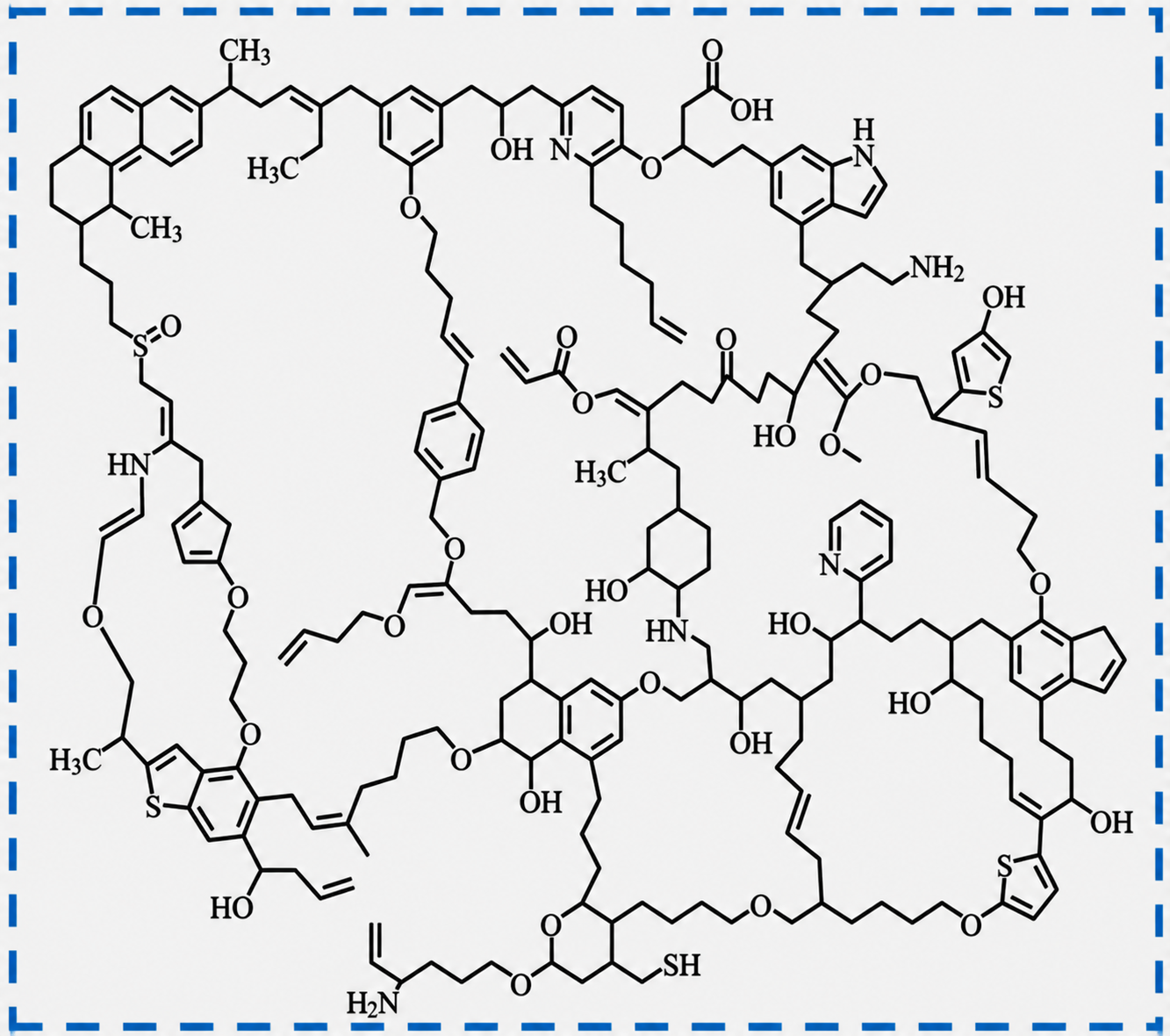
Figure 1. Two-dimensional molecular model of Fushun oil shale kerogen.
Processes 14 01831 g001
Figure 2. Optimal three-dimensional molecular model of Fushun oil shale kerogen.
Processes 14 01831 g002
Figure 3. Three-dimensional model of the optimal macromolecular system (Atom colors: C, gray; H, white; O, red; N, blue; and S, yellow).
Processes 14 01831 g003
Figure 4. Evolution trend of C-C, C-H and C-O bonds during the combustion of Fushun oil shale kerogen.
Processes 14 01831 g004
Figure 5. Evolution trends of the major gaseous species under the two combustion atmospheres.
Processes 14 01831 g005
Figure 6. Combustion reaction pathways of Fushun oil shale kerogen under 21% O2/79% N2 atmosphere. (The arrow indicates the reaction direction, and different colors represent different reaction species.)
Processes 14 01831 g006
Figure 7. Combustion reaction pathways of Fushun oil shale kerogen under 21% O2/79% CO2 atmosphere. (The arrow indicates the reaction direction, and different colors represent different reaction species.)
Processes 14 01831 g007
Figure 8. CO2 formation behavior under different O2 concentrations: (a) Initial formation temperature; (b) Variation of the number of molecules with temperature.
Processes 14 01831 g008
Figure 9. CO formation behavior under different O2 concentrations: (a) Initial formation temperature; (b) Variation of the number of molecules with temperature.
Processes 14 01831 g009
Figure 10. H2O formation behavior under different O2 concentrations: (a) Initial formation temperature; (b) Variation of the number of molecules with temperature.
Processes 14 01831 g010
Figure 11. Evolution of O2 molecular number under different O2 concentrations: (a) Initial formation temperature; (b) Variation of the number of molecules with temperature.
Processes 14 01831 g011
Figure 12. Evolution trend of char yield under different O2 concentrations.
Processes 14 01831 g012
Figure 13. Evolution trends of tar yield under different O2 concentrations: (a) heavy tar; (b) light tar.
Processes 14 01831 g013
Figure 14. Evolution trends of gaseous product yields under different O2 concentrations.
Processes 14 01831 g014
Figure 15. Evolution trend of system potential energy under different O2 concentrations.
Processes 14 01831 g015
Figure 16. Main reaction pathways of CO2 and CO.
Processes 14 01831 g016
Figure 17. Reaction mechanism model for oxy-fuel combustion of Fushun oil shale kerogen.
Processes 14 01831 g017
Table 1. Energy variation of Fushun oil shale kerogen before and after structural optimization.
ConfigurationValence Energy (kcal/mol)Non-Bond Energy (kcal/mol)Total Energy (kcal/mol)
Bond Stretching Bond Angle Torsional Inversion Hydrogen-Bond Van Der Waals Coulomb
Initialization2884.94189.56380.366.05−0.0511,856.73−43.8715,273.72
Optimization105.24144.18130.455.00−8.26413.72−53.64736.69
Table 2. Detailed parameters of the simulation system.
System NameKerogen MoleculesN2 MoleculesO2
Molecules
CO2
Molecules
Overall Molecular Formula
21% O2/79% N211193317-C240H322O666N2393S5
21% O2/79% CO21-3171193C1433H322O3052N7S5
35% O2/65% CO21-529981C1221H322O3052N7S5
55% O2/45% CO21-830679C919H322O3050N7S5
75% O2/25% CO21-1132377C617H322O3050N7S5
Table 3. Characteristic stages of Fushun oil shale kerogen oxy-fuel combustion.
StageTemperature RangeMain Evidence
I: Slow oxidation300–2000 KC–C and C–H bonds remain relatively stable; O2 consumption is limited; char formation starts at low temperature
II: Free radical pool formation2000–3500 KC–C and C–H bonds decrease rapidly; char and tar intermediates accumulate; CO and H2O formation begins to increase
III: High-temperature intense exothermic oxidation3500–4500 KPotential energy decreases sharply; O2 Consumption accelerates; CO2, CO, and H2O formation becomes intense; char and tar are rapidly consumed
IV: Complete oxidation>4500 KGas-phase products dominate; condensed intermediates are largely consumed; potential energy tends to stabilize
Disclaimer/Publisher’s Note: The statements, opinions and data contained in all publications are solely those of the individual author(s) and contributor(s) and not of MDPI and/or the editor(s). MDPI and/or the editor(s) disclaim responsibility for any injury to people or property resulting from any ideas, methods, instructions or products referred to in the content.