Article

Multiscale Damage and Fracture Characteristics of Coal Samples Induced by Acidity

School of Resources and Safety Engineering, University of Science and Technology Beijing, Beijing 100083, China
*
Author to whom correspondence should be addressed.
Processes 2026, 14(11), 1742; https://doi.org/10.3390/pr14111742
Submission received: 29 April 2026 / Revised: 23 May 2026 / Accepted: 23 May 2026 / Published: 27 May 2026
(This article belongs to the Topic Advances in Coal Mine Disaster Prevention Technology)

Abstract

Acidic mine water generated during underground CO2 sequestration and sulfide oxidation can alter the pore-fracture structure of coal, and threaten the stability of abandoned mine spaces. However, the mechanism through which acidic environments influence the deterioration of coal remains insufficiently understood. In this study, uniaxial compression experiments were conducted on coal samples treated with solutions with different pH values, and acoustic emission (AE) monitoring technology was used to characterize fracture activity and damage evolution during loading. A quantitative model linking acidity to the mechanical behavior of coal was established by integrating fractal theory with damage mechanics. Scanning electron microscopy (SEM) and X-ray diffraction (XRD) were further employed to reveal the microstructural and mineralogical mechanisms of coal deterioration. The results show that acidic environments significantly degrade the mechanical properties of coal samples. With decreasing pH, peak stress and elastic modulus of the selected representative sample progressively decrease, and the failure mode becomes increasingly fragmented and dispersed. At pH = 1, the degradation of peak stress and elastic modulus reaches 73.01% and 49.38%, respectively. Increasing acidity also enhances AE activity during loading and increases the correlation dimension, indicating greater crack complexity and instability. On this basis, the proposed quantitative model accurately describes the transformation process of coal samples from microscopic damage to macroscopic mechanical degradation induced by acidity. SEM and XRD results further show that stronger acidity promotes pore enlargement, crack interconnection, mineral dissolution, secondary mineral formation, and weakening of cementation, revealing the physical essence of the multi-scale damage and degradation of coal samples. The findings can provide a theoretical basis for assessing coal stability in acidic environments and ensuring the safe storage of CO2 in abandoned mines.

1. Introduction

CO2 sequestration in abandoned mines has been regarded as a promising approach for carbon reduction and the reutilization of underground space [1,2,3]. However, after CO2 is injected into abandoned mine voids, it may dissolve in mine water and form acidic solutions, thereby changing the hydrogeological environment of the goaf [4,5,6]. In addition, sulfide oxidation in underground reservoirs, together with subsequent water–rock interactions, may further intensify the acidification of mine water. The combined effects of acid corrosion and water–rock interaction can weaken the coal skeleton, reduce its load-bearing capacity and deformation resistance, and thus threaten the stability of coal masses in abandoned mine spaces [7,8,9,10,11]. Since the mechanical deterioration of coal directly influences the safety and long-term reliability of CO2 sequestration, it is essential to investigate the mechanical response and damage evolution of coal under different acidic conditions.
Recent studies have shown that the deterioration of geomaterials in acidic environments is a coupled process involving mineral corrosion, microstructural modification, crack development, and macroscopic mechanical weakening [12,13,14]. Existing work has mainly focused on conventional rocks such as sandstone and limestone, and has demonstrated that acidity can significantly reduce strength, intensify fragmentation, and alter internal mineral composition and pore-fracture structures [15,16]. In addition, corrosion duration, dry-wet cycling, and temperature have been identified as important factors controlling the extent of acid-induced deterioration [17,18,19]. The fracture patterns and fragmentation degree of coal under different acidic conditions can also reflect how the chemical environment reshapes its internal damage structure [20], which in turn governs subsequent deformation, fragmentation, and long-term stability [21,22].
To better understand progressive damage evolution under acidic conditions, AE technology has been widely used to monitor crack initiation, propagation, and coalescence [23,24,25]. Previous studies have shown that AE parameters such as count, energy, b value, and fractal characteristics can effectively characterize crack activity, damage accumulation, and instability precursors [26,27], thereby providing an important bridge between microscopic fracture evolution and macroscopic mechanical response. With the development of AE-based damage characterization methods, studies on acid-related deterioration have gradually extended from simple comparisons of post-corrosion strength loss to the identification of damage evolution during subsequent loading [28,29]. For conventional rocks, hydrochemical corrosion, confining pressure, and cyclic corrosion have been shown to be closely related to changes in fracture stages, AE response, and damage constitutive behavior [30,31,32]. In addition, a few studies have begun to address the AE response, fractal evolution, and microstructural degradation of coal under acidic conditions [33,34,35,36].
Despite these advances, current understanding of coal under acidic conditions remains incomplete compared with that of conventional rocks. Existing studies have mainly focused on changes in physical and mechanical properties or on individual aspects of the deterioration process, whereas the intrinsic linkage among acid-induced initial damage, AE correlation characteristics, fracture complexity, mineral transformation, and macroscopic mechanical weakening has not yet been fully clarified. Because coal differs markedly from conventional rocks in composition, structure, and cementation characteristics, conclusions derived from sandstone or limestone cannot be directly extended to coal. Therefore, a systematic investigation is still needed to clarify how acidic environments influence the multiscale damage evolution of coal from initial chemical corrosion to fracture development during loading and, ultimately, to macroscopic mechanical degradation.
Therefore, this study investigates the damage evolution of coal under different pH conditions by combining uniaxial compression tests, AE monitoring, SEM, and XRD analyses. Special attention is given to the coupled relationship among acidity, AE correlation dimension, microstructural alteration, and macroscopic mechanical properties. On this basis, a quantitative model linking pH to the mechanical performance of coal is established through the integration of fractal theory and damage mechanics, with the aim of revealing the damage-transfer mechanism from acid-induced microstructural deterioration to fracture evolution during loading and macroscopic mechanical weakening.

2. Experimental Setup

2.1. Experimental System and Material

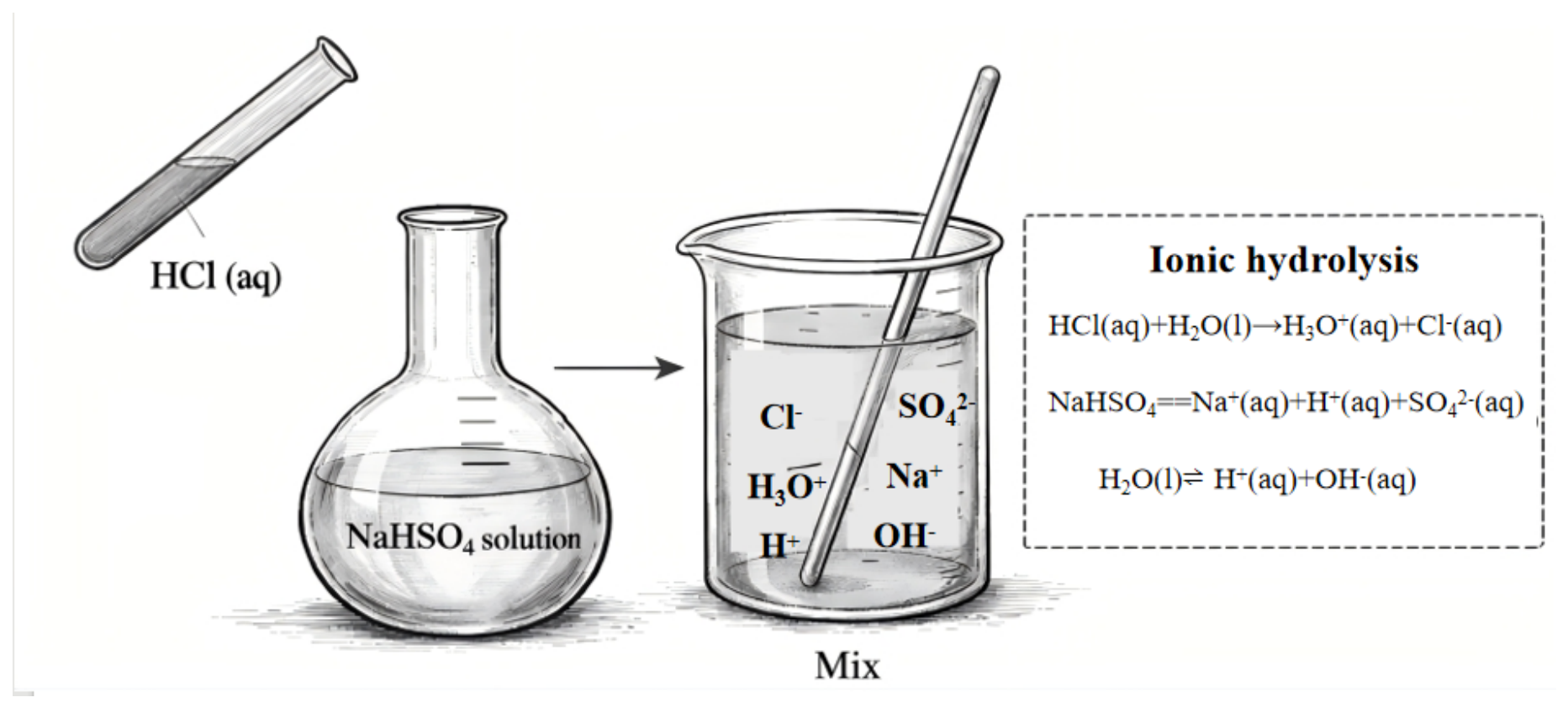
A mixed solution of concentrated hydrochloric acid, sodium bisulfate, and deionized water was used to simulate the acidic environment of the coalface. The solution was prepared at a of HCl:NaHSO4:H2O ratio of 6 mL:1 g:1500 mL to obtain an acidic solution with a pH of 1, as shown in Figure 1. Solutions with pH values of 3 and 5 were then prepared by further dilution with water. In addition, a control coal sample (pH = 7) was prepared by immersion in distilled water for comparative analysis.
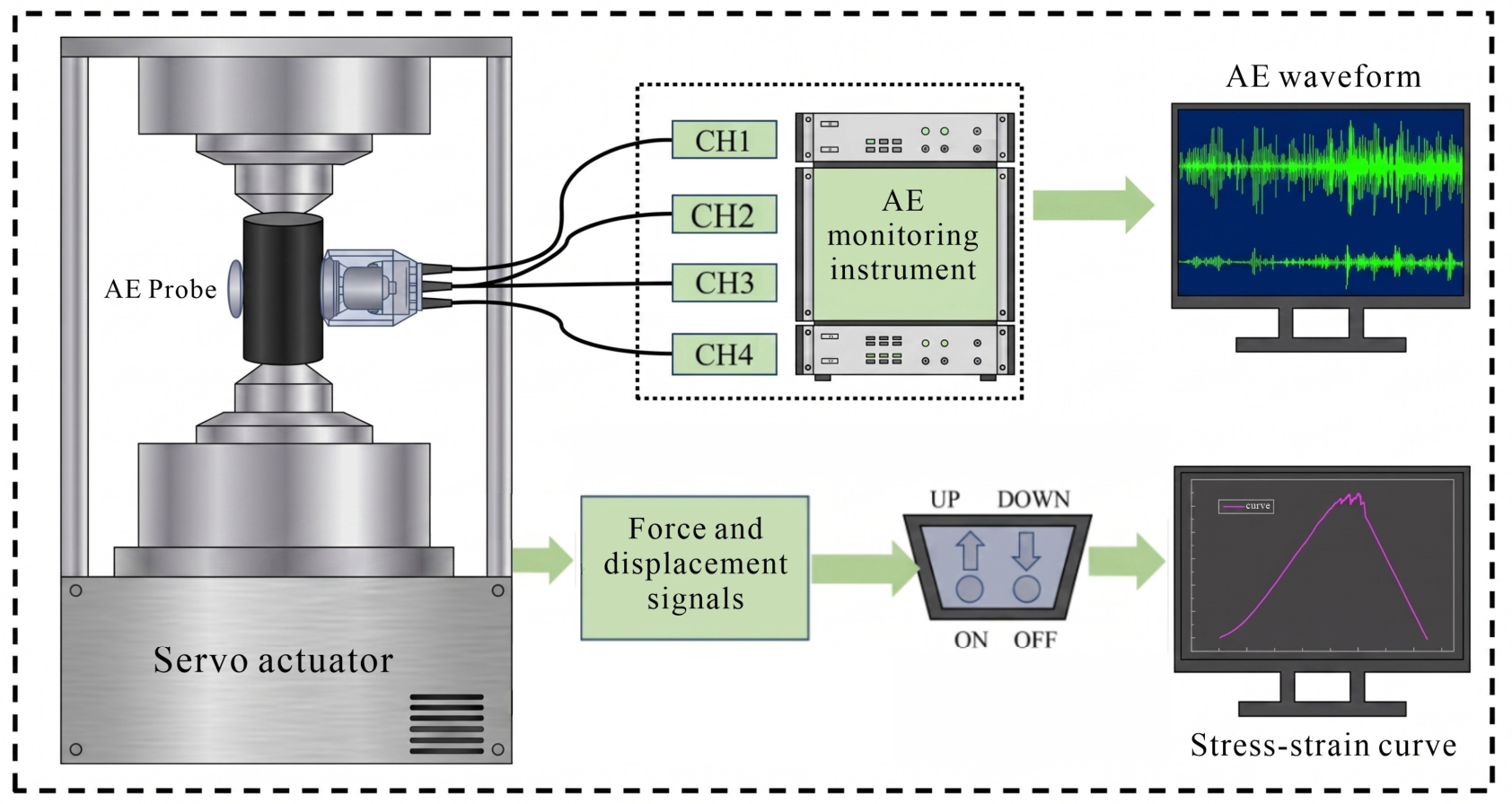
The uniaxial compression and AE experiment were performed using a high-precision loading system and AE monitoring system, as shown in Figure 2. During the experiment, the loading system applied external loads through an electrohydraulic servo press to coal samples, while the AE monitoring system continuously collected signals generated during the damage and fracture of the coal sample. All experiments were conducted in a shielded room with a shielding effectiveness greater than 85 dB to minimize external interference and improve measurement reliability.
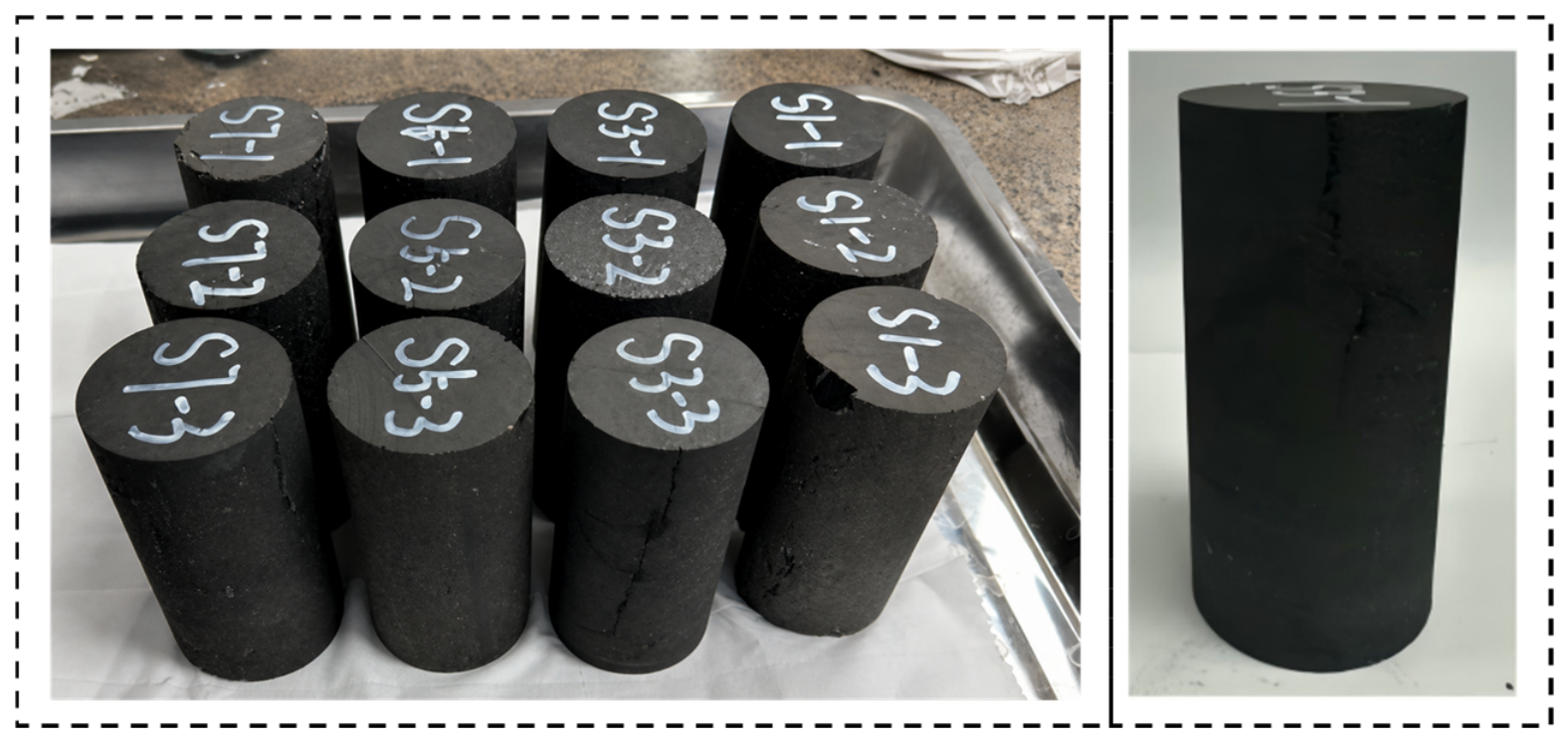
The coal samples were collected from Shanxi Province, China. They were prepared into cylindrical standard samples with dimensions of Φ 50 × 100 mm. Their specific physical parameters were measured and are listed in Table 1. For each pH condition, three samples were prepared and tested to ensure repeatability, as shown in Figure 3.

2.2. Experiment Program

Before the uniaxial compression experiment, all samples were dried in an oven at 105 °C for 2 h. The temperature was then reduced to 60 °C and maintained for 8 h to remove the initial moisture and internal crystalline water. After drying, the samples were cooled to room temperature. The coal samples were then soaked for 28 h until their mass no longer changed, indicating that saturation had been reached. After saturation, the samples were stored at room temperature for 15 days to ensure sufficient interaction between the acid solution and the coal samples. The saturated samples were then sealed again with plastic wrap for subsequent testing.
The uniaxial compression experiments were then carried out using displacement control at a loading rate of 0.003 mm/s. AE signals were collected at a sampling frequency of 3 MHz. To improve signal transmission, vaseline was applied between the AE sensors and the surfaces of the coal samples.

3. Experiment Result Analysis

3.1. Macroscopic Mechanical Behavior of Coal Samples Under Different Acidity Conditions

The stress–strain behavior of coal can effectively reflect its internal structural characteristics and macroscopic mechanical response under external loading. By analyzing the stress–strain curves, key mechanical parameters such as peak strain, peak stress, and elastic modulus can be obtained, which provide an important basis for evaluating the deformation and strength characteristics of coal under different acidic conditions.
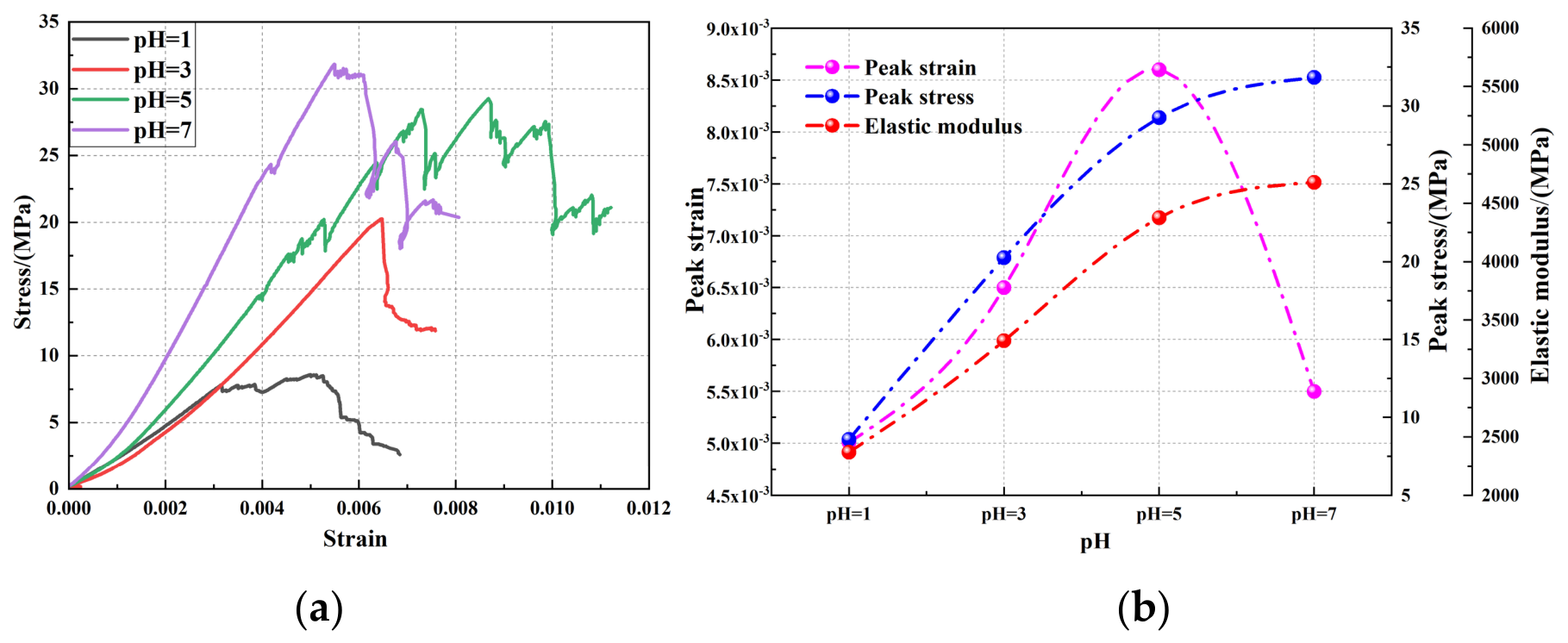
Since the samples under the same acidity condition exhibited similar mechanical responses, one representative sample was selected to present the results for each pH condition. Figure 4 presents the stress–strain curves and the corresponding mechanical parameters of coal samples treated with solutions of different pH values. As shown in Figure 4a, the stress–strain curves exhibit clear differences under different acidity conditions. As the acidity decreases, the overall stress level progressively rises, and the samples can bear higher loads before failure. As pH = 1, the coal sample shows the lowest stress level during the loading process and failure occurs at a relatively low stress level, indicating that strong acidity causes severe deterioration of the coal structure. As the pH value increases to 5 and 7, the coal samples exhibit much higher peak stresses and a more obvious elastic deformation stage, suggesting that their internal structures remain relatively more intact.
The variation in peak stress further confirms the weakening effect of acidity on coal strength. As shown in Figure 4b, peak stress continuously increases with increasing pH, and the lowest value is observed at pH = 1. The same change trend is also shown in the elastic modulus. This trend indicates that stronger acidic conditions significantly reduce the load-bearing capacity of coal. Acid corrosion likely promotes the development of internal pores and microcracks, which weakens the integrity of the material and lowers its peak strength during loading.
The variation in peak strain is different from the variation in peak stress and elastic modulus, and it does not change monotonically with pH values. As shown in Figure 4b, the peak strain increases from pH = 1 to pH = 5, and reach the maximum value at pH = 5, and then decreases at pH = 7. This result implies that moderate acid treatment may increase the deformability of coal to some extent, allowing the sample to sustain larger deformation before failure. However, when the acidity becomes too strong, the internal structure of the coal sample is seriously damaged, leading to premature failure and a lower peak strain.
Deterioration intensity describes the extent to which the mechanical properties of a coal sample are weakened during its interaction with an acidic solution, as shown in Equation (1).
S i = P 0 P i P 0 × 100 %
where P0 represents the macroscopic mechanical parameters of the coal sample at pH = 7, and Pi represents the corresponding parameter of the coal sample after exposure to a solution of a specific pH value.
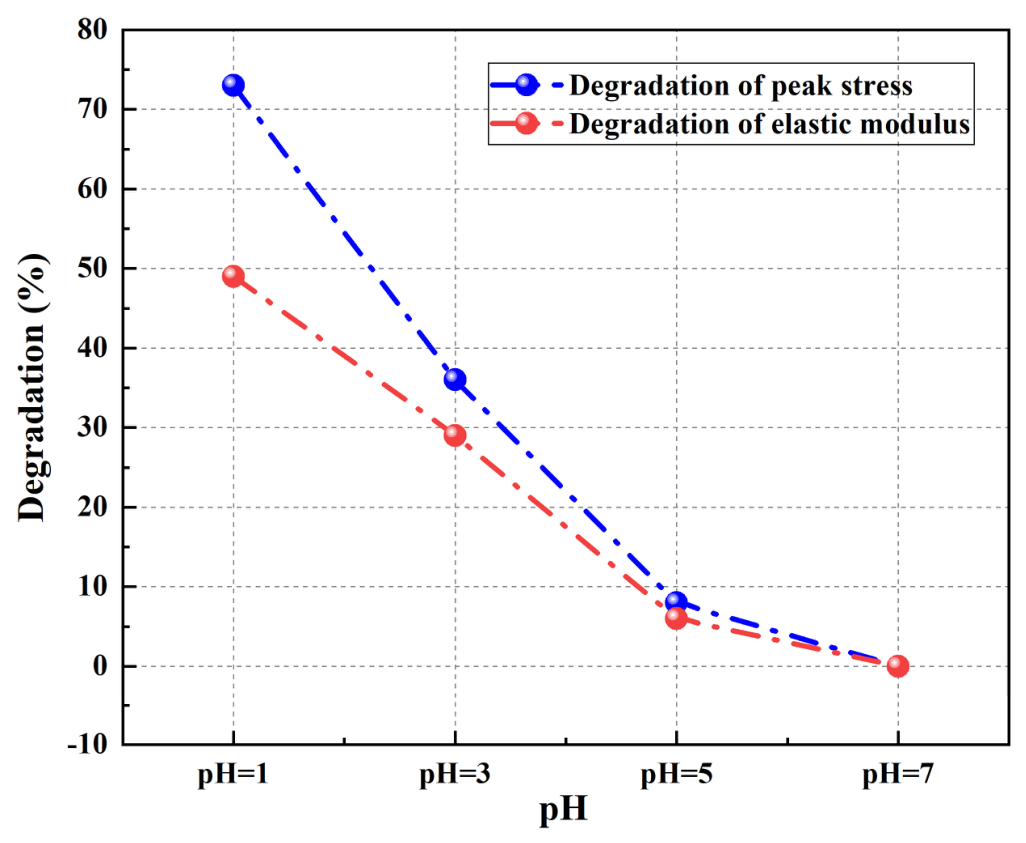
As illustrated in Figure 5, the deterioration degree of peak stress and elastic modulus increases markedly with acidity. At pH = 1, the degradation of peak stress and elastic modulus reaches 73.01% and 49.38%, respectively. At pH = 3 and 5, both parameters show moderate degradation. These results further confirm that acid corrosion significantly weakens the strength and stiffness of coal samples, and that stronger acidity leads to more pronounced mechanical deterioration.

3.2. Macroscopic Failure Mode of Coal Samples Under Different Acidity Conditions

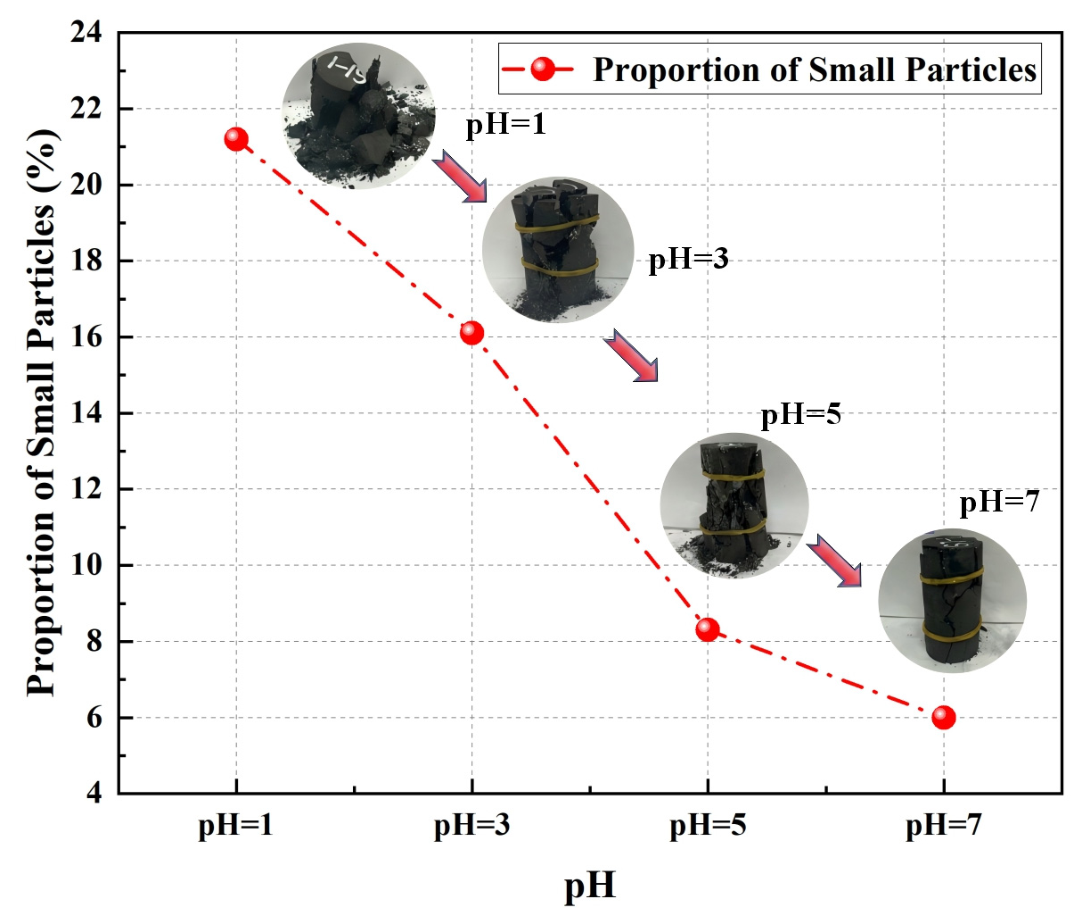
To further characterize the failure mode of coal samples, the mass loss rate after failure was analyzed. After uniaxial compression, the failed sample generally consisted of a main residual block and a number of broken pieces. In this study, these broken pieces were defined as small fragments because they were separated from the main residual block and no longer contributed to the continuous load bearing structure. Therefore, a higher mass loss rate indicates the generation of more small fragments and reflects more severe brittle damage at the macroscopic scale. The mass loss rate m is defined as follows:
m = m s m f m s × 100 %
where ms denotes the initial mass of the coal sample, and mf denotes the mass of the main residual block remaining after uniaxial compression.
As shown in Figure 6, the failure morphology of coal samples changes significantly with acidity. At pH = 7, the sample mainly exhibits brittle splitting, characterized by relatively large blocks and only a small amount of fine debris. As the pH decreases, fragmentation becomes more severe, and the proportion of small fragments increases markedly. In particular, the sample treated at pH = 1 shows a much more fragmented and incomplete post-failure structure, and corresponding mass loss rate rises from 6.0% at pH = 7 to 21.2%. This indicates that strong acid corrosion greatly weakens the structural integrity of coal and makes it more susceptible to unstable failure under loading.

3.3. AE Response of Coal Samples Under Different Acidity Conditions

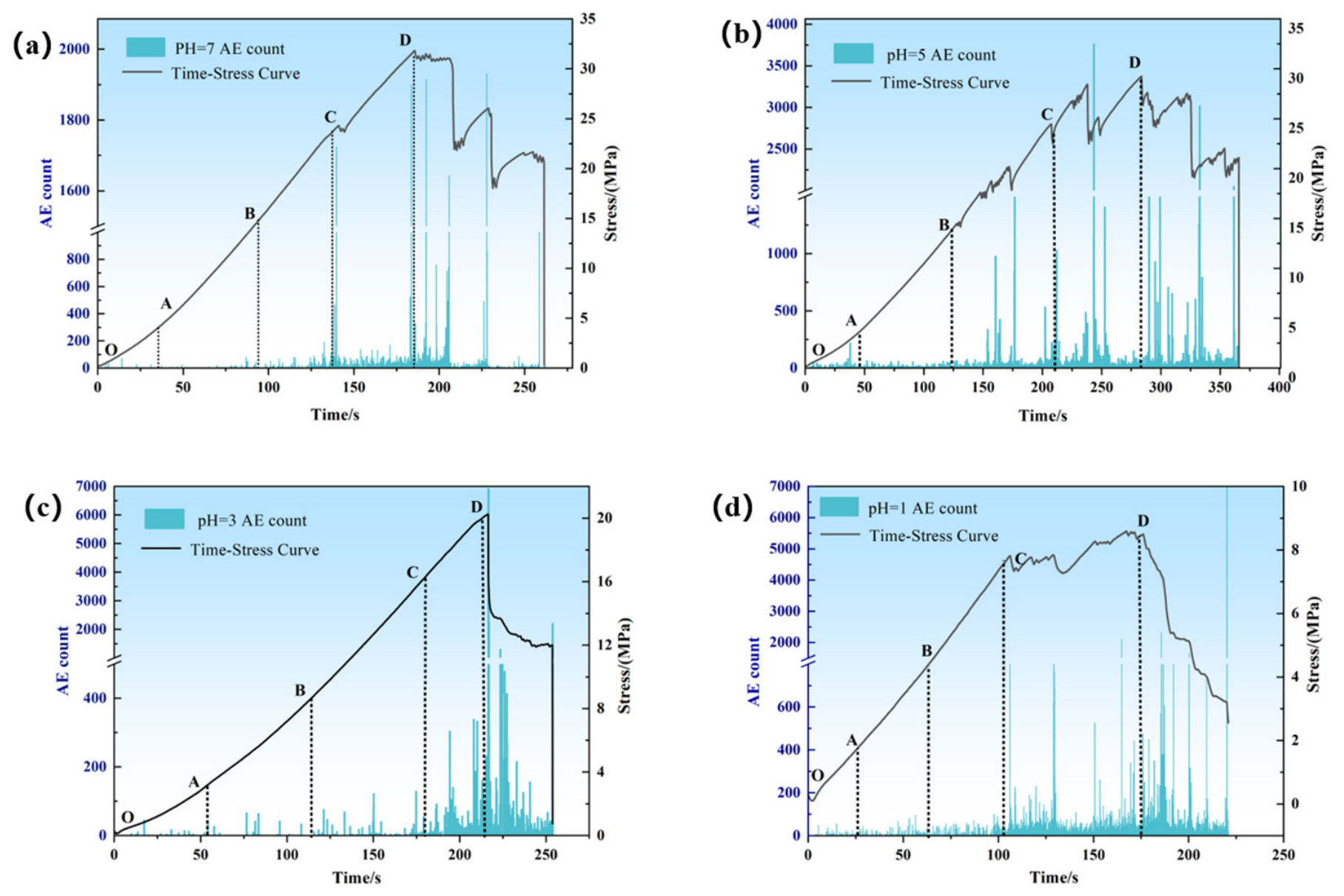
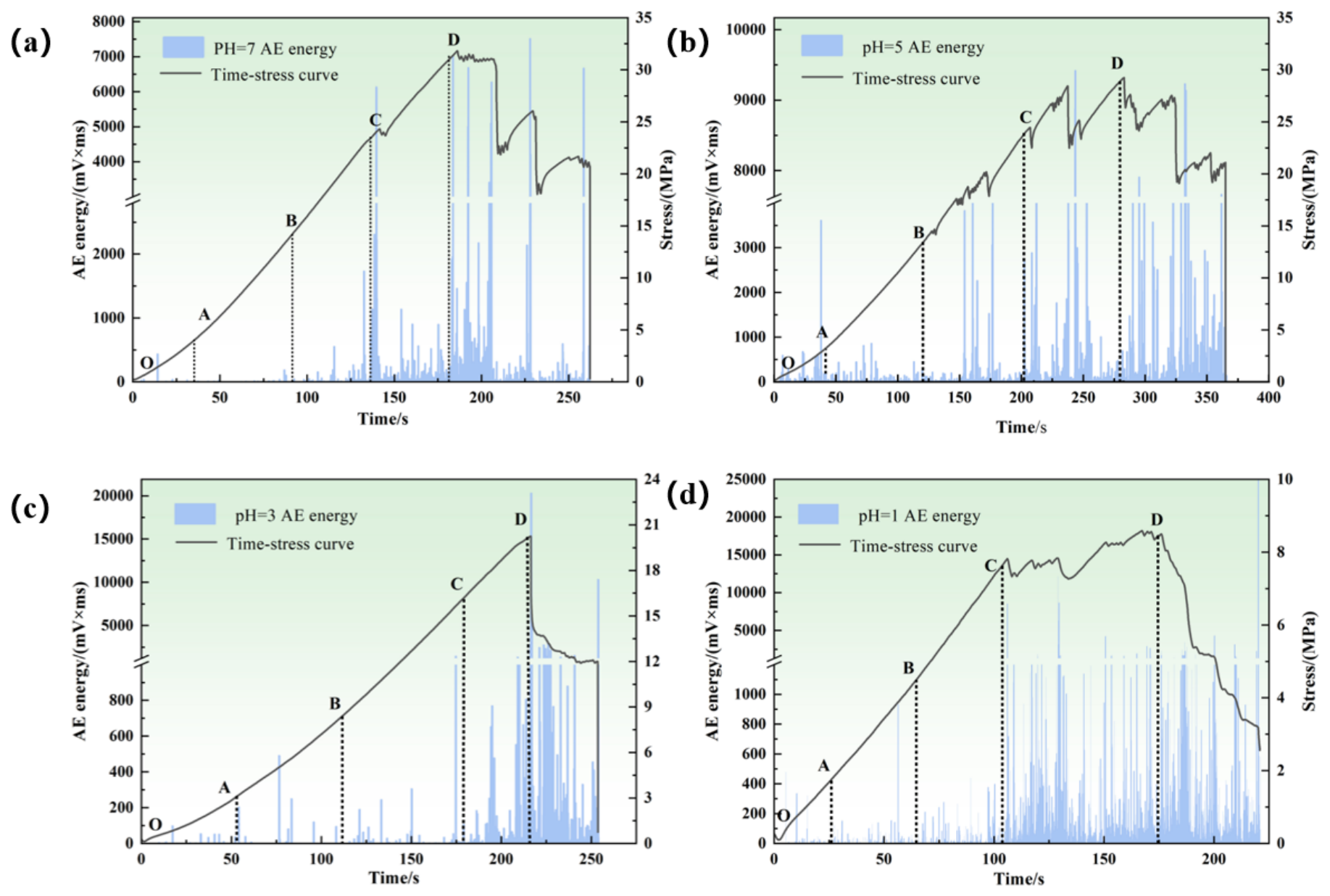
During uniaxial compression, coal samples undergo progressive crack closure, initiation, propagation, and coalescence, and the AE response exhibits clear stage-dependent characteristics. In both the AE count and AE energy curves (Figure 7 and Figure 8), the OA and AB stages are generally characterized by weak activity, indicating that the internal response is dominated by crack closure and elastic deformation. As loading enters the BC and CD stages, AE activity increases markedly, reflecting the initiation, propagation, and interaction of internal cracks. After point D, although the samples have undergone macroscopic failure, residual AE activity can still be observed due to frictional sliding and local adjustment along the fracture surfaces.
Figure 7 shows the AE count characteristics of coal samples under different pH conditions. Although all samples exhibit a staged evolution trend, their AE responses differ significantly with acidity. The samples at pH = 7 and pH = 5 show relatively low AE activity in the early loading stage, and the AE count increases mainly near the peak and post-peak stages. In contrast, the samples at pH = 3 and especially pH = 1 exhibit stronger AE activity, with AE signals appearing earlier and becoming more concentrated during the AB and BC stages.
Figure 8 presents the AE energy characteristics under different pH conditions, which is broadly consistent with the AE count results. The samples at pH = 7 and pH = 5 exhibit relatively moderate energy release, with major energy accumulation occurring mainly near peak failure. By contrast, the samples at pH = 3 and pH = 1 show earlier and more concentrated high energy events, and the peak energy release is significantly higher. In particular, the pH = 1 sample displays dense high energy signals from the late BC stage onward, indicating that severe acid corrosion causes substantial internal structural deterioration and accelerates the transition from stable crack growth to unstable fracture.
Overall, both AE count and AE energy indicate that acidic conditions significantly enhance the AE response of coal during uniaxial compression. With increasing acidity, AE activity becomes more intense, and appears earlier, especially in the pre-peak and peak failure stages. These results suggest that acid corrosion accelerates internal crack initiation, propagation, and coalescence, and further confirm the deterioration effect of acidic environments on the mechanical stability of coal.

3.4. Fractal Characteristics of AE Responses Under Different Acidity Conditions

Fractal dimension is an effective parameter for quantitatively characterizing the complexity of crack distribution in coal, which can be used to describe the complexity of internal pores and fracture surfaces in the material [37,38,39]. Because AE activity is closely associated with the initiation, propagation, and coalescence of internal cracks, the fractal analysis of AE signals can provide useful information on the evolution of damage in coal. In this study, the AE count recorded during the damage evolution of coal samples under acidic conditions was regarded as a one-dimensional time series with a sample size of n.
X = x 1 , x 2 , x 3 , , x n
Based on the raw AE count time series, an m-dimensional phase space can be reconstructed. In this process, the embedding dimension m is determined by invariant-based methods, and the time delay τ is selected using the C-C method [40,41]. After m and τ were determined, the original one-dimensional sequence was transformed into a set of phase-space vectors,
X ( i ) = { x i , x i + τ , x i + 2 τ , , x i + m 1 τ } , i = 1 , 2 , , N m
where Nm is the number of reconstructed phase points, which is given by
N m = n ( m 1 ) τ
For any reference phase point X(i), the Euclidean distance between X(i) and another phase point X(j) can be expressed as
r i j = X i X j = k = 0 m 1 x i + k τ x j + k τ 2 1 2
C ( r ) = 2 N m N m 1 i = 1 N m j = i + 1 N m H ( r r i j )
where r is the measurement scale, and H is Heaviside step function.
H ( u ) = 0 , u < 0 1 , u 0
By varying the scale r, the corresponding correlation function under different scales can be obtained. When the AE sequence exhibits fractal characteristics, C(r) and r satisfy the following scaling relationship:
C ( r ) r F
Thus, the correlation dimension F can be determined from the slope of the linear region in the double-logarithmic plot of C(r) versus r:
F = lim r 0 ln C ( r ) ln r
ln C(r) was plotted against ln r, and the slope of the fitted linear segment obtained by the least-squares method was taken as the correlation dimension of the AE count sequence. The correlation dimension reflects the complexity and disorder of crack evolution during coal failure. A larger value indicates a more disordered AE sequence and a more complex crack propagation process, whereas a smaller value suggests that crack development becomes more localized and concentrated.
To reveal the evolution characteristics of crack damage under different acidic conditions, the uniaxial compression process was divided into ten intervals according to the stress level, and the correlation dimension of the AE count sequence in each interval was calculated separately. The variation in correlation dimension during loading was then used to evaluate the dynamic evolution of internal crack complexity in coal samples under different pH conditions.
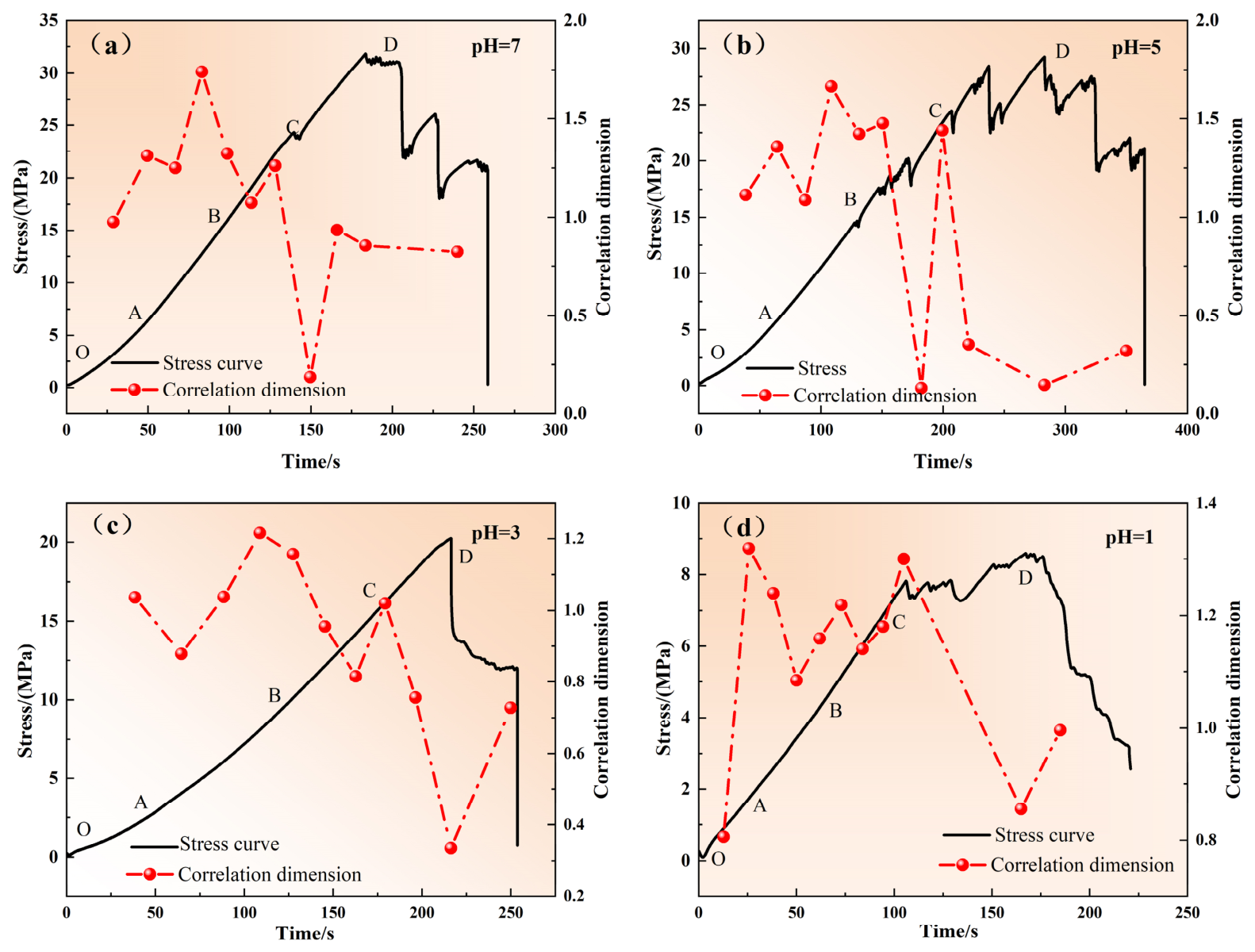
Figure 9 indicates that the correlation dimension exhibits a similar variation pattern during loading for all samples, and it shows an overall M-shaped evolution trend before complete failure. In the early loading stage, the correlation dimension rises gradually. This behavior suggests that the closure of initial pores and microcracks is accompanied by local crack activation and redistribution, resulting in a relatively dispersed AE response. As loading continues to increase, the correlation dimension shows dramatic fluctuation, reflecting the extremely heterogeneous and complexity of internal damage evolution. As the stress approaches the peak level, the correlation dimension drops rapidly, showing that crack coalescence accelerates and the damage pattern changes from distributed development to unstable macroscopic fracture. In the post-peak stage, the correlation dimensions rose again.
Although all samples show a similar overall evolution pattern, the fluctuation characteristics differ with pH value. Under weakly acidic conditions, the correlation dimension of AE count during the entire loading process of the coal sample exhibits pronounced fluctuations. This indicates that acid corrosion has not yet significantly weakened the structural integrity of the coal sample, resulting in a relatively low degree of initial damage. The damage evolution of the coal sample is strongly governed by its internal heterogeneous structure. As acidity increases, the fluctuation amplitude of the AE count correlation dimension of the coal samples gradually decreases, with a more pronounced decreasing trend before the peak stress. This indicates that acid corrosion continuously aggravates internal structural damage in the coal samples, causing microcrack propagation to rapidly evolve from relatively dispersed damage development toward localized fracture concentration, thereby accelerating the occurrence of local unstable failure.
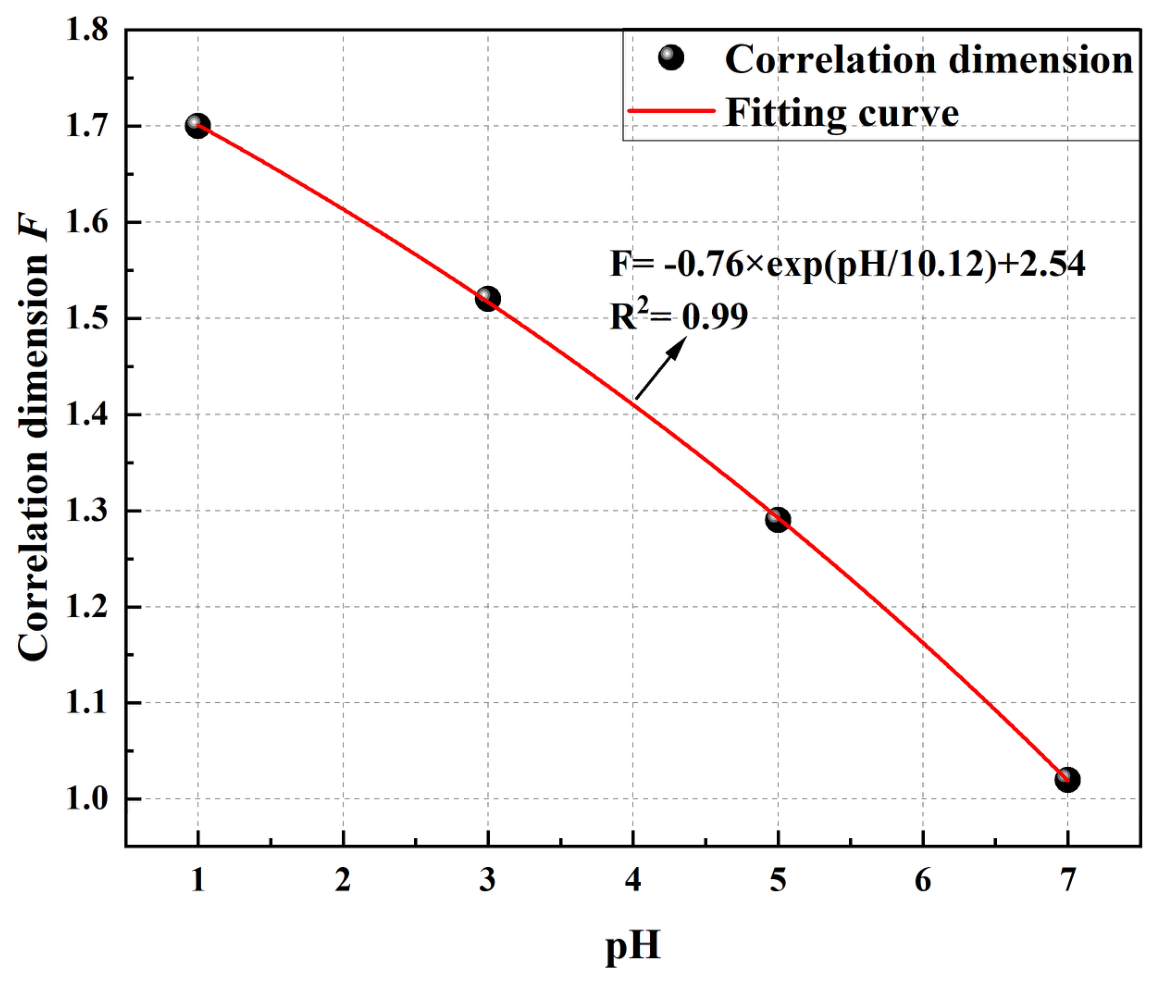
Coal samples exposed to solutions with different pH values underwent different degrees of acidic deterioration before loading, which resulted in marked differences in their pore structures, particle bonding conditions, and microdefect distributions. These initial structural differences affected the subsequent damage evolution during loading. To evaluate the overall damage characteristics of the coal samples under different acidic conditions, a representative correlation dimension for the full stress stage was extracted and used to analyze its relationship with pH value. As shown in Table 2, the correlation dimension differs significantly among the coal samples treated with solutions with different pH values. With decreasing pH, the correlation dimension generally increases, indicating that stronger acid corrosion leads to more severe structural deterioration, more complex crack evolution, and a more disordered AE count sequence.
Previous studies have shown that the relationship between AE correlation parameters and external variables can be effectively described by an exponential function [42,43]. Accordingly, an exponential model was adopted to describe the relationship between pH and AE correlation dimension, as shown in Equation (11). The fitting result shown in Figure 10 indicates that the model agrees well with the experimental data, suggesting that the AE correlation dimension is highly sensitive to acidic environments.
F = A 1 e x p p H t + A 2
where A1, t, and A2 are fitting parameters.

4. Damage Mechanism of Coal Under Acidic Conditions

4.1. Microscopic and Macroscopic Damage Characterization of Coal Samples

According to fractal damage mechanics, fractal dimension can be used to define a damage variable for quantitatively characterizing the internal deterioration of geomaterials. Following a previous approach [44], a microscopic damage variable was defined based on the relative increment in fractal dimension with respect to a reference state. In this study, the coal sample at pH = 7 was taken as the reference state, and the initial damage variable Dc was defined as follows:
D c = F F 0 F 0
where F is the correlation dimension of the coal sample under a given acidic condition, and F0 is the correlation dimension of the reference sample at pH = 7. Since the correlation dimension reflects the complexity and irregularity of the internal defect network, a larger Dc corresponds to a higher degree of initial damage caused by acid corrosion.
The results show that the initial damage increases with increasing acidity. The coal sample at pH = 1 exhibits the highest Dc value of 66.6%, which is 17.6% and 40.2% higher than those at pH = 3 and pH = 5, respectively.
To quantitatively describe damage transfer from microscopic crack evolution to macroscopic mechanical weakening, a pH-dependent mechanical damage model was established using the AE correlation dimension as an intermediate parameter. By substituting Equation (11) into Equation (12), the initial chemical damage variable can be expressed as a function of pH.
D c p H = A 1 exp p H t + A 2 F 0 1
According to the effective stress concept in damage mechanics and the equivalent strain hypothesis, the initial damage of the coal sample reduces its effective load-bearing capacity. Therefore, the peak stress and elastic modulus of the coal samples treated in acidic solution can be related to those of the reference samples:
σ c = 1 D σ 0 E c = 1 D E 0
where D is the initial damage variable, E0 and Ec are the elastic moduli of the reference coal sample and the damaged coal sample, respectively, and σ0 and σc are the corresponding peak stresses.
By further combining Equation (13), the pH-dependent elastic modulus and peak stress can be written as Equations (15) and (16):
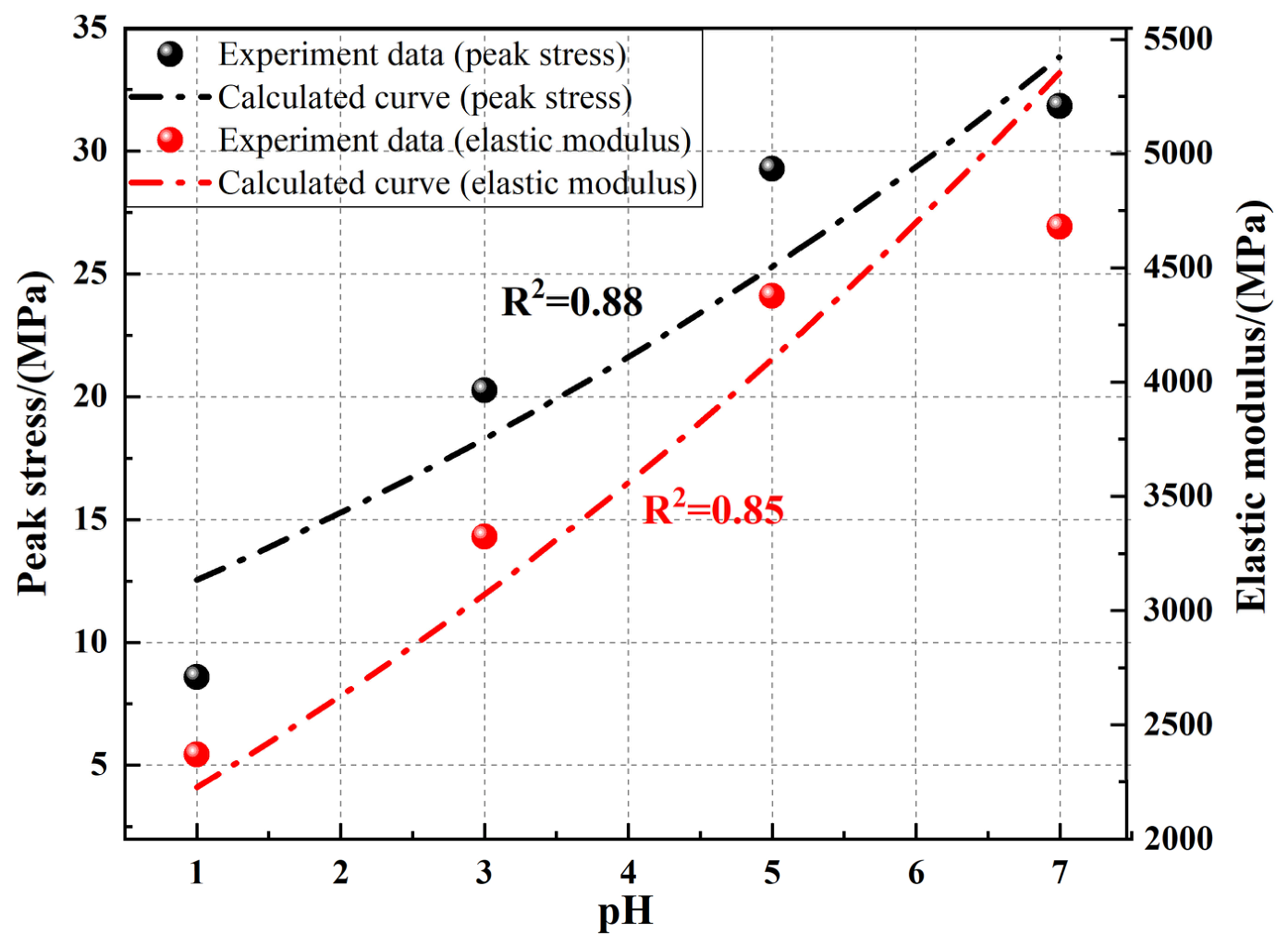
E c ( pH ) = E 0 2 A 1 exp p H t + A 2 F 0 + C E
σ ( pH ) = σ 0 2 A 1 exp p H t + A 2 F 0 + C σ
where the parameters CE and Cσ are the transfer constants.
Equations (15) and (16) describe how the pH-dependent change in internal crack structure is reflected in the macroscopic mechanical properties of the coal samples. Under acidic conditions, chemical corrosion changes the development degree and spatial complexity of internal cracks. This change is represented by the AE correlation dimension and is introduced into the model through the exponential term related to pH value. Therefore, the exponential function in Equations (15) and (16) acts as a bridge between acidity-induced crack damage and mechanical degradation. As pH changes, the same exponential damage term causes both the elastic modulus and peak stress to vary accordingly, indicating that stiffness and strength degradation originate from the same microscopic damage mechanism.
To further verify the proposed model, the elastic modulus and peak stress under different pH conditions were calculated using the above equations and compared with the experimental results. As shown in Figure 11, the calculated values agree well with the experimental data, indicating that the model captures the pH-dependent degradation of both mechanical parameters. This confirms that the proposed model can describe the transmission process of acid-induced microscopic damage, represented by the AE correlation dimension, to the macroscopic mechanical response of coal.

4.2. Microstructural Evolution Under Acidic Conditions

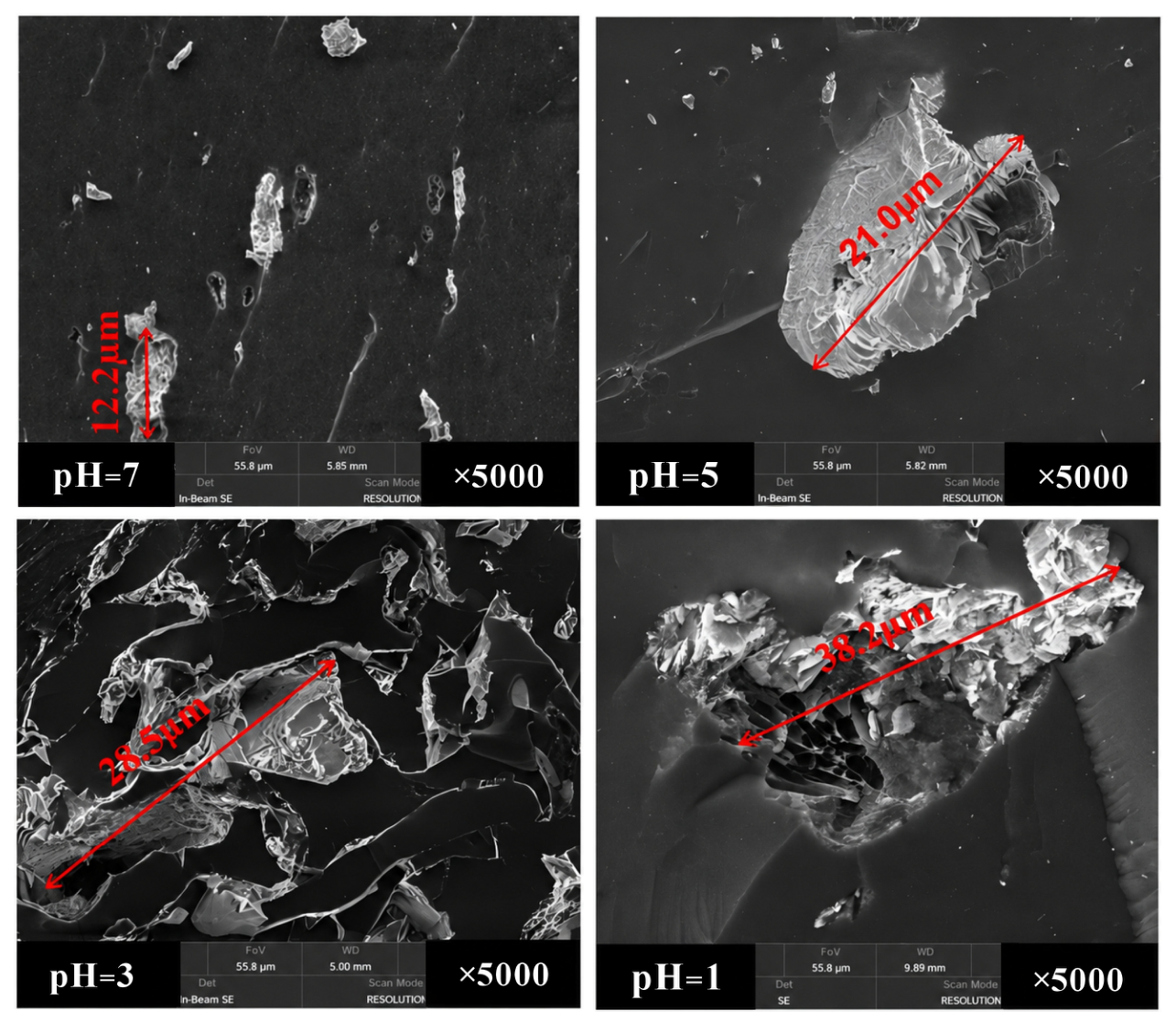
SEM observations were conducted to investigate the microstructural evolution of coal under different pH conditions. As shown in Figure 12, at pH = 7, most pores in the coal were smaller than 12.2 μm. With decreasing pH, acid corrosion became progressively more severe. At pH = 5, the pores gradually enlarged and evolved from isolated circular pores into elongated pore spaces, with a maximum size of 21.0 μm. At pH = 3, pores and microcracks became interconnected, and the maximum pore length increased to 28.5 μm. At pH = 1, severe deterioration was observed, with obvious corrosion cavities and a maximum crack width of 38.2 μm.
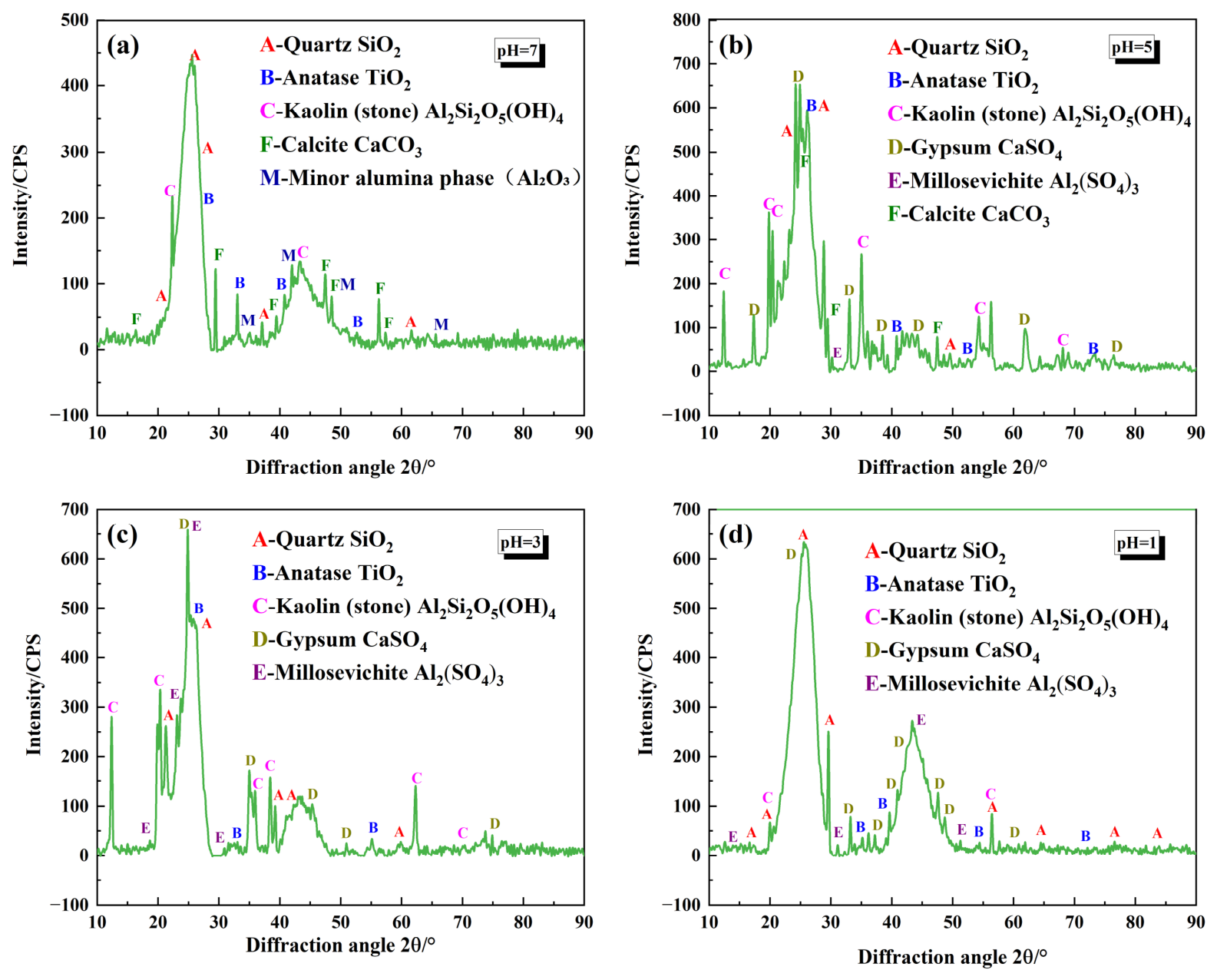
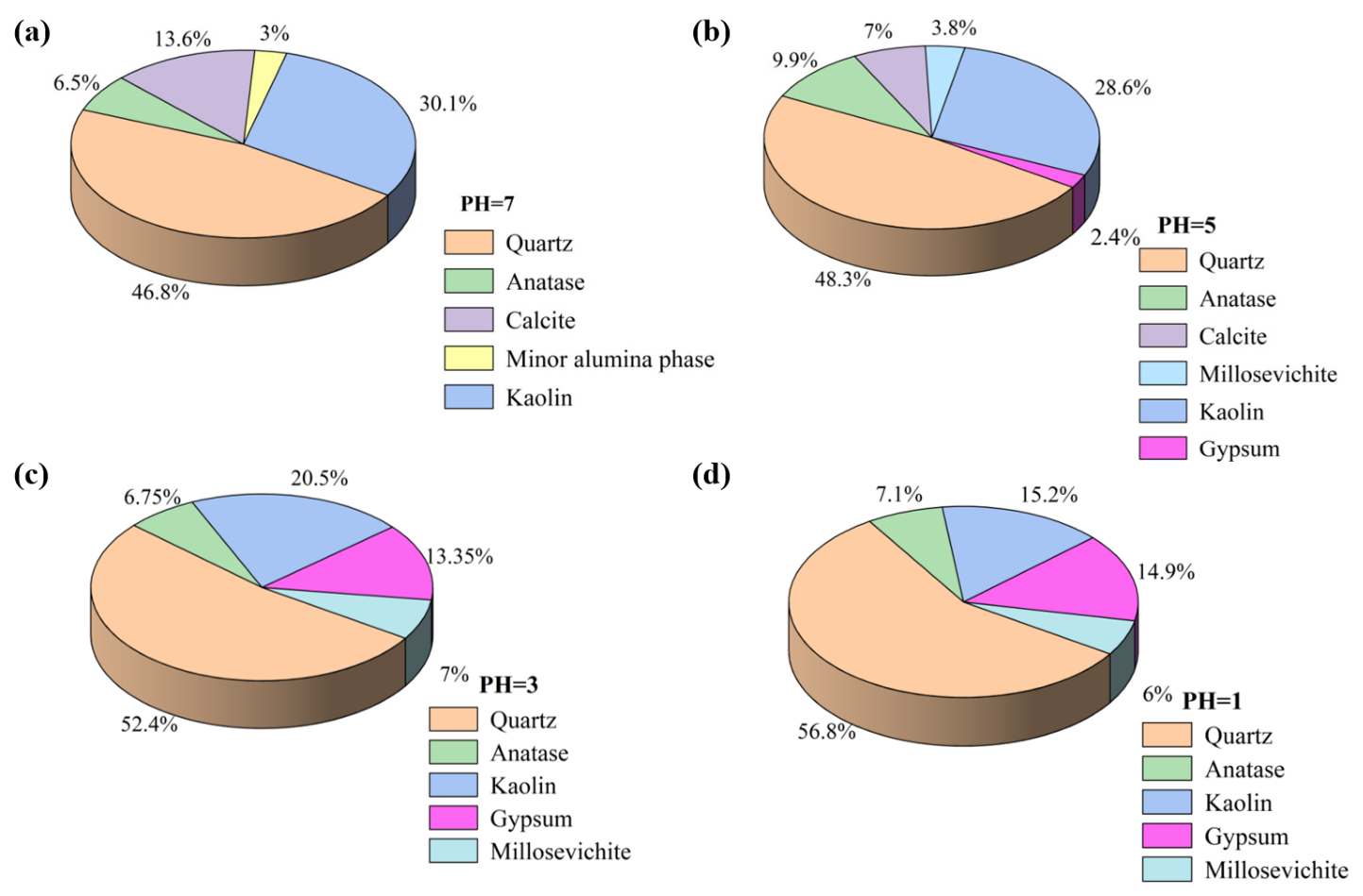
To further investigate the effect of acidic solution on the internal composition of coal, XRD analysis was conducted to characterize the mineralogical changes before and after acidification. As shown in Figure 13 and Figure 14, acidic solution induces pronounced mineralogical alteration in coal. With increasing acidity, reactive minerals, especially calcite and kaolinite, are progressively dissolved, whereas quartz and anatase remain relatively stable because of their higher chemical stability. The dissolution of calcite and metal oxides creates additional pore space, while the continued loss of kaolinite further damages the internal structure of the coal. At the same time, the reaction products promote the formation of secondary minerals such as gypsum under more acidic conditions. These changes led to a significant alteration in the initial state of the coal samples.

4.3. Discussion

The above experimental results and analysis indicate that acidic environments induce a multiscale deterioration process in coal samples. Before loading, acid corrosion alters the internal structure of the coal samples and changes their initial state. During subsequent compression, these structural changes promote microcrack initiation, propagation, and coalescence, leading to progressive damage accumulation and mechanical weakening. With increasing acidity, the coal samples become more severely weakened and more prone to unstable failure.
From the microscopic mineral perspective, this deterioration is mainly controlled by mineral dissolution and structural reorganization. The dissolution of reactive minerals such as calcite and kaolinite weakens local cementation and promotes the opening, extension, and interconnection of pores and microdefects. At the same time, the formation of secondary products further alters the local material distribution and increases internal heterogeneity. These coupled effects continuously reduce the structural integrity of coal and transform its internal framework into a looser and less stable system. Therefore, it is evident that the coal sample has already entered a damaged state before loading, reducing resistance to subsequent deformation and fracture.
During uniaxial compression processes, this change in the mineral structure strongly affects the damage evolution pathway. The coal sample exposed to more acidic conditions tended to exhibit earlier microcrack activation, more intense AE activity, and more complex fracture development, indicating that acid corrosion lowers the threshold for damage initiation and accelerates the transition from dispersed microcrack growth to unstable crack coalescence. It can be inferred that the increase in initial damage with decreasing pH reflects not only the accumulation of existing defects, but also the enhanced instability of the internal damage system. As loading proceeds, this instability is progressively amplified, ultimately leading to reductions in stiffness and strength, as well as a shift in failure mode toward more fragmented and less stable rupture.
The proposed model further clarifies how acidity effects transition from chemical corrosion to macroscopic mechanical degradation. As pH decreases, the correlation dimension increases in an exponential manner, indicating that the internal defect network becomes more complex and disordered under more acidic conditions. On this basis, the initial damage variable Dc increases accordingly, meaning that acidity first causes microscopic structural damage, which then affects the macroscopic-scale structure. Because both elastic modulus and peak stress are related to Dc, their reductions with decreasing pH can be quantitatively interpreted as the direct mechanical consequence of acid-induced structural degradation. Overall, the proposed model indicates that the influence of pH on coal strength and stiffness is governed by a progressive damage-transfer mechanism from chemical corrosion, to microscopic defect evolution, and finally to macroscopic mechanical degradation.
These findings provide a mechanistic basis for understanding the deterioration of coal under acidic conditions and offer theoretical support for evaluating the long-term stability of coal-bearing structures in acid-affected environments.

5. Conclusions

In this study, the macro and microscale deterioration characteristics of coal samples under different acidic conditions were investigated through uniaxial compression experiments, AE monitoring, SEM observation and XRD analyses. On this basis, a quantitative damage transfer model linking pH, AE correlation dimension, and macroscopic mechanical properties was established. The main conclusions are as follows.
(1)
Acidic environments significantly degrade the macroscopic mechanical properties of coal. With decreasing pH, peak stress and elastic modulus progressively decrease, and the deterioration becomes especially pronounced under strongly acidic conditions. Meanwhile, the post-failure mass loss rate increases, indicating that acid corrosion weakens the structural integrity of coal and promotes a transition toward more fragmented and unstable failure.
(2)
The AE response of coal samples is highly sensitive to acidity and effectively reflects the evolution of internal crack activity during loading. As pH decreases, AE count and AE energy become more active, indicating that acidic corrosion accelerates crack initiation, propagation, and coalescence. At the same time, the correlation dimension derived from the AE count increases with increasing acidity, demonstrating that stronger acidic conditions lead to a more complex and disordered internal crack network.
(3)
A quantitative relationship among pH, AE correlation dimension and macroscopic mechanical parameters was established based on fractal damage theory. By introducing the initial damage variable Dc, the proposed model successfully captures the variation trends of peak stress and elastic modulus under different pH conditions. This confirms that the mechanical deterioration of coal samples under acidic environments can be quantitatively described as a damage transfer process from microcrack complexity to macroscopic mechanical weakening.
(4)
SEM and XRD observations provide direct microscopic evidence for acid-induced deterioration, including pore enlargement, crack interconnection, mineral dissolution, secondary mineral formation, and weakening of cementation. Combined with the AE and mechanical results, these findings demonstrate that the deterioration of coal in acidic environments is a progressive multiscale process: acid corrosion first induces initial chemical and structural damage, which then enhances crack evolution and instability during loading, and ultimately leads to the degradation of strength, stiffness, and failure stability. These results provide a theoretical basis for evaluating the long-term stability of coal in acid-affected underground environments.

Author Contributions

Conceptualization, Q.W., Z.Z. and J.W.; methodology, J.W. and Q.W.; formal analysis, J.W. and Z.B.; investigation, J.W. and Q.W.; data curation, J.W. and Q.W.; writing—original draft preparation, J.W. and Q.W.; writing—review and editing, J.W., Q.W. and Z.Z.; visualization, J.W.; supervision, Z.Z. and Z.B.; project administration, Z.Z. and Z.B.; funding acquisition, Z.Z. All authors have read and agreed to the published version of the manuscript.

Funding

This research was funded by the National Natural Science Foundation of China (52204199, 52574226) and Open Research Grant of the Key Laboratory of Gas Control in Coal Mines, National Mine Safety Administration (KLGCNMSA2024002).

Data Availability Statement

The original contributions presented in this study are included in the article. Further inquiries can be directed to the corresponding author.

Conflicts of Interest

The authors declare no conflicts of interest.

References

  1. Karacan, C.O. Modeling and analysis of gas capture from sealed sections of abandoned coal mines. Int. J. Coal Geol. 2015, 138, 30–41. [Google Scholar] [CrossRef]
  2. Younger, P.L. A simple, low-cost approach to predicting the hydrogeological consequences of coalfield closure as a basis for best practice in long-term management. Int. J. Coal Geol. 2016, 164, 25–34. [Google Scholar] [CrossRef]
  3. Dieudonne, A.; Cerfontaine, B.; Collin, F.; Charlier, R. Hydromechanical modelling of shaft sealing for CO2 storage in abandoned coal mines. Eng. Geol. 2015, 193, 97–105. [Google Scholar] [CrossRef]
  4. Jiao, Y.; Zhang, C.; Su, P.; Tang, Y.; Huang, Z.; Ma, T. A review of acid mine drainage: Formation mechanism, treatment technology, typical engineering cases and resource utilization. Process Saf. Environ. Prot. 2023, 170, 1240–1260. [Google Scholar] [CrossRef]
  5. Johnson, D.B.; Hallberg, K.B. Acid mine drainage remediation options: A review. Sci. Total Environ. 2005, 338, 3–14. [Google Scholar] [CrossRef] [PubMed]
  6. Blodau, C. A review of acidity generation and consumption in acidic coal mine lakes and their watersheds. Sci. Total Environ. 2006, 369, 307–332. [Google Scholar] [CrossRef]
  7. Yi, J.; Pan, J.; Wang, Z.; Cheng, N.; Zhang, L.; Wang, X.; Liu, W. Effect of CO2-H2O interaction with high-rank coal on mechanical properties and acoustic emission characteristics under confining pressure. ACS Omega 2024, 9, 25146–25161. [Google Scholar] [CrossRef]
  8. Perera, M.S.A.; Pathegama Gamage, R.; Viete, D.R. Effects of gaseous and super-critical carbon dioxide saturation on the mechanical properties of bituminous coal from the Southern Sydney Basin. Appl. Energy 2013, 110, 73–81. [Google Scholar] [CrossRef]
  9. Yao, Q.; Tang, C.; Xia, Z.; Xu, Q.; Wang, W.; Wang, X.; Chong, Z. Experimental study of coal sample damage in acidic water environments. Mine Water Environ. 2021, 40, 1003–1015. [Google Scholar] [CrossRef]
  10. Chen, W.; Liu, J.; Peng, W.; Zhao, Y.; Luo, S.; Wan, W.; Wu, Q.; Wang, Y.; Li, S.; Tang, X.; et al. Aging deterioration of mechanical properties on coal-rock combinations considering hydro-chemical corrosion. Energy 2023, 282, 128770. [Google Scholar] [CrossRef]
  11. Cui, Y.; Ni, G.; Li, Z.; Wang, G.; Liu, Y.; Wang, X. Study on the evolution law of coal body relaxation-mechanics coupling under the effect of different acidification environments. Powder Technol. 2025, 465, 121386. [Google Scholar] [CrossRef]
  12. Huo, R.; Liang, Y.; Li, S.; Miao, Z.; Qiu, T. The damage mechanism and deterioration characteristics of acid-corroded sandstone: An experimental study. Arab. J. Geosci. 2022, 15, 537. [Google Scholar] [CrossRef]
  13. Liang, Y.; Huo, R.; Song, Z.; Mu, Y.; Li, G. Macro-meso deterioration characteristics and statistical damage constitutive model for acid-corroded sandstone. J. Build. Eng. 2023, 71, 106499. [Google Scholar] [CrossRef]
  14. Liang, Y.; Huo, R.; Mu, Y.; Song, Z. Coupled chemical and mechanical damage model for acid-corroded sandstone. Int. J. Geomech. 2023, 23, 04022300. [Google Scholar] [CrossRef]
  15. Wang, Z.J.; Liu, X.R.; Fu, Y.; Zhang, L.; Yuan, W. Deterioration of mechanical parameters of argillaceous sandstone under wetting-drying cycles in acidic environment. Chin. J. Geotech. Eng. 2016, 38, 1152–1159. [Google Scholar]
  16. Miao, Z.; Li, S.; Xie, J.; Huo, R.; Ding, F.; Zhu, H.; Yang, X.; Li, X. Three-Dimensional Reconstruction and Numerical Simulation Analysis of Acid-Corroded Sandstone Based on CT. Shock Vib. 2021, 2021, 5582781. [Google Scholar] [CrossRef]
  17. Feng, M.; Cao, X.; Yuan, K.; Zhang, M.; Li, Z. Influence of acidic environment on damage mechanism of sandstone under different climatic temperatures. Bull. Eng. Geol. Environ. 2022, 81, 452. [Google Scholar] [CrossRef]
  18. Che, Y.; Song, Y.; Yang, H.; Chen, J.; Meng, C.; Zhang, J. Damage behaviour of sandstone induced by combination of dry–wet cycles and acidic environment. Environ. Earth Sci. 2023, 82, 19. [Google Scholar] [CrossRef]
  19. Dong, X.; Yang, G.; Liu, S. Experimental study on AE response and damage evolution characteristics of frozen sandstone under uniaxial compression. Cold Reg. Sci. Technol. 2022, 193, 103424. [Google Scholar] [CrossRef]
  20. Li, S.; Wu, Y.; Huo, R.; Song, Z.; Fujii, Y.; Shen, Y. Mechanical Properties of Acid-corroded Sandstone Under Uniaxial Compression. Rock Mech. Rock Eng. 2021, 54, 289–302. [Google Scholar] [CrossRef]
  21. Liu, X.; Wang, S.; Liu, B.; Chen, J.; Liu, Q.; Luo, J. Effect of Microstructure on Changes to the Pore Structure and Mechanical Properties of Limestone under Acidic Groundwater Corrosion. Int. J. Geomech. 2023, 23, 04023212. [Google Scholar] [CrossRef]
  22. Zhang, H.; Liu, T.; Cui, Y.; Zheng, J.; Wang, W.; Li, Y. Experimental study on the deterioration mechanisms of physical and mechanical properties of red sandstone after thermal-acid coupling treatment. Constr. Build. Mater. 2024, 455, 139106. [Google Scholar] [CrossRef]
  23. Zhang, Z.; Wang, E.; Li, N.; Zhang, H.; Bai, Z.; Zhang, Y. Research on macroscopic mechanical properties and microscopic evolution characteristic of sandstone in thermal environment. Constr. Build. Mater. 2023, 366, 130152. [Google Scholar] [CrossRef]
  24. Li, X.; Chen, S.; Liu, S.; Li, Z. AE waveform characteristics of rock mass under uniaxial loading based on Hilbert-Huang transform. J. Cent. South Univ. 2021, 28, 1843–1856. [Google Scholar] [CrossRef]
  25. Huang, L.; Lin, H.; Cao, P.; Zhao, Q.; Pang, Y.; Yong, W. Investigation of the Degradation Mechanism of the Tensile Mechanical Properties of Sandstone under the Corrosion of Various pH Solutions. Materials 2023, 16, 6536. [Google Scholar] [CrossRef] [PubMed]
  26. Lockner, D. The role of acoustic emission in the study of rock fracture. Int. J. Rock Mech. Min. Sci. Geomech. Abstr. 1993, 30, 883–899. [Google Scholar] [CrossRef]
  27. Zhang, Z.; Liu, X.; Zhang, Y.; Qin, X.; Khan, M. Comparative study on fracture characteristics of coal and rock samples based on acoustic emission technology. Theor. Appl. Fract. Mech. 2021, 111, 102851. [Google Scholar] [CrossRef]
  28. Zhao, J.; Fan, Q.; Li, P.; Li, S.; Wang, G.; Xie, M. Acoustic emission b value characteristics and failure precursor of the dacite under different stress paths. J. Eng. Geol. 2019, 27, 487–496. [Google Scholar] [CrossRef]
  29. Yu, Y.; Wang, J.; Feng, G.; Geng, D.; Guo, H. Damage evolution and acoustic emission characteristics of hydrochemically corroded limestone. Bull. Eng. Geol. Environ. 2023, 82, 112. [Google Scholar] [CrossRef]
  30. Pan, J.; Ma, Y.; Zhang, L.; Ning, Z.; Zhang, Y.; Xi, X. Effect of Chemical Corrosion on Rock Fracture Behavior in Coastal Deep Mines: Insights from Mechanical and Acoustic Characteristics. J. Mar. Sci. Eng. 2024, 12, 869. [Google Scholar] [CrossRef]
  31. He, Q.; Wu, F.; Zhou, X.; Ye, C.; Gao, R. Compressive failure patterns and acoustic emission characteristics of reservoir rocks subjected to chemical corrosion for underground energy storage. J. Energy Storage 2025, 107, 114950. [Google Scholar] [CrossRef]
  32. Li, S.; Song, S.; Miao, Z.; Yin, X. Deterioration characteristics and damage constitutive model of granite-shotcrete under acid corrosion cycle conditions. J. Build. Eng. 2024, 85, 108729. [Google Scholar] [CrossRef]
  33. Zhang, H.; Sun, W.; Xie, Q.; Chen, Y.; Tu, Z.; Ban, Y. Study on mechanical properties and damage characteristics of acid corrosion in granite based on NMR technology. Eng. Geol. 2024, 340, 107678. [Google Scholar] [CrossRef]
  34. Zhang, L.; Wang, M.; Zhang, B.; Xi, X.; Zhang, Y.; Pan, J. Degradation Characteristics of Coal Samples Under the Dry-Wet Cycle Action of Acidic, High-Salinity Solutions: Experimental Study and Fractal Analysis. Fractal Fract. 2025, 9, 221. [Google Scholar] [CrossRef]
  35. Zhao, Z.; Han, L.; Sun, H.; Li, H.; Zhang, R.; Bai, X.; Wang, Y. Creep Instability and Acoustic Emission Responses of Bedded Coal Subjected to Compressive Loads and Acidic Water Saturation. Appl. Sci. 2026, 16, 1005. [Google Scholar] [CrossRef]
  36. Liu, R.; Huang, J.; Xu, Q.; Zhang, R.; Li, R.; Chu, F. Synergistic effects of surfactants and compound acids on the mechanical and microscopic properties of coal. Sci. Rep. 2026, 16, 4443. [Google Scholar] [CrossRef]
  37. Zhang, Z.; Sun, J.; Zhang, H.; Wang, J. Nonlinear evolution characteristics of the mutual-exciting network of acoustic emission events and the multifractal early warning model. Fractals 2026, 34, 2650033. [Google Scholar] [CrossRef]
  38. Shan, C.; Yao, Q.; Cao, S.; Xu, Q.; Zheng, C.; Xia, Z.; Li, Y.; Yan, L. Fracture development patterns and micro–macrostructural fractal characteristics of acid–base coal samples. Nat. Resour. Res. 2024, 33, 831–865. [Google Scholar] [CrossRef]
  39. Liu, S.; Sun, H.; Zhang, D.; Yang, K.; Li, X.; Wang, D.; Li, Y. Experimental study of effect of liquid nitrogen cold soaking on coal pore structure and fractal characteristics. Energy 2023, 275, 127470. [Google Scholar] [CrossRef]
  40. Zheng, Y.; Wen, Y.; Pan, T.; Liu, Y.; Zhou, Y.; Li, R.; Zhou, Y. Fractal characteristics and damage evaluation of corroded beams under four-point bending tests based on acoustic emission techniques. Measurement 2022, 202, 111792. [Google Scholar] [CrossRef]
  41. Zhang, Z.; Wang, E.; Zhang, H.; Bai, Z.; Zhang, Y.; Chen, X. Research on nonlinear variation of elastic wave velocity dispersion characteristic in limestone dynamic fracture process. Fractals 2023, 31, 2350008. [Google Scholar] [CrossRef]
  42. Ji, H.; Wang, W.; Xin, Y.; Zhang, D.; Gao, Z.; Ren, J. Acoustic emission fractal-permeability model and experimental study of coal specimens under hydraulic-loading coupling. J. China Coal Soc. 2024, 49, 3381–3398. [Google Scholar]
  43. Chen, G.B.; Tang, W.; Chen, S.; Wang, E.; Wang, C.; Li, T.; Zhang, J.W. Damage deterioration mechanism of mechanical properties of coal-rock combination under water-rock interaction. J. China Coal Soc. 2021, 46, 701–712. [Google Scholar]
  44. Qin, Z.; Fu, H.; Chen, X. A study on altered granite meso-damage mechanisms due to water invasion-water loss cycles. Environ. Earth Sci. 2019, 78, 428. [Google Scholar] [CrossRef]
Figure 1. Preparation of the acidic environment.
Processes 14 01742 g001
Figure 2. High-precision loading system and AE monitoring system.
Processes 14 01742 g002
Figure 3. Physical image of coal samples.
Processes 14 01742 g003
Figure 4. The macroscopic mechanical response under different pH values: (a) the stress–strain curves; (b) Responses of peak strain, peak stress, and elastic modulus under different pH values.
Processes 14 01742 g004
Figure 5. Degradation evolution under different pH values.
Processes 14 01742 g005
Figure 6. Macroscopic failure mode at different pH values.
Processes 14 01742 g006
Figure 7. Variation in AE counts at different pH values. (a) pH = 7; (b) pH = 5; (c) pH = 3; (d) pH = 1.
Processes 14 01742 g007
Figure 8. Variation in AE energy at different pH values. (a) pH = 7; (b) pH = 5; (c) pH = 3; (d) pH = 1.
Processes 14 01742 g008
Figure 9. Evolution law of correlation dimension with stress level under different acidic conditions. (a) pH = 7; (b) pH = 5; (c) pH = 3; (d) pH = 1.
Processes 14 01742 g009
Figure 10. Relationship between pH and AE correlation dimension.
Processes 14 01742 g010
Figure 11. Experimental data and theoretical calculation values for elastic modulus and peak stress.
Processes 14 01742 g011
Figure 12. Microscopic characterization morphology at different pH values.
Processes 14 01742 g012
Figure 13. XRD results at different pH values. (a) pH = 7; (b) pH = 5; (c) pH = 3; (d) pH = 1.
Processes 14 01742 g013
Figure 14. Variation in substance content at different pH values. (a) pH = 7; (b) pH = 5; (c) pH = 3; (d) pH = 1.
Processes 14 01742 g014
Table 1. The specific physical parameters of all the samples.
Sample IDpHDiameter (mm)Height
(mm)
Initial Mass (g)Density (g/cm3)
S1-1149.8099.01281.011.46
S1-2149.8598.66294.601.53
S1-3149.8599.09297.781.54
S3-1349.88100.39283.201.44
S3-2349.7299.44280.601.45
S3-3349.9098.78279.801.45
S5-1549.5199.34304.011.59
S5-2549.8398.72293.261.52
S5-3549.83100.31311.471.59
S7-1749.8599.30299.801.55
S7-2749.8199.14297.791.54
S7-3749.6599.37283.521.47
Table 2. The correlation dimension for the full stress stage.
pHCorrelation DimensionR2
11.700.98
31.520.86
51.290.91
71.020.92
Disclaimer/Publisher’s Note: The statements, opinions and data contained in all publications are solely those of the individual author(s) and contributor(s) and not of MDPI and/or the editor(s). MDPI and/or the editor(s) disclaim responsibility for any injury to people or property resulting from any ideas, methods, instructions or products referred to in the content.