Article

Safety Management and Risk Evaluation for Coal Mine Operations Threatened by Karst Collapse Column Water Inrushes

1
Key Laboratory of Universities in Anhui Province for Prevention of Mine Geological Disasters, Anhui University of Science and Technology, Huainan 232001, China
2
Joint National-Local Engineering Research Centre for Safe and Precise Coal Mining, Anhui University of Science and Technology, Huainan 232001, China
3
State Key Laboratory of Digital Intelligent Technology for Unmanned Coal Mining, Anhui University of Science and Technology, Huainan 232001, China
4
School of Earth and Environment, Anhui University of Science and Technology, Huainan 232001, China
*
Author to whom correspondence should be addressed.
Processes 2026, 14(11), 1718; https://doi.org/10.3390/pr14111718
Submission received: 2 April 2026 / Revised: 15 May 2026 / Accepted: 19 May 2026 / Published: 25 May 2026

Abstract

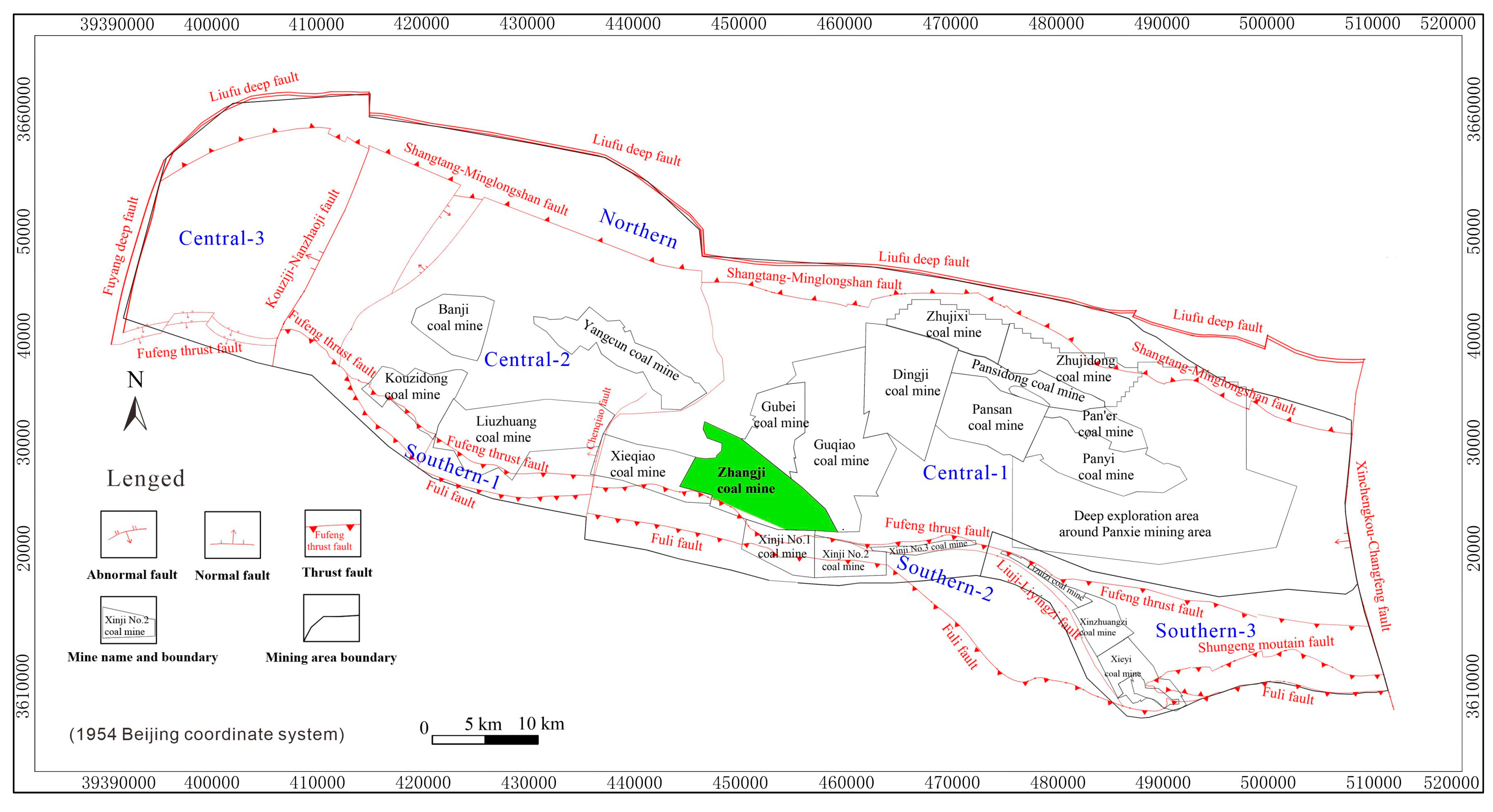
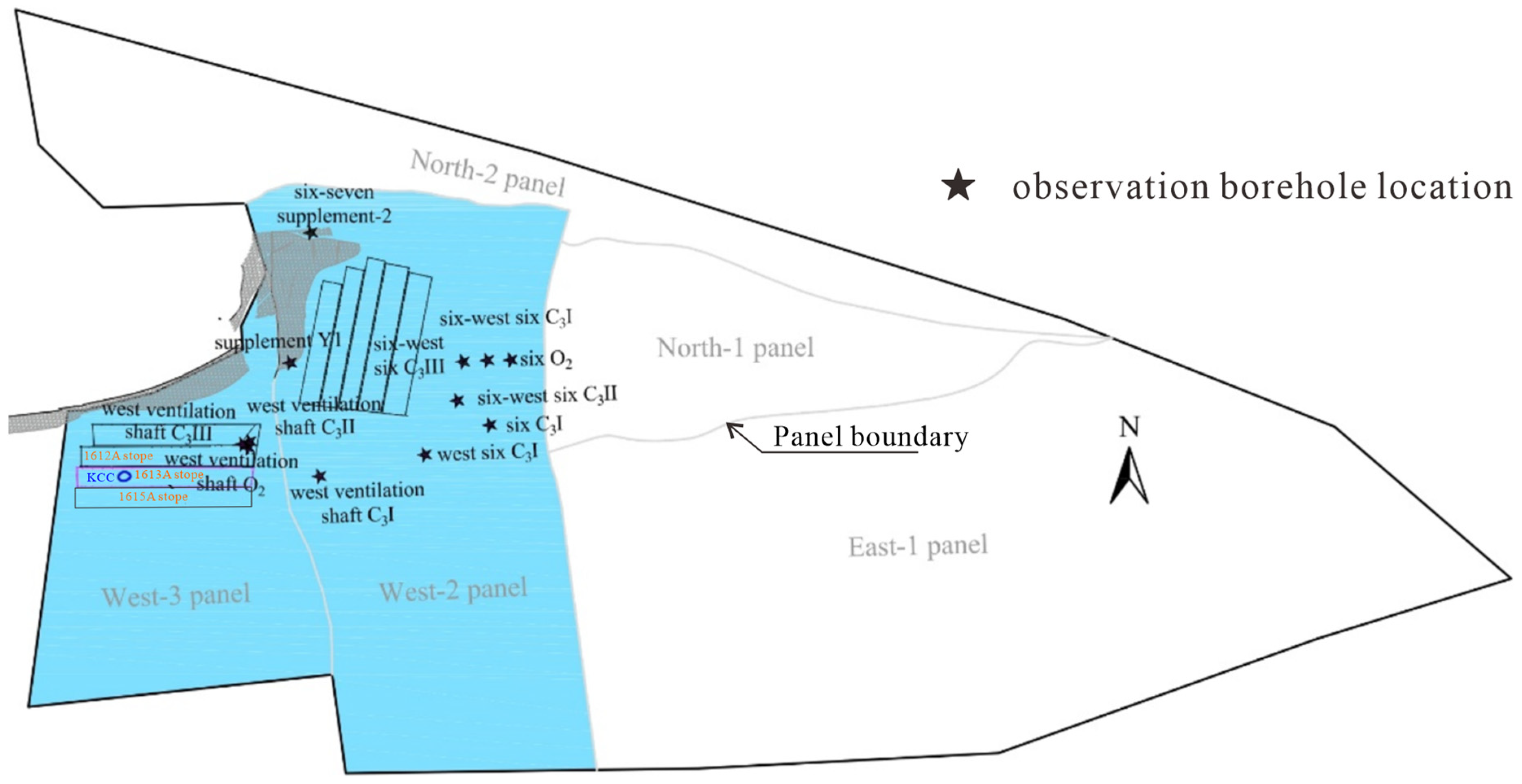
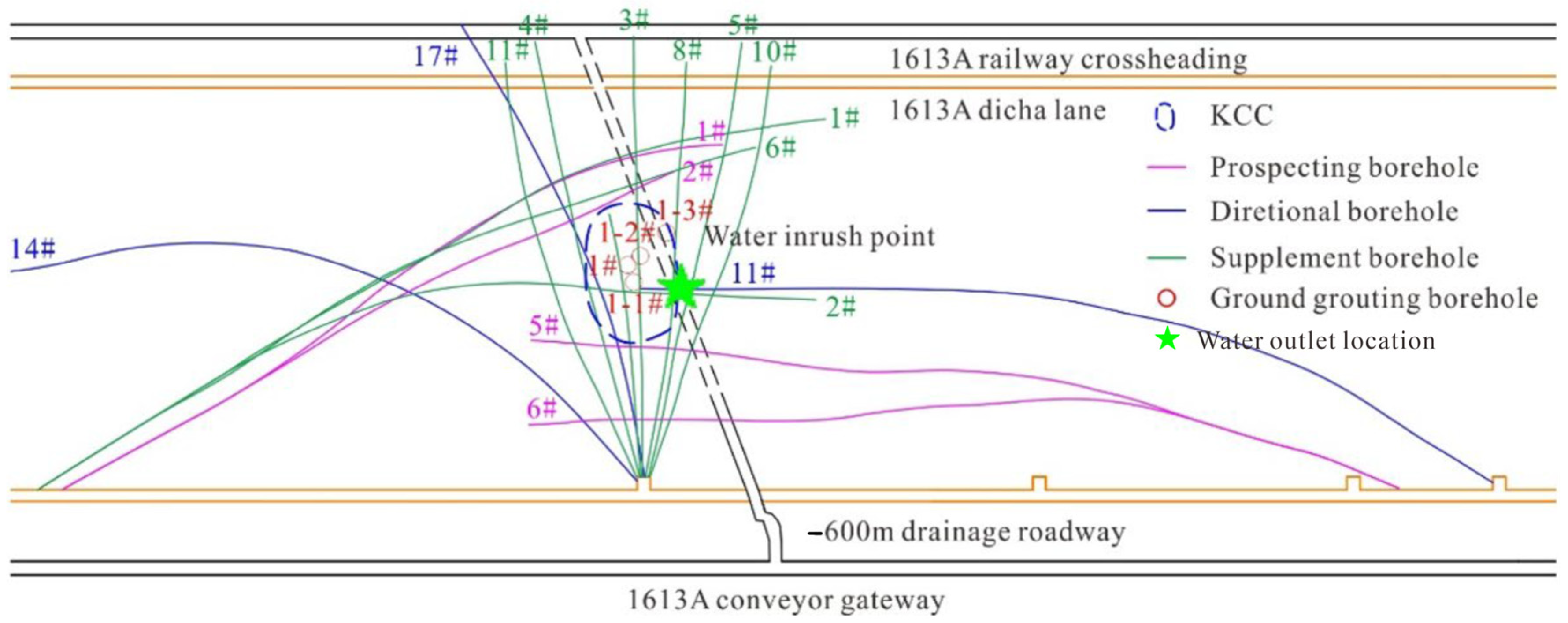
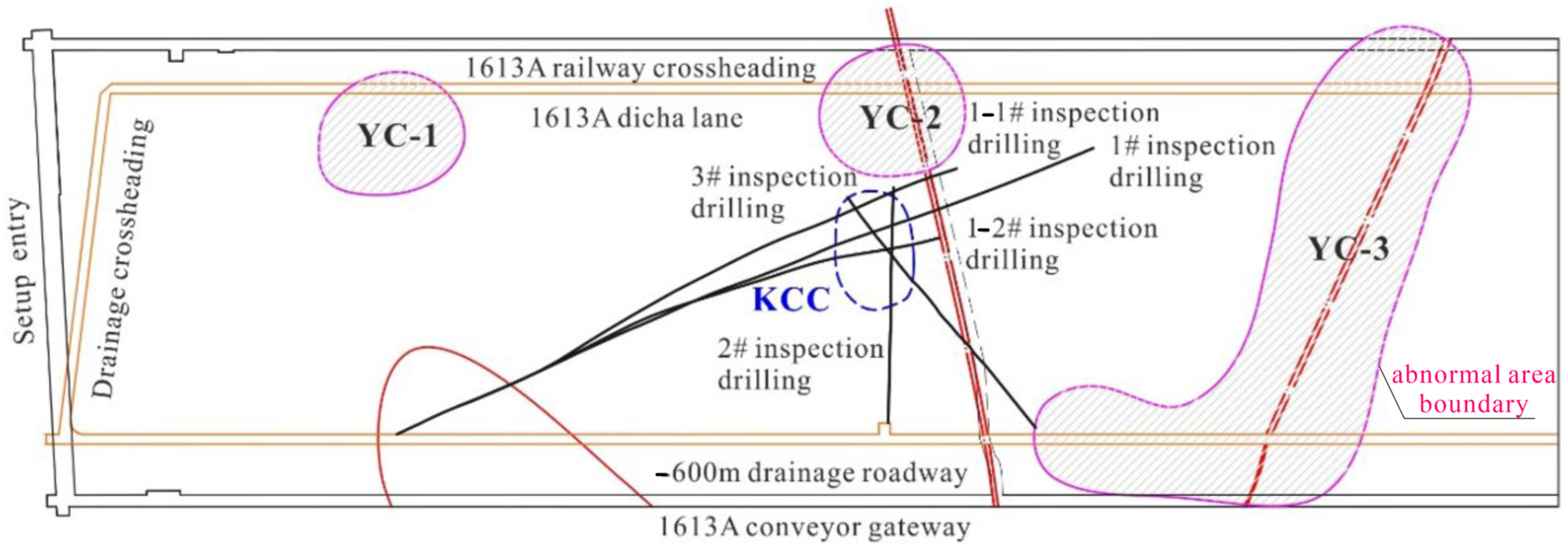
Shallow coal resources are being gradually depleted, which has led to an increase in mining depth. However, the safe extraction of deep coal seams is increasingly threatened by limestone water hazards. When vertical hydraulic channels such as karst collapse columns (KCCs) develop in limestone strata, high-pressure water may flow into the mine, potentially causing substantial casualties and property losses. In this study, the 1613A stope of the Zhangji coal mine was investigated through comprehensive detection, grouting treatment, and prevention effect evaluation. A numerical model was established to simulate the dynamic changes in groundwater levels within the limestone aquifers throughout the process. The results reveal that a KCC is developed beneath the C33 stratum, exhibiting an oval shape with a length of 53 m and a width of 35 m in plan view. A combination of surface and underground methods, including exploration, treatment, verification, and reinforcement, has sealed the hydraulic pathway connected to the Ordovician limestone, thereby eliminating the threat of floor water inrush. These findings are of significant value for the application and dissemination of advanced regional control technologies for water hazards in coal mines.
Keywords: karst collapse column; coal mine; water inrush; detection; treatment; numerical simulation; risk evaluation karst collapse column; coal mine; water inrush; detection; treatment; numerical simulation; risk evaluation