Article

3D Geological Modeling and Characterization of Coalbed Gas Content in the Jiulongchuan Exploration Area


1
Gansu Coal Geological Exploration Institute, Lanzhou 730000, China
2
Key Laboratory of Coalbed Methane Resources and Reservoir Formation Processes, Ministry of Education, Xuzhou 221008, China
3
School of Resources and Geoscience, China University of Mining and Technology, Xuzhou 221116, China
*
Author to whom correspondence should be addressed.
Processes 2026, 14(11), 1702; https://doi.org/10.3390/pr14111702
Submission received: 17 April 2026 / Revised: 13 May 2026 / Accepted: 22 May 2026 / Published: 24 May 2026

Abstract

Coalbed methane (CBM) is an important unconventional natural gas resource, and coal seam gas content is a key parameter for CBM resource evaluation and favorable-zone prediction. Taking the Jiulongchuan exploration area in Gansu Province as the study area, this study integrated drilling, well-logging, and measured gas content data to establish a multivariate regression model for coal seam gas content prediction. On this basis, three-dimensional geological modeling and variogram analysis were applied to characterize the spatial distribution of gas content in the main mineable coal seams (Nos. 5, 6, and 8). The results indicate that the regression model constructed using acoustic transit time, natural gamma-ray values, density logging parameters, and burial depth shows generally reasonable predictive capability for coal seam gas content. Cross-validation results suggest that the predicted gas contents are generally consistent with measured values. Spatial modeling results show that gas content in Seam No. 8 is generally higher than that in Seams No. 5 and No. 6, and gas content tends to increase with burial depth and coal seam thickness. In addition, relatively high gas contents are commonly observed along synclinal zones, whereas lower values occur near anticlinal areas. The integrated application of well-log interpretation and three-dimensional geological modeling provides a reasonable characterization of the spatial variation in coal seam gas content in the study area. The results may provide useful references for CBM resource evaluation and favorable-zone prediction in the Jiulongchuan exploration area.

1. Introduction

Coalbed methane (CBM) is an unconventional natural gas that occurs predominantly in an adsorbed state within coal seams and has emerged as a promising clean energy resource [1,2,3]. Accurate evaluation of CBM resources, prediction of development potential, and formulation of extraction strategies all rely on coalbed gas content (CBGS), which remains a critical parameter [4,5]. CBGS can be determined through either direct measurement or indirect prediction methods. Data for indirect prediction are derived from core samples, well logging, and seismic surveys. Methods for predicting gas content based on core and logging data include multivariate regression analysis [6,7,8], as well as pattern recognition techniques, such as gray system theory [9,10], neural networks [4,11], and support vector machines [12]. Isothermal adsorption experiments on coal cores and multivariate regression analysis of well-log data are widely regarded as the most effective and practical methods for predicting coalbed gas content (CBGS) [13,14,15,16]. The principal factors influencing CBGS include coal rank, burial depth, coal quality and macrolithotype, effective burial depth, seam thickness, petrographic composition, seam structure, temperature, pressure, tectonic activity, magmatic activity, roof and floor lithology, and groundwater dynamics [17,18,19,20,21]. These factors exhibit significant variability across different regions and geological periods.
Stochastic reservoir modeling, as an advanced method for reservoir characterization, is fundamentally based on the use of available data to generate multiple equiprobable, high-resolution spatial distribution models of reservoir properties [22,23,24,25,26]. During the construction of three-dimensional (3D) geological models, the development and analysis of variograms are critical for ensuring model accuracy [27,28,29]. Variograms quantitatively characterize the spatial correlation of regionalized variables, following the principle that closely spaced samples exhibit strong correlation, whereas widely separated samples show weaker correlation. This spatial correlation is typically anisotropic, necessitating variogram characterization of properties in different directions. By deriving variograms from input data and incorporating them into property models, the spatial correlation observed in experimental data can be effectively reproduced in the final model. The construction of 3D geological models not only enables detailed characterization of reservoir properties and heterogeneity but also plays a significant role in coalbed methane reservoir evaluation, particularly in gas content assessment [30,31].
The Jiulongchuan exploration area, located in Qingyang, Gansu Province, has been extensively studied and is characterized by abundant coal resources. The coal seams in this region occur at relatively great depths, with an average burial depth of approximately 1200 m [32]. Although local coalbed methane (CBM) enrichment has been identified in the Longdong area, indicating considerable exploration potential [33], detailed investigations of deep CBM systems remain limited. In particular, systematic studies on the logging-based interpretation of key parameters, such as gas content, and their controlling factors are still lacking. Three-dimensional (3D) geological modeling plays a critical role in characterizing the heterogeneity of gas content. This study provides a refined evaluation of gas content in the Jiulongchuan area through an integrated approach that combines 3D geological modeling, multivariate regression analysis of logging data, and detailed variogram analysis. Special emphasis is placed on the influence of geological structures, burial depth, and coal seam thickness on gas content. The results provide additional information for the characterization of deep CBM reservoirs in the Jiulongchuan exploration area.

2. Geological Setting

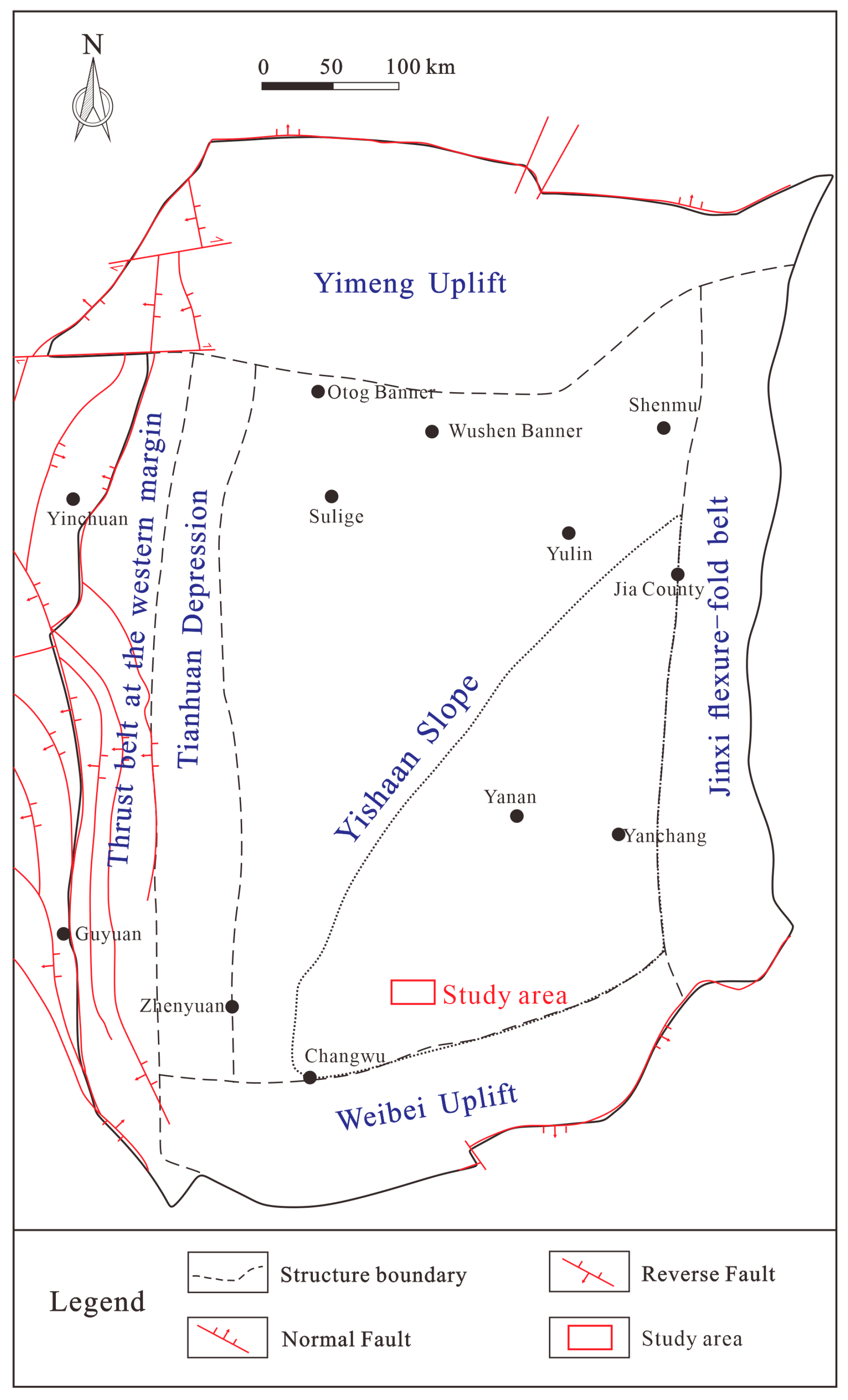
The Jiulongchuan exploration area is located at the southwestern terminus of the northern Shaanxi monocline within the Ordos Basin, which is adjacent to the Tianhuan Depression. Stratigraphically, it belongs to the Ordos subregion of the Shanxi–Hebei–Shandong–Henan region within the North China stratigraphic superregion. The strata form a compound monocline that gently dips northwestward, with dip angles typically ranging from 3° to 10°. Faulting is weakly developed in the area; however, several gentle folds are well developed (Figure 1).
The Middle Jurassic Yan’an Formation is the only coal-bearing stratum in the Jiulongchuan exploration area, occurring at depths of 1000–1500 m and exhibiting significant thickness variation (46.37–208.16 m; average 116.79 m). The Yan’an Formation contains eight coal seams with a total average thickness of 14.59 m, corresponding to a coal-bearing coefficient of 21.2%. Among these, the No. 5, No. 6, and No. 8 coal seams are minable or locally minable.
The Yan’an Formation is subdivided into three members, from base to top. The lower member (J2y1) has limited coal-bearing significance, with the No. 8 seam occurring at its top. The middle member (J2y2) constitutes the principal coal-bearing interval, containing the No. 5 and No. 6 seams in its upper part. The upper member (J2y3) is also of limited coal-bearing importance and contains the unminable No. 2 seam in its middle to upper part. The characteristics of the minable and locally minable seams in the Jiulongchuan exploration area are summarized in Table 1.
As shown in Table 1, the recovery rates of the No. 5 and No. 6 coal seams both exceed 94%, whereas the recovery rate of the No. 8 coal seam is only approximately 27%. The low recovery rate of the No. 8 coal seam is mainly attributed to the widespread development of one to two layers of gangue (mudstone/carbonaceous mudstone) within the seam. Nevertheless, the No. 8 coal seam is characterized by a large total thickness and good continuity, and its resource reserves account for more than 60% of the total CBM geological resources in the study area. Therefore, it was still selected as the primary target for 3D gas content modeling in this study.

3. Prediction of Coalbed Gas Content Based on Multivariate Regression of Well-Logging Data

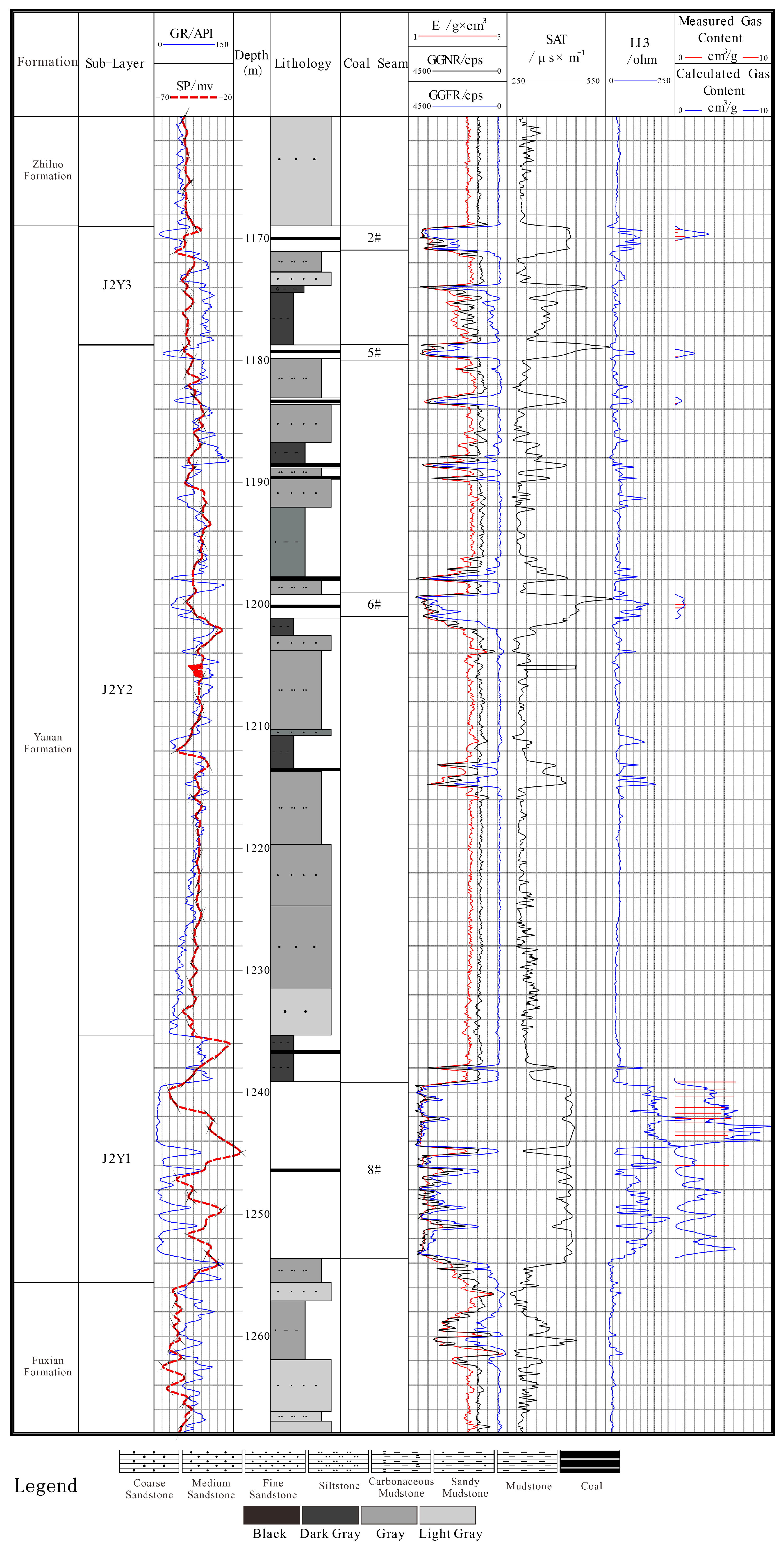
The well logs in the Jiulongchuan exploration area include multiple parameters, such as long-spaced gamma–gamma (GGFR), short-spaced gamma–gamma (GGNR), natural gamma ray (GR), Laterolog 3 (LL3), spontaneous potential (SP), caliper (CAL), sonic transit time (SAT), formation temperature (TEMP), and compensated density (DEN). Following field calibration, the GGFR and GGNR curves are combined to generate a compensated density log.
To establish an optimal multivariate regression model for gas content prediction, cross-plot analyses were conducted using gas content and well-log data from coal seams in five CBM parameter wells (Figure 2). Detailed gas content test information is presented in Table 2. The results indicate that the correlations between gas content and individual logging parameters are weak. In general, coalbed methane content increases with burial depth. Moreover, increasing gas content reduces the acoustic velocity in coal seams, resulting in higher sonic transit time values, indicating a positive correlation. In contrast, increasing ash content reduces the organic carbon content, thereby diminishing the hydrocarbon generation and preservation capacity of coal seams. Ash content shows strong positive correlations with both natural gamma-ray and density log values. Based on these observations, a composite parameter P was constructed (Equation (1)) to better characterize coalbed methane content.
P = SAT/(GR × DEN)
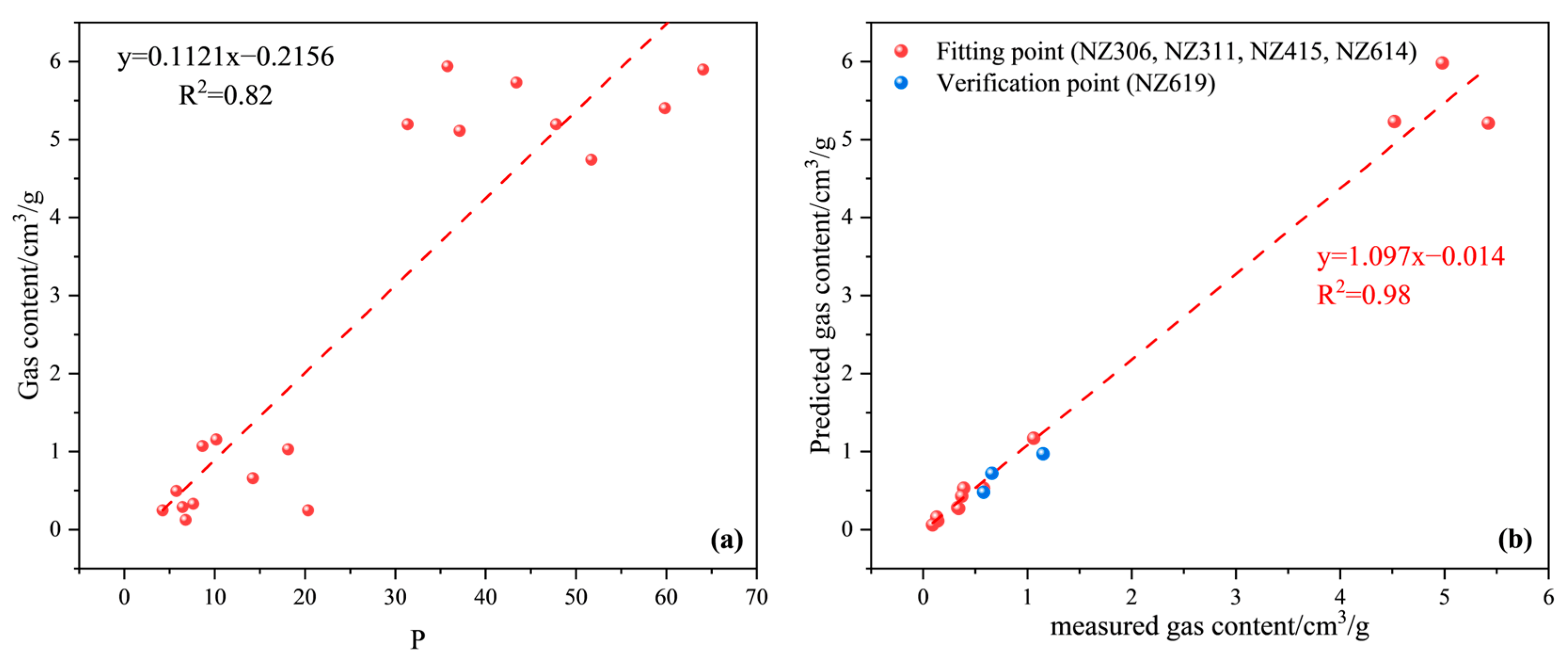
Regression analysis was performed using the constructed composite parameter P and coalbed gas content (CBGS) (Figure 3a), showing a relatively good correlation between the two variables.
Considering the strong relationship between gas content and burial depth, a multivariate regression approach was adopted by integrating the parameter P with burial depth to establish a gas content prediction model based on logging data and burial depth (Equation (2)), with a coefficient of determination (R2) of 0.98 (Figure 3b).
Vgas = −65.9157 + 0.0339P + 0.056Depth
To evaluate the multicollinearity between burial depth and the composite parameter (P), the variance inflation factor (VIF) was calculated. Taking P as the dependent variable and burial depth as the independent variable, a univariate linear regression was performed, yielding an R2 value of 0.6956. Accordingly, the VIF was calculated as VIF = 1/(1 − 0.6956) = 3.29. The VIF values for both P and burial depth are 3.29, which are lower than the critical threshold of five and far below the stricter threshold of 10. This indicates that although a moderate correlation exists between the two independent variables ((Pearson r = 0.83)), no severe multicollinearity is present. The standard errors of the regression coefficients did not exhibit excessive inflation, and the explanatory effects of each variable on gas content can still be robustly estimated. Therefore, the regression equation with (R2 = 0.9483) reflects the genuine combined explanatory power of P and burial depth on gas content, rather than an artificial effect caused by multicollinearity. The parameter P provides gas content information from the perspectives of logging elastic response and lithology correction, whereas burial depth serves as a comprehensive proxy variable for reservoir pressure, temperature, and preservation conditions. Together, they contribute complementary predictive information. Therefore, this formula can effectively reflect the gas content characteristics of the study area.
To verify the reliability of the statistical model for predicting coal seam gas content, a cross-validation approach based on the comparison between predicted and measured values was adopted in this study to evaluate the prediction accuracy using sample data from five CBM parameter wells in the Jiulongchuan exploration area. The measured gas content of each well was compared with the gas content predicted by the statistical model. The model’s prediction accuracy was evaluated using the mean absolute error (MAE), root mean square error (RMSE), mean absolute percentage error (MAPE), and coefficient of determination (R2). The corresponding calculation formulas are as follows (Equations (3)–(5)):
M A E = 1 n i = 1 n y i y ^ i
R M S E = 1 n i = 1 n y i y ^ i 2
M A P E = 1 n i = 1 n y i y ^ i y i × 100 %
The results indicate that the predicted gas contents are generally consistent with the measured values. The mean absolute error (MAE), root mean square error (RMSE), and mean absolute percentage error (MAPE) are 0.19 cm3/g, 0.26 cm3/g, and 18.74%, respectively(Table 3). The coefficient of determination (R2) and correlation coefficient are 0.973 and 0.992, respectively. Validation results for individual wells show that the prediction errors are generally within an acceptable range, suggesting that the established statistical model can reasonably reflect the variation characteristics of coal seam gas content in the study area and can provide support for subsequent three-dimensional gas content modeling and favorable area prediction.

4. 3D Geological Modeling of CBGS

Detailed static analyses of geological structure, stratigraphy, and CBM reservoirs were integrated with refined logging interpretations and implemented in Petrel® using stochastic modeling to construct a three-dimensional (3D) property model of the coal-bearing strata in the Jiulongchuan exploration area, enabling a quantitative description of the spatial distribution of CBM occurrence.
The 3D geological modeling workflow comprises three key stages: grid generation, property modeling, and model refinement. The horizontal grid cell size was set to 100 m × 100 m, and the formation was vertically discretized into 70 layers, resulting in a total of 121 × 115 × 70 = 974,050 grid cells. Property modeling involves geometric model construction, well-log discretization, integrated data analysis, and petrophysical property modeling, among which the latter two are particularly critical.

4.1. Variogram Analysis of CBGS

Data analysis aims to optimize the fit between variogram models and the spatial characteristics of the data by adjusting variograms in the major, minor, and vertical directions. This process provides a fundamental basis for subsequent stochastic modeling. In stochastic reservoir modeling, the construction of spatial variograms is essential for characterizing reservoir heterogeneity. This involves the selection of variogram models (i.e., transition models) and key parameters, including the nugget, sill, and range, which directly influence simulation results and CBM development potential.
The anisotropy of three-dimensional (3D) space requires the definition of variogram models and parameters in each of the three principal directions. The major and minor directions should be orthogonal within the horizontal plane, while the variogram model type and nugget value are typically kept consistent across directions; in contrast, the range varies with direction. In this study, a spherical variogram model was adopted, with the nugget set to zero to enhance the representation of spatial correlation among data points. The spherical variogram model was selected because it can effectively characterize the finite spatial correlation range and moderate continuity of coal seam gas content in the study area, which is consistent with the variation pattern of the experimental variograms. The nugget value was set to zero because the data used in this study were derived from calibrated well-log interpretation and measured gas content data with relatively limited random noise. In addition, the spatial variation in coal seam gas content exhibits relatively continuous geological characteristics at the modeling scale.
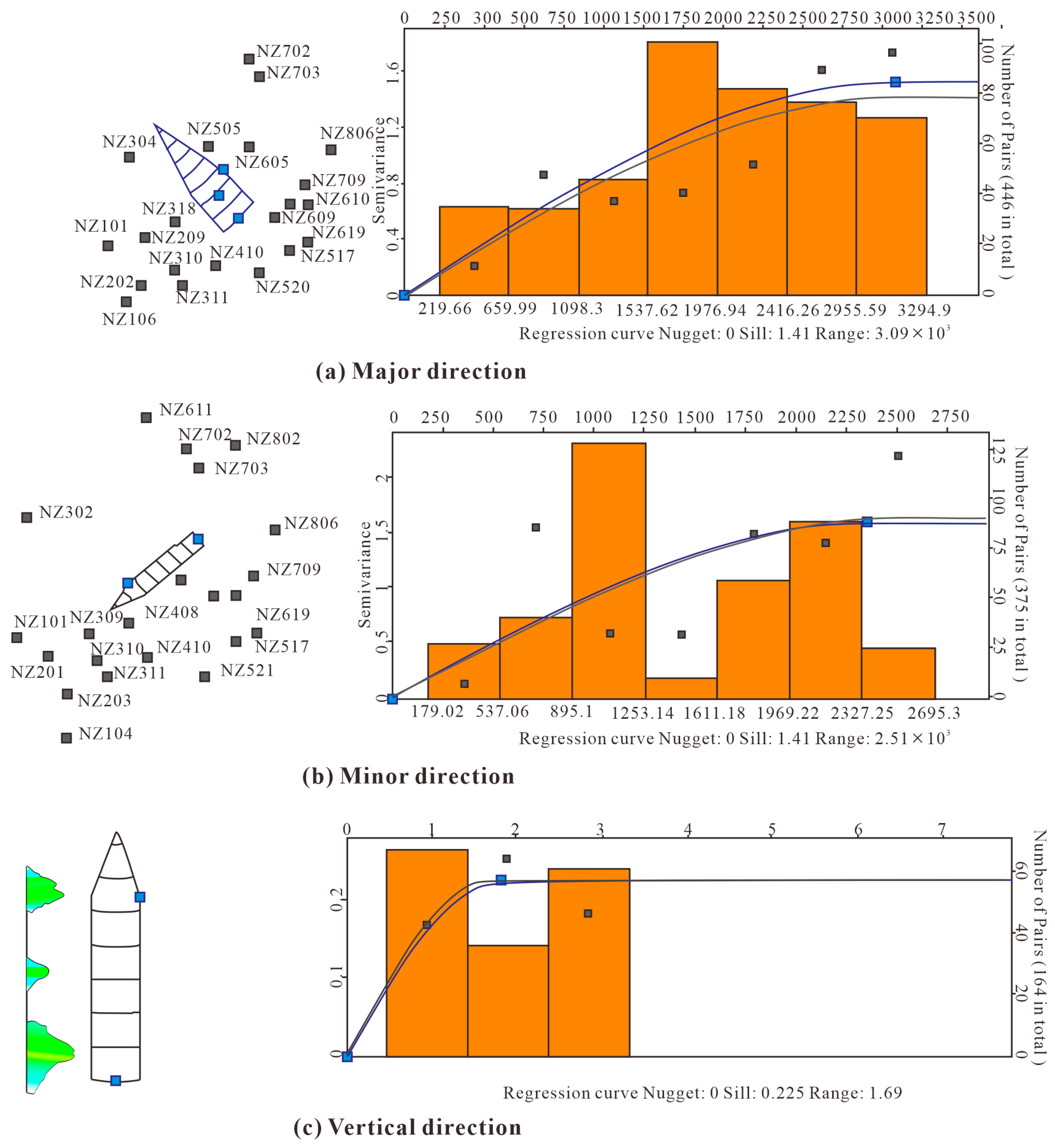
The variograms of gas content for the No. 5 coal seam in the major, minor, and vertical directions are presented in Figure 4.
The variogram analysis of Seam No. 5 shows that the sill values in both the major and minor directions are close to one, indicating evident spatial variability of gas content in the horizontal directions. The vertical sill value is 0.4, suggesting a relatively smaller fluctuation amplitude in the vertical direction. The ranges in the major, minor, and vertical directions are 3097 m, 2309 m, and 1.8 m, respectively, indicating strong spatial continuity in the horizontal directions but relatively limited vertical correlation. It should be noted that the vertical range mainly reflects the effective spatial correlation scale of gas content samples rather than the actual coal seam thickness itself. Owing to the limited vertical sampling interval and internal heterogeneity within the coal seam, the fitted vertical range is smaller than the seam thickness. Overall, gas content in the study area exhibits stronger lateral continuity and relatively faster variation in the vertical direction.
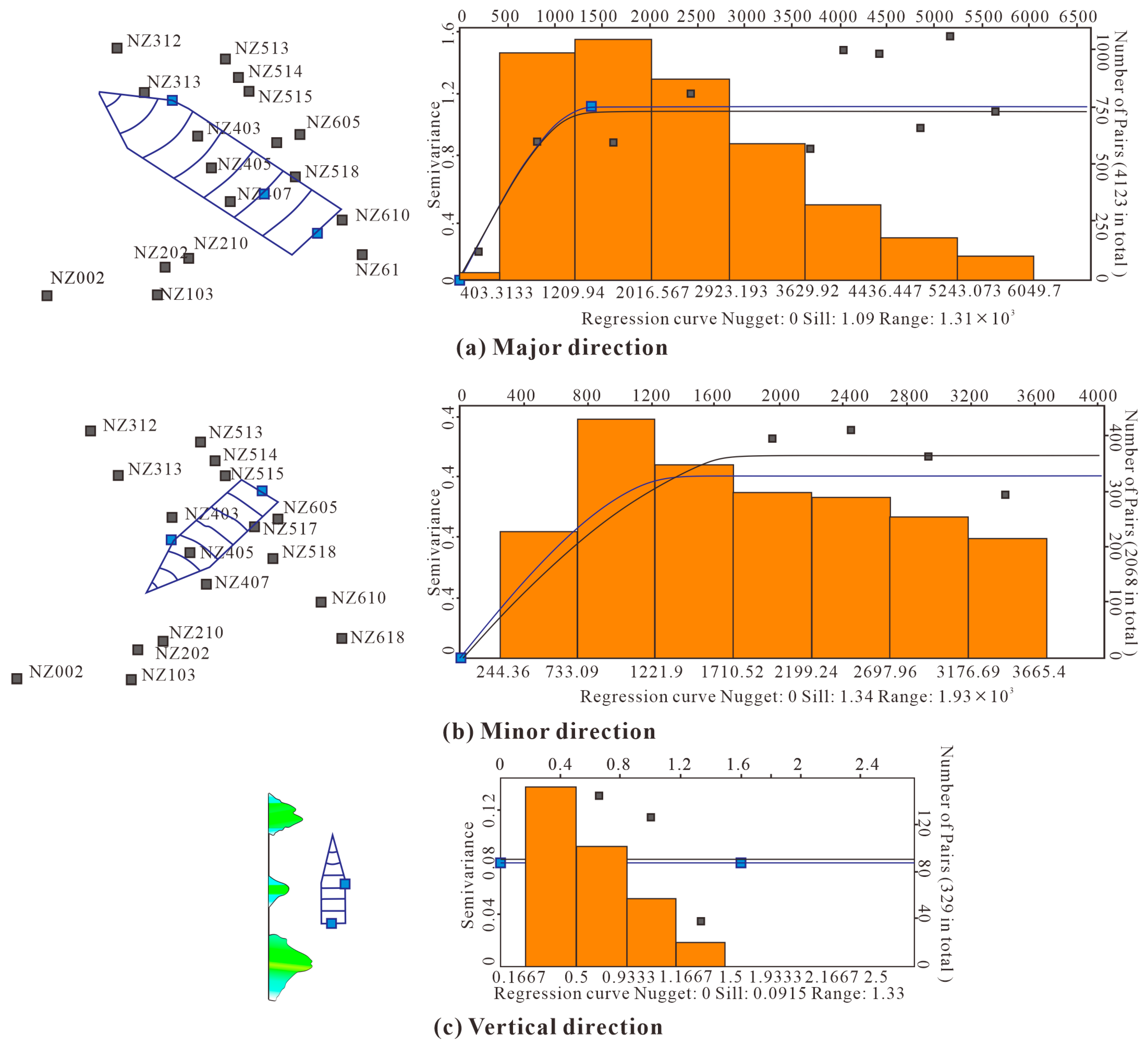
The variograms of gas content for the No. 6 coal seam in the major, minor, and vertical directions are presented in Figure 5.
The variogram analysis of Seam No. 6 indicates that the sill values in both the major and minor directions are close to one, suggesting evident spatial variability of gas content in the horizontal directions. The vertical sill value is 0.4, indicating a relatively smaller fluctuation amplitude in the vertical direction. The ranges in the major, minor, and vertical directions are 1382 m, 1370 m, and 1.6 m, respectively, indicating relatively good spatial continuity in the horizontal directions but limited vertical correlation. Similar to Seam No. 5, the relatively small vertical range of Seam No. 6 suggests limited vertical spatial correlation. Overall, the gas content of Seam No. 6 shows relatively stable variation in the horizontal plane, with similar continuity in the major and minor directions, while the vertical spatial correlation remains relatively limited.
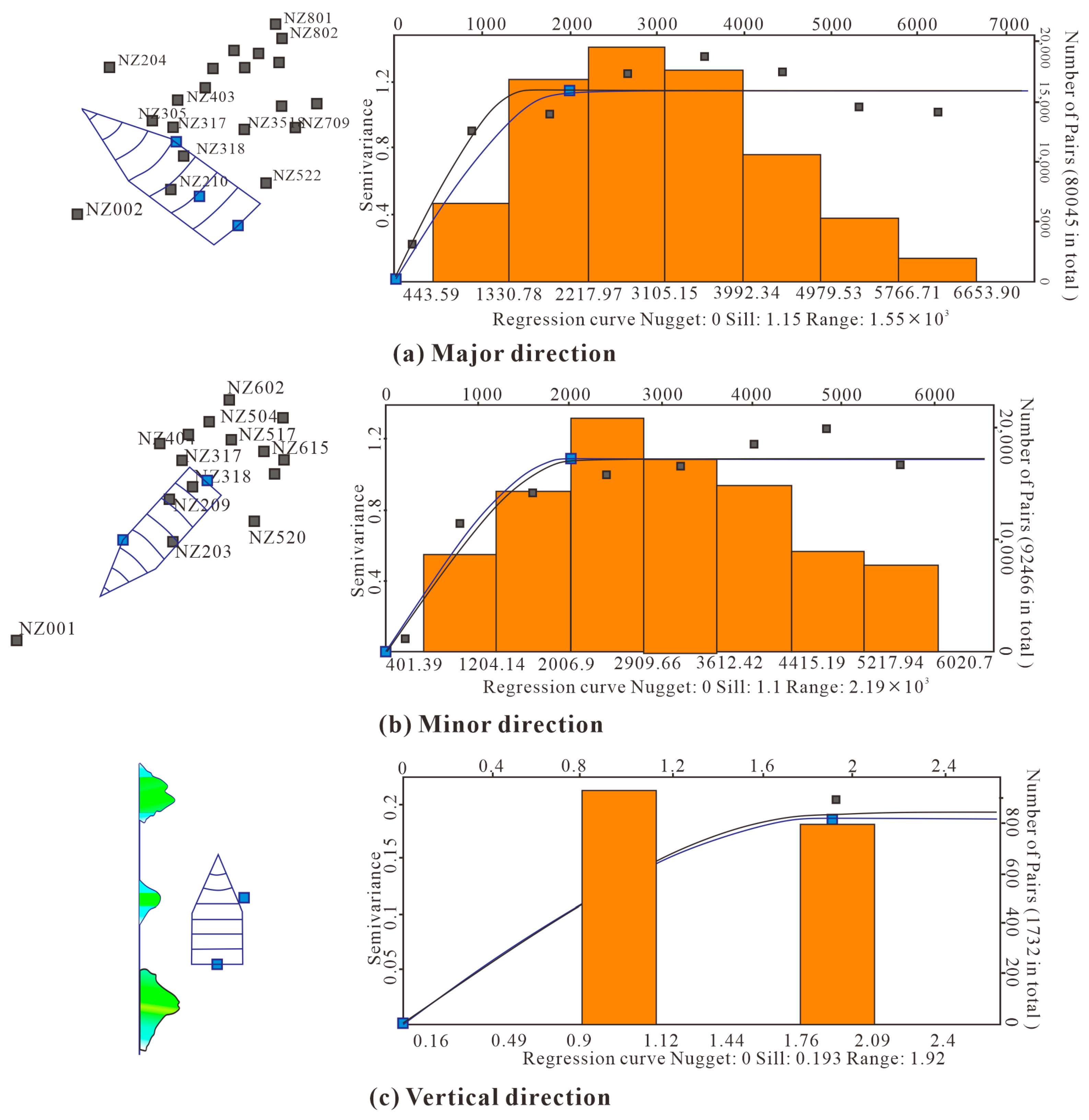
The variograms of gas content for the No. 8 coal seam in the major, minor, and vertical directions are presented in Figure 6.
The variogram analysis of Seam No. 8 indicates that the sill values in both the major and minor directions are close to one, suggesting evident spatial variability of gas content in the horizontal directions. The vertical sill value is 0.4, indicating a relatively smaller fluctuation amplitude in the vertical direction. The ranges in the major, minor, and vertical directions are 2010 m, 2010.7 m, and 1.9 m, respectively, indicating relatively good spatial continuity in the horizontal directions but limited vertical correlation. Seam No. 8 also exhibits relatively stable lateral continuity, whereas relatively rapid local variation is observed in the vertical direction.

4.2. 3D Geological Model of CBGS

Three-dimensional (3D) geological models and gas content cross-sections were constructed using sequential Gaussian simulation (SGS).
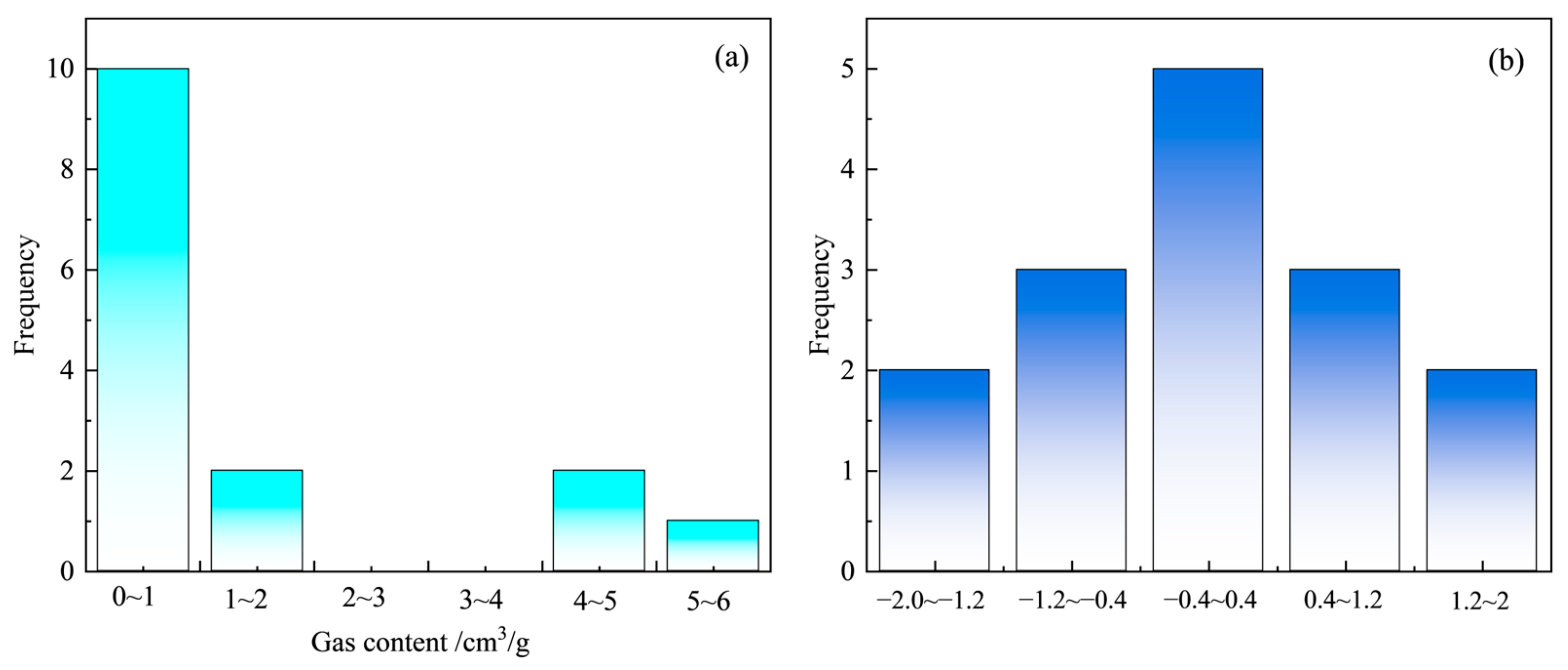
Since the gas content data do not conform to a normal distribution (Figure 7a), the original data were first transformed into a normal distribution (Figure 7b). The specific calculation formulas are as follows:
P i = i 0.5 n
Z i = 1 P i
where i is the ascending order index of the original data; P i is the cumulative probability; n is the total number of data points; 1 is the inverse function of the standard normal distribution; and Z i is the value after normal transformation.
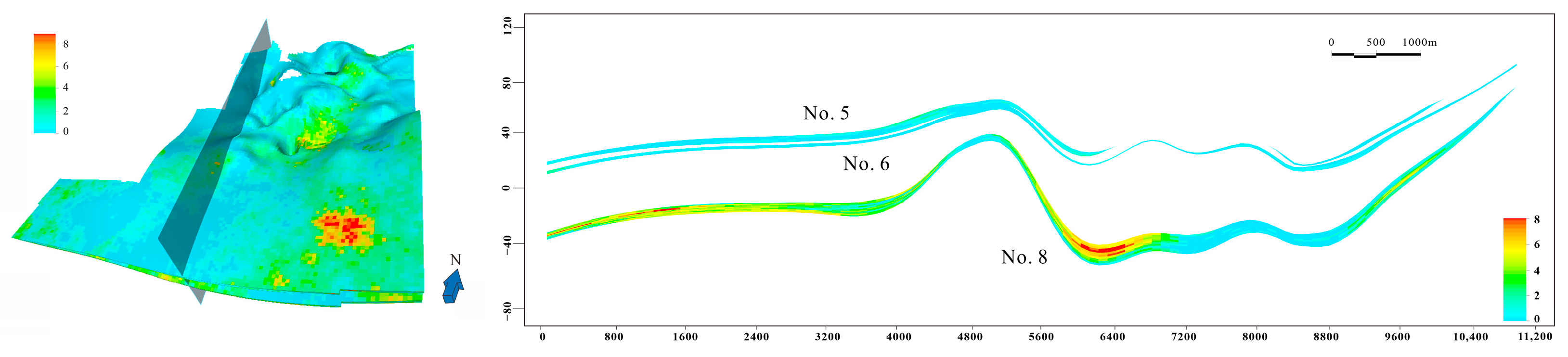
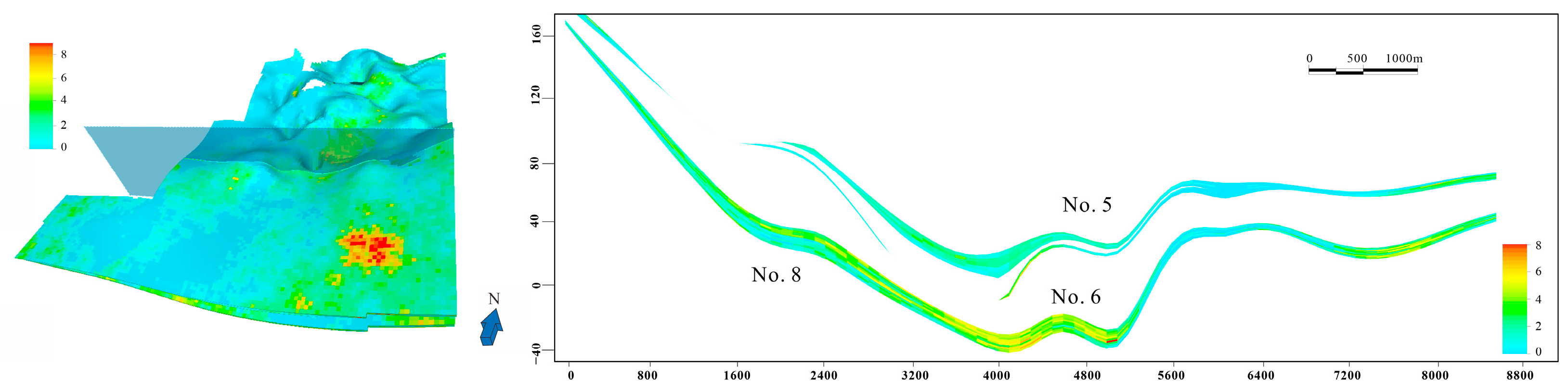
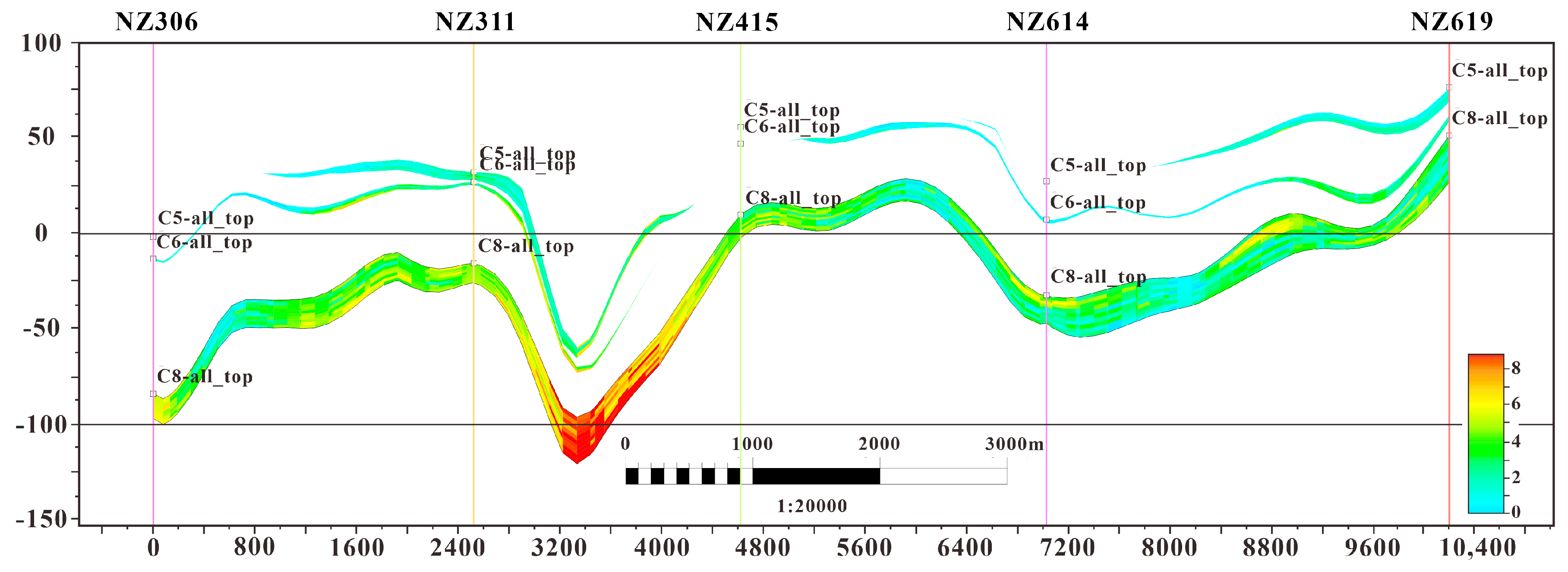
The simulation results are presented in Figure 8, Figure 9 and Figure 10.
The gas content model reveals significant vertical heterogeneity in the No. 8 coal seam, with generally higher gas content compared to other seams. The north–south (S–N) cross-section indicates relatively high gas content in the southern and central parts of the study area, gradually decreasing toward the north. Along the syncline axis, higher gas content is observed in the upper part of the No. 8 coal seam. The west–east (W–E) cross-section shows that gas content in the west-central area is higher than that in the eastern region. In the western area, coalbed methane content decreases in the updip direction, whereas no clear spatial trend is observed in the eastern part. Additionally, along the syncline axis, the upper portion of the No. 8 coal seam exhibits higher gas content than the lower portion. Well cross-section analysis further demonstrates that the No. 8 coal seam is thicker and more laterally continuous than other seams and generally exhibits higher gas content along the syncline axis. In particular, the deeply buried segment of the syncline axis near Well NZ311 shows significantly higher gas content than other areas. In contrast, within the monocline structure, coalbed methane content decreases in the updip direction.

4.3. Gas Content Distribution Model of the No. 8 Coal Seam

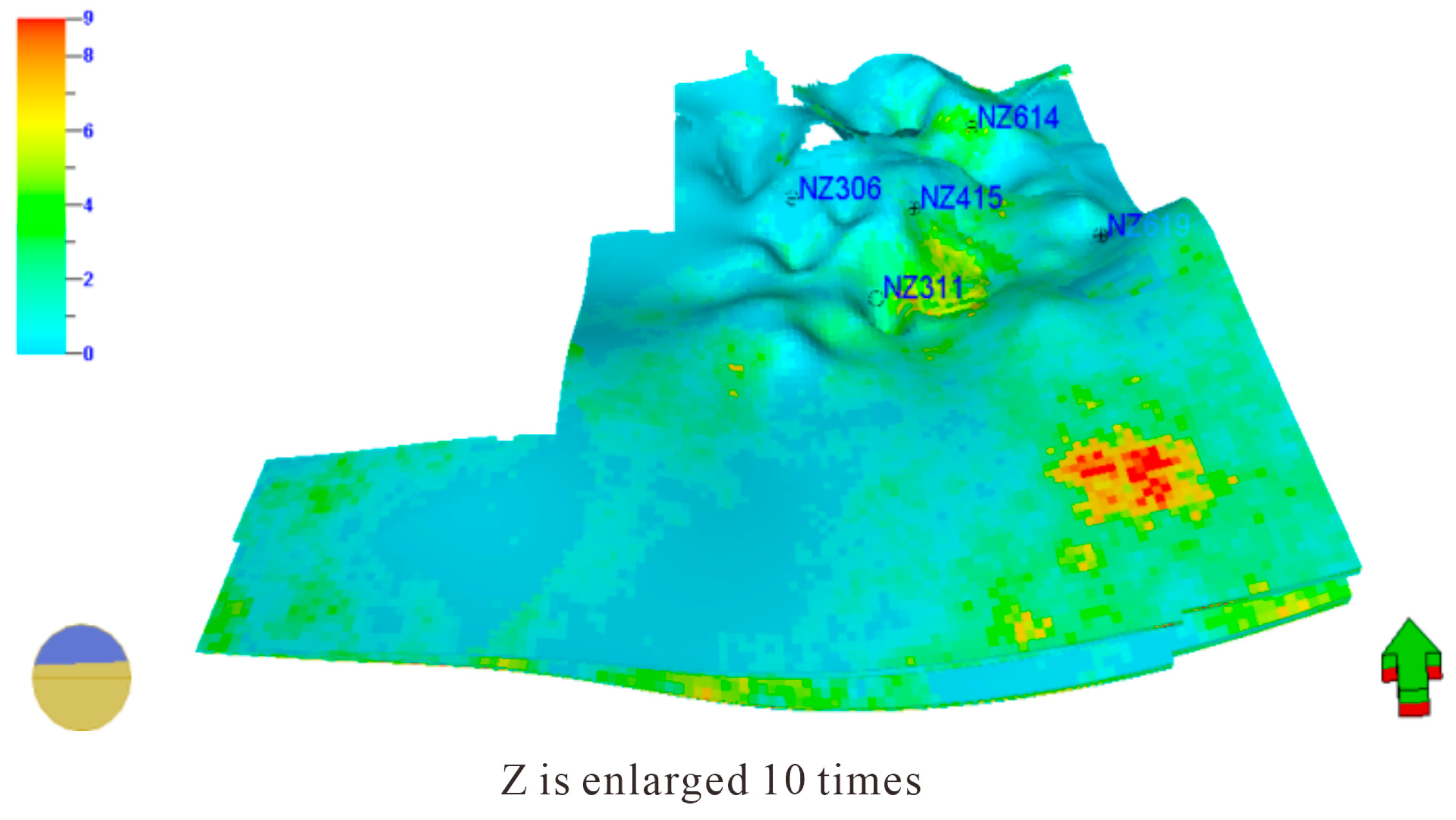
For the No. 8 coal seam with relatively high gas content, the gas content attribute map and the 3D spatial distribution model are shown in Figure 11. For better visualization, the vertical (Z-axis) scale in Figure 11 is exaggerated by a factor of 10.
The gas content model of the No. 8 coal seam shows a significant increase in gas content in the vicinity of Well NZ311 and toward the northwest, where burial depths are greater. A high-gas-content zone is also identified in the southwestern part of the study area. Overall, gas content is higher along the syncline axis and lower along the anticline axis. These observations suggest that gas content in the No. 8 coal seam is closely correlated with geological structure, burial depth, and seam thickness.

4.4. Main Controlling Factors of Coal Seam Gas Content

4.4.1. Geological Structure

The coal seam structures in the study area are characterized by a series of short-axis anticline–syncline assemblages distributed in a northeastward direction. The fold amplitudes are relatively gentle, with coal seam dip angles generally ranging from 3° to 8°, and no obvious fault structures have been identified. Therefore, the coal seams largely preserve their primary structural characteristics. The coal-bearing strata, together with their overlying and underlying formations, are mainly composed of interbedded mudstones and medium- to fine-grained clastic rocks, which also generally retain their original sedimentary and structural features without significant fault-related destruction. Such geological conditions are favorable for the preservation of coalbed methane. The three-dimensional geological model indicates that gas content in the synclinal axis is generally higher than that in the anticlinal axis, and gas content gradually decreases toward the uplifted flanks of the syncline. It should be particularly noted that although Well NZ306 has a relatively large burial depth, its coal seam gas content, especially in Seam No. 8, remains relatively low. This is mainly because the well is located near the junction of two anticlines, where tectonic deformation is relatively intense, resulting in the development of fractures that facilitate gas escape and consequently reduce gas preservation capacity. In addition, in the Longdong area, the gas content of Seam No. 6 is generally lower than that of Seam No. 5, which may be related to sedimentary conditions.
Specifically, the major variogram direction (NW–SE) is approximately parallel to the syncline axis in the study area. Along this direction, the coal seam floor undulates relatively gently, and the gradients of burial depth and seam thickness are relatively small, allowing gas content to maintain stronger spatial continuity over a larger distance. This corresponds to the relatively large variogram ranges in the major direction (3097 m for Seam No. 5, 1382 m for Seam No. 6, and 2010 m for Seam No. 8). The minor direction (NE–SW) is orthogonal to the major direction and approximately perpendicular to the syncline axis. Along this direction, the strata cross multiple secondary fold limbs, where burial depth gradients increase significantly. In addition, the development of local fractures and cleats further enhances lateral reservoir heterogeneity, resulting in reduced spatial continuity of gas content and relatively smaller variogram ranges in the minor direction (2309 m for Seam No. 5, 1370 m for Seam No. 6, and 2011 m for Seam No. 8). The relatively small difference between the major and minor ranges of Seam No. 8 may be related to its greater seam thickness, better continuity, and stronger intrinsic stability. In thick coal seams, the anisotropic modification of the spatial gas content structure by tectonic deformation may be partially buffered. In contrast, the major-direction range of Seam No. 5 (3097 m) is much larger than that of Seam No. 6 (1382 m), indicating stronger spatial continuity of gas content along the syncline axis in Seam No. 5, which may be associated with differences in depositional patterns and the intensity of later tectonic modification. These results suggest that the spatial anisotropy of gas content is not a random phenomenon but rather a direct manifestation of directional structural control exerted by the regional tectonic framework on reservoir properties.

4.4.2. Burial Depth of Coal Seams

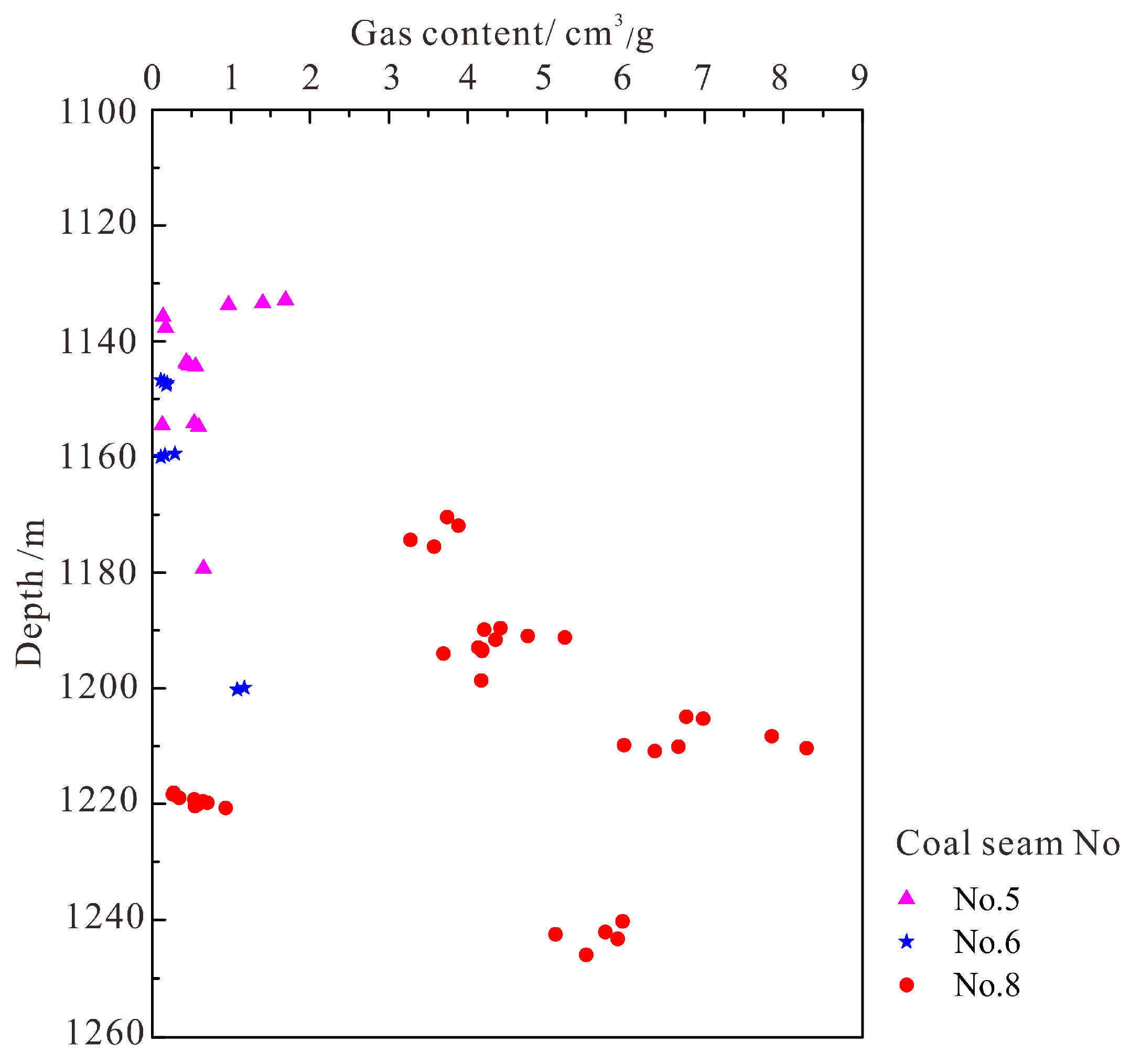
The coal seams in the study area are deeply buried. The burial depths of Seam No. 5 in the five parameter wells range from 1097.55 to 1155.16 m, while those of Seam No. 6 range from 1132.78 to 1200.43 m, and those of Seam No. 8 range from 1152.10 to 1246.12 m. Overall, coal seam gas content tends to increase with increasing burial depth (Figure 12). According to statistical results from 88 sampling points in Seam No. 8, the average gas content is 0.96 cm3/g, indicating that burial depth alone is not the dominant geological factor controlling gas content. Due to their greater burial depths, Seam No. 8 and Seam No. 8-1 generally exhibit gas contents greater than 3 cm3/g, representing relatively high values. In contrast, the gas contents of Seam No. 2, Seam No. 5, and Seam No. 6 are generally lower, mostly ranging from 0 to 3 cm3/g. From the perspective of individual wells, relatively high gas contents in Seam No. 8 are mainly observed in Wells NZ311, NZ415, and NZ614, whereas the remaining wells generally exhibit lower gas contents.

4.4.3. Coal Rank

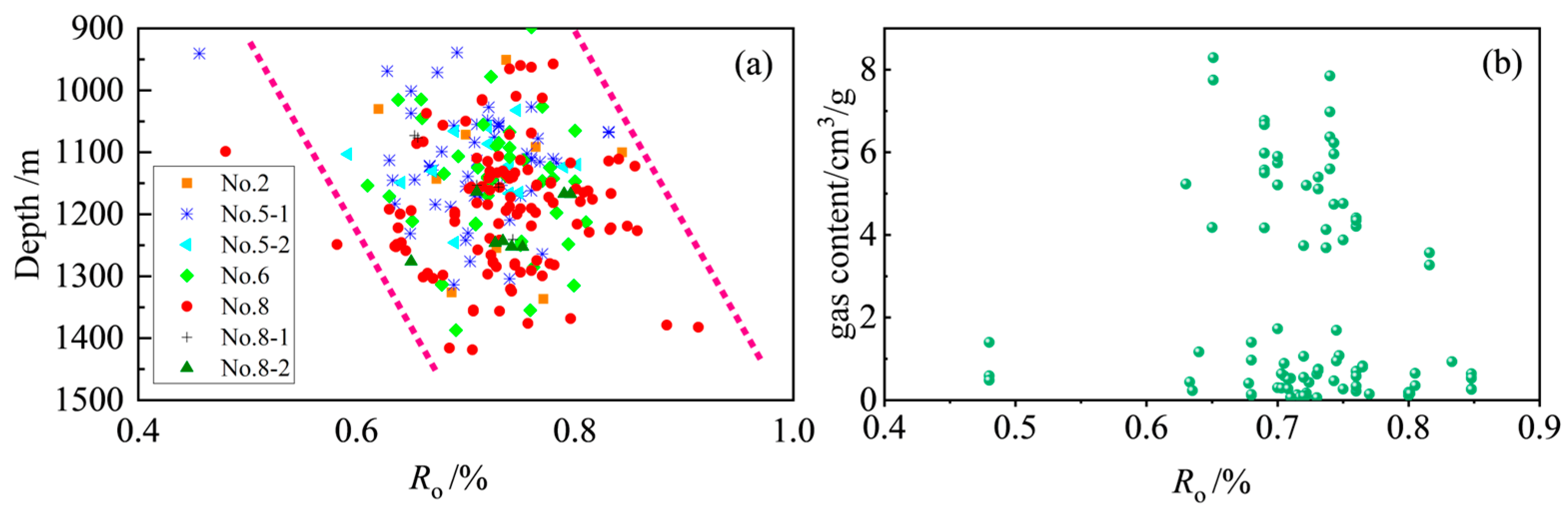
The variation in maximum vitrinite reflectance (Ro) with depth in the study area is shown in Figure 13a. As illustrated in the figure, Ro generally increases with increasing depth, indicating that the degree of coal metamorphism increases with burial depth. The relationship between Ro and gas content in the study area is presented in Figure 13b, the cross-plot between gas content and Ro indicates that the correlation between gas content and Ro in the study area is not significant. This may be attributed to the fact that the maximum vitrinite reflectance of coal seams in the study area ranges from 0.69% to 0.75%, corresponding to the second stage of bituminous coal metamorphism, during which the methane-generation capacity remains relatively weak. Therefore, the influence of coal rank on coal seam gas content in the study area is considered to be limited.

4.4.4. Coal Seam Thickness

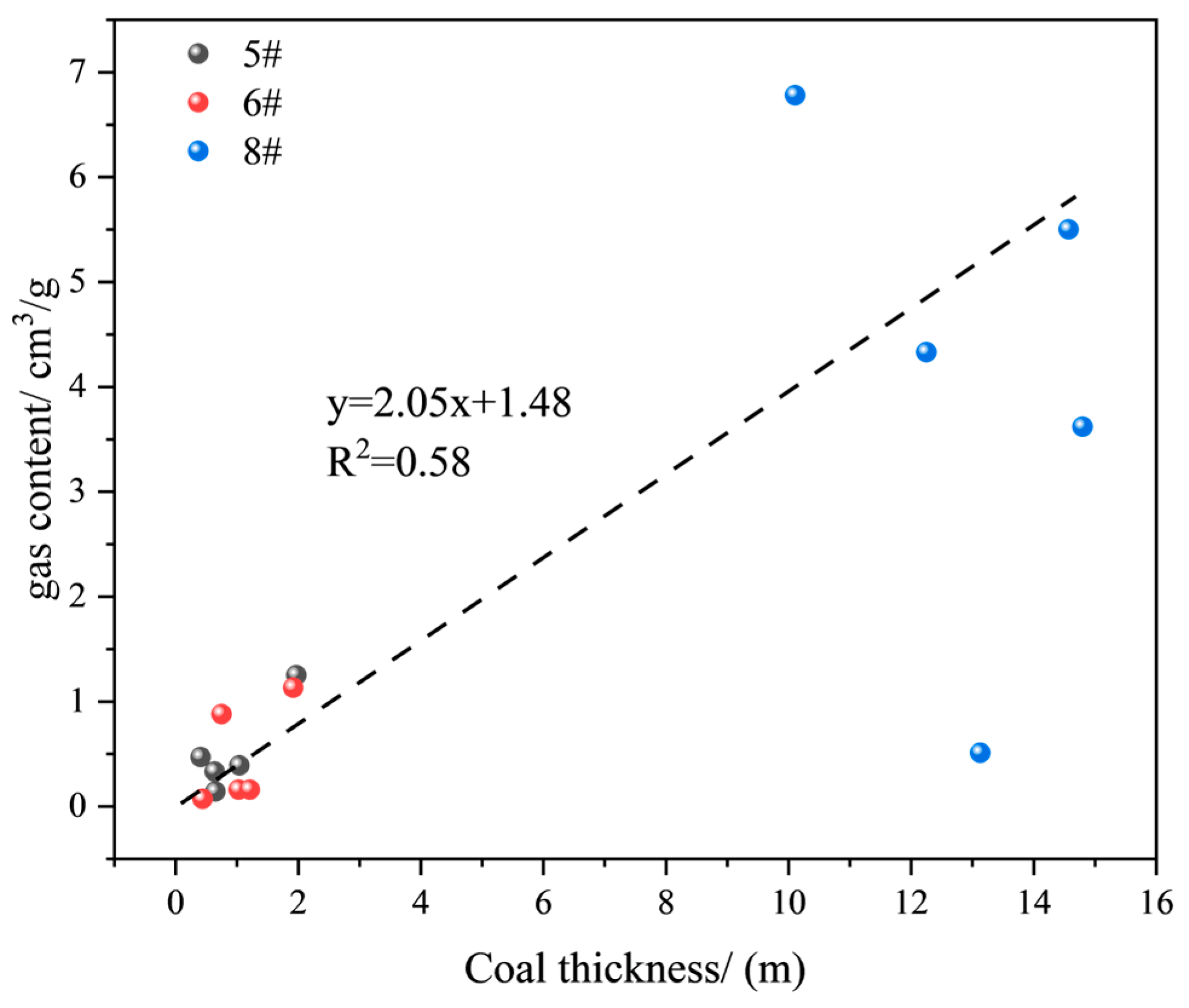
Relatively speaking, thicker peat layers within coal-bearing sequences generally generate greater amounts of coalbed methane during the coalification process. In the study area, Seam No. 8 is classified as a medium-thick to extra-thick coal seam and therefore generally exhibits relatively high gas content, whereas Seam No. 5-1 and Seam No. 6 are thinner and show relatively lower gas contents. As shown in Figure 14, there is a certain correlation between coal seam thickness and gas content in the study area, with a fitting coefficient of 0.5801. Overall, gas content tends to increase with increasing coal seam thickness. In particular, the relatively thick No. 8 coal seam generally exhibits comparatively high gas content.
These observations suggest that gas content in the No. 8 coal seam is closely correlated with geological structure, burial depth, and seam thickness. The relatively high-gas-content zones are mainly distributed along synclinal areas and deeper burial sections of Seam No. 8, where preservation conditions and coal seam thickness are comparatively favorable. These results may provide useful references for favorable-zone prediction and future drilling deployment in the Jiulongchuan exploration area.

5. Conclusions

(1)
A multivariate regression model based on acoustic transit time, natural gamma-ray values, density logging parameters, and burial depth was established for coal seam gas content prediction. Cross-validation results suggest that the model predictions are generally consistent with measured gas content data.
(2)
Three-dimensional geological modeling and variogram analysis indicate that coal seam gas content exhibits spatial heterogeneity and anisotropy in the study area. The gas content in Seam No. 8 is generally higher than that in Seams No. 5 and No. 6.
(3)
Gas content tends to increase with burial depth and coal seam thickness. Relatively high gas contents are commonly distributed along synclinal zones, whereas lower gas contents are observed near anticlinal areas, suggesting that geological structure and preservation conditions may influence gas accumulation.
This study provides a preliminary spatial modeling and analysis of coalbed methane gas content based on limited drilling, logging, and measured gas content data. Due to the limited well control and dataset size, the current model mainly reflects the overall spatial distribution trend of gas content, while detailed multiple-realization SGS uncertainty analysis and structurally constrained modeling were not further conducted. In addition, reservoir pressure, temperature, and Langmuir adsorption parameters were not incorporated into the model; therefore, the results mainly represent statistical spatial variation characteristics rather than rigorous adsorption thermodynamic processes. Future studies should integrate additional drilling, logging, and adsorption experimental data to further conduct multiple SGS realizations, quantitative uncertainty analysis, and structurally constrained modeling in order to improve the reliability and accuracy of coalbed methane gas content prediction.

Author Contributions

Conceptualization, B.T. and X.L.; methodology, B.T.; software, B.T., X.L., and H.C.; validation, B.T., X.L., and H.C.; formal analysis, B.T. and X.L.; investigation, B.T.; resources, X.L.; data curation, X.L.; writing—original draft preparation, B.T.; writing—review and editing, B.T., X.L., H.C., J.L., and Y.W.; visualization, X.L.; supervision, B.T.; project administration, H.C.; funding acquisition, B.T. All authors have read and agreed to the published version of the manuscript.

Funding

This research was supported by the National Natural Science Foundation of China (Grant No. 42472222).

Data Availability Statement

Data are contained within this article.

Acknowledgments

We would like to thank the Key Laboratory of Coalbed Methane Resources and Reservoir Formation Process for all the support provided in this research.

Conflicts of Interest

The authors declare that they have no known competing financial interests or personal relationships that could have appeared to influence the work reported in this paper.

References

  1. Wu, K.; Li, S.; Shi, S.; You, B.; Xu, Z.; Wang, F.; Chen, Y.; Wang, Q. A rapid method for the determination of coal seam gas pressure based on raw coal adsorption. Energy Sci. Eng. 2025, 13, 4660–4673. [Google Scholar] [CrossRef]
  2. Wu, K.; Li, S.; Zhang, H.; You, B.; Ma, H.; Chen, Y.; Wang, F. Initial characteristics of gas desorption in high-rank soft and hard coals and the causes of the differences. ACS Omega 2025, 10, 33208–33219. [Google Scholar] [CrossRef]
  3. Li, H.; Valdes, E.; Ge, Z.; Planes, A.; Jiang, X.; Huang, S.; Vives, E. Acoustic emission characteristics in coal failure from Chinese coal. Nat. Resour. Res. 2026, 35, 593–606. [Google Scholar] [CrossRef]
  4. Feng, C.; Li, X.; Yang, R.; Cai, J.; Sui, H.; Xie, H.; Wang, Z. The geological factors affecting gas content and permeability of coal seam and reservoir characteristics in Wenjiaba block, Guizhou province. Sci. Rep. 2023, 13, 18992. [Google Scholar] [CrossRef]
  5. Miao, H.; Veerle, V.; Zhang, J.; Chen, S.; Chang, X.; Du, Y.; Wang, Y.; Wei, C.; Luo, J.; Quan, F.; et al. Control mechanism of pressure drop rate on coalbed methane productivity by using production data and physical simulation technology. Fuel 2026, 406, 137060. [Google Scholar] [CrossRef]
  6. Zhu, Q.; Du, X.; Zhang, T.; Yu, H.; Liu, X. Investigation into the variation characteristics and influencing factors of coalbed methane gas content in deep coal seams. Sci. Rep. 2024, 14, 18813. [Google Scholar] [CrossRef]
  7. Fu, X.; Qin, Y.; Wang, G.; Rudolph, V. Evaluation of gas content of coalbed methane reservoirs with the aid of geophysical logging technology. Fuel 2009, 88, 2269–2277. [Google Scholar] [CrossRef]
  8. Akdaş, S.; Fişne, A. A data-driven approach for the prediction of coal seam gas content using machine learning techniques. Appl. Energy 2023, 347, 121499. [Google Scholar] [CrossRef]
  9. Zhang, J.; Hou, X.; Liu, S.; Chen, L.; Wang, Y. New data-driven method for in situ coalbed methane content evolution: A BP neural network prediction model optimized by grey relation theory and particle swarm. Energy Fuels 2023, 37, 10344–10354. [Google Scholar] [CrossRef]
  10. Bai, L.; Geng, H.; Yu, G. Research on the prediction model of gas emission based on grey system theory. Sci. Rep. 2025, 15, 22739. [Google Scholar] [CrossRef] [PubMed]
  11. Zhang, H.; Cai, X.; Ni, P.; Qin, B.; Ni, Y.; Huang, Z.; Xin, F. Prediction of coalbed methane content based on composite logging parameters and PCA-BP neural network. J. Appl. Geophys. 2025, 236, 105681. [Google Scholar] [CrossRef]
  12. Meng, Q.; Ma, X.; Zhou, Y. Forecasting of coal seam gas content by using support vector regression based on particle swarm optimization. J. Nat. Gas Sci. Eng. 2014, 21, 71–78. [Google Scholar] [CrossRef]
  13. Li, Y.; Hou, W.; Chen, M.; Ji, Y.; Wang, A.; Li, Z.; Shi, R.; Cui, J.; Fan, H. The construction of a deep coalbed methane content logging model: A case study of the Daning–Jixian area. Processes 2026, 14, 1340. [Google Scholar] [CrossRef]
  14. Guo, J.; Zhang, Z.; Guo, G.; Xiao, H.; Zhao, Q.; Zhang, C.; Lv, H.; Zhu, Z.; Wang, C. Optimized random forest method for 3D evaluation of coalbed methane content using geophysical logging data. ACS Omega 2024, 9, 35769–35788. [Google Scholar] [CrossRef]
  15. Liu, J.; Chang, S.; Zhang, S.; Li, Y.; Hao, Y.; He, G.; He, Y.; Liu, B. Prediction of coalbed methane content based on seismic identification of key geological parameters: A case in a study area, southern Qinshui Basin. Acta Geophys. 2023, 71, 2645–2662. [Google Scholar] [CrossRef]
  16. Liu, L.; Yuan, S.; Yu, Y.; Li, M. The prediction of coalbed methane content based on multi-scale random forest integrating geological, logging, and seismic data. J. Geophys. Prospect. 2026, 2, 101–108. [Google Scholar] [CrossRef]
  17. Yang, X.; Tang, S.; Zhang, S.; Xi, Z.; Wang, K.; Wang, Z.; Lv, J. Applying 3D geological modeling to predict favorable areas for coalbed methane accumulation: A case study in the Qinshui Basin. Front. Earth Sci. 2024, 18, 763–781. [Google Scholar] [CrossRef]
  18. Mondal, D.; Sang, S.; Han, S.; Zhou, X.; Zhao, F.; Zhang, J.; Cao, W. Coalbed methane reservoir properties assessment and 3D static modeling for sweet-spot prediction in Dahebian block, Liupanshui; Coalfield, Guizhou; Province, southwestern China. Heliyon 2024, 10, e34567. [Google Scholar] [CrossRef] [PubMed]
  19. Feng, P.; Li, S.; Tang, S.; Tang, D.; Zhong, G.; Yang, Q.; Zhou, G. Research on Prediction Methods of Deep Coalbed Methane Content Based on Geophysical Logging. Arab. J. Sci. Eng. 2025, 8, 1–16. [Google Scholar] [CrossRef]
  20. Xue, Y.; Wang, L.; Liu, Y.; Ranjith, P.; Cao, Z.; Shi, X.; Gao, F.; Kong, H. Brittleness evaluation of gas-bearing coal based on statistical damage constitution model and energy evolution mechanism. J. Cent. South Univ. 2025, 32, 566–581. [Google Scholar] [CrossRef]
  21. Xue, Y.; Wu, W. Characterization of brittleness evolution of hot dry rock during cyclic thermal treatment. Acta Geotech. 2026, 2, 1–11. [Google Scholar] [CrossRef]
  22. Tao, C.; Li, Y.; Wang, Y.; Ni, X.; Wu, X.; Zhao, S. Characteristics of deep coal reservoir and key control factors of coalbed methane accumulation in linxing area. Energies 2023, 16, 6085. [Google Scholar] [CrossRef]
  23. Liu, Z.; Zhao, J. Quantitatively evaluating the CBM reservoir using logging data. J. Geophys. Eng. 2016, 13, 59–69. [Google Scholar] [CrossRef]
  24. Yao, P.; Zhang, J.; Lv, D.; Vandeginste, V.; Chang, X.; Zhang, X.; Wang, D.; Han, S.; Liu, Y. Effect of water occurrence in coal reservoirs on the production capacity of coalbed methane by using NMR simulation technology and production capacity simulation. Geoenergy Sci. Eng. 2024, 243, 213353. [Google Scholar] [CrossRef]
  25. Zhou, F.; Yao, G.; Tyson, S. Impact of geological modeling processes on spatial coalbed methane resource estimation. Int. J. Coal Geol. 2015, 146, 14–27. [Google Scholar] [CrossRef]
  26. Liu, Z.; Wang, H.; Lu, X.; Zhang, Q.; Yang, Y.; Zhang, T.; Zhang, C.; Wang, Z. Integrated 3D Geological; Modeling, Stress Field; Modeling, and Production Simulation for CBM Development Optimization in Zhengzhuang; Block, Southern Qinshui Basin. Energies 2025, 18, 2617. [Google Scholar] [CrossRef]
  27. Saavedra, L.D.; Deutsch, C.V. Automatic variogram calculation and modeling. Comput. Geosci. 2025, 195, 105774. [Google Scholar] [CrossRef]
  28. Zhou, C.J.; Ma, Z.G.; Liu, X.J.; Lu, H.J.; Liang, T.; Mao, Z.Y.; Ma, Z.; Wei, Y.; Xie, H.B.; Miao, J.J. Integrated Geology and Geomechanics Modeling for Deep Coalbed Methane Reservoirs: Challenges, Strategies, and Novel Solutions. In Proceedings of the ARMA/DGS/SEG International Geomechanics Symposium, ARMA, Kuala Lumpur, Malaysia, 18–20 November 2024; p. ARMA-IGS-2024-0719. [Google Scholar] [CrossRef]
  29. Liu, B.; Chang, S.; Zhang, S.; Chen, Q.; Zhang, J.; Li, Y.; Liu, J. Coalbed methane gas content and its geological controls: Research based on seismic-geological integrated method. J. Nat. Gas Sci. Eng. 2022, 101, 104510. [Google Scholar] [CrossRef]
  30. Zhou, F.; Guan, Z. Uncertainty in estimation of coalbed methane resources by geological modelling. J. Nat. Gas Sci. Eng. 2016, 33, 988–1001. [Google Scholar] [CrossRef]
  31. Portnov, V.; Mindubayev, A.; Golik, A.; Suleimenov, N.; Zakharov, A.; Madisheva, R.; Kolikov, K.; Lmanbaeva, S. Risk assessment of sudden coal and gas outbursts based on 3D modeling of coal seams and integration of gas-dynamic and tectonic parameters. Fire 2025, 8, 234. [Google Scholar] [CrossRef]
  32. Shen, W.; Shao, L.; Tian, W.; Chen, G.; Chen, F.; Hou, H.; Li, Z.; Sun, B.; Lu, J. Study on geological controls and enrichment models of coalbed methane in the Wuwei Basin in eastern North; Qilian, northwestern China. Energy Explor. Exploit. 2019, 37, 429–452. [Google Scholar] [CrossRef]
  33. Wang, R.; Shi, B.; Wan g, T.; Lin, J.; Li, B.; Fan, S.; Liu, J. Multiscale qualitative–quantitative characterization of the pore structure in coal-bearing reservoirs of the Yan’an formation in the Longdong area, Ordos basin. Processes 2024, 12, 2787. [Google Scholar] [CrossRef]
Figure 1. Location map of the Ordos Basin structure and study area.
Processes 14 01702 g001
Figure 2. Well-logging integration interpretation map of coalbed gas content of Well NZ614.
Processes 14 01702 g002
Figure 3. (a) Cross-plot between gas content and parameter P; (b) comparison between measured and predicted gas contents.
Processes 14 01702 g003
Figure 4. The variogram analysis of the gas content property in the No. 5 coal seam. (a) Major direction; (b) minor direction; (c) vertical direction.
Processes 14 01702 g004
Figure 5. The variogram analysis of the gas content property in the No. 6 coal seam. (a) Major direction; (b) minor direction; (c) vertical direction.
Processes 14 01702 g005
Figure 6. The variogram analysis of the gas content property in the No. 8 coal seam. (a) Major direction; (b) minor direction; (c) vertical direction.
Processes 14 01702 g006
Figure 7. (a) Histogram of gas content distribution. (b) Histogram of gas content distribution after normal transformation.
Processes 14 01702 g007
Figure 8. The cross-section of the gas content property in the S-N direction.
Processes 14 01702 g008
Figure 9. The cross-section of the gas content property in the W-E direction.
Processes 14 01702 g009
Figure 10. The cross-section of the gas content property across the 5 wells with gas content test data (in this figure, XX-all_top means the top position of the XX coal seam).
Processes 14 01702 g010
Figure 11. The 3D model of the gas content property of the No. 8 coal seam (Z is enlarged 10 times).
Processes 14 01702 g011
Figure 12. Relationship between coal seam burial depth and gas content.
Processes 14 01702 g012
Figure 13. Relationship between Ro, burial depth, and gas content. (a) Variation in maximum vitrinite reflectance (Ro) with burial depth in the study area; (b) relationship between Ro and gas content in the study area.
Processes 14 01702 g013
Figure 14. Relationship between coal seam thickness and gas content.
Processes 14 01702 g014
Table 1. Characteristics of the main minable coal seams in the Jiulongchuan exploration area.
Coal SeamThickness/mAverage
Thickness/m
Minable
Thickness/m
Average Minable
Thickness/m
Recovery Rate/%Coal Seam Structure
No. 50.3–4.982.550.80–4.982.5894.44simple-relatively simple
No. 60.23–4.031.670.92–3.471.6794.95simple-relatively simple
No. 80.19–10.094.330.80–9.07327.27simple-complex
Table 2. Comparison between measured and predicted gas contents.
WellNumberDepth/mMeasured Gas Content/cm3/gPredicted Gas Content/cm3/g
NZ30611137.54–1137.840.330.28
21146.56–1146.860.140.11
31219.08–1219.380.580.53
NZ31111154.05–1154.300.390.53
21159.62–1159.870.130.16
31209.70–1209.954.985.98
NZ41511143.51–1143.770.370.43
21151.86–1152.060.090.06
31191.09–1191.394.525.23
NZ61411169.34–1169.640.340.27
21199.81–1200.111.061.17
31241.10–1241.405.425.21
NZ61911097.81–1098.090.580.48
21133.57–1133.871.150.97
31157.20–1157.520.660.72
Table 3. Cross-validation results between statistical model predictions and measured gas contents.
WellMAE/cm3/gRMSE/cm3/gMAPE/%
NZ3060.0430.04418.19
NZ3110.390.58320.63
NZ4150.2670.41225.84
NZ6140.130.14313.12
NZ6190.1130.12415.91
Disclaimer/Publisher’s Note: The statements, opinions and data contained in all publications are solely those of the individual author(s) and contributor(s) and not of MDPI and/or the editor(s). MDPI and/or the editor(s) disclaim responsibility for any injury to people or property resulting from any ideas, methods, instructions or products referred to in the content.