Review

Intelligent Fault Discrimination in Power Transformers: A Comprehensive Review of Methods

1
Wolfson Centre for Magnetics, School of Engineering, Cardiff University, Cardiff CF24 3AA, UK
2
High-Value Manufacturing Group, School of Engineering, Cardiff University, Cardiff CF24 3AA, UK
3
Libyan Center for Engineering Research and Information Technology, Bani Walid 00218, Libya
*
Author to whom correspondence should be addressed.
Processes 2026, 14(10), 1662; https://doi.org/10.3390/pr14101662
Submission received: 23 April 2026 / Revised: 13 May 2026 / Accepted: 17 May 2026 / Published: 20 May 2026

Abstract

The reliable discrimination between magnetizing inrush currents and internal faults is essential for effective power transformer protection and has a direct impact on the security and stability of modern power systems. Although the second-harmonic restraint method has been widely adopted in transformer differential protection, its dependability can be affected by several operating conditions, including asymmetric energization, current transformer saturation, and the use of modern low-loss cores with reduced harmonic content. This paper presents a comprehensive and critical review of advanced techniques for distinguishing inrush currents from internal faults. The reviewed methods are classified into five main methodological categories: harmonic-based methods, time-domain approaches, signal-processing techniques, artificial intelligence-based schemes, and hybrid strategies. For each category, the fundamental operating principles, key advantages, and inherent limitations are discussed. A comparative assessment is also provided to highlight the trade-offs among detection accuracy, operating speed, robustness under adverse conditions, and practical implementation feasibility. The review shows a clear shift toward intelligent and data-driven protection schemes that combine effective feature extraction or deep learning with fast decision-making mechanisms. However, several challenges remain, particularly in relation to cross-site generalization, guaranteed response time, and hardware implementation constraints. Finally, the paper outlines a future research agenda for adaptive and computationally efficient transformer protection, emphasizing the need for benchmark datasets that include field cases, reproducible evaluation protocols, and the co-design of protection algorithms with embedded hardware platforms.

1. Introduction

As critical assets in electrical infrastructure, power transformers play a central role in voltage regulation, load balancing, and bulk power transmission. Their operational reliability is therefore a key factor in maintaining grid stability and continuity of service [1,2]. The increasing integration of renewable energy sources, together with the growing variability of demand in modern power networks, has further emphasized the need for effective transformer protection [3,4]. In this context, the rapid and reliable detection and isolation of internal faults are essential for enhancing overall system resilience.
Beyond the device level, reliable transformer protection also contributes to system-level resilience [5]. Under extreme events, such as earthquakes, severe weather, or cascading disturbances, substations and transformers may become critical bottlenecks in maintaining service continuity and supporting post-disaster restoration. Previous studies on substation seismic resilience and evolving grid resilience have shown that the performance and recovery of electrical infrastructure depend strongly on the availability and functionality of key substation components and protection systems. Therefore, delayed or incorrect transformer protection actions may not only damage individual assets, but also affect restoration speed, load recovery, and the resilience of wider integrated energy systems. This broader perspective reinforces the need for fast, secure, and adaptive transformer protection schemes that remain dependable under abnormal and high-stress operating conditions [6,7].
A long-standing and technically challenging issue in transformer protection is the reliable distinction between magnetizing inrush currents and internal faults [8,9]. Inrush currents are high-magnitude transient currents that occur during transformer energization, particularly under zero-voltage switching conditions or in the presence of residual flux. Although these currents are non-destructive, their waveform characteristics, including steep rise times and high peak amplitudes, can closely resemble those associated with internal electrical faults [10]. Incorrect classification may therefore result either in unnecessary tripping or in failure to trip when required, both of which can lead to serious operational and financial consequences [11,12].
Conventional differential protection has traditionally relied on second-harmonic restraint logic. This approach is based on the assumption that inrush currents contain considerable second-harmonic components, whereas internal faults are dominated by the fundamental-frequency component [13]. However, a major limitation of this method is its vulnerability under non-ideal operating conditions. Asymmetric switching, modern low-loss core materials, and severe core saturation can produce inrush currents with reduced harmonic distortion, potentially causing relay maloperation. These documented vulnerabilities [14,15] highlight the reliability concerns associated with protection criteria based solely on harmonic content.
A systematic understanding of transformer failure modes is essential for developing accurate and dependable protection schemes. Transformer failures may arise from a wide range of internal and external causes, including electrical, thermal, and mechanical stresses, manufacturing defects, insulation degradation, and operational disturbances. The most common fault categories can be summarized as follows:
  • Winding Failures, including inter-turn short circuits, phase-to-phase faults, and mechanical displacement.
  • Core Faults, including insulation deterioration and short-circuited core laminations.
  • Terminal faults, typically resulting from loose, corroded, or mechanically damaged connections.
  • On-Load Tap Changer (OLTC) Malfunctions, which can impair voltage regulation and cause localized overheating.
  • Tank and component failures, including oil leakage, bushing deterioration, and radiator damage.
  • Abnormal operating conditions, such as sustained overloading, overvoltage, and insufficient cooling.
  • External influences, including dielectric stresses caused by lightning and through-fault conditions.
As shown in Figure 1, empirical data indicate that winding- and terminal-related faults account for a substantial proportion of transformer failures. This distribution highlights the need for reliable and intelligent protection schemes with strong diagnostic capabilities for internal faults. It also motivates continued research efforts aimed at addressing the most critical transformer failure modes.
This review presents a systematic analysis of modern methods for discriminating between transformer magnetizing inrush currents and internal faults. The reviewed techniques are classified into five main categories: harmonic-based methods, time-domain approaches, signal-processing techniques, artificial intelligence (AI)-based schemes, and hybrid strategies. Each category is critically evaluated in terms of its operating principles, advantages, limitations, and practical implementation feasibility. By consolidating and comparing these approaches, while also identifying key research gaps, this review aims to support the development of more intelligent, robust, and adaptive transformer protection frameworks.
The scope of this review is limited primarily to power transformers used in transmission and distribution networks, with particular emphasis on three-phase transformers protected by differential protection schemes. Studies involving two-winding, three-winding, and distribution transformers are considered when they address the discrimination between magnetizing inrush currents and internal faults. The review does not focus on small electronic transformers, instrument transformers, or converter transformers unless their protection problem is directly related to inrush–fault discrimination.
The specific contribution of this review lies in its protection-oriented synthesis of transformer inrush–fault discrimination methods. Unlike broader reviews on transformer condition monitoring or fault diagnosis, this paper focuses specifically on techniques intended to support differential protection decisions, where operating speed, security, and practical relay implementation are critical. The review provides: (i) a structured taxonomy that links harmonic, time-domain, signal-processing, AI-based, and hybrid methods to their underlying decision principles; (ii) a comparative evaluation based on protection-relevant criteria, including latency, robustness under current transformer saturation, implementation complexity, and suitability for real-time deployment; and (iii) a critical discussion of the gap between high reported classification accuracy in controlled studies and the requirements of field-ready transformer protection. Therefore, compared with existing surveys, this review emphasizes the transition from diagnostic performance to protection readiness, with particular attention to real-time operation, embedded implementation, field validation, and applicability to future power systems. In this way, the review positions existing methods not only by their diagnostic performance, but also by their practical relevance to modern and future protection systems.

1.1. Survey Methodology

This review adopts a structured survey methodology to identify, select, and synthesize the most relevant studies on techniques for discriminating magnetizing inrush currents from internal faults in power transformers. The overall methodology and main selection criteria are summarized in Table 1.
Duplicate records were removed by comparing the title, authors, DOI, publication year, and publication venue. When the same study appeared in more than one form, for example as both a conference paper and an extended journal article, the more complete and peer-reviewed journal version was retained. Records with incomplete bibliographic information were checked manually to avoid unintended exclusion of relevant studies.
To minimize selection bias, the search was conducted across multiple major scientific databases and publishers’ platforms rather than relying on a single source. Two groups of keywords were used to capture both classical protection methods and recent intelligent techniques. The same inclusion and exclusion criteria were applied consistently to all retrieved records. In addition, the reference lists of key papers and relevant standards were screened to reduce the risk of missing influential studies not captured by the initial keyword search.
The area of interest in this review is electrical power systems, with particular emphasis on power transformers and their protection and condition monitoring. The broader discipline is power system protection and high-voltage engineering, while the specific focus is on methods for distinguishing magnetizing inrush currents from internal winding faults. To capture both classical and modern approaches, two groups of keywords were defined. The first group included general terms such as power transformers, transformer protection, inrush current, internal fault, differential protection, harmonic restraint, and transient analysis. The second group included more specific and advanced terms, such as inrush discrimination, energization inrush, sympathetic inrush, current transformer saturation, wavelet transform, time–frequency analysis, intelligent relays, machine learning, and artificial intelligence.
The search was limited to English-language publications available online in full-text form. The following scientific databases and publishers’ platforms were systematically searched: IEEE Xplore, Scopus, ScienceDirect, SpringerLink, Wiley Online Library, Taylor & Francis, IET Digital Library, MDPI, and other reputable journals indexed in these databases. In addition, the reference lists of key papers and relevant standards were screened to identify further studies that were not directly captured through the keyword-based search.
The inclusion criteria required that each publication:
  • Address power transformers used in transmission or distribution systems;
  • Propose, analyze, or evaluate a method for distinguishing inrush currents from internal faults, including analytical, signal-processing-based, or AI-based methods;
  • Provide sufficient technical detail, such as models, algorithms, or experimental/simulation setups, to allow meaningful comparison.
Publications were excluded if they: (i) addressed transformer faults without explicitly considering inrush-current discrimination; (ii) focused only on other phenomena, such as aging or partial discharge, without a direct relation to the fault/inrush decision; or (iii) consisted of short abstracts, tutorials, or non-technical news items.
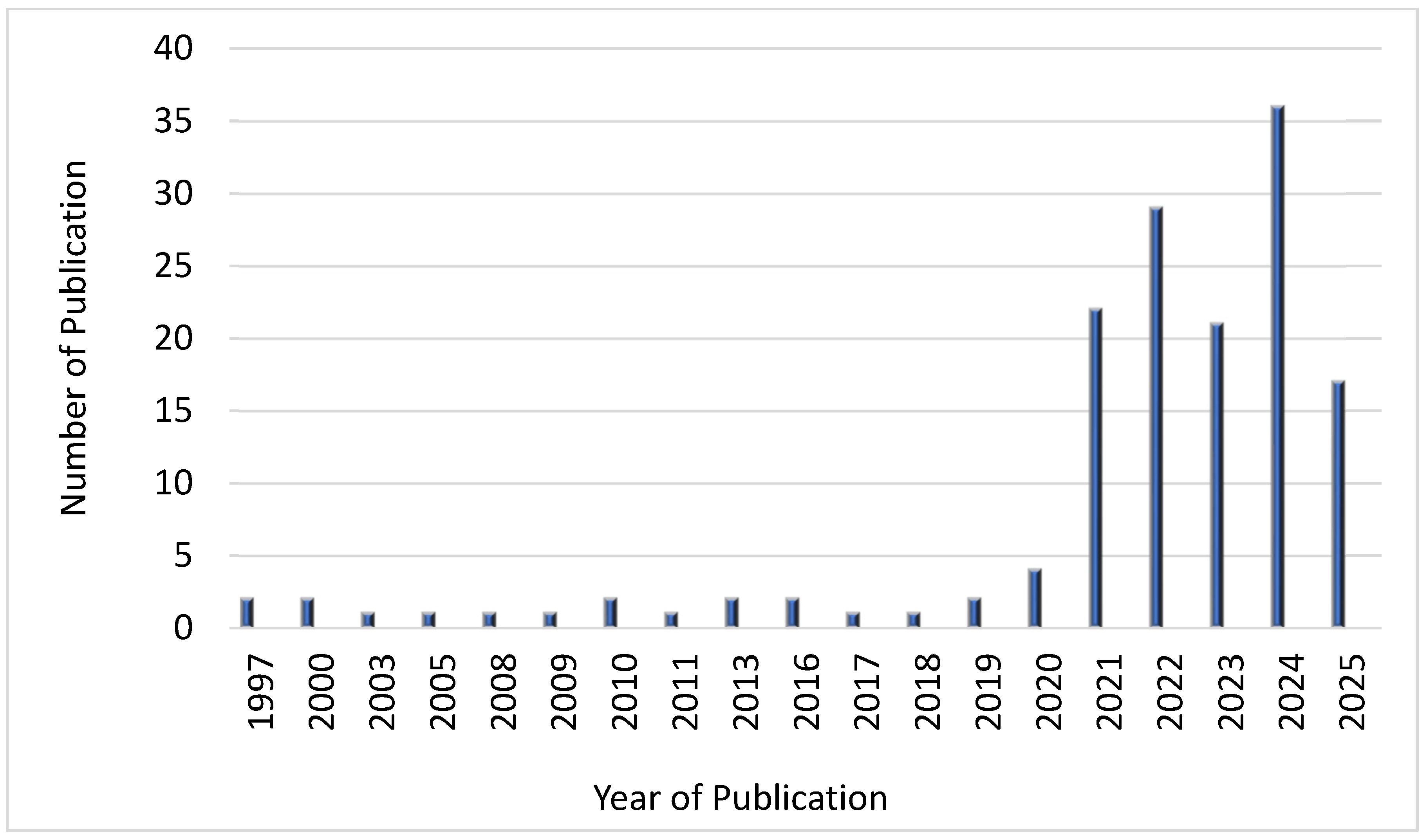
After removing duplicates and applying the inclusion and exclusion criteria, 148 primary publications were retained for detailed analysis. These included 115 journal articles, 33 conference papers, three PhD theses, and two books or book chapters, representing 73.33%, 21.33%, 2%, and 1.33% of the selected publications, respectively, as reported in Table 2. This distribution indicates that most influential contributions in this field have appeared in peer-reviewed journals, while conference papers have mainly served as a platform for introducing emerging techniques.
After removing duplicates and applying the inclusion and exclusion criteria, 153 primary publications were retained for detailed analysis. These included 115 journal articles, 33 conference papers, three PhD theses, and two books or book chapters, representing 75.16%, 21.57%, 1.96%, and 1.31% of the selected publications, respectively, as reported in Table 2.
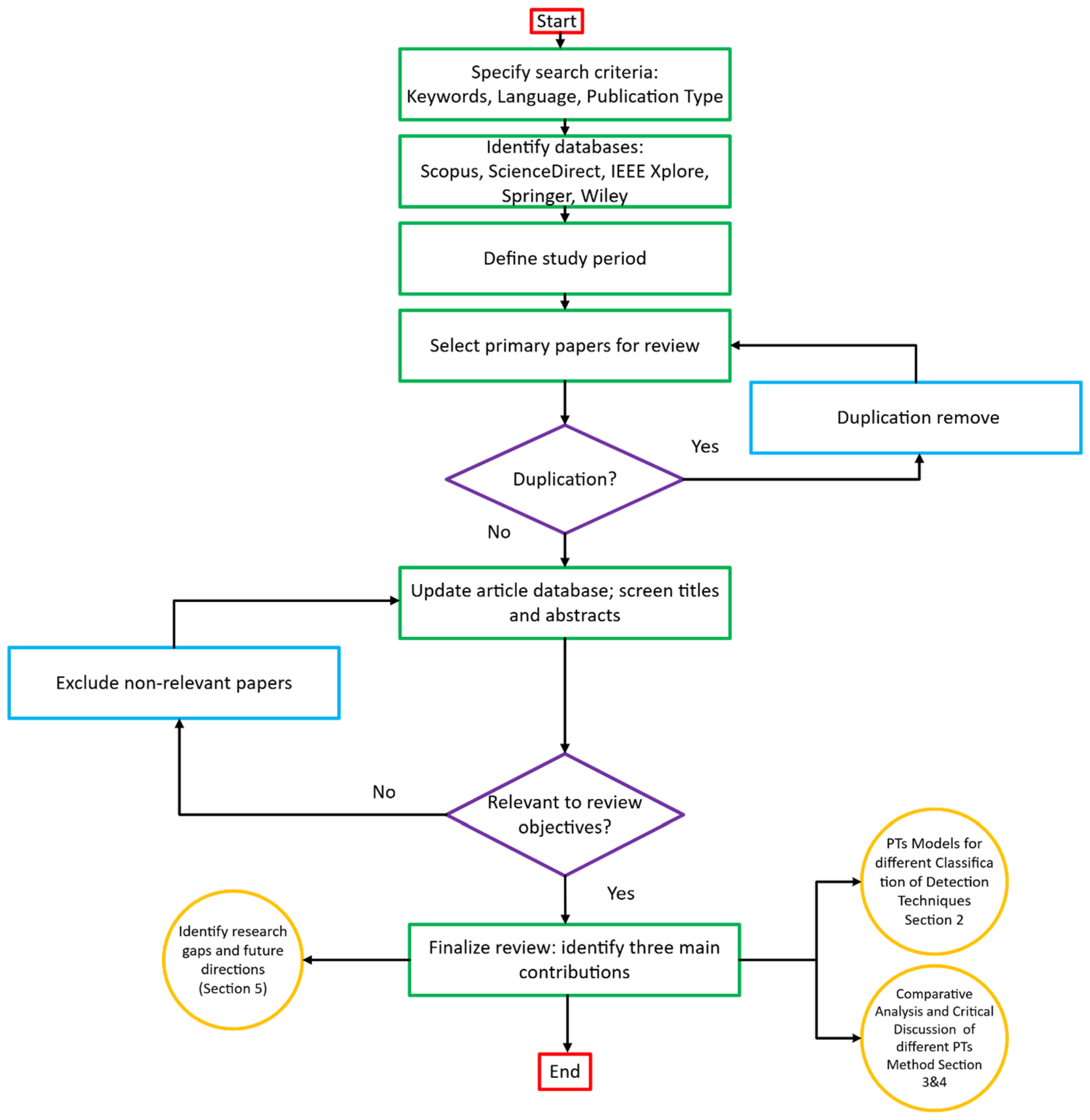
The temporal distribution of the selected literature is illustrated in Figure 2, which shows the number of publications per year. Figure 3, showed Flowchart of the review methodology. Although early foundational studies date back to the mid-twentieth century, a noticeable increase in research activity can be observed after 2010, with a particularly sharp rise after 2020. This trend reflects the growing interest in advanced signal-processing methods and intelligent relaying techniques, as well as the broader adoption of machine learning and artificial intelligence in transformer protection.

1.2. Related Work

Contemporary research on transformer fault discrimination increasingly relies on machine learning, advanced signal-processing techniques, and bio-inspired optimization algorithms to improve diagnostic accuracy. As summarized in Table 3, these methods generally involve trade-offs among detection performance, computational complexity, and ease of practical deployment.
Several studies have reported highly promising results. For example, a hybrid expert-guided machine learning model achieved an accuracy of 95% using real dissolved gas analysis (DGA) samples [13], while tree-based ensemble models, such as Random Forest and Gradient Boosting, reached 100% discrimination accuracy using simulated data [14]. Signal-processing techniques based on empirical mode decomposition (EMD) and intrinsic time-scale decomposition (ITD), combined with XGBoost classifiers, have achieved accuracies above 90% [15,16]. Similarly, frameworks integrating wavelet decomposition with swarm-optimization algorithms have reported accuracies of up to 98.33% using real datasets [17].
Although these reported results are promising, high classification accuracy should be interpreted with caution. Many studies are based on simulated datasets, laboratory-scale experiments, or limited transformer populations, which may not fully capture the variability encountered in practical substations. In particular, differences in transformer design, core material, winding connection, residual flux, current transformer behavior, source strength, loading condition, and background distortion can significantly affect waveform characteristics. Therefore, high or even perfect accuracy in a controlled dataset does not necessarily imply reliable field performance. Cross-transformer, cross-site, and long-term validation using realistic operating records is essential before such methods can be considered mature for practical protection deployment.
Frequency response analysis (FRA)-based approaches combined with support vector machine (SVM) classifiers offer fast execution times; however, their practical application is limited by the lack of suitable infrastructure for real-time monitoring [18]. Other laboratory-scale solutions, such as a kernel extreme learning machine (KELM) optimized using the Seagull Optimization Algorithm, have achieved perfect fault-type classification [19]. Likewise, a hybrid scheme combining the discrete wavelet transform (DWT) with the Bees Algorithm has reported an accuracy of 96% [20]. Nevertheless, a common limitation of many high-performing methods is that they have primarily been validated under controlled experimental or simulation-based conditions. This highlights an important gap that must be addressed before such methods can be confidently deployed in operational power transformer environments.
It is important to distinguish between offline transformer fault diagnosis and real-time protection-oriented inrush–fault discrimination. Some AI-based methods reported in the literature use dissolved gas analysis, frequency response analysis, or other offline diagnostic measurements. These methods are valuable for condition monitoring, maintenance planning, and fault-type assessment, but they are not directly equivalent to protection relay algorithms because they do not necessarily operate within sub-cycle or cycle-level time constraints. In contrast, protection-oriented discrimination schemes must make rapid online decisions using current and voltage waveforms measured by instrument transformers. Therefore, in this review, DGA- and FRA-based studies are discussed as relevant diagnostic references, while waveform-based methods are treated as more directly applicable to real-time differential protection.
Table 3 summarizes transformer inrush–fault discrimination methods across four main data modalities: DGA, simulated current signals, laboratory waveforms, and FRA. Although conventional signal-processing techniques combined with machine learning classifiers generally achieve high accuracies, often exceeding 95%, hybrid frameworks may provide further improvements at the expense of increased computational complexity. However, important limitations remain, including the limited external validity of purely simulated datasets, the largely offline nature of FRA-based techniques, and the general lack of extensive field validation. The “Key Limitations” column in Table 3 places these reported performance figures in practical context by relating them to issues of generalization, latency, and deployment feasibility.
Table 3. Summary of Key Studies on Transformer Internal Fault Detection Techniques.
TechniqueData TypeApplication TypeAccuracy/PerformanceKey LimitationsRef.
EGML (BPNN + GA/MEA)310 real DGA samplesOffline diagnosis/condition monitoring95.0% (MEA-EGML)Single transformer scale[17]
DT/RF/GB on PSCAD dataSimulated diff. currentsReal-time protection candidate100% (DT) detectionPure simulation-based[18]
EMD + XGBoost377 public DGA datasetOffline diagnosis/condition monitoring>90% sensitivity & accuracyDepends on DGA data quality[19]
ITD + XGBoost376 public DGA datasetOffline diagnosis/condition monitoring>95% accuracySimilar dependency on data[20]
Wavelet + MP + PSO/DMO + RF2400 samples, 41 featuresReal-time protection candidate97.71–98.33% (RF)Computational overhead[21]
DWT + SVM (on FRA signals)5 real transformer FRA setsOffline/periodic diagnostic assessmentFast execution (<12 s/sample)Offline only; limited deployment[22]
FRA + SOA-KELMLab-measured FRA signalsOffline/laboratory diagnostic assessment100% (type), 97.83% (severity)Lab-scale only[23]
DWT + OMP + BA + SVM/ANN/k-NNLab fault current waveformsProtection-oriented laboratory validation96% (SVM, 10-fold CV)Lab study; no field testing[24]
To avoid overgeneralizing the applicability of AI-based methods, Table 3 distinguishes between offline diagnostic approaches, such as DGA- and FRA-based methods, and protection-oriented schemes based on current or voltage waveforms. This distinction is important because offline diagnostic methods may support condition assessment and maintenance planning, whereas real-time protection algorithms must satisfy strict latency and dependability requirements.

2. Classification of Detection Techniques

The five categories adopted in this review were selected after screening the reviewed literature and identifying the dominant analytical principles used for inrush–fault discrimination. These categories are intended to provide a practical protection-oriented taxonomy rather than an exhaustive separation of all possible algorithmic variants. Other approaches, such as model-based protection, mathematical-indicator methods, transient-component methods, and digital relaying algorithms, are not omitted; instead, they are included within the signal-processing-based or hybrid/emerging categories according to their main decision principle. Therefore, the proposed classification covers both widely used industrial methods and recent research-oriented techniques while maintaining a clear structure for comparison.
The methods proposed for distinguishing transformer magnetizing inrush currents from internal faults are diverse, reflecting both the complexity of the problem and recent advances in measurement, computation, and signal-processing capabilities in modern protective relays. To provide a clear basis for comparison, this review classifies the existing literature into five main categories according to the dominant analytical principle adopted:
  • Harmonic-based methods: extensions and refinements of the classical second-harmonic restraint method, including per-phase schemes, cross-blocking logic, and composite harmonic indices.
  • Time-domain and dynamic methods: techniques that exploit the temporal evolution and waveform characteristics of the differential current, such as dwell-time criteria and RMS-based trend indices.
  • Signal-processing-based methods: approaches that apply advanced time–frequency or model-based analysis, such as wavelet transform, instantaneous inductance estimation, and Kalman filtering, to extract discriminative transient features.
  • Artificial intelligence-based techniques: data-driven classifiers, including artificial neural networks, fuzzy systems, and tree-based ensemble models, which learn decision boundaries from labelled examples.
  • Hybrid and emerging approaches: multi-criteria frameworks that combine harmonic, time-domain, signal-processing, and AI-based features to improve robustness, adaptability, and decision reliability.
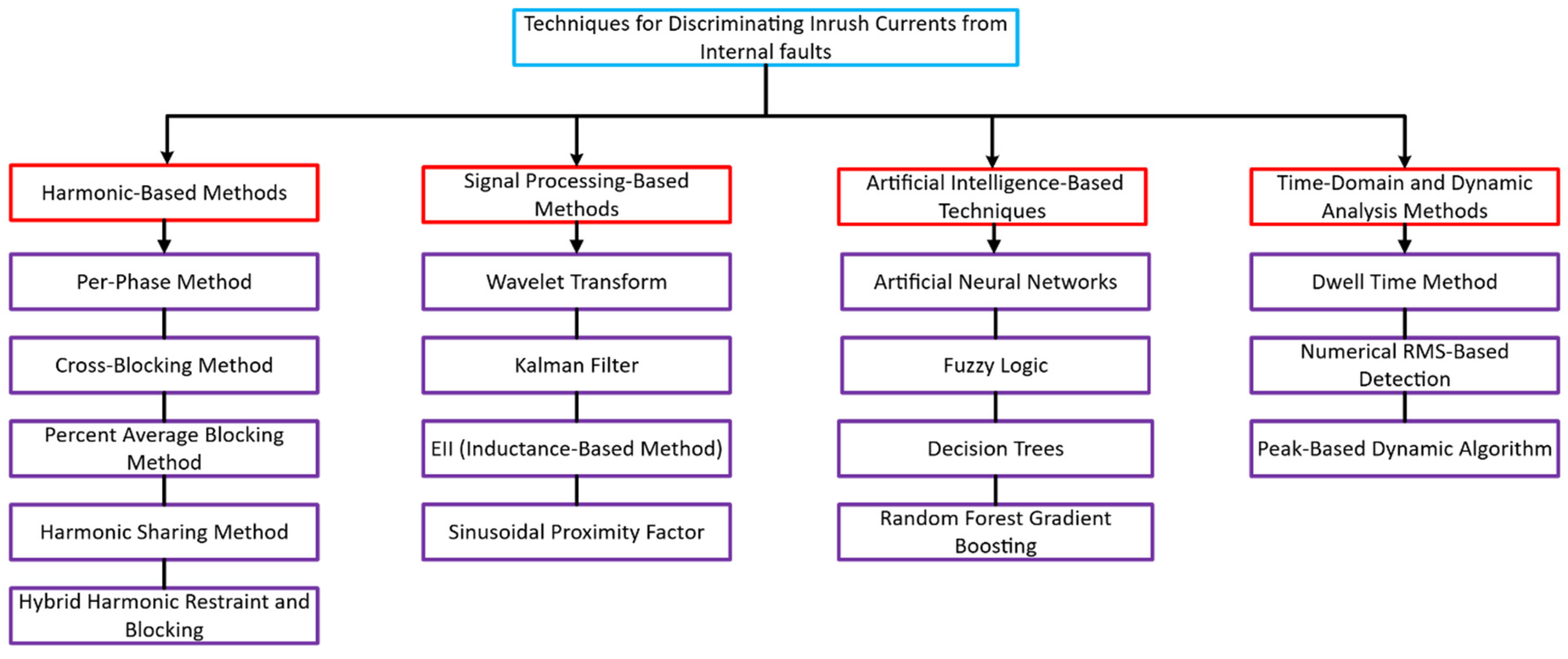
Figure 4 illustrates the proposed taxonomy and the relationships among these methodological families. The following subsections provide a critical overview of each category, with emphasis on operating principles, implementation aspects, and practical advantages and limitations in the context of transformer differential protection.

2.1. Conventional Harmonic-Based Methods

2.1.1. Per-Phase Method

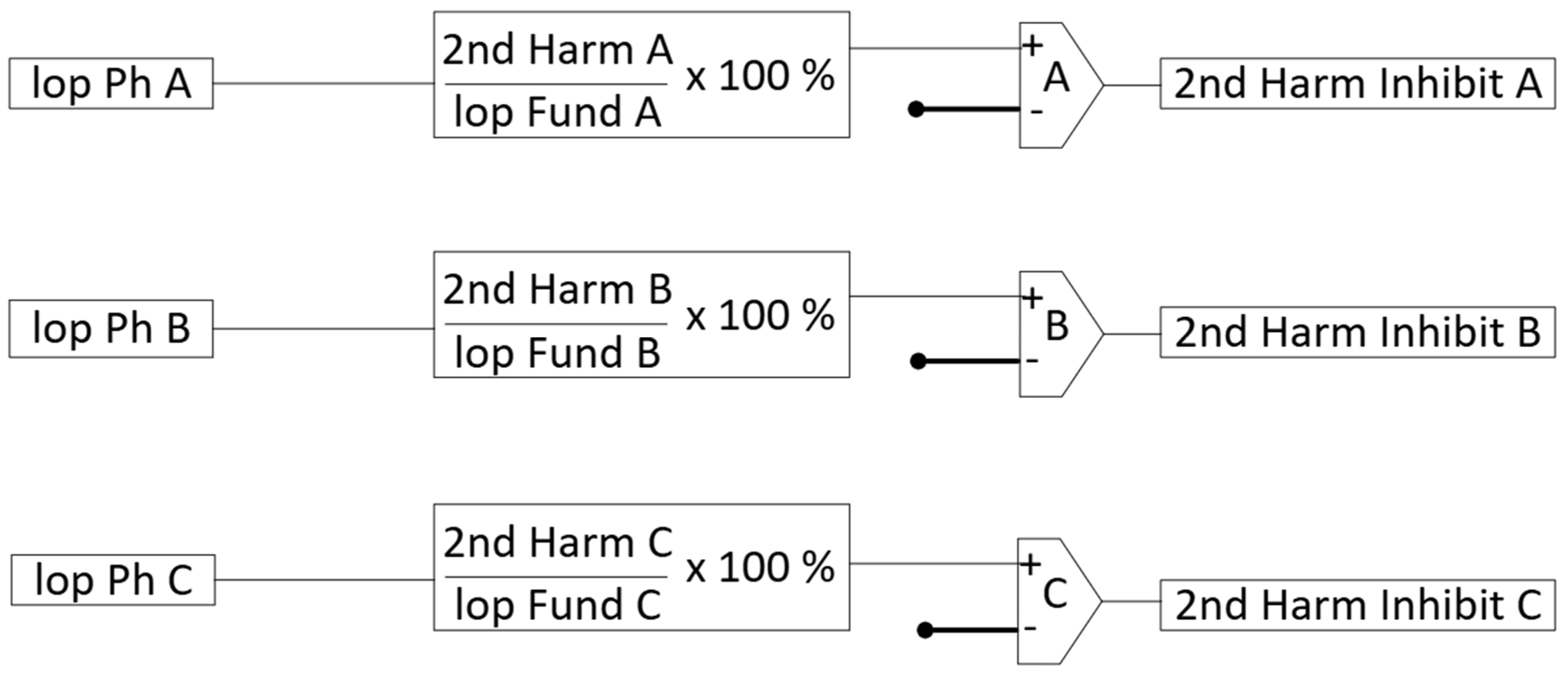
In the per-phase method, harmonic restraint is applied independently to each phase. A trip command in a given phase is blocked when the ratio of the second-harmonic component to the fundamental component of the differential current exceeds a predefined threshold. This phase-selective supervision improves sensitivity to single-phase and partial-phase faults and prevents a strong inrush current in one phase from masking genuine faults in the other phases [25,26]. However, this method remains vulnerable under several non-ideal operating conditions. Asymmetric transformer energization, current transformer saturation, residual flux asymmetry, and modern low-loss core designs can all produce inrush currents with reduced second-harmonic content. Under such conditions, the relay may incorrectly interpret inrush current as an internal fault and issue an unnecessary trip command. Therefore, per-phase restraint is usually combined with additional security measures, such as cross-phase blocking or supplementary waveform-based checks, to maintain dependable operation [27,28].
Figure 5 presents a functional block diagram of the per-phase second-harmonic restraint logic. For each phase, the operating, or differential, current ( I o p ) is processed to extract its fundamental and second-harmonic components, after which their ratio is calculated. When this ratio exceeds the predefined threshold, a restraint command, denoted as “2nd Harmonic Inhibit”, is issued to block the trip signal for that phase. In this way, the scheme helps prevent spurious tripping during inrush conditions while preserving sensitivity to genuine internal faults.

2.1.2. Cross-Blocking Method

The cross-blocking method applies a global restraint principle. In this scheme, if the second-harmonic content in any one phase exceeds a predefined threshold, the differential protection function is blocked for all three phases. This approach provides a high level of security and performs effectively during conventional three-phase energization, where magnetizing inrush currents in all phases typically contain pronounced second-harmonic components.
However, the main drawback of this approach is its inherent conservatism, which can reduce protection sensitivity under more complex operating conditions. In cases such as asymmetric inrush or a single-phase internal fault, a high second-harmonic level in one phase may initiate a global blocking signal. As a result, the differential elements are restrained for the entire transformer, including phases in which the current is dominated by the fundamental-frequency component and may indicate a genuine internal fault. This may lead to delayed fault clearance or, in the worst case, failure to operate.
Because of this significant limitation, pure cross-blocking logic is generally considered unsuitable as a standalone protection strategy in modern transformer protection schemes. Instead, it is typically combined with additional discriminating criteria to achieve both secure and sensitive operation [26,29,30].

2.1.3. Percent Average Blocking Method

The percent average blocking method derives a single restraint signal from the average second-harmonic ratio across all three phases, forming a composite index that provides effective security under balanced inrush conditions [31]. By smoothing phase-to-phase variations, this method can offer a robust response when all phases exhibit similar magnetizing behavior. However, the same averaging mechanism introduces a significant vulnerability under asymmetric transient conditions [32]. For example, in the case of a single-phase internal fault accompanied by inrush currents in the other phases, the high second-harmonic content in the healthy phases may increase the overall average and incorrectly block tripping, even though the faulted phase is dominated by the fundamental-frequency component.
This misclassification can significantly delay fault clearance and, in severe cases, may prevent the relay from operating altogether. Therefore, the percent average blocking method is not suitable as a standalone criterion in networks exposed to complex transients or unbalanced fault conditions. Instead, it should be used in combination with additional discriminating elements to improve both security and dependability [29,30].

2.1.4. Harmonic Sharing Method

The harmonic sharing method forms a global restraint signal by summing the absolute values of the second-harmonic current components from all three phases [33,34]. This produces a strong system-wide blocking index and provides a high level of security during conventional three-phase transformer energization, where all phases typically exhibit significant inrush-related harmonic components [35,36].
The main weakness of this approach is its reliance on a single composite harmonic quantity, which reduces its selectivity under asymmetric operating conditions [37]. For example, in the case of a single-phase internal fault accompanied by inrush currents in the other phases, the high second-harmonic content in the healthy phases may increase the shared restraint index above the threshold and incorrectly block a necessary trip command. Conversely, if one phase experiences inrush with relatively low harmonic content, the summed value may remain below the restraint threshold, causing the relay to fail to block during an inrush condition and thereby reducing protection security.
Because of these limitations, the harmonic sharing method is not considered a robust standalone solution. In modern applications, it is more appropriately used as part of a broader protection logic that incorporates more selective phase-based or waveform-based criteria [38].

2.1.5. Hybrid Harmonic Restraint and Blocking

Hybrid harmonic restraint and blocking schemes aim to balance protection security and sensitivity by combining multiple harmonic indices derived from both individual phases and system-wide quantities. Conditional logic is then used to coordinate these indices, enabling the scheme to operate reliably under a wide range of conditions, from balanced three-phase inrush to asymmetric transient events [39].
The improved performance of these hybrid schemes is achieved at the expense of increased implementation complexity. They require the careful configuration of several thresholds and interdependent decision rules, which are often tailored to the specific transformer design and network characteristics. If these settings are not properly tuned, or if the system operates under conditions that were not anticipated during the design stage, the overall performance of the protection scheme may deteriorate.
Therefore, hybrid harmonic schemes should be supported by thorough validation before practical deployment. This validation should include detailed simulations, laboratory experiments, and the analysis of field records to ensure dependable operation under realistic service conditions [40].

2.2. Time-Domain and Dynamic Analysis Methods

2.2.1. Dwell Time Method

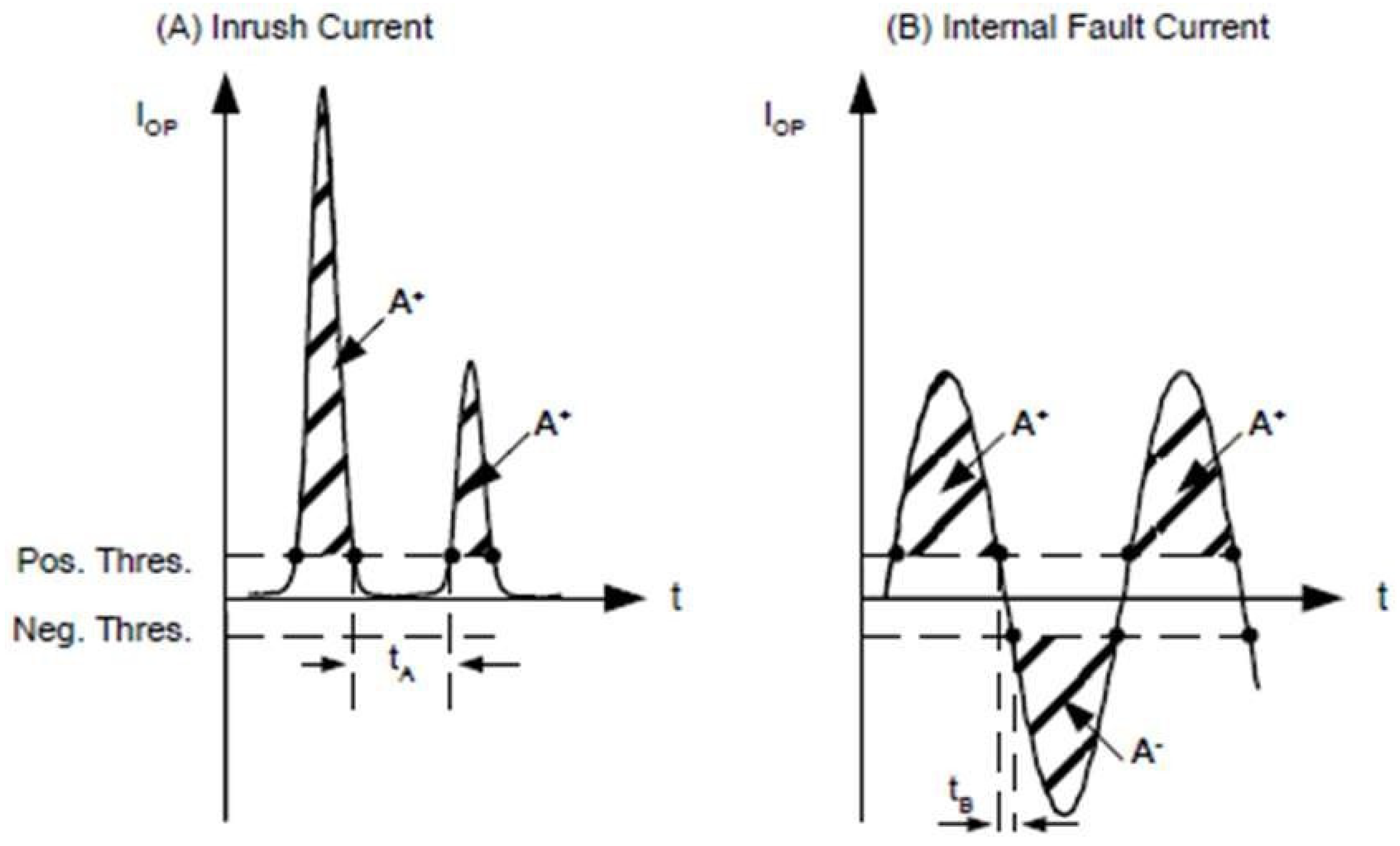
This time-domain method distinguishes magnetising inrush from internal faults by measuring the dwell time—the interval during which the differential current stays close to zero, corresponding to a “dead angle” in the waveform. The basic idea is that, because of core saturation, inrush currents tend to have a much longer dwell time, whereas internal-fault currents are more nearly sinusoidal and therefore spend little or no time near zero. A decision is then made by comparing the measured dwell time with a predefined threshold [37].
Figure 6 compares the differential current waveforms for two operating conditions: (A) magnetizing inrush, which exhibits an asymmetric and mainly unipolar waveform with a pronounced dwell interval around zero, and (B) an internal fault, which produces a more symmetrical bipolar waveform. This difference in polarity pattern and zero-crossing behavior represents the key feature exploited by dwell-time-based discrimination algorithms.

2.2.2. Improved Correlation-Based Algorithm

The improved correlation-based algorithm enhances discrimination by accurately measuring the angular interval during which the differential current remains close to zero in the second half-cycle. This interval provides a stronger indication of core saturation and generally enables higher discrimination accuracy than earlier correlation-based methods [41,42].
However, the practical application of this algorithm is limited by its inherent operating delay, as it must observe the subsequent half-cycle before a reliable decision can be made. This delay reduces its suitability for very high-speed protection applications. In addition, the algorithm may still misclassify events under conditions such as current transformer saturation, remanent flux, or complex magnetization reversal, where waveform distortions can alter the expected zero-crossing pattern [39,40].

2.2.3. Numerical RMS Differential Method

The numerical RMS differential method distinguishes between inrush and fault conditions by monitoring the temporal evolution of the root-mean-square (RMS) value of the differential current [43,44]. The underlying principle is that magnetizing inrush currents typically produce a strongly decaying transient response, whereas internal faults generate a more sustained or slowly varying RMS level. Therefore, the RMS trend can serve as a simple yet effective indicator for discriminating between these two conditions [42,45,46].
The RMS value of the differential current for the k-th cycle, computed over one fundamental period T with N samples, is expressed as [47]:
I RMS ( k ) = 1 N n = 1 N ( i diff ( k ) [ n ] ) 2
A simple trend index can then be defined as the cycle-to-cycle difference:
Δ I RMS ( k ) = I RMS ( k ) I RMS ( k 1 )
where E > 0 is a small design margin introduced to account for measurement noise and minor fluctuations. The decision logic can then be formulated as follows:
  • Magnetizing Inrush, classified by a persistently decaying trend, where Δ I RMS ( k ) = I RMS   <   E specified number of consecutive cycles k = k 0 , , k 0 + m .
  • Internal Fault, identified by a sustained or increasing current level, where Δ I RMS ( k )     ε .
In EKF-based protection, the transformer dynamics can be represented in nonlinear state-space form as:
x k = f ( x k 1 , u k ) + w k y k = h ( x k , u k ) + v k
where x k is the state vector, u k is the input vector, y k is the measured output, and w k and u k represent process and measurement noise, respectively. The residual can be defined as:
r k = y k y ^ k
and the absolute residual signal is:
A R S k = | r k |
An internal fault is detected when A R S k exceeds a predefined or adaptive threshold. This residual-based logic is effective when the model accurately represents the healthy transformer behavior, but it becomes sensitive to parameter uncertainty and modelling errors.
The main drawback of this method is its dependence on multi-cycle data, which introduces an inherent delay of at least one power-frequency cycle and limits its applicability in very high-speed protection schemes. In addition, the discrimination logic assumes a clear and monotonic decay in the RMS value during magnetizing inrush. This assumption may not hold under complex transient conditions, such as evolving internal faults, simultaneous inrush and fault, or severe current transformer saturation, where the RMS profile may become distorted and the trend ambiguous. These effects increase the risk of misoperation when the numerical RMS method is used as a standalone criterion. Therefore, in practical protection schemes, it is preferable to combine this method with additional indicators to improve reliability and decision security.

2.2.4. Dynamic Algorithm with Multi-Feature Classification

This method applies a dynamic filtering process to extract multiple time-domain and spectral features from the differential current waveform. These features may include the second-harmonic magnitude, the decay rate of the DC offset, and the peak-to-fundamental current ratio. The extracted features are then integrated within a unified classification framework to provide more reliable discrimination between magnetizing inrush and internal fault conditions.
The main strength of this approach is that it avoids dependence on a single discriminating indicator. Instead, it uses a richer and more representative description of the differential current waveform. However, its performance depends strongly on the accuracy of signal estimation and feature decomposition. Errors, noise, or distortions during the feature-extraction stage can directly affect the classifier output and may lead to incorrect protection decisions [44,45].

2.3. Signal Processing-Based Methods

Advanced signal-processing techniques have been widely investigated to overcome the limitations of conventional discrimination methods. These approaches decompose and analyze current or voltage waveforms to extract distinctive transient features in the time–frequency domain. By revealing patterns and characteristics that are not readily observable in the raw signals, signal-processing-based methods enable more accurate and robust discrimination between magnetizing inrush currents and internal faults [46,47].

2.3.1. Wavelet Transform (WT) Method

The wavelet transform (WT) provides a multi-resolution representation of the differential current by decomposing it into time–frequency components. This enables the separation of high-frequency transient signatures, which are typically associated with internal faults, from the predominantly low-frequency components observed during magnetizing inrush conditions. In many studies, the WT has been used as a feature-extraction stage for intelligent classifiers, particularly artificial neural networks (ANNs), to enhance discrimination performance [48,49].
Despite its strong analytical capability, the WT method presents several practical challenges [50,51,52]. Its performance can be sensitive to noise, and it requires careful selection of the mother wavelet and the number of decomposition levels. Moreover, the method typically requires at least a quarter-cycle of data, which introduces a noticeable delay in the protection decision [53,54].
Mathematically, the continuous wavelet transform of a signal x(t) can be expressed as:
W ( a , b ) = 1 | a | x ( t ) ψ * ( t b a ) d t
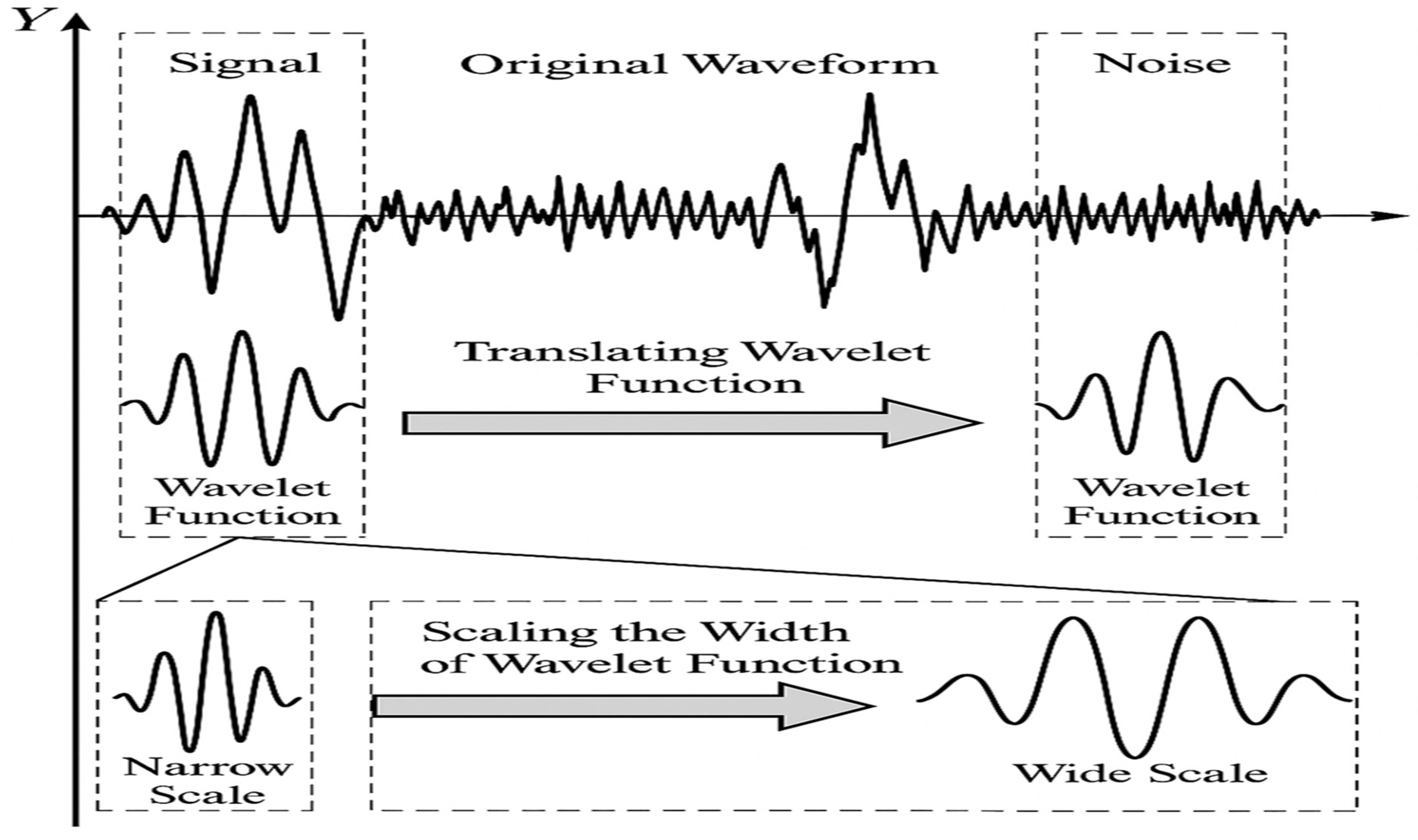
where a is the scale parameter, b is the translation parameter, and ψ(t) is the mother wavelet. Small values of a emphasize high-frequency transient components, while larger values of a capture lower-frequency behaviour. This multi-resolution property makes the wavelet transform suitable for identifying the short-duration high-frequency components typically associated with internal faults.
Figure 7 illustrates the basic operating principle of the wavelet transform for time–frequency analysis. A mother wavelet is shifted across the input signal, and high correlation values indicate the presence of transient events, whereas noise generally produces only a weak response. By varying the scale, narrow scales can be used to resolve high-frequency transients, while wider scales capture lower-frequency components. This multi-resolution capability provides simultaneous localization in both time and frequency, supporting effective feature extraction and denoising in transformer protection applications.

2.3.2. Instantaneous Inductance-Based Methods

This group of methods exploits the fundamental difference between the strongly nonlinear and time-varying magnetizing inductance observed during inrush conditions and the relatively constant inductance associated with internal faults. Two main variants are commonly reported:
  • Equivalent instantaneous inductance (EII) method: This approach tracks the instantaneous magnetizing inductance (IMI), which fluctuates significantly when the transformer core becomes saturated during inrush, but remains comparatively stable during internal faults. The calculated EII is then compared with a predefined threshold, either directly in the time domain or after basic spectral processing, to classify the event as either magnetizing inrush or an internal fault [55,56].
  • Instantaneous inductance technique: In this method, the differential inductance is estimated directly from the measured terminal voltages and currents in each phase. A significant deviation of the calculated inductance from its expected healthy value is interpreted as evidence of a fault. One of the main advantages of this technique is its fast response, as decisions can typically be reached within approximately 5 ms, making it highly attractive for real-time protection applications. Reported studies have also demonstrated good robustness against practical complications, such as on-load tap changer operation and current transformer saturation [57,58].
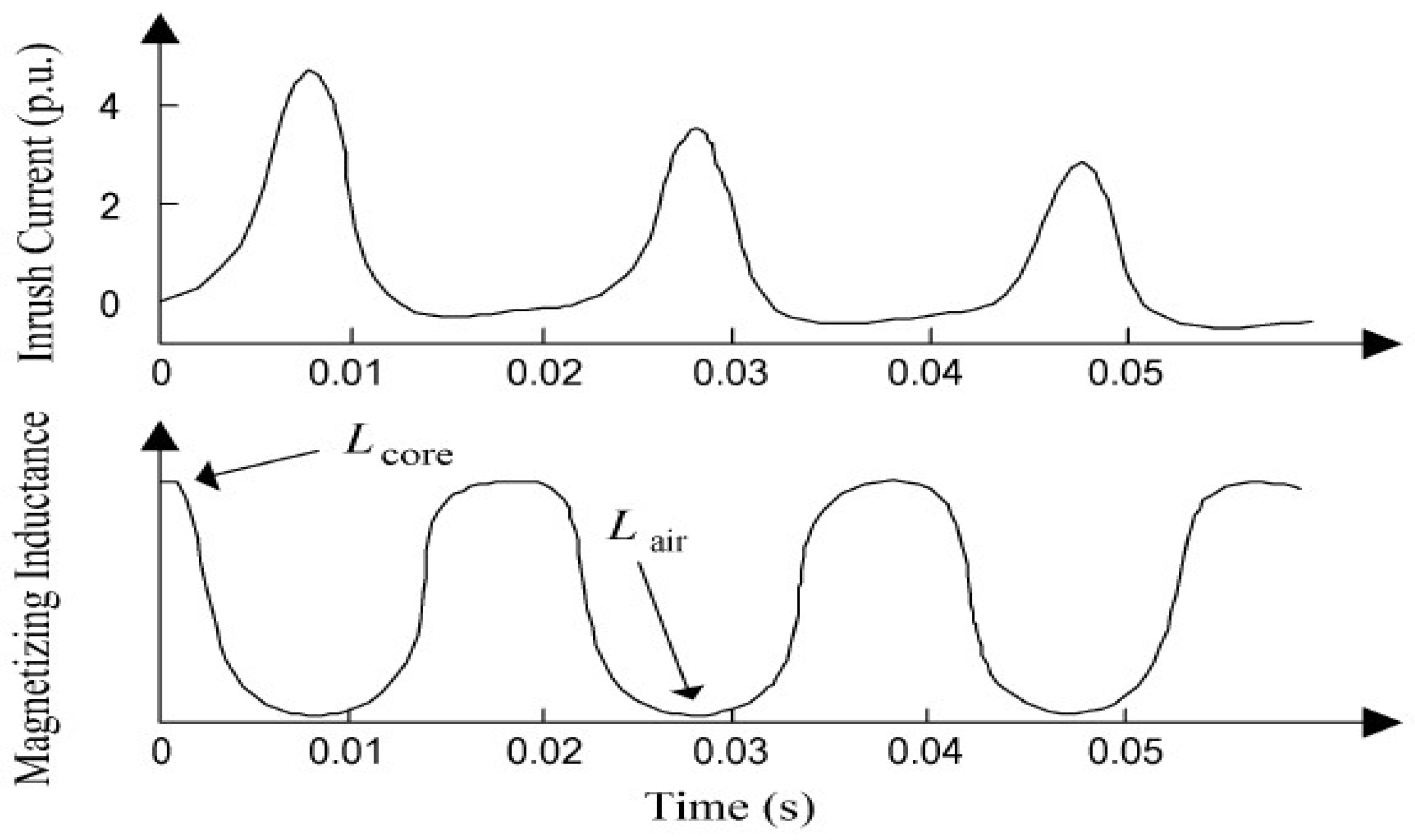
Figure 8 illustrates the dynamic relationship between magnetizing inrush current and core inductance. The inrush current exhibits asymmetric peaks with noticeable harmonic distortion, while the magnetizing inductance oscillates nonlinearly between high ( L c o r e ) and low ( L a i r ) values as the core moves into and out of saturation. This pronounced periodic variation in inductance is the underlying cause of the characteristic distortion observed in magnetizing inrush currents.

2.3.3. Sinusoidal Proximity Factor (SPF) Method

The sinusoidal proximity factor (SPF) method is based on waveform similarity. First, an ideal sinusoidal reference is constructed from the fundamental-frequency component of the differential current [59]. The SPF is then calculated as the cumulative absolute difference between this ideal sinusoid and the measured differential current waveform. A low SPF value indicates that the waveform is close to a pure sinusoid, which is typically associated with an internal fault. In contrast, a high SPF value reflects strong waveform distortion and is therefore associated with magnetizing inrush.
This method is particularly sensitive to low-magnitude internal faults. However, because it relies strongly on waveform purity, its performance can be affected by noise, distortion, and other non-idealities commonly present in practical power system environments. These factors may lead to misclassification under certain operating conditions [60].

2.3.4. Cross-Correlation Method

The cross-correlation method discriminates between magnetizing inrush currents and internal faults by measuring the similarity between short-time segments of the measured differential current and either a reference waveform or a delayed version of the same signal. This analysis captures important transient characteristics, including waveform asymmetry and the duration of dead-angle intervals. One of the main advantages of this method is its inherent robustness in noisy environments, as correlation-based measures are relatively insensitive to random noise.
The main limitation of this approach is its data-window requirement. To obtain a reliable correlation estimate, the method generally requires at least one full cycle of data. This introduces a minimum operating time and may slow fault clearance, which can be problematic in applications requiring very high-speed transformer protection [61,62].

2.3.5. Extended Kalman Filter (EKF) Method

The extended Kalman filter (EKF) method uses a recursive state-estimation algorithm to predict the expected primary winding current based on a dynamic transformer model. The main decision variable is the absolute residual signal (ARS), which is defined as the magnitude of the difference between the EKF-estimated current and the measured current [63]. An internal fault is declared when the ARS exceeds a predefined threshold.
EKF-based schemes are recognized for their fast-decision-making capability and their ability to track changing system conditions. However, they also present several important limitations. The detection of slowly developing or low-magnitude faults may be delayed if threshold adaptation does not adequately follow the actual operating state. In addition, the method is sensitive to errors in the underlying model parameters. Inaccurate modelling can generate spurious residuals, which may lead to incorrect classification and reduce the dependability of the protection scheme [59,60].

2.4. Artificial Intelligence-Based Techniques

Artificial intelligence (AI) has become an important direction in power transformer protection, offering promising solutions to some of the limitations of traditional threshold-based algorithms [64,65]. These data-driven techniques can learn complex nonlinear relationships directly from historical operating data, including both fault and inrush events [66]. As a result, they can adapt more effectively to different system conditions, improve classification accuracy, and support robust real-time decision-making.
However, AI-based protection schemes also introduce specific challenges. Their performance depends strongly on the availability of large and representative training datasets that cover a wide range of operating scenarios. In addition, they may impose considerable computational requirements during the training stage and, in some cases, during online inference [62,63].
For AI-based transformer protection, overfitting and generalization are critical concerns. Overfitting may occur when a model learns dataset-specific patterns from simulated or laboratory data rather than general protection-relevant features. Common mitigation strategies include cross-validation, independent test sets, regularization, pruning for tree-based models, dropout or early stopping for neural networks, and testing on unseen transformer units or unseen operating conditions. Dataset imbalance is another important issue because internal faults, especially incipient and high-impedance faults, are less frequent than normal or inrush events. If not handled properly, imbalance can bias the classifier toward majority classes. Possible solutions include stratified sampling, class weighting, synthetic data generation, and reporting class-specific metrics such as recall, precision, F1-score, and false trip/blocking rates. Labelling quality is also essential, particularly when distinguishing between inrush, evolving faults, external faults with CT saturation, and mixed events. From a hardware perspective, shallow neural networks, support vector machines, fuzzy systems, and tree-based models are more feasible for real-time relay implementation than large deep-learning models. In most protection applications, the main online burden is not the classifier itself, but feature extraction, signal buffering, normalization, and decision verification. Therefore, hardware-aware AI design and real-time testing on DSP, FPGA, or intelligent electronic device platforms are necessary before practical deployment.

2.4.1. Artificial Neural Networks (ANN)

Artificial neural networks (ANNs) are among the most widely used AI techniques in transformer protection [67,68]. They are capable of modelling complex nonlinear relationships between input features, typically extracted from current and voltage signals, and the target operating conditions, such as magnetizing inrush or internal fault events [69]. When properly designed and trained, ANNs can achieve high discrimination accuracy.
However, their performance depends strongly on several factors, including the selection of an appropriate network architecture, the availability of sufficient and representative training data, and the need for periodic retraining to account for changes in system behaviour. A major limitation of ANNs is their “black-box” nature, as the internal decision-making process is difficult to interpret. This can reduce operator confidence and make it challenging to explain why a particular protection decision has been made [70,71].

2.4.2. Fuzzy Logic Systems

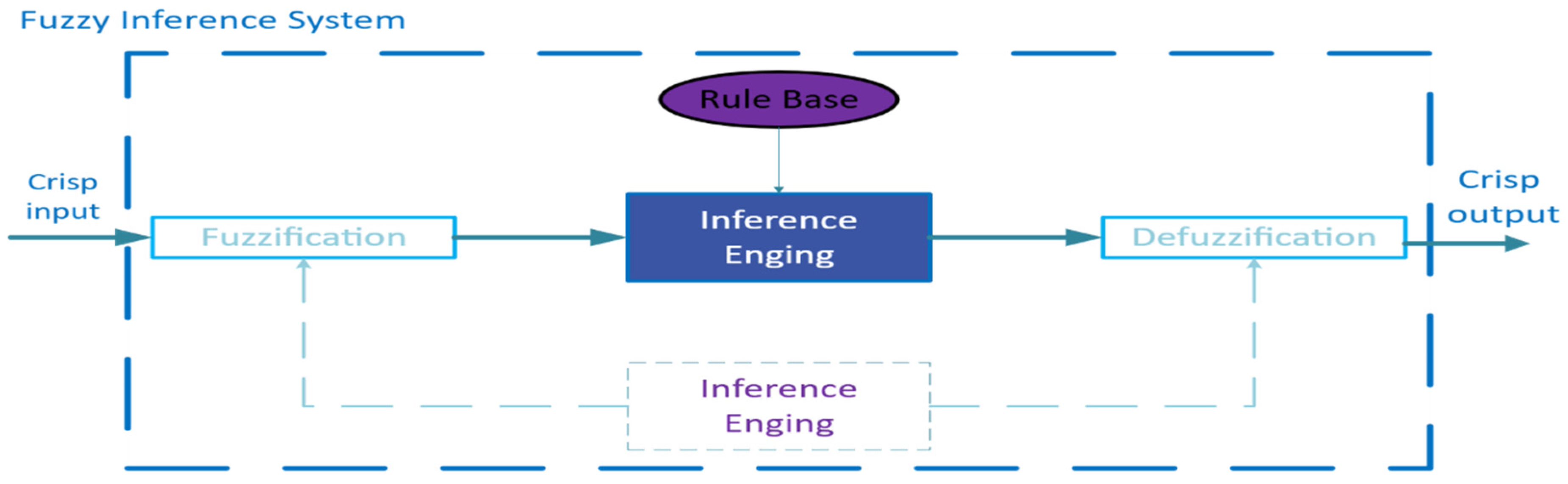
Fuzzy logic systems provide a structured, rule-based framework for handling the inherent uncertainty involved in discriminating between magnetizing inrush currents and internal faults. By combining several potentially ambiguous indicators, such as harmonic ratios, waveform magnitudes, and other time-domain features, within a fuzzy inference framework, these systems can support robust decision-making in cases where conventional harmonic-based methods may be insufficient [72,73].
One important advantage of fuzzy logic systems is their relative simplicity of implementation. In addition, they do not require large training datasets, unlike many data-driven AI methods. However, their effectiveness depends strongly on the expert-driven design of the rule base and the careful tuning of membership functions. These elements largely determine the quality of the inference process and the overall discrimination performance [69,70].
Figure 9 illustrates the architecture of a typical fuzzy inference system used in transformer differential protection. Input features, such as the harmonic ratio and current magnitude, are first fuzzified and then processed by a knowledge-based rule engine. The resulting fuzzy output is subsequently converted into a crisp protection decision through defuzzification. This structure enables effective decision-making under uncertainty; however, its performance depends strongly on the appropriate design of the membership functions and rule base.

2.4.3. Tree-Based Classifiers (DT, RF, GB)

Tree-based classifiers, such as decision trees (DTs), random forests (RFs), and gradient boosting (GB), have been widely and successfully applied in transformer protection. These methods operate on feature vectors extracted from current and voltage signals in the time and frequency domains. They offer several advantages, including interpretable decision rules, particularly in DT and RF models, relatively fast training, and high classification accuracy when applied to large and heterogeneous datasets [71,72].
In a basic decision tree, decisions are made by recursively splitting the feature vector x = [ x 1 , x 2 , , x d ] using simple threshold tests of the form.
x j θ l e f t x j > θ r i g h t
This process continues until a leaf node is reached, where a specific class label is assigned.
A random forest (RF) improves robustness and generalization by averaging the predictions of an ensemble of T trees. The final class Y R F is obtained by majority voting:
y ^ RF = a r g m a x c t = 1 T 1 { h t ( x ) = c }
where h t ( x ) is the class predicted by the t-th tree. Gradient boosting (GB), in turn, builds an additive model of shallow trees that sequentially fit the residual errors of the previous ensemble, often achieving very high accuracy with relatively small trees.
Overall, tree-based methods provide fast inference, strong classification performance, and, particularly in the case of DT and RF models, decision logic that can be inspected and interpreted. However, most reported applications have been tuned primarily for binary discrimination between magnetizing inrush and internal faults using limited datasets. Consequently, their behaviour remains less well established under external faults, incipient turn-to-turn faults, over-excitation, and other less frequently studied operating conditions.

2.5. Hybrid and Emerging Methods

Hybrid and emerging methods represent a convergent direction in transformer protection research, aiming to combine the strengths of different analytical strategies within a single protection scheme. In many cases, these methods fuse harmonic-based criteria with time-domain features or integrate physics-based models with data-driven artificial intelligence techniques. The main objective is to overcome the limitations of individual methods and achieve higher overall reliability, fewer misoperations, and faster yet accurate discrimination between magnetizing inrush currents and internal faults [73,74].

2.5.1. Hybrid Harmonic Restraint with Dynamic Features

To overcome the limitations of conventional harmonic restraint, several studies have proposed hybrid schemes that combine second-harmonic analysis with additional dynamic features. Typical features include the decay time constant of the DC offset, the peak-to-fundamental current ratio, and phase-angle differences between currents and voltages. This multi-criteria approach is intended to strengthen discrimination, particularly in challenging cases such as inrush events with low harmonic content or asymmetric energization. By using several complementary indicators, these hybrid methods generally provide improved reliability and sensitivity [75,76].
However, their performance depends on the careful selection of multiple thresholds and the accurate implementation of feature-extraction algorithms. This increases the overall complexity of the protection scheme and may make practical implementation and field tuning more challenging.
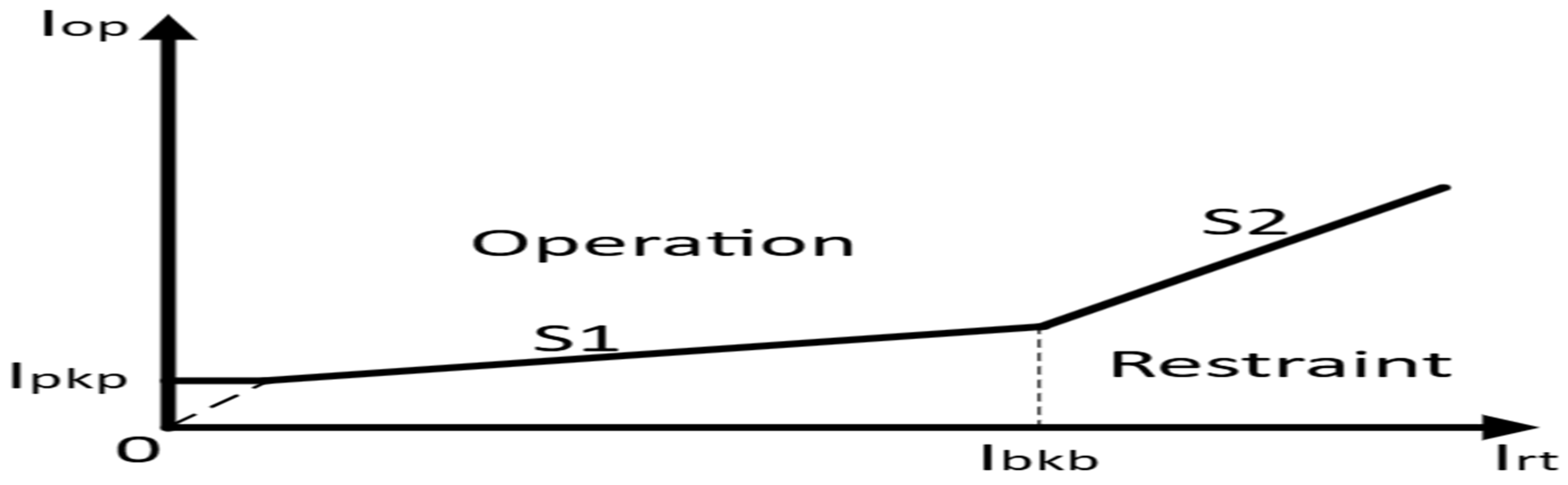
Figure 10 illustrates the underlying dual-slope percentage-differential characteristic, showing how hybrid harmonic and dynamic features can be used to adapt the operating threshold under demanding operating conditions.

2.5.2. Advanced Model-Based Techniques for Transformer Protection

Advanced model-based techniques employ detailed transformer equivalent circuits, typically identified from standard open-circuit and short-circuit tests. In these schemes, the relay continuously compares the measured terminal voltages with the voltages calculated by the model using the measured currents. A significant mismatch between the measured and model-estimated voltages is interpreted as a strong indication of an internal fault. In principle, this approach can achieve high discrimination accuracy because it explicitly accounts for the specific parameters and operating state of the transformer.
In practice, however, several challenges limit the application of these methods. Accurately modelling the transformer’s frequency-dependent impedance matrices can be complex, and obtaining precise current measurements is not always straightforward, particularly in delta-connected windings, where external line currents do not directly represent the internal winding currents [77,78].

2.5.3. Protection Based on Transient Components

In this type of scheme, mathematical transformations, such as Clarke transformation or modal decomposition, are applied to three-phase current signals to isolate their transient components [79,80]. By converting phase currents into orthogonal components or distinct modes, the method becomes more sensitive to asymmetries and transient behaviors that are characteristic of fault conditions. A fault-detection index is then derived from these modal signals, and its sign, polarity, or magnitude is used to identify and classify the fault.
This approach offers high detection sensitivity and good robustness, particularly under noisy or unbalanced operating conditions. However, its main drawback is operating speed. To obtain a reliable estimate of the transient components, the method typically requires a data window longer than one full cycle after the disturbance. This limits its suitability for protection applications that require sub-cycle tripping times [81,82].

2.5.4. Emerging Methods Using Mathematical Indicators

A number of recent protection schemes employ compact mathematical indicators, such as the sinusoidal proximity factor (SPF) and the instantaneous inductance difference (IID), to discriminate between inrush and fault conditions [83,84]. The SPF measures the deviation of the measured current waveform from an ideal sinusoid, whereas the IID tracks dynamic changes in the estimated winding inductance. Both indicators exhibit clearly distinct behaviours during magnetizing inrush and internal fault conditions.
These indicators offer the advantage of being grounded in clear physical principles, which makes their interpretation straightforward and supports their potential for real-time and even hardware-based implementation. However, their performance may be degraded by noise and other measurement imperfections. They also depend critically on accurate voltage–current synchronization and high-quality signal sampling [85].

2.5.5. Digital Relaying Algorithms with Real-Time Estimation

Modern digital relaying is increasingly moving toward intelligent and adaptive protection based on advanced signal-processing and model-based algorithms. One strand of this development focuses on real-time estimators, such as adaptive filters, phasor measurement units (PMUs), and Kalman-based observers, which continuously track system states to improve relay response under transient conditions. These techniques can enhance sensitivity and selectivity; however, they also impose high requirements on computational resources and data-acquisition systems [86].
In parallel, model-based algorithms for winding-fault detection have been proposed, in which electromagnetic equations derived from detailed transformer equivalent circuits are solved. When accurately parameterized, particularly with respect to nonlinear core characteristics, these models can provide highly precise discrimination. However, their effectiveness depends critically on model quality and parameter accuracy, both of which can be difficult to guarantee in practical applications [87].
Taken together, these approaches indicate a strategic shift toward more sophisticated real-time digital relaying. At the same time, challenges related to computational efficiency, model fidelity, and practical deployment must still be addressed before their full potential can be realized in routine transformer protection applications.

3. Comparative Analysis

The methods described in Section 2 address the inrush–fault discrimination problem from different perspectives. Some rely primarily on harmonic content, whereas others exploit time-domain behaviour, signal-processing features, or data-driven models. In this section, these methods are compared using practical criteria that are particularly relevant to protection engineers, including:
  • operating speed;
  • accuracy and robustness;
  • sensitivity to current transformer behavior and other non-ideal operating conditions;
  • implementation complexity;
  • suitability for future, more dynamic power systems.
Table 4, summary of comparison of the main techniques. Because the reviewed studies use different datasets, transformer ratings, fault scenarios, sampling rates, and evaluation protocols, direct statistical comparison across all methods is not straightforward. To improve consistency, this review reports the most commonly available performance indicators, including accuracy, detection time, validation environment, and data source. When exact numerical values are not available, the performance is reported qualitatively based on the authors’ stated findings. Therefore, the comparison should be interpreted as a structured cross-study assessment rather than a single unified benchmark.
A rigorous statistical meta-analysis was not feasible because the reviewed studies do not use a common benchmark dataset or identical performance metrics. Nevertheless, the available quantitative values show that many AI and hybrid methods report high accuracy, often above 90%, but these values are strongly dataset-dependent and should not be interpreted as direct evidence of field readiness without cross-transformer and cross-site validation.

3.1. Operating Speed and Protection Security

In transformer protection, both operating speed and security are critical. The relay must trip rapidly during internal faults while avoiding unnecessary operation during magnetizing inrush conditions.
  • Harmonic-based methods usually require at least one cycle of data to estimate harmonic components reliably. This delay is acceptable in many practical applications; however, fixed threshold settings may lead to incorrect decisions when the harmonic content is unusually low or distorted. Adaptive and multi-harmonic schemes can improve performance, but they still depend on frequency-domain processing and may introduce additional delay [18,113,114].
  • Time-domain methods, such as RMS trend analysis, dwell-time criteria, and instantaneous inductance-based techniques, can operate using shorter data windows and often provide very fast responses, sometimes within a fraction of a cycle. When their thresholds are carefully selected, these methods can offer a favorable balance between speed and security [115,116,117,118].
  • Signal-processing methods, including wavelet- and S-transform-based approaches, generally fall between harmonic-based and time-domain methods in terms of operating speed. They typically require short data windows for decomposition and feature extraction, resulting in reasonable response times, although they are usually not as fast as the simplest time-domain indices [119,120,121].
  • AI-based and hybrid schemes usually share the same measurement window as their underlying input features. Once the model has been trained, the classifier decision itself is typically very fast. Therefore, the overall operating speed of these schemes is governed mainly by the feature-extraction window and preprocessing stage [122,123,124,125,126].
Overall, time-domain methods and well-designed hybrid schemes are generally the most suitable for very fast protection decisions. Harmonic-based and more complex signal-processing approaches may be slightly slower, but they can provide valuable complementary information that improves protection security.

3.2. Discrimination Accuracy and Robustness

Discrimination accuracy and robustness refer to the ability of a method to maintain correct decision-making under varying operating conditions, including different transformer designs, fault types, energization angles, source strengths, residual flux levels, and current transformer behavior.
  • Harmonic-based schemes perform effectively under conventional operating conditions. However, their reliability can deteriorate when modern transformers produce inrush currents with low harmonic content or when internal faults contain higher harmonic components than expected. Residual flux, voltage distortion, and current transformer saturation can further intensify these limitations.
  • Time-domain methods are less dependent on harmonic content and may therefore offer improved robustness in modern power networks. Nevertheless, noise, current transformer saturation, and complex transient conditions, such as simultaneous inrush and fault events or evolving faults, can distort the expected decay pattern or waveform shape and reduce decision reliability.
  • Signal-processing methods, particularly wavelet-based techniques, often demonstrate strong discrimination performance in published studies. Their multi-resolution representation of the signal helps separate inrush and fault characteristics more effectively. However, their performance depends strongly on design choices, such as the selected mother wavelet, window length, and decomposition level.
  • AI-based methods frequently achieve the highest reported accuracies on the datasets used in the literature, especially when supported by rich time–frequency features. They are also well suited to multi-class classification problems. The main concern, however, is generalization, since models trained primarily on simulated or limited laboratory datasets may not maintain the same performance in practical power network environments.
  • Hybrid methods combine several complementary indicators and usually provide the most balanced performance. When one criterion becomes ambiguous, other features can support the final decision and improve overall robustness.
For this reason, reported accuracy values should be viewed as dataset-specific indicators rather than universal measures of protection reliability. Future studies should report not only accuracy, precision, recall, or F1-score, but also validation scope, data source, transformer diversity, operating scenarios, CT saturation modelling, and testing under unseen sites or unseen transformer units.
Overall, purely harmonic-based methods are no longer sufficient as standalone solutions in many modern power systems. Signal-processing and AI-enhanced schemes, particularly hybrid approaches, offer greater robustness when they are properly designed, validated, and tuned.

3.3. Sensitivity to CT Behaviour and System Non-Idealities

Practical power systems operate under non-ideal conditions. Current transformers may saturate, measured signals may be contaminated by noise, and both voltages and currents may contain distortion. Therefore, an effective inrush–fault discrimination method must be able to tolerate these effects while maintaining reliable decision-making.
  • Harmonic-based and other frequency-domain methods are relatively sensitive to current transformer saturation and voltage distortion, as both phenomena can directly alter the harmonic content of the measured currents.
  • Time-domain methods may also be affected because current transformer saturation can distort the waveform shape and modify decay characteristics. However, some indices based on flux estimation or carefully designed trend features can be made relatively tolerant, provided that they are validated using realistic current transformer models.
  • Signal-processing methods can partially suppress noise and localize disturbances in both time and frequency. This can improve robustness under certain conditions; however, severe current transformer saturation may still produce misleading features and reduce discrimination reliability.
  • AI-based methods can, in principle, learn the behavior of current transformers and other non-ideal system components, provided that such cases are adequately represented in the training data. If these operating conditions are not included during training, the model may misclassify unusual or previously unseen events.
Overall, this comparison indicates that realistic current transformer modelling and extensive testing are essential for all discrimination methods. Hybrid schemes that incorporate current-transformer-tolerant indices or flux-related quantities generally offer better performance under non-ideal operating conditions.

3.4. Implementation Complexity and Data Requirements

Implementation complexity and data requirements are also important considerations in practical transformer protection. A method may demonstrate strong performance in simulation or laboratory studies but still be difficult, costly, or impractical to deploy in real protection systems.
  • Classical harmonic restraint and simple time-domain indices are relatively easy to implement in existing numerical relays. They require limited memory, modest processing capability, and comparatively simple setting procedures.
  • Advanced signal-processing methods generally require higher sampling rates and greater computational resources. Although many modern relays can support these requirements, the algorithms must be optimized and carefully validated before practical deployment.
  • AI-based approaches involve additional lifecycle requirements, including model training, model storage, validation, updating, and performance monitoring. Although online classification can be fast, the overall implementation process is more complex and may require new tools, procedures, and expertise within utilities.
  • Hybrid schemes combine several analytical components and are therefore usually the most complex to implement. They are more suitable for new generations of intelligent electronic devices or centralized protection platforms than for older relay hardware with limited computational capability.
In practice, there is a clear progression from simple and widely deployable methods, such as harmonic-based and basic time-domain approaches, toward more powerful but more demanding solutions, including advanced signal-processing, AI-based, and hybrid protection schemes.
From an embedded implementation perspective, the computational burden varies substantially among the different method families. Classical harmonic restraint and simple time-domain indices have low computational complexity and can be implemented using standard filtering, RMS calculation, and threshold comparison. These methods require limited memory and are therefore suitable for conventional numerical relays. Signal-processing methods, such as wavelet transform, S-transform, or Kalman filtering, require higher sampling rates, buffer storage, matrix operations, or multi-level decomposition, which increases processing burden and memory usage. AI-based methods shift most of the computational cost to the offline training stage; however, online inference still requires model storage, feature normalization, and real-time classification. Tree-based models and shallow neural networks are generally more suitable for embedded relays than deep models with large parameter counts. Hybrid schemes usually impose the highest resource demand because they combine feature extraction, multiple decision criteria, and sometimes AI-based classification. Therefore, hardware-aware algorithm design is essential when moving from simulation to relay implementation.
The reference ranges in Table 5 indicate representative studies for each method family rather than exhaustive citations. The computational and hardware assessments are qualitative and are intended to support engineering comparison for embedded relay deployment.

3.5. Summary of Comparative Findings

The main observations from this comparative analysis and from Table 4 can be summarised as follows:
  • No single method performs best under all operating conditions. Each family of techniques offers a different balance among operating speed, robustness, implementation complexity, and data requirements.
  • Harmonic-based methods remain important as reference and backup schemes. However, they are not sufficient as standalone solutions for future grids characterized by low-harmonic inrush currents and more complex operating conditions.
  • Time-domain methods are attractive because of their speed and relative simplicity. Nevertheless, they require careful tuning to maintain security under complex transient conditions and current transformer non-idealities.
  • Signal-processing methods provide strong discrimination capability by exploiting time–frequency information. However, they are generally more complex and depend on the appropriate selection of processing parameters.
  • AI-based and hybrid schemes currently offer some of the strongest reported performance on available datasets. Their successful application in real networks, however, depends on the quality and representativeness of the training data, model explainability, and rigorous validation.
  • Many recent studies are converging toward multi-criteria or hybrid architectures, in which fast and physically intuitive indices are combined with more sophisticated decision logic.
These conclusions motivate the discussion in Section 4, where open challenges and future research needs, including benchmark datasets, explainable AI, and large-scale field validation, are examined in more detail.

4. Critical Discussion

The development of methods for discriminating between magnetizing inrush currents and internal faults in power transformers reflects a clear shift in protection philosophy. Transformer protection has gradually evolved from simple fixed-threshold harmonic restraint methods toward more adaptive, signal-intelligent, and data-driven schemes. This evolution reflects the growing need for higher reliability under increasingly complex, dynamic, and variable grid operating conditions. This section discusses the main strengths, limitations, and emerging research directions identified across the existing discrimination techniques.

4.1. Limitations of Traditional Harmonic Methods

In practical differential relays, second-harmonic restraint is commonly implemented by comparing the ratio of the second-harmonic component to the fundamental component of the differential current with a preset threshold, often selected in the approximate range of 15–20%, depending on relay design, transformer rating, and utility practice. The main limitation is that this ratio is not constant. Modern low-loss core materials, residual flux, asymmetric switching angles, and current transformer saturation can reduce the second-harmonic content of magnetizing inrush currents below the restraint threshold. Under such conditions, the relay may fail to block and may issue an unnecessary trip. Conversely, some internal faults, especially under saturation or distorted system conditions, may contain higher harmonic components, which can delay or block the trip command. Therefore, although second-harmonic restraint remains simple and widely used, its security and dependability are strongly affected by transformer design, energization conditions, CT behaviour, and threshold selection.
Despite their long-standing use in industry, second-harmonic restraint schemes suffer from several well-known limitations because they depend on a single signal characteristic that can vary significantly under practical operating conditions:
  • Core material evolution: Modern low-loss core steels can produce inrush currents with substantially lower second-harmonic content than older transformer designs. This directly weakens the basic assumption on which harmonic restraint is based [127,129].
  • Signal integrity issues: The accuracy of harmonic measurement is sensitive to current transformer saturation, noise, and waveform distortion. These effects can either suppress the second-harmonic component during an internal fault or artificially increase it during other transient events, leading to unnecessary tripping or failure to operate [130,131].
  • Lack of adaptivity: Fixed threshold settings do not adapt to changing system conditions, energization patterns, or transformer designs. As a result, the same restraint setting may be overly conservative in one situation and insufficiently secure in another, reducing overall robustness [128,132].
These limitations have motivated the development of more resilient and adaptive protection principles that go beyond traditional harmonic analysis.

4.2. Rise of Signal Processing and Feature Extraction

Signal-processing approaches have become an attractive alternative to purely harmonic-based methods. Techniques such as wavelet transform, S-transform, and instantaneous inductance estimation enable a richer analysis of transient waveforms and can reveal discriminative information that is not easily captured by conventional harmonic indices.
Their main advantages include the following:
  • Improved time–frequency resolution: Methods such as the wavelet transform can localize transient phenomena in both time and frequency more effectively than classical Fourier analysis. This capability helps distinguish inrush and fault signatures under non-stationary operating conditions [74,133].
  • Higher feature sensitivity: Carefully selected time–frequency or model-based features can highlight subtle differences in waveform shape and decay behavior between inrush and fault currents, even when the signals are noisy or partially distorted [134,135].
However, these methods also have limitations. They often require non-trivial parameter selection, such as the choice of mother wavelet, decomposition level, or window length. In addition, their computational requirements can be significant, particularly for real-time protection applications. Therefore, expert tuning, efficient implementation, and extensive validation are required to ensure reliable performance across a wide range of operating conditions.

4.3. Emergence of AI-Based Solutions

Artificial intelligence and machine learning techniques represent a further shift in the philosophy of transformer protection. Rather than relying exclusively on fixed thresholds or explicitly defined physical rules, these methods use data-driven models to learn complex relationships between measured signals and operating conditions.
They offer several potential benefits:
  • Data-driven adaptation: AI-based methods can learn complex nonlinear relationships directly from measured or simulated data, reducing dependence on fixed analytical rules or simplified physical assumptions [136,137].
  • Enhanced classification performance: When trained using sufficiently rich and representative datasets, models such as neural networks, support vector machines, and ensemble trees can achieve high discrimination accuracy between magnetizing inrush and internal fault conditions [138,139].
  • Real-time feasibility: With modern digital signal processors, embedded processors, and field-programmable gate array platforms, many AI algorithms can be implemented in a manner compatible with real-time protection requirements [140,141].
However, several important challenges remain:
  • Data dependency: Reliable training requires large, accurately labelled datasets that capture both common and rare operating scenarios, including severe faults and unusual energization conditions [8,142].
  • Generalization: Models trained on a specific set of transformer types, system configurations, or simulated scenarios may not automatically generalize to other installations without retraining, adaptation, or further validation [96,139].
  • Decision transparency: Many widely used AI models operate as black boxes and provide limited insight into why a particular decision, such as inrush or fault classification, has been made. This lack of interpretability raises concerns in safety-critical applications such as transformer protection [143,144].
These challenges suggest that AI should be integrated carefully into protection systems, preferably in combination with more transparent and physically interpretable indicators.

4.4. Growing Interest in Hybrid and Adaptive Approaches

Recent research has increasingly focused on hybrid schemes that integrate time-domain, frequency-domain, and AI-based elements within a single protection framework. These approaches aim to achieve the following objectives:
  • Synergistic performance: By combining complementary methods, such as fast harmonic or time-domain checks with more accurate AI-based classification, hybrid schemes can exploit the strengths of each component and improve overall discrimination performance [113,145].
  • Contextual adaptation: Some proposed schemes dynamically adjust the decision logic according to operating conditions, such as transformer loading, system strength, or the presence of power-electronic equipment. This enables the protection system to respond more flexibly to real-time grid conditions [146].
  • Improved resilience: By relying on multiple indicators and decision layers, hybrid schemes can be more robust against noise, modelling errors, and atypical fault conditions than single-criterion methods [146,147].
The main drawback of these approaches is their increased complexity. Designing, tuning, and validating multi-criteria architectures requires careful feature selection, proper coordination among decision criteria, and, in many cases, greater computational resources. To remain practical, these schemes must employ efficient algorithms and, where necessary, hardware optimization to ensure compatibility with the capabilities of modern relay platforms.

4.5. Practical Challenges in Deployment

Finally, translating advanced discrimination techniques from research prototypes into field-ready protection systems involves several persistent practical challenges:
  • Tight time requirements: In many applications, discrimination and tripping must be completed within approximately one power-frequency cycle to limit equipment stress and maintain system stability. Methods that rely on long data windows or computationally intensive processing must therefore be carefully optimized [148].
  • Hardware constraints: Industrial relays are typically implemented using digital signal processors, embedded CPUs, or field-programmable gate arrays with finite processing and memory resources. Protection algorithms must be adapted to these platforms without compromising reliability, maintainability, or real-time performance [149].
  • Measurement quality: Advanced schemes depend on high-fidelity and synchronized current and voltage measurements. In practice, current transformer saturation, noise, electromagnetic interference, and communication issues can degrade signal quality. These effects must therefore be considered during both the design and testing stages [150].
  • Validation gap: Many promising methods are still validated mainly through simulations or controlled laboratory experiments. Comprehensive assessment under realistic field conditions, including a wide range of fault, inrush, and mixed transient scenarios, is often lacking [151].
These challenges highlight that future research should not focus only on improving discrimination performance under ideal conditions, but also on bridging the gap between algorithm development and practical implementation. Addressing both technical and practical aspects is essential for moving from conceptual designs to protection schemes that can be deployed and trusted in real power systems.
Noise and timing issues are also important in practical deployment. Measurement noise, electromagnetic interference, analogue filtering, CT saturation, and analogue-to-digital conversion errors can distort the current and voltage waveforms used by discrimination algorithms. In digital substations, communication delay, packet loss, sampling jitter, and time-synchronization errors may also affect the alignment of current and voltage measurements. These issues are particularly important for methods that depend on phase-angle comparison, voltage–current synchronization, instantaneous inductance estimation, travelling or transient components, and PMU-based measurements. Therefore, future validation should include realistic noise levels, CT saturation models, communication latency, and synchronization errors to ensure that the proposed methods remain dependable under field conditions.

5. Research Gaps and Future Directions

Future research should move beyond improving classification accuracy alone and should focus on protection schemes that are field-valid, hardware-aware, explainable, and adaptive to the operating characteristics of modern inverter-rich power systems.
Although significant progress has been made in methods for discriminating between magnetizing inrush currents and internal faults, several important research gaps remain. These gaps limit the reliability, adaptability, and practical deployability of existing protection schemes in real power system environments. This section highlights the main open issues and outlines possible directions for future research.

5.1. Lack of Standardized Benchmark Datasets

Progress in transformer protection research, particularly in data-driven and AI-based methods, is hindered by the absence of shared benchmark datasets. Most existing studies rely on individual simulation models, laboratory setups, or proprietary datasets. As a result, it remains difficult to compare methods fairly, reproduce reported results, or assess their generalization capability across different operating conditions.
Future research should prioritize the development of open-access benchmark datasets that cover:
  • A wide range of fault types and fault locations;
  • Realistic energization scenarios, including asymmetric switching and residual flux;
  • Different levels of current transformer saturation;
  • Various noise, distortion, and measurement-quality conditions.
Well-documented benchmark datasets would improve transparency, enable robust cross-comparison among algorithms, and help move advanced discrimination methods from academic studies toward practical transformer protection applications.

5.2. Fundamental Trade-Offs in Protection Scheme Design

Any protection scheme must balance operating speed, classification accuracy, and computational complexity. Advanced methods, such as wavelet analysis or Kalman filtering, often provide high discrimination accuracy; however, they usually require longer data windows and greater processing resources. Conversely, very fast sub-cycle methods may struggle to maintain reliability under complex or borderline transient conditions.
Future research should focus on algorithms that handle these trade-offs more effectively, for example by:
  • Developing feature extraction methods that are both informative and computationally light;
  • Designing adaptive decision logic that remains suitable for resource-constrained relay hardware;
  • Adopting multi-stage strategies, in which a simple and fast front-end initially screens events, while a more sophisticated back-end confirms the decision when necessary.
Such approaches can help achieve fast operation and high reliability without exceeding the computational capabilities of typical relay platforms.

5.3. Insufficient Validation Under Real-World Operating Conditions

A clear gap remains between theoretical developments and field-ready protection solutions. Many proposed discrimination methods are still validated mainly through simulations or small-scale laboratory experiments. Although these environments are useful for controlled evaluation, they cannot fully reproduce real-world effects, such as:
  • Transformer ageing and parameter drift;
  • Long-term load and voltage variations;
  • Electromagnetic interference, measurement errors, and communication issues.
To address this gap, future research should strengthen collaboration among universities, manufacturers, and utilities. Pilot projects in real substations, supported by long-term monitoring and systematic logging of inrush and fault events, would be particularly valuable. Such field-based validation is essential for building confidence in new protection schemes and supporting their practical adoption.

5.4. Narrow Scope in Fault-Type Discrimination

Most existing studies still formulate the discrimination problem as a binary decision between magnetizing inrush and internal fault conditions. However, power transformers may experience several other important operating and fault states, including:
  • Inter-turn faults and incipient winding defects;
  • Over-excitation and ferroresonance;
  • Current transformer saturation during external faults or system disturbances.
Focusing only on the inrush–fault boundary may therefore leave potential blind spots in transformer protection.
Most reviewed methods have been evaluated primarily under clear magnetizing inrush and relatively severe internal fault conditions. Under conventional inrush, harmonic-based methods can perform well if the second-harmonic content remains high, while time-domain and signal-processing methods exploit waveform asymmetry, dead angles, transient energy, or inductance variation. However, performance becomes less certain under incipient turn-to-turn faults and high-impedance faults. These events may produce low differential current magnitudes and weak transient signatures, making them difficult to distinguish from load variation, noise, CT error, or low-level inrush. AI-based and hybrid methods may improve sensitivity if such cases are included in the training and validation datasets, but many published studies do not provide sufficient testing under incipient or high-impedance fault conditions. This remains an important research gap.
Future research should move toward multi-class discrimination frameworks capable of distinguishing among several operating and fault conditions. This will likely require integrated feature sets and hierarchical decision structures, in which the relay first detects the presence of an abnormal condition and then refines the classification. Such schemes can improve both dependability and security by providing a more detailed understanding of transformer behaviour.

5.5. Imperative for Explainable AI and Human-Centric Design Frameworks

The “black-box” nature of many AI models remains a major barrier to their adoption in transformer protection. In safety-critical applications, protection engineers must be able to understand why a relay has made a particular decision, especially following major disturbances or unexpected operating behaviour.
Future research should therefore integrate Explainable AI (XAI) into transformer protection by:
  • Using more interpretable model families where possible;
  • Applying post hoc explanation techniques, such as feature-importance analysis, saliency mapping, and rule extraction;
  • Designing user interfaces that present AI-based decisions in a form that is meaningful and actionable for protection engineers.
A human-centric approach, in which AI supports rather than replaces engineering judgment, is likely to increase trust, transparency, and acceptance of intelligent transformer protection schemes.

5.6. Integration with Evolving Power System Architectures

Power systems are undergoing rapid transformation due to the increasing penetration of inverter-based resources, changing load patterns, and more frequent transformer switching operations. These changes affect fault current levels, energization behaviour, and background waveform distortion, making traditional protection settings more difficult to maintain.
Future strategies should consider transformer protection as part of a system-aware and adaptive framework, in which:
  • Relays interact with grid state estimation and wide-area monitoring tools;
  • Dynamic settings or protection logic are adjusted according to real-time system conditions;
  • Edge computing and intelligent sensors are used to process data closer to the equipment.
Such architectures can help maintain reliable transformer protection as network topologies, generation mixes, and operating regimes continue to evolve.
A further research direction is to connect transformer protection algorithms with system-level resilience assessment. Most inrush–fault discrimination methods are evaluated at the relay or device level, but their consequences may propagate to the wider network during extreme events. For example, failure to trip during an internal fault may prolong equipment damage and delay restoration, while unnecessary tripping may remove a healthy transformer from service and reduce post-event supply capability. Future studies should therefore assess intelligent transformer protection not only in terms of classification accuracy and operating time, but also in terms of its contribution to service restoration, substation functionality, and integrated energy system resilience.
More targeted future research should be aligned with the characteristics of emerging power systems. First, protection algorithms should be tested under conditions created by high penetration of inverter-based resources, including reduced fault current levels, distorted waveforms, weak-grid operation, and frequent switching events. Second, lightweight feature-extraction and classification methods should be developed for edge devices and intelligent electronic devices with limited computational resources. Third, adaptive protection logic should be integrated with digital substation measurements, synchronized phasor data, and wide-area monitoring information so that relay settings can respond to real-time system conditions. Fourth, hardware-in-the-loop and real-time digital simulator platforms should be used as an intermediate validation step between offline simulation and field deployment. Finally, explainable and physics-informed AI models should be prioritized to improve transparency, reduce overfitting, and increase utility confidence in intelligent protection decisions.

6. Conclusions

The protection of power transformers remains a fundamental requirement for the secure and reliable operation of electrical power systems. Within this context, accurately distinguishing magnetizing inrush currents from internal faults continues to be one of the most challenging tasks in differential protection. This challenge arises from the similarity between these phenomena in the differential current waveform, together with the serious technical and economic consequences that may result from either unnecessary tripping or failure to trip. Traditional second-harmonic restraint schemes have served as the industry standard for many years; however, their known limitations, particularly under low-harmonic inrush, asymmetric energization, and current transformer saturation, have motivated the search for more advanced and robust solutions.
In this review, modern discrimination methods have been classified into five main families: harmonic-based, time-domain, signal-processing-based, AI-based, and hybrid approaches. Each family offers specific advantages in terms of operating speed, accuracy, robustness, or implementation simplicity. At the same time, each method is constrained by different limitations, such as sensitivity to noise and system non-ideal ties, dependence on model assumptions, computational requirements, or the need for extensive training data. This diversity of approaches reflects the inherent complexity of the inrush–fault discrimination problem and the increasing demands placed on protection systems in today’s more dynamic and uncertain grid environment.
A clear trend emerging from the literature is the movement toward intelligent, adaptive, and data-driven protection schemes. These approaches, particularly those combining advanced feature extraction with machine learning or hybrid decision logic, show strong potential for handling nonlinear behaviour and evolving system conditions more effectively than purely conventional methods. However, their widespread adoption is currently limited by several factors, including the absence of common benchmark datasets, the limited availability of long-term field validation, and concerns regarding the transparency and explainability of complex AI models.
Future research should focus on developing computationally efficient, robust, and explainable discrimination schemes that can operate in real time on practical relay and substation platforms. Promising directions include multi-stage architectures that combine fast, physically interpretable indices with more sophisticated decision modules, as well as closer integration with edge computing and digital substation infrastructures. If these technical and practical challenges are addressed, the next generation of transformer protection systems will not only operate faster and more accurately but also provide the scalability, resilience, and adaptive intelligence required to support reliable operation in the evolving smart grid.

Funding

This research received no external funding.

Data Availability Statement

No new data were created or analyzed in this study.

Conflicts of Interest

The authors declare no conflicts of interest.

References

  1. Thango, B.A.; Nnachi, A.F.; Dlamini, G.A.; Bokoro, P.N. A Novel Approach to Assess Power Transformer Winding Conditions Using Regression Analysis and Frequency Response Measurements. Energies 2022, 15, 2335. [Google Scholar] [CrossRef]
  2. Medeiros, L.H.; Maschio, G.; Oliveira, M.M.; Kaminski, A.M.; Bueno, D.M.; Bender, V.C.; Marchesan, T.B. Finite element analysis for calculation of total and distributed electromagnetic forces on power transformers windings arrangements. Electr. Eng. 2024, 106, 931–940. [Google Scholar] [CrossRef]
  3. Nasirpour, F.; Heidary, A.; Niasar, M.G.; Lekić, A.; Popov, M. High-frequency transformer winding model with adequate protection. Electr. Power Syst. Res. 2023, 223, 109637. [Google Scholar] [CrossRef]
  4. Mahmoud, R.A. Digital protection scheme based on Durbin Watson and Pearson similarity indices for current signals practically applied to power transformers. Sci. Rep. 2025, 15, 12214. [Google Scholar] [CrossRef] [PubMed]
  5. Liang, H.; Blagojević, N.; Xie, Q.; Stojadinović, B. Seismic resilience assessment and improvement framework for electrical substations. Earthq. Eng. Struct. Dyn. 2023, 52, 1040–1058. [Google Scholar] [CrossRef]
  6. Sun, Q.; Wu, Z.; Gu, W.; Dong, Z.; Liu, P.; Qiu, H.; Ghias, A.; Lu, Y.; Zheng, Y. Seismic-Resilient Planning for Integrated Energy System: A Risk-Economic Coordination Perspective. IEEE Trans. Power Syst. 2025, 40, 2568–2583. [Google Scholar] [CrossRef]
  7. Cicilio, P.; Glennon, D.; Mate, A.; Barnes, A.; Chalishazar, V.; Cotilla-Sanchez, E.; Vaagensmith, B.; Gentle, J.; Rieger, C.; Wies, R.; et al. Resilience in an evolving electrical grid. Energies 2021, 14, 694. [Google Scholar] [CrossRef]
  8. Hongtao, R. Simulation analysis of inrush current in no load closing of transformer in Hydropower Station. Energy Rep. 2021, 7, 1175–1181. [Google Scholar] [CrossRef]
  9. Sung, B.C.; Kim, S. Accurate transformer inrush current analysis by controlling closing instant and residual flux. Electr. Power Syst. Res. 2023, 223, 109638. [Google Scholar] [CrossRef]
  10. Alenezi, M.; Massoud, J.; Ghomeed, T.; Shouran, M. Bees Algorithm and PSO-Optimized Hybrid Models for Accurate Power Transformer Fault Diagnosis: A Real-World Case Study. Energies 2025, 18, 5964. [Google Scholar] [CrossRef]
  11. Ahmadi, H.; Vahidi, B.; Nematollahi, A.F. A simple method to detect internal and external short-circuit faults, classify and locate different internal faults in transformers. Electr. Eng. 2021, 103, 825–836. [Google Scholar] [CrossRef]
  12. Soni, R.; Mehta, B. Evaluation of power transformer health analysis by internal fault criticalities to prevent premature failure using statistical data analytics approach. Eng. Fail. Anal. 2022, 136, 106213. [Google Scholar] [CrossRef]
  13. Peng, F.; Gao, H.; Huang, J.; Guo, Y.; Liu, Y.; Zhang, Y. Power Differential Protection for Transformer Based on Fault Component Network. IEEE Trans. Power Deliv. 2023, 38, 2464–2477. [Google Scholar] [CrossRef]
  14. Saleh, S.A.; Zundel, E.W.; Meng, J.; Bourque, M.; Young-Morris, G.; Hill, E.F.S.; Brown, S. Impacts of Grounding Impedance on Second Harmonic Components Caused by GIC Flows in Power Transformers. IEEE Trans. Ind. Appl. 2025, 62, 617–627. [Google Scholar] [CrossRef]
  15. Saleh, S.A.; Zundel, E.W.; Jewett, D.; Hill, E.F.S.; Meng, J.; Morris, G.Y.; Brown, S. Investigating Harmonic Distortion in Power Transformers Due to Geomagnetically Induced Current Flows. In Proceedings of the 2023 IEEE/IAS 59th Industrial and Commercial Power Systems Technical Conference (I&CPS), Las Vegas, NV, USA, 21–25 May 2023; Institute of Electrical and Electronics Engineers Inc.: Piscataway, NJ, USA, 2023. [Google Scholar] [CrossRef]
  16. Abbasi, A.R. Fault detection and diagnosis in power transformers: A comprehensive review and classification of publications and methods. Electr. Power Syst. Res. 2022, 209, 107990. [Google Scholar] [CrossRef]
  17. Wu, Q.; Zhang, H. A novel expertise-guided machine learning model for internal fault state diagnosis of power transformers. Sustainability 2013, 11, 1562. [Google Scholar] [CrossRef]
  18. Pani, S.R.; Bera, P.K.; Kumar, V. Detection and Classification of Internal Faults in Power Transformers using Tree-based Classifiers. In Proceedings of the 2020 IEEE International Conference on Power Electronics, Drives and Energy Systems (PEDES), Jaipur, India, 16–19 December 2020; IEEE: Piscataway, NJ, USA, 2020. [Google Scholar] [CrossRef]
  19. Sami, S.M.; Bhuiyan, M.I.H. An EMD-based Method for the Detection of Power Transformer Faults with a Hierarchical Ensemble Classifier. In Proceedings of the 2020 11th International Conference on Electrical and Computer Engineering (ICECE), Dhaka, Bangladesh, 17–19 December 2020; pp. 206–209. [Google Scholar] [CrossRef]
  20. Sami, S.M.; Imamul, M.; Bhuiyan, H. Power Transformer Fault Diagnosis with Intrinsic Time-scale Decomposition and XGBoost Classifier. arXiv 2021, arXiv:2110.11467. [Google Scholar] [CrossRef]
  21. Alenezi, M.; Anayi, F.; Packianather, M.; Shouran, M. A Hybrid Machine Learning Framework for Early Fault Detection in Power Transformers Using PSO and DMO Algorithms. Energies 2025, 18, 2024. [Google Scholar] [CrossRef]
  22. Thango, B.A. Winding Fault Detection in Power Transformers Based on Support Vector Machine and Discrete Wavelet Transform Approach. Technologies 2025, 13, 200. [Google Scholar] [CrossRef]
  23. Wang, G.; Qiu, S.; Xie, F.; Luo, T.; Song, Y.; Wang, S. Diagnosing Fault Types and Degrees of Transformer Winding Combining FRA Method With SOA-KELM. IEEE Access 2024, 12, 50287–50299. [Google Scholar] [CrossRef]
  24. Abdusalam, O.; Ibrahim, A.; Anayi, F.; Packianather, M. New Hybrid Machine Learning Method for Detecting Faults in Three-Phase Power Transformers. Energies 2022, 15, 3905. [Google Scholar] [CrossRef]
  25. Tabrez, M.; Sadhu, P.K.; Lipu, M.S.H.; Iqbal, A.; Husain, M.A.; Ansari, S. Power conversion techniques using multi-phase transformer: Configurations, applications, issues and recommendations. Machines 2022, 10, 13. [Google Scholar] [CrossRef]
  26. Tabrez, M.; Sadhu, P.K.; Iqbal, A.; Husain, M.A.; Bakhsh, F.I.; Singh, S.P. Equivalent circuit modelling of a three-phase to seven-phase transformer using PSO and GA. J. Intell. Fuzzy Syst. 2022, 42, 689–698. [Google Scholar] [CrossRef]
  27. Kobet, G.L.; Patterson, R.W. Matlab â Analysis of Braytown Transformer Differential Inrush Misoperation 2000. Available online: http://www2.msstate.edu/~rwp1/matlab/ (accessed on 16 May 2026).
  28. Patterson, R.W.; Mccannon, W.P. A Consideration of Inrush Restraint Methods in Transformer Differential Relays 2000. Available online: http://www.mathsoft.com (accessed on 16 May 2026).
  29. Ghodrati, C. A New Method to Identify and Blocking Inrush Current in Transformer. In 2023 13th International Conference on Power, Energy and Electrical Engineering, CPEEE 2023, Tokyo, Japan, 25–27 February 2023; Institute of Electrical and Electronics Engineers Inc.: Piscataway, NJ, USA, 2023; pp. 311–315. [Google Scholar] [CrossRef]
  30. Wang, Z.; Guo, X.; Wang, R.; Xing, W. Research on Transformer Protection Configuration Suitable for Korean Power Grid. In Proceedings of the 16th Annual Conference of China Electrotechnical Society, Beijing, China, 24–26 September 2021; He, J., Li, Y., Yang, Q., Liang, X., Eds.; Lecture Notes in Electrical Engineering; Springer: Singapore, 2022; Volume 891, Available online: https://link.springer.com/bookseries/7818 (accessed on 16 May 2026). [CrossRef]
  31. Key, S.; Son, G.W.; Nam, S.R. Deep Learning-Based Algorithm for Internal Fault Detection of Power Transformers during Inrush Current at Distribution Substations. Energies 2024, 17, 963. [Google Scholar] [CrossRef]
  32. Faiz, J.; Lotfi-Fard, S. A novel wavelet-based algorithm for discrimination of internal faults from magnetizing inrush currents in power transformers. IEEE Trans. Power Deliv. 2006, 21, 1989–1996. [Google Scholar] [CrossRef]
  33. Golshan, M.E.H.; Saghaian-Nejad, M.; Saha, A.; Samet, H. A new method for recognizing internal faults from inrush current conditions in digital differential protection of power transformers. Electr. Power Syst. Res. 2004, 71, 61–71. [Google Scholar] [CrossRef]
  34. Yabe, K. Power differential method for discrimination between fault and magnetizing inrush current in transformers. IEEE Trans. Power Deliv. 1997, 12, 1109–1118. [Google Scholar] [CrossRef]
  35. De, G.; Corcoles, F.; Bogarra, S. A Novel Methodology to Estimate the Nonlinear Magnetizing Characteristic of Single-Phase Transformers Using Minimum Information. IEEE Trans. Power Deliv. 2022, 37, 2503–2513. [Google Scholar] [CrossRef]
  36. Sanati, S.; Ahmadi, S.A.; Sanaye-Pasand, M. An innovative harmonic-based approach for inrush current detection in low-loss transformers. IET Gener. Transm. Distrib. 2024, 18, 1303–1316. [Google Scholar] [CrossRef]
  37. Hamilton, R. Analysis of transformer inrush current and comparison of harmonic restraint methods in transformer protection. IEEE Trans. Ind. Appl. 2013, 49, 1890–1899. [Google Scholar] [CrossRef]
  38. Wang, J.; Hamilton, R. Analysis of Transformer Inrush Current and Comparison of Harmonic Restraint Methods in Transformer Protection. In Proceedings of the 2008 61st Annual Conference for Protective Relay Engineers, College Station, TX, USA, 1–3 April 2008; pp. 142–169. [Google Scholar] [CrossRef]
  39. Ngema, P.; Buraimoh, E.; Davidson, I. A New Technique for Improvement Differential Relay Performance in Power Transformers. In Proceedings of the 30th Southern African Universities Power Engineering Conference, SAUPEC 2022, Durban, South Africa, 25–27 January 2022; Institute of Electrical and Electronics Engineers Inc.: Piscataway, NJ, USA, 2022. [Google Scholar] [CrossRef]
  40. Chiesa, N. Power Transformer Modeling for Inrush Current Calculation. 2010. Available online: http://hdl.handle.net/11250/256440 (accessed on 9 November 2025).
  41. Ngema, P.; Davidson, I.E.; Buraimoh, E. Performance Evaluation of Percentage Differential Relays on Power Transformer and Reliability Assesment in HVDC Grid Protection Scheme. In Proceedings of the 2022 IEEE PES/IAS PowerAfrica, PowerAfrica 2022, Kigali, Rwanda, 22–26 August 2022; Institute of Electrical and Electronics Engineers Inc.: Piscataway, NJ, USA, 2022. [Google Scholar] [CrossRef]
  42. Domingo, D.; Kareem, A.B.; Okwuosa, C.N.; Custodio, P.M.; Hur, J.W. Transformer Core Fault Diagnosis via Current Signal Analysis with Pearson Correlation Feature Selection. Electronics 2024, 13, 926. [Google Scholar] [CrossRef]
  43. Lambert, M.; Martinez-Duro, M.; Mahseredjian, J.; De Leon, F.; Sirois, F. Transformer leakage flux models for electromagnetic transients: Critical review and validation of a new model. IEEE Trans. Power Deliv. 2014, 29, 2180–2188. [Google Scholar] [CrossRef]
  44. Mostafaei, M.; Faiz, J.; Venikar, P.A.; Ballal, M.S. Turn-to-turn fault monitoring methods in electrical power transformers—State of the art. Int. Trans. Electr. Energy Syst. 2018, 28, e2644. [Google Scholar] [CrossRef]
  45. Sun, D.; Ren, L.; He, X.; Li, H.; Yang, W.; Liu, L. DC bias identification method for transformer differential protection. Smart Power Energy Secur. 2025, 1, 97–103. [Google Scholar] [CrossRef]
  46. Zou, M.; Yang, M.; Wang, Z.; Yan, D.; Tang, X. Accurate transformer equivalent circuit for percentage differential protection simulation under DC bias. Electr. Power Syst. Res. 2024, 236, 110903. [Google Scholar] [CrossRef]
  47. Abdusalam, O.T.E. Detection and Discrimination of Inrush Current and Faults in Three-Phase Power Transformers Using Signal Processing and Machine Learning Technique. Doctoral Dissertation, Cardiff University, Cardiff, UK, 2023. [Google Scholar]
  48. Liu, X.; Xie, J.; Luo, Y.; Yang, D. A novel power transformer fault diagnosis method based on data augmentation for KPCA and deep residual network. Energy Rep. 2023, 9, 620–627. [Google Scholar] [CrossRef]
  49. Xing, Z.; He, Y. Multi-modal information analysis for fault diagnosis with time-series data from power transformer. Int. J. Electr. Power Energy Syst. 2023, 144, 108567. [Google Scholar] [CrossRef]
  50. Etumi, A.A.A.; Anayi, F.J. Current signal processing-based methods to discriminate internal faults from magnetizing inrush current. Electr. Eng. 2021, 103, 743–751. [Google Scholar] [CrossRef]
  51. Aljohani, O.; Abu-Siada, A. Application of Digital Image Processing to Detect Short-Circuit Turns in Power Transformers Using Frequency Response Analysis. IEEE Trans. Ind. Inform. 2016, 12, 2062–2073. [Google Scholar] [CrossRef]
  52. Kamble, S.; Chaturvedi, P.; Chen, C.J.; Borghate, V.B. Enhancing reliability and efficiency of grid-connected solid-state transformer through fault detection and classification using wavelet transform and artificial neural network. Electr. Eng. 2024, 106, 2525–2535. [Google Scholar] [CrossRef]
  53. Baroumand, S.; Abbasi, A.R.; Mahmoudi, M. Integrative fault diagnostic analytics in transformer windings: Leveraging logistic regression, discrete wavelet transform, and neural networks. Heliyon 2025, 11, e42872. [Google Scholar] [CrossRef]
  54. Shouran, M.; Alenezi, M.; Almutairi, S.; Alajmi, M. Hybrid Feature Extraction and Deep Learning Framework for Power Transformer Fault Classification–A Real-World Case Study. IEEE Access 2025, 3, 159077–159097. [Google Scholar] [CrossRef]
  55. Babaei, Z.; Moradi, M. Novel Method for Discrimination of Transformers Faults from Magnetizing Inrush Currents Using Wavelet Transform. Iran. J. Sci. Technol.-Trans. Electr. Eng. 2021, 45, 803–813. [Google Scholar] [CrossRef]
  56. Ge, B.; de Almeida, A.T.; Zheng, Q.; Wang, X. An equivalent instantaneous inductance-based technique for discrimination between inrush current and internal faults in power transformers. IEEE Trans. Power Deliv. 2005, 20, 2473–2482. [Google Scholar] [CrossRef]
  57. Arehpanahi, M.; Orouji, A.; Kelk, H.M. An improved online minor turn-turn winding fault diagnosis in a single-phase transformer based on instantaneous induced voltages and primary current locus. Measurement 2024, 226, 114153. [Google Scholar] [CrossRef]
  58. Lim, S.H.; Lee, J.H.; Lee, J.W.; Lee, S.W. Improved Fault Current Limiting Characteristics of Three-Phase Transformer Type SFCL With Non-Separated Secondary Windings Due to Unsymmetrical Ground Fault Types. IEEE Trans. Appl. Supercond. 2024, 34, 1–6. [Google Scholar] [CrossRef]
  59. Ma, J.; Ye, D.; Wang, Z.; Wu, J. Identifying inrush current using sinusoidal proximity factor. In Proceedings of the 2010 Conference Proceedings IPEC, Singapore, 27–29 October 2010; pp. 215–219. [Google Scholar] [CrossRef]
  60. Jaworski, M.; Jaeger, J. Sympathetic Transformer Inrush Detection and Relay Blocking During Power System Restoration. IEEE Trans. Power Deliv. 2023, 38, 2408–2417. [Google Scholar] [CrossRef]
  61. Ghanizadeh, A.J.; Gharehpetian, G.B. ANN and cross-correlation based features for discrimination between electrical and mechanical defects and their localization in transformer winding. IEEE Trans. Dielectr. Electr. Insul. 2014, 21, 2374–2382. [Google Scholar] [CrossRef]
  62. Rahmatian, M.; Vahidi, B.; Ghanizadeh, A.J.; Gharehpetian, G.B.; Alehosseini, H.A. Insulation failure detection in transformer winding using cross-correlation technique with ANN and k-NN regression method during impulse test. Int. J. Electr. Power Energy Syst. 2013, 53, 209–218. [Google Scholar] [CrossRef]
  63. Chothani, N.; Raichura, M.; Patel, D. Advancement in Power Transformer Infrastructure and Digital Protection; Springer Nature: Durham, NC, USA, 2023. [Google Scholar]
  64. Behdani, B.; Tajdinian, M.; Allahbakhshi, M.; Popov, M.; Shafie-Khah, M.; Catalão, J.P.S. Experimentally Validated Extended Kalman Filter Approach for Geomagnetically Induced Current Measurement. IEEE Trans. Ind. Electron. 2022, 69, 6316–6328. [Google Scholar] [CrossRef]
  65. Gunda, S.K.; Dhanikonda, V.S.S.S.S. Discrimination of transformer inrush currents and internal fault currents using extended kalman filter algorithm (Ekf). Energies 2021, 14, 6020. [Google Scholar] [CrossRef]
  66. Altayef, E.M. Application of Artificial Intelligence and Optimisation Techniques for Fault Detection and Classification in Power Transformers. Application of Fault Detection in Power Transformers Using Artificial Intelligent Based on Optimization Techniques for Classification Purpose. Ph.D. Thesis, Cardiff University, Cardiff, UK, 2022. [Google Scholar]
  67. Stulov, A.; Tikhonov, A.; Snitko, I. Fundamentals of Artificial Intelligence in Power Transformers Smart Design. In Proceedings of the 2020 International Ural Conference on Electrical Power Engineering (UralCon), Chelyabinsk, Russia, 22–24 September 2020; IEEE: Piscataway, NJ, USA, 2020; pp. 34–38. [Google Scholar] [CrossRef]
  68. Taha, I.B.M.; Ibrahim, S.; Mansour, D.E.A. Power transformer fault diagnosis based on DGA using a convolutional neural network with noise in measurements. IEEE Access 2021, 9, 111162–111170. [Google Scholar] [CrossRef]
  69. Roy, N.B.; Bhattacharya, K. Application of Signal Processing Tools and Artificial Neural Network in Diagnosis of Power System Faults; Taylor & Francis: London, UK, 2021. [Google Scholar]
  70. Valencia, F.; Arcos, H.; Quilumba, F. Prediction of stress in power transformer winding conductors using artificial neural networks: Hyperparameter analysis. Energies 2021, 14, 4242. [Google Scholar] [CrossRef]
  71. Zandbaaf, S.; Khorrami, M.R.K.; Afshar, M.G. Genetic algorithm based artificial neural network and partial least squares regression methods to predict of breakdown voltage for transformer oils samples in power industry using ATR-FTIR spectroscopy. Spectrochim. Acta A Mol. Biomol. Spectrosc. 2022, 273, 120999. [Google Scholar] [CrossRef]
  72. Shin, M.C.; Park, C.W.; Kim, J.H. Fuzzy logic-based relaying for large power transformer protection. IEEE Trans. Power Deliv. 2003, 18, 718–724. [Google Scholar] [CrossRef]
  73. Huang, Y.-C.; Ym, H.-T.; Member, I.; Huang, C.-L. Developing a New Transformer Fault Diagnosis System through Evolutionary Fuzzy Logic. IEEE Trans. Power Deliv. 1997, 12, 761–767. [Google Scholar] [CrossRef]
  74. Hosseinimoghadam, S.M.S.; Dashtdar, M.; Dashtdar, M. Improving the Differential Protection of Power Transformers Based on Clarke Transform and Fuzzy Systems. J. Control Autom. Electr. Syst. 2022, 33, 610–624. [Google Scholar] [CrossRef]
  75. Singh, A.K.; Saxena, A.; Roy, N.; Choudhury, U. Inter-turn fault stability enrichment and diagnostic analysis of power system network using wavelet transformation-based sample data control and fuzzy logic controller. Trans. Inst. Meas. Control 2021, 43, 2788–2798. [Google Scholar] [CrossRef]
  76. Hechifa, A.; Lakehal, A.; Nanfak, A.; Saidi, L.; Labiod, C.; Kelaiaia, R.; Ghoneim, S.S.M. Improved intelligent methods for power transformer fault diagnosis based on tree ensemble learning and multiple feature vector analysis. Electr. Eng. 2024, 106, 2575–2594. [Google Scholar] [CrossRef]
  77. Araujo, M.M.; Almeida, O.M.; Barbosa, F.R.; Menezes, A.G.C. Enhancing gas formation theory assessment in power transformers by using decision tree transparency and new guess into decomposition temperatures of insulating mineral oil. Neural Comput. Appl. 2023, 36, 3259–3266. [Google Scholar] [CrossRef]
  78. Barros, J.; De Apraiz, M.; Diego, R.I. Analysis and Visualization of Time-Varying Harmonics in Transformer Inrush Currents. In Conference Record-IEEE Instrumentation and Measurement Technology Conference, Glasgow, UK, 17–20 May 2021; Institute of Electrical and Electronics Engineers Inc.: Piscataway, NJ, USA, 2021. [Google Scholar] [CrossRef]
  79. Granados-Lieberman, D.; Huerta-Rosales, J.R.; Gonzalez-Cordoba, J.L.; Amezquita-Sanchez, J.P.; Valtierra-Rodriguez, M.; Camarena-Martinez, D. Time-Frequency Analysis and Neural Networks for Detecting Short-Circuited Turns in Transformers in Both Transient and Steady-State Regimes Using Vibration Signals. Appl. Sci. 2023, 13, 12218. [Google Scholar] [CrossRef]
  80. Hodder, S.; Kasztenny, B.; Fischer, N.; Xia, Y. Low second-harmonic content in transformer inrush currents-Analysis and practical solutions for protection security. In Proceedings of the 2014 67th Annual Conference for Protective Relay Engineers, CPRE 2014, College Station, TX, USA, 31 March–3 April 2014; IEEE Computer Society: Piscataway, NJ, USA, 2014; pp. 705–722. [Google Scholar] [CrossRef]
  81. Samet, H.; Shadaei, M.; Tajdinian, M. Statistical discrimination index founded on rate of change of phase angle for immunization of transformer differential protection against inrush current. Int. J. Electr. Power Energy Syst. 2022, 134, 107381. [Google Scholar] [CrossRef]
  82. Moradzadeh, A.; Moayyed, H.; Mohammadi-Ivatloo, B.; Gharehpetian, G.B.; Aguiar, A.P. Turn-to-Turn Short Circuit Fault Localization in Transformer Winding via Image Processing and Deep Learning Method. IEEE Trans. Ind. Inform. 2022, 18, 4417–4426. [Google Scholar] [CrossRef]
  83. Fei, L.; Ma, Z.; Cai, L.; Zhou, D.; Shu, X.; Liao, Z.; Lin, C.; Li, X. Analysis of interturn short circuit in regulating winding of power transformer based on field-circuit coupling. Front. Energy Res. 2024, 12, 1393436. [Google Scholar] [CrossRef]
  84. Wang, W.; Ma, G.; Liu, H.; Wang, L.; Fan, Z.; Du, H.; Zhou, S.; Qin, W. Fast Transient Measurement at Transformer Terminal Based on Built-In Capacitive Sensor. IEEE Trans. Instrum. Meas. 2024, 73, 1–8. [Google Scholar] [CrossRef]
  85. Mahtani, K.; Jimenez, R.P.; Guerrero, J.M.; Platero, C.A.; Talavera, D.; López, M.D. Optimal Sizing of Premagnetization Transformers to Mitigate the Inrush Current of Power Transformers. In Proceedings of the 2024 IEEE International Conference on Environment and Electrical Engineering and 2024 IEEE Industrial and Commercial Power Systems Europe (EEEIC/I&CPS Europe), Rome, Italy, 17–20 June 2024; IEEE: Piscataway, NJ, USA, 2024; pp. 1–6. [Google Scholar] [CrossRef]
  86. Saleh, S.A.; Meng, J.; Ozkop, E.; Valdes, M.E.; Hill, T.; Al-Durra, A. On the Assessment of Sampling Rate Impacts of the Sampling Rate on Responses of Digital Protective Relays. In Conference Record-Industrial and Commercial Power Systems Technical Conference; Institute of Electrical and Electronics Engineers Inc.: Piscataway, NJ, USA, 2023. [Google Scholar] [CrossRef]
  87. Saleh, S.A.; Meng, J.; Ozkop, E.; Valdes, M.E.; Hill, T.; Al-Durra, A. Effects of Sampled-Values Data Quality on Responses of Time-Frequency Based Digital Relays. In Conference Record-Industrial and Commercial Power Systems Technical Conference; Institute of Electrical and Electronics Engineers Inc.: Piscataway, NJ, USA, 2023. [Google Scholar] [CrossRef]
  88. Badri, J.A.; Ruiz, J.R.R.; Garcia, A.; Trujillo, S.; Marzabal, A. Predicting the Effect of Voltage Harmonic Phase Angle on Transformer Core Losses. IEEE Trans. Instrum. Meas. 2024, 73, 1–9. [Google Scholar] [CrossRef]
  89. Albert, D.; Würde, A.; Engelen, C. Voltage harmonics and DC detection on power transformers via vibration measurement analysis. Elektrotechnik Informationstechnik 2024, 141, 528–539. [Google Scholar] [CrossRef]
  90. Nițu, M.C.; Nicolae, I.D.; Dina, L.A.; Mircea, P.M. Power Transformer Inrush Current Analysis: Simulation, Measurement and Effects. Appl. Sci. 2024, 14, 10926. [Google Scholar] [CrossRef]
  91. Tarafdar-Hagh, M.; Hasanlouei, N.; Muttaqi, K.; Taghizad-Tavana, K.; Nojavan, S.; Abdi, M. Application of saturated core transformer as inrush current limiter. e-Prime-Adv. Electr. Eng. Electron. Energy 2024, 9, 100677. [Google Scholar] [CrossRef]
  92. Aires, M.N.O.; Medeiros, R.P.; Costa, F.B.; Silva, K.M.; Chavez, J.J.; Popov, M. A wavelet-based restricted earth-fault power transformer differential protection. Electr. Power Syst. Res. 2021, 196, 107246. [Google Scholar] [CrossRef]
  93. Geth, F.; Van Acker, T. Harmonic optimal power flow with transformer excitation. Electr. Power Syst. Res. 2022, 213, 108604. [Google Scholar] [CrossRef]
  94. Li, Z.; Xv, N.; Chen, X.; Zhang, Y.; He, A.; Jiao, Z. Blocking method with PSO-SVDD for differential protection of power transformer. Electr. Power Syst. Res. 2024, 237, 111016. [Google Scholar] [CrossRef]
  95. Islam, M.M.; Muttaqi, K.M.; Sutanto, D. A Saturated Amorphous Alloy Core-Based Inrush Current Limiter to Eliminate Inrush Currents and Restrain Harmonics during Transformer Energization. IEEE Trans. Ind. Appl. 2021, 57, 6634–6645. [Google Scholar] [CrossRef]
  96. Mo, C.; Ji, T.Y.; Zhang, L.L.; Wu, Q.H. Equivalent statistics based inrush identification method for differential protection of power transformer. Electr. Power Syst. Res. 2022, 203, 107664. [Google Scholar] [CrossRef]
  97. Wu, T.; Yang, F.; Farooq, U.; Li, X.; Jiang, J. An online learning method for constructing self-update digital twin model of power transformer temperature prediction. Appl. Therm. Eng. 2024, 237, 121728. [Google Scholar] [CrossRef]
  98. Zhang, H.; He, J.; Li, B.; Bo, Z. An improved transformer percentage restraint method based on transmission line information. In Proceedings of the 2009 International Conference on Sustainable Power Generation and Supply, Nanjing, China, 6–7 April 2009; pp. 1–4. [Google Scholar] [CrossRef]
  99. Htita, I.M.; Mousa, S.; Hasan, S. Sensitive relay for power auto-transformer protection based on fifth harmonic criteria. In Proceedings of the 2017 Nineteenth International Middle East Power Systems Conference (MEPCON), Cairo, Egypt, 19–21 December 2017; pp. 114–120. [Google Scholar] [CrossRef]
  100. Liang, Y.; Zhang, Z.; Li, K.J.; Li, Y.C. New correlation features for dissolved gas analysis based transformer fault diagnosis based on the maximal information coefficient. High Volt. 2022, 7, 302–313. [Google Scholar] [CrossRef]
  101. Gawrylczyk, K.M.; Banaszak, S. Recent developments in the modelling of transformer windings. Energies 2021, 14, 2798. [Google Scholar] [CrossRef]
  102. Elgamasy, M.M.; Zaky, M.S.; Zobaa, A.F.; Elsadd, M.A. Current transformer saturation detection by cross-correlation with independent target signal. Ain Shams Eng. J. 2025, 16, 103314. [Google Scholar] [CrossRef]
  103. Bardyk, E.I.; Bolotnyi, N. Improved Power Transformer Condition Assessment under Uncertainty using Fuzzy Logic. In Proceedings of the 2022 IEEE 8th International Conference on Energy Smart Systems, ESS 2022-Proceedings, Kyiv, Ukraine, 12–14 October 2022; Institute of Electrical and Electronics Engineers Inc.: Piscataway, NJ, USA, 2022; pp. 53–58. [Google Scholar] [CrossRef]
  104. Granados-Lieberman, D.; Razo-Hernandez, J.R.; Venegas-Rebollar, V.; Olivares-Galvan, J.C.; Valtierra-Rodriguez, M. Harmonic PMU and Fuzzy Logic for Online Detection of Short-Circuited Turns in Transformers. Electr. Power Syst. Res. 2021, 190, 106862. [Google Scholar] [CrossRef]
  105. Nezami, M.M.; Equbal, D.; Ansari, F.; Alotaibi, M.A.; Malik, H.; Márquez, F.P.G.; Hossaini, M.A. A novel artificial neural network approach for residual life estimation of paper insulation in oil-immersed power transformers. IET Electr. Power Appl. 2024, 18, 477–488. [Google Scholar] [CrossRef]
  106. Gifalli, A.; Neto, A.B.; de Souza, A.N.; de Mello, R.P.; Ikeshoji, M.A.; Garbelini, E.; Neto, F.T. Fault Detection and Normal Operating Condition in Power Transformers via Pattern Recognition Artificial Neural Network. Appl. Syst. Innov. 2024, 7, 41. [Google Scholar] [CrossRef]
  107. Gómez-Luna, E.; Candelo-Becerra, J.E.; Vasquez, J.C. A New Method for Complex Impedance Measurement of Power Transformers via a Continuous Wavelet Transform. Energies 2024, 17, 6056. [Google Scholar] [CrossRef]
  108. Kuznetsov, A.A.; Volchanina, M.A.; Gorlov, A.V. Wavelet Transformation for Recognizing Various Defects in Diagnosis of Power Transformers. In Proceedings of the 2024 International Russian Automation Conference (RusAutoCon), Sochi, Russian Federation, 8–14 September 2024; Institute of Electrical and Electronics Engineers Inc.: Piscataway, NJ, USA, 2024; pp. 478–483. [Google Scholar] [CrossRef]
  109. Zheng, T.; Chen, P.L.; Qi, Z.; Terzija, V. A novel algorithm to avoid the maloperation of UHV voltage-regulating transformers. IEEE Trans. Power Deliv. 2014, 29, 2146–2153. [Google Scholar] [CrossRef]
  110. Zhao, R.; Gu, J.; Wang, C.; Wang, Y. Online Identification of High-Frequency Transformer Short-Circuit Parameters Based on Instantaneous Phasor Method. IEEE J. Emerg. Sel. Top. Power Electron. 2022, 10, 3677–3684. [Google Scholar] [CrossRef]
  111. Al-Masri, W.; Wadi, A.; Abdel-Hafez, M.F.; Hashim, H.A.; El-Hag, A.H. Partial Discharge Localization in Power Transformers Using Invariant Extended Kalman Filter. IEEE Trans. Instrum. Meas. 2023, 72, 1–10. [Google Scholar] [CrossRef]
  112. Demirci, M.; Gözde, H.; Taplamacioglu, M.C. Improvement of power transformer fault diagnosis by using sequential Kalman filter sensor fusion. Int. J. Electr. Power Energy Syst. 2023, 149, 109038. [Google Scholar] [CrossRef]
  113. Shahbazi, N.; Bagheri, S.; Gharehpetian, G.B. Identification and classification of cross-country faults in transformers using K-NN and tree-based classifiers. Electr. Power Syst. Res. 2022, 204, 107690. [Google Scholar] [CrossRef]
  114. Hamouda, A.H.; Al-Anzi, F.Q.; Gad, H.K.; Gastli, A. Numerical differential protection algorithm for power transformers. In Proceedings of the 2013 7th IEEE GCC Conference and Exhibition (GCC), Doha, Qatar, 17–20 November 2013; pp. 440–445. [Google Scholar] [CrossRef]
  115. Wang, Q.; Zheng, M.; Yang, K.; Shang, C.; Luo, Y. Research and implementation of fault data recovery method for dry-type transformer temperature control sensor based on ISSA-LSTM algorithm. Measurement 2024, 228, 11433. [Google Scholar] [CrossRef]
  116. Mahmoud, A.M.; El-Naggar, M.F.; Shehab-Eldin, E.H. A new technique for power transformer protection based on transient components. Energy Procedia 2012, 14, 318–324. [Google Scholar] [CrossRef]
  117. Raichura, M.B.; Chothani, N.G.; Patel, D.D.; Mistry, K.D. Identification of Inrush and Fault Conditions in Power Transformer using Harmonic Distortion Computation. In Proceedings of the 2019 IEEE 1st International Conference on Energy, Systems and Information Processing (ICESIP), Chennai, India, 4–6 July 2019; IEEE: Piscataway, NJ, USA, 2019; pp. 1–6. [Google Scholar] [CrossRef]
  118. Saleh, S.A.; Zundel, E.W.; Meng, J.; Bourque, M.; Young-Morris, G.; Hill, E.F.S.; Brown, S. Second Harmonic-Based Approach to Identify a GIC Flow in Power Transformers. IEEE Trans. Ind. Appl. 2025, 61, 2313–2323. [Google Scholar] [CrossRef]
  119. Ahmadzadeh-Shooshtari, B.; Rezaei-Zare, A. Transformer Differential Protection During Geomagnetic Disturbances: A Hybrid Protection Scheme and Real-Time Validation Tests. IEEE Trans. Power Deliv. 2024, 39, 13–28. [Google Scholar] [CrossRef]
  120. Moravej, Z.; Ebrahimi, A.; Pazoki, M.; Barati, M. Time domain differential protection scheme applied to power transformers. Int. J. Electr. Power Energy Syst. 2023, 154, 109465. [Google Scholar] [CrossRef]
  121. Vatsa, A.; Hati, A.S. Enhanced Transformers Insulation Assessment of Noise-Affected Time-Domain Spectroscopy Using Hybrid EMD-en-de-LSTM. IEEE Trans. Instrum. Meas. 2025, 74, 1–11. [Google Scholar] [CrossRef]
  122. Lee, B.; Lee, K.; Park, C.; Ryu, S.; Chung, J. Load noise prediction of a power transformer. JVC/J. Vib. Control 2021, 28, 3719–3727. [Google Scholar] [CrossRef]
  123. Etumi, A.A.A.; Anayi, F.J. The application of correlation technique in detecting internal and external faults in three-phase transformer and saturation of current transformer. IEEE Trans. Power Deliv. 2016, 31, 2131–2139. [Google Scholar] [CrossRef]
  124. Simões, L.D.; Costa, H.J.D.; Aires, M.N.O.; Medeiros, R.P.; Costa, F.B.; Bretas, A.S. A power transformer differential protection based onsupport vector machine and wavelet transform. Electr. Power Syst. Res. 2021, 197, 107297. [Google Scholar] [CrossRef]
  125. Chai, J.; Zheng, Y.; Pan, S. Dual Model Equivalent Inductance Method for Identifying Transformer Inrush Current. Prot. Control Mod. Power Syst. 2025, 10, 42–57. [Google Scholar] [CrossRef]
  126. Ahmadzadeh-Shooshtari, B.; Rezaei-Zare, A. A Waveform-Based Approach for Transformer Differential Protection Under GIC Conditions. IEEE Trans. Power Deliv. 2022, 37, 5366–5375. [Google Scholar] [CrossRef]
  127. Ramadan, H.; Hossam-Eldin, A.; Elserougi, A. Health Index Calculation of Power Transformer Using Different Neural Network Structures with Efficiency Evaluation of the Calculated Indices. J. Electr. Eng. Technol. 2025, 20, 3041–3052. [Google Scholar] [CrossRef]
  128. Li, Z.; Zhang, Y.; Abu-Siada, A.; Chen, X.; Li, Z.; Xu, Y.; Zhang, L.; Tong, Y. Fault diagnosis of transformer windings based on decision tree and fully connected neural network. Energies 2021, 14, 1531. [Google Scholar] [CrossRef]
  129. Mateus, B.C.; Farinha, J.T.; Mendes, M. Fault Detection and Prediction for Power Transformers Using Fuzzy Logic and Neural Networks. Energies 2024, 17, 296. [Google Scholar] [CrossRef]
  130. Koca, A.; Senturk, O.; Çolak, A.B.; Bacak, A.; Dalkilic, A.S. Artificial neural network-based cooling capacity estimation of various radiator configurations for power transformers operated in ONAN mode. Therm. Sci. Eng. Prog. 2024, 50, 102515. [Google Scholar] [CrossRef]
  131. Balan, A.; Srujan, T.L.; Manitha, P.V.; Deepa, K. Detection and Analysis of Faults in Transformer using Machine Learning. In Proceedings of the IDCIoT 2023-International Conference on Intelligent Data Communication Technologies and Internet of Things, Bengaluru, India, 5–7 January 2023; Institute of Electrical and Electronics Engineers Inc.: Piscataway, NJ, USA, 2023; pp. 477–482. [Google Scholar] [CrossRef]
  132. Huo, C.; Yang, Y. A Novel Residual Magnetism Detection Method of Power Transformer Cores Based on Magnetization Time. IEEE Sens. J. 2024, 24, 2647–2656. [Google Scholar] [CrossRef]
  133. Saroha, S.; Shekher, V.; Kumar, P.; Kumar, S. Review of Transformer Core and Winding Design with Material Used. In Advances in Materials and Mechanical Engineering; Pandey, C., Goyat, V., Goel, S., Eds.; Lecture Notes in Mechanical Engineering; Springer: Singapore, 2021. [Google Scholar] [CrossRef]
  134. Medeiros, R.P.; Costa, F.B.; Silva, K.M.; Muro, J.D.J.C.; Junior, J.R.L.; Popov, M. A Clarke-Wavelet-Based Time-Domain Power Transformer Differential Protection. IEEE Trans. Power Deliv. 2022, 37, 317–328. [Google Scholar] [CrossRef]
  135. Saleh, S.A.; Zundel, E.W.; Cardenas, J.; Hill, E.F.S.; Meng, J.; Morris, G.Y.; Brown, S. Effects of Loading Levels on Harmonic Distortion in Power Transformers Due to GIC Flows. In Proceedings of the 2023 IEEE Industry Applications Society Annual Meeting, IAS 2023, Nashville, TN, USA, 29 October–2 November 2023; Institute of Electrical and Electronics Engineers Inc.: Piscataway, NJ, USA, 2023. [Google Scholar] [CrossRef]
  136. Ji, T.Y.; Mo, C.; Zhang, L.L.; Wu, Q.H. Duty Cycle-Based Differential Protection Scheme for Power Transformers. IEEE Trans. Power Deliv. 2022, 37, 1380–1390. [Google Scholar] [CrossRef]
  137. Ahmadzadeh-Shooshtari, B.; Rezaei-Zare, A. Advanced Transformer Differential Protection Under GIC Conditions. IEEE Trans. Power Deliv. 2022, 37, 1433–1444. [Google Scholar] [CrossRef]
  138. Bhalja, H.; Bhalja, B.R.; Agarwal, P.; Malik, O.P. Time-Frequency Decomposition Based Protection Scheme for Power Transformer-Simulation and Experimental Validation. IEEE Trans. Ind. Electron. 2024, 71, 5296–5306. [Google Scholar] [CrossRef]
  139. Nicolae, P.M.; Nicolae, M.S.; Nitu, C.M.; Nicolae, I.D. Analysis and Experiments Concerning Surges Transferred Between Power Transformer Windings Due to Lightning Impulse. In 2020 IEEE International Symposium on Electromagnetic Compatibility and Signal/Power Integrity, EMCSI 2020, Virtually, 4–20 August 2020; Institute of Electrical and Electronics Engineers Inc.: Piscataway, NJ, USA, 2023; pp. 293–297. [Google Scholar] [CrossRef]
  140. Nițu, M.C.; Dina, L.A.; Nicolae, I.D.; Nicolae, M.Ş.; Mircea, P.M. Overvoltages Transmitted in the Transformer Windings on the Lightning Impulse—An Analytical Method for Determination and Experimental Measurements. Appl. Sci. 2025, 15, 5861. [Google Scholar] [CrossRef]
  141. Chen, Y.; Zhao, Z.; Liu, J.; Tan, S.; Liu, C. Application of generative AI-based data augmentation technique in transformer winding deformation fault diagnosis. Eng. Fail. Anal. 2024, 159, 108115. [Google Scholar] [CrossRef]
  142. Ezziane, H.; Houassine, H.; Moulahoum, S.; Amara, A. Evaluating the Severity of Transformer Winding Faults using FRA and Artificial Intelligence. Russ. Electr. Eng. 2023, 94, 138–142. [Google Scholar] [CrossRef]
  143. Askari, M.; Tarimoradi, H. A new approach towards more accurate modeling of mechanical defects in power transformer windings. Measurement 2025, 240, 115651. [Google Scholar] [CrossRef]
  144. Alenezi, M.; Anayi, F.; Packianather, M.; Shouran, M. Enhancing Transformer Protection: A Machine Learning Framework for Early Fault Detection. Sustainability 2024, 16, 10759. [Google Scholar] [CrossRef]
  145. Huerta-Rosales, J.R.; Granados-Lieberman, D.; Garcia-Perez, A.; Camarena-Martinez, D.; Amezquita-Sanchez, J.P.; Valtierra-Rodriguez, M. Short-circuited turn fault diagnosis in transformers by using vibration signals, statistical time features, and support vector machines on fpga. Sensors 2021, 21, 3598. [Google Scholar] [CrossRef]
  146. Akbariavaz, K.; Fazel, S.S.; Khosravi, M. Fully FPGA-based implementation of a modified control strategy for power electronic transformer in railway traction applications. IET Power Electron. 2021, 14, 1904–1919. [Google Scholar] [CrossRef]
  147. Ezziane, H.; Houassine, H.; Moulahoum, S.; Chaouche, M.S. A Novel Method to Identification Type, Location, and Extent of Transformer Winding Faults Based on FRA and SMOTE-SVM. Russ. J. Nondestruct. Test. 2022, 58, 391–404. [Google Scholar] [CrossRef]
  148. Chiradeja, P.; Pothisarn, C.; Phannil, N.; Ananwattananporn, S.; Leelajindakrairerk, M.; Ngaopitakkul, A.; Thongsuk, S.; Pornpojratanakul, V.; Bunjongjit, S.; Yoomak, S. Application of probabilistic neural networks using high-frequency components’ differential current for transformer protection schemes to discriminate between external faults and internal winding faults in power transformers. Appl. Sci. 2021, 11, 10619. [Google Scholar] [CrossRef]
  149. Solak, K.; Rebizant, W.; Mieske, F.; Boehme, K. ANN Stabilization of Negative-Sequence Integral Protection of Power Transformers for Turn-to-Turn Winding Faults. In Proceedings of the 2024 24th International Scientific Conference on Electric Power Engineering, EPE 2024, Kouty nad Desnou, Czech Republic, 15–17 May 2024; Institute of Electrical and Electronics Engineers Inc.: Piscataway, NJ, USA, 2024. [Google Scholar] [CrossRef]
  150. Aslam, M.; Haq, I.U.; Rehan, M.S.; Ali, F.; Basit, A.; Khan, M.I.; Arbab, M.N. Health Analysis of Transformer Winding Insulation through Thermal Monitoring and Fast Fourier Transform (FFT) Power Spectrum. IEEE Access 2021, 9, 114207–114217. [Google Scholar] [CrossRef]
  151. Li, H.; Zhang, Q.; Lei, L.; Geng, Y.; Wang, J. Thermal-flow characteristics analysis of a novel resilient capacity ceramic insulated winding dry type transformer. AIP Adv. 2024, 14, 045042. [Google Scholar] [CrossRef]
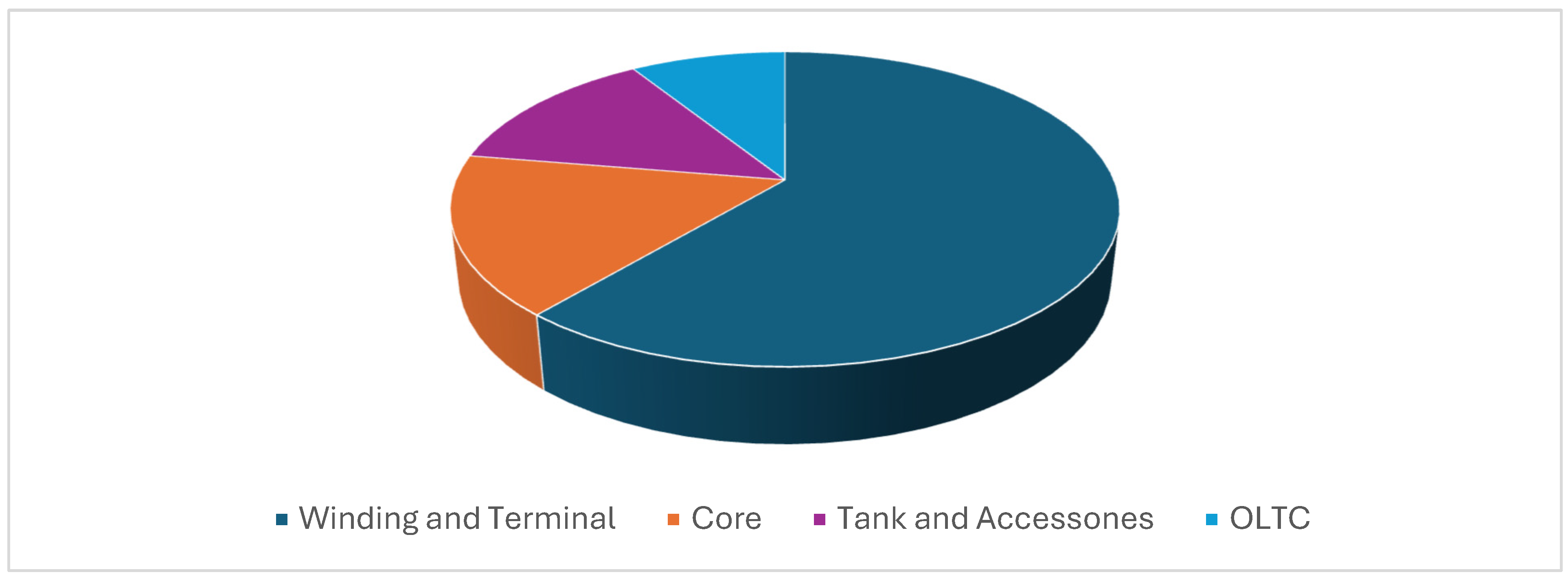
Figure 1. Distribution of transformer failures by component, highlighting the dominant contribution of winding and terminal faults [12].
Processes 14 01662 g001
Figure 2. Publication Years of Cited References.
Processes 14 01662 g002
Figure 3. Flowchart of the review methodology adopted for power transformer diagnostics.
Processes 14 01662 g003
Figure 4. Taxonomy of transformer inrush–fault discrimination methods, organized according to their main analytical principle.
Processes 14 01662 g004
Figure 5. Per-phase second-harmonic restraint scheme used in transformer differential protection.
Processes 14 01662 g005
Figure 6. Time-domain waveforms of (A) magnetising inrush current and (B) internal fault current, highlighting the differences in polarity and zero-crossing behaviour.
Processes 14 01662 g006
Figure 7. Illustration of wavelet coefficient calculation using scaled and translated mother wavelets. High-magnitude coefficients (shown in warm colours) highlight transient features across different frequency bands, enabling multi-resolution analysis for protection applications.
Processes 14 01662 g007
Figure 8. Relationship between magnetising inrush current and instantaneous magnetising inductance during core saturation in a power transformer.
Processes 14 01662 g008
Figure 9. Fuzzy inference system architecture for transformer differential protection. Input features (e.g., H 2 / H 1 ratio, THD, | I d i f f |) are fuzzified into linguistic variables, evaluated by a rule-based inference engine, and then defuzzied (e.g., using the centroid method) to produce a crisp trip/restraint decision index.
Processes 14 01662 g009
Figure 10. Dual-slope percentage differential characteristic for transformer protection. The relay operates when the operating current I op = | I 1 I 2 | exceeds the bias line defined by slope s 1 (for I rt < I bkp ) and s 2 (for I rt I bkp ), where I rt = ( | I 1 | + | I 2 | ) 2   I bkp denotes the pickup, and the shaded area is the restraint region. Hybrid harmonic/dynamic features modify this threshold to avoid misoperation during inrush and other non-fault events.
Processes 14 01662 g010
Table 1. Overview of the Systematic Review Methodology.
IssueCriterion
Sector Electrical power systems/Power transformers (PTs)
General Topic Power transformer protection and condition monitoring
Discipline Power system protection, high-voltage engineering
Very Specific Topic Techniques for discriminating magnetizing inrush currents from internal faults in PTs
Keywords IPower transformers, transformer protection, inrush current, internal fault, differential protection, harmonic restraint, transient analysis
Keywords IIInrush discrimination, energization inrush, sympathetic inrush, CT saturation, wavelet transform, time–frequency analysis, intelligent relays, machine learning, artificial intelligence
Language English
Availability Online, peer-reviewed publications available in full text
Databases IEEE Xplore, Scopus, ScienceDirect, SpringerLink, Wiley Online Library, Taylor & Francis, IET Digital Library, MDPI, and other reputable publishers’ platforms
Publication type Journal articles, conference papers, technical reports, and relevant international standards/guides
Table 2. Overview of the Systematic Review Methodology.
Type of SourceCountProportion (%)
Journal articles11575.16%
Conference papers3321.57%
PhD Thesis 31.96%
Books and book chapters21.31%
Total153100%
Table 4. Summary of comparison of the main techniques presented in Section 2.
MethodPrinciple/Technique UsedReported Accuracy/PerformanceDetection Time/Data WindowValidation TypeMain AdvantageMain LimitationRef.
Per Phase MethodPhase-wise 2nd harmonic blockingNot consistently reportedTypically, about one cycleRelay logic/simulation/practical relay studiesSimple and per-phase accurateMay trip if one phase has low 2nd harmonic[88,89]
Cross-Blocking MethodPhase cross-blocking for harmonicsNot consistently reportedTypically, about one cycleRelay logic/simulationEffective for symmetrical faultsCan misoperate for unsymmetrical faults[90,91]
Percent Average BlockingAverage harmonic ratio from 3 phasesNot consistently reportedTypically, about one cycleRelay logic/simulationImproved security over cross-blockingFails if 2-phase harmonic ratio is high[92]
Harmonic SharingSummed harmonic magnitudeNot consistently reportedTypically, about one cycleRelay logic/simulationMinimizes false trippingDependent on harmonic level consistency[93]
Traditional vs Improved RelaysHybrid of blocking and restraintMethod-dependentAbout one cycle or moreRelay comparison/simulationCombines strengths of two techniquesTrade-off between speed and security[94]
New Inrush Restraining AlgorithmComplex harmonic ratio with phase angleMethod-dependentAbout one cycle Simulation/relay-oriented studyEnhanced inrush/fault separationRequires angle comparison of components[95,96]
Digital Dynamic AlgorithmMultiple criteria including time constant decayMethod-dependentShort detection time; feature-window dependentSimulation/digital relay studyMulti-feature decision with improved speedEstimate-based, not rule-driven[97]
Dwell Time MethodDead angle comparison ( t A   v s .   t B )Method-dependentSub-cycle to one cycleSimulation/laboratory validationUtilizes inherent waveform behavioursNeeds accurate dwell time thresholds[98,99]
Improved Correlation AlgorithmDwell-angle based detectionMethod-dependentLonger than simple time-domain methods; often requires part of the next half-cycleSimulation/laboratory validationAngle-based distinction accuracyAffected by CT saturation, longer delay[100]
Practical Winding Fault DetectorVoltage equation mismatch detectionMethod-dependentFast if voltage/current measurements are availableModel-based/simulation/experimental validationPhysically based fault indicationDifficult to get delta winding current[101]
Digital Relaying AlgorithmLinear electromagnetic modellingMethod-dependentFeature- and model-dependentSimulation/model-based validationModels real transformer behavioursPrecision in modelling is hard to verify[87]
Cross-Correlation MethodShort-time correlation functionMethod-dependentUsually requires about one full cycleSimulation/signal-processing validationCaptures transient asymmetryNeeds full cycle to decide[102]
Fuzzy Logic MethodHarmonic ratio + fuzzy decisionMethod-dependent; often high in reported studiesFeature-window dependentSimulation/laboratory validationIncreased reliability and stabilityThreshold tuning needed[103,104]
ANN MethodNeural networks and AIOften high in reported datasets; usually dataset-dependentFeature-window dependent; classifier inference is fastSimulation/laboratory/offline trainingLearns fault patterns automaticallyNeeds large, diverse dataset[105,106]
Wavelet MethodWavelet decomposition (WT)Often above 90% in reported studiesTypically quarter-cycle to one cycleSimulation/laboratory validationTime-frequency domain analysisNoise sensitive, needs ≥¼ cycle[107,108]
EII-Based MethodInstantaneous magnetizing inductanceMethod-dependentFast; short data windowSimulation/signal-based validationDifferentiates IMI characteristicsRequires threshold setting[109]
Instantaneous InductanceVoltage/current-based inductance calc.Method-dependentVery fast; reported around a few milliseconds in some studiesSimulation/relay-oriented validationFast, suitable for CT saturationSensitive to tap/fault resistance[110]
Sinusoidal Proximity FactorSignal vs. pure sine wave comparisonMethod-dependentShort-window dependentSimulation/waveform-based validationGood for low-current faultsMay fail under noisy signals[59]
Extended Kalman Filter (EKF)Absolute Residual Signal (ARS)Method-dependentFast/sub-cycle possible depending on implementationSimulation/model-based validationFast and adaptive classificationARS may not always exceed threshold[111,112]
Tree-Based ClassifiersDecision Tree/Random Forest/GBOften high; some studies report near-perfect accuracy on limited datasetsFeature-window dependent; inference is fastSimulation/dataset-based validationEffective for classification tasksDoes not address all fault types[18,113]
Numerical Differential AlgorithmCycle-to-cycle RMS differenceMethod-dependentRequires at least one cycle or multi-cycle trendSimulation/numerical validationSimple logic using RMS changeFails during energization sometimes[114,115]
Transient Components MethodModal transient component detectionMethod-dependentUsually requires more than one cycleSimulation/signal-processing validationHandles both primary/secondary faultsNeeds >1 cycle, slow for fast protection[116]
Table 5. Qualitative comparison of computational burden and embedded implementation suitability.
Method FamilyTypical ComputationsMemory RequirementHardware SuitabilityEngineering CommentRef.
Harmonic-based methodsFiltering, DFT/FFT, harmonic ratio calculationLowExisting numerical relaysMature and easy to deploy, but less adaptive[117,119]
Time-domain methodsRMS, dwell time, waveform trend, threshold logicLow to moderateDSP/embedded CPUFast and practical if thresholds are robust[120,123]
Signal-processing methodsWT, S-transform, EKF, time–frequency decompositionModerate to highHigh-performance DSP/FPGAAccurate but requires optimized implementation[124,126]
AI-based methodsFeature extraction + trained classifier inferenceModerateEmbedded CPU/DSP/FPGATraining is offline, but field validation is critical[127,128]
Hybrid methodsMultiple features + decision fusion + possible AI modelHighAdvanced IEDs/centralized platformsStrong performance but more complex to certify and maintain[78,81,118]
Disclaimer/Publisher’s Note: The statements, opinions and data contained in all publications are solely those of the individual author(s) and contributor(s) and not of MDPI and/or the editor(s). MDPI and/or the editor(s) disclaim responsibility for any injury to people or property resulting from any ideas, methods, instructions or products referred to in the content.